democracynow.org
Stories:

Poisoned Democracy: How an Unelected Official Contaminated Flint's Water to Save Money
In Flint, Michigan, a growing number of residents are demanding the arrest of Governor Rick Snyder over the ongoing water contamination crisis. Snyder declared a state of emergency for Flint Wednesday, after learning federal prosecutors had opened an investigation into lead contamination in the drinking water. The poisoning began after an unelected emergency manager appointed by Governor Snyder switched the city’s water source to the long-polluted Flint River in a bid to save money. Lead can cause permanent health impacts including memory loss and developmental impairment. Researchers at Virginia Tech who have been testing Flint water say the city could have corrected the problem by better treating the water at a cost of as little as $100 a day. On Thursday, the mayor of Flint revealed it could now cost as much as $1.5 billion to fix the city’s water infrastructure. We speak to Curt Guyette, investigative reporter for the ACLU of Michigan, who has closely covered the story.
TRANSCRIPT
This is a rush transcript. Copy may not be in its final form.
AMY GOODMAN: We begin our show today in Flint, Michigan, where a growing number of residents are demanding the arrest of Michigan Governor Rick Snyder over the ongoing water contamination crisis. Governor Snyder declared a state of emergency for Flint on Wednesday after learning federal prosecutors had opened an investigation into the lead contamination of the drinking water. Lead can cause permanent health impacts including memory loss and developmental impairment.
The poisoning began after an unelected emergency manager appointed by Michigan Governor Snyder switched Flint’s water source to the long-polluted Flint River in a bid to save money. Researchers at Virginia Tech, who have been testing Flint water, say the city could have corrected the problem by better treating the water at a cost of as little as $100 a day. On Thursday, mayor of Flint revealed it could now cost as much as $1.5 billion to fix the city’s water infrastructure.
For over a year, Flint residents have complained about the quality of the water, but their cries were ignored by state officials. In February, tests showed alarming levels of lead in the water, but officials told residents there was no threat. That same month, an EPA official named Miguel Del Toral wrote an email to the Michigan Department of Environmental Quality warning about lead contamination. No action was taken. He wrote another email in April to the EPA. Then in July, Governor Snyder’s chief of staff, Dennis Muchmore, wrote an email to health officials admitting Flint residents were, quote, "basically getting blown off by us," unquote.
On Thursday, Governor Snyder apologized again for what happened in Flint.
GOVERNOR RICK SNYDER: This is a situation that no one wished would have ever happened. But it has happened, and we want to be open and honest to say let’s address it, proactively. Let’s go after the issues both in terms of solving what historically—what damage has been done, but also being proactive to prevent future damage and then to do good follow-up to say how we can help people that may have had higher lead levels. So, this is a very comprehensive approach. And hopefully you can see we’re taking this extremely seriously, in terms of the declaration this week, the advisory group I asked to look into it. As each case, as they’ve come forward with recommendations, I think we’ve acted very promptly in implementing what they’ve recommended that we do. And now I’m looking forward to a very close partnership with the mayor and the city of Flint.
AMY GOODMAN: Flint residents are now scrambling to find sources of safe water as fears of lead poisoning grow. Forty percent of Flint lives in poverty. Students at the nearby Davison Community Schools just posted a documentary online called Undrinkable, looking at how the Flint water crisis grew. This is an excerpt.
GRANT POLMANTEER: Less than three weeks after Flint’s water was declared safe and in compliance with the Safe Water Act, news leaked that researchers at Virginia Tech University had found traces of lead within Flint’s water. An official press conference held on September 15th confirmed these tests at a local Flint church. The water found in some homes was three times the federal limit of lead within water. Aged lead pipes and lead soldering found in pipes are common throughout the city, not only in city lines, but also in people’s homes, and has been for years. But why is the lead a problem now? It’s the corrosive Flint River that released the lead into the water.
MARK VALACAK: If your house has lead pipes, if your house has copper pipes with lead solder, then there’s the potential, because of the corrosivity of the water, for some of that lead to leach into the water.
GRANT POLMANTEER: On September 24th, a press conference was held at Hurley to show blood test results.
DR. MONA HANNA-ATTISHA: The percentage of children with elevated blood lead levels has increased. The most striking increase is in the zip codes with the highest water lead levels.
GRANT POLMANTEER: Lead is not something meant for the human body. It’s a neurotoxin that is especially dangerous to infants and young children, as it can permanently cause brain damage and can stunt growth.
DR. MONA HANNA-ATTISHA: It’s an emergency. There is—the CDC and the American Academy of Pediatrics, they routinely say there is no safe level of leads. And when we saw an increase in lead levels, and then when the state saw that they also noticed an increase in lead levels, it’s an emergency. You have to do something about it.
AMY GOODMAN: Undrinkable, an excerpt from a new documentary produced by high school students at Davison Community Schools. That’s actually filmmaker Michael Moore’s alma mater.
Well, for more on the crisis, we’re joined by two guests in Detroit. Investigative reporter Curt Guyette of the ACLU of Michigan is back with us. Nayyirah Shariff of the Flint Democracy Defense League also joins us there. And joining us from Virginia Tech is professor Marc Edwards, an expert on municipal water quality who’s been studying Flint’s water crisis. And we’ll find out in a moment why students and professors at Virginia Tech—in Virginia—are analyzing Flint’s water. But I want to start with Curt Guyette.
Curt, take us through the chronology that takes us to yesterday, the governor once again apologizing—when the governor, the city, the state knew what they knew, why Flint came off of Detroit’s water supply and started getting the contaminated Flint water for their residents.
CURT GUYETTE: Well, as you said in your introduction, this was a decision made while the city of Flint was under the control of a state-appointed emergency manager and, in a purely economically driven decision, decided—
AMY GOODMAN: So, just to say—state-appointed emergency manager. So you have a mayor, but Governor Snyder appointed someone over him, unelected, to run the city.
CURT GUYETTE: Correct. And the elected officials only had as much power as that emergency manager decides to give them. Their pay is determined by the emergency manager. What authority they have, if any at all, is determined by the emergency manager. So, essentially, at that point, the mayor and City Council are employees of the appointed emergency manager. And there is a—
AMY GOODMAN: And the emergency managers throughout Michigan are mainly, almost overwhelmingly, appointed in mainly African-American cities.
CURT GUYETTE: Correct. Of the school districts and cities where emergency managers have been appointed, I think all except one are majority-African-American cities and school districts. And also, they are very high percentage of people living in poverty. So, they’re cities with majorities people of color and very poor cities. And they were—one of the reasons that they were pushed into the financial duress that they were put in was because of cuts in revenue sharing imposed by this governor. So they pretty much pushed them over the financial edge and then took them over.
And these emergency managers can sell off assets. They can break collective bargaining agreements. They can cut the healthcare benefits of retirees. They can break—abolish ordinances, create new ordinances. About the only thing that the law says that they specifically cannot do is miss a bond payment. So, they have—
AMY GOODMAN: And so, they can also change the water supply of a city.
CURT GUYETTE: Correct. And that’s what they did in Flint in order to save—at the time, the claim was that it would save about $5 million a year. And the plan was, if they—
AMY GOODMAN: And explain what they shifted.
CURT GUYETTE: They went from—they had been on the Detroit system for 50 years, getting clean, safe water from Detroit. And prior to that, a decision was made that they were going to join a project to build a pipeline from Lake Huron to Genesee County, where Flint is, which is about 70 miles northwest of Detroit. They were going to build this new pipeline. And while they were building the pipeline, in order to save money for maybe a period of like two years, the decision was made to start using the very, very corrosive Flint River to supply the city’s water.
AMY GOODMAN: So, take us back to last February. Take us to when people started to realize what was going on and the EPA memo.
CURT GUYETTE: Yes. Well, people knew from the beginning, as soon as the switch was made in April of '14, that the water was bad. It looked bad. It tasted bad. It smelled bad. And there was all sorts of problems throughout 2014. In 2015, one of the residents, LeeAnne Walters, had her water tested by the city, and the lead levels came back at over 100 parts per billion. Of course, there's no safe levels of lead whatsoever. The federal action level is 15 parts per billion. So it was about seven times what the federal action level was. She had it tested a second time, and it came back almost 400 parts per billion. And at that point, the EPA became aware of what those test results were, and started sending emails to the Michigan Department of Environmental Quality, asking them what was going on, asked them what was going on in terms of corrosion control.
Detroit had added phosphates to the water, which creates a biofilm that kind of coats the pipes and keeps lead particles adhered to the pipes rather than letting it leach into the water. The Flint River is many times more corrosive than Detroit. So they switched to a water source that was much, much more corrosive, and when corrosion control was more needed than ever, they inexplicably stopped using it, compounding the problem. And that corrosive water, without corrosion control in it, just began tearing apart the pipes.
And as Dr. Edwards has pointed out, anybody with even a rudimentary understanding of chemistry could have looked at the situation and predicted what would happen. But—and we don’t know. And that’s one of the questions that remain unanswered at this point, is: Did they take a serious look at what was going on with that river before they decided to make the switch? And it’s either they didn’t do that, which I would think is gross negligence, or they did do it and ignored whatever they found. But that’s one of the, I think, big questions at this point that remains unaddressed. So—
AMY GOODMAN: Miguel Del Toral—talk about the significance of who he was within the EPA, the memo he wrote and how he was admonished by his superiors.
CURT GUYETTE: Yeah, Mr. Del Toral is really the unsung hero in this whole saga. He began asking questions. He took a personal interest in the Walters family, went there, looked at their house, established that they didn’t have any lead plumbing, which the city was claiming was the source of the problem, because all along the way everybody involved in the decision to switch to the Flint River did everything they could to deny that the river was what caused this problem to erupt. Mr. Del Toral went there, investigated, hooked Ms. Walters and her family up with Dr. Edwards and the people at Virginia Tech. They conducted their own independent, very, very thorough tests. And they took 30—
... Read More →
"Gov. Snyder Should Be Arrested": Flint Residents Demand Justice over Water Poisoning
Protests are growing in Flint, Michigan, over the state’s cover-up of the ongoing water contamination crisis. Filmmaker Michael Moore is asking fans to sign a petition on his website calling for the immediate resignation of Governor Rick Snyder. In an open letter to the governor, he writes: "[Y]ou have effectively poisoned, not just some, but apparently ALL of the children in my hometown of Flint, Michigan. And for that, you have to go to jail." We speak to Nayyirah Shariff, coordinator with the Flint Democracy Defense League.
TRANSCRIPT
This is a rush transcript. Copy may not be in its final form.
AMY GOODMAN: So, let’s go to Nayyirah Shariff. You’re with Flint Democracy Defense League. What does democracy have to do with clean water?
NAYYIRAH SHARIFF: Well, our—Snyder has been trampling our democracy for years, really ever since he’s been in office, and specifically since Flint has had an emergency manager in December 2011. And our City Council wanted to go back to Detroit, and our emergency manager, Jerry Ambrose, said it was inconceivable because it was going to cost too much money. And the culture of the emergency manager is money trumps everything. It’s more important than people’s lives. This is—we don’t know what the costs of this is going to be. Like, Karen Weaver said it was going to be $1.5 billion, but that’s just the infrastructure. That’s not the medical costs it’s going to take for people to survive like through their lifetime of care.
AMY GOODMAN: Now, when you say Karen Weaver, you mean the new mayor, the first woman mayor, of Flint, who, as soon as she was elected, declared a state of emergency, which has brought the crisis of the Flint water supply to the attention of the nation. In December, she announced a state of emergency. She was yesterday standing with Governor Snyder. So, right now, Nayyirah Shariff, do you have any confidence that the water is safe? And given that so much of the testing shows it isn’t, that many children have been permanently damaged by the lead, have been permanently lead poisoned, do people have access to clean water? How are they drinking? How are they bathing?
NAYYIRAH SHARIFF: Well, people are doing what they have been doing—what they have been doing, and that’s purchasing bottled water. If they’re able to get a filter, they’re using that. Or they’re heating up bottled water. Or—
AMY GOODMAN: The question is how to get the bottled water. Yesterday on NBC, a reporter was interviewing Reverend Bobby Jackson of the Mission of Hope shelter, and he said that he had been getting some bottled water, you know, charitable contributions, but he was all out. And the reason the reporter went to him is because the city said, "I don’t know where you can get this bottled water." I mean, if you don’t have money, how do you get the water?
NAYYIRAH SHARIFF: Well, actually, Pastor Bobby Jackson—the Flint Democracy Defense League has Pastor Bobby Jackson as emergency relief site, and we actually started it because people were—they did not have access to water. Their water was shut off, because we pay one of the highest rates in the nation. And it’s totally like there are no, really, like, relief sites. Like, it’s all charitable contributions. And like, as volunteers, we really don’t have the capacity, and we don’t have the space or warehouses or forklifts, like even though now we have a lot of interest and people wanting to send us water. But we’re all kind of volunteers, so we don’t really have like a space to store, you know 500, 600 cases of water. And hopefully, with the state of emergency resources, we can have, you know, like the first responders step up with that. But it’s all been people just kind of doing it all on their own.
AMY GOODMAN: Now, there has just been announced a federal investigation into what has taken place here. About the same day when Governor Snyder learned this, he announced a state of emergency. There are calls not only for—a demand for clean water, but—and for the governor to be investigated, but some are calling for him to be arrested. What do you feel, Nayyirah?
NAYYIRAH SHARIFF: Well, I feel like—I feel like he should be arrested. He should be impeached—whatever comes where we can get some sort of justice, because we haven’t had justice. Snyder’s apology happened three months after he—after we went back to Detroit. And we don’t know when he actually knew that there was an issue with Flint’s water. So he can take his apology and flush it down the toilet.
AMY GOODMAN: Just two weeks ago, on December 22nd, Brad Wurfel, a spokesman for the Michigan Department of Environmental Quality, MDEQ, was presented with documents acquired by Virginia Tech’s Marc Edwards, and denied the connection between Flint’s water and high blood lead levels. This is Wurfel speaking by phone to a reporter with Flint’s NBC affiliate.
BRAD WURFEL: I’m saying that there’s a difference between blood lead levels and water lead levels—different testing, different sampling, different things. These are apples and cars.
AMY GOODMAN: Professor Marc Edwards, can you respond to this?
MARC EDWARDS: Well, it was really shocking, after all that occurred, to hear Mr. Wurfel say that. So, you know, I hope he was taken out of context. But on the other hand, it does sort of illustrate the state’s sort of illogic throughout this whole event, especially this small cadre of MDEQ employees who have misled really everyone, including—as a result of that email that was sent, the state did a quick assessment of what was occurring in the blood lead of Flint’s children, and they found increased levels after the switch, but they didn’t believe the results, because, at least according to my interpretation, MDEQ was insisting that there was nothing wrong with the water. So, this small group of employees has really tried to head off every effort to protect Flint’s children, whether it came from outside or inside the state government.
AMY GOODMAN: Marc Edwards, what needs to be done to clean the water right now? How can people feel that the water they’re getting is safe? Flint has reconnected to Detroit’s water supply now.
MARC EDWARDS: Yes. And so, you know, the harm that was done to Flint’s children and to their pipe system really cannot be undone. I think everything that’s been done recently to reduce the corrosivity of water is what needs to be done. It’s not until, however, Flint passes a federal Lead and Copper Rule sampling, that actually follows the law—the last two sampling events broke the law in many different ways; that’s another thing that allowed the state to say the water was safe when it wasn’t—until that happens, no one can really assess the safety of Flint’s water. Our position is that until they pass a legal Lead and Copper Rule monitoring round, the water has to be assume unsafe.
AMY GOODMAN: And, Nayyirah, what does the state of emergency mean, that the governor of Michigan has declared?
NAYYIRAH SHARIFF: Well, right now, the state is taking the lead on this. And in many ways, it feels somewhat abusive, because the state was responsible for the injury to Flint’s residents, and now we have to go to our abuser for treatment. So, while I hope that, you know, at some point very quickly, the federal government can intervene, residents in Flint, like, we have no trust with the state.
AMY GOODMAN: I want to thank you all for being with us. Of course, we’ll continue to follow this story. Nayyirah Shariff of the Flint’s Democracy Defense League, joining us from Detroit; Curt Guyette of the ACLU of Michigan and independent reporter; and Marc Edwards of Virginia Tech, thanks so much.
This is Democracy Now! When we come back, stunning developments in Guatemala. Stay with us.
... Read More →
18 Ex-Military Guatemalan Leaders Arrested for Crimes Against Humanity During U.S.-Backed Dirty War
In a stunning development, Guatemalan police have arrested 18 ex-military leaders on charges of committing crimes against humanity during the decades-long, U.S.-backed dirty war against Guatemala’s indigenous communities. The ex-military leaders face charges of ordering massacres and forced disappearances during the conflict, which led to perhaps a quarter-million deaths. Many of the arrested former military leaders were backed by the United States, including Manuel Benedicto Lucas García, who had worked closely with U.S. military officials to develop a system of attacking the highlands where Guatemala’s indigenous Mayan communities reside. The system involved decapitating and crucifying people. We speak to investigative journalist and activist Allan Nairn.
TRANSCRIPT
This is a rush transcript. Copy may not be in its final form.
AMY GOODMAN: We turn to stunning developments in Guatemala, where this week police have arrested 18 ex-military leaders on charges of committing crimes against humanity during the decades-long, U.S.-backed dirty war against Guatemala’s indigenous communities. The ex-military leaders face charges of ordering massacres and forced disappearances, which led to perhaps a quarter of a million deaths. Many of the arrested former military leaders were backed by the United States, including Manuel Benedicto Lucas García, who had worked closely with U.S. military officials to develop a system of attacking the highlands where Guatemala’s indigenous Mayan communities reside. The system involved decapitating and crucifying people. Lucas is a former army chief of staff and the brother of the ex-dictator, General Fernando Romeo Lucas García. Speaking Wednesday, he defended himself against the charges.
MANUEL BENEDICTO LUCAS GARCÍA: [translated] Because I have done well for humanity, I have saved lives. As I always said in each opportunity, if I killed, I killed during a battle in front of my troops, and not as a coward or anything like that.
AMY GOODMAN: Guatemalan prosecutors also moved to have the immunity lifted for Édgar Justino Ovalle Maldonado, an ex-military leader who’s now the right-hand man of the incoming Guatemalan President Jimmy Morales. The arrest comes six months after massive popular against a corruption scandal ousted the now-jailed former President Otto Pérez Molina, who is also formerly a U.S.-backed military leader during Guatemala’s dirty wars.
For more, we’re joined by Allan Nairn, an investigative journalist and activist who has worked on Guatemala for decades, is an award-winning journalist.
Allan, talk about the significance of these developments this week.
ALLAN NAIRN: Well, for Guatemala, this is kind of the beginning of a Nuremberg trial-type process, except it’s not being done by a foreign, occupying power that just won a war, the way the Nuremberg trials were done. This is being done by the local justice system. Heroism on the part of survivors who brought complaints forward, and also on the part of forensic anthropologists, lawyers, prosecutors, who are risking their lives to bring these cases, have resulted in this round-up of some of the worst mass killers in the country. And they were working for the Guatemalan army—they weren’t renegades. They were, in turn, working for the U.S. government. The U.S. was backing the G2 military intelligence service, for which many of these arrested officers were working. Some were on the U.S. payroll. They were armed, they were trained, they were advised by the U.S. General Benedicto, who we just saw in the clip saying he wasn’t a coward, he worked together with Colonel George Maynes, the U.S. military attaché. Maynes told me that he and Benedicto together developed the strategy of the sweeps into the highland villages, where they would go in, execute civilians, throw them in mass graves, decapitate, crucify.
Those who were arrested on charges yesterday are facing charges tied to two specific cases. One is the case of a 15-year-old boy. The army raided his house with machine guns. They snatched him. They taped his mouth. They threw a nylon bag over his head. They dragged him into a van. He was never seen again. The reason they hit his house was because his sister, his older sister, had been held captive at an army base, where she was being tortured and repeatedly raped, but she—one account says she had grown so skinny from lack of food that she was able to slip out through the bars and escape. So, retaliation, they hit the house, they took the boy.
The other case concerns the army base at Cobán, where they’ve so far found 558 cadavers, so far—skeletons, 90 of them children. People were brought there from massacre sites all around the northwest. Some of them fled from the massacre sites surrounding the Chixoy Dam project, which is backed by the World Bank. The army would go into villages, burn the houses, take women down to the rivers and violate them. And a number were taken away in helicopters—helicopters, some supplied by the U.S., some supplied by Guatemalan oligarchs, some working out of a CIA operation at the Aurora airport. And from there, they were flown to the Cobán army base. And now, years later, their bones, the bones of these largely women and children, have been traced through DNA sampling back to the surviving families, who have been brave enough to stand up and report this. And these are the bases of the cases.
So, what we’re talking about was the ISIS of its day. The tactics that the world is now finally starting to understand because of the ISIS videos—beheadings, crucifixion, slavery, gang rape, mass slaughter of civilians—ISIS brags about this. Well, the Guatemalan army and their U.S. advisers didn’t brag about it—they concealed it—but they were doing—they were using those same tactics.
AMY GOODMAN: How does this, these arrests this week, that have shocked many, relate to the uprising of the last six months?
ALLAN NAIRN: Well, this was only—this was only politically possible because of the uprising. The uprising, where hundreds of thousands of people came into the streets, brought down General Pérez Molina, and it created a climate where the prosecutors dared to try to go forward with these charges.
These officers arrested the other day include a former army chief of staff, a group of intelligence chiefs, a former member of the Ríos Montt junta, a former minister of the interior. These are people at the heart of the power structure in Guatemala. They’re the partners of the oligarchy. They were the partners of the U.S. military. If you go back and read the cables that have so far been declassified from within the Defense Intelligence Agency and other U.S. agencies, you see them praising these officers, the very ones who were—have now been arrested for these atrocities. And these men arrested are also—also form part of the core of the group that’s the government of—the incoming government, Jimmy Morales, just elected. His right-hand man was Ovalle Maldonado, who is one of those charged with crimes at the Cobán base, which I was just describing, where they—the pits are just stacked with skeletons. So, this has big implications.
And it could have even bigger implications for the U.S. I spoke to, during the years when this was happening, three of the four CIA station chiefs who served there. I named their names in an article which appeared in The Nation in 1995. The prosecutors can go look at that article, see who they are. The U.S. personnel who were there, and who are still alive, can be subpoenaed. The U.S. should be subpoenaed to release all NSA, State Department and Pentagon documents regarding payments they made to these officers, training and advice they gave to them. The Guatemalan authorities, in theory, would have the right to extradite surviving U.S. officials.
AMY GOODMAN: Allan Nairn, I wanted to go back to 1995—we’re talking what? Twenty years ago—when you were interviewed by Charlie Rose about the piece in The Nation called "C.I.A. Death Squad," in which you described how Americans were directly involved in the killings by the Guatemalan army. You were being interviewed alongside Elliott Abrams, who challenged what you were saying. Abrams had served as assistant secretary of state for human rights and humanitarian affairs under President Reagan from ’81 to 1985. It starts with you, Allan.
ALLAN NAIRN: We’re talking about more than 100,000 murders, an entire army, many of its top officers employees of the U.S. government. We’re talking about crimes, and we’re also talking about criminals, not just people like the Guatemalan colonels, but also the U.S. agents who have been working with them and the higher-level U.S. officials. I mean, I think you have to be—you have to apply uniform standards. President Bush once talked about putting Saddam Hussein on trial for crimes against humanity, Nuremberg-style tribunal. I think that’s a good idea. But if you’re serious, you have to be even-handed. If we look at a case like this, I think we have to talk—start talking about putting Guatemalan and U.S. officials on trial. I think someone like Mr. Abrams would be a fit—a subject for such a Nuremberg-style inquiry. But I agree with Mr. Abrams that Democrats would have to be in the dock with him.
AMY GOODMAN: So, there, as Allan is speaking, Elliott Abrams, the assistant secretary of state for human rights and humanitarian affairs under President Reagan, is simply throwing his head back and laughing. Allan, your thoughts today?
ALLAN NAIRN: Well, Abrams was perhaps the key figure in U.S. Central American policy during the time of the slaughter. He later became a top adviser to the Bush Jr. White House dealing with the Middle East, where the U.S. has mounted similar operations in support of killer forces. For example, in Iraq, in the capacity as a private contractor, the U.S. brought over one of the U.S. military men, Colonel Steele, who had worked alongside the Salvadoran death squads. And in Iraq, he helped to set up the Shiite militia operations that went out and targeted Sunnis in Iraq. This was under the time of General Petraeus, when Petraeus was also carving up Baghdad with walls on a sectarian basis. They called it the "Salvador Option." This is a policy that’s been applied uniformly around the world. But since the U.S. is not yet as civilized as Guatemala, people like Abrams have not been put in the dock. But the Elliott Abrams equivalent—equivalents in Guatemala are this morning being brought before a judge in Guatemala as prisoners, and they’re going to face their fate.
AMY GOODMAN: And finally, this week also, the current president, just before Jimmy Morales takes over, of Guatemala surprised many by announcing that he is slashing the minimum wage in maquiladora areas, in a video that’s gone viral. Describe what happened.
ALLAN NAIRN: Well, Maldonado Aguirre, the interim president, who used to be the kind of the front man for the MLN death squad party, announced he was cutting the minimum wages in these factory areas. He was giving a speech. Some demonstrators showed up. And he, who is known for his smooth demeanor, his calm, he just went nuts, and he started screaming at the demonstrators. He called them "bums." He called them "Leninists."
But there’s a strong connection between the slashing of wages and this terror. Terror helps to keep the wages down. When you break strong communities, when you make it impossible for unions to organize without facing the threat of deaths—death or disappearance, that pulls down wages. We all know about the outsourcing of production from the U.S., but there’s also an outsourcing of repression. In the early 20th century, U.S. labor leaders and organizers were killed, with a fair amount of frequency. But over the years, that became unnecessary. As the production has moved overseas, so has the killing. So that exerts the downward pressure on wages. At the same time, when there’s terror in a place like Guatemala, people flee. They come to the U.S. That’s where a lot of the undocumented immigrants originated from. And then Americans complain. Well, you know, if you go and burn down your neighbor’s house, don’t complain when, as they run from the flames, they come onto your lawn.
AMY GOODMAN: Which brings us directly to our next segment, and we’ll be talking about immigration and the immigrants who are imprisoned and the raids that are taking place since New Year’s under the Obama administration, sending immigrants back over the border. Allan Nairn, I want to thank you for being with us, investigative journalist who’s reported on Guatemala for decades. This is Democracy Now! We’ll be back in a minute.
... Read More →
Amid State & Fed. Cover-Up, the Story of How Researchers & Residents Exposed Flint's Water Poisoning
For over a year, Flint residents have complained about the quality of the water, but their cries were ignored by state officials. In February, tests showed alarming levels of lead in the water, but officials told residents there was no threat. That same month, an EPA official named Miguel Del Toral wrote an email to the Michigan Department of Environmental Quality warning about lead contamination. No action was taken. He wrote another email in April to the EPA. Then in July, Governor Snyder’s chief of staff, Dennis Muchmore, wrote an email to health officials admitting that Flint residents are "basically getting blown off by us."
TRANSCRIPT
This is a rush transcript. Copy may not be in its final form.
AMY GOODMAN: Let’s go to Marc—let’s go to Professor Marc Edwards—
CURT GUYETTE: Yes.
AMY GOODMAN: —since he is here and can—
CURT GUYETTE: Yes.
AMY GOODMAN: Talk about what you discovered for yourself, how you met LeeAnne and her family and her three boys, and why it is that your team, from Virginia, are the ones doing the testing of the water supply of Flint, Professor Edwards.
MARC EDWARDS: Well, we met LeeAnne because her child had been lead poisoned at that point, and there was no other lead source in her home at all, based on Miguel Del Toral’s investigation. So we did a very, very thorough sampling, as Curt said, of her home, and we found the worst lead-in-water contamination that we have seen in 25 years of working in the field. And LeeAnne herself figured out that the city and state were lying about the use of corrosion control. The EPA had been asked point—asked the Department of Environmental Quality point-blank, "Are you using corrosion control?" And they lied and said yes. And LeeAnne is the one who figured out there was no corrosion control. So, when she informed us of what was going on, we became involved because it was very clear at that point that the agencies who were paid to protect children from this neurotoxin, lead, were not going to do their job.
AMY GOODMAN: Now, Professor Edwards, the reason you met LeeAnne, right, is that she and her military husband and her boys moved away from Flint. They were so afraid of what was happening and felt that they were being contaminated. And they came down to Virginia?
MARC EDWARDS: No. Well, that was after. So she stayed, even after her children had been lead poisoned, to fight for other children in the city, helped coordinate the sampling event. And somewhat fittingly, the day she left Flint, they switched back to the Detroit River. But that was months later. I met her early on because of the contamination and the fact her child was lead poisoned, and she was concerned about what was going on not only to her children, but to other children in Flint.
AMY GOODMAN: So you go to Flint with your team. And tell us what you did, the extent of your testing and the response of the city and the state of Michigan.
MARC EDWARDS: Well, this problem should have been stopped, even if there was complete incompetence on the part of the state, with the Del Toral memo. But as Curt mentioned, EPA covered it up. They apologized for this memo that was written. It perfectly explained what was going on, including the fact that Flint was breaking federal law. And EPA administrator Hedman at Region 5 said she was sorry about the memo and that she would vet and edit it, and Mr. Del Toral would not be working on this anymore.
AMY GOODMAN: What was the name of that regional head?
MARC EDWARDS: Susan Hedman.
AMY GOODMAN: Is she still in her position?
MARC EDWARDS: Yes, she is. And I obtained those documents by email that showed that’s exactly what she said. And then the state went and was bragging to the Flint residents that no one was going to help them, that Mr. Del Toral had been, quote, "handled," and they wouldn’t hear from him again. So it was at that point we launched, with ACLU Michigan and many, many other groups, a completely outside-the-system effort to determine the safety of Flint water and allow Flint residents to see whether it was meeting federal standards or not. So, we conducted a 300-bottle survey, and the residents did an amazing job. They returned more than 90 percent of the kits. And just as—when we started looking at those samples—this was late August—we knew there was no way that Flint’s water could be considered safe by federal standards. And on our webpage that we established to help the residents fight this battle, we announced that no one should be drinking Flint water. And, of course, the state didn’t like that.
AMY GOODMAN: Now, I want to read more from the email written by Governor Snyder’s chief of staff, Dennis Muchmore, last July. He wrote, quote, "I’m frustrated by the water issue in Flint. I really don’t think people are getting the benefit of the doubt. Now they are concerned and rightfully so about the lead level studies they are receiving from the DEQ samples. ... These folks are scared and worried about the health impacts and they are basically getting blown off by us (as a state we’re just not sympathizing with their plight)," he wrote. That internal email from Dennis Muchmore, Governor Rick Snyder’s chief of staff, dated July 22nd. So, what happened next, Curt Guyette?
CURT GUYETTE: Well, then, as Dr. Edwards just said, we started working with them and with groups, a coalition in Flint, and we all came up with the idea that we’re going to conduct our own test. And that was in August we did that. Virginia Tech sent 300 sample kits, because Dr. Edwards got an emergency grant from the National Science Foundation. And a small team of people worked to educate people about how to take water samples. We held public meetings, and people came. We distributed the kits. And then, within a three-week period, we tested about four times as many homes as the city had tested over the previous six months. And it was very rigorous. Records were kept. We were very diligent to see that all parts of the city were tested, unlike the city tests, which focused on areas where they knew they weren’t going to find lead. We were looking everywhere just to really honestly find out what was really going on, and did everything we could to make it bull-proof, because we knew that they were going to attack us, and we didn’t want to give them really any legitimate openings to question what we did. And so, we were working like crazy to get the kits distributed and collected and sent back. And Dr. Edwards and his team worked around the clock to analyze all these samples. And as soon as the samples started coming in and they saw that the levels were what they were and very disturbing, very alarming, they started putting the information out. And again, all along the way, the status—the approach taken by the MDEQ was to deny there was a problem—
AMY GOODMAN: Michigan Department of Environmental Quality.
CURT GUYETTE: —and attack the people who were trying to tell the truth—yes.
... Read More →
Resistance & Outrage as Obama Administration Rounds Up Central American Refugees
The new year began inauspiciously for many immigrant families. Federal agents have detained at least 121 people, including children, in raids as part of an operation to deport families fleeing violence in Central America. The raids took place mainly in Georgia, North Carolina and Texas. We hear from one of the women targeted by federal authorities. "It was a raid. I think I was one of the first ones detained. On January 2 at 6:45 a.m., they grabbed me. They came to my house looking for someone else," said Ana, a Honduran immigrant now being detained at the South Texas Family Residential Center in Dilley, Texas, with her 10-year-old son. They arrived in the United States in June 2014 after fleeing Honduras. We hear from Ana and speak to two immigration attorneys, Katie Shepherd and Barbara Hines.
TRANSCRIPT
This is a rush transcript. Copy may not be in its final form.
AMY GOODMAN: The new year began inauspiciously for many immigrant families. Federal agents have detained at least 121 people, including children, in raids as part of an operation to deport families fleeing violence in Central America. The raids have taken place mainly in Georgia, North Carolina and Texas. On Wednesday, Democracy Now!'s Deena Guzder reached a woman named Ana, who was detained in the raids. She's currently being held in South Texas Family Residential Center in Dilley, Texas, with her 10-year-old son. They arrived in the United States in June 2014 after fleeing Honduras. Speaking by phone, Ana described the New Year’s weekend immigration raid.
ANA: [translated] Yes, it was a raid. I think I was one of the first ones detained. On January 2nd at 6:45 a.m., they grabbed me. They came to my house looking for someone else. My aunt opened the door, and they brought us down from the room and then asked me for identification. And they told me I was already deported.
DEENA GUZDER: And who came? And how many people?
ANA: [translated] In that raid, 33 families were detained, who were the ones deported yesterday. They left yesterday. I don’t know. It was a miracle from God, I don’t know, but only three of us remain who were captured on the 2nd, only three families who were not deported.
AMY GOODMAN: Immigrant rights groups say that many of the people targeted in the raids have legitimate claims to asylum but were not afforded due process. Earlier this week, the advocacy group CARA Pro Bono Project won a key victory for four families after a top immigration appeals court halted their deportations. The order came just hours before the 12 people were set to be deported to El Salvador, which now has the highest murder rate in the world for a country not at war.
For more, we go directly to Dilley, Texas, where Katie Shepherd is joining us by Democracy Now! video stream, managing attorney for the project and helped win the stays of deportation for the families. We’re also joined in Austin, Texas, by Barbara Hines, longtime immigration lawyer with many clients who are detained in Karnes and Dilley detention centers, formerly with the University of Texas School of Law Immigration Clinic.
We welcome you both to Democracy Now! Katie Shepherd, let’s start with you. You’re right there. Describe what’s happened and how you prevented some of the people whose homes were raided, who were going to be deported, from actually being deported.
KATIE SHEPHERD: Hi. Good morning, Amy. Basically, we’re meeting with the clients as they trickle in this week. We’re seeing a lot of issues with access to counsel. Many of our clients have been told by ICE that they have no legal recourse, that they have no access to their attorneys, and they’re not allowed to call their attorneys. Now, we represent about 99 percent of the detained women and children in the South Texas Family Residential Center. So, what can I tell you? So far, we’ve submitted nine stays, and 100 percent that we’ve received decisions on have been granted so far. So, I feel that this is a clear indication that something is very wrong here.
AMY GOODMAN: Can you explain why this is happening right now? You know, at the top of the show, we ran a quote from The New York Times editorial page today, where they say, "A new year has dawned upon an appalling campaign of home raids by the Department of Homeland Security to find and deport hundreds of would-be refugees back to Guatemala, Honduras and El Salvador. ... It’s no wonder that Donald Trump is applauding the policy, and taking credit for it." If—Barbara Hines, can you talk about why this is happening right now and what you’re doing about this?
BARBARA HINES: Well, unfortunately, I think this is happening because of a misapplied immigration policy of our country. And primarily, it’s the failure to recognize what the root causes of migration are—as we just heard, the incredible violence in these countries. What disturbs me the most is that we talk about the Syrian crisis and why people are fleeing, but we treat the mothers and children who are coming as—or they’re referred to as lawbreakers or whatever, when they’re really true refugees. And we need to focus on what’s happening in the countries of origin, which is causing mothers and children to flee at the numbers that we’re seeing today.
AMY GOODMAN: What is "temporary protective status"?
BARBARA HINES: Well, what I think one of the solutions to this would be, our asylum laws are very, very rigid, and they really haven’t been modernized to the realities of Central America with the tremendous gang and gender-based violence. The way we’ve addressed situations in the past is through temporary protected status, which is in the immigration laws and allows the executive branch and the Department of Homeland Security to decree certain countries and to say it’s too dangerous for those people to return to their home countries. We’ve done this since 1990, and we’ve included countries in Africa, in Syria. We recently declared Nepal because of the earthquake. And I think that we seriously need to begin to think about temporary protected status, in addition to asylum, because many, many of the women do have bona fide refugee claims, as a solution to the situation.
AMY GOODMAN: Katie Shepherd, actually, Bernie Sanders is calling for immediate temporary protective status and an end to these raids. The women you’ve represented, who—though their homes were raided, you prevented their deportation. In these last seconds we have together, how did you do this?
KATIE SHEPHERD: We filed 11th-hour emergency stays of removal and appeals with the BIA. And at the very last minute, the stays were granted. And actually, yesterday morning, three families were pulled off of planes set for deportation. So that was a big victory. And all of these clients, as I said, have bona fide asylum claims.
AMY GOODMAN: You know, the U.S. is a signatory, Barbara Hines, to the [U.N.] Convention Against Torture. These people, many of them, are fleeing horrific violence in their own countries. Is it against the law for the U.S. to deport them?
BARBARA HINES: I think the problem with this is, is that many of the women are either unrepresented or they have substandard immigration lawyers. And it’s very difficult for—in an adversarial system that we have, which many countries do not have, to present asylum and Convention Against Torture claims. But, yes, we are a signatory not only to the Convention Against Torture, but to the Convention on the Status and Protection of Refugees. And I think that our government is not complying with those international norms.
AMY GOODMAN: Of course, we’ll continue to follow this issue. Barbara Hines, longtime immigration lawyer, and Katie Shepherd, managing attorney for CARA Pro Bono Project in Dilley, Texas, thanks so much for joining us.
That does it for our show. Democracy Now! is hiring a director of finance and operations as well as a director of development to lead our fundraising efforts. Visit democracynow.org for more information.
... Read More →Headlines:
National Resistance Grows to ICE Raids Against Central Americans

Across the nation, resistance is growing to the Obama administration’s new wave of raids targeting Central American families who came to the United States seeking asylum after fleeing violence in their home countries. This week, protests have been held in Newark, New Jersey; New Haven, Connecticut; Boston, Massachusetts; Homestead, Florida; Auburn, Oregon; San Francisco, California; and outside the White House in Washington, D.C. Protests are also planned for New York City today. The newly elected mayor of Philadelphia, Jim Kenney, has signed an executive order saying Philadelphia will no longer participate in a controversial Immigration and Customs Enforcement program in which local law enforcement share data with immigration agents. Vermont senator and presidential candidate Bernie Sanders has called on the Obama administration to end the raids immediately and to extend temporary protected status to all families who have fled violence in Central America. Today, The New York Times editorial board published a strong condemnation of the raids, calling them "shameful" and writing: "A new year has dawned upon an appalling campaign of home raids by the Department of Homeland Security to find and deport hundreds of would-be refugees back to Guatemala, Honduras and El Salvador. ... It’s no wonder that Donald Trump is applauding the policy, and taking credit for it." We’ll go to Texas for more on the deportation raids later in the broadcast.
France: Police Fatally Shoot Man Accused of Attacking Police Station

In France, police officers have shot and killed a man who was allegedly trying to attack a police station in northern Paris Thursday, on the first anniversary of the Charlie Hebdo attacks. French authorities say the man lunged at officers with a meat cleaver as he yelled "Allahu Akbar." The attempted attack prompted the closing of schools, shops and nearby streets. Authorities say they cannot yet confirm the man’s identity. Paris Prosecutor François Molins spoke out.
François Molins: "One year to the day after Charlie Hebdo, about 10 minutes to the exact time, a terror attack took place concerning an isolated individual who ran toward the police station in the 18th district of Paris, where two peace officers were keeping watch. He ran and hopped the barriers. The officers ordered him to stop once, twice—in any case they asked multiple times. He had his hand in his jacket on what turned out to be a meat cleaver."
Israeli Soldiers Shoot and Kill 4 Palestinians
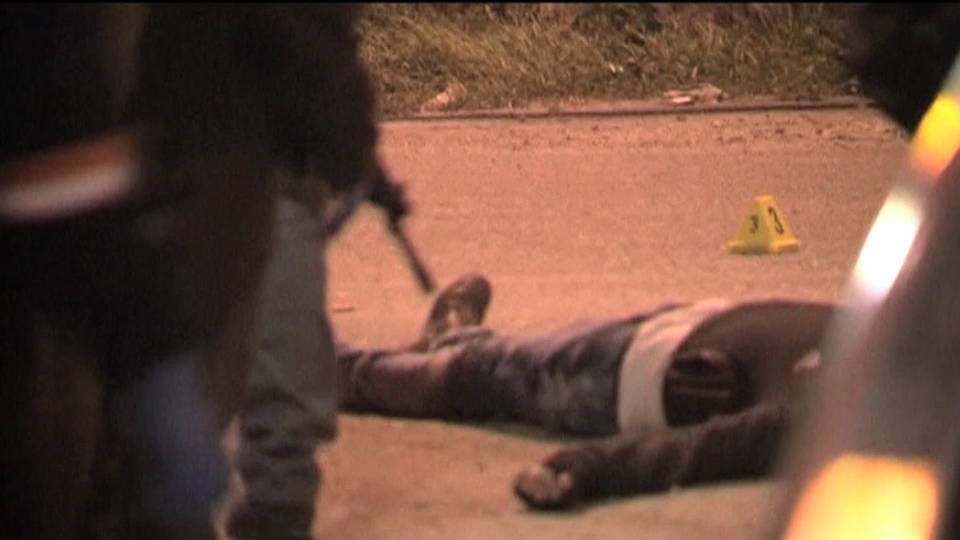
In the Israeli-occupied West Bank, Israeli soldiers shot and killed four Palestinians Thursday, whom Israeli authorities had accused of launching two separate stabbing attacks. The shootings occurred at the Jewish-only settlements of Gush Etzion and at an Israeli checkpoint near Hebron. Since October, Israeli soldiers and armed settlers have killed at least 137 Palestinians. Twenty-one Israelis and one U.S. citizen have been killed over the same time period.
Mexico: Life Expectancy Falls Amid U.S.-Backed Drug War
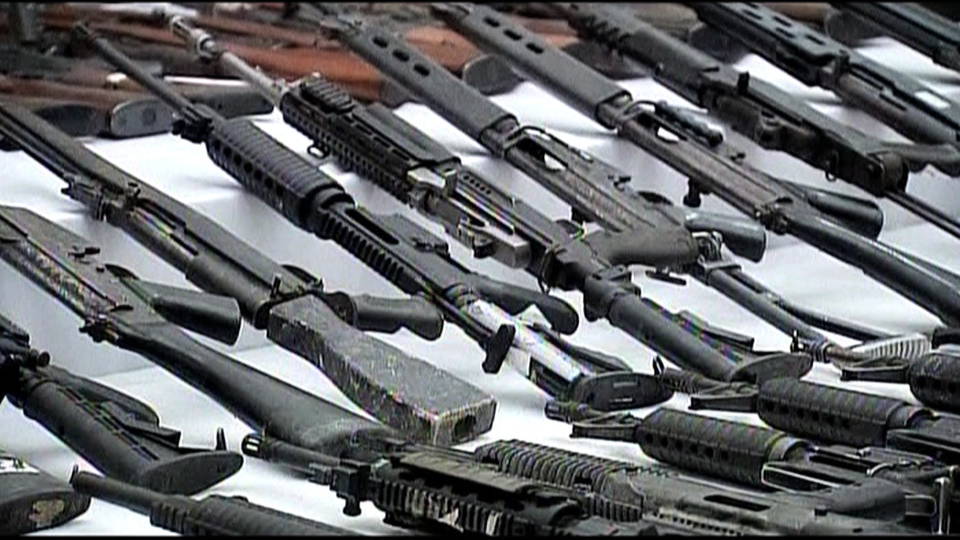
In Mexico, new data shows life expectancy rates have fallen over the last 10 years, as the rampant violence from the U.S.-backed war on drugs has outweighed a decade’s worth of public health improvements. The authors of the study published Tuesday in the journal Health Affairs said the decline in life expectancy was directly related to the rise in homicide rate, which increased after former President Felipe Calderón decided to deploy federal forces against the narco-traffickers in 2006. The ongoing conflict has claimed more than 100,000 lives over the last decade.
Assad May Lift Siege of Madaya, Amid Reports of Starvation

The United Nations says the Syrian government has agreed it will allow some aid into the besieged town of Madaya, on the outskirts of Damascus, where residents are starving to death under a blockade by Assad forces. Residents say they have been been eating grass and tree leaves to survive.
Alabama Sues Federal Gov't over Refugee Resettlement
This comes as Alabama officials have sued the federal government over Syrian refugee resettlement, claiming they have not been sufficiently consulted. Last month, a judge dismissed a similar Texas lawsuit seeking to block the entrance of Syrian refugees. The Southern Poverty Law Center has criticized the Alabama lawsuit, saying Governor Robert Bentley’s "grandstanding is fueling xenophobia and helping to create an environment ripe for hate and violence." A recent study finds hate crimes against Muslim Americans and U.S. mosques have tripled since the attacks in Paris and San Bernardino.
Venezuela: Hundreds Protest Removal of Chávez Portraits
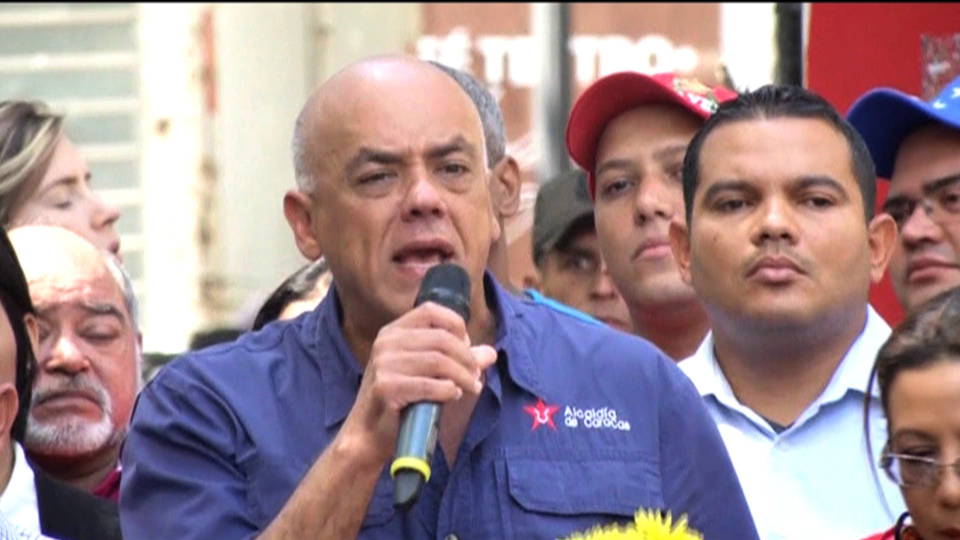
In Venezuela, hundreds of people marched in Caracas Thursday to protest opposition lawmakers’ decision to remove portraits of former President Hugo Chávez from the National Assembly. Earlier this week, right-wing opposition lawmakers took control of the Congress for the first time in 17 years. At the rally, Caracas Mayor Jorge Rodríguez condemned the removal of the portraits.
Mayor Jorge Rodríguez: "We have seen hate. We have seen violence and disrespect. We tell those who promote hate and death to stay away from our loved ones, because our loved ones are sacred."
Campbell Soup to Begin Disclosing GMO Foods
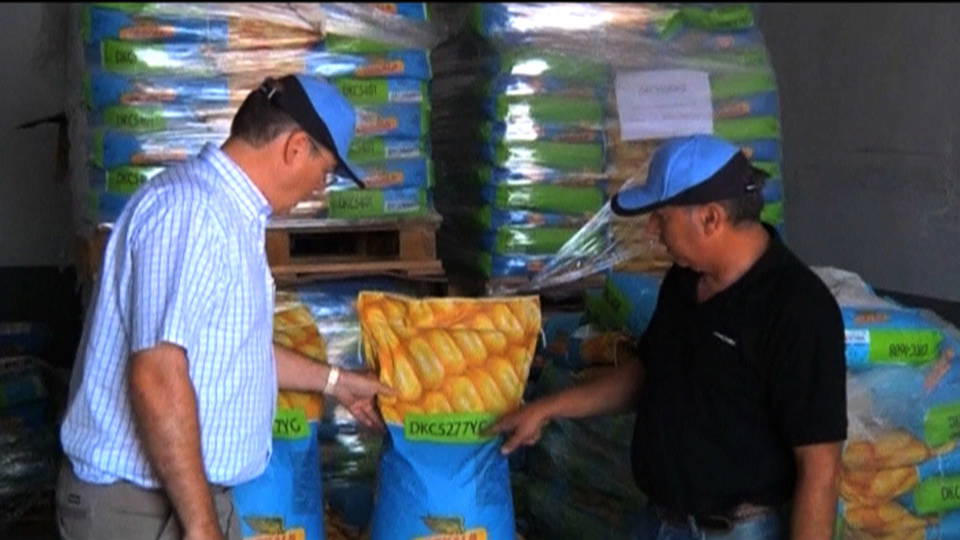
Food giant Campbell Soup says it will begin to disclose the presence of genetically modified ingredients in its brands, which include Pepperidge Farm, Prego, Plum Organics, V8 and the Campbell’s soups. The move comes as companies grapple with how to comply with a new Vermont law, which requires labeling genetically modified food. The Vermont law passed after fierce opposition from the food industry and is set to take effect in July.
Health Officials Say Gov't Caved to Meat Industry with New Dietary Rules

Meanwhile, health and environmental experts are accusing the Obama administration of caving to the meat industry in its new dietary guidelines, released Thursday. While the guidelines recommend consuming less sugar, they do not recommend eating less meat. This comes despite recent findings by the World Health Organization that processed meat is carcinogenic to humans. Advocates are also condemning the government for dropping a proposed recommendation that people eat an environmentally "sustainable" diet. This, too, would have led to recommendations to curb meat consumption, since meat production uses far more water than other forms of food production.
Planned Parenthood Endorses Hillary Clinton
In news from the campaign trail, Planned Parenthood has endorsed Hillary Clinton, marking Planned Parenthood’s first endorsement in a presidential primary in the organization’s 100-year history. The announcement comes as the House approves a measure threatening to cut federal funding for Planned Parenthood. The majority of Americans support federal funding for Planned Parenthood.
Obama Says His Endorsement Depends on Gun Control Stance
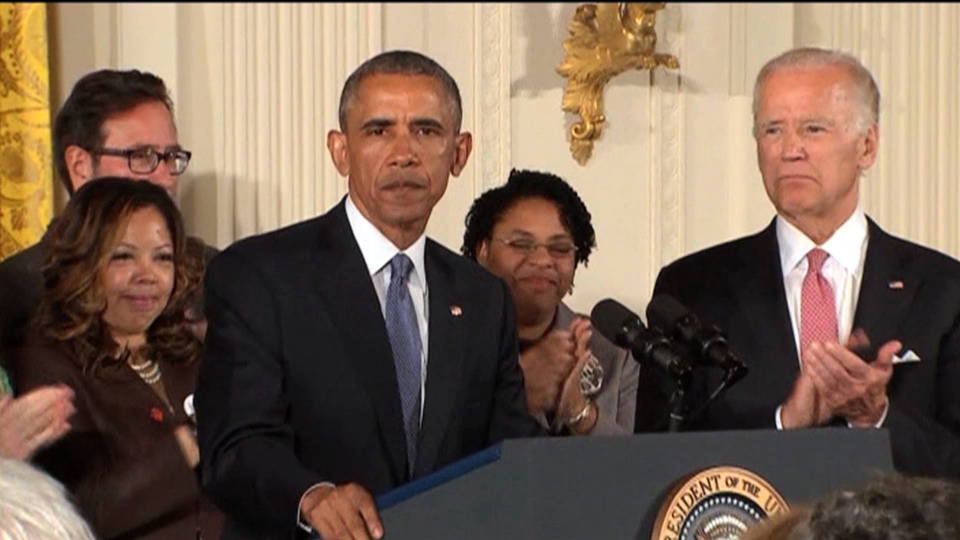
President Obama, meanwhile, has said his support for the next president will depend on the candidate’s stance on gun control measures. In a New York Times op-ed published today, Obama writes: "I will not campaign for, vote for or support any candidate, even in my own party, who does not support common-sense gun reform." This comes on the heels of Obama’s televised town hall Thursday night, in which he defended the use of executive action to implement new regulations on online gun sales and other measures intended to curb gun violence.
NYC to Appoint Civilian to Oversee NYPD Counterterrorism Program

And in a major legal victory, New York City will appoint an independent civilian monitor to oversee the New York Police Department’s counterterrorism activities. The announcement comes after two lawsuits challenged the NYPD’s programs of surveilling Muslims and religious centers. The suits argued the NYPD violated the U.S. and New York state constitutions by singling out and stigmatizing entire communities based on their religion. The settlement restores some of the NYPD’s outside oversight, which was eliminated after the September 11 attacks.
Donate today:
Follow:


WEB EXCLUSIVE


Director of Finance and Operations
Director of Development
---------------------
207 West 25th Street, 11th Floor
New York, New York 10001, United States
---------------------
---------------------

No comments:
Post a Comment