democracynow.org
Stories:

As Saudi Arabia Executes Sheikh al-Nimr, Will U.S. Respond by Cutting $50 Billion in Weapons Sales?
After Saudi Arabia executed Shiite cleric Sheikh Nimr al-Nimr on Saturday along with 46 others, protesters in the Iranian capital of Tehran responded by torching part of the Saudi Embassy. On Sunday, Saudi Arabia responded by severing ties with Iran. With Saudi Arabia and Iran backing opposing groups in Syria and Iraq, and on opposite sides of the conflict in Yemen, we examine how this will impact both regional tensions and the U.S. relationship with Saudi Arabia. Under the Obama administration, the United States has entered a record $50 billion in new arms sales agreements with the Saudis. "If the Obama administration wants to show its displeasure with this execution and try to bring an end to the war in Yemen, there’s got to be a distancing from Saudi Arabia, beginning with cutting off some of these arms supplies,” says William Hartung, senior adviser to the Security Assistance Monitor and director of the Arms and Security Project at the Center for International Policy. We also speak with Toby Jones, an associate professor of history and director of the Center for Middle Eastern Studies at Rutgers University and author of "Desert Kingdom: How Oil and Water Forged Modern Saudi Arabia," and with Ali al-Ahmed, the founder and director of the Institute for Gulf Affairs.
TRANSCRIPT
This is a rush transcript. Copy may not be in its final form.
AMY GOODMAN: This is Democracy Now!, democracynow.org, The War and Peace Report. I’m Amy Goodman, as we continue to look at Saudi Arabia’s execution of Sheikh Nimr al-Nimr, along with 46 others, which could have major repercussions in the region. We’re joined in Washington, D.C., by Ali al-Ahmed, the founder and director of the Institute for Gulf Affairs, one of Saudi Arabia’s youngest political prisoners, detained when he was 14. Also joining us from Rutgers College—Rutgers University in New Jersey, Toby Jones, an associate professor of history and director of Middle East studies there. He’s author of Desert Kingdom: How Oil and Water Forged Modern Saudi Arabia. And here in New York, Bill Hartung is with us, senior adviser to the Security Assistance Monitor, also director of the Arms and Security Project at the Center for International Policy; his latest book, Prophets of War: Lockheed Martin and the Making of the Military-Industrial Complex.
I want to bring Toby Jones into this discussion. Talk about the significance of this mass execution, this leading opposition figure in Iran, as well as 46 others, and what it means for the United States, a close ally of the Saudi regime.
TOBY JONES: Good morning, Amy. Thanks.
I’m going to say two things about this, very broadly. One is that reading this through the lens of geopolitics and the regional sort of relationship, Saudi Arabia and Iran, is, of course, critical, and it’s important, especially as relations sour and things tend to fall out. But this was also about domestic politics in Saudi Arabia. Last week, Saudi Arabia announced a new budget, in which it forecast a significant budget shortfall as a result of declining oil revenues. When revenues start to fall like that in Saudi Arabia, there’s pressure on the social welfare state, and Saudi Arabia anticipates that there might be pushback and opposition from within society, as Ali al-Ahmed’s suggested earlier. Killing a Shiite cleric goes a long way in deflecting attention away from political, economic pressures. Sectarianism is at an all-time high, and has been over the last decade or so. And so the Saudis are seeking to capitalize, I believe, symbolically, on the killing of al-Nimr as a way to buy a little bit of time to figure out how to negotiate its way through an economic crisis. And, of course, there’s also the war in Yemen and justifying a continued failing project there. Using sectarianism as a way to achieve goals there is important, too.
With respect to the U.S. relationship and how all of this figures in—and I think the U.S. is probably caught a little bit off guard here. Al-Nimr has been on death row for quite a long time. I don’t think any of us really expected that the Saudis would carry through with this. It raises all kinds of questions about timing: Why now? Why kill al-Nimr alongside a bunch of al-Qaeda terrorists, as well as some of those other young Shiite men who were executed on Saturday, as well? So the U.S. is caught off guard. It’s called for calm. It’s called for dialogue. These are odd expressions and demands from the United States. I mean, the U.S. knows that the Saudis are not interested in dialogue with Iran. Saudi Arabia sees itself as in a tense and fraught relationship with its neighbors across the Gulf. And the U.S. also understands very well that it’s precisely crisis and it’s escalation of tension between Tehran and Riyadh that plays into Saudi Arabia’s ways that they talk about insecurity, their regional phobias and fears. They frame everything around escalating series of crises. The U.S. understands this very well. I mean, the Saudis are masters at manipulating that kind of language in order to keep the Americans in a certain geostrategic position. But, to be clear, it’s also a position that I think the United States is happy to play.
AMY GOODMAN: Bill Hartung, if you can talk about the U.S.-Saudi arms relationship? I mean, hasn’t, in the last year, the U.S. been involved with the largest arms sales in their history, this to the Saudi regime?
WILLIAM HARTUNG: Yes, throughout the Obama administration, we’ve seen $50 billion in new arms sales agreements with the Saudis, which is a record for any kind of period like that. And so, they’re all in behind the Saudi military. They’re providing logistical support, bombs, refueling for the war in Yemen, U.S. companies training the Saudi National Guard, which is their internal security force. We’ve trained 10,000 Saudi military personnel in the last 10 years—five years, rather. So, you know, my belief is if the Obama administration wants to show displeasure with this execution, try to bring an end to the war in Yemen and so forth, there’s got to be a distancing from Saudi Arabia, beginning with cutting off some of these arms supplies.
AMY GOODMAN: Aren’t U.S. weapons manufacturers in their heyday right now, making record profits?
WILLIAM HARTUNG: Yes, and this is a huge boon to them, the Saudi market. They just announced a major combat ship sale, which will benefit Lockheed Martin. Boeing fighter planes are in the mix, Boeing helicopters. General Dynamics is keeping a whole tank line open through sales to Saudi Arabia. So there’s both a dependency on the U.S. arms industry on Saudi sales and also huge financial benefits keeping this—you know, this gravy train running for them.
AMY GOODMAN: And how Saudi Arabia is using these weapons in Yemen?
WILLIAM HARTUNG: Well, there’s been a humanitarian catastrophe of the highest order there. They’ve been bombing markets, hospitals, refugee camps—more than 2,000 civilian casualties, most of them from the Saudi bombing. Basically, the Saudis, many believe, are engaging in war crimes in Yemen. And the U.S. logistical and arms support is facilitating that.
AMY GOODMAN: Ali al-Ahmed, what could the U.S. do? And what—how do you assess the U.S. relationship with Saudi Arabia?
ALI AL-AHMED: This is a complex relationship that really is led and dominated by the Saudi ability to buy silence and support. If you look at the reaction of presidential candidates, for example, you don’t see any of them speaking out against these executions. It’s odd that, for example, Mr. Ben Carson would say that the Saudi government is an ally of us and we should support it, at the same time that the Saudi monarchy prevents black people from becoming diplomats or judges because they view blacks as slaves. So, really, here you see a contradiction of the—what we know as American values, is that the Saudis have been able to buy their way by giving money to a lot of politicians, to their foundations, like the Clinton Foundation, the Carter foundation, and shaping their opinion. And, unfortunately, because in America politics works on money, the Saudi monarchy has really broken that code and understood how to use it.
The United States can do a few things, really, right now. They can first, for example, stop the U.S. taxpayers spending money on protecting the Saudi monarchy and Gulf monarchies. Professor Roger Stern of Princeton has a study that says that the United States has been spending over $200 billion a year in military expenditure in the Gulf. That is the largest military expenditure abroad. It is to—the effect is—the default effect is, it’s protecting these monarchies. The U.S. should not be spending that money. The monarchies can spend their own money defending themselves.
Secondly is, for example, I would urge the U.S. government to intervene to ensure that the Saudi monarchy will return the body of Sheikh Nimr al-Nimr to his family, because they refused to do so after the execution. I think that would be a great example of how the U.S. can use its power to bring some healing to this process, because the Middle East might implode, Saudi Arabia itself might implode, because of this. So, I think they should take some, you know, serious steps.
And I really met with the State Department over the past few weeks, and I told them—and I wrote an article about it—says, "You must take steps now. Don’t wait until the executions take place," because we knew that these executions were happening. It’s important to prevent any ignition in the region before it happened. But unfortunately—
AMY GOODMAN: And do you feel that the State Department took your advice?
ALI AL-AHMED: No, they didn’t. They didn’t. I mean, this—
AMY GOODMAN: So, Toby Jones, we have 30 seconds. Why is the U.S. not being more vocal in its criticism of Saudi Arabia?
TOBY JONES: Well, the U.S. is stuck. I mean, aside from questions of profit, the U.S. is also beholden—you know, and it’s partly the product of its own making. I mean, this is a generational commitment to Saudi Arabia, in which for over three decades we’ve committed ourselves. Now, whether this is true or not, we’ve committed ourselves to protecting the flow of energy out of the Persian Gulf. It’s the largest producer of oil on the planet in this one area. And the United States has tied its military fortunes, in many ways the pocketbooks of its gunmakers, as well as the Pentagon, to what comes in and goes out of the Persian Gulf. If you think about it critically, that’s what needs to change, but it’s also the hardest thing to re-engineer, this breaking away not only from oil dependency, but also from the massive financial and military investment that the U.S. has made in the region.
AMY GOODMAN: We’re going to have—
TOBY JONES: But the bottom line is, it’s not stabilizing. It’s destabilizing.
AMY GOODMAN: We have to leave it there. Rutgers University professor Toby Jones, arms expert Bill Hartung and Ali al-Ahmed, director of the Institute for Gulf Affairs, thanks for joining us.
When we come back, an exclusive extended interview with the jailed American activist, just recently back from Peru after 20 years, Lori Berenson.
... Read More →
Friend of Sheikh Nimr al-Nimr: Shiite Cleric's Execution "Will Not End Well" for Saudi Monarchy
As protests erupt across the Middle East after Saudi Arabia’s execution of prominent Shia religious leader Sheikh Nimr al-Nimr, we speak with his friend Ali al-Ahmed, founder and director of the Institute for Gulf Affairs. "He said we should support the oppressed against the oppressor," says al-Ahmed. He notes Sheikh al-Nimr was a small-town religious leader that relatively few had heard of before he was put to death, but since his execution memorial services have been held for him around the world. The Saudi government accused Nimr of calling for the overthrow of the Saudi royal family. He had been arrested multiple times, including in 2012 for his involvement in protests after the Arab Spring uprising. Ali al-Ahmed was one of Saudi Arabia’s youngest political prisoners when he was detained at age 14.
TRANSCRIPT
This is a rush transcript. Copy may not be in its final form.
AMY GOODMAN: Protests have erupted across the Middle East after Saudi Arabia executed prominent Shia religious leader Sheikh Nimr al-Nimr—along with 46 others—Saturday in the country’s largest mass execution in decades. The Saudi government accused Nimr of calling for the overthrow of the Saudi royal family. He had been arrested multiple times, including in 2012 after he was involved in protests after the Arab Spring uprising. Sheikh Nimr had also called for the secession of Saudi Arabia’s oil-rich Eastern Province, where the majority of the Sunni kingdom’s Shia population live. After his execution Saturday, protesters in the Iranian capital Tehran responded by torching part of the Saudi Embassy. On Sunday, Saudi Arabia responded by severing ties with Iran. This is Saudi Foreign Minister Adel al-Jubeir.
ADEL AL-JUBEIR: [translated] The kingdom, in light of these realities, announces the cutting of diplomatic relations with Iran and requests the departure of delegates of diplomatic missions of the embassy and consulate and offices related to it within 48 hours. The ambassador has been summoned to notify them. [in English] We are determined not to allow Iran to undermine our security. We are determined not to let Iran mobilize or create or establish terrorist cells in our country or in the countries of our allies.
AMY GOODMAN: Saudi Arabia has recalled its diplomats from Tehran and given Iranian diplomats 48 hours to leave Saudi Arabia. This is Iranian Supreme Leader Ayatollah Ali Khamenei.
AYATOLLAH ALI KHAMENEI: [translated] Killing a knowledgeable man, who promoted virtue and prevented vice and had religious zeal, is certainly a crime, a great crime. It is also a mistake, because the spilled blood will undoubtedly bring divine retribution. Saudi politicians, rulers and policymakers should have no doubt that there will be divine vengeance for this blood. God almighty will not pardon those who spill the blood of the innocent.
AMY GOODMAN: Saudi Arabia’s execution of Sheikh Nimr al-Nimr also led to protests in Iraq, Bahrain and several other countries. Bahrain says it, too, is severing diplomatic ties with Iran. Earlier today, two Sunni mosques about 50 miles south of the Iraqi capital, Baghdad, were rocked by bomb blasts thought to be retaliation against al-Nimr’s execution.
Meanwhile, the U.S. has called for dialogue. Analysts are watching closely to see how this will impact regional tensions. Saudi Arabia and Iran back opposing groups in Syria and Iraq, and are on opposite sides of the conflict in Yemen.
For more, we turn now to Ali al-Ahmed, the founder and director of the Institute for Gulf Affairs, one of Saudi Arabia’s youngest political prisoners when he was detained at the age of 14.
Welcome to Democracy Now!, Ali al-Ahmed. Can you talk about the significance of first what took place on Saturday, one of the largest mass executions in Saudi history, and the significance of Nimr al-Nimr, the sheikh?
ALI AL-AHMED: Yes. Good morning, Amy. It’s a pleasure.
The execution of Sheikh Nimr al-Nimr is really an important development, given the fact this is the first time in Saudi history where a Shia religious leader has been executed. Fifty years ago or so, another leader was sentenced to death, but he was not executed because he was abroad. This really creates a division within the country. In the Shia communities around the world, religious leaders are most revered, because they are the leaders of the community. And they are usually chosen by—people choose them as their leaders. It’s almost a democratic process.
So, for the Saudi government to recklessly execute him and others, including protesters, really is a reckless act that will have repercussions for a long time. I think this will start another chapter in the Saudi history, a chapter that I think we will see come to reality in 2016. And it will not end well for the Saudi monarchy. I think we’ve seen that in different areas where governments who targeted Shia religious leaders end up really with a mess on their hand, from Saddam Hussein to Gaddafi to others, who probably underestimated the will and the determination of the Shia communities to bring repercussions to them. And I believe the Saudi monarchy committed a huge mistake that is not going to work for them in the short and the long term.
AMY GOODMAN: You went to a memorial service for the victims of the mass execution. Can you tell us who Nimr al-Nimr, though, is, exactly what he represents, how he expressed his opposition to the Saudi regime?
ALI AL-AHMED: You’re absolutely right. Sheikh Nimr al-Nimr’s name—you know, a month or two months ago, nobody knew who Sheikh Nimr al-Nimr was. He was a religious leader from a small town in the eastern shore of Arabia. But since his execution, memorial services have been held for him across the United States, across Europe and different parts of the world. Sheikh Nimr is a friend of mine—was a friend of mine. I knew him probably 30 years ago. I met him. I met his family, his father. I visited their home. His brothers, younger brothers, are friends. So, I knew him.
Sheikh Nimr’s experience with the Saudi government dates back to his grandfather. His grandfather was also a fiery cleric who stood in the face of the Saudi oppression of the Shia minority 50, 60 years ago. So he inherited this zeal and the resolve to object to this oppression. If you look at his speeches, he expresses this strong determination and will. His words really are amazing words. And we will be translating a selection of his words to show you that when he speaks, really, as a free man, he said, "We either live free on this land, or we die inside of the Earth." So—or he says that "We choose not to be ruled by the al-Saud. We choose to be free"—these words of freedom and dignity. And you mentioned the secession. He didn’t call for secession. He said that "Our dignity is more important than the geographical borders of Saudi Arabia. Our dignity comes supreme." And I think that’s correct. The dignity of man, the dignity of a human being, is much more important than political unions. And his words really shows you he’s a rare individual.
And when Mr. Obama spoke about the need for Muslims to combat violence and extremism, Sheikh Nimr is a rare example of a person who calls for the people’s rule in a monarchy that does not allow the individual, Shia or Sunni, to have a say. He called for people’s power. And that really shows you an example, a shining example, of a religious—Muslim religious leader who is empowering people and their choices, who defended everyone, not only his community, but also he spoke of the Sunni oppressed. And he really created a new model. He said that we should not support Sunnis versus Shia or Shia versus Sunni; we should support the oppressed against the oppressor, no matter their religion, their sect and their ethnicity.
So I really think his words is going to live, and it will create this new wave. He was in the country of Saudi Arabia, which is divided around sectarian lines. He was admired by many Sunni young men for his words, for his courage. Inside a country, a kingdom of silence, his words really rang strong. And I think if you compare him to many people that we admire around the world, including the United States, you will see him really standing in the middle, in the lion’s den, and speaking without fear. He was courageous and will be remembered for a long time.
AMY GOODMAN: Ali al-Ahmed, his nephew remains on death row, or threatened with execution, who was, what, 17 when he went out to a protest, Ali Mohammed al-Nimr, and also the Palestinian poet Ashraf Fayadh. What will happen with them? They were not part of the 47, is that right, who were executed?
ALI AL-AHMED: Yes, yes. The Saudi government now is trying to make these executions—although the majority of the executed people are Sunnis, they are trying to make this, frame this into a Sunni-Shia tension. It’s not. It is really an attempt by the Saudi monarchy to silence their opposition and to label anybody who spoke against them as terrorists. And there is a plan to execute more people. The Saudis spread their executions across the country to—really, to spread terror in the heart of the population. The Saudi monarchy fear is that the population will rise against them. And the best way they think that they can silence this opposition and the aspiration of the young people in that country for people’s power is to execute people and to—publicly, by the way—and behead them, so the people will not rise.
AMY GOODMAN: Ali al-Ahmed, we’re going to break and then come back, and we’ll also be joined by professor Toby Jones and arms expert Bill Hartung to talk about the U.S. relationship with their very close ally, Saudi Arabia. Stay with us.
... Read More →
Lori Berenson After Being Held 20 Years in Peru: "My Objectives Were to Achieve a More Just Society"
The once-imprisoned U.S. activist Lori Berenson has returned home nearly two decades after being tried and convicted of collaborating with the Túpac Amaru Revolutionary Movement in Peru. Berenson is a former student at the Massachusetts Institute of Technology who left school to become an activist in the 1980s in El Salvador during the Reagan years and then moved on to Peru. In 1996, she was tried by a hooded military judge while prosecutors used secret evidence against her, and was ultimately convicted to a 20-year sentence. For three years, she was held in the frigid Yanamayo prison in the Andes mountains in an unheated, open-air cell without running water. After a major outcry, she was later transferred to the Socabaya prison in Arequipa, Peru. Berenson was released on parole in 2010 but was barred from leaving Peru for good until her sentence expired a few weeks ago. Democracy Now! was the first to interview Berenson in the Socabaya prison and broadcast her voice to the U.S. public after she was sentenced, and has long covered her case. She now joins us for her first television interview as a free woman back home.
TRANSCRIPT
This is a rush transcript. Copy may not be in its final form.
AMY GOODMAN: We end today’s show with Lori Berenson, the once-imprisoned U.S. activist who has returned home from Peru after nearly two decades. Berenson is a former student at the Massachusetts Institute of Technology who left school to become an activist in the ’80s in El Salvador during the Reagan years, then moved on to Peru. In ’96, she was convicted of collaborating with the Túpac Amaru Revolutionary Movement in Peru. She was tried by a hooded military judge. Prosecutors used secret evidence against her. For three years, she was held at the frigid Yanamayo prison in the Andes mountains in an unheated, open-air cell without running water. After a major outcry, she was transferred to the Socabaya prison in Arequipa, Peru. Lori Berenson was released on parole in 2010 but barred from leaving Peru for good until her sentence expired a few weeks ago. We are the first to interview Lori in the Socabaya prison when she was there in 1999 and now the first to have an extended interview with her when she came home. I talked to her last week and asked how it feels to be free.
LORI BERENSON: It’s wonderful to be here. I’ve been on parole for many years, which was similar to being free, but it’s nice to be completely free.
AMY GOODMAN: And to be back home in the United States for good.
LORI BERENSON: It’s nice to be with my family. It’s nice to see old friends. It’s nice to have the possibility of doing those things.
AMY GOODMAN: What brought a young woman who was a freshman at MIT first to Salvador and then to Peru?
LORI BERENSON: I decided that I was not in agreement with the type of academia work I’d be able—you know, you could, yeah, get a degree, and then you become part of the system. And I thought that becoming part of the system somehow—you know, I mean, other people are able to use that to—and to use it very well to the benefit of social justice, but others tend to be absorbed by the system. And I didn’t want to be part of—absorbed by the system. I also, you know, had a very different—at the time, I sort of started seeing that the world has a lot less to do with what you learn in school than what you learn in life, and that the meaning of degrees is—shouldn’t be that. So it was—in part, it was my way of saying, you know, I don’t believe in this type of system. On the other hand, I wanted to support processes that sought to change what at the time of this—this was when the U.S. was supporting death squads and supporting—you know, sending millions of dollars in military aid to bomb the civilian population in El Salvador. So that was the context in which I decided to get involved. It was a very different context than when I go to Peru, but it’s certainly in the case of El Salvador, that was a fundamental reason that brought me to that, was: How could my government, that talks about democracy, be doing this?
AMY GOODMAN: And so, you went to Peru. And how soon after you were in Peru that you were arrested?
LORI BERENSON: I was arrested a year later.
AMY GOODMAN: Explain what the MRTA was.
LORI BERENSON: The MRTA is an organization that basically followed the example of the guerrilla movements of the 1960s in Peru and the rest of the continent, really, the national liberation struggles. It forms out of different leftist organizations that actually were participating in the efforts to return to democracy in the early—the late '70s and early ’80s. And they form an alternative guerrilla movement to what is the better known, the Shining Path, which had emerged publicly in 1980. And it was a small organization, very similar to the organizations I am more familiar with in Central America. And when I got to Peru, I understood, in the case of the MRTA, they were also—it's an organization—at the time that I got there, there was nothing—no armed activities going on. And it was also an organization that seemed to be looking for a way out.
AMY GOODMAN: It was deemed a terrorist organization by Peru?
LORI BERENSON: Well, everything was called terrorism in Peru.
AMY GOODMAN: As well as the Shining Path.
LORI BERENSON: Yes, it was. Yes.
AMY GOODMAN: And by the United States.
LORI BERENSON: At the time, I presume so. There wasn’t a terrorist list. The terrorist list came out, I believe, in '98, if I'm not mistaken. But at the time of my arrival in Peru, it was not on any formal list.
AMY GOODMAN: What was it about the MRTA that you were drawn to, that got you involved?
LORI BERENSON: They were very similar to the organizations I had been familiar with in Central America. But more than that, it was my sense that they were in a very difficult situation, a lot of people in prison, and they were looking for a way out.
AMY GOODMAN: What do you mean, "a way out"?
LORI BERENSON: A way out—you know, in El Salvador, there was a peace process. In other countries, there—in Guatemala, there was a peace process, that, you know, there are moments in which you say, "OK, so how do we resolve the situation?" And it was a situation of dictatorship. So what do you do when you have an autocratic—or you want to call it dictator or autocratic government, that was not at all democratic? So, it wasn’t as if you could say, "Hey, we want to lay down our weapons and give ourselves in." I think they were looking for a way to do that, to some—to some extent. I just—I didn’t realize it until after the embassy takeover, analyzing that, that that was how they were planning to find a way out, because when they took over the embassy, one of the things they talked about was national dialogue. You know, it was a way—I see it—you know, in retrospect, I think they were—that was the way out they were looking at.
AMY GOODMAN: Explain the government at the time.
LORI BERENSON: So, in 1990—well, Alberto Fujimori wins the elections of 1990 and applies shock—a shock program, you know, and applies a lot of dirty war tactics. There was a lot of intelligence used to carry out disappearances, in very selective disappearances, but, you know, talking about thousands of people were killed, and—during that period. And in 1992, he has a self-coup, where he closes Congress, he closes—restrictions on the press. It’s a series of, you know, lack of rights to protest. And that is the Peru I knew. So by the time I had gotten there, they had opened what they called—was it—the CCD. It was a—some form of congress. It was not the form that had always existed, but it was whatever they—whatever he’s invent—whatever he invented. And there were elections; however, it was still within the framework of a constitution that was not—you know, it was a neoliberalism, and it was not exactly democracy.
AMY GOODMAN: So let’s go back to November 30th, 1995. There are many people who are watching right now who were not even born then. So, talk about what happened, why you were arrested and what happened to you.
LORI BERENSON: OK, well, on that day, I was actually—in that time, I was doing some work in—as a journalist, and I was—I had gone to Congress. I was following a series of debates, actually a very important debate on narco houses or something, and I left—walking down the street, took a bus, and I was pulled off the bus and shoved into a car.
AMY GOODMAN: By?
LORI BERENSON: Un-uniformed policemen. And I was taken to a large office, which I later learned was the intelligence police office in [inaudible]—
AMY GOODMAN: The DINET?
LORI BERENSON: That was the DINCOTE. And I was—from there, I was taken to the house which I had helped rent a time earlier. And the shootout started. I was there all night when they were shooting—during the shootout, but I was in the police car.
AMY GOODMAN: The police held you in the car as a shootout took place—
LORI BERENSON: Oh, yeah.
AMY GOODMAN: —between the police and the MRTA—
LORI BERENSON: Yes, I was there. Yes, uh-huh.
AMY GOODMAN: —at the house that you had rented.
LORI BERENSON: And then I was—after that, I was detained. I was tried by a hooded military tribunal—that is, you know, not faced. Very limited access to legal protection. Lawyers were allowed in. They didn’t have access to the files. Statements were made under duress. There was a wounded woman who was forced to declare in a very difficult state. So, it was a difficult situation for all of those who were detained at the time. We were about 20-some-odd people at that time. And then I was sentenced to life in prison as a leader of the MRTA, which the—basically, the figure in—to be tried by a military tribunal was that if you weren’t detained in combat, then in order—you had to be a leader to be tried by a military tribunal. So they decided to call me a leader. So that was interesting.
AMY GOODMAN: When you were brought out to the press is this is the image Peruvians have of you, and anyone in the rest of the world, for the next few decades.
LORI BERENSON: Yes.
AMY GOODMAN: Explain what you were told as you were brought out to the press.
LORI BERENSON: OK, I was told that there was no microphone and that if I wanted to be heard, I had to raise my voice. And I guess at the time I didn’t think of the consequences. I mean, I think if I had said the same thing without looking angry saying it, they wouldn’t have been able to use it. But, you know, it’s the use of images. You take images from below, towards—above, people look very big. And you can always catch an image when someone has their mouth open. So, you know, having the mouth open is enough. Regardless of even if I spoke silently, you know, very quietly, if I had my mouth open, that would have been enough. But they were able to use that image for—’til now.
AMY GOODMAN: And you were told you had a very small amount of time, like a minute, to say whatever you needed to say?
LORI BERENSON: I believe so. I don’t remember that exactly.
AMY GOODMAN: What did you say?
LORI BERENSON: I said—
AMY GOODMAN: And you had to speak in Spanish, of course.
LORI BERENSON: OK. Well, I said that the MRTA wasn’t a—I didn’t think it was a terrorist organization. And I said that it was—if they existed, it was because there was a lot of injustice in the country, and saying basically that if I was going to have to pay for that, I would. And that’s what I did.
AMY GOODMAN: So, you were tried. Explain what this courtroom was like. What does it mean to be tried before a hooded judge?
LORI BERENSON: I don’t know if ours was similar to—I know of other cases that were actually rather different, but it was basically a three-phase trial. The first phase was you were interrogated by the police, and then at some point the military started intervening. It was very difficult to tell which was the difference at the time. You know, these are things that I might have seen differently if I had known more. But after that—that was the first phase—we were sentenced. We were all put in a room with hooded judges and hooded—surrounded by soldiers. We were given the sentences. And then we were given two—I believe two appeal trials in these rooms with distorted—I think one was in front of a judge, but there was—they tended to use these rooms with like distorted sound, so you’d be looking at a mirror. It was just sort of unusual to have distorted sound and images. And I think they filmed. And by the third, you know, sentence, they confirmed the life sentence. They changed some of the charges along the way, if I’m not mistaken. But it was—it was all preposterous. It was based really on I’m not sure what—a lot of imagination.
AMY GOODMAN: And what did they charge you with, and what were you convicted of?
LORI BERENSON: It was treason. I don’t really remember—as I said, I was first convicted of being a leader of the MRTA, so I don’t remember the exact charges. But they were—it was a long—it was a laundry list.
AMY GOODMAN: I wanted to go back for one moment to the time that I interviewed you in the Socabaya prison. This was back in 1999.
AMY GOODMAN: Did they present any evidence at the trial?
LORI BERENSON: No. In the actual trial? No, absolutely nothing.
AMY GOODMAN: Are you innocent of the charges?
LORI BERENSON: Yes, of the charges. Yes, I’m innocent of all the charges they’ve made against me.
AMY GOODMAN: Which brings us to the U.S. and what the U.S. is doing here around your case, the U.S. government. What is the U.S. doing? Are they helping you?
LORI BERENSON: There has been some pressure at certain times, but not heavy pressure. Not heavy enough pressure, at least, because I’m still here.
AMY GOODMAN: Do you think if they did put pressure, you wouldn’t be here? I mean, the U.S. administration?
LORI BERENSON: I mean, I think, in the sense of more than the Congress in itself. I mean, all the military aid they give them and that kind of support and the patting on the back of Fujimori every time that he does anything. I think he feels like he’s fine.
AMY GOODMAN: That was 1999. Can you describe that time in the Socabaya prison? You had been there—you had been imprisoned at that point for like three years, first at Yanamayo and then at the Socabaya prison.
LORI BERENSON: The thing with Socabaya, I think, if I’m not mistaken, the interview was when I was still in isolation, so I think it was difficult because I wasn’t allowed to talk to anyone. It was—you know, in that sense, it was—you know, we weren’t allowed access to the media. We weren’t allowed access to information. It was a very isolating experience. That is what I most remember about Socabaya, was that aspect.
AMY GOODMAN: And to people—of course, there have been millions of people imprisoned in the United States. But you now were imprisoned for about 15 years.
LORI BERENSON: Mm-hmm.
AMY GOODMAN: Can you talk to an American audience about what that experience meant?
LORI BERENSON: Well, I think it’s important, particularly in the United States, but it’s also important in Peru, the issue of prisons as a space of justice or as a space of punishment. I think we’d have a much healthier society if we used imprisonment sparingly, just so that people could learn from imprisonment and become—have an opportunity to become—to do something else or to learn—to learn to become productive—have the opportunity to be productive citizens. Unfortunately, in the United States and elsewhere, prisons are disproportionately—disproportionately with people of lower socioeconomic status. There’s race and class involved. It’s an issue in which you just see—it’s like social—it’s social struggle on lines. You know, there are a lot of kids who get into gangs because that’s the only option they see. And those kids could do other things if they had other options. So prisons could be a space in which that could happen. Or what usually happens is they just get thrown in, they get tortured, they get beat up on, and they—basically, if they’re not killed there, they’re not really—they don’t really have a chance. So when they get out, they don’t have a chance. So I don’t—what kind of world do we live in, in which we exclude people instead of trying to find ways to include them? I mean, you know, and so that happens—happens here, happens in Peru.
AMY GOODMAN: Dennis Jett is quoted as saying—he was the ambassador—
LORI BERENSON: Mm-hmm, yes.
AMY GOODMAN: —to Peru at the time—"What leverage do we have over Peru?" he asked. "I think this is a colonial, somewhat-racist mentality that these countries are always wrong, and all we have to do is apply pressure on any underdeveloped country." He said, "There is no way anyone can look at her story," referring to you, "and conclude anything other than she knowingly, willingly and enthusiastically worked for a terrorist organization." That quote from just last week.
LORI BERENSON: Mm-hmm.
AMY GOODMAN: The ambassador at the time of your arrest in Peru.
LORI BERENSON: Mm-hmm.
AMY GOODMAN: Your response?
LORI BERENSON: Well, you know, he has been very consistent in his responses on this. I do not agree with him. I do not think there was overwhelming proof of anything that he says. But look, that’s his political position. It was not the position—not everyone was patting Fujimori on the back. He was. Not every—not all the ambassadors in Peru were doing that.
AMY GOODMAN: Ambassador Jett also demanded I be fired for having interviewed you in the prison. But your evaluation of Amnesty International saying something like 53 percent of the violence in the ’80s could be attributed to the Peruvian government, 46 percent of the killing to Shining Path, 1 percent to the MRTA?
LORI BERENSON: That’s—the Truth Commission came up with similar statistics. I think it’s really hard, because, first of all, I think the Truth Commission was developed as to start a process of memory and not to be the only thing that would come out, and it like closed the book. So, you know, their conclusion was actually that the Shining Path had committed 54 percent, and something like 35 percent to the state and 10 percent unknown, 1.5 percent to the MRTA, which seems a bit high, but that’s—it could be. I don’t know. I do think that if—you know, the problems with understanding what happens also depends on how and when you ask it. If you go to a community in which the military is still there, it’s highly probable they will not say the military did it. So, you know, those types of things, I think, will always be a problem when looking for truth. But I’m sure—you know, there have been horrific things have happened in Peru. And I think that’s why I say take responsibility for having collaborated with an organization that has committed crimes. I think that is—and that’s why I was in prison. So I think, you know, yes, it was secondary collaboration, I wasn’t involved in any specific act, but, yes, I do—I do take my responsibility. And I think those—at least in the case of the MRTA, all the leadership has taken responsibility for their acts. They are—that’s because it’s necessary. You know, that’s how—it’s like I said. It’s unfortunate that that is not happening on all sides.
AMY GOODMAN: I want to play a clip of your mother, Rhoda Berenson, and your father, Mark Berenson.
RHODA BERENSON: We’re asking everybody to remind President Bush what he said in March and to remind him he’s under an obligation: If a U.S. citizen is wrongfully held in another country, there’s a U.S. statute that says he must do everything in his power to release her. And the commission has essentially said Lori Berenson is wrongfully held.
MARK BERENSON: And this commission consists of seven respected internationally legal scholars and human rights scholars from seven different countries. President Bush, Lori is wrongfully held. It’s time now to show backbone and strength, and have the moral courage to do the right thing. If Ambassador Negroponte said a week ago that America takes care of its own, Lori Berenson is one of your own. She has suffered. She has been wronged. You know it. Secretary Powell knows it. Every person in this country of goodwill and understanding knows Lori Berenson has been wronged, and it’s time to bring her home.
AMY GOODMAN: What did that mean to you, the way your parents rallied around not only you, but rallied support in the United States, not only for your—around your imprisonment, but for the condition of people in Peru?
LORI BERENSON: I mean, I was very surprised. I just wasn’t—you know, I don’t come from a very political family. I didn’t expect their dedication. And to some extent, it was—I felt—I felt very badly for it. I still do, to a good extent. But I’m very grateful for it. They did an amazing—had amazing effort, despite the fact we didn’t have great communication. I think it was very difficult the first years for them, because they didn’t have access to a lot of information. They didn’t know what was really happening. And that made it—so, some of the confusions perhaps in the way they interpreted things has to do with the lack of communication. So I think they—despite that, they did an amazing—an amazing thing.
AMY GOODMAN: It’s 20 years later. You have been in Peru, basically—I don’t know if you call it under house arrest, but you were—you were not allowed to leave Peru from 2010 until now. And now you were just allowed to leave. Would you do things the same way, if we went back 20 years, but you know what you know now?
LORI BERENSON: Yes and no. I mean, when I go back to thinking like about education, if I had learned another skills, I might have been able to do some of the work I—maybe different types of work directly with populations, that would have made my life very different. In that sense, I think I would have chosen to learn a little more before going to do things, you know, learn a skill that would have been more useful. But in terms of doing it, I can’t go—I can’t deny my life. My life is what it was, or what it is. And I—I mean, yes, there are things that when I reflect upon what happened and say, you know, I—and that’s part of the reason why I take responsibility for my actions, and I apologize, because it’s like I do acknowledge that whether or not I am directly responsible for certain actions, there was horrific bloodshed in Peru, and I am very sorry it happened. So, in that sense, understanding how—if I had known I was going to come and symbolize that, I might have thought twice before speaking, because, you know, it’s hard to symbolize horror. But on the other hands, it’s like, you know, I wasn’t—the objectives of—certainly my own objectives and others’ objectives were not to create horrific bloodshed, either. They were—you know, they were to achieve a more just society. And like I said, I think it’s important that those who have been involved on any side take responsibility for what they have done. And most—you know, certainly on the side of the left, people paid, been in prison for a long time, and some are still there, whereas in the case of the government forces, they continue to live in entire, total impunity.
AMY GOODMAN: Although, interestingly, Alberto Fujimori, the president of Peru, is in jail. He used to wave your passport and say "feminista terrorista."
LORI BERENSON: I didn’t know that.
AMY GOODMAN: He would carry it with him.
LORI BERENSON: Yeah.
AMY GOODMAN: But he ends up in jail.
LORI BERENSON: No, that is a bit ironic, yes.
AMY GOODMAN: So, let’s end with the issue of memory, something you’re very interested in, as you move forward in this country. What does it mean to you? And what does acknowledgment and understanding the past—what do you think has to happen?
LORI BERENSON: Well, I think in any country, and this includes the U.S., if we deny that things happened or try to paint it over as if it wasn’t that way, then the problems are more likely to either recur or at least just continue to be problems. If you start acknowledging them and say, "Hey, let’s get a handle on this. We’ve got to see where our—what the cause"—you know, the root cause of violence in Peru, it has to do with structural violence. I mean, you know, regardless of whoever started first—it’s not who started first. It’s like why on Earth would something—would the violence have been so extreme, had there not been the type of structural violence that existed in Peru? It was semi-feudal, in many ways, its production, but not just production. It has to do with the social system or racism, of exclusion, that existed into the 20th century. So, you know, that’s not unique to Peru, but I think in—I think what is told for—you know, should be told in general in the world is that, you know, it’s better if you look—if you look at things, you know, try to sit back and take a look at them, I think you could do much more than putting labels. When you put labels on people, you’re saying it’s the us-them. And when you say us-them, it’s dangerous, because it makes you think that you’re somehow superior to a them. And I think that’s one of the things that I really think came out in Peru, particularly in the case of my case and other people, is like you want the "them" label, because you can sort of—all of your guilt, you can sort of transfer to other people. And it’s like, that’s not useful. And you wind up having—you know, violence can escalate. It doesn’t—it’s not productive, doesn’t lead to anything.
AMY GOODMAN: That’s Lori Berenson, the once-imprisoned U.S. activist, home now after spending nearly two decades in prison and on parole in Peru. To see our coverage of Lori over the years, go to democracynow.org.
... Read More →Headlines:
Saudi Arabia Executes 47 People Including Shiite Cleric
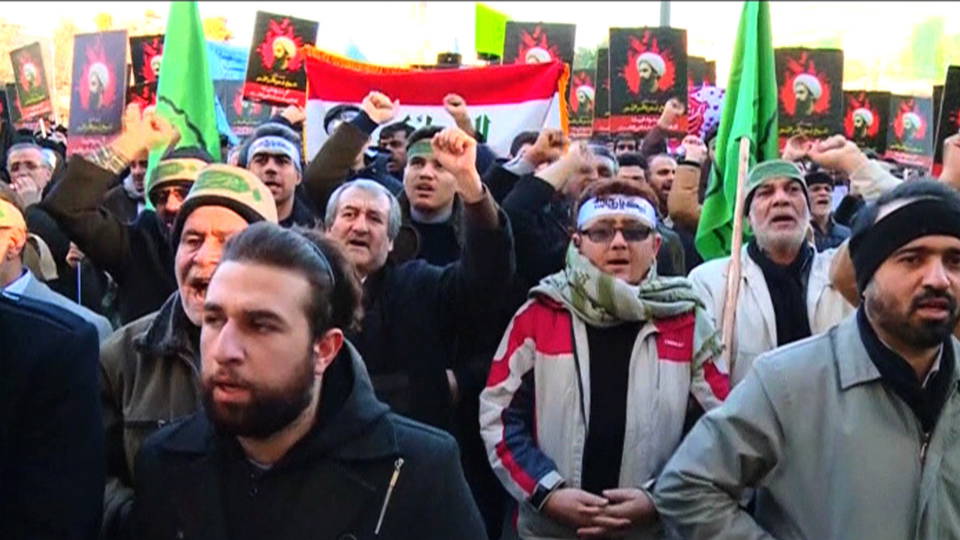
Protests are erupting across the Middle East after Saudi Arabia executed prominent Shiite religious leader Nimr Baqr al-Nimr—along with 46 others—on Saturday. It was the country’s largest mass execution in decades. The Saudi government accused Sheikh Nimr of calling for the overthrow of the Saudi royal family.
Saudi Arabia, Bahrain Cut Ties with Iran After Protests over Execution
After the execution of Sheikh Nimr Saturday, protesters in the Iranian capital Tehran responded by torching part of the Saudi Embassy. On Sunday, Saudi Foreign Minister Adel al-Jubeir announced Saudi Arabia was severing ties with Iran.
Adel al-Jubeir: "The kingdom, in light of these realities, announces the cutting of diplomatic relations with Iran and requests the departure of delegates of diplomatic missions of the embassy and consulate and offices related to it within 48 hours. The ambassador has been summoned to notify them."
Bahrain has also said it will sever ties with Iran. Both Bahrain and Saudi Arabia are close U.S. allies. We’ll have more on the story after headlines.
Armed Right-Wing Militia Occupies Wildlife Refuge in Rural Oregon
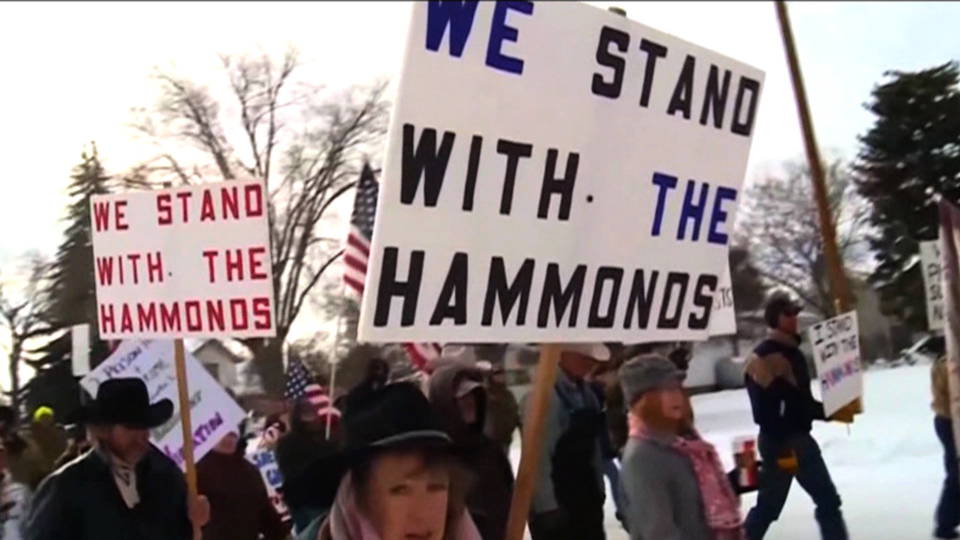
Armed right-wing militiamen have taken over a federal wildlife refuge headquarters in rural Oregon and vowed to remain in place. The occupation began after a protest Saturday in support of two ranchers sentenced to prison for setting fires that burned federal land. After the protest, armed antigovernment militia members took over the headquarters of the Malheur National Wildlife Refuge, which was vacant because of the holidays. The apparent leader is Ammon Bundy, the son of Nevada rancher Cliven Bundy. Cliven Bundy refused to pay decades’ worth of cattle grazing fees, prompting a standoff with federal rangers last year in Nevada, during which an armed militia rallied to his support. Cliven Bundy declared victory last April after the federal government backed down and released cattle they had seized from him. Speaking over the weekend, Ammon Bundy said he wants federal land turned over to ranchers in Harney County, Oregon.
Ammon Bundy: "It is the people’s facility, owned by the people, and it has been provided for us to be able to come together and unite in making a hard stand against this overreach, this taking of the people’s land and resources."
In phone interviews with The Oregonian newspaper, Ammon Bundy’s brother, Ryan Bundy, said the militants are not seeking to hurt anyone, but would not rule out violence if authorities move in. Law enforcement have so far not approached the occupied building. Meanwhile, the Oregon ranchers at the center of the dispute have distanced themselves from the Bundys; an attorney for Dwight Hammond Jr. and his son Steven said "neither Ammon Bundy nor anyone within his group/organization speaks for the Hammond family."
Media Coverage of Oregon Militia Sparks Hashtags: "#YallQaeda,""#VanillaISIS"
Media coverage that described the armed militia members as "peaceful" protesters has sparked ire. The Associated Press ran the initial headline: "Peaceful Protest Followed by Oregon Wildlife Refuge Action"; they later removed the word "peaceful." Meanwhile, CNN law enforcement analyst Art Roderick said the militants were being treated differently than Black Lives Matter protesters because "they’re not looting anything." Roderick made the remarks in an interview with CNN host Brian Stelter.
Brian Stelter: "You know it’s going to become politicized. And we’ve already heard from activists online, many of them—I’ve been reading from them all morning—who say if these were Black Lives Matter protesters, or if these were peaceful Muslim Americans, they’d be treated very differently by law enforcement. Do you think there’s truth to that argument?"
Art Roderick: "We’re not talking about—I think you had mentioned it in the opening, because this is a very rural area. It is out in the middle of nowhere. What are they actually doing? They’re not destroying property. They’re not looting anything."
Brian Stelter: "Yeah, no shots fired."
Art Roderick: "Right, exactly."
On social media, many have called for the authorities and media to label the militants as "terrorists." Critics have used the satirical hashtags "#YallQaeda" and "#VanillaISIS" to call attention to what they see as deferential treatment afforded to the militia members because they are white.
Saudi-Led Coalition Pounds Yemeni Capital After Ending Ceasefire
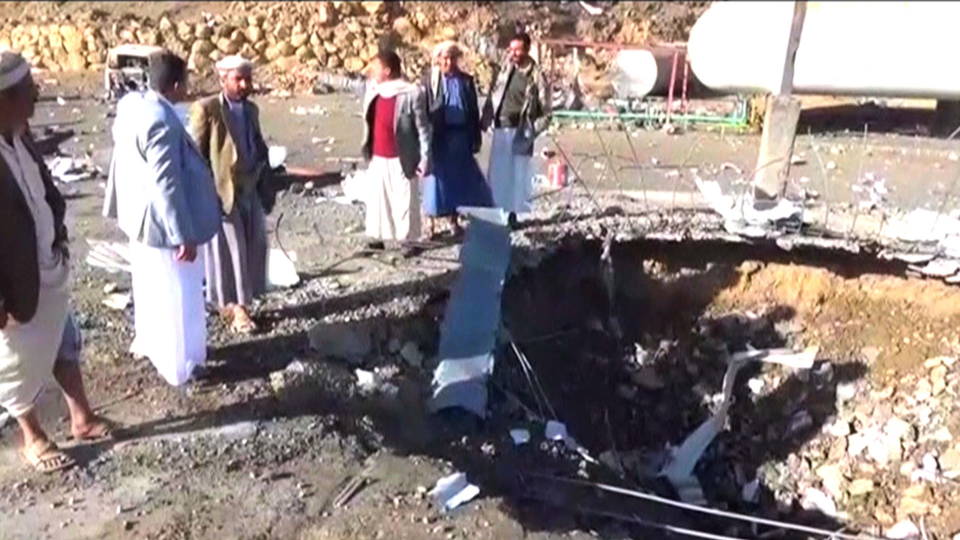
The Saudi-led coalition in Yemen has destroyed a gas station and house in a series of airstrikes on the capital Sana’a. The bombing came as the U.S.-backed coalition announced an end to a ceasefire declared earlier this month. Nearly 6,000 people have been killed since the Saudi-led coalition began bombing Yemen in March, about half of them civilians.
India: At Least 12 Killed After Militants Attack Air Base
A siege by gunmen on an Indian air base near the Pakistani border has entered a third day. At least seven Indian soldiers and five attackers have been killed in the standoff. Officials have blamed the attack on Pakistani militants, shaking hopes for peace talks between India and Pakistan.
U.S. Closes Drone Base in Ethiopia
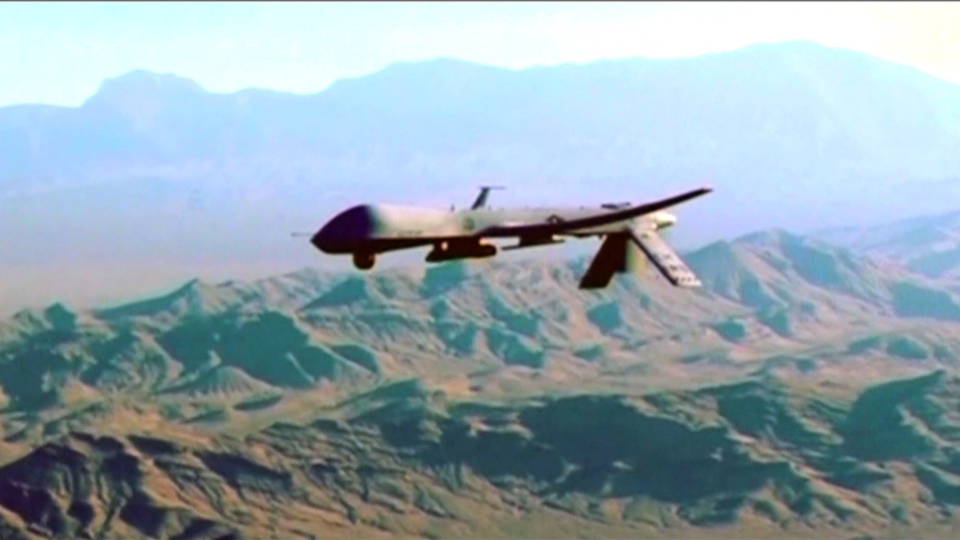
The Obama administration has reportedly shut down its drone operation base in southern Ethiopia. An embassy spokesperson told the Associated Press the base, used to conduct attacks in Somalia, was no longer necessary. The U.S. has never publicly confirmed the base’s existence.
Obama Moves Toward Executive Action on Gun Control
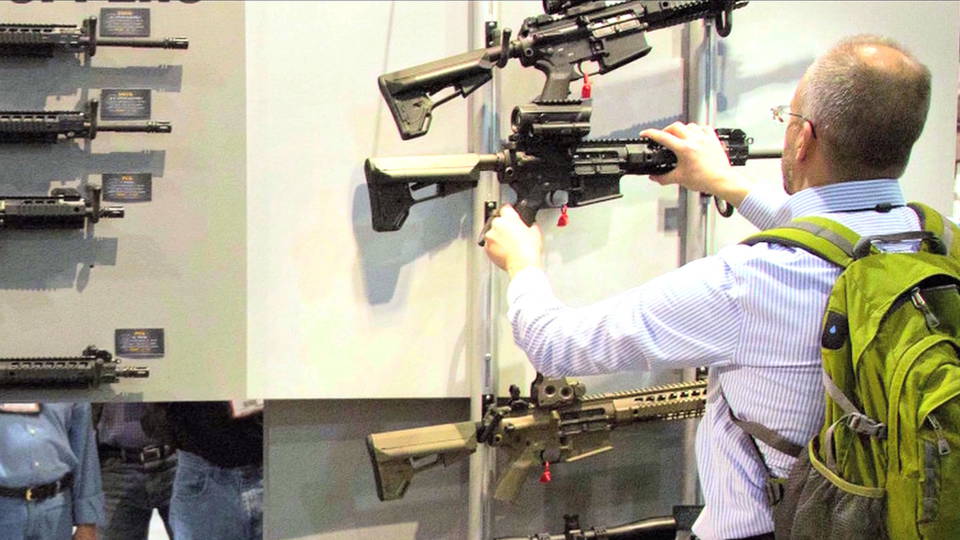
President Obama is meeting with Attorney General Loretta Lynch today to discuss possible executive action on gun control. Obama announced the meeting in his weekly address, citing inaction by Congress.
President Barack Obama: "A few months ago, I directed my team at the White House to look into any new actions I can take to help reduce gun violence. And on Monday, I’ll meet with our attorney general, Loretta Lynch, to discuss our options, because I get too many letters, from parents and teachers and kids, to sit around and do nothing."
New Texas Law Lets People Openly Carry Guns
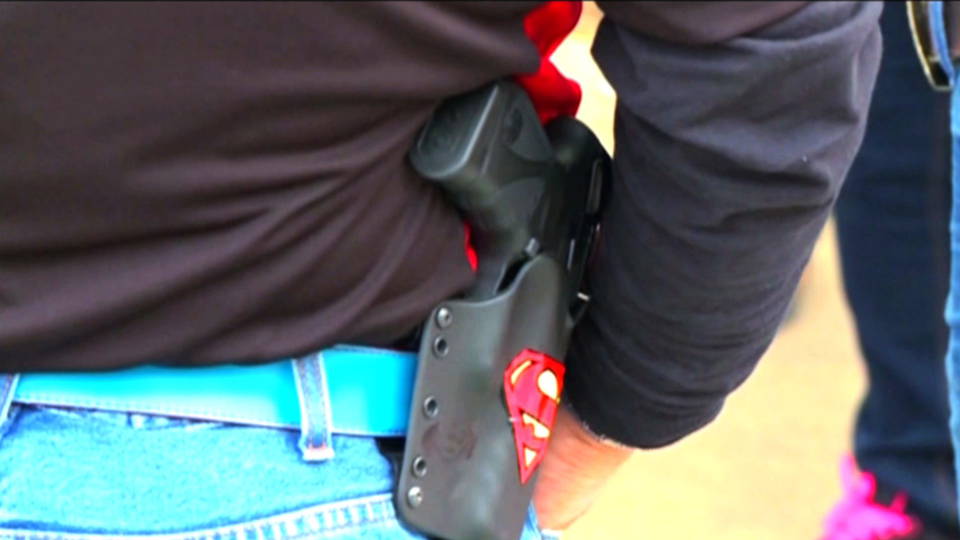
Obama’s steps come as a new open-carry gun law has gone into effect in Texas. The law allows licensed handgun owners to wear a holstered gun in public.
Israel Charges 2 over West Bank Arson; 2 Killed in Tel Aviv Shooting
In Israel, authorities have filed murder charges against two Israeli citizens over an arson attack that killed a Palestinian toddler and his parents in the occupied West Bank in July. The suspects are 21-year-old Amiram Ben-Uliel, who was raised in an Israeli settlement in the West Bank, and a minor who was not publicly named. Israeli authorities have been criticized for taking months to charge anyone for the attacks. Meanwhile, Israel has launched a security crackdown in Arab areas after an Israeli Arab allegedly opened fire outside a bar in Tel Aviv Friday, killing two people.
Mexico: Leftist Mayor Killed 1 Day After Taking Office
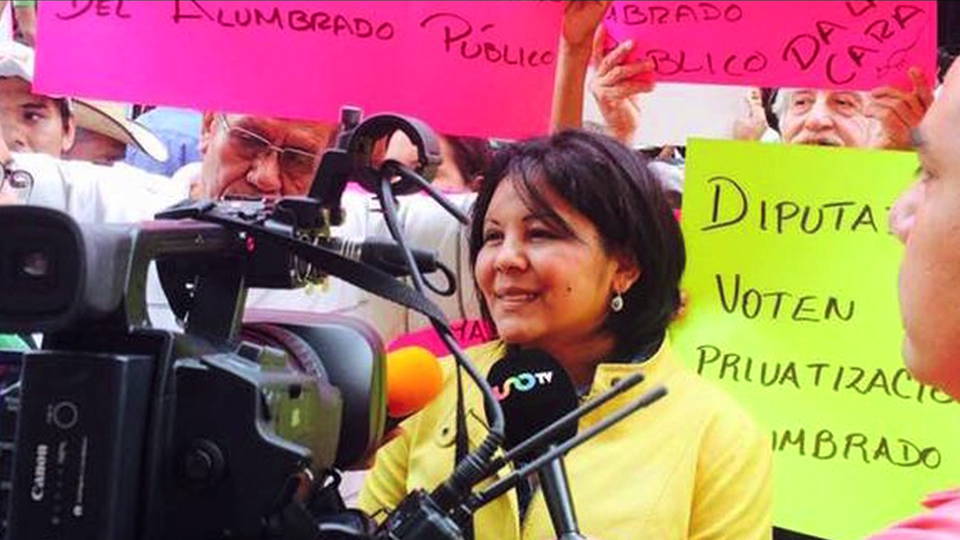
In Mexico, the mayor of the city of Temixco has been killed one day after taking office. Gisela Mota was a member of the leftist Party of the Democratic Revolution, or PRD, which has been targeted by political assassinations in the past. Mota was beaten and shot to death at her home Saturday. Police said they killed two suspects and detained three others.
U.S. Agents Launch Raids on Central American Families
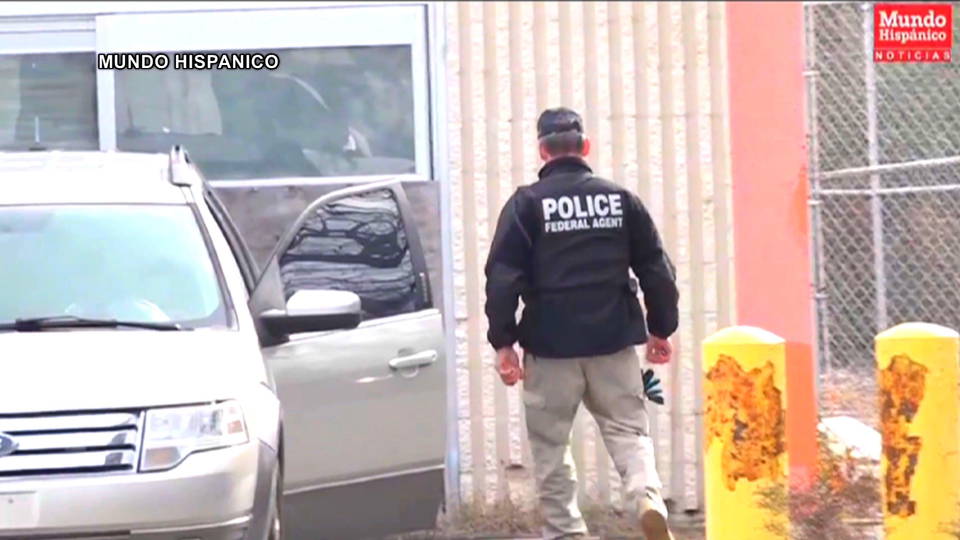
The Obama administration has begun conducting raids and detaining families across the United States as part of an effort to deport hundreds of Central Americans who have fled violence in their home countries. At least 11 families have reportedly been detained so far. At one home in Georgia, a Honduran woman and her nine-year-old son were taken into custody after an early-morning raid. The woman, Ana Lizet Mejia, reportedly fled Honduras after her brother was murdered by gangs. Her aunt, Joanna Gutierrez, told the Los Angeles Times Mejia wore an ankle monitor and attended all of her court dates. Gutierrez said her children were "shaking with fear" after agents woke them and searched the house at 5 a.m.
Missouri Governor: Flooding Feels "Almost Like You're Living on Some Other Planet"
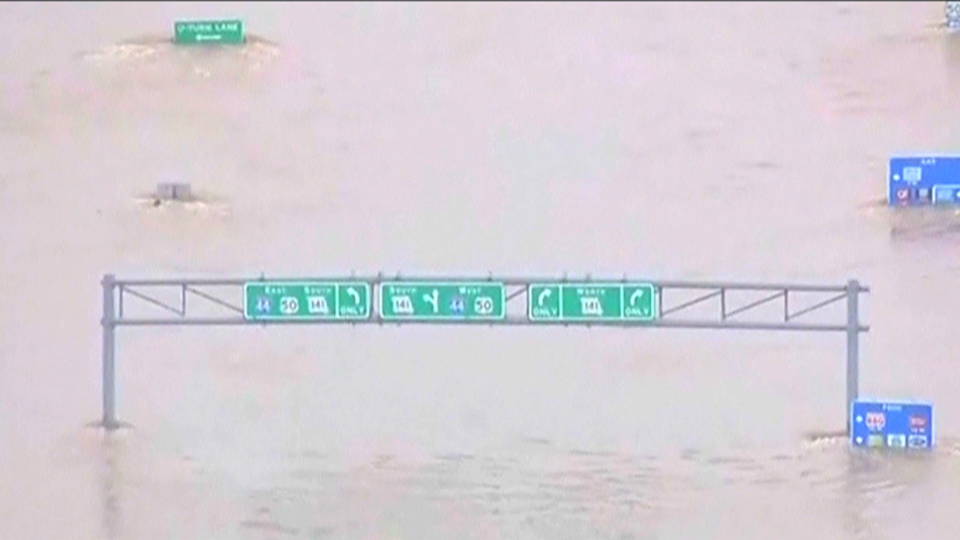
Missouri Governor Jay Nixon has requested a federal emergency declaration after massive flooding caused by heavy rains. The flooding has killed at least 25 people in Missouri and Illinois. Governor Nixon said he had never seen flooding like it before.
Gov. Jay Nixon: "When you see the levels of where water was, when you’re coming over historic highs, I mean, from the beginning of time we kept records, by four and five feet, I mean, when you’re seeing 55 close, when you’re seeing a house that’s floated—a full house that’s floated into the Highway 30 bridge and blowing up, I mean, it’s almost as if you’re living on some other planet."
Al-Qaeda Affiliate Releases Video Featuring Trump's Comments on HEADLINES
An al-Qaeda affiliate in Somalia has released a recruitment video featuring Republican presidential front-runner Donald Trump. The video from the militant group Al Shabab highlights Islamophobia, including Trump’s call for a "total and complete" ban on Muslims entering the United States. Speaking Saturday in Mississippi, Trump blamed President Obama and Democratic presidential candidate Hillary Clinton for creating the self-proclaimed Islamic State.
Donald Trump: "They’ve created ISIS. Hillary Clinton created ISIS with Obama. Created with Obama."
Sanders: Trump and Other Billionaires "Will Not Continue to Own This Nation"
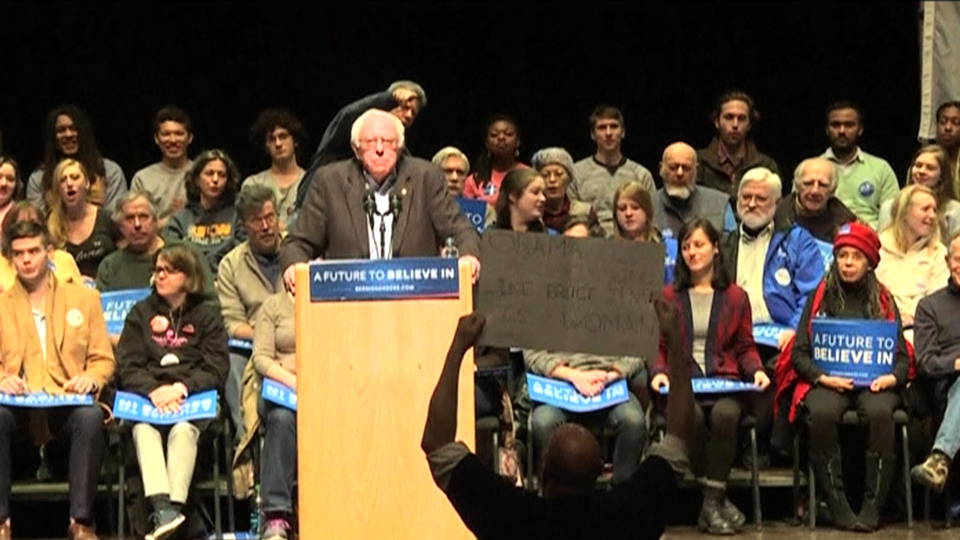
Democratic presidential candidate and Vermont Senator Bernie Sanders faced down a Trump supporter who interrupted his speech in Amherst, Massachusetts, over the weekend. The protester held a sign reading: "Obama is a Christian like Bruce Jenner is a woman," a reference to transgender woman and celebrity Caitlyn Jenner. Sanders addressed the protester.
Sen. Bernie Sanders: "Here’s a Trump supporter, worried about Mr. Trump’s money. I say to Mr. Trump and his supporters that the billionaires in this country will not continue to own this nation."
Sanders Raises $33 Million, Shatters Individual Donor Record
The Sanders campaign says it raised $33 million in the last quarter of 2015, much of it in small donations. That’s just $4 million shy of Democratic rival Hillary Clinton. Sanders’ donors have made more than 2.5 million individual contributions, shattering the previous record of 2.2 million set by President Obama.
Florida: Machete-Wielding Vandal Hits Mosque in Latest Attack
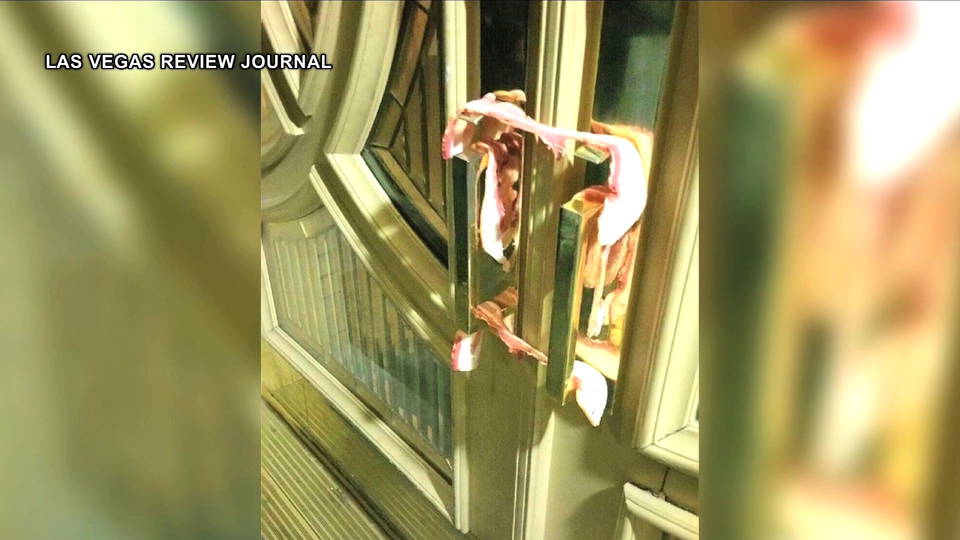
The uptick in Islamophobic incidents continues in the of wake of the Paris and San Bernardino attacks. Here in the United States, police in Titusville, Florida, are searching for a vandal who smashed the cameras, lights and windows of a mosque using a machete, then left bacon by the front door. Pork is considered forbidden or "haram" in Islam.
Hate Crimes Against Muslims Double in London
In London, police are investigating after a man allegedly made Islamophobic comments to a woman on a bus, then advanced toward her as if to hit her. Later, a man matching the same description allegedly spat at a woman after making Islamophobic remarks. New data shows hate crimes against Muslims in London have doubled in the last two years.
Chicago: Prosecutor Asks FBI to Investigate Fatal Shooting of Student, Grandmother
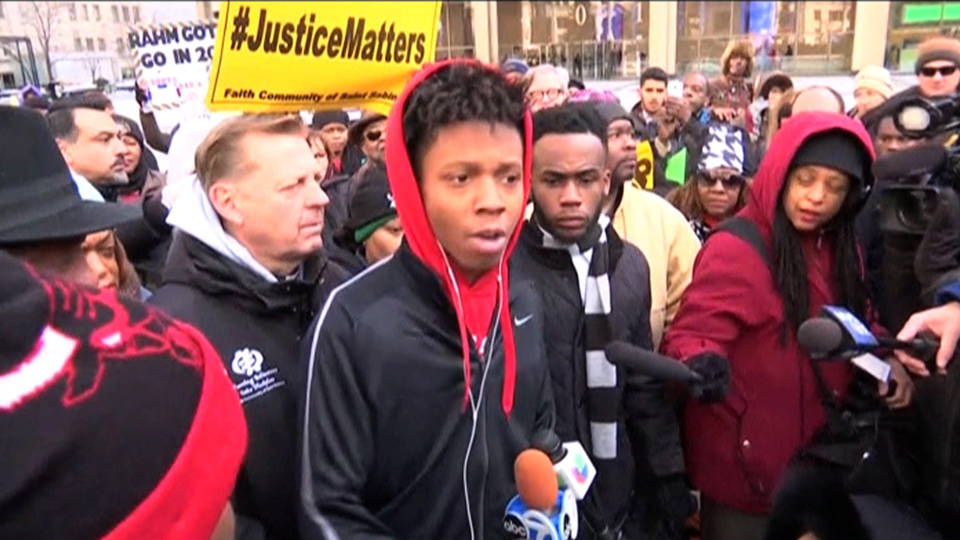
And in Chicago, a prosecutor has asked the FBI to investigate the fatal shooting of an African-American college student and a grandmother last weekend. The student, Quintonio LeGrier, was fatally shot after his father called 911 to report his son was acting strangely and carrying a metal bat. Police acknowledged they shot 55-year-old Bettie Jones by mistake. Meanwhile, Chicago Mayor Rahm Emanuel’s administration has released thousands of pages of emails revealing its year-long effort to contain the fallout from the shooting of Laquan McDonald last October. McDonald was shot 16 times. Police dashboard camera video, released only last month after a court order, contradicts police accounts of the killing. At a protest Thursday, demonstrators, including 16-year-old Lamon Reccord, continued their call for Mayor Rahm Emanuel to resign.
Lamon Reccord: "If it takes a 16-year-old to get up here and talk about the mayor of Chicago, we have a problem. If it takes a 16-year-old to get up here and talk about the CPD (Chicago Police Department) culture, we have a problem. We have a huge problem. We can’t get money funding in our public schools. Our young people don’t have resources. It doesn’t make any sense that officers shoot a 17-year-old 16 times. Makes no sense. What if that was your son that got shot 16 times? You would take that badge off. You would take that uniform off. You would come on our side and face these everyday life situations that we’ve got to deal with."
Donate today →
Follow:


WEB EXCLUSIVE


A Most Unhappy New Year at Guantánamo
WORK WITH DN!

Director of Development
On-air Graphics Operator
---------------------
207 West 25th Street, 11th Floor
New York, New York 10001, United States
---------------------
---------------------
No comments:
Post a Comment