democracynow.org
Stories:

As Officer Who Killed Akai Gurley Gets No Jail Time, Asian Americans Debate Role of White Supremacy
A New York City police officer who killed an unarmed African-American man will serve no time in jail. Officer Peter Liang, who is Chinese-American, fatally shot Akai Gurley in the darkened stairwell of a Brooklyn housing project. In February, a jury convicted Liang of manslaughter and official misconduct, but the judge made the rare decision to reduce the verdict to criminally negligent homicide. The case has sparked a debate within the Asian-American community as some say Liang was scapegoated because of his race. We host a heated discussion with Gurley’s aunt, Hertencia Petersen; Cathy Dang, executive director of CAAAV Organizing Asian Communities, which has supported Akai Gurley’s family; and John Liu, the former New York City comptroller who supports Officer Liang.
TRANSCRIPT
This is a rush transcript. Copy may not be in its final form.
AMY GOODMAN: We’re on a 100-city tour marking Democracy Now!'s 20th anniversary, and we may be coming soon to a city near you. Tonight we will be in Boulder. Right now we're at Denver Open Media. I’m Amy Goodman, with Nermeen Shaikh in New York. Hi, Nermeen.
NERMEEN SHAIKH: Hi, Amy. And welcome to our listeners and viewers around the country and around the world.
We begin today’s show here in New York, where the family of an unarmed man killed by a police officer is reacting to news that the officer will serve no time in jail. In 2014, New York City police officer Peter Liang fatally shot Akai Gurley in the darkened stairwell of a Brooklyn housing project. Gurley, a 28-year-old African-American father, was walking down the stairs with his girlfriend because the elevator was broken. Liang says he accidentally fired his gun. The bullet ricocheted off a wall and struck Gurley in the chest. Following the shooting, Officer Liang first texted his union representative before making a radio call for help as Gurley lay dying. New York City Police Commissioner William Bratton called Gurley a, quote, "total innocent." On Tuesday, Brooklyn Supreme Court Justice Danny Chun announced Officer Liang’s sentence.
JUSTICE DANNY CHUN: On the count of criminally negligent homicide, sentence of the court is five years’ probation, plus 800 hours of community service. This is 500 hours that the DA recommended plus another 300 hours. So, this will take close to about five months, in my calculation. Eight hundred hours of community service with—along with five years’ probation.
NERMEEN SHAIKH: In February, a jury convicted Officer Liang of manslaughter and official misconduct. He faced up to 15 years in prison. But Judge Chun made the rare decision to reduce Officer Liang’s verdict from manslaughter to the lesser charge of criminally negligent homicide. After Judge Chun announced Liang would not go to prison, Akai Gurley’s aunt, Hertencia Petersen, spoke out.
HERTENCIA PETERSEN: This is not justice. This is not justice. My family is going to continue, we’re going to continue to be in these streets. We’re going to continue to march 'til we get justice. We're going to continue until all black lives matter. How on Earth can you guys say it’s OK to murder and not be held accountable?
AMY GOODMAN: The Liang case has sparked a debate within the Asian-American community. Some believe he was scapegoated because of his race. Others stand by the family of Akai Gurley.
For more, we’re joined right now in New York by three guests. Hertencia Petersen is the aunt of Akai. Cathy Dang is executive director of CAAAV Organizing Asian Communities, which supports Akai Gurley’s family. And John Liu is a former New York City comptroller and professor of public finance at CUNY and Columbia University. He has been working with supporters of Peter Liang.
We welcome you all to Democracy Now! First, to Hertencia Petersen, our condolences on the death of your nephew, of Akai Gurley. This happened back in November of 2014. Hertencia Petersen, can you explain what you understand happened that day?
HERTENCIA PETERSEN: What I understand happened is that my nephew was basically walking down a flight of steps, leaving the building, and—because the elevator was broken. Peter Liang fired a shot. It ricocheted. And Akai—
AMY GOODMAN: Why did he fire the shot?
HERTENCIA PETERSEN: Because he’s saying that he was afraid. He heard a noise. And my question has, and will always be, if you’re going into a development and you know families live there, so why would you enter a dark stairwell with your gun drawn, with your finger on the trigger? Nine times out of 10, there’s an error that’s going to happen. Someone can get hurt. It could have been a child, a grandmother, a mother. It could have been anyone. And on top of that, he had a flashlight. What happened to using that flashlight? You don’t enter a dark stairwell with a gun drawn. A flashlight is sufficient. He asked his partner for light. So, why would you have your finger on the trigger?
NERMEEN SHAIKH: So do you believe, Hertencia, that there is any truth to Liang’s claim that the gun actually—he accidentally shot the gun? In other words, he didn’t intend to?
HERTENCIA PETERSEN: No. First of all, guns don’t discharge by themself. You have to apply at least 11-and-a-half pounds of pressure. You have to. It does not go off by itself. So, no, I do not believe it was an accident.
NERMEEN SHAIKH: And, Cathy Dang, can you talk about why your organization, CAAAV, has stood with the family of Akai Gurley, even though a number of Asian-American organizations have been protesting on behalf of Peter Liang?
CATHY DANG: Well, our organization started 30 years ago out of supporting Asian immigrants and refugees who were impacted by police and hate violence. And we stood firm that we had to address issues and root causes of violence that impact communities of color that’s perpetuated by the state and by the police. And police continue to carry on [without] being held accountable. We couldn’t let that happen in this case. And we got involved because we didn’t want race to be the reason why Peter Liang wasn’t held accountable. At the end of the day, he has a uniform, and he is an officer, and he needs to be held accountable.
NERMEEN SHAIKH: Professor John Liu, your response?
AMY GOODMAN: John Liu?
JOHN LIU: Yes, good morning. Thank you very much for having me on this show.
This is a very complex case. It does not fit neatly into what people typically see as a black-white model of race relations. I guess you had introduced me earlier as a supporter of Peter Liang. I wouldn’t quite characterize it that way. I’ve never met Peter Liang. I don’t know him. But I do agree with many Asian Americans in New York and beyond, and you can see from the tens of thousands of people who actually protested the initial verdict of manslaughter that Peter Liang was being scapegoated, being blamed for all of the criminal justice ills that have gone wrong in this country.
And so, people in the Asian-American community really do sympathize with the family of Akai Gurley, his aunt here. There’s nobody who’s against Akai and his family. No one’s saying that his life was meaningless. In fact, you know, he was a young man who held promise and was trying to do the right thing. But at the same time, you also have a feeling in the Asian-American community that Liang was just—that too much was put on him, that, you know, in the trial, the DA actually talked about how this was not about criminal justice in the rest of the country, it was not about the NYPD, it was just about Liang. And so, how can this be about holding the entire system accountable, when it seems like it’s all just about holding this one officer accountable, NYPD being held harmless? NYCHA, which is the agency that runs the building, that allowed there to be complete darkness in the stairwell, they are held harmless. So, you know, at the end of the day, it’s about holding police officers accountable.
And Asian-American leaders in the community at large are not saying that Peter Liang is innocent. He was convicted of official misconduct, which represents or reflects the fact that he just didn’t do anything to help Akai Gurley. He may have shot him accidentally, the gun might have discharged because he was startled by a noise in a dark situation, but he should have done more. So, people, you know, don’t dispute the fact that he was indicted, that he was convicted of official misconduct. And he is now sentenced—not jail time, but he does have a pretty long sentence. This is far more than we have seen in any other case in recent memory. Eric Garner being choked to death by a police officer, not even an indictment in that case. Michael Brown. So many other cases in New York and across the country. Timothy Stansbury in New York City, which was a case almost identical in circumstances, nothing in that case, no actions against the officer. None of these officers have even been fired from their jobs. So, Peter Liang has been sentenced, and he is being punished and held accountable. It’s just a question of to what extent do you hold him accountable? Do you hold him accountable for his actions that day, or do you hold him accountable for all the other cases that didn’t see any kind of justice whatsoever?
NERMEEN SHAIKH: Hertencia Petersen, your response to what Professor Liu said?
HERTENCIA PETERSEN: OK, my response to you is, number one, from the time the trial began, you have been in the courtroom with Peter Liang. Number two, if this was your child, your nephew, would you not want justice? Number three, you reference Eric Garner, Amadou Diallo, Timothy Stansbury, this—the list is long. Where was the Asian community? Where was the Chinese community? Where were they?
On top of that, what happened to Nicholas Heyward Jr., the same exact story, the same exact excuse. When you have a corrupted system, with police officers are being protected by the law, the ending result is Akai Gurley. We have been trying to prevent this from 22 years ago. And let’s take it to NYCHA. Peter Liang and Shaun Landau, that was not the first time they have been doing vertical patrol in the Pink Houses. That was their daily, nightly post. Number one, they knew the area. Number two, because you’re not going to sit here and try to justify why Peter Liang should not be held accountable. First of all, he is part of the system, the entire system. It’s a systematic problem. We have told, and have said plenty of times, it’s all about accountability. Yes, in Staten Island, the Eric Garner—if you have a prosecutor that does not care about what goes on in his community and is racist, that’s the result you will have. Now let’s take it to Ferguson. The same scenario. If you have a prosecutor that don’t care about the people that put them in position, this is what you will have.
So here it is now, my nephew, Akai Gurley. Sylvia Palmer, Akaila Gurley is without a son, a father, a nephew and a brother. So, yes, Peter Liang should be held accountable, accountable, because if it was your child, if it was your mother, your father or anyone of your loved ones, you would want justice. You would want—my definition of justice and yours is totally different.
On top of that, February 20th, 2016, there was massive rallies nationwide saying, "Injustice, injustice." Peter Liang was not a scapegoat. Peter Liang is part of the problem. Every last one of those Asians and Chinese supporters, because you are also part of the problem. You helped back and finance. You understand? You guys got together, and here it is. You’re saying it’s OK. When I walked downtown Brooklyn February 20th, I was called a nigger. Do you understand? After giving solidarity to the family—the family’s there in the flesh—I was disrespected. So, it’s no way you can tell me—we are all people of color, all people of color. If we have to get together—and this is what the Justice for Akai Gurley Family and every grassroot, CAAAV, everyone has been saying: "Let’s not make this a race issue. We’re all human." That fatal night, Akai Gurley—Peter Liang, he heard a sound. Shaun Landau didn’t hear that sound.
AMY GOODMAN: I wanted to ask John Liu, on that night, November 20th, 2014, when Officer Liang killed Akai Gurley, his first action, if he said this was a mistake, that he fired accidentally, was not to immediately get aid to the man he shot, but to text his union rep. Can you explain this, John Liu?
JOHN LIU: No, I can’t explain it at all. In fact, there is no justification for that, if in fact he did text his union rep before anything. We do know for a fact that he did not apply CPR. And if you’re an officer, you don’t have th luxury of saying that your training was inadequate or that you were in shock. He should have done far more immediately to help Akai Gurley. That is official misconduct, and he’s been fired from the force. He probably never should have been a police officer in the first place. He was scared. He was doing this patrol in a historically dangerous situation. And so, you know, look, I mean, I feel for Hertencia and her family. I understand—
HERTENCIA PETERSEN: No, you don’t.
JOHN LIU: I have a son. I have—I’m a father myself. So, I can imagine if something happened—if my son’s life was taken away. Now, in this case, Officer Liang is a part of the system. But yet, in the prosecution and the—and, ultimately, the sentencing recommendations and the sentence itself, it’s—he’s being treated as if the problem is just on him. So, he is a scapegoat in that—he’s not innocent, but he is being punished for much more than he was actually guilty of that night.
HERTENCIA PETERSEN: You have to start somewhere.
JOHN LIU: And, Hertencia, I plead with you—
HERTENCIA PETERSEN: You have to start—you have to start somewhere.
JOHN LIU: Right.
HERTENCIA PETERSEN: Because this is an ongoing—every 28 hours, a black, a brown, a Latino, an Asian—someone that’s a person of color’s life is always taken. You’re not—you’re not understanding what we’re saying. You’re going to sit there, and as if it’s—with no emotions. There’s a mother. There’s a mother in depression.
JOHN LIU: Why would you say no emotions?
HERTENCIA PETERSEN: No.
JOHN LIU: Why would you—
HERTENCIA PETERSEN: You don’t. You don’t.
JOHN LIU: And, by the way—
HERTENCIA PETERSEN: The same—the same—
JOHN LIU: —I was never in the courtroom. I’ve never met—
HERTENCIA PETERSEN: Sir, sir, I know—I know what I saw Tuesday. I know what I saw back in February. I know what I saw downtown Brooklyn. I know what I saw, faces. I can tell you. OK? You—I know. Don’t tell me what I don’t know and what I don’t see.
JOHN LIU: I haven’t been there.
HERTENCIA PETERSEN: OK.
CATHY DANG: I want to chime in.
JOHN LIU: Yes.
NERMEEN SHAIKH: Please, Cathy.
CATHY DANG: And I really want to respond to this piece, that like any average civilian who commits manslaughter, second-degree, they would go to jail. A police officer is to be held at a higher standard. Why should Liang be held and treated any differently? When a black person is out there and "accidentally," quote-unquote, kills someone, they would go to jail. Why is a police officer treated any differently, one? Two, all—this case, and we’ve always stood on this position, this case means that we stand together to make sure white officers are held accountable, not to let Liang off. And you can’t toggle between both sides and say, "Well, this happened, and we have to look at both sides." You’re either for justice, or you’re not. That’s clear. You’re either for justice or not.
JOHN LIU: There’s no toggling here. And, look, I would agree with Hertencia that this should not be a black-Asian thing, and that I understand the emotions run high. The reality is that it does have to start somewhere. And with Officer Liang, he’s been—he was indicted, he was terminated from the force, he’s been found guilty, and he’s been sentenced. And so—
CATHY DANG: You can’t compare that to all the other cases.
JOHN LIU: So that is all—
HERTENCIA PETERSEN: And Akai Gurley—
JOHN LIU: Hold on. That is all—
HERTENCIA PETERSEN: Akai Gurley is nothing but bones right now, with maggots. Peter Liang can sleep in the bed under the cover—
CATHY DANG: And I’ve seen him walking around Chinatown, too.
HERTENCIA PETERSEN: —with his wife. He can have children, cuddle his children. Akai Gurley has a three-and-a-half-year-old daughter. You know what she asked her mom? "Why is daddy sleeping so long?"
JOHN LIU: This is—
HERTENCIA PETERSEN: No, it’s not "this is." This is reality.
JOHN LIU: This is reality.
HERTENCIA PETERSEN: It might not be your reality, but this is the Gurley family reality. And that reality is Peter Liang and the whole NYPD system is accountable.
JOHN LIU: Well, so let’s work together to bring reform to the NYPD.
HERTENCIA PETERSEN: No, it’s not no together when you are doing backhanded deals.
CATHY DANG: But the people who part of that process need to be punished along the way.
JOHN LIU: And they are being punished.
NERMEEN SHAIKH: Well, one second. Let me—I’d like to bring in Peter—
HERTENCIA PETERSEN: No, they’re not.
JOHN LIU: Far more than anybody else has been.
NERMEEN SHAIKH: One second.
CATHY DANG: You can’t compare this case to any of the other cases.
HERTENCIA PETERSEN: You can’t.
JOHN LIU: Actually, you cannot compare.
HERTENCIA PETERSEN: Each case is individual. Each case is different.
JOHN LIU: Yeah, I absolutely agree.
HERTENCIA PETERSEN: Each case.
JOHN LIU: You mentioned—
HERTENCIA PETERSEN: Akai Gurley had no—
JOHN LIU: You mentioned Eric Garner. You mentioned—
HERTENCIA PETERSEN: Akai Gurley had no—
JOHN LIU: —Amadou Diallo.
NERMEEN SHAIKH: Please, one at a time.
HERTENCIA PETERSEN: OK.
JOHN LIU: All right. You mentioned a lot of other cases.
HERTENCIA PETERSEN: No, you did first.
JOHN LIU: There were—OK, I will mention that also. And in all those cases, there was a direct confrontation between the officer and the victim. And that was—those were really clear cases of police brutality, even cases that were caught on video, and no indictments. Now, the Asian-American community is not saying we want white privilege. We’re not saying that, oh, you shouldn’t convict Peter Liang because he’s Asian or he’s a Chinese-American officer.
HERTENCIA PETERSEN: That’s the message you’re sending.
JOHN LIU: No, no, that’s not the message.
HERTENCIA PETERSEN: That is the message. That was the message February 20th.
JOHN LIU: The message—the message is that as much as we understand—
HERTENCIA PETERSEN: You don’t understand.
JOHN LIU: As much as we do understand the injustices and unfairness that the black community throughout this country has faced for so long, we also feel—
NERMEEN SHAIKH: Well, I want to go—
JOHN LIU: —some injustice in the Asian-American community.
NERMEEN SHAIKH: Professor Liu, one second. We want to bring in Peter Liang in his own words. He spoke before his sentencing in Brooklyn on Tuesday and apologized to the family of Akai Gurley.
PETER LIANG: I’m not a person of many words. I’ve always treated people fairly and with respect. The night of November the 20th, 2014, was devastating. A shot from my gun caused the death of another person. I was in shock. I could barely breathe. The shot was accidental, and someone was dead. I apologize to Ms. Butler and to Akai Gurley’s family. I wish I could undo what happened. My life has forever changed. I hope you will give me a chance to rebuild it.
NERMEEN SHAIKH: That was Peter Liang apologizing to the family. Cathy Dang of CAAAV, executive director, could you respond to what Liang said?
CATHY DANG: You know, I think no matter how many apologies you can give, you can’t bring back the life of Akai for the family. And it’s painful for me to sit alongside auntie, the Palmers, parents, Kim and his children. And, you know, I just can’t understand if any other average person out there can apologize and will still have to go to jail for committing accidental manslaughter—or accidental death, accidental killing—that’s what manslaughter is—they would go to jail. So—and even if they apologize. So why should Liang be treated any differently than anybody else?
NERMEEN SHAIKH: And what about the argument that people make that it’s because he was Asian-American that he has been charged, whereas all the white police officers who were responsible for the deaths of African Americans were exonerated?
CATHY DANG: I keep hearing again and again that he’s being used as a scapegoat. A scapegoat is someone who doesn’t do anything wrong or didn’t do anything wrong. And in this case, he did do something wrong: He killed Akai Gurley. And he needs to be punished for that, not just held accountable. He needs to be punished and serve jail time. And from the beginning, we’ve said this case means that we need to stand united to hold white officers accountable. What about the district attorneys, like Dan Donovan, who didn’t indict Dan Pantaleo for the murder of Eric Garner? We need to make sure that DAs are doing their job across the city. We want a special prosecutor in New York state to investigate all the killings in New York state.
And, you know, this is the testament to how our communities can come together to address something larger. We will never know, as Asian Americans, what it’s like to lose a life every 28 hours like the black community does in the United States. And what I do want to raise is that when we talk about structural racism, white supremacy and anti-blackness, we have to admit that Asian Americans are complicit and complacent to uphold white supremacy. And we are responsible in making sure that we stand together with black communities to bring down white supremacy and structural racism. That’s the only way to win for all of us. All of our lives will matter when black lives matter.
JOHN LIU: I wouldn’t agree that Asians are complicit with white supremacy. I mean, there—Asian Americans have been victims of the system, as well, not to the extent that the African-American community has faced injustices. But we have faced injustices ever since Asian Americans first got to this country.
As for Peter Liang being a scapegoat, he is a scapegoat. A scapegoat is not somebody who is totally innocent. A scapegoat is somebody who’s being blamed for far more than he’s actually being guilty of. Peter Liang has been indicted, has been convicted, has been sentenced. He will carry out this sentence, and he will be tagged as a convicted felon for the rest of his life. He is being held accountable. The question is, to what extent do you have to hold this one officer accountable, who did discharge his gun in an accidental situation in a darkened stairwell? There was no confrontation, unlike all of the other cases where an innocent person was killed by the police. And so, you know, this is very different from all the other cases. This is—I’ve spoken with many people. This is definitely a case that is much less satisfying. And, Hertencia, I mean, I understand the emotions that you and your family have gone through, but you have repeatedly called him a murderer.
HERTENCIA PETERSEN: He is a murderer. If someone lied to you, they’re labeled as a liar. If someone steals, they’re labeled as a thief. If someone takes an innocent life, if someone kills someone, they’re a murderer, a killer, a murderer. Either way you put it, no matter how you want to sugarcoat it, in my reality, in my world that I live in on a daily basis, where I have to make sure that my grandson, my sons and my daughters—every morning, I have to tell them, "Please check in with me." You understand? My reality is, I can get a phone call, "Ms. Petersen, come to the hospital." "Ms. Petersen, you have to go to the morgue." This is my reality. What’s your reality? What is your reality? OK? Peter Liang is a murderer, a convicted murderer, convicted murderer. Let’s get—let’s not forget that. He took an innocent life, a life that he had no confrontation with.
JOHN LIU: There was no confrontation.
HERTENCIA PETERSEN: Exactly. So, if there was no—
JOHN LIU: He didn’t see Akai Gurley.
AMY GOODMAN: We’re going to leave it there, but we will continue, of course, to cover this case and so many others.
JOHN LIU: Please do.
AMY GOODMAN: Hertencia Petersen, thank you so much for being with us. And again, our condolences.
HERTENCIA PETERSEN: Thank you very much. Thank you for having me.
AMY GOODMAN: Hertencia Petersen is the aunt of Akai Gurley. And thank you very much to Cathy Dang, executive director of CAAAV Organizing Asian Communities, and to John Liu, former New York City comptroller, now professor of public finance at CUNY and Columbia University.
This is Democracy Now!, democracynow.org, The War and Peace Report. When we come back, we’ll talk about Flint, Michigan, the poisoning of an American city. Charges have been brought against three Michigan officials. We’ll speak with an award-winning journalist who helped to break the story of what happened in Flint. Stay with us. ... Read More →

Michigan Officials Charged in Flint Water Poisoning, But Gov. Snyder Has Not Even Been Questioned
The first criminal charges have been filed in the ongoing Flint water contamination crisis that exposed nearly 100,000 residents to poisonous levels of lead. Two state employees have been charged with misleading the U.S. government about the problem: Michigan Department of Environmental Quality employees Stephen Busch and Michael Prysby. Meanwhile, a Flint employee, Michael Glasgow, is charged with altering water test results. The charges come as Michigan’s Republican Governor Rick Snyder said he has not been questioned by prosecutors in connection with the crisis. Protesters have called for Governor Snyder to resign over his handling of the Flint water crisis, which began when the city’s unelected emergency manager, appointed by Governor Snyder, switched the source of the city’s drinking water from the Detroit system to the corrosive Flint River, and the water corroded Flint’s aging pipes, causing lead to leach into the drinking water. We get reaction from Curt Guyette, an investigative reporter for the ACLU of Michigan who helped bring the crisis to light. His work focuses on emergency management and open government. Guyette just won the 2016 Hillman Prize for Web Journalism as well as the Aronson Award for Outstanding Pioneering Reporting.
TRANSCRIPT
This is a rush transcript. Copy may not be in its final form.
AMY GOODMAN: This is Democracy Now!, democracynow.org, The War and Peace Report. I’m Amy Goodman in Denver, Colorado, with Nermeen Shaikh in New York. We’re on a 100-city tour. We’ll be at Boulder Theater tonight. And on Friday night, we’ll be at Colorado College in Colorado Springs. But right now we’re turning to Michigan. Nermeen?
NERMEEN SHAIKH: We turn now to Michigan, where the first criminal charges have been filed in the ongoing Flint water contamination crisis that exposed nearly 100,000 residents to high levels of lead. Two state employees have been charged with misleading the U.S. government about the problem: Michigan Department of Environmental Quality employees Stephen Busch and Michael Prysby. Meanwhile, a Flint employee, Michael Glasgow, is charged with altering water test results. On Wednesday, Michigan Attorney General Bill Schuette announced the charges, saying there are more to come.
ATTORNEY GENERAL BILL SCHUETTE: These employees of the Department of Environmental Quality had a duty. They had a duty to protect the health of families and citizens of Flint. They failed. They failed to discharge their duties. They failed. They failed in their responsibilities to protect the health and safety of families of Flint. They failed Michigan families. ... Each and every person who breaks the law will be held accountable. We’ll follow the facts without fear or favor, and we’ll go wherever the truth takes us—and in this case, wherever the emails take us. These charges are only the beginning, and there will be more to come. That, I can guarantee you.
NERMEEN SHAIKH: The charges come as Michigan’s Republican Governor Rick Snyder said he has not been questioned by prosecutors in connection with the Flint water contamination crisis. At a news conference Wednesday, Snyder said he doesn’t believe he broke any laws.
GOV. RICK SNYDER: We’ve been fully cooperating with this investigation, and we’ll continue to do so. And we’ll pursue any wrongdoing and hold people accountable. ... With respect to this investigation, I have not been questioned or been interviewed at this point in time. Our office has been cooperating.
AMY GOODMAN: Protesters have called for Michigan Governor Snyder to resign and face charges. The Flint water crisis began when Flint’s unelected emergency manager, appointed by Governor Snyder, switched the source of Flint’s drinking water from the Detroit system, which it had relied on for more than half a century, to the corrosive Flint River. The water corroded Flint’s aging pipes, causing poisonous levels of lead to leach into the drinking water, among other poisons.
Well, for more, we’re joined now by Curt Guyette, investigative reporter for the ACLU of Michigan, who helped bring this crisis to light. His work focuses on emergency management and open government. He just won the 2016 Hillman Prize for Web Journalism, as well as the Aronson Award for Outstanding Pioneering Reporting.
Curt Guyette, it’s great to have you back on Democracy Now! and to have spent time with you in Flint. Talk about the significance of the charges against these three men who work for the Michigan Department of Environmental Quality.
CURT GUYETTE: Well, there’s a lot of significance in a lot of different ways. But certainly, what they established in these charges was the misconduct and, really, the willful disregard for the well-being of the people of Flint in multiple different ways. From the beginning, the plant wasn’t ready to begin operation, yet state officials forced the city to rush into treating the river water rather than staying on the Detroit water. The fact that they didn’t require corrosion control, which was a major fact in this, that they didn’t use corrosion control caused the lead to leach into the water. And then, after they started to see that their mistakes were resulting in high lead levels, they attempted to cover that up, either by altering evidence, tampering evidence, as the charges say, the way they were conducting the tests, multiple ways they were trying to minimize the amount of lead being found in these tests to cover up the fact that they made a tragic mistake in switching to the river in the first place and not using corrosion control, as the law requires.
NERMEEN SHAIKH: Well, Curt Guyette, I want to go to a clip that appears of you in the documentary Here’s to Flint. Curt Guyette questioned Flint’s former water quality supervisor, Mike Glasgow, about the city’s lead testing.
CURT GUYETTE: How are you able to determine that every one of those homes had a lead service line?
MICHAEL GLASGOW: You know, so we tried to go through our records and see—
CURT GUYETTE: Why was I not provided with those records when I filed a Freedom of Information Act request?
MICHAEL GLASGOW: That’s a—that’s a good question. I don’t have an answer for you right now, to be honest with you. Sometimes records get lost. So, we just know—
CURT GUYETTE: Right. So you don’t necessarily have all the records?
MICHAEL GLASGOW: That could be a possibility. I can’t [inaudible] now.
CURT GUYETTE: So, how were you—again, how were you able to determine that every single house had a lead service line?
MICHAEL GLASGOW: We’re not, really. We throw bottles out everywhere just to collect as many as we can to try to hit our number. Yeah, we’re still looking for the records.
CURT GUYETTE: Even though it’s after the fact. The reports have already been submitted.
MICHAEL GLASGOW: Oh, yeah, the reports have been submitted.
CURT GUYETTE: And the compliance—and the compliance was based on those reports.
MICHAEL GLASGOW: That’s how they base their compliance, yes.
NERMEEN SHAIKH: That was Curt Guyette in the ACLU documentary Here’s to Flint. So, Curt Guyette, Michael Glasgow was one of the people charged. Could you respond to what the charge was and whether you think it was adequate?
CURT GUYETTE: Glasgow was in charge of the city’s water treatment plant at the time. He was also overseeing the testing. And what’s being called into question, in part, is the way the tests were conducted. And so, yeah, I think it is appropriate. I mean, he was on the front lines. And a lot of people I talked to in Flint think that Mr. Glasgow is a good guy, that he was being helpful in doing the tests, and have some good feelings toward him. He’s also—he spoke out, in an email, when they were ready to bring the plant online. He said, "We’re not ready to do that." And so, there was a little surprise, I think, that he was charged, because, in some ways, he did try to do the right thing.
But the bigger picture is that the actions of all three people who have been charged so far resulted in the contamination of a town’s water supply and the lead poisoning of people, especially children. And so, the fact that they’re bringing criminal charges seems entirely appropriate. And I think what’s also important to point out is that when these charges were announced, the attorney general, the state attorney general, said this was just the beginning, which is the way these investigations typically go. You start at the bottom, bring charges against people, use that as a wedge and pressure them to give up more information, and then you work your way up the ladder, which is what the attorney general indicated is going to happen in this case.
AMY GOODMAN: So, Curt Guyette, let’s talk about that ladder. Governor Snyder says he hasn’t been questioned by prosecutors. What is the governor’s role here? Do you think he’ll be charged? Do you think he should be charged? And what should he be charged with, if so?
CURT GUYETTE: You know, Amy, I just can’t answer that. I think the investigation has to run its course. And it’s going to uncover more information as it goes along. Right now there’s not any evidence indicating that the governor was directly involved in this, but not all the evidence has come out yet. And as this goes along, as people get charged and there’s deals worked out with whatever information that they give up, and then they keep moving up the ladder. I thought it was a little surprising that the governor hasn’t been questioned to this point, but maybe that’s part of the investigation: They’re waiting ’til they have everything in hand before they go and start asking the governor questions about this.
AMY GOODMAN: Curt Guyette, this is such—this is such an astounding story. I mean, you have April 2014—Flint is cut off from its traditional supply of half a century, the Detroit water system, which was fine, to save a couple million dollars, and linked to the corrosive Flint River. Then, within months, the GM plant in Flint said they couldn’t work with the water, because it was corroding the engines that they were producing. And the unelected emergency manager, chosen by the governor, gave them a waiver to link back to the Detroit system, as the people were protesting and increasingly getting sicker. Isn’t this an indication that the governor’s man in Flint knew exactly what was happening?
CURT GUYETTE: Oh, definitely, people should have known what was happening when that occurred, just the general aesthetics of the water, the bacterial contamination, and then the contamination of the water with a carcinogenic byproduct of chlorine. You know, it was just—they didn’t know what they were doing, and they were bumbling from step to step to step. But then they were also trying to cover up their problems. But certainly, last July, when we published the—Miguel Del Toral’s EPA internal memo, sounding the alarm, everybody knew at that point, or should have known at that point.
Here’s one thing I think is also interesting in this, which is, one year ago, almost exactly one year ago, on the one-year anniversary of the changeover, there was a protest in Flint, maybe a hundred people marching through the streets, little kids with bullhorns saying, "Stop poisoning the children." And no one was paying any attention at all. And in this past year, it’s gone from that situation to everybody knows about Flint. The problem with lead in water has become part of a national conversation. And it’s because those people who were protesting were relentless in trying to get to the truth. And that gets overlooked a lot in this, how citizen-driven exposure of this crisis has been, and where it’s led because of those efforts.
AMY GOODMAN: Curt Guyette, you were—you are an investigative reporter who’s won a number of awards. You were challenging these officials. Emails were released that showed that the governor was being warned by his own staff that this is an absolute crisis. What do you think is the most damning of those emails that indicate the chain of command and what Governor Snyder knew?
CURT GUYETTE: You know, what I have seen so far has—it’s come very close to the governor, in terms of his inner circle being warned that there was a problem. But as you say, when GM got a waiver to switch back to the Detroit system while the people of Flint were forced to continue drinking poisonous water, so there was failure all the way along the line. But again, anything directly implicating the governor, I haven’t seen anything yet that shows that. There was a kind of firewall. And what took place, if it took place at all, was conversations. There wasn’t emails, that I’ve seen yet, directly linking the governor into this.
But here’s another thing. Of the emails that were released, one of them had to do with state police bicycle patrols in Flint. And the governor was directly communicating with people about these bicycle patrols and how they were being received by the public. So he was, you know, very much hands-on with something as relatively minor as that, but yet he was supposedly completely out of the loop with all this Flint water crisis? It’s really kind of hard to believe.
AMY GOODMAN: Curt Guyette, we thank you for being with us and for your investigative reporting. His work focuses on emergency management and open government. Curt Guyette just won the 2016 Hillman Prize for Web Journalism and the Aronson Award for Outstanding Pioneering Reporting.
This is Democracy Now! When we come back, President Obama is in Saudi Arabia. We’ll talk with Bill Hartung about the U.S.-Saudi relationship. Stay with us. ... Read More →

As Saudis Continue Deadly Bombing of Yemen, Is Obama Trading Cluster Munitions for Riyadh's Loyalty?
President Obama’s fourth visit to Saudi Arabia for a meeting with leaders of the Gulf Cooperation Council comes as human rights organizations have been pressing Congress to block arms sales to the kingdom in the wake of Saudi-led coalition strikes in Yemen. The United Nations estimates more than 3,000 civilians have been killed since the Saudi bombing campaign began last March. We speak with William Hartung, senior adviser to the Security Assistance Monitor, who recently wrote in The New York Times that "Obama Shouldn’t Trade Cluster Bombs for Saudi Arabia’s Friendship." Hartung is also the director of the Arms and Security Project at the Center for International Policy. His latest book is called "Prophets of War: Lockheed Martin and the Making of the Military-Industrial Complex."
TRANSCRIPT
This is a rush transcript. Copy may not be in its final form.
AMY GOODMAN: This is Democracy Now!, democracynow.org, The War and Peace Report. I’m Amy Goodman in Denver Open Media in Colorado, with Nermeen Shaikh in New York.
NERMEEN SHAIKH: We end today’s show in Saudi Arabia, where President Obama is meeting with leaders of the Gulf Cooperation Council in the capital of Riyadh. The visit comes at a time of strained relations between the two allies, following the Iran nuclear deal and a push by some congressmembers to declassify 28 pages of the 9/11 report believed to document Saudi Arabia’s involvement in the terrorist attacks. Meanwhile, human rights organizations have been pressing Congress to block arms sales to the kingdom in the wake of Saudi-led coalition strikes in Yemen. The United Nations estimates more than 3,000 civilians have been killed since the Saudi bombing campaign began last March.
AMY GOODMAN: This comes as Saudi Arabia has threatened to sell off $750 billion in U.S. Treasury securities if Congress passes a law to allow the families of the victims of the September 11th attacks to sue the Saudi government for any role it may have played in the attacks. The Obama administration has lobbied Congress to block the bill’s passage.
To talk more about the significance of President Obama’s visit to Saudi Arabia, we’re joined by Bill Hartung, senior adviser to the Security Assistance Monitor, also director of the Arms and Security Project at the Center for International Policy.
Welcome to Democracy Now!, Bill. The significance of this, President Obama’s fourth trip to Saudi Arabia?
WILLIAM HARTUNG: Well, the thing that amazes me is that since he met with the GCC leaders in May at Camp David last year, he’s approved $33 billion in weapons sales to the Gulf states, mostly to Saudi Arabia, at a time when the Saudis have been engaged in a brutal bombing campaign in Yemen, accused of possible war crimes, using cluster bombs, at least 3,200 civilians killed. And it’s not clear to what degree he brought this up, to what degree he’s threatened to cut off arms supplies. So, to me, that colors the whole event, because, basically, in the name of reassuring the Saudis about Iran, they’re allowing this to go on and actually facilitating the Saudi killing in Yemen.
NERMEEN SHAIKH: Well, Bill Hartung, you wrote a piece in The New York Times earlier this week headlined "Obama Shouldn’t Trade Cluster Bombs for Saudi Arabia’s Friendship." Now, in the piece, you write that Saudi-American arms deals are a, quote, "continuation of a booming business that has developed between Washington and Riyadh during the Obama years." So could you elaborate on that and also on the pressure that’s being put on the Obama administration, especially with respect to the use of cluster munitions in Saudi Arabia—in Yemen by Saudi Arabia?
WILLIAM HARTUNG: Well, under the Obama administration, we’ve made more arms deals with the Saudis than in other—any other time in history. And it’s been the full gamut. They’ve been combat ships, missile defense systems, fighter planes, attack helicopters, guns, bombs, missiles—basically, an entire arsenal. And on top of that, they are providing targeting information to the Saudis, refueling their aircraft. So they’re right in the middle of this conflict. And I think there’s a couple reasons for that. One is this notion of reassuring the Saudis about Iran. One is the underlying issue of oil politics, which I don’t believe has gone away. And one is the fact that it benefits large numbers of weapons contractors, like Boeing and Lockheed Martin and others.
NERMEEN SHAIKH: Well, I mean, one of the justifications that U.S.—some U.S. officials have made about continuing arms sales to Saudi Arabia is that their precision bombs are actually diminishing the number of civilian casualties in Yemen.
WILLIAM HARTUNG: Well, that’s an outrageous claim. They’re trying to divert attention. Obviously, it’s not even clear that the Saudis are making any effort to protect civilians. So, if you’re aiming at civilians, regardless if the bombs are accurate or inaccurate, you’re committing a war crime. And the Saudis have blocked an independent U.N. investigation of what’s going on there, with the tacit support of the United States. So, if they want to have an effect on civilian casualties, they should cut off the bombs and missiles, they should push for an independent investigation. And the notion that more accurate bombs somehow solves this problem is not only outrageous, I think it’s unconscionable.
AMY GOODMAN: I’d like to turn to a clip from a recent conference organized by the antiwar group CodePink in D.C. Mohammed al-Nimr, the son of executed Shia cleric Nimr al-Nimr, addressed the gathering.
MOHAMMED AL-NIMR: My father just spoke. He didn’t—he didn’t do any violence, and he was against any action, even throwing rocks at the police riots, even though they killed him because he disagreed with their ideology. He disagreed with the way they are treating people in Bahrain and inside our country, in Yemen.
AMY GOODMAN: That’s Mohammed al-Nimr, the son of the executed Shia cleric. Now, young people are also slated to be killed—we’ve got 15 seconds, Bill Hartung—executed by the Saudi government.
WILLIAM HARTUNG: The United States has no business arming this regime. And I think relations—this notion of favoring them in any way, I think, is unacceptable, given both their internal policies and what they’re doing in Yemen. If any other country in the world were doing this, they would rightly be treated as a pariah. And I think the administration should do so.
AMY GOODMAN: Bill Hartung, thanks so much for being with us, director of the Arms and Security Project at the Center for International Policy. We’ll link to your article in The New York Times headlined "Obama Shouldn’t Trade Cluster Bombs for Saudi Arabia’s Friendship."
And that does it for our broadcast. Again, we’re on our 100-city tour across the country celebrating 20 years of Democracy Now! I’ll be speaking tonight at the Boulder Theater and Friday at Colorado College in Colorado Springs. Then, Saturday, it’s on to Eagle, Carbondale and Paonia in Colorado, and Salida on Sunday, then Taos, New Mexico, on Sunday, as well, Albuquerque on Monday, Santa Fe on Tuesday. On Wednesday, I’ll be in Flagstaff, on Thursday in Phoenix and Tucson, then on to Fresno, California, on Friday.
Congratulations to Democracy Now! producer Laura Gottesdiener, who ran the Boston Marathon Monday in three hours, 19 minutes and 45 seconds. Go, girl! ... Read More →
Headlines:Flint: 3 Officials Charged in Flint Water Crisis Investigation
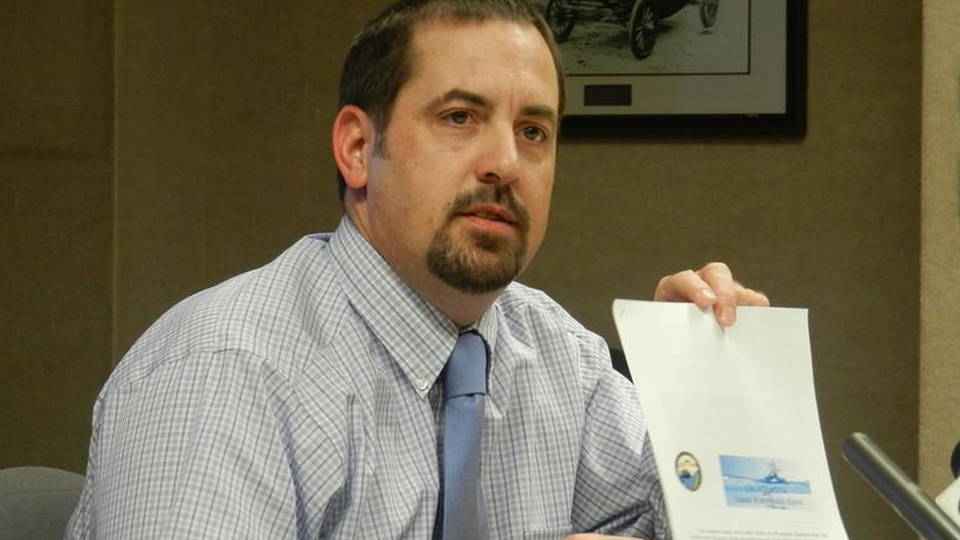
Three Michigan officials have been criminally charged for their involvement in the Flint water contamination crisis: Flint employee Michael Glasgow and Michigan Department of Environmental Quality employees Stephen Busch and Michael Prysby. Meanwhile, Michigan Governor Rick Snyder said he has not been questioned by prosecutors. The lead poisoning began when an unelected emergency manager appointed by Gov. Snyder switched the source of the city’s drinking water to the corrosive Flint River. We’ll have more on Flint with investigative reporter Curt Guyette later in the broadcast.
TOPICS:
Flint Water Crisis
Harriet Tubman to Share New $20 Bill with Andrew Jackson
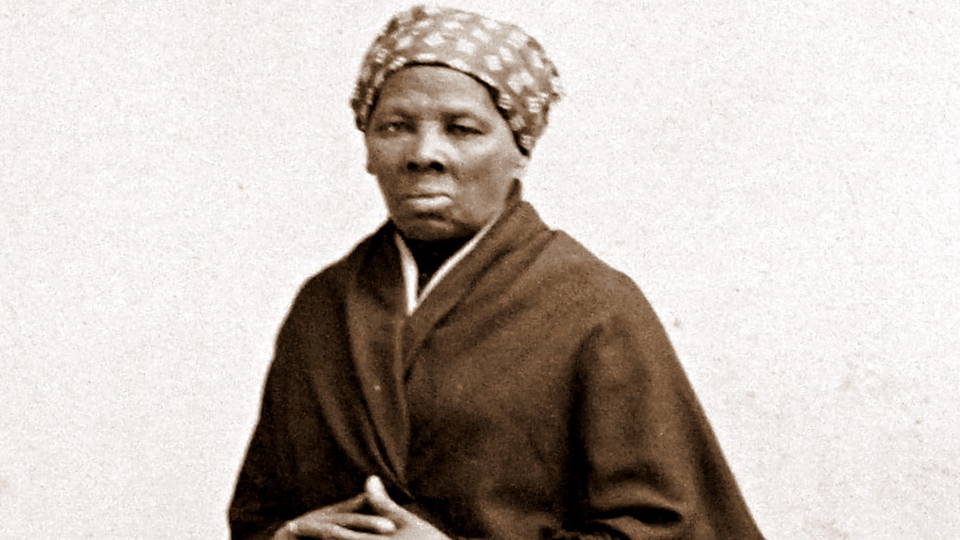
U.S. Treasury Secretary Jack Lew has announced new $20 bills will feature Harriet Tubman on the front, replacing former president and slave owner Andrew Jackson.
Treasury Secretary Jack Lew: "Harriet Tubman is one of the great American stories. A woman born a slave, illiterate for her whole life, she brought many, many people out of slavery through the underground railroad by time and again risking her own life to save others. She did intelligence for our Army during the Civil War, after she worked to get the women’s suffrage movement going. It’s a great American story."
The move came after more than a half a million people voted for Tubman to replace Jackson. But, in fact, Jackson will not be removed entirely, simply moved to the back of the bill. Some have criticized the idea that Harriet Tubman should represent U.S. currency at all. In a 2015 essay that went viral again yesterday, writer Feminista Jones wrote: "If having Harriet Tubman’s face on the $20 bill was going to improve women’s access to said bill, I’d be all for it. But instead, it only promises to distort Tubman’s legacy ... [which] is rooted in resisting the foundation of American capitalism."
TOPICS:
Women's Rights
Louisiana: 5 Cops Plead Guilty to 2005 Post-Katrina Killings
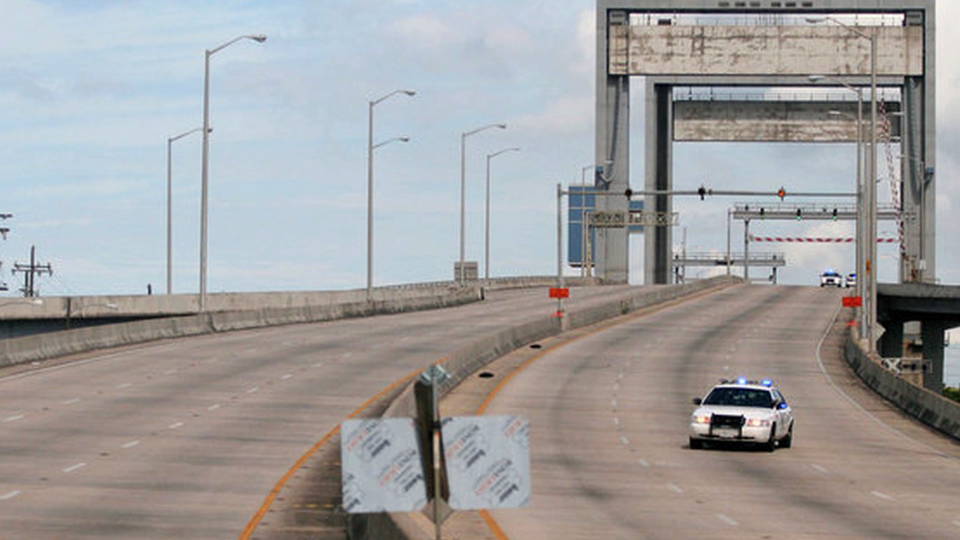
In Louisiana, five former police officers pleaded guilty in federal court to charges related to the 2005 killings of unarmed African American civilians on the Danziger bridge in the days after Hurricane Katrina. On September 4, 2005, a group of New Orleans police officers opened fire with AK-47s on families crossing the bridge in search of food. Two people, teenager James Brisette and 40-year-old Ronald Madison, were killed. Four more were injured. Police later tried to cover-up the case. On Wednesday, five police officers pled guilty to conspiracy, obstruction of justice and civil rights charges. Their sentences range from 3 to 12 years.
TOPICS:
Police Brutality
Hurricane Katrina
Senate Passes Energy Bill with Concessions to Fossil Fuel Companies
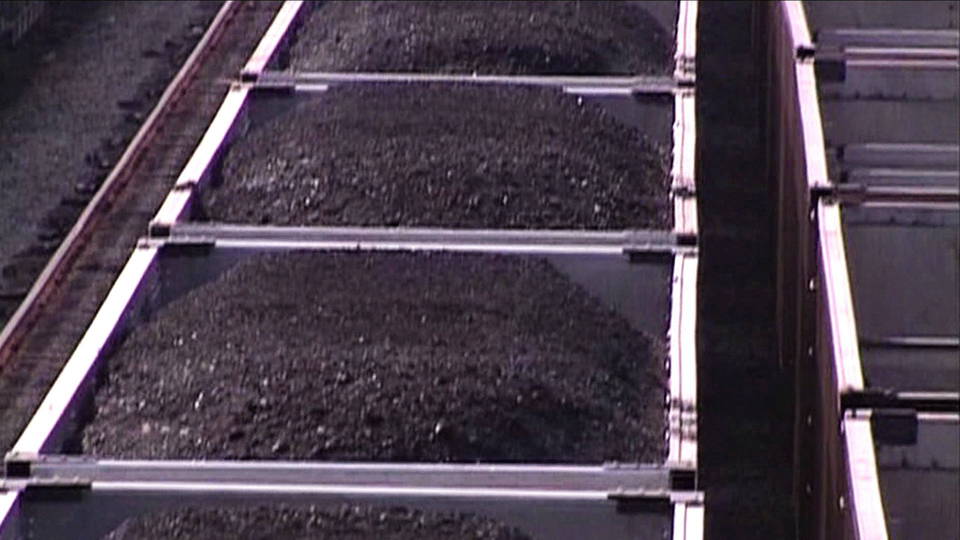
The Senate has passed a broad energy bill Wednesday that would speed up the export of gas extracted through fracking. The bill includes limited provisions promoting renewable energy such as wind and solar. But it also hands a victory to fossil fuel companies by requiring the Energy Department to speed up permitting of coastal terminals used to ship oil and gas overseas. This comes as world leaders are slated to sign the Paris Climate Accord at the U.N. headquarters in New York on Friday.
TOPICS:
Climate Change
Volkswagen Heads to Court Today over Emissions Cheating Scandal

Volkswagen is headed to court today in San Francisco, where it faces a deadline to work out a deal with the U.S. government over the auto giant’s emissions cheating scandal. The deal reportedly includes Volkswagen either fixing or buying back more than 500,000 cars that were equipped with software to evade U.S. emissions rules. Volkswagen also faces a maximum fine of $18 billion. Volkswagen has admitted to rigging some 11 million vehicles worldwide. U.S. regulators say Volkswagen vehicles were emitting up to 40 times more pollution than standards allow.
Washington: Nuclear Waste Leaking at Storage Site

In Washington state, workers are scrambling to move nuclear waste out of a storage facility after a leak was discovered inside one the tanks at the Hanford Site over the weekend. None of the nuclear material appears to have escaped the double-walled storage tank yet. But a former worker at the site has called the leak "catastrophic." The tank holds 750,000 gallons of radioactive waste.
TOPICS:
Nuclear Power
Mexico: Explosion at Chemical Facility Kills 3
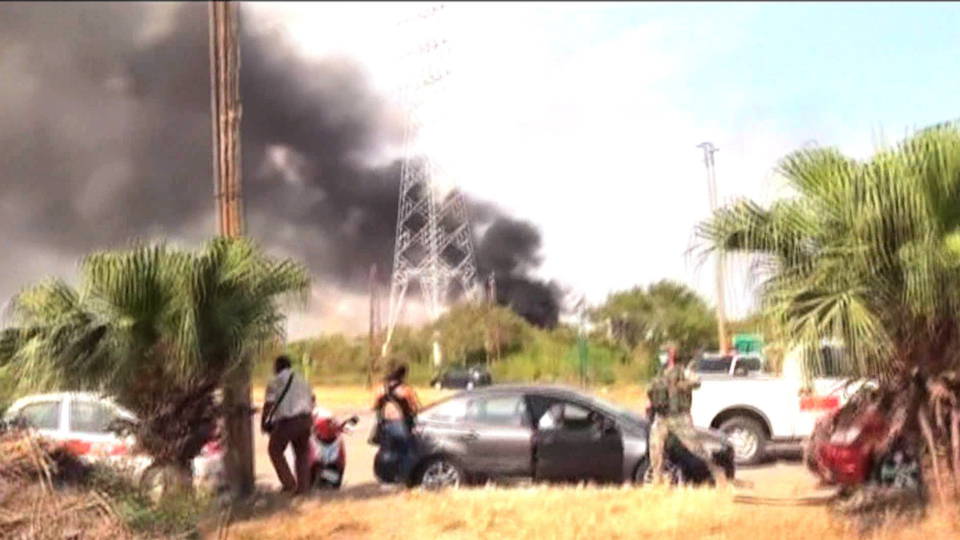
Meanwhile, an explosion at a petrochemical facility in Mexico has killed three people and injured more than 60 in the southern state of Veracruz. The facility is owned by Mexican national oil company Pemex.
TOPICS:
Mexico
Natural Gas & Oil Drilling
Air Force Increasingly Relying on Drones in Afghanistan

New data shows the U.S. Air Force is increasingly relying on drones, rather than manned aircraft, in the ongoing war in Afghanistan. In 2015, drones released 530 bombs and missiles in Afghanistan. This accounts for 56 percent of the weapons deployed by the U.S. Air Force. In contrast, in 2011, drones were used for only 5 percent of the weapons deployed by the Air Force. President Obama had previously said the 2014 drawdown would "reduce the need for unmanned strikes."
TOPICS:
Drone Attacks
Afghanistan
"Liberation Seder" Protests in NYC, Boston, Chicago, D.C. and SF
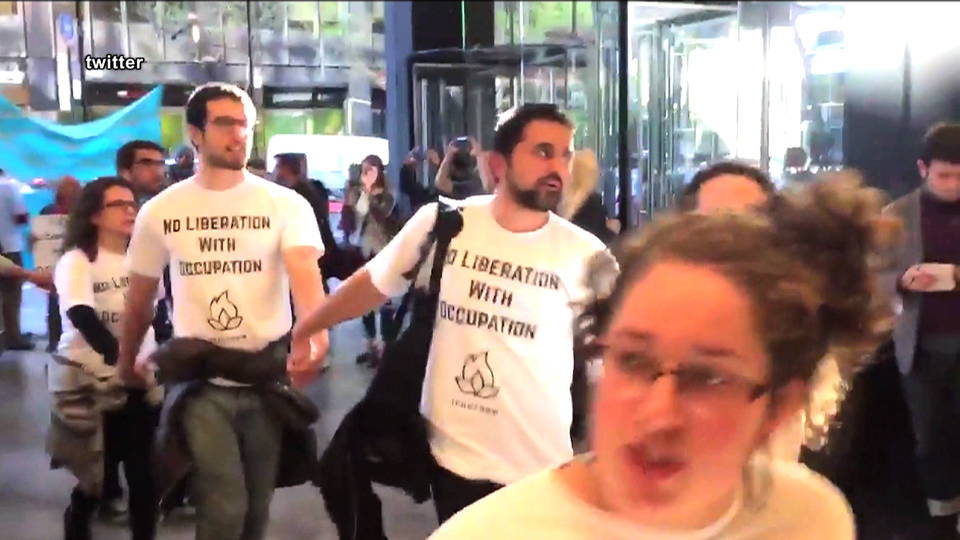
In New York City, Boston, Chicago and Washington, D.C., Jews have staged protests dubbed "Liberation Seder" to demand U.S. Jewish establishment groups end their support for Israel’s occupation of the Palestinian territories. The protests draw on rituals from Passover, which begins Friday night. Seventeen people were arrested at a protest inside the New York City offices of the Anti-Defamation League Wednesday, while six people were arrested Tuesday at a protest at AIPAC’s offices in Boston. More protests are planned for San Francisco later today.
TOPICS:
Israel & Palestine
NYC Residents Protest Brooklyn Board of Elections
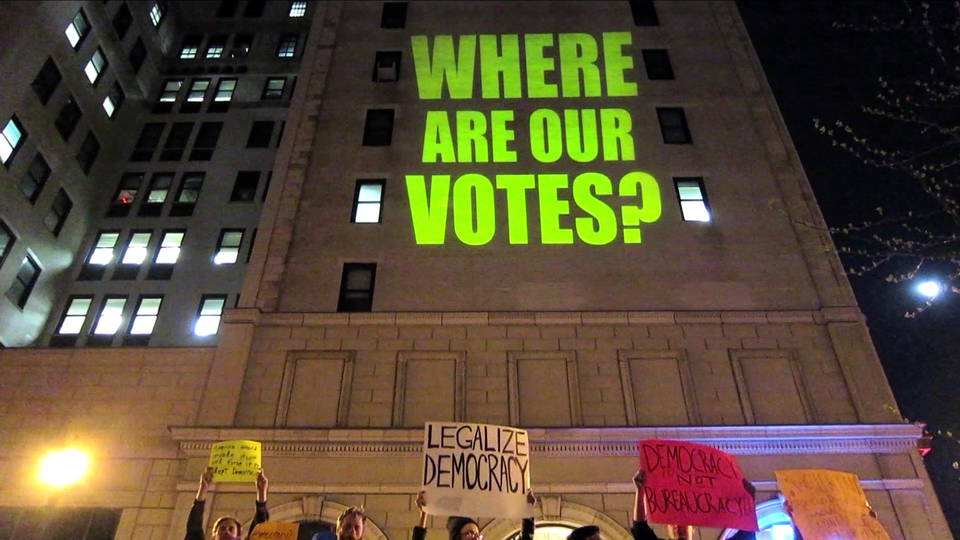
In New York City, residents gathered outside the Brooklyn Board of Elections office to protest the purging of 125,000 Democratic voters from the voting lists ahead of Tuesday’s primary. Kathleen Menagozi spoke out.
Kathleen Menagozi: "I’m here protesting for the purged voters. I was one of them. I registered in 2008, voted in 2008 and then voted again in 2012, checked my registration about, I would say, three weeks ago. I was told that they couldn’t find it in any of the boroughs. I also checked in Westchester County; they couldn’t find it there. And then they told me to give them a call back and that they were figuring it out. And then I called them back the day before I was supposed to go in and vote, and they told me that I was still not in their records, although they had seen that I had in fact voted in the past. So, I’m here today because voters shouldn’t be silenced, the voting process shouldn’t be as difficult as it is, and I’m not going to be silenced."
Later, activists from the art collective The Illuminator staged another protest, projecting onto the Election Board building: "Where are our votes?"
TOPICS:
2016 Election
#OccupyINAC: First Nations Protests Sweep Across Canada
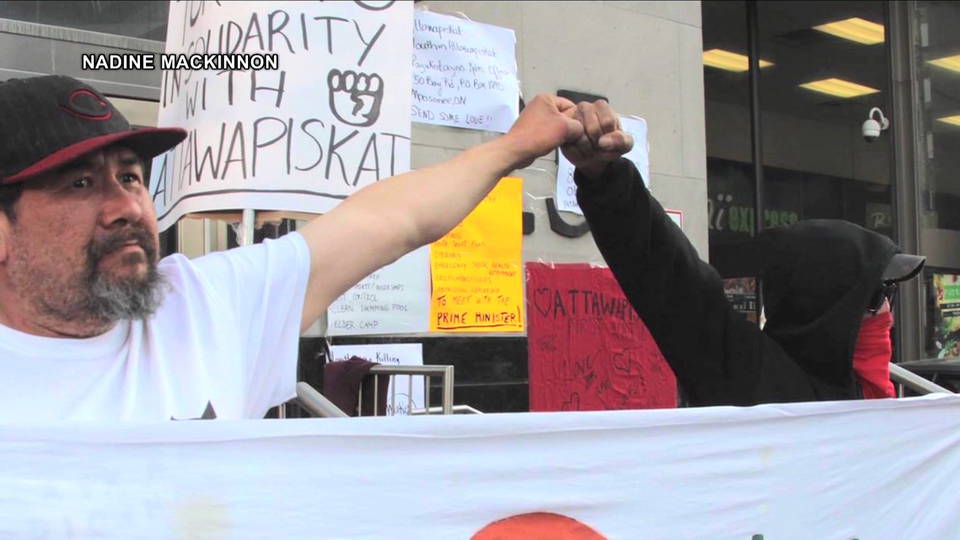
And across Canada, a protest for indigenous rights is sweeping across the provinces, as First Nations communities have occupied a series of government buildings. The movement is dubbed "Occupy INAC"—a reference to the Ministry of Indigenous and Northern Affairs. Activists are demanding the Canadian government address youth suicides in First Nations communities, as well as water and housing crises in their territories. Over the last week, protesters have set up occupations inside and outside the government offices in Toronto, Regina, Vancouver, Winnipeg, and Gatineau, Quebec. Earlier this week, 10 people locked themselves together inside the Toronto office, while Kayla Sutherland of the Attawapiskat First Nation spoke to a rally outside.
Kayla Sutherland: "Why don’t you learn something from the indigenous people and change things? It will help everyone. Canada, we respect human rights when we accomplish this, because right now we’re violating those rights. We say reconciliation as if colonization is not over. Colonization is continuing. And that, we must admit to and change."
The Attawapiskat First Nation saw 28 suicide attempts last month within a population of 2,000 people.
TOPICS:
Canada
Indigenous
Donate today:
Follow:


SPEAKING EVENTS

4/21 Boulder, CO
4/22 Colorado Springs, CO
4/23 Eagle, CO
4/23 Carbondale, CO
4/23 Paonia, CO
4/24 Salida, CO
4/24 Taos, NM
4/25 Albuquerque, NM
4/26 Los Alamos, NM
4/26 Santa Fe, NM
4/27 Flagstaff, AZ
4/28 Phoenix, AZ
4/28 Tucson, AZ
more
NEW BOOK



Broadcast Engineer
Director of Finance and Operations
WEB EXCLUSIVE

Criminal Charges Filed in the Poisoning of Flint's Water Supply
---------------------
Democracy Now! Daily Digest: A Daily Independent Global News Hour with Amy Goodman & Juan González for Friday, April 22, 2016
democracynow.org
Stories:

"He Refused to Live in a Binary": The World Mourns Death of Gender-Bending Music Legend Prince
The world is mourning the loss of the hugely acclaimed and influential musical sensation Prince. He died Thursday at his home in Minnesota at the age of 57. His work spanned funk, rock and jazz, and he recorded and distributed it on his own terms, once writing "slave" on his cheek to protest his treatment by Warner Bros. "When I think back on the work and the writing I’ve done around race and gender and identity to this time, I realize seeing Prince was one of the first times I saw someone who refused to live in a binary," says Steven Thrasher, whose new piece is entitled "Prince broke all the rules about what black American men should be." "When he named himself the artist formerly known as Prince, or, rather, used that symbol, he was really refusing to play by the game that society had put forth for him." We also speak with Winston Grady-Willis, a lifelong fan of Prince and professor and chair of Africana Studies at Metropolitan State University of Denver.
TRANSCRIPT
This is a rush transcript. Copy may not be in its final form.
AMY GOODMAN: We’re going to switch gears right now, but ask the two of you to stay on with us—the world mourning the loss of the hugely acclaimed and influential musical sensation Prince. He died Thursday at his home in Minnesota at the age of 57. Prince became a global musical phenomenon in the '80s, with albums such as 1999, Purple Rain and Sign O' the Times. His music spanned funk, rock and jazz. He sold more than 100 million records during his career. On Thursday, President Obama released a statement on Facebook that read in part, quote, "Today, the world lost a creative icon. ... Few artists have influenced the sound and trajectory of popular music more distinctly, or touched quite so many people with their talent." Steven Thrasher, your new piece for The Guardian is headlined "Prince broke all the rules about what black American men should be." Take it from there.
STEVEN THRASHER: Of course, like everyone else, I was extremely shocked and sad when I heard about Prince’s death, and I didn’t know to make of it necessarily right away, and I wasn’t sure what I could add to what this genius had to offer. And I quickly started thinking about the ways that he really frightened me as a young man, and yet I couldn’t look away. You know, I grew up biracial, black and white; my father is black, and my mother was white. And I often was trying to straddle what it meant to be a biracial person, what it meant to be a black person. And Prince really spoke to me, both in the way that he dealt with race in a very explicit way and that he was also, like me, kind of light-skinned, but he very much owned being a black person.
And I was absolutely thrilled and terrified when he spoke back to Warner Bros., when he wrote "slave" on his cheek and when he—you know, I was trying to think about the connections between him and Harriet Tubman. Obviously, I’m not comparing chattel slavery to being, you know, a Sony musician. But Prince really dealt with economics on his own terms. And he said he wasn’t going to do whatever Warner Bros. or his publisher wanted him to do; he was going to take ownership of his own music and chart his own path. And so I found that really inspiring and terrifying.
Also, as a queer person who didn’t know that I was gay when I was quite young, I found Prince just titilating and really frightening. And again, I couldn’t look away, because he had this quality that was profoundly sexual, but created a broader sense of sexuality than I was used to considering. He had a way that I thought was very paradoxic of trying to make—trying to expand the notion of what it meant to be a man, and yet, at the same time, he was really deconstructing gender. And he wasn’t owning being a man or owning a woman. So, in retrospect—of course, I wasn’t thinking of this when I was in junior high school, but when I think back on the work and the writing I’ve done around race and gender and identity to this time, I realize seeing Prince was one of the first times I saw someone who refused to live in a binary.
And when he named himself the artist formerly known as Prince, or, rather, used that symbol, he was really refusing to play by the game that society have put forth for him, and said, "I’m going to do this on my own terms." And it was really super fascinating to read yesterday about what it meant when he put that symbol out, because, at the time, we didn’t have emojis, we didn’t sort of have the graphic environment we have with the internet now. Newspapers literally could not print what that symbol was, and at some point they had to send out floppy disks to publications so that they could have a special font to be able to print that. So that’s what I was thinking about yesterday, just the many ways he made me reconsider what it meant to be a man, gender, black and an American.
AMY GOODMAN: And finally, Professor Winston Grady-Willis?
WINSTON GRADY-WILLIS: Yeah, I really couldn’t agree more. And I know that, personally, Prince’s significance, growing up here in Colorado, was that there had come a point where, just in terms of the culture wars around music when I was in high school and in college, those individuals who gravitated toward R&B, disco, on the one hand, those individuals who proudly proclaimed that they were rockers—and this was often a racialized dynamic—usually found themselves all on the dance floor, all grooving to Prince. And this was really, really important culturally. It was important personally. And the gender piece was really important, because for those of us who are heterosexual, Prince forced us to really interrogate gender norms in ways in which we were often not comfortable. I mean, I still remember to this day, every time Dick Clark would introduce Prince, there was this unease, and yet there was, all at the same time, this incredible respect for his genius.
AMY GOODMAN: I want to thank you both for being with us. Steven Thrasher, columnist for the Guardian US. We’ll link to your piece, "To put Harriet Tubman on the $20 bill would be an insult to her legacy," as well as your piece on Prince. And Winston Grady-Willis, professor and chair of Africana Studies here at Metropolitan State University in Denver, Colorado.
This is Democracy Now! When we come back, the first African-American woman to own a pot dispensary, a marijuana dispensary, here in Colorado. Stay with us.
[break]
AMY GOODMAN: "Money Don’t Matter 2 Night" by the late, great, gender-bending jazz, funk, rock 'n' roll—yes, the legend, Prince, who died at the age of 57. ...Read More →

Honor or Insult?: A Debate on the Significance of Harriet Tubman on the New $20 Bill
On Wednesday, U.S. Treasury Secretary Jack Lew has announced that new $20 bills will feature Harriet Tubman on the front, replacing former president and slave owner Andrew Jackson. The move comes after more than a half a million people voted for Tubman to replace Jackson. But in fact, Jackson will not be removed entirely, simply moved to the back of the bill. Some have criticized the idea that Harriet Tubman should represent U.S. currency at all. In a 2015 essay that went viral again yesterday, writer Feminista Jones wrote: "If having Harriet Tubman’s face on the $20 bill was going to improve women’s access to said bill, I’d be all for it. But instead, it only promises to distort Tubman’s legacy ... [which] is rooted in resisting the foundation of American capitalism." For more, we speak with Steven Thrasher, a weekly columnist for the Guardian US, where he wrote a piece headlined "To put Harriet Tubman on the $20 bill would be an insult to her legacy." And we speak also with Winston Grady-Willis, professor and chair of Africana Studies at Metropolitan State University of Denver.
TRANSCRIPT
This is a rush transcript. Copy may not be in its final form.
AMY GOODMAN: We are on a 100-city tour marking Democracy Now!'s 20th anniversary. Tonight we head to Colorado College. Right now we're broadcasting from Denver, Colorado.
U.S. [Treasury Secretary] Jack Lew has announced the new $20 bills will feature iconic abolitionist Harriet Tubman on the front, replacing former president and slave owner Andrew Jackson.
TREASURY SECRETARY JACK LEW: Harriet Tubman is one of the great American stories. A woman born a slave, illiterate for her whole life, she brought many, many people out of slavery through the underground railroad by time and again risking her own life to save others. She did intelligence for our Army during the Civil War, after she worked to get the women’s suffrage movement going. It’s a great American story.
AMY GOODMAN: That was U.S. Treasury Secretary Jack Lew. The move comes after more than a half a million people voted for Harriet Tubman to replace Jackson. But, in fact, President Jackson will not be removed entirely, simply moved to the back of the bill. Some have criticized the idea that Harriet Tubman should represent U.S. currency at all. In a 2015 essay that went viral again yesterday, the writer Feminista Jones wrote, quote, "If having Harriet Tubman’s face on the $20 bill was going to improve women’s access to said bill, I’d be all for it. But instead, it only promises to distort Tubman’s legacy ... rooted in resisting the foundation of American capitalism."
Well, for more, we’re joined by two guests. In New York, Steven Thrasher is with us. He’s a weekly columnist for the Guardian US, where he wrote a piece headlined, "To put Harriet Tubman on the $20 bill would be an insult to her legacy." Here in Denver, we’re joined by Winston Grady-Willis. He is professor and chair of Africana Studies at Metropolitan State University here in Denver.
We welcome you both to Democracy Now! We’re going to start with the professor here in Denver, Colorado. Professor, talk about who Harriet Tubman was. Give us a thumbnail sketch of this remarkable woman’s life.
WINSTON GRADY-WILLIS: Thank you, Amy. She was a remarkable woman indeed. She was born into slavery in Maryland. She was initially slated to work in the big house, but was seen as being too recalcitrant, and so was placed in the field, which is the experience for the large number of enslaved African women and men. She would—
AMY GOODMAN: She was born in 1822 in the Eastern Shore of Maryland?
WINSTON GRADY-WILLIS: That’s correct. And in Maryland, she would eventually escape from slavery, but realized that her own individual freedom from chattel slavery simply was not enough. And so she dedicated the rest of her life to this ongoing mission to free family members, friends, individuals who did not know her directly. She became the most prominent conductor with the underground railroad.
AMY GOODMAN: I mean, it’s interesting she escaped slavery like 10 years after Frederick Douglass from this same area.
WINSTON GRADY-WILLIS: Yes, that’s right.
AMY GOODMAN: He, also enslaved.
WINSTON GRADY-WILLIS: That’s right.
AMY GOODMAN: He goes north, becomes a world-renowned speaker against slavery.
WINSTON GRADY-WILLIS: Yes, yes.
AMY GOODMAN: But she comes back to the place where she had been brutalized. Right?
WINSTON GRADY-WILLIS: That’s right. That’s right.
AMY GOODMAN: They said she experienced these epileptic-like seizures
WINSTON GRADY-WILLIS: That is correct.
AMY GOODMAN: —because she had been beaten so badly around her head.
WINSTON GRADY-WILLIS: That is right. That’s right. And she would live with this lifelong disability, yet help empower individuals to escape from slavery. And the key thing, the relationship between Douglass and Tubman, Douglass along with Sojourner Truth are quintessential examples of political abolitionists, and Tubman is what I would call a military abolitionist. Many folks would refer to her as Moses. But a number of enslaved Africans, others in the underground railroad, often referred to her as the general.
AMY GOODMAN: And talk about—she not only was a conductor, as they say, on the underground railroad, coming back, freeing hundreds—
WINSTON GRADY-WILLIS: Yes, yes.
AMY GOODMAN: —of slaves, but she fought in the Civil War.
WINSTON GRADY-WILLIS: She did indeed. She was a spy. She was a scout. And most famously perhaps, she was the individual who led the raid down the Combahee River in the Lowcountry of South Carolina. It was a nighttime raid in which she led forces that—U.S. Army forces, often referred to as Union forces, who freed dozens of enslaved Africans, eventually hundreds, under Confederate fire. Not a single individual was lost.
AMY GOODMAN: Afterwards, after her position fighting in the Civil War, it took her decades to get a pension.
WINSTON GRADY-WILLIS: Yes.
AMY GOODMAN: Is that right?
WINSTON GRADY-WILLIS: Absolutely, absolutely. It was a decades-long struggle. And then when she finally did receive that pension, it was an absolute pittance. There’s no question about it.
AMY GOODMAN: And slave owners put a bounty on her head?
WINSTON GRADY-WILLIS: Yes, absolutely. I often think of—when we think of the bounty that Assata Shakur has on her head, I’m reminded that there’s a long tradition of individuals, going back to Tubman herself, who were deemed such a threat to the status quo.
AMY GOODMAN: Steven Thrasher, you wrote about Harriet Tubman replacing the slave-owning President Andrew Jackson on the front of the bill. He’ll be pushed to the back of the bill. Your thoughts on this iconic abolitionist, her face on the most used bill in the United States?
STEVEN THRASHER: I have very mixed feelings about it. And I don’t disagree with anything the professor said about what a fantastic and wonderful American she was, and I do understand people who think that this is an opportunity to have her have more visibility. But I’m really concerned about it, because Harriet Tubman was, you know, a slave herself. She could have been bought or sold with a $20 bill. And her work was about undoing the system of oppression of African Americans. And so I really worry that in being placed on the bill, that will be sort of a way of papering over her true legacy and sort of be a way to just say that things are being taken care of and are no longer problematic.
I would be entirely for the Harriet Tubman Reparations Act of 2016. You know, if—I know this Congress would never pass such a thing, and President Obama probably wouldn’t sign it. But I’d be all for having something happen where Harriet Tubman was used to address the economic inequality of African Americans still to this day. But I’m really worried about seeing her face on this bill, starting to see her face on mattress sales or, you know, electronic store sales or things like that, and just seeing the American dollar consume one of our heroes, who is really about undoing the ways that American capitalism used our bodies to capitalize this country.
AMY GOODMAN: I wanted to read you a quote from NPR pointing out that putting Tubman on the $20 bill would be poetic because of "a special historical resonance: That’s the same amount she eventually received from the U.S. government as her monthly pension for her service as a nurse, scout, cook and spy during the Civil War, as well as for her status as the widow of a veteran." Steven Thrasher, your response?
STEVEN THRASHER: I would be more persuaded that that was useful now if we were at a place where African Americans and African-American women were earning, you know, equal pay and had equal wealth. But the fact of the matter is that right now white families have about 12 times the wealth of black families in this country. Black women earn something like 64 cents on the dollar to white men. And so, we’re still living in a time that over the course of decades and centuries has been created an economic inequality, from the time that Harriet Tubman was doing her work, and these things haven’t been addressed. You know, we have, of course, racial disparities that happen across millions of people. But there are specific companies, like, as I wrote in my piece, Aetna insurance, that—they insured slaves, they made their money off of slaves, they made their wealth off of slaves, that very much fueled the economy of this nation for hundreds of years, and that led to these disparities that we still have. And those specific things are not being addressed. So to then take Harriet Tubman, one of our best images and one of our best people, who was fighting that, and then to now put her on the dollar that is still economically oppressing black people, I think, really misses a very important point.
AMY GOODMAN: Professor Winston Grady-Willis, this whole issue of her representing capitalism?
WINSTON GRADY-WILLIS: Yes. I think that Steven Thrasher makes a really important point. His piece is excellent. And he and a number of other individuals—political prisoner, freedom fighter Jalil Muntaqim—make very, very important points here. And so, in many ways, I’m actually in agreement. But at the end of the day—perhaps it’s the practical bones in my body—I think that having Tubman as the face on the $20 bill actually provides an opportunity for a number of us to go beyond an elementary school narrative and discussion of her life and legacy. She is an extraordinary figure. And given the place of enslaved African men and women, and specifically the marginalization of enslaved African women, the absolute absence of ownership over their bodies, Tubman’s activism, her agency, stands in stark contrast to that. And I think it’s very, very important for folks to not only understand that, but to also—in a society in which heroism, when connected, when gendered, when seen in connection to womanhood, is often always placed in exclusively white terms, to have Tubman given prominence in this way is profoundly important. It’s something that should not—should not be—
AMY GOODMAN: I’m going to put this quote to you, Professor Winston Grady-Willis. Akiba Solomon, writing in the racial justice publication Colorlines, commented, "Several people have suggested that Tubman on the front, Jackson on the back is a late April Fool’s joke or the product of a 4/20 binge. It is neither. It’s America."
WINSTON GRADY-WILLIS: Yeah.
AMY GOODMAN: And for our viewers and listeners around the world, outside of Colorado, you can explain what a 4/20 binge is before you respond.
WINSTON GRADY-WILLIS: Absolutely. I think I may have had some students in class who may have been recuperating from that celebration of marijuana use, yes.
AMY GOODMAN: That’s right, 4/20, folks, which we just passed. We were a little careful driving on the roads, but April 20th is the celebration of marijuana. And because it’s legal here in Colorado, enormous day.
WINSTON GRADY-WILLIS: Yes, yes.
AMY GOODMAN: But what about that—Jackson on the back, Tubman on the front?
WINSTON GRADY-WILLIS: Yeah. Andrew Jackson is arguably a war criminal. He is someone who was unapologetically a slaveholder and an individual who played a very critical role with respect to the genocide of indigenous populations. And so, the positionality, the juxtaposition of this woman who escapes slavery, who would go on to command the respect of U.S. Army generals, to sort of supplant Jackson, that’s not lost on any of us. It’s not lost on any of us.
AMY GOODMAN: Jackson was one of 18 presidents who owned slaves.
WINSTON GRADY-WILLIS: That’s correct.
AMY GOODMAN: Interestingly, he was not only a slave owner, but participated in the genocide against the indigenous population—
WINSTON GRADY-WILLIS: Yes.
AMY GOODMAN: —the Cherokee people calling him "Sharp Knife," indicating—
WINSTON GRADY-WILLIS: That’s right.
AMY GOODMAN: —his extreme violence against them.
WINSTON GRADY-WILLIS: That’s right. Absolutely, absolutely. And so, again, with all of the contradictions, the ironies that are in play here, what cannot be lost is that those of us who do the work, whether grassroots activists, whether educators, we have a responsibility to take this moment and to celebrate Tubman on our own terms. We’ve seen already that the mainstream corporate media, that individuals in high places often will have a particular narrative, whether it’s on Dr. King and his holiday, which is really a social justice movement holiday. But it’s incumbent upon us, it’s our obligation, to take this moment, in terms of the $20 bill, to reaffirm Tubman’s place, what she represents in terms of black womanhood, black agency, and the bedrock and central importance that blacks themselves played during the U.S. Civil War. ... Read More →

Colorado's First Black Woman Pot Entrepreneur on Edibles, Incarceration & the Industry's Whiteness
We are broadcasting live from Denver, Colorado, where in 2012 the state voted to legalize the recreational use of marijuana. Now 23 states and the District of Columbia have legalized marijuana for either medical or recreational use, and the cannabis industry is one of the fastest growing in the United States. But some have questioned who stands to cash in on the billions being generated by cannabis sales. Michelle Alexander, the best-selling author of "The New Jim Crow: Mass Incarceration in the Age of Colorblindness," addressed the issue in a conversation with the Drug Policy Alliance, saying, "Here are white men poised to run big marijuana businesses, dreaming of cashing in big—big money, big businesses selling weed—after 40 years of impoverished black kids getting prison time for selling weed, and their families and futures destroyed. Now, white men are planning to get rich doing precisely the same thing." We speak now to Wanda James, CEO of the Denver-based cannabis dispensary Simply Pure. She is the first African-American woman in Colorado to own a cannabis dispensary. She was inspired to start a dispensary by the experiences of her brother, who at 17 was locked up on a petty drug charge—and forced to pick cotton in Texas for four years to earn his freedom.
TRANSCRIPT
This is a rush transcript. Copy may not be in its final form.
AMY GOODMAN: This is Democracy Now!, democracynow.org, The War and Peace Report. We’re on our 100-city tour marking Democracy Now!'s 20th anniversary. Today, we're in Denver, Colorado. Tonight, I’ll be speaking at Colorado College in Colorado Springsday1303.
But here in Colorado, 2012, the state voted to legalize the recreational use of marijuana. Marijuana has become an established part of the economy here. There are marijuana dispensaries on many street corners. Now 23 states and the District of Columbia have legalized marijuana for either medical or recreational use, and the cannabis industry is one of the fastest growing in the U.S. But some have questioned who stands to cash in on the billions being generated by cannabis sales. Michelle Alexander, best-selling author of The New Jim Crow: Mass Incarceration in the Age of Colorblindness, addressed the issue in a conversation with the Drug Policy Alliance.
MICHELLE ALEXANDER: In many ways, the imagery doesn’t sit right. You know, here are white men poised to run big marijuana businesses, dreaming of cashing in big—big money, big businesses selling weed—after 40 years of impoverished black kids getting prison time for selling weed, and their families and futures destroyed. Now, white men are planning to get rich doing precisely the same thing.
AMY GOODMAN: The Marijuana Arrest Research Project reports, between 2001 and 2010, Colorado police made 108,000 arrests for marijuana possession. African Americans were more than 10 percent of those arrests, but are less than 4 percent of Colorado’s residents.
For more, we’re joined by Wanda James, CEO of the Denver-based cannabis dispensary, Simply Pure. She’s the first African-American woman in Colorado to own a cannabis dispensary. She’s also managing partner of Cannabis Global Initiative.
Welcome to Democracy Now!
WANDA JAMES: Good morning.
AMY GOODMAN: It’s great to have you with us.
WANDA JAMES: Thank you.
AMY GOODMAN: I mean, for people hearing that you are publicly saying that you own a pot dispensary, explain the alternative reality here in Colorado compared with everywhere else.
WANDA JAMES: Sure. I have been publicly saying we own a dispensary since 2009. So, this is not new to us. And we became part of this pot industry or cannabis industry because of social justice. We wanted to be able to step out and talk about this in political terms and to be able to bring normalcy to the idea that cannabis is a part of the American lifestyle and the American fabric. So this is something that I’m very proud about. Of all the things I’ve done in my life, I would say this is probably the thing that I find the most [inaudible].
AMY GOODMAN: So how does it work? How does your dispensary work?
WANDA JAMES: Well, like any other retail operation that you would go through, you’ve got to be licensed by the state. You’ve got to work within the realm of the rules and the regulations, which are many. But, you know, over the age of 21, you can come into a dispensary, show us your ID, and you can buy cannabis and cannabis-infused products.
AMY GOODMAN: So you’re talking not only about actual marijuana, but you specialize in edibles.
WANDA JAMES: Yes. Simply Pure was an edible company in 2010. It’s now a dispensary. But yeah, my husband is one of the best-known—Scott Durrah, one of the best-known cannabis chefs in the country. So, he cooks for people having end-of-life issues, and he also cooks for people who are having great time with recreational festivities, such as weddings and birthday parties and all different types of—
AMY GOODMAN: So, sort of pot-infused wedding cakes?
WANDA JAMES: Exactly. All meals. I mean, anything that you eat, we can infuse.
AMY GOODMAN: So, now talk about the disparities between marijuana arrests and sentencing for people of color—
WANDA JAMES: Yeah.
AMY GOODMAN: —outside of Colorado, and what this means, and who profits from marijuana sales.
WANDA JAMES: So this is the absurdity that I think people really need to understand what’s happening here, is America needs slave labor. Since the dawn of America, since it began, we have had a slave labor class. What we see now is the privatized prison system. I won’t get into a whole lot of details, but if you can name a corporation right now, they are profiting off of labor, enslaved labor, given by privatized prison systems. To fill those spots, they need to be able to put bodies into those prison systems. And those bodies right now are being collected on the streets of America through cannabis arrest. We’re seeing last year alone that 701,000 people were arrested for simple possession of cannabis. Of those 700,000 people, four times—you are four times more likely to be arrested if you are black. So, when you start to look at the fact that you are being targeted as a people for these arrests to become part of the prison system, to be able to work into slave labor, it becomes extremely concerning.
AMY GOODMAN: Can you talk about what happened to your brother, Wanda James?
WANDA JAMES: Yeah. At 17 years old, my brother got caught with four-and-a-half ounces of cannabis. He was in Texas. He never saw an attorney. He and his mother went in front of the judge. The judge made my brother a felon. My brother spent four-and-a-half years picking cotton for free in Texas. I always stop on that note, and I say it again, that my black brother, my black 17-year-old brother, spent four-and-a-half years picking cotton for free in Texas to gain his freedom. That was in 1992, not 1892. This is absurd to me. And when we discovered this, I became incensed by it, because as a student on the campus of the University of Colorado, we smoked cannabis regularly. We smoked it in front of CUPD, that just told us to put it away. "Put it away, kids," you know? "Put it away." I didn’t even know, until I met my brother at 35, that people were actually arrested for cannabis. In my world, in my wealthy world of lawyers and doctors and college-educated people, we don’t go to jail for cannabis. Everybody else does. Seven hundred thousand arrests last year for cannabis possession.
AMY GOODMAN: If you have a criminal record for marijuana, how does that impact your ability to enter the industry?
WANDA JAMES: You can’t. You have to be 10 years removed from any kind of a drug felon. Now, you can have other felonies and other issues with the law, and still own dispensaries in Colorado; however, you can’t have any drug felonies. It’s become extremely difficult to get into the industry. And I have to also point out that the negative perception given to people of color through churches and through our elected officials also helps stop people from wanting to be involved in this industry, which is another travesty, that we are once again being left out of this brand-new industry, and one of the largest industries that we’re going to see in this country.
AMY GOODMAN: Talk about the Denver City Council moving to restrict new pot businesses in the city. What sparked that? What are your thoughts?
WANDA JAMES: What sparked that was they said that there were too many marijuana grow facilities in poor neighborhoods. However, Denver City Council is the one that controls zoning, and they are the one that told us where we had to be and where we were allowed to grow. So, then, five years later, they figured that are too many there, even though that these organizations had been good neighbors, have cleaned up the area, have hired people, have hired people for higher-wage jobs, which is always a positive in this industry.
AMY GOODMAN: The black community in Colorado, its position on pot legalization in—
WANDA JAMES: I mean, I can’t speak for the entire black community, but I will say the response to me and people wanting to work for me is overwhelming. I get letters daily from people wanting to be a part of the industry, wanting to be working in our dispensary, from college-educated people to people that are just starting out.
AMY GOODMAN: Can you, finally, talk about the role of women, particularly black women, in this white male-dominated industry?
WANDA JAMES: It’s almost nonexistent for black women. There are few to none. I’ve asked the question many, many times of how many black women actually own dispensaries, and I can’t seem to get that answer. So, it is an extremely limited number. However, women in this industry are coming full circle. We’ve seen about 36 percent of the management positions in this industry are women. We’ve got probably about a 20 to 22 percent ownership in this industry, or in Colorado, of women-owned businesses in the marijuana industry.
AMY GOODMAN: Wanda James, I want to thank you for being with us.
WANDA JAMES: You’re welcome.
AMY GOODMAN: We will come back to you, even when we leave Colorado. Wanda James, CEO of Simply Pure, a Denver-based cannabis dispensary, managing partner of Cannabis—the managing partner of the—
WANDA JAMES: Cannabis Global Initiative.
AMY GOODMAN: Cannabis Global Initiative. This is Democracy Now!, democracynow.org, The War and Peace Report. ... Read More →

#EarthDay: As Paris Deal Is Signed, Gulf Coast Residents Demand End to Drilling—Entirely
Image Credit: Friends of the Earth Europe
As the world marks Earth Day, more than 60 heads of state meet at the United Nations headquarters to sign the Paris climate agreement aimed at slowing climate change. Many countries still need to formally approve the agreement, which will only enter into force when it is ratified by 55 nations that account for 55 percent of man-made greenhouse gas emissions. Experts say the cuts promised in the deal are insufficient to avert dangerous global warming. This comes as Gulf Coast communities marked the sixth anniversary of the BP oil spill by demanding no new drilling. For more, we speak to reporter Antonia Juhasz. Her new report in Rolling Stone is "Six Years After BP Gulf Oil Spill, Residents Demand 'No New Drilling.'" Her most recent book is "Black Tide: The Devastating Impact of the Gulf Oil Spill."
TRANSCRIPT
This is a rush transcript. Copy may not be in its final form.
AMY GOODMAN: As we move on right now, today is Earth Day. Climate is on the world’s agenda as more than 60 heads of state will meet at the United Nations headquarters to sign the Paris agreement aimed at slowing climate change. Many countries still need to formally approve the agreement, which will only enter into force when it’s ratified by 55 nations that account for 55 percent of man-made greenhouse gas emissions. This comes as the first three months of 2016 broke temperature records, and 2015 was the warmest year on record. Experts say the cuts promised in the deal are insufficient to avert dangerous global warming. On Thursday, demonstrators gathered in Paris to highlight the oil industry’s role in climate change.
AURELIE: [translated] So, we are gathering outside the Meridian this morning because it is the International Oil Summit, a yearly summit which gathers major oil industries and some organizations such as OPEC, as Paris’s climate agreement will be ratified tomorrow in New York. And we wanted to underline the fact that there is a huge contradiction there, since the climate agreement plans to limit global warming to 1.5 degrees, which was the commitment of all countries. But if the oil industry continues that way, we are going to overpass 3 degrees, which is the climate imbalance threshold. And that is when the situation will become difficult to deal with.
AMY GOODMAN: Here in the United States, Gulf Coast communities marked the sixth anniversary of the BP oil spill by demanding no new drilling. Last month, they held protests outside the Superdome in New Orleans, which hosted an auction by the Interior Department for 45 million acres in the offshore Gulf of Mexico for new oil and gas drilling.
For more, we’re joined here in Denver by reporter Antonia Juhasz. Her new report in Rolling Stone headlined "6 Years After BP Gulf Oil Spill, Residents Demand 'No New Drilling.'" And she has a piece in Newsweek; its headline, "Paris was Just a Way Station in the Climate Change Fight." You can read her feature article in Ms. Magazine about women taking on climate change. And her most recent book, Black Tide: The Devastating Impact of the Gulf Oil Spill.
It’s great to have you back with us, Antonia, here in Denver, Colorado, today.
ANTONIA JUHASZ: Thanks for having me.
AMY GOODMAN: Well, these three things are converging. It’s Earth Day. You’ve got the Paris climate agreement going to be signed at the U.N. today. It’s the sixth anniversary of the BP oil spill. Put it all together for us.
ANTONIA JUHASZ: OK. I think the most important thing for the six-year anniversary of the oil spill is that, you know, at this point, government, industry, the public have learned the lessons of this disaster. Unfortunately, those first two categories—government and industry—aren’t implementing any of those lessons. So, President Obama is expanding offshore oil drilling dramatically in the Gulf of Mexico, a proposal to expand it in the Arctic, continuing production, where I live, in California and the Pacific, and hoping to continue to expand drilling in the Gulf of Mexico, as well. And that is in this—in face of the Interior Department trying to put in place new regulations to make offshore drilling safer, including 500 pages’ worth of new regulations released just last week. But every expert I’ve spoken to, including the U.S. Chemical Safety Board, has said these regulations just do not go far enough, and the lessons have not been implemented. The likelihood of another Macondo-like blowout is still very, very real.
The good news is, of those groups, the groups that have learned the lessons, increasingly so, is the public. So, you know, in my six years of covering this disaster, I don’t think I’ve ever seen anything like that protest at the Superdome, just the numbers of people from the Gulf Coast, from all across the Gulf Coast, coming out to say, "You know what? We just don’t want any more of this." The costs are too high—the environmental costs, but also the economic costs, with the collapse in the oil industry and that roller coaster ride of being dependent on this resource, and, of course, the climate costs. And what we’re seeing in the Gulf Coast is reflected all across the country and all across the world, where polls are showing really dramatic changes in public opinion, not just globally, but also in the United States, with almost 75 percent of Americans now preferring to pursue alternative energy instead of oil and gas development. And that includes, for the first time, a majority of Republicans proposing alternative energy to oil and gas, which means that, for example, the Republican candidates for president are not reflecting the views of the Republican population, but instead what we’re seeing is a population that is saying—embracing the idea of "keep it in the ground."
AMY GOODMAN: What’s happening at the United Nations today? Some 60 heads of state will be there to sign the Paris agreement. Its significance?
ANTONIA JUHASZ: Yeah, so, this was—196 countries agreed in Paris in December that we’re going to make a global commitment to reduce carbon emissions and aim to keep warming to 1.5 degrees Celsius above pre-industrial levels. That commitment is important. There was money behind it. There was some legally binding portions to it.
But the key point missing is this point that I said the public is getting, which isn’t—which governments are not getting and is not in the agreement, which is the need to keep fossil fuels in the ground. So the United Nations itself has said, at a minimum, three-fourths of existing fossil fuels need to stay in the ground to avert the worst of climate catastrophe. The Paris agreement, nowhere in it do the words "oil," "natural gas," "coal," "fossil fuels" appear. It’s all about stopping emissions, not stopping production. And that allows, for example, the government of Saudi Arabia to have a plan, within the climate agreement, which is that they’re going to increase domestic production of oil and gas, export it out of the country, and use that money to fund alternative energy development at home. That’s just backwards.
AMY GOODMAN: Interesting that President Obama was in Saudi Arabia this week, this Earth Day week.
ANTONIA JUHASZ: Yeah, absolutely. I mean, obviously, you know, our relations with the Saudis encompass a lot of things. Oil is certainly one of them. And there is a lot of debate right now about trying to get, for example, Saudi Arabia to choose to reduce that production to help address the price of oil, at the same time as agreeing, in the Paris climate agreement, to allow them to produce more oil and gas to save the climate.
AMY GOODMAN: We’ve just got 30 seconds. On this 46th anniversary of Earth Day, what are you celebrating, Antonia Juhasz?
ANTONIA JUHASZ: I’m celebrating this movement, the Keep It in the Ground movement. All across the United States this week, there have been protests trying to halt new leasing of oil and gas development, including, you know, as I said, in the Gulf of Mexico, and, really, this global movement that is getting much, much, much larger to keep it in the ground and see those answers, even in response to a non-appropriately responsive government and industry.
AMY GOODMAN: I want to thank you, Antonia Juhasz, for being with us. Her new report in Rolling Stone headlined "6 Years After BP Gulf Oil Spill, Residents Demand 'No New Drilling.'" Her piece in Newsweek, "Paris was Just a Way Station in the Climate Change Fight." We’ll link to all her pieces, including her one in Ms. Magazine about women in the climate change battle.
This is Democracy Now! When we come back, Boulder is debating whether to become a sister city to Nablus in the Israeli-occupied West Bank. We’ll host a debate. Stay with us.
[break]
AMY GOODMAN: "7" by Prince. It’s hard to say "the late, great Prince," but Prince has died at the age of 57. ... Read More →

Debate: Should Boulder, Colorado, Become a Sister City of Nablus in Israeli-Occupied West Bank?
As we are on the road in Colorado, we look at how Boulder is debating an international conflict. This week the Boulder City Council agreed to hire a moderator and convene a citizen panel to mediate disagreements over a proposal to make Boulder a sister city of Nablus in the Israeli-occupied West Bank. A group of residents applied to the City Council to recognize Nablus as a sister city, writing, "Boulder and Nablus have so much in common that they are natural sisters for each other. … We believe that there is no better moment for people-to-people connections that can contribute to further understanding." But a previous effort to recognize Nablus as a sister city was voted down by the Boulder City Council in 2013. We host a debate between two Boulder residents. Essrea Cherin is board chair of the Boulder-Nablus Sister City Project, which applied for Nablus to be officially recognized as a sister city of Boulder, and Bruce Shaffer is a retired attorney who opposes the plan.
TRANSCRIPT
This is a rush transcript. Copy may not be in its final form.
AMY GOODMAN: This is Democracy Now!, democracynow.org, The War and Peace Report. I’m Amy Goodman, on our 100-city tour. Today, we end today’s show with a look at how Boulder, Colorado, where we’re broadcasting from today, the state of Colorado—we’re in nearby Denver—Boulder is debating an international conflict. This week, the Boulder City Council agreed to hire a moderator and convene a citizen panel over a proposal to make Boulder a sister city of Nablus in the Israeli-occupied West Bank. A group of residents applied to the Boulder City Council to recognize Nablus as a sister city, writing, quote, "Boulder and Nablus have so much in common that they are natural sisters for each other." But the City Council rejected a previous effort to recognize Nablus as a sister city in 2013, after a contentious, hours-long hearing.
BILL COHEN: One of the concerns we have is, number one, the scope of the human rights violations is enormous here. And this is not just based on my say-so or Israeli information. It’s based on Palestinian reports, as well, that are reporting egregious conditions in Nablus and in—throughout the West Bank, with respect to honor killings of women, with respect to persecution of gays, with respect to torture, with respect to desecration and lack of access to Jewish religious shrines, multiple, multiple times.
IDA AUDEH: For those who claim that they’re appalled by human rights issues, they should be appalled by human rights issues. It is appalling. It is appalling the way that Israel is impoverishing the Palestinian people in the West Bank and in the Gaza Strip for 40-some years now.
AMY GOODMAN: So we turn now to a debate between two Boulder residents. Essrea Cherin is board chair of the Boulder-Nablus Sister City Project, which applied for Nablus to be officially recognized as the sister city of Boulder. And Bruce Shaffer is a retired attorney who opposes the plan.
We welcome you both to Democracy Now! Interestingly—maybe this can happen only in Colorado—you both came in on the same car, so you’ve been together for an hour debating this.
BRUCE SHAFFER: Why not?
AMY GOODMAN: But I want to start with you, Essrea. Explain why it is you have been pushing for Nablus to be the sister city to your city, Boulder.
ESSREA CHERIN: Well, the reason that I’ve been promoting and working on a sister city relationship is primarily because of my own—my own journey, in terms of having spent time in Palestine and recognizing that the people of Palestine are portrayed quite the opposite of how they are in real life, in mainstream media. I’ll not say not on Democracy Now! But in most media portrayals in the United States, Palestinians are depicted in the darkest of lights. And most people really struggle to even conjure an image of a Palestinian person who could be just like you and I, you know, sitting round a table at a TV station in Nablus. And indeed, you know, they are. And, you know, it’s in my visits to—in my visits to Palestine, it became quite evident to me that the people of the United States need to—need to have opportunities to get to know Palestinians.
AMY GOODMAN: So what would it mean to designate Boulder as an official sister city of Nablus?
ESSREA CHERIN: Well, you know, it’s actually a mere formality. It doesn’t signify much. It’s a procedural event. So when we apply to City Council, Council has this Resolution 631 that dictates the confines of our sister city relationships. And they’ve enlisted a bunch of criteria that they ask any group of citizens to meet. If any group of citizens wishes to create a sister city relationship, they are welcome to do so. Right now, we have seven. And these are the criteria. This is the resolution we must follow. And so, we took it upon ourselves to do as they’ve asked, and then we take it before City Council. And the procedure is, essentially, did you hit the criteria, yes or no? If you did, then boom.
AMY GOODMAN: So, Bruce Shaffer, what’s your problem with this?
BRUCE SHAFFER: The problem, Amy, is, first of all, that the project is essentially political, in that it serves the purpose of advocating for Palestine. And one may do that as a private organization, but under the city’s resolution that establishes the sister city framework, the sister city relationship may not be political. That’s one objection. The second one is that the resolution requires that the sister city emphasize human rights. And in this case, the project turns a blind eye to some very severe human rights abuses in Palestine. The third is that, in fact, this sister city relationship fails the common interests and characteristics test required under the resolution. And I would add, fourthly, that the conduct of the sister city project, to this date, does not demonstrate that they’d really be a good ambassador for Boulder.
AMY GOODMAN: I wanted to turn to some of the letters written by Boulder students and their pen pals—to their pen pals in the West Bank as part of the Boulder-Nablus Sister City Project. In one letter, Boulder student Ellie wrote to pen pal Misk in the West Bank, quote, "I am glad to hear from you again! Your summer sounded a lot like mine." Another student, Hannah, wrote to pen pal Masa, quote, "Will you tell me about Eid? I like to learn about other holidays." And Misk, a Nablus student, wrote, quote, "Dear my friend in America ... When I will be big I want to be an eye doctor, so I can help people." Can you talk, Essrea, about what Bruce Shaffer just said and what it means to formalize—you’re already operating as a sister city informally?
ESSREA CHERIN: Yes, we’re operating exactly as all the other sister cities currently do. And so, to his point about this being a political organization promoting, you know, whatever, a Palestinian perspective—
AMY GOODMAN: Well, he said it’s political.
ESSREA CHERIN: It’s political. OK. And so, it’s difficult to separate out politics from life, you know, and so our goal is—and this is why President Eisenhower established Sister Cities International. His political aim was to foster a more peaceful world. And so, in encouraging cities to reach out to each other, and perhaps even the more challenging cities, to reach out and create relationships will promote a more peaceful world, which is a political outcome. But what I would clarify, though, is that there’s a difference between political realities and political advocacy. So, Mr. Shaffer has enumerated all sorts of examples of when we’ve sent volunteers to Nablus, and they come back, and they talk about their experiences. And their experiences include—they’re not completely, but they do include discussing the political realities of the citizens of Nablus. And the project itself—the project itself stays out of politics. So we engage citizen-to-citizen opportunities.
AMY GOODMAN: Boulder has an interesting history with sister cities. Bruce Shaffer, in the '80s, when President Reagan was supporting the Contras in Nicaragua, yes, you had a sister city from Boulder to Nicaragua. Could you see a moment—now there's mediation that’s been set up—where you could accept Nablus as a sister city? What would Essrea’s group have to do that would satisfy your concerns?
BRUCE SHAFFER: Sure. And, Amy, let me make clear, I express only my own concerns. I don’t sit here a representative of any group or organization. They would have to gut the program of the political advocacy that they engage in. The mayor, in establishing this relationship, said, "Go home and advocate for Palestine." Project Hope, which is the destination for their volunteers, say, "Go home and advocate for Palestine." Essrea Cherin is on record of saying, "We’re in this to present a one-sided perspective and to end the occupation." And back home, that’s exactly what we hear from the volunteers. That’s our end of the exchange, is tales of the occupation—
AMY GOODMAN: Bruce, let me ask you something.
BRUCE SHAFFER: —and "Oh, I did teach a bit."
AMY GOODMAN: Would you be for the end of the occupation? Would you support the end of the occupation?
BRUCE SHAFFER: Yes.
AMY GOODMAN: And, well, let me end with Essrea. How many other—
BRUCE SHAFFER: It depends how it ends.
AMY GOODMAN: Let me end with Essrea. How many other cities in the United States are sister cities with Palestinian cities?
ESSREA CHERIN: There’s four cities in the United States that are sistered with Palestinians.
AMY GOODMAN: They are?
ESSREA CHERIN: Yes. They are—
AMY GOODMAN: Among them?
ESSREA CHERIN: Yeah, there’s Gainesville, Florida, that also has a sister in Israel. And there’s Cambridge, Burlington, Sacramento. They’re all sistered with Bethlehem.
AMY GOODMAN: I’m going to leave it there.
ESSREA CHERIN: OK.
AMY GOODMAN: It’s an interesting discussion. We’ll continue to follow it, because it’s being mediated in Boulder, and it’s clearly going to go on. That does it for our show. Thank you so much to Essrea Cherin, board chair of the Boulder-Nablus Sister City Project, and Bruce Shaffer, attorney and opponent of the proposal.
That does it for our show. We’re on our 100-city tour. I’ll be speaking at Colorado College in Colorado Springs tonight, then Eagle; Carbondale; Paonia; Salida; Taos, New Mexico, on Saturday and Sunday. Check our website at democracynow.org. We’ll be in Albuquerque on Monday and Santa Fe on Tuesday.
Special thanks to Amy Littlefield, Denis Moynihan. ... Read More →
Headlines:World Mourns the Death of Music Legend Prince
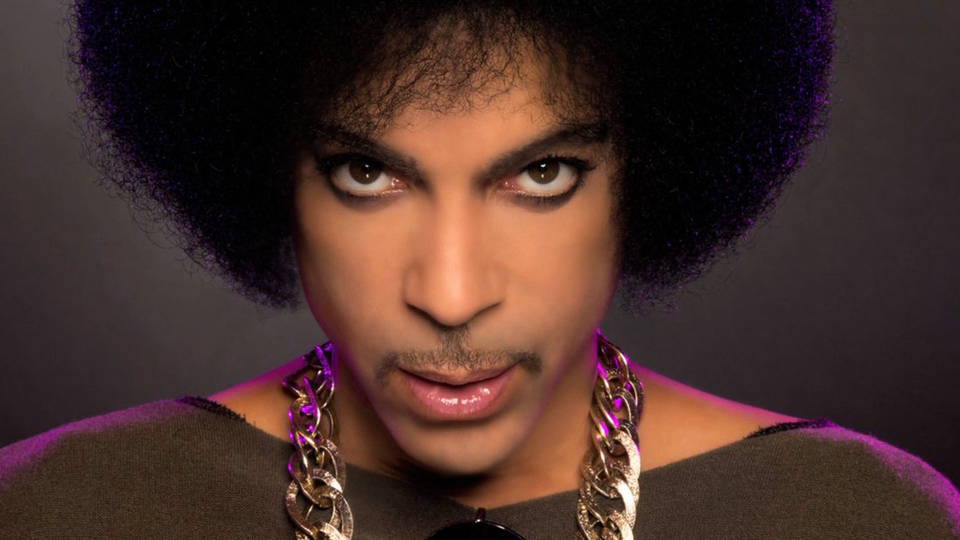
The world is mourning the loss of the music legend Prince.
Prince: "Dearly beloved, we are gathered here today to get through this thing called life. Oh, no, let’s go."
That’s Prince performing "Let’s Go Crazy" at the 2007 Super Bowl. He died at his home in Minnesota at the age of 57. He became a global musical phenomenon in the 1980s, with albums such as "1999," "Purple Rain" and "Sign O’ the Times." His inventive music spanned funk, rock and jazz—while his gender-bending performances shattered expectations of gender and sexuality. On Thursday, President Obama released a statement saying, "Today, the world lost a creative icon. ... Few artists have influenced the sound and trajectory of popular music more distinctly, or touched quite so many people with their talent."
Across the country, fans and fellow artists celebrated Prince’s legacy, including Stevie Wonder, who spoke with CNN’s Anderson Cooper.
Stevie Wonder: "He just passionately loved music. It’s like when musicians can jam, there’s nothing like it in the whole world."
Anderson Cooper: "I don’t want to put you on the spot. Is there any song you want to sing a little of or play a little of? Or, again, I don’t want to put you on the spot if you’re not up for it."
Stevie Wonder: "Yeah, I think I would probably break down if I do a song right now. But, you know, he was incredible. And I’m just glad that I was able to say to him 'I love you' the last time I saw him."
TOPICS:
Art & Politics
Music
On Earth Day, Heads of State Sign Paris Climate Deal

Today is Earth Day, and climate is on the world’s agenda as more than 60 heads of state will meet at the United Nations headquarters to sign the Paris climate agreement aimed at slowing climate change. This comes as the Earth has experienced 11 straight months of record-shattering temperatures. Experts say the greenhouse gas cuts promised in the Paris climate deal are insufficient to avert dangerous global warming.
TOPICS:
Natural Gas & Oil Drilling
Climate Change
Paris Climate Summit 2015
Great Barrier Reef More Than 90% Bleached

Meanwhile, scientists say the Great Barrier Reef is more than 90 percent bleached, a result of warming ocean temperatures due to climate change. Severe reef bleaching kills coral, which is home to a quarter of all marine species. James Cook University professor Terry Hughes, who led the research, tweeted: "I showed the results of aerial surveys of #bleaching on the #GreatBarrierReef to my students, and then we wept."
TOPICS:
Climate Change
Mexico: Pemex Raises Death Toll from Explosion to 24
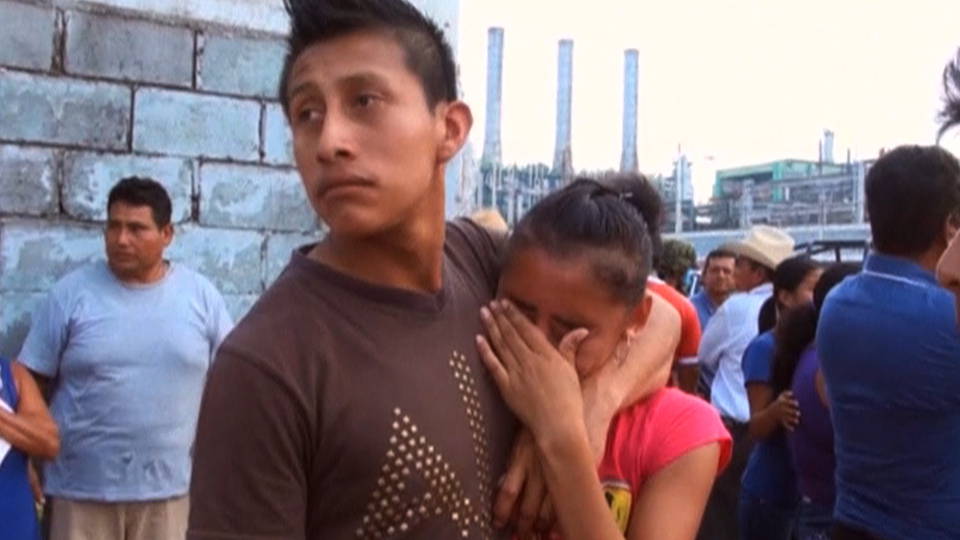
Mexican oil giant Pemex has raised the death toll from Wednesday’s petrochemical plant explosion to 24. Another 136 people were injured. It’s the latest in a series of deadly disasters at Pemex facilities in recent years.
TOPICS:
Mexico
Natural Gas & Oil Drilling
Mexico: President Proposes Legalizing Medical Marijuana
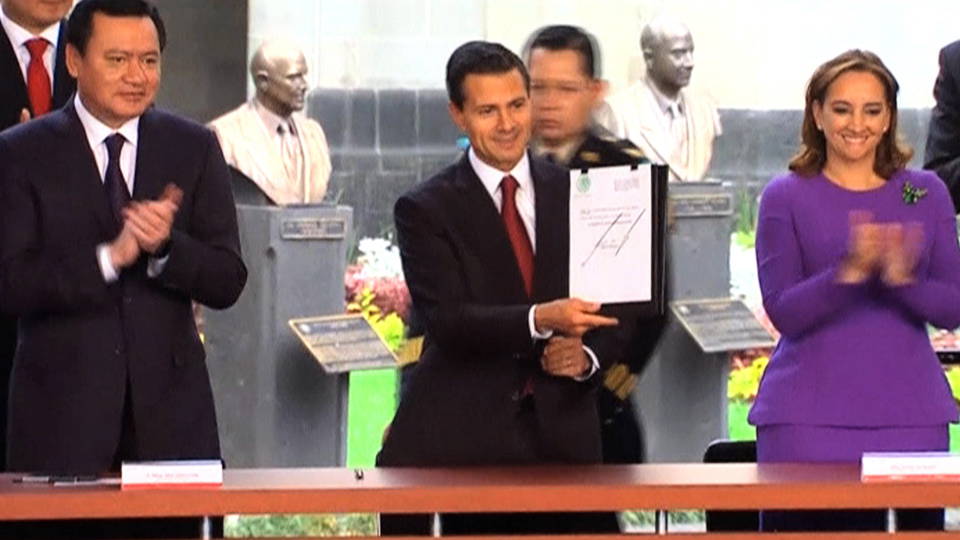
Meanwhile, Mexican President Enrique Peña Nieto has proposed legalizing marijuana-based medicine and releasing some prisoners serving time on minor marijuana charges. This comes as a number of Latin American countries pushed back on U.S.-led "war on drugs" policies that have contributed to widespread violence and drug trafficking, during a special session of the U.N. General Assembly this week.
TOPICS:
Drug War
Mexico
Marijuana
U.S. Suicide Rates Hit 30-Year High

Suicide rates in the U.S. have hit a 30-year high, with particularly high surges in the rates for women and middle-aged people. Researchers said the spikes could be linked to a drug epidemic among white Americans and increasing economic instability. Harvard professor Robert Putnam said, "This is part of the larger emerging pattern of evidence of the links between poverty, hopelessness and health."
TOPICS:
Suicide
Poverty
New York City: Election Board Clerk Suspended over Voting Fiasco
In New York City, the chief clerk of the Board of Elections, Diane Haslett-Rudiano, has been suspended without pay, after the Election Board purge of more than 120,000 Brooklyn Democratic voters from the rolls. The state Attorney General’s Office received more than 1,000 complaints on Primary Election Day. Both his office and the city comptroller have launched investigations.
TOPICS:
New York
2016 Election
Head of Syrian Rescue Group Denied Entry to U.S. to Receive Award
The head of a Western-backed rescue group in Syria known as the White Helmets has been refused entry into the United States, where he was slated to receive a humanitarian award. Raed Saleh landed at Washington’s Dulles International Airport on Monday, only to be told his visa was canceled. He was put on a flight back to Turkey. The State Department has refused to provide details. His group, Syria Civil Defense, is famous for coordinating thousands of volunteers to rescue people trapped in rubble after airstrikes.
TOPICS:
Syria
U.K. Issues Travel Warning to LGBT Travelers Headed to NC and Miss.
Britain has issued a formal travel warning to LGBT travelers headed to Mississippi and North Carolina, following the passage of anti-LGBT laws in the two states. This comes as a handful of other U.S. states are considering similar anti-LGBT legislation.
TOPICS:
North Carolina
Mississippi
LGBT
FBI Director: Agency Paid $1.3 Million to Crack iPhone
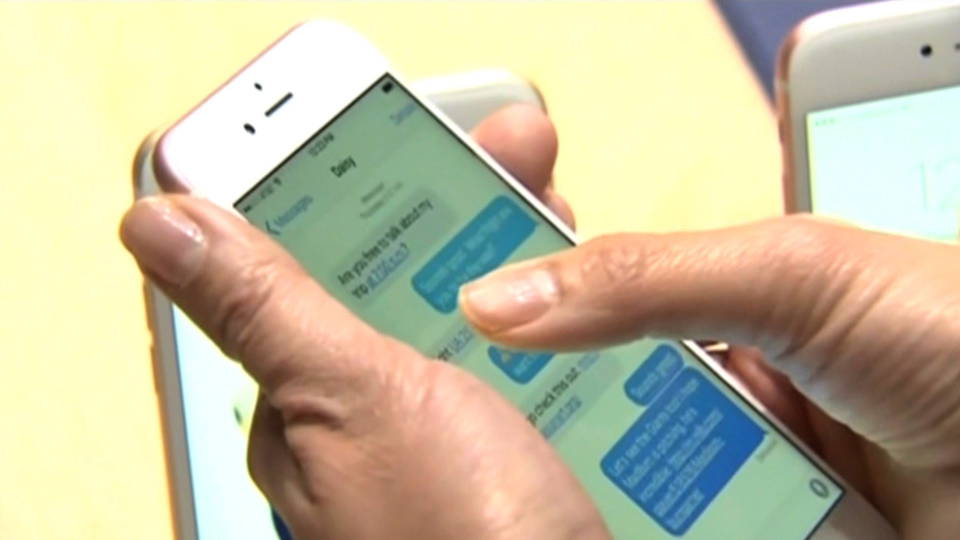
FBI Director James Comey has suggested the agency paid around $1.3 million to hack into the iPhone of suspected San Bernardino shooter Syed Farook after Apple refused to offer the FBI a backdoor into the phone. The legal battle between the FBIand Apple ended when the FBI said it had cracked the iPhone without Apple’s help.
TOPICS:
FBI
Domestic Surveillance
Vigils Mark 1st Anniversary of Death of Man Killed by Prison Guards
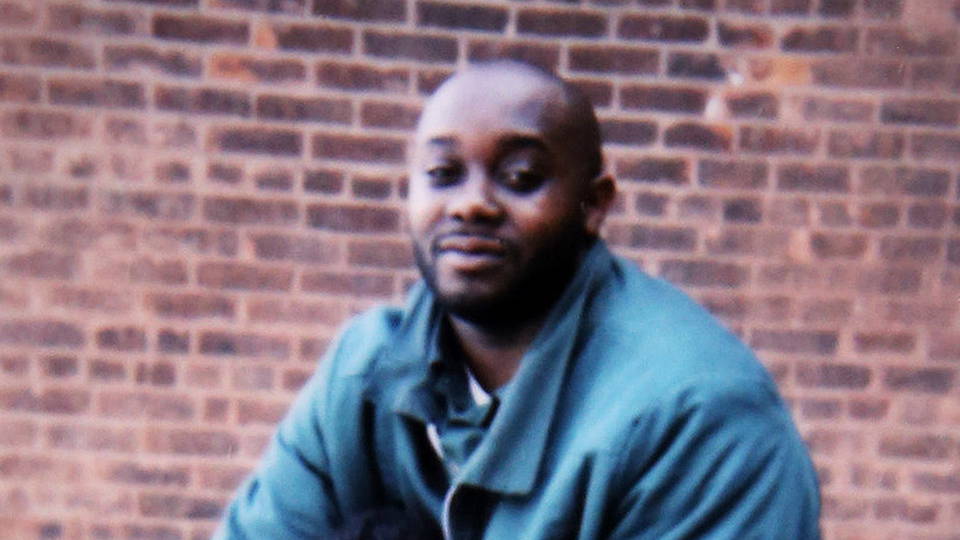
And family members and friends have launched a five-day vigil and hunger strike to mark the first anniversary of the death of Samuel Harrell, an African-American man who died on April 21, 2015, after as many as 20 corrections officers kicked, punched and threw him down a flight of stairs while he was incarcerated at the Fishkill Correctional Facility in Beacon, New York. The group of officers who assaulted Harrell are known as the "Beat Up Squad." Activists gathered outside the prison Thursday night, where Jeff Golden spoke out.
Jeff Golden: "Exactly a year ago here tonight, a gentle 30-year-old man named Sam Harrell, who was doing time on a drug charge, was brutally murdered by as many as 20 corrections officers, all of whom are still on active duty."
TOPICS:
Police Brutality
Prison
Donate today:
Follow:
SPEAKING EVENTS
4/22 Colorado Springs, CO
4/23 Eagle, CO
4/23 Carbondale, CO
4/23 Paonia, CO
4/24 Salida, CO
4/24 Taos, NM
4/25 Albuquerque, NM
4/26 Los Alamos, NM
4/26 Santa Fe, NM
4/27 Flagstaff, AZ
4/28 Phoenix, AZ
4/28 Tucson, AZ
4/29 Fresno, CA
4/30 San Mateo, CA
4/30 Grass Valley, CA
5/1 Houston, TX
5/1 New Orleans, LA
more
NEW BOOK

"Harriet Tubman and the Currency of Resistance" by Amy Goodman and Denis Moynihan
U.S. Treasury Secretary Jack Lew announced Wednesday that the revised $20 bill will feature the portrait of the legendary abolitionist Harriet Tubman. Tubman was born a slave, escaped to freedom and became a conductor on the Underground Railroad, as well as a campaigner for women’s right to vote. She will be replacing President Andrew Jackson on the front of the $20 bill. He was a contemporary of hers, who owned slaves (one of 18 presidents who did so) and became wealthy from their forced labor. The decision was influenced by grass-roots action, Lew said, as hundreds of thousands weighed in with their suggestions for which women to honor. It also was not without controversy.
Tubman was the middle of nine children, born Araminta “Minty” Ross in 1822 on a plantation in Maryland, not far from where Frederick Douglass was enslaved. She married John Tubman in 1844, and changed her name to Harriet to honor her mother. In 1849, she escaped north (about 10 years after Douglass managed to do so), but wasted no time returning clandestinely to the place of her enslavement to help rescue her family. She became renowned for her daring, late-night escapes, leading slave families to freedom. The slaves called her, simply, “Moses.” The slave owners put a bounty on her head. She went on to serve as a nurse during the Civil War, then as a spy. She is considered the first woman to lead an armed expedition in combat, guiding Union forces in South Carolina on a raid that freed over 700 slaves. She did all this without a formal education, never having learned to read or write.
Despite these remarkable achievements, the nation she fought for did not treat her well after the war. She struggled financially later in life, taking on boarders and earning money however she could. Even though she was a combat veteran, it took her decades to win a modest pension from the federal government for her wartime service. She died in her early 90s in the town that she had adopted as her home, Auburn, New York, where she lies buried.
Lew also wrote in his announcement that Andrew Jackson would remain on the bill, just placed on its back side. Jackson should be removed entirely. He was not only a slave owner, but also participated in the genocide against the indigenous population. The Cherokee people called him Sharp Knife, indicating his extreme violence against them.
Akiba Solomon, writing in the racial-justice publication Colorlines, commented: “Several people have suggested that Tubman on the front, Jackson on the back is a late April Fool’s joke or the product of a 4/20 binge. It is neither. It’s America.” Others have critiqued the decision to use Tubman’s image at all, writing that Tubman fought her whole life against U.S. capitalism, and that consigning her to the country’s most popular bill is an insult to her legacy.
But how do we popularize the work of revolutionaries? What better tribute to her lifetime of struggle could there be than to place her image into the hands of hundreds of millions of people? Imagine if the minimum-wage movement, currently dubbed the “fight for fifteen,” were to be transformed by the defiant visage on that $20 bill. Many felt just years ago that a demand for a $15-an-hour minimum wage was unfathomable; now it has become the norm, with city after city and increasingly state after state moving toward that wage. Let Harriet Tubman on the $20 become the image for the next stage of the movement, the Harriet Tubman movement for the $20-per-hour minimum wage. Let the Harriet Tubman $20 bill become the hallmark of a renewed demand for reparations to African-Americans for the lasting devastations of slavery.
The story of Harriet Tubman, of her courageous resistance to injustice, of her fight to free slaves, for equality for women—all this must be the common currency of our democracy.
WEB EXCLUSIVE

207 West 25th Street, 11th Floor
New York, New York 10001, United States
---------------------
---------------------

No comments:
Post a Comment