democracynow.org
Stories:

RIP Father Daniel Berrigan: Remembering the Life and Legacy of the Antiwar Priest & Poet
We spend the hour remembering the life and legacy of the legendary antiwar priest, Father Daniel Berrigan. He died on Saturday, just short of his 95th birthday. Berrigan was a poet, pacifist, educator, social activist, playwright and lifelong resister to what he called "American military imperialism." Along with his late brother Phil, Dan Berrigan played an instrumental role in inspiring the antiwar and antidraft movement during the late 1960s, as well as the movement against nuclear weapons. He was the first Catholic priest to land on the FBI’s most wanted list. In early 1968, Father Daniel Berrigan made international headlines when he traveled to North Vietnam with historian Howard Zinn to bring home three U.S. prisoners of war. Later that year, Father Dan Berrigan, his brother Phil and seven others took 378 draft files from the draft board in Catonsville, Maryland. Then, in the parking lot of the draft board office, the activists set the draft records on fire, using homemade napalm, to protest the Vietnam War. They became known as the Catonsville Nine and invigorated the antiwar movement by inspiring over 100 similar acts of protest. It also shook the foundation of the tradition-bound Catholic Church. Then, in 1980, the Berrigan brothers and six others began the Plowshares Movement when they broke into the General Electric nuclear missile facility in King of Prussia, Pennsylvania, hammered nuclear warhead nose cones and poured blood onto documents and files. They were arrested and charged with over 10 different felony and misdemeanor counts, and became known as the Plowshares Eight.
TRANSCRIPT
This is a rush transcript. Copy may not be in its final form.
AMY GOODMAN: We’re broadcasting from New Orleans. We spend the hour remembering the life and legacy of the legendary antiwar priest, Father Dan Berrigan. He died on Saturday, just short of his 95th birthday. Berrigan was a poet, pacifist, educator, social activist, playwright and lifelong resister to what he called "American military imperialism." Along with his late brother Phil, Dan Berrigan played an instrumental role in inspiring the antiwar and antidraft movement during the late 1960s, as well as the movement against nuclear weapons. In the early 1970s, he became the first Catholic priest to land on the FBI’s most wanted list. Georgetown University theology professor Chester Gillis once said of Father Berrigan, quote, "If you were to identify Catholic prophets in the 20th century, he’d be right there with Dorothy Day or Thomas Merton."
In early 1968, Father Daniel Berrigan made international headlines when he traveled to North Vietnam with historian Howard Zinn to bring home three U.S. prisoners of war. In the documentary Holy Outlaw, Father Dan recalled spending time in Vietnamese shelters while being bombed by U.S. jets.
FATHER DANIEL BERRIGAN: So we were in this shelter and very unexpectedly came on three children, who were crouching in there, too, against all expectations, and one of the elder children feeding rice to one of the younger ones. And I wrote this little verse within a couple days and tried to read it later at our trial. It’s called "Children in the Shelter." by FATHER DANIEL BERRIGAN
Imagine; three of them.
As though survival
were a rat’s word,
and a rat’s death
waited there at the end
and I must have
in the century’s boneyard
heft of flesh and bone in my arms
I picked up the littlest
a boy, his face
breaded with rice (his sister calmly feeding him
as we climbed down)
In my arms fathered
in a moment’s grace, the messiah
of all my tears. I bore, reborn
a Hiroshima child from hell.
AMY GOODMAN: On May 17th, 1968, Father Dan Berrigan, his brother Phil and seven others took 378 draft files from the draft board in Catonsville, Maryland. Then, in the parking lot of the draft board office, the activists set the draft records on fire, using homemade napalm, to protest the Vietnam War. They became known as the Catonsville Nine. The act of civil disobedience was chronicled in the 2013 documentary Hit & Stay: A History of Faith and Resistance. This begins with Father Dan Berrigan.
FATHER DANIEL BERRIGAN: We make our prayer in the name of that god whose name is peace and decency and unity and love. We unite in taking our matches, approaching the fire. We’re all part of this.
GEORGE MISCHE: While people throughout the world, and especially Vietnam now, are suffering from napalm, that these files are also napalmed, to show that these lives can fall on the same fate as the Vietnamese.
FATHER DANIEL BERRIGAN: Amen.
DAVID DARST: Napalm, which was made from information and from a formula in the United States Special Forces handbook published by the School of Special Warfare of the United States. We all had a hand in making the napalm that was used here today.
JIM HARNEY: Napalm is a very old weapon. It goes back to the Byzantines. But it really came to public attention during the war in Vietnam, in the pictures of napalmed people. So that was the kind of quintessential symbol of the war: We were burning babies, literally, in Vietnam. So that’s why we wanted to come up with something symbolic and also something that would really destroy the files.
TOM MELVILLE: Our church has failed to act officially, and we feel that, as individuals, we’re going to have to speak out in the name of Catholicism and Christianity. And we hope our action to inspire other people who have Christian principles or a faith similar to Christianity will act accordingly, too, to stop the terrible destruction that America is wreaking on the whole world.
FATHER DANIEL BERRIGAN: We regret very much, I think all of us, the inconvenience and even the suffering that we’ve brought to these clerks here.
FATHER PHIL BERRIGAN: We sincerely hope we didn’t injure anyone.
PRIESTS: Our father who art in heaven, hallowed be thy name. Thy kingdom come, thy will be done on earth, as it is in heaven.
FATHER DANIEL BERRIGAN: We have chosen to be powerless criminals in a time of criminal power. We have chosen to be branded as peace criminals by war criminals.
AMY GOODMAN: Father Berrigan and other members of the Catonsville Nine were arrested on the spot. The draft board raid invigorated the antiwar movement by inspiring over a hundred similar acts of protest. It also shook the foundation of the tradition-bound Catholic Church. In 1970, Father Dan Berrigan spent four months living underground as a fugitive from the FBI while his conviction was under appeal.
INTERVIEWER: During the time he was in hiding, Father Berrigan changed his location often. He stayed with 37 different families in 10 Eastern and Midwestern cities. Well, Father Dan, you’ve been underground for some time now. What’s it like to be underground in the United States of America?
FATHER DANIEL BERRIGAN: Well, I’d say that it looks as though it could go on forever. It looks good enough, looks useful enough, for the movement.
LIZ McALISTER: So there were some, what, four months that they looked for Dan, everywhere. And he was everywhere and available to everyone, except the FBI.
AMY GOODMAN: That’s Liz McAlister, Phil Berrigan’s wife, in the film Hit & Stay. In 1980, the Berrigan brothers and six others began the Plowshares Movement when they broke into General Electric nuclear missile facility in King of Prussia, Pennsylvania. The activists hammered nuclear—on the nuclear warhead nose cones and poured blood onto documents and files. They were arrested and charged with over 10 different felony and misdemeanor counts. They became know as the Plowshares Eight. And I want to turn now to a clip from the film In the King of Prussia. This scene features Dan Berrigan reciting what he told the judge and jury during the trial.
FATHER DANIEL BERRIGAN: You’ve heard about hammers and blood in this room. These are the hammers of hell. These are the hammers that will break the world to bits. These are the hammers that claim the end of the world. The judge knows it. The prosecutor knows it. We’ve seen people walk away from these things. We’ve seen them disclaim them. We’ve seen them say they are not responsible for them. We’ve seen all sorts of language circling them like a dance of death. They are murder. He knows it. He knows it. You must know it. We have been trying—we eight—to take responsibility for these things, to call them by their right name, which is murder, death, genocide, the end of the world. Their proper use is known to the judge and the prosecutor and to you. ...
We would like you to know the name of our crime. We would like to assume responsibility for a world, for children, for the future. And if that is a crime, then it is quite clear that we belong in their jails. Where they belong is something else. But in the name of all the eight, I would like to leave with you, friends and jurors, that great and noble word, which is our crime: "responsibility."
AMY GOODMAN: An excerpt from the film In the King of Prussia, directed by Emile de Antonio. In the film, the actor Martin Sheen played the judge in the trial. ... Read More →

"It was the Happiest Day of My Life": Martin Sheen Recalls His Arrest Alongside Father Dan Berrigan
Actor and activist Martin Sheen became close friends with Dan Berrigan. He played the trial judge in the film "In the King of Prussia," which chronicles how the Berrigan brothers and six others began the Plowshares Movement when they broke into the General Electric nuclear missile facility in King of Prussia, Pennsylvania, in 1980. In 1986, Martin Sheen was arrested along with Father Dan Berrigan in New York City. When he heard of Father Dan’s passing, Martin Sheen reflected on his experience being arrested alongside the legendary priest, saying, “It was my first arrest for a noble cause, and it was the happiest day of my life.”
TRANSCRIPT
This is a rush transcript. Copy may not be in its final form.
AMY GOODMAN: Martin Sheen became close friends with Father Dan Berrigan. On Sunday, after he learned of Dan Berrigan’s death, he offered these thoughts on his passing.
MARTIN SHEEN: Before he went into prison for the Catonsville Nine action, he gave a series of talks. He would—he would surface. You know, he was underground, and he would surface every now and then. And he was holding a kind of a press conference with some peace people and reporters, and he was just about to be captured and sent away. And someone in the crowd—he was advocating that all of us should risk arrest and prison, if we really wanted to stop this war, because that’s what the government was doing with young men’s lives, so we had to step up. And someone in the audience said, "Well, fine, Father Berrigan. It’s all well and good for you to advocate going to prison. You don’t have any children. What about us? We have children. What’s going to happen to our children if we go to prison?" And Dan said, "What’s going to happen to them if you don’t?" And that had a most profound effect on me. I thought, "Oh, my god, yes, we are called to nonviolent resistance, that is very costly. And if what we believe doesn’t cost us something, then we’re left to question its value."
And still I didn’t—I didn’t join Dan for a protest until 1986. I was in New York doing a film, and I had a day off. And so, I heard about a demonstration over at the 42nd Street, and trying to block the entrance to where—you know, the McGraw-Hill Building, when they were planning basically to place nuclear weapons in outer space. This was the so-called—Reagan’s strategic plan, Star Wars. And I went to that demonstration, and Dan was there. And it was my first arrest for a noble cause, and it was the happiest day of my life, and I’ll never forget. It was so disarming. Dan was, you know, kind of leading the group in prayer and singing. And the police finally arrived and said, "Now, come on, you guys. You’ve got two minutes to disperse." And Dan said to the presiding officer, "Come on, Officer, you believe in this cause. Get in here and join us." And he backed away and said, "Oh, no, no, Father, please, please, don’t." He made it so human, so down to earth.
But the world has lost a great peacemaker and humanitarian and poet and such an inspiration and such a—you know, it’s hard to describe the effect he’s had without becoming—I don’t know what. It’s like you’re describing someone that could not possibly have lived, and yet we knew him and loved him and worked with him and celebrated with him. And in a few days, we’re going to gather to celebrate his life and to send him on his way.
AMY GOODMAN: That’s the actor Martin Sheen remembering his dear friend Father Dan Berrigan, who died on Saturday, just shy of his 95th birthday. We will hear Father Dan in his own words in a minute. ... Read More →

"His World Was Always Filled with Such Beauty": Frida Berrigan on Her Uncle, Priest Daniel Berrigan
As we remember the life and legacy of Father Daniel Berrigan, who died on Saturday at the age of 94, his niece Frida Berrigan reflects on the impact his activism had on her family and her own life. Frida is a longtime peace activist herself. She also writes a regular column for Waging Nonviolence. She recalls the intimate side of growing up among Father Dan, whose walls were always filled with art and who loved the late-night conversations among fellow organizers and family members. She says the community he cultivated “gave me a sense that anything is possible and that if we act in conscience, if we act together, if we are moved, we can accomplish extraordinary things.”
TRANSCRIPT
This is a rush transcript. Copy may not be in its final form.
AMY GOODMAN: This is Democracy Now!, democracynow.org, The War and Peace Report. I’m Amy Goodman. We are broadcasting from New Orleans and New York. The legendary antiwar priest, activist and poet, Father Dan Berrigan, has died at the age of 94. We spend the rest of the hour with three guests. In New York City, we’re joined by Frida Berrigan, the niece of Daniel Berrigan, longtime peace activist herself. She writes a regular column for Waging Nonviolence. Also in New York, Father John Dear, a Catholic priest and longtime peace activist, one of Dan Berrigan’s closest friends, worked with him for 35 years. He’s Father Dan’s literary executor and the editor of five books of his writings. Here in New Orleans, Louisiana, we’re joined by Bill Quigley. He’s a professor and director of the Stuart H. Smith Law Clinic and Center for Social Justice, and the Gillis Long Poverty Law Center at Loyola University, one of Dan Berrigan’s attorneys. Dan taught here at Loyola in New Orleans for a time.
We welcome you all to Democracy Now! I want to begin with Frida. Your uncle passed this weekend. You saw him the day before he died. Our condolences to you and your whole family. Can you share your thoughts with us today, Frida?
FRIDA BERRIGAN: Well, Amy, the first thing I want to say is thank you. You and Democracy Now! have given—given him back to us. To see his face, to hear his voice is an extraordinary gift. And I am so grateful. My family is so grateful. And so, to just be sitting here with his extraordinary legacy is overwhelming. So thank you.
I saw Dan on Friday, went to Murray Weigel in the Bronx, where he has been for a number of years. He was very weak. He was very frail. I sat with him for about two hours, and not knowing what else to do, I read to him from his autobiography, which was kind of hilarious, because he is so—he is so profound. His words are so profound. His vocabulary is beyond. And so, I faltered often, reading—reading to him. But we read about healing. We read about some of his favorite people. We read about his experiences as a young Jesuit. And I kissed him, and I said goodbye. And I said, "I’ll see you soon. I’ll see you on Sunday. I’ll come back."
And then I was with my family, with my brother Jerry, my sister Kate, and our mother, Liz McAlister. Just we, by happenstance, happened to be gathering as a family on Friday night and Saturday, when we received word from close friends, who were gathered around Dan’s bed, that he was—that he was failing and that his breathing was labored. And we came. And we arrived—we were crossing the George Washington Bridge, that infernal bridge, when we received word that Dan had taken his last breath. And then we were able to be together and be with him for the rest of Saturday, to be with his body, to be with his spirit. And there aren’t—there aren’t words, except such gratitude for his life and for how special he was to each of us. And so—
AMY GOODMAN: I remember seeing you, Frida, many years ago, covering you being arrested at the Los Alamos nuclear lab, as well as Martin Sheen, who we heard from earlier in this broadcast. And as Martin Sheen crossed the line at the lab, about to get arrested protesting nuclear weapons, he said, "I work for GE to make a living." General Electric owned NBC. He said, "I work for GE to make a living. I do this to stay alive." And then you walked across the line, and you put up your arm. You were holding flowers. The influence of your uncle, Father Dan, not to mention your own father, Phil Berrigan, on your own life and your own activism?
FRIDA BERRIGAN: Well, I think they and my mother and the extraordinary community, the peace community, the Catholic Worker community, gave me a sense that anything is possible and that if we act in conscience, if we act together, if we are moved, we can accomplish extraordinary things and speak—speak with power and conviction against the powers that be, and that half of it is about showing up, you know, just being—being in the streets, being with one another, being—it’s about—it’s about showing up. And Dan Berrigan showed up. He was there. You know, all of the pictures that you’re showing, so many of them are in the streets. They’re holding signs. They’re in the bitter cold. They’re in extraordinary heat. And it’s about standing up and showing up. And so, so he taught us that.
I think he also taught us that we do all of that with a spirit of joy and without—as much as we can, without ego and attachment to the outcome, that we can’t control most of it, right? We don’t set the policy. We don’t write the laws. We don’t control how the media sees us or how other people see us. We can only really control ourselves. And we go in a spirit of joy. We go in a spirit of surrender. We go holding the hands of those closest to us. So he taught me that.
And then he also taught me, taught my family, how to—how to step back, how to appreciate life, how to appreciate beauty. His world was always filled with such beauty. The walls of his apartment were crammed with beautiful works of art. He appreciated a delicious meal. He loved a drink and the kind of late-night joking and telling stories that can happen after somebody’s had a drink or two or three. And so, his apartment, in his presence, is where I saw my parents, Phil and Liz, these serious, intense, heavy people—is where I saw them lay it all down and take it all off for a minute and just enjoy being together, enjoy one another. And that was a significant gift in our lives. ... Read More →

Dan Berrigan in His Own Words: Antiwar Priest Speaks About 9/11 in Democracy Now! Studios in 2002
The legendary antiwar priest, activist and poet Father Daniel Berrigan has died at the age of 94. Today we are remembering his life and legacy. Over the past 20 years, Dan appeared on Democracy Now! many times. In 2002, he joined us for a four-hour special marking the first anniversary of the September 11 attacks. He spoke about 9/11 and about the experience of traveling with historian Howard Zinn to North Vietnam in 1968, where they spent night after night in bomb shelters. "It was quite an educated moment to cower under the bombs of your own country," he said.
TRANSCRIPT
This is a rush transcript. Copy may not be in its final form.
AMY GOODMAN: That’s Dar Williams singing "I Had No Right." This is Democracy Now!, democracynow.org, The War and Peace Report. I’m Amy Goodman. We’re broadcasting from New Orleans and New York. The legendary antiwar priest, activist and poet, Father Daniel Berrigan, has died at the age of 94. Today we’re remembering his life and legacy. Over the past 20 years, Father Dan appeared on Democracy Now! many times. In 2002, he joined us for a four-hour special marking the first anniversary of the September 11th attacks.
FATHER DANIEL BERRIGAN: An anniversary like this induces—seems to me, induces silence rather than a lot of words, but I’ll try. A few minutes after this horrid event a year ago, the phone rang. I was working at something. And a friend from North Carolina said, "Something terrible is happening in New York City." And I said, "What?" and so on and so forth. And my first reaction was, I guess, right out of the gut rather than the heart, and I blurted into the phone, "So it’s come home at last." Sympathy and tears came later, but that was the beginning. And I had a sense that that came from a very deep immersion in what I might call a hyphenated reality of America-in-the-world, hyphen in-the-world.
I was under American bombs in Hanoi in '68. We spent almost every night, Howard Zinn and myself, in bomb shelters. It was quite an educated moment to cower under the bombs of your own country. There was a period of very intense reflection after that—that would be in February. Three months later, with my brother and seven others, I went to Catonsville, Maryland, and burned the draft files. I had seen what napalm did to children and the aged and anybody within the swath of fire in Hanoi. I had seen what happened to Jesuit priests who get in the way of America in Salvador. In ’84, I met with the Jesuits who were later murdered at the university there. I had tasted American courts and American prisons. I'm trying to explain my first reaction: So it’s come home at last.
Within a week or so, I opened the Hebrew Bible to the book called The Lamentations of Jeremiah. And I found there a very powerful antidote to the poison that was running deep in the veins of authority here. Evidently, this bystander of the destruction of the holy city was giving us permission to go through an enormously redemptive and healing labyrinth of emotions, emotions that one would think superficially the Bible would not allow for. But he allows the bystanders and the survivors to speak of enormous hatred of God, a spirit of revenge against the enemy, a guilt in view of one’s own crimes and inhumanity, a hatred of those who have wrought this upon us, etc., etc. These are all the tunnel, the very deep tunnel, of psychology and spirit that the Bible opens before us. I began to understand that unless we went through that, we would never come out to the light again, and that that would be true of myself, as well. I began to understand that the foreshortening of that lonely and difficult emotional trek was a clue to Mr. Bush and the war spirit, and that unless one were allowed the full gamut of human and inhuman emotions, one would come out armed and ready with another tat for tit.
AMY GOODMAN: Father Dan Berrigan, speaking on Democracy Now! on the first anniversary of the September 11, 2001, attacks. ... Read More →

Friends Remember Fr. Dan Berrigan: "He Said He Didn't Believe in Heroes, He Believed in Community"
We speak with close friends of the legendary antiwar priest, activist and poet Father Daniel Berrigan, who has died at the age of 94. "I just always considered Dan to be in the league with Mahatma Gandhi and Martin Luther King and Dorothy Day and our greatest people," recalls Father John Dear, a Catholic priest and longtime peace activist. "He was the first priest arrested in U.S. history against war, maybe the world. … [I]t was so groundbreaking." Dear was one of Daniel Berrigan’s closest friends and worked with him for 35 years. He is Berrigan’s literary executor and the editor of five books of his writings. We are also joined by Bill Quigley, who was one of Daniel Berrigan’s attorneys. He is a professor and director of the Stuart H. Smith Law Clinic and Center for Social Justice, as well as the Gillis Long Poverty Law Center at Loyola University. Quigley recalls asking Father Berrigan, "Who are your heroes?" His response was, "I don’t believe in heroes, I believe in community."
TRANSCRIPT
This is a rush transcript. Copy may not be in its final form.
AMY GOODMAN: —for the funeral for your dear friend, Father Dan Berrigan. In a nutshell, if you can share the description of Dan’s activist and religious—the trajectory of his life?
FATHER JOHN DEAR: It’s to me. Well, thank you very much, Amy. Well, you know, I just always considered Dan to be in the league with Mahatma Gandhi and Martin Luther King and Dorothy Day and our greatest people. And he was the first priest arrested in U.S. history against war, maybe the world. He certainly changed the church in the United States and the world. We never had this before. That’s what’s so amazing about Dan and Phil, priests speaking against war. And now that’s kind of normal for a lot of people. But for then, it was so groundbreaking.
You know, for me, Dan spoke to me all along about resistance now as a way of life, that we, as people of peace and nonviolence, have to spend our lives saying no to the culture of war, and working for the abolition of war and poverty and nuclear weapons. And as Frida talked about, I remember one of the first things he said to me 35 years ago was talking about resisting death as a social methodology. If you’re going to spend your life resisting death, you learn to live life to the full. If you want to be hopeful, you have to do hopeful things. And he said, remember, "Don’t just do something. Stand there." That’s what I hear Frida saying. He was faithful. Early on, he was saying, "Make the connections between all the issues as activists and uncover the spiritual roots of our work for peace and justice." Very beautiful. And that we’re doing this as—you know, he said, "We’re trying to discover what it means to be a human being in an inhuman time."
And then, lastly, I remember him talking, early on, too, about—about his learn from Howard Zinn, that, you know, things change by bottom-up, grassroots movements, from Jesus to Dr. King. And the movements need some people on the front lines. His phrase was: "Good people who break bad laws and accept the consequences for their actions to stop the killing and injustice done in our name." So, he’s a great saint and a great prophet and one of the great peacemakers of our age, and we’re celebrating him. And it’s not the end of an era. We have to carry on the life and witness that he gave us and—into a new era to work to end war and nuclear weapons and poverty.
AMY GOODMAN: Bill Quigley, your thoughts on your representation of Dan Berrigan here in New Orleans, where we are together at the public television station WLAE?
BILL QUIGLEY: Well, Dan had a big history in New Orleans. He taught at Loyola. His brother Phil taught at the St. Augustine’s High School here. I represented him when he resisted after the Jesuits were murdered in El Salvador, part of a nationwide civil disobedience.
AMY GOODMAN: The six Jesuit priests and their housekeeper and her daughter, murdered in November of 1989.
BILL QUIGLEY: Correct. And he was a person at peace. He was a person calm. He actually was hilarious, as well, because he didn’t really accept the force that was attempted to be brought on him by the legal system. He was arrested, he was released, he refused to come back to court. He said—he wrote a letter to the judge, said, "This is ridiculous to come back for a little thing like this, blocking elevators." And he was arrested. Ramsey Clark called me and said, "We have to get him out of jail and get him back here." He came back to court here. Martin Sheen came as a character witness for him. And it was a beautiful event.
But the thing that I think for our listeners, for your listeners, the movement, is that I remember interviewing him once in front of an auditorium of people, and I asked him, said, "You’re the hero for so many people. Who are your heroes?" And he said, "I don’t believe in heroes, I believe in community." And it is in the community, it is in the movement, it is in the Plowshares Movement, it is hundreds of people who are resisting around the world. ... Read More →

"The Cause is the Heart's Beat": See Father Berrigan Recite His Poem "Some" in 2006
In addition to being a legendary antiwar priest, organizer and activist, the late Father Dan Berrigan was also an inspiring poet. In 2006, when hundreds gathered in New York to mark his 85th birthday, he recited one of his best-loved poems, "Some."
TRANSCRIPT
This is a rush transcript. Copy may not be in its final form.
AMY GOODMAN: I want to end with Dan in his own words, Father Dan. In 2006, hundreds gathered in New York to mark his 85th birthday. Father Dan recited one of his best-loved poems, "Some."
FATHER DANIEL BERRIGAN: And this poem was played before tonight, but I’d like to dedicate it to all of us, all of us who come here and who keep at it. "Some." by FATHER DANIEL BERRIGAN
Some stood up once, and sat down.
Some walked a mile, and walked away.
Some stood up twice, then sat down.
"I’ve had it," they said.
Some walked two miles, then walked away.
"It’s too much," they cried.
Some stood and stood and stood.
They were taken for fools,
they were taken for being taken in.
Some walked and walked and walked —
they walked the earth,
they walked the waters,
they walked the air.
"Why do you walk?" they were asked, and
"Why do you stand?"
"Because of the children," they said, and
"Because of the heart," and
"Because of the bread,"
“Because the cause is
the heart’s beat, and
the children born, and
the risen bread."
Thank you.
AMY GOODMAN: Father Dan Berrigan on the occasion of his 85th birthday. He died this weekend, just shy of his 95th birthday. And that does it for our program. Very special thanks to Frida Berrigan, his niece; Bill Quigley, his former lawyer; and his dear friend Father John Dear. That does it for today’s show. We’ll continue our conversation and post it online at democracynow.org.
We’re on a 100-city speaking tour. I’m speaking tonight in Sarasota, Florida, at the Unitarian Church, then Tuesday night in Atlanta, on Wednesday in Spokane. You can check our website at democracynow.org.
I’m Amy Goodman. Special thanks to Jeremy Scahill, Denis Moynihan, Mike Burke. Thanks for joining us. ... Read More →

In 2006 Interview, Fr. Dan Berrigan Recalls Confronting Defense Secretary McNamara over Vietnam War
We revisit a 2006 Democracy Now! interview with legendary antiwar priest, activist and poet Father Daniel Berrigan, who has died at the age of 94. He joined us to mark his 85th birthday, and discussed his life as a lifelong resister to what he calls "American military imperialism." In 1965, he and his brother Phil Berrigan spoke to Secretary of Defense Robert McNamara. "I said to the secretary something about, 'Since you didn't stop the war this morning, I wonder if you’d do it this evening.’ So he looked kind of past my left ear and said, 'Well, I’ll just say this to Father Berrigan and everybody: Vietnam is like Mississippi. If they won't obey the law, you send the troops in.’ And he stopped," recalls Berrigan. "And the next morning, when I returned to New York City, I said to a secretary at a magazine we were publishing—I said, 'Would you please take this down in shorthand? Because in two weeks I won't believe that I heard what I heard?’ ... And he talks like a sheriff out of Selma, Alabama. Whose law? Won’t obey whose law? Well, that was the level at which the war was being fought."
TRANSCRIPT
This is a rush transcript. Copy may not be in its final form.
AMY GOODMAN: He joined us again in 2006 to mark his 85th birthday.
AMY GOODMAN: Can you talk about that first decision you made in Catonsville, before Catonsville, to do it, what you were doing at the time, and how you made the decision?
FATHER DANIEL BERRIGAN: Yeah. I was teaching at Cornell, and Philip came up. He was awaiting sentencing for a prior action in '67 in Baltimore, where they poured their blood on draft files in the city. And he came up to Cornell and announced to me, very coolly, that he and others were going to do it again. I was blown away by the courage, and the effrontery, really, of my brother, in not really just submitting to the prior conviction, but saying, "We've got to underscore the first action with another one." And he says, "You’re invited." So I swallowed hard and said, "Give me a few days. I want to talk about pro and cons of doing a thing like this." And so, when I started meditating and putting down reasons to do it and reasons not to do it, it became quite clear that the option and the invitation were outweighing everything else and that I had to go ahead with him. So I notified him that I was in. And we did it.
AMY GOODMAN: Now, this was after you had been to North Vietnam.
FATHER DANIEL BERRIGAN: Right. This was May of ’68, and I had been in Hanoi in late January, early February of that year.
AMY GOODMAN: With historian Howard Zinn.
FATHER DANIEL BERRIGAN: Right.
AMY GOODMAN: Freeing prisoners of war?
FATHER DANIEL BERRIGAN: Yes, we brought home three flyers who had been captured and imprisoned. It was a kind of gesture of peace in the midst of the war by the Vietnamese, during so the-called Tet holiday, which was traditionally a time of reunion of families, and so they wanted these flyers to be reunited with their families.
AMY GOODMAN: In Catonsville, was this the first time you were breaking the laws of the United States?
FATHER DANIEL BERRIGAN: No, I had been at the Pentagon in ’67 in—I think it was in October. And a great number of us were arrested after a warning from McNamara to disperse. And we spent a couple of weeks in jail. It was rather rough. And we did a fast. And we were in the D.C. jail, which was a very mixed lot. So I had had a little bit of a taste during that prior year.
AMY GOODMAN: You and your brother, Phil Berrigan, had an unusual relationship with Secretary of Defense McNamara. You actually talked to him, wrote to him, met him?
FATHER DANIEL BERRIGAN: Yes. I met him at a social evening with the Kennedys in about '65 and after this very posh dinner, which was welcoming me home from Latin America. One of the Kennedys announced that they would love to have a discussion between the secretary of war and myself in front of everybody, which we did start. And they asked me to initiate the thing, and I said to the secretary something about, "Since you didn't stop the war this morning, I wonder if you’d do it this evening." So he looked kind of past my left ear and said, "Well, I’ll just say this to Father Berrigan and everybody: Vietnam is like Mississippi. If they won’t obey the law, you send the troops in." And he stopped. And the next morning, when I returned to New York City, I said to a secretary at a magazine we were publishing—I said, "Would you please take this down in shorthand? Because in two weeks I won’t believe that I heard what I heard. The secretary said, in response to my request to stop the war, quote, 'Vietnam is like Mississippi: If they won’t obey the law, you send the troops in.'" And this was supposed to be the brightest of the bright, one of the whiz kids, respected by all in the Cabinet, etc., etc., etc. And he talks like a sheriff out of Selma, Alabama. Whose law? Won’t obey whose law? Well, that was the level at which the war was being fought.
AMY GOODMAN: So, Dan, after the trial, you went underground. Why did you decide to do that?
FATHER DANIEL BERRIGAN: Well, the war had worsened, and the spring of '70, the campuses were aflame. Nixon had invaded Laos. There was secret bombing going on. The war had widened. It was a bad time to turn oneself in, and we were comparing that order to military induction. It was like saying, "Well, I'm going off to war. I’m going to obey them and go off to war. I’m going to take the penalty for what we did to make the war evidently, evidently unwinnable and unwageable. So, a group of us said, "No go," and went underground.
AMY GOODMAN: And what does that mean when you go underground?
FATHER DANIEL BERRIGAN: Well, it meant that the FBI was on your tail and that Hoover was outraged and very angry and kept marking up sheets—that we got out, Freedom of Information, later—saying, "Get him! Get him!" and scrawling all these orders around and putting extra people on our tail.
AMY GOODMAN: But you were showing up in the strangest places.
FATHER DANIEL BERRIGAN: All sorts of places, including preaching in church and getting on national television with a good interview and so on and so forth. So, it really increased the edginess of the whole thing.
AMY GOODMAN: Can you explain what happened—was it at Cornell? They almost caught you there?
FATHER DANIEL BERRIGAN: That was at the beginning of all this. In early spring of ’70, they had a big rally in our favor at Cornell. And I showed up unexpectedly and got away again, in spite of the presence of FBI all over.
AMY GOODMAN: How did you get out?
FATHER DANIEL BERRIGAN: I went out in a puppet of one of the 12 apostles. They had had a beautiful mime onstage that night showing the Last Supper. And somebody whispered in the darkness, "Wouldn’t you like to go out?" And I said, "Well, let’s try it."
AMY GOODMAN: So you went out as one of the apostles.
FATHER DANIEL BERRIGAN: Yes. Well—
AMY GOODMAN: And you slipped past the FBI.
FATHER DANIEL BERRIGAN: Got away, from months.
AMY GOODMAN: How did they catch you?
FATHER DANIEL BERRIGAN: There were letters exchanged between Philip in prison and Elizabeth.
AMY GOODMAN: Philip Berrigan, your brother.
FATHER DANIEL BERRIGAN: Yes.
AMY GOODMAN: And Elizabeth McAlister.
FATHER DANIEL BERRIGAN: His fiancée or wife at that point. And they gave a kind of a hint as to the fact that I would be visiting friends on Block Island, which proved true, so we had birdwatchers out there, and they got me.
AMY GOODMAN: There was that famous picture of you with a peace sign and the—
FATHER DANIEL BERRIGAN: Yeah.
AMY GOODMAN: —authorities on either elbow—
FATHER DANIEL BERRIGAN: Yeah.
AMY GOODMAN: —taking you in. And how long did you serve then?
FATHER DANIEL BERRIGAN: I think that was two years then.
AMY GOODMAN: And then, with your brother Phil, you founded the Plowshares Movement, your first action in 1980?
FATHER DANIEL BERRIGAN: ’80.
AMY GOODMAN: King of Prussia, Pennsylvania.
FATHER DANIEL BERRIGAN: Right.
AMY GOODMAN: Explain what you did at the GE plant.
FATHER DANIEL BERRIGAN: Well, we had had meetings, I recall, all that spring and autumn with people about the production of an entirely new weapon, the Mark 12A, which was really only useful if it initiated a nuclear war. It was a first-strike nuclear weapon and was being fabricated in this anonymous plant, huge, huge factory in King of Prussia, Pennsylvania. And there had never been an attempt in the history of the antinuclear movement—there had never been an attempt to interfere with the production of a new weapon. And with the help of Daniel Ellsberg and other experts, we were able to understand that this was not a Hiroshima-type bomb. It was something totally different. It was opening a new chapter in this chamber of horrors. So, we decided we will go in there in September of ’70 [sic]. And we did.
AMY GOODMAN: September of ’80?
FATHER DANIEL BERRIGAN: ’80, excuse me.
AMY GOODMAN: And what does that mean, you did?
FATHER DANIEL BERRIGAN: Well, we didn’t know exactly where in that huge factory these weapons were concealed, but we had to trust in providence that we would come upon the weaponry, which we did in short order. We went in with the workers at the changing of the shift and found there was really no security worth talking about, a very easy entrance. In about three minutes, we were looking at doomsday. The weapon was before us. It was an unarmed warhead about to be shipped to Amarillo, Texas, for its payload. So it was a harmless weapon as of that moment. And we cracked the weapon. It was very fragile. It was made to withstand the heat of re-entry into the atmosphere from outer space, so it was like eggshell, really. And we had taken as our model the great statement of Isaiah 2: "They shall beat their swords into plowshares." So we did it, poured our blood around it and stood in a circle, I think, reciting the Lord’s Prayer until Armageddon arrived, as we expected.
AMY GOODMAN: You’ve continued to get arrested. Do you think these arrests, what you have engaged in, protest, even when people are not being arrested or jailed, have an effect? I mean, you have gone through a number of wars now. Do you think things are getting better, or do you think they’re getting worse?
FATHER DANIEL BERRIGAN: No. No. This is the worst time of my long life, really. I’ve never seen such a base and cowardly violation of any kind of human bond that I can respect. These people appear on television, and the unwritten, unspoken motto seems to be something about "We despise you. We despise your law. We despise your order. We despise your Bible. We despise your conscience. And if necessary, we will kill you to say so." I’ve never really felt that deep contempt before for any kind of canon or tradition of the human.
AMY GOODMAN: What do you mean, "We despise your Bible"? It is often said it’s done in the name of the Bible.
FATHER DANIEL BERRIGAN: Well, yes, these people are—they’re making a scrapbook out of the Bible in their own favor. And they’re omitting all the passages that have to do with compassion and love of others, especially love of enemies, or the injunction to Peter, "Put up your sword. Those who live by the sword will perish by the sword"—all of that. All of that gets cut out in favor of, well, a god of vindictiveness, the god of the empire, the god who is a projection of our will to dominate.
AMY GOODMAN: Father Dan Berrigan, speaking on Democracy Now! in 2006, marking his 85th birthday. He was born May 9th, 1921. He died on Saturday, just shy of his 95th birthday. We’ll be back in a minute. ... Read More →
Headlines:Iraqi Protesters Take Over Parliament, Celebration Sq. for One Day
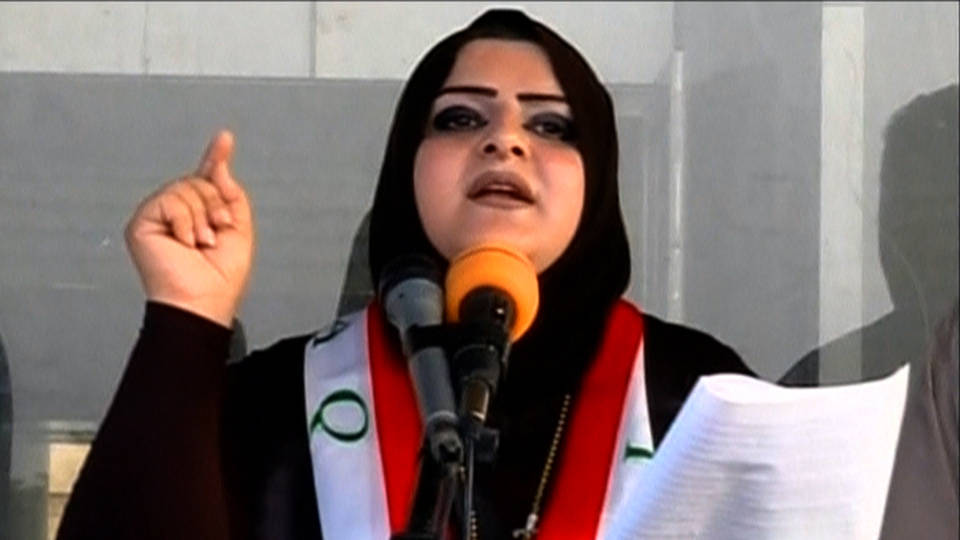
In Iraq, hundreds of protesters have left Baghdad’s heavily fortified Green Zone after taking over the Parliament building Saturday and staging an overnight occupation of Celebration Square. It was the latest in a growing number of protests demanding an end to corruption and the appointment of new officials to Parliament. Before the protesters withdrew, a spokeswoman threatened future demonstrations if the changes don’t occur.
Spokeswoman: "If this demand is not met, the people would then use all legitimate means, that begin with storming the headquarters of the three executive branches or civil disobedience and going on strike."
Meanwhile, 32 people died in the Iraqi city of Samawa on Sunday after ISIL militants carried out two suicide bomb attacks.
Pentagon Releases Report on Kunduz Hospital Bombing
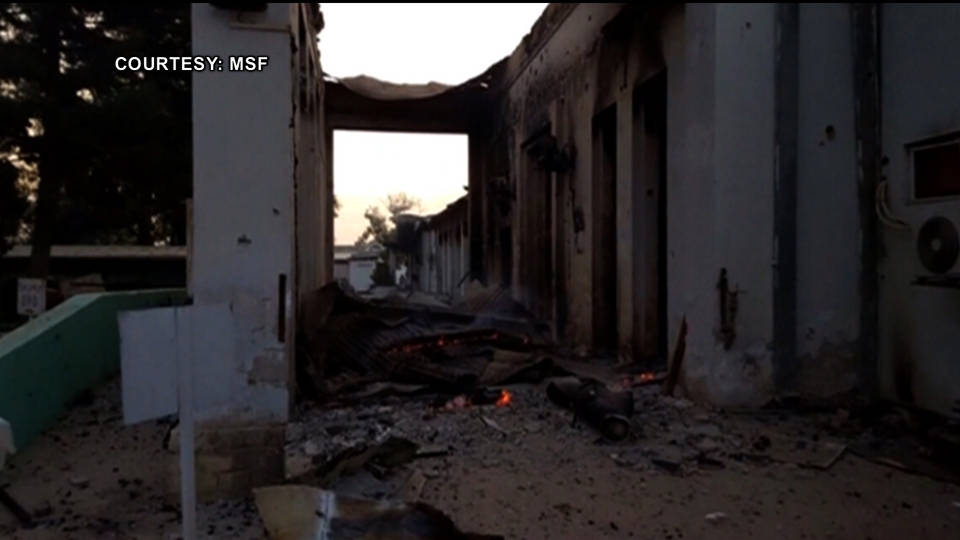
The Pentagon has released its report on the U.S. military’s bombing of a Doctors Without Borders hospital in Kunduz, Afghanistan, last year. The attack killed 42 people, including patients and staff. The report claims the bombing was a mistake caused by human errors and equipment failures. Joseph Votel, head of U.S. Central Command, said the Pentagon does not consider it a war crime.
Gen. Joseph Votel: "The fact that this was unintentional, an unintentional action, takes it out of the realm of actually being a deliberate war crime against persons or protected locations. So, that is the principal reason why we do not consider this to be a war crime."
A number of people disputed General Votel’s argument, including Patricia Grossman of Human Rights Watch, who tweeted: "It is established principle of customary international law that war crimes can be committed through recklessness." Sixteen U.S. officers have received administrative discipline, but none face criminal charges. Doctors Without Borders, Amnesty International and others have called for an independent investigation.
250 People Have Died in Aleppo Bombings in Last 10 Days
Secretary of State John Kerry is in Geneva today to try to re-establish the partial ceasefire in Syria. At least 250 people have died in Aleppo during more than a week of bombing by the Syrian regime, including the bombing of a Doctors Without Borders-supported hospital that killed as many as 50 people, including doctors and patients.
Puerto Rico to Miss $400 Million Debt Payment Today
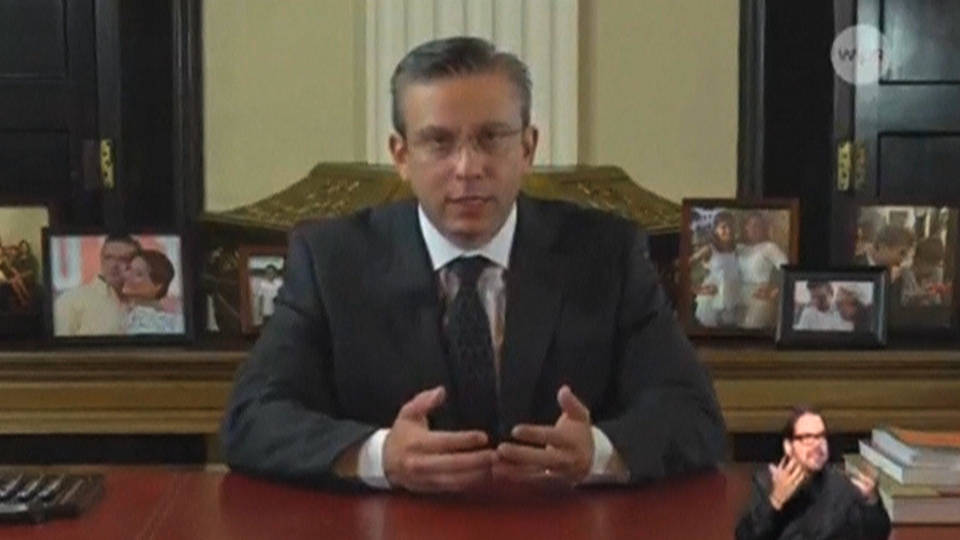
Puerto Rico is slated to miss its biggest debt repayment thus far, after Governor Alejandro García Padilla declared a moratorium on a more than $400 million payment due today. Padilla spoke out.
Gov. Alejandro García Padilla: "We have asked Congress over and over again to approve the measures so that we can restructure our debts. We don’t want a bailout, and we have not been offered a bailout. What we want is a restructuring process that will not cost the United States anything. We simply need the legal tools that will allow us to confront this crisis and assure that Puerto Rico will have a viable future."
CIA Sparks Criticism by Live-Tweeting bin Laden Raid 5 Years Later
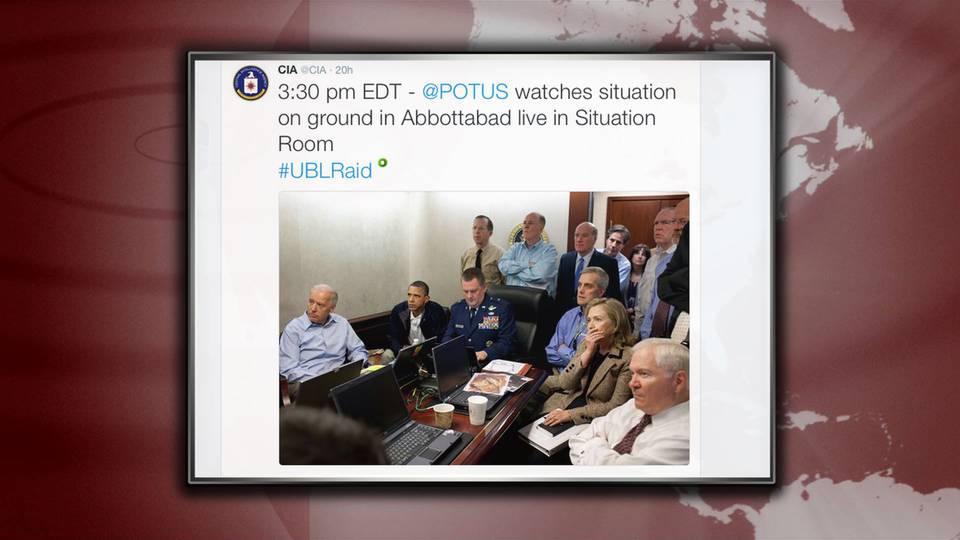
The CIA has sparked widespread criticism by marking the fifth anniversary of the U.S. killing of Osama bin Laden by live-tweeting the operation as if in real time. For six hours Sunday, the CIA tweeted play-by-play details of the raid on bin Laden’s hideout in the Pakistani city of Abbottabad. The reaction on Twitter was overwhelmingly negative, with people calling the move "grotesque" and "embarrassing." The Obama administration has been accused of giving a false account of the hunting and killing of Osama bin Laden.
Greenpeace Leaks Draft Text of U.S. and EU Trade Deal
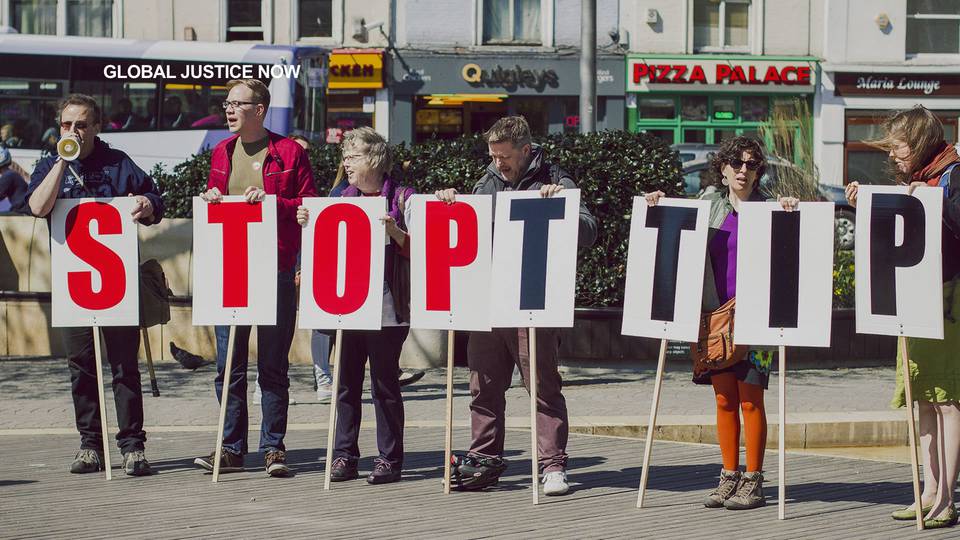
Greenpeace has leaked 248 pages of the latest negotiating text of a trade deal between the U.S. and the European Union, known as the Transatlantic Trade and Investment Partnership, or TTIP. Greenpeace says the documents show the U.S. is pressuring European countries to loosen environmental and consumer protection, and include provisions to give corporations, such as Nestlé and Coca-Cola, more power during trade talks.
L.A. Sheriff Dept. Official Resigns over Sexist and Racist Emails
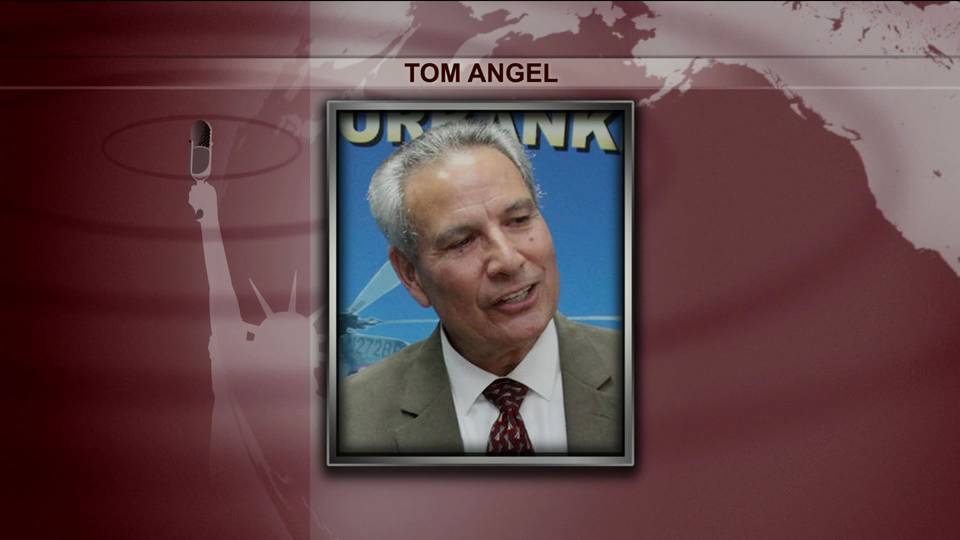
In Los Angeles, a top Sheriff’s Department official has resigned after the Los Angeles Times published a series of racist and sexist emails he’d sent. Tom Angel was the chief of staff to Los Angeles County Sheriff Jim McDonnell. His published emails showed he had made frequent derogatory jokes about Muslims, Catholics, Latinos, African Americans and women during his previous job working for the Burbank Police Department.
Gary Tyler Walks Free from Angola After 41 Years Imprisoned
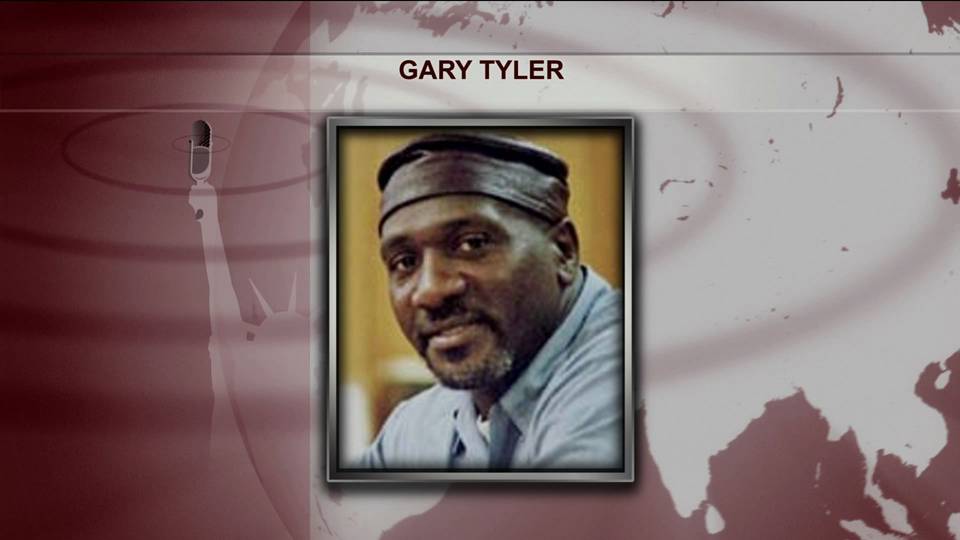
In Louisiana, Gary Tyler has walked free from the Angola prison after serving 41 years for a murder many believe he did not commit. Tyler, an African American, has been jailed since he was 16 years old after an all-white jury convicted him based entirely on the statements of four witnesses who later recanted their testimony. His case has been called one of the greatest miscarriages of justice in the modern history of the United States.
People Across the World March to Mark May Day
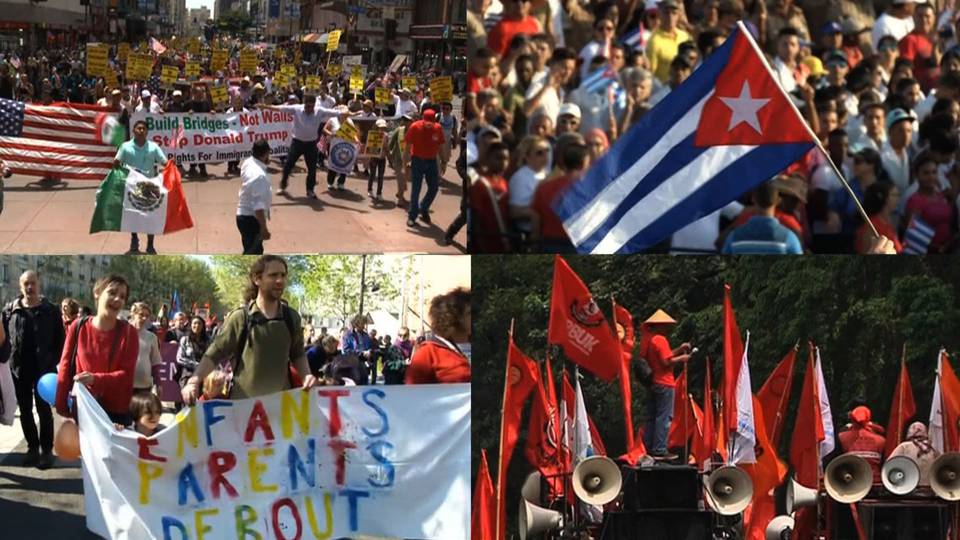
Sunday was May Day, and workers took to the streets in dozens of cities across the world, including in Havana, Paris, Santiago, Istanbul, Seoul and across the United States. In Los Angeles, organizers marked the 10th anniversary of the historic 2006 May Day, when 1.5 million people marched for immigrant rights, by demonstrating against Donald Trump. This is organizer Juan José Gutiérrez.
Juan José Gutiérrez: "He has threatened that should he become president of the United States, in his first 18 months in office, he fully intends to deport all 11 million-plus undocumented persons in the United States. We don’t take that lightly. We don’t think that he’s the clown that everybody said he was. This is a very dangerous individual, and we must stop him."
Legendary Antiwar Priest Father Dan Berrigan Dies at 94
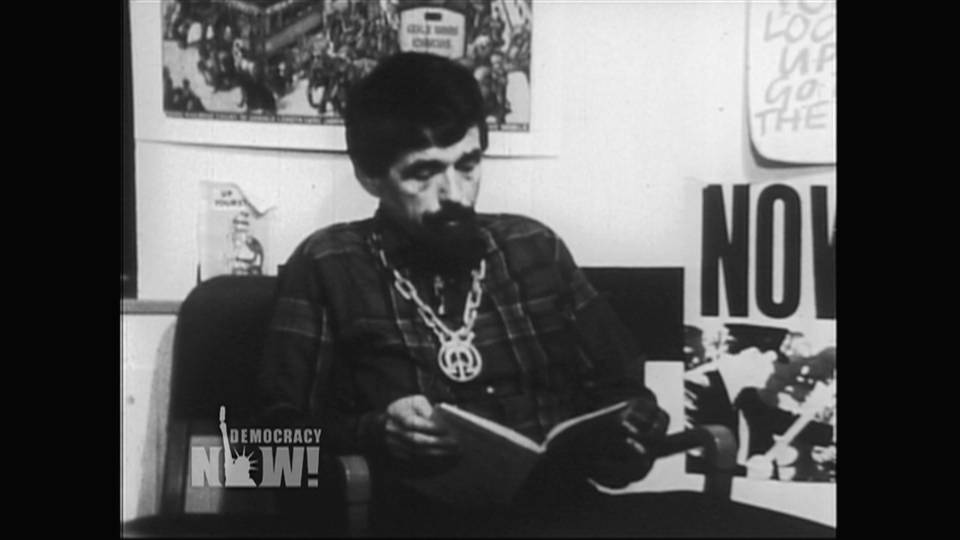
Legendary antiwar priest Father Daniel Berrigan has died just short of his 95th birthday. Berrigan was a poet, pacifist, educator, social activist, playwright and lifelong resister to what he called "American military imperialism." We spend the hour remembering his life and legacy.
Juan González Writes Final Column for New York Daily News
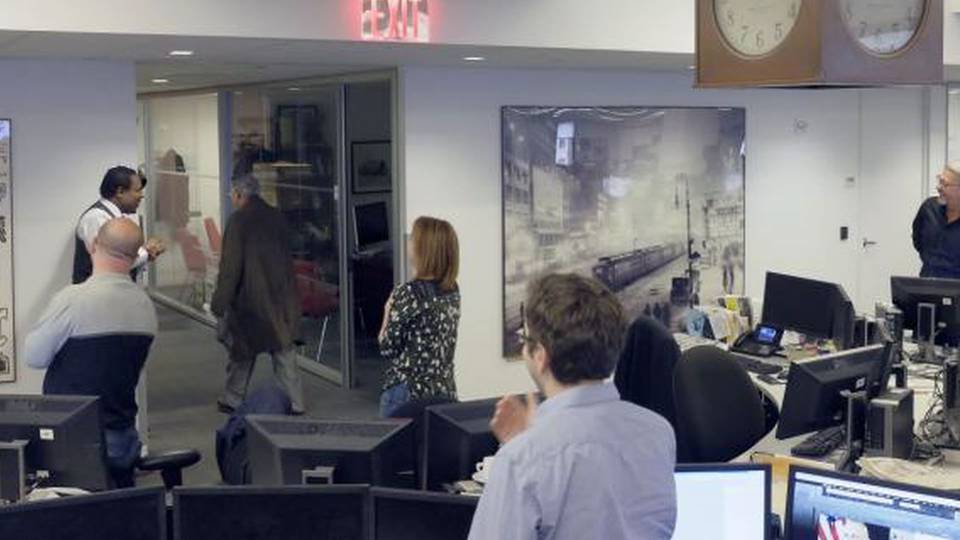
And Democracy Now! co-host Juan González has penned his final column for the New York Daily News, where he’s worked for 29 years. Over the years, Juan has used his column to break major corruption scandals and cover-ups, including the attempt to conceal the health impacts of the toxic dust released on 9/11. In his sign-off, Juan wrote: "I opted to become a voice from another part of urban America. Not writing about outcast neighborhoods, but from them. Not simply to entertain, but to change. Not after the fact, but before it, when coverage could still make a difference."
Donate today:
Follow:


SPEAKING EVENTS

5/2 Sarasota, FL
5/3 Atlanta, GA
5/4 Spokane, WA
5/5 Olympia, WA
5/6 Seattle, WA
5/7 Mount Vernon, WA
5/8 Eugene, OR
5/8 Portland, OR
5/9 Minneapolis, MN
more
NEW BOOK


Amy Goodman on AJ+: How the Media Ruins Elections
WORK WITH DN!

Video News Production Fellowship
Internships
WEB EXCLUSIVE

Father Daniel Berrigan, Anti-War Activist & Poet, Dies at 94
207 West 25th Street, 11th Floor
New York, New York 10001, United States
---------------------
---------------------

No comments:
Post a Comment