democracynow.org
Stories:

Black Lives Matter Activist Convicted of Felony Lynching: "It's More Than Ironic, It's Disgusting"
In Pasadena, California, Black Lives Matter organizer Jasmine Richards is facing four years in state prison after she was convicted of a rarely used statute in California law originally known as "felony lynching." Under California’s penal code, "felony lynching" was defined as attempting to take a person out of police custody. Jasmine was arrested and charged with felony lynching last September, after police accused her of trying to de-arrest someone during a peace march at La Pintoresca Park in Pasadena on August 29, 2015. The arrest and jailing of a young black female activist on charges of felony lynching sparked a firestorm of controversy. Historically, the crime of lynching refers to when a white lynch mob takes a black person out of the custody of the police for the purpose of extrajudicially hanging them. In fact, the law’s name was so controversial that less than two months before Jasmine was arrested, California Governor Jerry Brown signed into law legislation removing the word "lynching" from the penal code. We speak with Richards’ lawyer, Nana Gyamfi, and Black Lives Matter organizer Melina Abdullah. "Her conviction is not only about punishing Jasmine Richards, but also is the lynching," Abdullah says. "So it’s really disgusting and ironic that she’s charged and convicted with felony lynching, when the real lynching that’s carried out is done in the same way it was carried out in the late 19th, early 20th century, where it’s supposed to punish those who dare to rise up against a system."
TRANSCRIPT
This is a rush transcript. Copy may not be in its final form.
AMY GOODMAN: We turn now to California. This is Democracy Now!, democracynow.org, The War and Peace Report. I’m Amy Goodman, with Nermeen Shaikh.
NERMEEN SHAIKH: We go now to Pasadena, California, where a Black Lives Matter organizer is facing up to four years in state prison after she was convicted of a rarely known statute in California law known up until recently as "felony lynching." Jasmine Richards was arrested and charged with felony lynching last September after police accused her of trying to de-arrest someone during a peace march in Pasadena last August. At the time, Jasmine was one of the key organizers demanding justice for Kendrec McDade, a 19-year-old African American who was shot and killed by Pasadena police in 2012.
The arrest and jailing of a young black female activist on charges of felony lynching sparked a firestorm of controversy. In fact, the law’s name was so controversial that less than two months before Jasmine was arrested, California Governor Jerry Brown signed into law legislation removing the word "lynching" from the penal code.
AMY GOODMAN: Despite the change in the law’s name, Jasmine was still convicted Wednesday of attempting to take a person out of police custody. Her sentencing is scheduled for next week. She faces up to four years in prison.
We go now to Jasmine’s lawyer, Nana Gyamfi, and we’re also joined by Melina Abdullah, an organizer with Black Lives Matter and a professor and chair of Pan-African Studies at California State University, Los Angeles.
Nana and Melina, welcome back to Democracy Now! Nana, explain. So, until the final conviction, this was called felony lynching. What did Jasmine do that got her convicted of, this term, "felony lynching"?
NANA GYAMFI: Thank you so very much, Amy, for having us on the show. Jasmine didn’t do anything that was felony lynching, or even attempted felony lynching, which is what the charge was when she was arrested and, as you’ve indicated, up until this year. The allegations are that when the police were attempting to arrest a person, who was not related to the demonstration and the peace march that Jasmine Richards was having, that when they were trying to arrest that person, that she made some effort to get that person out of the custody of the police.
What’s very important to note here is that there’s a requirement that there be a riot, that there basically be a lynch mob that is assisting you in the lynching of the person that you’re trying to take from the police. And in this case, there was no riot. What you had were children on scooters and a couple of adults who were speaking up about state-sanctioned violence in Pasadena, about police murdering unarmed people in Pasadena, about the community coming together to talk about investing in the community and not investing in the police. And this is clearly a political persecution cooked up by the Pasadena District Attorney’s Office, the Pasadena Police Department and the Pasadena City Attorney’s Office, in what we are referring to as the attempted lynching of Jasmine Richards.
NERMEEN SHAIKH: And, Nana Gyamfi, can you talk about the origin of this law, or previous law, felony lynching?
NANA GYAMFI: The origin comes from the times—which continue until this day, because we’ve had lynchings, not in California, but in this country, even within the last year—when the police would take a black person into custody, and the lynch mob would appear, take that black person from the police for the purposes of lynching that person, beating that person, killing that person, hanging that person, burning that person. That’s what the origin of this law is. And therefore, to take this law, that was used allegedly to protect black people from being lynched, and to turn around and use this law against a black person who is actually speaking about the lynchings, the serial lynchings, that are going on at the hands of police, not just in Pasadena, but all over this country, is more than ironic, it’s disgusting. It is demeaning to what little integrity the criminal justice system may have. And the District Attorney’s Office of Los Angeles and Jackie Lacey, the black woman at the head of the District Attorney’s Office, has nothing to be proud of. She ought to be ashamed, as well as the deputy district attorney that pursued this case, Christine Kee.
AMY GOODMAN: I want to go to Jasmine Richards in her own words, in this video posted online last year.
JASMINE RICHARDS: Jasmine Richards. I’m with Black Lives Matter Pasadena. I’m an organizer. I’m the founder of Black Lives Matter Pasadena. Black Lives Matter Pasadena is actually located 15 minutes away from Los Angeles. We’re right up the hill, northwest. I started Black Lives Matter Pasadena in January of 2015. The reason for this is because I felt like we didn’t have any community programs or anything happening in my community. And there’s been a lot of youth that have been killed by the Pasadena police. Kendrec McDade is currently the youth that I am specifically doing all these actions around. Leroy Barnes, he was killed by the Pasadena police. Big homie named Big BA also killed by the Pasadena police. Our police have been notorious for bullying. Since I was a child, these police have scared me. They’ve harassed me, they’ve scared me. I know their first and last names. I felt like we needed a group out here that stood up to that injustice. Instead all of us being scared and just doing—wasting our time and not organizing and sitting at the park without any programs to help us, I felt like I should do something.
AMY GOODMAN: Jasmine Richards, who started Black Lives Matter in Pasadena. Melina Abdullah, you’re an organizer with Black Lives Matter there. Do you feel that Jasmine was targeted for her political activity? And if you can talk about the significance of this conviction and what Jasmine now faces?
MELINA ABDULLAH: Sure. Thank you for having us. Yes, Jasmine was absolutely targeted in this arrest and many other arrests. So, Pasadena is a relatively small suburb of Los Angeles. Jasmine’s activism is hugely significant, because she comes out of an area of northwest Pasadena where it’s deprived of resources. And what her activism really means and really signals is that people who are deprived of resources have the capacity to look up and recognize that it’s the system that creates these conditions. And that system, the system that creates state-sanctioned violence, also deprives communities of resources. So, when Jasmine was awakened, she did a phenomenal job of also awakening all of the folks in her community. So, as Nana Gyamfi described, you know, she had children who were working with her. She had young people who were working with her. She had folks who had maybe been on the corner a week ago working with her and recognizing that the system needs to be transformed. And so that poses a threat to the existing social order that wants to keep black poor people, especially, oppressed. And so, Jasmine is our Bunchy Carter. Jasmine is a political prisoner and represents probably the hugest threat to the state, in that the folks at the bottom can recognize their own oppression and rise up against it.
Now, her conviction is hugely significant, because her conviction is not only about punishing Jasmine Richards, but also is the lynching. So it’s really disgusting and ironic that she’s charged and convicted with felony lynching, when the real lynching that’s carried out is done in the same way it was carried out in the late 19th, early 20th century, where it’s supposed to punish those who dare to rise up against the system. But also, you leave the body hanging from a tree to send a signal to the rest of those black folks who might want to get out of line, and remind them that the state has more power than they do. But I think that in the end, what we see—we had a packed courtroom for the entire trial. What we see is we are not going for this anymore. We are not going to let our folks be lynched. We’re not going to let our folks be murdered by the state. We are working continuously for justice for Kendrec McDade, for Ezell Ford, for Wakiesha Wilson, Jamar Clark and all of those that the state has murdered, but also for the freedom and the right to protest and really vision a new system that gets us free. And that’s what we are going to do. We’re going to struggle for justice for Jasmine Abdullah. She has chosen the name Jasmine Abdullah, but the state knows her as Jasmine Richards. We are going to continue to struggle for her freedom, because our freedom is bound up with her freedom.
NERMEEN SHAIKH: And, Nana Gyamfi, very quickly before we conclude, could you talk about the makeup of the jury in Jasmine Richards’ trial?
NANA GYAMFI: In Jasmine’s trial, there were no black people on the jury that decided her case. And out of 55 jurors, there were only two black jurors, which is very much below the representative percentage both of Pasadena, which is 13 percent, and of L.A. County, which is 8 percent. And we, in fact, asked for the jury to be dissolved at the very beginning, based upon the panel that we received. We ended up with a panel that was about half-white; the rest of the folks on the panel were between the Chicanx-Latinx community and the Asian Pacific Islander community. But it was very clear that it was not a jury anywhere near of Jasmine’s peers, let alone the peers of the people who had come to support. And again, going back to those images once again, it is the jury without black people that then decides that the lynching of Jasmine Abdullah is appropriate. And it can’t be said enough times that this is a perfect example of what the criminal sanction system does to black people who dare to speak up, who dare to win, who dare to challenge the system and state-sanctioned violence.
AMY GOODMAN: I want to thank you both very much for being with us, Nana Gyamfi, attorney for Jasmine Richards, and Melina Abdullah, organizer with Black Lives Matter and a professor and chair of Pan-African Studies at California State University.
This is Democracy Now! When we come back, the death of a Western Sahara leader and what’s happening in Western Sahara today. Stay with us. ... Read More →

Iraq War Veteran on Protesting Trump: We Do Not Want to Be Used as Props for Hate
Presumptive Republican presidential nominee Donald Trump is facing scrutiny this week after questions emerged over what happened to millions of dollars he allegedly raised for veterans at a fundraiser in January. Trump held the fundraiser on January 28 after he refused to take part in a debate organized by Fox News. At the time, Trump claimed he had raised over $6 million, but a recent Washington Post investigation revealed that only about half of the money was actually paid out to veterans groups. Soon after the Post article was published, Trump began cutting more checks. More than a dozen veterans’ groups reported receiving money from Trump over the past week. On Tuesday, Trump held a press conference to defend his actions, and lambasted the press. Outside the press conference, members of the group Vets Vs. Hate protested. We speak to one of them, Iraq War veteran Julio Torres.
TRANSCRIPT
This is a rush transcript. Copy may not be in its final form.
NERMEEN SHAIKH: Presumptive Republican presidential nominee Donald Trump is facing scrutiny this week after questions emerged over what happened to millions of dollars he allegedly raised for veterans at a fundraiser in January. Trump held the fundraiser after he refused to take part in a debate organized by Fox News. At the time, Trump claimed he had raised over $6 million, but a recent Washington Post investigation revealed that only about half of the money was actually paid out to veterans’ groups. Soon after the Post article was published, Trump began cutting more checks. More than a dozen veterans’ groups reported receiving money from Trump over the past week. On Tuesday, Trump held a press conference to defend his actions.
DONALD TRUMP: I have raised a tremendous amount of money for the vets, almost $6 million, and more money is going to come in, I believe, over the next little while, too. But I’ve raised almost $6 million. All of the money has been paid out. ... I have been thanked by so many veterans’ groups throughout the United States. One gentleman called me up recently crying, that out of the blue he got a check for $100,000. But I have been thanked by so many groups, great veterans’ groups. And, by the way, outside you have a few people, they’re picketing. They’re sent there by Hillary Clinton, and they’re picketing that the money wasn’t sent. The money has all been sent.
AMY GOODMAN: Donald Trump went on to attack the news media for raising questions about the money. At the news conference, Trump called CNN’s Jim Acosta, quote, "a real beauty" and ABC News reporter Tom Llamas a "sleaze."
DONALD TRUMP: I’m not looking for credit, but what I don’t want is when I raise millions of dollars, have people say, like this sleazy guy right over here from ABC—he’s a sleaze, in my book—you’re a sleaze, because you know the facts, and you know the facts well.
NERMEEN SHAIKH: When a reporter asked Trump if this is how he plans to conduct a White House news conference if elected president, Trump replied, quote, "Yes, it is." Meanwhile, in New York City, veterans rallied outside Trump Tower to denounce Trump for using them as campaign props. Perry O’Brien, who served as a medic in Afghanistan, criticized Trump’s rhetoric.
PERRY O’BRIEN: I’m here because when I served in Afghanistan, I served with women, I served with Muslims, and I served with Latinos—all groups that Donald Trump has maligned and even threatened. All of those folks actually donned the uniform, they actually served their country. As far as we can see, as veterans and in the military community, Donald Trump only seems interested in serving himself.
AMY GOODMAN: Well, for more, we’re joined by another member of Vets Vs. Hate who was outside Trump Tower and the news conference that Trump held, Julio Torres. He’s an Iraq War veteran currently serving in the military as a chaplain’s assistant. He is also a graduate student at the Union Theological Seminary here in New York.
Julio Torres, welcome to Democracy Now! Your thoughts on what happened inside the building as you were protesting outside? Why were you there?
JULIO TORRES: Well, I was there because my fellow veteran brothers and sisters decided to take a stand against Trump’s hate messages. You know, inside, he was talking about the $6 million he raised and making arguments for that, but it’s not about the money. It’s about the integrity he has shown—or lack of integrity. And so, myself and others stood up against that. We don’t want to have our Muslim brothers and sisters or Latino brothers and sisters used as scapegoats, nor do we want to be used as props for hate.
NERMEEN SHAIKH: So could you talk about that, because you’ve suggested it’s not just Trump who uses veterans as props or pawns, but also Clinton?
JULIO TORRES: Well, my understanding with Clinton is that she has used—has made scapegoats out of people in the past, and I have yet to hear her apologize for it. And so, that upsets me greatly, when she calls black people "superpredators," when she’s against immigrants looking for work, and she mentions undocumented—you know, and the troubles they have. And some veterans support her, but myself, I do not. But we’re against any of the hate speech made by any of the candidates.
AMY GOODMAN: Can you talk about what you did in Iraq, Julio?
JULIO TORRES: Well, so, at the time, I was in military intelligence as an analyst, mostly on a computer, with trends analysis and trying to figure out when—when we may get attacked by any of the groups out there. The times I interacted with Iraqis or when they were helping as janitors, very nice people. They just want to live in peace.
AMY GOODMAN: And when Donald Trump said he would allow no Muslims into the United States now?
JULIO TORRES: That was—that is upsetting to me. This is a country based on immigrants, and he’s scapegoating a whole religion and several—many nations for the problems of some. And that is upsetting.
AMY GOODMAN: Let’s go back to July, when Donald Trump came under intense criticism from within his own party after he spoke disparagingly about the war record of Republican Senator John McCain, who was held as a prisoner of war in Vietnam for over five years. During an event in Iowa, Trump said he did not view McCain as a war hero.
DONALD TRUMP: He’s not a war hero.
FRANK LUNTZ: He’s a war hero.
DONALD TRUMP: He is a war hero—
FRANK LUNTZ: Five-and-a-half years in a POW camp.
DONALD TRUMP: He’s a war hero because he was captured. I like people that weren’t captured, OK? I hate to tell you.
FRANK LUNTZ: Do you agree with that?
DONALD TRUMP: To you, he’s a war hero. He’s a war hero because he was captured. OK?
AMY GOODMAN: Unlike McCain, Trump did not serve in Vietnam. He received four student deferments between ’64 and ’68. Julio Torres, your response to what he was saying?
JULIO TORRES: Well, I think that’s shameful to say that he’s not a veteran because he was captured.
AMY GOODMAN: Not a hero.
JULIO TORRES: Or not a hero, excuse me. And I think it’s—you know, who could be a hero in a war, to begin with? But at the same time, to say that he was captured and is not a hero—everyone is a hero, you know, that has done service for their country.
NERMEEN SHAIKH: Well, speaking about your own military service in Iraq, initially you supported the war in Iraq, but then came to change your mind. Could you explain why?
JULIO TORRES: Well, so, at the time, I believed everything that the government was saying. I was—turned out to be foolish, in retrospect. When I found out that the weapons of mass destruction was a lie, I had a heartbreaking moment, what they call moral injury, because I—especially as a military intelligence, I saw the reports, I thought they were legitimate, and so I thought, "Oh, the government was telling the truth." But no, then I found out the government was telling lies. And I had to look deep into everything else that was going on and the possible repercussions of these lies. And so, then I started getting more involved with social justice work, you know, going into the religious ministry hopefully in the future. And it just made me reflect on all of that, and I couldn’t be supportive of the war effort.
AMY GOODMAN: As we wrap up, your feelings about this election season, and what you’re encouraging people to do?
JULIO TORRES: Well, as a member of Vets Vs. Hate, I’m encouraging anyone and everyone to stand up against any of the hate messages. I personally support one candidate in particular, but I’d rather not mention it to tarnish the reputation. We’re a partisan group. But veterans should not be used as a prop for hatred. We stand with our Muslim brothers and sisters no matter what.
AMY GOODMAN: Julio Torres, we want to thank you for being with us, Iraq War vet, member of Vets Vs. Hate, currently serving in the military as a chaplain’s assistant. He’s a graduate student at the Union Theological Seminary here in New York.
When we come back, we go to Minneapolis to find out about the killing of a 24-year-old African-American man, Jamar Clark. Stay with us. ... Read More →

"The System Is Set Up to Protect Officers": Activists React to Lack of Charges in Jamar Clark Case
Federal prosecutors in Minnesota announced Wednesday that no charges will be filed against the two police officers involved in the shooting death last fall of Jamar Clark, an unarmed 24-year-old African American. Clark was shot in the head after a scuffle with officers who responded to a report of an assault. However, multiple witnesses say Clark was shot while handcuffed. Clark’s death sparked a series of protests in Minneapolis, including a weeks-long occupation outside the 4th Police Precinct and a protest during which white supremacists opened fire on a group of Black Lives Matter activists. We speak with Lena K. Gardner, co-founder and organizer of the Minneapolis chapter of Black Lives Matter. "There’s a very specific interpretation of events that happened in order to protect the officers," Gardner says. "I believe that the system is set up to protect officers, to ensure that their version of events is given more credibility."
TRANSCRIPT
This is a rush transcript. Copy may not be in its final form.
NERMEEN SHAIKH: We turn now to Minneapolis, Minnesota, where federal prosecutors announced Wednesday that no charges will be filed against two police officers involved in the shooting death last fall of Jamar Clark, an unarmed 24-year-old African American. Clark was shot in the head after a scuffle with officers who responded to a report of an assault. But multiple witnesses say Clark was shot while handcuffed. This is U.S. Attorney Andrew Luger speaking at a news conference Wednesday.
ANDREW LUGER: There are no winners here, and there’s no victory for anyone. A young man has died, and it is a tragedy. As a father with children the same age as Jamar Clark, my heart goes out to his family, and I told them so before this event. For the family, for the community, for the police department and for the cause of justice, experienced, highly trained agents and prosecutors worked for months to find and examine facts to determine if there was a criminal civil rights case that can be brought here. We have all concluded that no such case can be made.
AMY GOODMAN: In March, Hennepin County Attorney Mike Freeman also decided not to bring charges against the officers, Mark Ringgenberg and Dustin Schwarze, both white. In announcing the decision, Freeman rejected multiple eyewitness accounts that Clark was handcuffed, and claimed Clark at one point had his hand on one officer’s gun. Jamar’s cousin Cameron Clark spoke out after the decision.
CAMERON CLARK: There’s blood on Mike Freeman’s hands. I can’t control what the city—we’ve been [inaudible] for four months. We’re tired of this. And y’all supposed to be protecting and serving. Y’all are not protecting. Y’all is the biggest gang. Y’all are killing us. And y’all get to get away with it.
AMY GOODMAN: Jamar Clark’s death sparked a series of protests in Minneapolis, including a weeks-long occupation outside the 4th Police Precinct and a protest during which white supremacists opened fire on a group of Black Lives Matter activists.
For more, we’re going to Minneapolis to be joined by Lena K. Gardner, co-founder and organizer of the Minneapolis chapter of Black Lives Matter.
Welcome to Democracy Now!, Lena. Start off by responding to the decision not to charge the officers, and then tell us who Jamar Clark was.
LENA K. GARDNER: Well, first, thank you so much for having me on the show. I think, you know, first and foremost, our hearts go out to Jamar’s family. This is devastating news. It’s really clear that there is no justice for black people in this country when it comes to the criminal justice system. Time and time again, we are denied justice, and this is another example of that.
This announcement comes at a time when I believe the movement is under attack. The Minneapolis president of the police union came out calling us terrorists in the wake of this decision. We see activists in California facing felony charges for practicing their constitutional right to protest. And, you know, we really want folks to know that we are going to continue to fight, we are going to continue to build, and we want people to join with us in fighting to save black lives.
You know, Jamar was a beloved person. He wasn’t perfect, but he was loved by his family, his friends and his community. And it’s really clear that we continue to hold his life and his name in our hearts as we continue to fight.
NERMEEN SHAIKH: Well, could you talk about how you pressured Hennepin County Attorney Mike Freeman to release the video of Jamar Clark’s killing?
LENA K. GARDNER: Absolutely. You know, there is a precedent in the criminal justice system to take fatal police shootings to a grand jury system to make the decision whether to indict officers or not. We know that this doesn’t work, and we know that it continually fails to bring officers into accountability, and it fails to deliver justice. So, we, along with several other groups and black-led organizations here in Minneapolis, including the Twin Cities Coalition for Justice 4 Jamar, the NAACP and Minnesota Neighborhoods Organizing for Change, you know, we held actions. Folks had meetings with Hennepin County Attorney Mike Freeman, and we really spoke to him about our concerns around transparency in the process and accountability.
When a case goes to a grand jury, it’s done in secret. The evidence isn’t released to the public. And we really wanted to know what’s on those tapes. We believe that transparency is one of the key ways that we can begin to hold police officers accountable, and so we wanted to see that footage from the day Jamar was taken from us. We were saying, "We want to see the tapes." And so, we just really drove that message home. There were actions every week.
And, you know, Hennepin County Attorney Mike Freeman decided to listen to that particular aspect of what we were asking, to not send the case to the grand jury. He also committed to, as long as he is in office, to not send any more fatal police shootings to a grand jury. However, there’s been no substantive policy change that is permanent, as far as we can see. So, as soon as another Hennepin County attorney is elected into office, you know, we could see these cases going back to grand juries and it all being done in secret again. So, we still have work to do. We still have reforms and policies that we want to see change, because we’re trying to save black lives.
AMY GOODMAN: I want to turn to more comments made by the U.S. attorney, Andrew Luger, at the news conference on Wednesday.
ANDREW LUGER: Given the lack of bruising, the lack of Mr. Clark’s DNA on the handcuffs, and the deeply conflicted testimony about whether he was handcuffed, we determined that we could not pursue this case based on a prosecution theory that Mr. Clark was handcuffed at the time that he was shot. And, in fact, we reached the conclusion, based on all of the evidence that we reviewed, that the evidence suggested that Mr. Clark was not, in fact, handcuffed when he was shot.
Our second area of focus was what happened when Mr. Clark and the two officers were on the ground. We wanted to know whether the available evidence would support a finding beyond a reasonable doubt that the officers acted in a manner that was objectively unreasonable, even if Mr. Clark was not handcuffed.
AMY GOODMAN: Lena K. Gardner, can you respond to the U.S. attorney, Andrew Luger?
LENA K. GARDNER: Yes. The first thing I want to say is that I believe the people. I believe community. I believe when people tell me what they saw. I believe that over the accounts of police officers in any situation where they have killed a black person. You can see how even in his language talking about this case, he says Jamar Clark died. Jamar Clark didn’t die. He was murdered. He was killed by the police. And so, I believe that when people say—and we have countless witnesses that say that they saw Jamar Clark handcuffed, and they shot him while he was handcuffed.
I also know that during the time of—in the weeks after his killing, you had the president of the police union, Bob Kroll, saying—intimidating witnesses, publicly, in the media, saying that people should be prosecuted if they came forward to speak. So, when you hear about conflicting details, I always wonder: Were people scared? And I think they were. When you have people in power, police officers, who have the power, live in their communities, to terrorize them and harass them for speaking up to what they saw, that’s a big problem. That’s the kind of situation we’re dealing with. And we need to believe community. We need to believe what people tell us.
The second thing I really think is important to note is that there’s a very specific interpretation of events that happened in order to protect the officers. And I believe that the system is set up to protect officers, to ensure that their version of events is given more credibility. There have been several articles that have come out since the findings, since Hennepin County Attorney Mike Freeman made them public, that showed—that call into question the police version of events. For instance, the fact that we know that it was a—you know, he was taken—Jamar Clark was taken down by the police officer in a hold that was violent, in a hold that was not—is not approved by Minneapolis Police Department policy. And somehow, things like that are never mentioned, you know, when we’re hearing from Hennepin County Attorney Mike Freeman or Andy Luger. And this is a problem. And I think it points to—I think it points to why the system continually fails black people and does not bring about justice.
AMY GOODMAN: Finally, Lena—we have 30 seconds—where do you go from here, after the second investigation? The officers have not been indicted.
LENA K. GARDNER: Right. You know, from here, we are going to continue to build. We’re going to continue to fight. We will not forget Jamar. We will not forget his family. We’re going to support them in their efforts. There is talk of a potential civil suit, you know, pursuing a civil suit. And we’re going to continue to support getting justice, holding these officers accountable in some way, and continue to fight for black lives and to save black lives. We need everyone’s help in that. And I hope that folks will join their local chapters all across the country. I hope that people will stand up and fight with us, because we are the ones saving black lives. We are the ones fighting for black lives. And contrary to what people like the, you know, racist president of the Minneapolis police union says, we are not terrorists. We are protesters, and we are fighting to save black lives.
AMY GOODMAN: Lena K. Gardner, we want to thank you for being with us, co-founder and organizer of the Minneapolis chapter of Black Lives Matter. ... Read More →

Africa's Last Colony: Western Saharan Independence Movement Mourns Loss of Polisario Front Leader
A leader of the independence movement in Western Sahara died Tuesday. Mohamed Abdelaziz was the leader and co-founder of the Sahrawi people’s Polisario Front movement, which has demanded independence ever since Morocco took over most of Western Sahara in 1975. He was 68. A 16-year-long insurgency led by the indigenous Polisario Front ended with a U.N.-brokered truce in 1991. The resolution promised a referendum on independence, which has yet to take place. Morocco is only willing to grant limited autonomy to the disputed region. Eighty-four countries as well as the African Union recognize Western Sahara as an independent nation. In March, Morocco expelled U.N. staffers from Western Sahara after Secretary-General Ban Ki-moon referred to Morocco’s rule over the region as "occupation" during a visit to refugee camps in the Algerian town of Tindouf, located in southwestern Algeria. The expulsion of the 84 U.N. staffers has put at risk the ceasefire between Morocco and the Polisario Front. We speak to Sidi Omar, ambassador-at-large of the Polisario Front, and University of San Francisco professor Stephen Zunes.
TRANSCRIPT
This is a rush transcript. Copy may not be in its final form.
NERMEEN SHAIKH: A leader of the independence movement in Western Sahara died Tuesday. Mohamed Abdelaziz was the leader and co-founder of the Polisario Front movement, which has demanded independence ever since Morocco took over most of Western Sahara in 1975. He was 68 years old. The front has declared 40 days of mourning, after which a new secretary general will be chosen. This is Abdelaziz speaking in 2009 in Tindouf, Algeria, where he lived for over 40 years.
MOHAMED ABDELAZIZ: [translated] We are sure, as we are sure that God exists, that the Saharan people’s objective is independence, and that is a right we must address today, tomorrow, next year, in our time, in our children’s time. It doesn’t matter when. The important thing is to achieve national independence. The conditions we are living in, the weakness in policy and failures of the Moroccan kingdom, the importance of the Saharan case in the world today and the focus of Saharan people on independence are indicators that victory is imminent, independence is imminent.
NERMEEN SHAIKH: A 16-year-long insurgency led by the indigenous Sahrawi’s Polisario Front ended with a U.N.-brokered truce in 1991. The resolution promised a referendum on independence, which has yet to take place. Morocco is only willing to grant limited autonomy to the disputed region. Eighty-four countries, as well as the African Union, recognize Western Sahara as an independent nation.
NERMEEN SHAIKH: In March, Morocco expelled U.N. staffers from Western Sahara after the U.N. secretary-general, Ban Ki-moon, referred to Morocco’s rule over the region as an "occupation" during a visit to refugee camps in the Algerian town of Tindouf, located in southwestern Algeria. The expulsion of the 84 U.N. staffers has put at risk the ceasefire between Morocco and the Sahrawi people’s Polisario Front.
To talk more about the situation in the Western Sahara and the death of the leader, we’re joined now by two guests. Sidi Omar is the ambassador-at-large of the Polisario Front. He’s joining us by Democracy Now! video stream from the Valencia autonomous region in Spain. And from San Francisco, we’re joined by Stephen Zunes, professor of politics and international studies and chair of Middle Eastern Studies at the University of San Francisco. He’s the co-author of the book titled Western Sahara: War, Nationalism, and Conflict Irresolution.
We turn first, though, to Sidi Omar. Our condolences on the death of your leader. And the significance of his death for the people of Western Sahara, and if you could start by just telling us who he was?
SIDI OMAR: Well, first of all, thank you very much for your kind words, and thank you particularly for dedicating some time to the question of Western Sahara, which is hardly known in the U.S. and many parts of the world. Well, indeed, we have lost a great leader and a president who was leading us for the past 40 years. And just to say briefly, the centrality of President Abdelaziz to our cause can be simply explained by the fact that—the major achievements that our people have achieved along these four decades and so are largely due to his leadership and high sense of dedication. So we have lost a great and dedicated leader. He was not only one of the founders of our revolution, but he’s actually the creator of the modern Sahrawi state. So that’s how he and his legacy will be remembered by the Sahrawis for many generations to come.
NERMEEN SHAIKH: And, Sidi Omar, could you also say what you think is likely to happen next with the Polisario Front? And when will another leader be elected, and how?
SIDI OMAR: Well, in line with our internal laws, a new leader will have to be elected within the coming 40 days. Now, we have the speaker of Parliament who has taken over as the acting president of the republic and secretary general. So we have 40 days during which time we will prepare for this [inaudible] in Congress, that we hold—that we are planning to hold to elect a new secretary general. But first, as you may know, tomorrow or the day after, we will be in the process of burying our president, in a ceremony which will be conducted first in refugee camps, and then he will be buried in the liberated part of Western Sahara.
AMY GOODMAN: We’re going to turn now to Professor Stephen Zunes, who’s in San Francisco, has written a book about the Western Sahara. Can you talk about the significance of Mohamed Abdelaziz in terms of his role in the struggle over these decades? And you know, as a professor here in the United States, how little people understand about the Western Sahara, so if you can talk about also its significance here and the whole dynamic between the United States and Morocco?
STEPHEN ZUNES: President Abdelaziz was not a defining figure in the revolution. I mean, he was not the equivalent of Ho Chi Minh or Fidel Castro or Mao Zedong. The Polisario has traditionally practiced more of a collective leadership. At the same time, he played a very important role in terms of holding the movement together through a long and arduous struggle. Unlike many liberation struggles, it did not split into factions. They were able to keep a cohesive unit, both during the armed struggle against Morocco and subsequently in the diplomatic efforts to win recognition of so many countries, to keep the issue, if not on the front pages here in the United States, at least in the United Nations and various regional organizations. And we’re seeing the beginnings of an international solidarity movement, as well.
The United States has traditionally been a major supporter of Morocco; France, even more so. And collectively, they have prevented the United Nations from forcing Morocco to live up to its responsibilities, initially to withdraw and allow the people the right of self-determination, as was in the initial United Nations resolutions back in the 1970s—our ambassador at the time, Daniel Patrick Moynihan, bragged in his autobiography at the way the United States was able to prevent these resolutions from actually being enforced—and more recently the failure of the United States and France to allow the United Nations to go ahead with the referendum that would give the people of Western Sahara the opportunity to choose incorporation into Morocco or independence, as they have as a right as a recognized non-self-governing territory that is in incomplete decolonization.
NERMEEN SHAIKH: Well, I want to ask about the nonviolent protests by the Sahrawis against Moroccan occupation. The protests are often filmed by media activists as they’re disrupted by Moroccan security forces. Protesters are often beaten and detained, or simply disappeared. This video was produced by WITNESS Media Lab.
SAHRAWI PROTESTER 1: [translated] The journalists, observers and activists who come from abroad are expelled. So what do we do? We break through this blockade from within. We are the witnesses. I’m going to suffer. If I do this work, I suffer more, yes, I’m going to make more sacrifices. But if I don’t, I will always live under occupation.
SAHRAWI PROTESTER 2: [translated] I get phone calls with threats of rape and physical harm. We are determined to carry on to tell the truth to the world and to tell the truth of the Moroccan occupation of Western Sahara.
NERMEEN SHAIKH: Protesters speaking out against the Moroccan occupation of Western Sahara. Special thanks to the WITNESS Media Lab and FiSahara for the video. So, Stephen Zunes, can you talk about the role of youth in the independence movement in Western Sahara and the fact that you’ve suggested there might be a generational struggle as a successor is found for Mohamed Abdelaziz?
STEPHEN ZUNES: Well, as in South Africa and Palestine during the 1980s, with the armed struggle not making the kind of difference that people had had hoped in terms of forcing a compromise, and the diplomatic maneuvers at a stalemate, the young people inside the territory have taken a leadership in the struggle. It’s been overwhelmingly nonviolent. Though given the fact the settlers, Moroccan settlers, now greatly outnumber the indigenous Sahrawis inside the territory, there are some limits to the effectiveness of the nonviolent resistance, as well. And as a result, there’s a great frustration among young Sahrawis, who are at least as nationalistic as their parents in terms of the belief in self-determination of the right to independence. There have been calls for resumption of the armed struggle. And though, you know, legally and morally one could argue, as an occupied territory, they certainly do have that right, I believe it would be very dangerous. It would play right into the Moroccan narrative that these are terrorists. And Morocco being a Western ally would—many Western nations would accept that narrative, even though even during the height of the armed struggle, Polisario was very careful to avoid any kind of civilian casualties.
As a result, I think the only real hope would be to have global civil society get involved, as we saw around East Timor, which is a comparable situation of a late decolonization, conquered by a powerful neighbor with powerful friends, or, of course, in the anti-apartheid movement in South Africa. A BDS-type movement, if you will, similar to what we’re seeing regarding Palestine, would also help bring the issue to the people who really could make a difference—that is, those of us in the United States and other Western nations that continue the Moroccan occupation—because while President Abdelaziz’s death will not make a huge difference immediately, it is a sign that the founding generation is getting older, and the younger generation are demanding that there be action, because the cautious approach that the elders have taken in recent years has not gotten very far in terms of allowing the refugees to come home and allowing the country to achieve independence through a referendum as promised by the United Nations.
AMY GOODMAN: Professor Zunes, you’re speaking to us from San Francisco. The California primary is about to take place June 7th. The secretary of state—former secretary of state, of course, Hillary Clinton. What is the role of the United States when it comes to Morocco? How close is the U.S. with Morocco? And the U.S.’s stand on the Western Sahara?
STEPHEN ZUNES: Morocco is one of only a handful of countries that are designated as major non-NATO allies. The United States has a free trade agreement with Morocco. And interestingly enough, these two upgrades, if you will, in the relationship took place right after Morocco rejected the final U.N. Security Council proposal for a referendum, which many people interpreted as essentially rewarding Morocco for its intransigence. The Obama administration has tried to be more neutral, but has not been willing to pressure Morocco or pressure France, Morocco’s principal ally, to make the necessary compromises.
A lot of people are concerned that Hillary Clinton, as president, will be closer to the French position, a much more hardline, pro-Moroccan position. She’s certainly showed that as a U.S. senator. As secretary of state, in the internal discussions within the Obama administration, she took the pro-Moroccan line. She’s endorsed the kingdom’s dubious autonomy proposal, which would deny the people of Western Sahara the right to independence. And indeed, just an example of how close they are, the chief funder of the global—Clinton Global Initiative conference in Marrakech, of the Clinton Foundation, was largely funded by a state-owned phosphate company that is illegally exploiting the natural resources of Western Sahara in violation of international law. And so, again, it’s an issue that if the United States or other countries are going to do the right thing, the people are going to have to demand it. The civil societies, in solidarity, are going to have to mobilize, because clearly the politicians are going to be prone to otherwise support the status quo.
AMY GOODMAN: The whole issue of the Clinton Foundation accepting a $1 million donation from OCP, a fertilizer giant owned by the Moroccan government, the significance of this?
STEPHEN ZUNES: Again, it’s an example, I think, of the closeness that both the corporate—Western corporations and as well as the military complexes of the countries have made it difficult for the United States and France and others to take the kind of forceful action. In many ways, it’s comparable to Israel, which is also violating a number of U.N. Security Council resolutions, but is ultimately protected by the U.S. threat of a veto. The close relationship, both personally the Moroccans have with leading politicians, like Hillary Clinton, in these countries, as well as the strategic relationship, that Morocco initially was seen as a great Cold War ally against the Soviets and, more recently, as an ally in the so-called war on terror, that once again we’re seeing this all-too-familiar phenomenon of narrowly defined economic and strategic interests trumping basic principles of human rights and international law.
NERMEEN SHAIKH: Well, before we conclude, I just want to go very quickly to Ambassador Sidi Omar. Could you tell us what the prospects are for a referendum being held, which is what the Polisario Front has been calling for, and what the problem is with holding a referendum?
SIDI OMAR: Well, the basic problem in holding the referendum was the fact that Morocco, after having accepted the idea of a referendum, backed on its commitments, when they realized that any referendum held in transparent and free conditions would lead to the independence of Western Sahara. Now, what are the prospects today? As you already mentioned, Morocco has rebelled against the United Nations’ authority, expelled the major—or the entire civilian component. And that says something about Morocco’s mood, because, as you know, it’s the civilian component that was charged with organizing the referendum. And there is also a very [inaudible] issue that we have already talked about, which is the human rights [inaudible]. And Morocco fears that the United Nations may—and that’s what he hope, and that’s what we’ve been holding for—a mandate [inaudible] the human rights situation. But with the absence of any civilians on the ground, that will be definitely difficult. So the question is, one of the United Nations, and especially the Security Council, [inaudible]—
AMY GOODMAN: Ambassador Sidi Omar, we’re going to have to leave it there. I’m so sorry. And also, condolences. Stephen Zunes, professor at the University of San Francisco.
That does it for our show. Special thanks to María Carrión. Democracy Now! has two full-time job openings: news producer and office coordinator., ...Read More →
Headlines:Regulators to Unveil New Rules on Payday Lenders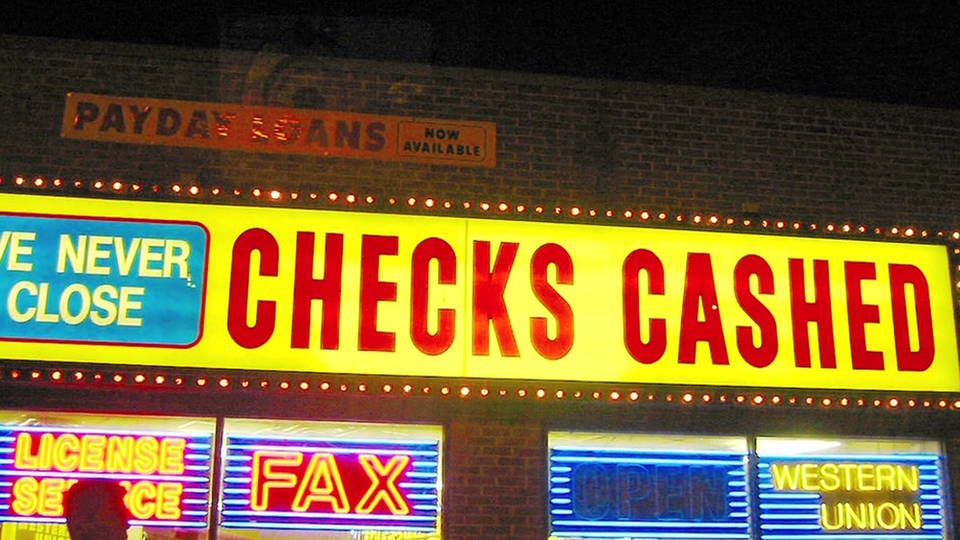
Federal regulators are poised to unveil new rules to rein in payday lending. Payday lenders supply cash to low-income people who borrow against their future paychecks at high interest rates, often becoming trapped in a cycle of mounting debt. Among other measures, the new rules would require lenders to ensure borrowers can actually afford to repay the loans. Democratic National Committee Chair Debbie Wasserman Schultz has sparked protests for backing bipartisan legislation to delay the new rules for two years.
North Korea Faces New U.S. Sanctions; State Media Praises Trump
The Treasury Department has moved to impose a new round of sanctions on North Korea. The penalties, known as secondary sanctions, would target banks that conduct financial transactions with North Korea, a move that could largely impact Chinese firms. This comes as presumptive Republican presidential nominee Donald Trump appears to have won support from North Korea. An editorial in North Korean state media praised Trump as a "wise politician."
TOPICS:
North Korea
Donald Trump
RNC's Hispanic Media Relations Head Resigns in Latest Sign of Opposition to Trump
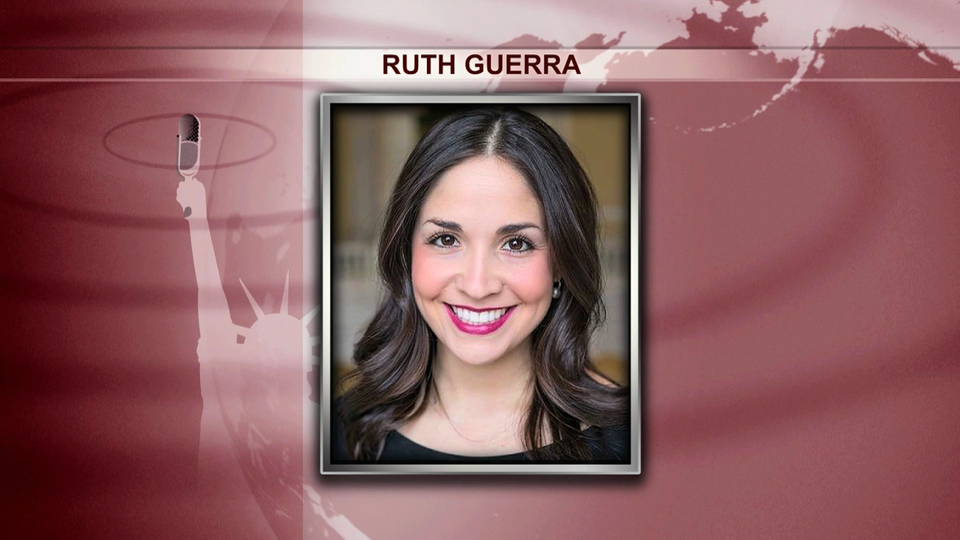
The head of Hispanic media relations at the Republican National Committee has resigned in the latest sign of apparent opposition to Donald Trump. Trump has vowed to ban Muslims from entering the United States, called Mexicans rapists and, most recently, attacked a judge overseeing a lawsuit against Trump University, saying he "happens to be, we believe, Mexican." Ruth Guerra, who is of Mexican descent, is reportedly departing the RNC after expressing discomfort with working for Trump.
TOPICS:
Donald Trump
Republican Party
2016 Election
PGA Relocates Golf Tournament from Trump's Course to Mexico

Meanwhile, the PGA is relocating a major golf tournament from Trump’s golf course in Florida—where it’s been held for over half a century—to Mexico. The PGA had distanced itself from Trump after his comments on Muslims. PGA Tour Commissioner Timothy Finchem said they had difficulty securing sponsors.
Timothy Finchem: "The decision made here was based on the reality that we were not able to secure sponsorship for next year’s WGC(World Golf Championship) at Doral, or for out years, for that matter. At the same time, we had an opportunity to build what we think is going to be a spectacular event in an area that is strategically important to the growth of the sport and the activity of the PGA Tour that has been focused in South America and Central America for the last good number of years."
We’ll have more on Trump and the recent controversy around his claims about donations to veterans after headlines.
TOPICS:
Donald Trump
2016 Election
Syria: Besieged Town of Darayya Sees 1st Aid Convoy Since 2012
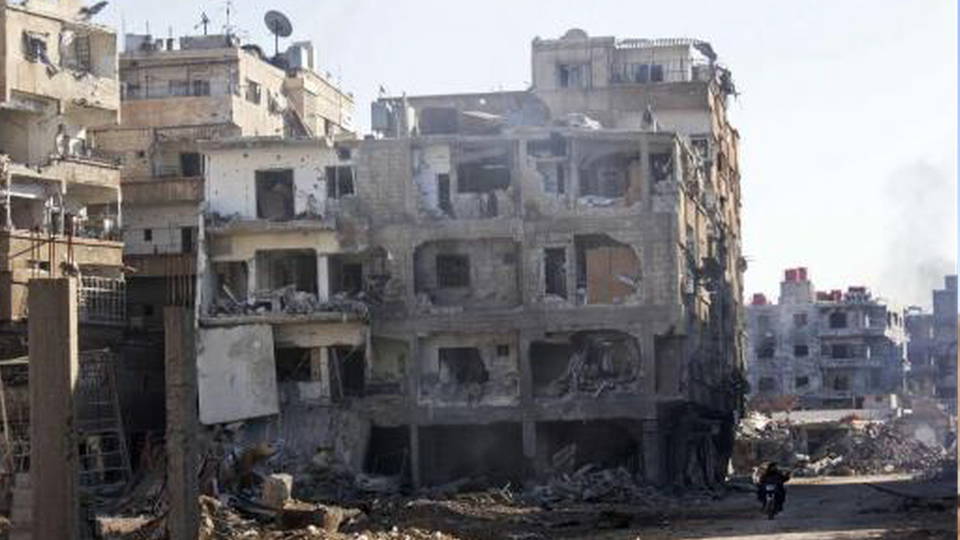
In Syria, the town of Darayya has received its first aid convoy since a siege imposed by the Syrian government in 2012. The aid included baby formula, vaccines and medications, but no food. This comes amid mounting pressure for the United Nations to air-drop aid to besieged Syrian areas.
TOPICS:
Syria
Texas: Brazos River Hits Record Level Amid Deadly Floods
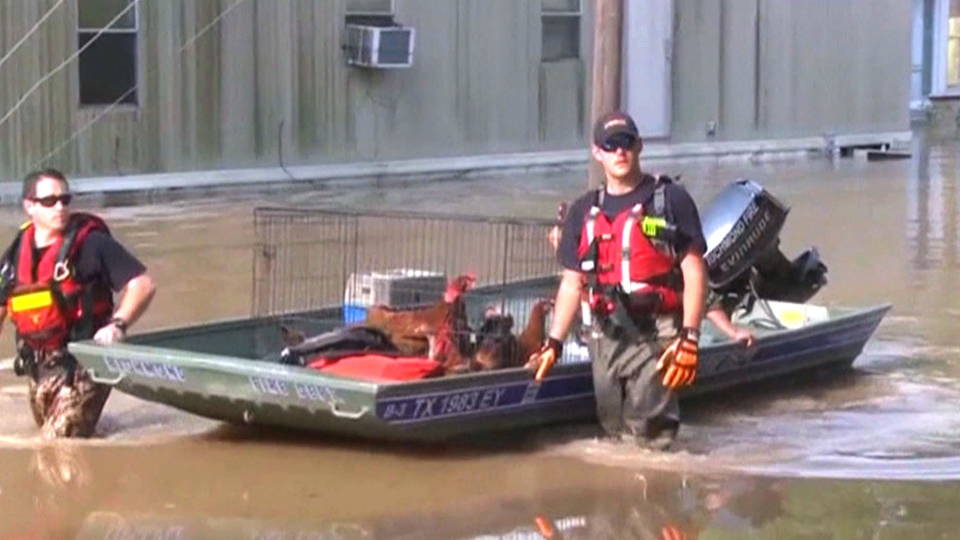
In Texas, the Brazos River southeast of Houston has surged to its highest level in more than a century amid massive floods and rain. The flooding has killed at least six people and damaged hundreds of buildings. Last month was the wettest in Texas’ history. Scientists say heavy rains and floods are linked to climate change.
TOPICS:
Texas
Climate Change
California: 2 Dead in Murder-Suicide on UCLA Campus
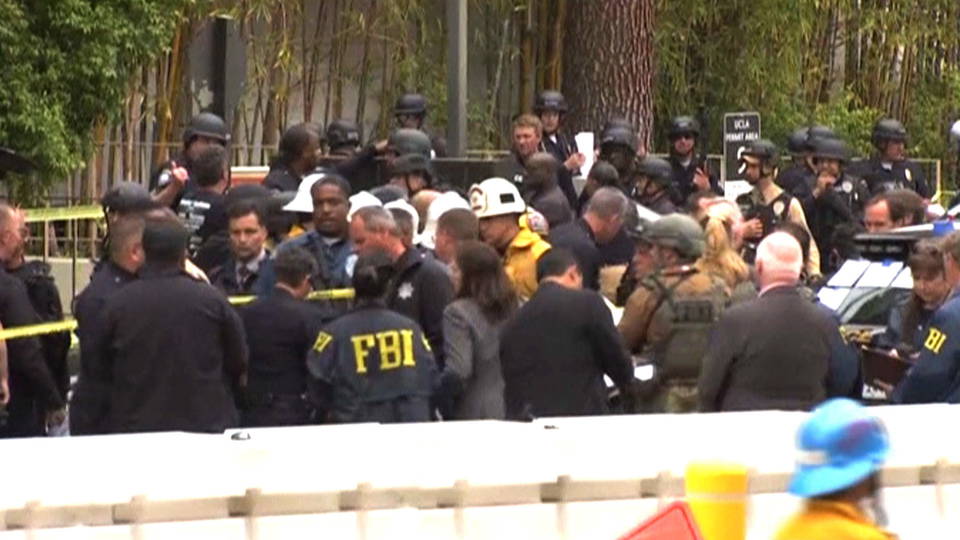
In California, a UCLA professor has been killed in what authorities described as a murder-suicide on campus. The victim has been identified as professor William Klug. Captain Andrew Neiman of the Los Angeles Police Department said the alleged gunman was also dead.
Andrew Neiman: "It was determined that this is an—appears to be an isolated incident within a small room within the engineering building. We have two adult male victims who are dead from apparent gunshot wounds. This may be what appears to be what’s commonly referred to as a murder-suicide. And at this point, our robbery-homicide investigators will be taking over the investigation to try to determine what happened and what caused this event."
TOPICS:
California
Regional Diplomats Oppose Action Against Venezuela at OAS
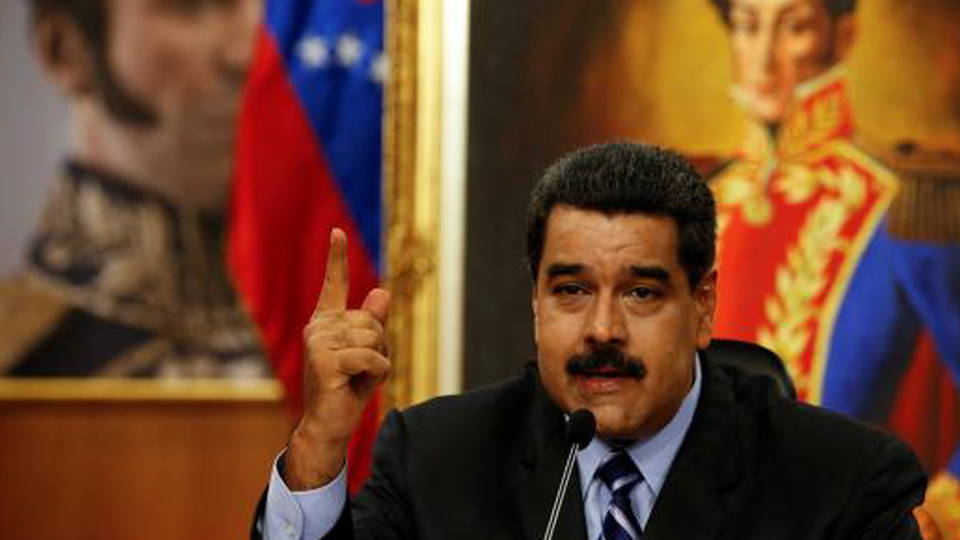
Diplomats from across Latin America and the Caribbean have opposed punitive action against Venezuela, after the head of the Organization of American States called for an emergency meeting over whether to suspend Venezuela. Supporters of Venezuelan President Nicolás Maduro have criticized the OAS for targeting Venezuela over "grave alterations of democratic order," while ignoring the ouster of Brazil’s president in what many consider a coup. On Wednesday, the OAS Permanent Council backed a declaration supporting talks between the Venezuelan government and right-wing opposition. The measure fell far short of calls by OAS Secretary General Luis Almagro for Maduro to schedule a recall referendum that could remove him from power. Jamaica’s ambassador to the OAS, Julia Elizabeth Hyatt, was among those to oppose Almagro’s handling of Venezuela.
Julia Elizabeth Hyatt: "Jamaica considers totally unacceptable and unfortunate certain recent utterances by the secretary general in his response to the president of Venezuela. We call on the secretary general, in carrying out his duly ascribed functions, to adhere to respectful communications at all times."
Click here to see our interview with Venezuela’s ambassador to the OAS, Bernardo Álvarez.
TOPICS:
Venezuela
Minnesota: Officers in Killing of Jamar Clark Will Not Face Federal Charges
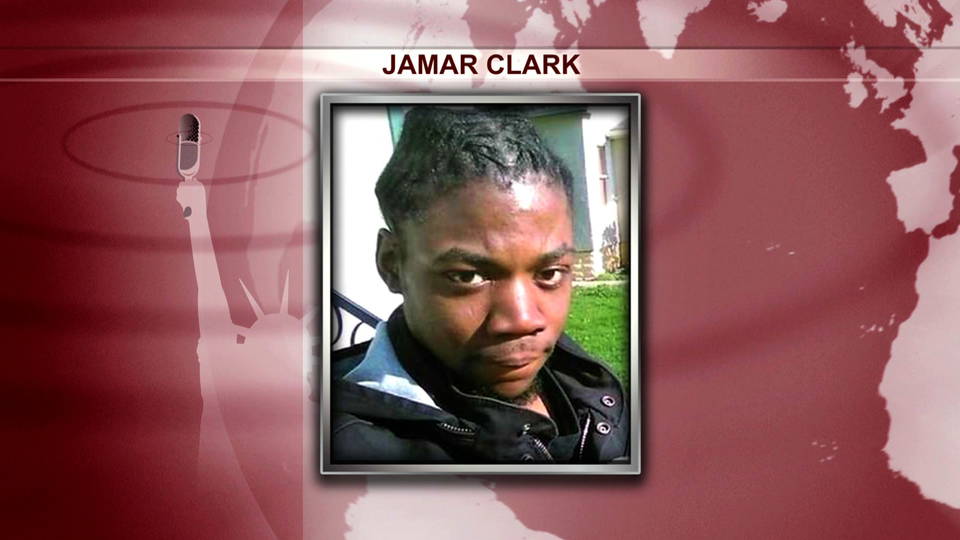
Federal prosecutors have announced no charges will be filed against the two police officers involved in the fatal shooting of unarmed African American Jamar Clark last fall. Clark was shot in the head after a scuffle with officers who responded to a report of an assault. Black Lives Matter launched an encampment to protest the shooting after multiple witnesses say Clark was shot while handcuffed. On Wednesday, Andrew Luger, U.S. attorney for Minnesota, disputed that account.
Andrew Luger: "Given the lack of bruising, the lack of Mr. Clark’sDNA on the handcuffs, and the deeply conflicted testimony about whether he was handcuffed, we determined that we could not pursue this case based on a prosecution theory that Mr. Clark was handcuffed at the time that he was shot. And, in fact, we reached the conclusion, based on all of the evidence that we reviewed, that the evidence suggested that Mr. Clark was not, in fact, handcuffed when he was shot."
We’ll go to Minneapolis for more on the shooting of Jamar Clark later in the broadcast.
TOPICS:
Police Brutality
Police
Minnesota
Kenneth Starr Resigns as Baylor University Chancellor Amid Sexual Assault Scandal
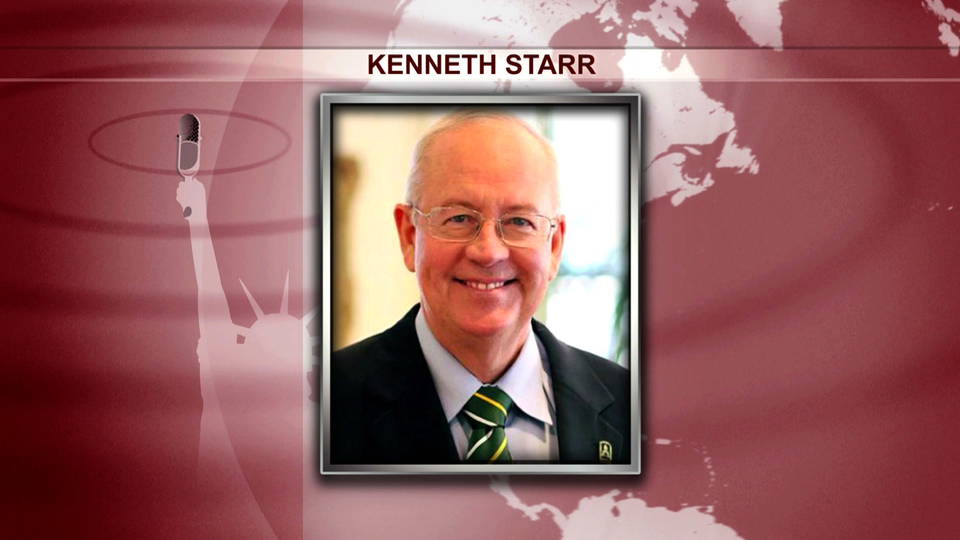
Kenneth Starr has resigned as chancellor of Baylor University in Texas. His resignation comes after Starr was demoted from his post as Baylor’s president last week amid a shakeup over the university’s mishandling of reports of sexual assault by football players. The firestorm has also prompted the resignation of Baylor’s athletic director and firing of its head football coach. An investigation ordered by Baylor’s Board of Regents found officials discouraged reports of sexual assault, treated the football program as "above the rules," and even retaliated against someone who reported sexual assault. Before heading Baylor, Kenneth Starr was the special prosecutor who investigated President Bill Clinton over his attempts to cover up a sexual relationship with White House intern Monica Lewinsky in the 1990s.
TOPICS:
Sexual Assault
Texas
New York: Farmworkers Complete 200-Mile March to State Capital
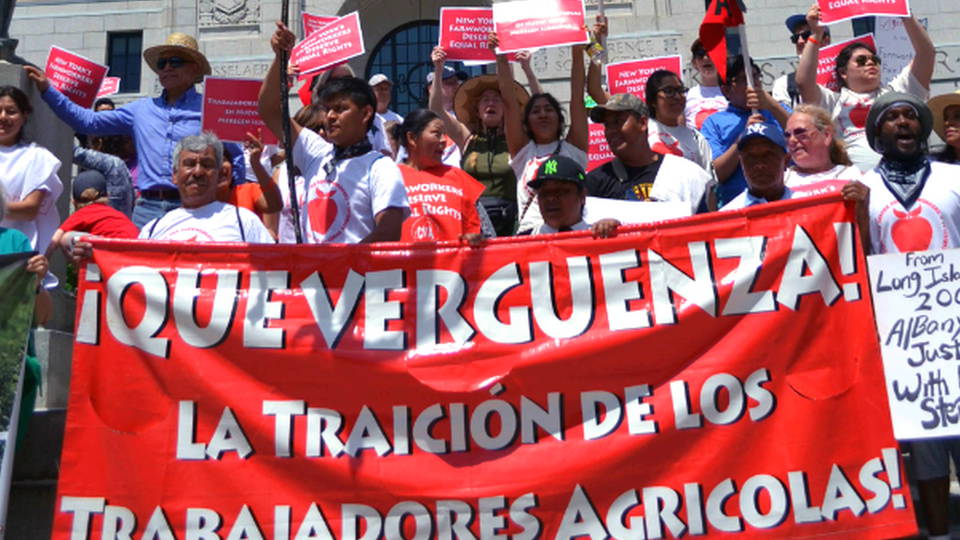
Image Credit: Zoraida Lopez
And here in New York, farmworkers have completed a 200-mile-long march from Long Island to the state capital Albany to demand equal protection under labor laws. The workers converged on the state Capitol to rally support for a bill that would mandate overtime pay, union rights and one day of rest each week.
TOPICS:
Labor
New York
Donate today:
Follow:


SPEAKING EVENTS


"An End to Impunity for Dictators—and Their Backers—Makes the World Safer" by Amy Goodman & Denis Moynihan
It was a bad week for dictators, and a good one for international justice. Two brutal, U.S.-backed dictators who ruled decades ago were convicted for crimes they committed while in power. Hissene Habre took control of the northern African nation of Chad in 1982, and unleashed a reign of terror against his own people, killing at least 40,000 of them, until he was deposed in 1990. Reynaldo Bignone was a general in the Argentinian military, and was the last dictator of the military junta that ruled that country from 1976 to 1983, the period known as “The Dirty War,” when an estimated 30,000 dissidents were “disappeared,” i.e., killed. Both men will most likely spend the rest of their lives in prison. These verdicts won’t bring back the tens of thousands they tortured and killed, but, hopefully, they will hasten the end of the modern era of impunity for human-rights abusers and their allies.
Bignone’s guilty verdict for his role in the transnational “Operation Condor” conspiracy was not his first. He was one of the Argentine generals who overthrew that country’s government in 1976. Bignone took a lead role in setting up and running several of the hundreds of secret detention centers where people suspected of communist or left-wing sympathies were taken and, in most cases, tortured, then killed. Argentina in those years was led by a succession of military dictators, with Bignone being the last in the line, ruling from 1982 to 1983. Bignone oversaw the destruction of documents and other evidence that might have implicated him and his fellow junta members in human-rights abuses and crimes against humanity, and also granted blanket immunity to himself and others, protecting them from future prosecution. Eventually, the amnesty was overturned, and Bignone was convicted in 2010 for the rampant kidnapping, torture and murder he oversaw.
Bignone’s most recent guilty verdict was for his role in Operation Condor, in which six U.S.-backed South American dictatorships—Argentina, Bolivia, Brazil, Chile, Paraguay and Uruguay—conspired to track down and kidnap or kill dissidents anywhere in the world. Bignone, 88, now has an additional 20 years added to the life sentence he is currently serving. Operation Condor was coordinated out of Chile, then under dictator Augusto Pinochet, and with the knowledge of the U.S. government, and in particular, then-Secretary of State Henry Kissinger.
Chad is a mostly desert country in northern Africa that was under French colonial rule from 1900 to 1960. Sectarian warfare followed. U.S. President Ronald Reagan supported a coup in Chad, led by Hissene Habre, despite knowing his record of brutality. Habre had a mass grave behind his residence. He ruled Chad from 1982 to 1990, and he terrorized his critics, both real and imagined. More than 40,000 people were killed, many tortured in the notorious “Piscine,” or “the Pool,” a prison and torture center located in a converted swimming pool.
In 2001, 11 years after Habre fled to Senegal (taking most of Chad’s national treasury with him), an intrepid attorney with Human Rights Watch, Reed Brody, entered the abandoned headquarters of Habre’s notorious secret police force, theDDS. What he found there was astounding: thousands upon thousands of documents, dust-covered and forgotten, that detailed arrests, torture and killing of more than 13,000 of Habre’s victims. This documentary evidence, along with unrelenting organizing among the victims themselves, by people like prison survivor Souleymane Guengueng, led to the first trial in an African nation of a former head of state from another African nation. In the past, such trials have taken place in international tribunals, outside of the continent. Senegal formed a special court specifically to try his case.
“It hurts me that many of my colleagues died along the way. They could not be here to see the result, which is why I was moved and brought to tears,” Souleymane Guengueng said after the verdict was read. “Hissene Habre was sentenced to life imprisonment. He will finish off his life in prison, and that’s all we wanted. I hope this serves as a lesson to all the other dictators out there.”
Bignone and the Argentine junta, and Hissene Habre, could not have committed their atrocities were it not for the support of the U.S. government. Secretary of State John Kerry called Habre’s verdict “an opportunity for the United States to reflect on, and learn from, our own connection with past events in Chad.” The U.S. should definitely reflect on, and learn from, these guilty verdicts. But we also should investigate, charge and put on trial U.S. government officials who aided and abetted these dictators. We need a uniform standard of justice, applied equally, across the globe.
WEB EXCLUSIVE

Dave Zirin & Jules Boykoff on the 2016 Rio Olympics & Brazil's Collapsing Political System
WORK WITH DN!

News Producer
Office Coordinator
207 West 25th Street, 11th Floor
New York, New York 10001, United States
---------------------
---------------------

No comments:
Post a Comment