democracynow.org
Stories:

Pakistan Mourns After Bombing at Hospital Kills At Least 74, Including Dozens of Lawyers
Lawyers in Pakistan have begun a nationwide strike after dozens of attorneys were slain in a suicide bombing outside a hospital in the city of Quetta in Balochistan, the country’s poorest province. Authorities said at least 70 people died in the attack, including as many as 60 attorneys; 120 were injured. The suicide bombing targeted lawyers who had assembled outside the hospital to mourn the assassination of Bilal Kasi, the president of the Balochistan Bar Association, who was killed earlier on Monday as he headed to court. Kasi had strongly condemned recent attacks in the province and had announced a two-day boycott of court sessions in protest of the killing of a colleague last week. A faction of the Pakistan Taliban, Jamaat-ul-Ahrar, claimed responsibility for Monday’s attack and for the murder of Bilal Kasi. ISIS also claimed responsibility.
TRANSCRIPT
This is a rush transcript. Copy may not be in its final form.
AMY GOODMAN: Lawyers in Pakistan have begun a nationwide strike after dozens of attorneys were slain in a suicide bombing outside a hospital in the city of Quetta in Balochistan, the country’s poorest province. Authorities said at least 70 people died in the attack, including as many as 60 attorneys; 120 were injured. A hospital staff member described the moment of the suicide bombing.
HOSPITAL STAFF MEMBER: [translated] I was coming for my shift at the office. As soon as I reached the gate, there was a blast, and people came running out. I left my bag there, and as I entered, I saw dead bodies scattered all over the place. There was blood all over and injured people covered in blood.
AMY GOODMAN: The suicide bombing targeted lawyers who had assembled outside the hospital to mourn the assassination of Bilal Kasi, the president of the Balochistan Bar Association, who was killed earlier Monday as he headed to court. Kasi had strongly condemned recent attacks in the province and had announced a two-day boycott of court sessions in protest of the killing of a colleague last week. Earlier today, lawyers and members of the legal profession gathered outside the closed High Court building in Karachi to offer funeral prayers for colleagues who had perished in the massacre.
LATIF KHOSA: [translated] We, all of us lawyers, have sprayed the symbolic sign of blood on our clothes to show that not only are all of us shedding tears and blood, but also to show that our sentiments, our vigor, our strength, our spirit will increase after this incident. Those who believe that these lawyers or this nation will become scared or nervous, that they will succeed in their nefarious designs, we want to give them this message, that we will follow them to their last breath, their last resort, their last rat hole. God willing, we will stand shoulder to shoulder with the whole nation and flush these terrorists out of their last sanctuary.
AMY GOODMAN: A faction of the Pakistan Taliban claimed responsibility for Monday’s attack and for the murder of Bilal Kasi. ISIS also claimed responsibility.
To find out more about the implications of the attack, we go to Lahore, Pakistan, where we’re joined by Asma Jahangir, one of Pakistan’s leading human rights lawyers. She’s a former president of the Supreme Court Bar Association of Pakistan.
Our condolences on what has taken place, Asma Jahangir. Can you talk about what you understand happened?
ASMA JAHANGIR: Well, from what I’ve heard—I still have not been to Balochistan; I will be going there tomorrow, whenever I get a flight seat—but one of our colleagues, who was president of the Balochistan Bar, was targeted and shot. And it was very well planned, because whenever something happens to a lawyer, we all go together, and we go and commiserate, we stand together. There’s a lot of bonding amongst the legal fraternity. And it was predictable that once he was shot, that people would follow him to the hospital. So there was a suicide bomber waiting for this opportunity, where a large number of lawyers did gather. The hospital was very close to the courts. And a large number of lawyers were indeed on their way to the hospital when the suicide bombing took place. Some of our colleagues, who had just left the hospital or were in the hospital but left the spot of the occurrence, described the scene to us as quite harrowing.
And, of course, I mean, it’s very clear from what has happened and from the previous threats that bar associations have got, that now the terrorists want to do away with Pakistan’s intellectuals, including lawyers, and particularly lawyers because they stand for rule of law, they condemn all forms of terrorism, they condemn all forms of violence, and equally condemn any kind of misuse of the law by the security apparatus.
AMY GOODMAN: Can you explain? There is the Taliban, the Pakistani Taliban, that have claimed responsibility, and now ISIS has claimed responsibility.
ASMA JAHANGIR: Well, as far as we can see, because there is very little transparency in this war on terror ever since it started, but what we can see is that it’s the same group of people who change their names. And unfortunately, not enough has been done to counter it. Not enough has been done to weed them out.
AMY GOODMAN: We’re talking to Asma Jahangir, who is the formal president of the Supreme Court Bar Association of Pakistan. We’re talking to her in Lahore. I want to turn to comments made by the former Pakistani ambassador to the United States, Husain Haqqani. He was speaking on Monday on CNN.
HUSAIN HAQQANI: Pakistanis continue to pay the ultimate price because of a wrong policy that has been in place for almost a quarter-century. Pakistan’s military and intelligence services think that they can make distinctions between various jihadi groups, those that are targeting Pakistan and those that target Afghanistan and India. They befriend one set of groups, and they do not—they act against the other. Unfortunately, the jihadis don’t think that way, and they basically move seamlessly between groups.
AMY GOODMAN: Speaking Monday, the U.S. State Department spokesperson Elizabeth Trudeau said the attacks targeted the key institutions of a democratic society.
ELIZABETH TRUDEAU: We offer our assistance to Prime Minister Sharif as his government investigates and works to bring these murderers to justice. These terrorists targeted a hospital, the judiciary and the media, the most important pillars of democracy. These brutal and senseless attacks only deepen our shared resolve to defeat terrorism around the world.
AMY GOODMAN: We are talking about the hospital bombing in Quetta that killed more than 70 people. We’re going to go to break and then come back to our guest in Lahore. This is Democracy Now!, democracynow.org, The War and Peace Report. We’ll be back in a minute. ... Read More →

Murdered by a SWAT Team for Traffic Tickets: Inside the Police Killing of Black Mother Korryn Gaines
In New York City on Monday, over 100 people marched to protest the recent police killing of African-American mother Korryn Gaines in Maryland. On August 1, Baltimore County police killed the 23-year-old mother after what they say was an armed standoff. Police were at Gaines’s apartment to execute an arrest warrant related to a traffic violation. They initially said they entered Korryn Gaines’s apartment with a key obtained from her landlord. But court documents say police kicked down the door. Once the police entered the apartment, Korryn Gaines was live-streaming the standoff via Facebook before her account was shut down. Police say they killed Gaines after she pointed a shotgun at them. Police also say they shot her 5-year-old son, Kodi Gaines, who suffered an injury to his cheek but survived. We speak to protesters in New York and to Charlene Carruthers, the national director of the Black Youth Project 100.
TRANSCRIPT
This is a rush transcript. Copy may not be in its final form.
AMY GOODMAN: I want to turn to yet another police killing. On Monday, over a hundred people marched in downtown Manhattan protesting the recent police shooting of Korryn Gaines in Maryland. Police say they shot and killed her after she pointed a rifle at them. Her five-year-old son was in the apartment with her and was injured in the gunfire. Police were at Gaines’ apartment to execute an arrest warrant related to a traffic violation. We hear first from Gem Isaac of Why Accountability.
GEM ISAAC: As women, we must support each other. Korryn Gaines was a fearless, unapologetic black woman.
What we did today is called People’s Monday. For over a year and a half, the NYC Shut It Down Crew has highlighted a victim of police murder. Unfortunately, today’s focus was on Korryn Gaines. And as you know, she was murdered by a SWAT team over traffic tickets.
PROTESTER 1: [echoed by the People’s Mic] We must love and protect each other. We have nothing to lose but our chains.
VIENNA RYE: Vienna Rye, and I’m with Millions March NYC. Today we were uplifting Korryn Gaines, who was murdered by Baltimore Police Department. We began—we exited Abolition Square, formerly known as City Hall Park, and we went—we took the streets, went through Fulton Center, through Shake Shack, where we shut down Shake Shake, essentially just shut down the streets all around Lower Manhattan.
PROTESTER 2: [echoed by the People’s Mic] We are here tonight, because while you are dining, black people are dying at the hands of the police.
VIENNA RYE: Korryn Gaines is just a highlight of, you know, what the police institution does, right? It literally is murdering, you know, especially black women, black people, with their children in their laps. It’s complete genocide, and it has to end.
GEM ISAAC: My name is Gem Isaac. I want these protests to commemorate in history that black, brown and indigenous people did not lay down and allow oppression to just take over their lives. I want these protests to show the world and to show Africans in America, Africans in Africa, Africans in the Caribbean, Africans in Europe, that it is time to organize and mobilize for black liberation.
PROTESTERS: Korryn Gaines! Rest in power! Korryn Gaines! Say her name! Korryn Gaines! Say it louder! Korryn Gaines! Say it louder! Korryn Gaines! Say it louder! Korryn Gaines!
SHANNON JONES: Change is not going to happen because the dominant power structure decides they want to relent. It will not. That is the work that we have to continue to do. And whether that means we leave people behind in order to push forward, that’s what we are going to do. No justice, no peace, because that’s exactly what it means. If we don’t get any justice, then there won’t be any peace.
PROTESTERS: Whose streets? Our streets! Whose streets? Our streets! Whose streets? Our streets!
AMY GOODMAN: That was Shannon Jones of Why Accountability. Baltimore County police killed a 23-year-old African-American woman on August 1st after an armed standoff. Her name was Korryn Gaines. She was live-streaming the standoff via Facebook before her account was shut down. Police say she had pointed a shotgun at police. Her five-year-old son was in the apartment with her and was injured by gunfire. Police were at Gaines’ apartment to execute an arrest warrant related to a traffic violation earlier this year. Police have not said who fired the shot that injured Gaines’ son. Police initially said they entered Korryn Gaines’ apartment with a key obtained from her landlord, but court documents say police kicked down the door. And that’s the latest that we have on her situation. Now, Charlene Carruthers, you wrote a piece about Korryn Gaines. What did you say?
CHARLENE CARRUTHERS: Well, when I first learned about the execution of Korryn Gaines, it felt deeply personal, as a black woman, as a black woman who wants to one day become a mother myself. I thought about how Korryn had to make a choice in that particular moment, a rare choice that most people never make. You know, lots of people romanticize taking up arms in self-defense, in armed self-defense, but Korryn Gaines made the rare choice to defend herself and her son. And so, for me, this is very clear that this is an issue of policing and an issue of reproductive injustice, and that if we’re going to be serious about achieving black liberation in this country, the issues of black women and children have to be at the center, at the forefront, and not on the margins.
And so, you know, there has been so much speculation about Korryn Gaines and her life, people depicting her in popular tropes of being an aggressive black woman, and really what it does, it says that there’s something pathological about Korryn and about black mothers and about black women who decide not to be passive victims, and people who aren’t perfect victims, either. And so I wrote the piece to be in defense of black women, of Korryn Gaines and black children, and really to hope to serve as one more person adding to a national call to action to defend black women.
AMY GOODMAN: The son, Korryn Gaines’ son, police do say they shot him. And I wanted to turn to something that The Intercept has just written. They say that "At the request of law enforcement, Facebook deleted Gaines’ account, as well as her account on Instagram, which it also owns, during her confrontation with authorities. While many of her videos remain inaccessible, in one, which was re-uploaded to YouTube, an officer can be seen pointing a gun as he peers into a living room from behind a door, while a child’s voice is heard in the background. In another video, which remains on Instagram, Gaines can be heard speaking to her five-year-old son, who’s sitting on the floor wearing red pajamas." There was a Facebook blackout, Charlene—is that right—on Sunday, people protesting that Facebook had shut down her account as she live-streamed?
CHARLENE CARRUTHERS: Yes. So, people are very clear that in addition to police having too much power over our lives, that corporations like Facebook leverage their relationships with law enforcement agencies to increase the power that they have over our lives. I believe that Korryn Gaines was engaged in, you know, the tradition of Ida B. Wells, truth telling—right?—exposing what was happening not just in that moment, but we know that Korryn also has a history of recording interactions with law enforcement officers. And so, we—our folks are smart, and we know that when we call for a boycott of a corporation on a particular day, that our hope is to send a signal to yet another corporation and also to policing institutions that we know that you have too much power over our lives, and we know that we also are the fuel in which you are able to profit and to exist.
And so, I hope that efforts to make those connections between corporations and policing institutions continue, because what they do is they tell us lessons about capitalism and how capitalism does not serve our people well, and that the violence that we experience in tandem in places of reproductive justice, in our homes with police, even within the education system, those are connected to systems of capitalism, and that we have to dismantle those things at the same time, if we’re interested in creating a world that’s actually safe for our children, where black women, black people, black trans folk, black queer folk can actually parent if we want to, parent, choose to not parent, and when we do choose to parent, we’re able to do that and keep our children safe and have all the resources that we need.
AMY GOODMAN: I wanted to—
CHARLENE CARRUTHERS: And that’s reproductive justice.
AMY GOODMAN: I want to end with Michael Oppenheimer. You’ve represented a number of people in police brutality cases in Chicago. What are you calling for right now? How does Paul O’Neal fit into this story as we speak on the anniversary of the death of Michael Brown?
MICHAEL OPPENHEIMER: It would take hours, but we need—first of all, I’m asking for a special prosecutor to be appointed to look into this case immediately, so there’s no bias. They can look in and see what went on. I’m calling for answers to these questions. And we need to have programs where the police can interact with people in the community. So, like she said, we can have body cameras and depict this, but we need to have this stop. We need to have people in the community interacting with the police in a positive way. I’m calling for a special prosecutor in this case. And police need to be held accountable, just like any other profession, if they screw up.
AMY GOODMAN: We’re going to leave it there, Michael Oppenheimer, the lawyer for the Paul O’Neal family, and Charlene Carruthers. Charlene Carruthers is national director of the Black Youth Project 100.
We will have a conversation about what happened in Pakistan and post it online at democracynow.org. ... Read More →

Handcuffed While Dying: Police Killing of Black Teenager Paul O'Neal Sparks Protests in Chicago
Chicago is once again rocked by protests over police brutality, following the release of video showing the fatal police shooting of an unarmed African-American teenager. The newly released video from police body cameras shows the moments before and after police killed 18-year-old Paul O’Neal on July 28. In the video, police are seen shooting repeatedly at the car O’Neal was driving, which police say was stolen. The video then shows a police officer running over to O’Neal, who is lying face down in a growing pool of blood surrounded by other officers. The officers then handcuff O’Neal with his arms behind his back and search his backpack, as he continues bleeding. The Cook County Medical Examiner’s Office says he was shot in the back. For more, we’re joined by Michael Oppenheimer, the attorney for the family of Paul O’Neal.
TRANSCRIPT
This is a rush transcript. Copy may not be in its final form.
AMY GOODMAN: In Chicago, hundreds of protesters marched through the streets and blocked traffic in a series of demonstrations over the weekend following the release of video showing the fatal police shooting of an unarmed African-American teenager. The newly released video from police body cam shows the moments before and after police killed 18-year-old Paul O’Neal. It was July 28th. In the video, police are seen shooting repeatedly at the car O’Neal was driving, which police say was stolen. The video then shows a police officer running over to O’Neal, who’s lying face down in a growing pool of blood surrounded by other officers. The officers then handcuff O’Neal with his arms behind his back and search his backpack as he continues to bleed. Afterward, one of the officers can be heard complaining he’ll be on desk duty for the 30 next days. Listen carefully.
POLICE OFFICER: [bleep], man, I’m going to be on a desk for 30 goddamn days now. [bleep] desk duty for 30 days now. Mother [bleep]!
AMY GOODMAN: Paul O’Neal died shortly afterwards at Northwestern Memorial Hospital. The Cook County Medical Examiner’s Office says he was shot in the back. Police say they’re investigating why the body camera worn by the police officer who shot O’Neal did not capture the actual moments of the fatal shooting. Three officers have been suspended in relation to the shooting. This is Chicago Mayor Rahm Emanuel speaking Monday.
MAYOR RAHM EMANUEL: There’s a gut reaction because it’s a loss of life, and I think it’s a horrible thing, and, as I said, it’s a tragedy. I think what I’m trying to do is get—superintendent took his immediate steps on both the material, getting it out, as well as what he’s done with the officers. I’m reserving any judgment while it’s in the middle of investigation, because there’s a lot of questions, and I probably want to echo what the superintendent says. There are more questions at this time than there are answers, and I don’t want to jump to a conclusion until we know some basic fundamental facts from an event that happened.
AMY GOODMAN: This comes as today marks the second anniversary of the death of African-American teen Michael Brown, who was 18 when he was killed by white police officer Darren Wilson in the suburb of Ferguson, Missouri.
For more, we’re joined by two guests. Charlene Carruthers is the national director of the Black Youth Project 100, and Michael Oppenheimer is the attorney for the family of Paul O’Neal.
We welcome you both to Democracy Now! First, Michael Oppenheimer, what do you understand took place on July 28th?
MICHAEL OPPENHEIMER: Well, as the mayor said, there’s a lot of unanswered questions. All we know is that he was in—Paul was an 18-year-old kid who graduated from high school this past year, when he was 17. He was in a stolen car. The police, as you can see from the video that I’ve seen, go on a chase for that stolen car. It looked to me like a police officer got out of the car; as the car was going by, shot improperly at the car. Another police officer, going the wrong way on a one-way street, rammed the car that Paul was in. Paul got out of the car. As he was running away, at some point, although we don’t see it on the body cam, he was shot in the back by unknown police officers.
AMY GOODMAN: They also shot at the car, right?
MICHAEL OPPENHEIMER: They shot at the car as the car was going by the police officer, yes.
AMY GOODMAN: And what has happened at this point? Police officers have been, what, suspended?
MICHAEL OPPENHEIMER: It is my understanding that police officers involved in the shooting have been suspended by the superintendent, Eddie Johnson, and that’s it. We have filed a federal civil rights lawsuit in this case. It was filed last week in federal court. But all that’s happened so far is the police officers have been suspended. As you heard from one of the officers, as he swore, he said, "Now I’m going to be on desk duty for 30 days."
AMY GOODMAN: That was his response to killing a young man.
MICHAEL OPPENHEIMER: That was his response to a young man lying there bleeding to death on the ground as he was being handcuffed.
AMY GOODMAN: And this showing the man, Paul, laying on the ground in his own blood as the pool was getting larger and larger of that blood, and they were busy handcuffing him.
MICHAEL OPPENHEIMER: It’s quite disturbing. They’re busy handcuffing him, and while he’s being handcuffed lying there bleeding to death, other officers are checking themselves for injuries. And one officer says, "I think my leg hurts," or something to that effect.
AMY GOODMAN: What about the video? Why didn’t the officer who shot him have his video camera on?
MICHAEL OPPENHEIMER: Well, that’s the big question. For years, we’ve had other cases that we’ve fought for the release of videos, including Ronald Johnson. You’ve seen the Laquan McDonald video. Traditionally, the Chicago Police Department and the city have fought the release of these videos. Now, in, quote, "a spirit of transparency," they released this video only a few short weeks after the shooting. It’s new technology. And in the age of GoPro and Instagram and all these things, how in the world does the officer who actually shot him—how does his body cam not work? I smell a cover-up. They’re saying he may not have turned it on, or it wasn’t functioning.
AMY GOODMAN: On Friday, the family of Paul O’Neal, who you represent, Michael, called for answers as protesters confronted Chicago’s police superintendent during a news conference. This is O’Neal family spokesperson Ja’Mal Green.
JA’MAL GREEN: If you looked at the video, one of the body cameras supposedly was not working, but that officer supposedly turned it on as he was leaving the incident. I don’t believe that story. I think we need to investigate more into what happened. I’m putting pressure on Superintendent Johnson to see if that camera was really recording, if that camera was turned off, because it seems to me that all the other cameras were working. That one should have been working, and it shouldn’t have just magically came on after the incident happened.
AMY GOODMAN: That’s Ja’Mal Green, family spokesperson. Michael Oppenheimer, you’re their attorney.
MICHAEL OPPENHEIMER: I couldn’t agree more with Ja’Mal. I mean, how in the world does this camera go off, and then it goes on? I think the investigation needs to show that there may be unknown footage. We’re still doing our investigation.
AMY GOODMAN: Charlene Carruthers, you’re national director of Black Youth Project 100. You’ve been out in the streets. Hundreds of people have been protesting. What are you calling for?
CHARLENE CARRUTHERS: Well, what we’ve witnessed here, once again, is not simply a failure or a technical failure of a piece of equipment, but a failure of the Chicago Police Department to keep black people safe. Here in the city of Chicago, we invest about 40 percent of our public service budget to policing, and the amount of money that’s been invested in body cameras has been astronomical. And for me and for the folks that I work with every single day, body cameras don’t help us sleep at night. What it tells us, that while police officers can have a camera on their body, they can still take it upon themselves to take our lives. And so, we’re calling for what we’ve been calling for: divestment from policing and investment in our communities, so that we can create actual safe communities and not communities that rely on police or prisons to keep us safe. ... Read More →

Matt Taibbi: Trump's All White Male Economic Team Includes "Financial Crisis Villain" John Paulson
Republican presidential nominee Donald Trump spoke at the prestigious Detroit Economic Club Monday, where he laid out his economic vision. Trump vowed to slash corporate taxes and end the estate tax. He also said he would reject the Trans-Pacific Partnership and renegotiate trade deals including NAFTA, the North American Free Trade Agreement. This comes after Donald Trump announced his economic team, which includes 13 men, no women, several billionaires, an Oklahoma oil baron and one part-time professional poker player. For more on Donald Trump’s speech economic plan and his team, we speak with Matt Taibbi, an award-winning journalist with Rolling Stone magazine. He’s been closely following the Trump campaign. One of his recent pieces is headlined "A Republican Workers’ Party?"
TRANSCRIPT
This is a rush transcript. Copy may not be in its final form.
AMY GOODMAN: Well, let’s bring in Matt Taibbi. You’re an award-winning reporter for Rolling Stone. You watched the speech yesterday. First of all, why do you think Donald Trump chose Detroit and the Detroit Economic Club to deliver his economic message?
MATT TAIBBI: Well, I think that the central message that he’s trying to communicate, and he’s trying to make the defining issue of this campaign trade and free trade agreements. Detroit is probably the capital of disenfranchised America. It’s a symbol of what we used to be. It was an industrial powerhouse back in the day, that is now in virtual devastation because the manufacturing sector has been exported to other countries. And I think that’s—that was the key to his speech yesterday, as he was trying to say, "We were a great nation once, and look at what’s happened in the decades since we’ve entered into all these agreements. I, Donald Trump, am going to bring all these jobs back, and here’s how I’m going to do it." And Detroit, of course, had significance in that respect.
AMY GOODMAN: Were you surprised by anything in the speech or the overall tone of the speech?
MATT TAIBBI: Well, you know, the beginning of the speech, I was a little bit surprised that he led with what sounded like warmed-over versions of previous Republican messages on taxes. You know, he had this new proposal to simplify the tax code and only have three tax rates. He wants to reduce the corporate tax rate to 15 percent. These kinds of proposals are not what won him the primary. What really—you know, apart from the racial aspect of his campaign, it was the message on trade that I think that really separated him from the other candidates, and he ended up emphasizing that much more later in the speech. I was a little surprised that he led with the tax aspect of it. But as it went on, the speech made more sense. And I think, you know, it did highlight a weakness in the Democratic position that can be exploited.
AMY GOODMAN: So, let’s talk about his tax proposal: three brackets—12 percent, 25 percent, 33 percent—0 percent for the poorest, and then cutting the cap on taxes for business to 15 percent.
MATT TAIBBI: Right. And also he says he’s going to repeal the carried-interest tax break, which makes him about the 5,000th politician who has proposed to do that. But that, of course, never happens. So—
AMY GOODMAN: But what about these?
MATT TAIBBI: Well, these—again, these are standard-issue Republican tax proposals, again, describing the Democrats as tax-and-spend politicians who raise taxes and choke small businesses. You know, this goes back to Steve Forbes and the flat-tax proposals. It’s the same thing that we’ve seen over and over again from Republicans in years past, which I thought was unusual because Trump’s whole message is "I’m different from these other people who have come before you. I am a completely new animal. I’m not the same kind of politician." These proposals are very similar to proposals that we’ve seen from other sort of tea party Republicans in the past.
AMY GOODMAN: I want to talk about his economic team that he announced on Friday, including 13 men, no women, several billionaires, an Oklahoma oil baron and one part-time professional poker player, also one of the members, John Paulson, who made billions betting against the housing market in the lead-up to the 2008 crash. Matt Taibbi?
MATT TAIBBI: Yeah, John Paulson, to me, was a very surprising choice, because it completely undercuts his ability, I think, to make the accusation that Hillary Clinton is a shill for Wall Street, if one of your main economic advisers is John Paulson, who is sort of at the head of the table at the list of 2008 financial crisis villains. He was a central figure in the so-called Abacus affair. He was a hedge fund guy who assembled a kind of born-to-lose portfolio of mortgage instruments. And Goldman Sachs put it together, and a couple of European banks ended up getting bilked out of a couple of billion dollars thanks to this deal. Goldman got in a lot of trouble; Paulson did not. But nonetheless, he remained a symbol of the kind of cynical maneuvering that went on during the 2008 period. And for Trump to make him one of his leading advisers, it seems to me, makes it very difficult for him to level any criticisms at Hillary Clinton on the Wall Street score.
AMY GOODMAN: And the poker player?
MATT TAIBBI: Yeah, I don’t know much about the poker player, but I think it fits in with, you know, the personality of Donald Trump’s campaign. It’s almost like he’s assembling a cast of a reality TV show.
AMY GOODMAN: You know, it’s interesting. The Republican convention took place in Cleveland at the Quicken Loans Arena—
MATT TAIBBI: Right.
AMY GOODMAN: —what they call the Q. The Democratic convention took place in Philadelphia at the Wells Fargo Center.
MATT TAIBBI: Right.
AMY GOODMAN: Talk about the significance, I mean, maybe the symbol, of these two centers and these two companies and what they’ve done in this country.
MATT TAIBBI: I mean, it’s hilarious, right? It’s like American democracy, brought to you by the mortgage lending industry, you know, or supermarket banking in the case of Wells Fargo. You know, these—we forget that these presidential campaigns are essentially funded by a lot of the companies that are at the heart of a lot of the controversies that we’re supposedly talking about. I mean, if we’re talking about too-big-to-fail banks and what to do about them, well, Wells Fargo is at or near the top of the list of those companies, and yet it’s the Wells Fargo Center that the Democratic convention is held in. So, it’s—I think it’s interesting. I think we’re so used to hearing the corporate sponsorship of democracy that we don’t even pay attention anymore to these details.
AMY GOODMAN: Matt Taibbi, the piece you wrote, "A Republican Workers’ Party?" what did you mean?
MATT TAIBBI: Well, there’s a lot of talk now among some conservative intellectuals, people from like the National Review and Ross Douthat from The New York Times, that because of the reality of what happened in the Trump campaign, the Republican Party has to recognize that its constituency is really largely made up of working-class white people, and that they should readjust their policies accordingly to become a party that more naturally appeals to that constituency. And they’re talking about, you know, more aggressively embracing issues that are important to working-class people.
Now, of course, they’re never going to be a union-friendly party, but the fact that they even have this idea in their head, the fact that those voters have already defected to the Republican Party, the traditional explanation for that is that they’ve been sort of hoodwinked into voting against their own interest because they’ve been appealed—there have been cynical appeals on race and cultural issues. But I don’t think that’s the entire story. I think a lot of it does have to do with things like free trade deals, which have turned off some of these voters to the Democratic Party, and they are there for the taking. So, I guess what I was really trying to say is, the fact that they’re even having this discussion speaks to a huge failure on the part of the Democratic Party that they’ve even lost these voters to begin with.
AMY GOODMAN: You know, something interesting happened over the weekend with Tim Kaine, the vice-presidential nominee of the Democrats. He said he’ll oppose the TPP. You know, he has come out for it until as recently as a couple days before he was nominated by Hillary Clinton, angering many who are deeply concerned about the TPP, which is a deal that would encompass 12 Pacific Rim nations, including the U.S. Both Clinton and Trump now say they’re opposed to it, amidst this wave of public protest, to those who say it benefits corporations at the expense of health and environmental regulations. But this is Senator Kaine speaking Sunday on NBC.
SEN. TIM KAINE: Companies were given rights to enforce provisions, but the labor and environmental provisions could not be effectively enforced. That was never fixed. I’ve asked again and again to understand this piece of the TPP, and I’ve never gotten a good answer. We can’t have a deal that cannot be enforced.
AMY GOODMAN: I mean, it’s interesting that Senator Kaine is talking about these corporate counsels, he, again, one of 13 Democratic senators to vote to give President Obama the power to fast-track the TPP.
MATT TAIBBI: Right, but this goes back to NAFTA. This goes back to the original free trade agreements. They all had provisions in them that supposedly were going to provide for worker protections and to prevent things like signatory countries manipulating currencies or using their own protectionist measures to keep our products out, to prevent human rights abuses, human trafficking. I mean, Malaysia is in this deal. Of course, those things are never paid attention to in these deals. The only thing these deals really effectively do is they allow Western companies to move to these sort of unfree labor zones, where they get to exploit extremely low-paid, politically unfree workers. And that’s the real part of these deals. The part that supposedly provides any worker protections never materializes. ... Read More →

Matt Taibbi on Libor, Cartel-Style Finance & How Failure to Fix Wall St. Has Propelled Trump's Rise
In financial news, British banking giant Barclays Bank has agreed to pay $100 million in a settlement with 44 U.S. states for rigging Libor, the interest rate which underpins trillions in global transactions. British and U.S. authorities have taken action against a number of banks over alleged rate manipulation since 2012. This was the first settlement between a bank and U.S. states. For more, we speak with Rolling Stone journalist Matt Taibbi, who has closely covered the Libor scandal.
TRANSCRIPT
This is a rush transcript. Copy may not be in its final form.
AMY GOODMAN: Finally, Matt, can you talk about Barclays’ $100 million settlement with U.S. states over Libor manipulation—
MATT TAIBBI: Yeah, it’s funny—
AMY GOODMAN: —and what that means?
MATT TAIBBI: Yeah, the Libor scandal was—you know, it should have been one of the biggest financial scandals of all time. They caught a number of the world’s biggest banks manipulating world interest rates through this London Interbank Offered Rate, which had impacted, according to some studies, more than $300 trillion worth of financial products. This was sort of a cartel-style corruption scheme. A number of banks got caught. Barclays has already paid a $453 million settlement in England. For them to come away with just a $100 million fine in the United States is really just a drop in the bucket for them. And it’s a signal to other banks that, you know, you really, if you—it’s the price of doing business. They’re not going to really worry about doing this again. It’s not going to be a deterrent.
AMY GOODMAN: And what does this say about the Obama administration?
MATT TAIBBI: Well, it’s, again, another in a long line of financial scandals that they have not aggressively prosecuted. Nobody went to jail for this. Nobody is going to have to pull money out of his or her own pocket to pay for this. This is all going to be paid for by shareholders. And it’s not a significant amount of money that’s going to even dent this year’s bottom line for that bank.
AMY GOODMAN: And why this matters in everyday people’s lives? Why Libor manipulation has—makes a difference?
MATT TAIBBI: World interest rates affect basically everything. I mean, if you have a credit card, if you have a mortgage, if your town has investments that are affected by world interest rates, all of these things are impacted by where Libor is on a given day. So your municipalities and states lost enormous sums of money because of the—where their investments were vis-à-vis Libor during this time period. That’s why they were—this settlement is really—was brought by a number of states that were negatively impacted by these changes in the world interest rates. So the damage that was done to these municipalities, to individuals, it’s incalculable. For them to walk away with just a $100 million fine says, A, we couldn’t really do an accurate damage calculation, and, B, it’s just a slap on the wrist, really, for these companies. It’s like the—you know, the HSBC deal, where they walked away with a relatively small fine for laundering hundreds of millions of dollars for foreign drug cartels. For them, it just says, "Well, even if we get caught, we’re going to pay a fine. It’s not going to really even dent a couple of months’ profit. So why not?" You know, it’s—I think it’s shameful.
AMY GOODMAN: This is what infuriates so many and why so many have come out against the establishment, whether it’s Donald Trump or it was Bernie Sanders.
MATT TAIBBI: Right.
AMY GOODMAN: So, how do you see this playing out, as you’ve watched Trump surge and now being roundly condemned? I mean, today, the latest, 50 national security experts, officials coming out against him—they are Republican. And then, what Hillary Clinton represents?
MATT TAIBBI: Well, I think—I remember talking just after the crash—I guess it was eight years now, almost eight years ago now—a lot of people on Wall Street and in Washington felt that if there were not adequate measures to clean up the financial services sector after what happened, that there was going to be some kind of a social movement, whether it was on the left or the right. People were going to be so upset that, somewhere, this is going to impact—you know, it’s going to create some kind of unrest somewhere. As it happened, I think, you know, that movement really coalesced on the right, on the Republican side, and they overthrew the Republican Party, essentially, with this ridiculous candidate, Donald Trump. But I think you can’t leave these problems unaddressed. You can’t just continually kick the can down the road and not punish these offenders, because sooner or later people are going to get upset. Even if they don’t totally understand these issues, they do understand that people are getting away with it. And it makes people angry, and anger eventually surfaces somewhere.
AMY GOODMAN: We’re going to break and then move on with our show. Matt Taibbi, award-winning journalist with Rolling Stone, we’ll link to your piece at Rolling Stone, the headline, "A Republican Workers’ Party?" Matt is the author of several best-selling books, his most recent, The Divide: American Injustice in the Age of the Wealth Gap. And thank you to Jacqui Maxwell in Detroit.
This is Democracy Now! When we come back, we’re going to Chicago and then back to Pakistan, where a suicide bomb has killed more than 70 people, many attorneys who were mourning the assassination of another attorney. Stay with us. ... Read More →

Meet Jacqui Maxwell, the UAW Autoworker Who Interrupted Trump's Economic Speech in Detroit
On Monday, protesters interrupted Donald Trump more than a dozen times during a speech at the Detroit Economic Club, in which Trump laid out his economic policies. During the speech, Trump vowed to slash corporate taxes and end the estate tax. He also said he would reject the Trans-Pacific Partnership and renegotiate trade deals including NAFTA. For more on Donald Trump’s speech and the interruptions, we speak with Jacqui Maxwell, a crane operator and a member of the United Auto Workers. She interrupted Donald Trump’s speech at the Detroit Economic Club on Monday.
TRANSCRIPT
This is a rush transcript. Copy may not be in its final form.
AMY GOODMAN: This is Democracy Now!, democracynow.org, The War and Peace Report. I’m Amy Goodman. Republican presidential nominee Donald Trump spoke at the prestigious Detroit Economic Club Monday, where he laid out his economic vision. Trump vowed to slash corporate taxes and end the estate tax. He also said he would reject the Trans-Pacific Partnership and renegotiate trade deals including NAFTA, the North American Free Trade Agreement. Trump’s speech was interrupted more than a dozen times by protesters.
DONALD TRUMP: Without security, there can be no prosperity.
PROTESTER: [inaudible]
DONALD TRUMP: Home ownership is at its lowest rate in 51 years.
PROTESTER: [inaudible]
AMY GOODMAN: During Trump’s speech at the Detroit Economic Club, he vowed to push an "America First" economic plan.
DONALD TRUMP: Americanism, not globalism, will be our new credo. Our country will reach amazing new heights, maybe heights never attained before. All we have to do is stop relying on the tired voices of the past. We can fix a rigged system by relying on the people, who—and just remember, this is so important—we are reliant on people that rigged this system in the past. We can’t fix it if we’re going to rely on those people again.
AMY GOODMAN: To talk more about Donald Trump’s speech, we are joined by two guests. Jacqui Maxwell is a crane operator and a member of the United Auto Workers. She interrupted his speech at the Detroit Economic Club Monday. And Matt Taibbi is an award-winning journalist with Rolling Stone magazine. He’s been closely following the Trump campaign, one of his recent pieces headlined "A Republican Workers’ Party?" Matt Taibbi is also the author of several best-selling books, including The Divide: American Injustice in the Age of the Wealth Gap.
Let’s go to Jacqui first, Jacqui Maxwell in Detroit. Why did you interrupt the speech? How did you get in, and what were you shouting?
JACQUI MAXWELL: Good morning. I received a ticket from a friend of a friend. I was asked to participate with Michigan People’s Campaign. My question that I asked of Trump in this speech, when I interrupted his speech, was: How did he feel it was winning for Michigan automotive workers to cut our pay and to threaten to move our jobs elsewhere in the country, where people would work for less pay and we would be begging for our jobs back?
AMY GOODMAN: How does his proposals suggest that that would happen, Jacqui?
JACQUI MAXWELL: Approximately—almost a year ago to the date, actually, to this week, he made those statements that U.S. auto workers, we make too much money, we’re overpaid, that maybe we should move those auto jobs, automotive jobs, in Michigan, where people will be more appreciative of lower wages, they’d work for less, and then the Michigan automotive workers would be begging to have their jobs back.
AMY GOODMAN: Actually, it was an interview in The Detroit News a year ago. So, to quote him exactly, Donald Trump advocating for lowering Michigan automotive workers’ pay by moving factories outside the state, as you said, he said, "You can go to different parts of the United States and then ultimately you’d do full-circle—you’ll come back to Michigan because those guys are going to want their jobs back even if it is less. ... [After Michigan] loses a couple of plants—all of sudden you’ll make good deals in your own area," unquote. Jacqui Maxwell?
JACQUI MAXWELL: Yes, that’s exactly what I’m referring to.
AMY GOODMAN: So, how did you get into the club? And what was Donald Trump’s response?
JACQUI MAXWELL: We received tickets via email from a friend of a friend. I did not know the person that sent the tickets. They arrived in my email.
AMY GOODMAN: How many of you protested?
JACQUI MAXWELL: There were approximately 17 of us inside.
AMY GOODMAN: And was anyone arrested?
JACQUI MAXWELL: No, we were not arrested. Secret Service escorted us out. They were firm but were not abusive in any way. And once we were outside of the ballroom, DPD took over, and they—there was a gentleman that just took our name off of our identification, and that was it. DPD just walked us to the door politely outside of Cobo Hall.
AMY GOODMAN: Jacqui, can you describe your job as a crane operator? And talk about the jobs in Detroit. How many have been lost?
JACQUI MAXWELL: There are many jobs that are lost when the automotive industry went through its transition. The numbers in the UAW membership did fall. A lot of that is due to plant closing. A lot of that is due to things becoming more—automation, automotive industry downsizing somewhat. I am a crane operator. I operate a steel crane. It’s about 90 feet in the air. I haul, on average, 40,000- to 50,000-pound coils of steel, that are used not only in the automotive industry but in other manufacturing sectors.
AMY GOODMAN: So, overall, what is your message to Donald Trump?
JACQUI MAXWELL: I want—I would like Mr. Trump to address that statement that he made. And how does he think that that is a win for the Michigan automotive industry, for Michiganders as a whole? The automotive industry is the backbone of Michigan and in the Midwest. It is our economy here. Without the automotive industry, Michigan would be an economic disaster. Whether it’s the independent parts supplier, privately owned parts supplier, to the big parts suppliers, it’s just—it’s a tremendous amount of our economic base here in Michigan.
AMY GOODMAN: And do you think that Hillary Clinton has a better message? What about also third parties? And who are you supporting?
JACQUI MAXWELL: I’m going to vote with my conscience. As a rule, I never tell anybody who to vote for. I say you look at the candidate, whether it’s Democratic or Republican, and you look at how they can benefit your household, your family’s needs, and you vote with your conscience. You make an educated vote, as long as you vote. That’s the key. And I would like to—I’d like to hear Hillary’s stance on bringing jobs to Michigan, jobs especially in areas like the metropolitan Detroit area, what she plans to do. I’d like to hear her position on foreign trade. And, you know, then I can make my decision. ... Read More →
Headlines:
Pakistan: Lawyers Strike After Bombing Kills More Than 70 at Hospital
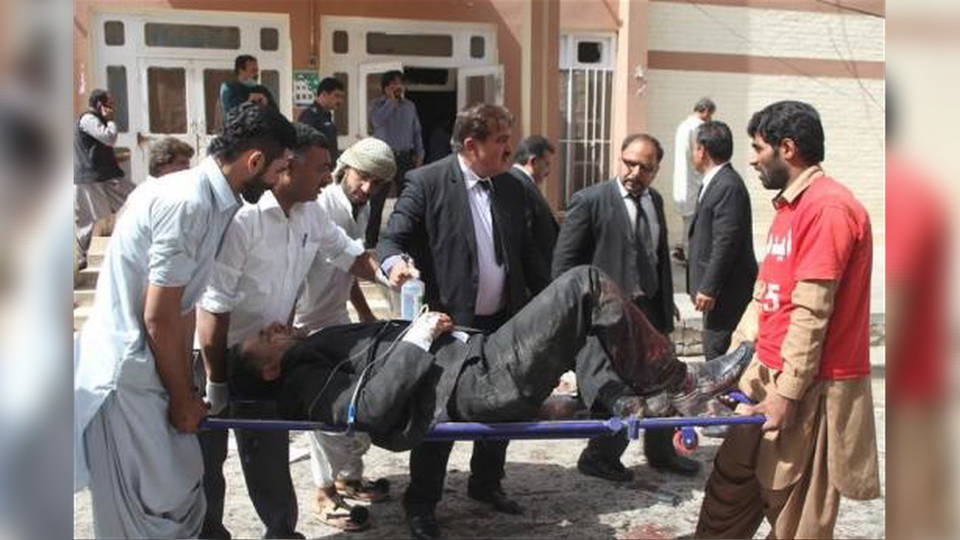
In Pakistan, lawyers have launched a three-day nationwide strike to mourn the deaths of dozens of their colleagues in a suicide bomb attack outside a hospital in Quetta Monday. At least 74 people were killed, and 120 more were wounded. The suicide bomber struck the hospital as lawyers and journalists had gathered to mourn the assassination of prominent lawyer Bilal Kasi, whose body was being brought in to the site when the attack occurred. One of the workers at the hospital described the scene.
Shakeel Gul: "As soon as I came out of the ward, I felt as if the end of the world had come. It was such a horrifying scene that I sat down in shock. Then we gathered courage and started picking up dead bodies. Things reached such a point that the mortuary got overfilled, and we had to put the rest of the bodies outside."
A faction of the Pakistani Taliban claimed responsibility for Monday’s attack and for the murder of Bilal Kasi. We’ll have more on Pakistan after headlines.
TOPICS:
Pakistan
Trump Economic Agenda: Corporate Tax Cuts, No TPP, Renegotiate NAFTA
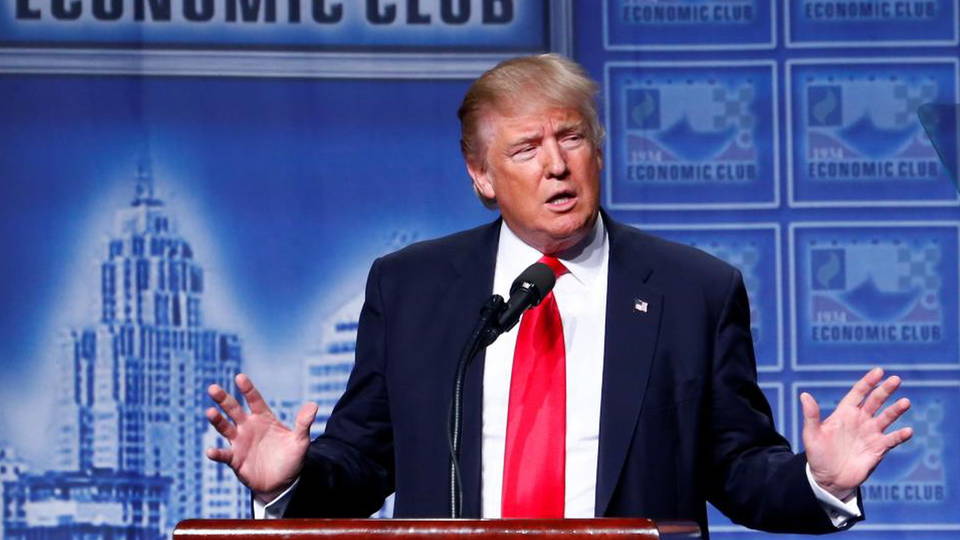
In news from the campaign trail, protesters interrupted Donald Trump more than a dozen times during a speech at the Detroit Economic Club in which Trump laid out his economic policies. Trump’s proposals included corporate tax cuts and rejecting the Trans-Pacific Partnership trade deal and renegotiating NAFTA.
Donald Trump: "All of our policies should be geared toward keeping jobs and wealth inside of the United States. Under my plan, no American company will pay more than 15 percent of their business income in taxes. In other words, we’re reducing your taxes from 35 percent to 15 percent."
Trump announced his economic team on Friday. It includes 13 men, no women, several billionaires, an Oklahoma oil baron and one part-time professional poker player. One of the members is John Paulson, who made billions by betting against the housing market in the lead-up to the 2008 crash. We’ll have more on Trump’s economic speech later in the broadcast with Detroit auto worker Jacqui Maxwell, who interrupted the speech, and Rolling Stone journalist Matt Taibbi.
TOPICS:
Donald Trump
House Speaker Paul Ryan Faces Primary Today in Wisconsin
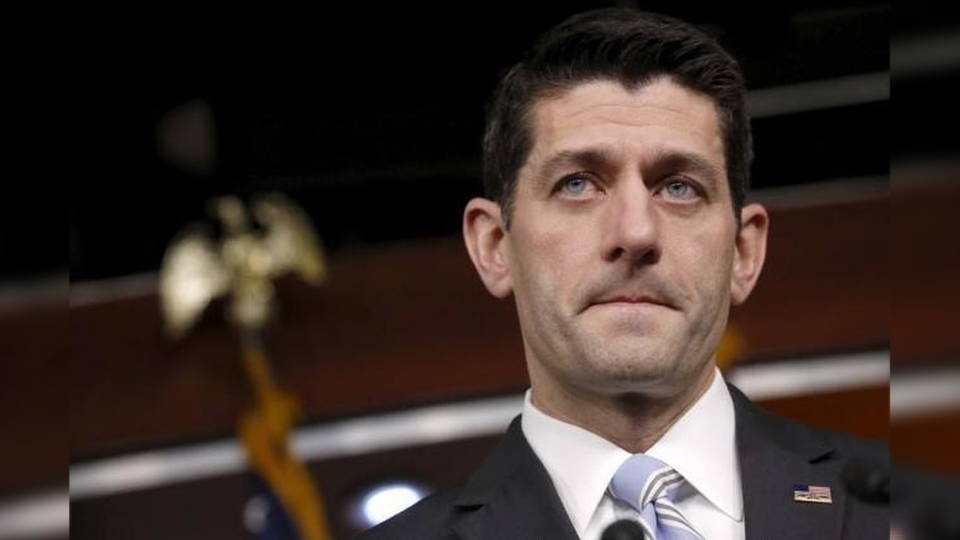
There are primaries across the country today, including in Wisconsin, where House Speaker Paul Ryan is running for re-election. On Friday, Donald Trump endorsed Ryan after refusing to do so earlier last week, even though Ryan spoke at the Republican National Convention. Instead Trump had praised Ryan’s opponent, Paul Nehlen, saying he was "running a very good campaign." In his speech Friday, Trump also endorsed Arizona Senator John McCain and New Hampshire Senator Kelly Ayotte, whom he’d attacked earlier last week, saying, "We don’t need weak people. We have enough of them."
TOPICS:
2016 Election
Donald Trump
50 Republican National Security Officials Declare Trump "Unfit"
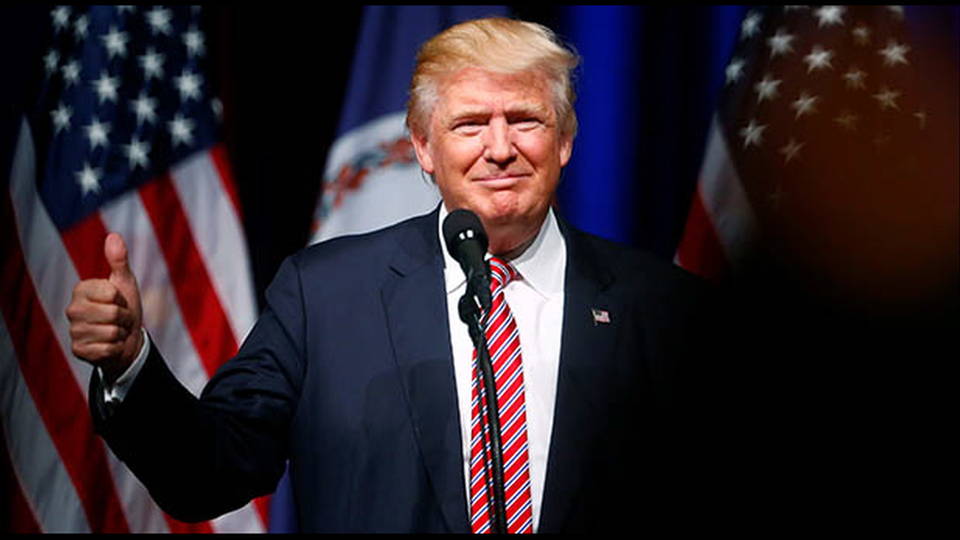
Meanwhile, 50 Republican national security officials, including former top aides or Cabinet members to President George W. Bush, have signed a letter declaring Donald Trump unfit to be president. The letter calls Trump reckless and says, "Unlike previous Presidents who had limited experience in foreign affairs, Mr. Trump has shown no interest in educating himself. He continues to display an alarming ignorance of basic facts of contemporary international politics."
TOPICS:
2016 Election
Donald Trump
Former CIA Officer Evan McMullin Says He'll Make Third-Party Presidential Run
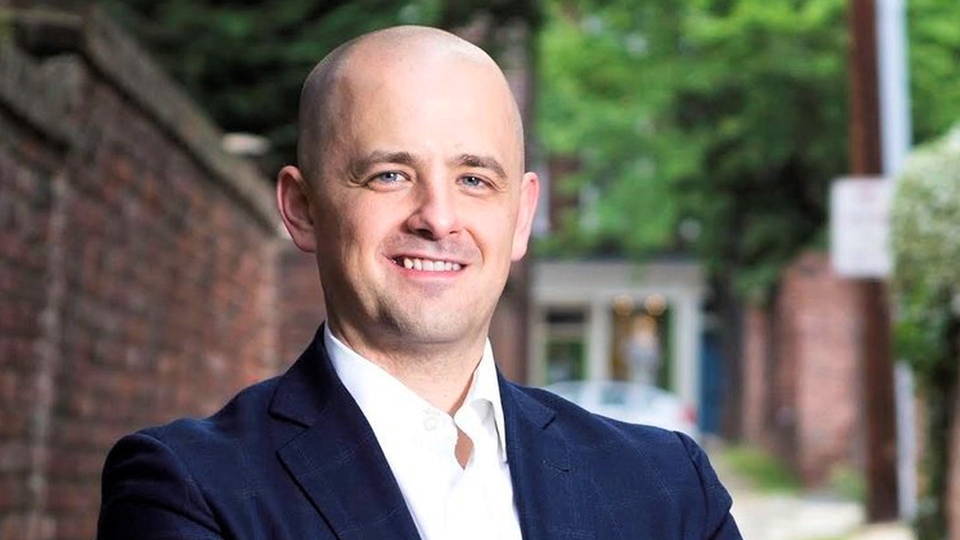
Another third-party candidate has jumped into the 2016 race: former CIA officer Evan McMullin, who announced Monday he’ll run for president as an independent. A Utah native, McMullin also served as the former chief policy director of the House Republican Conference. He said he is strongly opposed to both Hillary Clinton and Donald Trump, but that Trump is "a real threat to our republic."
TOPICS:
2016 Election
Families of 2 U.S. Personnel Killed in Benghazi Sue Clinton
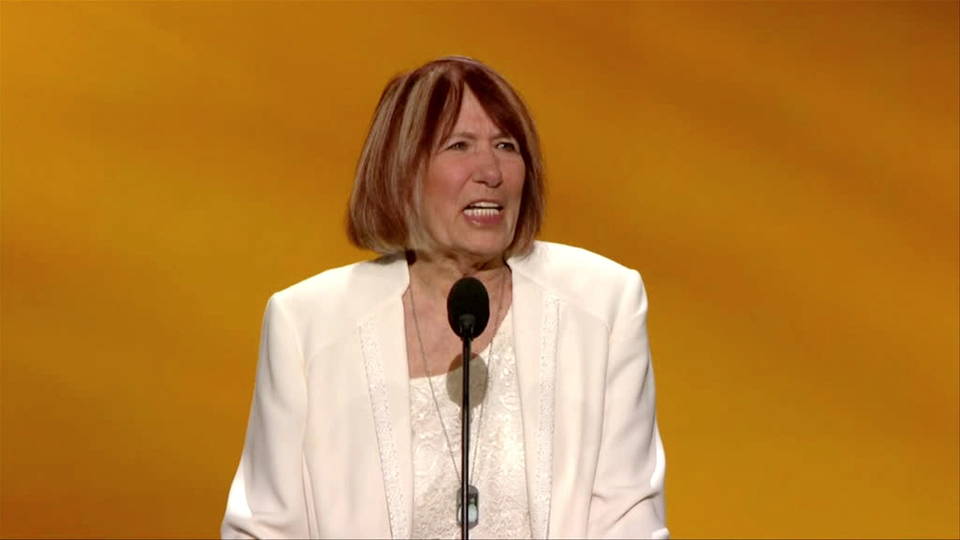
The parents of two Americans killed in the 2012 attack on the U.S. Consulate in Benghazi, Libya, filed a wrongful death lawsuit in federal court Monday against Hillary Clinton. Patricia Smith and Charles Woods, the parents of Sean Smith and Tyrone Woods, are claiming Clinton’s use of a private email server while she was secretary of state contributed to the attacks. The lawsuit accuses Hillary Clinton of "extreme carelessness in handling confidential and classified information," which the lawsuit alleges contributed to the conditions that led to her their sons’ deaths. They also accused Clinton of defaming them in public statements.
TOPICS:
Hillary Clinton
Libya
Challenger for Wasserman Schultz's Seat Files Election Complaint
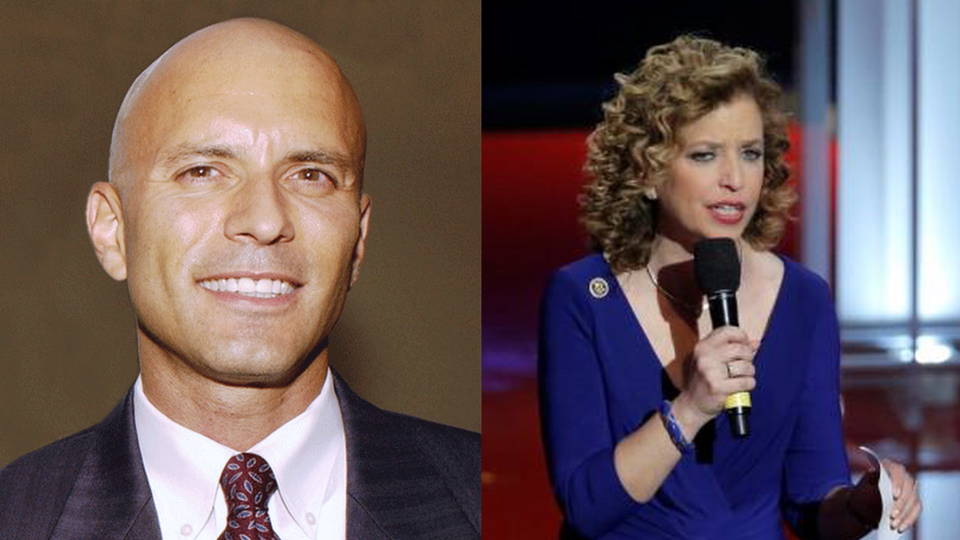
Tim Canova, who is running against former Democratic National Committee Chair Debbie Wasserman Schultz for her congressional seat in Florida, has filed a complaint against Wasserman Schultz with the Federal Elections Commission. Wasserman Schultz stepped down last month as DNC chair after the WikiLeaks release of nearly 20,000 emails revealing how the Democratic Party favored Hillary Clinton and worked behind the scenes to discredit and defeat Bernie Sanders in the presidential primaries. Canova’s campaign said the complaint alleges that Wasserman Schultz "used her position with the DNC and the resources of the DNC to improperly benefit her congressional campaign."
TOPICS:
2016 Election
DNC 2016
NAACP Leaders Stage Voting Rights Sit-in at VA Congressman's Office
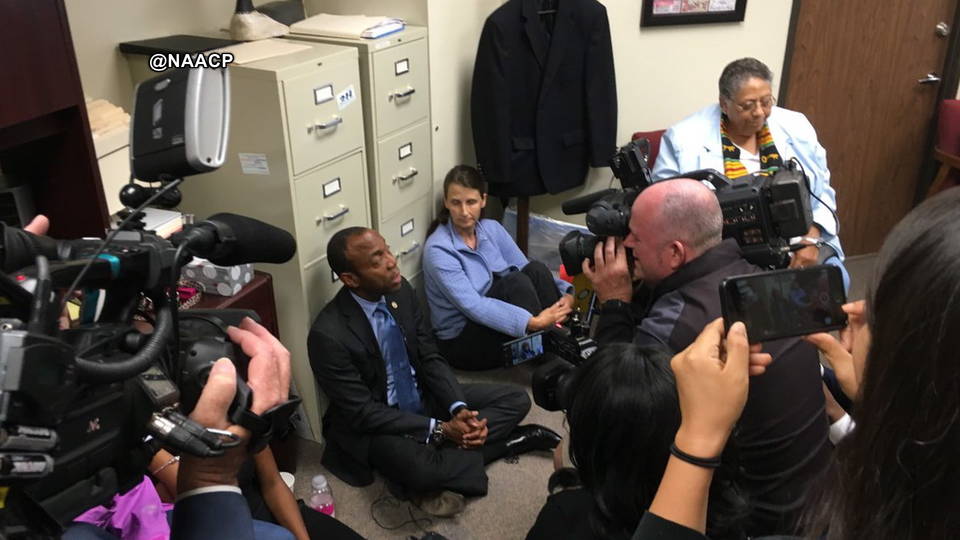
Police in Virginia arrested NAACP National President Cornell William Brooks on Monday to end a six-hour sit-in calling for the restoration of the original Voting Rights Act of 1965. The sit-in took place inside Virginia Congressmember Bob Goodlatte’s office. Brooks and Stephen Green, the national director of the group’s youth and college division, were arrested for trespassing when Goodlatte’s office closed at 5 p.m. The NAACP says Goodlatte, who chairs the House Judiciary Committee, has failed to hold a hearing on what they describe as "egregious voter discrimination" across the country.
TOPICS:
Voting
Chicago Mayor "Reserving Judgment" After Police Kill Unarmed Teen
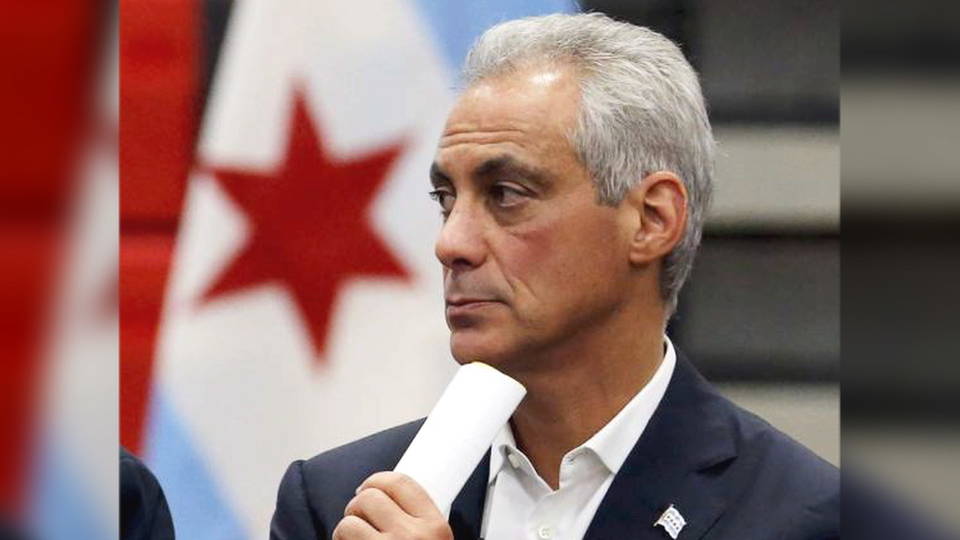
In Chicago, Mayor Rahm Emanuel is speaking out following the release of video showing the fatal police shooting of an unarmed African-American teenager. The newly released video from police body cameras shows the moments before and after police killed 18-year-old Paul O’Neal on July 28. In the video, police are seen shooting repeatedly at the car O’Neal was driving, which police say was stolen. Police then chase O’Neal into a nearby backyard, where the video shows officers handcuffing O’Neal behind his back and searching his bag as he lay dying from a gunshot wound. Chicago Police Chief Eddie Johnson said Sunday that the video appeared to show violations of the department’s rules for using lethal force. Mayor Rahm Emanuel spoke Monday.
Mayor Rahm Emanuel: "I’m reserving any judgment while it’s in the middle of investigation, because there’s a lot of questions, and I probably want to echo what the superintendent says. There are more questions at this time than there are answers, and I don’t want to jump to a conclusion until we know some basic fundamental facts from an event that happened."
TOPICS:
Chicago
Today is the Second Anniversary of the Police Killing of Michael Brown
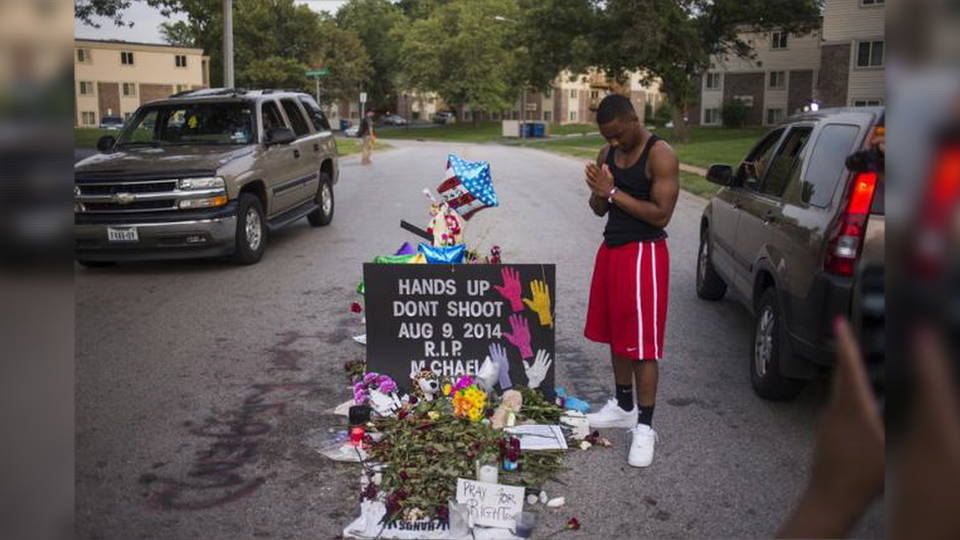
This comes as today marks the second anniversary of the death of African-American teenager Michael Brown. Brown was 18 when he was killed by white police officer Darren Wilson in the suburb of Ferguson, Missouri. We’ll have more on the anniversary of Michael Brown’s death and the police killing of Paul O’Neal later in the broadcast.
TOPICS:
Ferguson
Police Brutality
Chicago Teachers Threaten Strike If City Tries to Push Pay Cuts
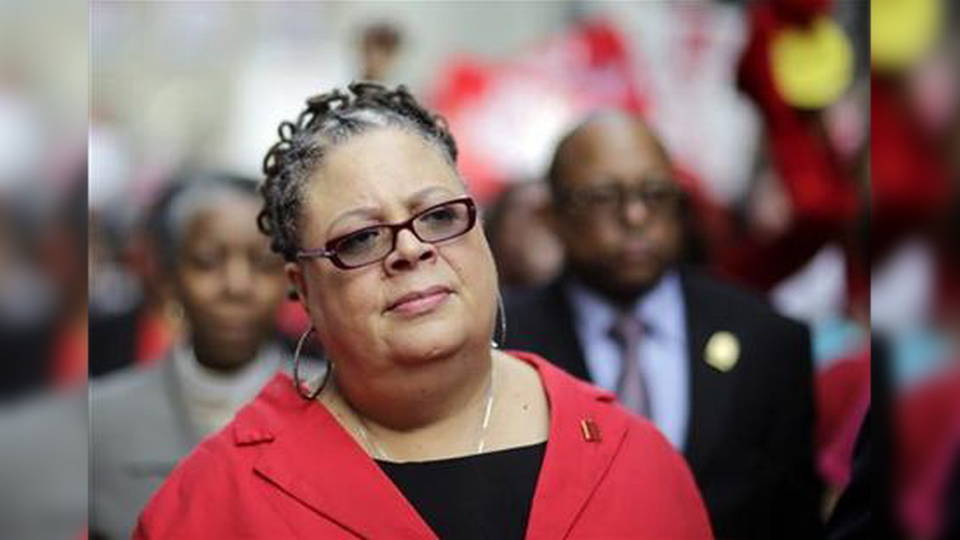
Meanwhile, Chicago Teachers Union President Karen Lewis has threatened a strike, after Chicago proposed a contract similar to one the union rejected earlier this year. The city is trying to slash teacher pay by 7 percent. Chicago teachers have been without a contract for over a year.
TOPICS:
Education
Chicago
Labor
Barclays to Pay $100 Million to U.S. States over Libor Scandal
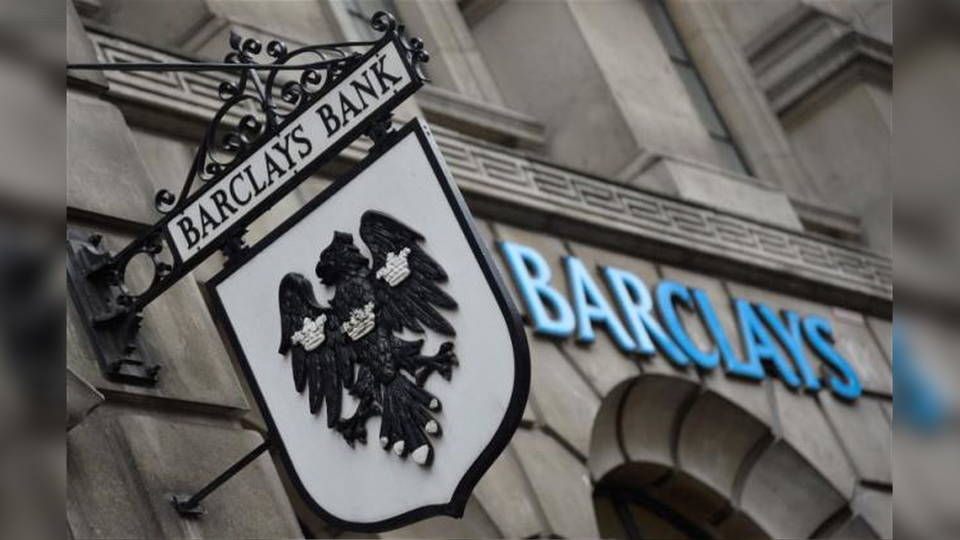
In financial news, British banking giant Barclays Bank has agreed to pay $100 million in a settlement with 44 U.S. states for rigging Libor, the interest rate which underpins trillions in global transactions. British and U.S. authorities have taken action against a number of banks over alleged rate manipulation since 2012. This was the first settlement between a bank and U.S. states.
Two Professors, Australian and American, Kidnapped in Afghanistan
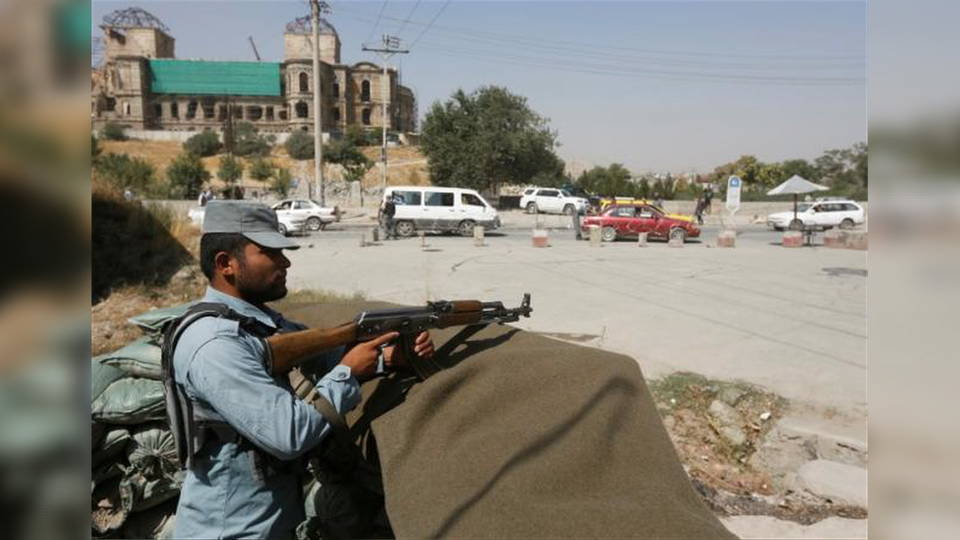
In Afghanistan, the American University of Afghanistan has suspended campus operations after two teachers were kidnapped at gunpoint Sunday. The two lecturers are an American and an Australian. They were kidnapped from their vehicle in downtown Kabul.
TOPICS:
Afghanistan
Protests at NY State Parole Board After Prisoner Found Dead
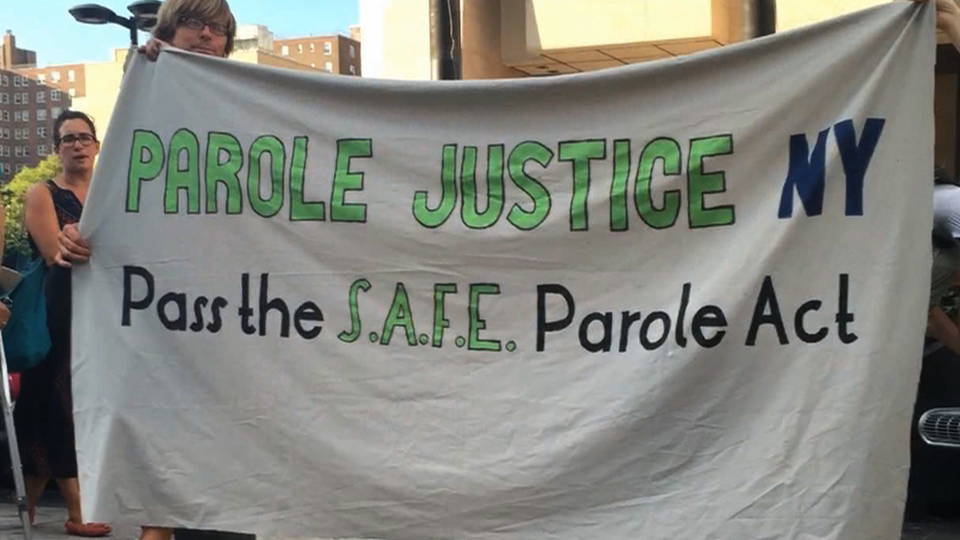
There were protests on Monday at the office of New York’s State Parole Board in Albany after a prisoner was found dead at Fishkill Correctional Facility on Thursday. Seventy-year-old John MacKenzie reportedly hung himself days after being denied parole. MacKenzie had been in prison since 1975 after being sentenced to 25 years to life for killing a police officer during a robbery. MacKenzie first became eligible for parole in 2000. Earlier this year, the state Supreme Court held the parole board in contempt of court for failing to acknowledge his remorse and rehabilitation. This is MacKenzie’s lawyer, Kathy Manley, reading a letter from his daughter, Danielle, at Monday’s protest.
Kathy Manley: "Many people have been positively influenced by my father and all the great work he did while incarcerated—something ignored by the parole board. Despite the odds, John MacKenzie found his own path to rehabilitation in the face of great adversity. He overcame. He did what was right. The parole board did not. They did not recognize his remorse. They chose to ignore his rehabilitation. And instead they focused on negativity, punishment and hate. Therefore, the parole board should be charged with my father’s death."
More than 9,500 people over the age of 50 are held in New York’s prisons. Two-thirds are eligible for parole.
TOPICS:
Prison
Japan Marks 71st Anniversary of Nagasaki Atomic Bombing
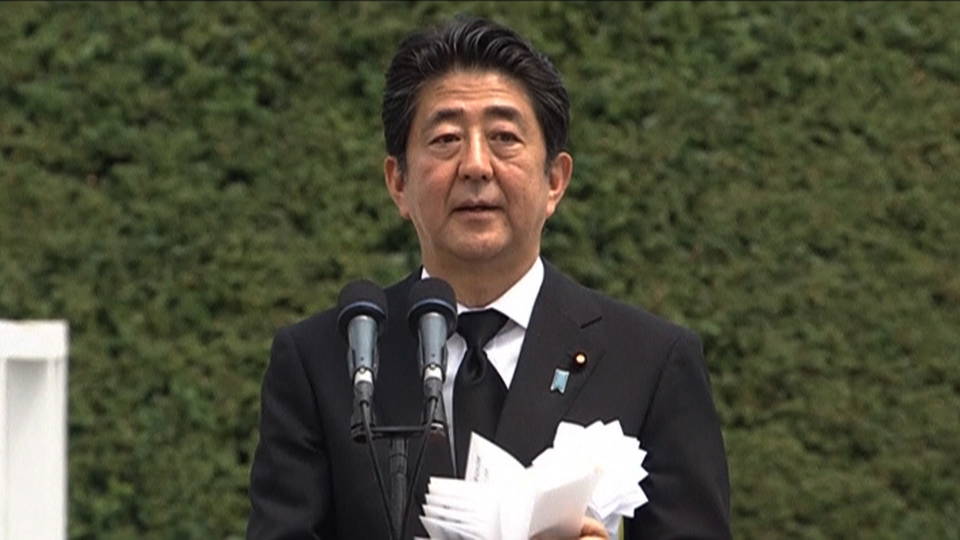
And today Japan marks the 71st anniversary of the U.S. atomic bombing of Nagasaki. Japanese Prime Minister Shinzo Abe reiterated Japan’s commitment to nuclear nonproliferation at a ceremony marking the attack, the second of two atomic bombs the U.S. dropped on Japan at the end of World War II.
Prime Minister Shinzo Abe: "As the only country to be bombed by atomic bombs during wartime, I will strongly advocate the importance of maintaining and strengthening the stance of nonproliferation of nuclear weapons, while maintaining the three non-nuclear principles."
About 50,000 people held a moment of silence in the city of Hiroshima on Saturday, marking the dropping of the atomic bomb there.
TOPICS:
Japan
Atomic Bomb
Donate today:
Follow:


COLUMN

The Voting Rights Acts in the Era of Jim Crow 2.0
WEB EXCLUSIVE

Lee Fang on HowCitizens United Opened Floodgates for Foreign Corporate Money in U.S. Elections
NEW BOOK

Democracy Now!: Twenty Years Covering the Movements Changing America
WEB EXCLUSIVE

Chase Strangio on the ACLU's Fight to Overturn North Carolina's Anti-LGBT Law HB 2
WORK WITH DN!

Senior TV Producer
Development Manager
SPEAKING EVENT

8/19 Seattle, WA
207 West 25th Street, 11th Floor
New York, New York 10001, United States
-------
No comments:
Post a Comment