democracynow.org
Stories:

Did Companies & Countries Buy State Dept. Access by Donating to Clinton Foundation?
Pulitzer Prize-winning reporter James Grimaldi of The Wall Street Journal, who has covered the Clinton Foundation for years, looks at the relationship between the Clinton Foundation and the State Department during Hillary Clinton’s time as secretary of state, and what it would be if she became president. Newly released State Department emails include exchanges between top members of the Clinton Foundation and Clinton’s top State Department advisers, including Huma Abedin and Cheryl Mills. The FBI reportedly wanted to investigate the Clinton Foundation earlier this year, but U.S. Attorney General Loretta Lynch pushed back.
TRANSCRIPT
This is a rush transcript. Copy may not be in its final form.
JUAN GONZÁLEZ: Newly released State Department emails are raising questions about the close ties between the Clinton Foundation and the State Department during Hillary Clinton’s time as secretary of state. The 44 emails include exchanges between top members of the Clinton Foundation and Clinton’s top State Department advisers, including Huma Abedin and Cheryl Mills. CNN reports that the FBI wanted to investigate the Clinton Foundation earlier this year, but U.S. Attorney General Loretta Lynch pushed back. On Thursday, State Department spokesperson Elizabeth Trudeau denied any improper communication between the Clinton State Department and the Clinton Foundation.
ELIZABETH TRUDEAU: The department’s actions under Secretary Clinton were taken to advance administration policy as set by the president and in the interests of American foreign policy. The State Department is not aware of any actions that were influenced by the Clinton Foundation.
AMY GOODMAN: One of the newly released email exchanges is about billionaire Nigerian-Lebanese developer Gilbert Chagoury, who contributed between $1 [million] and $5 million to the Clinton Foundation. The emails show a top Clinton Foundation executive writing to Abedin and Mills, asking for help putting Chagoury in touch with the U.S. ambassador to Lebanon. Abedin responds, "I’ll talk to jeff," referring to then-U.S. Ambassador Jeffrey Feltman. On Wednesday, Gilbert Chagoury’s spokesman said Chagoury, quote, "was simply passing along his observations and insights about the dire political situation in Lebanon at the time," unquote.
For more, we go to Santa Barbara, where we’re joined by Pulitzer Prize-winning journalist James Grimaldi. He’s a senior writer at The Wall Street Journal and has covered the Clinton Foundation since 2014.
Welcome to Democracy Now!, James. You’ve been covering the Clinton Foundation for years. Can you talk about what this latest group of emails suggests, and how significant it is, about the relationship between the Clinton Foundation under Secretary of State Hillary Clinton and—between the State Department under Clinton and the Clinton Foundation?
JAMES GRIMALDI: Well, I think this confirms what we sort of knew. There are obvious ties and relationships. The key tie here would be Douglas Band, who was a top aide to Bill Clinton. He helped Bill Clinton create the Clinton Foundation, and sort of devised how he would spend his days in retirement. He was very close, of course, to Cheryl Mills and Huma Abedin. At one point he was employing, as a contractor, Huma Abedin, as Huma was working at the State Department. And during this time of the Lebanese elections, Mr. Band sent an email, as you described just now, regarding one of their greatest benefactors, Mr. Chagoury, and suggested that the State Department have the person who was a lead—the ambassador to Lebanon speak to Mr. Chagoury.
It shows how donations to the Clinton Foundation win access to, you know, state diplomatic—State Department diplomatic officials. It sort of begs the question, if he hadn’t given that money to the Clinton Foundation, whether he would have had that kind of easy access. I would say it would probably be unlikely. It certainly would not happen as swiftly. Possibly, that State Department ambassador might have consulted with this person regarding that issue, but it sure shows or seems to create an appearance of a conflict of interest, that perhaps he bought access by making those donations to the Clinton Foundation.
JUAN GONZÁLEZ: Well, speaking of that issue of conflict of interest, you’ve noted that during her confirmation hearings as secretary of state, Secretary Clinton specifically said that she would take, quote, "extraordinary steps ... to avoid even the appearance of a conflict of interest." How well do you think she has followed through on that, on that promise?
JAMES GRIMALDI: Well, over the past year, we have looked at that issue. And what I did was I went into the lobbying records to see which companies and other entities were lobbying the State Department, and also looking to see how many of them had given to the Clinton Foundation. And one of our findings was that at least 60 companies had lobbied the State Department, had given as much as $26 million, and many of those companies, 44 of those 60, had participated in what they call commitments, or philanthropic projects, that were valued by the Clinton Foundation at $3.2 billion.
So then we went to look and see if Mrs. Clinton had done anything for these companies at the time that they were making these gifts. And we looked at several companies—UBS, Boeing, General Electric and Microsoft and others, Wal-Mart—who seemed to have been getting favors from Mrs. Clinton, perhaps for good reason—promoting American companies and American jobs—but also coming at the same time that there were donations going to the Clinton Foundation.
AMY GOODMAN: You wrote an extensive piece, James, last year about Clinton’s complicated connection with UBS. Can you talk about that, just as an example?
JAMES GRIMALDI: Right. That’s one of our deeper dives into one of the banks that was involved. And we know that Mrs. Clinton is very close to a lot of the Wall Street banks. In this case with UBS, they were in a bind. A whistleblower had come forward, an American who was helping UBS find Americans who wanted to dodge taxes in Switzerland, literally recruiting them to open accounts in Switzerland that would be then hidden from the Internal Revenue Service. He blew the whistle on that.
The government, IRS and DOJ, wanted 50,000 accounts that they knew about in which Americans were hiding taxes—hiding their income in the UBS Swiss bank accounts so they wouldn’t be taxed. In the end, UBS did not want to provide those names, because there was a law in Switzerland that said they couldn’t reveal that kind of confidential information. In the end, they only gave about 5,000 of those 50,000 names. And we saw the donations from UBS to the Clinton Foundation increase from a little under $60,000 to $600,000, plus they participated in a $30 million inner-city loan program and then hired Bill Clinton to do speeches around the country for $1.5 million.
JUAN GONZÁLEZ: Of course, UBS was not only closely tied with the Clintons. As I recall, Robert Wolf, the head of UBS Americas, was one of the big fundraisers for President Obama—in fact, famously was playing golf with President Obama when the Justice Department announced its deferred prosecution agreement with UBS on this issue of the accounts. So, there seems to have been a—you also raised the issue of whether other foreign policy objectives of the government were not included in the negotiated deal to eventually get Switzerland to give up at least some of those bank accounts?
JAMES GRIMALDI: Right. Well, that’s how Hillary Clinton got involved. And we know this, thankfully, to WikiLeaks. The cables that were obtained under WikiLeaks happened to be that snapshot in time when these discussions were going underway. And what we saw was that when the Swiss foreign minister came to Hillary Clinton and said, "We really would like to take care of this UBS problem," Hillary said, "Well, we have a few things we would like, as well." And this was the time that the Clinton administration—I’m sorry, the Obama administration was eager to close Guantánamo Bay. And Mrs. Clinton was pressuring Switzerland to take some of the less dangerous detainees, in particular, some Chinese Uyghurs who were deemed to be not particularly dangerous, which they eventually agreed to do. That seemed to be part of the overall deal that was made between the United States and Switzerland regarding UBS.
AMY GOODMAN: So, explain the evolution of the Clinton Foundation. I mean, not long before Hillary Clinton announced for president, didn’t they rename the Clinton Foundation the "Bill, Hillary & Chelsea Clinton Foundation"?
JAMES GRIMALDI: Right. And she became very, very involved in the fundraising between the time that she left the State Department and when she announced her run for the presidency. She helped raise as much as $250 million from many of these same corporations in order to bulk up the endowment to keep the Clinton Foundation running in the future. In addition, she was giving a lot of speeches, as was Bill Clinton giving speeches, that were being paid, as, famously, we know Bernie Sanders brought up the fact that she was taking money from Wall Street and banks regarding speeches, up to $250,000 a pop. We may hear a little bit more about that today or in the coming days, because we understand that the Clinton campaign is getting ready to release their most latest tax returns. We already know some of this from her personal financial disclosure form, but we might see additional information coming out of her tax returns today.
JUAN GONZÁLEZ: And what about the public-private partnerships that Clinton established while she was secretary of state with some major corporations, and the relations of those corporations to the Clinton Foundation?
JAMES GRIMALDI: Well, exactly. You know, there’s usually never a stop in what you can do in terms of contributions you can make to the various Clinton pots. You know, you’ve got money that you can donate to the foundation. You can partner—at the State Department there are these partnerships between the Clinton Foundation and corporations. Some of that went into building an Expo in China for the Chinese world fair that they held there. And the Clinton Foundation—Mrs. Clinton, at the State Department, was very eager to see those being built, because, apparently, under the Bush administration, it really had kind of had a—reached a point where they hadn’t raised enough money to even have a pavilion there. But then you could see that there are money coming from corporations to their own personal wallet, their purses, campaign contributions. It just seems as if there are many, many places that you can make a contribution and you can partner with either Mrs. Clinton at the State Department or get involved at the Clinton Foundation.
AMY GOODMAN: I want to turn to a clip of Hillary Clinton on CNN back in June. Anderson Cooper asked her about the lack of transparency of donations to the Clinton Foundation from foreign countries.
HILLARY CLINTON: We had absolutely overwhelming disclosure. Were there, you know, one or two instances that slipped through the cracks? Yes. But was the overwhelming amount of anything that anybody gave the foundation disclosed? Absolutely.
AMY GOODMAN: So there you have Hillary Clinton saying this. James Grimaldi, can you talk about what happened when President Obama tapped her to be secretary of state? And what were the rules around what would happen with the Clinton Foundation?
JAMES GRIMALDI: Well, let me also respond to the clip. I would say the disclosure is underwhelming. Yes, they have disclosed more than they’re required to under internal revenue law, but when they disclose it, they don’t tell you the date, they don’t tell you the amount. The disclosure is very skimpy. Someone could make a donation; the only way you know is if they’ve increased in one category, from, say, $1 [million] to $5 million, to $5 [million] to $10 million, and then there’s an asterisk that’s placed next to the name of a donor, that’s released either quarterly or annually. It’s very opaque, I think, in terms of what’s disclosed. Disclosure was required by the Obama administration when she came in, but they were very vague about what those rules would be. And I think they went to the least amount of effort that they could.
Also, for any fundraising that was to be done, they were supposed to consult with the ethics officers at the State Department. But so far, we’ve only found a handful of examples where they ever said no. And in those cases, they were really in sort of the extreme. Bill Clinton wanted to give a speech in North Korea. And I think there may have been some efforts where he wanted to raise some money in China, as well. So, we’ve obtained many of those disclosure requests. And, in fact, there have been some others that are still coming out through some of these emails. But like I said, it doesn’t look like the State Department pushed back very often.
AMY GOODMAN: Wasn’t there a rule? Didn’t they change—didn’t they change a rule around countries, that countries—the Clinton Foundation would not accept contributions from countries—
JAMES GRIMALDI: Yes.
AMY GOODMAN: —during that time, but then that changed?
JAMES GRIMALDI: Right. So, what they—what they did was they said, "We really don’t want you raising money from foreign governments," because she’s going to be, obviously, dealing with foreign governments. So they stopped doing that. And then, what we realized, when they did, they were very quiet. They didn’t announce it. They posted on their website the 2014—I guess, in 2015, for the previous year, we saw that, immediately, the Clintons had gone back to many of these Middle Eastern countries—the United Arab Emirates, Saudi Arabia and others, Qatar—that would have raised some questions. So, in other words, in this interregnum in between when she was at the State Department and when she ran for—announced her run for president, they ended up going back to the very countries that some people had raised a lot of questions about. And there are many who have raised questions about raising money from these governments and many of these sheikhs in Saudi Arabia and others in countries that have very questionable human rights and certainly don’t have equal rights for women.
JUAN GONZÁLEZ: And to your knowledge, this issue of foreign governments donating to an American charitable philanthropy, is there any other philanthropy in the United States that has comparable donations from foreign governments as the Clinton Foundation?
JAMES GRIMALDI: Well, probably not at this scale. But I do know that there are certain government entities that make contributions, sort of like we do with USAID. I know that Switzerland, you know, will—has, I think, a lottery that donates. Canada—it was interesting, the Canadian State Department was making contributions, coming from the same agency that was lobbying the Clinton—I’m sorry, lobbying the State Department regarding the Keystone XL pipeline. Obviously, Canada wanted that pipeline to come through. It was eventually stopped. But there were donations from that same Canadian State Department that went to the Clinton Foundation around the time that—that’s is one that slipped through, in terms of a government donation, around the same time that they were lobbying Hillary Clinton to accept the Keystone XL pipeline.
AMY GOODMAN: How does Saudi Arabia fit into this picture, James?
JAMES GRIMALDI: Saudi Arabia, there are sheikhs and others who have made donations. They’re very big supporters, as is Abu Dhabi. Interesting, we had a story last year that talked about Abu Dhabi also donating around the time that their airline, their upstart airline, wanted to receive a U.S. Customs facility in their airport. It was like a very—frankly, not a very common route, and it was sort of a plum get for them to get this preclearance facility in Abu Dhabi for their airline.
AMY GOODMAN: Well, you write that Bill Clinton received $1 million for two appearances sponsored by the Abu Dhabi government, the United Arab Emirates, that were arranged while Hillary Clinton was secretary of state.
JAMES GRIMALDI: That’s right. Those were—those came through agencies, the tourism agency, the tourism agency obviously being run by Abu Dhabi, but one of the also big sponsors or participants in that agency was the very airline that wanted this special facility, the preclearance facility, at their airport.
JUAN GONZÁLEZ: You’ve also written about Clinton’s relationship to the Energy Pioneer Solutions. Could you talk about that company and what it was seeking?
JAMES GRIMALDI: Yeah, that’s a very interesting company. Energy Pioneer Solutions was founded by Scott Kleeb, who was a candidate for Congress in Nebraska. His wife happens—Jane Kleeb happens to be one of the big opponents of the Keystone XL pipeline, so very well known in Nebraska. But interesting, this company, which weatherized homes and put in insulation, had as its co-owners the treasurer of the Democratic National Committee, Mark Weiner, a Rhode Island official very close to Bill and Hillary Clinton going back to the '70s and to their ’92 campaign. He recently passed away during the Democratic National Convention, and Bill Clinton mentioned him in his speech at the convention. And Bill and Hillary both went to his funeral. He was a co-owner, as was a woman who lives about three miles from Bill and Hillary's house in Chappaqua, New York. This company received a $2 million commitment that was arranged by the Clinton Foundation and the Clinton Global Initiative. And Bill Clinton called the energy secretary, Steven Chu, in order to get them an $840,000 grant. That’s raised some questions about whether the Clinton Foundation is being used to sort of feather the nests of many of their friends.
AMY GOODMAN: This is a for-profit company.
JAMES GRIMALDI: It is a for-profit company. Very unusual for a for-profit company to get a federal grant from the Department of Energy. And the company isn’t doing too well. As I understand it, they’re reconfiguring their business plan. And it has not worked out, I think, as they had expected. But I think it may still be incorporated in Nebraska.
AMY GOODMAN: Finally, a big issue that’s been raised is, you know, the relationship of the close advisers to Hillary Clinton and the Clinton Foundation, Cheryl Mills, in particular, who goes back to being Bill Clinton’s attorney during—defending him during the impeachment hearings in Congress, then now the right-hand person of Hillary Clinton. And one of the issues raised in this email—in the emails is that she went to New York on her own dime, they are now saying, took a train up, to help choose the new head of the Clinton Foundation during her tenure as, you know, top State Department official. Any issues here with that, James?
JAMES GRIMALDI: Well, she’s at the center of everything involving Hillary Clinton at the State Department. She’s basically Hillary’s consigliere at the State Department. And she is the keeper of all the Clinton secrets. And she also would be the enforcer, at times, when Bill Clinton might have been pushing too hard for some of these questionable donations. But there’s no question she was sort of in the middle of every major decision that’s ever been made by the Clintons, a very, very close adviser to Bill and Hillary Clinton, and very close to Hillary, and, in fact, had an official position in the State Department.
AMY GOODMAN: Finally, could the Clinton Foundation exist as it is now if Hillary Clinton is president?
JAMES GRIMALDI: Well, Bill Clinton was asked that question. He hasn’t really answered it. He said he doesn’t want to count his chickens before they’re hatched. But I think all of the people around Bill Clinton, including people in the Clinton campaign, say there’s really no way it could continue to operate. And I think that Bill is pushing back on that, from what we understand, that he wants to continue to do some of the good work that they do—for example, helping to negotiate AIDS drugs in Africa at better prices. The Clinton Health Initiative, I think, really wants to continue to raise money. Many of these foreign donations are actually going to the Clinton Health Initiative—Health Access Initiative, as it’s known, or CHAI.
And so, I think there’s this—there’s a tension between the Clinton campaign for president and the Clinton Foundation about what exactly will happen. Those negotiations are well undercover. They’re not transparent. We don’t know what they are. We don’t know what will happen. And I don’t foreclose the possibility that the Clinton Foundation will continue to operate and that they will raise money from some of the same places. And I think that, really, these questions need to be asked of the Clinton campaign: If she plans—if she plans to continue—you know, whether Bill plans to continue to run the Clinton Foundation as it is, what form it will take, what it will look like and how it will raise money.
AMY GOODMAN: James Grimaldi, thanks for being with us, Pulitzer Prize-winning journalist—
JAMES GRIMALDI: Thanks for inviting me.
AMY GOODMAN: —senior writer at The Wall Street Journal, has covered the Clinton Foundation for a number of years. This is Democracy Now! We’ll link to his articles at democracynow.org.
We’ll be back, looking at Trump’s latest comments that President Obama and Hillary Clinton are the founders of ISIS. But we’ll go way beyond that. A remarkable full issue of The New York Times Magazine is coming out this weekend with one author. And we’re going to be speaking with him, Scott Anderson, looking at the wars of the Middle East since the U.S. invasion of Iraq in 2003. Stay with us.... Read More →

Donald Trump Claims Obama & Clinton Founded ISIS, But Bush Negotiated U.S. Withdrawal from Iraq
As Republican presidential candidate Donald Trump claims Barack Obama and Democratic candidate Hillary Clinton founded the Islamic State by creating a power vacuum when it withdrew from Iraq, journalist Scott Anderson responds with a history lesson about developments in the Middle East since President Bush invaded the country in 2003. "In fact, it was the Bush administration that negotiated the withdrawal of American troops," Anderson says, adding that Trump himself called for the U.S. to leave Iraq as early as 2007.
TRANSCRIPT
This is a rush transcript. Copy may not be in its final form.
JUAN GONZÁLEZ: We turn now to the wars engulfing the Middle East, a topic which has resurfaced as part of the 2016 presidential campaign. Speaking at a campaign event on Thursday, Republican presidential candidate Donald Trump said Barack Obama and Democratic candidate Hillary Clinton created the Islamic State.
DONALD TRUMP: Our government isn’t giving us good protection. Our government has unleashed ISIS. I call President Obama and Hillary Clinton the founders of ISIS. They’re the founders. In fact, I think we’ll give Hillary Clinton the—you know, if you’re on a sports team, most valuable player, MVP, you get the MVP award. ISIS will hand her the most valuable player award. Her only competition is Barack Obama, between the two of them.
JUAN GONZÁLEZ: Well, on Thursday, conservative radio talk show host Hugh Hewitt asked Trump to clarify his comments.
HUGH HEWITT: I’ve got two more questions. Last night you said the president was the founder of ISIS. I know what you meant. You meant that he created the vacuum, he lost the peace.
DONALD TRUMP: No, I meant he’s the founder of ISIS. I do. He’s the most valuable player. I give him the most valuable player award. I give her, too, by the way, Hillary Clinton.
HUGH HEWITT: But he’s not sympathetic to them. He hates them. He’s trying to kill them.
DONALD TRUMP: I don’t care. He was the founder.
AMY GOODMAN: Well, there you have Donald Trump answering Hugh Hewitt’s questions.
All of this comes as a report by the Syrian Center for Policy Research finds the death toll in Syria has reached nearly half a million people. In April, President Obama announced the deployment of 250 more special ops troops to Syria in a move that nearly doubles the official U.S. presence in Syria. Syria is only one of a number of ongoing conflicts in the Middle East. Last year, a record 60 million people around the world were forced to flee their homes, becoming refugees.
Well, reporter Scott Anderson examines all of this and much more in a remarkable new report published in this week’s New New York Times Magazine. It’s called "Fractured Lands: How the Arab World Came Apart," examining what’s happened in the region in the 13 years since the U.S. invaded Iraq in 2003. It’s told through the eyes of six people in Egypt, Libya, Syria, Iraq and Iraqi Kurdistan. The report also includes photographs by Paolo Pellegrin, a virtual reality video that allows the viewer to embed with Iraqi fighting forces during the battle to retake Fallujah. Scott Anderson is also the author of the book Lawrence in Arabia: War, Deceit, Imperial Folly and the Making of the Modern Middle East.
Welcome to Democracy Now! It’s great to have you with us, Scott.
SCOTT ANDERSON: Thank you.
AMY GOODMAN: An entire issue—
SCOTT ANDERSON: Yeah.
AMY GOODMAN: —of The New York Times Magazine. First, respond to what Donald Trump is saying. And again, for his surrogates who go around saying this is a metaphor, he’s—
SCOTT ANDERSON: Right.
AMY GOODMAN: Just as Hugh Hewitt says, "What you really mean is that they created a vacuum for ISIS." He made it very clear.
SCOTT ANDERSON: Right.
AMY GOODMAN: He said, no, Barack Obama and Hillary Clinton are the founders of ISIS.
SCOTT ANDERSON: Right. This is kind of an extrapolation of a Republican talking point that’s been out there for the last couple of years, which is that by withdrawing American troops from Iraq in 2011, the Obama administration created the vacuum that allowed ISIS to step in. What’s very conveniently forgotten in that, in that whole issue, is that it was—in fact, it was the Bush administration that negotiated the withdrawal of American troops. In the spring and the summer of 2008, they negotiated with the Maliki regime to have American troops extend on, to have a pretty substantial American military presence in Iraq going forward. And what that foundered on was that the Maliki administration would not give American servicemen—servicemembers immunity from any crimes they might commit in the country. And on that basis, the Bush administration—not the Obama administration—announced they were pulling all troops out of Iraq by 2011. So I think—so, this Trump idea, I think, is a carry-on from this talking point that’s been kind of floating out there for the past couple years.
AMY GOODMAN: In fact, Donald Trump, in 2007, in an interview with Wolf Blitzer on CNN, when Blitzer said, "What do you want to happen?" because, by then, he had come out against the war in Iraq—
SCOTT ANDERSON: Right.
AMY GOODMAN: In 2007, he said the U.S. should just get out now.
SCOTT ANDERSON: Right. Well, of course he did, yeah. Yeah, I mean, it doesn’t surprise me at all. He seems to have been taking both sides of every issue for a number of years, so...
JUAN GONZÁLEZ: Well, I wanted to get to your epic piece here, because I think the importance for me is, in this country, we suffer so much from historical amnesia. You attempted, in a newspaper magazine piece, to go into the history, before the United States even began to get involved in the Middle East, to lay the basis for some of the problems, especially in the most failed states now, back to European and colonialism in the region after World War I.
SCOTT ANDERSON: That’s right. If you look at the, say—there’s 22 nations in the Arab world. And if you look at the three that have really been sort of torn apart, fragmented by the so-called Arab Spring, it’s Syria, Iraq and Libya. And it’s not coincidence that those are also three of the very small group of countries that were kind of created from whole cloth by the Western colonial powers at the end of World War I. And in each of those countries, what you have is a very weak sense of national identity.
JUAN GONZÁLEZ: And this is from the remnants of the Ottoman Empire.
SCOTT ANDERSON: From the Ottoman Empire. They’re all part of the Ottoman Empire. And so there’s this very—this very fragile sense of national identity. And in all three of those cases, you had these very brutal totalitarian dictators come in. And among the other things they did, they were trying to forge this sense of national identity. And when the—you know, in the Arab Spring, when Saddam Hussein and Muammar Gaddafi are overthrown, Bashar al-Assad is on—very teetering, what people’s primary loyalty goes to is not to the state, often, but to their tribe, to their clan, to their sectarian affiliation.
AMY GOODMAN: Explain, though, for people who don’t understand how countries get created—
SCOTT ANDERSON: Right.
AMY GOODMAN: —especially younger people now—
SCOTT ANDERSON: Right.
AMY GOODMAN: —what you lay out so well in this piece, how these countries were carved up.
SCOTT ANDERSON: Right. Under the Ottoman Empire—the Ottomans was a rather ingenious empire, because the very weakness of the Ottomans was—they turned into their strength, which was—it was a very decentralized, very weak central authority empire. They gave their different provinces and different regions tremendous autonomy. As long as you paid your taxes and met your military conscription rates, you were kind of free to run yourself, you know, as you saw fit. Very little authority came down from Constantinople.
When the Ottomans joined Germany in World War I, they lost. They were on the losing side. And, you know, the winners from World War I, especially Great Britain and France, they saw the Ottoman Empire as—they called it "the Great Loot," that this was the spoils of war that they could divide up. So they came into the Middle East, and they formed these artificial states.
Iraq was—Iraq is essentially a joining together of three autonomous Ottoman provinces—a Shia component, a Sunni component and a Kurdish component in the north. Syria is kind of just the opposite. Greater Syria encompassed an enormous area of—that today would be Lebanon, Syria, Israel, Jordan. So, with this kind of this Greater Syria region, they divided it up into sort of more manageable parcels. In the case of Libya, you had three provinces under the Ottomans that were very distinct. In that case, it was the Italians who came in and joined them together and created this colony of Libya.
JUAN GONZÁLEZ: So, then, in the Arab Spring, you have convulsions across the Middle East, but you note that those nations that had more historical development, like Egypt, managed to somehow survive intact without this kind of civil war, but the ones that were created artificially out of the European colonialists are the ones that have suffered the most?
SCOTT ANDERSON: That’s right. I mean, it really is—there’s a commonality to the countries that have really fractured apart. Egypt—Egypt is a sad case in its own right, for different reasons. But I don’t think there’s ever been a realistic fear in Egypt that it’s going to somehow fracture apart, because there isn’t there—certainly, in Egypt, there’s a sense of nationalist identity going back a thousand, 2,000 years.
AMY GOODMAN: So, you have these six figures who you use to sort of illustrate, take us through the crises in these countries. And in Egypt, talk about the young woman that you profile.
SCOTT ANDERSON: In Egypt, Laila Soueif, she’s the matriarch of this political dissident family that she has been active in, in resistance against the dictatorship going back to the 1970s. She was active against Anwar Sadat, then under Hosni Mubarak—she and her husband, who’s now deceased. She was—when the Tahrir Square demonstrations started in January of 2011, she was in the forefront of it. She has three children, who also all became activists.
AMY GOODMAN: Who we’ve talked to frequently, her son having been imprisoned, and her daughters.
SCOTT ANDERSON: Oh, you—yes, that’s right. And now two of the three children are in prison for extended periods. The interesting thing about Laila Soueif is that, very early on, even before Mubarak was overthrown—and it was about a 12-day revolution—she saw the danger signs of the revolution being subverted. She was lobbying for the kind of political leadership, the anti-Mubarak political leadership in the country, to essentially seize power. She was basically telling them, "Do not let the military kind of step in into this." And she was not listened to. And really, what’s happened in Egypt over the last four or five years is very much a disaster foretold.
AMY GOODMAN: We have break, and then we’re going to come back to this discussion. We’re talking to Scott Anderson, who’s a contributing writer for The New York Times Magazine. This week, he contributed quite a lot. His article is the entire issue, without any advertisements, of the magazine. It’s called "Fractured Lands: How the Arab World Came Apart." This is Democracy Now! We’ll be back in a minute. ... Read More →

"Fractured Lands: How the Arab World Came Apart": NYT Mag Examines Region Since 2003 U.S. Invasion
As conflicts from Iraq to Syria have forced a record 60 million people around the world to flee their homes and become refugees, we speak with Scott Anderson about his in-depth new report, "Fractured Lands: How the Arab World Came Apart." Occupying the entire print edition of this week’s New York Times Magazine, it examines what has happened in the region in the past 13 years since the the U.S. invaded Iraq through the eyes of six characters in Egypt, Libya, Syria, Iraq and Iraqi Kurdistan. Anderson is also author of the book, "Lawrence in Arabia: War, Deceit, Imperial Folly and the Making of the Modern Middle East."
TRANSCRIPT
This is a rush transcript. Copy may not be in its final form.
AMY GOODMAN: We’re talking with Scott Anderson. The New York Times did something very unusual this weekend, coming up. The entire issue of The New York Times Magazine is devoted to one article, well, which is divided into a number of parts. It’s called "Fractured Lands: How the Arab World Came Apart." Scott Anderson’s most recent book is called Lawrence in Arabia: War, Deceit, Imperial Folly and the Making of the Modern Middle East. Juan?
JUAN GONZÁLEZ: Well, I wanted to ask you, one of the people you profiled, Wakaz Hassan, a former ISIS fighter in Iraq—you also interviewed about 20 other former ISIS fighters.
SCOTT ANDERSON: Yes.
JUAN GONZÁLEZ: What did you—what did you learn from those interviews and from his story?
SCOTT ANDERSON: There was an amazing pattern. As you say, I interviewed probably just around 20 ISIS fighters, all in prison either in Iraq or in Kurdistan now. The one pattern I found over and over again was that these were—they were all young men, kind of with very bleak futures, either unemployed or underemployed, from working-class families, and not religious at all. None of these—according to them, they were not from religious families. They did not know the Qur’an very well. In a couple of cases, I knew the Qur’an better than they did. They were not recruited in mosques. They joined because their buddies joined, I mean, you know, because they saw stuff on social media. They’ve all—you know, everybody has mobile phones in that part of the world. And they’ve all—they had all seen the ISIS videos. And I think it was this kind of decision that young men make, that better to live large for a couple of years, and, you know, the power and the so-called glamour of—but the power that comes of carrying a gun, and then, you know, worry about what happens in the future two or three years down the road. So, I felt it was—certainly, in my experience, of these kind of foot soldiers, the grunts—they were primarily the ISIS members I’ve talked with—they had more akin to why somebody might join like an inner-city gang or why in Mexico they might join a narco gang. It’s this kind of despair at seeing any sort of future. But it’s not political, it’s not religious. It’s just this impulse to—you know, to have some sort of—I mean, it’s awful to say, in terms of ISIS, but adventure.
JUAN GONZÁLEZ: But that’s a quite different perspective from what we get here—
SCOTT ANDERSON: Yes.
JUAN GONZÁLEZ: —that these are religious zealots who are willing to die for Islam.
SCOTT ANDERSON: That’s right. No, it’s very different. And like a lot of cults, what ISIS—you mentioned like the character, the subject of the article, Wakaz Hassan. He joined up—he was brought in by his older brother. Wakaz at that time was 19, his brother was 26. Part of his basic training was to execute six different prisoners of ISIS on six different occasions. So, it was this kind of brutalizing process where they brought him out of the barracks and he was told he had to shoot somebody in the back of the head, on six different times. And he was—at this point, he’s in. It’s like being in a cult, and now you’re there. And at least in his view, there was no way to get out once he had signed up.
AMY GOODMAN: You have an amazing part of the end of part one of your article. It’s in October 2002. This was right around the time the U.S. Congress voted to authorize war. Hillary Clinton voted to authorize the invasion of Iraq. You interviewed Muammar Gaddafi, and you asked him who would benefit if the Iraq invasion actually occurred. You write, "The Libyan dictator had a habit of theatrically pondering before answering my questions, but his reply to that one was instantaneous. 'Bin Laden,' he said. 'There is no doubt about that. And Iraq could end up becoming the staging ground for Al Qaeda, because if the Saddam government collapses, it will be anarchy in Iraq. If that happens, actions against Americans will be considered jihad.'"
SCOTT ANDERSON: Yeah.
AMY GOODMAN: These are the words of the Libyan leader, who ruled for what? Like 42 years.
SCOTT ANDERSON: Forty-two years, yeah.
AMY GOODMAN: You interviewed him.
SCOTT ANDERSON: Yeah.
AMY GOODMAN: Talk about that.
SCOTT ANDERSON: Yeah, he was—he was absolutely prescient of what was going to happen in Iraq. I had been trying to get an interview with Muammar Gaddafi for almost three years. And I finally got it, I’m convinced, because, by October, by the autumn of 2002, the drumbeat for war in Iraq was really building. I mean, it seemed pretty clear that the antiwar demonstrations were not going to have an effect: We were going in. And Gaddafi was worried that he was going to be next, that after the Bush administration overthrew Saddam Hussein, that they were going to come after him. And the Bush administration had already been floating that out. They had a hit list. And, you know, Gaddafi was on there. Then Assad was somewhere down the list, because he—you know, in Syria, they weren’t the full-fledged axis of evil, but they were rising up. So, yes, so I went and spent three weeks in Libya and interviewed Gaddafi. And he was absolutely right. Everything he predicted came true to the tee.
AMY GOODMAN: Did he talk about what would happen to him?
SCOTT ANDERSON: No, no. And the interesting thing—a very interesting thing is—one of the most memorable things in the interview is I—it was almost my last question to him, and it was kind of a platitude in this question. I said, "How would you like to be remembered?" And he was so comfortable in the interview and so kind of arrogant about his position in Libya. He started off giving this kind of very, very platitudinous answer. It was like, "Well, you know, I would hope to be remembered as selfless, you know, that I gave to my people, that"—you know, just these kind of throwaway answers. And then he kind of paused for a second, and he chuckled, and he leaned towards me, and he said, "And I hope this is actually really true." You know, in other words, maybe it’s always just been all about me, anyway. So, no, he had no—I don’t think he had any clue that—what was coming. Nor did—you know, I think, over and over again, I don’t think Hosni Mubarak, right up 'til the day he had to resign, he ever thought he was going to go. I think it's part of the nature of these kind of personality cults these dictators build around themselves, that they’re so inoculated that they’ve just really lost touch with reality.
JUAN GONZÁLEZ: I wanted to ask you the bigger question that you try to tackle here: What went wrong with the Arab Spring? Because we’re in a situation right now where, both in Europe and in the United States, people are faced with this enormous, one, refugee problem—
SCOTT ANDERSON: Right.
JUAN GONZÁLEZ: —out of the Middle East and, two, these failed states, including Yemen, which we haven’t talked about at all.
SCOTT ANDERSON: Right. Yeah, that’s right. Yeah.
JUAN GONZÁLEZ: And yet, there’s no connection made between growing intervention from Europe and the United States is leading to more destabilization rather than less—
SCOTT ANDERSON: Right.
JUAN GONZÁLEZ: —and how you get out of that situation.
SCOTT ANDERSON: Yeah, it’s very hard. If there’s any consolation in the current situation, I think we’re kind of near the—we’re near the bottom of how bad it can get. It’s hard to see how places get much worse, although Libya is going to get worse next year, because, along with the kind of division between different militias, you’re also headed for an economic crash that’s coming in Libya next year. They’re going to run—they’re just running out of money. It’s hard to see how Syria gets worse. It’s hard to see really how Iraq gets worse.
But I think that—so, it’s very hard to see what an intervention actually looks like. You know, I’ve often thought, well, you know, what is the Obama administration’s foreign policy in the region? And I don’t think it really has one. I think it’s utterly reactive at this point. But then it’s hard to imagine what a proactive policy in the region would actually look like. I mean, what do you do in a place like Syria? I mean, at least in Iraq, you’ve—there now seems to be kind of an operating coalition against ISIS. But I think the problem—and I personally feel that, militarily, ISIS is going to be pretty much destroyed in the near future. But ISIS is not just a military—it’s not a guerrilla group anymore. It’s an idea. And as I was talking about these young men, you know, you have millions and millions of young men throughout the Middle East with no economic futures, who are not necessarily religious or even political in any way, but also what you have throughout the region is a kind of a built-in resentment against the West. So, that whole breeding ground is just going to continue on, and I don’t see how you deactivate that.
AMY GOODMAN: Well, we want to thank you very much for being with us.
SCOTT ANDERSON: Thank you, Amy.
AMY GOODMAN: Any word to the wise on how to read this entire issue, which also has a virtual reality tour of the retaking of Fallujah with Iraqi soldiers?
SCOTT ANDERSON: Right, right. You know, I don’t know. It’s hard for me to say how to—because it’s been my baby for a year and a half now, I don’t know how really to suggest how to treat it. You know, I think, like any—it’s the story of—you know, the six stories are kind of interwoven. And I think maybe to find the stories that—I think different stories will resonate with different people. I’m going to stay with that.
AMY GOODMAN: Well, I want to thank you, Scott Anderson, who has written this remarkable total issue of The New York Times Magazine called "Fractured Lands: How the Arab World Came Apart." In print, it occupies the whole issue.
That does it for our broadcast. A very special congratulations to Dave Enders and his wife Monica. Their new baby, Sophie Grace, welcome to the world.
Democracy Now! has some job openings, including senior news video producer. Go to democracynow.org. ... Read More →
Headlines:
Bomb Blasts Hits Thailand as Nation Moves to Military Rule

A series of bomb blasts in Thailand have hit three of the country’s most popular tourist resorts, killing four people and wounding dozens. There have been at least 11 explosions in total since Thursday. No group has claimed responsibility for the blasts. The blasts come days after the country voted to accept a military-backed charter in a referendum. Human Rights Watch has warned that Thailand is moving toward becoming a military dictatorship. Brad Adams, the group’s Asia director, said, "Instead of the long-promised return to democratic civilian rule, the new constitution facilitates unaccountable military power and a deepening dictatorship."
Press Outlets Seek Unsealing of Trump Divorce Records
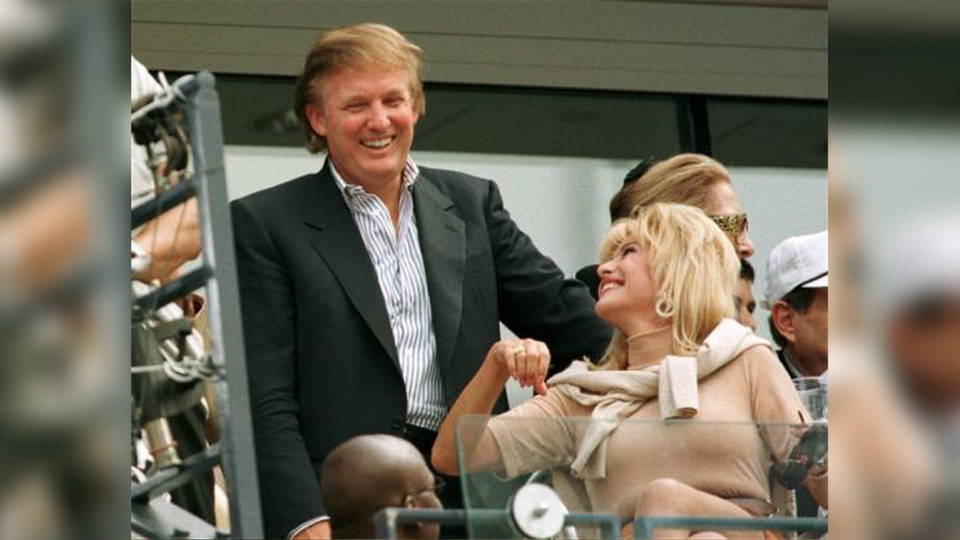
The New York Times and the Gannett newspaper chain have petitioned the New York Supreme Court to unseal records from Donald Trump’s 1990 divorce proceedings with Ivana Trump. Unsealed records could determine if Ivana directly accused Trump of raping or sexually assaulting her during their 14-year marriage. According to the book "Lost Tycoon," Ivana used the word "rape" during one deposition in the divorce case. She later softened her language, saying she felt "violated" during an encounter where Donald Trump reportedly held back her arms and pulled out fistfuls of her hair.
TOPICS:
Donald Trump
Top Trump Aide in NC Accused of Pulling Gun on Staffers
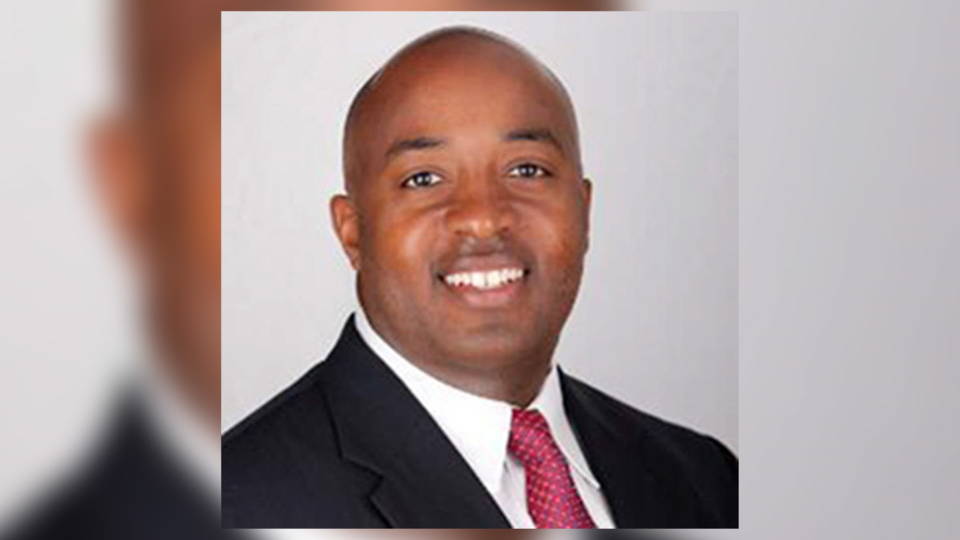
Donald Trump’s former North Carolina campaign director has resigned after being accused of pulling a gun on at least five people, including campaign staffers. The director, Earl Phillip, is named in a new lawsuit filed by a staffer who claims Phillip pointed a loaded .45 caliber pistol at him and then placed the barrel of the gun on his knee while they were driving in South Carolina earlier this year. Phillip remained in his position even after the staffer notified senior Trump officials.
TOPICS:
Donald Trump
Clinton: Don't Believe Trump is on Side of "Little Guy"
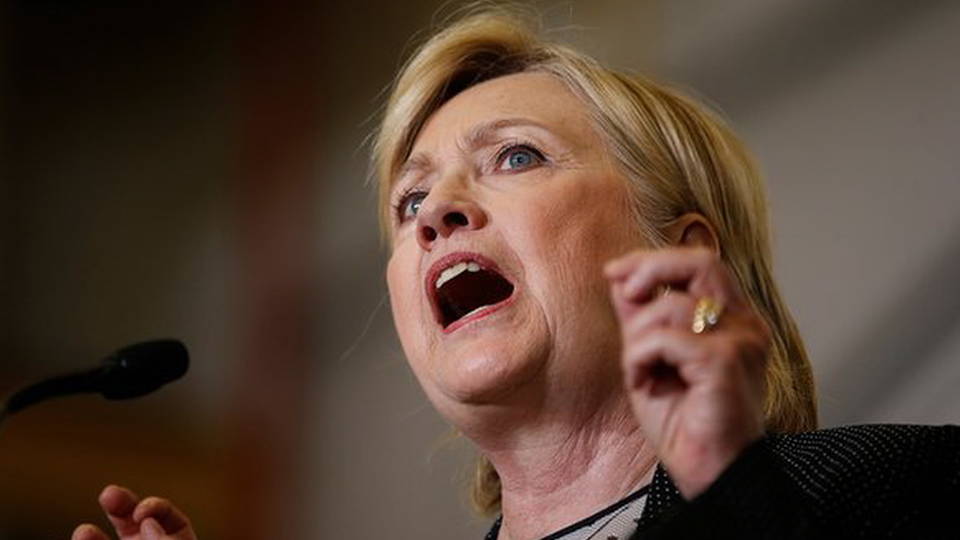
Hillary Clinton traveled to Warren, Michigan, to outline her economic vision just days after Donald Trump spoke in Detroit. Clinton accused Trump of paying "lip service" to being on the side of average Americans.
Hillary Clinton: "There is a myth out there that he will stick it to the rich and powerful because, somehow, he’s really on the side of the little guy. Don’t believe it."
Court Strikes Down North Carolina's "Racially Gerrymandered" Districts
A panel of federal judges has ordered North Carolina to redraw its legislative districts, saying the current ones are unconstitutional and racially gerrymandered. In a statement, the Rev. William Barber of the North Carolina NAACP said, "This is a tremendous ruling that the Republican-led legislature used racial discrimination to undermine the power of the black vote and other minority voters, which is contrary to our Constitution and our democracy." Despite the ruling, the judges have allowed the current voting maps to be used in the November election. Late last month, a federal appeals court also struck down voting restrictions in North Carolina, saying they "disproportionately affected African Americans."
FEC Member Proposes Ban on Foreign Campaign Donations
Federal Election Commission member Ann Ravel has proposed a new ban on political contributions by domestic subsidiaries of foreign corporations. Ravel said the issue is no longer a "hypothetical concern," citing a recent report by The Intercept exposing how a Chinese-owned firm donated money to Jeb Bush’s campaign. Such donations can now be made thanks to the Supreme Court’s Citizens United ruling. The Intercept’s Lee Fang talked about his reporting on Democracy Now! last week.
Lee Fang: "We simply looked at some of the largest corporate donations to presidential super PACs and tried to find out their ownership structure. By chance, we found that one of the largest corporate donors to the Jeb Bush super PAC, Right to Rise, was owned—or, is owned by two Chinese nationals. They’re permanent residents of Singapore. And they gave $1.3 million to the Jeb Bush super PAC."
DEA Keeps Marijuana as Schedule I Drug Along with Heroin

The Drug Enforcement Administration has rejected requests to stop classifying marijuana as a dangerous drug with no medical use. This means marijuana will remain a "Schedule I" drug—the same as heroin. While 25 states have approved the medical use of marijuana, the Department of Health and Human Services maintains there is "no accepted medical use in the United States." Meanwhile, in a separate decision, the government has announced it will start allowing more universities to start growing marijuana for research purposes. Currently it is only allowed at the University of Mississippi.
Exclusive: Video Shows LAPD Handcuffing Teen After Fatal Shooting
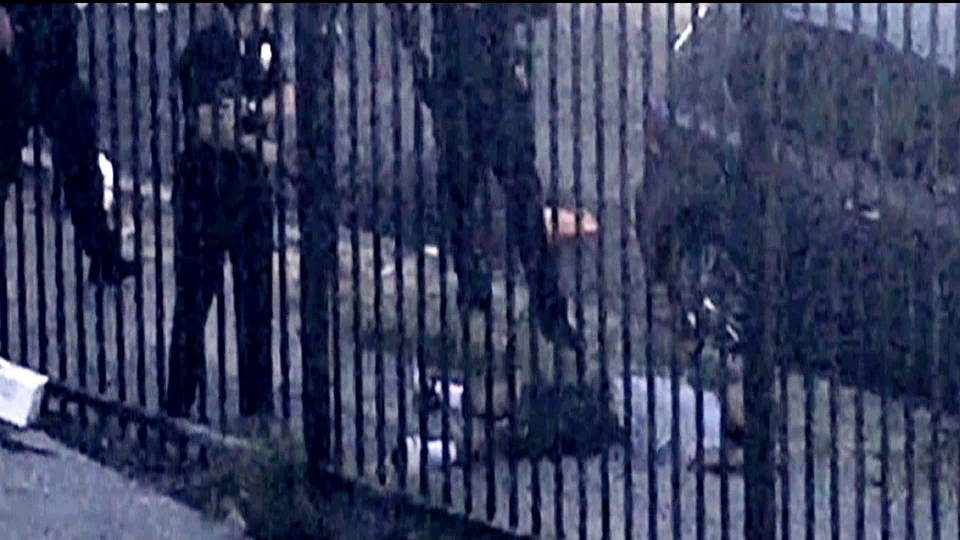
In news from Los Angeles, Democracy Now! has obtained video from the aftermath of the police killing of 14-year-old Mexican American Jesse Romero, who died earlier this week. Police say they were responding to a call about teenagers writing graffiti in the L.A. neighborhood of Boyle Heights. Police say they shot and killed Romero after he ran away from police and fired a gun. But witnesses contradict the police’s claim. The video, which begins just after the shooting, shows officers standing over the boy’s body on the sidewalk and then handcuffing him. Jesse Romero was a student at Hollenbeck Middle School. He would have turned 15 on August 24.
Florida Officer Who Shot Librarian in Training Session Once Let His Police Dog Maul Biker
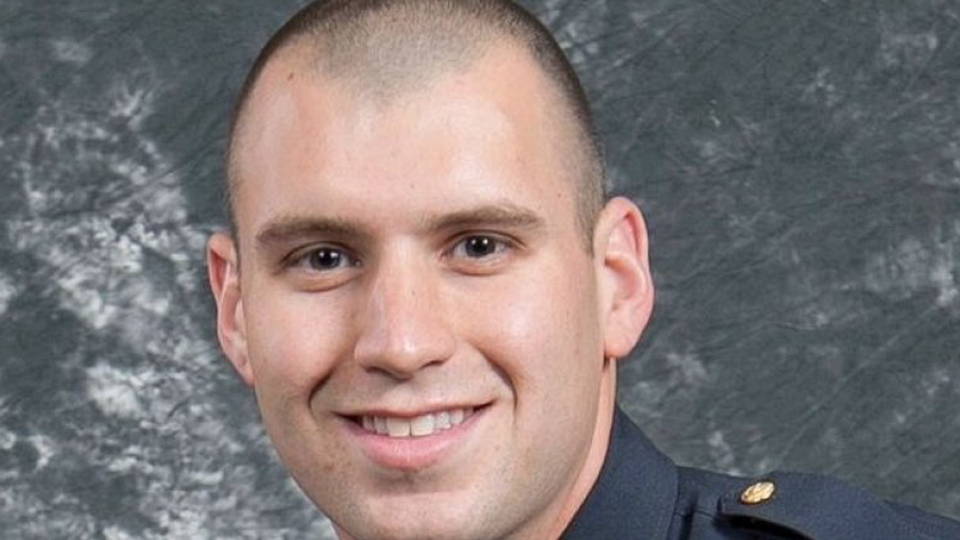
In news from Florida, more information has come to light about the police officer who fatally shot a 73-year-old retired librarian during a police training exercise earlier this week. The woman, Mary Knowlton, had volunteered to participate in a "shoot/don’t shoot" exercise as part of the citizen police academy. She died after the officer, Lee Coel, accidentally shot her with live ammunition. Last year, Coel was accused of using excessive force when he let his police dog severely maul a man who was pulled over for biking without a headlight or taillight. The incident was caught on video. Officer Lee Coel has now been placed on administrative leave.
14 Arrested as Standing Rock Sioux Tribe Protest N. Dakota Pipeline
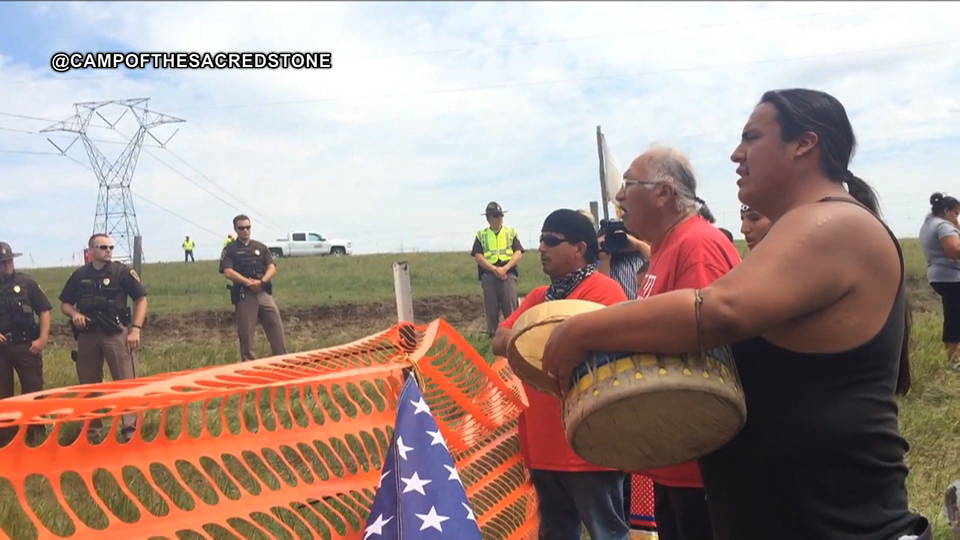
In North Dakota, 14 people were arrested Thursday protesting the $3.8 billion Dakota Access pipeline that will stretch from North Dakota to Illinois. The protest was led by members of the Standing Rock Sioux Tribe, which has been staging nonviolent protests against the pipeline for months. The Standing Rock Sioux Tribe maintains that the pipeline is being built in violation of the National Historic Preservation Act.
Ecuador to Allow Swedish Prosecutors to Interview Julian Assange at Embassy
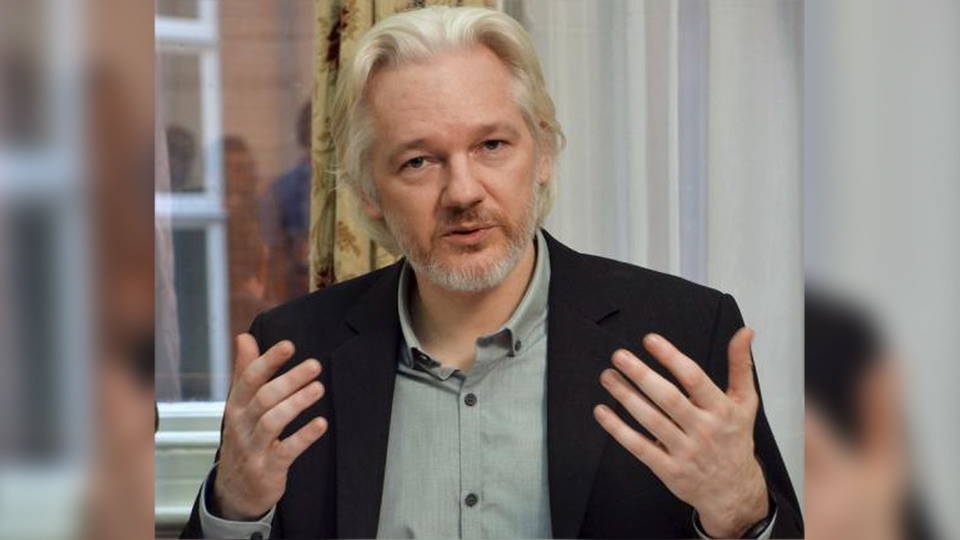
Ecuador has announced it will allow Swedish prosecutors to interview WikiLeaks founder Julian Assange in its London embassy, where Assange has been living for more than four years. Swedish authorities want to question Assange about allegations of sexual misconduct, although charges have never been filed. Assange has been confined to the Ecuadorean Embassy, fearing that if he were to attempt to leave, he would be arrested by British police and ultimately extradited to the United States, where it is believed there is a sealed indictment against him over WikiLeaks’ release of documents.
Mothers of the Plaza de Mayo Hold 2,000th March in Argentina
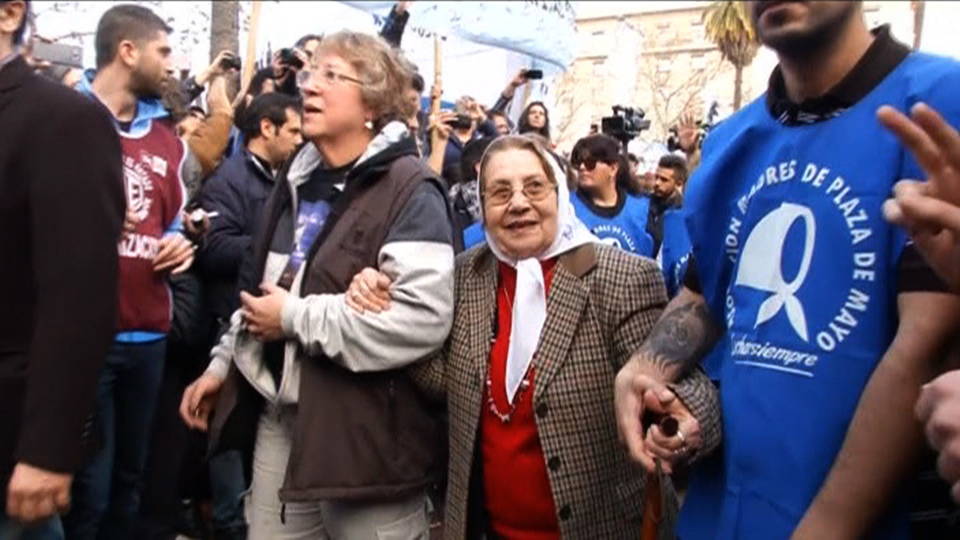
In Argentina, the Mothers of the Plaza de Mayo held their their 2,000th march in Buenos Aires on Thursday demanding justice for their children who went missing during the country’s military dictatorship. The Mothers have been staging regular protests in the Plaza de Mayo since 1977.
Hebe de Bonafini: "Dear children, all the 30,000 missing, 15,000 who were shot in the streets, the 8,900 political prisoners and more than 2 million in exile who have all become our children, this is no small thing. It’s the heavy burden of so many children, but it is so beautiful, so amazing, so unique. I think that there are no women like us in the world with the strength in our bellies, in our hearts, in our bodies, with so much responsibility for our children whom we love, whom we love and whom we continue to defend."
Thursday’s march in Argentina came just days after the United States declassified documents showing that former Secretary of State Henry Kissinger thwarted the State Department’s efforts to stop the mass killings by instead praising Argentina’s military leaders in 1978.
India's King of Bollywood, Shah Rukh Khan, Stopped for Third Time Entering U.S.

One of India’s most famous movie stars has been stopped for at least the third time while entering the United States, sparking new outcry over racial profiling. Last night, Shah Rukh Khan, who is known as the King of Bollywood, tweeted to his 20 million followers a message reading, "I fully understand and respect security with the way the world is, but to be detained at US immigration every damn time really really sucks."
Protesters Wearing Trump Masks Run Next to Sen. Ayotte During 5K Race

New Hampshire Republican Sen. Kelly Ayotte was confronted by an unusual type of protest on Thursday. As she ran in a 5K road race in Manchester, a group of climate activists began running with her wearing Donald Trump masks. They urged her to drop her support for Trump.
Donate today:
Follow:


SPEAKING EVENT

8/19 Seattle, WA
COLUMN

Donald Trump's Implied Assassination Threat, Fox News and the NRA
NEW BOOK

Democracy Now!: Twenty Years Covering the Movements Changing America
WEB EXCLUSIVE

Part 2: Calls Grow for NY Gov Cuomo to Reform Parole Board That Denies Release of Eligible Prisoners
WORK WITH DN!

Senior TV Producer
Development Manager-------
Bomb Blasts Hits Thailand as Nation Moves to Military Rule
A series of bomb blasts in Thailand have hit three of the country’s most popular tourist resorts, killing four people and wounding dozens. There have been at least 11 explosions in total since Thursday. No group has claimed responsibility for the blasts. The blasts come days after the country voted to accept a military-backed charter in a referendum. Human Rights Watch has warned that Thailand is moving toward becoming a military dictatorship. Brad Adams, the group’s Asia director, said, "Instead of the long-promised return to democratic civilian rule, the new constitution facilitates unaccountable military power and a deepening dictatorship."
Press Outlets Seek Unsealing of Trump Divorce Records
The New York Times and the Gannett newspaper chain have petitioned the New York Supreme Court to unseal records from Donald Trump’s 1990 divorce proceedings with Ivana Trump. Unsealed records could determine if Ivana directly accused Trump of raping or sexually assaulting her during their 14-year marriage. According to the book "Lost Tycoon," Ivana used the word "rape" during one deposition in the divorce case. She later softened her language, saying she felt "violated" during an encounter where Donald Trump reportedly held back her arms and pulled out fistfuls of her hair.
TOPICS:
Donald Trump
Top Trump Aide in NC Accused of Pulling Gun on Staffers
Donald Trump’s former North Carolina campaign director has resigned after being accused of pulling a gun on at least five people, including campaign staffers. The director, Earl Phillip, is named in a new lawsuit filed by a staffer who claims Phillip pointed a loaded .45 caliber pistol at him and then placed the barrel of the gun on his knee while they were driving in South Carolina earlier this year. Phillip remained in his position even after the staffer notified senior Trump officials.
TOPICS:
Donald Trump
Clinton: Don't Believe Trump is on Side of "Little Guy"
Hillary Clinton traveled to Warren, Michigan, to outline her economic vision just days after Donald Trump spoke in Detroit. Clinton accused Trump of paying "lip service" to being on the side of average Americans.
Hillary Clinton: "There is a myth out there that he will stick it to the rich and powerful because, somehow, he’s really on the side of the little guy. Don’t believe it."
Court Strikes Down North Carolina's "Racially Gerrymandered" Districts
A panel of federal judges has ordered North Carolina to redraw its legislative districts, saying the current ones are unconstitutional and racially gerrymandered. In a statement, the Rev. William Barber of the North Carolina NAACP said, "This is a tremendous ruling that the Republican-led legislature used racial discrimination to undermine the power of the black vote and other minority voters, which is contrary to our Constitution and our democracy." Despite the ruling, the judges have allowed the current voting maps to be used in the November election. Late last month, a federal appeals court also struck down voting restrictions in North Carolina, saying they "disproportionately affected African Americans."
FEC Member Proposes Ban on Foreign Campaign Donations
Federal Election Commission member Ann Ravel has proposed a new ban on political contributions by domestic subsidiaries of foreign corporations. Ravel said the issue is no longer a "hypothetical concern," citing a recent report by The Intercept exposing how a Chinese-owned firm donated money to Jeb Bush’s campaign. Such donations can now be made thanks to the Supreme Court’s Citizens United ruling. The Intercept’s Lee Fang talked about his reporting on Democracy Now! last week.
Lee Fang: "We simply looked at some of the largest corporate donations to presidential super PACs and tried to find out their ownership structure. By chance, we found that one of the largest corporate donors to the Jeb Bush super PAC, Right to Rise, was owned—or, is owned by two Chinese nationals. They’re permanent residents of Singapore. And they gave $1.3 million to the Jeb Bush super PAC."
DEA Keeps Marijuana as Schedule I Drug Along with Heroin
The Drug Enforcement Administration has rejected requests to stop classifying marijuana as a dangerous drug with no medical use. This means marijuana will remain a "Schedule I" drug—the same as heroin. While 25 states have approved the medical use of marijuana, the Department of Health and Human Services maintains there is "no accepted medical use in the United States." Meanwhile, in a separate decision, the government has announced it will start allowing more universities to start growing marijuana for research purposes. Currently it is only allowed at the University of Mississippi.
Exclusive: Video Shows LAPD Handcuffing Teen After Fatal Shooting
In news from Los Angeles, Democracy Now! has obtained video from the aftermath of the police killing of 14-year-old Mexican American Jesse Romero, who died earlier this week. Police say they were responding to a call about teenagers writing graffiti in the L.A. neighborhood of Boyle Heights. Police say they shot and killed Romero after he ran away from police and fired a gun. But witnesses contradict the police’s claim. The video, which begins just after the shooting, shows officers standing over the boy’s body on the sidewalk and then handcuffing him. Jesse Romero was a student at Hollenbeck Middle School. He would have turned 15 on August 24.
Florida Officer Who Shot Librarian in Training Session Once Let His Police Dog Maul Biker
In news from Florida, more information has come to light about the police officer who fatally shot a 73-year-old retired librarian during a police training exercise earlier this week. The woman, Mary Knowlton, had volunteered to participate in a "shoot/don’t shoot" exercise as part of the citizen police academy. She died after the officer, Lee Coel, accidentally shot her with live ammunition. Last year, Coel was accused of using excessive force when he let his police dog severely maul a man who was pulled over for biking without a headlight or taillight. The incident was caught on video. Officer Lee Coel has now been placed on administrative leave.
14 Arrested as Standing Rock Sioux Tribe Protest N. Dakota Pipeline
In North Dakota, 14 people were arrested Thursday protesting the $3.8 billion Dakota Access pipeline that will stretch from North Dakota to Illinois. The protest was led by members of the Standing Rock Sioux Tribe, which has been staging nonviolent protests against the pipeline for months. The Standing Rock Sioux Tribe maintains that the pipeline is being built in violation of the National Historic Preservation Act.
Ecuador to Allow Swedish Prosecutors to Interview Julian Assange at Embassy
Ecuador has announced it will allow Swedish prosecutors to interview WikiLeaks founder Julian Assange in its London embassy, where Assange has been living for more than four years. Swedish authorities want to question Assange about allegations of sexual misconduct, although charges have never been filed. Assange has been confined to the Ecuadorean Embassy, fearing that if he were to attempt to leave, he would be arrested by British police and ultimately extradited to the United States, where it is believed there is a sealed indictment against him over WikiLeaks’ release of documents.
Mothers of the Plaza de Mayo Hold 2,000th March in Argentina
In Argentina, the Mothers of the Plaza de Mayo held their their 2,000th march in Buenos Aires on Thursday demanding justice for their children who went missing during the country’s military dictatorship. The Mothers have been staging regular protests in the Plaza de Mayo since 1977.
Hebe de Bonafini: "Dear children, all the 30,000 missing, 15,000 who were shot in the streets, the 8,900 political prisoners and more than 2 million in exile who have all become our children, this is no small thing. It’s the heavy burden of so many children, but it is so beautiful, so amazing, so unique. I think that there are no women like us in the world with the strength in our bellies, in our hearts, in our bodies, with so much responsibility for our children whom we love, whom we love and whom we continue to defend."
Thursday’s march in Argentina came just days after the United States declassified documents showing that former Secretary of State Henry Kissinger thwarted the State Department’s efforts to stop the mass killings by instead praising Argentina’s military leaders in 1978.
India's King of Bollywood, Shah Rukh Khan, Stopped for Third Time Entering U.S.
One of India’s most famous movie stars has been stopped for at least the third time while entering the United States, sparking new outcry over racial profiling. Last night, Shah Rukh Khan, who is known as the King of Bollywood, tweeted to his 20 million followers a message reading, "I fully understand and respect security with the way the world is, but to be detained at US immigration every damn time really really sucks."
Protesters Wearing Trump Masks Run Next to Sen. Ayotte During 5K Race
New Hampshire Republican Sen. Kelly Ayotte was confronted by an unusual type of protest on Thursday. As she ran in a 5K road race in Manchester, a group of climate activists began running with her wearing Donald Trump masks. They urged her to drop her support for Trump.
Donate today:
Follow:
SPEAKING EVENT
8/19 Seattle, WA
COLUMN
Donald Trump's Implied Assassination Threat, Fox News and the NRA
NEW BOOK
Democracy Now!: Twenty Years Covering the Movements Changing America
WEB EXCLUSIVE
Part 2: Calls Grow for NY Gov Cuomo to Reform Parole Board That Denies Release of Eligible Prisoners
WORK WITH DN!
Senior TV Producer
Development Manager-------
Democracy Now! Daily Digest: A Daily Independent Global News Hour with Amy Goodman & Juan González for Thursday, August 11, 2016
democracynow.org
Stories:

Racist & Illegal: Justice Department Slams Baltimore Police for Targeting Black Residents

Crisis Engulfs Fox News as Roger Ailes Sexual Harassment & Spying Scandal Grows

Baltimore Residents from Rep. Elijah Cummings to Local Activist Speak Out on Being Stopped by Police

How Did Susan Estrich Go from Feminist Icon & Roger Ailes Foe to His Attorney in Harassment Case?
Before Roger Ailes headed Fox News, he was a top Republican operative. In 1988, he helped Vice President George Bush defeat Michael Dukakis in the presidential race. Managing Dukakis’s campaign was the feminist legal scholar Susan Estrich, who wrote groundbreaking works on sexual harassment and rape. To the surprise of some, she is now Ailes’s attorney, defending him in the sexual harassment lawsuit that led to his ouster from Fox News.
TRANSCRIPT
This is a rush transcript. Copy may not be in its final form.
AMY GOODMAN: Before Roger Ailes headed Fox News, he was a top Republican operative. I want to turn to the documentary, Above the Fray: The Lessons of Dukakis ’88, about the 1988 presidential race, where Roger Ailes played a key role. This begins with the infamous Willie Horton ad George [H.W.] Bush ran against Michael Dukakis.
GEORGE H.W. BUSH AD: Dukakis not only opposes the death penalty, he allowed first-degree murderers to have weekend passes from prison. One was Willie Horton. Despite a life sentence, Horton received 10 weekend passes from prison. Horton fled, kidnapped a young couple, stabbing the man and repeatedly raping his girlfriend. Weekend prison passes—Dukakis on crime.
MICHAEL DUKAKIS: Now, it was a so-called independent committee that started running these ads. Independent committees are not supposed to be in touch with the campaigns. I think Roger Ailes had talked to the guy or the people who were producing the Willie Horton commercial for the so-called independent committee many, many times. So the notion that there was no collaboration between the two is nonsense.
AMY GOODMAN: That was Michael Dukakis, remember, the former governor of Massachusetts, ran for president in '88, speaking in the documentary Above the Fray. Interestingly, his campaign manager in 1988, Susan Estrich, is now Roger Ailes' personal attorney, a development that has shocked many, in part because Estrich is also a prominent feminist legal scholar. In 1991, Susan Estrich wrote in the Stanford Law Review, "It should be obvious that the system already contains serious disincentives to women filing sexual harassment complaints. Start with embarrassment, loss of privacy, and sometimes shame. If the woman remains employed, she faces the prospect that her harasser and others will make her life impossible. If she has quit or been fired ... the danger is that she will be branded a troublemaker, and find it difficult to find another job." Again, those the words of Susan Estrich, who also wrote the book Real Rape: How the Legal System Victimizes Women Who Say No. Our guest is Sarah Ellison, writes for Vanity Fair, before that,Wall Street Journal, as Rupert Murdoch was taking it over, but you worked there for 10 years.
SARAH ELLISON: I worked there for 10 years, before he—before he took over the paper.
AMY GOODMAN: So, your response? Quite a choice for a lawyer, and quite a choice for Susan Estrich to make—
SARAH ELLISON: Right.
AMY GOODMAN: —to represent Roger Ailes.
SARAH ELLISON: Well, Susan Estrich had become a Fox News contributor. And I don’t know exactly how they became so close, after having been opponents. But it’s a—obviously, it’s a genius choice for Ailes as an—for his attorney, given that he knew that he was—I mean, he had to know that he was going to be facing additional women and additional allegations and complaints. And Susan has done nothing but defend him the whole way. And, you said earlier, he has denied all of these allegations. We do have to keep that in mind, that he has said that all of this is [not] true, all of these women are lying, and that he proclaims his innocence in all these cases.
AMY GOODMAN: I just want to correct: I said that he worked with George W. Bush. Of course, it was George H.W. Bush at the time—
SARAH ELLISON: Right.
AMY GOODMAN: —who ran against Michael Dukakis. So, Susan—So, Sarah, you’ve been looking at all of these issues issues, looking at what’s going to happen right now. Roger Ailes is out, but what happens to the newsroom? What happens to the Fox bunker and the role it will play?
SARAH ELLISON: Well, I mean, this is the—the question that people inside the company have is: What will happen now that this genius newsman is out? Obviously, the women who are bringing complaints against him are quite happy that he is gone. I think a lot of the people who were intimidated and frightened by him are also happy that he is gone.
The two younger Murdoch sons, who are now running the company—James Murdoch, the CEO, and Lachlan Murdoch, his older brother, who’s the chairman—have talked about wanting to modernize the culture inside Fox News and the entire company, make it a much more trusting and open workplace. Their investors don’t—as investors do, they don’t really care about human beings; they just want the profits to continue to come in. So they’re walking a very fine line of how to manage this crisis. They want to get it behind them. They want to not continue to have these women, you know, continuing to come out, which is why they’re trying to launch these settlement discussions with Gretchen Carlson and sort of get everything behind them.
AMY GOODMAN: Now, though you worked at Wall Street Journal before Murdoch took over, you wrote a book, War at The Wall Street Journal: Inside the Struggle to Control an American Business Empire.
SARAH ELLISON: Right.
AMY GOODMAN: So what do you predict, given your investigations of how Murdoch runs an operation?
SARAH ELLISON: I mean, I think that what’s going to end up happening, we will—this will continue on for some time. They’ve tried to deal with it very quickly. They’ve dealt with it much more quickly than the last time you and I were talking about a Murdoch scandal, which was the phone-hacking scandal in London, where the company was sort of systemically listening to people’s voicemails and then using that information to blackmail them to either give them other information or printing that—
AMY GOODMAN: Explain that briefly, for those who don’t remember the scandal ofNews of the World.
SARAH ELLISON: So, that was a—sure. So, that was a scandal that was about five years ago, and it centered on Murdoch’s London newspapers, British newspapers, and what the reporters there were doing. They were listening in to voicemails of people that they wanted to write about, and then using those private voicemails to either print stories about those people based on those voicemails, or use that information, take that information to those people and say, "We have this piece of information. We’re going to print it unless you can give us a better story." And what that created was an enormous environment of fear, even to think that. You know, the question, I think—this is also part of the way that Roger Ailes operated, is that whether or not he was spying on you, or whether or not he was going to retaliate against you, people were very convinced that he could and that he would do that. And so that created, I mean, an entire environment of fear.
AMY GOODMAN: And wasn’t James Murdoch implicated in News of the World, that whole story?
SARAH ELLISON: Yes.
AMY GOODMAN: James and Lachlan now, the sons of Murdoch, who are running Fox.
SARAH ELLISON: Right. James was running the European—he was overseeing the British newspapers at that point. I mean, he had a sort of bigger job than that, but he was right in the center of that scandal. They dealt with that scandal very differently. They kept having internal investigations that would clear everyone except for a few bad apples, a few bad apple employees, and then they would move on. And then there would be new headlines, largely in The Guardian newspaper, that would come up with a new example of phone hacking. And James was dragged before Parliament with his father to testify about this. He was largely seen as somebody who was implicated in it, although saved in the end by—you know, we still don’t know exactly what that situation—how far it went up, but he was cleared. And Rebekah Brooks, who was the other top executive at the—who was running the British newspapers, was also cleared. And so, what Rupert Murdoch did that was masterful about that scandal was sort of sacrificed his lower-level employees to save his son and himself and his favorite executive.
AMY GOODMAN: We’re going to have to leave it there, but we’re going to continue the conversation and also look at the piece you just wrote in Vanity Fair, "The Civil War That Could Doom the N.R.A." and we’ll post it online at democracynow.org. Sarah Ellison is Vanity Fair contributing editor. We’ll link to her piece, "Inside the Fox News Bunker," also author of War at The Wall Street Journal: Inside the Struggle to Control an American Business Empire. She also worked at The Wall Street Journal. ... Read More →
Headlines:
Secret Service Spoke to Trump Campaign About Comments
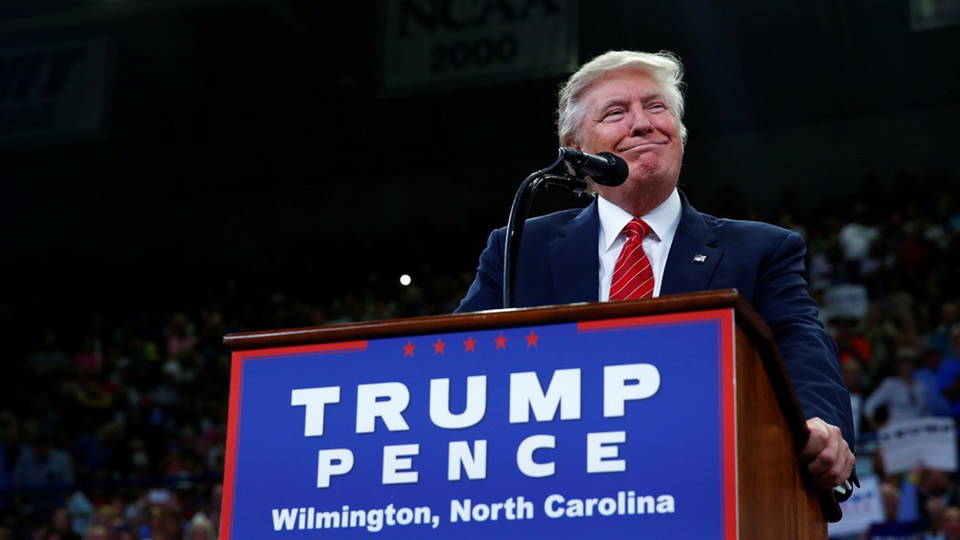
An official from the U.S. Secret Service has confirmed the agency has spoken to the Trump campaign about his comments at a rally in Wilmington, North Carolina, Tuesday, which many saw as a call to assassinate his rival Hillary Clinton.
Donald Trump: "Hillary wants to abolish—essentially, abolish—the Second Amendment. By the way, and if she gets to pick—if she gets to pick her judges, nothing you can do, folks. Although the Second Amendment people, maybe there is. I don’t know."
The official told CNN the Secret Service has had multiple conversations with the campaign over the comments. Donald Trump, however, is denying these conversations with the Secret Service have taken place, tweeting, "No such meeting or conversation ever happened."
Hillary Clinton: Trump Comments Are "Inciting of Violence"
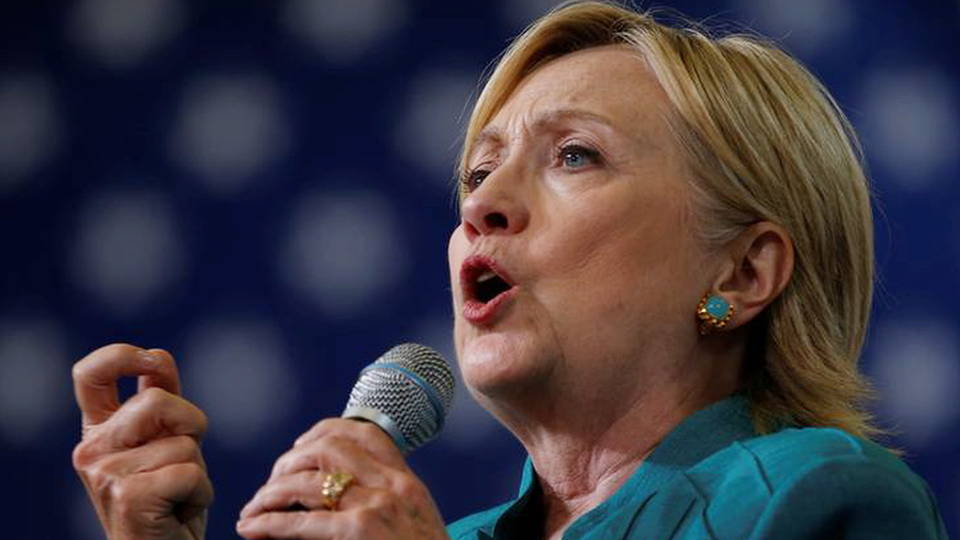
This comes as Hillary Clinton has spoken out about Trump’s comments during a rally in Des Moines, Iowa, Wednesday.
Hillary Clinton: "Yesterday we witnessed the latest in a long line of casual comments from Donald Trump that cross the line—his casual cruelty to a Gold Star family, his casual suggestion that more countries should have nuclear weapons, and now his causal inciting of violence. Every single one of these incidents shows us that Donald Trump simply does not have the temperament to be president and commander-in-chief of the United States."
Jill Stein Issues Call to "Disarm Trump"
Green Party presidential nominee Dr. Jill Stein has also addressed Trump’s comments, tweeting: "Gun violence is no laughing matter, we need a President who understands it’s not funny to call on people to shoot opponents. Disarm Trump." Trump, however, has denied the comments were a call to assassinate Hillary Clinton. On Tuesday, his campaign issued a statement saying he was referring to the Second Amendment supporters’ "amazing spirit and ... great political power."
TOPICS:
2016 Election
Donald Trump
Clinton Embraces Endorsement of John Negroponte
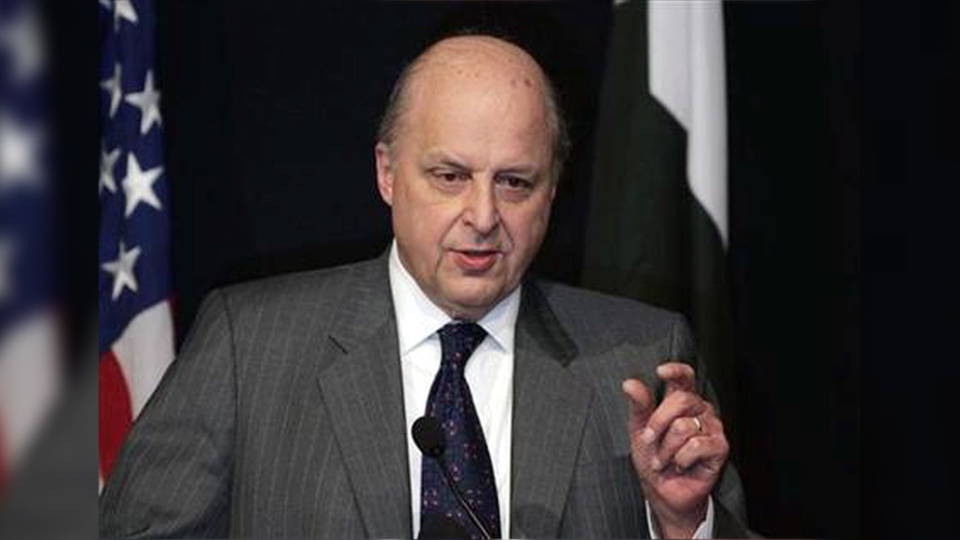
Meanwhile, Hillary Clinton has embraced her recent endorsement by John Negroponte, the former director of national intelligence. The President George W. Bush official also served as U.S. ambassador to Honduras, which was the staging ground for the U.S.-backed Contras in Nicaragua. Hillary Clinton has faced questions on the campaign trail about her own role in Honduras as secretary of state, including legitimizing the 2009 coup in Honduras.
TOPICS:
Hillary Clinton
Honduras
Clinton Campaign & Foundation Facing Questions over State Dept. Emails
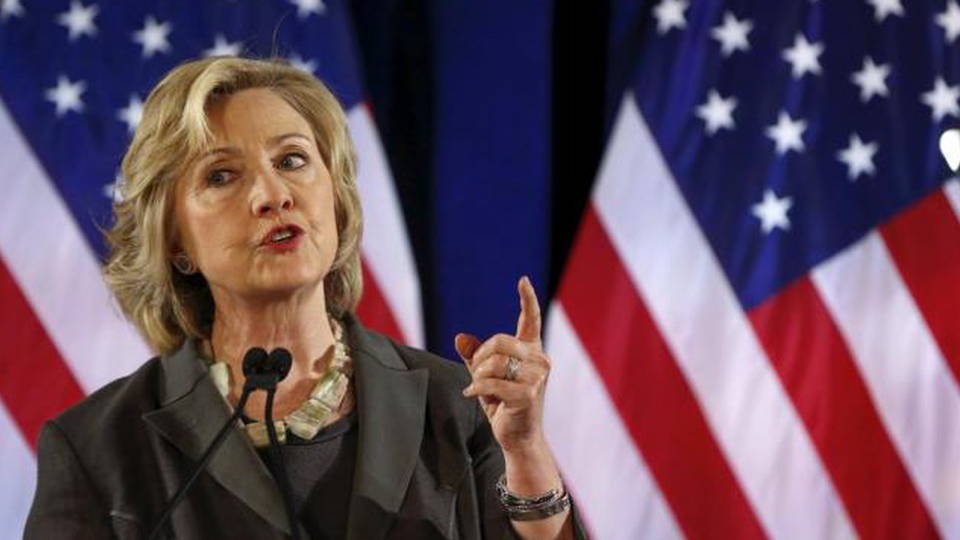
The Clinton campaign is continuing to face questions following the release of 44 State Department emails showing close ties between the Clinton Foundation and the State Department during Clinton’s time as secretary of state. The emails include communications between top members of the Clinton Foundation and Clinton’s top State Department advisers, including Huma Abedin and lawyer Cheryl Mills. One of the communications was about billionaire Nigerian-based developer Gilbert Chagoury, who had contributed between $1 million and $5 million to the Clinton Foundation. The emails show a top Clinton Foundation executive writing to Abedin and Mills asking for help putting Chagoury in touch with the U.S. ambassador to Lebanon. Abedin responded, "I’ll talk to jeff," referring to then-U.S. Ambassador Jeffrey Feltman. On Wednesday, Chagoury’s spokesperson said Chagoury "was simply passing along his observations and insights about the dire political situation in Lebanon at the time."
TOPICS:
Hillary Clinton
Florida: Police Kill 73-Year-Old Retired Librarian During Training Exercise
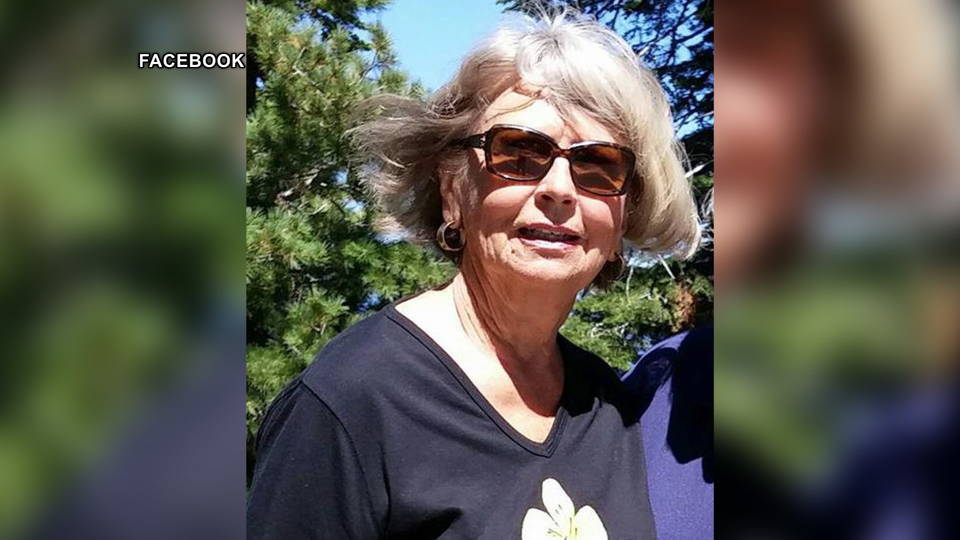
In Florida, police fatally shot a 73-year-old white woman during a police training exercise at the Punta Gorda Public Safety Complex on Wednesday. The officer who fired the gun thought it was loaded with blanks. Mary Knowlton was a retired librarian and a mother of two. She had volunteered to participate in a "shoot/don’t shoot" exercise as part of the citizen police academy. During the exercise, police officer Lee Coel shot the librarian in front of nearly three dozen other volunteers. Punta Gorda Police Chief Tom Lewis says live ammunition was not supposed to be in any of the guns used during the exercise. This is Mary Knowlton’s son, Steve Knowlton.
Steve Knowlton: "It was surreal. At first, we thought she just fell down. And then they turned her over, and that’s when they saw the bullet holes. Total pandemonium. They were just trying to do CPRand keep her alive."
Officer Lee Coel has been placed on paid administrative leave.
TOPICS:
Florida
Gun Control
Police Brutality
Los Angeles: Police Kill 14-Year-Old Middle Schooler
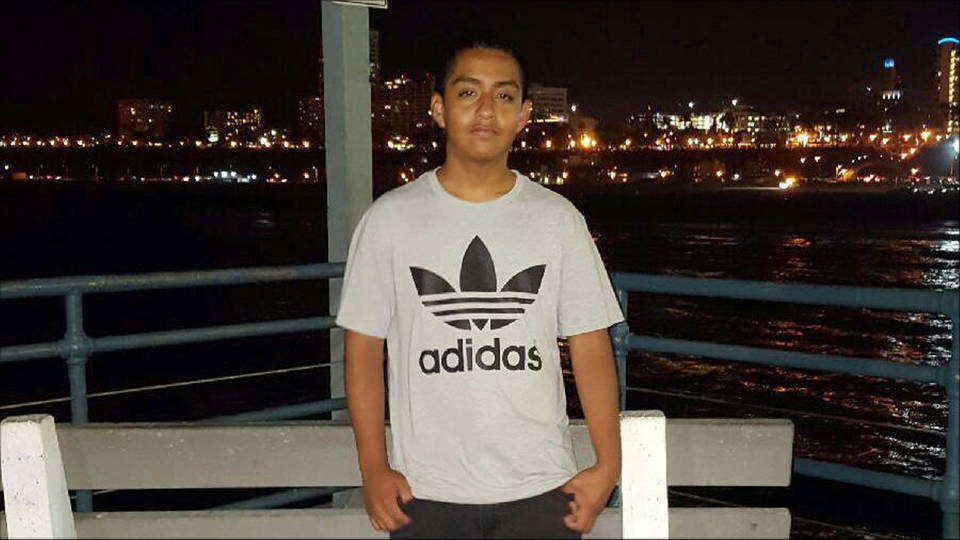
Meanwhile, in Los Angeles, community members held a vigil to mourn the death of 14-year-old Mexican-American Jesse Romero, who was killed by police Wednesday. Police say they were responding to a call about teenagers writing graffiti in the L.A. neighborhood of Boyle Heights. Police say they shot and killed Romero after he ran away from police and fired a gun. But witnesses contradict the police’s claim. One woman told the Los Angeles Times she saw Romero toss a handgun toward a fence while he was running away from the police. She says the gun went off when it hit the ground. She says she then heard two gunshots, saw Romero fall to the ground, and then watched the police handcuff him. Police say the officers were wearing body cameras, but the video has not yet been released. This is Romero’s friend, Yohana Miranda.
Yohana Miranda: "Why would you shoot him, if he didn’t even point at you guys? He didn’t do nothing. Like, aren’t you guys trained to do your job? Why? Shouldn’t you guys tackle him down if he’s not shooting you guys? He didn’t point a gun at them. Why would he shoot? This kid was only 14 years old."
Romero was a student at Hollenbeck Middle School. He would have turned 15 on August 24.
TOPICS:
Police Brutality
NC: White Neighborhood Watch Vigilante Kills Black Man Returning from Party
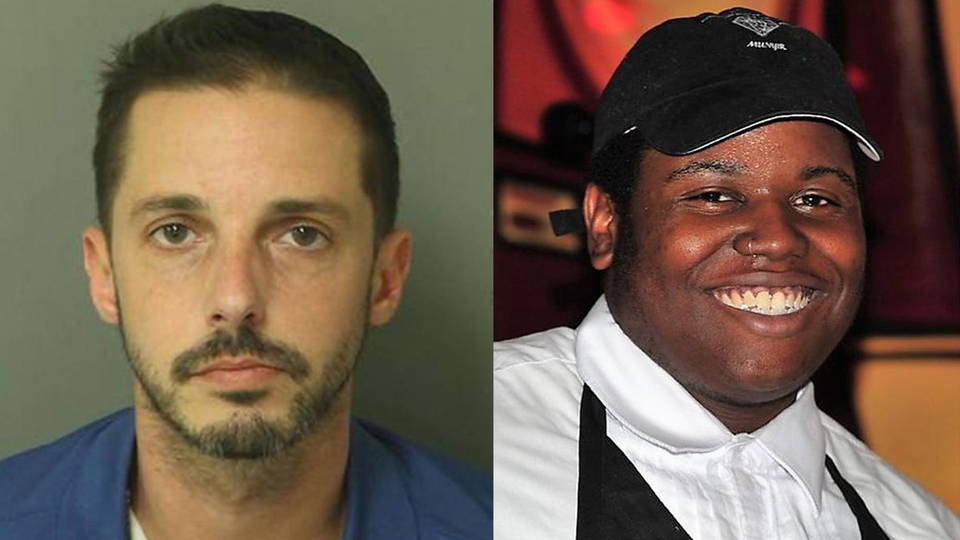
In Raleigh, North Carolina, a white man who claimed he was on a neighborhood watch shot and killed a 20-year-old African-American man after telling the 911 dispatcher, "We got a bunch of hoodlums out here racing. I’m going outside to secure my neighborhood." Police say Chad Copley shot and killed 20-year-old Kouren-Rodney Bernard Thomas from inside his garage as Thomas was walking home from a party on Sunday. Copley has been charged with first-degree murder. The case recalls the killing of African-American teenager Trayvon Martin by neighborhood watch vigilante George Zimmerman.
TOPICS:
Gun Control
Trayvon Martin
Missouri: Lawsuit Accuses Cities of Running Debtors' Prisons
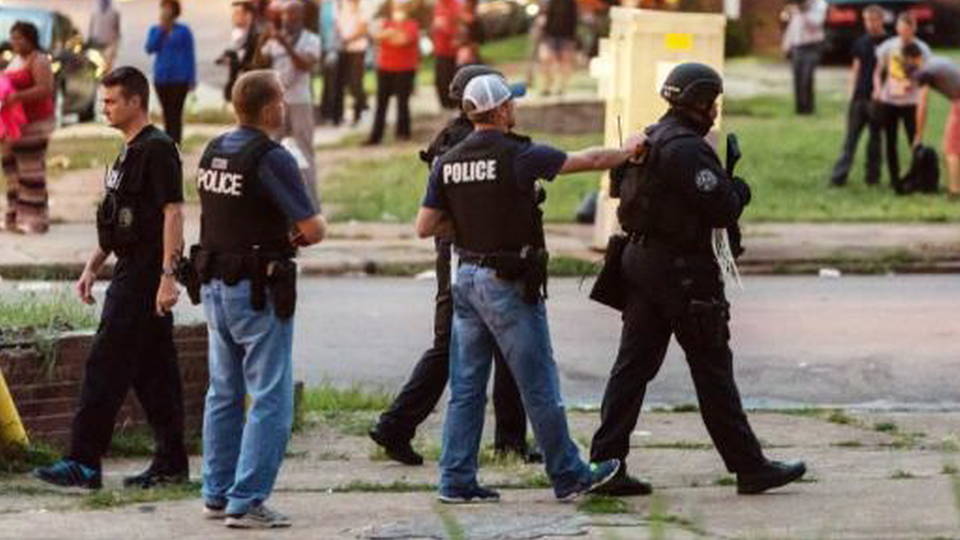
In Missouri, lawyers have sued 13 St. Louis-area cities, arguing the cities are violating poor citizens’ rights by locking them in jail over minor traffic violations. The lawsuit was filed on the second anniversary of the police killing of Michael Brown, an unarmed 18-year-old African American who was killed by white police officer Darren Wilson in the St. Louis suburb of Ferguson. The lawsuit argues the cities are operating a "modern day police state and debtors’ prison scheme that has no place in American society today." It was filed on behalf of 13 people, one of whom was locked up in squalid conditions in jail for days over a parking ticket.
Turkey: 8 Killed in 2 Separate Bomb Attacks in Southeast
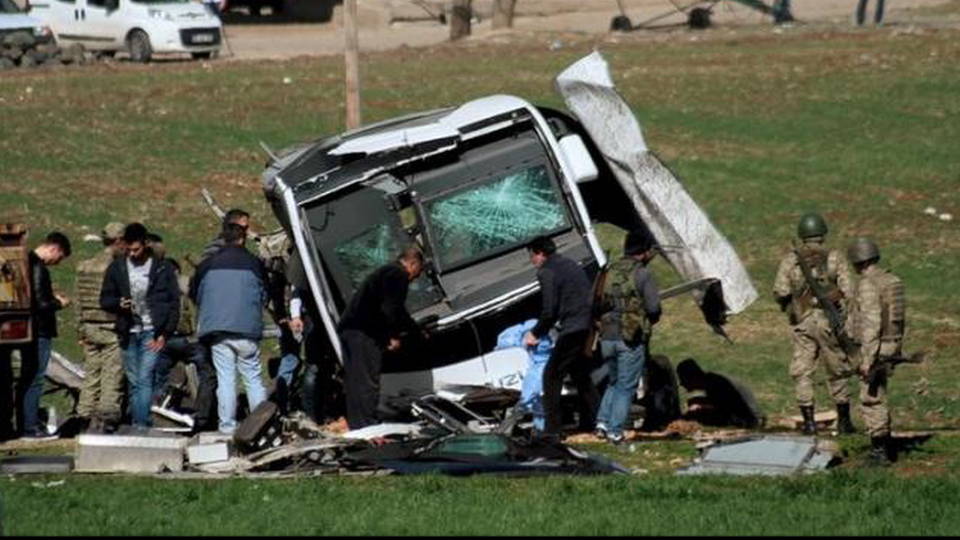
In international news, at least eight people were killed in two separate bomb attacks in southern Turkey. Officials have blamed the Kurdistan Workers’ Party, known as thePKK, for the attacks. This comes as Turkish authorities have arrested at least 17 people in raids in Istanbul. Officials say the raids are targeting suspected terrorists, but media reports say the headquarters of the leftist, pro-Kurdish Peoples’ Democratic Party, known as the HDP, was also raided by police during the operation. Meanwhile, Turkish President Recep Tayyip Erdogan has reiterated his calls for the United States to extradite Turkish cleric Fethullah Gülen, who is living in the Pennsylvania Poconos. Erdogan has accused Gülen of masterminding the failed coup, which Gülen denies.
TOPICS:
Turkey
Declassified Documents Show Kissinger Role in Argentine Dirty War
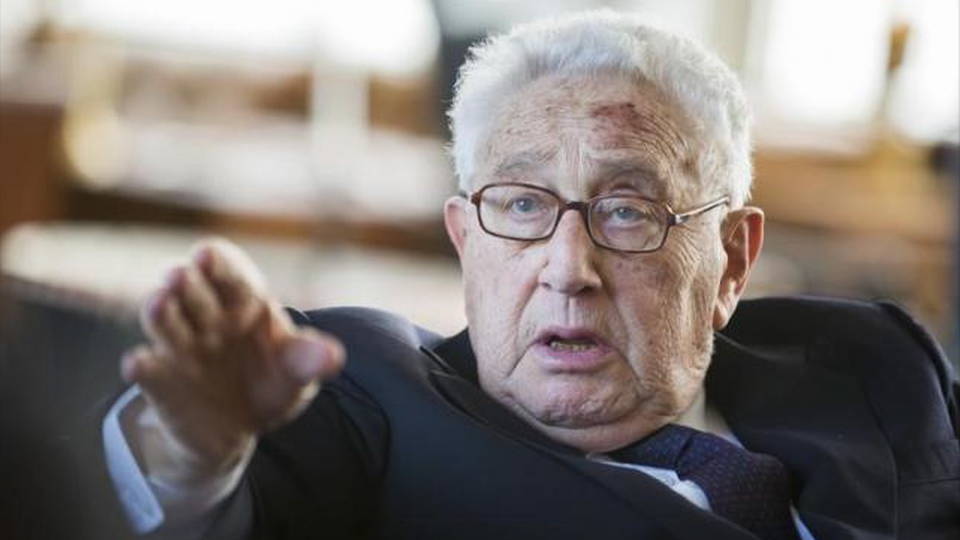
Newly declassified State Department documents are shedding new light on the relationship between former Secretary of State Henry Kissinger and Argentina’s military dictatorship, which ruled the country from 1976 to 1983. The documents show how Kissinger thwarted the State Department’s efforts to stop the mass killings by instead praising Argentina’s military leaders in 1978, saying, "the government of Argentina had done an outstanding job in wiping out terrorist forces." Kissinger made the comments while visiting Argentina for the 1978 World Cup as a personal guest of junta leader General Jorge Videla, who presided over the disappearance of as many as 30,000 people. In one of the newly released cables, National Security Council official Robert Pastor wrote, "[Kissinger’s] praise for the Argentine government in its campaign against terrorism was the music the Argentine government was longing to hear."
TOPICS:
Argentina
Henry Kissinger
Filmmakers Demand Probe of Targeting of People Who Film Police
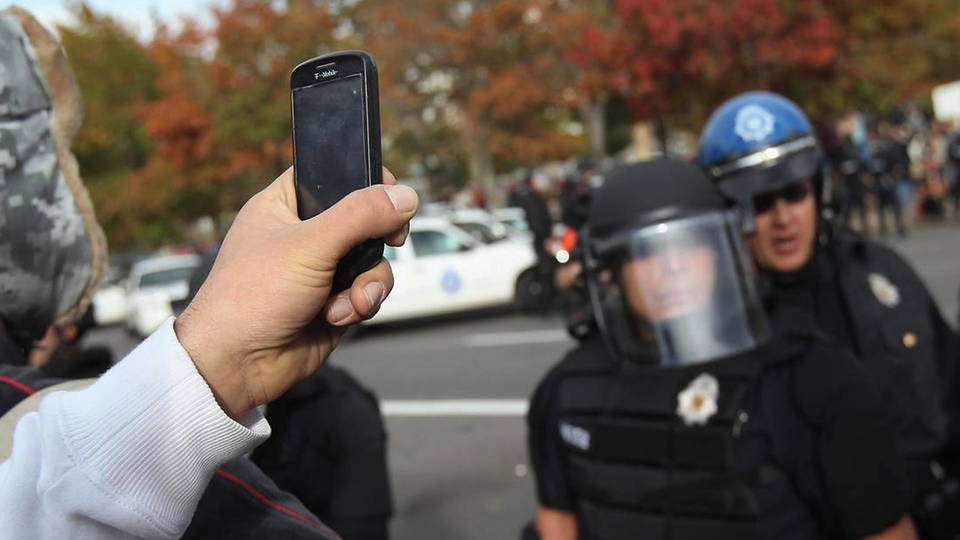
Laura Poitras and more than 40 other documentarians are calling on the Justice Department to investigate the targeting and harassment of citizen journalists who film police violence. The group includes eight Oscar winners. Laura Poitras won for her documentary about Edward Snowden, "CitizenFour." The letter, titled "Right to Record," highlights that the bystanders who filmed the police killings of Alton Sterling, Philando Castile and Eric Garner were all subsequently arrested.
TOPICS:
Police Brutality
Wisconsin Court Suspends Ruling Striking Down Voter ID Law
In Wisconsin, an appeals court has suspended a July ruling that struck down parts of Wisconsin’s voter ID law. Under the earlier July 19 ruling, Wisconsin voters would be able to vote in November even if they don’t have the IDs required by the restrictive law. But this new appeals court ruling suspends that ruling, once again making it harder for people to vote in November’s general election.
TOPICS:
Voting
Wisconsin
Texas: Transgender Woman Erykah Tijerina Killed
In Texas, a transgender woman was killed Monday inside an apartment building in El Paso. Erykah Tijerina was 36 years old. Police say they are investigating her death as a homicide. Her family says they believe her killing may have been a hate crime. At least 16 transgender people been murdered this year, following a record of more than 20 killings in 2015.
TOPICS:
LGBT
India: Activist Irom Sharmila Ends 16-Year Hunger Strike
In India, human rights activist Irom Sharmila has ended the world’s longest hunger strike. Sharmila began her strike 16 years ago, after 10 people were reportedly killed by a government paramilitary group in her home state of Manipur. She broke her strike Tuesday with a lick of honey. She says she will now run to be chief minister of Manipur. This is Sharmila speaking to the BBC after breaking her fast.
Irom Sharmila: "Since the beginning of my fast, there is no change in the mindset of the people. I think I need to change my strategy. And without power in my hands, who will hear my voice?"
Irom Sharmila is known as the "Iron Lady."
TOPICS:
India
Manhattan: Man Scales Side of Trump Tower
And here in New York City, a 20-year-old Virginia man scaled the side of the Trump Tower using industrial-grade suction cups and a rope and harness on Wednesday. The man, who is a Trump supporter, said his goal was to reach the top of the tower and ask for a personal meeting with Donald Trump. After an hours-long standoff, the police pulled him through a window on the 21st floor and took him to Bellevue Hospital.
TOPICS:
Donald Trump
Donate today:
Follow:
SPEAKING EVENT
8/19 Seattle, WA
COLUMN
"Donald Trump's Implied Assassination Threat, Fox News and the NRA" by Amy Goodman and Denis Moynihan
Donald Trump is giving new meaning to “bully pulpit,” ratcheting his irrational campaign rhetoric to new and dangerous lows. In North Carolina Tuesday, he said: “Hillary wants to abolish—essentially, abolish—the Second Amendment. By the way, and if she gets to pick—if she gets to pick her judges, nothing you can do, folks. Although the Second Amendment people, maybe there is.” Trump’s suggestion that his supporters could assassinate Hillary Clinton or the judges she might appoint provoked outrage, not only nationally, but around the globe. His virulent, demagogic language did not alienate everyone, though; as more and more Republicans denounce Trump, he still enjoys fervid support from some personalities at Rupert Murdoch’s Fox News Channel and the National Rifle Association. This unholy trinity of Trump, Fox and the NRA could easily provoke political violence during this campaign season.
Hours after his remarks, Trump made his first news appearance on Fox’s “Hannity” show. Sean Hannity pre-empted Trump, offering his own twisted logic to help blunt the deepening catastrophe: “So, obviously you are saying that there’s a strong political movement within the Second Amendment and if people mobilize and vote they can stop Hillary from having this impact on the court.” Trump obligingly concurred with that revisionist version of his call to arms. But the ploy fails on its face. Trump was not advocating for a political movement to stop Hillary Clinton from gaining office; he was suggesting that “Second Amendment people” could take action after the fact, if she wins.
The NRA also quickly rallied to Trump’s defense, tweeting: “Donald Trump is right. If Hillary Clinton gets to pick her anti-2A SCOTUS judges, there’s nothing we can do.” As the backlash against Trump grew, the NRA added, anticipating Hannity’s spin, “But there IS something we will do on Election Day: Show up and vote for the 2A! Defend the Second. Never Hillary.” Within hours, the NRA announced a $3 million national advertising campaign to support Trump, featuring a video ad attacking Hillary Clinton as a hypocrite for traveling with armed Secret Service protection.
The Coalition to Stop Gun Violence immediately condemned Trump’s comment, adding that “this is a point of view that has been mainstreamed by the National Rifle Association and parroted by candidates for political office in the past.” The gun-control advocacy group maintains a comprehensive online database of comments from NRA leadership, called “NRA on the Record.” Search the site for “Political Violence” or “Vigilantism” and you easily see countless, impeccably sourced justifications for gun violence. NRA board member and aging rock guitarist Ted Nugent, a Trump supporter and vitriolic gun-rights advocate, is extensively quoted on the site. Referring to Hillary Clinton, Nugent commented on Facebook last May, “I got your gun control right here bitch!” next to a satirical video showing Bernie Sanders shooting and killing Hillary Clinton during a CNN debate exchange on gun control.
Embedded in much of the bombast against Clinton is a deep-seated misogyny that is evident in many mass shootings, from Orlando shooter Omar Mateen, who beat his wife, to Adam Lanza, who killed his mother at home before the Sandy Hook massacre. In 2010, Glenn Beck, who was then a host on the Fox News Channel, waged a campaign to vilify the progressive philanthropy Tides foundation as well as the ACLU. In July of that year, Byron Williams, who said he was inspired by Beck, set out with a car full of weapons, ammunition and body armor, intent on killing at least 11 people at Tides. Journalist John Hamilton, in a jailhouse interview, asked Williams if Beck explicitly encouraged violence. Williams said: “Beck is going to deny everything about violent approach, deny everything about conspiracies, but he’ll give you every reason to believe in it. He is protecting himself, and you can’t blame him for that.”
“Words matter,” Hillary Clinton said at a campaign rally in Des Moines, Iowa, Wednesday. “If you are running to be president, or if you are president of the United States, words can have tremendous consequences.” Donald Trump has pledged to pay the legal fees for people who physically assault protesters at his rallies. He has insulted women, Muslims, Mexicans and Mexican-Americans. He mocked a disabled reporter. He has predicted that if he loses, it will be due to a “rigged” election. One of his closest advisers predicts such a loss will provoke a “bloodbath.”
Trump is a dangerous demagogue who is inciting violence, and the time for it to stop is now.
NEW BOOK
Democracy Now!: Twenty Years Covering the Movements Changing America
WORK WITH DN!
democracynow.org
Stories:
Racist & Illegal: Justice Department Slams Baltimore Police for Targeting Black Residents
A Justice Department investigation has concluded Baltimore police have carried out a practice of racially discriminatory policing by systematically stopping, searching and arresting black residents at a disproportionate rate. "BPD engages in a pattern or practice of making unconstitutional stops, searches and arrests; using enforcement strategies that produce severe and unjustified disparities in the rates of stops searches and arrests of African-Americans; using excessive force and retaliating against people engaging in constitutionally protected expression," said Deputy Assistant U.S. Attorney General Vanita Gupta. The 163-page report revealed "supervisors have issued explicitly discriminatory orders, such as directing a shift to arrest 'all the black hoodies' in a neighborhood." We speak to Baltimore-based reporter Baynard Woods and activist Ralikh Hayes, the coordinator of Baltimore Bloc, a grassroots collective.
TRANSCRIPT
This is a rush transcript. Copy may not be in its final form.
AMY GOODMAN: A Justice Department investigation has concluded Baltimore police have carried out a practice of racially discriminatory policing by systematically stopping, searching and arresting black residents at a disproportionate rate. Deputy Assistant U.S. Attorney General Vanita Gupta outlined the findings at a news conference in Baltimore Wednesday.
VANITA GUPTA: We conclude that there is reasonable cause to believe that BPD engages in a pattern or practice of conduct that violates the Constitution and federal antidiscrimination law. BPD engages in a pattern or practice of making unconstitutional stops, searches and arrests, using enforcement strategies that produce severe and unjustified disparities in the rates of stops, searches and arrests of African Americans, using excessive force and retaliating against people engaging in constitutionally protected expression. These violations have deeply eroded the mutual trust between BPD and the community it serves, trust that is essential to effective policing as well as to officer and public safety. The problems in Baltimore didn’t happen overnight or appear in a day. The pattern or practice that we found results from long-standing systemic deficiencies in the BPD.
AMY GOODMAN: The Justice Department launched the investigation following the death of Freddie Gray, who died in 2015 of spinal injuries sustained in police custody. Although charges were brought against six police officers over Gray’s arrest and death, none has been convicted, and all remaining charges have been dropped. Deputy Assistant U.S. Attorney General Vanita Gupta outlined how African Americans are routinely targeted in Baltimore.
VANITA GUPTA: The city’s African-American residents and African-American neighborhoods bore the brunt of this activity. Out of the data we surveyed, the police department made roughly 44 percent of its stops in two small predominantly African-American districts that contain only 11 percent of the city’s population. African Americans accounted for 95 percent of the 410 individuals the police department stopped at least 10 times. Indeed, one African-American man was stopped 30 times in less than four years, with none of the stops resulting in a citation or a criminal charge.
We also found a pattern or practice of excessive force. For example, officers frequently resorted to physical force when a person did not immediately respond to verbal commands, even where the person was posing no imminent threat to the officer or others. Officers were ending up in unnecessarily violent confrontations with people in mental health—with mental health disabilities. We have seen in communities throughout the country that improved policies and enhanced training in de-escalation and dealing with people in crisis can actually enhance officer safety and reduce the need for force.
BPD also violates the First Amendment by retaliating against individuals engaged in constitutionally protected activities. Officers frequently detain and arrest members of the public for engaging in speech that officers perceive to be critical or disrespectful. And BPD officers use force against members of the public who are engaging in protected speech.
AMY GOODMAN: The 163-page report said, quote, "supervisors have issued explicitly discriminatory orders, such as directing a shift to arrest 'all the black hoodies' in a neighborhood," unquote. The DOJ also found Baltimore police use unreasonable force against juveniles and people with mental health disabilities. Officers also show gender bias in handling sexual assault investigations.
For more, we’re joined by two guests. Baynard Woods is a freelance journalist who writes for The Guardian. His recent article is headlined "Two Baltimores: DoJ investigation into police finds vast racial disparity." He’s editor-at-large for the Baltimore City Paper. And Ralikh Hayes, activist and coordinator of Baltimore Bloc, a grassroots collective.
We welcome you both to Democracy Now! Let’s begin with Baynard. Can you lay out these findings that the Justice Department has just released in this 163-page report?
BAYNARD WOODS: Sure. I mean, it’s really striking. On the one hand, it’s what everyone, and especially Baltimore’s black residents, have been saying. But the specificity of the data that was collected by the Department of Justice in the specific targeting of African-American neighborhoods, which goes back to the city’s segregation, that because the city is so segregated, by targeting certain neighborhoods, they’re also targeting certain populations, specifically the city’s black population. And so, you just have these vast—as we were just hearing, these vast discrepancies of more than 80 percent of all pedestrian stops are of African Americans, 95 percent of all of the stops—of all of the people stopped more than 10 times while driving. And so, you see these, and the Department of Justice is very clear in linking it back to the city’s zero-tolerance policy, which was set out to clear corners. And many of the mid-level supervisors, who were trained in that period, are still directing their officers to behave in such a way. And so that single decision or series of decisions has these wide-ranging consequences that you were just talking about.
AMY GOODMAN: Baynard, can you explain what a Terry stop is?
BAYNARD WOODS: Yes, a Terry stop is the Terry v. Ohio—comes from the Terry v. Ohio Supreme Court case. And it’s what you’re legally justified to do if you want to pat someone down. If you believe—if you have reasonable, articulable suspicion that someone has engaged in criminal activity, you can detain them for a very brief period of time in order to make sure that they aren’t armed and to investigate.
And this came up a lot in the Freddie Gray trial—in the Freddie Gray case of the trials of the officers, that it was an argument of whether he was arrested in that long period of detention or whether it was a Terry stop. And the prosecution continued to argue that, and the Department of Justice report backs it up, that it was—it exceeded the norms of a Terry stop, which should be very brief and interrogatory, and then the person is free to go.
AMY GOODMAN: And overall, why this is so significant right now, the significance of these findings, among them, talking about one individual who was stopped how many dozens of times over just a few years? Of course, African-American.
BAYNARD WOODS: Yes. So, there was a guy who was stopped 30 times over the course of the period of the investigation, and none of the stops resulted in any charges, criminal charges, or even traffic citations. And you see this through the report over and over again. Even after excessive force is used, someone will be tased or beaten, punched in the face, and then no charges are ever brought against the individual.
AMY GOODMAN: Ralikh Hayes, your group, Baltimore Bloc, released this, leaked this document. How did you get a hold of it? You were the first to put it out.
RALIKH HAYES: Sorry, I can’t actually answer that. We have to protect those that support us in the movement for liberation.
AMY GOODMAN: So, talk about what your first reaction is in reading it. Do you believe you were the first to see it?
RALIKH HAYES: I don’t think we were the first, maybe the first locally that are on the grassroots level. But I think we were probably not the first to actually have it.
So, my first reaction upon reading it was, well, water is wet, right? Like, these are things that we have been saying for a very long time in the city. We’re not even talking like the decade period in which this report covers, but decades, the entire history of the city, from when the city first began and was, you know, doing protective covenants so black people couldn’t move in certain neighborhoods. That is—this is the history of the Baltimore Police Department, the culture of the Baltimore Police Department. This didn’t just start from zero tolerance under O’Malley. This was bred into the city over decades and decades, and that culminated with zero tolerance, which pretty much gave the officers the ability to act on this culture of racism inside the Baltimore Police Department more overtly.
AMY GOODMAN: During Wednesday’s news conference, Deputy Assistant U.S. Attorney General Vanita Gupta also criticized Baltimore’s zero-tolerance policing policy.
VANITA GUPTA: But these systemic failures alone didn’t cause the problem. The police department’s zero-tolerance street enforcement strategy became a quest to produce large numbers of enforcement actions, pedestrian stops in particular, often without enough consideration of their limited impact on solving crime and their caustic damage to community relationships. With today’s city leaders—and while today’s city’s leaders have recognized these issues, many in the BPD continue to follow this strategy.
Only 3.7 percent of the police department’s more than 300,000 pedestrian stops from January 2010 to May of 2015 resulted in officers issuing a citation or making an arrest. Many of these stops and the resulting frisks lacked constitutional justification, and many of the discretionary arrests were simply street-clearing activities. Supervisors at BPD Central Booking and local prosecutors rejected over 11,000 charges made by BPD officers, because they lacked probable cause or otherwise did not merit prosecution.
AMY GOODMAN: That’s Deputy Assistant U.S. Attorney General Vanita Gupta. Ralikh Hayes, can you respond to what she said?
RALIKH HAYES: I think that is extremely accurate. I think that the Baltimore police are a gang. They’re domestic terrorists in the way they operate and occupy black communities in Baltimore City. And to—like, I know the state’s attorney was on NewsOne Now this morning trying to say, well, you know, it’s just a few bad cops. That is not the case. There is a literal culture in the Baltimore Police Department that indicts the entire system of that department, and actually policing everywhere. Right? Like, this—firing a few officers is not going to fix these issues. Changing a few policies is not going to fix these issues. Right? You can’t put a Band-Aid on a cancer wound and expect that the cancer is going to magically disappear. Right? Like, you have to remove that. Right? And so, to do that, we have to take these issues out by the root, which means there’s a culture change. There’s systemic racism in people’s minds, in the officers of Baltimore City Police Department. And we have to deal with that.
AMY GOODMAN: I wanted to ask you about the DOJ report finding that Baltimore police, as we know, disproportionately stopped African Americans, whether they’re standing, walking or driving. One chart shows the BPD officers made 520 stops for every 1,000 black residents in Baltimore, but only 180 stops for every 1,000 Caucasian residents. The report also shows African Americans are far more likely to be stopped—are far more likely to be stopped multiple times within relatively short periods of time. It reads, quote, "African-Americans accounted for 95 percent of the 410 individuals stopped at least ten times by BPD officers from 2010-2015. During this period, BPD stopped 34 African Americans at least 20 times and seven other African Americans at least 30 times." So, Ralikh, what is Baltimore Bloc calling for?
RALIKH HAYES: We will be releasing a press statement later today. But one of the main things we want to mention about the report is that while the report verifies things that we have been saying—we and others, and black citizens, in general, have been saying for decades, it stops short of describing the trauma that this has placed on communities—right?—and the resulting—the results of that trauma. We also—you know, this also indicts Stephanie Rawlings-Blake’s leadership as mayor, because this is over her term, and the failed leadership of our elected officials, because we’ve been saying this, and they say, "Well, you know, it’s not that bad. This is not an issue."
AMY GOODMAN: Well, Ralikh, let me go to Baltimore—
RALIKH HAYES: We’re also calling for an end—
AMY GOODMAN: Let me go to Baltimore Mayor Stephanie Rawlings-Blake, who spoke Wednesday about the DOJ’s findings.
MAYOR STEPHANIE RAWLINGS-BLAKE: The report’s assessment and its follow-up to it will help us to heal the relationship between the police and our communities. I also want to be clear that we have not been standing still while this inquiry was underway. Indeed, some of these reforms began before I asked the Department of Justice to investigate the department. The city has taken first steps in a long path to reform, and we’ve begun to see real benefits. Our police department is already making significant changes, the community is providing valuable insight, and officers and citizens are working together to improve our communities and the policing that is happening within them.
AMY GOODMAN: Ralikh, your response to what the mayor said?
RALIKH HAYES: I think she’s a liar. I think that she has no spine when it comes to actually listening to citizens and representing them. I firmly believe that, one, she’s a lame-duck mayor, and she’s going to be out of office relatively soon, so any type of commitment on her part is extremely false. I think the reforms are reforms, and they’re Band-Aid solutions. They’re not going to fix the issues, which is why Bloc is also calling for the release of all the officers’ names who were mentioned in the DOJ report of committing violations, and the firing of all those officers—and proof of their firing, because we don’t trust Commissioner Davis, either.
AMY GOODMAN: In one telling anecdote in The New York Times, they talk about a shift commander provided officers with boilerplate language on how to write up trespassing arrest reports of people found near housing projects. The template contained an automatic description of the arrestee: a black male. Ralikh?
RALIKH HAYES: I think that is the indicator of the fact that the war on drugs and zero-tolerance policing is a war on black people. Right? Like, it is specifically a war on black people and occupying black communities, as the report shows that that is not even a legal way to stop you, and clearing corners isn’t a legal way to stop people, which, for all the things I know about the legal system, I did not actually know that they could not clear corners. I’ve lived in Baltimore 23 years, and I did not know that. I thought that was a legal practice. So what does that say about the Baltimore City Police Department? What does that say about the things that happen here?
BAYNARD WOODS: And one really telling thing on that is that—
AMY GOODMAN: Baynard Woods.
BAYNARD WOODS: —the trespassing charges are so often just when someone is standing in front of a property on the sidewalk and not only—not actually on the property at all, on public space. In one case, two youths, two black youths, were arrested for loitering on their own porch. And so, what it really does come across is that the Baltimore Police Department has criminalized blackness by criminalizing public space for black people, so that being black in a public space or being—and especially them being black and transgender or black and a woman in a public space, becomes criminalized in itself.
RALIKH HAYES: And then they also further criminalize those that dissent and speak out against that, particularly organizers and activists in the community. A lot of us have been followed home, car windows broken, tires slashed. In this moment, I would uplift Tawanda Jones, sister of Tyrone West, who they have been fighting for justice for him for 159 weeks. She still gets harassed to this day. Right? Like, we’re talking over three years, and police are still harassing her. ... Read More →
Crisis Engulfs Fox News as Roger Ailes Sexual Harassment & Spying Scandal Grows
Further revelations about former Fox News chief Roger Ailes are surfacing, raising questions about how much the company was aware of his transgressions. Ailes has now been accused of sexual harassment by more than 20 women, including Fox News anchor Megyn Kelly and former anchor Gretchen Carlson. Earlier this week, another former Fox News host also accused Ailes of sexual harassment. Andrea Tantaros says she repeatedly reported Ailes’s harassment to senior Fox executives last year. She says she was demoted and then taken off air as a result. To talk more about these revelations, we’re joined by Sarah Ellison, Vanity Fair contributing editor. Her most recent piece is an exclusive headlined "Inside the Fox News Bunker." It exposes the existence of explosive audiotapes recorded by multiple women in conversation with Ailes. Sarah Ellison is also the author of "War at The Wall Street Journal: Inside the Struggle to Control an American Business Empire."
TRANSCRIPT
This is a rush transcript. Copy may not be in its final form.
AMY GOODMAN: We turn to the crisis engulfing Fox News, as further revelations about former chief Roger Ailes have raised questions about how much the company was aware of his transgressions. Ailes has now been accused of sexual harassment by more than 20 women, including Fox News anchor Megyn Kelly, former anchor Gretchen Carlson. Earlier this week, another former Fox News host also accused Ailes of sexual harassment. Andrea Tantaros says she repeatedly reported Ailes’ harassment to senior Fox executives last year. She says she was demoted and then taken off the air.
The former director of booking at Fox News has said Ailes sexually harassed her and tortured her for two decades. Laurie Luhn told New York Magazine that Fox News knew about the harassment and helped cover it up. She said the harassment amounted to psychological torture and ruined her life. Luhn called Ailes a predator and said her duties included luring young female Fox employees into one-on-one situations with Ailes that she knew could result in harassment.
New York Magazine has also reported Ailes ran his own "Black Room" operation out of Fox News, in which he used Fox money to hire private detectives and political operatives who carried out Ailes’ personal campaigns, including targeting journalists. The magazine reports Ailes sent private detectives to follow around multiple journalists who had been reporting on him.
Ailes has denied all the allegations against him. He resigned in July, receiving a $40 million severance package. Rupert Murdoch has stepped in as interim chief of Fox News.
To talk more about these revelations, we’re joined by Sarah Ellison, Vanity Fair contributing editor. Her most recent piece is an exclusive headlined "Inside the Fox News Bunker." It exposed the existence of explosive audiotapes recorded by multiple women in conversation with Ailes. Sarah Ellison is also the author of War at The Wall Street Journal: Inside the Struggle to Control an American Business Empire. She worked for 10 years at The Wall Street Journal in Paris, London and New York.
Welcome to Democracy Now! It’s great to have you with us.
SARAH ELLISON: Thank you for having me.
AMY GOODMAN: So, take us inside the Fox bunker.
SARAH ELLISON: Well, right now inside Fox News, of course, the organization is without its longtime leader, Roger Ailes, and that divides the newsroom, that used to be that there were sort of Ailes loyalists, who were very unhappy to see him go, and then people who professed a lot of professional relief that he was gone. The pro-Ailes camp is shrinking as more and more women come forward. But I think that a lot of what they’re wondering now is, what are they going to learn from the internal investigation that has been launched to look into these allegations that this—
AMY GOODMAN: So, for people who aren’t following it very much—
SARAH ELLISON: Sure.
AMY GOODMAN: —lay out all of these revelations that have come out, and also what you have found: explosive audiotapes.
SARAH ELLISON: Right. I mean, I think you gave an excellent summary of the various women who have come forward. Roger Ailes was—you know, he was forced to resign in July, and he received a very large settlement payout from the company.
What I found in my reporting is that Gretchen Carlson, who was the woman who initially brought the first lawsuit against Roger Ailes, is in discussions now with company, 21st Century Fox, which owns Fox News, about an eight-figure settlement. And in those settlement discussions, one of the—that’s where the tapes came out, the idea that there are these explosive tapes with—that have recorded conversations between Roger Ailes and multiple women, including Gretchen Carlson. What’s ironic about that is that Roger Ailes was sort of known for taping other people, that he was very worried about secrecy, that he always felt—he did always feel that other people were spying on him, and he was worried about that. I mean, there was a wooden door outside of his office. In order to be able to get in, you had to—you couldn’t see through the doors as you would be in a normal executive’s office. Everyone who was approaching the—walking down the hallway to his office was caught on a camera. But the question of what is in these tapes and whether or not they become public and how they would become public is really at the center now of this settlement discussion, which is very tense.
AMY GOODMAN: And explain who is investigating all of this.
SARAH ELLISON: So, 21st Century Fox asked Paul, Weiss, which is a large New York powerful law firm, to do an internal investigation into the claims that were brought by Gretchen Carlson. And they have brought a number of women in to speak to them about what they experienced. And that’s how the Megyn Kelly revelations came out. That’s how many of the women—when we talk about 20 women, that’s where we’re getting that number from, the number of women who have either contacted the investigation or been heard by them.
That investigation is a very powerful tool for the company and, namely, the sons of Rupert Murdoch, James and Lachlan Murdoch, who are professing to want to really clean up the culture of Fox News and make it a trusting workplace, a 21st century workplace, where every—where women can feel—women and everybody else can feel safe. And so, the company now is dealing with this very strange conundrum where the man who made this Fox News organization a huge powerhouse—and whether you liked it or didn’t, you had to admit that it was an incredibly powerful news organization. Their shareholders want them to keep it exactly the way that it was. All the human beings who work there would like it to change. And so, this is something that they’re sort of grappling with right now.
AMY GOODMAN: So, you have—he’s getting $40 million—
SARAH ELLISON: Yes.
AMY GOODMAN: —in a settlement. And we learned that because, for a brief moment—
SARAH ELLISON: Yes.
AMY GOODMAN: Well, explain what happened, how Drudge Report, how Matt Drudge got a hold of the settlement as they were working it out. Roger Ailes wasn’t even kicked out of the place yet.
SARAH ELLISON: Right. I mean, this is—this is several weeks ago, in the course of a very tense last week before Roger Ailes, you know, had officially resigned. There was a report about Megyn Kelly talking to the—talking to the internal investigation about how she had been sexually harassed by Roger Ailes. In response to that report, Roger Ailes’s attorney wanted to put out a statement debunking what Megyn Kelly had said, and saying, "She thanked me. She thanked me many times. We have a wonderful relationship." And instead of sending that statement to the Drudge Report, they sent a draft agreement that had the $40 million figure in it. So, of course, everyone who has been reporting on this was whiplashed, because they thought, "Oh, wait. What is this? Why is Drudge getting an early report?" that he then very quickly took down, because he was contacted by people begging him to sort of take it down, that it was a mistaken—mistaken leak. I mean, it’s a very—in the midst of all these grisly headlines, it’s a very funny moment, in fact, because you have someone who’s trying to spin against someone’s sexual harassment claims, and instead they end up putting their own settlement package right out there for the rest of us to see.
AMY GOODMAN: Earlier this week, CNN’s Brian Stelter said he was spied on by a Fox News staffer.
SARAH ELLISON: Right.
BRIAN STELTER: About 10 years ago, I had a crush on a woman at Fox News. She was a low-level staffer. I was in college at the time. So I was going out on what I thought were dates, because I thought these were dates. These were not dates. She was actually reporting back to Fox News about me.
BILL CARTER: Yeah.
BRIAN STELTER: She was reporting back about what I thought of her and about CNN and MSNBC and Fox. Because I was a reporter on the beat, they were actually spying on me that way. Now, I didn’t think that was a big deal at the time. I thought it was the way Fox operates. Fox is a political organization.
BILL CARTER: Yeah.
BRIAN STELTER: But now we know they were actually sending out private investigators. They were tailing journalists.
BILL CARTER: And following reporters around.
BRIAN STELTER: Tailing. We knew.
AMY GOODMAN: So, wow. That’s CNN’s Brian Stelter, who formerly was at The New York Times. Explain this, Sarah.
SARAH ELLISON: Well, there are other journalists who have come out with similar sort of stories—I mean, Brian Stelter, John Cook at Gawker. Gabriel Sherman is probably the person who’s received the most attention in this way. He worked on a biography of Roger Ailes for years. And Ailes made a comment to—I mean, there’s a report out this week that Ailes had commented to someone that "I could send someone over to his house and get him beaten up." And, you know, he, Gabe Sherman, and his wife had their apartment swept for bugs.
You know, the question about what Ailes did, there are the sexual harassment claims, but then there’s the question of at what point does any of this kind of alleged behavior become illegal and criminal, as opposed to something that would be brought up in a civil lawsuit. And I think that, you know, the overall intimidation—I mean, Fox News always was an intimidating place to cover and to write about, and journalists sort of knew that. They knew that there was a possibility—I mean, in addition to getting an angry phone call, there were other reporters who had negative anonymous stories leaked about them and smeared. I mean, there was a story many years ago of a reporter who had gone into drug rehab, and that was leaked by Fox News’s PR department. I mean, it’s just—it’s sort of unthinkable in terms of the way that they allegedly operated.
And now what we have—I mean, what’s interesting is this Gretchen Carlson lawsuit has sort of broken the dam. Everyone is now able to come forward with their stories. And it’s sort of what a culture of fear looks like when it finally breaks down.
AMY GOODMAN: And it implicates so many.
SARAH ELLISON: Exactly.
AMY GOODMAN: Explain who it implicates, like Andrea Tantaros, who said she went to higher-ups. She named those higher-ups.
SARAH ELLISON: Right. I mean, so there’s—obviously, Roger Ailes is out of the building now, and everyone is aiming most of their attacks at Roger Ailes. But he also had a lot of people under him, and there are a lot of questions about how—how willing those people were to follow his orders, how active they were in kind of enforcing what it was that he wanted them to do, what they exactly knew. That’s the one level of it. Then the other level is above him. What did people at the parent company, Rupert Murdoch’s 21st Century Fox, what did those people know? I mean, I was just speaking with someone who said this Laurie Luhn settlement that we keep talking about, this $3.15 million settlement—
AMY GOODMAN: Now, she was the so-called booker.
SARAH ELLISON: She was a Fox News booker, and she’s the person who told New York Magazine that over the course of 20 years she was essentially Roger Ailes’ sex slave. And what she—I mean, she reported other executives inside of Fox News that knew of—that would call her to New York—Bill Shine is the person that she mentions specifically. There’s a general counsel—
AMY GOODMAN: He’s the Fox executive vice president.
SARAH ELLISON: Exactly. He was sort of Ailes’s number two. Dianne Brandi is the general counsel who drew up the settlement arrangement with Laurie Luhn. Those people are—and others—I mean, there are other unofficial sort of—there are less official sort of, quote-unquote, "friends" of Roger’s who are people that were on the payroll or who were on sort of monthly retainers, that no one in the building really knew exactly what they did, but Ailes sort of had them. And there’s an allegation now in another story that came out that he was using those people to do—to run these kinds of campaigns, whether they were smearing journalists or going after other enemies.
AMY GOODMAN: People like Bo Dietl.
SARAH ELLISON: Exactly, exactly. And those people are leaving. I mean, those people are being dismissed now. And so that’s part of the effort that Rupert Murdoch is engaged in at this moment to kind of get rid of those people. But the point that I want to make about the three—the settlement is that when you ask people at 21st Century Fox and Fox News why that wasn’t reported and why that didn’t raise eyebrows, they say, "Well, at a division like Fox News, which brings in $1 billion of profit, that’s a rounding error, $3.15 million." I mean—
AMY GOODMAN: And how many of these are there?
SARAH ELLISON: Well, that’s—I mean, there are two questions. One is that, how many—how many $3 million settlements do you need in order for it to register? How many are there out there? That can’t be the only settlement that we—that is in existence. But companies decide all the time what is material and what is not. "Material" is this term that public companies like to use in terms of—they just get to decide what they think is important. Much larger companies than Fox News disclose much smaller settlements than $3.15 million. So, at a certain point, people above Ailes and other people have to answer for that.
AMY GOODMAN: And Laurie Luhn, a broken woman—I mean, for 20 years, as you described it, his sex slave, and then told to lure in young women from Fox—
SARAH ELLISON: Right.
AMY GOODMAN: —to bring them into a one-on-one situation—
SARAH ELLISON: Right.
AMY GOODMAN: —with Roger Ailes.
SARAH ELLISON: Yeah, I mean, I think that—we still don’t know the extent to which and the way that which Roger Ailes enticed people to do the things that they’re accusing him of. Right? So, you know, there—I have heard stories about how he could also be very—at turns, very charming. I mean, this is the case with any kind of charismatic leader. They have a side to them that can be very compelling and charismatic. But what we’ve heard—and, I mean, what we’ve heard in the past six weeks or so is a very different story. And it’s one where he was largely terrifying people, and they were either too scared to speak out or they were—or they were actually doing what it was that he was telling them to do and also too scared to speak out.
AMY GOODMAN: We’re going to go to break. I also want to ask you about his lawyer, very unusual, Susan Estrich. They were foes many years ago—
SARAH ELLISON: Yeah.
AMY GOODMAN: —when Susan Estrich was the campaign manager for Michael Dukakis, and Roger Ailes worked for his opponent, George H.W. Bush. We’re talking to Sarah Ellison, who is Vanity Fair contributing editor. She’s written many pieces on this, including "Inside the Fox News Bunker," and most recently wrote a piece about the NRA, "The Civil War That Could Doom the N.R.A." But we’ll continue on what ails Fox—is it more than Roger? Stay with us. ... Read More →
Baltimore Residents from Rep. Elijah Cummings to Local Activist Speak Out on Being Stopped by Police
The damning report issued by the Justice Department this week about policing in Baltimore highlighted one African-American man in his fifties who was stopped more than 30 times by police. For more, we speak with Maryland Congressmember Elijah Cummings and local activist Ralikh Hayes about their own experiences with police in Baltimore. Cummings says he has been stopped "many times"; Hayes says at least 20 times; meanwhile, reporter Baynard Woods, who is white, says he has never been stopped.
TRANSCRIPT
This is a rush transcript. Copy may not be in its final form.
AMY GOODMAN: During the Democratic National Convention, I caught up with Maryland Congressmember Elijah Cummings, who represents the 7th Congressional District in Baltimore, and I asked him about policing in Baltimore.
REP. ELIJAH CUMMINGS: When I talk to police officers in Baltimore, they tell me that they know of people that shouldn’t be on the force. The other thing that we have to acknowledge is that black men are dying, that black mothers are afraid for their sons and are afraid for their husbands and nephews. But the fact is, is that we have to talk together. You know, we have to do what we did at the convention tonight: had the police present and tell what their concerns are, but at the same time have those people who are simply asking for accountability and respect from the police to be able to voice their concerns. And hopefully we have a mutual thing going on there. The police cannot do their jobs without the cooperation of the community, and the community certainly needs the police. OK?
AMY GOODMAN: Have you ever been stopped by the police over the years?
REP. ELIJAH CUMMINGS: Many times. Many times. Many times. And keep in mind what then—as a younger—I got stopped a lot more as a younger man. I’ll never forget one time I was fortunate enough to get an Acura automobile, and I was being stopped almost every week. I was about 32, and I was being stopped every week.
AMY GOODMAN: That’s the congressmember, Elijah Cummings, speaking about his own experiences. Ralikh, as you listen to him, your comments on what’s happening at the federal level—he’s a congressman—if you’re satisfied with what he’s doing in his community, in your community, in Baltimore?
RALIKH HAYES: As of this moment, I am not satisfied with any black elected official that has not signed on for the Vision for Black Lives platform, which is a united front platform from the Movement for Black Lives team, built by over 30 organizations. If he wants my support, that’s how you get it.
As far as his story about constantly getting stopped in Baltimore, that’s his story. That’s my story. That’s the story of every black man and person, really, in Baltimore City, particularly trans folk and black men. We also—
AMY GOODMAN: Ralikh, how many times have you been stopped?
RALIKH HAYES: It has to be over 20 at this point.
AMY GOODMAN: On what grounds?
RALIKH HAYES: It has to be. There’s various times. I’d just be walking around my neighborhood, and I will get stopped as—you know, search me. Like, "Do you live around here?" "Yes, I do." It has lessened recently—well, not recently, but in the last three years or so, because I temporarily served on the Baltimore City Youth Commission, and that’s like a "Oh, you’re one of the good blacks. We can let you go."
BAYNARD WOODS: And by comparison, I’ve been stopped zero times.
AMY GOODMAN: And, Baynard Woods, you—
RALIKH HAYES: And most of those don’t—
AMY GOODMAN: Go ahead, Ralikh.
RALIKH HAYES: I was—most of those, I can honestly say, probably never exist on paper. I never got a citation. I may have gotten two citizen citations and a few traffic stops in my life, but the rest of them are directly informal interactions.
AMY GOODMAN: And finally, Baynard Woods, you have looked at particularly gender bias and trans bias on the part of the police. Explain.
BAYNARD WOODS: Yeah, so there are just some horrible allegations in the report. They go—they don’t go as far as saying that gender bias violates federal law, but then they point out a number of areas that they find very troubling in terms of gender bias. I mean, in one case, the report cites a police officer who was regularly having sex with a sex worker for U.S. currency and for immunity from prosecution. There are cases where they’re not investigating sexual assault claims. A member of the State’s Attorney’s Office calls a woman who had made a sexual assault report a "conniving whore," and the police officer writes back, "LMAO, I agree." And another police officer said that—who was dealing with sexual assault crimes, that "We don’t have any victims, and all of our cases are"—and then he uses an un-radio-friendly expletive.
But it’s just a systematic—and I think if you separated that out, you would find that many of those cases, they don’t look at race and gender together. But many of those cases are black women, and that trans women, being in a place, in an area like a bus stop, and just being there, can be suspicion of soliciting or prostitution. So it takes that loitering aspect and pushes it another step further in really criminalizing being in public as an African American in Baltimore.
AMY GOODMAN: Well, we’re going to—
RALIKH HAYES: And actually, you said something—
AMY GOODMAN: Go ahead, Ralikh, and we’re going to wrap up with your comment.
RALIKH HAYES: You said something—you said something really key—right?—which is like the collusion between the State’s Attorney’s Office, and I would also add the FOP in there, in how it, you know, pretty much provides—they provide amnesty for these officers—
AMY GOODMAN: The Fraternal Order of Police.
RALIKH HAYES: —and don’t allow—yeah, they don’t allow the transparency necessary for accountability, which is why we also would really like a DOJ investigation into the State’s Attorney’s Office. And the FOP should be divested from immediately.
AMY GOODMAN: I want to thank you both for being with us. We will certainly continue to follow this story. Baynard Woods is a journalist who writes for The Guardian. We’ll link to your pieces. And Ralikh Hayes, activist, coordinator of Baltimore Bloc, speaking to us from Baltimore.
This is Democracy Now! When we come back, we look at Roger Ailes and what will happen to Fox News, and a new investigation into the NRA. We’ll be speaking with Vanity Fair’s Sarah Ellison. Stay with us. ... Read More →
How Did Susan Estrich Go from Feminist Icon & Roger Ailes Foe to His Attorney in Harassment Case?
Before Roger Ailes headed Fox News, he was a top Republican operative. In 1988, he helped Vice President George Bush defeat Michael Dukakis in the presidential race. Managing Dukakis’s campaign was the feminist legal scholar Susan Estrich, who wrote groundbreaking works on sexual harassment and rape. To the surprise of some, she is now Ailes’s attorney, defending him in the sexual harassment lawsuit that led to his ouster from Fox News.
TRANSCRIPT
This is a rush transcript. Copy may not be in its final form.
AMY GOODMAN: Before Roger Ailes headed Fox News, he was a top Republican operative. I want to turn to the documentary, Above the Fray: The Lessons of Dukakis ’88, about the 1988 presidential race, where Roger Ailes played a key role. This begins with the infamous Willie Horton ad George [H.W.] Bush ran against Michael Dukakis.
GEORGE H.W. BUSH AD: Dukakis not only opposes the death penalty, he allowed first-degree murderers to have weekend passes from prison. One was Willie Horton. Despite a life sentence, Horton received 10 weekend passes from prison. Horton fled, kidnapped a young couple, stabbing the man and repeatedly raping his girlfriend. Weekend prison passes—Dukakis on crime.
MICHAEL DUKAKIS: Now, it was a so-called independent committee that started running these ads. Independent committees are not supposed to be in touch with the campaigns. I think Roger Ailes had talked to the guy or the people who were producing the Willie Horton commercial for the so-called independent committee many, many times. So the notion that there was no collaboration between the two is nonsense.
AMY GOODMAN: That was Michael Dukakis, remember, the former governor of Massachusetts, ran for president in '88, speaking in the documentary Above the Fray. Interestingly, his campaign manager in 1988, Susan Estrich, is now Roger Ailes' personal attorney, a development that has shocked many, in part because Estrich is also a prominent feminist legal scholar. In 1991, Susan Estrich wrote in the Stanford Law Review, "It should be obvious that the system already contains serious disincentives to women filing sexual harassment complaints. Start with embarrassment, loss of privacy, and sometimes shame. If the woman remains employed, she faces the prospect that her harasser and others will make her life impossible. If she has quit or been fired ... the danger is that she will be branded a troublemaker, and find it difficult to find another job." Again, those the words of Susan Estrich, who also wrote the book Real Rape: How the Legal System Victimizes Women Who Say No. Our guest is Sarah Ellison, writes for Vanity Fair, before that,Wall Street Journal, as Rupert Murdoch was taking it over, but you worked there for 10 years.
SARAH ELLISON: I worked there for 10 years, before he—before he took over the paper.
AMY GOODMAN: So, your response? Quite a choice for a lawyer, and quite a choice for Susan Estrich to make—
SARAH ELLISON: Right.
AMY GOODMAN: —to represent Roger Ailes.
SARAH ELLISON: Well, Susan Estrich had become a Fox News contributor. And I don’t know exactly how they became so close, after having been opponents. But it’s a—obviously, it’s a genius choice for Ailes as an—for his attorney, given that he knew that he was—I mean, he had to know that he was going to be facing additional women and additional allegations and complaints. And Susan has done nothing but defend him the whole way. And, you said earlier, he has denied all of these allegations. We do have to keep that in mind, that he has said that all of this is [not] true, all of these women are lying, and that he proclaims his innocence in all these cases.
AMY GOODMAN: I just want to correct: I said that he worked with George W. Bush. Of course, it was George H.W. Bush at the time—
SARAH ELLISON: Right.
AMY GOODMAN: —who ran against Michael Dukakis. So, Susan—So, Sarah, you’ve been looking at all of these issues issues, looking at what’s going to happen right now. Roger Ailes is out, but what happens to the newsroom? What happens to the Fox bunker and the role it will play?
SARAH ELLISON: Well, I mean, this is the—the question that people inside the company have is: What will happen now that this genius newsman is out? Obviously, the women who are bringing complaints against him are quite happy that he is gone. I think a lot of the people who were intimidated and frightened by him are also happy that he is gone.
The two younger Murdoch sons, who are now running the company—James Murdoch, the CEO, and Lachlan Murdoch, his older brother, who’s the chairman—have talked about wanting to modernize the culture inside Fox News and the entire company, make it a much more trusting and open workplace. Their investors don’t—as investors do, they don’t really care about human beings; they just want the profits to continue to come in. So they’re walking a very fine line of how to manage this crisis. They want to get it behind them. They want to not continue to have these women, you know, continuing to come out, which is why they’re trying to launch these settlement discussions with Gretchen Carlson and sort of get everything behind them.
AMY GOODMAN: Now, though you worked at Wall Street Journal before Murdoch took over, you wrote a book, War at The Wall Street Journal: Inside the Struggle to Control an American Business Empire.
SARAH ELLISON: Right.
AMY GOODMAN: So what do you predict, given your investigations of how Murdoch runs an operation?
SARAH ELLISON: I mean, I think that what’s going to end up happening, we will—this will continue on for some time. They’ve tried to deal with it very quickly. They’ve dealt with it much more quickly than the last time you and I were talking about a Murdoch scandal, which was the phone-hacking scandal in London, where the company was sort of systemically listening to people’s voicemails and then using that information to blackmail them to either give them other information or printing that—
AMY GOODMAN: Explain that briefly, for those who don’t remember the scandal ofNews of the World.
SARAH ELLISON: So, that was a—sure. So, that was a scandal that was about five years ago, and it centered on Murdoch’s London newspapers, British newspapers, and what the reporters there were doing. They were listening in to voicemails of people that they wanted to write about, and then using those private voicemails to either print stories about those people based on those voicemails, or use that information, take that information to those people and say, "We have this piece of information. We’re going to print it unless you can give us a better story." And what that created was an enormous environment of fear, even to think that. You know, the question, I think—this is also part of the way that Roger Ailes operated, is that whether or not he was spying on you, or whether or not he was going to retaliate against you, people were very convinced that he could and that he would do that. And so that created, I mean, an entire environment of fear.
AMY GOODMAN: And wasn’t James Murdoch implicated in News of the World, that whole story?
SARAH ELLISON: Yes.
AMY GOODMAN: James and Lachlan now, the sons of Murdoch, who are running Fox.
SARAH ELLISON: Right. James was running the European—he was overseeing the British newspapers at that point. I mean, he had a sort of bigger job than that, but he was right in the center of that scandal. They dealt with that scandal very differently. They kept having internal investigations that would clear everyone except for a few bad apples, a few bad apple employees, and then they would move on. And then there would be new headlines, largely in The Guardian newspaper, that would come up with a new example of phone hacking. And James was dragged before Parliament with his father to testify about this. He was largely seen as somebody who was implicated in it, although saved in the end by—you know, we still don’t know exactly what that situation—how far it went up, but he was cleared. And Rebekah Brooks, who was the other top executive at the—who was running the British newspapers, was also cleared. And so, what Rupert Murdoch did that was masterful about that scandal was sort of sacrificed his lower-level employees to save his son and himself and his favorite executive.
AMY GOODMAN: We’re going to have to leave it there, but we’re going to continue the conversation and also look at the piece you just wrote in Vanity Fair, "The Civil War That Could Doom the N.R.A." and we’ll post it online at democracynow.org. Sarah Ellison is Vanity Fair contributing editor. We’ll link to her piece, "Inside the Fox News Bunker," also author of War at The Wall Street Journal: Inside the Struggle to Control an American Business Empire. She also worked at The Wall Street Journal. ... Read More →
Headlines:
Secret Service Spoke to Trump Campaign About Comments
An official from the U.S. Secret Service has confirmed the agency has spoken to the Trump campaign about his comments at a rally in Wilmington, North Carolina, Tuesday, which many saw as a call to assassinate his rival Hillary Clinton.
Donald Trump: "Hillary wants to abolish—essentially, abolish—the Second Amendment. By the way, and if she gets to pick—if she gets to pick her judges, nothing you can do, folks. Although the Second Amendment people, maybe there is. I don’t know."
The official told CNN the Secret Service has had multiple conversations with the campaign over the comments. Donald Trump, however, is denying these conversations with the Secret Service have taken place, tweeting, "No such meeting or conversation ever happened."
Hillary Clinton: Trump Comments Are "Inciting of Violence"
This comes as Hillary Clinton has spoken out about Trump’s comments during a rally in Des Moines, Iowa, Wednesday.
Hillary Clinton: "Yesterday we witnessed the latest in a long line of casual comments from Donald Trump that cross the line—his casual cruelty to a Gold Star family, his casual suggestion that more countries should have nuclear weapons, and now his causal inciting of violence. Every single one of these incidents shows us that Donald Trump simply does not have the temperament to be president and commander-in-chief of the United States."
Jill Stein Issues Call to "Disarm Trump"
Green Party presidential nominee Dr. Jill Stein has also addressed Trump’s comments, tweeting: "Gun violence is no laughing matter, we need a President who understands it’s not funny to call on people to shoot opponents. Disarm Trump." Trump, however, has denied the comments were a call to assassinate Hillary Clinton. On Tuesday, his campaign issued a statement saying he was referring to the Second Amendment supporters’ "amazing spirit and ... great political power."
TOPICS:
2016 Election
Donald Trump
Clinton Embraces Endorsement of John Negroponte
Meanwhile, Hillary Clinton has embraced her recent endorsement by John Negroponte, the former director of national intelligence. The President George W. Bush official also served as U.S. ambassador to Honduras, which was the staging ground for the U.S.-backed Contras in Nicaragua. Hillary Clinton has faced questions on the campaign trail about her own role in Honduras as secretary of state, including legitimizing the 2009 coup in Honduras.
TOPICS:
Hillary Clinton
Honduras
Clinton Campaign & Foundation Facing Questions over State Dept. Emails
The Clinton campaign is continuing to face questions following the release of 44 State Department emails showing close ties between the Clinton Foundation and the State Department during Clinton’s time as secretary of state. The emails include communications between top members of the Clinton Foundation and Clinton’s top State Department advisers, including Huma Abedin and lawyer Cheryl Mills. One of the communications was about billionaire Nigerian-based developer Gilbert Chagoury, who had contributed between $1 million and $5 million to the Clinton Foundation. The emails show a top Clinton Foundation executive writing to Abedin and Mills asking for help putting Chagoury in touch with the U.S. ambassador to Lebanon. Abedin responded, "I’ll talk to jeff," referring to then-U.S. Ambassador Jeffrey Feltman. On Wednesday, Chagoury’s spokesperson said Chagoury "was simply passing along his observations and insights about the dire political situation in Lebanon at the time."
TOPICS:
Hillary Clinton
Florida: Police Kill 73-Year-Old Retired Librarian During Training Exercise
In Florida, police fatally shot a 73-year-old white woman during a police training exercise at the Punta Gorda Public Safety Complex on Wednesday. The officer who fired the gun thought it was loaded with blanks. Mary Knowlton was a retired librarian and a mother of two. She had volunteered to participate in a "shoot/don’t shoot" exercise as part of the citizen police academy. During the exercise, police officer Lee Coel shot the librarian in front of nearly three dozen other volunteers. Punta Gorda Police Chief Tom Lewis says live ammunition was not supposed to be in any of the guns used during the exercise. This is Mary Knowlton’s son, Steve Knowlton.
Steve Knowlton: "It was surreal. At first, we thought she just fell down. And then they turned her over, and that’s when they saw the bullet holes. Total pandemonium. They were just trying to do CPRand keep her alive."
Officer Lee Coel has been placed on paid administrative leave.
TOPICS:
Florida
Gun Control
Police Brutality
Los Angeles: Police Kill 14-Year-Old Middle Schooler
Meanwhile, in Los Angeles, community members held a vigil to mourn the death of 14-year-old Mexican-American Jesse Romero, who was killed by police Wednesday. Police say they were responding to a call about teenagers writing graffiti in the L.A. neighborhood of Boyle Heights. Police say they shot and killed Romero after he ran away from police and fired a gun. But witnesses contradict the police’s claim. One woman told the Los Angeles Times she saw Romero toss a handgun toward a fence while he was running away from the police. She says the gun went off when it hit the ground. She says she then heard two gunshots, saw Romero fall to the ground, and then watched the police handcuff him. Police say the officers were wearing body cameras, but the video has not yet been released. This is Romero’s friend, Yohana Miranda.
Yohana Miranda: "Why would you shoot him, if he didn’t even point at you guys? He didn’t do nothing. Like, aren’t you guys trained to do your job? Why? Shouldn’t you guys tackle him down if he’s not shooting you guys? He didn’t point a gun at them. Why would he shoot? This kid was only 14 years old."
Romero was a student at Hollenbeck Middle School. He would have turned 15 on August 24.
TOPICS:
Police Brutality
NC: White Neighborhood Watch Vigilante Kills Black Man Returning from Party
In Raleigh, North Carolina, a white man who claimed he was on a neighborhood watch shot and killed a 20-year-old African-American man after telling the 911 dispatcher, "We got a bunch of hoodlums out here racing. I’m going outside to secure my neighborhood." Police say Chad Copley shot and killed 20-year-old Kouren-Rodney Bernard Thomas from inside his garage as Thomas was walking home from a party on Sunday. Copley has been charged with first-degree murder. The case recalls the killing of African-American teenager Trayvon Martin by neighborhood watch vigilante George Zimmerman.
TOPICS:
Gun Control
Trayvon Martin
Missouri: Lawsuit Accuses Cities of Running Debtors' Prisons
In Missouri, lawyers have sued 13 St. Louis-area cities, arguing the cities are violating poor citizens’ rights by locking them in jail over minor traffic violations. The lawsuit was filed on the second anniversary of the police killing of Michael Brown, an unarmed 18-year-old African American who was killed by white police officer Darren Wilson in the St. Louis suburb of Ferguson. The lawsuit argues the cities are operating a "modern day police state and debtors’ prison scheme that has no place in American society today." It was filed on behalf of 13 people, one of whom was locked up in squalid conditions in jail for days over a parking ticket.
Turkey: 8 Killed in 2 Separate Bomb Attacks in Southeast
In international news, at least eight people were killed in two separate bomb attacks in southern Turkey. Officials have blamed the Kurdistan Workers’ Party, known as thePKK, for the attacks. This comes as Turkish authorities have arrested at least 17 people in raids in Istanbul. Officials say the raids are targeting suspected terrorists, but media reports say the headquarters of the leftist, pro-Kurdish Peoples’ Democratic Party, known as the HDP, was also raided by police during the operation. Meanwhile, Turkish President Recep Tayyip Erdogan has reiterated his calls for the United States to extradite Turkish cleric Fethullah Gülen, who is living in the Pennsylvania Poconos. Erdogan has accused Gülen of masterminding the failed coup, which Gülen denies.
TOPICS:
Turkey
Declassified Documents Show Kissinger Role in Argentine Dirty War
Newly declassified State Department documents are shedding new light on the relationship between former Secretary of State Henry Kissinger and Argentina’s military dictatorship, which ruled the country from 1976 to 1983. The documents show how Kissinger thwarted the State Department’s efforts to stop the mass killings by instead praising Argentina’s military leaders in 1978, saying, "the government of Argentina had done an outstanding job in wiping out terrorist forces." Kissinger made the comments while visiting Argentina for the 1978 World Cup as a personal guest of junta leader General Jorge Videla, who presided over the disappearance of as many as 30,000 people. In one of the newly released cables, National Security Council official Robert Pastor wrote, "[Kissinger’s] praise for the Argentine government in its campaign against terrorism was the music the Argentine government was longing to hear."
TOPICS:
Argentina
Henry Kissinger
Filmmakers Demand Probe of Targeting of People Who Film Police
Laura Poitras and more than 40 other documentarians are calling on the Justice Department to investigate the targeting and harassment of citizen journalists who film police violence. The group includes eight Oscar winners. Laura Poitras won for her documentary about Edward Snowden, "CitizenFour." The letter, titled "Right to Record," highlights that the bystanders who filmed the police killings of Alton Sterling, Philando Castile and Eric Garner were all subsequently arrested.
TOPICS:
Police Brutality
Wisconsin Court Suspends Ruling Striking Down Voter ID Law
In Wisconsin, an appeals court has suspended a July ruling that struck down parts of Wisconsin’s voter ID law. Under the earlier July 19 ruling, Wisconsin voters would be able to vote in November even if they don’t have the IDs required by the restrictive law. But this new appeals court ruling suspends that ruling, once again making it harder for people to vote in November’s general election.
TOPICS:
Voting
Wisconsin
Texas: Transgender Woman Erykah Tijerina Killed
In Texas, a transgender woman was killed Monday inside an apartment building in El Paso. Erykah Tijerina was 36 years old. Police say they are investigating her death as a homicide. Her family says they believe her killing may have been a hate crime. At least 16 transgender people been murdered this year, following a record of more than 20 killings in 2015.
TOPICS:
LGBT
India: Activist Irom Sharmila Ends 16-Year Hunger Strike
In India, human rights activist Irom Sharmila has ended the world’s longest hunger strike. Sharmila began her strike 16 years ago, after 10 people were reportedly killed by a government paramilitary group in her home state of Manipur. She broke her strike Tuesday with a lick of honey. She says she will now run to be chief minister of Manipur. This is Sharmila speaking to the BBC after breaking her fast.
Irom Sharmila: "Since the beginning of my fast, there is no change in the mindset of the people. I think I need to change my strategy. And without power in my hands, who will hear my voice?"
Irom Sharmila is known as the "Iron Lady."
TOPICS:
India
Manhattan: Man Scales Side of Trump Tower
And here in New York City, a 20-year-old Virginia man scaled the side of the Trump Tower using industrial-grade suction cups and a rope and harness on Wednesday. The man, who is a Trump supporter, said his goal was to reach the top of the tower and ask for a personal meeting with Donald Trump. After an hours-long standoff, the police pulled him through a window on the 21st floor and took him to Bellevue Hospital.
TOPICS:
Donald Trump
Donate today:
Follow:
SPEAKING EVENT
8/19 Seattle, WA
COLUMN
"Donald Trump's Implied Assassination Threat, Fox News and the NRA" by Amy Goodman and Denis Moynihan
Donald Trump is giving new meaning to “bully pulpit,” ratcheting his irrational campaign rhetoric to new and dangerous lows. In North Carolina Tuesday, he said: “Hillary wants to abolish—essentially, abolish—the Second Amendment. By the way, and if she gets to pick—if she gets to pick her judges, nothing you can do, folks. Although the Second Amendment people, maybe there is.” Trump’s suggestion that his supporters could assassinate Hillary Clinton or the judges she might appoint provoked outrage, not only nationally, but around the globe. His virulent, demagogic language did not alienate everyone, though; as more and more Republicans denounce Trump, he still enjoys fervid support from some personalities at Rupert Murdoch’s Fox News Channel and the National Rifle Association. This unholy trinity of Trump, Fox and the NRA could easily provoke political violence during this campaign season.
Hours after his remarks, Trump made his first news appearance on Fox’s “Hannity” show. Sean Hannity pre-empted Trump, offering his own twisted logic to help blunt the deepening catastrophe: “So, obviously you are saying that there’s a strong political movement within the Second Amendment and if people mobilize and vote they can stop Hillary from having this impact on the court.” Trump obligingly concurred with that revisionist version of his call to arms. But the ploy fails on its face. Trump was not advocating for a political movement to stop Hillary Clinton from gaining office; he was suggesting that “Second Amendment people” could take action after the fact, if she wins.
The NRA also quickly rallied to Trump’s defense, tweeting: “Donald Trump is right. If Hillary Clinton gets to pick her anti-2A SCOTUS judges, there’s nothing we can do.” As the backlash against Trump grew, the NRA added, anticipating Hannity’s spin, “But there IS something we will do on Election Day: Show up and vote for the 2A! Defend the Second. Never Hillary.” Within hours, the NRA announced a $3 million national advertising campaign to support Trump, featuring a video ad attacking Hillary Clinton as a hypocrite for traveling with armed Secret Service protection.
The Coalition to Stop Gun Violence immediately condemned Trump’s comment, adding that “this is a point of view that has been mainstreamed by the National Rifle Association and parroted by candidates for political office in the past.” The gun-control advocacy group maintains a comprehensive online database of comments from NRA leadership, called “NRA on the Record.” Search the site for “Political Violence” or “Vigilantism” and you easily see countless, impeccably sourced justifications for gun violence. NRA board member and aging rock guitarist Ted Nugent, a Trump supporter and vitriolic gun-rights advocate, is extensively quoted on the site. Referring to Hillary Clinton, Nugent commented on Facebook last May, “I got your gun control right here bitch!” next to a satirical video showing Bernie Sanders shooting and killing Hillary Clinton during a CNN debate exchange on gun control.
Embedded in much of the bombast against Clinton is a deep-seated misogyny that is evident in many mass shootings, from Orlando shooter Omar Mateen, who beat his wife, to Adam Lanza, who killed his mother at home before the Sandy Hook massacre. In 2010, Glenn Beck, who was then a host on the Fox News Channel, waged a campaign to vilify the progressive philanthropy Tides foundation as well as the ACLU. In July of that year, Byron Williams, who said he was inspired by Beck, set out with a car full of weapons, ammunition and body armor, intent on killing at least 11 people at Tides. Journalist John Hamilton, in a jailhouse interview, asked Williams if Beck explicitly encouraged violence. Williams said: “Beck is going to deny everything about violent approach, deny everything about conspiracies, but he’ll give you every reason to believe in it. He is protecting himself, and you can’t blame him for that.”
“Words matter,” Hillary Clinton said at a campaign rally in Des Moines, Iowa, Wednesday. “If you are running to be president, or if you are president of the United States, words can have tremendous consequences.” Donald Trump has pledged to pay the legal fees for people who physically assault protesters at his rallies. He has insulted women, Muslims, Mexicans and Mexican-Americans. He mocked a disabled reporter. He has predicted that if he loses, it will be due to a “rigged” election. One of his closest advisers predicts such a loss will provoke a “bloodbath.”
Trump is a dangerous demagogue who is inciting violence, and the time for it to stop is now.
NEW BOOK
Democracy Now!: Twenty Years Covering the Movements Changing America
WORK WITH DN!
Senior TV Producer
Development Manager
-------
Democracy Now! Daily Digest: A Daily Independent Global News Hour with Amy Goodman & Juan González for Wednesday, August 10, 2016 democracynow.org
Stories:

The Making of Donald Trump: David Cay Johnston on Trump's Ties to the Mob & Drug Traffickers
David Cay Johnston began covering Donald Trump in the 1980s when he was working as the Atlantic City reporter for the Philadelphia Inquirer. Johnston’s new book, "The Making of Donald Trump," looks at a side of Trump seldom covered in the press: his ties to the mob, drug traffickers and felons.
TRANSCRIPT
This is a rush transcript. Copy may not be in its final form.
AMY GOODMAN: To talk more about Donald Trump, we’re joined now by David Cay Johnston, who’s followed Trump’s career for decades. His biography of Trump has just been published. It’s titled The Making of Donald Trump and examines Trump’s rise to prominence. David Cay Johnston is a Pulitzer Prize-winning investigative reporter, previously with The New York Times, now a columnist for The Daily Beast.
Welcome back to Democracy Now! It’s nice to have you in studio. Why don’t we start off with your response to what Trump said yesterday?
DAVID CAY JOHNSTON: Well, I’ve been listening to right-wing radio about this, and all sorts of people are saying, "There goes the liberal media again. He never said that." He certainly said it to people who are zealots, people who are deranged, people who are dangerous. And without question, this was way beyond the pale. But, you know, this will happen again. This is who Donald Trump is. He is a bully. He is someone who believes that whatever he thinks is in his interest in the moment is in the national interest.
JUAN GONZÁLEZ: Well, David, you’ve been following Trump now for decades, going back to—even back when you were, what, a bureau chief for the Philadelphia Inquirer in Atlantic City—
DAVID CAY JOHNSTON: Yes.
JUAN GONZÁLEZ: —when he was beginning to get his casinos going there in Atlantic City. What’s been the main thread that you’ve taken away from your years of studying his operations.
DAVID CAY JOHNSTON: Donald doesn’t know anything. And if you listen carefully to what he says, it becomes apparent. He was asked by a Hugh Hewitt during one of the debates, the right-wing radio talk show host, about the nuclear triad. That’s the capacity of the U.S. to deliver a nuclear bomb from a submarine missile, a land-based missile or an airplane. His answer indicated he had no idea. Well, it turned out Hugh Hewitt had asked the same question months earlier on his radio show, and Trump didn’t learn in between. Trump talks as if the president’s a dictator. When he ran casinos, he didn’t know the games, he didn’t know the odds, he didn’t know how to handle customers. All he knew how to do was take money out of the organization, which weakened it, and that’s why his casinos were among the first to fold.
AMY GOODMAN: Let’s go back to the clip that you reference also in The Making of Donald Trump. During the Republican debate last December, he was questioned, as you said, by Hugh Hewitt, who then asked Senator Marco Rubio for his response.
DONALD TRUMP: First of all, I think we need somebody absolutely that we can trust, who’s totally responsible, who really knows what he or she is doing. That is so powerful and so important. And one of the things that I’m, frankly, most proud of is that in 2003, 2004, I was totally against going into Iraq, because you’re going to destabilize the Middle East. I called it. I called it very strongly, and it was very important. But we have to be extremely vigilant and extremely careful when it comes to nuclear. Nuclear changes the whole ballgame.
HUGH HEWITT: The three legs of the triad, though, do you have a priority? Because I want to go to Senator Rubio after that and ask him—
DONALD TRUMP: Well, I think—I think, to me, nuclear is just—the power, the devastation is very important to me.
HUGH HEWITT: Senator Rubio, do you have a response?
SEN. MARCO RUBIO: I do. Well, first, let’s explain to people at home who the triad—what the triad is. Maybe a lot of people haven’t heard that terminology before. The triad is our ability of the United States to conduct nuclear attacks using airplanes, using missiles launched from silos or from the ground, and also from our nuclear subs, ability to attack. And it’s important. All three of them are critical.
AMY GOODMAN: So, that was Senator Rubio and, before him, Donald Trump. And, of course, then there recently Joe Scarborough, the talk show host who’s a former Republican conservative congressmember, saying he heard from an international diplomat who was advising Donald Trump—Trump said to the person three times, "If we have nuclear weapons, why don’t we use them?"
DAVID CAY JOHNSTON: Well, this is indicative of Donald doesn’t know anything. I mean, if Marco Rubio, who is pretty much an empty suit, has to school you on something this basic, that should have screamed to people back in December, "This man has no qualifications!" He doesn’t qualify to be in Congress, much less be president of the United States. On the other hand, in his own mind, of course, Donald is the greatest living person. And, Amy, if you don’t appreciate that, Donald has a word for you: "Loser!"
JUAN GONZÁLEZ: David, I wanted to ask you about this issue which we discussed previously with Wayne Barrett, as well, on the issue of Donald Trump’s relationship to the mob and his connections over the years to mobsters. And you’ve also looked into that, as well.
DAVID CAY JOHNSTON: Yes, and it’s not just the traditional Mafia families in New York. First of all, Donald Trump’s father had a business partner who was a mob guy. I’m sure Wayne talked about that. But Donald has done business with people with the Russian mob. He’s done business with con artists. The guy who supplied his helicopters and managed his personal helicopter, called the Ivana, from his first wife back then, was a major cocaine trafficker, who actually handled the drugs. And after he went to prison, Donald wrote a letter pleading for mercy for him, so he got 18 months as the head of the ring. The little fish who delivered the drugs, they got 20 years. Donald continued to do business with him after he was indicted. Donald has done business all his life with mobsters and criminals, because it’s a way to make money.
AMY GOODMAN: Can you talk about Joseph Weichselbaum?
DAVID CAY JOHNSTON: Yes, that’s the guy. Joseph Weichselbaum is this mob associate. He once—he used to do Cigarette boat racing in Miami, and he once was—came in third, right behind Charles Keating, the infamous financier who ripped off people for a billion dollars. And Weichselbaum provided helicopters to the Trump Organization, even though there were better-capitalized, better-run companies. Donald rented an apartment to Weichselbaum and his brother under very unusual circumstances.
When Weichselbaum was indicted, it was for a drug operation that went from Miami to Ohio. When he agreed to plead guilty, the case was mysteriously moved to New Jersey. And who did it come before? Federal Judge Maryanne Trump Barry, Donald’s older sister. No one knows how this happened. Now, she removed herself from the case, but imagine, Amy, that you, or one of the listeners, you’re the chief judge, and the judge comes to you and says, "Oh, I can’t handle this case, because I fly in this drug trafficker’s helicopters. My husband flies in them every week. My children have flown in this drug trafficker’s helicopters." You know, it helps explain how this guy got a light sentence.
And the question we have to ask is: Why did Donald Trump need to write that letter, which could have cost him his casino license? Because he needed this guy to be his friend and not his enemy. What was going on that Donald Trump needed a drug trafficker to be his friend and not his enemy? And that’s a question no one in the news media has been asking.
AMY GOODMAN: You got a call—
DAVID CAY JOHNSTON: Except me.
AMY GOODMAN: You got a call from Donald Trump over this?
DAVID CAY JOHNSTON: I got a call related to this, yes. I wrote a piece for Politico magazine back in April about all of Donald Trump’s connections. And Donald finally called me. He’s had my home number for years. He’s called me at home in the past. And he said to me, "Well, you know, you’ve written a lot of things I like. But if I don’t like what you’re writing, I’m going to sue you." I said, "Well, Donald, you’re a public figure." In America, that means that he would have to prove that I deliberately, knowingly told a lie about him. And he said, "I know I’m a public figure, but I’ll sue you anyway." And it’s one of the reasons the news coverage of him has been so soft. He has threatened to sue everybody. That Politico piece that I wrote, I’ve been an investigative reporter for almost 50 years; I’ve never been lawyered like I was for that piece. And it didn’t have anything that hadn’t been published before. He has intimidated the news organizations, and they’re not willing to talk about that.
JUAN GONZÁLEZ: Well, in your book, you go into a story, not about his father, who’s been well known and covered previously by other publications, but about his grandfather. Talk about Donald Trump’s grandfather.
DAVID CAY JOHNSTON: Donald Trump’s grandfather, Frederick, when he turned 16 in 1885, was subject to mandatory military service in Germany, so he fled the country and came to America. And then he followed Horace Greeley’s advice: "Go West, young man." And he went into the whorehouse business. And he ran bordellos in Seattle, in Everett, Washington, and in the Yukon Territory, until the Royal Canadian Mounted Police showed up. He then took his fortune, went back to Germany, married a young woman his mother didn’t approve of, came back to America. His wife didn’t like it. They went back to Germany. He figured, with all his money, he could buy his way in. And they said, "You’re a draft dodger. Get out," and sent him back to America.
AMY GOODMAN: And then, talk about his father, Fred Trump.
DAVID CAY JOHNSTON: Well, Fred Trump, whose father died when he was 12 or 13 years old, was a very industrious guy. When he was 15 years old, he started a business—technically owned by his mother, because he couldn’t sign contracts—building garages in the outer boroughs of New York for these newfangled thing called automobiles. When the market collapsed because of the Great Depression, he invented one of the first grocery stores. People used to have clerks give them their canned goods and stuff. He opened one where you did your own, and then sold it for a profit.
He built housing during World War II for shipyard workers and is said to be the first person in line to get federal money to build worker housing. He was a profiteer. Dwight D. Eisenhower personally went into a rage over what he had done, how he’d ripped stuff off, and he had a creative explanation when he was called before the U.S. Senate to justify what he did. He said, "I didn’t profiteer. I didn’t take the money. It’s in the bank account." Strange way to think about things. And, of course, they discriminated against everybody who wasn’t white, and were proven to have done this in the ’50s and in the ’70s. And Woody Guthrie, the folk singer, "This Land is Your Land," he wrote a song, which is in the book thanks to the generosity of the Guthrie family, about one of the all-white outer suburb projects owned by Fred Trump.
AMY GOODMAN: That he had an apartment in.
DAVID CAY JOHNSTON: Yes, that’s right, that he lived in.
AMY GOODMAN: You tell a story about Fred Trump’s son, his older son, Donald Trump’s brother, and what happened to his family, and particularly his grandchild—
DAVID CAY JOHNSTON: Right.
AMY GOODMAN: —after the father, Fred Trump, died, and what Donald Trump did to him.
DAVID CAY JOHNSTON: So, keep in mind he sought mercy for a drug trafficker. So, Freddy Trump Jr. died of alcoholism early. And when Old Man Trump died, he had a new grandson—a great-grandson, who was born a few days later—very sickly child, nearly died several times, huge medical bills. Everyone in the Trump family gets medical insurance from the Trump Organization. Donald is a big believer in healthcare. It’s one of the positive things you can say about him. And the line of Freddy Trump Jr., when they realized they’d been effectively cut out of the will, filed a lawsuit. "Hey, you know, you guys are dividing the money up four ways instead of five." Donald immediately cut off the healthcare for this sickly child.
AMY GOODMAN: This is his grandnephew.
DAVID CAY JOHNSTON: His grandnephew. And he’s asked about this. And he says, "Well, I don’t like people who sue my father." And he was told, "Well, don’t you think this will look cold-hearted? You’re putting the life of this child in jeopardy." "Well, what else am I to do?" And that’s an essential element to understanding Donald Trump. You don’t exist, Amy, I don’t exist, as a person. That’s why he talks about women the way he does, in these degrading terms. Donald doesn’t see other people as people. He sees them as things to be used. And put the life of a child in jeopardy for more money? Donald thinks nothing is wrong with that. That’s—of course you would do that, if you’re Donald. If you wouldn’t do it, what’s wrong with you? That would be Donald’s attitude.
JUAN GONZÁLEZ: And the issue of Donald Trump’s tax forms, that’s—this has continually come up over this campaign.
DAVID CAY JOHNSTON:Right.
JUAN GONZÁLEZ: "Why haven’t you released your tax returns?" You’ve looked into this whole issue of why he’s so reluctant to show what his real returns are.
DAVID CAY JOHNSTON: Right, and tax has been my big area of specialty. I’m actually writing a whole new federal tax code for the United States.
JUAN GONZÁLEZ: In your spare time.
DAVID CAY JOHNSTON: Yeah. Donald Trump, we know, paid no federal income taxes in 1978, 1979—he and I had lunch and talked about it once—in 1984 and in the 1990s. The 1984 tax return is very revealing. There are special laws in America for full-time real estate people that allow them to live tax-free if they own a lot of property. So, if Donald gave us his tax returns, I could tell you what his property is really worth as opposed to what he tells people it’s worth. That’s one reason he’s not going to give it out. I don’t think he’s anywhere near as wealthy as he claims. Not even close.
But in 1984, he was audited by the state of New York and the City of New York, which both have income taxes. He filed a tax form, not the whole return, that showed zero income for this category of income and over $600,000 of deductions. Surprise, surprise, the auditors said, "Please justify these deductions." He couldn’t do it. But he ordered his law guy—his tax guy to make an appeal. And under oath, his longtime tax guy is shown the return that was filed, and he goes, "Um, that’s my signature, but I didn’t prepare that document." That’s very good evidence of tax fraud.
And Donald has engaged in other tax frauds we know about. He was involved in what’s called the empty box scandal here in New York. That’s where you claim to not live in the city—in the state, and you have an empty box mailed to you out of state to avoid sales tax. In that case, when Donald found out there was an investigation, he did what he often does to not be investigated: He ran to law enforcement and ratted out other people.
JUAN GONZÁLEZ: But in the ’84 case—
DAVID CAY JOHNSTON: Yeah.
JUAN GONZÁLEZ: —if there was evidence of fraud, what happened with that case?
DAVID CAY JOHNSTON: We only know what happened in the city and the state case, all right? The state imposed penalties on him, civil penalties, not criminal. That’s how almost all tax matters are settled. The city, because no one could find the original—all they had was the photocopy—with the signature on it, the judge didn’t impose the penalties, because of the uncertainty about it. But he made it very clear that he thought this is a very fishy case. What the IRS did, I don’t know. In all likelihood, Donald, who says he’s audited all the time, arranges to settle these cases, but, through threats of litigation, when they do the legal algebra, they say, "All right, we’ll take pennies on the dollar. Get out of here," because they don’t have the staff to pursue it.
AMY GOODMAN: You write a lot about the DGE.
DAVID CAY JOHNSTON: Yes.
AMY GOODMAN: That’s the New Jersey Division of Gaming Enforcement, which oversees the Atlantic City casinos.
DAVID CAY JOHNSTON: Right.
AMY GOODMAN: What can we learn from their dealings with Donald Trump?
DAVID CAY JOHNSTON: Well, this shows how masterful Donald Trump is at manipulating law enforcement. He told the attorney general of New Jersey, when he wanted a casino license, "I’m not going to go through the 18 months that all these other people have gone through," and demanded he be investigated in just 90 days. Everybody else, year and a half. The attorney general agreed to six months if Donald cooperated.
Then Donald hid things, including four grand jury investigations that Wayne Barrett found. Four of them. In New Jersey, a woman applying for a blackjack dealer license—that’s a very low-level license—was found morally unfit and denied a license because, as a teenager, she gave friends of hers discounts at the cash register. That’s the legal standard. Donald withheld these grand jury investigations. He withheld associations with mobsters and criminals. And yet he got licensed anyway. Well, once he was licensed, the bureaucracy at the Division of Gaming Enforcement made sure that Donald was never asked a question that would put his license in jeopardy, because that would force them to admit that they hadn’t done their job.
JUAN GONZÁLEZ: Well, given this history of lying, of fraud, of all of these other skirtings of the law, have you been surprised at all about this—the enormous support that Trump has gotten among—
DAVID CAY JOHNSTON: No. Actually—
JUAN GONZÁLEZ: —the Republican faithful?
DAVID CAY JOHNSTON: Juan, I’ll tell you why I’m not surprised. As you two know, I’ve spent more than 20 years of my life being on the forefront in the mainstream press of documenting inequality. When nobody else was writing about it, I was showing how government policies are taking from the many and giving to the few. So, the people in this country living in economic terror, the bottom 50 percent, I’ve been their advocate. But they’re not the people who read my books. What they know is: "I’m working harder, I’m making less. If I lose my job, I don’t know how I’ll pay my rent or keep a roof over my kids’ heads." And Donald comes along, like all demagogues do: "I have a solution. It’s the Mexicans. It’s the Muslims. It’s the Chinese." And people gravitate to him—not the only ones, but that’s a big part of his support.
AMY GOODMAN: You write about how many of his restaurants, his golf courses have Five and Six Diamond Awards.
DAVID CAY JOHNSTON: Yes.
AMY GOODMAN: What are these?
DAVID CAY JOHNSTON: Well, you go to—at least 19 Trump properties have these big plaques: Six Diamond Award, Five Diamond Awards. They’re awards Donald gave to himself. Donald and his family were the majority of the board of something called the Academy of American Hospitality Sciences, or something like that, which is the invention of a mob guy, a convicted art thief named "Joey No Socks," who lives on Central Park South. And Donald has gone to ceremonies to receive these awards and these big plaques, and his signature is on them. This is a man who gives awards to himself. How juvenile.
AMY GOODMAN: What were you most surprised by, as we wrap up this interview, in writing The Making of Donald Trump? You have covered him for many years.
DAVID CAY JOHNSTON: I did not appreciate, until I worked on the book, that while Donald holds himself out as a devout Christian—"No one reads the Bible more than me"—while he has all these pastors embracing him as a good Christian man, Donald aggressively, thoroughly and at great length, in many forums, denounces Christianity. His personal motto is "always get revenge," whereas the message of Jesus Christ was "turn the other cheek." And these ministers, some of whom I’ve written to and haven’t—they haven’t responded at all—continue to embrace him. And I find it very troubling. Donald has beguiled them with flattery. If they continue, now that my book is out, if they know about it, to do this, they are then deceiving their flocks, and that’s evil. But Donald himself doesn’t care about these things. He will tell you any lie. He can’t quote a single line from the Bible. Not one. And yet he says, "No one reads the Bible more than Donald Trump." If you ask him, "Well, what do you like in the Bible?" "Oh, there’s so many. There’s so many. I just—there are so many, I can’t choose."
AMY GOODMAN: Well, I want to thank you very much, David Cay Johnston, Pulitzer Prize-winning investigative reporter, previously with The New York Times, now a columnist with The Daily Beast. His biography of Donald Trump is called The Making of Donald Trump. It’s just out.
This is Democracy Now! When we come back, we look back at another Olympics, even as we look at the records that are being smashed today in Brazil. Stay with us. ... Read More →

Olympic Pride, American Prejudice: How 18 Black Olympians Defied Jim Crow & Hitler in 1936
In Brazil, the U.S. women’s gymnastics team has pulled off a historic feat, winning the team gold medal by the widest margin of victory since 1960. The five-member gymnastics team is the most diverse the U.S. has ever sent to the Olympics. Simone Biles and Gabby Douglas are African-American. New Jersey-born Lauren Hernandez is of Puerto Rican descent. Madison Kocian and Aly Raisman are white. But Simone Biles, Gabby Douglas and Lauren Hernandez are far from the first American Olympians of color to make history. Today we look at a new documentary that looks at the 17 African-American athletes who, along with noted track and fielder Jesse Owens, defied Jim Crow and Adolf Hitler to participate in the 1936 Olympics held in Nazi Germany. Since then, the story of Owens’s four gold medals has dominated the narrative of African-American achievement in the ’36 Games. We speak with Deborah Riley Draper, writer and director of "Olympic Pride, American Prejudice."
TRANSCRIPT
This is a rush transcript. Copy may not be in its final form.
JUAN GONZÁLEZ: We turn now to the Olympics in Brazil, where the U.S. women’s gymnastics team has pulled off an historic feat, winning the team gold medal by the widest margin of victory since 1960. The Wall Street Journal reports, "There is no historical comparison for this rout that doesn’t cross over into the absurd," unquote. The five-member gymnastics team is the most diverse the U.S. has ever sent to the Olympics. Simone Biles and Gabby Douglas are African-American. New Jersey-born Lauren Hernandez is of Puerto Rican descent. Madison Kocian and Aly Raisman are white.
AMY GOODMAN: But Simone Biles, Gabby Douglas and Lauren Hernandez are far from the first American Olympians of color to make history. Today we’re taking a look back at another group of groundbreaking American Olympians. Archie Williams, Tidye Pickett, Ralph Metcalfe, Louise Stokes—you probably don’t know these names, though you should. They’re just some of the African-American athletes who, along with noted track-and-fielder Jesse Owens, defied Jim Crow and Adolf Hitler to participate in the 1936 Olympics held in Nazi Germany. Since then, the story of Owens’s four gold medals has dominated the narrative of African-American achievement in the ’36 Games. But a new documentary tells the story of the 17 other black Olympians, including two women, whose stories have faded into obscurity.
DANIEL DURBIN: This is one of the great tragedies of the story you tell, is you have 17, 18 athletes here who were on the world stage—one of them is remembered.
ANITA DEFRANTZ: By the time ’36 came around, people began to understand who Hitler was and what his goals were.
DEXTER BLACKMAN: Here was an opportunity on the world stage to disprove white supremacy.
JOANNA HAYES: I love my gold medal. But it’s not—in history, it’s not as important as their medals. For me, there’s just something so special about what they did and who they did it in front of.
DANIEL DURBIN: These were athletes who did something really important at a seminal point in human history—not African-American history, not American history, in human history. They did something incredibly important.
UNIDENTIFIED: Simply being on the medal stand in 1936 sent a message.
HARRY EDWARDS: From that struggle for legitimacy became the foundation of the struggle for access, which became integrated into nonviolent direct action and primed the pump for Dr. King.
DANIEL DURBIN: They have stories that have not only drama and drive and power and force, but they’re stories that can focus us again on something truly important about the human spirit, about the human race and what it takes to be truly human and not inhuman.
AMY GOODMAN: That’s from the trailer of Olympic Pride, American Prejudice, which just opened in Los Angeles and New York. Set in racially divided 1930s America, the documentary examines the conflict within black America over whether or not the athletes should boycott the '36 Olympics, and how their presence on the world stage in Hitler's Germany impacted the modern civil rights movement.
For more, we’re joined by Deborah Riley Draper, writer and director of Olympic Pride, American Prejudice. She’s joining us from Atlanta.
Welcome to Democracy Now! Talk about why you chose to make this film.
DEBORAH RILEY DRAPER: Well, I thought their stories were really important. When we look at African-American history, there are so many stories that can help us understand our struggle for equality. And this one was—it stood out in my mind. You have 18 athletes on the world stage. The fact that they were there in 1936, when America did not consider African Americans anything other than second-class citizens, in itself, was a big historic moment. And the fact that they were there and they won hearts and they won medals on the world stage in front of Adolf Hitler makes them the only set of African-American athletes in the history to face and overcome both Jim Crow racism and Aryan supremacy racism. So that stuck with me, and I thought it would be important to tell their story, because this is a story of struggle, it’s a story of bias, it’s a story of trials, but it’s also a story of triumph. And their very presence is what opened the floodgates for the integration we know now in professional and amateur sports.
JUAN GONZÁLEZ: Well, Deborah Riley Draper, as you point out in the film, there was enormous debate and controversy at the time over their participation, because there were Jewish groups in the United States, as well as the NAACP and other civil rights organizations, that were urging the black athletes not to participate in the Games. But yet, newspapers like The Chicago Defender and The Pittsburgh Courier, African-American newspapers, were urging them to participate. Could you talk about that?
DEBORAH RILEY DRAPER: Absolutely. So, in 1936, the country is coming out of the Great Depression. There are anti-lynching bills sitting with the president at the White House. And these African-American athletes are right in the middle of this political firestorm, because there was tremendous pressure to take a moral stance and protest participating in Germany, because by protesting and not going, that means you didn’t support the discrimination that was happening in Germany. But on the flip side, there was this real push to say, if we’re there, if we’re part of this American team, it demonstrates that we’re American, that we’re patriotic, but it also demonstrates, if we win, that we’re not inferior, that we are capable and quite ready to be a part of America, and fully a part of America.
AMY GOODMAN: So, let’s go to this split—
DEBORAH RILEY DRAPER: So that was this debate.
AMY GOODMAN: And let’s go to it within your film about whether or not the athletes should boycott the Games, like athletes Ralph Metcalfe, David Albritton, Jesse Owens and others, writing to Avery Brundage, president of the American Olympic Committee, expressing their support of participating. Their letter was met with concern from leaders in the community. This is another clip from your film.
NARRATOR: Walter White, the president of the NAACP, replies in a letter, "I ... realize how great a sacrifice it will be for [you] to give up the trip to Europe and to forego the acclaim your athletic prowess will unquestionably bring you. ... [But] participation ... would, I firmly believe, do irreparable harm. ... The moral issue involved is ... far greater than immediate ... benefit."
AMY GOODMAN: Deborah Riley Draper, your response?
DEBORAH RILEY DRAPER: Well, you know, it’s a really interesting dynamic, when you think about it, because going to Nazi Germany and participating in Nazi Germany, does that mean you actually support what that regime is doing? Is it better to have a moral protest? And I think that’s what the letter was trying to communicate, that we can take a stance here by not going, and that’s more powerful than being there. But on the flip side, these athletes wanted to demonstrate the fact that they were ready and they were patriotic, and being there wasn’t necessarily that they supported Nazi Germany. Being there would give them an opportunity to tear down and unpack these crazy myths and misconceptions about African Americans. So that’s why they wanted to go, and that’s why they stood up for the opportunity to be there.
JUAN GONZÁLEZ: Well, I’d like to turn to another clip from the movie. This is Ralph Metcalfe Jr. talking about his father, who was—who would later become a congressman and a co-founder of the Congressional Black Caucus.
RALPH METCALFE JR.: Dad had a pretty rough early life. When they got up here, they discovered that the playground was a block from the crib. That’s where he picked up his nickname Rabbit. He had no intention of going to college. His idea was, once I graduate from Tilden, I can get more hours at the fish market and help my mom with the family better. He was running in a track meet, and Marquette’s athletic director saw the boy run. He said, "That’s our man right there." Jennings offered him a scholarship. My father said, "Well, I don’t know. Let me go talk to my mom about that." And here’s what she said. She said, "Boy, if I’ve got to get on my hands and knees and scrub these white people’s floors, you are going to college."
JUAN GONZÁLEZ: Talk, if you will, about Ralph Metcalfe Sr. and his importance on this team, and—even though he’s basically been forgotten as a member of the team.
DEBORAH RILEY DRAPER: Well, Ralph Metcalfe was a part of the 1932 Olympic team in Los Angeles, so his presence on the 1936 team was one of an elder statesman, if you will. He encouraged all of the athletes to really concentrate on athletics, and not necessarily concentrate on the political atmosphere that they were actually entering. He was kind of a coach and a father to all of these athletes. And I guess you could see the making of a politician there, because he was very charismatic, and he was very smart, and he was very comforting and parental to all of the team, including the two women.
AMY GOODMAN: Let’s talk about the women. Of the 18 African-American athletes selected for the 1936 Olympic team, two were women: Louise Stokes and Tidye Pickett. In this clip from your film, Olympic Pride, American Prejudice, we hear from Pickett’s daughters, Faye Walker and Bernita Echols. But first, Stokes’ son, Wilfred Fraser Jr.
WILFRED FRASER JR.: Eight girls and one boy. My mother started taking up athletics—running, basketball, anything to do with sports. After school, she started racing the boys down the railroad track. They would pick on her, tell her she wasn’t fast. And what she would do in the morning before school is run the railroad tracks every single time. So that’s how she developed her quickness. And then she became quite good at it. And after a while, she started beating the boys. And, you know, after that, they started leaving her alone.
FAYE WALKER: Mother didn’t talk a lot, you know? And so, we got bits and pieces of her history. She was one of two children. She has an older brother, two years older. They were born on the South Side of Chicago.
BERNITA ECHOLS: We know that her and her brother were often competitive, and racing was one of the things that they loved to do. And so it just seemed something that was pretty innate in her. There were often stories told about who would beat who.
FAYE WALKER: But she was fastest, of course.
BERNITA ECHOLS: Of course.
FAYE WALKER: She was the star of the basketball team. And that takes some doing, since mother was only like five-two-and-a-half or 5’3".
BERNITA ECHOLS: Right.
FAYE WALKER: She attended the recreational events and things at the Chicago Park District on the South Side. She was discovered there, so she started running for the Park District.
JUAN GONZÁLEZ: Talk, if you will, about the role of the two women during the Olympics. One of them actually got hurt at the start of the race, and the other was pulled in favor of a white athlete at the last moment?
DEBORAH RILEY DRAPER: We’re going to save a little bit of this film for the audience, for sure. But I will talk about the role of these two black women. Here you have the very first two African-American women in the history of our country to represent our country. They represented the country in 1932, and they didn’t have the opportunity to compete because they were replaced by white athletes. And in 1936, they—one of them had a similar fate, but what they did was they laid the groundwork for scores of women, regardless of race, but in particularly black women, to have the opportunity to be on the world stage and compete. So, the next couple of Olympics, there was war. But in 1948, you saw Alice Coachman emerge and to win a gold. So, Tidye Pickett and Louise Stokes cleared that path for Alice Coachman, Wilma Rudolph, Flo-Jo and all of the women that would come behind them, including a very, very diverse team this year in 2016.
AMY GOODMAN: We want to thank you very much for being with us. A remarkable story.
DEBORAH RILEY DRAPER: Thank you.
AMY GOODMAN: What were you most shocked by, Deborah?
DEBORAH RILEY DRAPER: Oh, my gosh, I was most shocked by the fact that Tidye and Louise actually existed. I had no idea that the 17 existed, but I really didn’t know two of them were women. And I didn’t know that one of them was Jackie Robinson’s older brother, Mack Robinson. I think those were the most shocking things for me to discover, in addition to the fact that, as I said before, there were 17 others. My whole life, I thought there was just Jesse Owens. So I was proud to really bring the story of all 18 for the world to see. And I hope people see it in New York and L.A., or they check it out on Amazon for preorder.
AMY GOODMAN: Well, Deborah, thank you so much for being with us. Deborah Riley Draper, writer and director of Olympic Pride, American Prejudice, the documentary that explores the experiences of the 18 African-American athletes who participated in the 1936 Nazi Olympics in Berlin, Germany.
This is Democracy Now! When we come back, a remarkable story here in New York. Stay with us. ... Read More →

After Being Denied Parole 10 Times, Elderly Prisoner Allegedly Commits Suicide at Fishkill Prison
In upstate New York, the suspected suicide of 70-year-old prisoner John MacKenzie has drawn attention to how the state is refusing to release aging prisoners who have a low risk of recidivism. MacKenzie reportedly hung himself in his cell at Fishkill Correctional Facility after he was denied parole the previous week. It was his 10th denial of parole since he became eligible in 2000. We speak with Kathy Manley, a longtime lawyer and advocate for prisoner rights who represented John MacKenzie in his court case against the New York state Parole Board. And here in New York, Mujahid Farid is lead organizer with the Release Aging People in Prison (RAPP) Campaign. He founded the group after he was released from prison in 2011, after serving 33 years on a 15-to-life sentence.
TRANSCRIPT
This is a rush transcript. Copy may not be in its final form.
JUAN GONZÁLEZ: We end our show in upstate New York, where the suspected suicide of a 70-year-old New York prisoner has drawn attention to how the state is refusing to release aging prisoners who have a low risk of recidivism. Last Thursday, John MacKenzie reportedly hung himself in his cell at Fishkill Correctional Facility after he was denied parole the previous week. It was his 10th denial of parole since he became eligible in 2000. MacKenzie was serving a 25-to-life sentence for the murder of a police officer named Matthew Giglio in 1975. Not long after he entered prison, he helped establish a Victims Awareness program that helped other inmates better understand the impact of their actions by meeting with crime victims. He continued this type of work for decades.
AMY GOODMAN: In 2014, John MacKenzie filed a lawsuit that argued the New York Parole Board was violating state law by failing to consider his remorse and achievements, as well as tests that showed he had the low risk of committing a crime, if released. In a major victory, a New York Supreme Court judge agreed with him and found the board in contempt of court. Justice Maria Rosa issued the unusual ruling after she had ordered the board to give MacKenzie a new hearing, and it again denied him parole. She wrote in her May 24th response to the board’s denial of parole to MacKenzie, quote, "It is undisputed that it is unlawful for the parole board to deny parole solely on the basis of the underlying conviction. ... Yet the court can reach no other conclusion but that this is exactly what the parole board did in this case," unquote. Judge Rosa also ordered the state to pay a $500-per-day fine for each day it delayed giving him a new hearing, and demanded to know, quote, "If parole isn’t granted to this petitioner, when and under what circumstances would it be granted?" unquote. The ruling was under appeal by the state at the time of John MacKenzie’s death.
Just weeks before his death, The New York Times wrote an editorial supporting his release from prison. On Monday, dozens rallied outside the Parole Board headquarters in the state capital of Albany to urge the Governor Andrew Cuomo and Attorney General Eric Schneiderman to direct the board to follow the law. All this comes as elderly inmates have become the fastest-growing part of the prison population in New York and in many other states around the country.
For more, we go directly to Albany to Kathy Manley, longtime lawyer and advocate for prisoner rights who represented John MacKenzie in his contempt-of-court case against the New York state Parole Board.
Welcome to Democracy Now! Talk about what happened and why you believe that he committed suicide just after he was denied parole.
KATHY MANLEY: Good morning, Amy. Thanks for having me.
Yeah, I was approached to do an appeal for John about four years ago. The first one was denied. The second one, as you said, was granted. And John was the poster boy for people who should be released on parole. As you said, he had an amazing record. He ran that victim impact program in Green Haven prison. It was very successful. He worked with parents of murdered children and other victim groups. He got a grant to expand the program; instead, Green Haven shut it down, apparently because they didn’t want a prisoner-run program to be so successful, and they cared more about that than rehabilitation.
So, I filed the appeal. It was granted, as you said, by Judge Rosa. He got a new hearing in December, last December. And again, they violated her order saying they can’t deny parole based only the circumstances of that one day in 1975. And so, then I filed for contempt, and she granted that. And as you said, that was being appealed, when he was denied again at a regular hearing. And he just couldn’t take it anymore. He just couldn’t take it anymore. And what people don’t—
JUAN GONZÁLEZ: Well, Kathy Manley—
KATHY MANLEY: Yeah?
JUAN GONZÁLEZ: What about this whole issue of these political decisions of parole boards in not granting parole to inmates, especially in cases that may involve, for instance, in this case, the murder of a police officer?
KATHY MANLEY: Right, that’s a huge part of it. I mean, what people may not think about is that it’s the judge who sentences somebody, sentences people. They sentence them to a minimum term. And he reached that minimum term in 2000 and then was denied parole 10 times after that. He should have been released then. The Parole Board resentences people according to—because they listen to the Police Benevolent Association in cases where the victim is a police officer. And the police, the PBA, in John’s case, every two years, they would go to the board and say, "Never let him out. We don’t care how remorseful he is. Never let him out. He killed a police officer. End of story." Well, that’s not the law.
AMY GOODMAN: He was in—he was in jail for over 40 years. We’re joined by Mujahid Farid also, here in our studio in New York, who served 33 years on a 15-to-life sentence in New York, now organizer of RAPP, Release of Aging People in Prison. We don’t have much time, Farid, but you were corresponding with John MacKenzie until, what, the day before he died.
MUJAHID FARID: The day before. We talked on the phone the day before. Yes.
AMY GOODMAN: And what did he tell you?
MUJAHID FARID: Well, he told me how he had been to a recent board again and that he was denied parole. He was upset about the fact that a commissioner, who had been forbidden to sit on a future panel, was actually on that panel that denied him parole again. The contempt order actually specified—it prohibited certain people from sitting on a future parole board.
JUAN GONZÁLEZ: And what about this issue of the aging of our prison population, people who basically—the state has thrown away the key and is just letting them wither away in prison?
MUJAHID FARID: Yeah, one of the reasons that our campaign focused on the elderly is because they present the lowest risk of recidivism. And if parole boards were really concerned about public safety when a person comes up for release, these are the people who should be released. We are actually concerned about mass incarceration, in general, and the whole spectrum, but we thought that by focusing on this particular population, it would present us as the voice of reason and show how this punitive policy that is in place has really gone amok.
JUAN GONZÁLEZ: And what is it like for elderly prisoners in New York state prisons these days?
MUJAHID FARID: A lot of them are losing hope, I mean, actually losing hope, as we see in the case of John MacKenzie. I’ve seen the same thing happen with other individuals.
AMY GOODMAN: Mujahid Farid, you were denied parole repeatedly.
MUJAHID FARID: Ten times—I mean, nine times. I made the actual 10th parole board, yes.
AMY GOODMAN: How did you feel?
MUJAHID FARID: I felt great. I felt relieved.
AMY GOODMAN: When you finally got it.
MUJAHID FARID: When I finally—
AMY GOODMAN: But each other time before that?
MUJAHID FARID: I pretty much understood that it was a broad policy, that it wasn’t specifically directed at me. And that helped me to cope with it, the fact that I knew something was going on that was bigger than the Parole Board simply denying me release.
AMY GOODMAN: What is the SAFE Parole Act?
MUJAHID FARID: The SAFE Parole Act is an act that would pretty much preclude the Parole Board from focusing on the nature of the crime. It would require them to look at how a person developed over the course of their time in prison, and to base release decisions on that and whether or not they present a risk to public safety.
JUAN GONZÁLEZ: And, Kathy Manley, we only have about 30 seconds or so, but is your hope now that there will be some substantive reform as a result of what has happened in the tragic result with John MacKenzie here?
KATHY MANLEY: Yes, I really hope that John’s death serves as a wake-up call to fix this broken, dysfunctional system. There needs to be a presumption that when someone gets to their minimum term and they have a good record, they should be released. That should be automatic, unless there’s something else they can point to. There was nothing else they could point to in John’s case. He should have been released, like so many other people.
AMY GOODMAN: And, Mujahid, what are you demanding of Governor Cuomo?
MUJAHID FARID: We have four demands. First of all, let me say that, over the years, we have seen the Parole Board demonstrate contempt for the community.
AMY GOODMAN: We have 10 seconds.
MUJAHID FARID: And so, we are demanding that Governor Cuomo get involved, immediately get involved, and take control of the Parole Board and direct them to our use public safety concerns when they are considering a person’s release.
AMY GOODMAN: I want to thank you both for joining us. Mujahid Farid served 33 years on a 15-to-life sentence in New York, now lead organizer of RAPP, Release of Aging People in Prison. And thanks so much to our guest in Albany, to Kathy Manley, lawyer for prisoner John MacKenzie, who committed suicide. ... Read More →

Donald Trump Under Fire After Hinting Gun Owners Could Assassinate Hillary Clinton
Republican presidential nominee Donald Trump is being accused of inciting violence against his rival Hillary Clinton following remarks he made Tuesday during a rally in North Carolina. At the rally, Trump said, "Hillary wants to abolish—essentially, abolish—the Second Amendment. By the way, and if she gets to pick—if she gets to pick her judges, nothing you can do, folks. Although the Second Amendment people, maybe there is. I don’t know." The comments were widely seen as a call to assassinate Hillary Clinton. The comments sparked widespread outrage from lawmakers, a former CIA chief and the New York Daily News, who wrote: "This isn’t a joke any more. When Trump hinted gun-rights supporters shoot Hillary, he went from offensive to reckless. He must end his campaign."
TRANSCRIPT
This is a rush transcript. Copy may not be in its final form.
JUAN GONZÁLEZ: Republican presidential nominee Donald Trump is being accused of inciting violence against his rival, Hillary Clinton, following remarks he made Tuesday during a rally in North Carolina.
DONALD TRUMP: Hillary wants to abolish—essentially, abolish—the Second Amendment. By the way, and if she gets to pick—if she gets to pick her judges, nothing you can do, folks. Although the Second Amendment people, maybe there is. I don’t know, but...
JUAN GONZÁLEZ: Trump’s remarks were met with outrage. Democratic Senator Chris Murphy of Connecticut tweeted, quote, "Don’t treat this as a political misstep. It’s an assassination threat, seriously upping the possibility of a national tragedy & crisis." And former Arizona Congresswoman Gabby Giffords, who survived an assassination attempt in 2011, wrote that Trump’s rhetoric, quote, "may provide inspiration or permission for those bent on bloodshed."
AMY GOODMAN: Chemi Shalev, the U.S. editor of Israeli Haaretz, tweeted, quote, "People who remember the incitement that led to Rabin’s assassination will find Trump’s rhetoric hauntingly familiar." Shalev was referencing the 1995 assassination of the Israeli prime minister, Yitzhak Rabin, by a right-wing Jewish extremist.
The New York Daily News called for Trump to end his campaign. The paper’s cover shows a photo of Trump next to the words "This isn’t a joke any more. When Trump hinted gun-rights supporters shoot Hillary, he went from offensive to reckless. He must end his campaign. If he doesn’t, the GOP needs to abandon him," the paper wrote.
Speaking on CNN, former CIA chief General Michael Hayden condemned Trump’s remarks.
MICHAEL HAYDEN: Well, let me say, if someone else had said that outside the hall, he’d be in the back of a police wagon now with the Secret Service questioning him.
JUAN GONZÁLEZ: A Trump spokesperson said Trump was not inciting violence. Jason Miller said "It’s called the power of unification—2nd Amendment people have amazing spirit and are tremendously unified, which gives them great political power. And this year, they will be voting in record numbers, and it won’t be for Hillary Clinton, it will be for Donald Trump."
Trump’s remarks come one month after one of his advisers, New Hampshire State Representative Al Baldasaro, called for Hillary Clinton to be executed. Baldasaro made the comments during a radio interview in July.
REP. AL BALDASARO: This whole thing disgusts me. Hillary Clinton should be put on a firing line and shot for treason. ... Read More →
Headlines:
Many See Trump's Latest Comments as Call to Assassinate Rival Clinton[Comment Question: Is not this comment by Trump a Felony?]
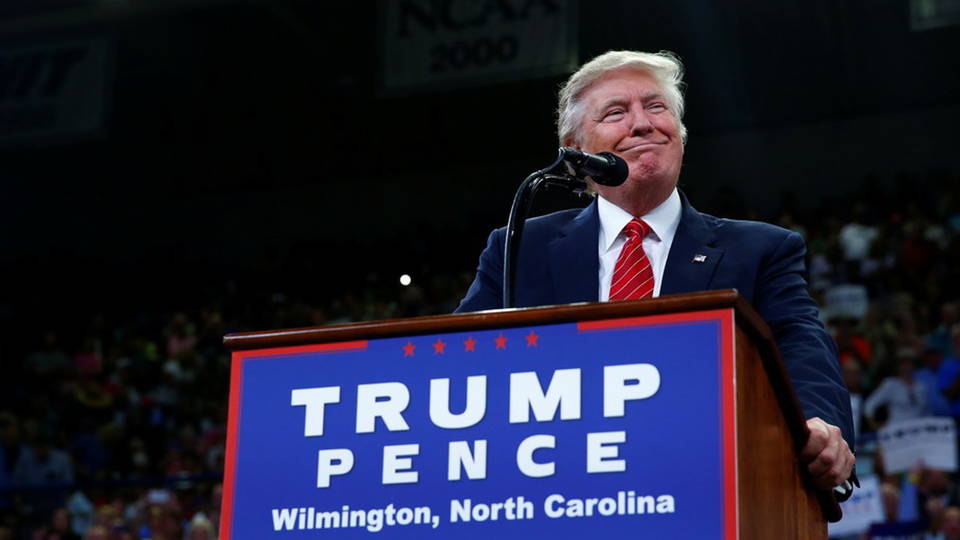
Republican presidential nominee Donald Trump has sparked another firestorm of criticism over his comments at a rally in Wilmington, North Carolina, Tuesday, which many saw as a call to assassinate his rival, Hillary Clinton.
Donald Trump "Hillary wants to abolish—essentially, abolish—the Second Amendment. By the way, and if she gets to pick—if she gets to pick her judges, nothing you can do, folks. Although the Second Amendment people, maybe there is. I don’t know."
In response to Trump’s comments, Connecticut Senator Chris Murphy tweeted, "Don’t treat this as a political misstep. It’s an assassination threat, seriously upping the possibility of a national tragedy & crisis." California Congressmember Eric Swalwell, meanwhile, called for a Secret Service investigation, tweeting, "Donald Trump suggested someone kill Sec. Clinton. We must take people at their word. @SecretService must investigate #TrumpThreat." Trump has denied the comments were a call to violence. His campaign issued a statement saying he was referring to the Second Amendment supporters’ "amazing spirit and ... great political power." On Tuesday night, House Speaker Paul Ryan called on Trump to clear up the comments.
Speaker Paul Ryan: "It sounds like just a joke gone bad. I hope he clears it up very quickly. You should never joke about something like that. I didn’t actually hear the comments; I only heard about those comments."
Paul Ryan was speaking in Janesville, Wisconsin, at a victory news conference after he easily won his congressional re-election primary Tuesday. Donald Trump sparked controversy last week when he initially refused to endorse Ryan in his race.
TOPICS:
Donald Trump
2016 Election
Sen. Susan Collins: Trump Would Make World "More Dangerous"
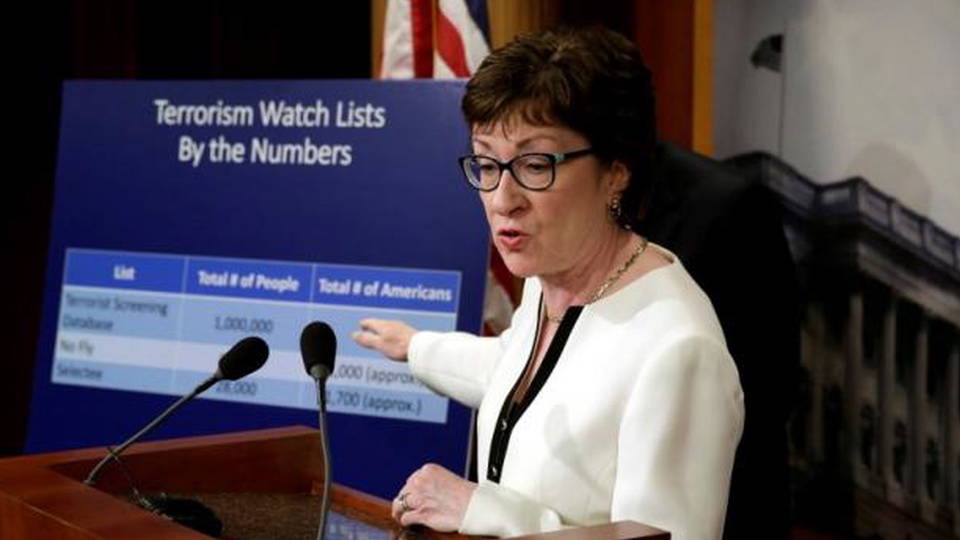
Even before Trump made his comments, a Republican lawmaker came out against Trump. This is Maine Senator Susan Collins speaking to CNN’s Jamie Gangel on Tuesday.
Sen. Susan Collins: "Donald Trump, in my judgment, would make a perilous world even more dangerous. I worry that his tendency to lash out and his ill-informed comments would cause dangerous events to escalate and possibly spin out of control at a time when our world is beset with conflicts."
TOPICS:
2016 Election
Donald Trump
Emails Show Ties Between Clinton Foundation & State Dept.
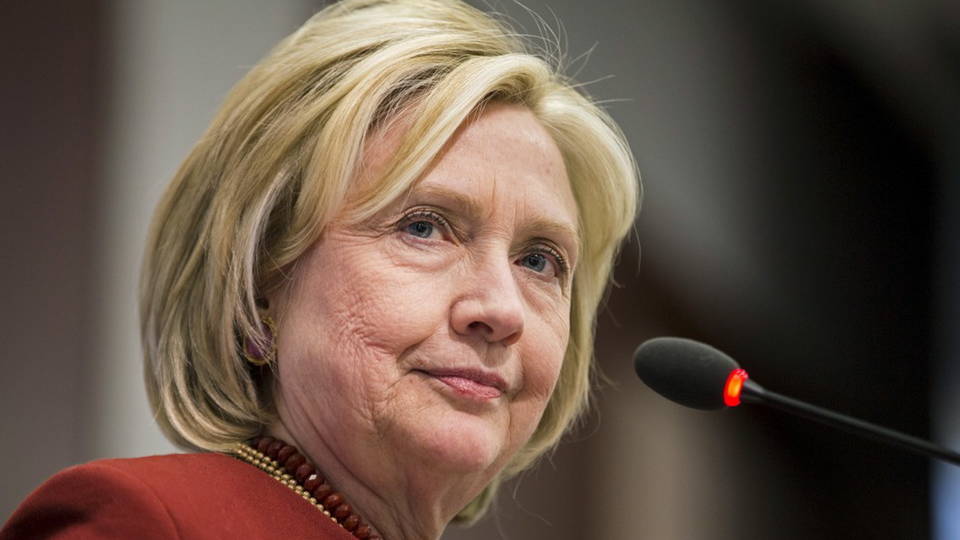
In more campaign news, newly released State Department emails are raising questions about the close ties between the Clinton Foundation and the State Department during Clinton’s time as secretary of state. The 44 emails include communications between top members of the Clinton Foundation and Clinton’s top State Department advisers, including Huma Abedin and lawyer Cheryl Mills. One email shows a member of the Clinton Foundation asking Abedin and Mills for a "favor" in helping a Foundation associate land a job at the State Department. Abedin responded, "We all have him on our radar. Personnel has been sending him options." In an other email, a Foundation executive wrote to Abedin and Mills asking for help putting a billionaire foundation donor in touch with the U.S. ambassador to Lebanon. Abedin responded, "I’ll talk to jeff," referring to then-U.S. Ambassador Jeffrey Feltman. In response, the Clinton campaign said, "Neither of these emails involve the secretary or relate to the foundation’s work."
New York Mag: Roger Ailes Used Fox Funds to Spy on Journalists
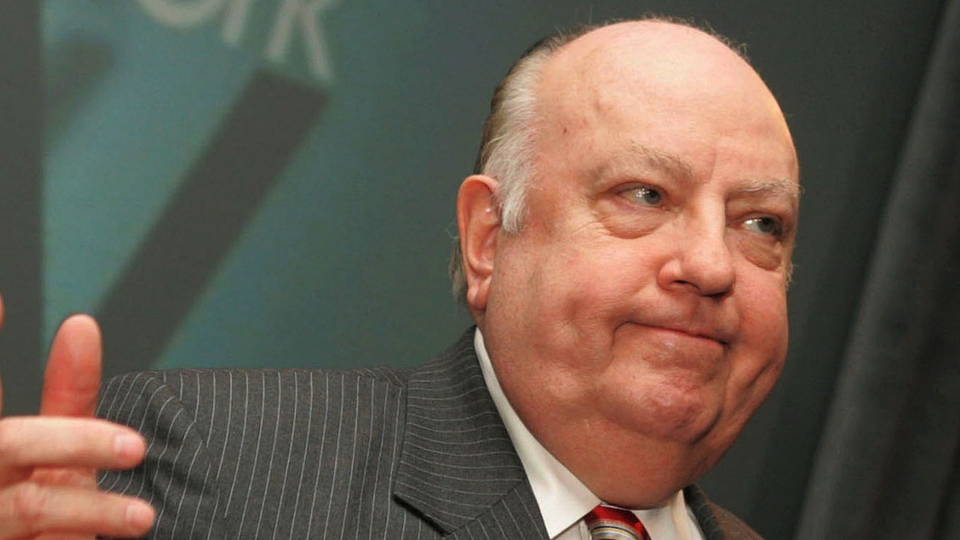
Another former Fox News host has accused former Fox Chair Roger Ailes of sexual harassment. Andrea Tantaros says she repeatedly reported Ailes’s harassment to senior Fox executives last year. She says she was demoted and then taken off air as a result. Ailes has now been accused of sexual harassment by more than 20 women, including Fox News anchor Megyn Kelly and former anchor Gretchen Carlson. This comes as New York Magazine is reporting Ailes ran his own "Black Room" operation out of Fox News, in which he used Fox money to hire private detectives and political operatives who carried out Ailes’s personal campaigns, including targeting journalists. The magazine reports Ailes sent private detectives to follow around multiple journalists who had been reporting on him. Ailes has denied these allegations. Ailes resigned in July. He has received a $40 million severance package.
DOJ: Baltimore Police Engage in Illegal, Racially Biased Policing
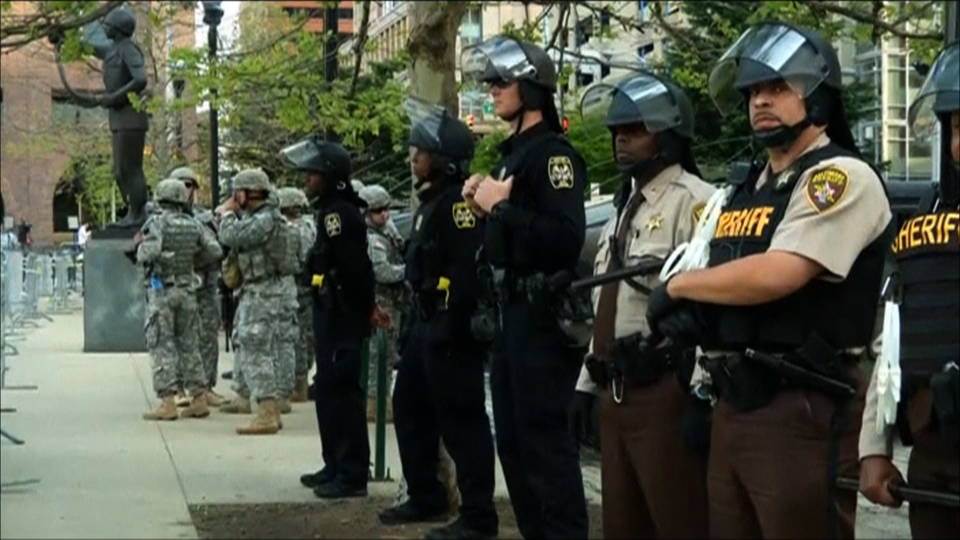
A Justice Department investigation has concluded Baltimore police have carried out a practice of racially discriminatory policing by systematically stopping, searching and arresting black residents at a disproportionate rate. The 163-page report said "supervisors have issued explicitly discriminatory orders, such as directing a shift to arrest 'all the black hoodies' in a neighborhood." The report highlights one African-American man in his fifties who was stopped more than 30 times over four years. The Justice Department launched the investigation following the death of Freddie Gray, who died in 2015 of spinal injuries sustained in police custody. Although charges were brought against six officers over Gray’s arrest and death, none has been convicted, and all remaining charges have been dropped.
Brazil: Senators Vote to Proceed with Rousseff Impeachment
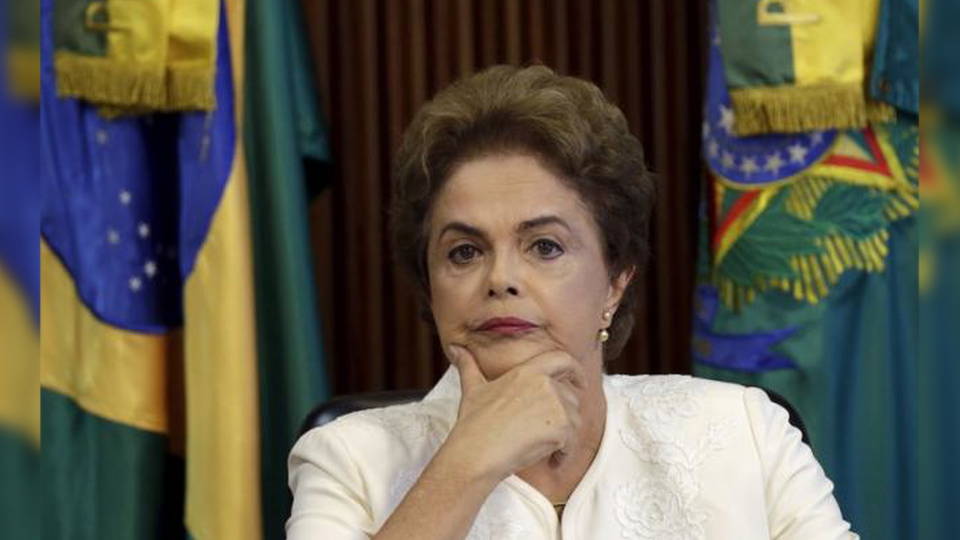
In Brazil, senators voted 59 to 21 today to proceed with the impeachment of President Dilma Rousseff on charges of breaking budget laws. Lawmakers voted to suspend Rousseff in May in what many consider a coup by her right-wing opponents. Leaked transcripts show at least one official plotted to oust Rousseff in order to end a corruption investigation targeting him. This comes as the Olympics continue in Brazil, where the U.S. women’s gymnastics team has scored a historic victory, winning the team gold medal by the widest margin of victory since 1960. The five-person team is the most diverse U.S. gymnastics team in history, with two African-American athletes, Gabby Douglas and Simone Biles, and New Jersey-born Laurie Hernandez, who is of Puerto Rican descent. We’ll have more on the Olympics later in the broadcast.
U.N.: More Than 2 Million in Aleppo Without Water or Electricity
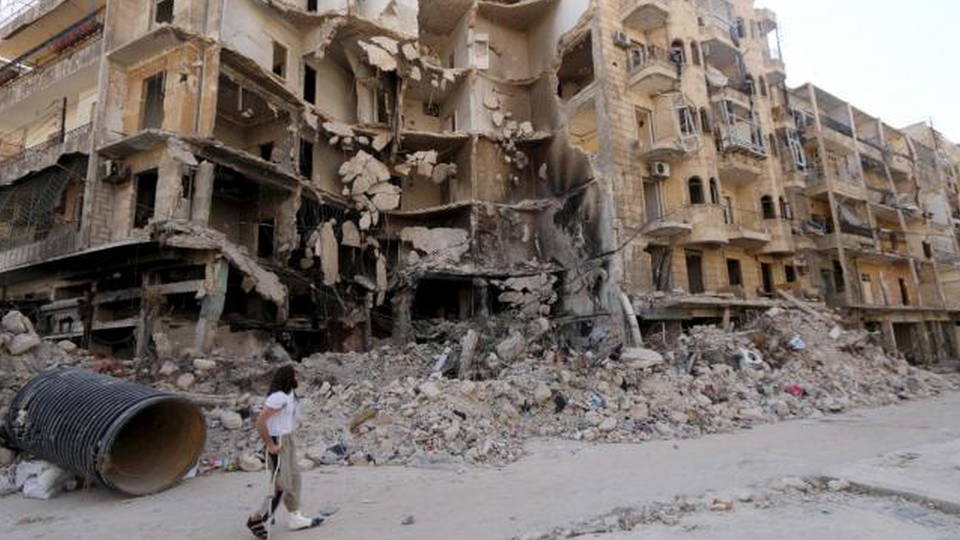
In Syria, the United Nations is warning of a dire humanitarian crisis as increasing fighting in Aleppo has left millions without water or electricity.
Jens Laerke: "Attacks on civilian infrastructure this week has severely damaged the city’s electric and water infrastructure, leaving over 2 million residents of Aleppo without electricity or access to the public water network. The U.N. is extremely concerned that the consequences will be dire for millions of civilians if the electricity and water networks are not immediately repaired."
TOPICS:
Syria
Yemen: 20 Killed in U.S.-Backed, Saudi-Led Airstrikes
In Yemen, officials say more than 20 people have been killed by U.S.-backed, Saudi-led airstrikes following the collapse of U.N.-sponsored peace talks. Health Ministry officials say at least 10 civilians were killed in the capital Sana’a, which was bombed for the first time in five months. With U.S. backing, Saudi Arabia has been bombing Yemen for over a year, causing the majority of the conflict’s civilian casualties.
Pentagon: U.S. Approves $1 Billion Weapons Sale to Saudi Arabia

This comes as the Pentagon has announced the U.S. has approved a possible $1 billion weapons deal to Saudi Arabia. The deal would include more than 150 tanks and hundreds of machine guns. Human rights organizations have been pressing Congress to block arms sales to Saudi Arabia over the Saudi-led coalition strikes in Yemen.
Ethiopia: Dozens of Protesters Killed by Government Forces
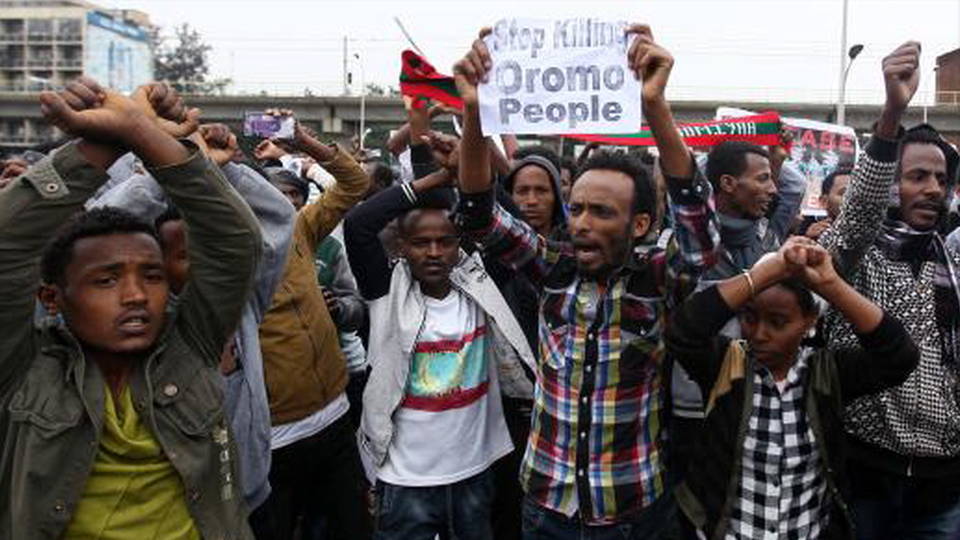
In Ethiopia, human rights groups say nearly 100 people were killed after government forces opened fire on protesters over the weekend. Hundreds of thousands of people attended the nationwide protests, which were denouncing the government for committing human rights abuses and for suppressing the ethnic Oromo community. Ethiopia has faced growing anti-government protests over the last two years, sparked initially by the government’s plan to lease a forest to private developers.
Greenland: Ice Melting May Unearth U.S. Military's Buried Radioactive Waste
In news on climate change, rapidly melting ice sheets in Greenland may unearth hazardous radioactive waste stored at a secret Cold War-era U.S. military base. The U.S. deposited the waste in deep underground tunnels at Camp Century in northern Greenland in the 1960s, expecting it would be secure underneath the ice forever. But a new study published in the journal Geophysical Research Letters says rapidly warming temperatures may now unearth the dangerous waste as soon as the end of this century, threatening local ecosystems.
Bolivia: State of Emergency Declared Amid Worst Wildfire in 10 Years
Meanwhile, a state of emergency has been declared in Bolivia, amid the worst fires in a decade. There are nearly 25,000 drought-fueled wildfires currently burning across Bolivia.
California: Uncontrolled Pilot Wildfire Swells by 50%
This comes as wildfires continue to burn across California, where the uncontrolled "Pilot Fire" burning east of Los Angeles swelled by more than 50 percent Tuesday. Nearby school districts and roads have been closed, and more than 5,000 homes are under evacuation orders. On Tuesday, Cal Fire said the blaze is only 6 percent contained.
Mexico: Nearly 50 Die in Mudslides After Massive Rainfall
Meanwhile, in Mexico, extraordinary rainfall has caused mudslides that have killed nearly 50 people. The director of Mexico’s National Water Commission said the rainfall from the single storm was equal to the average amount of rainfall over the entire month of August.
Roberto Ramírez de la Parra: "It’s important to point out, these two phenomena accumulated a total of 265 millimeters, which is almost the amount of rain that falls in the entire month of August on average in this region. The accumulation of these rains in areas of slopes caused damages in these areas. It is important to note the rains in this area of Huauchinango are torrential and are similar to those occurring in the plain of Tabasco, which is the state with the highest rainfall nationwide."
TOPICS:
Mexico
Climate Change
UC Davis Chancellor Linda Katehi Resigns After Student Protests
And the chancellor of the University of California at Davis has resigned, after an investigation concluded she had violated multiple university policies. Chancellor Linda Katehi has faced widespread protest over her decision to spend at least $175,000 to try to scrub the internet of criticism following the 2011 pepper-spraying of student protesters by campus police. Students have also called on her to resign over her involvement with private corporate boards. In March, students launched a 36-day occupation of her office. Despite her resignation as chancellor, Katehi will stay at the university as a full-time faculty member. Click here to see our interview with protesting students while Democracy Now! was at the University of California, Davis.
Donate today:
Follow:
SPEAKING EVENT
8/19 Seattle, WA
NEW BOOK
Democracy Now!: Twenty Years Covering the Movements Changing America
WORK WITH DN!
Senior TV Producer
Development Manager
207 West 25th Street, 11th Floor
New York, New York 10001, United States
-------
Development Manager
-------
Democracy Now! Daily Digest: A Daily Independent Global News Hour with Amy Goodman & Juan González for Wednesday, August 10, 2016 democracynow.org
Stories:
The Making of Donald Trump: David Cay Johnston on Trump's Ties to the Mob & Drug Traffickers
David Cay Johnston began covering Donald Trump in the 1980s when he was working as the Atlantic City reporter for the Philadelphia Inquirer. Johnston’s new book, "The Making of Donald Trump," looks at a side of Trump seldom covered in the press: his ties to the mob, drug traffickers and felons.
TRANSCRIPT
This is a rush transcript. Copy may not be in its final form.
AMY GOODMAN: To talk more about Donald Trump, we’re joined now by David Cay Johnston, who’s followed Trump’s career for decades. His biography of Trump has just been published. It’s titled The Making of Donald Trump and examines Trump’s rise to prominence. David Cay Johnston is a Pulitzer Prize-winning investigative reporter, previously with The New York Times, now a columnist for The Daily Beast.
Welcome back to Democracy Now! It’s nice to have you in studio. Why don’t we start off with your response to what Trump said yesterday?
DAVID CAY JOHNSTON: Well, I’ve been listening to right-wing radio about this, and all sorts of people are saying, "There goes the liberal media again. He never said that." He certainly said it to people who are zealots, people who are deranged, people who are dangerous. And without question, this was way beyond the pale. But, you know, this will happen again. This is who Donald Trump is. He is a bully. He is someone who believes that whatever he thinks is in his interest in the moment is in the national interest.
JUAN GONZÁLEZ: Well, David, you’ve been following Trump now for decades, going back to—even back when you were, what, a bureau chief for the Philadelphia Inquirer in Atlantic City—
DAVID CAY JOHNSTON: Yes.
JUAN GONZÁLEZ: —when he was beginning to get his casinos going there in Atlantic City. What’s been the main thread that you’ve taken away from your years of studying his operations.
DAVID CAY JOHNSTON: Donald doesn’t know anything. And if you listen carefully to what he says, it becomes apparent. He was asked by a Hugh Hewitt during one of the debates, the right-wing radio talk show host, about the nuclear triad. That’s the capacity of the U.S. to deliver a nuclear bomb from a submarine missile, a land-based missile or an airplane. His answer indicated he had no idea. Well, it turned out Hugh Hewitt had asked the same question months earlier on his radio show, and Trump didn’t learn in between. Trump talks as if the president’s a dictator. When he ran casinos, he didn’t know the games, he didn’t know the odds, he didn’t know how to handle customers. All he knew how to do was take money out of the organization, which weakened it, and that’s why his casinos were among the first to fold.
AMY GOODMAN: Let’s go back to the clip that you reference also in The Making of Donald Trump. During the Republican debate last December, he was questioned, as you said, by Hugh Hewitt, who then asked Senator Marco Rubio for his response.
DONALD TRUMP: First of all, I think we need somebody absolutely that we can trust, who’s totally responsible, who really knows what he or she is doing. That is so powerful and so important. And one of the things that I’m, frankly, most proud of is that in 2003, 2004, I was totally against going into Iraq, because you’re going to destabilize the Middle East. I called it. I called it very strongly, and it was very important. But we have to be extremely vigilant and extremely careful when it comes to nuclear. Nuclear changes the whole ballgame.
HUGH HEWITT: The three legs of the triad, though, do you have a priority? Because I want to go to Senator Rubio after that and ask him—
DONALD TRUMP: Well, I think—I think, to me, nuclear is just—the power, the devastation is very important to me.
HUGH HEWITT: Senator Rubio, do you have a response?
SEN. MARCO RUBIO: I do. Well, first, let’s explain to people at home who the triad—what the triad is. Maybe a lot of people haven’t heard that terminology before. The triad is our ability of the United States to conduct nuclear attacks using airplanes, using missiles launched from silos or from the ground, and also from our nuclear subs, ability to attack. And it’s important. All three of them are critical.
AMY GOODMAN: So, that was Senator Rubio and, before him, Donald Trump. And, of course, then there recently Joe Scarborough, the talk show host who’s a former Republican conservative congressmember, saying he heard from an international diplomat who was advising Donald Trump—Trump said to the person three times, "If we have nuclear weapons, why don’t we use them?"
DAVID CAY JOHNSTON: Well, this is indicative of Donald doesn’t know anything. I mean, if Marco Rubio, who is pretty much an empty suit, has to school you on something this basic, that should have screamed to people back in December, "This man has no qualifications!" He doesn’t qualify to be in Congress, much less be president of the United States. On the other hand, in his own mind, of course, Donald is the greatest living person. And, Amy, if you don’t appreciate that, Donald has a word for you: "Loser!"
JUAN GONZÁLEZ: David, I wanted to ask you about this issue which we discussed previously with Wayne Barrett, as well, on the issue of Donald Trump’s relationship to the mob and his connections over the years to mobsters. And you’ve also looked into that, as well.
DAVID CAY JOHNSTON: Yes, and it’s not just the traditional Mafia families in New York. First of all, Donald Trump’s father had a business partner who was a mob guy. I’m sure Wayne talked about that. But Donald has done business with people with the Russian mob. He’s done business with con artists. The guy who supplied his helicopters and managed his personal helicopter, called the Ivana, from his first wife back then, was a major cocaine trafficker, who actually handled the drugs. And after he went to prison, Donald wrote a letter pleading for mercy for him, so he got 18 months as the head of the ring. The little fish who delivered the drugs, they got 20 years. Donald continued to do business with him after he was indicted. Donald has done business all his life with mobsters and criminals, because it’s a way to make money.
AMY GOODMAN: Can you talk about Joseph Weichselbaum?
DAVID CAY JOHNSTON: Yes, that’s the guy. Joseph Weichselbaum is this mob associate. He once—he used to do Cigarette boat racing in Miami, and he once was—came in third, right behind Charles Keating, the infamous financier who ripped off people for a billion dollars. And Weichselbaum provided helicopters to the Trump Organization, even though there were better-capitalized, better-run companies. Donald rented an apartment to Weichselbaum and his brother under very unusual circumstances.
When Weichselbaum was indicted, it was for a drug operation that went from Miami to Ohio. When he agreed to plead guilty, the case was mysteriously moved to New Jersey. And who did it come before? Federal Judge Maryanne Trump Barry, Donald’s older sister. No one knows how this happened. Now, she removed herself from the case, but imagine, Amy, that you, or one of the listeners, you’re the chief judge, and the judge comes to you and says, "Oh, I can’t handle this case, because I fly in this drug trafficker’s helicopters. My husband flies in them every week. My children have flown in this drug trafficker’s helicopters." You know, it helps explain how this guy got a light sentence.
And the question we have to ask is: Why did Donald Trump need to write that letter, which could have cost him his casino license? Because he needed this guy to be his friend and not his enemy. What was going on that Donald Trump needed a drug trafficker to be his friend and not his enemy? And that’s a question no one in the news media has been asking.
AMY GOODMAN: You got a call—
DAVID CAY JOHNSTON: Except me.
AMY GOODMAN: You got a call from Donald Trump over this?
DAVID CAY JOHNSTON: I got a call related to this, yes. I wrote a piece for Politico magazine back in April about all of Donald Trump’s connections. And Donald finally called me. He’s had my home number for years. He’s called me at home in the past. And he said to me, "Well, you know, you’ve written a lot of things I like. But if I don’t like what you’re writing, I’m going to sue you." I said, "Well, Donald, you’re a public figure." In America, that means that he would have to prove that I deliberately, knowingly told a lie about him. And he said, "I know I’m a public figure, but I’ll sue you anyway." And it’s one of the reasons the news coverage of him has been so soft. He has threatened to sue everybody. That Politico piece that I wrote, I’ve been an investigative reporter for almost 50 years; I’ve never been lawyered like I was for that piece. And it didn’t have anything that hadn’t been published before. He has intimidated the news organizations, and they’re not willing to talk about that.
JUAN GONZÁLEZ: Well, in your book, you go into a story, not about his father, who’s been well known and covered previously by other publications, but about his grandfather. Talk about Donald Trump’s grandfather.
DAVID CAY JOHNSTON: Donald Trump’s grandfather, Frederick, when he turned 16 in 1885, was subject to mandatory military service in Germany, so he fled the country and came to America. And then he followed Horace Greeley’s advice: "Go West, young man." And he went into the whorehouse business. And he ran bordellos in Seattle, in Everett, Washington, and in the Yukon Territory, until the Royal Canadian Mounted Police showed up. He then took his fortune, went back to Germany, married a young woman his mother didn’t approve of, came back to America. His wife didn’t like it. They went back to Germany. He figured, with all his money, he could buy his way in. And they said, "You’re a draft dodger. Get out," and sent him back to America.
AMY GOODMAN: And then, talk about his father, Fred Trump.
DAVID CAY JOHNSTON: Well, Fred Trump, whose father died when he was 12 or 13 years old, was a very industrious guy. When he was 15 years old, he started a business—technically owned by his mother, because he couldn’t sign contracts—building garages in the outer boroughs of New York for these newfangled thing called automobiles. When the market collapsed because of the Great Depression, he invented one of the first grocery stores. People used to have clerks give them their canned goods and stuff. He opened one where you did your own, and then sold it for a profit.
He built housing during World War II for shipyard workers and is said to be the first person in line to get federal money to build worker housing. He was a profiteer. Dwight D. Eisenhower personally went into a rage over what he had done, how he’d ripped stuff off, and he had a creative explanation when he was called before the U.S. Senate to justify what he did. He said, "I didn’t profiteer. I didn’t take the money. It’s in the bank account." Strange way to think about things. And, of course, they discriminated against everybody who wasn’t white, and were proven to have done this in the ’50s and in the ’70s. And Woody Guthrie, the folk singer, "This Land is Your Land," he wrote a song, which is in the book thanks to the generosity of the Guthrie family, about one of the all-white outer suburb projects owned by Fred Trump.
AMY GOODMAN: That he had an apartment in.
DAVID CAY JOHNSTON: Yes, that’s right, that he lived in.
AMY GOODMAN: You tell a story about Fred Trump’s son, his older son, Donald Trump’s brother, and what happened to his family, and particularly his grandchild—
DAVID CAY JOHNSTON: Right.
AMY GOODMAN: —after the father, Fred Trump, died, and what Donald Trump did to him.
DAVID CAY JOHNSTON: So, keep in mind he sought mercy for a drug trafficker. So, Freddy Trump Jr. died of alcoholism early. And when Old Man Trump died, he had a new grandson—a great-grandson, who was born a few days later—very sickly child, nearly died several times, huge medical bills. Everyone in the Trump family gets medical insurance from the Trump Organization. Donald is a big believer in healthcare. It’s one of the positive things you can say about him. And the line of Freddy Trump Jr., when they realized they’d been effectively cut out of the will, filed a lawsuit. "Hey, you know, you guys are dividing the money up four ways instead of five." Donald immediately cut off the healthcare for this sickly child.
AMY GOODMAN: This is his grandnephew.
DAVID CAY JOHNSTON: His grandnephew. And he’s asked about this. And he says, "Well, I don’t like people who sue my father." And he was told, "Well, don’t you think this will look cold-hearted? You’re putting the life of this child in jeopardy." "Well, what else am I to do?" And that’s an essential element to understanding Donald Trump. You don’t exist, Amy, I don’t exist, as a person. That’s why he talks about women the way he does, in these degrading terms. Donald doesn’t see other people as people. He sees them as things to be used. And put the life of a child in jeopardy for more money? Donald thinks nothing is wrong with that. That’s—of course you would do that, if you’re Donald. If you wouldn’t do it, what’s wrong with you? That would be Donald’s attitude.
JUAN GONZÁLEZ: And the issue of Donald Trump’s tax forms, that’s—this has continually come up over this campaign.
DAVID CAY JOHNSTON:Right.
JUAN GONZÁLEZ: "Why haven’t you released your tax returns?" You’ve looked into this whole issue of why he’s so reluctant to show what his real returns are.
DAVID CAY JOHNSTON: Right, and tax has been my big area of specialty. I’m actually writing a whole new federal tax code for the United States.
JUAN GONZÁLEZ: In your spare time.
DAVID CAY JOHNSTON: Yeah. Donald Trump, we know, paid no federal income taxes in 1978, 1979—he and I had lunch and talked about it once—in 1984 and in the 1990s. The 1984 tax return is very revealing. There are special laws in America for full-time real estate people that allow them to live tax-free if they own a lot of property. So, if Donald gave us his tax returns, I could tell you what his property is really worth as opposed to what he tells people it’s worth. That’s one reason he’s not going to give it out. I don’t think he’s anywhere near as wealthy as he claims. Not even close.
But in 1984, he was audited by the state of New York and the City of New York, which both have income taxes. He filed a tax form, not the whole return, that showed zero income for this category of income and over $600,000 of deductions. Surprise, surprise, the auditors said, "Please justify these deductions." He couldn’t do it. But he ordered his law guy—his tax guy to make an appeal. And under oath, his longtime tax guy is shown the return that was filed, and he goes, "Um, that’s my signature, but I didn’t prepare that document." That’s very good evidence of tax fraud.
And Donald has engaged in other tax frauds we know about. He was involved in what’s called the empty box scandal here in New York. That’s where you claim to not live in the city—in the state, and you have an empty box mailed to you out of state to avoid sales tax. In that case, when Donald found out there was an investigation, he did what he often does to not be investigated: He ran to law enforcement and ratted out other people.
JUAN GONZÁLEZ: But in the ’84 case—
DAVID CAY JOHNSTON: Yeah.
JUAN GONZÁLEZ: —if there was evidence of fraud, what happened with that case?
DAVID CAY JOHNSTON: We only know what happened in the city and the state case, all right? The state imposed penalties on him, civil penalties, not criminal. That’s how almost all tax matters are settled. The city, because no one could find the original—all they had was the photocopy—with the signature on it, the judge didn’t impose the penalties, because of the uncertainty about it. But he made it very clear that he thought this is a very fishy case. What the IRS did, I don’t know. In all likelihood, Donald, who says he’s audited all the time, arranges to settle these cases, but, through threats of litigation, when they do the legal algebra, they say, "All right, we’ll take pennies on the dollar. Get out of here," because they don’t have the staff to pursue it.
AMY GOODMAN: You write a lot about the DGE.
DAVID CAY JOHNSTON: Yes.
AMY GOODMAN: That’s the New Jersey Division of Gaming Enforcement, which oversees the Atlantic City casinos.
DAVID CAY JOHNSTON: Right.
AMY GOODMAN: What can we learn from their dealings with Donald Trump?
DAVID CAY JOHNSTON: Well, this shows how masterful Donald Trump is at manipulating law enforcement. He told the attorney general of New Jersey, when he wanted a casino license, "I’m not going to go through the 18 months that all these other people have gone through," and demanded he be investigated in just 90 days. Everybody else, year and a half. The attorney general agreed to six months if Donald cooperated.
Then Donald hid things, including four grand jury investigations that Wayne Barrett found. Four of them. In New Jersey, a woman applying for a blackjack dealer license—that’s a very low-level license—was found morally unfit and denied a license because, as a teenager, she gave friends of hers discounts at the cash register. That’s the legal standard. Donald withheld these grand jury investigations. He withheld associations with mobsters and criminals. And yet he got licensed anyway. Well, once he was licensed, the bureaucracy at the Division of Gaming Enforcement made sure that Donald was never asked a question that would put his license in jeopardy, because that would force them to admit that they hadn’t done their job.
JUAN GONZÁLEZ: Well, given this history of lying, of fraud, of all of these other skirtings of the law, have you been surprised at all about this—the enormous support that Trump has gotten among—
DAVID CAY JOHNSTON: No. Actually—
JUAN GONZÁLEZ: —the Republican faithful?
DAVID CAY JOHNSTON: Juan, I’ll tell you why I’m not surprised. As you two know, I’ve spent more than 20 years of my life being on the forefront in the mainstream press of documenting inequality. When nobody else was writing about it, I was showing how government policies are taking from the many and giving to the few. So, the people in this country living in economic terror, the bottom 50 percent, I’ve been their advocate. But they’re not the people who read my books. What they know is: "I’m working harder, I’m making less. If I lose my job, I don’t know how I’ll pay my rent or keep a roof over my kids’ heads." And Donald comes along, like all demagogues do: "I have a solution. It’s the Mexicans. It’s the Muslims. It’s the Chinese." And people gravitate to him—not the only ones, but that’s a big part of his support.
AMY GOODMAN: You write about how many of his restaurants, his golf courses have Five and Six Diamond Awards.
DAVID CAY JOHNSTON: Yes.
AMY GOODMAN: What are these?
DAVID CAY JOHNSTON: Well, you go to—at least 19 Trump properties have these big plaques: Six Diamond Award, Five Diamond Awards. They’re awards Donald gave to himself. Donald and his family were the majority of the board of something called the Academy of American Hospitality Sciences, or something like that, which is the invention of a mob guy, a convicted art thief named "Joey No Socks," who lives on Central Park South. And Donald has gone to ceremonies to receive these awards and these big plaques, and his signature is on them. This is a man who gives awards to himself. How juvenile.
AMY GOODMAN: What were you most surprised by, as we wrap up this interview, in writing The Making of Donald Trump? You have covered him for many years.
DAVID CAY JOHNSTON: I did not appreciate, until I worked on the book, that while Donald holds himself out as a devout Christian—"No one reads the Bible more than me"—while he has all these pastors embracing him as a good Christian man, Donald aggressively, thoroughly and at great length, in many forums, denounces Christianity. His personal motto is "always get revenge," whereas the message of Jesus Christ was "turn the other cheek." And these ministers, some of whom I’ve written to and haven’t—they haven’t responded at all—continue to embrace him. And I find it very troubling. Donald has beguiled them with flattery. If they continue, now that my book is out, if they know about it, to do this, they are then deceiving their flocks, and that’s evil. But Donald himself doesn’t care about these things. He will tell you any lie. He can’t quote a single line from the Bible. Not one. And yet he says, "No one reads the Bible more than Donald Trump." If you ask him, "Well, what do you like in the Bible?" "Oh, there’s so many. There’s so many. I just—there are so many, I can’t choose."
AMY GOODMAN: Well, I want to thank you very much, David Cay Johnston, Pulitzer Prize-winning investigative reporter, previously with The New York Times, now a columnist with The Daily Beast. His biography of Donald Trump is called The Making of Donald Trump. It’s just out.
This is Democracy Now! When we come back, we look back at another Olympics, even as we look at the records that are being smashed today in Brazil. Stay with us. ... Read More →
Olympic Pride, American Prejudice: How 18 Black Olympians Defied Jim Crow & Hitler in 1936
In Brazil, the U.S. women’s gymnastics team has pulled off a historic feat, winning the team gold medal by the widest margin of victory since 1960. The five-member gymnastics team is the most diverse the U.S. has ever sent to the Olympics. Simone Biles and Gabby Douglas are African-American. New Jersey-born Lauren Hernandez is of Puerto Rican descent. Madison Kocian and Aly Raisman are white. But Simone Biles, Gabby Douglas and Lauren Hernandez are far from the first American Olympians of color to make history. Today we look at a new documentary that looks at the 17 African-American athletes who, along with noted track and fielder Jesse Owens, defied Jim Crow and Adolf Hitler to participate in the 1936 Olympics held in Nazi Germany. Since then, the story of Owens’s four gold medals has dominated the narrative of African-American achievement in the ’36 Games. We speak with Deborah Riley Draper, writer and director of "Olympic Pride, American Prejudice."
TRANSCRIPT
This is a rush transcript. Copy may not be in its final form.
JUAN GONZÁLEZ: We turn now to the Olympics in Brazil, where the U.S. women’s gymnastics team has pulled off an historic feat, winning the team gold medal by the widest margin of victory since 1960. The Wall Street Journal reports, "There is no historical comparison for this rout that doesn’t cross over into the absurd," unquote. The five-member gymnastics team is the most diverse the U.S. has ever sent to the Olympics. Simone Biles and Gabby Douglas are African-American. New Jersey-born Lauren Hernandez is of Puerto Rican descent. Madison Kocian and Aly Raisman are white.
AMY GOODMAN: But Simone Biles, Gabby Douglas and Lauren Hernandez are far from the first American Olympians of color to make history. Today we’re taking a look back at another group of groundbreaking American Olympians. Archie Williams, Tidye Pickett, Ralph Metcalfe, Louise Stokes—you probably don’t know these names, though you should. They’re just some of the African-American athletes who, along with noted track-and-fielder Jesse Owens, defied Jim Crow and Adolf Hitler to participate in the 1936 Olympics held in Nazi Germany. Since then, the story of Owens’s four gold medals has dominated the narrative of African-American achievement in the ’36 Games. But a new documentary tells the story of the 17 other black Olympians, including two women, whose stories have faded into obscurity.
DANIEL DURBIN: This is one of the great tragedies of the story you tell, is you have 17, 18 athletes here who were on the world stage—one of them is remembered.
ANITA DEFRANTZ: By the time ’36 came around, people began to understand who Hitler was and what his goals were.
DEXTER BLACKMAN: Here was an opportunity on the world stage to disprove white supremacy.
JOANNA HAYES: I love my gold medal. But it’s not—in history, it’s not as important as their medals. For me, there’s just something so special about what they did and who they did it in front of.
DANIEL DURBIN: These were athletes who did something really important at a seminal point in human history—not African-American history, not American history, in human history. They did something incredibly important.
UNIDENTIFIED: Simply being on the medal stand in 1936 sent a message.
HARRY EDWARDS: From that struggle for legitimacy became the foundation of the struggle for access, which became integrated into nonviolent direct action and primed the pump for Dr. King.
DANIEL DURBIN: They have stories that have not only drama and drive and power and force, but they’re stories that can focus us again on something truly important about the human spirit, about the human race and what it takes to be truly human and not inhuman.
AMY GOODMAN: That’s from the trailer of Olympic Pride, American Prejudice, which just opened in Los Angeles and New York. Set in racially divided 1930s America, the documentary examines the conflict within black America over whether or not the athletes should boycott the '36 Olympics, and how their presence on the world stage in Hitler's Germany impacted the modern civil rights movement.
For more, we’re joined by Deborah Riley Draper, writer and director of Olympic Pride, American Prejudice. She’s joining us from Atlanta.
Welcome to Democracy Now! Talk about why you chose to make this film.
DEBORAH RILEY DRAPER: Well, I thought their stories were really important. When we look at African-American history, there are so many stories that can help us understand our struggle for equality. And this one was—it stood out in my mind. You have 18 athletes on the world stage. The fact that they were there in 1936, when America did not consider African Americans anything other than second-class citizens, in itself, was a big historic moment. And the fact that they were there and they won hearts and they won medals on the world stage in front of Adolf Hitler makes them the only set of African-American athletes in the history to face and overcome both Jim Crow racism and Aryan supremacy racism. So that stuck with me, and I thought it would be important to tell their story, because this is a story of struggle, it’s a story of bias, it’s a story of trials, but it’s also a story of triumph. And their very presence is what opened the floodgates for the integration we know now in professional and amateur sports.
JUAN GONZÁLEZ: Well, Deborah Riley Draper, as you point out in the film, there was enormous debate and controversy at the time over their participation, because there were Jewish groups in the United States, as well as the NAACP and other civil rights organizations, that were urging the black athletes not to participate in the Games. But yet, newspapers like The Chicago Defender and The Pittsburgh Courier, African-American newspapers, were urging them to participate. Could you talk about that?
DEBORAH RILEY DRAPER: Absolutely. So, in 1936, the country is coming out of the Great Depression. There are anti-lynching bills sitting with the president at the White House. And these African-American athletes are right in the middle of this political firestorm, because there was tremendous pressure to take a moral stance and protest participating in Germany, because by protesting and not going, that means you didn’t support the discrimination that was happening in Germany. But on the flip side, there was this real push to say, if we’re there, if we’re part of this American team, it demonstrates that we’re American, that we’re patriotic, but it also demonstrates, if we win, that we’re not inferior, that we are capable and quite ready to be a part of America, and fully a part of America.
AMY GOODMAN: So, let’s go to this split—
DEBORAH RILEY DRAPER: So that was this debate.
AMY GOODMAN: And let’s go to it within your film about whether or not the athletes should boycott the Games, like athletes Ralph Metcalfe, David Albritton, Jesse Owens and others, writing to Avery Brundage, president of the American Olympic Committee, expressing their support of participating. Their letter was met with concern from leaders in the community. This is another clip from your film.
NARRATOR: Walter White, the president of the NAACP, replies in a letter, "I ... realize how great a sacrifice it will be for [you] to give up the trip to Europe and to forego the acclaim your athletic prowess will unquestionably bring you. ... [But] participation ... would, I firmly believe, do irreparable harm. ... The moral issue involved is ... far greater than immediate ... benefit."
AMY GOODMAN: Deborah Riley Draper, your response?
DEBORAH RILEY DRAPER: Well, you know, it’s a really interesting dynamic, when you think about it, because going to Nazi Germany and participating in Nazi Germany, does that mean you actually support what that regime is doing? Is it better to have a moral protest? And I think that’s what the letter was trying to communicate, that we can take a stance here by not going, and that’s more powerful than being there. But on the flip side, these athletes wanted to demonstrate the fact that they were ready and they were patriotic, and being there wasn’t necessarily that they supported Nazi Germany. Being there would give them an opportunity to tear down and unpack these crazy myths and misconceptions about African Americans. So that’s why they wanted to go, and that’s why they stood up for the opportunity to be there.
JUAN GONZÁLEZ: Well, I’d like to turn to another clip from the movie. This is Ralph Metcalfe Jr. talking about his father, who was—who would later become a congressman and a co-founder of the Congressional Black Caucus.
RALPH METCALFE JR.: Dad had a pretty rough early life. When they got up here, they discovered that the playground was a block from the crib. That’s where he picked up his nickname Rabbit. He had no intention of going to college. His idea was, once I graduate from Tilden, I can get more hours at the fish market and help my mom with the family better. He was running in a track meet, and Marquette’s athletic director saw the boy run. He said, "That’s our man right there." Jennings offered him a scholarship. My father said, "Well, I don’t know. Let me go talk to my mom about that." And here’s what she said. She said, "Boy, if I’ve got to get on my hands and knees and scrub these white people’s floors, you are going to college."
JUAN GONZÁLEZ: Talk, if you will, about Ralph Metcalfe Sr. and his importance on this team, and—even though he’s basically been forgotten as a member of the team.
DEBORAH RILEY DRAPER: Well, Ralph Metcalfe was a part of the 1932 Olympic team in Los Angeles, so his presence on the 1936 team was one of an elder statesman, if you will. He encouraged all of the athletes to really concentrate on athletics, and not necessarily concentrate on the political atmosphere that they were actually entering. He was kind of a coach and a father to all of these athletes. And I guess you could see the making of a politician there, because he was very charismatic, and he was very smart, and he was very comforting and parental to all of the team, including the two women.
AMY GOODMAN: Let’s talk about the women. Of the 18 African-American athletes selected for the 1936 Olympic team, two were women: Louise Stokes and Tidye Pickett. In this clip from your film, Olympic Pride, American Prejudice, we hear from Pickett’s daughters, Faye Walker and Bernita Echols. But first, Stokes’ son, Wilfred Fraser Jr.
WILFRED FRASER JR.: Eight girls and one boy. My mother started taking up athletics—running, basketball, anything to do with sports. After school, she started racing the boys down the railroad track. They would pick on her, tell her she wasn’t fast. And what she would do in the morning before school is run the railroad tracks every single time. So that’s how she developed her quickness. And then she became quite good at it. And after a while, she started beating the boys. And, you know, after that, they started leaving her alone.
FAYE WALKER: Mother didn’t talk a lot, you know? And so, we got bits and pieces of her history. She was one of two children. She has an older brother, two years older. They were born on the South Side of Chicago.
BERNITA ECHOLS: We know that her and her brother were often competitive, and racing was one of the things that they loved to do. And so it just seemed something that was pretty innate in her. There were often stories told about who would beat who.
FAYE WALKER: But she was fastest, of course.
BERNITA ECHOLS: Of course.
FAYE WALKER: She was the star of the basketball team. And that takes some doing, since mother was only like five-two-and-a-half or 5’3".
BERNITA ECHOLS: Right.
FAYE WALKER: She attended the recreational events and things at the Chicago Park District on the South Side. She was discovered there, so she started running for the Park District.
JUAN GONZÁLEZ: Talk, if you will, about the role of the two women during the Olympics. One of them actually got hurt at the start of the race, and the other was pulled in favor of a white athlete at the last moment?
DEBORAH RILEY DRAPER: We’re going to save a little bit of this film for the audience, for sure. But I will talk about the role of these two black women. Here you have the very first two African-American women in the history of our country to represent our country. They represented the country in 1932, and they didn’t have the opportunity to compete because they were replaced by white athletes. And in 1936, they—one of them had a similar fate, but what they did was they laid the groundwork for scores of women, regardless of race, but in particularly black women, to have the opportunity to be on the world stage and compete. So, the next couple of Olympics, there was war. But in 1948, you saw Alice Coachman emerge and to win a gold. So, Tidye Pickett and Louise Stokes cleared that path for Alice Coachman, Wilma Rudolph, Flo-Jo and all of the women that would come behind them, including a very, very diverse team this year in 2016.
AMY GOODMAN: We want to thank you very much for being with us. A remarkable story.
DEBORAH RILEY DRAPER: Thank you.
AMY GOODMAN: What were you most shocked by, Deborah?
DEBORAH RILEY DRAPER: Oh, my gosh, I was most shocked by the fact that Tidye and Louise actually existed. I had no idea that the 17 existed, but I really didn’t know two of them were women. And I didn’t know that one of them was Jackie Robinson’s older brother, Mack Robinson. I think those were the most shocking things for me to discover, in addition to the fact that, as I said before, there were 17 others. My whole life, I thought there was just Jesse Owens. So I was proud to really bring the story of all 18 for the world to see. And I hope people see it in New York and L.A., or they check it out on Amazon for preorder.
AMY GOODMAN: Well, Deborah, thank you so much for being with us. Deborah Riley Draper, writer and director of Olympic Pride, American Prejudice, the documentary that explores the experiences of the 18 African-American athletes who participated in the 1936 Nazi Olympics in Berlin, Germany.
This is Democracy Now! When we come back, a remarkable story here in New York. Stay with us. ... Read More →
After Being Denied Parole 10 Times, Elderly Prisoner Allegedly Commits Suicide at Fishkill Prison
In upstate New York, the suspected suicide of 70-year-old prisoner John MacKenzie has drawn attention to how the state is refusing to release aging prisoners who have a low risk of recidivism. MacKenzie reportedly hung himself in his cell at Fishkill Correctional Facility after he was denied parole the previous week. It was his 10th denial of parole since he became eligible in 2000. We speak with Kathy Manley, a longtime lawyer and advocate for prisoner rights who represented John MacKenzie in his court case against the New York state Parole Board. And here in New York, Mujahid Farid is lead organizer with the Release Aging People in Prison (RAPP) Campaign. He founded the group after he was released from prison in 2011, after serving 33 years on a 15-to-life sentence.
TRANSCRIPT
This is a rush transcript. Copy may not be in its final form.
JUAN GONZÁLEZ: We end our show in upstate New York, where the suspected suicide of a 70-year-old New York prisoner has drawn attention to how the state is refusing to release aging prisoners who have a low risk of recidivism. Last Thursday, John MacKenzie reportedly hung himself in his cell at Fishkill Correctional Facility after he was denied parole the previous week. It was his 10th denial of parole since he became eligible in 2000. MacKenzie was serving a 25-to-life sentence for the murder of a police officer named Matthew Giglio in 1975. Not long after he entered prison, he helped establish a Victims Awareness program that helped other inmates better understand the impact of their actions by meeting with crime victims. He continued this type of work for decades.
AMY GOODMAN: In 2014, John MacKenzie filed a lawsuit that argued the New York Parole Board was violating state law by failing to consider his remorse and achievements, as well as tests that showed he had the low risk of committing a crime, if released. In a major victory, a New York Supreme Court judge agreed with him and found the board in contempt of court. Justice Maria Rosa issued the unusual ruling after she had ordered the board to give MacKenzie a new hearing, and it again denied him parole. She wrote in her May 24th response to the board’s denial of parole to MacKenzie, quote, "It is undisputed that it is unlawful for the parole board to deny parole solely on the basis of the underlying conviction. ... Yet the court can reach no other conclusion but that this is exactly what the parole board did in this case," unquote. Judge Rosa also ordered the state to pay a $500-per-day fine for each day it delayed giving him a new hearing, and demanded to know, quote, "If parole isn’t granted to this petitioner, when and under what circumstances would it be granted?" unquote. The ruling was under appeal by the state at the time of John MacKenzie’s death.
Just weeks before his death, The New York Times wrote an editorial supporting his release from prison. On Monday, dozens rallied outside the Parole Board headquarters in the state capital of Albany to urge the Governor Andrew Cuomo and Attorney General Eric Schneiderman to direct the board to follow the law. All this comes as elderly inmates have become the fastest-growing part of the prison population in New York and in many other states around the country.
For more, we go directly to Albany to Kathy Manley, longtime lawyer and advocate for prisoner rights who represented John MacKenzie in his contempt-of-court case against the New York state Parole Board.
Welcome to Democracy Now! Talk about what happened and why you believe that he committed suicide just after he was denied parole.
KATHY MANLEY: Good morning, Amy. Thanks for having me.
Yeah, I was approached to do an appeal for John about four years ago. The first one was denied. The second one, as you said, was granted. And John was the poster boy for people who should be released on parole. As you said, he had an amazing record. He ran that victim impact program in Green Haven prison. It was very successful. He worked with parents of murdered children and other victim groups. He got a grant to expand the program; instead, Green Haven shut it down, apparently because they didn’t want a prisoner-run program to be so successful, and they cared more about that than rehabilitation.
So, I filed the appeal. It was granted, as you said, by Judge Rosa. He got a new hearing in December, last December. And again, they violated her order saying they can’t deny parole based only the circumstances of that one day in 1975. And so, then I filed for contempt, and she granted that. And as you said, that was being appealed, when he was denied again at a regular hearing. And he just couldn’t take it anymore. He just couldn’t take it anymore. And what people don’t—
JUAN GONZÁLEZ: Well, Kathy Manley—
KATHY MANLEY: Yeah?
JUAN GONZÁLEZ: What about this whole issue of these political decisions of parole boards in not granting parole to inmates, especially in cases that may involve, for instance, in this case, the murder of a police officer?
KATHY MANLEY: Right, that’s a huge part of it. I mean, what people may not think about is that it’s the judge who sentences somebody, sentences people. They sentence them to a minimum term. And he reached that minimum term in 2000 and then was denied parole 10 times after that. He should have been released then. The Parole Board resentences people according to—because they listen to the Police Benevolent Association in cases where the victim is a police officer. And the police, the PBA, in John’s case, every two years, they would go to the board and say, "Never let him out. We don’t care how remorseful he is. Never let him out. He killed a police officer. End of story." Well, that’s not the law.
AMY GOODMAN: He was in—he was in jail for over 40 years. We’re joined by Mujahid Farid also, here in our studio in New York, who served 33 years on a 15-to-life sentence in New York, now organizer of RAPP, Release of Aging People in Prison. We don’t have much time, Farid, but you were corresponding with John MacKenzie until, what, the day before he died.
MUJAHID FARID: The day before. We talked on the phone the day before. Yes.
AMY GOODMAN: And what did he tell you?
MUJAHID FARID: Well, he told me how he had been to a recent board again and that he was denied parole. He was upset about the fact that a commissioner, who had been forbidden to sit on a future panel, was actually on that panel that denied him parole again. The contempt order actually specified—it prohibited certain people from sitting on a future parole board.
JUAN GONZÁLEZ: And what about this issue of the aging of our prison population, people who basically—the state has thrown away the key and is just letting them wither away in prison?
MUJAHID FARID: Yeah, one of the reasons that our campaign focused on the elderly is because they present the lowest risk of recidivism. And if parole boards were really concerned about public safety when a person comes up for release, these are the people who should be released. We are actually concerned about mass incarceration, in general, and the whole spectrum, but we thought that by focusing on this particular population, it would present us as the voice of reason and show how this punitive policy that is in place has really gone amok.
JUAN GONZÁLEZ: And what is it like for elderly prisoners in New York state prisons these days?
MUJAHID FARID: A lot of them are losing hope, I mean, actually losing hope, as we see in the case of John MacKenzie. I’ve seen the same thing happen with other individuals.
AMY GOODMAN: Mujahid Farid, you were denied parole repeatedly.
MUJAHID FARID: Ten times—I mean, nine times. I made the actual 10th parole board, yes.
AMY GOODMAN: How did you feel?
MUJAHID FARID: I felt great. I felt relieved.
AMY GOODMAN: When you finally got it.
MUJAHID FARID: When I finally—
AMY GOODMAN: But each other time before that?
MUJAHID FARID: I pretty much understood that it was a broad policy, that it wasn’t specifically directed at me. And that helped me to cope with it, the fact that I knew something was going on that was bigger than the Parole Board simply denying me release.
AMY GOODMAN: What is the SAFE Parole Act?
MUJAHID FARID: The SAFE Parole Act is an act that would pretty much preclude the Parole Board from focusing on the nature of the crime. It would require them to look at how a person developed over the course of their time in prison, and to base release decisions on that and whether or not they present a risk to public safety.
JUAN GONZÁLEZ: And, Kathy Manley, we only have about 30 seconds or so, but is your hope now that there will be some substantive reform as a result of what has happened in the tragic result with John MacKenzie here?
KATHY MANLEY: Yes, I really hope that John’s death serves as a wake-up call to fix this broken, dysfunctional system. There needs to be a presumption that when someone gets to their minimum term and they have a good record, they should be released. That should be automatic, unless there’s something else they can point to. There was nothing else they could point to in John’s case. He should have been released, like so many other people.
AMY GOODMAN: And, Mujahid, what are you demanding of Governor Cuomo?
MUJAHID FARID: We have four demands. First of all, let me say that, over the years, we have seen the Parole Board demonstrate contempt for the community.
AMY GOODMAN: We have 10 seconds.
MUJAHID FARID: And so, we are demanding that Governor Cuomo get involved, immediately get involved, and take control of the Parole Board and direct them to our use public safety concerns when they are considering a person’s release.
AMY GOODMAN: I want to thank you both for joining us. Mujahid Farid served 33 years on a 15-to-life sentence in New York, now lead organizer of RAPP, Release of Aging People in Prison. And thanks so much to our guest in Albany, to Kathy Manley, lawyer for prisoner John MacKenzie, who committed suicide. ... Read More →
Donald Trump Under Fire After Hinting Gun Owners Could Assassinate Hillary Clinton
Republican presidential nominee Donald Trump is being accused of inciting violence against his rival Hillary Clinton following remarks he made Tuesday during a rally in North Carolina. At the rally, Trump said, "Hillary wants to abolish—essentially, abolish—the Second Amendment. By the way, and if she gets to pick—if she gets to pick her judges, nothing you can do, folks. Although the Second Amendment people, maybe there is. I don’t know." The comments were widely seen as a call to assassinate Hillary Clinton. The comments sparked widespread outrage from lawmakers, a former CIA chief and the New York Daily News, who wrote: "This isn’t a joke any more. When Trump hinted gun-rights supporters shoot Hillary, he went from offensive to reckless. He must end his campaign."
TRANSCRIPT
This is a rush transcript. Copy may not be in its final form.
JUAN GONZÁLEZ: Republican presidential nominee Donald Trump is being accused of inciting violence against his rival, Hillary Clinton, following remarks he made Tuesday during a rally in North Carolina.
DONALD TRUMP: Hillary wants to abolish—essentially, abolish—the Second Amendment. By the way, and if she gets to pick—if she gets to pick her judges, nothing you can do, folks. Although the Second Amendment people, maybe there is. I don’t know, but...
JUAN GONZÁLEZ: Trump’s remarks were met with outrage. Democratic Senator Chris Murphy of Connecticut tweeted, quote, "Don’t treat this as a political misstep. It’s an assassination threat, seriously upping the possibility of a national tragedy & crisis." And former Arizona Congresswoman Gabby Giffords, who survived an assassination attempt in 2011, wrote that Trump’s rhetoric, quote, "may provide inspiration or permission for those bent on bloodshed."
AMY GOODMAN: Chemi Shalev, the U.S. editor of Israeli Haaretz, tweeted, quote, "People who remember the incitement that led to Rabin’s assassination will find Trump’s rhetoric hauntingly familiar." Shalev was referencing the 1995 assassination of the Israeli prime minister, Yitzhak Rabin, by a right-wing Jewish extremist.
The New York Daily News called for Trump to end his campaign. The paper’s cover shows a photo of Trump next to the words "This isn’t a joke any more. When Trump hinted gun-rights supporters shoot Hillary, he went from offensive to reckless. He must end his campaign. If he doesn’t, the GOP needs to abandon him," the paper wrote.
Speaking on CNN, former CIA chief General Michael Hayden condemned Trump’s remarks.
MICHAEL HAYDEN: Well, let me say, if someone else had said that outside the hall, he’d be in the back of a police wagon now with the Secret Service questioning him.
JUAN GONZÁLEZ: A Trump spokesperson said Trump was not inciting violence. Jason Miller said "It’s called the power of unification—2nd Amendment people have amazing spirit and are tremendously unified, which gives them great political power. And this year, they will be voting in record numbers, and it won’t be for Hillary Clinton, it will be for Donald Trump."
Trump’s remarks come one month after one of his advisers, New Hampshire State Representative Al Baldasaro, called for Hillary Clinton to be executed. Baldasaro made the comments during a radio interview in July.
REP. AL BALDASARO: This whole thing disgusts me. Hillary Clinton should be put on a firing line and shot for treason. ... Read More →
Headlines:
Many See Trump's Latest Comments as Call to Assassinate Rival Clinton[Comment Question: Is not this comment by Trump a Felony?]
Republican presidential nominee Donald Trump has sparked another firestorm of criticism over his comments at a rally in Wilmington, North Carolina, Tuesday, which many saw as a call to assassinate his rival, Hillary Clinton.
Donald Trump "Hillary wants to abolish—essentially, abolish—the Second Amendment. By the way, and if she gets to pick—if she gets to pick her judges, nothing you can do, folks. Although the Second Amendment people, maybe there is. I don’t know."
In response to Trump’s comments, Connecticut Senator Chris Murphy tweeted, "Don’t treat this as a political misstep. It’s an assassination threat, seriously upping the possibility of a national tragedy & crisis." California Congressmember Eric Swalwell, meanwhile, called for a Secret Service investigation, tweeting, "Donald Trump suggested someone kill Sec. Clinton. We must take people at their word. @SecretService must investigate #TrumpThreat." Trump has denied the comments were a call to violence. His campaign issued a statement saying he was referring to the Second Amendment supporters’ "amazing spirit and ... great political power." On Tuesday night, House Speaker Paul Ryan called on Trump to clear up the comments.
Speaker Paul Ryan: "It sounds like just a joke gone bad. I hope he clears it up very quickly. You should never joke about something like that. I didn’t actually hear the comments; I only heard about those comments."
Paul Ryan was speaking in Janesville, Wisconsin, at a victory news conference after he easily won his congressional re-election primary Tuesday. Donald Trump sparked controversy last week when he initially refused to endorse Ryan in his race.
TOPICS:
Donald Trump
2016 Election
Sen. Susan Collins: Trump Would Make World "More Dangerous"
Even before Trump made his comments, a Republican lawmaker came out against Trump. This is Maine Senator Susan Collins speaking to CNN’s Jamie Gangel on Tuesday.
Sen. Susan Collins: "Donald Trump, in my judgment, would make a perilous world even more dangerous. I worry that his tendency to lash out and his ill-informed comments would cause dangerous events to escalate and possibly spin out of control at a time when our world is beset with conflicts."
TOPICS:
2016 Election
Donald Trump
Emails Show Ties Between Clinton Foundation & State Dept.
In more campaign news, newly released State Department emails are raising questions about the close ties between the Clinton Foundation and the State Department during Clinton’s time as secretary of state. The 44 emails include communications between top members of the Clinton Foundation and Clinton’s top State Department advisers, including Huma Abedin and lawyer Cheryl Mills. One email shows a member of the Clinton Foundation asking Abedin and Mills for a "favor" in helping a Foundation associate land a job at the State Department. Abedin responded, "We all have him on our radar. Personnel has been sending him options." In an other email, a Foundation executive wrote to Abedin and Mills asking for help putting a billionaire foundation donor in touch with the U.S. ambassador to Lebanon. Abedin responded, "I’ll talk to jeff," referring to then-U.S. Ambassador Jeffrey Feltman. In response, the Clinton campaign said, "Neither of these emails involve the secretary or relate to the foundation’s work."
New York Mag: Roger Ailes Used Fox Funds to Spy on Journalists
Another former Fox News host has accused former Fox Chair Roger Ailes of sexual harassment. Andrea Tantaros says she repeatedly reported Ailes’s harassment to senior Fox executives last year. She says she was demoted and then taken off air as a result. Ailes has now been accused of sexual harassment by more than 20 women, including Fox News anchor Megyn Kelly and former anchor Gretchen Carlson. This comes as New York Magazine is reporting Ailes ran his own "Black Room" operation out of Fox News, in which he used Fox money to hire private detectives and political operatives who carried out Ailes’s personal campaigns, including targeting journalists. The magazine reports Ailes sent private detectives to follow around multiple journalists who had been reporting on him. Ailes has denied these allegations. Ailes resigned in July. He has received a $40 million severance package.
DOJ: Baltimore Police Engage in Illegal, Racially Biased Policing
A Justice Department investigation has concluded Baltimore police have carried out a practice of racially discriminatory policing by systematically stopping, searching and arresting black residents at a disproportionate rate. The 163-page report said "supervisors have issued explicitly discriminatory orders, such as directing a shift to arrest 'all the black hoodies' in a neighborhood." The report highlights one African-American man in his fifties who was stopped more than 30 times over four years. The Justice Department launched the investigation following the death of Freddie Gray, who died in 2015 of spinal injuries sustained in police custody. Although charges were brought against six officers over Gray’s arrest and death, none has been convicted, and all remaining charges have been dropped.
Brazil: Senators Vote to Proceed with Rousseff Impeachment
In Brazil, senators voted 59 to 21 today to proceed with the impeachment of President Dilma Rousseff on charges of breaking budget laws. Lawmakers voted to suspend Rousseff in May in what many consider a coup by her right-wing opponents. Leaked transcripts show at least one official plotted to oust Rousseff in order to end a corruption investigation targeting him. This comes as the Olympics continue in Brazil, where the U.S. women’s gymnastics team has scored a historic victory, winning the team gold medal by the widest margin of victory since 1960. The five-person team is the most diverse U.S. gymnastics team in history, with two African-American athletes, Gabby Douglas and Simone Biles, and New Jersey-born Laurie Hernandez, who is of Puerto Rican descent. We’ll have more on the Olympics later in the broadcast.
U.N.: More Than 2 Million in Aleppo Without Water or Electricity
In Syria, the United Nations is warning of a dire humanitarian crisis as increasing fighting in Aleppo has left millions without water or electricity.
Jens Laerke: "Attacks on civilian infrastructure this week has severely damaged the city’s electric and water infrastructure, leaving over 2 million residents of Aleppo without electricity or access to the public water network. The U.N. is extremely concerned that the consequences will be dire for millions of civilians if the electricity and water networks are not immediately repaired."
TOPICS:
Syria
Yemen: 20 Killed in U.S.-Backed, Saudi-Led Airstrikes
In Yemen, officials say more than 20 people have been killed by U.S.-backed, Saudi-led airstrikes following the collapse of U.N.-sponsored peace talks. Health Ministry officials say at least 10 civilians were killed in the capital Sana’a, which was bombed for the first time in five months. With U.S. backing, Saudi Arabia has been bombing Yemen for over a year, causing the majority of the conflict’s civilian casualties.
Pentagon: U.S. Approves $1 Billion Weapons Sale to Saudi Arabia
This comes as the Pentagon has announced the U.S. has approved a possible $1 billion weapons deal to Saudi Arabia. The deal would include more than 150 tanks and hundreds of machine guns. Human rights organizations have been pressing Congress to block arms sales to Saudi Arabia over the Saudi-led coalition strikes in Yemen.
Ethiopia: Dozens of Protesters Killed by Government Forces
In Ethiopia, human rights groups say nearly 100 people were killed after government forces opened fire on protesters over the weekend. Hundreds of thousands of people attended the nationwide protests, which were denouncing the government for committing human rights abuses and for suppressing the ethnic Oromo community. Ethiopia has faced growing anti-government protests over the last two years, sparked initially by the government’s plan to lease a forest to private developers.
Greenland: Ice Melting May Unearth U.S. Military's Buried Radioactive Waste
In news on climate change, rapidly melting ice sheets in Greenland may unearth hazardous radioactive waste stored at a secret Cold War-era U.S. military base. The U.S. deposited the waste in deep underground tunnels at Camp Century in northern Greenland in the 1960s, expecting it would be secure underneath the ice forever. But a new study published in the journal Geophysical Research Letters says rapidly warming temperatures may now unearth the dangerous waste as soon as the end of this century, threatening local ecosystems.
Bolivia: State of Emergency Declared Amid Worst Wildfire in 10 Years
Meanwhile, a state of emergency has been declared in Bolivia, amid the worst fires in a decade. There are nearly 25,000 drought-fueled wildfires currently burning across Bolivia.
California: Uncontrolled Pilot Wildfire Swells by 50%
This comes as wildfires continue to burn across California, where the uncontrolled "Pilot Fire" burning east of Los Angeles swelled by more than 50 percent Tuesday. Nearby school districts and roads have been closed, and more than 5,000 homes are under evacuation orders. On Tuesday, Cal Fire said the blaze is only 6 percent contained.
Mexico: Nearly 50 Die in Mudslides After Massive Rainfall
Meanwhile, in Mexico, extraordinary rainfall has caused mudslides that have killed nearly 50 people. The director of Mexico’s National Water Commission said the rainfall from the single storm was equal to the average amount of rainfall over the entire month of August.
Roberto Ramírez de la Parra: "It’s important to point out, these two phenomena accumulated a total of 265 millimeters, which is almost the amount of rain that falls in the entire month of August on average in this region. The accumulation of these rains in areas of slopes caused damages in these areas. It is important to note the rains in this area of Huauchinango are torrential and are similar to those occurring in the plain of Tabasco, which is the state with the highest rainfall nationwide."
TOPICS:
Mexico
Climate Change
UC Davis Chancellor Linda Katehi Resigns After Student Protests
And the chancellor of the University of California at Davis has resigned, after an investigation concluded she had violated multiple university policies. Chancellor Linda Katehi has faced widespread protest over her decision to spend at least $175,000 to try to scrub the internet of criticism following the 2011 pepper-spraying of student protesters by campus police. Students have also called on her to resign over her involvement with private corporate boards. In March, students launched a 36-day occupation of her office. Despite her resignation as chancellor, Katehi will stay at the university as a full-time faculty member. Click here to see our interview with protesting students while Democracy Now! was at the University of California, Davis.
Donate today:
Follow:
SPEAKING EVENT
8/19 Seattle, WA
NEW BOOK
Democracy Now!: Twenty Years Covering the Movements Changing America
WORK WITH DN!
Senior TV Producer
Development Manager
207 West 25th Street, 11th Floor
New York, New York 10001, United States
-------

No comments:
Post a Comment