Democracy Now! Daily Digest: A Daily Independent Global News Hour with Amy Goodman & Juan González for Tuesday, August 16, 2016
democracynow.org
Stories:
democracynow.org
Stories:
 "Extreme Vetting": Trump Vows Ideological Test for Immigrants & Return to McCarthy-Era Repression
Republican presidential nominee Donald Trump invoked the Cold War as he pledged to wage war against what he described as the "ideology of radical Islam" during a speech in Youngstown, Ohio, on Monday. Trump also vowed to institute "extreme vetting" of visa applicants. He also said he’d create a commission on radical Islam, keep Guantánamo Bay open and stop trying people accused of terrorism in civilian courts. For more, we speak with Matt Taibbi, award-winning journalist with Rolling Stone magazine. We also speak with Phyllis Bennis, author of "Understanding ISIS and the New Global War on Terror." And we speak with Linda Sarsour, director of the first Muslim online organizing platform, MPower Change, and co-founder of the Muslim Democratic Club of New York.
TRANSCRIPT
This is a rush transcript. Copy may not be in its final form.
AMY GOODMAN: On Monday, Republican presidential nominee Donald Trump invoked the Cold War as he pledged to wage war against what he described as the "ideology of radical Islam." During a speech in Youngstown, Ohio, Trump vowed to institute "extreme vetting" of visa applicants.
DONALD TRUMP: In the Cold War, we had an ideological screening test. The time is overdue to develop a new screening test for the threats we face today. I call it extreme vetting. I call it extreme, extreme vetting. Our country has enough problems. We don’t need more. And these are problems like we’ve never had before. In addition to screening out all members of the sympathizers of terrorist groups, we must also screen out any who have hostile attitudes toward our country or its principles, or who believe that Sharia law should supplant American law. Those who do not believe in our Constitution or who support bigotry and hatred will not be admitted for immigration into our country. Only those who we expect to flourish in our country and to embrace a tolerant American society should be issued visas. To put these new procedures in place, we will have to temporarily suspend immigration from some of the most dangerous and volatile regions of the world, that have a history of exporting terrorism.
AMY GOODMAN: Donald Trump also said he’d create a commission on radical Islam, keep Guantánamo open and stop trying people accused of terrorism in civilian courts. He had initially called for a temporary ban on all Muslim immigration, before shifting to a ban on those from countries with a history of terrorism. While his campaign has declined to offer specifics on which countries would qualify, Trump said Monday that his State Department and Department of Homeland Security would decide which regions would qualify, based on whether adequate screenings could take place.
For more, we’re joined by three guests. Matt Taibbi, award-winning journalist with Rolling Stone magazine, has been closely covering the Trump campaign. His most recent piece is headlined "The Summer of the Shill." Phyllis Bennis is a fellow at the Institute for Policy Studies. She’s written several books, including, most recently, Understanding ISIS and the New Global War on Terror. And Linda Sarsour is with us. She’s director of the first Muslim online organizing platform, MPower Change, and co-founder of the Muslim Democratic Club of New York.
We welcome you all to Democracy Now! Linda, let’s begin with you. Your response to Donald Trump’s proposal for "extreme vetting," as he calls it?
LINDA SARSOUR: I mean, it’s a continuation of his ludicrous policy proposals. I’m a person who has been working with refugees, asylees in New York City for 15 years. He has no idea the vetting process that immigrants go through before they come to the United States. And he’s taking us back to the 1950s, McCarthy era, this idea of creating a committee on radical Islam. Who is going to set the standards for what that looks like? And when he talks about testing immigrants around those—only those who will flourish in this country or those who believe in American values, who’s going to set what those American values are? Donald Trump? The fact that Rudy Giuliani was even anywhere near this, the fact that Rudy Giuliani could be the next head of the Department of Homeland Security, scares me more than Donald Trump. So, I wasn’t shocked or surprised, but the fact that we have gotten to this point and that our country is allowing a man of this caliber to be running for the highest office of this land is absolutely outrageous.
AMY GOODMAN: Matt Taibbi?
MATT TAIBBI: Yeah, I mean, I think the speech was crazy, as a lot of Trump’s speeches are. Clearly, he’s backed off slightly from the "let’s ban all Muslims" idea that he unleashed last year, and he’s just rebranding it as "extreme vetting," probably because he realized the idea of banning all Muslims is unconstitutional, because it would violate the Establishment Clause of the Constitution. But this idea that he thinks that returning to the McCarthy era and having an ideological test and rooting out un-American activities—
AMY GOODMAN: Well, let’s talk about that, an ideological test.
MATT TAIBBI: Yeah, well, he’s very clearly, openly invoking the Cold War era as though McCarthyism was a good idea. I think most Americans would look back at that period in our history with shame and regret. And Trump seems to think, and probably some of his voters think, that it’s something that we should go back to. And it’s remarkable that he thinks that this would be a winning political idea in an electoral season.
AMY GOODMAN: Phyllis Bennis, your response in Washington, D.C.?
PHYLLIS BENNIS: You know, Amy, I think this point about the link with the McCarthy period is very crucial. What he’s really calling for is a return of HUAC, the House Un-American Activities Committee, that so infamously was involved in destroying so many people’s lives with false allegations of being fellow travelers or members of the Communist Party, with exactly this kind of extreme vetting that kept out immigrants, but also went after residents and citizens in this country. So this notion of establishing a new—what he called a commission on radical Islam, when I saw those words, I thought, "Oh, my god, this is a return to HUAC," to the House Un-American Activities Committee, which famously continued until the very end, when it was finally brought down by shame when one of the officials turned to one of the prosecutors and said, "Have you no shame, sir?" It was, you know, this moment of ending this extraordinary repressive example of what that period was.
And here he is essentially equating the global war on terror, for which he really has very much the same kinds of policies that are being imposed now, with a few differences, keeping—of asserting keeping Guantánamo Bay prison open instead of hoping to close it, even though it remains open. So, there’s not a lot of difference in the actual policies. But what Donald Trump’s speech tried to do was to assert that this question of terrorism, which is something that is affecting a wide range of regions around the world, certainly, but has not come close to the question of the risks of World War II—when he talked about comparing it to the war against fascism, the war against Nazism, this is a ludicrous comparison. And yet he’s talking about establishing the same kind of response, meaning this ideological test, this notion of extreme vetting. It’s as if he’s asserting the value of extremism as the reason people should support his candidacy, because he’s an extremist.
AMY GOODMAN: It’s interesting, the words he used are sometimes words that are leveled against him. Let’s go back to just a clip of what he said.
DONALD TRUMP: Those who do not believe in our Constitution or who support bigotry and hatred will not be admitted for immigration into our country.
AMY GOODMAN: Linda Sarsour?
LINDA SARSOUR: I mean, I—that was literally like a comedy show. I thought it was like Saturday Night Live. I mean, he’s the first person to be deported. He’s the first person—I’d sign his deportation proceeding, to be at the airport waving him goodbye. He’s running a campaign on the very things that he’s saying he’s going to fight against—bigotry, hatred. He’s talking about taking down fascism and then comparing what he wants to do to the era of taking down fascism. He is an American fascist, and this is what his campaign has been all about.
And again, the scariest part of it, again, is not Donald Trump; it’s the people that come to his rallies and cheer him on in that room, and the people that think that his ideas are good ideas. And you know this, Amy. If there was a committee on radical Islam, you and I would be the first targets. This idea that anyone that criticizes the U.S. government, anyone who is considered unpatriotic, we would be the first people to be targeted. So, we are—he’s creating an environment of law and order. He wants to keep everybody in line. If you don’t agree with Donald Trump and his supporters, you are not welcomed here. So, that’s a big portion of the American people. So, hopefully—I’m just hoping he’s not the next president of the United States.
AMY GOODMAN: Well, we’re going to go to break and then come back to this discussion and expand it to what he said about—and the recent reports on Russia, talk about Iraq, Iran. We’re talking with Linda Sarsour, Matt Taibbi and Phyllis Bennis. Linda is director of the first Muslim online organizing platform, MPower Change. Matt Taibbi, a Rolling Stone reporter. And Phyllis Bennis is with the Institute for Policy Studies. This is Democracy Now! Back in a minute. ... Read More →
 Matt Taibbi on Trump's Position on NATO, Russia & his Campaign Head's $13 Million Scandal in Ukraine
During Donald Trump’s speech in Youngstown, Ohio, on Monday, Republican presidential nominee Donald Trump reversed his earlier threats to defy NATO treaties, and instead said he would work closely with the alliance to defeat ISIS. For more, we speak with award-winning journalist Matt Taibbi and author Phyllis Bennis.
TRANSCRIPT
This is a rush transcript. Copy may not be in its final form.
AMY GOODMAN: On Monday, Republican presidential nominee Donald Trump invoked the Cold War as he pledged to wage war against what he described as the "ideology of radical Islam." During his speech in Youngstown, Ohio, Trump also reversed his position on NATO, saying he would work closely with the alliance to defeat ISIS.
DONALD TRUMP: We will also work very closely with NATO on this new mission. I had previously said that NATO was obsolete, because it failed to deal adequately with terrorism. Since my comments, they have changed their policy and now have a new division focused on terror threats. Very good. Very, very good. I also believe that we could find common ground with Russia in the fight against ISIS.
AMY GOODMAN: That’s Donald Trump in Youngstown. Phyllis Bennis, why don’t you take a shot at this?
PHYLLIS BENNIS: Well, you know, I think that, first of all, his early critique of NATO was not about its lack of focus on terrorism, it was about the fact that, in his view, NATO countries don’t pay enough money to NATO, and therefore the U.S. is carrying too much of the burden. So, he’s now trying to claim credit for the fact that NATO took up an antiterrorism section after the attacks in France and Brussels. That’s what the response was. It wasn’t because Donald Trump made a comment. So, that’s one side of it.
The other side, though, you know, certainly, I think it’s always better to be talking about diplomacy, to be talking about negotiations with all other countries, certainly including Russia, rather than basing the relationship with Russia on threats, on new sanctions, etc. I do think, though, that the problem here is that we did not hear any actual plan for diplomacy. There was no reference to the existing diplomacy that has supposed to be underway between the United States and Russia regarding the war in Syria. That diplomacy has been very, very limited to "what can we bomb together?" There has not been a serious diplomatic move. If Donald Trump had been serious about rebuilding a different kind of relationship with Russia, he would have spoken about a new kind of diplomacy, based on finding diplomatic rather than military solutions, when we know that these military solutions have failed. He has no acknowledgment that the military solutions that he is talking about—simply escalating—that they have failed, and they will continue to fail.
So this notion of a new position on NATO "because I spoke about it" is simply not based on either the history of what he actually said in the past or the potential of what there’s going to have to be, if there’s going to be an easing of the tensions between Russia and the West, whether over Ukraine, whether the stationing of new NATO forces surrounding Russia, which is what’s going on right now. All of those realities have to be taken up in a diplomatic way, but he’s not talking about serious diplomacy.
AMY GOODMAN: Speaking Monday at a campaign event in Scranton, Pennsylvania, Vice President Joe Biden, who was together with Hillary Clinton, said Donald Trump would make America less safe.
VICE PRESIDENT JOE BIDEN: This guy’s shame has no limits. He’s even gone so far as to ask Putin and Russia to conduct cyber-attacks against the United States of America. No, no, even if he is joking, which he’s not, even if he’s joking, what an outrageous thing to say. Look, folks, these are not isolated examples. He’s even showered praise on Saddam Hussein, one of the vilest dictators of the 20th century, a man who repeatedly backed terror attacks against Israel because he was supposedly—the reason he admires him—he was a killer of terrorists. That’s why he likes Saddam. He would have loved Stalin. He would have loved Stalin.
AMY GOODMAN: That was Vice President Joe Biden speaking in Scranton, Pennsylvania, together with Hillary Clinton. Now, Matt Taibbi, you’re with Rolling Stone now. You lived in Moscow for 10 years; five of those years, you were editor of a newspaper called The Exile. Talk about Russia here—Hillary Clinton’s views on Russia, Donald Trump. Even take it to Paul Manafort, who The New York Times has been running pieces exposing ties to the Russian-friendly former head of Ukraine.
MATT TAIBBI: Yeah, so, a story came out yesterday in The New York Times that had a couple of scoops in it. One sort of linked Trump’s campaign manager, Paul Manafort, to pro-Kremlin forces which supported the Yanukovych regime in Ukraine. There was also—there were some details about some dealings that Manafort had with a figure named Oleg Deripaska, who’s sort of one of the earliest Russian oligarchs, who was a much-feared figure during the '90s and throughout the 2000s. These stories were interesting. It was interesting that Trump chose to keep his remarks about working with Russia in his speech yesterday, after this pseudo-bombshell report in The New York Times. I think a different campaign might have edited those remarks out so as to take the spotlight away from Russia for a day or two. But he's been right out in the open in talking about how he wants to continue working with Russia.
Incidentally, the idea of now let’s work with NATO and let’s work with Russia at the same time, you know, he neglects to point out that there’s some contradiction there. Obviously, the Russians have a tremendous—it’s a tremendous domestic issue in Russia, the expansion of NATO. And so, that would somehow have to be smoothed over diplomatically in order for us all to work together collectively against ISIS. That issue would have to be dealt with before we can effectively work with Vladimir Putin.
AMY GOODMAN: And just to be clear, The New York Times exposé yesterday that handwritten ledgers unearthed by Ukraine’s newly formed National Anti-Corruption Bureau showed nearly $13 million of cash payments that were slated to go to Paul Manafort, the campaign manager for Donald Trump.
MATT TAIBBI: Right.
AMY GOODMAN: Not know whether he actually received them, but he spent years—what, from 2010 to 2014—with Yanukovych—
MATT TAIBBI: Oh, yeah.
AMY GOODMAN: —has an office in Kiev.
MATT TAIBBI: Yes, he’s worked with all sorts of unsavory characters, from Mobutu Sese Seko to Ferdinand Marcos, and Yanukovych was another one. And, yes, he’s made a lot of money. He’s never—he’s never denied that. They did find this ledger after 2014, after Yanukovych stepped down, and—but he’s denied that he ever received this money. So, as of now, all they have is the ledger showing that this payment was made. We don’t know yet where that’s going to lead. ... Read More →
 "What Would She Do in Iraq?": As Clinton Slams Trump for ISIS Speech, We Look at Her Own Positions
On Monday, while Trump was speaking in Youngstown, Ohio, former Secretary of State Hillary Clinton and Vice President Joe Biden held a rally in Scranton, Pennsylvania. Scranton is Biden’s hometown. During her speech, Hillary Clinton slammed Trump’s foreign policy positions on Syria and fighting ISIS. But what about her own positions? For more, we speak with Phyllis Bennis, author of "Understanding ISIS and the New Global War on Terror." We also speak with co-founder of the Muslim Democratic Club of New York Linda Sarsour.
TRANSCRIPT
This is a rush transcript. Copy may not be in its final form.
AMY GOODMAN: Well, I want to turn to Hillary Clinton, who spoke alongside Biden in Scranton, Pennsylvania, just as Donald Trump was giving his major foreign policy address in Youngstown.
HILLARY CLINTON: He talked about letting Syria become a free zone for ISIS, a major country in the Middle East that could launch attacks against us and others. He’s talked about sending ground troops, American ground troops. Well, that is off the table as far as I am concerned. So, we’ll wait and see what he says today. But, you know, sometimes he says he won’t tell anyone what he’ll do, because he wants to keep his plan, quote, "secret." And then, it turns out, the secret is he has no plan.
AMY GOODMAN: That’s Hillary Clinton. Phyllis Bennis, your response?
PHYLLIS BENNIS: You know, this is a serious challenge when we’re talking about the strategy for these wars. The notion that Hillary Clinton is saying, "That’s off the table," I’d like to know if she’s opposed to the thousands of U.S. troops that are now officially, openly in Iraq, the hundreds that are officially, openly in Syria. She hasn’t said whether she would call them back, whether she would simply not escalate. So her own position here is very unclear.
One of the things that Trump had said about Iraq, which was quite extraordinary, was this notion that as he was against nation building, he said what we should have done in Iraq was keep control of the oil, because that would have, on the one hand, kept the money from the oil out of the hands of ISIS, and, on the other hand, it would mean that we would, of course, have soldiers on the ground to protect that oil. So he was calling for a permanent deployment of troops, a permanent occupation of Iraq.
Hillary Clinton’s position is very unclear. What would she do in Iraq? And the problem is, it’s—the critique that she’s making is fine, but she has no answer for it herself. She has called for an escalation in Syria, for the creation of a no-fly zone in Syria. No one is asking her whether she believes that her former colleague on the—in the Obama Cabinet, the then-Secretary of Defense Robert Gates, who said he was against a no-fly zone in Syria—sorry, in Libya, because the first act of a no-fly zone is an act of war, to take out the antiaircraft system. Now, Libya hardly had an antiaircraft system. Syria has a very developed, first Soviet-installed and Russian-supplied, antiaircraft system. So, is Hillary Clinton saying it’s OK to go to war against Russia? Is she calling for that? No one is pressing her on that question. No one asked her that question after her own speech. So, her position of saying how outrageous the positions of Donald Trump is accurate, in its own right, but doesn’t take into account the uncertainty of her own position, whether she would support more ground troops, whether she would support a so-called no-fly zone that would immediately be extended to a regime change action, as it was in Libya. These are all uncertainties that we still have no answers to.
AMY GOODMAN: I want to turn to Donald Trump talking about Iran.
DONALD TRUMP: Iran, the world’s largest state sponsor of terrorism, is now flush with $150 billion in cash released by the United States, plus, if you remember from two weeks ago, another $400 million in actual cash that was obviously used for ransom. Worst of all, the nuclear deal puts Iran, the number one state sponsor of radical Islamic terrorism, on a path to nuclear weapons.
AMY GOODMAN: Phyllis Bennis, your response?
PHYLLIS BENNIS: Well, first of all, I mean, where to start in that? The notion that Iran is the leading state sponsor of what he calls radical Islamic—Islamist terror, which—by which he means primarily ISIS and al-Qaeda, who are sworn enemies of Iran—they have both theological, sectarian, as well as national fights, and Iran is one of the greatest enemies of both ISIS and al-Qaeda. You could start there with what’s wrong with this.
The notion that the Iran deal has put Iran on a path to a nuclear weapon, not even the critics of the deal claim that. The critics of the deal said it didn’t go far enough, it didn’t impose enough sanctions, something like that. That was sort of the Hillary Clinton critique and the critique of others, but none of them said that this deal puts Iran on a path towards a nuclear weapon. All 16 U.S. intelligence agencies have consistently agreed—and they don’t agree on a lot—but they have consistently agreed that Iran not only has not made a nuclear weapon, is not trying to make a nuclear weapon, but that it had not even reached the decision that it wanted to make a nuclear weapon. So this is simply created whole cloth.
AMY GOODMAN: Before we end, I wanted to get to what happened here in New York. Hundreds gathered here in New York Monday for the funeral of Imam Maulama Akonjee and his assistant Thara Uddin, who were shot in the back of their heads while walking home from prayer in broad daylight Saturday. On Monday, a suspected shooter, Oscar Morel, was charged with two counts of second-degree murder. Authorities said it’s not clear whether the attacks were targeted as a result of their faith. This is New York City Mayor Bill de Blasio, who spoke at Monday’s funeral.
MAYOR BILL DE BLASIO: And we know there are voices all over this country who are spewing hate, trying to create division, trying to turn one American against another. I look around at all my brothers and sisters here, I see proud Americans, I see proud New Yorkers. And I will never let us be torn apart, and we will not let each other be torn apart.
AMY GOODMAN: That was New York City Mayor Bill de Blasio. Linda Sarsour, your final comment?
LINDA SARSOUR: I mean, just an outrageous and traumatic experience. And we may never know the motive. The two victims are dead and can’t speak for themselves about what happened. But it still validates why, in this climate, the Muslim community is on edge and very afraid. And we should be able to live freely and safely, and walk home from our mosque without being targets of murder in our streets.
AMY GOODMAN: Well, we’re going to leave it there, continue this discussion, of course. Linda Sarsour, thanks for being with us, head of MPower Change and co-founder of Muslim Democratic Club of New York. Rolling Stone’s Matt Taibbi, we will link to your pieces, the latest, "The Summer of the Shill." And Phyllis Bennis of the Institute for Policy Studies. This is Democracy Now! Back in a minute. ... Read More →
 Writer Jesse Washington & Olympian Anthony Ervin on Michael Jordan, Muhammad Ali & Race at Olympics
As the Olympics continue in Rio de Janeiro, we return to our conversation with sportswriter Jesse Washington of the site The Undefeated and Anthony Ervin, who just became the oldest-ever individual Olympic swimming gold medalist. Ervin is also the author of the new book, "Chasing Water: Elegy of an Olympian."
TRANSCRIPT
This is a rush transcript. Copy may not be in its final form.
AMY GOODMAN: This is Democracy Now!, democracynow.org, The War and Peace Report. I’m Amy Goodman, as we go to Rio, the site of the Summer Olympic Games, for Part 2 of our conversation with sportswriter Jesse Washington of the site The Undefeated and Anthony Ervin, who just became the oldest-ever individual Olympic swimming gold medalist. I began by asking Jesse Washington about Jamaican sprinter Usain Bolt, who made history by becoming the first Olympian to win the 100-meter gold medal three times in a row.
JESSE WASHINGTON: It’s obvious that Usain Bolt is incredible and that nobody can stay in front of this guy. And his story, in and of itself, is well documented, his greatness. Someone asked him, "You’re already a legend. What comes after legend?" And he said, "I like the sound of the word 'immortal.'" And what he’s done is pretty crazy.
But I’m really intrigued by Justin Gatlin. So, doping has been a big issue here at these Games, due to a lot of factors.
AMY GOODMAN: Now, explain—
JESSE WASHINGTON: The IOC’s inconsistent and quasi—
AMY GOODMAN: Explain who Justin Gatlin is, who came in second to Usain Bolt.
JESSE WASHINGTON: Ah, yes. Justin Gatlin is the second fastest man on the planet. And you would think that people would be interested in seeing him run; however, when he entered the stadium and his name was announced, a cascade of boos rained down on him in Olympic Stadium. And I’m not sure where that goes with the Olympic ideal and the Olympic Charter, but it was an extraordinary moment. Nobody could remember such an accomplished athlete getting booed at the beginning of a gold medal sprint. So, it must have been unbelievably hard for Justin Gatlin, who already had a—only a tiny, tiny chance to beat Usain Bolt, to run with that type of feeling. I can’t imagine how that would be. Tony, as a competitor, if you got booed before a race, would it make it harder for you to win?
ANTHONY ERVIN: I think it would be impossible to do well at all.
AMY GOODMAN: Really? It really affects you that much?
ANTHONY ERVIN: I mean, I don’t have the strength to take that on.
AMY GOODMAN: So, Jesse Washington, explain why this sprinter, Justin Gatlin, was booed on Sunday night.
JESSE WASHINGTON: Justin Gatlin, 10 years ago, tested positive for testosterone, and he was banned from the sport for four years. So, apparently, on the one hand, yes, he was guilty. On the second hand, should he be castigated for life? Should he wear a scarlet D on his forehead for the rest of his career? These are questions that we have to wrestle with as sports fans, as human beings. I find the whole case similar to the way in the United States, if you are convicted of a felony, in some places, you cannot vote for the rest of your life. I, myself, as somebody who has stumbled and fallen in my career and my life, who’s made mistakes, if I’m constantly kept from overcoming those, what kind of people are we? Do we offer a chance for redemption for anybody? Or as an athlete, if you cheat, if you make a mistake and do what the vast majority of your sport is doing, are we going to kick you to the curb for life? These are some of the things that I saw going on. I think the moment overwhelmed Justin Gatlin. He ran slower in this Olympic final than he ran six weeks ago at the Olympic trials. He had a small chance to beat Bolt, but I think when those boos came down on him, that just ended any chance of a miracle finish. It was really remarkable to see.
AMY GOODMAN: Tony Ervin, Jesse just asked you how the crowd affects you, and if you can even hear them in the midst of all of this, and I’m wondering about that, the community around when you are doing your race, but also Usain Bolt saying—you know, thinking of the word "immortal." You take a very different approach.
ANTHONY ERVIN: Well, to talk first about the audience, I mean, I know who my people were out there, who they were out there in the crowd. I didn’t need to specifically hear them to know they were there and cheering. But, you know, I had a Brazilian in my heat, and—you know, Bruno, Bruno Fratus—and, you know, he was ranked number one in the world like all year. And they were going for him. And I was feeling that energy, because it’s positive energy, no matter what. You know, the audience, they want to see a great race. So, that certainly motivates you, whether it’s coming for you or necessarily for someone that you’re with. But if you’re with them in that field, then that’s for you, too.
You know, on the flip side, whenever a Russian came out to compete, they got booed. And, you know, I felt for them, because I know a few Russians. I’ve trained with them. And they’re good people. Like I don’t know—I want to give them the benefit of the doubt that they weren’t—that they weren’t consciously doping, that if their sport governing body was doing something, it was behind their knowledge. And, you know, to have them—you know, they struggled to even get to the Olympics, to get the approval to race. And then to have to walk out and get booed, that’s hard. You know, I definitely had compassion for them in that. And, you know, I haven’t even had the opportunity to talk to them yet on how they felt about it.
AMY GOODMAN: In fact, Jesse Washington, that issue of, what, a third of the Russian team that came to Rio was disqualified, that—and they learned it while they were in Rio, right?
JESSE WASHINGTON: I’m having a hard time even keeping track of the Russians that are in, the Russians that are out. There was a woman who was cleared to compete, I think in the long jump, from Russia. And the track competition had already started. I can’t imagine what it would be like to be an athlete and show up, travel across the world to a race you—or an event you might not even get to be in. So, seems like this should have been settled a long time ago. I’m not all up on the ins and outs of doping and the legalities and the arguments and things like that. I think that this is a world where people deserve second chances, whether that comes in this Olympics or the next one. I don’t believe in banning an athlete for life, forever, for a mistake that they or their coach or their government may have made. So, it’s sort of a mess here in Rio around all this doping stuff.
AMY GOODMAN: I want to go to Olympic gold medalist for judo, Rafaela Silva.
RAFAELA SILVA: [translated] I want to show those who criticized me in London, who said I was an embarrassment to my family, that a monkey belongs in a cage and not in the Olympics, that now the monkey who was supposed to be in a cage in London is out of the cage and is an Olympic champion.
AMY GOODMAN: Jesse, can you talk about the significance of Rafaela Silva’s win?
JESSE WASHINGTON: Yes. Race in Brazil is very interesting, and it’s not the same dynamic that we have in the States. Earlier, Tony mentioned the one-drop rule. If anywhere in your ancestry, going back to West Africa, there is a black person, then, in the United States, you’re black. Here in Brazil, it’s much different. Brazil has a very complicated situation that is more based on class than race. Couple of pieces of context. Brazil was the last place in this hemisphere to outlaw slavery. And once they did outlaw slavery, half of the population was black, so they said, "We need to bring in a lot of Europeans right now to literally lighten up the country." So, fast-forward to today. Brazil likes to say race doesn’t matter, we’re all Brazilians. They never had Jim Crow. They never had segregation. They never had places where you could not go because you’re black. However, of the poor people here, if you live in a poor area called a favela, there’s white people there, there’s black people, there’s brown people in the middle. All of them are basically the N-words of Brazil because they are poor. So that’s the basic dynamic.
One more thing to layer on top of that, which gets to our judo champion here. There is a privilege associated in Brazil with lighter skin. People want to marry people who are lighter than them, so their children will have more opportunities. If there is a toilet to be cleaned or a floor to be scrubbed, it is more likely that a darker-skin person is doing it here in Brazil. There are very few dark-skin people at the upper echelons of business and government. So, all of these dynamics came out with this tremendous athlete, and she’s being targeted just for the color of her skin, even in a country like Brazil which supposedly has no race. So, to me, that ultimately says you can try to deny it, you can try to say we’re all color blind, let’s not look at that, which is something that is—some people say in the United States, as well, but at the end of the day, let’s really reckon with the privilege that goes along with having white skin. And once we can talk about it, then maybe we can eliminate it.
AMY GOODMAN: Let me go back to Rafaela Silva, again, the Olympic gold medalist, the judoka.
RAFAELA SILVA: [translated] Since the first time I stepped out onto the tatami, I was used to jumping into other people’s houses to get my kite, the ball. People taking my flip-flops was a reason to get into a fight. So I think my trainer wanted to channel all this aggression I had into some kind of sport. And in judo, we need this type of will. Growing up in the community, in the favela, we have to have that determination. We have to win everything by merit. We don’t get anything for free.
AMY GOODMAN: Again, that’s Olympic gold medalist for judo, Rafaela Silva. Jesse, if you could talk about going into the favelas yourself? I mean, you’re not—you and Tony Ervin are not just anywhere in the world, and it’s just the Olympics. You are in a place, you are in Brazil, and there have been mass protests against the Olympics. Of course, the president, Dilma Rousseff, was thrown out of office, and now she’s going to go through an impeachment process. Many are calling it a coup. Why did you decide to go into the favelas, and what did people say there?
JESSE WASHINGTON: I thought it was important to get out of the Olympic bubble. And it’s easy to just look around at these multimillion-dollar venues and these nice air-conditioned buses that they have for us to ride around in, and forget about the rest of the country. And so, I was fortunate enough to have some folks who knew some folks in the largest favela in Brazil, the favela of Rocinha. And the people that I met there had a pride and a sense of community and really a love for their favela, that’s similar to what you see in the United States in poor communities: "Hey, we may be poor here, but we’re making a good life for ourselves. We love each other. We take care of each other. And we are going to survive. No matter what happens, we’re here, and we’re going to make it." A lot of the people there said, well, violence with the drug dealers makes it tough. And there’s a lot of gun shootouts and raids with the police and the drug dealers, and that causes a lot of violence and a lot of deaths. There was a security officer who made a wrong turn into a favela during the Olympics and was killed.
But at the same time, they do say that there is a stereotype about favelas. And when I was there, there’s all these warnings: "Oh, you don’t want to walk in there. You won’t come out with, you know, your wallet or your phone." But it was a normal community full of normal people doing normal things. They have stores. They shop. And another interesting thing that they did was they bodyboard. And I was able to meet a whole school of young people that is taught how to do this sport, which is a pro sport. And they have a beautiful beach at the bottom of the largest favela in Brazil. So, this juxtaposition of the perception and the reality, it’s something that I keep coming back to in our discussions today. A lot of times the media likes to create a narrative without really probing beneath the surface. I think it’s important to probe beneath the surface everywhere, including the favelas of Brazil.
AMY GOODMAN: Let me go back to the firsts. Jesse Washington, what do you know about the refugee team?
JESSE WASHINGTON: Great story of people from war-torn nations who would never have made it to the Olympics but for the IOC doing something right for a change and allowing them to compete under a unified banner. I had a chance to talk briefly with one or two of them. And they are not competitive in their events, but that’s not the point. So, it’s a victory for them even to compete. I was moved just by their perseverance and their determination to get here. There’s millions of refugees all over the world. I hope we can give some of the attention and the light to those who are not athletes, as well.
AMY GOODMAN: And just to explain what it is, what the IOC had to do with this, the International Olympic Committee?
JESSE WASHINGTON: They did march in the opening ceremonies together as a team from different nations under the banner of refugees. And I kind of like it because it flips what is a pejorative and—in the United States, which is saying that we should keep refugees out from places where a bomb could hit your house in the middle of the night while you’re sleeping and your children are sleeping, but we’re not going to allow them into the United States. The IOC is allowing them to the Olympics, so let’s pay some attention to that.
AMY GOODMAN: And, Tony Ervin, you are not afraid to speak out politically or in any way. Maybe it’s the wisdom of your years.
ANTHONY ERVIN: Well, I’m definitely afraid.
AMY GOODMAN: But not a lot of Olympians feel the same way. Can you talk about this, and also your reverence for, or the fact that you studied Muhammad Ali?
ANTHONY ERVIN: Oh, I’m definitely afraid to speak out. Like I do so fearfully of the repercussion that comes at me because of it. So, yeah, don’t think that I’m not afraid when I do it.
AMY GOODMAN: What are the repercussions?
ANTHONY ERVIN: And yeah—well, just a mob comes at you, of people you don’t even know. Like, that’s the fear, that people come for you for something they don’t understand. Not as you do, at least. But yeah, you know, I think Muhammad Ali is—you know, he’s the patron saint of the Olympics, you know? So, I was—and I was reading—I was reading about him in the civil rights era the day of my race. I was trying to like keep calm and find some peace, and I was in there reading about it. And, you know, it’s like—you know, like I don’t want to get too much into it, because his struggles are well documented and his life is well documented, and anybody can go and read it. But that image of him in Atlanta in ’96 with the Olympic torch and lighting that flame, you know, like, may that flame never go out.
AMY GOODMAN: And, Tony, is Tokyo next for you, the next Olympics?
ANTHONY ERVIN: Yeah, I definitely want to be there. Tokyo is one of my favorite cities in the world. You know, whether I’m competing there in a suit, cap and goggles, or wearing a suit and tie in some other role, I mean, I definitely want to be there.
AMY GOODMAN: What does it mean to you to be the oldest gold medalist in swimming?
ANTHONY ERVIN: It means that swimmers generally like give up the sport and retire kind of early, for a variety of reasons. Probably financial. You know, the pay isn’t that lucrative unless you’re a, you know, Michael Phelps. But, you know, pro athletes keep going into their thirties in all sports. You see it in all the American sports—baseball, basketball, football. They can keep going. And, you know, I’m a—while the body may resist at times, and recovery is a little bit harder, I’m so much wiser with my choices, so the preservation of what I do becomes easier to handle. So, you know, the cliché of the age is just a number, you know, it’s the desire to do it or not. You know, I’m still relevant as a competitor for now, but swimming is one of those things that, once you do it, you can keep doing it forever. So, even if I’m not relevant in a competitive sense, I’m still going to be swimming.
AMY GOODMAN: And finally, Jesse, The Undefeated ran a column by Michael Jordan, who spoke out for the first time publicly about being a black man, in response to the issue of police brutality and Black Lives Matter. Can you talk about the significance of this?
JESSE WASHINGTON: It was a pretty deep significance, because Jordan is probably the most famous athlete on the planet, and he had always shied away from speaking out in favor of black issues, black problems. There is a quote that is attributed to him, probably incorrectly, that says, when he was asked to support a black Senate candidate who was running against a rather borderline racist white guy in North Carolina who shall remain unnamed—Jesse Helms—and Jordan is alleged to have said, "Republicans buy sneakers, too." And this quote has followed him throughout his career. So, while we admire Michael for his athletic accomplishments, and he’s the GOAT, the greatest of all time, when it comes to basketball, he was not the blackest of all time when it came to social issues.
So, fast-forward to 2016, The Undefeated is a website about race and sports and the juxtapositions and intersections of those issues. And our editor-in-chief, Kevin Merida, happened to be in a conversation with Jordan’s—one of Jordan’s representatives, and he said, "How’s Michael feeling about all this stuff that’s going on in the news?" And this was right after Philando Castile and Alton Sterling had been killed, and it was after the police officers in Dallas and Baton Rouge had been killed, and our nation was really convulsed in this moment. And Jordan felt that it was time to say something. And our editor-in-chief, Kevin, being the newsman that he is, made that happen and was able to work with Jordan to bring his statement to the world, which I thought was pretty positive, because it acknowledged the need for understanding on both sides. And Jordan decided to donate a million dollars to the NAACP Legal Defense Fund and to an organization for police officers to increase ties with the community.
So it was a major moment in athletes and social activism. This younger generation of athletes—LeBron, Kobe, Kyrie—they’re more comfortable with the activism. They have more of a voice. Their brands are more powerful. They sell sneakers regardless. Jordan, in a sense, had to catch up with them. They may need to catch up with his basketball legacy, but with that one statement on The Undefeated, Jordan made up some of the ground in the social legacy that these young ballers have established.
AMY GOODMAN: And, Tony Ervin, what this meant for you as an African-American athlete, Michael Jordan saying, "As a proud American ... and a black man, I have been deeply troubled by the deaths of African-Americans at the hands of law enforcement and angered by the cowardly and hateful targeting [and] killing of police officers"?
ANTHONY ERVIN: I mean, well, he’s right, for one. It’s horrible. The plight of being—I mean, just the morale of being black in America has got to be—it’s got to be terrifying if you see those lights coming at you, because you don’t know what’s going to happen. You really—you want someone who’s just trying to do their job and is a good person, but what they don’t want is just someone who’s going to come take your life. It’s—
AMY GOODMAN: Have you ever experienced anything—
ANTHONY ERVIN: Like I don’t—I don’t even know how we can move past it.
AMY GOODMAN: Have you ever experienced anything like that?
ANTHONY ERVIN: No. No, I haven’t. I’ve passed out of being able to have to deal with that.
AMY GOODMAN: And, Jesse, you?
JESSE WASHINGTON: I’ve been stopped by the police a few times, in areas grey and not so grey. I’m no—I was no saint when I was a young man. And I’ve had to deal with it a little bit. The interesting thing is that both Tony and myself both have moms who are white Jewish women from New York City. But just by the genetic dice roll of the universe, I look like I do, and Tony looks like he does. And you can have different experiences, different expectations, different burdens placed upon you or removed from you. So, it’s a very interesting dynamic that—it’s still a big deal.
You know, I tweeted this week that I was the only black journalist in the press conference for the only black woman to win a individual gold medal in swimming at the Olympics. And the response to that was overwhelming. And many, many people said, "What are you talking about? Why are you pointing this out? What does this mean? What does this matter?" So there’s still a deep resistance to dealing with the kind of issues that Tony has had to face since he got in the pool and won medals in 2000, and that we cover at The Undefeated, and that I dealt with as a young man. So, hopefully, we can start to wrestle with some of these things, even when the president of the United States is not a black man.
If I could say real quick about Obama—a lot of people don’t even want to say that he’s the first black president. "Oh, he’s the first biracial president." You know, Obama and myself both have white moms. What people fail to understand is that you don’t get to decide if you’re black or not. Society looks at you and decides if you’re black. And so, Obama gonna stay black, you know, until the end. So, if you want to take that away from him, that’s—think about what you’re trying to do to rob somebody of the identity that not only have they chosen for themself, but that America put on them. So, we got a long way to go to wrestle with some of these things, and it’s going to take—it might take three or four more black presidents, a Buddhist and a Muslim president, woman, in a hijab, to solve this problem.
AMY GOODMAN: Sportswriter Jesse Washington of The Undefeated and Anthony Ervin, who just became the oldest-ever individual Olympic swimming gold medalist at the age of 35. ... Read More →
Headlines:Trump Vows "Extreme" Ideological Test for New Immigrants
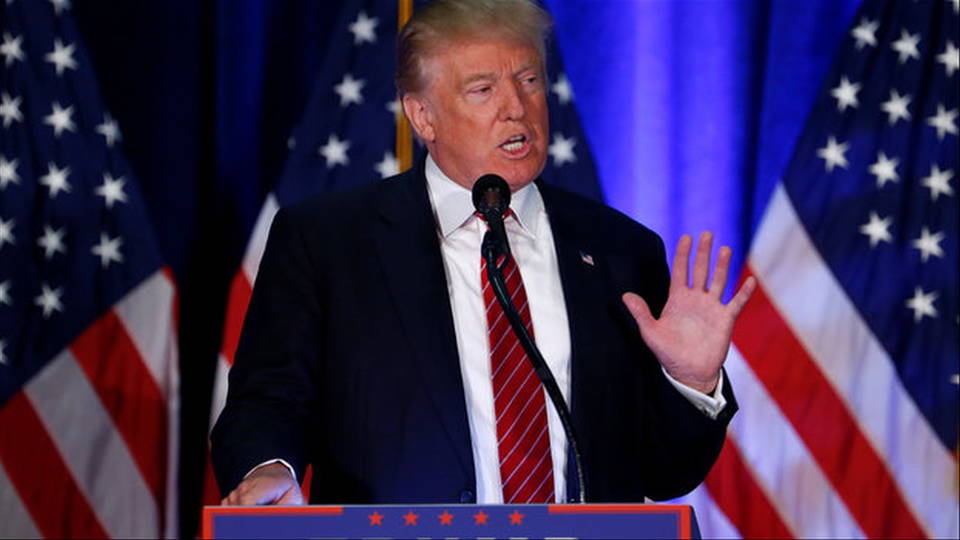 Republican presidential nominee Donald Trump invoked the Cold War as he pledged to wage war against what he described as the "ideology of radical Islam," while speaking in Youngstown, Ohio, Monday. During his speech, Trump also vowed to impose a system of "extreme vetting," a new ideological test for all immigrants. During the speech, Trump also said he’d create a commission on radical Islam, keep Guantánamo Bay open and stop trying people accused of terrorism in civilian courts. He also reversed an earlier threat that the United States might not meet its NATOobligations, and said Monday he would work with NATO allies to defeat Islamic State militants if he wins the White House.
Giuliani Claims No Terrorist Attacks Occurred in Years Before Obama
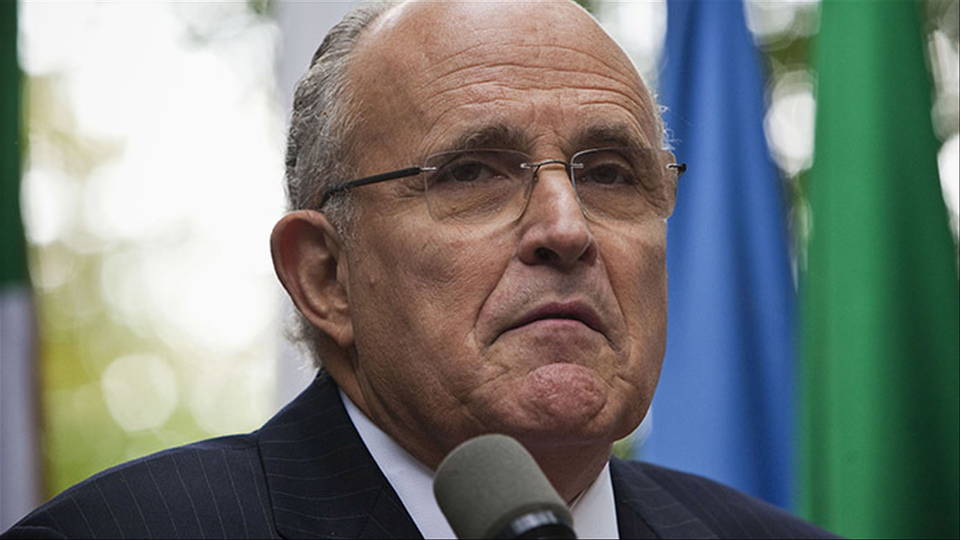 Former New York City Mayor Rudolph Giuliani introduced Trump onstage in Youngstown on Monday, where Giuliani sparked outrage when he appeared to momentarily forget about the events of 9/11.
Rudolph Giuliani: "By the way, under those eight years before Obama came along, we didn’t have any successful radical Islamic terrorist attack in the United States. They all started when Clinton and Obama got into office."
That was Rudolph Giuliani, who was mayor of New York City during the 9/11 attacks. In response,the cover of the New York Daily News today printed Giuliani’s words superimposed upon an image of the falling twin towers.
VP Joe Biden: "Trump Is Already Making Our Country Less Safe"
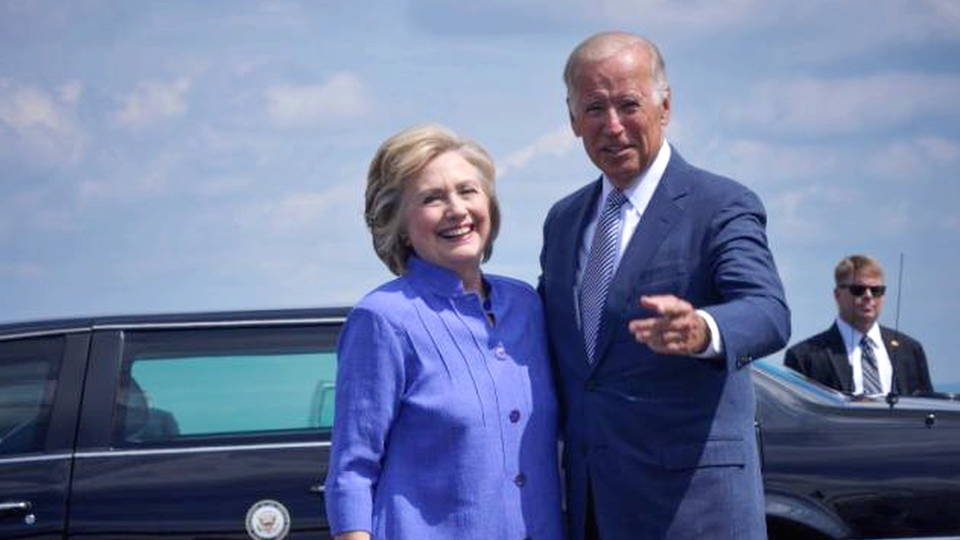 Meanwhile, former Secretary of State Hillary Clinton and Vice President Joe Biden held a rally in Scranton, Pennsylvania, on Monday. Scranton is Biden’s hometown. It was Biden’s first campaign appearance on behalf of Hillary Clinton. During his speech, Biden said Trump was making the United States less safe.
Vice President Joe Biden: "Ladies and gentlemen, does he have any idea the adverse consequences these outlandish comments have on our allies, our friends and the physical safety of our troops? Trump is already making our country less safe."
We’ll have more on Donald Trump’s speech after headlines with Matt Taibbi, Phyllis Bennis, and Linda Sarsour.
After Uprising, Milwaukee Imposes Curfew for Teenagers
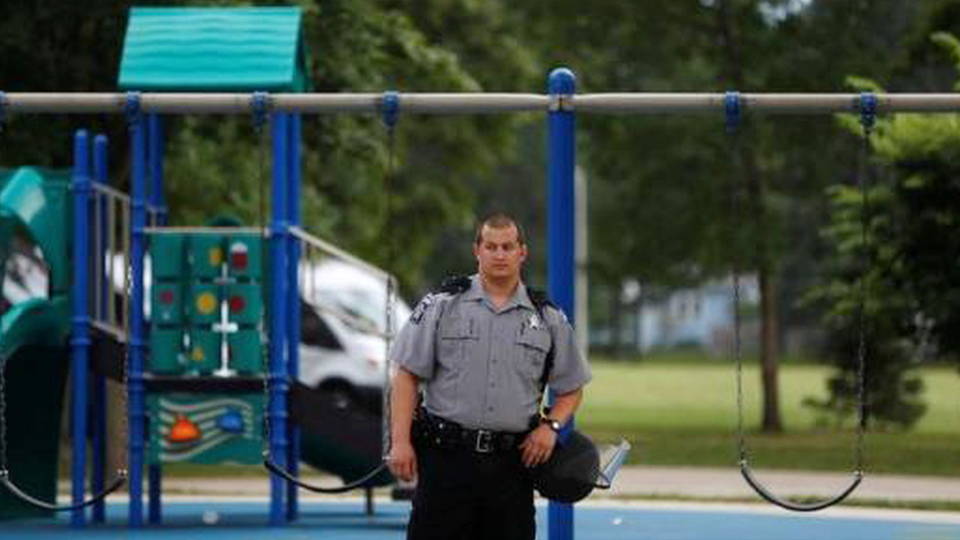 Milwaukee has imposed a 10 p.m. citywide curfew for teenagers, following this weekend’s uprising sparked by the fatal police shooting of a 23-year-old African-American man named Sylville Smith. On Sunday, Wisconsin Governor Scott Walker also activated the National Guard after local residents set fire to police cars and several businesses, including a gas station, Saturday night. Police say Smith was shot by an officer following a traffic stop. Police Chief Edward Flynn says Smith had turned toward the officer with a gun in his hand. An autopsy conducted Monday shows Smith was fatally shot in his chest and arm. Milwaukee is considered to be one of the most segregated cities in the country.
Louisiana: Death Toll Rises to 7 Amid Historic Flooding
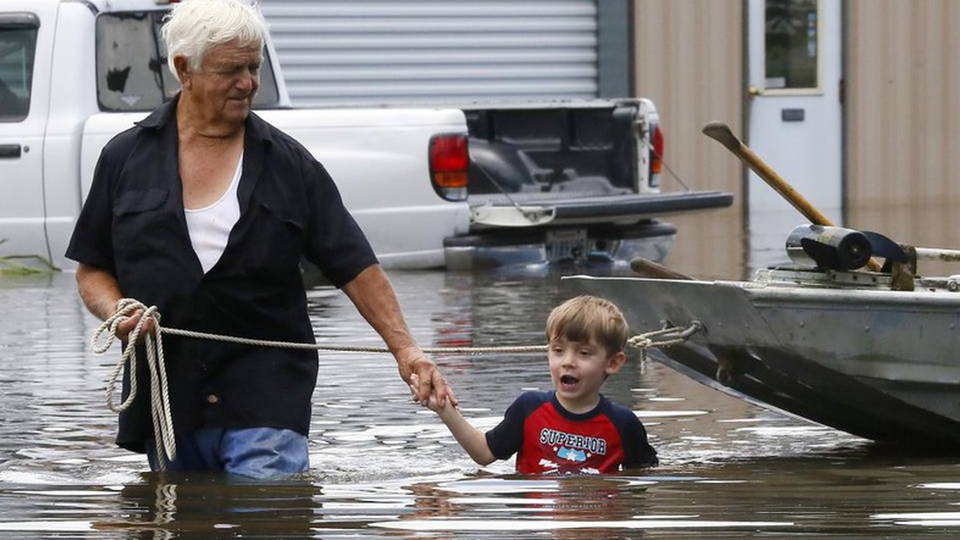 The death toll is rising from the unprecedented flooding in southern Louisiana. At least seven people have died, and more than 10,000 people have been forced to relocate to shelters, as evacuations and emergency rescues continue. President Obama has declared Louisiana a federal disaster zone. The historic flooding has also caused chaos, especially in the hard-hit areas in and around Baton Rouge. On Monday, one firefighter mistakenly shot another firefighter during a rescue mission near Baton Rouge. The man survived the shooting. The National Weather Service says flooding is expected to continue. More rain is in the forecast for the region this week.
Pentagon Releases 15 Prisoners from Guantánamo Bay
 The Pentagon has announced it’s released 15 prisoners from Guantánamo Bay, marking the largest single transfer since President Obama took office. The 15 men were sent to the United Arab Emirates. Each had been imprisoned by the United States for about 14 years without trial. There are now 61 prisoners remaining at Guantánamo. Of them, 20 have been cleared for release—some have been cleared for more than a decade. President Obama promised to close the prison at the beginning of his first term in office nearly eight years ago.
Yemen: U.S.-Backed Airstrike Destroys Hospital, Killing 15
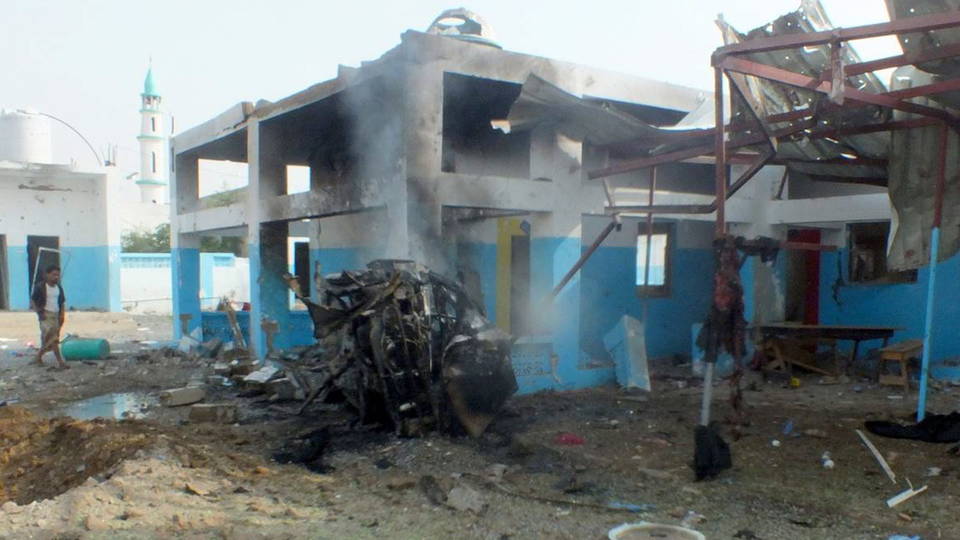 In Yemen, as many as 15 people were killed Monday after a U.S.-backed, Saudi-led airstrike destroyed a hospital supported by Doctors Without Borders. At least another 19 people were wounded, including three foreign doctors, when the airstrike hit Abs Hospital in Yemen’s northern Hajjah province. Among the victims were three Yemeni Doctors Without Borders staff members. Monday’s attack on the hospital marks at least the fourth time U.S.-backed, Saudi-led airstrikes have hit a Doctors Without Borders-supported hospital in Yemen during the 17-month conflict. This is a local resident reacting to the airstrike.
Resident: "What did they find at the hospital other than the sick and the wounded and the injured? There is nothing here except patients and medical staff, Doctors Without Borders and Yemeni doctors."
Indian Security Forces Kill 5 Protesters in Kashmir
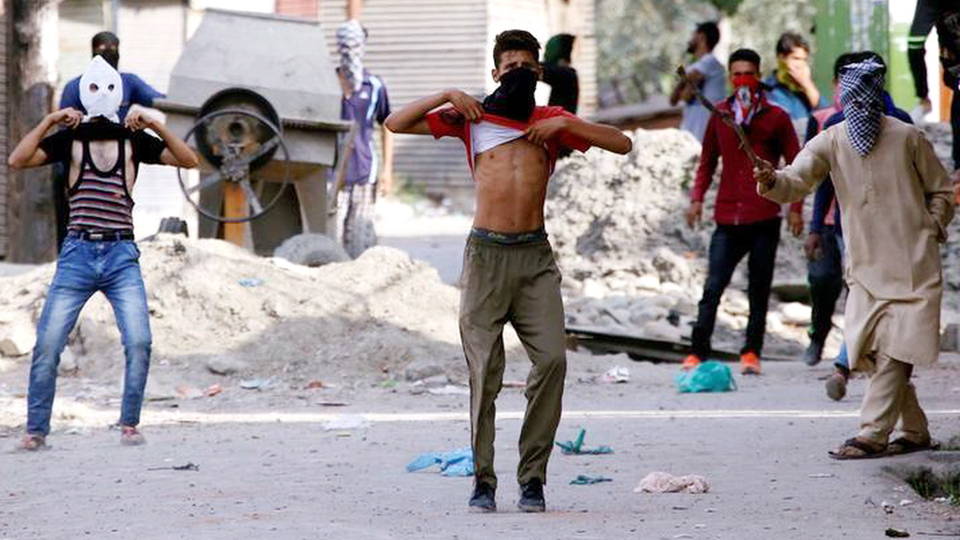 In Kashmir, at least five protesters have been killed after Indian security forces opened fire with automatic rifles on demonstrators on Monday, which was Independence Day in India. Among the victims was a 16-year-old boy. Demonstrators were throwing rocks and defying a curfew. Protests have been growing in Kashmir since early July, when Indian security forces killed a Kashmiri independence leader. At least 64 people have been killed and thousands injured during the month-long protests.
Turkey: 7 Killed in Car Bomb Attack on Police Station
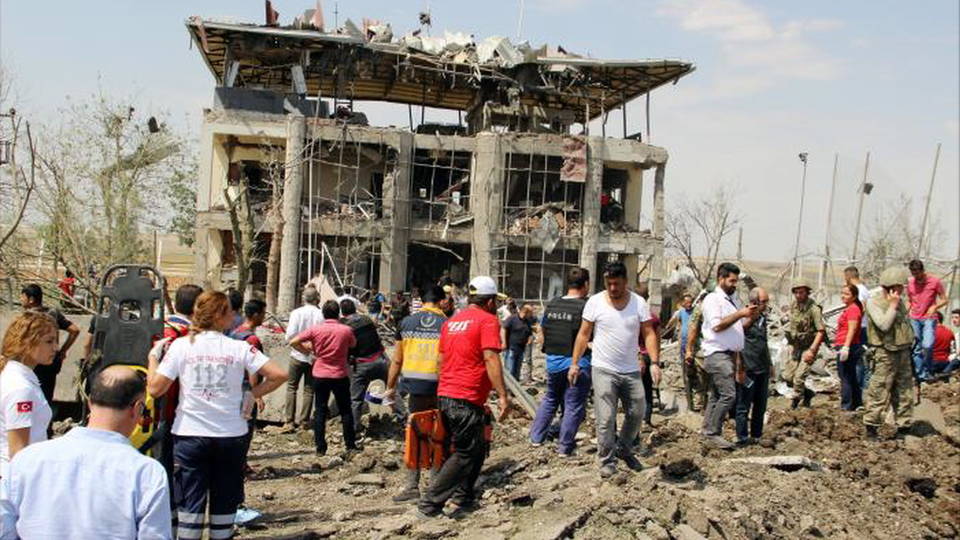
Turkish state media says at least three civilians and four police officers have been killed in a car bomb attack on a police station in Turkey’s southeast. Authorities say at least 20 more were wounded. No group has claimed responsibility. Local authorities have blamed the attack on the Kurdistan Workers’ Party, known as thePKK.
Nigeria: Families Demand Rescue of Chibok Schoolgirls
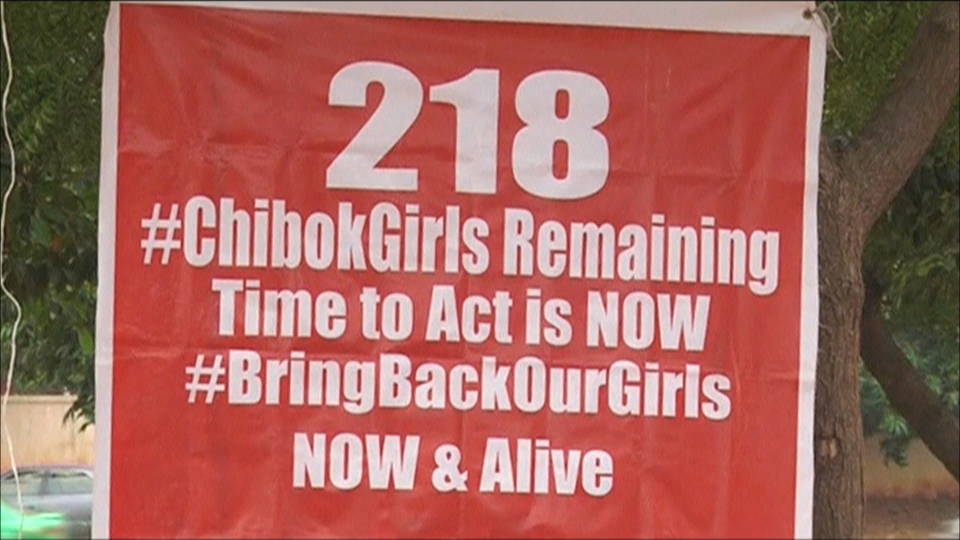 In Nigeria, members of the group Bring Back Our Girls protested in the capital Monday demanding the government do more to rescue the more than 200 Chibok schoolgirls kidnapped by Boko Haram in April 2014. The protest came one day after Boko Haram released a video that appears to show about 50 of the kidnapped girls. In the video, militants demanded the release of imprisoned fighters in exchange for the girls’ release. The video also appears to show the bodies of several girls whom militants say were killed by Nigerian airstrikes.
Health Officials: Number of 9/11-Linked Cancer Diagnoses Triples
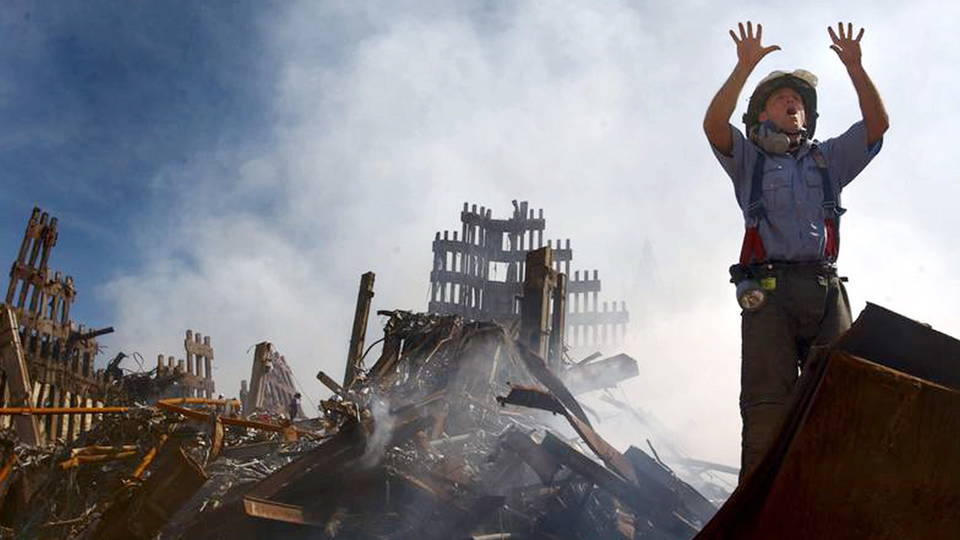 In New York City, health officials say the number of people who have been diagnosed with 9/11-linked cancers has tripled. Nearly 5,500 first responders and local residents have now been diagnosed with cancers linked to the toxic smoke and dust of 9/11. That’s up from fewer than 2,000 cancer victims in 2014. Health officials have called the increase "alarming."
New York City: Hundreds Mourn Killing of Imam and His Assistant
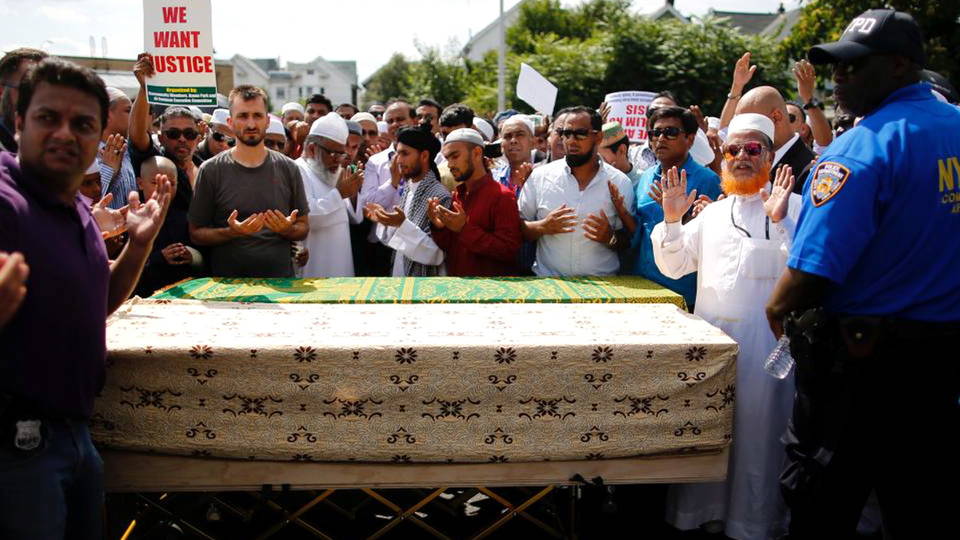 Also in New York, hundreds gathered Monday for the funeral of Imam Maulama Akonjee and his assistant Thara Uddin, who were shot in the back of their heads while walking home from prayer in broad daylight on Saturday. On Monday, suspected shooter Oscar Morel was charged with two counts of second-degree murder. Authorities say it is not yet clear whether the imam and his assistant were targeted as a result of their faith. Many in the Queens community of Ozone Park say they think the Islamophobic rhetoric promoted by Donald Trump may have contributed to their deaths. New York City Mayor Bill de Blasio appeared to reference Donald Trump’s rhetoric at Monday’s funeral.
Mayor Bill de Blasio: "And we know there are voices all over this country who are spewing hate, trying to create division, trying to turn one American against another. I look around at all my brothers and sisters here, I see proud Americans, I see proud New Yorkers. And I will never let us be torn apart, and we will not let each other be torn apart."
NC Officials Ask SCOTUS to Reinstate Discriminatory Voter ID Laws
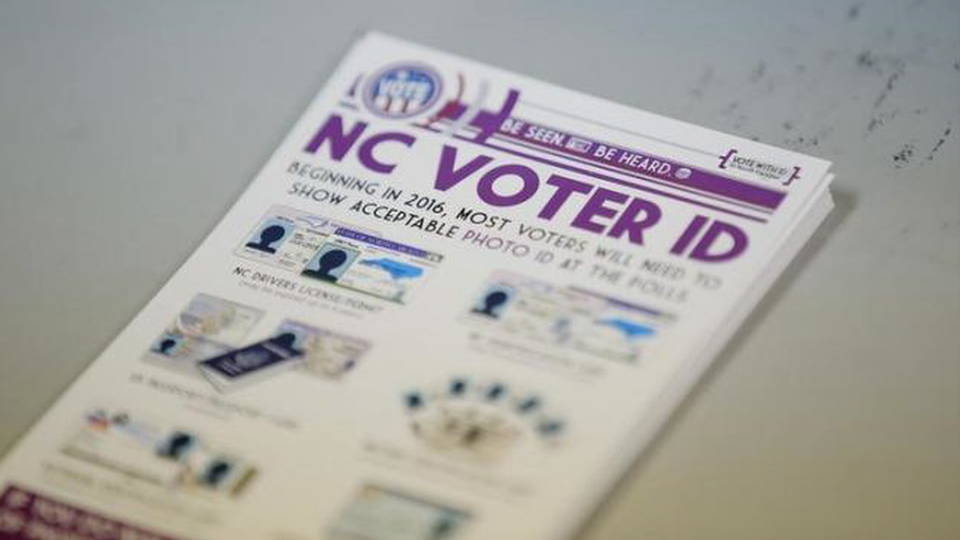 In North Carolina, officials are petitioning the U.S. Supreme Court to reinstate parts of North Carolina’s strict voter ID laws, which were blocked last month after a court ruled the measures discriminated against African Americans and targeted them "with almost surgical precision." Last month’s ruling means up to 5 percent of the state’s registered voters targeted by the law can now vote in the general election. But state officials are asking the Supreme Court to reverse this decision, which would once again make it harder for people to vote in November.
Gays Against Guns Protest BlackRock for Investing in Firearms
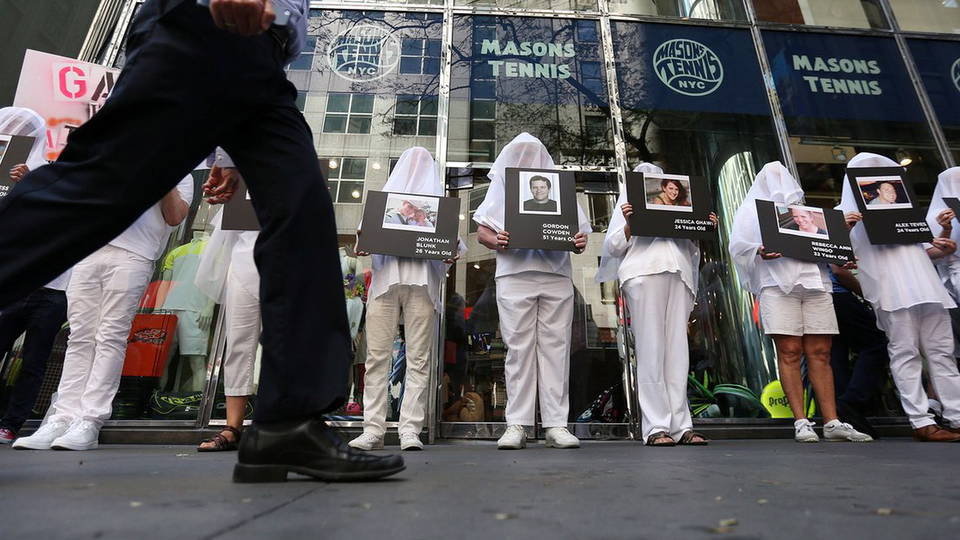 And here in Manhattan, activists with the group Gays Against Guns rallied outside the New York City headquarters of the investment management company BlackRock to protest its investment in gun manufacturers. As of 2015, BlackRock was one of the top three shareholders of the gun manufacturers Smith & Wesson and Sturm, Ruger & Co. BlackRock has also invested heavily in major ammunition companies. During the protest, 12 activists staged a die-in to represent the people killed in the 2012 Aurora, Colorado, movie theater massacre. The shooter, James Holmes, had used a Smith & Wesson-manufactured semiautomatic rifle. This is organizer Tim Murphy.
Tim Murphy: "We’re protesting BlackRock today because they’re the largest asset management company in the country, and every time there’s a mass shooting, since 2012, they buy more and more stocks in guns, because they know that the death business is good business for them. They are literally profiting off the backs of dead people."Donate today:
Follow:


SPEAKING EVENT
 8/19 Seattle, WA
NEW BOOK
 WORK WITH DN!
-------
Democracy Now! Daily Digest: A Daily Independent Global News Hour with Amy Goodman & Juan González for Monday, August 15, 2016 democracynow.org
Stories:
 "This is the Madness They Spark": Uprising in Milwaukee After Police Kill 23-Year-Old Black Man
Protests are continuing in Milwaukee two days after police shot dead a 23-year-old African-American man named Sylville Smith. On Sunday, Wisconsin Governor Scott Walker activated the National Guard after local residents set fire to police cars and several local businesses, including a gas station, on Saturday night. Seventeen people were arrested. Four police officers were reportedly injured. Milwaukee police say Smith was shot while trying to flee from an officer who had stopped his car. Police Chief Edward Flynn said he had viewed video from the officer’s body camera, and it showed Smith had turned toward him with a gun in his hand after the traffic stop. Many local residents said the tension between their community and the police has been rising for years. Milwaukee is considered to be one of the most segregated cities in the country. We speak with Muhibb Dyer, community activist, poet and co-founder of the organization Flood the Hood with Dreams.
TRANSCRIPT
This is a rush transcript. Copy may not be in its final form.
AMY GOODMAN: Protests are continuing in Milwaukee, two days after police shot dead a 23-year-old African-American man named Sylville Smith. On Sunday, Wisconsin Governor Scott Walker activated the National Guard, after local residents set fire to police cars and several local businesses, including a gas station, Saturday night. Seventeen people were arrested, four police officers reportedly injured. Last night, two police were reportedly injured, and one person was hospitalized after being shot by an unknown assailant. Milwaukee Mayor Tom Barrett spoke out on Sunday.
MAYOR TOM BARRETT: Last night was unlike anything I have seen in my adult life in this city. I hope I never see it again. For every member of this police department, it was unlike anything that they had seen in their career. For every member of the fire department, it was unlike anything they had seen in their entire career.
AMY GOODMAN: The Milwaukee Police Department is defending its use of force in the case of Sylville Smith. Police say he was shot while trying to flee from an officer who had stopped his car. Police Chief Edward Flynn said he had viewed video from the officer’s body camera, that hasn’t been released. It showed Smith had turned toward him with a gun in his hand after the traffic stop, he said. Many local residents said the tension between their community and the police has been rising for years. Milwaukee is considered to be one of the most segregated cities in the country. On Saturday, a man identifying himself as the brother of Sylville Smith spoke to the local Milwaukee station CBS 58.
SEDAN SMITH: Right now, you got a city riot going on, because, once again, the police has failed to protect us like they said they was going to do. They failed to be here for the people like they say they—like they’re sworn in to do. You know? And us as a community, we’re not going to protect ourselves, but if we don’t have anyone to protect us, then this is what you get. You know, you get riots. You got people out here going crazy. We’re losing loved ones every day to the people that’s sworn in to protect us. It’s other stuff that’s going on out here, and you wonder why. It’s ISIS in America.
EVAN KRUEGEL: Sedan, certainly, people upset here tonight, but we’ve got, you know, innocent business owners who are now going up in flames. What’s it going to take for you guys to be OK tonight and to stop this chaos?
SEDAN SMITH: It ain’t me. It’s not me. I’m going to let you all know that now. It’s not us guys, neither. And I’m glad that y’all said that. It’s not us. It’s the police. This is the madness that they spark up. This is what they encourage. This is what they provoke. This is what you get. Either you take us from—a loved one from someone. This is what you get. You get a lot of people that’s hurt, and they can’t vent the right way. They can’t no longer depend on the police to be here to protect us like they say they’re going to do. So this is what you get. And, no, it’s not going to end today. I can’t tell you it’s going to end tomorrow. I don’t know when it’s going to end. But it’s for y’all to start. We’re not the ones that’s killing us. Y’all killing us. We can’t make a change if you all don’t change.
AMY GOODMAN: That was Sedan Smith, speaking to CBS 58. Smith said he’s the brother of Sylville Smith, the 23-year-old man killed by Milwaukee police on Saturday.
For more, we go to Milwaukee, where we’re joined by Muhibb Dyer. He’s a community activist, a poet, co-founder of the organization Flood the Hood with Dreams.
Welcome to Democracy Now!, Muhibb. Can you talk us through the weekend, what happened Saturday night, and about the community response?
MUHIBB DYER: How are you doing, Ms. Goodman? And it’s a pleasure to be on Democracy Now! today.
Well, I mean, as you can see, you know, on a surface level—and I had the opportunity to be out there last night—you see what appears to be complete chaos. Gas stations are being burned. You see individuals riding around, hanging out of cars. In some cases, gunshots everywhere. You see the police, in some cases, taking very provocative stances, provoking certain incidents amongst peaceful demonstrators at times. And then, on the other hand, you see anger, just the anger and the frustration of a community that has suffered atrocities and oppression on behalf of what they deem to be the police oppressive system, that has never seemingly been held accountable for taking the life, like the young man said, of their loved ones. So, when you put that all together, it becomes a powder keg. And it’s the explosion, metaphorically, that you get that’s going on in Milwaukee today.
AMY GOODMAN: So, talk about what you understand took place on Saturday night with the police killing of Sylville Smith.
MUHIBB DYER: What I understand now, I mean, is various vantage points, of course, various stories. But what I—the police are saying, what you reported, is that a young man was stopped in a routine traffic stop, I suppose, and he fled an officer. And what—he fled from an officer. And what happened was, at some point, he turned his pistol towards the officer, and the officers say that they justifiably shot him, whereas the reports that’s coming out of the community is that it’s the exact opposite. Some are saying the young man was unarmed and he had no gun on him at all. Some are saying that the young man had a gun, and he was hopping over a fence, and as he hopped over a fence, the gun fell, and he picked up the gun to throw it over the fence, and the officers shot him in the back. So, to put it in a nutshell, we don’t know. We’re going to have to wait for the videotape to be released. So everything now is speculation, and it’s the police’s word against the community’s word.
AMY GOODMAN: Why haven’t the police released the video cam of the officer and the officers who were involved in this killing?
MUHIBB DYER: I don’t know, ma’am. They say it’s—this is their procedure, that it takes time for them to be able to sort through things while they’re doing their own investigation. The reality of the situation that we see in Milwaukee and all over the United States of America is that the community is very frustrated and very upset in terms of what’s going on, because you always have situations where African-American males are being killed, and then you have the police department taking their time releasing their facts. And whether you catch something on videotape—and I guess this is the sentiment of the community—whether it’s on videotape or whether it’s eyewitnesses, we never get our day in court. We never get our day in court. Police officers are never held accountable for the murders of African-American males. It’s always justifiable homicide.
They release these reports talking about the character of an individual, which really, I think, creates the condition for public opinion to say, "OK, yes, he deserved it. You know, he had a lengthy police record—he deserved it. He was a thug, he was a criminal—he deserved it." So, I think they build public opinion to such an extent where homicide—like I said before, the homicide of police officers on African-American males always seems to be justified. And they never really talk about what happened in that actual event. They don’t separate the actual event from the person’s character, I guess.
AMY GOODMAN: Milwaukee has been described as the most segregated city in America. You grew up there, Muhibb. Can you talk about your city?
MUHIBB DYER: Yes, I—yes, I can. I was born and raised in Milwaukee, Wisconsin. And, you know, we lead the nation in many of, what they say, the most critical statistics in this country. You know, we have the fourth highest rate of poverty amongst all cities in America, one statistical poll said. We also are said to have the second highest segregation rate in this country. We have one of the highest incarceration rates amongst African Americans in this country. The school dropout rate is off the charts. So with all of this going on, and the factories have closed, and the economic plight of the city has gone down, growing up in Milwaukee always felt like this was a place of extreme despair. Some good people, very talented individuals, who are striving to make a difference, but that’s juxtaposed with the reality that accomplishment or prosperity or the sense of upward mobility amongst the people is—it’s a very difficult place.
And what’s going on, I think, being played out in the streets today, is that you have these young people who feel the hopelessness and who feel the despair, and they want something different. But like the great Dr. Martin Luther King Jr. said, the violence is the language of the unheard. How is violence the language of the unheard? he said. He said that America is not listening to the yearnings of freedom and justice, the desire of freedom and justice. And what is America not paying attention to? Dr. Martin Luther King said that white people, for the most part, are so preoccupied with tranquility and status quo, that they are missing the point that freedom and justice and equality are not being met out. And this is Milwaukee.
AMY GOODMAN: Milwaukee’s Police Department has a long history of distrust by the black community. Tensions flared in 1991 as Milwaukee police were accused of turning a blind eye as serial killer Jeffrey Dahmer targeted primarily African-American, Latino and Asian boys. He was ultimately convicted of 15 murders in Wisconsin, his story chronicled in the documentary The Jeffrey Dahmer Files. This is Dahmer’s former neighbor, Pamela Bass, talking about the outcry.
PAMELA BASS: My sister called my mother. She said, "Look at TV, Ma. Isn’t this Pamela’s building in Milwaukee?"
REPORTER: Public outcry followed, accusing police of racism and insensitivity to gays.
PAMELA BASS: And she saw all the swarm of people around me, so she knew that she couldn’t—I can’t get to her. And I remember I finally got through to her on the phone. She told me, "Don’t watch TV, Pamela. Don’t read none of this."
POLICE CHIEF PHILIP ARREOLA: As chief, both I and the entire department must accept responsibility for the inept police response of May 27th.
PAMELA BASS: It was—it was just—I don’t know. I don’t even know what to say about this thing. The city of Milwaukee, to me, just lost. They care nothing about the black community as a whole. They weren’t showing it back then.
AMY GOODMAN: That was Pamela Bass, the neighbor of Jeffrey Dahmer, speaking in the documentary The Jeffrey Dahmer Files. Muhibb Dyer, how does what happened with Jeffrey Dahmer affect the way people see what happens in Milwaukee? And then, of course, in 1981, there was Ernest Lacy, who was put in a police car, taken by police; they were just cruising downtown, the police, and he ends up dead in the back of the police car.
MUHIBB DYER: Well, you know, like I said, it just contributes to what we saw Saturday night and last night, Sunday night. You have a history of, like you said, Ernie Lacy, and you have Daniel Bell, all the way up to a couple years ago in Dontre Hamilton. You have all of these names of individuals who have been murdered by the police. And to my knowledge, they’ve never been convicted of or held accountable for their actions.
And a fallback argument all across America every time a police officer murders an African American is, "Well, you all kill each other every night. There is black-on-black crime every night." Like that’s the scapegoat argument. But, ultimately, when black people kill black people, accountability happens: Black people go to jail. And, you know, the thing is, well, why are there not more rioting when violence happens in the African-American community? Because black people go to jail. Black people are held accountable. Black people are given sentences of homicide, where they have to be held accountable for the actions that they take. But when you have individuals, like the young man said, who are supposed to protect and serve, and they come in and they kill you, and there is never any convictions, then the sentiment is, is that we can’t get justice. We can’t get justice.
AMY GOODMAN: Muhibb, can you tell us what your T-shirt says?
MUHIBB DYER: My T-shirt says the "I Will Not Die Young Campaign."
AMY GOODMAN: I—
MUHIBB DYER: And this is an organization—yes, ma’am?
AMY GOODMAN: Go ahead.
MUHIBB DYER: The I Will Not Die Young Campaign.
AMY GOODMAN: I want to—for you to end, because I know you have to go teach, with your poem. You are not only a community activist, co-founder of the organization Flood the Hood with Dreams, but you are also a poet. Can you share a poem with us today?
MUHIBB DYER: Yes, ma’am. Yes, ma’am. And this, I hope, gives the listeners an understanding of the feeling of the despair of a young person that exists in Milwaukee.
I want you to see beyond the bottles being thrown.
I want you to see beyond the anger
and see a young man on his hands and knees
looking up to the heavens
not knowing if God exists
on a street called Burleigh in Milwaukee.
And he says, "It’s like I’m sitting in a jail cell,
Lord, listen to me.
It’s like I’m sitting in a jail cell,
God, listen to me.
It’s like I’m sitting in a jail cell,
Lord, with invisible bars
waiting on death row
counting down the days
because I know they’re coming.
You see, I know they’re coming.
Them police, them jealous dudes and chicks
they’re all coming.
And it wasn’t supposed to be like this.
“You see, Lord, they never told me you were in me.
They never told me you were always there.
So, in turn, I believed what I saw.
And what I saw was a daddy that was never around
and a mama that was always crying
because we were always broke
when there was money outside,
and rats and roaches and pissy mattresses
me and my brother slept on
when there was money outside,
and teachers that told me
I had to wait 12 years to get paid.
You see, my teachers told me
I had to wait 12 years to get paid
while all of them got paid off of me right now
whether I learned or not
when there was money outside.
And what else was I supposed to do?
“They never told me you were in me, God.
They never told me you were always there.
And how was I supposed to know
that being created in your image and your likeness
meant that if you made the Earth, Lord,
I can make my own business,
and if you made the sun,
I could make more than just babies
more than just babies
but buildings and networks
and that busting guns wasn’t the only way
to get access to your power, Lord,
and shaking these dudes down on the block
for this dope money was not the only way
to get access to your power, Lord?
How was I supposed to know?
And how was I supposed to know
that downing shots of Hennessy and smoking weed
wasn’t the only way to accept this and get to heaven,
that I could have gotten down on all fours and talked to you, Lord?
“They never told me you were in me.
They never told me you were always there.
And how was I supposed to know
that every time mama was like
’Stay in school, baby,
stay off those streets,’
that was you, Lord,
and every misdemeanor charge I ever beat,
that was you, Lord,
every felony charge I ever beat,
that was you, Lord,
and when those bullets missed me
when I was on the block doing wrong,
that was you, Lord,
and when my boy laid in that casket
cold and lifeless,
that that was like you was trying to tell me
he would be me if I didn’t change?
“And now I’ve fallen.
My time is up.
I know they’re coming.
And I don’t even know
if you listen to kids like us, Lord.
Do you even care about kids like us, Lord?
But I know now what I should have known then.
And it took me to fall to see the light.
You were always in me.
You were always there.
Forgive me, Lord,
for I knew not what I was doing to myself.
Please, send me somebody
a voice
maybe from across the nation
a sympathetic voice
that understands
that I need to be taught
something that I’ve never been taught before.
Please, send me someone
anybody in humanity
that can teach me to love me
teach me to love me
teach me to love me."
Thank you.
AMY GOODMAN: Muhibb Dyer, I want to thank you for being with us, community activist, poet, co-founder of the organization Flood the Hood with Dreams, speaking to us from his hometown, that went up in flames this weekend after police killed an African-American man on Saturday night, speaking to us from Milwaukee, one of the most segregated cities in the country.
This is Democracy Now! When we come back, we go to Rio de Janeiro, Brazil. There are remarkable firsts that have taken place in the last week, and we’re going to talk with two guests about them. Stay with us. ... Read More →
 African-American Women Make Olympic History by Winning Gold in Swimming, Gymnastics & Shot Put
The Olympics continue in Rio de Janeiro, where Stanford swimmer Simone Manuel has made history, becoming the first African-American female swimmer to win an Olympic medal in an individual event. After winning, Manuel said, "It means a lot, especially with what is going on in the world today, some of the issues of police brutality. This win hopefully brings hope and change to some of the issues that are going on." Manuel’s win was only one of a number of historic Olympic victories for African-American female athletes over the last week. African-American gymnast Simone Biles scored her third gold medal when she became the first American woman to win the Olympic vault individual. And Michelle Carter became the first American woman to win a gold medal in shot put. For more, we speak with Jesse Washington, a senior writer for The Undefeated. He’s covering the Olympics from Rio.
TRANSCRIPT
This is a rush transcript. Copy may not be in its final form.
AMY GOODMAN: As we head to Brazil, the Olympics are continuing in Rio de Janeiro, where Stanford swimmer Simone Manuel has made history, becoming the first African-American female swimmer to win an Olympic medal in an individual event. Manuel tied Canadian swimmer Penny Oleksiak in the 100-meter freestyle. Both women won gold medals and set a new Olympic record. After winning, Simone Manuel said, quote, "It means a lot, especially with what is going on in the world today, some of the issues of police brutality. This win hopefully brings hope and change to some of the issues that are going on. My color just comes with the territory," she said.
Simone Manuel’s win was only one of a number of historic Olympic events over the last week. Usain Bolt of Jamaica won the 100-meter dash in 9.81 seconds Sunday night, making him the only person to ever win the 100-meter race three times. He was Jamaican. American swimmer Michael Phelps scored his 23rd gold medal when the U.S. won the men’s four-by-100-meter medley relay. Phelps is now the most decorated Olympian in all history. African-American gymnast Simone Biles scored her third gold medal when she became the first American woman to win the Olympic vault individual. And tennis player Monica Puig won Puerto Rico’s first gold medal in Olympic history.
Joining us now is Jesse Washington, senior writer for The Undefeated, covering the Olympics from Rio.
Jesse, thanks so much for being with us. Talk about these significant wins, Jesse. Why don’t you begin with—begin with Simone Biles.
JESSE WASHINGTON: Well, Simone is the greatest gymnast of all time, by popular acclaim, by the testimony of the gymnasts who have come before her. And there’s a lot of pride in the black community about that, to see a young black woman excelling on the world stage. It has a lot of significance for a community that still can feel marginalized and forgotten and not appreciated.
AMY GOODMAN: And she has an amazing life story, Simone Biles, who was born in Columbus, Ohio, is that right? And with her connection, both her family, being raised by her grandparents, and her connection to Belize, which is also celebrating.
JESSE WASHINGTON: She does have an amazing story, and she’s had to overcome a lot of adversity. And she has a tough relationship with her mom, even to this day, and so that creates more of an underdog spirit. And I think it also kind of plays into some of these stereotypes that a lot of the media likes to see about young black athletes growing up in these troubled areas—drugs, parents, that kind of thing. And so, that’s made her story more attractive for a narrative. But at the same time, she had a set of grandparents that took her in, that were prosperous. Her grandparents were able to build a million-dollar gym for her to train in. So that’s not something you think about often when we see a young black athlete.
AMY GOODMAN: Right. Her mother had drug problems, and her four children, Simone being one of them, were—she was losing them, and her grandparents took her and her sibling—two, her and her sibling, in and then raised them. And the country of Belize?
JESSE WASHINGTON: You know, I don’t know much about the country of Belize with her. I’m not—I’m not up on that aspect of her story.
AMY GOODMAN: Belize, yeah, her grandmother, who raised her as her mother, was from Belize. But talk, overall, about the significance of the Rio Olympics, with the kind of historic wins you’ve been covering.
JESSE WASHINGTON: Well, I work for The Undefeated, which is a website about race and sports. And so, we’re very attuned to a lot of the racial dynamics that are going down here. Our audience is very interested in firsts and in successful black athletes, athletes of color, black women who overcome odds to do great things. And there’s been a number of moments like that here in these Rio Olympics, Simone Manuel being one of the best examples as the first black swimmer to win an individual gold medal. Now, when you start getting into these firsts, sometimes it’s the first black woman to win an individual, a first black woman to win a relay, first left-handed black swimmer to win a medal on a Tuesday. So, it shows that there’s still a hunger for these firsts to be recognized.
But overlooked in the whole Simone Manuel, indeed, a historic accomplishment, is that Simone and her teammate, Lia Neal, who have both been being asked all these black swimmer questions, they’re ready to just be swimmers. And I asked Lia, when I had a chance to sit down with her, "How do you feel about always getting asked, leading into these Olympics, black swimmer, black swimmer, black swimmer?" And she said, "It can be tough." And Simone Manuel told me, "It weighs me down a little bit. And when I got in the pool to win that gold, I had to get rid of the weight of the whole black community." So, it’s interesting how these narratives can really form. And we think that we’re praising and celebrating these athletes, but it can be tough for them.
Nevertheless, it has been a big deal here in Rio, and a black woman won the first U.S. medal in the shot put ever, first gold medal ever, the "Shot Diva." If you haven’t been on the Shot Diva’s Instagram, you’ve got to go there, get yourself some clothes, some makeup. She’s really cool. So, there’s been a lot of moments like that here in Rio, and it’s been pretty awesome to see.
AMY GOODMAN: I want to turn to Simone Manuel, well, the first African-American woman to win an individual swimming gold medal, asked about the significance of her victory immediately after the race. She was speaking to NBC.
NBC REPORTER: You are the first African-American woman to medal in an individual event in swimming. What does that mean to you, Simone?
SIMONE MANUEL: Yeah, it means a lot. I mean, this medal is not just for me, it’s for a whole bunch of people who have came before me and have been an inspiration to me—Maritza, Cullen. And it’s for all the people after me who can’t—who believe they can’t do it. And I just want to be an inspiration to others that you can do it.
AMY GOODMAN: After Simone Manuel was awarded the gold medal, she said, quote, "It means a lot, especially with what is going on in the world today, some of the issues of police brutality. This win hopefully brings hope and change to some of the issues that are going on. My color just comes with the territory," she said. She also said, "Just coming into this race I kind of tried to take the weight of the black community off my shoulders, which is something I carry with me just being in this position. I want to be an inspiration, but I would like there to be a day when it is not 'Simone the black swimmer,'" as you said, Jesse Washington.
JESSE WASHINGTON: Yes, she did say she would like it to not "Simone the black swimmer." And that’s because I asked her, "Are you ready to move past this? Haven’t we got enough firsts now to just say, 'All right, we can be finished with the race question in swimming'?" We’ve had a gold medal in the year 2000. We’ve had golds and world records and all types of swimmers. And she’s ready to do that. And she also said, "Calling me the first black swimmer makes it seem like I can’t swim fast, that I can’t break records. It almost has this sort of affirmative action-type feel to it."
So, I think that one of the reasons why this narrative developed is—I was at the press conference with Simone after her historic win. And there were at least 100 journalists there from around the world. There were with 50, 60 cameras. And I looked around the room, and I was the only black journalist in the room. And I checked every face and behind every camera. And, to me, that really said something. So, everyone is fixated on this first thing, because that’s—in their minds, justifiably so, they feel like "I’m praising you, I’m giving you your props, I’m recognizing this historic thing." But you have to look deeper than that sometimes. And you have to look at how these athletes feel, the weight that they carry with them.
I’m wearing a shirt right now—I don’t know if you could see it—from the '68 Olympics, one of the most famous Olympic moments, where the 200-meter medalists gave the Black Power salute on the medal stand. They were kicked out of the Olympics, their careers were over, because they took a moment to say, "Listen, black folks need their rights to be respected in the United States." So, the fact that we're still dealing with this all these years later and that we’re still looking for firsts in the Olympics, we’re still looking to black athletes as the spokesmen for black America and the spokeswomen for black America instead of athletes, I think it’s time to change the narrative.
AMY GOODMAN: Well, after Simone Manuel’s historic win, her mother, Sharron Manuel, spoke about Simone’s role in the sport of swimming.
SHARRON MANUEL: When she was about 11 years old, she did come to me one day. We were just home having casual conversation. And she asked me a question about why she didn’t see many others like herself in the sport of swimming. And I didn’t have an answer for it immediately. And I said, "That’s a good question. I don’t know. So, let’s look it up." And so we got on the internet, and we looked up information, and we kind of just pulled different articles and started reading. And I think, for her, that was the moment that she realized that she had a bigger role to play in what she was doing in the sport of swimming.
AMY GOODMAN: So that is the mother of Simone Manuel. You mentioned the shot put gold, Michelle Carter. What is her story?
JESSE WASHINGTON: Michelle Carter, the Shot Diva, she is the daughter of a Super Bowl winner and a shot put gold medalist, Michael Carter. He dad played nose tackle and won three rings with the 49ers. She is interesting because she says, "Hey, I’m in a sport here"—she—I asked her a question at the news conference, and she responded by saying, "A lot of people don’t even look at us as women," which is a tough thing to say. "We’re big. We’re athletes. We’re out here getting sweaty." So she maintains her beauty at all time. After she won the gold medal, it appeared briefly that she was crying. She was actually reapplying her lipstick. And she embraces her femininity. She also embraces her size. On the official U.S. Olympic website, she’s listed as 5’9", 210. That is not the dimensions of a woman whom mainstream America would consider beautiful; however, she is a beautiful woman. She embraces that. And she helps other women of all sizes and colors say, "Hey, be happy with who you are. Do you, and you will do better." So, I think that that’s important thing for women, and particularly for black women who have been hit with a lot of body image issues over the years.
It was really inspiring to see her win gold on her final attempt, when she defeated what someone called the Michael Phelps of the shot put, who happens to be Steven Adams from the Oklahoma City Thunder’s big sister. And when I say big sister, this woman was definitely a big sister.
AMY GOODMAN: I want to turn to Michelle Carter—
JESSE WASHINGTON: But Michelle Carter took her out and won the gold on her final attempt.
AMY GOODMAN: I want to turn to Michelle Carter, the first American woman to win a shot put medal at the Olympics in 56 years, coached by her dad, as you said, who won a silver in the 1984 Games in Los Angeles. They’re the first father-daughter to win medals in the same Olympic event. This is Michelle speaking Sunday.
MICHELLE CARTER: We already have a place in history. I’m just kind of adding to what’s already there. And so, I think having that kind of mindset takes that pressure off, because I’m not really trying to make my own story, I’m already adding to a story that’s already there. I’m like, I’m starting a new chapter or the next book or something like that. So, I can’t say—I definitely can’t take away anything that he’s done, because it’s helped groom me to the athlete I am today.
AMY GOODMAN: So, there you have the shot put winner Michelle Carter speaking after the Olympics. We’re going to go to break, and when we come back, we’re going to, in addition to being joined by Jesse Washington, senior writer for The Undefeated, we’re going to be joined by Anthony Ervin, who was the oldest swimming champ in Olympic history. Stay with us.... Read More →
 Meet American Olympian Anthony Ervin: The Oldest-Ever Individual Olympic Swimming Gold Medalist
While Michael Phelps dominated the Olympic headlines over the weekend by scoring a historic 23rd gold medal, another American male swimmer has also made history in Rio. Thirty-five-year-old Anthony Ervin became the oldest-ever individual Olympic swimming gold medalist when he won two gold medals for the men’s 50-meter freestyle and the men’s four-by-100-meter freestyle relay. For more, we go to Rio to speak with Ervin, who is also the author of the recent book titled "Chasing Water: Elegy of an Olympian."
TRANSCRIPT
This is a rush transcript. Copy may not be in its final form.
AMY GOODMAN: This is Democracy Now!, democracynow.org, The War and Peace Report. I’m Amy Goodman. We’re in Rio de Janeiro—at least that’s where our guests are. We’re joined by Jesse Washington of The Undefeated, as well as Anthony Ervin, U.S. swimming champion and four-time Olympic medalist. At 35 years old, he’s the oldest-ever individual Olympic swimming gold medalist. Just wrote the book Chasing Water: Elegy of an Olympian.
Anthony, welcome to Democracy Now! Congratulations on your remarkable victory. Talk about how you feel right now and what it means to you.
ANTHONY ERVIN: Thank you for having me. I feel good. Got some lights burning right into me, and I’m staring into a vacuum to talk back to you.
AMY GOODMAN: Well, talk about how you felt when you realized—when did you realize you had won, with all those toddlers in the pool, you at 35?
ANTHONY ERVIN: Oh, they’re hardly toddlers. That was a very competitive field of athletes that I’ve raced frequently over the last four years. But I knew right away. Right away, I turned around, looked right up at the scoreboard, saw the one next to my name. And immediately, it was this sense of almost ridiculousness and surrealness that I was Olympic champion again. And I smiled and kind of laughed for a moment. And then, I knew that my brother, my friends who came down were up in the stands, so I hopped up on a lane line and yelled to them as loud as I could.
AMY GOODMAN: You’re being called the Usain Bolt of swimming, or maybe he’ll be called the Anthony Ervin of track. But you have come to this with a very—through a very unusual journey. You gave this all up after the Olympics in Sydney, when you also won, right? You won gold and then auctioned off your medal to help the people of the tsunami in Thailand who suffered.
ANTHONY ERVIN: Yeah, the Indian Ocean tsunami, that’s right. Yeah, I had—that was a long time ago. And I feel like I’ve come so far, traveled quite a ways to arrive back at this point. But the view is quite a bit different than it was 16 years ago.
AMY GOODMAN: So that was in the year 2000. Why did you give it up then? And talk about your journey, your conversion. You became a Buddhist. Talk about your life in these 16 years.
ANTHONY ERVIN: Oh, man, that takes a while, you know? Wrote a whole book about it, and even that seemed like it was cut short. Where to begin? Let’s see. I stopped because—well, the reason I was into it, the reason why I swim, is because I enjoy it. And, you know, I enjoyed the competitiveness of it, and I had the Olympic dream. And after having achieved the Olympic dream and winning my gold medal, you know, for me, that was it. That was all I really had considered. And that the idea that I could be standing here, right now, talking to whoever may be listening about it, that wasn’t in the cards initially. That wasn’t part of my—that wasn’t part of my dream. But that was the reality. And I did not want to deal with it. I didn’t know how to deal with it. I was scared to deal with it. I didn’t feel like I had the education to really support coming on here and trying to give in such a manner. So, having accomplished my goals in the pool, I wanted to go and try to reach out to some other goals that I had sacrificed along the way. So, I went and did a bunch of other things. Yes, I discovered Buddhism at one point. I was still swimming then. I was trying to find some kind of balance, and I found the practice of meditation to be quite fulfilling for me and ethically, morally educational. And—but, you know, things changed. It was a long, long route, a lot of ups and downs—I don’t want to get too much into them.
But when I—you know, I was invited to New York to teach kids to swim. And it was there that I rediscovered my love for the water, I think, over the course of the time and the competition, that sense of play that I saw in the kids. You know, initially, they were very afraid, very afraid of the water—and for good reason, because it can be dangerous, and that’s why we learn to swim. That’s why it’s important that everybody learns to swim. It’s a life-saving skill. But once they have overcome that, once they start getting that, then you see them play. They start going under the water. They don’t really listen to you anymore. It becomes a challenge to teach, because they’re just immersed in the element, and they’re free and suspended in it, and they can do and be whatever they want in those moments. And that was what I initially loved about it. And I had lost that. But after rediscovering it through them, you know, I knew that there was more for me to do. I wanted more for myself. And so I went back to school, finished my degree. And shortly thereafter, after starting graduate school, actually, you know, I smoked my last cigarette, and then I went swimming, and have been in and out of the pool since.
AMY GOODMAN: Anthony, you write in your beautiful book, Chasing Water: Elegy of an Olympian, about what it was like after you won in 2000—you won that gold medal—about being promoted as an African-American trailblazer, when you felt, at that point, as a teen, you hadn’t really grown up with that black identity. Can you talk about your life in that way, who your parents are?
ANTHONY ERVIN: Sure. You know, my mom, she came from New York City. She’s a city gal. You know, she even keeps her own—her personal history is a mystery, even to me and the rest of us kids. And my dad came from West Virginia. You know, his father was a coal miner. And, you know, he was—I mean, the question of blackness, you know, is a question of authenticity. And to be viewed in that way—and swimming is—it’s a very visual sport. It’s a body. You know, literally, you’re a body in the water, wearing close to nothing, so that body is on display. And if we’re talking about blackness, blackness is a color. You know, it’s—in the eyes of many, it’s a skin tone. You know, but then, if you dig into the history of it, there’s the idea of hypodescent. You know, one drop of blood makes you black. So, it’s all very complicated, and I didn’t know about any of this. I wasn’t educated on the history of this. Or if I was, I was snoozing through it in classrooms. So, I didn’t know how to necessarily answer to it. And I had trouble tackling, trying to argue that, you know, I authentically am this, if others say I’m not, or people trying to posit some kind of identity on me which I did not drape on myself. I mean, it’s a question of being able to pursue my personal freedom and needing to shuck all forms of identity in order to do that.
AMY GOODMAN: Your father is African-American, Native American?
ANTHONY ERVIN: Not Native American. That was debunked. He believes it, and all of his—a bunch of his family believe it. But then, one of my sisters researched it; apparently it’s not true. I think that’s kind of common.
AMY GOODMAN: Well—
ANTHONY ERVIN: But I read it all the time, and it’s like—it’s not true. If it’s Native American, it’s just because there’s a history dating back to slave days and fighting in the Civil War and the Revolutionary War in my family. ... Read More →
Headlines:Uprisings in Milwaukee After Police Kill African-American Man
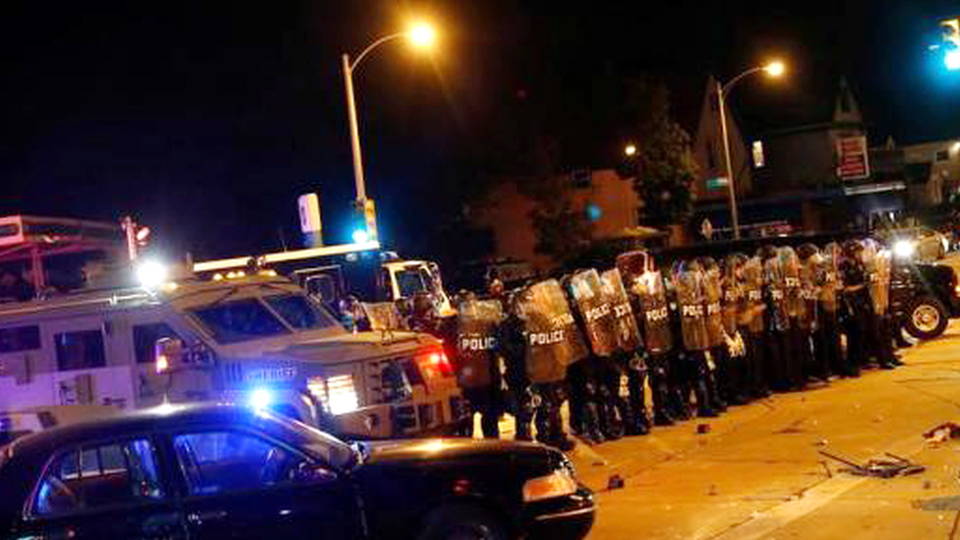 Protests are continuing in Milwaukee two days after police shot dead a 23-year-old African-American man named Sylville Smith. On Sunday, Wisconsin Governor Scott Walker activated the National Guard after local residents set fire to police cars and several local businesses, including a gas station, on Saturday night. Seventeen people were arrested. Four police officers were reportedly injured. Last night, two police officers were reportedly injured, and one person was hospitalized after being shot by an unknown assailant. This is a man who said he’s the brother of Sylville Smith, speaking about the uprising.
Sedan Smith: "Right now, you got a city riot going on, because, once again, the police has failed to protect us like they said they was going to do. They failed to be here for the people like they say they—like they’re sworn in to do. You know? And us as a community, we’re not going to protect ourselves, but if we don’t have anyone to protect us, then this is what you get. You know, you get riots. You got people out here going crazy. We’re losing loved ones every day to the people that’s sworn in to protect us."
The Milwaukee Police Department is defending its use of force in the case of Sylville Smith. Police say he was shot while trying to flee from an officer who had stopped his car. Police Chief Edward Flynn said he had viewed video from the officer’s body camera, and it showed Smith had turned toward him with a gun in his hand after the traffic stop. Many local residents said the tension between their community and the police has been rising for years. Milwaukee is considered to be one of the most segregated cities in the country.
Baltimore: 12 Arrested Protesting Fraternal Order of Police Conference
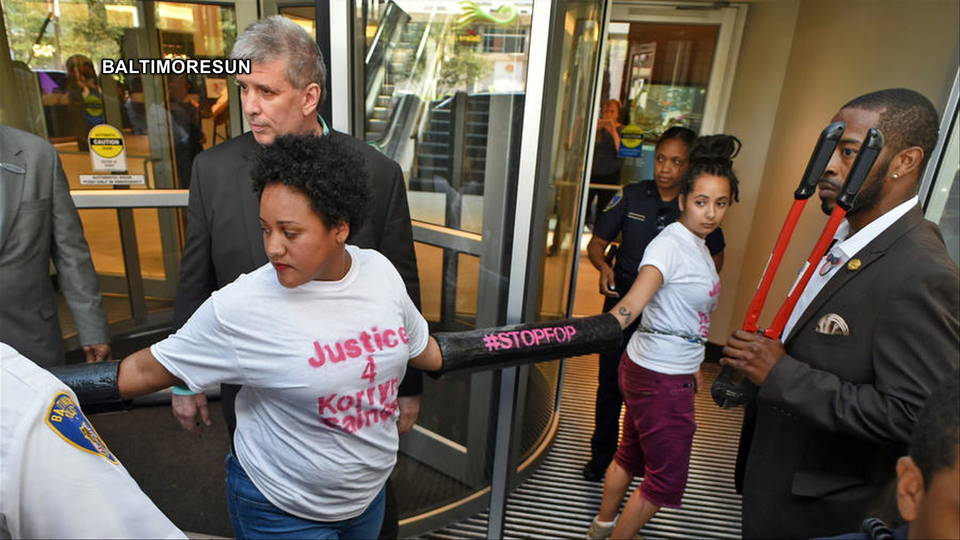 Meanwhile, in Baltimore, 12 people were arrested in a protest at the opening of Maryland’s Fraternal Order of Police conference Sunday afternoon. Members of the group Baltimore Bloc locked themselves together using PVC pipes and chained themselves to a railing to block the escalator leading to the conference at the Hyatt. It’s the latest in a series of protests in recent weeks against police unions, which activists say defend officers accused of brutality.
Clintons Earned $10.6 Million in 2015, According to Tax Returns
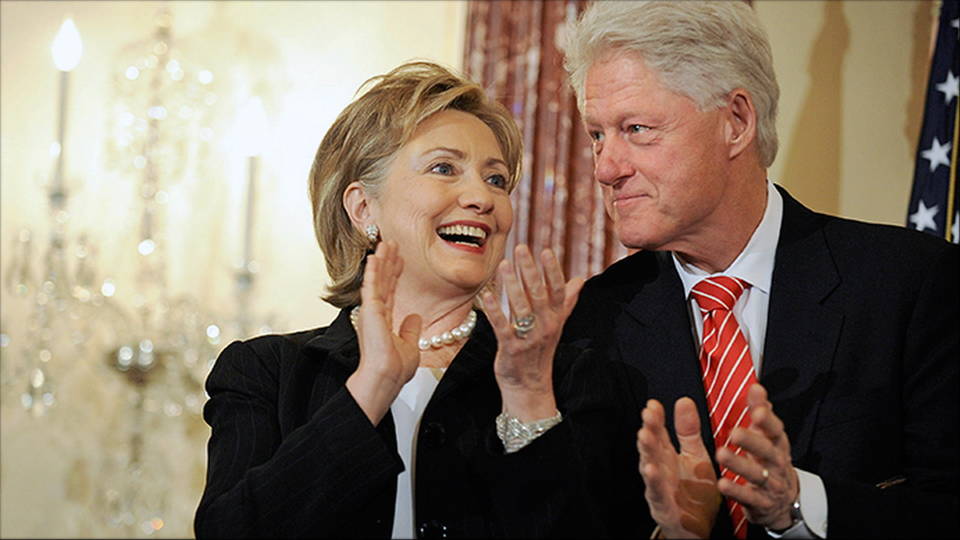 In news from the campaign trail, Hillary Clinton released her latest tax returns on Friday, showing she and her husband Bill Clinton earned $10.6 million in 2015. More than half the income came from speeches. They paid an effective tax rate of 35 percent. Between 2007 to 2015, the Clintons have made $150 million. Clinton’s running mate, Virginia Senator Tim Kaine, also released his returns Friday. He and his wife made $313,000 in 2015.
"Zero Dollars": Experts Say Donald Trump May Pay No Income Taxes
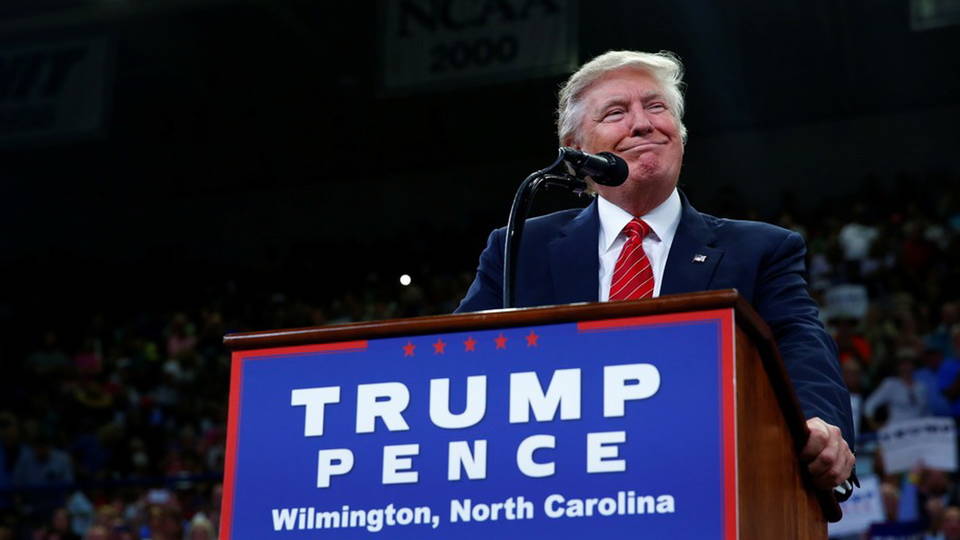 This comes as Donald Trump continues to refuse to release his tax returns, citing an audit. A series of tax experts quoted in a recent New York Times piece headlined "Zero Dollars" say it’s possible Trump pays no income taxes at all, given the vast array of tax loopholes available to real estate developers. Trump’s running mate, Indiana Governor Mike Pence, suggested in an interview Saturday he may soon release his own returns—in what would be the latest point of disagreement between the two men.
WSJ Calls on Republican Party to "Write Off" Trump by Labor Day
 Meanwhile, divisions are widening between the Republican Party and Donald Trump. Politico is reporting that Republican Party leaders are privately talking about cutting off financial support to Trump by October, if not earlier. In an editorial published Sunday, The Wall Street Journal calls on the Republican Party to "write off the nominee" if he doesn’t change his behavior by Labor Day, which is less than three weeks away.
NYT: Associates Say Trump is Exhausted, Bewildered, Sullen & Erratic
 A number of his associates who spoke to The New York Times have painted Trump as being exhausted, bewildered, sullen and erratic. Trump has blasted the article, calling the Times a "failing newspaper of fiction"—although Trump has reportedly not asked for any retractions. A recent Reuters poll shows nearly one-fifth of registered Republicans want Trump to drop out of the race. In public, however, the Republican Party is continuing attempts to project unity. On Friday, Republican National Committee Chair Reince Priebus made a surprise appearance at a Trump rally in Erie, Pennsylvania, where he introduced and hugged Trump. At this rally, Trump attempted to walk back his recent comments calling President Obama the founder of ISIS. Instead, Trump said his comments had been sarcastic—"but not that sarcastic." This comes as Trump is slated to release his proposals for fighting ISIS during a speech in Ohio today. He’s also expected to further explain his plans to significantly limit immigration, which at times have included calls for a complete ban on all Muslims. His campaign is now also suggesting a test intended to vet immigrants’ views on issues, such as women’s and gay rights.
Ukraine: Ledger Shows $12 Million in Cash for Trump Campaign Chief
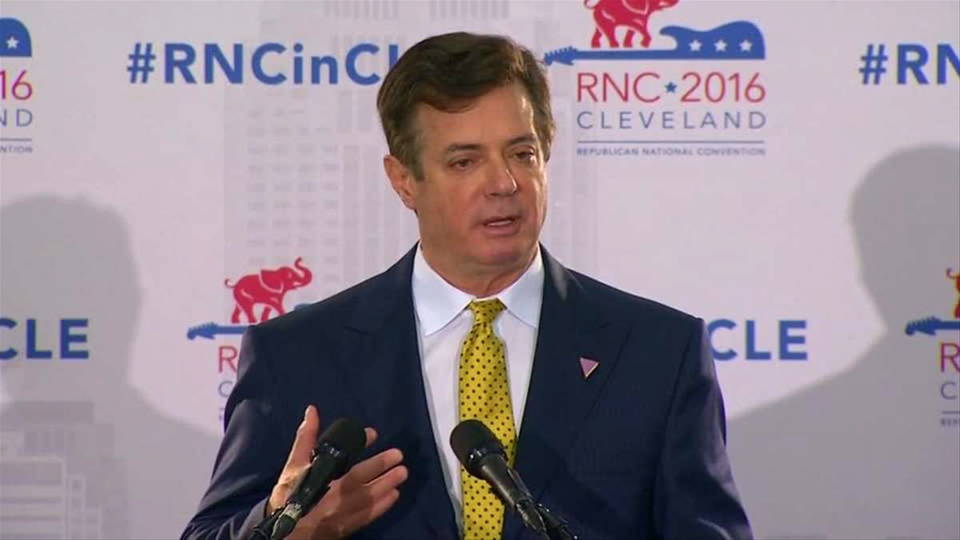 Meanwhile, The New York Times has revealed new details about Trump’s campaign manager Paul Manafort’s political consulting work in Ukraine. The Times reports that handwritten ledgers unearthed by Ukraine’s newly formed National Anti-Corruption Bureau show $12.7 million of cash payments that were slated to go to Manafort. It is not known whether Manafort actually received the money. Manafort spent years consulting for former President Viktor Yanukovych. In the 1980s, Manafort also did political consulting work for former Philippine dictator Ferdinand Marcos.
Simone Manuel, Michael Phelps & Monica Puig Make Olympic History
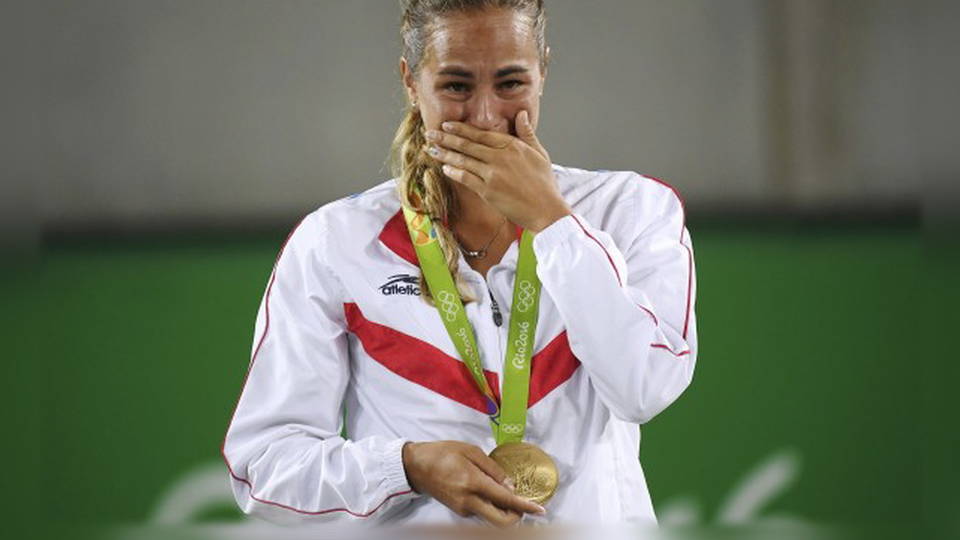 The Olympics are continuing in Rio de Janeiro, where Stanford swimmer Simone Manuel has made history, becoming the first African-American female swimmer to win an Olympic medal in an individual event. Manuel tied Canadian swimmer Penny Oleksiak in the 100-meter freestyle. Both women won gold medals and set a new Olympic record. After winning, Manuel said, "It means a lot, especially with what is going on in the world today, some of the issues of police brutality. This win hopefully brings hope and change to some of the issues that are going on. My color just comes with the territory." Manuel’s win was only one of a number of historic Olympic events over the last week. Usain Bolt of Jamaica won the 100-meter dash in 9.81 seconds, making him the only person to ever win the 100-meter race three times. American swimmer Michael Phelps scored his 23rd gold medal when the U.S. won the men’s four-by-100-meter medley relay. Phelps is now the most decorated Olympian in all of history. African-American gymnast Simone Biles scored her third gold medal when she became the first American woman to win the Olympic vault individual. And tennis player Monica Puig won Puerto Rico’s first gold medal in Olympic history. She’s the first woman representing Puerto Rico to ever win an Olympic medal.
Monica Puig: "It is a huge achievement for my career. It was the biggest goal I had for my life. And it is something historic for Puerto Rico that had never happened in Puerto Rico’s history."
We’ll have more on the Olympics later in the broadcast.
U.S. Declares Public Health Emergency in Puerto Rico over Zika
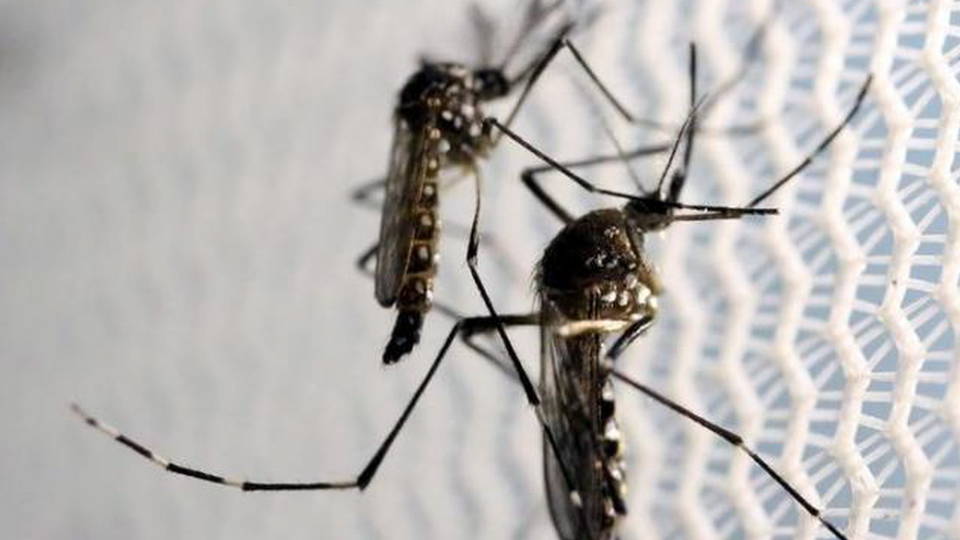 Meanwhile, the United States declared a public health emergency in Puerto Rico Friday, after the island reported nearly 2,000 new cases of Zika over the last week. More than 10,000 cases of Zika infection have been reported in Puerto Rico since December.
NYC: Community Decries "Assassination" of Revered Imam
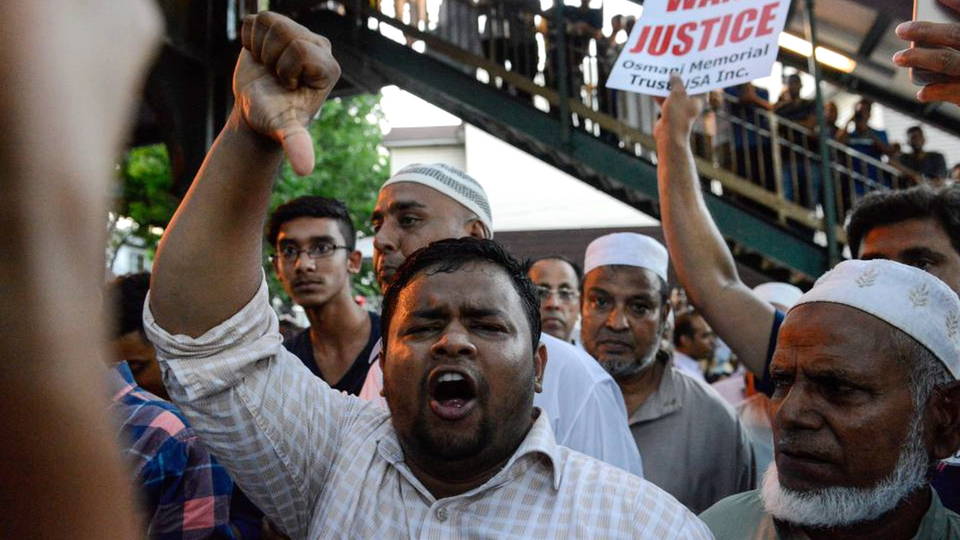 In New York City, police say they’ve arrested a suspect in the killing of a revered imam and his friend in Queens on Saturday. Mosque leader Maulama Akonjee and friend Thara Uddin were walking home from prayers at the Al-Furqan Jame Mosque just before 2 p.m., when a man approached them from behind and shot them each in the back of the head at point-blank range. Akonjee was a father of three from Bangladesh. On Saturday, hundreds of people protested the killings. This is Zead Ramadan, the president of the Council on American-Islamic Relations of New York.
Zead Ramadan: "CAIR New York views this as an assassination. Someone attacked—someone came from behind two imams of a masjid and shot them in the head, both of them. They both passed away this afternoon—one DOA, and one fought for his life, unsuccessfully, unfortunately. And our heart goes out to their families, and our heart goes out to the community."
Chicago: Muslim Mother & Daughter Assaulted, Blame Trump for Attack
Meanwhile, in Chicago, a Muslim mother and daughter report being spit on and yelled at as they were walking to their car on Thursday wearing hijabs. They say their harasser yelled repeatedly, "You’re ISIS!" Siham Zahdan blamed the attack on Donald Trump, saying her message to Trump was "to leave the Muslim people in America alone, leave us alone."
Yemen: U.S.-Backed, Saudi-Led Airstrikes Kill 19, Mostly Children
 In international news, U.S.-backed, Saudi-led airstrikes killed at least 19 people in Yemen on Saturday after the bombs struck a residential area and a school. Witnesses say the majority of the victims were children. This is the father of one of the children killed.
Father: "This is a crime. My son is dead. He is now with God. We will now head to the front lines and take revenge for our sons."
This comes less than a week after the U.S. approved a possible $1 billion weapons deal to Saudi Arabia.
Report: Hundreds Killed in Syria Amid Heavy Fighting in Aleppo
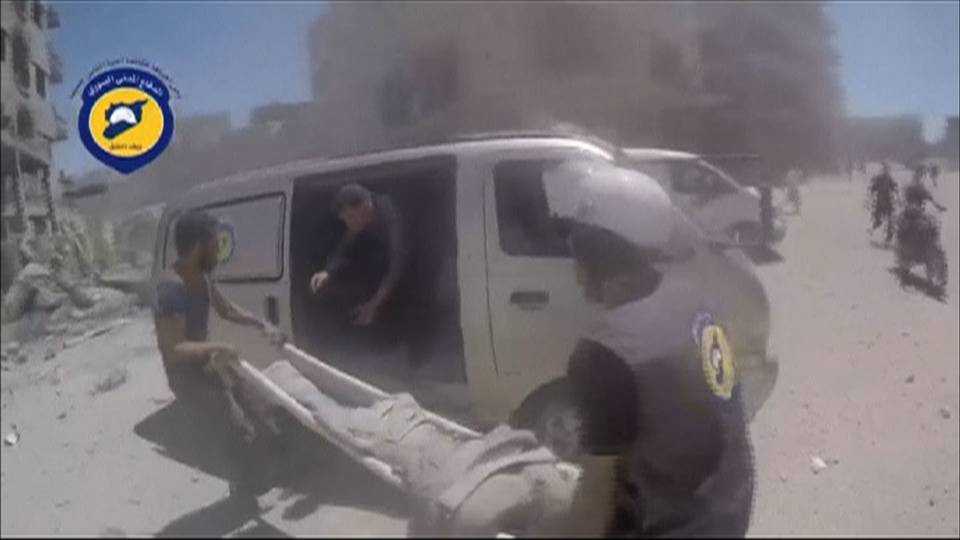 Meanwhile, in Syria, activists say hundreds of civilians have been killed in fighting across the country in recent days. The Local Coordination Committees say nearly 200 civilians have been killed since Friday alone. The majority of the deaths have occurred in and around the city of Aleppo.
Louisiana: 5 Dead; 20,000 Rescued in Historic Flooding
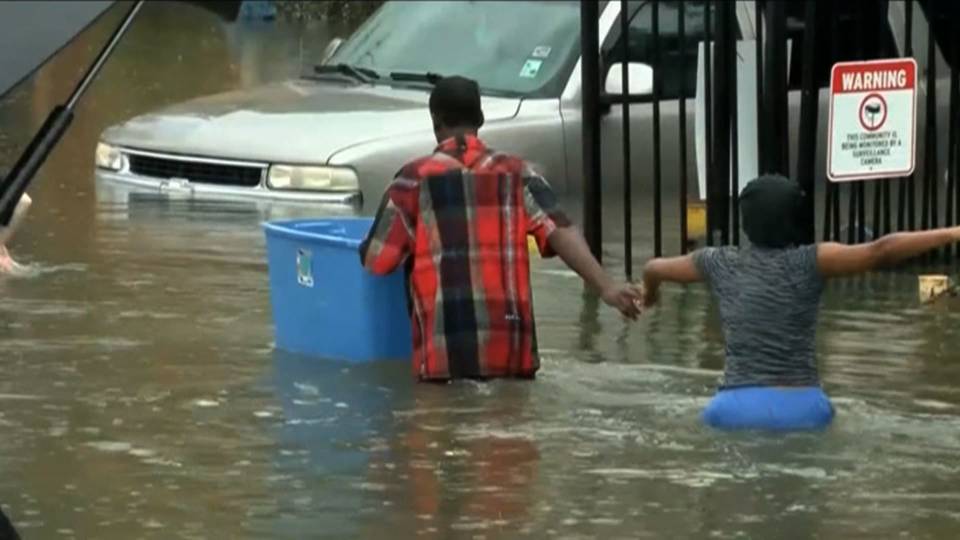 In Louisiana, at least five people have died and 20,000 people have been rescued amid unprecedented flooding. Louisiana Governor John Bel Edwards declared a state of emergency over the weekend, calling the flooding "historic." Water levels are expected to continue rising.
California: 1,000 Evacuated from Fast-Moving Wildfire
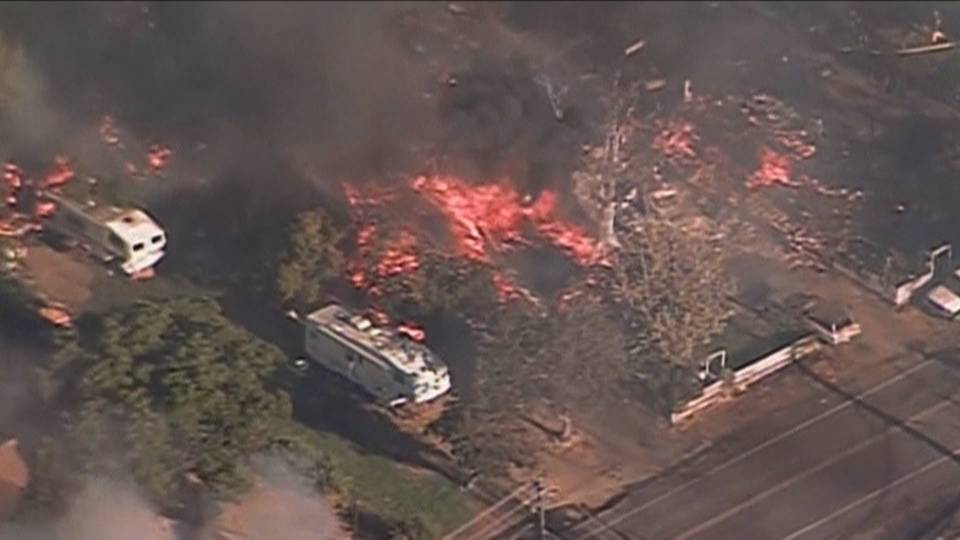 Meanwhile, in Northern California, more than 1,000 people were forced to flee a fast-moving wildfire in the town of Lower Lake over the weekend. Authorities say California’s fire season has been worsened by the historic, climate-fueled drought.
Ohio: Transgender Woman Rae'Lynn Thomas Murdered
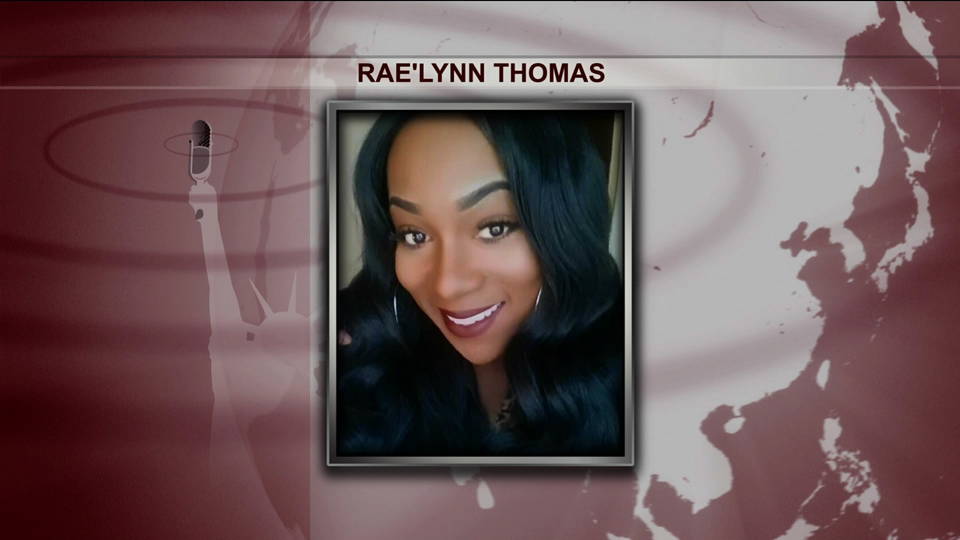 And in Columbus, Ohio, police are investigating the death of 28-year-old Rae’Lynn Thomas, a black transgender woman who was fatally shot by her mother’s ex-boyfriend. Family members say the shooter, James Allen Byrd, frequently made transphobic comments to Rae’Lynn and sometimes called her "the devil." Human Rights Watch says at least 17 transgender people have been killed so far this year in the United States.
Donate today:
Follow:
SPEAKING EVENT
8/19 Seattle, WA
COLUMN
COLUMN
 "Donald Trump's Implied Assassination Threat, Fox News and the NRA" by Amy Goodman and Denis Moynihan
Donald Trump is giving new meaning to “bully pulpit,” ratcheting his irrational campaign rhetoric to new and dangerous lows. In North Carolina Tuesday, he said: “Hillary wants to abolish—essentially, abolish—the Second Amendment. By the way, and if she gets to pick—if she gets to pick her judges, nothing you can do, folks. Although the Second Amendment people, maybe there is.” Trump’s suggestion that his supporters could assassinate Hillary Clinton or the judges she might appoint provoked outrage, not only nationally, but around the globe. His virulent, demagogic language did not alienate everyone, though; as more and more Republicans denounce Trump, he still enjoys fervid support from some personalities at Rupert Murdoch’s Fox News Channel and the National Rifle Association. This unholy trinity of Trump, Fox and the NRA could easily provoke political violence during this campaign season.
Hours after his remarks, Trump made his first news appearance on Fox’s “Hannity” show. Sean Hannity pre-empted Trump, offering his own twisted logic to help blunt the deepening catastrophe: “So, obviously you are saying that there’s a strong political movement within the Second Amendment and if people mobilize and vote they can stop Hillary from having this impact on the court.” Trump obligingly concurred with that revisionist version of his call to arms. But the ploy fails on its face. Trump was not advocating for a political movement to stop Hillary Clinton from gaining office; he was suggesting that “Second Amendment people” could take action after the fact, if she wins.
The NRA also quickly rallied to Trump’s defense, tweeting: “Donald Trump is right. If Hillary Clinton gets to pick her anti-2A SCOTUS judges, there’s nothing we can do.” As the backlash against Trump grew, the NRA added, anticipating Hannity’s spin, “But there IS something we will do on Election Day: Show up and vote for the 2A! Defend the Second. Never Hillary.” Within hours, the NRA announced a $3 million national advertising campaign to support Trump, featuring a video ad attacking Hillary Clinton as a hypocrite for traveling with armed Secret Service protection.
The Coalition to Stop Gun Violence immediately condemned Trump’s comment, adding that “this is a point of view that has been mainstreamed by the National Rifle Association and parroted by candidates for political office in the past.” The gun-control advocacy group maintains a comprehensive online database of comments from NRA leadership, called “NRA on the Record.” Search the site for “Political Violence” or “Vigilantism” and you easily see countless, impeccably sourced justifications for gun violence. NRA board member and aging rock guitarist Ted Nugent, a Trump supporter and vitriolic gun-rights advocate, is extensively quoted on the site. Referring to Hillary Clinton, Nugent commented on Facebook last May, “I got your gun control right here bitch!” next to a satirical video showing Bernie Sanders shooting and killing Hillary Clinton during a CNN debate exchange on gun control.
Embedded in much of the bombast against Clinton is a deep-seated misogyny that is evident in many mass shootings, from Orlando shooter Omar Mateen, who beat his wife, to Adam Lanza, who killed his mother at home before the Sandy Hook massacre. In 2010, Glenn Beck, who was then a host on the Fox News Channel, waged a campaign to vilify the progressive philanthropy Tides foundation as well as the ACLU. In July of that year, Byron Williams, who said he was inspired by Beck, set out with a car full of weapons, ammunition and body armor, intent on killing at least 11 people at Tides. Journalist John Hamilton, in a jailhouse interview, asked Williams if Beck explicitly encouraged violence. Williams said: “Beck is going to deny everything about violent approach, deny everything about conspiracies, but he’ll give you every reason to believe in it. He is protecting himself, and you can’t blame him for that.”
“Words matter,” Hillary Clinton said at a campaign rally in Des Moines, Iowa, Wednesday. “If you are running to be president, or if you are president of the United States, words can have tremendous consequences.” Donald Trump has pledged to pay the legal fees for people who physically assault protesters at his rallies. He has insulted women, Muslims, Mexicans and Mexican-Americans. He mocked a disabled reporter. He has predicted that if he loses, it will be due to a “rigged” election. One of his closest advisers predicts such a loss will provoke a “bloodbath.”
Trump is a dangerous demagogue who is inciting violence, and the time for it to stop is now.
 NEW BOOK
WEB EXCLUSIVE
 Part 2: Calls Grow for NY Gov Cuomo to Reform Parole Board That Denies Release of Eligible Prisoners
WORK WITH DN!
Senior TV ProducerDevelopment Manager
207 West 25th Street, 11th Floor
New York, New York 10001, United States
-------
-------

No comments:
Post a Comment