democracynow.org
Stories:
 Open Up the Debates: Green Party's Jill Stein Accuses Democrats & GOP of Rigging Debate Rules
While polls show Donald Trump and Hillary Clinton are among the least popular major-party candidates to ever run for the White House, it appears no third-party candidates will be invited to take part in the first presidential debate next month. The debates are organized by the Commission on Presidential Debates, which is controlled by the Democratic and Republican parties. Under the commission’s rules, candidates will only be invited if they are polling at 15 percent in five national surveys. Libertarian presidential candidate Gary Johnson and the Green Party’s Jill Stein have both witnessed recent surges in support, but neither have crossed the 15 percent threshold. More than 12,000 people have signed a petition organized by RootsAction calling for a four-way presidential debate. We speak to Green Party presidential nominee Dr. Jill Stein. Four years ago she was arrested outside a presidential debate protesting her exclusion from the event.
TRANSCRIPT
This is a rush transcript. Copy may not be in its final form.
AMY GOODMAN: Preparations have begun for the first presidential debate. It’ll be held September 26 at Hofstra University in Hempstead, New York. While polls show Donald Trump and Hillary Clinton are among the least popular major-party candidates to ever run for the White House, it appears no third-party candidates will be invited to take part in the debates. Debates are organized by the Commission on Presidential Debates, which is controlled by the Democratic and Republican parties. Under the commission’s rules, candidates will only be invited if they’re polling at 15 percent in five national surveys. Libertarian presidential candidate Gary Johnson and the Greens’ Dr. Jill Stein have both witnessed recent surges in support, but neither have crossed the 15 percent threshold. Johnson has polled as high as 12 percent nationwide, while Stein has peaked at 6 percent in recent national polls. But in some demographics, they’re both beating Donald Trump. McClatchy recently polled voters under the age of 30 and found 41 percent back Hillary Clinton, 23 percent support Johnson, 16 percent back Jill Stein, while only 9 percent back Donald Trump. Among African Americans, polls also show Trump behind all three other candidates, polling at either zero, 1 or 2 percent. More than 12,000 people have signed a petition organized by RootsAction calling for a four-way presidential debate.
In a moment, we’ll be joined by the Green Party’s Jill Stein and her running mate, Ajamu Baraka, but first I want to turn to George Farah, the founder and executive director of Open Debates. He spoke on Democracy Now! a few years ago about how the Democrats and Republicans took control of the debate process.
GEORGE FARAH: The League of Women Voters ran the presidential debate process from 1976 until 1984, and they were a very courageous and genuinely independent, nonpartisan sponsor. And whenever the candidates attempted to manipulate the presidential debates behind closed doors, either to exclude a viable independent candidate or to sanitize the formats, the League had the courage to challenge the Republican and Democratic nominees and, if necessary, go public.
In 1980, independent candidate John B. Anderson was polling about 12 percent in the polls. The League insisted that Anderson be allowed to participate, because the vast majority of the American people wanted to see him, but Jimmy Carter, President Jimmy Carter, refused to debate him. The League went forward anyway and held a presidential debate with an empty chair, showing that Jimmy Carter wasn’t going to show up.
Four years later, when the Republican and Democratic nominees tried to get rid of difficult questions by vetoing 80 of the moderators that they had proposed to host the debates, the League said, "This is unacceptable." They held a press conference and attacked the campaigns for trying to get rid of difficult questions.
And lastly, in 1988, was the first attempt by the Republican and Democratic campaigns to negotiate a detailed contract. It was tame by comparison, a mere 12 pages. It talked about who could be in the audience and how the format would be structured, but the League found that kind of lack of transparency and that kind of candidate control to be fundamentally outrageous and antithetical to our democratic process. They released the contract and stated they refuse to be an accessory to the hoodwinking of the American people and refuse to implement it.
And today, what do we have? We have a private corporation that was created by the Republican and Democratic parties called the Commission on Presidential Debates. It seized control of the presidential debates precisely because the League was independent, precisely because this women’s organization had the guts to stand up to the candidates that the major-party candidates had nominated.
AMY GOODMAN: That was George Farah, founder and executive director of Open Debates, speaking on Democracy Now! in 2012. He’s the author of No Debate: How the Republican and Democratic Parties Secretly Control the Presidential Debates.
Well, joining us now is Green Party presidential nominee Dr. Jill Stein, along with her running mate, Ajamu Baraka, a longtime human rights activist. Baraka is the founding executive director of the U.S. Human Rights Network and coordinator of the U.S.-based Black Left Unity Network’s Committee on International Affairs.
We welcome you both to Democracy Now! So, September 26, that’s the first presidential debate. What are your plans, Dr. Jill Stein?
DR. JILL STEIN: Our plans are to be in that debate, because it’s not just about whether our party will be included, it’s whether the American people will have a voice, whether we will have a real discussion of the crisis of jobs, of the climate, of race, of war. These—and the crisis of a generation, an entire generation that’s basically been hung out to dry, that cannot get out of predatory student loan debt, that doesn’t have the jobs they need, and doesn’t have a climate future to look forward to. So, these are really the critical issues that people want to discuss.
We saw an incredible surge of a response last night, when we had our first prime-time TV. And I want to note that while we’ve come up to 6 and even 7 percent in the polls, this has happened without any media coverage, really, whatsoever on—you know, in the mainstream media. So, it’s absolutely remarkable that we’ve not only doubled and tripled, even more than that, because we were invisible as of about two months ago in the polls, suddenly we’re up there. So there’s an enormous interest in what we’re talking about.
AMY GOODMAN: So, let’s go back to 2012. The debate then was at Hofstra, as it will be on September 26. You and your running mate then, Cheri Honkala, were arrested as you attempted to enter the site of the presidential debate at Hofstra. Democracy Now! was there at the time of your arrest.
DR. JILL STEIN: Well, we’re here to stand our ground. We’re here to stand ground for the American people, who have been systematically locked out of these debates for decades by the Commission on Presidential Debates. We think that this commission is entirely illegitimate; that if—if democracy truly prevailed, there would be no such commission, that the debates would still be run by the League of Women Voters, that the debates would be open with the criteria that the League of Women Voters had always used, which was that if you have done the work to get on the ballot, if you are on the ballot and could actually win the Electoral College by being on the ballot in enough states, that you deserve to be in the election and you deserve to be heard; and that the American people actually deserve to hear choices which are not bought and paid for by multinational corporations and Wall Street.
POLICE OFFICER 1: Ladies and gentlemen, you are obstructing the vehicle of pedestrians and traffic. If you refuse to move, you are subject to arrest.
Remove them. Bring them back to arrest them, please.
POLICE OFFICER 2: Come on, ma’am.
POLICE OFFICER 3: Would you step up, please? Stand up, please?
POLICE OFFICER 2: We’ll help you. Come on. Thank you, ma’am.
POLICE OFFICER 3: Thank you, ladies.
POLICE OFFICER 2: Watch the flag.
POLICE OFFICER 1: Thank you, ladies.
POLICE OFFICER 2: Thank you.
POLICE OFFICER 3: Come with us.
POLICE OFFICER 2: Just come with us.
POLICE OFFICER 3: Thank you. You guys have to stay here. All right, everybody, we’re going to ask you to please move back.
DR. JILL STEIN: Well, I’d say this is what democracy looks like in the 21st century. I’m afraid it’s going to take some—some politics and courage here to get our democracy back. So, more to come.
AMY GOODMAN: "More to come," you said. So, you’re taken away, Dr. Jill Stein, from the Hofstra campus. Where did you and Cheri Honkala—where were you taken?
DR. JILL STEIN: We were taken to a dark site, where nobody knew where we were, an unmarked facility that was basically being run by, I think, Homeland Security and the Secret Service and local police. We were surrounded by, according to Cheri, who counted them, some 16 police and colleagues, and handcuffed tightly to these metal chairs for about seven hours.
AMY GOODMAN: Seven hours?
DR. JILL STEIN: Seven hours, until the debates were long over and everyone had gone home. It was, I think, an incredible testimony to how fearful the political establishment was, and is, that people should learn that they actually have another choice in that race—and all the more so in this race, because we know that the current candidates of the Democratic and Republican parties are the most unpopular, the most disliked and untrusted presidential candidates in history. So, people are clamoring for another choice. And we—you know, we’re building a campaign to get into the debates, and we’ll keep people posted as to what our actions will be, coming up. But we will not leave this just to the establishment to shut down political opposition, which is what this commission is doing.
AMY GOODMAN: Do you plan to head to Hofstra on September 26th?
DR. JILL STEIN: Absolutely. Whether we are in the debate or whether we are locked out of the debate, you can be sure that we’re going to be there. And we’re not going to be there alone. We’re going to be there with the American people, who are demanding that we open up the debate and make it a real service to our democracy.
AMY GOODMAN: You have sued?
DR. JILL STEIN: We have two cases, one of which has been dismissed. The other one is still technically in effect. We are not holding our breath that this is going to be favorably decided in a court of law, but there’s every reason for this to be decided in the court of public opinion, where public opinion is very clear that people have had it, not only with the rigged economy, but the rigged political system and with the dialogue, which is rigged by the Democratic and Republican parties. This commission is a private corporation run by the two political parties. The League of Women Voters called it a fraud being perpetrated on the American public. We’re not going to settle for that.
AMY GOODMAN: Earlier this year, I spoke to Libertarian presidential candidate Gary Johnson in his home state of New Mexico. He talked about the unfair nature of the presidential debate system, as well.
GARY JOHNSON: Right now, running for president of the United States as a Libertarian, there is no way that a third party wins. There’s no way that I have a chance of winning, unless I’m in the presidential debates. There is the possibility of being at 15 percent in the polls, though, if I’m in the polls, that I could be in the presidential debates.
AMY GOODMAN: You’re part of a lawsuit going after the Presidential Debate Commission?
GARY JOHNSON: Yes, on the basis that—on the basis of the Sherman Act, that politics is a business, that Democrats and Republicans collude with one another to exclude everybody else. We think that the discovery phase of this lawsuit is going to provide national insight into just how rigged the system is. I come back to the fact that 50 percent of Americans right now declare themselves as independent. Where is that representation?
AMY GOODMAN: That was former New Mexico Governor Gary Johnson, who is running on the Libertarian line for president. We’re talking to Dr. Jill Stein, presidential nominee of the Green Party. And when we come back from break, you’ll meet her running mate, Ajamu Baraka, new to the electoral scene, the vice-presidential nominee for the Green Party. Stay with us. ... Read More →
 Stopping the Snake: Indigenous Protesters Shut Down Construction of Dakota Access Pipeline
We turn now to a growing protest in North Dakota, where hundreds of indigenous activists have shut down construction on a multibillion-dollar pipeline project. The $3.8 billion Dakota Access pipeline is slated to carry half a million barrels of Bakken crude from North Dakota to Illinois. But members of the Standing Rock Sioux Tribe say the pipeline threatens to contaminate the Missouri River, which provides water not only for thousands of residents on the reservation, but also for millions of people living downstream. On April 1, members of the Standing Rock Sioux Tribe launched an ongoing protest camp called Sacred Stone. Since late July, when the U.S. Army Corps of Engineers approved the pipeline, at least 28 people have been arrested as they have used their bodies and horses to block construction.
TRANSCRIPT
This is a rush transcript. Copy may not be in its final form.
AMY GOODMAN: We turn to a growing protest in North Dakota, where hundreds of indigenous activists have shut down construction on a multibillion-dollar pipeline project. The $3.8 billion Dakota Access pipeline is slated to carry half a million barrels of Bakken crude from North Dakota to Illinois. But members of the Standing Rock Sioux Tribe say the pipeline threatens to contaminate the Missouri River, which provides water not only for thousands of residents on the reservation, but also for millions living downstream. On April 1st, members of the Standing Rock Sioux Tribe launched an ongoing protest camp called Sacred Stone. Since late July, when U.S. Army Corps of Engineers approved the pipeline, at least 28 people have been arrested as people have used their bodies and horses to block construction. This is one of the protesters.
PROTESTER: We do this for the next seven generations. We do this for the unborn children that are coming to this world. We’re protecting the water. Our water is life. We will not let it get desecrated. They are not allowed to make no pipelines on this land.
AMY GOODMAN: For more on the pipeline, we are joined by Winona LaDuke, executive director of the group Honor the Earth and former Green Party vice-presidential nominee in '96 and 2000. We're also joined by Joye Braun of the Indigenous Environmental Network. She’s been at the Sacred Stone resistance camp since the first day of the protest.
Let’s begin with Winona LaDuke. What are you demanding right now? And for people who have never heard of this action, please place it for us geographically and in the bigger context of energy activism.
WINONA LADUKE: Well, hello there. You know, just to be clear, I come, actually, from northern Minnesota, and we spent four years fighting a pipeline called the Sandpiper. The pipeline is by the Enbridge company. The Enbridge company announced last week that it was going to shelve the Sandpiper and move out here to the Dakota Access, assuming that they could get a much faster way, because we have successfully resisted them for four years.
But, basically, Amy, what’s happening is that there is a replumbing of North American energy infrastructure, and there’s a whole bunch of oil interests that want to move oil, you know, from the tar sands, and in between them are indigenous people. And so, we’re looking at a 640,000-barrel-per-day pipeline, and they’re looking at—you know, now it looks like we’re looking at this other pipeline out here. But, you know, that is what’s going on.
And out here on the front lines, the question is, is, you know, at what point are we going to quit—at what point are we going to quit doing this? We’ve got a country with aging infrastructure, and they’re trying to put in new infrastructure. And we’ve got a company that has lots of structural anomalies and 800 spills, including the Kalamazoo spill—a lot of risk to a lot of people and just the wrong thing to be doing.
AMY GOODMAN: Joye Braun, can you talk about the good news you received yesterday?
JOYE BRAUN: Hínhanni wasté, everybody. Good morning. So the news that we got yesterday was that if we allowed the Dakota Access to come in and remove the bulldozers and earthmovers that they had moved in, that they would stop construction until the August 24th hearing in Washington, D.C. We said that we wanted it in writing, and we wanted it in writing sent to Standing Rock Chairman Dave Archambault and the copy sent to us on the front line.
AMY GOODMAN: Can you talk about the Sacred Stone resistance camp that you began on April 1st and what your demands are, again, for people who know nothing about what you’re doing in North Dakota?
JOYE BRAUN: So, the Sacred Stone Spirit Camp was started as an action of prayer. We had went to ceremony, and the ceremony said that we needed to do everything in prayer, and that as long as we prayed and we could bring awareness to the world, that this—that this pipeline could be stopped, that these snakes’ heads could be cut off, these "snakes" being these pipelines. And so, we went ahead and set up camp in the snow. And we’ve been there since April 1st.
AMY GOODMAN: You know, it’s very interesting that this is taking place as Baton Rouge is underwater. And so far, I think 13 people are dead. The fires in Southern California now has displaced tens of thousands of people. And the country, many parts of it, like in the Northeast, are in a heat dome right now. Winona, I want to tie this into this electoral season, this pivotal 2016 presidential election year. We’re joined here in New York by the Green Party presidential candidate, Dr. Jill Stein, as well as her running mate, who occupies the position you did in 1996 and 2000. Talk about where you see your action and whether you have faith in electoral politics now.
WINONA LADUKE: Well, greetings to you from the Green Party, my fellow Greens out there. You know, what I would say is, is that the system is crumbling all around us. And at the end of the fossil fuel era, it’s time to move towards an elegant transition. But in the final thrashings of the fossil fuel era, what you have is a lot of extreme behavior going on. You have extreme extraction. You have, you know, tar sands mining. You have blowing-up, you know, oil rigs. And you have endless, endless contamination. And at the same time, you have climate change happening.
You know, in our teachings, we talk about this as the time when you’ve got to make a choice between two paths as a country. One path is well-worn, and it’s scorched; the other is not well-worn, and it’s green. Not just talking Green Party, I’m saying that there is a path out there of enlightened practice, where instead of burning more fossil fuels, we move to renewable energy, we move to local food, we move to more community control, and we move beyond a place where corporations are natural persons under the law.
You know, I’m out here on the front lines. I’m out here in North Dakota. I live in northern Minnesota. We’ve been battling these pipelines for the past four years. You know, we have no oil where we are, but we are—you know, they propose to lay us to waste with pipelines, to get that oil to Superior and out to larger markets. So, to me, it’s a systemic set of questions. You know, it’s a telling time in American politics, but it’s really a telling time in America, that we have to make some choices on where we’re going to be going. And—
AMY GOODMAN: Winona, when you ran for office in 1996 and 2000, was that your first foray into electoral politics?
WINONA LADUKE: That was my first time. And I was listening to Jill talk about the debates, and I remember being not allowed in the debates. And I have a little picture of me and Ralph that said, you know, we couldn’t even appear in the room of the debates. We were like banned from the debates. And so, I’m like, good luck, Jill. You know, it’s preposterous.
AMY GOODMAN: Do you have advice for Ajamu Baraka, who is in the same position you are, first time electoral politics, vice-presidential nominee, like you were?
WINONA LADUKE: Good luck, buddy.
AMY GOODMAN: And, Ajamu Baraka, I wanted to ask you, your assessment of Barack Obama today?
AJAMU BARAKA: He’s been a huge failure, a disappointment for millions of people. We understand he still has a lot of support, but he had a historic opportunity to take this country in a new direction, and he—because of his ideological orientation, he ended up basically just supporting a continuation of the status quo. We have to move in a new direction. We have to have real racial justice. We have to have real justice for people who are suffering, who feel it in their bones that things are bad and will get worse. We have to have hope, real hope this time, organized hope, that the people are the only force that can really advance this revolutionary process here in this country—not any politician, but the people.
AMY GOODMAN: Does this give you renewed hope in electoral politics? I’m sure you have been very much outside of that scene.
AJAMU BARAKA: You know, when Dr. Stein asked me to consider being a part of this, I knew that the historical conditions were ripe. I knew that we had a chance to really use the electoral process to advance a people’s agenda. I knew that there was going to be a tremendous support for this Green Party push. So it’s about electoral process, but it’s about building popular power. And when Dr. Stein said the theme of this campaign was about putting power back in the hands of the people, I said, "I’m with Jill. Sign me up."
AMY GOODMAN: We’re going to wrap up right now. I want to thank everyone for joining us. Winona LaDuke of Honor the Earth, Joye Braun of the Indigenous Environmental Network, thanks so much for being with us from North Dakota. And I want to thank Dr. Jill Stein, as well as Ajamu Baraka, the presidential and vice-presidential nominees of the Green Party.
I’ll be speaking in Seattle, Washington, at the Sheraton Seattle Hotel on Friday night, along with Kshama Sawant and Walden Bello. Check our website at democracynow.org. ... Read More →
 Meet Ajamu Baraka: Green VP Candidate Aims to Continue the Legacy of W.E.B. Du Bois & Malcolm X
The Green Party’s vice-presidential nominee Ajamu Baraka is a longtime human rights activist. He is the founding executive director of the U.S. Human Rights Network and coordinator of the U.S.-based Black Left Unity Network’s Committee on International Affairs. For years, Baraka has led efforts by the U.S. Human Rights Network to challenge police brutality and racism in the United States by bringing these issues to the United Nations.
TRANSCRIPT
This is a rush transcript. Copy may not be in its final form.
AMY GOODMAN: "American Dream" by the folk duo Somebody’s Sister. And, yes, that is Dr. Jill Stein on vocals, the Green Party presidential nominee. This is Democracy Now!, democracynow.org, The War and Peace Report. I’m Amy Goodman. We are speaking with Green Party nominee Dr. Jill Stein and her running mate, Ajamu Baraka. He is a longtime human rights activist. Baraka is the founding executive director of the U.S. Human Rights Network, coordinator of the U.S.-based Black Left Unity Network’s Committee on International Affairs.
You are new to the electoral scene, Ajamu Baraka.
AJAMU BARAKA: Yes.
AMY GOODMAN: Tell us a little about yourself. You were—you grew up in Chicago?
AJAMU BARAKA: I grew up on the South Side of Chicago. I ended up in the military. And after the military, I ended up in the South, and I went south to organize in the late—mid to late '70s. There I got involved in, of course, a lot of the anti-apartheid work, along with community organizing, was involved in the Central America solidarity movement, organizing delegations to Nicaragua in support of the unfolding revolution in that country, and all the time moving toward human rights, ended up volunteering with Amnesty International and ended up on the board in the mid-'90s. I saw myself as someone that was trying to continue the legacy of Du Bois and Malcolm X in terms of internationalizing the struggle of African people in the U.S.
AMY GOODMAN: You mention Du Bois—
AJAMU BARAKA: Yes.
AMY GOODMAN: —W. E. B. Du Bois, who taught at Clark Atlanta University—
AJAMU BARAKA: Yes.
AMY GOODMAN: —or, then, I guess, Atlanta University, where you went to school.
AJAMU BARAKA: Well, I went to grad school there. It was the place where you went in the ’80s if you were a progressive, a radical, a black radical. And that was the place I ended up going. I was—I had a chance to go other places, but that was—it was recommended to me to go to AU, if I really wanted to steep myself in a kind of theory that we needed to advance the struggle in this country.
AMY GOODMAN: So, talk about the U.S. Human Rights Network—
AJAMU BARAKA: Yes.
AMY GOODMAN: —that you set up, and explain what you did there.
AJAMU BARAKA: Well, you know, the network was the first network ever established in this country to apply international human rights standards and law to the United States of America. You know, people tend to think of human rights issues being something out there in other places, and excluding and giving a pass to the U.S. Well, we said that we have to have one standard for all nations. And so, this network, that was established with about 20 or 30 organizations, quickly grew to over 300 organizations. Most of the civil rights and human rights organizations in this country ended up a part of that network. And we held the U.S. accountable. We organized around human rights. We educated people on human rights. We took people to Geneva to testify on their own behalf. We talked about the agency of people in terms of how we build and enforce our own human rights. So this was part of a radical reinterpretation of human rights.
AMY GOODMAN: Now, that’s very significant. I remember being there years ago, in the early ’90s, testifying about what was happening in East Timor.
AJAMU BARAKA: Yes.
AMY GOODMAN: And there was this U.S. delegation that was there—
AJAMU BARAKA: Yeah.
AMY GOODMAN: —that was talking about what’s often referred to in the United States as civil rights—
AJAMU BARAKA: Yes.
AMY GOODMAN: —talking about what happens to African Americans here, but bringing it to an international forum. So, explain how you reframe civil rights and why you see it as an international issue that should be dealt with by an international body, why you saw the U.N. as the place for that.
AJAMU BARAKA: Well, you know, at the end of the Second World War, Du Bois and others understood that we had to internationalize our struggle. They saw that the framework we had to appeal to was in fact a human rights framework. And so, what we said in the 1990s was that we were going from civil rights back to human rights, that basically it was clear that the U.S. was not prepared to not only defend and protect the constitutional rights of African Americans and others, but they had completely ignored the human rights obligations that they had. So, for us, it was reconnecting. It was connecting our struggles with the rest of the world, because what’s happening around the world is a international struggle for freedom, a struggle against oppression, a struggle that says that basically we all have certain fundamental rights, that we have a right to live in dignity. And so, therefore, we wanted to link up with that international struggle, and the only way you do that is within the context of this human rights framework.
AMY GOODMAN: And so, how do you view, for example, the Black Lives Matter movement today? Does it give you hope?
AJAMU BARAKA: It gives me a lot of hope. I mean, these are human rights fighters. I am so proud at the evolution of that movement. The recent release of their platform—the Movement for Black Lives, that is—a few—about a week or so ago, demonstrated a real understanding of the interrelated issues that we have to fight against in this country, and globally. One aspect of their platform was that they understood, like the young organizers in SNCC back in the 1960s, that you have to connect up internationally. And they expressed their solidarity with the struggling people of Palestine. That was very, very significant, because that puts them squarely within the context of the proud tradition of black internationalism. So I’m very, very encouraged by the evolution.
AMY GOODMAN: As a vice-presidential candidate now, what do you want to see in Israel-Palestine?
AJAMU BARAKA: We want to see peace. We want to see a recognition of the rights of Palestinians to self-determination. We want to see an end to the colonial relationship. Like any people we know, Palestinians want to live. They want to live free. They don’t to be subjected to the kind of brutality that’s a part of their everyday life. See, I’ve been to Palestine. I’ve seen the reality. I had a chance to move across the entire West Bank. I think if any person in this country, if they had a chance to go to Palestine and experience and see what I saw, there’s no way that they could support the notion that it is an automatic sort of moral obligation to support the existence and the continuation of the Israeli state’s ability to impose itself on the Palestinian people. They would be opposed to that. ... Read More →
 Green Party's Jill Stein: U.S. Should Stop Funding Israel & Saudi Arabia
Over the last few weeks, the U.S.-backed, Saudi-led coalition in Yemen has killed dozens of civilians and bombed at least one school and one hospital supported by Doctors Without Borders. A number of activists, politicians and news outlets, including The New York Times, are calling on the United States to stop arms sales to Saudi Arabia over the ongoing conflict. But Green Party presidential nominee Jill Stein is going even further—calling on the U.S. to stop all funding for Israel and Saudi Arabia. For more, we speak with Jill Stein and her running mate, Ajamu Baraka.
TRANSCRIPT
This is a rush transcript. Copy may not be in its final form.
AMY GOODMAN: How has your message, Dr. Jill Stein, on Israel-Palestine and what you’re demanding, the planks in the Green Party platform, been covered and received?
DR. JILL STEIN: Well, really, none of our planks have been covered and received, not only our position on Israel-Palestine, our position on foreign policy, our position on jobs and climate and student debt. We’ve basically been disappeared from the mainstream conversation. But I have to say, you know, in terms of our own outreach and our—you know, the reach of our social media and our campaign and the independent media, like yourself, that actually does its job responsibly, the reception has been incredible.
And we’ve been able to put Israel-Palestine into a much broader human rights framework, actually, because one of the big criticisms that’s always been leveled against, for example, the BDS campaign, the Boycott, Divestment and Sanctions campaign against this occupying force, this military force—one of the criticisms is that, "Oh, you’re singling out Israel." So, we’ve made it a point to say we’re not singling out anybody; this is a general standard of international law and human rights that our administration, our Green administration, would apply to all countries. So, we are saying, if countries are in violation of international law and human rights, as Israel is for its occupations, its home demolitions, its assassinations and so on, that we will not support you. And right now we’re supporting Israel to the tune of $8 million a day. But we’ll say the same thing to the Saudis. We should not be selling weapons or otherwise supporting the Saudis—and, as you pointed out on this show, $110 billion in the last decade, and rising, despite the human rights abuses and the war crimes being committed by the Saudis, with U.S. assistance, in fact. You know, this is one of many issues that I think people are really clamoring to hear more about.
AMY GOODMAN: Do you join the call of The New York Times and Guardian editorial boards for U.S. and British governments to end their support of Saudi Arabia in Yemen?
DR. JILL STEIN: I would say they are joining our call, which has been long-standing, for the length of our campaign. ... Read More →
 Stein & Baraka to Bernie Sanders Supporters: Vote Green & Abandon the Party of War and Wall Street
For months, Jill Stein of the Green Party attempted to push Bernie Sanders to join the Green ticket. While he ignored the call, Stein is now reaching out to Sanders supporters for their votes in November. But is Stein afraid of tipping the election toward Donald Trump? We get response from her and running mate Ajamu Baraka.
TRANSCRIPT
This is a rush transcript. Copy may not be in its final form.
AMY GOODMAN: Now, here I am talking to both of you, but it’s conceivable that you would have occupied Ajamu Baraka’s position as vice-presidential nominee, if you got the deal you were trying to cement with Bernie Sanders to be top of the ticket of the Green Party, once he lost the Democratic Party nomination. What happened there?
DR. JILL STEIN: Well, you know, it was—it was an offer that we made to Sanders, that—let’s sit down and talk. Let’s collaborate, because this is an incredibly historic moment. He had an incredibly historic campaign that really unveiled how much momentum there is for deep change here—not that we aligned completely. Especially around foreign policy and on issues of student debt and so on, there was some distance between us. But he was beginning to move in our direction. And we said, "Let’s sit down, and let’s explore how we can collaborate and we could bring this to the Green Party convention," because, as a candidate, I obviously couldn’t say, "Here, Bernie will be our nominee," any more than I could say I would be our nominee. It’s up to the delegates.
But if we saw eye to eye, and if Bernie came to understand why it is that we need an independent, third-party politics, why you cannot have a revolutionary campaign inside of a counterrevolutionary party, that essentially sabotaged Bernie’s campaign in so many ways, as we saw from the email revelations, from the very fact of the superdelegates that took decision-making out of the hands of the democratic process, you know, it just wasn’t going to—
AMY GOODMAN: Did you ever speak to Bernie Sanders about this?
DR. JILL STEIN: We tried many times. I was able to get—
AMY GOODMAN: Meaning, "we," you mean you tried? Not—
DR. JILL STEIN: I tried. The Green Party tried. We had many people trying for us. We had emails that were delivered to him and that we know did get into his hands. But, you know, Bernie said from the start he was in this to basically support and continue building the Democratic Party. He has, ironically, not been a supporter of independent third parties, although nominally he’s been one, but he doesn’t believe in actually standing up and challenging power in an electoral way. And I think there’s a generational difference between Bernie and his vision of the Democrats as the party of the New Deal and a younger generation that sees the Democrats as the party of war, Wall Street and drone attacks.
AMY GOODMAN: Although he certainly mobilized them. Ajamu Baraka, from outside and inside this country, what is your assessment watching Bernie Sanders and his campaign? Where do you agree? Where do you differ?
AJAMU BARAKA: I think that Bernie Sanders was responsible for really broadening the conversation here in this country. There’s no doubt about that. We were concerned, though, that the—the silence on the foreign policy issues was troubling, because we understood that the American people were ready for real change, and we wanted Bernie Sanders to understand that he didn’t have to embrace the aggressive policies of the Obama administration. He didn’t have to embrace the drone warfare. He didn’t have to be silent on the Saudis and Yemen. So, we had some concerns.
But we know that there are young people who were very committed to this revolution. And many of them have come over to the Green Party. And more, I think, are considering, if they—I think when they see that we’re serious about this, that we’re serious about really continuing this political revolution. I think that, from outside of the country, people see that the only alternative for real progressive politics in the U.S. is, in fact, the Green Party. And they see that there is real opportunity for us to expand the democratic process in this country, and they support it.
AMY GOODMAN: I wanted to go back to the Democratic convention, when Juan González and I hosted a debate between the Pulitzer Prize-winning journalist Chris Hedges—used to be with The New York Times—and former Labor Secretary Robert Reich about the presidential race. Hedges has endorsed the Green Party ticket, the two of you. Robert Reich is now backing Hillary Clinton, after endorsing Bernie Sanders during the primaries. This is what the former labor secretary, Reich, had to say.
ROBERT REICH: I’m just saying that your conscience needs to be aware that if you do not support Hillary Clinton, you are increasing the odds of a true, clear and present danger to the United States, a menace to the United States. And you’re increasing the possibility that there will not be a progressive movement, there will not be anything we believe in in the future, because the United States will really be changed for the worse.
That’s not a—that’s not a risk I’m prepared to take at this point in time. I’m going to move—I’m going to do exactly what I’ve been doing for the last 40 years: I’m going to continue to beat my head against the wall, to build and contribute to building a progressive movement. The day after Election Day, I am going to try to work with Bernie Sanders and anybody else who wants to work in strengthening a third party—and again, maybe it’s the Green Party—for the year 2020, and do everything else I was just talking about. But right now, as we lead up to Election Day 2016, I must urge everyone who is listening or who is watching to do whatever they can to make sure that Hillary Clinton is the next president, and not Donald Trump.
AMY GOODMAN: That is Labor Secretary Robert Reich, who supported Bernie Sanders but now is supporting Hillary Clinton. Dr. Jill Stein?
DR. JILL STEIN: Well, you know, I mean, it’s one thing to say that in the future we will build a party of resistance, and another, you know, to say, well, we just can’t do it now, you know, because when is this going to get better? You know, we’ve been really in a race to the bottom between two corporate parties that enable each other to continue moving to the right. And it’s not going to get better unless we make it get better. This politics of fear has basically delivered everything that we are afraid of. All the reasons people are told to vote for the lesser evil—because you didn’t want the expanding wars, you didn’t want the meltdown of the climate, the massive Wall Street bailouts, the attack on immigrants—that’s exactly what we’ve gotten. The answer, you know, to this crisis and this right-wing extremism is to stand up with a truly progressive agenda. And we have to fight for that. If we’re ever going to get out of this mess, we need to begin building our power now.
AMY GOODMAN: Well, Donald Trump visited a Milwaukee suburb, West Bend, on Tuesday, where he called for more police to patrol low-income communities. His visit came only days after the uprising in Milwaukee, sparked by the fatal police shooting of 23-year-old African American Sylville Smith. Trump spoke in front of an overwhelmingly white audience in West Bend, Wisconsin, which is about 95 percent white.
DONALD TRUMP: The problem in our poorest communities is not that there are too many police. The problem is that there are not enough police. More law enforcement, more community engagement, more effective policing is what our country needs desperately. Just like Hillary Clinton is against the miners, she is against the police. Believe me.
AMY GOODMAN: So that’s Donald Trump. In fact, it was billed as his appeal to the African-American community, Ajamu Baraka. They said next he’ll be appealing to the Latino community. So far, his support sort of floats between zero, 1 and 2 percent support in the African-American community. Your response to what he said?
AJAMU BARAKA: Well, you know, that’s—we can’t afford those kind of appeals, because that was basically an appeal to neofascism. That was an appeal to his base. It was an appeal to say, basically, the only way we can be safe—that is, white folks—is to make sure that we have those dangerous black people under full control, that any kind of oppositional activity, any kind of expressions of resistance, has to be crushed by the state. So, we understand his game. And he won’t be successful. It’s clear about that. But he is playing with some very dark forces here in this country. And that’s why people are concerned. That’s why they are fearful. And that’s the weapon that the Democrats have used to herd people back onto the Democratic plantation.
But, as Dr. Stein just said, you know, we can—we’re not afraid of Donald Trump or anybody else, because, you know what, we believe in the ability of the American people to resist, to defend democracy. So, we say, when do we begin to confront these right-wing forces? Because every four years, they’re going to have someone to present that’s going to scare many, many people. But you know what? If those scary individuals are confronted by an organized and determined electorate, an organized and determined people, we’re not going to be concerned about that.
AMY GOODMAN: Earlier this week, Donald Trump repeated his call for immigration to be suspended from parts of the world and for new ideological tests for all immigrants.
DONALD TRUMP: In the Cold War, we had an ideological screening test. The time is overdue to develop a new screening test for the threats we face today. I call it extreme vetting.
AMY GOODMAN: Dr. Jill Stein, "extreme vetting"? He talked about vetting for people who criticize the Constitution or express bigotry.
DR. JILL STEIN: Thought police is what he’s talking about. Let’s exercise thought police over people coming into this country. Next up will be thought police over people who are in this country already. And, you know, the idea that we could control terrorism by exercising thought police over people coming in is preposterous, when—you know, when it’s people here, as well, you know, who are subject to being radicalized and becoming extremists, because their lives are miserable, because they’ve been locked out of society. You know, as Ajamu was saying, we are an organized resistance. We are a different way forward. We don’t need to simply, you know, sit in terror of what Donald Trump represents, because we not only have solutions to these crises, we have the numbers that it takes. We don’t need to be a movement that splits the vote. We could, in fact, actually flip the vote. There are—
AMY GOODMAN: Well, let me play an ad that Hillary Clinton has released. I believe tomorrow Donald Trump will be releasing his first. We don’t know exactly the role Roger Ailes is playing, famous for his advising George H.W. Bush, Reagan and others. We know what is said behind the scenes is he is helping Donald Trump prep for the debate. But this is Hillary Clinton’s ad, that has been titled "Role Models." It’s about Donald Trump.
DONALD TRUMP: I love the old days. You know what they used to do to guys like that when they were in a place like this? They’d be carried out on a stretcher, folks. And you can tell them to go [bleep] themselves. I could stand in the middle of Fifth Avenue and shoot somebody, and I wouldn’t lose any voters, OK? It’s like incredible. When Mexico sends its people, they’re bringing drugs, they’re bringing crime, they’re rapists. You know, you could see there was blood coming out of her eyes, blood coming out of her wherever. You’ve got to see this guy: "Oh, I don’t what I said. Ah, I don’t remember." He’s going like, "I don’t remember."
HILLARY CLINTON: Our children and grandchildren will look back at this time, at the choices we are about to make, the goals we will strive for, the principles we will live by. And we need to make sure that they can be proud of us. I’m Hillary Clinton, and I approve this message.
AMY GOODMAN: This ad is being seen as, whether—whatever position you take, as one of the most powerful in many years, Donald Trump in his own words. But it is a challenge to you. It’s probably the most powerful challenge to third parties, is—what Hillary Clinton is saying is: Can we afford this? Is this who you want to be? For our radio listeners, what they continually showed, as Donald Trump was saying those things, was children watching. The children are watching.
DR. JILL STEIN: Yes, and, you know, what this ad says is we must vote against Donald Trump. It doesn’t tell us what we are voting for. And that’s exactly the problem. That Donald Trump represents this right-wing extremism, this neofascism, that doesn’t go away by bringing in another set of neoliberal policies. Remember where this economic crisis came from, that is lifting up the insecurity and the economic misery that undergirds Donald Trump. This comes from the policies that were led by the Clintons, by Bill and advocated by Hillary, including Wall Street deregulation, including NAFTA and the offshoring of our jobs, including the 1990s crime bill and the opening of the floodgates to mass incarceration. The solutions that Hillary Clinton provides are more of the same. It will be more of that economic security and misery that feeds right-wing extremism. This is not the alternative to Donald Trump. And we agree: Let’s not vote for Donald Trump. But let’s vote for a future that actually serves the needs of the American people. That won’t come from a candidate like Hillary, who’s sponsored by the banks and the war profiteers.
AMY GOODMAN: Dr. Jill Stein and Ajamu Baraka, Green Party presidential and vice-presidential nominees, I’d like to ask you to stay. We’re going to go to North Dakota, but we’re going to speak with a former vice-presidential nominee, Winona LaDuke, about an energy struggle that’s going on in North Dakota. And maybe she has some advice, having run in 1996 and also in 2000, along with Ralph Nader, as a Green Party candidate, and what that process was like. This is Democracy Now! When we come back, we’ll be in Bismarck, North Dakota. Stay with us. ... Read More →
Headlines:
Louisiana Floods Worst U.S. Disaster Since Hurricane Sandy
Louisiana Floods Worst U.S. Disaster Since Hurricane Sandy
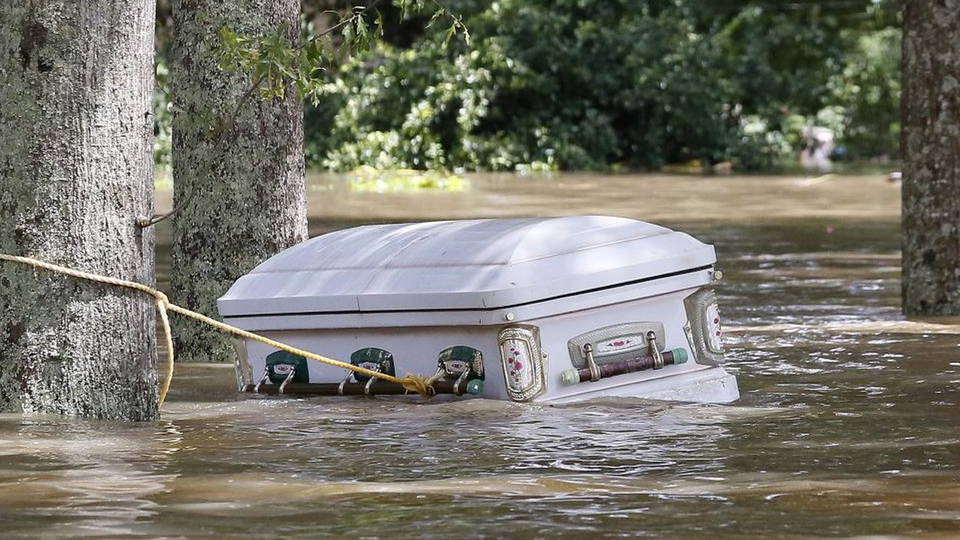 The American Red Cross is calling this week’s flooding in Louisiana the worst disaster in the U.S. since Hurricane Sandy in 2012. At least 13 people were killed after historic rainfall submerged parts of Baton Rouge and the surrounding area. State officials say the destruction may result in the worst housing crisis in the region since Hurricane Katrina in 2005. The federal government has declared the area a disaster zone, and state officials say more than 5,000 people remain in emergency shelters. This is a volunteer in Acadia Parish, Louisiana, where public schools remain closed and a curfew remains in place, amid the devastating flooding.
Angel Browning: "It’s very scary. And God has a reason; I just don’t know what it is yet. So, the rain is coming some more, and we just don’t know what to do. We’re trying to do everything we can. And we’re running low on everything at the store, so we’re trying to get stuff coming in, which we can’t, because everything is blocked. So, the owner’s running to Wal-Mart and buying crates and crates and crates of milk, so we can pass out here to our little people in our community."
The Louisiana Governor’s Office has said at least 40,000 homes have been damaged or destroyed. In Livingston Parish, home to about 138,000 people, it is estimated 75 percent of the homes have been lost.
Aetna to Leave Public Healthcare Exchanges After DOJ Blocks Merger
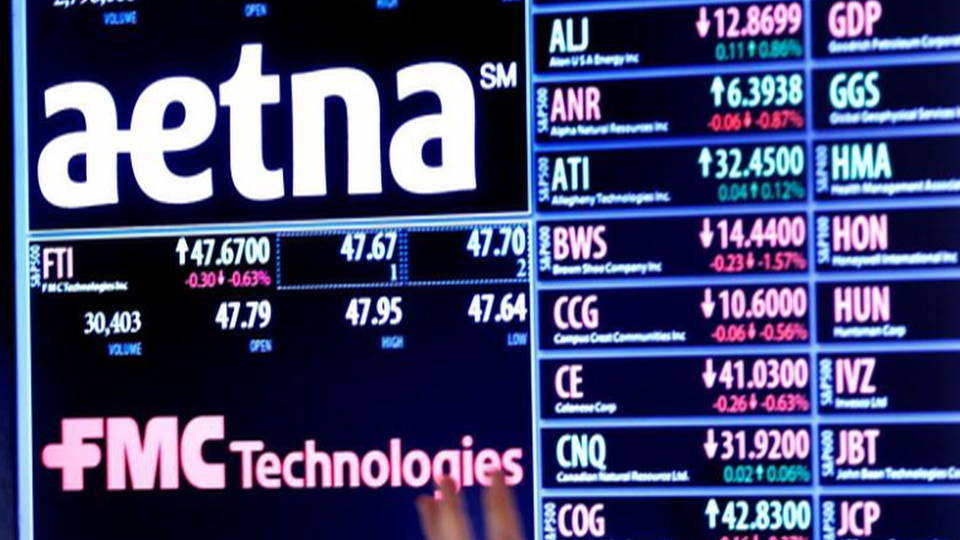 Aetna, the U.S.'s third largest health insurance company, says it will cut its participation in the Affordable Care Act's marketplaces next year by two-thirds, after the Department of Justice moved to block its merger with another healthcare company. Aetna claimed it faces more than $300 million in losses this year as a result of the public exchanges. But in a letter sent to the Justice Department in July, Aetna CEO Mark Bertolini threatened that Aetna would reduce its participation in the exchange if the Justice Department blocked its merger with health insurance company Humana. Bertolini wrote: "If the DOJ sues to enjoin the transaction, we will immediately take action to reduce our 2017 exchange footprint." Aetna reported a 38 percent increase in its overall profits last year, despite the loss it reported on the public exchanges. Last month, the Justice Department also sued to block a merger between healthcare giants Cigna and Anthem, which would be the largest heath insurance merger in U.S. history.
Clinton Takes Aim at Trump for Refusing to Pay Employees
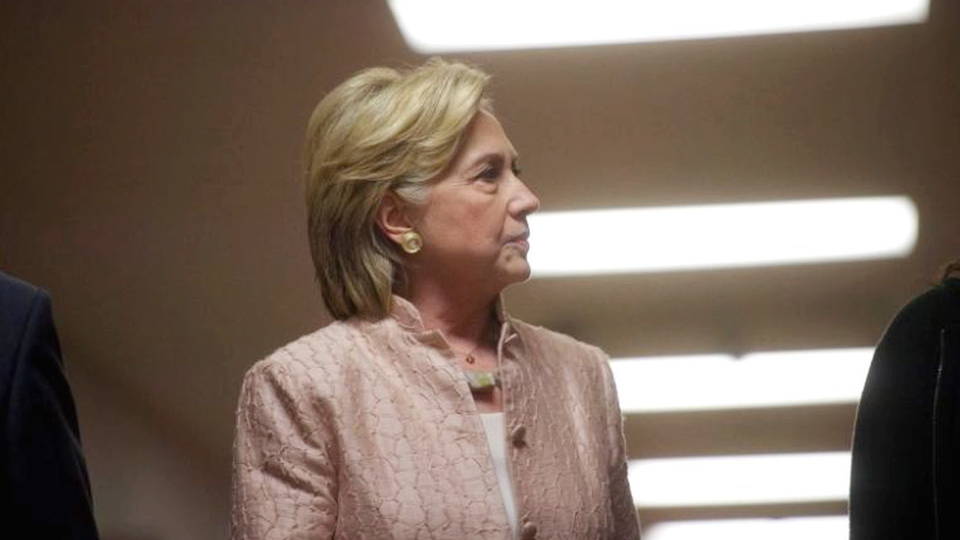 In news from the campaign trail, Democratic presidential candidate Hillary Clinton took aim at Donald Trump’s record as an employer during a speech in Ohio Wednesday.
Hillary Clinton: "It just really hits me personally when people are standing up and telling their stories. They were small business people, they were plumbers, electricians, painters, who did work for Donald Trump, and he refused to pay them. That violates the basic bargain. If you do your job, you’re supposed to be rewarded for your work, not stiffed, not told to go sue somebody."
Trump was in New York yesterday for his first classified intelligence briefing with theFBI.
TOPICS:
2016 Election
Hillary Clinton
Lawmakers Begin Reviewing Clinton Emails
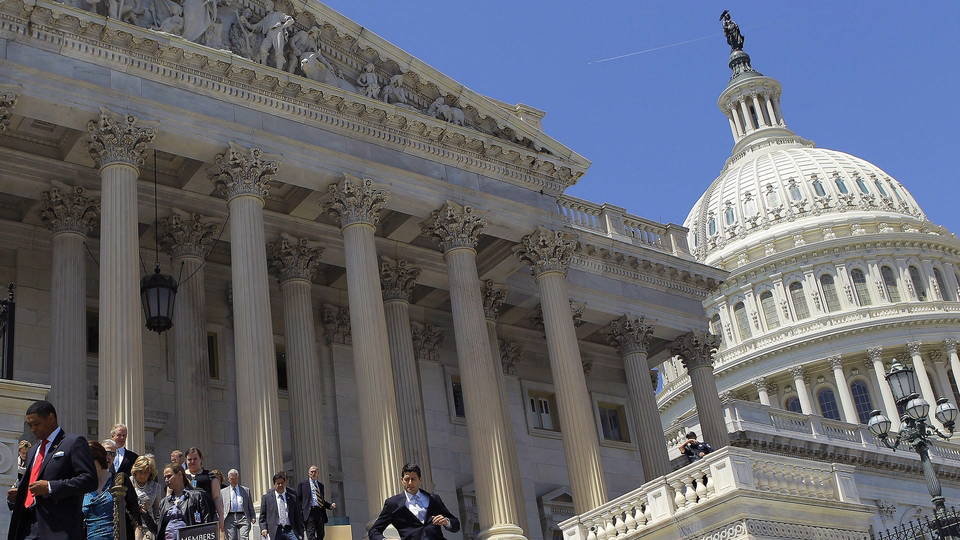 Meanwhile, lawmakers in Washington, D.C., began reviewing FBI documents on Wednesday detailing the agency’s investigation into Hillary Clinton’s use of a private email server while serving as secretary of state. The large binders labeled "secret" were made available to lawmakers after Republicans requested the information last month, following the FBI’s decision to recommend no criminal charges be brought against Clinton over the email use. The State Department has also said it will release some of Clinton’s emails to the conservative watchdog group Judicial Watch. Meanwhile, Clinton’s campaign continues to face questions after 44 State Department emails released to Judicial Watch revealed close ties between the Clinton Foundation and the State Department during Clinton’s time as secretary of state.
Ring-Wing Media Influencer Steve Bannon Now Heads Trump Campaign
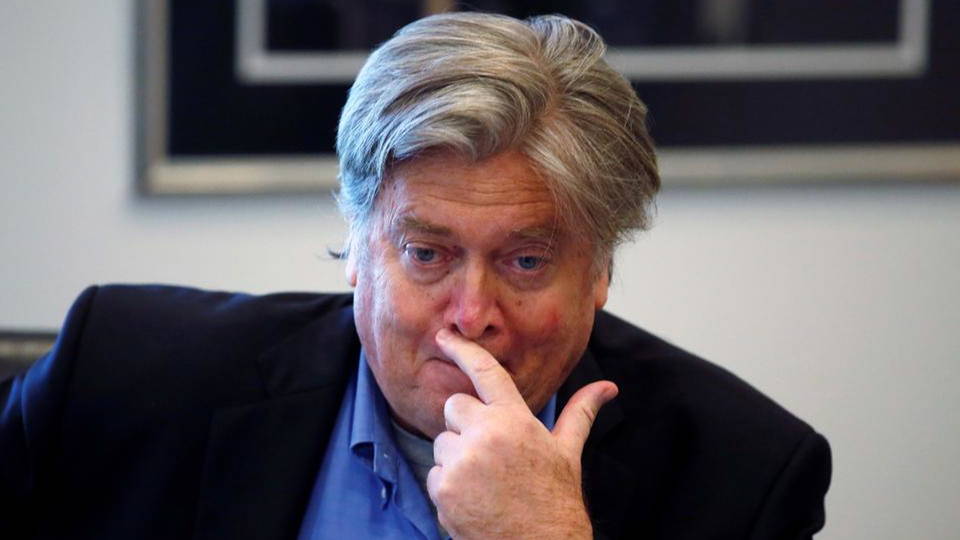 Meanwhile, Steve Bannon, the chairman of the conservative outlet Breitbart News, has taken over as Donald Trump’s campaign chief. Bannon is a former Goldman Sachs executive who has built Breitbart News into a far right-wing website that regularly sparks controversy with headlines such as "Birth Control Makes Women Unattractive and Crazy" and "Trannies Whine about Hilarious Bruce Jenner Billboard." The website regularly attacks mainstream figures of the Republican Party, such as former House Speaker John Boehner and former Florida Governor Jeb Bush. Bannon himself is considered to be the most influential figure in conservative media, after former Fox News chair Roger Ailes, who is also advising Donald Trump’s campaign. A 2015 profile of Bannon called him "the most dangerous political operative in America."
TOPICS:
Donald Trump
2016 Election
NYT, Guardian Editorial Boards Call for End to Support for Saudis in Yemen
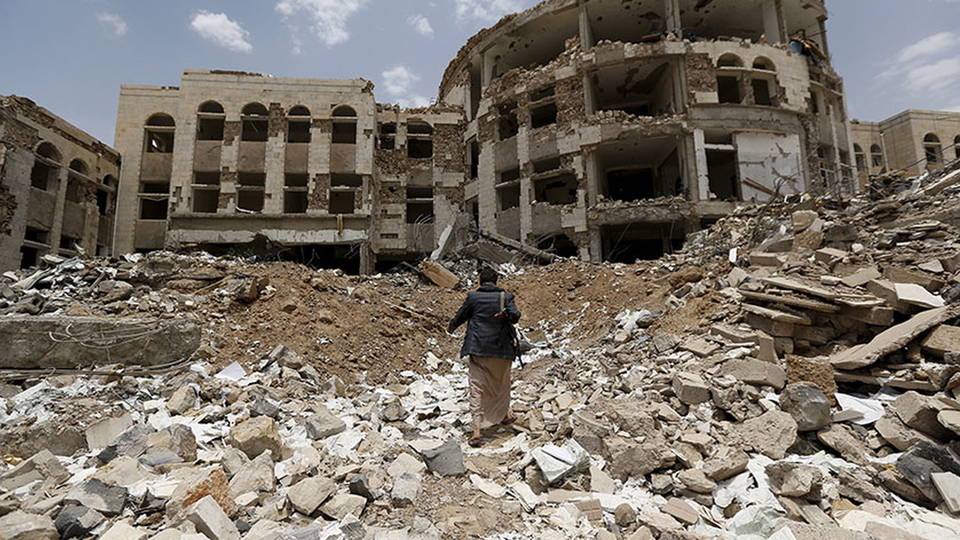 In international news, The New York Times and The Guardian editorial boards are calling for the U.S. and British governments to end their support for Saudi Arabia’s war in Yemen. In an editorial titled "America is Complicit in the Carnage in Yemen," the Times wrote on Wednesday, "Congress should put the arms sales on hold and President Obama should quietly inform Riyadh that the United States will withdraw crucial assistance if the Saudis do not stop targeting civilians and agree to negotiate peace." With U.S. and British support, Saudi Arabia has been bombing Yemen for 17 months, causing the majority of the conflict’s civilian casualties. Last week, the U.S. approved the sale of more than $1 billion of new weapons to the Saudis. Since taking office, the Obama administration has approved more than $110 billion in weapons sales to Saudi Arabia.
TOPICS:
Yemen
Saudi Arabia
U.N. Admits Role in Causing Haiti Cholera Outbreak That Killed 9,000
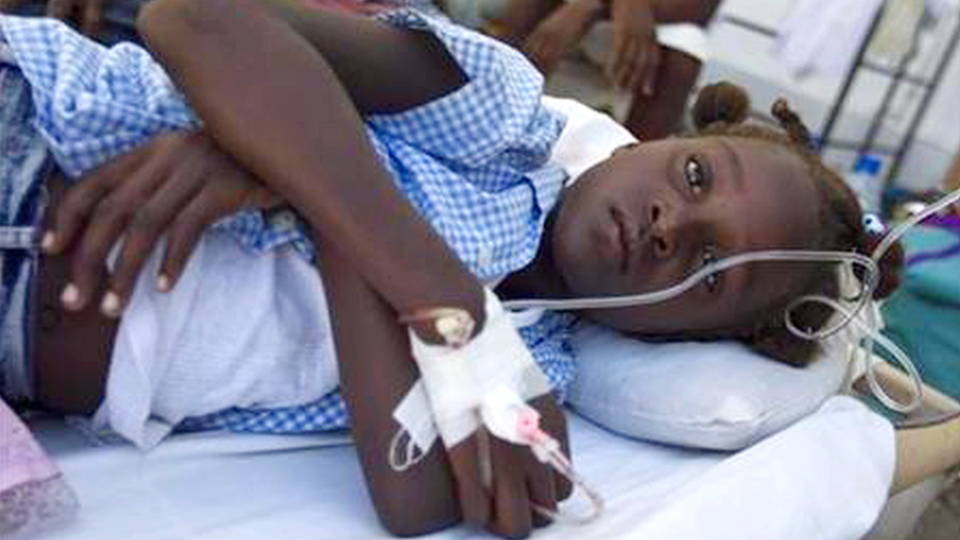 The office of U.N. Secretary-General Ban Ki-moon has acknowledged that the U.N. played a role in a cholera epidemic that killed more than 9,000 people in Haiti. The U.N. said it would issue a new set of responses to the outbreak in the next two months. U.N. peacekeepers are accused of negligently bringing cholera to the island during their deployment following the 2010 Haitian earthquake. A lawsuit in U.S. federal court seeks billions in damages for the victims. Ban’s admission does not change the U.N.’s stance it has legal immunity under a 1946 convention.
TOPICS:
Haiti
Haiti Earthquake
United Nations
U.N. to Investigate Claim Peacekeepers Failed to Stop Attacks on Civilians
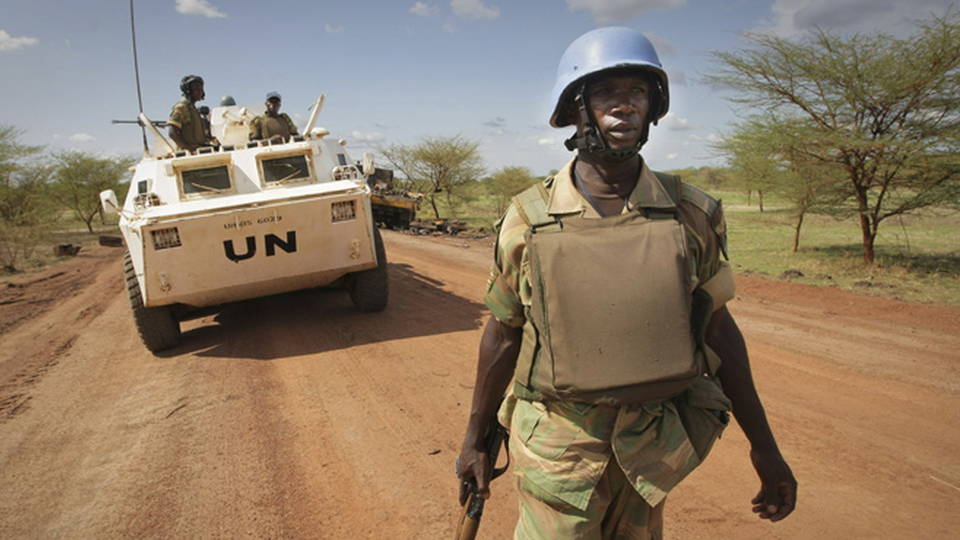 Meanwhile, in South Sudan, the U.N. is launching an investigation into allegations that U.N. peacekeepers did not attempt to prevent multiple cases of abuse and sexual violence against civilians. Last month, troops fighting on behalf of South Sudanese President Salva Kiir went on a nearly four-hour rampage through a hotel compound frequented by foreign aid workers. Witnesses say civilians were gang-raped and a journalist was executed in the attack. Several witnesses told the Associated Press that U.N. peacekeepers stationed nearby did nothing to stop the violence despite pleas for assistance from those inside the compound.
At Least Five Police Officers Killed in Bombings in Eastern Turkey
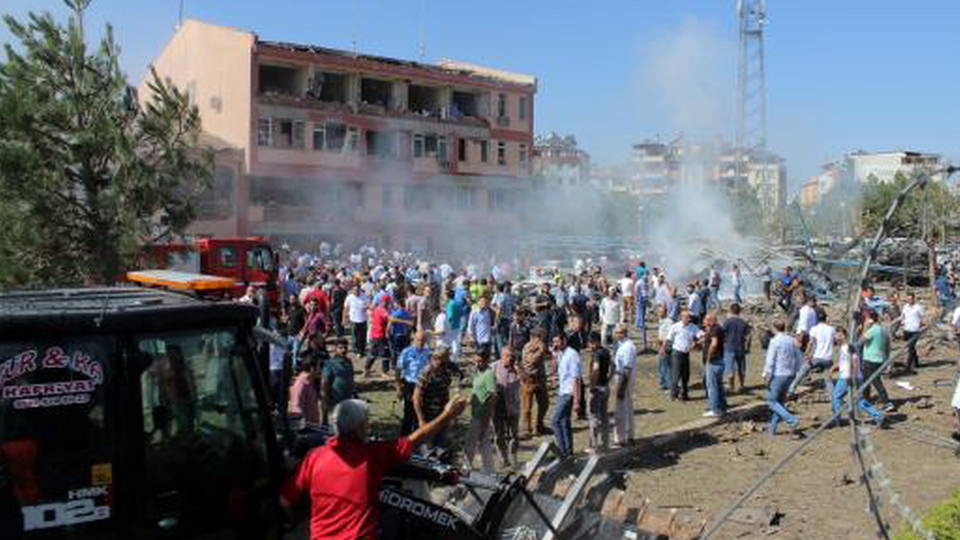 In Turkey, at least five police officers were killed and more than 100 people wounded by car bomb attacks in eastern Turkey on Wednesday and Thursday. The Turkish government blamed the attacks on the Kurdistan Workers’ Party, known as the PKK. Earlier this week, Turkish authorities shut down a newspaper in Istanbul and arrested some of its staff after claiming the paper supported the PKK. The newspaper’s closure is part of an ongoing crackdown on dissent in Turkey following a failed military coup in July.
Australia to Close Manus Offshore Detention Facility for Asylum Seekers
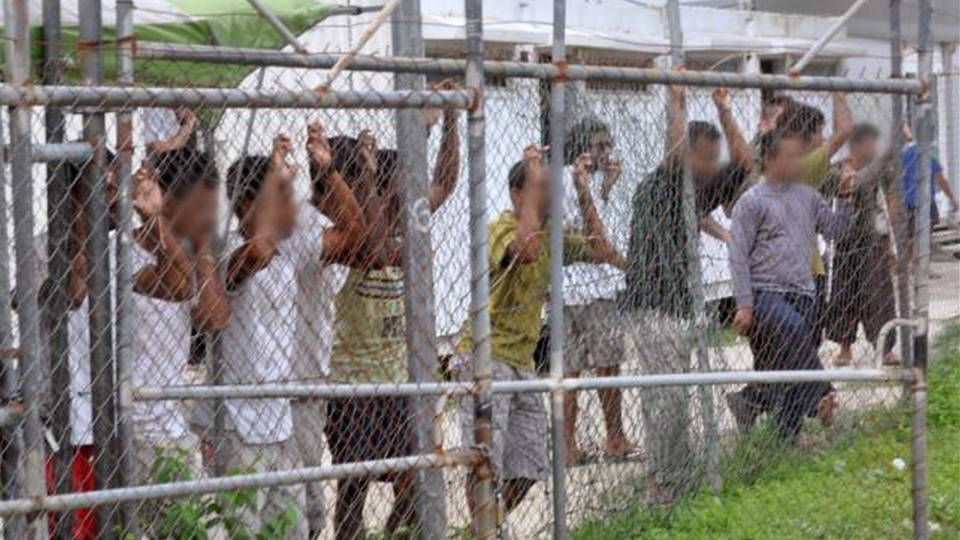 The Australian government says it will close the Manus Island immigration detention center after reports of harsh conditions and rampant abuse there, including for child detainees. Manus is one of the two offshore detention facilities Australia uses for asylum-seeking migrants. Many of those at the Manus Island facility have spent years in detention and suffer from mental health issues. The Australian government has so far said none of the those detained at Manus would be resettled in Australia, but Colin Barnett, the premier of Western Australia, said he would welcome their resettlement.
Colin Barnett: "Particularly for families, as long as they don’t present a security or safety risk, I do welcome them being in Australia. And the one thing I find unacceptable is children in detention."
TOPICS:
Australia
Immigrant Rights
Immigration
Illinois Governor Signs Domestic Workers Bill of Rights
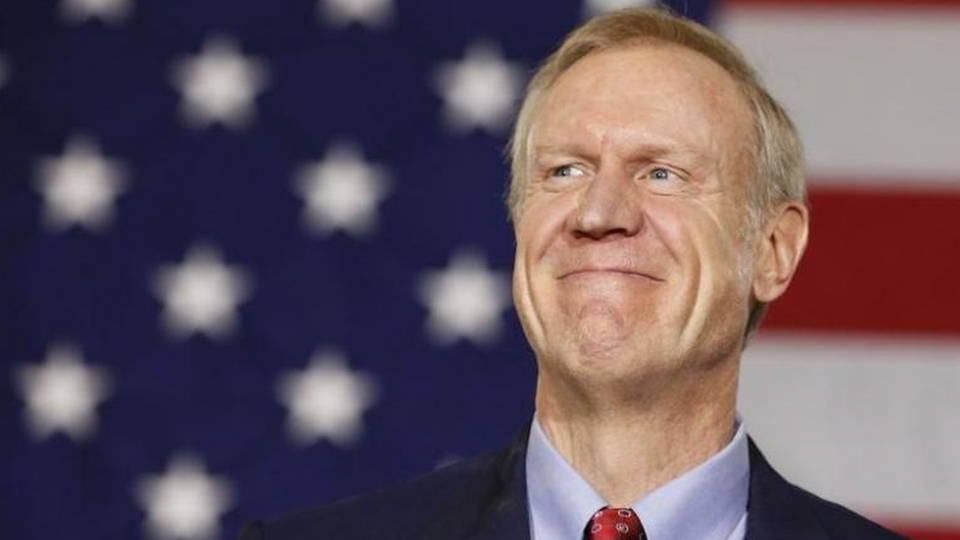 In Illinois, Governor Bruce Rauner has signed into law a Domestic Workers Bill of Rights, which grants domestic workers protections under the state’s labor statutes, including minimum wage, overtime and time off. Domestic workers are not covered by state or federal labor laws, though some states have similar bills. Wendy Pollack of the Sargent Shriver National Center on Poverty Law said, "This is really historic because the exclusion of domestic workers from federal and state employment laws has an unfortunate history in slavery and anti-immigrant sentiment."
TOPICS:
Domestic Workers
Labor
Hate Crime Charges Possible for Oklahoma Man Who Killed Arab Neighbor
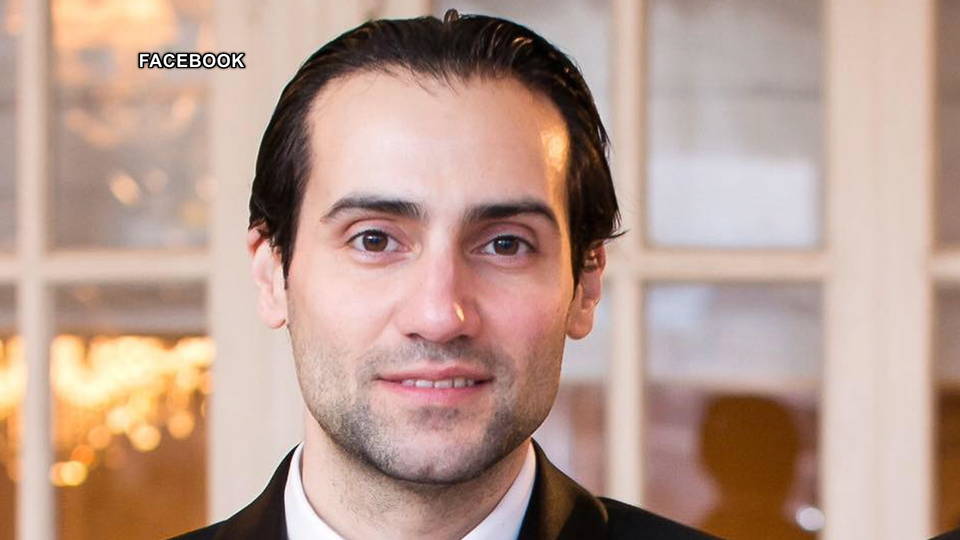 In Oklahoma, funeral services will be held Friday for Khalid Jabara, the Lebanese-American man police say was killed by his next-door neighbor in a possible hate crime. Police say Stanley Majors will be charged with first-degree murder for Monday’s killing and acknowledged he had a long-standing animosity toward Jabara’s family. Majors, who is white, is already facing assault charges for hitting Haifa Jabara, Khalid’s mother, with his car last year while she was jogging. Before that, Haifa Jabara already had a restraining order against Majors after he had threatened and harassed her. Despite all this, Majors was released on bail earlier this year and returned to his home. The Jabaras say Majors had threatened them and used racial slurs repeatedly since 2013. Majors had been arrested at least once for violating the restraining order before hitting Haifa Jabara with his car. Ten minutes before he was shot on Monday, Khalid Jabara called police to report suspicious activity around the family’s home. Police left without speaking to Majors, but admitted to journalists later that Majors was known to be hostile toward the Jabaras. Victoria Jabara Wiliams, Khalid’s sister, wrote on Facebook: "My family lived in fear of this man and his hatred for years. Yet in May, not even one year after he ran over our mother and despite our repeated protests, he was released from jail with no conditions on his bond—no ankle monitor, no drug/alcohol testing, nothing."
UC Berkeley Chancellor Leaves Amid Criticisms over Handling of Harassment Cases
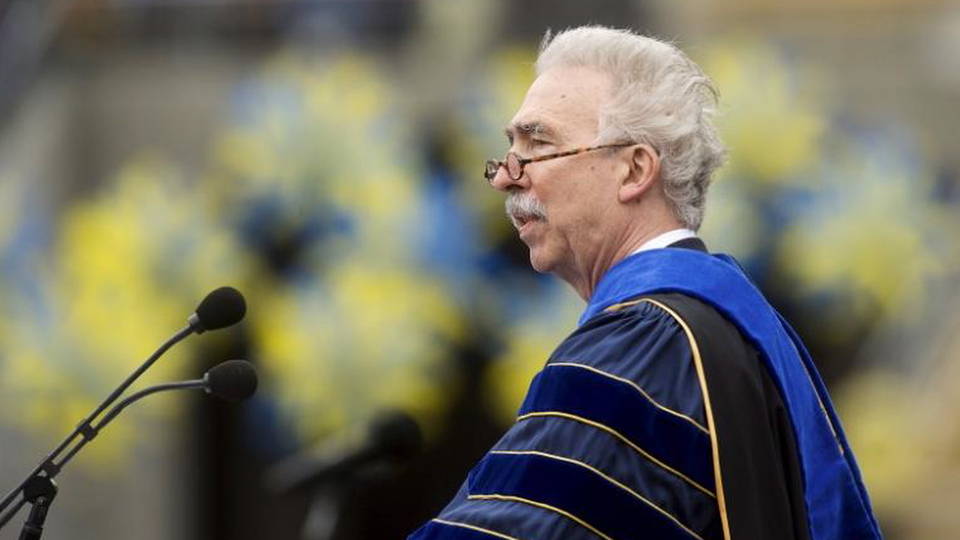 University of California at Berkeley Chancellor Nicholas Dirks will resign after criticism of his handling of sexual harassment cases and the university’s budget. In one case, a law school dean received only a temporary pay cut and orders to undergo counseling after an investigation supported claims he had sexually harassed a subordinate.
Brazil Police Question U.S. Swimmers After Doubt Cast on Robbery Claim
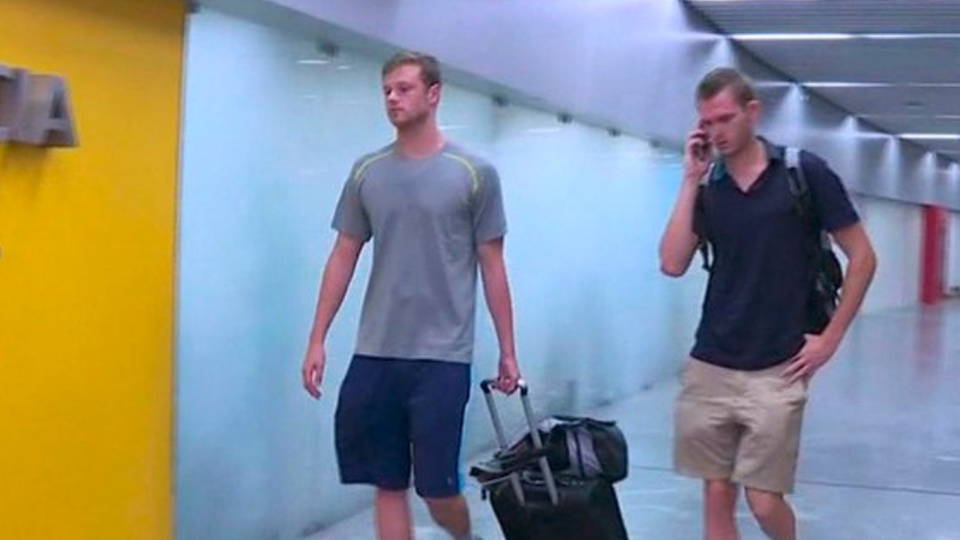 And in Brazil, American Olympic swimmers Gunnar Bentz and Jack Conger were pulled off a plane for questioning as they were preparing to leave Rio, amid suspicions that they and their teammates may have lied about their account of being robbed at gunpoint by people posing as police officers. Their teammate, gold medalist Ryan Lochte, had told authorities they were robbed early Sunday as they were returning home after a late-night party. He has since left Brazil. But Brazilian police say there are discrepancies in the swimmers’ reports. Police also say closed-circuit TV footage contradicts their stories. In Brazil, filing a false police report is a crime.
TOPICS:
Brazil
Olympics
Donate today:
Follow:


SPEAKING EVENT


"For Future Summer Olympics, Climate Change is No Game" by Amy Goodman & Denis MoynihanThe first marathon, legend has it, occurred in ancient Greece in 490 B.C. The Athenians had repelled an invasion by the Persians, and a messenger was dispatched to run from the scene of the battle, the city of Marathon, to the capital at Athens, with news of the victory. He ran the distance, about 26 miles, delivered his message and collapsed, dying on the spot. Scholars question the accuracy of the legend, but it persists as a founding myth of the popular event. The future of the marathon, and of the Summer Olympics in general, may be at risk. A report just published in the British medical journal The Lancet suggests that by the year 2085, almost all of the cities that could host the Summer Games will be too hot for outdoor events.
"The marathon is the most demanding endurance event, and thus provides a fair indication of whether conditions are likely to be safe for any other Olympic event," wrote the scientists, led by Kirk Smith, professor of global environmental health at the University of California, Berkeley. They noted that extreme high temperatures have already caused marathons to be canceled, like the 2007 Chicago Marathon. At the U.S. Olympic marathon trials held in Los Angeles to choose the team for the Rio Olympic Games this year, 30 percent of the runners dropped out of the race due to the heat. "By 2085, only eight (1.5 percent) of 543 cities outside of western Europe would meet the low-risk category," they wrote.
The Lancet researchers made use of the global attention being paid to the Olympics to make a bigger point: "The world beyond 2050 poses increasingly difficult challenges ... because the extent and speed of change might exceed society’s ability to adapt." Half the world’s workers work outdoors, they note, and, increasingly, the outdoors, and indoor spaces without cooling, are becoming unsafe. They warn that "exertional heat stroke and its negative outcomes, including mortality, will become a large part of outdoor work around the world." Drawing from another sports example, thousands of workers are toiling in extreme heat in Qatar, building the stadiums for the 2022 World Cup soccer championships. The International Trade Union Confederation estimates that "more than 7,000 workers will die before a ball is kicked in the 2022 World Cup."
These dire conditions stress the urgent need to address the threat of climate disruption. The Paris Agreement reached last December aspires to limit the global average temperature rise to 1.5 degrees Celsius, at the most 2 degrees C (2.7-3.6 degrees Fahrenheit). The science increasingly suggests that the climate is changing faster than predicted, and that urgent action is needed now. With each passing day of debate and half-measures, the problem gets harder — if not impossible — to solve.
Historically, the world’s greatest emitter of greenhouse gases has been the United States. We have been burning fossil fuels with abandon for centuries. According to the U.S. Energy Information Administration, "Three fossil fuels — petroleum, natural gas, and coal — have provided more than 80 percent of total U.S. energy consumption for more than 100 years." While renewable sources, primarily wind and solar, are increasing, these are still a fraction of where they need to be in order to meet the pledges made in Paris at the "COP 21" climate summit.
President Barack Obama just announced what will likely be his final order on vehicle fuel-efficiency standards. His climate legacy is now set, and is remarkably limited (noting, of course, the staunch opposition of the climate-change deniers in the Republican Party leadership). What of Obama’s two most likely successors, though? Hillary Clinton acknowledges that climate change is an urgent issue, but signaled otherwise when, this week, she announced that her transition team will be led by Ken Salazar, former interior secretary and former U.S. senator from Colorado. Salazar has enthusiastically pushed fracking and is a proponent of both the Keystone XL pipeline and the Trans-Pacific Partnership.
Donald Trump, meanwhile, has described climate change as a "hoax." As Trump received his first classified U.S. national-security briefing this week, the Gulf Coast is suffering from sustained rain and flooding, with at least 11 people killed and more than 20,000 people evacuated from their homes in and around Baton Rouge. In Southern California, wildfires rage, spurred by severe, climate-change-induced drought, forcing more than 82,000 people from their homes. July was also the hottest month in recorded history. As part of his classified briefing, Trump should be shown the Pentagon’s findings, which for years now have identified climate change as one of the most serious threats to our national security.
NEW BOOK
"The marathon is the most demanding endurance event, and thus provides a fair indication of whether conditions are likely to be safe for any other Olympic event," wrote the scientists, led by Kirk Smith, professor of global environmental health at the University of California, Berkeley. They noted that extreme high temperatures have already caused marathons to be canceled, like the 2007 Chicago Marathon. At the U.S. Olympic marathon trials held in Los Angeles to choose the team for the Rio Olympic Games this year, 30 percent of the runners dropped out of the race due to the heat. "By 2085, only eight (1.5 percent) of 543 cities outside of western Europe would meet the low-risk category," they wrote.
The Lancet researchers made use of the global attention being paid to the Olympics to make a bigger point: "The world beyond 2050 poses increasingly difficult challenges ... because the extent and speed of change might exceed society’s ability to adapt." Half the world’s workers work outdoors, they note, and, increasingly, the outdoors, and indoor spaces without cooling, are becoming unsafe. They warn that "exertional heat stroke and its negative outcomes, including mortality, will become a large part of outdoor work around the world." Drawing from another sports example, thousands of workers are toiling in extreme heat in Qatar, building the stadiums for the 2022 World Cup soccer championships. The International Trade Union Confederation estimates that "more than 7,000 workers will die before a ball is kicked in the 2022 World Cup."
These dire conditions stress the urgent need to address the threat of climate disruption. The Paris Agreement reached last December aspires to limit the global average temperature rise to 1.5 degrees Celsius, at the most 2 degrees C (2.7-3.6 degrees Fahrenheit). The science increasingly suggests that the climate is changing faster than predicted, and that urgent action is needed now. With each passing day of debate and half-measures, the problem gets harder — if not impossible — to solve.
Historically, the world’s greatest emitter of greenhouse gases has been the United States. We have been burning fossil fuels with abandon for centuries. According to the U.S. Energy Information Administration, "Three fossil fuels — petroleum, natural gas, and coal — have provided more than 80 percent of total U.S. energy consumption for more than 100 years." While renewable sources, primarily wind and solar, are increasing, these are still a fraction of where they need to be in order to meet the pledges made in Paris at the "COP 21" climate summit.
President Barack Obama just announced what will likely be his final order on vehicle fuel-efficiency standards. His climate legacy is now set, and is remarkably limited (noting, of course, the staunch opposition of the climate-change deniers in the Republican Party leadership). What of Obama’s two most likely successors, though? Hillary Clinton acknowledges that climate change is an urgent issue, but signaled otherwise when, this week, she announced that her transition team will be led by Ken Salazar, former interior secretary and former U.S. senator from Colorado. Salazar has enthusiastically pushed fracking and is a proponent of both the Keystone XL pipeline and the Trans-Pacific Partnership.
Donald Trump, meanwhile, has described climate change as a "hoax." As Trump received his first classified U.S. national-security briefing this week, the Gulf Coast is suffering from sustained rain and flooding, with at least 11 people killed and more than 20,000 people evacuated from their homes in and around Baton Rouge. In Southern California, wildfires rage, spurred by severe, climate-change-induced drought, forcing more than 82,000 people from their homes. July was also the hottest month in recorded history. As part of his classified briefing, Trump should be shown the Pentagon’s findings, which for years now have identified climate change as one of the most serious threats to our national security.
NEW BOOK

 Senior TV Producer
Development Manager
207 West 25th Street, 11th Floor
New York, New York 10001, United States
-------
-------
No comments:
Post a Comment