
Alban Weekly from The Duke Divinity School in Durham, North Carolina, United States "PRACTICAL WISDOM FOR LEADING CONGREGATIONS: Life After Governance Change" for Tuesday, 6 September 2016
 Life after Governance Change
ENABLING CONGREGATIONS TO BE AS GOOD AS THEY ARE
An anthropologist from Pluto might be forgiven for misclassifying board and committee meetings among the sacred rites of Earth religion. Meetings, with their arid liturgy of motions, seconds, minutes, and reports, give comfort and security to some, while driving others nuts-particularly those who like results better than extended conversations about pros and cons of possible approaches to activities that may or may not one day issue in results.
It is not actually meetings that drive people nuts-most leaders expect, even enjoy productive meetings-it is the perpetual unclarity in many congregations about who makes what decision. Lay leaders burn out like old brake pads from the start-and-stop decision-making tempo. People who, at work, carry assigned projects from start to finish find it hard to understand why relatively small decisions require long discussion, often at not one but several meeting tables.
Leaders burn out and disappear, but do not necessarily complain. Goodhearted folk, leaders excuse or even justify tedious decision-making methods, calling them "congregational" or "presbyterian," "Jewish" or "episcopal." In many congregations, it is more comfortable to raise doubts about religious doctrine than to question the committee system.
Read more from Dan Hotchkiss »
Life After Governance Change
An anthropologist from Pluto might be forgiven for misclassifying board and committee meetings among the sacred rites of Earth religion. Meetings, with their arid liturgy of motions, seconds, minutes, and reports, give comfort and security to some, while driving others nuts—particularly those who like results better than extended conversations about pros and cons of possible approaches to activities that may or may not one day issue in results.
It is not actually meetings that drive people nuts—most leaders expect, even enjoy productive meetings—it is the perpetual unclarity in many congregations about who makes what decision. Lay leaders burn out like old brake pads from the start-and-stop decision-making tempo. People who, at work, carry assigned projects from start to finish find it hard to understand why relatively small decisions require long discussion, often at not one but several meeting tables.
Leaders burn out and disappear, but do not necessarily complain. Goodhearted folk, leaders excuse or even justify tedious decision-making methods, calling them “congregational” or “presbyterian,” “Jewish” or “episcopal.” In many congregations, it is more comfortable to raise doubts about religious doctrine than to question the committee system.
Questioning the Unquestionable
This is gradually changing. For a variety of reasons, leaders in congregations of all kinds have begun to question the unquestionable. Sometimes the departure of too many governing board members triggers the rethinking. Sometimes a strategic planning process launches an imaginative plan that quickly founders in the sandy shoals of governance. Sometimes an exceptionally vital, growing congregation notices that its most innovative programs have emerged only when someone, in despair of working though the formal structure, worked around it.
For whatever reason, growing numbers of churches and synagogues are considering alternatives to their traditional ways of governing themselves. Since 2009, when Alban published my book Governance and Ministry: Rethinking Board Leadership, I have enjoyed consulting, coaching, and cheerleading congregations using it to engage in a deliberate governance change process.
It is not easy work. Institutions naturally resist change—not because the people in them are especially conservative, but because conserving is what institutions do. They codify and repeat patterns of behavior—building trust by repetition, growing in proficiency by practice, building a clear “brand” through consistent and predictable performance.
All institutions resist change; communities of faith resist it for a special reason: almost anything they do regularly quickly becomes part of somebody’s religion. The oddest things turn sacred—furniture and flower arrangements, calendars of fundraising events, organization charts. People cling to such symbolic objects, not because they love them, but because they love the congregation and the good they have experienced from its influence, and worry that if surface symbols change too much, they might lose the reality beneath.
Ron Heifetz and Martin Linksy write, “People do not resist change, per se. People resist loss.”1Resisting change can be a good thing when it helps people to hang on to what is truly precious. A congregation with no change-resistance worships on a different day and in a different place each week. That makes it difficult to find it or know whether to support it; in constant motion, it stands nowhere.
Sometimes only innovation—which requires letting go of symbols—lets us hold on to what we truly value. Congregations have begun to realize that comfortable ways no longer produce comfortable outcomes. Change, no longer a threat, becomes our best hope for avoiding deeper loss. When old modes of governance threaten to strangle what is precious in the congregation’s life, governance change becomes more thinkable.
A Governance Road Map
Governance and Ministry does not present a model for all congregations to follow. Instead it offers helpful terminology, a “map for thinking about governance,” and a process many congregations have used in shaping their own answers to the governance conundrum. The book draws on the best and most current thinking in nonprofit governance, recognizing that in some ways congregations are distinctive.
The following map shows two overlapping parabolas, one for governance and one for ministry. Governance is the job of the board (under whatever name). Governance includes acting as chief steward of the congregation’s human and material resources and ensuring that it serves its mission. Governance is “owning the place” on behalf of its true owners, which include its members, its denomination, its community, its God, or—most usefully, I think— its mission. The board governs when it “owns” the congregation on behalf of the mission.
Ministry is the congregation’s active work, including managing its workforce (paid and unpaid), spending and receiving money, choosing programs and priorities, and managing the myriad details that must be managed in order to achieve the practical results the congregation exists to achieve.
The board is not concerned primarily with finances or buildings—important as those are. Its primary focus is religious. It aims to spend as much time as it can discerning and interpreting the congregation’s mission and translating that into an annual vision of ministry to guide the staff. It spends smaller amounts of time monitoring and evaluating the work as a whole, including money, buildings, and the work of the staff. It does all this in close collaboration with the head of staff, its main partner in fulfilling the congregation’s purpose.
The board has only a few standing committees—most of what are typically called committees join the staff structure as ministry teams. The board governs primarily through written policies and holds the head of staff accountable, sometimes along with an executive minister or a small team, for complying with board policies and for achieving hoped-for results of ministry.
I have been delighted to see leaders of congregations across all of the major polity traditions finding Governance and Ministry of use. The results, in terms of the structures, have varied. What they have in common sets “good governance” apart from much of what has become standard across faith groups. Some of the marks of effective governance include:
- A single decision-making structure for governance and one for ministry, with a clear definition of which bucks stop where. Governance bucks stop with the board, and ministry bucks stop with the head of staff. Differences are resolved directly rather than through intermediaries.
- A board that speaks as one. Individual board members have no special authority outside board meetings. Board members may play other leadership roles as well, but remove their board “hat” when they do so.
- Boards speak primarily through written policies. Like any human gathering, a board meeting is a cauldron of informal, nonverbal, and emotional communication. People come away from meetings with a “sense of the board” on any number of topics. Effective boards make it clear that staff and others will not be expected to read the board’s mind, but must treat the board’s formal actions as the final word.
- Whenever authority is delegated, it is balanced with guidance and accountability. Too often, congregations plug people into generic positions or point them in vague directions, and then expect them to come back repeatedly to rehash each decision and appropriate each dollar. It is not fair to hold anyone accountable for results when the results have not been specified, or to blame them for violating an unstated rule. This principle applies whether the board is delegating to the staff or a staff member is delegating to subordinates or volunteers.
Bumps in the Road
Clarifying governance and ministry authority is quite an achievement; I have been awed by the persistence and inventiveness of leaders using Governance and Ministry. At this point, two years after publication, I have tracked a number of congregations through the process. Increasingly, I’m working now with congregations that have changed their governance model and are learning to live under the new regime. I’m learning about common bumps in the road that follow governance change. Every congregation finds its own points of challenge, but I can point to some friction points to watch for:
Volunteers and paid staff members feel increased accountability and don’t always like it.Many congregations are accustomed to a crisscross system of accountability, with one hierarchy of councils and committees reporting to a board and another hierarchy of paid staff, reporting to the head of staff. This worked well in the 1950s, when informal deference hierarchies (rich and poor, clergy and laity, men and women) held more sway, and when churches relied less on paid staff. It still works moderately well in smaller churches. But it was never realistic to expect that a board, meeting once a month for a few hours, could supervise scores of complex program units effectively.
It can be a challenge for volunteers to learn to function under the authority of staff; they may ask, “Shouldn’t staff be here to serve the members?” It can be helpful to remember that both volunteers and staff are here to serve the mission. There is nothing democratic about handing control of important pieces of the congregation’s work to essentially autonomous committees. Democracy is better served by letting the whole congregation be in conversation with its board about major questions of purpose and direction. When the direction is established, congregants can serve as an empowered workforce under the leadership of an accountable staff team.
A sad fact about life in the nonprofit sector is that many people choose to work there (whether in paid or unpaid roles) because they like not being held accountable. When the board quits trying to “run” the church (a notion that is largely fiction anyway in congregations larger than about 150), some volunteers may chafe when the staff begins to hold them accountable for the results they are expected to produce. Some paid staff may have the same reaction! When this happens it may help to know that it is a normal and predictable result of better governance, and the temporary discomfort is a fair price for an institution capable of setting its own course and sailing true.
Long-standing problems will become more obvious before they are corrected. When authority is parceled out informally, problems can persist for a long time without attracting much attention. Those who try to address chronic problems often will be scoffed at or pushed to the periphery, making it much more pleasant for leaders to accept the status quo. Effective governance design highlights familiar problems and puts an uncomfortable spotlight on the person responsible for correcting them. Examples of the kind of problem I have in mind include:
Activities that use church resources simply because they are of long standing, but whose connection to the church’s mission is unclear.
Paid or unpaid workers who perform poorly but remain in place because no one is clearly responsible for addressing the situation.
Conflicts that simmer because there is no effective forum for deciding issues.
A first step in solving any problem often is to make it feel more pressing and therefore more painful. An effective governance model does this almost automatically. This works, but usually makes long-standing staff and lay leaders sad before it makes them happy.
Volunteer leaders may feel “demoted.” In most congregations, the career track for a volunteer runs through practical church work onto the board. Under more effective governance, the board has its own career track. A board that focuses on longer-term work like discernment, strategy, and oversight still needs to know and care about practical work, but some board members will not like the new, more abstract focus of board meetings. It is important to move them from the board into important ministry roles without suggesting that they have failed as board members. Unpaid roles within the staff structure need to be designed with plenty of authority and scope of action, and with titles to match. There is no rule I know of against calling a lay volunteer “Director of…” and more congregations should consider doing it.
Beyond the Horizon
Having warned about so many bumps in the road to better governance, I must add that I’ve heard more joy than pain from congregations that have completed their own governance change processes. Congregations have been around for a long time, and have remade and refashioned themselves over and over again. At a certain point, the awkwardness of futureoriented board meetings gives way to a real excitement about shaping the congregation’s work through big decisions rather than small ones. The grudging loss of power by program units that have enjoyed de facto autonomy is far outweighed by the net gain in power by the congregation as a whole when it aligns its efforts in support of a shared vision.
As usual when you solve one set of issues, another set comes to the forefront. When the governing board and clergy leader’s roles are clarified, the spotlight shifts to the congregation itself. Most American congregations give the congregation an important role in governance—with less variation than you might expect from differences in historic polity traditions. But in congregations with attendance larger than about 150 (or adult membership above 250), congregational business meetings make very few significant decisions. In large congregations with attendance of 400 or more (membership 600+), membership meetings are routinized and scripted to the point where it is rare that any real decisionmaking happens there.
Congregations must vote on some important matters, which may include electing members of the board, approving budgets, calling and discharging clergy, buying and selling real estate, or amending the bylaws. But regardless of the congregation’s size attendance at congregational meetings rarely exceeds 100. Participation typically is skewed toward current officeholders and long-term, older members. Business items typically are complex packages reflecting hours of preparation by boards and committees.
The budget, for example, may consist of pages of small items carefully prepared by the finance committee and approved by the board. The treasurer explains it all, making it clear, for instance, that no one unfamiliar with the subtle details of the Metzger Trust could possibly intelligently question the “bridge loan from the temporarily-restricted missions holding fund.” In laymen’s terms, he adds, “we’re to borrowing (ha-ha) from ourselves.”
After such an explanation comes lengthy debate over the decline in the postage budget when first-class stamps are rising—is this thrift? A shift to email? A mistake? Nobody knows, but this does not stop members from expressing their opinions. To be prudent, someone moves to add $200 to the postage budget, with directions to the finance committee to find a way to rebalance the budget. The motion passes; so does the budget. It is a most unsatisfactorily shallow exercise in pseudo-democracy.
Perhaps the second most important action of the congregation (after approving the selection of the clergy leader) is the choice of board members. For this, the process is not much better. The nominating committee offers either a single slate or a competitive one. The single slate approach suggests that unless someone is angry enough to mount an insurrection, the nominating committee’s wisdom is to be preferred to the congregation’s. A competitive slate produces an annual crop of losing candidates who swear they never will subject themselves to this embarrassment again. It also makes for the appearance of democracy, but in the absence of real platforms or campaigning, the appearance rings false.
Can congregational meetings become more than empty pantomimes? Many larger congregations, in action if not words, have said no. Accepting that there is no way to make democracy effective in a congregation of 1000 or 2000, it is frankly or covertly dropped. This is a comfortable choice for many people; it reflects the life of larger business corporations, where stockholders’ meetings are held largely by proxy, with most of the proxies held by management. This practice frees management to pursue the policies it thinks best, while stockholders vote with their feet, if necessary finding other companies whose plans they think more promising. It works in business (so the thinking goes); why not in church?
But if democracy is hopeless for 2000 people, many of whom meet for worship weekly, what does that say about democracy in city hall or on Capitol Hill? Once upon a time, churches tried to be models for the larger society. I would like to work with some larger congregations interested in experimenting with new modes of congregational democracy that might be useful to our wider civic life.
Readers of Governance and Ministry know I urge boards to identify, each year, a short list of open questions it plans to reflect on, on its own and with the congregation in town meetings and small groups. This is a good idea, but we need to go farther to find ways large numbers of people can work together on their most important issues. No one knows the answer, which only redoubles the importance of the question. Take elections, for example. How can a large congregation elect a small board so that the consulting board truly represents the congregation, both as a group of varied individuals and as a covenanted body? Such a board would feel:
- accountable both to the congregation and to its mission,
- accountable also to the sub-groups of the congregation who voted for particular board members, so the board hears and includes distinctly different understandings of the mission, and
- motivated to bring different visions of the congregation’s ministry to the board table and then to achieve results through dialog and compromise.
Means for the Sake of Ends
Lyle Schaller once observed that liberal churches, which are so often ready to tell the world how it should change, especially resist changes to their own internal workings.2Liberals, so this thinking goes, are so open-minded they are not always quite sure what they believe or where they are headed, and so they come to treat “the way we do things here” as if it were the end-all of the church. By contrast, a church with a clear, focused purpose like “bring souls to Christ” will try new worship styles, change its committee structure, or rebalance its staff—whatever works—because the end is more important than the means.
Many of my governance-change clients are comparatively liberal congregations, and I must say that they belie this generalization. If some liberal congregations have been slower to reform their structures of decision-making, one reason may be that they care so much about what Luther called the priesthood of all believers, which makes governance a more complex challenge than it is for congregation that more easily hand power to one person. Building a structure that is serious both about congregational participation in decision-making and enlisting every person in discerning God’s will for the congregation makes governance a complicated business. I’m glad congregations of all stripes are now thinking more creatively about their own decision-making practices.
No structure guarantees success or promises a life free of problems. “T.S. Eliot warned against “dreaming of systems so perfect that no one will need to be good.”3Luckily congregations are full of people who are good already. The work of governance change can be simply a matter of enabling the congregation to be as good as they are.
Notes
Martin Linsky and Ronald A. Heifetz, Leadership on the Line: Staying Alive through the Dangers of Leading, 1st ed. (Harvard Business Press, 2002), 3.
2. Lyle E Schaller, The Very Large Church: New Rules for Leaders ( Abingdon Press, 2000), 30.
3. “Choruses from The Rock,” in T. S. Eliot: Collected Poems 1909-1962 (New York: Harcourt, Brace & World), 160.
Questions for Reflection 1. What do lay members of your congregation’s governing board experience? How might you find out?
2. What are the “unquestionables” in your congregation’s practice of governancedecision-making?
3. When did your congregation last try to improve its governance practices? What was the result? What further problems have the improvements uncovered?
4. What does your congregation do when it meets? What contributions have thecongregational meetings made to the direction of the congregation’s work?
5. In what way is your congregation a helpful or unhelpful example of group decision-making? In what way might it become a better model for the wider society’s practice of democracy?
-------
IDEAS THAT IMPACT: STRUCTURE IN SERVICE OF MINISTRY
Putting How Before What
If building Christian community is the first priority of the church, then task accomplishment can be a somewhat distant second. This means that the how of a church's gatherings is more important that the what of our time together. The way we gathered was of greater importance than what we did when we gathered.
Read more from Stephen Chapin Garner »
Putting How Before What
Before my arrival as pastor at the United Church of Christ in Norwell, Massachusetts, the congregation had plans underway to revamp its organizational structure. Their experience was one that is true for so many Christian communities today: Too few people are doing too much work in the church. Church leaders, both lay and ordained, grow older and grayer and they eventually burn out. That had become the situation at UCC Norwell toward the end of the twentieth century. The church was only a few decades old, but the organizational structure had become a burden that fewer and fewer people were willing to bear. The church had significant lay participation, but the boards and committees that oversaw the day-to-day operations of the church were slowly breaking down. The nominating committee had to call people up and beg them to join church boards. The sales pitch was nearly desperate: “Will you please, please, please join the trustee board? No one else wants to do it.” Needless to say, that is not an effective means of drawing in new members.
The truth was that the different boards and committees were so overburdened with tasks that any sense of fellowship and passionate mission was drained out of them. The deacons, for example, were responsible for worship—and all of the minute tasks that that entails—as well as for following up on absent church members, collecting information from visitors, running new member classes, and making sure that coffee was available for fellowship hour. The tasks lacked a central focus, and the board members lacked passion for their work. In fact, it felt as if any miscellaneous task the church needed done but didn’t have a proper home for fell to the deacons.
Additionally, because the different task groups were already maxed out with their load of commitments, this meant that starting new ministries was not something that could be freely considered or encouraged. Even if the church could find enough leaders for its board and committee structure, the structure itself was preventing ministerial innovation and growth. If that was not bad enough, because all board and committee chairs had a seat on the church council, few people wanted the position because of that additional commitment.
Thankfully, a couple of years before I began my ministry in Norwell, the church begun a process of reenvisioning its structural and institutional life. A task force was formed with the explicit instruction to develop a new way of gathering around the varied tasks of the community. A church consultant was brought in to help energize the imaginations of the congregation. Project 2000, as it was called, was launched . . . and shortly thereafter a new pastor was called.
Project 2000 was a multiphased structural visioning process that took several years and numerous task forces to complete. Different task forces began to sense that the purpose of gathering people together in the structural life of the community needed to be more than just about completing a task. People rarely felt called to tasks, but almost always made room for relationships. If the work of the church was going to have any connection to the work of God, then the tasks in which the church engaged had to be primarily about relationships—relationships with God and relationships with one another.
Building Christian community was the first priority of the church; task accomplishment would be a somewhat distant second. This came to mean that the how of our gatherings was more important that the what of our time together. The way we gathered was of greater importance than what we did when we gathered. If teams were going to gather around particular tasks, then we had to set some expectations for how community could be more deeply cultivated while engaging in the work of the church.
The various Project 2000 task forces also began to sense that people should be prompted to ministry inside and outside the church, not by a sense of guilt but by careful discernment of call. In short order, the work of Project 2000 demonstrated the need to have a callbased organizational structure. If we were going to engage in a particular ministry, we would do so because a group of people felt truly called by God to engage in that work. We would no longer engage in ministries simply because we had always done so. If we were going to be a callbased church, we had to honor the fact that we might be called away from long-standing ministries that we had always deemed essential. This was one of the most significant leaps of faith our community took in the whole restructuring process.
As is the case with most churches, our community is quite reluctant to give up long-standing ministries, even if there aren’t enough people to support them. Moving to a call-based structure would potentially require some letting go. Following this line of thinking, we had to grapple with the possibility that if we did not have anyone stepping forward to teach fourth-grade church school, perhaps, as a community we were not called to offer fourth-grade church school. If no one felt called to make and serve coffee after worship, perhaps we were not called to have coffee at Fellowship Hour. If no one felt called to join Women’s Fellowship, perhaps we were no longer called to that particular ministry. This was a challenging ethic to consider implementing. How could a church not have fourth-grade church school, or coffee, or Women’s Fellowship? What would it mean if no one felt called to be a deacon, or a trustee, or a member of the finance board? The church could literally fall apart!
These very real fears began to point to our need to trust in the Holy Spirit’s ability to form community, more than in our need to fill boards and committees. We began to suspect that the crisis we were facing was not a crisis of structure, but a crisis of faith. Whose work were we really trying to do? Did we really believe that the fortunes of the church rose and fell primarily by our own efforts? Did we assume our nominating committee was the only force for recruitment within the church? During this time I began to feel fairly passionate about letting the Holy Spirit take a greater hand in the running of UCC Norwell. If Jesus Christ was truly alive and active in the world, perhaps he could lead his church better than we could. If the church was only focused on doing what we wanted to do, instead of trying to discern what God wanted us to do, perhaps our most faithful action would be to shutter the church and join a secular civic organization instead. Of all the many blessings of Project 2000, one of the most pronounced gifts was the realization that the church was entrusted to our stewardship, but it belonged to Jesus Christ. If we were going to be faithful to Christ’s call on our community, then we needed to trust in the Holy Spirit’s ability to call individual members of our church into service.
Having experienced both the blessings and the challenges of this call-based, Holy Spirit-reliant ministry structure, I remain not only a fan but an advocate for this organizational model. I have come to believe that everything that is done in the life of the church is about building community. The music ministry team’s focus should not be about producing a flawless Christmas concert, but it should find ways to build community through rehearsal and performance. The trustee ministry team’s primary interest should not be about ensuring the most cost-effective approach to facility maintenance, but rather should be about how our building promotes fellowship. A prayer shawl ministry team gathering should be as intent on caring for one another as they are about stitching baby blankets and comfy throws. The reason for having any church structure at all is to help enhance and secure the welfare of the community. Staff, the church council, ministry team members, and other lay leaders should understand that their work is foundationally about relationship. The sharing and caring that we have witnessed through our ministry team model is evidence that our organizational structure is helping us to pursue our most sacred task—cultivating Christ’s community in the world.
Comments welcome on the Alban Roundtable Blog
_______________________________________
Adapted from Scattering Seeds: Cultivating Church Vitality by Stephen Chapin Garner with Jerry Thornell. Copyright © 2012 by the Alban Institute. All rights reserved.
______________________________________
FEATURED RESOURCES
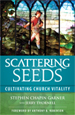 Scattering Seeds: Cultivating Church Vitality
 by Stephen Chapin Garner with Jerry Thornell
In Scattering Seeds: Cultivating Church Vitality , Stephen Chapin Garner and Jerry Thornell share the story of their home congregation, the United Church of Christ in Norwell, MA. This average congregation has approached congregational life in a not-so-average way. Garner and Thornell don’t claim to have the secret to church growth and vitality, but in sharing the story of their simple church in New England, they give hope and innovative ideas to congregations in regions all over the country.
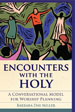 Encounters with the Holy: A Conversational Model for Worship Planning
 by Barbara Day Miller
Many churches have active worship committees or planning teams, and an abundance of books and resources guide pastors and laity.Encounters with the Holy offers a conversational model of worship planning that was developed to train practitioners to be more reflective in their planning of worship experiences.
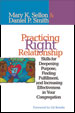 Practicing Right Relationship: Skills for Deepening Purpose, Finding Fulfillment, and Increasing Effectiveness in Your Congregation
 by Mary K. Sellon and Daniel P. Smith
In a book that is both profound and practical, Mary Sellon and Daniel Smith make the case that the health of churches and synagogues depends on congregations learning how to live out love in “right relationships.”Practicing Right Relationship offers theories, stories, and tools that will help congregations and their leaders learn how to build and maintain the loving relationships that provide the medium for God’s transforming work.
 Traveling Together: A Guide for Disciple-Forming Congregations
 by Jeffrey D. Jones
Traveling Together takes readers on a journey, providing a guidebook that maps out the factors facing congregations in this postmodern, post-Christian world and the Biblical foundations for understanding the purpose of the church—to become a disciple-forming community. Anyone concerned for the life and ministry of the church and who is seeking a new understanding of congregational life and mission will find hope and help in these pages.
_______________________________________
NOW IS THE TIME TO GATHER YOUR GOVERNANCE TEAM, THEN SIGN UP TO LEARN THE KEYS TO A CONGREGATIONAL GOVERNANCE SYSTEM THAT EMPOWERS MINISTRY
Register before August 9 to take advantage of TWO discounts:
Discount #1: $30 Early Bird discount available on every registration through August 9
Discount #2: Additional 15% off all team members after your leader registers (team discount available throughout the registration period)
 Governance and Ministry: Leading your Congregation through Governance Change
 Leader: Dan Hotchkiss, Alban senior consultant and author
October 9-11, Techny Towers Retreat Center,
(near) Chicago, IL
LEARN MORE
_______________________________________
Copyright © 2012 the Alban Institute. All rights reserved. We encourage you to share articles from the Alban Weekly with your congregation. We gladly allow permission to reprint articles from the Alban Weekly for one-time use by congregations and their leaders when the material is offered free of charge. All we ask is that you write to us at alban@div.duke.edu and let us know how the Alban Weekly is making an impact in your congregation. If you would like to use any other Alban material, or if your intended use of the Alban Weekly does not fall within this scope, please complete our reprint permission request form .
-------
The Art of Governance
A special risk for leaders is that a congregation can succeed so well at organizing that it loses track of its religious mission. Congregational life becomes so tightly ordered that it squeezes out all inspiration. The challenge of organized religion is to find ways to encourage people to encounter God in potentially soul-shaking ways while also helping them to channel spiritual energy in paths that will be healthy for them, the congregation, and the world beyond.
Read more from Dan Hotchkiss »
The Art of Governance
Religion transforms people; no one touches holy ground and stays the same. Religious leaders stir the pot by pointing to the contrast between life as it is and life as it should be, and urging us to close the gap. Religious insights provide the handhold that people need to criticize injustice, rise above self-interest, and take risks to achieve healing in a wounded world. Religion at its best is no friend to the status quo.
Organization, on the other hand, conserves. Institutions capture, schematize, and codify persistent patterns of activity. A well-ordered congregation lays down schedules, puts policies on paper, places people in positions, and generally brings order out of chaos. Organizations can be flexible, creative, and iconoclastic, but only by resisting some of their most basic instincts.
No wonder “organized religion” is so difficult! Congregations create sanctuaries where people can nurture and inspire each other—with results no one can predict. The stability of a religious institution is a necessary precondition to the instability religious transformation brings. The need to balance both sides of this paradox—the transforming power of religion and the stabilizing power of organization—makes leading congregations a unique challenge.
A special risk for leaders is that a congregation can succeed so well at organizing that it loses track of its religious mission. Congregational life becomes so tightly ordered that it squeezes out all inspiration. The challenge of organized religion is to find ways to encourage people to encounter God in potentially soul-shaking ways while also helping them to channel spiritual energy in paths that will be healthy for them, the congregation, and the world beyond. Religious leaders who write bylaws would be well advised to do so, as theologian Karl Barth admonished preachers, with the Bible in one hand and a newspaper in the other, holding realism and idealism in a salutary tension.
In facing this challenge, many clergy and lay leaders have expressed the wish for a clear, up-to-date model of what they should be doing. What clarity they do have generally is patched together from denominational guides, experience in various civic and work settings, and reference books like Robert’s Rules of Order. All of these have value; none quite fills the bill. Congregations are different from other kinds of organizations; and the world is different from what it was in 1876, when General Roberts wrote, and from the years after World War II, when much of the received denominational wisdom about congregations seems to have been set in lead type. Here are some things that seem clear to me as I attempt to meet this need:
There is no one right way to organize a congregation. I do not believe that an original, correct model of leadership can be found in history or Scriptures. History, as I read it, shows that people of faith have chosen a wide range of organizational forms to meet the challenges of their particular times. At any one time, different congregations organize differently because of their different values and the different roles they play in the wider community.
Religious institutions have often borrowed organizational forms from the society around them: the early Christian churches took on some of the forms of Hellenistic mystery cults, the medieval popes behaved like kings, and the New England Puritans cloned the structure of an English town. Congregations have looked like extended families, noble fiefdoms, parties of reform, cells of resistance, and leagues of mutual protection. Christians often give lip service to the “apostolic church,” but few have seriously followed its example of communal property or cheerful martyrdom. Likewise, though Jews love to sing the song “Tradition” from Fiddler on the Roof, you could look hard at a Russian shtetl and find little that resembles a Reform temple on Long Island.
I cite this varied history not to be cynical but to free our thinking from a narrow sense of binding precedent. An awareness of the wide range of forms that congregations of the past borrowed from the world around them frees us to draw wisdom from our own environment. For better or for worse, the main organizational model for contemporary congregations is the corporation, and specifically the nonprofit corporation, which emerged in the late nineteenth century as the all-purpose rubric for benevolent work. For congregations, the nonprofit garb fits pretty well, though not perfectly. What works for other charities may not be so effective or appropriate for congregations. On the other hand, our culture’s vast experience with corporate governance offers us much wisdom to draw on. Our challenge is to draw on corporate experience selectively, with a critical awareness of what makes congregations different.
Some mistakes have been made often enough that it is only fair to warn against them. At the very least, some choices have foreseeable consequences. For example, if a board tries to manage day-to-day operations through a network of committees, it will inevitably spend a great deal of its time on operational decision making. This outcome follows simply from the fact that if there is no other place for a buck to stop, it will stop at the board table. Many a board resolves to stop “micromanaging,” but until it is willing to delegate real management authority to someone else, the board remains the default chief operating officer.
We can know good governance when we see it. For all the variety of workable ways to organize a congregation, certain patterns consistently appear when governance goes well. My own list of criteria for measuring the effectiveness of governance in congregations includes the following signs of health:
- A unified structure for making governance decisions. The governing board represents the membership by articulating mission and vision, evaluating programs, and ensuring responsible stewardship of resources. Boards go under various names, including vestry, session, council, trustees, and directors (here I simply call them boards). Boards are usually accountable to the congregation, and sometimes also to a regional or national authority as well. Most well-run congregations have a single board with primary responsibility for governance, with clearly defined relationships with other boards, committees, staff, the congregation, and denominational bodies.
- A unified structure for making operational decisions. Program leaders (paid and unpaid) work harmoniously to create effective programs with the support of a structure that delegates authority and requires accountability. Anyone who works successfully in a congregation soon learns that multiple accountabilities are unavoidable. Every staff position has a natural constituency whose wishes sometimes conflict with the expectations of the staff leader or the board. Effective congregational systems do not eliminate those tensions but give clear guidance about how to manage them. Full-time senior staff members are expected to manage the politics of their positions, while part-time and lower-level staff members have supervisors to do that for them. Above all, delegation and accountability are matched. When a program’s goals are set, responsibility is assigned to its leader, and sufficient power is delegated so that it will
- be fair to hold the leader accountable for the fulfillment of the stated goals. A creative, open atmosphere for ministry. Members take advantage of many opportunities to share their talents and interests in an atmosphere of trust and creativity in which structure, goals, and purposes are clear. One of the most helpful findings from research on corporate effectiveness is that the command-and-control approach works for only a narrow range of tasks. Even the military, which highly values obedience, has learned that delegating as many decisions as possible to lower-level people, while giving clear guidance, reduces errors and improves adaptability to changing circumstances. Likewise, no congregation can succeed by relying on its board or staff to come up with all of the ideas. In the most effective congregations, programs and ministries “bubble up” continually from outside the formal leadership.
Leaders of communities of faith are never simply managers of institutions, nor do they have the luxury of being purely spiritual leaders. Congregations are vessels of religious growth and transformation—but to be vessels, they need firmness and stability. A congregation easily becomes an end in its own mind—recruiting people to an empty discipleship of committee service, finance, and building maintenance. Institutional maintenance is a necessary, but ultimately secondary, function of a congregation. If souls are not transformed and the world is not healed, the congregation fails no matter what the treasurer reports. Paul of Tarsus put his finger on this tension when he said, “The letter killeth, but the spirit giveth life” (2 Cor. 3:6 KJV).
That is why governance in congregations is not a science but an art. Leaders must continually balance the conserving function of an institution with the expectation of disruptive, change-inducing creativity that comes when individuals peek past the temple veil and catch fresh visions of the Holy.
____________________________________________
Adapted from Governance and Ministry: Rethinking Board Leadership by Dan Hotchkiss, copyright © 2009 by the Alban Institute. All rights reserved.
____________________________________________
FEATURED RESOURCES
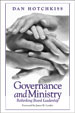 Governance and Ministry:
Rethinking Board Leadership
by Dan Hotchkiss
In Governance and Ministry, Alban Institute senior consultant Dan Hotchkiss offers congregational leaders a roadmap and tools for changing the way boards and clergy work together to lead congregations. Hotchkiss demonstrates that the right governance model is the one that best enables a congregation to fulfill its mission—to achieve both the outward results and the inward quality of life to which it is called.
 Transforming Church Boards
Into Communities of Spiritual Leaders
by Charles M. Olsen
Olsen presents a bold vision of leadership-one that offers church board work as an integral part of congregational leaders’ faith experience and development. Board or council members’ faith is engaged and informs the way they conduct the church’s business. Discover inspiring, practical ways your board can make its meetings become opportunities for deepening faith, developing leadership, and ultimately renewing your church.
 Ministry and Money:
A Guide for Clergy and Their Friends
by Dan Hotchkiss
Alban senior consultant Dan Hotchkiss uses frank, straightforward guidance to help clergy develop a sound theology of money, as well as skills for church administration. Ministry and Money puts forth a new strategy for self-care, and a confident approach to managing both personal and congregational finances. Hotchkiss wants to help clergy overcome their own anxieties about money matters so they can help others address the personal, social, and congregational aspects of this challenging and often difficult topic.
 When Moses Meets Aaron:
Staffing and Supervision in Large Congregations by Gil Rendle and Susan Beaumont
In When Moses Meets Aaron, Gil Rendle and Susan Beaumont help clergy responsible for several-member staff teams learn to be both Moses and Aaron—both a visionary and a detail-oriented leader—in order for their large congregations to thrive. They immerse the best of corporate human resource tools in a congregational context, providing a comprehensive manual for supervising, motivating, and coordinating staff teams.
 Leadership in Congregations by Richard Bass, Editor
This book gathers the collected wisdom of more than ten years of Alban research and reflection on what it means to be a leader in a congregation, how
our perceptions of leadership are changing, and exciting new directions for leadership in the future. With pieces by diverse church leaders, this volume gathers in one place a variety of essays that approach the leadership task and challenge with insight, depth, humor, and imagination.
____________________________________________
Copyright © 2009, the Alban Institute. All rights reserved. We encourage you to share articles from the Alban Weekly with your congregation. We gladly allow permission to reprint articles from the Alban Weekly for one-time use by congregations and their leaders when the material is offered free of charge. All we ask is that you write to us at alban@div.duke.edu and let us know how the Alban Weekly is making an impact in your congregation. If you would like to use any other Alban material, or if your intended use of the Alban Weekly does not fall within this scope, please submit our reprint permission request form.

JOIN DAN HOTCHKISS FOR "GOVERNANCE & MINISTRY: THE ART OF CULTIVATING STAFF-BOARD PARTNERSHIPS"
Columbia Theological Seminary | October 5-7, 2016
Congregations thrive when lay and professional leaders lead as partners, and a fruitful partnership requires clear understandings about how decisions will be made. This course will help leaders develop administrative boards (councils, sessions, vestries, etc.) that delegate effectively, demand high performance, require sound stewardship, and reflect continually on mission and purpose at board meetings and in wider gatherings. Seminar participants will explore an approach that supports a purpose-driven work environment for clergy, staff, and volunteers, so that they enjoy appropriate autonomy and space for creative work.
Read more and register »

Governance and Ministry: The Art of Cultivating Staff-Board Partnerships
October 5 -7, 2016
Course Description: Congregations thrive when lay and professional leaders lead as partners, and a fruitful partnership requires clear understandings about how decisions will be made. This course will help leaders develop administrative boards (councils, sessions, vestries, etc.) that delegate effectively, demand high performance, require sound stewardship, and reflect continually on mission and purpose at board meetings and in wider gatherings. Seminar participants will explore an approach that supports a purpose-driven work environment for clergy, staff, and volunteers, so that they enjoy appropriate autonomy and space for creative work.
Program Outcomes: During this seminar, participants will:
- Articulate an understanding of the Governance and Ministry approach.
- Learn the common types of governance structures used by congregations and other nonprofit organizations.
- Explore differences among congregations (size, faith tradition, customs) and how those can be honored while reshaping governance.
- Review specific workshop and event designs for helping congregations design and test new ways of decision making.
- Develop consulting skills and practices for the governance-change process.
- Brainstorm specific back-home challenges,
- Have an opportunity to receive further coaching from the instructor, Dan Hotchkiss.
- Extras: In addition to the workshop itself, the instructor will provide:
- A packet of resource material downloadable from the course site, for each participant.
- A half-hour of follow-up coaching with Dan Hotchkiss, enabling participants to discuss questions that arise as they integrate what they have learned in the home situation. (Additional coaching or consultation can be contracted separately.)
Instructors: Rev. Dan Hotchkiss, consultant and Unitarian Universalist minister. Hotchkiss is the author of Governance and Ministry: Rethinking Board Leadership (2nd ed.) , and Ministry and Money: A Guide for Clergy and their Friends, both published by the Alban Institute. For many years an Alban consultant, Dan continues to help congregations with fundraising, growth, strategic planning, and board governance as a member of the Congregational Consulting Group. For additional information, visit his website,http://danhotchkiss.com/.
Schedule: Oct. 5 1:30 – 5:00 PM
Oct. 6 8:30 – 5:00 PM
Oct. 7 8:30 – 12:30 PM
Program Fee: To encourage teams from congregations and organization, a special program fee of $200 for 2+ people from same group is offered. Single registration: early registration through 9/2 is $225; full program fee after 9/2 is $255. Includes lunch on Thusday, materials and light refreshments.
Housing: Single and double rooms and queen suites available on campus for nights of Oct. 5-6; other nights possible upon request.
Meals: Tuesday lunch and light refreshments included; other meals available in campus dining (check or cash only, please) or local restaurants.
Contact: Lifelonglearning@ctsnet.edu
Click here to register by mail.
PLEASE NOTE: Your registration is not complete until you have successfully completed the entire process and received a printable confirmation page and an email confirmation.
Payment and Cancellation Policy: Your balance is due 30 days before the class begins. If you need to cancel, please submit a cancellation form or call 404-687-4577. Cancellations must be received 10 business days before the class to receive a refund of the program fee minus deposit. Deposits are non-refundable and non-transferable.
Registration Assistance

Columbia Theological Seminary
The Center for Lifelong Learning
701 S. Columbia Dr.
PO Box 520 Decatur, GA 30031
Phone: 404-687-4577
Fax: 404-687-4591
LifelongLearning@ctsnet.edu
 FROM THE CONGREGATIONAL RESOURCE GUIDE:LET YOUR MISSION BE YOUR GUIDEYour congregational mission and vision statements should guide your work every day. These tools should focus your thoughts and actions as you carry out the work of your congregation. Center for Congregations President Tim Shapiro explores mission and vision in this blog on the Congregational Resource Guide.
The Congregational Resource Guide (CRG) offers information and a variety of resources to help you create a mission and vision for your congregation. If you want to find information on other subjects, visit the CRG and type your topic into the search bar.
FROM THE ALBAN LIBRARY
 Governance and Ministry has proven to be an indispensable guide for leaders and clergy on how to work together to lead congregations. In this second edition, veteran congregational consultant and minister Dan Hotchkiss updates the book to reflect today's church and synagogue landscape and shares practical insights based on his work with readers of the first edition.
 Governance and Ministry highlights the importance of reaching the right governance model for a congregation to fulfill its mission-to achieve both the outward results and the inward quality of life to which it is called. Hotchkiss draws on governance research from business, non-profits, and churches, as well as deep experience in a variety of denominations and congregations to help readers determine the governance model that best fits their needs. The second edition has been streamlined and reorganized to better help readers think through leadership models and the process of change. The book features new material on the implications of congregation size, the process of governance change, policy choices, and the lay-clergy relationship. It also features two appendices with resources often requested by Hotchkiss's consulting clients: a style guide for policy-makers and a unified example of a board policy book.
Learn more and order the book »
-------
Follow us on social media:


VISIT OUR WEBSITE
Alban at Duke Divinity School
VISIT OUR WEBSITE
Alban at Duke Divinity School
1121 West Chapel Hill Street, Suite 101
Durham, North Carolina 27701, United States
-------
-------
No comments:
Post a Comment