democracynow.org
Stories:
 Standing Rock Sioux Chairman Calls for Investigation of Dog Attacks on Native American Protesters
On Saturday in North Dakota, security guards working for the Dakota Access pipeline company attacked Native Americans with dogs and pepper spray as they resisted the $3.8 billion pipeline’s construction on a tribal burial site. On Sunday, more than 500 people marched back to the construction site and held a prayer, mourning the destruction of their ancestors’ graves. Now, later today, a federal judge in Washington, D.C., will decide whether to grant a temporary restraining order to halt temporarily further construction of the Dakota Access pipeline in the area near the Standing Rock Sioux Reservation. For more on the standoff at Standing Rock, we’re joined by Dave Archambault, chairman of the Standing Rock Sioux Tribe.
TRANSCRIPT
This is a rush transcript. Copy may not be in its final form.
AMY GOODMAN: This is Democracy Now!, democracynow.org, The War and Peace Report. I’m Amy Goodman, as we continue our coverage of the standoff at Standing Rock, which we have just returned from. On September 3rd, the Dakota Access pipeline company attacked Native Americans with dogs and pepper spray as they resisted the construction of the $3.8 billion pipeline on a sacred tribal burial site. On Saturday, Native Americans were shocked when they went to plant their tribal flags at the construction site and found the bulldozers working over the weekend. On Friday, lawyers for the tribe had filed documents showing how this land was a tribal burial site. Now many fear that many of the graves and artifacts are destroyed. Well, today, a federal judge in Washington, D.C., will decide whether to grant a temporary restraining order prohibiting further construction of the Dakota Access pipeline in the area near the Standing Rock Sioux Reservation, until this same judge rules on an injunction in the tribe’s lawsuit against the U.S. government, which is expected by Friday.
For more, we are joined by two guests. Jan Hasselman is a staff attorney with Earthjustice. Jan is representing the Standing Rock Sioux Tribe in its lawsuit against the Army Corps of Engineers over the Dakota Access pipeline and headed to federal court today for that restraining order. And Dave Archambault is the chair of the Standing Rock Sioux Tribe.
We welcome you both to Democracy Now! Chairman Archambault, we just came back from North Dakota. Having filmed what took place on Saturday, which shocked everyone, the dogs and the pepper spray unleashed on Native Americans who were protesting, or, as you say, protecting the area that the Dakota Access pipeline is being constructed on. Can you respond to what took place?
DAVE ARCHAMBAULT: Thank you, Amy, for being out there and capturing all the footage. There’s always two sides to the story. And law officials try to portray that they were attacked by an angry mob and it was a riot scene. But it—that was not what was taking place. We had protectors who were concerned about the land. And it just goes to show what kind of a company Energy [Transfer] Partners is. They have—they have zero policies on community relations, zero policy on human rights, zero policies on Indian rights, indigenous rights. So, when a company is like that, they have no social responsibility, and they don’t care about anything. And they hire security companies with untrained handlers. And these handlers—the dogs were attacking the handlers. That’s why they released dogs into the crowd. And then they go and try to recover them. It just doesn’t make sense, and it’s not right, what this company, Energy [Transfer] Partners, is doing. They say they have every right to be there, but so do we.
AMY GOODMAN: On Monday, a Dakota Access spokesperson issued this statement, saying, "We are greatly saddened and extremely bothered to confirm that unwarranted violence occurred on private property under easement to Dakota Access Pipeline resulting in injury to multiple members of our security personnel and several dogs. It is unfortunate that what has been portrayed as a peaceful protest by the opponents of the pipeline has now turned to violence and intimidation by a group of criminals and activists. Assailants broke through a fence and attacked our workers. We are working with law enforcement to ensure that all offenders are arrested and prosecuted to the fullest extent of the law." Chairman Archambault, can you respond to what they said? The county sheriff repeated this, though what was shocking also is that the local law enforcement were not there over this whole period, so they simply repeated what the company said.
DAVE ARCHAMBAULT: Yeah, the company provoked this whole thing. And law enforcement, from what I understand, they observed everything. And it wasn’t until the company came forward and assaulted one of the protectors, when the protectors crossed over the boundary. But there’s a question there. Like, we always said we have a right to our treaty lands, and we have a say. The company, the U.S. government, the state government never got permission from us to be on that land, to do this to our lands.
AMY GOODMAN: When you say "protector," can you explain, using this term "protector" rather than "protester"?
DAVE ARCHAMBAULT: Well, protester is somebody that is standing there waiting for confrontation. A protector is going to do what it takes on the ground to make sure that nothing negative happens to our indigenous rights and our indigenous lands.
One other thing, Amy, is, you know, when the law enforcement came, it was dispersed peacefully, and the law enforcement only took statements from the security company. We had individuals, we had witnesses. And you exposed a lot of this with your coverage. But we had witnesses, and we had people who had injuries as a result of the confrontation. And we had a lot of people pepper-sprayed. But the law enforcement said they wanted to do a thorough investigation. And before they did that, they started releasing statements. And it’s just one-sided reports by the law enforcement. They should have got both sides.
AMY GOODMAN: I mean, the use of dogs. You’re the chairman of the Standing Rock Sioux Tribe. Have the state authorities or the county authorities explained to you how it was that the company security unleashed these dogs, both on leash and unleashed them, on the protesters, biting a number of them? As people could see in the report we just played, you had a dog there whose mouth and nose were dripping with blood, as the security guard who was holding that dog, even when I pointed this out to her, and others certainly did, moved on to attack other members of this protest. What has the county authorities said to you about this? They have to answer to you.
DAVE ARCHAMBAULT: First thing I did was I asked the law enforcement, where did this company get these dogs? Was this something that law enforcement supplied? When I asked the question, they said, no, they had nothing to do with it. The company hired somewhere—someone to get these dogs, and there was a lack of training on how to handle the dogs. They were using the dogs as a deadly weapon. And that’s something that needs to be looked into, is who was handling these dogs, and whose dogs were they, and why were they—why were they being used? This was all premeditated. They knew something was going to happen when they leapfrogged over 15 miles of undisturbed land to destroy our sacred sites. They knew that something was going to happen, so they were prepared. They hired a company that had guard dogs, and then they came in, and then they waited. And it was—by the time we saw what was going on, it was too late. Everything was destroyed. The fact is that they desecrated our ancestral gravesites. They just destroyed prayer sites. And it’s disturbing. And that’s why we’re filing for the temporary restraining order. They need to stop working. This company needs to go away. Energy [Transfer] Partners is a bad company.
AMY GOODMAN: Energy Transfer Partners is working for the Dakota Access pipeline, to build it. ... Read More →
 FULL Exclusive Report: Dakota Access Pipeline Co. Attacks Native Americans with Dogs & Pepper Spray
On Saturday in North Dakota, security guards working for the Dakota Access pipeline company attacked Native Americans with dogs and pepper spray as they resisted the $3.8 billion pipeline’s construction. If completed, the Dakota Access pipeline would carry about 500,000 barrels of crude per day from North Dakota’s Bakken oil field to Illinois, where it would meet up with an existing pipeline that would carry the oil all the way down to Texas. The pipeline has faced months of resistance from the Standing Rock Sioux Tribe and members of nearly 100 more tribes from across the U.S. and Canada. On Friday, lawyers for the tribe filed documents showing how the very land where Dakota Access would bulldoze on Saturday was, in fact, a tribal burial site. Democracy Now! was on the ground on Saturday, and we bring you this exclusive report.
TRANSCRIPT
This is a rush transcript. Copy may not be in its final form.
AMY GOODMAN: On Saturday in South Dakota, security guards working for the—in North Dakota, security guards working for the Dakota Access pipeline company attacked Native Americans with dogs and pepper spray as they resisted the $3.8 billion pipeline’s construction. If completed, the Dakota Access pipeline would carry about 500,000 barrels of crude per day from North Dakota’s Bakken oil field to Illinois, where it would meet up with an existing pipeline that would carry the oil all the way down to Texas.
The pipeline has faced months of resistance from the Standing Rock Sioux Tribe and members of nearly 100 more tribes from across the U.S. and Canada. The Standing Rock Sioux Tribe has also sued the U.S. government over the pipeline’s construction. On Friday, lawyers for the tribe filed documents showing how the very land where Dakota Access would bulldoze Saturday was, in fact, a tribal burial site. On Sunday, more than 500 people marched back to the construction site and held a prayer, mourning the destruction of their ancestors’ graves.
Today, a federal judge in Washington, D.C., will decide whether to grant a temporary restraining order prohibiting further construction of the Dakota Access pipeline in the area near the Standing Rock Sioux reservation, until this same judge rules on an injunction in the tribe’s lawsuit against the U.S. government, which is expected by Friday.
Well, Democracy Now! was on the ground Saturday. We bring you this exclusive report.
PROTESTER 1: Criminals! You guys are criminals! Go get your money somewhere else!
PROTESTER 2: Yeah, you! Yeah, you!
AMY GOODMAN: We’re standing at the destruction site of the Dakota Access pipeline. It looks like there are at least three bulldozers that are, to people’s surprise, at this moment, actually bulldozing the land. There’s a helicopter above. There’s security here. And hundreds of people have been marching up, when they heard that the construction site is actually active right now.
PROTESTER 3: It’s not too late to go home!
PROTESTER 4: Yeah, that’s what you’re doing to it!
PROTESTER 5: You’re raping our mother!
PROTESTER 3: It’s not too late to go home! Think of your children!
PROTESTER 4: Where are we going to live without this [inaudible]?
JACOB JOHNS: My name is Jacob, Jacob Johns.
AMY GOODMAN: And where are you from?
JACOB JOHNS: I’m from Spokane, Washington. I’m Hopi and Akimel O’Odham.
AMY GOODMAN: And can you describe what you see, what they’re doing?
JACOB JOHNS: They are—they’re bulldozing. They’re bulldozing and preparing to put in—install a pipeline to go into the—deep in the river.
AMY GOODMAN: And above, we see a helicopter.
JACOB JOHNS: The helicopter itself has been following us and taking pictures. And we’re filming them in return.
PROTESTER 6: Come on, guys! We’ve got to stop this!
LINDA LEE BRUNER: Why are we standing and watching? Get out there! Stop this! Why are we standing and watching and taking pictures? Let’s go!
AMY GOODMAN: People have gone through the fence—men, women and children. The bulldozers are still going. And they’re yelling at the men in hard hats. One man in a hard hat threw one of the protesters down. And they’re marching over the dirt mounds. Some of the security have dogs.
The six bulldozers are pulling back right now. People are marching forward in their tracks. There are men, women and children. More security trucks are pulling up. There are some protesters on horseback. Hundreds of people are coming from the main camp. They’re climbing up the tracks left by the bulldozers—six, at least, I’ve counted, that are now receding.
Protesters advance as far as a small wooden bridge. Security unleashes one of the dogs, which attacks two of the Native Americans’ horses.
Security has some kind of gas. People are being pepper-sprayed.
PROTESTERS: We are not leaving! We are not leaving! We are not leaving! We are not leaving! We are not leaving! We are not leaving! We are not leaving! We are not leaving! We are not leaving!
AMY GOODMAN: Sir, reporter from New York. What are you spraying people with?
SECURITY MAN: I didn’t spray anything, ma’am.
AMY GOODMAN: But what is that?
PROTESTER 7: This guy just maced me in the face right now. Amy Goodman, this guy maced me in the face.
LAURA GOTTESDIENER: Why don’t—can you show us the label?
PROTESTER 7: Look, it’s all over my sunglasses. Just maced me in the face. Dog bit him right now.
PROTESTER 8: Throwed the dog on me. This [bleep] throwed the dog on me. Look at this. Look at this. You throwed the dog on me. No, you did it on purpose, man.
AMY GOODMAN: Let me see. Let me see.
PROTESTER 8: Over there, with that dog. I was like walking. Throwed the dog on me and straight, even without any warning. You know? Look at this. Look at this.
AMY GOODMAN: That dog bit you?
PROTESTER 8: Yeah, the dog did it, you know? Look at this. It’s there. It’s all bleeding.
AMY GOODMAN: Ma’am, your dog just bit this protester. Your dog just bit that protester. Are you telling the dogs to bite the protesters?
PROTESTER 9: She keeps sicking them after people.
AMY GOODMAN: The dog has blood in its nose and its mouth.
PROTESTER 9: And she’s still standing here threatening.
PROTESTER 10: You can’t put the blame on your dog. You’re an evil woman.
PROTESTER 9: That’s mistreatment against your own animal.
PROTESTER 10: You can’t put your blame on the [bleep] dog. You’re evil.
PROTESTER 9: That’s mistreatment against your own animal.
PROTESTER 10: You will live with that.
PROTESTER 11: Get the [bleep] out of here!
PROTESTER 9: These people are just threatening all of us with these dogs. And she, that woman over there, she was charging, and it bit somebody right in the face. And then it charged at me and tried to bite me. And she’s still—they’re still threatening those dogs against us. And we’re not doing anything.
AMY GOODMAN: Why are you letting their—her dog go after the protesters? It’s covered in blood!
PROTESTER 12: Stop!
AMY GOODMAN: One of the pipeline’s security men unleashes a dog into the crowd.
PROTESTER 13: What the [bleep] are you trying to do?
PROTESTER 14: Get your [bleep] dogs [bleep] out of here! Get your [bleep] dogs out of here!
AMY GOODMAN: Protesters respond using a flagpole and sticks to fend off the dog attacks.
PROTESTER 13: Get the [bleep] out! Get out! Get the [bleep] out!
PROTESTER 15: We ain’t scared of you! We ain’t scared of you! Mother [bleep]!
PROTESTER 16: What’s the [bleep] your dog gonna do?
PROTESTER 13: Get the [bleep] out! Get the [bleep] out!
PROTESTER 17: Let them leave!
AMY GOODMAN: After the protesters said that the dog was bloody from biting them, they then pulled the dogs away, and now pickup truck by pickup truck is pulling away. We’ll see what happens. The protesters are moving in to ensure that the security leaves. Let’s go check on this woman. What happened?
REYNA CROW: Just a lot of mace, and the sweat was dripping it into—it was—the sweat was making it run down into my eyes. I had my glasses on, and that spared me the brunt of it, but then the sweat started putting it in.
AMY GOODMAN: How are you doing?
REYNA CROW: I’m great!
AMY GOODMAN: What’s your name?
REYNA CROW: Reyna Crow.
AMY GOODMAN: And what do you think you’ve accomplished today?
REYNA CROW: I hope we’ve accomplished letting Enbridge know that the people of this nation and the people of this world, tribal or otherwise, have withdrawn their social license to pollute water, and that they need to find an honest, nonviolent way to make a living.
AMY GOODMAN: Where are you from?
REYNA CROW: Duluth, Minnesota. Idle No More Duluth.
PROTESTER 18: I got maced twice. I got bit by a dog. I was the front line.
AMY GOODMAN: Where did you get bit?
PROTESTER 18: I got bit on the ankle, where my boot is. So, I told them they needed to leave, but the guy didn’t believe me. So he didn’t want to listen. He stuck his hand out, and he maced me, this other guy, and I think he maced a lady, too. Then they tried getting the dogs on us. I was just standing there, wasn’t really doing nothing. That dog ran up on me, and it bit my—around my ankle.
AMY GOODMAN: You pushed them back, though?
PROTESTER 18: Yes.
AMY GOODMAN: Why is this such an important fight to you?
PROTESTER 18: Because water is life. Like I said, without water, we’d all—we wouldn’t be here. These plants wouldn’t be here. There’d be no oxygen. We’d all die without it. I wish they’d open their eyes and have a heart, to realize, you know, if this happens, we’re not going to be the only ones that are going to suffer. They’re going to suffer, too.
AMY GOODMAN: What tribe are you with?
PROTESTER 18: I’m Oglala Sioux, full blood.
AMY GOODMAN: From?
PROTESTER 18: Pine Ridge Reservation.
AMY GOODMAN: What’s your name, and where are you from?
LINDA LEE BRUNER: Linda Lee Bruner. I’m from Belcourt, North Dakota. I’ve traveled from Wichita, Kansas. I stand for my grandchildren, my next grandchildren. I already got great-grandchildren that are in the future. I know the 18-year-old and 19-year-olds that are getting ready to come here, they’ll fight to the end. We’re going to stay here, just like in 1836. We’re going to go down and wait and wait. This oil ain’t gonna go through.
PROTESTER 19: We should all walk out together. That’s a good idea, whoever said that.
ELVIA RAMIREZ: I am Elvia Ramirez. I come from Arizona, Salt River. I’m in Pima-Maricopa Tribe.
AMY GOODMAN: How old are you?
ELVIA RAMIREZ: I am 13 years old.
AMY GOODMAN: And why are you out here today?
ELVIA RAMIREZ: I am with my family, because I believe—I hear what they’re doing is wrong. This is very wrong. They should protect the water. Everybody needs water to live. Water is in us. NAWA.
AMY GOODMAN: What about the oil?
ELVIA RAMIREZ: The oil should stay in the ground. They should just leave it, because they’re hurting Mother Nature. Mother Nature is important, because without Mother Nature, we wouldn’t be here.
PROTESTER 20: No one owns this land. This land belongs to the Earth. We are only caretakers. We’re caretakers of the Earth.
AMY GOODMAN: Do you feel like you won today?
PROTESTER 20: We win every day when we stand in unity. We stand, and we fight.
KANDI MOSSETT: My name is Kandi Mossett with the Indigenous Environmental Network.
AMY GOODMAN: Is this where the DAPL is being built?
KANDI MOSSETT: Yes, this is the pipe that is leading up to the river. So what we’re waiting for—or, what Dakota Access is waiting for is the easement to go underneath and bore under the water. My understanding was that with the TRO, they were supposed to completely quit construction. But I guess, in the oil and gas industry, that’s not the way it works.
AMY GOODMAN: The temporary restraining order.
KANDI MOSSETT: Right. Well, there was a restraining order, and they were supposed to, I thought, we all thought, stop construction completely. But they’ve been coming from the west, over here, this whole time, these past three weeks, ever since you saw the first demonstrations. And obviously, now, this is how close they are, right across the road from where we’ve been barricading. So they’re continuing to lay pipe up to the point of where they’re waiting for the easement to go underneath where they’re going to bore. So people are like, "Why are we going to wait for that? We’re not. We’re going to go out, and we’re going to stop the pipeline. We’re going to stop it where it is." And that’s what effectively has been happening the past few days in nonviolent direct action.
AMY GOODMAN: How do you feel?
PROTESTER 21: Feel great.
AMY GOODMAN: What did you accomplish today?
PROTESTER 21: We’re protecting our water. That’s what we’re here to do, and that’s what we did.
AMY GOODMAN: Where are your horses from?
PROTESTER 21: Crow Creek, South Dakota.
AMY GOODMAN: And you came from there?
PROTESTER 21: Yes, ma’am.
AMY GOODMAN: And so, describe the scene to us.
PROTESTER 21: We protected our water, and we did a good job at doing it. Thank you.
AMY GOODMAN: Thank you. Thank you.
AMY GOODMAN: Voices from the standoff at Standing Rock in North Dakota. That report produced with Laura Gottesdiener, John Hamilton and Denis Moynihan. For our radio audience, go to democracynow.org to see this exclusive video. Coming up, we’ll go to North Dakota to speak with the Standing Rock Sioux Tribe chairman and to D.C. to speak with the tribe’s lawyer, who’s going to federal court today seeking an emergency restraining order against the pipeline’s construction. This is Democracy Now! We’ll be back in a minute.... Read More →
 Did the Dakota Access Pipeline Company Deliberately Destroy Sacred Sioux Burial Sites?
Only hours after lawyers representing the Standing Rock Sioux Tribe filed evidence in federal court documenting how some of the Dakota Access pipeline’s proposed route would go through a sacred burial site, the company unexpectedly began working on that very site. As bulldozers cleared earth, hundreds of Native Americans from many different tribes rushed onto the construction site to protect the sacred site. In response, the company’s security forces attacked the Native Americans with dogs and pepper spray. Now the tribe’s lawyer is requesting an emergency temporary restraining order to halt construction on this area of the pipeline. For more, we speak with Jan Hasselman, staff attorney with Earthjustice, who is representing the Standing Rock Sioux Tribe at today’s hearing in federal court. And we speak with Dave Archambault, the chairman of the Standing Rock Sioux Tribe.
TRANSCRIPT
This is a rush transcript. Copy may not be in its final form.
AMY GOODMAN: I want to turn to Jan Hasselman, who’s an attorney with Earthjustice representing the Standing Rock Sioux Tribe. Can you explain what you filed on Friday—you’re about to go to federal court today, but what you filed on Friday—and then what happened on Saturday and how that relates, you believe, to the information you filed Friday with the court?
JAN HASSELMAN: Sure. Thank you for having me here, Amy. So, I think it’s important to emphasize that the tribe has been using the lawful process to vindicate its important legal rights in this matter. It participated in the administrative process around the permits, and when its concerns weren’t listened to, it brought a lawsuit.
So, on Friday afternoon, we filed some very important evidence in the lawsuit about the discovery of some sacred and major culturally significant sites that were directly in the pipeline’s route. And it was miles away from where any construction was happening. And we filed this evidence with the court Friday afternoon in order to support our claim that there should be a timeout on construction until some of these legal issues can get resolved. We were stunned and shocked to hear that they took that information and, Saturday morning, over a holiday weekend, went out and bulldozed the entire site. We have a sworn declaration from one of the tribe’s cultural experts that describes some of these sites, multiple gravesites and burials, very important archaeological features of the kind that are not found commonly. And we put all that in front of the court. And the next morning, it was gone. The shock and anguish felt by tribal members at this, and this abuse of the legal process, is really hard to describe.
AMY GOODMAN: So, are you suggesting you basically gave the court what the Dakota Access pipeline company and Energy Transfer would use as a roadmap to destroy?
JAN HASSELMAN: That looks like what has happened here. In the lawsuit, Energy Transfer said to the court that we hadn’t proven that there were sacred sites or important sites in the pipeline route, and they claimed to have looked with their private consultants. So, we went and provided exactly the evidence that they said that we needed to provide. And 12 hours later, the bulldozers were out.
AMY GOODMAN: How had you surveyed the land to establish this?
JAN HASSELMAN: Yeah, I think it’s important to remember that this all used to be theirs. It all used to be the tribe’s land. And I think everybody understands it was taken from them, and it was taken from them in a way that’s not acceptable. But it’s owned by somebody else now, and that landowner invited one of the tribe’s cultural experts out to come take a look. And he was sympathetic to the tribe’s concerns, and he wanted to understand why people were so worried about this pipeline. So, a few days prior to Friday, Tim Mentz, the tribe’s expert in these matters, went out and conducted a formal archaeological survey, in keeping with, you know, state and federal protocols. He went out, and he built maps of these very unique and important archaeological sites and the locations of these burials, that were right in the pipeline’s way. And that’s the information we put together and put in front of the court on Friday.
AMY GOODMAN: So what’s going to happen today in federal court?
JAN HASSELMAN: Well, what’s particularly shocking about this event is that we’re days away from getting some kind of resolution on these legal issues. We were in front of this same judge two weeks ago, or less than two weeks ago. We expect a decision on our request to stop the pipeline, while the issues are worked out. He said he would have that decision this week. They went out over a holiday weekend, just days before that event—before that decision, and tore up this ground. So, we’re going back to court. We’re asking the court to impose a timeout on additional construction here in the area of the Lake Oahe crossing at the Missouri River, at least until the court has a chance to issue a decision on the injunction motion sometime this week.
AMY GOODMAN: On Saturday morning, when we went out to the camps that have been set up—I mean, this is quite something, this largest gathering of Native American tribes in decades—we went to the Sacred Stone Camp, which was launched on April 1st on the land of the Standing Rock Sioux tribal historian LaDonna Brave Bull Allard. She told us about the repression and surveillance they’ve faced since the camp began.
LADONNA BRAVE BULL ALLARD: So, from the time we started the camp, April 1st, the helicopters and the planes, low-flying planes, have been here almost daily on a routine. We have the drones that come in in the evening. We know they are [infrared], because they come in at night. They come through the whole camp. And when the people were gathering, the planes were numerous here, the helicopters are numerous here. We have been under surveillance. Right now, today, we have four large boats out in the river over by the access site.
AMY GOODMAN: I wanted to go back to Dave Archambault, the chair of the Standing Rock Sioux Tribe. Can you explain what LaDonna Allard is talking about?
DAVE ARCHAMBAULT: So, this all started with the prayer. Our kids were the first ones to say, "We don’t want oil going underneath our water." So, they had a prayer walk. And soon after that—it was called "spirit camp" in the beginning. And there was a staff that was put up, and people would go out and pray to stop this. So, what’s happening is it was—it’s always been a peaceful, prayerful standoff.
And I think what happens is the company or the government, or whoever it is that’s surveilling, doesn’t understand how peaceful, prayerful standoffs work. They look for confrontation. So, that’s what they know how to deal with. But when it’s prayerful and peaceful and when it’s something that the youth want, they have to try to figure out how to deal with us. And they send out aircrafts to check on the status. They’re probably trying to find out how big the camp is growing. And from April 1st, it was relatively small. It was a small camp. And it didn’t start growing until the company gave a 48-hour work notice to our Tribal Historic Preservation Office. Once that notice came, then the camp started growing.
AMY GOODMAN: I—
DAVE ARCHAMBAULT: And—go ahead.
AMY GOODMAN: I wanted to turn to Kenny Frost. We spoke to him at the Red Warrior Camp on Saturday morning, a consultant from the Southern Ute Tribe, about the lack of internet and cellphone connection at Standing Rock.
KENNY FROST: When the protectors came here defending the water, the governor of North Dakota pulled all emergency services out of here, because they were helping the people. And when they pulled those services and then realizing what was happening, they cut all cell reception here, as well. So all the cell signals that was once here is no longer here, but is only limited on high ground.
AMY GOODMAN: What’s the point?
KENNY FROST: To cut off communication, because communication was coming out of here rapidly and as quickly with information to the general public, the whole wide world, basically, because of the internet, which is World Wide Web. And people were receiving information of exactly what was going on, on real time, and because the call went out for Native people and all people to come here to help preserve, protect and defend the water.
AMY GOODMAN: That’s Kenny Frost of the Southern Ute Tribe talking about the lack of internet and cellphone communications. So the companies, the government are surveilling all of you, Chairman Archambault, but it’s increasingly difficult for you to communicate with each other. Is what—can you elaborate on what he’s saying?
DAVE ARCHAMBAULT: Amy, let me—let me let you know that I live here in Cannon Ball. This is where my home is. I used to run horses on the land that LaDonna Allard set up the camp. And I’ll tell you that this cell coverage has always been a problem. This isn’t something that just happened overnight. I ride horse through the valleys and everything, and there’s just poor cell coverage. And that’s how it’s always been.
AMY GOODMAN: Now, has it become increasingly difficult, even starting with a bad situation?
DAVE ARCHAMBAULT: It’s the same. It’s the same as it was a year ago. I have a cellphone, and I would ride horse—and that’s why the tribe, our tribe, tried to start its own cell company, cellphone company. We have Standing Rock Telecom. And it’s just to increase cell coverage for our members so they have better service. But it’s always been the same. The cell coverage has always been poor, especially in that valley.
AMY GOODMAN: And, Chairman Dave Archambault, as we wrap up, and then we’re going to move on to talk about where these dogs are from, how they were used—we’ll be speaking with a dog expert—and then talk about the companies, the kind of chain of command and ownership going back in the Dakota Access pipeline. This gathering, how unique it is? I mean, you, yourself, Chairman Archambault, were just recently arrested. But this gathering of more than a hundred nations—I saw you Friday night in the main camp as you were welcoming yet another tribal group coming from Montana—how significant, how unusual is this?
DAVE ARCHAMBAULT: It’s powerful. It’s one of the most beautiful things that I’m fortunate to witness. I think when tribes come together in unity and with prayer, there’s a lot of healing that is taking place. And the tribes that are all coming, every one of them will share a story on how the government or how the corporate world has infringed on their indigenous rights, has infringed on their indigenous land, has contaminated their environment or their water in one way or another. And this unity coming together just says it’s time to stop.
AMY GOODMAN: Dave Archambault, we want to thank you for being with us, chair of Standing Rock Sioux Tribe, speaking to us from Cannon Ball, North Dakota. Jan Hasselman, attorney with Earthjustice, in Washington, D.C., he’s headed to federal court today to get a restraining order against the further construction of the Dakota Access pipeline. When we come back, where were these dogs from? What were they trained to do? Stay with us.
... Read More → New Investigation Names Wall Street Banks Behind $3.8 Billion Dakota Access Pipeline
Over 1,000 people representing more than 100 tribes are gathered along the Cannonball River by the Standing Rock Sioux Reservation to resist the construction of the $3.8 billion Dakota Access pipeline. It’s been described as the largest unification of Native American tribes in decades. On September 3, the Dakota Access pipeline company attacked Native Americans with dogs and pepper spray as they resisted the construction of the $3.8 billion pipeline on a sacred tribal burial site. Saturday was also the first day of a two-week call for actions against the financial institutions that are bankrolling the $3.8 billion Dakota Access pipeline project. A new investigation has revealed that more than two dozen major banks and financial institutions are helping finance the Dakota Access pipeline. The investigation was published by the research outlet LittleSis. It details how Bank of America, HSBC, UBS, Goldman Sachs, Wells Fargo, JPMorgan Chase and other financial institutions have, combined, extended a $3.75 billion credit line to Energy Transfer Partners, the parent company of Dakota Access. For more, we speak with the author of this investigation, Hugh MacMillan, a senior researcher with Food & Water Watch.
TRANSCRIPT
This is a rush transcript. Copy may not be in its final form.
AMY GOODMAN: This is Democracy Now! Well, Saturday was also the first day of a two-week call for actions against the financial institutions that are bankrolling the $3.8 billion Dakota Access pipeline project. A new investigation has revealed more than two dozen major banks and financial institutions are helping finance the Dakota Access pipeline, the investigation published by the research outlet LittleSis. It details how Bank of America, HSBC, UBS, Goldman Sachs, Wells Fargo, JPMorgan Chase and other financial institutions have, combined, extended a $3.75 billion credit line to Energy Transfer Partners, the parent company of Dakota Access.
For more, we’re joined by the author of the investigation, Hugh MacMillan, a senior researcher with Food & Water Watch.
Hugh, you only have a minute here; we’ll continue the conversation after the show and post it. But tell us what is most significant to understand. What companies and banks are responsible for this project?
HUGH MACMILLAN: Well, there’s too many to list in a minute, that’s for sure. It’s 30-plus, all told, on the order of 10 billion, that is backing the Energy Transfer family of companies. And really, this is a slice of the much larger fracking pie for these banks. These banks have succeeded in equating energy security in this country—in, more precisely, North America—with widespread fracking. And this action—you know, I think we can look forward to a history that is kind to the Sioux in helping us question whether that’s a good idea.
AMY GOODMAN: Can you explain who owns the Dakota Access pipeline company and Energy Transfer Partners?
HUGH MACMILLAN: Yes. So, behind this pipeline is—it’s a joint venture of joint ventures. It’s typically opaque. You have—the key players are a Energy Transfer family of companies. You have Marathon, you have Phillips 66, and you have Enbridge. Enbridge and Marathon both—both bought in just a month ago for $2 billion.
AMY GOODMAN: And the banks?
HUGH MACMILLAN: Well, the banks have set aside some $7.75 billion for the Energy Transfer family of companies. And through work with Rainforest Action Network, we also know that $2.5 billion has been provided specifically for this pipeline by some 17 different banks.
AMY GOODMAN: Hugh MacMillan—we’re going to have to leave it there; we’ll post the rest online—of Food & Water Watch. Special thanks to Laura Gottesdiener, John Hamilton and Denis Moynihan.
... Read More → Canine Expert Decries "Egregious" & "Horrific" Dog Attacks on Native Americans Defending Burial Site
On Saturday in North Dakota, security guards working for the Dakota Access pipeline company attacked Native Americans with dogs and pepper spray as they resisted the $3.8 billion pipeline’s construction on a tribal burial site. As the video of Saturday’s action went viral, people immediately began comparing the dog attacks at Standing Rock to the violent crackdown against African-American protesters during the civil rights movement. For more on the dog attacks at Saturday’s protest, we speak with Jonni Joyce. She’s an expert in law enforcement canine handling with more than 25 years of experience. She is the head of the consulting firm Jonni Joyce Seminars, International in South Dakota.
TRANSCRIPT
This is a rush transcript. Copy may not be in its final form.
AMY GOODMAN: Women singing as they made their way down to the water from the main protest encampment on the Standing Rock Sioux Reservation, moving down to the water to perform their water ceremony as they seek to protect the Cannonball and Missouri Rivers from the Dakota Access pipeline. This is Democracy Now!, democracynow.org, The War and Peace Report. I’m Amy Goodman, as we continue our coverage of the standoff at Standing Rock.
WINONA LADUKE: And the governor, you know, what I feel like telling the governor is that, you know, you are not George Wallace, and this is not Alabama. You know? This is 2016, and you don’t get to treat Indians like you have for those last hundred years. We’re done. You know? It’ll be interesting times.
AMY GOODMAN: That was Winona LaDuke, longtime Native American activist, who had set up her tipi in the Red Warrior Camp in North Dakota Saturday morning. Well, as the video of Saturday’s action went viral, people immediately began comparing the dog attacks at Standing Rock to the violent crackdown against civil rights in Birmingham in 1965, in Birmingham, Alabama.
For more on the dog attacks at Saturday’s protest, we’re joined by Jonni Joyce. She’s an expert in law enforcement canine handling, with more than 25 years’ experience. She’s head of the consulting firm Jonni Joyce Seminars, International in South Dakota.
Jonni, welcome to Democracy Now! We just played the video of dogs attacking the Native Americans, hundreds of people who had come up on this site to protect their land, the tribal burial ground and the sacred sites—the dogs that the security at times unleashed, that bit the horses, that bit the people. One dog, the mouth and nose of the dog were dripping with blood. As you took a look at this video, what could you tell us about what these dogs were trained to do?
JONNI JOYCE: Well, Amy, first of all, thank you for having me. And I’m very happy that Democracy Now! was there in order to get independent video in reference to what happened with the dogs. Your question is: What were the dogs trained to do? What the dogs were not trained to do was to be professional security dogs or professional law enforcement dogs. What I witnessed on the video was absolutely horrific and a chaotic scene. It appeared that the handlers were not trained properly in order to manage a dog that has been trained in some type of controlled aggression. And basically, what it looked like was a bunch of alligators at the end of leashes being put on the Native Americans there that are protesting. It absolutely was an egregious use of canines.
AMY GOODMAN: Can you explain what bite work is?
JONNI JOYCE: Yes. Bite work is a terminology that is used in the working dog industry to where a canine is taught to bite a human being. And in this process, in the training process, the human being is protected by gear. Law enforcement will utilize this training in order to protect handlers and deal with criminals that need to be brought under control with this level of force. What happened there at the protest, in my opinion, was an excessive use of force by civilians that obviously did not have proper training in the utilization of dogs that are trained to bite humans.
AMY GOODMAN: We interviewed one person after another who were bitten by dogs. And as one of the security was holding the dog, whose mouth and nose were dripping with blood, I said to her, "Your dog is biting protesters." She simply moved down the line, and the dog moved on to attack more of the Native Americans who were there.
JONNI JOYCE: Yeah, in that particular part of the video, the female handler with the black dog moved away from you. And this is of particular concern to me, in reference to this, because she moved down the line. And then there were about six protesters that were, oh, approximately 15 feet in front of her, and without the protesters moving forward or making any aggressive act towards her, she pushed her dog into the crowd. And you can see on the video that the dog had enough sense not to go in the crowd. The dog actually backed up. And then she corrected the dog and pulled the dog into the crowd. And this is especially concerning, in reference to this application of the use of force, and it certainly provides evidence that these people were improperly trained.
AMY GOODMAN: We are trying to establish where the dogs are from. There were Ohio license plates. And on Facebook, a company, Frost Kennels in Ohio, is taking—said that they were their dogs that were used. Do you know them, Jonni Joyce?
JONNI JOYCE: I do not know Bob Frost, and I do not know Frost Kennels. I do know that he has taken credit for this. This is of particular concern, because in the state of Ohio, guard dog services are covered and regulated through the Ohio Department of Public Safety. And in order to provide guard dog services and furnish guard dog services, you have to be licensed through the state of Ohio. At this time, searching their public database, the name Frost Kennels, the name Bob Frost, and then the name of another handler that we believe was involved out there, does not come up as being licensed through the state of Ohio. So, therefore, I’m making a complaint with the state of Ohio for them to determine whether or not Frost Kennels has the proper licensing in order to provide guard dog services.
AMY GOODMAN: Well, I want to thank you for being with us—and the question of what they’re doing in North Dakota. We want to thank you, Jonni Joyce, expert in law enforcement canine handling with more than 25 years’ experience, head of the consulting firm Jonni Joyce Seminars, International in South Dakota.
... Read More →U.S. & China Formally Commit to Paris Climate Agreement
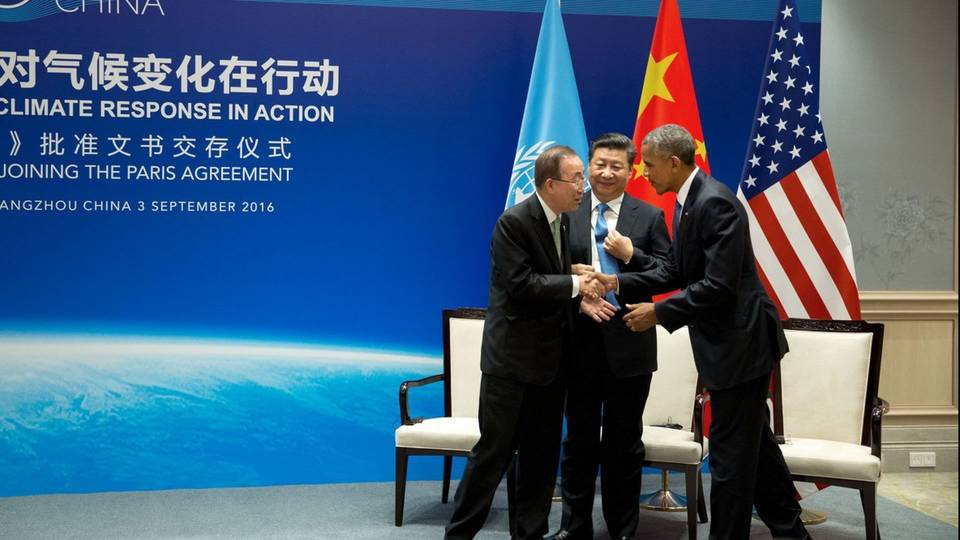 The United States and China have formally committed to the Paris climate agreement aimed at slowing climate change, during President Obama’s trip to China for the G20 summit. Combined, the U.S. and China produce nearly 40 percent of the world’s carbon emissions. Twenty-six countries have now ratified the accord, which the U.N. has slated to go into effect on January 1, 2017, as long as at least 55 countries representing 55 percent or more of the world’s total emissions have signed on. This comes as the world has experienced 15 straight months of record-smashing temperatures amid human-fueled climate change. July was the hottest month ever recorded. Experts say the greenhouse gas cuts promised in the Paris climate deal are insufficient to avert dangerous global warming.
TOPICS:
Paris Climate Summit 2015
Climate Change
Oklahoma Officials Order Fracking Disposal Wells Closed After Earthquake
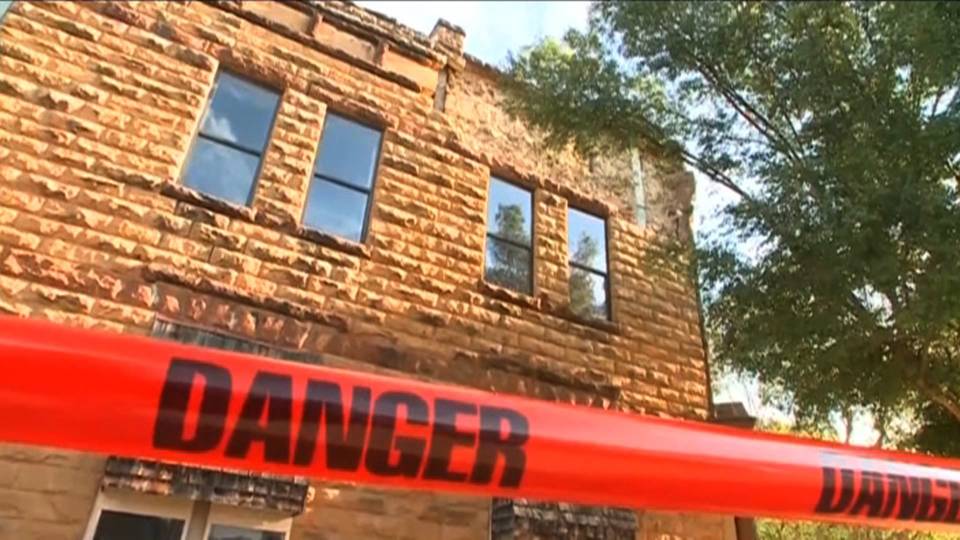 In Oklahoma, state regulators have ordered oil and gas companies to shut down nearly 40 toxic wastewater disposal wells, after a massive 5.6-magnitude earthquake Saturday rocked Oklahoma and sent tremors through six neighboring states. Scientists have warned that the wastewater disposal wells, which inject toxic water used in the fracking process deep into the earth for storage, may be linked to the dramatic rise in earthquakes in Oklahoma in recent years. The earthquake destroyed at least a half-dozen buildings on the Pawnee Nation and another half dozen in the city of Pawnee. This is Pawnee Mayor Brad Sewell.
Mayor Brad Sewell: "Well, we had an earthquake that was just unprecedented in this area. I mean, this was—we’ve had a lot of earthquakes over the last couple of years, and they have been just single tremors, and, you know, boom and it’s gone. And right away, you could tell this was something different. I mean, this was a long, sustained, strong earthquake. Things toppled off of shelves. And, you know, it rattled windows and did all kinds of things."
TOPICS:
Natural Gas & Oil Drilling
Obama Tries to Convince Asian Nations U.S. Will Ratify TPP
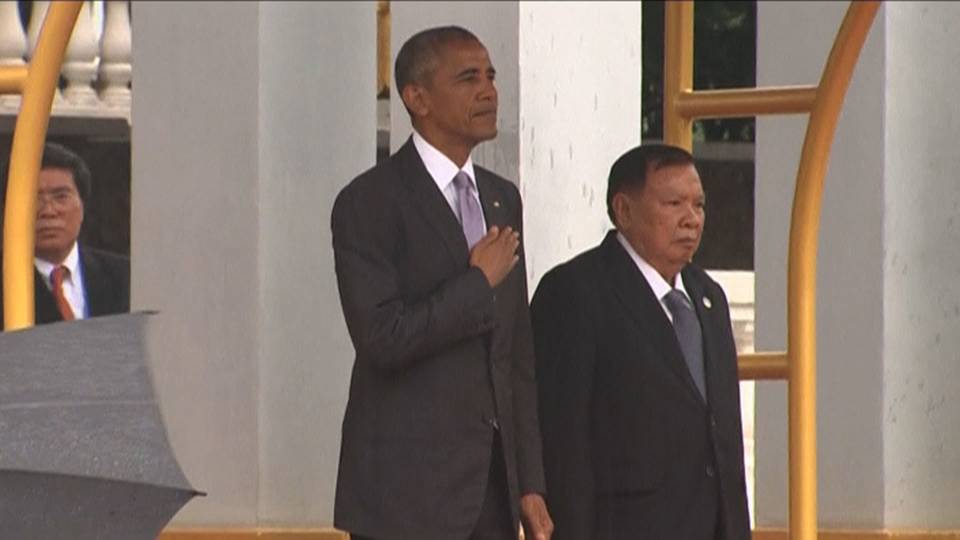 At the G20 summit, President Obama also tried to assure Asian nations that the United States would, in fact, ratify the Trans-Pacific Partnership, despite mounting opposition.
President Barack Obama: "On the merits, it is smart for America to do it. And I have yet to hear a persuasive argument from the left or the right as to why we wouldn’t want to create a trade framework that raises labor standards, raises environmental standards, protects intellectual property, levels the playing field for U.S. businesses, brings down tariffs. It is indisputable that it would create a better deal for us than the status quo."
The Trans-Pacific Partnership is a massive proposed trade deal that would encompass 12 Pacific Rim nations, including the U.S., and 40 percent of the global economy. U.S. presidential nominees Hillary Clinton, Donald Trump and Jill Stein have all said they would not sign the TPP. It has faced years of public protests by those who say it benefits corporations at the expense of health and environmental regulations.
TOPICS:
TPP
Obama on Kaepernick: "He's Exercising Constitutional Right"
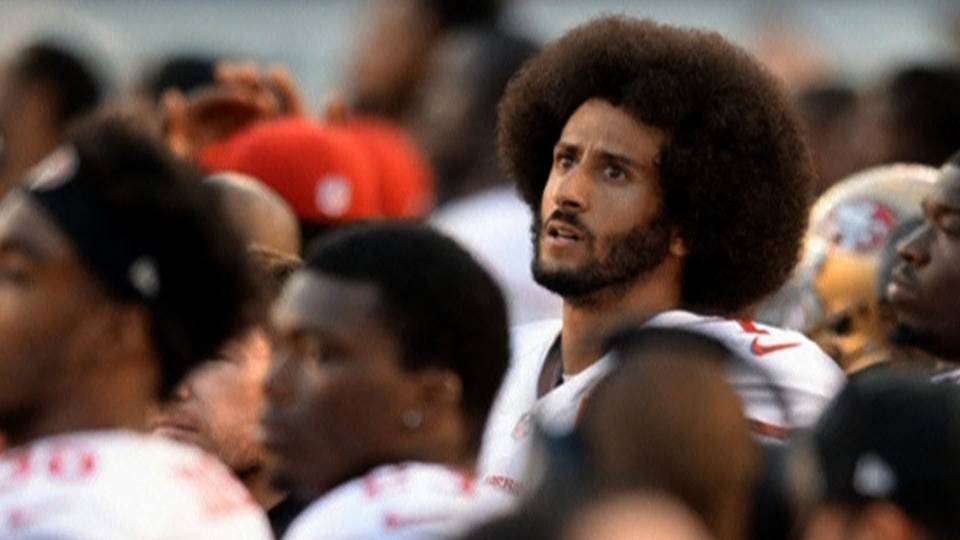 Meanwhile, at the G20 summit President Obama also spoke out about NFL 49ers quarterback Colin Kaepernick, who has been refusing to stand for the national anthem after saying, "I am not going to stand up to show pride in a flag for a country that oppresses Black people and people of color." This is President Obama on Kaepernick.
President Barack Obama: "He’s exercising his constitutional right to make a statement. I think there’s a long history of sports figures doing so. I think there are a lot of ways you can do it. As a general matter, when it comes to the flag and the national anthem and the meaning that that holds for our men and women in uniform and those who fought for us, you know, that is a tough thing for them to get past to then hear what his deeper concerns are."
At least two other NFL players have joined Kaepernick in his ongoing protest: 49ers safety Eric Reid and Seahawks cornerback Jeremy Lane. Megan Rapinoe of the National Women’s Soccer League team the Seattle Reign also knelt during the national anthem before their game Sunday against the Chicago Red Stars. Rapinoe told American Soccer Now, "Being a gay American, I know what it means to look at the flag and not have it protect all of your liberties. It was something small that I could do and something that I plan to keep doing in the future and hopefully spark some meaningful conversation around it. It’s important to have white people stand in support of people of color on this."
TOPICS:
Sports & Politics
Black Lives Matter
Obama Pledges $90 Million to Clear Unexploded U.S. Bombs in Laos
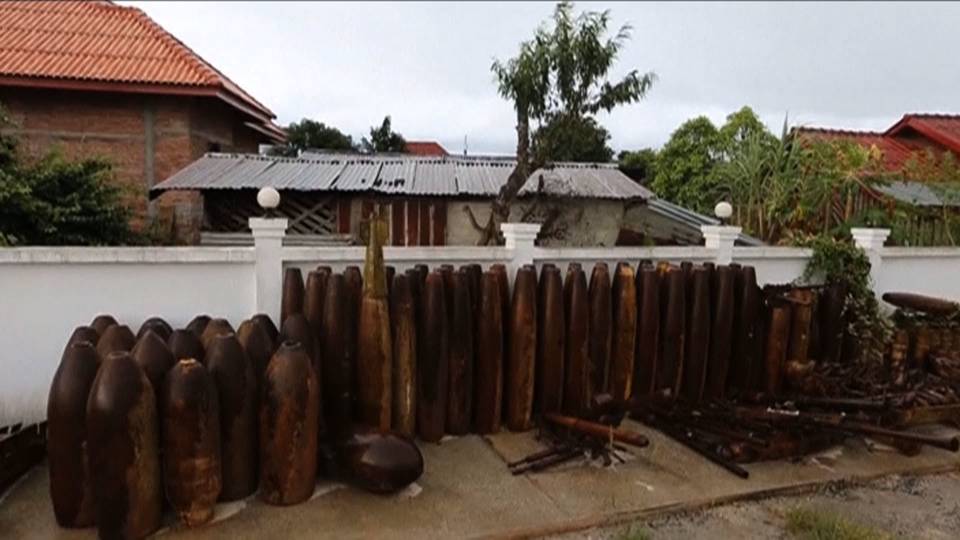 After Obama’s trip to China, he became the first sitting U.S. president to visit Laos, where he has pledged $90 million to help clear Laos of unexploded U.S. bombs left from the United States’ secret bombing campaign in Laos during the Vietnam War. Between 1964 and 1973, the U.S. dropped as many as 270 million cluster bombs on Laos. Laos authorities say as many as one-third of these cluster bombs did not explode at the time.
TOPICS:
Laos
Obama Cancels Meeting with Filipino President Duterte
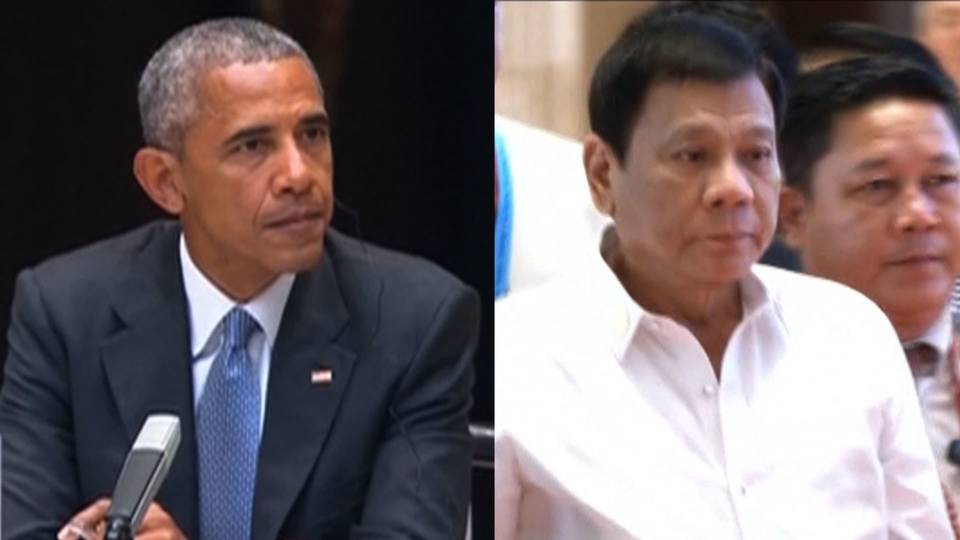 During his three-day trip to Laos, Obama was also slated to meet with the controversial president of the Philippines, Rodrigo Duterte. But Obama canceled this meeting after Duterte called President Obama a "son of a whore" and warned him not to ask about his so-called drug war, in which police and vigilantes have killed at least 2,400 people in only two months. This is Duterte.
President Rodrigo Duterte: "I am a president of a sovereign state, and we have long ceased to be a colony. I do not have any master except the Filipino people, nobody but nobody. You must be respectful. Do not just throw away questions and statements. Son of a whore, I will swear at you in that forum."
This comes as President Duterte declared an indefinite national state of emergency Monday after a bombing in the city of Davao killed 14 people on Friday. The declaration does not amount to martial law but does give the police and military sweeping powers. Militants from the group Abu Sayyaf have claimed responsibility for the bombing.
TOPICS:
Philippines
Syria: 40 Die in ISIS Bombings as U.S. & Russia Fail to Reach Ceasefire Deal
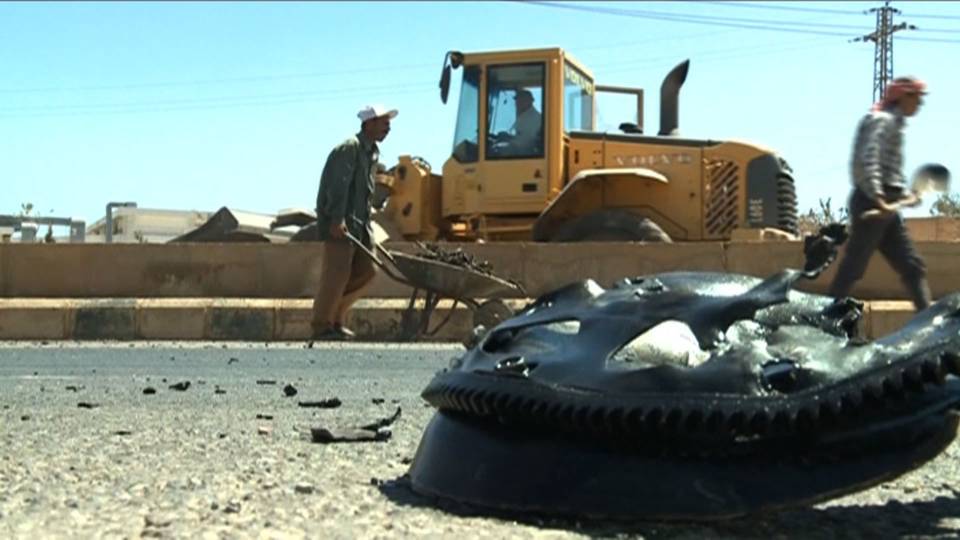 In Syria, at least 40 people have died in a wave of suicide bombings across government-held areas. ISIS has claimed responsibility for the attacks in Tartus, Homs, Hasakah and in a suburb of Damascus. The deadly blasts came after President Obama met with Russian President Vladimir Putin on Monday alongside the G20 summit, and after U.S. Secretary of State John Kerry and his Russian counterpart Sergey Lavrov met on Sunday and failed to secure an agreement for a ceasefire in Syria. The U.S. and Russia are backing opposite sides of the war between Syrian rebels and the Syrian government, although both countries have said they are fighting ISIS in Syria.
TOPICS:
Syria
Russia
Dakota Access Pipeline Contractors Attack Native Americans with Dogs, Pepper Spray
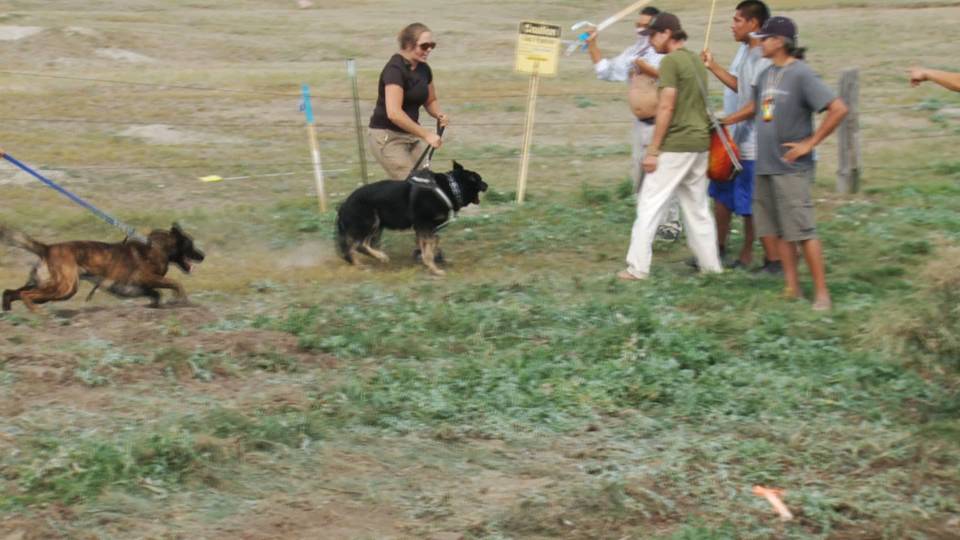 On Saturday in North Dakota, security guards working for the Dakota Access pipeline company attacked Native Americans with dogs and pepper spray as they resisted the $3.8 billion pipeline’s construction.
Protester 1: "This guy maced me in the face. Look, it’s all over my sunglasses. He just maced me in the face."
Protester 2: "These people are just—were threatening all of us with these dogs. And she, that woman over there, she was charging him, and it bit somebody right in the face."
Amy Goodman: "The dog has blood in its nose and its mouth."
Protester 2: "And she’s still standing here threatening."
Amy Goodman: "Why are you letting her dog go after the protesters? It’s covered in blood."
Protester 3: "Over there, with that dog. I was like walking. [She] throwed the dog on me and straight, even without any warning, you know? Look at this. Look at this."
Amy Goodman: "That dog bit you?"
Protester 3: "Yeah, the dog did it, you know? Look at this. It’s there."
The Dakota Access pipeline would carry about 500,000 barrels of crude per day from North Dakota’s Bakken oil field to Illinois. The pipeline has faced months of resistance from the Standing Rock Sioux Tribe and members of nearly 100 more tribes from across the U.S. and Canada. The Standing Rock Sioux Tribe has also sued the U.S. government over the pipeline’s construction. On Friday, lawyers for the tribe filed documents showing how the very land where Dakota Access would bulldoze on Saturday was, in fact, a tribal burial site. Today, a federal judge in Washington, D.C., will decide whether to grant a temporary restraining order prohibiting further construction of the Dakota Access pipeline in the area near the Standing Rock Sioux Reservation, until this same judge rules on the tribe’s lawsuit against the U.S. government, which is expected by Friday. We’ll have more on the standoff at Standing Rock and today’s hearing in D.C. with tribal chairman Dave Archambault and others later in the broadcast.
TOPICS:
Natural Gas & Oil Drilling
Indigenous
NYT: Clinton Raised $50 Million at Elite Fundraisers in Two Weeks
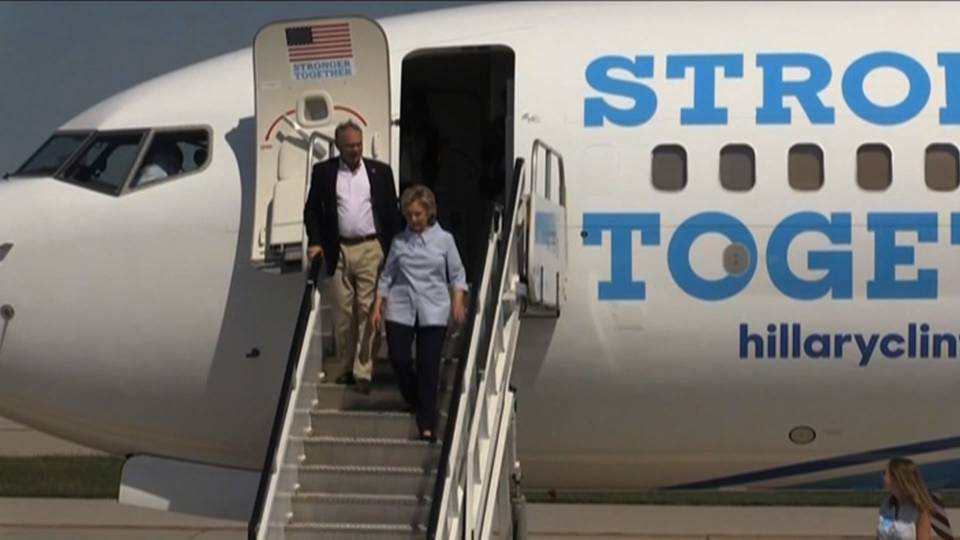 In news from the campaign trail, a New York Times analysis of Hillary Clinton’s fundraising schedule shows she raised $50 million at elite gatherings over the last two weeks of August—raising an average of $150,000 an hour. This comes as Hillary Clinton held almost no news conferences in months. She has, however, attended a series of exclusive fundraising events in wealthy vacation enclaves including the Hamptons, Martha’s Vineyard and Beverly Hills. Both Hillary Clinton and Donald Trump allowed journalists to fly on their planes over the weekend.
TOPICS:
Hillary Clinton
Campaign Finance
2016 Election
Did Trump Pay Off FL Attorney General to Avoid Investigation of Trump U.?
Meanwhile, Donald Trump is facing questions about his 2013 donation of $25,000 to a political group backing Florida Attorney General Pam Bondi, only days after Bondi’s office said it might investigate claims of fraud at Trump University. Following the donation, Bondi’s office said it would no longer investigate Trump University, which is now facing an ongoing lawsuit arguing the defunct for-profit school defrauded students.
TOPICS:
Florida
Donald Trump
Brazil: Police Attack Protesters at Massive Pro-Rousseff March
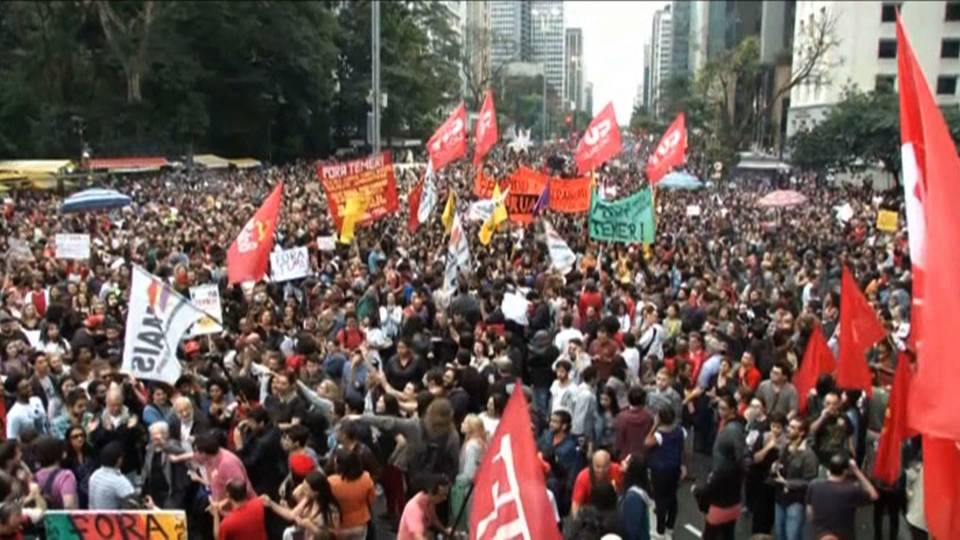 In Brazil, police attacked protesters with tear gas, stun guns, water cannons and rubber bullets during a march Sunday in São Paulo in support of ousted President Dilma Rousseff. As many as 100,000 people took to the streets in protest of the new president, Michel Temer, who assumed power after Rousseff’s impeachment by the Brazilian Senate last week. This is one of the protesters.
Gustavo Amigo: "Because the Temer government is going to look to make antidemocratic reforms that go against the people. And we’re here to show that the people still have the power, and that despite the coup, we are here in the street to bring down the (current) government and call for a new election."
TOPICS:
Brazil
Black Lives Matter Activists Shut Down London City Airport
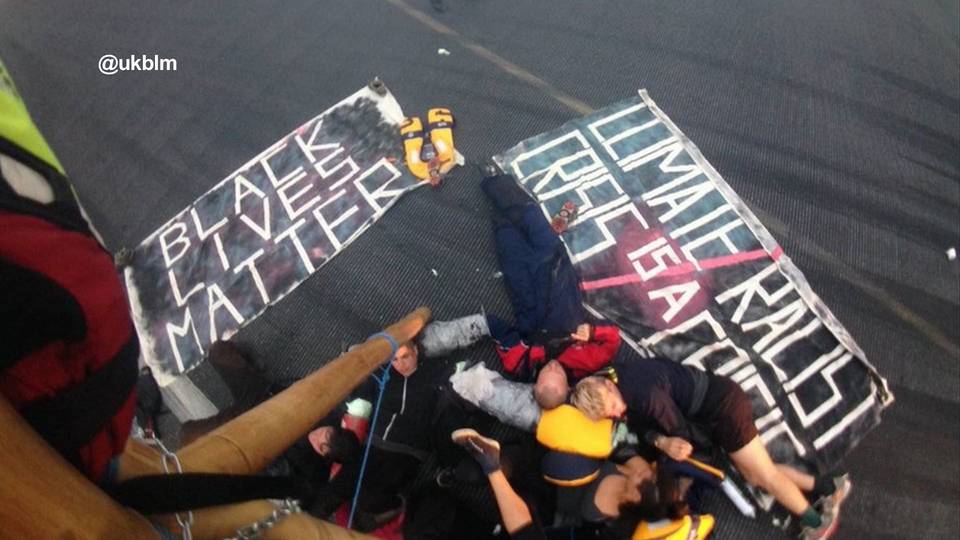
In Britain, the London City Airport shut down flights this morning after nine Black Lives Matter activists locked themselves together on the runway to protest the climate change impact of air travel on black people worldwide. In a series of tweets sent out by Black Lives Matter UK this morning, the group highlighted how many majority black nations in Africa are most impacted by climate change, even though majority white nations, like Britain, are most responsible for causing climate change. The protesters erected a tripod and chained themselves together, delaying flights for hours, before being arrested. This is a clip of a video put out by Black Lives Matter UK explaining the protest.
Speaker 1: "The U.K. is the biggest per-capita contributor to global temperature change and the least vulnerable."
Speaker 2: "According to the UNHCR, by 2050, there will be 200 million climate refugees."
Speaker 3: "Seven out of 10 of the countries most affected by climate change are in Sub-Saharan Africa."
Speaker 4: "Climate crisis is a racist crisis."
Hundreds Shut Down Puerto Rico's Largest Wal-Mart
Speaker 1: "The U.K. is the biggest per-capita contributor to global temperature change and the least vulnerable."
Speaker 2: "According to the UNHCR, by 2050, there will be 200 million climate refugees."
Speaker 3: "Seven out of 10 of the countries most affected by climate change are in Sub-Saharan Africa."
Speaker 4: "Climate crisis is a racist crisis."
Hundreds Shut Down Puerto Rico's Largest Wal-Mart
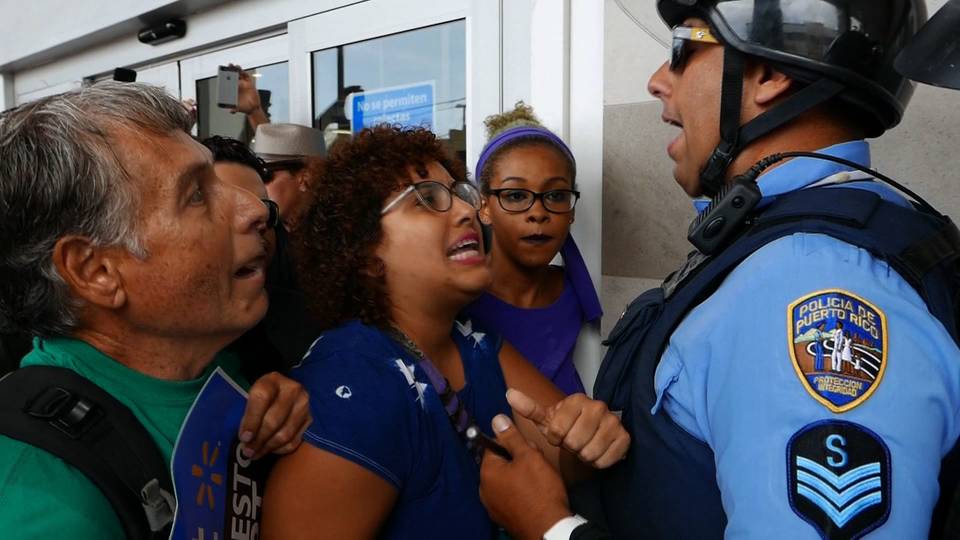 And in Puerto Rico, hundreds of people shut down the island’s biggest Wal-Mart Monday in protest against the ongoing economic crisis on the island and the companies that protesters say are responsible. Protesters argue Wal-Mart damages the local economy while only providing precarious jobs for Puerto Ricans. Last month, a U.S. appeals court ruled against Puerto Rico in its efforts to raise Wal-Mart’s tax rate from 2 percent up to 6.5 percent. Monday’s protest, which shut down the Wal-Mart for the entire afternoon, was organized by the Socialist Workers Movement. This comes after a massive protest last week in Puerto Rico outside a conference hosted by the Puerto Rico Chamber of Commerce on the new PROMESA law, which was passed by the U.S. Congress in June, establishing a federally appointed control board with sweeping powers to run Puerto Rico’s economy. This is one of the protesters from Monday’s Wal-Mart action.
Melissa Vargas Echevarría: "My name is Melissa Vargas Echevarría. I am an active member and spokesperson of the Camp Against the Control Board. I’m also a member of the Workers Youth. We closed Wal-Mart’s operations for the day, and, in part, this is proof that when the people unite, we win. We need people to keep coming out to these protests, so that every multinational begins stepping backward, and we’re going to directly affect the ones who affect us directly. While the control board remains, we’re going to continue."
TOPICS:
Puerto Rico
-------
Donate today:
Follow:


WEB EXCLUSIVE

VIDEO: Dakota Access Pipeline Company Attacks Native American Protesters with Dogs and Pepper Spray
NEW BOOK

WORK WITH DN!

Senior TV Producer
207 West 25th Street, 11th Floor
New York, New York 10001, United States
-------
-------

No comments:
Post a Comment