Editor's Note:
Dear Friend,
For my grandparents’ generation, it was Dec. 7, 1941 (Pearl Harbor); for my parents’ generation, it was Nov. 22, 1963 (the assassination of JFK); and for my generation, it was Sept. 11, 2011.
Ask anyone, and they can probably tell you where they were and what they were doing when the heard the news. (I was in yeshivah in Brooklyn, having just studied a challenging Chassidic text, and was able to see the burning towers from the windows of the study hall).
It was a painful and shocking moment, never to be forgotten.
I remember that afternoon. The streets were eerily still, and people stood outside in small groups. Police officers, men in do-rags and yeshivah students shared wild rumors and projections, bound by a common fear of the unknown. In other neighborhoods, people set up free refreshment stands for those trekking home from Manhattan.
We were all under attack together, and we felt it.
With time, the unity, patriotism and pride that we felt on that day dissipated. The radio turned back to its regular programming, Wall Street reopened, and life continued as usual.
Let us honor the lives of the 2,977 victims by recreating the oneness that resulted from that tragic day. Reach out in friendship, and the world will become a better place.
Menachem Posner
on behalf of the Chabad.org Editorial team
PS: We are now in the introspective month of Elul. What Elul message do you take from the events of 9/11?

Jewish UnityThe first thing needed to fix this world is that Jews should love each other and be united.
And this can begin even without a planning committee and without funding.
It can begin with you.[from a letter]
This Week's Features
And this can begin even without a planning committee and without funding.
It can begin with you.[from a letter]
 The Long Blast
To trumpet wordless sounds evokes images of cavemen from times when language was nascent and man’s verbal capacity was too limited to convey complex ideas.
By Lazer Gurkow

 Three Sounds
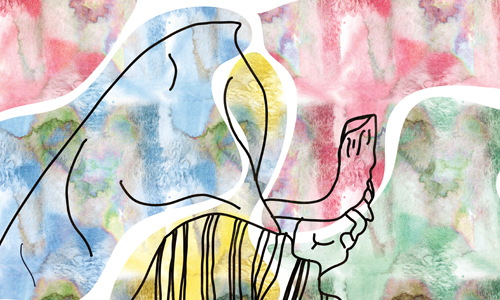
The best-known sound in Jewish tradition is that of the shofar. One long blast is called tekiah. Three short blasts are called shevarim. Nine staccato blasts are called teruah. The blasts are sounded in that order, and thetekiah is then sounded again at the end of the sequence—the single long blast bracketing the other two. What is the significance of repeating this sound?
Wordless Sound
Let’s first talk about why we sound the shofar on Rosh Hashanah. If we have something to say on this holy day, why don’t we just say it? To trumpet wordless sounds evokes images of cavemen from times when language was nascent and man’s verbal capacity was too limited to convey complex ideas. We now know how to articulate our thoughts in language. So why don’t we?
The fact is that we articulate plenty during these Days of Awe. We stand for hours on end, turning page after page of prayer and plea. But there is a level of emotion that cannot be articulated, a depth beyond words. That chamber can be accessed only through wordless sound.
Every language has an equivalent for the word “ouch.” Yet, no matter which language we speak, when we experience very intense and pervasive pain, we just scream. We don’t say “I am in pain.” We don’t even say “ouch.” Instead, we emit a shout so guttural that it communicates pain beyond words.
The same is true of emotion. Some feelings can be communicated through poetry. Deeper emotions, with a glance. Sometimes emotions are so intense that they evoke tears of joy. Some emotions are so powerful, so deep, that all you can do is sigh and say “Aaaah.”
Then there is the emotion that is beyond articulation. Even wordless sound can’t capture it. That is what we feel on Rosh Hashanah. Our bond withG‑d is so deep, vast and pervasive that no humanly emitted sound does it justice. Instead, we use an instrument. It blasts an opening in our hearts powerful enough to release torrents of deeply held and long-repressed emotions. It blasts an opening in our souls through which untapped yearning for G‑d cascades.
Replenishing the River
There is a metaphor given for this transformative experience: You one day realize that, as a result of ecological and climatic factors, your river has run dry. How do you refill it? You dig for a wellspring. And when you reach it, the water rushes to the surface and refills your river. The river will now run at full force again; perhaps it will be even fuller than before.
Our relationship with G‑d sometimes runs dry. Throughout the year, we don’t notice that the water levels are dipping. There is still plenty of water left in the riverbed, so we don’t take note. But when the river runs dry, we can’t keep lying to ourselves. We have to sit up and take notice.
On Rosh Hashanah, we take a peek at our river and discover that it is dry. We need to replenish the connection, but from what source can we fill ourselves up? We need to find a new source, because the old well has run dry. This is why we dig deep into our souls, to a place that is as yet untapped, a place that is beyond articulation, to tap a new, fresh, hitherto unexperienced connection with G‑d.
In the Holy of Holies
This is why the moment of the shofar sounding is so spiritual and uplifting. We can feel the shofar strum the strings of our soul. We can feel the vibrations deep within, and the stirring release of powerful connections. This is why many Jews who don’t frequent the synagogue throughout the year make a point of attending on Rosh Hashanah. How can we miss it? It is the most meaningful and powerful experience in the repertoire of our tradition.
We stand silently and listen, evoking the memory of the high priest in the Holy of Holies on Yom Kippur, the holiest day of the year. He too stood silently, breathing not a word. When he stepped out of the Holy of Holies, he chanted a short prayer, but in the room he was silent.
The connection he felt with G‑d in that holy space was indescribable. Beyond words and beyond sound. When he stood there, he was not a private individual. He represented the entire nation. Every soul was within him. And the reverence experienced by him then reverberated to every soul in the nation, especially to those who were present in the Temple at that time.
We don’t have the Temple today, and aren’t able to experience the connection with G‑d that was present then. And though we await its rebuilding every day with the coming of Moshiach, it is not here yet. In the meantime we must make do with an alternative. The closest we can get to that experience is the wordless inarticulate blast of the shofar.
The Repeating Blast
We now return to the repetition of the tekiah, the single long blast. Of the three sounds, the long blast is the least articulate. Though the other sounds are also wordless, they have character. The shevarim is a groan. Theteruah is a sob. They communicate a message that tells us what to feel. The tekiah is just a cry. A deep piercing wail that says nothing. It comes from the depths, and has no message beyond a simple “I am here.”
The groaning and sobbing indicate remorse for having allowed our river to run dry. The tekiah is the blast that strikes a wellspring to refill it. The firsttekiah is the agonizing cry from our depths. The second tekiah is G‑d’s response from above. Just like our yearning emerges from our depths, G‑d’s response emerges from His depths.
From the straits I call to G‑d; from a vast expanse G‑d responds.1 Our first blast calls out to G‑d from the straits, the deep confined place that has not yet been tapped. The Divine response comes from the celestial wellspring that abounds with love and forgiveness. It is the wellspring that we sought to tap with our blast. The first blast gives voice to our desperation. The second blast gives voice to His answer.
To bring it all together, the sounds of the shofar communicate the following message: Tekiah, we are desperate for G‑d, and yearn for G‑d from our depths. Shevarim and teruah, we are brokenhearted over having allowed our relationship to run dry. Tekiah, G‑d responds with love and says, “Return, My children, return. No matter where you roam, you can always come back home.”2
FOOTNOTES
1.Psalms 118:5.
2.This essay is based on commentary from Rabbi Shlomo Yosef Zevin in his book HaTorah VehaMoadim.
-------
Your Questions
How Do I Know I’m Forgiven? by Tzvi Freeman
Your Questions
How Do I Know I’m Forgiven? by Tzvi Freeman
 Hi Rabbi,
The Torah teaches about the forgiveness of G‑d, but I don’t feel forgiven and I certainly can’t forgive myself. How do I get victory once and for all from this evil inclination? How do I know that G‑d has forgiven me? How do I forgive myself?
I get depressed and don’t desire to pray, learn or do anything, because I am so ashamed and concerned that I am not worthy to stand before G‑d. I would appreciate any help that you can offer.—Gill T.
Hi Gill,
Eve got in trouble because she answered back to a snake. She should have ignored him, as though he didn’t exist. Instead, she gave him the acknowledgment that he demanded, and then some more, and eventually . . . well, you know what happened. After Eve, her children continued falling into the same trap again and again, exactly the same way—by providing undeserved credence to an otherwise impotent reptilian urge.
After a while, someone figured it out. He said, “Hey—if I just ignore this dumb snake, maybe he’ll go away!”
So he tried it, and at first the snake got louder and ruder and more chutzpadik. But he kept ignoring the snake, and eventually became a pure and enlightened master. Other people started learning from him, and pretty soon there were more such pure souls. So the snake got desperate and tried more conniving, sly and sneaky attention-getting tricks. People figured those out as well.
But eventually the snake came up with a new trick: He dressed up in a costume as a very pious and holy being—just like the kind of person these people wanted to be. And that worked. He was able to bring down thousands of righteous people within days.
The costume worked so well, he even chose a name for it. And he uses it to this day. He calls it “guilt.”
Now you know the truth: Guilt is nothing more than the poison of a snake. And the same strategy that works with the snake works with guilt: Ignore it. Get on with life. Do good and turn from evil. Feel remorse, shed some tears, resolve to not fall in the same trap next time—and then get back on the road and keep moving. If you’ve done that, G‑d has forgiven you—so why shouldn’t you forgive you?
And if you come across a snake along the road that picks up its head and calls you a sinner—ignore it. Eve already made that mistake. We must have learned something by now.
All names of persons and locations or other identifying features referenced in these questions have been omitted or changed to preserve the anonymity of the questioners.
Artwork by Sefira Ross, a freelance designer and illustrator whose original creations grace many Chabad.org pages. Residing in Seattle, Washington, her days are spent between multitasking illustrations and being a mom.© Copyright 2016, all rights reserved.
-------
Your Questions
Why Do Jews Cut Their Fingernails Out of Order? by Yehuda Shurpin
 There is indeed an ancient custom of not cutting nails sequentially. The earliest mention seems to be in a version of Masechet Kallah quoted by the Machzor Vitry, written by Rabbi Simchah ben Shmuel of Vitry (who passed away in 1105, the same year as his teacher, Rabbi Shlomo Yitzchaki (Rashi)).1 There we are told that one should be careful not to cut his nails in order, since it can bring forgetfulness, poverty, and premature death of one’s children.2
Sounds mysterious? Well, to add to the mystery, here is a cryptic Hebrew phrase related to this custom:3
קשי״א בל״א תירו״ץ
This literally translates as “question without answer,” which some take as an indicator that the deeper reasons behind this custom are not readily apparent.4
This phrase is actually a mnemonic that tells us the proper sequence of cutting nails, and when to do so. Let’s look at the first word:
קמיצה (ring finger)
שמאל (left)
ימין (right)
אצבע (index finger)
In other words, when cutting your nails, start with your left ring finger, and then alternate every other finger. On your right hand, start with the index finger.5 Here is a diagram of the full sequence:
 Even though there are some who are of the opinion that one need not be careful about cutting nails in this order, most write that ideally one should be careful about it.6
Cutting in Preparation for Shabbat
Now that you know the order of nail-cutting, you may wonder when to cut them. For this, we read the rest of the mnemonic:
באזהרה (warning)
לך (to you)
אתה (you)
תקוץ (cut)
יום (day)
רביעי (fourth)
והלאה (and on)
צפרניך (your nails)
In other words, cut your nails from Wednesday to Friday. Why? Because we trim our nails in honor of Shabbat, and the days from Wednesday to Friday have a connection7 to the upcoming Shabbat.8
Most, however, seem to be of the opinion that one should cut his nails on days that are even closer to Shabbat, i.e., Friday (or Thursday), when it is more discernable that the nails are being cut in preparation of the holy day.9
This is where things get a bit complicated. We are also warned that it is inauspicious to cut the nails of both the hands and feet on the same day.10 Therefore, one suggestion is to cut one’s toenails on Thursday and fingernails on Friday.11 Others, however, hold that one shouldn’t cut his nails on Thursday, since they start regrowing on the third day from when they were cut, and we don’t want them to start regrowing on Shabbat.12 After all, the whole point of cutting them to begin with is to honor the Shabbat.13
On a practical level, it is more important that the fingernails, rather than the toenails, be cut in honor of the Shabbat.14 Therefore, if both your fingernails and toenails are in need of being cut, you should cut your fingernails on Friday and your toenails on Thursday (or according to R. Chaim Noeh, Thursday night15).16 Additionally, if for whatever reason you know you won’t be able to cut your fingernails on Friday, you can cut them on Thursday.17
On the topic of cutting nails, here are some additional precautions (in brief):
Rosh Chodesh
Rabbi Yehudah he-Chassid (1150–1217) cautions that for mystical reasons, one should be careful not to cut his hair or nails on Rosh Chodesh (the Jewish New Moon).18
Chol Hamoed—Intermediate Days
The Ashkenazic custom is to not cut one’s nails on Chol Hamoed—the intermediate days of the Jewish holidays—because one should go into the holiday already well-groomed, and one should not push off grooming himself until he has some free time after the beginning of the holiday. 19
Burning Nails and Pregnant Women
While the above precautions about cutting one’s nails aren’t found in the Talmud, the Talmud does tell us that “the righteous bury their nails, the pious burn them, and the wicked carelessly discard them.” The explanation given for this is that nail clippings must be carefully disposed of, lest a pregnant woman step over them and miscarry20 (For more on that, see Nail Clippings and Pregnant Women.)
The Zohar explains that the forces of impurity are very much connected to the part of the fingernails that protrude above our fingers and are cut off.21 The Lubavitcher Rebbe explains that, on a personal level, the “fingernails” represent the part of us that can be used to prick and scratch someone. Thus, the importance of cutting our nails teaches us that before we interact with others, and specifically before rebuking someone, we need to “pare our own nails first.” We must ensure that any rebuke is given not to satisfy our own urge to criticize or belittle, but solely with the benefit of the person in mind.22
Rabbi Yehuda Shurpin responds to questions for Chabad.org's Ask the Rabbi service.
Artwork by Sefira Ross, a freelance designer and illustrator whose original creations grace many Chabad.org pages. Residing in Seattle, Washington, her days are spent between multitasking illustrations and being a mom.
FOOTNOTES
1.Masechet/Hilchot Kallah, as quoted in Machzor Vitry.
2.See Shulchan Aruch, Orach Chaim 260:1; Shulchan Aruch ha-Rav, Orach Chaim 260:3; Mishnah Berurah 260:8.
3.See Abudraham, Seder Netilat ha-Tzipornayim.
4.Ibid.
5.Note: While there are some who give a slightly different order, this is the most common one, and the one found in Shulchan Aruch ha-Rav 260:3.
6.See Shulchan Aruch ha-Rav ibid. See also Maharam of Rothenburg, quoted in Tashbetz 557; Shaar ha-Kavanot, quoting the Arizal. Others, however (see Likkutei Maharich, Seder Hanhagot Erev Shabbat), say that the Arizal was careful about not cutting in order, and yet others explain that if you burn them later—which the Arizal did—you may not have to cut them out of order (see responsa Siftei Daat 31).
7.See Talmud, Gittin 77a.
8.See Avudraham, Seder Netilat ha-Tzipornayim.
9.See Maggid Meisharim (by Rabbi Yosef Caro), Mishlei 23:6; Magen Avraham, Shulchan Aruch, Orach Chaim 260:1; Shulchan Aruch ha-Rav, Orach Chaim 260:2.
10.Maggid Meisharim ibid.
11.See Shulchan Aruch ha-Rav, Orach Chaim 260:2.
12.Ibid.
13.Pri Megadim, Mishbetzot Zehav, Orach Chaim 260; Eliyah Rabbah 260:5.
14.See Ketzot ha-Shulchan 73:2, Badei ha-Shulchan 4.
15.See Ketzot ha-Shulchan ibid., where he explains that it may very well be that the issue of not cutting on the same day does not apply to the night and day. See, however, Eishel Avraham, Milei de-Chassidusa 57, that the night and the day are considered the same day in regard to cutting one’s nails.
16.This is the suggestion given in Maggid Meisharim, and seems to be the most widely given suggestion.
17.See Shaarei Teshuvah on Shulchan Aruch, Orach Chaim 251.
18.Testament of Rabbi Yehudah he-Chassid 48 (Margolies ed.). Some, however, seem to be of the opinion that this only applies to haircuts. Others explain that on an ordinary Rosh Chodesh, one should be careful about cutting both his hair and nails; however, if Rosh Chodesh is on a Friday, while one should still be careful about haircuts, one may cut his fingernails. See Shulchan Aruch ha-Rav 260:1; Haorot u-Beurim 340; addenda to Kitzur Halachot mi-Shulchan Aruch Admor ha-Zaken, Shabbat 260. See also Shemirat ha-Guf veha-Nefesh 68:6, fn. 6.
19.See Shulchan Aruch, Orach Chaim 532:1, and Mishnah Berurah ad loc.
20.Talmud, Moed Katan 18a and Niddah 17a.
21.See Zohar 3:70a. See also Kaf ha-Chaim 260:9, quoting Etz Chaim 31:2.
22.See Hayom Yom, 22 Elul.© Copyright 2016, all rights reserved.
-------
Prepping for Rosh Hashanah
I Just Crashed the Car by Elisha Greenbaum
 I crashed my car a few hours ago.
I’m sitting here typing, in the middle of the night, still a bit shaken up by the accident.
It was my fault.
I was coasting down what I thought was an empty road, unaware It was my faultof what was waiting for me on the other side of an overpass. By the time I’d seen the backed-up traffic ahead of me and hit the brakes, it was too late to come to a complete stop, and I rear-ended the car in front of me.
I feel like a complete idiot, and I’m seriously not looking forward to the conversation that I’ll be having with my insurers. If there is any consolation, it’s that no one was hurt, thank G‑d, and that my son, who was in the car with me at the time, can assure my wife that I was not on the phone when we crashed.
Even though I realize how lucky I am that we all came out unscathed, and that a car can be repaired or replaced, I can’t help but feel a bit frustrated at the cost and inconvenience that I am now facing. I arranged for my mother to give my son a lift home, while I waited for the tow truck to arrive and gloomily started to calculate the price of my stupidity.
How much for the deductible, a rental car, the tow truck and the increased cost of my future insurance premiums? If, as it seems, the car is a writeoff, how much will the cost of a replacement vehicle exceed the payout? Where will I find the time to research makes and models, organize test drives and arrange financing? Things aren’t exactly flush right now. What type of impact will this have on our budget? What a confounded nuisance!
All the negativity was getting me down, so I decided to do something somewhat useful with my time while waiting. I started feeling around under the seats to make sure that I wouldn’t be leaving any possessions behind. From under the driver’s seat I pulled out an old edition of Dvar Malchus, a pamphlet that contains Torah thoughts on the weekly portion as well as other daily Torah study sections.
I had nothing else to do, so, even though this edition was months out of date, I started flicking through the pages to find something to learn. And that’s when G‑d started talking to me.
I had opened up to an excerpt from Hayom Yom, the first book written by the Rebbe, which contains a short aphorism or philosophical insight for every day of the year. I started reading the entry for 9 Nissan. Under the dim light of the closest street lamp, I could barely make out the following words.
Jewish wealth is not houses and gold. The everlasting Jewish wealth is keeping Torah and mitzvahs, and bringing into the world children and grandchildren who keep Torah and mitzvahs.
Talk about a wakeup call. Here I was allowing myself to get dragged down over the potential loss of meaningless chattel, with hardly a thought of thanks for the incredible wealth that I do possess.
I am truly blessed. I live an incredible life, in a wonderful country, with the freedom and active encouragement of my society and community to keep Torah and mitzvahs. I have great kids and, although I’m too young for grandkids, I have every prayer, hope and aspiration to be so blessed in the future.
I have so much real wealth, and I’m stupid enough to get all worked up over a car?
Our I have so much real wealthchildren are our wealth. My current financial position is meaningless in the long, medium and short term. G‑d will and does provide. The only guarantee of future security is the life we live today and the blessings that we leave behind.
If I can integrate that consciousness into my daily life, recognizing and differentiating between that which is truly valuable and that which is insignificant, it will be clear that the incident with my car was no accident of fate, but an opportunity waiting to collide with me over the hill of fate and teach me an enduring lesson for life.
Now, if you’ll excuse me, I need to gather my thoughts for my conversation with the insurance company tomorrow.
Rabbi Elisha Greenbaum is spiritual leader of Moorabbin Hebrew Congregation and co-director of L’Chaim Chabad in Moorabbin, Victoria, Australia.
Artwork by Sefira Ross, a freelance designer and illustrator whose original creations grace many Chabad.org pages. Residing in Seattle, Washington, her days are spent between multitasking illustrations and being a mom.© Copyright 2016, all rights reserved.

-------
VIDEO
 Put On Your Oxygen Mask
We can only help another grow spiritually, if we, too, are growing.
By Chana Weisberg
 Watch (1:57)
<script language="javascript" type="text/javascript" src="http://embed.chabad.org/multimedia/mediaplayer/embedded/embed.js.asp?aid=3390808&width=auto&height=auto"></script><span style="clear:both;" class="lb" id="lbdiv">Visit <a href="http://www.chabad.org/multimedia/default_cdo/aid/591213/jewish/Video.htm">Jewish.TV</a> for more <a href="http://www.chabad.org/multimedia/default_cdo/aid/591213/jewish/Video.htm">Jewish videos</a>.</span>
-------
-------
 The Call of the Shofar
The Talmud teaches that on Rosh Hashanah, G-d asks His people to sound the Shofar in order to make Him their King, and to “remind” Him of their meritorious past.
Watch (5:26)
<script language="javascript" type="text/javascript" src="http://embed.chabad.org/multimedia/mediaplayer/embedded/embed.js.asp?aid=548437&width=auto&height=auto"></script><span style="clear:both;" class="lb" id="lbdiv">Visit <a href="http://www.chabad.org/multimedia/default_cdo/aid/591213/jewish/Video.htm">Jewish.TV</a> for more <a href="http://www.chabad.org/multimedia/default_cdo/aid/591213/jewish/Video.htm">Jewish videos</a>.</span>
-------
-------
 Is There Self-Expression in Judaism?
We are music conductors performing divine compositions. by Yacov Barber
Watch (5:41)<script language="javascript" type="text/javascript" src="http://embed.chabad.org/multimedia/mediaplayer/embedded/embed.js.asp?aid=3421246&width=auto&height=auto"></script><span style="clear:both;" class="lb" id="lbdiv">Visit <a href="http://www.chabad.org/multimedia/default_cdo/aid/591213/jewish/Video.htm">Jewish.TV</a> for more <a href="http://www.chabad.org/multimedia/default_cdo/aid/591213/jewish/Video.htm">Jewish videos</a>.</span>
-------
Parshah
Spirituality Made Simple by Yossy Goldman
Parshah
Spirituality Made Simple by Yossy Goldman
 What is the difference between spirituality and spiritualism?
Spirituality is an awareness of the spirit, of the soul; it is a sensitivity to things beyond the immediate and the material. That’s why some describe the study of spirituality as metaphysics—the study of that which lies beyond the physical.
Spiritualism, on the other hand, is how we describe the practices of dabbling in the occult, Is the Torah encouraging us to be fools?such as trying to communicate with the dead. In ancient times these activities were referred to as sorcery or black magic.
For Jews, spirituality is recommended, but spiritualism is discouraged. In fact, it is actually forbidden explicitly in verses in this week’s Torah reading, Shoftim.
The Torah cautions the Israelites, who were about to enter the Promised Land, from mimicking the heathen and abominable pagan rites of the Canaanites. And after listing these forbidden practices, it adds, “You shall be wholehearted with the L‑rd, your G‑d” (Deuteronomy 18:13).
Now the Hebrew word for “wholehearted” is tamim. It is from the same root as the word tam, which we might recognize as one of the Four Sons at the Passover Seder. The tam is the simple son, who is ignorant and foolish. So why would the Torah use a word here that conveys a lack of intelligence? Clearly, the Torah is not encouraging us to be fools?!
The accepted explanation is that the Torah does not mean “simple” in the sense of unintelligent, but rather “simple” in the sense of straightforward, not overly sophisticated or cynical, but simple and filled with faith in G‑d, with no need to go looking into the dark corners of the universe.
This explanation would help us understand a traditional inscription on many Jewish tombstones: איש תם וישר, ish tam v’yashar, “[Here lies] a simple and upright man.” Would any Questions are kosherchild write an epitaph for a father calling him a fool?! But “simple” in this context does not mean unwise; it means simple and wholehearted in faith. The term is used to praise an upright individual who lived his life with honesty, sincerity and wholesomeness.
This simple person accepts that G‑d alone is the Master of the Universe. He doesn’t try to outsmart his Creator by looking for answers in the wrong places, or by attempting to outwit destiny by consulting the spirits or the stars. If G‑d decided to take his loved one, he does not feel the need to find her somewhere else in the cosmos and communicate with her. He is trusting of the Almighty’s vast eternal plan, and he does his part to advance within the framework G‑d set out for him. He may, in fact, be quite wise, but he’s not a “wise guy.”
The simple and upright person is one who bows his head to kiss a Torah scroll, or the child who kisses every mezuzah he passes. The founder of Chassidism, the holy Baal Shem Tov, taught us that people of simple faith are so special that their prayers can pierce the gates of heaven like no other prayers can.
This quality of simplicity sheds light on an enigmatic sequence in our prayer books. One of the prayers that many people are familiar with is Ein Keilokeinu. Some communities recite it daily, others only on Shabbat and Yom Tov. The words mean “There is none like our G‑d.” Then, in the next line we say Mi Keilokeinu? “Who is like our G‑d?” Now surely we should first be asking, “Who is like our G‑d?” and then be giving the obvious answer, “There is none like our G‑d.” Why do we give the answer before the question?
One famous explanation is that we must first express our simple faith in G‑d: Ein Keilokeinu, “There is none like our G‑d.” G‑d is absolutely unique. Once we have established this fundamental principle of faith, we are then permitted to ask, Mi Kelokeinu? Is there anyone else out there? Are there any other candidates for us to worship and pray to? But the answer is so obvious that we say it outright and up front: Ein Kelokeinu! There is none like our G‑d. Now, you want to ask questions and discuss philosophy? By all means. But first, the principle of faith must be stated and accepted.
Questions are kosher. In the same Passover Seder where we find the tam as one of the Four Sons,we You want to ask questions and discuss philosophy?also have the Four Questions. The Talmud is filled with questions and arguments, propositions and rebuttals. But we ask questions, not to challenge, but to better understand. We start with the premise of belief, and then ask questions with simple humility, and with sincere, wholehearted and genuine faith and trust in G‑d.
Let us be simple, not sly. Let us be simple people, not scheming politicians or spin doctors. Let us all be simple, straight, honest and genuine, so that one day they will say of us, too, “Here lies a simple and upright person.”
Rabbi Yossy Goldman was born in Brooklyn, New York. In 1976 he was sent by the Lubavitcher Rebbe, of righteous memory, as a Chabad-Lubavitch emissary to serve the Jewish community of Johannesburg, South Africa. He is Senior Rabbi of the Sydenham Shul since 1986, president of the South African Rabbinical Association, and a frequent contributor to Chabad.org. His book From Where I Stand: Life Messages from the Weekly Torah Reading was recently published by Ktav, and is available at Jewish bookshops or online.
Artwork by Sefira Ross, a freelance designer and illustrator whose original creations grace many Chabad.org pages. Residing in Seattle, Washington, her days are spent between multitasking illustrations and being a mom.© Copyright 2016, all rights reserved.
-------
Parshah
Squirrels on Our Roof! by Chana Weisberg
 Scratching. Squeaking. Crashing.
Those were the noises we were hearing last fall from our rooftop, on top of our bedroom. Little feet were scratching against the roof tiles, quickly scurrying across. Just as I would be falling into a deep sleep, I’d waken to the sound of crashing. The noise was incessant, and began to seriously interfere with my sleep. Were nocturnal animals taking shelter in my attic?
After some investigating, my husband and I discovered the culprit: squirrels. They had made a playful path across our roof. The crashing sound was the result of the nuts and acorns they were hoarding before the onslaught of winter.
Squirrels are a common sight in my backyard and neighborhood. From afar, these animals with their fluffy tails look cute and harmless. But once they get too close to your home, they become a real nuisance. Aside from the noise, squirrels can chew their way into attics to make a nest for their young. Worse, they gnaw on power cords, which can ruin your electrical system and potentially cause a fire.
Apparently, we had a real squirrel problem that we needed to deal with before our health and house were compromised.
It turns out that the squirrels were not actually living in our attic, but just using our roof space as their playground, reaching it from nearby trees. After cutting off some branches, we waited to see if the problem would be solved. That was the first night in many that I finally fell into a deep and uninterrupted sleep.
This week’s Torah reading, Shoftim, means “judges,” and it opens with the command to “appoint judges in all your city gates.” These words teach us that we need to appoint judges and law-enforcement officials to ensure a just and civil society.
But these words also hint to trespassers of a different kind.
Siftei Kohen elaborates: “The human body is a city with seven gates—seven portals to the outside world: the two eyes, two ears, two nostrils and the mouth. Here, too, it is incumbent upon us to place internal ‘judges’ to discriminate and regulate what should be admitted and what should be kept out, and ‘officers’ to enforce the judges’ decisions . . .”
The gates to access our soul are our eyes and ears and mouths. We need to supervise closely what we allow to gain entry into our home and environment. We need to fill our mind space with meaningful, uplifting thoughts, by making sure we block out ideas and practices that compromise our spiritual welfare.
Some behaviors, mannerisms and lifestyles may seem appealing from afar, but aren’t conducive to our emotional, intellectual or spiritual growth. These are better left outdoors, barred from entering our inner sanctums.
As it turns out, even squirrels aren’t innocuous after all.
Chana Weisberg is the editor of TheJewishWoman.org. She lectures internationally on issues relating to women, relationships, meaning, self-esteem and the Jewish soul. She is the author of five popular books.
Artwork by Sefira Ross, a freelance designer and illustrator whose original creations grace many Chabad.org pages. Residing in Seattle, Washington, her days are spent between multitasking illustrations and being a mom.© Copyright 2016, all rights reserved.
-------
Jewish News
How South Carolinians Are Making Jewish Day School Free by Eric Berger
 The resort city of Myrtle Beach will see a new development this school year: free tuition for families wanting to send their children to Chabad Jewish Academy. The area is home to as many as 5,000 Jews.
Forty years ago in 1976, the Lubavitcher Rebbe—Rabbi Menachem M. Schneerson, of righteous memory—launched Mivtzah Chinuch, an ongoing global campaign to provide Jewish education to every Jewish person of every age. This is the first of a series of articles appearing throughout the school year on the worldwide network of Chabad-Lubavitch educational institutions today.
At a time when many Jewish families around the United States are struggling to give their children a Jewish education—often challenged by prohibitively high tuition costs at many Jewish day schools—one couple who arrived 30 years ago in the seaside town of Myrtle Beach, S.C., is attempting something novel this fall: providing free Jewish education for the children of virtually all local residents.
In 1986, Rabbi Doron Aizenman had completed his studies at the Lubavitch Kollel in New York after his marriage and was looking for guidance for his shlichus. He and his wife Leah, both Israelis, had every intention of returning to their home country; however, the Lubavitcher Rebbe—Rabbi Menachem M. Schneerson, of righteous memory—instructed them not to limit their options just yet.
After a short while, Aizenman heard about a beachside city in South Carolina that needed a rabbi for Passover and the High Holidays. He also learned that the locale, Myrtle Beach, was hoping to start a Jewish day school. The Rebbe gave the couple a challenging assignment: move to the small Jewish community—then mostly known as a summer destination, though full-time residents were there—and build a school.
Three years later, the Aizenmans were joined by emissaries RabbiYossi and Chanie Naparstek.
With the 40th-year anniversary of the Rebbe’s mitzvah campaign of Chinuch (Jewish education) approaching, the Aizenmans have ambitious plans not only to maintain students who are already attending their schools, but to attract students from new families who otherwise wouldn’t be able to afford private education.
 Getting ready for Rosh Hashanah
“Simply put,” says Aizenman, “the free-tuition model is based on the old-time practice of both community and school working harder to raise the funds needed for Jewish education, relying less on individual families and more on the community as a whole.”
In addition to depending on a handful of major donors who have long been committed to Jewish education in Myrtle Beach, a task force was formed to discuss the plan and town-hall meetings were held to garner support for it. Tuition would be free for the first year to those who qualify.
In the Myrtle Beach metropolitan area, home to as many as 5,000 Jews, the goal is “100 percent participation in Jewish education,” according to Leah Aizenman, principal of Chabad Jewish Academy.
The academy teaches preschool through eighth grade. Preschool is not included as part of the free tuition program.
 Hands-on activities include making challah.
Two Different Tracks
Like the rest of the nation, South Carolinians have increasingly struggled with tuition, notes Leah Aizenman.
When the school was founded in 1987, there was only a kindergarten class with nine students. Each year, they added a new grade. The school drew its support from residents of the resort town, including a group of Israelis who moved there to start souvenir and T-shirt shops, such as Wings Beachwear, the clothing company started by two Israeli expats in 1977. (To this day, a large percentage of their community is comprised of Israeli transplants.)
“The owner was hiring young families with young children; he was in effect bringing them out of Israel, where they would have had everything they needed for a Jewish education,” explains Aizenman. So they decided to help fill that void.
 The school has received national attention over the years, namely for its “Butterfly Project.”
Over the years, “the school gained a solid reputation for its educational capabilities,” she says.
For example, it received national attention in 1998 when it started the “Butterfly Project,” in which students enlisted people from around the world to create 1.5 million paper butterflies in memory of the 1.5 million children who died during the Holocaust. They then displayed the butterflies on Holocaust Memorial Day. On that day back in May this year, the Jewish community and the mayor of Myrtle Beach, among others, gathered to dedicate a new butterfly monument in memory of the children.
“It took the city by surprise; it took the world by surprise,” Rabbi Aizenman says of how the project took flight.
Nevertheless, Chabad and its school have faced challenges. Enrollment peaked in 2006 with 120 students, went to 100, and has dropped to about 70. Leah Aizenman attributes that decline in part to the local economy. “It was a typical pattern: There’s a growth spurt that stabilizes over time, so I think it’s to be expected because Myrtle Beach was so barren 30 years ago,” she explains. “There was so much opportunity for a startup, and it got saturated.”
Moreover, a growing population of Jewish retirees has formed there, drawn by the mild weather and slower pace of living.
“It took the city by surprise; it took the world by surprise,” Rabbi Aizenman says of how the project took flight.
Nevertheless, Chabad and its school have faced challenges. Enrollment peaked in 2006 with 120 students, went to 100, and has dropped to about 70. Leah Aizenman attributes that decline in part to the local economy. “It was a typical pattern: There’s a growth spurt that stabilizes over time, so I think it’s to be expected because Myrtle Beach was so barren 30 years ago,” she explains. “There was so much opportunity for a startup, and it got saturated.”
Moreover, a growing population of Jewish retirees has formed there, drawn by the mild weather and slower pace of living.
 The academy teaches preschool through eighth grade.
While there are certainly families across the economic spectrum, Chabad conducted research and found that Myrtle Beach residents are less able to pay for tuition than they were at the school’s inception, according to Leah Aizenman.
Free education will be provided in two tracks: the current one, where students from preschool through eighth grade attend the Jewish academy; and a new Jewish afterschool program for elementary-school students, which they expect to start this year.
Also in the works: Chabad of Myrtle Beach began construction on a new two-story building five years ago, which will include a mikvah and a yeshivah, completing “a little bit at a time,” says Rabbi Aizenman. The shul prefers to do it this way, he adds, without borrowing money, so as not to take away from the school and the existing synagogue programs.

Music is part of the curriculum for the younger set.

Art projects are a mainstay activity for all age groups.
‘Raise the Level of Observance’
Don Habibi, a 59-year-old philosophy professor and father of six, moved to Myrtle Beach in 2004 from the port city of Wilmington, N.C., because he wanted to send his children to the day school. All of them have attended.
“I have been very impressed with their energy and devotion to strengthening Yiddishkeit and bringing Yiddishkeit to people,” he says.
Habibi feels that the school and Jewish programs in the coastal area have only been able to stay afloat because of the “tireless efforts” of Aizenman and other leaders, who Habibi says have managed to “raise the level of observance in this town.”
 The Habibi children, all of whom attended the day school.
Take, for example, the local addition of a kosher restaurant and grocery store. Add to that visits by the Chabad emissaries to patients in hospitals, or at their homes and workplaces, engaging the entire community in Jewish life, learning, holidays and activities.
Over the years, Habibi has seen Rabbi Aizenman at places all around town and even at a lecture of his at the University of North Carolina-Wilmington, about an hour-and-a-half away.
Says Habibi: “I don’t think any one person would know all the work that they do all over the place.”
Read more articles in the series: Brooklyn Heights Jewish Academy Keeps Growing Up

Students perform for Chanukah, one of many Jewish holiday programs during the year.

Adults in the community celebrate at a large Chanukah event. Communal participation is crucial in the effort for free tuition.

Rabbi Doron Aizenman, second from left, and Rabbi Yossi Naparstek, right, wrap tefillin with local residents and visitors alike. The community has a large percentage of Israeli transplants.

Sam Laniado, left, with the rabbis and Leah Aizenman, principal of Chabad Jewish Academy. in the South Carolina sun in front of the new building under construction.

Chabad of Myrtle Beach began construction on a new two-story building five years ago, which will include a mikvah and a yeshivah.© Copyright 2016, all rights reserved.
-------
Jewish News
Brooklyn Heights Jewish Academy Keeps Growing Up by Faygie Levy Holt
 Brooklyn Heights Jewish Academy provides religious and secular studies for kindergartners and now first-graders, with a focus on geography, science, reading, writing and math. Here, students create their own globes, adding to them as their knowledge deepens.
Forty years ago in 1976, the Lubavitcher Rebbe—Rabbi Menachem M. Schneerson, of righteous memory—launched Mivtzah Chinuch, an ongoing global campaign to provide Jewish education to every Jewish person of every age. This is part of a series of articles appearing throughout the school year on the worldwide network of Chabad-Lubavitch educational institutions today.
For many young Jewish families in Brooklyn Heights—a neighborhood directly across the East River from Lower Manhattan—Kiddie Korner is the “go to” preschool in the area. The Chabad-run school is so popular that for some time now, there has been a waiting list to get in.
Rabbi Ari Raskin, director of Chabad of Brooklyn Heights, notes that a similar high-quality experience is now being offered to another age level with the burgeoning Brooklyn Heights Jewish Academy, or BHJA.
The elementary school launched last fall with a handful of kindergarteners; this fall, it will begin first grade, with plans to continue to add a grade each year.
“We have run a preschool for 25 years, and parents would say to me, ‘If you had an elementary school, I would send my kids,’ ” says the rabbi, who is also dean of the day school.
The problem, he explains, was that there wasn’t a large enough base from which to recruit students. For some families, that meant sending their children on buses or trains to Manhattan or other parts of Brooklyn for their Jewish education.
Demographics over the last decade or more—not just in Brooklyn Heights, but in neighboring areas like Cobble Hill, Park Slope and Prospect Park—have changed the landscape. Young families have moved in, attracted by housing options, green space and a bit of a slower pace than other parts of the city. The U.S. Census Bureau estimates that the immediate area surrounding the school, for instance, has grown to some 56,000 from 47,000 since 2000.
 A trip to the Metropolitan Museum of Art enriches understanding of life in Egypt.
And with young children comes the pull towards spiritual life.
Maayan Zik knows the educational benefits of a good private school and wanted that kind of quality program for her two young sons, but with a strong Jewish component.
“Education is very important, and that initial foundation you get as a kid is important to who you will become as an adult—your sense of integrity, and going out in the world and being a good person,” says Zik, who will have both a kindergartner and a first-grader in the school this year. “I want them to have a great foundation of education in school and also a great spiritual foundation, and BHJA does that very successfully.”
“With more and more families going to Chabad Houses and getting inspired by Yiddishkeit, there should be a place that inspires them to grow,” says Raskin, adding that the Brooklyn Heights Jewish School is open to families from all Jewish backgrounds and observance levels.
“We want to give a wholesome and rich education. We want a child to be confident, have strong Jewish pride and be intellectually satisfied,” he says. “We want them to be inquisitive, and have a desire to ask questions and seek out knowledge.”
 Community outreach is a big part of school activities. These students and Rabbi Ari Raskin, director of Chabad of Brooklyn Heights, take part in the Lag BaOmer Friendship Walk.
‘Knowing Their Heritage’
To that end, the school is utilizing what officials say is an “integrated curriculum,” where the secular studies complement the Judaic lessons.
As Raskin explains, “If we are learning about Noah and the flood, for example, we might explore the idea of buoyancy and mathematical equations of floating. The idea is to make learning very real,” connecting Judaism to the everyday world.
 The Brooklyn Promenade is a major draw for the neighborhood, with its green space and unobstructed view of Lower Manhattan.
Having that kind of connection, says head of school Marina Pinkhasik, will only help the school academically. “Students are getting the best of both worlds,” she says. Noting that her own children—two boys, ages 2 and 4—attend Kiddie Korner, Pinkhasik says she was eager to come onboard when she first heard about the school.
“I grew up in Ukraine, where religion was forbidden, and I didn’t know the holidays and the Jewish tradition. I came to it later in life, and I want my children to grow up knowing their heritage,” she explains.
In addition to strong academics, the school is also committed to community service and helping out locally, says Pinkhasik.
 An artist’s rendering of Brooklyn Heights Jewish Academy
Brooklyn Heights Jewish Academy is housed in a newly renovated building one block away from a park and three blocks away from the popular Pier 6 at Brooklyn Bridge Park. With a maximum class size of 15, each student is certain to get individualized attention, which is crucial to the school’s philosophy.
Raskin notes that the Lubavitcher Rebbe—Rabbi Menachem Mendel Schneerson, of righteous memory—emphasized the Torah teaching Chanoch lanaar al pi darko (Proverbs 22): “Educate a child according to his [or her] way.” That is what the school strives to do.
Tuition runs about $21,000, which is on par with other private schools in the area. Administrators stress that financial aid is available.
Raskin says the goal—the school’s philosophy—is “to give kids a love of Yiddishkeit.”
Brooklyn Heights Jewish Academy will hold a grand opening and ribbon-cutting ceremony at noon on Sept. 18. Click here.
Read the first article in the series: South Carolina Community Steps Up to Make Free Jewish Day School Possible

Children participate in a Passover model seder.

When learning about precipitation, colored “rain” (water) was added using droppers to observe what happens when “clouds” (shaving cream) become full of water.

Making butterflies flutter their wings teaches about static electricity.© Copyright 2016, all rights reserved.
-------
Jewish News
For Kids Traumatized by War, Summer Camp Salves Wounds by Sarah Leah Lawent
 Camp Gan Israel in Rostov, Russia, opened its doors this summer to 35 child refugees from war-torn Ukraine, so they could take their minds off home and take part in Jewish educational and entertaining activities. They made friends with both kids and caring counselors.
Like their counterparts in the West, most Jewish campers in the former Soviet Union receive the most extensive, joyous and impactful encounters with their heritage and traditions during the summer months. What makes some of the 5,000 campers in the 61 Chabad-Lubavitch Gan Israel camps in the FSU so different than others, though, is that many of them have suffered through the trauma of war, displacement and even witnessing death, while many others come from families whose connection with their Jewish roots was severed during decades of Soviet oppression.
The Gan Israel camp program was established in the 1950s by the Lubavitcher Rebbe—Rabbi Menachem Mendel Schneerson, of righteous memory; it opened the first camp in the former Soviet Union in 1990. Today, under the auspices of the Federation of Jewish Communities (FJC), that number has grown to include dozens of Gan Israel camps throughout Azerbaijan, Belarus, Georgia, Kazakhstan, Kyrgyzstan, Russia, Ukraine, Uzbekistan, Estonia and Latvia.
Following the fall of the Iron Curtain in 1991, the pressing needs of Jewish communities in the post-Soviet world led to the formation of an organization whose goal was to unite many diverse and widespread communities—the FJC, which was brought into existence through the efforts and generosity of businessman and philanthropist Lev Leviev and his wife, Olga. Leviev continues to serve as president of the umbrella organization, which supports Jewish life in hundreds of communities in 10 different time zones.
“That first year was a tremendous success, even though there was no running water or other basics,” said Rabbi Daniel Gordon, who works with the FJC. “Today, we provide basic humanitarian relief to these children—children who have seen more tragedy and death than anyone should have to see. We are able to give them hot meals, beds and provide campuses for their activities that include crafts, sports, swimming, and also are designed to connect the kids to their roots. And this goes for all campers, whether they are with us for two days or two weeks.”
 Time for prayer
Chabad’s emissary in Rostov, Rabbi Chaim Danzinger, who has been active in Gan Israel programs for many years, explained: “You have to understand, we start planning activities for months in advance. We want the children to also receive as much Jewish connection as they can, but in a fun way. So special outings, Shabbatons, etc., are geared to make Judaism an enjoyable thing to learn about—not a heavy weight around their necks.”
“You need to be aware that the counselors receive special training in how to supply the kids with what they need, physically and spiritually. It is a huge blessing that so many of our alumni return to function as staff. And from here, we have young people who are local, with knowledge of the language, history and culture, who really know how to connect with the children, and go on to connect in their home towns, villages and cities to become the next leaders of the Jewish communities,” continued Danzinger.
While most Gan Israel campers in the former Soviet Union come from homes far from zones of war and terror, hundreds in camp this year are refugees from areas of armed conflict.
Ten-year-old Katya Ivanova, an orphan who lives with her grandmother, Anya, was frightened and alone during one particularly severe day of bombing earlier this year in Lugansk, in eastern Ukraine. Her grandmother said she returned from work that day to find the young girl in a fetal position, shaking and begging her: “Please never leave me again—never leave, never leave me, please!”
 As part of a special arrangement, 10-year-old Katya Ivanova attended Gan Israel Rostov with her grandmother, an experience that changed her young life.
‘Everything Is Good’
The story attracted the attention of the Lugansk Jewish community. Community activists turned to the Jewish community of Rostov in neighboring Russia with a request to place Katya in camp.
The Rostov Gan Israel summer camp caters to children who have been exposed to the war that’s been raging in eastern Ukraine for the past two years. Most of the children have lost loved ones or are in other ways traumatized by what they have heard and seen. “There is a matter of sensitivity to be considered,” the request read. “The young girl is attached to her grandmother and won’t go without her. Could grandma also come to camp?”
The unusual request was received in the affirmative: Katya went to camp with her grandmother.
The camp has just opened its doors to 35 child refugees from war-torn Ukraine, in addition to the 125 children from the city of Rostov itself. The children take part in swimming, boating, outdoor sports, dance, art, woodwork, acting and a host of other activities. The camp is run within a framework for Jewish discovery, in which the children learn about their heritage in entertaining and educational ways. In Rostov, as in all Gan Israel camps, youngsters are introduced to the concept of unity and “Ahavat Yisrael” (‘love of a fellow Jew’), and in that same vein encouraged to perform deeds of kindness.
 Smiles replace stress
One evening, reporters from a local news station visited to interview some of the campers. The previously introverted Katya made her way over to them and by her own volition asked to say a few words. She told them: “I was invited to attend this camp and fulfill my dream.”
Continued the little girl: “I live with my mom. She is really my grandma, but I have been with her ever since my parents died. I am from Lugansk. I am afraid of war. I don’t even step outside the house without my grandmother. But here,” she paused to look around at the campgrounds and her new friends, “here everything is good, calm and peaceful. I have so many friends, and the views are amazing. I love the things we learn about Judaism and the stories they tell us. I can’t wait to come back next year.”
“But you didn’t tell us what your dream is?” asked one of the reporters.
“That I should stop feeling sad over the loss of my parents. That when the war is over, I will have my own violin and I’ll practice every day. And that when I grow up, I will be a famous musician.”

Making challah

Jewish texts and learning groups

Lighting Shabbat candles

Some physical exercise

Joint activities led by staff

Friendships made

A much-needed time out for children of all ages © Copyright 2016, all rights reserved.
-------
Story
The Pious Thief by Menachem Posner
 Of all the stories told about the great Rabbi Yisrael, the Maggid of Kozhnitz, this is perhaps one of the strangest and the most wondrous.
Among Rabbi Yisrael’s many chassidim was a learned man, a pious Jew who was well regarded by all as a righteous individual. Like so many others in Poland in those years, he was beset by poverty.
He had, thank G‑d, many mouths to feed and no steady source of income.
“Rebbe,” he said one day to Rabbi Yisrael, “please advise me. How can I support my wife and children? I simply cannot bear to watch them suffer, hungry and inadequately clothed. Is there anything I can do?”
“It appears to me,” replied the holy man, “that all avenues of earning are closed to you. There is but one channel through which you can receive your sustenance, but it is a profession you would never consider.”
“My dear teacher,” replied the man, “I am so desperate to feed my family that I will do anything. No profession, no matter how lowly, is beneath my dignity.”
“If you insist,” said the sage grudgingly, “I can tell you, but you will not be happy with what you hear. It is revealed to me from the heavens that the only profession in which you can succeed is thievery. If you turn to stealing, nothing can stand in the way of your success.”
Sadly, the chassid returned home. “How can I ever steal?” he thought to himself. “It is against the will of G‑d.”
Time passed, and the chassid and his family grew more and more hungry. One night, he began to reason with himself. “G‑d allows us to break the holy Sabbath for the sake of saving a life,” he figured. “Why should stealing be any different? My family will soon starve to death. Let me go out and see if I can steal a little something. As soon as G‑d wills it, I will have a few coins of my own, and I will pay them back.”
With that, he went to the deserted marketplace. He walked among the shuttered stalls and shops, trying the locks. Finally, he found an open door. He quietly slipped inside, tiptoed toward the back and rummaged around until he located the cash box, which was unlocked.
With his heart in his throat, he withdrew a single coin and fled homeward as fast as his legs would carry him. The next morning, he went to the baker and bought bread for his wife and children.
The following morning, the shopkeeper was greeted by an open door flapping in the breeze. Suspecting the worst, he entered his store and was surprised to see that none of the merchandise had been disturbed. In fact, even the cash was still in his box, save for a single coin.
Word spread quickly, and people began to talk about the strange robber who took just one coin.
After the poor man and his family finished their bread, the man tried his hardest to resist the temptation to “borrow” another coin. But the sight of his hungry children proved too much for him, and he found himself once again walking among the deserted market stalls. Once again, he located an open door, and was soon holding another coin.
This became a regular occurrence. Every few weeks, a single coin would be missing from another shop, and no one had the slightest idea who could be the one behind the rash of mini-robberies.
Guards were posted at every store in town. But the honest thief managed to slip through their fingers. After all, the righteous Rabbi Yisrael had assured him that he would find success in thievery.
One night, the mayor himself decided to stay up late and see if he could solve the mystery.
Dressed as a civilian, he waited in the shadows, watching for any sign of movement. Finally, he saw a hunched figure hurrying away from a shop.
“I got you!” he cried, grabbing hold of the man’s collar. “You thought you could run away, but I’m not going to let go of you. Tomorrow, I’ll bring you to the mayor, and he’ll see to it that you are properly dealt with.”
“Please have mercy on me,” begged the distraught thief. “I’m just a poor man trying to borrow a few coins to support my starving family. Everyone can attest that I never took even a single penny more than what I needed. If the town finds out that I was the one, I will be ruined. This will stain my good name and standing in the community forever. Believe me, G‑d is my witness that I plan to pay every penny back just as soon as I am able.”
The thief continued to beg, and the undercover mayor finally relented. “I’ll tell you what,” he said. “You’re obviously a skilled thief. Do me this one favor, and I’ll let you free. I have secret knowledge that the mayor of this town just received a large sum of money. He has it in a box under his bed. There is a small window to his bedroom. If you can manage to squeeze into his room and come back with the box of treasures, we can split it evenly between ourselves, and I’ll let you go free.”
“I cannot do that,” protested the chassid. “I’m not a burglar or criminal. I took just what I needed. How can I rob an innocent man of what is rightfully his?”
“That’s your decision,” replied the mayor. “Either you do as I say, or I report you in the morning.”
Left with no choice, the chassid made his way to the mayor’s house and soon returned empty-handed.
“Thank G‑d, I did not take a thing,” he told his captor. “I crept into the room and was about to look for the box, when I heard voices. The mayor’s household assistants were talking among themselves, saying that they were planning to slip some poison into their master’s morning tea and then make off with his treasure. We must warn the mayor as soon as possible. He may even reward us.”
As soon as the mayor heard the man’s words, he said, “You go home, and I’ll warn the mayor. Just give me your hat, so that I can later identify you.”
With that, the mayor returned to his mansion. The following morning, as soon as his tea was served, he had it fed to one of the dogs, who immediately began showing signs of distress. He had caught his servants in their treacherous act.
As soon as the drama of his near-death had subsided, the mayor summoned the leaders of the Jewish community.
“Do you know who owns this hat?” he asked them. “He is the one who has been stealing from the market.”
“It cannot be,” they replied. “We know the owner of that hat. He is one of the most respected men in our community, a gentle, G‑d-fearing scholar of the highest order.”
“No matter,” replied the mayor. “Summon him immediately.”
When the broken-hearted man was brought before him, the mayor asked, not unkindly, “Is this your hat?
“The leaders of the community have told me about you, and it is truly out of character of you to have been out pilfering coins in the market,” continued the mayor, whom the man now recognized as his captor from the night before. “It seems to me that you must have been sent by heaven to save me from the plot of my staff, who tried to take my life and steal my money. It is only right that you should have half of the treasure as reward for your actions last night.”
The poor man had never seen so much money in his life. He immediately set aside a significant portion for charity and then went back to repay all the shopkeepers from whom he had taken coins.
He then devoted the remainder of his life to charity, prayer, Torah study and other lofty pursuits.
Rabbi Menachem Posner serves as staff editor for Chabad.org.
Artwork by Sefira Ross, a freelance designer and illustrator whose original creations grace many Chabad.org pages. Residing in Seattle, Washington, her days are spent between multitasking illustrations and being a mom.© Copyright 2016, all rights reserved.
-------
Women
The Non-Jewish Girl in the Jewish Youth Group by Michal Kay
 My friend Betsy and I have been best friends since kindergarten. She is wonderful—funny, kind, supportive, and would give me the shirt off her back. My family is Jewish; Betsy’s is not.
Growing up around the corner from each other, Betsy and I were honorary members of each other’s families. Betsy joined us for Passover seders, for my bat mitzvah and even went to templeMy family is Jewish; Betsy’s is notservices with us a few times. She felt comfortable around our family, and with Jewish rituals and ceremonies.
When I was in high school, I joined the temple’s youth group. We had regular meetings and all kinds of social activities. About once a month, we did something with several of the other youth groups in our region. There were hay rides and cruises around the local marina, social-action activities and pancake breakfasts. (Now that I’ve become religiously observant, I’m thankful that my children participate in social activities with kids of the same gender and don’t have to deal with boy-girl politics. But in my temple growing up, the norms were quite different.)
The activities were fun, and I wanted to share the fun with Betsy. I lobbied the youth group advisor to let Betsy come along. The advisor was adamantly opposed; he explained that lots of groups are just for a certain clientele. They didn’t let girls join the Boy Scouts. There were no Jews in the Mormon youth group. That’s just the way it was.
Well, what if the parents said it was OK?
No.
Of course, “no” does not work for teenagers. I continued to needle the poor man. Finally, he told me that the idea of a Jewish youth group is for Jewish kids to get together. The idea is to promote a sense of community, where we enjoy each other’s company. Teens are at the age when many start dating, and having non-Jews in the group could, of course, lead to interfaith dating. And that could lead to interfaith marriage.
“But Betsy never dated anyone!” I protested. “She just wants to be with her girlfriends at these things!”
The advisor didn’t budge. Once or twice, Betsy did sneak in, when the advisor wasn’t there. When she did, she did not meet a romantic interest.
But Betsy did go Israeli folk-dancing with me. There was no supervision there. A friend who taught at a local folk-dance club would come around and pick a bunch of us up, and deliver us to the evening fun.
Betsy and I went off to different colleges, and I went to Israeli folk-dancing at mine, she at hers. After college, she continued dancing and met her husband at a folk-dance evening.
I had a lot of mixed feelings when they got serious. On the one hand, I wanted Betsy to be happy. But on the other hand, I did not want to encourage her to marry a Jewish man. Had Betsy been Jewish, I would have discouraged her from dating a non-Jew. But she was the non-Jew. Maybe, I thought, I should be discouraging her boyfriend from getting serious with her. But I didn’t really know him!
By the time I got around toI had a lot of mixed feelings when they got serious clarifying my values—I did not want to support an intermarriage, no matter how great the couple seemed to be because I knew that G‑d wanted Jews to marry Jews—it was too late. So I held my peace.
Betsy’s fiance wanted her to convert, but she wasn’t sure how she felt about the existence of G‑d. She felt that although she loved all things Jewish, she would be dishonest to claim to be a believer when she was not. I give her credit for her integrity; Jewish conversion is quite an undertaking, and converting solely for the sake of marriage wouldn’t have been authentic.
My mother and I had a dollar bet on Betsy’s converting when she had children. My mother was certain Betsy would come around. My mom lost that bet.
Betsy and her husband tried to provide their two children with a feeling of a connection to Jewish traditions and the Jewish community. It was Betsy who schlepped the kids to mid-week Hebrew lessons, Sunday school, and later, to bar and bat mitzvah lessons. They became active members of an egalitarian temple, where Betsy joined various committees and helped run the Purim carnival. Although Betsy’s husband had wanted to join a more traditional synagogue—like the one he grew up in—his non-Jewish wife was not welcome, which offended him, though not her.
When Betsy’s daughter was about 4 years old, Betsy’s mother, a frequent visitor to their home, was there. The daughter said something to her grandma about being Jewish, and Betsy’s mother said: “Well, actually, sweetheart, I’m not Jewish.”
The daughter’s eyes got wide. “But . . . but,” she stuttered, “but Mommy is Jewish!” Betsy took her daughter in her arms. “Actually, honey, I’m not Jewish either.”
Her daughter pulled away. “You are too Jewish! You are too Jewish!” she demanded. She pounded the coffee table, then hid in her room for a long time.
The tragedy of the situation was that Betsy’s children were not Jewish either, since one’s Jewishness is dependent on the mother. But that they weren’t given that message.
Now Betsy’s children are grown and out of the house. Her husband continues as a stalwart of the temple. He helps to lead Shabbat services and reads regularly from the Torah. Betsy attends weekly Torah classes.
Their two children have drifted away from temple affiliation. The daughter married a boy who was not Jewish. He also has a Jewish father and a non-Jewish mother. He has no interest in Judaism.
Betsy’s daughter mentioned to her parents that if she and her husband would have a son, she didn’t think they would give him a brit milah, a ritual circumcision. Betsy’s husband was mortified, although there really was no reason to give a non-Jewish child a brit milah.
While Betsy and her husband are only one couple—and not necessarily representative of what alwaysTheir two children have drifted away happens—when I think of their bittersweet life story, I’m reminded of the possible repercussions and dangers of interfaith dating.
Betsy is still my very best friend, and I am so thankful that she is in my life. She feels happy the way things turned out for her family. I think her husband is still hoping that eventually his children will come to treasure the Jewish heritage he holds so dear.
In the meantime, he keeps busy practicing his Torah reading and leading Torah services. In these things, he finds meaning.
Artwork by Sefira Ross, a freelance designer and illustrator whose original creations grace many Chabad.org pages. Residing in Seattle, Washington, her days are spent between multitasking illustrations and being a mom.© Copyright 2016, all rights reserved.
-------
Women
A Note to My Child’s Teacher on the First Day of Kindergarten by Dini Druk
 His lunch is carefully packed, and his backpack loaded with brand-new supplies. The apprehensive smile on his youthful face only slightly masks the anxiety that I know he is feeling.
I kiss my boy goodbye and watch him walk into your classroom. Slowly, he searches for his name above the hook. He is walking into your world now—your rules, your goals, the I pray that you'll see through his anxious smileexperiences that you’ve so carefully prepared for him.
And I quietly pray that you’ll see through his anxious smile, that you’ll see beyond his tidy supplies. He is just a 5-year-old boy, full of questions, bursting with ideas. He is a mommy’s boy, who needs snuggles in bed and kisses on his boo-boos. Yes, he is brave and bright, and looks tough when he’s trying to win an argument, but he is only 5, barely out of preschool, and loves to play with blocks and knock down towers. He sometimes needs help getting dressed in the morning and needs his dinner cut into pieces each evening.
I hope you see him for what he is—a sensitive little boy who’s yearning for your love and approval. I hope you appreciate his innocence and eagerness, and his ability to ask a million questions. I hope you sense his anxiety and calm his fears. Most of all, I pray that the time in your classroom serves to build him (and not break him), to boost his confidence and not deflate him. I hope he learns to love you and loves to learn, and that he builds meaningful friendships and works to be a loyal friend in return.
I don’t worry much about the reading and writing, the science and math. He’s a curious boy, and he’ll pick all that up eventually. I worry more about the kind of person he’ll become and the experiences he’ll pick up along the way. I worry about the friends he will make and the feelings that occasionally will be hurt.
When I recite the Shema with my children each evening, I try to focus on the verse that proclaims our commitment to educating children. Rashi’s commentary explains that students are often referred to as “children” in the Torah’s lingo because a teacher is comparable to a parent (Deuteronomy 6:7). Today, I am experiencing that comparison.
Please, as you conduct your perfectly planned lessons, hold my little guy’s hand,I hope you appreciate his innocence and eagerness listen to his ideas, and take the time to answer his questions and understand his thoughts. He is just a 5-year-old boy, and from now on, you’ll be seeing him more than I do each day. You’re his new mommy figure; I’m entrusting him in your care. Help me shape him into the kind of person I hope he’ll become—we’re partners in this now.
As I watch my little guy settle down in his seat, I dry my tears and try to smile. It’s my boy’s first day of kindergarten, and I pray that he’s in good hands.
Thank you for sharing this journey with me. I wish us all success.
Sincerely,
Meir’s Mom
Dini has been dedicated to bringing progressive education to Jewish day schools for over a decade. A Brooklyn native, she holds a masters degree in educational leadership and currently lives with her husband and family in central Florida, where she is program director at Chabad of South Orlando. She also serves as director of development and oversees the STEM program at Orlando Jewish Day School.© Copyright 2016, all rights reserved.
-------
Women
Lesson on the F Train by Rachel Glass
Lesson on the F Train by Rachel Glass
 The New York subway always draws me into its depths with its distinctive, gritty sounds and its musty, undefinable smells. Traveling across the city appears to offer an instant schooling in diversity. As I swipe my MetroCard at the start of a journey, I am afforded admission into an Ivy League university of humanI felt curiously liberated differences.
Yesterday my subway car contained within it a representation of what seemed like every shade of every difference. Age. Race. Color. Class. Gender. Religion. Size. Shape. Profession. Ability. Disability. Riding that endless F train through New York City on a recent visit, it dawned on me that I could probably choose at that very moment to belly-dance for cash, belt out an Irish ballad or mutter incantations—and I truly believe that no one would have looked askance. Not one person. At first this disarmed me, and I felt curiously liberated. But the elation did not last. In its place, a vague discomfort settled.
Was this the model of acceptance of others and their differences? Freedom of speech, people have a right to express themselves, the ‘I won’t stop you and you don’t stop me’ mentality? Perhaps it was. Let people live. Be free to do as they choose. Was this the lesson to learn? Worryingly, I speculated whether it could mean something more sinister. Was apathy simply masquerading as non-judgmental? Was disinterest merely disguising itself as tolerance? Perhaps the celebration of diversity has a murky underbelly that we could call indifference. Or at worst, a real lack of care.
Months ago, a close friend of mine strongly disagreed with a choice I had made and voiced her opinion in no uncertain terms. Her words left me reeling; I felt doubted and invalidated. But now it seemed that the unpretentious F train had brought home a truth. What initially had felt like a slap in the face began instead to feel like a form of intense and powerful care.
I am left wondering about the fine lines that I am sure I rarely get right. Accept. Tolerate. Be open. Yet at the same time: Care. It does matter. You do matter to me. I have a value system, a sense of allegiance to right and wrong. And I will share with you what I think.
Living in Jerusalem, it seems that care for fellow Jews is thick in the air—something that I never fail to be touched by. On public transport, there is surely no hint of indifference. In fact, rather than a question of will anyone get involved, the question is will anyone stay neutral?
On my way to work one morning, a man on the Jerusalem light-rail train asked me to give my seat to an elderly woman, heavily laden, who alighted at the Machane YehudaIt seems that care for fellow Jews is thick in the air outdoor market. Though the woman stood right beside me, I had not noticed her. I felt sheepish at my inaction, but the man looked at me without judgment. As I stood up, he smiled. Tolerance and deep care are certainly not mutually exclusive.
The next time I vacillate between tolerance and indignation—or waver between acceptance and outrage—I’ll recall how it feels for someone to care enough to tell me that they do not agree. I will recall the unease that comes with thinking that people may not care at all. And I will remember the man who managed to strike that balance so respectfully.
Rachel Glass lives in Jerusalem. She works with families and schools, supporting children's social, emotional and communication skills. Her writing explores the interpersonal and offers insight into the meaning within everyday life.
Artwork by Sefira Ross, a freelance designer and illustrator whose original creations grace many Chabad.org pages. Residing in Seattle, Washington, her days are spent between multitasking illustrations and being a mom.© Copyright 2016, all rights reserved.
-------
Lifestyle
Creamy, No-Churn Peach Ice Cream by Miriam Szokovski
Summer's inevitable demise is almost upon us, but there's still time to make the most of all its glorious gifts, including the veritable cornucopia of juicy, seasonal fruit.
If you find yourself with an overabundance of peaches, or some that are too soft to eat fresh, I strongly recommend making this ice cream. It doesn't require an ice cream machine or churner, and the delicate flavor of peach shines through unlike anything store-bought.

You can serve it plain, in bowl or in a cone, but my favorite way to eat this is with cut up fresh peaches and a drizzle of balsamic reduction syrup.

To make the ice cream, you'll start by quartering the peaches:

Then you'll blend the peaches and pass the mixture through a fine-mesh sieve to make a puree. Do not skip this step, unless you want grainy ice cream. See how much I had to discard in the white bowl?

Next you'll whisk the sugar and eggs over a double boiler until thick and frothy like this:

To make a double boiler, fill a saucepan with an inch of water, and place a larger bowl on top, so that the bottom of the bowl is not touching the water, like this:


I don't recommend freezing it in a pan. You'll want to use an airtight plastic container. I just used the pan here to show you how much the mixture makes.
Ingredients:
6-8 peaches
¼ cup water
6 eggs
1½ cups sugar
4 cups heavy cream
1 vanilla bean
1 tsp. kosher salt
NOTE: This recipe does not require an ice cream machine or churner, but it does have quite a few steps. Because of the time and effort involved, I've given quantities to make quite a large amount of ice cream (enough to fill one 9x13 baking pan to the brim), but the amounts can very easily be halved with no problems.
Directions:
Wash and quarter the peaches. Remove pits. Place the peaches into a blender or food processor with ¼ cup water. Puree until smooth. Pass the peach puree through a fine-mesh strainer and stir in the salt. Discard solids, retain and set aside the puree. Puree should come to 3½ cups.
Create a double boiler, using a bowl and a small post. Fill the pot with an inch or so of water. Use a bowl large enough to sit over the pot without touching the water. Place the bowl over the pot, and the pot on the stove.
Pour the heavy cream into a cold metal bowl. Slit the vanilla bean in half lengthwise and submerge it in the heavy cream. Refrigerate the heavy cream while you do the next step.
Crack the eggs into the bowl and whisk to break the yolks. Add the sugar. Bring the water in the pot to a simmer, and whisk the egg mixture until it thickens, increases in volume, and turns pale yellow (approximately 10-15 minutes). You can use an electric hand-mixer to speed up this process. When the mixture is ready, remove bowl from pot and refrigerate 10-20 minutes, until cooled.
Retrieve the heavy cream from the fridge. Remove the vanilla bean from the heavy cream, and use a knife to scrape the seeds into the cream. Discard the pod. Whip the heavy cream to medium-soft peaks.
Retrieve egg mixture from the fridge. If it has separated, you may need to whisk it to bring it back together.
Using a rubber spatula or wooden spoon, gently fold the peach puree into the egg mixture. Then gently fold the peach and egg mixture, in small increments, into the whipped cream.
Transfer the ice cream into an airtight container and freeze 8-12 hours, until firm.
Miriam Szokovski is the author of the historical novel Exiled Down Under, and a member of the Chabad.org editorial team. She shares her love of cooking, baking and food photography on Chabad.org’s food blog, Cook It Kosher.© Copyright 2016, all rights reserved.
-------
Lifestyle
Art: The King's Torah Scroll by Yoram Raanan

When he [the king] sits upon his royal throne, he shall write for himself two copies of this Torah on a scroll … And it shall be with him, and he shall read it all the days of his life... (Deuteronomy 17:18-19)
Framed with rich, crimson red, the figure of the king, robed in black, white and blue, exudes pure and simple sincerity. The king's hand takes on the form of the letters he is inscribing onto an ethereal scroll. The parchment appears to be flying into an enchanting jeweled forest. The Jewish king is commanded to write two scrolls as a reminder that he is continuously subservient to Divine authority. One scroll remains in his home, while the other accompanies him on all his travels of state and battles of war.
Yoram Raanan takes inspiration from living in Israel, where he can fully explore and express his Jewish consciousness. The light, the air, the spirit of the people and the land energize and inspire him. His paintings include modern Jewish expressionism with a wide range of subjects ranging from abstract to landscape, biblical and Judaic.© Copyright 2016, all rights reserved.
Chabad.org Magazine - Editor: Yanki Tauber
-------
-------
No comments:
Post a Comment