democracynow.org
Stories:
 From Slavery to Mass Incarceration, Ava DuVernay's Film 13th Examines Racist U.S. Justice System
Ava DuVernay’s new documentary chronicles how our justice system has been driven by racism from the days of slavery to today’s era of mass incarceration. The film, "13th," is named for the constitutional amendment that abolished slavery with the exception of punishment for crime. The United States accounts for 5 percent of the world’s population, but 25 percent of its prisoners. In 2014, more than 2 million people were incarcerated in the United States—of those, 40 percent were African-American men. According to the Sentencing Project, African-American males born today have a one-in-three chance of going to prison in their lifetimes if incarceration trends continue. We speak to Ava DuVernay. Her previous work includes the hit 2014 film "Selma." With "Selma," DuVernay became the first African-American female director to have a film nominated for Best Picture at the Academy Awards.
TRANSCRIPT
This is a rush transcript. Copy may not be in its final form.
AMY GOODMAN: This is Democracy Now!, democracynow.org, The War and Peace Report. I’m Amy Goodman, as we turn to a brilliant new documentary that chronicles how our justice system has been driven by racism from the days of slavery to today’s era of mass incarceration. The film is directed by Ava DuVernay. It’s called 13th, named for the constitutional amendment that abolished slavery with the exception of punishment for crime. On Friday, the film became the first documentary to ever open the almost six-decade-old New York Film Festival. This is the film’s trailer.
VAN JONES: One out of four human beings with their hands on bars, shackled, in the world, are locked up here in the land of the free.
AMY GOODMAN: Kalief Browder was walking home from a party when he was stopped by police.
KALIEF BROWDER: Then they said, "We’re going to take you to the precinct, and most likely we’re going to let you go home." But then, I never went home.
KEVIN GANNON: The 13th Amendment to the Constitution makes it unconstitutional for someone to be held as a slave. There are exceptions, including criminals.
JELANI COBB: The loophole was immediately exploited. What you got after that was a rapid transition to a mythology of black criminality.
MICHELLE ALEXANDER: Animals, beasts, that needed to be controlled.
DONALD TRUMP: You better believe it.
JAMES KILGORE: It became virtually impossible for a politician to run and appear soft on crime.
HILLARY CLINTON: The kinds of kids that are called superpredators.
PRESIDENT RONALD REAGAN: Millions of dollars will be allocated for prison and jail facilities.
PRESIDENT BILL CLINTON: Three strikes, and you are out.
NEWT GINGRICH: There was an enormous burden on the black community, but it also violated a sense of core fairness.
BRYAN STEVENSON: The states were required to keep these prisons filled, even if nobody was committing a crime.
DANIEL WAGNER: It’s so difficult to talk about mass incarceration, because it has become heavily monetized.
MICHAEL HOUGH: The focus is on taking people from prison, putting them in community corrections, parole and probation.
MICHELLE ALEXANDER: How much progress is it really if now there’s a private company making money off the GPS monitor?
SEN. CORY BOOKER: We now have more African Americans under criminal supervision than all the slaves back in 1850s.
KEVIN GANNON: The other products of the history that our ancestors chose, products of that set of choices that we have to understand in order to escape from it.
AMY GOODMAN: That was the trailer for Ava DuVernay’s new film, 13th. It will be released by Netflix on Friday.
The United States accounts for 5 percent of the world’s population, but 25 percent of its prisoners. In 2014, more than 2 million people were incarcerated in the United States—of those, 40 percent were African-American men. According to the Sentencing Project, African-American males born today have a one-in-three chance of going to prison in their lifetimes if incarceration trends continue.
Well, on Saturday, I had a chance to sit down with the acclaimed director Ava DuVernay after the Friday night premiere of her new documentary, 13th—again, the first time a documentary opened the New York Film Festival. DuVernay’s previous work includes the hit 2014 film Selma, which told the story of the campaign led by Dr. Martin Luther King Jr. and others to draw the nation’s attention to the struggle for equal voting rights by marching from Selma to Montgomery, Alabama, in March of 1965. With Selma, Ava DuVernay became the first African-American woman director to have a film nominated for Best Picture at the Academy Awards. As we sat down together on Saturday, I began by asking Ava DuVernay about the significance of the film’s title, 13th.
AVA DUVERNAY: 13th is the jumping-off point for a conversation, a wide-ranging conversation, that gives you a tour through the history of racism, oppression and subjugation in this country of black people as it relates to the criminal justice system. 13th is speaking about the 13th Amendment, specifically the criminality clause, which states that slavery is abolished in this country, except if we decide that you’re a criminal.
AMY GOODMAN: And what does that mean, from 1865, when the 13th Amendment was passed, to today?
AVA DUVERNAY: Well, that’s what 13th explores. We take you from 1865 and the abolition of slavery and the enactment of the 13th Amendment all the way to now and this Black Lives Matter movement. And we trace, decade by decade, generation by generation, politician by politician, president by president, each decision and how it has led to this moment. And we try to give, you know, gosh, some historical context to what is happening now. And I think people get in this present moment, and they start to forget that we’re a part of a legacy. And this legacy is rich, but it’s also very violent. And so, we try to kind of get into the deep layers in this film.
AMY GOODMAN: Let’s go to a clip of 13th.KEVIN GANNON: The 13th Amendment to the Constitution makes it unconstitutional for someone to be held as a slave. In other words, it grants freedom to all Americans. There are exceptions, including criminals. There’s a clause, a loophole. If you have that embedded in the structure, in this constitutional language, then it’s there to be used as a tool for whichever purposes one wants to use it.
AMY GOODMAN: That’s a clip from 13th, Ava DuVernay’s film. How did you go from Selma, the blockbuster feature film, to choosing to make this documentary, which opened the New York Film Festival—first time ever a documentary opened this film festival in over what? Half a century.
AVA DUVERNAY: Yeah, yeah. You know, I—it’s not the typical decision that you would make after Selma, but I don’t have any precedent. There’s no black woman I can ask about "What’s the right decision here, because you’ve done it before, in terms of being a black woman filmmaker?" So, I’m kind of trying to create my own path there. A lot of beautiful black women filmmakers, but none that have been in the position where, unfortunately, they’ve had to kind of decide what to do next after a film that got as much attention as Selma. And so, for me, I thought there can’t be a wrong decision. I’m not going to do what my white male counterparts might do; I’m going to do what feels right to me. And so, when Netflix said, "Would you like to make a documentary about anything? We’ll pay for it," I always knew that I wanted to explore this issue, and so it seemed like a perfect time.
AMY GOODMAN: I mean, the power of this film, and you go from president to president. I remember seeing you at Sundance, when you talked about—you talked about showing the film to the first African-American president in the White House, a hundred years after another president viewed a film there, and that film is in this film.
AVA DUVERNAY: Right, D.W. Griffith’s Birth of a Nation is a great, I don’t know, jumping-off point to talk about the immersion that we, as Americans, have had with images that show black men, black people as criminals, because it really and truly started with that film, started with that film in a way that it was using the power of the cinematic image to subjugate, to turn the tide, to change opinion. You know, D.W. Griffith was a masterful filmmaker. He used a lot of techniques that we still use today. He innovated them, he invented them. Too bad he was a racist, because all of those tools that he was using was used to make people think that people like—other people think that people like me are less than they are.
AMY GOODMAN: And President Wilson’s response?
AVA DUVERNAY: That the film was history written in lightning.
AMY GOODMAN: That there was nothing more true.
AVA DUVERNAY: That’s right.
AMY GOODMAN: 1915.
AVA DUVERNAY: That’s right.
AMY GOODMAN: So, let’s talk about the presidential candidates of today. Your film does not start and end with these candidates, but it does refer to them. Talk about Hillary Clinton and Donald Trump.
AVA DUVERNAY: Well, it’s interesting that they—that the two candidates are in the film, but not really specifically about their candidacy. Oddly enough, both of these public figures have touched on this issue in their public life. And so we basically are illuminating that. Donald Trump and his comments and his call for the—for death of the Central Park Five, taking out an ad, really being on the forefront of that issue, fits into a section where we talk about media imagery and the insidious nature of the slanted media imagery, and then Mrs. Clinton, with comments that she made about superpredators, comments that she’s made about reversing at her husband’s legislation in the 1994 crime bill, her support of that at the time. So, they are embedded in the documentary in a historical context, not even speaking of them as candidates.
We do have a section where we show Mr. Trump and some of his rallies, and we put imagery that I believe he is evoking against his words in the rallies. So, in one of the rallies, he talks about the good old days, when people were ripped from their seats and taken out in stretchers. And then we show you images of the "good old days," when black people sitting at lunch counters, trying to desegregate, were ripped from their seats and taken out in stretchers. And so, they’re both there. And hopefully people can interrogate the candidates more deeply than I think we as a—not your viewers, but most of the public is really giving us a—giving them a pass, because we’re so embroiled in Twitter beefs and nonsense and not asking about the issues.
AMY GOODMAN: And this film, 13th, coming out in this pivotal election season, how do you hope it will affect the election?
AVA DUVERNAY: I hope that people demand answers, demand some strategy, demand a plan. Neither one of them has really talked in great detail, or enough detail for me, as to what their feelings are about this issue in a way that is going to make long-term change. There’s a lot of cosmetic talk, but I’m really interested in a full commitment to making change. And that can only happen if people demand it.
AMY GOODMAN: And your, finally, focus on the many different people you interview, a centerpiece is Michelle Alexander.
AVA DUVERNAY: Oh, yes.
AMY GOODMAN: Talk about her significance and Angela Davis’s, in this last minute.
AVA DUVERNAY: Well, you know, Queen Angela Davis, to be able to sit down with her, you know, one of the architects of the prison abolitionist movement, you know, one of the first people to really found the term "prison-industrial complex," all her work in this space, long before it became the issue of this moment—and so, to sit down with her and have a wide-ranging conversation is elevating in every sense. And so she’s a big part of the fabric of the documentary.
Michelle Alexander, her work so foundational to a lot of our thinking about this now, and really trying to take a lot of what she educates and opens eyes to, and take it further in the documentary. And so she was gracious—not further in a negative way, but just to continue with that line of thought. And so she was gracious enough to sit down and give us a wonderful interview. I flew out to see her where she teaches, and it was—she’s a big, big part, a big voice in this doc, as is Bryan Stevenson and Khalil Muhammad and Kevin Gannon and Malkia Cyril—a lot of really, really wonderful people who are just sharing their hearts in this. And hopefully, people will feel that.
AMY GOODMAN: Ava, finally, what gives you hope?
AMY GOODMAN: That was Ava DuVernay, director of the new documentary, 13th. Again, it’s the first documentary ever to open the New York Film Festival—to rave reviews and standing ovations. ... Read More →AVA DUVERNAY: Oh, gosh, the faces of black people, whenever I come—whenever I see them, because there’s black joy amidst all of the black trauma. You know, all of the years of violence and oppression, subjugation, prejudice, all of the years of not being able to live fully free in this country as full citizens with all the rights and freedoms, it is—there’s still joy there. There’s a survival there that still allows for there to be a light, and that is such a strength, that is such a beauty, that whenever I see black people gathered, more than one, gives me hope.
 Advocates: The U.S. Still Profits from Slavery Because the 13th Amendment Perpetuates Prison Labor
Image Credit: Netflix
As Ava DuVernay’s new documentary "13th" opens at the New York Film Festival, we speak to two people featured in the film: Malkia Cyril of the Center for Media Justice and Kevin Gannon of Grand View University.
TRANSCRIPT
This is a rush transcript. Copy may not be in its final form.
AMY GOODMAN: Let’s turn to another clip of 13th.
UNIDENTIFIED: The war on drugs had become part of our popular culture in television programs like Cops.
KEN THOMPSON: When you cut on your local news at night, you see black men being paraded across the screen in handcuffs.
MALKIA CYRIL: Black people, black men and black people, in general, are overrepresented in news as criminals. When I say "overrepresented," that means they are shown as criminals more times than is accurate that they are actually criminals—right?—based on FBI statistics.
BAZ DREISINGER: I mean, I’m a big believer in the power of media, full of these clichés that basically present mostly black and brown folks who seem like animals in cages, and then someone could turn off the TV thinking, "It’s a good thing for prisons, because otherwise those crazy people would be walking on my block."
CORY GREENE: Creating a context where people are afraid. And when you make people afraid, you can always justify putting people in the garbage can.
REPORTER 1: Chances are you could run into a kid waiting to relieve you of your purse or wallet.
MALKIA CYRIL: Every media outlet in the country thinks I’m less than human. I began to hear the word "superpredator" as if that was my name.
UNIDENTIFIED: Superpredator.
UNIDENTIFIED: Predator.
UNIDENTIFIED: Superpredator.
BRYAN STEVENSON: "Superpredators," end-quote. That’s the word they use to describe this generation. And it was very, very effective.
SEN. BOB DOLE: Experts call them superpredators.
HILLARY CLINTON: They are not just gangs of kids anymore. They are often the kinds of kids that are called superpredators—no conscience, no empathy.
MICHELLE ALEXANDER: Animals, beasts, that needed to be controlled.
MAYOR ED KOCH: When those grandmothers say, "But he’s a good boy. He never did anything," don’t you believe it.
DEBORAH PETERSON SMALL: Many black communities began to actually support policies that criminalize their own children.
REPORTER 2: Last night, the eight teens accused in the attack were arraigned on charges of rape and attempted murder.
MALKIA CYRIL: In the Central Park jogger case, they put five innocent teens in prison, because the public pressure to lock up these, quote-unquote, "animals" was so strong.
DONALD TRUMP: You better believe that I hate the people that took this girl and raped her brutally. You better believe it.
MALKIA CYRIL: Donald Trump wanted to give these kids the death penalty, and he took out a full-page ad to put the pressure on. These children, four of them under 18, all went to adult prison for six to 11 years, before DNA evidence proved they were all innocent.
AMY GOODMAN: That’s another clip from Ava DuVernay’s new documentary, 13th, which opened the New York Film Festival on Friday.
On Saturday, just before I sat down with Ava DuVernay, I sat down with two of the people featured in the film. Among those who are in the film, Michelle Alexander, Angela Davis—Common writes the music—but Malkia Cyril of the Center for Media Justice and Kevin Gannon of Grand View University in Iowa. I started by asking Malkia what she wanted the film to convey.
MALKIA CYRIL: My biggest hope is that people understand two things. One, that slavery has already been amended once; let’s not do it again. As we get all this technology pouring into the hands of police officers—electronic monitoring, aerial surveillance over Baltimore—it’s critical that we don’t repeat the mistakes of the past and turn our communities into open-air prisons, even as we decarcerate the facilities themselves. So that’s the biggest thing that I hope people walk away with.
And, two, I want people to walk away with the knowledge that, you know, this country was built on the bones, the work, the labor, the lives of black bodies. It continues to profit from that exploited labor. And we continue to profit from this system, that we call white supremacy, that we don’t want to accept or acknowledge. And that system is going to come to—excuse me, that system is going to come to an end.
AMY GOODMAN: Professor Gannon, this trajectory from the 13th Amendment to mass incarceration, take us on that journey.
KEVIN GANNON: Well, as the film talks about, the—you know, we like to look at the 13 Amendment as something that ended slavery. You know, the Civil War ended slavery. That’s our mythology. But, of course, it doesn’t. You know, slavery persists. And slavery is a state of profound unfreedom, of not being an autonomous individual, of being owned and subjugated under another. So, the clause in the 13th Amendment that says, you know, except in the cases of criminal, you know, incarceration, that’s the lever.
AMY GOODMAN: Explain that.
KEVIN GANNON: Well, it’s—the 13th Amendment says neither slavery nor involuntary servitude shall be permitted, so it becomes unconstitutional, but there is that dependent clause in there: except in the cases of having committed a crime. And so, here is this lever now to basically carry forward slavery under a different guise. You know, slaves have prison uniforms now. And so the convict labor gangs of the late 19th century and the early 20th century, that’s not a coincidental, that’s not a novel invention. If you look at immediately after the Civil War, the ex-Confederate states passed laws called Black Codes that basically criminalize an entire range of behavior. You could be in prison for a year if you were arrested for vagrancy, and "vagrancy" was defined so broadly—I mean, things like walking down the street and looking impudently at somebody, not being able to produce your labor contract for the plantation that you were working for. You know, so this was mass criminalization of blackness. It was an attempt to retain as much of slavery as possible without the name of slavery.
AMY GOODMAN: And then take it forward to now.
KEVIN GANNON: Well, it’s—I mean, that’s the structure that’s built. You know, it continues upon the structures of inequality built before the Civil War. It maintains the racial caste system that the United States was built on, as Malkia said, and continues to profit from. And as long as African Americans and people of color are seen as the other, as dehumanized, as outside of civil society, that’s where we get to today. And it’s just different iterations built upon that same structural outlook.
AMY GOODMAN: Kevin Gannon of Grand View University in Des Moines, Iowa, and Malkia Cyril of the Center for Media Justice, both appear in Ava DuVernay’s new documentary,13th, which will be released by Netflix on Friday.
This is Democracy Now! When we come back, another of the people featured in the documentary, Lisa Graves of the Center for Media and Democracy, on the privatization of criminal justice in this country and its relationship with ALEC, the American Legislative Exchange Council, as well as the Koch brothers. Stay with us....Read More →
 How ALEC & the Kochs Publicly Back Criminal Justice Reform & Privately Expand Mass Incarceration
Part of Ava DuVernay’s new documentary "13th" looks at how ALEC, the American Legislative Exchange Council, has played a central role in the expansion of the U.S. prison system. ALEC has worked with states to write legislation promoting the privatization of prisons in addition to pushing for harsher, longer sentences. We speak to Lisa Graves, executive director of the Center for Media and Democracy.
TRANSCRIPT
This is a rush transcript. Copy may not be in its final form.
AMY GOODMAN: Ava DuVernay’s new documentary, called13th, is being released by Netflix on Friday. It premiered at the New York Film Festival at Lincoln Center here in New York. Part of the documentary looks at how ALEC, the America Legislative Exchange Council, has played a central role in the expansion of the U.S. prison system—ALEC’s work with states to write legislation promoting the privatization of prisons, in addition to pushing for harsher, longer sentences.
Joining us now is Lisa Graves, executive director of the Center for Media and Democracy, who is also featured in 13th.
Talk about the thesis of the film 13th. It’s not just about the 13th Amendment, but the clause within the 13th Amendment that goes from slavery in the amendment of 1865 to mass incarceration today, and then how private corporations play a role in this.
LISA GRAVES: Well, this film is a magnificent, incredible meditation about race and crime in America, and it really tells new stories. One of the stories it tells is about how that amendment, where it says that you can’t be enslaved or you can’t be put in involuntary servitude unless you’re convicted of a crime, except as punishment, has really manifested in the 21st century and the 20th century through a lot of criminal justice policies.
And one of the things that Ava DuVernay brilliantly shows is the role of corporations in joining in this effort, this very racialized criminal justice system, how corporations, through ALEC, have helped advance their own bottom line. And one of the things that she helps document is the role of the Corrections Corporation of America within ALEC. It was a member of ALEC for a number of years, as we’ve written about. It was the chair of ALEC’s crime task force for a number of years, and ultimately it left ALEC after it was disclosed that CCA was in the room when corporations were voting on the SB 1070 legislation in Arizona that would have put—that was designed to put more immigrants in detention facilities and jails for immigrants. And CCA is just one of the many corporations that has been part of ALEC as it has pushed forward both for privatization of prisons, as well as measures to make people go to jail for longer—longer sentences.
AMY GOODMAN: And explain how ALEC works. You’ve got the private corporations, likeCCA, and then you’ve got the legislators, who introduce the legislation written by the—or co-written by the corporations.
LISA GRAVES: Well, that’s right. One of the things we discovered when we launched ALECExposed was that it wasn’t just that corporations were lobbying these members, they were actually voting as equals with politicians at these ALEC task force meetings. So, what happens is, corporations help fund scholarships for legislators to go on these fancy trips. Then they’re wined and dined on these trips. And then, at ALEC task force meetings, like on criminal justice, the corporations actually vote as equals with politicians on these bills. These bills are written by corporate lobbyists. They’re designed to advance the corporate interests. And in the criminal justice arena, we can certainly see the effect of that.
Now, CCA claims it never voted on those bills. You know, it was certainly there when those bills moved forward that helped it privatize prisons, helped make it easier for people to be put into employment circumstances in prisons—that Ava documents, as well—and also, a number of bills—three strikes, you’re out; truth in sentencing; mandatory minimums—numerous bills to put more people in jail, put them in jail for longer, which all increase the profits of corporations that fund ALEC, like CCA.
AMY GOODMAN: So, you go from CCA, the Corrections Corporation of America, to ABC, the American Bail Coalition. Explain.
LISA GRAVES: So, the American Bail Coalition is a trade group that basically has documented itself—it has praised ALEC to its members, saying that it really helped putABC on the map. What ABC has done has—is work for the privatization of bail in this country, which has increased profits for bail bondsmen, bail bondswomen, bail bond services, and it’s done so for people who are accused of crimes, not yet convicted.
One of the things that happened after we connected the dots on the Stand Your Ground law in Florida and how it was pushed by ALEC into law in states after—state after state, after a bunch of corporations left ALEC, but one of the ones that remained was this trade group, ABC. That’s because they want a piece of the pie for people who are released from jail. This is ALEC’s effort to basically profitize every element of the criminal justice system. And ABC stands to benefit from that.
AMY GOODMAN: Where do the Koch brothers fit into this story?
LISA GRAVES: Well, the Kochs are really one of the largest funders of ALEC. Koch Industries is a major funder of ALEC. Koch Industries has had a seat on ALEC’s board as it moved forward with all these bills to privatize prisons, as it moved forward bills to put people in jail and put them in jail—more people in jail, more people in jail for longer. But also, ALEC and the Kochs have been working together on their so-called Right on Crime initiative, which is part of this criminal justice reform. But what people don’t realize is that within that reform package are measures to make it easier for corporations to get away, get out of jail free. So it would change the criminal intent standards, if they’re successful, to make it easier for corporations to commit crimes and get away with it.
AMY GOODMAN: Let me go to a guest we had on Democracy Now!, when Democracy Now! interviewed Mark Holden, senior vice president and general counsel for Koch Industries, on why the Koch brothers were getting involved with a coalition to reform the criminal justice system.
MARK HOLDEN: Charles Koch and David Koch are classical liberals who believe in expansive individual liberties in the Bill of Rights and limited government. And so, if your goals are to honor the Bill of Rights and to remove obstacles to opportunity, especially for the poor and the disadvantaged, you have to be in the criminal justice arena.
And to answer your question, you know, as Van pointed out, what worked 20 or 30 years ago doesn’t work today. And we have to have the intellectual honesty and courage and humility to correct that. In our businesses, we do that all the time when things aren’t working. And I think, to Van’s point, what we’re seeing happen in the states is really a template for what should happen at the federal level, and making sure that everything we do enhances public safety and that it honors the Bill of Rights and treats everybody in the system as individuals with dignity and respect, particularly victims, law enforcement, the incarcerated, the accused and their families.
AMY GOODMAN: That’s Mark Holden, senior vice president and general counsel for Koch Industries. He appeared on Democracy Now! with Van Jones, the co-founder of #cut50, a national bipartisan initiative to reduce the U.S.’s incarcerated population by 50 percent over the next 10 years. Lisa Graves?
LISA GRAVES: Well, it’s certainly good that they’re embracing that now. But what they have not done—what they have not done is acknowledge their role. Koch Industries has been a leader of ALEC. It was the board—it was the board chair for ALEC’s corporate board. Koch Industries presided over the whole expansion of the criminal justice system at the state level through ALEC. And now it wants to pretend, in essence, that it wasn’t part of that effort, that it wasn’t a leader of ALEC during those measures. And so, where there is consensus for reform, I think that should move forward, but where Koch is trying to change the law to make it easier to limit accountability for financial crimes, for environmental crimes and other crimes that corporations might commit, I think those provisions should be dropped. They haven’t been honest about that. And the Kochs are engaged in a massive PR campaign to try to burnish their reputation in the face of rightful and proper criticism from people about their undue influence on our entire democracy. ...Read More → Colombians Reject Peace Deal in Stunning Referendum, Advocates Cite Climate of "Intimidation & Fear"
In Colombia, voters have rejected a peace agreement between the government and the nation’s largest rebel group in a shocking turn of events that threatens to prolong the nation’s 52-year-old civil war. By a razor-thin vote of 50.2 to 49.8 percent, Colombians rejected the peace deal hammered out with the FARC guerrilla movement and signed just days ago by President Juan Manuel Santos. It was a stunning upset for a referendum that was expected to pass overwhelmingly. We speak to Mario Murillo, a longtime Colombian activist and author of "Colombia and the United States: War, Unrest, and Destabilization."
TRANSCRIPT
This is a rush transcript. Copy may not be in its final form.
AMY GOODMAN: In Colombia, voters have rejected a peace agreement between the government and the nation’s largest rebel group in a shocking turn of events that threatens to prolong the nation’s 52-year-old civil war. By a razor-thin vote of 50.2 to 49.8 percent, Colombians rejected the peace deal hammered out with the FARC guerrilla movement and signed just days ago by Colombian President Juan Manuel Santos. It was a stunning upset for a referendum that was expected to pass overwhelmingly. In Havana, where peace talks have taken place over the past four years, FARC leader Rodrigo Londoño promised his movement would continue to work towards peace.
RODRIGO LONDOÑO: [translated] The FARC maintains its willingness for peace and reiterates its position to use only words as weapons to work toward the future. To the Colombian people who dream of peace, you can count on us. Peace will win out.
AMY GOODMAN: President Santos sent his negotiating team back to Havana for talks today and said a ceasefire with the FARC would remain in effect. Turnout in the referendum was low, less than 40 percent nationwide, just 25 percent in some areas along the Caribbean coast hit with heavy rain from Hurricane Matthew. In Bogotá, many supporters of the peace deal wept as results came in.
DANIELA BENAVIDES: [translated] I am Daniela Benavides. I am a law student, and I voted "yes" because I thought that Colombia was going to say "yes" to peace. No one thought that this was really going to happen. We were hopeful that we were going to live in a new country. We had hoped for so many things, but people just simply decided to continue with the war and continue with pain of more than 50 years, and not think about us, the young people, nor all of the future generations. I know that this agreement wasn’t perfect and that it had millions of points that obviously are not very good, but I prefer an agreement where some of the words are wrong, instead of war, where the bullets keep firing at people’s heads.
AMY GOODMAN: Many of those voting "no" objected to the peace deal’s offer of amnesty, limited immunity from prosecution, and reduced sentences granted to FARC rebels. Álvaro Uribe, the right-wing former president, led the "no" campaign, arguing rebels should not be allowed to re-enter society without facing punishment.
ÁLVARO URIBE: [translated] This gives impunity and eligibility to run for office to the highest leaders of the FARC, the largest cocaine-trafficking cartel in the world.
AMY GOODMAN: Colombia’s civil war began in 1964, has claimed some 220,000 lives. More than 5 million people are estimated to have been displaced.
Joining us here in New York is Mario Murillo, a longtime Colombian activist, professor of communications at Hofstra University. He’s author of Colombia and the United States: War, Unrest, and Destabilization.
Can you talk about the significance of this "no" vote?
MARIO MURILLO: Well, I think we put too much weight on the plebiscite, referendum, to begin with. But it is significant. I mean, obviously, the one—the Uribe camp and the supporters of the "no" vote, the ones who ended up winning by a slim margin, are calling it a victory and a demonstration of Colombian democracy. And in many ways, it is. It’s emblematic of Colombian democracy, when you talk about high levels of abstention, which you pointed at in your introduction; when you talk about a major disparity between those rural areas, most affected by the war, that voted overwhelmingly in favor of ending it, of saying "yes" to this peace deal—despite its problems, they voted "yes"—and the urban areas, where, for the most part, they’ve been distant from the war and haven’t lived it en carne propia, you know, all the time, as directly as in the countryside, voted more in favor of "no."
And then, finally, the fear, right? Why is Trump, you know, leading or now facing possible election in this country? Why did—how did the Brexit situation happen in the U.K.? In Colombia, the intimidation and fear was so palpable—was so strong, palpable in the media and in the coverage, in what Uribe and his camp put out there, that it was almost inevitable that it was going to be this result. And I think part of the problem was that they put too much weight on the vote as opposed to pointing out, OK, what needs to be done to really put an end to this war.
AMY GOODMAN: And so, what happens next? You have Santos, the president—this is a huge failure for him—saying he’s sending the team back to Havana to negotiate, that he has to reach out more to Uribe and to the "no" forces, but he says the ceasefire will remain in effect, as the FARC say. So what does this mean?
MARIO MURILLO: Well, I think that’s what everybody is hoping. I think—I mean, yesterday, there was devastation, you know, in Jackson Heights, Queens, in New York City. For listeners outside of New York, that’s like the heart of the Colombian community in New York. And it was—you could see the divisions there. You can see 60 people outside the polling place, 60, 70 people totally in favor of "yes," and 60 to 70 people on the other side of the street, separated by barricades and by police, totally in favor of "no" and screaming, you know, pretty hostile things at those in the "yes" vote. And that’s the division that exists in Colombia.
But the people in the "yes" side are insisting that this is not necessarily a victory for war, that we have to just have to work harder to try to address the many problems that face Colombia right now. There’s concerns—and this is something that’s not being reported, is that the backlash has already begun against supporters of the "yes" vote and against theFARC. I mean, there was reports yesterday and during the week leading up to the referendum on Sunday that the right and the remaining members, the armed bands that still remain as former paramilitary groups that would be mobilized under Uribe, where you didn’t see the public outcry that we’re seeing now with the FARC, that were saying that the minute these FARC rebels turn in their weapons, they’re going to be considered criminal—they’re going to be considered military targets. And that’s not even being reported, the issue of what’s going to happen subsequent to this accord.
So I think we were putting too much weight on the accord and not on what’s going to happen, whether or not it won in the vote, what was going to happen subsequent to that. And I think that’s the thing we should be paying attention to: what is happening in the countryside, the levels of intimidation against both former FARC rebels, if this process does continue to move forward, and the people who are in those areas that are supporting a cessation of hostilities.
AMY GOODMAN: Uribe made this a referendum on impunity for FARC, but what about the paramilitaries and the government, those forces that were so responsible for so many deaths?
MARIO MURILLO: I think the issue of impunity is a tough one, because we keep focusing on impunity for the FARC. And this has to be pointed out, that the peace deal was also talking about dealing with the soldiers and the military, members of the public forces, the armed forces of Colombia, that were involved in massive atrocities during this 50-year civil war. And nobody talks about them as getting off scot-free, as well, which is one of the issues.
And the other issue is exactly what you’re pointing out, that when Uribe negotiated a deal with the paramilitary groups, the right-wing groups that were working hand in hand with the armed forces in Colombia, carrying out a dirty war in the countryside for decades, massacring people, forcing displaced—forcibly displacing millions of people—when that process was unfolding, there was no opposition to—there was a lot of opposition, but you didn’t hear Uribe and the right wing talking about impunity at that point. These people, Salvatore Mancuso, the head of the AUC, walked into Congress, and he got a standing ovation, right? And here they are, concerned about giving 10 seats to the FARC as part of this peace deal in the Congress. That would only last, by the way, for eight years. It would be a political process to allow them to insert themselves into the political life.
So, it’s disingenuous at best, and it’s just typical of the intransigence of the Colombian right. The right in Colombia doesn’t cede anything without a brutal fight against those who are struggling for social justice. And unfortunately, that is now going to be pushed back even further because of this referendum.
AMY GOODMAN: Do you see the ceasefire holding? Will there be another referendum held? I mean, less than half of the population voted, less than 40 percent.
MARIO MURILLO: It’s really—it’s still unclear. I think the FARC, at least at the high command level, are totally convinced that they have to cease hostilities. The level of tranquility in some parts of the countryside is recognizable, and it’s—and I think all sides are recognizing that we can’t go back into war. My fear, again—and I think a lot of people are pointing this out—is that there’s going to be acts of violence committed by both the right and by some remnants of the FARC and other guerrilla groups that are still operating in the country that are going to be projected in the media as hostilities renewing at a level of what we saw two, three, five years ago. And the minute that happens, then the media, once again, we’re going to see an onslaught saying, "See, these guys aren’t serious. They’re not serious about negotiations," that they’re once again going at war, even—because there are members of the FARC, who are, you know, a small minority of the FARC, that are still concerned about handing in their weapons and being part of this demobilization process. If they get into a firefight, then carry out attacks with—especially from sectors of the right, it could get pretty ugly pretty quickly.
AMY GOODMAN: Mario Murillo, I want to thank you for being with us, longtime Colombian activist and professor of communications at Hofstra University, author of Colombia and the United States: War, Unrest, and Destabilization.
This is Democracy Now! When we come back, we’ll talk to the first African-American director to be nominated—whose film—first African-American woman director whose film was nominated for an Oscar. It was Selma. It was Ava DuVernay. Now she has a stunning new documentary being released this week. It’s called 13th. Stay with us.
...Read More → What are the Ties Between Dakota Access Pipeline Company & North Dakota's Attorney General?
Close to 100 scientists have signed onto a letter decrying inadequate environmental and cultural impact assessments for the Dakota Access pipeline, calling for a halt to construction until such tests have been carried out. The $3.8 billion pipeline has faced months of resistance from the Standing Rock Sioux Tribe and members of more than 200 tribes from across the U.S., Latin America and Canada. We speak with Lisa Graves, executive director of the Center for Media and Democracy, on the connection between oil and gas companies and the Republican Attorneys General Association. "What we have disclosed through our open records request and other investigations is the incredible role of oil companies ... in basically getting influence with these attorneys general," says Graves.
TRANSCRIPT
This is a rush transcript. Copy may not be in its final form.
AMY GOODMAN: I wanted to shift gears a bit, Lisa. You have been looking at the Koch brothers for quite some time, looking at all the oil politics in this country. Close to a hundred scientists have signed onto a letter decrying inadequate environmental and cultural impact assessments for the Dakota Access pipeline, calling for a halt to construction until such tests have been carried out as requested by the Standing Rock Sioux Tribe. This is the Dakota Access pipeline, $3.8 billion pipeline, being built in North Dakota that’s being vehemently protested by not only the Standing Rock Sioux of the area, but hundreds of Native American tribes from Latin America, the United States and Canada. What do you know about the politics here and the connection between the private company, the Dakota Access pipeline company, and the government of North Dakota?
LISA GRAVES: Well, what we know is that there is a tremendous amount of influence by oil industry on the Republican Attorneys General Association. And so, what we have disclosed through our open records requests and through other investigations is the incredible role of oil companies, including Exxon, but other companies, in basically getting influence with these attorneys general. The attorney general of North Dakota has been the AG for more than 15 years. He’s the top law enforcement officer of that state, yet he’s been part of a pay-to-play operation that is the Republican Attorneys General Association, where they raise money for this group. The money—this group, RAGA, then helps fund those campaigns of those attorneys general.
Meanwhile, corporations are getting special access to attorneys general to push their agenda. And they’ve used that access in a number of ways. We’ve only been documenting part of it. But this goes back for more than a decade, the role of RAGA and these Republican AGs with these energy industry companies. So, we don’t know the full story yet, but we know undoubtedly that the fossil fuel industry has a disproportionate role within RAGA, and it has used that role, for example, to attack the Clean Power Plan and any other measure that tries to put democratic restraints on oil—on the oil and gas industry.
AMY GOODMAN: And finally, the presidential election, Washington Post reporting that Donald Trump’s transition team for the Environmental Protection Agency includes a climate skeptic: Myron Ebell of the Competitive Enterprise Institute. Can you explain who he is? He was recently speaking at the Republican Attorneys General Association, the group you’re talking about, RAGA.
LISA GRAVES: That’s right. We recently posted a transcript of his comments at that event. And what we know about him is that he is one of the most notorious climate skeptics or climate change deniers. He works for a group that has been funded by Exxon and the Koch brothers for many years, Exxon to the tune of millions of dollars. And so, he advances—he’s one of the merchants of doubt, as the book famously said. He’s one of the guys who basically is determined to sow seeds of doubt and try to throw every obstacle he can in the way of necessary efforts to address the climate changes that are underway.
AMY GOODMAN: Lisa Graves, thanks so much for being with us, executive director of the Center for Media and Democracy and publisher of PRWatch.org and ExposedByCMD.org. She is featured in Ava DuVernay’s new documentary that’s just being released on Friday by Netflix called 13th. ... Read More →Headlines:
Colombian Voters Narrowly Reject FARC Peace Deal in Stunning Upset
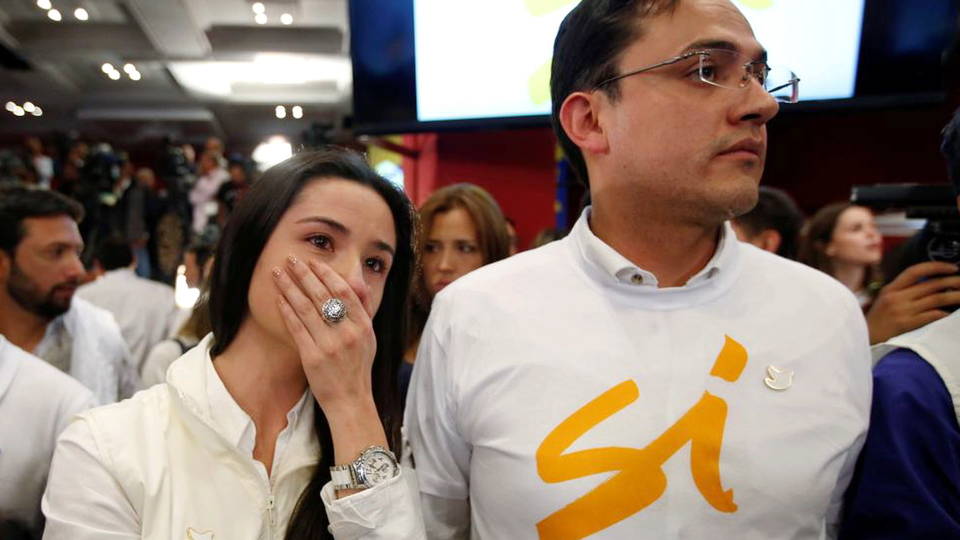 In Colombia, voters have rejected a peace agreement between the government and FARCrebels in a shocking turn of events that threatens to prolong the nation’s 52-year-old civil war. The peace deal lost by a margin of 49.8 to 50.2 percent. It was a stunning upset for a referendum that was expected to pass overwhelmingly. In Havana, where peace talks have taken place over the past four years, FARC leader Rodrigo Londoño promised his movement would continue to work toward peace.
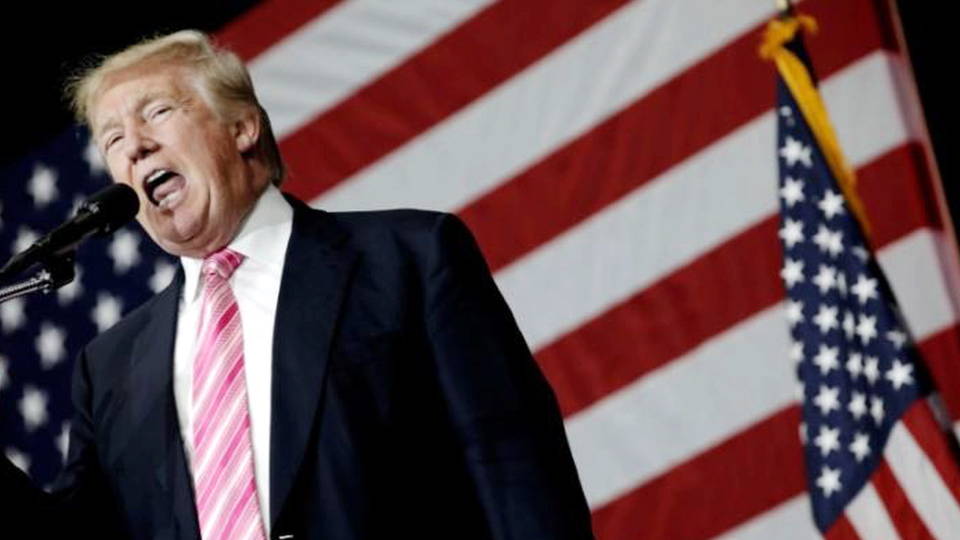 In news from the campaign trail, three of Donald Trump’s newly revealed tax returns show Trump claimed an income tax loss of nearly $917 million in 1995. The deduction means Trump could have paid zero federal income tax over an 18-year period. The Trump campaign has not challenged the authenticity of the documents, which were leaked to The New York Times, but said in a statement, “Mr. Trump is a highly-skilled businessman who has a fiduciary responsibility to his business, his family and his employees to pay no more tax than legally required." Trump’s media surrogates defended the practice, including former New York City Mayor Rudolph Giuliani, speaking with CNN’s Jake Tapper.
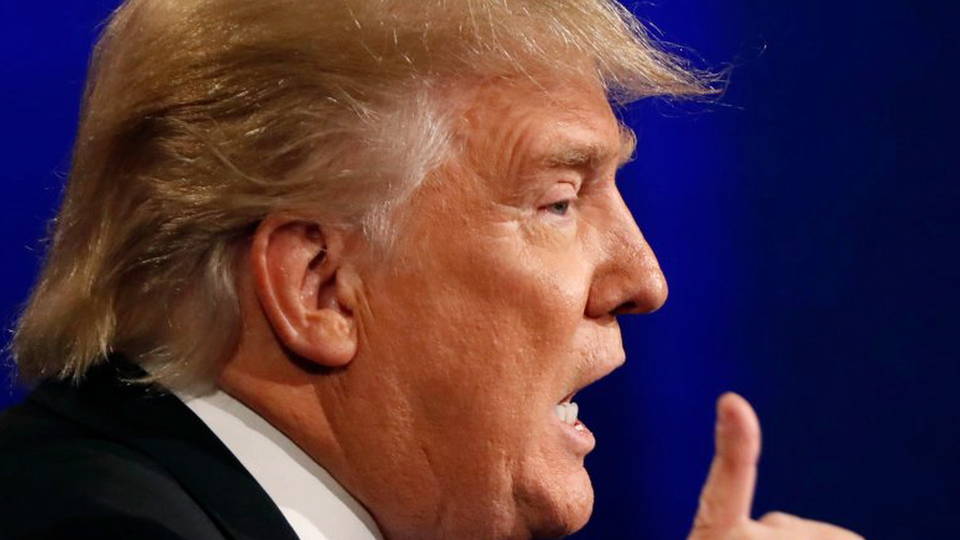 Meanwhile, Donald Trump continued to lash out at critics, including former Miss Universe Alicia Machado, who says Trump’s criticism of her weight gains sparked an eating disorder. In a series of early morning messages on Twitter, Trump accused Machado of appearing in a sex tape. There’s no evidence Machado ever appeared in a sex tape. But there’s new evidence that Donald Trump has. In a softcore pornographic video unearthed by BuzzFeed, Trump makes a brief cameo, appearing fully clothed as he breaks a bottle of champagne over a Playboy-branded limousine.
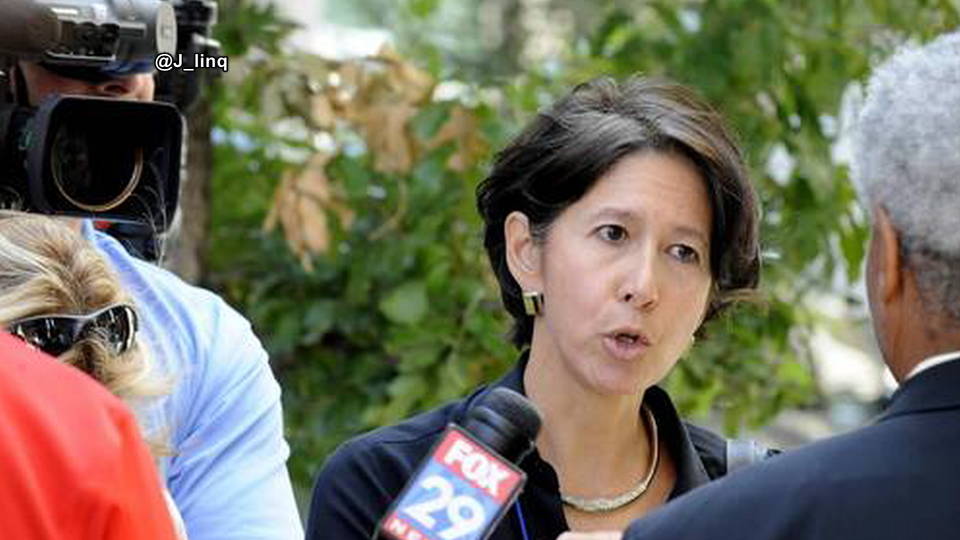 Elsewhere, a former Philadelphia Inquirer reporter alleged on Saturday that Donald Trump once called her the C-word in the 1980s. Jennifer Lin says Trump used the slur to her boss after she wrote a story about Trump’s business dealings in Atlantic City in 1988. Lin’s former editor, Craig Stock, confirmed the story.
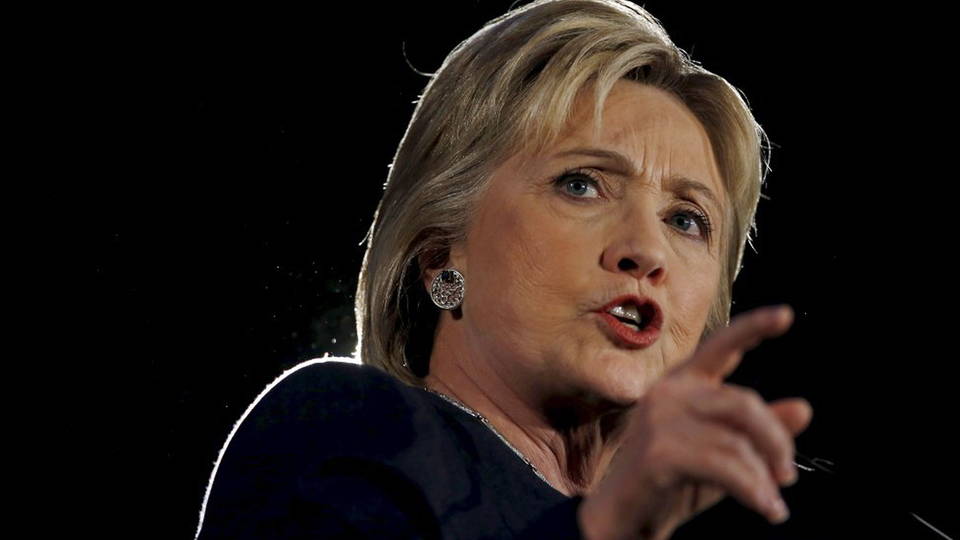 In other campaign news, a leaked audio recording reveals Hillary Clinton told a group of donors she’s the center-left to center-right alternative to Bernie Sanders and Donald Trump. The candid remarks were recorded at a Clinton fundraiser in Virginia last February and leaked late last week to the conservative website Washington Free Beacon. In the remarks, Clinton says she is straddling the line between two extremes in American politics. On the Republican side, she says, is a "populist, nationalist, xenophobic, discriminatory" approach.
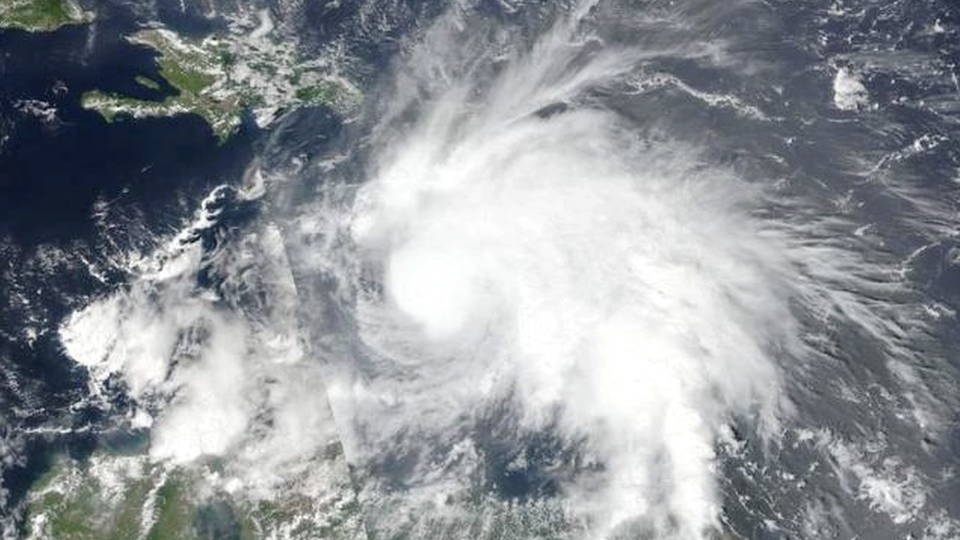 In the Caribbean, a Category 4 hurricane named Hurricane Matthew is bearing down on Jamaica, Haiti and Cuba. Haiti urged residents in coastal areas to evacuate, and there are fears for the thousands still living in tents following the massive earthquake in 2010. In Cuba, the U.S. military says it’s airlifting 700 employees, and some family pets, from the naval base at Guantánamo Bay, although there are no plans to evacuate the 61 prisoners detained there.
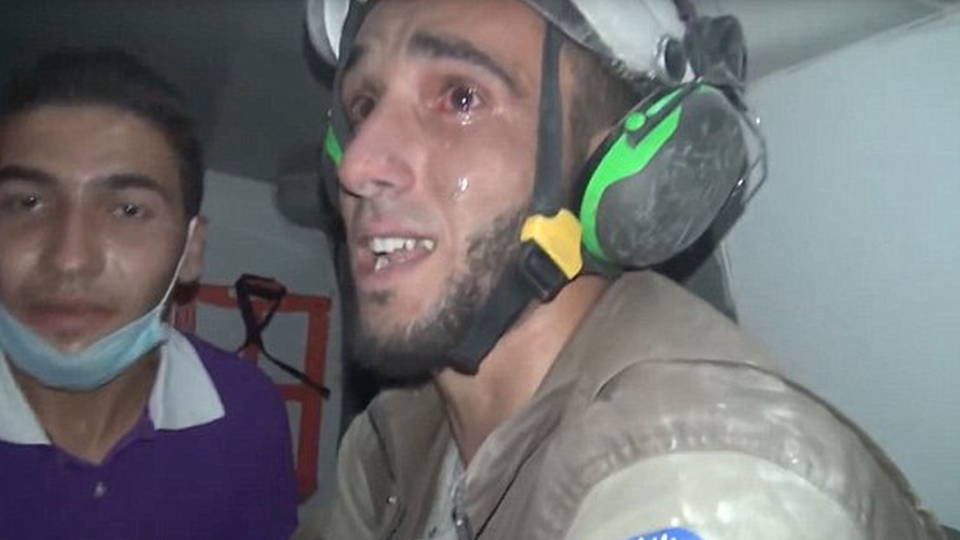 In Syria, government forces and their allies advanced on Aleppo after a pair of barrel bombs hit the main hospital, knocking it out of commission and shutting off essential healthcare to most of East Aleppo’s 250,000 residents. U.N. Secretary-General Ban Ki-moon has called the attacks on medical facilities war crimes. The violence came as residents described Aleppo as a living hell, with water, fuel, medicine and electricity all in short supply. Elsewhere in Syria, an airstrike in Idlib on Thursday flattened an apartment building, where a video posted online purports to show rescue workers with the "White Helmets" volunteers digging an infant out of the rubble.
 In Ethiopia, as many as 52 people died in a stampede after police shot guns into the air and fired tear gas and rubber bullets into a large anti-government demonstration Sunday. The protest began as an estimated 2 million people joined a religious festival in Ethiopia’s Oromia region––home to the Oromo people, who for the last two years have staged anti-government protests. In August, Ethiopian Olympic runner Feyisa Lilesa raised his arms in an "X" as he won a silver medal in the marathon to protest Ethiopia’s human rights abuses against his tribe, the Oromo people.
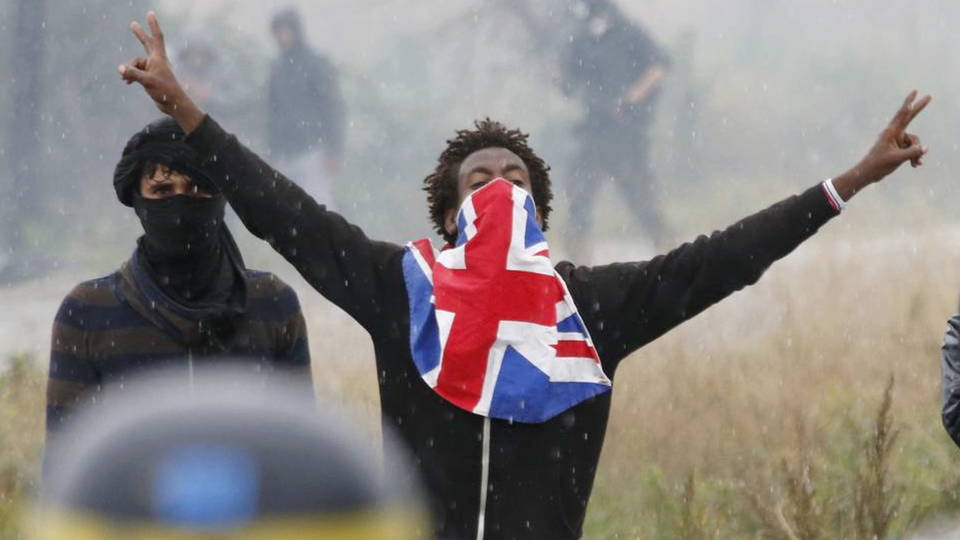 In the French port city of Calais, police fired tear gas and water cannons at refugees and their supporters on Saturday as the French government pressed ahead with plans to close the refugee camp known as "The Jungle." About 200 refugees and 50 of their supporters held the demonstration to protest desperate conditions in the camp, which is home to some 7,000 people fleeing war and poverty. Some of the protesters hoisted British flags as they called on the U.K. government to accept more refugees. This is one asylum seeker.
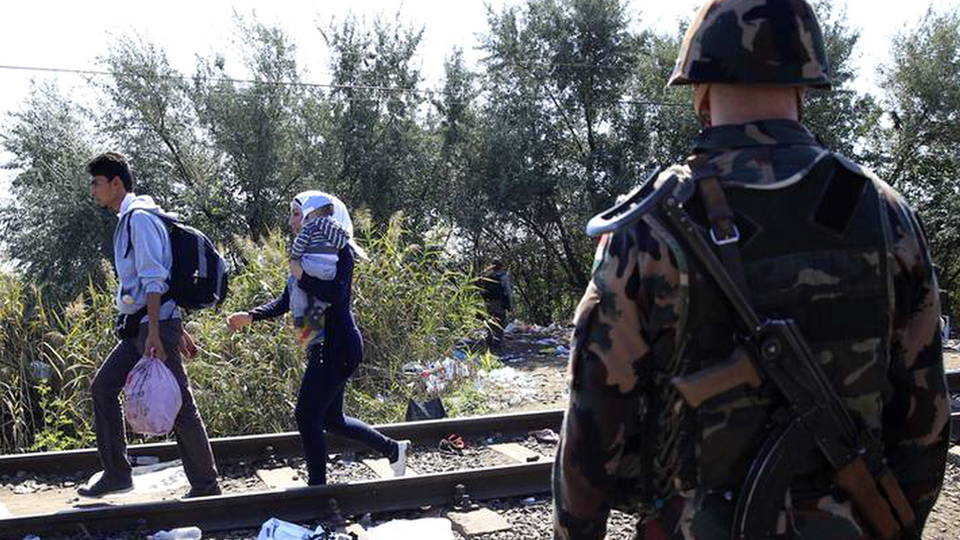 In Hungary, a national referendum on whether to exclude refugees from the country failed when less than half the electorate turned out, rendering Sunday’s results null and void. Of those who voted, more than 95 percent sided with Prime Minister Viktor Orbán, rejecting European Union quotas on resettling asylum seekers. The government spent 16 million euros of taxpayer money on a campaign demonizing refugees and urging a rejection of quotas. Prime Minister Orbán has previously called asylum seekers "a poison" and has praised Donald Trump’s anti-refugee platform.
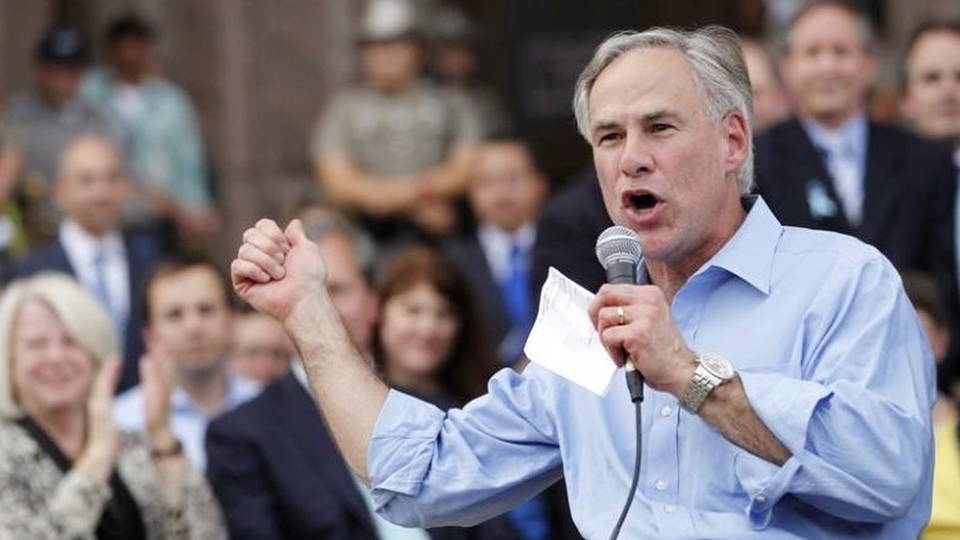 The state of Texas on Friday formally withdrew from the federal Refugee Resettlement Program. Republican Governor Greg Abbott cited security concerns, saying he wanted a promise from the federal government that refugees are fully vetted and do not present a security threat. The move is unlikely to stop the resettlement of refugees in Texas, but it will stop the state from disbursing federal dollars to local resettlement agencies. In December, Texas sued the federal government in a bid to block a Syrian family from resettlement in the state. A federal court dismissed that case, though Texas is appealing.
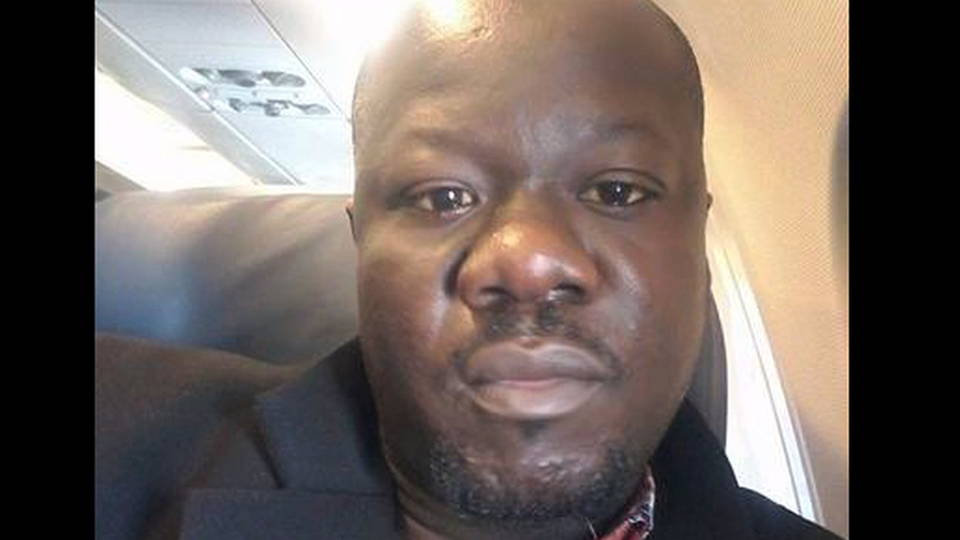 Police in the San Diego, California, suburb of El Cajon have released a pair of videos showing the death of unarmed Ugandan refugee Alfred Olango, who was killed by officers after his sister called 911 to report her brother was having a mental breakdown. The first video, captured on a security camera at a nearby restaurant, shows Olango confronted by El Cajon police officer Richard Gonsalves, who approaches Olango with his gun drawn. Olango is cornered near a parked pickup truck and a fence, as officer Gonsalves follows, raising his gun. A second video, taken on a cellphone camera, shows a second officer arriving on the scene and aiming a Taser, as Olango’s sister pleads with officers not to shoot her brother.
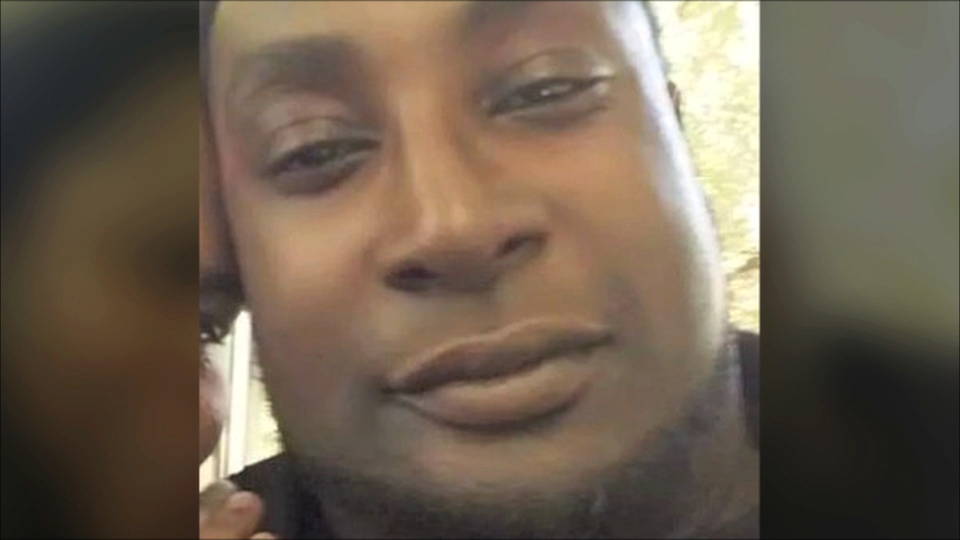 Meanwhile, in Charlotte, North Carolina, police say they will publicly release all dash cam and body-worn video of the killing of 43-year-old African American Keith Lamont Scott. The Charlotte-Mecklenburg Police Department says it is allowing Scott’s family to review the footage before it makes the videos public this week. Police previously released portions of video of the killing, and even the police chief admits the videos do not show Scott clearly holding a gun. North Carolina is an open-carry state. Meanwhile, Democratic presidential candidate Hillary Clinton visited the Little Rock AME Zion Church in Charlotte over the weekend, where she appeared alongside 9-year-old Zianna Oliphant, whose testimony at a Charlotte City Council meeting about police brutality went viral.
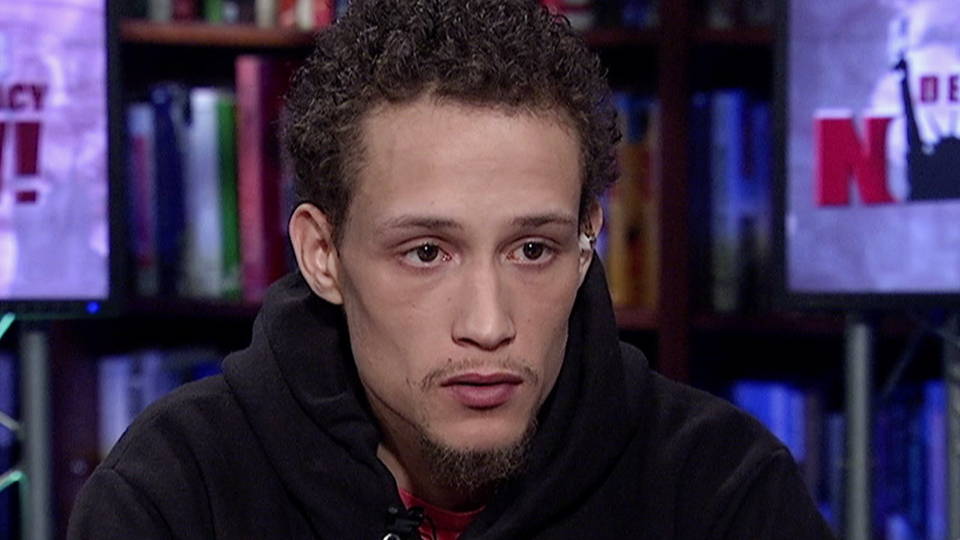 In New York City, the man who recorded Eric Garner’s death is set to turn himself in to police today to begin a four-year prison sentence. Ramsey Orta says he was arrested on trumped-up drug and weapons charges as payback for filming the fatal police chokehold that killed Eric Garner on July 17, 2014. Orta is the only person at the scene of Eric Garner’s death who will serve jail time.
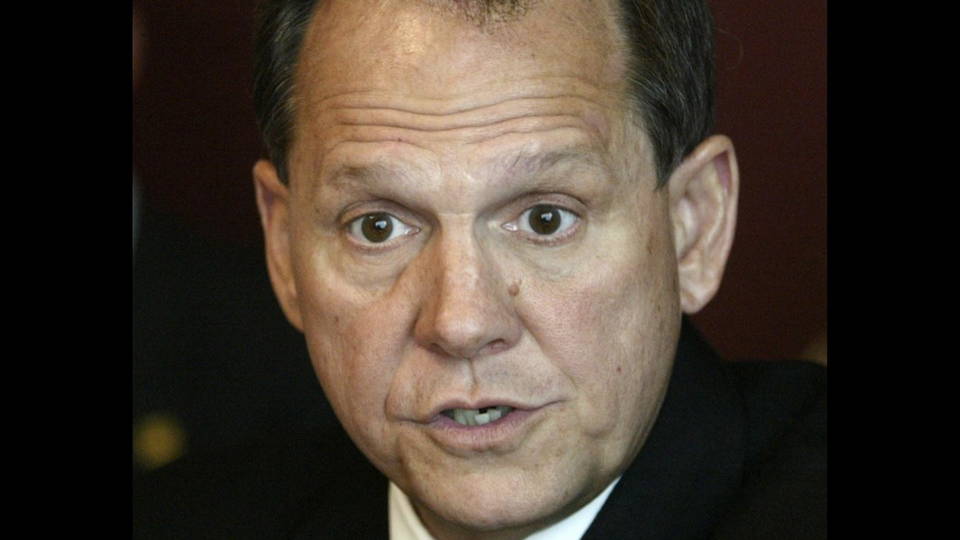 The chief justice of the Alabama Supreme Court, Judge Roy Moore, has been suspended over his defiance of a U.S. Supreme Court order on marriage equality. On Friday, Alabama’s Court of the Judiciary found Judge Moore guilty on six charges, after Moore ordered probate judges to violate federal law and refuse to issue marriage licenses to same-sex couples back in January. The move effectively ends Justice Moore’s career on the bench, since a state law will prohibit him from running for a new term because of his age.
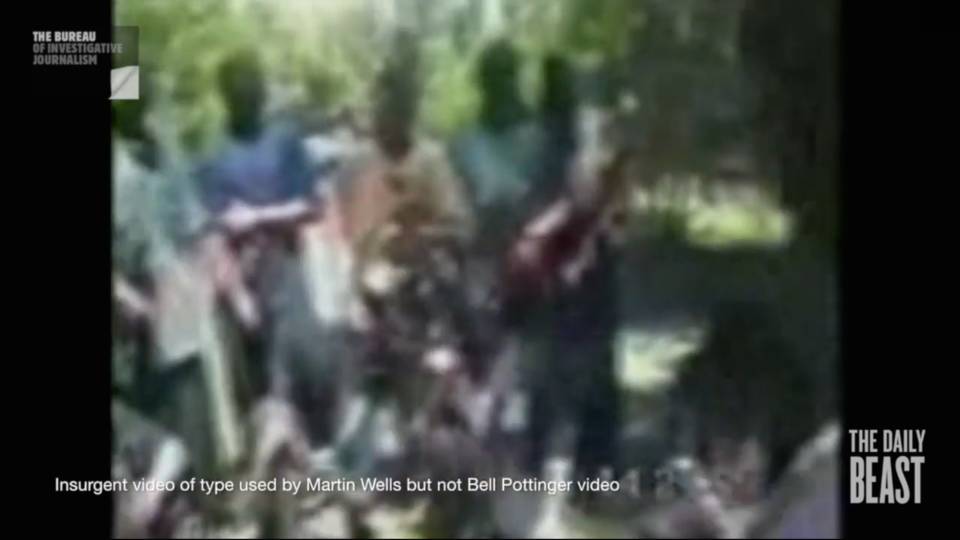 And a new report from the Bureau of Investigative Journalism says the Pentagon gave the controversial U.K. PR firm Bell Pottinger over a half-billion dollars to run a top-secret propaganda program in Iraq. Former Bell Pottinger video editor Martin Wells says the company would produce phony al-Qaeda videos, and then U.S. marines would plant the videos on compact discs during house raids, and anyone watching the videos later would have their IP address logged and their location recorded. Wells says Bell Pottinger employees also produced fake TV news reports that were designed to look as though they were made by Arab reporters rather than by a British PR firm.
-------
And a new report from the Bureau of Investigative Journalism says the Pentagon gave the controversial U.K. PR firm Bell Pottinger over a half-billion dollars to run a top-secret propaganda program in Iraq. Former Bell Pottinger video editor Martin Wells says the company would produce phony al-Qaeda videos, and then U.S. marines would plant the videos on compact discs during house raids, and anyone watching the videos later would have their IP address logged and their location recorded. Wells says Bell Pottinger employees also produced fake TV news reports that were designed to look as though they were made by Arab reporters rather than by a British PR firm.
-------
Donate today!
Follow:


SPECIAL BROADCAST
In Colombia, voters have rejected a peace agreement between the government and FARCrebels in a shocking turn of events that threatens to prolong the nation’s 52-year-old civil war. The peace deal lost by a margin of 49.8 to 50.2 percent. It was a stunning upset for a referendum that was expected to pass overwhelmingly. In Havana, where peace talks have taken place over the past four years, FARC leader Rodrigo Londoño promised his movement would continue to work toward peace.Rodrigo Londoño: "The FARC maintains its willingness for peace and reiterates its position to use only words as weapons to work toward the future. To the Colombian people, who dream of peace, you can count on us. Peace will win out."
President Santos sent his negotiating team back to Havana for talks and said a ceasefire with the FARC would remain in effect. Many of those voting "no" objected to the peace deal’s offer of amnesty, limited immunity from prosecution, and reduced sentences granted toFARC rebels. We’ll have more on Sunday’s historic "no" vote on Colombia’s peace agreement after headlines.
TOPICS:
Trump May Have Paid No Taxes for 18 Years, 1995 Tax Returns Show
In news from the campaign trail, three of Donald Trump’s newly revealed tax returns show Trump claimed an income tax loss of nearly $917 million in 1995. The deduction means Trump could have paid zero federal income tax over an 18-year period. The Trump campaign has not challenged the authenticity of the documents, which were leaked to The New York Times, but said in a statement, “Mr. Trump is a highly-skilled businessman who has a fiduciary responsibility to his business, his family and his employees to pay no more tax than legally required." Trump’s media surrogates defended the practice, including former New York City Mayor Rudolph Giuliani, speaking with CNN’s Jake Tapper.Rudolph Giuliani: "You might remember a few years ago it was pointed out that GE paid no taxes."
Jake Tapper: "Yeah."
Rudolph Giuliani: "So, the reality is, this is part of our tax code. The man’s a genius. He knows how to operate the tax code for the benefit of the people he’s serving."
Donald Trump’s tax records were sent to The New York Times by an anonymous source, with a return address listed as originating from Trump Tower. A lawyer for Trump threatened The New York Times with prompt legal action. Trump has refused to make his tax returns public, breaking a precedent followed by every presidential nominee since 1976.
TOPICS:
Trump Lashes Out at Former Miss Universe with False Sex Tape Charge
Meanwhile, Donald Trump continued to lash out at critics, including former Miss Universe Alicia Machado, who says Trump’s criticism of her weight gains sparked an eating disorder. In a series of early morning messages on Twitter, Trump accused Machado of appearing in a sex tape. There’s no evidence Machado ever appeared in a sex tape. But there’s new evidence that Donald Trump has. In a softcore pornographic video unearthed by BuzzFeed, Trump makes a brief cameo, appearing fully clothed as he breaks a bottle of champagne over a Playboy-branded limousine.Donald Trump: "Beauty is beauty. Let’s see what happens with New York."
TOPICS:
Reporter Says Trump Used C-Word Slur in 1980s After Critical Story
Elsewhere, a former Philadelphia Inquirer reporter alleged on Saturday that Donald Trump once called her the C-word in the 1980s. Jennifer Lin says Trump used the slur to her boss after she wrote a story about Trump’s business dealings in Atlantic City in 1988. Lin’s former editor, Craig Stock, confirmed the story.TOPICS:
Clinton Tape: Sanders Supporters "Living in Their Parents' Basement"
In other campaign news, a leaked audio recording reveals Hillary Clinton told a group of donors she’s the center-left to center-right alternative to Bernie Sanders and Donald Trump. The candid remarks were recorded at a Clinton fundraiser in Virginia last February and leaked late last week to the conservative website Washington Free Beacon. In the remarks, Clinton says she is straddling the line between two extremes in American politics. On the Republican side, she says, is a "populist, nationalist, xenophobic, discriminatory" approach.Hillary Clinton: "And on the other side, there’s just a deep desire to believe that, you know, we can have free college, free healthcare, that what we’ve done hasn’t gone far enough, and we just need to, you know, go as far as, you know, Scandinavia, whatever that means. And half the people don’t know what it means, but it is something that they deeply feel. So, as a friend of mine said the other day, I am occupying from the center-left to the center-right. And I don’t have much company there."
In other remarks, Clinton explains the appeal of then-rival Senator Bernie Sanders to young voters, saying, "They’re children of the Great Recession. And they are living in their parents’ basement." Sanders rushed to Clinton’s defense over the weekend, calling Clinton’s remarks “absolutely correct.”
Hurricane Matthew Threatens Haiti, Forces Guantánamo Evacuation
In the Caribbean, a Category 4 hurricane named Hurricane Matthew is bearing down on Jamaica, Haiti and Cuba. Haiti urged residents in coastal areas to evacuate, and there are fears for the thousands still living in tents following the massive earthquake in 2010. In Cuba, the U.S. military says it’s airlifting 700 employees, and some family pets, from the naval base at Guantánamo Bay, although there are no plans to evacuate the 61 prisoners detained there.TOPICS:
Syria: Hospital Struck in Aleppo as U.N. Chief Decries "War Crimes"
In Syria, government forces and their allies advanced on Aleppo after a pair of barrel bombs hit the main hospital, knocking it out of commission and shutting off essential healthcare to most of East Aleppo’s 250,000 residents. U.N. Secretary-General Ban Ki-moon has called the attacks on medical facilities war crimes. The violence came as residents described Aleppo as a living hell, with water, fuel, medicine and electricity all in short supply. Elsewhere in Syria, an airstrike in Idlib on Thursday flattened an apartment building, where a video posted online purports to show rescue workers with the "White Helmets" volunteers digging an infant out of the rubble.Syrian Civil Defense worker: "We have been working for two or three hours. Thank God we found her alive. She is lucky she is still alive. One month old, the baby is just one month old. Two hours of work, that is it. She is 30 days old."
Meanwhile, Russia warned the United States not to oppose its military campaign in support of Bashar al-Assad’s forces, warning that a U.S. intervention could lead to "frightening tectonic shifts in the Middle East."
Ethiopia: 52 Die as Police Crackdown on Protest Spawns Stampede
In Ethiopia, as many as 52 people died in a stampede after police shot guns into the air and fired tear gas and rubber bullets into a large anti-government demonstration Sunday. The protest began as an estimated 2 million people joined a religious festival in Ethiopia’s Oromia region––home to the Oromo people, who for the last two years have staged anti-government protests. In August, Ethiopian Olympic runner Feyisa Lilesa raised his arms in an "X" as he won a silver medal in the marathon to protest Ethiopia’s human rights abuses against his tribe, the Oromo people.TOPICS:
France: Police Fire Tear Gas, Water Cannons at Refugee Camp Protests
In the French port city of Calais, police fired tear gas and water cannons at refugees and their supporters on Saturday as the French government pressed ahead with plans to close the refugee camp known as "The Jungle." About 200 refugees and 50 of their supporters held the demonstration to protest desperate conditions in the camp, which is home to some 7,000 people fleeing war and poverty. Some of the protesters hoisted British flags as they called on the U.K. government to accept more refugees. This is one asylum seeker.Unidentified asylum seeker: "Open the U.K. border, let them through. That’s the political solution. In France there is no political solution, and we denounce that."
Hungary Referendum on Migrant Quotas Falls Short Amid Low Turnout
In Hungary, a national referendum on whether to exclude refugees from the country failed when less than half the electorate turned out, rendering Sunday’s results null and void. Of those who voted, more than 95 percent sided with Prime Minister Viktor Orbán, rejecting European Union quotas on resettling asylum seekers. The government spent 16 million euros of taxpayer money on a campaign demonizing refugees and urging a rejection of quotas. Prime Minister Orbán has previously called asylum seekers "a poison" and has praised Donald Trump’s anti-refugee platform.TOPICS:
Texas Withdraws from Federal Refugee Resettlement Program
The state of Texas on Friday formally withdrew from the federal Refugee Resettlement Program. Republican Governor Greg Abbott cited security concerns, saying he wanted a promise from the federal government that refugees are fully vetted and do not present a security threat. The move is unlikely to stop the resettlement of refugees in Texas, but it will stop the state from disbursing federal dollars to local resettlement agencies. In December, Texas sued the federal government in a bid to block a Syrian family from resettlement in the state. A federal court dismissed that case, though Texas is appealing.El Cajon, CA: Videos Released Showing Police Killing of Alfred Olango
Police in the San Diego, California, suburb of El Cajon have released a pair of videos showing the death of unarmed Ugandan refugee Alfred Olango, who was killed by officers after his sister called 911 to report her brother was having a mental breakdown. The first video, captured on a security camera at a nearby restaurant, shows Olango confronted by El Cajon police officer Richard Gonsalves, who approaches Olango with his gun drawn. Olango is cornered near a parked pickup truck and a fence, as officer Gonsalves follows, raising his gun. A second video, taken on a cellphone camera, shows a second officer arriving on the scene and aiming a Taser, as Olango’s sister pleads with officers not to shoot her brother.Woman: "Officer, don’t shoot him. Take your hands up! You’re f****** standing with me."
Male Voice 1: "Keep your hands out of your—" [inaudible]
Woman: [Inaudible]
Male Voice 1: "You need to back up."
Male Voice 2: "Shut the f*** up."
Woman: [Inaudible]
[Four gunshots sound.]
Woman: [Screams.]
Police say Olango pulled an electronic cigarette and pointed it at Officer Gonsalves, who mistook it for a gun and opened fire. Olango was shot about 40 seconds after police arrived. No Psychiatric Emergency Response Team was deployed, even though police knew the call was for a mental health emergency, and it took police 50 minutes to arrive. Protests continued throughout the weekend in El Cajon and in San Diego, where demonstrators are calling for a federal probe into the killing.
TOPICS:
Charlotte Police to Release All Video of Keith Lamont Scott Killing
Meanwhile, in Charlotte, North Carolina, police say they will publicly release all dash cam and body-worn video of the killing of 43-year-old African American Keith Lamont Scott. The Charlotte-Mecklenburg Police Department says it is allowing Scott’s family to review the footage before it makes the videos public this week. Police previously released portions of video of the killing, and even the police chief admits the videos do not show Scott clearly holding a gun. North Carolina is an open-carry state. Meanwhile, Democratic presidential candidate Hillary Clinton visited the Little Rock AME Zion Church in Charlotte over the weekend, where she appeared alongside 9-year-old Zianna Oliphant, whose testimony at a Charlotte City Council meeting about police brutality went viral.New York: Man Who Filmed Eric Garner’s Choking Death by NYPD to Report for Prison Term
In New York City, the man who recorded Eric Garner’s death is set to turn himself in to police today to begin a four-year prison sentence. Ramsey Orta says he was arrested on trumped-up drug and weapons charges as payback for filming the fatal police chokehold that killed Eric Garner on July 17, 2014. Orta is the only person at the scene of Eric Garner’s death who will serve jail time.TOPICS:
Alabama Chief Justice Suspended After Resisting Same-Sex Marriages
The chief justice of the Alabama Supreme Court, Judge Roy Moore, has been suspended over his defiance of a U.S. Supreme Court order on marriage equality. On Friday, Alabama’s Court of the Judiciary found Judge Moore guilty on six charges, after Moore ordered probate judges to violate federal law and refuse to issue marriage licenses to same-sex couples back in January. The move effectively ends Justice Moore’s career on the bench, since a state law will prohibit him from running for a new term because of his age.Report: Pentagon Paid PR Firm for Phony al-Qaeda Videos in Iraq
And a new report from the Bureau of Investigative Journalism says the Pentagon gave the controversial U.K. PR firm Bell Pottinger over a half-billion dollars to run a top-secret propaganda program in Iraq. Former Bell Pottinger video editor Martin Wells says the company would produce phony al-Qaeda videos, and then U.S. marines would plant the videos on compact discs during house raids, and anyone watching the videos later would have their IP address logged and their location recorded. Wells says Bell Pottinger employees also produced fake TV news reports that were designed to look as though they were made by Arab reporters rather than by a British PR firm.Martin Wells: "The kind of stories: A bomb would go off. A car bomb would go off. People would die. We would have people out there filming it. It would come back. We would then edit it into stories that would then go out on various channels within the region. And we were to make it, as best we could, look as if it was made locally, which it is shot locally and is edited locally. It was more to make it look like it was Arabic."
Wells said his Bell Pottinger’s content was signed off on by David Petraeus, then commander of the coalition forces in Iraq, and occasionally by the White House.
TOPICS:
Donate today!
Follow:
SPECIAL BROADCAST


Arlie Russell Hochschild on Strangers in Their Own Land: Anger and Mourning on the AmericaPart 2
WORK WITH DN!

Senior TV Producer
COLUMN

Solidarity From Solitary: The National Prison Strike
207 West 25th Street, 11th Floor
New York, New York 10001, United States
-------
-------
No comments:
Post a Comment