democracynow.org
Stories:
 Does Donald Trump Pay Taxes? Records Given toNYT Show How He May Have Avoided Taxes for 18 Years
With just over a month until Election Day, The New York Times has dropped a bombshell report that suggests Republican presidential nominee Donald Trump may have avoided paying any federal income taxes for 18 years. Trump’s campaign has not challenged the authenticity of the leaked tax documents used in the story. We get the details from three-time Pulitzer Prize-winning reporter David Barstow, who led the Times’ investigation, and David Cay Johnston, another Pulitzer Prize-winning investigative reporter and author of the new biography, "The Making of Donald Trump."
TRANSCRIPT
This is a rush transcript. Copy may not be in its final form.
AMY GOODMAN: Does Donald Trump pay taxes? We begin today’s show with an explosive report from The New York Times that suggests the Republican presidential nominee may have avoided paying any federal income taxes for 18 years. The Times has obtained three of Trump’s tax returns, showing he claimed an income tax loss of nearly $917 million in 1995. The deduction means Trump could have paid zero federal income tax over an 18-year period. Since the report came out, the Trump campaign has not challenged the authenticity of the tax documents. Instead, it issued a statement, that, quote, "Mr. Trump is a highly-skilled businessman who has a fiduciary responsibility to his business, his family and his employees to pay no more tax than legally required," unquote. On Monday, Trump claimed he successfully exploited tax loopholes created by special interests, and said he’s the best person to fix the broken system.
DONALD TRUMP: It is an unfair system and so complex that very few people understand it. Fortunately, I understand it. This is not the fault of the IRS, but the political class that is owned outright by the special interests and lobbyists. Believe me. It’s these politicians who wrote the tax code and who are constantly adding, revising and changing an already overcomplicated set of laws, all at the behest of their favorite donors and special interests, who want certain provisions put in, and they won’t take no for an answer. ... I understand the tax laws better than almost anyone, which is why I am one who can truly fix them. I understand it. I get it.
AMY GOODMAN: Meanwhile, Democratic presidential nominee Hillary Clinton responded by slamming Trump on his tax record. On Monday, she told supporters in the battleground state of Ohio that Trump’s a tax evader who stiffed average Americans.
HILLARY CLINTON: Now, a lot of us were wondering, "What is he hiding? It must be really terrible." Well, The New York Times has discovered at least part of the answer. Back in the 1990s, Trump apparently lost a billion dollars in a single year on bad investments and failing casinos. Now, how anybody can lose a dollar, let alone a billion dollars, in the casino industry is kind of beyond me. Right? But it—it’s just hard to figure. But as a result, doesn’t look like he paid a dime of federal income tax for almost two decades. Now, while millions of American families, including mine and yours, were working hard, paying our fair share, it seems he was contributing nothing to our nation. Imagine that. Not fair.
AMY GOODMAN: The New York Times report is based on an analysis of the front pages of Trump’s tax returns for the states of New York, New Jersey and Connecticut. They were sent to the paper by an anonymous source with a return address listed as originating from Trump Tower. A lawyer for Trump threatened The New York Times with prompt legal action. Trump has refused to make his tax returns public, breaking a precedent followed by every presidential nominee since 1976.
For more, we’re joined by two reporters who have long covered Donald Trump and his taxes. David Barstow is a three-time Pulitzer Prize-winning investigative reporter for The New York Times, lead author on a new article analyzing part of Trump’s tax returns. Barstow shares a byline with Susanne Craig, Russ Buettner and Megan Twohey on theTimes exclusive, which is headlined "Trump’s 1995 Tax Records Claim $916 Million Loss."
We’re also joined by David Cay Johnston, Pulitzer Prize-winning investigative reporter formerly with The New York Times, now a columnist for The Daily Beast. His latest piece is headlined, "Art of the Steal." His biography of Donald Trump, The Making of Donald Trump.
We welcome you both to Democracy Now! So, David Barstow, let’s begin with you. Lay out what it is you had mailed—that someone mailed to the Times.
DAVID BARSTOW: My colleague, Sue Craig, who’s probably one of the few reporters at the paper who actually checks her snail mail every day, came to me one day with this envelope and these three pages in them, with her eyes wide open. She showed me the documents. I was actually on the phone in the middle of an interview. I saw the first glimpse of the tax return pages, hung up on the person I was talking to, and then, of course, we then went on this sort of mad scramble to see if we could authenticate the documents. That was about 10 days ago.
We were obviously—kind of had two warring feelings at the same time. One was, gosh, who else might have been sent these documents? What other journalists? I was thinking about you, David.
DAVID CAY JOHNSTON: Not so lucky.
DAVID BARSTOW: And then—but we were also thinking also about what happened with Dan Rather and rushing to something before we were completely confident in the authenticity of the documents.
AMY GOODMAN: When were they sent to you?
DAVID BARSTOW: As I said, we received them—I guess it was two Fridays ago, is when Sue Craig walked up to me, waving them at me.
AMY GOODMAN: And what did they show? What did they say?
DAVID BARSTOW: So, I mean, they were—first of all, these are like little fragments, in a way, because his full tax return for 1995, no doubt, was hundreds and hundreds of pages, and we only were sent three pages. But what was on those three pages was enough for us to see something quite remarkable, which was, my gosh, he’s declaring a $916 million loss on his personal income tax return in 1995. The number was so large, it actually took us sort of a minute to like figure out could it really be that big. And when we showed these returns, we—of course, we quickly brought in tax experts to help us interpret and understand the documents. They also were kind of—it took everybody a minute. We’d see people look at these documents and, you know, just to kind of contemplate that size of a number as a loss for 1995.
It also begins—it begins giving us sort of the first glimpses into other aspects of his finances. And so, one of the things we can see from these documents is that Trump managed to obtain enormous tax benefits from the financial wreckage he had left behind in the early 1990s with failed casinos, with a failed airline, with a failed or poorly timed purchase of the Plaza Hotel. And you could certainly see evidence of that in the way the numbers were described in these tax returns. So, even though it was just three pages, and none of them were actually from his federal tax return, it was enough for us to begin seeing some things that were quite startling and important, we thought, newsworthy for the readers of The New York Times.
AMY GOODMAN: And explain what this kind of massive loss, $916 million, means for taxes in the future.
DAVID BARSTOW: That’s—you know, that’s the thing that I think most ordinary people wouldn’t immediately recognize. There are these incredible provisions in the tax code that are especially beneficial to people like Donald Trump, that would allow him to use that $916 million to shelter up to 18 years of income tax from any tax whatsoever—I’m sorry, of income from any income tax whatsoever. In his case, what that works out to is he could earn up to $50 million a year tax-free over this 18-year period. And we don’t see any evidence from our examination of his businesses at that time that that’s a number that he was likely to hit at all, and thus I think it makes it extremely likely that over this 18-year period he paid no income taxes at all, even though we don’t know that for sure, because he hasn’t yet released those tax returns, either.
AMY GOODMAN: Let me go to Donald Trump responding, addressing supporters at a campaign stop in Pueblo, Colorado, yesterday. He said he resuscitated his businesses through sheer talent and grit.
DONALD TRUMP: Today, my company is bigger, stronger, far greater assets than it’s ever had before, more premium properties. We’ve never done better. It’s the strongest we’ve ever been. And we employ thousands of people and over the years have employed thousands and thousands of people, which is the thing that, frankly, makes me most happy. That did not happen by chance or luck. It happened by action and talent, a lot of talent. I was able to use the tax laws of this country and my business acumen to dig out of the real estate mess—you would call it a depression—when few others were able to do what I did.
AMY GOODMAN: So that was Donald Trump. Your response, David Barstow?
DAVID BARSTOW: I mean, I think this is the argument that he has really been laying out gradually over the campaign. You heard it, for sure, on Monday night in the presidential debate with Hillary Clinton, when she pointed out or raised the question of, "Hey, perhaps one of the reasons why he’s not releasing his tax returns is because he doesn’t want you to know that he doesn’t pay any federal income taxes," to which he replied, "That would make me smart." And I think he’s actually continued that argument. On Wednesday, he was on The O’Reilly Factor, and he argued to Bill O’Reilly that he thinks that the American voters are actually looking for that kind of thinking, that they’re looking for someone like him who is so expert in gaming the tax code and was clever enough to be a billionaire, on the one hand, and, on the other hand, not pay a dime in federal income taxes. So it’s an interesting argument that he’s making. And it’s an interesting question of whether or not that indeed is what the American people are looking for right now.
AMY GOODMAN: So, you, in trying to confirm the authenticity of these documents, not only consulted tax experts here, but you actually went down to Florida to meet with Trump’s accountant?
DAVID BARSTOW: I did. His name is Jack Mitnick. He has represented the Trump family—or, represented the Trump family over the span of four decades. He described starting work on Donald Trump’s taxes when Donald Trump was 18 years old. And I presented these documents to Mr. Mitnick to see if he could authenticate them. He immediately recognized them. This is, in fact—according to Mr. Mitnick, this was the last tax return he ever worked on for Donald Trump. He parted company with the accounting firm that he worked for the following year and went to a different accounting firm.
The thing that really jumped out—I mean, the thing that I guess gave me the most amount of comfort was he was able to explain an anomaly in the way the numbers were presented on one of the tax forms. An issue was this $916 million loss. The first two digits, the nine and the one, were slightly different font and slightly misaligned from the following seven digits. And that made us, of course, incredibly worried that perhaps somebody had simply doctored Mr. Trump’s tax returns. When I pointed that out to Mr. Mitnick, he kind of smiled and chuckled, and he said, "Oh, yes, I remember. The tax software program that I was using at that time had difficulty actually printing out a number that large. It would only print out seven digits. So what I had to do is I had to then run the thing through my IBM typewriter, and I typed in the first two digits, the nine, one." And I think that was the moment when we became—I certainly felt like, OK, these—these are real.
AMY GOODMAN: Now, he said that he understood that Trump was living a life of unimaginable luxury?
DAVID BARSTOW: He was. He has complicated feelings about Donald Trump. He—first of all, he clearly is someone who had real admiration for Fred Trump, Donald Trump’s father. He described Fred Trump as a man who didn’t mind getting a little mud on his shoes, a man who paid attention to detail, a man who was really on top of his business. And the way he described Donald Trump was a sort of undisciplined, showboating, kind of brash guy, the guy we all have kind of come to know over this campaign. And he mentioned, in fact, that every year when Donald and Ivana would come in to do their taxes with him, it was always Ivana who asked the really, you know, picky detail questions.
But he said that what Donald did understand and grasped very clearly was that they could use the IRS tax code to protect his wealth. And that was the point that, you know, he—from that sort of simple understanding flowed, basically, all of the tax strategies. But, yes, Mr. Mitnick was well aware of the kind of the irony of the fact that here’s this man living this incredible lifestyle at this moment in time, and yet at the same time he’s not paying any taxes.
AMY GOODMAN: And there are other lines, of course, in the tax return, like line number six, business income or loss. And that amount is?
DAVID BARSTOW: A little over 3 million bucks.
AMY GOODMAN: That’s a little different than people would think Donald Trump’s income is, the way he describes it.
DAVID BARSTOW: It’s—I mean, the numbers—all these numbers are so fascinating. I mean, you kind of—
AMY GOODMAN: $3.4 million, his income.
DAVID BARSTOW: Yeah, it’s not—it’s not—
DAVID CAY JOHNSTON: There’s no evidence that—let’s be clear about this.
AMY GOODMAN: David Cay Johnston.
DAVID CAY JOHNSTON: I covered Trump when he went through these difficulties back then, and—which began in 1990. There’s no evidence that Donald Trump is a billionaire, and these three pages provide very strong evidence that he’s not a billionaire or anything close to it. He’s a wealthy man. He had about $7 million of interest income, which suggests he owned corporate bonds worth somewhere between $100 and $150 million.
But the—there are a number of things he did here that he’s not telling people about. First of all, those losses represented real damage suffered by other people.
Secondly, the state of New Jersey Casino Control Commission, after two commissioners complained of official favoritism to Donald Trump by the New York State Attorney General’s Office, took his side against his bankers. And his bankers then had to give him huge discounts on his loans. Well, if you borrow money from a bank and pay back less than you owe, that’s income, and you have to pay taxes on it. Donald escaped that, I’m sure, and that’s what my column in The Daily Beast explains, by instead of paying the taxes, agreeing in the future not to take tax benefits out of other buildings that he owned, his casinos. He then took these buildings, put them into a company sold to the public in the market—the first time he had done this. The stock opened up at $35. It quickly went, over a couple of years, to 17 cents. It never made money. It lost $1.1 billion more. But Trump got $82 million of pay from that company.
So, throughout this system, what Donald Trump did was he mismanaged his properties, he overpaid, he got the banks—and therefore the investors in the banks—to suffer the losses. He then took his own given-away tax benefits to avoid tax, put them into the publicly traded company and stiffed the investors in that company. And this is how Donald Trump has done business his entire life.
AMY GOODMAN: We’re going to break and then come back to this discussion. That’s David Cay Johnston. We’re also speaking to David Barstow. David Barstow led The New York Times team analyzing part of Donald Trump’s tax returns, the big bombshell news this week. David Cay Johnston is author of The Making of Donald Trump, just wrote apiece for The Daily Beast called "The Art of the Steal." This is Democracy Now! We’ll be back on Donald Trump in a minute. ... Read More → A Trump Presidency Could End Press Freedom, Say Reporters Threatened for Reporting on His Taxes
Donald Trump has threatened to sue The New York Times for publishing leaked pages from his tax returns, and the paper’s executive editor, Dean Baquet, said he would do so even if it meant risking jail time. We speak with two investigative journalists who report on Trump’s taxes and describe his legal threats in letters and phone calls, and their reaction. "Mr. Trump, especially given the positions he’s staked out ... would represent a really significant threat to the tradition of an independent free press in the United States," says David Barstow of The New York Times. "I think Donald Trump represents a clear and present danger to the liberties of the people, to the idea of the First Amendment," agrees David Cay Johnston, now a columnist for The Daily Beast.
TRANSCRIPT
This is a rush transcript. Copy may not be in its final form.
AMY GOODMAN: We’re talking about Donald Trump’s taxes with two Pulitzer Prize-winning journalists: David Barstow ofThe New York Times and David Cay Johnston, now with The Daily Beast, also author of the book The Making of Donald Trump. I want to go to Donald Trump talking about taxes during a Republican primary debate last year at the Ronald Reagan Library in California.
DONALD TRUMP: Well, I think the thing about the flat tax—I know it very well—that I don’t like is if you make $200 million a year, you pay 10 percent. You’re paying very little, relatively, to somebody that’s making $50,000 a year and has to hire H&R Block to do the work because it’s so complicated. One thing I’ll say to Ben is that we’ve had a graduated tax system for many years, so it’s not a socialistic thing. What I’d like to do is—and I’ll be putting it in the plan in about two weeks, and I think people are going to like it—it’s a major reduction in taxes. It’s a major reduction for the middle class. The hedge funds guys won’t like me as much as they like me right now. I know 'em all. But they'll pay more. I know people that are making a tremendous amount of money and paying virtually no tax, and I think it’s unfair.
AMY GOODMAN: That’s Donald Trump talking about taxes during the Republican primary debate at the Ronald Reagan Library. Your response to that, David Cay Johnston? He says that’s unfair.
DAVID CAY JOHNSTON: Well, it is yet another example of Donald says one thing and does another, because we—the last year that we know Donald Trump actually paid income taxes was 1977. And we know from other public records that in recent years he reported an income of less than $500,000 for tax purposes. So, for Donald Trump to complain that people are living tax-free is just absurd.
AMY GOODMAN: What most surprised you by the _Times_’ revelations of these tax documents of Donald Trump’s tax returns?
DAVID CAY JOHNSTON: The interest that he had. He collected about $7 million of interest. Now, if he bought regular corporate bonds, that implies he owes $100 to $150 million worth. But he may have owned junk bonds that were bought at a very low price, and that interest, therefore, may have represented a much smaller investment—would be still tens of millions of dollars, but a much smaller investment. But I was surprised at how much interest he was collecting, because that’s a very, very conservative thing to do, and Donald presents himself to the world as this swashbuckling, brilliant business genius.
The second thing is the size of the loss. I covered this back then for the Philadelphia Inquirer and wrote a book about Atlantic City. And I’m having a hard time figuring out how Donald got to, even over a period of years, $916 million of net operating losses. And David, by the way, earlier made a point: He couldn’t use that much. He doesn’t have that much income. His income does not reflect a man who is a billionaire at all. It reflects a wealthy person, but not even close to the billionaire class.
AMY GOODMAN: What about that, David Barstow?
DAVID BARSTOW: There’s one thing I just wanted to focus in a minute, which is, his basic presentation right now is "You should elect me because I know all the tricks of the tax code. I know"—and he said the tax code’s unfair, and he personally has benefited from that unfairness. "And so, therefore, I’m the guy to fix it." But what is, I think, also noteworthy is that we have yet heard from him any specific proposal to actually fix any of these provisions that benefited him so richly in this 1995 tax return. He has talked about some changes to the tax code, but they’re changes that—as best as anyone can assess them so far, they’re fixes that would actually further benefit him.
DAVID CAY JOHNSTON: Yeah, his plan, Amy, is very oriented toward people at the top. Think of it as George W. Bush’s tax cuts on steroids. And by the way, this is an area I know very well; I’m literally drafting—my next book is a new federal tax code for the 21st century. But, you know, Donald and I actually had lunch about this—these issues in 1990. And I pointed out to him that he had a $3.4 million negative income, and he only needed $1 to pay no taxes—he actually could have made a little bit of money and paid no taxes—and suggested that if he reorganized his partnerships, he could, in essence, sell those tax benefits to somebody else. And Donald, who was nonplussed—he couldn’t imagine a journalist understood the tax code—I don’t think he really understood the points I was making to him at the time, because he doesn’t focus well on things. He didn’t do the stuff that’s here. His tax advisers—notably, Jack Mitnick—did this.
AMY GOODMAN: So, the Trump Organization has threatened to sue you, David Barstow, and the Times?
DAVID BARSTOW: They have. They’ve taken, actually, I think, a really remarkable position with us. The letter that they sent to us before we published took the position that unless we had the specific blessing and permission of Donald Trump to write a story about his tax returns, we would be in violation of the law. It was almost—I mean, the notion of prior restraint on the press has been—has been roundly dismissed in Supreme Court decision after Supreme Court decision. The Supreme Court has ruled over and over and over again that if reporters obtain documents in the way we obtained them, we have a perfect right under the First Amendment to publish information that’s in the public interest.
DAVID CAY JOHNSTON: And this goes directly, by the way, to why Donald Trump isn’t getting the critical coverage he should be getting. He called me at home on April 27th to threaten to sue me. Some of the freelance articles that I have written were lawyered way beyond all reason, out of fear. And I’ve had two news organizations say, "We can’t report that, because we’re afraid that Donald Trump will sue us." This is an extraordinary thing for a politician to do. And the Supreme Court in this country has been very clear back to the 19th century that the highest and most protected form of speech is political speech. And this is all about—falls under the rubric of political speech.
DAVID BARSTOW: But not only is it political speech, right? But there is a tradition in this country, as you mentioned, going back to the 1970s, of presidential candidates releasing their tax returns, for the very reason that we’re talking about. It helps us have an informed debate about their finances and how they pay taxes.
DAVID CAY JOHNSTON: And because we don’t want another crook in the White House. Remember, Richard Nixon’s tax guy went to prison, and he wasn’t indicted simply as a courtesy to the office of the presidency. And his vice president confessed to a tax—resigned, confessed to a tax crime. We don’t want to have tax felons in the Oval Office.
AMY GOODMAN: During a forum in September, the Pulitzer Prize-winning journalist and filmmaker Laura Poitras asked New York Times executive editor Dean Baquet if he would publish information from Donald Trump’s tax returns even if it meant risking jail time. They were also joined by The Washington Post associate editor, Bob Woodward. This is a part of the exchange.
DEAN BAQUET: I would argue that for a presidential candidate whose—whose whole campaign is built on his success as a businessman and his wealth, who’s given different versions of his wealth, I agree with you.
LAURA POITRAS: So you’re going to publish them, if you get them?
DEAN BAQUET: I would publish them, strenuously.
BOB WOODWARD: Yeah, but—but the problem is, five years—
LAURA POITRAS: So, you will. OK, that means you—
DEAN BAQUET: I would publish them; after, bring them to the Post, yeah.
BOB WOODWARD: The problem is, five years—
LAURA POITRAS: And if it means—and if it means having—and if it means having to be drawn into a grand jury, you have to go.
DEAN BAQUET: Yes.
LAURA POITRAS: Like, you have to fight it. You can’t let—
DEAN BAQUET: Yes.
LAURA POITRAS: OK.
BOB WOODWARD: It’s five years in jail.
DEAN BAQUET: Right.
BOB WOODWARD: And Mary Jordan’s husband—
LAURA POITRAS: I think, yes, but the chances—
BOB WOODWARD: —Kevin suggested that if we publish them and get them and get five years in jail, that everyone at the Post take a day.
DEAN BAQUET: Yeah.
BOB WOODWARD: It’s kind of like jury duty. I don’t know that they would allow that, but if The New York Times gets them, and they send you to jail, I will come over and take a day, maybe even two days.
DEAN BAQUET: OK, thank you. Thank you. Thank you. Thank you.
LAURA POITRAS: So, but—
BOB WOODWARD: But, you know, this is central.
LAURA POITRAS: But so, you are going to publish them?
BOB WOODWARD: Pardon?
LAURA POITRAS: You’re going to publish them, if you got them?
BOB WOODWARD: I think—I think you kind of would have to.
DEAN BAQUET: Are you surprised to hear that?
LAURA POITRAS: No, he hasn’t answered.
BOB WOODWARD: You’re right. I mean, the question—some things you have to do.
AMY GOODMAN: So, there you have Bob Woodward and New York Times executive editor Dean Baquet. David Barstow, your boss.
DAVID BARSTOW: You know, there were a lot of difficult things about bringing this story to the public on Sunday. From my perspective, the least difficult part of it was deciding that the legal threats from Mr. Trump were not worth losing a minute’s sleep over. I think the position that they’ve taken—and we have some of the best First Amendment lawyers in the business working for us—they think that he’s taken a position that is so outside the norm of the American legal tradition that we don’t feel like these kinds of threats are anything to sweat over.
DAVID CAY JOHNSTON: David, if he gets elected, he will have the power of federal law enforcement. I’m not worried if he threatens to sue me, as he has, if he loses. But if he wins, he could put you and I and Dean Baquet on no-fly lists. And the courts have been very reluctant to let people off those, if the government claims national security. He can do all sorts of things to mess up your life. And he’s made it clear he will do this. He talks as if the president is a dictator with unlimited power, who doesn’t need to pay attention to Congress or to the courts. He’s talked of firing generals. And the first thing someone does who plans to turn a republic into a dictatorship is they fire those general officers who are loyal to country and replace them with people loyal to him. And in my book, I quote Donald at length, in several forums, as saying what matters to him is getting revenge—that’s his philosophy: get revenge; even though he says he’s Christian, get revenge—and absolute loyalty to him, the person. That’s what these threats of litigation should really concern the voters about.
DAVID BARSTOW: I definitely—I think that anyone who cares about an independent free press should be paying closer attention to these kinds of threats, simply because they’re not normal. This letter that was sent to us by one of the top litigators in New York, who’s now representing Mr. Trump, it’s just—it’s so outside the norm of—I mean, sure, we get threatening letters all the time, and we get lawyer letters all the time. And—
DAVID CAY JOHNSTON: They go with the job.
DAVID BARSTOW: It goes with the job, goes with the territory. But this, this was extraordinary. My jaw almost dropped when I read it, not because I was—
AMY GOODMAN: Because? Because?
DAVID BARSTOW: Because what he’s—he’s taking a position that unless he, Donald Trump, personally blesses The New York Times writing a story about his income tax returns, we’re committing a crime, we’re violating the law.
DAVID CAY JOHNSTON: And he’s said—he’s said things like this for a long time. He toldThe New York Times that, first of all, his father wasn’t arrested at a KKK rally with a pitched battle with police in 1927, and he didn’t live at that address. Well, they lived at that address, and he was arrested. And then he said, "Well, there were no charges. They just arrested him. Therefore, you shouldn’t write about it." He has said at campaign rallies, "We’re going to change these laws and sue these journalists and get rich." He said at other campaign rallies, "They shouldn’t be allowed to write things, if you don’t think that that’s what they should be." This is not the democratic process. This is the language of someone who believes that he is a dictatorial king or would be.
AMY GOODMAN: What did the Trump campaign say to you when you reached out to them before you published this?
DAVID BARSTOW: So, I mean, what’s interesting is, we—the first response, like official response, was this letter from this high-priced lawyer threatening to, you know, rain legal hell on us if we went forward. The second response—then, 30 minutes later, the second response was a statement they released saying basically he’s a brilliant businessman who has a fiduciary obligation to his family and his businesses not to pay any taxes. And then it went on to say, "And here are all the taxes that he’s—that he does pay," this long, long laundry list of taxes.
DAVID CAY JOHNSTON: That aren’t income taxes.
DAVID BARSTOW: But, of course, what was missing from that long laundry list was federal income tax. It was the second response that we thought was the far more telling and important response.
DAVID CAY JOHNSTON: And to be fair to Donald, he did pay New Jersey state income tax, because of its rules. On, I think it was, $1.4 million of New Jersey state income, he paid around $96,000 of tax.
AMY GOODMAN: We’re going to break and then come back to this discussion. Our guests are David Cay Johnston, author of The Making of Donald Trump, and we’re talking to David Barstow, who led The New York Times team analyzing part of the Trump tax returns that they had mailed to them from—did you say Trump Tower? That was the return address?
DAVID BARSTOW: The return address indicated it was from Trump Tower.
AMY GOODMAN: Who do you think it was?
DAVID BARSTOW: I mean, I think we’ve been, like everybody else, trying to figure it out and reading the tea leaves and examining these documents and doing everything we possibly can to encourage additional leaks to come to us.
DAVID CAY JOHNSTON: There’s a good chance it was Donald himself. Donald has a history of leaking things that you and I might think are damaging, but that he thinks enhances his reputation.
AMY GOODMAN: We’ll be back with the Davids. Is it they who are taking on Goliath? Or are they the Goliath as the press in this country? We will see. David Barstow and David Cay Johnston, we’ll be back with them in a minute.
[break]
AMY GOODMAN: "Many Rivers to Cross" by Jimmy Cliff. This is Democracy Now!, democracynow.org, The War and Peace Report. I’m Amy Goodman. We’re talking about Donald Trump’s taxes with two Pulitzer Prize-winning journalists: David Barstow of The New York Times, who led the investigation into Donald Trump’s tax records, and David Cay Johnston.
Now, David Barstow, in July, you wrote a piece for The New York Times headlined "Donald Trump’s Deals Rely on Being Creative with the Truth." You wrote about how Trump was the beneficiary of miraculously well-timed memory lapses. You write, quote, "Such was the case when Mr. Trump filed a libel lawsuit against Timothy L. O’Brien, the author of 'TrumpNation: The Art of Being the Donald.' Among other things, Mr. Trump asserted that 'TrumpNation' cost him a 'deal made in heaven' with a group of Italian investors, men he had met and who were on the brink of signing a business partnership that would have made him hundreds of millions of dollars. Their names? He could not recall. 'TrumpNation' also cost him a hotel deal with Russian investors, he said. He could not remember their names, either. He was certain the book also ruined a deal with Turkish investors. Again, he could not recall any names. Polish investors also got cold feet after they read Mr. O’Brien’s book. Their names escaped him, too. The book also scared off investors from Ukraine. Alas, he could not think of their names either.
"Mr. Trump’s lawsuit was dismissed." David Barstow?
DAVID BARSTOW: That’s a pretty good paragraph. I like that.
DAVID CAY JOHNSTON: Yeah.
DAVID BARSTOW: I forgot I had written that. Yeah, it’s an amazing thing to study him as a businessman and to study him especially when he’s being pressed on things about his business career. I mean, these—and every time—you know, he’s been deposed so many times. He’s been—he’s testified so many times. And he’s been, you know, tangled with some really good lawyers over the years. And you can see the lawyers—you can see their exasperation rising, because every time they get close to kind of cornering him in an untruth, he has one of these moments where "Oh, I just—I can’t remember."
DAVID CAY JOHNSTON: And there’s a legal reason—there’s a legal reason for that. And that is, when Donald says something under oath, he can get into serious trouble. So, he’ll say publicly outrageous things, but when you put him under oath, he can’t remember. And revealingly, I think, about Donald, in the case against Timothy L. O’Brien, he was asked about his net—
AMY GOODMAN: And explain who Timothy L. O’Brien is.
DAVID CAY JOHNSTON: Timothy L. O’Brien is a former colleague of ours at The New York Times when I worked there and Tim worked there, and wrote this book, TrumpNation, that said Trump is not a billionaire, he’s probably worth less than $200 million. And Donald said that was worth $5 billion of damages to him. Under oath, he was asked, "Well, how do you determine your net worth?" Most of us, you know, add up our assets, subtract what we owe the bankers, and the difference is our net worth. Donald’s answer? "Well, it depends on my mood. It depends on how I’m feeling." And the lawyer pursued this; he didn’t just—you know, to make sure that there was a clear record. Then Donald kept saying, "Yes, it depends on how I feel today." So I want you to know, this is a great day, Amy; I’m worth $2 billion.
AMY GOODMAN: Well, you do a lot of quoting in that piece, in the July piece, David Barstow, "Donald Trump’s Deals Rely on Being Creative with the Truth." You write, "There was the time Donald J. Trump told Larry King that he had been paid more than $1 million to give a speech about his business acumen when in fact he was paid $400,000. Or the time he sought a bank loan claiming a net worth of $3.5 billion in 2004, four times as much as what the bank found when it checked his math. Or the time he boasted that membership to Trump National Golf Club in Westchester County, N.Y., cost $300,000 when the actual initiation fee was $200,000. Or the time he bragged on CNBC about his new Trump International Hotel and Tower in Las Vegas, claiming, 'We have 1,282 units, and they sold out in less than a week.' As Mr. Trump knew, more than 300 units had not been sold.
"Confronted in a court case about this last untruth, Mr. Trump was anything but chagrined. [He said,] ’I’m talking to a television station. ... We do want to put the best spin on the property.’"
Yes, I’m reading from David Barstow’s July article in The New York Times, "Donald Trump’s Deals Rely on Being Creative with the Truth." That’s very interesting: While I’m talking on television, I don’t have to tell the truth—which is what he’s doing now in this presidential campaign. He’s speaking on television.
DAVID BARSTOW: You know, the paragraph that lawyers and journalists go back to over and over again from his book, The Art of the Deal, is a paragraph where he talked about the—his admiration for the concept of truthful hyperbole.
AMY GOODMAN: Explain.
DAVID BARSTOW: And it’s this idea that the way he sees it, there’s nothing wrong with—I mean, first of all, truthful hyperbole makes no sense at all, right? And he just sees it as entirely legitimate to exaggerate, to say things that aren’t true, to play to people’s desires, their fantasies. And I think you see—
DAVID CAY JOHNSTON: Well, because he’s a master salesman. It’s a mixture of—Donald is a master salesman. You’ve got to give him credit for some things in this world. And one of them is he knows how to sell—
DAVID BARSTOW: Yeah.
DAVID CAY JOHNSTON: —and sell you something that may be worthless, but persuade you it’s gold. And secondly, that’s what con artists do. The thing about Donald, I once fed him false information, and his answers embraced my falsehoods. That demonstrated he didn’t know what he was talking about, but he put them into his answers. And he’s done things like this in interviews with other people. So there’s a mix here of, you know, the con and the sales job. And if it benefits Donald, "What are you worried about these fine, detailed facts for?"—unless he’s under oath.
DAVID BARSTOW: When you know—when you know what the facts are, and you know that he knows what the facts are, and then you watch him kind of mush all that together and throw in a bunch of, you know, nonsense, he’s actually—it’s a stunning talent.
DAVID CAY JOHNSTON: Yes.
DAVID BARSTOW: I mean, it’s—you know, all politicians—right?—are bending the truth and are hedging here and there. But there’s something about him. I think it’s one of his most remarkable abilities, is this—there’s this—and you see it, actually, even when he’s under oath and when he’s being deposed, this incredible ability to weave fact and fiction together and make it sound like, you know, it’s this seamless reality.
DAVID CAY JOHNSTON: Which, David, that’s why I say Donald creates his own reality. That’s the most—if you want to understand Donald Trump, if he says it’s true, he’s thinking it’s true at the moment, not because it is, but because it will get what he wants out of you. Donald creates his own reality.
DAVID BARSTOW: And I think it’s one reason why even though fact checkers, you know, point out over and over and over again, "No, that’s not true. No, that’s not true. That’s wrong. That’s—he did support the Iraq War," it doesn’t matter in his kind of conception of the world, because he does create this reality, right?
DAVID CAY JOHNSTON: Exactly right.
AMY GOODMAN: Fusion writes who pays more in taxes than Trump: undocumented immigrants, retired veterans, single people making $15,000 a year.
DAVID BARSTOW: Somebody sent me an email last night saying that the Clinton campaign should make up signs and just pass them out to their—at their rallies that says, "I pay more taxes than Donald Trump."
DAVID CAY JOHNSTON: Right.
DAVID BARSTOW: And a lot of people probably could hold up those signs.
AMY GOODMAN: Do you feel that there is a threat to freedom of the press now more than you’ve seen in many, many years?
DAVID BARSTOW: I think that—I think that Mr. Trump, especially given the positions he’s staked out over the course of this campaign and his whole lifetime, would represent a really significant threat to the tradition of an independent free press in the United States. I think this—the way he reacted to this story is particularly chilling, to me, as a journalist. I just have never seen someone take the kind of position that he took.
DAVID CAY JOHNSTON: Amy, we’ve had a well-financed 40-year campaign to discredit the press. There are these bumper stickers in America, you know, "Don’t trust the liberal press." No, trust the news organizations that just make it up. And I think Donald Trump represents a clear and present danger to the liberties of the people, to the idea of the First Amendment. By his own words, he’s made it very clear, if he were president, he would do everything he could to suppress any speech that he doesn’t agree with or he sees as damaging to what he’s doing. And he would have not just his finger on the button, but he would have the full powers of federal law enforcement. I also think that would provoke a constitutional crisis—I certainly hope it would provoke a constitutional crisis. But this is a real serious problem that Trump is exploiting.
DAVID BARSTOW: He would clearly—he would clearly do all he could to weaken our defenses against libel lawsuits. He’s brought five libel lawsuits himself. He sued the architecture critic for the Chicago Tribune for—
DAVID CAY JOHNSTON: Because he didn’t like his opinion.
DAVID BARSTOW: He didn’t like his opinion.
DAVID CAY JOHNSTON: And opinions are totally protected.
DAVID BARSTOW: So, I mean, those are—those are the kinds of—you know, those are the kinds of judgments that make you really wonder: What does he understand about our tradition of a free press?
AMY GOODMAN: We have to leave it there. I want to thank you both for being with us, a Pulitzer Prize-winning journalist, David Barstow, who led The New York Times team that published the explosive report on Donald Trump’s tax returns, and David Cay Johnston, author of The Making of Donald Trump.
That does it for our broadcast. We’ll be broadcasting tonight the vice-presidential debate. Check democracynow.org. ... Read More →Headlines:
NY Attorney General Orders Trump Charity to Stop Fundraising
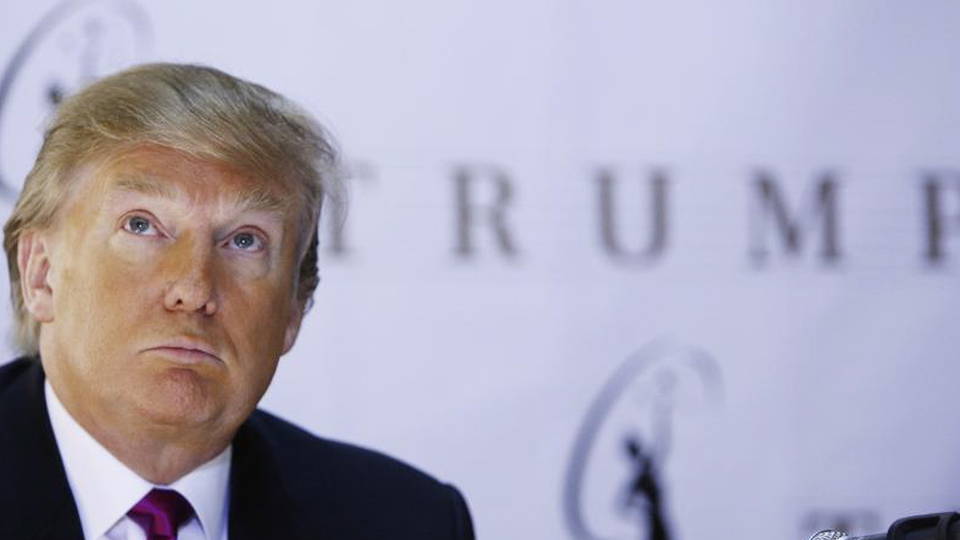 New York Attorney General Eric Schneiderman has ordered the Donald J. Trump Foundation to stop soliciting donations immediately in New York state, saying the foundation is not registered under state law. It’s the latest blow to Trump’s family foundation, which has been facing increasing scrutiny during the election. A series of Washington Post investigations have revealed the foundation has also broken U.S. laws by using hundreds of thousands of dollars from the foundation to pay off legal fees associated with Trump’s for-profit businesses. These investigations have also shown Donald Trump has not personally donated to his foundation since 2008 and that he’s also used foundation money to buy advertisements for his hotels and at least two expensive portraits—of himself.
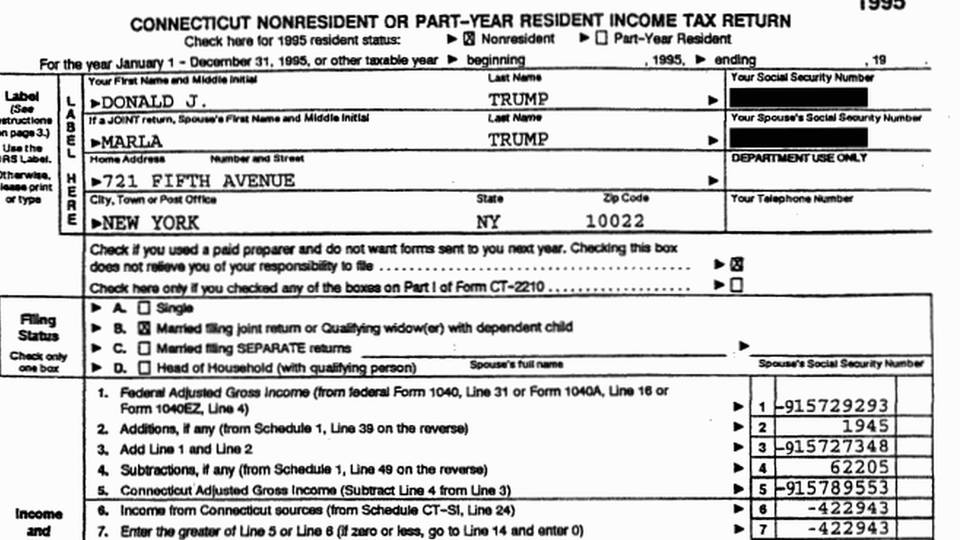 This comes as a New York Times investigation reveals the Trump Organization came incredibly close to collapse in the 1980s, leading Trump to amass $3.4 billion in debt by 1990. The following year, the Casino Control Commission determined "Mr. Trump cannot be considered financially stable," although the agency allowed Trump to continue operating his casinos. The Times investigation draws on newly revealed tax returns showing Trump claimed an income tax loss of nearly $917 million in 1995. Trump has refused to release his full tax returns. We’ll have more on Donald Trump’s financial record after headlines with Pulitzer Prize-winning journalists David Barstow and David Cay Johnston.
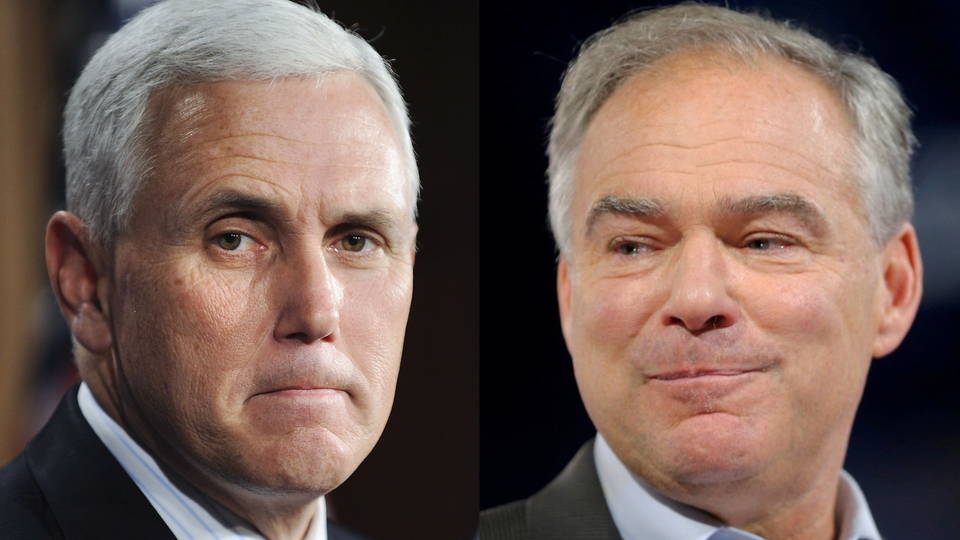 In more news from the campaign trail, vice-presidential candidates Virginia Senator Tim Kaine and Indiana Governor Mike Pence will square off tonight for the only vice-presidential debate. It will be held at Longwood University in Farmville, Virginia, and moderated by Elaine Quijano of CBS News. Democracy Now! will be broadcasting the debate live and expanding the debate. After every question answered by the major-party vice-presidential candidates Mike Pence and Tim Kaine, we will pause to get response from Green Party vice-presidential nominee Ajamu Baraka. We have also invited Libertarian nominee William Weld to join us. Tune in tonight from 8:00 to 11:30 at democracynow.org.
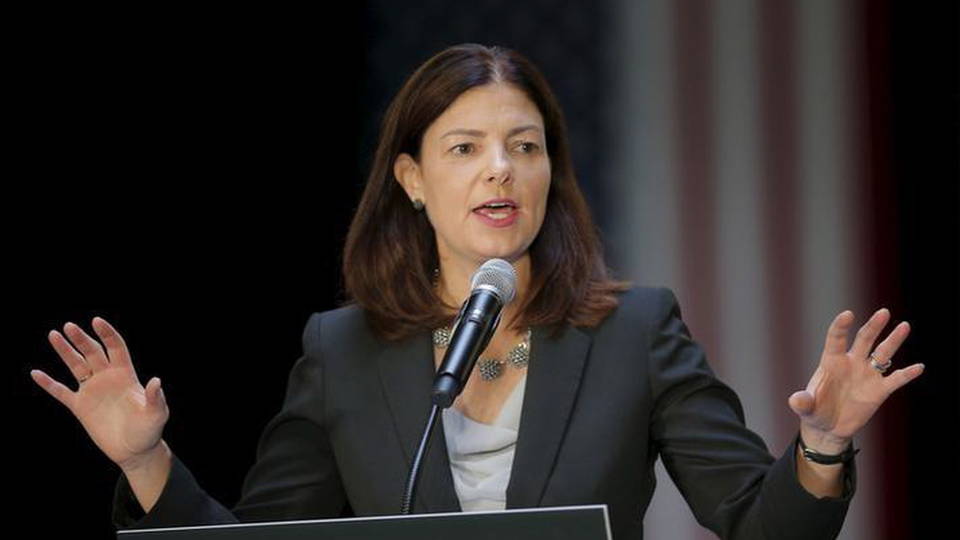 In New Hampshire, Republican Senator Kelly Ayotte, who is in a tight re-election race, is facing criticism over her support for Donald Trump, whom she called a "role model" on Monday, before quickly trying to walk back the comments. Ayotte referred to Trump as a role model during a debate with her rival, Governor Maggie Hassan. A few hours later, Ayotte issued a statement saying she "misspoke."
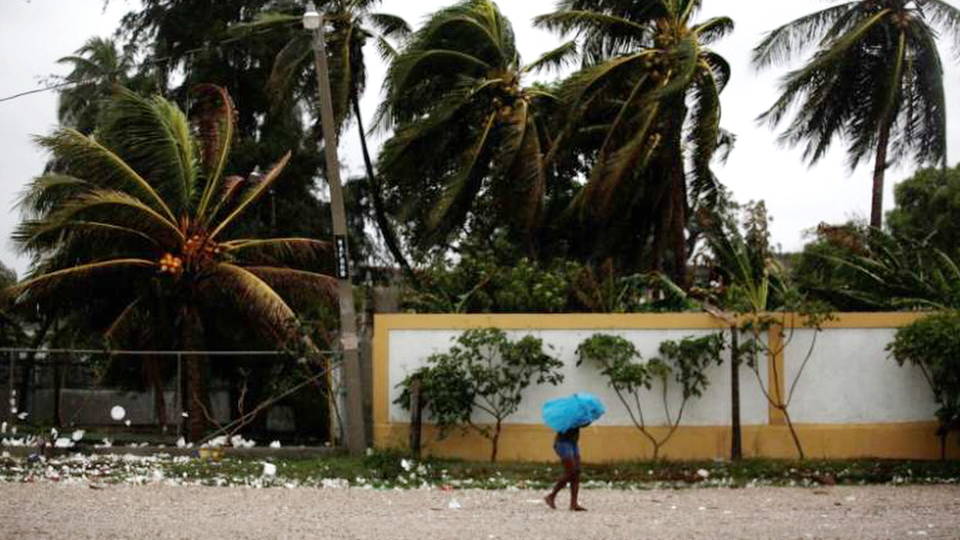 The massive Category 4 Hurricane Matthew is currently bearing down on Haiti, expected to make landfall today. Meteorologists are warning the impact could be catastrophic. The hurricane has already killed three people, including a Haitian fisherman. The storm packs 145-mile-an-hour winds. It’s expected to hit Haiti, then Cuba, and then continue barreling toward the U.S. coast, where Florida Governor Rick Scott and North Carolina Governor Pat McCrory have already declared states of emergency in anticipation. In Cuba, the U.S. military says it’s airlifting 700 employees, and some family pets, from the naval base at Guantánamo Bay, although there are still no plans to evacuate the 61 prisoners held there.
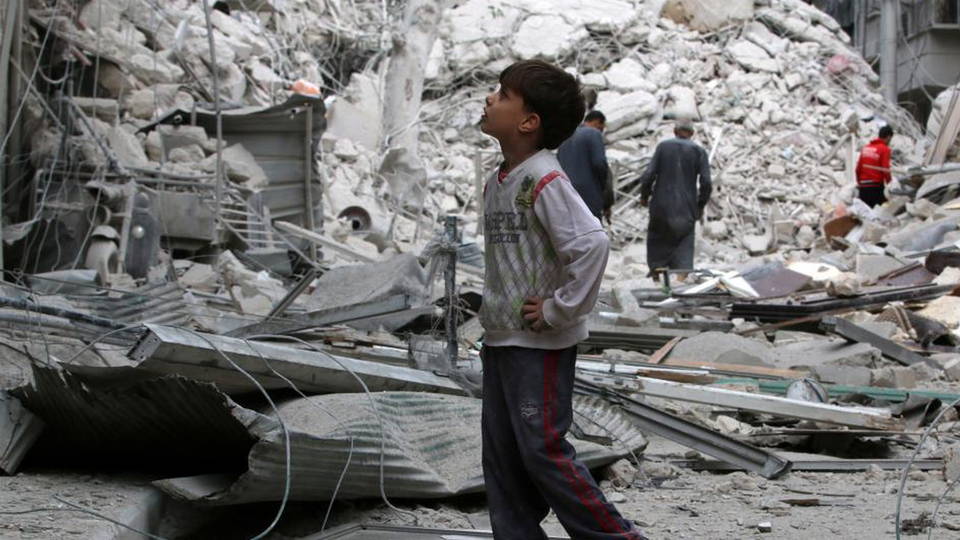 The United States has cut off ceasefire negotiation talks with Russia aimed at decreasing the violence in Syria. The U.S. says it has suspended the negotiations over Russia’s role in the ongoing bombing campaign in eastern Aleppo. In response, Russia pulled out of an arms control agreement that requires both the U.S. and Russia to dispose of plutonium, a nuclear weapons material. This is White House Press Secretary Josh Earnest.
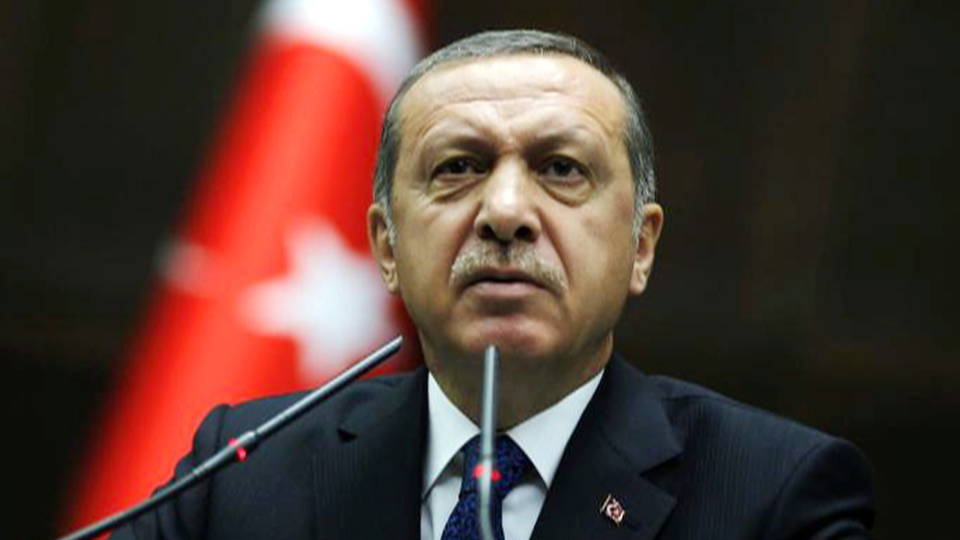 In Turkey, President Recep Tayyip Erdogan has asked the Turkish Parliament to extend a state of emergency for another three months. Erdogan first declared the state of emergency in July, after a failed military coup. In September, Turkey dismissed or suspended nearly 40,000 teachers amid an ongoing crackdown, which has also seen more than 100 media outlets closed and at least 40,000 people arrested or detained.
 Washington Post reporter Jason Rezaian has sued the Iranian government over his arrest and imprisonment in Iran in 2014. Rezaian was arrested along with his wife, also a journalist, and held for over 500 days on espionage charges until being released in January. His lawsuit accuses Iran of hostage taking, terrorism, torture and of using his capture as leverage in the ongoing nuclear negotiations. Donald Trump has claimed the U.S. paid Iran $400 million in cash for the release of Rezaian and four other American prisoners, but in fact the money was owed to Iran since the 1970s, when the U.S. refused to give them weapons Iran had already paid for, following the Iranian revolution.
 Doctors Without Borders marked the first anniversary Monday of the U.S. military’s bombing of its hospital in Kunduz, Afghanistan, on October 3, 2015. The attack killed 42 people, including patients and staff. Doctors Without Borders has described patients burning in their beds, medical staff who were decapitated and lost limbs, and staff members shot from the air while they fled the burning building. The Pentagon has called the attack a "mistake." Sixteen U.S. officers have received administrative discipline over the attack, but none have faced criminal charges. This is Doctors Without Borders Switzerland President Thomas Nierle.
 This comes as the European Union has reached an agreement with the Afghan government that allows the EU to deport an unlimited number of Afghan refugees back to Afghanistan. A leaked memo shows the EU threatened to reduce humanitarian aid to Afghanistan if the Afghan government did not accept the deportations agreement.
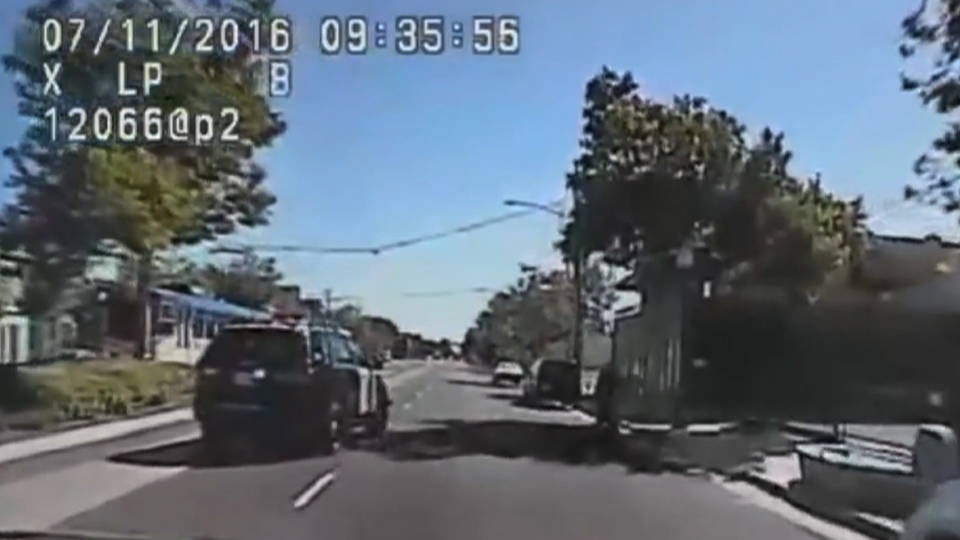 In Sacramento, California, newly released police dash camera video shows two officers intentionally trying to run over 51-year-old African American Joseph Mann, before he was fatally shot by police 14 times, in July. In the video, one officer can be heard saying "F- this guy, I’m going to hit him," as the officer drives the police cruiser toward the man. Listen closely.
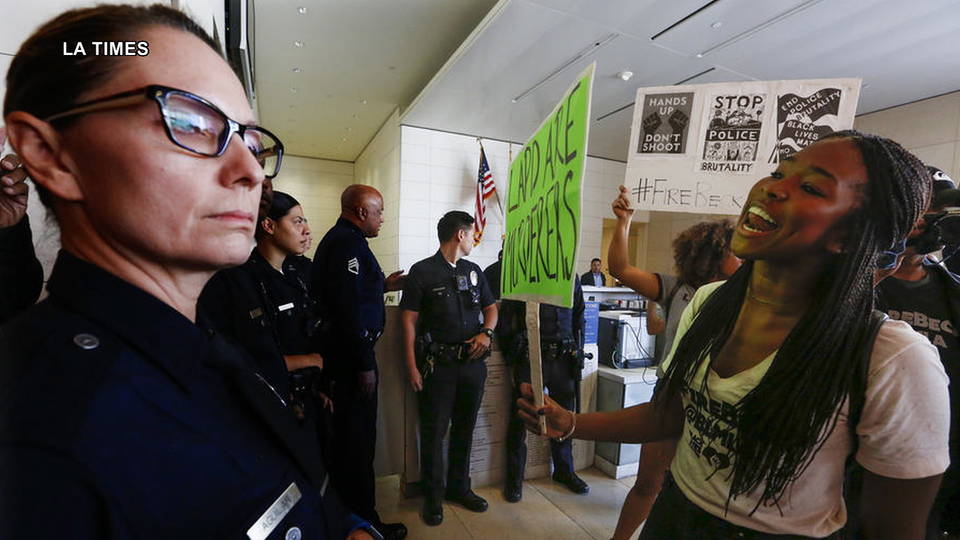 Meanwhile, protests are continuing in Los Angeles following two fatal police shootings over the weekend. On Saturday, police shot and killed 18-year-old Carnell Snell Jr., who police claim was holding a gun, although many dispute that claim. The identity of the second person killed by police, also on Saturday, has not been released. Police say he was shot after officers confused a replica of a gun for a real gun. Among those arrested at Monday’s protests in Los Angeles was Black Lives Matter co-founder Patrisse Cullors and Black Lives Matter organizer Melina Abdullah. Both have been released.
 In financial news, the Illinois State Treasury has suspended investing with Wells Fargo amid a massive scandal at the major Wall Street bank involving thousands of employees who took private customer information to create 2 million fake accounts in order to meet sales targets. The decision affects $30 billion in investments. On Monday, Illinois State Treasurer Michael Frerichs called Wells Fargo "shameful." Senator Elizabeth Warren has called for Wells Fargo CEO John Stumpf to resign and to be criminally investigated.
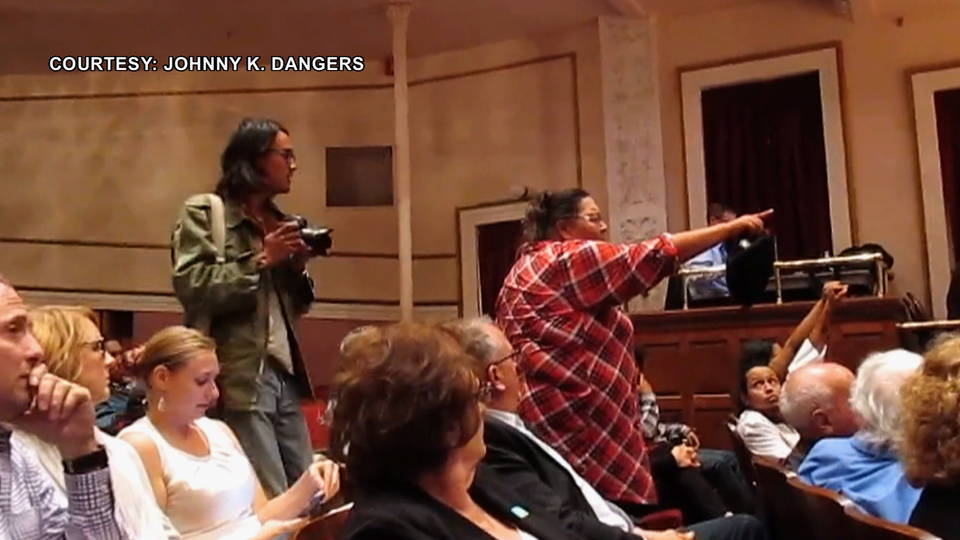 In North Dakota, land defenders disrupted the gubernatorial debate in Bismarck Monday night to demand an end to the construction of the $3.8 billion Dakota Access pipeline, which has faced massive resistance from North Dakota’s Standing Rock Sioux Tribe, as well as members of hundreds of other tribes from across the U.S., Canada and Latin America.
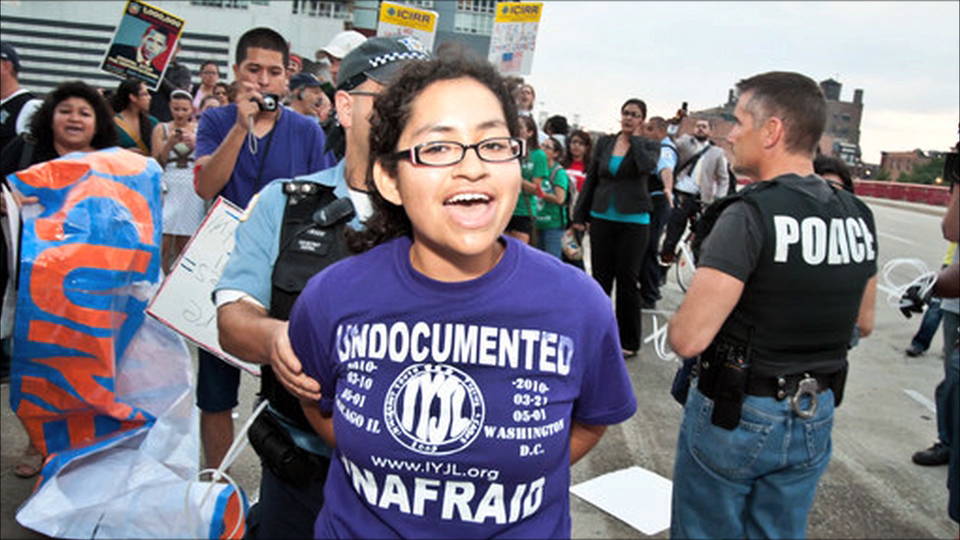 An undocumented migrant justice activist has won the right to remain in the U.S. after the Department of Homeland Security reversed its decision to punish her because of her activism. Ireri Unzueta Carrasco received DACA, Deferred Action for Childhood Arrivals, status in 2013, but had been denied a renewal of DACA earlier this year because of her participation in acts of civil disobedience aimed at pressuring the Obama administration to halt its record deportations. Unzueta Carrasco says she’ll now focus on protecting other undocumented activists who have similarly been denied DACA after participating in protests.
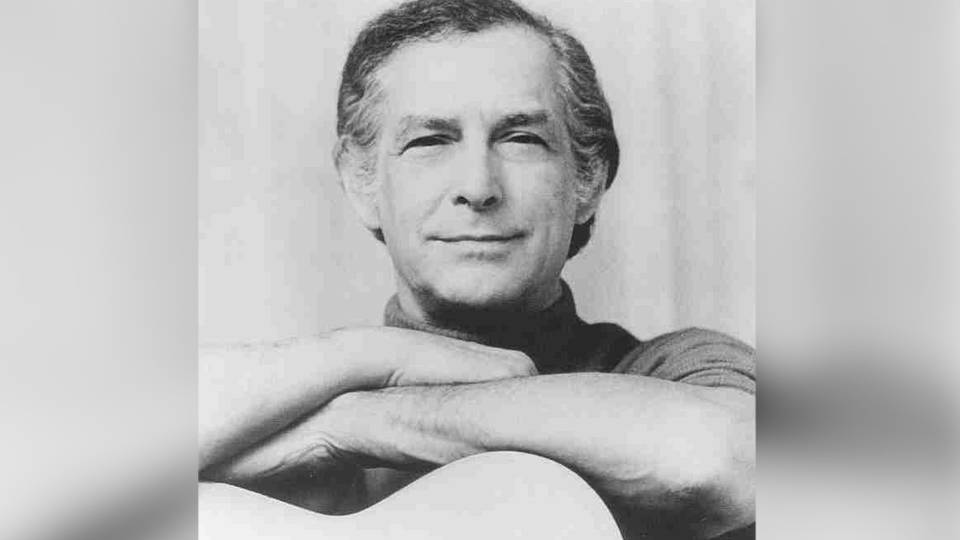 And Oscar Brand, a folk singer whose New York City radio show spanned more than seven decades, has died at the age of 96. Oscar Brand first broadcast "Folksong Festival" onWNYC in December of 1945, and over the decades he interviewed music legends including Woody Guthrie, Judy Collins, Harry Belafonte, Joan Baez, Pete Seeger and Bob Dylan. Brand’s show went on to win two Peabody Awards and is cited by the Guinness Book of World Records as the longest-running radio program by the same host. Brand’s final broadcast of "Folksong Festival" was on September 24.
-------
And Oscar Brand, a folk singer whose New York City radio show spanned more than seven decades, has died at the age of 96. Oscar Brand first broadcast "Folksong Festival" onWNYC in December of 1945, and over the decades he interviewed music legends including Woody Guthrie, Judy Collins, Harry Belafonte, Joan Baez, Pete Seeger and Bob Dylan. Brand’s show went on to win two Peabody Awards and is cited by the Guinness Book of World Records as the longest-running radio program by the same host. Brand’s final broadcast of "Folksong Festival" was on September 24.
-------
Donate today:
Follow:


SPECIAL BROADCAST
New York Attorney General Eric Schneiderman has ordered the Donald J. Trump Foundation to stop soliciting donations immediately in New York state, saying the foundation is not registered under state law. It’s the latest blow to Trump’s family foundation, which has been facing increasing scrutiny during the election. A series of Washington Post investigations have revealed the foundation has also broken U.S. laws by using hundreds of thousands of dollars from the foundation to pay off legal fees associated with Trump’s for-profit businesses. These investigations have also shown Donald Trump has not personally donated to his foundation since 2008 and that he’s also used foundation money to buy advertisements for his hotels and at least two expensive portraits—of himself.NYT: Trump Organization Nearly Collapsed in 1980s
This comes as a New York Times investigation reveals the Trump Organization came incredibly close to collapse in the 1980s, leading Trump to amass $3.4 billion in debt by 1990. The following year, the Casino Control Commission determined "Mr. Trump cannot be considered financially stable," although the agency allowed Trump to continue operating his casinos. The Times investigation draws on newly revealed tax returns showing Trump claimed an income tax loss of nearly $917 million in 1995. Trump has refused to release his full tax returns. We’ll have more on Donald Trump’s financial record after headlines with Pulitzer Prize-winning journalists David Barstow and David Cay Johnston.Vice-Presidential Nominees to Square Off Tonight in Debate
In more news from the campaign trail, vice-presidential candidates Virginia Senator Tim Kaine and Indiana Governor Mike Pence will square off tonight for the only vice-presidential debate. It will be held at Longwood University in Farmville, Virginia, and moderated by Elaine Quijano of CBS News. Democracy Now! will be broadcasting the debate live and expanding the debate. After every question answered by the major-party vice-presidential candidates Mike Pence and Tim Kaine, we will pause to get response from Green Party vice-presidential nominee Ajamu Baraka. We have also invited Libertarian nominee William Weld to join us. Tune in tonight from 8:00 to 11:30 at democracynow.org.NH Sen. Kelly Ayotte "Misspoke" in Referring to Trump as Role Model
In New Hampshire, Republican Senator Kelly Ayotte, who is in a tight re-election race, is facing criticism over her support for Donald Trump, whom she called a "role model" on Monday, before quickly trying to walk back the comments. Ayotte referred to Trump as a role model during a debate with her rival, Governor Maggie Hassan. A few hours later, Ayotte issued a statement saying she "misspoke."Hurricane Matthew Could Wreak "Catastrophic" Damage in Haiti
The massive Category 4 Hurricane Matthew is currently bearing down on Haiti, expected to make landfall today. Meteorologists are warning the impact could be catastrophic. The hurricane has already killed three people, including a Haitian fisherman. The storm packs 145-mile-an-hour winds. It’s expected to hit Haiti, then Cuba, and then continue barreling toward the U.S. coast, where Florida Governor Rick Scott and North Carolina Governor Pat McCrory have already declared states of emergency in anticipation. In Cuba, the U.S. military says it’s airlifting 700 employees, and some family pets, from the naval base at Guantánamo Bay, although there are still no plans to evacuate the 61 prisoners held there.United States Cuts Off Syria Ceasefire Talks with Russia
The United States has cut off ceasefire negotiation talks with Russia aimed at decreasing the violence in Syria. The U.S. says it has suspended the negotiations over Russia’s role in the ongoing bombing campaign in eastern Aleppo. In response, Russia pulled out of an arms control agreement that requires both the U.S. and Russia to dispose of plutonium, a nuclear weapons material. This is White House Press Secretary Josh Earnest.Press Secretary Josh Earnest: "Well, I think what is clear is the Obama administration has concluded that Russia has no intention of living up to the commitments that they’ve made in the context of negotiations around a cessation of hostilities. And once you’ve reached that conclusion, I’m not really sure what else there is to talk about. And again, I’m not papering over the tragic consequences that this is going to have for Syria."
The United States’ suspension of talks comes as the opposition Aleppo Media Center says eastern Aleppo’s M10 hospital was hit by "bunker-buster" bombs Monday, killing seven and marking the third attack on this major hospital in less than a week.
Turkish President Erdogan Moves to Extend State of Emergency
In Turkey, President Recep Tayyip Erdogan has asked the Turkish Parliament to extend a state of emergency for another three months. Erdogan first declared the state of emergency in July, after a failed military coup. In September, Turkey dismissed or suspended nearly 40,000 teachers amid an ongoing crackdown, which has also seen more than 100 media outlets closed and at least 40,000 people arrested or detained.WashPo Reporter Jason Rezaian Sues Iranian Gov't over Imprisonment
Washington Post reporter Jason Rezaian has sued the Iranian government over his arrest and imprisonment in Iran in 2014. Rezaian was arrested along with his wife, also a journalist, and held for over 500 days on espionage charges until being released in January. His lawsuit accuses Iran of hostage taking, terrorism, torture and of using his capture as leverage in the ongoing nuclear negotiations. Donald Trump has claimed the U.S. paid Iran $400 million in cash for the release of Rezaian and four other American prisoners, but in fact the money was owed to Iran since the 1970s, when the U.S. refused to give them weapons Iran had already paid for, following the Iranian revolution.MSF Marks First Anniversary of Deadly Kunduz Hospital Bombing
Doctors Without Borders marked the first anniversary Monday of the U.S. military’s bombing of its hospital in Kunduz, Afghanistan, on October 3, 2015. The attack killed 42 people, including patients and staff. Doctors Without Borders has described patients burning in their beds, medical staff who were decapitated and lost limbs, and staff members shot from the air while they fled the burning building. The Pentagon has called the attack a "mistake." Sixteen U.S. officers have received administrative discipline over the attack, but none have faced criminal charges. This is Doctors Without Borders Switzerland President Thomas Nierle.Dr. Thomas Nierle: "Four out of five members of the Security Council, permanent members of the Security Council, are allied to forces who commit these crimes. And on the other hand, on the U.N. Security Council, there’s—one resolution after the other is passed that healthcare structures should not be attacked, that they are protected, that it should be respected, but in the end, nothing changes."
The bombing of the hospital one year ago came after Taliban forces took control of the city of Kunduz. U.S.-backed Afghan forces later retook control of the city. But on Monday, the Taliban again launched an offensive in Kunduz. Fighting for control of the city continues today. The U.S. war in Afghanistan is the longest war in U.S. history.
EU Reaches Agreement with Afghan Gov't to Deport Afghan Refugees
This comes as the European Union has reached an agreement with the Afghan government that allows the EU to deport an unlimited number of Afghan refugees back to Afghanistan. A leaked memo shows the EU threatened to reduce humanitarian aid to Afghanistan if the Afghan government did not accept the deportations agreement.California: Dash Cam Video Shows Cops Plotting to Run Over Man
In Sacramento, California, newly released police dash camera video shows two officers intentionally trying to run over 51-year-old African American Joseph Mann, before he was fatally shot by police 14 times, in July. In the video, one officer can be heard saying "F- this guy, I’m going to hit him," as the officer drives the police cruiser toward the man. Listen closely.Police officer 1: "F*** this guy. I’m going to hit him."
Police officer 2: "OK. Go for it. Go for it. Watch it! Watch! Watch!"
Police officer 1: "We’ll get him. We’ll get him."
Mann died at the scene after being shot. The two officers, Randy Lozoya and John Tennis, have been placed on desk duty. Police say Joseph Mann was holding a knife in the middle of the street. His family says he was having a mental health emergency.
Los Angeles: Protests After Two Fatal Police Shootings
Meanwhile, protests are continuing in Los Angeles following two fatal police shootings over the weekend. On Saturday, police shot and killed 18-year-old Carnell Snell Jr., who police claim was holding a gun, although many dispute that claim. The identity of the second person killed by police, also on Saturday, has not been released. Police say he was shot after officers confused a replica of a gun for a real gun. Among those arrested at Monday’s protests in Los Angeles was Black Lives Matter co-founder Patrisse Cullors and Black Lives Matter organizer Melina Abdullah. Both have been released.Illinois Suspends $30 Billion in Investments with Wells Fargo
In financial news, the Illinois State Treasury has suspended investing with Wells Fargo amid a massive scandal at the major Wall Street bank involving thousands of employees who took private customer information to create 2 million fake accounts in order to meet sales targets. The decision affects $30 billion in investments. On Monday, Illinois State Treasurer Michael Frerichs called Wells Fargo "shameful." Senator Elizabeth Warren has called for Wells Fargo CEO John Stumpf to resign and to be criminally investigated.#NoDAPL: Land Defenders Disrupt Gubernatorial Debate, Shut Down 5 Construction Sites
In North Dakota, land defenders disrupted the gubernatorial debate in Bismarck Monday night to demand an end to the construction of the $3.8 billion Dakota Access pipeline, which has faced massive resistance from North Dakota’s Standing Rock Sioux Tribe, as well as members of hundreds of other tribes from across the U.S., Canada and Latin America.Land Defender 1: "We will never allow this pipeline through. Not now and not ever. This is something that each one of you need to understand. This is 1851 treaty land. It is not legal. It is no different than if we say no to nukes and you guys broke that treaty."
Also on Monday, land defenders say they stopped work at as many as five separate Dakota Access construction sites across North Dakota.
Land defender 2: "We have a caravan of 100 vehicles strong. We have stooped construction today at the Dakota Access pipeline just with our presence of our warriors and land defenders and water protectors. We have stopped them from work today."
Meanwhile, in southeast Iowa, 30 people were arrested Saturday also blocking construction of the Dakota Access pipeline there. The pipeline’s route runs from North Dakota’s oil fields through South Dakota, Iowa and into Illinois. In Iowa, land defenders have now established a permanent protest encampment where the pipeline is slated to cross the Mississippi River.
Ireri Unzueta Carrasco Wins DACA Renewal, After DHS Denied Her over Activism
An undocumented migrant justice activist has won the right to remain in the U.S. after the Department of Homeland Security reversed its decision to punish her because of her activism. Ireri Unzueta Carrasco received DACA, Deferred Action for Childhood Arrivals, status in 2013, but had been denied a renewal of DACA earlier this year because of her participation in acts of civil disobedience aimed at pressuring the Obama administration to halt its record deportations. Unzueta Carrasco says she’ll now focus on protecting other undocumented activists who have similarly been denied DACA after participating in protests.Folk Singer and Radio Host Oscar Brand Dies at 96
And Oscar Brand, a folk singer whose New York City radio show spanned more than seven decades, has died at the age of 96. Oscar Brand first broadcast "Folksong Festival" onWNYC in December of 1945, and over the decades he interviewed music legends including Woody Guthrie, Judy Collins, Harry Belafonte, Joan Baez, Pete Seeger and Bob Dylan. Brand’s show went on to win two Peabody Awards and is cited by the Guinness Book of World Records as the longest-running radio program by the same host. Brand’s final broadcast of "Folksong Festival" was on September 24.Donate today:
Follow:
SPECIAL BROADCAST


Senior TV Producer
207 West 25th Street, 11th Floor
New York, New York 10001, United States
-------
-------

No comments:
Post a Comment