democracynow.org
Stories:
 "The Police Killings No One Is Talking About": Native Americans Most Likely to be Killed by Cops
A new investigation by In These Times explodes myths about who is most likely to die at the hands of police by revealing that, compared to their percentage of the U.S. population, Native Americans were more likely to be killed by police than any other group, including African Americans. It also found that cases of African-American police deaths tend to dominate headlines, while killings of Native people go almost entirely unreported by mainstream U.S. media. We speak with reporter Stephanie Woodard, who wrote the article, "The Police Killings No One Is Talking About," and with James Rideout, the uncle of Jacqueline Salyers, a 32-year-old pregnant mother and member of the Puyallup Tribe who was killed by police earlier this year in Tacoma, Washington.
TRANSCRIPT
This is a rush transcript. Copy may not be in its final form.
AMY GOODMAN: This is Democracy Now!, democracynow.org, The War and Peace Report. I’m Amy Goodman. We end today’s show looking at a newinvestigation by In These Times magazine that explodes myths about who’s most likely to die at the hands of police. The article is titled "The Police Killings No One Is Talking About." It explains, quote, "When compared to their percentage of the U.S. population, [Native Americans] were more likely to be killed by police than any other group, including African Americans. ... [A]nalysis of CDC data from 1999 to 2014 shows ... Native Americans are 3.1 times more likely to be killed by police than white Americans."
The investigation also found that cases of African-American deaths at the hands of police tend to dominate headlines, while killings of Native people go almost entirely unreported by mainstream U.S. media. One case that received almost no national coverage was the police killing of Jacqueline Salyers, a 32-year-old pregnant mother and member of the Puyallup Tribe. She was killed by police in Tacoma, Washington, January 28th, 2016. Salyers was at the wheel of a parked car when police spotted her partner, Kenneth Wright, who had multiple outstanding warrants, in the passenger seat. Police shot and killed Salyers, while Wright escaped. The shooting was ruled justified based on an officer’s testimony that Salyers had attempted to run him down with the car. But family members dispute that account. Their Justice for Jackie group is also supporting an initiative to change Washington law to improve police accountability.
For more, we’re joined by reporter Stephanie Woodard, who wrote the In These Timesstory, "The Police Killings No One Is Talking About." And with us, Jacqueline Salyers’s uncle, James Rideout.
We welcome you both to Democracy Now! So, tell us the story of Jacqueline. We’ll begin there, Stephanie.
STEPHANIE WOODARD: Yeah, so, Jackie was in a parked car. There were warrants outstanding for her partner. There’s very little information about what happened that night, other than what the police are telling us. Tacoma police did not at that time use dash or body cams. There was a police surveillance camera on the street, which apparently malfunctioned from just before to just after the shooting. And there were some security cameras on a house nearby, both front and back of the house, that might have recorded useful information; however, when the police took them as part of their investigation, they apparently broke them and the hard drives to which they were connected. So we have, very, very little information about what went on that night, other than what the officers have told us. The family has gotten underway its own investigation and is talking to additional people to see if there’s any more information available.
What seems to have happened is that the car seems to have started up at a very, very slow speed, because it coasted to a stop just a few feet later, after she was shot. She was then dragged out of the car, onto the sidewalk, dragged into a police car, driven around the corner, and then dragged back out onto the pavement, where she received chest compressions. She was—she may well have been dead at this point. So, there was a lot of concern among family members that she had been—her body had been disrespected, sort of manhandled, even while she had been—while she had been shot.
It was—it later turned out—her body was returned to the family and buried, and then it turned out that she had actually been pregnant at the time. And that was additionally upsetting to the family, because they would have had a different sort of traditional ritual for the child, in addition to the mother, had they known that the child existed. It was—when I got out to Tacoma to talk to family members and attend a family meeting and interact with them in various ways, it was clear that, like any family that’s gone through this, it was incredibly traumatic.
AMY GOODMAN: James Rideout, you have—you are a part of the Justice for Jackie group. You’ve even traveled to Washington. Can you talk about who Jackie was and what you believe happened and what you’re demanding now?
JAMES RIDEOUT: Jacqueline Salyers is a member of the Puyallup Tribe—I’m just correcting your pronunciation.
AMY GOODMAN: Sorry. You said Puyallup?
JAMES RIDEOUT: She’s a member of the tribe for—Puyallup Tribe, yes.
AMY GOODMAN: Puyallup.
JAMES RIDEOUT: And she’s been a member of the tribe for 32 years. Jacqueline Salyers was a very, very loving, caring, considerate person that didn’t deserve to die. And we have to find alternatives to speak for her, because in that spirit world, you know, there’s nobody to speak for her but her family. And so, we seek through circumstances of this case of how do we get something done, especially when there’s no media coverage.
The first thing KOMO 4 News said to me is that this killing is going to be justified. And I didn’t quite understand all of these things that go along with these types of circumstances. But as several months went by, since January 28th, we’ve discovered so many multiples of things that are unjust in society and how things work and how they operate. And it’s a really disgusting circumstance when your loved one is killed by the laws of the law enforcement and how protected they are by the unions. And it’s very difficult. But today, we have a greater opportunity to fight the injustices, because we have a federal government and our tribe, that is taking a position in this whole policing, in how they police cities and counties and our tribes and the agencies. If it was for another family member or someone that didn’t have those types of resources, it is extremely difficult.
And we found that we had got all victims that we can accumulate, which was pretty easy to do because they’re all fallen victim of police brutality. That’s what started Community for Good Policing here at our tribe. And so, our tribe today provides hope to this initiative, I-873. I-873 is an initiative that we’re looking to change the laws. Here in the state of Washington, they have a law that’s called malice and good faith. And under this law—and this is the only state in the United States that has this law, that no officer can ever be prosecuted for any of their actions. So, when KOMO 4 News had explained to me that, you know, this is going to be justified, that’s what it meant. And, you know, upon learning these things, our tribe took a position they’re supporting the initiative, and we’re looking forward to get 250,000 signatures here in Washington state. Tomorrow, we go to the state Capitol at 1:00 for an initiative rally, for, you know, a big push.
But it’s extremely difficult when we speak to city councilmembers, the mayor, even Governor Inslee here in the state about the circumstances that are happening. But because it’s an election year, it’s tough for them to, you know, gather that type of support when they’re trying to position themselves in their own communities. And it’s extremely even more tough when the unions have a precedent-setting circumstance over—over the City Council, the mayor and also media itself. And it’s extremely hard to get any type of coverage whatsoever. It’s like they provoke you to be violent. And we don’t want to be violent. We’ve been a peaceful group, and we’re going to continue to be a peaceful group throughout this entire investigation.
AMY GOODMAN: In August, Tacoma’s Deadly Force Review Board determined the police shooting of Jackie Salyers on January 28th was justified. This is Jackie’s cousin Chester Earl speaking with Tacoma’s KOMO News in response to the findings.
CHESTER EARL: There’s no way we’ll ever accept that investigation. We just won’t. There’s no way we can, when you have a Tacoma officer being investigated by the Tacoma police, being decided by the Pierce County prosecutor—they all work together—and then TPD and the union, which they work—the officers work for, investigating themselves.
AMY GOODMAN: So, I want to ask Stephanie Woodard, if you can put this in a broader context, the police killings of Native Americans, what you have found?
STEPHANIE WOODARD: Yes. Over the course of this investigation, we looked at two really important studies that had come out. So, in addition to finding as many as we could of the individuals who had been killed under questionable circumstances and covering their stories in the article, we looked at information that Mike Males at the Center for Juvenile and Criminal Justice brought out, where he showed that Native Americans were the most likely to be killed, that they were two of the top three groups, and three of the top five groups, when you divide the population by age. And that’s in proportion to their percentage of the population.
Then we looked at another study that was very interesting that came out from Claremont Graduate University, which quantified—it corroborated Mike Males’s findings, but then it actually quantified the coverage in the top 10 U.S. papers by circulation. And it found that police brutality, as an entire subject matter, was covered during this 15-month period, the recent 15-month period they looked at—in hundreds of articles, hundreds of thousands of words were covered, but, of those, just a handful of articles and a couple thousand words were used in reference to Native—Native victims. And actually, of all of the victims that were shot, only two actually were ever mentioned in these top newspapers. So, there really is a kind of media blackout, a kind of—it’s not a blackout, it’s a media blind spot. And I think that probably what you saw, when you were covering the Dakota Access pipeline, was that all of a sudden there, people were very surprised that all of these people came out from behind the blind spot and had a very important—
AMY GOODMAN: How important is it for tribal government to get involved in these issues?
STEPHANIE WOODARD: It’s extremely important. It’s—the involvement of tribe is a very important part of this. And one of the—the activist, actually, who wrote the legislative initiative that Jimm mentioned, which is intended to remove this kind of easy out for officers in—
AMY GOODMAN: That’s initiative I-873.
STEPHANIE WOODARD: Yes, exactly. Lisa Hayes, who wrote it, said that she thought that the involvement of the Puyallup Tribe is extremely important, because tribes are actually sovereign governments. They have a government-to-government relationship with the United States. They have relationships, direct relationships, with other governments, like states and counties and so on. So, their involvement gives a great deal of weight to this. And they can talk to other tribes and say, you know, "Do you want to get behind this? Do you want to talk to your members about this?" So, it’s a big deal.
AMY GOODMAN: James Rideout, you also went to the Justice Department and to Washington calling for an independent investigation. In this last minute we have left, what kind of response have you gotten?
JAMES RIDEOUT: The response that we got from the Department of Justice is that they have too much oversight, and they couldn’t cover their fiduciary responsibility to the tribes. And one of our councilmembers had stated to them that there’s 257 police stations that, you know, they have a responsibility to. And there still was no investigation. It’s very disrupting that, you know, they don’t do their part and do their job that they’re obligated to do, you know? But it doesn’t surprise me. As we learned in this case, it’s like, you know, we’d want multiple things being done, but it just doesn’t happen for indigenous people, you know? It’s like asking them to free Leonard Peltier or, you know, asking them to stop the pipeline immediately. These things just don’t happen. They make it so difficult for indigenous people, you know, to be functionable and equal justice. And, you know, the injustices that—
AMY GOODMAN: James Rideout, we’re going to have to leave it there, as the show ends, but we’re going to do Part 2, and we’re going to post it online at democracynow.org. James Rideout, uncle of Jacqueline Salyers. Stephanie Woodard, we’ll link to your piece inIn These Times, a major investigation, "The Police Killings No One Is Talking About."
That does it for our show. We’ll be broadcasting from 8:00 Eastern [Daylight] Time to 11:30 tonight, covering the last presidential debate, and a two-hour special tomorrow, "Expanding the Debate." ... Read More → "Ramshackle" Battle to Retake Mosul from ISIS Led by U.S. Despite Obama Vow Against Boots on Ground
The fight to retake the last stronghold of the self-proclaimed Islamic State in Iraq has entered its third day with a U.S.-led coalition force of about 30,000 that includes Iraqi security personnel, Kurdish fighters, Sunni Muslim Arab tribesmen and Shia Muslim paramilitaries. The Pentagon says U.S. special forces are on the ground in Iraq and taking part in the battle, despite President Obama’s pledge against having boots on the ground. They face an estimated 5,000 Islamic State fighters in and around Mosul. Meanwhile, humanitarian workers say some 200,000 people may need shelter during the offensive. We speak with Patrick Cockburn, Middle East correspondent for The Independent, where he writes that Mosul is bracing for its next bloody chapter after being ravaged by 13 years of war.
TRANSCRIPT
This is a rush transcript. Copy may not be in its final form.
AMY GOODMAN: We begin today’s show in Iraq, where fighting to retake the last stronghold of the Islamic State in the country has entered its third day. The U.S.-led coalition force of about 30,000 includes Iraqi security personnel, Kurdish fighters, Sunni Muslim Arab tribesmen and Shia Muslim paramilitaries. The Pentagon has confirmed U.S. special forces are on the ground in Iraq and taking part in the battle, despite President Obama’s pledge against having boots on the ground. They face an estimated 5,000 ISILfighters in and around Mosul.
Commanders say the operation is going as planned, though the ISIL fighters slowed advancing troops with suicide car bomb attacks. A Peshmerga military commander toldCNN it could take two months for the troops to recapture Mosul, which ISIL has controlled for two years. President Obama says Iraq’s fight to take Mosul will be successful, but difficult.
PRESIDENT BARACK OBAMA: We are seeing the Iraqi forces, with the support of the coalition that includes the United States and Italy and other nations, moving forward and encircling Mosul. The intention is to drive ISIL out of what was its first major urban stronghold and what continues to be one of the key organizational and logistical and leadership hubs for ISIL. I am confident that we can succeed, although it’s going to be a tough fight and a difficult fight.
AMY GOODMAN: President Obama said, quote, "plans and infrastructure" are in place for dealing with a potential humanitarian crisis in Mosul, which has a population of about 2 million people. The United Nations humanitarian coordinator for Iraq said as 200,000 people might need shelter during the offensive. Humanitarian workers say the first large group of nearly a thousand civilians has now fled the city and crossed the border into Syria. Some expressed concern ISIL fighters would use the civilians as human shields as Iraqi forces get closer to Mosul. This is Courtney Lare with the Norwegian Refugee Council in the Iraqi city of Erbil.
COURTNEY LARE: NRC is currently preparing for massive waves of displacement coming out of Mosul. We are expecting in the first several weeks up to 200,000 individuals and, total, around 700,000 people fleeing Mosul in the coming months. The humanitarian community is desperately trying to prepare, but this many people at once is extremely challenging.
AMY GOODMAN: Well, for more, we go to London to speak with Patrick Cockburn, Middle East correspondent for The Independent. His recent article is headlined "Mosul braces itself for next [bloody] chapter having been ravaged by 13 years of war." His book, just published, is titled Age of Jihad: Islamic State and the Great War for the Middle East.
Patrick, welcome back to Democracy Now! Talk about what’s happening in Mosul today.
PATRICK COCKBURN: Well, this is a very decisive battle, because this was the great victory of Islamic State, when they took it by surprise in June 2014. But it’s a little different, I think, from what one’s been seeing on television. The forces attacking it are very fragmented. You mentioned the Iraqi army, the Shia paramilitaries, the Kurds. They all have different agendas. They have a extreme rivalry. And this is one of the things that’s been keeping the Islamic State in business in the past and is going to affect the course of the battle.
I think the other thing to bear in mind with this battle is that it really wouldn’t be happening without U.S. support. The key thing here is U.S.-led airstrikes by the coalition. We’ve had, you know, people describe victories by the Iraqi government forces taking Ramadi and Fallujah, Tikrit and other places. But really what happens is that the forces advance and then call in airstrikes. In Ramadi, 70, 80 percent of the city is demolished. Outside Fallujah, there’s another town that only has four buildings left. So it’s very much a U.S.-led operation.
And it hasn’t really got into the city yet. We’ll really see what’s going to happen when street fighting starts. On each side of Mosul, you have a sort of level plane to the east where the Kurds are advancing. There are villages there. They’re mostly Christian, Yazidi, Shabak, which is another minority. They’re empty. People have fled two years ago. The Kurds say they won’t actually enter the city. Then the Iraqi army is not very large. I mean, it’s much less than the 30,000 troops. When it gets engaged in street fighting, then we will see what happens. Will it call in the Shia paramilitaries? Will it escalate the bombing? Will there be mass destruction in Mosul, which is a really big city, used to have 2 million people in it, like we’ve seen in Ramadi and other places?
AMY GOODMAN: Patrick, you begin your piece by saying the Iraqi government and its allies may eventually capture Mosul from ISIS, but this could be just a new chapter in the war. Explain.
PATRICK COCKBURN: Well, you know, there were actually—Mosul has been captured or recaptured five times since 2003. I was with the Kurdish forces then, who captured it, just as the Iraqi army of Saddam Hussein was defending it. And almost immediately, there was a battle with the Arab residents. I mean, Mosul is about three-quarters Sunni Arab. The Kurds moved in. There was mass looting everywhere. My car had Kurdish number plates, and a crowd came out of a mosque and identified Kurds as enemies, as looters, and were threatening to lynch my driver. Fortunately, somebody dissuaded them from doing this. I went to the local hospital, and there was shooting all around it. The local Arabs were—Sunni Arabs were being called by the mosques to defend their streets. They were putting up barricades. So, this is a sort of deeply divided place.
Then, David—the U.S. 101st Division came in under General Petraeus. And so, it kept things calm for a little bit, mainly by reversing the de-Baathification decree. But by the end of this year, you may remember, there was a great big battle for Fallujah outside Baghdad, led by the U.S. Marines. People didn’t notice, while this was happening, the Iraqi armed opposition came in and recaptured Mosul, a much bigger city. They moved out after a week. Then, of course, we had 2011. The ISIS captured it. And now it’s being fought for again.
So, you know, this is sort of illustrative of the enormous divisions there. Mosul stands rally at a sort of juncture of sectarian and ethnic differences. You know, and I’m oversimplifying, because Turkey wants to be a player there. It has 3,000 troops nearby. So, there are many ways the situation could go, but, generally, it will be going towards more war, not peace, after Mosul has fallen, if it falls.
AMY GOODMAN: Can you talk about the relationship between the Kurds and Arabs in Mosul, as well as the U.S. troops?
PATRICK COCKBURN: Well, the actual inhabitants, most of the Kurds have fled. There are sort of Kurdish districts there in Mosul, or there used to be, but the Kurds mostly fled or were driven out. The same is true of the Christians. Then you have the Kurds on the ground, the Peshmerga forces, advancing, but very much under U.S. air cover. In 2014, everybody kind of knows that the Iraqi army fled when it was attacked by ISIS. But actually, the Kurdish Peshmerga, although they had a better reputation, fled even faster, about a month later, when they were attacked.
So, you know, each of these sides, they have some crack troops, but, otherwise, it’s very sort of dubious. I was there earlier in the year just in this area where they’re attacking, and the initial offensive was postponed because a lot of the Kurdish troops hadn’t been paid for months. So, you know, it’s much more ramshackle than it looks. When you see it on television, you see orderly sort of ranks of troops moving forward and officers looking as though they’re very much in control.
We’ll see what really is going to happen when they get close to the city. You know, there must be some chance that ISIS will withdraw from it, but I doubt it, because this was their big victory. If they’re going to fight anywhere, they’re probably better off fighting in Mosul, because it’s less likely that the U.S.-led air coalition will destroy the city like they did Ramadi. So the likelihood is that it will be a long battle.
AMY GOODMAN: I want to go to a series of clips. On Monday, [White House Press Secretary] Josh Earnest said it was uncertain how long the Mosul operation would last.
PRESS SECRETARY JOSH EARNEST: I’m not aware that any sort of specific time frame has been laid out for when that operation would be completed. Obviously, this represents the next important step in our campaigns—or, our campaign against ISIL in Iraq. The United States has mobilized a 67-member coalition to support the Iraqi government and Iraqi security forces as they seek to rid ISIL from their country.
AMY GOODMAN: And this is Russian Foreign Minister Sergey Lavrov speaking Tuesday about Mosul.
SERGEY LAVROV: [translated] Of course we are following this Mosul operation, because we all are interested in defeating the so-called Islamic State. The city is not completely encircled, as far as I know. I don’t know why, but I hope it’s because they simply couldn’t do it, rather than because they didn’t want to do it. At least this corridor, which still exists, poses a risk that Islamic State members will leave Iraq, Mosul, and head to Syria.
AMY GOODMAN: Iraqi Foreign Minister Ibrahim al-Jaafari said Tuesday he is relying on support from the international community in the fight against ISIS.
IBRAHIM AL-JAAFARI: [translated] Daesh will not stop at Iraq. It will extend its hands and arms into different parts of the world. So we must look at it from this perspective. Iraq is not only fighting to defend itself, but also to defend all countries of the world, especially as these foreign fighters that are fighting for Daesh, they come from more than 100 countries. So, very humbly, we say that we are defending ourselves and all countries of the civilized world, and we are defending democracy.
AMY GOODMAN: So, Patrick Cockburn, as you hear the Iraqi foreign minister and Sergey Lavrov of Russia and the U.S., talk about the international significance of this and also what this means for Syria.
PATRICK COCKBURN: Well, you know, what happens there, like everything that happens in Iraq, affects countries outside. But it’s—you know, it’s one of the tragedies of Iraq, and also Syria, that you have factions and different parties within the country, but they’re all plugged into outside allies, all of whom have their own rivalries and all of whom have their own agendas, so—and these don’t necessarily lead towards peace. I mean, Turkey is saying that it wants to preserve Sunni dominance in Mosul. Obviously, there, the Kurds, the Shia, the Iraqi government have their own agendas.
How does this impact on Syria? Well, to some extent, a defeat for ISIS in Iraq will be defeat for ISIS in Syria, because one of the reasons we have ISIS at all, why they took the city in 2014, was they were able to expand into Syria during the war there. They were able to take advantage of the Syrian civil war and their own experience and money and weapons and offices to move into the war zone and take over most of eastern Syria. So, that will be affected by what’s happening in Mosul.
AMY GOODMAN: And what about the humanitarian situation, a city of 2 million, what this means?
PATRICK COCKBURN: Yeah, nobody quite knows how many are left there, you know, but it’s probably over a million. The World Food Program have been saying they were trying to preposition food for a million people. The thing is, you know, all these sieges, both in Iraq and Syria, have a certain amount in common, that you have, whether it’s in the various districts in Damascus, whether it’s East Aleppo, whether it’s Ramadi or Fallujah or Mosul, that the government forces want to separate the fighters from the civilian population. They do that by bombarding these places. Those who are defending the places—in this case, ISIS—obviously don’t want to lose the civilian population, so they prevent them leaving. Then they’re described as human shields. It kind of depends who’s doing the describing. Of course, the—in East Aleppo, they aren’t described as human shields. But basically, whoever is on the defending side has the same interest to keep the civilian population there. Now, will they be able—
AMY GOODMAN: I mean, don’t they have to be very desperate, Patrick, to fleeing into Syria?
PATRICK COCKBURN: Well, that has been the way out. It may seem that way. But the people I’ve spoken to who have got out, it seemed to be easier to—before this happened, to sort of bribe your way out or pay Islamic State. It used to cost about $600 per person to get out. You know, if you’re a family of five, it’s quite a lot of money for them. And then you’d cross into the Kurdish-controlled area of northeast Syria. You’re not crossing into Islamic State-controlled territory. You’d move into Kurdish-controlled territory and then move to camps there and then move—maybe move onward from there. That seemed to be the easiest route, while if the—geographically, the most direct route, straight into Iraqi Kurdistan, seemed to be more dangerous. I talked to people, you know, who had come from Mosul. They had paid money to guides and so forth, but they’re walking through fields, that they thought there were mines there. They were frightened that the Peshmerga might mistake them for suicide bombers and would shoot them. So, it seemed to be the safer route to go west rather than east, though, of course, you’re quite right, geographically, it’s much longer.
AMY GOODMAN: And we’re talking to you, of course, in the midst of the U.S. election, just a few weeks away. Talk about this in terms of the positions of Hillary Clinton and Donald Trump on the Middle East.
PATRICK COCKBURN: Well, you know, does this have an effect on the election? You know, I wonder. There are lots of conspiracy theories in the Middle East and beyond, that it’s planned now in order to affect the election in the U.S. If Mosul were to fall, then this will be a plus for the Obama administration and, therefore, for Hillary Clinton. It seems to be a bit far-fetched because it was pretty predictable that it’s not going to fall immediately. So, you know, would it really do them much good?
Though, you know, then one has to look at the whole situation in Iraq and Syria and what will be, you know, the effect of the outcome of the presidential election on that. Hillary Clinton and a number of her sort of leading candidates for high positions have talked about no-fly zones in Syria, talked about making Assad and Islamic State equal targets and somehow raising a moderate force to fight both. I would have thought that idea should be dead on the carpet, too, because the Pentagon and others have been trying that for four or five years, and it has not only failed, you know, it’s failed—it’s almost become a joke. So I’d be a bit surprised. No-fly zone sounds sort of benign, but, you know, a no-fly zone that excludes the Russians? Are we going to shoot down Russian planes and start the third world war? You know, who is going to control things on the ground? The armed opposition is very much dominated by al-Nusra and ISIS. I don’t know how far they consider these practical policies. So, you know, it could change. It could change for the worse.
There’s a lot of expectation in the Middle East that post-Obama there will be a sort of tougher U.S. line on Assad, there will be more intervention and so forth. But I don’t know if that’s going to be fulfilled. If there is more intervention, then I think it’s going to go the same way as these other interventions that we’ve seen in Iraq, we’ve seen, to a degree, in Syria, we’ve seen in Libya, you know, that they do really badly. They make bad situations worse.
AMY GOODMAN: Patrick Cockburn, we’re going to leave it there, Middle East correspondent for The Independent. We’ll link to your article, "Mosul braces itself for next bloody chapter having been ravaged by 13 years of war." Patrick Cockburn’s book, The Age of Jihad: Islamic State and the Great War for the Middle East.
This is Democracy Now! Donald Trump says the elections are rigged. We’ll speak with The Nation's Ari Berman. He says they're rigged, but in a very different way. Stay with us. ... Read More → The Real Vote Rigging: Republicans Make It Harder for Millions to Vote in 2016 Election
As Republican presidential nominee Donald Trump urges his supporters to be vigilant against widespread voter fraud and a rigged election outcome, we speak with Ari Berman, who argues in The Nation, "This Election Is Being Rigged—But Not by Democrats." He says the true danger to American democracy stems from Republican-led efforts to make it harder to vote. This comes as the 2016 presidential election is the first in half a century to take place without the full protections of the Voting Rights Act.
TRANSCRIPT
This is a rush transcript. Copy may not be in its final form.
AMY GOODMAN: We turn now to the U.S. election, now just 19 days away. On Tuesday, President Obama criticized Republican presidential nominee Donald Trump for urging his supporters to be vigilant against widespread voter fraud and a rigged election outcome. Obama said it was unprecedented for any presidential candidate to discredit the elections before any votes were even cast. Obama defended the integrity of the election process and told Trump to, quote, "stop whining."
PRESIDENT BARACK OBAMA: I’d invite Mr. Trump to stop whining and go try to make his case to get votes. And if he got the most votes, then it would be my expectation of Hillary Clinton to offer a gracious concession speech and pledge to work with him in order to make sure that the American people benefit from an effective government.
AMY GOODMAN: For weeks, Donald Trump has claimed the election would be rigged at the voting booth. The Guardian reports he has hired the former head of Koch brothers’ intelligence-gathering operation to run an election protection effort. On Monday, he said dead people and undocumented immigrants are voting.
DONALD TRUMP: They even want to try to rig the election at the polling booths. And believe me, there’s a lot going on. Do you ever hear these people? They say, "There’s nothing going on." People that have died 10 years ago are still voting. Illegal immigrants are voting. I mean, where are the street smarts of some of these politicians? They don’t have any is right. So many cities are corrupt, and voter fraud is very, very common.
AMY GOODMAN: Donald Trump’s claims of a rigged election have been widely criticized by both Democrats and Republicans. This week, Ohio’s Republican secretary of state said Trump is wrong and engaging in irresponsible rhetoric, adding, "I am in charge of elections in Ohio, and they’re not going to be rigged."
Meanwhile, experts say cases of voting fraud are very rare. One study by Loyola Law School found just 31 instances involving allegations of voter impersonation out of 1 billion votes cast in U.S. elections between the years 2000 and 2014.
All this comes as this year’s presidential election is the first in half a century to take place without the full—without the full protection of the Voting Rights Act. Fourteen states—nearly all controlled by Republicans—also have new voting restrictions in place.
For more, we’re going to The Nation magazine’s Ari Berman, who argues in his latest piecethat "This Election Is Being Rigged—But Not by Democrats." He says, "The true danger to American democracy stems from Republican-led efforts to make it harder to vote." His book is called Give Us the Ballot: The Modern Struggle for Voting Rights in America.
Ari Berman, welcome back to Democracy Now!
ARI BERMAN: Good to see you again, Amy.
AMY GOODMAN: So, you’re saying they’re rigged, too, very differently than Trump.
ARI BERMAN: Very differently. What I’m saying is that the big threat to American democracy is from Republican-led efforts to make it harder to vote, things like strict voter ID laws, cutting early voting, making it harder to register to vote. I have been traveling to swing states like Wisconsin recently and seeing real evidence of people being turned away from the polls. So, I’m not seeing any evidence of voter fraud, but I am seeing lots of evidence of people who are being turned away from the polls by GOP-backed voting restrictions. So, to me, that’s the problem we should be talking about. We shouldn’t be raising ridiculous fears of voter fraud. We should be saying that people are being turned away right now because of laws that Republicans have passed.
AMY GOODMAN: So, I mean, people don’t realize, but in states like Vermont, North Carolina, other places, many people have voted. They’ve been voting for a while now.
ARI BERMAN: People have been voting. So, I was in Wisconsin recently. Early voting in Wisconsin started in late September. So, Madison, Milwaukee, Green Bay, the largest cities in the state, have been voting. Meanwhile, people have been going to get IDs that they need to vote, because Wisconsin is one of those states with a strict voter ID law. And 300,000 registered voters, which is 9 percent of the electorate there, don’t have strict forms of ID. And they’ve been going to get ID, and they’ve been turned away from theDMV. They are not able to vote. Meanwhile, the election has already started. So, to me, this is a national emergency. And instead of talking about voter fraud, which is a very small problem, we should be talking about the much larger problem of the fact that people who want to be able to vote, who are eligible to vote, are not able to.
AMY GOODMAN: In Georgia, where they’ve just started early voting, they’re saying they have never seen anything like the turnout. They are saying people are waiting on unprecedentedly long lines.
ARI BERMAN: Well, what happened in Georgia, in metro Atlanta, was they had one early voting site for the entire county. And this is why you have long lines.
AMY GOODMAN: In Atlanta.
ARI BERMAN: In metro Atlanta. So, it was one county in Atlanta, but it was a very populated county. So, for example, during the Democratic primaries, we saw that Maricopa County, Arizona, had extremely long lines because Republicans there closed 70 percent of polling places. So, this is the kind of thing that people are concerned about, not just on early voting, but on Election Day. Will there be enough polling places? Will there be enough voting machines? These are the kind of things that can lead to longer lines and many problems on Election Day.
AMY GOODMAN: The New York Times says Trump’s language has increased anxiety in minority communities, even though signs of a wave of Trump poll watchers has not yet materialized. Talk about this, his whole election protection efforts, bringing out the Koch brothers’ intelligence-gathering guy, hiring him to his campaign.
ARI BERMAN: So, Trump has been raising these unfounded fears for a while, and he’s been using really outlandish rhetoric. First he said that law enforcement should monitor the polls in certain areas, which is illegal in states like Pennsylvania. Then he was saying you have to monitor the polls in the inner cities. He’s been talking about places like Philadelphia, Chicago, St. Louis. This isn’t even coded racial language; this is just explicit at this point. Supporters of his have called explicitly for racial profiling at the polls. They say they’re going to watch Mexicans, Syrians, people who aren’t speaking English. This was quoted in The Boston Globe. We now know that, as you mentioned, Trump has hired the head of the Koch brothers’ intelligence agency, who blew this New Black Panther story in 2012 totally—2008 totally out of proportion. So, it’s very dangerous.
The one thing that I’m hopeful for is the Trump campaign is so disorganized that this won’t come to pass, that he’s telling people that he wants to recruit them as poll watchers, but the campaign has been in such disarray that hopefully it won’t come to pass. But if it did happen, if they really did try to challenge people at the polls specifically based on racial profiling, it could get very ugly on Election Day.
AMY GOODMAN: So, talk—talk more about the fact that this is the first presidential election in over half a century without the full protections of the Voting Rights Act.
ARI BERMAN: So, what that means in practice is that 14 states have new voting restrictions in place for the first presidential cycle in 2016, very important swing states like Ohio and Wisconsin and Virginia. These are states that are controlled by Republicans, by the way. So, if the vote was being rigged for Hillary, it would have to be Republicans that were rigging it, which is a ridiculous hypothetical. Instead what we’re seeing is that many of these officials are making it harder for Democratic-leaning constituencies to be able to vote. In Wisconsin, people are being turned away by their voter ID law. In Ohio, a million people were purged from the voting rolls. They were supposed to be put back on the rolls, but the state has resisted. In Texas, they are still telling people they need photo ID to cast a ballot, even though they don’t. So, there are a lot of potential issues here, and we’re already seeing problems during early voting in the run-up to Election Day.
AMY GOODMAN: What are you most concerned about now, as the cases go through the courts and we see on the ground what’s happening all over the country?
ARI BERMAN: I’m concerned that history is repeating itself here, that we have a very long and ugly history in this country of people being turned away from the polls by things like poll taxes and literacy tests and grandfather clauses. And we’re seeing a new iteration of these kind of things today. We’re seeing people that are being turned away because they don’t have strict forms of ID, or because the amount of time they have to vote has been cut, or because there aren’t enough polling places. And I think there are going to be lots of—
AMY GOODMAN: What do you mean the amount of time they have to vote is cut?
ARI BERMAN: Meaning that states have cut early voting. So, in Florida in 2012, when they cut early voting, there were seven-hour lines, because people had fewer days to vote and there were fewer polling places. And that had a real impact on elections. We saw that in Ohio 2004, for example. So, I’m concerned that lots of people who want to be able to vote, who are eligible to vote, won’t be able to. I’m not concerned about the very, very, very small problem of voter fraud that’s been completely blown out of proportion.
AMY GOODMAN: Trump supporters reportedly calling for racial profiling at the polls. The Boston Globe recently spoke to a man named Steve Webb, a 61-year-old carpenter from Fairfield, Ohio. Webb told the Globe, quote, "Trump said to watch your precincts. I’m going to go, for sure. I’ll look for ... well, it’s called racial profiling. Mexicans. Syrians. People who can’t speak American. I’m going to go right up behind them. I’ll do everything legally. I want to see if they are accountable. I’m not going to do anything illegal. I’m going to make them a little bit nervous." Ari Berman?
ARI BERMAN: I mean, this is just an insane hypothetical. This is disgusting to me. It’s unconstitutional. It’s anti-American. How are you going to do this? In practice, how is someone going to do this? Are they going to go up to everyone who’s not speaking English as their native language? Are they going to go up to everyone who looks suspicious? These are the kind of things that happened during Jim Crow, where cops would patrol the polls in black neighborhoods, and they would prevent them from voting simply because of people’s race. So, the idea that in this day and age, in 2016, supporters are calling for racial profiling, egged on by one of the major candidates for the presidency, is really alarming and disgusting.
AMY GOODMAN: The Republican voter fraud crusade dates back to the 2000 elections in Florida. That year, Florida wrongly purged thousands of voters from the polls. You talk about this extensively in your book.
ARI BERMAN: Yeah. So what happened was, Florida is one of only a few states that prevented ex-felons from voting. And they claimed all of these ex-felons were on the voting rolls and needed to be purged. The problem was, first off, the purge was inaccurate. People were labeled as felons even if their last names, their middle names, etc., didn’t match the voter registration rolls. And the second problem was the purge was discriminatory, that African Americans, in particular, were 11 percent of the electorate in Florida, but 44 percent of those on the voter purge list. So what happened on Election Day 2000 in Florida, in addition to all the other issues, is that people were—showed up, they were wrongly told they were felons, they were prevented from voting. The NAACP sued the state of Florida after the election, and they found that 12,000 registered voters in Florida were wrongly labeled as felons and prevented from voting. That was 22 times George W. Bush’s margin of victory in the state, so it really was decisive in terms of the outcome.
And I think some Republicans learned the unfortunate lesson from the 2000 election in Florida that small or not-so-small manipulations to the country’s voting laws could make a very big difference in close elections and that talking about voter fraud, whether or not the fraud occurred, was the way to build public support for these kind of restrictions. So, instead of saying we’ll never let this happen again, unfortunately, the 2000 election in Florida laid the groundwork for future voter suppression afterwards.
AMY GOODMAN: And then, in Florida now, you have Hurricane Matthew, that really did a number on Florida, not as bad as they thought, but pretty horrific. Is it true that the governor opposed voter registration extension because people couldn’t register during the crisis?
ARI BERMAN: Yeah, it was amazing. The governor was telling Floridians to leave their homes, but he wasn’t extending the voter registration deadline so they could register when they got back. And so, a federal court has extended the deadline. It closed yesterday in Florida. We’ve seen extensions that—we’ve seen voter registration deadlines extended in other states hit by the hurricane, like in Georgia and in North Carolina. It’s really outrageous that in the middle of a hurricane you wouldn’t extend the deadline. I think this really just shows what Republicans are up to here.
AMY GOODMAN: Finally, the laws around felony convictions, around people serving time in jail?
ARI BERMAN: Well, we now know that 6.1 million people won’t be able to vote in this country because of felony convictions. These are people that have served their time, that have been released, and still aren’t getting their most fundamental right to vote back. And there’s huge percentages of African Americans who aren’t able to vote in states like Florida because of these felon disenfranchisement laws. So this is really ugly, and it goes directly back to Jim Crow.
AMY GOODMAN: We want to thank you, Ari, for joining us.
ARI BERMAN: Thank you, Amy.
AMY GOODMAN: Ari Berman, senior contributing writer for The Nation. We’ll link to yourpiece, "This Election Is Being Rigged—But Not by Democrats." He is also author of the book Give Us the Ballot: The Modern Struggle for Voting Rights in America.
This is Democracy Now!, democracynow.org, The War and Peace Report. When we come back, we look at an in-depth investigation, "The Police Killings No One Is Talking About." Stay with us. ... Read More →Headlines:Iraq: U.S.-Led Coalition Fight to Retake Mosul from ISIS Enters 3rd Day
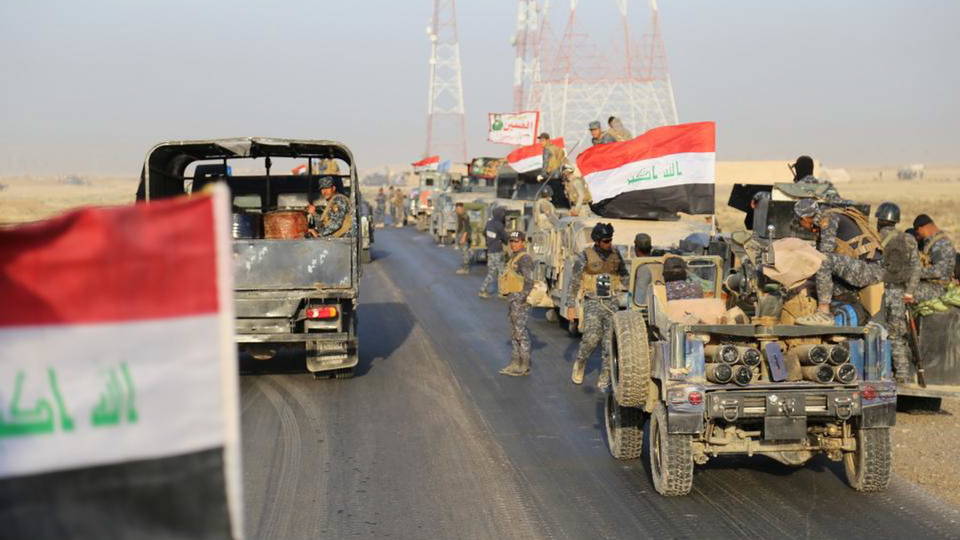 In Iraq, fighting to retake Mosul from the self-proclaimed Islamic State has entered its third day. The U.S.-led coalition force of about 30,000 includes Iraqi security personnel, Kurdish fighters, Sunni Muslim Arab tribesmen and Shia Muslim paramilitaries. The Pentagon has confirmed U.S. special forces are on the ground in Iraq and taking part in the battle, despite President Obama’s pledge against having boots on the ground. They face an estimated 5,000 Islamic State fighters in and around Mosul. Commanders say the operation is going as planned, though ISIS fighters slowed advancing troops with suicide car bomb attacks. A Peshmerga military commander told CNN it could take two months for the troops to recapture Mosul, which ISIS has controlled for two years. President Obama said Iraq’s fight to take Mosul from ISIS will be successful but difficult.
President Barack Obama: "Mosul will be a difficult fight, and there will be advances, and there will be setbacks, but I am confident that just as ISILhas been defeated in communities across Iraq, ISIL will be defeated in Mosul, as well, and that will be another step towards their ultimate destruction."
The United Nations humanitarian coordinator for Iraq said 200,000 people might need shelter during the offensive. We’ll have more on Mosul after headlines
TOPICS:
Iraq
Yemen: 72-Hour Ceasefire Slated to Take Effect at Midnight Tonight
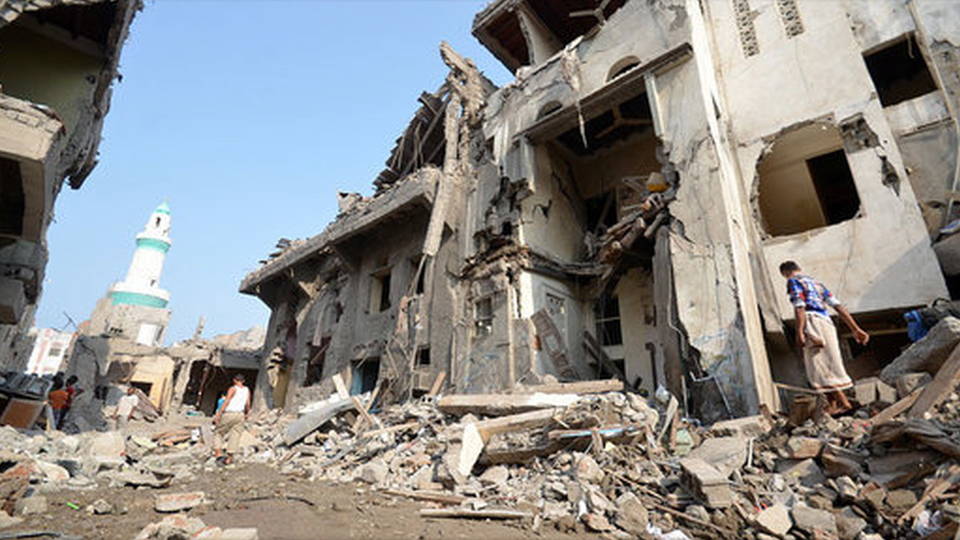 In Yemen, a 72-hour ceasefire is slated to take effect at midnight tonight local time. The ceasefire calls for the U.S.-backed, Saudi-led coalition to lift the blockade against rebel-held areas and put a halt to airstrikes. It also calls on the Houthi rebels to stop their attacks. The temporary ceasefire seeks to allow food and other humanitarian aid into besieged areas, some of which are on the brink of famine.
TOPICS:
Yemen
Saudi Arabia
Las Vegas: Hillary Clinton & Donald Trump Face Off in Final Debate
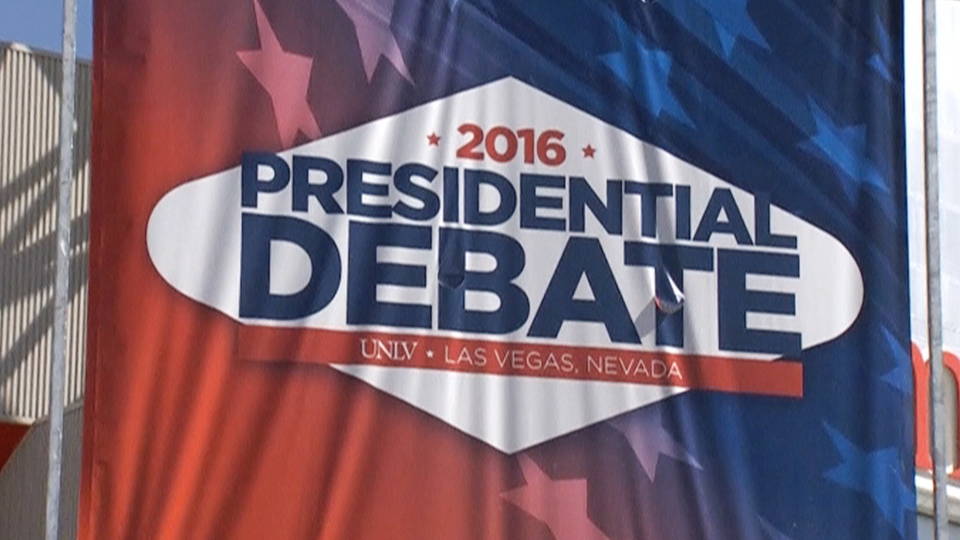 In election news, Hillary Clinton and Donald Trump are slated to face off tonight in the third and final presidential debate at the University of Nevada in Las Vegas. The final debate comes as Donald Trump’s campaign is reeling from a series of accusations of sexual assault from nine different women. Trump has denied these allegations. On Tuesday, People magazine published an article quoting six different people who all corroborated People magazine journalist Natasha Stoynoff’s account of being sexually assaulted by Donald Trump in 2005 at his Mar-a-Lago resort. Stoynoff says Trump pushed her against the wall and kissed her against her will. The six cited in the article include two People magazine editors and one of her co-workers, Paul McLaughlin, who said, "I advised her not to say anything, because I believed Trump would deny it and try to destroy her." Clinton, meanwhile, is facing questions about newly released and leaked emails, which reveal everything from Clinton’s State Department prioritizing "Friends of Bill Clinton" while assigning aid contracts after the 2010 earthquake in Haiti, to Clinton bashing environmentalists and anti-fracking advocates during a meeting with the building trades union in 2015, where she said the activists should "get a life." Ahead of tonight’s debate in Las Vegas, people are placing bets on everything from whether Clinton will take a drug test—as Trump has called for—to whether Trump will show up at all.
Ben Eckstein: "We have odds of 15 to 1 right now that Hillary will take a drug test before the debate—15 to 1. You can get odds of 8 to 1 that Donald Trump will walk out during the debate if he gets a tough question. And how about 25 to 1 that he doesn’t show at all? There you go. These are great things."
Donald Trump has confirmed he’ll be bringing President Obama’s half-brother, Malik Obama, to the debate tonight. Malik is a Trump supporter. At the last debate, Trump brought three women who have accused Bill Clinton of sexual crimes, including Juanita Broaddrick, who alleges she was raped by Bill Clinton nearly 40 years ago and that Hillary Clinton worked to cover it up. Tonight’s debate comes as both Hillary Clinton and Donald Trump are facing record unfavorability ratings and the widespread characterization that this year’s election cycle has been a "circus"—a description that is angering some professional circus workers.
Taylor Albin: "As a clown—I’m a professional clown. I have worked my whole life. This is a dream of mine to be a clown with Ringling Bros. and Barnum & Bailey Circus. I have gone to school. I have had training. And I would never associate the president of the United States of America as a clown. I would never do that. And I think, in this election, doing that is kind of an insult. I think it’s an insult to me."
TOPICS:
2016 Election
Donald Trump
Hillary Clinton
Tonight: Tune in to DN! to Watch Final Debate Live from 8 to 11:30 P.M.
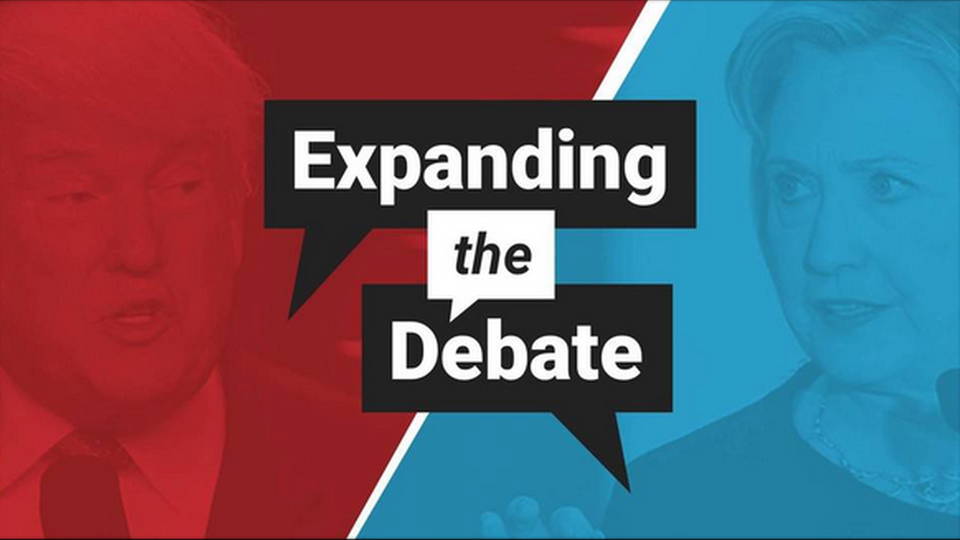 Democracy Now! will be broadcasting the third and final debate live, with commentary both before and afterward. Tune in tonight from 8 to 11:30 p.m. Eastern time at democracynow.org. And be sure to tune in Thursday morning for our two-hour "Expanding the Debate" special, where we’ll pause the tape after Trump and Clinton answer each question and give Green Party presidential nominee Jill Stein equal time to respond to the same questions.
TOPICS:
2016 Election
Georgia Sees Record-Long Lines for Early Voting
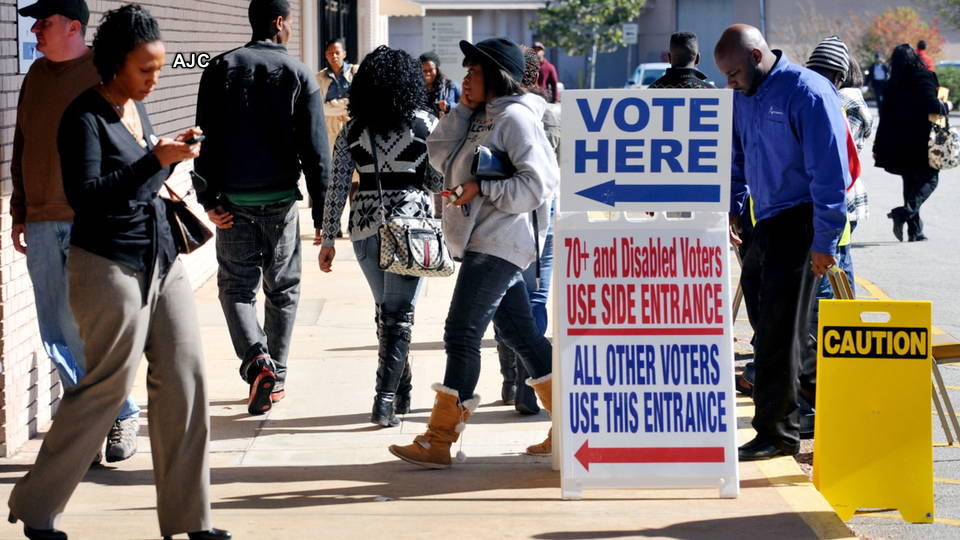 The final debate comes as early voting has already begun in Georgia, where tens of thousands of people have waited for hours in unprecedentedly long lines to vote. Local officials say they’ve never seen so many people turn out for the first days of early voting.
TOPICS:
Georgia
2016 Election
Ecuador Confirms It Cut Off Assange’s Internet Access in Embassy
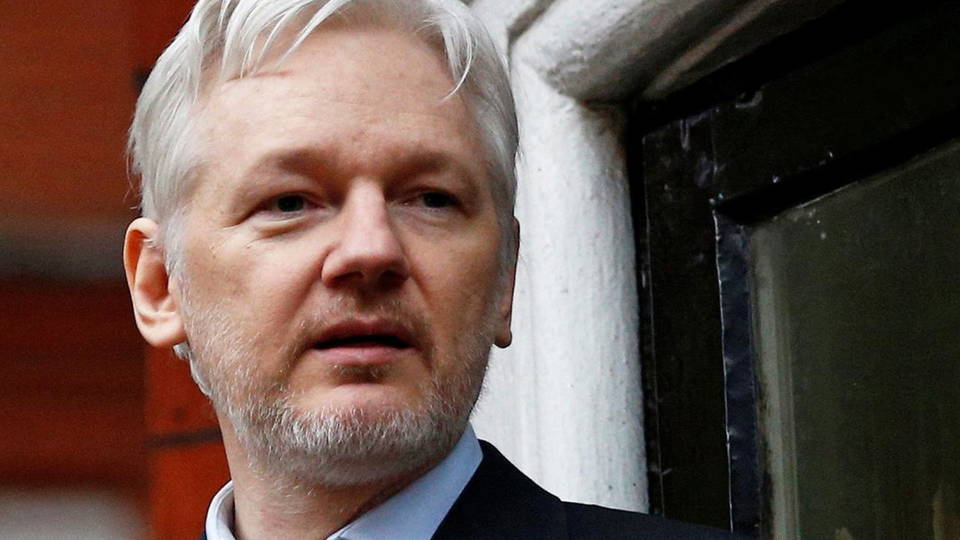 Ecuador has confirmed it temporarily cut off WikiLeaks founder Julian Assange’s internet access in the Ecuadorean Embassy in London, amid allegations Assange has been meddling in the U.S. election. Ecuadorean officials said on Tuesday they had cut off the internet on Monday morning because "in recent weeks, WikiLeaks has published a wealth of documents, impacting the U.S. election campaign." This comes after WikiLeaks released a trove of emails in July from the Democratic National Committee, revealing how the Democratic Party favored Hillary Clinton and worked behind the scenes to discredit and defeat Bernie Sanders in the presidential primaries. More recently, WikiLeaks has also released a trove of emails from the account of Hillary Clinton campaign adviser John Podesta.
TOPICS:
Ecuador
Julian Assange
#VivasNosQueremos: Women to Strike Across Americas Today to Protest Gender Violence
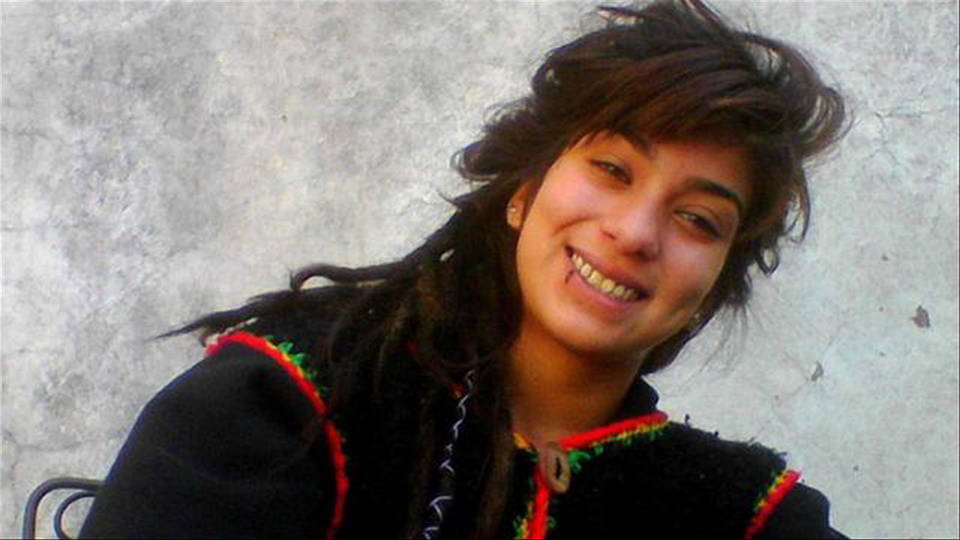 Hundreds of thousands of women across Argentina, Mexico, Chile, Ecuador, Bolivia, the United States and other countries are slated to join a women’s strike today to protest violence against women. The protests come after the brutal rape and murder of a 16-year-old Argentine girl named Lucía Pérez earlier this month. The day’s protest are organized under the banner #MiercolesNegro, or Black Wednesday, and #VivasNosQueremos, or Alive We Want Us.
TOPICS:
Women's Rights
ND: WI Sheriff Deputy Called In to Police #NoDAPL Arrested After Passing Out in His Car
 In North Dakota, a Wisconsin sheriff’s deputy has been arrested after being found passed out from intoxication in his car. Deputy Ryan Fowler had been dispatched to North Dakota along with dozens of other Wisconsin sheriff’s deputies at the request of North Dakota’s Morton County Sheriff Kyle Kirchmeier, who requested the assistance of hundreds of out-of-state deputies amid an ongoing crackdown against the resistance to the $3.8 billion Dakota Access pipeline. Deputy Fowler now faces charges and has been put on paid leave.
TOPICS:
Dakota Access Pipeline
Seattle: 2,000 Teachers to Wear #BlackLivesMatterAtSchool T-Shirts Today
In Seattle, more than 2,000 teachers are slated to arrive at schools today across the Seattle Public School system wearing T-shirts reading #BlackLivesMatterAtSchool. It’s the first action of its kind in Seattle. Many teachers have also committed to focusing their lessons today on institutional racism and the significance of the Black Lives Matter movement.
TOPICS:
Black Lives Matter
Education
PA: 5,000 Faculty Members to Strike at 14 State Universities Today
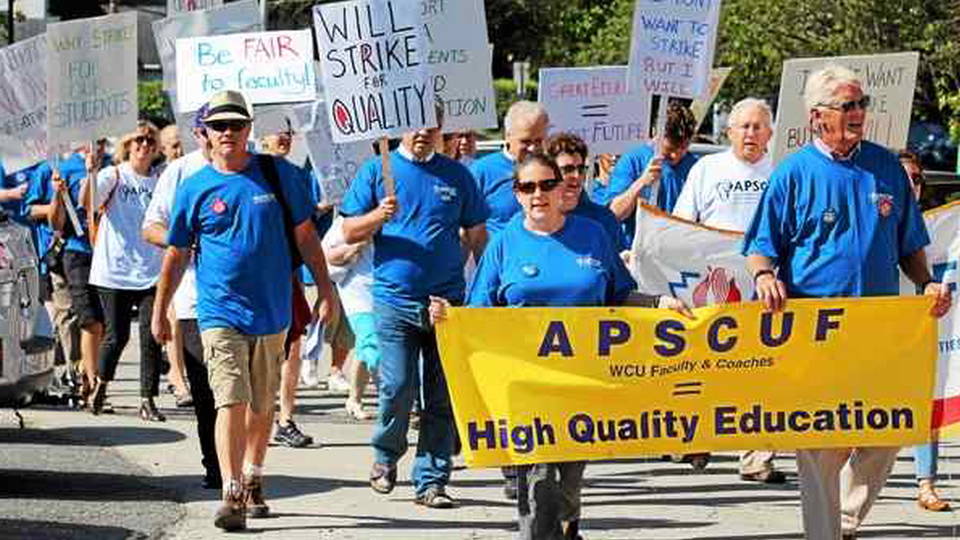 Meanwhile, in Pennsylvania, more than 5,000 faculty members and coaches have launched a strike today at 14 different state universities. The faculty members are on strike to protest dramatic cuts to their healthcare. They are also demanding improved salaries. It’s the first time in the union’s 34-year history that faculty members have gone on strike.
TOPICS:
Education
Unions
Labor
France: Court Rejects Bid to Stop Demolition of Calais Refugee Camp
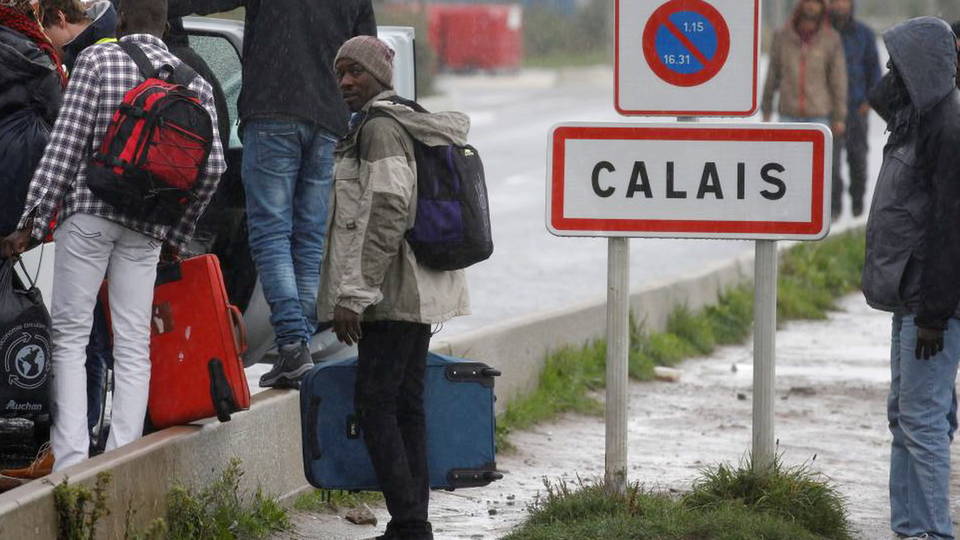 And in France, a court has rejected a bid to stop the French government from demolishing the refugee camp in Calais known as "The Jungle." For months, French authorities have been seeking to shut down the camp, which is home to thousands of refugees from Iraq, Afghanistan, Syria, Sudan, Somalia and other war-torn regions who are seeking to reach England by crossing through the Channel Tunnel. On Tuesday, a court in the city of Lille rejected an appeal from 11 charities, which had sued the French government over the plan, arguing the camp’s demolition violates the refugees’ rights. In light of the ruling, some of the charities are arguing as many refugee children as possible should be permitted to resettle in England.
Christian Salomé: "The dismantling should happen this way: Take people for whom we have a solution—here students, elsewhere children who have family in England—and take them to England. Those were the situations we asked the court to enable to take place."
On Tuesday, about a dozen of the camp’s more than 1,000 children and teenagers were permitted to resettle in England.
TOPICS:
France
Refugees
-------
Donate today:
Follow:


WEB EXCLUSIVE

VIDEO: Amy Goodman Speaks After ND Judge Dismisses "Riot" Charges for Covering Pipeline Protest
SPEAKING EVENT

10/27 Tempe, AZ
NEW BOOK


Part 2: Winona LaDuke & Tara Houska on the Indigenous Resistance to the Dakota Access Pipeline
WORK WITH DN!

Senior TV Producer
SPECIAL BROADCAST

Democracy Now!Special: Final Presidential Debate (10/19)
-------
WATCH TONIGHT: Democracy Now!'s #ExpandingTheDebate Special Broadcast from
Democracy Now! Democracynow.org will be streaming LIVE debate coverage—be sure to tune in! for Wednesday, 19 October 2016
 Watch Democracy Now!'s LIVE Special Expanding the Debate Coverage
LIVE coverage of the U.S. presidential debate
Wednesday, October 19 / 8:00pm - 11:30pm ET
8:00-9:00pm Pre-debate roundtable discussion hosted by Amy Goodman and Nermeen Shaikh.
9:00-10:30pm Live feed of the official showdown between Hillary Clinton and Donald Trump from Las Vegas, NV.
10:30-11:30pm Post-debate discussion with scholars, activists and analysts you won't hear anywhere else.
Stream LIVE starting at 8:00pm ET at democracynow.org/debate.
Or tune in live on:
Free Speech TV (Dish Network Ch. 9415 & DirecTV Ch. 348)
KCET/Link TV (Dish Network 9410 & DirecTV Ch. 375)
MNN in Manhattan (Time Warner Cable 1993 and Verizon FiOS 37)
Check your local Democracy Now! station for listings.
LIVE 2-hour special Expanding the Debate broadcast
Thursday, October 20 / 8:00am - 10:00am ET
Tune in to democracynow.org on Thursday, October 20 for a special 2-hour broadcast of Democracy Now! from 8am–10am ET.
As Hillary Clinton and Donald Trump square off in the final debate in one of the most polarized U.S. elections to date, Democracy Now! will break the sound barrier by expanding the debate—including the issues and voices that you won't hear anywhere else.
Also tune in election night for our special 5-hour broadcast!

-------
 Share
Share Tweet
Tweet Forward
Donate Today!
Democracynow.org
207 West 25th Street, Floor 11
New York, New York 10001, United States
-------
-------

No comments:
Post a Comment