
The Lausanne Global Analysis has been redesigned as a purely web-based publication, with beautiful imagery and fonts optimized for reading on your mobile device or computer. The vast majority of readers access the LGA online, so we have discontinued the PDF versions. If you still prefer to print the LGA, simply use the printer icon on the right side of the screen. We welcome your input on the redesign through email to analysis@lausanne.org, and hope you enjoy the new design!
Lausanne Global Analysis · March 2017
SHARE:


In this issue we highlight the contextual challenges posed by the ‘third wave’ of missions in contemporary India and the creative responses that have been found to them. We then examine medicine and its place in God’s mission to the world today; the values of honor and shame and how restoring honor and removing shame are core aspects of God’s mission and the role of the religious registration system in fuelling discrimination and violence against Christians in the Middle East. (Read more)
Welcome to the March issue of Lausanne Global Analysis. We look forward to your feedback on it.
In this issue we highlight the contextual challenges posed by the ‘third wave’ of missions in contemporary India and the creative responses that have been found to them. We then examine medicine and its place in God’s mission to the world today; the values of honor and shame and how restoring honor and removing shame are core aspects of God’s mission and the role of the religious registration system in fuelling discrimination and violence against Christians in the Middle East.
‘While Christianity in India is as old as Christianity itself, the Protestant Christian missions in India—spanning three centuries—can be broadly classified into three waves’, writes Prabhu Singh (Head of the Department of Missiology at South Asia Institute of Advanced Christian Studies in Bangalore, India). The third wave began in the 1990s as India liberalized its economy unleashing a new era of globalization. This period also saw the ascendancy of Hindu nationalism and its targeted persecution of the Christian community. However, Christianity continues to grow in fresh ways, challenging our conventional methodologies and motivating us to rethink our traditional mission models. Authentic Christian mission is prophetic and it involves sacrificial service, no matter which era we live in. ‘May our Lord give us grace to be creative, contextual, and courageous “fishers of men and women” in this third wave’, he concludes.
‘The church has invested heavily in [medicine] as an expression of care for the weak and vulnerable and of God’s mission in the world’, writes Andrew Sloane (Director of Postgraduate Studies, Morling College, Australia). Now in the West we need to consider how our commitment to technology and individual choice drives unhealthy consumerist approaches to medicine—and what we, as those called to God’s mission in the world, can do and say to counter that. In the Majority World we need to consider how our embodiment of God’s passion for justice and concern for the poor can shape healthy communities, what role medical care should play in that, and how to navigate the changing landscape of emerging economies. ‘All of these challenges require those who think about mission and engage in its practice to reflect carefully and theologically on the nature and goals of medicine’, he concludes.
‘Shame disrupts God’s design for the world’, writes Jayson Georges (founder and editor of www.HonorShame.com). Shame is not limited to non-Western contexts. People of every culture feel unworthy and fear rejection before others. Honor and shame are prominent in Majority World cultures, where these moral values form the ‘operating system’ of everyday life. New global realities necessitate a larger role for honor and shame in twenty-first century theology and mission. The restoration of status, which all people long for, plays a key role in God’s mission. Jesus Christ dismantles shame and procures honor for the human family. The church now continues the mission of God to bless all nations with God’s honor. God’s people must discern how to embody and proclaim God’s saving honor in particular contexts. ‘The theological realities of honor and shame are essential to the gospel and Christian mission’, he concludes.
‘Segregation of society on religious lines underpins discrimination, undermines the rule of law and fuels violence [in the Middle East]’, writes Jonathan Andrews (Chair of the Muslim World Forum). This segregation is imposed and maintained by the religious registration system. Everyone is assigned to a faith at birth. Converts face the ‘identity crisis’ of living and worshipping as Christians while being treated by the state as Muslim. Middle Eastern Christian leaders ask that we all work to enable Christians to stay. However, religious registration is the root of why Christians are treated as second-class citizens and prompts some to emigrate. Authentic local solutions need to be identified for the benefit of all. ‘All governments across the region that want to fulfil their people’s aspirations for greater dignity and more and better jobs would be well advised to address the negative effects that religious registration has on economic, cultural, and social creativity’, he concludes.
We hope that you find this issue stimulating and useful. Our aim is to deliver strategic and credible analysis, information, and insight so that as an influencer you will be better equipped for the task of global mission. It’s our desire that the analysis of current and future trends and developments will help you and your team make better decisions about the stewardship of all that God has entrusted to your care.
Please send any questions and comments about this issue to analysis@lausanne.org. The next issue of Lausanne Global Analysis will be released in May.
 David Taylor serves as the Editor of the Lausanne Global Analysis. David is an international affairs analyst with a particular focus on the Middle East. He spent 17 years in the UK Foreign and Commonwealth Office, most of it focused on the Middle East and North Africa. After that he then spent 14 years as Middle East Editor and Deputy Editor of the Daily Brief at Oxford Analytica. David now divides his time between consultancy work for Oxford Analytica, the Lausanne Movement and other clients, also working with Christian Solidarity Worldwide (CSW), the Religious Liberty Partnership and other networks on international religious freedom issues.
 -------

David Taylor
Welcome to the March issue of Lausanne Global Analysis. We look forward to your feedback on it.
In this issue we highlight the contextual challenges posed by the ‘third wave’ of missions in contemporary India and the creative responses that have been found to them. We then examine medicine and its place in God’s mission to the world today; the values of honor and shame and how restoring honor and removing shame are core aspects of God’s mission and the role of the religious registration system in fuelling discrimination and violence against Christians in the Middle East.
‘While Christianity in India is as old as Christianity itself, the Protestant Christian missions in India—spanning three centuries—can be broadly classified into three waves’, writes Prabhu Singh (Head of the Department of Missiology at South Asia Institute of Advanced Christian Studies in Bangalore, India). The third wave began in the 1990s as India liberalized its economy unleashing a new era of globalization. This period also saw the ascendancy of Hindu nationalism and its targeted persecution of the Christian community. However, Christianity continues to grow in fresh ways, challenging our conventional methodologies and motivating us to rethink our traditional mission models. Authentic Christian mission is prophetic and it involves sacrificial service, no matter which era we live in. ‘May our Lord give us grace to be creative, contextual, and courageous “fishers of men and women” in this third wave’, he concludes.
‘The church has invested heavily in [medicine] as an expression of care for the weak and vulnerable and of God’s mission in the world’, writes Andrew Sloane (Director of Postgraduate Studies, Morling College, Australia). Now in the West we need to consider how our commitment to technology and individual choice drives unhealthy consumerist approaches to medicine—and what we, as those called to God’s mission in the world, can do and say to counter that. In the Majority World we need to consider how our embodiment of God’s passion for justice and concern for the poor can shape healthy communities, what role medical care should play in that, and how to navigate the changing landscape of emerging economies. ‘All of these challenges require those who think about mission and engage in its practice to reflect carefully and theologically on the nature and goals of medicine’, he concludes.
‘Shame disrupts God’s design for the world’, writes Jayson Georges (founder and editor of www.HonorShame.com). Shame is not limited to non-Western contexts. People of every culture feel unworthy and fear rejection before others. Honor and shame are prominent in Majority World cultures, where these moral values form the ‘operating system’ of everyday life. New global realities necessitate a larger role for honor and shame in twenty-first century theology and mission. The restoration of status, which all people long for, plays a key role in God’s mission. Jesus Christ dismantles shame and procures honor for the human family. The church now continues the mission of God to bless all nations with God’s honor. God’s people must discern how to embody and proclaim God’s saving honor in particular contexts. ‘The theological realities of honor and shame are essential to the gospel and Christian mission’, he concludes.
‘Segregation of society on religious lines underpins discrimination, undermines the rule of law and fuels violence [in the Middle East]’, writes Jonathan Andrews (Chair of the Muslim World Forum). This segregation is imposed and maintained by the religious registration system. Everyone is assigned to a faith at birth. Converts face the ‘identity crisis’ of living and worshipping as Christians while being treated by the state as Muslim. Middle Eastern Christian leaders ask that we all work to enable Christians to stay. However, religious registration is the root of why Christians are treated as second-class citizens and prompts some to emigrate. Authentic local solutions need to be identified for the benefit of all. ‘All governments across the region that want to fulfil their people’s aspirations for greater dignity and more and better jobs would be well advised to address the negative effects that religious registration has on economic, cultural, and social creativity’, he concludes.
We hope that you find this issue stimulating and useful. Our aim is to deliver strategic and credible analysis, information, and insight so that as an influencer you will be better equipped for the task of global mission. It’s our desire that the analysis of current and future trends and developments will help you and your team make better decisions about the stewardship of all that God has entrusted to your care.
Please send any questions and comments about this issue to analysis@lausanne.org. The next issue of Lausanne Global Analysis will be released in May.
David Taylor serves as the Editor of the Lausanne Global Analysis. David is an international affairs analyst with a particular focus on the Middle East. He spent 17 years in the UK Foreign and Commonwealth Office, most of it focused on the Middle East and North Africa. After that he then spent 14 years as Middle East Editor and Deputy Editor of the Daily Brief at Oxford Analytica. David now divides his time between consultancy work for Oxford Analytica, the Lausanne Movement and other clients, also working with Christian Solidarity Worldwide (CSW), the Religious Liberty Partnership and other networks on international religious freedom issues.
-------

In this issue we highlight the contextual challenges posed by the ‘third wave’ of missions in contemporary India and the creative responses that have been found to them. We then examine medicine and its place in God’s mission to the world today; the values of honor and shame and how restoring honor and removing shame are core aspects of God’s mission and the role of the religious registration system in fuelling discrimination and violence against Christians in the Middle East.
‘While Christianity in India is as old as Christianity itself, the Protestant Christian missions in India—spanning three centuries—can be broadly classified into three waves’, writes Prabhu Singh (Head of the Department of Missiology at South Asia Institute of Advanced Christian Studies in Bangalore, India). The third wave began in the 1990s as India liberalized its economy unleashing a new era of globalization. This period also saw the ascendancy of Hindu nationalism and its targeted persecution of the Christian community. However, Christianity continues to grow in fresh ways, challenging our conventional methodologies and motivating us to rethink our traditional mission models. Authentic Christian mission is prophetic and it involves sacrificial service, no matter which era we live in. ‘May our Lord give us grace to be creative, contextual, and courageous “fishers of men and women” in this third wave’, he concludes.
‘The church has invested heavily in [medicine] as an expression of care for the weak and vulnerable and of God’s mission in the world’, writes Andrew Sloane (Director of Postgraduate Studies, Morling College, Australia). Now in the West we need to consider how our commitment to technology and individual choice drives unhealthy consumerist approaches to medicine—and what we, as those called to God’s mission in the world, can do and say to counter that. In the Majority World we need to consider how our embodiment of God’s passion for justice and concern for the poor can shape healthy communities, what role medical care should play in that, and how to navigate the changing landscape of emerging economies. ‘All of these challenges require those who think about mission and engage in its practice to reflect carefully and theologically on the nature and goals of medicine’, he concludes.
‘Shame disrupts God’s design for the world’, writes Jayson Georges (founder and editor of www.HonorShame.com). Shame is not limited to non-Western contexts. People of every culture feel unworthy and fear rejection before others. Honor and shame are prominent in Majority World cultures, where these moral values form the ‘operating system’ of everyday life. New global realities necessitate a larger role for honor and shame in twenty-first century theology and mission. The restoration of status, which all people long for, plays a key role in God’s mission. Jesus Christ dismantles shame and procures honor for the human family. The church now continues the mission of God to bless all nations with God’s honor. God’s people must discern how to embody and proclaim God’s saving honor in particular contexts. ‘The theological realities of honor and shame are essential to the gospel and Christian mission’, he concludes.
‘Segregation of society on religious lines underpins discrimination, undermines the rule of law and fuels violence [in the Middle East]’, writes Jonathan Andrews (Chair of the Muslim World Forum). This segregation is imposed and maintained by the religious registration system. Everyone is assigned to a faith at birth. Converts face the ‘identity crisis’ of living and worshipping as Christians while being treated by the state as Muslim. Middle Eastern Christian leaders ask that we all work to enable Christians to stay. However, religious registration is the root of why Christians are treated as second-class citizens and prompts some to emigrate. Authentic local solutions need to be identified for the benefit of all. ‘All governments across the region that want to fulfil their people’s aspirations for greater dignity and more and better jobs would be well advised to address the negative effects that religious registration has on economic, cultural, and social creativity’, he concludes.
We hope that you find this issue stimulating and useful. Our aim is to deliver strategic and credible analysis, information, and insight so that as an influencer you will be better equipped for the task of global mission. It’s our desire that the analysis of current and future trends and developments will help you and your team make better decisions about the stewardship of all that God has entrusted to your care.
Please send any questions and comments about this issue to analysis@lausanne.org. The next issue of Lausanne Global Analysis will be released in May.
David Taylor serves as the Editor of the Lausanne Global Analysis. David is an international affairs analyst with a particular focus on the Middle East. He spent 17 years in the UK Foreign and Commonwealth Office, most of it focused on the Middle East and North Africa. After that he then spent 14 years as Middle East Editor and Deputy Editor of the Daily Brief at Oxford Analytica. David now divides his time between consultancy work for Oxford Analytica, the Lausanne Movement and other clients, also working with Christian Solidarity Worldwide (CSW), the Religious Liberty Partnership and other networks on international religious freedom issues.
Surfing the Third Wave of Missions in India
Prabhu Singh
‘The singular thing about India is that you can only speak of it in the plural’, writes Indian scholar Shashi Tharoor.[1] This quote highlights the diversity as well as the complexity involved in trying to decipher contemporary India, as the nation is going through seismic changes and tectonic shifts.
Three waves of Protestant missions
While Christianity in India is as old as Christianity itself, the Protestant Christian missions in India—spanning three centuries—can be broadly classified into three waves:[2] the foreign cross-cultural era during the colonial period (1706–1946);the Indian cross-cultural era in post-independence India (1947–90); and the indigenous era[3] in post-liberalization India (1991–).
First wave
INDIANS TOO PLAYED A CRUCIAL AND CATALYTIC ROLE IN THE RAPID SPREAD OF THE GOSPEL.
The first wave started with the arrival of the first Protestant missionary, Bartholomew Zieganbalg, in 1706 to Tamil Nadu in South India. The next 250 years saw a steady influx of missionaries from different parts of Europe and America to India, which was then under the colonial rule. This wave began to ebb by the early decades of the twentieth century and lost its thrust by the mid-twentieth century. While mission was primarily understood as uni-directional—West to Rest of the World—during this period, new studies show that Indians too played a crucial and catalytic role in the rapid spread of the gospel.

Second wave
After independence in 1947, resistance to the presence of foreign missionaries resulted in their phased withdrawal in the 1950s and 1960s. While many wondered what would happen to Christianity in India (a similar apprehension to that in China after Mao’s ascendancy to power), a new wave of Indian cross-cultural mission movements started, particularly from the 1960s onwards in the South and Northeast, with a specific focus on taking the gospel to the unreached in North and Central India, particularly among the Adivasis.[4] This wave began to ebb by the 1990s as India underwent cataclysmic changes during that decade.
While this wave had a significant impact, there were serious limitations as well:
Mission was confined primarily to tribal and rural settings, resulting in serious neglect of missions among the urban.
Too much focus on ‘numbers’ resulted in a lack of discipleship and falling away among new believers.
Uncritical importation of South Indian (Tamil/Kerala) cultures and worship patterns was inappropriate among the Adivasis and others in North India.
Third wave
The third wave began in the 1990s as India liberalized its economy unleashing a new era of globalization. This period also saw the ascendancy of Hindu nationalism and its targeted persecution of the Christian community. However, Christianity continues to grow in fresh ways, particularly in parts of North India.
I shall briefly highlight five key themes that define this third wave and the missional challenges during this period:
 1. Glocal complex connectivity
India liberalized its economy in 1991, ushering in a new era of glocal (global and local) complex connectivity. The current iteration of globalization and its ramifications are felt in various realms: the rapid dissemination and consumption of information; the rise of the new middle class(es), along with rampant materialism and consumerism; massive urbanization and migration; and a new sense of interconnectedness and interdependency at the global and local levels. The younger generation (more than half the population is under 25) is often dubbed the ‘Google generation’ and ‘Twitter teens’. They are huge consumers of global popular culture, particularly those in the urban areas.
 2. Heightened cultural sensitivity
India is an ancient civilization known for its rich heritage of cultural diversity and religious plurality. The Anthropological Survey of India’s People of India project has identified 4,693 communities in India.[5] It claims that Indian diversity is marked by linguistic heterogeneity, ecological diversity, biological variation and cultural pluralism.
While some scholars claim that globalization is inevitably shaping the world into a homogenized Western mould, in India, globalization and economic liberalization have also led to the fragmentation and tribalization of society, with each community attempting to assert its identity. This is evidenced by the formation of numerous caste organizations, regional political parties, and religious movements in the last two decades. This heightened cultural sensitivity seems to be one of the key factors in the rise of religious fundamentalism and terrorism during this third wave.
 3. Exciting gospel receptivity
The Spirit of God is blowing across the land in fresh ways as many ‘Christward movements’[6] are occurring, not only among the tribal and Dalit communities but also among other faith communities that are historically resistant to the gospel. This is empirically verified by the one of the largest ongoing research initiatives in the Majority World—an exploratory study of the new Christward movements in North India that I lead at SAIACS (South Asia Institute for Advanced Christian Studies). This exciting fresh wave of movements also challenges our conventional methodologies and motivates us to rethink our traditional mission models.[7]
 4. Alarming religious animosity
While India has always had a religiously plural ethos, contemporary India has been polarized along religious lines with the advent of the Hindu nationalist political party to power in 2014 with an absolute majority. Hindu nationalism is an ideology that seeks to create a Hindu rashtra (nation) by redefining ‘Indianness’ on the basis of religion and culture. It is a hegemonic attempt to essentialize and homogenize India as a Hindu nation. Even though the origin of Hindu nationalism can be traced back more than a century, the systematic sowing of hatred and targeted violence against the Christian communities, particularly in Gujarat and Orissa, happened during this third wave.[8]
 5. Widening economic disparity
Post-liberalized India has grown richer, but the gap between the rich and the poor also seems to be widening. Amartya Sen, Nobel Laureate Indian economist, claims that the twenty-year span (1991–2011) of economic liberalization and globalization has seen GDP grow, but that many of the benefits have not reached the poor.[9] While the number of billionaires has dramatically increased, there is also the tragic fact that in the last fifteen years, 250,000 poverty-stricken farmers have committed suicide, which is probably the largest wave of suicide in human history. While disparity has always existed between rich and poor, the gap is more pronounced in this period.
How do we surf this third wave?
FAILURE TO UNDERSTAND THE TIMES, AS WELL AS THE PEOPLE IN THEIR CULTURAL CONTEXTS, RENDERS US INEFFECTIVE IN OUR MISSIONAL ENDEAVORS
In Madurai in Tamil Nadu, a Christian evangelistic outreach was organized some years back. As part of an advertisement blitz, some Christians wrote on the street walls the slogan, ’Jesus is the answer’. However, the next day, some perceptive Hindus wrote underneath the words, ‘What is the question?’[10] Failure to understand the times, as well as the people in their cultural contexts, renders us ineffective in our missional endeavors, as we end up answering questions that people are not asking and not answering those that they are actually asking.[11]
During this third wave, it is imperative for Christians, cross-cultural witnesses, and missional leaders in India and abroad to recognize that Christian mission in India is different from previous eras, as the contexts and conditions have dramatically changed in many places. Perpetuating uncritically the mindset and methodologies of previous eras will be detrimental to the cause of Christ.
The Bible clearly exhorts God’s people to understand and appropriate the times in which they live. I believe the need of the hour is to ‘understand the times’ (I Chron 12:32), carefully ‘interpret the times’ (Luke 12:56), and serve appropriately in ‘such a time as this’ (Esth 4:14).
Christian mission in this third wave needs to show three characteristics:
 1. Creativity
In contemporary Indian missions, there is a welcome shift from the tribal/rural focus to urban settings. There is a creative surge of innovative approaches in ministry in an urban context, particularly among young people and professionals. Exciting missional ventures through arts, sports, business, and electronic media are being explored, and cutting-edge technology is being employed for missional purposes. Calvary Temple in Hyderabad, South India, with more than 100,000 members, is the largest church in India and probably the fastest growing church in the world. As the church struggled to follow up their members for pastoral care due to the influx of so many new people, they came up with an innovative idea. Members have been provided with smart cards and are encouraged to swipe them in machines placed at the entrances of the church building. The data is stored and analyzed for the church leadership team to engage in follow-up on members who were not able to attend the worship service.
 2. Contextualization
Sadhu Sunder Singh, the famous Indian evangelist from a Sikh background, gave a succinct description of contextualization in the Indian context. He said, ‘It is giving the water of life in an Indian cup.’ As mentioned earlier, there are at least 4,693 cups within India that need the water of life. While there have been sporadic attempts to contextualize the faith, the need for cultural relevance and sensitivity in missions has gained greater salience in the third wave, particularly due to the rise of Hindu nationalism and growing attrition among new believers. Contemporary studies on attrition among new believers reveal that one of the major reasons is lack of cultural fit.As a trained missiological anthropologist, it is refreshing for me to see a new sense of openness among mission leaders and practitioners to contextualizing the gospel among peoples of different cultures and faiths in this new era.[12] For instance, a southern Indian agency, serving in Punjab for many years, had earlier encouraged new believers from a Sikh background to cut their long hair and shave their beards as an evidence of their new faith. However, during a recent visit, I saw many followers of Jesus wearing their turban, as the agency seems to be more open to indigenous cultural forms. Perhaps this is one of the reasons for the exponential growth of the church in that region, as locals begin to realize that a Punjabi need not become a ‘madarasi’ (colloquial term for South Indian) in order to be a follower of Jesus.
 3. Courage
IT IS IMPERATIVE TO RECOGNIZE THAT CHRISTIAN MISSION IN INDIA IS DIFFERENT FROM PREVIOUS ERAS.
The missional community that incarnates the gospel must exhibit the life of Christ and embody the love of Christ in a context that is increasingly becoming hostile to missional endeavours. Authentic Christian mission is prophetic and it involves sacrificial service, no matter which era we live in. As Latin American scholar Rene Padilla rightly points out, ‘The missiology the church needs today ought to be perceiving the people of God not as a quotation that simply reflects the society of which it is a part but as “an embodied question mark” that challenges the values of the world.’ [13]
Even as we are sensitive to the contextual realities of our times, may we never be reduced to a mere ‘quotation mark’ that uncritically reflects the views and values of the society, but let us be emboldened to be an ‘embodied question mark’ during this era of missions in India.
May our Lord give us grace to be creative, contextual, and courageous ‘fishers of men and women’ in this third wave!
Endnotes
Prabhu Singh
‘The singular thing about India is that you can only speak of it in the plural’, writes Indian scholar Shashi Tharoor.[1] This quote highlights the diversity as well as the complexity involved in trying to decipher contemporary India, as the nation is going through seismic changes and tectonic shifts.
Three waves of Protestant missions
While Christianity in India is as old as Christianity itself, the Protestant Christian missions in India—spanning three centuries—can be broadly classified into three waves:[2] the foreign cross-cultural era during the colonial period (1706–1946);the Indian cross-cultural era in post-independence India (1947–90); and the indigenous era[3] in post-liberalization India (1991–).
First wave
INDIANS TOO PLAYED A CRUCIAL AND CATALYTIC ROLE IN THE RAPID SPREAD OF THE GOSPEL.
The first wave started with the arrival of the first Protestant missionary, Bartholomew Zieganbalg, in 1706 to Tamil Nadu in South India. The next 250 years saw a steady influx of missionaries from different parts of Europe and America to India, which was then under the colonial rule. This wave began to ebb by the early decades of the twentieth century and lost its thrust by the mid-twentieth century. While mission was primarily understood as uni-directional—West to Rest of the World—during this period, new studies show that Indians too played a crucial and catalytic role in the rapid spread of the gospel.
Second wave
After independence in 1947, resistance to the presence of foreign missionaries resulted in their phased withdrawal in the 1950s and 1960s. While many wondered what would happen to Christianity in India (a similar apprehension to that in China after Mao’s ascendancy to power), a new wave of Indian cross-cultural mission movements started, particularly from the 1960s onwards in the South and Northeast, with a specific focus on taking the gospel to the unreached in North and Central India, particularly among the Adivasis.[4] This wave began to ebb by the 1990s as India underwent cataclysmic changes during that decade.
While this wave had a significant impact, there were serious limitations as well:
Mission was confined primarily to tribal and rural settings, resulting in serious neglect of missions among the urban.
Too much focus on ‘numbers’ resulted in a lack of discipleship and falling away among new believers.
Uncritical importation of South Indian (Tamil/Kerala) cultures and worship patterns was inappropriate among the Adivasis and others in North India.
Third wave
The third wave began in the 1990s as India liberalized its economy unleashing a new era of globalization. This period also saw the ascendancy of Hindu nationalism and its targeted persecution of the Christian community. However, Christianity continues to grow in fresh ways, particularly in parts of North India.
I shall briefly highlight five key themes that define this third wave and the missional challenges during this period:
1. Glocal complex connectivityIndia liberalized its economy in 1991, ushering in a new era of glocal (global and local) complex connectivity. The current iteration of globalization and its ramifications are felt in various realms: the rapid dissemination and consumption of information; the rise of the new middle class(es), along with rampant materialism and consumerism; massive urbanization and migration; and a new sense of interconnectedness and interdependency at the global and local levels. The younger generation (more than half the population is under 25) is often dubbed the ‘Google generation’ and ‘Twitter teens’. They are huge consumers of global popular culture, particularly those in the urban areas.
2. Heightened cultural sensitivityIndia is an ancient civilization known for its rich heritage of cultural diversity and religious plurality. The Anthropological Survey of India’s People of India project has identified 4,693 communities in India.[5] It claims that Indian diversity is marked by linguistic heterogeneity, ecological diversity, biological variation and cultural pluralism.
While some scholars claim that globalization is inevitably shaping the world into a homogenized Western mould, in India, globalization and economic liberalization have also led to the fragmentation and tribalization of society, with each community attempting to assert its identity. This is evidenced by the formation of numerous caste organizations, regional political parties, and religious movements in the last two decades. This heightened cultural sensitivity seems to be one of the key factors in the rise of religious fundamentalism and terrorism during this third wave.
3. Exciting gospel receptivityThe Spirit of God is blowing across the land in fresh ways as many ‘Christward movements’[6] are occurring, not only among the tribal and Dalit communities but also among other faith communities that are historically resistant to the gospel. This is empirically verified by the one of the largest ongoing research initiatives in the Majority World—an exploratory study of the new Christward movements in North India that I lead at SAIACS (South Asia Institute for Advanced Christian Studies). This exciting fresh wave of movements also challenges our conventional methodologies and motivates us to rethink our traditional mission models.[7]
4. Alarming religious animosityWhile India has always had a religiously plural ethos, contemporary India has been polarized along religious lines with the advent of the Hindu nationalist political party to power in 2014 with an absolute majority. Hindu nationalism is an ideology that seeks to create a Hindu rashtra (nation) by redefining ‘Indianness’ on the basis of religion and culture. It is a hegemonic attempt to essentialize and homogenize India as a Hindu nation. Even though the origin of Hindu nationalism can be traced back more than a century, the systematic sowing of hatred and targeted violence against the Christian communities, particularly in Gujarat and Orissa, happened during this third wave.[8]
5. Widening economic disparityPost-liberalized India has grown richer, but the gap between the rich and the poor also seems to be widening. Amartya Sen, Nobel Laureate Indian economist, claims that the twenty-year span (1991–2011) of economic liberalization and globalization has seen GDP grow, but that many of the benefits have not reached the poor.[9] While the number of billionaires has dramatically increased, there is also the tragic fact that in the last fifteen years, 250,000 poverty-stricken farmers have committed suicide, which is probably the largest wave of suicide in human history. While disparity has always existed between rich and poor, the gap is more pronounced in this period.
How do we surf this third wave?
FAILURE TO UNDERSTAND THE TIMES, AS WELL AS THE PEOPLE IN THEIR CULTURAL CONTEXTS, RENDERS US INEFFECTIVE IN OUR MISSIONAL ENDEAVORS
In Madurai in Tamil Nadu, a Christian evangelistic outreach was organized some years back. As part of an advertisement blitz, some Christians wrote on the street walls the slogan, ’Jesus is the answer’. However, the next day, some perceptive Hindus wrote underneath the words, ‘What is the question?’[10] Failure to understand the times, as well as the people in their cultural contexts, renders us ineffective in our missional endeavors, as we end up answering questions that people are not asking and not answering those that they are actually asking.[11]
During this third wave, it is imperative for Christians, cross-cultural witnesses, and missional leaders in India and abroad to recognize that Christian mission in India is different from previous eras, as the contexts and conditions have dramatically changed in many places. Perpetuating uncritically the mindset and methodologies of previous eras will be detrimental to the cause of Christ.
The Bible clearly exhorts God’s people to understand and appropriate the times in which they live. I believe the need of the hour is to ‘understand the times’ (I Chron 12:32), carefully ‘interpret the times’ (Luke 12:56), and serve appropriately in ‘such a time as this’ (Esth 4:14).
Christian mission in this third wave needs to show three characteristics:
1. CreativityIn contemporary Indian missions, there is a welcome shift from the tribal/rural focus to urban settings. There is a creative surge of innovative approaches in ministry in an urban context, particularly among young people and professionals. Exciting missional ventures through arts, sports, business, and electronic media are being explored, and cutting-edge technology is being employed for missional purposes. Calvary Temple in Hyderabad, South India, with more than 100,000 members, is the largest church in India and probably the fastest growing church in the world. As the church struggled to follow up their members for pastoral care due to the influx of so many new people, they came up with an innovative idea. Members have been provided with smart cards and are encouraged to swipe them in machines placed at the entrances of the church building. The data is stored and analyzed for the church leadership team to engage in follow-up on members who were not able to attend the worship service.
2. ContextualizationSadhu Sunder Singh, the famous Indian evangelist from a Sikh background, gave a succinct description of contextualization in the Indian context. He said, ‘It is giving the water of life in an Indian cup.’ As mentioned earlier, there are at least 4,693 cups within India that need the water of life. While there have been sporadic attempts to contextualize the faith, the need for cultural relevance and sensitivity in missions has gained greater salience in the third wave, particularly due to the rise of Hindu nationalism and growing attrition among new believers. Contemporary studies on attrition among new believers reveal that one of the major reasons is lack of cultural fit.As a trained missiological anthropologist, it is refreshing for me to see a new sense of openness among mission leaders and practitioners to contextualizing the gospel among peoples of different cultures and faiths in this new era.[12] For instance, a southern Indian agency, serving in Punjab for many years, had earlier encouraged new believers from a Sikh background to cut their long hair and shave their beards as an evidence of their new faith. However, during a recent visit, I saw many followers of Jesus wearing their turban, as the agency seems to be more open to indigenous cultural forms. Perhaps this is one of the reasons for the exponential growth of the church in that region, as locals begin to realize that a Punjabi need not become a ‘madarasi’ (colloquial term for South Indian) in order to be a follower of Jesus.
3. CourageIT IS IMPERATIVE TO RECOGNIZE THAT CHRISTIAN MISSION IN INDIA IS DIFFERENT FROM PREVIOUS ERAS.
The missional community that incarnates the gospel must exhibit the life of Christ and embody the love of Christ in a context that is increasingly becoming hostile to missional endeavours. Authentic Christian mission is prophetic and it involves sacrificial service, no matter which era we live in. As Latin American scholar Rene Padilla rightly points out, ‘The missiology the church needs today ought to be perceiving the people of God not as a quotation that simply reflects the society of which it is a part but as “an embodied question mark” that challenges the values of the world.’ [13]
Even as we are sensitive to the contextual realities of our times, may we never be reduced to a mere ‘quotation mark’ that uncritically reflects the views and values of the society, but let us be emboldened to be an ‘embodied question mark’ during this era of missions in India.
May our Lord give us grace to be creative, contextual, and courageous ‘fishers of men and women’ in this third wave!
Endnotes
- Shashi Tharoor, India: From Midnight to the Millennium (New Delhi: Penguin Books, 2000), 8. ↑
- ‘Wave’ as an analogy has been employed by scholars and historians – like Kenneth Latourette, Alvin Toffler and Robert Schreiter – to categorize and periodize history. Waves are a suitable analogy for periodization as they represent the ebb and flow of time, people, and events in a particular period. More importantly, it also reminds us that the periodizations are not watertight compartments, as they tend to overlap with each other. ↑
- The term ‘indigenous’ is used here to mean ‘local’ and not ‘primal’. ↑
- Adivasi is a term often used to denote the various indigenous tribal communities in different parts of India. It means original, primal inhabitants (‘Adi’ – first, ‘Vasi’ – inhabitant). ↑
- K.S. Singh, People of India: Introduction (New Delhi: Anthropological Survey of India/Oxford University Press, 2003, Revised Edition), 289. ↑
- By Christward Movement, I mean a movement of a significant number of people from a particular cultural community towards Christ, within a relatively short span of time. These movements are Spirit-enabled, indigenously facilitated, and often result in fresh cultural expressions of faith. The focus is more on ‘Christ’ than the ‘church’ as we know it traditionally (although they meet together as small groups) or the religion ‘Christianity’. ↑
- There are at least five empirical PhD studies among these groups that deal with various aspects of the new expressions of faith. ↑
- Editor’s Note: See article by Tehmina Arora entitled ‘The Spread of Anti-conversion Laws from India’ in the May 2016 issue of Lausanne Global Analysis. ↑
- Jean Dreze & Amartya Sen, An Uncertain Glory: India and Its Contradictions (London: Penguin Books, 2013). ↑
- Cited in Dayanand Bharati, Living Water and Indian Bowl (Delhi: ISPCK, 2001), 2. ↑
- Editors’ Note: See article by Tom Price entitled ‘Evangelism and Apologetics Confusion’ in the September 2016 issue of Lausanne Global Analysis. ↑
- There has been exciting response from mission leaders and practitioners across the country for participation in our training event ‘Christ & Cultures Seminar’, initiated by Centre for Intercultural Studies at SAIACS, which seeks to deal specifically with issues related to gospel and culture in the Indian context. Editor’s Note: See article by Rabbi Jayakaran entitled ‘Delivering the Good News to Hindus’ in the July 2014 issue of Lausanne Global Analysis. ↑
- Quoted in Samuel Escobar, The New Global Mission: The Gospel from Everywhere to Everyone(Downers Grove, IL: InterVarsity Press), 168. ↑
 Prabhu Singh serves as Head of the Department of Missiology at South Asia Institute of Advanced Christian Studies (SAIACS) in Bangalore, India. He is the founding director of the SAIACS Centre for Intercultural Studies (CICS), and leads a major research project on Christward Movements in North India. He holds a PhD in Intercultural Studies from Asbury Seminary, USA.
-------

Rethinking Medicine and Missions
Andrew Sloane
Medicine is practiced in many different contexts, with differing access to resources (including physical ‘plant’ and infrastructure, personnel, investigation and treatment options, and so on), and in quite disparate social and economic contexts. Furthermore, it is a costly enterprise, with even wealthy Western countries struggling to meet escalating costs of healthcare. It is also one that is both morally loaded and morally complex (some of that complexity associated with costs of treatment and the relative importance of medicine in relation to other social and economic needs).
Most important for our purposes, it is also one in which the church has invested heavily as an expression of care for the weak and vulnerable and of God’s mission in the world.[1] It is worth, then, taking a little time to understand the world of medicine and how we should think about and respond to it.
Medicine in the West
‘Western’ medicine is a context of wealth and privilege. It comprises an interlocking network of services and infrastructure that make sophisticated care possible, enmeshed in complex and sophisticated social arrangements without which its practice is unimaginable.
Medicine in such contexts, while highly effective, faces a number of pressures:
 an ageing population and increased healthcare costs;
 emphasis on sophisticated medical technologies at the expense of patient care;
 increasing bureaucratic scrutiny and control over patterns of treatment and prescribing, in part driven by healthcare ‘efficiencies’;
 questions of ‘conscientious objection’ and the role of religious values in the provision of healthcare; and
 end of life care.
These pressures are generated by a strange mixture of cultural and technical forces: reductionist ‘biomedical’ notions (in which health and disease are seen as primarily biological matters, subject to medical control), coupled with belief in the limitless competence of technology (which presumes that there must be a medical answer to every human problem) and an unthinking medical consumerism (which assumes that if I want it and can afford it—or get someone to pay for it—then there is no good reason not to give it to me).
MEDICINE CEASES TO BE A PROFESSION AND BECOMES A BIOMEDICAL CONSUMER PRODUCT AIMING AT ‘HEALTH’ AND THE ECLIPSE OF SUFFERING AND PERSONAL LIMITATION.
Medicine ceases to be a profession and becomes a biomedical consumer product aiming at ‘health’ and the eclipse of suffering and personal limitation.
Medicine ceases to be a profession (a morally significant practice engaged in by moral agents for moral ends) and becomes a biomedical consumer product aiming at ‘health’ (cure) and the eclipse of suffering and personal limitation (enhancement). It turns into an idolatrous enterprise, embodying the false values of ‘developed’ nations.[2]
Furthermore, there is no shared moral language with which to engage in meaningful conversation. Public discourse is reduced to ‘thin’ discussions of utility and the maximising of individual choice (with no sense that such choices should be directed to particular ends or limited by objective values). The moral and relational nature of medicine as interpersonal encounter is lost and broader personal and social issues ignored, while healthcare costs and inequalities both increase. As far as I can see, these trends are continuing, even growing in force, as we see more vocal advocacy of euthanasia at the same time that death is becoming more ‘technologised’[3]; more pressure on health professionals’ rights to ‘conscientious objection’ to provision of particular services; and increasing pressure on healthcare budgets.
THE CHURCH IN THE WEST HAS LARGELY LOST ITS VOICE.
Furthermore, the church in the West has largely lost its voice. It is seen as an inherently reactionary institution, desperate to cling to its dwindling power through illegitimate interference with people’s sexual and reproductive choices, and their right to determine the manner and timing of their own deaths.[4] This is very unfortunate, as the church has an important contribution to make, challenging the idea that we can (and should) control all the circumstances of human life, calling people to recognise that human beings are limited, finite, vulnerable and mortal, and that our healthcare policies and practices need to recognise this rather than seek to escape the limitations of the human condition. Such a perspective would make for a more humane and sustainable practice of medicine (and healthcare more generally).

Medicine in the Majority World
Things are very different in the Majority World.[5] The resource constraints in such environments are all too familiar, as are the complex social and economic forces that contribute to the global disease burden and complicate the provision of services.[6]The problems that medicine has to address in such contexts are largely socially and economically determined. As a medical student in the 1980s, the only person I saw die from tuberculosis was in a small rural hospital in India—indeed, he was the only patient I ever saw with severe active TB.
THE CHURCH’S ROLE HERE IS ALSO BECOMING MORE COMPLICATED.
The church’s role here is also becoming more complicated. In the past, Christian mission hospitals could expect an effective monopoly in providing healthcare to the poor.[7] This led to some wonderful opportunities to demonstrate the reality of the kingdom of God in care for the poor and vulnerable, as well as occasions for effective proclamation.[8] Of course, there were many abuses and errors in practice, especially when mission was in concert with colonial agendas, leaving an unfortunate legacy with which we must now contend. However, it has also led to some wonderful legacies in which the church is seen as an agent of hope and transformation and the place where the love of God can be found.
There are still many places where people do not have reasonable access to affordable and sustainable healthcare, something the church needs to continue to address as it has done for centuries. The church also needs to continue the fundamental work of aid and development which will foster the development of the infrastructure and social capital that allow for wider and more just provision of meaningful medical care; and, it should deal with the ‘brain drain’—the loss of competent and well-trained healthcare professionals from the Majority World to the West, a phenomenon that tragically mirrors the net flow of money from global south to north, in spite of the flow of aid to the south.
However, the loss of the effective monopoly of health services also needs to be addressed—not to exclude other providers from such contexts but to demonstrate once more the unique contribution the church can make.
There are a number of forms this could take, but let me mention one: palliative care. The need is clear and severe.[9] If palliative care services are patchy and inadequate in the West (and they are), they are nearly non-existent in parts of the Majority World. There are, of course, many great stories of such care (such as the Missionaries of Charity in Kolkata). However, much more needs to be done, and the church is uniquely placed, given the importance of networks of care and social support to good palliative care, much of which needs to be done in community rather than hospital contexts.

Medicine in emerging economies
The mention of India, of course, raises the issue of emerging technological economies. Space limits comments here, other than to note the growing practice of medical tourism, and the burdens and opportunities this generates for healthcare systems.[10] Particularly acute questions arise in relation to experimental or controversial treatments and the problems of oversight, ethics approval, and so on, associated with them. Commercial surrogacy is only one such ‘industry’; others include transplant surgery (and organ harvesting) in China, unproven stem cell therapies, and IVF services in general. It is hard to know just what response the church can make to such developments.
Suggested responses
THE WORLD OF MEDICINE IS COMPLEX, AND THERE ARE MANY AND WIDELY VARIED CHALLENGES THAT THE CHURCH NEEDS TO ADDRESS.
The world of medicine is complex, and there are many and widely varied challenges that the church needs to address. In the West we need to consider how our commitment to technology and individual choice drives unhealthy consumerist approaches to medicine—and what we, as those called to God’s mission in the world, can do and say to counter that. In the Majority World we need to consider how our embodiment of God’s passion for justice and concern for the poor can shape healthy communities, what role medical care should play in that, and how to navigate the changing landscape of emerging economies.
All of these challenges require those who think about mission and engage in its practice to reflect carefully and theologically on the nature and goals of medicine, and the varied contexts in which it is practised (see suggestions for further reading below).
It is also important for Christian leaders to meet key figures in their networks who are engaged in healthcare—to support them in their vital mission, identify the particular pressures they face and help them think theologically about their healthcare practice.
Of course, that requires that Christian leaders are able to provide both effective pastoral care for healthcare workers, and a carefully considered theology relevant to this sector. Without such thought, and careful, disciplined action, the church’s theology and practice of mission will be impoverished.
Further reading
I have attempted to address the theological issues and their implications for the practice of medicine in the West and the Majority World in Andrew Sloane, Vulnerability and Care: Christian Reflections on the Philosophy of Medicine (London: Bloomsbury T&T Clark, 2016).
Neil Messer’s book Flourishing (Grand Rapids: Eerdmans, 2013) is also worth reading, even though I disagree with him on some fundamental issues.
Useful discussions of some important bioethical issues can be found in John Wyatt, Matters of Life & Death (Nottingham: IVP, 2009).
Excellent resources for material on global issues in medicine, with a particular focus on the church and its mission can be found in the free, open access online journal Christian Journal for Global Health: http://journal.cjgh.org/index.php/cjgh.
Endnotes
Andrew Sloane
Medicine is practiced in many different contexts, with differing access to resources (including physical ‘plant’ and infrastructure, personnel, investigation and treatment options, and so on), and in quite disparate social and economic contexts. Furthermore, it is a costly enterprise, with even wealthy Western countries struggling to meet escalating costs of healthcare. It is also one that is both morally loaded and morally complex (some of that complexity associated with costs of treatment and the relative importance of medicine in relation to other social and economic needs).
Most important for our purposes, it is also one in which the church has invested heavily as an expression of care for the weak and vulnerable and of God’s mission in the world.[1] It is worth, then, taking a little time to understand the world of medicine and how we should think about and respond to it.
Medicine in the West
‘Western’ medicine is a context of wealth and privilege. It comprises an interlocking network of services and infrastructure that make sophisticated care possible, enmeshed in complex and sophisticated social arrangements without which its practice is unimaginable.
Medicine in such contexts, while highly effective, faces a number of pressures:
an ageing population and increased healthcare costs;emphasis on sophisticated medical technologies at the expense of patient care;increasing bureaucratic scrutiny and control over patterns of treatment and prescribing, in part driven by healthcare ‘efficiencies’;questions of ‘conscientious objection’ and the role of religious values in the provision of healthcare; andend of life care.These pressures are generated by a strange mixture of cultural and technical forces: reductionist ‘biomedical’ notions (in which health and disease are seen as primarily biological matters, subject to medical control), coupled with belief in the limitless competence of technology (which presumes that there must be a medical answer to every human problem) and an unthinking medical consumerism (which assumes that if I want it and can afford it—or get someone to pay for it—then there is no good reason not to give it to me).
MEDICINE CEASES TO BE A PROFESSION AND BECOMES A BIOMEDICAL CONSUMER PRODUCT AIMING AT ‘HEALTH’ AND THE ECLIPSE OF SUFFERING AND PERSONAL LIMITATION.
Medicine ceases to be a profession and becomes a biomedical consumer product aiming at ‘health’ and the eclipse of suffering and personal limitation.
Medicine ceases to be a profession (a morally significant practice engaged in by moral agents for moral ends) and becomes a biomedical consumer product aiming at ‘health’ (cure) and the eclipse of suffering and personal limitation (enhancement). It turns into an idolatrous enterprise, embodying the false values of ‘developed’ nations.[2]
Furthermore, there is no shared moral language with which to engage in meaningful conversation. Public discourse is reduced to ‘thin’ discussions of utility and the maximising of individual choice (with no sense that such choices should be directed to particular ends or limited by objective values). The moral and relational nature of medicine as interpersonal encounter is lost and broader personal and social issues ignored, while healthcare costs and inequalities both increase. As far as I can see, these trends are continuing, even growing in force, as we see more vocal advocacy of euthanasia at the same time that death is becoming more ‘technologised’[3]; more pressure on health professionals’ rights to ‘conscientious objection’ to provision of particular services; and increasing pressure on healthcare budgets.
THE CHURCH IN THE WEST HAS LARGELY LOST ITS VOICE.
Furthermore, the church in the West has largely lost its voice. It is seen as an inherently reactionary institution, desperate to cling to its dwindling power through illegitimate interference with people’s sexual and reproductive choices, and their right to determine the manner and timing of their own deaths.[4] This is very unfortunate, as the church has an important contribution to make, challenging the idea that we can (and should) control all the circumstances of human life, calling people to recognise that human beings are limited, finite, vulnerable and mortal, and that our healthcare policies and practices need to recognise this rather than seek to escape the limitations of the human condition. Such a perspective would make for a more humane and sustainable practice of medicine (and healthcare more generally).
Medicine in the Majority World
Things are very different in the Majority World.[5] The resource constraints in such environments are all too familiar, as are the complex social and economic forces that contribute to the global disease burden and complicate the provision of services.[6]The problems that medicine has to address in such contexts are largely socially and economically determined. As a medical student in the 1980s, the only person I saw die from tuberculosis was in a small rural hospital in India—indeed, he was the only patient I ever saw with severe active TB.
THE CHURCH’S ROLE HERE IS ALSO BECOMING MORE COMPLICATED.
The church’s role here is also becoming more complicated. In the past, Christian mission hospitals could expect an effective monopoly in providing healthcare to the poor.[7] This led to some wonderful opportunities to demonstrate the reality of the kingdom of God in care for the poor and vulnerable, as well as occasions for effective proclamation.[8] Of course, there were many abuses and errors in practice, especially when mission was in concert with colonial agendas, leaving an unfortunate legacy with which we must now contend. However, it has also led to some wonderful legacies in which the church is seen as an agent of hope and transformation and the place where the love of God can be found.
There are still many places where people do not have reasonable access to affordable and sustainable healthcare, something the church needs to continue to address as it has done for centuries. The church also needs to continue the fundamental work of aid and development which will foster the development of the infrastructure and social capital that allow for wider and more just provision of meaningful medical care; and, it should deal with the ‘brain drain’—the loss of competent and well-trained healthcare professionals from the Majority World to the West, a phenomenon that tragically mirrors the net flow of money from global south to north, in spite of the flow of aid to the south.
However, the loss of the effective monopoly of health services also needs to be addressed—not to exclude other providers from such contexts but to demonstrate once more the unique contribution the church can make.
There are a number of forms this could take, but let me mention one: palliative care. The need is clear and severe.[9] If palliative care services are patchy and inadequate in the West (and they are), they are nearly non-existent in parts of the Majority World. There are, of course, many great stories of such care (such as the Missionaries of Charity in Kolkata). However, much more needs to be done, and the church is uniquely placed, given the importance of networks of care and social support to good palliative care, much of which needs to be done in community rather than hospital contexts.
Medicine in emerging economies
The mention of India, of course, raises the issue of emerging technological economies. Space limits comments here, other than to note the growing practice of medical tourism, and the burdens and opportunities this generates for healthcare systems.[10] Particularly acute questions arise in relation to experimental or controversial treatments and the problems of oversight, ethics approval, and so on, associated with them. Commercial surrogacy is only one such ‘industry’; others include transplant surgery (and organ harvesting) in China, unproven stem cell therapies, and IVF services in general. It is hard to know just what response the church can make to such developments.
Suggested responses
THE WORLD OF MEDICINE IS COMPLEX, AND THERE ARE MANY AND WIDELY VARIED CHALLENGES THAT THE CHURCH NEEDS TO ADDRESS.
The world of medicine is complex, and there are many and widely varied challenges that the church needs to address. In the West we need to consider how our commitment to technology and individual choice drives unhealthy consumerist approaches to medicine—and what we, as those called to God’s mission in the world, can do and say to counter that. In the Majority World we need to consider how our embodiment of God’s passion for justice and concern for the poor can shape healthy communities, what role medical care should play in that, and how to navigate the changing landscape of emerging economies.
All of these challenges require those who think about mission and engage in its practice to reflect carefully and theologically on the nature and goals of medicine, and the varied contexts in which it is practised (see suggestions for further reading below).
It is also important for Christian leaders to meet key figures in their networks who are engaged in healthcare—to support them in their vital mission, identify the particular pressures they face and help them think theologically about their healthcare practice.
Of course, that requires that Christian leaders are able to provide both effective pastoral care for healthcare workers, and a carefully considered theology relevant to this sector. Without such thought, and careful, disciplined action, the church’s theology and practice of mission will be impoverished.
Further reading
I have attempted to address the theological issues and their implications for the practice of medicine in the West and the Majority World in Andrew Sloane, Vulnerability and Care: Christian Reflections on the Philosophy of Medicine (London: Bloomsbury T&T Clark, 2016).
Neil Messer’s book Flourishing (Grand Rapids: Eerdmans, 2013) is also worth reading, even though I disagree with him on some fundamental issues.
Useful discussions of some important bioethical issues can be found in John Wyatt, Matters of Life & Death (Nottingham: IVP, 2009).
Excellent resources for material on global issues in medicine, with a particular focus on the church and its mission can be found in the free, open access online journal Christian Journal for Global Health: http://journal.cjgh.org/index.php/cjgh.
Endnotes
- Let me note at the outset that I will not argue for the legitimacy of medicine as a calling and practice or that it is an important expression of and contribution to God’s mission in the world. That will be taken as given, but is clearly justified in the literature. See, for instance, Edmund D. Pellegrino and David C. Thomasma, Helping and Healing: Religious Commitment in Health Care (Washington: Georgetown University Press, 1997); The Christian Virtues in Medical Practice (Washington: Georgetown University Press, 1996); John Wyatt, Matters of Life & Death: Human dilemmas in the light of the Christian faith(Nottingham: IVP, 2009); Neil G. Messer, Flourishing: Health, Disease, and Bioethics in Theological Perspective (Grand Rapids: Eerdmans, 2013). ↑
- For more on this, see amongst others, Stanley Hauerwas, Naming the Silences: God, Medicine, and the Problem of Suffering (Grand Rapids: Eerdmans, 1990); Suffering Presence: Theological Reflections on Medicine, the Mentally Handicapped, and the Church (Edinburgh: T&T Clark, 1986); Gerald P. McKenny, To Relieve the Human Condition: Bioethics, Technology, and the Body (Albany: University of New York Press, 1997); Joel Shuman and Brian Volck, Reclaiming the Body: Christians and the Faithful Use of Modern Medicine (Grand Rapids: Brazos, 2006). ↑
- For this, see, Jeffrey P. Bishop, The Anticipatory Corpse: Medicine, Power and the Care of the Dying(Notre Dame, IN: UNDP, 2011); Atul Gawande, Being Mortal: Medicine and What Matters in the End(New York: Metropolitan Books, 2014). ↑
- There is, unfortunately, a measure of truth in such criticisms. True, many vocal conservative critics of ‘the culture of death’ are deeply (and primarily) concerned about the common good and the dignity and worth of all people, including the most vulnerable. Nonetheless, there is also at least an element of lamenting a lost moral hegemony which renders our other concerns moot. We need to learn new ways of conducting these conversations and ensuring that our concerns are—and are seen to be—broader than the usual ones of sex and the beginning and end of life. ↑
- Editor’s Note: See article by Joel Edwards and Goeff Tunnicliffe entitled ‘Micah Challenge International’ in the March 2015 issue of Lausanne Global Analysis. ↑
- Andrew Sloane, ‘Love in a time of Ebola – reflections on theology of medicine in resource challenged environments’, Christian Journal for Global Health 3, no. 1 (2016). ↑
- Steffen Flessa, ‘Christian milestones in global health: the declarations of Tübingen’, Christian Journal for Global Health 3, no. 1 (2016); ‘Future of Christian health services – an economic perspective’, Christian Journal for Global Health 3, no. 1 (2016). It is worth noting his social and economic arguments for the need for universal healthcare, in addition to the broadly theological and philosophical ones that others and I have developed (for which see Sloane, ‘Love in a time of Ebola’, as above). ↑
- Christoffer H. Grundmann, ‘Sent to heal! About the biblical roots, the history, and the legacy of medical missions’, Christian Journal for Global Health 1, no. 1 (2014). I should note my disagreement with his theology of health/medicine; he nonetheless makes some good historical observations. ↑
- Worldwide Palliative Care Alliance, ‘Global Atlas of Palliative Care at the End of Life’, (London: WHO, 2014). ↑
- Noree, Thinakorn, Johanna Hanefeld, and Richard Smith,’Medical tourism in Thailand: a cross-sectional study’. Bulletin of the World Health Organization 94, no. 1 (2016): 30-36. ↑
 Andrew Sloane serves as Senior Lecturer in Old Testament and Christian Thought, and as Director of Postgraduate Studies at Morling College in Australia. He trained as a doctor before moving into ministry and then theological education. His most recent book is Vulnerability and Care: Christian Reflections on the Philosophy of Medicine (London: Bloomsbury T&T Clark, 2016).
-------

The Good News for Honor-Shame Cultures
Jayson Georges
Shame disrupts God’s design for the world. The mission of God involves removing shame and restoring honor. Honor and shame are inherent to the gospel and essential for Christian mission.
In the Beginning: Our family history
God created humans with glory and honor (Ps 8:6). Adam and Eve were honored co-regents, naked yet unashamed (Gen 2:25). Then shame entered the story.
After Adam and Eve disobeyed God, they hid and covered themselves—the hallmarks of shame. The human family ‘lost face’ before God and was banished from his presence. To remove this disgrace, people manipulate cultural systems to ‘make a name for themselves’ (Gen 11:4).
SHAME IS NOT LIMITED TO NON-WESTERN CONTEXTS.
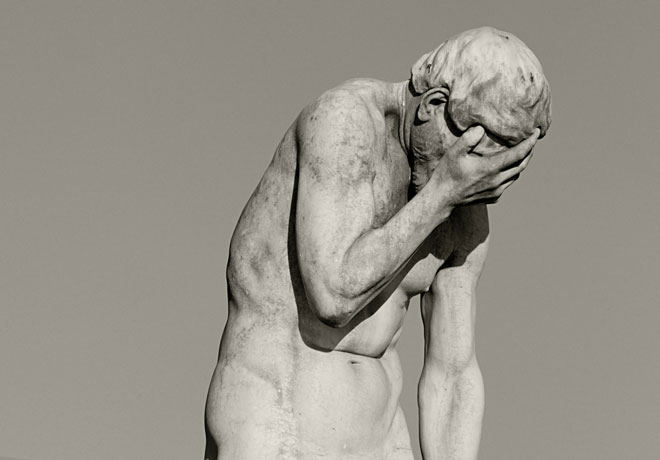
Shame is not limited to non-Western contexts. People of every culture feel unworthy and fear rejection before others, because we all ‘fall short of the glory of God’ (Rom 3:23).
Exposing Western shame
Western thought has long associated shame with ‘pre-civilized’ cultures. However, conversations in the media are exposing the prominence of shame within Western cultures:
Brene Brown’s top-rated TED talks about shame have over 30 million views.
Western culture is becoming more shame-oriented. However, Western Christianity emphasizes legal aspects of salvation such as forgiveness of sins and innocence. Mission in Western contexts must offer biblical solutions to people who say, ‘Even if I am innocent, I cannot lift my head, for I am full of shame’ (Job 10:15).
The global face of honor-shame cultures
Honor and shame are prominent in Majority World cultures, where these moral values form the ‘operating system’ of everyday life. People avoid disgrace and seek status in the eyes of the community. Four global realities necessitate a larger role for honor and shame in twenty-first century theology and mission:
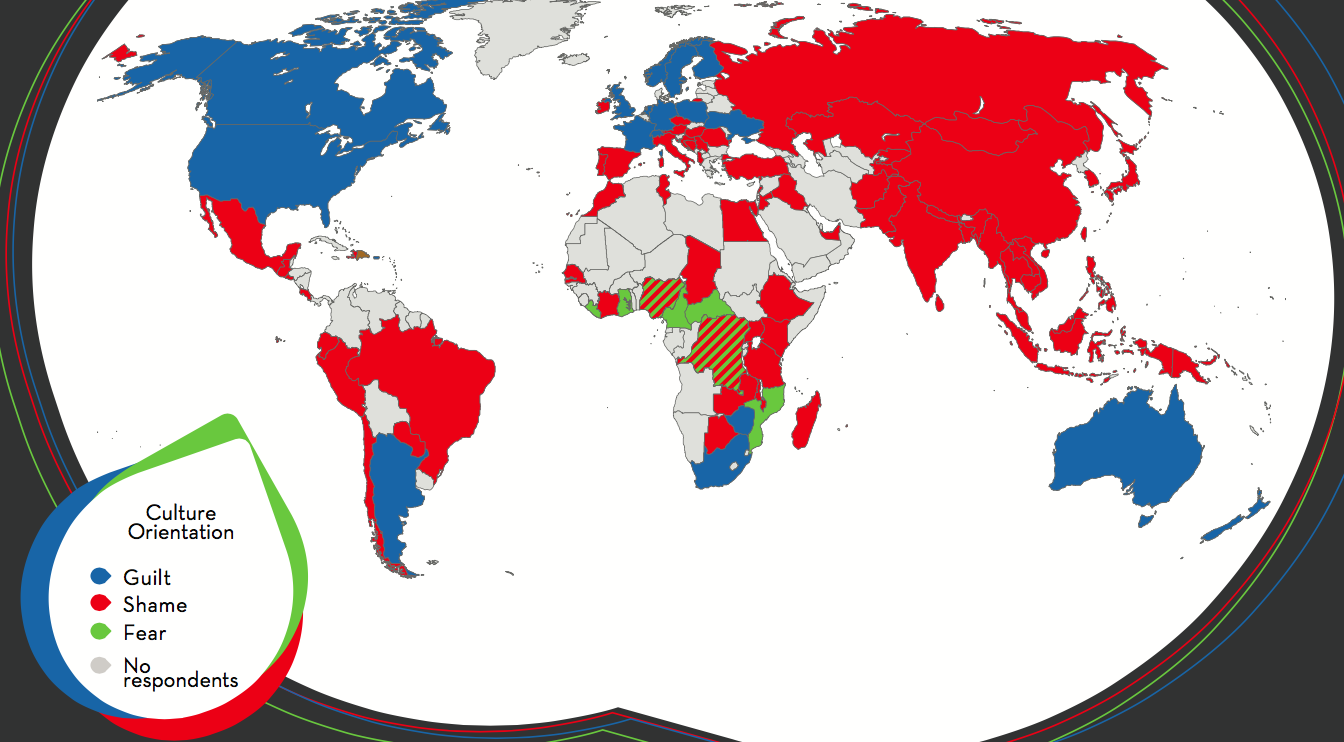
Global Culture Types. Honor-shame is the dominant culture type for most people in the world, as indicated in the map below from Global Mapping International.[4]Culture shapes people’s experience of sin (eg guilt, shame) and notion of salvation (eg forgiveness, honor); therefore, Christian mission must account for this global predominance of honor-shame cultures.
The solution of God’s honor[7]
GOD DESIRES TO BLESS THE NATIONS WITH HONOR AND SHARE HIS NAME WITH HIS PEOPLE.
God desires to bless the nations with honor and share his name with his people. The restoration of status, which all people long for, plays a key role in God’s mission throughout history.
God called Abraham to a life of honor—a large family, a great name, blessings, and divine protection from dishonor (Gen 12:1-3). These covenantal promises extend to Israel. A nation of despised slaves became God’s treasured possession set ‘in praise, fame, and honor high above all the nations’ (Deut 26:19). God’s people are chosen to mediate God’s honor to all nations.
God’s Son left the glory of heaven to bring God’s saving honor to all people. Jesus testified to God’s true honor by breaking bread with outsiders, healing outcasts, and shaming shamers. On the cross—a symbol of grand ignominy—he bore our shame and restored honor. Now, ‘anyone who believes in [Jesus] will never be put to shame’ (Rom 10:11) because Jesus shares his glory with his people (John 17:22; Rom 8:14–18; Heb 2:10).
Honor and shame in contemporary mission: Practical suggestions
Jesus Christ dismantles shame and procures honor for the human family. The church now continues the mission of God to bless all nations with God’s honor.
MAN IS ASHAMED OF THE LOSS OF HIS UNITY WITH GOD AND WITH OTHER MEN.13
Honor and shame is a socio-theological reality that affects all facets of biblical mission. God’s people must discern how to embody and proclaim God’s saving honor in particular contexts. Paul, Peter, and John faced this same challenge as they shepherded the early church. Their writings (especially Romans, 1 Peter, and Revelation) offer biblical examples of mission in honor-shame contexts.
Here are initial suggestions for incorporating honor and shame into seven areas of contemporary mission:
Conclusion
The mission of God involves restoring honor to the shamed. The theological realities of honor and shame are essential to the gospel and Christian mission.
Endnotes

Jayson Georges (MDiv, Talbot) has lived nine years in Central Asia. He authored The 3D Gospel and Ministering in Honor-Shame Cultures (with Mark Baker, IVP). He is the founder and editor of www.HonorShame.com.
Jayson Georges
Shame disrupts God’s design for the world. The mission of God involves removing shame and restoring honor. Honor and shame are inherent to the gospel and essential for Christian mission.
In the Beginning: Our family history
God created humans with glory and honor (Ps 8:6). Adam and Eve were honored co-regents, naked yet unashamed (Gen 2:25). Then shame entered the story.
After Adam and Eve disobeyed God, they hid and covered themselves—the hallmarks of shame. The human family ‘lost face’ before God and was banished from his presence. To remove this disgrace, people manipulate cultural systems to ‘make a name for themselves’ (Gen 11:4).
SHAME IS NOT LIMITED TO NON-WESTERN CONTEXTS.
Shame is not limited to non-Western contexts. People of every culture feel unworthy and fear rejection before others, because we all ‘fall short of the glory of God’ (Rom 3:23).
Exposing Western shame
Western thought has long associated shame with ‘pre-civilized’ cultures. However, conversations in the media are exposing the prominence of shame within Western cultures:
Brene Brown’s top-rated TED talks about shame have over 30 million views.
- Andy Crouch’s article ‘The Return of Shame’ in Christianity Today (March 2015) claims, ‘large parts of our culture are starting to look something like a postmodern fame-shame culture’.[1]
- No less than four separate Christian books released in 2016 carry the title Unashamed.[2]
- The issue of ‘internet shaming’ is widely discussed in New York Times articles, TED talks, and best-selling books.[3]
Western culture is becoming more shame-oriented. However, Western Christianity emphasizes legal aspects of salvation such as forgiveness of sins and innocence. Mission in Western contexts must offer biblical solutions to people who say, ‘Even if I am innocent, I cannot lift my head, for I am full of shame’ (Job 10:15).
The global face of honor-shame cultures
Honor and shame are prominent in Majority World cultures, where these moral values form the ‘operating system’ of everyday life. People avoid disgrace and seek status in the eyes of the community. Four global realities necessitate a larger role for honor and shame in twenty-first century theology and mission:
Global Culture Types. Honor-shame is the dominant culture type for most people in the world, as indicated in the map below from Global Mapping International.[4]Culture shapes people’s experience of sin (eg guilt, shame) and notion of salvation (eg forgiveness, honor); therefore, Christian mission must account for this global predominance of honor-shame cultures.
- Global Migration. Americans and Europeans now encounter people from honor-shame cultures. The surge of international students, refugees, and immigrants has changed the face of Western populations.[5] Understanding honor and shame helps Christians obey the Great Commandment of loving their neighbors from around the globe.
- Global Christianity. An increasing number of Christians come from honor-shame cultures. This shift in global Christianity mandates ongoing contextualization. The global church needs to articulate a theology that equips Majority World Christians to follow Jesus in their own sociocultural context marked by honor-shame realities.
- Unreached People Groups. Honor and shame pervade the cultural outlook of most people groups with limited or no access to the gospel. A biblical missiology for honor-shame contexts is strategic for fulfilling the Great Commission among all nations, especially those within the ‘10/40 window’.
The solution of God’s honor[7]
GOD DESIRES TO BLESS THE NATIONS WITH HONOR AND SHARE HIS NAME WITH HIS PEOPLE.
God desires to bless the nations with honor and share his name with his people. The restoration of status, which all people long for, plays a key role in God’s mission throughout history.
God called Abraham to a life of honor—a large family, a great name, blessings, and divine protection from dishonor (Gen 12:1-3). These covenantal promises extend to Israel. A nation of despised slaves became God’s treasured possession set ‘in praise, fame, and honor high above all the nations’ (Deut 26:19). God’s people are chosen to mediate God’s honor to all nations.
God’s Son left the glory of heaven to bring God’s saving honor to all people. Jesus testified to God’s true honor by breaking bread with outsiders, healing outcasts, and shaming shamers. On the cross—a symbol of grand ignominy—he bore our shame and restored honor. Now, ‘anyone who believes in [Jesus] will never be put to shame’ (Rom 10:11) because Jesus shares his glory with his people (John 17:22; Rom 8:14–18; Heb 2:10).
Honor and shame in contemporary mission: Practical suggestions
Jesus Christ dismantles shame and procures honor for the human family. The church now continues the mission of God to bless all nations with God’s honor.
MAN IS ASHAMED OF THE LOSS OF HIS UNITY WITH GOD AND WITH OTHER MEN.13
Honor and shame is a socio-theological reality that affects all facets of biblical mission. God’s people must discern how to embody and proclaim God’s saving honor in particular contexts. Paul, Peter, and John faced this same challenge as they shepherded the early church. Their writings (especially Romans, 1 Peter, and Revelation) offer biblical examples of mission in honor-shame contexts.
Here are initial suggestions for incorporating honor and shame into seven areas of contemporary mission:
- Evangelism. Western gospel presentations emphasizing forgiveness of guilt have little impact on people affected by shame. The gospel announces that all people stand ashamed before God, but Jesus Christ offers an honorable status via adoption into God’s family. People must abandon their pursuit of worldly honors and get their ‘face’ from God. Biblical faith means honoring Jesus with undivided loyalty.
- Discipleship. Honor and shame are not merely cultural pressures but notions of value and worth that shape a person’s worldview. Thus, honor and shame are essential for discipleship.[8] Following Jesus means adopting God’s honor code for all areas of life, learning to value what God deems valuable. God’s imputed honor empowers Christians to resist cultural disgrace and live for the glory of God’s name, even in the face of shaming persecution (Acts 5:41; 1 Pet 4:13–15).
- Peacemaking. In honor-shame contexts, restoring honor is a prerequisite for reconciliation. People break relationship when they feel disrespected; restoring face promotes peace. Western approaches of punitive justice exacerbate shame by making an example of the perpetrator. Yet, the practice of ‘restorative justice’ emphasizes reintegration back into community and so might be a more effective approach to reconciliation in shame-sensitive contexts.[9]
- Development and Aid. Poverty involves social isolation and shame as much as hunger. Free handouts intensify humiliation. Emerging mission paradigms more honorably address poverty. Business as mission (BAM) provides jobs with dignity.[10] Asset-based community development (ABCD) affirms people’s innate honor by starting with their own assets. Effective development increases people’s social capital.
- Partnerships. Westerners approach ministry partnerships in a manner akin to business contracts (eg MOUs, defined objectives, signed agreements). In honor-shame contexts, this approach confuses and offends others, implying minimal relationship. Financial relationships must account for the dynamics of patronage—the wealthy have a moral obligation to share benevolently, and clients reciprocate with non-material resources such as honor and loyalty. Patronage can be responsibly leveraged for kingdom purposes.[11]
- Prison Ministry. Psychiatrist James Gilligan, MD, notes, ‘I have yet to see a serious act of violence that was not provoked by the experience of feeling shame and humiliated, disrespected and ridiculed, and that did not represent the attempt to prevent or undo this “loss of face”.’[12] Guilty criminals live as shameful outcasts before and after the crime. Prison ministry should account for shame in the cycle of violence.
- Church-planting. Most people come to Jesus through a believing relative or the Christian community. In honor-shame cultures, relationships (more than facts) guide life decisions. Following Jesus means transferring one’s allegiance and relational obligations to God’s community. People tangibly experience God’s honor in the church.
Conclusion
The mission of God involves restoring honor to the shamed. The theological realities of honor and shame are essential to the gospel and Christian mission.
Endnotes
- Andy Crouch, ‘The Return of Shame’, Christianity Today, March 2015. ↑
- Christine Caine, Unashamed: Drop the Baggage, Pick up Your Freedom, Fulfill Your Destiny (Grand Rapids: Zondervan, 2016); Tracy Levinson, Unashamed: Candid Conversations About Dating, Love, Nakedness and Faith (TBL Publishing, 2016); Lecrae Moore, Unashamed (B&H Books, 2016); Heather Davis Nelson, Unashamed: Healing Our Brokenness and Finding Freedom from Shame (Wheaton: Crossway, 2016). ↑
- Jon Ronson, ‘How One Stupid Tweet Blew Up Justine Sacco’s Life’, The New York Times, February 12, 2015, http://www.nytimes.com/2015/02/15/magazine/how-one-stupid-tweet-ruined-justine-saccos-life.html; Jennifer Jacquet, Is Shame Necessary?: New Uses for an Old Tool (New York: Pantheon, 2015); ‘The Outrage Machine’, The New York Times, June 19, 2016, http://www.nytimes.com/video/us/100000004467822/the-outrage-machine.html; Monica Lewinsky, The Price of Shame, accessed June 22, 2016, http://www.ted.com/talks/monica_lewinsky_the_price_of_shame; ‘Shame on You(Tube)’, CBC News, accessed June 22, 2016, http://www.cbc.ca/radio/ideas/shame-on-you-tube-1.3086407. ↑
- ‘Culture’s Color, God’s Light’, Global Mapping International, 2016, http://www.gmi.org/services/missiographics/library/honor-shame/. The data is based on the initial 8,500 results from http://theculturetest.com. ↑
- Editor’s Note: See article by Sadiri Joy Tira entitled ‘Diasporas from Cape Town 2010 to Manila 2015 and Beyond’ in the March 2015 issue of Lausanne Global Analysis. ↑
- Timothy Tennent, ‘Anthropology: Human Identity in Shame-Based Cultures of the Far East’, in Theology in the Context of World Christianity: How the Global Church Is Influencing the Way We Think about and Discuss Theology (Grand Rapids, MI: Zondervan, 2007), 92. ↑
- For a fuller discussion of honor and shame in salvation-history and Christian theology, see Jayson Georges and Mark D. Baker, Ministering in Honor-Shame Cultures: Biblical Foundations and Practical Essentials (Downers Grove, IL: IVP Academic, 2016), 67–116. ↑
- Jackson Wu, ‘Does the “Plan of Salvation” Make Disciples? Why Honor and Shame Are Essential for Christian Ministry’, Asian Missions Advance (January 2016), 11–17. ↑
- Howard Zehr, The Little Book of Restorative Justice (Intercourse, PA: Good Books, 2015). ↑
- Mats Tunehag, ‘Business as Mission’, Lausanne Global Analysis 2:5 (Nov 2013). ↑
- Editor’s Note: See article by Phill Butler entitled ‘Is Our Collaboration for the Kingdom Effective?’ in the January 2017 issue of Lausanne Global Analysis. ↑
- James Gilligan, Violence: Reflections on a National Epidemic (New York: Vintage, 1997), 110. ↑
- Dietrich Bonhoeffer, Ethics (New York: Touchstone, 1995), 20. ↑
Jayson Georges (MDiv, Talbot) has lived nine years in Central Asia. He authored The 3D Gospel and Ministering in Honor-Shame Cultures (with Mark Baker, IVP). He is the founder and editor of www.HonorShame.com.
-------

Living as a Christian, Registered as a Muslim?
Jonathan Andrews
Why is the Middle East the way it is? What are the roots of the discrimination, the lack of the clear rule of law applied equally to all and the violence seen in all too many places? Why are Christians disproportionately the victims of these challenges?
Jonathan Andrews
Why is the Middle East the way it is? What are the roots of the discrimination, the lack of the clear rule of law applied equally to all and the violence seen in all too many places? Why are Christians disproportionately the victims of these challenges?
 This article, based on a recently published book,[1] looks at one aspect of society that is at the root of these challenges. The book illustrates how segregation of society on religious lines underpins discrimination, undermines the rule of law and fuels violence. This segregation is imposed and maintained by the religious registration system. The book takes the reader on a tour of the countries of the Middle East using stories of people to illustrate the profound effects of this system on individuals, families, and society as a whole. Interspersed in the chapters on each country are thematic chapters including limitations on who can marry whom, who can worship with whom, apostasy, martyrdom, and burial. Among the surprising insights is that burial rights are a significant impediment to the growth of the church in some communities.
What is religious registration?
EVERYONE IS ASSIGNED TO A FAITH AT BIRTH.
Everyone is assigned to a faith at birth. The registration might be generic, eg Christian, or very specific, eg Roman Catholic, Anglican. The registration is held in government IT systems and shown on some official documents, notably birth certificates and (in many countries) identity cards. The registration determines which religiously based legal system is applicable for personal status legal matters such as marriage, divorce, custody, burial, and inheritance. There is no complementary civil system; everyone is compelled to use a religiously based system. Islamic Shari’a, Christian Canon law, and Jewish Halakha law determine the personal status laws that apply to the respective communities. What happens when two people wish to marry but have different religious registrations? Which court system is applicable? Typically, this is highly problematic with one obliged to ‘convert’ so that their registrations match, accepting the legal, social, cultural, and family difficulties that this involves.
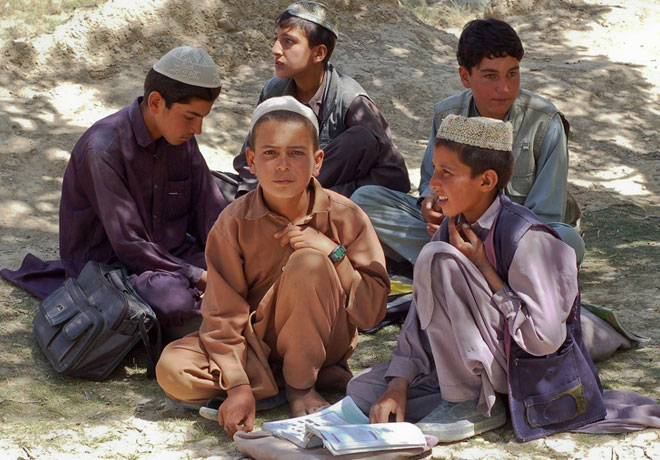
Historical origins
Historically, the systems seen today are adaptations of the Millet system of the Ottoman Empire. The Ottomans did not invent this system. The earliest recorded use is in the fourth century when it was applied to the communities of the Church of the East under the Sassanid Persian Empire. This empire’s state religion was Zoroastrianism. The Christians formed the Church of the East, whose leader, referred to as the Catholicos or Patriarch of the East, was responsible to the Persian king for the Christians within the Empire.
This system of maintaining Christians as a protected and respected religious community continued after the Islamic conquest of the Sassanids in 651. The Christian community flourished and was able to send missionaries to China and India.
RELIGIOUS REGISTRATION EMERGED DURING PERIODS OF HISTORY WITH LIMITED SOCIAL, ECONOMIC, AND GEOGRAPHIC MOBILITY.
Religious registration emerged during periods of history with limited social, economic, and geographic mobility. Most people lived their whole lives close to where they were born. Exceptions to this pattern were rare, in spite of well-established trade routes. The context of today is very different: how does the concept and application of religious registration need adjusting for the modern context of greater mobility and urbanisation, two global trends profoundly affecting the Middle East?
Why does this matter to Christians?
One theme of the book is religious conversion: can converts change their religious registration to match their beliefs? Conversion to Islam is legally possible and straightforward everywhere; conversion from Islam is impossible in many places and in the few locations where it is possible legally, there are social and cultural impediments to change.
The implementation of religious registration that we see in the Middle East today is far removed from the honourable origins under the Sassanids. What was designed to allow a distinct religious community to enjoy rites of passage of their choice while affirming loyalty to the political rulers is today used to marginalise those different from the majority. It is presumed that those whose registration is not of the majority are disloyal to the state and cannot be trusted. One expression of this is that in most countries there are restrictions on public sector employment for Christians. The system underpins discrimination.
In Lebanon, the linkage of religious registration to the electoral system is one cause of the dysfunctionality of the political system. The population is, in general, disillusioned with the status quo. Calls for change fall into the dilemma that it is the very politicians causing the problems who are unwilling to make the changes required to resolve the situation. Personal self-interest, or the interests of those close to them, means that they act to preserve their perceived power, prestige, and position, rather than act to govern for the well-being of all. Lebanon is an example of the fact that segregation of society on religious lines can have profound negative consequences for all.
Peace and reconciliation
It is often claimed that Islam is a religion of peace. What is meant by ‘peace’? Armed conflict can be stopped by one party surrendering unconditionally to the other. This brings ‘peace’ in the sense of an end to conflict, although the victors are able to impose whatever conditions they choose on the vanquished. It does not guarantee peace in the sense of stable, harmonious, and respectful community relations.
In Egypt, inter-communal strife is often followed by a ‘reconciliation meeting’. In situations involving Christians and Muslims, what typically happens is that Muslims seek draconian terms that marginalise and disadvantage the Christians, irrespective of the rights and wrongs of the situation. In such cases, criminal behaviour is overlooked, even exonerated. Religious registration is at the root of such practices, creating a context in which those who think of themselves as the majority feel that they are entitled to exploit others. The system undermines the rule of law.
MUCH OF THE VIOLENCE AND EXPLOITATION IN THE MIDDLE EAST TODAY PITS ONE GROUP OF MUSLIMS AGAINST ANOTHER.
Much of the violence and exploitation in the Middle East today pits one group of Muslims against another. The primary victims of Islamic extremism are ‘Muslims of the wrong type’, meaning those different from the perpetrators, although Christians and other non-Islamic religious groups are frequently caught in the cross-fire.
The book’s appendices give a summary of how the diversity within Islam, Christianity, and Judaism arose; politics, geography, and theology feature in the story of all three religions. One challenge for today is whether such diversity is to be celebrated or lamented, respected or crushed.
Signs of hope
So is there hope for the future? The book points to several positive developments of recent years.
In Egypt, what is referred to as the ‘re-convert issue’ was resolved in 2011. ‘Re-converts’ are those whose registration was Christian at birth but who changed to Muslim for any of a variety of reasons. In 2011, the legal right to revert to being registered as Christian was clearly established following a multi-year legal process. More than 4,000 people were part of the class action that secured this right. There have been no reported problems with implementation.
In February 2014, the Palestinian Authority removed religious registration from identity cards. They cited the Palestine Basic Law enacted in 2002 which states that there should be no discrimination on the grounds of gender, ethnicity, political views, or religion.
King Abdullah of Jordan is one of a number of senior political leaders urging Middle Eastern Christians to remain in their countries. Such statements are to be welcomed, although they appear incongruous given the stories presented in the book that illustrate Jordan’s discrimination against Christians and the very harsh manner in which the legal system can treat those who have converted from Islam.
Missional and practical implications
Those of us participating by prayer and other actions in spreading the good news of Jesus in the Middle East need to be aware of the challenges that confront those who come to faith in Jesus. They will face the ‘identity crisis’ of living and worshipping as Christians while being treated by the state as Muslim; their religious beliefs and registration are different. The typical pressure points are at marriage; the birth of children (whose birth certificates will describe them as Muslim); and when the children reach school age. Their children will be treated as Muslims by the state despite having been raised as Christians; the challenges to their sense of identity are profound.
The consistent call of Middle Eastern Christian leaders is that we all work to enable Christians to stay, to be part of a growing church.[2] It is acknowledged that there are a few cases where religious persecution obliges Christians to emigrate. These are the exception, not the norm.
RELIGIOUS REGISTRATION IS THE ROOT OF WHY CHRISTIANS ARE TREATED AS SECOND CLASS CITIZENS.
There are several implications for Middle Eastern Christians. Religious registration is the root of why Christians are treated as second class citizens. This is one factor prompting some to emigrate. In some places it contributes to the difficulties in operating church buildings. It is also one reason why integrating converts to Christianity into churches is problematic in many locations. In some parts of the Middle East it is already the case that the majority of Christians are from Muslim backgrounds. The typical modus operandi of the church will be changed by this reality.
Those with access to policy circles should be asking for the effects of religious registration on society to be noted and policy formulation to include solutions. This applies to Middle Eastern policy circles and equally to those elsewhere who relate to Middle Eastern countries. Authentic local solutions need to be identified and implemented for the benefit of all. All governments across the region that want to fulfil their people’s aspirations for greater dignity and more and better jobs would be well advised to address the negative effects that religious registration has on economic, cultural, and social creativity.
What is the way through?
The book’s opening paragraph quotes a Middle Eastern Christian leader asking, ‘help us find a way through’. The challenges for converts to Christianity are clear; yet many, including church leaders, are supportive of the status quo. Pointing out that the current religious registration system leads to violations of international law appears unlikely to motivate change. So, the book describes the adverse effects on society as a whole and urges people of all faiths and none to seek authentic local solutions that will benefit all.
Endnotes
- Identity Crisis – Religious Registration in the Middle East by Jonathan Andrews is available in print and electronic forms from the Publisher’s website using the URL: www.GileadBooksPublishing.com/identity-crisis. The author may be contacted at JonathanAndrews@pobox.com. ↑
- Editor’s Note: See article by A Syrian Pastor entitled ‘The Crisis in Syria’ in the January 2015 issue of Lausanne Global Analysis. ↑
- Feature image: From ‘Symbols‘ by Michael Coghlan by (CC BY-NC 2.0).
-------

No comments:
Post a Comment