
From the Lewis Center for Church Leadership of Wesley Theological Seminary
-------

The Importance of Why by Graham Standish
Healthy churches know why they do what they do, says pastor and author Graham Standish. When what we do is based on a clear why, we act with purpose. When we don't know why we do what we do, we lose focus.
Why do some churches flourish and others struggle? Those that flourish generally know why they do what they do. Those that struggle typically only know what they do. Why do we continue to host the strawberry festival year after year, when few people come anymore? Why do we insist on playing mostly the same hymns today that were sung in the 1950s? Why do we insist on saying “We’ve always done it this way,” when clearly that way is no longer working because people are no longer coming?
When we understand clearly why we are doing what we are doing, and when this why is based on a compelling purpose, it leads to creative, dynamic, and inspiring mission.
Most mainline churches are experts in knowing what to do, but they’re generally lost as to why they do what they do. And understanding why is the key to health, growth, and renewal. Why is vision. It is the ability to understand where we want to go or, more specifically, where we are called to go and what our purpose is in doing so. When we understand clearly why we are doing what we are doing, and when this why is based on a compelling purpose, then it leads to creative, dynamic, and inspiring mission.
Unfortunately, many pastors and church leaders with vision are great at understanding why, but stink at actually figuring out what needs to be done to accomplish their why. This is the struggle for many seminary theologians who are good at saying what the church’s purpose is (in other words, the why underlying a church’s ministry and mission), but can’t tell people how to pragmatically accomplish it. This problem extends to many pastors who have strong, deeply held convictions and theologies about a church’s purpose, but never manage to articulate how to accomplish what they want the church to do. They are good at offering shoulds and oughts, but terrible at offering pragmatic hows that accomplish what we should and ought to do.
Meanwhile, a bigger problem is that most churches and pastors are good at articulating what we should do as a church, but never really understand or articulate why we should do it. Why should we worship this way over that way? Is it simply because that’s our tradition? Why is our board structured the way it is, and is this the best way to create a leadership team? Why do we engage in the ministries and missions that we do? If we are good at articulating what to do, but then don’t have a compelling, inspirational why at the core of what we do, then what we do will cease to inspire our members, and the ministries and mission will founder.
Ultimately, leading a healthy church requires being able to articulate both why and what. We need to be clear about why we should engage in a ministry, but also articulate and plan out specific and concrete steps to achieve it.
A simple way of thinking about this is that the apostles always understood why they were spreading the gospel. They knew that they were called by God to reach out in Christ’s love. That was their purpose, their calling, and their why. At the same time, they knew concretely what to do and how to do it: preach, teach, heal, feed, create communities, love each other, and do so in ways that were relevant to each kind of person.
Do we know why we do what we do, and do we know concretely what to do based on the why?
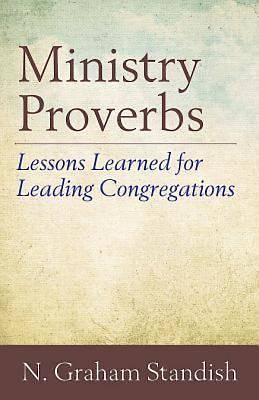 This article is excerpted from Ministry Proverbs: Lessons Learned for Leading Congregations (Morehouse Publishing, 2016) by N. Graham Standish. Used by permission. The book is available through Cokesburyand Amazon.
Related Resources
- Two Views of Vision by Lovett H. Weems, Jr.
- Discovering God’s Future For Your Church Video Toolkit
- The Power of Core Values by Tony Hunt
Read more.
-------

Effective Church Websites by Scott Dixon
Web designer and consultant Scott Dixon shares tips for designing a good church website. He says three traits are essential -- great content, good design, and easy navigation.
I can’t count how many times I’ve been asked “What makes a good website?” Or, better yet, “What can I do to make my website better?” I’ve learned there are three essential traits of a good church website or any website for that matter: great content, good design, and easy navigation.
A simple search for top church websites and website designs can help in so many ways. Looks for ideas on sites that are well-organized, easy-to-read, up-to-date, and fresh.
What makes great content?
- Great content begins with clean writing that is easy to read and information your readers will find valuable. Keep your content original and make your message stand out. Here are some content ideas:
- Make it easy to find information about worship. Visitors look for service times, location, and other information, such as dress and service style, so make it easy for potential newcomers to know what to expect.
- Children’s ministries are important to many visitors, so share information about the children’s ministry and how children are cared for during services.
- How can people connect with your church? Whether it’s a form or a published email address/phone number, make it easy for a person (especially a newcomer) to reach you, and then be sure you respond. If your office is closed on certain days or only open for certain hours, share your response times.
- Give donors a way to give to your church on your website.
- Be sure your website works with mobile phones and tablets.
- Consider interactive tools like The City, Twitter™, and Facebook to complement your website. No website will ever be as up to date as the real-time conversations of social media. So don’t miss out on having your church engaged with your community via these tools.
- Keep your content organized. Use bullets and numbered lists to draw the eye to important points. Use images to help your visitors relate to a topic.
- Be sure to edit and revise content. Always check word choice, grammar, and spelling. Stay away from using too many exclamation points or ALL CAPS.
- Update your content regularly and check hyperlinks. Broken links are frustrating and will drive people away from your site.
- Good design doesn’t just mean an expensive template or customized design. Your pages should have a consistent look and layout. Background colors, fonts and font styles, and use of graphics contribute to a consistent look. Avoid using different backgrounds or even different colors on ministry pages because it distracts your visitors. Instead, include image placeholders in your design so pages can have different images while maintaining a consistent look and layout.
- Choose a design that reflects who you are. For example, dark red colors, images of stained glass, and images of formal services will lead visitors to believe your church is more traditional. Colors and images can impact what someone feels when coming to your site for the first time. What is the impression you’re trying to give? A simple search for top church websites and website designs can help in so many ways. Look for ideas on sites that are well-organized, easy-to-read, up-to-date, and fresh.
- Before starting a new site or even creating a new design, it’s always best to map the journey. Like taking a road trip, it’s a good idea to map out the trip before you get behind the wheel. This begins with setting up your navigation or your site map. This road map will help you decide what’s important and where things should live. You can find many resources on the web for setting up a good site map. Begin with setting up a hierarchical structure and organizing your site into sections and subsections. A good site map is important for the designer as well as for the site administrators and it’s a great way to begin building content.
- One challenge when designing a church website is trying to get a committee to agree on design elements. I have worked with large committees in the past and it’s always hard to move forward, even on the smallest of decisions. If you anticipate this challenge, consider selecting a chairperson who can take control and make firm decisions on behalf of the group. Still, keep in mind that suggestions and comments from the committee and ministry leaders can be helpful when setting up your navigation or choosing a color scheme for your site.
This article is adapted from a post on ACS Technologies’ website and used with permission.
Related Resources:
- Check Your Website Immediately by Lovett H. Weems, Jr.
- Meeting Your New First-Time Guest by Don Nations
- Your Website is Your Church’s Welcome Mat by Matthew Lyons
Read more.
-------
The Right Question:
Leaders do not need answers. Leaders must have the right questions.
It is common in churches to say that our budget acknowledges our priorities. How we spend our financial resources surely represents our values in a practical way. However, there is another indicator of our priorities. Our use of time is an even more accurate indication of values, yet little attention is given to the "time budget" of how our members, staff, and pastors are asked by the church to spend their time. A good question may simply be:
- How do we allocate our time and ask others to allocate their time?
-------

Pastors Moving to New Churches Need the Right Start
Are you a pastor preparing to begin ministry in a new setting? With The Right Start Video Tool Kit, you'll learn how to end your current ministry well, develop a personal transition plan, and make the most of your first days, weeks, and months in your new congregation. The Right Start is available in both Pastor's and Group Training Versions.
Learn more and watch a video preview now.
-------

Register for Generosity NOW: Stewardship Fusion 2April 25-27 in Washington, DC
Generosity NOW has been a premiere Ecumenical Stewardship Center event for decades. Laypersons, pastors, and judicatory and denominational staff who attend Generosity NOW increase their knowledge about spiritual principles and best practices relating to faithful stewardship and generous giving through plenary sessions, workshops, and worship. Presenters include the Lewis Center's Dr. Lovett H. Weems, Jr., and Dr. Ann A. Michel.
Learn more and register now.
-------
Quotable Leadership:
It is almost impossible to overstate the difficulties long-established congregations face as they seek to move up off a plateau in size or to reverse a long period of numerical decline.[Lyle E. Schaller]
-------

Learn 50 Ways to Welcome a New Pastor
If a new pastor is in your congregation's future, be sure to check out "50 Ways to Welcome a New Pastor," prepared by Bob Crossman. This free resource shares tips on how to say goodbye to your current pastor in a healthy way and offers helpful advice on how to welcome your new pastor.
50 Ways to Welcome a New Pastor by Lewis Center
Congregations can help a new pastor get off to a strong start with these 50 Ways to acclimate a new pastor and make that new pastor feel truly welcome.
Prepared by Robert Crossman
Prepare to welcome your new pastor
- Open your hearts and decide that you are going to love your new pastor.
- Begin praying daily for the new pastor and family, even as you continue to pray for your departing pastor and family.
- Invite church members individually to send cards of welcome and encouragement to the incoming pastor.
- Know that welcoming your new pastor in genuine and effective ways lays the ground work for a healthy and vital relationship and the development of stable, long-term ministries together.
- Plan for the transition. Occasionally important welcoming gestures are missed with everyone thinking someone else is handling these details.
- Appoint a specific liaison person to whom the pastor can go for help and information during the transition.
- Show love, regard, and even grief, for your departing pastor. This is one of the best things you can do for the new pastor.
- Acknowledge the change in public ways. Especially in the case of a much-beloved pastor, this allows the congregation better to let go and receive the new pastor.
- Provide the congregation the opportunity to say thank you and goodbye to the outgoing pastor, even if things have not always gone well.
- Find appropriate occasions — in worship and at other times — to thank the outgoing pastor.
- Express appreciation in ways that are consistent with what you have done in the past.
- Consider giving the pastor the last two weeks off. This helps the pastor enter the new situation rested and gives an emotional buffer between one pastor’s last Sunday and another pastor’s first Sunday.
- Plan goodbye celebrations prior to the beginning of the two weeks off.
- Provide information to the local media about the outgoing pastor’s accomplishments and future plans.
- Do not invite the former pastor to return for weddings, funerals, or baptisms. This allows your former pastor to engage fully with his or her new congregation, and it establishes your new pastor as everyone’s pastor from the beginning.
- Make sure the parsonage and pastor’s office are clean and ready. Offer to provide help or a cleaning service if needed.
- Determine if the parsonage is in need of repairs or painting. Consult the outgoing and incoming pastors about timing so as not to disrupt the lives of either party. Do not ask a new pastor to move into a parsonage “under construction.”
- Consult the new pastor on any paint, design, or furnishings issues.
- Offer to have someone cut the parsonage grass.
- Make sure the new pastor and church officials are clear on how moving expenses are paid and all matters related to compensation, benefits, and reimbursement policies.
- Welcome your pastor on moving day
- Stock the parsonage refrigerator and pantry with some staples.
- Make sure there are kid-friendly foods and snacks in the refrigerator if children are arriving.
- Have a small group on hand to greet the new pastor and family when they arrive and to help as needed.
- Offer child care if there is an infant or toddler in the household.
- Invite children in the household to do things with others of their same age.
- Welcome any youth in the household by having church youth group members stop by and offer to show them around.
- Continue the welcome during the entry period
- Take food over for the first few days. Many churches continue the practice of having a “pounding” for the new pastor when persons bring food items.
- Provide a map with directions to local dry cleaners, grocery store, drug store, veterinarian, etc., and information on local options for internet and cable television providers.
- Give gift certificates to several of your favorite restaurants in the community.
- Give the pastor and family a welcome reception on the first Sunday.
- Plan a worship celebration of the new appointment.
- Invite the new pastor to any social events held by Sunday School classes or other groups in the early months.
- Make sure the pastor’s spouse and children, if applicable, are invited to Sunday School and other appropriate small groups.
- Continue to remember your new pastor and family in your daily prayers.
- Help the new pastor become familiar with the congregation
- Introduce yourself to the pastor repeatedly! You have one name to learn; your pastor has many names to learn.
- Wear name tags. Even if name tags are not a tradition, the congregation can wear them for a few weeks to help the pastor learn names.
- Provide a current pictorial directory of all the church members, if available.
- Provide an up-to-date list of all church committees and officers.
- Provide the new pastor with a tour of where things are kept inside the church and perhaps a floor plan of the facilities.
- Orient the new pastor to information systems and the way records are kept.
- Make sure the pastor has a list of home bound or nursing home members, a list of those struggling with long term illness, and a list of those still in grief over recent deaths in the family. Better yet, take the pastor for an introduction to each of these households.
- Have an appropriate person offer to go with the pastor for introductions and support if there are particularly urgent pastoral situations (a member near death or the family of a member who has just died).
- Have a lay official offer to take the pastor to meet church members in their businesses or other work settings, if they are easily accessible.
- Offer to help arrange small group sessions to meet and talk with the congregation.
- Create a “church yellow pages’” (a list of people in the church who have specific skills that a newcomer may find beneficial…. auto mechanic, doctor, dentist, dry cleaners, book store, office supply, etc.).
- Help the new pastor connect to the community
- Provide local media with information about the new pastor.
- Provide a list of hospitals, nursing homes, and community service agencies.
- Introduce your new pastor to other clergy in the community. Provide information on any ecumenical activities or associations.
- Introduce the new pastor to public and community leaders.
- Ask church members in civic clubs to take the new pastor to one of their meetings.
 Download a PDF of this page to share with others.
Read now and download free.
-------
Editors: Dr. Ann A. Michel and Dr. Lovett H. Weems, Jr.
Lewis Center for Church Leadership of Wesley Theological Seminary
Connect with the Lewis Center:


Lewis Center for Church Leadership
Wesley Theological Seminary
4500 Massachusetts Avenue NorthWest
Washington, D.C. 20016, United States
-------
Lewis Center for Church Leadership of Wesley Theological Seminary
Connect with the Lewis Center:
Lewis Center for Church Leadership
Wesley Theological Seminary
4500 Massachusetts Avenue NorthWest
Washington, D.C. 20016, United States
-------
No comments:
Post a Comment