


Bigstock/merydolla
I spend a lot of time, intentionally, with the spiritual but not religious folks in my community. I’m always amazed at the refreshing honesty and humor in our conversations. There’s a real willingness to laugh at former misfortunes, to give credit to a higher power, to talk of miracles and to be of service to others. I’ve often wondered how to bring those qualities to the congregations I once served or now coach. Turns out there’s a 12 step program for that! It’s outlined in an intriguing new book, Recovering from Church and Discovering Jesus: A 12 Step Program. It made me wonder: Do you need a 12 Step program to follow Jesus?Retired pastors and authors Gerri Harvill and Stan Norman wondered the same thing. They shared their thoughts and ideas with me. Check it out; you’ll be inspired by the conversation.
Rebekah Simon-Peter: Gerri and Stan, you have written a book about spirituality apart from the institutional church and organized religion. Isn’t that an oxymoron for a Christian?
Gerri Harvill and Stan Norman: Well Rebekah, as pastors of a church we became aware that our own spirituality was gradually being taken away from us by the demands of the institution. We were told to pay attention to our spiritual health and then allowed no time or energy to do so. There was always one more report to fill out, one more person to visit, one more meeting to attend. We were stuck in upholding the institution at the expense of our spirituality.
RSP: I can relate. I’ve been there too! How did you respond?
GH & SN: We were very frustrated with the unwillingness of the institution, and of many in the congregation of the church where we served, to try anything new or change from getting together with friends for worship on Sunday, to following Jesus as a way of life. Since we had reached retirement age, we decided to step away from the institution and pursue spirituality with a few like-minded individuals. We gathered as a small community for 8 months before we realized that we were addicted to the rules and rituals of the church ourselves. Our friends in the Alcoholics Anonymous (AA) and Narcotics Anonymous (NA) communities seemed to have a better, more authentic handle on spirituality than we did as professional clergy.
RSP: What do you mean by that? Give me an example.
GH & SN: A few months into our gatherings we realized that we were becoming another church. We had only moved from the sanctuary to our living rooms and from Sunday morning to Saturday night. Our gathering time was scripted, we had liturgy and music and we were doing most of the talking. We had envisioned a community of equals gathering to help each other follow Jesus on a daily basis. But as leaders, we realized that we were still caught up in the rules and rituals of organized religion. We realized we were addicted.
RSP: What’s wrong with being addicted to the institutional church and organized religion?
GH & SN: The rules, rituals and traditions of the church itself become our “golden calf.” Church and religion become the idol that replaces God in our lives. It was a humbling experience to realize that we had become the very thing we had preached against for years.
RSP: So, is your book anti-church?
GH & SN: No! But our book does call for the institution of the church to change and become more like the movement that Jesus intended his church to be. The institution needs to die to some things so that God can resurrect it to new life.
RSP: How did you make the connection between substance addiction and spirituality?
GH & SN: Well Rebekah, we were exposed to the 12 step programs of AA and NA through groups that met at the church where we served. Our reading and research lead us to writers and teachers like Richard Rohr, Frederick Buechner, Gerald May and you yourself who had already recognized the intrinsic value of the 12 step programs for spiritual formation and growth.
RSP: What can 12 step groups teach the church about spiritual formation and growth?
GH & SN: Spiritual formation has to take place in community. It’s hard work; we shy away from it because we are scared and lazy. The authentic sharing and caring that takes place in AA and NA meetings is largely missing from the institutional church, replaced by judgment and hypocrisy.
--
I came away from my conversation with Gerri Harvill and Stan Norman energized and inspired by the bold steps they’d taken in reinventing the idea of church using the 12 step process. In my 2015 article “15 Things Alcoholics Anonymous Can Teach the Church,” I share their concerns about outdated rules and rituals impeding the process of spiritual awakening. I think Stan and Gerri are on to something; read their book and join them in discovering new ways to follow Jesus.
If you are looking for a way to connect up with the larger dreams of Jesus, contact me at rebekah@rebekahsimonpeter.com to join my free one-hour webinar, Dream Like Jesus® on July 27 at 1:30 p.m. MT.


Sponsored

Bigstock/Rawpixel.com
The following article is part three of a ten-part series exploring all aspects of organizing, worshipping, and growing as a house church community. Read the previous parts here.Doing What Needs to be Done
Here’s a quick test of leadership: spontaneously ask for volunteers to read scripture, pray, or to lead music or liturgy in worship.
We do this every week in our house churches, because one of the basic tasks of discipleship is to step up when there’s a call to do something. House churches facilitate both leadership development and discipleship, because in a smaller group there is more demand for people to lead. In larger churches, I’ve often heard people cite the 80-20 rule: twenty percent of the congregation does eighty percent of the work. Churches which rely on professional staff often have recruitment programs to help the congregation understand that every member is in ministry.
The 80-20 rule does not apply in house churches: if nobody leads, church doesn’t happen. Nearly every regular attender, even the children, leads in some way. When we have twenty or more, we try to avoid having the same folks lead every week. When gatherings are as small as three or four, if one person leads liturgy, one person reads scripture, and one person prays or brings a message, one hundred percent of the congregation is doing the work.
Part of this is probably due to selection bias: house churches are not as visible as sanctuary-centered churches, and the people who find them are likely looking for something different. Those who want to grow deeper in their discipleship may be more motivated to seek out alternative forms of Christian community and lead when they find it.
So, every Sunday, I ask for volunteers. Sometimes I’ll ask in advance, especially for prayers, because not everyone feels comfortable extemporizing. But if we want to model a culture of doing what needs to be done, we need to ask, publicly, every week. Asking for people to lead liturgy is as much part of the liturgy as the written words. Folks who speak, whether leading the call or participating in the response, are practicing speaking their faith every single week.
I distinguish between discipleship and leadership development, but the two are closely intertwined. Some folks have social anxiety and may not feel comfortable reading or leading in worship. They may still be devoted disciples who lead in other ways. A key component of discipleship and leadership are the same: a willingness to do what needs to be done.
Discipleship and Leadership
“Disciples” refers to any who are deliberately following Christ and growing in this work. “Leaders” are those who are called, at various times, to lead this community of co-learners in the work. They may lead for a task or for a season and then step back, but they are always disciples.
The word “disciple” means student. But the New Testament model of teacher-student is not the institutional model of an expert dispensing knowledge to empty-headed recipients in a classroom. Instead, it’s a community built around a set of practices where we are co-learners. Through repetition and discipline, we make ourselves available to be shaped by grace into the image of the Master.
Likewise, “student” does not mean primarily one who thinks or believes the right things. I tell folks that we are students of the Way, or students of love; love of God and love of neighbor. The goal of discipleship is to become better lovers.
Jesus transforms the concept of leadership. In church, a “leader” is not an institutional, hierarchical, sovereign-style ruler, but a servant (Matthew 20:26). A servant-leader is one who a) does what is necessary and b) gets others to join them. That can mean sweeping the floor, preaching, baking a cake, organizing, creating art, or risking arrest at a public protest. As long as they are inviting others into the work, they are a leader. Since God gives us all different gifts and talents, and since we all have different leadership styles, servant-leadership will look different for different folks.
Since a house church depends on shared leadership, we’re also practicing taking turns as leaders. John McClure calls this “temporary inequality.” In the radically egalitarian church in Matthew’s gospel, even calling someone “pastor” is suspect (Matthew 23:8-12). Jesus indicates that his relationship to us and our relationship to each other is defined ultimately not by authority, but by friendship (John 15:15).
In our house churches, every partner takes the Gallup StrengthsFinder. We use this instead of a “spiritual gifts” inventory, because it helps us put together work teams whose leadership skills and strengths are complementary.
Practices, not Programs
I tell my congregation that we grow and are shaped by practices, not programs. We use a model of discipleship that has five areas of practice. (I’ve borrowed some of this from the concept of Covenant Discipleship Groups, but it is important to distinguish between house churches and CD groups: one is a worshiping community, and the other is an accountability group.)
The five-areas model helps our whole church clarify whatwe’re after when we commit to following the Way of Christ and when our leadership team decides where we will direct our energy as a church network. In this model, we commit to loving God and loving our neighbors. We also commit to doing works of love as individuals and as a community. Loving God as a community means worship, while loving God as an individual means devotion. Loving neighbor as an individual means doing works of compassion, while loving neighbors as a community means doing works of justice.
To these four areas practiced by CD groups, we add a fifth: witness. Although church culture usually thinks of witness as telling, the first meaning of witness is to see or observe. The second meaning of witness is to tell. Because our church emphasizes the observing part of witness, “witnessing” means we have to listen and ask questions more than we talk. We witness when we encounter stories in worship as we hear the Word read and proclaimed; in devotion as we read scripture and reflect on God’s action in our lives; in compassion when we meet Christ in our neighbors; and in justice when we live out our calling as a prophetic community. I tell my congregation that these areas are like four chambers of the human heart, with witness being the blood that flows through worship, devotion, compassion, and justice. The stories we hear and tell, the relationships we form through story, all empower the work of the whole Body through the power of the Holy Spirit.
Of these areas, the most neglected in our modern North American church culture is justice. For this reason, the institutional church is heart-sick. I firmly believe this is one reason worship sometimes feels flat and stale: we do not have a sense of being a prophetic, justice-seeking community. When we give glory to God in song, it is often all about me as an individual and my salvation. We have to reclaim our prophetic mandate. I believe more people would sing in worship if they knew the power of freedom songs, but that only comes through standing up for justice and seeing the power of God affect public life.

Image by Brooke Smith. Used with permission.
We use the graphic above as a visual reminder of what it means to follow Christ. It is a way to remember the three general rules of Methodism: do no harm, do good, and stay in love with God. It reminds us of the Great Requirement to do justice, love kindness, and walk humbly with God (Micah 6:8). It reminds us of the Great Commandment to love God and neighbor (Matthew 22:36-40). And it reminds us of the Great Commission to go and make disciples (Matthew 28:19).
Heartbursts: Churches Empathizing with Cultures is a regular column helping leaders plan, implement, and evaluate credible and relevant ministries based on cultural trends.
!["Christ Taking Leave of the Apostles" by Duccio di Buoninsegna [Wikimedia Commons]](https://commons.wikimedia.org/wiki/File:Christ_Taking_Leave_of_the_Apostles.jpg)
The church goal to “make” or “multiply” disciples is so universal today, among so many different denominations and traditions, and in so many different demographic contexts, that the phrase has lost any real meaning. Indeed, one suspects that churches want to keep the term deliberately vague. It sounds good, but allows churches to continue doing whatever it was they were doing previously.
On the other hand, literally any change or creative idea can be rationalized to fit whatever definition of “disciple making” is deemed to be in the best interests of the institution in any given context. For example, a recent e-newsletter from a well-known church consulting firm recently stated: "Most mainline denominations are spending more time, energy, and money on issues other than making disciples — racism, sexual relations, being a service organization, to name the big three."
Some lifestyle groups would agree with that; but other lifestyle groups assume that spending resources on such things is precisely what being a disciple means.
"Sideline Church: Bridging the Chasm between Churches and Cultures" (Abingdon Press, 2018). Preorder here: http://bit.ly/SidelineChurch
United Methodists have generally jumped on the bandwagon. Judicatories and congregations declare that they are all about “making disciples,” but few are very articulate about what exactly that means for faith, interpersonal relationships, daily behavior, or economic risk (to name the big four). It leaves clergy confused. They will be evaluated on their ability to lead churches in “making disciples,” but the criteria for that evaluation in any given urban core, urban, exurban, suburban, small town, rural, or remote context is unclear. This fog is one major reason that the church (of any stripe or tradition) finds itself increasingly on the sidelines of contemporary cultures.In my newest book, Sideline Church: Bridging the Chasms between Churches and Cultures, I identify five major lifestyle groups that have emerged from the era of the 1990’s when Tex Sample described the “cultural left,” “cultural right,” and “cultural middle.” It may help clergy to know what the peculiar cultural diversity in their particular demographic context hears and/or fears when your church declares they are in the business of “making disciples.”
The Cultural Left
The “Cultural Left” has morphed into the Culturally Ambivalent and its more extreme offshoot the Liberal Cultural Eclectic. The “journey theology” that typified their approach to faith and behavior has also morphed into “wandering spirituality," or, in its more extreme version, “playlist theology.” The people described by “wandering spirituality” have no particular starting place or destination in mind, but experiment or dabble in whatever attracts their attention at any given time. The more extreme version of “playlist theology” personalizes religion to encourage individuals to select or deselect whatever theological tune speaks to their mood or builds their relationships on any given day.
What does “making a disciple” mean for these lifestyle groups? What they hear is that the church is all about mapping every religion or spiritual movement in relation to the work and words of Jesus — acknowledging, of course, that what can authentically be attributed to the historical Jesus (once historical and cultural biases have been removed) is about the size of a magazine article. A “disciple” is a spiritual wanderer with a denominational flashlight. What they fear is that the church is going to force them to define truth once and for all, effectively blocking imagination and personal growth.
Among the more extreme cultural left that I call the liberal cultural eclectic, what they hear and fear is both more limited and more terrifying. They hear that the church wants to rebrand their radio station to provide a continuing theme or refrain to unpack whatever intellectual or spiritual issue burdens them at any given time. The question “What would Jesus do?” is perpetually asked but (thankfully for personal freedom) never really answered in the ambiguities of modern living. They fear that the church wants to return to the old days of CD’s and record albums, when the same beloved songs, doctrines, and priorities would be played over and over again, in every church franchise across the country.
The Cultural Right
Then there is the “cultural right” that has morphed into the culturally righteous and its more extreme offshoot, the conservative cultural wedge. The dogmatic theology of the past has morphed into “boundary theology” that has reduced faith into a few essential affirmations. So long as you affirm this shortlist, you are free to think and do what you wish. Its more extreme version, “acid test religiosity,” has tightened the boundaries of acceptance. If “boundary theology” is like a fence to keep culture out, “acid test theology” has electrified the fence in order to keep people in.
What does “making a disciple” mean for these lifestyle groups? What they hear is that the church wants to overcome ethical ambiguities and intellectual conundrums with normative behavioral expectations and absolute truths. A disciple is a capitalist with a compass. What they fear is that the church is going oversee their daily routines, diverse relationships, and changing career path and adjudicate any paradoxes or problems that might come up in their lives whether they like it or not.
Among the more extreme cultural right, the conservative cultural wedge, what they hear and fear is (like their extreme liberal counterparts) more limited and more terrifying. They hear that the church will provide spiritual and temporal clout to enforce norms and truths. They fear that the leaders of those churches are fundamentally unreliable to do so.
The Cultural Middle
What about the cultural middle? These lifestyle segments are probably the most patient with, and committed to, traditional denominations. Today they have morphed into the culturally passive. What they hear is that the church is still committed to “church growth” that will increase members and sustain institutions. A disciple is a happy conformist with a check book. What they fear is that the church might be transformed beyond their comfort zones by an influx of new and different people. New disciples will reshape our church to meet different expectations.
There are extremes for the left and right, but there really isn’t an extreme for the culturally passive. That would be self-contradictory. If you are culturally passive and want to go to extremes, you will have to migrate to the left or right. And the right is much safer.
Making Disciples
What can we learn from this diversity about what it means to “make disciples?"
First, church leaders (whether Bishops or Pastors) should be much clearer about what they mean. As it is, churches are torn between profitable marketing and profound integrity. They lure lifestyle segments into their orbit of influence, and then don’t deliver what people thought they had been promised.
Second, what people fear is more compelling than what they hear. Great pronouncements about “making disciples” that elicit cheers from church insiders actually scare most people to death… although precisely what is scary varies from lifestyle group to lifestyle group.
The great quest to “make disciples” is ultimately counterproductive. It suggests that church people are already disciples and the great task is to make more people behave and think like them. In fact, although the public is generally passionate about spirituality and spiritual growth, the last thing they want to become is a church person who is neither thoughtful nor sincere. When a church proclaims the goal to “make disciples,” it is like turning on a theater spotlight to illuminate a great performance and discovering the actors half-dressed and testing the microphones.
I suggest that the earliest church of scripture and apostolic history had very different priorities. The primary goal was not to make disciples. The Holy Spirit would do that, and if they could participate in that divine grace they were glad to do so, but that was not the real challenge. The real challenge — then and today — is be a disciple. That’s the hard part. Whether you define it in terms of journeys, boundaries, or traditions, the challenge for church people is to follow through with the journey, honor the boundaries, and live up to the traditions.
The fact that so many churches are so lax about beingdisciples makes them appear hypocritical in their desire to make disciples. Who really wants to become what those folks so clearly are not? It is this that puts the church — left, right, and middle — on the sideline of culture.

As we are off lectionary at my church and are doing a Bible characters series, I preached on Michal this past Sunday ("Michal: Why She's in the Bible"). I reflected on why and how the Bible invites us, by including this story, to listen to and share the hurt of those wounded by power and hypocrisy, and to ponder where our hope for joy actually lies.
We have a stunningly good film version of this moment in “King David” starring Richard Gere. Mind you, many have taken his dance as some sort of authentication of contemporary worship. But is he really showing us the way? Or is he making a mockery of God? Or even both, somehow? Michal could not have been the only one to notice the sexual edge in David’s self-presentation.
The encounter between Michal and David is terse, sarcastic, and full of recrimination. Let’s not speak of the super-spiritual David. Even his most spiritual moments are tinged with egocentricism and misogyny.
The whole idea of the ark is fascinating and can lead the preacher to explore some theological and liturgical questions. It’s not an idol, but it’s almost radioactive with divine intensity. It’s a box that holds words, which tells us a lot about our religion, which is the Word made flesh. The wooden cart with wobbly wheels — what an awkward but earnest way to haul the epitome of God’s presence into the new capital city!
We get some theological weirdness: Uzzah tries to keep the cart and its treasure from toppling over when the oxen stumbled, and for this the Lord “smote” him. And this smiting made David angry! The rawness of emotion is fabulous. David quite rightly is annoyed at such a God — as we, too, should be. Gary Larson’s Far Side cartoon of God about to press the “smite” button underlines the absurdity of envisioning God in this way. This once more takes us into that zone described well by Rowan Williams, that the Bible is what God wants us to read, but that doesn’t imply God approves of everything every biblical writer says.
This is an intriguing take: Rav Kook, the 20th century mystic, suggests that Uzzah should have steadied the oxen (who were stumbling), not the ark. He sees in this a paradigm of those who seek to change God’s word to suit challenges of the world instead of seeking to right the problems in accord with the law.
* * *
Our epistle reading, Ephesians 1:3-14, is sufficiently rich to supply you with stuff for a fifty-two week preaching series. Although Nestle-Aland adds two periods to make it easier to read, the entire passage, two hundred and two words in Greek, is a single sentence. It’s as if Paul just starting gushing in a moment of inspired ecstasy and couldn’t put on the brakes. Markus Barth calls this text a “digest of the whole epistle.”Just a few items worth noting. Paul speaks of “spiritual blessings,” which Gnostically-oriented American Christians may find appealing. But Paul has something else in mind, as Barth points out: “‘Spiritual blessing’ does not mean a timeless, otherworldly, abstract blessing. Rather it describes changes effected upon and among people of flesh and blood. It means history, decisions, actions, and suffering.”
Paul speaks of us as “chosen” — but chosen for what? “To be holy and blameless.” God doesn’t choose us because we are holy and blameless, but so we might become that. Maybe Wesley was right in urging us on to perfection. The “seal” image is worth probing: in ancient times, a seal was used to guarantee quality, authenticity or ownership, and to prevent tampering or forgery. I think I might tease a whole sermon out of just that!
When I wrote my book on The Will of God, I got obsessed with Paul’s phrasing here, that God has “made known the mystery of his will.” We think God’s will is some mystery we can’t figure out. But mystery doesn’t mean confusing or incomprehensible. Mystery is a wonder, beyond the simple facts and rationality of things. And God hasn’t hidden this mystery the way we hide Easter eggs and make them hard to find. God has made that mystery known! Frank Thielman’s commentary ponders “God’s gracious revelation to his people of something they could not possibly know unless he had made it known” – and this: “God made this mystery known because it gave him pleasure to do this.”
* * *
Paul’s best image of how we find our place among Christ’s people is that God has “destined us for adoption.” The Bible seems fixated on the idea that orphans should be cared for.Kelly Nikondeha, in her thoughtful and theologically profound book Adopted: The Sacrament of Belonging in a Fractured World reflects on her own quest as a grownup to seek out the parent who gave her up for adoption: “We want that dark corner illuminated. We imagine our own transformation at the revelation of our true origin. What goodness might be unlocked, what possibility unleashed?” Isn’t church a quest to discover our true origin?
With adoption, we get a glimpse of a different kind of belonging, not inferior, maybe superior, or maybe not. Nikondeha wonderfully suggests that adoption is “like a sacrament, that visible sign of an inner grace. It’s a thin place where we see that we are different and yet not entirely foreign to one another. We are relatives not by blood, but by mystery.”
* * *
And finally we come to Mark 6:14-29, which I will forego in preaching after seeing Alice Cooper play King Herod in the live Jesus Christ Superstar on Easter Sunday. This chilling episode shows a cruel yet henpecked husband, fearful of John the Baptist (not because of his big following, but because Herod “knew he was a righteous and holy man”!), knuckling under to his wife’s vicious fury. Our set of readings begins with a provocative dance in Jerusalem, and we end with another seductive dance at a birthday banquet. Such religiosity, and such political chicanery. John the Baptist, Jesus himself, and a holy horde of martyrs have shared in the same cruel fate, and yet God’s truth is never vanquished."What can we say come July 15? 8th after Pentecost" originally appeared on James Howell's Weekly Preaching Notions. Reprinted with permission.

Sponsored

Moral Injury, Lamentation, and Memorializing Rituals as Pastoral Care  by Larry Kent Graham
The pastoral caregiver, as a recognized moral authority and ritual leader, has a significant role to play when it comes to communal ritual practices in response to moral injury and moral healing. Understanding the dynamics of ritual practice and using them to ameliorate conflict, prevent injury, and heal from soul wounds is an indispensable element of the caregiver’s role.by Larry Kent Graham
This article is featured in the Grace & Chaos: Pastoral Care in the Storms of 1968/2018 (May/June/July 2018) issue of Circuit Rider
Moral injury, sometimes referred to as moral trauma, is the burden of harm and the diminishment of vitality that arises in individuals and communities when we (or others) violate our moral compasses. Our moral compasses refer to the internalized organization of our moral identity (ethics, values, and moral codes). Moral injury comes about when our lives and the lives of our social groups diverge from what we believe to be the best in ourselves, or when our moral actions lead to a diminishment of value for self and others. Moral injury also occurs when others violate us and impair our moral sensibilities about right and wrong.
There are two sources of moral injury: agential moral injury brought upon ourselves by our own agency, and receptive moral injury caused by the agency of others. Agential moral injury arises in the gap between our aspirations and the consequences of our actions. When we do the wrong thing, or fail to do the right thing, or when our actions lead to unintended harm, we feel diminished morally and carry some measure of burden as a consequence. This burden, often felt as shame and guilt, is what I mean by agential moral injury, even when we are unaware that it exists.
Receptive moral injury is the diminishment to our moral compasses and our sense of personal goodness that results from the actions of individuals and communities against us. Victims and survivors of sexual and domestic violence, for example, may have their moral compasses about life’s goodness and their own sense of personal worth broken by what happened to them and the moral assessments they make of it. Or individuals and groups shattered by war, natural disasters, and other cataclysms may wonder if there is a good God running the show or if the universe is a trustworthy moralenvironment.
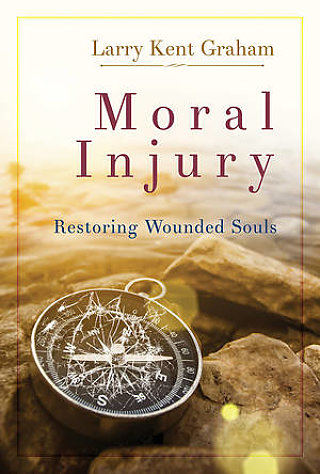
"Moral Injury: Restoring Wounded Souls" (Abingdon Press, 2017). Order here: https://bit.ly/2HVNShy
The notion of moral injury also points positively to the potential of a changed outcome: healing. The notion of healing implies that we are not destined to perpetual impairment based on the past but can join those powerful life forces dedicated to renewal, repair, and restoration. In short, removing stigmatizing and judgmental language about our moral actions lifts unnecessary burdens of conscience so that we might better heal and bear with strength the moral pain we are carrying.Our moral injuries are engendered by our direct and indirect immersion in the events of history, including natural disasters, war, and the dynamics of cultural hegemony. They are not simply
past events. They are virulent ongoing diminishments. Moral injuries arising from war, for example, refashion our geographies and identities forever. We do not simply get over our entanglements in the world. We carry them, revise them, and live out of them. In the words of poet Edwin Muir, “war makes and remakes [us] . . . still.”[1]
When morally injurious disaster befalls us and lives are threatened or lost, two things occur at once: there is an instantaneous shattering of the world and there is an instantaneous survival reflex that responds to the shattering. The world that is coming apart is also a world that responds to hold itself together. We humans must find life-giving means of coping with existential threat and traumatic loss if we are to survive and thrive as individuals and communities.
Cataclysmic experiences, whether from natural disaster, sexual and domestic violence, or moral injury and PTSD from war, initiate a new history for the victims and the community. A trauma history is comprised of three sequential processes, that also feedback on one another. First there is shattering of one’s world and soul. Second is the emergence of survival mechanisms. Third is the press for recovery and rebuilding. Religious communities and their leaders are intimately inscribed into the shattering, survival, and recovery plots of the trauma and moral injury narrative.
Lamentation and memorializing are among our greatest contributions to the healing narratives we attempt to create from our wounding. Lamentation and memorializing address the initial shattering by the way they help us share our anguish together. They assist with survival needs by mobilizing resources to provide strength and refuge. They guide the recovery process through assessing causes, protesting injustices, sharing memories, reclaiming lost values, and reinvesting hope.
Lamentation is a strength-inducing religious resource. It is by no means simply “wallowing in pain” and “being stuck in weakness.” The central purpose of lamentation is to provide a way for individuals and communities to truthfully express the sorrows of the world that have come upon them and to register protest, complaint, and anger at those responsible for it. As we fully name the truth of our affliction, paradoxically, that affliction becomes bearable and the way is opened toward healing.[2] According to Kathleen O’Connor, when we reflect back the suffering we hear from one another through lamentation “it restores the humanity of the victim because it validates their perception of the way the world has fallen away from their feet.”[3]
Pastoral theologians and caregivers, along with our religious and secular communities, are compelled by corporate catastrophe to become immersed in efforts toward rescue, relief, and recovery. Along with the total community we become immediately inducted into God-inspired and life-ensuring efforts toward human survival and flourishing when trauma befalls us. In addition to the spontaneous upsurges of grace, power, and caring community that come into being the instant disruption occurs, we also have available to us a variety of cultural products that have arisen over the centuries to help human communities endure and transform the evils befalling or caused by us. Religious thought and ritual practice are central elements in this repertoire of human coping and healing. Lamentation in the context of public memorials offers immediate and long-term resources for survival and healing wounded individuals and communities.
Religious and other communal sites [especially public mourning sites like the 9/11 museum in lower Manhattan or the Vietnam Veterans Memorial wall in Washington D.C.] become safe refuges for the displaced, injured, and dead when the storms of life are carrying everything away. Religious and other corporate rituals [including special Eucharist services, memorial/funeral services] organize meaning, give voice to anguish, and call forth the values that sustain community and focus its responses over the long haul. Religious symbols and religious teachings, along with secular values and conventions, anchor the heart and mind within the enduring values of courage, sacrifice, and collective efforts for the greater good. All of this comes together in the processes of lamentation, mediated by a range of memorial options, where anguish is named, comfort shared, victims honored, memories constructed, questions asked, conflict focused, forgiveness mediated, and hopes invested in writing a morally viable story of a future worth having.
***
[1] Edwin Muir, “The Wheel,” in Collected Poems (New York: Oxford University Press, 1960), 105. Cited in Donald W. Shriver, An Ethic for Enemies: Forgiveness in Politics (New York: Oxford University Press, 1995), 12.
[2] Kathleen M. O’Connor, Lamentations and the Tears of the World (Maryknoll, NY: Orbis Books, 2002), 3, 96.
[3] Ibid., 102.
This article is adapted from Larry Graham’s book Moral Injury: Restoring Wounded Souls, available from Abingdon Press.
ABOUT THE AUTHOR
Larry Kent Graham
The late Larry Graham was Professor Emeritus of Pastoral Theology and Care at Iliff School of Theology in Denver 

Jill M. Johnson
Jill M. Johnson is a freelance writer and communications professional living in Austin, Texas. Over the past 25 years 
 by Melissa Slocum
Bigstock/AndreyPopov
Last month media outlets began reporting about children being separated from their parents at U.S.-Mexico border crossings because of the Trump administration’s zero-tolerance policy on immigration. Public outcry quickly spread, accusing several government departments and officials of inhumane treatment. Attorney General Jeff Sessions (R, Alabama) responded in part by quoting Romans 13:1: “Every person should place themselves under the authority of the government. There isn’t any authority unless it comes from God, and the authorities that are there have been put in place by God.” Sessions’ blatant misuse of Scripture to justify actions recognized internationally to be inhumane launched a torrent of criticism from all sectors, including a formal complaint filed by over 600 United Methodist clergy and lay people outlining how he has violated his own vows as a United Methodist Church member.Fact check
Immigration is a complex issue, and we all can agree that border security is a priority when balanced with compassion for those seeking asylum. Many flee their homelands because of civil war, gang violence and fear of death, only to be denied access because they do not meet current entry requirements. A border wall is not a new idea. Under President George W. Bush, 653 miles of border fence was constructed, with walls erected through California, Arizona and New Mexico. A majority of border land in Texas is without walls since it is privately-held land. The way in which children were immediately separated from parents at the border is what sparked international outcry and eventually led to Trump’s executive order to reverse the separation of families during detainment.
Love = action
Responding from our faith with love involves contacting our representatives to voice our concerns, signing petitions if needed and attending rallies or marches. Responding with love involves doing what Jesus did — welcoming strangers, caring for orphans, clothing and feeding those in need and advocating for social justice.
Question of the day: Is it ever OK to break a law?
Focal scriptures: Romans 12:9–13:14; Matthew 5:17-20, 43-48; James 2:1-26
Romans 12:9 Don’t let love be a mere outward show. Recoil from what is evil, and cling to what is good. 10 Love each other devotedly and with brotherly love; and set examples for each other in showing respect. 11 Don’t be lazy when hard work is needed, but serve the Lord with spiritual fervor. 12 Rejoice in your hope, be patient in your troubles, and continue steadfastly in prayer. 13 Share what you have with God’s people, and practice hospitality.
14 Bless those who persecute you — bless them, don’t curse them! 15 Rejoice with those who rejoice, and weep with those who weep. 16 Be sensitive to each other’s needs — don’t think yourselves better than others, but make humble people your friends. Don’t be conceited. 17 Repay no one evil for evil, but try to do what everyone regards as good. 18 If possible, and to the extent that it depends on you, live in peace with all people. 19 Never seek revenge, my friends; instead, leave that to God’s anger; for in the Tanakh it is written,
“Adonai says, ‘Vengeance is my responsibility; I will repay.’”[Romans 12:19 Deuteronomy 32:41]
20 On the contrary,
“If your enemy is hungry, feed him;
if he is thirsty, give him something to drink.
For by doing this, you will heap
fiery coals [of shame] on his head.”[Romans 12:20 Proverbs 25:21–22]
21 Do not be conquered by evil, but conquer evil with good.
13:1 Everyone is to obey the governing authorities. For there is no authority that is not from God, and the existing authorities have been placed where they are by God. 2 Therefore, whoever resists the authorities is resisting what God has instituted; and those who resist will bring judgment on themselves. 3 For rulers are no terror to good conduct, but to bad. Would you like to be unafraid of the person in authority? Then simply do what is good, and you will win his approval; 4 for he is God’s servant, there for your benefit. But if you do what is wrong, be afraid! Because it is not for nothing that he holds the power of the sword; for he is God’s servant, there as an avenger to punish wrongdoers. 5 Another reason to obey, besides fear of punishment, is for the sake of conscience. 6 This is also why you pay taxes; for the authorities are God’s public officials, constantly attending to these duties. 7 Pay everyone what he is owed: if you owe the tax-collector, pay your taxes; if you owe the revenue-collector, pay revenue; if you owe someone respect, pay him respect; if you owe someone honor, pay him honor. 8 Don’t owe anyone anything — except to love one another; for whoever loves his fellow human being has fulfilled Torah. 9 For the commandments, “Don’t commit adultery,” “Don’t murder,” “Don’t steal,” “Don’t covet,”[Romans 13:9 Exodus 20:13–14(17), Deuteronomy 5:17–18(21)] and any others are summed up in this one rule: “Love your neighbor as yourself.”[Romans 13:9 Leviticus 19:18]10 Love does not do harm to a neighbor; therefore love is the fullness of Torah.
11 Besides all this, you know at what point of history we stand; so it is high time for you to rouse yourselves from sleep; for the final deliverance is nearer than when we first came to trust. 12 The night is almost over, the day is almost here. So let us put aside the deeds of darkness and arm ourselves with the weapons of light. 13 Let us live properly, as people do in the daytime — not partying and getting drunk, not engaging in sexual immorality and other excesses, not quarrelling and being jealous. 14 Instead, clothe yourselves with the Lord Yeshua the Messiah; and don’t waste your time thinking about how to provide for the sinful desires of your old nature.
Matthew 5:17 “Don’t think that I have come to abolish the Torah or the Prophets. I have come not to abolish but to complete. 18 Yes indeed! I tell you that until heaven and earth pass away, not so much as a yud or a stroke will pass from the Torah — not until everything that must happen has happened. 19 So whoever disobeys the least of these mitzvot and teaches others to do so will be called the least in the Kingdom of Heaven. But whoever obeys them and so teaches will be called great in the Kingdom of Heaven. 20 For I tell you that unless your righteousness is far greater than that of the Torah-teachers and P’rushim, you will certainly not enter the Kingdom of Heaven!
43 “You have heard that our fathers were told, ‘Love your neighbor[Matthew 5:43 Leviticus 19:18] — and hate your enemy.’ 44 But I tell you, love your enemies! Pray for those who persecute you! 45 Then you will become children of your Father in heaven. For he makes his sun shine on good and bad people alike, and he sends rain to the righteous and the unrighteous alike. 46 What reward do you get if you love only those who love you? Why, even tax-collectors do that! 47 And if you are friendly only to your friends, are you doing anything out of the ordinary? Even the Goyim do that! 48 Therefore, be perfect, just as your Father in heaven is perfect.
James 2:1 My brothers, practice the faith of our Lord Yeshua, the glorious Messiah, without showing favoritism. 2 Suppose a man comes into your synagogue wearing gold rings and fancy clothes, and also a poor man comes in dressed in rags. 3 If you show more respect to the man wearing the fancy clothes and say to him, “Have this good seat here,” while to the poor man you say, “You, stand over there,” or, “Sit down on the floor by my feet,” 4 then aren’t you creating distinctions among yourselves, and haven’t you made yourselves into judges with evil motives?
5 Listen, my dear brothers, hasn’t God chosen the poor of the world to be rich in faith and to receive the Kingdom which he promised to those who love him? 6 But you despise the poor! Aren’t the rich the ones who oppress you and drag you into court? 7 Aren’t they the ones who insult the good name of Him to whom you belong? 8 If you truly attain the goal of Kingdom Torah, in conformity with the passage that says, “Love your neighbor as yourself,”[James 2:8 Leviticus 19:18] you are doing well. 9 But if you show favoritism, your actions constitute sin, since you are convicted under the Torah as transgressors.
10 For a person who keeps the whole Torah, yet stumbles at one point, has become guilty of breaking them all. 11 For the One who said, “Don’t commit adultery,”[James 2:11 Exodus 20:13(14); Deuteronomy 5:17(18)] also said, “Don’t murder.”[James 2:11 Exodus 20:13; Deuteronomy 5:17] Now, if you don’t commit adultery but do murder, you have become a transgressor of the Torah.
12 Keep speaking and acting like people who will be judged by a Torah which gives freedom. 13 For judgment will be without mercy toward one who doesn’t show mercy; but mercy wins out over judgment.
14 What good is it, my brothers, if someone claims to have faith but has no actions to prove it? Is such “faith” able to save him? 15 Suppose a brother or sister is without clothes and daily food, 16 and someone says to him, “Shalom! Keep warm and eat hearty!” without giving him what he needs, what good does it do? 17 Thus, faith by itself, unaccompanied by actions, is dead.
18 But someone will say that you have faith and I have actions. Show me this faith of yours without the actions, and I will show you my faith by my actions! 19 You believe that “God is one”?[James 2:19 Deuteronomy 6:4]Good for you! The demons believe it too — the thought makes them shudder with fear!
20 But, foolish fellow, do you want to be shown that such “faith” apart from actions is barren? 21 Wasn’t Avraham avinu declared righteous because of actions when he offered up his son Yitz’chak on the altar? 22 You see that his faith worked with his actions; by the actions the faith was made complete; 23 and the passage of the Tanakh was fulfilled which says, “Avraham had faith in God, and it was credited to his account as righteousness.”[James 2:23 Genesis 15:6] He was even called God’s friend.[James 2:23 Isaiah 41:8; 2 Chronicles 20:7] 24 You see that a person is declared righteous because of actions and not because of faith alone.
25 Likewise, wasn’t Rachav the prostitute also declared righteous because of actions when she welcomed the messengers and sent them out by another route? 26 Indeed, just as the body without a spirit is dead, so too faith without actions is dead. (Complete Jewish Bible).
14 Bless those who persecute you — bless them, don’t curse them! 15 Rejoice with those who rejoice, and weep with those who weep. 16 Be sensitive to each other’s needs — don’t think yourselves better than others, but make humble people your friends. Don’t be conceited. 17 Repay no one evil for evil, but try to do what everyone regards as good. 18 If possible, and to the extent that it depends on you, live in peace with all people. 19 Never seek revenge, my friends; instead, leave that to God’s anger; for in the Tanakh it is written,
“Adonai says, ‘Vengeance is my responsibility; I will repay.’”[Romans 12:19 Deuteronomy 32:41]
20 On the contrary,
“If your enemy is hungry, feed him;
if he is thirsty, give him something to drink.
For by doing this, you will heap
fiery coals [of shame] on his head.”[Romans 12:20 Proverbs 25:21–22]
21 Do not be conquered by evil, but conquer evil with good.
13:1 Everyone is to obey the governing authorities. For there is no authority that is not from God, and the existing authorities have been placed where they are by God. 2 Therefore, whoever resists the authorities is resisting what God has instituted; and those who resist will bring judgment on themselves. 3 For rulers are no terror to good conduct, but to bad. Would you like to be unafraid of the person in authority? Then simply do what is good, and you will win his approval; 4 for he is God’s servant, there for your benefit. But if you do what is wrong, be afraid! Because it is not for nothing that he holds the power of the sword; for he is God’s servant, there as an avenger to punish wrongdoers. 5 Another reason to obey, besides fear of punishment, is for the sake of conscience. 6 This is also why you pay taxes; for the authorities are God’s public officials, constantly attending to these duties. 7 Pay everyone what he is owed: if you owe the tax-collector, pay your taxes; if you owe the revenue-collector, pay revenue; if you owe someone respect, pay him respect; if you owe someone honor, pay him honor. 8 Don’t owe anyone anything — except to love one another; for whoever loves his fellow human being has fulfilled Torah. 9 For the commandments, “Don’t commit adultery,” “Don’t murder,” “Don’t steal,” “Don’t covet,”[Romans 13:9 Exodus 20:13–14(17), Deuteronomy 5:17–18(21)] and any others are summed up in this one rule: “Love your neighbor as yourself.”[Romans 13:9 Leviticus 19:18]10 Love does not do harm to a neighbor; therefore love is the fullness of Torah.
11 Besides all this, you know at what point of history we stand; so it is high time for you to rouse yourselves from sleep; for the final deliverance is nearer than when we first came to trust. 12 The night is almost over, the day is almost here. So let us put aside the deeds of darkness and arm ourselves with the weapons of light. 13 Let us live properly, as people do in the daytime — not partying and getting drunk, not engaging in sexual immorality and other excesses, not quarrelling and being jealous. 14 Instead, clothe yourselves with the Lord Yeshua the Messiah; and don’t waste your time thinking about how to provide for the sinful desires of your old nature.
Matthew 5:17 “Don’t think that I have come to abolish the Torah or the Prophets. I have come not to abolish but to complete. 18 Yes indeed! I tell you that until heaven and earth pass away, not so much as a yud or a stroke will pass from the Torah — not until everything that must happen has happened. 19 So whoever disobeys the least of these mitzvot and teaches others to do so will be called the least in the Kingdom of Heaven. But whoever obeys them and so teaches will be called great in the Kingdom of Heaven. 20 For I tell you that unless your righteousness is far greater than that of the Torah-teachers and P’rushim, you will certainly not enter the Kingdom of Heaven!
43 “You have heard that our fathers were told, ‘Love your neighbor[Matthew 5:43 Leviticus 19:18] — and hate your enemy.’ 44 But I tell you, love your enemies! Pray for those who persecute you! 45 Then you will become children of your Father in heaven. For he makes his sun shine on good and bad people alike, and he sends rain to the righteous and the unrighteous alike. 46 What reward do you get if you love only those who love you? Why, even tax-collectors do that! 47 And if you are friendly only to your friends, are you doing anything out of the ordinary? Even the Goyim do that! 48 Therefore, be perfect, just as your Father in heaven is perfect.
James 2:1 My brothers, practice the faith of our Lord Yeshua, the glorious Messiah, without showing favoritism. 2 Suppose a man comes into your synagogue wearing gold rings and fancy clothes, and also a poor man comes in dressed in rags. 3 If you show more respect to the man wearing the fancy clothes and say to him, “Have this good seat here,” while to the poor man you say, “You, stand over there,” or, “Sit down on the floor by my feet,” 4 then aren’t you creating distinctions among yourselves, and haven’t you made yourselves into judges with evil motives?
5 Listen, my dear brothers, hasn’t God chosen the poor of the world to be rich in faith and to receive the Kingdom which he promised to those who love him? 6 But you despise the poor! Aren’t the rich the ones who oppress you and drag you into court? 7 Aren’t they the ones who insult the good name of Him to whom you belong? 8 If you truly attain the goal of Kingdom Torah, in conformity with the passage that says, “Love your neighbor as yourself,”[James 2:8 Leviticus 19:18] you are doing well. 9 But if you show favoritism, your actions constitute sin, since you are convicted under the Torah as transgressors.
10 For a person who keeps the whole Torah, yet stumbles at one point, has become guilty of breaking them all. 11 For the One who said, “Don’t commit adultery,”[James 2:11 Exodus 20:13(14); Deuteronomy 5:17(18)] also said, “Don’t murder.”[James 2:11 Exodus 20:13; Deuteronomy 5:17] Now, if you don’t commit adultery but do murder, you have become a transgressor of the Torah.
12 Keep speaking and acting like people who will be judged by a Torah which gives freedom. 13 For judgment will be without mercy toward one who doesn’t show mercy; but mercy wins out over judgment.
14 What good is it, my brothers, if someone claims to have faith but has no actions to prove it? Is such “faith” able to save him? 15 Suppose a brother or sister is without clothes and daily food, 16 and someone says to him, “Shalom! Keep warm and eat hearty!” without giving him what he needs, what good does it do? 17 Thus, faith by itself, unaccompanied by actions, is dead.
18 But someone will say that you have faith and I have actions. Show me this faith of yours without the actions, and I will show you my faith by my actions! 19 You believe that “God is one”?[James 2:19 Deuteronomy 6:4]Good for you! The demons believe it too — the thought makes them shudder with fear!
20 But, foolish fellow, do you want to be shown that such “faith” apart from actions is barren? 21 Wasn’t Avraham avinu declared righteous because of actions when he offered up his son Yitz’chak on the altar? 22 You see that his faith worked with his actions; by the actions the faith was made complete; 23 and the passage of the Tanakh was fulfilled which says, “Avraham had faith in God, and it was credited to his account as righteousness.”[James 2:23 Genesis 15:6] He was even called God’s friend.[James 2:23 Isaiah 41:8; 2 Chronicles 20:7] 24 You see that a person is declared righteous because of actions and not because of faith alone.
25 Likewise, wasn’t Rachav the prostitute also declared righteous because of actions when she welcomed the messengers and sent them out by another route? 26 Indeed, just as the body without a spirit is dead, so too faith without actions is dead. (Complete Jewish Bible).
Melissa Slocum
Melissa Slocum is a freelance writer and music teacher in the greater Atlanta area. She is a regular contributor to read 
 by Tamara Fyke
Bigstock/tzooka
Thursday evening, June 28, 2018, I attended a reception at the Frist Center for the Visual Arts in Nashville, TN as part of the Music City SEL Conference. As I was leaving the festive event, I took a few moments to walk through the gallery and reflect on an exhibit entitled Chaos and Awe. It was filled with striking images of all mediums that speak to how we in our modern age are continually experiencing mayhem and wonder through technology, nature and relationship. I was moved by the honesty I witnessed.
Walking down the vestibule toward the exit, I was surrounded on either side by a photography exhibit called We Shall Overcome that chronicled the Civil Rights Movement as it occurred in Nashville, TN from 1957-1968. Again, I was moved, this time by images of sit-ins and protests. Adults and children, both black and white, were depicted in the photos. The pain and agony of their struggle was evident on their faces. I noted how these images from fifty years ago look eerily familiar to those I see now when I tune into the news.

The chaos of broken families, scared children and shattered lives causes me to wonder: Are we reliving the past?
Unfortunately, I think many of us Western Christians have become overly comfortable with our Sunday religion. Our current events serve as a reminder of what the Kingdom of God is really like. Jesus healed the man with the withered hand on the Sabbath, talked to the woman at the well, and cleansed the leper. He was countercultural because he valued people over policies.
I am not promoting one political party or another; I’m advocating for love — love of God and God’s children. Choosing to love is choosing — in big and small ways — to put God first and to treat others the way we want to be treated each and every day. Why? Because he first loved us. Choosing to love is not about rules… it’s a lifestyle that starts with asking Jesus to so fill us with his love that it spills out onto those around us. Our world is thirsty for living water.
 What’s in a name? Episcopalians move to change their words for God
  by Eileen Flynn / Religion News Service
Bishops, priests and lay delegates, who have been meeting in Austin since July 5, are discussing legislation that would make changes to the Book of Common Prayer aimed at stripping away some of the masculine descriptions of God in favor of more “expansive” language.
During the hours of debate over the weekend, delegates butted heads over tradition, theology and what it means to be welcoming. One argued that children of all genders should hear language that allows them to feel made in God’s image. Another speaker, a delegate from an urban parish that serves poor families, said the masculine nature of God is crucial for children growing up without a father.
“Both sides are worried about alienating the people we’ve got and not being welcoming to the people we don’t have,” said the Rev. Cathy Tyndall Boyd, rector of St. Martin’s Episcopal Church in Williamsburg, Va.
Some also had practical concerns: Revision opponents suggest that the approximately $1.9 million it would cost to develop the language, with an expected $8 million to print and distribute the new books, could be better spent on evangelism, racial reconciliation efforts and training new church leaders.
The discussion has attracted attention outside of the Episcopal Church as well as within it: Traditionalist Christians, including those whose own denominations are considering similar changes, worry that gender-neutral terms for God undermine the concept of the Trinity.
But the Rev. Ruth Meyers, a liturgy professor at Church Divinity School of the Pacific in Berkeley, Calif., said the proposal shouldn’t be seen as an attempt to neuter God.
“This is not about eliminating language about God the Father, about Jesus the Son,” she said. “This is about expanding the language of God so every person can see and understand they are made in the image of God.”
Indeed, many comments from the convention floor stemmed from concerns other than gender.
The book needs clearer language on salvation and atonement theology and the stewardship of creation, some argued. A prayer currently said over the bread and wine during the sacrament of the Eucharist describes humanity as “rulers of creation,” which could be changed to “stewards of creation.”
Delegates also suggested broadening the cultural perspectives in the prayer book. One priest lamented a prayer of thanksgiving that opens with “Almighty God, who hast given us this good land for our heritage,” a line she said could alienate Native Americans.
Concerns were also raised over what some said were inadequate Spanish, French and Haitian Creole translations of the prayer book.
The Episcopalians aren’t the most progressive denomination when it comes to language. Twenty years ago, they issued a supplement to the prayer book that incorporated gender-neutral language, but by comparison, the Unitarian Universalist Association is expected to make all language in the church bylaws gender neutral at its General Assembly this summer. Judaism’s Reform movement has used gender-neutral language in its prayer book since 2007.
But perhaps because Episcopalians represent such a wide range of political and theological beliefs, they consider the prayer book the “primary symbol of our unity.” Nothing riles them more, they often joke, than tinkering with it.
Originally published in 1549 after England broke from the Roman Catholic Church, the book is used in varying versions by the worldwide Anglican Communion. The Episcopal Church last updated the Book of Common Prayer in 1979, revising the 1928 version, with its “thees” and “thous,” by adding modern prayer language and new rites. The changes inevitably drew outrage from traditionalists.
Sensitive to these feelings, delegates have embraced the painstaking deliberations at convention, said the Very Rev. Samuel Candler, chair of the prayer book legislation committee.
“There is the movement of the spirit even in parliamentary procedure and even in committees,” he said.
If so, the spirit moves very slowly. Passing a resolution requires approval from both houses of the church’s bicameral governing body — the House of Bishops and the House of Deputies, the latter consisting of clergy members and lay people elected from each diocese — which adhere to a strict order of debate.
On Saturday (July 7), the House of Deputies passed an amended version of the prayer book resolution. It now awaits action from the bishops. If the measure passes there without any changes, the Standing Commission on Liturgy and Music will begin a three-year listening tour, conducting surveys and holding meetings with the denomination’s roughly 2 million members. A new prayer book would have a trial run in 2024 and would not go into official use until 2030.
The Rev. Mary Sulerud knows well the challenges of retooling divine language. While attending Virginia Theological Seminary in the 1980s, she participated in trials for supplemental liturgies that used gender-neutral terms for God and highlighted the role of women in church history. Some of those prayers were used in Enriching Our Worship, the liturgical resource developed in the 1990s as a companion to the Book of Common Prayer.
Now canon for discernment and congregational vitality in the Diocese of Maryland, Sulerud said the response then, as now, was mixed.
“Some people welcomed it. Some people were barely hanging on. It was complicated.”
Walking down the vestibule toward the exit, I was surrounded on either side by a photography exhibit called We Shall Overcome that chronicled the Civil Rights Movement as it occurred in Nashville, TN from 1957-1968. Again, I was moved, this time by images of sit-ins and protests. Adults and children, both black and white, were depicted in the photos. The pain and agony of their struggle was evident on their faces. I noted how these images from fifty years ago look eerily familiar to those I see now when I tune into the news.
Learn more about the Love In A Big World curriculum here: https://www.loveinabigworld.org/
This past Saturday, thousands of people participated in the Keep Families Together march across the country. Six hundred separate marches took place under this same banner, protesting the separation of more than 2,000 immigrant children from their parents.The chaos of broken families, scared children and shattered lives causes me to wonder: Are we reliving the past?
Unfortunately, I think many of us Western Christians have become overly comfortable with our Sunday religion. Our current events serve as a reminder of what the Kingdom of God is really like. Jesus healed the man with the withered hand on the Sabbath, talked to the woman at the well, and cleansed the leper. He was countercultural because he valued people over policies.
I am not promoting one political party or another; I’m advocating for love — love of God and God’s children. Choosing to love is choosing — in big and small ways — to put God first and to treat others the way we want to be treated each and every day. Why? Because he first loved us. Choosing to love is not about rules… it’s a lifestyle that starts with asking Jesus to so fill us with his love that it spills out onto those around us. Our world is thirsty for living water.
ABOUT THE AUTHOR
Tamara Fyke
Tamara Fyke is a creative entrepreneur with a passion for kids, families, and urban communities. She has worked by Eileen Flynn / Religion News Service
Revisions to the Book of Common Prayer are being debated at the Episcopal Church’s triennial General Convention in Austin, Texas. Photo courtesy of Episcopal News Service
AUSTIN, Texas (RNS) — For some watching (and blogging and tweeting) the debate on the floor of the Episcopal Church’s triennial General Convention this week, it sounded as if someone were trying to give God a sex change.Bishops, priests and lay delegates, who have been meeting in Austin since July 5, are discussing legislation that would make changes to the Book of Common Prayer aimed at stripping away some of the masculine descriptions of God in favor of more “expansive” language.
During the hours of debate over the weekend, delegates butted heads over tradition, theology and what it means to be welcoming. One argued that children of all genders should hear language that allows them to feel made in God’s image. Another speaker, a delegate from an urban parish that serves poor families, said the masculine nature of God is crucial for children growing up without a father.
“Both sides are worried about alienating the people we’ve got and not being welcoming to the people we don’t have,” said the Rev. Cathy Tyndall Boyd, rector of St. Martin’s Episcopal Church in Williamsburg, Va.
Some also had practical concerns: Revision opponents suggest that the approximately $1.9 million it would cost to develop the language, with an expected $8 million to print and distribute the new books, could be better spent on evangelism, racial reconciliation efforts and training new church leaders.
The discussion has attracted attention outside of the Episcopal Church as well as within it: Traditionalist Christians, including those whose own denominations are considering similar changes, worry that gender-neutral terms for God undermine the concept of the Trinity.
But the Rev. Ruth Meyers, a liturgy professor at Church Divinity School of the Pacific in Berkeley, Calif., said the proposal shouldn’t be seen as an attempt to neuter God.
“This is not about eliminating language about God the Father, about Jesus the Son,” she said. “This is about expanding the language of God so every person can see and understand they are made in the image of God.”
Indeed, many comments from the convention floor stemmed from concerns other than gender.
The book needs clearer language on salvation and atonement theology and the stewardship of creation, some argued. A prayer currently said over the bread and wine during the sacrament of the Eucharist describes humanity as “rulers of creation,” which could be changed to “stewards of creation.”
Delegates also suggested broadening the cultural perspectives in the prayer book. One priest lamented a prayer of thanksgiving that opens with “Almighty God, who hast given us this good land for our heritage,” a line she said could alienate Native Americans.
Concerns were also raised over what some said were inadequate Spanish, French and Haitian Creole translations of the prayer book.
The Episcopalians aren’t the most progressive denomination when it comes to language. Twenty years ago, they issued a supplement to the prayer book that incorporated gender-neutral language, but by comparison, the Unitarian Universalist Association is expected to make all language in the church bylaws gender neutral at its General Assembly this summer. Judaism’s Reform movement has used gender-neutral language in its prayer book since 2007.
But perhaps because Episcopalians represent such a wide range of political and theological beliefs, they consider the prayer book the “primary symbol of our unity.” Nothing riles them more, they often joke, than tinkering with it.
Originally published in 1549 after England broke from the Roman Catholic Church, the book is used in varying versions by the worldwide Anglican Communion. The Episcopal Church last updated the Book of Common Prayer in 1979, revising the 1928 version, with its “thees” and “thous,” by adding modern prayer language and new rites. The changes inevitably drew outrage from traditionalists.
Sensitive to these feelings, delegates have embraced the painstaking deliberations at convention, said the Very Rev. Samuel Candler, chair of the prayer book legislation committee.
“There is the movement of the spirit even in parliamentary procedure and even in committees,” he said.
If so, the spirit moves very slowly. Passing a resolution requires approval from both houses of the church’s bicameral governing body — the House of Bishops and the House of Deputies, the latter consisting of clergy members and lay people elected from each diocese — which adhere to a strict order of debate.
On Saturday (July 7), the House of Deputies passed an amended version of the prayer book resolution. It now awaits action from the bishops. If the measure passes there without any changes, the Standing Commission on Liturgy and Music will begin a three-year listening tour, conducting surveys and holding meetings with the denomination’s roughly 2 million members. A new prayer book would have a trial run in 2024 and would not go into official use until 2030.
The Rev. Mary Sulerud knows well the challenges of retooling divine language. While attending Virginia Theological Seminary in the 1980s, she participated in trials for supplemental liturgies that used gender-neutral terms for God and highlighted the role of women in church history. Some of those prayers were used in Enriching Our Worship, the liturgical resource developed in the 1990s as a companion to the Book of Common Prayer.
Now canon for discernment and congregational vitality in the Diocese of Maryland, Sulerud said the response then, as now, was mixed.
“Some people welcomed it. Some people were barely hanging on. It was complicated.”
ABOUT THE AUTHOR
Eileen Flynn / Religion News Service
Eileen Flynn is a writer based in Austin, Texas. She teaches religion journalism at the University of Texas. read more…


This email was sent by: Ministry Matters
2222 Rosa L. Parks Boulevard
Nashville, Tennessee 37228, United States
***
No comments:
Post a Comment