
The God who promises peace

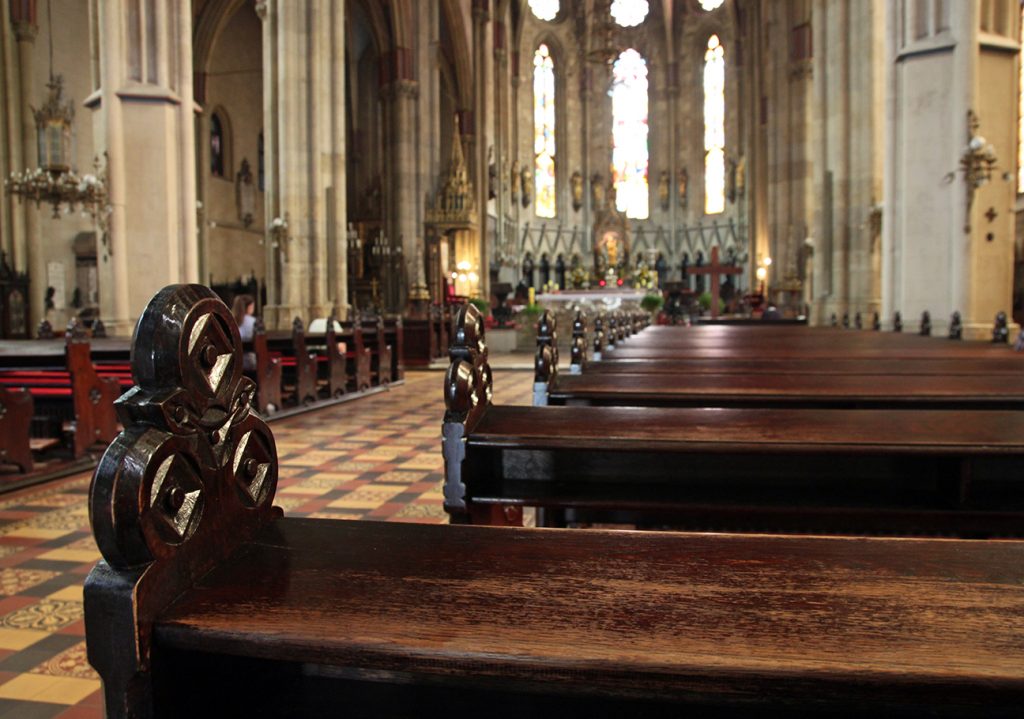
For more than a year, Ahmed made a daily pilgrimage to the muted calm of Zagreb Cathedral. Beneath the soaring stone pillars and colored light filtering through stained glass, Ahmed would take a seat in a polished wooden pew, and spend hours pouring out his heart’s desire to God.
What Ahmed wanted, more than anything, was for God to protect his young wife, Zahra, and their two sons, who remained in hiding in Iraq. They waited for Ahmed to receive political asylum in Europe and reunion visas, so they could join him, leaving behind war and threats forever.
Although Ahmed had been raised in a different religion, the Catholic cathedral in Croatia’s capital was a special, holy place for him. Ahmed felt he could talk to God there, and that God was listening.
A country divided
Ahmed and Zahra hadn’t always lived in fear. Before the destabilization of Iraq, people from various sects of the country’s majority religion lived side by side in peace. These sects claim to be members of the same religion, but disagree on certain things, and often clash.
Ahmed was an architect who traveled the country to work on infrastructure projects like roads and bridges. When he was relocated to Zahra’s town for work, he noticed the beautiful 17-year-old on the street. He asked people about her – what was she like? Who were her family?
Eventually, he got her phone number.
Zahra also noticed Ahmed, and returned his interest. Zahra was from the same religion as Ahmed, but had grown up in a family that belonged to a different sect. When they fell in love, that didn’t seem to matter.
Through a coworker, Ahmed proposed. They were married in 2004.
As the country slid further into turmoil, hostility and suspicion increased between the two main religious sects. The very atmosphere was charged.
On more than one occasion, someone approached Ahmed on the street, asking if his wife was from the other sect. People did the same thing with Zahra. The interest in their mixed sect marriage felt sinister.
In 2008, the previously distant fighting between extremist groups and government troops neared their town. Many people fled.
Ahmed’s boss told him, “I’m sending you a car. Take your family and leave tonight.” Ahmed and Zahra grabbed some clothes and traveled to Baghdad, just before the militant groups invaded the area and confiscated all the empty houses. The young couple’s house and everything they owned was taken.
In the capital, a more diverse, larger city, they hoped to live anonymously and escape questions about their religion.
During the next eight years, they continued on with their lives. They had two sons. But the rising tension between the sects inevitably followed them to Baghdad. At the boys’ school, people knew their parents belonged to different sects. Other children or teachers confronted the boys about their parents’ religion.
The tensions followed the boys home, where they fought with each other. One would say he was with their mother while the other said he was with their father. Ahmed and Zahra did not want religion to tear their family apart. They decided they must leave Iraq altogether.
Long road to a new home
In 2015, Ahmed traveled to Europe for asylum. Their plan was that wherever he received residency, Zahra and the boys would later join him.
Ahmed made it to Finland where he stayed for over a year. But his asylum was rejected there under the Dublin Agreement, in which European countries agree to return asylum seekers to the first country where their fingerprints have been taken by the government. Ahmed’s were taken in Croatia, so he was sent to Zagreb. He spent another year separated from his family, working through the Croatian asylum process.
While he waited, he lived in a large hotel that the government had turned into a temporary residence for asylum seekers. People from the Nazarene church visit the hotel to teach English classes, or invite the residents to craft nights, a kids’ club and other activities at the church. Asylum seekers who attend the church’s activities love having somewhere else to spend time besides their cramped rooms in the crowded hotel. The church people are friendly and caring. The congregation, made up of people from various cultures and languages, is like an adopted family.
Ahmed wanted very much to join them. But he was concerned people would think he was only attending so that his asylum would be granted – an early misconception some asylum seekers have. So he stayed away.
Meanwhile, Zahra and their boys lived in hiding for three years, moving every three months for safety. The boys couldn’t go to school. Zahra says she was frightened all the time, constantly worried their location would be discovered by people from the other sect.
She would receive update calls from Ahmed in Finland and then in Croatia. The waiting and separation was agony.
“When he left me, I was younger than now,” Zahra said, describing how the experience aged her. “It was really tough for us. He would call me, going crazy.”
“We reached a point where we thought if I didn’t get anything here in Europe and have to go back, the whole family will do suicide together,” Ahmed admitted.
While Zahra and the boys moved and hid, moved and hid, Ahmed continued his daily visits to the Zagreb cathedral, begging God to bring his family safely to him, and give them a life of peace together.
A place of peace
In January, Ahmed’s asylum in Zagreb was granted, and his family received reunion visas.
As soon as his asylum was granted, Ahmed wasted no time finding Pastor Mahdi*, the leader of the Arabic-speaking worship service at the Zagreb Church of the Nazarene. Mahdi* and his wife had been asylum seekers themselves, and were actively ministering to those living in the hotel, where they had also once lived while waiting for their application to be accepted. (Read their story:
//nazarene.org/article/young-couple-escapes-persecution-finds-home-croatia)
 Even though Mahdi* was young, experiencing persecution for his faith was nothing new to him. He and Amira* had just married. Although from different countries in the Middle East, they shared a common faith in Christ. Mahdi and Amira lived and ministered in her home country of Syria in an area that was originally relatively safe.
In 2015, they made a trip to Mahdi’s country to visit family. On the way home, their crowded passenger bus was pulled over and boarded by armed men. This was not a random military check, but a kidnapping. The driver and passengers were forced to drive for several hours on back roads to a predetermined destination. As they unloaded, the men and women were separated.
Though treated roughly and locked into one small room together, the women were not abused. However, throughout the night, they could hear the tortured cries of the men in the next room. In the early hours of the next morning, the captors grew tired and the beatings stopped. Amira had no idea if Mahdi was alive or dead, but prayed without ceasing that God would somehow deliver both of them.
Soon after the sun rose, the door of the women’s room scraped open, and a captor called out her name. With a shaking hand, she acknowledged her name, silently praying for strength and deliverance. Rough hands dragged her through the door and threw her at ragged feet. When she lifted her head, she saw her husband. Mahdi grabbed Amira’s arm, and they began to limp into the landscape toward freedom.
She was hardly able to register what was happening as her husband pulled her painfully forward. Although Mahdi had been beaten throughout the long night, Amira was thankful he was alive. Cold, hungry, and wounded, they walked for hours. They refused to stop, frightened that at any moment their captors would come for them. As the day wore on and the distance grew, they felt a burgeoning sense of safety. Eventually, they stopped in a village, where they asked for help.
Many months later, Amira told her story while gathered with a group from various nationalities, all sipping tea in a home in Croatia, where she and Mahdi landed after fleeing from Syria. Amira sighed and her shoulders drooped.
“We have no idea what happened to the rest of the passengers on the bus, nor do we know why they let us go,” she said.
The kidnapping was the event that catapulted the couple into escaping Syria in the fall of 2015. Unlike many other refugees who were also beginning the journey to Western Europe to flee violence and persecution, Mahdi and Amira determined to make Croatia their destination.
When they arrived, they joined a refugee community housed in temporary living situations and attended free English classes in their dormitory. After realizing that their English teachers were Christians, the couple became eager to join in on worship gatherings. They later began to find many others within the refugee community who were hungry to know more about Christ.
Opportunities for them to speak about the Lord were suddenly all around them. Through their English teacher, Amira and Mahdi connected with a local church in their new city. Their story took another exciting turn one Sunday morning when Amira noticed the Nazarene logo being displayed on a video. She was acquainted with a Nazarene pastor back home, and she knew the denomination. Neither she nor Mahdi had realized that the English teacher, the pastor, and the congregation were part of the Church of the Nazarene until that moment.
Soon after, the couple received word that their three-year resident visas had been approved by the Croatian government. That meant that they could call this country, this congregation, and this community home. With stability for the future settled, Mahdi and Amira approached the church leaders who had been such a long part of their journey to ask if they could volunteer officially to help other refugees the way they had been helped. Mahdi also indicated a desire to fulfill his call as a pastor through the Church of the Nazarene.
Today, Mahdi and Amira are learning the language and culture of their new host country, and Mahdi is working his way toward ordination. They have found community through the church in Croatia.
*Names have been changed for protection and security. (Republished with permission from the Summer 2017 edition of NCM Magazine)
A short time later, as Zahra and the boys walked off the plane in the Zagreb airport, Ahmed snapped a photo. It was the first picture he posted on social media since he fled their home. They had no more reason to hide.
“When they first came, it was snowing,” Ahmed recalled. The very first thing he did was take his family into the city center. “We went to the cathedral and I said, ‘This is the reason you are here. All the prayer to God happened here, in the cathedral.’”
Relocating to a predominantly Catholic country has provided an immense sense of relief for the family. They know that their traditional religious sects don’t matter here, and believe that generally Christians live in peace.
“Why don’t Christians fight?” he wondered when he began living in Europe. “Here in Croatia, there are all religions, and even atheists. And they don’t fight. I think Christianity is the most peaceful religion because it’s calling for peace. Because Christ, when He was born, He asked for peace between all people.”
Ahmed and Zahra want their sons to grow up in the church, away from the religious divisions and fighting that are destroying their home country.
“It affected my kids a lot and that’s why I entered the church,” Ahmed said. “I want them to be raised away from the fights. I don’t hate [my faith] but I want to have a new life, a new beginning. I want them to forget the war, the death, and have a new start. Because people are fighting together, they make the religion bad. So I want [my sons’] head and brain and their thinking to be in the church.”
New life, new faith
In Croatia, the family has peace, but it will take time to rebuild their life. Ahmed found a job as a painter, but the two-year benefits he receives as a new resident in Croatia do not cover the living expenses or health care of other family members. Zahra wants to work part-time, but does not yet have the right to do so.
There is also lingering trauma and fear that they must overcome.
Recently, Ahmed took Zahra out for coffee, just the two of them. It was the first time in three years that Zahra had left their children alone, and it was difficult to be separated for even a couple of hours. Ahmed convinced her they would be safe.
They’ve enrolled their sons in the local school, and insisted that the boys also attend the optional Christian religion classes. The family attends every gathering offered at the Nazarene church.
“We felt belonging and we know everyone now,” Zahra said. “We’re [always] waiting for Sunday.”
As they met regularly with believers and studied the Bible, the family grew in their belief. They reached a point of decision where they confessed Jesus as Lord of their lives. Having completed a Nazarene membership course, early this summer they were baptized into the faith.
Just like in the cathedral, Ahmed knows he can talk to God in the Nazarene church, and anywhere, really.
“In Christianity, He’s not just God, He’s a Spirit with you. You cannot put God in a box and say this is the way to pray to God. He’s everywhere and He’s always with you. God is faithful.”
Written by Gina Pottenger and previously published in the July 2018 Where Worlds Meet edition.
Read the full story.



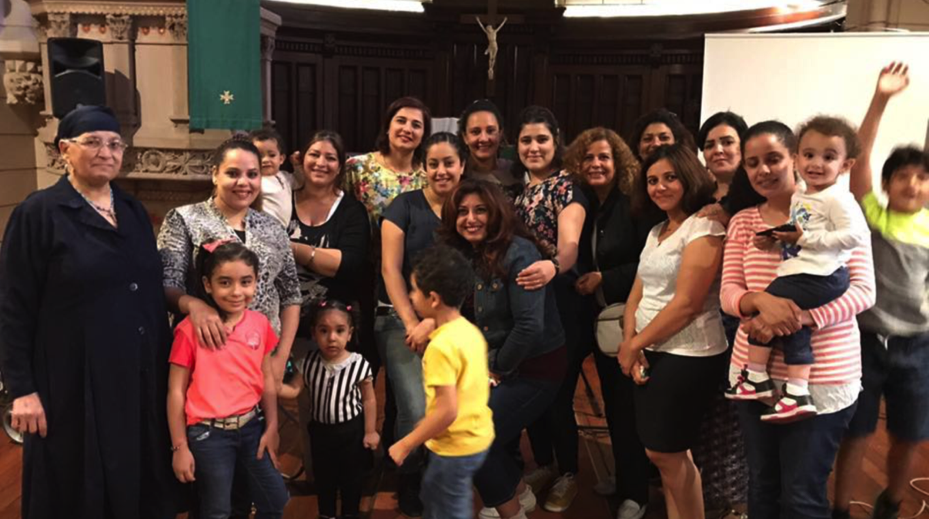
After studying the Church of the Nazarene’s Manual, we decided to join the Church of the Nazarene.
Our Arabic Nazarene church was founded in March 1995, one year after I was ordained pastor by the late General Superintendent Dr. William Prince.
The Arabic Church of the Nazarene in Paris is composed of different nationalities among Arabic- speakers; the majority are Egyptians, but we also have brothers and sisters from Morocco, Algeria, Iraq, Syria and Jordan.
Most of those people came to France to escape war and persecution, many Egyptians found in France a refuge country where they can be safe and free to worship the living God.
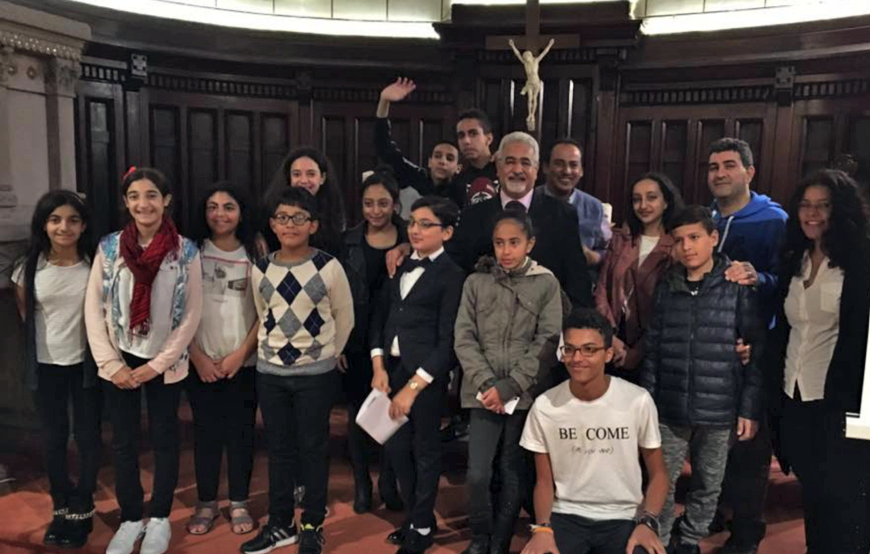
We also have a wonderful praise team called, The Fruit of the Spirit Praise Team. They are a real blessing for the church.
Last December, the praise team sang outside the church building on the front stairs while another team conducted evangelism by talking with people and giving Bibles.
God is building the Arabic Church of the Nazarene in Paris, to Him and Him alone be the glory.
I came to France for one year, this was my plan. But God had another plan for me. I realized that He sent me to take care of His sheep, represented by The Arabic Church of the Nazarene in Paris. I am so thankful for God who gave me this privilege to be His servant.
“I didn’t believe there really were miracles until I heard this story today. I have rededicated my life to Jesus,” the young man told me.
I was stunned. This man had never met Irina in person. In fact, I had not met her, either – we’d only talked on the telephone. Neither this young man nor I had seen her child except in photographs, which I’d used in my PowerPoint. And yet, Irina’s faith story — even third-hand — created space for the Holy Spirit to use it to reach this young man, who responded to God in renewed belief.
This encounter, and many others like it, has convinced me that a primary way God chooses to work in our lives is through the sharing of our stories – our testimonies. When we “witness” to what God has done for us and give Him the praise and credit, the Holy Spirit honors our witness, bringing conviction, repentance, transformation, new understanding, encouragement, strength, comfort — and belief.
God is a storytelling God. We know this because He has given us the Bible, which, from Genesis to Revelation, is full of stories that teach us who God is, and who we are. At the same time, taken as a whole, the Bible is THE story of God, and God’s love for humankind.
If God communicates to us so often through stories, and we are created in His image, it stands to reason that humans may communicate most effectively with each other through stories.
A mentor in the field of media ministry once told me that effective communication has many things in common with the way we do mission work.
For example, when a missionary crosses cultural and language boundaries to share the gospel, she must travel to where the people are whom she is called to share the gospel with. Once there, she first takes time to understand the people she wants to minister to. That means the missionary starts learning the language spoken by the local people. She listens a lot, getting to know the way people think and view the world, how they understand God and religion, family and gender roles, their own history, as well as world history and their place in it.
Before a missionary tries to communicate, he or she tries to understand. Deeper understanding provides the foundation for more effective communication.
Effectively communicating, after gaining some level of understanding, may be as simple as sharing your own story, or daily faith journey stories, in ways and with words that people understand, and in places where they prefer to meet and spend time.
Stories can be as simple as an answered prayer, or how God helped you handle a difficult situation at work or with a family member. Your story may not yet have an ending. You may be in the midst of your story, but you can still point to where God has been faithful and stood beside you, even entered into your suffering with you. A story might be about how you are waiting with trust for God to reveal himself or answer a prayer. And when someone shares a story with you, perhaps ask where they might see God in their story.
As we tell our faith stories, we are proclaiming God’s story!
Written by Gina Pottenger and previously published in the July 2018 edition of Where Worlds Meet edition.
***
Young couple escapes persecution, finds home in Croatia
Croatia

In 2015, they made a trip to Mahdi’s country to visit family. On the way home, their crowded passenger bus was pulled over and boarded by armed men. This was not a random military check, but a kidnapping. The driver and passengers were forced to drive for several hours on back roads to a predetermined destination. As they unloaded, the men and women were separated.
Though treated roughly and locked into one small room together, the women were not abused. However, throughout the night, they could hear the tortured cries of the men in the next room. In the early hours of the next morning, the captors grew tired and the beatings stopped. Amira had no idea if Mahdi was alive or dead, but prayed without ceasing that God would somehow deliver both of them.
Soon after the sun rose, the door of the women’s room scraped open, and a captor called out her name. With a shaking hand, she acknowledged her name, silently praying for strength and deliverance. Rough hands dragged her through the door and threw her at ragged feet. When she lifted her head, she saw her husband. Mahdi grabbed Amira’s arm, and they began to limp into the landscape toward freedom.
She was hardly able to register what was happening as her husband pulled her painfully forward. Although Mahdi had been beaten throughout the long night, Amira was thankful he was alive. Cold, hungry, and wounded, they walked for hours. They refused to stop, frightened that at any moment their captors would come for them. As the day wore on and the distance grew, they felt a burgeoning sense of safety. Eventually, they stopped in a village, where they asked for help.
Many months later, Amira told her story while gathered with a group from various nationalities, all sipping tea in a home in Croatia, where she and Mahdi landed after fleeing from Syria. Amira sighed and her shoulders drooped.
“We have no idea what happened to the rest of the passengers on the bus, nor do we know why they let us go,” she said.
The kidnapping was the event that catapulted the couple into escaping Syria in the fall of 2015. Unlike many other refugees who were also beginning the journey to Western Europe to flee violence and persecution, Mahdi and Amira determined to make Croatia their destination.
When they arrived, they joined a refugee community housed in temporary living situations and attended free English classes in their dormitory. After realizing that their English teachers were Christians, the couple became eager to join in on worship gatherings. They later began to find many others within the refugee community who were hungry to know more about Christ.
Opportunities for them to speak about the Lord were suddenly all around them. Through their English teacher, Amira and Mahdi connected with a local church in their new city. Their story took another exciting turn one Sunday morning when Amira noticed the Nazarene logo being displayed on a video. She was acquainted with a Nazarene pastor back home, and she knew the denomination. Neither she nor Mahdi had realized that the English teacher, the pastor, and the congregation were part of the Church of the Nazarene until that moment.
Soon after, the couple received word that their three-year resident visas had been approved by the Croatian government. That meant that they could call this country, this congregation, and this community home. With stability for the future settled, Mahdi and Amira approached the church leaders who had been such a long part of their journey to ask if they could volunteer officially to help other refugees the way they had been helped. Mahdi also indicated a desire to fulfill his call as a pastor through the Church of the Nazarene.
Today, Mahdi and Amira are learning the language and culture of their new host country, and Mahdi is working his way toward ordination. They have found community through the church in Croatia.
*Names have been changed for protection and security. (Republished with permission from the Summer 2017 edition of NCM Magazine)
***
“I got my residence at 12 p.m. and talked to Mahdi at 4 p.m.: ‘I want to come to church.’”A short time later, as Zahra and the boys walked off the plane in the Zagreb airport, Ahmed snapped a photo. It was the first picture he posted on social media since he fled their home. They had no more reason to hide.
“When they first came, it was snowing,” Ahmed recalled. The very first thing he did was take his family into the city center. “We went to the cathedral and I said, ‘This is the reason you are here. All the prayer to God happened here, in the cathedral.’”
Relocating to a predominantly Catholic country has provided an immense sense of relief for the family. They know that their traditional religious sects don’t matter here, and believe that generally Christians live in peace.
“Why don’t Christians fight?” he wondered when he began living in Europe. “Here in Croatia, there are all religions, and even atheists. And they don’t fight. I think Christianity is the most peaceful religion because it’s calling for peace. Because Christ, when He was born, He asked for peace between all people.”
Ahmed and Zahra want their sons to grow up in the church, away from the religious divisions and fighting that are destroying their home country.
“It affected my kids a lot and that’s why I entered the church,” Ahmed said. “I want them to be raised away from the fights. I don’t hate [my faith] but I want to have a new life, a new beginning. I want them to forget the war, the death, and have a new start. Because people are fighting together, they make the religion bad. So I want [my sons’] head and brain and their thinking to be in the church.”
New life, new faith
In Croatia, the family has peace, but it will take time to rebuild their life. Ahmed found a job as a painter, but the two-year benefits he receives as a new resident in Croatia do not cover the living expenses or health care of other family members. Zahra wants to work part-time, but does not yet have the right to do so.
There is also lingering trauma and fear that they must overcome.
Recently, Ahmed took Zahra out for coffee, just the two of them. It was the first time in three years that Zahra had left their children alone, and it was difficult to be separated for even a couple of hours. Ahmed convinced her they would be safe.
They’ve enrolled their sons in the local school, and insisted that the boys also attend the optional Christian religion classes. The family attends every gathering offered at the Nazarene church.
“We felt belonging and we know everyone now,” Zahra said. “We’re [always] waiting for Sunday.”
As they met regularly with believers and studied the Bible, the family grew in their belief. They reached a point of decision where they confessed Jesus as Lord of their lives. Having completed a Nazarene membership course, early this summer they were baptized into the faith.
Just like in the cathedral, Ahmed knows he can talk to God in the Nazarene church, and anywhere, really.
“In Christianity, He’s not just God, He’s a Spirit with you. You cannot put God in a box and say this is the way to pray to God. He’s everywhere and He’s always with you. God is faithful.”
Written by Gina Pottenger and previously published in the July 2018 Where Worlds Meet edition.
Read the full story.
Meet the Arabic Church of the Nazarene, Paris, France
Multi-national church reaches out through children's ministries, women's gatherings, and music ministry.
Meet the Arabic Church of the Nazarene, Paris, France
When I came to France in 1989, there was not any Arabic church in Paris. So with a Christian friend I organized an Egyptian fellowship, a group of Christians who met on Sunday afternoon in the basement of the French Church of the Nazarene in Paris.
The group started to grow and many Egyptians came to our meetings. After I finished Bible school, the majority asked me to organize an official church out of this Christian group.After studying the Church of the Nazarene’s Manual, we decided to join the Church of the Nazarene.
Our Arabic Nazarene church was founded in March 1995, one year after I was ordained pastor by the late General Superintendent Dr. William Prince.
The Arabic Church of the Nazarene in Paris is composed of different nationalities among Arabic- speakers; the majority are Egyptians, but we also have brothers and sisters from Morocco, Algeria, Iraq, Syria and Jordan.
Most of those people came to France to escape war and persecution, many Egyptians found in France a refuge country where they can be safe and free to worship the living God.
We meet each Sunday at 3 p.m. for worship; the ladies meet on Thursday at 1 p.m.
We are about 60 persons, including children. The number of children is increasing and we need more space for their activities.We also have a wonderful praise team called, The Fruit of the Spirit Praise Team. They are a real blessing for the church.
Last December, the praise team sang outside the church building on the front stairs while another team conducted evangelism by talking with people and giving Bibles.
God is building the Arabic Church of the Nazarene in Paris, to Him and Him alone be the glory.
I came to France for one year, this was my plan. But God had another plan for me. I realized that He sent me to take care of His sheep, represented by The Arabic Church of the Nazarene in Paris. I am so thankful for God who gave me this privilege to be His servant.
There are many challenges of serving in France; as the ministry is growing, I have to find enough time to do the work of the church while I work in teaching English in the University and senior high schools. I continue to pray so that the Lord may open doors for me to be full-time minister to pastor the church in a better way, and to meet the increasing needs of the Arabic Christian Communities in France.
Written by Pastor Farag Mikheil and previously published in the July 2018 Where Worlds Meet edition
Read the story.

I stood before my home church as the missionary speaker, sharing stories that had been entrusted to me during my first year as a missionary journalist in Eurasia. One of the stories was the faith journey of Irina Albei (Bucharest, Albania) and how God saved her unborn baby during a series of astonishing miracles. (Read the story here:http://tiny.cc/4rb4uy)
“At the beginning of the year I said, ‘God never shows me anything miraculous. Why doesn’t he bring a miracle into my life?’”
For Irina, trusting God was a relatively new thing. Although she was raised in a Christian family, the loss of her grandmother when Irina was 15 was too much for her faith. By the time she married and had her first child, Irina was virtually an atheist.
Although she had a loving husband, Victor, their family was financially secure, and she had everything else she wanted in life, Irina had no peace. A close Christian friend’s persistent prayers and loving witness, along with a year of intense research on the life of Jesus Christ and the veracity of the Bible, brought Irina into a personal relationship with Jesus about five years ago. Since then, God has rewarded her by bringing almost her entire extended family into the faith, as well.
Yet, early this year she wanted to grow her faith in God. Little did she know what she was praying for.
Medical emergency
The journey began this May, 13 weeks after she became pregnant. She was in an English class at church when, suddenly and inexplicably, the membranes of the amniotic sac broke, releasing much of the amniotic fluid that nurtures and protects babies in the womb until they are born. Without this fluid, fetuses cannot survive. With too little amniotic fluid, the developing baby faces a host of probable disabilities and deformities, and may still not survive.
After rushing to the hospital, a team of the best doctors there told her there was no hope for her child. No baby had ever survived with such little amniotic liquid at such an early point in the pregnancy, they told her.
They insisted that she abort.
“I asked, ‘Is the child alive?’ They said, “Yes, he’s still alive, but not for long.’ I said, ‘Look … I don’t agree with the abortion.’”
The doctors recognized that they could not talk Irina into the abortion, so they gave her papers to sign in which she agreed to legally accept the risks for her child. Then a doctor handed her a pill, which he said would help her to relax.
Monica Boseff, who leads the Blessings church with her husband, Pastor Cristi Boseff, was visiting Irina at the time. When Monica, who has training as a nurse, learned the pill was called Cytotec, she said, “Do not take this pill because it’s going to induce the labor and provoke uterine rupture and severe hemorrhage.”
"I have a mission"
Realizing that the hospital doctors were not going to help her carry the child to term, Irina went with Boseff to a different hospital where a young doctor – only 33 years old – agreed to take her case.
Irina spent the next five months in the hospital, ministered to by members of her church.
“It was a very difficult time during this period in hospital, but I experienced a very beautiful thing, which is the unity of the church,” she said. “I had read a lot about the unity of church in theology … but for the first time in my life I really felt the support of them. I discovered the church in Bulgaria, Albania, Canada and the U.S.– hundreds of people were praying for me and my son….Most of them I never met, and probably I will never meet them. I really felt the power of prayer.”
While Irina stayed in a hospital room with several other women, she began talking to them about the strength she receives from her relationship with Jesus Christ. The women were so attentive that several hours passed, and the interruption of lunch surprised them. They asked her to talk with them again about God.
One of the women, who was being treated for cancer, asked Irina if she could attend church with her after Irina was discharged. Irina urged her not to wait that long.
That Saturday the woman called Monica to ask if she could visit the church the next day. She began attending regularly, and in October she joined six other people at the altar to give her life to Christ.
“[Irina] called me and said, ‘Now I know why I am in the hospital and it’s not for the baby. It’s because I have a mission,” Monica said.
Delivery
On August 10, at only 26 weeks and 4 days, Irina went into labor. Her doctor had arranged for her to deliver at a hospital known for its advanced technology and highly trained medical staff. The hospital had prepared carefully for her special case.
The labor was moving so swiftly that her doctor didn’t have time to send her in an ambulance, so he put her in his own car. On the way, he called the hospital to let them know Irina was coming to give birth. He was shocked when they told him not to bring her, since the premature babies ward was still under repairs and renovation.
Frantically the doctor changed routes to a different hospital, where she safely gave birth to a boy.
The new doctor realized the baby had been living in the womb with very little amniotic fluid. She suddenly became angry with Irina.
“There is no chance for him to survive even 24 hours,” Irina said the woman told her. “You have to forget about this child.” She ticked off a long list of health problems the child would suffer if Irina allowed the newborn to live. She pointed to the boy’s left leg and said that there were no ligaments from his heel to his knee; he would never be able to bend his leg.
“I said, ‘Don’t you believe in miracles?’ She got crazy when she heard about God. The child survived, and after a month this doctor was forced to admit at the end that our baby was the subject of a series of miracles.”
The Albeis named him David Christian, after Israel’s king, in hope that God will say about their son what He said in Scripture about King David: “I have found David son of Jesse, a man after my own heart…” (Acts 13:22)
Defying the odds
The doctor had predicted David would have Down syndrome, and tests initially showed a problem with one of his lungs. Later tests showed he did not have Down syndrome and, although he was in incubation for 5 weeks and unable to breathe on his own, his lungs have been improving.
Then Irina saw David moving his left leg. Thinking she was not seeing properly, she tickled the limb. He jerked it back. Since then, his leg has moved normally, she said.
A few days after Irina delivered her baby, she was shocked to learn the original hospital that rejected her experienced a tragedy: The intensive therapy room for premature babies exploded; 6 out of the 10 babies there died. If she and David had been there, he might have died as well.
“My child was supposed to be there,” she said, her voice expressing disbelief. “So this is another miracle, because God just closed the door there for us.”
In defiance of the doctors’ disbelief, little David continues to grow and become healthier all the time.
“When I talk to people now, I’m not just talking theology from books I read, I’m talking about experience.”
It seems Irina has received her miracle. More than one, actually.
Talk about it:
God's story, our stories
The most effective way to communicate with people might be as easy as telling your story.I stood before my home church as the missionary speaker, sharing stories that had been entrusted to me during my first year as a missionary journalist in Eurasia. One of the stories was the faith journey of Irina Albei (Bucharest, Albania) and how God saved her unborn baby during a series of astonishing miracles. (Read the story here:http://tiny.cc/4rb4uy)
***
Romania: Miraculous events surround baby's birth
Gina Grate Pottenger
Bucharest, Romania -- When Irina Albei, of Bucharest Blessings Church of the Nazarene, prayed late last year for God to increase her faith, she had no idea this prayer would send her on a long, frightening and dangerous journey punctuated by miracle after miracle.“At the beginning of the year I said, ‘God never shows me anything miraculous. Why doesn’t he bring a miracle into my life?’”
For Irina, trusting God was a relatively new thing. Although she was raised in a Christian family, the loss of her grandmother when Irina was 15 was too much for her faith. By the time she married and had her first child, Irina was virtually an atheist.
Although she had a loving husband, Victor, their family was financially secure, and she had everything else she wanted in life, Irina had no peace. A close Christian friend’s persistent prayers and loving witness, along with a year of intense research on the life of Jesus Christ and the veracity of the Bible, brought Irina into a personal relationship with Jesus about five years ago. Since then, God has rewarded her by bringing almost her entire extended family into the faith, as well.
Yet, early this year she wanted to grow her faith in God. Little did she know what she was praying for.
Medical emergency
The journey began this May, 13 weeks after she became pregnant. She was in an English class at church when, suddenly and inexplicably, the membranes of the amniotic sac broke, releasing much of the amniotic fluid that nurtures and protects babies in the womb until they are born. Without this fluid, fetuses cannot survive. With too little amniotic fluid, the developing baby faces a host of probable disabilities and deformities, and may still not survive.
After rushing to the hospital, a team of the best doctors there told her there was no hope for her child. No baby had ever survived with such little amniotic liquid at such an early point in the pregnancy, they told her.
They insisted that she abort.
“I asked, ‘Is the child alive?’ They said, “Yes, he’s still alive, but not for long.’ I said, ‘Look … I don’t agree with the abortion.’”
The doctors recognized that they could not talk Irina into the abortion, so they gave her papers to sign in which she agreed to legally accept the risks for her child. Then a doctor handed her a pill, which he said would help her to relax.
Monica Boseff, who leads the Blessings church with her husband, Pastor Cristi Boseff, was visiting Irina at the time. When Monica, who has training as a nurse, learned the pill was called Cytotec, she said, “Do not take this pill because it’s going to induce the labor and provoke uterine rupture and severe hemorrhage.”
"I have a mission"
Realizing that the hospital doctors were not going to help her carry the child to term, Irina went with Boseff to a different hospital where a young doctor – only 33 years old – agreed to take her case.
Irina spent the next five months in the hospital, ministered to by members of her church.
“It was a very difficult time during this period in hospital, but I experienced a very beautiful thing, which is the unity of the church,” she said. “I had read a lot about the unity of church in theology … but for the first time in my life I really felt the support of them. I discovered the church in Bulgaria, Albania, Canada and the U.S.– hundreds of people were praying for me and my son….Most of them I never met, and probably I will never meet them. I really felt the power of prayer.”
While Irina stayed in a hospital room with several other women, she began talking to them about the strength she receives from her relationship with Jesus Christ. The women were so attentive that several hours passed, and the interruption of lunch surprised them. They asked her to talk with them again about God.
One of the women, who was being treated for cancer, asked Irina if she could attend church with her after Irina was discharged. Irina urged her not to wait that long.
That Saturday the woman called Monica to ask if she could visit the church the next day. She began attending regularly, and in October she joined six other people at the altar to give her life to Christ.
“[Irina] called me and said, ‘Now I know why I am in the hospital and it’s not for the baby. It’s because I have a mission,” Monica said.
Delivery
On August 10, at only 26 weeks and 4 days, Irina went into labor. Her doctor had arranged for her to deliver at a hospital known for its advanced technology and highly trained medical staff. The hospital had prepared carefully for her special case.
The labor was moving so swiftly that her doctor didn’t have time to send her in an ambulance, so he put her in his own car. On the way, he called the hospital to let them know Irina was coming to give birth. He was shocked when they told him not to bring her, since the premature babies ward was still under repairs and renovation.
Frantically the doctor changed routes to a different hospital, where she safely gave birth to a boy.
The new doctor realized the baby had been living in the womb with very little amniotic fluid. She suddenly became angry with Irina.
“There is no chance for him to survive even 24 hours,” Irina said the woman told her. “You have to forget about this child.” She ticked off a long list of health problems the child would suffer if Irina allowed the newborn to live. She pointed to the boy’s left leg and said that there were no ligaments from his heel to his knee; he would never be able to bend his leg.
“I said, ‘Don’t you believe in miracles?’ She got crazy when she heard about God. The child survived, and after a month this doctor was forced to admit at the end that our baby was the subject of a series of miracles.”
The Albeis named him David Christian, after Israel’s king, in hope that God will say about their son what He said in Scripture about King David: “I have found David son of Jesse, a man after my own heart…” (Acts 13:22)
Defying the odds
The doctor had predicted David would have Down syndrome, and tests initially showed a problem with one of his lungs. Later tests showed he did not have Down syndrome and, although he was in incubation for 5 weeks and unable to breathe on his own, his lungs have been improving.
Then Irina saw David moving his left leg. Thinking she was not seeing properly, she tickled the limb. He jerked it back. Since then, his leg has moved normally, she said.
A few days after Irina delivered her baby, she was shocked to learn the original hospital that rejected her experienced a tragedy: The intensive therapy room for premature babies exploded; 6 out of the 10 babies there died. If she and David had been there, he might have died as well.
“My child was supposed to be there,” she said, her voice expressing disbelief. “So this is another miracle, because God just closed the door there for us.”
In defiance of the doctors’ disbelief, little David continues to grow and become healthier all the time.
“When I talk to people now, I’m not just talking theology from books I read, I’m talking about experience.”
It seems Irina has received her miracle. More than one, actually.
Talk about it:
- Have you ever prayed, like Irina, for God to strengthen your faith? If so, how did He answer?
- God often works miracles through doctors and medicine. What are some other ways He chooses to heal?
- Irina described sensing the love and support of her church family during her crisis, including strangers in other countries. What does this say about the role of the Body of Christ?
- While in the hospital, Irina took the opportunity to share her faith with the women in her room. One of them later accepted Christ. Why do you think Irina's witness had such an effect?
***
After the service, a young man approached me. He said that in his past, he had walked away from his faith in God because he could no longer believe God still performs miracles. He was only in the congregation on that Sunday morning because a friend had insisted he come. Then, this young man heard me tell the story of Irina’s longing to experience a miracle, and how God answered her prayers by miraculously saving her child’s life multiple times.“I didn’t believe there really were miracles until I heard this story today. I have rededicated my life to Jesus,” the young man told me.
I was stunned. This man had never met Irina in person. In fact, I had not met her, either – we’d only talked on the telephone. Neither this young man nor I had seen her child except in photographs, which I’d used in my PowerPoint. And yet, Irina’s faith story — even third-hand — created space for the Holy Spirit to use it to reach this young man, who responded to God in renewed belief.
This encounter, and many others like it, has convinced me that a primary way God chooses to work in our lives is through the sharing of our stories – our testimonies. When we “witness” to what God has done for us and give Him the praise and credit, the Holy Spirit honors our witness, bringing conviction, repentance, transformation, new understanding, encouragement, strength, comfort — and belief.
God is a storytelling God. We know this because He has given us the Bible, which, from Genesis to Revelation, is full of stories that teach us who God is, and who we are. At the same time, taken as a whole, the Bible is THE story of God, and God’s love for humankind.
If God communicates to us so often through stories, and we are created in His image, it stands to reason that humans may communicate most effectively with each other through stories.
A mentor in the field of media ministry once told me that effective communication has many things in common with the way we do mission work.
For example, when a missionary crosses cultural and language boundaries to share the gospel, she must travel to where the people are whom she is called to share the gospel with. Once there, she first takes time to understand the people she wants to minister to. That means the missionary starts learning the language spoken by the local people. She listens a lot, getting to know the way people think and view the world, how they understand God and religion, family and gender roles, their own history, as well as world history and their place in it.
Before a missionary tries to communicate, he or she tries to understand. Deeper understanding provides the foundation for more effective communication.
Effectively communicating, after gaining some level of understanding, may be as simple as sharing your own story, or daily faith journey stories, in ways and with words that people understand, and in places where they prefer to meet and spend time.
Stories can be as simple as an answered prayer, or how God helped you handle a difficult situation at work or with a family member. Your story may not yet have an ending. You may be in the midst of your story, but you can still point to where God has been faithful and stood beside you, even entered into your suffering with you. A story might be about how you are waiting with trust for God to reveal himself or answer a prayer. And when someone shares a story with you, perhaps ask where they might see God in their story.
As we tell our faith stories, we are proclaiming God’s story!
Written by Gina Pottenger and previously published in the July 2018 edition of Where Worlds Meet edition.
Read the story.
 The Eurasia Region Church of the Nazarene is one of six regions in the Church of the Nazarene global denomination. The Eurasia Region is home to about 8,000 churches in Europe, the Middle East and South Asia. Learn more about us at www.eurasiaregion.org.
Founded in 1908, the global Church of the Nazarene denomination is the largest in the classical Wesleyan-Holiness tradition, with 2.3 million members, in 29,000 churches, sharing Christ’s love with their communities in 162 world areas.
Learn more at www.nazarene.org.


Founded in 1908, the global Church of the Nazarene denomination is the largest in the classical Wesleyan-Holiness tradition, with 2.3 million members, in 29,000 churches, sharing Christ’s love with their communities in 162 world areas.
Learn more at www.nazarene.org.
Copyright © 2018 Eurasia Region, All rights reserved.
Our mailing address is:
Eurasia Regional Office
Buesingen Am Hochrhein
Switzerland 8238, Europe
***
No comments:
Post a Comment