democracynow.org
Stories:
 Amy Goodman Broadcasts from North Dakota Across from Court Where She Faces Riot Charge Today
We broadcast live from Mandan, North Dakota, across the street from the Morton County Courthouse, where more than a half-dozen people will appear in court today on charges related to the ongoing resistance to the construction of the $3.8 billion Dakota Access pipeline. At least three people are due in court today on felony charges after locking themselves to heavy construction equipment. Morton County also issued an arrest warrant for Democracy Now!’s Amy Goodman on September 8, five days after we released our on-the-ground video report from Labor Day weekend showing the Dakota Access pipeline company’s security guards physically assaulting nonviolent, mostly Native American land protectors, pepper-spraying them and unleashing attack dogs, one of which was shown with blood dripping from its nose and mouth. The original charge against Goodman was criminal trespass, but due to lack of evidence, State’s Attorney Ladd Erickson has filed a new charge against Goodman: "riot." If Judge John Grinsteiner approves the new riot charge, she will be appearing in court today at 1:30 p.m. CT to challenge it.
TRANSCRIPT
This is a rush transcript. Copy may not be in its final form.
AMY GOODMAN: We’re broadcasting live from Mandan, North Dakota, just across the street from the Morton County Courthouse, where more than a half-dozen people will be appearing in court today on charges related to the ongoing resistance to the construction of the $3.8 billion Dakota Access pipeline. In total, dozens of people, who call themselves protectors, not protesters, have been arrested in recent months opposing the construction of the pipeline, including 14 people arrested Saturday amidst actions that delayed construction at multiple worksites. The pipeline has faced months of resistance from the Standing Rock Sioux Tribe and members of hundreds of other tribes from across Latin America, the United States and Canada. At least three people are due in court today on felony charges after locking themselves to heavy construction equipment.
Morton County also issued an arrest warrant for me on September 8th, five days afterDemocracy Now! released our on-the-ground video report from Labor Day weekend showing the Dakota Access pipeline company’s security guards physically assaulting nonviolent, mostly Native American land protectors, pepper-spraying them and unleashing attack dogs, one of which was shown with blood dripping from its nose and mouth.
PROTESTER: These people are just threatening all of us with these dogs. And she, that woman over there, she was charging, and it bit somebody right in the face.
AMY GOODMAN: The dog has blood in its nose and its mouth.
PROTESTER: And she’s still standing here threatening us.
AMY GOODMAN: To see that full report, go to democracynow.org. The original charge against me was criminal trespass. Yet, on Friday, after we returned to North Dakota to challenge the charges and to continue covering the resistance to the Dakota Access pipeline, we learned that the state’s attorney, Ladd Erickson, had dropped the criminal trespass charge for lack of evidence, but had filed a new charge against me: riot. If Judge John Grinsteiner approves the new riot charge today, I’ll be appearing in court today at 1:30 p.m. North Dakota time to challenge it. For updates throughout the day, go to democracynow.org.... Read More →AMY GOODMAN: Why are you letting their—her dog go after the protesters? It’s covered in blood!
 Report from Standing Rock: 100+ Militarized Police Deployed Against Native American Water Protectors
On Saturday, hundreds of people temporarily stopped work at multiple construction sites at the site of the $3.8 billion Dakota Access pipeline. One person reportedly delayed work for up to six hours by locking to an excavator. At least 14 people were arrested. Democracy Now! began covering the action just after dawn, from the main resistance camp in Cannon Ball, North Dakota.
TRANSCRIPT
This is a rush transcript. Copy may not be in its final form.
AMY GOODMAN: But first, we bring you this new report of the actions against the Dakota Access pipeline this past Saturday. Hundreds of people temporarily stopped work at multiple construction sites. One person reportedly delayed work for up to six hours by locking to an excavator. At least 14 people were arrested. Democracy Now! team was on the ground. We began covering the action just after dawn, from the main resistance camp in Cannon Ball, North Dakota.
AMY GOODMAN: I’m Amy Goodman. This is Democracy Now! There was just a sunrise ceremony. And right now, after the ceremony, it was announced that three caravans would make their way, not clear to where, but to shut the pipeline down.
UNIDENTIFIED: If you have room, there’s a lot of people here on the front gate who need rides.
AMY GOODMAN: The caravan from the main resistance camp has stopped. There are sheriffs. We see their lights flashing. An MRAP, armored personnel carrier, also here. People are getting out with their signs that say things like "Endangered." You see license plates from the various tribes, like the Rosebud Reservation. And above, we see a helicopter, a yellow helicopter. Can I ask you why you’re out here today?
CANDACE LEBEAU: We’re here for the protection of our water. We’re here for our way of life. We’re here for the unborn. We’re here for the generations coming behind us. It’s pretty sad that we have to do this, but there’s powers greater than this pipeline. There’s powers that’s greater than anything that this money represents. So we believe in our prayer. They tell us this—the non-Native people say seeing is believing. Us Lakota, we say believing is seeing. So it will stop. It won’t connect. That’s our belief. That’s why we’re here.
AMY GOODMAN: So, people have walked down the road, about 100, 200 people. They’re carrying signs that say "Defend the Sacred," "Greed Kills," "We are here to protect the water."
CANDI BRINGS PLENTY: My name’s Candi Brings Plenty. I’m Oglala Lakota Sioux. And I’m part of the Two Spirit Nation.
AMY GOODMAN: And can you tell us about the feather you’re holding, the wing?
CANDI BRINGS PLENTY: This is a feather wing that was gifted to me from Sundance. And this is a medallion that represents the Two Spirit Nation.
AMY GOODMAN: What do you hope will be accomplished here today?
CANDI BRINGS PLENTY: Today, I hope that they can finally feel and hear and see our prayers and to know that we are peaceful, prayerful people and that we are protecting our water for our future generations and for all of those who are also supporting us in solidarity.
TARA HOUSKA: Today we are engaged in peaceful prayer. This is not a riot. We are out here standing up for Mother Earth, standing up for what’s right. So, just lately, the court decided to lift the 20-mile zone that was on either side of Lake Oahe, and so now Dakota Access can continue to construct all the way up to the drill pad. The Army Corps of Engineers permits are still pending, still being reviewed. But as of right now, they are full-steam on board going through these lands and building a pipeline.
AMY GOODMAN: And can you tell us where you are right now?
TARA HOUSKA: We’re approximately—we’re just north of the pipeline route, and we are headed—we’re walking all together in peaceful prayer towards the actual pipeline, because these are the lands that we have to protect.
AMY GOODMAN: Now, it was just said that police are amassing behind you. You all have decided to keep walking forward. What are you willing to risk here?
TARA HOUSKA: I think everyone here is willing to risk a lot. This is their children on the line. This is their children’s children. And when your children are on the line, you’re willing to risk just about anything. This is their futures. This is their drinking water. We’re in a place where we’re fracking the remaining water that we have left. It’s madness. It’s absolute madness.
AMY GOODMAN: Can you talk about why you’re out here today?
KEANNA HAGEN: I’m here to pray for the water and save this water for our future generations, and so they have clean water, they’re healthy. And I’m just here to pray.
AMY GOODMAN: What’s your name, and how old are you?
KEANNA HAGEN: My name’s Keanna Hagen [phon.], and I’m 14 years old.
AMY GOODMAN: And where are you from?
KEANNA HAGEN: Sisseton Wahpeton Oyate.
AMY GOODMAN: What’s your name, and where are you from, and why are you here today?
IRENE YEH: Irene Yeh. I’m from Ann Arbor, Michigan. I am here because—to be honest, I didn’t know why I was coming. I felt a calling, and I came. I showed up. And I’m finding more and more that it is about the bigger picture for all of humanity. I believe we’re all interconnected. And it’s about water, because I’m thinking about Flint. I’m coming from Michigan. I’m thinking about Flint. I’m thinking about Detroit, Kalamazoo. And I’m thinking allies, front lines. Poor people, working people are affected the most, but eventually it’s going to affect all of us, so we need to come together. The tribes, hundreds of tribes, have connected their histories, connected around this one purpose—to save the water, to protect sacred sites and to protect our future generations. And I just, as an ally and an outsider, but an ally, I like to support that.
DAVID MONTGOMERY: My name is David Montgomery. I’m from California. I’m Mono, Chukchansi and Pit River. My mom’s Paiute-Shoshone from Stillwater, Nevada. And I’m here to defend everything that we stand for as a people. And I think that, you know, a lot of people have been through a lot of things from all nations, and this one, I think it’s time for us to reclaim our status here and put the natural law back in order to save all—all people that live here, in the world, for that matter. But I feel really passionate about it, the love here for my people and all the people that come through and experience it. They all take something home that’s really sacred. What we’re doing here is really, really important, and all the world needs to know about it, because this is for all the world. And we need to change our way of thinking, our thinking patterns. There’s more than one way to live. And the one that we’ve been shown through these corporations is—it ends; it doesn’t go on forever.
PROTESTER 1: OK, we’ve got some updates. We have a police blockade behind us, a few miles, one mile behind us. They’re blocking the road. They’re not letting any car pass this way.
TARA HOUSKA: We’re looking at a police blockade right now. They’re blocking the roads, blocking these water defenders from going into a public road.
PROTESTER 2: Police liaison, escort these women to the front with two security. And we’re going to ask for permission to go through the line so we can all go and pray. This is what we’re here for. We are here to pray for the land that has not been touched yet.
AMY GOODMAN: Scores of police officers are here with batons, some with rifles. The police are in riot gear, helmets, shields. They’re saying, "Walk no further, or you will be arrested."
PROTESTER 3: You should be ashamed of yourself for your behavior today. You drink the water, as do the children, and your children will suffer. Energy Transfer Partners and Kelcy Warren, the CEO, needs to know the DAPL is endangering us all. We are an endangered species, as are you, and we stand here to protect you, as well, today. You should be ashamed of yourselves for showing up as we pray, with your batons out, trying to intimidate and harass us. But guess what. Our prayers are stronger than your weapons.
PROTESTER 4: I’m here for my grandchildren, for my grandchildren’s grandchildren, for your grandchildren. Will you hit us with those wands? We are women. We are unarmed. We are here to pray for you. Do you feel good holding those wands against a line of women? We are unarmed. Go back home and tell your wives, your mothers, your grandmothers, that you are prepared to hit women with batons for exercising our right to free speech, our right to freedom of religion, our right to protect our land. You go home and you tell your mothers that. See how they feel.
PROTESTER 5: A lot of us live off these lands. We hunt from these lands. We eat from these lands. We live here. Could you protect them, or they destroy it? What you gonna do when there’s no more grass growing, no more river flowing, no more wildlife, no more game to hunt? What you gonna do? Are you going to depend on the government? Are you? No, you’re not, because they’re going to backstab you just like they’ve backstabbed us. Think about it. All you nonwhite people in there, think about it. Think about what the white man has done to your ancestors, what he’s done to our ancestors. I’m not scared to come say this to you guys. I come with no mask. This line, this security, it don’t intimidate me. I’m a warrior! I will defend my people and my land, my home, Standing Rock!
PROTESTER 1: Myself, in death, in prison, they will never finish the pipeline. Never!
BRANDON SAZUE: My name is Brandon Sazue. I’m chairman of the Crow Creek Sioux Tribe.
AMY GOODMAN: What is it that you object to the most about the Dakota Access pipeline?
BRANDON SAZUE: They’re going to poison our water. They are tearing our lands up. They are desecrating it. They have no morals up here. It’s all about money. They’re even taking from the farmers.
AMY GOODMAN: Do you think you will stop it from being built?
BRANDON SAZUE: Oh, yeah, with my life.
TARA HOUSKA: My name’s Tara Houska. I’m the national campaigns director of Honor the Earth. I’m also an attorney, a tribal attorney. And what we’re seeing is the militarized response to peaceful people who are praying, who are singing, who are trying to protect the lands and waters for us all. You know, we’ve seen they’re calling us—they’re calling this, this peaceful prayer, a riot. They’re calling us the terrorists. They’re the ones who are armed. These are unarmed men, women and children who are—who want nothing more than to protect their own waters and protect it for all future generations. We pray for those who prey. We do. We pray for those who prey. We’re praying for their children and their children’s children. This response is so excessive to what we’re doing here. Every person here is unarmed.
AMY GOODMAN: And can you tell us about—has there been an action right beyond where they are, where the pipeline is being built?
TARA HOUSKA: There is an action to actually stop construction. They went out early this morning. You know, there are folks that are actively preventing construction, active construction, in a safe and nonviolent way. You know, nothing that we’re doing is violent, yet they’re sending out—we see overhead there’s helicopters, police helicopters, Dakota Access helicopters, you know, constant surveillance over people that want nothing more than to protect the water and the land for us all.
AMY GOODMAN: The Native American water and land protectors, hundreds who walked up to the site, just beyond which we believe people have locked down at an excavation site for the pipeline, are now walking back. They said they came in peace, and they are leaving in peace. One of the signs that they carried as they walked away: "Imagine the end of the pipeline." I’m Amy Goodman, here in North Dakota.
AMY GOODMAN: When we come back, we’ll speak with Dave Archambault, chair of the Standing Rock Sioux Tribe, which has sued the federal government over the Dakota Access pipeline. We’re broadcasting from in front of the Morton County Courthouse and jail. Stay with us.
[break]
AMY GOODMAN: "Warrior of the Sun" by Indigenize. This is Democracy Now!, democracynow.org, The War and Peace Report. I’m Amy Goodman. We’re broadcasting live from Mandan, North Dakota, just across the street from the Morton County Courthouse and jail, where more than a half-dozen people will be appearing in court today on charges related to the ongoing resistance to the construction of the $3.8 billion Dakota Access pipeline. Roughly 140 people have been arrested in total amidst the ongoing resistance. Just behind us, there is a monument of the Ten Commandments on the courthouse property, just in between the courthouse and the jail.
Well, we’re turning right now to the legal resistance to the Dakota Access pipeline. On October 9th, a federal appeals court rejected a bid by the Standing Rock Sioux Tribe to halt construction on part of the Dakota Access pipeline. The ruling by the D.C. Circuit Court of Appeals paves the way for the Dakota Access company to resume construction on private lands adjacent to Lake Oahe on the Missouri River. A decision on whether the pipeline can proceed under the river rests with the Army Corps of Engineers.
The Standing Rock Tribe argued construction of the $3.8 billion pipeline is destroying cultural artifacts and sacred sites, including a sacred tribal burial ground that was bulldozed September 3rd—that’s Labor Day weekend—when Dakota Access pipeline guards unleashed dogs and pepper spray on Native Americans. Since then, members of the Standing Rock Sioux Tribe and others have set up an encampment across the street from the bulldozed burial ground. They call it the Sacred Ground Camp. This is Nathan Yellow Lodge Jr., a member of the Standing Rock Sioux Tribe.
NATHAN YELLOW LODGE JR.: We’re standing up here where the dogs attack took place, which was—once was the front lines, when—now they call it ground zero.
AMY GOODMAN: You’ve set up camp here?
NATHAN YELLOW LODGE JR.: Yeah, I’ve been here since September 3rd.
AMY GOODMAN: Why?
AMY GOODMAN: The appeals court ruling means the Dakota Access pipeline company can continue construction up until, but not under, the Missouri River. Following the ruling, the Standing Rock Sioux Tribe and members of hundreds of indigenous nations who have gathered at the Standing Rock Reservation said they’ll continue to fight the Dakota Access pipeline. Dave Archambault, chair of the Standing Rock Sioux Tribe, said, quote, "We will not rest until our lands, people, waters and sacred places are permanently protected from this destructive pipeline," unquote. ... Read More →NATHAN YELLOW LODGE JR.: I feel that I’m needed up here. And there’s nothing more, nothing less. I really like being where I’m at, because this is my home turf.
 Dakota Excess Pipeline? Standing Rock Protectors Strip-Searched, Jailed for Days on Minor Charges
We discuss the crackdown on the resistance to the Dakota Access pipeline with Winona LaDuke, a Native American activist and executive director of the group Honor the Earth who lives and works on the White Earth Reservation in northern Minnesota, and Tara Houska, national campaigns director for Honor the Earth. Police have begun deploying military-grade equipment, including armored personnel carriers, surveillance helicopters, planes and drones. North Dakota Governor Jack Dalrymple activated the National Guard in late September. Roughly 140 people have been arrested. Some report being strip-searched in custody at the Morton County jail and being held for days without bond, even when they are facing minor misdemeanor charges.
TRANSCRIPT
This is a rush transcript. Copy may not be in its final form.
AMY GOODMAN: This is Democracy Now!, democracynow.org, The War and Peace Report. We’re broadcasting live from outside the courthouse and jail in Mandan, North Dakota. Water and land protectors, as they call themselves, report facing increasing repression amidst the ongoing resistance to the $3.8 billion Dakota Access pipeline. Police have begun deploying military-grade equipment, including armored personnel carriers, surveillance helicopters, planes and drones. North Dakota Governor Jack Dalrymple activated the National Guard in late September. Roughly 140 people have been arrested. Some report being strip-searched in custody at the Morton County jail, even when they’re facing minor misdemeanor charges. This is Dr. Sara Jumping Eagle, a pediatrician on the Standing Rock Sioux Reservation, a member of the Standing Rock Sioux Tribe.
DR. SARA JUMPING EAGLE: When I was taken to the jail, first I was taken by a corrections officer, transported from the protest site to the Morton County jail. And then, when they took me in there, you know, they had to take some basic information. And then, one of the things that they do is have you go into a small room, and there was a female officer there, and we had to—I had to take my clothes off, and then, I don’t know, basically—
AMY GOODMAN: Cavity search?
DR. SARA JUMPING EAGLE: No, not a cavity search, but I had to squat and cough. That’s what she said. I had to squat and cough and then put the orange suit on.
AMY GOODMAN: So you were put in an orange jumpsuit?
DR. SARA JUMPING EAGLE: Yeah, I was put in an orange jumpsuit. And then I was held there for several hours. And initially, you know, my family didn’t know where I was or didn’t—you know, they heard about it pretty quickly and were able to come and bond me out or bail me out. I don’t know what you call it. But I was in there for several hours.
AMY GOODMAN: How did it make you feel?
DR. SARA JUMPING EAGLE: It made me feel—you know, it made me think about my ancestors and what had they gone through. And this was in no way a comparison to what we’ve survived before, so just made me feel more determined about what I’m doing and why I’m here.
AMY GOODMAN: That’s Dr. Sara Jumping Eagle, a pediatrician, member of the Standing Rock Sioux Tribe. She was charged with disorderly conduct. LaDonna Brave Bull Allard, who founded the first resistance camp, the Sacred Stone Camp, on her own land April 1st, says her daughter was recently arrested, taken into custody at the Morton County jail, strip-searched in front of multiple male officers, then left for hours in her cell, naked and freezing, before the guards finally gave her clothes to wear. LaDonna Allard says her daughter was repeatedly asked by guards, "Who is your mother?" which Allard sees as an indication that her daughter was targeted because of who she is. Cody Hall from Cheyenne River Reservation in South Dakota says he was also strip-searched after he was arrested Friday, September 9th, held for three days without bail or bond, and then charged with two misdemeanors.
CODY HALL: As I exited out of the vehicles and entered Morton County, I came up an elevator, and as the elevator opened up, I was met with state police. And then, you know, of course, Morton County people were there to book people, but—and then, from there, started the process of the booking, and then, again, you know, went into a private room, where they ask you to, you know, get naked. You know, they had my arms. They, you know, kind of like extend your arms out. And you’re fully naked. And they have you, you know, lift up your genitals and bend over, you know, cough. And so, it’s really one of those tactics that they try to break down your mentalness of everyday life, because not every day do you wake up and say, "Hey, I’m going to get, you know, naked and have somebody search me today," you know? That’s a private—you know, that’s a private feeling for you, when you get naked, so...
AMY GOODMAN: And four days later, when you were finally released—they hadn’t allowed you to go out on bail or bond for those four days—you came before a judge in the orange jumpsuit?
CODY HALL: Yes, yes, I sat in the court office in my orange jumpsuit, locked, you know, still handcuffed, exited out of the courtroom. And as I left the courtroom, there were 20 or so state police all in their bullet-proof vests, everything just looking, you know, like—you know, like they’re going into action of some sort. And then they literally had a line from the courtroom to the door that connects you to the county jail. And my mother walked out with me. And as we got to the door, they were opening the door up. And as I looked behind me, my mother and I, all of the cops then proceeded to kind of swarm, you know, like make, you know, that big wall as I entered in, which was, again, an overkill, you know, but that, too, though, to show a dominant force.
AMY GOODMAN: That was Cody Hall, who was arrested on two misdemeanors, held for four days, strip-searched here at the Morton County jail just behind us.
Well, for more on the resistance to the Dakota Access pipeline and the police crackdown, we’re joined by two guests. Winona LaDuke, Native American activist, executive director of the group Honor the Earth, she lives and works on the White Earth Reservation in northern Minnesota. And we’re joined by Tara Houska, national campaigns director for Honor the Earth. She is Ojibwe from the Couchiching First Nation.
We welcome you both to Democracy Now! Winona, let’s start with you. We have spoken to you intermittently through this resistance. Where does it stand now?
WINONA LADUKE: Well, as far as we are in—I mean, I’m just looking at the big picture. Right now there is about 900,000 barrels per day of oil coming out of this state, and they project that into 2019. And so, what I’m trying to understand is, is that if that’s all they have and it’s already going out, why do they need another pipeline of 570,000 barrels of oil per day? In other words, they’re already meeting all their demand. For the next two years, that’s all the oil that’s in there. And this is really—what we call this is the Dakota Excess pipeline.
AMY GOODMAN: The Dakota Excess.
WINONA LADUKE: Dakota Excess pipeline. This is really about spites. It’s really about spite.
AMY GOODMAN: What do you mean?
WINONA LADUKE: It’s just really about hating. You know, it’s just really about trying to put something in across these tribes. It’s exactly what the chairman and you said before: If they wanted this pipeline so damn bad, they should have put it north of Bismarck, you know, and they should have—they should not have violated the law. The whole pipeline was approved through something called the Nationwide Permit number 12, which means they could it into a lot of little pieces and never do an EIS, and pretend like—you know, that’s intended for like if you have like a pipeline from a school to the water service center or something like that. It’s not intended for a 1,600-mile pipeline. Total misuse of the law, you know, and the president really needs to intervene and uphold the law.
AMY GOODMAN: Tara Houska, you have been following these protests and the level of militarization in response to the protests. You were there on Saturday. We spoke to you at one of these peaceful marches of hundreds of Native Americans.
TARA HOUSKA: Yeah, I mean, we’ve seen this incredibly militarized response from North Dakota that has been so over the top in reaction to Native Americans peacefully protesting, praying for the land, praying for the water. These are women and children that are out there. I mean, we saw the most—the most recent one on Indigenous Peoples’ Day. They had Native Americans out there praying for the land. They put a tipi up in front of the actual pipeline route, and they called that a riot. There’s nobody there rioting. They’re doing that as they’re—North Dakota is doing that as it’s increasing the amount of militarized response, militarized force. They’re calling in other sheriffs from other states. They’re upping this incredible amount of police force for no reason.
AMY GOODMAN: Well, all for this pipeline. Winona, who profits from this pipeline? Who owns this pipeline?
WINONA LADUKE: Well, Enbridge—you know, we just spent four years fighting Enbridge. And Enbridge and Marathon Oil just bought a third of this pipeline. And—
AMY GOODMAN: You fought them in northern Minnesota.
WINONA LADUKE: We fought them in northern Minnesota. And in August, they announced that they had canceled the Sandpiper, which was the 640,000-barrel-per-day oil pipeline, tar—you know, pipeline from—the fracked oil pipeline they wanted to put across our territory. We defeated that pipeline, and they came out here and moved out here.
But, you know, I think that the whole context that you’re talking about is really important. This is pretty much the Deep North. That’s what it is. Nobody’s been paying attention to what’s happening in North Dakota. They’ve been flying over it and say, "Hope it works out for y’all." And in the meantime, Indian arrests have been consistent. There’s no infrastructure. Native people are treated like, you know, third-class citizens. You know, suicide rates—everything is going on. And, you know, the governor is acting like this is Mississippi up here, and you can just do that. And now people are finally noticing. But it’s been going on for a long time up here. And this is, you know, finally a flashpoint where people are saying, "That’s enough. We’re not going to let you take our water. We’re not going to let you destroy that which is ours."
AMY GOODMAN: You know, after Ferguson, the whole country saw the level of militarization of local police departments. You were there, Tara, where there was anMRAP, there’s a armored personnel carrier at this peaceful protest, where you offered the police water, clean water, right?
TARA HOUSKA: We did. You know, indigenous women went up there, and we offered the police water, sage and sweet grass, and, you know, trying to show that we are peaceful, that we are doing this for not only our children, but their children, too. This is a people issue. Water is a people issue.
AMY GOODMAN: What inspires you most, Tara?
TARA HOUSKA: I think, you know, it’s incredibly inspiring to go out there and to see, you know, a line of police like that and an MRAP—and, you know, we’ve seen sound cannons, there’s helicopters flying overhead—and there’s this little group of Native American people and their allies that are out there, standing there defiant and, you know, trying to defend their people and their land.
AMY GOODMAN: Not so little, Winona. I mean, we’ve never seen a unification like this in decades, thousands of people from hundreds of tribes across three—Canada, the United States and Latin America?
WINONA LADUKE: Well, and it’s not just Native people. There’s a lot of other people. I mean, the woman who was charged, Rebecca Kemble, is an alderwoman, you know, in Wisconsin. She wasn’t just a, you know, regular person. But Dane County sent out their cops, because they are also looking at a pipeline, Line 66, which is the biggest tar sands pipeline.
AMY GOODMAN: We’re going to have to leave it there, but we’re going to do Part 2 and post it online at democracynow.org. Winona LaDuke and Tara Houska of Honor the Earth. ... Read More → Standing Rock Sioux Tribe Chair: Obama's Legacy Rests on Whether He Stops Dakota Access Pipeline
A federal appeals court recently rejected a bid by the Standing Rock Sioux Tribe to permanently halt construction on part of the Dakota Access pipeline, paving the way for the Dakota Access company to resume construction on private lands adjacent to Lake Oahe on the Missouri River. A decision on whether the pipeline can proceed under the river rests with the Army Corps of Engineers. The Standing Rock Sioux Tribe argued that construction of the $3.8 billion pipeline is destroying cultural artifacts and sacred sites, including a sacred tribal burial ground that was bulldozed on September 3, Labor Day weekend, when Dakota Access pipeline’s guards unleashed dogs and pepper spray on the Native Americans. Since then, members of the Standing Rock Sioux Tribe and others have set up a permanent encampment across the street from the bulldozed burial ground. They call it the Sacred Ground Camp and say they’ll continue to fight the Dakota Access pipeline. We are joined by Dave Archambault II, chair of the Standing Rock Sioux Tribe.
TRANSCRIPT
This is a rush transcript. Copy may not be in its final form.
AMY GOODMAN: Well, for more, we’re joined by Dave Archambault, chair of the Standing Rock Sioux Tribe.
Welcome back to Democracy Now!
DAVE ARCHAMBAULT II: Thank you, Amy.
AMY GOODMAN: Except now I’m in your state.
DAVE ARCHAMBAULT II: Yeah.
AMY GOODMAN: So, can you talk about where this all stands right now? There has been a court decision, a federal appeals decision, and then there’s been executive agency intervention, as well.
DAVE ARCHAMBAULT II: When I look at the court, I don’t have any confidence in the judicial system, because it has failed Indian country for over 200 years. So I have to start looking at: What are these three agencies really considering? And they’re looking at reviewing the whole process, the way this—the way the permit was given. They’re also looking at how do we consult with tribes better, which I think is a good thing, because anytime there’s an infrastructure project coming near or close or within tribal lands, we should have a say. And that’s what everybody is starting to look at. But it also put a stay on everything from going underneath the Missouri River.
AMY GOODMAN: Now, but the court decisions, both Judge Boasberg in Washington—and you testified in this court—and also the appeals court, they completely ruled against the tribe? They said you would not get the injunction?
DAVE ARCHAMBAULT II: Right. The first—the first hearing, they said there’s no injunction. And then, the second one was just to keep the construction from happening within 20 miles on both sides of the Missouri River. We had to prove irreparable harm, and we had to say it’s the best interest of the public. We weren’t able to do that. But in the ruling, they were able to tell us that the company does not have an easement. Because they don’t have an easement, that sent a message to us saying that there might be something there. They’d understand that something’s wrong. And the administration needs to pick up on that signal. And we’re hoping that the Department of—or, the Corps of Engineers, Department of Army hear that, and when they see that, they don’t grant the issue, easement.
AMY GOODMAN: Now, just to go back, right after the first decision, like 15 minutes after the first decision, and then right after the second decision, either Columbus Day or Indigenous Peoples’ Weekend, this three-agency unprecedented letter, from the Justice Department, the Interior and the Army, reiterated that they would not give this permit under the Missouri River at this moment and that there needs to be government-to-government negotiations, Standing Rock Sioux—you’re the chair—and the U.S. government?
DAVE ARCHAMBAULT II: Yes. And I think that’s something that we could consider a win, because this is something that hasn’t happened for over 200 years. Tribes have not been recognized. They have been ignored. And anytime infrastructure projects like this come near, we are invisible. And so, to have this consultation, government-to-government relationship, now surface, it means a lot.
AMY GOODMAN: Has it begun?
DAVE ARCHAMBAULT II: The consultation has begun. And they’re trying to get feedback on what is meaningful consultation to tribes. There was a consultation in Phoenix, and they’re having five more coming up, in Minnesota, Billings, Rapid City.
AMY GOODMAN: And who is consulting from the U.S. government side, and who’s consulting from the tribal side?
DAVE ARCHAMBAULT II: We’re asking that tribal leaders be present and anybody who’s interested in assisting in defining what meaningful consultation means. And we are hoping that the department heads are there at the consultations, so they can actually hear what it means to us.
AMY GOODMAN: Now, one of the things I learned covering this that I was surprised by is that the pipeline actually originally was not slated to be going through Native country, but above Bismarck, above the city of Bismarck, and right here in Mandan, North Dakota. And both city councils said, no, they didn’t want to risk the possibility of contamination.
DAVE ARCHAMBAULT II: Yeah, and we are told that this route that they chose, that is just feet away from our reservation, is the least impactful. But when you look at why is it the least impactful, they’ll say because there’s wetlands, there’s drinking water for a population, there are cultural sites. We have all those same things where we’re at. And there’s always this attempt to say, "We can make this the safest pipeline ever," but if they can do that, then why not leave it here? Why not put it up here north of Bismarck, if it can still be so safe, but it’s no—we want to make it safe, and you won’t have to worry about anything, there’s no risk to you or your people? I can’t buy that. If they can make it safe, then they should put it where it’s out of our treaty lands.
And what I look at is that these pipelines that are being proposed—there’s this one and the other one—we need to start looking at pipelines that are already under the river. There’s pipelines that are dredged only six feet underneath the bed of the river, and they’re built with—in the '70s and ’80s—steel, that isn't the best steel. And those pose a threat to us. So, there’s an opportunity for us to take a look at what pipelines are currently there and not continue to build new pipelines, but upgrade the existing ones to reduce the threat. And that’s what Standing Rock’s position has always been: protect the water.
AMY GOODMAN: Chairman Archambault, what are the treaties that are violated here?
DAVE ARCHAMBAULT II: Well, we had a treaty in 1851, and it was a peace treaty. As long as we remain peaceful with people coming into our territory, they’ll define the boundary, and they’ll protect that boundary for us. This is with the federal government. And it was by the U.S. Congress, ratified by the president of the United States. More and more people kept coming and encroaching on it, so they had to reduce the land base and enter into a new treaty in 1868. Then there was gold discovered in the Black Hills. So what it is, is it’s looking at economic development, national security, and looking at the resources around and whose lands are going to be used to achieve that, to accomplish that. And more than often it’s indigenous peoples’ lands. And those are violations on those original treaties.
And we see the same thing happening today. We have lands, treaty lands, that are being encroached on. And we know that there are sacred places there, and we know that the pipeline needs to stay away from those sacred places, but they keep—they continue to come and desecrate those sacred places.
AMY GOODMAN: I wanted to ask you about where we are right now, Mandan, North Dakota, just about an hour from the reservation, from Sacred Rock. Right behind us, the county jail and the county courthouse. You’ve been arrested for your resistance to the pipeline. Why did you choose to get arrested?
DAVE ARCHAMBAULT II: I can’t say that it was a choice that I made. I would say that it’s a—it was a moment, and there was a lot of emotion going on on that day. And I reacted to some things that were going on, and one thing led to another, and then I was arrested.
AMY GOODMAN: So you were brought here?
DAVE ARCHAMBAULT II: Yes.
AMY GOODMAN: Brought to the jailhouse?
DAVE ARCHAMBAULT II: Yes.
AMY GOODMAN: What were you charged with?
DAVE ARCHAMBAULT II: Disorderly Conduct.
AMY GOODMAN: So it’s a misdemeanor, low-level misdemeanor.
DAVE ARCHAMBAULT II: Yes, yes.
AMY GOODMAN: Were you strip-searched?
DAVE ARCHAMBAULT II: Yes.
AMY GOODMAN: Is this common that for disorderly conduct you’re strip-searched?
DAVE ARCHAMBAULT II: I wouldn’t know, because that was the first time I ever got arrested. But, you know, when I was, I thought it was humorous, because I had to take all my clothes off, and then they wanted to check my braid for—and I don’t have a very thick braid for any weapons to hide, but so I thought it was pretty crazy and unnecessary to do a strip search and to check my hair. But I accepted. That’s how it was.
AMY GOODMAN: And just as we are here today, more police have come to the courthouse, and they’re carrying their riot gear. We certainly saw a lot of that on Saturday, a huge police presence, as these nonviolent land and water defenders marched down the road, again, expressing concern about the Dakota Access pipeline. What about this militarization?
DAVE ARCHAMBAULT II: You know, it’s something that I don’t really understand, because if you look at resistance in other states, this pipeline goes through five different states, and you don’t see neighboring highway patrol coming in to assist those states. You see—and we’ve always tried to maintain that this is a peaceful and prayerful demonstration. But what you see is instances where the risk is getting heightened, and it’s being created like that because of the additional law enforcement, the additional riot gear, and neighboring states coming in, neighboring counties, a call for sheriffs across the nation to assist the Morton County sheriff. All of that is unnecessary if you look at the actions that have been taking place in North Dakota and compare them to other actions in other states.
AMY GOODMAN: Interestingly, the Dane County, Wisconsin, sheriff said he’s withdrawing his deputies. We bumped into them on Saturday, actually. They’re going home because I think one of the legal advisers was arrested, who was here from Wisconsin, and said, "This is controversial. We shouldn’t be a part of this."
DAVE ARCHAMBAULT II: Yeah, you know, it’s just disturbing, because law enforcement—this isn’t a fight between the protectors and the law enforcement. This is a simple issue. That is, protect the water. And it’s always been about protect the water. And it seems like it’s a distraction to say the protectors are being unlawful and they’re trying to incite riots. There’s no riots happening here. So we take our attention away from protecting water, look at the number of law enforcement who’s coming, look at what they’re using, and then start making the issue about riot. It’s not riot.
AMY GOODMAN: Finally, I wanted to ask you about President Obama coming to Cannon Ball, coming to the Standing Rock Sioux Tribe. I believe it’s the first sitting president to go to a Native American reservation. Is that right?
DAVE ARCHAMBAULT II: There were three presidents. Roosevelt, I think, was one. Bill Clinton went to the Oglala reservation. And then, President Obama had come to Standing Rock.
AMY GOODMAN: And he came to Standing Rock, to your tribe, 2014. What did he promise you then, and what is he telling you now?
DAVE ARCHAMBAULT II: You know, when the president came, I wanted to show him what reality was, and I asked our children to share stories with him. And they did. And I felt that the president and the first lady was moved by their visit. And what we saw was a lot of, for the first time, policies to help Indian country, to help Indian children. Today, I don’t know if we would have have—if we would have had three administrations stop what’s happening, if it wasn’t for the sitting president.
AMY GOODMAN: You mean the three agencies.
DAVE ARCHAMBAULT II: Yeah, Department of Interior, Department of Army, Department of Justice. Those are all underneath the administration. And the president was posed the question: What is he doing about this? And he had to learn more. He had information. And the next—one thing led to another. And he did so much for Indian country that it’s resting on this issue on what he does now, his legacy. And then, we’re just hoping that he does the right thing.
AMY GOODMAN: And what would that right thing be?
DAVE ARCHAMBAULT II: Stop this pipeline. Don’t give an easement. Ask for a full environmental impact statement.
AMY GOODMAN: Well, Chairman Dave, thanks so much for being with us, the chairman of the Standing Rock Sioux Reservation, Dave Archambault. When we come back, we’re going to speak to two members of Honor the Earth. We’re broadcasting from North Dakota. This is Democracy Now! Stay with us. ... Read More →Headlines:
Iraqi, Kurdish and U.S. Forces Launch Offensive to Recapture Mosul
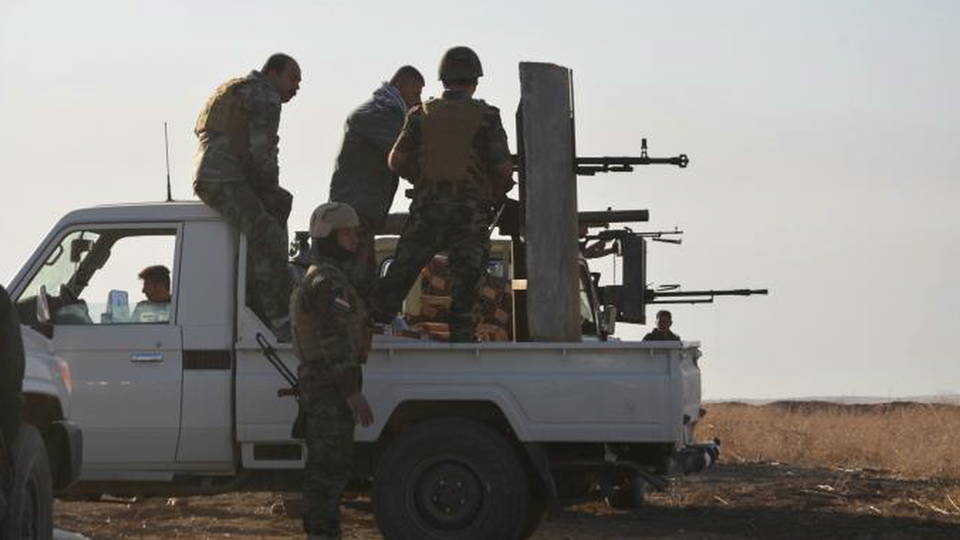 Iraqi, Kurdish and U.S. forces have launched a massive operation to retake Mosul, Iraq’s second largest city, which was seized by the self-proclaimed Islamic State in June 2014. The United Nations is warning as many as 1 million people may be forced to flee their homes due to the offensive, which has been described as one of the biggest military operations in Iraq since the 2003 U.S.-led invasion.
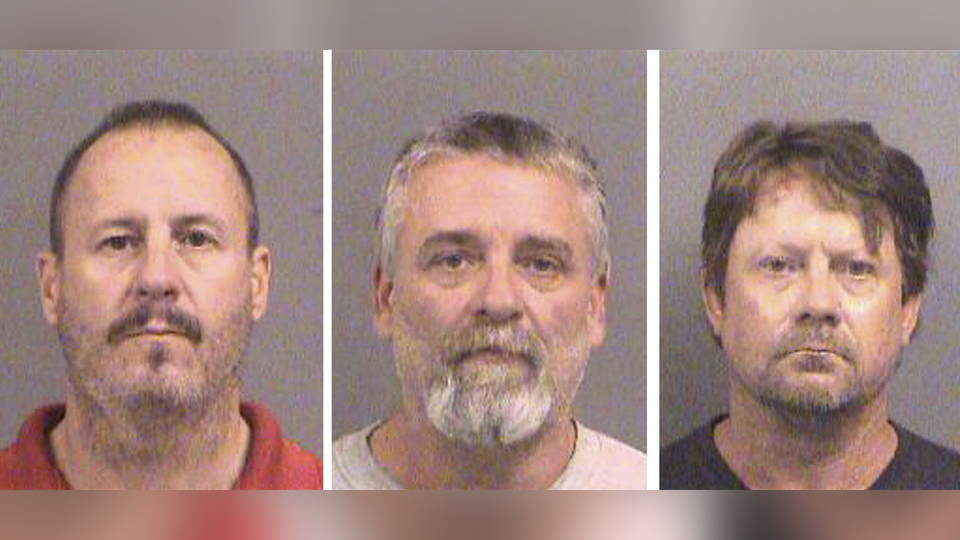 Three members of a Kansas militia known as the Crusaders have been arrested for plotting to blow up an apartment complex in the western Kansas town of Garden City. The apartment complex is home to many Somali refugees and houses a mosque. All three militia members were white men in their late forties. According to the FBI, the militia supported anti-Muslim, anti-immigrant and anti-government beliefs. Tom Beall is the acting U.S. attorney in Kansas.
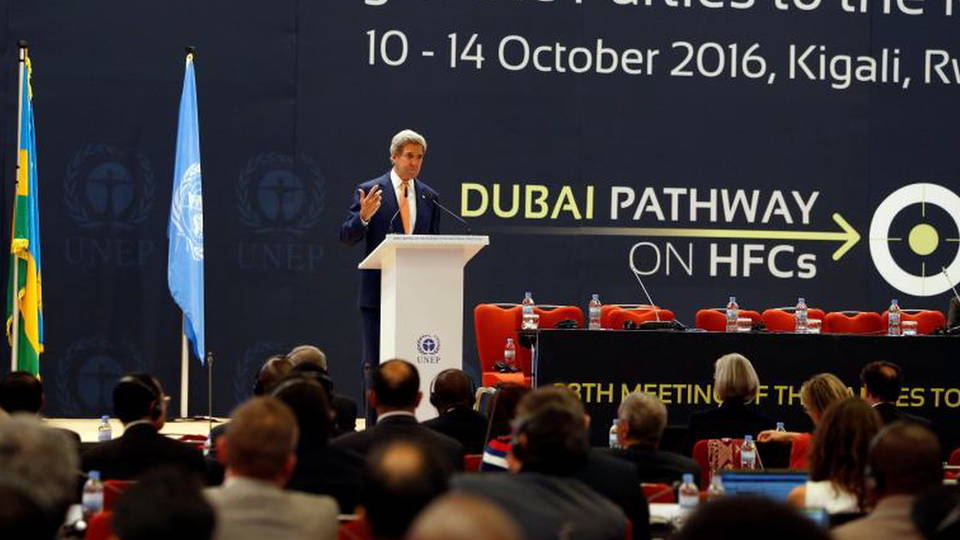 In climate news, nearly 200 nations have backed a legally binding deal to cut back on greenhouse gases used in refrigerators and air conditioners. Hydrofluorocarbon, or HFC, gas can be 10,000 times more more potent than carbon dioxide in trapping heat in the atmosphere. Gina McCarthy, the head of the U.S. Environmental Protection Agency, praised the deal.
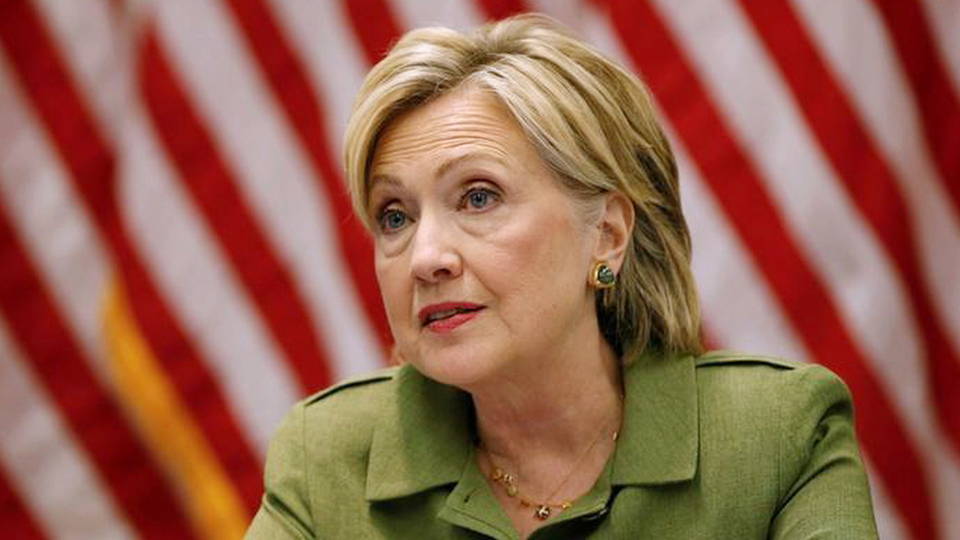 WikiLeaks is continuing to publish more emails from the account of John Podesta, the chair of Hillary Clinton’s presidential campaign. One newly published email revealed that Clinton privately bashed environmentalists opposed to fracking and the Keystone XL pipeline. During a meeting with the Building Trades Union in September 2015, Clinton said the environmentalists should “get a life.”
 Republican presidential nominee Donald Trump continues to claim the election has been rigged, alleging the media is conspiring with Hillary Clinton to defeat him.
 A ninth woman has come forward to say that Donald Trump inappropriately groped or kissed her. Cathy Heller said the incident took place at a Mother’s Day brunch in the 1990s—at Trump’s Mar-a-Lago estate in front of her husband and in-laws. Heller said, “He took my hand, and grabbed me, and went for the lips.”
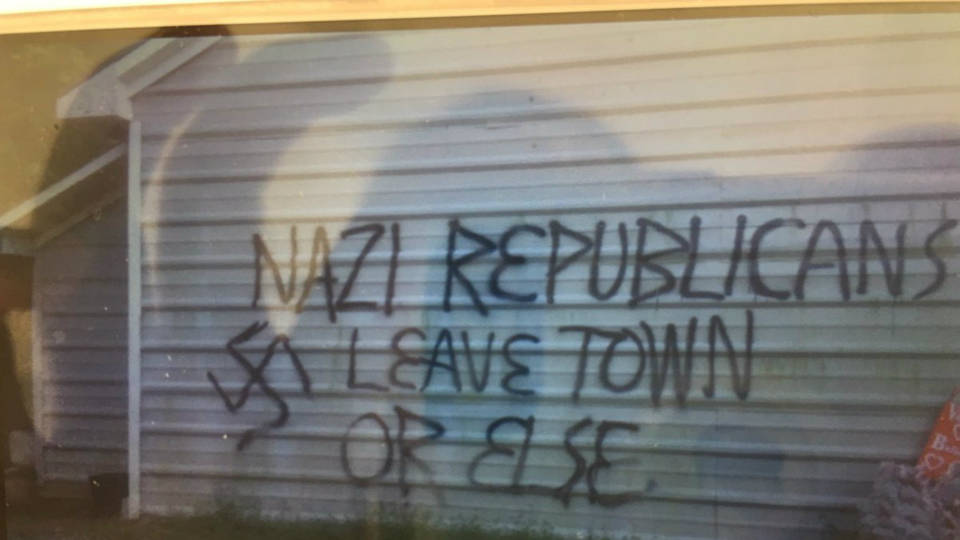 In North Carolina, authorities are investigating the firebombing of the Republican headquarters in the town of Hillsborough. Police said somebody threw a Molotov cocktail into the building, setting off a fire. In addition, somebody spray-painted a swastika on an adjacent building with the message, “Nazi Republicans leave town or else.” The firebombing was denounced by leaders of both political parties in North Carolina. The state’s governor, Pat McCrory, described the firebombing as an “attack on our democracy.”
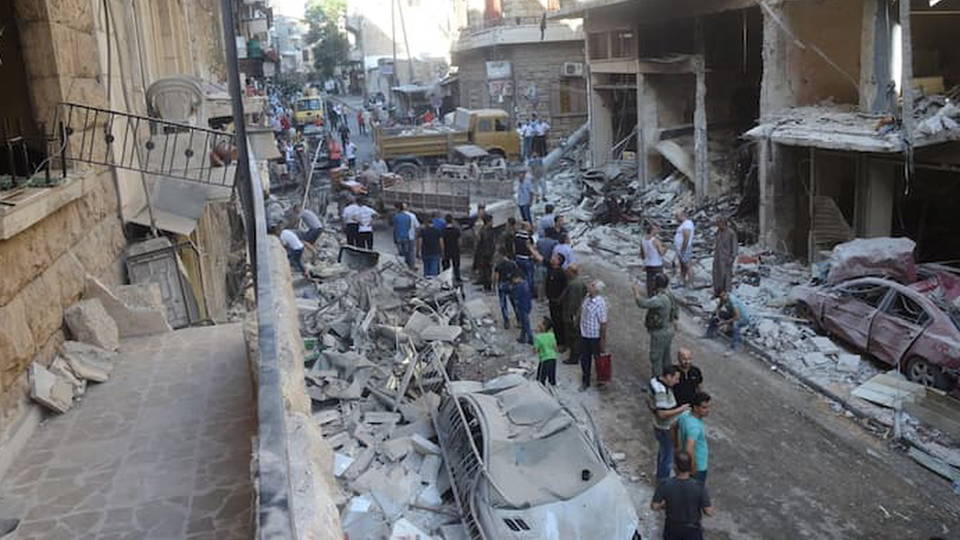 The United States and Britain are threatening new sanctions on Syrian President Bashar al-Assad and his supporters as the siege on eastern Aleppo continues. Secretary of State John Kerry urged Syria and Russia to stop bombing Aleppo.
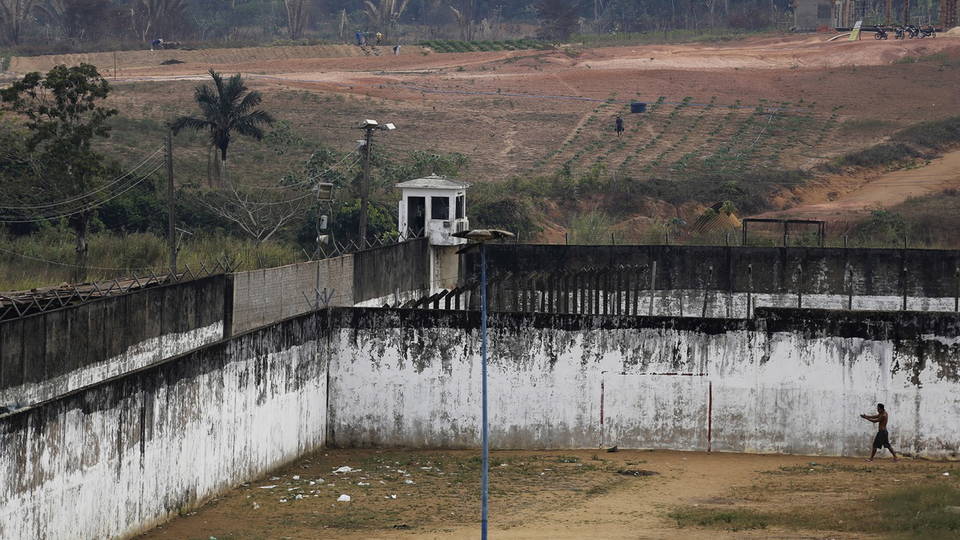 In northern Brazil, more than 25 prisoners have reportedly died during what’s been described as a fight between factions inside an overcrowded prison. Seven prisoners were beheaded. Six were burned to death. Brazil has the fourth largest prison system in the world behind the United States, China and Russia.
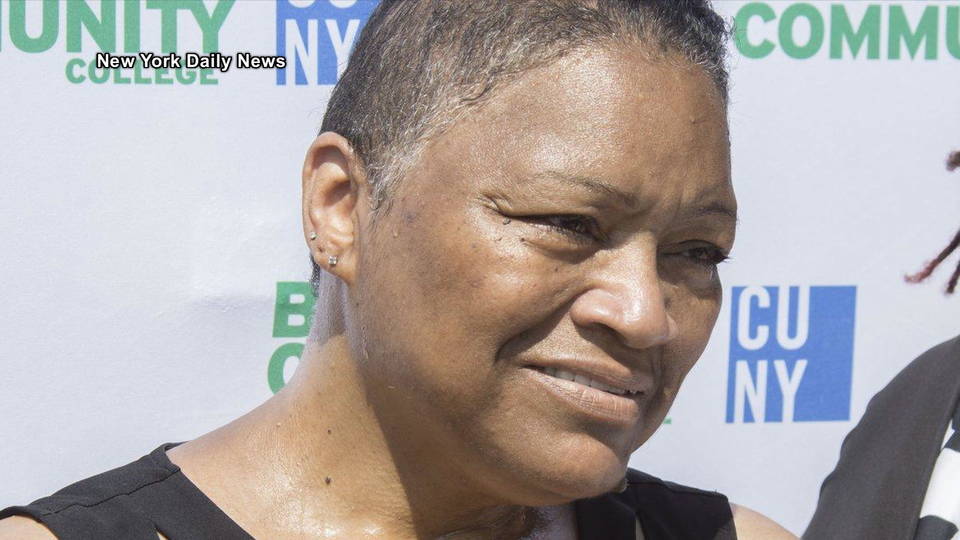 Venida Browder has died at the age of 63. Her son Kalief Browder committed suicide in 2015 after spending three years at New York’s Rikers Island jail without trial after he was accused at the age of 16 of stealing a backpack. The family’s lawyer, Paul Prestia, praised Venida for tirelessly fighting for justice for her son Kalief. He said, “the stress from this crusade coupled with the strain of the pending lawsuits against the city and the pain from the death were too much to for her to bear. In my opinion, she literally died of a broken heart.”
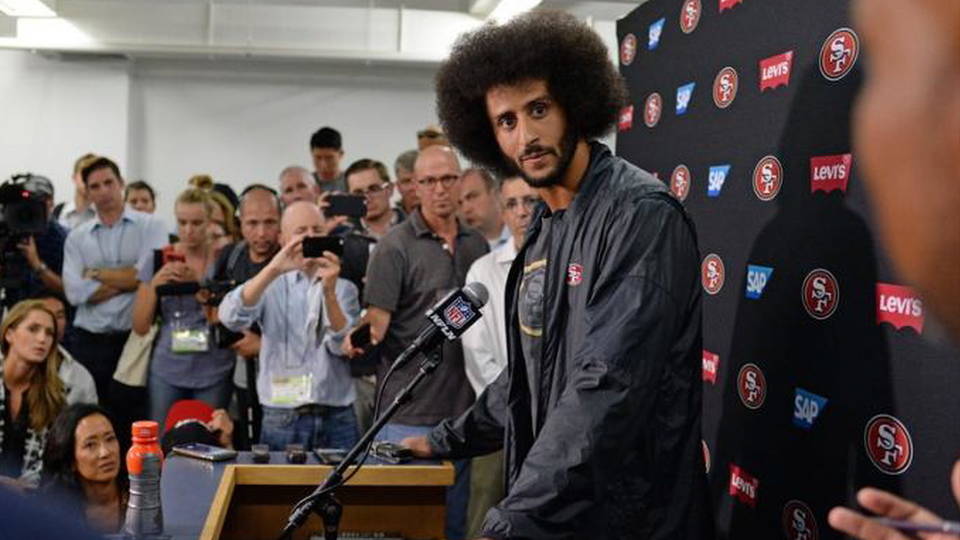 In sports news, NFL quarterback Colin Kaepernick started his first game of the year for the San Francisco 49ers on Sunday. Before the game, he continued his protest against racial oppression and police brutality by kneeling on one knee during the pre-game national anthem. After Sunday’s game, Kaepernick defended his actions, which have sparked similar protests across the country.
-------
In sports news, NFL quarterback Colin Kaepernick started his first game of the year for the San Francisco 49ers on Sunday. Before the game, he continued his protest against racial oppression and police brutality by kneeling on one knee during the pre-game national anthem. After Sunday’s game, Kaepernick defended his actions, which have sparked similar protests across the country.
-------
Iraqi, Kurdish and U.S. forces have launched a massive operation to retake Mosul, Iraq’s second largest city, which was seized by the self-proclaimed Islamic State in June 2014. The United Nations is warning as many as 1 million people may be forced to flee their homes due to the offensive, which has been described as one of the biggest military operations in Iraq since the 2003 U.S.-led invasion.TOPICS:
Militia Members Arrested for Plotting to Blow Up Mosque & Apartments in Kansas
Three members of a Kansas militia known as the Crusaders have been arrested for plotting to blow up an apartment complex in the western Kansas town of Garden City. The apartment complex is home to many Somali refugees and houses a mosque. All three militia members were white men in their late forties. According to the FBI, the militia supported anti-Muslim, anti-immigrant and anti-government beliefs. Tom Beall is the acting U.S. attorney in Kansas.Tom Beall: "It’s alleged the defendants conducted surveillance to size up potential targets. They stockpiled firearms, ammunition and explosive components. They even prepared a manifesto describing their beliefs, to be published after the bombing. These charges are based on eight months of investigation by the FBI that is alleged to have taken the investigators deep into a hidden culture of hatred and violence. Many Kansans may find it as startling as I have that such things could happen here."
The FBI, which had an undercover agent in the militia, said the men were planning to carry out the attack on November 9, one day after the presidential election. Local Somali residents responded with shock to the arrests.
Abdulkadir Mohamed: "I’m here in the United States like 15 years now. I never meet any problem, except today, when I heard this information. And it makes me shocked and scared."
TOPICS:
Global Agreement Reached to Cut Back on HFC Greenhouse Gases
In climate news, nearly 200 nations have backed a legally binding deal to cut back on greenhouse gases used in refrigerators and air conditioners. Hydrofluorocarbon, or HFC, gas can be 10,000 times more more potent than carbon dioxide in trapping heat in the atmosphere. Gina McCarthy, the head of the U.S. Environmental Protection Agency, praised the deal.Gina McCarthy: "If you look at it, we are going to achieve somewhere in the order of 80 to 90 percent of the emission reductions from these chemicals. It is staggering what this will achieve. We’re talking about an amount that’s comparable to thousands of coal-fired power plant emissions. It’s amazing."
TOPICS:
WikiLeaks: Hillary Clinton Told Pipeline & Fracking Critics to "Get a Life"
WikiLeaks is continuing to publish more emails from the account of John Podesta, the chair of Hillary Clinton’s presidential campaign. One newly published email revealed that Clinton privately bashed environmentalists opposed to fracking and the Keystone XL pipeline. During a meeting with the Building Trades Union in September 2015, Clinton said the environmentalists should “get a life.”Trump Claims Election Has Been Rigged by Clinton & Media
Republican presidential nominee Donald Trump continues to claim the election has been rigged, alleging the media is conspiring with Hillary Clinton to defeat him.Donald Trump: "You see what’s happening. The process is rigged. This whole election is being rigged. These lies spread by the media, without witnesses, without backup or anything else, are poisoning the minds of the electorate. No witnesses, no backup, no anything else."
On Sunday, Trump tweeted, "The election is absolutely being rigged by the dishonest and distorted media pushing Crooked Hillary—but also at many polling places—SAD." Last week Trump called the presidential election "one big fix" and "one big, ugly lie." Meanwhile, Trump supporter Milwaukee Sheriff David Clarke tweeted out a photo of an angry mob, saying it’s “pitchforks and torches time." Trump’s claims of a rigged election have been criticized by some Republicans. Ohio Secretary of State Jon Husted said Trump was “wrong and engaging in irresponsible rhetoric."
TOPICS:
Ninth Woman Says Trump Inappropriately Groped or Kissed Her
A ninth woman has come forward to say that Donald Trump inappropriately groped or kissed her. Cathy Heller said the incident took place at a Mother’s Day brunch in the 1990s—at Trump’s Mar-a-Lago estate in front of her husband and in-laws. Heller said, “He took my hand, and grabbed me, and went for the lips.”TOPICS:
Republican HQ in North Carolina Firebombed in "Attack on Our Democracy"
In North Carolina, authorities are investigating the firebombing of the Republican headquarters in the town of Hillsborough. Police said somebody threw a Molotov cocktail into the building, setting off a fire. In addition, somebody spray-painted a swastika on an adjacent building with the message, “Nazi Republicans leave town or else.” The firebombing was denounced by leaders of both political parties in North Carolina. The state’s governor, Pat McCrory, described the firebombing as an “attack on our democracy.”TOPICS:
U.S. & U.K. Threaten New Sanctions Against Assad as Siege of Aleppo Continues
The United States and Britain are threatening new sanctions on Syrian President Bashar al-Assad and his supporters as the siege on eastern Aleppo continues. Secretary of State John Kerry urged Syria and Russia to stop bombing Aleppo.Secretary of State John Kerry: "It’s a humanitarian disaster that is the largest humanitarian disaster since World War II. And it could stop tomorrow morning, tonight, if Russia and the Assad regime were to behave according to any norm or any standard of decency. But they’ve chosen not to."
Earlier today, 14 members of the same family were reportedly killed in an airstrike in eastern Aleppo. The dead included two six-week-old babies and six other children under the age of eight. Meanwhile, Doctors Without Borders is reporting that four hospitals and an ambulance in East Aleppo were bombed on Friday, making it one of the worst days yet for the city’s collapsing healthcare system.
TOPICS:
NYT: Obama Has Escalated Clandestine War in Somalia
In news from Africa, The New York Times is reporting the Obama administration has intensified a clandestine war in Somalia, with hundreds of U.S. special operations forces carrying out ground raids targeting the Somalia-based militant group al-Shabab. The U.S. is also carrying out drone strikes inside Somalia. Last month a U.S. airstrike accidentally killed more than 20 Somali soldiers.
TOPICS:
25 Brazilians Die in Prison Riot
In northern Brazil, more than 25 prisoners have reportedly died during what’s been described as a fight between factions inside an overcrowded prison. Seven prisoners were beheaded. Six were burned to death. Brazil has the fourth largest prison system in the world behind the United States, China and Russia.TOPICS:
Mother of Kalief Browder Dies of a "Broken Heart"
Venida Browder has died at the age of 63. Her son Kalief Browder committed suicide in 2015 after spending three years at New York’s Rikers Island jail without trial after he was accused at the age of 16 of stealing a backpack. The family’s lawyer, Paul Prestia, praised Venida for tirelessly fighting for justice for her son Kalief. He said, “the stress from this crusade coupled with the strain of the pending lawsuits against the city and the pain from the death were too much to for her to bear. In my opinion, she literally died of a broken heart.”TOPICS:
NFL Quarterback Colin Kaepernick Continues Protest During National Anthem
In sports news, NFL quarterback Colin Kaepernick started his first game of the year for the San Francisco 49ers on Sunday. Before the game, he continued his protest against racial oppression and police brutality by kneeling on one knee during the pre-game national anthem. After Sunday’s game, Kaepernick defended his actions, which have sparked similar protests across the country.Colin Kaepernick: "I don’t understand what’s un-American about fighting for liberty and justice for everybody, for the equality that this country says it stands for. To me, I see it as very patriotic and American to uphold the United States to the standards that it says it lives by. That’s something that needs to be addressed."
TOPICS:
WEB EXCLUSIVE
 OCT 17, 2016
Breaking: Judge Rejects "Riot" Charges Against Amy Goodman in North Dakota
A North Dakota judge today refused to authorize riot charges against award-winning journalist Amy Goodman for her reporting on an attack against Native American-led anti-pipeline protesters.
“This is a complete vindication of my right as a journalist to cover the attack on the protesters, and of the public’s right to know what is happening with the Dakota Access pipeline,” said Goodman. "We will continue to report on this epic struggle of Native Americans and their non-Native allies taking on the fossil fuel industry and an increasingly militarized police in this time when climate change threatens the planet."
District Judge John Grinsteiner did not find probable cause to justify the charges filed on Friday October 14 by State’s Attorney Ladd R. Erickson. Those charges were presented after Erickson had withdrawn an earlier charge against Goodman of criminal trespass. Goodman had returned to North Dakota to turn herself in to the trespassing charge.
The charges in State of North Dakota v. Amy Goodman stemmed from Democracy Now!’s coverage of protests against the Dakota Access pipeline. On Saturday, September 3, Democracy Now! filmed security guards working for the pipeline company attacking protesters. The report showed guards unleashing dogs and using pepper spray and featured people with bite injuries and a dog with blood dripping from its mouth and nose.
Democracy Now!’s report went viral online, was viewed more than 14 million times on Facebook and was rebroadcast on many outlets, including CBS, NBC, NPR, CNN, MSNBCand the Huffington Post.
On September 8, a criminal complaint and warrant was issued for Goodman’s arrest on the trespassing charge.
"These shifting charges were a transparent attempt by the prosecutor to intimidate Amy Goodman and to silence coverage of the resistance to the pipeline," said Reed Brody, an attorney for Goodman. "Fortunately, these bully tactics didn’t work and freedom of the press has prevailed."
The pipeline project has faced months of resistance from the Standing Rock Sioux tribe and members of over 100 other tribes from across the U.S., Canada and Latin America.
Goodman is the host and executive producer of Democracy Now!, a national, daily, independent, award-winning public television/radio news program that airs on over 1,400 stations worldwide. Goodman has co-authored six New York Times bestsellers and won many of journalism’s highest awards in more than three decades working as a reporter.
To see Democracy Now!’s coverage of the pipeline and the protests, please visit http://www.democracynow.org/topics/dakota_access
-------
Donate today:
Follow:


WEB EXCLUSIVE
Donate today:
Follow:
WEB EXCLUSIVE


10/18 New York, NY
NEW BOOK

 Part 2: Winona LaDuke & Tara Houska on the Indigenous Resistance to the Dakota Access Pipeline
In this web-only exclusive, Amy Goodman talks with Winona LaDuke, a Native American activist and executive director of the group Honor the Earth who lives and works on the White Earth Reservation in northern Minnesota, and Tara Houska, national campaigns director for Honor the Earth.
TRANSCRIPT
This is a rush transcript. Copy may not be in its final form.
AMY GOODMAN: This is Democracy Now!, democracynow.org, The War and Peace Report. I’m Amy Goodman. We’re broadcasting from Mandan, North Dakota, just across the street from the Morton County Courthouse and jail, where more than half a dozen people will be appearing today on charges related to the ongoing resistance to the construction of the $3.8 billion Dakota Access pipeline. In total, it looks like about 140 people, who call themselves protectors, not protesters, have been arrested in recent months opposing the construction of the pipeline, including 14 people arrested just this past Saturday, amidst actions that delayed construction at multiple worksites. There were, in one site on Saturday, military-grade equipment, aircraft—armored personnel carriers, surveillance helicopters, planes and drones. On Saturday, more than a hundred riot gear-clad police officers from multiple states came out to police a Native American ceremony near a construction site, which started with the Native American women offering the police officers water. Some of those arrested report being strip-searched in custody at the Morton County jail, even when they’re facing minor misdemeanor charges such as disorderly conduct.
For Part 2 of our conversation with Honor the Earth, we’re joined by Winona LaDuke, Native American activist, executive director of Honor the Earth—she lives and works on the White Earth Reservation in northern Minnesota, and Tara Houska, national campaigns director for the group. She’s Ojibwe from Couchiching First Nation.
Couchiching First Nation is in?
TARA HOUSKA: Ontario.
AMY GOODMAN: But you’re from Minnesota?
TARA HOUSKA: Born and raised.
AMY GOODMAN: So I want to talk about this issue of strip-searching, Winona. It is astounding to hear that even people, like the pediatrician for Standing Rock, Dr. Sara Jumping Eagle, was strip-searched for disorderly conduct. Is this typical?
WINONA LADUKE: I would say that, generally, North Dakota is not good to Native people and is really behind the times in terms of constitutional and civil rights. You know, I mean, for many, many years, our people have had an undue burden of the legal system against them, and nobody has really paid attention. I mean, the ACLU, for instance, American Civil Liberties Union, had one person that covered both North and South Dakota—a little understaffed, I’d say. You know, and that’s how things developed like this. But it is wrong. It’s wrong.
AMY GOODMAN: Do they have a right to strip-search people for disorderly conduct?
TARA HOUSKA: I think that this state is reading the law as broadly as it can when it comes to violating the constitutional rights to free speech of these people. I think that they—just like Winona said, they have a very long history of treating folks in this manner. And it’s now just kind of coming to light, right? I mean, we’re seeing yourself being—you know, as a journalist, being arrested when you’re out there on the front lines. You’re seeing Shailene Woodley, a famous actress, that’s out there being arrested as she’s filming it, live-streaming it back to her, you know, RV. I mean, this has been happening to Native people in this state for a very, very long time, and it’s just now reaching the mass—you know, people are looking at this, seeing here’s a Native American ceremony, and there’s hundreds of police officers with a militarized response behind them. It’s madness.
AMY GOODMAN: Why do you continue to resist with this level of force against you, arrayed against you?
TARA HOUSKA: Because this is—what these folks are standing here for, what I’m standing here for, is the protection of water and the protection of the future generations. That matters more than any, you know, criminal trespass or these, you know, attempts to suppress and keep our voices down. You know, we’re seeing the police represent and protect a company interest more than human beings and people. These are U.S. citizens that are all here standing together. And seeing their rights violated, seeing young children afraid of the police, that shouldn’t happen, but it is.
AMY GOODMAN: That’s what people were saying to the police on Saturday, when they lined up all in riot gear with the MRAP, the armored personnel carrier. They were saying, "Who are you protecting? Why aren’t you protecting us?"
TARA HOUSKA: They’re clearly protecting Dakota Access. You know, they’re protecting this profit interest over people and saying that we’re the danger.
WINONA LADUKE: The system has gone totally rogue, is what’s happened. I mean, you know, the fact is, is that you should not be protecting—how far are you going to go with this pipeline? How far are you going to push these people? How far are you going to push all of us for these pipelines? You know, it’s way too militarized. It’s called a mine-resistant armored personnel carrier. That’s what it is, an MRAP, a mine-resistant. At what point did you need a mine-resistant armored personnel carrier in North Dakota?
TARA HOUSKA: And seeing, I mean, local schools doing, you know, lockdowns when these protests are happening. We saw that emergency alert, which is typically reserved for an amber alert for a child that’s been taken, for protesters, warning in the area—frightening people, like we’re somehow scary.
AMY GOODMAN: This has just started happening. On Saturday, we kept getting, on all of our phones, "emergency alert." And then it would say something like "protesters in the area."
WINONA LADUKE: Yeah, they are totally trying to demonize us, is what they’re trying to do. And the fact is, is that the people that are out here, you know, are trying to protect the water. They aren’t making any new water in North Dakota, and this is the only water we’ve got, same water as when dinosaurs were here. And this is what we’re going to need to drink and our descendants are going to need to drink. And all our animals, our horses—all our animals need that water, too. And this is a chance to protect that water. North Dakota has already done enough to kind of mess up the water out here with all that fracking waste and starting to pretend that that’s working out OK for us. It’s not. It’s time to stop. It’s time to stop and protect the water.
AMY GOODMAN: There are a lot of people concerned that this is escalating to a very bad situation. Are you concerned about this?
WINONA LADUKE: Yes, I am concerned that they escalating it. The police are who’s escalating it. Our people have consistently been praying. Our people have been consistently engaged in nonviolent direct action. And, you know, we had a forum in Bismarck this last week, and it was very well attended, because I think people in Bismarck want to know why all these cops are out there, what is going on, you know, why these people are coming in here. So, you know, I’m saying to people of Bismarck, people in North Dakota, we’re here because it matters. I’m from northern Minnesota, and bad things happen in North Dakota and head my way, whether they’re pipelines or emissions from your coal plants. You know, it affects all of us. So, you know, it is time to say our civil rights, our constitutional rights are all being violated.
AMY GOODMAN: I wanted to play a clip for you. On Saturday night, we were at the casino, the Prairie Knights Casino, Native American casino, and there was the band America playing. And, you know, they’re known for "Horse with No Name" and other songs. Hundreds of people packed in, mainly non-Native. And after the concert, I caught up with a number of the concertgoers. I asked them if they liked the concert, but then asked them how they felt about the North Dakota Access pipeline as well as the protests?
AMY GOODMAN: What do you think of the pipeline?
AMERICA FAN 1: What do I think of the pipeline? I think it’s necessary. To get the oil off the roads, away from the trains and the trucks, pipeline is the safest way to go. I don’t believe that going under the river is a necessity. I don’t like the idea of it going under the river. But I think it’s necessary to move it underground instead of on the roads.
AMY GOODMAN: Do you think DAPL should just move it to somewhere else?
AMERICA FAN 1: I think if the Natives would have went in and had the process that is set up for them to go to court and have their say in court, I think they probably would have been able to make a difference. But they weren’t there. Now they’re trying to make a difference, and it might help. I think it’s helping, actually.
AMY GOODMAN: What do you have to say?
AMERICA FAN 2: There’s nothing wrong with the pipeline. Anyone with half a brain, if they looked at the maps of all the pipelines, they’re all over the place. There’s a pipeline that went right along this one. It’s already been dug up. There’s nothing going on there. It’s not going to hurt the water. It’s 90 feet below the lake, clay above it. People don’t know what they’re talking about. It’s all BS.
AMY GOODMAN: So what do you think should happen then, because there’s such strong opposition from the Native population?
AMERICA FAN 2: I think they should all go home.
AMY GOODMAN: They live here.
AMERICA FAN 2: They live here, but it’s not on their land. It’s not their business.
AMY GOODMAN: What do you think of the fact Native Americans feel so strongly they don’t want it?
AMERICA FAN 3: This is—this is their homeland. Yeah? Yeah, this is—this is their Mother Earth, you know, so—and they just want to protect it. So, I understand that, you know. I respect that, you know. They got their feelings, and they’re expressing them. It’s a free country, you know, so...
AMY GOODMAN: Do you think a private company like the Dakota Access pipeline should get to determine what happens here against the wishes of the Native population?
AMERICA FAN 3: I think it should be a group effort in both sides, you know. I think they should be able to come together and, you know, make it all work.
AMERICA FAN 4: I think it’s unfortunate that a lot of people are thinking it’s getting out of hand. And in some cases, it is. Do you think so? In some cases, it’s gotten out of hand?
AMY GOODMAN: You mean the building of the pipeline?
AMERICA FAN 4: No, the—the—
AMY GOODMAN: The protests.
AMERICA FAN 4: The protesting and the disruption of some farmers’ lives around there.
AMY GOODMAN: Is it true that the pipeline was supposed to be built above Bismarck and—
AMERICA FAN 4: Correct.
AMY GOODMAN: Yeah, and Bismarck didn’t want it?
AMERICA FAN 4: No.
AMY GOODMAN: The population.
AMERICA FAN 4: Correct.
AMY GOODMAN: So, do you think the Native Americans should have that same right?
AMERICA FAN 4: They should. Yes, I totally agree.
AMY GOODMAN: So what’s the difference? Why did Bismarck get to say no, and Native Americans, they’re being told they have to?
AMERICA FAN 4: That’s a good question. I don’t know.
DEB MATHERN: My name is Deb Mathern. I was a former—I’m a recovering politician.
AMY GOODMAN: Oh, where did—
DEB MATHERN: In North Dakota. I asked my brothers and sisters, "How would you feel if bulldozers bulldozed our parents and our sisters, who have passed us before us? How would you feel if they bulldozed their burial grounds? How would you feel?" And they just went, "Oh, OK, I get it." And I think America needs to stop and think about that. I think our governor should have come down here right away and talked to the people and created conversation.
AMY GOODMAN: Those are America fans, the group America, who were playing at the Prairie Knights Casino Pavilion, which holds like 2,200 people. It was pretty packed. And afterwards, I just spoke to some of them about what they thought about not only the pipeline, but the resistance to it. Our guests, Winona LaDuke and Tara Houska, both Native American activists with Honor the Earth. Tara, your response?
TARA HOUSKA: I thought it was, you know, kind of sad when they stated—you know, one person stated that they should have voiced, and they should have—the Native Americans should have participated in the process. This is years of opposition by the Standing Rock Sioux Tribe that has only recently become compounded by all these—you know, the influx of thousands of people, because it got that far. There was opposition all the way from the beginning, and it just kept clicking along. And then it became to the point of them actually constructing into the ground, ripping apart sacred sites. And then all these people came.
It was also really sad to hear, you know, that they’re opposed to—they think that pipelines are safer, that they’re somehow safer than the bomb trains that are passing through, they’re somehow, you know, a better solution. The better solution is renewable energy. The better solution is not having something that can—that goes through the ground, often leaks. There are, you know, so many leaks along pipelines, aging pipelines and even new pipelines, thousands and thousands of gallons spilled in a single minute. I mean, that’s not a solution. The solution is renewables. You see these big energy departments with little renewable departments within them that are basically not working, not doing anything. We’re in one of the windiest states that I’ve ever been in.
AMY GOODMAN: It was hard to record yesterday because the wind was so strong.
WINONA LADUKE: Very strong.
AMY GOODMAN: And it was a mild day for North Dakota.
TARA HOUSKA: I mean, where are the wind turbines? I mean, I’m sure this entire state could be powered by wind energy. And instead, they’re fracking. They’re pulling oil from the Bakken that’s unnecessary, unneeded, and continuing to contaminate the planet.
WINONA LADUKE: What I’d say is that like North Dakota—like just the Fort Berthold Reservation has 17,000 times more wind capacity than they can use.
AMY GOODMAN: And where is Berthold?
WINONA LADUKE: Just north of here. And that’s the one where all the fracking is. And all those people want to talk about pipelines. Twenty thousand gallons a minute, that’s how much will spill out of a pipeline. And when had that spill, the Kalamazoo spill, it took them 17 hours to stop it. You know, because it’s out of sight, out of mind, doesn’t mean it’s working out.
And, you know, people in North Dakota and people around the country really need to be concerned about these pipelines, because, as the chairman said, you had pipelines that have been here for 50 years. They were put in before any of the environmental laws. And those pipelines are already leaking. They’re weaping. We have pipeline in northern Minnesota with 1,400 structural anomalies in them. Structural anomaly means not working out, pinhole leaks, the kinds of things that caused the Kalamazoo spill. So, you know, this is an issue for all of us. You know, the country has a D in infrastructure. This country has a—First World country—D in infrastructure. And that pipeline infrastructure, which is all over North Dakota, all over northern Minnesota, is what we should all be concerned about. There is no easy way out of this, except for clean out your old mess and make infrastructure for people and not for corporations. $3.9 billion could mean a lot to North Dakota in real infrastructure, you know, and to Native people for real infrastructure.
AMY GOODMAN: Winona, you’re leaving here in just a few hours to go back to Minnesota—
WINONA LADUKE: That’s right.
AMY GOODMAN: —to fight another pipeline?
WINONA LADUKE: That is right. I also have to say hello to my grandchildren and my children. They’ve been asking me to return.
But, you know, what I would say is that—so, we’re facing this other line—Line 3, it’s called, Enbridge line, 760,000 barrels per day, a tar sand pipeline proposal, same route. You know, we defeated the Sandpiper which was proposed, a brand-new pristine route, as opposed to the six-pipeline-wide aging pipeline infrastructure in northern Minnesota that goes around—across Highway 2. Enbridge now wants 760,000-barrel-per-day pipeline called Line 3, and it’s their single largest project. So, I’m going home. Hearings are starting on that. So, I have to face that.
And, you know, that’s the one that’s going into Wisconsin. That’s why Dane County was also out here, is because they’re facing the biggest pipelines—tar sands pipeline ever. It’s a twin of that, you know. And with a bad governor and, you know, who doesn’t want to protect the people of Wisconsin, that’s why he sent those people out here, too. But they are projecting they’re going to have a big battle on that Line 66 going through Wisconsin, as well as in, you know, northern Minnesota. And I told Enbridge—I had a meeting with them—I said, "We know how to camp, too. We know how to camp, too, you know, and we aren’t going to let you get that pipeline." You know, they didn’t get the last one; they didn’t get the Sandpiper. And they are not going to get Line 3. And so they should move on.
Enbridge itself, you know, big investor in this, they have a $4 billion wind portfolio. I’m like, "Put some wind up. We’d like you. Do something real. Don’t call this 'energy security,' 'national energy security for the future,' 'energy self-sufficiency.' That’s a pipeline that’s not helping anybody, except for those oil companies. Wind, solar, efficiency—these houses out here are just freezing in the winter. People freeze to death because they don’t have adequate infrastructure in their houses. They’ve got a 50-year-old health clinic. Do something for people if you’re going to invest out here.
AMY GOODMAN: Tara Houska, what is it like to be on the front lines of these protests?
TARA HOUSKA: When you’re out there, you are in a very rural place. I mean, North Dakota is a very rural state. And there’s very limited cell service. There’s very limited connection and connectivity to the outside world. And when you’re out there and you’re facing a, you know, line of police that are armed with assault rifles, there’s an MRAP, there’s whatever military—there’s helicopters overhead, it is very scary. You think about what happens if someone just accidentally, you know, gets too excited and thinks that somehow, you know, maybe we’re praying too hard or whatever it is, and they shoot. You know, that’s how it feels when you’re there. And the police are a scary presence.
It’s not a comfortable feeling to know that you are actually afraid for your life from the police because they’re protecting a pipeline and they’re protecting the interests of Dakota Access. That’s a very scary feeling, and it’s one that I think, you know, more people need to be aware of. And they need to understand that we’ve reached a point now where we’ve got, you know, a state actively and openly protecting the interests of Big Oil, and we’ve got a Congress that’s directly controlled. You know, there’s so many campaign donations that come from Big Oil. And we see a Congress that deregulates the oil industry again and again and again.
We have Hillary Clinton who’s running for president. Where is she on Dakota Access? I mean, where is the response to Dakota Access? This is the biggest—if she’s so—you know, she said that she is for Indian country. She put out a platform for Indian country. Where is the response to Dakota Access? That is the biggest, single most center point issue of Indian country right now. There’s thousands of people that have come here. There is hundreds and hundreds of tribal nations that have come here to stand. I want to know where that positioning is. And I want to know—you know, "Natural gas is a bridge fuel," that’s a ridiculous, ridiculous statement. You know, I want to—I want to know what my president, what our future president, really thinks about the environment and the future of the people, and, you know, whether Citizens United is going to continue to stand, whether we’re going to allow a Congress to continue to be controlled by corporations and not by the people that they are supposed to be representing.
AMY GOODMAN: Are you concerned that the non-Native population here, that the sheriff is turning them against you? Have there been calls for the arming of the population?
TARA HOUSKA: There has been calls for the arming of the population. And I actually just learned yesterday that, you know, there was a water protector that locked down to a piece of equipment. That happened. There was a farmer that fired a shot at those folks. That did happen. There was a gun that went off. And that’s a very scary instance and situation of, you know, people actually being afraid for their lives and realizing just how high the stakes are and that Sheriff Kirchmeier has continued to kind of put out this message of aggression, that Native Americans are aggressive, that we are attacking people, that we’re intimidating local people.
We’re there to protect their land just as much as we’re there to protect our own interests, which is the land, the water, sacred places. We’re not there to intimidate people or to have any violent interaction with anyone. Every single protest has been a peaceful action, even when people are locking themselves to machines. That’s not hurting any human beings. That is stopping construction of a pipeline that we’re all trying to oppose. We’re not trying to intimidate local people.
And as Winona said, there is a strong interest, that’s growing, from the local population about this issue. I’m sure they want to know: Why are my taxpayer dollars being spent on thousands of police? Why is the National Guard being called in? Why is that happening for this—you know, for a group of Native Americans that are exercising their constitutional rights? You know, is that really the best us of our resources? Is that really what’s needed? And is it OK that we’re encouraging local citizens to actually be violent towards one another?
AMY GOODMAN: When we were last here, on Labor Day weekend, Winona, you said you didn’t want to spend the next 10 years of your life fighting pipeline by pipeline. So, how will that change?
WINONA LADUKE: Well, I think you need to stop it at the source. I mean, North Dakota is already getting a massive destruction of its water supply from fracking, and that’s going downhill. I mean, in order to keep pumping out of these fracking wells—those wells last four years—they’ve got to keep doing it and doing it over and over and over. It’s a lot of investment. Need to stop. You know, need to—need to move to efficiency and renewables, and you need to clean up the mess you already got out here.
I mean, people are looking at the Native people here, but, you know, the fact is, is that a lot of bad things have happened here. And even the Army Corps itself, it took 200,000 acres of land from these people, their best bottomlands, their best lands, and let them—basically forced them into a situation of poverty, you know, the federal government’s denial of loans to these people for years under the Keepseagle case. You know, there’s a lot of things that happened.
It’s time for justice. And it’s time for peace. And the way you’re going to make peace out here is to take care of your environment and to treat people with dignity. You know, nobody is going anywhere. Telling Native people they should go home—wait, wait, let me get that right. You know, this is where we live, you know? And so, you know, I think that the long-term solutions are really systemic. It’s, you know, having local food. It’s not having your food owned by Monsanto, and it’s not putting a bunch of, you know, pesticides, and it’s not exporting all your oil and destroying your water. You know, the North Dakota Department of Health says that there’s not problems with the oil spills or the brine spills into the river. Their answer was, is that dilution has—had solved the problem. The solution to pollution is not dilution. The solution to pollution is don’t do it. You know? There’s only so much poison you can make. It’s time to quit, North Dakota. And it doesn’t just affect you. Like, North Dakota act like what happens here, it’s really their business. I’m telling you, everything happening in North Dakota affect the rest of us. And everybody should care about North Dakota. And we should work together to protect this water up here and protect the people, so we can live in dignity, you know?
AMY GOODMAN: You know, it was the morning of the September 3rd pipeline security guard attacks on the Native Americans that we spoke to you. It was before the dogs were unleashed, when you said, "Governor Dalrymple, this is not 1963. This is not Alabama. You are not"—
WINONA LADUKE: "You’re not George Wallace, Governor Dalrymple." You know, that is right. It is time to, like, evolve. This is—you know, that era that was in the '50s and the ’60s, this is like—you know, you don't get to put dogs on Indians. You don’t get to put water cannons on us. You don’t get to fire at us. It’s time for peace. You know, these people—I always get super offended. You know, I’m not a protester; I’m a protector. And why is it that I get called an "activist" or "protester," when what I want is clean water, and a corporation that is going to poison your water isn’t called a "terrorist"? How does Dakota Access become a victim in this? At what point are they a victim? And that’s what the court is saying. People are told that they cannot have any contact with the victim. That’s what Nick Tilson was charged with. And they said "no contact with the victim." He said, "Who is the victim?" And they said, "Dakota Access." That’s not even a corporation. It’s a project. We’ve got to quit defending the rights of corporations over human rights and the rights of water, you know?
AMY GOODMAN: And the SLAPP suits?
WINONA LADUKE: And the SLAPP suits, oh, my gosh, there’d be so many busy people. And what I’m saying is, is that, in my experience, they had all the hearings on pipelines in northern Minnesota in January, like the 3rd of January. The technically enhanced naturally occurring radiation standard meetings in North Dakota were the 14th of January. It’s cold as heck. You know, nobody want to go. But I’m saying it is time to take your vacation in North Dakota, civil society. You know, North Dakota needs a little help out here. And bad things got to—you know, got to quit happening up here. And this is your chance, everybody, to come support us. We don’t need the Deep North up here. You know, what we need is justice. And what we need is something that’s right, you know?
AMY GOODMAN: Well, I want to thank you both for being with us. Winona LaDuke and Tara Houska, both with Honor the Earth. This is Democracy Now! We’re broadcasting from Mandan, North Dakota, across the street from the Morton County jail and courthouse, where so many of the water and land defenders have been brought to. This is Democracy Now!, democracynow.org. I’m Amy Goodman. Thanks for joining us.
WORK WITH DN!

Senior TV Producer
SPECIAL LIVESTREAM

Special Livestream: Amy Goodman Speaks About Facing "Riot" Charges in North Dakota
207 West 25th Street, 11th Floor
New York, New York 10001, United States
-------
-------
No comments:
Post a Comment