
2015 Matching Gift: Advance Strategic Initiatives

2015 has been a year of many strategic initiatives for the Lausanne Movement. Among others:
The launch of the Mission China 2030 vision
Introducing David Platt as our new Theology Working Group Chair
Welcoming 17 new co-Senior Associates from around the world
Planning for the 2016 Younger Leaders Gathering
God has graciously provided us a year-end matching grant to advance strategic initiatives like the ones above. A generous friend of Lausanne has offered to match $541,620 USD of the gifts or pledges made by 31 December!
Would you pray about whether the Lord would have you partner with us in these initiatives?
Give Online Now See Other Giving Options
Read more about Lausanne's strategic initiatives (한국어 | Español)
2015 Matching Gift: Advance Strategic Initiatives
Michael Oh - Executive Director/CEO
2015 has been a year of many strategic initiatives for the Lausanne Movement.
Last month in Hong Kong, we held an historic gathering of 900 Chinese leaders for the launch of the Mission China 2030 vision. The vision of Mission China 2030 is to see 20,000 missionaries sent out from China by the year 2030, one for every missionary received by China in the past 200 years.
Lausanne has also welcomed David Platt as our new Theology Working Group Chair and 17 new Senior Associates from around the world. The 30+ global networks led by the Senior Associates are continuing to grow in impact in critical areas of need. The next urgent issue we will be tackling is sexual integrity/human sexuality.
We’re continuing to plan for the third Lausanne Younger Leaders Gathering (YLG) to be held in Jakarta in 2016. We’re expecting over 1,000 younger leaders from at least 161 countries, and the caliber of participants is excellent. Here are a few snapshots of the participants:
- A young man connecting 100 churches in Buenos Aires to work together in global mission
- A female Bible expositor from Mexico
- A former supermodel who is now an apologist with Ravi Zacharias International Ministries
- A leader from Iran doing diaspora ministry in Indonesia
- A Yemeni tentmaker in Malaysia
- An award-winning film producer from the United States
This once-a-generation gathering will be followed by the Younger Leaders Generation (YLGen) initiative, a ten-year commitment to mentor, equip, and walk alongside of the participants and other younger leaders of their generation.
A gift that God has graciously provided us to strategically advance initiatives like the ones above is a year-end matching grant. A generous friend of Lausanne has offered to match $541,620 USD of the gifts or pledges made by 31 December. Would you pray about whether the Lord would have you join in on this strategic opportunity?
---------------------
SHARE:


Latest from the Lausanne Global Analysis

Lausanne's Renewed Engagement in Global Mission
Michael Oh and Justin SchellFourfold vision
Though our mission has not changed, we now communicate it this way: Connecting influencers and ideas for global mission. We then wrestled with what that mission looks like in reality. Or to ask it another way, if by God’s grace we were to succeed in this mission, what would the world look like? Out of that process emerged Lausanne’s fourfold vision:

Cape Town fruit
All of this is fruit from the Cape Town 2010 Congress (CT2010). The one thing that everyone involved in planning CT2010 was 100% agreed upon was this: CT2010 must not be simply another conference. The value of any gathering lies primarily in the resultant impact—the enduring worth—of the gathering. Especially in an age where technology and globalization have made it possible to ‘gather’ vast numbers of people from all over the world easily, it was essential that Cape Town bear fruit that lasted.
Now we are well on our way. The low-hanging fruit of Cape Town was the potential to collaborate on the more than 30 critical issues that were identified as crucial for the global church to engage in mission. In these five years, existing global networks have been strengthened and accelerated, and new global networks have formed around several of these issues.
Issue networks
Leaders, thinkers, and practitioners are working together to engage on topics as diverse as Islam, mission to and by the disabled, the arts in mission, and cities. They are indeed bringing Kingdom Impact in Every Sphere of Society.

In March 2015, over 300 leaders in diaspora mission gathered in Manila, Philippines, to help produce a comprehensive textbook on Diaspora Missiology. Gatherings on Islam in Ghana, Children at Risk in Ecuador, Jewish Evangelism in Jerusalem, Creation Care and Mission in Jamaica, Care and Counsel as Mission in Germany, and others have resulted in tangible strategic resources and partnerships. As always, the fruit of Lausanne grows best on others’ trees, but no one could have imagined what rich fertilizer CT2010 would prove to be!
Each of these issue networks is growing, gathering, planning, and working together in their spheres of influence so that the world might know Christ. They are all at different sizes and stages of development, but the potential is so exciting. Some of the best fruit coming from these issue networks can be seen right here in the Lausanne Global Analysis (LGA)—our bimonthly publication designed to bring seminal and timely biblical reflection and strategic analysis to evangelical leaders around the world.
As always, the fruit of Lausanne grows best on others’ trees, but no one could have imagined what rich fertilizer CT2010 would prove to be.
Regional networks
At the same time, the Lord has allowed Lausanne to help strengthen and renew regional networks as well:
In East Asia, house church leaders are being equipped to lead their congregations in global mission.
In English, Portuguese, and Spanish speaking Africa, the Mission Africa Trust Fund (MATF) has been launched. MATF has described its raison d’etre like this: ‘Africa has moved from a missionary receiving continent to a missionary sending continent. The time has come for the African church to become a mission giving church.’ Can you imagine what the world will look like in ten years if abundant prayer and timely service were to cover this initiative?
Latin America has played host to two very important gatherings in 2014—on the critical issues of Global Theological Education and of Prosperity Theology, Poverty, and the Gospel—helping chart the future course for developing Christian leaders, and addressing an errant teaching that has ravaged the church worldwide.
As regional engagement grows, so has a natural and wonderful consequence: namely, the translation of key global mission resources into more and more languages, making the fruits of CT2010 accessible to even more Christian leaders around the world. The Cape Town Commitment has been translated into at least 25 languages (and maybe more), and the LGA is being translated into several languages as well. The Lausanne Global Classroom initiative will deliver ongoing missiological education to the seven major languages of CT2010.
The longer view
This is just a taste of the fruit of CT2010. However, we are not only concerned with the low-hanging fruit that has come out of this historic gathering. Cape Town also reminded us of the desperate need to take a long view in the work of global mission.

Latest from the Lausanne Global Analysis
Lausanne's Renewed Engagement in Global Mission
Michael Oh and Justin SchellFourfold vision
Though our mission has not changed, we now communicate it this way: Connecting influencers and ideas for global mission. We then wrestled with what that mission looks like in reality. Or to ask it another way, if by God’s grace we were to succeed in this mission, what would the world look like? Out of that process emerged Lausanne’s fourfold vision:
Cape Town fruit
All of this is fruit from the Cape Town 2010 Congress (CT2010). The one thing that everyone involved in planning CT2010 was 100% agreed upon was this: CT2010 must not be simply another conference. The value of any gathering lies primarily in the resultant impact—the enduring worth—of the gathering. Especially in an age where technology and globalization have made it possible to ‘gather’ vast numbers of people from all over the world easily, it was essential that Cape Town bear fruit that lasted.
Now we are well on our way. The low-hanging fruit of Cape Town was the potential to collaborate on the more than 30 critical issues that were identified as crucial for the global church to engage in mission. In these five years, existing global networks have been strengthened and accelerated, and new global networks have formed around several of these issues.
Issue networks
Leaders, thinkers, and practitioners are working together to engage on topics as diverse as Islam, mission to and by the disabled, the arts in mission, and cities. They are indeed bringing Kingdom Impact in Every Sphere of Society.
In March 2015, over 300 leaders in diaspora mission gathered in Manila, Philippines, to help produce a comprehensive textbook on Diaspora Missiology. Gatherings on Islam in Ghana, Children at Risk in Ecuador, Jewish Evangelism in Jerusalem, Creation Care and Mission in Jamaica, Care and Counsel as Mission in Germany, and others have resulted in tangible strategic resources and partnerships. As always, the fruit of Lausanne grows best on others’ trees, but no one could have imagined what rich fertilizer CT2010 would prove to be!
Each of these issue networks is growing, gathering, planning, and working together in their spheres of influence so that the world might know Christ. They are all at different sizes and stages of development, but the potential is so exciting. Some of the best fruit coming from these issue networks can be seen right here in the Lausanne Global Analysis (LGA)—our bimonthly publication designed to bring seminal and timely biblical reflection and strategic analysis to evangelical leaders around the world.
As always, the fruit of Lausanne grows best on others’ trees, but no one could have imagined what rich fertilizer CT2010 would prove to be.
Regional networks
At the same time, the Lord has allowed Lausanne to help strengthen and renew regional networks as well:
In East Asia, house church leaders are being equipped to lead their congregations in global mission.
In English, Portuguese, and Spanish speaking Africa, the Mission Africa Trust Fund (MATF) has been launched. MATF has described its raison d’etre like this: ‘Africa has moved from a missionary receiving continent to a missionary sending continent. The time has come for the African church to become a mission giving church.’ Can you imagine what the world will look like in ten years if abundant prayer and timely service were to cover this initiative?
Latin America has played host to two very important gatherings in 2014—on the critical issues of Global Theological Education and of Prosperity Theology, Poverty, and the Gospel—helping chart the future course for developing Christian leaders, and addressing an errant teaching that has ravaged the church worldwide.
As regional engagement grows, so has a natural and wonderful consequence: namely, the translation of key global mission resources into more and more languages, making the fruits of CT2010 accessible to even more Christian leaders around the world. The Cape Town Commitment has been translated into at least 25 languages (and maybe more), and the LGA is being translated into several languages as well. The Lausanne Global Classroom initiative will deliver ongoing missiological education to the seven major languages of CT2010.
The longer view
This is just a taste of the fruit of CT2010. However, we are not only concerned with the low-hanging fruit that has come out of this historic gathering. Cape Town also reminded us of the desperate need to take a long view in the work of global mission.
Nearly 40 years after the first Lausanne Congress, Cape Town offered a stunning picture of the fact that global mission must be a multigenerational undertaking. Neither Billy Graham, nor the late John Stott, was at Cape Town. The young, passionate Latino leaders of 1974, Samuel Escobar and Rene Padilla, were now sharing from nearly 40 more years of experience. Alongside of this, new voices spoke into the global discussion, and perhaps the biggest shock of all is that it was a North Korean high school girl who provided the most profound moment of the entire gathering.
Next generation of leaders

Next generation of leaders
Lausanne has always had an interest in seeing the next generation of mission leaders emerge. Lausanne has hosted two global (Singapore 1987, Malaysia 2006) and several regional and national Younger Leader Gatherings (YLG). However, with the generational transition in leadership apparent and under way on stage at CT2010—even two and a half years before a younger leader named Michael Oh would be appointed as Executive Director/CEO of Lausanne—it was clear that change in global mission leadership was coming. We believe that Lausanne will have a unique role in that transition: namely, to help see generation after generation of Christ-like Leaders for Every Church identified and empowered.
In 2016, in Jakarta, Indonesia, Lausanne will host the third global Younger Leaders Gathering. Some 1,000 younger leaders from more than 150 nations will gather for what, as we resolved for Cape Town, must not be simply another conference. The need for Christ-like leaders for the church is too important to be content with a week of meetings and speakers. These younger leaders will certainly hear from and engage with their more experienced counterparts, but they will also take part in creating the future that God is bringing into existence.
In 2016, in Jakarta, Indonesia, Lausanne will host the third global Younger Leaders Gathering. Some 1,000 younger leaders from more than 150 nations will gather for what, as we resolved for Cape Town, must not be simply another conference.
The participants will take part in ‘laboratories’ where their greatest passions and inspirations and the world’s greatest needs will intersect. They will receive encouragement and coaching on how to initiate the next generation of missional networks, organizations, businesses, and ministries. Historically, we have seen these eternity-shaping initiatives launched out of Lausanne gatherings (300 such networks came out of Manila 1989 alone), but this is the first time where we will actively nurture such undertakings. We are excited about the kingdom initiatives waiting to be birthed.
YLGen
Again, the need for Christ-like leaders for the church is too great simply to be content with a week of meetings and speakers. The YLG will not be the end of Lausanne’s engagement with these younger leaders. The gathering will actually launch a ten-year initiative called Younger Leaders Generation (YLGen).
Those who attend the YLG, as well as other younger leaders, will be connected in mentoring communities and receive critical mission education through Lausanne’s Global Classroom initiative. These are just two of the ongoing opportunities. It is often easy to get people excited about a big event, but there is no other Lausanne initiative that excites us as much as YLGen. We truly believe that if you want to change the world, you must change its leaders.
Wittenberg gathering—toward a greater partnership
Besides highlighting the multi-generational nature of the church, Cape Town also reminded us that global mission is too important to ignore and too difficult to do alone. Regional networks, issue networks, and generational networks are all manifestations of God’s people connecting for global mission. We want to share with you, for the first time, about an upcoming event that we ask you to pray about and fast over. It is our hope that the event results in powerful partnerships aimed at seeing the Gospel for Every Person andan Evangelical Church for Every People become a reality.
In 2017, Lausanne will be hosting a gathering in Wittenberg, Germany. That year will mark the 500th anniversary of the beginning of the Protestant Reformation. While we certainly will celebrate the faithfulness of God over these 500 years, we also understand that the gospel, the good news that Martin Luther and others worked tirelessly to defend and articulate, has yet to reach billions of men, women, and children.
The gospel the Reformers championed must continue to be heralded throughout the world. In light of this, Lausanne will be inviting 70 of the most influential mission leaders to Wittenberg to pray and plan toward a greater partnership in global mission. For more than a year before the gathering, they will be engaging in a process of prayer, discernment, reflection, and interaction.
We have much to be thankful for. However, there also remains much to do. May we continue to sense a holy, joyful urgency to engage in global mission! It is too important to ignore and too difficult to do alone. Would you pray for these networks and initiatives? Would you pray and act toward seeing this fourfold vision become a reality, for the glory of God and that the world might know Christ?

Michael Oh is Executive Director/CEO of the Lausanne Movement. He is also the founder and Board Chair of CBI Japan, which includes Christ Bible Seminary, church planting efforts, and various outreach ministries, including the Heart & Soul Cafe, in Nagoya, Japan. Michael holds degrees from the University of Pennsylvania, Trinity Evangelical Divinity School, and Harvard University.

Justin Schell is Director of Executive Projects for the Lausanne Movement. A graduate of Gordon-Conwell Theological Seminary, he has served in leadership with a variety of mission and mobilization organizations for 15 years. Contact Justin at jschell@lausanne.org.
---------------------

A Personal Reflection on Cape Town 2010
Doug BirdsallAs I kept reading more about how God had used the Congress to energize the church for world evangelization and to birth so many partnerships, as well as reading The Lausanne Covenant, I began thinking, ‘It’s wonderful to read about history, but God, do it again. I’d like to be a part of history.’
No longer able to focus on my studies, I ended up walking to a courtyard at Oxford and sat there and prayed that winter evening, ‘God, do it again. Work in our time. Here am I. Use me.’
Then a couple weeks later, Paul Cedar, the Executive Chairman of Lausanne at that time, called and he said, ‘I’m thinking of stepping down in October at the 2004 forum, and as I pray, your name comes to my mind. I would like to nominate you to be the new Executive Chairman.’

In 2016, in Jakarta, Indonesia, Lausanne will host the third global Younger Leaders Gathering. Some 1,000 younger leaders from more than 150 nations will gather for what, as we resolved for Cape Town, must not be simply another conference. The need for Christ-like leaders for the church is too important to be content with a week of meetings and speakers. These younger leaders will certainly hear from and engage with their more experienced counterparts, but they will also take part in creating the future that God is bringing into existence.
In 2016, in Jakarta, Indonesia, Lausanne will host the third global Younger Leaders Gathering. Some 1,000 younger leaders from more than 150 nations will gather for what, as we resolved for Cape Town, must not be simply another conference.
The participants will take part in ‘laboratories’ where their greatest passions and inspirations and the world’s greatest needs will intersect. They will receive encouragement and coaching on how to initiate the next generation of missional networks, organizations, businesses, and ministries. Historically, we have seen these eternity-shaping initiatives launched out of Lausanne gatherings (300 such networks came out of Manila 1989 alone), but this is the first time where we will actively nurture such undertakings. We are excited about the kingdom initiatives waiting to be birthed.
YLGen
Again, the need for Christ-like leaders for the church is too great simply to be content with a week of meetings and speakers. The YLG will not be the end of Lausanne’s engagement with these younger leaders. The gathering will actually launch a ten-year initiative called Younger Leaders Generation (YLGen).
Those who attend the YLG, as well as other younger leaders, will be connected in mentoring communities and receive critical mission education through Lausanne’s Global Classroom initiative. These are just two of the ongoing opportunities. It is often easy to get people excited about a big event, but there is no other Lausanne initiative that excites us as much as YLGen. We truly believe that if you want to change the world, you must change its leaders.
Wittenberg gathering—toward a greater partnership
Besides highlighting the multi-generational nature of the church, Cape Town also reminded us that global mission is too important to ignore and too difficult to do alone. Regional networks, issue networks, and generational networks are all manifestations of God’s people connecting for global mission. We want to share with you, for the first time, about an upcoming event that we ask you to pray about and fast over. It is our hope that the event results in powerful partnerships aimed at seeing the Gospel for Every Person andan Evangelical Church for Every People become a reality.
In 2017, Lausanne will be hosting a gathering in Wittenberg, Germany. That year will mark the 500th anniversary of the beginning of the Protestant Reformation. While we certainly will celebrate the faithfulness of God over these 500 years, we also understand that the gospel, the good news that Martin Luther and others worked tirelessly to defend and articulate, has yet to reach billions of men, women, and children.
The gospel the Reformers championed must continue to be heralded throughout the world. In light of this, Lausanne will be inviting 70 of the most influential mission leaders to Wittenberg to pray and plan toward a greater partnership in global mission. For more than a year before the gathering, they will be engaging in a process of prayer, discernment, reflection, and interaction.
We have much to be thankful for. However, there also remains much to do. May we continue to sense a holy, joyful urgency to engage in global mission! It is too important to ignore and too difficult to do alone. Would you pray for these networks and initiatives? Would you pray and act toward seeing this fourfold vision become a reality, for the glory of God and that the world might know Christ?
Michael Oh is Executive Director/CEO of the Lausanne Movement. He is also the founder and Board Chair of CBI Japan, which includes Christ Bible Seminary, church planting efforts, and various outreach ministries, including the Heart & Soul Cafe, in Nagoya, Japan. Michael holds degrees from the University of Pennsylvania, Trinity Evangelical Divinity School, and Harvard University.
Justin Schell is Director of Executive Projects for the Lausanne Movement. A graduate of Gordon-Conwell Theological Seminary, he has served in leadership with a variety of mission and mobilization organizations for 15 years. Contact Justin at jschell@lausanne.org.
---------------------
A Personal Reflection on Cape Town 2010
Doug BirdsallAs I kept reading more about how God had used the Congress to energize the church for world evangelization and to birth so many partnerships, as well as reading The Lausanne Covenant, I began thinking, ‘It’s wonderful to read about history, but God, do it again. I’d like to be a part of history.’
No longer able to focus on my studies, I ended up walking to a courtyard at Oxford and sat there and prayed that winter evening, ‘God, do it again. Work in our time. Here am I. Use me.’
Then a couple weeks later, Paul Cedar, the Executive Chairman of Lausanne at that time, called and he said, ‘I’m thinking of stepping down in October at the 2004 forum, and as I pray, your name comes to my mind. I would like to nominate you to be the new Executive Chairman.’
So I began thinking a lot about a Congress. Studying the histories of the great church councils, it was clear that they really only met when there was some precipitating crisis—an internal problem, heresy, or external pressures like persecution and hostility from other groups. Those warranted the church coming together.
It had been some 15 years since the last Lausanne Congress, which was really the last global congress on world evangelization. Thinking about the rapid pace of change, the external pressures, and internal problems of the church, I began sharing the idea.
‘It seems right to the Holy Spirit and to us’
In November 2005, I called together 25 leaders who were influential in every part of the world and also from the major streams of the church. There was enthusiastic and unanimous support for the idea, which only strengthened as months passed, and this group became the Advisory Council for the Congress.
Having gained enthusiasm from the core Lausanne leadership, the Board and International Deputy Directors (IDDs), we started to think about location. We had met in Lausanne, Switzerland, in 1974; in Manila, Philippines, in 1989; and we really needed a major gathering in Africa. So we traveled many countries and decided to consider a location in Cape Town, South Africa.
We were looking for four confirmations: the persuasion of the host committee that wanted to bring us to Cape Town, the support of the Christian leaders in the area, the support of the municipal government, and a trusting relationship with the hotel and convention bureau.
Having received all these confirmations, at our last meeting in Cape Town with a group of top leaders who would become known as the Cape Town Trust, Michael Cassidy turned to me and said, ‘Well, Doug, it seems right to the Holy Spirit and to us that the third Lausanne Congress should be in Cape Town in 2010.’ These were the exact same words that were spoken at the first meeting when we arrived. They were the bookends to our time in Cape Town.
Challenges, disappointments, and gracious heroes
There were many challenges on the way to Cape Town, particularly in the areas of communications, participant selection, fundraising, and programme. However, we were carried along by the Holy Spirit, and there was a sense of calling, and God’s confirmations. Ultimately the big challenge was not organizational, administrative, or financial, but it was the challenge of faith. ‘The one who called you is faithful, and he will do it’ (1 Thess 5:24). There were challenges, but that was to be expected. For all of us, it was a faith-building experience.

It had been some 15 years since the last Lausanne Congress, which was really the last global congress on world evangelization. Thinking about the rapid pace of change, the external pressures, and internal problems of the church, I began sharing the idea.
‘It seems right to the Holy Spirit and to us’
In November 2005, I called together 25 leaders who were influential in every part of the world and also from the major streams of the church. There was enthusiastic and unanimous support for the idea, which only strengthened as months passed, and this group became the Advisory Council for the Congress.
Having gained enthusiasm from the core Lausanne leadership, the Board and International Deputy Directors (IDDs), we started to think about location. We had met in Lausanne, Switzerland, in 1974; in Manila, Philippines, in 1989; and we really needed a major gathering in Africa. So we traveled many countries and decided to consider a location in Cape Town, South Africa.
We were looking for four confirmations: the persuasion of the host committee that wanted to bring us to Cape Town, the support of the Christian leaders in the area, the support of the municipal government, and a trusting relationship with the hotel and convention bureau.
Having received all these confirmations, at our last meeting in Cape Town with a group of top leaders who would become known as the Cape Town Trust, Michael Cassidy turned to me and said, ‘Well, Doug, it seems right to the Holy Spirit and to us that the third Lausanne Congress should be in Cape Town in 2010.’ These were the exact same words that were spoken at the first meeting when we arrived. They were the bookends to our time in Cape Town.
Challenges, disappointments, and gracious heroes
There were many challenges on the way to Cape Town, particularly in the areas of communications, participant selection, fundraising, and programme. However, we were carried along by the Holy Spirit, and there was a sense of calling, and God’s confirmations. Ultimately the big challenge was not organizational, administrative, or financial, but it was the challenge of faith. ‘The one who called you is faithful, and he will do it’ (1 Thess 5:24). There were challenges, but that was to be expected. For all of us, it was a faith-building experience.
One of the biggest disappointments at the Congress was that the Chinese delegation was not able to participate. Many times before the Congress, I had said as I was sharing with people that one of the greatest reasons to go to the Congress was to simply interact with the leaders from China, to see their dynamism, creativity, and energy. We worked very closely with the best advisors we could find, but in the end, the Chinese delegates were all blocked from coming by the government at the highest levels.
The second or third day of the Congress was also when I got the news about the cyberattack. All the systems were down that were to connect 630 sites from around the world into a live experience of the Congress. We had thought about all kinds of security challenges and enlisted a global security expert, but had not anticipated a cyberattack. The technology team then worked around the clock for the rest of the Congress to catch up and get back in sync.
However, we also had other situations that led to new heroes of grace, notably the Latin American brothers and sisters who allowed the distribution of a conference resources CD, despite the fact that it included a video that could not be removed in time and which had represented Pentecostal and Catholic groups very poorly.
Successes and visible realities

The second or third day of the Congress was also when I got the news about the cyberattack. All the systems were down that were to connect 630 sites from around the world into a live experience of the Congress. We had thought about all kinds of security challenges and enlisted a global security expert, but had not anticipated a cyberattack. The technology team then worked around the clock for the rest of the Congress to catch up and get back in sync.
However, we also had other situations that led to new heroes of grace, notably the Latin American brothers and sisters who allowed the distribution of a conference resources CD, despite the fact that it included a video that could not be removed in time and which had represented Pentecostal and Catholic groups very poorly.
Successes and visible realities
Cape Town 2010 was an experience of the physicality of 4,000 people from all over the world being in one place. It represented the demographic, theological, ecclesiastical realities of the global church. It was a microcosm of global evangelicalism, and with representatives from the Vatican, the Orthodox Church, and the World Council of Churches.
The shift in global Christianity was fully on display in Cape Town, like nothing else before it. By 2010, over 60% of Christians were in the majority world. To have a Congress where the Program Chair was an Egyptian, the Program Director was an Indian, the Participant Selection Chair was a Malaysian, and the Honorary Chairman of the Congress an Anglican bishop from Uganda, was a joyful embrace of this reality.
The worship team brought together varying styles of worship—liturgical, charismatic choruses, old hymns, songs, dance, instruments; it was just beautiful. During the closing ceremony, we worshipped the Lord with about 5,000 people who had been together for ten days. It was a powerful moment of anticipating our grand eschatological hope. Furthermore, we realized that the next day, we would all go back to 198 countries carrying that great hope and vision of what we strive for.
There was a tremendous waiting on God to build consensus as we planned for the Congress. During the time of Lausanne 1974, people did not have much experience of working together across church traditions or countries. At Lausanne 1989, there were times when delegations from certain regions were about to leave. Cape Town 2010 had twelve International Deputy Directors, a globally representative Board, and two senior statesmen from each region. It was not characterized by resentment or acrimony in terms of debate or interaction.
This dynamic was seen at the table groups; now one cannot imagine an international congress without table groups. Participants were not one of 4,000 people in a hall, with those from the same region sitting together, but they were one of six people in a community. It created a place where everyone had to be there, and they could share perspectives from all parts of the world.
We had gone from the moment, the grand moment which is highly visible,to the Movement which is really making the impact.
Legacies
The Congress created an ongoing point of reference and identification. Recently I was on a conference call, and the person I spoke with referenced the Lausanne Movement in his bio. It has become a trusted way to recognize or reference a person as a significant thinker or leader, which is necessary in evangelicalism. Furthermore, of course, many organizations and mission organizations in particular have begun or renewed using The Lausanne Covenant as their statement of faith.
Many of the people who were committed to seeing the Congress become a reality also thought, ‘We don’t just want this to be a ten-day event and then it’s all over.’ There are numerous stories that I have heard since of initiatives that were started at Cape Town 2010, whether through encounters at a table group or just the spontaneity of people being together. Indeed these completely unplanned encounters have led to some very significant ministries. I think this is one of the most important legacies of Cape Town.
From the moment to the Movement
When I think about a mountain climber, the safe destination is not the peak of the mountain, but the base. The climber needs to get to the top and back, safely and alive.
Three years after the Congress, the Lausanne Movement met in Bangalore, India. There were 350 people and leaders involved in the Movement gathered there. All the bills had been paid, and a new Executive Director was being installed, as well as new members of the Board and international leadership. Consultations had taken place since Cape Town, were going to take place, and are taking place now.
We had gone from the moment, the grand moment which is highly visible, to the Movement which is really making the impact. We went down from the mountaintop back to the valley, and it gives me great satisfaction that now, five years after the event, there is such vitality in the Movement.
At Lausanne III, we were rebuilding the Movement. Toward the latter half of the Congress, Michael Oh and the team that had been involved in the 2006 Younger Leaders Gathering brought the younger leaders together. There were 800-900 younger leaders who gathered at 10:30 in the evening in a ballroom because the group was so large. I stood on a chair in the middle of the room to speak to this group that was filled with so much energy and enthusiasm. There was a sense of this generation wanting to identify with the Movement and the Congress.
As I was doing that winter evening in Oxford in 2004, today in 2015 there is a new generation learning about the history of the Movement, and the 2010 Cape Town Congress now has a place in it. Also there are again people around the world saying, ‘It’s wonderful to read about history, but God, do it again. Work in our time. Here am I. Use me.’

S Douglas (Doug) Birdsall, Honorary Chairman of the Lausanne Movement, served as Executive Chairman from 2004 to 2013. He led the Movement through a process of global revitalization, culminating in the convening of the Third Lausanne Congress on World Evangelization: Cape Town 2010. A graduate of Wheaton College, Gordon-Conwell Theological Seminary, Harvard University, and the Oxford Centre for Mission Studies, UK, he is President of The Civilitas Group.
---------------------

Engaging the Church in Africa in its Key Mission Issues to 2050
Rudolf KabutzHow Jesus addressed the critical issues
During the last evening of his life on earth, Jesus took time to be with his very close friends. He talked with them about the key issues they would be facing in the time ahead and helped them to prepare. He prayed not just for them alone, but said: ‘I pray also for those who will believe in me through their message’ (John 17:20).1 Until today, people around the world are sharing this message. Even today, the followers need to discern the key issues of the day to remain focused on what is really important up ahead.
Key issues in 2010
In preparation for Cape Town 2010, over 30 issues were identified for discussion by Christian leaders from around the world. These included witnessing to the truth of Christ, bringing peace to suffering people, and living out of love among people of other faiths. Also addressed were important strategies for world evangelisation, calling the church to integrity, and partnering in unity in mission.
In Africa, media leaders realised that these issues were far too important for only the 4,500 global delegates at the conference to discuss. In many geographical areas the online global conversation was not accessible. The issues were thus addressed using radio programmes. They helped Christian leaders to become aware of the key topics. The leaders were then encouraged to discuss the global issues and challenges with their ministry teams.
Media approach during and after Cape Town
Media professionals from various global regions worked together to bring the stories of the Lausanne Congress to people through the media.2 An African radio team was formed with team members from radio ministries across the continent of Africa. The short radio programmes they produced focused on helping the wider church become involved in the conversation.

The shift in global Christianity was fully on display in Cape Town, like nothing else before it. By 2010, over 60% of Christians were in the majority world. To have a Congress where the Program Chair was an Egyptian, the Program Director was an Indian, the Participant Selection Chair was a Malaysian, and the Honorary Chairman of the Congress an Anglican bishop from Uganda, was a joyful embrace of this reality.
The worship team brought together varying styles of worship—liturgical, charismatic choruses, old hymns, songs, dance, instruments; it was just beautiful. During the closing ceremony, we worshipped the Lord with about 5,000 people who had been together for ten days. It was a powerful moment of anticipating our grand eschatological hope. Furthermore, we realized that the next day, we would all go back to 198 countries carrying that great hope and vision of what we strive for.
There was a tremendous waiting on God to build consensus as we planned for the Congress. During the time of Lausanne 1974, people did not have much experience of working together across church traditions or countries. At Lausanne 1989, there were times when delegations from certain regions were about to leave. Cape Town 2010 had twelve International Deputy Directors, a globally representative Board, and two senior statesmen from each region. It was not characterized by resentment or acrimony in terms of debate or interaction.
This dynamic was seen at the table groups; now one cannot imagine an international congress without table groups. Participants were not one of 4,000 people in a hall, with those from the same region sitting together, but they were one of six people in a community. It created a place where everyone had to be there, and they could share perspectives from all parts of the world.
We had gone from the moment, the grand moment which is highly visible,to the Movement which is really making the impact.
Legacies
The Congress created an ongoing point of reference and identification. Recently I was on a conference call, and the person I spoke with referenced the Lausanne Movement in his bio. It has become a trusted way to recognize or reference a person as a significant thinker or leader, which is necessary in evangelicalism. Furthermore, of course, many organizations and mission organizations in particular have begun or renewed using The Lausanne Covenant as their statement of faith.
Many of the people who were committed to seeing the Congress become a reality also thought, ‘We don’t just want this to be a ten-day event and then it’s all over.’ There are numerous stories that I have heard since of initiatives that were started at Cape Town 2010, whether through encounters at a table group or just the spontaneity of people being together. Indeed these completely unplanned encounters have led to some very significant ministries. I think this is one of the most important legacies of Cape Town.
From the moment to the Movement
When I think about a mountain climber, the safe destination is not the peak of the mountain, but the base. The climber needs to get to the top and back, safely and alive.
Three years after the Congress, the Lausanne Movement met in Bangalore, India. There were 350 people and leaders involved in the Movement gathered there. All the bills had been paid, and a new Executive Director was being installed, as well as new members of the Board and international leadership. Consultations had taken place since Cape Town, were going to take place, and are taking place now.
We had gone from the moment, the grand moment which is highly visible, to the Movement which is really making the impact. We went down from the mountaintop back to the valley, and it gives me great satisfaction that now, five years after the event, there is such vitality in the Movement.
At Lausanne III, we were rebuilding the Movement. Toward the latter half of the Congress, Michael Oh and the team that had been involved in the 2006 Younger Leaders Gathering brought the younger leaders together. There were 800-900 younger leaders who gathered at 10:30 in the evening in a ballroom because the group was so large. I stood on a chair in the middle of the room to speak to this group that was filled with so much energy and enthusiasm. There was a sense of this generation wanting to identify with the Movement and the Congress.
As I was doing that winter evening in Oxford in 2004, today in 2015 there is a new generation learning about the history of the Movement, and the 2010 Cape Town Congress now has a place in it. Also there are again people around the world saying, ‘It’s wonderful to read about history, but God, do it again. Work in our time. Here am I. Use me.’
S Douglas (Doug) Birdsall, Honorary Chairman of the Lausanne Movement, served as Executive Chairman from 2004 to 2013. He led the Movement through a process of global revitalization, culminating in the convening of the Third Lausanne Congress on World Evangelization: Cape Town 2010. A graduate of Wheaton College, Gordon-Conwell Theological Seminary, Harvard University, and the Oxford Centre for Mission Studies, UK, he is President of The Civilitas Group.
---------------------
Engaging the Church in Africa in its Key Mission Issues to 2050
Rudolf KabutzHow Jesus addressed the critical issues
During the last evening of his life on earth, Jesus took time to be with his very close friends. He talked with them about the key issues they would be facing in the time ahead and helped them to prepare. He prayed not just for them alone, but said: ‘I pray also for those who will believe in me through their message’ (John 17:20).1 Until today, people around the world are sharing this message. Even today, the followers need to discern the key issues of the day to remain focused on what is really important up ahead.
Key issues in 2010
In preparation for Cape Town 2010, over 30 issues were identified for discussion by Christian leaders from around the world. These included witnessing to the truth of Christ, bringing peace to suffering people, and living out of love among people of other faiths. Also addressed were important strategies for world evangelisation, calling the church to integrity, and partnering in unity in mission.
In Africa, media leaders realised that these issues were far too important for only the 4,500 global delegates at the conference to discuss. In many geographical areas the online global conversation was not accessible. The issues were thus addressed using radio programmes. They helped Christian leaders to become aware of the key topics. The leaders were then encouraged to discuss the global issues and challenges with their ministry teams.
Media approach during and after Cape Town
Media professionals from various global regions worked together to bring the stories of the Lausanne Congress to people through the media.2 An African radio team was formed with team members from radio ministries across the continent of Africa. The short radio programmes they produced focused on helping the wider church become involved in the conversation.
Beyond the conference for another whole year the media messages were distributed to radio stations across the continent of Africa. Through the medium of radio, Christian leaders were therefore able to engage in these key issues for a longer period and over a large area.
Subsequently, the Lausanne Global Consultation on Media and the Gospel3 was convened in 2013 to expand on the three main facets of globalised media addressed in The Cape Town Commitment:4
Media awareness to guide Christians in engaging critically with the media around them
Media presence to motivate Christians to play a pro-active role in the mainstream media
Media ministries to motivate various types of media to be used collaboratively for communicating the gospel5
Media engagement in Africa
Media networks in Africa have been adopting these media priorities within their core activities:
The Association of Christian Media6 (southern Africa) has intentionally involved church leaders in utilising media, and has reached out to Christians working in the mainstream media.
The Africa by Radio7 network has integrated the Lausanne media priorities into the key directions for media across the continent of Africa.

The African Radio Team at Cape Town 2010 used daily radio programmes to communicate the key issues of the conference to Christian leaders across Africa.
These clearly defined focus areas for media from Cape Town 2010 are nowadays being lived out through the media networks over Africa through various local media partners. Helpful resources are now available through the online resources of the Lausanne Media Engagement Network.8
The impact of Cape Town 2010 in Africa can be seen five years later through such media networks. There is growing collaboration between the media and Christian leaders to speak into the key issues of the day together, whether at the community or national level. What are these key issues that need to be addressed?
Reaching African youth
In the coming decades leading up to 2050, the African population is expected to double from the present 1.1 billion to around 2.2 billion people.9 During this phase, the African youth population will be the largest ever in the whole lifetime of humanity. In other global regions the number of youths has already begun declining or will be declining very soon. The African youth population under 15 years of age is at present 468 million and still growing fast. Only by 2050 will it reach the peak of 663 million youth, after which the number is expected to decline.
For the next 35 years there is the opportunity to reach the greatest ever number of African youth with the love of Christ. This great strategic opportunity can easily be missed. Who will join together towards helping this large youth population find hope and become the next generation of ambassadors for Christ?

Figure 2: The youth population of Africa will continue to increase to a peak in 2050. In other regions youth populations are decreasing.
Focus on other key issues in Africa
Why is it so important to continue focusing on the key issues? Christian leaders grow insight as they continually aim in the appropriate direction, adjust during times of change, move through times of crises, and become ready for suitable opportunities. By interacting with one another, the strategic directions for moving ahead can be defined more clearly.
For Lausanne in Africa, it is helpful to identify the critical issues for the next 35 years towards 2050. By bringing the Lausanne issue networks alongside the key issues in Africa, further expertise becomes available to grapple with what is important. Furthermore, issue experts in Africa can be drawn in to contribute insight from the local context.
In discerning the issues of the times, leaders in Africa also want to help leaders in other regions, who in turn can interact with them around the issues in Africa.
Building a skilful community for future tasks
Individuals and organisations bring different expertise, experience, and insights. When these come together, new ministries can develop. The biblical narrative of the building of the Tabernacle shows that many skilled people were needed: ‘The Lord has chosen Bezalel, and he has filled him with the Spirit of God, with skill, ability, and knowledge in all kinds of crafts.’ For the building, ‘every skilled person’ was called to join in, everyone ‘who was willing to come and do the work’. Once construction started, ‘all the skilled men among the workmen made the tabernacle’ (Exod 35:30-36:8). As Jesus calls people to follow him and ‘make disciples of all nations’ (Matt 28:19), many people with different skills and abilities are needed for building a beautiful expanded community that will honour God.
Ten key priorities
The Lausanne EPSA Leadership Consultation in July 2015 identified ten priorities to focus on in Africa moving towards 2050:10
Moving ahead together
There are both exciting and daunting times ahead. The next 35 years from 2015 to 2050 are critical in providing the most strategic ‘windows of opportunity and challenge’ for Africa. The Lausanne Movement, as a catalyst for significant mission partnerships, should give priority to intentional holistic discipleship in Africa, developing deep-rooted, mature followers and witnesses of Christ in the church; to transformational biblical engagement of society; and to raising Christ-like leaders from Africa for global mission. Identifying and moving with the key issues can enable Christians in Africa and beyond to work closely together in order to live out the life that Jesus demonstrated for his disciples to follow.
Endnotes1 All Scripture passages are from the New International Version (NIV) unless otherwise noted.
2 For details about Cape Town 2010 as a communications event, see: Julia Cameron and Lars Dahle, ‘Communicating Lausanne—Yesterday, Today and Tomorrow’, in Lars Dahle, Margunn Serigstad Dahle, and Knud Jørgensen, eds, The Lausanne Movement: A Range of Perspectives (Oxford: Regnum Books International, 2014), pp 104-111. Retrieved fromhttp://www.ocms.ac.uk/regnum/downloads/The_Lausanne_Movement-Final-WMF.pdf
3Media and the Gospel in a Globalized World: A Call to Action from the Lausanne Global Consultation on Media and the Gospel, (Brea, California, USA: Lausanne Movement, 2013). Retrieved from http://engagingmedia.info/media-and-the-gospel-in-a-globalized-world.
4 ‘Truth and the Globalized Media’, in The Cape Town Commitment (Cape Town: Lausanne Movement, 2010), section IIA-4. Retrieved from www.lausanne.org/content/ctc/ctcommitment#p2-1-4.
5 Lars Dahle, ‘Media Engagement: A global missiological task’, Lausanne Global Analysis, (2014), Vol 3, Issue 1. Retrieved fromhttp://www.lausanne.org/content/lga/2014-01/media-engagement-a-global-missiological-task.
6 See www.acm.org.za. Also http://christianbroadcasters.co.za/index.php/about-us/vision-mission: ‘The Association of Christian Media (ACM) inspires, serves and supports Christian media in Southern Africa. The ACM strives to foster efficient, effective and sustainable Christian Media organizations and a greater representation of the Christian worldview in secular media. The ACM’s ultimate vision is to communicate the gospel message of hope so that people come to faith in Christ and communities are transformed.’
7Africa by Radio (AbR) aims to encourage radio ministries, churches, and mission organisations to co-operate on a deeper level. Also Africa by Radio acts as a catalyst for the church, related ministries, and mission organisations to engage communities around them in a culturally sensitive and relevant way using the tool of radio broadcasting. See paragraph 11, ‘Radio and Church/Mission’, in Actions on Strategic Issues at www.africabyradio.org/en/our-vision.
8http://engagingmedia.info and www.facebook.com/EngagingMedia
9 The figures of the global population and the African youth were obtained using the International Futures Model (IFs). These references provide insight to the IFs: (1) J Cilliers, B Hughes, and J Moyer, African Futures 2050: The next forty years, Monograph 175, (Institute for Security Studies, 2011). Retrieved fromhttp://www.ifs.du.edu/assets/documents/African_Futures_Project_Africa_2050.pdf. (2) B Hughes, et al, International Futures (IFs) Training Manual, (Frederick S Pardee Center for IFs, Josef Korbel School of International Studies, University of Denver, 2013). Retrieved from www.ifs.du.edu. (3) B Hughes and E Hillebrand, Exploring and Shaping International Futures, (Boulder, Colorado: Paradigm Press, 2006).
10 The summary list of ten key priorities emerged at the Lausanne EPSA Leadership Consultation held at the African Enterprise Centre in Pietermaritzburg, 1-3 July 2015, to guide the strategy of the Lausanne Movement in the EPS (English, Portuguese, Spanish speaking) Africa region in the coming years.
* Editor’s Note: The two images of the African Radio Team at Cape Town 2010 and the graph are courtesy of the author.

Rudolf Kabutz serves with TWR in South Africa as a future media strategist and project coordinator, focusing on using new social media initiatives to supplement broadcasting media for equipping leaders in Africa. Holding master’s degrees in mathematics as well as strategic foresight, he co-leads with Lars Dahle as Lausanne Senior Associate for Media Engagement.
---------------------

Understanding and Engaging with the Tablighi Jamaat
Jenny TaylorEighty-million strong today and established in 150 countries from Bangladesh to Kenya to Eire, the reasons for their obscurity highlight the parlous state of Islam awareness among Westerners. Their very hiddenness should challenge our hearts, and their obvious spiritual hunger should be a reproach to mission thinkers.
They have for 20 years been trying to establish a ‘mega mosque’, Europe’s premier Muslim training centre, next to the Olympic Park in Newham, east London. On 29 October, it was finally announced that their three appeals to the Secretary of State against the refusal of planning permission for it had been turned down.
However, they are only ever referred to in newspaper stories of jihadis or terror plotters who may have attended one of their mosques.
On 29 October, it was finally announced that their three appeals to the Secretary of State against the refusal of planning permission for it had been turned down.
Origins
Their methodology, which has been adopted by all London’s mosques, has proven surprisingly effective and resilient since the early 1920s when it was devised by the founder Mohammed Ilyas Khandalawi (1885-1944) to win backslidden Muslims in Mewat, southwest Delhi, back into the fold.
Ilyas was concerned that Muslims were ‘Hinduizing’. This mattered particularly once the British adopted a system of political representation according to religious allegiance. It became politically imperative to consolidate the faiths.
Ilyas set about teaching observance and encouraging mosque attendance. He saw British rule as indicative of Islam’s decay. Ilyas believed reinvigorated religious practice would usher in the eventual establishment of a society based on the sharia. All Muslims believe this to some extent, but TJ takes it further in their espousal of a method of pietism that they believe is foolproof.
Strict observance and preaching
The solution was for Muslims to turn to a strict implementation of the faith, even to using a twig for a toothbrush, as Mohammed is said to have done. It is not enough simply to be Muslim in name, but every action including dress and interaction with others should conform to a six-point rule (over and above thefive pillars of Islam) and the prescriptions contained within set literature that all devotees must read.
There is also a requirement to go on ‘preaching tours’ around the country and abroad—reflected in TJ’s name. These can be up to 40 days long, require sleeping on mosque floors, giving up work, and bonding deeply with fellow pilgrims.
This vast group learns thereby to shun the harsh outside world wherever it has established itself. The resulting atmosphere of spirituality, solidarity, and purpose proves compelling, especially to the young.
Low profile
Adherents do not proselytise non-Muslims. They want only to revive the faith of weaker Muslims, and thus help to ensure either a passport to paradise, or the rule of Islam on earth, whichever comes soonest.

Subsequently, the Lausanne Global Consultation on Media and the Gospel3 was convened in 2013 to expand on the three main facets of globalised media addressed in The Cape Town Commitment:4
Media awareness to guide Christians in engaging critically with the media around them
Media presence to motivate Christians to play a pro-active role in the mainstream media
Media ministries to motivate various types of media to be used collaboratively for communicating the gospel5
Media engagement in Africa
Media networks in Africa have been adopting these media priorities within their core activities:
The Association of Christian Media6 (southern Africa) has intentionally involved church leaders in utilising media, and has reached out to Christians working in the mainstream media.
The Africa by Radio7 network has integrated the Lausanne media priorities into the key directions for media across the continent of Africa.
The African Radio Team at Cape Town 2010 used daily radio programmes to communicate the key issues of the conference to Christian leaders across Africa.
These clearly defined focus areas for media from Cape Town 2010 are nowadays being lived out through the media networks over Africa through various local media partners. Helpful resources are now available through the online resources of the Lausanne Media Engagement Network.8
The impact of Cape Town 2010 in Africa can be seen five years later through such media networks. There is growing collaboration between the media and Christian leaders to speak into the key issues of the day together, whether at the community or national level. What are these key issues that need to be addressed?
Reaching African youth
In the coming decades leading up to 2050, the African population is expected to double from the present 1.1 billion to around 2.2 billion people.9 During this phase, the African youth population will be the largest ever in the whole lifetime of humanity. In other global regions the number of youths has already begun declining or will be declining very soon. The African youth population under 15 years of age is at present 468 million and still growing fast. Only by 2050 will it reach the peak of 663 million youth, after which the number is expected to decline.
For the next 35 years there is the opportunity to reach the greatest ever number of African youth with the love of Christ. This great strategic opportunity can easily be missed. Who will join together towards helping this large youth population find hope and become the next generation of ambassadors for Christ?
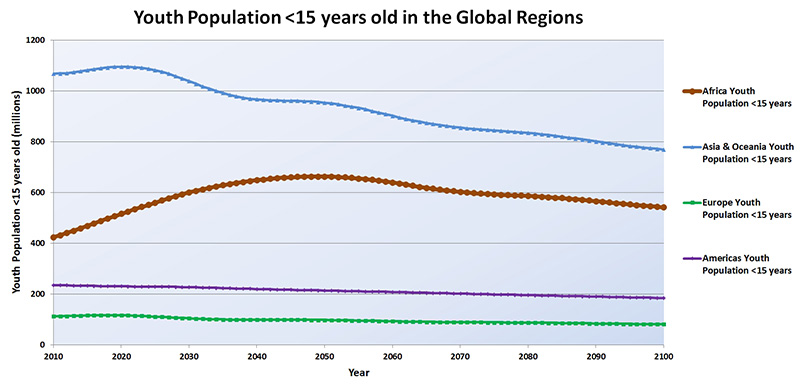
Figure 2: The youth population of Africa will continue to increase to a peak in 2050. In other regions youth populations are decreasing.
Focus on other key issues in Africa
Why is it so important to continue focusing on the key issues? Christian leaders grow insight as they continually aim in the appropriate direction, adjust during times of change, move through times of crises, and become ready for suitable opportunities. By interacting with one another, the strategic directions for moving ahead can be defined more clearly.
For Lausanne in Africa, it is helpful to identify the critical issues for the next 35 years towards 2050. By bringing the Lausanne issue networks alongside the key issues in Africa, further expertise becomes available to grapple with what is important. Furthermore, issue experts in Africa can be drawn in to contribute insight from the local context.
In discerning the issues of the times, leaders in Africa also want to help leaders in other regions, who in turn can interact with them around the issues in Africa.
Building a skilful community for future tasks
Individuals and organisations bring different expertise, experience, and insights. When these come together, new ministries can develop. The biblical narrative of the building of the Tabernacle shows that many skilled people were needed: ‘The Lord has chosen Bezalel, and he has filled him with the Spirit of God, with skill, ability, and knowledge in all kinds of crafts.’ For the building, ‘every skilled person’ was called to join in, everyone ‘who was willing to come and do the work’. Once construction started, ‘all the skilled men among the workmen made the tabernacle’ (Exod 35:30-36:8). As Jesus calls people to follow him and ‘make disciples of all nations’ (Matt 28:19), many people with different skills and abilities are needed for building a beautiful expanded community that will honour God.
Ten key priorities
The Lausanne EPSA Leadership Consultation in July 2015 identified ten priorities to focus on in Africa moving towards 2050:10
- Intentionally mentoring younger African leaders to develop a missional world perspective.
- Leveraging the current increasing urbanisation in Africa through influencing leaders and city missions.
- Proclaiming the uniqueness of Christ amidst religious extremism, syncretism, and pluralism.
- Building on previous mission efforts to evangelise Africa’s Unreached People Groups.
- Using technological media in missions to equip and mobilise the young Christian population.
- Developing a theology of Christian suffering, authentic spirituality, responsible stewardship and biblical sexualitythat are integral to moral education and discipleship.
- Strategically engaging and equipping the African Diaspora for pro-active evangelism and world missions within their specific global context.
- Protecting vulnerable women, children and youth, and empowering them for involvement in church life and missions.
- Nurturing the significant relationships within the Lausanne Movement towards strategic partnerships for evangelism, societal transformation, and global mission.
- Developing a contextual Cape Town Commitment Study Guide to resource Christian leaders to engage with the key issues of the mission of the church in the African context.
Moving ahead together
There are both exciting and daunting times ahead. The next 35 years from 2015 to 2050 are critical in providing the most strategic ‘windows of opportunity and challenge’ for Africa. The Lausanne Movement, as a catalyst for significant mission partnerships, should give priority to intentional holistic discipleship in Africa, developing deep-rooted, mature followers and witnesses of Christ in the church; to transformational biblical engagement of society; and to raising Christ-like leaders from Africa for global mission. Identifying and moving with the key issues can enable Christians in Africa and beyond to work closely together in order to live out the life that Jesus demonstrated for his disciples to follow.
Endnotes1 All Scripture passages are from the New International Version (NIV) unless otherwise noted.
2 For details about Cape Town 2010 as a communications event, see: Julia Cameron and Lars Dahle, ‘Communicating Lausanne—Yesterday, Today and Tomorrow’, in Lars Dahle, Margunn Serigstad Dahle, and Knud Jørgensen, eds, The Lausanne Movement: A Range of Perspectives (Oxford: Regnum Books International, 2014), pp 104-111. Retrieved fromhttp://www.ocms.ac.uk/regnum/downloads/The_Lausanne_Movement-Final-WMF.pdf
3Media and the Gospel in a Globalized World: A Call to Action from the Lausanne Global Consultation on Media and the Gospel, (Brea, California, USA: Lausanne Movement, 2013). Retrieved from http://engagingmedia.info/media-and-the-gospel-in-a-globalized-world.
4 ‘Truth and the Globalized Media’, in The Cape Town Commitment (Cape Town: Lausanne Movement, 2010), section IIA-4. Retrieved from www.lausanne.org/content/ctc/ctcommitment#p2-1-4.
5 Lars Dahle, ‘Media Engagement: A global missiological task’, Lausanne Global Analysis, (2014), Vol 3, Issue 1. Retrieved fromhttp://www.lausanne.org/content/lga/2014-01/media-engagement-a-global-missiological-task.
6 See www.acm.org.za. Also http://christianbroadcasters.co.za/index.php/about-us/vision-mission: ‘The Association of Christian Media (ACM) inspires, serves and supports Christian media in Southern Africa. The ACM strives to foster efficient, effective and sustainable Christian Media organizations and a greater representation of the Christian worldview in secular media. The ACM’s ultimate vision is to communicate the gospel message of hope so that people come to faith in Christ and communities are transformed.’
7Africa by Radio (AbR) aims to encourage radio ministries, churches, and mission organisations to co-operate on a deeper level. Also Africa by Radio acts as a catalyst for the church, related ministries, and mission organisations to engage communities around them in a culturally sensitive and relevant way using the tool of radio broadcasting. See paragraph 11, ‘Radio and Church/Mission’, in Actions on Strategic Issues at www.africabyradio.org/en/our-vision.
8http://engagingmedia.info and www.facebook.com/EngagingMedia
9 The figures of the global population and the African youth were obtained using the International Futures Model (IFs). These references provide insight to the IFs: (1) J Cilliers, B Hughes, and J Moyer, African Futures 2050: The next forty years, Monograph 175, (Institute for Security Studies, 2011). Retrieved fromhttp://www.ifs.du.edu/assets/documents/African_Futures_Project_Africa_2050.pdf. (2) B Hughes, et al, International Futures (IFs) Training Manual, (Frederick S Pardee Center for IFs, Josef Korbel School of International Studies, University of Denver, 2013). Retrieved from www.ifs.du.edu. (3) B Hughes and E Hillebrand, Exploring and Shaping International Futures, (Boulder, Colorado: Paradigm Press, 2006).
10 The summary list of ten key priorities emerged at the Lausanne EPSA Leadership Consultation held at the African Enterprise Centre in Pietermaritzburg, 1-3 July 2015, to guide the strategy of the Lausanne Movement in the EPS (English, Portuguese, Spanish speaking) Africa region in the coming years.
* Editor’s Note: The two images of the African Radio Team at Cape Town 2010 and the graph are courtesy of the author.
Rudolf Kabutz serves with TWR in South Africa as a future media strategist and project coordinator, focusing on using new social media initiatives to supplement broadcasting media for equipping leaders in Africa. Holding master’s degrees in mathematics as well as strategic foresight, he co-leads with Lars Dahle as Lausanne Senior Associate for Media Engagement.
---------------------
Understanding and Engaging with the Tablighi Jamaat
Jenny TaylorEighty-million strong today and established in 150 countries from Bangladesh to Kenya to Eire, the reasons for their obscurity highlight the parlous state of Islam awareness among Westerners. Their very hiddenness should challenge our hearts, and their obvious spiritual hunger should be a reproach to mission thinkers.
They have for 20 years been trying to establish a ‘mega mosque’, Europe’s premier Muslim training centre, next to the Olympic Park in Newham, east London. On 29 October, it was finally announced that their three appeals to the Secretary of State against the refusal of planning permission for it had been turned down.
However, they are only ever referred to in newspaper stories of jihadis or terror plotters who may have attended one of their mosques.
On 29 October, it was finally announced that their three appeals to the Secretary of State against the refusal of planning permission for it had been turned down.
Origins
Their methodology, which has been adopted by all London’s mosques, has proven surprisingly effective and resilient since the early 1920s when it was devised by the founder Mohammed Ilyas Khandalawi (1885-1944) to win backslidden Muslims in Mewat, southwest Delhi, back into the fold.
Ilyas was concerned that Muslims were ‘Hinduizing’. This mattered particularly once the British adopted a system of political representation according to religious allegiance. It became politically imperative to consolidate the faiths.
Ilyas set about teaching observance and encouraging mosque attendance. He saw British rule as indicative of Islam’s decay. Ilyas believed reinvigorated religious practice would usher in the eventual establishment of a society based on the sharia. All Muslims believe this to some extent, but TJ takes it further in their espousal of a method of pietism that they believe is foolproof.
Strict observance and preaching
The solution was for Muslims to turn to a strict implementation of the faith, even to using a twig for a toothbrush, as Mohammed is said to have done. It is not enough simply to be Muslim in name, but every action including dress and interaction with others should conform to a six-point rule (over and above thefive pillars of Islam) and the prescriptions contained within set literature that all devotees must read.
There is also a requirement to go on ‘preaching tours’ around the country and abroad—reflected in TJ’s name. These can be up to 40 days long, require sleeping on mosque floors, giving up work, and bonding deeply with fellow pilgrims.
This vast group learns thereby to shun the harsh outside world wherever it has established itself. The resulting atmosphere of spirituality, solidarity, and purpose proves compelling, especially to the young.
Low profile
Adherents do not proselytise non-Muslims. They want only to revive the faith of weaker Muslims, and thus help to ensure either a passport to paradise, or the rule of Islam on earth, whichever comes soonest.
In both aspects, they are a particular challenge to Christians, most of whom have never heard of them, though we have all undoubtedly encountered them. When on the several occasions the author has asked a roomful of Anglican clergy and Muslim religious leaders who has heard of the TJ, none of the Christians ever puts up their hand, but all the Muslims do.
Referred to humorously by the prominent British Muslim intellectual Ziauddin Sardar, who writes of being evangelised by them, as ‘ninja turtles’ for the all-enveloping ‘black sheet’ the women are required to wear, they are conflated with Salafis or Wahhabis—both of which categories are wrong.
Isolation
Part of the problem is that TJ themselves never constitute themselves into formal ‘trusts’ or ‘companies’ and shun political, legal, or social engagement with the wider world. There are—intentionally—few formal points of contact at all.
TJ will not engage politically, unless it is in their immediate interests, such as getting a huge mosque built, when proxies act for them in relation to planning and public relations. Indeed two Muslim witnesses to the Planning Inquiry against the mega mosque development in Newham last year withdrew their evidence the night before, one privately telling a party to the inquiry that she had been intimidated.
Although they and their apologists make a great virtue of their apolitical other-worldliness, they can be very determined indeed to establish a niche for themselves. This is particularly so in Britain. Indeed the international amir is said to have taken Hafiz Muhammad Ishaq Patel, Britain’s first amir, in front of the Kaaba in Mecca ‘and there offered supplications to Allah to make him the instrument of winning the whole of Britain to Islam’.1
Western politeness about religion, and the cult-like nature of the group further inure them from notice. Muslim scholars note their inability to compete with the harsh ungodly world they perceive around them, and that they make a virtue of a necessity, re-creating and divinising their own unreality.
It ‘begins and operates in cultic fashion’, writes Sardar, referring to the recruitment, bonding, and re-socialising processes that a follower of TJ undergoes.2 Sardar himself, quickly disillusioned, notes that they have condensed the requirements of the faith into an all-encompassing six points and ‘God will take care of the rest’. Those six points act as a perimeter fence on both the experience and the critical faculties of the devotee. They include ‘respect for Muslims’—but not for non-Muslims.
Misunderstood fundamentalism
The TJ brand of fundamentalism is also misconstrued. It is not ‘ultra-orthodox’ as Sean O’Neill, Security Correspondent of The Times writes—in fact rather the opposite.3 Ghayasuddin Siddiqui, founder of the Muslim Institute and godfather of the world’s first Muslim counter-terror think tank, Quilliam Foundation, is against the ‘mega mosque’ because, as he told the author, he believes they peddle ‘fairy tales’.
It is precisely their unorthodoxy that causes deep fissures in the Muslim world. The first petition against the mega mosque was started by a Muslim.
Their reliance on unorthodox stories of mythical heroes, their other-worldliness and pietism, their veneration for the founder and his family, and their ritualisation of certain select scriptures and practices has led one scholar to conclude that they function like a huge Sufi order, something that the ultra-orthodox completely condemn.4
Christians in particular need to acknowledge the spiritual hunger of a people out of love with the world, yearning for spiritual consolations, and sometimes a more heroic role.
Infiltration
Such pietism can frustrate young zealots who are vulnerable to the shadowy jihadi-groomers who infiltrate their ranks, say some.
The Pakistani secret service (ISI) actively recruited for its Kashmir campaigns among TJ. TJ has one of the world’s largest ijtima or religious gatherings at its base in Raiwind, outside Lahore.5 The French secret service allegedly regards them as a driving force for radicalization.6
Bangladesh hosts its own annual gathering at Tongi outside Dhaka which is also larger even than the hajj in Mecca—though no one seems aware of it—and is another place where according to Sikand, cover is provided by default to those Muslims who have a more lethal agenda.7
TJ has harboured terrorists in Britain too—Richard Reid the ‘shoe bomber’ attended TJ mosques, as have many others. However, this does not mean that TJ itself is a hotbed of terrorism; indeed this accusation is vehemently denied by its supporters.8 It does mean that TJ creates a form of social vacuum that has proven disorientating for young Muslims who have already failed to engage with wider society.
Women
Their neo-fundamentalist orientation means that women in particular remain locked into a medieval system of patronage that results in illiteracy and disaffection. Mewat’s female literacy rate, where the movement began, is just 5% today.9
For the author’s interview with TJ elders at their headquarters in Nizamuddin, Old Delhi, she was required to sit with her back to them. Women still live in zenanas (harems) and are normally forbidden even in Britain from leaving the house unaccompanied by a male. Marriages are conducted in their name, not in their presence.
Implications and responses
Christians in particular need to acknowledge the spiritual hunger of a people out of love with the world, yearning for spiritual consolations, and sometimes a more heroic role.
Some Christian projects are alert to this. The Springfield Project—a children’s centre and outreach work in Birmingham opened by the Archbishop of Canterbury—works on the basis that a lack of self-esteem among generationally disorientated young Muslims is rooted in a lack of love. Angie King, Project Director, says that ‘extremism fills the vacuum that is left when people are not integrated from a young age into a caring environment that identifies them clearly as a wanted part of the whole community.’10
Yet TJ provides just this sense of ‘community’, rendered more impenetrable by its sense of social superiority.
Dr Taj Hargey, an imam in Oxford who is persona non grata for criticizing TJ publicly, says of them: ‘They encourage Muslims already disenchanted with life in the West . . . to disassociate from the world by pursuing a trans-national, self-imagined construct that can be exploited by extremists.’ ‘They are’, he adds, ‘scornful of secular democracy and Western values’ and espouse ‘voluntary apartheid as not merely beneficial, but crucial.’11
Where the secularizing world fails is where TJ wins. One young Muslim responding to a blog post on the author’s website about TJ says: ‘TJ is the best thing that ever happened to me.’
Mission thinkers need to understand why that should be so. And that means actively reaching out to TJ Muslims with our own radical critique of a fallen world.
The Anglican Bishop of Pontefract Tony Robinson has managed to do it, in the town that accommodates TJ’s European headquarters, Dewsbury. Building on his own spiritual prestige, and the respect accorded by Muslims to religious authority, he founded the Kirklees Faiths Forum in 2009. A Muslim-led project that encourages partnership between Muslims in his diocese and those in Faisalabad, north Pakistan, it was a response to the attack on the Christian village of Gojra in 2009 in which eight people were burned alive.
Says Dr Ishmael Sezgin of the Dialogue Society: ‘It’s a beacon—it’s not appreciated. The work they do, the fact you have a Bishop as the head—the ability to bring very respected scholars together with a Bishop in one charity. It’s amazing. The Bishop is too modest!’12
‘This is the groundwork’, says the Bishop, laughing off the praise. ‘You start off with tea and samosas—you have to. But then you build on that.’13
The model, which decisively ends isolation and encourages practical activity in partnership, is surely replicable around the world.
Endnotes
1 Three scholars attest to this. See Zacharias Pieri, Tablighi Jamaat (Lapido Media, 2012), 29.
2 Ziauddin Sardar, Desperately Seeking Paradise: Journeys of a Sceptical Muslim (Granta UK, 2004), 10.
3 Sean O’Neill, ‘Sect hires PR firm to win support for giant mosque’, The Times, 21 May 2007,http://www.thetimes.co.uk/tto/faith/article2098358.ece.
4 Dietrich Reetz, ‘Keeping busy on the path of Allah: the self-organisation (intizam) of the Tablighi Jamaat’, in D Bredi, ed, Islam in Contemporary South Asia (Rome: Oriente Moderno, 2004).
5 Yoginder Sikand, The Origins and Development of the Tablighi Jamaat (1920-2000): A Comparative Study (Hyderabad: Orient Longman, 2002).
6 Pieri, Tablighi Jamaat, 61.
7 Sikand, ibid.
8 Pieri, Tablighi Jamaat, 63.
9 This and other facts can be found in Zacharias Pieri, Tablighi Jamaat (Lapido Media), available from Amazon in paperback or Kindle at http://www.amazon.co.uk/Tablighi-Jamaat-Handy-Religion-Affairs-ebook/dp/B00KGKEI0M/ref=sr_1_1?s=books&ie=UTF8&qid=1438685449&sr=1-1&keywords=tablighi+jamaat+kindle.
10 Jenny Taylor, ‘Seeing off the extremists with love’, Lapido Media, 5 December 2007, www.lapidomedia.com/seeing-off-the-extremists-with-love.
11 Pieri, Tablighi Jamaat, 40f.
12 Jenny Taylor, ‘British Muslim businesses partner Christians to tackle persecution’, Lapido Media, 6 May 2015,http://www.lapidomedia.com/british-muslim-business-partner-christians-tackle-persecution.
13 Outcomes of this project are discussed at http://www.lapidomedia.com/british-muslim-business-partner-christians-tackle-persecution.
* Editor’s Note: Featured image (woman and bus) is used with permission from Jeremy Hunter. www.jeremyhunter.com.

Jenny Taylor is a journalist, author, and founding CEO of Lapido Media, Centre for Religious Literacy in World Affairs (www.lapidomedia.com). Having studied for a doctorate in religion at the School of Oriental and African Studies, London University, she has published articles and papers on Islam and Christianity in Britain, and advises Muslim and Christian faith-based groups on their communication.
---------------------
November 2015 - Volume 4 / Issue 6
View Online Download Full Issue Download Executive Summary
View all issues
Reports from Recent Gatherings

Creation Care around the World in 2015: The church is on the move!
Ed Brown, Senior Associate for Creation Care2015 has been a rough year for God’s creation, but an amazing year for the evangelical creation care movement.
There is no question that God’s creation took a beating this year. The list is depressing: drought in California, floods in Chili’s Atacama Desert (one of the world’s driest places), a heat wave in Antarctica, typhoons in the Philippines, El Niño in the Pacific—along with new records set for temperature (2015 will be the warmest year ever recorded after breaking the same record last year) and for atmospheric CO2 (we’ve just passed 400 ppm, the highest levels of CO2since record-keeping began).

Referred to humorously by the prominent British Muslim intellectual Ziauddin Sardar, who writes of being evangelised by them, as ‘ninja turtles’ for the all-enveloping ‘black sheet’ the women are required to wear, they are conflated with Salafis or Wahhabis—both of which categories are wrong.
Isolation
Part of the problem is that TJ themselves never constitute themselves into formal ‘trusts’ or ‘companies’ and shun political, legal, or social engagement with the wider world. There are—intentionally—few formal points of contact at all.
TJ will not engage politically, unless it is in their immediate interests, such as getting a huge mosque built, when proxies act for them in relation to planning and public relations. Indeed two Muslim witnesses to the Planning Inquiry against the mega mosque development in Newham last year withdrew their evidence the night before, one privately telling a party to the inquiry that she had been intimidated.
Although they and their apologists make a great virtue of their apolitical other-worldliness, they can be very determined indeed to establish a niche for themselves. This is particularly so in Britain. Indeed the international amir is said to have taken Hafiz Muhammad Ishaq Patel, Britain’s first amir, in front of the Kaaba in Mecca ‘and there offered supplications to Allah to make him the instrument of winning the whole of Britain to Islam’.1
Western politeness about religion, and the cult-like nature of the group further inure them from notice. Muslim scholars note their inability to compete with the harsh ungodly world they perceive around them, and that they make a virtue of a necessity, re-creating and divinising their own unreality.
It ‘begins and operates in cultic fashion’, writes Sardar, referring to the recruitment, bonding, and re-socialising processes that a follower of TJ undergoes.2 Sardar himself, quickly disillusioned, notes that they have condensed the requirements of the faith into an all-encompassing six points and ‘God will take care of the rest’. Those six points act as a perimeter fence on both the experience and the critical faculties of the devotee. They include ‘respect for Muslims’—but not for non-Muslims.
Misunderstood fundamentalism
The TJ brand of fundamentalism is also misconstrued. It is not ‘ultra-orthodox’ as Sean O’Neill, Security Correspondent of The Times writes—in fact rather the opposite.3 Ghayasuddin Siddiqui, founder of the Muslim Institute and godfather of the world’s first Muslim counter-terror think tank, Quilliam Foundation, is against the ‘mega mosque’ because, as he told the author, he believes they peddle ‘fairy tales’.
It is precisely their unorthodoxy that causes deep fissures in the Muslim world. The first petition against the mega mosque was started by a Muslim.
Their reliance on unorthodox stories of mythical heroes, their other-worldliness and pietism, their veneration for the founder and his family, and their ritualisation of certain select scriptures and practices has led one scholar to conclude that they function like a huge Sufi order, something that the ultra-orthodox completely condemn.4
Christians in particular need to acknowledge the spiritual hunger of a people out of love with the world, yearning for spiritual consolations, and sometimes a more heroic role.
Infiltration
Such pietism can frustrate young zealots who are vulnerable to the shadowy jihadi-groomers who infiltrate their ranks, say some.
The Pakistani secret service (ISI) actively recruited for its Kashmir campaigns among TJ. TJ has one of the world’s largest ijtima or religious gatherings at its base in Raiwind, outside Lahore.5 The French secret service allegedly regards them as a driving force for radicalization.6
Bangladesh hosts its own annual gathering at Tongi outside Dhaka which is also larger even than the hajj in Mecca—though no one seems aware of it—and is another place where according to Sikand, cover is provided by default to those Muslims who have a more lethal agenda.7
TJ has harboured terrorists in Britain too—Richard Reid the ‘shoe bomber’ attended TJ mosques, as have many others. However, this does not mean that TJ itself is a hotbed of terrorism; indeed this accusation is vehemently denied by its supporters.8 It does mean that TJ creates a form of social vacuum that has proven disorientating for young Muslims who have already failed to engage with wider society.
Women
Their neo-fundamentalist orientation means that women in particular remain locked into a medieval system of patronage that results in illiteracy and disaffection. Mewat’s female literacy rate, where the movement began, is just 5% today.9
For the author’s interview with TJ elders at their headquarters in Nizamuddin, Old Delhi, she was required to sit with her back to them. Women still live in zenanas (harems) and are normally forbidden even in Britain from leaving the house unaccompanied by a male. Marriages are conducted in their name, not in their presence.
Implications and responses
Christians in particular need to acknowledge the spiritual hunger of a people out of love with the world, yearning for spiritual consolations, and sometimes a more heroic role.
Some Christian projects are alert to this. The Springfield Project—a children’s centre and outreach work in Birmingham opened by the Archbishop of Canterbury—works on the basis that a lack of self-esteem among generationally disorientated young Muslims is rooted in a lack of love. Angie King, Project Director, says that ‘extremism fills the vacuum that is left when people are not integrated from a young age into a caring environment that identifies them clearly as a wanted part of the whole community.’10
Yet TJ provides just this sense of ‘community’, rendered more impenetrable by its sense of social superiority.
Dr Taj Hargey, an imam in Oxford who is persona non grata for criticizing TJ publicly, says of them: ‘They encourage Muslims already disenchanted with life in the West . . . to disassociate from the world by pursuing a trans-national, self-imagined construct that can be exploited by extremists.’ ‘They are’, he adds, ‘scornful of secular democracy and Western values’ and espouse ‘voluntary apartheid as not merely beneficial, but crucial.’11
Where the secularizing world fails is where TJ wins. One young Muslim responding to a blog post on the author’s website about TJ says: ‘TJ is the best thing that ever happened to me.’
Mission thinkers need to understand why that should be so. And that means actively reaching out to TJ Muslims with our own radical critique of a fallen world.
The Anglican Bishop of Pontefract Tony Robinson has managed to do it, in the town that accommodates TJ’s European headquarters, Dewsbury. Building on his own spiritual prestige, and the respect accorded by Muslims to religious authority, he founded the Kirklees Faiths Forum in 2009. A Muslim-led project that encourages partnership between Muslims in his diocese and those in Faisalabad, north Pakistan, it was a response to the attack on the Christian village of Gojra in 2009 in which eight people were burned alive.
Says Dr Ishmael Sezgin of the Dialogue Society: ‘It’s a beacon—it’s not appreciated. The work they do, the fact you have a Bishop as the head—the ability to bring very respected scholars together with a Bishop in one charity. It’s amazing. The Bishop is too modest!’12
‘This is the groundwork’, says the Bishop, laughing off the praise. ‘You start off with tea and samosas—you have to. But then you build on that.’13
The model, which decisively ends isolation and encourages practical activity in partnership, is surely replicable around the world.
Endnotes
1 Three scholars attest to this. See Zacharias Pieri, Tablighi Jamaat (Lapido Media, 2012), 29.
2 Ziauddin Sardar, Desperately Seeking Paradise: Journeys of a Sceptical Muslim (Granta UK, 2004), 10.
3 Sean O’Neill, ‘Sect hires PR firm to win support for giant mosque’, The Times, 21 May 2007,http://www.thetimes.co.uk/tto/faith/article2098358.ece.
4 Dietrich Reetz, ‘Keeping busy on the path of Allah: the self-organisation (intizam) of the Tablighi Jamaat’, in D Bredi, ed, Islam in Contemporary South Asia (Rome: Oriente Moderno, 2004).
5 Yoginder Sikand, The Origins and Development of the Tablighi Jamaat (1920-2000): A Comparative Study (Hyderabad: Orient Longman, 2002).
6 Pieri, Tablighi Jamaat, 61.
7 Sikand, ibid.
8 Pieri, Tablighi Jamaat, 63.
9 This and other facts can be found in Zacharias Pieri, Tablighi Jamaat (Lapido Media), available from Amazon in paperback or Kindle at http://www.amazon.co.uk/Tablighi-Jamaat-Handy-Religion-Affairs-ebook/dp/B00KGKEI0M/ref=sr_1_1?s=books&ie=UTF8&qid=1438685449&sr=1-1&keywords=tablighi+jamaat+kindle.
10 Jenny Taylor, ‘Seeing off the extremists with love’, Lapido Media, 5 December 2007, www.lapidomedia.com/seeing-off-the-extremists-with-love.
11 Pieri, Tablighi Jamaat, 40f.
12 Jenny Taylor, ‘British Muslim businesses partner Christians to tackle persecution’, Lapido Media, 6 May 2015,http://www.lapidomedia.com/british-muslim-business-partner-christians-tackle-persecution.
13 Outcomes of this project are discussed at http://www.lapidomedia.com/british-muslim-business-partner-christians-tackle-persecution.
* Editor’s Note: Featured image (woman and bus) is used with permission from Jeremy Hunter. www.jeremyhunter.com.
Jenny Taylor is a journalist, author, and founding CEO of Lapido Media, Centre for Religious Literacy in World Affairs (www.lapidomedia.com). Having studied for a doctorate in religion at the School of Oriental and African Studies, London University, she has published articles and papers on Islam and Christianity in Britain, and advises Muslim and Christian faith-based groups on their communication.
---------------------
November 2015 - Volume 4 / Issue 6
View Online Download Full Issue Download Executive Summary
View all issues
Reports from Recent Gatherings
Creation Care around the World in 2015: The church is on the move!
Ed Brown, Senior Associate for Creation Care2015 has been a rough year for God’s creation, but an amazing year for the evangelical creation care movement.
There is no question that God’s creation took a beating this year. The list is depressing: drought in California, floods in Chili’s Atacama Desert (one of the world’s driest places), a heat wave in Antarctica, typhoons in the Philippines, El Niño in the Pacific—along with new records set for temperature (2015 will be the warmest year ever recorded after breaking the same record last year) and for atmospheric CO2 (we’ve just passed 400 ppm, the highest levels of CO2since record-keeping began).
Even as all of that was happening, God’s people started waking up. A global campaign impacted people and churches in almost 50 countries, a worldwide network started to take shape, and in many countries small grassroots efforts began to take off. Even as we mourn the environmental disasters that are occurring, I am convinced that we will look back on 2015 as the year that the global church started to take notice and began to change direction. These are exciting days!
One of the most visible signs of this new awakening is the Lausanne Global Campaign for Creation Care and the Gospel. This initiative grew out of Cape Town 2010 and the Global Consultation on Creation Care and the Gospel held in Jamaica in 2012, and is centered on the Jamaica Call to Action statement.
The five-year campaign, a partnership between Care of Creation, A Rocha International, and many other groups working together under the Lausanne Creation Care Network, began in March 2014 in Manila with a regional conference for Southeast Asia. This was followed in 2015 by four additional conferences:
East and Central Africa (March, Nairobi)
North America, ie Canada and the US (July, Boston)
Latin America (September; Cusco, Peru)
West Africa (November; Accra, Ghana)
The entire campaign is based on The Cape Town Commitment’s affirmation that ‘creation care is a gospel issue’, or as expanded slightly in the Jamaica Call to Action, ‘creation care is an issue that must be included in our response to the gospel’. We pursue creation care not in place of the gospel, but because of the gospel.
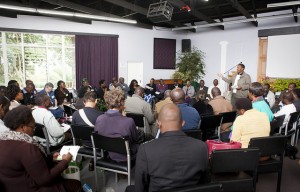
One of the most visible signs of this new awakening is the Lausanne Global Campaign for Creation Care and the Gospel. This initiative grew out of Cape Town 2010 and the Global Consultation on Creation Care and the Gospel held in Jamaica in 2012, and is centered on the Jamaica Call to Action statement.
The five-year campaign, a partnership between Care of Creation, A Rocha International, and many other groups working together under the Lausanne Creation Care Network, began in March 2014 in Manila with a regional conference for Southeast Asia. This was followed in 2015 by four additional conferences:
East and Central Africa (March, Nairobi)
North America, ie Canada and the US (July, Boston)
Latin America (September; Cusco, Peru)
West Africa (November; Accra, Ghana)
The entire campaign is based on The Cape Town Commitment’s affirmation that ‘creation care is a gospel issue’, or as expanded slightly in the Jamaica Call to Action, ‘creation care is an issue that must be included in our response to the gospel’. We pursue creation care not in place of the gospel, but because of the gospel.
These conferences have had an amazing impact on the participants. David, attending the East Africa Conference, says, ‘The Lausanne East and Central Africa conference was a life-changing experience for me. It was enriching to sit and listen to choice men and women of God and conservation professionals and to hear what God says about creation care and our role as stewards of his treasures.’
Steve, a mission executive from North America writes, ‘Never in my life have I been to a conference which impacted me so much. I am still reliving it. The friendships I made, the contacts I made, and the joy of a double shared cause (Jesus and his creation) continue to be a motivator for me.’
The campaign conferences are action-oriented and we are seeing things happen around the world as a result: a global network is taking shape. One of our most exciting success stories is Singapore, where an entire national creation care movement is blossoming, with its own organized local conferences, church teams, and nature walks. The Philippines has produced an entire creation care curriculum in two languages. Even as you read this, evangelicals from more than 15 nations are meeting in Paris for the United Nationals COP 21 climate meetings—a partnership of Lausanne, the World Evangelical Alliance, A Rocha International, and many other groups. Their emphasis will be on prayer and intercession in the face of a global climate crisis.
There is no question that God—and his church—is on the move around the world with regard to creation care!
---------------------

Global Mental Health and the Church
Brad Smith, Senior Associate for Care and Counsel as MissionParticipants from 17 countries met in Bad Liebenzell, Germany, on 22-25 June 2015 for the Symposium on Global Mental Health and the Church. This was upon invitation of the Liebenzell International University together with the Liebenzell Mission and the Lausanne Network for Care and Counsel as Mission.
Eleven speakers from China, Kenya, Mexico, Switzerland, USA, and Germany gave presentations on Christian psychology approaches in the Global South, such as intercultural Christian care and counsel, trauma care, building psychologically healthy communities, and professional training and support.
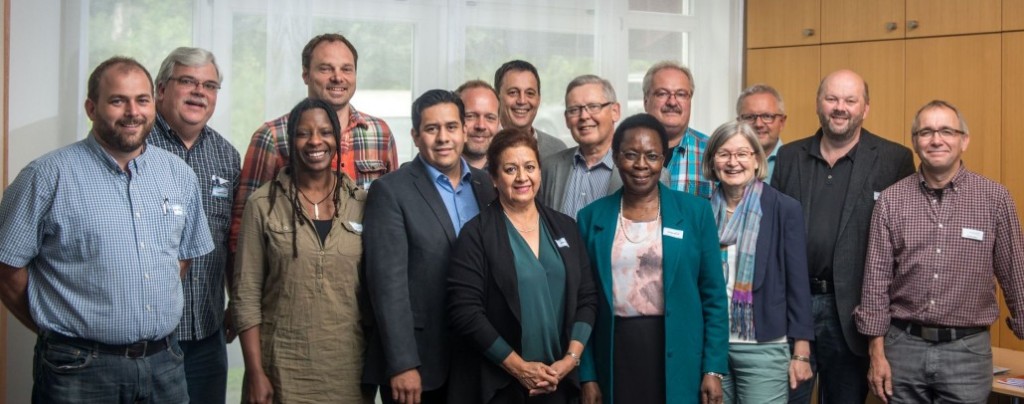
A fascinating variety of international mental health projects was also presented. These ranged from trauma care in the Ukraine to Kenya, and initiatives from China to Mississippi and Mexico. Also presented were the Saddleback approach to ‘what every church can do to promote mental health’, working with Ebola survivors in Liberia, and more.
Saul Cruz and his mother Pilar Cruz presented the work of Armonia Mexico, which Pilar founded with her husband Saul Cruz Sr. They are working with the poorest of the poor to empower them toward better means of self-help. Armonia’s community centers help the poor to discover their own resources. Change will not only result from welfare through Western support, but from participating in society and discovering the possibilities of their own communities. Poverty is not seen as primarily a lack of material resources, but missing power and influence, and the resulting feelings of helplessness.

Steve, a mission executive from North America writes, ‘Never in my life have I been to a conference which impacted me so much. I am still reliving it. The friendships I made, the contacts I made, and the joy of a double shared cause (Jesus and his creation) continue to be a motivator for me.’
The campaign conferences are action-oriented and we are seeing things happen around the world as a result: a global network is taking shape. One of our most exciting success stories is Singapore, where an entire national creation care movement is blossoming, with its own organized local conferences, church teams, and nature walks. The Philippines has produced an entire creation care curriculum in two languages. Even as you read this, evangelicals from more than 15 nations are meeting in Paris for the United Nationals COP 21 climate meetings—a partnership of Lausanne, the World Evangelical Alliance, A Rocha International, and many other groups. Their emphasis will be on prayer and intercession in the face of a global climate crisis.
There is no question that God—and his church—is on the move around the world with regard to creation care!
---------------------
Global Mental Health and the Church
Brad Smith, Senior Associate for Care and Counsel as MissionParticipants from 17 countries met in Bad Liebenzell, Germany, on 22-25 June 2015 for the Symposium on Global Mental Health and the Church. This was upon invitation of the Liebenzell International University together with the Liebenzell Mission and the Lausanne Network for Care and Counsel as Mission.
Eleven speakers from China, Kenya, Mexico, Switzerland, USA, and Germany gave presentations on Christian psychology approaches in the Global South, such as intercultural Christian care and counsel, trauma care, building psychologically healthy communities, and professional training and support.
A fascinating variety of international mental health projects was also presented. These ranged from trauma care in the Ukraine to Kenya, and initiatives from China to Mississippi and Mexico. Also presented were the Saddleback approach to ‘what every church can do to promote mental health’, working with Ebola survivors in Liberia, and more.
Saul Cruz and his mother Pilar Cruz presented the work of Armonia Mexico, which Pilar founded with her husband Saul Cruz Sr. They are working with the poorest of the poor to empower them toward better means of self-help. Armonia’s community centers help the poor to discover their own resources. Change will not only result from welfare through Western support, but from participating in society and discovering the possibilities of their own communities. Poverty is not seen as primarily a lack of material resources, but missing power and influence, and the resulting feelings of helplessness.
Dr Gladys Mwiti gave a presentation on her work of coordinating trauma care in Kenya following the 2 April terrorist attacks on Garissa University with a death toll of 148. She is coordinating the care for survivors and victims’ families with a team of trained trauma helpers. She also shared about Oasis Africa, the organization she and her husband Gershon Mwiti founded. She made clear what drives her to do the work she does: ‘In my work I ask lots of questions that facilitate healing processes, but I am not the healer. Healing in the end comes from Christ who is the healer.’
Prof Samuel Pfeifer from Switzerland gave alternatives to the demonization of mental disorder, and Prof Dr Brad Smith from Mississippi spoke on racial reconciliation and the role of the churches in the ‘deep South’ of the USA.
A Monday evening concert presented a very personal and biographical touch of international musicians from Barbados and Germany, including songs about Christ as healer and friend from musicians Judy and Patrick Bailey.

Prof Samuel Pfeifer from Switzerland gave alternatives to the demonization of mental disorder, and Prof Dr Brad Smith from Mississippi spoke on racial reconciliation and the role of the churches in the ‘deep South’ of the USA.
A Monday evening concert presented a very personal and biographical touch of international musicians from Barbados and Germany, including songs about Christ as healer and friend from musicians Judy and Patrick Bailey.
The Conference Director and Liebenzell Psychology professor Ulrich Giesekus, who is also Director of the MA program Intercultural Systemic Counseling, was positive that the goals of the conference to assess, learn, and connect had happened. For future development, he urged participants to go on to further research, train, and transfer theory into practice. The answer to the global mental health needs are not limited projects, but ongoing processes. Churches and missions provide many compassionate people who need more competence. ‘This is a challenge that we are faced with as a university, together with other helpers worldwide.’
The ongoing work of the Lausanne Care and Counsel as Mission Network is jointly led by Lausanne Senior AssociatesBrad Smith and Gladys Mwiti.
--------------------

Introducing the Quito Call to Action on Children at Risk
Menchit Wong, Senior Associate for Children at RiskThe Lausanne Consultation on Children at Risk was held in Quito, Ecuador, on 17-19 November 2014. We were gathered with more than 60 foremost experts in the area of children-at-risk, including church leaders, theologians, missiologists, and NGO representatives. The two documents that emerged are the fruit of our collaborative work from this gathering, and I am happy to present them to you on behalf of Anne-Christine Bataillard (Senior Associate for Evangelism among Children) and the Lausanne Children at Risk Network.
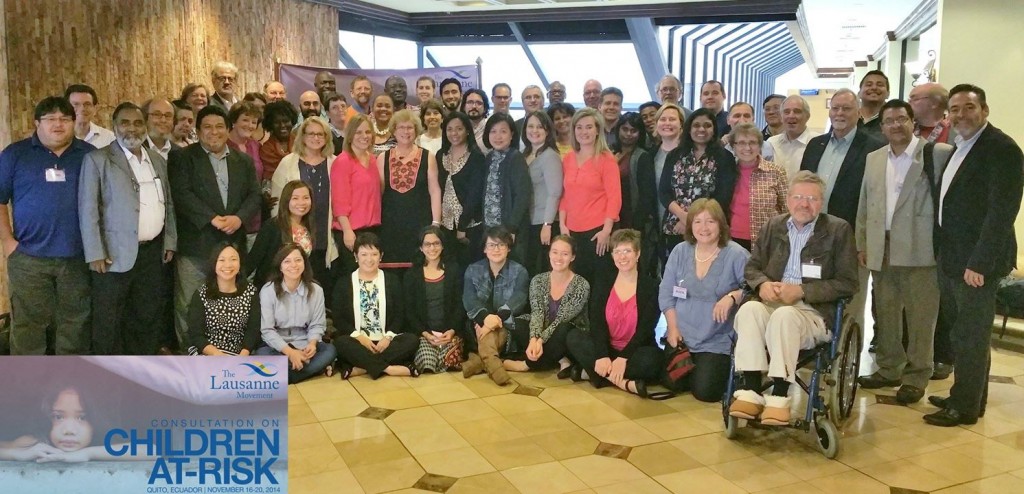
‘Who are Children-at-Risk: A Missional Definition’
The term children-at-risk has been used by Christian organizations for almost twenty years. While it has a “strong intuitive meaning,” to date it has no agreed-upon definition. Nevertheless, the below definition and the following discussion should provide a sufficient starting-point for those who are new to this conversation, and we invite others to join us in our struggle. Read the full document.
Quito Call to Action on Children at Risk
The Lausanne Consultation on Children at Risk took place from 17-19 November, 2014 in Quito, Ecuador. More than sixty church leaders, theologians, missiologists, and representatives from child-focused non-governmental organizations gathered from five continents. The event was held in response to the Cape Town Commitment (CTC), which emphasizes ministry with the poor, enslaved, and oppressed. It also calls the people of God to engage in study, training, and action on behalf of children-at-risk. Our goal was to better understand what it would look like for children-at-risk to be meaningfully incorporated in the mission of the Church. Read the full document.
This Call to Action will be our inspiration and encouragement to implement actions together with the global church. Our next step will be to write a Lausanne Occasional Paper (LOP) on Children at Risk.
We also plan to use the Call to Action as a major reference document for workshop discussions at the 2016 Younger Leaders Gathering. We strongly believe that the younger leaders of Lausanne have a strategic role and immense stake in charting the church’s actions and response to the urgent concerns of highly vulnerable children. Thus we need their significant input, biblical reflection, and committed actions.
We pray that these documents will be dedicated to and used for the glory and honor of our Lord Jesus Christ. Please also read Dave Scott’s report on the Lausanne Consultation on Children at Risk to learn more about the gathering.
---------------------
Updates and News

Welcoming 17 New Senior Associates: Connectors, Catalysts, Content Creators
David Bennett, Chief Collaboration Officer
----------------------

Nine Hundred from Mainland China Participate in Inaugural Mission China 2030 ConferenceThe Lausanne Movement calls for prayer for the first 200 missionary commitments
FOR IMMEDIATE RELEASE
Nagoya, Japan—26 October 2015—The first Mission China 2030 Conference was convened in Hong Kong on 28 September – 1 October 2015. This conference was led by urban house church leaders and attended by 900 participants from mainland China. The Mission China 2030 vision is for China to send out 20,000 missionaries by the year 2030. Two hundred missionary commitments were made as the first step toward fulfilling this vision.

The ongoing work of the Lausanne Care and Counsel as Mission Network is jointly led by Lausanne Senior AssociatesBrad Smith and Gladys Mwiti.
--------------------
Introducing the Quito Call to Action on Children at Risk
Menchit Wong, Senior Associate for Children at RiskThe Lausanne Consultation on Children at Risk was held in Quito, Ecuador, on 17-19 November 2014. We were gathered with more than 60 foremost experts in the area of children-at-risk, including church leaders, theologians, missiologists, and NGO representatives. The two documents that emerged are the fruit of our collaborative work from this gathering, and I am happy to present them to you on behalf of Anne-Christine Bataillard (Senior Associate for Evangelism among Children) and the Lausanne Children at Risk Network.
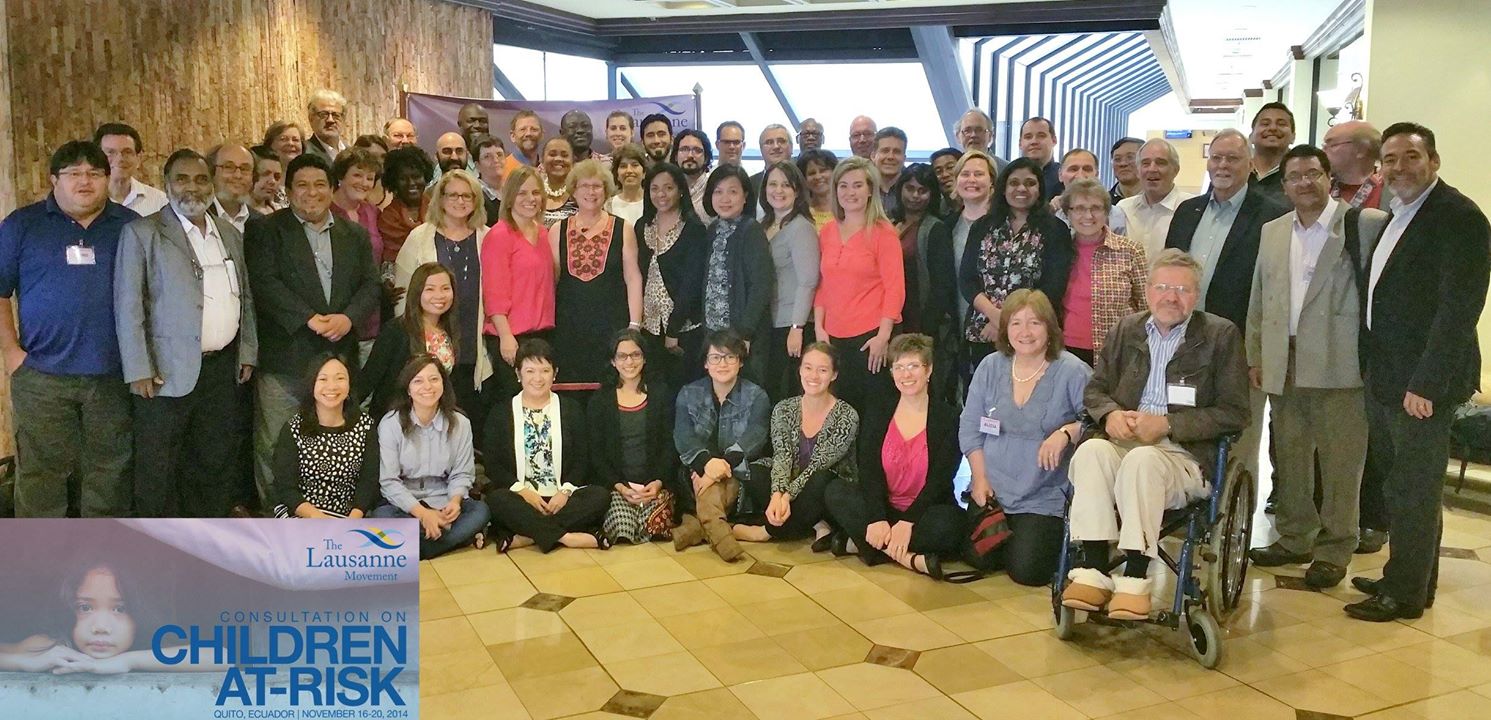
‘Who are Children-at-Risk: A Missional Definition’
The term children-at-risk has been used by Christian organizations for almost twenty years. While it has a “strong intuitive meaning,” to date it has no agreed-upon definition. Nevertheless, the below definition and the following discussion should provide a sufficient starting-point for those who are new to this conversation, and we invite others to join us in our struggle. Read the full document.
Quito Call to Action on Children at Risk
The Lausanne Consultation on Children at Risk took place from 17-19 November, 2014 in Quito, Ecuador. More than sixty church leaders, theologians, missiologists, and representatives from child-focused non-governmental organizations gathered from five continents. The event was held in response to the Cape Town Commitment (CTC), which emphasizes ministry with the poor, enslaved, and oppressed. It also calls the people of God to engage in study, training, and action on behalf of children-at-risk. Our goal was to better understand what it would look like for children-at-risk to be meaningfully incorporated in the mission of the Church. Read the full document.
This Call to Action will be our inspiration and encouragement to implement actions together with the global church. Our next step will be to write a Lausanne Occasional Paper (LOP) on Children at Risk.
We also plan to use the Call to Action as a major reference document for workshop discussions at the 2016 Younger Leaders Gathering. We strongly believe that the younger leaders of Lausanne have a strategic role and immense stake in charting the church’s actions and response to the urgent concerns of highly vulnerable children. Thus we need their significant input, biblical reflection, and committed actions.
We pray that these documents will be dedicated to and used for the glory and honor of our Lord Jesus Christ. Please also read Dave Scott’s report on the Lausanne Consultation on Children at Risk to learn more about the gathering.
---------------------
Updates and News
Welcoming 17 New Senior Associates: Connectors, Catalysts, Content Creators
David Bennett, Chief Collaboration Officer
I’m so pleased to introduce to you Lausanne’s 17 new Senior Associates. Alongside our current Senior Associates, they will be co-leading the following Issue Networks:
- Uday Balasundaram: Arts
- João Mordomo: Business as Mission
- Jo Plummer: Business as Mission
- Gladys Mwiti: Care and Counsel as Mission
- Adnan Azhar Sandhu: Evangelism among Children
- Martha Mwendafilumba: Health in Mission
- John Mathew: Hinduism
- Manfred Kohl: Integrity and Anti-Corruption
- Moyra Dale: Islam
- Bodil Skjøtt: Jewish Evangelism
- Rudolf Kabutz: Media Engagement
- William Coppedge: Orality
- Kehinde Ojo: Resource Mobilization
- Barbara Shantz: Resource Mobilization
- Mariam Varghese: Scripture Engagement
- Kristina Alikhanyan: Tentmaking
- Mirka Peña: Tentmaking
Nine of the new Senior Associates are women. They come from the Caribbean, Latin America, Africa, Eurasia, South Asia, the South Pacific, Europe, and North America. Some have served decades in the Middle East, or Southeast Asia, or East Asia. And each of them brings rich experience, broad relationships, and keen insights to their focus area.
Each Lausanne Senior Associate leads, co-leads, or is building a global network focused on one of the 30+ key issues and related Calls to Action in The Cape Town Commitment. They address critical challenges and opportunities in global mission highlighted at the Cape Town 2010 Congress.
They are connectors—linking evangelical influencers from different regions of the world who have biblical insights, fresh ideas, promising models, helpful experience, and access to different sectors of society relevant to their issue.
They are catalysts—providing the place, the opportunity, the context, the online conversation, the creative spark, the clarion call that enables leaders to start conversations and plan collaborative endeavors to translate biblical and strategic insights into kingdom-centered action.
They are content creators—through their writings in blogs, articles or books, or through their presentations in video or PowerPoint, or through the papers and publications that come from the meetings and conferences they convene, they add to the growing body of Lausanne Content. They provide theologically grounded and practically tested insights and models for the global church.
The first Lausanne Senior Associates were appointed in the early 1980’s—Ray Bakke for Cities (a role currently held by Mac Pier of the New York City Center for Leadership) and Peter Brierley for Church Research (who has continued to serve faithfully for more than 30 years, and was one of the key people involved in the revitalization of the Lausanne Movement early in the new millennium).
Nearly all of the Senior Associates, including those newly appointed, will be serving as workshop leaders and mentors at the upcoming Younger Leaders Gathering. We celebrate their addition to the team, and look forward to the continuing expanding reach of the Issue Networks.
Nine Hundred from Mainland China Participate in Inaugural Mission China 2030 ConferenceThe Lausanne Movement calls for prayer for the first 200 missionary commitments
FOR IMMEDIATE RELEASE
Nagoya, Japan—26 October 2015—The first Mission China 2030 Conference was convened in Hong Kong on 28 September – 1 October 2015. This conference was led by urban house church leaders and attended by 900 participants from mainland China. The Mission China 2030 vision is for China to send out 20,000 missionaries by the year 2030. Two hundred missionary commitments were made as the first step toward fulfilling this vision.
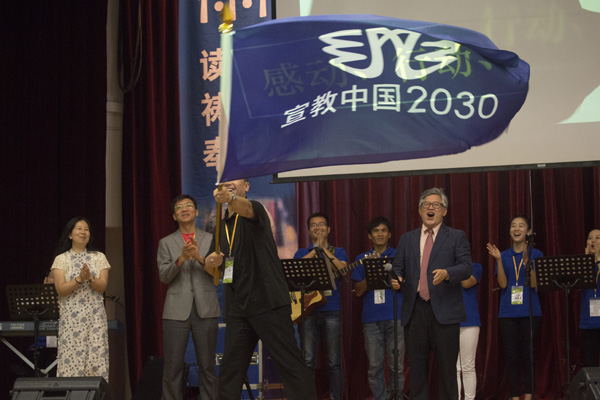
The Mission China 2030 vision was catalyzed by two main gatherings, theThird Lausanne Congress (Cape Town, 2010) and the Asian Church Leaders Forum (Seoul, 2013). Two hundred Chinese Christian leaders were invited to the Third Lausanne Congress, but were unable to attend. Plans were made to invite them to a separate gathering in 2013, the Asian Church Leaders Forum (ACLF).
It was at the Asian Church Leaders Forum that Rev Daniel Jin (Executive Director of Mission China Today magazine) urged the Chinese church to work and pray to see 20,000 missionaries sent out from China by 2030: ‘Over the last 200 years, since the days of the earliest British pioneer Robert Morrison, some 20,000 missionaries have served in China.’ There was, he said, ‘a gospel debt to pay off’.
‘This first Mission China 2030 Conference is truly a turning point in Chinese church history’, says David Ro, Lausanne International Deputy Director for East Asia and Mission China 2030 International Advisor. ‘The Chinese church has stood up in carrying the torch of world missions and sending some of the best from China to bless the world.’ Plenary speakers at the Mission China 2030 Conference included Luis Bush (author of the 10/40 Window; Transform World), Francis Chan (author of Crazy Love), Dr Bong Rin Ro (former ATA Executive Secretary and former WEA Theological Commission Chair), Rev Jaehoon Lee (Senior Pastor, Onnuri Church), Rev Abraham Cui (All-Nations Church in Shanghai and this year’s Mission China 2030 Conference Director), and Rev Daniel Jin.

It was at the Asian Church Leaders Forum that Rev Daniel Jin (Executive Director of Mission China Today magazine) urged the Chinese church to work and pray to see 20,000 missionaries sent out from China by 2030: ‘Over the last 200 years, since the days of the earliest British pioneer Robert Morrison, some 20,000 missionaries have served in China.’ There was, he said, ‘a gospel debt to pay off’.
‘This first Mission China 2030 Conference is truly a turning point in Chinese church history’, says David Ro, Lausanne International Deputy Director for East Asia and Mission China 2030 International Advisor. ‘The Chinese church has stood up in carrying the torch of world missions and sending some of the best from China to bless the world.’ Plenary speakers at the Mission China 2030 Conference included Luis Bush (author of the 10/40 Window; Transform World), Francis Chan (author of Crazy Love), Dr Bong Rin Ro (former ATA Executive Secretary and former WEA Theological Commission Chair), Rev Jaehoon Lee (Senior Pastor, Onnuri Church), Rev Abraham Cui (All-Nations Church in Shanghai and this year’s Mission China 2030 Conference Director), and Rev Daniel Jin.
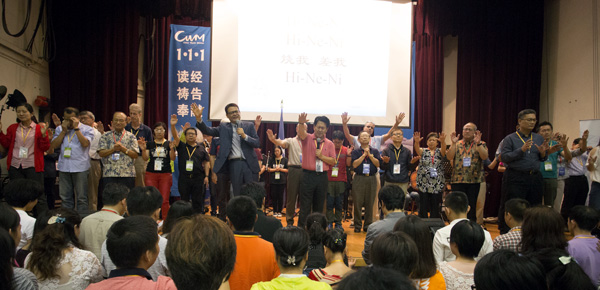
Two hundred participants made missionary commitments at the conference. Pastors and missionaries attending the conference were asked to commission them in prayer. These were the first missionary commitments made toward the Mission China 2030 vision of 20,000 missionaries. The Lausanne Movement calls the global church to prayer for these men and women as they take their next steps in training and preparation.
On the final morning of the conference, Pastor Ezra Jin (Beijing Zion Church) received the Mission China 2030 flag on behalf of the Beijing Pastors’ Prayer Fellowship, a symbol of acceptance to host next year’s Mission China 2030 gathering. Pastors from different cities will continue to host annual gatherings until the goal of sending 20,000 missionaries from China by the year 2030 is reached.
END
RELATED LINKS
The Lausanne Movement connects influencers and ideas for global mission, with a vision of the gospel for every person, an evangelical church for every people, Christ-like leaders for every church, and kingdom impact in every sphere of society.
The Movement grew out of the 1974 International Congress on World Evangelization convened in Lausanne, Switzerland, by Rev Billy Graham and Bishop Jack Dain. John Stott was chief architect of The Lausanne Covenant. The Third Lausanne Congress on World Evangelization (October 2010) in Cape Town, South Africa, brought together 4,000 Christian leaders representing 198 countries. The Cape Town Commitment serves as the blueprint for the Movement’s activities.
Learn more about the Movement.
CONTACT
For more information and interview inquiries, please contact Attila Nyari at media@lausanne.org.
---------------------

Lausanne Movement Appoints David Platt as Theology Working Group ChairMEDIA ADVISORY
Nagoya, Japan—10 November 2015—The Lausanne Movement is pleased to announce the appointment of Dr David Platt as its new Theology Working Group (TWG) Chair, succeeding Chris Wright and Tim Tennent.
Dr Platt is the President of the International Mission Board, which includes more than 4,000 missionaries and represents more than 40,000 churches. He is also the founder of Radical, a resource ministry dedicated to serving the church in making disciples of all nations. His ministry has global impact, and his voice is passionate and influential for global mission. Dr Platt will also be a plenary speaker for the Lausanne Movement’s Younger Leaders Gathering 2016 in Indonesia.
To find out more about Dr Platt, please read his bio on our website. In case of media inquiries or interview requests for Dr Michael Oh, Lausanne Movement Executive Director/CEO, please feel free to contact Attila Nyári atmedia@lausanne.org.
---------------------
View all
Highlights from the Content Library
To accompany the LGA articles on the impact of Cape Town 2010, here are a few of the publications which emerged since the Congress.

Christ Our Reconciler.
Some of the sharpest thinking the evangelical church has to offer on critical issues of the day.
J E M Cameron, ed

The Cape Town Commitment: Study Edition
Walks through each section of the Cape Town Commitment with questions to stimulate minds and hearts. Why not go through it next year with your small group?
Rose Dowsett

'Lausanne and Global Evangelicalism: Theological Distinctives and Missiological Impact'
From The Lausanne Movement: A Range of Perspectives (Oxford: Regnum Books, 2014)
Timothy C Tennent
View Cape Town 2010 Resources
---------------------
On the final morning of the conference, Pastor Ezra Jin (Beijing Zion Church) received the Mission China 2030 flag on behalf of the Beijing Pastors’ Prayer Fellowship, a symbol of acceptance to host next year’s Mission China 2030 gathering. Pastors from different cities will continue to host annual gatherings until the goal of sending 20,000 missionaries from China by the year 2030 is reached.
END
RELATED LINKS
- Asian Church Leaders Forum (ACLF) Report
- ‘Symbolic Moment as Chinese Gather in Seoul’ (news release on the 2013 ACLF)
- Ezra Jin: A Landmark Encounter: The Significance of the ACLF for the Church in China (article for the Lausanne Global Analysis)
- The Seoul Commitment (China), English
- 首尔承诺(中国),简体中文
The Lausanne Movement connects influencers and ideas for global mission, with a vision of the gospel for every person, an evangelical church for every people, Christ-like leaders for every church, and kingdom impact in every sphere of society.
The Movement grew out of the 1974 International Congress on World Evangelization convened in Lausanne, Switzerland, by Rev Billy Graham and Bishop Jack Dain. John Stott was chief architect of The Lausanne Covenant. The Third Lausanne Congress on World Evangelization (October 2010) in Cape Town, South Africa, brought together 4,000 Christian leaders representing 198 countries. The Cape Town Commitment serves as the blueprint for the Movement’s activities.
Learn more about the Movement.
CONTACT
For more information and interview inquiries, please contact Attila Nyari at media@lausanne.org.
---------------------
Lausanne Movement Appoints David Platt as Theology Working Group ChairMEDIA ADVISORY
Nagoya, Japan—10 November 2015—The Lausanne Movement is pleased to announce the appointment of Dr David Platt as its new Theology Working Group (TWG) Chair, succeeding Chris Wright and Tim Tennent.
Dr Platt is the President of the International Mission Board, which includes more than 4,000 missionaries and represents more than 40,000 churches. He is also the founder of Radical, a resource ministry dedicated to serving the church in making disciples of all nations. His ministry has global impact, and his voice is passionate and influential for global mission. Dr Platt will also be a plenary speaker for the Lausanne Movement’s Younger Leaders Gathering 2016 in Indonesia.
To find out more about Dr Platt, please read his bio on our website. In case of media inquiries or interview requests for Dr Michael Oh, Lausanne Movement Executive Director/CEO, please feel free to contact Attila Nyári atmedia@lausanne.org.
---------------------
View all
Highlights from the Content Library
To accompany the LGA articles on the impact of Cape Town 2010, here are a few of the publications which emerged since the Congress.
Christ Our Reconciler.
Some of the sharpest thinking the evangelical church has to offer on critical issues of the day.
J E M Cameron, ed
The Cape Town Commitment: Study Edition
Walks through each section of the Cape Town Commitment with questions to stimulate minds and hearts. Why not go through it next year with your small group?
Rose Dowsett
'Lausanne and Global Evangelicalism: Theological Distinctives and Missiological Impact'
From The Lausanne Movement: A Range of Perspectives (Oxford: Regnum Books, 2014)
Timothy C Tennent
View Cape Town 2010 Resources
---------------------

No comments:
Post a Comment