
The Upper Room Daily Reflections: Daily Words of Wisdom and Faith of The United Methodist Church in Nashville, Tennessee, United States for Sunday, 14 January 2018 "The Blessing Box"
Today’s Reflection:
 FOR ME, the issue of homelessness hits close to home. Many people in our area who have no place to live congregate and camp along the nearby Puyallup River. To “take care of the problem,” members of the community have tried to force these people to leave. But where can they go? Shelters in the area are always overflowing with people who need housing. As the homeless population — and the controversy — have continued to grow in the Tacoma and Puyallup areas, so has my vision to create change within my community.
My passion for helping others was sparked by my volunteer work with Freezing Nights, a program my church participates in to help feed and house people during the colder winter months. The longer I volunteered, the more stories I heard about how people had ended up on the street. I came face to face with people who truly know what it’s like to have lost everything. Realizing the hardships our homeless community faces all year long really opened my eyes. ….
Feeling compelled to help, I began doing online research about blessing bags, boxes, and donation sites in general. Soon, I clicked a link for “Blessing Boxes” and started looking at the pictures. Before I knew it, I was writing down measurements to begin construction.
I wasn’t sure if a Blessing Box would be possible in my area because of the way some people view homelessness. I decided to talk with my pastor, Karen Yokota Love, about my vision that our neighborhood’s homeless population might have a place to go for resources, without being chastised for the way they live. I explained that I wanted to build a “Blessing Box” to offer a take-what-you-need and donate-what-you-can type of investment in and by the community. For example, if someone forgot a side dish for dinner, she could check the Blessing Box; if it’s cold, someone might look for gloves or a sweater; if it is 10 o’clock at night and someone is out of dog food, he can stop by the Blessing Box for essentials! …
I’m amazed by what has happened since I stopped dreaming about creating change and started working to make my vision a reality. Still actively involved in my community, I want to give back and help others, not just those who are homeless but anyone in need. I am so appreciative of my church’s encouragement, and I hope the Blessing Box will be an inspiration to other communities. (Kheira Bach, age 18, devozine, July/Aug. 2017)
From pages 17-19 of devozine, the devotional lifestyle magazine for teens, July/August 2017. Copyright © 2017 by The Upper Room. All rights reserved. Used by permission. http://bookstore.upperroom.org/ Learn more about or purchase this book.
Today’s Question: Is there homelessness in your area? What opportunities are there to help?
Today’s Scripture: And [Jesus] said to him, “Very truly, I tell you, you will see heaven opened and the angels of God ascending and descending upon the Son of Man.” (John 1:51, NRSV)
This Week: Pray for new beginnings.
---
Did You Know?
In need of prayer? The Upper Room Living Prayer Center is a 7-day-a-week intercessory prayer ministry staffed by trained volunteers. Call 1-800-251-2468 or visit The Living Prayer Center website.
---In need of prayer? The Upper Room Living Prayer Center is a 7-day-a-week intercessory prayer ministry staffed by trained volunteers. Call 1-800-251-2468 or visit The Living Prayer Center website.
This week we remember: Emily Balch (January 9).
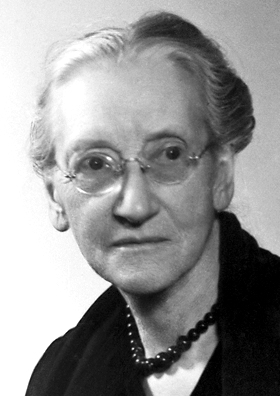 Emily Balch
January 09
Emily Greene Balch (1867-1961) grew up in a prosperous family, graduated from Bryn Mawr in 1889 and eventually worked as a professor of economics and sociology at Wellesley College. She worked with Jane Addams at Hull House in Chicago and cared deeply about people in poverty.
As a Quaker and committed pacifist, Emily was passionate about peace issues. She worked with Jane Addams organize the Women's International League for Peace and Freedom and served several terms as its secretary. In 1915 Balch attended the international Congress of Women at Den Hague and was part of a mediation delegation to Russia and Scandinavia. She proposed an "International Colonial Administration" similar to what later became the League of Nations.
Because of her active campaign against U.S. participation in World War I she lost her Wellesley professorship. She took on the editorship of The Nation. She also wrote several important books: Refugees as Assets in 1939, One Europe in 1947, and Toward Human Unity, or Beyond Nationalism (1952).
For her lifetime of peace work Balch received the Nobel Peace Prize in 1946; she gave the prize money to the Women's International League for Peace and Freedom. Emily Greene Balch died in 1961.
If Emily Balch had taken the Spiritual Types Test, she probably would have been a Sage. Emily Balch is remembered on January 9.
Image is © The Nobel Foundation.
---
1 Samuel 3:1-10, (11-20)
Psalm 139:1-6, 13-18
1 Corinthians 6:12-20
John 1:43-51
---
Lectionary Readings for Sunday, 14 January 2018
Scripture Texts: 1 Samuel 3:1 The child Sh’mu’el continued ministering to Adonai under ‘Eli’s direction. Now, in those days Adonai rarely spoke, and visions were few. 2 Once, during that period, ‘Eli had gone to bed — his eyes had begun to grow dim, so that it was hard for him to see. 3 The lamp of God had not yet gone out; and Sh’mu’el had lain down to sleep in the sanctuary of Adonai, where the ark of God was.
4 Adonai called, “Sh’mu’el!” and he answered, “Here I am.” 5 Then he ran to ‘Eli and said, “Here I am — you called me?” But he said, “I didn’t call you; go back, and lie down.” So he went and lay down. 6 Adonai called a second time, “Sh’mu’el!” Sh’mu’el got up, went to ‘Eli and said, “Here I am — you called me.” He answered, “I didn’t call, my son; lie down again.” 7 Now Sh’mu’el didn’t yet know Adonai; the word of Adonai had not yet been revealed to him. 8 Adonai called, “Sh’mu’el!” again, a third time. He got up, went to ‘Eli and said, “Here I am — you called me.” At last ‘Eli realized it was Adonai calling the child. 9 So ‘Eli said to Sh’mu’el, “Go, and lie down. If you are called again, say, ‘Speak, Adonai; your servant is listening.’ Sh’mu’el went and lay down in his place.
10 Adonai came and stood, then spoke as at the other times: “Sh’mu’el! Sh’mu’el!” Then Sh’mu’el said, “Speak; your servant is listening.” 11 Adonai said to Sh’mu’el, “Look! I am going to do something in Isra’el that will make both ears of everyone who hears about it tingle. 12 On that day I will do against ‘Eli everything I have said with regard to his family, from beginning to end. 13 For I have told him that I will execute judgment against his family forever, because of his wickedness in not rebuking his sons, even though he knew that they had brought a curse on themselves. 14 Therefore I have sworn to the family of ‘Eli that the wickedness of ‘Eli’s family will never be atoned for by any sacrifice or offering.”
15 Sh’mu’el lay there until morning; then he opened the doors of the house of Adonai. But Sh’mu’el was afraid to tell ‘Eli the vision. 16 Then ‘Eli called Sh’mu’el: “Sh’mu’el, my son!” He answered, “Here I am.” 17 ‘Eli said, “What did he say to you? Please, don’t hide it from me; may God do whatever he said and worse, if you hide from me anything he said to you.” 18 So Sh’mu’el told him every word and hid nothing. ‘Eli replied, “It is Adonai; let him do what seems good to him.”
19 Sh’mu’el kept growing, Adonai was with him, and he let none of his words fall to the ground. 20 All Isra’el from Dan to Be’er-Sheva became aware that Sh’mu’el had been confirmed as a prophet of Adonai.
Psalm 139:1 (0) For the leader. A psalm of David:
(1) Adonai, you have probed me, and you know me.
2 You know when I sit and when I stand up,
you discern my inclinations from afar,
3 you scrutinize my daily activities.
You are so familiar with all my ways
4 that before I speak even a word, Adonai,
you know all about it already.
5 You have hemmed me in both behind and in front
and laid your hand on me.
6 Such wonderful knowledge is beyond me,
far too high for me to reach., 13 For you fashioned my inmost being,
you knit me together in my mother’s womb.
14 I thank you because I am awesomely made,
wonderfully; your works are wonders —
I know this very well.
15 My bones were not hidden from you
when I was being made in secret,
intricately woven in the depths of the earth.
16 Your eyes could see me as an embryo,
but in your book all my days were already written;
my days had been shaped
before any of them existed.
17 God, how I prize your thoughts!
How many of them there are!
18 If I count them, there are more than grains of sand;
if I finish the count, I am still with you.
1 Corinthians 6:12 You say, “For me, everything is permitted”? Maybe, but not everything is helpful. “For me, everything is permitted”? Maybe, but as far as I am concerned, I am not going to let anything gain control over me. 13 “Food is meant for the stomach and the stomach for food”? Maybe, but God will put an end to both of them. Anyhow, the body is not meant for sexual immorality but for the Lord, and the Lord is for the body. 14 God raised up the Lord, and he will raise us up too by his power.
15 Don’t you know that your bodies are parts of the Messiah? So, am I to take parts of the Messiah and make them parts of a prostitute? Heaven forbid! 16 Don’t you know that a man who joins himself to a prostitute becomes physically one with her? For the Tanakh says, “The two will become one flesh”;[1 Corinthians 6:16 Genesis 2:24] 17 but the person who is joined to the Lord is one spirit. 18 Run from sexual immorality! Every other sin a person commits is outside the body, but the fornicator sins against his own body. 19 Or don’t you know that your body is a temple for the Ruach HaKodesh who lives inside you, whom you received from God? The fact is, you don’t belong to yourselves; 20 for you were bought at a price. So use your bodies to glorify God.
John 1:43 The next day, having decided to leave for the Galil, Yeshua found Philip and said, “Follow me!” 44 Philip was from Beit-Tzaidah, the town where Andrew and Kefa lived. 45 Philip found Natan’el and told him, “We’ve found the one that Moshe wrote about in the Torah, also the Prophets — it’s Yeshua Ben-Yosef from Natzeret!” 46 Natan’el answered him, “Natzeret? Can anything good come from there?” “Come and see,” Philip said to him. 47 Yeshua saw Natan’el coming toward him and remarked about him, “Here’s a true son of Isra’el — nothing false in him!” 48 Natan’el said to him, “How do you know me?” Yeshua answered him, “Before Philip called you, when you were under the fig tree, I saw you.” 49 Natan’el said, “Rabbi, you are the Son of God! You are the King of Isra’el!” 50 Yeshua answered him, “you believe all this just because I told you I saw you under the fig tree? You will see greater things than that!” 51 Then he said to him, “Yes indeed! I tell you that you will see heaven opened and the angels of God going up and coming down[John 1:51 Genesis 28:12] on the Son of Man!”
---
John Wesley’s Explanatory Notes: 1 Samuel 3:1-10, (11-20)
Verse 1
[1] And the child Samuel ministered unto the LORD before Eli. And the word of the LORD was precious in those days; there was no open vision.
Before Eli — That is, under his inspection and direction.
Word — The word of prophecy, or the revelation of God's will to and by the prophets.
Precious — Rare or scarce, such things being most precious in mens' esteem, whereas common things are generally despised.
Open vision — God did not impart his Mind by way of vision or revelation openly, or to any public person, to whom others might resort for satisfaction, though he might privately reveal himself to some pious persons for their particular direction. This is premised, as a reason why Samuel understood not, when God called him once or twice.
Verse 2
[2] And it came to pass at that time, when Eli was laid down in his place, and his eyes began to wax dim, that he could not see;
His place — In the court of the tabernacle.
Verse 3
[3] And ere the lamp of God went out in the temple of the LORD, where the ark of God was, and Samuel was laid down to sleep;
Went out — Before the lights of the golden candlestick were put out in the morning.
Verse 7
[7] Now Samuel did not yet know the LORD, neither was the word of the LORD yet revealed unto him.
Did not know — He was not acquainted with God in that extraordinary or prophetical way. And this ignorance of Samuel's served God's design, that his simplicity might give Eli the better assurance of the truth of God's call, and message to Samuel.
Verse 10
[10] And the LORD came, and stood, and called as at other times, Samuel, Samuel. Then Samuel answered, Speak; for thy servant heareth.
Came and stood — Before, he spake to him at a distance, even from the holy oracle between the cherubim: but now, to prevent all farther mistake, the voice came near to him, as if the person speaking had been standing near him.
Verse 12
[12] In that day I will perform against Eli all things which I have spoken concerning his house: when I begin, I will also make an end.
In that day — In that time which I have appointed for this work, which was about twenty or thirty years after this threatning. So long space of repentance God allows to this wicked generation.
When I begin, … — Tho' this vengeance shall be delayed for a season, to manifest my patience, and incite them to repentance; yet when once I begin to inflict, I shall not desist 'till I have made a full end.
Verse 13
[13] For I have told him that I will judge his house for ever for the iniquity which he knoweth; because his sons made themselves vile, and he restrained them not.
Restrained them not — He contented himself with a cold reproof, and did not punish, and effectually restrain them. They who can, and do not restrain others from sin, make themselves partakers of the guilt. Those in authority will have a great deal to answer for, if the sword they bear be not a terror to evil-doers.
Verse 14
[14] And therefore I have sworn unto the house of Eli, that the iniquity of Eli's house shall not be purged with sacrifice nor offering for ever.
Have sworn — Or, I do swear: the past tense being commonly put for the present in the Hebrew tongue.
Unto — Or, concerning it.
Purged — That is, the punishment threatened against Eli and his family, shall not he prevented by all their sacrifices, but shall infallibly be executed.
Verse 15
[15] And Samuel lay until the morning, and opened the doors of the house of the LORD. And Samuel feared to shew Eli the vision.
Doors — Altho' the tabernacle, whilst it was to be removed from place to place in the wilderness, had no doors, but consisted only of curtains, and had hangings before the entrance, instead of doors; yet when it was settled in one place, as now it was in Shiloh, it was enclosed within some solid building, which had doors and posts, and other parts belonging to it.
Feared — The matter of the vision or revelation, partly from the reverence he bore to his person, to whom he was loth to be a messenger of such sad tidings; partly, lest if he had been hasty to utter it, Eli might think him guilty of arrogancy or secret complacency in his calamity.
Verse 17
[17] And he said, What is the thing that the LORD hath said unto thee? I pray thee hide it not from me: God do so to thee, and more also, if thou hide any thing from me of all the things that he said unto thee.
God do so, … — God inflict the same evils upon thee, which I suspect he hath pronounced against me, and greater evils too.
Verse 18
[18] And Samuel told him every whit, and hid nothing from him. And he said, It is the LORD: let him do what seemeth him good.
It is the Lord — This severe sentence is from the sovereign Lord of the world, who hath an absolute right to dispose of me and all his creatures; who is in a special manner the ruler of the people of Israel, to whom it properly belongs to punish all mine offences; whose chastisement I therefore accept.
Verse 19
[19] And Samuel grew, and the LORD was with him, and did let none of his words fall to the ground.
Fail, … — That is, want its effect: God made good all his predictions. A metaphor from precious liquors, which when they are spilt upon the ground, are altogether useless.
Verse 20
[20] And all Israel from Dan even to Beersheba knew that Samuel was established to be a prophet of the LORD.
From Dan, … — Thro' the whole Land, from the northern bound Dan, to the southern, Beersheba; which was the whole length of the Land.
Psalm 139:1-6, 13-18
Verse 2
[2] Thou knowest my downsitting and mine uprising, thou understandest my thought afar off.
Afar off — Thou knowest what my thoughts will be in such and such circumstances, long before I know it, yea from all eternity.
Verse 3
[3] Thou compassest my path and my lying down, and art acquainted with all my ways.
Compassest — Thou discernest every step I take. It is a metaphor from soldiers besieging their enemies, and setting watches round about them.
Verse 5
[5] Thou hast beset me behind and before, and laid thine hand upon me.
Beset me — With thy all-seeing providence.
And laid — Thou keepest me, as it were with a strong hand, in thy sight and under thy power.
Verse 6
[6] Such knowledge is too wonderful for me; it is high, I cannot attain unto it.
I cannot — Apprehend in what manner thou dost so presently know all things.
Verse 16
[16] Thine eyes did see my substance, yet being unperfect; and in thy book all my members were written, which in continuance were fashioned, when as yet there was none of them.
Imperfect — When I was first conceived.
Book — In thy counsel and providence, by which thou didst contrive and effect this great work, according to that model which thou hadst appointed.
Verse 17
[17] How precious also are thy thoughts unto me, O God! how great is the sum of them!
Thoughts — Thy counsels on my behalf. Thou didst not only form me at first, but ever since my conception and birth, thy thoughts have been employed for me.
Verse 18
[18] If I should count them, they are more in number than the sand: when I awake, I am still with thee.
Them — Thy wonderful counsels and works on my behalf come constantly into my mind.
1 Corinthians 6:12-20
Verse 12
[12] All things are lawful unto me, but all things are not expedient: all things are lawful for me, but I will not be brought under the power of any.
All things — Which are lawful for you.
Are lawful for me, but all things are not always expedient — Particularly when anything would offend my weak brother; or when it would enslave my own soul. For though all things are lawful for me, yet I will not be brought under the power of any - So as to be uneasy when I abstain from it; for, if so, then I am under the power of it.
Verse 13
[13] Meats for the belly, and the belly for meats: but God shall destroy both it and them. Now the body is not for fornication, but for the Lord; and the Lord for the body.
As if he had said, I speak this chiefly with regard to meats; (and would to God all Christians would consider it!) particularly with regard to those offered to idols, and those forbidden in the Mosaic law. These, I grant, are all indifferent, and have their use, though it is only for a time: then meats, and the organs which receive them, will together moulder into dust. But the case is quite otherwise with fornication. This is not indifferent, but at all times evil.
For the body is for the Lord — Designed only for his service. And the Lord, in an important sense, for the body - Being the Saviour of this, as well as of the soul; in proof of which God hath already raised him from the dead.
Verse 16
[16] What? know ye not that he which is joined to an harlot is one body? for two, saith he, shall be one flesh.
Genesis 2:24.
Verse 17
[17] But he that is joined unto the Lord is one spirit.
But he that is joined to the Lord — By faith.
Is one spirit with him — And shall he make himself one flesh with an harlot?
Verse 18
[18] Flee fornication. Every sin that a man doeth is without the body; but he that committeth fornication sinneth against his own body.
Flee fornication — All unlawful commerce with women, with speed, with abhorrence, with all your might. Every sin that a man commits against his neighbour terminates upon an object out of himself, and does not so immediately pollute his body, though it does his soul.
But he that committeth fornication, sinneth against his own body — Pollutes, dishonours, and degrades it to a level with brute beasts.
Verse 19
[19] What? know ye not that your body is the temple of the Holy Ghost which is in you, which ye have of God, and ye are not your own?
And even your body is not, strictly speaking, your own even this is the temple of the Holy Ghost - Dedicated to him, and inhabited by him. What the apostle calls elsewhere "the temple of God," 1 Corinthians 3:16,17, and "the temple of the living God," 2 Corinthians 6:16, he here styles the temple of the Holy Ghost; plainly showing that the Holy Ghost is the living God.
Verse 20
[20] For ye are bought with a price: therefore glorify God in your body, and in your spirit, which are God's.
Glorify God with your body, and your spirit — Yield your bodies and all their members, as well as your souls and all their faculties, as instruments of righteousness to God. Devote and employ all ye have, and all ye are, entirely, unreservedly, and for ever, to his glory.
John 1:43-51
Verse 45
[45] Philip findeth Nathanael, and saith unto him, We have found him, of whom Moses in the law, and the prophets, did write, Jesus of Nazareth, the son of Joseph.
Jesus of Nazareth — So Philip thought, not knowing he was born in Bethlehem. Nathanael was probably the same with Bartholomew, that is, the son of Tholomew. St. Matthew joins Bartholomew with Philip, Matthew 10:3, and St. John places Nathanael in the midst of the apostles, immediately after Thomas, John 21:2, just as Bartholomew is placed, Acts 1:13.
Verse 46
[46] And Nathanael said unto him, Can there any good thing come out of Nazareth? Philip saith unto him, Come and see.
Can any good thing come out of Nazareth? — How cautiously should we guard against popular prejudices? When these had once possessed so honest a heart as that of Nathanael, they led him to suspect the blessed Jesus himself for an impostor, because he had been brought up at Nazareth. But his integrity prevailed over that foolish bias, and laid him open to the force of evidence, which a candid inquirer will always be glad to admit, even when it brings the most unexpected discoveries.
Can any good thing — That is, have we ground from Scripture to expect the Messiah, or any eminent prophet from Nazareth? Philip saith, Come and see - The same answer which he had received himself from our Lord the day before.
Verse 48
[48] Nathanael saith unto him, Whence knowest thou me? Jesus answered and said unto him, Before that Philip called thee, when thou wast under the fig tree, I saw thee.
Under the fig tree I saw thee — Perhaps at prayer.
Verse 49
[49] Nathanael answered and saith unto him, Rabbi, thou art the Son of God; thou art the King of Israel.
Nathanael answered — Happy are they that are ready to believe, swift to receive the truth and grace of God.
Thou art the Son of God — So he acknowledges now more than he had heard from Philip: The Son of God, the king of Israel - A confession both of the person and office of Christ.
Verse 51
[51] And he saith unto him, Verily, verily, I say unto you, Hereafter ye shall see heaven open, and the angels of God ascending and descending upon the Son of man.
Hereafter ye shall see — All of these, as well as thou, who believe on me now in my state of humiliation, shall hereafter see me come in my glory, and all the angels of God with me. This seems the most natural sense of the words, though they may also refer to his ascension.
---
Scripture Texts: 1 Samuel 3:1 The child Sh’mu’el continued ministering to Adonai under ‘Eli’s direction. Now, in those days Adonai rarely spoke, and visions were few. 2 Once, during that period, ‘Eli had gone to bed — his eyes had begun to grow dim, so that it was hard for him to see. 3 The lamp of God had not yet gone out; and Sh’mu’el had lain down to sleep in the sanctuary of Adonai, where the ark of God was.
4 Adonai called, “Sh’mu’el!” and he answered, “Here I am.” 5 Then he ran to ‘Eli and said, “Here I am — you called me?” But he said, “I didn’t call you; go back, and lie down.” So he went and lay down. 6 Adonai called a second time, “Sh’mu’el!” Sh’mu’el got up, went to ‘Eli and said, “Here I am — you called me.” He answered, “I didn’t call, my son; lie down again.” 7 Now Sh’mu’el didn’t yet know Adonai; the word of Adonai had not yet been revealed to him. 8 Adonai called, “Sh’mu’el!” again, a third time. He got up, went to ‘Eli and said, “Here I am — you called me.” At last ‘Eli realized it was Adonai calling the child. 9 So ‘Eli said to Sh’mu’el, “Go, and lie down. If you are called again, say, ‘Speak, Adonai; your servant is listening.’ Sh’mu’el went and lay down in his place.
10 Adonai came and stood, then spoke as at the other times: “Sh’mu’el! Sh’mu’el!” Then Sh’mu’el said, “Speak; your servant is listening.” 11 Adonai said to Sh’mu’el, “Look! I am going to do something in Isra’el that will make both ears of everyone who hears about it tingle. 12 On that day I will do against ‘Eli everything I have said with regard to his family, from beginning to end. 13 For I have told him that I will execute judgment against his family forever, because of his wickedness in not rebuking his sons, even though he knew that they had brought a curse on themselves. 14 Therefore I have sworn to the family of ‘Eli that the wickedness of ‘Eli’s family will never be atoned for by any sacrifice or offering.”
15 Sh’mu’el lay there until morning; then he opened the doors of the house of Adonai. But Sh’mu’el was afraid to tell ‘Eli the vision. 16 Then ‘Eli called Sh’mu’el: “Sh’mu’el, my son!” He answered, “Here I am.” 17 ‘Eli said, “What did he say to you? Please, don’t hide it from me; may God do whatever he said and worse, if you hide from me anything he said to you.” 18 So Sh’mu’el told him every word and hid nothing. ‘Eli replied, “It is Adonai; let him do what seems good to him.”
19 Sh’mu’el kept growing, Adonai was with him, and he let none of his words fall to the ground. 20 All Isra’el from Dan to Be’er-Sheva became aware that Sh’mu’el had been confirmed as a prophet of Adonai.
Psalm 139:1 (0) For the leader. A psalm of David:
(1) Adonai, you have probed me, and you know me.
2 You know when I sit and when I stand up,
you discern my inclinations from afar,
3 you scrutinize my daily activities.
You are so familiar with all my ways
4 that before I speak even a word, Adonai,
you know all about it already.
5 You have hemmed me in both behind and in front
and laid your hand on me.
6 Such wonderful knowledge is beyond me,
far too high for me to reach., 13 For you fashioned my inmost being,
you knit me together in my mother’s womb.
14 I thank you because I am awesomely made,
wonderfully; your works are wonders —
I know this very well.
15 My bones were not hidden from you
when I was being made in secret,
intricately woven in the depths of the earth.
16 Your eyes could see me as an embryo,
but in your book all my days were already written;
my days had been shaped
before any of them existed.
17 God, how I prize your thoughts!
How many of them there are!
18 If I count them, there are more than grains of sand;
if I finish the count, I am still with you.
1 Corinthians 6:12 You say, “For me, everything is permitted”? Maybe, but not everything is helpful. “For me, everything is permitted”? Maybe, but as far as I am concerned, I am not going to let anything gain control over me. 13 “Food is meant for the stomach and the stomach for food”? Maybe, but God will put an end to both of them. Anyhow, the body is not meant for sexual immorality but for the Lord, and the Lord is for the body. 14 God raised up the Lord, and he will raise us up too by his power.
15 Don’t you know that your bodies are parts of the Messiah? So, am I to take parts of the Messiah and make them parts of a prostitute? Heaven forbid! 16 Don’t you know that a man who joins himself to a prostitute becomes physically one with her? For the Tanakh says, “The two will become one flesh”;[1 Corinthians 6:16 Genesis 2:24] 17 but the person who is joined to the Lord is one spirit. 18 Run from sexual immorality! Every other sin a person commits is outside the body, but the fornicator sins against his own body. 19 Or don’t you know that your body is a temple for the Ruach HaKodesh who lives inside you, whom you received from God? The fact is, you don’t belong to yourselves; 20 for you were bought at a price. So use your bodies to glorify God.
John 1:43 The next day, having decided to leave for the Galil, Yeshua found Philip and said, “Follow me!” 44 Philip was from Beit-Tzaidah, the town where Andrew and Kefa lived. 45 Philip found Natan’el and told him, “We’ve found the one that Moshe wrote about in the Torah, also the Prophets — it’s Yeshua Ben-Yosef from Natzeret!” 46 Natan’el answered him, “Natzeret? Can anything good come from there?” “Come and see,” Philip said to him. 47 Yeshua saw Natan’el coming toward him and remarked about him, “Here’s a true son of Isra’el — nothing false in him!” 48 Natan’el said to him, “How do you know me?” Yeshua answered him, “Before Philip called you, when you were under the fig tree, I saw you.” 49 Natan’el said, “Rabbi, you are the Son of God! You are the King of Isra’el!” 50 Yeshua answered him, “you believe all this just because I told you I saw you under the fig tree? You will see greater things than that!” 51 Then he said to him, “Yes indeed! I tell you that you will see heaven opened and the angels of God going up and coming down[John 1:51 Genesis 28:12] on the Son of Man!”
---
John Wesley’s Explanatory Notes: 1 Samuel 3:1-10, (11-20)
Verse 1
[1] And the child Samuel ministered unto the LORD before Eli. And the word of the LORD was precious in those days; there was no open vision.
Before Eli — That is, under his inspection and direction.
Word — The word of prophecy, or the revelation of God's will to and by the prophets.
Precious — Rare or scarce, such things being most precious in mens' esteem, whereas common things are generally despised.
Open vision — God did not impart his Mind by way of vision or revelation openly, or to any public person, to whom others might resort for satisfaction, though he might privately reveal himself to some pious persons for their particular direction. This is premised, as a reason why Samuel understood not, when God called him once or twice.
Verse 2
[2] And it came to pass at that time, when Eli was laid down in his place, and his eyes began to wax dim, that he could not see;
His place — In the court of the tabernacle.
Verse 3
[3] And ere the lamp of God went out in the temple of the LORD, where the ark of God was, and Samuel was laid down to sleep;
Went out — Before the lights of the golden candlestick were put out in the morning.
Verse 7
[7] Now Samuel did not yet know the LORD, neither was the word of the LORD yet revealed unto him.
Did not know — He was not acquainted with God in that extraordinary or prophetical way. And this ignorance of Samuel's served God's design, that his simplicity might give Eli the better assurance of the truth of God's call, and message to Samuel.
Verse 10
[10] And the LORD came, and stood, and called as at other times, Samuel, Samuel. Then Samuel answered, Speak; for thy servant heareth.
Came and stood — Before, he spake to him at a distance, even from the holy oracle between the cherubim: but now, to prevent all farther mistake, the voice came near to him, as if the person speaking had been standing near him.
Verse 12
[12] In that day I will perform against Eli all things which I have spoken concerning his house: when I begin, I will also make an end.
In that day — In that time which I have appointed for this work, which was about twenty or thirty years after this threatning. So long space of repentance God allows to this wicked generation.
When I begin, … — Tho' this vengeance shall be delayed for a season, to manifest my patience, and incite them to repentance; yet when once I begin to inflict, I shall not desist 'till I have made a full end.
Verse 13
[13] For I have told him that I will judge his house for ever for the iniquity which he knoweth; because his sons made themselves vile, and he restrained them not.
Restrained them not — He contented himself with a cold reproof, and did not punish, and effectually restrain them. They who can, and do not restrain others from sin, make themselves partakers of the guilt. Those in authority will have a great deal to answer for, if the sword they bear be not a terror to evil-doers.
Verse 14
[14] And therefore I have sworn unto the house of Eli, that the iniquity of Eli's house shall not be purged with sacrifice nor offering for ever.
Have sworn — Or, I do swear: the past tense being commonly put for the present in the Hebrew tongue.
Unto — Or, concerning it.
Purged — That is, the punishment threatened against Eli and his family, shall not he prevented by all their sacrifices, but shall infallibly be executed.
Verse 15
[15] And Samuel lay until the morning, and opened the doors of the house of the LORD. And Samuel feared to shew Eli the vision.
Doors — Altho' the tabernacle, whilst it was to be removed from place to place in the wilderness, had no doors, but consisted only of curtains, and had hangings before the entrance, instead of doors; yet when it was settled in one place, as now it was in Shiloh, it was enclosed within some solid building, which had doors and posts, and other parts belonging to it.
Feared — The matter of the vision or revelation, partly from the reverence he bore to his person, to whom he was loth to be a messenger of such sad tidings; partly, lest if he had been hasty to utter it, Eli might think him guilty of arrogancy or secret complacency in his calamity.
Verse 17
[17] And he said, What is the thing that the LORD hath said unto thee? I pray thee hide it not from me: God do so to thee, and more also, if thou hide any thing from me of all the things that he said unto thee.
God do so, … — God inflict the same evils upon thee, which I suspect he hath pronounced against me, and greater evils too.
Verse 18
[18] And Samuel told him every whit, and hid nothing from him. And he said, It is the LORD: let him do what seemeth him good.
It is the Lord — This severe sentence is from the sovereign Lord of the world, who hath an absolute right to dispose of me and all his creatures; who is in a special manner the ruler of the people of Israel, to whom it properly belongs to punish all mine offences; whose chastisement I therefore accept.
Verse 19
[19] And Samuel grew, and the LORD was with him, and did let none of his words fall to the ground.
Fail, … — That is, want its effect: God made good all his predictions. A metaphor from precious liquors, which when they are spilt upon the ground, are altogether useless.
Verse 20
[20] And all Israel from Dan even to Beersheba knew that Samuel was established to be a prophet of the LORD.
From Dan, … — Thro' the whole Land, from the northern bound Dan, to the southern, Beersheba; which was the whole length of the Land.
Psalm 139:1-6, 13-18
Verse 2
[2] Thou knowest my downsitting and mine uprising, thou understandest my thought afar off.
Afar off — Thou knowest what my thoughts will be in such and such circumstances, long before I know it, yea from all eternity.
Verse 3
[3] Thou compassest my path and my lying down, and art acquainted with all my ways.
Compassest — Thou discernest every step I take. It is a metaphor from soldiers besieging their enemies, and setting watches round about them.
Verse 5
[5] Thou hast beset me behind and before, and laid thine hand upon me.
Beset me — With thy all-seeing providence.
And laid — Thou keepest me, as it were with a strong hand, in thy sight and under thy power.
Verse 6
[6] Such knowledge is too wonderful for me; it is high, I cannot attain unto it.
I cannot — Apprehend in what manner thou dost so presently know all things.
Verse 16
[16] Thine eyes did see my substance, yet being unperfect; and in thy book all my members were written, which in continuance were fashioned, when as yet there was none of them.
Imperfect — When I was first conceived.
Book — In thy counsel and providence, by which thou didst contrive and effect this great work, according to that model which thou hadst appointed.
Verse 17
[17] How precious also are thy thoughts unto me, O God! how great is the sum of them!
Thoughts — Thy counsels on my behalf. Thou didst not only form me at first, but ever since my conception and birth, thy thoughts have been employed for me.
Verse 18
[18] If I should count them, they are more in number than the sand: when I awake, I am still with thee.
Them — Thy wonderful counsels and works on my behalf come constantly into my mind.
1 Corinthians 6:12-20
Verse 12
[12] All things are lawful unto me, but all things are not expedient: all things are lawful for me, but I will not be brought under the power of any.
All things — Which are lawful for you.
Are lawful for me, but all things are not always expedient — Particularly when anything would offend my weak brother; or when it would enslave my own soul. For though all things are lawful for me, yet I will not be brought under the power of any - So as to be uneasy when I abstain from it; for, if so, then I am under the power of it.
Verse 13
[13] Meats for the belly, and the belly for meats: but God shall destroy both it and them. Now the body is not for fornication, but for the Lord; and the Lord for the body.
As if he had said, I speak this chiefly with regard to meats; (and would to God all Christians would consider it!) particularly with regard to those offered to idols, and those forbidden in the Mosaic law. These, I grant, are all indifferent, and have their use, though it is only for a time: then meats, and the organs which receive them, will together moulder into dust. But the case is quite otherwise with fornication. This is not indifferent, but at all times evil.
For the body is for the Lord — Designed only for his service. And the Lord, in an important sense, for the body - Being the Saviour of this, as well as of the soul; in proof of which God hath already raised him from the dead.
Verse 16
[16] What? know ye not that he which is joined to an harlot is one body? for two, saith he, shall be one flesh.
Genesis 2:24.
Verse 17
[17] But he that is joined unto the Lord is one spirit.
But he that is joined to the Lord — By faith.
Is one spirit with him — And shall he make himself one flesh with an harlot?
Verse 18
[18] Flee fornication. Every sin that a man doeth is without the body; but he that committeth fornication sinneth against his own body.
Flee fornication — All unlawful commerce with women, with speed, with abhorrence, with all your might. Every sin that a man commits against his neighbour terminates upon an object out of himself, and does not so immediately pollute his body, though it does his soul.
But he that committeth fornication, sinneth against his own body — Pollutes, dishonours, and degrades it to a level with brute beasts.
Verse 19
[19] What? know ye not that your body is the temple of the Holy Ghost which is in you, which ye have of God, and ye are not your own?
And even your body is not, strictly speaking, your own even this is the temple of the Holy Ghost - Dedicated to him, and inhabited by him. What the apostle calls elsewhere "the temple of God," 1 Corinthians 3:16,17, and "the temple of the living God," 2 Corinthians 6:16, he here styles the temple of the Holy Ghost; plainly showing that the Holy Ghost is the living God.
Verse 20
[20] For ye are bought with a price: therefore glorify God in your body, and in your spirit, which are God's.
Glorify God with your body, and your spirit — Yield your bodies and all their members, as well as your souls and all their faculties, as instruments of righteousness to God. Devote and employ all ye have, and all ye are, entirely, unreservedly, and for ever, to his glory.
John 1:43-51
Verse 45
[45] Philip findeth Nathanael, and saith unto him, We have found him, of whom Moses in the law, and the prophets, did write, Jesus of Nazareth, the son of Joseph.
Jesus of Nazareth — So Philip thought, not knowing he was born in Bethlehem. Nathanael was probably the same with Bartholomew, that is, the son of Tholomew. St. Matthew joins Bartholomew with Philip, Matthew 10:3, and St. John places Nathanael in the midst of the apostles, immediately after Thomas, John 21:2, just as Bartholomew is placed, Acts 1:13.
Verse 46
[46] And Nathanael said unto him, Can there any good thing come out of Nazareth? Philip saith unto him, Come and see.
Can any good thing come out of Nazareth? — How cautiously should we guard against popular prejudices? When these had once possessed so honest a heart as that of Nathanael, they led him to suspect the blessed Jesus himself for an impostor, because he had been brought up at Nazareth. But his integrity prevailed over that foolish bias, and laid him open to the force of evidence, which a candid inquirer will always be glad to admit, even when it brings the most unexpected discoveries.
Can any good thing — That is, have we ground from Scripture to expect the Messiah, or any eminent prophet from Nazareth? Philip saith, Come and see - The same answer which he had received himself from our Lord the day before.
Verse 48
[48] Nathanael saith unto him, Whence knowest thou me? Jesus answered and said unto him, Before that Philip called thee, when thou wast under the fig tree, I saw thee.
Under the fig tree I saw thee — Perhaps at prayer.
Verse 49
[49] Nathanael answered and saith unto him, Rabbi, thou art the Son of God; thou art the King of Israel.
Nathanael answered — Happy are they that are ready to believe, swift to receive the truth and grace of God.
Thou art the Son of God — So he acknowledges now more than he had heard from Philip: The Son of God, the king of Israel - A confession both of the person and office of Christ.
Verse 51
[51] And he saith unto him, Verily, verily, I say unto you, Hereafter ye shall see heaven open, and the angels of God ascending and descending upon the Son of man.
Hereafter ye shall see — All of these, as well as thou, who believe on me now in my state of humiliation, shall hereafter see me come in my glory, and all the angels of God with me. This seems the most natural sense of the words, though they may also refer to his ascension.
---
The Upper Room Ministries ®. Copyright © 2017
PO Box 340004
Nashville, Tennessee 37203-0004, United States
---
No comments:
Post a Comment