PRACTICAL WISDOM FOR LEADING CONGREGATIONS: Alban Weekly from The Alban at Duke Divinity School in Durham, North Carolina, United States "A tiny congregation with a big building is resurrected as a center for peace" for Monday, 21 May 2018


Faith and Leadership
CONGREGATIONS, BUILDINGS, NEW FORMS OF CHURCH, INNOVATION
A tiny congregation with a big building is resurrected as a center for peace
A CONGREGATION CONCERNED ABOUT VIOLENCE FINDS NEW MINISTRY
Concerned about violence in their city, members of a declining church in Oakland shifted focus, redefined its ministry and invited nonprofit service agencies to work together as the Oakland Peace Center.
The Oakland Peace Center makes its home in the First Christian Church of Oakland, an imposing Mission Revival structure in a residential neighborhood of this California city. Completed in 1928, it has arched doors and windows and red stone embellishments. The 40,000-square-foot building spreads out over five levels.
The exterior still resembles the grand church it once was. But inside, there are signs that the First Christian Church congregation isn’t alone in this space.(link is external)
The entry hall holds a shelf filled with free books, a bin piled high with free clothing, and a bulletin board with information on volunteer opportunities and scheduled events. The sanctuary, chapel and two large halls are used for conferences, music programs, plays and movie screenings. Smaller spaces house offices and host small group meetings, common meals and a variety of other peacemaking activities. Twice a month, a drumming group gathers at the center to explore rhythm as a spiritual practice. On work days(link is external), volunteers come and fix up the aging facility.
Conceived more than a decade ago by a church struggling to envision its future, today the center(link is external) is both a physical space and a network of 40 local nonprofit organizations, all committed to promoting peace, curbing violence and advancing social justice in Oakland and the San Francisco Bay Area.

A CONGREGATION CONCERNED ABOUT VIOLENCE FINDS NEW MINISTRY
Concerned about violence in their city, members of a declining church in Oakland shifted focus, redefined its ministry and invited nonprofit service agencies to work together as the Oakland Peace Center.
The Oakland Peace Center makes its home in the First Christian Church of Oakland, an imposing Mission Revival structure in a residential neighborhood of this California city. Completed in 1928, it has arched doors and windows and red stone embellishments. The 40,000-square-foot building spreads out over five levels.
The exterior still resembles the grand church it once was. But inside, there are signs that the First Christian Church congregation isn’t alone in this space.(link is external)
The entry hall holds a shelf filled with free books, a bin piled high with free clothing, and a bulletin board with information on volunteer opportunities and scheduled events. The sanctuary, chapel and two large halls are used for conferences, music programs, plays and movie screenings. Smaller spaces house offices and host small group meetings, common meals and a variety of other peacemaking activities. Twice a month, a drumming group gathers at the center to explore rhythm as a spiritual practice. On work days(link is external), volunteers come and fix up the aging facility.
Conceived more than a decade ago by a church struggling to envision its future, today the center(link is external) is both a physical space and a network of 40 local nonprofit organizations, all committed to promoting peace, curbing violence and advancing social justice in Oakland and the San Francisco Bay Area.
Members of First Christian Church of Oakland with the Rev. Monica Joy Cross (back row).
The original congregation -- which numbered 1,500 at one time -- now has a half-dozen
in Sunday worship. Yet it has been given new life, and its impact is significant: last year, the center’s partners served 86,000 people.
“Our members’ hearts are sold out to Jesus, and the Oakland Peace Center emerged from those hearts,” said the congregation’s pastor, the Rev. Monica Joy Cross. “They knew this was a church in a position to change, and what they did was prophetic.”
“It’s a space from which healing for this planet can spring,” he said. “This is a journey, and the center is just one step. But maybe we can be a role model for other places as we seek peace in our time.”
‘No one has to do this work alone’
More than just a building with a collection of tenants, the Oakland Peace Center is structured to foster collaboration among its member organizations. The definition of “peace” is broadly construed; while some organizations work directly to combat violence, others have a wider mission.
“Our partners are creating an overwhelming new ministry and making a difference in Oakland,” said the Rev. Sandhya Rani Jha, the center’s founder and executive director. “They also show up for each other, help each other and remind each other that no one has to do this work alone.”

The “peace partners”(link is external) co-sponsor events, share strategies and resources and organize trainings. Twelve nonprofits rent space, and roughly 30 more affiliate with the center out of a sense of shared vision.
“This building is a place of synergy where we’re all in it together, working to strengthen each other,” said Angela Urata, a center board member and the operations director of the partner Niroga Institute, which is focused on yoga and meditation.
Although the congregation is now just one of the many partners, Jha emphasizes that the center is the legacy of the First Christian Church: “What has happened here happened because the congregation determined they could not be all things to all people, and they created a way for others to help. This is a phoenix story.”
Discerning the way to peace
Jha, 42, is a warm-hearted woman with a ready smile who has a background in community organizing and political engagement. Her mother is Scottish Presbyterian and her father Hindu. Born in England and brought up in Akron, Ohio, Jha was ordained in 2005 in the Christian Church (Disciples of Christ).
In 2006, First Christian Church of Oakland called her as their minister. Jha recalls that some colleagues tried to discourage her from taking the job, predicting that the church was “destined to die, with no hope of transformation.”
Jha, who holds both an M.Div. and a master of public policy degree from the University of Chicago, accepted the post. She was the congregation’s first nonwhite pastor, and was eager to help them move into a new chapter.
Under her leadership, they undertook a visioning process -- in the later stages it included the Disciples’ New Beginnings(link is external) program, designed to help “the congregation that knows it can’t continue ‘as is’ but doesn’t yet know what to do.”
As the decades passed, the neighborhood and the congregation changed. Once all-white, the church slowly integrated as the demographics of the neighborhood shifted.
Some members moved away. Some newcomers to the neighborhood belonged to churches elsewhere. Some younger people rejected their families’ religious traditions, and older members died. When Jha arrived, the church had about 20 members. It grew under her leadership, but still faced challenges.
The building had become too large for the congregation, and too difficult to maintain. Members of the church’s men’s fellowship took care of the maintenance, said Fields, a retired broadcast engineer whose family was one of the first to integrate the congregation.
In 2007, Jha organized a visioning retreat to discuss the congregational identity. At the time of their retreat, First Christian Church members were praying every week for neighbors in prison or those lost to or affected by violence in the neighborhood. The issues of violence and peace were not an abstraction; the time felt right to assess their role in the congregation’s mission.
The 15 participants discussed how the church might serve as a hub or incubator of peace -- a space where peace might radiate out into the surrounding community. At the retreat, the congregation also established criteria -- still in effect -- for all potential tenants and other members of the Oakland Peace Center.
All affiliated nonprofits must share these goals:
“Change is difficult,” he said. “Some members were pleased, and some were skeptical about the new plan.”
Fields’ daughter, Aimee, then a teenager, was instrumental in helping move the idea for the center forward, and today she serves on the board.
“The organizations that are part of the center are doing life-changing work and feel a responsibility to what God’s plan is for his people, for all of us,” the elder Fields said. “That’s ministry.”

In 2009, the congregation determined that the center would be the primary work of First Christian Church. The official launch was held on Martin Luther King weekend in 2012, with 25 peace partners on board.
As the center has evolved, the relationship with the church has shifted. Once the center received 501(c)(3) status, the church could act as an equal partner within the organization rather than simply as landlord.
Three years ago, the congregation decided to place the building in a trust with Disciples Home Missions, a general ministry of the Christian Church (Disciples of Christ). That process continues; when it's complete Home Missions will lease the building and the land to the center, while guaranteeing the congregation a place to worship.
Originally a congregant, Cross is a transgender activist, social justice advocate, writer and speaker. She has an M.Div. from the Pacific School of Religion and is a graduate of Starr King School for the Ministry.
Cross works part time for First Christian Church; she also serves as an associate minister at Tapestry Ministries (Christian Church [Disciples of Christ]), as founding minister of the Global Prayer Network, as founding minister and CEO of the nonprofit A Different Imagination for a Just and Sustainable Humanity and as a transgender clergy consultant.
Cross leads the congregation of about 20 members, ranging in age from 24 to 90. Despite the small size, the congregation is seeking to make a difference, she said.
“They are forward-leaning, risk-taking individuals, still finding justice issues to work on. It is a joy to minister to them,” she said.

A decade after it was first envisioned, the center is living into the vision. Fields’ son Daniel described it early on as “an epicenter of peace” -- a powerful metaphor for people familiar with earthquakes.
One recent morning, for example, the in-house partners met to discuss how to protect immigrants they work with, as well as new strategies for capacity building this year and next.
The center has recently hosted peace-promoting theater performances, book readings, discussions and a Law for Black Lives(link is external) conference, held in February.
OneLife Institute, a peace partner that provides “the place where healers can heal and leaders can lean,” has a saying: “We lift up the folks who lift up the folks.”
Tia-Lynn Rounsoville, a communications and development intern at the center, said, “That’s Sandhya’s motto too.”
Has this work made a difference? "Call me in 50 years," Jha said. Violence has decreased since the center opened, though Jha is does not claim credit for that trend.
Oakland’s rate of homicide and other violent crime has dropped dramatically, but its homicide rate is still four to five times greater than that of the rest of California; last year, the problem was pressing enough that the city created the new Department of Violence Prevention.(link is external) And recently protesters gathered outside the district attorney's office to demand she file charges against a transit officer who shot Sahleem Tindle(link is external) to death at an Oakland BART station in January.
The work of the Oakland Peace Center is a culture shift, she said, with a much longer trajectory: "We're at the very beginning of the work."
A former professional basketball player, Jackson coaches the youth basketball team at the First Mongolian Christian Church, a program he hopes to expand as yet another way to spread peace.
“We should celebrate peace like we celebrate Halloween or like … we have a street fair,” he said. “Just go out in the streets and celebrate it, and create community around it.”
For Jha, the work of the center stems from the work of a small group of people willing to embrace a new way of being the church in the world.
“A congregation that numbers six in worship on Sunday is in many ways responsible for over 86,000 people in our community having greater access to peace,” she said. “That’s thanks to their willingness to collaborate and to listen to the needs of the community and to check their fears and ego at the door in order to let the work happen.”
Questions to consider:

CAN THESE BONES PODCAST: VERNON JORDAN
Faith and Leadership“Our members’ hearts are sold out to Jesus, and the Oakland Peace Center emerged from those hearts,” said the congregation’s pastor, the Rev. Monica Joy Cross. “They knew this was a church in a position to change, and what they did was prophetic.”
What forms of ministry might your organization undertake that don't resemble what you're doing today?
Ernie Fields, a church trustee, said he is excited about the new direction for the congregation to which he has belonged for more than 60 years.“It’s a space from which healing for this planet can spring,” he said. “This is a journey, and the center is just one step. But maybe we can be a role model for other places as we seek peace in our time.”
‘No one has to do this work alone’
More than just a building with a collection of tenants, the Oakland Peace Center is structured to foster collaboration among its member organizations. The definition of “peace” is broadly construed; while some organizations work directly to combat violence, others have a wider mission.
“Our partners are creating an overwhelming new ministry and making a difference in Oakland,” said the Rev. Sandhya Rani Jha, the center’s founder and executive director. “They also show up for each other, help each other and remind each other that no one has to do this work alone.”
Volunteers prepare to paint a mural on a wall in the center's parking lot to send a message of peace as people enter the space.
Some of the center’s agencies provide direct services to individuals. Others work toward policy or cultural shifts in society. Still others emphasize the value of cultivating inner peace through practices such as yoga and meditation.The “peace partners”(link is external) co-sponsor events, share strategies and resources and organize trainings. Twelve nonprofits rent space, and roughly 30 more affiliate with the center out of a sense of shared vision.
“This building is a place of synergy where we’re all in it together, working to strengthen each other,” said Angela Urata, a center board member and the operations director of the partner Niroga Institute, which is focused on yoga and meditation.
Although the congregation is now just one of the many partners, Jha emphasizes that the center is the legacy of the First Christian Church: “What has happened here happened because the congregation determined they could not be all things to all people, and they created a way for others to help. This is a phoenix story.”
Discerning the way to peace
Jha, 42, is a warm-hearted woman with a ready smile who has a background in community organizing and political engagement. Her mother is Scottish Presbyterian and her father Hindu. Born in England and brought up in Akron, Ohio, Jha was ordained in 2005 in the Christian Church (Disciples of Christ).
In 2006, First Christian Church of Oakland called her as their minister. Jha recalls that some colleagues tried to discourage her from taking the job, predicting that the church was “destined to die, with no hope of transformation.”
Jha, who holds both an M.Div. and a master of public policy degree from the University of Chicago, accepted the post. She was the congregation’s first nonwhite pastor, and was eager to help them move into a new chapter.
Under her leadership, they undertook a visioning process -- in the later stages it included the Disciples’ New Beginnings(link is external) program, designed to help “the congregation that knows it can’t continue ‘as is’ but doesn’t yet know what to do.”
That dilemma no doubt would have been incomprehensible to the congregation in its heyday.
At one time, the church had more than 1,500 members. Established in 1876, it moved in 1929 into the building on Fairmount Avenue, which was designed by well-known architect W.H. Weeks. The Spanish-style building with multicolored tilework and a white tower featured 11 beautiful stained-glass windows that still gleam in the vast sanctuary.As the decades passed, the neighborhood and the congregation changed. Once all-white, the church slowly integrated as the demographics of the neighborhood shifted.
Some members moved away. Some newcomers to the neighborhood belonged to churches elsewhere. Some younger people rejected their families’ religious traditions, and older members died. When Jha arrived, the church had about 20 members. It grew under her leadership, but still faced challenges.
The building had become too large for the congregation, and too difficult to maintain. Members of the church’s men’s fellowship took care of the maintenance, said Fields, a retired broadcast engineer whose family was one of the first to integrate the congregation.
If you are struggling to keep up your physical plant, could you turn it from a burden into an asset?
“We ran a tight ship, but over time we had fewer people, and upkeep was a struggle,” he said.In 2007, Jha organized a visioning retreat to discuss the congregational identity. At the time of their retreat, First Christian Church members were praying every week for neighbors in prison or those lost to or affected by violence in the neighborhood. The issues of violence and peace were not an abstraction; the time felt right to assess their role in the congregation’s mission.
The 15 participants discussed how the church might serve as a hub or incubator of peace -- a space where peace might radiate out into the surrounding community. At the retreat, the congregation also established criteria -- still in effect -- for all potential tenants and other members of the Oakland Peace Center.
All affiliated nonprofits must share these goals:
- To nurture tranquility and peace for all generations in a world of chaos and violence
- To create a sense of family in a profoundly disconnected culture
- To shape opportunities to experience the Holy Spirit in our community and in the world
What is the primary issue facing your community? Could you build your ministry around it?
Fields recalls that while outreach has always been part of the church’s mission, the idea to bring in nonprofit organizations did not sit well with everyone at first.“Change is difficult,” he said. “Some members were pleased, and some were skeptical about the new plan.”
Fields’ daughter, Aimee, then a teenager, was instrumental in helping move the idea for the center forward, and today she serves on the board.
“The organizations that are part of the center are doing life-changing work and feel a responsibility to what God’s plan is for his people, for all of us,” the elder Fields said. “That’s ministry.”
The East Point Peace Academy holding a nonviolence conflict reconciliation training based on the teachings of Martin Luther King at the Oakland Peace Center.
Evolution of the Oakland Peace CenterIn 2009, the congregation determined that the center would be the primary work of First Christian Church. The official launch was held on Martin Luther King weekend in 2012, with 25 peace partners on board.
As the center has evolved, the relationship with the church has shifted. Once the center received 501(c)(3) status, the church could act as an equal partner within the organization rather than simply as landlord.
Three years ago, the congregation decided to place the building in a trust with Disciples Home Missions, a general ministry of the Christian Church (Disciples of Christ). That process continues; when it's complete Home Missions will lease the building and the land to the center, while guaranteeing the congregation a place to worship.
What existing institutional structures could help you achieve your aims?
In 2013, Jha stepped down as pastor to concentrate on her role as executive director of the center, and a year later Cross became pastor of the congregation.Originally a congregant, Cross is a transgender activist, social justice advocate, writer and speaker. She has an M.Div. from the Pacific School of Religion and is a graduate of Starr King School for the Ministry.
Cross works part time for First Christian Church; she also serves as an associate minister at Tapestry Ministries (Christian Church [Disciples of Christ]), as founding minister of the Global Prayer Network, as founding minister and CEO of the nonprofit A Different Imagination for a Just and Sustainable Humanity and as a transgender clergy consultant.
Cross leads the congregation of about 20 members, ranging in age from 24 to 90. Despite the small size, the congregation is seeking to make a difference, she said.
“They are forward-leaning, risk-taking individuals, still finding justice issues to work on. It is a joy to minister to them,” she said.
Project Darreis, a nonprofit founded by the mother of a young man killed in Oakland, offers a Halloween party for children who might not feel safe trick or treating in their neighborhood. Volunteers fill their trunks with candy and park in the center's lot so children can "trunk or treat."
‘Epicenter of peace’A decade after it was first envisioned, the center is living into the vision. Fields’ son Daniel described it early on as “an epicenter of peace” -- a powerful metaphor for people familiar with earthquakes.
One recent morning, for example, the in-house partners met to discuss how to protect immigrants they work with, as well as new strategies for capacity building this year and next.
The center has recently hosted peace-promoting theater performances, book readings, discussions and a Law for Black Lives(link is external) conference, held in February.
OneLife Institute, a peace partner that provides “the place where healers can heal and leaders can lean,” has a saying: “We lift up the folks who lift up the folks.”
Tia-Lynn Rounsoville, a communications and development intern at the center, said, “That’s Sandhya’s motto too.”
Has this work made a difference? "Call me in 50 years," Jha said. Violence has decreased since the center opened, though Jha is does not claim credit for that trend.
Oakland’s rate of homicide and other violent crime has dropped dramatically, but its homicide rate is still four to five times greater than that of the rest of California; last year, the problem was pressing enough that the city created the new Department of Violence Prevention.(link is external) And recently protesters gathered outside the district attorney's office to demand she file charges against a transit officer who shot Sahleem Tindle(link is external) to death at an Oakland BART station in January.
The work of the Oakland Peace Center is a culture shift, she said, with a much longer trajectory: "We're at the very beginning of the work."
Are you willing to "listen to the needs of the community and to check your fears and ego at the door"?
Some folks have taken part in the center’s mission in multiple ways. Clidell “Franceyez” Jackson, who was helped by some of the center’s agencies when he was younger, co-founded one of the early partners -- United Roots, an organization that “engages and empowers marginalized youth in socially innovative ways” -- and is now the center’s facilities coordinator.A former professional basketball player, Jackson coaches the youth basketball team at the First Mongolian Christian Church, a program he hopes to expand as yet another way to spread peace.
“We should celebrate peace like we celebrate Halloween or like … we have a street fair,” he said. “Just go out in the streets and celebrate it, and create community around it.”
For Jha, the work of the center stems from the work of a small group of people willing to embrace a new way of being the church in the world.
“A congregation that numbers six in worship on Sunday is in many ways responsible for over 86,000 people in our community having greater access to peace,” she said. “That’s thanks to their willingness to collaborate and to listen to the needs of the community and to check their fears and ego at the door in order to let the work happen.”
Questions to consider:
- What forms of ministry might your organization undertake that don't resemble what you're doing today?
- If you are struggling to keep up your physical plant, could you turn it from a burden into an asset?
- What is the primary issue facing your community? Could you build your ministry around it?
- What existing institutional structures could help you achieve your aims?
- Are you willing to "listen to the needs of the community and to check your fears and ego at the door"?
CAN THESE BONES PODCAST: VERNON JORDAN
CAN THESE BONES
A Faith & Leadership podcast »
LAITY, VOCATION
Episode 11: Vernon Jordan on his friendships with the great preachers of his era, and why he didn't become one himself

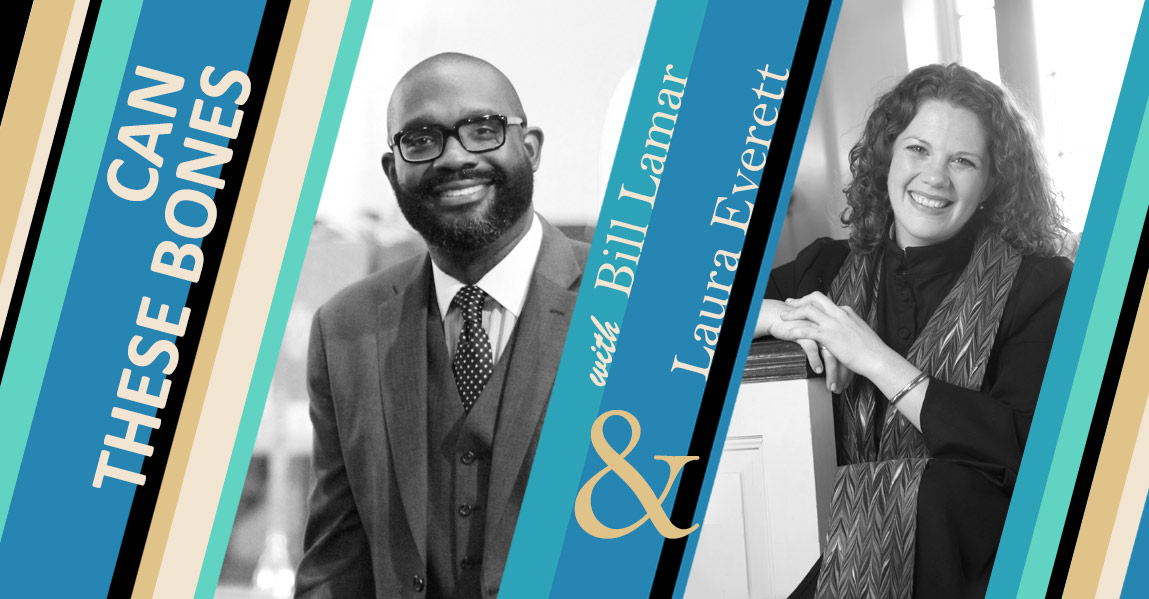
In this episode of “Can These Bones,” co-host Bill Lamar talks with Vernon Jordan, the attorney and civil rights leader, about the ways that the church formed him and influenced his working life.
Vernon Jordan considered becoming a preacher -- but the law was his calling. Yet the church was a great influence on him. He grew up in and was formed by the African Methodist Episcopal Church. And as an adult, he was privileged to count the great Baptist preachers Howard Thurman and Gardner Taylor as close friends. In this conversation with co-host Bill Lamar, Jordan talks about growing up in Atlanta, leading the National Urban League, how his mentors helped him as a young man -- and why his mother didn’t want him to become a preacher.
This episode is part of a series. Learn more about “Can These Bones” or learn how to subscribe.
Listen and subscribe



 ABOUT THIS PODCAST »
Listen to all the episodes and learn more about the hosts.
More from Vernon Jordan
Audio: Interview with Vernon Jordan(link is external) by Robert Penn Warren, recorded in 1964
National Urban League(link is external)
Video: Interview with Vernon Jordan about Whitney Young(link is external), from the PBS documentary “The Powerbroker”
“Jesus and the Disinherited,”(link is external) by Howard Thurman
Faith & Leadership profiles:
“Seizing the moment,” by Richard Newman, on AME Church founder Richard Allen
“Breathtaking: The life and times of the Rev. Gardner C. Taylor,” by Bob Wells
“Writing Benjamin Mays back into the history,” by Randal Jelks
The Birmingham News: “Large part of Martin Luther King Jr.’s legacy built in Birmingham,(link is external)” by Barnett Wright, on John J. and Addine (Deenie) Drew
Other profiles:
Howard Washington Thurman(link is external)
Austin Thomas Walden(link is external)
Donald L. Hollowell(link is external)
Diane Kessler
(link is external)
Deborah Hafner DeWinter(link is external)
Listen and subscribe
Listen to all the episodes and learn more about the hosts.
More from Vernon Jordan
Audio: Interview with Vernon Jordan(link is external) by Robert Penn Warren, recorded in 1964
National Urban League(link is external)
Video: Interview with Vernon Jordan about Whitney Young(link is external), from the PBS documentary “The Powerbroker”
“Jesus and the Disinherited,”(link is external) by Howard Thurman
Faith & Leadership profiles:
“Seizing the moment,” by Richard Newman, on AME Church founder Richard Allen
“Breathtaking: The life and times of the Rev. Gardner C. Taylor,” by Bob Wells
“Writing Benjamin Mays back into the history,” by Randal Jelks
The Birmingham News: “Large part of Martin Luther King Jr.’s legacy built in Birmingham,(link is external)” by Barnett Wright, on John J. and Addine (Deenie) Drew
Other profiles:
Howard Washington Thurman(link is external)
Austin Thomas Walden(link is external)
Donald L. Hollowell(link is external)
Diane Kessler
(link is external)
Deborah Hafner DeWinter(link is external)
Transcript
Bill Lamar: From Faith & Leadership, this is “Can These Bones,” a podcast that asks a fresh set of questions about leadership and the future of the church. I’m Bill Lamar.
Laura Everett: And I’m Laura Everett. This is episode 11 of a series of conversations with leaders from the church and other fields. Through this podcast, we want to share our hope in the resurrection and perhaps breathe life into leaders struggling in their own “valley of dry bones.”

Laura Everett: And I’m Laura Everett. This is episode 11 of a series of conversations with leaders from the church and other fields. Through this podcast, we want to share our hope in the resurrection and perhaps breathe life into leaders struggling in their own “valley of dry bones.”
A familiar name to many, but to others someone entirely new. Bill, tell us about Vernon Jordan.
Bill Lamar: When you’re a young black man born in 1974 in Macon, Georgia, or anywhere during that era, and maybe a generation and a half prior to my own, your life was populated by Ebony and Jet magazines, these very interesting publications that told the stories of black Americans. And I believe that one of the first times I saw Vernon Jordan, it most likely was in an Ebony or a Jet magazine -- probably a picture of him looking tall and distinguished and commanding and handsome as the leader of the Urban League or as an attorney doing great things or the many corporate boardrooms he became the first African-American to sit in. So he’s just an incredible human being and has accomplished much.
He’s a lawyer, earned a law degree from Howard University Law School, a leader in the civil rights movement, an adviser and close friend to President William Jefferson Clinton. Very influential in Washington. His face and the face of his wife can often be seen in the pages of the Washington social scene. So he moves around quite a bit.
He was executive director of the United Negro College Fund, and he succeeded another one of my heroes, Whitney Young, as the president of the National Urban League. Right now, he’s the senior managing director with Lazard, which is an investment banking firm, and he serves on multiple boards, as I mentioned.
His career has not been without controversy. There was an attempt on his life in 1980. He was shot and seriously wounded. And to this day, he still has to manage his health very carefully because of the bullet wound.
I am privileged to serve as his pastor. He’s been kind enough to open his home to me and expose me to some things and meet some people that probably would not have been possible were I not in Washington, D.C., and were I not his pastor. And so I’ve been very appreciative of his mentorship and guidance and friendship.
He also has become a confidante, and you can depend on Mr. Jordan not to tell you what you want to hear but to tell you what he perceives the truth to be.
And I have to share something very special. In our denomination, the founder is Richard Allen -- and we do know we don’t subscribe to the great man theory of history; Richard Allen didn’t found African Methodism by himself. There were women, such as his wives, first wife, Flora, who died, and Sarah; Absalom Jones; and many, many others who made the AME Church happen -- so I want to be clear about that.
But in order to honor our heritage, we had a U.S. postal stamp issued with Richard Allen’s image on it, and we were very, very excited about that. And Mr. Jordan was one of the main persons who was able to use his powers of persuasion and his long-standing relationships in the government to bring that to pass.
And so on his 80th birthday, Henry Louis Gates, “Skip” Gates, the great scholar of African-American literature, gave him a framed portrait of a Richard Allen stamp. And Mr. Jordan gave that framed stamp that Henry Louis Gates gave him for his 80th birthday to me.
Laura Everett: Oh, Bill.
Bill Lamar: And I was tremendously honored. I keep it in a place where no one can touch it or look at it, so that it might be preserved. But I am very thrilled to be his pastor and to have become his friend, and so excited to have the opportunity to talk with him today.
Laura Everett: Bill, this is a man with an unbelievably full life. Let’s listen to your interview.
Bill Lamar: Mr. Jordan, thank you for joining us.
Vernon Jordan: I’m honored to be here.
Bill Lamar: Thank you, sir. One of the joys of getting to know you as pastor is hearing you tell stories and spin fabulous yarns. And I think that people would be really, really delighted to learn of your personal relationship with two great people in the field of theology and ministry, the great Howard Washington Thurman and the great Gardner Calvin Taylor.
Would you share some stories about your interaction with those two men?
Vernon Jordan: Well, I knew them before they knew me. In 1953, I began my freshman year at DePauw University in Greencastle, Indiana, and my parents and my youngest brother accompanied me to begin my freshman year.
We went to the service at Gobin Memorial Methodist Church, which was the opening service for DePauw University. And the speaker was Dr. Howard Thurman. I knew who he was. I knew he was from Daytona Beach. I knew that he was a Morehouse man. I knew that he was the dean of chapel at Boston University, but I had never heard him preach.
And there were only five black people in this crowded Gobin sanctuary: my family, four of us, and Howard Thurman. And I was just carried away by his style, his form, his drama, and then, of course, his preaching. And I never forgot it.
I went afterward to shake his hand, and he welcomed me and asked me what year I was and all of that. And I did not see him again until he gave one of the eulogies for Whitney Young, my predecessor at the National Urban League. The other eulogy was given by Benjamin Mays. Can you imagine that happened?
Bill Lamar: Wow.
Vernon Jordan: Benjamin Mays and Howard Thurman to give your eulogy? That was something that Whitney Young had surely earned. And I knew that Whitney received counsel from Howard Thurman and went to visit Howard Thurman, and it was at that service that I knew that I wanted to call him. But I did not.
And then a few months later, I was named Whitney Young’s successor, which said again to me that I needed to call Howard Thurman. I did not do it for a year.
And finally I called him up at 2020 Stockton St. in San Francisco. He answered the telephone. I said, “Dr. Thurman, my name is Vernon Jordan.” And he said, “What took you so long?”
[Laughter]
Vernon Jordan: And I said, “What do you mean?” He said, “I’ve been waiting for this call.” And I said, “Well, here I am.”
He said, “I’m coming to New York by train, and we should get together. I’m going to be there for a week.” And I said, “Would you come to dinner?” He said, “Only if it’s four people.” I said, “I can work that out.”
And the fourth person, other than my wife, my then-wife Shirley, was Mrs. Whitney Young. And the four of us had dinner. We began about 7, and about 9 o’clock, I took him to St. John the Divine, where he was lodging. I got him home about 9:15 p.m. And he said, “Would you like a cup of coffee?” And I said, “Sure.” So at 9:15 p.m., I went up to his suite, and we started talking. I left at 6 in the morning.
And he said, “I want you to come to San Francisco. I have a couple of rules. Two hours, preferably three, and no telephone calls.” And so I made my first visit. I got to 2020 Stockton St. at 9 o’clock. Mrs. Thurman met me at the door, took me into his study.
Howard Thurman never walked into a room. He never entered a room; he appeared. And he came in and shook my hand, welcomed me, and then he stretched out on his chaise lounge, and we started talking. We stopped at 1 o’clock. And I did that two or three times a year.
And it’s almost inexplicable what it meant to me, as the young successor to Whitney Young. I was not a social worker. I had just run the United Negro College Fund, but I had not run the Urban League before, and I was new to it. And he was my spiritual anchor.
Now, at the same time, when I came to New York to run the United Negro College Fund, I was introduced to Gardner Calvin Taylor, whom I knew just because I kept up with black preachers. I knew who he was, but I had never heard him preach.
And Deenie Drew, who was the ultimate leader in Birmingham, she and her husband, John Drew, took me to Brooklyn on a Saturday night to meet Gardner Taylor and to try to talk him into joining us for dinner. Gardner said he never goes out on a Saturday night. I’ll never forget that. And he entertained us for maybe 30 minutes in his home and then said, “Well, I’m glad to meet you, young man, and we will see more of each other, but it’s -- I have a sermon to get ready for tomorrow morning at my church.”
And we became great telephone buddies. I would talk to him in his study in the wee hours of the night. And if I needed a Scripture reference for a speech that I was making, I would call him up. And when he needed a legal reference for something that he was thinking about saying, he would call me up. And we would meet for lunch, or we would talk on the telephone.
Many a Sunday, I would get up in Washington, take the shuttle to Brooklyn, hear Gardner Taylor preach, and go back to Washington for Sunday dinner. And I was privileged to give one of the eulogies at his homegoing. The only reason I did not go to Howard Thurman’s funeral was that I was still recovering from my not-so-happy incident in Fort Wayne in May of 1980.
So these two Baptist preachers were my spiritual stalwarts. They were my friends. They gave me advice and counsel, and at times, in various aspects of their ministry, sought my counsel, which for me was a great honor. And not only are they the two most important spiritual leaders in my life; they were two of my dearest friends.
Bill Lamar: Well, thank you so much for sharing that. That has meant so much to me, as you have shared details of those relationships and I get a chance to live vicariously through you in those relationships.
I wanted to also ask about something that has intrigued me in our conversations -- your own flirtation with a life in ministry. Would you share some of those stories?
Vernon Jordan: Yes, I grew up in St. Paul African Methodist Episcopal Church in Atlanta. My parents met there. My father was a chauffeur; my mother was a cook for rich white people in Atlanta. And my mother was an usher, and my father sang in the choir. So all of my life, every Sunday morning, I walked to Sunday School with my father, and my mother joined us at St. Paul Church for service, and we always took some sister home for dinner on Sunday afternoon.
And so I sang in the St. Cecilia [Children’s] Choir [at St. Paul]. I went to my Boy Scout troop one day a week and to choir rehearsal on Monday and Friday for the St. Cecilia Choir, underwritten by Dr. Richard A. Billings, a wonderful man who had a great influence on my young life. I also gave the best Easter speech, and I won the biblical contest.
And Sister Fannie Green came home with us for dinner once and said to my mother that Vernon Jr. is going to be a preacher. And my mother said, “Sister Green, Vernon Jr. is not going to be a preacher.” And Sister Fannie Green sort of argued with my mother, and my mother put it to an end by saying to her, “Sister Green, Vernon Jr. is not going to be an AME preacher, because no son of mine is going to spend his career kissing the bishop’s ass.”
[Laughter]
Bill Lamar: I try not to do that, Mr. Jordan.
Vernon Jordan: I’m confident of that. But I kept thinking about it. And then I went to college, and in my sophomore year, the chaplain at DePauw University convinced me that I should go to New York to Union Theological Seminary to a conference on the ministry designed for young men who were pursuing other disciplines but whom the chaplain, the professor, the teacher thought ought to be exposed to the ministry.
And so I came on my first trip to New York by train from Greencastle, Indiana, and spent a week at Union Theological Seminary listening to Paul Tillich and Reinhold Niebuhr and James Robinson, of the Church of the Master. And I was fascinated by it. I was frightened by it, but I was also challenged by the thought of it.
And I went back to school and took courses in philosophy, and some religious courses. And then in my senior year of college, I applied to law school but also applied to seminary. I graduated, went to Chicago, and I was driving the city bus in the summer of 1957.
And in the midsummer, I wrote to the seminaries, and I said, “I have spent the summer trying to determine whether to spend my life at the altar or at the bar. And in the process, I have discovered sin, and I like it. I’m going to law school.”
And that was the right decision for me.
But there is a sadness to that aspect, and that is that my pastors at St. Paul AME Church never took me in; they never sought to encourage me. Somebody would say, “That Jordan boy’s going to be a preacher.” And the preacher would say, “Yeah, that’s right.” But the preacher never did anything about it. And that’s something that the African Methodist Episcopal Church needs to think about.
Bill Lamar: So may I ask? Do you think if the preacher had intervened and helped to form you vocationally, you might’ve taken a different path?
Vernon Jordan: Possibly. Not if my mother had anything to do with it, but possibly. But the disappointing thing was that I was a pretty talented kid. I made good grades in school. I won oratorical contests. I won the state Elk oratorical contest in Georgia. I won citywide essay contests. And my teachers in elementary school and at David T. Howard High School were all very encouraging. I did not get the kind of encouragement that I think I should’ve gotten from the ministers at St. Paul.
Bill Lamar: I want to ask you about the fact that you have given much of your energy to institutions, to the United Negro College Fund, to the Urban League. And in your leadership of those institutions, tell me about what helped to make them stronger as you were a part of their work.
Vernon Jordan: Well, my avocation was always to be a lawyer. Austin Thomas Walden from Fort Valley, Georgia, graduated from the University of Michigan; he would come to St. Paul AME Church once or twice a year to speak at the St. Cecilia Choir vesper hour on the fourth Sunday at 5 o’clock. And I loved hearing him talk. He would talk about segregation, and he would say about segregation, “I’ll be glad when you are dead, you rascal, you.”
And so I grew up wanting to talk like Walden, walk like Walden, dress like Walden and hang out my shingle on Auburn Avenue like Walden. He was my inspiration as a young man. I saw him -- his office was next door to the Butler Street colored YMCA, where I spent an awful lot of time. And J.D. Runston, who was the boys’ work secretary, would get me and take me over to Colonel Walden’s office, and I would fold the letters to go into the envelopes with the endorsement of the Atlanta Negro Voters League.
So I knew that I wanted to be a lawyer. I knew that I wanted to do something about the segregation that I was experiencing -- using in 1951 a textbook that had been used by a white student in 1935. The per-pupil expenditure when I was in public schools in Atlanta for black students was $1; for white students, it was $4. My senior year in high school when I played the E-flat tuba, it was a bent-up, beat-up, hand-me-down E-flat tuba from the white schools.
So it was a passion for me to get myself properly educated and trained to come back home to be a lawyer. I graduated Howard University Law School on a Friday, first Friday in June of 1960.
On Monday morning following, I went to work for Donald L. Hollowell -- a great, great man -- for $35 a week, with a wife and a child, and I was as happy as I could be. And I am so grateful to Donald Hollowell and Austin Thomas Walden for the inspiration and for the example they set for my life.
Bill Lamar: Now, you have had a life of great proximity to power, to presidents, to wealth, corporate boardrooms. Having been formed in the faith and having this strong spiritual core, talk about what it has meant to you to move through those places of great power.
Vernon Jordan: I tried to move through these places never forgetting from whence I came, never forgetting how I got there and who helped me to get there.
Bill Lamar: And it seems like one of the ways you think about it is you are surrounded by a great cloud of witnesses, that you have a debt of gratitude for those who paved the way for you.
Vernon Jordan: I am not sure about much, Dr. Lamar. I am certain about one thing, and that is to the extent that I have had these experiences, I am confident that I did not get there by myself.
There was a lot of pushing and pulling and encouragement and inspiring from the Butler Street YMCA, to Walker Street School, to Edmund Asa Ware Elementary School, to David T. Howard High School.
I would like to write another book. I would like to write a book about those people who made my life what it is by pushing and encouraging and inspiring me to excel and to do well.
Bill Lamar: Two things, Mr. Jordan, as we conclude. As you think about where you have been, what is one of the accomplishments that you have made of which you’re most proud? And what is it that you are working on now that is giving you energy?
Vernon Jordan: Well, at 82, energy is a problem.
[Laughter]
Vernon Jordan: But I’m still an investment banker at Lazard in New York four days a week, and I continue to practice law every Friday in Washington. At 82, I have two jobs in two different cities. And I have -- the thought of retirement frightens me, and so I continue to look forward to going to work.
I look forward to getting to Metropolitan AME Church when I can, and to Rankin Chapel at Howard when I can -- my two favorite places. And if I’m ever in Atlanta, I try to get to St. Paul AME Church, where I grew up.
Bill Lamar: Will you share with us the conveyance that takes you from Washington, D.C., to New York? I love to hear you talk about that transportation that you take, the way that only you can say it.
Vernon Jordan: The choo-choo train, absolutely. And as soon as we finish this wonderful conversation, I’m going to go get on the choo-choo train, and in three hours I will be in the District of Columbia with you, sir.
Bill Lamar: Final question, and I’m so appreciative of your time. The title of this podcast is “Can These Bones,” and I know if anyone knows the story in Ezekiel, you know it well.
You mentioned what happened to you in May of 1980, your being shot, and I know also, those who know your story, that your first wife died while you two were married.
And I wanted to ask you, in the midst of having dealt with such pain and death, what gives you hope, and where have you seen resurrection? Where are you seeing resurrection?
Vernon Jordan: My mother wrote to me every day from the time that I went to college until I finished law school. Some letters were long; some were short. Some were sad; some were glad. Whatever the basic nature of the letter, she always told me two things. One: “Son, if you make a dime, save 2 cents.” Secondly, she ended every letter with this sentence: “Son, if you trust him, he will take care of you.” That’s been my guide.
Bill Lamar: Mr. Jordan, it is an honor to have you on our podcast. Thank you for agreeing, and it’s a joy to serve as your pastor and to share your wisdom and your hospitality. I hope that you travel safely, and I look forward to seeing you when you get back to Metropolitan.
Vernon Jordan: Thank you.
Bill Lamar: Thank you, sir.
Laura Everett: That was my co-host Bill Lamar’s conversation with Vernon Jordan, a civil rights leader and a longtime political figure.
What a remarkable conversation with Mr. Vernon Jordan. Two things I want to start off with: I can live my whole life and still never tell stories of grace and fortitude like Vernon Jordan. That man is an unbelievable storyteller. And secondly, that is quite a congregant to be sitting in the pews as you preach.
Bill Lamar: It is quite daunting, because he has heard preach all of my heroes. So it is quite daunting. But he still says nice things to me, probably so that I will not crawl into a hole and never come out again. He’s been very, very encouraging.
Laura Everett: Let’s talk about two of those preachers, Howard Thurman and Gardner Taylor, and the mentoring that Vernon Jordan experienced from them. I’m curious -- what did you learn from that conversation about how he was mentored and the kind of mentoring you want to do?
Bill Lamar: Some of the conversations that we’ve had [for this podcast] have been with folks who are outside the church, and we’ve gleaned knowledge to help us do our work of ministry and institutional service better.
It seems to me that Vernon Jordan has mastered understanding what can be gleaned from folks who have spent their lives in the church and doing theological work, and applying that to his corporate work, his legal work and his work of community service.
So Howard Thurman -- and for me, and it’s not “Howard Thurman,” but “Howard Washington Thurman,” blessed be he -- just an incredible, incredible man. He was fashioned by the faith of his grandmother, who -- I call her the original womanist theologian, because his grandmother refused to allow him to read the writings of Paul, because of Paul’s writing of slaves and being obedient. And having been enslaved, she wanted no part of any God or any person who served God who was in any way interested in slavery being perpetuated.
So having experienced profound love, but also profound rejection, and coming from that, [Thurman] produces “Jesus and the Disinherited.” People have said that King carried that book around with him, along with Scripture. I mean, he formed Martin King, along with Benjamin Elijah Mays, to have a vision of the world that was broader than the United States, to understand God moving in ways beyond the sectarian and Christian dogma to understand the fellowship and the kindred of all human beings.
So Vernon Jordan, growing up in Atlanta, would’ve been around all of this. I mean, he’s younger, a little younger than King, and much younger than Thurman, but he sought out these wise voices. I really do believe that his spirit connected with Thurman, and he -- I mean, he tells of being in Thurman’s home. And I just get goosebumps; I mean, the nerd juice is flowing at maximum strength. It’s just an amazing thing.
And then to speak of Gardner Taylor, who, to me, was just the poet laureate of the pulpit. I was listening to him early one Sunday morning before preaching myself and almost convinced myself that I should just stay in my apartment, or if I went to church, just press “play.”
[Laughter]
Laura Everett: That’s right.
Bill Lamar: His soaring language. And so [Jordan] was just drawn to these people. And I really think, listening to Mr. Jordan, Laura -- and you have talked about this, we’ve talked about this -- his ability to regale with stories. I think that language, the language that he learned with the Easter speeches, the language of the church, the language he heard from Thurman -- it drew him.
And I really believe that what makes Mr. Jordan so special is that he has spent a life crafting words, deepening relationships with persons who’ve spent a life with words, and he clearly understands, unlike many people living today, what a word well-spoken, well-chosen can do. A word well-spoken, well-chosen can indeed change the world. And I think that’s why he was so enamored with -- and I would say intoxicated by -- Howard Thurman and Gardner Taylor.
Laura Everett: I think part of what I find so beautiful about this interview is the range of people who have shaped Vernon Jordan’s life. You called it a cloud of witnesses. And I’m so grateful for someone who models for me an honoring of both the boldface names and the names who might’ve been lost to history.
Bill Lamar: I think about some of the stories that Mr. Jordan has shared. His mother called him “Man” -- M-a-n, Man. And I’ve thought about that a lot. I think that his mother was speaking prophetically and speaking in a way to protect him, because I think she knew that as a black man born in Atlanta in the ’30s, that there would be constant assaults on his manhood. But she reminded him every time she called him, wrote him and called him “Man” that indeed, that’s what he was, a man. And in the words of the great theologian Muddy Waters, a “full-grown man.”
And he has indeed, throughout his life, exerted himself as a man. And by that I mean someone who lives by conviction, someone who has used his own privilege to open doors and to share, someone who has not forgotten what it means, what it meant, to struggle.
Laura Everett: Let’s talk for a minute about some of those places where doors aren’t opened. One of the most remarkable things about this conversation is Mr. Jordan’s flirtation with ministry -- with formal and ordained ministry, let me say that. More properly, we are all called to ministry by virtue of our baptism. I expect to hear emails from folks correcting me on that. That’s Laura@ -- yeah.
[Laughter]
So Vernon Jordan has this consideration of ministry, and he spoke about someone saying, “That Jordan boy is going to be a preacher,” and the preacher said, “Yes,” but then the preacher never did anything about it. What a poignant story about -- it wasn’t a lack of affirmation, but it was a lack of follow-through. Right? When you heard that, what were you thinking about those pastors who noticed but did not kindle the flame that was there?
Bill Lamar: Laura, I think two things. First of all, when you consider, even to my own childhood, black men in America -- and I just want to speak about men for a second, because of Mr. Jordan and myself -- if you had a strong streak of intellectual independence and that was going to drive who you were going to be vocationally, ministry was one of the few options that you had.
And so to me, I was not at all surprised that someone as independent and vocal as Mr. Jordan had considered ministry, because it was a place where black men -- only, or mostly in that period -- could do intellectual work apart from the white gaze and white policing.
I think that many a bright young man in Mr. Jordan’s era considered ministry, and I think Mr. Jordan especially, because if you think about it, I mean, he was drawn to preachers, and not just any preachers, but the best. I do resonate with the challenge of how do you nurture someone toward ministry who has special gifts.
It’s very fascinating. I think about my own call. My grandmothers, both of them, said to my parents, “That boy’s going to be a preacher.” My parents have shared with me that they discerned that early.
But the gift, for me, is that they did not say that to me, because they knew that I was a pleaser and I probably would’ve gone in that direction just because they mentioned it. They allowed me to discover what God was doing myself.
And I think there are two things. There’s a cautionary tale about pushing people into ministry because they show certain gifts. I think it would’ve been very commendable if those ministers had just spent time with Mr. Jordan when he was young, asking questions about who he was, what he wanted to be.
I think it’s dangerous to push people in a direction of ministry, but I think it’s a travesty -- ministry malpractice -- when you see people that have certain gifts, who are very young, not to engage them in conversation, leave the door open and put down bread crumbs so if the trail of ministry is the trail for them, they’ll have a clearer path.
So I want to hold some things in tension, but I really, really appreciated what Mr. Jordan said.
Laura Everett: That practice of encouragement -- I was so struck by the message that Vernon Jordan’s mother said in every letter: “Son, if you trust him, he will take care of you.” And what a profound blessing to speak into someone’s life who very intentionally put himself in places of conflict, of contention, in the service of justice and the equal dignity of black people at a time when this country was not going to give that willingly and without a very serious fight.
And the example of a vocation -- he spoke about Austin Thomas Walden, and I confess I didn’t know who Austin Thomas Walden was, and I went back and read a little bit more about his career. And that he would come back to St. Paul’s AME Church to speak to the St. Cecilia Choir vesper hour, and how much Vernon Jordan loved hearing him talk.
And that in Austin Thomas Walden, Vernon Jordan had an example of a life he could live, a person he could be, a way he could live out his sense of calling and justice in the world.
I think of the women in ministry who were examples for me. I think of Diane Kessler and Deb DeWinter and Lydia Veliko, who spoke words of encouragement into my life but also showed me what a life devoted to the church could look like.
Bill, I’m wondering in your life, who are the people who kept showing up, who gave you an example of vocation?
Bill Lamar: Those persons, Laura, are myriad. One is the pastor who helped to form me, who is now a bishop in our church and was my pastor at Bethel AME Church in Tallahassee, Florida, Bishop Adam Jefferson Richardson Jr.
He didn’t know me, but Bishop [William] DeVeaux read something that I had written in The Christian Century; right now, a great mentor for me is my presiding elder, my immediate supervisor, Ronald Eugene Braxton, who is a breath of fresh air and someone who will tell you the truth, lovingly. I don’t make many moves without consulting him.
Presiding elder James Melvin Proctor, a man of wisdom and great stature, who encouraged me to get in the work of agitation and organizing.
And not just them, but very faithful laypersons who made sure that I had money for seminary: Miss Mattie Green, God bless her soul.
And for me, the highest place of privilege is reserved for my own biological family: my mother, my father, my grandparents, uncles, cousins, aunts, who surrounded me with love and who showed me what discipleship looked like.
And most of all, I’m sending cards and crisp $100 bills to all of those people, because they were patient with me as a young man who had a question -- every time I inhaled, with every time I exhaled, a question attended it. I drove many people crazy.
Laura Everett: You were that kid in Sunday school, huh?
Bill Lamar: Yes, I was that kid. One of the things that I want to mention -- again, I’m not boasting, but I tell you, there’s nothing like being formed in Southern black churches, because people are well aware of the goodness of God, but also well aware of the hell outside the doors.
And one of the things that they did brilliantly, the ancestors did brilliantly, was prepare us with Easter speeches. Daniel Black, the great author [I spoke with in episode 7], and Vernon Jordan, unprompted, both mentioned Easter speeches. As kids, we were given speeches to memorize on Easter Sunday, to stand in our Sunday best and proclaim that Christ has risen. Some really bad poetry, some really good Scripture -- we were called to memorize a lot of stuff.
And what’s interesting is the child who was the smartest and who had the best elocution and diction was not the one who got the most applause. But the child who stumbled through and worked hard would get a standing ovation, because the church was encouraging that young lady, that young man to continue to do the hard work that would give birth to excellence in their lives, to generational excellence.
And so what is clear about Vernon Jordan, what is clear about so many people, is were it not for the brilliance of the people who made those institutions work in the midst of unspeakable hostility, he would not be where he is.
Laura Everett: It’s so clear that that internal fortitude, that sense of one’s own dignity and blessedness as a beloved child of God, when everything in the world is telling you otherwise, that that is part of the strength that leads Vernon Jordan into a life of, really, devotion to some pretty major institutions.
I think about that vision of black churches forming youth to be in public leadership. And how Vernon Jordan was the only black student in a class of 400 at DePauw, and what it must have been like at that moment. And how the formation he had received as a young person in the church kept speaking a word of dignity and blessing and affirmation into his life. My God, the amount of courage and strength to be the only black student in a class of 400, so far from home.
It says two things to me. One, it says Vernon Jordan has led an unbelievable life, and there’s much to learn here. But it also gives me real hope for what the church can be and how we can form people to claim and live into their dignity and their giftedness as children of God, even when the rest of the world cannot see that gift.
Bill Lamar: What was intriguing and also blessed was that Vernon Jordan is not so much talking about the past as he is moving into his future, as a man over 80. He shows that one does not have to stop, that one does not have to retire “from their passion,” but you can continue to move.
And it seems to me that, in the words of my late grandfather, Mr. Jordan will not “rust out,” but he will “wear out.” He’s going to keep doing what it is that he needs to do. That was so refreshing.
Laura Everett: I think that’s also a word of affirmation and blessing to our listeners. Thanks for this conversation.
Bill Lamar: Thank you for listening to “Can These Bones.” There’s more about Mr. Vernon Jordan, including archival audio interviews from 1964, at www.canthesebones.com(link is external).
Who are we talking to next time?
Laura Everett: I had a great conversation with Matt Croasmun, who teaches a wildly popular course called Life Worth Living at Yale College.
Bill Lamar: “Can These Bones” is brought to you by Faith & Leadership, a learning resource for Christian leaders and their institutions from Leadership Education at Duke Divinity. It’s produced by Sally Hicks, Kelly Ryan and Dave Odom. Our theme music is by Blue Dot Sessions. Funding is provided by Lilly Endowment Inc.
We’d love to hear from you. Please share your thoughts about this podcast on social media. I’m on Twitter @WilliamHLamarIV(link is external), and you can reach Laura on Twitter @RevEverett(link is external). You can also find us through our website, www.canthesebones.com(link is external).
I’m Bill Lamar, and this is “Can These Bones.”
This transcript has been edited for clarity.Read or listen to this podcast »
How do I listen to a podcast? »
IDEAS THAT IMPACT: SOCIAL JUSTICE MINISTRY
Faith and Leadership
MARTIN LUTHER KING JR. 50TH ANNIVERSARY
Read more »
RECONCILIATION, RACIAL & ETHNIC, CONGREGATIONS
Raphael G. Warnock: You don't have to look hard or far to see what needs to be done
"You don't need to look hard or far to see what needs to be done"

Being senior pastor at Ebenezer Baptist Church has given the Rev. Dr. Raphael G. Warnock an extraordinary platform for ministry. But pastors don’t have to be at an Ebenezer Baptist in order to work for justice and the gospel, he said.
“It’s all around you,” Warnock said. “You start locally with whatever’s going on in your community. … It’s about being plugged in to what’s going on in the world and being sensitive to human suffering.”
Ebenezer Baptist is the church where the Rev. Dr. Martin Luther King Jr. served as co-pastor with his father from 1960 until his death in 1968. Warnock became the church’s fifth -- and, at 35, youngest -- senior pastor when he was appointed to the post in 2005.
Whatever church they serve, pastors who are interested in “justice making” can find plenty of issues to address, he said.
“You don’t have to look hard or far to see what needs to be done.”
 Warnock received a B.A. in psychology from Morehouse College and holds an M.Div., an M.Phil. and a Ph.D. in systematic theology from Union Theological Seminary. He is the author of “The Divided Mind of the Black Church: Theology, Piety, and Public Witness.”
Warnock was at Duke Divinity School recently to lead worship services for the annual Martin Luther King Jr. Lecture series(link is external) and spoke with Faith & Leadership. The following is an edited transcript.
Q: What was it like, as a young pastor, to step into a leadership role at a historic pulpit like Ebenezer Baptist Church? It must have been incredibly intimidating.
Serving as senior pastor of Ebenezer Baptist Church, spiritual home of Martin Luther King Jr., is the highest honor of my life. I have long been a student, a disciple, a devotee of Dr. King and the meaning of his ministry, and so to have been asked to come and serve in that pulpit is an honor that I cannot capture in words.
It’s also an incredible opportunity, because it allows me to do on a larger platform the kind of work that I would be doing anyway. For me, justice making and the work of struggle on behalf of the most marginalized members of the human family is central to the meaning of the gospel and the mission of the church. Being at Ebenezer gives me a platform, a larger microphone if you will, and every day of my ministry, I try to leverage that for the sake of others.
Q: What advice do you have for other Christian institutional leaders who want to do that kind of social justice work but who don’t have that kind of platform, who aren’t at an Ebenezer Baptist?
It’s all around you. You start locally with whatever’s going on in your community.
A lot of the work that I’m doing and the things that I’ve found myself involved in, I didn’t go looking for. It came looking for me. It’s about being plugged in to what’s going on in the world and being sensitive to human suffering.
I serve in an urban, inner-city context where there’s both wealth and influence and deep poverty and overwhelming needs all around me. Every year since I’ve been at Ebenezer -- in fact, every year of my ministry (I served in Baltimore before coming to Atlanta) -- I’ve found myself involved in work that speaks to the needs of people who suffer.
When I came to Ebenezer, it was right after Hurricane Katrina, and the church had already been responding by providing care and food and supplies to people in New Orleans. But then many of those people were displaced throughout the country.
Katrina happened in August, and I came in October, and by the spring, they were planning a municipal election in New Orleans that did not include the people who had been so recently displaced.
They were in some 40 states without the opportunity or ability to cast a vote, to raise their voice, to feel that they had a stake in a community that many of them planned to return to.
Ironically -- this was 2006 -- we had gone into Iraq, and our elected officials were boasting about the fact that they’d brought democracy to Iraq, and Iraqi citizens who were living in the state of Michigan could vote by absentee in Baghdad. Meanwhile, American citizens who had been displaced from New Orleans couldn’t vote there.
That, for me, was a deep contradiction that spoke to a larger issue of voting rights in our country. After many of us tried unsuccessfully to get the election postponed, I decided that we would do all we could as a church to amplify this issue, and to take as many Katrina evacuees as we could back to New Orleans so that they could vote.
I didn’t know exactly how we were going to do it. I’d literally been at the church about six months and was finishing up my doctoral dissertation, but I was determined to do this. So I went on the radio and announced that if you were a Katrina evacuee, a citizen of New Orleans, and you wanted to vote, Ebenezer Baptist Church would take you back to New Orleans.
Q: So you announced that before you knew how it was going to happen?Well, it was coming together. We basically planned to do a bus caravan, but we didn’t know how many people would want to do this. We set up a hotline at our church, and we raised the money and rented buses and took people back to New Orleans to vote.
The media got interested, so it gave me an opportunity at that same time to talk about voting rights. And so we took people back to New Orleans. The election was close. It ended up with a runoff, so a month later we had to do it again.
And every year since I’ve been at Ebenezer, something has come up. Last year, I was fighting for Medicaid expansion in our state. I was part of the Moral Monday movement in Georgia, and was arrested in the governor’s office arguing the Medicaid expansion.
Last fall, I was very involved with voting rights in Georgia as we were going into the election.
So every year, I’ve been doing this kind of work. And it’s because I really do believe that justice making is not the only thing the gospel is about, but it is central to the meaning of the gospel. So it’s always been central to my mission and my work as a pastor, and it’s something that I try to
that I try to preach and embody.
Q: And for folks who feel the same way, you say opportunities will arise for them as well.Yes. If you’re just looking around at the day-to-day conversation and politics in your own church, you might miss a whole lot, but if you’re in conversation with people who are doing the work of the church, often without the name of the church -- people who are in peace and justice organizations -- you don’t have to look hard or far to see what needs to be done.
You’ll find some issue you can sink your teeth in -- you can’t do everything -- and you’ll engage it. And some great things have come out of that. We’ve had some really great ecumenical and multiracial coalitions in Georgia around gun reform that brought together everyone from the Baptists to the Episcopalians to Jewish sisters and brothers and Muslim sisters and brothers and Sikhs, all saying that we needed reasonable gun reform.
Q: This morning, a noose was found on the Duke campus(link is external), just the most recent in a series of racial incidents on university campuses across the country. What’s your advice for how to deal with these events?
Yes, it was disturbing, because these are kids who were born in the ’90s, and that’s just amazing, because I was in grad school in the ’90s. It doesn’t feel like long ago. It’s yesterday.
But all of this is happening in a larger context, here in North Carolina and across the country. The killings of Muslim students just a few months ago (in Chapel Hill), allegedly over a parking incident -- if nothing else, it shows a kind of cold dissociation from the humanity of someone who is other. So we just have to be vigilant.
We have to continue to condemn xenophobia wherever it rears its ugly head, and we have to be undivided in our commitment to justice. Black people who are concerned about racism cannot be silent on Islamophobia and homophobia. And white people who are proud of the heritage of America, of what it represents in the charter documents -- justice, and liberty and justice for all -- have to insist, as Dr. King put it, that America be true to what it wrote down on paper, that it live out the true meaning of its creed.
You’re going to hear from the African-American community and people of color in response to something like that, because the history is so deep and painful. But what is needed is white sisters and brothers who are willing to stand up and condemn it with the same kind of passion that says that this can’t stand.
White people have to stand up for black people. Those of us who have some level of privilege have to stand up for poor people. Christians need to stand up for Muslims, not just in terms of our rhetoric, but in terms of the kind of structural inequality that happens in a country where there’s a budget being pushed right now that is cruel and mean to the poor at a national level. And on the campus, we have to insist that tokenism is its own form of racism.
This is an ongoing work. It’s a process, and there’s no easy solution, but I think that kind of commitment begins to move us toward what Dr. King called the beloved community.
Read more from Raphael Warnock »
Faith and Leadership
RECONCILIATION, RACIAL & ETHNIC, COMMUNITY, HEALTH & WELL-BEING
Starsky Wilson: Find your Ferguson
"Find your Ferguson"

Part of the difficult witness for the privileged within the church is to renounce a bit of that privilege and work on behalf of the marginalized, says the co-chair of the Ferguson Commission.
Three months after the shooting of Michael Brown by police in Ferguson, Missouri, sparked widespread protests, the governor of Missouri created the Ferguson Commission.
The Rev. Starsky Wilson was chosen to be a co-chair of the group, which was charged with undertaking “a thorough, wide-ranging and unflinching study of the social and economic conditions that impede progress, equality and safety in the St. Louis region” and recommending steps to make the region a “stronger, fairer place to live.”
 The process, which Wilson led with civic leader Rich McClure, resulted in a series of public hearings, a deep investigation into inequality and racial justice, and some 200 “calls to action” to address the issues that led to the events in Ferguson. After issuing its report, called “Forward Through Ferguson(link is external),” the commission completed its work at the end of 2015 and created a nonprofit to advocate for its recommendations.
Although the Ferguson Commission’s work was focused on the St. Louis region, faith leaders across the country can engage in justice and advocacy work, Wilson said.
“I encourage people in their respective communities to find their Ferguson,” he said.
Wilson, who is the pastor of Saint John’s Church (The Beloved Community) in St. Louis as well as the president and CEO of Deaconess Foundation, a faith-based grant-making organization, spoke recently with Faith & Leadership while at Duke working on his doctor of ministry degree. The following is an edited transcript.
Q: What can the wider Christian community do in response to Ferguson?
I encourage clergy, no matter where they are, to find ways to integrate themes of race into their local conversations and their contexts.
I also think that we would do well to mine the biblical text for resources that speak to cultural distinctions and how communities have connected with these issues in the past -- or how they’ve split communities in the past.
So I think those are basic tasks that are connected to our work.
See Wilson's resources for social justice »
For those who understand their vocation or their church’s vocation to be connected in a wider public space, they should be connected to some faith-based organizing network or advocacy network to inform their work.
The final thing I say -- and I say this everywhere I go -- is I encourage people in their respective communities to find their Ferguson. You can look at any metropolitan area and you’ll find all of the elements that become the powder keg, quite frankly, for the Ferguson uprising.
So the question is, how will you engage in those spaces and places in order to build up the community’s capacity to respond before you have these incidents?
Q: Do you think that white pastors have a particular role?
I think in many ways it depends on where someone chooses to play, right? There are so many roles within the wider movement.
Quite frankly, this is a youth-led movement. So if this is the space where we find ourselves, really getting into this youth-led uprising, clergy’s role is to follow. The church’s role is to create space and to legitimize some of the work.
I think there’s a responsibility of relationship across the lines that, if nowhere else, the church should be able to model.
We see it even in the street-organized activism, because these are very multicultural spaces. They just happen. This is unique in American life -- they’re multicultural, but they’re black-led.
And that’s the tough part, right? So how can we prepare our hearts and our minds to be in multicultural spaces that are black-led?
I live this. My church is a multicultural church; I’m an African-American pastor. These are some of the most difficult things to pull off.
It’s difficult for white people to recognize and honor black leadership. It illustrates the strength and the power of the idea -- what Bryan Stevenson(link is external) calls the greatest legacy of trans-Atlantic slave trade, which is the pervasive persistence of the idea of white supremacy in America.
Not just white privilege, but literally the idea of white supremacy, in a racialized hierarchy. That’s the difficult residue that we continue to deal with. It also points us to the origins of the church in a unique way.
I’m really helped by the work of Allan Boesak(link is external) and Curtiss DeYoung. They wrote the book “Radical Reconciliation.” They center the community of the first-century Jesus movement as a community where you saw people of privilege in Roman society renounce their privilege in order to take up leadership from marginalized Jewish apostles.
So if we consider that, then part of the difficult witness for those who have privilege within the life of the church is to actually renounce a bit of that privilege.
The place of the church is always on the side of people with the least power.
It’s to strategically deploy their privilege on behalf of marginalized communities, but also to systemically defer to those who have been marginalized by society. And that has the makings of an authentic church community.
And so that’s difficult work, quite frankly, and it requires us to be thoughtful about white privilege and white supremacy, and it requires us to be thoughtful about middle-class privilege as well. There are many middle-class black people that need to be thoughtful about this.
So, to your question about white Christian leadership, I think there’s a responsibility for relationship with African-American communities in particular, but always marginalized communities, and sometimes relationships of mentorship, whereby [white Christians] are in the second seat, not the first seat.
And there’s this obligation to follow into the work, to listen and to follow into the work, rather than attempt to lead out.
Q: Your leadership is on multiple levels. You were named by the governor to head this commission, and yet you’re out at night bailing people out of jail. Is there a tension there?There’s definitely tension, and there’s unique responsibility for sustaining relationships, authentic relationships. But I’ve also got to be really clear about who I’m there for and who sent me there, right?
And I’m very clear that the place of the church is always on the side of people with the least power. And so my responsibility is always to the people who are deeply affected by policy, even if I’m in a policy conversation.
It’s quite frankly one of the reasons why, even before the commission work, I served at Saint John’s. My church is on the north side of St. Louis, an economically depressed, predominantly African-American area, and when I went to the Deaconess Foundation, I was concerned that I would lose credibility. So the church was a way of making sure that I was still connected to issues related to marginalized poor children.
But if we really want to impact policy for the sake of people and make structural change, we’ve also got to illustrate some efficacy in a wider “grass-tops” context, right? We’ve got to be able to navigate how these systems work.
I joke with people that one of the things I learned in church that is helpful to me in grass-tops mobilization is Robert’s Rules of Order. Yes, I’ve been trained in community organizing, but we’ve got to know how to run a meeting.
Take the example of the consent decree in Ferguson. The Ferguson City Council essentially gutted a consent decree(link is external) with the Department of Justice with a parliamentary procedure. And then said, “We passed it.” Well, if you don’t understand Robert’s Rules of Order, you might actually fall for that argument, you know?
We need to know Tillich and we need to know Barth, but if we’re going to engage in a wider public space, we’ve got to know Robert.
Q: So what’s next for you as a leader, and how do you see the work of the commission going into the future?
I’m one of three incorporators for a nonprofit called Forward Through Ferguson(link is external). It is staffed by three members of the Ferguson Commission’s staff, and its organizing board includes former commissioners of the Ferguson Commission. And their charge is to sustain the evaluation, monitoring, measurement and communication around the report’s findings.
I’ve committed to community organizing, and keeping and sustaining an "organizing table” that has prioritized the commission’s findings for the sake of their own work.
So that’s our grass-roots work -- sustaining those things that are prioritized by this organizing collaborative. Our grass-tops work is to establish a 25-year managed fund for racial-equity infrastructure throughout the region.
And then, of course, working and responding to legislatures who are trying to move different pieces. We’re really glad that this last year in December there were 13 pieces of legislation filed that are aligned with the Ferguson Commission’s recommendations and calls to action. And so trying to keep pushing those through our state legislature is part of our work as well.
Q: This is a term I don't know: "organizing table."
It means a community of people who are coming together to work together and hold one another accountable and to network.
Q: Like a coalition?
Yes.
Q: So how are you feeling about everything now? Do you feel hopeful?
I do feel hopeful. I feel good about the movement that’s happening. I feel good about the increased capacity at the grass-roots level. I think that will help to sustain some of the activity and the work.
I feel like I’ve not been the best steward of this experience. My leadership mentors and others are telling me you’re not a good steward at this moment unless you’re reflecting and writing to leave a path for someone who comes after. So that’s my leadership responsibility now.
And that will allow me not just to feel hopeful about the work that’s happening now; it will make me feel like I’ve been faithful to the moment by sharing, documenting, reflecting on my own experience in a way that is helpful, supportive, fruitful for someone else.
The Robert Wood Johnson Foundation gave us a $100,000 grant to create a community “playbook” -- to say, “We know this is going to happen again, [and we] want to create a document that can be out there for the next community that deals with this.”
Because unfortunately, although we’ve seen this proliferation of violence in communities, in the last two years we’re the only community that’s established any kind of [community] commission to [address it].
We’ve been on phone calls with people from Chicago to Baltimore to North Charleston to Charlotte. But folks don’t do it, and I don’t know why, because the response [in Ferguson] has been so positive.
Q: It’s pretty amazing what you’ve been doing: four kids, pursuing a D.Min. degree, the Ferguson Commission, pastoring a church, working as a foundation CEO. And your wife also is a busy professional. In a profession where people talk about burnout and depletion, one might wonder how you manage so much. How do you do it all?Burnout is real, absolutely. And the great grace that I have is, the work that I’ve done with the commission is really an outgrowth of the work that we’ve been doing at the foundation, and the work that we’ve been doing around community organization and advocacy is really an outgrowth of our ministry at the church.
In so many ways, the church and the foundation have sent me forth into this work, and there’s a remarkable alignment there.
The greatest sacrifice, quite frankly, has always been with the family. I found myself at 3, 4 in the morning out on the streets, on police lines and the like.
And so that was the more difficult piece. Now it’s the increased travel that comes from trying to leverage philanthropic engagement in this kind of work across the country, which is where I find to be my primary work at this point.
And all of that can only be explained by a super wife who is totally committed to the work as well, and supporting me in it, and quite frankly my kids, who I think I’m doing the work for. I mean, when all of this began, I had three sons, so there are ways in which I understood their lives to be caught up in this work, so that’s part of the sacrifice.
Q: And now you have three sons and a daughter?She’s officially our movement baby. And lighting up the whole house and the world, and giving us all joy.
Q: Well, and another difficult thing to manage -- a new baby.The great gift of this process is that God saw fit that about a year and a half ago, my mother-in-law moved to St. Louis from Louisiana. She doesn’t live with us, but she’s with us daily, supporting and helping with the kids, and so that’s a great gift to us.
Q: Still, you say burnout is real. How have you managed that over this very intense time?
I’ve been able to take advantage of extending travel by a half a day. I mean, literally, one of my basic tactics is I like to go a half a day early to go in, to settle, using flights to read. I never, ever, ever get the Wi-Fi on the plane; it’s actual quiet time.
And I’ve done a little better with self-care as I’ve seen some strains show up. So those kinds of things have been helpful to me along the way.
I’ve also cut out any local social activity that’s not required and not connected to my family.
Q: Does that mean you don’t have friends?
My friends tend not to be local. So I have these boundaries that I set. When I’m in St. Louis, I’m working, I’m doing community work, I’m a pastor, or I’m home.
And when I’m with my friends, who are largely in other places, I’m just with them. So I’m really present in the spaces that I’m in, and I make clear decisions about what spaces are valuable for my soul and for my vocation.
The other thing is that worship has to be worship. Worship can’t be work for me. I’ve got to be focused and present in that responsibility and in that celebration of God’s presence when I’m there, to fully experience it.
Last thing, my most basic boundary is I don’t talk on the phone in my house. No matter the case. If I’ve got a business call I’ve got to finish, or whatever -- I’m giving counseling over the phone -- I will stand on my porch and finish a phone call. But I will not take a phone call in the door, over the threshold of my house. When I’m in the house, I belong to my family.
Organizations:
Read more from Starsky Wilson »
FROM THE ALBAN LIBRARY
 Claiming the Beatitudes: Nine Stories from a New Generationby Anne Sutherland HowardClaiming the Beatitudes is a wonderful weaving of voices from the emerging generation with insights from a seasoned progressive viewpoint. Thus, Anne Howard brings together two vital streams -- Progressive and Emergent -- of contemporary Christianity in an inviting narrative that many people should find both helpful and inspiring. It would be perfect as a ... study book in a church or great for a shared reading experience for a college fellowship. If you have ever wondered if it is possible to live the radical teachings of Jesus in this world, wonder no longer. The answer is "yes." Regular people can DO the Beatitudes in their everyday lives. (from a review by Diana Butler Bass on Amazon.com)
Learn more and order the book »


Bill Lamar: When you’re a young black man born in 1974 in Macon, Georgia, or anywhere during that era, and maybe a generation and a half prior to my own, your life was populated by Ebony and Jet magazines, these very interesting publications that told the stories of black Americans. And I believe that one of the first times I saw Vernon Jordan, it most likely was in an Ebony or a Jet magazine -- probably a picture of him looking tall and distinguished and commanding and handsome as the leader of the Urban League or as an attorney doing great things or the many corporate boardrooms he became the first African-American to sit in. So he’s just an incredible human being and has accomplished much.
He’s a lawyer, earned a law degree from Howard University Law School, a leader in the civil rights movement, an adviser and close friend to President William Jefferson Clinton. Very influential in Washington. His face and the face of his wife can often be seen in the pages of the Washington social scene. So he moves around quite a bit.
He was executive director of the United Negro College Fund, and he succeeded another one of my heroes, Whitney Young, as the president of the National Urban League. Right now, he’s the senior managing director with Lazard, which is an investment banking firm, and he serves on multiple boards, as I mentioned.
His career has not been without controversy. There was an attempt on his life in 1980. He was shot and seriously wounded. And to this day, he still has to manage his health very carefully because of the bullet wound.
I am privileged to serve as his pastor. He’s been kind enough to open his home to me and expose me to some things and meet some people that probably would not have been possible were I not in Washington, D.C., and were I not his pastor. And so I’ve been very appreciative of his mentorship and guidance and friendship.
He also has become a confidante, and you can depend on Mr. Jordan not to tell you what you want to hear but to tell you what he perceives the truth to be.
And I have to share something very special. In our denomination, the founder is Richard Allen -- and we do know we don’t subscribe to the great man theory of history; Richard Allen didn’t found African Methodism by himself. There were women, such as his wives, first wife, Flora, who died, and Sarah; Absalom Jones; and many, many others who made the AME Church happen -- so I want to be clear about that.
But in order to honor our heritage, we had a U.S. postal stamp issued with Richard Allen’s image on it, and we were very, very excited about that. And Mr. Jordan was one of the main persons who was able to use his powers of persuasion and his long-standing relationships in the government to bring that to pass.
And so on his 80th birthday, Henry Louis Gates, “Skip” Gates, the great scholar of African-American literature, gave him a framed portrait of a Richard Allen stamp. And Mr. Jordan gave that framed stamp that Henry Louis Gates gave him for his 80th birthday to me.
Laura Everett: Oh, Bill.
Bill Lamar: And I was tremendously honored. I keep it in a place where no one can touch it or look at it, so that it might be preserved. But I am very thrilled to be his pastor and to have become his friend, and so excited to have the opportunity to talk with him today.
Laura Everett: Bill, this is a man with an unbelievably full life. Let’s listen to your interview.
Bill Lamar: Mr. Jordan, thank you for joining us.
Vernon Jordan: I’m honored to be here.
Bill Lamar: Thank you, sir. One of the joys of getting to know you as pastor is hearing you tell stories and spin fabulous yarns. And I think that people would be really, really delighted to learn of your personal relationship with two great people in the field of theology and ministry, the great Howard Washington Thurman and the great Gardner Calvin Taylor.
Would you share some stories about your interaction with those two men?
Vernon Jordan: Well, I knew them before they knew me. In 1953, I began my freshman year at DePauw University in Greencastle, Indiana, and my parents and my youngest brother accompanied me to begin my freshman year.
We went to the service at Gobin Memorial Methodist Church, which was the opening service for DePauw University. And the speaker was Dr. Howard Thurman. I knew who he was. I knew he was from Daytona Beach. I knew that he was a Morehouse man. I knew that he was the dean of chapel at Boston University, but I had never heard him preach.
And there were only five black people in this crowded Gobin sanctuary: my family, four of us, and Howard Thurman. And I was just carried away by his style, his form, his drama, and then, of course, his preaching. And I never forgot it.
I went afterward to shake his hand, and he welcomed me and asked me what year I was and all of that. And I did not see him again until he gave one of the eulogies for Whitney Young, my predecessor at the National Urban League. The other eulogy was given by Benjamin Mays. Can you imagine that happened?
Bill Lamar: Wow.
Vernon Jordan: Benjamin Mays and Howard Thurman to give your eulogy? That was something that Whitney Young had surely earned. And I knew that Whitney received counsel from Howard Thurman and went to visit Howard Thurman, and it was at that service that I knew that I wanted to call him. But I did not.
And then a few months later, I was named Whitney Young’s successor, which said again to me that I needed to call Howard Thurman. I did not do it for a year.
And finally I called him up at 2020 Stockton St. in San Francisco. He answered the telephone. I said, “Dr. Thurman, my name is Vernon Jordan.” And he said, “What took you so long?”
[Laughter]
Vernon Jordan: And I said, “What do you mean?” He said, “I’ve been waiting for this call.” And I said, “Well, here I am.”
He said, “I’m coming to New York by train, and we should get together. I’m going to be there for a week.” And I said, “Would you come to dinner?” He said, “Only if it’s four people.” I said, “I can work that out.”
And the fourth person, other than my wife, my then-wife Shirley, was Mrs. Whitney Young. And the four of us had dinner. We began about 7, and about 9 o’clock, I took him to St. John the Divine, where he was lodging. I got him home about 9:15 p.m. And he said, “Would you like a cup of coffee?” And I said, “Sure.” So at 9:15 p.m., I went up to his suite, and we started talking. I left at 6 in the morning.
And he said, “I want you to come to San Francisco. I have a couple of rules. Two hours, preferably three, and no telephone calls.” And so I made my first visit. I got to 2020 Stockton St. at 9 o’clock. Mrs. Thurman met me at the door, took me into his study.
Howard Thurman never walked into a room. He never entered a room; he appeared. And he came in and shook my hand, welcomed me, and then he stretched out on his chaise lounge, and we started talking. We stopped at 1 o’clock. And I did that two or three times a year.
And it’s almost inexplicable what it meant to me, as the young successor to Whitney Young. I was not a social worker. I had just run the United Negro College Fund, but I had not run the Urban League before, and I was new to it. And he was my spiritual anchor.
Now, at the same time, when I came to New York to run the United Negro College Fund, I was introduced to Gardner Calvin Taylor, whom I knew just because I kept up with black preachers. I knew who he was, but I had never heard him preach.
And Deenie Drew, who was the ultimate leader in Birmingham, she and her husband, John Drew, took me to Brooklyn on a Saturday night to meet Gardner Taylor and to try to talk him into joining us for dinner. Gardner said he never goes out on a Saturday night. I’ll never forget that. And he entertained us for maybe 30 minutes in his home and then said, “Well, I’m glad to meet you, young man, and we will see more of each other, but it’s -- I have a sermon to get ready for tomorrow morning at my church.”
And we became great telephone buddies. I would talk to him in his study in the wee hours of the night. And if I needed a Scripture reference for a speech that I was making, I would call him up. And when he needed a legal reference for something that he was thinking about saying, he would call me up. And we would meet for lunch, or we would talk on the telephone.
Many a Sunday, I would get up in Washington, take the shuttle to Brooklyn, hear Gardner Taylor preach, and go back to Washington for Sunday dinner. And I was privileged to give one of the eulogies at his homegoing. The only reason I did not go to Howard Thurman’s funeral was that I was still recovering from my not-so-happy incident in Fort Wayne in May of 1980.
So these two Baptist preachers were my spiritual stalwarts. They were my friends. They gave me advice and counsel, and at times, in various aspects of their ministry, sought my counsel, which for me was a great honor. And not only are they the two most important spiritual leaders in my life; they were two of my dearest friends.
Bill Lamar: Well, thank you so much for sharing that. That has meant so much to me, as you have shared details of those relationships and I get a chance to live vicariously through you in those relationships.
I wanted to also ask about something that has intrigued me in our conversations -- your own flirtation with a life in ministry. Would you share some of those stories?
Vernon Jordan: Yes, I grew up in St. Paul African Methodist Episcopal Church in Atlanta. My parents met there. My father was a chauffeur; my mother was a cook for rich white people in Atlanta. And my mother was an usher, and my father sang in the choir. So all of my life, every Sunday morning, I walked to Sunday School with my father, and my mother joined us at St. Paul Church for service, and we always took some sister home for dinner on Sunday afternoon.
And so I sang in the St. Cecilia [Children’s] Choir [at St. Paul]. I went to my Boy Scout troop one day a week and to choir rehearsal on Monday and Friday for the St. Cecilia Choir, underwritten by Dr. Richard A. Billings, a wonderful man who had a great influence on my young life. I also gave the best Easter speech, and I won the biblical contest.
And Sister Fannie Green came home with us for dinner once and said to my mother that Vernon Jr. is going to be a preacher. And my mother said, “Sister Green, Vernon Jr. is not going to be a preacher.” And Sister Fannie Green sort of argued with my mother, and my mother put it to an end by saying to her, “Sister Green, Vernon Jr. is not going to be an AME preacher, because no son of mine is going to spend his career kissing the bishop’s ass.”
[Laughter]
Bill Lamar: I try not to do that, Mr. Jordan.
Vernon Jordan: I’m confident of that. But I kept thinking about it. And then I went to college, and in my sophomore year, the chaplain at DePauw University convinced me that I should go to New York to Union Theological Seminary to a conference on the ministry designed for young men who were pursuing other disciplines but whom the chaplain, the professor, the teacher thought ought to be exposed to the ministry.
And so I came on my first trip to New York by train from Greencastle, Indiana, and spent a week at Union Theological Seminary listening to Paul Tillich and Reinhold Niebuhr and James Robinson, of the Church of the Master. And I was fascinated by it. I was frightened by it, but I was also challenged by the thought of it.
And I went back to school and took courses in philosophy, and some religious courses. And then in my senior year of college, I applied to law school but also applied to seminary. I graduated, went to Chicago, and I was driving the city bus in the summer of 1957.
And in the midsummer, I wrote to the seminaries, and I said, “I have spent the summer trying to determine whether to spend my life at the altar or at the bar. And in the process, I have discovered sin, and I like it. I’m going to law school.”
And that was the right decision for me.
But there is a sadness to that aspect, and that is that my pastors at St. Paul AME Church never took me in; they never sought to encourage me. Somebody would say, “That Jordan boy’s going to be a preacher.” And the preacher would say, “Yeah, that’s right.” But the preacher never did anything about it. And that’s something that the African Methodist Episcopal Church needs to think about.
Bill Lamar: So may I ask? Do you think if the preacher had intervened and helped to form you vocationally, you might’ve taken a different path?
Vernon Jordan: Possibly. Not if my mother had anything to do with it, but possibly. But the disappointing thing was that I was a pretty talented kid. I made good grades in school. I won oratorical contests. I won the state Elk oratorical contest in Georgia. I won citywide essay contests. And my teachers in elementary school and at David T. Howard High School were all very encouraging. I did not get the kind of encouragement that I think I should’ve gotten from the ministers at St. Paul.
Bill Lamar: I want to ask you about the fact that you have given much of your energy to institutions, to the United Negro College Fund, to the Urban League. And in your leadership of those institutions, tell me about what helped to make them stronger as you were a part of their work.
Vernon Jordan: Well, my avocation was always to be a lawyer. Austin Thomas Walden from Fort Valley, Georgia, graduated from the University of Michigan; he would come to St. Paul AME Church once or twice a year to speak at the St. Cecilia Choir vesper hour on the fourth Sunday at 5 o’clock. And I loved hearing him talk. He would talk about segregation, and he would say about segregation, “I’ll be glad when you are dead, you rascal, you.”
And so I grew up wanting to talk like Walden, walk like Walden, dress like Walden and hang out my shingle on Auburn Avenue like Walden. He was my inspiration as a young man. I saw him -- his office was next door to the Butler Street colored YMCA, where I spent an awful lot of time. And J.D. Runston, who was the boys’ work secretary, would get me and take me over to Colonel Walden’s office, and I would fold the letters to go into the envelopes with the endorsement of the Atlanta Negro Voters League.
So I knew that I wanted to be a lawyer. I knew that I wanted to do something about the segregation that I was experiencing -- using in 1951 a textbook that had been used by a white student in 1935. The per-pupil expenditure when I was in public schools in Atlanta for black students was $1; for white students, it was $4. My senior year in high school when I played the E-flat tuba, it was a bent-up, beat-up, hand-me-down E-flat tuba from the white schools.
So it was a passion for me to get myself properly educated and trained to come back home to be a lawyer. I graduated Howard University Law School on a Friday, first Friday in June of 1960.
On Monday morning following, I went to work for Donald L. Hollowell -- a great, great man -- for $35 a week, with a wife and a child, and I was as happy as I could be. And I am so grateful to Donald Hollowell and Austin Thomas Walden for the inspiration and for the example they set for my life.
Bill Lamar: Now, you have had a life of great proximity to power, to presidents, to wealth, corporate boardrooms. Having been formed in the faith and having this strong spiritual core, talk about what it has meant to you to move through those places of great power.
Vernon Jordan: I tried to move through these places never forgetting from whence I came, never forgetting how I got there and who helped me to get there.
Bill Lamar: And it seems like one of the ways you think about it is you are surrounded by a great cloud of witnesses, that you have a debt of gratitude for those who paved the way for you.
Vernon Jordan: I am not sure about much, Dr. Lamar. I am certain about one thing, and that is to the extent that I have had these experiences, I am confident that I did not get there by myself.
There was a lot of pushing and pulling and encouragement and inspiring from the Butler Street YMCA, to Walker Street School, to Edmund Asa Ware Elementary School, to David T. Howard High School.
I would like to write another book. I would like to write a book about those people who made my life what it is by pushing and encouraging and inspiring me to excel and to do well.
Bill Lamar: Two things, Mr. Jordan, as we conclude. As you think about where you have been, what is one of the accomplishments that you have made of which you’re most proud? And what is it that you are working on now that is giving you energy?
Vernon Jordan: Well, at 82, energy is a problem.
[Laughter]
Vernon Jordan: But I’m still an investment banker at Lazard in New York four days a week, and I continue to practice law every Friday in Washington. At 82, I have two jobs in two different cities. And I have -- the thought of retirement frightens me, and so I continue to look forward to going to work.
I look forward to getting to Metropolitan AME Church when I can, and to Rankin Chapel at Howard when I can -- my two favorite places. And if I’m ever in Atlanta, I try to get to St. Paul AME Church, where I grew up.
Bill Lamar: Will you share with us the conveyance that takes you from Washington, D.C., to New York? I love to hear you talk about that transportation that you take, the way that only you can say it.
Vernon Jordan: The choo-choo train, absolutely. And as soon as we finish this wonderful conversation, I’m going to go get on the choo-choo train, and in three hours I will be in the District of Columbia with you, sir.
Bill Lamar: Final question, and I’m so appreciative of your time. The title of this podcast is “Can These Bones,” and I know if anyone knows the story in Ezekiel, you know it well.
You mentioned what happened to you in May of 1980, your being shot, and I know also, those who know your story, that your first wife died while you two were married.
And I wanted to ask you, in the midst of having dealt with such pain and death, what gives you hope, and where have you seen resurrection? Where are you seeing resurrection?
Vernon Jordan: My mother wrote to me every day from the time that I went to college until I finished law school. Some letters were long; some were short. Some were sad; some were glad. Whatever the basic nature of the letter, she always told me two things. One: “Son, if you make a dime, save 2 cents.” Secondly, she ended every letter with this sentence: “Son, if you trust him, he will take care of you.” That’s been my guide.
Bill Lamar: Mr. Jordan, it is an honor to have you on our podcast. Thank you for agreeing, and it’s a joy to serve as your pastor and to share your wisdom and your hospitality. I hope that you travel safely, and I look forward to seeing you when you get back to Metropolitan.
Vernon Jordan: Thank you.
Bill Lamar: Thank you, sir.
Laura Everett: That was my co-host Bill Lamar’s conversation with Vernon Jordan, a civil rights leader and a longtime political figure.
What a remarkable conversation with Mr. Vernon Jordan. Two things I want to start off with: I can live my whole life and still never tell stories of grace and fortitude like Vernon Jordan. That man is an unbelievable storyteller. And secondly, that is quite a congregant to be sitting in the pews as you preach.
Bill Lamar: It is quite daunting, because he has heard preach all of my heroes. So it is quite daunting. But he still says nice things to me, probably so that I will not crawl into a hole and never come out again. He’s been very, very encouraging.
Laura Everett: Let’s talk about two of those preachers, Howard Thurman and Gardner Taylor, and the mentoring that Vernon Jordan experienced from them. I’m curious -- what did you learn from that conversation about how he was mentored and the kind of mentoring you want to do?
Bill Lamar: Some of the conversations that we’ve had [for this podcast] have been with folks who are outside the church, and we’ve gleaned knowledge to help us do our work of ministry and institutional service better.
It seems to me that Vernon Jordan has mastered understanding what can be gleaned from folks who have spent their lives in the church and doing theological work, and applying that to his corporate work, his legal work and his work of community service.
So Howard Thurman -- and for me, and it’s not “Howard Thurman,” but “Howard Washington Thurman,” blessed be he -- just an incredible, incredible man. He was fashioned by the faith of his grandmother, who -- I call her the original womanist theologian, because his grandmother refused to allow him to read the writings of Paul, because of Paul’s writing of slaves and being obedient. And having been enslaved, she wanted no part of any God or any person who served God who was in any way interested in slavery being perpetuated.
So having experienced profound love, but also profound rejection, and coming from that, [Thurman] produces “Jesus and the Disinherited.” People have said that King carried that book around with him, along with Scripture. I mean, he formed Martin King, along with Benjamin Elijah Mays, to have a vision of the world that was broader than the United States, to understand God moving in ways beyond the sectarian and Christian dogma to understand the fellowship and the kindred of all human beings.
So Vernon Jordan, growing up in Atlanta, would’ve been around all of this. I mean, he’s younger, a little younger than King, and much younger than Thurman, but he sought out these wise voices. I really do believe that his spirit connected with Thurman, and he -- I mean, he tells of being in Thurman’s home. And I just get goosebumps; I mean, the nerd juice is flowing at maximum strength. It’s just an amazing thing.
And then to speak of Gardner Taylor, who, to me, was just the poet laureate of the pulpit. I was listening to him early one Sunday morning before preaching myself and almost convinced myself that I should just stay in my apartment, or if I went to church, just press “play.”
[Laughter]
Laura Everett: That’s right.
Bill Lamar: His soaring language. And so [Jordan] was just drawn to these people. And I really think, listening to Mr. Jordan, Laura -- and you have talked about this, we’ve talked about this -- his ability to regale with stories. I think that language, the language that he learned with the Easter speeches, the language of the church, the language he heard from Thurman -- it drew him.
And I really believe that what makes Mr. Jordan so special is that he has spent a life crafting words, deepening relationships with persons who’ve spent a life with words, and he clearly understands, unlike many people living today, what a word well-spoken, well-chosen can do. A word well-spoken, well-chosen can indeed change the world. And I think that’s why he was so enamored with -- and I would say intoxicated by -- Howard Thurman and Gardner Taylor.
Laura Everett: I think part of what I find so beautiful about this interview is the range of people who have shaped Vernon Jordan’s life. You called it a cloud of witnesses. And I’m so grateful for someone who models for me an honoring of both the boldface names and the names who might’ve been lost to history.
Bill Lamar: I think about some of the stories that Mr. Jordan has shared. His mother called him “Man” -- M-a-n, Man. And I’ve thought about that a lot. I think that his mother was speaking prophetically and speaking in a way to protect him, because I think she knew that as a black man born in Atlanta in the ’30s, that there would be constant assaults on his manhood. But she reminded him every time she called him, wrote him and called him “Man” that indeed, that’s what he was, a man. And in the words of the great theologian Muddy Waters, a “full-grown man.”
And he has indeed, throughout his life, exerted himself as a man. And by that I mean someone who lives by conviction, someone who has used his own privilege to open doors and to share, someone who has not forgotten what it means, what it meant, to struggle.
Laura Everett: Let’s talk for a minute about some of those places where doors aren’t opened. One of the most remarkable things about this conversation is Mr. Jordan’s flirtation with ministry -- with formal and ordained ministry, let me say that. More properly, we are all called to ministry by virtue of our baptism. I expect to hear emails from folks correcting me on that. That’s Laura@ -- yeah.
[Laughter]
So Vernon Jordan has this consideration of ministry, and he spoke about someone saying, “That Jordan boy is going to be a preacher,” and the preacher said, “Yes,” but then the preacher never did anything about it. What a poignant story about -- it wasn’t a lack of affirmation, but it was a lack of follow-through. Right? When you heard that, what were you thinking about those pastors who noticed but did not kindle the flame that was there?
Bill Lamar: Laura, I think two things. First of all, when you consider, even to my own childhood, black men in America -- and I just want to speak about men for a second, because of Mr. Jordan and myself -- if you had a strong streak of intellectual independence and that was going to drive who you were going to be vocationally, ministry was one of the few options that you had.
And so to me, I was not at all surprised that someone as independent and vocal as Mr. Jordan had considered ministry, because it was a place where black men -- only, or mostly in that period -- could do intellectual work apart from the white gaze and white policing.
I think that many a bright young man in Mr. Jordan’s era considered ministry, and I think Mr. Jordan especially, because if you think about it, I mean, he was drawn to preachers, and not just any preachers, but the best. I do resonate with the challenge of how do you nurture someone toward ministry who has special gifts.
It’s very fascinating. I think about my own call. My grandmothers, both of them, said to my parents, “That boy’s going to be a preacher.” My parents have shared with me that they discerned that early.
But the gift, for me, is that they did not say that to me, because they knew that I was a pleaser and I probably would’ve gone in that direction just because they mentioned it. They allowed me to discover what God was doing myself.
And I think there are two things. There’s a cautionary tale about pushing people into ministry because they show certain gifts. I think it would’ve been very commendable if those ministers had just spent time with Mr. Jordan when he was young, asking questions about who he was, what he wanted to be.
I think it’s dangerous to push people in a direction of ministry, but I think it’s a travesty -- ministry malpractice -- when you see people that have certain gifts, who are very young, not to engage them in conversation, leave the door open and put down bread crumbs so if the trail of ministry is the trail for them, they’ll have a clearer path.
So I want to hold some things in tension, but I really, really appreciated what Mr. Jordan said.
Laura Everett: That practice of encouragement -- I was so struck by the message that Vernon Jordan’s mother said in every letter: “Son, if you trust him, he will take care of you.” And what a profound blessing to speak into someone’s life who very intentionally put himself in places of conflict, of contention, in the service of justice and the equal dignity of black people at a time when this country was not going to give that willingly and without a very serious fight.
And the example of a vocation -- he spoke about Austin Thomas Walden, and I confess I didn’t know who Austin Thomas Walden was, and I went back and read a little bit more about his career. And that he would come back to St. Paul’s AME Church to speak to the St. Cecilia Choir vesper hour, and how much Vernon Jordan loved hearing him talk.
And that in Austin Thomas Walden, Vernon Jordan had an example of a life he could live, a person he could be, a way he could live out his sense of calling and justice in the world.
I think of the women in ministry who were examples for me. I think of Diane Kessler and Deb DeWinter and Lydia Veliko, who spoke words of encouragement into my life but also showed me what a life devoted to the church could look like.
Bill, I’m wondering in your life, who are the people who kept showing up, who gave you an example of vocation?
Bill Lamar: Those persons, Laura, are myriad. One is the pastor who helped to form me, who is now a bishop in our church and was my pastor at Bethel AME Church in Tallahassee, Florida, Bishop Adam Jefferson Richardson Jr.
He didn’t know me, but Bishop [William] DeVeaux read something that I had written in The Christian Century; right now, a great mentor for me is my presiding elder, my immediate supervisor, Ronald Eugene Braxton, who is a breath of fresh air and someone who will tell you the truth, lovingly. I don’t make many moves without consulting him.
Presiding elder James Melvin Proctor, a man of wisdom and great stature, who encouraged me to get in the work of agitation and organizing.
And not just them, but very faithful laypersons who made sure that I had money for seminary: Miss Mattie Green, God bless her soul.
And for me, the highest place of privilege is reserved for my own biological family: my mother, my father, my grandparents, uncles, cousins, aunts, who surrounded me with love and who showed me what discipleship looked like.
And most of all, I’m sending cards and crisp $100 bills to all of those people, because they were patient with me as a young man who had a question -- every time I inhaled, with every time I exhaled, a question attended it. I drove many people crazy.
Laura Everett: You were that kid in Sunday school, huh?
Bill Lamar: Yes, I was that kid. One of the things that I want to mention -- again, I’m not boasting, but I tell you, there’s nothing like being formed in Southern black churches, because people are well aware of the goodness of God, but also well aware of the hell outside the doors.
And one of the things that they did brilliantly, the ancestors did brilliantly, was prepare us with Easter speeches. Daniel Black, the great author [I spoke with in episode 7], and Vernon Jordan, unprompted, both mentioned Easter speeches. As kids, we were given speeches to memorize on Easter Sunday, to stand in our Sunday best and proclaim that Christ has risen. Some really bad poetry, some really good Scripture -- we were called to memorize a lot of stuff.
And what’s interesting is the child who was the smartest and who had the best elocution and diction was not the one who got the most applause. But the child who stumbled through and worked hard would get a standing ovation, because the church was encouraging that young lady, that young man to continue to do the hard work that would give birth to excellence in their lives, to generational excellence.
And so what is clear about Vernon Jordan, what is clear about so many people, is were it not for the brilliance of the people who made those institutions work in the midst of unspeakable hostility, he would not be where he is.
Laura Everett: It’s so clear that that internal fortitude, that sense of one’s own dignity and blessedness as a beloved child of God, when everything in the world is telling you otherwise, that that is part of the strength that leads Vernon Jordan into a life of, really, devotion to some pretty major institutions.
I think about that vision of black churches forming youth to be in public leadership. And how Vernon Jordan was the only black student in a class of 400 at DePauw, and what it must have been like at that moment. And how the formation he had received as a young person in the church kept speaking a word of dignity and blessing and affirmation into his life. My God, the amount of courage and strength to be the only black student in a class of 400, so far from home.
It says two things to me. One, it says Vernon Jordan has led an unbelievable life, and there’s much to learn here. But it also gives me real hope for what the church can be and how we can form people to claim and live into their dignity and their giftedness as children of God, even when the rest of the world cannot see that gift.
Bill Lamar: What was intriguing and also blessed was that Vernon Jordan is not so much talking about the past as he is moving into his future, as a man over 80. He shows that one does not have to stop, that one does not have to retire “from their passion,” but you can continue to move.
And it seems to me that, in the words of my late grandfather, Mr. Jordan will not “rust out,” but he will “wear out.” He’s going to keep doing what it is that he needs to do. That was so refreshing.
Laura Everett: I think that’s also a word of affirmation and blessing to our listeners. Thanks for this conversation.
Bill Lamar: Thank you for listening to “Can These Bones.” There’s more about Mr. Vernon Jordan, including archival audio interviews from 1964, at www.canthesebones.com(link is external).
Who are we talking to next time?
Laura Everett: I had a great conversation with Matt Croasmun, who teaches a wildly popular course called Life Worth Living at Yale College.
Bill Lamar: “Can These Bones” is brought to you by Faith & Leadership, a learning resource for Christian leaders and their institutions from Leadership Education at Duke Divinity. It’s produced by Sally Hicks, Kelly Ryan and Dave Odom. Our theme music is by Blue Dot Sessions. Funding is provided by Lilly Endowment Inc.
We’d love to hear from you. Please share your thoughts about this podcast on social media. I’m on Twitter @WilliamHLamarIV(link is external), and you can reach Laura on Twitter @RevEverett(link is external). You can also find us through our website, www.canthesebones.com(link is external).
I’m Bill Lamar, and this is “Can These Bones.”
This transcript has been edited for clarity.Read or listen to this podcast »
How do I listen to a podcast? »
IDEAS THAT IMPACT: SOCIAL JUSTICE MINISTRYFaith and Leadership
MARTIN LUTHER KING JR. 50TH ANNIVERSARY
Read more »
RECONCILIATION, RACIAL & ETHNIC, CONGREGATIONS
Raphael G. Warnock: You don't have to look hard or far to see what needs to be done
"You don't need to look hard or far to see what needs to be done"
The Rev. Dr. Raphael G. Warnock, center, addresses a crowd at a gathering for social justice.
Photo courtesy of Ebenezer Baptist Church
The senior pastor of the historic Ebenezer Baptist Church in Atlanta, Georgia, says you don't have to be in a prestigious pulpit to work for justice and the gospel. Look around at the issues in your own community, he says in this interview.Being senior pastor at Ebenezer Baptist Church has given the Rev. Dr. Raphael G. Warnock an extraordinary platform for ministry. But pastors don’t have to be at an Ebenezer Baptist in order to work for justice and the gospel, he said.
“It’s all around you,” Warnock said. “You start locally with whatever’s going on in your community. … It’s about being plugged in to what’s going on in the world and being sensitive to human suffering.”
Ebenezer Baptist is the church where the Rev. Dr. Martin Luther King Jr. served as co-pastor with his father from 1960 until his death in 1968. Warnock became the church’s fifth -- and, at 35, youngest -- senior pastor when he was appointed to the post in 2005.
Whatever church they serve, pastors who are interested in “justice making” can find plenty of issues to address, he said.
“You don’t have to look hard or far to see what needs to be done.”
Warnock was at Duke Divinity School recently to lead worship services for the annual Martin Luther King Jr. Lecture series(link is external) and spoke with Faith & Leadership. The following is an edited transcript.
Q: What was it like, as a young pastor, to step into a leadership role at a historic pulpit like Ebenezer Baptist Church? It must have been incredibly intimidating.
Serving as senior pastor of Ebenezer Baptist Church, spiritual home of Martin Luther King Jr., is the highest honor of my life. I have long been a student, a disciple, a devotee of Dr. King and the meaning of his ministry, and so to have been asked to come and serve in that pulpit is an honor that I cannot capture in words.
It’s also an incredible opportunity, because it allows me to do on a larger platform the kind of work that I would be doing anyway. For me, justice making and the work of struggle on behalf of the most marginalized members of the human family is central to the meaning of the gospel and the mission of the church. Being at Ebenezer gives me a platform, a larger microphone if you will, and every day of my ministry, I try to leverage that for the sake of others.
Q: What advice do you have for other Christian institutional leaders who want to do that kind of social justice work but who don’t have that kind of platform, who aren’t at an Ebenezer Baptist?
It’s all around you. You start locally with whatever’s going on in your community.
A lot of the work that I’m doing and the things that I’ve found myself involved in, I didn’t go looking for. It came looking for me. It’s about being plugged in to what’s going on in the world and being sensitive to human suffering.
I serve in an urban, inner-city context where there’s both wealth and influence and deep poverty and overwhelming needs all around me. Every year since I’ve been at Ebenezer -- in fact, every year of my ministry (I served in Baltimore before coming to Atlanta) -- I’ve found myself involved in work that speaks to the needs of people who suffer.
When I came to Ebenezer, it was right after Hurricane Katrina, and the church had already been responding by providing care and food and supplies to people in New Orleans. But then many of those people were displaced throughout the country.
Katrina happened in August, and I came in October, and by the spring, they were planning a municipal election in New Orleans that did not include the people who had been so recently displaced.
They were in some 40 states without the opportunity or ability to cast a vote, to raise their voice, to feel that they had a stake in a community that many of them planned to return to.
Ironically -- this was 2006 -- we had gone into Iraq, and our elected officials were boasting about the fact that they’d brought democracy to Iraq, and Iraqi citizens who were living in the state of Michigan could vote by absentee in Baghdad. Meanwhile, American citizens who had been displaced from New Orleans couldn’t vote there.
That, for me, was a deep contradiction that spoke to a larger issue of voting rights in our country. After many of us tried unsuccessfully to get the election postponed, I decided that we would do all we could as a church to amplify this issue, and to take as many Katrina evacuees as we could back to New Orleans so that they could vote.
I didn’t know exactly how we were going to do it. I’d literally been at the church about six months and was finishing up my doctoral dissertation, but I was determined to do this. So I went on the radio and announced that if you were a Katrina evacuee, a citizen of New Orleans, and you wanted to vote, Ebenezer Baptist Church would take you back to New Orleans.
Q: So you announced that before you knew how it was going to happen?Well, it was coming together. We basically planned to do a bus caravan, but we didn’t know how many people would want to do this. We set up a hotline at our church, and we raised the money and rented buses and took people back to New Orleans to vote.
The media got interested, so it gave me an opportunity at that same time to talk about voting rights. And so we took people back to New Orleans. The election was close. It ended up with a runoff, so a month later we had to do it again.
And every year since I’ve been at Ebenezer, something has come up. Last year, I was fighting for Medicaid expansion in our state. I was part of the Moral Monday movement in Georgia, and was arrested in the governor’s office arguing the Medicaid expansion.
Last fall, I was very involved with voting rights in Georgia as we were going into the election.
So every year, I’ve been doing this kind of work. And it’s because I really do believe that justice making is not the only thing the gospel is about, but it is central to the meaning of the gospel. So it’s always been central to my mission and my work as a pastor, and it’s something that I try to
that I try to preach and embody.
Q: And for folks who feel the same way, you say opportunities will arise for them as well.Yes. If you’re just looking around at the day-to-day conversation and politics in your own church, you might miss a whole lot, but if you’re in conversation with people who are doing the work of the church, often without the name of the church -- people who are in peace and justice organizations -- you don’t have to look hard or far to see what needs to be done.
You’ll find some issue you can sink your teeth in -- you can’t do everything -- and you’ll engage it. And some great things have come out of that. We’ve had some really great ecumenical and multiracial coalitions in Georgia around gun reform that brought together everyone from the Baptists to the Episcopalians to Jewish sisters and brothers and Muslim sisters and brothers and Sikhs, all saying that we needed reasonable gun reform.
Q: This morning, a noose was found on the Duke campus(link is external), just the most recent in a series of racial incidents on university campuses across the country. What’s your advice for how to deal with these events?
Yes, it was disturbing, because these are kids who were born in the ’90s, and that’s just amazing, because I was in grad school in the ’90s. It doesn’t feel like long ago. It’s yesterday.
But all of this is happening in a larger context, here in North Carolina and across the country. The killings of Muslim students just a few months ago (in Chapel Hill), allegedly over a parking incident -- if nothing else, it shows a kind of cold dissociation from the humanity of someone who is other. So we just have to be vigilant.
We have to continue to condemn xenophobia wherever it rears its ugly head, and we have to be undivided in our commitment to justice. Black people who are concerned about racism cannot be silent on Islamophobia and homophobia. And white people who are proud of the heritage of America, of what it represents in the charter documents -- justice, and liberty and justice for all -- have to insist, as Dr. King put it, that America be true to what it wrote down on paper, that it live out the true meaning of its creed.
You’re going to hear from the African-American community and people of color in response to something like that, because the history is so deep and painful. But what is needed is white sisters and brothers who are willing to stand up and condemn it with the same kind of passion that says that this can’t stand.
White people have to stand up for black people. Those of us who have some level of privilege have to stand up for poor people. Christians need to stand up for Muslims, not just in terms of our rhetoric, but in terms of the kind of structural inequality that happens in a country where there’s a budget being pushed right now that is cruel and mean to the poor at a national level. And on the campus, we have to insist that tokenism is its own form of racism.
This is an ongoing work. It’s a process, and there’s no easy solution, but I think that kind of commitment begins to move us toward what Dr. King called the beloved community.
Read more from Raphael Warnock »
Faith and LeadershipRECONCILIATION, RACIAL & ETHNIC, COMMUNITY, HEALTH & WELL-BEING
Starsky Wilson: Find your Ferguson
"Find your Ferguson"
The Rev. Starsky Wilson, center, wearing stole, links arms with scholar and activist Cornel West as they participate in a direct action at the Thomas Eagleton Federal Court Building in downtown St. Louis on Aug. 10, 2015. Photo by Wiley Price/The St. Louis American
Three months after the shooting of Michael Brown by police in Ferguson, Missouri, sparked widespread protests, the governor of Missouri created the Ferguson Commission.
The Rev. Starsky Wilson was chosen to be a co-chair of the group, which was charged with undertaking “a thorough, wide-ranging and unflinching study of the social and economic conditions that impede progress, equality and safety in the St. Louis region” and recommending steps to make the region a “stronger, fairer place to live.”
Although the Ferguson Commission’s work was focused on the St. Louis region, faith leaders across the country can engage in justice and advocacy work, Wilson said.
“I encourage people in their respective communities to find their Ferguson,” he said.
Wilson, who is the pastor of Saint John’s Church (The Beloved Community) in St. Louis as well as the president and CEO of Deaconess Foundation, a faith-based grant-making organization, spoke recently with Faith & Leadership while at Duke working on his doctor of ministry degree. The following is an edited transcript.
Q: What can the wider Christian community do in response to Ferguson?
I encourage clergy, no matter where they are, to find ways to integrate themes of race into their local conversations and their contexts.
I also think that we would do well to mine the biblical text for resources that speak to cultural distinctions and how communities have connected with these issues in the past -- or how they’ve split communities in the past.
So I think those are basic tasks that are connected to our work.
See Wilson's resources for social justice »
For those who understand their vocation or their church’s vocation to be connected in a wider public space, they should be connected to some faith-based organizing network or advocacy network to inform their work.
The final thing I say -- and I say this everywhere I go -- is I encourage people in their respective communities to find their Ferguson. You can look at any metropolitan area and you’ll find all of the elements that become the powder keg, quite frankly, for the Ferguson uprising.
So the question is, how will you engage in those spaces and places in order to build up the community’s capacity to respond before you have these incidents?
Q: Do you think that white pastors have a particular role?
I think in many ways it depends on where someone chooses to play, right? There are so many roles within the wider movement.
Quite frankly, this is a youth-led movement. So if this is the space where we find ourselves, really getting into this youth-led uprising, clergy’s role is to follow. The church’s role is to create space and to legitimize some of the work.
I think there’s a responsibility of relationship across the lines that, if nowhere else, the church should be able to model.
We see it even in the street-organized activism, because these are very multicultural spaces. They just happen. This is unique in American life -- they’re multicultural, but they’re black-led.
And that’s the tough part, right? So how can we prepare our hearts and our minds to be in multicultural spaces that are black-led?
I live this. My church is a multicultural church; I’m an African-American pastor. These are some of the most difficult things to pull off.
It’s difficult for white people to recognize and honor black leadership. It illustrates the strength and the power of the idea -- what Bryan Stevenson(link is external) calls the greatest legacy of trans-Atlantic slave trade, which is the pervasive persistence of the idea of white supremacy in America.
Not just white privilege, but literally the idea of white supremacy, in a racialized hierarchy. That’s the difficult residue that we continue to deal with. It also points us to the origins of the church in a unique way.
I’m really helped by the work of Allan Boesak(link is external) and Curtiss DeYoung. They wrote the book “Radical Reconciliation.” They center the community of the first-century Jesus movement as a community where you saw people of privilege in Roman society renounce their privilege in order to take up leadership from marginalized Jewish apostles.
So if we consider that, then part of the difficult witness for those who have privilege within the life of the church is to actually renounce a bit of that privilege.
The place of the church is always on the side of people with the least power.
It’s to strategically deploy their privilege on behalf of marginalized communities, but also to systemically defer to those who have been marginalized by society. And that has the makings of an authentic church community.
And so that’s difficult work, quite frankly, and it requires us to be thoughtful about white privilege and white supremacy, and it requires us to be thoughtful about middle-class privilege as well. There are many middle-class black people that need to be thoughtful about this.
So, to your question about white Christian leadership, I think there’s a responsibility for relationship with African-American communities in particular, but always marginalized communities, and sometimes relationships of mentorship, whereby [white Christians] are in the second seat, not the first seat.
And there’s this obligation to follow into the work, to listen and to follow into the work, rather than attempt to lead out.
Q: Your leadership is on multiple levels. You were named by the governor to head this commission, and yet you’re out at night bailing people out of jail. Is there a tension there?There’s definitely tension, and there’s unique responsibility for sustaining relationships, authentic relationships. But I’ve also got to be really clear about who I’m there for and who sent me there, right?
And I’m very clear that the place of the church is always on the side of people with the least power. And so my responsibility is always to the people who are deeply affected by policy, even if I’m in a policy conversation.
It’s quite frankly one of the reasons why, even before the commission work, I served at Saint John’s. My church is on the north side of St. Louis, an economically depressed, predominantly African-American area, and when I went to the Deaconess Foundation, I was concerned that I would lose credibility. So the church was a way of making sure that I was still connected to issues related to marginalized poor children.
But if we really want to impact policy for the sake of people and make structural change, we’ve also got to illustrate some efficacy in a wider “grass-tops” context, right? We’ve got to be able to navigate how these systems work.
I joke with people that one of the things I learned in church that is helpful to me in grass-tops mobilization is Robert’s Rules of Order. Yes, I’ve been trained in community organizing, but we’ve got to know how to run a meeting.
Take the example of the consent decree in Ferguson. The Ferguson City Council essentially gutted a consent decree(link is external) with the Department of Justice with a parliamentary procedure. And then said, “We passed it.” Well, if you don’t understand Robert’s Rules of Order, you might actually fall for that argument, you know?
We need to know Tillich and we need to know Barth, but if we’re going to engage in a wider public space, we’ve got to know Robert.
Q: So what’s next for you as a leader, and how do you see the work of the commission going into the future?
I’m one of three incorporators for a nonprofit called Forward Through Ferguson(link is external). It is staffed by three members of the Ferguson Commission’s staff, and its organizing board includes former commissioners of the Ferguson Commission. And their charge is to sustain the evaluation, monitoring, measurement and communication around the report’s findings.
I’ve committed to community organizing, and keeping and sustaining an "organizing table” that has prioritized the commission’s findings for the sake of their own work.
So that’s our grass-roots work -- sustaining those things that are prioritized by this organizing collaborative. Our grass-tops work is to establish a 25-year managed fund for racial-equity infrastructure throughout the region.
And then, of course, working and responding to legislatures who are trying to move different pieces. We’re really glad that this last year in December there were 13 pieces of legislation filed that are aligned with the Ferguson Commission’s recommendations and calls to action. And so trying to keep pushing those through our state legislature is part of our work as well.
Q: This is a term I don't know: "organizing table."
It means a community of people who are coming together to work together and hold one another accountable and to network.
Q: Like a coalition?
Yes.
Q: So how are you feeling about everything now? Do you feel hopeful?
I do feel hopeful. I feel good about the movement that’s happening. I feel good about the increased capacity at the grass-roots level. I think that will help to sustain some of the activity and the work.
I feel like I’ve not been the best steward of this experience. My leadership mentors and others are telling me you’re not a good steward at this moment unless you’re reflecting and writing to leave a path for someone who comes after. So that’s my leadership responsibility now.
And that will allow me not just to feel hopeful about the work that’s happening now; it will make me feel like I’ve been faithful to the moment by sharing, documenting, reflecting on my own experience in a way that is helpful, supportive, fruitful for someone else.
The Robert Wood Johnson Foundation gave us a $100,000 grant to create a community “playbook” -- to say, “We know this is going to happen again, [and we] want to create a document that can be out there for the next community that deals with this.”
Because unfortunately, although we’ve seen this proliferation of violence in communities, in the last two years we’re the only community that’s established any kind of [community] commission to [address it].
We’ve been on phone calls with people from Chicago to Baltimore to North Charleston to Charlotte. But folks don’t do it, and I don’t know why, because the response [in Ferguson] has been so positive.
Q: It’s pretty amazing what you’ve been doing: four kids, pursuing a D.Min. degree, the Ferguson Commission, pastoring a church, working as a foundation CEO. And your wife also is a busy professional. In a profession where people talk about burnout and depletion, one might wonder how you manage so much. How do you do it all?Burnout is real, absolutely. And the great grace that I have is, the work that I’ve done with the commission is really an outgrowth of the work that we’ve been doing at the foundation, and the work that we’ve been doing around community organization and advocacy is really an outgrowth of our ministry at the church.
In so many ways, the church and the foundation have sent me forth into this work, and there’s a remarkable alignment there.
The greatest sacrifice, quite frankly, has always been with the family. I found myself at 3, 4 in the morning out on the streets, on police lines and the like.
And so that was the more difficult piece. Now it’s the increased travel that comes from trying to leverage philanthropic engagement in this kind of work across the country, which is where I find to be my primary work at this point.
And all of that can only be explained by a super wife who is totally committed to the work as well, and supporting me in it, and quite frankly my kids, who I think I’m doing the work for. I mean, when all of this began, I had three sons, so there are ways in which I understood their lives to be caught up in this work, so that’s part of the sacrifice.
Q: And now you have three sons and a daughter?She’s officially our movement baby. And lighting up the whole house and the world, and giving us all joy.
Q: Well, and another difficult thing to manage -- a new baby.The great gift of this process is that God saw fit that about a year and a half ago, my mother-in-law moved to St. Louis from Louisiana. She doesn’t live with us, but she’s with us daily, supporting and helping with the kids, and so that’s a great gift to us.
Q: Still, you say burnout is real. How have you managed that over this very intense time?
I’ve been able to take advantage of extending travel by a half a day. I mean, literally, one of my basic tactics is I like to go a half a day early to go in, to settle, using flights to read. I never, ever, ever get the Wi-Fi on the plane; it’s actual quiet time.
And I’ve done a little better with self-care as I’ve seen some strains show up. So those kinds of things have been helpful to me along the way.
I’ve also cut out any local social activity that’s not required and not connected to my family.
Q: Does that mean you don’t have friends?
My friends tend not to be local. So I have these boundaries that I set. When I’m in St. Louis, I’m working, I’m doing community work, I’m a pastor, or I’m home.
And when I’m with my friends, who are largely in other places, I’m just with them. So I’m really present in the spaces that I’m in, and I make clear decisions about what spaces are valuable for my soul and for my vocation.
The other thing is that worship has to be worship. Worship can’t be work for me. I’ve got to be focused and present in that responsibility and in that celebration of God’s presence when I’m there, to fully experience it.
Last thing, my most basic boundary is I don’t talk on the phone in my house. No matter the case. If I’ve got a business call I’ve got to finish, or whatever -- I’m giving counseling over the phone -- I will stand on my porch and finish a phone call. But I will not take a phone call in the door, over the threshold of my house. When I’m in the house, I belong to my family.
Resources for social justice work recommended by Starsky Wilson
Reading:- “America's Original Sin: Racism, White Privilege, and the Bridge to a New America(link is external),” by Jim Wallis
- “Democracy in Black: How Race Still Enslaves the American Soul(link is external),” by Eddie Glaude
- "Flak-Catchers: One Hundred Years of Riot Commission Politics in America(link is external)," by Lindsey Lupo
- “Ferguson, Mo. Emblematic of Growing Suburban Poverty(link is external),” by Elizabeth Kneebone of The Brookings Institution
- “Forward Through Ferguson(link is external),” by the Ferguson Commission
- “Radical Reconciliation: Beyond Political Pietism and Christian Quietism(link is external)” by Allan Boesak and Curtiss Paul DeYoung
Organizations:
- Gamaliel Network(link is external)
- Industrial Areas Foundation(link is external)
- Live Free Campaign(link is external)
- PICO Network(link is external)
- Samuel Dewitt Proctor Conference(link is external)
Read more from Starsky Wilson »
FROM THE ALBAN LIBRARY
Learn more and order the book »
Follow us on social media:
Copyright © 2016. All Rights Reserved.
Alban at Duke Divinity School
1121 West Chapel Hill Street, Suite 200
Durham, North Carolina 27701, United States

No comments:
Post a Comment