democracynow.org
Stories:

"Donald Trump, Go Away": Amid Violence at Trump Rallies, New Yorkers Take to Streets Against Racism
As protesters in Arizona blocked a highway leading to a Donald Trump rally outside Phoenix Saturday, as many as 2,000 people rallied against Trump in New York City, condemning his racist rhetoric and violence at his rallies. The actions came the same day a Trump supporter was arrested for sucker-punching a protester at a Trump rally in Tucson, Arizona, while Trump campaign manager Corey Lewandowski was caught on video grabbing a protester by the collar. In New York City, demonstrators marched from Trump International Hotel and Tower in Columbus Circle to Trump Tower on Fifth Avenue. Three people were arrested and a number were pepper-sprayed amid a heavy New York City police presence. Democracy Now! was there.
TRANSCRIPT
This is a rush transcript. Copy may not be in its final form.
AMY GOODMAN: As protesters in Arizona blocked a highway leading to a Donald Trump rally Saturday, as many as 2,000 people rallied against Donald Trump in New York City, condemning his racist rhetoric and violence at his rallies. Demonstrators marched from Trump International Hotel and Tower in Columbus Circle to Trump Tower on Fifth Avenue. Three people were arrested, a number were pepper-sprayed amidst a heavy New York City police presence. Democracy Now!’s Amy Littlefield was there and spoke with those who attended the protests.
PROTESTERS: Donald Trump, go away! Racist, sexist, anti-gay! Donald Trump, go away! Racist, sexist, anti-gay!
MANGO VEGA: My name is Mango. I never thought that I would live in a society where the KKK is running around in the daytime. That’s what people before me marched for. Hate crimes are up on the rise. So many violent attacks are happening at his rallies. He’s like, "Back in the good old days, we would carry them out on stretchers. Back in the good old days, they wouldn’t jump back." Who, what and who are you talking about? He wants to deport people. He wants to kick the immigrants out. Look, OK, it’s 2016. This country would be nothing without immigrants. You wouldn’t have no sushi. You wouldn’t have no Thai food. You wouldn’t have no trends. You wouldn’t have no colorful dances. You wouldn’t have nobody to take care of your bratty-ass children. You wouldn’t have nothing. America would be nothing without immigrants and the diversity that is the fabric of this country.
PROTESTERS: Don’t give in to racist fear! Immigrants are welcome here!
RICARDO ACA: My name is Ricardo, and I’m here because I was offended by the racist comments that Donald Trump said about the Mexican community, which also—he meant not just the Mexican community, but he also meant like Latinos and immigrants in general. So I want to show that that’s not who we are. I work at one of the Trump buildings. I work for the restaurant at the Trump Soho building. And so, then, I wanted to respond with what I know how to do best, which is photography. And so I did a photo series in response to his comments, saying signs that we’re like DREAMer, leader, Americans, and then that we are not a criminal, not a rapist, not a drug dealer. He did reply to The New York Times saying that he was not going to press my employer to punish me for what I did, but I cannot take that, I guess. And like, I mean, I still have my job, but he still wants to deport me and 11 million of undocumented immigrants.
AMY LITTLEFIELD: What does your sign say?
RICARDO ACA: "DREAMer," so because I’m an undocumented immigrant under the DACA program.
TRUMP SUPPORTERS: Built the wall! Build the wall!
AMY LITTLEFIELD: There’s a handful of people holding signs that say things like "build the wall" and "we want Trump." Let’s go hear what they have to say.
SARAH MacDONALD: I’m Sarah MacDonald. I’m here because I support Trump. We don’t like the viewpoint that Trump supporters are violent. I mean, we’re having a peaceful protest here, and we just wanted to show people the other side. So far there was somebody who kept on coming closer and closer, screaming at us, "Fascists! Fascists! Fascists!" Thankfully, there’s been a lot of police here, so hopefully nothing worse will happen.
AMY LITTLEFIELD: Trump’s been criticized for some of the rhetoric at his rallies. People say he’s sort of incited violence by, you know, encouraging people to beat protesters up or to get them out or saying he’ll pay their legal fees. Do think that’s true?
SARAH MacDONALD: I think that when a woman is raped, I think that it’s wrong if you say that she was asking for it based on how she was dressed. I think it’s very similar to people saying that it’s Trump fault—Trump’s fault that anti-Trump supporters are violent.
TIMOTHY ROSEN: Timothy Rosen.
AMY LITTLEFIELD: What does your sign say?
TIMOTHY ROSEN: It says, "Build the wall."
AMY LITTLEFIELD: And that’s a reference to the wall that Trump wants to build.
TIMOTHY ROSEN: Well, I’m not—personally, I’m not a Trump supporter, but I do agree with him that we need to secure the border. And if he’s bringing that to people’s attention and he’s bringing it up in the media, I’m glad he’s doing that. I don’t like his language sometimes. I’m not necessarily a Trump guy. I’m not. But, hey, at least he’s bringing this to people’s attention.
MARIE DELUS: My name is Marie Delus, and I’m here in order to fight against Trump and his racism and his bigotry and his lies and his insensitivity and his cruelty. My sign says, "90 a day shot and killed in America. Enough." And the reason why—another reason why I was here is because Trump felt that it was funny for him to say, it was a joke for him to say, that he could stand in front of Fifth Avenue and shoot somebody and get—and he’ll still get votes. Well, I lost my nephew due to gun violence. His name was Pierre Paul Jean-Paul. And his jokes have consequences.
AMY LITTLEFIELD: It looks like police have just pepper-sprayed some of the anti-Trump protesters.
ANTI-TRUMP PROTESTER: This is just an example of what they do to activists that protest fascism in this country. They answer with more fascism, pepper spray, clubs. They push them.
PROTESTERS: Donald Trump, go away! Racist, sexist, anti-gay! Donald Trump, go away! Racist, sexist, anti-gay!
SALMA METWALLY: My name is Salma Metwally. I’m a Muslim immigrant. I’m an immigrant. My entire family was born in Egypt. We moved here for a better life. I’m currently a college student studying to be an industiral pharmacologist to work for the American society. And that is more than Donald Trump can say. This country was built on the foundation of immigration. They came here, they kicked the Native Americans out, and they took over. So they have no right to kick other people out.
PROTESTERS: Don’t give in to racist fear! Immigrants are welcome here!
AMY GOODMAN: Special thanks to Amy Littlefield, Charina Nadura and Robby Karran for that report. Meanwhile, at a Trump rally in Tucson this weekend, a Trump supporter was arrested for sucker-punching an anti-Trump protester as the protester was being led away. Another video showed Trump campaign manager Corey Lewandowski grabbing a protester by his collar. Lewandowski has previously been accused of grabbing reporter Michelle Fields’ arm, leaving her bruised.
This is Democracy Now! When we come back, we hear the story of two Harlem activists arrested, one an adviser to Mayor de Blasio. Stay with us.
... Read More →
Why Were a NYC Mayoral Adviser & a 74-Year-Old Activist Jailed Overnight for Filming an Arrest?
The New York Police Department’s Internal Affairs Bureau has launched an investigation into the arrest of an adviser to Mayor Bill de Blasio and a prominent Harlem activist last Tuesday night. Five Mualimm-ak was arrested while attempting to mediate a police confrontation with a homeless man in midtown Manhattan. Five serves on Mayor de Blasio’s Task Force on Behavioral Health and the Criminal Justice System. He had just left an event at George Soros’s Open Society Foundations, where he read his essay in the new book "Hell is a Very Small Place" about his five years in solitary confinement. Since being released from prison in 2012, Five has become a prominent advocate for helping previously incarcerated men and women. Five was arrested Tuesday along with Harlem activist Joseph "Jazz" Hayden, who was recording the police confrontation with the homeless man with his cellphone. Hayden is the founder of the anti-police brutality organization All Things Harlem. Five other people who attended the book reading were later arrested at the police precinct, where they went to inquire about the arrest of Five and Jazz. They were charged with "refusal to disperse." We speak Five Mualimm-ak, Jazz Hayden and Terrence Slater. All three work with the group Incarcerated Nation Corp.
TRANSCRIPT
This is a rush transcript. Copy may not be in its final form.
AMY GOODMAN: The New York Police Department’s Internal Affairs Bureau Department has launched an investigation into the arrest of an adviser to New York Mayor Bill de Blasio and a prominent Harlem activist last Tuesday night. Five Mualimm-ak was arrested while attempting to mediate a police confrontation with a homeless man in midtown Manhattan. Five serves on Mayor de Blasio’s Task Force on Behavioral Health and the Criminal Justice System. He had just left an event at the Soros Open Society Foundations, where he read his essay in the new book Hell is a Very Small Place about his five years in solitary confinement. Since being released from prison in 2012, Five has become a prominent advocate for helping previously incarcerated men and women.
Five was arrested Tuesday along with well-known Harlem activist Joseph "Jazz" Hayden, who was recording the police confrontation with the homeless man with his cellphone when they came out of the Open Society after the reading. Hayden is the founder of the anti-police brutality organization All Things Harlem. Five other people who attended the book reading were later arrested when they went to the police precinct, where they went to inquire about the arrest of their friends and colleagues Five and Jazz. They were charged with refusal to disperse.
Well, on Thursday, Nermeen Shaikh and I spoke to Five Mualimm-ak and Jazz Hayden, as well as Terrence Slater, one of the five that were arrested. All three work with the group Incarcertated Nation Corp.—that’s INC, I-N-C. I started by asking Five to describe what happened Tuesday night.
FIVE MUALIMM-AK: So we were celebrating with Solitary Watch and Open Society Soros Foundation a book launch, which is called Hell is a Very Small Space. It was a very successful launch of multiple projects that we do together in representing the different voices of those who are suffering in solitary, survivors, family members. When we were leaving out, and there was an emotionally disturbed call happening there, and I was speaking to the EMS drivers, because that’s what I do. I work on emotional disturbances. And being with the behavioral health task force, we have set up certain protocols that were to happen. So, speaking to the EMS drivers, I understood that they were fully knowledgeable, while Jazz was observing.
AMY GOODMAN: I want to go back to this clip, what they were doing. There’s a disturbed man who’s simply saying, "Please leave me alone."
HOMELESS MAN: I’m not trying to hurt nobody. You can call whoever you want to call. I’m not hurting nobody.
AMY GOODMAN: And so, what were you telling the police?
FIVE MUALIMM-AK: The EMS driver—I was telling the—
AMY GOODMAN: And was it just EMS, or was it also police?
FIVE MUALIMM-AK: It was also police. But we were just letting them do their job, because they were doing their job. They weren’t arresting him. They were talking him down, getting him into the ambulance. That’s the hardest part, getting them into the ambulance rather than going to jail. Right? And if it takes too long, they’re going to end up apprehending him. So the EMS workers being nonthreatening, also being able to just talk to him, letting them know what they’re going to do before they do it, those type of de-escalation techniques is what keeps a person calm and not react towards their actions. So, once I understood that, they were fully professionally knowing what they were doing, and the other officers was assisting them. It was a perfectly controlled situation. I was there just watching and monitoring, as Jazz was monitoring, as well.
AMY GOODMAN: So, Jazz, you were filming, and tell us what you saw. It started out, you’re just filming as Five is instructing—is talking with the EMS and the disturbed person. You were also encouraging the disturbed person to go in the ambulance.
JOSEPH "JAZZ" HAYDEN: Yes. We came out of Soros, and at that point we—the incident was already in progress. Right? And so, the homeless person was laying on—sitting on the ground, and he took off his shirt and flung it. And so he was topless. And he saying, you know, "Why? You know, why is—what is all this for? You know, I’ve done nothing to nobody. I haven’t hurt anyone." Right? So I’m filming, because this is what I do, you know? And this was a perfect opportunity. And he was telling me, "Yeah, record it. Record it." You know, this is the homeless person, right? And so, eventually, the police that were there were doing an excellent job. You know, they were nonconfrontational. They were trying to get him to go to the ambulance, which was parked at the curb, right? And as they began to go to the—as they began to take him to the ambulance, he flailed up. And you can hear me in the background talking about "Hermanito, suave. Hermanito, suave."
AMY GOODMAN: So you’re saying, "Brother, little brother."
JOSEPH "JAZZ" HAYDEN: Yeah, yeah, yeah, "Little brother, man, calm down, man. Calm down. You know, ain’t nothing gonna hurt you."
AMY GOODMAN: Let’s listen.
JOSEPH "JAZZ" HAYDEN: Hermanito, suave, man. Suave.
HOMELESS MAN: You’re recording.
JOSEPH "JAZZ" HAYDEN: Suave.
HOMELESS MAN: Record me!
JOSEPH "JAZZ" HAYDEN: Yeah, I’m going to be recording you.
HOMELESS MAN: Record me!
JOSEPH "JAZZ" HAYDEN: Yeah, suave, man. Suave.
AMY GOODMAN: That’s the video, as you’re sort of both shouting and you’re videoing. You’re calming him.
JOSEPH "JAZZ" HAYDEN: Yeah, yeah, I’m calming him, you know, and trying to achieve the same goals that this police unit is trying to achieve. Right? And then, all of a sudden, flashing lights come from the left, and this group of policemen jump out their car. And it’s a sharp dichotomy of the policing that we were observing and the policing that they brought. You know, they brought this aggressive policing.
AMY GOODMAN: So let’s take a listen.
POLICE OFFICER 1: Move back. Move back.
JOSEPH "JAZZ" HAYDEN: Hold it, hold it.
POLICE OFFICER 1: Sir, move back! Let’s go!
JOSEPH "JAZZ" HAYDEN: Yeah, I mean, you just moved us back.
POLICE OFFICER 1: Everybody move back!
JOSEPH "JAZZ" HAYDEN: Man, you’re doing all this yelling and screaming, man. Come on, man.
POLICE OFFICER 1: OK. All right, move back.
AMY GOODMAN: So that’s the video, as they’re telling you to move back, move back.
JOSEPH "JAZZ" HAYDEN: Yeah.
AMY GOODMAN: Are you moving back? But you are still filming.
JOSEPH "JAZZ" HAYDEN: Yes, but I’m moving back, but I’m still filming, you know, because that’s my priority at that time, is to film. And, you know, the Supreme Court and other judicial bodies have said that citizens have a right to film their public servants as they perform their activities, right? So, I’m filming. But this guy is becoming more and more aggressive, right? And he—
AMY GOODMAN: Not the disturbed man, but the police.
JOSEPH "JAZZ" HAYDEN: Yeah, no, this new unit of police that showed up. And—
AMY GOODMAN: He’s in the ambulance already, right, the disturbed man?
JOSEPH "JAZZ" HAYDEN: Yeah, the disturbed man is—
AMY GOODMAN: So this is all over.
JOSEPH "JAZZ" HAYDEN: Yes.
AMY GOODMAN: Except they’re pushing you.
JOSEPH "JAZZ" HAYDEN: Yes. I mean, you know, he’s cooperating with them, and they put him in the ambulance. Right? And—
AMY GOODMAN: He had some friends there who were picking up his things?
JOSEPH "JAZZ" HAYDEN: Yeah, I think there was a couple guys involved in that spot, you know, and they kept coming back into the picture. But I couldn’t hear what was going on between them and the police. But this new unit escalated the conflict between the crowd, that was observing and not in any way being aggressive towards the police or in any way—you know, because this unit that was there originally was led by a sergeant, and the sergeant was soft-spoken and, you know, sympathetic. And when this guy came in with his crew, suddenly things became confrontational.
AMY GOODMAN: And then you’re filming them with Five. And, Five, what are you telling this new group now?
FIVE MUALIMM-AK: Well, they were—when they came, they accosted the person who was already going into the ambulance. And he had an injury, which the other man grabbed him up. And then they came over to us about 10, 15 feet away and persisted to push us back. I was still trying to intervene, because the incident was over. He was already in the ambulance getting care. Now, after he already had grabbed up the other mentally ill person and put him into the van, his friends were gathering his belongings, but also tried to intervene, as well. And I was pushing them out of the way, trying to at least de-escalate the circumstances. Like, "He’s moving back. You don’t have to persistently push." And that’s when he hit me with the baton.
AMY GOODMAN: I wanted to go back to the videotape.
JOSEPH "JAZZ" HAYDEN: Yo, I’m under arrest for what? For what?
POLICE OFFICER 2: Why are you next to my gun, dude?
POLICE OFFICER 1: Get back! Get back!
FIVE MUALIMM-AK: Nobody’s next to your gun.
POLICE OFFICER 2: You’re next to my gun, dude!
FIVE MUALIMM-AK: Nobody’s next to your gun.
POLICE OFFICER 1: Give me your ID. You’re going to get arrested.
JOSEPH "JAZZ" HAYDEN: Man, yeah.
POLICE OFFICER 1: Give me your ID. You’re going to get arrested.
FIVE MUALIMM-AK: Whoa, whoa, whoa, whoa.
JOSEPH "JAZZ" HAYDEN: Wait.
FIVE MUALIMM-AK: Hold on. Don’t—you’re not—
POLICE OFFICER 1: Step back!
AMY GOODMAN: So, there, they’re pushing you back. They have hit you with a baton now?
FIVE MUALIMM-AK: Right. He was—they already hit Jazz a few times, in his abdomen, in his stomach.
JOSEPH "JAZZ" HAYDEN: Yeah, he poked me, yeah. I’m still sore in the ribs, yeah.
AMY GOODMAN: And I hear them say something like "You’re near my gun." I mean, they’re pushing up on you.
FIVE MUALIMM-AK: Yeah, and that’s when I got scared, because—my hands went up at that point, because he pushed me and said, "You’re too close to my—or near my gun!" or something in that aspect, making it basically an accusation that I was going to grab his gun. So my hands went up immediately, when he shoved me back.
AMY GOODMAN: You were wearing your top hat and a suit?
FIVE MUALIMM-AK: Yes, just coming from an event, actually, yes, yes.
AMY GOODMAN: And then what happened?
FIVE MUALIMM-AK: Well, then the other officer, who had a racist comment, as well, said, "Oh, you’re one of them Harlem activist niggers," and literally grabbed me up. And that’s when I was arrested.
AMY GOODMAN: And on what grounds?
FIVE MUALIMM-AK: He said he was from Harlem, and he doesn’t like activists from Harlem, and that’s why he left the Harlem district and moved down to Manhattan North, "because we don’t do that down here. We’re not allowing that." After that point, I know I’m going to jail. There’s nothing else to say. I went to make sure that Jazz was OK.
AMY GOODMAN: But on what grounds were they arresting you?
FIVE MUALIMM-AK: They said we were—I was obstructing governmental procedures, resisting arrest—being arrested resisting arrest, disorderly conduct and a slew of other frivolous charges.
AMY GOODMAN: And, Jazz, what did they tell you? And did they take your camera?
JOSEPH "JAZZ" HAYDEN: No, they didn’t take my camera.
AMY GOODMAN: That’s your cellphone.
JOSEPH "JAZZ" HAYDEN: Yeah, I passed that—I passed that on to a young lady that was there.
AMY GOODMAN: Because everyone had just come out of the Soros Foundation event.
JOSEPH "JAZZ" HAYDEN: Yeah, right.
AMY GOODMAN: So they were all watching.
JOSEPH "JAZZ" HAYDEN: They was trying to get my camera. But I was holding it out here, and the young lady grabbed it. And that was the end of that, you know, the camera.
AMY GOODMAN: So, where were taken, and why were you held overnight?
FIVE MUALIMM-AK: They held us overnight, 'cause they literally told us—when we came into the precinct, one of the first things that they said was, "Yeah, you're not going nowhere, because we don’t want you to." They literally said, "We can let you go with a summons, but we’re not."
JOSEPH "JAZZ" HAYDEN: Yeah.
FIVE MUALIMM-AK: Yes, literally. And I already gave my belongings to Dolores Canales, who was there, as well, at the event. She had came in from California. It was a big event.
AMY GOODMAN: And Dolores is?
FIVE MUALIMM-AK: Dolores runs the family prison hunger strikers organization. She’s also a Soros fellow. And she does a lot of organizing and literally reduced the amount of solitary in California. An amazing activist, mom and leader in this movement. And she was there, as well, amongst many other people, as well.
NERMEEN SHAIKH: And, Terrence Slater, you were there that evening, too.
TERRENCE SLATER: Absolutely.
NERMEEN SHAIKH: And what happened to you?
TERRENCE SLATER: Well, as a result of the incident that took place with Jazz and Five, me and four other individuals said, "Oh, let’s go to the precinct to find out what’s going on," because nobody knew what they were being charged with. So when we get there, I’m on the phone, and I go in the precinct. So they tell me I can’t use the phone there. So I’m like, "All right." So I’m calling a bunch of people that I know. "Listen, we need some lawyers. We need to try to find out what’s going on with the brothers." So, as I do that, I’m coming in, and I walk in. They say, "Yeah, him, too." And we all get arrested. So we don’t even find out why we’re arrested. We’re all standing there. We’re all cuffed. We don’t know what’s going on. But one thing in particular I do remember, they was always trying to find out what’s going on with these phones. They’re like, "Where are the cameras? Where are the cameras?" So—
AMY GOODMAN: You went into Manhattan North to say, "What’s happened with them?" And you all have your cameras.
TERRENCE SLATER: Absolutely.
AMY GOODMAN: And they arrest you, or they give you a summons?
TERRENCE SLATER: No, they arrested us. We were standing there cuffed for some time. And after they—after we were roughed up and placed into cuffs, the lieutenant was just basically saying, "Yeah, we have to go through the process. You’re all going to end up getting a summons in lieu of arrests." Then I asked, "Why you’re not reading us our Miranda rights? We’re standing here in handcuffs." They said, "Well, we don’t really have to do that," and being sarcastic, "You have the right to remain silent. I suggest you exercise that now." So, I’m sitting there looking like, "What’s really going on here? Like I don’t really understand." It was really confusing.
AMY GOODMAN: And you’re the CEO of INC, of Incarcerated Nation Corp.
TERRENCE SLATER: Yes, ma’am.
AMY GOODMAN: So then what happened?
TERRENCE SLATER: Well, as we’re sitting there, we see Jazz, we see Five. We ask, "What are you all being charged with?" They don’t know at the time. We don’t know what is going to be on the summons. So, it’s just an area where nobody knows what’s going on. They’re doing a lot of work on the computers. They’re fingerprinting Jazz. They’re fingerprinting Five. And we still don’t know what’s going on. So, after everything settling down, we come out, and we all link up, and we’re trying to find out what was the next step, what’s the best course of action now, because they had let us know Jazz and Five’s not going anywhere.
AMY GOODMAN: So, were the two of you—have you been injured, Five and Jazz?
JOSEPH "JAZZ" HAYDEN: Oh, man.
FIVE MUALIMM-AK: Yes.
JOSEPH "JAZZ" HAYDEN: I feel like I’m a hundred years old, you know, and I go to the gym regularly. But they injured the back of my leg, and I can’t even do a knee bend. And they was trying to handcuff me, and literally I thought they was trying to break my arms. Right? So I still have pain in my elbows and in my wrists, right. And then, where he was jabbing me with the club, as he was moving me backwards, right, he tapped me there three times. And, you know, I have—I mean, I thought maybe I had a fractured rib. And this is why me and Five ended up going back to the hospital, you know, to get x-rays to see how much damage was done.
AMY GOODMAN: And, Five, how much damage was done?
FIVE MUALIMM-AK: Well, I have some injury to my leg. I just had a total knee replacement recently. I tried to explain that to them.
AMY GOODMAN: I remember when we last interviewed you—
FIVE MUALIMM-AK: Yes.
AMY GOODMAN: Right, you had—
FIVE MUALIMM-AK: Right, and then also had some damages in my ankle and some scratches and abrasions and a few bruises. And my wrists, of course, were swollen, because when they put the cuffs on, they put them on extra tight, right?
JOSEPH "JAZZ" HAYDEN: Oh, man, yes.
FIVE MUALIMM-AK: And it’s a different lens for a person with mental illness. It’s a different lens when you’re over the age of 55, right? when you’re having this type of treatment from them.
And the sad part is that the other officers who were there all now have to be silent, because of this blue wall of sort of trust that they have. So you have two officers who really escalated the circumstances, and everyone else is just like, in the precinct, having to be complacent. They’re being coached. The other younger officers were being coached to how to write the report. So you have the two officers who were aggressive telling the other ones how to write the report in front of us. And this is their sort of rookie initiation. This is the problem with NYPD, right? You have officers who are community policing, who understand their importance—
JOSEPH "JAZZ" HAYDEN: Yes.
FIVE MUALIMM-AK: —in being in the neighborhood, being visible, not being threatening, because that’s their environment that they’re a part of. And then you have officers who come out like it’s a war report, right? Like they have quotas and other things to fill, and that’s their priorities. So we have these two clashing cultures. And it seemed that all those hours that we’re in that cell—and then I’m going through it again, being in those small, confined spaces—that we were denied medical treatment, up until the point that corrections had to make NYPD give us treatment.
NERMEEN SHAIKH: Can you explain how you were released?
FIVE MUALIMM-AK: We were released through court, though we had to argue about bail, because they wanted to give us all high bails, which was one of the major issues I have with the mayor—people with mental illness having bails that are beyond their capacity to pay.
AMY GOODMAN: As a member of the—of Mayor de Blasio’s Task Force on Behavioral Health and the Criminal Justice System—
FIVE MUALIMM-AK: Yes.
AMY GOODMAN: —did you ever tell them who you were, that you were an adviser to the mayor on these issues?
FIVE MUALIMM-AK: I spoke that very many times to dulled ears, and he said, "Oh, I don’t care about that. Oh, you’re one of those Harlem activist niggers. Oh, I know about you. That’s why I left the Harlem precinct. That’s why I don’t deal with them in Harlem. I’m going to"—and he locked me up. So he very well knew. The officer or the sergeant, whoever else was there, also knew.
AMY GOODMAN: Do you know what’s happened to that emotionally disturbed man who was taken away in the ambulance?
FIVE MUALIMM-AK: No, but I do know he was injured. And I’m not sure the extent to that, but I’m trying to look into that, because my release was, of course, a whole day and a half later. In my own situation, I was handcuffed to a chair without safe restraints, without some type of cushion straps. And we remained handcuffed in the chair the entire time.
AMY GOODMAN: Wait, in the police station?
FIVE MUALIMM-AK: In the police station and in the hospital, as well. So, even on my therapy, handcuffed to the chair; talking to the psych, handcuffed to the chair; getting my medication, because I live with mental illness, handcuffed to the chair; spent the night, handcuffed to the chair, literally.
AMY GOODMAN: Where were you held overnight handcuffed to the chair?
FIVE MUALIMM-AK: Bellevue and then to the precinct, then back to the precinct, then to Bellevue, then—right, because—
AMY GOODMAN: Jazz, were you handcuffed to the chair, as well?
JOSEPH "JAZZ" HAYDEN: Yeah, I was handcuffed to the chair, and it was all night. And then, during the process of transportation, I’m handcuffed in the back, and I have to sit on a seat in the back of the police car, where there’s no legroom, you know, and I have to lean on the side and hope that this guy doesn’t hit a bump and break my arm, my shoulder or whatever the cases be. You know, I had to remain constantly alert.
AMY GOODMAN: Were you seatbelted in?
JOSEPH "JAZZ" HAYDEN: No, I wasn’t seatbelted in. No, absolutely not.
FIVE MUALIMM-AK: Never, never.
JOSEPH "JAZZ" HAYDEN: You know, and this cuffing a individual in the back as you transport him—
AMY GOODMAN: You mean putting your—handcuffing your hands behind your back.
JOSEPH "JAZZ" HAYDEN: Yeah, yeah, yeah. Try to imagine that, you know, that you’re in the back seat of a car or taxi, you know, and the taxi driver is not concerned about you, and he’s trying to maneuver in the environment. And you’re just there having to, you know, pay attention to—every little bump could be a broken arm.
AMY GOODMAN: Do you mind sharing your age?
JOSEPH "JAZZ" HAYDEN: My age? Seventy-four. Yeah.
FIVE MUALIMM-AK: No consideration.
JOSEPH "JAZZ" HAYDEN: And I’m nonthreatening.
NERMEEN SHAIKH: Well, Five, just before we end, I wanted to go back to what you said about the ways in which the police should deal with emotionally disturbed people, like the person that night whom you were trying to help. In your experience, especially a homeless person, which I understand he was, how easy is it for them to get even the medical help that they need?
FIVE MUALIMM-AK: Well, now that the task force has created all of these intersections and understand that we can connect different organizations to work together to be able to support that, it’s a lot more different now. Right? From 2014 on, there’s a lot more access for people with mental illness. We have a lot more districts of BRC, with Muzzy Rosenblatt, as well. And that’s where he was trying to go. He was trying to get into detox and trying to get into the hospital. But through the hospital, he’s able to get his medication, he’s able to be treated—right?—if that hospital is in accordance with the process. And that should leave that he should not leave the hospital without a connection to have outpatient treatment, as well. So that means every time you have an encounter with a person, you’re creating the solution that will eventually not have them intersect with the police again. And that’s their intentions. But it wasn’t. And the process even for me wasn’t the process. We were asking for medical help the entire night. Corrections had to actually say, "We’re not accepting them until you take them to the hospital."
AMY GOODMAN: What time and what day were you arrested?
FIVE MUALIMM-AK: This was around 8:00, 9:00 Tuesday night.
AMY GOODMAN: And when did you get out?
FIVE MUALIMM-AK: Last night, yes, yesterday evening. We were the last to be held in the court.
AMY GOODMAN: So, over 24 hours.
FIVE MUALIMM-AK: Oh, definitely over 24 hours, chained to a chair.
AMY GOODMAN: And you were handcuffed—you were chained the entire time?
FIVE MUALIMM-AK: The entire time.
JOSEPH "JAZZ" HAYDEN: Entire time.
FIVE MUALIMM-AK: Yes. Almost two days, and being transported and through transit, everything, and denied our medication, to the point that the sergeant said, "If you want to make this three days, you just need to lie to them and tell them you have no medical conditions, you don’t need any psychotropic medication and everything. If not, then this is going to take an extra day, as a punishment." That’s just how much we play the number game. We play the number game and treat people like cattle to say, "Well, if you want this process to be three days, then just tell them you have no issues." Now, then I will start decompensating and have another issue. So I wanted my medication, which should have been the first response. I should have had that at the precinct. I should have been taken, or call an ambulance or have me taken to the hospital.
AMY GOODMAN: Five Mualimm-ak, who serves on Mayor de Blasio’s Task Force on Behavioral Health and the Criminal Justice System, along with longtime Harlem activist Jazz Hayden and Terrence Slater. All three work with the group Incarcerated Nation Corp., known as INC. Their arrests on Tuesday night are now being investigated by the New York Police Department’s Internal Affairs Bureau. We reached out to New York Mayor de Blasio’s office for comment. In a statement, a spokesperson said, quote, "The administration is committed to increasing police transparency while ensuring our hardworking officers can effectively perform their duties."
And that does it for today’s show. Democracy Now! has three job openings. Check our website, democracynow.org.
... Read More →
Obama Visits Cuba in Historic Trip, But Will U.S. Ever End Embargo & Give Back Guantánamo?
President Obama has arrived in Cuba for a historic three-day visit, becoming the first sitting U.S. president to visit the island in 88 years. Obama is scheduled to meet Cuban President Raúl Castro this morning at the Palace of the Revolution in Havana. While diplomatic ties have been restored between the two countries, many issues remain unsolved. The 54-year-old U.S. trade embargo on Cuba remains in place. The United States has also refused to give up control of its Navy base and military prison at Guantánamo Bay in Cuba. Last year, Raúl Castro said Cuba will not be able to normalize relations with the United States until Washington returns Guantánamo to Cuba. We go to Havana to speak with former Cuban diplomat Carlos Alzugaray Treto and Peter Kornbluh, director of the Cuba Documentation Project at the National Security Archive in Washington, D.C.
TRANSCRIPT
This is a rush transcript. Copy may not be in its final form.
AMY GOODMAN: President Obama has arrived in Cuba for an historic three-day visit, becoming the first sitting U.S. president to visit the island in 88 years. On Sunday, Obama and his family toured Old Havana after meeting with U.S. Embassy staff and their families.
PRESIDENT BARACK OBAMA: It’s been nearly 90 years since a U.S. president stepped foot in Cuba. It is wonderful to be here. Back in 1928, President Coolidge came on a battleship. It took him three days to get here. It only took me three hours. For the first time ever, Air Force One has landed in Cuba. And this is our very first stop. So, this is a historic visit, and it’s a historic opportunity to engage directly with the Cuban people and to forge new agreements and commercial deals, to build new ties between our two peoples and, for me, to lay out my vision for a future that’s brighter than our past.
AMY GOODMAN: President Obama is scheduled to meet Cuban President Raúl Castro this morning at the Palace of the Revolution in Havana. A state dinner for the Obamas will be held tonight. On Tuesday, Obama will give a speech to the Cuban people. During his visit, he’s also scheduled to meet with Cuban dissidents. Just hours before he landed, Cuban authorities broke up a march by the Ladies in White, reportedly detaining dozens of members of the group.
While diplomatic ties have been restored between the two countries, many issues remain unsolved. The 54-year-old U.S. trade embargo on Cuba remains in place. The United States has also refused to give up its control of its Navy base and military prison at Guantánamo Bay in Cuba. Last year, President Raúl Castro said Cuba will not be able to normalize relations with the United States until Washington returns Guantánamo to Cuba.
Obama is visiting Cuba along with nearly 40 U.S. lawmakers and the CEOs and executives from almost a dozen companies, including Xerox, PayPal, Marriott, Airbnb and Starwood Hotels & Resorts.
We go now directly to Havana, Cuba, where we’re joined by two guests. Carlos Alzugaray Treto is a former Cuban diplomat who served as ambassador to Belgium and Luxembourg, and head of the Cuban Mission to the European Union. He is a former professor at Havana University. And we’re joined by Peter Kornbluh. He directs the Cuba Documentation Project at the National Security Archive in Washington, D.C., and is co-author of the book Back Channel to Cuba: The Hidden History of Negotiations Between Washington and Havana.
Let’s start with Ambassador Treto. Can you describe the scene yesterday in Havana when the Obama family arrived, President Obama, the first sitting U.S. president to go to Cuba in 88 years?
CARLOS ALZUGARAY TRETO: Well, unfortunately, it was raining, so it was kind of marred by climate conditions. But I think, in general, what has to be described is the general attitude of the population here is an attitude of sympathy to President Obama, but at the same time of expectation about what’s going to happen with the embargo. I think it was best represented by this 75-year-old lady who wrote to President Obama saying, "I like you. I like you being re-elected. But you have to do something about the black page of U.S. embargo against Cuba."
AMY GOODMAN: Right before the Obamas landed, the group Ladies in White held a protest, and it was broken up by authorities. Reports are that a number of people were arrested. Can you explain who this group is?
CARLOS ALZUGARAY TRETO: Well, basically, this is a group that has been receiving money from the United States. And in the Cuban—according to Cuban law and Cuban interpretation of that law is that these people are not exactly representing Cuban society, but more representing the old policy of the United States, which has been designated to create a regime change situation in Cuba. President Obama himself has criticized this policy, when he mentioned at the beginning of this process that the United States was not interested in destabilizing Cuba. But the fact of the matter is that Cuban authorities consider that these elements are doing exactly that, destabilizing the Cuban system. And they are paid agents of U.S. imperialism.
PETER KORNBLUH: And I think that it wasn’t a very positive gesture on—
AMY GOODMAN: Peter Kornbluh, if you could weigh in?
PETER KORNBLUH: —on the part of the Cuban—well, it wasn’t the best opening gesture on the part of the Cuban authorities yesterday to intercept the Ladies in White. My thinking is, if they just let them proceed to their destination, they would have gotten there and then turned around and gone home, as they do often on Sundays. But, you know, that is an issue I’m sure will come up in private conversations between President Obama and President Castro. I’m sure the Cubans have advice for the United States of America on human rights issues, as well, perhaps even as bold as saying, you know, "What’s going on down there, down at Guantánamo base?" But these are—the point is, is that the two sides are talking. And they’ll talk about this, and they’ll talk about many, many other things. The arrival of President Obama under a huge rainstorm really can’t dampen the fact that this is a historic trip, a major step forward, I’d say a historic game changer in not only the future of U.S.-Cuban relations, but the future of U.S. relations with the world and particularly the Latin American region. I hope that what Obama is doing is leaving a model for future presidents of diplomacy and civil—and civil connection with the Cuban government, with the Cuban people, that will live on in the annals of U.S. foreign policy.
CARLOS ALZUGARAY TRETO: I agree with Peter. I think that’s what’s happening.
AMY GOODMAN: Ambassador?
CARLOS ALZUGARAY TRETO: But on the other hand, you have to understand Cuban authorities, what they have in mind. On the one hand, they want to give the president the best possible reception, welcome, which is the sense of the Cuban people. But at the same time, they are concerned about the security situation surrounding the visit. They don’t want the visit to be marred by any kind of a situation. I would agree with Peter that the best thing for the Cuban government would have been to let the demonstration go on. Sometimes you have to balance that—on the one hand, the security concerns, and then, on the other hand, the issue that is related to the image of the country.
AMY GOODMAN: Peter Kornbluh, the significance—
PETER KORNBLUH: The image of the country, Amy, right now is—
AMY GOODMAN: I don’t know if you can hear me, with the winds of change slamming your microphones. But the significance of the CEOs of the various corporations, from Marriott to Starwood to PayPal? Talk about what President Obama is doing with the corporate delegation there.
PETER KORNBLUH: Well, on his agenda for this afternoon is to kind of hold an entrepreneurial summit with Cuban kind of small new business leaders and with U.S. business leaders. We ran into José Andrés, the famous Spanish chef who lives in Washington, D.C., has a wonderful set of restaurants there and across the United States. And he’s here promoting the idea of good food and good restaurants and the future of the culinary kind of business in Cuba, which has a great future, along with so many other businesses here. And, of course, the Starwood CEO—Starwood just signed an agreement, making it the first major corporation since 1959 to have an agreement in Cuba, to manage and invest in several hotels in the coming years here. So that’s what Obama wants to do. You know, I think President Obama feels that opening the doors of commerce between Cuba and the United States is going to help a transition, an economic transition, that Raúl Castro himself has initiated to move Cuba into a mixed economy, from a more strict socialist economy to a mixed economy. And, of course, for that to happen, you have to have a private sector. And that is what those business leaders and business thinkers are doing here in Cuba with the president of the United States today.
AMY GOODMAN: Might it also be that with the—
CARLOS ALZUGARAY TRETO: [inaudible], Amy, there has to be added also.
AMY GOODMAN: Might it also be that with the Republicans wanting to turn back whatever Obama does this year, that with corporate investment and a stake in Cuba, it will be harder for the Republicans to reverse the opening with Cuba, Peter?
PETER KORNBLUH: Of course, you are absolutely right, Amy. And I’m negligent for not mentioning that from the outset. President Obama has this really super-interesting strategy. He’s bringing business leaders down here. He wants them to get connected down here, be invested down here, both psychologically and monetarily. And then he wants them to go back to the United States and unleash their lobbyists on the Mitch McConnells of the world, to push the Senate and House leadership to go ahead and vote to lift the embargo. There’s, I think, no doubt in my mind, at least, Carlos, that if there was a vote, we would get the embargo lifted, because the embargo is really a skeletal framework now, as—with Obama punching holes in it with his executive orders. But we’re not going to get that vote, of course, until the leadership changes. But by that time, I think Obama’s hope is that U.S. businesses will be entrenched here, will have interests here and will be pushing their own legislators with lobbyists to lift the embargo entirely.
AMY GOODMAN: On Sunday, Republican presidential—
CARLOS ALZUGARAY TRETO: Amy, there is another side to this.
AMY GOODMAN: Ambassador, on Sunday, Republican presidential candidate Ted Cruz criticized President Obama for his trip to Cuba. Cruz tweeted, quote, "I have a word for the people of Cuba who will witness the gaudy spectacle in Havana: America has not forgotten you." Cruz then linked to an article he wrote for Politico headlined "In Cuba, Obama Will Legitimize the Corrupt and Ignore the Oppressed: What’s American About That?" In the article, Cruz writes, quote, "In Cuba the Castros have been the implacable enemies of the United States for more than half a century. It is in our interests to make common cause with the brave souls who oppose them." That’s Ted Cruz, of course, whose ancestry, his father, is Cuban. Your response to that, Ambassador Treto?
CARLOS ALZUGARAY TRETO: I think is unfortunate that still some politicians in the United States are buried in this ancient discourse. Cuba is changing. It is important that in the process of change we have as normal a relationship that we can have with the United States.
I wanted also to make the point that something that has been not very much reported in the media in the United States is that—something that was announced yesterday by the minister of foreign trade of Cuba. As you know, secretary of commerce of the United States is here, and there is going to be a business meeting not only with the private sector, but also with the state sector. If the United States wants to make business in Cuba, obviously, it has to make business with the two sectors, not only with the private sector, but also with the state sector. It makes sense. Well, in fact, the agreement of Starwood is with the government enterprise.
PETER KORNBLUH: That’s right.
CARLOS ALZUGARAY TRETO: So, it’s inevitable that they have to come to realize that reality. Cruz is repeating an old language that I don’t think even reflects what most of the Cuban-American community in the United States think. The majority of Cuban Americans are more in line with Carlos Gutierrez, for example, or Carlos Rodriguez. They are business people who have been successful in the United States, but they want to do business with Cuba. And this is important for both sides.
Cuba is changing. I’m going to repeat something I said a few days ago to another media. Cuba is changing. Cuba is changing in its own terms. You cannot expect Cuba to follow a foreign script about the changes that are going to happen in Cuba. And these changes, as the foreign minister said it the other day—it was very important that the Cuban foreign minister, answering a question of a journalist, said, "Listen, Cuba is a country in permanent transition, in permanent change. The changes started in 1959, but right now we’re more interested in having an efficient economy." And he said something—he added something very interesting. At the end, he said, "We’re having the Congress, and we are working in expanding civil and political rights for Cuba." So, obviously, the agenda is big for the Cuban government. But something the Cuban government won’t do—and I would suppose that most Cubans agree with that—we don’t discuss the problems of our change with foreign partners that come on the position of imposing. We want to hear President Obama. We want to hear what he thinks, as advice, as something that we should consider in our process, but not as an imposition from the outside world. That’s what the United States used to do before 1959, and that’s what’s not going to happen after 2018.
AMY GOODMAN: Peter Kornbluh?
PETER KORNBLUH: Amy, if I can just say, I’m here—I’m here with the White House Press Corps, credentialed for The Nation magazine and reporting for The Nation magazine on what’s happening here. And there was a private, off-the-record reception with Obama’s White House staff last night. Susan Rice was there; Benjamin Rhodes, who’s really negotiated this whole trip with the Cubans. And I think people there are sensitive to the points that Ambassador Alzugaray has just made, you know, that the president of the United States can’t just come down here like Calvin Coolidge or Woodrow Wilson used to in the past, or Teddy Roosevelt, and say, "This is what’s going to happen in your country." And I think they understand the tone and the need to respect Cuba’s independence and sovereignty. I think that’s the symbolism of President Obama being on this island for three days—
CARLOS ALZUGARAY TRETO: Yeah, I agree.
PETER KORNBLUH: —while Fidel Castro is still alive, while Raúl Castro is the leader of this country. I think they’re saying that. And, of course, there will be a delicate presentation, you know, and speech that President Obama is going to make tomorrow, and I think we’ll be discussing the tone of that speech and what he says, but I know that U.S. officials are sensitive to that. There’s a political campaign back in the United States, Carlos—
CARLOS ALZUGARAY TRETO: Yeah.
PETER KORNBLUH: —and there’s a lot of politics around that. Just like there are politics here around this visit, there’s certainly politics around the visit back in the United States with Ted Cruz. But, you know, the focus is here, so that’s what’s important.
CARLOS ALZUGARAY TRETO: I agree with Peter. I think we are seeing a different thing. And that’s very, very, very stimulant for us.
AMY GOODMAN: I want to—I want to talk about the loosened restrictions on travel and trade with Cuba, the new measures allowing Americans to travel to Cuba if they plan educational activities, including interacting with Cuban people or visiting museums, also allowing Cubans to have U.S. bank accounts and earn salaries from U.S. companies and permit the use of U.S. dollars in transactions with Cuba. White House spokesperson Josh Earnest said the shift could advance economic reforms in Cuba.
PRESS SECRETARY JOSH EARNEST: It also could apply more pressure to the Cuban government to implement additional reforms to the Cuban economy. All of that would be a good thing, and all of that would be in service of the basic policy goals that we’ve laid out from the beginning. I would just observe that those were also the policy goals under—that were prioritized by the U.S. government for 50 years under a Cuba embargo and attempts to isolate the Cuban nation.
AMY GOODMAN: Peter Kornbluh, the latest restriction lifting that is taking place now—direct flights, bank accounts?
PETER KORNBLUH: And Obama’s decision to let individual U.S. citizens become people-to-people ambassadors by simply checking off a box on the ticket to Cuba. I thought it was extraordinary last night that the president of the United States arrived on Air Force One. The very first thing he does is take a tour of Old Havana like a tourist with this family. And yet the truth of the matter is, is that it is still technically against the law—
CARLOS ALZUGARAY TRETO: Against the law.
PETER KORNBLUH: —in the United States to travel as a tourist to Cuba. And this is one of the extraordinary idiosyncrasies and contradictions of what’s going on. The Republican Congress has to lift this restriction on U.S. citizens’ rights to travel, so that we can all follow in the path of the president of the United States. But what he has done is set the tone by taking these steps to meet several key Cuban demands. And Carlos can speak to the issue of the dollars. He also met the Cubans’ request that they’ve made over the years, and repeatedly recently, that Cuban baseball players be able to play for Major League Baseball teams and not have to defect to the United States. And he has authorized now all Cubans to come and work in the United States, get a paycheck from the United States, without having to immigrate to the United States or defect to the United States.
AMY GOODMAN: And there is going to be a show baseball game that’s going to end the trip. But I wanted to very quickly ask you, Peter, about President Obama going, before Cuba, to Argentina and saying that he will unseal the files on Argentina’s dirty war. But the significance and the politics of that trip to Argentina?
PETER KORNBLUH: Well, we’ve lost you, Amy, but I—your question is about an announcement that President Obama is going to make in several days, on March 24th, when he’s in Buenos Aires. And that happens to be the 40th anniversary of the vicious military coup that took place in 1976. And Obama is going to be there. He’s going to visit the Parque de la Memoria, a monument to the human rights victims. And he’s going to announce that he’s going to authorize and direct a special declassification of CIA, Defense Department and FBI records on the repression in Argentina, to help advance truth and justice and memory in that country. And I just think that’s an amazingly important human rights gesture that will also set another precedent. He’s going to unveil and reveal history in order to make history.
AMY GOODMAN: I want to thank you both for being with us. Again, President Obama actually is going to Argentina after Cuba.
CARLOS ALZUGARAY TRETO: Thank you, Amy.
AMY GOODMAN: Carlos Alzugaray Treto, former Cuban ambassador, and Peter Kornbluh, directing the Cuba Documentation Project, National Security Archive, reporting for The Nation magazine in Havana on this historic three-day trip, the first trip by a sitting U.S. president in 88 years to Cuba. We’ll have more on it in the coming days.
This is Democracy Now! When we come back, an anti-Trump rally takes place in front of some of Donald Trump’s major buildings in New York. Stay with us.
... Read More →Obama Begins Historic Visit to Cuba
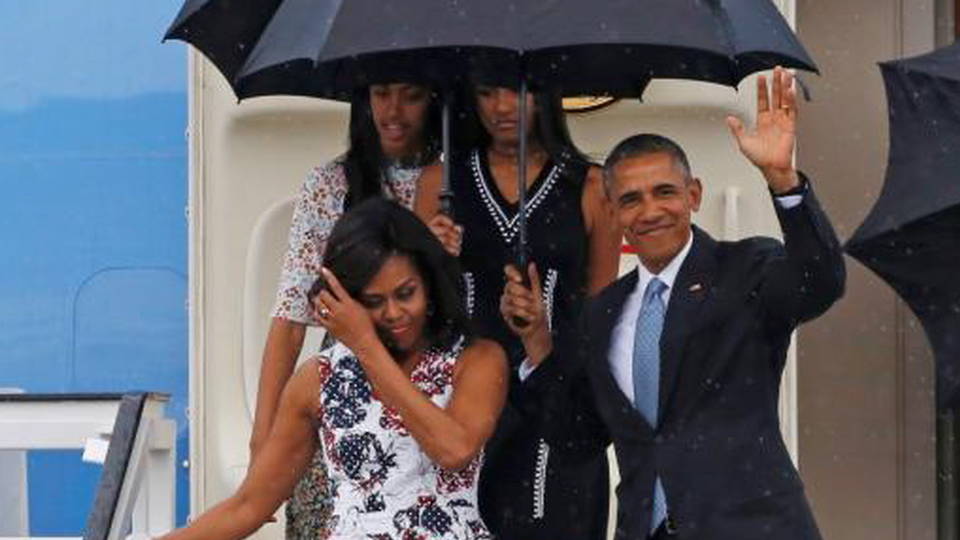
President Obama has arrived in Cuba for a historic three-day visit, becoming the first sitting U.S. president to visit the island in 88 years. Obama is scheduled to meet Cuban President Raúl Castro this morning at the Palace of the Revolution in Havana. A state dinner for Obama will be held tonight. On Tuesday, Obama will address the Cuban people. He is also scheduled to meet with Cuban dissidents. We’ll have more on Obama’s historic trip after headlines.
TOPICS:
Cuba
Obama
Arizona Protesters Block Highway to Trump Rally; Activist Sent to ICE Despite Being Citizen
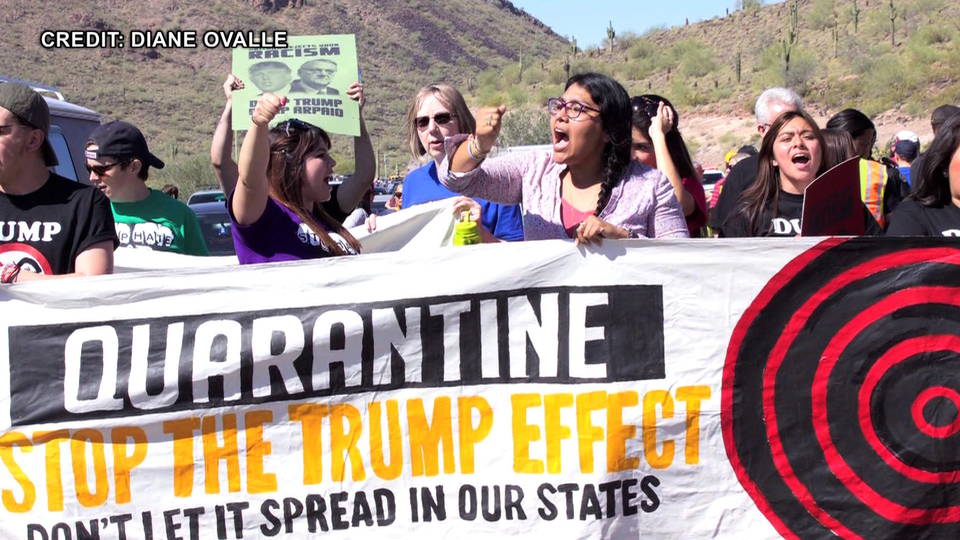
In Arizona, demonstrators shut down a highway leading to a rally for Republican presidential candidate Donald Trump outside Phoenix Saturday, delaying the rally ahead of Tuesday’s key primaries. Three people were arrested, including Jacinta Gonzalez, a leading immigrant advocate who had locked her neck to a van’s window as part of the roadblock. Jacinta Gonzalez said she was then transferred to immigration custody—despite being a U.S. citizen.
Jacinta Gonzalez: "Yesterday, when we were arrested, I know that the two colleagues I was arrested with were released, but because my last name is Gonzalez, I was immediately questioned by ICE and placed on a detainer. After they were let go and were able to go home, I was transferred to immigration custody. This just proves that the hatred and the profiling that Trump says and tries to promote is the same that exists within this administration."
TOPICS:
Arizona
Immigration
Trump Supporter Arrested for Punching Protester at Tucson Rally
At a Trump rally in Tucson, a Trump supporter was caught on video sucker-punching an anti-Trump protester as he was being led away. Tony Pettway was arrested for misdemeanor assault and released. The protester, Bryan Sanders, was kicked out of the rally after chanting "liar" and holding a sign that read "Trump is bad for America."
TOPICS:
Donald Trump
Arizona
Trump Campaign Manager Grabs Protester's Collar; Trump Defends His "Spirit"
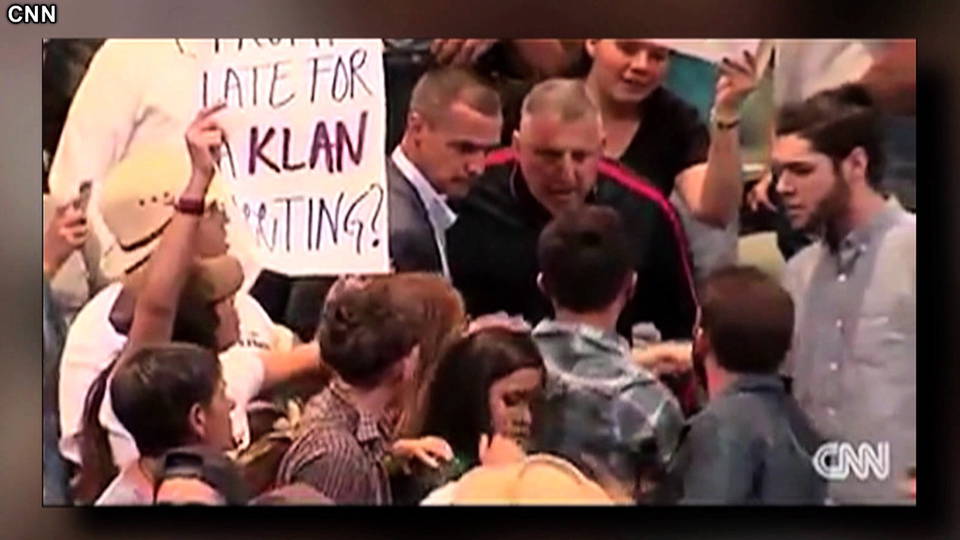
Meanwhile, another video from the rally showed Trump campaign manager Corey Lewandowski appearing to grab a protester by his collar. The footage shows Lewandowski, in a blazer, grabbing the man at the same time as a member of Trump’s private security team. The protester is yanked backwards. Speaking to George Stephanopoulos on ABC, Trump refused to condemn the violence at his rallies, saying "professional agitators" bore much of the blame. He also praised Lewandowski’s "spirit."
Donald Trump: "Well, you know what? Because the security at the arena, the police were a little bit lax, and he had signs—they had signs up in that area that were horrendous, that I cannot say what they said on the sign, but the ultimate word. And it was all over the camera. And frankly, the television cameras can’t take it, and they can’t do anything about it. And I will give him credit, spirit. Now, he didn’t touch. He wasn’t pulling that man. That was somebody else."
George Stephanopoulos: "Well, the video does show that he touched him. Your private security pulled him, but it does show he grabbed the collar."
Donald Trump: "Well, that was somebody else pulling him. I mean, I—I give him credit for having spirit. He wanted them to take down those horrible, profanity-laced signs."
Trump campaign manager Corey Lewandowski has also been accused of grabbing the arm of a Breitbart reporter Michelle Fields, leaving her bruised.
TOPICS:
Donald Trump
Arizona
Up to 2,000 March Against Trump in NYC; 3 Arrested

In New York City, as many as 2,000 people marched against Donald Trump, chanting "Racist, sexist, anti-gay, Donald Trump, go away." They marched from Trump International Hotel and Tower in Columbus Circle to Trump Tower on Fifth Avenue. Three people were arrested amid a heavy New York City police presence at Saturday’s rally. Click here for more on the rally.
TOPICS:
New York
Donald Trump
Bernie Sanders Only Top Candidate to Skip Pro-Israel AIPAC Conference
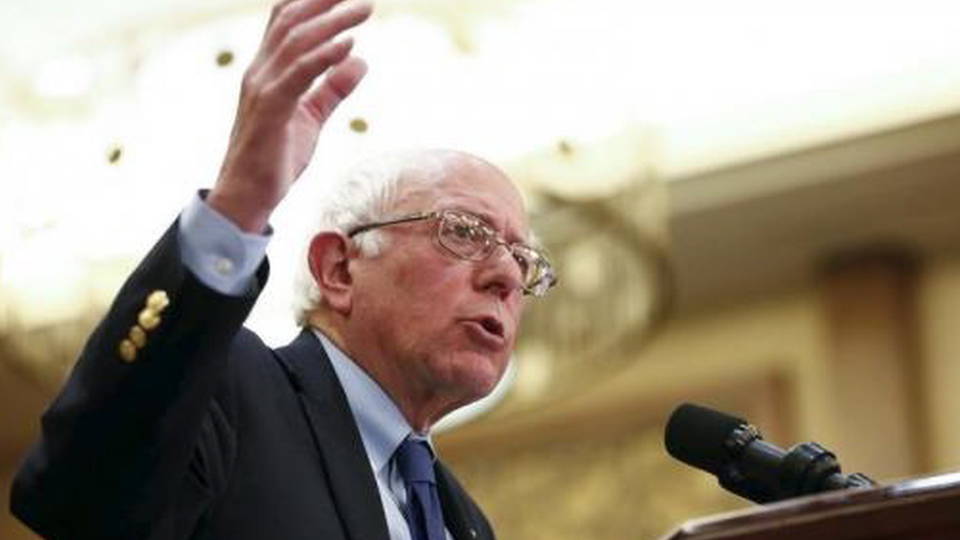
Vermont Senator Bernie Sanders will skip the annual conference of the American Israel Public Affairs Committee, the powerful pro-Israel lobbying group. Sanders is the only candidate from either the Republican or Democratic Party not to attend the conference. His Democratic rival, Hillary Clinton, and Republicans Donald Trump, Ted Cruz and John Kasich are all slated to speak there. Sanders said his campaigning in Western states ahead of voting in Arizona, Idaho and Utah Tuesday would not allow him to make the trip to Washington, D.C. His campaign said AIPAC rejected his offer to address the conference by video link, even though Republicans Mitt Romney and Newt Gingrich did so in 2012.
TOPICS:
Bernie Sanders
Israel
U.S. Marine Killed in Iraq, Revealing Presence of New Base
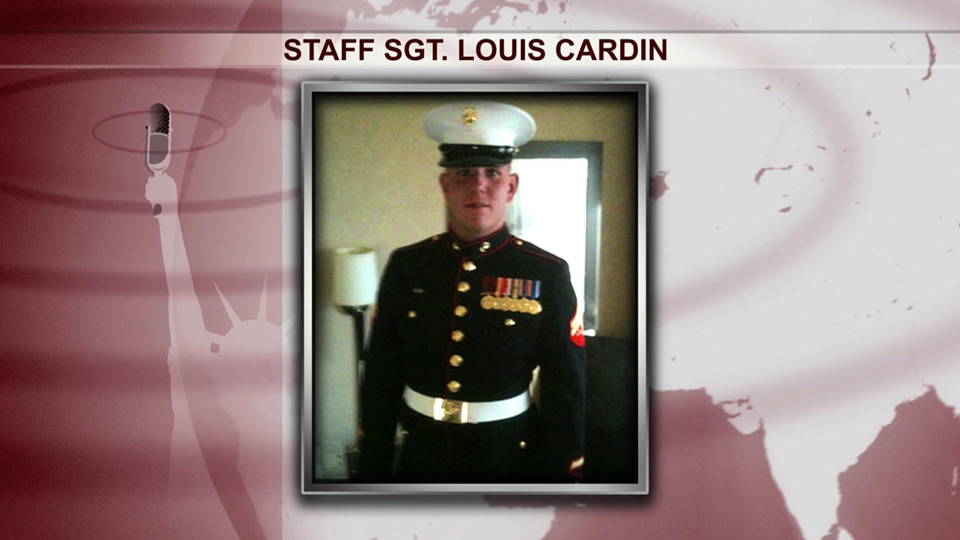
A U.S. marine has been killed in northern Iraq. The Pentagon said Staff Sgt. Louis Cardin was killed Saturday by enemy rocket fire near Makhmur. He was 27. His death appears to have revealed the existence of a new U.S. fire base in Iraq where CNNreports hundreds of marines have been living in tents. Cardin is the second U.S. servicemember killed since the U.S. campaign against ISIL began in 2014.
TOPICS:
Iraq
Paris Attack Suspect Salah Abdeslam Arrested in Brussels
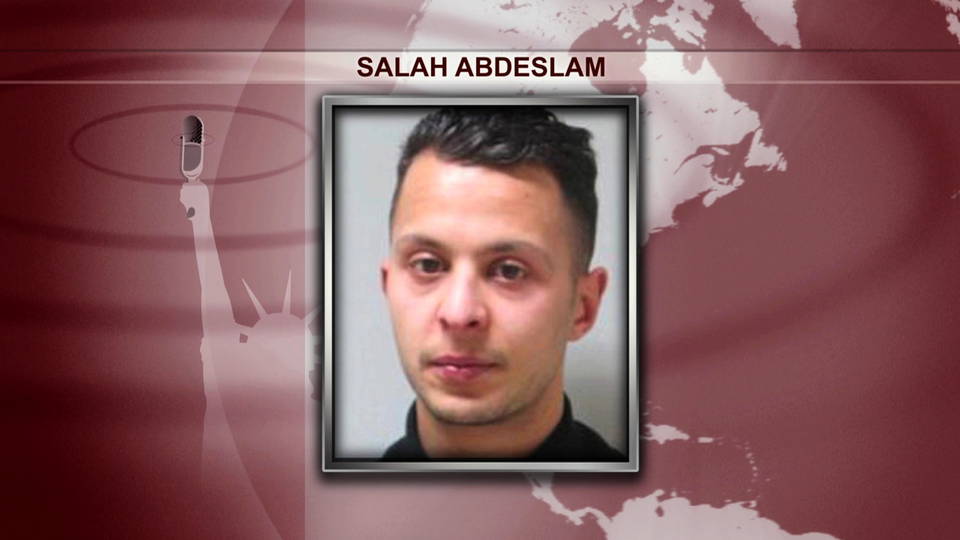
In Brussels, Belgium, Salah Abdeslam, a suspect in the Paris attacks that killed 130 people, was arrested in a raid Friday. Authorities had searched for Abdeslam since the November attacks. Belgian authorities say he was plotting more attacks in Brussels.
TOPICS:
Islamic State
Turkey: 4 Killed in Istanbul Suicide Bombing
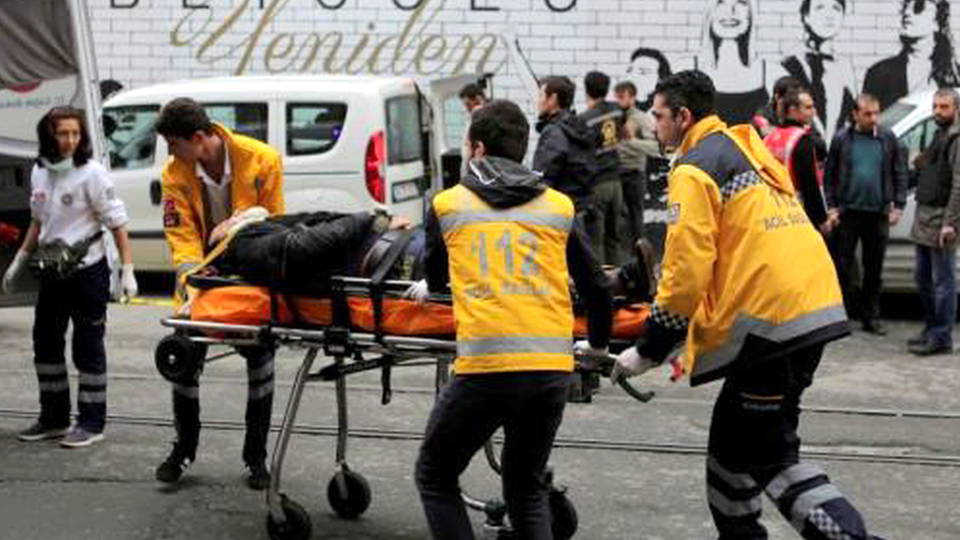
In Istanbul, Turkey, a suicide bomber killed four people in a busy tourist area Saturday. Turkish officials said the bomber was a Turkish citizen who belonged toISIL. The attack killed an Iranian and three Israelis, two of whom also had U.S. citizenship.
TOPICS:
Islamic State
Turkey
Hundreds of Refugees Arrive in Greece Despite New Turkey-EU Accord

Hundreds of refugees have arrived on the Greek islands despite a new deal between Turkey and the European Union aimed at reducing the flow. Two Syrian refugees died over the weekend attempting the crossing, while two little girls were found drowned. Under the accord, all people now arriving on the islands face a return to Turkey. For every Syrian refugee sent back to Turkey from Greece, the EU has vowed to resettle one Syrian from the Turkish refugee camps.
TOPICS:
Greece
Turkey
Refugees
Brazil: Protests Held to Defend Gov't Amid Accusations of Right-Wing "Coup"

In Brazil, demonstrators took to the streets nationwide Friday to defend the government of President Dilma Rousseff against what they say are undemocratic attempts by the right-wing opposition to oust her from power. Last week, a judge suspended Rousseff’s appointment of former President Luiz Inácio Lula da Silva to a Cabinet post. Rousseff says Lula will help strengthen her government, but critics see his appointment as a bid to protect him from what Lula says are politically motivated charges of money laundering. The judge who blocked Lula’s appointment had recently posted photos of himself on social media marching in an anti-government protest. Brazil faces a dire financial crisis and a corruption scandal that spans political sides.
TOPICS:
Brazil
Mexico: Community Police Leader Nestora Salgado Released from Prison
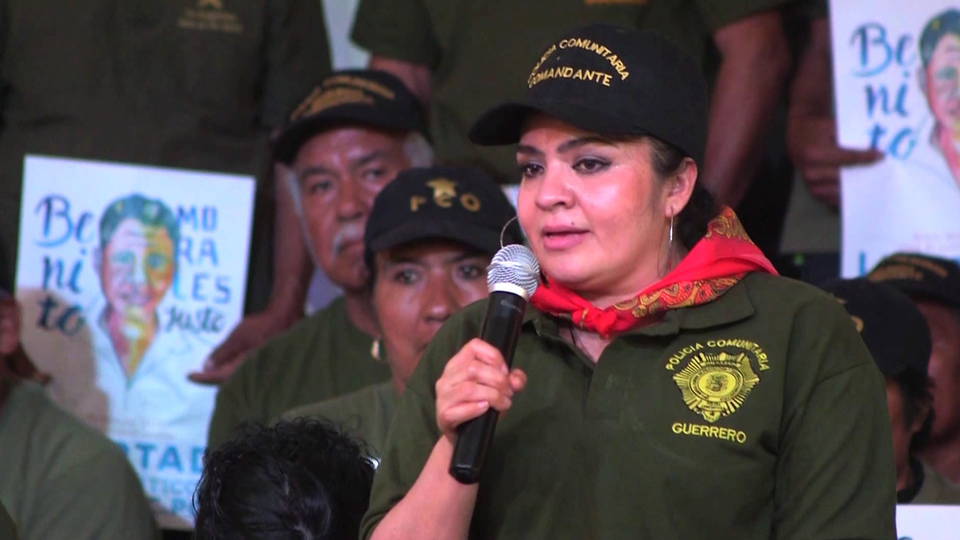
In Mexico, community activist Nestora Salgado has been freed after two-and-a-half years of what a United Nations panel deemed an illegal detention. Salgado, a dual U.S.-Mexican citizen, organized a community self-defense group in her hometown in Guerrero state, where the line between drug cartels and local officials is often blurred. Salgado walked free Friday after a judge determined that kidnapping and other charges lodged against her by local officials were baseless. Speaking at a news conference, she described her imprisonment.
Nestora Salgado: "I felt that I was buried alive in a drawer. I was out of touch for 20 months, in isolation for a crime that I did not commit. They didn’t even let me coexist with the other prisoners. I only saw them when I went to court. They treated me in the most brutal way that they could. It’s difficult to struggle against the government when they are out to get you, but it’s even worse that they did this when all I wanted was to defend my community."
TOPICS:
Mexico
Father of 1 of 43 Missing Mexican Students Runs NYC Half Marathon for Son

Image Credit: Igor Moreno
Here in New York, the father of one of the 43 students missing in Mexico for 18 months ran the New York City Half Marathon Sunday in honor of his son. The students disappeared from Guerrero—Nestora Salgado’s home state—after an attack by local police. Surrounded by supporters in Times Square, Antonio Tizapa called for the United States to suspend billions in U.S. aid for the drug war in Mexico.
Antonio Tizapa: "We are asking for a halt to the Mérida Initiative. That is the message that I want to give to people in the United States, to pressure the government so they stop helping the Mexican government, because with these weapons, they are practically killing us."
Click here to see our interview with Antonio Tizapa.
TOPICS:
Mexico
Massachusetts: Builder Places Thoreau Cabin Replica in Gas Pipeline's Path
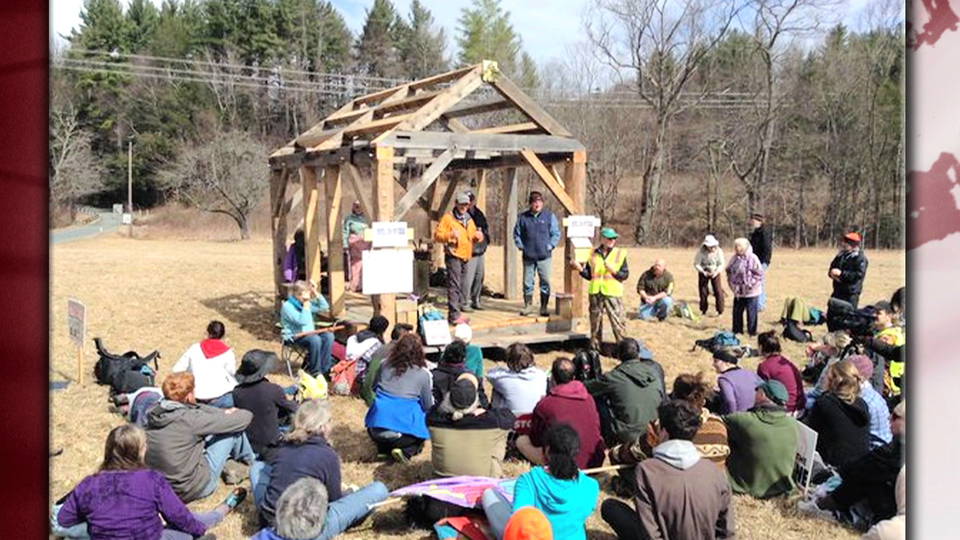
And in Western Massachusetts, a builder has placed a 10-by-15-foot replica of author and naturalist Henry David Thoreau’s cabin in the path of a proposed gas pipeline. Residents oppose the pipeline planned by energy firm Kinder Morgan, saying it threatens the local environment.
TOPICS:
Fracking
Pipeline
Donate today:
Follow:


WEB EXCLUSIVE

Exclusive Video: NYPD Arrests Bill de Blasio Adviser for Filming Arrest of Homeless Man
DN! IN THE NEWS

WATCH: Amy Goodman Tells CNN the Media is "Manufacturing Consent" for Trump While Silencing Sanders
WEB EXCLUSIVE


Fascism: Can It Happen Here?
WORK WITH DN!

Broadcast Engineer
Director of Finance and Operations
Director of Development
---------------------
207 West 25th Street, 11th Floor
New York, New York 10001, United States
---------------------
---------------------

No comments:
Post a Comment