
The Lausanne Global Analysis is now also being published in Spanish. If you prefer to receive email alerts about the Spanish edition, simply update your language preference.
Lausanne Global Analysis · March 2016
SHARE:


In this issue we focus on the global rise of secular and religious restriction of minority faiths and their impact on missions; the implications for global mission of the findings of a recent survey of North American Messianic Jews; the ‘Restorative Economy’ and the role of the Christian in it; and mission in Europe 25 years after the fall of the Berlin Wall.
Read more »
View Online Download Full Issue Download Executive Summary

March 2016 Issue Overview
David Taylor, Editor

David Taylor, Editor
The State and Religious Persecution
Thomas Harvey
Thomas Harvey
The State and Religious Persecution
THE GLOBAL RISE OF SECULAR AND RELIGIOUS RESTRICTION AND THEIR IMPACT ON MISSIONS
THOMAS HARVEY
According to the Pew Report on The Future of World Religions: Population Growth Projections, 2010-2050,1 North America and Western Europe are becoming increasingly secular with major declines in church attendance, even as Christianity and Islam rise in the Global South and East. With this intensification and polarisation of religions and irreligion globally has come political pressure upon governments to embrace a religious or secular national ideology.
Growing intolerance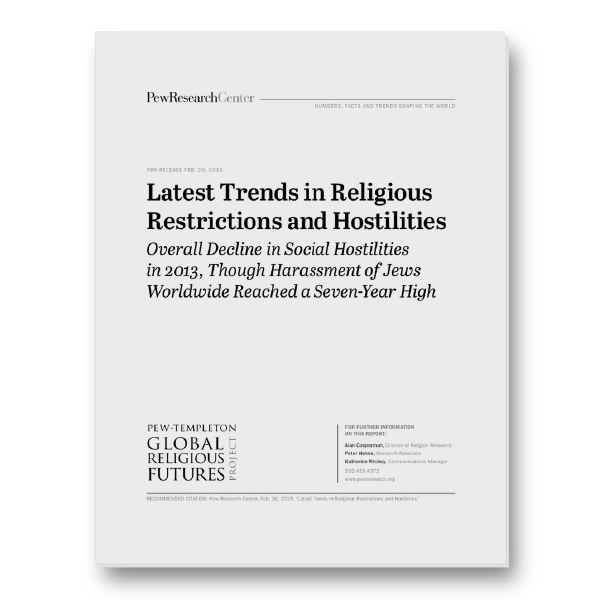
A second Pew report Latest Trends in Religious Restrictions and Hostilities documents a concomitant increase of official intolerance and restriction of minority religious faiths from 20% of governments putting in place ‘high or very high level restrictions on religion’ in 2007 to 27% in 2013.2 Although the 2015 report marked a slight decline from 2014, this slight dip does little to lessen the report’s conclusion that social hostility, abuse, and violence toward minority faiths are at unprecedented levels.3
The report notes that official intolerance, legal sanction, harassment, and outright persecution of minority religious communities are far more likely in countries where one religion or ideology dominates socially and politically. According to the three measures the Pew report used to identify social hostility to religious minorities, religious minorities in 120 countries (61% of all nations) suffered at least one of these hostilities: imposition of one religious or non-religious ideology; attempts to prevent minority faiths from worshipping; and actual attacks directed at persons, institutions, and places of worship perceived to threaten the majority religious faith or secular ideology.
Although the worst abuses of religious minorities take place in single-party states where one religion or political ideology dominates, the Pew report documents the growing intolerance of minority faiths in secular and purportedly liberal Europe. According to the report, Europe has witnessed the largest increase in median level government restriction on religion.4
Thus, religious and secular intolerance of minority religious expression are not limited to religious states, but are manifest in 39% of all nations, with some 5.5 billion people now living in countries with high or very high levels of restrictions upon religion—or 77% of the world’s population: up from 74% in 2011.5
Why is it happening?
The common denominator in official sanction of religious minorities is not simply a matter of religion per se. State discrimination, legal restriction, social hostility, and outright violence against religious minorities have risen in nations as ideologically and religiously diverse as China, Saudi Arabia, North Korea, Burma, Vietnam, Sudan, and Pakistan.
What appears to be the inner logic that justifies discrimination against, and outright abuse of, religious minorities has much to do with national identity and ideology, whether or not that is secular or religious. In states where religious or ideological exclusivity is enforced, questioning the prevailing religious or ideological identity is often seen as potentially subversive. The assumed superiority of the ruling belief system leads to a questioning of motives behind any alternative religious or ideological framework that puts into question the religious or ideological pillars of the state.
The fact that democratic regimes have proven far more tolerant of religious diversity than non-democratic regimes has much to do with their self-identification as nations which defend religious diversity, freedom of conscience, democratic political engagement, and freedom of speech. Thus government sanctions against religious minorities are a good indicator of whether governments are likely to restrict other human rights as well.
Why is it important?
With Christianity growing rapidly in the Global South and East, much of this growth is occurring in nations where Christianity is a distinct minority. This growth is being met with greater restrictions and growing hostility toward Christian mission and evangelism. As religious and ideological exclusivity grow, so will greater restrictions upon mission work as well as social hostility and even violence against missionaries and their converts.
India and Israel are representative of these trends:
India
Since the election of Narendra Modi of the Hindu Bharatiya Janata Party as prime minister in 2014, pressure has been building to amend the constitution to make India a Hindu state and calls have been growing for the re-conversion of Christians and Muslims back to Hinduism.6
Israel
The report notes that official intolerance, legal sanction, harassment, and outright persecution of minority religious communities are far more likely in countries where one religion or ideology dominates socially and politically. According to the three measures the Pew report used to identify social hostility to religious minorities, religious minorities in 120 countries (61% of all nations) suffered at least one of these hostilities: imposition of one religious or non-religious ideology; attempts to prevent minority faiths from worshipping; and actual attacks directed at persons, institutions, and places of worship perceived to threaten the majority religious faith or secular ideology.
Although the worst abuses of religious minorities take place in single-party states where one religion or political ideology dominates, the Pew report documents the growing intolerance of minority faiths in secular and purportedly liberal Europe. According to the report, Europe has witnessed the largest increase in median level government restriction on religion.4
Thus, religious and secular intolerance of minority religious expression are not limited to religious states, but are manifest in 39% of all nations, with some 5.5 billion people now living in countries with high or very high levels of restrictions upon religion—or 77% of the world’s population: up from 74% in 2011.5
Why is it happening?
The common denominator in official sanction of religious minorities is not simply a matter of religion per se. State discrimination, legal restriction, social hostility, and outright violence against religious minorities have risen in nations as ideologically and religiously diverse as China, Saudi Arabia, North Korea, Burma, Vietnam, Sudan, and Pakistan.
What appears to be the inner logic that justifies discrimination against, and outright abuse of, religious minorities has much to do with national identity and ideology, whether or not that is secular or religious. In states where religious or ideological exclusivity is enforced, questioning the prevailing religious or ideological identity is often seen as potentially subversive. The assumed superiority of the ruling belief system leads to a questioning of motives behind any alternative religious or ideological framework that puts into question the religious or ideological pillars of the state.
The fact that democratic regimes have proven far more tolerant of religious diversity than non-democratic regimes has much to do with their self-identification as nations which defend religious diversity, freedom of conscience, democratic political engagement, and freedom of speech. Thus government sanctions against religious minorities are a good indicator of whether governments are likely to restrict other human rights as well.
Why is it important?
With Christianity growing rapidly in the Global South and East, much of this growth is occurring in nations where Christianity is a distinct minority. This growth is being met with greater restrictions and growing hostility toward Christian mission and evangelism. As religious and ideological exclusivity grow, so will greater restrictions upon mission work as well as social hostility and even violence against missionaries and their converts.
India and Israel are representative of these trends:
India
Since the election of Narendra Modi of the Hindu Bharatiya Janata Party as prime minister in 2014, pressure has been building to amend the constitution to make India a Hindu state and calls have been growing for the re-conversion of Christians and Muslims back to Hinduism.6
Israel
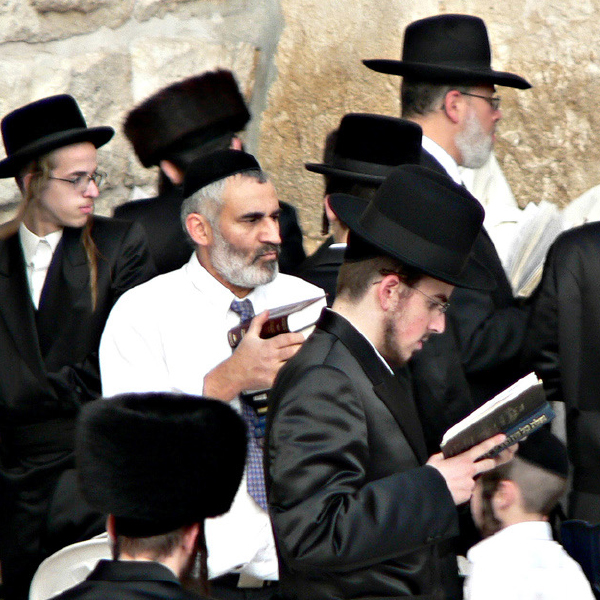
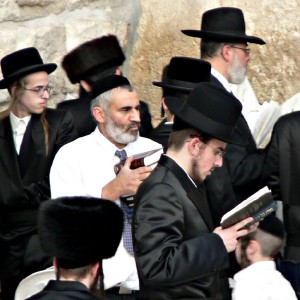
In modern secular Israel, recent demands by the ruling Likud and Orthodox Jewish parties that Israel be recognised as a ‘Jewish State’ as a condition for peace talks with Palestinians have raised serious concerns within Israel and internationally.
Indeed, emphasis upon religious national identity is viewed by non-Jewish citizens in Israel and non-Hindus in India as consignment to official second class status, thus putting in danger both nations’ democratic traditions and emphases upon human rights.7
United States
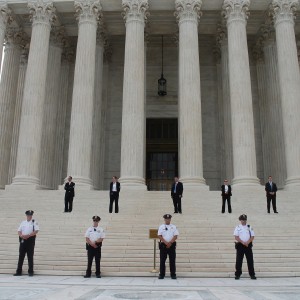
As Europe and North America grow increasingly secular, many evangelicals and Roman Catholics are increasingly concerned with anti-Christian rhetoric and enforcement of new restrictions on religious liberty. The court ruling last year affirming gay marriage in the US has produced a legal hornet’s nest as legal actions against Christian institutions that discriminate in hiring based on their understanding of marriage and sexual ethics begin to mount.8 Given that there is legal precedent to strip academic institutions of their tax-exempt status if they discriminate against protected classes of persons, many such institutions fear they may be forced to either close or abandon their current codes of conduct in deference to a ‘new morality’ imposed by the state.
Indeed, emphasis upon religious national identity is viewed by non-Jewish citizens in Israel and non-Hindus in India as consignment to official second class status, thus putting in danger both nations’ democratic traditions and emphases upon human rights.7
United States
As Europe and North America grow increasingly secular, many evangelicals and Roman Catholics are increasingly concerned with anti-Christian rhetoric and enforcement of new restrictions on religious liberty. The court ruling last year affirming gay marriage in the US has produced a legal hornet’s nest as legal actions against Christian institutions that discriminate in hiring based on their understanding of marriage and sexual ethics begin to mount.8 Given that there is legal precedent to strip academic institutions of their tax-exempt status if they discriminate against protected classes of persons, many such institutions fear they may be forced to either close or abandon their current codes of conduct in deference to a ‘new morality’ imposed by the state.
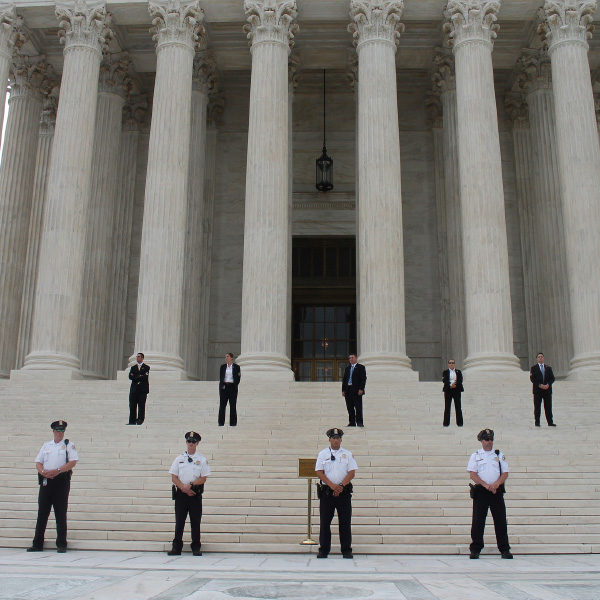
Moves to try to preserve the rights of Christian institutions are now currently making their way through the US Congress and state legislatures nationally, but their outcome is far from clear, given the power of the courts to rescind state law by judicial decision according to the legal precedent now in place.9 Although opposition to evangelical Christian perspectives in secular nations is couched in the language of tolerance and diversity, the result is increasing restriction upon evangelicals to order their lives and their institutions according to their traditions and conscience.
Longer-term outlook
In the long term, it appears that religious and ideological exclusivity, religious restrictions, social hostility, abuse, and even violence against Christianity around the globe will rise. Such restrictions, hostility, and abuse will reflect the differing religious and ideological frameworks that seek to marginalise the diverse perspectives that religious minorities represent.
Thus, it would not be surprising to see newly minted Christian majority nations without long histories of protecting the rights of minorities seeking to establish ‘Christian states’ that would restrict the rights of, and nurture social hostility against, religious minorities. For example, Angola, a Christian majority nation, has officially banned Islam and reportedly closed or destroyed some mosques in the country.10
The temptation legally to restrict minority religious and political competitors is great in all societies and within all religions. Nonetheless, such moves by religious and ideological majorities carry with them unintended consequences.
Because human rights are part of the complex web of rights that inform and strengthen civil society and democratic governance, restricting or showing hostility to one affects the others. Thus restricting the freedom of worship and assembly for minority faiths has a knock-on effect on other human rights such as freedom of speech, freedom of assembly, freedom of the press, and finally freedom of conscience.
Policy implications and suggested responses
For evangelical Christians, Christian institutions, and Christian missions, the rise of religious restriction, social hostility, and persecution of minority faiths is a matter of great concern.
Awareness of the tendency of restriction and some of the underlying causes of religious discrimination should serve to forewarn and forearm missions and ministry globally. An evangelical emphasis on nurturing societies that encourage openness, tolerance, and diversity of religious expression should be seen as a benefit to all citizens and beneficial to mission and ministry globally.
Hence it would be prudential for evangelicals to reach out to and establish strategic alliances with civil libertarians and groups advocating human rights—especially those arguing for freedom of religion and religious expression.
There has certainly been recognition of the role of vital Christian faith to the establishment of human rights. Nobel Prize winner, Liu Xiaobo, echoes the views of Alexander Solzhenitsyn and Vaclav Havel, in noting the link between the development of Christianity, vital spirituality, and the desire of people to ‘control their own souls’.11 As Liu notes, this vital spirituality ‘demonstrates a popular recognition of the fact that if people do not take the initiative to fight for their legally guaranteed freedoms of speech, assembly, and belief, they have no escape from a life of terror’.12
Longer-term outlook
In the long term, it appears that religious and ideological exclusivity, religious restrictions, social hostility, abuse, and even violence against Christianity around the globe will rise. Such restrictions, hostility, and abuse will reflect the differing religious and ideological frameworks that seek to marginalise the diverse perspectives that religious minorities represent.
Thus, it would not be surprising to see newly minted Christian majority nations without long histories of protecting the rights of minorities seeking to establish ‘Christian states’ that would restrict the rights of, and nurture social hostility against, religious minorities. For example, Angola, a Christian majority nation, has officially banned Islam and reportedly closed or destroyed some mosques in the country.10
The temptation legally to restrict minority religious and political competitors is great in all societies and within all religions. Nonetheless, such moves by religious and ideological majorities carry with them unintended consequences.
Because human rights are part of the complex web of rights that inform and strengthen civil society and democratic governance, restricting or showing hostility to one affects the others. Thus restricting the freedom of worship and assembly for minority faiths has a knock-on effect on other human rights such as freedom of speech, freedom of assembly, freedom of the press, and finally freedom of conscience.
Policy implications and suggested responses
For evangelical Christians, Christian institutions, and Christian missions, the rise of religious restriction, social hostility, and persecution of minority faiths is a matter of great concern.
Awareness of the tendency of restriction and some of the underlying causes of religious discrimination should serve to forewarn and forearm missions and ministry globally. An evangelical emphasis on nurturing societies that encourage openness, tolerance, and diversity of religious expression should be seen as a benefit to all citizens and beneficial to mission and ministry globally.
Hence it would be prudential for evangelicals to reach out to and establish strategic alliances with civil libertarians and groups advocating human rights—especially those arguing for freedom of religion and religious expression.
There has certainly been recognition of the role of vital Christian faith to the establishment of human rights. Nobel Prize winner, Liu Xiaobo, echoes the views of Alexander Solzhenitsyn and Vaclav Havel, in noting the link between the development of Christianity, vital spirituality, and the desire of people to ‘control their own souls’.11 As Liu notes, this vital spirituality ‘demonstrates a popular recognition of the fact that if people do not take the initiative to fight for their legally guaranteed freedoms of speech, assembly, and belief, they have no escape from a life of terror’.12
In turn and in the face of growing secularist hostility to evangelical Christian views, Os Guinness and other concerned evangelicals in 2012 drew up for endorsement ‘The Global Charter of Conscience’13that seeks to address the two trends noted above: ‘the revitalization and growing political influence of religions with the danger of attempts to sustain the supremacy of one religion at the expense of others, and the spread of naturalistic worldviews, with the equal danger of excluding all religions from public life and thus favoring an exclusive form of non-religious worldview.’
Accordingly they express concern that ‘traditional settlements of religion and public life show signs of stress and need to be renegotiated.’14
Even more recently, evangelical leaders in 2015 established The Civilitas Group dedicated to promoting civility and fruitful dialogue across confessional and non-religious lines. Although only in embryonic form, such moves represent a new edge among evangelical leaders to reach out beyond the confines of the evangelical ghetto to promote civil society and greater understanding among people of different backgrounds and religious/political convictions.15
There are deep wells of Christian tradition that can be tapped in this endeavour. Historically, emphasis upon ‘freedom of conscience’ developed within Protestantism with its insistence that ‘God alone is Lord of the Conscience’ 16 —in other words what is necessary for human flourishing and wellbeing precedes laws drawn up by secular or religious officials. Accordingly, human conscience is ultimately subject to God and not to human or religious ideology of any stripe.
Nonetheless, such an appeal requires a commitment to acknowledge and affirm the need for tolerance and diversity even when Christians represent a large majority of any civil population. The question is whether evangelical Christians and their secular antagonists are willing to re-appropriate that tolerance in an age of increasing hostility to minority religious expression globally.
Endnotes
1 Pew Research Center, ‘The Future of World Religions: Population Growth Projections, 2010-2050: Why Muslims Are Rising Fastest and the Unaffiliated Are Shrinking as a Share of the World’s Population’, 2 April 2015,http://www.pewforum.org/2015/04/02/religious-projections-2010-2050/.
2 Pew Research Center, ‘Latest Trends in Religious Restrictions and Hostilities: Overall Decline in Social Hostilities in 2013, Though Harassment of Jews Worldwide Reached a Seven-Year High’, 26 February 2015, http://www.pewforum.org/2015/02/26/religious-hostilities/.
3 Editor’s Note: See article entitled ‘Persecution of Christians in the World Today’ by Charles Tieszen in the September 2013 issue ofLausanne Global Analysis.
4 Editor’s Note: See article entitled ‘The UK Campaign To End Religious Illiteracy’ by Jenny Taylor in the January 2015 issue ofLausanne Global Analysis.
5 Pew Research Center, ‘Latest Trends in Religious Restrictions and Hostilities’, 26 February 2015.
6 Rupam Jain Nair and Frank Jack Danie, ‘Special Report: Battling for India’s soul, state by state’, Reuters, 13 October 2015,http://in.reuters.com/article/india-rss-specialreport-idINKCN0S700420151013.
7 Jodi Rudoren, ‘Israel Struggles With Its Identity’, The New York Times, 8 December 2014,http://www.nytimes.com/2014/12/09/world/middleeast/israels-nationality-bill-stirs-debate-over-religious-and-democratic-identity.html. See also Victor Mallet, ‘Indian storm over minister’s comments on Muslims’, Financial Times, 16 October 2015,http://www.ft.com/intl/cms/s/0/6ddc8e78-73d6-11e5-a129-3fcc4f641d98.html#axzz42UEPTqKg.
8 Michelle Boorstein, ‘2015 clarified the right to gay marriage. It opened a world of questions for religious objectors’, Washington Post, 31 December 2015, https://www.washingtonpost.com/news/acts-of-faith/wp/2015/12/31/2015-clarified-the-right-to-gay-marriage-it-opened-a-world-of-questions-for-religious-objectors/.
9 Laurie Goodstein and Adam Liptak, ‘Schools Fear Gay Marriage Ruling Could End Tax Exemptions’, The New York Times, 24 June 2015, http://www.nytimes.com/2015/06/25/us/schools-fear-impact-of-gay-marriage-ruling-on-tax-status.html?_r=0.
10 Ari Yashar, ‘Angola Becomes “First Country to Ban Islam”: Southern African nation reportedly bans Islam and orders the demolition of mosques in the country’, Arutz Sheva: Israelnewsonline.com, 25 November 2013,http://www.israelnationalnews.com/News/News.aspx/174445#.Vofp3vFgn1F.
11 Liu Xiaobo, ‘The Rise of Civil Society in China’, Seeds of Change, Issue no 3, 2011,http://www.hrichina.org/sites/default/files/PDFs/CRF.3.2003/Liu_Xiaobo.pdf. See also Alexander Solzhenitsyn’s commencement address at Harvard University, ‘A World Split Apart’, 8 June 1978,http://www.americanrhetoric.com/speeches/alexandersolzhenitsynharvard.htm. Also see Vaclav Havel, ‘Vaclav Havel’s address to the US Congress, 21 February 1990’,http://everything2.com/title/Vaclav+Havel%2527s+address+to+the+US+Congress%252C+21+February+1990.
12 Liu, 18.
13 See http://www.osguinness.com/wp-content/uploads/2012/06/Charter-for-Religious-Freedom.pdf.
14 Editor’s Note: See article entitled ‘The Global Charter of Conscience’ by Os Guinness in the January 2013 issue of Lausanne Global Analysis.
15 See Richard Mouw’s address to The Civilitas Group at the Founders Dinner on 14 October 2015 based on his book Uncommon Decency: Christian Civility in an Uncivil World (Downers Grove: InterVarsity Press, 2010) online athttps://vimeo.com/146061022.
16 John Leith, Basic Christian Doctrine (Kentucky: Westminster John Knox Press, 1993), 205ff.

Thomas Harvey is Academic Dean of the Oxford Centre for Mission Studies, Oxford, UK. From 1997-2008 he served as Senior Lecturer of Systematic Theology at Trinity Theological College in Singapore.
Accordingly they express concern that ‘traditional settlements of religion and public life show signs of stress and need to be renegotiated.’14
Even more recently, evangelical leaders in 2015 established The Civilitas Group dedicated to promoting civility and fruitful dialogue across confessional and non-religious lines. Although only in embryonic form, such moves represent a new edge among evangelical leaders to reach out beyond the confines of the evangelical ghetto to promote civil society and greater understanding among people of different backgrounds and religious/political convictions.15
There are deep wells of Christian tradition that can be tapped in this endeavour. Historically, emphasis upon ‘freedom of conscience’ developed within Protestantism with its insistence that ‘God alone is Lord of the Conscience’ 16 —in other words what is necessary for human flourishing and wellbeing precedes laws drawn up by secular or religious officials. Accordingly, human conscience is ultimately subject to God and not to human or religious ideology of any stripe.
Nonetheless, such an appeal requires a commitment to acknowledge and affirm the need for tolerance and diversity even when Christians represent a large majority of any civil population. The question is whether evangelical Christians and their secular antagonists are willing to re-appropriate that tolerance in an age of increasing hostility to minority religious expression globally.
Endnotes
1 Pew Research Center, ‘The Future of World Religions: Population Growth Projections, 2010-2050: Why Muslims Are Rising Fastest and the Unaffiliated Are Shrinking as a Share of the World’s Population’, 2 April 2015,http://www.pewforum.org/2015/04/02/religious-projections-2010-2050/.
2 Pew Research Center, ‘Latest Trends in Religious Restrictions and Hostilities: Overall Decline in Social Hostilities in 2013, Though Harassment of Jews Worldwide Reached a Seven-Year High’, 26 February 2015, http://www.pewforum.org/2015/02/26/religious-hostilities/.
3 Editor’s Note: See article entitled ‘Persecution of Christians in the World Today’ by Charles Tieszen in the September 2013 issue ofLausanne Global Analysis.
4 Editor’s Note: See article entitled ‘The UK Campaign To End Religious Illiteracy’ by Jenny Taylor in the January 2015 issue ofLausanne Global Analysis.
5 Pew Research Center, ‘Latest Trends in Religious Restrictions and Hostilities’, 26 February 2015.
6 Rupam Jain Nair and Frank Jack Danie, ‘Special Report: Battling for India’s soul, state by state’, Reuters, 13 October 2015,http://in.reuters.com/article/india-rss-specialreport-idINKCN0S700420151013.
7 Jodi Rudoren, ‘Israel Struggles With Its Identity’, The New York Times, 8 December 2014,http://www.nytimes.com/2014/12/09/world/middleeast/israels-nationality-bill-stirs-debate-over-religious-and-democratic-identity.html. See also Victor Mallet, ‘Indian storm over minister’s comments on Muslims’, Financial Times, 16 October 2015,http://www.ft.com/intl/cms/s/0/6ddc8e78-73d6-11e5-a129-3fcc4f641d98.html#axzz42UEPTqKg.
8 Michelle Boorstein, ‘2015 clarified the right to gay marriage. It opened a world of questions for religious objectors’, Washington Post, 31 December 2015, https://www.washingtonpost.com/news/acts-of-faith/wp/2015/12/31/2015-clarified-the-right-to-gay-marriage-it-opened-a-world-of-questions-for-religious-objectors/.
9 Laurie Goodstein and Adam Liptak, ‘Schools Fear Gay Marriage Ruling Could End Tax Exemptions’, The New York Times, 24 June 2015, http://www.nytimes.com/2015/06/25/us/schools-fear-impact-of-gay-marriage-ruling-on-tax-status.html?_r=0.
10 Ari Yashar, ‘Angola Becomes “First Country to Ban Islam”: Southern African nation reportedly bans Islam and orders the demolition of mosques in the country’, Arutz Sheva: Israelnewsonline.com, 25 November 2013,http://www.israelnationalnews.com/News/News.aspx/174445#.Vofp3vFgn1F.
11 Liu Xiaobo, ‘The Rise of Civil Society in China’, Seeds of Change, Issue no 3, 2011,http://www.hrichina.org/sites/default/files/PDFs/CRF.3.2003/Liu_Xiaobo.pdf. See also Alexander Solzhenitsyn’s commencement address at Harvard University, ‘A World Split Apart’, 8 June 1978,http://www.americanrhetoric.com/speeches/alexandersolzhenitsynharvard.htm. Also see Vaclav Havel, ‘Vaclav Havel’s address to the US Congress, 21 February 1990’,http://everything2.com/title/Vaclav+Havel%2527s+address+to+the+US+Congress%252C+21+February+1990.
12 Liu, 18.
13 See http://www.osguinness.com/wp-content/uploads/2012/06/Charter-for-Religious-Freedom.pdf.
14 Editor’s Note: See article entitled ‘The Global Charter of Conscience’ by Os Guinness in the January 2013 issue of Lausanne Global Analysis.
15 See Richard Mouw’s address to The Civilitas Group at the Founders Dinner on 14 October 2015 based on his book Uncommon Decency: Christian Civility in an Uncivil World (Downers Grove: InterVarsity Press, 2010) online athttps://vimeo.com/146061022.
16 John Leith, Basic Christian Doctrine (Kentucky: Westminster John Knox Press, 1993), 205ff.
Thomas Harvey is Academic Dean of the Oxford Centre for Mission Studies, Oxford, UK. From 1997-2008 he served as Senior Lecturer of Systematic Theology at Trinity Theological College in Singapore.

A Profile of North American Messianic Jews
Andrew Barron
Survey
From June 1-December 1, 2013, I spearheaded a broad study of Messianic Jews in North America as a follow-up to a similar study done in 1983. The 2013 study involved a sample of 1,567 respondents and, like its predecessor, sought to give a picture of the evolving Messianic movement for the purpose of resourcing that community as well as the greater missions community. In addition, my hope was to stimulate strategies for outreach, fellowship, and edification.
The quantitative questions I posed to the participants covered age, family background, education, religious observance, and vocation. The qualitative questions covered experiences in personal journeys and the impact of their faith decisions in relation to friends, families, and communities of this group. Anthropological categories emerged from this study which have given meaning to these experiences in their modern social and cultural setting. Most Jewish people today continue to resist the message of Jesus. My qualitative research attempted to understand this resistance in relation to the hardening of Israel (Rom 11:25).
Hardening
Paul understands this phenomenon as a warning (verse 25a), a mystery (v 25b), partial (v 25c), and temporary (v 25d, 26a). Part of my research attempts to understand hardening as a genuine and current experience, and I was able to demonstrate that hardening is interlaced into what I call an Implied Social Contract (ISC). I first heard this term in 1983 from the founder of Jews for Jesus, Moishe Rosen.
This type of contract is an agreement among a group of people that is never explicitly articulated. In other words, certain behavior is implied as normative; yet there is no formal law governing such norms. My research showed how this ISC is a way to understand and frame contemporary reflections on Jewish culture and the ways in which the Jewish community has found unity in its resistance to the Gospel. Understanding the conversation of the ISC shows an unspoken norm within Jewish culture.
Survival
That ethnic Israel has survived seems to be related to this phenomenon. Hardening serves a bewildering purpose: not only does it keep my people away from the Gospel; it also assists as a protection and preservation mechanism. The full research has been published in the journal Mishkan.3
The Jewish philosopher Simon Rawidowicz argues that Jewish survival is always under threat. In his essay ‘Israel: The Ever Dying People’, he articulates that Jewish survival is so acute that the life of the Jewish people is a perpetual quest to control their future.4 This historical reality seems unparalleled in history. The Jewish people seemed destined to disappear. They have been exiled and exterminated in dozens of lands. Yet as Jewish people seem to be ever dying, they continue to live and prosper. Self-preservation, he argues, has become the prime value of Jewish culture. Hardening is related to this impulse.
Highlights of the quantitative analysis
Most people had heard the Gospel by the time they were 25.
The median age for first hearing the Gospel is 17 and for responding in faith is 22.
The most common way that respondents heard the Gospel was through personal conversation.
Those who respond find truth that is consistent and coherent with Scripture.
Most of our respondents sometimes feel like strangers inside the majority Jewish culture.
Respondents are still socially integrated into the wider cultures they live in.
The Messianic Jewish community in North America is more similar to the American Jewish community than to the general US population in demographics such as Jewish dispositions (ie the tendency to act in certain ways that are learned in the culture), education, and occupation.
Lifestyles, values, and identities of most of our respondents continue to show efforts to maintain a connection to Jewish tradition, on the one hand, and choice on the other. The results showed a broad consensus that reflected a commitment to Jewish character, culture, and continuity.
Andrew Barron
A Profile of North American Messianic Jews
IMPLICATIONS FOR GLOBAL MISSION
ANDREW BARRON
In a sense the converted Jew is the only normal human being in the world. To him, in the first instance, the promises were made, and he has availed himself of them. He calls Abraham his father by hereditary rights as well as by divine courtesy. He has taken the whole syllabus in order, as it was set; eaten the dinner according to the menu. Everyone else is, from one point of view, a special case dealt with under emergency regulations.1
What we continually press upon Jews is that we believe Jesus is the Son of Man and Son of God, not in spite of, but because we are Jews. We believe that Jesus is the King of our people, the sum and substance of our Scripture, the fulfiller of our law and Prophets, the embodiment of the promises of our covenant. Our Testimony is that of Jews to Jews.2Survey
From June 1-December 1, 2013, I spearheaded a broad study of Messianic Jews in North America as a follow-up to a similar study done in 1983. The 2013 study involved a sample of 1,567 respondents and, like its predecessor, sought to give a picture of the evolving Messianic movement for the purpose of resourcing that community as well as the greater missions community. In addition, my hope was to stimulate strategies for outreach, fellowship, and edification.
The quantitative questions I posed to the participants covered age, family background, education, religious observance, and vocation. The qualitative questions covered experiences in personal journeys and the impact of their faith decisions in relation to friends, families, and communities of this group. Anthropological categories emerged from this study which have given meaning to these experiences in their modern social and cultural setting. Most Jewish people today continue to resist the message of Jesus. My qualitative research attempted to understand this resistance in relation to the hardening of Israel (Rom 11:25).
Hardening
Paul understands this phenomenon as a warning (verse 25a), a mystery (v 25b), partial (v 25c), and temporary (v 25d, 26a). Part of my research attempts to understand hardening as a genuine and current experience, and I was able to demonstrate that hardening is interlaced into what I call an Implied Social Contract (ISC). I first heard this term in 1983 from the founder of Jews for Jesus, Moishe Rosen.
This type of contract is an agreement among a group of people that is never explicitly articulated. In other words, certain behavior is implied as normative; yet there is no formal law governing such norms. My research showed how this ISC is a way to understand and frame contemporary reflections on Jewish culture and the ways in which the Jewish community has found unity in its resistance to the Gospel. Understanding the conversation of the ISC shows an unspoken norm within Jewish culture.
Survival
That ethnic Israel has survived seems to be related to this phenomenon. Hardening serves a bewildering purpose: not only does it keep my people away from the Gospel; it also assists as a protection and preservation mechanism. The full research has been published in the journal Mishkan.3
The Jewish philosopher Simon Rawidowicz argues that Jewish survival is always under threat. In his essay ‘Israel: The Ever Dying People’, he articulates that Jewish survival is so acute that the life of the Jewish people is a perpetual quest to control their future.4 This historical reality seems unparalleled in history. The Jewish people seemed destined to disappear. They have been exiled and exterminated in dozens of lands. Yet as Jewish people seem to be ever dying, they continue to live and prosper. Self-preservation, he argues, has become the prime value of Jewish culture. Hardening is related to this impulse.
Highlights of the quantitative analysis
Most people had heard the Gospel by the time they were 25.
The median age for first hearing the Gospel is 17 and for responding in faith is 22.
The most common way that respondents heard the Gospel was through personal conversation.
Those who respond find truth that is consistent and coherent with Scripture.
Most of our respondents sometimes feel like strangers inside the majority Jewish culture.
Respondents are still socially integrated into the wider cultures they live in.
The Messianic Jewish community in North America is more similar to the American Jewish community than to the general US population in demographics such as Jewish dispositions (ie the tendency to act in certain ways that are learned in the culture), education, and occupation.
Lifestyles, values, and identities of most of our respondents continue to show efforts to maintain a connection to Jewish tradition, on the one hand, and choice on the other. The results showed a broad consensus that reflected a commitment to Jewish character, culture, and continuity.
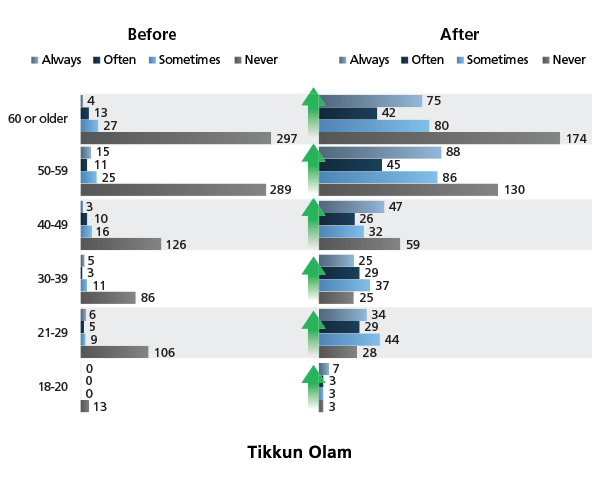
With regard to the Jewish value of tikkun olam (repair of the world) and without providing specifics, we see a very significant increase in orientation across age groups toward this practice after coming to faith. The increase here was the most notable among all the values examined. The chart below shows how these values play out. Of all the Jewish values examined, this showed the most startling renewal.
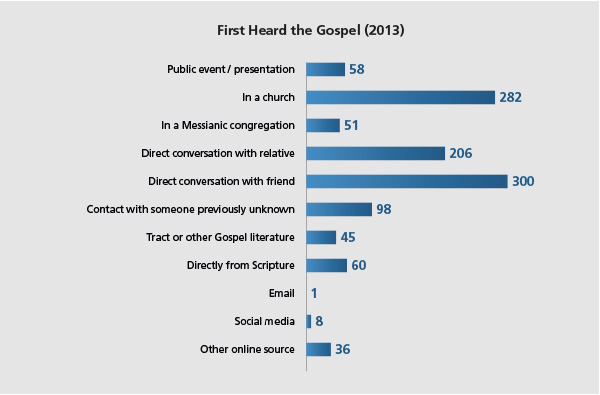
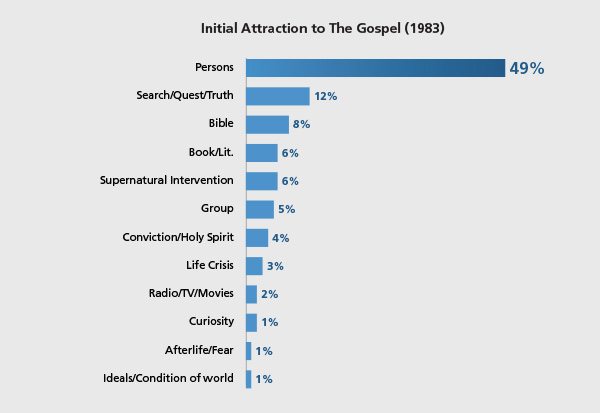
Other interesting results are illustrated below. I compare how Jewish people are hearing the Gospel in 1983 and 2013. The questions were framed differently, but the pattern suggests that most Jewish people are hearing the Gospel in the marketplace. There is an increasing influence of churches and Messianic congregations:
Qualitative highlights
In the September 2015 issue of Lausanne Global Analysis, my colleague Susan Perlman wrote aboutscaling adversity.5 My research here is related to this significant topic. My qualitative questions covered experiences in personal journeys and the impact of their faith decisions in relation to the friends, families, and communities of this group.
Many respondents experienced adversity. They called it many things: social control, guilt, shame, hardening, and loss of prestige. Today Jewish people in North America are continuing to experience adversity as they hear and respond to the Gospel.
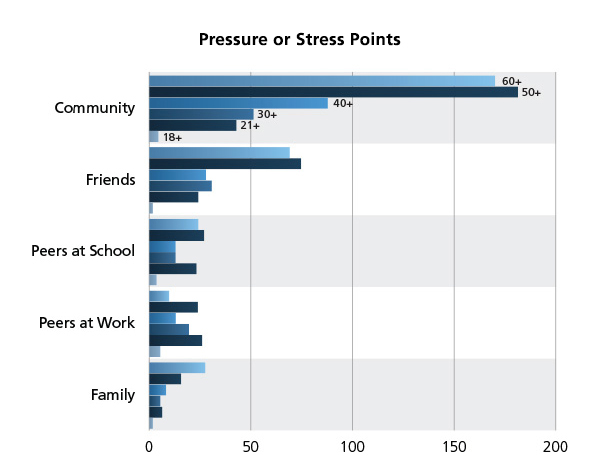
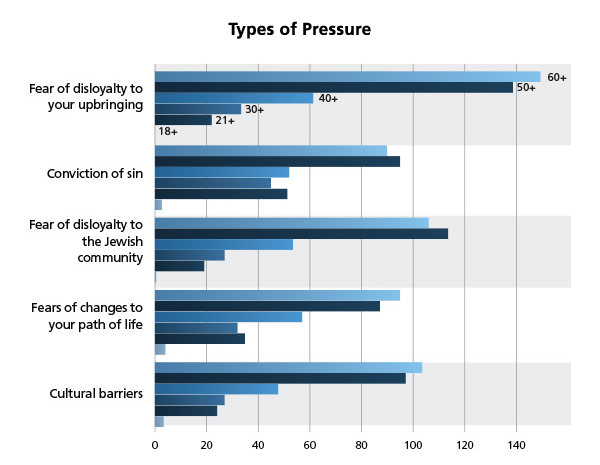
Respondents were asked to characterize this adversity in their experience:
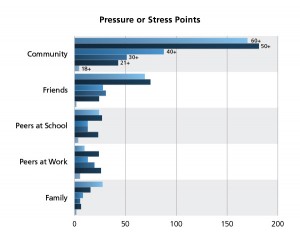
The major pressure points involved what it would mean for relationships in the Jewish community.
Infidelity to the Jewish community was especially a point of pressure for the 50+ group.
Pressure points, especially regarding community, factored less significantly among younger generations.
Below are two charts outlining the sources and types of pressure. We can see that the older groups experienced more adversity than the younger groups. The graphs represent those who noted that they experienced this kind of adversity in a particular age group.

As I interviewed this group, several subjects manifested around social control, such as prestige, shame and guilt, and hardening.
I asked if they could articulate what hardening was or how it manifested itself in their experience. Common answers were ‘death’; ‘loss’; ‘apathy’; ‘identity separation’; ‘tribal’; ‘when I was in the synagogue I was the Christian. When I was in the church I was the Jew’; and ‘hardening is seen in both directions’.
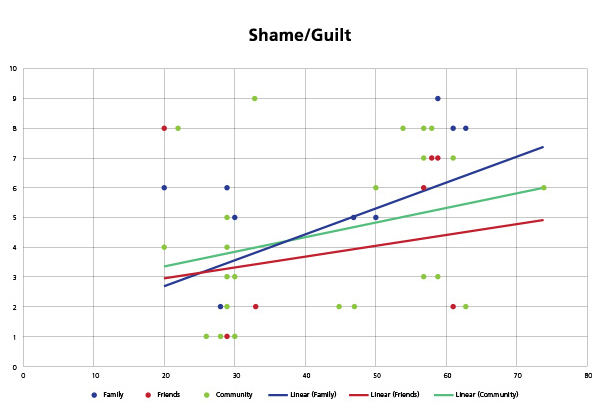
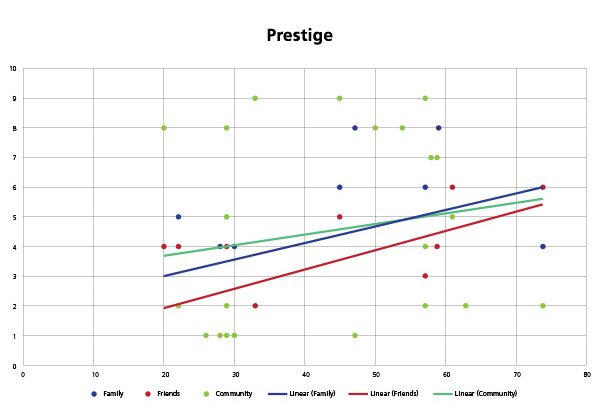
Of the 24 people in the group, two were disowned; two experienced religious control; three lost job opportunities; three were uninvited to family/community events; and five experienced psychological control—‘You cause us pain. You are hurting your grandparents. You will not be able to marry a Jew. You are a Gentile.’
I was interested in fleshing out some of these categories. I asked the group to try and measure these various points of adversity with regard to the themes that were emerging. Below are the results of Shame and Guilt and Loss of Prestige.
I asked them to ‘measure’ on a scale of 1-10 the intensity of this kind of adversity. These were done in relation to friends, family, and community. The scatter graphs are below along with the trend analysis. You can see a diversity of experiences across age groups with similar trends across the age groups.
Next steps in this research will include improving the quality of the survey; asking new questions with regard to social media; and surveying all the Messianic communities outside of North America.
Broader global missiological concerns
Issues surrounding Cultural Guidelines and Social Control are familiar to anyone involved in cross-cultural missions. The particular issues I face in Jewish mission resemble common phenomena that vary from society to society. Loss of categories, secularism, and urbanization are changing the way younger generations are experiencing social control. I believe that the concerns which flow from my research are foundational to global mission concerns:
Is our material relevant to the group receiving the message rather than those bringing it? Is our material bound by our culture or designed for the people and paradigms of the societies we are speaking to?
Are we talking to the people we should be talking to?
Do we have the courage to face hardship and opposition?
Are we willing to exercise critical judgment regarding material, methods, and projects used? Do they work now? Can we assess and/or measure?
Conclusion
Appropriate and relevant speech affirms the dignity of all people. Communication must be tied to the consciousness of the hearers. This principle is at the heart of contextual ministry.
Endnotes
1 C S Lewis, Introduction to Smoke on the Mountain: An Interpretation of the Ten Commandments by Joy Davidman (Philadelphia: Westminster Press, 1953), 7.
2 David Baron, The Ancient Scriptures and the Modern Jew (London: Hodder and Stoughton, 1900), 337.
3 Andrew Barron and Bev Jamison, ‘A Profile of North American Messianic Jews’, Mishkan 73 (Jerusalem: Caspari Center for Biblical and Jewish Studies, 2015).
4 Simon Rawidowicz, ‘Israel: The Ever Dying People’, Studies in Jewish Thought, N N Glatzer, ed, (Philadelphia: Jewish Publication Society, 1974), 210-214, 220.
5 Read the full article at https://www.lausanne.org/content/lga/2015-09/scaling-adversity.
Andrew Barron is the Director of Jews for Jesus in Canada, and pioneered the work of Jews for Jesus in South Africa. He first heard the gospel in 1981 while helping to design and plan space shuttle missions for the United States Space Program. He can be reached at andrew.barron@jewsforjesus.ca.

Other interesting results are illustrated below. I compare how Jewish people are hearing the Gospel in 1983 and 2013. The questions were framed differently, but the pattern suggests that most Jewish people are hearing the Gospel in the marketplace. There is an increasing influence of churches and Messianic congregations:
Qualitative highlights
In the September 2015 issue of Lausanne Global Analysis, my colleague Susan Perlman wrote aboutscaling adversity.5 My research here is related to this significant topic. My qualitative questions covered experiences in personal journeys and the impact of their faith decisions in relation to the friends, families, and communities of this group.
Many respondents experienced adversity. They called it many things: social control, guilt, shame, hardening, and loss of prestige. Today Jewish people in North America are continuing to experience adversity as they hear and respond to the Gospel.
Respondents were asked to characterize this adversity in their experience:
The major pressure points involved what it would mean for relationships in the Jewish community.
Infidelity to the Jewish community was especially a point of pressure for the 50+ group.
Pressure points, especially regarding community, factored less significantly among younger generations.
Below are two charts outlining the sources and types of pressure. We can see that the older groups experienced more adversity than the younger groups. The graphs represent those who noted that they experienced this kind of adversity in a particular age group.
As I interviewed this group, several subjects manifested around social control, such as prestige, shame and guilt, and hardening.
I asked if they could articulate what hardening was or how it manifested itself in their experience. Common answers were ‘death’; ‘loss’; ‘apathy’; ‘identity separation’; ‘tribal’; ‘when I was in the synagogue I was the Christian. When I was in the church I was the Jew’; and ‘hardening is seen in both directions’.
Of the 24 people in the group, two were disowned; two experienced religious control; three lost job opportunities; three were uninvited to family/community events; and five experienced psychological control—‘You cause us pain. You are hurting your grandparents. You will not be able to marry a Jew. You are a Gentile.’
I was interested in fleshing out some of these categories. I asked the group to try and measure these various points of adversity with regard to the themes that were emerging. Below are the results of Shame and Guilt and Loss of Prestige.
I asked them to ‘measure’ on a scale of 1-10 the intensity of this kind of adversity. These were done in relation to friends, family, and community. The scatter graphs are below along with the trend analysis. You can see a diversity of experiences across age groups with similar trends across the age groups.
Next steps in this research will include improving the quality of the survey; asking new questions with regard to social media; and surveying all the Messianic communities outside of North America.
Broader global missiological concerns
Issues surrounding Cultural Guidelines and Social Control are familiar to anyone involved in cross-cultural missions. The particular issues I face in Jewish mission resemble common phenomena that vary from society to society. Loss of categories, secularism, and urbanization are changing the way younger generations are experiencing social control. I believe that the concerns which flow from my research are foundational to global mission concerns:
- A vigorous ongoing conversation is needed about the extent to which we need to prophetically challenge people while remaining part of the communities in which we minister.
- We must respect the influence of indigenous congregations.
- We need to build relationships, make the Bible available, plan for, and address adversity.
- We must talk to people we disagree with so that we can refine our positions.
- We must challenge and be challenged by the status quo in communications and methodology. I believe that God enjoys human creativity and we should be open to all the new platforms that technology provides.
- We must be honest in communicating failures to our donors. It is easy to hit the side of a barn door and draw a circle around it and tell the world that you made a bull’s-eye.
- As we evaluate our current and potential platforms, we must avoid communication that is syrupy, far-fetched, and irrelevant. Meaning must be provided into the social context of those whom we intend to reach.
- We must not assume that people will cross over social and cultural boundaries to listen to us.
- We must apply appropriate speech and categories. I do not propose a new tactic, but an old tactic applied in a new way—receptor-oriented communication.
Is our material relevant to the group receiving the message rather than those bringing it? Is our material bound by our culture or designed for the people and paradigms of the societies we are speaking to?
Are we talking to the people we should be talking to?
Do we have the courage to face hardship and opposition?
Are we willing to exercise critical judgment regarding material, methods, and projects used? Do they work now? Can we assess and/or measure?
Conclusion
Appropriate and relevant speech affirms the dignity of all people. Communication must be tied to the consciousness of the hearers. This principle is at the heart of contextual ministry.
Endnotes
1 C S Lewis, Introduction to Smoke on the Mountain: An Interpretation of the Ten Commandments by Joy Davidman (Philadelphia: Westminster Press, 1953), 7.
2 David Baron, The Ancient Scriptures and the Modern Jew (London: Hodder and Stoughton, 1900), 337.
3 Andrew Barron and Bev Jamison, ‘A Profile of North American Messianic Jews’, Mishkan 73 (Jerusalem: Caspari Center for Biblical and Jewish Studies, 2015).
4 Simon Rawidowicz, ‘Israel: The Ever Dying People’, Studies in Jewish Thought, N N Glatzer, ed, (Philadelphia: Jewish Publication Society, 1974), 210-214, 220.
5 Read the full article at https://www.lausanne.org/content/lga/2015-09/scaling-adversity.
Andrew Barron is the Director of Jews for Jesus in Canada, and pioneered the work of Jews for Jesus in South Africa. He first heard the gospel in 1981 while helping to design and plan space shuttle missions for the United States Space Program. He can be reached at andrew.barron@jewsforjesus.ca.
The Restorative Economy
Richard Gower
However, few leaders appear prepared to face up to the scale of change required to meet these ambitious targets. As Christians, are we interested? And are we prepared to step into the breach?
Significant advances
Over the last 25 years, humanity has made huge progress. The number of people living in extreme poverty has fallen by half,1 the number of women dying in childbirth in key regions has fallen by two-thirds,2 and we have passed important milestones in the fight against measles, malaria, HIV, and a host of tropical diseases.3 The next generation now has vastly better prospects than in the past; for example, more children than ever have the chance to gain an education and girls in particular have seen steady improvements in access to schooling.4 5
Overall, we have made some very significant advances, unprecedented in history.
Looming crisis
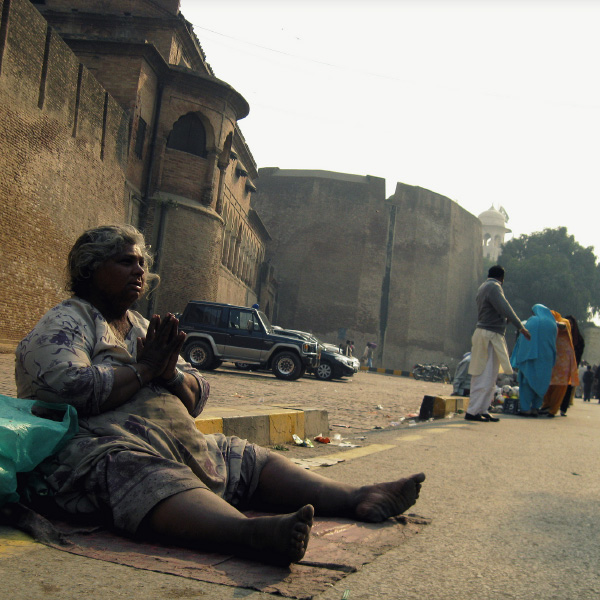
However, the job is not yet finished. A billion people, particularly women, remain mired in extreme poverty, many of them politically marginalised or found in the world’s conflict zones and failed states.
Richard Gower
The Restorative Economy
POVERTY, THE FUTURE OF THE EARTH, AND THE ROLE OF THE CHRISTIAN
RICHARD GOWER
‘The creation waits in eager expectation for the children of God to be revealed’ (Rom 8:19)
At the end of September, world leaders met in New York to adopt ‘The Global Goals’ affirming their commitment to a better world: free from poverty, with a restored environment, peace, and equality.However, few leaders appear prepared to face up to the scale of change required to meet these ambitious targets. As Christians, are we interested? And are we prepared to step into the breach?
Significant advances
Over the last 25 years, humanity has made huge progress. The number of people living in extreme poverty has fallen by half,1 the number of women dying in childbirth in key regions has fallen by two-thirds,2 and we have passed important milestones in the fight against measles, malaria, HIV, and a host of tropical diseases.3 The next generation now has vastly better prospects than in the past; for example, more children than ever have the chance to gain an education and girls in particular have seen steady improvements in access to schooling.4 5
Overall, we have made some very significant advances, unprecedented in history.
Looming crisis
However, the job is not yet finished. A billion people, particularly women, remain mired in extreme poverty, many of them politically marginalised or found in the world’s conflict zones and failed states.
Furthermore, those still struggling in poverty are most at-risk from further damage to planet Earth’s life support systems.
As humanity consumes more and more of the earth’s natural resources, we are placing ever greater stress on the ecosystems that support life. According to the Stockholm Resilience Centre, we have already crossed key risk thresholds in four areas essential to maintaining a safe environment (biosphere integrity, biogeochemical cycles, climate change, and land-system change).6
This dramatically increases the risk that ‘human activities could inadvertently drive the Earth System into a much less hospitable state, damaging efforts to reduce poverty and leading to a deterioration of human wellbeing in many parts of the world’.7Already, more than a billion people live in water basins where water use exceeds sustainable limits, and many of the world’s best-known rivers, such as the Colorado, Indus, and Yellow Rivers, no longer reach the sea.8 As a result, churches and development practitioners around the world report that life is becoming harder for poor people, with for example, local reservoirs drying up in Brazil and increasingly erratic monsoon rains affecting farmers in Nepal.9
The 2012 Lausanne Consultation in Jamaica concluded that ‘we are faced with [an environmental] crisis that is pressing, urgent, and that must be resolved in our generation’.10 In a recent paper for Tearfund, Alex Evans and I used the words of Charles Dickens to describe our present age: ‘It was the best of times, it was the worst of times, it was the age of wisdom, it was the age of foolishness, it was the epoch of belief, it was the epoch of incredulity, it was the season of Light, it was the season of Darkness.’11
Despite all that has been achieved in recent decades, if we continue on our current broad path, we run the risk of a collapse in planet Earth’s life support systems, bringing increased conflict, the fragmentation of communities, and the reversal of all that has been gained.
How does our theology help us?
Scripture presents us with a holistic vision for the whole of creation. The hope of the gospel goes deeper than our personal expectation of salvation and restoration with God in heaven after death: it is a hope in the restoration of all things. We believe, as Tom Wright has said, that we are called to become co-workers with God (1 Cor 3:9) in the renewal and restoration of all things (Matt 19:28), of which we ourselves, having been saved and made new in Christ (2 Cor 5:17), are a foretaste of what God wants to do for the entire creation.12 We look forward to a time when a new heaven and a new earth are birthed out of the old (Rom 8; Rev 22), and in the meantime, we pray and live Your Kingdom Come.
As Chris Wright has said,
‘The Gospel is not just “me and my salvation”—a means by which I can go to heaven when I die . . . the Gospel is the whole story of what God has done to take the creation—which has been broken and fractured by sin and rebellion—and bring it into unity and wholeness and redemption in the Lord Jesus Christ.’13
In the beginning, we see a creation characterised by shalom, a word that means much more than peace, and incorporates ideas of wholeness, completeness, balance, healing, well-being, tranquillity, prosperity, security, and justice.14 Shalom is broken because of human sin and rebellion, and it is restored through Jesus’ death and resurrection, but not yet fully revealed in the world. It is this restoration of shalom that we hope for and now work towards. In the closing words of the ancient Nicene Creed, ‘We look for . . . the life of the world to come’.
What does this mean in economic terms?
Evans and I argue that the Old Testament Jubilee system offers a glimpse of what the outworking of shalom might look like in economic terms. We call this the Restorative Economy. This is an economic model in which all of us are empowered to participate as creative producers rather than simply passive consumers, where we work with the grain of nature, following the initial purpose of Adam ‘to work the Garden of Eden and take care of it’ (Gen 2:15), and above all where we respect the image of God in other human beings.
Such an economy would have three key features:

As humanity consumes more and more of the earth’s natural resources, we are placing ever greater stress on the ecosystems that support life. According to the Stockholm Resilience Centre, we have already crossed key risk thresholds in four areas essential to maintaining a safe environment (biosphere integrity, biogeochemical cycles, climate change, and land-system change).6
This dramatically increases the risk that ‘human activities could inadvertently drive the Earth System into a much less hospitable state, damaging efforts to reduce poverty and leading to a deterioration of human wellbeing in many parts of the world’.7Already, more than a billion people live in water basins where water use exceeds sustainable limits, and many of the world’s best-known rivers, such as the Colorado, Indus, and Yellow Rivers, no longer reach the sea.8 As a result, churches and development practitioners around the world report that life is becoming harder for poor people, with for example, local reservoirs drying up in Brazil and increasingly erratic monsoon rains affecting farmers in Nepal.9
The 2012 Lausanne Consultation in Jamaica concluded that ‘we are faced with [an environmental] crisis that is pressing, urgent, and that must be resolved in our generation’.10 In a recent paper for Tearfund, Alex Evans and I used the words of Charles Dickens to describe our present age: ‘It was the best of times, it was the worst of times, it was the age of wisdom, it was the age of foolishness, it was the epoch of belief, it was the epoch of incredulity, it was the season of Light, it was the season of Darkness.’11
Despite all that has been achieved in recent decades, if we continue on our current broad path, we run the risk of a collapse in planet Earth’s life support systems, bringing increased conflict, the fragmentation of communities, and the reversal of all that has been gained.
How does our theology help us?
Scripture presents us with a holistic vision for the whole of creation. The hope of the gospel goes deeper than our personal expectation of salvation and restoration with God in heaven after death: it is a hope in the restoration of all things. We believe, as Tom Wright has said, that we are called to become co-workers with God (1 Cor 3:9) in the renewal and restoration of all things (Matt 19:28), of which we ourselves, having been saved and made new in Christ (2 Cor 5:17), are a foretaste of what God wants to do for the entire creation.12 We look forward to a time when a new heaven and a new earth are birthed out of the old (Rom 8; Rev 22), and in the meantime, we pray and live Your Kingdom Come.
As Chris Wright has said,
‘The Gospel is not just “me and my salvation”—a means by which I can go to heaven when I die . . . the Gospel is the whole story of what God has done to take the creation—which has been broken and fractured by sin and rebellion—and bring it into unity and wholeness and redemption in the Lord Jesus Christ.’13
In the beginning, we see a creation characterised by shalom, a word that means much more than peace, and incorporates ideas of wholeness, completeness, balance, healing, well-being, tranquillity, prosperity, security, and justice.14 Shalom is broken because of human sin and rebellion, and it is restored through Jesus’ death and resurrection, but not yet fully revealed in the world. It is this restoration of shalom that we hope for and now work towards. In the closing words of the ancient Nicene Creed, ‘We look for . . . the life of the world to come’.
What does this mean in economic terms?
Evans and I argue that the Old Testament Jubilee system offers a glimpse of what the outworking of shalom might look like in economic terms. We call this the Restorative Economy. This is an economic model in which all of us are empowered to participate as creative producers rather than simply passive consumers, where we work with the grain of nature, following the initial purpose of Adam ‘to work the Garden of Eden and take care of it’ (Gen 2:15), and above all where we respect the image of God in other human beings.
Such an economy would have three key features:
It would keep within environmental limits. Chris Wright has said: ‘The Jubilee laws of Israel regulated the Israelites’ ownership and use of the land so that it was sustainable and so that shalom might exist in the community.’15 For example, every seventh year was a Sabbath year, a time of ‘solemn rest for the land’ (Lev 25:4) that allowed it to regain its fertility. Jubilees were about ‘sufficiency, recognition of limits, and the need for God’s creation to rest’.16

It would safeguard everyone’s ability to meet their basic needs, including our central need for relationship. Weekly Sabbaths and one-in-seven Sabbath years, for example, ensured a nationally instituted rhythm of work and rest that allowed time for relationships and community.17 Furthermore, it was forbidden for Israelites to profit from those living in poverty by putting up prices for basic goods or lending at high rates of interest. Farmers were instructed: ‘Do not reap to the very edges of your field . . . leave them for the poor’ (Lev 19:9-10), and a portion of the tithe was also directed to ‘foreigners, the fatherless, and widows’ (Deut 14:28, 29). Above all, if these rules were followed correctly, Deuteronomy asserts that ‘there need be no poor people among you’ (Deut 15:4).18
 It would keep inequality within reasonable limits. Under the Jubilee system, land ownership was reset to its initial per capita distribution every 50 years.19 In the agrarian context of the time, land was also the main store of wealth, and the land reset therefore functioned as a wealth reboot more generally, preventing wealth inequalities from building up over generations. This provided equality of opportunity. Every 50 years, each family would have an opportunity to start afresh—free of debt and in possession of their own land.20
The Jubilee system offers a model for us today. While markets and trade are part of—and key to—reducing poverty, Jubilee principles ensure that human welfare and the wholeness of creation are not made subservient to these markets. We urgently need to find modern-day expressions of these principles in the way we operate as a society, and in the laws which govern our economy.
Change starts with us
It would keep inequality within reasonable limits. Under the Jubilee system, land ownership was reset to its initial per capita distribution every 50 years.19 In the agrarian context of the time, land was also the main store of wealth, and the land reset therefore functioned as a wealth reboot more generally, preventing wealth inequalities from building up over generations. This provided equality of opportunity. Every 50 years, each family would have an opportunity to start afresh—free of debt and in possession of their own land.20The Jubilee system offers a model for us today. While markets and trade are part of—and key to—reducing poverty, Jubilee principles ensure that human welfare and the wholeness of creation are not made subservient to these markets. We urgently need to find modern-day expressions of these principles in the way we operate as a society, and in the laws which govern our economy.
Change starts with us
- How can we do this? Many of us already give money to organisations that are battling against poverty, or against environmental degradation, or inequality, and the abuse of power. However, overcoming these problems requires changes to our lifestyles as well as our money, and changes to the policies that our governments pursue.
- The types of policy change required have been laid out clearly in a number of places.21 However, the lesson of history is that convincing governments to make big systemic changes requires a broader shift in society’s values. In other words, change starts with us, and our lifestyles, and relies on the creation of a passionate movement for change, not just behind-the-scenes lobbying by professionals.
- Faced with the scale of the challenges described above, our own individual actions can seem insignificant. However, the challenge we face today is little different from the challenge faced by those Christian campaigners who changed attitudes to slavery, civil rights, votes and education for women, debt forgiveness for poor countries, and many other issues.
- Christians have excelled at making the moral case for change, because we have a rich set of values to draw on in Scripture. History teaches us that it is moral arguments that often persuade people to change their attitude. Slavery, child labour, debt forgiveness—all of these issues are now seen through a moral rather than economic lens.
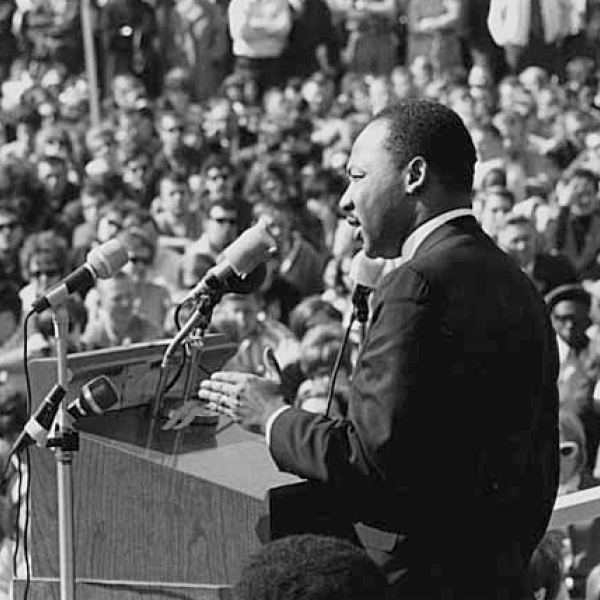
We can use our power as voters, citizens, and consumers. Politicians will respond if ‘a critical mass is vocal and visible in demonstrating higher values’.22 Similarly, our consumption and investment decisions can exemplify the moral argument for change.
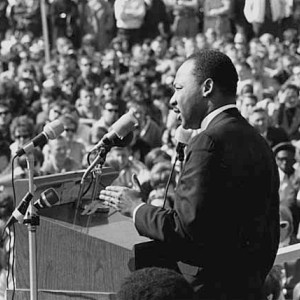
We can protest. In the past, Christians have been masters of prophetic protest and political theatre. In the US, Rev Martin Luther King and the civil rights movement had a bank of spectacular non-violent protest tactics such as sit-ins, boycotts, and freedom rides, anchored in the first point on members’ commitment cards: ‘meditate daily on the teachings and life of Jesus’.23
In 2000, the Jubilee campaign to cancel the unpayable debts of the world’s poorest countries used human chains surrounding G8 summits to symbolise chains of debt burdening poor communities. More cheekily, they rendered to Caesar what was Caesar’s by sending the UK Treasury £1 coins along with a message asking for debt cancellation, to help pay for cancelling the debt—causing consternation and a lot of work in the Treasury, followed by the debt cancellation they wanted.
We can change how we respond to poverty, brokenness, and environmental issues in our own lives. Thabo Makgoba notes that as long ago as 1978, the Anglican Communion’s Lambeth Conference issued a challenge to ‘renew [your] lifestyle and use of the world’s resources so that the service and wellbeing of the whole family comes before the enjoyment of over-indulgent forms of affluence.’ 24 In keeping with this, we can live more simply, staying within our fair share of the world’s resources, and we can respond to poverty with radical generosity.25 26
Finally, we can pray. Prayerful communities of disciples have throughout history had a much greater impact on society than they could have asked or imagined.
Today too, prayer, protest, and lifestyle change can accelerate change in government policy and give humanity a chance to meet the lofty ambitions of the Global Goals: ending global poverty, safeguarding our planet, and promoting peace and equality. This offers us a small glimpse of the ‘life of the world to come’ that we hope for.
If you want to find out more about Tearfund’s work helping make the Restorative Economy a reality, you can contact us at globalcampaign@tearfund.org.
Endnotes
1 World Bank, ‘Report Card: The World Bank Group Twin Goals & The Millennium Development Goals’, Global Monitoring Report 2014/2015, http://www.worldbank.org/content/dam/Worldbank/gmr/gmr2014/GMR_2014_Report_Card.pdf, 17-18, accessed 29 January 2016.
2 In Southern Asia, Eastern Asia, South East Asia, and North Africa. United Nations, Millennium Development Goals Report 2015, 38, accessed 26 August 2015.
3 Ibid, 44.
4 Ibid, 24, 27.
5 Editor’s Note: See article entitled ‘Micah Challenge International: A voice of evangelical advocacy’ by Joel Edwards and Geoff Tunnicliffe in the March 2015 issue of Lausanne Global Analysis.
6 Editor’s Note: See article entitled ‘Climate Change in Oceania: Ecomission and ecojustice’ by Mick Pope in the March 2015 issue ofLausanne Global Analysis.
7 Steffen, W, et al, Planetary Boundaries 2.0 – new and improved, http://www.stockholmresilience.org/21/research/research-news/1-15-2015-planetary-boundaries-2.0—new-and-improved.html, 2015.
8 National Geographic, 8 Mighty Rivers Run Dry from Overuse, http://environment.nationalgeographic.com/environment/photos/rivers-run-dry/#/freshwater-rivers-colorado-1_45140_600x450.jpg, accessed 6 August 2015.
9 Alex Evans and Richard Gower, The Restorative Economy: Completing Our Unfinished Millennium Jubilee, 2015,http://www.tearfund.org/en/about_you/campaign/report/, 12-13, accessed 6 August 2015.
10 Lausanne Global Consultation on Creation Care and the Gospel: Call to Actionhttp://www.lausanne.org/content/statement/creation-care-call-to-action (accessed 6/8/15)
11 Evans and Gower, The Restorative Economy, 11.
12 Tom Wright, Surprised by Hope (London: SPCK, 2007), 210, 212-23.
13 This quote by Dr Chris Wright of Langham Partnership International is transcribed from an interview by Tearfund, July 2014.
14 N Spencer and R White, Christianity, Climate Change and Sustainable Living (London: Jubilee Centre and Faraday Institute, 2007), 115-116.
15 Chris Wright, Mission of God’s People (Grand Rapids: Zondervan, 2010), 55.
16 Evans and Gower, The Restorative Economy, 7.
17 Michael Schluter and others have made a compelling case for the centrality of relationship to the Jubilee system. Seehttp://www.jubilee-centre.org/relationism-pursuing-a-biblical-vision-for-society-by-michael-schluter/, accessed 6 August 2015.
18 We see a reflection of this in the early church community in Acts 2-4, where, mirroring Deuteronomy 15, there was ‘no needy person among them’ (Acts 4:34), offering a glimpse of shalom when Christ returns.
19 As Kim Tan explains, ‘When the Nation of Israel entered the Promised Land, the country was divided up in an equitable manner. The Territories were divided up in proportion to the size of the tribes.’ Kim Tan, The Jubilee Gospel, (United States: Authentic Media, 2009).
20 Ibid.
21 See chapter 4 for an introduction. Evans and Gower, The Restorative Economy.
22 Ibid, 8.
23 The Commitment Card, http://teachingamericanhistory.org/library/document/commitment-card/, accessed 26 August 2015.
24 Quoted in Thabo Makgoba, Hope and the Environment: A Perspective From the Majority World (Anvil, 2013), 58.
25 See for example S Rodin, ed, ‘Christ-Centered Generosity’ (Kingdom Life Publishing, 2015),https://kingdomlifepublishing.com/product/christ-centered-generosity/.
26 Editor’s Note: See article entitled ‘Christian Generosity Trends and the Future of Christian Giving’ by Sas Conradie in the March 2013 issue of Lausanne Global Analysis.

Richard Gower is Senior Associate for Economics and Policy at international development NGO Tearfund, and the Director of Foresight Economics, a consultancy specialising in work for the third sector. He has an MSc in Economics from University College London, and has spent time in the field as a development practitioner in Zimbabwe, designing conservation agriculture and community development programmes.

We can protest. In the past, Christians have been masters of prophetic protest and political theatre. In the US, Rev Martin Luther King and the civil rights movement had a bank of spectacular non-violent protest tactics such as sit-ins, boycotts, and freedom rides, anchored in the first point on members’ commitment cards: ‘meditate daily on the teachings and life of Jesus’.23
In 2000, the Jubilee campaign to cancel the unpayable debts of the world’s poorest countries used human chains surrounding G8 summits to symbolise chains of debt burdening poor communities. More cheekily, they rendered to Caesar what was Caesar’s by sending the UK Treasury £1 coins along with a message asking for debt cancellation, to help pay for cancelling the debt—causing consternation and a lot of work in the Treasury, followed by the debt cancellation they wanted.
We can change how we respond to poverty, brokenness, and environmental issues in our own lives. Thabo Makgoba notes that as long ago as 1978, the Anglican Communion’s Lambeth Conference issued a challenge to ‘renew [your] lifestyle and use of the world’s resources so that the service and wellbeing of the whole family comes before the enjoyment of over-indulgent forms of affluence.’ 24 In keeping with this, we can live more simply, staying within our fair share of the world’s resources, and we can respond to poverty with radical generosity.25 26
Finally, we can pray. Prayerful communities of disciples have throughout history had a much greater impact on society than they could have asked or imagined.
Today too, prayer, protest, and lifestyle change can accelerate change in government policy and give humanity a chance to meet the lofty ambitions of the Global Goals: ending global poverty, safeguarding our planet, and promoting peace and equality. This offers us a small glimpse of the ‘life of the world to come’ that we hope for.
If you want to find out more about Tearfund’s work helping make the Restorative Economy a reality, you can contact us at globalcampaign@tearfund.org.
Endnotes
1 World Bank, ‘Report Card: The World Bank Group Twin Goals & The Millennium Development Goals’, Global Monitoring Report 2014/2015, http://www.worldbank.org/content/dam/Worldbank/gmr/gmr2014/GMR_2014_Report_Card.pdf, 17-18, accessed 29 January 2016.
2 In Southern Asia, Eastern Asia, South East Asia, and North Africa. United Nations, Millennium Development Goals Report 2015, 38, accessed 26 August 2015.
3 Ibid, 44.
4 Ibid, 24, 27.
5 Editor’s Note: See article entitled ‘Micah Challenge International: A voice of evangelical advocacy’ by Joel Edwards and Geoff Tunnicliffe in the March 2015 issue of Lausanne Global Analysis.
6 Editor’s Note: See article entitled ‘Climate Change in Oceania: Ecomission and ecojustice’ by Mick Pope in the March 2015 issue ofLausanne Global Analysis.
7 Steffen, W, et al, Planetary Boundaries 2.0 – new and improved, http://www.stockholmresilience.org/21/research/research-news/1-15-2015-planetary-boundaries-2.0—new-and-improved.html, 2015.
8 National Geographic, 8 Mighty Rivers Run Dry from Overuse, http://environment.nationalgeographic.com/environment/photos/rivers-run-dry/#/freshwater-rivers-colorado-1_45140_600x450.jpg, accessed 6 August 2015.
9 Alex Evans and Richard Gower, The Restorative Economy: Completing Our Unfinished Millennium Jubilee, 2015,http://www.tearfund.org/en/about_you/campaign/report/, 12-13, accessed 6 August 2015.
10 Lausanne Global Consultation on Creation Care and the Gospel: Call to Actionhttp://www.lausanne.org/content/statement/creation-care-call-to-action (accessed 6/8/15)
11 Evans and Gower, The Restorative Economy, 11.
12 Tom Wright, Surprised by Hope (London: SPCK, 2007), 210, 212-23.
13 This quote by Dr Chris Wright of Langham Partnership International is transcribed from an interview by Tearfund, July 2014.
14 N Spencer and R White, Christianity, Climate Change and Sustainable Living (London: Jubilee Centre and Faraday Institute, 2007), 115-116.
15 Chris Wright, Mission of God’s People (Grand Rapids: Zondervan, 2010), 55.
16 Evans and Gower, The Restorative Economy, 7.
17 Michael Schluter and others have made a compelling case for the centrality of relationship to the Jubilee system. Seehttp://www.jubilee-centre.org/relationism-pursuing-a-biblical-vision-for-society-by-michael-schluter/, accessed 6 August 2015.
18 We see a reflection of this in the early church community in Acts 2-4, where, mirroring Deuteronomy 15, there was ‘no needy person among them’ (Acts 4:34), offering a glimpse of shalom when Christ returns.
19 As Kim Tan explains, ‘When the Nation of Israel entered the Promised Land, the country was divided up in an equitable manner. The Territories were divided up in proportion to the size of the tribes.’ Kim Tan, The Jubilee Gospel, (United States: Authentic Media, 2009).
20 Ibid.
21 See chapter 4 for an introduction. Evans and Gower, The Restorative Economy.
22 Ibid, 8.
23 The Commitment Card, http://teachingamericanhistory.org/library/document/commitment-card/, accessed 26 August 2015.
24 Quoted in Thabo Makgoba, Hope and the Environment: A Perspective From the Majority World (Anvil, 2013), 58.
25 See for example S Rodin, ed, ‘Christ-Centered Generosity’ (Kingdom Life Publishing, 2015),https://kingdomlifepublishing.com/product/christ-centered-generosity/.
26 Editor’s Note: See article entitled ‘Christian Generosity Trends and the Future of Christian Giving’ by Sas Conradie in the March 2013 issue of Lausanne Global Analysis.
Richard Gower is Senior Associate for Economics and Policy at international development NGO Tearfund, and the Director of Foresight Economics, a consultancy specialising in work for the third sector. He has an MSc in Economics from University College London, and has spent time in the field as a development practitioner in Zimbabwe, designing conservation agriculture and community development programmes.
Mission in Europe 25 Years After the Fall of the Berlin Wall
Darrell Jackson
Darrell Jackson
Mission in Europe 25 Years After the Fall of the Berlin Wall
DARRELL JACKSON
My teens spanned the 1970s, memorable for being a decade of economic recession, the emergence of neoliberal politics and economics, and the accelerating polarization of the world between the United States (and its NATO allies) and the Soviet Union. The decade ended with the election of British Prime Minister Margaret Thatcher and the Soviet invasion of Afghanistan.
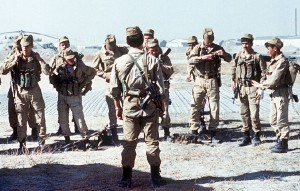
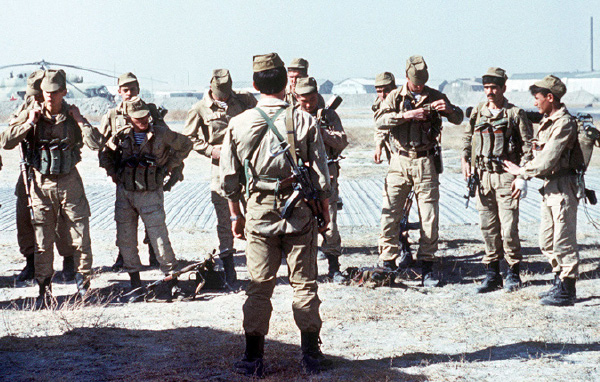
During the early 1980s I became more politically aware. It seemed then that European politics was dominated by the apparently impregnable wall separating East from West and of the vast Soviet empire whose ranks were massed behind it. Our home in the UK received, as did many other homes of the era, a booklet outlining what to do in the event of a nuclear attack. The perception and presentation of this kind of cold war ‘reality’ was further fuelled for a young evangelical by the atheism and godlessness to which the Soviet socialist states pledged their unwavering allegiance.
Iron curtain drawn back
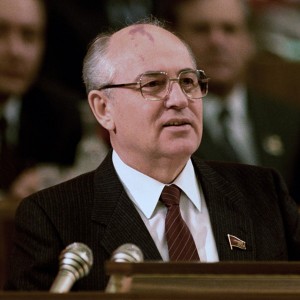
Iron curtain drawn back
Mikhail Gorbachev became leader of the Soviet Union in 1985 and a succession of Western leaders engaged his attempts to decrease tensions with the West, accompanied by the introduction of domestic political and economic liberalisation. As communist governments crumbled during 1989, the reunification of Germany in 1990 became inevitable, along with the demise of cold-war political and geographical realities. The ‘iron curtain’ that had separated ‘Eastern’ Europe from the ‘West’ was finally drawn back.
I have now lived half of my lifetime in the wake of the political, economic, social, and religious changes that were ushered in by the events of the late 1980s and early 1990s. A mere 15 years after the political changes, I moved with my wife to take up a mission position based in Hungary, a relocation that would have been inconceivable in 1989. We were there to take advantage of the central location of Budapest in the geography of the new Europe.
Other mission agencies with a similar pan-European focus to ours found that Budapest was a useful base from which to gain rapid access to most of Europe. Budapest, as a capital city that had been formerly described as ‘Eastern Europe’ (implying that it was on the edge of modern and progressive Europe) had now become a central European capital with easy access to all parts of it.
This article attempts to capture, albeit impressionistically, something of the most significant developments of the last quarter of a century in Europe. Having done that I will then try to outline and review some of the main implications that these changes continue to pose to evangelical mission agencies and their related church communities.
Nationhood, independence, and ethnicity
For much of the post-war period through until the late 1980s, Europe’s internal conflicts were generally framed in a way that opposed the ‘East’ with the ‘West’. Of course, this obscured tensions and conflict internal to each of these two European regions, tensions that would later emerge with lethal consequences in the countries of the Balkans.
When the overly simplistic East-West account of European identity collapsed, a vacuum emerged in which it was possible for powerful and lethal tribalism to emerge around the notions of newly emerging nations.1 In most instances these contemporary forms of tribalism were built around identities that were taken to be ethnically homogenous and frequently shaped with reference to historical religious identities (Orthodox, Catholic, and Muslim) that had been suppressed by communist regimes.
In its most extreme and violent expression, armed conflict ravaged former Yugoslavia for the eight years between 1991 and 1999, resulting in approximately 140,000 deaths and massive damage to the infrastructure and economy of the region. Competing nationalist aspirations and ethnic tensions fed these wars. Although armed hostilities in the Balkans finally ceased with the ending of the Kosovo War in 1999, regional tensions remain and continue to hamper the access and activities of mission agencies working in these regions.
Of course the aspiration to nationhood and self-determination is not always malignant and, in the case of Slovakia and the Czech Republic, saw a separation of the former Czechoslovakia during the ‘Velvet Revolution’ into its constituent territories. As the countries of Hungary, the Czech Republic, Slovakia, and Slovenia, for example, addressed their self-identification, they quickly embraced the language of ‘Central Europe’. This served two purposes. Firstly, it allowed these and other countries to jettison the old socialist-era language of ‘the East’. Secondly, it enabled them to forge a common sense of regional identity and shared purpose.
As the European Union extended its borders with the accession of new member states in 2004, 2007, and 2013, citizens of all 28 EU countries gained the freedom to live and work across the entire EU community. In each EU country, with this new freedom to migrate, populations are beginning to experience new forms of internal ethnic and national diversity. In some instances, this factor has fuelled ethnic and nationalist tensions. These, in turn, drive Euro-sceptical movements and political parties, lend support to forms of political extremism targeted at ethnic minorities, and entrench resistance to particular groups of immigrants.
National governments of the former ‘West’ are also sensitive to internal tensions that may be regional and historic. In the case of Scotland, the political machinery gathered sufficient momentum towards a referendum on independence from the United Kingdom in 2014 which ultimately proved unsuccessful. Moreover, similar aspirations continue to stir the desire for independence in Catalonia and other regions of Spain—moves consistently resisted by the Spanish central government.
New forms of political alliance
Of course, the European Union, with 28 member states, is not the only institution that represents the joint interests of European nations. The older Council of Europe (established in 1949) represents 47 member states, including the former Soviet states that remain outside EU membership (with the notable exception of Belarus, the only outstanding dictatorship in Europe). However, as an effective instrument of joint policy-making, the EU is by far the more effective of the two bodies.
With the expansion of the EU in 2004, 2007, and 2013, the EU has grown from a membership of 15 to 28 countries. Eleven of these new EU member states were located within the Soviet bloc prior to 1989. The six-month presidency of the European Union has been held by each of the countries of the former Soviet bloc which are now members of the EU.
A further four countries are either formal candidates for the EU or have potential candidate status (Albania, Macedonia, Bosnia-Herzegovina, and Kosovo) and two (Montenegro and Serbia) are negotiating a roadmap towards accession.
The demise of the former Soviet Union paved the way for the emergence of the Commonwealth of Independent States (CIS). The CIS promotes the common interests of its members and, to an extent, one of its outcomes ensures the maintenance of closer ties among ethnic Russians or Russian-speaking passport holders in what Russia frequently refers to as its ‘near abroad’:
For citizens of a majority of EU states, the Schengen Agreement has guaranteed the freedom of unrestricted passage across national borders that are internal to the Schengen Zone. EU citizens have the right to reside, work, and conduct business in any one of the EU’s member states. This has contributed to healthy patterns of cultural and religious diversity.
As the scale of non-EU migration into Europe accelerated across 2014-2015, several member states enacted unilateral measures intended to control the entry of migrants into their territory, including the erection of border fences. This has contributed to the pressure for Brussels-based European politicians to enact Article 26 of the Schengen Agreement which allowed for the temporary re-introduction of border checks if there were ‘persistent serious deficiencies’ at the external border. In late 2015 it was decided to allow the re-introduction of temporary border checks for a period of up to two years. This will also mean stricter external border controls.
The presence of immigrants in Europe has accelerated its cultural and religious diversity and prompted new policy and political responses. During the mid-years of the ‘noughties’ European politicians began to announce the demise of multiculturalism. Accompanying this was a new focus on ‘interculturalism’ that promoted a more intentional approach to the integration of migrants through policies supporting language acquisition, entry into education and the workforce, and the promotion of national or European values (assessed formally in some countries).2
With cultural diversity came religious diversity and an increasing European sensitivity towards Islam, particularly in the form of the more radical Muslim groups. The secular 1970s did not prepare Europe well for the religious vitality that would become all too apparent during the late 1990s and onwards.
Religious conviction was implicit in the various Balkans conflicts with, for example, Serbian Orthodox fighting against Bosnian Muslims and Croatian Catholics. The use of religious labels is unconvincing to most theologians or religious teachers. However, their adoption by various movements has been remarkable in creating and sustaining committed identity and purpose, especially where these are directed towards the pursuit of violence.
Church and mission in Europe
Over the last 25 years, there seems to have been a sober re-assessment of the evangelical euphoria that was apparent during the early 1990s in Central and Eastern Europe. Cynics at the time suggested that the call to conversion in the 1990s seemed to be ‘Repent, believe, be baptised, and take a truckload of Bibles and children’s clothes to an orphanage in Romania!’
Despite such objections, these early years saw an unprecedented openness to the Gospel, new religious freedoms, and a plethora of church planting ministries, Bible and literature distribution, social ministries, and evangelistic initiatives. This was bolstered by the arrival of large numbers of missionaries from the USA, Korea, and various western European mission agencies. Effective partnerships led to the establishing of many more local evangelical congregations in parts of Europe.
However, the presence of missionaries was not without its tensions. Their presence was resented almost unanimously by the traditional churches (Orthodox and Catholic) and not infrequently by existing evangelical churches which experienced the loss of formerly active members to non-indigenous churches that were well funded and resourced from the West.
The missionary activity of recent years has become more sensitive to the local context. Church planting from the West has lost the appeal of its novelty. Sustained and longer-term approaches are seen to be more appropriate. There are also, for example, innovative examples of evangelical co-operation with traditional churches, notably from among mission societies such as the British CMS or the German EMW and agencies such as World Vision.
In taking seriously their missionary commitment to Europe, there are also Christian churches and individuals who understand the need to engage their Christian worldview with the largely secular corridors of political, economic, cultural, social, and educational power.3 The European Union and its Commission are now required to serve and reflect the interests of 28 countries. Many of these are much more ‘non-secular’ than the pre-2004 ‘club of 15’. Engaging with European institutions will remain problematic for evangelicals and other people of faith but it does at least open up the possibility of another way of re-introducing the people of Europe to a convincing and compelling account of the Christian faith and the witness it gives to the Gospel of Jesus.
(Adapted and extended from an article originally published in Vista: Quarterly bulletin of research-based information on mission in Europe, No 19, October 2014.)
Endnotes
1 Editor’s Note: See article entitled ‘Nationalism and Evangelical Mission: Issues for evangelical leaders’ by Darrell Jackson in the May 2014 issue of Lausanne Global Analysis.
2 Editor’s Note: See article entitled ‘European Immigration Policy: Lessons and challenges for the church’ by Darrell Jackson in the January 2013 issue of Lausanne Global Analysis.
3 Editor’s Note: See article entitled ‘Europe: A most strategic mission field’ by Jeff Fountain in the November 2014 issue of Lausanne Global Analysis.

Darrell Jackson is the Senior Lecturer in Missiology at Morling College in New South Wales, Australia. He is a Baptist pastor, formerly from the UK, and served three years in Hungary with the Conference of European Churches. He is the Chair of the Lausanne International Researchers Network and serves the WEA Mission Commission.
----------------------I have now lived half of my lifetime in the wake of the political, economic, social, and religious changes that were ushered in by the events of the late 1980s and early 1990s. A mere 15 years after the political changes, I moved with my wife to take up a mission position based in Hungary, a relocation that would have been inconceivable in 1989. We were there to take advantage of the central location of Budapest in the geography of the new Europe.
Other mission agencies with a similar pan-European focus to ours found that Budapest was a useful base from which to gain rapid access to most of Europe. Budapest, as a capital city that had been formerly described as ‘Eastern Europe’ (implying that it was on the edge of modern and progressive Europe) had now become a central European capital with easy access to all parts of it.
This article attempts to capture, albeit impressionistically, something of the most significant developments of the last quarter of a century in Europe. Having done that I will then try to outline and review some of the main implications that these changes continue to pose to evangelical mission agencies and their related church communities.
Nationhood, independence, and ethnicity
For much of the post-war period through until the late 1980s, Europe’s internal conflicts were generally framed in a way that opposed the ‘East’ with the ‘West’. Of course, this obscured tensions and conflict internal to each of these two European regions, tensions that would later emerge with lethal consequences in the countries of the Balkans.
When the overly simplistic East-West account of European identity collapsed, a vacuum emerged in which it was possible for powerful and lethal tribalism to emerge around the notions of newly emerging nations.1 In most instances these contemporary forms of tribalism were built around identities that were taken to be ethnically homogenous and frequently shaped with reference to historical religious identities (Orthodox, Catholic, and Muslim) that had been suppressed by communist regimes.
In its most extreme and violent expression, armed conflict ravaged former Yugoslavia for the eight years between 1991 and 1999, resulting in approximately 140,000 deaths and massive damage to the infrastructure and economy of the region. Competing nationalist aspirations and ethnic tensions fed these wars. Although armed hostilities in the Balkans finally ceased with the ending of the Kosovo War in 1999, regional tensions remain and continue to hamper the access and activities of mission agencies working in these regions.
Of course the aspiration to nationhood and self-determination is not always malignant and, in the case of Slovakia and the Czech Republic, saw a separation of the former Czechoslovakia during the ‘Velvet Revolution’ into its constituent territories. As the countries of Hungary, the Czech Republic, Slovakia, and Slovenia, for example, addressed their self-identification, they quickly embraced the language of ‘Central Europe’. This served two purposes. Firstly, it allowed these and other countries to jettison the old socialist-era language of ‘the East’. Secondly, it enabled them to forge a common sense of regional identity and shared purpose.
As the European Union extended its borders with the accession of new member states in 2004, 2007, and 2013, citizens of all 28 EU countries gained the freedom to live and work across the entire EU community. In each EU country, with this new freedom to migrate, populations are beginning to experience new forms of internal ethnic and national diversity. In some instances, this factor has fuelled ethnic and nationalist tensions. These, in turn, drive Euro-sceptical movements and political parties, lend support to forms of political extremism targeted at ethnic minorities, and entrench resistance to particular groups of immigrants.
National governments of the former ‘West’ are also sensitive to internal tensions that may be regional and historic. In the case of Scotland, the political machinery gathered sufficient momentum towards a referendum on independence from the United Kingdom in 2014 which ultimately proved unsuccessful. Moreover, similar aspirations continue to stir the desire for independence in Catalonia and other regions of Spain—moves consistently resisted by the Spanish central government.
New forms of political alliance
Of course, the European Union, with 28 member states, is not the only institution that represents the joint interests of European nations. The older Council of Europe (established in 1949) represents 47 member states, including the former Soviet states that remain outside EU membership (with the notable exception of Belarus, the only outstanding dictatorship in Europe). However, as an effective instrument of joint policy-making, the EU is by far the more effective of the two bodies.
With the expansion of the EU in 2004, 2007, and 2013, the EU has grown from a membership of 15 to 28 countries. Eleven of these new EU member states were located within the Soviet bloc prior to 1989. The six-month presidency of the European Union has been held by each of the countries of the former Soviet bloc which are now members of the EU.
A further four countries are either formal candidates for the EU or have potential candidate status (Albania, Macedonia, Bosnia-Herzegovina, and Kosovo) and two (Montenegro and Serbia) are negotiating a roadmap towards accession.
The demise of the former Soviet Union paved the way for the emergence of the Commonwealth of Independent States (CIS). The CIS promotes the common interests of its members and, to an extent, one of its outcomes ensures the maintenance of closer ties among ethnic Russians or Russian-speaking passport holders in what Russia frequently refers to as its ‘near abroad’:
- The presence of ethnic Russians in Ukraine and Georgia lent justification to Moscow’s claims of protecting Russians living in Ukrainian territory in Crimea and its control of former Georgian territory in South Ossetia and Abkhazia.
- Moldova is also vulnerable in this regard, having its own ethnic Russian population in the Transnistria region, east of the Dniester River and bordering Ukraine.
- While the three Baltic States also have ethnic Russian populations, they are afforded the relative protection of NATO membership. However, instances of air-space intrusions by Russian forces intensified throughout 2015 in developments that some interpret as Soviet-style provocations along borders that were formerly located wholly or partially within the Soviet Union.
For citizens of a majority of EU states, the Schengen Agreement has guaranteed the freedom of unrestricted passage across national borders that are internal to the Schengen Zone. EU citizens have the right to reside, work, and conduct business in any one of the EU’s member states. This has contributed to healthy patterns of cultural and religious diversity.
As the scale of non-EU migration into Europe accelerated across 2014-2015, several member states enacted unilateral measures intended to control the entry of migrants into their territory, including the erection of border fences. This has contributed to the pressure for Brussels-based European politicians to enact Article 26 of the Schengen Agreement which allowed for the temporary re-introduction of border checks if there were ‘persistent serious deficiencies’ at the external border. In late 2015 it was decided to allow the re-introduction of temporary border checks for a period of up to two years. This will also mean stricter external border controls.
The presence of immigrants in Europe has accelerated its cultural and religious diversity and prompted new policy and political responses. During the mid-years of the ‘noughties’ European politicians began to announce the demise of multiculturalism. Accompanying this was a new focus on ‘interculturalism’ that promoted a more intentional approach to the integration of migrants through policies supporting language acquisition, entry into education and the workforce, and the promotion of national or European values (assessed formally in some countries).2
With cultural diversity came religious diversity and an increasing European sensitivity towards Islam, particularly in the form of the more radical Muslim groups. The secular 1970s did not prepare Europe well for the religious vitality that would become all too apparent during the late 1990s and onwards.
Religious conviction was implicit in the various Balkans conflicts with, for example, Serbian Orthodox fighting against Bosnian Muslims and Croatian Catholics. The use of religious labels is unconvincing to most theologians or religious teachers. However, their adoption by various movements has been remarkable in creating and sustaining committed identity and purpose, especially where these are directed towards the pursuit of violence.
Church and mission in Europe
Over the last 25 years, there seems to have been a sober re-assessment of the evangelical euphoria that was apparent during the early 1990s in Central and Eastern Europe. Cynics at the time suggested that the call to conversion in the 1990s seemed to be ‘Repent, believe, be baptised, and take a truckload of Bibles and children’s clothes to an orphanage in Romania!’
Despite such objections, these early years saw an unprecedented openness to the Gospel, new religious freedoms, and a plethora of church planting ministries, Bible and literature distribution, social ministries, and evangelistic initiatives. This was bolstered by the arrival of large numbers of missionaries from the USA, Korea, and various western European mission agencies. Effective partnerships led to the establishing of many more local evangelical congregations in parts of Europe.
However, the presence of missionaries was not without its tensions. Their presence was resented almost unanimously by the traditional churches (Orthodox and Catholic) and not infrequently by existing evangelical churches which experienced the loss of formerly active members to non-indigenous churches that were well funded and resourced from the West.
The missionary activity of recent years has become more sensitive to the local context. Church planting from the West has lost the appeal of its novelty. Sustained and longer-term approaches are seen to be more appropriate. There are also, for example, innovative examples of evangelical co-operation with traditional churches, notably from among mission societies such as the British CMS or the German EMW and agencies such as World Vision.
In taking seriously their missionary commitment to Europe, there are also Christian churches and individuals who understand the need to engage their Christian worldview with the largely secular corridors of political, economic, cultural, social, and educational power.3 The European Union and its Commission are now required to serve and reflect the interests of 28 countries. Many of these are much more ‘non-secular’ than the pre-2004 ‘club of 15’. Engaging with European institutions will remain problematic for evangelicals and other people of faith but it does at least open up the possibility of another way of re-introducing the people of Europe to a convincing and compelling account of the Christian faith and the witness it gives to the Gospel of Jesus.
(Adapted and extended from an article originally published in Vista: Quarterly bulletin of research-based information on mission in Europe, No 19, October 2014.)
Endnotes
1 Editor’s Note: See article entitled ‘Nationalism and Evangelical Mission: Issues for evangelical leaders’ by Darrell Jackson in the May 2014 issue of Lausanne Global Analysis.
2 Editor’s Note: See article entitled ‘European Immigration Policy: Lessons and challenges for the church’ by Darrell Jackson in the January 2013 issue of Lausanne Global Analysis.
3 Editor’s Note: See article entitled ‘Europe: A most strategic mission field’ by Jeff Fountain in the November 2014 issue of Lausanne Global Analysis.
Darrell Jackson is the Senior Lecturer in Missiology at Morling College in New South Wales, Australia. He is a Baptist pastor, formerly from the UK, and served three years in Hungary with the Conference of European Churches. He is the Chair of the Lausanne International Researchers Network and serves the WEA Mission Commission.


No comments:
Post a Comment