democracynow.org
Stories:

Father of Fascism Studies: Donald Trump Shows Alarming Willingness to Use Fascist Terms & Styles
"Fascism: Could it happen here?" That’s a question increasingly being raised as Republican presidential front-runner Donald Trump continues his bid for the White House. People as varied as actor George Clooney, comedian Louis C.K. and Anne Frank’s stepsister Eva Schloss have suggested Trump is a fascist. Earlier this month, Mexican President Enrique Peña Nieto criticized Trump by invoking the fascist dictators Adolf Hitler and Benito Mussolini. Trump has retweeted quotes by Mussolini. Is Donald Trump really a fascist? We put the question to the father of fascism studies, Robert Paxton, professor emeritus of social science at Columbia University and author of several books, including "The Anatomy of Fascism."
TRANSCRIPT
This is a rush transcript. Copy may not be in its final form.
AMY GOODMAN: "Fascism: Could it happen here?" That’s a question increasingly being raised as Republican presidential front-runner Donald Trump continues his bid for the White House. People as varied as former Labor Secretary Robert Reich, actor George Clooney, comedian Louis C.K. and Anne Frank’s stepsister Eva Schloss have suggested Trump is a fascist. Earlier this month, Mexican President Enrique Peña Nieto criticized Trump by invoking the fascist dictators Adolf Hitler and Benito Mussolini.
PRESIDENT ENRIQUE PEÑA NIETO: [translated] And there have been episodes in human history, unfortunately, where these expressions of this strident rhetoric have only led to very ominous situations in the history of humanity. That’s how Mussolini got in. That’s how Hitler got in. They took advantage of a situation, a problem perhaps, which humanity was going through at the time, after an economic crisis. And I think what they put forward ended up, at what we know today from history, in global conflagration.
AMY GOODMAN: Republican front-runner Donald Trump has retweeted quotes by Italian fascist leader Benito Mussolini. He was asked about it on Meet the Press.
CHUCK TODD: That’s a famous Mussolini quote. You retweeted it. Do you like the quote? Did you know it was Mussolini?
DONALD TRUMP: Sure. It’s OK to know it’s Mussolini. Look, Mussolini was Mussolini. It’s OK to—it’s a very good quote.
AMY GOODMAN: Donald Trump has waffled on accepting support from white supremacist groups like the KKK, and he’s even encouraged hand salutes at his rallies that some say are reminiscent of Adolf Hitler. However, Donald Trump, is he a fascist? Could fascism ever come to America’s shores?
For more, we’re joined by the father of fascism studies, Robert Paxton, professor emeritus of social science at Columbia University. Paxton is the author of several books, including The Anatomy of Fascism. His recent piece is headlined "Is Fascism Back?" and a while ago wrote a piece on "The Five Stages of Fascism."
Professor Paxton, welcome to Democracy Now!
ROBERT PAXTON: Thank you very much for inviting me.
AMY GOODMAN: So, what do you think of Donald Trump? Is he a fascist?
ROBERT PAXTON: Well, I think that Donald Trump shows a rather alarming willingness to use fascist themes and fascist styles, which—and the response this gets, the positive response, is alarming.
AMY GOODMAN: What is fascism?
ROBERT PAXTON: Well, fascism is a mass nationalist movement intended to restore a country that’s been damaged or is in decline, by expansion, by violent attacks on enemies, internal as well as external enemies, and measures of authority, the replacement of democracy by an authoritarian dictatorship.
AMY GOODMAN: Explain what happened in Nazi Germany and with Adolf Hitler. I mean, he didn’t start by killing 6 million Jews; there was a buildup. Talk about how it started—and in Italy, and you particularly look at France.
ROBERT PAXTON: Well, in the case of Hitler, it took him 13 years. It started in Munich as a minor fringe movement of disgruntled war veterans, and it percolated along.
AMY GOODMAN: That was from World War I.
ROBERT PAXTON: From World War I. This is 1920, early 1920s. In the election of 1924, he did very poorly, for a marginal party. Then you have the Depression in 1929 and 1930. And there are two things: There’s this huge economic crisis with millions and millions, tens of millions, unemployed, and there’s also a governmental deadlock. You cannot get any legislation passed without bringing in the social democrats. And the middle—center and right absolutely won’t work with social democrats, although they’re really quite moderate.
AMY GOODMAN: Wait, wait. What are—are you describing the United States, or are you describing—
ROBERT PAXTON: I’m describing—I’m describing the German—the German Weimar Republic really ceased to function as a republic in 1930, because nothing could be passed, and the president acted under Article 48 of the Constitution, which gave him powers in an emergency to rule by decree. So, between 1930 and 1933, President von Hindenburg ruled by decree. And the political elites are desperate to get out of that situation. And here’s Hitler, who has more votes by this time than anybody else. He’s up to 37 percent. He never gets a majority, but he’s up to 37 percent. And they want to bring that into their tent and get a solid mass backing. And so they co-opt Hitler. They bring him in.
The other party that’s growing is the Communist Party. And that’s what’s very different from today. There are two parties that are growing in 1932: the Communist Party and the Nazi Party. And if you don’t bring in the Nazi Party, then maybe it’s the Communists who are going to take over. There’s that dynamic of social panic. They bring Hitler into the tent. And once he’s there, he doesn’t have full power when he’s chancellor. He doesn’t even have all the ministries. But he then—then he takes over full power, and nobody is willing to fight him, because that would mean helping the Communists.
AMY GOODMAN: And then what happens.
ROBERT PAXTON: Then he becomes a dictator. He gets a four-year—he gets the Parliament to pass a four-year Enabling Act. It allows him to govern without consulting Parliament, in '33 and ’37. And he uses that to build an unbeatable machine. He doesn't bother to get it renewed. He gets it renewed, but it’s meaningless by that time. He does what he wants. And he has these huge rallies. He’s enormously successful in restoring the economy and in bringing German power back and dismantling the Versailles Treaty. And he has these delirious mass rallies. And no one will dare to try to stop him, because it’s either him or the Communists.
AMY GOODMAN: So, Eva Schloss, the half-sister of Anne Frank—Otto Frank, her father, remarried after his family was killed in the Holocaust—Eva Schloss was just quoted as saying, in Newsweek, if Donald Trump becomes the next president of the [U.S.] it would be a complete disaster. I think he is acting like another Hitler by inciting racism." She said, "I remember how upset the world was when the Berlin Wall was erected in 1961 and now [everybody] is building walls again to keep people out. It’s absurd."
ROBERT PAXTON: Well, we don’t know what Donald Trump would do if he were elected president. He’s a thoroughly self-centered and aggressive personality. The danger, it seems to me, is that in a deadlock between Trump and the Congress or Trump and the courts, he would indeed take some kind of nonconstitutional action, and people would be afraid to say no.
AMY GOODMAN: You talk, Professor Paxton, about the five stages of fascism.
ROBERT PAXTON: Yes.
AMY GOODMAN: Explain.
ROBERT PAXTON: Well, fascism confuses a lot of people, because at the very beginning, when it was a handful of disgruntled veterans, it sounded quite radical. But when it’s in power, it allies with banks, industrialists, the army, churches and so forth. And so it changes. As it comes close to power and it makes the bid for power, there’s an opportunist adjustment, whereby it gets along with the previously hated conservatives. So, you have to look at each stage somewhat separately. But in general, I’m very leery of the use of the term too casually. And I do see great differences between Trump and fascism.
AMY GOODMAN: Well, let me ask you about the violence at the Trump rallies.
ROBERT PAXTON: OK, yes.
AMY GOODMAN: You’ve got March 9th, a black protester is sucker-punched; and then, February 29th, a photographer slammed on the ground; November 21st, a black protester punched, kicked, briefly choked; October 23rd, a Latino protester kicked; October 14th, immigration activists are shoved, they’re spit on. Donald Trump talks about paying the legal fees of those who are brought up on charges—most recently, the man who sucker-punched the African-American protester and then, afterwards, said into a camera of Inside Edition, "Next time I would kill him." And Donald Trump has offered to pay his legal fees?
ROBERT PAXTON: Well, Donald Trump—Donald Trump’s pandering to the hatreds and violent instincts of some of these crowds is very alarming. But I think in a longer perspective of we’ve had greater acts of violence than this during the civil rights campaign. People were shot, dogs were put on them, fire hoses were put on them, people were killed in the civil rights campaigns. And this is—this is relatively small potatoes. I think it reveals a man of violent temperament and a dangerous person, but I think it’s still on a relatively small scale. Mussolini and Hitler fought in the streets with the Socialists and the Communists. And they were dead. There were a few dead in Germany. There were actually more dead in Italy, when Mussolini was sort of conquering the streets with his Blackshirts. That’s real political violence. If Donald Trump puts his followers in colored shirts and they begin to fight in the streets, then you’ve got fascism.
AMY GOODMAN: Well, in this country, a deindustrialized America, the increasing, growing disparity between rich and poor, do you think a kind of foundation is being laid that he is playing on?
ROBERT PAXTON: Well, I think there is a public that he’s speaking to. In Italy after the First World War, there was a global depression. Everybody was worse off. In Germany in 1933, everybody was worse off. Now, we’ve got this strange dichotomy of a few people doing incredibly well, amassing pharaonic wealth, and most people in the middle doing somewhat better, and a group of people doing worse, with stagnant wages, with job opportunities that are limited to people with technical skills that poorly educated people don’t have. So we’ve got a group of people who see the others getting ahead by leaps and bounds, and sometimes they think that black people are getting fair advantages to get ahead, and they’re slipping behind. And so, this is a very angry crowd of people.
AMY GOODMAN: Do you think Donald Trump is a danger to America or represents a danger that’s already here?
ROBERT PAXTON: I think that his violent and aggressive temperament installed in the powers of the president of the United States is unpredictable and frightening.
AMY GOODMAN: You’re an historian.
ROBERT PAXTON: Yes.
AMY GOODMAN: But you’re looking at politics today.
ROBERT PAXTON: Yes. I think—I think we don’t know what he would do. We know that his temperament is such that we will have foreign policy crises that we shouldn’t have, and we will have domestic conflicts that we shouldn’t have.
AMY GOODMAN: I want to thank you very much for joining us, Professor Robert Paxton, professor emeritus of social science at Columbia University. His books include The Anatomy of Fascism. His recent piece is headlined "Is Fascism Back?"
And that does it for our broadcast. Democracy Now! has three job openings: broadcast engineer, director of finance and operations and director of development. Go to democracynow.org for more information.
WATCH MORE
Is Donald Trump A Fascist? Part 2 Of Interview With Robert Paxton, Father of Fascism Studies
... Read More →
Former GOP Congressmember Mickey Edwards: We Don't Have Democracy in Our Political System
In what’s being billed as Super Tuesday 3, Democratic and Republican voters head to the polls today for primaries and caucuses in Florida, Illinois, Missouri, North Carolina, Ohio and the commonwealth of the Northern Mariana Islands. In the Republican race, all eyes will be on Ohio and Florida. Can Ohio Governor John Kasich or Florida Senator Marco Rubio pull off a victory in their home states, or will Donald Trump move closer to securing the Republican nomination? Can Bernie Sanders pull off one or more upsets like he did a week ago in Michigan? Polls show Clinton and Sanders locked in close races in Ohio, Illinois and Missouri. But how democratic is our system of voting? We speak to former Republican Oklahoma Congressmember Mickey Edwards, author of "The Parties Versus the People: How to Turn Republicans and Democrats into Americans."
TRANSCRIPT
This is a rush transcript. Copy may not be in its final form.
AMY GOODMAN: In what’s being billed Super Tuesday 3, Democratic and Republican voters head to the polls today for primaries and caucuses in Florida, Illinois, Missouri, North Carolina and Ohio. In the Republican race, all eyes will be on Ohio and Florida. Can Ohio Governor John Kasich or Florida Senator Marco Rubio pull off a victory in their home states, or with Donald Trump move closer to securing the Republican nomination? In the Democratic race, can Bernie Sanders pull off more upsets like he did last week in Michigan? Polls show Hillary Clinton and Sanders locked in close races in Ohio, Illinois and Missouri.
Meanwhile, a political battle is playing out in Washington as the Republican-controlled Congress and Obama’s White House are locked in a battle over the Supreme Court. Obama is expected to nominate a replacement for Justice Antonin Scalia as soon as this week, but Republican lawmakers said they will not hold hearings to consider any nominations put forth by President Obama. This comes as a new Gallup poll says only 13 percent of Americans approve of Congress’s performance. Both parties blame each other for the increasing partisan divide. Former Louisiana Governor Bobby Jindal recently blamed Obama for the rise of Trump. Jindal wrote, quote, "There would be no Donald Trump, dominating the political scene today if it were not for President Obama." Speaking at the Rose Garden last Thursday, President Obama said Republicans themselves are to blame for Trump.
PRESIDENT BARACK OBAMA: Objectively, it’s fair to say that the Republican political elites and many of the information outlets—social media, news outlets, talk radio, television stations—have been feeding the Republican base for the last seven years a notion that everything I do is to be opposed; that cooperation or compromise somehow is a betrayal; that maximalist, absolutist positions on issues are politically advantageous; that there is a them out there and an us, and them are the folks who are causing whatever problems you’re experiencing. And so, what you’re seeing within the Republican Party is, to some degree, all those efforts over a course of time creating an environment where somebody like a Donald Trump can thrive. You know, he’s just doing more of what has been done for the last seven-and-a-half years. And in fact, in terms of his positions on a whole range of issues, they’re not very different from any of the other candidates.
AMY GOODMAN: Meanwhile, some in the media are celebrating, rather than bemoaning, the rise of extremism in the political campaigns. This is CBS CEO Les Moonves speaking recently at a Morgan Stanley-hosted conference in San Francisco.
LESLIE MOONVES: Who would have thought that this circus would come to town? But, you know, it may not be good for America, but it’s damn good for CBS. That’s all I’ve got to say. So, what can I say? It’s—you know, the money’s rolling in, and this is—
UNIDENTIFIED: Polls are open.
LESLIE MOONVES: This is—this is something. I’ve never seen anything like this. And, you know, this is going to be a very good year for us. But—sorry, it’s a terrible thing to say, but bring it on, Donald. Go ahead. Keep going.
AMY GOODMAN: Well, to discuss further partisan politics and the future of the Republican Party, we’re joined by former Republican Oklahoma Congressman Mickey Edwards. He served 16 years as congressman, from 1977 to 1993, during which time he chaired the House Republican Policy Committee. He was also a founding trustee of the conservative Heritage Foundation. Congressmember Edwards’ most recent book is The Parties Versus the People: How to Turn Republicans and Democrats into Americans.
So let’s start there. The Parties Versus the People? Well—
MICKEY EDWARDS: Yeah, Amy, what’s happened is, you know, we’ve set up a structure, through the primaries, closed primaries, that elevates—and sore loser laws—I mean, if you lose your primary, you can’t run in the general election. That’s in 46 states.
AMY GOODMAN: Explain what you mean by that.
MICKEY EDWARDS: So, in 46 states, if you were running against me in a primary for whatever party, you might be far more popular in the state or in the congressional district, but if I beat you, even if only 25 people showed up, you can’t run in the general election. And so, I mean, you talk about democracy. You know, we don’t have one in our political system. And the result of it is that people are—who shows up? The more extreme, the more ideological. And those are the people that, if you’re in office, you’re accountable to, you’re worried about. They can take you out, as they took out Robert Bennett in Utah. Yeah, so—
AMY GOODMAN: How did what you’re describing help Ted Cruz become senator?
MICKEY EDWARDS: Oh, it’s—so you wonder: How did somebody like Ted Cruz get to be a senator? You know, and God help, you know, if he runs for president, right? What happened is that he had a primary against David Dewhurst, who was the lieutenant governor, had carried Texas overwhelmingly three times. And in the primary, Dewhurst beat Cruz badly, by 12 points. But they had to have a runoff, because there were more candidates. In that runoff, the total vote that Cruz got amounted to 2 percent of the population of Texas. But because of that law, Dewhurst, who would have beaten him in the general election, was not allowed to run. And so Cruz became the only Republican allowed to be on the ballot in a heavily Republican state. And that’s all across America that is that way. That’s how Mike Lee, who helped Cruz have this temporary government shutdown—that’s how he got elected by a convention that had one-tenth of 1 percent of the population there. And they eliminated Robert Bennett, who had been the longtime senator, who could not be on the ballot.
AMY GOODMAN: Of Utah.
MICKEY EDWARDS: Yeah, so, I mean, it’s—
AMY GOODMAN: And explain—
MICKEY EDWARDS: We’ve created a bad system.
AMY GOODMAN: I think people don’t quite understand, if they’re not, for example, in an open primary state like Ohio, what that is.
MICKEY EDWARDS: Well, Ohio is not an open primary state. You can cross over, but you can only vote in one. You know—yeah.
AMY GOODMAN: Well, so, explain.
MICKEY EDWARDS: Well—
AMY GOODMAN: You can, as a Democrat in Ohio, vote for Donald Trump.
MICKEY EDWARDS: Yes, but if you do that, you can’t vote in the Democratic primary. You know, so, an open primary is like the ones you have in California, Washington state, where everybody runs on the same ballot, and every single voter gets to choose among all their options. That’s a much more democratic system.
AMY GOODMAN: And explain how these evolve in each different state.
MICKEY EDWARDS: Well, you know, what happened was, in the progressive movement, there’s a move—you know, it was obviously a correct decision to give the people more voice, not closed rooms, you know, with a few people smoking cigars deciding who’s going to be the nominee. But the unintended consequence is, because most Americans don’t vote in primaries, don’t even know—they’re not aware there are primaries, you know, that, state by state, they stay home, and the extremes dominate who can be on the ballot. You know, if that—if we saw that a small group of people could keep others off the ballot in Peru, we would condemn it, you know. But that’s our system. The same thing, we allow small groups of people in the legislature to decide who can vote, by gerrymandering, you know, who can vote in that election. You know, so—
AMY GOODMAN: Now, explain what you mean. This is another critical point in the United States—
MICKEY EDWARDS: Yeah, yeah.
AMY GOODMAN: —the issue of the—of redistricting—
MICKEY EDWARDS: The redistricting.
AMY GOODMAN: —and who writes up the—determines the districts.
MICKEY EDWARDS: In 37 states, it is whoever controls the state legislature. So, you’ve got maybe a hundred people in the state legislature. They have their own partisan agenda. They draw congressional district lines to make sure that the people who they agree with, you know, win by taking the other people out of the district. You know, again, if this were some other country—you know, I was on the—I was the ranking member of the Foreign Operations Subcommittee in Congress, you know, gave foreign aid—made foreign aid decisions. And we had a bias in favor of democracies. I’m not sure America would qualify. And so, it’s not the way the Constitution is set up, but it’s the way we’ve allowed our political parties to dominate our process and decide who can run, who can be on the ballot, who can vote in that election. It’s absurd.
AMY GOODMAN: I want to talk with you about Donald Trump, also climate change.
MICKEY EDWARDS: Yeah.
AMY GOODMAN: I want to talk about the Supreme Court nominations. We’re talking to former Republican Congressmember Mickey Edwards, served 16 years as a congressman from Oklahoma. He chaired the Republican Policy Committee, a founding trustee of the Heritage Foundation. This is Democracy Now! We’ll be back in a minute.
... Read More →

"Donald Trump Scares Me": Ex-GOP Lawmaker on the '16 Race, Climate Denialism & the Supreme Court
Former Republican Congressmember Mickey Edwards has been described as a founding father of the modern conservative movement. He was a founding trustee of the Heritage Foundation. He chaired the House Republican Policy Committee. But his analysis of the nation’s current political situation may surprise you, from his take on the presidential race to climate change to Guantánamo.
TRANSCRIPT
This is a rush transcript. Copy may not be in its final form.
AMY GOODMAN: We’re going to be speaking to a scholar on fascism in our last segment, as Robert Reich talks about Donald Trump being "the American fascist." Is this true? But right now, we’re talking to Mickey Edwards, served 16 years as a Republican congressman from Oklahoma, chaired the Republican Policy Committee, wrote the book The Parties Versus the People: How to Turn Republicans and Democrats into Americans. Let’s talk Donald Trump. How did he rise to this point? Has it surprised you?
MICKEY EDWARDS: You know, it bothers me a lot, the things he says. I don’t think comparing him, say, to the rise of a Mussolini is unfair. I mean, I think there is this bias, this bigotry, this roughing up people who come to primaries—I mean, to his rallies. I think that’s valid. I do think that when people like Obama and the left try to say this is Republicans, I think they undermine their own credibility, because if you look, there’s been 23—not counting today, 23 Republican primaries and caucuses; not one of them has Trump got a majority. You know, in most—in 17 of them, there—he has then had two-thirds to 70 percent of Republicans vote against him. This is not the Republican Party, you know, but there is some force out there that is angry, that is—they’re outraged about something. Who knows what? And it’s dangerous. I mean, look, I think—
AMY GOODMAN: I mean, there are more Republicans coming out to vote now—
MICKEY EDWARDS: Yeah.
AMY GOODMAN: —than ever before. But still, that’s only something like 17 percent.
MICKEY EDWARDS: Right.
AMY GOODMAN: And he’s getting less than half of that.
MICKEY EDWARDS: Right, right.
AMY GOODMAN: Now, Democrats are also up, despite this fact—
MICKEY EDWARDS: Yeah, yeah.
AMY GOODMAN: —that Donald Trump says they’re down. But less than 12 percent of Democrats are coming out to vote in the primaries.
MICKEY EDWARDS: Yeah, yeah. And part of it is that, you know, Hillary doesn’t generate as much—I mean, she’s been around a long time. She doesn’t generate as much enthusiasm. But I think we have to keep—the fact that Donald Trump is getting—he’s winning because he’s got all these people running against him, and they’re dividing up the vote. The overwhelming majority, in state after state after state, of Republicans can’t stand Donald Trump. You know, and so, when people try to say, "Oh, this is Republicans, Republicans brought this on themselves," I mean, that’s nonsense. You know, Donald Trump is a standalone, scary dude. He really is.
AMY GOODMAN: Did you have any dealings with him? Did you know him?
MICKEY EDWARDS: No. Are you kidding me? I try to be more careful about the people I associate with.
AMY GOODMAN: I mean, Donald Trump is not alone when talking about, you know, sort of scorched-earth policies after 9/11, in talking about foreign policy.
MICKEY EDWARDS: Yeah.
AMY GOODMAN: And he’s not alone, sort of led the candidates, when talking about waterboarding.
DONALD TRUMP: We’re going to rebuild our military. We’re going to knock out ISIS so violently and so fast. They chop off heads. They do things that we haven’t seen since medieval times, and we’re worried about waterboarding. So here, very—wait, wait, wait. Sit down. Sit down. Let me just tell you. OK? Excuse me. So I want to stay within the laws, and right now we have the laws, but I want to make those laws stronger so that we can better compete with a vicious group of animals, OK?
AMY GOODMAN: That’s Donald Trump. Former Congressmember Mickey Edwards?
MICKEY EDWARDS: You know, he wants to deal with the animals by making us animals. You know, the fact of the matter is, yes, they may cut off heads, but we don’t waterboard, because we’re America, we’re different. You know, our Constitution prohibits habeas corpus being suspended, even though George W. Bush ignored that. It is not us. We don’t commit torture. We’re not ISIS. And—
AMY GOODMAN: George W. Bush was in power for eight years.
MICKEY EDWARDS: Yeah, I know. I know. And some of the stuff he did was outrageous, too. It was—you know, this is not Republican or Democrat. This is a problem with people who forget what American values are supposed to be.
AMY GOODMAN: Soon after you left office, Timothy McVeigh blew up the Oklahoma City building.
MICKEY EDWARDS: Yes, he did.
AMY GOODMAN: Right? April 19, 1995.
MICKEY EDWARDS: And I had friends in that building who died in that building, yeah. That was my district.
AMY GOODMAN: The horror of that.
MICKEY EDWARDS: Yeah.
AMY GOODMAN: What, 163 people died?
MICKEY EDWARDS: Children, babies, too, yeah.
AMY GOODMAN: Talk about how the Oklahoma City bombing was treated differently than any other terrorist attack. I mean, he was a white, Christian, Army vet.
MICKEY EDWARDS: And he was on trial in the United States, in our court system, and he was found guilty, and he was executed. And so, what I compare that to is now the argument that is being made by a lot of people in my party, you know, that you can’t close Guantánamo and bring people back to stand trial, as though our court systems don’t work. Well, it certainly worked in the case of Timothy McVeigh. You know, it worked in the case of the people who did the bombing at the Boston Marathon. You know, our court systems can work. And so, some of this stuff, like we can’t bring them here and put them on trial—I mean, we’ve got people in my party who are acting like absolute cowards. You know, like, do they still believe in America? Do they still believe in our justice system? I don’t know. I’m worried about, you know, what’s driving this willingness to set aside all of our values in order to—you know, because we’re terrified.
AMY GOODMAN: Congressman Edwards, what happened to the Heritage Foundation? What did you establish it as? Where do you think it is today?
MICKEY EDWARDS: Interesting story. So, I wrote a book earlier, before this book. It was called Reclaiming Conservatism. It’s looking at how American conservatism had changed over the years. And so, I gave a speech at the Heritage Foundation. They weren’t going to invite me. They wouldn’t let me come in. I said, "I was one of your founders. You’re not going to tell me I can’t come." So, you know, I went. They let me in.
And the person who introduced me first started talking to the people in the audience and saying, "Let us tell you about the Heritage Foundation. Here’s what we’re for. We’re for strong defense and less regulation and for fighting for traditional social values." And I got up, and I said, "Wait a minute. You know, I helped write the mission statement in 1973. There was nothing about traditional social values in it until 1993." So, little by little—the Heritage Foundation started—it was a think tank. That’s all it was. It was a think tank to come up with a way to frame conservative views in policy terms. And little by—
AMY GOODMAN: And what is it today?
MICKEY EDWARDS: Oh, well, Jim DeMint took it over. He’s turned it into an activist group, an advocacy group for the far right. So, here, I don’t recognize it anymore. I was one of their founders, but that was a totally different organization when we founded it in 1973.
AMY GOODMAN: I want to turn to the issue of climate change. This was a pretty interesting moment. In an exchange from last week’s CNN debate, actually climate change came up, which is very rare in these debates. This is moderator Jake Tapper addressing Florida Senator Marco Rubio.
JAKE TAPPER: I reached out to the Republican mayor of Miami, Tomás Regalado, to find out what he wanted to hear from you this evening. Mayor Regalado told me, quote, "Climate change means rising ocean levels, which in South Florida means flooding downtown and in our neighborhoods." ... Senator Rubio, the Miami mayor has endorsed you. Will you honor his request for a pledge and acknowledge the reality of the scientific consensus of climate change and pledge to do something about it?
SEN. MARCO RUBIO: Well, sure, the climate is changing. And one of the reasons why the climate is changing is because the climate has always been changing. ... So, on the issue of flooding in Miami, it’s caused by two things. Number one, South Florida is largely built on land that was once a swamp. And number two, because if there is higher sea levels or whatever it may be—be happening, we do need to deal with that through mitigation. And I have long supported mitigation efforts.
But as far as a law that we can pass in Washington to change the weather, there’s no such thing. On the contrary, there is a—there is laws they want us to pass—there are laws they want us to pass that would be devastating for our economy. The—or these programs like what the president’s put in with the Clean Power Act or all these sorts of things that he’s forcing down our throat on the war on coal. Let me tell you who’s going to pay the price of that: Americans are going to pay the price of that. The cost of doing that is going to be rammed down the throat of the American consumer, the single parent, the working family, who are going to see increases in the cost of living.
AMY GOODMAN: That is Marco Rubio, who is hoping to win his home state of Florida. Can you talk about the—
MICKEY EDWARDS: Yeah, "Little Marco," as he’s called, right, yes.
AMY GOODMAN: Well, you’re quoting the man you don’t like very much, Donald Trump.
MICKEY EDWARDS: Yeah. Yeah, I know.
AMY GOODMAN: But can you talk about Republicans and climate change?
MICKEY EDWARDS: You know, I think Republicans have been looking at climate change mostly as how any of the changes or any of the mitigation, whatever, are going to affect economics, how it’s going to affect growth, how it’s going to affect jobs. And, you know, that’s a—that’s a legitimate—
AMY GOODMAN: But in so doing, they deny the science.
MICKEY EDWARDS: Yeah, that’s a legitimate concern. But if there—you know, let’s say that there’s only 5 percent chance that it is human activity, only 5 percent chance that it’s human activity that is affecting the changes in the climate that are potentially dangerous. Then you still do something about it, right? I mean, that’s—if there was a 5 percent chance of anything else that could be really dramatic and bad, you would try to do something.
AMY GOODMAN: Like a terrorist attacking?
MICKEY EDWARDS: Right, exactly. You know, Dick Cheney and George W. Bush, when they were in the White House, you know, if there was a 1 percent chance that there could be a terrorist attack, you’ve got to do something to prevent it. Well, you know, this is pretty serious stuff. And if there’s a 5 percent chance that what we’re doing is contributing to the change, even just a partial contribution, then you have to take some action to try to deal with it. And it seems to be—it’s not climate denial. It’s not scientific denial. It’s a refusal to look at the whole picture. And all it is is about how do you create jobs. And, you know, that’s a piece of the puzzle. But, you know, I can’t take Marco seriously when he does that.
AMY GOODMAN: And it’s not, of course, Marco; it’s across the board.
MICKEY EDWARDS: Yeah, sure.
AMY GOODMAN: Donald Trump said he was refusing to go see the pope because the pope was talking about climate change.
MICKEY EDWARDS: Yeah, well, I don’t include Donald Trump in any other category here. He’s Donald Trump. What scares me, though—you keep bringing back Donald Trump. So, he scares me. You know what scares me a lot more than Donald Trump? It’s the tens of thousands of people who come out to those rallies and cheer for him. That’s scary. That is a really scary development in American politics. We’ve seen it happen before. We’ve seen it happen in Europe. And I don’t think we should take it lightly. And if there is a chance, you know, through a brokered convention, through whatever—if there’s a chance to stop that man from becoming one of the two candidates for president, we’ve got to—we’ve got to do it.
AMY GOODMAN: Explain what a brokered convention would look like. I think a lot of people—
MICKEY EDWARDS: Yeah.
AMY GOODMAN: —have trouble understanding this.
MICKEY EDWARDS: This is why John Kasich’s race today in Ohio is so important, because to win the nomination at the convention, Trump needs to receive, you know, a certain number of delegates. You’ve got to keep him from getting there. Once that happens, there are so many Republicans who are opposed to Trump that if he hasn’t sewn it up, gotten all the delegates he needs, then you can start working on the floor, and you can say, "Amy, you know, you’re committed. You have a commitment here. But after the first ballot, when he falls short, you’re not committed anymore. And so let’s talk to you about what’s realistic. Who can win the election?" you know, and so forth.
What bothers me—kind of morphing off it—what bothers me is hearing my fellow Republicans talk about Donald Trump being bad for the party. Who cares about the party? He’s going to bad for America. And the idea that some of our candidates, who have accurately talked about his bigotry and all that stuff, then say, "Oh, but if he gets the nomination, we’ll support him," that’s absurd.
AMY GOODMAN: Ted Cruz won your state, won Oklahoma.
MICKEY EDWARDS: Yes, he did. Well, I—you know, I don’t like Ted Cruz at all, but I’m glad that he stopped Donald Trump there. It’s amazing. You know, there are people—
AMY GOODMAN: What do you most object to about Ted Cruz?
MICKEY EDWARDS: Ted Cruz—you know, there are 320 million Americans. We’re very diverse. You know, look at your audience. You know, we’re a very diverse country. The only way you can govern a country like this is through compromise, through being able to sit down together. Nobody gets all that they want. He doesn’t believe in compromise. You know, he believes in "this is my plan, this is what we’re going to do." I think that’s why people like Bob Dole, it’s people—you know, and members—other members of Congress would rather even have Trump than have Ted Cruz, because they think they can deal maybe with Trump. They can’t deal with Cruz. Cruz is like a block of concrete.
AMY GOODMAN: If Donald Trump got the Republican nomination, would you vote for him?
MICKEY EDWARDS: Oh, no.
AMY GOODMAN: You’re a longtime Republican congressman.
MICKEY EDWARDS: Yeah, well, no. Would I vote for Donald Trump? Never. You know, I—
AMY GOODMAN: Who would you vote for?
MICKEY EDWARDS: Well, my choices at that point would be, you know, either to not vote at all or to vote for the Democratic candidate, if I thought not voting at all would increase the chances of Trump winning. I mean, I think it’s—some of the—
AMY GOODMAN: You come from the state of Woody Guthrie.
MICKEY EDWARDS: I do, yeah, although I can’t sing. You know, it’s—well, I come from the state of Woody Guthrie, but also a lot of the top country-western people, which is kind of my thing.
AMY GOODMAN: I want to ask you about the Supreme Court.
MICKEY EDWARDS: OK.
AMY GOODMAN: Speaking in February, Senate Majority Leader Mitch McConnell said his party would not hold hearings to consider any nominee put forward by President Obama to replace Antonin Scalia.
MAJORITY LEADER MITCH McCONNELL: It’s been more than 80 years—80 years—since a Supreme Court vacancy arose and was filled in a presidential election year. And that, Mr. President, was when the Senate majority and the president were from the same political party—the same political party. It’s been 80—80 years. Since we have divided government today, it means we have to look back almost 130 years to the last time a nominee was confirmed in similar circumstances. That’s back when politicians like mugwumps were debating policies like free silver, and a guy named Grover ran the country. Think about that. As senators, it leaves us with a choice: Will we allow the people to continue deciding who will nominate the next justice, or will we empower a lame-duck president to make that decision on his way out the door instead?
AMY GOODMAN: Mitch McConnell. Your response, Congressmember Mickey Edwards of Oklahoma?
MICKEY EDWARDS: How Mitch McConnell can become a spokesman for a national party is just beyond me. But here’s—so, there’s the question—first of all, yes, the president should nominate somebody. That’s what the Constitution requires him to do.
AMY GOODMAN: Wouldn’t he be guilty of dereliction of duty if—
MICKEY EDWARDS: Sure, if there’s a vacancy in the Supreme Court, and he refuses to nominate somebody. The Constitution says appoint, but it’s not. It’s a nomination. The Senate can turn the person down or not. You know, they have—but the president has an obligation to do this.
You know, there is a bigger problem here, though, Amy, you know, and it’s not about a successor to Scalia, who it is. Both parties, Republican and Democrat alike, have stopped thinking of the Supreme Court as a judicial branch that has the job of determining what’s constitutional and what’s not. Both Republicans and Democrats treat the Supreme Court today as a third branch of the Legislature. You know, Hillary has a litmus test, Bernie has a litmus test, Cruz has a litmus test, Rubio has a litmus test, you know, as though—as though they’re electing another senator. And if they can’t get it through the regular Congress, then you have a super Congress. And that’s not the role of the court. And that’s why you have this battle. Neither side wants to give in, because they see it as how they’re going to win the political battle.
AMY GOODMAN: Forty years ago, there was another Supreme Court nominee, Lewis Powell, who had something to do with the founding of the Heritage Foundation, like you did. Can you talk about Lewis Powell and the Powell Memo?
MICKEY EDWARDS: No, I can’t. I don’t remember it, Amy. I’m sorry.
AMY GOODMAN: Well, talk, finally, about where you see this country going right now.
MICKEY EDWARDS: I think we have a lot of problems. And the—look, the problems are not just politics. You know, we have systemic problems in politics. The fact that the parties are able to decide what bills will be considered, the parties are able to decide who can be on the general election ballot, the parties can decide who can vote in what election, that’s a problem. But it’s not the only problem.
We have an education system today that doesn’t teach the humanities, doesn’t teach art, literature, poetry, you know, science. We’re treating people to be cogs in an economic machine. You know, all of our colleges are becoming voc-tech schools, about how you make a living. But the way you make people citizens is with philosophy and literature and critical thinking. So that’s a problem.
The media—the media has been a majorly—complicit in the rise of Trump. Just like Moonves said, you know, from CBS: "Hey, we’re making money!" So, Donald Trump was given all this time on 60 Minutes. He was given all this time on Saturday Night Live. And they’re cheering, because it’s these great crowds, because "Who cares about America? Let’s make money." You know, and so it’s a big problem, Amy.
AMY GOODMAN: Finally—finally, Congressman Edwards, could you see yourself voting for Bernie Sanders?
MICKEY EDWARDS: Well, you know, I like Bernie. I think he’s honest. I think most of his—you know, the thing—I think most of his solutions—most of his perceptions of the problem are pretty good.
AMY GOODMAN: You agree with his assessment of Wall Street?
MICKEY EDWARDS: Oh, yeah. But I think most of his prescriptions are wrong. But that doesn’t matter, because none of it would pass—
AMY GOODMAN: You don’t think he should break up the big banks?
MICKEY EDWARDS: None of it would matter anyway. Well, you know, sure, getting rid of Glass-Steagall was a serious, serious problem. So, yeah, if you’re too big to fail, you’re too big to exist.
AMY GOODMAN: Do you see the Republican Party as possibly breaking apart?
MICKEY EDWARDS: The Republican Party—so, my earlier book about reclaiming conservatism, the Republican Party used to be the party of small business, not corporate America. It used to be the business of Main Street, not Wall Street, you know, and that’s been lost. But, you know, let me caution you. The idea that the Republican Party is about to go out of business and break up—this is the party that controls almost all the state legislatures, both houses of Congress and most of the governorships. If either party is in danger of becoming not a national party, it’s the Democrats.
AMY GOODMAN: We’re going to leave it there. And I thank you very much—
MICKEY EDWARDS: Yeah.
AMY GOODMAN: —Mickey Edwards, for joining us. Mickey Edwards served for 16 years as a Republican congressman from Oklahoma, chaired the Republican Policy Committee, a founding trustee of the Heritage Foundation. He’s written a number of books—the latest, The Parties Versus the People: How to Turn Republicans and Democrats into Americans.
Can you call Donald Trump a fascist? That is the question we will put to professor Robert Paxton, who is an expert on fascism. Stay with us.
... Read More →5 States, Northern Mariana Islands Vote on "Super Tuesday 3"
In what’s being billed as Super Tuesday 3, Democratic and Republican voters head to the polls today for primaries and caucuses in Florida, Illinois, Missouri, North Carolina, Ohio and the commonwealth of the Northern Mariana Islands. In the Republican race, all eyes will be on Ohio and Florida, where Ohio Governor John Kasich and Florida Senator Marco Rubio are attempting to defeat front-runner Donald Trump in their home states.
TOPICS:
2016 Election
Sanders and Clinton Face Tight Races in Ohio, Illinois and Missouri
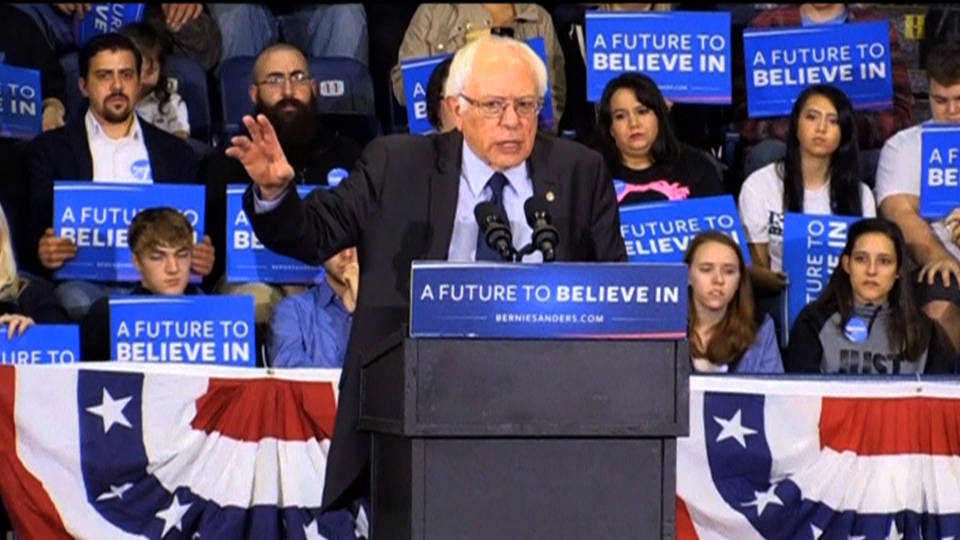
On the Democratic side, polls show Vermont Senator Bernie Sanders and former Secretary of State Hillary Clinton locked in close races in Ohio, Illinois and Missouri. Speaking in Youngstown, Ohio, on Monday, Sanders said he can defeat Donald Trump.
Sen. Bernie Sanders: "One of the arguments made against this campaign is, people say, 'Well, you know, Bernie Sanders, nice idea—nice guy, nice ideas, but he can't win the general election.’ That’s wrong. That is factually incorrect. And I would—all of you, take a look at all of the polls, almost all of the polls that have been taken over the last several months. Last national poll done by NBC, Wall Street Journal, Bernie Sanders versus Donald Trump, Sanders wins by 18 points."
TOPICS:
Bernie Sanders
Hillary Clinton
Democratic Party
2016 Election
North Carolina Authorities Decide Not to Charge Trump with Incitement
Donald Trump has continued to face condemnation for violence at his rallies. In North Carolina, the Cumberland County Sheriff’s Office considered charging the Republican presidential front-runner with inciting a riot after one of his supporters punched a protester in the face during a rally in Fayetteville last week. The office ultimately decided not to move forward with the charges.
TOPICS:
2016 Election
Republican Party
Donald Trump
Trump Continues to Face Protesters on Campaign Trail
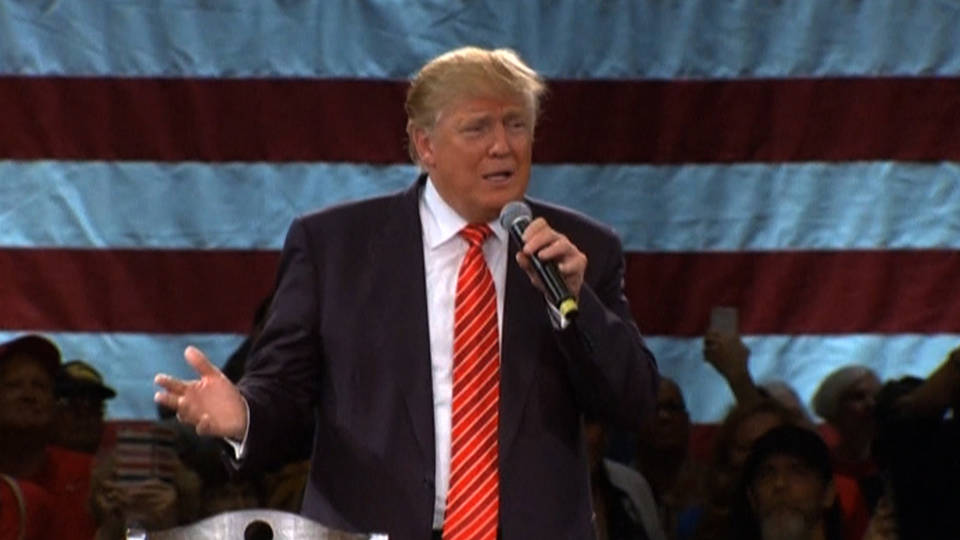
During a campaign stop in Tampa, Florida, on Monday, Trump again faced protests both outside and inside the venue.
Donald Trump: "Ah, get out of here. These people are crazy. They’re crazy. I didn’t know this happened in Tampa. I love Tampa. I didn’t know this happened. All right. They’ll go home—they’ll go home to their moms soon, and they’ll get—let me ask you. You know, I don’t want to ruin somebody’s life, but do we prosecute somebody like that?"
TOPICS:
2016 Election
Republican Party
Donald Trump
Sarah Palin Calls Trump Protests "Punk-ass Thuggery"
Former Republican vice-presidential candidate Sarah Palin joined Trump on stage and condemned the demonstrators who have repeatedly, peacefully disrupted Trump’s rallies.
Sarah Palin: "What we don’t have time for is all that petty, punk-ass little thuggery stuff that’s been going on with these quote-unquote 'protesters,' who are doing nothing but wasting your time and trying to take away your First Amendment rights, your rights to assemble peacefully. And the media being on the thugs’ side, what the heck are you guys thinking, media? It doesn’t make sense."
Staffers Resign from Breitbart News Site, Accusing It of Shilling for Trump
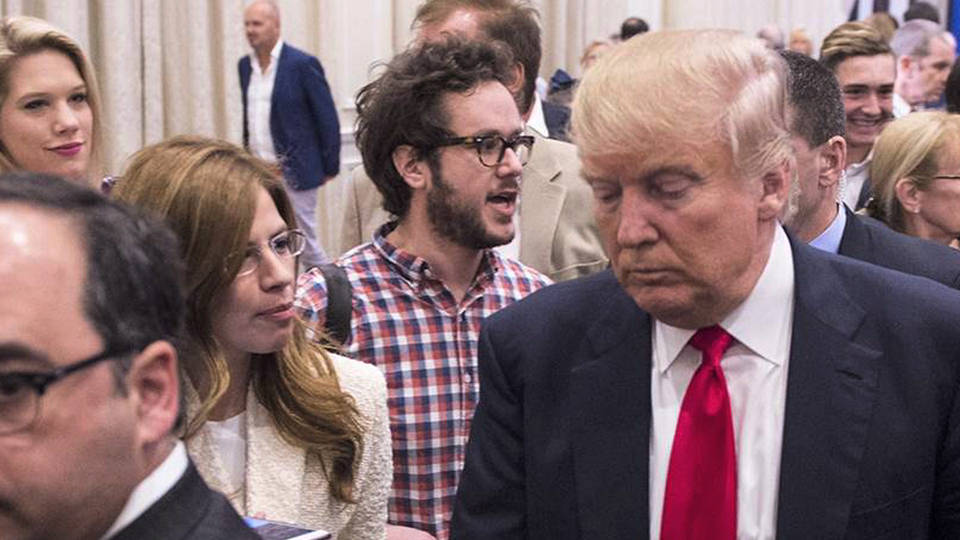
A reporter at the right-wing news site Breitbart has resigned, along with a number of her colleagues, saying the organization has become a shill for Donald Trump. Michelle Fields resigned after accusing Trump’s campaign manager, Corey Lewandowski, of grabbing and shoving her at a Florida rally. The incident was witnessed by a Washington Post journalist. But Breitbart published an article casting doubt on its own reporter’s claims. Speaking on Megyn Kelly’s show on Fox News Monday, Fields said her editors at Breitbart failed to support her.
Michelle Fields: "When this happened, my Washington editor, Matthew Boyle, was telling me, 'Oh, don't worry, this is going to be great, because Donald Trump is going to give us so many exclusives now because they’re going to feel like they have to do it because of what they did.’ This is how my company was looking at this. Instead of saying, 'Wow! What happened? Are you OK? Let's defend you,’ they were thinking that this was a good thing because we would get more access to Donald Trump."
Breitbart spokesperson Kurt Bardella also resigned, saying the outlet had become a "de facto super PAC" for Trump, as did national security reporter Jordan Schachtel, editor Jarrett Stepman and editor-at-large Ben Shapiro. Shapiro told Megyn Kelly why he thinks the shakeup is an important story.
Ben Shapiro: "Well, I mean, I think the idolatrous worship of the Trump campaign by some people in the media, leading to them covering up the truth, is a major story. And as you say, I think it’s, again, a story, because the Trump campaign never acknowledges mistakes, never acknowledges their responsibility for violence, never acknowledges anything that they do wrong. It’s a no-apologies campaign. That’s why he’s popular. But that does have consequences, and it does have victims. You know, in this case, it was just a bruise on the arm. But, you know, there are other cases where it’s more than that."
TOPICS:
2016 Election
Republican Party
Donald Trump
Muslim Student Says Man Shouting "Trump" Attacked Him & Friend
Meanwhile, a Muslim student in Kansas says he and his Latino friend were beaten up over the weekend by a man who shouted "Trump! Trump! Trump!" and racial slurs. Khondoker Usama told news outlets the man shouted, "Trump will take our country from you guys!"
TOPICS:
Donald Trump
Racism
Russia Abruptly Begins to Withdraw Troops from Syria
In a surprise announcement, Russian President Vladimir Putin has said Russia will withdraw the bulk of its forces from Syria. Putin made the announcement Monday, saying the Russian campaign in Syria had largely fulfilled its objective.
President Vladimir Putin: "I believe that the goal set out to the Ministry of Defense and the armed forces has in large part been fulfilled, and that’s why I ordered the Ministry of Defense, as of tomorrow, to start the pullout of the main part of our military grouping from the Syrian Arab Republic."
Russian troops have reportedly already begun to depart Syria, with the first planes leaving earlier today. Russia’s involvement in the conflict helped bolster the regime of Syrian President Bashar al-Assad. U.N. peace envoy Staffan de Mistura said he hoped Russia’s withdrawal would have a "positive impact" on Syrian peace talks now entering their second day in Geneva.
3 Afghans Drown as Refugees Seek Route into Macedonia
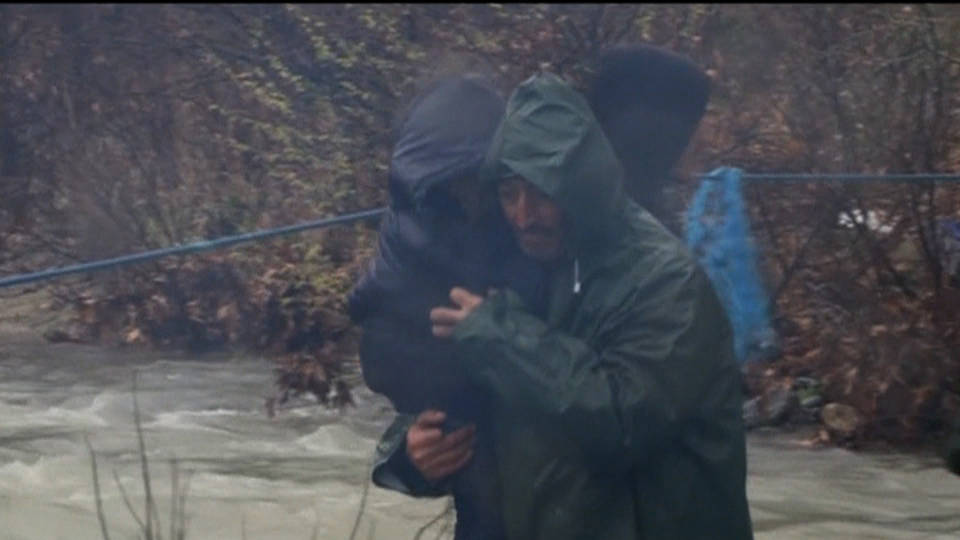
At least three Afghan refugees have drowned while attempting to cross a river from Greece to Macedonia after the closure of the main border left them stranded. The refugees were among about 1,000 who tried to make it to Macedonia amid harsh border restrictions all along the Balkan route. A number of them formed a human chain over coursing river waters to help each other across.
TOPICS:
Refugees
Report: Top U.S. General Proposes Resuming Strikes Against Taliban
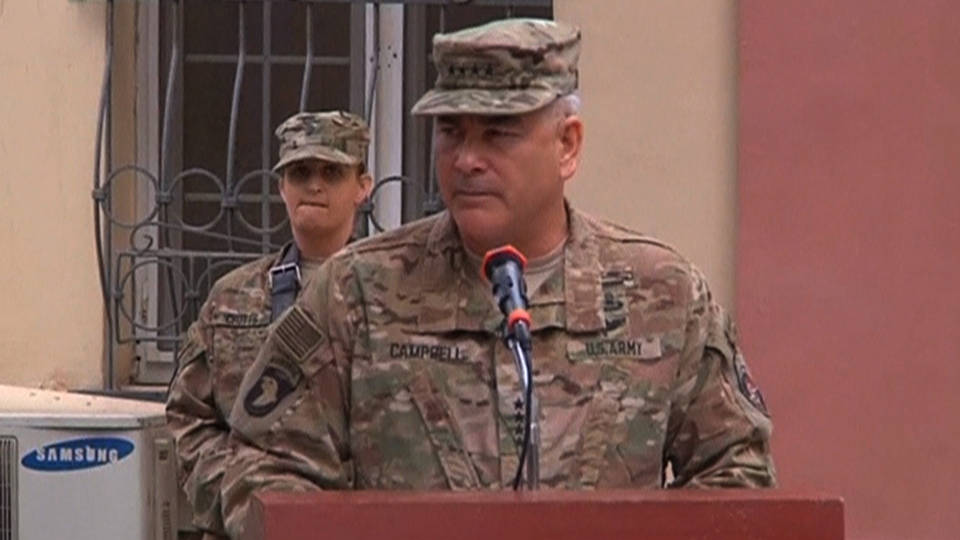
A top U.S. general has proposed resuming offensive strikes against the Taliban in Afghanistan. The Washington Post reports top Pentagon officials have accused General John F. Campbell, who recently left his post as commander of U.S. forces in Afghanistan, of breaking with procedure by forwarding his proposal directly to the White House without the knowledge of Defense Secretary Ashton Carter. Campbell denies the claim. Current policy allows the United States to strike the Taliban only under certain conditions, including if there’s a direct threat to U.S. troops.
TOPICS:
Afghanistan
Germany: Car Bomb Explodes in Berlin, Killing Driver
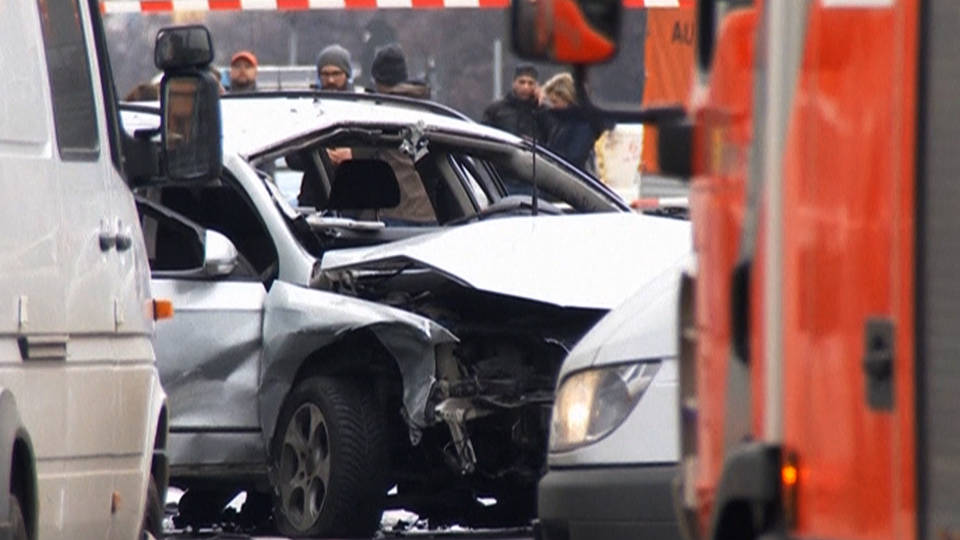
In Berlin, Germany, a car has exploded, killing the driver, authorities say, after a bomb detonated. Few details have been released so far.
TOPICS:
Germany
Bahrain: Police Detain Activist and Her 1-Year-Old Son
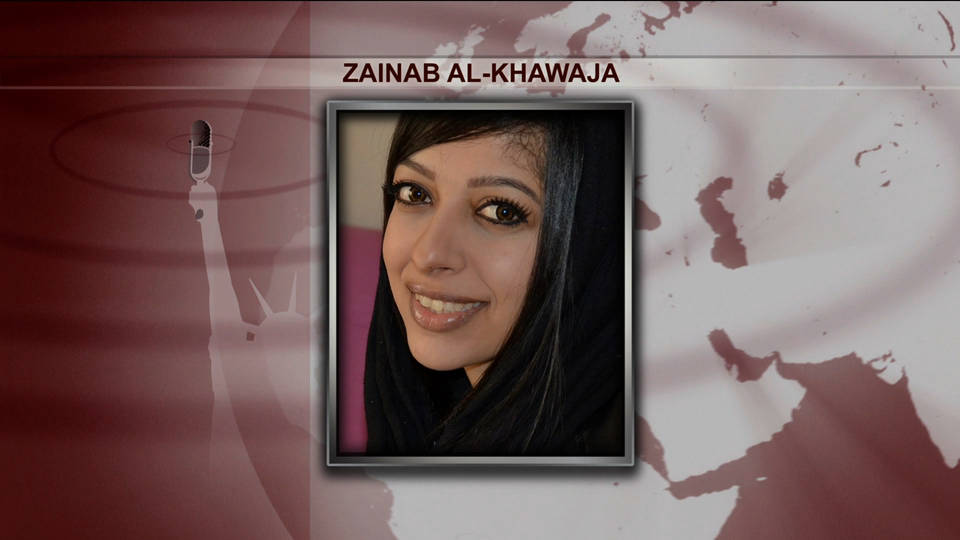
In Bahrain, police have detained a leading human rights activist and her one-year-old son. Zainab Alkhawaja is the daughter of longtime activist Abdulhadi Alkhawaja, who is imprisoned under a life sentence. Zainab’s arrest came on the fifth anniversary of a violent crackdown on the Arab Spring uprising by the Shiite majority against the Sunni monarchy in Bahrain. Human rights groups have called for her immediate release. Bahrain is a close U.S. ally, home to the Navy’s Fifth Fleet.
TOPICS:
Bahrain
Obama Admin to Drop Plan to Allow Oil Drilling Off Southeast U.S.
The Obama administration is reportedly poised to withdraw its plan to allow oil and gas drilling off the coast of the southeastern United States following mass opposition from coastal communities. The New York Times reports the announcement could come as soon as today. Obama’s initial plan to open swaths of the southeastern Atlantic coast to oil drilling was backed by governors and lawmakers in southeastern states, but opposed by more than 100 coastal communities and environmentalists.
Report: 13 Million Could Be Displaced by Sea Level Rise in U.S. by 2100
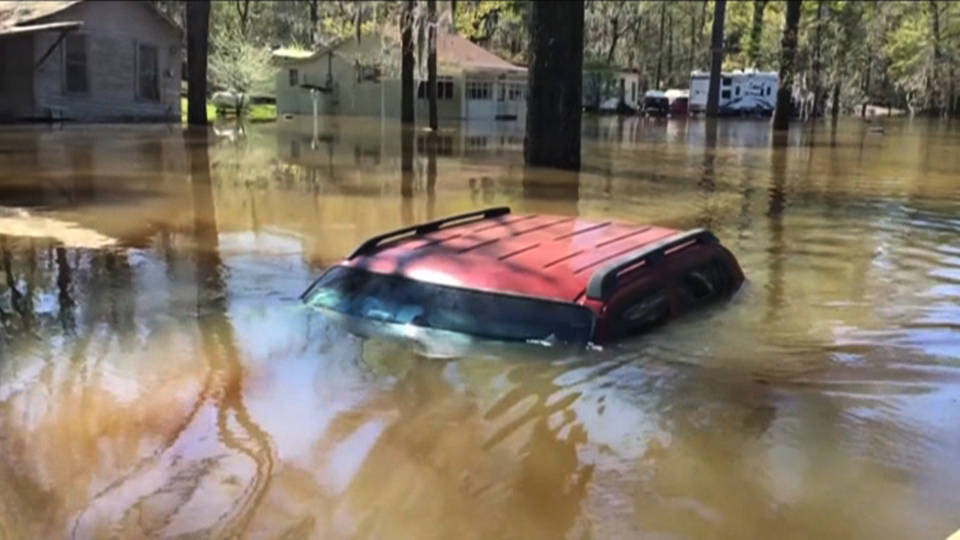
A new study shows the number of people who could be displaced by sea level rise this century in the United States due to global warming is much higher than previously thought, with more than 13 million people at risk, nearly half of them in Florida. Those numbers are about three times higher than previous estimates for displacement. Researcher Deepak Mishra elaborated on the findings.
Deepak Mishra: "I think there’s a certain layered approach that can be—that can stem from this research, for example, if you tell people that, OK, 85 years down the road, 13 million people will be affected if we take the most extreme projection, which is 1.8-meter sea level rise by 2100. But I think we need to take this study forward by doing another study of what is the impact of sea level rise right now in terms of frequent coastal flooding."
The study comes amid devastating flooding in Louisiana that have damaged thousands of homes and caused President Obama to declare a "major disaster."
TOPICS:
Climate Change
Former Brazilian President Lula to Take New Government Post
In Brazil, former President Luiz Inácio Lula da Silva has reportedly accepted a ministerial role in the government of President Dilma Rousseff. Taking the post will grant Lula a degree of legal protection from what he says are politically motivated charges of money laundering. State prosecutors filed for Lula’s arrest last week. Over the weekend, more than a million people took to the streets to protest Dilma Rousseff’s government amid a corruption scandal and economic crisis.
Argentina: Human Rights Groups Call for U.S. to Declassify Records on Dictatorship
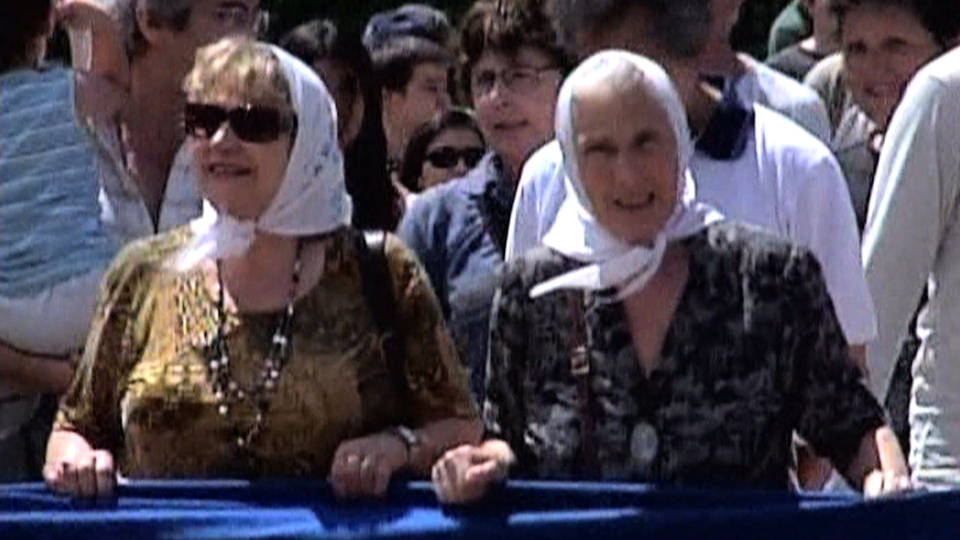
In Argentina, human rights groups have called on the United States to declassify thousands of documents related to Argentina’s military dictatorship as President Obama prepares to visit Argentina next week. Groups including the Grandmothers of the Plaza de Mayo submitted a petition to the U.S. Embassy in Buenos Aires. They hope the documents could help identify missing family members. Gaston Chillier of the Center for Legal and Social Studies said the documents could help compensate for the U.S. role in the so-called dirty war which began 40 years ago.
Gaston Chillier: "I think that the declassification of information in different areas of the region could shed light on serious violations of human rights. In this sense, I think the United States can, in a way, compensate for the role they had at that time. Our Center for Legal and Social Studies has always highlighted the context of (U.S.) support for military dictatorships across the region, including Argentina, but during the (Jimmy) Carter administration, the Embassy was a key location which received a lot of the complaints, and Human Rights Secretary (Patricia) Derian was an important figure in pressuring the Argentine dictatorial government."
TOPICS:
Argentina
Senate Confirms John King as Education Secretary
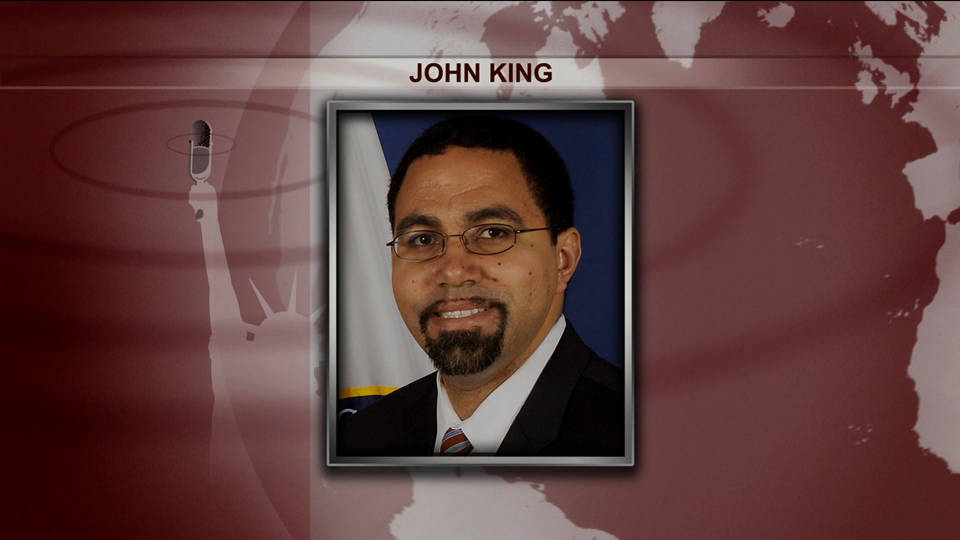
The U.S. Senate has voted to confirm John King Jr. as the new secretary of education. King had been serving as acting secretary since Arne Duncan stepped down at the end of last year. Despite refusing even to consider any Supreme Court nominee, some Senate Republicans voted to confirm King, saying they wanted a secretary who was accountable to the Senate. King previously served as New York state’s education commissioner, where he came under criticism for advocating high-stakes standardized testing linked to teacher evaluations, policies that sparked a historic statewide testing boycott.
TOPICS:
Education
NFL Official Admits Link Between Football and Brain Disease for First Time
In sports news, a top National Football League official has for the first time publicly acknowledged the link between football-related head injuries and the brain disease chronic traumatic encephalopathy, or CTE. The NFL has never admitted the link before. Jeff Miller, NFL senior vice president for health and safety, was asked by a congressmember if there is an established connection between CTE and football. He responded, "The answer to that question is certainly yes."
$6 Million Settlement Reached in Police Shooting of DJ Henry
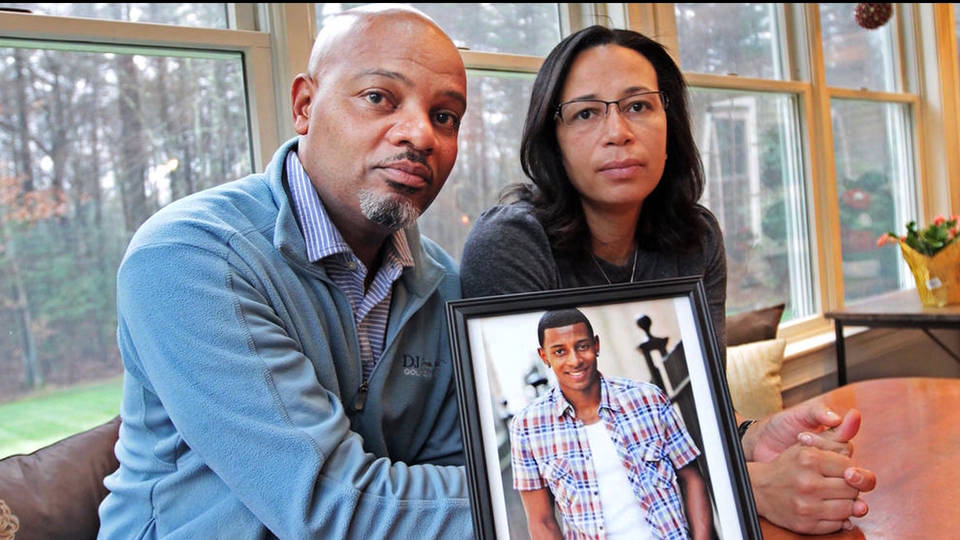
And the family of an African-American college student fatally shot by police in Pleasantville, New York, in 2010 has reached a $6 million settlement with the village and the officer. DJ Henry was shot while driving away from a party. Authorities said a police officer approached Henry’s car. A friend who was with him believed the officer was telling them to move the car. As Henry pulled away, authorities said, the officer told him to stop and stepped in front of the car. Authorities found Henry’s car was braking when it struck the officer, Aaron Hess, who wound up on the hood and fired through the windshield, killing Henry. A number of witnesses said Hess jumped onto the hood. A grand jury declined to indict him.
TOPICS:
Police Brutality
Police
New York
Donate today:
Follow:


WEB EXCLUSIVE

Occupy Activists Return to Zuccotti to Phone Bank for Sanders, Sparking Debate over Political Role
WEB EXCLUSIVE

The Life and Legacy of Berta Cáceres
WORK WITH DN!

Broadcast Engineer
Director of Finance and Operations
Director of Development
---------------------
207 West 25th Street, 11th Floor,
New York, New York 10001, United States
---------------------
---------------------

No comments:
Post a Comment