The Upper Room Daily Reflections of Nashville, Tennessee, United States "Letting Christ In" for Sunday, 28 February 2016

Today’s Reflection


THE DECISION to let go and let God is not something we do once and for all. Our initial surrender to Christ allows him, as it were, entrance through the front door of our house. It expresses our willingness to let God transform, if necessary, the whole of our personal, sexual, financial, and social lives. But it is only the beginning of the faith journey. In order to live fully in the house of transformation, we need to turn over to Christ, room by room, every aspect of our personalities, especially those rooms hidden from public view. As we do this, we learn that conversion is a lifelong process that takes place gradually, one day at a time.[Trevor Hudson, Hope Beyond Your Tears]
From page 77 of Hope Beyond Your Tears: Experiencing Christ’s Healing Love by Trevor Hudson. Copyright © 2012 by Trevor Hudson. All rights reserved. Used by permission of Upper Room Books.http://bookstore.upperroom.org/ Learn more about or purchase this book.
Today’s Question:
What part of you is ready to receive Christ?
THE DECISION to let go and let God is not something we do once and for all. Our initial surrender to Christ allows him, as it were, entrance through the front door of our house. It expresses our willingness to let God transform, if necessary, the whole of our personal, sexual, financial, and social lives. But it is only the beginning of the faith journey. In order to live fully in the house of transformation, we need to turn over to Christ, room by room, every aspect of our personalities, especially those rooms hidden from public view. As we do this, we learn that conversion is a lifelong process that takes place gradually, one day at a time.[Trevor Hudson, Hope Beyond Your Tears]
From page 77 of Hope Beyond Your Tears: Experiencing Christ’s Healing Love by Trevor Hudson. Copyright © 2012 by Trevor Hudson. All rights reserved. Used by permission of Upper Room Books.http://bookstore.upperroom.org/ Learn more about or purchase this book.
Today’s Question:
What part of you is ready to receive Christ?
Today’s Scripture:
He replied, ‘Sir, let it alone for one more year, until I dig around it and put manure on it. If it bears fruit next year, well and good; but if not, you can cut it down.'”[Luke 13:8-9, NRSV]
This Week: pray for those who lack access to clean water.
---------------------
He replied, ‘Sir, let it alone for one more year, until I dig around it and put manure on it. If it bears fruit next year, well and good; but if not, you can cut it down.'”[Luke 13:8-9, NRSV]
This Week: pray for those who lack access to clean water.
---------------------
The Upper Room Daily Reflections of Nashville, Tennessee, United States "Healing Reminders of God’s Love" for Saturday, 27 February 2016
Today’s Reflection:
From page 112 of A Guide to Prayer for Ministers and Other Servants by Rueben P. Job and Norman Shawchuck. Copyright © 1983 by The Upper Room. All rights reserved. Used by permission of Upper Room Books. http://bookstore.upperroom.org/ Learn more about or purchase this book.
Today’s Question:
Pray the prayer at the end of today’s reading. ALMIGHTY GOD, by the power of your Holy Spirit open our eyes, ears, hearts, and very lives to your presence so that today we may worship and serve you in faithfulness, and be blessing and healing reminders of your love to all whose lives we touch. We offer our prayers in the name of Christ. Amen.
Today’s Scripture:
Then he told this parable: “A man had a fig tree planted in his vineyard; and he came looking for fruit on it and found none.”[Luke 13:6, NRSV]
This Week: pray for those who lack access to clean water.
---------------------
The Upper Room Daily Reflections of Nashville, Tennessee, United States "Our Lives Are Joined to Christ" for Friday, 26 February 2016
Today’s Reflection:

Prayer
Join my life to you, O God, in ways ever deeper and ever stronger. And may my living draw from you the hope and love that renew and transform me ever more in your image. In Jesus Christ. Amen.[John Indermark, Parables and Passion]
From page 35 of Parables and Passion: Jesus’ Stories for the Days of Lent by John Indermark. Copyright © 2006 by John Indermark. All rights reserved. Used by permission of Upper Room Books. http://bookstore.upperroom.org/ Learn more about or purchase this book.
Today’s Question:
Pray the prayer at the end of today’s reading. Join my life to you, O God, in ways ever deeper and ever stronger. And may my living draw from you the hope and love that renew and transform me ever more in your image. In Jesus Christ. Amen.
Today’s Scripture:
No testing has overtaken you that is not common to everyone. God is faithful, and he will not let you be tested beyond your strength, but with the testing he will also provide the way out so that you may be able to endure it.[1 Corinthians 10:13, NRSV]
This Week: pray for those who lack access to clean water.
LENT PROVIDES a wonderful opportunity to let the unselfish and other-centered kind of love that took Jesus to the cross flow more freely throughout our lives. Then our broken lives will overflow in love toward God and our neighbor.[Trevor Hudson, Pauses for Lent]
From page 45 of Pauses for Lent: 40 Words for 40 Days by Trevor Hudson. Copyright © 2015 by Trevor Hudson. All rights reserved. Used by permission of Upper Room Books. http://bookstore.upperroom.org/Learn more about or purchase this book.
Today’s Question:
Daily Practice:
One practical way for the love of Christ to flow through you is to extend forgiveness to someone who has hurt you. Think of a person today to whom you might offer forgiveness. How can you show the love of Christ to this person?
Today’s Scripture:
I do not want you to be unaware, brothers and sisters, that our ancestors were all under the cloud, and all passed through the sea, and all were baptized into Moses in the cloud and in the sea, and all ate the same spiritual food,[1 Corinthians 10:1-3, NRSV]
This Week: pray for those who lack access to clean water.
I WONDER: Can it be that many Christians have lost the freedom that comes with grace because we have lost the ability to acknowledge our sins and therefore cannot really experience or express our forgiveness? … We are no longer certain of how to converse about the brokenness that affects us one and all. While many maintain that the last century has been quite arguably the most evil age in human history, even some secular observers have noted that we no longer have a working vocabulary to discuss it. …
The problem seems especially acute of late, but warnings were sounded generations ago – especially in the work of Dietrich Bonhoeffer, who coined the term “cheap grace”:
Cheap grace means grace as a doctrine, a principle. … It means forgiveness of sins proclaimed as a general truth. … no contrition is required, still less any real desire to be delivered from sin.
In our own time, cheap grace seems to be expressed mainly in terms of “acceptance” and “tolerance.” All are beautiful in their own way; each and every one is fine just the way he or she is. The problem with this kind of language is that it is demonstrably false. People already know, deep down, that they are flawed, that their lives are full of misdeeds and missed opportunities, that they have fallen short not only of the glory of God but also of their own expectation. We experience sin, which is to say we sin and are sinned against – but we have lost a way to talk about it. And if we cannot talk about it, we cannot be freed of the experience or its consequences.[Thomas R. Steagald, Shadows, Darkness, and Dawn]
From pages 76-77 of Shadows, Darkness, and Dawn: A Lenten Journey with Jesus by Thomas R. Steagald. Copyright © 2010 by Thomas R. Steagald. All rights reserved. Used by permission of Upper Room Books. http://bookstore.upperroom.org/ Learn more about or purchase this book.
Today’s Question:
Do you find it difficult to talk about your sins?
Today’s Scripture:
O God, you are my God, I seek you, my soul thirsts for you; my flesh faints for you, as in a dry and weary land where there is no water.[Psalm 63:1, NRSV]
This Week: pray for those who lack access to clean water.
LENT LASTS FORTY DAYS, a long time, because we need a good stretch of time to step back and be neither here nor there. We need plenty of time to drop our old ways of doing things and live in-between, not yet knowing what the new ways of doing things will be. Living in-between can be scary. But taking the full forty days is important; not to do so would be like denying ourselves a spiritual adventure, the gift of in-between time.[Sarah Parsons, A Clearing Season: Reflections for Lent]
From page 20 of A Clearing Season: Reflections for Lent by Sarah Parsons. Copyright © 2005 by Sarah Parsons. All rights reserved. Used by permission of Upper Room Books. http://bookstore.upperroom.org/ Learn more about or purchase this book.
Today’s Question:
Describe the spiritual adventure that Lent is allowing you.
Today’s Scripture:
Seek the LORD while he may be found, call upon him while he is near.[Isaiah 55:6, NRSV]
This Week: pray for those who lack access to clean water.
22 Then one of the leaders of the synagogue named Jairus came and, when he saw him, fell at his feet 23 and begged him repeatedly, “My little daughter is at the point of death. Come and lay your hands on her, so that she may be made well, and live.” 24 So he went with him.
And a large crowd followed him and pressed in on him.
35 While he was still speaking, some people came from the leader’s house to say, “Your daughter is dead. Why trouble the teacher any further?” 36 But overhearing what they said, Jesus said to the leader of the synagogue, “Do not fear, only believe.” 37 He allowed no one to follow him except Peter, James, and John, the brother of James. 38 When they came to the house of the leader of the synagogue, he saw a commotion, people weeping and wailing loudly. 39 When he had entered, he said to them, “Why do you make a commotion and weep? The child is not dead but sleeping.” 40 And they laughed at him. Then he put them all outside, and took the child’s father and mother and those who were with him, and went in where the child was. 41 He took her by the hand and said to her, “Talitha cum,” which means, “Little girl, get up!” 42 And immediately the girl got up and began to walk about (she was twelve years of age). At this they were overcome with amazement. 43 He strictly ordered them that no one should know this, and told them to give her something to eat.[Mark 5:22-24, 35-43,NRSV]
HAVE YOU EVER given up? We’ve all had those moments when an event or action seems inevitable, and we surrender to the outcome of a situation. Some may call it “making peace with” or “finding closure.”
The bearers of bad news have come to share this point of no return with Jairus. According to them, it is all over. Nothing more can be done to save his daughter. He has to make peace with this event and move on with his life – now without his beloved child. Jesus surprises these realists. His command to the girl shows us that no situation lies beyond God’s reach. …
This miracle reminds us of our own fallible beliefs and conclusions. In this Lenten journey God can surprise us with a few words: “Little girl, get up!”
When all seems lost and beyond our control: “Get up!” When life offers the finality of a lost job, forgotten hope, failed marriage: “Get up!” These words, when spoken by the divine voice, silence the critics yet. No one can force or persuade God to perform this resurrection; these words come from God in God’s own time.[Wessel Bentle]
From pages 32-33 of The Miracles of Jesus: Meditations and Prayers for Lent by Wessel Bentley. Copyright © 2012 by Wessel Bentley. All rights reserved. Used by permission of Upper Room Books. http://bookstore.upperroom.org/ Learn more about or purchase this book.
Today’s Question:
Consider your words today. Surrender yourself to the possibility that things may not be as fixed or absolute as you have imagined. Lent fosters an openness to being astonished by God’s self-revelation.
Today’s Scripture:
Ho, everyone who thirsts, come to the waters; and you that have no money, come, buy and eat! Come, buy wine and milk without money and without price.[Isaiah 55:1, NRSV]
This Week: pray for those who lack access to clean water
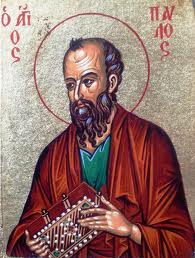 Saints, Inc.:
This week we remember: Polycarp (February 23).
Polycarp lived between 70 and 155 A.D., and was a disciple of St. John so he heard firsthand accounts of Jesus' life, death, and resurrection. He embraced Christianity at a young age. Polycarp became one of the most important Christian leaders of the early church as Bishop of Smyrna. He was one of the first Christians whose writing (Letter to the Philippians) survives.
After decades of serving as Bishop, Polycarp was arrested at the age of eighty-six. To save his life he had only to say that Caesar was Lord and to denounce Christ. He refused. "Eighty-six years I have served Christ, and He never did me any wrong. How can I blaspheme my King who saved me?" Because he stayed true to his Christian faith, Polycarp was burned alive. Some who saw the execution said that the fire made a wall around the martyr's body and did not burn him. A soldier stabbed him to death.
If Polycarp had taken the Spiritual Types Test he probably would have been a lover. Polycarp is remembered on February 23.
Today’s Scripture:
No testing has overtaken you that is not common to everyone. God is faithful, and he will not let you be tested beyond your strength, but with the testing he will also provide the way out so that you may be able to endure it.[1 Corinthians 10:13, NRSV]
This Week: pray for those who lack access to clean water.
---------------------
The Upper Room Daily Reflections of Nashville, Tennessee, United States "Unselfish Love" for Thursday, 25 February 2016
Today’s Reflection:
From page 45 of Pauses for Lent: 40 Words for 40 Days by Trevor Hudson. Copyright © 2015 by Trevor Hudson. All rights reserved. Used by permission of Upper Room Books. http://bookstore.upperroom.org/Learn more about or purchase this book.
Today’s Question:
Daily Practice:
One practical way for the love of Christ to flow through you is to extend forgiveness to someone who has hurt you. Think of a person today to whom you might offer forgiveness. How can you show the love of Christ to this person?
Today’s Scripture:
I do not want you to be unaware, brothers and sisters, that our ancestors were all under the cloud, and all passed through the sea, and all were baptized into Moses in the cloud and in the sea, and all ate the same spiritual food,[1 Corinthians 10:1-3, NRSV]
This Week: pray for those who lack access to clean water.
---------------------
The Upper Room Daily Reflections of Nashville, Tennessee, United States "Cheap Grace" for Wednesday, 24 February 2016
Today’s Reflection:
The problem seems especially acute of late, but warnings were sounded generations ago – especially in the work of Dietrich Bonhoeffer, who coined the term “cheap grace”:
Cheap grace means grace as a doctrine, a principle. … It means forgiveness of sins proclaimed as a general truth. … no contrition is required, still less any real desire to be delivered from sin.
In our own time, cheap grace seems to be expressed mainly in terms of “acceptance” and “tolerance.” All are beautiful in their own way; each and every one is fine just the way he or she is. The problem with this kind of language is that it is demonstrably false. People already know, deep down, that they are flawed, that their lives are full of misdeeds and missed opportunities, that they have fallen short not only of the glory of God but also of their own expectation. We experience sin, which is to say we sin and are sinned against – but we have lost a way to talk about it. And if we cannot talk about it, we cannot be freed of the experience or its consequences.[Thomas R. Steagald, Shadows, Darkness, and Dawn]
From pages 76-77 of Shadows, Darkness, and Dawn: A Lenten Journey with Jesus by Thomas R. Steagald. Copyright © 2010 by Thomas R. Steagald. All rights reserved. Used by permission of Upper Room Books. http://bookstore.upperroom.org/ Learn more about or purchase this book.
Today’s Question:
Do you find it difficult to talk about your sins?
Today’s Scripture:
O God, you are my God, I seek you, my soul thirsts for you; my flesh faints for you, as in a dry and weary land where there is no water.[Psalm 63:1, NRSV]
This Week: pray for those who lack access to clean water.
---------------------
The Upper Room Daily Reflections of Nashville, Tennessee, United States "Living In-Between" for Tuesday, 23 February 2016
Today’s Reflection:
From page 20 of A Clearing Season: Reflections for Lent by Sarah Parsons. Copyright © 2005 by Sarah Parsons. All rights reserved. Used by permission of Upper Room Books. http://bookstore.upperroom.org/ Learn more about or purchase this book.
Today’s Question:
Describe the spiritual adventure that Lent is allowing you.
Today’s Scripture:
Seek the LORD while he may be found, call upon him while he is near.[Isaiah 55:6, NRSV]
This Week: pray for those who lack access to clean water.
--------------------
The Upper Room Daily Reflections of Nashville, Tennessee, United States "Get Up!" for Monday, 22 February 2016
Today’s Reflection:
And a large crowd followed him and pressed in on him.
35 While he was still speaking, some people came from the leader’s house to say, “Your daughter is dead. Why trouble the teacher any further?” 36 But overhearing what they said, Jesus said to the leader of the synagogue, “Do not fear, only believe.” 37 He allowed no one to follow him except Peter, James, and John, the brother of James. 38 When they came to the house of the leader of the synagogue, he saw a commotion, people weeping and wailing loudly. 39 When he had entered, he said to them, “Why do you make a commotion and weep? The child is not dead but sleeping.” 40 And they laughed at him. Then he put them all outside, and took the child’s father and mother and those who were with him, and went in where the child was. 41 He took her by the hand and said to her, “Talitha cum,” which means, “Little girl, get up!” 42 And immediately the girl got up and began to walk about (she was twelve years of age). At this they were overcome with amazement. 43 He strictly ordered them that no one should know this, and told them to give her something to eat.[Mark 5:22-24, 35-43,NRSV]
HAVE YOU EVER given up? We’ve all had those moments when an event or action seems inevitable, and we surrender to the outcome of a situation. Some may call it “making peace with” or “finding closure.”
The bearers of bad news have come to share this point of no return with Jairus. According to them, it is all over. Nothing more can be done to save his daughter. He has to make peace with this event and move on with his life – now without his beloved child. Jesus surprises these realists. His command to the girl shows us that no situation lies beyond God’s reach. …
This miracle reminds us of our own fallible beliefs and conclusions. In this Lenten journey God can surprise us with a few words: “Little girl, get up!”
When all seems lost and beyond our control: “Get up!” When life offers the finality of a lost job, forgotten hope, failed marriage: “Get up!” These words, when spoken by the divine voice, silence the critics yet. No one can force or persuade God to perform this resurrection; these words come from God in God’s own time.[Wessel Bentle]
From pages 32-33 of The Miracles of Jesus: Meditations and Prayers for Lent by Wessel Bentley. Copyright © 2012 by Wessel Bentley. All rights reserved. Used by permission of Upper Room Books. http://bookstore.upperroom.org/ Learn more about or purchase this book.
Today’s Question:
Consider your words today. Surrender yourself to the possibility that things may not be as fixed or absolute as you have imagined. Lent fosters an openness to being astonished by God’s self-revelation.
Today’s Scripture:
Ho, everyone who thirsts, come to the waters; and you that have no money, come, buy and eat! Come, buy wine and milk without money and without price.[Isaiah 55:1, NRSV]
This Week: pray for those who lack access to clean water
--------------------
Did You Know?
In need of prayer? The Upper Room Living Prayer Center is a 7-day-a-week intercessory prayer ministry staffed by trained volunteers. Call 1-800-251-2468 or visit The Living Prayer Center web site.
---------------------
Did You Know?
In need of prayer? The Upper Room Living Prayer Center is a 7-day-a-week intercessory prayer ministry staffed by trained volunteers. Call 1-800-251-2468 or visit The Living Prayer Center web site.
---------------------
Saints, Inc.:This week we remember: Polycarp (February 23).
Polycarp lived between 70 and 155 A.D., and was a disciple of St. John so he heard firsthand accounts of Jesus' life, death, and resurrection. He embraced Christianity at a young age. Polycarp became one of the most important Christian leaders of the early church as Bishop of Smyrna. He was one of the first Christians whose writing (Letter to the Philippians) survives.
After decades of serving as Bishop, Polycarp was arrested at the age of eighty-six. To save his life he had only to say that Caesar was Lord and to denounce Christ. He refused. "Eighty-six years I have served Christ, and He never did me any wrong. How can I blaspheme my King who saved me?" Because he stayed true to his Christian faith, Polycarp was burned alive. Some who saw the execution said that the fire made a wall around the martyr's body and did not burn him. A soldier stabbed him to death.
If Polycarp had taken the Spiritual Types Test he probably would have been a lover. Polycarp is remembered on February 23.
---------------------
Lectionary Readings
Sunday, 28 February 2016
(Courtesy of Vanderbilt Divinity Library)
Isaiah 55:1-9
Psalm 63:1-8
1 Corinthians 10:1-13
Luke 13:1-9
"This Sunday, February 28, 2016"
Third Sunday in Lent: Isaiah 55:1-9; Psalm 63:1-8; 1 Corinthians 10:1-13; Luke 13:1-9
Sunday, 28 February 2016
(Courtesy of Vanderbilt Divinity Library)
Isaiah 55:1-9
Psalm 63:1-8
1 Corinthians 10:1-13
Luke 13:1-9
"This Sunday, February 28, 2016"
Third Sunday in Lent: Isaiah 55:1-9; Psalm 63:1-8; 1 Corinthians 10:1-13; Luke 13:1-9
Scritpure Lessons:
Isaiah 55:1 “All you who are thirsty, come to the water!
You without money, come, buy, and eat!
Yes, come! Buy wine and milk
without money — it’s free!
2 Why spend money for what isn’t food,
your wages for what doesn’t satisfy?
Listen carefully to me, and you will eat well,
you will enjoy the fat of the land.
3 Open your ears, and come to me;
listen well, and you will live —
I will make an everlasting covenant with you,
the grace I assured David.
4 I have given him as a witness to the peoples,
a leader and lawgiver for the peoples.
5 You will summon a nation you do not know,
and a nation that doesn’t know you will run to you,
for the sake of Adonai your God,
the Holy One of Isra’el, who will glorify you.”
6 Seek Adonai while he is available,
call on him while he is still nearby.
7 Let the wicked person abandon his way
and the evil person his thoughts;
let him return to Adonai,
and he will have mercy on him;
let him return to our God,
for he will freely forgive.
8 “For my thoughts are not your thoughts,
and your ways are not my ways,” says Adonai.
9 “As high as the sky is above the earth
are my ways higher than your ways,
and my thoughts than your thoughts.
Psalm 63:1 (0) A psalm of David, when he was in the desert of Y’hudah:
2 (1) O God, you are my God;
I will seek you eagerly.
My heart thirsts for you,
my body longs for you
in a land parched and exhausted,
where no water can be found.
3 (2) I used to contemplate you in the sanctuary,
seeing your power and glory;
4 (3) for your grace is better than life.
My lips will worship you.
5 (4) Yes, I will bless you as long as I live;
in your name I will lift up my hands.
6 (5) I am as satisfied as with rich food;
my mouth praises you with joy on my lips
7 (6) when I remember you on my bed
and meditate on you in the night watches.
8 (7) For you have been my help;
in the shadow of your wings I rejoice;
1 Corinthians 10:1 For, brothers, I don’t want you to miss the significance of what happened to our fathers. All of them were guided by the pillar of cloud, and they all passed through the sea, 2 and in connection with the cloud and with the sea they all immersed themselves into Moshe, 3 also they all ate the same food from the Spirit, 4 and they all drank the same drink from the Spirit — for they drank from a Spirit-sent Rock which followed them, and that Rock was the Messiah. 5 Yet with the majority of them God was not pleased, so their bodies were strewn across the desert.
6 Now these things took place as prefigurative historical events, warning us not to set our hearts on evil things as they did. 7 Don’t be idolaters, as some of them were — as the Tanakh puts it, “The people sat down to eat and drink, then got up to indulge in revelry.”[1 Corinthians 10:7 Exodus 32:6] 8 And let us not engage in sexual immorality, as some of them did, with the consequence that 23,000 died in a single day. 9 And let us not put the Messiah to the test, as some of them did, and were destroyed by snakes. 10 And don’t grumble, as some of them did, and were destroyed by the Destroying Angel.
11 These things happened to them as prefigurative historical events, and they were written down as a warning to us who are living in the acharit-hayamim. 12 Therefore, let anyone who thinks he is standing up be careful not to fall! 13 No temptation has seized you beyond what people normally experience, and God can be trusted not to allow you to be tempted beyond what you can bear. On the contrary, along with the temptation he will also provide the way out, so that you will be able to endure.
Luke 13:1 Just then, some people came to tell Yeshua about the men from the Galil whom Pilate had slaughtered even while they were slaughtering animals for sacrifice. 2 His answer to them was, “Do you think that just because they died so horribly, these folks from the Galil were worse sinners than all the others from the Galil? 3 No, I tell you. Rather, unless you turn to God from your sins, you will all die as they did!
4 “Or what about those eighteen people who died when the tower at Shiloach fell on them? Do you think they were worse offenders than all the other people living in Yerushalayim? 5 No, I tell you. Rather, unless you turn from your sins, you will all die similarly.”
6 Then Yeshua gave this illustration: “A man had a fig tree planted in his vineyard, and he came looking for fruit but didn’t find any. 7 So he said to the man who took care of the vineyard, ‘Here, I’ve come looking for fruit on this fig tree for three years now without finding any. Cut it down — why let it go on using up the soil?’ 8 But he answered, ‘Sir, leave it alone one more year. I’ll dig around it and put manure on it. 9 If it bears fruit next year, well and good; if not, you will have it cut down then.’”
John Wesley's Notes-Commentary for Isaiah 55:1-9
Verse 1
[1] Ho, every one that thirsteth, come ye to the waters, and he that hath no money; come ye, buy, and eat; yea, come, buy wine and milk without money and without price.
Thirsteth — For the grace of God and the blessings of the gospel. This thirst implies a vehement, and active, and restless desire after it.
No money — Those who are most worthless and wicked, if they do but thirst may be welcome.
Buy — Procure or receive that which is freely offered.
Wine and milk — All gospel-blessings; in particular, that peace and joy in the Holy Ghost, which are better than wine, and that love of God which nourishes the soul, as milk does the body.
Verse 2
[2] Wherefore do ye spend money for that which is not bread? and your labour for that which satisfieth not? hearken diligently unto me, and eat ye that which is good, and let your soul delight itself in fatness.
Money — All your time, and strength, and cost.
Not bread — For those things which can never nourish or satisfy you, such as worldly goods, or pleasures.
Eat ye — That which is truly and solidly, and everlastingly good.
In fatness — In this pleasant food of gospel-enjoyments.
Verse 3
[3] Incline your ear, and come unto me: hear, and your soul shall live; and I will make an everlasting covenant with you, even the sure mercies of David.
An everlasting covenant — That everlasting covenant of grace and peace which I made with Abraham, and his seed.
Of David — Even that covenant which was made first with Abraham, and then with David, concerning those glorious and sure blessings which God hath promised to his people, one and the chief of which was giving Christ to die for their sins. David here seems to be put for the son of David.
Verse 4
[4] Behold, I have given him for a witness to the people, a leader and commander to the people.
Behold — I have appointed, and will in due time actually give.
Him — The David last mentioned, even Christ.
A witness — To declare the will of God concerning the duty and salvation of men, to bear witness to truth, to confirm God's promises, and, among others, those which respect the calling of the Gentiles: to be a witness of both parties of that covenant made between God and men.
The people — To all people.
Verse 5
[5] Behold, thou shalt call a nation that thou knowest not, and nations that knew not thee shall run unto thee because of the LORD thy God, and for the Holy One of Israel; for he hath glorified thee.
Thou — Thou, O Messiah.
Call — To the knowledge of thyself.
Knewest not — With that special knowledge which implies approbation.
Because — Because the Lord shall by many tokens, manifest himself to be thy God, and thee to be his son and faithful servant.
Glorify thee — By confirming thy word with illustrious signs and miracles, and particularly by thy resurrection, and glorious ascension.
Verse 6
[6] Seek ye the LORD while he may be found, call ye upon him while he is near:
Seek — Labour to get the knowledge of God's will, and to obtain his grace and favour.
While — In this day of grace, while he offers mercy and reconciliation.
Near — Ready and desirous to receive you to mercy.
Verse 7
[7] Let the wicked forsake his way, and the unrighteous man his thoughts: and let him return unto the LORD, and he will have mercy upon him; and to our God, for he will abundantly pardon.
Return — By sincere repentance, and faith.
Verse 8
[8] For my thoughts are not your thoughts, neither are your ways my ways, saith the LORD.
For — If any man injure you, especially if he do it greatly and frequently, you are slow and backward to forgive him. But I am ready to forgive all penitents, how many, and great, and numberless soever their sins be.
Psalm 63:1-8
Verse 1
[1] O God, thou art my God; early will I seek thee: my soul thirsteth for thee, my flesh longeth for thee in a dry and thirsty land, where no water is;
Early — Heb. in the morning, Which implies the doing it with diligence and speed.
Thirsteth — For the enjoyment of thee in thy house and ordinances.
Flesh — The desire of my soul, is so vehement, that my very body feels the effects of it.
No water — In a land where I want the refreshing waters of the sanctuary.
Verse 2
[2] To see thy power and thy glory, so as I have seen thee in the sanctuary.
To see — To enjoy.
Power — The powerful and glorious effects of thy gracious presence.
Verse 5
[5] My soul shall be satisfied as with marrow and fatness; and my mouth shall praise thee with joyful lips:
Satisfied — When thou shalt fulfil my earnest desire of enjoying thee in the sanctuary.
1 Corinthians 10:1-13
Verse 1
[1] Moreover, brethren, I would not that ye should be ignorant, how that all our fathers were under the cloud, and all passed through the sea;
Now — That ye may not become reprobates, consider how highly favoured your fathers were, who were God's elect and peculiar people, and nevertheless were rejected by him. They were all under the cloud - That eminent token of God's gracious presence, which screened them from the heat of the sun by day, and gave them light by night.
And all passed through the sea — God opening a way through the midst of the waters. Exodus 13:21; Exodus 14:22
Verse 2
[2] And were all baptized unto Moses in the cloud and in the sea;
And were all, as it were, baptized unto Moses - initiated into the religion which he taught them.
In the cloud and in the sea — Perhaps sprinkled here and there with drops of water from the sea or the cloud, by which baptism might be the more evidently signified.
Verse 3
[3] And did all eat the same spiritual meat;
And all ate the same manna, termed spiritual meat, as it was typical, 1. Of Christ and his spiritual benefits: 2. Of the sacred bread which we eat at his table. Exodus 16:15.
Verse 4
[4] And did all drink the same spiritual drink: for they drank of that spiritual Rock that followed them: and that Rock was Christ.
And all drank the same spiritual drink — Typical of Christ, and of that cup which we drink. For they drank out of the spiritual or mysterious rock, the wonderful streams of which followed them in their several journeyings, for many years, through the wilderness. And that rock was a manifest type of Christ - The Rock of Eternity, from whom his people derive those streams of blessings which follow them through all this wilderness. Exodus 17:6.
Verse 5
[5] But with many of them God was not well pleased: for they were overthrown in the wilderness.
Yet — Although they had so many tokens of the divine presence.
They were overthrown — With the most terrible marks of his displeasure.
Verse 6
[6] Now these things were our examples, to the intent we should not lust after evil things, as they also lusted.
Now these things were our examples — Showing what we are to expect if, enjoying the like benefits, we commit the like sins. The benefits are set down in the same order as by Moses in Exodus; the sins and punishments in a different order; evil desire first, as being the foundation of all; next, idolatry, 1 Corinthians 10:7,14; then fornication, which usually accompanied it, 1 Corinthians 10:8; the tempting and murmuring against God, in the following verses.
As they desired — Flesh, in contempt of manna. Numbers 11:4
Verse 7
[7] Neither be ye idolaters, as were some of them; as it is written, The people sat down to eat and drink, and rose up to play.
Neither be ye idolaters — And so, "neither murmur ye," 1 Corinthians 10:10. The other cautions are given in the first person; but these in the second. And with what exquisite propriety does he vary the person! It would have been improper to say, Neither let us be idolaters; for he was himself in no danger of idolatry; nor probably of murmuring against Christ, or the divine providence.
To play — That is, to dance, in honour of their idol. Exodus 32:6.
Verse 8
[8] Neither let us commit fornication, as some of them committed, and fell in one day three and twenty thousand.
And fell in one day three and twenty thousand — Beside the princes who were afterwards hanged, and those whom the judges slew so that there died in all four and twenty thousand. Numbers 25:1,9.
Verse 9
[9] Neither let us tempt Christ, as some of them also tempted, and were destroyed of serpents.
Neither let us tempt Christ — By our unbelief. St. Paul enumerates five benefits, 1 Corinthians 10:1-4; of which the fourth and fifth were closely connected together; and five sins, the fourth and fifth of which were likewise closely connected. In speaking of the fifth benefit, he expressly mentions Christ; and in speaking of the fourth sin, he shows it was committed against Christ.
As some of them tempted him — This sin of the people was peculiarly against Christ; for when they had so long drank of that rock, yet they murmured for want of water. Numbers 21:4, etc.
Verse 10
[10] Neither murmur ye, as some of them also murmured, and were destroyed of the destroyer.
The destroyer — The destroying angel. Numbers 14:1,36
Verse 11
[11] Now all these things happened unto them for ensamples: and they are written for our admonition, upon whom the ends of the world are come.
On whom the ends of the ages are come — The expression has great force. All things meet together, and come to a crisis, under the last, the gospel, dispensation; both benefits and dangers, punishments and rewards. It remains, that Christ come as an avenger and judge. And even these ends include various periods, succeeding each other.
Verse 12
[12] Wherefore let him that thinketh he standeth take heed lest he fall.
The common translation runs, Let him that thinketh he standeth; but the word translated thinketh, most certainly strengthens, rather than weakens, the sense.
Verse 13
[13] There hath no temptation taken you but such as is common to man: but God is faithful, who will not suffer you to be tempted above that ye are able; but will with the temptation also make a way to escape, that ye may be able to bear it.
Common to man — Or, as the Greek word imports, proportioned to human strength.
God is faithful — In giving the help which he hath promised.
And he will with the temptation — Provide for your deliverance.
Luke 13:1-9
Verse 3
[3] I tell you, Nay: but, except ye repent, ye shall all likewise perish.
Ye shall all likewise perish — All ye of Galilee and of Jerusalem shall perish in the very same manner. So the Greek word implies. And so they did. There was a remarkable resemblance between the fate of these Galileans and of the main body of the Jewish nation; the flower of which was slain at Jerusalem by the Roman sword, while they were assembled at one of their great festivals. And many thousands of them perished in the temple itself, and were literally buried under its ruins.
Verse 6
[6] He spake also this parable; A certain man had a fig tree planted in his vineyard; and he came and sought fruit thereon, and found none.
A man had a fig tree — Either we may understand God the Father by him that had the vineyard , and Christ by him that kept it: or Christ himself is he that hath it, and his ministers they that keep it. Psalms 80:8. etc.
Verse 7
[7] Then said he unto the dresser of his vineyard, Behold, these three years I come seeking fruit on this fig tree, and find none: cut it down; why cumbereth it the ground?
Three years — Christ was then in the third year of his ministry. But it may mean only several years; a certain number being put for an uncertain.
Why doth it also cumber the ground? — That is, not only bear no fruit itself, but take up the ground of another tree that would.
The Upper Room Ministries
PO Box 340004
Nashville, Tennessee 37203-0004, United States
---------------------
The Upper Room Ministries
PO Box 340004
Nashville, Tennessee 37203-0004, United States
---------------------
Sermon Story "Repentance" by Gary Lee Parker for Sunday, 28 February 2016 with Scripture: Isaiah 55:1 “All you who are thirsty, come to the water!
You without money, come, buy, and eat!
Yes, come! Buy wine and milk
without money — it’s free!
2 Why spend money for what isn’t food,
your wages for what doesn’t satisfy?
Listen carefully to me, and you will eat well,
you will enjoy the fat of the land.
3 Open your ears, and come to me;
listen well, and you will live —
I will make an everlasting covenant with you,
the grace I assured David.
4 I have given him as a witness to the peoples,
a leader and lawgiver for the peoples.
5 You will summon a nation you do not know,
and a nation that doesn’t know you will run to you,
for the sake of Adonai your God,
the Holy One of Isra’el, who will glorify you.”
6 Seek Adonai while he is available,
call on him while he is still nearby.
7 Let the wicked person abandon his way
and the evil person his thoughts;
let him return to Adonai,
and he will have mercy on him;
let him return to our God,
for he will freely forgive.
8 “For my thoughts are not your thoughts,
and your ways are not my ways,” says Adonai.
9 “As high as the sky is above the earth
are my ways higher than your ways,
and my thoughts than your thoughts.
As we have read these four passages of Scripture, there arises a common theme from the Scriptures which is Repentance. [At least from the perspective of this preacher]. The emphasis will be placed upon Isaiah 55 for the message today. We hear from God that those who are thirsty for the holiness of God should come and drink from the waters God has provided. As we come to drink from God, we realize of our own unholiness or sin and repent to God for our sins whether individual or communal. We read over the passage and see where the marginalized or people who have committed evil who thirst for God are able to come and receive God's water of Holiness. We struggle a little with this until we realize how inclusive God is in reaching out to all people whether the oppressed or oppressor or different cultures or different faith traditions or different sexual orientation or different social or economic status or citizenship status as a citizen or immigrant whether legal or illegal or refugee seeking a peaceful place to settle to raise a family and seek education to be employed at a living wage or people who are differently abled. Many times when we get to know people who are differently abled, they come across as people who seek acceptance and love just as they are. God does this for them, but too often we, people, tend to exclude them from society's activities as well as the church's activities. We learn that they seek God's holiness because they are thirsty for God. They not only seek this for themselves, but they seek it for all other people including the people who may be oppressing them or taking care of them. God simply states that those who are thirsty are to come to Him and drink His water as from the Rock who is Jesus. If we do not understand this to be for all people, then we miss what God said in using the word "ALL" for. How have you understood or heard this passage explained before, exclusively or inclusively? How will you respond to people who are different from you? How will you respond to God and drink from His cup and realize that you need to repent of one's sins against Him? We come to realize that as we come to eat the Body of Jesus and drink His Blood through our participation of the Holy Sacrament of the Holy Eucharist or Communion. As we come to receive this mornings blessings from God, we come repenting and drinking from His cup singing the Hymn "Father, I've Failed You" by Ken Bible
1. Father, I've failed You.
See my sin and selfishness;
See how I've nourished my foolish pride.
Touch with Your mercy;
Speak Your forgiveness
Through all the guilt I've tried to hide.
2. Jesus, my brother,
Human, Holy Savior,
You feel the weakness I feel within.
You are my Righteousness;
You are my Confidence,
For when I'm weak, Your strength begins.
3. Moment by moment,
Marvelous, Almighty God,
Resting in You, I am truly free.
Teach me to trust You;
Teach me to walk in You,
My Lord, my Strength, my Liberty!
Benediction
Turn to the Lord, for God is good.
We have found new life in Christ!
Repent of your sins and find God's forgiveness.
We have found new life in Christ!
Go forth as new creatures, able to serve
and quick to love.
We have found new life in Christ!
Gary Lee Parker
4147 Idaho Street, Apt. 1
San Diego, California 92014-1844, United States
Gary Lee Parker
4147 Idaho Street, Apt. 1
San Diego, California 92014-1844, United States
---------------------

No comments:
Post a Comment