 Movement Connection: Lausanne Movement July 2016 - Volume 5 / Issue 4 for Tuesday, 26 July 2016
Nearly 1,000 younger leaders from over 140 countries will gather next week for the 2016 Lausanne Younger Leaders Gathering. Below are several stories of how God is already at work during the preparations for the gathering. For regular updates from the gathering, follow us on Facebook, Twitter, LinkedIn, Instagram and the Lausanne Blog.
 How can we make sure that the 2016 Lausanne Younger Leaders Gathering will move beyond theory and talk, to become a gathering that will bring collaborative action and commitment toward the Great Commission? The Planning Team has sincerely struggled with this question for the past three years.
A year and a half into the planning, the selection of participants was complete. Someone joked that if we had no programme at the YLG and simply brought these participants together in one place, we would see incredible fruit. This was also partly serious, as we witnessed the Father’s hand in the selection process to send us participants of character and humility, with exceptional potential and great willingness to be used by God for kingdom work. This is a unique combination that God continually uses throughout history.
Now, a little more than a week away from YLG2016, I’m convinced of God’s gracious and powerful work—beyond what we have dreamt—taking place in this generation. (Continue reading)
YLG2016 Next Week: Moving beyond Talk by Attila NyáriHow can we make sure that the 2016 Lausanne Younger Leaders Gathering will move beyond theory and talk, to become a gathering that will bring collaborative action and commitment toward the Great Commission? The Planning Team has sincerely struggled with this question for the past three years.
A year and a half into the planning, the selection of participants was complete. Someone joked that if we had no programme at the YLG and simply brought these participants together in one place, we would see incredible fruit. This was also partly serious, as we witnessed the Father’s hand in the selection process to send us participants of character and humility, with exceptional potential and great willingness to be used by God for kingdom work. This is a unique combination that God continually uses throughout history.
Now, a little more than a week away from YLG2016, I’m convinced of God’s gracious and powerful work—beyond what we have dreamt—taking place in this generation. What makes me say that? In this year of preparation leading up to YLG, I have seen young influencers listening and learning from previous generations, and seeking to be mentored. At the same time, they have a strong desire to actively participate, to take what they have learned and received, and turn everything into practice. They are responding to God with the same attitude the people of Israel had when they told Joshua: ‘All that you have commanded us we will do, and wherever you send us we will go’ (Joshua 1:16). They are moving into new areas of ideas, issues, and collaboration—wherever the Lord is calling them.
 This attitude is reflected in the words of a YLG2016 participant, Cameron Henrion, who launched a new community on Facebook for participants interested in Business as Mission. ‘I have been to or spoken at conferences that lacked a consistent movement afterwards. To have motion, there has to be a focused direction of some sort. So when we started, I basically asked if people wanted to just connect and learn about each other, or if we wanted to use this movement as a starting place for discussion.’
Cameron is currently running a business that has branches globally. This business is committed to God’s plan for an economy that is built on limitless resources, in contrast to man’s world of limited resources. He’s building this Facebook community and coming to YLG with specific goals in mind. ‘A certain amount of people will likely join this movement, and we will likely add groups in various nations even before YLG. And in August we can get face-to-face and define synergies within and outside of what “I” am doing to what “we” are doing.’
 Another great example is from participant Jason Lee. Jason comes from a pastor’s family with significant experience in the tech world. He too saw an opportunity to partner with others and started a Facebook group called Faith + Technology. This community has the purpose of raising the awareness, adoption, and application of tech in the practice and sharing of our faith. This international group is moving into projects in faith and tech which could potentially be game-changers in global mission. He refers to Jesus’ words in Matthew 24:14: ‘And this gospel of the kingdom will be proclaimed throughout the whole world as a testimony to all nations, and then the end will come.’ ‘What if God is using technology to advance this?’ he asks.
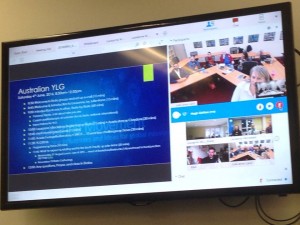 Beyond movement in issue-specific areas, we are also seeing geographical cooperation activating and strengthening. For example, participants and Lausanne leaders in Australia have already had three national gatherings in preparation for YLG2016, followed by a national call led by the head of the Australian Lausanne Committee, Julie-anne Laird. In anticipation of the momentum coming out of the YLG, they have already scheduled a post-YLG meeting in November with the purpose of sharing the fruits from the gathering with their wider networks and looking ten years into the future for priorities in Australian re-evangelization.
So how can we be sure that YLG2016 won’t just be about theories and talk, but also moving in active collaboration toward fulfilling the Great Commission? I believe God has already started to answer our prayers and to reveal what he has in store for this generation in global mission. Please join me in praying to this end, and for YLG2016 in these final days of preparation.

Attila Nyári is the Chair of Communications for the 2016 Lausanne Younger Leaders Gathering. He also serves as the Media Relations & Online Engagement Manager for the Lausanne Movement and as a church-planting pastor in the greater Budapest area in Hungary, Europe
-------
Grassroots communities form in the countdown to YLG2016
Grassroots communities form in the countdown to YLG2016 by Attila NyáriEveryone with a passion for social change knows that real breakthroughs happen when there is opportunity created for and given to grassroots initiatives. This structure might just be true to global mission.
Early in the preparations for the Lausanne Younger Leaders Gathering (YLG2016) we decided that we’d like to see people get connected for global mission before the actual gathering, but we would in no way want to own or control the communications happening. So we empowered them with a smart online directory of everyone attending the YLG called the Connector and challenged them to connect and form online communities around their passions, geography, or other ideas. It’s been a journey ever since to witness new groups led by younger leaders spring up around the world.
 One of the most exciting stories is about a WhatsApp group co-led by Joan Mwangi, a Kenyan missionary based in Tanzania, where she’s been serving with TAFES (IFES Tanzania) for the last eight years. As she’s had experience in managing WhatsApp groups for the international church she goes to and for fellow female staff workers from the IFES EPSA region, she saw an opportunity to serve and was glad to help the group gain momentum.
The group now has over 230 members from 70 countries, and its activity is managed by a small volunteer team of moderators. Every Monday they hold a ‘Praise and Prayer’ day, on Wednesdays they check in with each other about preparations for the YLG, and on Thursdays, Fridays, and Saturdays, they do introductions from members about the various countries they represent.
‘We are expecting that friendships which are coming out of this group will grow for the benefits of the kingdom’, Joan shares, and goes on to say, ‘Learning more about Laos, Gabon, Sri Lanka, Jordan, Suriname, Chile, Japan, Swaziland, Zimbabwe, among others has been an amazing exploration that has also opened our eyes to understand the urgent need for the gospel in these nations!’
Joan continues, ‘One member testified that after hearing about Gabon, her desire to do mission among French-speaking countries has been activated. Other members revealed that they did not know anything about some countries until stories were shared, and later they committed themselves to be praying for those countries. This has been so fundamental and fulfilling.’
‘People also want to visit other countries for missions after they hear the stories—people from South America want to come to Africa, people from Asia want to go to Latin America, Africans want to go to Asia, and so on. I attest a renaissance of passion for missions and fresh commitments due to sharing stories of our countries.’
Members of the WhatsApp group also speak to the experience this group has given them. Margaret Wanjiru Gitau, a Kenyan YLG participant based in the US, writes, ‘I realize that despite our global diversity as a younger generation, we have similar questions: how to witness to a new world; how to solve challenges of poverty; how to build stronger relationships in family, in church, in our local communities. All across we hear a passion for witness in this time.’
‘It comes down to the key challenges of our time: how to pass the gospel to the next generation bearing in mind the histories of our countries, the cultural baggage that the gospel has carried so far, the Christian struggle to make sense of the contemporary social change in which we are living and remain faithful to the gospel. You pick this up from the wide variety of conversations’, Margaret concludes.
New friendships and relationships are being built both online and offline. ‘The power of the network is very incredible and amazing. Today I have met Andrea’s (a group moderator’s) friends from Brazil who live in Thailand. They came to Laos for their visa issues, and we spent a short time together. I’m now more excited to see everyone in August’—Phouangmalay from Laos shared about an offline episode of an online community. Deborah from Trinidad and Tobago writes: ‘I have really enjoyed getting to “meet” so many people before the YLG. So when we meet in person, it will be like a grand reunion!’
As the Planning Team, we’re thrilled to hear these stories. They underline what we believe, that YLG2016 isn’t just an event. It is a visible and exciting milestone of an ongoing commitment made by the Lausanne Movement to connect this generation for global mission. It’s happening!
Attila Nyári is the Chair of Communications for the 2016 Lausanne Younger Leaders Gathering. He also serves as the Media Relations & Online Engagement Manager for the Lausanne Movement and as a church planting pastor in the greater Budapest area in Hungary, Europe.
-------
Connecting for God’s Business
Connecting for God’s Business by Attila Nyári
‘“No distance too long”, goes an Indian ad caption. And it’s true, especially when God wants us to go to the ends of the world’, writes Carl Ebenezer, a participant in the Lausanne Younger Leaders Gathering from India.
Carl will be one of the thousand participants in the Lausanne Younger Leaders Gathering (YLG) to be held in August in Indonesia. Though unacquainted previously, he and another participant, Paulo Humaitá from Brazil, are starting to explore a significant ministry partnership, one of the already many fruits of the Holy Spirit’s work through YLG2016.
Connecting is at the core of Lausanne’s identity, and of the YLG. In October 2015, the YLG Planning Team launched the Connector, a website for participants to start connecting a year before the gathering, and challenged participants to get in touch with someone new.
‘I was looking on the Connector for someone to initiate a nice talk with. My search was specific; I was looking for someone with a business background and also interested in combining business and missions. I found Carl’s profile to be a perfect match, and we had an initial Skype conversation soon afterwards. We realized we had a lot in common, from our mission calling to personal life and also in how we got invited to YLG2016’, writes Paulo.
 Paulo Humaitá is an economist based in Sao Paulo, Brazil, who has been called to missions through business. After working five years for a global biotechnology leader, God led him to leave his job and start a business accelerator where Christian entrepreneurs are equipped to turn their startups into sustainable and powerful missionary projects. This is a pioneering project in the Brazilian context and has just launched in recent months.
 On the opposite site of the globe, Carl Ebenezer had been sensing a call to use for-profit organizations run on biblical principles to advance the kingdom particularly in areas of Asia, Africa, and South America in the 10/40 window. Together with the congregation he’s part of, Pearl City Church in Hyderabad, India, Carl is exploring ways to encourage missional businesses and to host India’s first Business for Blessing Strategy Summit in the near future.
It’s easy to see now what only God could see a few months back, that this divine appointment has great kingdom potential. ‘We need to talk a lot more’, both Paulo and Carl say. They’re planning to meet in person in India soon.
‘Through new connections the Holy Spirit can guide you to put pieces of the puzzle together and amplify your calling’, Paulo Humaitá says. About his generation, he adds, ‘We need to learn from others and also share the best we have with each other. We are a global generation, and we don’t have any reason to build up intelligence and just hold onto it. I believe God is raising an amazing team with business background for missions, and this generation will play a very strategic role within the Great Commission if we connect and join our efforts.”
This is one of the many stories of God’s gracious work in the countdown to YLG2016. Please continue to pray with us for many more such connections through the YLG for his kingdom.
Attila Nyári is the Chair of Communications for the 2016 Lausanne Younger Leaders Gathering. He also serves as the Media Relations & Online Engagement Manager for the Lausanne Movement.
-------
Generous Giving and Amazing Provision for YLG2016
Though money is a subject those in ministry don’t like to talk about much, it’s highly relevant in Christian living and global mission on the most practical level. This is probably why both Jesus and the apostle Paul covered the topic of finances in great length. For an endeavor so big as the Lausanne Younger Leaders Gathering (YLG) coming up in August, finances are definitely key, and this is the very area in which participants are experiencing both the biggest challenges and the biggest lessons about God’s provision and the healthy functioning of the body of Christ.
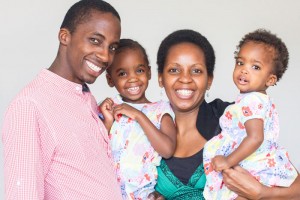 One outstanding story is from Mozambique, where participant Felix Koimburi and his wife are serving as pioneer missionaries. When Felix was invited to the YLG, he applied for one of the limited scholarships to be able to attend. He gratefully accepted the partial scholarship that was awarded to him. However, only a few days later, he contacted the Planning Team to decline the scholarship that he had been awarded.
When participants were first selected for the YLG, they were equipped with a fundraising training curriculum generously prepared by Scott Morton, International Funding Coach for The Navigators. The Planning Team believed that the participants, all emerging leaders in the global church, should take up the challenge to raise as much of their own funding as possible to enable their participation in the YLG. When Scott, also Felix’s personal friend, heard that he had accepted the scholarship offer, he lovingly challenged him to prayerfully and boldly trust God to raise his full support! ‘A daunting prospect indeed!’—Felix writes about his initial reaction, which was followed by prayer and ultimately led to his decision to give back the scholarship funds.
His step was especially bold since the YLG trip is only one of three international trips he’s due to make in this year. But God honored his step of faith in a surprising way, as, ‘Virtually all my support has come from our own “backyard” of Africa!’—Felix writes with excitement.
Felix’s story is one of the many we’re hearing. I could tell you about how Filipe Amado, serving in Beirut—amidst a difficult family situation with his 4-day-old prematurely born daughter and his wife in the hospital—first received the scholarship offer with great rejoicing, then felt the Lord’s leading to release the amount offered to him back to others. Or I could mention Christelle witnessing for Christ among North African people, whose vision for fundraising was so challenged by Scott Morton’s material that she also declined the scholarship offer, being no longer fearful of her inability to raise the necessary funds.
After stories and stories of God’s faithfulness, the month of April still came as a defining moment, as we learned that a number of participants are still struggling to raise the necessary funds to join the others in Indonesia. Sarah Breuel, Chair of the YLG Planning Team, was talking and praying with these brothers and sisters from places like Haiti, Syria, Mongolia, India, Namibia, Senegal, and Guatemala, and the idea was birthed in her heart to launch the YLGiving campaign.
She drew on the story of the five loaves and two fish, and sought to challenge all the YLG participants to give sacrificially towards their peers still struggling to raise the necessary funding. The generosity began with her own sacrificial gift, and soon each of us on the Younger Leaders Planning Team, representing every region of the world, joined in with our gifts. The circles of generosity continued as the invitation was extended to all YLG participants, and then to Lausanne leaders and staff. The ripples are still widening as the opportunity to give to YLGiving remains open.
As the Planning Team, we were especially touched by the words of one participant from Ethiopia, who left her banking career to join a ministry to pursue the fulfillment of God’s global mission and now makes 300 USD a month. She’s still in the process of raising funds for her own trip, which is rather difficult in her context. But this is what she wrote: ‘After much thoughts and prayers, I have decided to seize this opportunity to step up in supporting my fellow brothers and sisters who struggle more than me to gather resources. Therefore, trusting God, I commit to raise an additional 25 USD.’ We have a deep conviction that the Lord honors this type of heart, as he did in the case of the widow and her offering of two coins.
Will you continue to pray with us for the remaining financial need for the YLG? And will you join the YLGiving campaign as the Lord gives lead?
Attila Nyári is the Chair of Communications for the 2016 Lausanne Younger Leaders Gathering. He also serves as the Media Relations & Online Engagement Manager for the Lausanne Movement.
-------
SHARE: 


Latest from the Lausanne Global Analysis
The LGA is also available in Spanish. Read in Spanish.

Engaging with the Women’s Mosque Movement
Moyra Dale
A female religious scholar of 15th century Hadramawt, Yemen, al-Shaykha Sultana bint ‘Ali al-Zubaydy was well known for her piety, knowledge, and teachings. One of her male counterparts, expressing the conventional opinion that religious scholarship and teaching were the domain of men, challenged her in verse: ‘But can a female camel compete with a male camel?’ She completed the couplet, responding: ‘A female camel can carry the same load as a male, and produce offspring and milk as well.’[1]
As I approach the mosque in a Middle Eastern city, my all-covering full-length coat and headscarf clothe me anonymously among dozens of other women who are entering through the gates and across the yard, past the places for men to wash, away from the spacious main door of the mosque, to pass behind the curtain hung between the corner of the building and the surrounding wall. The curtain conceals the small side door, which opens to a set of carpeted stairs. Wooden shelves are at the bottom of the stairs and on the landing, and we remove our shoes and leave them in the shelves, making our way up the stairs in socks or stockinged feet.
There is not much furniture in the upper meeting hall: the carpet, some shelves for books at the back, a few plastic chairs, sponge mattresses to sit on around the side of the room, and a desk-and-seat for the speaker. Framed pictures of Arabic text hang on the wall. This is the hall where women come and go for the different meetings, do the ritual prayer (salah), greet friends, softly recite pages of the Qur’an or just sit quietly on the floor. The hall opens onto the balcony overlooking the main mosque area where the men pray. Theirs is the high roof, sense of space: here there is more limited space, a lower roof, looking through balustrade or windows onto the main men’s part below—behind, seeing, and unseen.
Women in the history of Islam
Women in mosques are not new in Islam. Traditions (Hadith) that refuse to forbid women from mosques are ascribed to Muhammad, Prophet of Islam. They support stories that women attended the mosque in Muhammad’s time, including Friday sermons and feasts. However, over the centuries as Islam expanded, men went to the mosque and women stayed at home to pray.
There have been women leaders[2] and teachers throughout the history of Islam. Aisha (Muhammad’s wife) and Fatima (his daughter) are often mentioned, along with some of Muhammad’s other wives and companions, as muhaddithat—women who taughthadith to others. A number of religious histories mention famous women scholars and teachers, women who were active in Islamic law (fiqh), interpreting the Qur’an and giving legal rulings (fatwas), exercising the same authority as men scholars.
Women scholars flourished more in the 7th-8th centuries (the early days of Islam) and 12th-16th centuries (times of disruption and invasion from the Crusaders and Mongols).[3] These women were often taught by a male relative such as their father, and sometimes also had private tutors. Education, a male patron, and often, social class were important factors.
A recent influential example was Zaynab al-Ghazali (1917-2005) in Egypt, who founded the Muslim Women’s Association (Jama’at al-Sayyidaat al-Muslimaat) when she was 18 years old. She claimed it had a membership of 3 million throughout the country by the time the government dissolved it in 1964. She gave lectures to thousands of women who attended each week at the Ibn Tulun Mosque. Her association offered lessons for women, published a magazine, maintained an orphanage, offered assistance to poor families, and mediated family disputes. Al-Ghazali worked closely with the Muslim Brotherhood, and spent six years in prison until released in 1971 by President Anwar Sadat.
The women’s movement in Islam today
Latest from the Lausanne Global Analysis
The LGA is also available in Spanish. Read in Spanish.
Engaging with the Women’s Mosque Movement
Moyra Dale
A female religious scholar of 15th century Hadramawt, Yemen, al-Shaykha Sultana bint ‘Ali al-Zubaydy was well known for her piety, knowledge, and teachings. One of her male counterparts, expressing the conventional opinion that religious scholarship and teaching were the domain of men, challenged her in verse: ‘But can a female camel compete with a male camel?’ She completed the couplet, responding: ‘A female camel can carry the same load as a male, and produce offspring and milk as well.’[1]
As I approach the mosque in a Middle Eastern city, my all-covering full-length coat and headscarf clothe me anonymously among dozens of other women who are entering through the gates and across the yard, past the places for men to wash, away from the spacious main door of the mosque, to pass behind the curtain hung between the corner of the building and the surrounding wall. The curtain conceals the small side door, which opens to a set of carpeted stairs. Wooden shelves are at the bottom of the stairs and on the landing, and we remove our shoes and leave them in the shelves, making our way up the stairs in socks or stockinged feet.
There is not much furniture in the upper meeting hall: the carpet, some shelves for books at the back, a few plastic chairs, sponge mattresses to sit on around the side of the room, and a desk-and-seat for the speaker. Framed pictures of Arabic text hang on the wall. This is the hall where women come and go for the different meetings, do the ritual prayer (salah), greet friends, softly recite pages of the Qur’an or just sit quietly on the floor. The hall opens onto the balcony overlooking the main mosque area where the men pray. Theirs is the high roof, sense of space: here there is more limited space, a lower roof, looking through balustrade or windows onto the main men’s part below—behind, seeing, and unseen.
Women in the history of Islam
Women in mosques are not new in Islam. Traditions (Hadith) that refuse to forbid women from mosques are ascribed to Muhammad, Prophet of Islam. They support stories that women attended the mosque in Muhammad’s time, including Friday sermons and feasts. However, over the centuries as Islam expanded, men went to the mosque and women stayed at home to pray.
There have been women leaders[2] and teachers throughout the history of Islam. Aisha (Muhammad’s wife) and Fatima (his daughter) are often mentioned, along with some of Muhammad’s other wives and companions, as muhaddithat—women who taughthadith to others. A number of religious histories mention famous women scholars and teachers, women who were active in Islamic law (fiqh), interpreting the Qur’an and giving legal rulings (fatwas), exercising the same authority as men scholars.
Women scholars flourished more in the 7th-8th centuries (the early days of Islam) and 12th-16th centuries (times of disruption and invasion from the Crusaders and Mongols).[3] These women were often taught by a male relative such as their father, and sometimes also had private tutors. Education, a male patron, and often, social class were important factors.
A recent influential example was Zaynab al-Ghazali (1917-2005) in Egypt, who founded the Muslim Women’s Association (Jama’at al-Sayyidaat al-Muslimaat) when she was 18 years old. She claimed it had a membership of 3 million throughout the country by the time the government dissolved it in 1964. She gave lectures to thousands of women who attended each week at the Ibn Tulun Mosque. Her association offered lessons for women, published a magazine, maintained an orphanage, offered assistance to poor families, and mediated family disputes. Al-Ghazali worked closely with the Muslim Brotherhood, and spent six years in prison until released in 1971 by President Anwar Sadat.
The women’s movement in Islam today
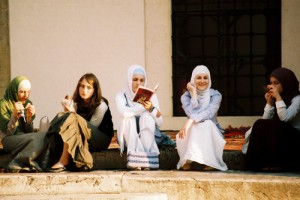 The women’s piety movement has roots in the history of women scholars within Islam. However, it is also a contemporary movement, with unprecedented numbers of women involved in the Islamic revival movement, which has spread through the Muslim world since the 1970s. It has become more visible through the increasing number of women wearing hijab. In the 1980s and 1990s a new wordmutadayyinat, ‘religious women’, was invented, to describe the growing piety movement among women.[4]
Women’s literacy worldwide has increased at the same time as expanding access to Islamic teaching through pamphlets, cassettes, radio, TV, satellite, and Internet. These two factors have helped to grow the Islamic revival movement and women’s part in it. Some women preachers are self-educated; but increasingly religious institutions in the Muslim world are offering training to women.[5] Al-Azhar University in Cairo began training women preachers in 1999.
Where they face social restrictions, Muslim women have always used religious occasions in the home, such as Qur’anic recitations or recitative prayer (dhikr) to gain blessing. So religious practices provide support for the chance to gather and talk together over a glass of tea or a meal. Women began to organize religious lessons in their homes to learn the Qur’an and other religious materials. Increasingly, homes and special gatherings became used as places where women were encouraged to make sure that their behaviour and clothing fit with what Islam teaches. A birthday party might include a time to urge all the young women attending to wear hijab.
Throughout the world
In the Middle East in the 1990s and early 2000s, women began to move more into mosques for their gatherings, and to become involved in public religious teaching, including on television. Mosque classes train women how to behave as good Muslims, and also how to teach others at community events such as weddings or births. Furthermore local neighbourhood mosques are used as centres to organize activities including both religious instruction and medical and welfare help for Muslims in need.
Elsewhere in the world, in Indonesia from the early 1900s, both the reformistMuhammadiya and traditionalist Nahdlatul Ulama Muslim organisations have offered Islamic education to women as well as men, from grassroots informal religious classes up to Islamic training schools (pesantren). So now large numbers of women are equipped to discuss and teach about Islamic texts and legal rulings.[6]
In China, the growth in women’s mosques and women’s religious culture among the Muslim Hui people has been connected to China’s move in the 1980s towards reform and openness to the outside world.[7] In the Indian sub-continent, the efforts of the conservative Tablighi Jama’at was at first directed at men. However, women are now included among those who travel for shorter or extended periods to promote reformist Islam (while maintaining the rules of purdah).[8]
A new space for women
This has led to a generation of women literate and competent in the Qur’an and the traditions, and able to interpret them with regard to the issues of women’s everyday lives. A growing number of publications by women give women’s perspectives on reading the Qur’an and its teachings. In Malaysia, the Sisters of Islam draw on the religious texts in their effort to enable women and to help them get justice in issues of family law such as divorce.
Women’s authority in Islam has traditionally been in the home and at times of rites of passage, family transitions. Now they are taking up authority in the area of religious texts and teaching. It is still within conservative Islam, and women support their place in mosques and teaching, by conforming to conservative religious practices of dress and general behaviour. By reading the Qur’an and traditions for themselves, to answer the questions from women’s daily lives, they are reforming the role of women within Islam.
Implications and suggested responses
We recognise that Muslims and Christians may both meet questions about the place of women in a conservative reading of our faith and our books. We have common cause in working for women who face unjust marriage or divorce laws, or violence. So there is a place to meet and work alongside women in the Muslim piety movement. We need to bring a robust understanding of the place of women in Christ to our meeting.
It is good to be able to interact with the discussions around the Qur’an, the nature of the Messiah, the authenticity of the Bible—the arguments in which they have been trained. Going beyond argument to telling the stories of Jesus, of his interactions with women—including the place he gave them in his ministry (Lk 10:39, Jn 4); his power to purify (Lk 8:26-56); his refusal to condemn (Jn 8:1-11)—speak right into the aspirations and longings of women in the piety movement.
We can share from our own hopes and struggles, and how Jesus meets and answers us. As we pray, they may encounter the Messiah who is powerfully present to hear and answer our petitions.
The women’s mosque movement reminds us that within the Muslim world, there are different understandings of the place of women, just as there are different understandings of violence and its use. In the end, the basic place of meeting between Christian and Muslim is our shared regard for Jesus the Messiah; and the most fundamental point of difference is not the place of women or of violence, but who we believe the Messiah to be.
Endnotes
[1] Boxberger, Linda. ‘From Two States to One: Women’s Lives in the Transformation of Yemen’. In Women in Muslim Societies: Diversity Within Unity. Boulder & London: Lynne Rienner Publishers, 1998. 119.
[2] Mernissi, Fatima. Mary Jo Lakeland, trans. The Forgotten Queens of Islam. Cambridge: Polity Press, 1993.
[3] Nadwi, Mohammad Akram. Al-Muhaddithat: The Women Scholars in Islam. Oxford, London: Interface Publications, 2007.
[4] Badran, Margot. Feminism in Islam. Secular and Religious Convergences. Oxford: Oneworld, 2009, 8.
[5] Joseph, Suad, ed. Encyclopedia of Women & Islamic Cultures. Vol V: Practices, Interpretations and Representations. Leiden, Boston: Brill, 2007. 335-354. See Rausch discussing Egypt; Deeb, the Arab States; Huq, South Asia; Ali, Sudan; Demirer, Turkey; and Kalinock on Iran.
[6] van Doorn-Harder, Pieternella. ‘Translating Text to Context: Muslim Women Activists in Indonesia’. In Women, Leadership, and Mosques: Changes in Contemporary Islamic Authority. Women and Gender: The Middle East and the Islamic World series, vol 11. Leiden, Boston: Brill, 2012. 413–35.
[7] Jaschok, Maria. ‘Sources of Authority: Female Ahong and Qingzhen Nusi (Women’s Mosques) in China’. InWomen, Leadership, and Mosques: Changes in Contemporary Islamic Authority. Women and Gender: The Middle East and the Islamic World series, vol 11. Leiden, Boston: Brill, 2012. 37–58. Also: Jaschok, Maria, and Jingjun Shui. The History of Women’s Mosques in Chinese Islam. Richmond, UK: Curzon Press, 2000. 154.
[8] http://www.world-religion-watch.org/index.php/about-us-researchers-and-fellows-at-world-religion-watch/research-publications-and-working-papers/284-veil-tabligh-jamaat; also,https://www.lausanne.org/content/lga/2015-11/understanding-and-engaging-with-the-tablighi-jamaat.
References
Ali, Souad T. ‘Religious Practices: Preaching and Women Preachers: Sudan’. Encyclopedia of Women & Islamic Cultures. Leiden, Boston: Brill, 2007.
Badran, Margot. Feminism in Islam: Secular and Religious Convergences. Oxford: Oneworld, 2009.
Boxberger, Linda. ‘From Two States to One: Women’s Lives in the Transformation of Yemen’. In Women in Muslim Societies: Diversity Within Unity. Boulder & London: Lynne Rienner Publishers, 1998. 119–33.
Deeb, Lara. ‘Religious Practices: Preaching and Women Preachers. Arab States (Excepting North Africa and the Gulf’. Encyclopedia of Women & Islamic Cultures. Leiden, Boston: Brill, 2007.
De Feo, Agnes. ‘Behind the Veil, In the Ranks of the Tablighi Jamaat’. Research. World Religion Watch. 12 October 2009. http://www.world-religion-watch.org/index.php/about-us-researchers-and-fellows-at-world-religion-watch/research-publications-and-working-papers/284-veil-tabligh-jamaat.
Demirer, Yucel. ‘Religious Practices: Preaching and Women Preachers: Turkey’. Encyclopedia of Women & Islamic Cultures. Leiden, Boston: Brill, 2007.
Huq, Maimuna. ‘Religious Practices: Preaching and Women Preachers. South Asia’. Encyclopedia of Women & Islamic Cultures. Leiden, Boston: Brill, 2007.
Jaschok, Maria. ‘Sources of Authority: Female Ahong and Qingzhen Nusi (Women’s Mosques) in China’. In Women, Leadership, and Mosques: Changes in Contemporary Islamic Authority. Women and Gender: The Middle East and the Islamic World series, vol 11. Leiden, Boston: Brill, 2012. 37–58.
Jaschok, Maria, and Jingjun Shui. The History of Women’s Mosques in Chinese Islam. Richmond, UK: Curzon Press, 2000.
Kalinock, Sabine. ‘Religious Practices: Preaching and Women Preachers’. Encyclopedia of Women & Islamic Cultures. Leiden, Boston: Brill, 2007.
Mernissi, Fatima. Mary Jo Lakeland, trans. The Forgotten Queens of Islam. Cambridge: Polity Press, 1993.
Nadwi, Mohammad Akram. Al-Muhaddithat: The Women Scholars in Islam. Oxford, London: Interface Publications, 2007.
Rausch, Margaret J. ‘Religious Practices: Preaching and Women Preachers. Egypt and North Africa’. Encyclopedia of Women & Islamic Cultures. Leiden, Boston: Brill, 2007.
Taylor, Jenny. ‘Understanding and Engaging with the Tablighi Jamaat’. Lausanne Global Analysis. Vol 4, no 6. November 2015. https://www.lausanne.org/content/lga/2015-11/understanding-and-engaging-with-the-tablighi-jamaat.
van Doorn-Harder, Pieternella. ‘Translating Text to Context: Muslim Women Activists in Indonesia’. In Women, Leadership, and Mosques: Changes in Contemporary Islamic Authority. Women and Gender: The Middle East and the Islamic World series, vol 11. Leiden, Boston: Brill, 2012. 413–35.
van Doorn-Harder, Pieternella. Women Shaping Islam: Reading the Qur’an in Indonesia. Urbana and Chicago: University of Illinois Press, 2006.
Photo Credits:
• Featured image: From ‘Enjoining the mosque‘ by Giuseppe Milo (CC BY-NC 2.0).
• Image two: From ‘Sarajevo, Bosnia‘ by Kashfi Halford (CC BY-NC 2.0).

Moyra Dale, Lausanne Catalyst for Islam, spent over two decades in the Middle East (particularly Egypt, Jordan, and Syria) with her family working in education, specializing in Adult Literacy (Arabic) and teacher training. She holds a PhD in Education (La Trobe University) and DTh (Melbourne School of Theology). Currently based in Melbourne, Australia, she is involved in teaching and training at a number of Bible colleges and other institutions in Australia, Asia, and the United States.

OMF at 150
Julia Cameron
There is something about the China Inland Mission and OMF story which I find compelling. Its beginnings can be traced back to Susannah Wesley and her prayers for her sons; and to a young stonemason, who decades later threw eggs and rotten tomatoes at John Wesley and his travelling preachers in Barnsley, West Yorkshire.
On the morning of his wedding day, that same stonemason, the first James Taylor, walked in the fields, mindful of the vows he would shortly take. Suddenly he found himself reflecting on what he had heard from Wesley: ‘As for me and my house, we shall serve the Lord.’ The words went straight to his heart and he knelt down to pray. Then realizing the time, he dashed home to change, and it is said that friends adjusted the hands of the church clock, so he arrived just in time for his wedding. His new wife was startled when she heard his news: ‘Have I just married a circuit rider?’ she uttered in dismay. It was not what she had planned.
 The grace shown to James Taylor (1749-1795) on that cold February morning in 1776 would travel down the generations. The historian K S Latourette was to refer to Taylor’s great-grandson, the more famous James Hudson Taylor (1832-1905), as ‘one of the four or five most influential Westerners in China’. Furthermore, Hudson Taylor’s seminal thinking would influence mission endeavour much more widely.
How to flourish after 150 years
Few movements last 150 years. Last year marked that anniversary for the China Inland Mission/OMF International and, too, for the Salvation Army. Each has retained its original beliefs, vision, mission, and values; and each has adapted with the times. Each has remained anchored, while forward-looking. There is no lengthened shadow of an historic leader.
The key, under God, is to appoint successive leaders who, rooted in Scripture, can distinguish between the three Ps of principles, which never change; policies, which, while not easily changed, need the freedom to adapt to their time and context; andpractice, which may need to change frequently for the front line to be effective at local level.
Now operating in 32 centres across 25 countries, and with diverse ministries, OMF has many leaders—national leaders, ministry leaders, those who mobilize and who train new workers, church planters, and those seconded to teach in seminaries. All must distinguish between the three Ps, and ‘stay aligned’.
From Barnsley to Brighton to Inland China
Few would have noticed 40 or so people on Brighton Beach on Thursday, 25 June 2015. They were there to commemorate an unremarkable sight: James Hudson Taylor pacing the beach alone on the same date 150 years earlier. (He had been in China for several years by 1865, serving with the China Evangelization Society.) His heart was troubled at the comfort of Western Christians in church that Sunday morning, when the inland provinces of China were unreached; and he resolved, under God, to find a way to forge into those provinces. Hudson Taylor bore one of the clearest marks of a leader, indeed the sine qua non of leadership—a sense of dissatisfaction with what is, and a resolve for better.
So it was that the China Inland Mission (CIM) was born ‘with £10 in the bank, and all the promises of God’. Taylor prayed for ‘24 skilful, willing workers’, two for each of China’s provinces and two for Mongolia. There was an efficiency in his thinking. Each should be skilful—naturally gifted—as well as willing; and they would travel in twos, as Christ had sent out the 70, for there would be sparse support, especially in the early days. Each would need that same ‘gift of dissatisfaction’, in large measure. Those who sailed to China aboard the Lammermuir in 1866 would form a new breed of missionaries, for they would ‘become Chinese in all matters which were not sinful’.
Further, Hudson Taylor brought into mission-thinking a new principle: that decisions should be taken close to the place where they will be felt. Moreover, his plan for financial support became a watchword for missionary living—members of the CIM were ‘to move men through God, by prayer alone’. That is, they would not ask anyone for financial support, but they would pray for it.
Keeping the story. Telling the story.
From the start, the story was to be recorded, and to be told. Within a few months of founding the CIM, Hudson Taylor wrote his first book: China: Its spiritual needs and claims. The first printing sold out quickly. ‘Communication is the lifeblood of the mission’, he wrote, ‘second only to prayer.’ His regular news organ China’s Millionswas a priority. The magazine, later called East Asia’s Millions, then East Asia’s Billions, and now, to keep archivists on their toes, simply Billions, was an early flagship.
The mission has drawn gifted writers and thinkers. This is evidenced in scores of books which have proved their worth in remarkable ways:
• Hudson Taylor’s biography by his daughter-in-law Mrs Howard Taylor (née Geraldine Guinness) became a classic.
• A J Broomhall and his seven-volume magnum opus Hudson Taylor and China’s Open Century brought insights which only a family member with access to private papers could bring.
• The fine biographer John Pollock preserved in The Cambridge Seven the story of those whose decision to sail to China in 1885 brought whispers of dismay in senior common rooms.
• Leslie Lyall kept news coming from the church in China through its quiet, dark days; Tony Lambert received that baton.
• Don Cormack recounted the suffering and the glory of the church in Cambodia in his extraordinary work, Killing Fields, Living Fields.
The story of the gospel in East Asia is better documented than in many parts of the world, and is well cared for in major archive libraries in the UK and the US. Careful chronicling, good thinking, and good writing have each played a part. Also, through its book publishing, OMF’s legacy to the wider church has been profound.
Celebrating the anniversary year
In July 2015 over a thousand gathered in North Thailand to ‘Remember. Rejoice. Renew.’ The fare from the platform was rich and substantial. Lindsay Brown, Lausanne International Director, gave the morning Bible readings.[1]
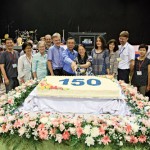 Quoting the Latin American missiologist Samuel Escobar, Lindsay spoke of three kinds of people a movement must have, if it is to last and to flourish—historians to tell stories; teachers to impart values and distinctives; and prophets and visionaries to speak into the contemporary context and set a trajectory. While the first two could be in danger of living in the past, the last could take off at a tangent without them. The tensions of holding all three together had, Lindsay said, marked the life and the modeling of CIM/OMF.
His expositions took the four great themes of God’s working through history; the need for light and salt in society; the gospel and the future; and the call of the cities.
Much work will need to be done in bringing the gospel to each generation of city-dweller, in each culture—to its nationals and its diasporas, in the universities, and in the business and political arenas, and to its techno future-shapers. The megacities will continue expanding, to house the poor and the poorest of the poor.[2]
Bishop Hwa Yung from Malaysia, one of East Asia’s senior missiologists, looked at OMF’s contribution to 21st century mission. It was, he said ‘a multi-polar world of unforeseeable complexity’. Jamie Taylor (James Hudson Taylor IV), like his father Jim a keen Sinologist and careful historian, surveyed the fellowship’s history: its frontiers, its values, and the costly service of its workers.
Those 24 ‘skilful, willing workers’ began a movement which now has frontline and support teams numbering 2,500 from 40 nations. The tenth and current General Director, Patrick Fung, appointed in 2006, is the first Asian to hold this position. A humble man and much influenced by one his predecessors D E Hoste, he commands clear authority.
He said he must add to the theme Remember. Rejoice. Renew a fourth element: the need to Repent. It was a memorable, sombre moment as he led the gathering in confession. He said his personal prayer goals for the movement are to see significant growth in what had perhaps become neglected frontiers: the peoples of the high plateaus in China, the diaspora returnees, and single-party countries. There were now around 100 new ‘skilful, willing workers’ arriving each year. ‘Pray,’ he urged ‘for 150’.
‘Staying Aligned’ for the future
I recall reading of an early-mid 20th century Christian endeavour which hit the rocks, and learning how its board had not been conversant with its early history. The work was clearly in difficulty, and the board had genuinely done its best to save it. However, principles from its early fathers had not been upheld. The compass needle had, it transpired, lost its true North several years earlier. How had the divergence begun? Why was it not noticed? We will leave those questions to future historians.
Let us keep active in identifying the next generation of leaders, and then in helping them learn lessons from history. For a movement’s culture goes deeper than policies and practice over the period that any current generation could have observed. Seeing ourselves in the sweep of history, as guardians only for the moment, brings a right sense of humility. However, we are all fallen, and no movement is without the consequences of some short-sighted judgments.
David Pickard (eighth General Director, 1991-2001) summed up the leader’s agenda, under God, in the pithiest way I have heard it articulated. There were, he said, three questions to be asked, which he reduced to six words: ‘What next? What else? What not?’
One of the unexpected ‘What else’s’ could never have been envisaged in 1865. OMF is helping to train African Christian leaders to reach the huge Chinese diaspora who are making homes and starting businesses in several African countries.
We often refer to ‘the unfinished task’. For the rising generation, this rather staid phrase may sit awkwardly with Paul’s passionate cry, ‘the love of Christ compels us’. The phrase comes (I think) from Bishop Frank Houghton’s searching hymn, ‘Facing a Task Unfinished’, sung at the close of many missions conferences. Houghton was Bishop of eastern Szechuan, and fourth and last General Director of the CIM (1940-51) before its ‘reluctant exodus’ from China.
To mark OMF’s 150th anniversary, modern hymn-writers Keith and Kristyn Getty have devised a new setting, retaining much of its original, which was launched in a special tour named The Task Unfinished in February. May it help to raise up a new generation of ‘skilful, willing workers’; able, gifted, dissatisfied men and women who will not stand by while ‘other lords [beside Christ] hold their unhindered sway’.
Endnotes
[1] Editor’s Note: In early 2016 the role ‘International Director’ was re-named as Global Associate Director for Regions.
[2] Editor’s Note: See articles entitled ‘Movement Day and Lausanne’ by Mac Pier (May 2016 issue) and ‘Commitment to the City’ by Paul Hildreth (March 2014 issue) in the Lausanne Global Analysis.
Photo Credit
• All photos in this article courtesy of OMF. Used with permission.

Julia Cameron has served in communications and publishing for 25 years. Based in Oxford, UK, she is Director of Publishing and Senior Editor for the Lausanne Movement. She is the editor of several Lausanne books, including Christ Our Reconciler and the soon-to-be released The Lausanne Legacy: Landmarks in Global Mission.

The Turkish Hadith Project
Peter Riddell
Stereotyping the world of Islam is a fruitless task; such is its internal diversity. Nowadays sectarian conflict is tearing apart Muslim populations in the Middle East, Africa, and Asia. While some Muslims pursue a vision of a forward-thinking, rationalist faith, others look backwards to what they see as a pristine age when Muhammad established the first Islamic community in Medina.[1]
For the latter group, the Hadith, or prophetic traditions, are crucial in realising their vision, enabling Muslims who want to model their lives on that of their prophet to do so. These traditions record tens of thousands of short reports about Muhammad’s actions, attitudes, concerns, preferences, and prejudices.
Read literally, the Hadith reports can take Muslims in many directions: to compassion for widows and orphans, to patriarchal attitudes towards women, to disdain for religious minorities, and to military jihad for the cause of Islam.
Some Muslim groups are re-engaging with the Hadith collections, recognising that much Hadith content points more towards social circumstances from past centuries than present and future requirements of diverse societies. They are seeking to select from these prophetic traditions in ways which complement rather than contradict 21st century values.
Turkish Hadith project
In mid-2013, the Turkish Ministry of Religious Affairs, or the Diyanet, published a new selection of Hadith accounts. Entitled Islam with the Hadith of the Prophet, their appearance represented the culmination of a controversial gestation period lasting almost a decade.
In 2004, the then Turkish Minister of Religious Affairs, Mehmet Aydin, put forward the proposal to produce this new Hadith collection. This project received the direct support and sponsorship of the Justice and Development Party (AKP) government led by Prime Minister Recep Tayyip Erdogan, who was investing significant resources in reviving the Islamic identity of the secular Turkish Republic.
The terms of reference of this project were stated clearly by the project leader of the time, Mehmet Gormez, himself a scholar of Hadith studies, who explained: ‘The project takes its inspiration from the interpretations of the modernist vein of Islam . . . We want to bring out the positive side of Islam that promotes personal honour, human rights, justice, morality, women’s rights, respect for the other.’[2]
A team of over 80 scholars was assembled for the task, and responsibility was given to the Faculty of Divinity of the University of Ankara. Work started in earnest in 2006, but within 18 months, news of this project had spread beyond Turkey, triggering considerable controversy.
In 2008 BBC Religious Affairs Correspondent Robert Pigott wrote: ‘Turkey is preparing to publish a document that represents a revolutionary reinterpretation of Islam—and a controversial and radical modernisation of the religion.’[3] Other Western news agencies followed suit, presenting the project in ways that reflected an underlying yearning in the West to witness an Islamic reformation.
Gormez, who was himself involved in doing some of the writing for the first volume, sought to insert a measure of reality into the discussion by commenting in one interview:
‘[The Western media] made too much fuss and took the project out of its real context. We are neither fashioning a new Islam nor dare to alter the fixed maxims of Islam. The Western media have read what [we] are doing from a Christian perspective and understood it in line with their Christian and Western cultures . . . No Muslim in their right mind would dare delete any Hadith or tamper with the Prophet’s heritage.’[4]
After the dust settled from this media flurry, the project team at the University of Ankara proceeded with their tasks. There were multiple challenges. First, some conservative Muslim voices had been alerted to this project by the media discussion and were closely watching developments. One Arab scholar was quoted as confronting a Turkish academic and saying in anger: ‘Will you write a new Qur’an next?’[5]
Furthermore, the task of selecting a few hundred Hadith accounts from the tens of thousands available represented a significant challenge. The problem was not simply a matter of wading through detail. Quite simply, many Hadith reports do quote Muhammad as expressing views which are antithetical to 21st century pluralistic attitudes:
The late Muslim modernist scholar from India, Professor Asghar Ali Engineer (1939-2013), identified one dimension of the challenge in writing ‘we find even more shocking Hadiths ascribed to the Prophet regarding women’,[6] and citing from the famous collection by Al-Bukhari: ‘Evil omen is in three things: the horse, the woman, and the house’ (Hadith 4:52:110).
Another example of similarly problematic Hadith reports is found in the authoritative collection by Muslim ibn Hajjaj, which records Muhammad saying to his followers: ‘Do not greet the Jews and the Christians before they greet you and when you meet any one of them on the roads force him to go to the narrowest part of it’ (Book 26, Hadith 5389).
The project is realized
When the collection Islam with the Hadith of the Prophet was released by the Diyanet in Ramadan 2013, it aroused considerable interest. It appeared as a seven-volume encyclopaedia, drawing from almost 20 authoritative Hadith collections and presenting its several hundred Hadith reports grouped according to around 350 themes. Unlike the standard collections by Al-Bukhari and other great traditionalists which simply list the Hadith reports without commentary, this new Turkish collection presents the Hadith themes within the context of short accompanying essays, providing historical context and placing particular emphasis on their relevance for the 21st century.
Particular attention is placed within this collection on shaping reader attitudes on issues of great currency today, such as women’s rights, the environment, and other contemporary topics. A number of Hadith reports are assembled around the theme of education, with the first report being that which states: ‘seeking knowledge is obligatory for every Muslim’. After presenting several other related Hadith reports, commentary is presented which emphasises that ‘every Muslim’ includes women as well. In this way, the collection subtly undermines Hadith-minded literalist groups such as the Pakistani and Afghan Taliban that destroy women’s schools and restrict women to the home, citing support for their narrow views from certain Hadith reports.
The Diyanet is determined to maximize the influence of the new collection. It has been circulated throughout Turkey to government-appointed imams. Moreover, the collection has been translated into various languages, including Albanian, Azerbaijani, and Bosnian, with other translations underway into Chinese and various European languages.
However, its influence at the level of the Turkish masses is uncertain. In the words of one Turkish academic: ‘It is really difficult to say. Turkish people do not read a lot, especially voluminous books. I have also not come across serious reviews or critical evaluations of it in academic circles.’[7] Likewise, time will be needed to enable a serious assessment of the impact of its other language versions.
Other Muslims question the Hadith
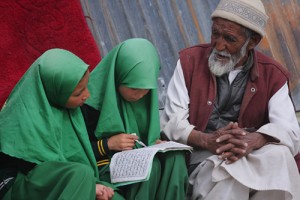
Scepticism about the standard Hadith collections and their relevance for the 21st century can be seen elsewhere in the Islamic world:
The late Pakistani Professor Fazlur Rahman (1911-88), arguably the greatest Muslim modernist intellectual of the 20th century, adopted a somewhat Hadith-sceptical approach, considering that the traditional collections embodied basic truths but needed reformulation to meet new circumstances.
A more vehement Hadith critic was Professor Engineer, who famously declared in one article: ‘Women lost in the Hadith what they had gained through the Qur’an. Today if the world thinks Islam treats women in a very unfair way it is because we follow Hadiths rather than the Qur’an as far as women are concerned.’[8]
Some Islamic groups go further and declare themselves to be ‘Qur’an-only’ Muslims, arguing that the Hadith should not be considered as Islamic sacred literature at all. Such anti-Hadith groups can be found in Malaysia and Pakistan—keeping a very low profile in sensitive times—as well as in the West. Such groups maintain a visible online presence but their writings attract very prompt rebuttals from more orthodox Muslim groups which affirm the central role of the Hadith collections as part of the Islamic sacred literary corpus.[9]
Reflections for Christians
How should non-Muslims, especially Christians, react to such Muslim reviews of the Hadith? The first essential step is to see the Turkish project as a part of the ongoing struggle for identity within the world of Islam, a struggle fought between those who would wish to impose a scripturally literalist brand of their faith on the masses and their opponents who wish to redefine Islam as a modern, rationalist, non-extremist faith. The latter group wishes clearly to maintain the essential elements of Islam, but to express them within a 21st century framework.
However, there is another angle that Christians need to consider. Many Christian scholars of Islam contend that today’s multiple manifestations of Islamic radicalism are deeply rooted in the texts of Islam, rather than being mere reactions to modern-day grievances. I have long argued this case myself. For those of this opinion, this Turkish initiative should be seen as one manifestation of something that we have long awaited: an examination by Muslims of their sacred texts to eliminate elements ill-suited to the modern world—violence, social discrimination, hostility towards non-Muslims, and so forth.
This Turkish Hadith Project is not going to turn the world of Islam upside down overnight. However, it may well prove to be a small but valuable step on a long journey towards a genuinely critical examination of taboo subjects that cry out for detailed scrutiny: the historicity of the sacred texts and the life of Muhammad.
Endnotes
[1] Editor’s Note: See article entitled ‘The Challenge of Radical Islam’ by John Azumah in the March 2015 issue ofLausanne Global Analysis, and article entitled ‘The UK Campaign to End Religious Illiteracy’ by Jenny Taylor in the January 2015 issue of Lausanne Global Analysis.
[2] http://www.danielpipes.org/5554/is-turkeys-government-starting-a-muslim-reformation
[3] http://news.bbc.co.uk/2/hi/europe/7264903.stm
[4] https://books.google.com.au/books?id=gm6TyAANfM8C&printsec=frontcover&cd=1&source=gbs_ViewAPI&output=embed&allissues=1&redir_esc=y
[5] http://www.huffingtonpost.com/2013/05/22/turkey-hadith-project-diyanet-presents-prophets-sayings-for-the-21st-century_n_3319657.html
[6] http://www.futureislam.com/inner.php?id=Mjcw
[7] Personal correspondence.
[8] http://www.futureislam.com/inner.php?id=Mjcw
[9] For an example of anti-Hadith critique, seehttp://www.masjidtucson.org/publications/books/sp/1986/aug/page1.html. For an online rebuttal of anti-Hadith writings, see http://fighting-anti-sunnah.blogspot.com.au/2012/11/introduction-to-anti-hadith-or-anti.html.
Photo Credit
• Featured image: From ‘Quran‘ by Ahmad Tarek (CC BY-SA 2.0).
• Image two: From ‘lessons from quran, dras‘ by nevil zaveri (CC BY 2.0).
Peter Riddell is Vice Principal Academic at Melbourne School of Theology and Professorial Research Associate in History at SOAS, the University of London (School of Oriental and Asian Studies). His research focuses on Southeast Asian Islamic history and theological texts, with particular reference to interpretation of the Qur’an. Email: peter_riddell@yahoo.com.

Mission in Europe 25 Years After the Fall of the Berlin Wall
Darrell Jackson
My teens spanned the 1970s, memorable for being a decade of economic recession, the emergence of neoliberal politics and economics, and the accelerating polarization of the world between the United States (and its NATO allies) and the Soviet Union. The decade ended with the election of British Prime Minister Margaret Thatcher and the Soviet invasion of Afghanistan.
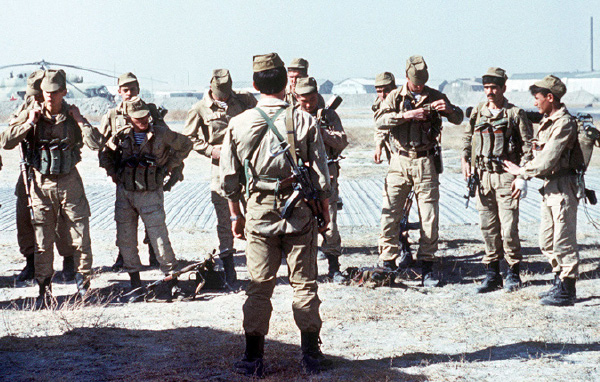 During the early 1980s I became more politically aware. It seemed then that European politics was dominated by the apparently impregnable wall separating East from West and of the vast Soviet empire whose ranks were massed behind it. Our home in the UK received, as did many other homes of the era, a booklet outlining what to do in the event of a nuclear attack. The perception and presentation of this kind of cold war ‘reality’ was further fuelled for a young evangelical by the atheism and godlessness to which the Soviet socialist states pledged their unwavering allegiance.
Iron curtain drawn back
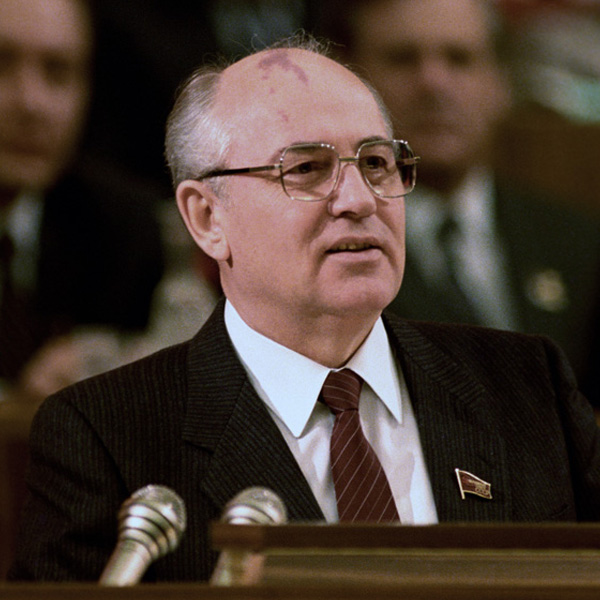 Mikhail Gorbachev became leader of the Soviet Union in 1985 and a succession of Western leaders engaged his attempts to decrease tensions with the West, accompanied by the introduction of domestic political and economic liberalisation. As communist governments crumbled during 1989, the reunification of Germany in 1990 became inevitable, along with the demise of cold-war political and geographical realities. The ‘iron curtain’ that had separated ‘Eastern’ Europe from the ‘West’ was finally drawn back.
I have now lived half of my lifetime in the wake of the political, economic, social, and religious changes that were ushered in by the events of the late 1980s and early 1990s. A mere 15 years after the political changes, I moved with my wife to take up a mission position based in Hungary, a relocation that would have been inconceivable in 1989. We were there to take advantage of the central location of Budapest in the geography of the new Europe.
Other mission agencies with a similar pan-European focus to ours found that Budapest was a useful base from which to gain rapid access to most of Europe. Budapest, as a capital city that had been formerly described as ‘Eastern Europe’ (implying that it was on the edge of modern and progressive Europe) had now become a central European capital with easy access to all parts of it.
This article attempts to capture, albeit impressionistically, something of the most significant developments of the last quarter of a century in Europe. Having done that I will then try to outline and review some of the main implications that these changes continue to pose to evangelical mission agencies and their related church communities.
Nationhood, independence, and ethnicity
For much of the post-war period through until the late 1980s, Europe’s internal conflicts were generally framed in a way that opposed the ‘East’ with the ‘West’. Of course, this obscured tensions and conflict internal to each of these two European regions, tensions that would later emerge with lethal consequences in the countries of the Balkans.
When the overly simplistic East-West account of European identity collapsed, a vacuum emerged in which it was possible for powerful and lethal tribalism to emerge around the notions of newly emerging nations.1 In most instances these contemporary forms of tribalism were built around identities that were taken to be ethnically homogenous and frequently shaped with reference to historical religious identities (Orthodox, Catholic, and Muslim) that had been suppressed by communist regimes.
In its most extreme and violent expression, armed conflict ravaged former Yugoslavia for the eight years between 1991 and 1999, resulting in approximately 140,000 deaths and massive damage to the infrastructure and economy of the region. Competing nationalist aspirations and ethnic tensions fed these wars. Although armed hostilities in the Balkans finally ceased with the ending of the Kosovo War in 1999, regional tensions remain and continue to hamper the access and activities of mission agencies working in these regions.
Of course the aspiration to nationhood and self-determination is not always malignant and, in the case of Slovakia and the Czech Republic, saw a separation of the former Czechoslovakia during the ‘Velvet Revolution’ into its constituent territories. As the countries of Hungary, the Czech Republic, Slovakia, and Slovenia, for example, addressed their self-identification, they quickly embraced the language of ‘Central Europe’. This served two purposes. Firstly, it allowed these and other countries to jettison the old socialist-era language of ‘the East’. Secondly, it enabled them to forge a common sense of regional identity and shared purpose.
As the European Union extended its borders with the accession of new member states in 2004, 2007, and 2013, citizens of all 28 EU countries gained the freedom to live and work across the entire EU community. In each EU country, with this new freedom to migrate, populations are beginning to experience new forms of internal ethnic and national diversity. In some instances, this factor has fuelled ethnic and nationalist tensions. These, in turn, drive Euro-sceptical movements and political parties, lend support to forms of political extremism targeted at ethnic minorities, and entrench resistance to particular groups of immigrants.
National governments of the former ‘West’ are also sensitive to internal tensions that may be regional and historic. In the case of Scotland, the political machinery gathered sufficient momentum towards a referendum on independence from the United Kingdom in 2014 which ultimately proved unsuccessful. Moreover, similar aspirations continue to stir the desire for independence in Catalonia and other regions of Spain—moves consistently resisted by the Spanish central government.
New forms of political alliance
Of course, the European Union, with 28 member states, is not the only institution that represents the joint interests of European nations. The older Council of Europe (established in 1949) represents 47 member states, including the former Soviet states that remain outside EU membership (with the notable exception of Belarus, the only outstanding dictatorship in Europe). However, as an effective instrument of joint policy-making, the EU is by far the more effective of the two bodies.
With the expansion of the EU in 2004, 2007, and 2013, the EU has grown from a membership of 15 to 28 countries. Eleven of these new EU member states were located within the Soviet bloc prior to 1989. The six-month presidency of the European Union has been held by each of the countries of the former Soviet bloc which are now members of the EU.
A further four countries are either formal candidates for the EU or have potential candidate status (Albania, Macedonia, Bosnia-Herzegovina, and Kosovo) and two (Montenegro and Serbia) are negotiating a roadmap towards accession.
The demise of the former Soviet Union paved the way for the emergence of the Commonwealth of Independent States (CIS). The CIS promotes the common interests of its members and, to an extent, one of its outcomes ensures the maintenance of closer ties among ethnic Russians or Russian-speaking passport holders in what Russia frequently refers to as its ‘near abroad’:
The presence of ethnic Russians in Ukraine and Georgia lent justification to Moscow’s claims of protecting Russians living in Ukrainian territory in Crimea and its control of former Georgian territory in South Ossetia and Abkhazia.
Moldova is also vulnerable in this regard, having its own ethnic Russian population in the Transnistria region, east of the Dniester River and bordering Ukraine.
While the three Baltic States also have ethnic Russian populations, they are afforded the relative protection of NATO membership. However, instances of air-space intrusions by Russian forces intensified throughout 2015 in developments that some interpret as Soviet-style provocations along borders that were formerly located wholly or partially within the Soviet Union.
Increasing cultural and religious diversity
For citizens of a majority of EU states, the Schengen Agreement has guaranteed the freedom of unrestricted passage across national borders that are internal to theSchengen Zone. EU citizens have the right to reside, work, and conduct business in any one of the EU’s member states. This has contributed to healthy patterns of cultural and religious diversity.
As the scale of non-EU migration into Europe accelerated across 2014-2015, several member states enacted unilateral measures intended to control the entry of migrants into their territory, including the erection of border fences. This has contributed to the pressure for Brussels-based European politicians to enact Article 26 of the Schengen Agreement which allowed for the temporary re-introduction of border checks if there were ‘persistent serious deficiencies’ at the external border. In late 2015 it was decided to allow the re-introduction of temporary border checks for a period of up to two years. This will also mean stricter external border controls.
The presence of immigrants in Europe has accelerated its cultural and religious diversity and prompted new policy and political responses. During the mid-years of the ‘noughties’ European politicians began to announce the demise of multiculturalism. Accompanying this was a new focus on ‘interculturalism’ that promoted a more intentional approach to the integration of migrants through policies supporting language acquisition, entry into education and the workforce, and the promotion of national or European values (assessed formally in some countries).2
With cultural diversity came religious diversity and an increasing European sensitivity towards Islam, particularly in the form of the more radical Muslim groups. The secular 1970s did not prepare Europe well for the religious vitality that would become all too apparent during the late 1990s and onwards.
Religious conviction was implicit in the various Balkans conflicts with, for example, Serbian Orthodox fighting against Bosnian Muslims and Croatian Catholics. The use of religious labels is unconvincing to most theologians or religious teachers. However, their adoption by various movements has been remarkable in creating and sustaining committed identity and purpose, especially where these are directed towards the pursuit of violence.
Church and mission in Europe
Over the last 25 years, there seems to have been a sober re-assessment of the evangelical euphoria that was apparent during the early 1990s in Central and Eastern Europe. Cynics at the time suggested that the call to conversion in the 1990s seemed to be ‘Repent, believe, be baptised, and take a truckload of Bibles and children’s clothes to an orphanage in Romania!’
Despite such objections, these early years saw an unprecedented openness to the Gospel, new religious freedoms, and a plethora of church planting ministries, Bible and literature distribution, social ministries, and evangelistic initiatives. This was bolstered by the arrival of large numbers of missionaries from the USA, Korea, and various western European mission agencies. Effective partnerships led to the establishing of many more local evangelical congregations in parts of Europe.
However, the presence of missionaries was not without its tensions. Their presence was resented almost unanimously by the traditional churches (Orthodox and Catholic) and not infrequently by existing evangelical churches which experienced the loss of formerly active members to non-indigenous churches that were well funded and resourced from the West.
The missionary activity of recent years has become more sensitive to the local context. Church planting from the West has lost the appeal of its novelty. Sustained and longer-term approaches are seen to be more appropriate. There are also, for example, innovative examples of evangelical co-operation with traditional churches, notably from among mission societies such as the British CMS or the German EMW and agencies such as World Vision.
In taking seriously their missionary commitment to Europe, there are also Christian churches and individuals who understand the need to engage their Christian worldview with the largely secular corridors of political, economic, cultural, social, and educational power.3 The European Union and its Commission are now required to serve and reflect the interests of 28 countries. Many of these are much more ‘non-secular’ than the pre-2004 ‘club of 15’. Engaging with European institutions will remain problematic for evangelicals and other people of faith but it does at least open up the possibility of another way of re-introducing the people of Europe to a convincing and compelling account of the Christian faith and the witness it gives to the Gospel of Jesus.
(Adapted and extended from an article originally published in Vista: Quarterly bulletin of research-based information on mission in Europe, No 19, October 2014.)
Endnotes
1 Editor’s Note: See article entitled ‘Nationalism and Evangelical Mission: Issues for evangelical leaders’ by Darrell Jackson in the May 2014 issue of Lausanne Global Analysis.
2 Editor’s Note: See article entitled ‘European Immigration Policy: Lessons and challenges for the church’ by Darrell Jackson in the January 2013 issue of Lausanne Global Analysis.
3 Editor’s Note: See article entitled ‘Europe: A most strategic mission field’ by Jeff Fountain in the November 2014 issue of Lausanne Global Analysis.
Darrell Jackson is the Senior Lecturer in Missiology at Morling College in New South Wales, Australia. He is a Baptist pastor, formerly from the UK, and served three years in Hungary with the Conference of European Churches. He is the Chair of the Lausanne International Researchers Network and serves the WEA Mission Commission.
July 2016 - Volume 5 / Issue 4
View Online Download Full Issue Download Executive Summary
View all issues
Updates from the Issue Networks
Scattered and Gathered: A Global Compendium of Diaspora Missiology
Diaspora

by Cody Lorance
SCATTERED AND GATHERED: A GLOBAL COMPENDIUM OF DIASPORA MISSIOLOGY
Five years in the making and now hot off the presses, Scattered and Gathered: A Global Compendium of Diaspora Missiology is now available worldwide from Regnum Books and the Global Diapora Network. Senior editors Sadiri Joy Tira and Tetsunao Yamamori led the team of editors and writers from around the world to produce the most comprehensive and definitive work on diaspora missiology to date. Order online!This volume puts a clarion call to the global church about a critically important mission need and strategy. In the most simple and direct fashion I can say to you that you cannot understand the full picture of global mission without understanding diaspora missiology. — Michael Oh, Executive Director / CEO of the Lausanne Movement
books resources training
-------
Movement Day Global Cities (25-27 October)
Cities

ABOUT
EVENT DETAILS
NEWS & STORIES
SPONSOR A LEADER
REGISTER
MOVEMENT DAY GLOBAL CITIES
JOIN 3,000 INFLUENTIAL CHRISTIAN LEADERS REPRESENTING THE NATIONS OF THE WORLD TO EDUCATE, INSPIRE, AND CELEBRATE GOSPEL MOVEMENT.
OCTOBER 25–27JACOB JAVITS CONVENTION CENTERNEW YORK, NY
Movement Day Global Cities (25-27 October)
Cities
ABOUT
EVENT DETAILS
NEWS & STORIES
SPONSOR A LEADER
REGISTER
MOVEMENT DAY GLOBAL CITIES
JOIN 3,000 INFLUENTIAL CHRISTIAN LEADERS REPRESENTING THE NATIONS OF THE WORLD TO EDUCATE, INSPIRE, AND CELEBRATE GOSPEL MOVEMENT.
OCTOBER 25–27JACOB JAVITS CONVENTION CENTERNEW YORK, NY
LEARN MORE

Mac Pier

Vandana Kripalani
Javier Garcia

Bill Hybels

Letitia Ann Shelton

Timothy Keller

Mac Pier
Vandana Kripalani
Javier Garcia
Bill Hybels
Letitia Ann Shelton
Timothy Keller
MORE
JOIN US AS WE SEEK THE PROSPERITY AND FLOURISHING OF OUR CITIES.REGISTER

NEWSLETTER SIGN UP
facebook twitter instagram vimeo youtube
-------
South Asia Regional Creation Care Conference (12-16 September)
Creation Care
South Asia

South Asia Regional Creation Care Conference
Part of the Lausanne/WEA Global Campaign for Creation Care and the Gospel
Hotel View Bhrikuti, Godavri, Lalitpur, Nepal
The South Asian region is one of the most vulnerable regions in the world that is affected every year by disasters – floods, landslides, earthquakes. We are also home to the largest number of people living in poverty. The devastation that we see every year reminds us that caring for God’s creation is not just an option or something that should be left in the hands of specialist organisations. Learning to live in and care for the world that God has given us is of the utmost importance for all of us, and particularly for the poor and vulnerable.
In this regard, we want to invite you to an important conference to be held in September of this year, hosted by The Lausanne Movement and World Evangelical Alliance along with several local organizations. The conference will be held in Nepal.
Here’s what you need to know:
USD 300 – for participants who have to raise individual support
Diaspora Missiology Educators Huddle in Singapore
Diaspora

by Cody Lorance
DIASPORA MISSIOLOGY EDUCATORS HUDDLE IN SINGAPORE

Singapore, March 30, 2016– Key evangelical educators and ministry agency directors from around the world gathered in Singapore, from March 2-5, 2016, to discuss diaspora training for the global church, and to prepare for the launch of Scattered and Gathered: A Global Compendium of Diaspora Missiology, a comprehensive tool for training published by Regnum Books.
Deliberations focused on setting priorities and developing strategies for effective institutional and local church based (formal and informal) training in diaspora missiology and culminated in the crafting of the Singapore Resolution which reflects several areas of consensus about the way forward in equipping the next generation of researchers and practitioners of diaspora mission. Dr. Tetsunao Yamamori, President Emeritus of Food for the Hungry and former International Director of the Lausanne Movement, was among those at the consultation and he concluded:
“Those gathered in Singapore affirmed the importance of advancing diaspora missiology to grapple with the issues facing the church today. In the coming decade, churches will experience the fruit of God’s blessing among the peoples on the move beyond belief.”
The Singapore gathering of 40 participants was a strategic follow-up to the Global Diaspora Forum 2015 in Manila which brought together hundreds of leaders from around the world. Global Diaspora Network (GDN) is an international body of evangelical leaders commissioned at the Lausanne Congress on World Evangelization 2010 in Cape Town, South Africa to lead the global Church in fulfilling God’s missional purposes among diaspora peoples.
Dr. Sadiri Joy Tira, Lausanne Movement’s Catalyst for Diasporas moderated the consultation and often referred participants to the formative diaspora documents of the Lausanne Movement, the Seoul Declaration on Diaspora Missiology and the Cape Town Commitment which called for ministry initiatives in reaching people on the move. “I gained valuable insights and tools at the consultation on how to nurture and equip the Church for missions in the 21st century,” admits mission theologian, Dr. Miyon Chung of Moorling College in Australia.
In addition to crafting the Singapore Resolution, participants reviewed the forthcoming Scattered and Gathered: A Global Compendium of Diaspora Missiology; evaluated sample syllabi from diaspora mission courses being taught around the world; provided feedback on the Lausanne Global Classroom curriculum on diaspora mission; and developed a basic curriculum framework for training in diaspora missiology. Many like Asian Theological Seminary Academic Dean, Dr. Joanna Feliciano-Soberano, left Singapore “to work on the diaspora missiology curriculum template for the Missions Department.”
Events Singapore training
-------
View all
Highlights from the Content Library
Notable highlights, both recent and past, from the Lausanne content library.

New book: Creation Care and the Gospel
Addresses creation care and the environmental crisis from the perspectives of God’s Word (theology), God’s World (science), and God’s Work (our response)
Edited by Colin Bell and Robert S WhiteNew book: Creation Care and the Gospel by Ed Brown
The Cape Town Commitment was a historic document in many ways, but no more so than in its affirmation that ‘creation care is a gospel issue within the Lordship of Christ’ (CTC I-7-A). This little phrase has produced over the last several years the Global Consultation on Creation Care and the Gospel (held in Jamaica in November 2010), aCall to Action (available in six languages), and now, at last, a book on the topic.Creation Care and the Gospel: Reconsidering the Mission of the Church is the latest addition to the Lausanne Library and has been released this month in the US by Hendrickson Publishers.
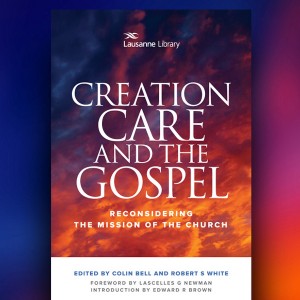 Creation Care and the Gospel at 350 pages is a substantial contribution to this field. The authors come from Africa, Asia, the Caribbean, as well as Europe and the Americas. Structured around the outline used at the Jamaica Consultation, the book addresses creation care and the environmental crisis from the perspectives of God’s Word (theology), God’s World (science), and God’s Work (our response). Topics include environmental missions (‘Does Creation Care belong within an evangelical understanding of mission?’), climate change (‘Is the weather going crazy? Impacts of climate change in the Cusco region of Peru’), economics (‘Planetary Boundaries and the Green Economy’), and cities (‘The Church and Sustainable Cities in East Asia’), as well as a variety of case studies from around the world.
In the book’s Introduction we noted that the Jamaica Call to Action is based on two important convictions: first, that ‘creation care is indeed a gospel issue’, and second, that ‘we are faced with a crisis that is pressing, urgent, and that must be resolved in our generation’. These convictions also drive this book, and should motivate all who read it. To be a Christian also means to care about the things that God cares about—including this world he has given us. And to care means to be willing to take action, to work to stop the destruction engulfing God’s world, and to begin the process of healing.
It is our prayer that this book will serve to inform the global creation care movement, and that it will encourage many other church leaders, pastors, educators, and missionaries to join in this vital task.

Ed Brown is the Lausanne Catalyst for Creation Care, and director of the Lausanne/WEA Global Campaign for Creation Care and the Gospel. He serves as Executive Director of Care of Creation, Inc, and is the author of two books, Our Father's World: Mobilizing the Church to Care for Creation (IVP), and When Heaven and Nature Sing: Exploring God's Goals for His People and His World (Doorlight).

We have a Gospel to Proclaim
Closing Address from Cape Town 2010. Read article or watch video.
Lindsay Brown
Closing Address: We have a Gospel to Proclaim by Lindsay Brown
Before this address, 2 Corinthians 4:1-7 was read to the Congress in Arabic, French and Spanish.[1]
The gospel of Jesus Christ is unique, wonderful, powerful and true. It is the greatest message in the history of the world and we want to share it with others. That is why we’ve been meeting together. It has been a memorable occasion. What do we hope will be the legacy of this Congress? What will we say when we return home?
Over the last year, Chris Wright and a team of theologians from around the world have been working on the first part of The Cape Town Commitment.[2] Its two-part structure is based on our attempt to respond to Jesus’ two commands: to love God and to love one another. It follows the style of Paul’s letters where he first outlines a series of doctrinal convictions and then spells out the implications of these beliefs for our lifestyle. In summarising our doctrinal convictions, we are not attempting to be doctrinaire. In our judgement it is important that each generation of believers should reflect on and restate in a fresh way what it believes. I hope you will read theCommitment carefully and digest it. Our prayer is that it will be a help to many mission agencies, churches and Christian organisations around the world.
In the preamble, the authors list the legacy of the first and second Lausanne Congresses. Among the major gifts to the world church of the first Congress in 1974, were (i) The Lausanne Covenant[3] , (ii) a new awareness of unreached people groups and (iii) a fresh discovery of the holistic nature of the biblical gospel and of Christian mission. The second Congress gave birth to The Manila Manifesto[4], and to more than 300 strategic partnerships between nations in all parts of the globe.
What will be the legacy of this Congress? Only God knows – we don’t, at this stage. But I can tell you the four-fold vision and the hope of the organisers.
Firstly and paramountly for a ringing re-affirmation of the uniqueness of Christ and the truth of the biblical gospel, and a crystal-clear statement on the mission of the church – all rooted in Scripture. We cannot engage in mission unless we are clear on what we believe. Without a foundational commitment to truth, we have little to offer. The great missionary conference of Edinburgh 1910 set in motion huge missionary endeavour.[5]But it had one big flaw – the organisers sidelined doctrine. Recently John Stott told me he was ashamed that leaders in his own communion refused to discuss doctrinal issues for fear of division. As a result, the Congress launched a movement without biblical consensus. As Stott said ‘You cannot speak of the gospel of Christ and the mission of the church without reflecting on biblical truth.’ To do so is folly.
So we need to have clarity, especially on four things; (i) the exclusive claims of Christ; (ii) the meaning of Christ’s death; (iii) the necessity of conversion; (iv) the lostness of humankind. The Cape Town Commitment seeks to give this clarity. It is effectively a statement of what evangelicals believe. There is no need for us to be ashamed of this word ‘evangelical’. It simply means ‘people of the gospel’. It is not a new word; it is neither a Western word, nor a Reformation word. Nor is evangelicalism a sect. It has its roots in Scripture (euangelion) and was used amongst church leaders as early as the second century, for example Tertullian used it in his defence of biblical truth against the heresies of Marcion.[6] When we use the term, we are simply aspiring to articulate and communicate authentic and biblical Christianity. Lausanne is an unashamedly evangelical movement.
Did you hear this ringing affirmation, and do you agree with it?
Secondly, our vision and our hope was to identify key issues which the church needs to address seriously in the coming decade. The mission statement for this Congress was ‘to seek to bring a fresh challenge to the global church to bear witness to Jesus Christ and all his teaching, in every part of the world – not only geographically, but in every sphere of society, and in the realm of ideas.’ The term ‘bearing witness’ is carefully chosen. In many ways I think it is better than ‘evangelization’. It is often translated from the Greek word martyria in the English Bible to imply both speech and behaviour. We must be committed to the lordship of Christ in every area of human activity. I love the words of Abraham Kuyper[7] , the Dutch theologian and prime minister, who once said ‘There is not one centimetre of human existence to which Christ, who is Lord of all, does not point and say “that is mine”.’
The evangelical church has rightly put an emphasis on reaching every nation and every people group with the gospel of Jesus Christ. That must not be diminished. We have, however, perhaps been a little weaker in our attempts to apply biblical principles to every area of society, for example to the media, business, government, public policy, the university… Charles Malik, the Lebanese statesman who led the UN General Assembly and fashioned the UN Declaration on Human Rights asked ‘What does Jesus Christ think of the university?’ What a question! He urged Christians to ‘try to recapture the university for Christ,’ for, he said ‘Change the university, and you change the world.’[8]
During this Congress, we have also been challenged to apply a Christian mind to ethical issues such as ethnicity, and creation care, amongst others. We need to engage deeply with human endeavour and with the ideas which shape it. As Sir Fred Catherwood once said, ‘To wash your hands of society is not love, but worldliness; to engage in society is not worldliness but love.’[9]
Many secularists have tried to persuade us to retain our faith only as a private matter and to keep it out of the public domain. This would imply that the Christian message is relevant only in our homes and churches, but not in society. That is not the teaching of the Bible. Our hope for this Congress is that we leave here (i) passionately committed to communicating the gospel to the ends of the earth and (ii) equally committed to demonstrating that the eternal truths of Scripture have application to the whole of life. For Christ is Lord over the whole of creation. Affirming the Lordship of Christ and attempting to develop a Christian mind will have three implications: it will (i) glorify our Creator, (ii) enrich our Christian lives and (iii) enhance our witness.
Are you committed to bearing witness to Christ in every area of life?
Thirdly our vision and our hope was that many fruitful partnerships will issue from this Congress; to this end great care was taken in the formation of the small groups, so many fresh friendships and partnerships would come into existence. In a needy and broken world we cannot afford to be driven by a spirit of competition; such a spirit must give way to a spirit of partnership where both men and women, and people of different ethnicities, join hands under Christ to communicate the gospel of Christ to the ends of the earth.
Such partnerships must transcend denominational and organisational divides. Our prayer is that after the Congress, like-minded mission agencies working in the same field will partner together to avoid duplication, competition and wastage. We need a new generation of evangelical statesmen and women who are driven by their commitment to the cause of Christ above all, and who genuinely rejoice, like Paul in Philippians1, when the gospel goes forth, no matter who is leading the charge.
Are you thinking of fresh partnerships into which you can enter after this Congress?
Fourthly, our vision and hope has been that many new initiatives will issue out of this Congress. We maintain too much, and pioneer too little. How can we rest when millions have never heard the gospel? In 1974, there was a great surge of interest in unreached people groups. What will come from this Congress? Perhaps fresh initiatives in reaching oral learners, young people, diaspora or the cities. Who knows what new ministries the Congress will spawn? Will we see fresh energy in communicating biblical truth in the public domain, in the media, in the world of the arts, in the university and government? These all shape the value systems in nations and require bold, clear and coherent Christian testimony.
What fresh initiatives will you take, coming out of this Congress?
Whatever God is pleased to do, I believe the Apostle Paul in 2 Corinthians 4:1-7 gives us three principles to take away. These principles have been rehearsed throughout the Congress.
1. Mission is Christocentric
Our ministry, or calling, at its core, is to present the deity, incarnation, death, resurrection and lordship of Jesus Christ.
At the press conference today a journalist asked me: ‘Bishop Stephen Neill says that when mission is everything, mission is nothing. What is not the mission of the church?’ My answer was this: ‘When the church proclaims a message without the deity, incarnation, death, resurrection and lordship of Christ at its centre, that is not mission.’
Look at the way Paul highlights the following:
v4 – the light of the gospel of the glory of Christ who is the image of God
v5 – preaching Christ Jesus as Lord
v6 – the glory of God in the face of Christ
Our message is unashamedly Christocentric. When Sadhu Sundar Singh, the great Indian leader, was once asked what was so special about the Christian faith, is reply was ‘Only Christ’.[10] I once asked a Christian woman in north India, where the vast majority are Hindus and Muslims, ‘Why are you a Christian?’ She responded, ‘It is only through Christ that I can know God as my Father; only through Christ can I know my sins forgiven; and only through Christ can I have the hope of eternal life.’ He is not justa Saviour – but the unique Saviour of the world. He is not just one among many, but the only Lord and Saviour. He does not bear comparison with any other religious leaders. He is incomparable. Our calling is by all means to communicate this message to the world. Some will do it by preaching and by proclamation, but all are called, according to the New Testament, to bear witness to him.
Some of us may engage in dialogue in the public sphere. It is amazing how creative the early evangelists were, speaking in local synagogues, and in neutral territory, as did Paul on Mars Hill. There is no substitute for engaging in Christ’s commission to testify verbally to his lordship.
Our communion meal this evening focuses around John the Baptist’s ecstatic claim when he saw Jesus and called him ‘the Lamb of God who takes away the sin of the world.’[11] When I was a student in Oxford University in the 1970s, I studied in the same college where John Wesley had been a professor 250 years previously. It was a wonderful place to read the letters and sermons of Wesley. I took the opportunity to read through his journals in which he wrote every day during his itinerant ministry. One phrase struck me, repeated day after day in his journals, ‘I offered Christ to the people…today I offered Christ to the people’. That is our primary calling, to offer Christ to the peoples of the world.
2. The need for integrity
We are to watch our walk! Our words must come from godly lives. We are called to bear witness to Christ as fallen, fragile people, or as ‘earthen vessels’ (v7). We should be careful about over-focusing on technique, or on clever approaches (v2); the gospel should be shared not by craftiness or by adulterating the word of God, but out of our weakness, (v7), focusing on the power of God.
There is no room for over-confidence or triumphalism. We dare not say we will accomplish this task because we have the money and the technology. Rather, the mission of taking the gospel to the ends of the earth will be accomplished only because of the greatness of the gospel, the power of God, the unique message of the saving Christ and the help and power of the Holy Spirit and the Word of God. As we go out, we are to focus on the truth of the gospel (v2), the gospel of the glory of God (v4), the lordship of Christ (v5), the glory of God in the face of Christ (v6). But this word of truth is to be backed up by authentic, transformed, joyful lives.
John Stott said in his last published sermon that the greatest hindrance to the advance of the gospel worldwide is the failure of God’s people to live like God’s people.
The teaching of the whole of Scripture is that we are to demonstrate godly lives before a watching world: lives which issue not just in pious statements, but in compassion in a needy and broken world by caring for the underprivileged, the poor, those affected by pandemics, the broken-hearted. It is intriguing to remember the words of Adolph Harnack, the Lutheran writer and great German church historian, who said that the two reasons the primitive church grew were that they out-argued the pagans (articulating and defending Christian truth in public) and they out-lived them. These two things must come together. Jesus himself brought them together in the feeding of the five thousand. So should we.
Our calling is to be morally distinct without being socially segregated. For those who are very word-centred, with a strong commitment to verbal communication of the gospel, our challenge is to balance this with empathy and care for the needy and broken. We must be careful to avoid the failings of the disciples who wanted Jesus only to speak to the 5,000 and then send them away. He would not allow that; neither should we.
For those committed to ministries of compassion, empathy and care, our challenge may be to ensure that our expressions of compassion are supported by taking every opportunity – graciously, sensitively, compassionately and wisely – but also verbally – to communicate the gospel of Christ. J I Packer is right when he says ‘A dumb Christian is a disobedient Christian.’ So we must do both.
Earlier this week, Antoine Rutayisire from Rwanda gave us a wonderful biblical framework for a ministry of reconciliation which brought these two things together. He did not have time to share his own experience - how he saw his own father killed in front of him when he was six years old, or how, in his mid-thirties, he lost all his co-workers in the IFES-related student ministry, killed in the 1994 genocide because of their determination to stand against ethnic violence and demonstrate their unity in Christ across the ethnic divide. Soon afterwards he was taken to a refugee camp with his pregnant wife, where he spent several months. I wrote to him from my home in Wales, offering to pay for him to come out of the country for a year’s sabbatical to recover from the trauma. I’ll never forget his reply. I still have the letter. He wrote, ‘Thank you, Lindsay, for your kind invitation to come to Wales for a sabbatical. It is very attractive. However, when the way is open, I will return to Kigali. For if I do not share in my people’s pain, neither can I share with them the joy of the gospel.’[12]
A radical Christian lifestyle may require sacrificial commitment and service. Words may not be enough.
3. A call to perseverance
Finally, the Apostle exhorts us not to lose heart (v1). In 1 Corinthians 15.58 he said ‘Be steadfast, unmovable, always abounding in the work of the Lord, knowing that your work is not in vain.’ Many of us will return to difficult circumstances, and may even entertain the idea of giving up because the work is so hard. Such temptations can come more strongly when we return from the mountain-top experience of a Congress like this. Then we are to remember our calling to persevere to the end and not to lose heart. I well remember talking with the only person from Somalia at the last Lausanne Congress, in 1989. He was employed by the United Nations, and working in the capital, Mogadishu. He was the only Somali elder in the only evangelical church in the city, made up of seventy believers. He had received an invitation to go and work with the UN in New York, but turned it down so he could serve among his own people. As a consequence, he lost his life in 1990, one year later. Indeed, Luis Palau had said at the Congress that if we were to gather in ten years time, some would be absent because they had lost their lives in the Lord’s service. That may well be true of some of us here. Gospel service is costly, but we are to continue because of the glory of the gospel and the commission of our Lord.
Samuel Escobar[13] , one of the grandfathers of The Lausanne Movement, has said the only thing 20th century man discovered was speed! We must have it and have it quick! Christian ministry is rarely like that. We thank God for rapid growth when we see it, but often the Word of God takes root slowly. We are to take a long view, not give up, and fulfil the ministry which God has given us. We are called, as Eugene Petersen said, ‘to a long obedience in the same direction’. Before I close, let me give two illustrations of people who have done that.
One is Prof Jerry Gana, a senior politician in Nigeria who has served five consecutive presidents, Muslim and Christian.[14] Jerry has a reputation for remaining free of corruption. I once asked him how, in over 30 years of political life, he had managed to retain his reputation as a man of integrity and fairness. He said there were three factors:
1. He learned as a young student what it meant to abide in Christ and keep short accounts. We need to teach that too.
2. He chose his colleagues and partners slowly because, he said, even some Christian politicians make foolish mistakes. When you identify with a particular policy and individual, if it all goes wrong, you have to face the consequences and it can damage your testimony.
3. He realised from early on the importance of legacy. He said, ‘God has given me the privilege of serving in public life for thirty years. I hope I will be able to continue for another twenty-five. During that time, I’d like to mentor and develop a generation of young evangelical politicians in Nigeria. My hope and prayer is that they will go on and multiply that influence in their own generation; and that God will impact the political life of this nation through evangelical Christian politicians over a 60-year period.’ That is a tremendous long-term vision and aspiration!
The second is Adoniram Judson, one of the early American missionaries. You may remember that he arrived in Burma, or Myanmar, in 1812, and died there 38 years later in 1850. During that time, he suffered much for the cause of the gospel. He lost his first wife, Ann, to whom he was devoted, as well as several children. He was imprisoned, tortured and kept in shackles. Statistics are unclear, but there were only somewhere between 12-25 professing Christians in the country when he died; there were no churches to speak of, but he had completed the translation of the Bible just before he died.
Paul Borthwick spoke at the 150th anniversary of the translation of the Bible into the Burmese language. Just before he got up to speak, he noticed in small print on the first page the words ‘Translated by Rev A. Judson.’ So he turned to his interpreter Matthew Hla Win and asked him ‘Matthew, what do you know of this man?’ Matthew began to weep. ‘We know him – we know how he loved the Burmese people, how he suffered for the gospel because of us, out of love for us. He died a pauper, but left the Bible for us. When he died, there were few believers, but today there are over 600,000 of us and every single one of us traces our spiritual heritage to one man – the Rev Adoniram Judson’. But he never saw it!
And that will be the case for some of us gathered here. We may be called to invest our lives in ministries for which we do not see much immediate fruit, trusting that the God of all grace who oversees our work will ensure that our labour is not in vain.
‘Therefore, beloved brethren, be steadfast, immovable, always abounding in the work of the Lord, knowing that your toil is not in vain in the Lord.’ (1Corinthians 15.58)
Let me leave you with the words of John Wesley. As you seek to bear witness to Christ – ‘With God’s help: Do all the good you can, by all the means you can, in all the ways you can, in all the places you can, at all the times you can, to all the people you can, as long as ever you can’ until Christ returns or calls us home. Let us all press on to the end in serving Christ, our King. God bless you.
Watch this the video of this address online.
Lindsay Brown, former International General Secretary of IFES, is International Director of the Lausanne Movement, and IFES Evangelist-at-Large.www.lausanne.org www.ifesworld.org
Following the address, the Congress sang the hymn Facing a Task Unfinished.
The closing ceremony took the form of a special musical setting of the Kenyan service of Holy Communion. This was presided over by The Right Revd Henry Luke Orombi, Archbishop of Uganda and Honorary Chair of the Cape Town 2010 Africa Host Committee. The bread and wine were served around the hall using communion sets borrowed from a hundred local churches around the world, symbolizing the remembering of Christ’s death in many nations.
[1] This address was given in the context of the Closing Ceremony, and followed by a service of holy communion with a liturgy written by the Church in Kenya. The Ceremony may be viewed at www.lausanne.org in the “Content Library”.
[2] The first meeting of what was then called The Cape Town 2010 Statement Working Group, made up of leading evangelical theologians, pastors and missiologists from around the world, was hosted by John Piper in Bethlehem Church, Minneapolis, Minnesota. Sinclair B. Ferguson was in the Chair. Chris Wright was invited to draft the first part of the statement, The Cape Town Confession of Faith, which was distributed at the Congress. The second part,The Cape Town Call to Action issued out of discussions at the Congress, and was published early in 2011 in eight Congress languages. It has subsequently been translated into many more languages.
[3] John Stott wrote a study guide to The Lausanne Covenant, published in 1975, available now from Hendrickson Publishers in the Didasko Files series.
[4] Available on www.lausanne.org
[5] See ppXXXX Will there be an essay in this volume on Edinburgh 1910?
[6] Marcion was a second century teacher; Tertullion straddled the second and third centuries. Tertullion’s firm refutation of Marcion’s teaching is easily found online.
[7] Kuyper (1837-1920) served as Prime Minister of the Netherlands from 1901-1905.
[8] See Malik’s Pascal lectures A Christian Critique of the University (Waterloo University, 1981).
[9] British industrialist; author of inter alia the then groundbreaking A Christian in Industrial Society (IVP, 1964) andLight, Salt and the World of Business (Hendrickson/Lausanne Didasko Files series, 2009). He chaired the National Economic Development Council (1963-71) and served as Vice Chairman of the European Parliament (1989-92).
[10] Sadhu Sundar Singh (1889-c1929), born into a Hindu family. Author of eight books, written in Urdu and published in translation. Indian Christian history cannot be grasped without studying Sadhu Sundar Singh.
[11] See John 1:29,36
[12] For more of Antoine Rutayisire’sstory, see Chapter 6, Shining Like Stars : The power of the gospel in the world’s universities by Lindsay Brown (IVP, 2006).
[13] With fellow Latin American René Padilla, Samuel Escobar made a significant contribution to the International Congress on World Evangelization (Lausanne, 1974). This was to urge the church to understand what is now known as ‘Integral mission’, ie the seeking of social justice as being part of our Christian mandate. Through The Lausanne Covenant, this view took root as responsible evangelical thinking about society.
[14] For more on Prof Jerry Gana, and for further inspiring examples of Christians in public service, see Chapter 5 of Shining like Stars : The power of the gospel in the world’s universities by Lindsay Brown (IVP, 2006).

Partnership and the Global South
The growth of the church in the global south highlights the need for new models of partnership. From Cape Town 2010.
David RuizPartnership – The Global South – Plenary 2 by David RuizDavid Ruiz of Guatemala describes how the growth of the church in the global South has changed the face of missions. New patterns of partnership need to be developed using the early church as a model.
Download Options
https://youtu.be/f7CJ6UpVpIA
PC users: Right click a link and choose “Save as” to download file. Mac users:Command click and “Save link as” to download file.
---------------------
JOIN US AS WE SEEK THE PROSPERITY AND FLOURISHING OF OUR CITIES.REGISTER
NEWSLETTER SIGN UP
facebook twitter instagram vimeo youtube
-------
South Asia Regional Creation Care Conference (12-16 September)
Creation Care
South Asia
South Asia Regional Creation Care Conference
Part of the Lausanne/WEA Global Campaign for Creation Care and the Gospel
Hotel View Bhrikuti, Godavri, Lalitpur, Nepal
The South Asian region is one of the most vulnerable regions in the world that is affected every year by disasters – floods, landslides, earthquakes. We are also home to the largest number of people living in poverty. The devastation that we see every year reminds us that caring for God’s creation is not just an option or something that should be left in the hands of specialist organisations. Learning to live in and care for the world that God has given us is of the utmost importance for all of us, and particularly for the poor and vulnerable.
In this regard, we want to invite you to an important conference to be held in September of this year, hosted by The Lausanne Movement and World Evangelical Alliance along with several local organizations. The conference will be held in Nepal.
Here’s what you need to know:
- Why? This conference is part of a global campaign by Lausanne and the WEA to help encourage, strengthen and start creation care movements in many countries around the world. The campaign is a partnership between Lausanne and WEA, with the Evangelical Fellowship of India Commission on Relief (EFICOR) and United Mission to Nepal (UMN) as local hosts.
- Who should come? Conference participants are being invited from the South Asian countries (Pakistan, India, Nepal, Sri Lanka, Bangladesh and if possible Afghanistan and Maldives). We will be looking for people who are church leaders, theologians, scientists and creation-care practitioners.
- What will we do? The conference will be organized around three themes: God’s Word (what the Bible has to tell us about creation care); God’s World (what is happening in creation) and God’s Work (what we as God’s people should be doing).
- When? Sept 12 – 16, 2016. The conference will be in Nepal with participants expected to arrive on the morning of 12 Sept and leaving in the afternoon of 16 Sept. Participants will arrive into Kathmandu from where transportation will be arranged to the venue.
- How much? The conference fees are applicable to all participants including speakers and presenters. The fees include board, shared accommodation and pick up and drop to the airport. Single rooms may be available at additional cost.
USD 300 – for participants who have to raise individual support
- Speaker suggestions and questions on the invitation procedure should be sent immediatelyto Ms. Kuki Rokhum at cccsouthasia(at)gmail.com.
Diaspora Missiology Educators Huddle in Singapore
Diaspora

by Cody Lorance
DIASPORA MISSIOLOGY EDUCATORS HUDDLE IN SINGAPORE
Singapore, March 30, 2016– Key evangelical educators and ministry agency directors from around the world gathered in Singapore, from March 2-5, 2016, to discuss diaspora training for the global church, and to prepare for the launch of Scattered and Gathered: A Global Compendium of Diaspora Missiology, a comprehensive tool for training published by Regnum Books.
Deliberations focused on setting priorities and developing strategies for effective institutional and local church based (formal and informal) training in diaspora missiology and culminated in the crafting of the Singapore Resolution which reflects several areas of consensus about the way forward in equipping the next generation of researchers and practitioners of diaspora mission. Dr. Tetsunao Yamamori, President Emeritus of Food for the Hungry and former International Director of the Lausanne Movement, was among those at the consultation and he concluded:
“Those gathered in Singapore affirmed the importance of advancing diaspora missiology to grapple with the issues facing the church today. In the coming decade, churches will experience the fruit of God’s blessing among the peoples on the move beyond belief.”
The Singapore gathering of 40 participants was a strategic follow-up to the Global Diaspora Forum 2015 in Manila which brought together hundreds of leaders from around the world. Global Diaspora Network (GDN) is an international body of evangelical leaders commissioned at the Lausanne Congress on World Evangelization 2010 in Cape Town, South Africa to lead the global Church in fulfilling God’s missional purposes among diaspora peoples.
Dr. Sadiri Joy Tira, Lausanne Movement’s Catalyst for Diasporas moderated the consultation and often referred participants to the formative diaspora documents of the Lausanne Movement, the Seoul Declaration on Diaspora Missiology and the Cape Town Commitment which called for ministry initiatives in reaching people on the move. “I gained valuable insights and tools at the consultation on how to nurture and equip the Church for missions in the 21st century,” admits mission theologian, Dr. Miyon Chung of Moorling College in Australia.
In addition to crafting the Singapore Resolution, participants reviewed the forthcoming Scattered and Gathered: A Global Compendium of Diaspora Missiology; evaluated sample syllabi from diaspora mission courses being taught around the world; provided feedback on the Lausanne Global Classroom curriculum on diaspora mission; and developed a basic curriculum framework for training in diaspora missiology. Many like Asian Theological Seminary Academic Dean, Dr. Joanna Feliciano-Soberano, left Singapore “to work on the diaspora missiology curriculum template for the Missions Department.”
Events Singapore training
-------
View all
Highlights from the Content Library
Notable highlights, both recent and past, from the Lausanne content library.
New book: Creation Care and the Gospel
Addresses creation care and the environmental crisis from the perspectives of God’s Word (theology), God’s World (science), and God’s Work (our response)
Edited by Colin Bell and Robert S WhiteNew book: Creation Care and the Gospel by Ed Brown
The Cape Town Commitment was a historic document in many ways, but no more so than in its affirmation that ‘creation care is a gospel issue within the Lordship of Christ’ (CTC I-7-A). This little phrase has produced over the last several years the Global Consultation on Creation Care and the Gospel (held in Jamaica in November 2010), aCall to Action (available in six languages), and now, at last, a book on the topic.Creation Care and the Gospel: Reconsidering the Mission of the Church is the latest addition to the Lausanne Library and has been released this month in the US by Hendrickson Publishers.
Creation Care and the Gospel at 350 pages is a substantial contribution to this field. The authors come from Africa, Asia, the Caribbean, as well as Europe and the Americas. Structured around the outline used at the Jamaica Consultation, the book addresses creation care and the environmental crisis from the perspectives of God’s Word (theology), God’s World (science), and God’s Work (our response). Topics include environmental missions (‘Does Creation Care belong within an evangelical understanding of mission?’), climate change (‘Is the weather going crazy? Impacts of climate change in the Cusco region of Peru’), economics (‘Planetary Boundaries and the Green Economy’), and cities (‘The Church and Sustainable Cities in East Asia’), as well as a variety of case studies from around the world.In the book’s Introduction we noted that the Jamaica Call to Action is based on two important convictions: first, that ‘creation care is indeed a gospel issue’, and second, that ‘we are faced with a crisis that is pressing, urgent, and that must be resolved in our generation’. These convictions also drive this book, and should motivate all who read it. To be a Christian also means to care about the things that God cares about—including this world he has given us. And to care means to be willing to take action, to work to stop the destruction engulfing God’s world, and to begin the process of healing.
It is our prayer that this book will serve to inform the global creation care movement, and that it will encourage many other church leaders, pastors, educators, and missionaries to join in this vital task.
Ed Brown is the Lausanne Catalyst for Creation Care, and director of the Lausanne/WEA Global Campaign for Creation Care and the Gospel. He serves as Executive Director of Care of Creation, Inc, and is the author of two books, Our Father's World: Mobilizing the Church to Care for Creation (IVP), and When Heaven and Nature Sing: Exploring God's Goals for His People and His World (Doorlight).
We have a Gospel to Proclaim
Closing Address from Cape Town 2010. Read article or watch video.
Lindsay Brown
Closing Address: We have a Gospel to Proclaim by Lindsay Brown
Before this address, 2 Corinthians 4:1-7 was read to the Congress in Arabic, French and Spanish.[1]
The gospel of Jesus Christ is unique, wonderful, powerful and true. It is the greatest message in the history of the world and we want to share it with others. That is why we’ve been meeting together. It has been a memorable occasion. What do we hope will be the legacy of this Congress? What will we say when we return home?
Over the last year, Chris Wright and a team of theologians from around the world have been working on the first part of The Cape Town Commitment.[2] Its two-part structure is based on our attempt to respond to Jesus’ two commands: to love God and to love one another. It follows the style of Paul’s letters where he first outlines a series of doctrinal convictions and then spells out the implications of these beliefs for our lifestyle. In summarising our doctrinal convictions, we are not attempting to be doctrinaire. In our judgement it is important that each generation of believers should reflect on and restate in a fresh way what it believes. I hope you will read theCommitment carefully and digest it. Our prayer is that it will be a help to many mission agencies, churches and Christian organisations around the world.
In the preamble, the authors list the legacy of the first and second Lausanne Congresses. Among the major gifts to the world church of the first Congress in 1974, were (i) The Lausanne Covenant[3] , (ii) a new awareness of unreached people groups and (iii) a fresh discovery of the holistic nature of the biblical gospel and of Christian mission. The second Congress gave birth to The Manila Manifesto[4], and to more than 300 strategic partnerships between nations in all parts of the globe.
What will be the legacy of this Congress? Only God knows – we don’t, at this stage. But I can tell you the four-fold vision and the hope of the organisers.
Firstly and paramountly for a ringing re-affirmation of the uniqueness of Christ and the truth of the biblical gospel, and a crystal-clear statement on the mission of the church – all rooted in Scripture. We cannot engage in mission unless we are clear on what we believe. Without a foundational commitment to truth, we have little to offer. The great missionary conference of Edinburgh 1910 set in motion huge missionary endeavour.[5]But it had one big flaw – the organisers sidelined doctrine. Recently John Stott told me he was ashamed that leaders in his own communion refused to discuss doctrinal issues for fear of division. As a result, the Congress launched a movement without biblical consensus. As Stott said ‘You cannot speak of the gospel of Christ and the mission of the church without reflecting on biblical truth.’ To do so is folly.
So we need to have clarity, especially on four things; (i) the exclusive claims of Christ; (ii) the meaning of Christ’s death; (iii) the necessity of conversion; (iv) the lostness of humankind. The Cape Town Commitment seeks to give this clarity. It is effectively a statement of what evangelicals believe. There is no need for us to be ashamed of this word ‘evangelical’. It simply means ‘people of the gospel’. It is not a new word; it is neither a Western word, nor a Reformation word. Nor is evangelicalism a sect. It has its roots in Scripture (euangelion) and was used amongst church leaders as early as the second century, for example Tertullian used it in his defence of biblical truth against the heresies of Marcion.[6] When we use the term, we are simply aspiring to articulate and communicate authentic and biblical Christianity. Lausanne is an unashamedly evangelical movement.
Did you hear this ringing affirmation, and do you agree with it?
Secondly, our vision and our hope was to identify key issues which the church needs to address seriously in the coming decade. The mission statement for this Congress was ‘to seek to bring a fresh challenge to the global church to bear witness to Jesus Christ and all his teaching, in every part of the world – not only geographically, but in every sphere of society, and in the realm of ideas.’ The term ‘bearing witness’ is carefully chosen. In many ways I think it is better than ‘evangelization’. It is often translated from the Greek word martyria in the English Bible to imply both speech and behaviour. We must be committed to the lordship of Christ in every area of human activity. I love the words of Abraham Kuyper[7] , the Dutch theologian and prime minister, who once said ‘There is not one centimetre of human existence to which Christ, who is Lord of all, does not point and say “that is mine”.’
The evangelical church has rightly put an emphasis on reaching every nation and every people group with the gospel of Jesus Christ. That must not be diminished. We have, however, perhaps been a little weaker in our attempts to apply biblical principles to every area of society, for example to the media, business, government, public policy, the university… Charles Malik, the Lebanese statesman who led the UN General Assembly and fashioned the UN Declaration on Human Rights asked ‘What does Jesus Christ think of the university?’ What a question! He urged Christians to ‘try to recapture the university for Christ,’ for, he said ‘Change the university, and you change the world.’[8]
During this Congress, we have also been challenged to apply a Christian mind to ethical issues such as ethnicity, and creation care, amongst others. We need to engage deeply with human endeavour and with the ideas which shape it. As Sir Fred Catherwood once said, ‘To wash your hands of society is not love, but worldliness; to engage in society is not worldliness but love.’[9]
Many secularists have tried to persuade us to retain our faith only as a private matter and to keep it out of the public domain. This would imply that the Christian message is relevant only in our homes and churches, but not in society. That is not the teaching of the Bible. Our hope for this Congress is that we leave here (i) passionately committed to communicating the gospel to the ends of the earth and (ii) equally committed to demonstrating that the eternal truths of Scripture have application to the whole of life. For Christ is Lord over the whole of creation. Affirming the Lordship of Christ and attempting to develop a Christian mind will have three implications: it will (i) glorify our Creator, (ii) enrich our Christian lives and (iii) enhance our witness.
Are you committed to bearing witness to Christ in every area of life?
Thirdly our vision and our hope was that many fruitful partnerships will issue from this Congress; to this end great care was taken in the formation of the small groups, so many fresh friendships and partnerships would come into existence. In a needy and broken world we cannot afford to be driven by a spirit of competition; such a spirit must give way to a spirit of partnership where both men and women, and people of different ethnicities, join hands under Christ to communicate the gospel of Christ to the ends of the earth.
Such partnerships must transcend denominational and organisational divides. Our prayer is that after the Congress, like-minded mission agencies working in the same field will partner together to avoid duplication, competition and wastage. We need a new generation of evangelical statesmen and women who are driven by their commitment to the cause of Christ above all, and who genuinely rejoice, like Paul in Philippians1, when the gospel goes forth, no matter who is leading the charge.
Are you thinking of fresh partnerships into which you can enter after this Congress?
Fourthly, our vision and hope has been that many new initiatives will issue out of this Congress. We maintain too much, and pioneer too little. How can we rest when millions have never heard the gospel? In 1974, there was a great surge of interest in unreached people groups. What will come from this Congress? Perhaps fresh initiatives in reaching oral learners, young people, diaspora or the cities. Who knows what new ministries the Congress will spawn? Will we see fresh energy in communicating biblical truth in the public domain, in the media, in the world of the arts, in the university and government? These all shape the value systems in nations and require bold, clear and coherent Christian testimony.
What fresh initiatives will you take, coming out of this Congress?
Whatever God is pleased to do, I believe the Apostle Paul in 2 Corinthians 4:1-7 gives us three principles to take away. These principles have been rehearsed throughout the Congress.
1. Mission is Christocentric
Our ministry, or calling, at its core, is to present the deity, incarnation, death, resurrection and lordship of Jesus Christ.
At the press conference today a journalist asked me: ‘Bishop Stephen Neill says that when mission is everything, mission is nothing. What is not the mission of the church?’ My answer was this: ‘When the church proclaims a message without the deity, incarnation, death, resurrection and lordship of Christ at its centre, that is not mission.’
Look at the way Paul highlights the following:
v4 – the light of the gospel of the glory of Christ who is the image of God
v5 – preaching Christ Jesus as Lord
v6 – the glory of God in the face of Christ
Our message is unashamedly Christocentric. When Sadhu Sundar Singh, the great Indian leader, was once asked what was so special about the Christian faith, is reply was ‘Only Christ’.[10] I once asked a Christian woman in north India, where the vast majority are Hindus and Muslims, ‘Why are you a Christian?’ She responded, ‘It is only through Christ that I can know God as my Father; only through Christ can I know my sins forgiven; and only through Christ can I have the hope of eternal life.’ He is not justa Saviour – but the unique Saviour of the world. He is not just one among many, but the only Lord and Saviour. He does not bear comparison with any other religious leaders. He is incomparable. Our calling is by all means to communicate this message to the world. Some will do it by preaching and by proclamation, but all are called, according to the New Testament, to bear witness to him.
Some of us may engage in dialogue in the public sphere. It is amazing how creative the early evangelists were, speaking in local synagogues, and in neutral territory, as did Paul on Mars Hill. There is no substitute for engaging in Christ’s commission to testify verbally to his lordship.
Our communion meal this evening focuses around John the Baptist’s ecstatic claim when he saw Jesus and called him ‘the Lamb of God who takes away the sin of the world.’[11] When I was a student in Oxford University in the 1970s, I studied in the same college where John Wesley had been a professor 250 years previously. It was a wonderful place to read the letters and sermons of Wesley. I took the opportunity to read through his journals in which he wrote every day during his itinerant ministry. One phrase struck me, repeated day after day in his journals, ‘I offered Christ to the people…today I offered Christ to the people’. That is our primary calling, to offer Christ to the peoples of the world.
2. The need for integrity
We are to watch our walk! Our words must come from godly lives. We are called to bear witness to Christ as fallen, fragile people, or as ‘earthen vessels’ (v7). We should be careful about over-focusing on technique, or on clever approaches (v2); the gospel should be shared not by craftiness or by adulterating the word of God, but out of our weakness, (v7), focusing on the power of God.
There is no room for over-confidence or triumphalism. We dare not say we will accomplish this task because we have the money and the technology. Rather, the mission of taking the gospel to the ends of the earth will be accomplished only because of the greatness of the gospel, the power of God, the unique message of the saving Christ and the help and power of the Holy Spirit and the Word of God. As we go out, we are to focus on the truth of the gospel (v2), the gospel of the glory of God (v4), the lordship of Christ (v5), the glory of God in the face of Christ (v6). But this word of truth is to be backed up by authentic, transformed, joyful lives.
John Stott said in his last published sermon that the greatest hindrance to the advance of the gospel worldwide is the failure of God’s people to live like God’s people.
The teaching of the whole of Scripture is that we are to demonstrate godly lives before a watching world: lives which issue not just in pious statements, but in compassion in a needy and broken world by caring for the underprivileged, the poor, those affected by pandemics, the broken-hearted. It is intriguing to remember the words of Adolph Harnack, the Lutheran writer and great German church historian, who said that the two reasons the primitive church grew were that they out-argued the pagans (articulating and defending Christian truth in public) and they out-lived them. These two things must come together. Jesus himself brought them together in the feeding of the five thousand. So should we.
Our calling is to be morally distinct without being socially segregated. For those who are very word-centred, with a strong commitment to verbal communication of the gospel, our challenge is to balance this with empathy and care for the needy and broken. We must be careful to avoid the failings of the disciples who wanted Jesus only to speak to the 5,000 and then send them away. He would not allow that; neither should we.
For those committed to ministries of compassion, empathy and care, our challenge may be to ensure that our expressions of compassion are supported by taking every opportunity – graciously, sensitively, compassionately and wisely – but also verbally – to communicate the gospel of Christ. J I Packer is right when he says ‘A dumb Christian is a disobedient Christian.’ So we must do both.
Earlier this week, Antoine Rutayisire from Rwanda gave us a wonderful biblical framework for a ministry of reconciliation which brought these two things together. He did not have time to share his own experience - how he saw his own father killed in front of him when he was six years old, or how, in his mid-thirties, he lost all his co-workers in the IFES-related student ministry, killed in the 1994 genocide because of their determination to stand against ethnic violence and demonstrate their unity in Christ across the ethnic divide. Soon afterwards he was taken to a refugee camp with his pregnant wife, where he spent several months. I wrote to him from my home in Wales, offering to pay for him to come out of the country for a year’s sabbatical to recover from the trauma. I’ll never forget his reply. I still have the letter. He wrote, ‘Thank you, Lindsay, for your kind invitation to come to Wales for a sabbatical. It is very attractive. However, when the way is open, I will return to Kigali. For if I do not share in my people’s pain, neither can I share with them the joy of the gospel.’[12]
A radical Christian lifestyle may require sacrificial commitment and service. Words may not be enough.
3. A call to perseverance
Finally, the Apostle exhorts us not to lose heart (v1). In 1 Corinthians 15.58 he said ‘Be steadfast, unmovable, always abounding in the work of the Lord, knowing that your work is not in vain.’ Many of us will return to difficult circumstances, and may even entertain the idea of giving up because the work is so hard. Such temptations can come more strongly when we return from the mountain-top experience of a Congress like this. Then we are to remember our calling to persevere to the end and not to lose heart. I well remember talking with the only person from Somalia at the last Lausanne Congress, in 1989. He was employed by the United Nations, and working in the capital, Mogadishu. He was the only Somali elder in the only evangelical church in the city, made up of seventy believers. He had received an invitation to go and work with the UN in New York, but turned it down so he could serve among his own people. As a consequence, he lost his life in 1990, one year later. Indeed, Luis Palau had said at the Congress that if we were to gather in ten years time, some would be absent because they had lost their lives in the Lord’s service. That may well be true of some of us here. Gospel service is costly, but we are to continue because of the glory of the gospel and the commission of our Lord.
Samuel Escobar[13] , one of the grandfathers of The Lausanne Movement, has said the only thing 20th century man discovered was speed! We must have it and have it quick! Christian ministry is rarely like that. We thank God for rapid growth when we see it, but often the Word of God takes root slowly. We are to take a long view, not give up, and fulfil the ministry which God has given us. We are called, as Eugene Petersen said, ‘to a long obedience in the same direction’. Before I close, let me give two illustrations of people who have done that.
One is Prof Jerry Gana, a senior politician in Nigeria who has served five consecutive presidents, Muslim and Christian.[14] Jerry has a reputation for remaining free of corruption. I once asked him how, in over 30 years of political life, he had managed to retain his reputation as a man of integrity and fairness. He said there were three factors:
1. He learned as a young student what it meant to abide in Christ and keep short accounts. We need to teach that too.
2. He chose his colleagues and partners slowly because, he said, even some Christian politicians make foolish mistakes. When you identify with a particular policy and individual, if it all goes wrong, you have to face the consequences and it can damage your testimony.
3. He realised from early on the importance of legacy. He said, ‘God has given me the privilege of serving in public life for thirty years. I hope I will be able to continue for another twenty-five. During that time, I’d like to mentor and develop a generation of young evangelical politicians in Nigeria. My hope and prayer is that they will go on and multiply that influence in their own generation; and that God will impact the political life of this nation through evangelical Christian politicians over a 60-year period.’ That is a tremendous long-term vision and aspiration!
The second is Adoniram Judson, one of the early American missionaries. You may remember that he arrived in Burma, or Myanmar, in 1812, and died there 38 years later in 1850. During that time, he suffered much for the cause of the gospel. He lost his first wife, Ann, to whom he was devoted, as well as several children. He was imprisoned, tortured and kept in shackles. Statistics are unclear, but there were only somewhere between 12-25 professing Christians in the country when he died; there were no churches to speak of, but he had completed the translation of the Bible just before he died.
Paul Borthwick spoke at the 150th anniversary of the translation of the Bible into the Burmese language. Just before he got up to speak, he noticed in small print on the first page the words ‘Translated by Rev A. Judson.’ So he turned to his interpreter Matthew Hla Win and asked him ‘Matthew, what do you know of this man?’ Matthew began to weep. ‘We know him – we know how he loved the Burmese people, how he suffered for the gospel because of us, out of love for us. He died a pauper, but left the Bible for us. When he died, there were few believers, but today there are over 600,000 of us and every single one of us traces our spiritual heritage to one man – the Rev Adoniram Judson’. But he never saw it!
And that will be the case for some of us gathered here. We may be called to invest our lives in ministries for which we do not see much immediate fruit, trusting that the God of all grace who oversees our work will ensure that our labour is not in vain.
‘Therefore, beloved brethren, be steadfast, immovable, always abounding in the work of the Lord, knowing that your toil is not in vain in the Lord.’ (1Corinthians 15.58)
Let me leave you with the words of John Wesley. As you seek to bear witness to Christ – ‘With God’s help: Do all the good you can, by all the means you can, in all the ways you can, in all the places you can, at all the times you can, to all the people you can, as long as ever you can’ until Christ returns or calls us home. Let us all press on to the end in serving Christ, our King. God bless you.
Watch this the video of this address online.
Lindsay Brown, former International General Secretary of IFES, is International Director of the Lausanne Movement, and IFES Evangelist-at-Large.www.lausanne.org www.ifesworld.org
Following the address, the Congress sang the hymn Facing a Task Unfinished.
The closing ceremony took the form of a special musical setting of the Kenyan service of Holy Communion. This was presided over by The Right Revd Henry Luke Orombi, Archbishop of Uganda and Honorary Chair of the Cape Town 2010 Africa Host Committee. The bread and wine were served around the hall using communion sets borrowed from a hundred local churches around the world, symbolizing the remembering of Christ’s death in many nations.
[1] This address was given in the context of the Closing Ceremony, and followed by a service of holy communion with a liturgy written by the Church in Kenya. The Ceremony may be viewed at www.lausanne.org in the “Content Library”.
[2] The first meeting of what was then called The Cape Town 2010 Statement Working Group, made up of leading evangelical theologians, pastors and missiologists from around the world, was hosted by John Piper in Bethlehem Church, Minneapolis, Minnesota. Sinclair B. Ferguson was in the Chair. Chris Wright was invited to draft the first part of the statement, The Cape Town Confession of Faith, which was distributed at the Congress. The second part,The Cape Town Call to Action issued out of discussions at the Congress, and was published early in 2011 in eight Congress languages. It has subsequently been translated into many more languages.
[3] John Stott wrote a study guide to The Lausanne Covenant, published in 1975, available now from Hendrickson Publishers in the Didasko Files series.
[4] Available on www.lausanne.org
[5] See ppXXXX Will there be an essay in this volume on Edinburgh 1910?
[6] Marcion was a second century teacher; Tertullion straddled the second and third centuries. Tertullion’s firm refutation of Marcion’s teaching is easily found online.
[7] Kuyper (1837-1920) served as Prime Minister of the Netherlands from 1901-1905.
[8] See Malik’s Pascal lectures A Christian Critique of the University (Waterloo University, 1981).
[9] British industrialist; author of inter alia the then groundbreaking A Christian in Industrial Society (IVP, 1964) andLight, Salt and the World of Business (Hendrickson/Lausanne Didasko Files series, 2009). He chaired the National Economic Development Council (1963-71) and served as Vice Chairman of the European Parliament (1989-92).
[10] Sadhu Sundar Singh (1889-c1929), born into a Hindu family. Author of eight books, written in Urdu and published in translation. Indian Christian history cannot be grasped without studying Sadhu Sundar Singh.
[11] See John 1:29,36
[12] For more of Antoine Rutayisire’sstory, see Chapter 6, Shining Like Stars : The power of the gospel in the world’s universities by Lindsay Brown (IVP, 2006).
[13] With fellow Latin American René Padilla, Samuel Escobar made a significant contribution to the International Congress on World Evangelization (Lausanne, 1974). This was to urge the church to understand what is now known as ‘Integral mission’, ie the seeking of social justice as being part of our Christian mandate. Through The Lausanne Covenant, this view took root as responsible evangelical thinking about society.
[14] For more on Prof Jerry Gana, and for further inspiring examples of Christians in public service, see Chapter 5 of Shining like Stars : The power of the gospel in the world’s universities by Lindsay Brown (IVP, 2006).
Partnership and the Global South
The growth of the church in the global south highlights the need for new models of partnership. From Cape Town 2010.
David RuizPartnership – The Global South – Plenary 2 by David RuizDavid Ruiz of Guatemala describes how the growth of the church in the global South has changed the face of missions. New patterns of partnership need to be developed using the early church as a model.
Download Options
https://youtu.be/f7CJ6UpVpIA
PC users: Right click a link and choose “Save as” to download file. Mac users:Command click and “Save link as” to download file.
---------------------

No comments:
Post a Comment