
"Lord, to whom shall we go? You have the words of eternal life."[John 6:68]
Wednesday of the Nineteenth week in Ordinary Time
Saints of the day:
St. Jane Frances de Chantal (1572-1641)

SAINT JANE FRANCES DE CHANTAL
(1572-1641)
(1572-1641)
At the age of sixteen, Jane Frances de Frémyot, already a motherless child, was placed under the care of a worldly-minded governess. In this crisis she offered herself to the Mother of God, and secured Mary's protection for life. When a Protestant sought her hand, she steadily refused to marry "an enemy of God and his Church," and shortly afterwards, as the loving and beloved wife of the Baron de Chantal, made her house the pattern of a Christian home.
But God had marked her for something higher than domestic sanctity. Two children and a dearly beloved sister died, and, in the full tide of prosperity, her husband's life was taken by the innocent hand of a friend. For seven years the sorrows of her widowhood were increased by ill-usage from servants and inferiors, and the cruel importunities of friends, who urged her to marry again. Harassed almost to despair by their entreaties, she branded on her heart the name of Jesus, and in the end left her beloved home and children to live for God alone.
It was on the 19th of March, 1609, that Madame de Chantal bade farewell to her family and relations. Pale, and with tears in her eyes, she passed round the large room, sweetly and humbly taking leave of each. Her son, a boy of fifteen, used every entreaty, every endearment, to induce his mother not to leave them, and at last passionately flung himself across the door of the room. In an agony of distress, she passed on over the body of her son to the embrace of her aged and disconsolate father. The anguish of that parting reached its height when, kneeling at the feet of the venerable old man, she sought and obtained his last blessing, promising to repay in her new home his sacrifice by her prayers.
Well might St. Francis call her "the valiant woman." She was to found with St. Francis de Sales a great Order. Sickness, opposition, want, beset her, and the death of children, friends, and of St. Francis himself followed, while eighty-seven houses of the Visitation rose under her hand. Nine long years of interior desolation completed the work of God's grace; and in her seventieth year St. Vincent of Paul saw, at the moment of her death, her soul ascend, as a ball of fire, to heaven.
Lives of the Saints, by Alban Butler, Benziger Bros. ed. [1894] Saint EupliusBut God had marked her for something higher than domestic sanctity. Two children and a dearly beloved sister died, and, in the full tide of prosperity, her husband's life was taken by the innocent hand of a friend. For seven years the sorrows of her widowhood were increased by ill-usage from servants and inferiors, and the cruel importunities of friends, who urged her to marry again. Harassed almost to despair by their entreaties, she branded on her heart the name of Jesus, and in the end left her beloved home and children to live for God alone.
It was on the 19th of March, 1609, that Madame de Chantal bade farewell to her family and relations. Pale, and with tears in her eyes, she passed round the large room, sweetly and humbly taking leave of each. Her son, a boy of fifteen, used every entreaty, every endearment, to induce his mother not to leave them, and at last passionately flung himself across the door of the room. In an agony of distress, she passed on over the body of her son to the embrace of her aged and disconsolate father. The anguish of that parting reached its height when, kneeling at the feet of the venerable old man, she sought and obtained his last blessing, promising to repay in her new home his sacrifice by her prayers.
Well might St. Francis call her "the valiant woman." She was to found with St. Francis de Sales a great Order. Sickness, opposition, want, beset her, and the death of children, friends, and of St. Francis himself followed, while eighty-seven houses of the Visitation rose under her hand. Nine long years of interior desolation completed the work of God's grace; and in her seventieth year St. Vincent of Paul saw, at the moment of her death, her soul ascend, as a ball of fire, to heaven.
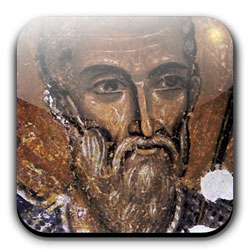
St. Euplius was a deacon at Catania, Sicily, during Emperor Diocletian's persecution of the Christians. He was found guilty of possessing a copy of the gospels by the governor, Calvisian. When Euplius persisted in refusing to sacrifice to the gods, he was beheaded on April 29th. His feast day is August 12th.
Readings
Book of Deuteronomy 34:1 (vii) Moshe ascended from the plains of Mo’av to Mount N’vo, to the summit of Pisgah, across from Yericho. There Adonai showed him all the land — Gil‘ad as far as Dan, 2 all Naftali, the land of Efrayim and M’nasheh, the land of Y’hudah all the way to the sea beyond, 3 the Negev, and the ‘Aravah, including the valley where Yericho, the City of Date-Palms, as far away as Tzo‘ar. 4 Adonai said to him, “This is the land concerning which I swore to Avraham, Yitz’chak and Ya‘akov, ‘I will give it to your descendants.’ I have let you see it with your eyes, but you will not cross over there.”
5 So Moshe, the servant of Adonai, died there in the land of Mo’av, as Adonai had said. 6 He was buried in the valley across from Beit-P‘or in the land of Mo’av, but to this day no one knows where his grave is.
7 Moshe was 120 years old when he died, with eyes undimmed and vigor undiminished. 8 The people of Isra’el mourned Moshe on the plains of Mo’av for thirty days; after this, the days of crying and mourning for Moshe ended.
9 Y’hoshua the son of Nun was full of the Spirit of wisdom, for Moshe had laid his hands on him, and the people of Isra’el heeded him and did what Adonai had ordered Moshe.
10 Since that time there has not arisen in Isra’el a prophet like Moshe, whom Adonai knew face to face. 11 What signs and wonders Adonai sent him to perform in the land of Egypt upon Pharaoh, all his servants and all his land! 12 What might was in his hand! What great terror he evoked before the eyes of all Isra’el!
Psalms 66:(0) For the leader. A song. A psalm:
Isaac of Stella (?-c.1171), Cistercian monk
Sermon 11, §11-14 ; PL 194, 1729 ; SC 130 (trans. ©Cistercian publications, Inc., 1979)
(1) Shout to God, all the earth!
2 Sing the glory of his name,
make his praise glorious.
3 Tell God, “How awesome are your deeds!
At your great power, your enemies cringe.
5 Come and see what God has done,
his awesome dealings with humankind.
8 Bless our God, you peoples!
Let the sound of his praise be heard!
16 Come and listen, all you who fear God,
and I will tell what he has done for me.
17 I cried out to him with my mouth,
his praise was on my tongue.
Holy Gospel of Yeshua the Messiah according to Saint Matthew 18:15 “Moreover, if your brother commits a sin against you, go and show him his fault — but privately, just between the two of you. If he listens to you, you have won back your brother. 16 If he doesn’t listen, take one or two others with you so that every accusation can be supported by the testimony of two or three witnesses.[Matthew 18:16 Deuteronomy 19:15] 17 If he refuses to hear them, tell the congregation; and if he refuses to listen even to the congregation, treat him as you would a pagan or a tax-collector. 18 Yes! I tell you people that whatever you prohibit on earth will be prohibited in heaven, and whatever you permit on earth will be permitted in heaven. 19 To repeat, I tell you that if two of you here on earth agree about anything people ask, it will be for them from my Father in heaven. 20 For wherever two or three are assembled in my name, I am there with them.”
Wednesday of the Nineteenth week in Ordinary Time
Commentary of the day:Isaac of Stella (?-c.1171), Cistercian monk
Sermon 11, §11-14 ; PL 194, 1729 ; SC 130 (trans. ©Cistercian publications, Inc., 1979)
"Whatever you bind on earth shall be bound in heaven, and whatever you loose on earth shall be loosed in heaven"
Bridegroom and Bride, that is Christ and the Church, are as one, be it in receiving confession or in bestowing absolution. All this makes clear why Christ had to tell each of us: “Go, show yourself to the priest” (Mt 8,4)… It follows that apart from Christ the Church cannot grant forgiveness and that Christ has no will to forgive apart from the Church. The Church's authority to forgive extends only to the repentant, to those, that is, whom Christ has already touched; Christ, on his part, has no intention of regarding as forgiven one who despises the Church.
Doubtless, Christ need accept no restraints to his power of baptizing, consecrating the Eucharist, ordaining ministers, forgiving sins and the like, but the humble and faithful Bridegroom prefers to confer such blessings with the cooperation of his Bride. "What God," then, “has joined, let no man put asunder" (Mt 19,6). "I say this is a great mystery and refers to Christ and the Church" (Eph 5,32)… To remove the Head from the Body (Col 1,18) were to ruin the whole Christ irreparably. Christ apart from the Church is no more the whole Christ than the Church is complete if separated from Christ. Head and Body go to make the whole and entire Christ.
____________________________Doubtless, Christ need accept no restraints to his power of baptizing, consecrating the Eucharist, ordaining ministers, forgiving sins and the like, but the humble and faithful Bridegroom prefers to confer such blessings with the cooperation of his Bride. "What God," then, “has joined, let no man put asunder" (Mt 19,6). "I say this is a great mystery and refers to Christ and the Church" (Eph 5,32)… To remove the Head from the Body (Col 1,18) were to ruin the whole Christ irreparably. Christ apart from the Church is no more the whole Christ than the Church is complete if separated from Christ. Head and Body go to make the whole and entire Christ.

No comments:
Post a Comment