democracynow.org
Stories:

Beyoncé Wins the Super Bowl: Pop Legend Invokes Black Panthers, #BlackLivesMatter at Halftime Show
More than 100 million people tuned in to watch Super Bowl 50 last night. In addition to seeing theDenver Broncos beat the Carolina Panthers, viewers also witnessed one of the most political halftime shows in the Super Bowl’s history as the legendary singer Beyoncé paid tribute to the Black Panthers and the Black Lives Matter movement. Backstage, Beyoncé’s dancers posed with their fists in the air, recalling the black power salute by Tommie Smith and John Carlos at the 1968 Olympics. Meanwhile, homeless advocates staged a series of protests in recent weeks over San Francisco’s efforts to sweep the homeless from the streets ahead of the Super Bowl. Many of the homeless were supplanted to make way for Super Bowl City, a gated exhibition area for NFL sponsors and fans to participate in game-associated festivities. We speak to sportswriter Dave Zirin.
TRANSCRIPT
This is a rush transcript. Copy may not be in its final form.
AMY GOODMAN: We turn right now to the Super Bowl. More than 100 million people tuned in to watch Super Bowl 50 last night. In addition to seeing the Denver Broncos beat the Carolina Panthers, viewers also witnessed one of the most political halftime shows in the Super Bowl’s history, as the legendary singer Beyoncé paid tribute to the Black Panthers and the Black Lives Matter movement.
BEYONCÉ: [singing] OK, ladies, now let’s get in formation
OK, ladies, now let’s get in formation
Prove to me you got some coordination
You just might be a black Bill Gates in the making.
AMY GOODMAN: Backstage, Beyoncé’s dancers posed with their fists in the air, recalling the black power salute by Tommie Smith and John Carlos at the 1968 Olympics. Five of the dancers also paid tribute to Mario Woods, an African-American man killed by San Francisco police. The dancers posted a photo on Instagram holding a sign reading "Justice for Mario Woods."
Meanwhile, homeless advocates staged a series of protests in recent weeks over San Francisco’s efforts to sweep the homeless from the streets ahead of the Super Bowl. Many of the homeless were supplanted to make way for Super Bowl City, a gated exhibition area for NFL sponsors and fans to participate in game-associated festivities.
Dave Zirin joins us from Washington, D.C., sports columnist for The Nation. His latest article, "The Streets of San Francisco: 'Super Bowl City' Meets Tent City."
Thanks so much. His books include The John Carlos Story: The Sports Moment That Changed the World, which he co-wrote with John Carlos. Your response to all that happened last night, Dave?
DAVE ZIRIN: Well, there’s on the field and off the field. I mean, on the field, you had the Denver Broncos exhibit one of the great defensive performances in Super Bowl history. Off the field, what you had was really an unprecedented sweep of the homeless before a Super Bowl contest. And, you know, every Super Bowl in the host city has a narrative that exists outside the game. In New Orleans, it was "How will the city recover after Hurricane Katrina?" In New York, if you remember—we discussed this, Amy—it was the sweep and harassment of sex workers before the big game that took place in the Meadowlands.
And in San Francisco, it’s the fact that you have this city of only 800,000 people that has a homeless population of 10,000. Sixty-one percent of the homeless in San Francisco were working at the time they lost their homes. And one-third of these 10,000 people are children. And yet, the response from San Francisco Mayor Ed Lee was: You better get off the street. You better get gone, because we’re about to have a party for the 1 percent. We’re about to have a Woodstock for the wealthy and celebrate the Super Bowl and celebrate our conspicuous consumption. There’s no greater symbol of this year’s Super Bowl, to me, than the fact you could go to the game and buy a delicious hot dog with real gold flakes sprinkled on top, so you could eat gold with your hot dog while people are literally hungry outside the most unequal and, by some metrics, the wealthiest city now in the United States.
AMY GOODMAN: And can you talk about what happened inside, at halftime, Dave Zirin? Can you talk about not only what Beyoncé—
DAVE ZIRIN: Yeah.
AMY GOODMAN: —did there with her song, the homage to the Black Panthers—
DAVE ZIRIN: It was too short.
AMY GOODMAN: —but also the song she released the day before, on Saturday,about police brutality and Hurricane Katrina?
DAVE ZIRIN: Yeah, sure. First of all, this is Super Bowl 50. It was in the Bay Area. It’s also the 50th anniversary of the founding of the Black Panther Party in the Bay Area. And that’s what Beyoncé and her background singers—background dancers were paying tribute to. And the song "Formation" is—and people should watch the video. There are more indelible images in the five minutes of this video than any Hollywood film I’ve seen in memory. And I really want to encourage people to go to the blog,New [South] Negress, and read a breakdown of the video by Zandria—that’s the author’s name—because, honestly, for me, as a white guy who’s from the North, I was only getting like 5 percent of what Beyoncé was trying to say. This is a video that’s rooted in Southern black experience, and it’s not only about the Black Lives Matter movement, it is about hundreds of years of black women resisting state violence with a centered approach that’s about mothers protecting their children and also about queer black women stepping up to be able to say, "We are here. We matter, too." It’s radically audacious in terms of its visuals, in terms of its lyrics. And I’m frankly stunned that we have—that this country, that could serve sausages with gold flakes while people starve in the streets, can also be a country that could produce an artist as audaciously brilliant as Beyoncé and generate that kind of mass following and have her perform this song in an X formation at halftime of the Super Bowl. It’s remarkable.
AMY GOODMAN: Vince Warren, I want to get your response, as well, both to the video released on Saturday, not to be confused with what she did at the halftime performance on Sunday at the Super Bowl.
VINCENT WARREN: Yeah. With the video released on Saturday, it was about black love. It was about black empowerment. It was about women. It was about queer folks. People are saying it was the blackest and the gayest thing that she’s ever done, which is fabulous, which, of course, for anybody that’s working in the movement right now that—you know, being queer and being black and being authentically yourself and being a leader is what it’s all about. It was fabulous. It was wonderful to watch with the images of New Orleans, with the police lines, with the second lines. It just—
AMY GOODMAN: With the kid dancing in front of the police line in riot gear.
VINCENT WARREN: The kid dancing. But even as Dave says, going back a hundred years and really embracing—with Beyoncé embracing her heritage and making that, as it is for millions of black people, a part of what’s happening today was fabulous. And the other—on the Super Bowl thing, I mean, I tweeted this, that Bruno Mars and Beyoncé just killed it. They killed it dead. It was an extremely wonderful show musically. And I was very moved by the black power tribute and by the berets and by everything that was happening. And it didn’t feel to me like it was being fetishized.
DAVE ZIRIN: Right.
VINCENT WARREN: It felt to me like it was being owned and moved forward and presented 50 years later. What we gonna do? It was fabulous.
AMY GOODMAN: Last comment, Dave Zirin, as we wrap up?
DAVE ZIRIN: I mean, only that the struggle goes on for the people in San Francisco. San Francisco PD, they put down about 77 citations a day to the homeless people. It ends up with them being warehoused in prisons.
AMY GOODMAN: Dave Zirin, I want to end on the issue of concussion. We only have five seconds. Will Smith does a movie based on that, doesn’t get nominated for an Oscar—
DAVE ZIRIN: No.
AMY GOODMAN: OscarsSoWhite. But concussions in Super Bowl?
DAVE ZIRIN: Well, just that. We definitely saw some last night. Whether they’ll be—one player couldn’t come back into the game because of a concussion protocol. It doesn’t get discussed nearly enough. The moral calculus of the NFL on the head injuries is beneath contempt, and it’s a fight that’s going to have to be continued to be waged by both the union, by players and by journalists seeking the truth.AMY GOODMAN: Dave Zirin, we have to leave it there, sports columnist for The Nation. Thanks so much to Vince Warren, as well, the Center for Constitutional Rights. ... Read More →

Trump Leads GOP Charge Embracing Torture: "I'd Bring Back a Hell of a Lot Worse Than Waterboarding"
In the final debate before Tuesday’s primary in New Hampshire, Republican presidential contenders battled it out Saturday night at Saint Anselm College inManchester, New Hampshire. While much of the post-debate coverage focused on Marco Rubio for repeatedly reciting the same talking points aboutPresident Obama, less attention was paid to how the candidates embraced the use of torture and expanding Guantánamo. We air highlights and speak to Pardiss Kebriaei, senior staff attorney with the Center for Constitutional Rights. She represents current and former Guantánamo detainees.
TRANSCRIPT
This is a rush transcript. Copy may not be in its final form.
AMY GOODMAN: In the final debate before Tuesday’s primary in New Hampshire, Republican presidential contenders battled it out Saturday night at Saint Anselm College in Manchester, New Hampshire. Taking part in the debate were New Jersey Governor Chris Christie, Dr. Ben Carson, Senator Ted Cruz of Texas, Donald Trump, Florida Senator Marco Rubio, former Florida Governor Jeb Bush and Ohio Governor John Kasich. ABC News excluded former Hewlett-Packard CEO Carly Fiorina from the debate despite protests from many Republicans.
Much of the post-debate coverage has focused on Marco Rubio for repeatedly reciting the same talking points about President Obama, even after he was called out by Governor Christie.
SEN. MARCO RUBIO: And let’s dispel once and for all with this fiction that Barack Obama doesn’t know what he’s doing. He knows exactly what he’s doing. ... But I would add this: Let’s dispel with this fiction that Barack Obama doesn’t know what he’s doing. He knows exactly what he’s doing. ... Here’s the bottom line: This notion that Barack Obama doesn’t know what he’s doing is just not true.
GOV. CHRIS CHRISTIE: There it is.
SEN. MARCO RUBIO: He knows exactly what he’s doing.
GOV. CHRIS CHRISTIE: There it is, the memorized 25-second speech.
SEN. MARCO RUBIO: He’s—well, that’s the—
GOV. CHRIS CHRISTIE: There it is, everybody.
SEN. MARCO RUBIO: That’s the reason why this campaign is so important, because I think this notion—I think this is an important point. We have to understand what we’re going through here. We are not facing a president that doesn’t know what he’s doing. He knows what he is doing. ... I think anyone who believes that Barack Obama isn’t doing what he’s doing on purpose doesn’t understand what we’re dealing with here. OK? This is a president—this is a president who’s trying to change this country.
AMY GOODMAN: While headlines about "Robot Rubio" and "MarcoBot" dominated much of the discussion after the debate, a number of other issues did come up during Saturday’s debate, including torture, North Korea, police brutality and eminent domain. We’re going to look at all four of these issues and how the candidates responded on today’s show. We’ll begin with the issue of torture, raised by debate moderator David Muir of ABC News.
DAVID MUIR: We’re going to stay on ISIS here and the war on terror, because, as you know, there’s been a debate in this country about how to deal with the enemy and about enhanced interrogation techniques ever since 9/11. So, Senator Cruz, you have said, quote, "Torture is wrong, unambiguously, period. Civilized nations do not engage in torture." Some of the other candidates say they don’t think waterboarding is torture. Mr. Trump has said, "I would bring it back." Senator Cruz, is waterboarding torture?
SEN. TED CRUZ: Well, under the definition of torture, no, it’s not. Under the law, torture is excruciating pain that is equivalent to losing—losing organs and systems. So, under the definition of torture, it is not. It is enhanced interrogation, it is vigorous interrogation, but it does not meet the generally recognized definition of torture.
DAVID MUIR: If elected president, would you bring it back?
SEN. TED CRUZ: I would not bring it back in any sort of widespread use. And indeed, I’d join with Senator McCain in legislation that would prohibit line officers from employing it, because I think bad things happen when enhanced interrogation is employed at lower levels. But when it comes to keeping this country safe, the commander-in-chief has inherent constitutional authority to keep this country safe. And so, if it were necessary to, say, prevent a city from facing an imminent terrorist attack, you can rest assured that, as commander-in-chief, I would use whatever enhanced interrogation methods we could to keep this country safe.
DAVID MUIR: Senator Cruz, thank you. Mr. Trump, you said not only does it work, but that you’d bring it back.
DONALD TRUMP: Well, I’ll tell you what. In the Middle East, we have people chopping the heads off Christians. We have people chopping the heads off many other people. We have things that we have never seen before—as a group, we have never seen before what’s happening right now. The medieval times—I mean, we studied medieval times. Not since medieval times have people seen what’s going on. I would bring back waterboarding, and I’d bring back a hell of a lot worse than waterboarding.
DAVID MUIR: Mr. Trump, thank you. Governor Bush, you have said that you won’t rule waterboarding out. Congress has passed laws banning the use of waterboarding by the military and the CIA, as you know. Would you want Congress to change that, if you’re elected president?
JEB BUSH: No. No, I wouldn’t. No, I wouldn’t. And it was used sparingly. Congress has changed the laws, and I think where we stand is the appropriate place. But what we need to do is to make sure that we expand our intelligence capabilities. The idea that we’re going to solve this fight with Predator drones, killing people, somehow is a—is more acceptable than capturing them, securing the information—this is why closing Guantánamo is a complete disaster. What we need to do is make sure that we are kept safe by having intelligence capabilities, both human and technological intelligence capabilities, far superior than what we have today. That’s how you get a more safe place, is by making sure that we’re fully engaged. And right now this administration doesn’t do that.
DAVID MUIR: Governor Bush, thank you. Senator Rubio, I do want to ask you, you have said that you do not want to telegraph to the enemy what you would do as commander-in-chief, but for theAmerican people watching tonight who want to know where the next president will stand, do you believe waterboarding is torture?
SEN. MARCO RUBIO: Well, when people talk about interrogating terrorists, they’re acting like this is some sort of law enforcement function. Law enforcement is about gathering evidence to take someone to trial and convict them. Antiterrorism is about finding out information to prevent a future attack. So the same tactics do not apply. And it is true: We should not be discussing wide—in a widespread way, the exact tactics that we’re going to use, because that allows terrorists and others to practice how to evade us. But here’s the bigger part—problem with all this: We’re not interrogating anybody right now. Guantánamo is being emptied by this president. We should be putting people into Guantánamo, not emptying it out. And we shouldn’t be releasing these killers, who are rejoining the battlefield against the United States.
AMY GOODMAN: Senator Marco Rubio at Saturday’s Republican debate in New Hampshire, the eighth debate, the final one before the New Hampshire primary on Tuesday.
Joining us now is Pardiss Kebriaei, senior staff attorney with Center for Constitutional Rights representing current and former Guantánamo prisoners.
Welcome to Democracy Now!
PARDISS KEBRIAEI: Thanks, Amy.
AMY GOODMAN: So, quite a discussion here—
PARDISS KEBRIAEI: Yeah.
AMY GOODMAN: —both around the issue of waterboarding and of expanding Guantánamo.
PARDISS KEBRIAEI: Right. You know, there’s a lot to say, hard to know where to begin. To this—to just the basic point about the fact that we are still debating whether things like waterboarding constitute torture and you have candidates able to say, "No, waterboarding is not torture," and to sort of redefine those terms, I mean, that is not—redefine the term of "torture," that’s something that’s not unique to the issue of torture, it’s not unique to a political party. You know, we’ve heard many times administrations and officials say, "We don’t torture, we don’t engage in indefinite detention, we don’t do targeted assassinations"—all of this by sort of unilaterally redefining and gutting terms of their plain meaning under international law. So, it’s not new or unique.
As to whether things like waterboarding constitute torture, clearly, under widely accepted understandings and standards and definitions under international law, it is torture. The U.N. CAT committee, Committee Against Torture, has said it. The—
AMY GOODMAN: Senator Cruz said it wasn’t.
PARDISS KEBRIAEI: Senator Cruz said it wasn’t. The International Committee of the Red Cross, which is an authority on the laws of war and international humanitarian law, has said specifically waterboarding is torture. U.S. courts have said it. U.S.—the United States has prosecuted U.S. and foreign soldiers for engaging in waterboarding. There have been prosecutions domestically for waterboarding domestically. So the idea that this is arguable is just not supported. It is clearly illegal.
I think the troubling thing is the fact that it has been made arguable or is able to be debated, still has in part to do with the fact that there has been zero accountability for torture under the Bush administration. And that’s been something that has been—you know that falls on the Obama administration, I think.
AMY GOODMAN: What could be Obama administration do?
PARDISS KEBRIAEI: Well, there have been no—there have been calls for a special prosecutor to investigate clear allegations of crimes committed at least by the CIA, as evidenced by the Senate report on the CIA torture program. I mean, there’s volumes of documented information about at least one piece of torture under the Bush administration. There should at least be an investigation domestically. Politically, you know, that seems very difficult, if not impossible. Those investigations have not been pursued.
We at CCR have—as a result, because of the lack of complete accountability domestically, we’ve turned to foreign courts and have supported or been involved or brought a request for prosecution or accountability in the courts of Spain. We’ve brought—we’re supporting an action in France. There have been actions in Canada or before the CAT committee. So, I mean, we’re trying, at least internationally through universal jurisdiction in foreign courts, to bring to bear some kind of accounting for what’s happened.
But I think the fact that there hasn’t been anything domestically, and the message is sort of "we need to look forward and not backward" by the Obama administration, is part of what has allowed this sort of gray zone and for things like torture and waterboarding, which is sort of the—one the most overt forms of it, to remain arguable and debatable, and cheered on national television—by Republican donors, but, you know, nonetheless.
AMY GOODMAN: The issue of expanding Guantánamo and the mutual outrage of the candidates that it was not being—not just closed, but expanded?
PARDISS KEBRIAEI: Yeah.
AMY GOODMAN: Talk about the prisoners that you represent inside Guantánamo.
PARDISS KEBRIAEI: Well, just one—I mean, there’s a lot to unpack there. You know, when Rubio says that we need to be putting more people back into Guantánamo and the basic problem is we’re not—we’re not interrogating anyone anymore, it is false to suggest that Guantánamo was the only place where the United States or is the only place where the United States is interrogating terrorist suspects. In recent years, for example, there have been operations reported in the media, that we know about, where the United States has snatched suspects off the streets in suburban areas in their own homes. One example is of Abu Anas al-Libi in 2013, snatched in front of his home in a suburb of Tripoli by U.S. military forces, held and interrogated aboard a U.S. Navy ship without counsel, effectively incommunicado, and then appears in federal court in the United States to face charges and trial. And that entire period of extrajudicial holding, treatment, interrogation is effectively erased once that happens, because of the challenges of—because of the difficulty of challenging that treatment in federal court. But that is one sort of hybrid way the U.S. is relying on wartime authorities—problematic ones—to sort of pick people up far from recognized war zones, hold and interrogate them without charge, without counsel, you know, effectively secretly, and then—and then bring prosecution. So we know that those things are happening. And so the suggestion that we’re not interrogating anymore is just false.
As to, you know, expanding Guantánamo and, you know, what is happening with the prison now, there is a certain momentum in terms of transfers of people. We need to be very clear about who is being transferred. Those are people who U.S. intelligence and defense officials themselves have said do not need to be at Guantánamo.
AMY GOODMAN: We’re talking not only Obama administration officials—
PARDISS KEBRIAEI: Bush administration.
AMY GOODMAN: —but Bush administration officials.
PARDISS KEBRIAEI: We have said this 'til we're red in the face. I mean, it’s just—it’s just a complete distortion to suggest.
AMY GOODMAN: Many of these prisoners held for well over 10 years, cleared for years to be released.
PARDISS KEBRIAEI: The first group of people under the Obama administration were approved for transfer in 2009 and '10. Many of them are sitting in Guantánamo today, including some of our clients—Tariq Ba Odah, nine-year hunger striker, still at Guantánamo; Mohammed al-Hamiri, cleared for release in 2009, sitting in Guantánamo, perhaps even watching this broadcast now. There's another group of men who have been cleared under more recent administrative reviews, under what’s known as the Periodic Review Board. Those are reviews that were set up and meant to start in 2011, didn’t—nothing happened until 2013. That’s entirely on the Obama administration. That’s something entirely within executive control. There was an executive order that said these reviews need to start in 2011, they need to be done by 2012. Nothing happened until—
AMY GOODMAN: So it’s four years later.
PARDISS KEBRIAEI: Four years later. Nothing happened after—until after a mass hunger strike at the prison in 2013. I mean, Guantánamo had really sort of fallen off the administration’s agenda as a priority until after the hunger strike. Slowly, since then, the reviews have started. But there are still dozens of people who are waiting for their first review. One of my clients—two of my clients, Zahir Hamdoun, just went through his review, was approved for transfer; another, Ghaleb al-Bihani—both Yemenis—approved for transfer last year, still waiting for transfer. So, those men, cleared men by the administration itself, remain sitting in Guantánamo.
There is another problem in terms of the way people are being transferred from Guantánamo. That’s an issue that’s gotten far less attention. But in terms of what they face, particularly for those people not going home, which means a lot of the Yemenis, and they’re not going home not because they don’t want to go home or they can’t go home, but because it is U.S. policy not to send them back to Yemen because of conflicts that have nothing to do with some of their individual circumstances or their families or their facts, so, as a result, is needing to find third countries for them. You know, it’s just the experience of people who have been held for 14 years without charge, arbitrarily, tortured, getting on another—getting on a plane and then landing in an entirely alien environment, without family, without community, with very little support. And—
AMY GOODMAN: Are the Democrats different in their approach to Guantánamo? I mean, Hillary Clinton was secretary of state during a number of these years.
PARDISS KEBRIAEI: No, I mean, these transfers—dozens of them, over 70, 80, 90 of them—have happened under the Obama administration. And certainly, transfers need to keep happening. Bottom line, the men in Guantánamo need to be out. But how they are being transferred, the support they have, what their experience on re-entry is like, that’s important to pay attention to, as well. But separate from these issues, I think—
AMY GOODMAN: We have 30 seconds.
PARDISS KEBRIAEI: —we need to be clear about: The Obama administration’s own plan for closing Guantánamo envisions maintaining the policy of indefinite detention. So part of the danger of that is that it allows for things. It allows for the policy and legal justifications to remain open, and would allow for a place, whether in Cuba or in a U.S. prison, for future administrations to send additional detainees to. So that’s part of the danger of the administration’s own close—so-called close Guantánamo plan.
AMY GOODMAN: Well, I want to thank you, Pardiss Kebriaei, senior staff attorney with the Center for Constitutional Rights representing current and former Guantánamo prisoners.We’re going to go on with this debate on the issue of eminent domain, preemptive strikes against North Korea, and about the issue of police brutality. Then we’ll look at the Super Bowl, the protests, the concussions, and we’ll look at Beyoncé, the song she released and the one she performed at halftime. Stay with us., ... Read More →

Real Estate Magnate Trump Defends Using Eminent Domain to Seize Homes for Private Development
At Saturday’s debate, Jeb Bush attacked Donald Trump for using eminent domain to try to seize the home of an elderly woman in Atlantic City to build a "limousine parking lot." Trump defended the practice but hit back after the debate, accusing the Bush family of using eminent domain to build the Texas Rangers baseball stadium. We speak to George Mason University professor Ilya Somin, author of "The Grasping Hand: Kelo v. City of New London and the Limits of Eminent Domain."
TRANSCRIPT
This is a rush transcript. Copy may not be in its final form.
AMY GOODMAN: As we move on right now to another issue raised in the Republican presidential primary debate Saturday, this is Josh McElveen, the political director and anchor for WMUR-TV in Manchester.
JOSH McELVEEN: Mr. Trump, you have said, quote, "I love eminent domain," which is the seizure of private property for the sake of the greater good, theoretically. You’ve tried to use the measure in business endeavors. You’ve said you’d support its use for the Keystone pipeline project. Here in New Hampshire, a project, though, known as the Northern Pass would bring hydroelectric power from Canada into the Northeastern grid. Do you see eminent domain as an appropriate tool to get that project done?
DONALD TRUMP: Well, let me just tell you about eminent domain, because almost all of these people—actually, Chris hasn’t, but so many people have hit me with commercials and other things about eminent domain. Eminent domain is an absolute necessity for a country, for our country. Without it, you wouldn’t have roads, you wouldn’t have hospitals, you wouldn’t have anything. You wouldn’t have schools. You wouldn’t have bridges. You need eminent domain. And a lot of the big conservatives that tell me how conservative they are—I think I’m more than they are—they tell me, oh, well, they all want the Keystone pipeline. The Keystone pipeline, without eminent domain, it wouldn’t go 10 feet. OK? You need eminent domain. And eminent domain is a good thing, not a bad thing. And what a lot of people don’t know—because they were all saying, "Oh, you’re going to take their property." When somebody—when eminent domain is used on somebody’s property, that person gets a fortune. They get at least fair market value. And if they’re smart, they’ll get two or three times the value of their property. But without eminent domain, you don’t have roads, highways, schools, bridges or anything. So, eminent domain, it’s not that I love it, but eminent domain is absolutely—it’s a necessity for a country. And certainly, it’s a necessity for our country.
JEB BUSH: Josh—
JOSH McELVEEN: So, would that be yes on the Northern Pass project?
JEB BUSH: Josh, the difference—
JOSH McELVEEN: One second, Governor.
JEB BUSH: The difference—
DONALD TRUMP: Yes, yes, yes.
JEB BUSH: The difference between eminent domain for public purpose—as Donald said, roads and infrastructure, pipelines and all that, that’s for public purpose. What Donald Trump did was use eminent domain to try to take the property of an elderly woman on the strip in Atlantic City. That is not public purpose. That is downright wrong. And here’s the problem with that.
DONALD TRUMP: All right, OK.
JEB BUSH: The problem was, it was to tear down—
DONALD TRUMP: Jeb—
JEB BUSH: It was to tear down—
DONALD TRUMP: Jeb wants to be—
JEB BUSH: It was to tear down—
DONALD TRUMP: He wants to be a tough guy. He wants to be a tough guy tonight.
JEB BUSH: It was to tear down the house.
DONALD TRUMP: I didn’t take the property.
JEB BUSH: And the net result was—
DONALD TRUMP: I didn’t.
JEB BUSH: You tried.
DONALD TRUMP: I didn’t take the property.
JEB BUSH: And you lost in the court.
DONALD TRUMP: The woman ultimately didn’t want to do that. I walked away.
JEB BUSH: That is not true.
DONALD TRUMP: And it was great that I didn’t.
JEB BUSH: The simple fact is, to turn this into a limousine parking lot for his casinos is not a public use.
AMY GOODMAN: So that’s Jeb Bush and Donald Trump sparring in Saturday’s presidential primary debate in New Hampshire.
We’re joined by Ilya Somin, professor of law at George Mason University. He writes for The Washington Post's blog The Volokh Conspiracy. His new piece is called "Donald Trump's Lightweight Defense of Taking Property for Private Development." Somin is also the author of The Grasping Hand: Kelo v. City of New London and the Limits of Eminent Domain.
So what are they fighting about? What happened in Atlantic City? What was this woman’s place there, Ilya Somin, that Donald Trump wanted?
ILYA SOMIN: Well, what Jeb Bush said was basically correct. Donald Trump wanted to build a parking lot for one of his casinos, but in order to do that, he needed to acquire the property of several people, including this elderly widow’s home. Her name was Vera Coking. She didn’t want to sell, so Donald Trump successfully lobbied the government to condemn her property. And he would have gotten away with it but for the fact that a court struck down the condemnation, saying it wasn’t for any kind of legitimate public purpose. So Donald Trump was not telling the truth when he said that he just walked away. The only reason why he walked away is because he lost in court.
AMY GOODMAN: What happened to her? She had bought this house with her husband. It was right there. In fact, ultimately, first, didn’t Carl Icahn buy it?
ILYA SOMIN: I’m not sure about that, but I do know that she had refused previous offers from other people to buy it from her, and she also did not want to sell to Donald Trump, which I think is fine. That is her right. And the government should not have tried to use the force of eminent domain to take it from her.
AMY GOODMAN: Now, Donald Trump ultimately did not succeed in getting her house, right, before he went bankrupt there?
ILYA SOMIN: Yes, that’s right. But the only reason why he didn’t succeed is because a court struck down the condemnation that he had lobbied for.
AMY GOODMAN: So, explain—fit this into the larger eminent domain debate in this country.
ILYA SOMIN: Certainly. There’s been a long-standing debate about whether courts should supervise eminent domain and enforce the public use provision of the Fifth Amendment, which says that the government can only take property for a public use, such as a road or a bridge or some other sort of public facility. And on the other side are people like Donald Trump, who argue that the government should be able to take property for virtually any reason, including transferring it to a private developer like Trump, and often the private developer isn’t even required to produce the economic benefits that supposedly justify the condemnation in the first place.
AMY GOODMAN: Finally, Donald Trump, after the debate, went on the talk shows yesterday and said that in fact the Bush family—not Jeb Bush himself, it was actually George W. Bush—had also used eminent domain, in Texas, to condemn property to build a stadium for his—for his team.
ILYA SOMIN: That’s basically correct, although it was actually a parking lot for the stadium rather than the stadium itself. I think what George W. Bush did there was wrong, but it in no way justifies what Donald Trump did. Neither one of them should have been permitted to use eminent domain for this sort of purpose.
AMY GOODMAN: Well, Ilya Somin, I want to thank you for being with us, professor of law at George Mason University, writes for The Washington Post's blog The Volokh Conspiracy. His latest piece, "Donald Trump's Lightweight Defense of Taking Property for Private Development."
This is Democracy Now! When we come back, we’ll look at the candidates’ response to a question about police brutality. And then, it was—well, you probably know it—the Super Bowl yesterday. And did you see Beyoncé at halftime, the message she was sending out? Stay with us.
[break]
AMY GOODMAN: Hey, a shout out to the Cathedral School [of] St. John the Divine students visiting today Democracy Now!, and that was "Formation," the song that and video that Beyoncé released on Saturday, a day before her halftime show at the Super Bowl. We’re going to talk about all of this in a minute, as she sang about police brutality and also Hurricane Katrina. But this is Democracy Now!, democracynow.org, The War and Peace Report. I’m Amy Goodman. ... Read More →

Another Bush, Another Preemptive War? Jeb Supports U.S. Military Strikes Against North Korea
North Korea is facing international condemnation after launching a long-range rocket over the weekend carrying what it called a satellite. The issue came up during Saturday’s Republican debate. Jeb Bush backed a preemptive strike, while Donald Trump pushed for China to solve the crisis. We speak with investigative journalist Tim Shorrock.
TRANSCRIPT
This is a rush transcript. Copy may not be in its final form.
AMY GOODMAN: We continue with excerpts of the last Republican debate before the New Hampshire primary. North Korea is facing international condemnation after launching a long-range rocket over the weekend carrying what it called a satellite. It was North Korea’s first long-range rocket launch since 2012. During the debate in New Hampshire, moderator Martha Raddatz asked the candidates how they would respond to North Korea.
MARTHA RADDATZ: It was reported just moments ago that the North Koreans test-launched an intercontinental ballistic missile. North Korea has nuclear weapons and conducted another nuclear test just last month. The missile that was launched is the kind the North Koreans hope could someday carry a nuclear weapon capable of reaching the United States. How would you respond, if commander-in-chief? Governor Bush?
JEB BUSH: The next president of the United States is going to have to get the United States back in the game. And if a preemptive strike is necessary to keep us safe, then we should do it.
MARTHA RADDATZ: Thank you, Governor Bush. Mr. Trump, do you have a red line with North Korea? Would you consider military action? And how far would you let them go?
DONALD TRUMP: We have tremendous—has been just sucked out of our country by China. China says they don’t have that good a control over North Korea. They have tremendous control. I deal with the Chinese all of the time. I do tremendous—the largest bank in the world is in one of my buildings in Manhattan. I deal with them. They tell me. They have total, absolute control, practically, of North Korea. They are sucking trillions of dollars out of our country. They’re rebuilding China with the money they take out of our country. I would get on with China. Let China solve that problem. They can do it quickly and surgically. That’s what we should do with North Korea.
MARTHA RADDATZ: Senator Rubio, you were mentioned.
SEN. MARCO RUBIO: Yeah, Donald’s absolutely right. China does have a lot of influence over North Korea, and he should be leveraging our relationship with the Chinese to ensure that North Korea no longer has access to the resources that have allowed them to—a country that has no economy, to develop long-range missiles already capable of reaching the West Coast of the United States potentially.
AMY GOODMAN: That’s Florida Senator Marco Rubio speaking at Saturday’s presidential primary debate in New Hampshire.
Joining us now from Washington, D.C., Tim Shorrock, investigative journalist, author of Spies for Hire: The Secret World of Outsourced Intelligence. He grew up, in part, in South Korea and has been writing about U.S.-Korea relations for 35 years.
Hi, Tim. Talk about the significance of what the Republican candidates were calling for, actually, one after another, talking about a preemptive strike in North Korea.
TIM SHORROCK: Well, first of all, Martha Raddatz’s question was completely irresponsible and shows the militarism that’s endemic in the U.S. media toward North Korea. They did not launch an ICBM. They put a satellite in orbit. And even the Pentagon has confirmed this, that it was a satellite. You can track this satellite going around the world on the Internet right now. They’ve been developing missiles for many years, and they’ve been testing them. They haven’t tested one for about four years. To say this was a ICBM ready to launch a nuclear attack is ridiculous.
The response by the Republicans is scary and frightening, that they would call for a preemptive strike on North Korea when there’s a situation highly—you know, highly volatile situation on the Korean Peninsula, with millions of innocent people within a hundred miles of the DMZ between North and South Korea. To call for a war that could affect—kill hundreds of thousands of people in the first few minutes is ridiculous.
AMY GOODMAN: This is a little more of Florida Senator Marco Rubio on North Korea.
SEN. MARCO RUBIO: It is standard procedure of the United States to shoot down those missiles, once launched, if they pose a threat to civilians, land or ships.
MARTHA RADDATZ: Senator Rubio, I’m talking about a preemptive strike—
SEN. MARCO RUBIO: Well—
MARTHA RADDATZ: —on the launchpad.
SEN. MARCO RUBIO: No, I understand. And not to—but I think it’s important to note that it is—and Senator Cruz, I think, was alluding to this, as well—it is the standard procedure of the United States, if in fact those missiles pose a threat to land, civilians, our allies or any of our assets, to shoot down that missile in mid-flight. I understand your question was about a preemptive strike, but my point is that there is in place now contingencies to avoid any sort of that strike from going errant and destroying any assets of the United States or implicating or hurting any of our allies or any of our assets in the region.
AMY GOODMAN: That’s Marco Rubio. Tim Shorrock?
TIM SHORROCK: Actually, what Marco Rubio said there is accurate. The United States does have plans, called Op Plan, to take out the North Korean leadership and to do a preemptive strike, if they’re about to launch a nuclear attack. This is—you can see this; this is in public documents. It’s been written up in the press, particularly the South Korean and Japanese press, and not been paid much attention to by the U.S. press. But, in fact, the U.S. does have these plans. And every year, with South Korea, it practices a, you know, decapitation of the North Korean leadership; it practices regime change—massive military exercises that the North Korean government sees as a strategic threat to its existence as a state.
And North Korea—you know, people see North Korea as kind of like this self-generated malice toward the United States, as if we’re some kind of innocent bystander. You know, the United States has maintained a military presence in Korea since the end of World War II, particularly since the end of the Korean War. We have Japan allied as a military ally. We have South Korea. That’s three of the largest economies, three of the largest militaries of the world, you know, that have forces arraigned against North Korea. And we—the United States and South Korea practice every year for war with the north. Now, they see this as a threat to their existence.
And they have—for some years now, they’ve had a plan called—they have this line where basically nuclear development, missile development and economic development go together, inextricably together, and they want to develop these capabilities to exist as a nation. And so, you have a conflict between the U.S. and North Korea.
AMY GOODMAN: Tim, we don’t—
TIM SHORROCK: China has very little influence on North Korea, actually. They’reclose. China does not have troops in North Korea. China does not command troops in North Korea like the U.S. does. If anybody has control in Korea, it’s the United States, which has operational control over the South Korean military in times of war and has almost 30,000 soldiers there. And so, you know, the issue is how to defuse the tension between the U.S. and North Korea and what to do about it. And I’ve been saying this for years, on this program and many other venues, is that the only solution is to have direct negotiations and talk with them about, you know, what they want, which is peace on the Korean Peninsula and an end to the confrontation with the United States.
AMY GOODMAN: Do you see the Iran nuclear deal as a model for what should happen with North Korea?
TIM SHORROCK: Absolutely, that could be a model. I think both Iran and Cuba could be models for how to defuse tensions and, particularly in the case of Iran, how to, step by step, go about, you know, moving away from nuclearization and moving towards demilitarization. But the United States’ policy is, the North Koreans have to completely abandon any—their nuclear weapons, without—you know, before proceeding in any kind of negotiations.
AMY GOODMAN: Well—
TIM SHORROCK: And I think there’s got to be more open negotiations to that.AMY GOODMAN: Tim Shorrock, I want to thank you for being with us, investigative journalist and author of Spies for Hire: The Secret World of Outsourced Intelligence, grew up in part in South Korea. ... Read More →

Trump Calls Police "Absolutely Mistreated"; Kasich Backs Collaboration Between Communities & Cops
At Saturday’s Republican debate, Donald Trump and Ohio Governor John Kasich offered competing visions for improving police relations in the wake of the police shootings in Ferguson and elsewhere. Trump said the police have been "absolutely mistreated and misunderstood," while Kasich highlighted efforts in Ohio to bring community leaders and police together in dialogue. We speak with Vince Warren, executive director of the Center for Constitutional Rights.
TRANSCRIPT
This is a rush transcript. Copy may not be in its final form.
AMY GOODMAN: During the Republican presidential debate, the last before the primary tomorrow, Donald Trump suggested police are unfairly targeted, while Ohio Governor John Kasich said there must be more collaboration between communities and police. Both candidates were responding to questions by debate moderator David Muir of ABC.
DAVID MUIR: Mr. Trump, there are many who argue cellphones and smartphones are just now exposing what’s been happening in this country for years: cases of excessive force against minorities. As you know, Mr. Trump, on the other side, the FBI director recently said there’s a chill wind blowing through law enforcement because of increased scrutiny. You have said police are the most mistreated people in America. As president, how do you bridge the divide?
DONALD TRUMP: Well, there is a divide, but I have to say that the police are absolutely mistreated and misunderstood. And if there is an incident, whether it’s a incident done purposely, which is a horror and you should really take very strong action, or if it’s a mistake, it’s on your newscasts all night, all week, all month, and it never ends. The police in this country have done an unbelievable job of keeping law and order. And they’re afraid for their jobs. They’re afraid of the mistreatment they get. And I’m telling you that—not only me speaking, minorities all over the country, they respect the police of this country, and we have to give them more respect. They can’t act. They can’t act. They’re afraid for losing their pension, their job. They don’t know what to do. And I deal with them all the time. We have to give great respect, far greater than we are right now, to our really fantastic police.
DAVID MUIR: Great. Mr. Trump, I did ask about bridging the divide, though, as president. So what would you say to the American families who say, "We have lived through this. We have seen excessive force"? What would you say to those people?
DONALD TRUMP: Well, they do. And, you know, they sue. Everybody sues. Right? They see stuff—I mean, they go out, they sue. We have so much litigation. I see the courts. I see what they’re doing. They sue. And you know what? We don’t want excessive force. But at what point? You know, either you’re going to have a police force that can do its job—I was just up in Manchester. I met with the police officers yesterday. Tremendous people. They love the area. They love the people. They love all the people. They want to do their job. And you’re going to have abuse, and you’re going to have problems. And you’ve got to solve the problems, and you have to weed out the problems. But the police in this country are absolutely amazing people.
DAVID MUIR: Mr. Trump, thank you.
GOVERNOR JOHN KASICH: David, David, I—
DAVID MUIR: I do want to ask—Governor Kasich?
GOVERNOR JOHN KASICH: I wanted to say, look, this—it can be a win-win here. I have formed a collaborative between police and community leaders, because people have to respect law enforcement. A family doesn’t want dad or mom going home in a box. And for our community leaders, many of them think the system not only works—not only doesn’t work for them, but it works against them. And I created a big collaborative in Ohio, made up of law enforcement, community leaders. The head of my public safety and a former Democrat liberal state senator, Nina Turner, run it. They got together. They made recommendations on recruiting, onhiring, on the use of deadly force. And what we’re about to do is to bring community and police together, so we can have a win-win. We need more win-wins in America, and we don’t have to pick one over another or divide. We love the police, but we’ve got to be responsive to the people in the communities. We have to do all of it.
AMY GOODMAN: So, that’s Ohio Governor John Kasich and, before that, Donald Trump.
Our guest is Vince Warren, who is executive director of the Center for Constitutional Rights. Your response, first to Donald Trump?
VINCENT WARREN: The big problem here is that there—is that, of course you can sue. Of course you can sue when the police beat you, when they kill you. You can and you should sue. So I think any discussion about having lawsuits as a way of misrepresenting the police department or disrespecting law enforcement is nuts, because the only way that you get in that situation is if law enforcement has done something wrong to begin with. I also think that there’s a narrative that’s developing that is really problematic. It’s that—the idea is that the poor police department can’t do their jobs anymore because there are so many angry people around.
AMY GOODMAN: Well, didn’t the head of the FBI further that—
VINCENT WARREN: The head of the FBI—
AMY GOODMAN: —undermining President Obama in what he did?
VINCENT WARREN: Completely did, completely did. And it was really problematic. And it also happens not to be true. Law enforcement, even with all of the protests and even with the pushback that’s happening—and the rightful pushback—from communities, law enforcement is going on the offensive. Very far from being sort of helpless players in a dynamic, what’s happening now is law enforcement is going on the offensive. You actually see—as you mentioned earlier in your report, not only do victims of police brutality sue, but now police officers are suing the victims of their brutality, saying that it was their fault that the police had to do what they had to do. This is nuts.
AMY GOODMAN: The dead victim in the case in Chicago.
VINCENT WARREN: The dead victim. It was a 15-year-old kid who was shot. They filed a—the family filed a lawsuit against the police officer, roughly for $50,000. The police officer says, "Well, gosh, if your kid had been acting right, I wouldn’t have had to shoot him."
AMY GOODMAN: But that’s why the dad called the police, is his son was mentally unbalanced at that point, and he asked for help.
VINCENT WARREN: Exactly. So, that whole discussion is really missing the point. And the real point is that law enforcement now is in a position—and we’re in a position as citizens—to get law enforcement to respect communities. And law enforcement is the only job where you can beat somebody, beat them up, kill them while you’re on the job—you don’t get fired, you get desk duty. What other job do you get desk duty for killing somebody? This is—there needs to be a big, fundamental change.
AMY GOODMAN: And Governor Kasich, what he said about bringing the community and police together?
VINCENT WARREN: Well, I think that discussion is a good one. And, in fact, that’s something that we’re doing here in New York City. So, in our stop-and-frisk case, when we won that case and found stop and frisk unconstitutional in 2013, we’re now in the process of a remedial process, where we’re working with community groups, with the police union, with the police brass, to create, essentially, a police department that is accountable to the community. That’s a very important piece. But we have to remember that these aren’t two polar opposites and that the whole reason why we’re in that position is because we sued them, and the community rose up against what the police were doing to begin with.AMY GOODMAN: Well, Vince Warren is executive director of the Center for Constitutional Rights. I want him to stay with us for our last segment. ... Read More →
Headlines:
Dozens Drown After Boats Sink Near Turkey; 35,000 Syrians Flee to Turkish Border
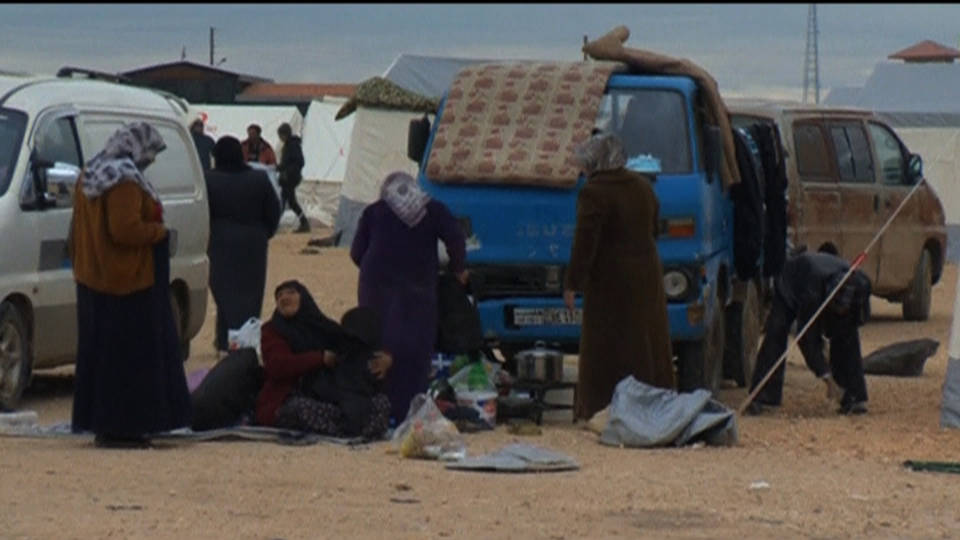
Two boats bound for Greece have capsized off the coast of Turkey, killing at least 33 people, including a number of children. More than 400 people have been killed trying to reach Europe so far this year amid the greatest refugee crisis since World War II. This comes as up to 35,000 Syrians have massed along the Turkish border amid intensified airstrikes and fighting around the Syrian city of Aleppo. Turkey has kept the border closed for a fourth day today. The refugees are said to be sleeping in open fields in the cold.
Trump Defends Call to Bring Back Waterboarding and "a Hell of a Lot Worse"

Republican presidential contenders faced off Saturday night at Saint Anselm College in Manchester, New Hampshire. Taking part in the debate were New Jersey Governor Chris Christie, Dr. Ben Carson, Senator Ted Cruz of Texas, Donald Trump, Senator Marco Rubio of Florida, former Florida Governor Jeb Bush and Ohio Governor John Kasich. ABC News excluded former Hewlett-Packard CEO Carly Fiorina from the debate despite protests from many Republicans. Much of the debate coverage has focused on Marco Rubio for repeatedly reciting the same talking points aboutPresident Obama, even after he was called out by Chris Christie. Donald Trump defended his call to bring back the Bush-era torture tactic of waterboarding.
Donald Trump: "In the Middle East, we have people chopping the heads off Christians. We have people chopping the heads off many other people. We have things that we have never seen before—as a group, we have never seen before what’s happening right now. The medieval times—I mean, we studied medieval times. Not since medieval times have people seen what’s going on. I would bring back waterboarding, and I’d bring back a hell of a lot worse than waterboarding."
We’ll have more on the debate after headlines. The New Hampshire primaries are Tuesday.
U.N. Security Council Condemns North Korea Launch
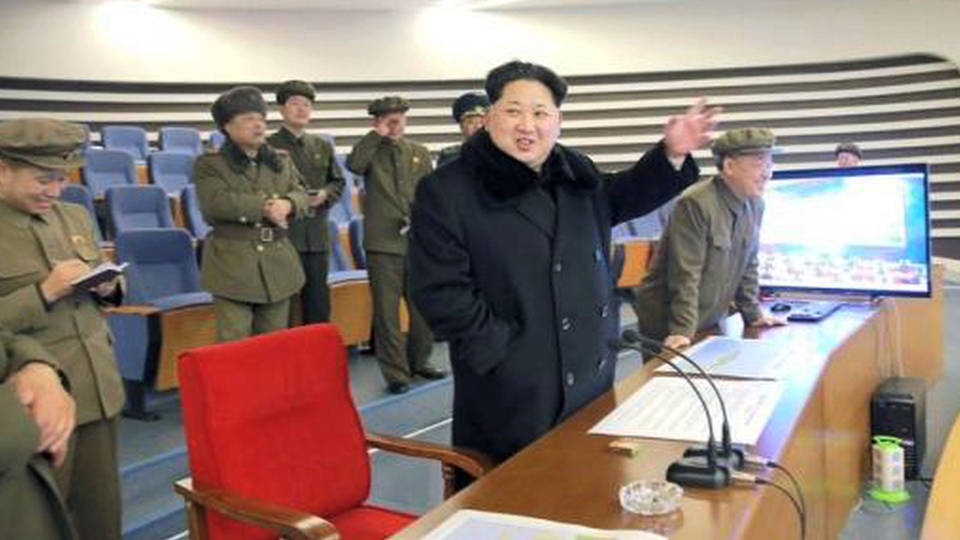
The U.N. Security Council has condemned North Korea’s launch of what North Korea claims was a satellite on Sunday. The launch is widely seen as a cover for testing ballistic missile technology, a violation of U.N. sanctions. Last month North Korea tested what it claimed was a hydrogen bomb. U.S. Ambassador to the United Nations Samantha Power vowed to back "serious consequences."
Samantha Power: "Each of these illegal actions requires a robust response. Because of the DPRK’s decisions and actions, we will ensure that the Security Council imposes serious consequences. DPRK’s latest transgressions require our response to be even firmer."
Taiwan Earthquake Toll Could Top 100; Girl Pulled from Rubble
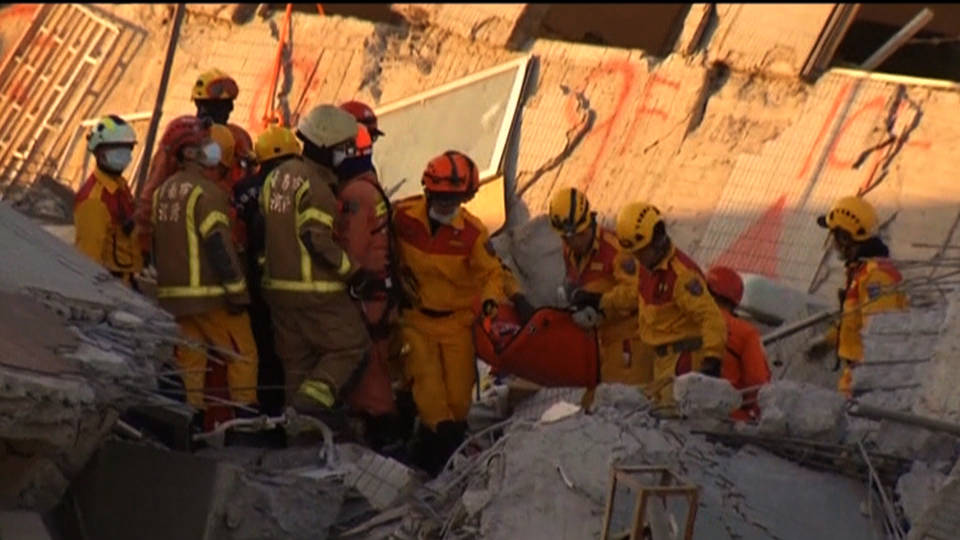
In Taiwan, rescuers have continued to pull people from the rubble of an apartment building more than 60 hours after it was toppled by an earthquake. At least 38 people were killed in the 6.4-magnitude quake, but officials have warned the toll is likely to top 100. Earlier today, an eight-year-old girl was among those pulled alive from the ruins.
Haitian President Leaves Office Without Successor Amid Protests

Haitian President Michel Martelly has left office at the end of his five-year term without a successor in place, following mass protests demanding his ouster. The United States has been criticized for supporting Haiti’s disputed October elections, where the president’s handpicked successor, Jovenel Moïse, came in first out of more than 50 candidates, despite being virtually unknown. Last month, mass protests succeeded in postponing a scheduled runoff where Moïse was the only candidate—after his competitor, Jude Célestin, refused to take part. Martelly left office Sunday following a deal to have Parliament choose an interim president ahead of elections scheduled for April. His departure came on the 30th anniversary of the departure of Haitian dictator Jean-Claude "Baby Doc" Duvalier, who was flown into exile aboard a U.S. government jet after a popular uprising.
Gloria Steinem Apologizes for Saying Young Women Back Sanders Because of "Boys"
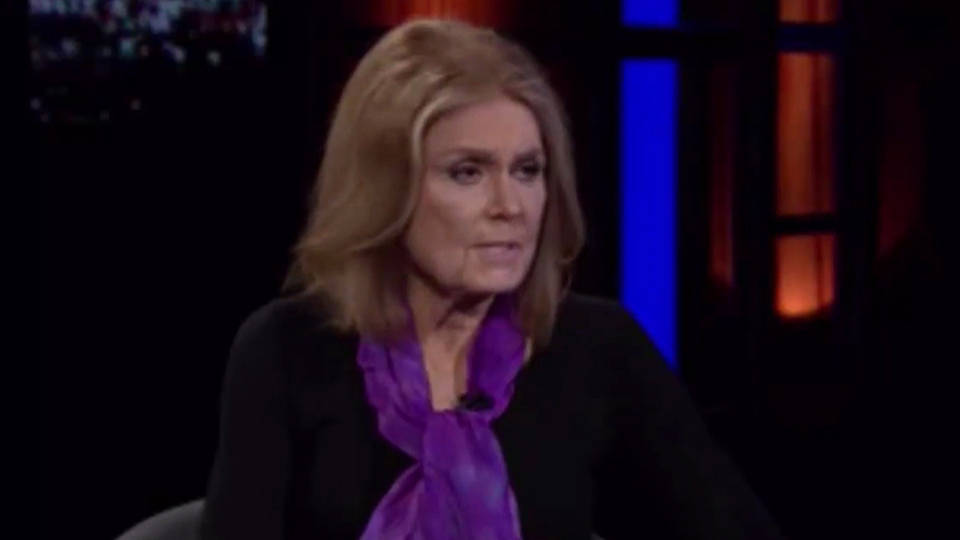
Feminist icon Gloria Steinem has apologized after suggesting young women only support Democratic presidential candidate Bernie Sanders because "the boys are with Bernie." Steinem made the comments on "Real Time with Bill Maher" Friday night.
Gloria Steinem: "When you’re young, you’re thinking, you know, 'Where are the boys? The boys are with Bernie,' or, you know."
Bill Maher: "Ooh! Now, if I said that."
Gloria Steinem: "No. No, no, you can say it."
Bill Maher: "'Yeah, they're for Bernie because that’s where the boys are.’"
Gloria Steinem: "No, no. But—but it’s not..."
Bill Maher: "You’d swat me. Come on."
Gloria Steinem: "No I wouldn’t."
Bill Maher: "OK, good."
Gloria Steinem: "I wouldn’t, because the boys are saying whether—no, I mean, hello? What are you—how well do you know me? OK, right."
A recent poll found Democratic and independent women between the ages of 18 and 34 prefer Sanders by nearly 20 percentage points. After an outcry, Steinem apologized for her comments, writing, "In a case of talk-show Interruptus, I misspoke on the Bill Maher show recently, and apologize for what’s been misinterpreted as implying young women aren’t serious in their politics." Meanwhile, another prominent supporter of Clinton, former Secretary of State Madeleine Albright, has drawn attention for saying there is a "special place in hell for women who don’t help each other." Critics have cited Albright’s past defense of sanctions in Iraq, when she said the deaths of 500,000 Iraqi children were "worth it." Meanwhile, a new Reuters/Ipsos poll shows Sanders has erased Clinton’s national lead. The poll shows Clinton leading Sanders just 48 to 45 percent, putting the two in a dead heat.
Democratic Candidates Condemn Flint Water Crisis; Michigan Fires Agency Employee
Both Bernie Sanders and Hillary Clinton have taken up the water crisis in Flint, Michigan. During a visit to Flint over the weekend, Clinton called the poisoning of Flint’s water "immoral." Sanders called it a "humanitarian crisis." The state of Michigan meanwhile has fired the head of the Department of Environmental Quality’s drinking water unit over the contamination. Liane Shekter Smith is the only state employee fired over the crisis to date. The lead poisoning in Flint’s water began after an unelected emergency manager appointed by Governor Rick Snyder switched Flint’s water supply to the corrosive Flint River. Governor Snyder has faced increasing calls to resign.
Pentagon Releases Nearly 200 Abuse Photos; 1,800 Kept Secret
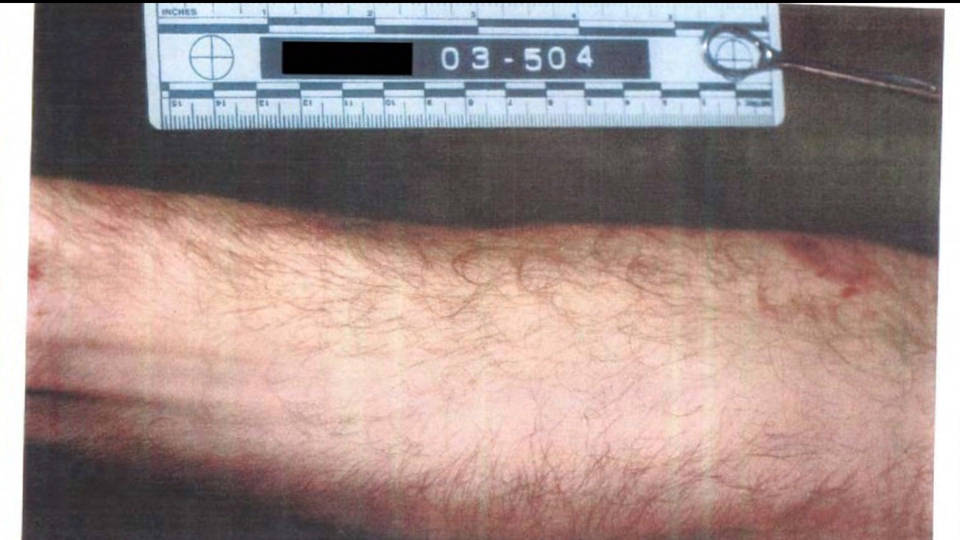
The Pentagon has released nearly 200 photos relating to the abuse of prisoners by U.S. military personnel in Iraq and Afghanistan. The American Civil Liberties Union has been fighting for nearly 12 years to win release of photos related to the Bush administration’s torture program. The released images include close-ups of bruised and lacerated body parts and bound, blindfolded prisoners. The Pentagon is still withholding 1,800 images which are believed to be far worse.
2nd Member of ISIS "Beatles" Cohort Revealed
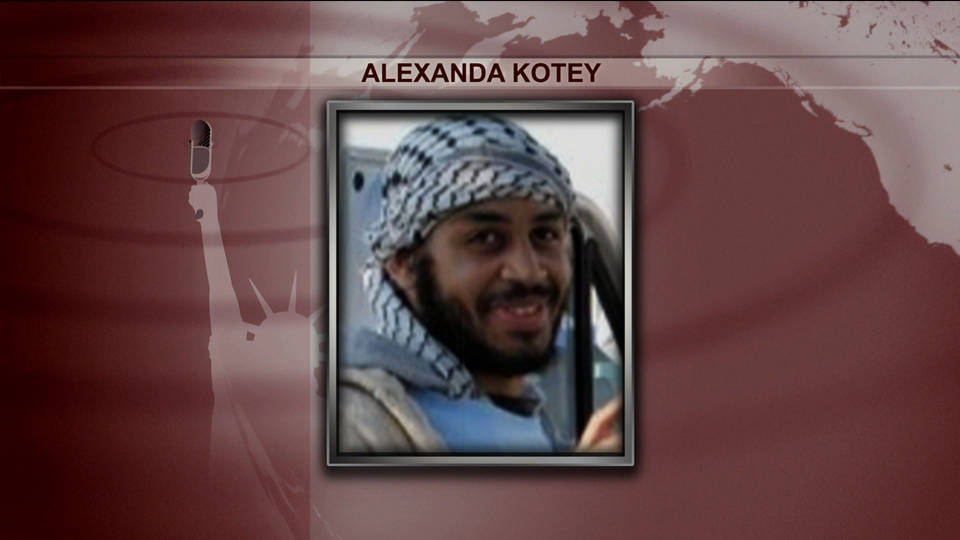
The Washington Post and BuzzFeed have identified a second member of the British cohort within the self-proclaimed Islamic State who oversaw the detention, abuse and beheading of Western hostages in Syria. Alexanda Kotey, who grew up in West London, is one of the four guards hostages dubbed the "Beatles" because of their British accents. Another member of the group, Mohammed Emwazi, known as "Jihadi John," was killed in a drone strike in November.
Judge Blocks Anti-Choice Group from Releasing More Videos of Abortion Providers

A federal judge has blocked the anti-choice Center for Medical Progress from releasing videos they secretly recorded at meetings of abortion providers. Judge William Orrick also dismissed as baseless the group’s claims abortion providers are selling fetal tissue. The ruling comes after a jury charged with investigating Planned Parenthood over the false claims about fetal tissue instead decided to indict the group’s leader, David Daleiden, and another anti-choice activist, Sandra Merritt.
Salvadoran Woman Who Suffered 7 Seizures in ICE Custody Finally Released
A Salvadoran woman who suffered seven seizures while in immigration custody has been released from a for-profit detention center in Texas after a public outcry. Susana Arévalo was detained last month in one of the Obama administration’s raids targeting Central American families seeking asylum. She told Democracy Now! officials had prevented her from attending her medical appointments for epilepsy. To hear an excerpt of our interview with Arévalo from detention you can go to democracynow.org.
El Salvador: 4 Former Soldiers Arrested for 1989 Murders of 6 Jesuit Priests
Meanwhile, authorities in El Salvador have arrested four former soldiers wanted in Spain for the murders of six Jesuit priests in 1989. Prosecutors say soldiers killed the priests, their housekeeper and the housekeeper’s daughter to silence the priests’ criticism of abuses committed by the U.S.-backed military. Five of the priests were Spanish. The arrests came after a U.S. judge paved the way for a former Salvadoran colonel to face charges in Spain for helping orchestrate the priests’ killings.
New York: Radiation Spikes 65,000% at Indian Point Nuclear Plant After Leak

New York Governor Andrew Cuomo has announced "alarming levels" of radiation after water contaminated with radioactive tritium leaked from the Indian Point nuclear power plant. At one monitoring well, the radiation had spiked 65,000 percent. The plant’s owner, Entergy Corporation, has said the groundwater contamination at the plant does not pose a threat to the public. Environmentalists have long called for the closure of Indian Point, citing aging infrastructure and a history of operational issues.
Chicago Officer Sues Estate of Teen He Killed, Citing "Extreme Emotional Trauma"
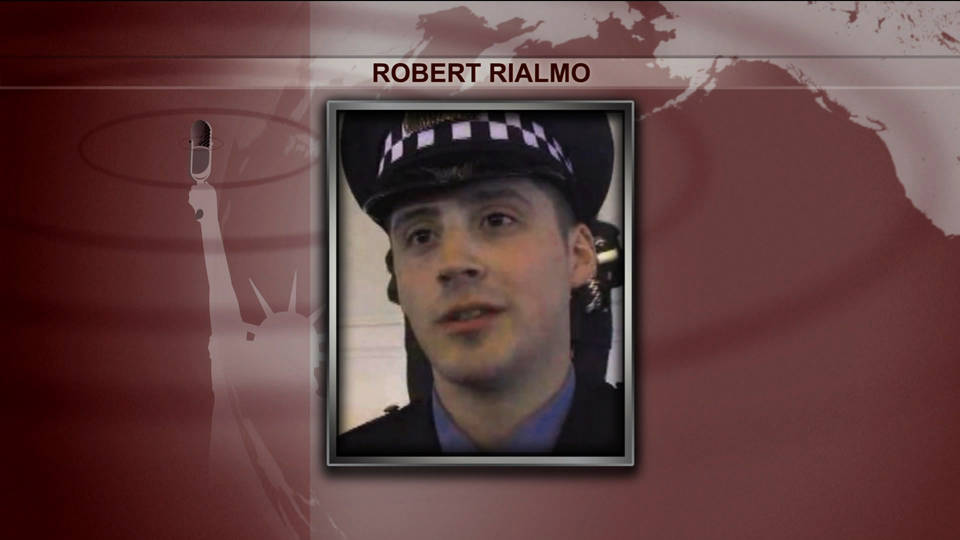
The Chicago police officer who fatally shot a college student and an unarmed grandmother in December has filed a lawsuit against the estate of the teenager he killed, saying he—the officer—suffered "extreme emotional trauma." Officer Robert Rialmo claims Quintonio LeGrier swung at him with a baseball bat, causing him to open fire, killing both LeGrier and an unarmed bystander, 55-year-old Bettie Jones. Recently released audio shows Quintonio LeGrier called 911 seeking help three times in the minutes before he was shot but was treated dismissively by dispatchers, one of whom hung up on him. Police were finally dispatched after a fourth call from LeGrier’s father saying his son was wielding a bat.
Professor Who Wore Hijab in Solidarity with Muslims Leaves Christian College
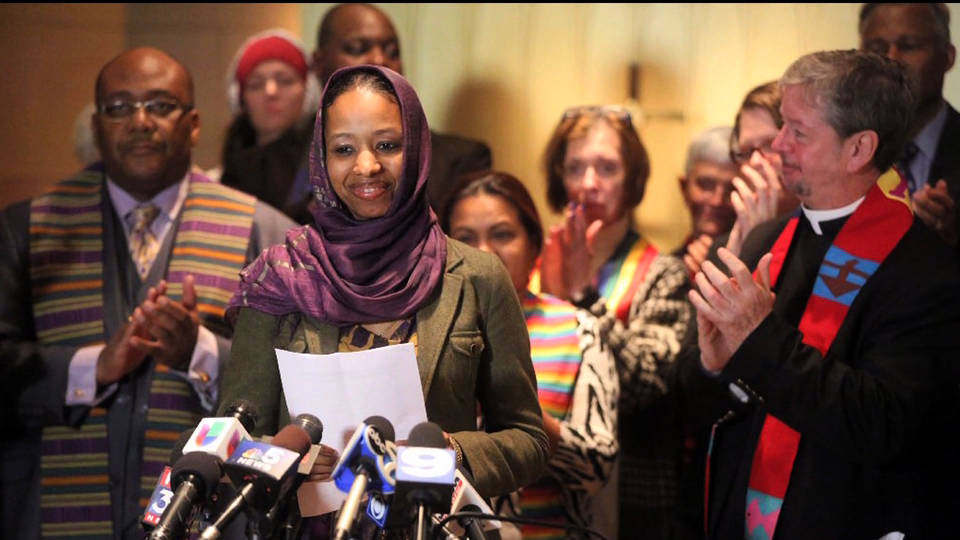
In other news from Illinois, a political science professor who wore a hijab in solidarity with Muslims has left her post at Wheaton College. The private Christian school suspended her after she said Christians and Muslims worship the same God. Larycia Hawkins said she was standing in "religious solidarity" with Muslims who faced harassment after mass shootings in Paris and San Bernardino, California. The school said it reached a mutual agreement to "part ways" with Hawkins.
Beyoncé Pays Tribute to Black Panthers at Super Bowl Halftime Show
And pop legend Beyoncé paid tribute to the Black Panthers, Malcolm X and the Black Lives Matter movement during her halftime show at the Super Bowl on Sunday. Her backup dancers wore Black Panther-style berets and posed with their fists in the air, recalling the black power salute by Tommie Smith and John Carlos at the 1968 Olympics. Her music video for "Formation" released the day before evoked Hurricane Katrina and police brutality. By the way, the Denver Broncos beat the Carolina Panthers at the Super Bowl, 24 to 10. We’ll have more on the Super Bowl with Dave Zirin later in the broadcast.
Donate today →
Follow:
Another Bush, Another Preemptive War? Jeb Supports U.S. Military Strikes Against North Korea
North Korea is facing international condemnation after launching a long-range rocket over the weekend carrying what it called a satellite. The issue came up during Saturday’s Republican debate. Jeb Bush backed a preemptive strike, while Donald Trump pushed for China to solve the crisis. We speak with investigative journalist Tim Shorrock.
TRANSCRIPT
This is a rush transcript. Copy may not be in its final form.
AMY GOODMAN: We continue with excerpts of the last Republican debate before the New Hampshire primary. North Korea is facing international condemnation after launching a long-range rocket over the weekend carrying what it called a satellite. It was North Korea’s first long-range rocket launch since 2012. During the debate in New Hampshire, moderator Martha Raddatz asked the candidates how they would respond to North Korea.
MARTHA RADDATZ: It was reported just moments ago that the North Koreans test-launched an intercontinental ballistic missile. North Korea has nuclear weapons and conducted another nuclear test just last month. The missile that was launched is the kind the North Koreans hope could someday carry a nuclear weapon capable of reaching the United States. How would you respond, if commander-in-chief? Governor Bush?
JEB BUSH: The next president of the United States is going to have to get the United States back in the game. And if a preemptive strike is necessary to keep us safe, then we should do it.
MARTHA RADDATZ: Thank you, Governor Bush. Mr. Trump, do you have a red line with North Korea? Would you consider military action? And how far would you let them go?
DONALD TRUMP: We have tremendous—has been just sucked out of our country by China. China says they don’t have that good a control over North Korea. They have tremendous control. I deal with the Chinese all of the time. I do tremendous—the largest bank in the world is in one of my buildings in Manhattan. I deal with them. They tell me. They have total, absolute control, practically, of North Korea. They are sucking trillions of dollars out of our country. They’re rebuilding China with the money they take out of our country. I would get on with China. Let China solve that problem. They can do it quickly and surgically. That’s what we should do with North Korea.
MARTHA RADDATZ: Senator Rubio, you were mentioned.
SEN. MARCO RUBIO: Yeah, Donald’s absolutely right. China does have a lot of influence over North Korea, and he should be leveraging our relationship with the Chinese to ensure that North Korea no longer has access to the resources that have allowed them to—a country that has no economy, to develop long-range missiles already capable of reaching the West Coast of the United States potentially.
AMY GOODMAN: That’s Florida Senator Marco Rubio speaking at Saturday’s presidential primary debate in New Hampshire.
Joining us now from Washington, D.C., Tim Shorrock, investigative journalist, author of Spies for Hire: The Secret World of Outsourced Intelligence. He grew up, in part, in South Korea and has been writing about U.S.-Korea relations for 35 years.
Hi, Tim. Talk about the significance of what the Republican candidates were calling for, actually, one after another, talking about a preemptive strike in North Korea.
TIM SHORROCK: Well, first of all, Martha Raddatz’s question was completely irresponsible and shows the militarism that’s endemic in the U.S. media toward North Korea. They did not launch an ICBM. They put a satellite in orbit. And even the Pentagon has confirmed this, that it was a satellite. You can track this satellite going around the world on the Internet right now. They’ve been developing missiles for many years, and they’ve been testing them. They haven’t tested one for about four years. To say this was a ICBM ready to launch a nuclear attack is ridiculous.
The response by the Republicans is scary and frightening, that they would call for a preemptive strike on North Korea when there’s a situation highly—you know, highly volatile situation on the Korean Peninsula, with millions of innocent people within a hundred miles of the DMZ between North and South Korea. To call for a war that could affect—kill hundreds of thousands of people in the first few minutes is ridiculous.
AMY GOODMAN: This is a little more of Florida Senator Marco Rubio on North Korea.
SEN. MARCO RUBIO: It is standard procedure of the United States to shoot down those missiles, once launched, if they pose a threat to civilians, land or ships.
MARTHA RADDATZ: Senator Rubio, I’m talking about a preemptive strike—
SEN. MARCO RUBIO: Well—
MARTHA RADDATZ: —on the launchpad.
SEN. MARCO RUBIO: No, I understand. And not to—but I think it’s important to note that it is—and Senator Cruz, I think, was alluding to this, as well—it is the standard procedure of the United States, if in fact those missiles pose a threat to land, civilians, our allies or any of our assets, to shoot down that missile in mid-flight. I understand your question was about a preemptive strike, but my point is that there is in place now contingencies to avoid any sort of that strike from going errant and destroying any assets of the United States or implicating or hurting any of our allies or any of our assets in the region.
AMY GOODMAN: That’s Marco Rubio. Tim Shorrock?
TIM SHORROCK: Actually, what Marco Rubio said there is accurate. The United States does have plans, called Op Plan, to take out the North Korean leadership and to do a preemptive strike, if they’re about to launch a nuclear attack. This is—you can see this; this is in public documents. It’s been written up in the press, particularly the South Korean and Japanese press, and not been paid much attention to by the U.S. press. But, in fact, the U.S. does have these plans. And every year, with South Korea, it practices a, you know, decapitation of the North Korean leadership; it practices regime change—massive military exercises that the North Korean government sees as a strategic threat to its existence as a state.
And North Korea—you know, people see North Korea as kind of like this self-generated malice toward the United States, as if we’re some kind of innocent bystander. You know, the United States has maintained a military presence in Korea since the end of World War II, particularly since the end of the Korean War. We have Japan allied as a military ally. We have South Korea. That’s three of the largest economies, three of the largest militaries of the world, you know, that have forces arraigned against North Korea. And we—the United States and South Korea practice every year for war with the north. Now, they see this as a threat to their existence.
And they have—for some years now, they’ve had a plan called—they have this line where basically nuclear development, missile development and economic development go together, inextricably together, and they want to develop these capabilities to exist as a nation. And so, you have a conflict between the U.S. and North Korea.
AMY GOODMAN: Tim, we don’t—
TIM SHORROCK: China has very little influence on North Korea, actually. They’reclose. China does not have troops in North Korea. China does not command troops in North Korea like the U.S. does. If anybody has control in Korea, it’s the United States, which has operational control over the South Korean military in times of war and has almost 30,000 soldiers there. And so, you know, the issue is how to defuse the tension between the U.S. and North Korea and what to do about it. And I’ve been saying this for years, on this program and many other venues, is that the only solution is to have direct negotiations and talk with them about, you know, what they want, which is peace on the Korean Peninsula and an end to the confrontation with the United States.
AMY GOODMAN: Do you see the Iran nuclear deal as a model for what should happen with North Korea?
TIM SHORROCK: Absolutely, that could be a model. I think both Iran and Cuba could be models for how to defuse tensions and, particularly in the case of Iran, how to, step by step, go about, you know, moving away from nuclearization and moving towards demilitarization. But the United States’ policy is, the North Koreans have to completely abandon any—their nuclear weapons, without—you know, before proceeding in any kind of negotiations.
AMY GOODMAN: Well—
TIM SHORROCK: And I think there’s got to be more open negotiations to that.AMY GOODMAN: Tim Shorrock, I want to thank you for being with us, investigative journalist and author of Spies for Hire: The Secret World of Outsourced Intelligence, grew up in part in South Korea. ... Read More →
Trump Calls Police "Absolutely Mistreated"; Kasich Backs Collaboration Between Communities & Cops
At Saturday’s Republican debate, Donald Trump and Ohio Governor John Kasich offered competing visions for improving police relations in the wake of the police shootings in Ferguson and elsewhere. Trump said the police have been "absolutely mistreated and misunderstood," while Kasich highlighted efforts in Ohio to bring community leaders and police together in dialogue. We speak with Vince Warren, executive director of the Center for Constitutional Rights.
TRANSCRIPT
This is a rush transcript. Copy may not be in its final form.
AMY GOODMAN: During the Republican presidential debate, the last before the primary tomorrow, Donald Trump suggested police are unfairly targeted, while Ohio Governor John Kasich said there must be more collaboration between communities and police. Both candidates were responding to questions by debate moderator David Muir of ABC.
DAVID MUIR: Mr. Trump, there are many who argue cellphones and smartphones are just now exposing what’s been happening in this country for years: cases of excessive force against minorities. As you know, Mr. Trump, on the other side, the FBI director recently said there’s a chill wind blowing through law enforcement because of increased scrutiny. You have said police are the most mistreated people in America. As president, how do you bridge the divide?
DONALD TRUMP: Well, there is a divide, but I have to say that the police are absolutely mistreated and misunderstood. And if there is an incident, whether it’s a incident done purposely, which is a horror and you should really take very strong action, or if it’s a mistake, it’s on your newscasts all night, all week, all month, and it never ends. The police in this country have done an unbelievable job of keeping law and order. And they’re afraid for their jobs. They’re afraid of the mistreatment they get. And I’m telling you that—not only me speaking, minorities all over the country, they respect the police of this country, and we have to give them more respect. They can’t act. They can’t act. They’re afraid for losing their pension, their job. They don’t know what to do. And I deal with them all the time. We have to give great respect, far greater than we are right now, to our really fantastic police.
DAVID MUIR: Great. Mr. Trump, I did ask about bridging the divide, though, as president. So what would you say to the American families who say, "We have lived through this. We have seen excessive force"? What would you say to those people?
DONALD TRUMP: Well, they do. And, you know, they sue. Everybody sues. Right? They see stuff—I mean, they go out, they sue. We have so much litigation. I see the courts. I see what they’re doing. They sue. And you know what? We don’t want excessive force. But at what point? You know, either you’re going to have a police force that can do its job—I was just up in Manchester. I met with the police officers yesterday. Tremendous people. They love the area. They love the people. They love all the people. They want to do their job. And you’re going to have abuse, and you’re going to have problems. And you’ve got to solve the problems, and you have to weed out the problems. But the police in this country are absolutely amazing people.
DAVID MUIR: Mr. Trump, thank you.
GOVERNOR JOHN KASICH: David, David, I—
DAVID MUIR: I do want to ask—Governor Kasich?
GOVERNOR JOHN KASICH: I wanted to say, look, this—it can be a win-win here. I have formed a collaborative between police and community leaders, because people have to respect law enforcement. A family doesn’t want dad or mom going home in a box. And for our community leaders, many of them think the system not only works—not only doesn’t work for them, but it works against them. And I created a big collaborative in Ohio, made up of law enforcement, community leaders. The head of my public safety and a former Democrat liberal state senator, Nina Turner, run it. They got together. They made recommendations on recruiting, onhiring, on the use of deadly force. And what we’re about to do is to bring community and police together, so we can have a win-win. We need more win-wins in America, and we don’t have to pick one over another or divide. We love the police, but we’ve got to be responsive to the people in the communities. We have to do all of it.
AMY GOODMAN: So, that’s Ohio Governor John Kasich and, before that, Donald Trump.
Our guest is Vince Warren, who is executive director of the Center for Constitutional Rights. Your response, first to Donald Trump?
VINCENT WARREN: The big problem here is that there—is that, of course you can sue. Of course you can sue when the police beat you, when they kill you. You can and you should sue. So I think any discussion about having lawsuits as a way of misrepresenting the police department or disrespecting law enforcement is nuts, because the only way that you get in that situation is if law enforcement has done something wrong to begin with. I also think that there’s a narrative that’s developing that is really problematic. It’s that—the idea is that the poor police department can’t do their jobs anymore because there are so many angry people around.
AMY GOODMAN: Well, didn’t the head of the FBI further that—
VINCENT WARREN: The head of the FBI—
AMY GOODMAN: —undermining President Obama in what he did?
VINCENT WARREN: Completely did, completely did. And it was really problematic. And it also happens not to be true. Law enforcement, even with all of the protests and even with the pushback that’s happening—and the rightful pushback—from communities, law enforcement is going on the offensive. Very far from being sort of helpless players in a dynamic, what’s happening now is law enforcement is going on the offensive. You actually see—as you mentioned earlier in your report, not only do victims of police brutality sue, but now police officers are suing the victims of their brutality, saying that it was their fault that the police had to do what they had to do. This is nuts.
AMY GOODMAN: The dead victim in the case in Chicago.
VINCENT WARREN: The dead victim. It was a 15-year-old kid who was shot. They filed a—the family filed a lawsuit against the police officer, roughly for $50,000. The police officer says, "Well, gosh, if your kid had been acting right, I wouldn’t have had to shoot him."
AMY GOODMAN: But that’s why the dad called the police, is his son was mentally unbalanced at that point, and he asked for help.
VINCENT WARREN: Exactly. So, that whole discussion is really missing the point. And the real point is that law enforcement now is in a position—and we’re in a position as citizens—to get law enforcement to respect communities. And law enforcement is the only job where you can beat somebody, beat them up, kill them while you’re on the job—you don’t get fired, you get desk duty. What other job do you get desk duty for killing somebody? This is—there needs to be a big, fundamental change.
AMY GOODMAN: And Governor Kasich, what he said about bringing the community and police together?
VINCENT WARREN: Well, I think that discussion is a good one. And, in fact, that’s something that we’re doing here in New York City. So, in our stop-and-frisk case, when we won that case and found stop and frisk unconstitutional in 2013, we’re now in the process of a remedial process, where we’re working with community groups, with the police union, with the police brass, to create, essentially, a police department that is accountable to the community. That’s a very important piece. But we have to remember that these aren’t two polar opposites and that the whole reason why we’re in that position is because we sued them, and the community rose up against what the police were doing to begin with.AMY GOODMAN: Well, Vince Warren is executive director of the Center for Constitutional Rights. I want him to stay with us for our last segment. ... Read More →
Headlines:
Dozens Drown After Boats Sink Near Turkey; 35,000 Syrians Flee to Turkish Border
Two boats bound for Greece have capsized off the coast of Turkey, killing at least 33 people, including a number of children. More than 400 people have been killed trying to reach Europe so far this year amid the greatest refugee crisis since World War II. This comes as up to 35,000 Syrians have massed along the Turkish border amid intensified airstrikes and fighting around the Syrian city of Aleppo. Turkey has kept the border closed for a fourth day today. The refugees are said to be sleeping in open fields in the cold.
Trump Defends Call to Bring Back Waterboarding and "a Hell of a Lot Worse"
Republican presidential contenders faced off Saturday night at Saint Anselm College in Manchester, New Hampshire. Taking part in the debate were New Jersey Governor Chris Christie, Dr. Ben Carson, Senator Ted Cruz of Texas, Donald Trump, Senator Marco Rubio of Florida, former Florida Governor Jeb Bush and Ohio Governor John Kasich. ABC News excluded former Hewlett-Packard CEO Carly Fiorina from the debate despite protests from many Republicans. Much of the debate coverage has focused on Marco Rubio for repeatedly reciting the same talking points aboutPresident Obama, even after he was called out by Chris Christie. Donald Trump defended his call to bring back the Bush-era torture tactic of waterboarding.
Donald Trump: "In the Middle East, we have people chopping the heads off Christians. We have people chopping the heads off many other people. We have things that we have never seen before—as a group, we have never seen before what’s happening right now. The medieval times—I mean, we studied medieval times. Not since medieval times have people seen what’s going on. I would bring back waterboarding, and I’d bring back a hell of a lot worse than waterboarding."
We’ll have more on the debate after headlines. The New Hampshire primaries are Tuesday.
U.N. Security Council Condemns North Korea Launch
The U.N. Security Council has condemned North Korea’s launch of what North Korea claims was a satellite on Sunday. The launch is widely seen as a cover for testing ballistic missile technology, a violation of U.N. sanctions. Last month North Korea tested what it claimed was a hydrogen bomb. U.S. Ambassador to the United Nations Samantha Power vowed to back "serious consequences."
Samantha Power: "Each of these illegal actions requires a robust response. Because of the DPRK’s decisions and actions, we will ensure that the Security Council imposes serious consequences. DPRK’s latest transgressions require our response to be even firmer."
Taiwan Earthquake Toll Could Top 100; Girl Pulled from Rubble
In Taiwan, rescuers have continued to pull people from the rubble of an apartment building more than 60 hours after it was toppled by an earthquake. At least 38 people were killed in the 6.4-magnitude quake, but officials have warned the toll is likely to top 100. Earlier today, an eight-year-old girl was among those pulled alive from the ruins.
Haitian President Leaves Office Without Successor Amid Protests
Haitian President Michel Martelly has left office at the end of his five-year term without a successor in place, following mass protests demanding his ouster. The United States has been criticized for supporting Haiti’s disputed October elections, where the president’s handpicked successor, Jovenel Moïse, came in first out of more than 50 candidates, despite being virtually unknown. Last month, mass protests succeeded in postponing a scheduled runoff where Moïse was the only candidate—after his competitor, Jude Célestin, refused to take part. Martelly left office Sunday following a deal to have Parliament choose an interim president ahead of elections scheduled for April. His departure came on the 30th anniversary of the departure of Haitian dictator Jean-Claude "Baby Doc" Duvalier, who was flown into exile aboard a U.S. government jet after a popular uprising.
Gloria Steinem Apologizes for Saying Young Women Back Sanders Because of "Boys"
Feminist icon Gloria Steinem has apologized after suggesting young women only support Democratic presidential candidate Bernie Sanders because "the boys are with Bernie." Steinem made the comments on "Real Time with Bill Maher" Friday night.
Gloria Steinem: "When you’re young, you’re thinking, you know, 'Where are the boys? The boys are with Bernie,' or, you know."
Bill Maher: "Ooh! Now, if I said that."
Gloria Steinem: "No. No, no, you can say it."
Bill Maher: "'Yeah, they're for Bernie because that’s where the boys are.’"
Gloria Steinem: "No, no. But—but it’s not..."
Bill Maher: "You’d swat me. Come on."
Gloria Steinem: "No I wouldn’t."
Bill Maher: "OK, good."
Gloria Steinem: "I wouldn’t, because the boys are saying whether—no, I mean, hello? What are you—how well do you know me? OK, right."
A recent poll found Democratic and independent women between the ages of 18 and 34 prefer Sanders by nearly 20 percentage points. After an outcry, Steinem apologized for her comments, writing, "In a case of talk-show Interruptus, I misspoke on the Bill Maher show recently, and apologize for what’s been misinterpreted as implying young women aren’t serious in their politics." Meanwhile, another prominent supporter of Clinton, former Secretary of State Madeleine Albright, has drawn attention for saying there is a "special place in hell for women who don’t help each other." Critics have cited Albright’s past defense of sanctions in Iraq, when she said the deaths of 500,000 Iraqi children were "worth it." Meanwhile, a new Reuters/Ipsos poll shows Sanders has erased Clinton’s national lead. The poll shows Clinton leading Sanders just 48 to 45 percent, putting the two in a dead heat.
Democratic Candidates Condemn Flint Water Crisis; Michigan Fires Agency Employee
Both Bernie Sanders and Hillary Clinton have taken up the water crisis in Flint, Michigan. During a visit to Flint over the weekend, Clinton called the poisoning of Flint’s water "immoral." Sanders called it a "humanitarian crisis." The state of Michigan meanwhile has fired the head of the Department of Environmental Quality’s drinking water unit over the contamination. Liane Shekter Smith is the only state employee fired over the crisis to date. The lead poisoning in Flint’s water began after an unelected emergency manager appointed by Governor Rick Snyder switched Flint’s water supply to the corrosive Flint River. Governor Snyder has faced increasing calls to resign.
Pentagon Releases Nearly 200 Abuse Photos; 1,800 Kept Secret
The Pentagon has released nearly 200 photos relating to the abuse of prisoners by U.S. military personnel in Iraq and Afghanistan. The American Civil Liberties Union has been fighting for nearly 12 years to win release of photos related to the Bush administration’s torture program. The released images include close-ups of bruised and lacerated body parts and bound, blindfolded prisoners. The Pentagon is still withholding 1,800 images which are believed to be far worse.
2nd Member of ISIS "Beatles" Cohort Revealed
The Washington Post and BuzzFeed have identified a second member of the British cohort within the self-proclaimed Islamic State who oversaw the detention, abuse and beheading of Western hostages in Syria. Alexanda Kotey, who grew up in West London, is one of the four guards hostages dubbed the "Beatles" because of their British accents. Another member of the group, Mohammed Emwazi, known as "Jihadi John," was killed in a drone strike in November.
Judge Blocks Anti-Choice Group from Releasing More Videos of Abortion Providers
A federal judge has blocked the anti-choice Center for Medical Progress from releasing videos they secretly recorded at meetings of abortion providers. Judge William Orrick also dismissed as baseless the group’s claims abortion providers are selling fetal tissue. The ruling comes after a jury charged with investigating Planned Parenthood over the false claims about fetal tissue instead decided to indict the group’s leader, David Daleiden, and another anti-choice activist, Sandra Merritt.
Salvadoran Woman Who Suffered 7 Seizures in ICE Custody Finally Released
A Salvadoran woman who suffered seven seizures while in immigration custody has been released from a for-profit detention center in Texas after a public outcry. Susana Arévalo was detained last month in one of the Obama administration’s raids targeting Central American families seeking asylum. She told Democracy Now! officials had prevented her from attending her medical appointments for epilepsy. To hear an excerpt of our interview with Arévalo from detention you can go to democracynow.org.
El Salvador: 4 Former Soldiers Arrested for 1989 Murders of 6 Jesuit Priests
Meanwhile, authorities in El Salvador have arrested four former soldiers wanted in Spain for the murders of six Jesuit priests in 1989. Prosecutors say soldiers killed the priests, their housekeeper and the housekeeper’s daughter to silence the priests’ criticism of abuses committed by the U.S.-backed military. Five of the priests were Spanish. The arrests came after a U.S. judge paved the way for a former Salvadoran colonel to face charges in Spain for helping orchestrate the priests’ killings.
New York: Radiation Spikes 65,000% at Indian Point Nuclear Plant After Leak
New York Governor Andrew Cuomo has announced "alarming levels" of radiation after water contaminated with radioactive tritium leaked from the Indian Point nuclear power plant. At one monitoring well, the radiation had spiked 65,000 percent. The plant’s owner, Entergy Corporation, has said the groundwater contamination at the plant does not pose a threat to the public. Environmentalists have long called for the closure of Indian Point, citing aging infrastructure and a history of operational issues.
Chicago Officer Sues Estate of Teen He Killed, Citing "Extreme Emotional Trauma"
The Chicago police officer who fatally shot a college student and an unarmed grandmother in December has filed a lawsuit against the estate of the teenager he killed, saying he—the officer—suffered "extreme emotional trauma." Officer Robert Rialmo claims Quintonio LeGrier swung at him with a baseball bat, causing him to open fire, killing both LeGrier and an unarmed bystander, 55-year-old Bettie Jones. Recently released audio shows Quintonio LeGrier called 911 seeking help three times in the minutes before he was shot but was treated dismissively by dispatchers, one of whom hung up on him. Police were finally dispatched after a fourth call from LeGrier’s father saying his son was wielding a bat.
Professor Who Wore Hijab in Solidarity with Muslims Leaves Christian College
In other news from Illinois, a political science professor who wore a hijab in solidarity with Muslims has left her post at Wheaton College. The private Christian school suspended her after she said Christians and Muslims worship the same God. Larycia Hawkins said she was standing in "religious solidarity" with Muslims who faced harassment after mass shootings in Paris and San Bernardino, California. The school said it reached a mutual agreement to "part ways" with Hawkins.
Beyoncé Pays Tribute to Black Panthers at Super Bowl Halftime Show
And pop legend Beyoncé paid tribute to the Black Panthers, Malcolm X and the Black Lives Matter movement during her halftime show at the Super Bowl on Sunday. Her backup dancers wore Black Panther-style berets and posed with their fists in the air, recalling the black power salute by Tommie Smith and John Carlos at the 1968 Olympics. Her music video for "Formation" released the day before evoked Hurricane Katrina and police brutality. By the way, the Denver Broncos beat the Carolina Panthers at the Super Bowl, 24 to 10. We’ll have more on the Super Bowl with Dave Zirin later in the broadcast.
Donate today →
Follow:


COLUMN

The Terror of Flint's Poisoned Water
WEB EXCLUSIVE

Pt 2: Michael Eric Dyson on The Black Presidency: Barack Obama and the Politics of Race in America
WORK WITH DN!

Broadcast Engineer
Director of Finance and Operations
Director of Development
---------------------
Democracy Now! Daily Digest: A Daily Independent Global News Hour with Amy Goodman & Juan González for Thursday, February 4, 2016
democracynow.org
Stories:

Will Julian Assange of WikiLeaks Go Free After U.N. Finds He Is Being Arbitrarily Detained?
The BBC reports the United Nations panel investigating the case of WikiLeaks founder Julian Assange has ruled he has been "arbitrarily detained.” The U.N. says it will not confirm the report until Friday at 11 a.m. Geneva time. Assange first complained to the U.N. in 2014 that he was being arbitrarily detained since he could not leave the Ecuadorean Embassy in London without being arrested. Assange took refuge in the embassy in 2012. Assange wants to avoid extradition to Sweden over sex assault claims, which he has repeatedly denied. He says he fears Sweden will extradite him to the United States, where he could face trial for publishing classified information. Police say a warrant for Assange’s arrest remains in place. Assange has called for his arrest warrant to be dropped if the panel ruled in his favor. The BBC reports the panel’s ruling will not have any formal influence over the British and Swedish authorities. We go to London to speak with one of Assange’s lawyers, Jennifer Robinson, who says, "We hope and expect that the U.K. and Sweden will act accordingly."
TRANSCRIPT
This is a rush transcript. Copy may not be in its final form.
NERMEEN SHAIKH: The BBC is reporting that the United Nations panel investigating the case of WikiLeaks founder Julian Assange has ruled he has been, quote, "arbitrarily detained." The U.N. says it will not confirm the report until Friday at 11:00 a.m. Geneva time. Assange first complained to the U.N. in 2014 that he was being arbitrarily detained since he could not leave the Ecuadorean Embassy in London without being arrested. Assange took refuge in the embassy in 2012. Assange wants to avoid extradition to Sweden over sex assault claims, which he has repeatedly denied. He says he fears Sweden will extradite him to the United States, where he could face trial for publishing classified information.
AMY GOODMAN: Julian Assange had called for his arrest warrant to be dropped if the panel ruled in his favor. Earlier on Twitter, he announced, quote, "I shall exit the embassy at noon on Friday to accept arrest by British police as there is no meaningful prospect of further appeal. However, should I prevail and the state parties be found to have acted unlawfully, I expect immediate return of my passport and the termination of further attempts to arrest me," he said. Police say a warrant for Assange’s arrest remains in place. The BBC reports the panel’s ruling will not have any formal influence over the British and Swedish authorities.
For more, we go directly to London. We’re joined by Jennifer Robinson, legal adviser to WikiLeaks founder Julian Assange, also director of legal advocacy for the Bertha Foundation.
Jen, welcome to Democracy Now! Can you explain what you understand the U.N. panel has found and what that means for your client, Julian Assange?
JENNIFER ROBINSON: Good morning, Amy. We have received reports from the BBCthat the U.N. has found in favor of Julian’s application, which would mean that he has been found arbitrarily detained. We have not yet received formal confirmation of this. We expect to receive the decision at 9:00 a.m. tomorrow morning, and I’ll be with Julian in the embassy to understand the implications of that decision. So, at this point we’re unable to give comment until then. But we understand, as the reports have said, that this is what we expected. We expected and hoped this outcome.
The conditions of his detention over the past five years have been incredibly difficult. He meets the international legal definition of being arbitrarily detained, because he’s been granted the right to asylum by the Ecuadorean government in recognition of the risk of cruel and unusual punishment should he be returned to the United States. And that is an important international legal right. Should he have to leave the embassy, the U.K. and Sweden have refused, which is in breach of international law, to recognize that right to asylum, which means that he is arbitrarily detained.
NERMEEN SHAIKH: And, Jennifer Robinson, what do you make of the fact that this news was released by the BBC?
JENNIFER ROBINSON: The procedure for the U.N. working group is that the states in question who the complaint is about—in this case, the U.K. and Sweden—receive two weeks’ notification before we do, as the complainants, of the decision, in order to consider the decision and correct any inconsistencies if there were any problems with that decision. So they’ve had advance notice that we have not had. It seems to me that it must have been leaked by one of those—one of the states involved or sources within one of those governments, because we don’t have the decision yet.
AMY GOODMAN: I want to ask about the British government’s response to the BBCreport. Speaking earlier today, a British government spokesperson said, quote, "We have been consistently clear that Mr. Assange has never been arbitrarily detained by the U.K. but is, in fact, voluntarily avoiding lawful arrest by choosing to remain in the Ecuadorean Embassy. An allegation of rape is still outstanding and a European Arrest Warrant in place, so the U.K. continues to have a legal obligation to extradite Mr. Assange to Sweden," they said. Your response to this, Jennifer Robinson?
JENNIFER ROBINSON: Well, the U.N. Working Group on Arbitrary Detention is a body of eminent international law experts, who are charged—which was created by the U.N. Human Rights Commission to consider the international legal obligations of states, like the United Kingdom and Sweden, in reference to potential detainees. If the U.N. working group comes down and finds that this detention is arbitrary and unlawful, this clarifies for the United Kingdom and Sweden their obligations with respect to Mr. Assange’s case. If this is inconsistent with the way in which the United Kingdom has been acting, they will be found in breach of their international obligations and have an obligation to implement this report. So we hope and expect that if this decision is in Julian’s favor, that the U.K. and Sweden will take immediate action to implement the recommendations in the decision of this eminent working group within the U.N.
NERMEEN SHAIKH: But, Jennifer Robinson, the decision by the U.N., if it is, in fact, in favor of Julian Assange, is not legally binding. Is that correct?
JENNIFER ROBINSON: The U.K. and Sweden are both parties to the International Covenant on Civil and Political Rights and ought to welcome this decision from an eminent U.N. panel on the content and the method of implementation with respect to Julian Assange’s case. They are bound to implement that decision as a matter of international law, but it doesn’t have—it doesn’t have enforcement value within the U.K. domestic legal system.
AMY GOODMAN: So, Julian Assange tweeted out, quote, "I shall exit the embassy at noon on Friday to accept arrest by British police as there is no meaningful prospect of further appeal. However, should I prevail and the state parties be found to have acted unlawfully, I expect immediate return of my passport and the termination of further attempts to arrest me." This is our last question, Jennifer Robinson: What will happen tomorrow?
JENNIFER ROBINSON: We will be hosting a press conference around noon tomorrow to discuss the implementation—the implications of the decision. It will be a—we have already written to the Australian government, and we’ll be seeking conversations with them about requesting the immediate return of Julian’s passport or, in fact, the immediate issue of a new passport, so that his—the implementation of this decision, if in his favor, can be—can take place immediately. We hope and expect that if this is in our favor, the U.K. and Sweden will act accordingly.AMY GOODMAN: Well, we want to thank you very much for being with us, Jen Robinson, legal adviser to WikiLeaks founder Julian Assange.... Read More →

Exclusive Report: How Long Did Flint's County Jail Inmates Drink Poisoned Water?In a Democracy Now! exclusive, we hear from some of hundreds of prisoners in the Genesee County Jail in Flint, Michigan, who have had no option but to drink and shower in the contaminated city water. In October, after Flint’s newly elected Mayor Karen Weaver declared a state of emergency over high levels of lead in the city water, the jail briefly switched to distributing bottled water. But five days later, the jail switched back to the city supply after the sheriff said a water quality test showed the water was safe. Finally, last Friday, the jail again switched to using bottled water. We hear the voice of former Genesee County Jail inmate Jody Cramer, who was just released from jail this week after serving two months. While inside Genesee County Jail, Cramer worked as a trustee in the kitchen and helped distribute food and, more recently, bottles of water to other inmates. He says that once water distribution began this past Friday, he was instructed to distribute two 12-ounce bottles of water twice a day to inmates—or a total of 48 ounces per day. That’s less than half the amount of water the Institute for Medicine recommends adult men drink daily. Cramer also says there are a number of pregnant women in the jail and that they, too, were drinking the tap water up until last Friday’s switch. Lead poisoning puts pregnant women at risk for miscarriages and can cause permanent damage to the brain, kidneys and nervous system of newborn children.
TRANSCRIPT
This is a rush transcript. Copy may not be in its final form.
NERMEEN SHAIKH: Well, we turn now to some of the voices of Flint residents who were not heard at yesterday’s congressional hearings—the hundreds of prisoners at the Genesee County Jail in Flint. While many Flint residents have been buying bottled water throughout this crisis, inmates at the jail have had no option but to drink and shower in the city water following the switch to the corrosive Flint River more than a year ago. In October, after Flint’s newly elected Mayor Karen Weaver declared a state of emergency over high levels of lead in the city water, the jail briefly switched to distributing bottled water. But five days later, the jail switched back to the city supply after the sheriff said a water quality test showed the water was safe. That means the inmates were forced to drink, bathe in and eat food cooked in the city’s contaminated water. Finally, last Friday, the jail again switched to using bottled water.
AMY GOODMAN: In this exclusive Democracy Now! report, we hear the voice of former Genesee County Jail prisoner Jody Cramer. He was just released from jail this week after serving two months. While inside Genesee County Jail, Cramer worked as a trustee in the kitchen. He helped distribute food and, more recently, bottles of water to other prisoners. He says once water distribution began this past Friday, he was instructed to distribute two 12-ounce bottles of water twice a day to prisoners—or a total of 48 ounces per day. That’s less than half the amount of water the Institute for Medicine recommends adult men drink daily. Cramer also says there are a number of pregnant women in the jail and that they, too, were drinking the tap water up until last Friday’s switch. Lead poisoning puts pregnant women at risk for miscarriages, can cause permanent damage to the brain, kidneys and nervous system of newborn children. Jody Cramer is joined in this interview by his mother, Linda. But first, we start with Jody Cramer.
JODY CRAMER: In jail, we were drinking from the taps. Our food was being made from the taps. Prior to this, they had already started handing out bottles of water when this first broke in October. And then they stopped, saying that their water was good. Many inmates made complaints due to the fact that the deputies would not drink from the faucets—they all carried bottled water. And on that same token, we were consistently told that the water in the jail was good. And also, when I had made phone calls home, I explained the situation to my family members, and from what we were told, the water in the jail was good.
LINDA GARLAND-MOLPUS: So, like I said, when I called down there—I didn’t write the deputy’s name down—he was just kind of, you know, short. And, you know, I said that "I am concerned my son’s in there, and I’m concerned about, you know, the water. What’s—you know, how’s your guys’s—where’s your water come from?" And he says, "We have a filtration process," or whatever. And he said, "Our water’s fine." So—and then they started giving you bottled water on January 23rd.
JODY CRAMER: Right, water was starting to be distributed on the 23rd of January. But the food they still served that day was already made already with the water. So, we kind of were like, "All right. Well, we’re distributing water, but what about this food that we’ve been eating all day—or all month or prior to this?"
I was very much concerned that I’d get four bottles of water a day. I have two bottles at lunchtime, two bottles at dinnertime, per inmate. Yeah, I have to not only drink this water, but I have to brush my teeth. I drink coffee. We’ve been told that there’s nothing wrong with washing your body or hands with this water out the tap, that it’s just consuming it. That’s what they’ve told.
There is pregnant women inside the Genesee County Jail, several pregnant women inside Genesee County Jail. I know this because there’s diet trays that are distributed. They’re allowed so much, or they get a double portion because they’re pregnant or something. So you see, when you make their tray—you have a list of how many people, and there’s a lot of pregnant women in the Genesee County Jail. As far as I know, they get the same amount of water as anybody else.
This has also been—happened. A lot of the deputies were passing out water filtration systems or—in the city. If you had warrants—they did a warrant sweep while they did that, so they tricked you. If you answered your door, and they would say, "Hey, how are you doing, Mr. Cramer?" If I responded, then I just confirmed that I’m me. "Well, here’s your water filtration system. By the way, you have a warrant for your arrest." People were saying that’s how they got arrested.AMY GOODMAN: That was former Genesee County Jail prisoner Jody Cramer and his mother, Linda. Jody was just released from jail this week. Special thanks to journalist Kate Levy and to the RaizUp Media Collective for this exclusive report, as well as to Laura Gottesdiener of Democracy Now! This is Democracy Now! We’ll be back in a minute looking at Zika. Stay with us. ... Read More →

Lori Wallach: Signing of TPP Marks Only Beginning of the Fight, Trade Deal Could Still Be Stopped
One of the world’s biggest multinational trade deals, the Trans-Pacific Partnership, has been signed by 12 member nations in New Zealand and will now undergo a two-year ratification period in which at least six countries must approve the final text for the deal to be implemented. The Trans-Pacific Partnership encompasses 12 Pacific Rim nations, including the United States, and 40 percent of the world’s economy. Opponents say it will benefit corporations at the expense of health, the environment, free speech and labor rights. Activists have kicked off a worldwide series of protests around the signing of the trade pact, including a nonviolent blockade of the convention center in Auckland where the signing took place. A Maori tribe refused a request to perform at a welcome ceremony for trade ministers, saying the TPP threatens sovereignty. Meanwhile, the White House has warned Congress that a delay in ratifying the deal will cost the U.S. economy. Trade Representative Michael Froman said the Obama administration is doing everything in its power to move it forward. But our guest, Lori Wallach of Public Citizen, argues, "We have to make sure every member of Congress says there’s no way, we’re not meant to do this." The deal has also become a campaign issue, and Wallach notes, "There’s no presidential candidate in any state polling over 5 percent who supports the TPP."
TRANSCRIPT
This is a rush transcript. Copy may not be in its final form.
AMY GOODMAN: We turn now to the TPP.
NERMEEN SHAIKH: One of the world’s biggest multinational trade deals, the Trans-Pacific Partnership, has been signed by 12 member nations in New Zealand. It will now undergo a two-year ratification period in which at least six countries must approve the final text for the deal to be implemented. New Zealand Prime Minister John Key applauded the deal at the signing ceremony in Auckland.
PRIME MINISTER JOHN KEY: The Trans-Pacific Partnership ultimately represents a giant vote of confidence in an optimism for the future prosperity of our economy and our people. Today is a very, very important day for the 12 countries involved in the Trans-Pacific Partnership.
NERMEEN SHAIKH: The Trans-Pacific Partnership encompasses 12 Pacific Rim nations, including the United States, and 40 percent of the world’s economy. Opponents say it will benefit corporations at the expense of health, the environment, free speech and labor rights. Activists have kicked off a worldwide series of protests around the signing of the trade pact, including a nonviolent blockade of the convention center in Auckland where the signing took place. A Maori tribe refused a request to perform at a welcome ceremony for trade ministers, saying the TPPthreatens sovereignty. Over the weekend, thousands of Malaysians demonstrated against plans to join the trade pact.
Here in the U.S., the White House warned Congress that a delay in ratifying the deal will cost the U.S. economy. Trade Representative Michael Froman said the Obama administration is doing everything in its power to move it forward.
MICHAEL FROMAN: We are working with our stakeholders. We’re working with members of Congress. We’re working with the leadership of Congress, educating everybody as to what’s in the agreement, addressing their questions and concerns. And I am confident at the end of the day, because of the strong benefits to the U.S. economy, which have been estimated to be over $130 billion a year of GDP growth, as well as more than $350 billion of additional exports, that members of Congress will see the benefits for their constituents and it will have the necessary bipartisan support to be approved.
AMY GOODMAN: Meanwhile, the Trans-Pacific Partnership has become a major issue on the campaign trail. During a town hall meeting on Wednesday night with Democratic presidential candidates, Bernie Sanders spoke against the trade pact and suggested his rival, Hillary Clinton, has flip-flopped on the issue.
SEN. BERNIE SANDERS: Virtually all of the trade unions and millions of working people understand that our trade policies—NAFTA, CAFTA, permanent normal trade relations with China, etc.—have been written by corporate America, and the goal of it is to be able to throw American workers out on the street, move to China and other low-wage countries, and bring their products back into this country. And that’s one of the reasons why the middle class of this country and the working class is struggling so hard. Secretary Clinton has been a supporter in the past of various trade policies—NAFTA and PNTR with China. Reluctantly, and after a lot of pressure on her, she came out against the TPP, and I’m glad that she did.
AMY GOODMAN: Democratic presidential candidate Hillary Clinton advocated for the TPP agreement while she was secretary of state, arguing it would set a, quote, "gold standard" for trade accords. However, she did come out against the deal shortly after it was completed last year.
For more, we go to Washington, D.C., where we’re joined by Lori Wallach, director of Public Citizen’s Global Trade Watch and the author of The Rise and Fall of Fast Track Trade Authority.
Lori, welcome back to Democracy Now! The significance of the signing yesterday? And what happens next?
LORI WALLACH: Well, the signing locks the legal text, so, in a sense, it’s the end of negotiations. But it’s really just the beginning of the fight. The TPP is a 5,000-page doorstop, unless Congress approves it and then whomever is president signs it. So, the first thing all of us who are concerned about TPP need to do is make sure that every member of Congress is now publicly saying they’re against it, they will not support this agreement. There’s no more time for generalities or vague statements. There’s a signed text now, so they have to take a decision.
That agreement may or may not even be sent to Congress for approval in this Congress, because right now there’s been enough pushback that there isn’t a clear majority in support, particularly in the House of Representatives. So it could also very well be that whomever is now running for president—Democrats and Republicans alike—they’ll be the ones, one of them, who will be deciding next year whether or not to even send the agreement to Congress. And if Congress were to take it up on their own, whomever is president will have to decide whether to sign it and enact it. So, for everyone, basically, now is the time to make sure every Democratic and Republican candidate for president says what he or she would do, were he or she president and the agreement was their responsibility.
As well, we have to make sure every single member of Congress says, "No way, we’re not going to do this." And then, that’s the end of the TPP. It can only go into effect, the way it’s written, if both the U.S. and Japan both approve it, plus four other countries. So, it’s really on us.
NERMEEN SHAIKH: Lori Wallach, could you tell us a little about what some of the concerns are about the TPP?
LORI WALLACH: Well, the TPP includes the kind of language that was in NAFTA that makes it easier for big corporations to offshore more American jobs. There are literally incentives for job offshoring. The TPP also would push down our wages for the jobs that would be left, because it would pit American workers more directly in competition with those in Vietnam who make less than 65 cents an hour.
The TPP includes the new monopoly rights for big pharmaceutical companies that would raise medicine prices. In the developing country members of TPP, that could be a death sentence. For people in the U.S., it’s going to mean higher prices. And there are even provisions that would allow the pharmaceutical firms to challenge decisions by Medicare and Medicaid vis-à-vis what kinds of medicines they’ll reimburse. They try and focus on generics to keep the price down.
The TPP would flood us with more imported unsafe food. For instance, it includes Malaysia and Vietnam. They send us a lot of shrimp and other seafood. Right now, a large percentage of it, that is inspected, gets rejected for a lot of different dangerous things. But under the TPP, those inspections could be challenged as an "illegal trade barrier."
Plus, the TPP would expand the outrageous investor-state system. Those are those tribunals where a foreign corporation can sue the U.S. government, going around our courts, going around our laws, and demand cash compensation from us taxpayers for any law they think violates their new TPP privileges and rights as a foreign investor. And then they get compensated for lost future profits. Everyone saw the XL pipeline fight start. TransCanada is demanding $15 billion under NAFTA. That case is just the tip of the iceberg, because the TPP would allow 9,500 more Japanese, Australian and other companies to use that kind of regime against our domestic laws. So that’s a snapshot of what it would mean if it went into effect. There’s a lot more.
NERMEEN SHAIKH: Well, in a written statement Wednesday, President Obama said the TPP, quote, "includes the strongest labor standards and environmental commitments in history—and, unlike in past agreements, these standards are fully enforceable." Lori Wallach, your response to that?
LORI WALLACH: Well, first of all, with respect to the environmental standards, that’s just objectively false. And it’s really disappointing that the president would say that. For instance, Congress forced President Bush, the second one, to put into his trade agreements environmental chapters that were fully enforceable. So, since Bush, that’s been the standard, enforceable labor and environmental chapters, with the same kind of enforcement as some of the commercial provisions in the agreement. But President Bush was forced to put into the agreement the enforcement of seven different major multilateral environmental agreements. So those were the standards of the agreement. You had to adopt and enforce in your domestic law those seven big environmental treaties.
The TPP rolls that back. The other countries wouldn’t have it—one—one of the seven environmental agreements. So the entire standards enforced just went from this down to this one set of standards. And the other environmental rules that replace the enforceable treaties are things like "We shall strive to reduce death and destruction of marine mammals." The "shall strive" standard is not enforceable, as compared to there used to be a treaty on marine mammals. That was an enforceable "we shall not kill dolphins" standard. So, just objectively, the environmental chapter is rolled back. And that’s why a lot of the environmental groups that the administration had touted would support the TPP came out against it—
AMY GOODMAN: Lori Wallach—
LORI WALLACH: —NRDC, Defenders of Wildlife.
AMY GOODMAN: We have less than a minute, but you mentioned the positions of the presidential candidates. I mean, this has been interesting, Barack Obama joining with the Republicans in Congress to support this. But you have Hillary Clinton, who was secretary of state at the time, supported it, now, under pressure from Bernie Sanders, has said, well, she would have to see the agreement, although has raised serious questions about it now. Bernie Sanders strongly against. Donald Trump says he’s against. What are the positions of the other candidates?
LORI WALLACH: Well, what’s very interesting is there is no presidential candidate who’s polling over 5 percent in any state who says he or she is for the TPP. What that person would do, were they elected, I think, is an open question, and we need to all, as citizens, get clearer, stronger commitments from all the candidates—for president, everyone who’s running for Congress—about what he or she would do when directly confronted with the agreement. And so, for the presidential candidates, the standard we need to get pledged to is: "If I am president, I will not sign it, if it’s not signed"—now it’s signed. "I will not send it to Congress for approval. I would not sign the implementing legislation, were Congress to approve it." Those two—I will not send it, I will not sign it—is the presidential standard now that means something. And that is what we have to have all of the candidates saying. Right now, some of them—they’ve all said—those who are doing well have all said they’re against it. Whether or not all of them really would not send it to Congress and not sign it if Congress passed it is what we have to find out next.
AMY GOODMAN: Can it be reopened?
LORI WALLACH: That’s a very interesting question, because the answer is yes, politically, it can be reopened. If it can’t get passed, it will have to be reopened. Or alternatively, it will just become a 5,000-page doorstop.
AMY GOODMAN: Well, Lori Wallach, I want to thank you for being with us, director of Public Citizen’s Global Trade Watch. Thanks for joining us. Of course, we’ll continue to follow one of the largest trade agreements in the world.This is Democracy Now! When we come back, we go to Washington. The Flint water hearings happened yesterday. And a Democracy Now! exclusive: What happens to prisoners in Flint, hundreds of them? Were they forced to shower in the polluted water, to drink it? Stay with us. ... Read More →

"There's a Jim Jones in Michigan": Lawmaker Likens Flint Crisis to Cult Leader Who Poisoned Members
Congress held its first hearing Wednesday on lead poisoning in Flint’s water supply. The crisis began after an unelected emergency manager appointed by Republican Governor Rick Snyder switched the source of Flint’s drinking water to the corrosive Flint River. Flint’s former emergency manager, Darnell Earley, refused to testify at the hearing, despite a subpoena. On Tuesday, he announced he was resigning from his current position as emergency manager of the Detroit Public Schools. Republican Congressmember Jason Chaffetz of Utah, chair of the U.S. House Committee on Oversight and Government Reform, which convened the hearing, said of Earley that he would direct U.S. marshals to "hunt him down" and serve him with a subpoena. We play highlights from the hearing, including Flint resident LeeAnne Walters, who was one of the first to sound the alarm about lead contamination in the water. "Despite the evidence and the fact that my son had lead poisoning, the city and the Michigan Department of Environmental Quality still continued to tell everyone that the water was safe," Walters said. Congressmember Sheila Jackson Lee raised the specter of a 1970s cult leader who led the mass murder-suicide of his more than 900 followers, nearly 300 of them children. "There is a Jim Jones in Michigan, who gave a poisoned concoction to children and their families," Lee said.
TRANSCRIPT
This is a rush transcript. Copy may not be in its final form.
NERMEEN SHAIKH: We turn now to the ongoing investigation into the Flint, Michigan, water crisis. Congress held its first hearing Wednesday on lead poisoning in Flint’s water supply. The crisis began after an unelected emergency managerappointed by Republican Governor Rick Snyder switched the source of Flint’s drinking water to the corrosive Flint River.
Flint’s former emergency manager, Darnell Earley, refused to testify at yesterday’s hearing, despite a subpoena. On Tuesday, Earley announced he was resigning from his current position as emergency manager of the Detroit Public Schools. Republican Congressman Jason Chaffetz of Utah, chair of the U.S. House Committee on Oversight and Government Reform, which convened the hearing, said of Earley that he would direct U.S. marshals to, quote, "hunt him down" and serve him with a subpoena.
Among those who did testify were Keith Creagh, Snyder’s handpicked appointee to run the Michigan Department of Environmental Quality, or MDEQ, and Joel Beauvais, deputy assistant administrator for the Environmental Protection Agency’s Office of Water. Beauvais faced tough questioning from Congressman Chaffetz.
REP. JASON CHAFFETZ: It’s important for the EPA to tell the public that they’re poisoning their kids if they drink the water!
JOEL BEAUVAIS: I absolutely agree. And—
REP. JASON CHAFFETZ: Then why didn’t they do it? They sat on that for almost a year.
JOEL BEAUVAIS: Administrator McCarthy issued an elevation policy this January, emphasizing—
REP. JASON CHAFFETZ: This January! They had it for nearly a year! The EPA administrator went to Flint yesterday! The EPA first went to her home in February—of last year! Why did it take a year?
JOEL BEAUVAIS: I can’t answer that question. All I can say is that they were working with the—
REP. JASON CHAFFETZ: Then why don’t we fire the whole lot of them? What good is the EPA if they’re not going to do that? If you’re not going to tell the citizens—my daughter, OK, she’s getting married—I get emotional about that. She’s moving to Michigan. Are you telling me that the EPA, knowing that they’re putting lead in the—there’s lead in the water—that they’re not going to tell those kids? Because that’s exactly what happened.
NERMEEN SHAIKH: The poisoning began in April 2014 after Darnell Earley, Flint’s fourth emergency manager, switched Flint’s water source to the long-polluted Flint River in a bid to save money. For over a year, Flint residents complained about the quality of the water, but their cries were ignored. Early last year—and maybe earlier—the government knew of tests showing alarming levels of lead in the water, but officials told residents there was no threat.
Flint resident LeeAnne Walters was one of the first to sound the alarm about lead contamination in the water. She testified at Wednesday’s hearing.
LEEANNE WALTERS: I started doing independent testing with Virginia Tech, and 30 tests were done, tests that were performed in accordance to the LCR. My average was 2,500 parts per billion. My highest was 13,500 parts per billion. Hazardous waste is 5,000. Regardless of this information and the fact that my son had lead poisoning, the city and the MDEQ still continued to tell everyone the water was safe, as the EPA sat by and watched in silence.
AMY GOODMAN: The EPA’s silence was not for lack of effort, at least on the part of one official. EPA employee Miguel Del Toral, alarmed by the amount of lead he found in LeeAnne Walters’ water, issued a memo to the Michigan Department of Environmental Quality warning about lead contamination, a memo that Walters made public. Del Toral was taken off the case by his EPA superior, who has since been forced to resign. Walters then teamed up with Virginia Tech scientist Marc Edwards. Testing on the more than 300 samples they collected from Flint’s residents revealed Flint’s water supply was unsafe.
As lawmakers questioned MDEQ and EPA officials about compliance with standards established by the Safe Drinking Water Act and the Lead and Copper Rule, the concealing of information and the failure to notify residents of a public health emergency, the committee also attempted to uncover what agency or individual was ultimately responsible for the decision to switch Flint’s water supply. Congressman Elijah Cummings, a Democrat from Maryland, questioned MDEQ chief Keith Creagh about an oft-repeated assertion that Flint’s City Council ordered the switch.
REP. ELIJAH CUMMINGS: We’ve received—we’ve reviewed the resolution passed by the City Council and the minutes from the meeting. At no point during the meeting did the City Council vote to allow the Flint River to be used for drinking water. Isn’t that correct, Mr. Creagh?
KEITH CREAGH: I haven’t reviewed those personally, but that’s my understanding.
REP. ELIJAH CUMMINGS: Mr. Chairman, I would like to introduce into the record a letter we just received yesterday from Sheldon A. Neeley, who served on the City Council from 2005 to 2014. He was actually there. He was there, Mr. Creagh. In his letter, Mr. Neeley explains that the City Council did not make the decision to use the Flint River because, quote, "The Flint City Council had no power to actually enact any laws for the community. Everything went through the emergency manager," end of quote.
AMY GOODMAN: Flint has been under emergency management since 2011, when Michigan Governor Rick Snyder appointed the first of what would be four emergency managers to deal with Flint’s financial crisis. The fourth emergency manager appointed by Snyder, Darnell Earley, decided to save $5 million by switching to the Flint River as the city’s water source. It had used the Detroit water source for more than 50 years. The change will now cost upwards of $1.5 billion, by most accounts, including replacing Flint’s entire water system, loss of revenue, the cost of bottled water, the cost of caring for children who now live with the effects of elevated blood lead levels and, worse, lead poisoning.
NERMEEN SHAIKH: If this sounds criminal, several lawmakers at Wednesday’s hearing agree. Texas Congresswoman Sheila Jackson Lee raised the specter of a 1970s cult leader who led the mass murder-suicide of his more than 900 followers, nearly 300 of them children.
REP. SHEILA JACKSON LEE: As I sit here today, the memories of a Jim Jones, who gave a poison concoction to children, causes me to say that there is a Jim Jones in Michigan who gave a poison concoction to children and their families. If any of us should demand accountability, we should. ... Mr. Edwards, you have given a recounting of just not putting phosphate in water. And I know that you are not a judge or a jury, and I know you’re a man that believes in the Constitution, but if you had to reflect, would you say that there were criminal activities or results of this inaction?
MARC EDWARDS: If it’s not criminal, I don’t know what is.
REP. SHEILA JACKSON LEE: I join you in that questioning, and I have asked the Department of Justice to investigate individuals that may be engaged criminally, to hold them criminally responsible for the actions in Flint, Michigan.
NERMEEN SHAIKH: Congresswoman Sheila Jackson Lee, Democrat from Texas, speaking with Virginia Tech’s Marc Edwards. While many Michigan residents have called on Michigan Governor Rick Snyder to resign over the crisis, he was not asked to testify at yesterday’s hearing. Maryland Congressman Elijah Cummings asked why.
REP. ELIJAH CUMMINGS: The problem is that today we are missing the most critical witness of all: the governor of the state of Michigan, Rick Snyder. He is not here. Governor Snyder was the driving force behind Michigan’s emergency manager law, which he signed in 2011 and invoked to take over the city of Flint from its local elected leaders. The governor handpicked appointees to run the city, and they decided to use water from the Flint River. He also led the Michigan Department of Environmental Quality, which failed to protect the people of Flint, according to the governor’s own task force charged with investigating this crisis. ...
There’s a fellow who had a song that I used to love. He never had any hits in my district, but he sang the song. He said—and his name was Cat Stevens. And Cat Stevens said, "Oh very young, what will you bring us this time? You’re only dancing on this Earth for a short time. Oh very young, what will you leave us this time?" And I’ve often said that our children are the living messages we send to a future we will never see. The question is, is: What will they leave us? And how will we send them into that future? Will we send them strong? Will we send them hopeful? Will we rob them of their destiny? Will we rob them of their dreams? No, we will not do that!NERMEEN SHAIKH: That was Democratic Congressman Elijah Cummings at yesterday’s hearing. ... Read More →

Zika Virus: Are Climate & Ecological Factors Driving Spread of Viral Diseases in the Americas?We look at the spread of the Zika virus, which scientists have linked to rising temperatures from global warming because of the increased incidence of mosquito-borne infections. The illness, while generally not life-threatening, has been linked to the birth defect microcephaly, which causes babies to be born with abnormally small heads. The World Health Organization has declared the Zika virus an international public health emergency, saying the virus is "spreading explosively" and that up to 4 million people in the Americas could be infected by the end of this year. Brazil has been hardest hit by Zika with over 4,000 cases of infants with severe birth defects which could be linked to the virus. Meanwhile, officials in Texas have reported the first case of the virus contracted in the United States, saying it was sexually transmitted. We are joined by Dr. Anne Schuchat, principal deputy director of the Centers for Disease Control and Prevention, and Dr. Amy Vittor, assistant professor of medicine at the University of Florida’s Division of Infectious Disease.
TRANSCRIPT
This is a rush transcript. Copy may not be in its final form.
NERMEEN SHAIKH: We turn now to the Zika virus. Brazilian President Dilma Rousseff has declared war on the mosquitoes responsible for spreading the Zika virus. Brazil has been hardest hit by Zika with over 4,000 cases of infants with severe birth defects which could be linked to the mosquito-borne virus. President Rousseff spoke in a televised address Wednesday.
PRESIDENT DILMA ROUSSEFF: [translated] All of us need to take part in this battle. We need the help and goodwill from everyone. Collaborate. Mobilize your family and your community. I will insist, since science has not yet developed a vaccine against the Zika virus, the only efficient method we have to prevent this illness is a vigorous battle against the mosquito.
NERMEEN SHAIKH: Meanwhile, earlier this week, officials in Texas reported the first case of Zika virus contracted in the U.S., saying it was sexually transmitted. If confirmed, it marks only the second known case of Zika transmission through sexual contact. Zika has continued to spread rapidly across Latin America, with Chile reporting its first three cases. The mosquito-borne illness, while generally not life-threatening, has been linked to the birth defect microcephaly, which causes babies to be born with abnormally small heads.
AMY GOODMAN: Earlier this week, the World Health Organization declared the Zika virus an international public health emergency. The World Health Organization says the Zika virus is spreading explosively and that up to 4 million people in the Americas could be infected by the end of this year. World Health Organization Director-General Dr. Margaret Chan spoke at a news conference in Geneva.
DR. MARGARET CHAN: I am now declaring that the recent cluster of microcephaly and other neurological abnormalities reported in Latin America, following a similar cluster of French Polynesia in 2014, constitutes a public health emergency of international concern.
AMY GOODMAN: Scientists have linked rising temperatures from global warming to the increased incidence of mosquito-borne infections such as Zika.
To talk more about this, we’re joined by two guests, but we’re going to start with Dr. Anne Schuchat. She is the principal deputy director for the CDC, the Centers for Disease Control and Prevention, has worked for several decades in the field of public health.
We welcome you to Democracy Now!, Dr. Schuchat. Can you explain what Zika is and what your major concerns are in the United States right now?
DR. ANNE SCHUCHAT: The Zika virus is a mosquito-borne virus that can cause mild illness—or no illness, in most people. But in some people who are pregnant, we believe it can likely cause severe birth defects. This is a mosquito that’s—a virus that’s carried by the Aedes aegypti mosquito, and that’s a mosquito that is widespread in Latin America and is present in the southern United States, as well. Although the virus has been known since 1947, it’s only recently that this possible link with the birth defects has come to rise. And that, of course, has raised major concern around the world, including at the World Health Organization and at the Centers for Disease Control and Prevention.
NERMEEN SHAIKH: Dr. Schuchat, could you talk about the extent of the virus in the United States and the likelihood of its spread here?
DR. ANNE SCHUCHAT: It is extremely likely that we’ll have many cases among travelers. We’ve already had dozens of cases among travelers who return from Latin America with a mild illness and are tested and show to have a history of the virus. We do expect there may be some local transmission here in the U.S., in the southern parts of the U.S., where there in the past has been tiny bits of local spread, mosquito-borne spread, of dengue virus or chikungunya virus, related viruses that are mosquito-borne, as well. But we don’t expect that in the United States we’ll have the large outbreaks that they have seen in parts of South America or Central or Caribbean America. And that’s because the living conditions are so different in the U.S., with air conditioning pretty widespread, screens in use, and not the very dense populations and dense mosquito populations in those southern areas where the mosquito is present.
AMY GOODMAN: Dr. Schuchat, on Wednesday, Florida Governor Rick Scott declared a state of emergency in the four counties where people have been diagnosed with the Zika virus in Florida. What’s your response to this?
DR. ANNE SCHUCHAT: I think it’s important for everyone to be taking this threat very seriously. We know that the mosquitoes are present in some parts of the country, and I think that idea of being on alert and responding quickly to make sure that we don’t get local spread, or that we tamp it down if we have it, is an important tool. CDC is working 24/7 with the state and local health departments to make sure that they can diagnose this disease and recognize it and report it, and also working hard to get guidance out for pregnant women and others who may be at risk. And so, we think it’s really important for the U.S. to be following this story and the Florida reaction, to make sure that they’re on top of any risk that might occur, in terms of local spread.
NERMEEN SHAIKH: Well, some here in the United States have suggested that El Niño is expected to bring heavy rain in the South over the next few months, and this may affect the spread of the virus here.
DR. ANNE SCHUCHAT: You know, the weather conditions are always important in infectious diseases, but I think we believe there are other factors that are more important in the emergence of such a large problem with Zika in parts of South America. We think that globalization, with all the travel that we have, and, in particular, urbanization, is potentially responsible for the large outbreak that Brazil has described. You know, when this mosquito-borne virus gets into very dense urban populations where there’s a lot of mosquitoes and a lot of people living in close proximity, you have a chance for more efficient spread of the mosquito-borne virus.
AMY GOODMAN: I wanted to ask you, an issue not related to this, but because you’re one of the heads of the CDC, Dr. Anne Schuchat, the latest recommendation of the CDC that sexually active women who are not on birth control should refrain from alcohol to avoid the risk of giving birth to babies with fetal alcohol spectrum disorders, even if those women are not pregnant, to which Jezebel wrote a headline, "An Unrealistic Warning from the CDC to Women: Don’t Drink Unless You’re Using Birth Control." Your response?
DR. ANNE SCHUCHAT: Fetal alcohol spectrum disorder is a difficult condition for children and their families. It can cause behavioral, intellectual and physical disabilities that can be lifelong. It’s 100 percent preventable, if the developing baby is not exposed to alcohol. In the United States, one out of two pregnancies is unplanned, and most women don’t know they’re pregnant during the first month or so. And so, if you want to make sure that you avoid alcohol exposure to your developing baby, it’s really important to be taking steps to not get pregnant, or not drinking if you might become pregnant.
So I think, of course, that’s a difficult message for people. But in my experience, most women are really keen to do everything they can to increase the chances they’ll have a healthy baby. And we were pleased to raise awareness that you might be pregnant without even realizing it, so please be careful about your drinking exposure. Over the years, science has advanced, and we realize now there’s no safe level of drinking during pregnancy. People used to think it was OK to have a drink now or then, or it was OK to have wine or beer, but not hard liquor. But actually now we know that any level of alcohol can be risky to the developing fetus. So, of course, women will take that message as they want to, but we really do want to do what we can to help people have the healthiest babies they can have.
AMY GOODMAN: Dr. Anne Schuchat, I want to thank you for being with us, principal deputy director for the CDC, the Centers for Disease Control and Prevention, has worked for decades in the field of public health, as we turn now to an expert in Florida.
NERMEEN SHAIKH: Well, to look more at the Zika virus and its link to climate change, we turn now to our next guest. Dr. Amy Vittor is assistant professor of medicine at the University of Florida’s Division of Infectious Diseases. She’s joining us from Gainesville.
Welcome to Democracy Now!, Dr. Vittor. Could you talk about this virus and how serious it is compared to other mosquito-borne viruses?
DR. AMY VITTOR: Yes, I’d be happy to. Good morning.
Zika virus is, no doubt, serious, just as we heard; however, placed in the larger context of diseases around the world, especially mosquito-borne viruses that are equivalent, it needs to be remembered that, for example, dengue virus causes 100 to 400 million infections a year with about 25,000 deaths. Chikungunya just blew through here—our continent, that is—and that led to about a million different cases, and also in India another million and a half or so cases. So, while Zika is quite important, I think, stepping back, we realize that, actually, this is just a series of viral-borne diseases that are now reaching our continent.
NERMEEN SHAIKH: So what do you think accounts for the fact that the World Health Organization has declared Zika a global health emergency?
DR. AMY VITTOR: No doubt the microcephaly piece spurned that. And it’s quite understandable. With so many unknown factors, it makes sense to try to get ahead of the game and warn people, coordinate efforts. So, with the microcephaly, definitely the stakes have been raised, and fear has definitely been also raised amongst people who are affected, and therefore I think it’s quite reasonable to sound the alarm and ensure that research be undertaken quickly and control measures, especially mosquito-control measures, be undertaken quickly.
AMY GOODMAN: Texas officials, reporting on the first case of Zika virus contracted here in the United States, say it was sexually transmitted. Can you explain this, Dr. Vittor?
DR. AMY VITTOR: Well, we don’t understand the pathogenesis of this, I have to say. It is the second time this has been reported, as far as I’m aware. The first time was actually in Colorado in a traveler who returned from West Africa. And so, it was known that it can occur in the semen, probably, the virus. But how long it stays there and what it does in the genitourinary system, we really don’t understand. Nor do we understand the implications of this in terms of how much the virus can spread sexually, in addition to being mosquito-borne.
AMY GOODMAN: Its relationship to climate change?
DR. AMY VITTOR: Well, this is a very muddled picture. The best data we have is really from the dengue climate change world. There have been many models that have looked to model the transmission of dengue under different climate change projections. And what seems to be the case is that there might be a slight increase in the range of the mosquito vector, Aedes aegypti, and also Aedes albopictus, moving northward in the Northern Hemisphere and southward in the Southern Hemisphere.
Now, I say muddled because there are many different effects of climate change, and they’re very local. Some areas may experience more rainfall and higher temperatures, whereas other places might experience the opposite. Also, some areas that are currently already warm may become too warm for the breeding of the mosquito, so that certainly adds an element of complexity. And furthermore, we don’t really understand how the mosquitoes are going to adapt. There’s been an interesting study looking at the mosquito adaptation to changing climate, and they’re actually very flexible, very plastic, and they seem to be adapting to changing climate in Trinidad, for example, by seeking out new types of breeding sites. And then, furthermore, we’re not sure how humans will react and how we will change the way that we interact with the mosquito. In other words, we may actually increase our use of screens, change our mosquito control policies. And all this together adds for a very confusing picture. And then, of course, for Zika specifically, we don’t have any data.
NERMEEN SHAIKH: In another study you did with your colleagues, you examined the association between deforestation, mosquito vector factors and the susceptibility of migrants compared with indigenous people in affected areas. Could you talk about the results of that research and how that might compare to the potential spread of the Zika virus?
DR. AMY VITTOR: Well, that study that you’re referring to is ongoing, actually, and it’s in relation to a virus called eastern equine encephalitis virus in Panama, now actually renamed Madariaga virus. And it behaves quite differently, though, than Zika virus. But what we are starting to see, following an outbreak in Panama of this disease, is that there seem to be household factors. So, lack of sanitation, for example, appear to be associated with increased risk for having been exposed to this virus. Similarly, having particular agricultural exposure seems to be another risk factor for this particular virus. And what’s interesting in this region is that there’s been a massive movement of people into the Darién province, which was formerly forested. Now, vast swaths are deforested, and they’ve become pastureland for cow and cattle. And how exactly this is going to play out, we don’t understand yet; we’re in the process of figuring that out.
But I think it’s very instructive to understand that West Nile virus, dengue virus, chikungunya and Zika all actually probably originate from the Central African forests. And subsequent to human contact, as humans venture in and encroach upon that forest, it’s possible that the virus and the mosquitoes ultimately adapt to, then, human cycles, and from there it’s able to spread worldwide. So, there are, again, many unknowns in the sequence of events, but I think it’s very prudent to take a closer look at the ecological effects of—the ecological effects that may precipitate further vector-borne illness emergencies.
AMY GOODMAN: Amy Vittor, we want to thank you for being with us, assistant professor of medicine at the University of Florida’s Division of Infectious Disease.That does it for our broadcast. Happy birthday to Hugh Grand. We also have job openings: broadcast engineer, director of finance and operations and director of development. Check our website. ... Read More →
Headlines:
U.N. Suspends Syrian Peace Talks in Geneva
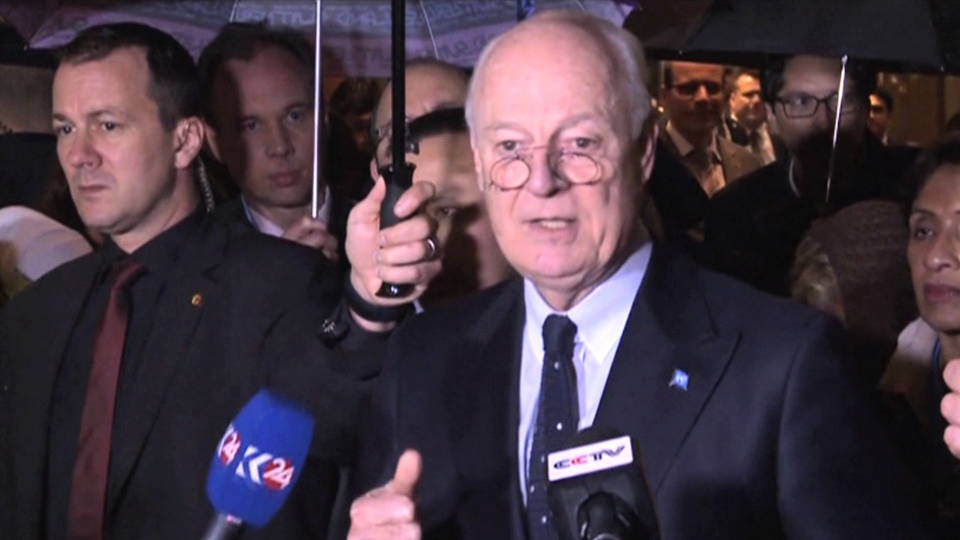
Syrian peace talks have been put on hold in Geneva as a Russian-backed offensive has intensified north of Aleppo. U.N. mediator Staffan de Mistura said he hoped talks would resume in three weeks.
Staffan de Mistura: "It is not the end, and it’s not the failure of the talks. Why? They came, and they stayed. Not only, but both sides insisted on the fact that they are interested in having the politicalprocess started."
The peace talks are the first attempt in two years to negotiate an end to Syria’s war that has claimed the lives of nearly 300,000 people and displaced roughly half the country’s population.
Drone Footage Shows Devastated Syrian City of Homs
New footage filmed from a drone shows shocking images from the Syrian city of Homs. Five years ago, a million people lived in the city. Today the city is devastated, a virtual ghost town. The footage was shot by a Russian television station.
U.N. Reportedly Finds Julian Assange Has Been "Arbitrarily Detained"
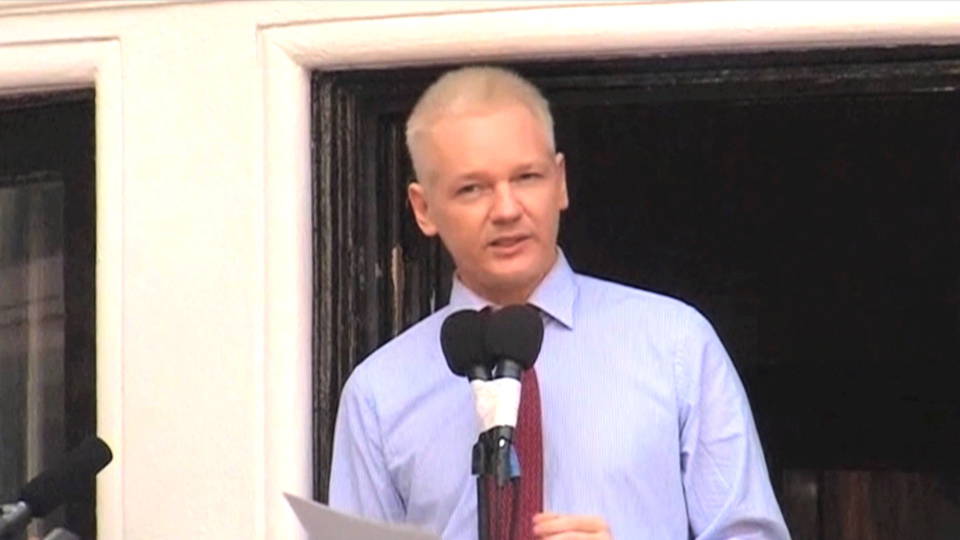
The BBC is reporting a United Nations panel has ruled in favor of WikiLeaks founder Julian Assange, who says he has been "arbitrarily detained" for the past three-and-a-half years because he cannot leave the Ecuadorean Embassy in London without being arrested by British authorities. Assange sought asylum in the embassy to avoid extradition to Sweden. Earlier this morning, Assange had said he will accept arrest by British police if the U.N. ruled against him.
Sanders: True Progressives Wouldn't Take $15M from Wall Street, Support Iraq War
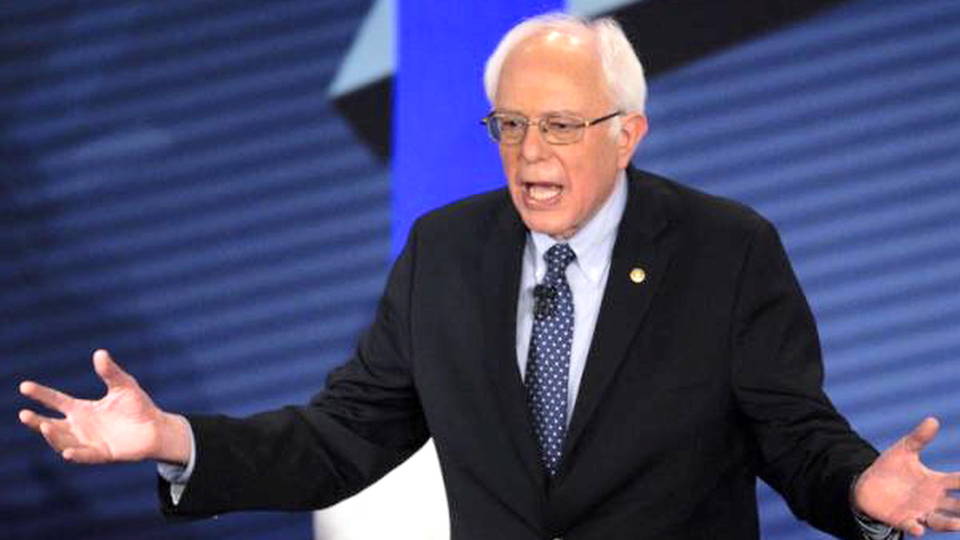
Former Secretary of State Hillary Clinton and Senator Bernie Sanders sparred over who was a true progressive at a town hall event in New Hampshire last night.
Sen. Bernie Sanders: "I do not know any progressive who has a super PAC and takes $15 million from Wall Street. That’s just not progressive. As I mentioned earlier, the key foreign policy vote of modern American history was the war in Iraq. The progressive community was pretty united in saying, ’Don’t listen to Bush. Don’t go to war.’ Secretary Clinton voted to go to war."
Clinton Defends $675K Payment for Speaking at Goldman Sachs
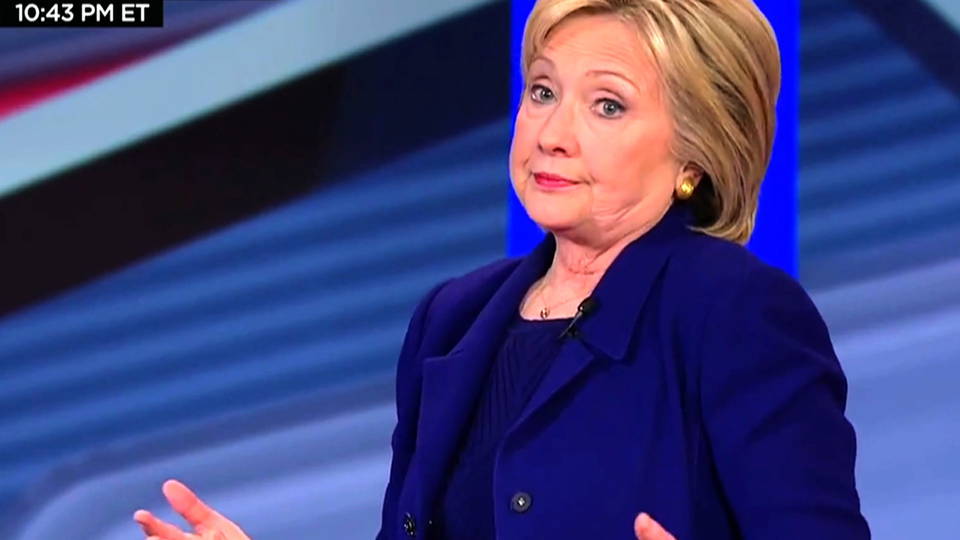
Later in the town hall event, Anderson Cooper of CNN asked Hillary Clinton about her ties to Goldman Sachs.
Anderson Cooper: "One of the things that Senator Sanders points to and a lot of your critics point to is you made three speeches for Goldman Sachs. You were paid $675,000 for three speeches. Was that a mistake? I mean, was that a bad error in judgment?"
Hillary Clinton: "Look. I made speeches to lots of groups. I told them what I thought. I answered questions."
Anderson Cooper: "But did you have to be paid $675,000?"
Hillary Clinton: "Well, I don’t know. That’s what they offered, so."
Goldman Sachs CEO Describes Sanders Candidacy as "Dangerous Moment"
In related news, Goldman Sachs CEO Lloyd Blankfein has described Bernie Sanders’ candidacy as a "dangerous moment" during an interview with CNBC. Sanders recently attacked Goldman Sachs in a campaign ad. In 2008, Blankfein endorsed and donated money to Hillary Clinton’s campaign, but he has not endorsed her this time around. He said on Wednesday, "I don’t want to help or hurt anybody by giving them an endorsement." Politico reports his wife Laura Blankfein has donated the $2,700 maximum to Clinton’s 2016 campaign.
Donald Trump Accuses Ted Cruz of Stealing Iowa Caucus
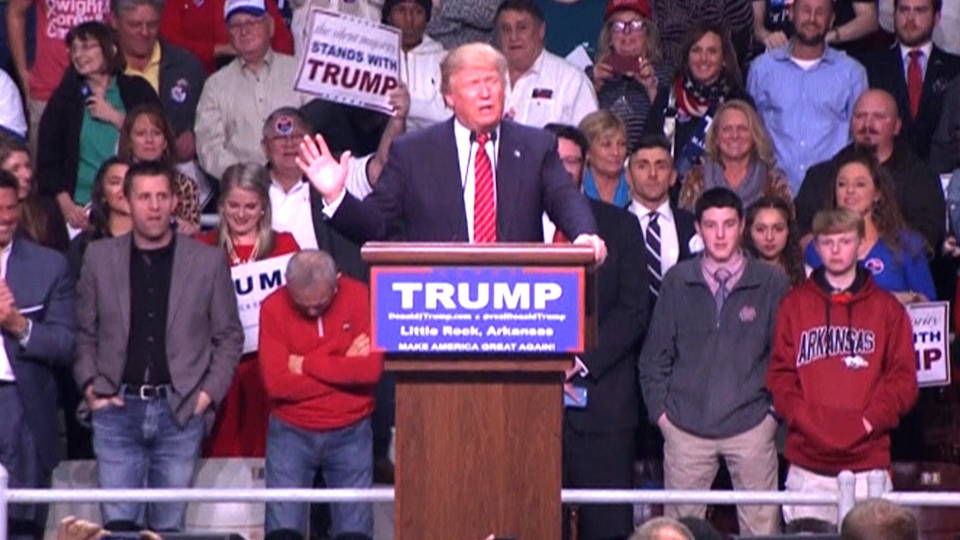
In other campaign news, Donald Trump has accused Senator Ted Cruz of stealing the Iowa caucus by spreading rumors that Ben Carson had suspended his campaign just prior to the opening of the caucuses. Trump, who ended up placing second behind Cruz, demanded a redo of the vote.
Donald Trump: "Oh, that voter fraud! You know, these politicians are brutal. They’re brutal. They are brutal. They are a bunch of dishonest cookies, I want to tell you. That’s one of the reasons I’m doing this. It’s one of the reasons."
On Wednesday, Ted Cruz defended the actions of his campaign team.
Sen. Ted Cruz: "Our political team passed on a CNN news story thatCNN broke. The news story said that Ben Carson was not continuing from Iowa on to New Hampshire, he was not continuing to South Carolina, instead he was going home to Florida. That was a news story CNN had posted. And our political team passed it on to our supporters. It was breaking news that was relevant."
CNN responded to Cruz’s comments by saying, "Senator Cruz’s claims about CNN are false. At no point did the network indicate Dr. Carson would suspend his campaign."
Obama Visits Mosque: "An Attack on One Faith is an Attack on All Our Faiths"
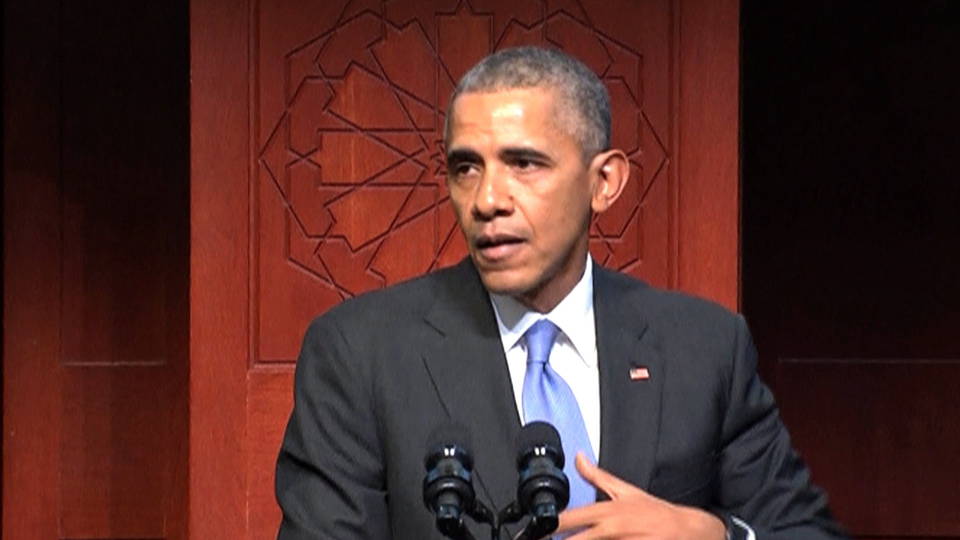
President Obama visited the Islamic Society of Baltimore in Catonsville, Maryland, on Wednesday in his first trip to a mosque as president. He declared that attacks on Islam were an attack on all religions.
President Barack Obama: "If we’re serious about freedom of religion—and I’m speaking now to my fellow Christians who remain the majority in this country—we have to understand an attack on one faith is an attack on all our faiths."
Republican presidential candidate Donald Trump—who has a record of suggesting President Obama might be secretly a Muslim born overseas—later discussed Obama’s visit to a mosque on Fox News.
Donald Trump: "I think that we can go to lots of places right now. I don’t know if he’s—maybe he feels comfortable there. We have a lot of problems in this country, Greta. There are a lot of places he can go, and he chose a mosque."
U.S. Joins 11 Nations Signing TPP

One of the world’s biggest multinational trade deals, the Trans-Pacific Partnership, has been signed by 12 member nations in New Zealand. It will now undergo a two-year ratification period in which at least six countries must approve the final text for the deal to be implemented.
Congressional Hearing Blasts Michigan & EPA for Handling of Flint Water Crisis
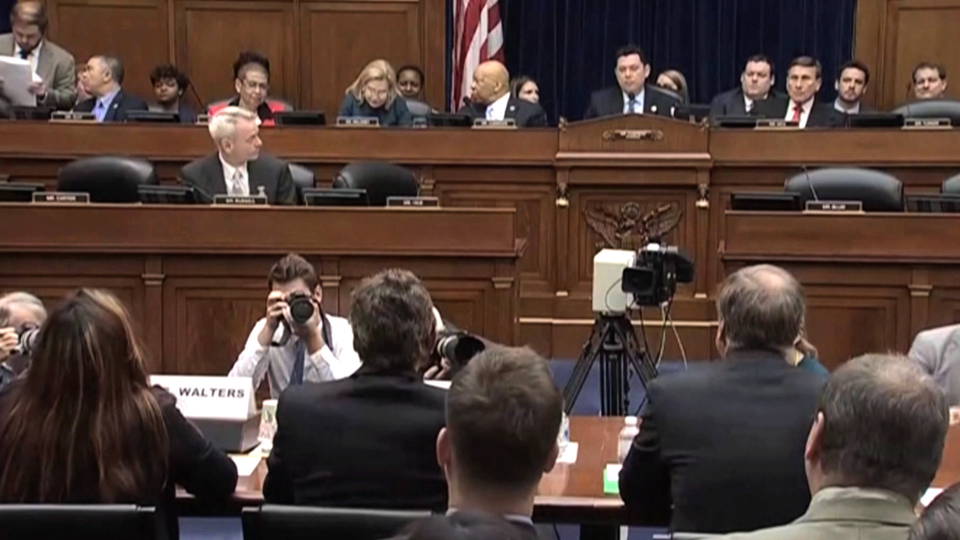
A congressional hearing was held Wednesday to probe lead poisoning in the water supply of Flint, Michigan. Lawmakers sharply criticized both state officials as well as the Environmental Protection Agency. The crisis began began after an unelected emergency manager appointed by Republican Governor Rick Snyder switched the source of Flint’s drinking water to the corrosive Flint River. Committee Democrats criticized the Republican leadership for not inviting Snyder to testify. Flint resident LeeAnne Walters, who helped expose the lead poisoning, testified at the hearing.
LeeAnne Walters: "The citizens in Flint are relying on each of you, because we have no choice. We trust no one but Virginia Tech. There are people in Flint today still not being assisted during this crisis—illegal immigrants, disabled and shut-ins. Broken policy and procedures are smothering the outcry of an entire community suffering financially, physically, mentally and emotionally."
Record 149 People Exonerated in U.S. in 2015

In criminal justice news, a record 149 people in the United States were exonerated last year. On average, the exonerated prisoners had spent 14 years behind bars for crimes they did not commit. Some had spent more than three decades. The majority of the exonerations occurred in Texas and New York.
Black Lives Matter Activist DeRay Mckesson Joins Baltimore Mayoral Race
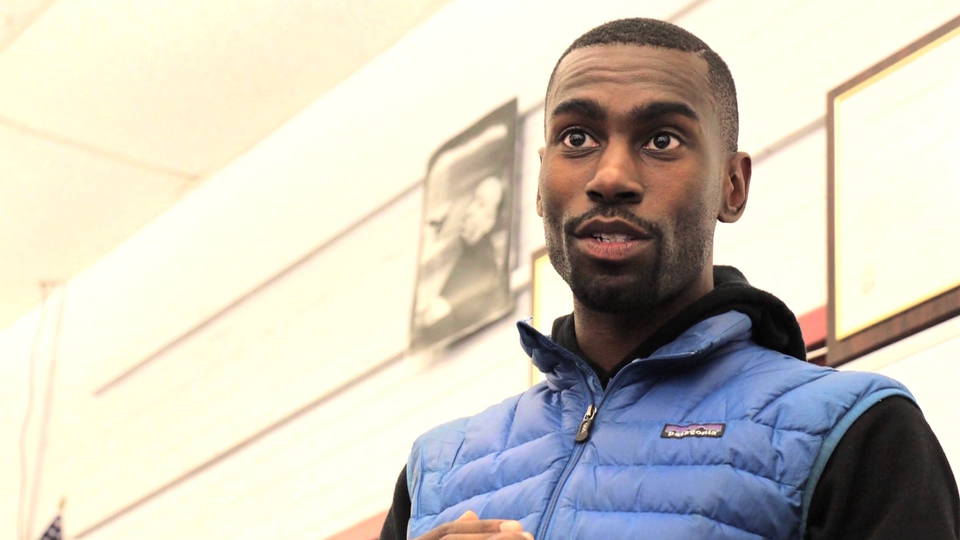
In news from Baltimore, DeRay Mckesson, one of the nation’s most high-profile Black Lives Matter activists, has announced he is running for mayor of Baltimore. He joins 12 candidates in the Democratic primary seeking to replace Mayor Stephanie Rawlings-Blake.
Donate today:
Follow:

COLUMN
"The Terror of Flint's Poisoned Water" by Amy Goodman and Denis Moynihan
Less than one month after the attacks of Sept. 11, a senior FBI official, Ronald Dick, told the House Committee on Transportation and Infrastructure, “Due to the vital importance of water to all life forms ... the FBI considers all threats to attack the water supply as serious threats.” In 2003, a UPI article reported that an al-Qaida operative “(does not rule out) using Sarin gas and poisoning drinking water in U.S. and Western cities.’” Where the terrorists have failed to mount any attack on a water supply, the Michigan state government has succeeded. In the city of Flint, lead-poisoned water has been piped into homes and offices since 2014, causing widespread illness and potentially permanent brain damage among its youngest residents.
Michigan has one of the most severe “emergency manager” laws in the country, allowing the governor to appoint an unelected agent to take over local governments when those locales or institutions have been deemed to be in a “financial emergency.” Republican Gov. Rick Snyder pushed for and obtained two bills that strengthened the law, and has used it aggressively to impose his version of fiscal austerity on cities like Detroit, Benton Harbor, several large school districts and, now most notoriously, on Flint. In every case but one, the emergency manager has taken over cities that are majority African-American. The emergency manager is granted sweeping powers to override local, democratically elected governments and to make cuts to budgets, sell public property, cancel or renegotiate labor contracts and essentially govern like a dictator.
In April 2014, Darnell Earley, the fourth of five Flint emergency managers appointed by Snyder, unilaterally decided to switch Flint’s water source from Detroit’swater system, with water from Lake Huron that they had been using for 50 years, to the long-contaminated Flint River. Flint residents immediately noticed discoloration and bad smells from the water, and experienced an array of health impacts, like rashes and hair loss. In October 2014, General Motors decided it would no longer use Flint city water in its plants, as it was corroding metal car parts. Later, trihalomethanes, a toxic byproduct of water treatment, were found in the water. Despite that, the water was declared safe by officials. At the same time, as revealed in an email later obtained by Progress Michigan, the state began shipping coolers of clean, potable water to the state office building in Flint. This was more than a year before Gov. Snyder would admit that the water was contaminated.
Ongoing activism by Flint residents whose children were sick attracted the involvement of water researchers from Virginia Tech, who found that 10,000 residents had been exposed to elevated lead levels. It took out-of-state researchers from Virginia to travel all the way to Michigan to conduct the comprehensive tests needed. Dr. Mona Hanna-Attisha then got involved. She is the director of the pediatric residency program at Hurley Children’s Hospital and assistant professor of pediatrics at Michigan State University. She discovered an alarming connection between rising blood lead levels in Flint’s children with the switch to the Flint River as a water source.
“The percentage of children with elevated lead levels doubled in the whole city, and in some neighborhoods, it tripled,” she told us on the “Democracy Now!” news hour. “And it directly correlated with where the water lead levels were the highest.”
Rather than going after the problem she identified, the state went after her. “We were attacked,” she recalled. “I was called an ‘unfortunate researcher,’ that I was causing near hysteria, that I was splicing and dicing numbers, and that the state data was not consistent with my data. And as a scientist ... when the state, with a team of 50 epidemiologists, tells you you’re wrong, you second-guess yourself.” Within weeks, state authorities were forced to admit she was right. Soon after, she was standing at the governor’s side, and has just been appointed to run a new public health initiative to help those exposed to the contamination.
A chorus of Flint residents and allies are demanding immediate action to ensure safe, clean water to the people of Flint. Many are calling for Gov. Snyder to resign, or even to be arrested. The FBI and the Justice Department are now investigating to see if any laws were broken. This week, the House held a hearing on the crisis, during which Houston Congressmember Sheila Jackson Lee compared the poisoning of Flint residents to the 1978 mass suicide and murder in Jonestown, Guyana. There, cult leader Jim Jones ordered his 900 followers, 300 of them children, to drink cyanide-laced Kool-Aid. Those victims died instantly. In Flint, the tragedy will unfold over decades.
Amy Goodman is the host of “Democracy Now!,” a daily international TV/radio news hour airing on more than 1,300 stations. She is the co-author, with Denis Moynihan, of “The Silenced Majority,” a New York Times best-seller.
WEB EXCLUSIVE
Pt 2: Michael Eric Dyson on The Black Presidency: Barack Obama and the Politics of Race in America
FEATURED TOPIC

Julian Assange
WEB EXCLUSIVE

WORK WITH DN!

Watch: Hillary Clinton Touts Progressive Record in Speech After Iowa Caucus---------------------
207 West 25th Street, 11th Floor
New York, New York 10001, United States
---------------------
---------------------

No comments:
Post a Comment