democracynow.org
Stories:

Former Vermont Governor Madeleine Kunin on Running Against Sanders in '86 & Endorsing Clinton in '16
Voting has begun across New Hampshire for the first primary in the country. A half-million voters are expected to cast ballots. Just after midnight, voting took place in three small towns. In the Democratic race, Vermont Senator Bernie Sanders got a total of 17 votes to former Secretary of State Hillary Clinton’s nine. In the Republican race, Donald Trump, Texas Senator Ted Cruz and Ohio Governor John Kasich each received nine votes. We speak to Madeleine May Kunin, who served as governor of Vermont from 1985 to 1991. She is a professor at the University of Vermont and the author of "The New Feminist Agenda: Defining the Next Revolution for Women, Work, and Family." Kunin’s new article for The Boston Globe is called "When Bernie Sanders Ran Against Me in Vermont." She has endorsed Hillary Clinton.
TRANSCRIPT
This is a rush transcript. Copy may not be in its final form.
JUAN GONZÁLEZ: Voting has begun across New Hampshire for the first primary in the country. A half-million voters are expected to cast ballots. Just after midnight, voting took place in three small towns. In the Democratic race, Vermont Senator Bernie Sanders got a total of 17 votes to former Secretary of State Hillary Clinton’s nine votes. In the Republican race, Donald Trump, Texas Senator Ted Cruz and Ohio Governor John Kasich each received nine votes.
AMY GOODMAN: Donald Trump and Bernie Sanders have been leading in almost every poll taken leading up to today’s vote in New Hampshire. On Monday, Sanders urged voters to join what he’s described as a "political revolution."
SEN. BERNIE SANDERS: What this campaign is about is asking people to think outside of the status quo, not to accept the fact that there are veterans sleeping out on the street, not to accept the fact that we have the highest rate of childhood poverty of almost any major country on Earth, not to accept the fact that millions of seniors in this country are trying to get by on $12,000-, $13,000-a-year Social Security, and nobody can get by on $12,000, $13,000 a year, especially a senior. Our job is not to accept what the establishment has told us is the way it is supposed to be. Our job is to break through that and look at where this country should be.
JUAN GONZÁLEZ: Hillary Clinton also made a last-minute pitch to voters, speaking in Manchester, New Hampshire, on Monday.
HILLARY CLINTON: Middle-class families will not have a tax increase when I am president, but I’m going after the millionaires, the multimillionaires, the corporate loopholes, the gimmicks, the money through the Bahamas, through Bermuda. Imagine that we can once again believe that it truly is a government of the people, by the people and for the people. That is—that is what we must imagine and create together. ... I’m telling you, folks, we can’t let any lobby, we can’t let any unelected force for money, for guns, for drugs, for big oil, for insurance—you name it—they cannot control our government any longer!
AMY GOODMAN: Yesterday on Democracy Now!, we spent the hour looking at the last Republican debate leading up to today’s New Hampshire primary. Today we turn to a debate on the Democratic primary.
We’re joined by three guests. Madeleine May Kunin served as governor of Vermont from 1985 to 1991. She’s a professor at the University of Vermont, author of The New Feminist Agenda: Defining the Next Revolution for Women, Work, and Family. Her new article for The Boston Globe is headlined "When Bernie Sanders Ran Against Me in Vermont." She is the first woman governor of Vermont. She has endorsed Hillary Clinton. Ben Jealous is also with us. He is the former president and CEO of the NAACP. Last week, he officially endorsed Bernie Sanders. He is joining us from North Carolina. And Darnell Moore joins us in New York, a member of the New York City chapter of Black Lives Matter, which has opted not to endorse anyone in the Democratic primary. Darnell is also a senior correspondent at Mic news and a co-managing editor at The Feminist Wire.
We welcome you all to Democracy Now! Governor Kunin, let’s begin with you in Burlington, Vermont. Can you talk about why you think this first primary—Iowa was a caucus—is so important and why you’re endorsing Hillary Clinton?
MADELEINE KUNIN: Well, I’m very pleased to endorse Hillary Clinton. And my answer is simple. I believe she is the most qualified and will be the most effective person in the White House. And I’m supporting her for that reason. In addition, I am thrilled that we have a strong possibility of having a woman in the White House. But I want to make it clear: I’m not supporting her just because she’s a woman—I don’t think anybody should—but because I think she is the top qualified person for the job. And I’ve known her over the years. And I’ve also had the experience of being the first woman governor of Vermont and the fourth woman in the country.
And I believe there’s still some gender issues at work. They’re more subtle than they used to be. Now, nobody is going to say, "I won’t vote for a woman," like a barber said to me in Springfield, Vermont. People feel that, you know, it’s obviously politically incorrect. But I think both men and women have some subtle gender issues. For example, Bernie’s style of waving his arms and getting laryngitis from shouting is something a woman can’t do, because she would be considered hysterical. People don’t like angry women. But there are also some gender issues on the positive side, that I feel that as a woman, as a working woman, as a wife, as a mother, we have different priorities on the agenda. And women’s issues, like child care, equal pay for equal work, paid family and medical leave, those are gut issues for women, because we’ve lived them. So, the world still looks different through the eyes of a woman, just as the world looked different through the eyes of a black man, Barack Obama. Not on everything, but on some key issues, there are positive gender differences, because these issues will get higher attention when Hillary is president.
JUAN GONZÁLEZ: And, Governor Kunin, in that piece that you wrote at The Boston Globe, you say that, quote, "Women draw on a different network than men and can share an alternative definition of 'qualified.'" And you specifically raised the composition of the actual campaign staffs of Bernie Sanders and Hillary Clinton. Could you talk about that?
MADELEINE KUNIN: Well, yes. You know, as a leader, you draw on your network—the people you went to school with, the people you hang out with. And so, when I was governor for the first time, half of my Cabinet was female. Hillary’s advisers and campaign staff is 50 percent female. And that matters. Bernie’s staff is more composed of men in the top echelons, so—and it makes a difference. And it’s, again, something you can’t dictate, but it makes a difference for how you will govern and who will be your close advisers.
... Read More →
Ex-NAACP Head Ben Jealous: Sanders is Most Consistent Candidate Tackling Racism, Militarism & Greed
Likening him to Jesse Jackson in the 1980s, former NAACP President Benjamin Jealous praises Vermont Senator Bernie Sanders for consistently addressing the issues that Rev. Martin Luther King Jr. referred to as the "giant triplets of evil"—racism, militarism and greed. We speak to Jealous in North Carolina. He was just in South Carolina campaigning for Sanders ahead of that state’s primary.
TRANSCRIPT
This is a rush transcript. Copy may not be in its final form.
AMY GOODMAN: Ben Jealous is also with us. He’s from North—he’s in North Carolina right now, and he was just recently in New Hampshire. Ben, you came out last week and endorsed Bernie Sanders. Why?
BENJAMIN JEALOUS: You know, look, I looked at his record. And for the same reasons that I supported Jesse Jackson in 1988—which Bernie did, too—when I was 15 years old, I signed up for Bernie this time, which is that on the issues that Dr. Martin Luther King referred to as the "giant triplets of evil"—racism, militarism and greed—Bernie is the clearest and the most consistent.
JUAN GONZÁLEZ: And, Ben, what about this—the whole issue—obviously, there’s been a lot of attention drawn to the fact that Bernie Sanders so far has very little support in the African-American and Latino community in most of the polls, and very few major African-American leaders or Latino leaders have come out to support him. Keith Ellison of Minnesota has, and Raúl Grijalva of Arizona. But your decision to support him, and why—what you think the impact will be in terms of the African-American and Latino community as we get into the states that have many more African-American and Latino voters?
BENJAMIN JEALOUS: Well, look, we’ve already begun to see people switch down in South Carolina. Justin Bamberg, a state rep, switched from Hillary to Bernie. We will see many more. I was meeting with folks last weekend. People are very excited. And what’s happening is people are starting to tune in. And the reality is, because of their long history of connection to the black community, especially in the South, with Bill Clinton being the former governor of Arkansas, you know, they have built up a lot of loyalty and a lot of friends. But black voters, we take our votes extremely seriously. They come—you know, we earned them. If it wasn’t us personally, it was our parents or grandparents. And what you’ll see is that now that he’s seen as a top-tier contender, we’ll find that candidate Clinton has hit her high watermark. She will begin to lose support. How fast and how much remains to be seen.
... Read More →
Hillary Clinton & the "Mass Incarceration Machine": A Debate on Her Support of 1994 Crime Bill
Scholar Michelle Alexander made headlines last week when she wrote a critical post about Hillary Clinton’s record on criminal justice issues. "I can’t believe Hillary would be coasting into the primaries with her current margin of black support if most people knew how much damage the Clintons have done—the millions of families [that were] destroyed the last time they were in the White House thanks to their boastful embrace of the mass incarceration machine and their total capitulation to the right-wing narrative on race, crime, welfare and taxes." We look back at Clinton’s record with three guests: Darnell Moore, a member of the New York City chapter of Black Lives Matter; former Vermont Governor Madeleine Kunin; and former NAACP President Benjamin Jealous.
TRANSCRIPT
This is a rush transcript. Copy may not be in its final form.
AMY GOODMAN: Darnell Moore, you’re with Black Lives Matter. The group has said they’re not going to endorse a candidate. Why not?
DARNELL MOORE: So, to begin, I think it’s important to talk about the New Hampshire primary and its intended purpose. So, what happens, typically, a media—you know, a candidate who comes out of this as a winner can get a media boost and also more money for their campaign. In so many ways, the New Hampshire primary is sort of critiqued for its ability to too easily give the impression that there is general consensus around a candidate. So, given that, it behooves us to not give so easily an endorsement off of an illusion, in so many ways. It’s clear to think about who represent—who’s in New Hampshire. It’s primarily white. It’s primarily rich. And it sort of skews towards an older—like the average age is about 42 percent [sic]. That’s not nearly representative of many of the folk who are taking to the streets in this movement for black lives.
Beyond that, I think it’s really important to give candidates the space to come around and really amplify and break down the issues that are germane to the Black Lives Matters movement. That happened as it related to private prisons, with Hillary Clinton’s turn in October 2015. But people want the candidates—
AMY GOODMAN: What do you mean, her turn?
DARNELL MOORE: Well, the private prison—the sort of speaking out against private prison and the corporate backing of prisons that happened in October 2015. But Black Lives Matter organizers want candidates to be clear about their positions, not just rhetorical, but in terms of policy and in ways that they expect for these things to take material reality.
JUAN GONZÁLEZ: And so far, among the Democratic candidates, what is your sense of some of the issues that the Black Lives Matter movement has been most involved in, especially changing the culture and the practice of policing in America? How have they been responding?
DARNELL MOORE: So, one of the things I think is important to note is that here is an iteration of a movement that squarely placed its critique on the state. This is about state-sanctioned violences of many types. And it makes sense to me why it is that folk would be resistant to not only providing endorsement, but to supporting the state and anyone representing it, when the state is actually the object of critique.
But there are issues beyond policing—so, policing, overcriminalization and policing in communities; environmental health concerns, like in Flint, Michigan; unemployment; undocumented status of people of color. There are so many other areas that are of concern that haven’t actually been sort of spelled out and broken down by candidates in ways that speak to the needs of Black Lives Matter organizers.
I should also say, you have to remember that this is a multigenerational movement. There are people who are on the streets and involved in this movement who were there in '96 when the Welfare Reform Act was passed. They were there in 1994 when the Violent Crime Act was passed. They have a sense of how Clinton had a part in the doing—in proliferating and spreading a lot of the problems that we're talking about now. And then there are some who may have lacked that political consciousness, who’s coming to it now.
AMY GOODMAN: I want to go back to 1994, what you’re referring to, Darnell, when Hillary Clinton appeared on C-SPAN to back the Violent Crime Control and Law Enforcement Act.
HILLARY CLINTON: We keep going. With respect to the crime bill, I think as more Americans focus on the fact that this bill would have put more police on the street, would have locked up violent offenders so they never could get out again, would have given more prison construction money available to the states and as well as the federal government, but also would have dealt with prevention, giving young people something to say yes to. It’s a very well-thought-out crime bill, that is both smart and tough. I think Americans are going to say, "Why these political games? Why are we once again letting certain special interests call the shots in Washington?" And we will eventually get a good crime bill, like the president has proposed. It will just take a little longer than it should have.
AMY GOODMAN: That was Hillary Clinton back in 1994. I wanted to turn to Michelle Alexander, the author of The New Jim Crow: Mass Incarceration in the Age of Colorblindness, who recently wrote on her Facebook page, quote: "If anyone doubts that the mainstream media fails to tell the truth about our political system (and its true winners and losers), the spectacle of large majorities of black folks supporting Hillary Clinton in the primary races ought to be proof enough." She said, "I can’t believe Hillary would be coasting into the primaries with her current margin of black support if most people knew how much damage the Clintons have done—the millions of families that were destroyed the last time they were in the White House thanks to their boastful embrace of the mass incarceration machine and their total capitulation to the right-wing narrative on race, crime, welfare and taxes." Governor Kunin, can you respond to this?
MADELEINE KUNIN: Happily, I will respond. I mean, you may recall that before Barack Obama was elected, Bill Clinton was called "the first black president." I think the Clintons have a long history of support for civil rights. And they understand the South, since he was born in Arkansas, and Hillary, early in her youth, fought for civil rights. Her basic training in politics came from Marian Wright Edelman, the Children’s Defense Fund. She has been there, and she’s not a recent spokesperson for Black Lives Matter. She went to Flint, Michigan, yesterday, giving up a day in New Hampshire, just to emphasize the point that in this largely black community it’s an outrage that the water has been poisoned. So, I think, you know, she’s been there, and he’s been there, and their commitment should not be questioned. Sure, there are laws that have been passed that have been detrimental. But she is for prison reform. We have to look at both the past and the present. And the same goes true for other issues. You know, when—she’s been voted the most admired woman in the world, year after year, because people respect her. People will remember the words, "Women’s rights are human rights, and human rights are women’s rights." And she’s helped people of color in every country. So, she’s not a newcomer; she’s been tested. Her—
AMY GOODMAN: Well, let me—
MADELEINE KUNIN: The question, really, between the two is: Who can make it happen? Who can really make change happen? And I’m reminded of Aesop’s fable, "The Tortoise and the Hare." She may be the tortoise, and it may be a female tortoise, but she’s going to get us there.
JUAN GONZÁLEZ: Well, Governor Kunin, I wanted to ask you, in terms of Bernie Sanders, you’ve mentioned, one, that he’s not newcomer on the political scene. He’s been in public life now for 35 years. And you also mentioned that when he ran against you, he ran against as an independent who basically said that both parties were useless, or Tweedledum and Tweedledee, as he referred to them. Could you talk about that and the change now as he’s running in the Democratic primary?
MADELEINE KUNIN: Well, he’s obviously grown up a lot. And he’s a more—you know, his basic message has more resonance today than it did in 1986. But he was so focused, like a laser beam, on income inequality that he did not want to be distracted by either the women’s movement or the environmental movement. He thought that the elites were involved in these movements. So he’s come a long way, and I give him credit, frankly, for raising the issue of income inequality and campaign finance laws as they now exist. He’s made that a major part of the conversation of this campaign.
Where I differ from him is: How are you going to make it happen? How are you going to get it done? And I think that experience matters. And let’s face it, it’s tougher for a woman to be the first woman president of the United States and, in some sense, an influence in the whole world. She gets criticized either way. Either she’s too tough and too masculine, or else she’s too feminine and can’t be commander-in-chief. Somehow, she has to find that sweet spot between being strong enough to be commander-in-chief and feminine enough to be mother of the nation. A guy doesn’t have to walk that tightrope in quite the same way.
AMY GOODMAN: I wanted to—I wanted—
MADELEINE KUNIN: So, I think she—yes.
AMY GOODMAN: I wanted to bring in Ben Jealous to go back to this point that Darnell Moore originally raised, that Michelle Alexander wrote about, and that is the issue of the prison pipeline, about the Clinton years around crime, the 1994 crime bill, and your assessment of this.
BENJAMIN JEALOUS: Yeah, look, you know, it’s really hard, you know, to hear the name of Marian Wright Edelman raised to vouch for Hillary Clinton being consistent on race, because the reality is that at that time, in addition to what we saw, which is her speaking the talking points of the prison guards’ lobby, we also saw her come out—Hillary Clinton—in the support of the superpredator bill—excuse me, the superpredator idea, to use the—to invoke the idea of superpredators to push for these crime bills. And the superpredator idea was this notion that a child at age six months could be such a sociopath as to be beyond redemption. And it’s a violation of theology, it’s a violation of basic psychology. It was never used, as far as I know, to describe anyone white. It was always used sort of to describe young black men as a mass. And it made life very tough for us. And it helped push in bills, quite frankly, that have led to the biggest spike in the incarceration of women that we have seen—of, typically, black women. But black women’s lives matter, too.
And that’s the tough part here, because, you know, you want to believe she can get things done, but then you see, on these criminal justice issues, in 2008, she was the only Democrat on stage who took the Republican position of saying that if we reduced the disparity between crack and powder sentencing—crack sentencing affects mostly blacks; powder, mostly whites—that there would be no retroactivity. And that was locking up mostly women, nonviolent drug addicts, who should have been in rehab, and keeping them from their children. Now, this year, she’s the only Democrat on stage, back when there were three, who supports the death penalty, again taking the Republican position. So I don’t disagree with the governor. There are some things that she’ll be able to get done—simply because she’ll capitulate. But the reality is that nobody says that the Republicans can’t—that their idealists can’t get things done. And game recognizes game. We need our idealists there, so that when they compromise, it’s an actual compromise.
AMY GOODMAN: We’re going to break, then come back to this discussion. Ben Jealous with us, former head of the NAACP; Madeleine Kunin, joining us from Burlington, Vermont, the first woman governor of Vermont; and Darnell Moore of Black Lives Matter—they have not endorsed anyone. Stay with us.
... Read More →
"This Man Will Almost Certainly Die": The Secret Deaths of Dozens at Privatized Immigrant-Only Jails
A shocking new investigation about private prisons has revealed dozens of men have died in disturbing circumstances inside these facilities in recent years. The investigation published in The Nation magazine documents more than 100 deaths at private, immigrant-only prisons since 1998. The investigation’s author, Seth Freed Wessler, spent more than two years fighting in and out of court to obtain more than 9,000 pages of medical records that private prison contractors had submitted to the Bureau of Prisons. We speak to Wessler about his piece, "This Man Will Almost Certainly Die."
TRANSCRIPT
This is a rush transcript. Copy may not be in its final form.
JUAN GONZÁLEZ: We turn now to a shocking new investigation about private prisons and the dozens of men who have died in disturbing circumstances inside these facilities in recent years. The investigation, published in The Nation magazine this month, documents more than 100 deaths at private, immigrant-only prisons since 1998.
The investigation’s author, Seth Freed Wessler, spent more than two years fighting in and out of court to obtain more than 9,000 pages of medical records that private prison contractors had submitted to the Bureau of Prisons. The documents are stunning. They reveal more than two dozen cases of inadequate medical care that independent doctors say contributed to the premature deaths of the prisoners. One man died shackled to his bed from an undiagnosed HIV-related infection in his brain. Other men died from lack of medical care for cancer and liver disease. Several men were denied adequate mental health treatment and went on to commit suicide.
AMY GOODMAN: This comes as the Democratic presidential candidates are increasingly speaking out against multimillion-dollar private prison contracts. In September, Vermont Senator Bernie Sanders introduced a bill to ban government contracts with private prison companies at the federal, state and local level within three years. In October, former Secretary of State Hillary Clinton also pledged to ban the use of private prison companies. The Clinton campaign later said it would stop accepting money from lobbying groups linked to private prisons and that it would donate the money it had already received.
Well, to talk about this and more, we’re joined by the author of the new investigation, Seth Freed Wessler, reporter with The Investigative Fund, his new story for The Nation called "This Man Will Almost Certainly Die."
Seth, welcome to Democracy Now! Explain the title, "This Man Will Almost Certainly Die."
SETH FREED WESSLER: That title comes from a quote that was left in one of the medical files I obtained through an open records request. I obtained 9,000 pages of documents. And in those documents, from one of these prisons, there was a medical doctor who left his normal medical notes, but he also left a series of notes railing against the system that he had—he worked in, inside of one of these private federal prisons, private federal prisons used only to hold noncitizens convicted of federal crime—a sort of segregated system of prisons. In these files, he left a series of notes where he was railing against this prison system, basically saying that it wasn’t providing prisoners, or wasn’t allowing him to provide prisoners, the kind of care that as a medical doctor he believed he should be able to provide. These records tell the stories of 103 men who died inside this federal subsystem of prisons.
If you’re convicted of a crime in the United States, a federal crime, and you’re a noncitizen considered a low-security prisoner, you’re likely to be sent to a different prison from all of the rest of—from citizens. And those prisons are nearly the only prisons that the Federal Bureau of Prisons has privatized, has contracted out to private companies—GEO Group, Corrections Corporation of America, Management and Training Corporation.
And what I found is that the federal government is applying a different and less stringent set of rules to these prisons. And that, in the context of medical care, is leading to stripped-down kinds of medical clinics with lower-trained, lesser-paid, less expensive workers. And in dozens of cases, prisoners held inside are facing medical neglect. In 25 cases I looked at, doctors who reviewed the files said these prisoners likely would have lived had they received adequate medical care.
JUAN GONZÁLEZ: Well, Seth, could you—how did these develop? In other words, what’s the rationale for them segregating off the noncitizens into separate prisons? And also, talk a little bit about the evolution. When did they begin to flower or develop as a form of institutionalization of inmates?
SETH FREED WESSLER: Sure. So, private prisons, in general, they have existed for decades. But it took until the ’90s, the late ’90s, for the Bureau of Prisons to begin privatizing. The Bureau of Prisons had resisted privatization until the late ’90s, when the Clinton administration proposed in its 1996 budget request a plan to privatize a subset of federal prisons, to see if in fact they could save money. This was a time when the Clinton administration was promising not to expand the size of the federal workforce, but also prisons were growing. So, when prisons grow, federal prisons grow, usually that means more workers. The solution they found was to privatize federal prisons.
Well, very soon, as these prisons started to open, the federal government began to incarcerate only noncitizens inside of most of its federal prisons that have been privatized. The logic is, as recently as 2014, the Bureau of Prisons said that noncitizens are an ideal group of people to hold in privatized federal facilities that have somewhat fewer resources and services, because these people will later be transferred to immigration authorities and deported, after they serve their time. So they’ve explicitly said that these are sort of stripped-down facilities.
JUAN GONZÁLEZ: But you’ve also noted that a lot of the people that are incarcerated are basically—the crimes they’ve committed is re-entry into the United States, not necessarily—
SETH FREED WESSLER: That’s right.
JUAN GONZÁLEZ: —an actual crime here in the U.S.
SETH FREED WESSLER: That’s right. In fact, 40 percent of the people inside of these prisons are incarcerated for the criminal offense of crossing over the border. In the early '90s, 4,000 people were prosecuted criminally for crossing over the border. By 2013, at the peak of these prosecutions under the Obama administration, 91,000 people were prosecuted criminally for illegal entry or illegal re-entry, for crossing the border—something we usually think of as a civil offense. You know, usually, people are detained and deported as a result of crossing the border without papers. But we've started to incarcerate, sometimes for years, tens of thousands of people.
AMY GOODMAN: And just to be clear, these are not the immigrant detention facilities.
SETH FREED WESSLER: That’s right. These are a different system. So, Immigration and Customs Enforcement oversees immigration detention. There are additional 23,000 people in a separate prison system that’s overseen by the Bureau of Prisons used to hold noncitizens. And I uncovered stories of people who were facing incredible kinds of medical neglect, men who complained of illness for, in one case, two years and was never seen by doctor. This man, Claudio Fagardo-Saucedo, was actually never tested for HIV, despite the fact that there were signs that he should have been, and that federal rules would have it that he should have been. He was never tested for HIV, 'til he became so sick that he fell down. He was so weak that he fell down while walking in the prison, and he was sent to a local hospital, tested positive for HIV, and died days later of an AIDS-related brain infection. It's just sort of staggering levels of neglect.
AMY GOODMAN: I want to turn to your interview, Seth, with Dr. John Farquhar, the former clinical director at the Federal Correctional Institution in Big Spring, Texas. This was featured on Reveal, a podcast from the Center for Investigative Reporting.
DR. JOHN FARQUHAR: There were times when I was critical. I’m a critical person, starting with myself.
SETH FREED WESSLER: You actually wrote at one point, "I feel bad for his shabby care."
DR. JOHN FARQUHAR: Well, I stand by that statement. I don’t know who it’s about, and I can’t comment on any single record of any person. But there are times when the care was not what I wanted for any patient, period.
AMY GOODMAN: Dr. Farquhar went on to suggest the contractors asked him to cut down on number of 911 calls made out of prison.
DR. JOHN FARQUHAR: They said, you know, "Is there a way that we can cut this down?" And I said, "Probably, yes."
SETH FREED WESSLER: I could imagine that could result in a pressure to not call when somebody really needs to go to the emergency room.
DR. JOHN FARQUHAR: That’s always the risk. That’s why professional judgment takes professional training and professional experience, because you can’t leave it up to anybody.
AMY GOODMAN: In this clip, we hear Russell Amaru, a physician assistant at Big Spring. He was on the call the night a prisoner named Nestor Garay had a seizure or a stroke. Garay spoke about the facility’s high reliance on LPNs, or licensed practical nurse.
RUSSELL AMARU: There would have been a more aggressive care for that patient, and other patients, too, if we had better training, better staff. It’s just so many things are wrong there. You had an LPN right out of school, new in corrections, trying to make an assessment. He did not have the skills. I don’t blame them as a person; I blame the management system that puts him in that position. Basically, what you have, in essence, is people that are undertrained doing jobs that they shouldn’t be doing. We do not have an infirmary for 24-hour observation. Charts are often temporarily lost for a couple of days or a week or so. And so, the companies that I work for, they’ve got the model of how the place is supposed to be run, and they seem to allow it. And I know you want to ask me: What I would do to correct the problem? I’d close this whole facility down, and I’d start over again.
AMY GOODMAN: "I’d close this whole facility down," says Russell Amaru, a physician assistant at Big Spring. Seth, "This Man Will Almost Certainly Die," your piece, dozens of men dying in disturbing circumstances in privatized, immigrant-only prisons—where is this all going?
SETH FREED WESSLER: Well, the Bureau of Prisons has made a decision that they aren’t going to apply the same rules and standards to privatized prisons used to hold immigrants that it applies to the rest of its prison system. That means that these private companies are free to determine how they’re going to provide care. One of the ways that that happens is by employing lesser-trained, less expensive workers, as the person we just heard talked about. This is a subsystem of federal prisons that’s run by the Bureau of Prisons, and there are real questions about why it is that there is a separate, segregated system of federal prisons for noncitizens, segregated on the basis of citizenship, where people are suffering really incredible kinds of medical neglect.
AMY GOODMAN: Seth Freed Wessler, we’re going to do Part 2 after this interview and post it at democracynow.org. Seth Freed Wessler is a reporter with The Investigative Fund. His new story for The Nation magazine, "This Man Will Almost Certainly Die," we will link to it at democracynow.org.
And that does it for our broadcast. We have several job openings. Check our website at democracynow.org.
... Read More →
We Endorse No One: Black Lives Matter & the 2016 Presidential Race
Earlier in the presidential campaign, Black Lives Matter activists made headlines disrupting campaign events by Bernie Sanders, Hillary Clinton and others, demanding candidates focus on criminal justice issues. Now the group has opted not to endorse any candidate in the presidential race. We speak to journalist Darnell Moore, a member of the New York City chapter of Black Lives Matter.
TRANSCRIPT
This is a rush transcript. Copy may not be in its final form.
JUAN GONZÁLEZ: Darnell Moore, I’d like to ask you about the whole issue of Black Lives Matter’s endorsement, or not endorsement at this point. How—what’s been the debate within the movement on the issue of presidential elections? And, of course, there’s also the issue of the congressional Senate elections, which nobody pays much attention to right now, but will actually—whoever gets elected president, depending on who’s in the House and the Senate, will determine what they can do. But are you looking right now not to get involved in the primaries, or are you—is your movement also saying that when the general elections come, you don’t see any need to participate or support candidates at that point, as well?
DARNELL MOORE: And I think it’s important to distinguish between Black Lives Matter network, which is, you know, a collective of chapters across the country, versus the Movement for Black Lives, which consists of Black Lives Matter, the network, and so many other contingencies.
But in terms of endorsement now, I think withholding an endorsement is a decision that was come to collectively. One, there are folk who are on the streets, who are in the presence of municipal leaders, who are asking very clear things. You know, stop—we want the death of black people by police officers, blue-on-black violence, to stop. These are material realities. We want long-standing, entrenched forms of overpolicing and criminalization to end. And these are not rhetorical flourishings. This is not about leaders who have a type of leadership capacity. This is like, we are needing policy recommendations and bona fide solutions. For instance, there’s clear things that could be put out by candidates. Right—the United States, the federal government, does not have a universal fully how to track—data tracking system for something like police misconduct in 2016. These are like easy wins.
I think it also behooves us to—we do have a collective of black folk, variously—various incomes, different ages, and this is a potential voting base. And I think withholding an endorsement puts the pressure on candidates to actually come up with the type of policies and forms of governance that they think will actually lead to change. The withholding can produce that type of effect, we think.
JUAN GONZÁLEZ: And in terms of voter registration, in general, are you advocating people to register to vote and to at least vote?
DARNELL MOORE: And it’s clear—oh, yeah, yeah. I mean, so, it’s clear that there are a range of folk who stand along a continuum as it relates to electoral politics. There are folk who have always been a part of get-out-the-vote efforts, who are doing work in municipal elections and so much else, right? This is not sort of a monolithic movement. But I think what it is is an opportunity for the network, Black Lives Matter network, to utilize its collective power to withhold an endorsement to put the very—the necessary pressure on candidates to actually come up with solutions to the problems that are being put forth.
AMY GOODMAN: You wrote an open letter to Bernie Sanders. What did you say?
DARNELL MOORE: The letter really—I did write an open letter. And it was a letter that really offered a critique, not just to Bernie Sanders, but for Sanders followers, who really offer this point that income inequality needs to be foregrounded. But part of what I wanted to get at is that even when we think about income inequality, if we’re not thinking about the ways that income inequality is racialized and gendered, we miss the mark. So, for instance, when we’re talking about the worker as a monolithic or sort of idea, often that worker may not be understood to be, I don’t know, a black woman who is working-poor or working-class. The life experiences and work experiences of, let’s say, a black woman or an undocumented individual is vastly different than a white working-class person. And I think these are the types of critiques that have been coming at Bernie to push Bernie Sanders and supporters to think more intersectionally about income equality, to think about the various dynamics that come to play. Racialization, gender bias and inequity has much to do with income inequality as anything else.
JUAN GONZÁLEZ: And, Ben Jealous, I wanted to ask you about—the South Carolina primary will be coming up soon. Are you going to be campaigning there? And what do you think are some of the key issues as the presidential primaries switch to places like Nevada and South Carolina, some of the key issues that you think voters there will be concerned about?
BENJAMIN JEALOUS: You know, yes, look, I was in—this entire weekend, I was in Barnwell, I was in Rock Hill, I was in Columbia. I was meeting with pastors, I was meeting with politicians, and, most importantly, I was meeting with voters. And, you know, folks on the ground are extremely concerned. And it ranges.
You know, you talk to young black activists. You know, when they stand up for Bernie, part of it has to do with the fact that he’s the only candidate who has been against private prisons his entire career, who has never taken a dime from the private prison lobby. Hillary Clinton started out basically fine with private prisons and taking money from their lobby. She no longer does that, and we’re glad that she’s changed. But it’s that sort of consistency that gets the younger activists.
Talk to the older activists, you know, they’re very pleased that he is going to, you know, really take on this issue of the indebting of our college students, because it breaks their heart, it makes them worry for the future of their families and the country. They’re also very pleased that he’s the strongest on Social Security reform and really expanding it and making it stronger and, yes, making it possible for those at the very bottom to actually benefit from the purpose of Social Security, which is to make sure that our older people do not suffer, do not have to live indignant ends of their lives because they’re starving.
I think mostly folks are inspired to see somebody who dreams like, you know, Franklin Delano Roosevelt, like JFK and, quite frankly, like many folks did at the end of the 1960s and '70s, when both these politicians really came on the scene, if you will, as activists, that he has said, "Yes, I will dream, but because I've been elected to office 20 times and I’ve served in the Congress and the Senate for 26 years and I have a track record of getting things done and reaching across the aisle, you can rest assured I will also get things done."
AMY GOODMAN: And, Ben Jealous, finally, responding to Darnell, representing the Black Lives Matter movement—you come out of movements, as well—
BENJAMIN JEALOUS: Yeah.
AMY GOODMAN: —but the power of the movement not endorsing, but making demands, especially this early on?
BENJAMIN JEALOUS: Yeah, look, this is one of—this is probably the most important movement of our time. And it is—the Black Lives Matter movement follows very much in the spirit of the founders of the NAACP, who decided to take on the practice of lynch mob violence and who shamed the country out of the practice and who have, for most of that period, not endorsed—not always, but for most of that period, not endorsed. Let me be clear: I speak for myself, I don’t speak for my old employers or the organization I’ve belonged to my entire life at the NAACP.
But, you know, when I look at activists like Darnell, I’m extremely excited. I’m also frustrated, because I know, 20 years ago, I was in the streets in New York leading protests after the Rodney King verdict, and we intended to get it done in our generation. But the reality is, it’s been 20 years, we’re still fighting. With that said, the anti-lynching movement took 60 years. And it’s going to be a baton, passed from young activists to young activists, that gets this done. So, you know, right on, Black Lives Matter. Let’s keep the pressure up.
AMY GOODMAN: We’re going to have to leave it there. We want to thank all our guests for being with us: Darnell Moore of the Black Lives Matter movement; Ben Jealous, former head of the NAACP; and in Vermont, Governor Madeleine Kunin, the first woman governor of Vermont.
This is Democracy Now! When we come back, we look at the private immigration prisons in this country. Stay with us.
... Read More →
Bernie Hasn't Changed His Tune: Ex-Vermont Gov. Says Sanders' Message Resonates, But Isn't Realistic
In 1986, Bernie Sanders, then mayor of Burlington, challenged sitting Vermont Governor Madeleine Kunin. Sanders largely ran on a platform to tackle economic inequality. We speak to Kunin about the consistency of Sanders’ message and why she and the political establishment have opted to back Hillary Clinton this year.
TRANSCRIPT
This is a rush transcript. Copy may not be in its final form.
AMY GOODMAN: Our guests today to debate the Democratic candidates are Darnell Moore of Black Lives Matter—the movement has decided not to endorse anyone; Ben Jealous, former head of the NAACP, is endorsing Bernie Sanders for president; and Madeleine Kunin, the first woman governor of Vermont, is endorsing Hillary Clinton. We wanted to go back to 1986, to the Vermont gubernatorial race, when Bernie Sanders challenged our guest, Madeleine Kunin, the sitting governor at the time of Vermont. During the campaign, Sanders and Kunin appeared together during a call-in show on C-SPAN.
MAYOR BERNIE SANDERS: What we know right now is that wealthy people and corporations in the state of Vermont are paying less than they paid five years ago in combined state and federal taxes. We know that homeowners and poor people are paying significantly more in property taxes. So what you’re seeing in the state of Vermont is an interesting tax situation: wealthy people, corporations paying less in personal and corporate income tax; homeowners, low-income people paying more in property taxes.
What we are proposing is serious tax reform, which both Governor Kunin and Lieutenant Governor Smith are running away from. We are saying and will demonstrate that, in point of fact, we can lower the property tax burden on homeowners in the state by 20 percent, we can significantly increase state aid to education, far more than what the governor is talking about, and we can do this without having anybody in the state of Vermont—not the richest person in the state of Vermont—paying more in combined state and federal taxes than they paid five years ago. I think that’s the direction we should go. But we’re going to have to have the guts to create a tax system here in the state of Vermont and not let Washington make the tax laws for us.
CARL RUTAN: Governor Kunin?
GOV. MADELEINE KUNIN: Let me just add one very important note. This administration is going to enable the state of Vermont to have the biggest tax cut in its history—$20 million—as a result of getting rid of the surcharge that we enacted earlier, because we retired the deficit and lived within our means. Now, the mayor talks about $300 million, simply getting that from the corporations and the rich. That’s a mythology. There aren’t those kinds of corporations. There aren’t those kinds of rich people. Those are Vermonters who pay those taxes, and they’re middle-income Vermonters. So it’s easy to talk in theory and pinpoint evil at some distant place, but the Vermont economy, the Vermont taxpayer, isn’t made up that way. You would be taking that money out of the pockets of Vermonters. It isn’t done with blue smoke and mirrors.
AMY GOODMAN: That was the 1986 gubernatorial race. Madeleine Kunin kept her seat as governor, and defeating the mayor of Burlington, Bernie Sanders. This issue of income inequality has been Bernie Sanders’ issue for decades. He has not wavered. In fact, Governor Kunin, this issue is certainly one that has affected Hillary Clinton’s campaign, as she changes her rhetoric around income inequality because of Bernie Sanders’, to many, surprising surge in the polls.
MADELEINE KUNIN: Well, it is a familiar tune, as you could see by that—by that clip. And Bernie hasn’t changed his tune. But what has happened is that the times have become even more unequal, so it has more resonance. But, you know, you’ve got to get the money from somewhere. And I haven’t changed my tune, either. I agree with what he says in principle, but how do you make it a reality? You know, how do we have an effective president of the United States? The word "revolution" is beautiful. You know, I’d like a revolution myself. I mean, the title "revolution" is in my book, The New Feminist Agenda, about women’s issues. But I think you have to say, "Who’s going to make it happen? Who can have the temperament to be president? Who can have the networks? Who can be collegial?"
You know, research has shown that women—and you see it in the United States Senate—they work well with each other. They work across party lines. They do their homework. And, you know, I’ve been involved in the women’s movement all of my life. And when—you know, we were told, to make it in the man’s world, you’ve got to play the game, while you’re changing how the game is played. And that’s what she is doing.
As far as the incarceration issues, we all deplore what is happening.
AMY GOODMAN: Bernie Sanders—I want to—I want to—
MADELEINE KUNIN: Even the Republicans are coming aboard and say we have incarcerated too many people for minor crimes. So, Hillary is firmly in the camp of prison reform, as well, and sentencing reform. So, what I think she brings to it—
AMY GOODMAN: I want to—I want to just ask a—
MADELEINE KUNIN: —that distinguishes her is that she is tried and tested and vetted, and that she will be the strongest candidate to face the Republicans. And we have to go to that next step and say, "Who can prevent the election of Donald Trump or Ted Cruz? Who can really be on our side, not only by talking about it, but by acting on it?"
AMY GOODMAN: You know, I wanted to go back to the issue of Bernie Sanders in Vermont. What’s very interesting in New Hampshire, everyone says, "Well, of course he’s winning there, because it’s next door to his home state, Vermont, where he’s very popular." And he is very, very popular on the ground. But what’s interesting is that the leadership in Vermont is supporting Hillary Clinton. You have Madeleine Kunin, our guest today; Patrick Leahy, the senior senator there; Howard Dean, who ran for president and was former head of the DNC; Peter Shumlin, the previous—the current governor. So, you have all of the leadership there, so it’s not so obvious. And I wanted to put this question to Ben Jealous: Why it is you see these differences all over the country, the leadership dividing from the people on the ground, and what you think Bernie Sanders—why you think that is?
BENJAMIN JEALOUS: It’s not clear to me. I think that the reality is, when you talk to voters on the ground, you ask them what they think, they say, "Well, that is the establishment doing what the establishment does." I think most voters see that. I think the most important thing, and I think the governor is absolutely right: We need a Democratic nominee who can beat the Republicans at the poll next fall. In every single poll now for weeks, it’s been very clear Bernie Sanders is that candidate.
You know, it’s painful for me to be on here with the governor on different sides, because, look, if Senator Warren was running, we may have found ourselves on the same side. But because it’s Hillary Clinton versus Bernie Sanders, what you see is a very clear choice. And again, the establishment has tended to line up, as they do, for the folk—you know, for the person who’s sort of most of—you know, most of their ilk, if you will. But people on the ground are switching very, very quickly. And that’s the very exciting thing.
... Read More →Trump, Sanders Ahead as Primary Voting Begins in New Hampshire
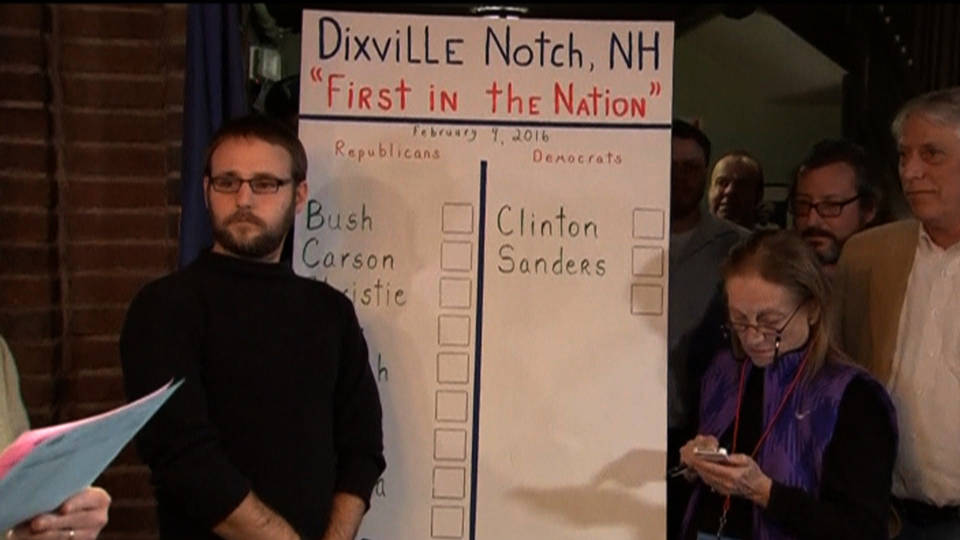
Voting has begun across New Hampshire for the first primary in the country. A half-million voters are expected to cast ballots. Just after midnight, voting took place in three small towns. In the Democratic race, Vermont Senator Bernie Sanders got a total of 17 votes to former Secretary of State Hillary Clinton’s nine. In the Republican race, Donald Trump, Texas Senator Ted Cruz and Ohio Governor John Kasich each received nine votes. Trump and Sanders have been leading in almost every poll taken leading up to today’s vote. On Monday, Sanders said he’s no longer a fringe candidate.
Sen. Bernie Sanders: "When we began this campaign about nine months ago, we were at 3 percent in the national polls. And despite my neat hairdo and my GQ type of outfit, the media and the pundits didn’t quite consider us a serious candidacy. In fact, the word 'fringe' was used a couple of times. We have come a long way in the last nine months."
Report: Top 100 Donors in 2016 Race Have Spent More Than Bottom 2 Million
Meanwhile, a new analysis by Politico finds the top 100 biggest donors of the 2016 campaign have spent a total of $195 million—that’s more than the $155 million spent by the 2 million smallest donors combined. The leading beneficiaries of the top 100 donors were Jeb Bush, Hillary Clinton and Ted Cruz.
U.N. Panel Finds "Extermination" of Prisoners in Syria

The United Nations has accused the Syrian government of torturing and killing prisoners on a massive scale that amounts to "extermination," a crime against humanity. Paulo Pinheiro, chair of the Independent International Commission of Inquiry on Syria, said investigators also found systematic killing, rape and torture by armed anti-government groups as well as ISIS and the al-Nusra Front.
Paulo Pinheiro: "Detainees are subjected to violations on a mass scale in governmental detention centers. Prisoners are routinely tortured and beaten. Forced to live in unsanitary and overcrowded cells, with little food and no medical care, many perish in detention. ... Anti-government armed groups have also committed violations against detainees. They have held government soldiers and members of rival armed groups in makeshift detention centers, where they are ill-treated and executed, or die after being tortured."
The report comes as tens of thousands of Syrians have massed near the Turkish border, fleeing Russian airstrikes and advancing Syrian government forces north of Aleppo. Turkey has kept the border closed, reportedly in a bid to pressure the United States to help create a buffer zone for civilians inside Syria.
U.S. Charges Widow of ISIS Leader in Death of Kayla Mueller
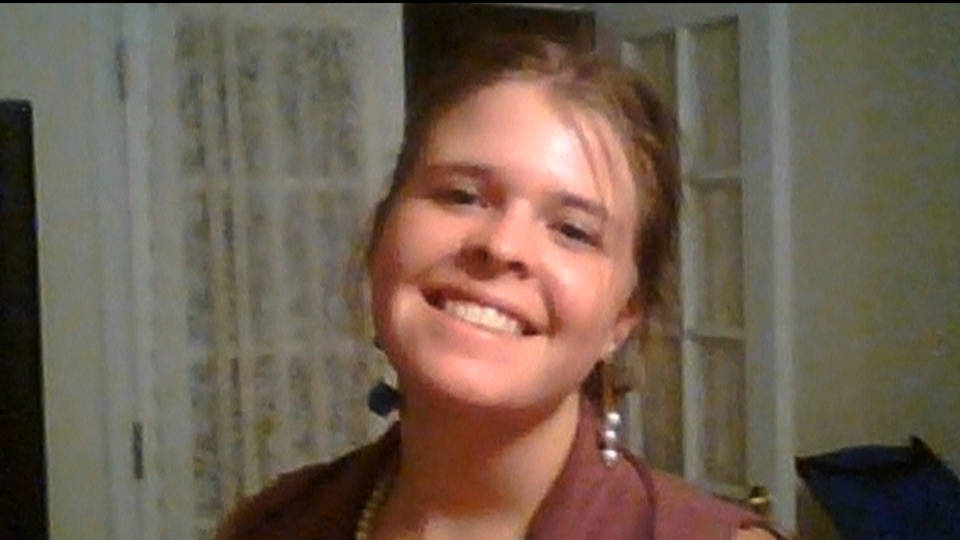
The Justice Department has charged the Iraqi widow of an ISIS leader with a role in the death of U.S. aid worker Kayla Mueller. Nisreen Assad Ibrahim Bahar, who is currently in Iraqi custody, is accused of helping hold Mueller hostage at a home where Mueller was repeatedly raped by ISIS leader Abu Bakr al-Baghdadi. Mueller was confirmed killed last year in what ISIS said was a coalition airstrike in Syria.
Canada to End ISIS Bombing by February 22
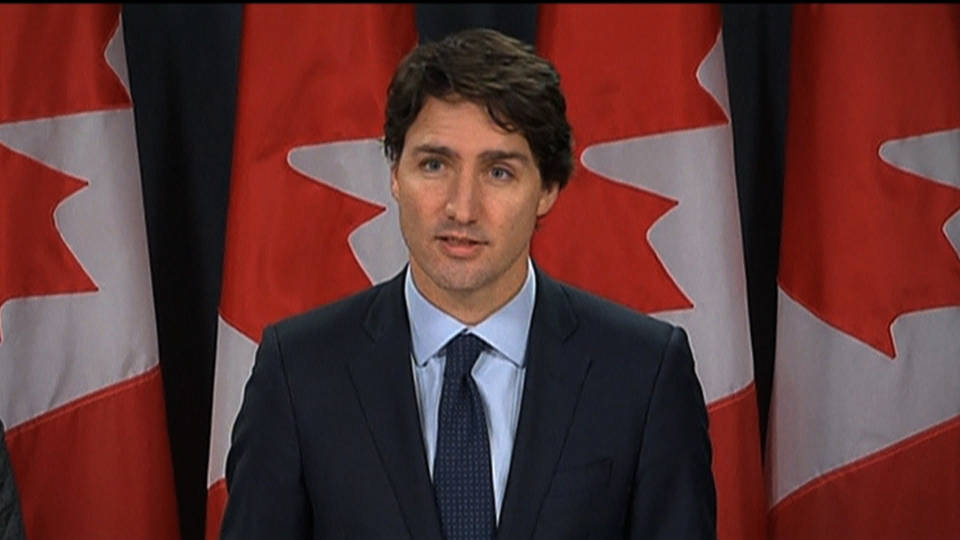
Canadian Prime Minister Justin Trudeau says Canada will end its bombing mission against the self-proclaimed Islamic State in Iraq and Syria by February 22, fulfilling his campaign pledge. Canada will withdraw six fighter jets but keep two surveillance planes in the region and triple the number of soldiers training Iraqi Kurdish forces. Trudeau spoke at a news conference in Ottawa Monday.
Prime Minister Justin Trudeau: "The lethal enemy of barbarism isn’t hatred, it’s reason. And the people terrorized by ISIL every day don’t need our vengeance, they need our help."
Mexico: Crime Reporter Kidnapped from Home in Veracruz
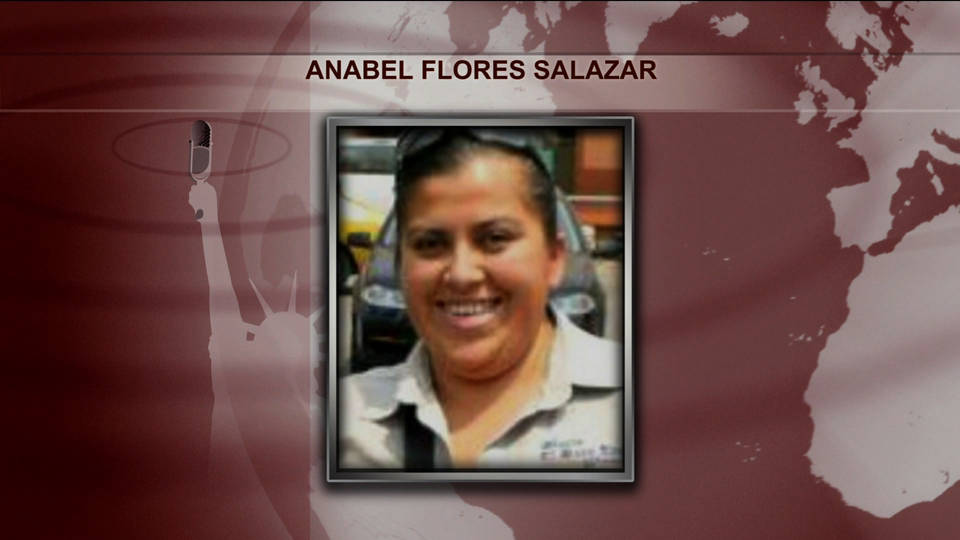
In Mexico, a crime reporter has been abducted from her home by armed men in the eastern state of Veracruz. Anabel Flores Salazar, who works for the newspaper El Sol de Orizaba, was kidnapped early Monday. The Committee to Project Journalists says Veracruz is among the most dangerous areas in the world for journalists.
London: Hundreds Mourn Prison Death of Sarah Reed
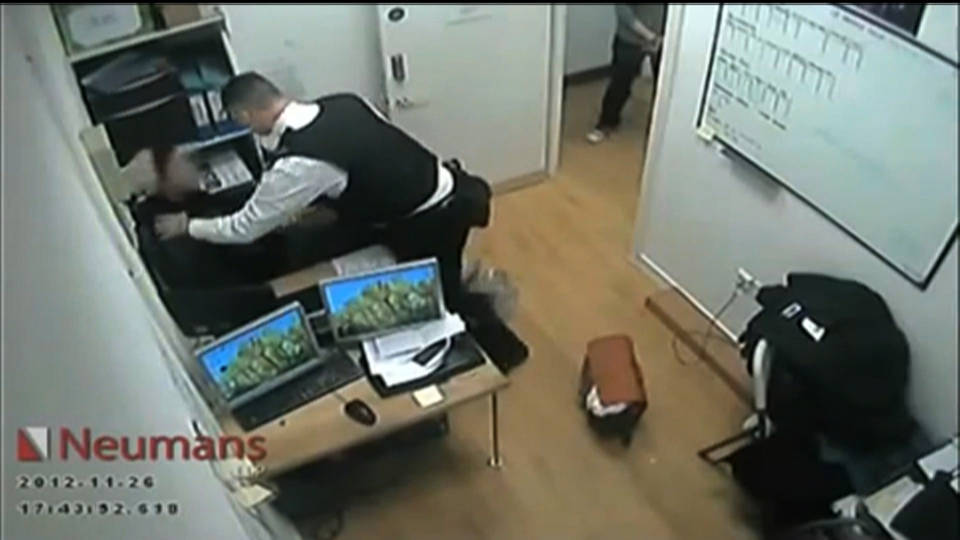
In London, hundreds of people gathered for a candlelit vigil outside Holloway Prison, where a black woman with mental health problems died last month. The Guardian reports Sarah Reed wrote to her family to say she was sexually assaulted while receiving treatment at a secure mental health unit. She was charged with grievous bodily harm for fighting back against her alleged assailant and taken to prison, where she was later found dead. Prison staff said she strangled herself. Years ago, Reed had previously been beaten by a police constable in an attack shown on security camera footage. She was buried in a private ceremony.
Hong Kong Police Fire Live Rounds in Clashes with Protesters

In Hong Kong, police fired warning shots and pepper spray at protesters during clashes which began with a crackdown on street vendors set up for the Lunar New Year. Police said nearly 90 officers were injured, while more than 50 people were arrested. The clashes were the most intense since pro-democracy protests demanding free elections in 2014.
NYC Schools Close to Honor Lunar New Year for the 1st Time
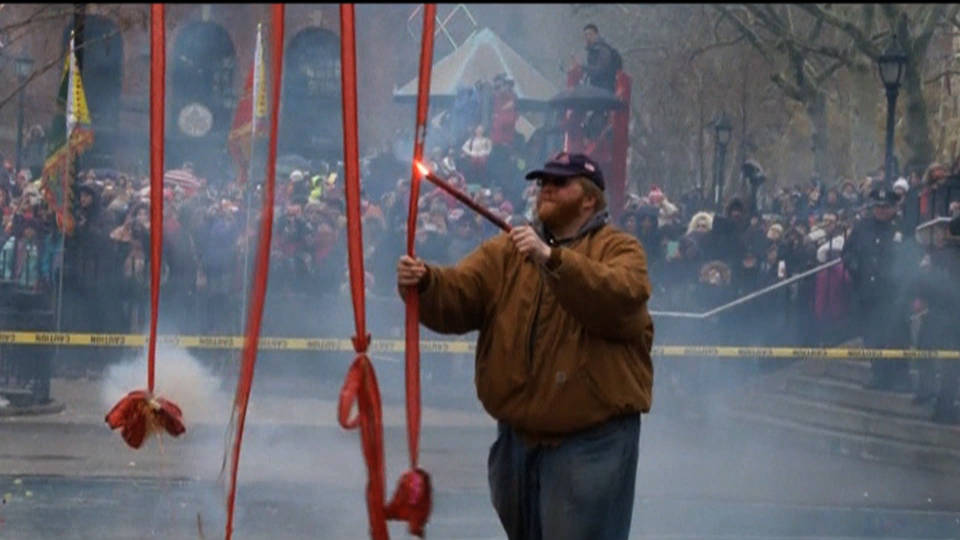
Here in New York City, public schools closed Monday to honor the Lunar New Year. It’s the first time the city’s schools have closed to celebrate the holiday.
Plotter Says Pakistani Spy Agency Played Role in 2008 Mumbai Attacks
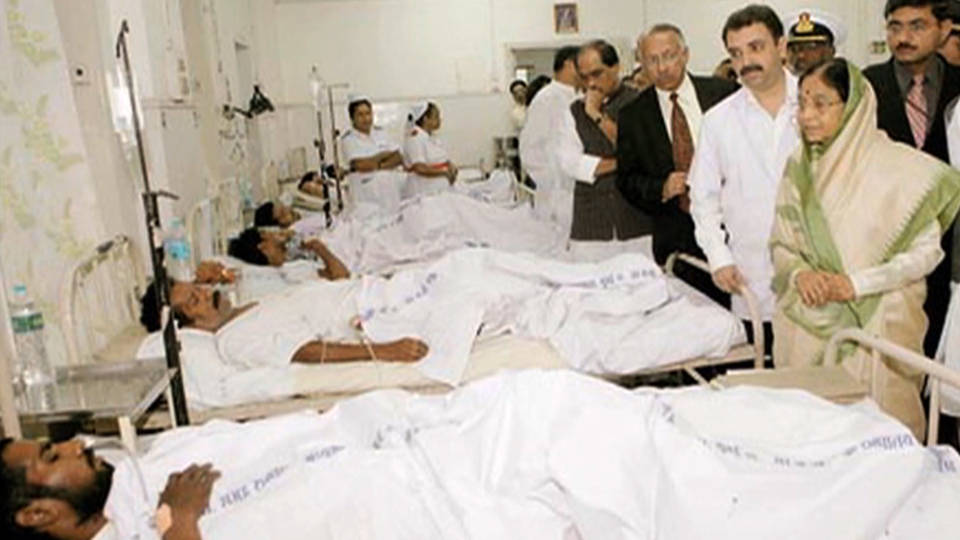
A Pakistani American who helped plan the 2008 attacks that killed more than 163 people in Mumbai, India, says he met with two handlers from Pakistan’s military intelligence agency while plotting the attack. India has long sought to establish a link between the attacks and the Pakistani government. David Headley, who is serving a 35-year sentence in the United States, spoke to an Indian court by teleconference. Headley went to Pakistan in 2002 as a U.S. drug informant; U.S. officials ignored repeated warnings about his suspected terrorist activity.
Ex-Treasury Secretary Timothy Geithner Gets JP Morgan Credit Line for Private Equity Fund
In the latest sign of the revolving door between the U.S. government and Wall Street, former Treasury Secretary Timothy Geithner has secured a personal line of credit from JPMorgan Chase—one of the banks he was previously charged with overseeing—in order to help fund his new endeavors in private equity. Geithner is reportedly borrowing the money to invest in a $12 billion fund being raised by his current employer, the private equity firm Warburg Pincus.
Sikh Actor Prevented from Boarding Plane After Refusing to Remove Turban
And an American actor and designer who follows the Sikh religion says he was barred from boarding a flight in Mexico City after refusing to remove his turban. Waris Ahluwalia said an Aeroméxico security official told him he could not board any of the airline’s flights unless he removed his turban for a security check. The Sikh Coalition has demanded an apology and awareness training.
Donate today:
Follow:


COLUMN

The Terror of Flint's Poisoned Water
WEB EXCLUSIVE

Pt 2: Michael Eric Dyson on The Black Presidency: Barack Obama and the Politics of Race in America
WORK WITH DN!

Broadcast Engineer
Director of Finance and Operations
Director of Development
---------------------
Democracy Now! Daily Digest: A Daily Independent Global News Hour with Amy Goodman & Juan González for Friday, January 29, 2016
democracynow.org
Stories:

Audrie & Daisy: Mother of Audrie Pott, Teen Who Committed Suicide After Assault, Tells Her Story
Broadcasting from the Sundance Film Festival, we look at the story of two high school girls who were sexually assaulted and bullied on social media in cases that made national headlines. Audrie Pott and Daisy Coleman never knew each other. Daisy lived in the small rural town of Maryville, Missouri. Audrie lived in the Silicon Valley suburb of Saratoga, California. But their stories were similar. Both said they were sexually assaulted while intoxicated and unconscious by boys they knew and trusted. Both were harassed on social media afterward, and both attempted to take their own lives. Daisy survived. Audrie did not. A new documentary, "Audrie & Daisy," that premiered at Sundance examines the lives of these two teenagers and the impact of what happened to them on their families, their communities and the national conversation. In Part 1 of our coverage, we speak with Audrie Pott’s mother, Sheila Pott, about how 15-year-old Audrie hanged herself eight days after she was sexually assaulted at a party.
TRANSCRIPT
This is a rush transcript. Copy may not be in its final form.
AMY GOODMAN: We’re broadcasting from the Sundance Film Festival in Park City, Utah, as we turn to a new film about two high school teenagers who were sexually assaulted and bullied on social media in cases that made national headlines. Audrie Pott and Daisy Coleman never knew each other. Daisy lived in the small rural town of Maryville, Missouri. Audrie lived in the Silicon Valley suburb of Saratoga, California. But their stories were similar. Both said they were sexually assaulted while intoxicated and unconscious by boys they knew and trusted. Both were harassed on social media afterwards. And both attempted to take their own lives—Daisy survived, Audrie did not. The new documentary, Audrie & Daisy, premiered here at the Sundance Film Festival, examines the lives of these two teens and the impact of what happened to them on their families, their communities, the national conversation.
I sat down here at Sundance with Daisy Coleman, her mom Melinda Coleman and Audrie Pott’s mother, Sheila Pott. You’ll hear from them all later in the broadcast. But first, I spoke with the film’s husband-and-wife directing team, Bonni Cohen and Jon Shenk. Together, they’ve made films on topics ranging from elections in Afghanistan to the ouster of Maldives President Mohamed Nasheed. I asked Bonni Cohen why they decided to make Audrie & Daisy.
BONNI COHEN: Jon and I are a married couple. We have two teenage kids of our own. And we saw the need to make this film. We saw this sort of paralysis, really.
AMY GOODMAN: Do you have boys or girls?
BONNI COHEN: We have one boy and one girl. We have a 16-year-old boy and a 13-year-old girl. And there was a sense of paralysis and fear—ourselves, our friends, our community—around issues involving social media and the use of it and the misuse of it. And we started to get exposure to these stories of these girls in high school and then how they were subsequently bullied on social media, and we felt we had to do something about it. And I think it’s probably been the hardest film we’ve ever made.
AMY GOODMAN: That’s Bonni Cohen, who directed Audrie & Daisy with her husband, Jon Shenk, as we turn now to the mother of one of the girls whose story is told in this powerful new documentary. On September 2nd, 2012, Audrie Pott, a 15-year-old high school sophomore in Saratoga, California, went to a party with a small group of friends. After she got drunk and passed out, three boys, who had been her friends since middle school, undressed her, sexually assaulted her, wrote all over her body with permanent marker. They drew on her breasts. They wrote "anal" above her buttocks with an arrow pointing down. Throughout the assault, they took pictures on their cellphones.
When she woke up, Audrie had no idea why her body was covered in marker. Her Facebook messages in the aftermath show her desperate attempts to piece together what happened. She pleaded with one of the boys to delete the photos. She said, "I now have a reputation I can never get rid of," she wrote. Her peers taunted and bullied her. "You have no idea what it’s like to be a girl," Audrie wrote in one of her final messages. Eight days after the assault, Audrie hanged herself. Her mother, Sheila Pott, found her daughter dangling from a showerhead. This is Sheila Pott’s story.
SHEILA POTT: Audrie had told me that she was spending the night at her girlfriend’s house, and—which was normal every weekend activity. They were either at my house or her friend’s house. And they had planned a party because one of the parents was out of town. And they invited 11 or 12 of their friends that they had grown up with since middle school. And they were drinking, and she got extremely, you know, inebriated, and she was at the point where she couldn’t like control a lot of her motor skills. And she passed out, and the boys that were at this party took her into a room, locked the door, and they took off her clothes, and they drew on her lewd messages and did things to her. And—
AMY GOODMAN: They wrote on her with a Magic Marker?
SHEILA POTT: They wrote on her.
AMY GOODMAN: And they put arrows to her body parts?
SHEILA POTT: Yes. So, they were sexually suggestive things that they wrote, degrading things. And they took pictures. And she didn’t know any of this happened, because she was unconscious. So she woke up the next day to find herself, you know, without her clothes and the aftermath of what had happened. I mean, they had colored half of her face black, in addition to writing "(so-and-so) was here," you know, like on her breasts and "anal" on her back—I mean, very, very degrading things. And she had no recollection of what had happened at all. And then she found out that morning from her friends that they had taken pictures. And, of course, she was an extremely private person, very self-conscious of her body. So it was devastating.
So, one of the—one of the things that I remember, which was out of character for her, is she called me that morning. And she said, "Mom, can you pick me up?" She had never called me to pick her up early. It would always be me saying, "OK, you need to come home now." And I immediately said, "I’ll be there." And when I picked her up, I noticed there was a green line down her leg, and I asked her about it. And she just kind of shrugged it off and said, "Oh, so-and-so wrote something." And, you know, since they did doodle on each other a lot in middle school, and, you know, we were talking—this was the second week of her sophomore year, I didn’t press too much on it, because I couldn’t see anything that would lead me to believe that she was assaulted at that time.
AMY GOODMAN: And so, what ensued over the next few days?
SHEILA POTT: She went to school. This is the following week. So, she went to school for four days. I had her friends over that weekend for a sleepover. Everything was fairly normal. And that Monday, she called me to pick her up, and I said—it was around lunch time, and I said, "What’s wrong?" And she wouldn’t tell me. And I kept pressing her and pressing her: "You need to tell me." And she said, "I want to leave." When I got to school to pick her up, she was quiet. And I kept pressing her: "What’s wrong? You need to tell me." And I asked her, "Did you get into a fight with your friends?" And she said, "I only have two friends."
AMY GOODMAN: And this was just soon after this—you took her home, and she went into her room.
SHEILA POTT: She went into her room, and I had said—I said, "Go inside, and we’ll talk in a few minutes," because we always had talked, and we were close, and she had confided in me a lot of things. And her friends did, too. I talked to these kids about everything, about teen drinking, about being responsible online. And she went into the bathroom, and I went to check on her just a short while later, and she didn’t answer. And that’s when I immediately broke in the door. And I couldn’t believe this would have happened. So, and the whole two days that we were in the hospital—three days, actually—we just were racking our brains, going, "What happened? What went wrong?" It wasn’t until the following Sunday, after her memorial, that we knew there was an assault.
AMY GOODMAN: And you found that out by?
SHEILA POTT: One of the girls that was at the party came forward to the administrators. And she couldn’t even bring herself to tell them directly; she had to put it in a letter. So she wrote a letter to the administration saying this is what happened and who was involved. And so they started an investigation. So this happened Thursday, before her memorial on Saturday. And they started the investigation. They never called us to tell us that an assault had happened. It wasn’t until the sheriff’s office came to my house on Sunday evening that we found out.
AMY GOODMAN: Talk about the lawsuit that you filed, and talk about the system and whether you felt that these young men were held accountable.
SHEILA POTT: Well, we learned very quickly in the process in the juvenile case that we weren’t going to see, really, justice for Audrie in that system. And they were very upfront with us and told us it’s very unusual to even see jail time in a crime like this. And there were convictions. And as you know, the sentences were 45—30 to 45 days, served on weekends.
AMY GOODMAN: For two of the—
SHEILA POTT: For two of them. And because it’s juvenile, we—it’s confidential, and they go back to school, to the same schools, most of them, and their classmates don’t even know what had happened. And it was very important to us to clear her name and for people to know that she wasn’t conscious, she did not consent to what happened.
AMY GOODMAN: She wrote—Audrie wrote on Facebook, "I have a reputation for a night I don’t even remember and the whole school knows." She said this to a friend on Facebook days before she committed suicide.
SHEILA POTT: Yes. So, we found those Facebook messages probably two to three weeks after she passed away. And it gave us a snapshot into how she felt at the—like she felt like she couldn’t control what happened. She didn’t remember it. And the rumors were morphing out of control. She didn’t know what to believe, because she couldn’t remember any of it.
AMY GOODMAN: She clearly kept asking even the young men who were involved, because she knew them from childhood—
SHEILA POTT: Yes. She trusted them.
AMY GOODMAN: —"What happened? What did you do to me?"
SHEILA POTT: Yes, and she pleaded with them, you know, "Delete those pictures. How could you do this to me? You know, you don’t understand. You know, word gets out." And I know now that she felt like it wasn’t just her high school that knew. She felt like other high schools in the area knew, as well.
AMY GOODMAN: So you sued. Talk about the settlement that you arrived at.
SHEILA POTT: So, because it was very important, you know, for us to clear her name, we really wanted the accountability and the admissions of what actually happened. So that’s why there were so many nonmonetary terms in the settlement. And, you know, there were terms of they had to do 10 presentations—I think there were 10 on their own and two with the foundation that we set up, Audrie Pott Foundation. And they had to admit publicly what they did to her and apologize to her. And, of course, they had to agree to be in the documentary. And then we asked that they, you know, ask the school that she could graduate with her class. And we just felt like her future was taken from her, and we wanted her school—you know, that was her family—to know this happened. She didn’t ask for it. She didn’t deserve it. It’s wrong. And we didn’t want it to happen to other girls.
AMY GOODMAN: And this unusual requirement that they speak to the people who were making a film about Audrie, that they speak to Jon Shenk and Bonni Cohen, why was that important to you?
SHEILA POTT: We thought that if—it would be powerful coming from them, if they had true remorse and they could talk to other students and young men about choices, about making, you know, the wrong choice. And, obviously, it didn’t really work out that way. I don’t think that to this day they feel accountability for their actions.
AMY GOODMAN: Let’s go to John B., first being questioned by a lawyer and then being questioned by the filmmakers.
LAWYER: Going back in time, the party happened on September 3, 2012, right?
JOHN B.: Yes.
JON SHENK: How did you become aware of the party?
JOHN B.: I don’t remember. It is pretty blurry. Like, you know, it was almost four years ago. So, I mean, you’re at this party that’s being hosted by Audrie and Emily. And, you know, it was my first party I’ve ever been to. I was a freshman. I just got my license, you know, kind of thought I was cool and stuff. I drove my friends there.
AMY GOODMAN: When you hear John B. saying this and see him, what are your feelings?
SHEILA POTT: I don’t really think that he understands the consequences of what he did. I don’t—I don’t sense that there is real remorse there. There was—there was a sense of trying to put the blame on someone else, from the very beginning, and I think it’s—it’s still there.
AMY GOODMAN: Do you think the justice system failed you?
SHEILA POTT: Oh, absolutely.
AMY GOODMAN: What did you want to see happen?
SHEILA POTT: For one thing, I would have liked to see, you know, a longer sentence. I would have liked to see them expelled from their school, so that there was a message sent to the other classmates that this is not OK. I mean, the message that was sent, basically, because they weren’t expelled was: "Girls, don’t come forward, because we’re not going to take this serious." And the message to the boys was: "Oh, well, you’ll get a slap on the hand, and then you can go back to your same activities as before." And that’s what I thought was just a shame.
AMY GOODMAN: That’s Sheila Pott, mother of Audrie Pott. Audrie was 15 when she hanged herself eight days after she was sexually assaulted at a party. When we come back, you’ll hear from Daisy Coleman, who had a terrifyingly similar story. She also attempted suicide multiple times, but, unlike Audrie, she survived. She and her mother Melinda met Sheila Pott for this interview for the first time. Stay with us.
... Read More →
Trump Absent, GOP Presidential Candidates Face Off on Syria, Planned Parenthood and Islamophobia
Seven Republican presidential candidates faced off Thursday in their final debate before the Iowa caucuses. The front-runner, at least according to the polls, was missing. Donald Trump hosted his own event three miles away, saying he was boycotting the debate after Fox News refused to remove anchor Megyn Kelly as one of its moderators. We feature excerpts from the debate about Planned Parenthood, proposals to "carpet bomb" areas of Syria in the effort to fight the self-proclaimed Islamic State, and hate crimes against Muslims; and get reaction from a man who ran for president as a third-party candidate. Rocky Anderson, the former mayor of Salt Lake City, is a former Democrat who once endorsed Mitt Romney for governor of Massachusetts. In 2012, he ran for president on the Justice Party ticket. He’s also an attorney and the founder of High Road for Human Rights.
TRANSCRIPT
This is a rush transcript. Copy may not be in its final form.
AMY GOODMAN: Last night was the final Republican debate before the Iowa caucuses. Seven Republican presidential candidates faced off in a debate in Des Moines, Iowa. One was missing—the front-runner, at least according to the polls. That’s Donald Trump, who hosted his own event three miles away, saying he was boycotting the debate after Fox News refused to remove anchor Megyn Kelly as one of its moderators. With Trump gone, the seven remaining candidates went at it. This is Texas Senator Cruz and Florida Senator Marco Rubio.
SEN. TED CRUZ: If I am elected president, keep an eye on the tarmac, because I’ll be back, because Iowa in 2017 will not be flyover country, it will be fly-to country. Now, secondly, let me say, I’m a maniac, and everyone on this stage is stupid, fat and ugly. And, Ben, you’re a terrible surgeon. Now that we’ve gotten the Donald Trump portion out of the way...
BRET BAIER: Now, let’s talk about electability, Senator. Time magazine once called you "the Republican savior."
SEN. MARCO RUBIO: Well, let me be clear about one thing: There’s only one savior, and it’s not me. It’s Jesus Christ, who came down to Earth and died for our sins. And so—and I’ve always made that clear about that cover story.
As far as the polls are concerned, Iowa, on Monday night you’re going to go to a caucus site, and you’ll be the first Americans that vote in this election. You will be the first Americans that get to answer the fundamental question: What comes next for this country after seven disastrous years of Barack Obama? And let me tell you what the answer better not be: It better not be Bernie Sanders. Bernie Sanders is a socialist. I think Bernie Sanders is a good candidate for president—of Sweden.
AMY GOODMAN: That was Florida Senator Marco Rubio; before that, Senator Ted Cruz. Also at Thursday night’s Republican debate, New Jersey Governor Chris Christie said he would get rid of funding for Planned Parenthood. But this clip begins with the debate moderator, Bret Baier.
BRET BAIER: Governor Christie, you talk a lot about entitlement reform, and you say that that’s where the federal government can get savings needed to balance the budget. But can you name even one thing that the federal government does now that it should not do at all?
GOV. CHRIS CHRISTIE: Yeah. You want one?
BRET BAIER: I want one.
GOV. CHRIS CHRISTIE: Yeah. How about one that I’ve done in New Jersey for the last six years? And that’s get rid of Planned Parenthood funding from the United States of America.
BRET BAIER: Anything bigger than that?
GOV. CHRIS CHRISTIE: Bigger than that? Let me tell you something, when you see thousands upon thousands upon thousands of children being murdered in the womb, I can’t think of anything bigger than that.
AMY GOODMAN: That’s New Jersey Governor Chris Christie. But, you know, he was quoted in 1994 in an article, saying, quote, "I support Planned Parenthood privately with my personal contribution." Earlier this month, Christie said that was a misquote, although the person he accused of misquoting him now works as his press spokesperson.
Well, to talk more about the 2016 presidential race, we’re joined by a man who ran for president in 2012, not as a Democrat or as a Republican, but a third-party candidate—Rocky Anderson, former mayor of Salt Lake City. He is a former Democrat who once endorsed Mitt Romney for governor of Massachusetts. In 2012, he ran for president on the Justice Party ticket. He’s also an attorney and the founder of High Road for Human Rights.
Rocky Anderson, welcome back to Democracy Now!
ROCKY ANDERSON: Great to be back.
AMY GOODMAN: It’s great to have you with us.
ROCKY ANDERSON: Thank you, Amy.
AMY GOODMAN: Well, let’s start with that last comment, after we’re—after all, we are in Utah, in Romney land. Chris Christie saying how he would cut the budget?
ROCKY ANDERSON: Yeah. He’s given this great open question: What are you going to do for a smaller government, balance the budget? And he picks a minuscule element of our budget like cutting Planned Parenthood. And in Utah, our governor cut Planned Parenthood funding because of this fraudulent story about this video that was taken. And you know what suffered? It’s been sex education and STD treatment and education. And there’s nobody else to fill the slot, and state health department officials here have made that very clear.
AMY GOODMAN: Now, interestingly, wasn’t it Romney in—in the same year, in 1994?
ROCKY ANDERSON: It was 1994, yeah. Romney admitted that he also had contributed to Planned Parenthood privately. So I find it just unbelievable that these people, who—you wonder who they really were. And you mentioned that I supported Mitt Romney when he ran for governor. That was a different Mitt Romney. That was the moderate-leaning liberal man who won the governorship in Massachusetts. But the day he decided to run for president, he switched on everything, whether it was equal rights for gays and lesbians, whether it was support for Roe v. Wade. So, that’s what these people do. They’re political opportunists. They find where the polls are at the time. And we saw a perfect example. When Chris Christie could have given a serious response to how are we going to balance our budget and what kind of entitlement reform are you talking about, what does he do? He picks that little minuscule piece of the federal budget, Planned Parenthood funding.
AMY GOODMAN: Marco Rubio, his comment about Jesus Christ?
ROCKY ANDERSON: That was unbelievable. Here he’s asked about what’s happened to him. Time magazine said he was going to be the savior of the Republican Party. And what does he do? Panders to the religious right, in a—the kind of divisive comment that’s creating so much divisions across the board politically in this country. He focuses on the word "savior" and says so righteously, "Well, there’s only one savior: he who died for our sins." I think that’s really disgusting political dialogue, when we’ve got so many problems to be dealing with. But there were some good things last night, but mostly not very good and some really ugly things that were said.
AMY GOODMAN: I want to turn to, well, the polls saying that Ted Cruz, the senator from Texas, is neck and neck right now with Donald Trump. Ted Cruz, who defended his earlier statement, said he would, quote, "carpet bomb" areas of Syria in an effort to fight the self-proclaimed Islamic State.
SEN. TED CRUZ: Well, Chris, I will apologize to nobody for the vigorousness with which I will fight terrorism, go after ISIS, hunt them down wherever they are, and utterly and completely destroy ISIS. You know, you claim it is tough talk to discuss carpet bombing. It is not tough talk. It is a different fundamental military strategy than what we’ve seen from Barack Obama. Barack Obama right now, number one, over seven years, has dramatically degraded our military. You know, just two weeks ago was the 25th anniversary of the first Persian Gulf War. When that war began, we had 8,000 planes. Today we have about 4,000. When that war began, we had 529 ships. Today we have 272. You want to know what carpet bombing is? It’s what we did in the first Persian Gulf War—1,100 air attacks a day, saturation bombing that utterly destroyed the enemy. Right now, Barack Obama is launching between 15 and 30 air attacks a day. He’s not arming the Kurds. We need to define the enemy. We need to rebuild the military to defeat the enemy. And we need to be focused and take—lift the rules of engagement, so we’re not sending our fighting men and women into combat with their arms tied behind their back.
AMY GOODMAN: That’s Texas Senator Ted Cruz. But at the same time, you have an unnamed Pentagon official telling The New York Times that Obama is considering raising the stakes in both Iraq and Syria. Your comments?
ROCKY ANDERSON: Well, first of all, the idea of carpet bombing, every military leader in this country that’s addressed that idea said he doesn’t know what he’s talking about—and I’m paraphrasing. But these folks aren’t out lined up in the desert so we can just go in and wipe them out through carpet bombing. They’re in villages and towns with innocent civilians. And then, what’s really frightening is he talks about getting rid of the rules of engagement. Is he talking about getting rid of the Geneva Convention? And I’m afraid Jeb Bush bordered on that, as well, talking about getting the lawyers off the backs of the military. This is very frightening saber rattling of the worst sort.
AMY GOODMAN: Let’s turn to Ohio Governor John Kasich answering moderator Chris Wallace’s question about Kasich’s decision to expand Medicaid in Ohio.
GOV. JOHN KASICH: Well, you know, Chris, here’s what happened with Medicaid in my state. We took the growth of Medicaid from over 10 percent in my second budget to two-and-a-half percent without cutting off one person or cutting one benefit, because we—we innovated the government. And now mom and dad can stay in their own home rather than being forced into a nursing home. And then we decided we could bring $14 billion of our money. I mean, Washington doesn’t have any money. It was our money. We brought them back to tend to the mentally ill, because I don’t think they ought to live in prison or live under a bridge, to treat the drug-addicted so they’re not in a in-and-out-of-the-door policy out the prisons, and to help the working poor so they don’t live in emergency rooms. How has it worked? Well, we have treated the drug-addicted in our prisons, and we released them into the community, and our recidivism rate is less than 20 percent. That’s basically bordering on a miracle, because of our great prison director. The mentally ill? They’ve been stepped on for too long in this society, and we are beginning to treat them.
AMY GOODMAN: That’s Ohio Governor John Kasich. Salt Lake City former Mayor Rocky Anderson?
ROCKY ANDERSON: That was absolutely the high point of the debate, I think, for a Republican candidate to try to turn away from what we’ve seen in this country, in terms of the treatment of the mentally ill, since the Reagan years, to talk, finally, about our nation committing to treatment of the mentally ill and the drug-addicted, rather than making our jails and prisons the places of first resort for their—whatever treatment they do get, and mostly their housing.
AMY GOODMAN: During Thursday night’s debate, the moderators took questions from YouTube viewers, including Nabela Noor, who asked Jeb Bush about hate crimes against Muslims.
NABELA NOOR: In 2015, the number of hate crimes against Muslims in the U.S. has tripled. And on social media, where I spend a lot of time, I’ve seen many attacks directed towards fellow Muslims. This culture of hatred is only driving ISIS to radicalize, recruit and incite violence. As president, what would you do to address this toxic climate and promote increased tolerance in the United States?
JEB BUSH: Well, first of all, I think it’s important that when we’re running for the highest office in the of land, that we recognize that we’re living in dangerous times. And we have to be serious about it, that our words have consequences. Donald Trump, for example, I’m glad he—I mentioned his name again, just if anybody was missing him. Mr. Trump believed that in reaction to people’s fears, that we should ban all Muslims. Well, that creates an environment that’s toxic in our own country. ...
We need to focus our energies there, not these broad, blanket kind of statements that will make it harder for us to deal with ISIS. We need to deal with ISIS in the caliphate. We need a strategy to destroy ISIS there. You can’t do that without the cooperation of the Muslim world, because they’re as threatened as we are. And so, I think it’s important for us to be careful about the language we use, which is why I’ve been critical of Donald Trump disparaging women, disparaging Hispanics. That’s not a sign of strength. Making fun of disabled people? We’re never going to win elections if we don’t have a more broader, unifying message.
AMY GOODMAN: And that’s former Florida Governor Jeb Bush, who many thought would be the front-runner, until he was Trumped and Cruzed. Yes, Salt Lake City former Mayor Rocky Anderson, your thoughts on what he said?
ROCKY ANDERSON: Well, I think it was so absolutely important to encapsulate it the way that Jeb Bush did, that what Trump is saying has real consequences. And there is this atmosphere of hate that’s generated when Trump talks about excluding Muslims from this nation and his demeaning comments about women, about people with disabilities, about Hispanics. What’s really the most shocking about this race is that anybody is taking him seriously at this point and supporting such a bigoted misogynist as Donald Trump.
AMY GOODMAN: We are in Utah right now. This is where Mitt Romney, you know, came from—
ROCKY ANDERSON: He lives here now.
AMY GOODMAN: —where his family came from, lives here. He made a deal with George Bush—with Jeb Bush, right? Meeting that was held? It looked like Romney was going to run, but then it was Jeb Bush.
ROCKY ANDERSON: Yeah, I mean, the trajectory was, it looked like Mitt Romney was going to jump into this race. And believe me, if it were the old, rational, moderate Mitt Romney, he’d be very welcomed in this race by a lot of us.
AMY GOODMAN: You mean the Planned Parenthood supporting Mitt Romney?
ROCKY ANDERSON: The Planned Parenthood supporting Mitt Romney—
AMY GOODMAN: Isn’t actually Obamacare—
ROCKY ANDERSON: —who won the governorship of Massachusetts.
AMY GOODMAN: And Obamacare is based on Romneycare in Massachusetts—
ROCKY ANDERSON: It is, indeed.
AMY GOODMAN: —which actually does provide funding for abortion.
ROCKY ANDERSON: Which was a product of the Heritage Foundation. And yeah, we all know where it came from—basically written by the insurance companies. But I think it was so important to finally—whether Trump was there or not, to address the real consequences of this kind of hateful, bigoted dialogue in this country.
... Read More →
Maryville Rape Survivor Daisy Coleman Meets Mom of Teen Who Killed Herself After Similar Ordeal
In Part 2 of our interview with subjects of the powerful new documentary "Audrie & Daisy," we look at the story of Daisy Coleman. In early January 2012, when she was a 14-year-old high school freshman, Coleman and her 13-year-old friend, Paige Parkhurst, were invited to a small gathering of high school athletes. The girls had already been drinking when the boys came to pick them up. Daisy blacked out at the party. She says Matthew Barnett sexually assaulted her while she was unconscious, while Jordan Zech, a star high school wrestler, took videos. Barnett would later claim the encounter was consensual. Later that night, the boys dumped Daisy Coleman in her front yard in the snow, where her mother found her, half-frozen, in the morning. Charges were initially brought and dropped against the boys accused of assaulting Daisy and videotaping it, raising suspicions the Nodaway County prosecutor was influenced by Matthew Barnett’s role as a football player and his grandfather’s position as a Missouri state representative. When Daisy’s mother, Melinda, began to raise questions, she lost her job. The family’s house in Maryville mysteriously burned to the ground. Daisy says she was suspended from the cheerleading squad and incessantly bullied. People told her she was "asking for it" and would "get what was coming." She was hounded on social media, called a skank and a liar, and urged to kill herself, which she tried to do, multiple times. We speak with Coleman, along with her mother, Melinda Coleman, and Sheila Pott, the mother of Audrie Pott, who committed suicide after she was sexually assaulted and bullied online afterward. Melinda and Daisy Coleman met Audrie’s mother Sheila for the first time when they arrived for our interview.
TRANSCRIPT
This is a rush transcript. Copy may not be in its final form.
AMY GOODMAN: Music composed by Tyler Strickland from the film Audrie & Daisy. The images show Daisy’s posts on social media. Our radio listeners can go to democracynow.org to see them. Yes, this is Democracy Now!, democracynow.org, The War and Peace Report. I’m Amy Goodman. We are broadcasting from the Sundance Film Festival in Park City, Utah, as we return to our conversation with the subjects of the powerful new documentary, Audrie & Daisy.
In early January 2012, 14-year-old high school freshman Daisy Coleman and her 13-year-old friend, Paige Parkhurst, were invited to a small gathering of high school athletes. The girls had already been drinking when the boys came to pick them up. Daisy blacked out at the party. She says Matthew Barnett sexually assaulted her while she was unconscious, while Jordan Zech, a star high school wrestler, took videos. Barnett would later claim the encounter was consensual. Daisy’s friend Paige was sexually assaulted by another teen, who admitted to the assault and was sentenced in juvenile court.
Charges were brought and dropped against the boys accused of assaulting Daisy and videotaping it, raising suspicions the Nodaway County prosecutor was influenced by Matthew Barnett’s role as a football player and his grandfather’s position as a Missouri state representative. When Daisy’s mother, Melinda, began to raise questions, she lost her job. The family’s house in Maryville mysteriously burned to the ground. Daisy says she was suspended from the cheerleading squad and incessantly bullied. People told her she was, quote, "asking for it" and would, quote, "get what was coming." She was hounded on social media, called a skank and a liar, and urged her to kill herself—which she tried to do, multiple times. A special prosecutor was appointed two years after the alleged assault. Barnett pleaded guilty to a misdemeanor charge of child endangerment. His punishment? Two years probation, 100 hours of community service and $1,800 restitution to Daisy’s family.
So let’s go to Daisy Coleman here at the Sundance Film Festival in Park City, Utah, along with her mother, Melinda Coleman, and Sheila Pott, the mother of Audrie Pott, who committed suicide after she was sexually assaulted and bullied online afterwards. Again, Melinda and Daisy Coleman met Audrie’s mother Sheila for the first time when they arrived for our interview. We began with an excerpt from the film, Audrie & Daisy, which just premiered here at Sundance. Here, Daisy Coleman and her young friend Paige alternate speaking, beginning with Daisy.
DAISY COLEMAN: We literally jumped out my window. We walked out to the car. They kind of drove to a neighborhood.
PAIGE PARKHURST: We had to walk through like a couple of backyards to get to his house, so you could kind of tell that he was like hiding it from his parents. And so, we had to sneak in through the basement window.
DAISY COLEMAN: There were five guys there—Matt, Cole, Nick, Jordan and a younger friend of theirs that took Paige into Matt’s sister’s bedroom.
PAIGE PARKHURST: Pretty much as soon as we got to the house, we were separated. I was taken into another room.
DAISY COLEMAN: Someone mentioned having me drink out of the bitch cup. If you drank so much, you were this tough or whatever. And since I have three brothers and it was guys kind of taunting me to do it, I kind of almost saw it as like a challenge, like, "Yeah, I’ll show you. I’m not just like a little girl," kind of thing. Yeah.
PAIGE PARKHURST: I drank all of that and had quite a few swigs straight from the bottle, which probably amounted to like 11 or 12 shots by that time.
DAISY COLEMAN: I remember a dog ran up on the couch and sat on my lap, and I said something really loudly about it, and they told me to quiet down. And that’s literally like the last thing I remember, so.
AMY GOODMAN: That’s a clip from Audrie & Daisy. We’re actually talking here at the Sundance Film Festival to Daisy Coleman, talking about her experience. How did you know these boys?
DAISY COLEMAN: I knew these boys through my oldest brother, Charlie. He played football with them. He was friends with them. They came over to the house once in a while to hang out with him. They were boys I trusted, so.
AMY GOODMAN: How did you end up in your front yard?
DAISY COLEMAN: Personally, I do not know the exact story how I got to my front yard. But from what I have heard from everyone’s story is that they had to carry me out of the basement window and carry me to a car, and that I was throwing up all over the place, and that they just told Paige to go back inside in my room, and that I just needed some air, and that I would be OK if she left me out there.
AMY GOODMAN: January in Missouri. Melinda, you’re Daisy’s mother. You know what happened next, because you discovered her outside. Explain how you discovered Daisy laying in the snow.
MELINDA COLEMAN: It was about 10 'til 5:00 in the morning, and I heard something outside in the yard. At first I thought it was the dogs. I just heard something. I'm not even sure what it was. And my youngest son was sleeping in the living room on the sofa, and at the same time, he heard something. And we both jumped up and ran outside. And Daisy was in the front yard in the grass, and she had no shoes or socks on. She had a pair of sweatpants and a T-shirt. And her hair had—he hair was frozen to the ground. And my youngest son said—you know, Tristan said that he thought she was dead, because she was blue, and she was all kind of sparkly from the frost and everything. So we scooped her up and took her inside, and that was when we tried to—we were trying to figure out what had happened.
AMY GOODMAN: You brought her into the bathroom to put her in a hot tub?
MELINDA COLEMAN: Mm-hmm, correct. Yeah, at one point.
AMY GOODMAN: And what did you discover there?
MELINDA COLEMAN: Well, I had some suspicions at that time, but we still didn’t know anything. You know, we still didn’t even know how she got outside or what had happened. So, I saw some bruising and some really red places on her body.
AMY GOODMAN: On her genital area.
MELINDA COLEMAN: Correct. But I still—I think I was still kind of in denial at that point. We actually took her in to the hospital for the frostbite that was on her hands and feet. And it wasn’t until the doctor did the exam and, you know, told me about the tears. And I said, "I know what that means, but would you just say it for me? Because I’m having a hard time right now." And he said she was raped. And Daisy and I both burst out crying at that point.
AMY GOODMAN: Were the boys brought up on charges?
MELINDA COLEMAN: Initially, they did press charges, but they dropped them.
AMY GOODMAN: I wanted to go to a clip of the sheriff.
MELINDA COLEMAN: Sure.
AMY GOODMAN: This is a clip from Audrie & Daisy. He’s talking about what happened to you, Daisy.
SHERIFF DARREN WHITE: You know, unfortunately, you have a lot of people involved in this that are running around telling a lot of stories, you know, and without pointing fingers, it serves to benefit people’s causes by making a lot of things up that really didn’t happen and really doesn’t exist. But don’t underestimate the need for attention, especially young girls.
AMY GOODMAN: So, that’s the Nodaway County sheriff, Darren White. Daisy, what’s your response?
DAISY COLEMAN: Well, without using any derogatory terms, I believe Sheriff White is correct when he says that there is a lot of pressure on young females. But in the same respects, what young female would put themselves through that for popularity, when they aren’t even going to gain that? I mean, what kind of logic do you use to come up with that?
AMY GOODMAN: Well, your case certainly got national attention when these boys were charged and then the charges were dropped. Anonymous got involved. And in October of 2013, the hacker group Anonymous joined the chorus of condemnation against Maryville’s handling of your case. This is from the video they posted online, and it’s replayed in Audrie & Daisy.
ANONYMOUS: If Maryville won’t defend these young girls, if the police are too cowardly or corrupt to do their jobs, if justice system has abandoned them, then someone else will have to stand for them. Mayor Jim Fall, your hands are dirty. Maryville, expect us.
AMY GOODMAN: When did you see that video of Anonymous? Did it—how did you feel about it?
DAISY COLEMAN: I was terrified at first. I had no clue who Anonymous was. They were just men in masks to me at that time. But after I kind of figured everything out, I really appreciated their help.
AMY GOODMAN: And you wrote a text. You wrote, "Since this happened, I’ve been in hospitals too many times to count. I’ve found it impossible to love at times. I’ve gained and lost friends. I no longer dance or compete in pageants. I’m different now, and I can’t ever go back to the person I once was. That one night took it all away from me. I’m nothing more than just human, but I also refuse to be a victim of cruelty any longer." Those are your words, Daisy. Can you continue talking about how you came out of this and how you dealt with what didn’t happen in your community, the whole issue of justice?
DAISY COLEMAN: I almost believe that this whole situation did strip me of being, you know, human and what I used to be. But I believe that as it stripped me of everything that I used to be, I was able to start from a new building block and build on to someone else. And I think that really shaped who I am today. And I feel like—you know, I think I’m a force to be reckoned with, with Maryville now. I don’t think they’re going to be getting away with everything that they do now.
AMY GOODMAN: You went to college on a sports scholarship?
DAISY COLEMAN: Yes, a wrestling scholarship.
AMY GOODMAN: And what advice do you have to young women, and then to young men?
DAISY COLEMAN: To young women, I would say, look out for each other. You know, I know it’s a dog-eat-dog world, but, you know, as females, we kind of have to stick together, because no one else is going to have our back. And to the young males, you know, start learning from an early age what you should do at a situation like that or if a situation does occur where a female is incapacitated. You know, it’s all about the mindset that you create as you’re growing up, so.
AMY GOODMAN: And your thoughts, as you sit next to—you both, Melinda and Daisy, are—you’re meeting Sheila for the first time.
DAISY COLEMAN: Yes.
AMY GOODMAN: Do you feel like you know her daughter, Audrie, or at least know the experience that she went through?
DAISY COLEMAN: I feel like, in some way, I know her, but in other ways, I don’t. I know Audrie from what I’ve heard. And I’ve kind of painted this picture of who she was. I don’t know her like her mom did, but I feel like I know her in my perspective. And, you know, it was really hard for me to come here and meet her, because I kept asking my friends, you know, "What do I say to her?" because, you know, I didn’t speak out soon enough.
AMY GOODMAN: What do you mean?
DAISY COLEMAN: I feel like Audrie would have spoke out, if she would have saw that someone else was there.
AMY GOODMAN: Do you know how many young women you have saved by speaking out?
DAISY COLEMAN: Yeah.
AMY GOODMAN: Have people written to you? Have people come up to you and talked to you?
DAISY COLEMAN: Yeah, I’ve had millions of letters and people come to me publicly and over Facebook and—
AMY GOODMAN: Do you feel like you have saved lives?
DAISY COLEMAN: Yeah.
AMY GOODMAN: How old are you?
DAISY COLEMAN: I’m 18 right now.
AMY GOODMAN: What year are you in college?
DAISY COLEMAN: I’m a freshman in college.
AMY GOODMAN: Melinda, how do you feel about Daisy taking this stand? As we heard from the filmmakers, it is extremely rare in this country for a young woman Daisy’s age to stand up.
MELINDA COLEMAN: I’m really proud of her. I think she’s been incredibly strong. And I just think she’s a great person, and I’m so happy she’s in my life. And she’s my hero.
AMY GOODMAN: Sheila, as you meet Daisy and Melinda for the first time, what are your feelings today? What do you have to say to Daisy?
SHEILA POTT: I’m so proud of what you’ve done. I mean, it’s really amazing. And you are—you are the hero. I mean, you have saved so many lives. And don’t ever doubt yourself. You’re strong. You’re a survivor. You are an example to so many girls, you know, that all struggle with. And there’s not a minute that I don’t—I don’t think that—you know, if Audrie survived, I don’t know that we could have come forward with her story. She was so private, I don’t know that she could have done it like you did. It’s amazing. It really is.
AMY GOODMAN: And, Sheila, what do you say to parents of young women or young men today?
SHEILA POTT: I really feel in my heart that it has to start with conversations in the home, you know, parents talking to their sons about the way they treat women and, you know, about being responsible, about being men, you know, being the example. And I feel the same way about young women. It’s not about being popular. It’s not about having boys like you. It’s about being true to yourself and taking care of your friends. There was something that one of the probation officers said to us in our criminal trial, and she said, "Audrie needed a hero that night, and no one stood up." And so, when—we speak to high school students through the foundation, and I ask these young people, you know, to be the hero.
AMY GOODMAN: Well, Sheila Pott and Daisy and Melinda Coleman, thank you so much.
AMY GOODMAN: That’s Sheila Pott. Her daughter Audrie hanged herself after she was sexually assaulted. Sheila met Daisy Coleman and her mom, Melinda, for the first time at this interview about the documentary Audrie & Daisy.
That does it for the show. Special thanks to Amy Littlefield and Laura Gottesdiener. I’m Amy Goodman, from Park City Television in Utah.
... Read More →
Former Salt Lake City Mayor Sues Bush Admin. Officials for Mass Surveillance During 2002 Olympics
Rocky Anderson, former mayor of Salt Lake City, Utah, has filed a lawsuit over government surveillance of phone, text and email communications that the Bush administration allegedly conducted during the 2002 Winter Olympics. He argues they put a "surveillance cone" over a broad geographic area and violated surveillance laws enacted in the 1970s after the Church Committee hearings exposed similar civil rights abuses.
TRANSCRIPT
This is a rush transcript. Copy may not be in its final form.
AMY GOODMAN: We only have two minutes left, Rocky Anderson. I wanted to ask you about a lawsuit that you launched six months ago.
ROCKY ANDERSON: Yes, and they talked about surveillance last night, and like let’s just forget about our civil liberties and our freedoms when it comes to fighting ISIS. You know, our country has been in a lot worse danger than this. But I filed an action—it was about six months ago—against the FBI, the NSA, George Bush, Cheney, Addington, others. And it’s—it was based on what we found out from a story that broke in The Wall Street Journal, and I’ve confirmed this and more from an insider that was at the NSA, that for the first time in our nation’s history, the NSA basically put a cone, a surveillance cone, over geographic areas, including Salt Lake City, including Park City—
AMY GOODMAN: Where we are right now.
ROCKY ANDERSON: —where we are right now, and grabbing the contents of every single incoming and outgoing email, text message and the metadata of every single telephone call.
AMY GOODMAN: This was 2002 under George W. Bush.
ROCKY ANDERSON: That was in 2002 during the Winter Olympics here at Salt Lake.
AMY GOODMAN: And has the administration admitted this? Has anyone?
ROCKY ANDERSON: No. When you call their spokesperson, they say, "Well, we won’t admit or deny it." And it’s interesting. After I filed the complaint, they still haven’t denied it. They just say, "Oh, you don’t have standing," or, "You can’t pursue this. You can’t seek an injunction against the continued storage of these communications." And we know, given the NSA philosophy, they hoard everything they can get.
AMY GOODMAN: Senator Orrin Hatch, who was—wasn’t he head of intelligence?
ROCKY ANDERSON: Yeah, he was on the Senate Intelligence Committee.
AMY GOODMAN: Your Utah senator?
ROCKY ANDERSON: Yeah. And he basically admitted that this happened, because he justified it. He said, "Well, this was just a few months afterwards." Very strange that people like former Senator Bob Bennett and Senator Hatch would justify people in the executive branch committing federal felonies under laws passed by the United States Congress.
AMY GOODMAN: How is it a federal felony?
ROCKY ANDERSON: It’s a federal felony under the Foreign Intelligence Surveillance Act, that was passed following the revelations of the Church Committee in the late 1970s about these very kinds of security abuses of our civil rights. You remember the Church Committee. And so, they passed laws to say this isn’t ever going to happen again. And we had a president, in George Bush, who said, "Those laws don’t apply to me."
AMY GOODMAN: Well, we’ll certainly continue to follow that. I want to thank you so much, Rocky Anderson, former mayor of Salt Lake City, right here in Utah, former Democrat who once endorsed Mitt Romney for governor of Massachusetts. In 2012, Rocky Anderson ran for president on the Justice Party ticket, now an attorney practicing in Salt Lake City, founder of High Road for Human Rights.
This is Democracy Now! When we come back, you don’t want to miss this: Audrie & Daisy. Stay with us.
...Read More →WHO: 4 Million People in Americas Could Be Infected with Zika by 2017
The World Health Organization has warned up to 4 million people in the Americas could be infected with Zika virus by the end of this year. While the virus itself is usually not life-threatening, it appears to be linked to microcephaly, which causes babies to be born with abnormally small heads. At least 31 Zika cases have now been reported in Washington, D.C., and 11 states, including New York. All U.S. patients were infected abroad. Costa Rica has increased airport surveillance after confirming its first case, while officials in Colombia are fumigating homes. World Health Organization official Dr. Sylvain Aldighieri spoke in Geneva.
Dr. Sylvain Aldighieri: "If you start with a total number in the Americas of more than 2 million cases transmitted, reported of dengue per year, with a virus which is already circulating for years, you can come up with a figure between 3 and 4 million cases of Zika in the Americas."
Scientists have linked rising temperatures from global warming to the increased incidence of mosquito-borne infections like Zika. WHO officials are slated to meet Monday to decide whether to declare a public health emergency.
GOP Presidential Candidates Face Off in Iowa -- Without Trump

Seven Republican presidential candidates faced off in a Fox News-hosted debate in Des Moines, Iowa, Thursday night, while front-runner Donald Trump hosted his own event three miles away. Trump boycotted the debate after Fox News refused to remove anchor Megyn Kelly as one of the debate’s moderators. We’ll have more on the Republican debate after headlines.
Syrian Peace Talks Slated to Begin Today, Amid Confusion
In Geneva, the Syrian peace talks are slated to begin today, although it is not yet clear which parties have agreed to participate. On Thursday, the opposition coalition backed by Saudi Arabia said they would "certainly" not attend the talks unless food and medical aid is delivered to roughly 400,000 people in besieged cities. Other opposition groups, including the armed wing of the Syrian Kurdish Democratic Union Party, were not invited. Turkey had threatened to boycott the talks if the Syrian Kurdish group participated. More than 250,000 people have died in Syria over the past five years.
Pentagon Wants More U.S. Troops to Fight ISIL in Iraq and Syria

An unnamed senior Obama administration official has told The New York Times that President Obama is willing to consider raising the stakes in both Iraq and Syria. This comes amid repeated calls from the Pentagon to deploy more U.S. troops to fight the self-proclaimed Islamic State. There are currently 3,700 U.S. troops in Iraq and a handful of Special Operations forces in Syria.
Pentagon Taps John "Mick" Nicholson to Replace Gen. John Campbell
Meanwhile, the Pentagon has announced that Lieutenant General John "Mick" Nicholson has been chosen to replace General John Campbell as the commander of international forces in Afghanistan. Nicholson is currently the head of NATO’s Allied Land Command. His selection must be confirmed by the Senate. This comes amid a deteriorating security situation in Afghanistan that caused President Obama to reverse his promise to withdraw the majority of U.S. troops by the end of last year.
Emails Show MI Officials Trucked Clean Water to State Building in Flint Last January

Newly discovered emails show Michigan officials were trucking clean water to a state building in the city of Flint last January, long before admitting to residents the water was poisoned. Progress Michigan, which obtained the emails, told Mother Jones they "blow a hole in the governor’s timeline for when they knew or started to have concerns about Flint water." The crisis began when an unelected emergency manager appointed by Governor Rick Snyder switched Flint’s water source to the corrosive Flint River in a bid to save money.
FBI Releases Video of Fatal Police Shooting of Robert Finicum

The FBI has released video of the fatal police shooting of Robert "LaVoy" Finicum, the militia spokesperson killed during a traffic stop Tuesday in Oregon. The FBI says Finicum was armed with a handgun and reached for his pocket right before he was shot. There are reportedly four people left at the federal wildlife reserve occupied by right-wing militia members for nearly a month. Ammon Bundy, who was arrested during the fatal traffic stop Tuesday, has called for everyone to go home.
Report: U.S. & U.K. Hacked Israeli Drone Feeds

A new report based on files from whistleblower Edward Snowden has revealed U.S. and British intelligence have been secretly spying on electronic feeds from Israeli military drones and fighter jets under a program codenamed "Anarchist." The Intercept news site reports the spying dates back to 1998.
New York: 12, Including Former CIA Analyst, Arrested at Drone Protest
In upstate New York, 12 protesters, including former CIA analyst Ray McGovern, have been arrested after blockading the main entrance of Hancock Air National Guard Base, where U.S. drones are piloted remotely. The blockade was made up of 30 life-sized cutouts of the late peace activist Jerry Berrigan, who died in July at the age of 95.
Salvadoran Woman Speaks from Detention After Multiple Seizures in ICE Custody
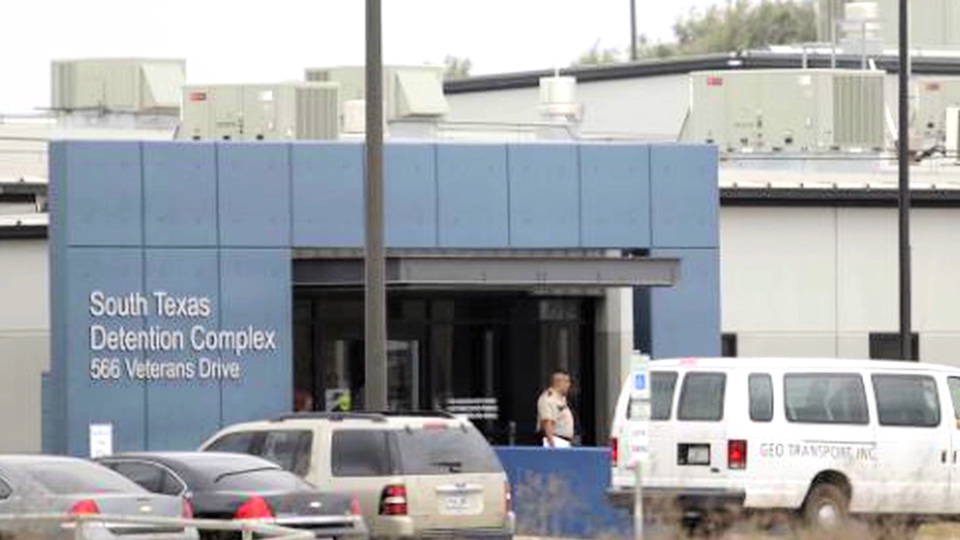
And in Texas, immigration authorities have prevented a Salvadoran woman detained at the for-profit South Texas Family Residential Center in Dilley, Texas, from attending her medical appointments for epilepsy. Twenty-seven-year-old Susana Arévalo is in the process of seeking asylum in the United States. She was detained on January 2 as part of the Obama administration’s controversial raids against Central American families seeking asylum after fleeing violence in their home countries. She said she has had more than six epileptic seizures while in ICE custody, but that ICEofficials have refused to release her and her son so she can return to Atlanta, where she was living, to continue her medical treatment. Susana Arévalo spoke to Democracy Now! by phone from detention earlier this week.
Susana Arévalo: "We’ve been here for more than 22 days, and the authorities have not given us any answers. I have my treatment in Atlanta, and my son also. I have an appointment January 27, and they haven’t let me leave so I can continue my outside treatment. My son also has his appointment. He has to begin therapy for neurological delays. Since I’ve been in the custody of immigration, I’ve had more than six epileptic episodes, and they have not let me leave."
Donate today:
Follow:
COLUMN
TRAPping Access to Safe, Legal Abortions
SPEAKING EVENT

1/29 Park City, UT
WORK WITH DN!
Director of Finance and Operations
Director of Development
---------------------
207 West 25th Sttreet, 11th Floor
New York, New York 10001, United States
--------------------
--------------------

No comments:
Post a Comment