Editor's Note:
Dear Friend,
I don’t like the Three Weeks. I don’t like the Nine Days, which start this Friday. And most of all, I don’t like Tisha B’Av. It’s the lousiest holiday on the Jewish calendar.
Tisha B’Av is a fast day. It commemorates the destruction of Jerusalem and our entry into exile. Exile of the body, exile of the soul. Mainly of the soul.
At first, I found Tisha B’Av an enchanting, living theater of the absurd. People sitting on overturned chairs. The curtain removed from the ark. Lights half off, half on. Everything deliberately put out of order, just to remember that this is not how things are supposed to be.
But by now I’ve had enough. I don’t need a day designed to make me depressed. I don’t need a day to remind me that things are not the way they are supposed to be. I need a day in which to make things the way they should be. A day not for mourning, but for fixing. A day to take this day away.
Well, maybe that’s what Tisha B’Av is meant to be. It’s meant to motivate us to fix up the situation and get out of this rut. After all, we were the ones who made the mess; we should be able to get out of it.
All the same, I’ve had enough fasting and mourning, exile and darkness. I’ve had enough of a world that is not the way it is supposed to be.
I don’t like Tisha B’Av. Dear G‑d, this year, please take it away.
Tzvi Freeman,
on behalf of the Chabad.org Editorial Team
 The Only Child
Why do parents love their children?
Because the lower world reflects the higher world. And above, there is a Parent and He loves His children.
Why do parents of an only child have such unbounded love for their child?
Because this is the truest reflection of the world above: Above, each one of us is an only child, and His love to us is unbounded.
[Torat Menachem 5745, volume 2, page 1121. Ibid, volume 3, page 1725.]This Week's Features
 Printable Magazine
Conclusion
A scientific postscript to the significance of the ever-expanding Jewish Library. by Michael Chighel

<script language="javascript" type="text/javascript" src="http://embed.chabad.org/multimedia/mediaplayer/embedded/embed.js.asp?aid=3335585&width=auto&height=auto"></script><span style="clear:both;" class="lb" id="lbdiv">Visit <a href="http://www.chabad.org/multimedia/default_cdo/aid/591213/jewish/Video.htm">Jewish.TV</a> for more <a href="http://www.chabad.org/multimedia/default_cdo/aid/591213/jewish/Video.htm">Jewish videos</a>.</span>
THE 9 DAYS
9 Little-Known Facts About the Holy Temples in Jerusalem
Cool facts about the theology, function, layout and significance of the holiest spot on earth.
1. Dual Purpose
9 Little-Known Facts About the Holy Temples in Jerusalem
Cool facts about the theology, function, layout and significance of the holiest spot on earth.
1. Dual Purpose
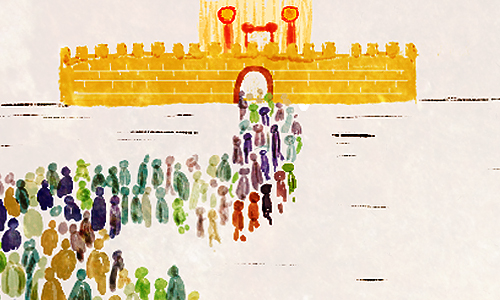
While the Temple was both a place of spiritual enlightenment and animal sacrifice, there is a dispute as to what its primary purpose was. According to Maimonides, it was most basically defined as “a house for G‑d that is prepared for the offering of sacrifices.” According to Nachmanides, “The main object . . . is realized in the ark, as G‑d says to Moses, ‘I will commune with you there, speaking to you from above the ark’s cover . . .’” In other words, the main purpose of the Temple was a dwelling place for the Divine Presence.
Read more at The Kitchen or the Library?
2. From a Jebusite

King David purchased the site of the Holy Temples, Mount Moriah, from a Jebusite named Aravnah during a terrible plague that ravaged the Israelites after David conducted a census of the people. Following G‑d’s command, David built an altar and brought a sacrifice on Aravnah’s threshing floor, and the plague stopped.
Read more in the Book of Samuel II, ch. 24.
3. One, Two, Three . . .

There have been three Temples to date:
a. The portable Tabernacle, built by Moses, which accompanied the people of Israel through their 42 desert encampments and was set up in various places in the Land of Israel, including Shiloh.
b. The First Holy Temple, built by King Solomon on Mount Moriah in Jerusalem, which lasted for 410 years before it was destroyed by Nebuchadnezzar of Babylon in 423 BCE.
c. The Second Holy Temple, built in the same spot as the first one by Ezra, Nehemiah and the returnees from the Babylonian exile. It was renovated extensively by King Herod in the year 19 BCE, and destroyed by the Romans in the year 69 CE.
Read up on the date of the destruction of the Second Temple.
4. High Court

The Holy Temple in Jerusalem contained a special hall called the Lishkat Hagazit (the “Hall of Hewn Stone”), which served as the seat of the Sanhedrin, the nation’s highest court of 71 jurists. It was specially constructed partly on sacred ground and partly on the less-holy area of the Temple Mount complex, since sitting is not permitted in the most sacred place. It was there that the most important issues of Jewish law and tradition were deliberated, debated and decided.
Read up on it in Maimonides’ description of the Holy Temple.
5. Twice as Nice

The Holy Temples contained two altars. The large copper altar in the courtyard was used for the many animal sacrifices that were brought. The golden altar inside the Temple was used only for incense, brought twice a day by the priests.
Learn more by watching Two Altars—Two Hearts.
6. Wash It Away

A stream of fresh water ran through the Temple courtyard. On the afternoon before Passover, when every family would bring a sacrificial lamb to eat at their Seder, the floor of the Temple courtyard would become so filthy that the stream would be dammed up, flooding the courtyard. When the blockage was removed, the entire courtyard would be left clean and fresh.
7. On Guard

The Temple Mount was constantly guarded by cadres of priests and Levites in 24 locations. “Even though there is no fear of enemies or thieves,” Maimonides explains, “the guarding is only for honor, since an unguarded palace cannot be compared [in prestige] to one with guards.” If a guard would fall asleep, the overseer of the guards (called the Man of the Temple Mount) had permission to rap him with his stick, or even singe the edge of his cloak.
Read a fascinating Kabbalistic explanation of these guards and how the Talmud describes them.
8. Still Sacred

Even though the Temple has lain in ruins for nearly 2,000 years, the Temple Mount is still sacred, for G‑d’s Presence has not left. In fact, tradition tells us that the Ark of the Covenant is still there, in a specially built vault deep under the Temple Mount.
Read more in The Subterranean Temple.
9. Back to the Books

Even though we can’t actually build the Third Holy Temple until Moshiach arrives, G‑d told the Prophet Ezekiel that “the study of the Torah’s [design of the Holy Temple] can be equated to its construction. Go tell them to study the form of the Temple. As a reward for their study and their occupation with it, I will consider it as if they actually built it.”
Learn more about the Holy Temple.
Artwork by Sefira Ross, a freelance designer and illustrator whose original creations grace many Chabad.org pages. Residing in Seattle, Washington, her days are spent between multitasking illustrations and being a mom. © Copyright 2016, all rights reserved.

YOUR QUESTIONS
 Why Say “Bli Neder,” and Does It Help?
I have a friend who, whenever he says that he will or will not do something, always adds the disclaimer bli neder (lit. “without an oath”). What’s up with that? by Yehuda Shurpin
Question:
I have a friend who, whenever he says that he will or will not do something, always adds the disclaimer bli neder (lit. “without an oath”). What’s up with that?
Answer:
Swearing or making an oath is considered a very serious undertaking. In fact, the prohibition of making a needless oath (never mind a false oath) is considered grave enough that it’s one of the top Ten Commandments, just after the commandment not to serve idols.1
The word bli (בלי) means “without.” The word neder (נדר), which literally means “vow” and technically refers to a specific type of oath, has come to colloquially refer to all types of oaths and vows.2 Thus, when someone says, “I will bli neder do X,” he is saying, “I am not making a vow, but I will try to do X.”
The question is, do we always need to say it? And does it truly help to absolve us of our responsibilities?
Wait! Did I just make a vow?
An official oath in a beit din (Jewish court of law) would include G‑d’s name. However, in truth, any language that resembles a vow, even if it does not include G‑d’s name, may in fact be considered a vow. Furthermore, when it comes to doing an additional mitzvah (or even a custom or stringency), just accepting upon oneself to do it, or doing it three times, with the full knowledge that you aren’t obligated to do it but wish to do so anyhow, can in and of itself be considered a vow.3
It is for this reason that one must be careful to specify bli neder, “without a vow,” when saying that he will perform a mitzvah. Furthermore, the rabbis advise that one accustom himself to saying bli neder even when promising to do something, as a precaution against accidentally violating the prohibitions regarding vows.4
It is, however, important to keep in mind that while the disclaimer bli neder may take care of the prohibitions regarding making and keeping vows, it does not absolve you from your responsibility to keep your word. As the verse states: “According to whatever came out of his mouth, he shall do.”5
Charity pledges
Be especially careful when it comes to charity pledges. According to many opinions, even if you just mentally decided to give to charity but didn’t verbalize it, it is a binding vow. This is based on the verse “Hezekiah answered and said, ‘Now you have invested yourselves to the L‑rd; come close and bring [peace] offerings . . . and every generous-hearted one, burnt offerings,’”6 which refers to voluntary commitments or “contributions” made in one’s heart to bring a burnt offering to the Temple.
Rabbi Yosef Caro rules that nowadays, since donations aren’t made to the Temple, a charitable vow must be verbalized to be binding.7
Rabbi Moshe Isserles, however, rules that even nowadays, if one made a firm commitment8 in his mind to make a charitable contribution, it is binding like a vow, and one should be extra careful to keep his commitment.9
Oops, I made a vow. Now what?
The exact process of how and when one can nullify a vow is well beyond the scope of this article—there are in fact two whole tractates of the Talmud, Shevuot and Nedarim, dedicated to the laws of oaths and vows. If you did make a commitment or vow, or you’re unsure if what you said or did constitutes a vow, and you are no longer able to keep it, you should contact a competent rabbi for guidance.
In the merit of our being careful about making and keeping oaths, may G‑d fulfill His oath and bring the final redemption!
Rabbi Yehuda Shurpin responds to questions for Chabad.org's Ask the Rabbi service.
Artwork by Sefira Ross, a freelance designer and illustrator whose original creations grace many Chabad.org pages. Residing in Seattle, Washington, her days are spent between multitasking illustrations and being a mom.
FOOTNOTES
1.See Exodus 20:7 with commentaries.
2.In short, the difference between a vow (neder) and an oath (shevuah) is that a vow creates an obligation with respect to objects, whereas an oath creates an obligation with respect to the person. Accordingly, if a person makes an oath that he will not sit in a sukkah or that he will not put on tefillin or won’t do any other mitzvah, the oath does not exempt him from the duty to perform the mitzvah. This is because we already vowed at Sinai to perform the mitzvahs. Such an oath is therefore meaningless, ashvu’at shav. A person can, however, make a neder, a vow, not to sit in a sukkah or not to wear tefillin, which applies to the sukkah or to thetefillin rather than to himself. For more on this, see Mishneh Torah, Hilchot Nedarim, ch. 3.
3.If, however, you thought you were obligated, but really aren’t, it isn’t considered a vow.
4.Kitzur Shulchan Aruch 67:3–4.
5.Numbers 30:3.
6.II Chronicles 29:31.
7.Shulchan Aruch, Choshen Mishpat 212:8.
8.Aruch ha-Shulchan, Yoreh De’ah 258:39 and Choshen Mishpat 212:10.
9.Shulchan Aruch, Choshen Mishpat 212:8 and Yoreh De’ah 258:13. © Copyright 2016, all rights reserved.
 Does Judaism Consider Bitcoins to Be Money?
We’ll focus on perhaps the most practical (and the most prone to be disregarded) areas of Jewish law: the laws of interest. by Yehuda Shurpin
Borrowing and Lending Merchandise in Jewish Law
Before getting into the question of whether something is considered currency, we first need to explain what practical difference it makes.
In most instances, as long as something has monetary value, it makes no difference in Jewish law whether it is actual “currency” or not. There are exceptions, however. We’ll focus on the one that is perhaps the most practical (and the most prone to be disregarded): the laws of interest.
Borrowing Items—Measure for Measure
As I’m sure you know, according to the Torah, a Jew is prohibited from borrowing or lending money to another Jew with interest (usury). This law applies not just to money, but also merchandise (e.g., you cannot lend someone 5 lb. of apples and have them give you back 6 lb.).1
Biblically, one would be allowed to borrow, use and return the same amount of merchandise. However, in many situations, the rabbis prohibited doing so, since the value of the merchandise may have gone up (e.g., the 5 lb. of apples were worth $5 when they were borrowed, but are worth $8 now). This prohibited practice is calledse’ah b’se’ah (“measure for a measure”).2
For this reason, “loans” of merchandise need to be made based on the merchandise’s value at the time it was borrowed. If you want to return actual merchandise, then you need to return the amount equivalent to the value of the merchandise at the time it was borrowed (e.g., only $5 worth of apples, even though that is now less than the 5 lb. that were borrowed).
When it comes to currency, however, one can simply borrow and return the same amount of money.3
Exceptions: When is it permitted to return borrowed merchandise?
To digress a bit, there are three general exceptions to the rule of not borrowing and returning an equivalent item:
When borrowing a very small amount, such as a loaf of bread, it is permitted to return a loaf, since any potential discrepancy in the price is generally considered insignificant.4
● When the borrower himself has a small amount of the type of merchandise he is borrowing, it is permitted for him to borrow more of that merchandise.5
● If the merchandise in question has a fixed market price and is readily available, then it is permitted to borrow and return an equivalent item.6
Bitcoins and Foreign Currency
Having explained one practical difference between currency and merchandise, we can return to bitcoins.
According to Jewish law, “currency” is defined as something that the sovereign government declared as the legal tender of the country, and/or is the generally accepted currency used in that locale for transactions.7
Based on this definition, it is clear that bitcoins don’t currently have the status of currency according to Jewish law. Like most foreign currency, they are considered a commodity. Practically, that means that if you borrow bitcoins from someone, you need to return the value of the bitcoins you borrowed, not actual bitcoins.
While the laws of usury are sometimes complex, our sages warn that in many respects the prohibition of usury is a lot more severe than other monetary prohibitions.8In fact, the laws of usury are so important and special that the Torah tells us that in the merit of being meticulous about these laws, we will merit to go to the Promised Land.9 May it be speedily in our days!
Rabbi Yehuda Shurpin responds to questions for Chabad.org's Ask the Rabbi service.
Artwork by Sefira Ross, a freelance designer and illustrator whose original creations grace many Chabad.org pages. Residing in Seattle, Washington, her days are spent between multitasking illustrations and being a mom.
FOOTNOTES
1.Deuteronomy 23:20.
2.See Talmud, Bava Metzia 75a.
3.Shulchan Aruch, Yoreh De’ah 162:1.
4.Ibid.
5.Ibid. 162:2. Since this a rabbinical prohibition to begin with, the rabbis were lenient, and when the borrower has the same type of item already in his possession at the time the item was borrowed, we view the transaction as if the borrower traded his item for that of the lender’s. Therefore, even if the price of the item goes up, there is no concern of interest, since it is as if the item is already in the possession of the lender.
6.Ibid. 162:3.
7.See Talmud, Bava Metzia 45a; Shulchan Aruch, Choshen Mishpat 203:8.
8.Shulchan Aruch ha-Rav, Hilchot Ribbit 1.
9.See Leviticus 25:36–37 and commentaries. © Copyright 2016, all rights reserved.
PARSHAH
 Forging Ahead, Leading the Way
Did the nation of Israel transform? Have the people integrated lessons learned? And are they ready to become independent, mature, individuated human beings, leading themselves through their life journeys? by Karen Wolfers-Rapaport
Have you ever traveled to Marah, Etham or Elim? Perhaps Succoth, on the way to Rameses?
Probably not; after all, these ancient pit stops have not been on anyone’s recent trekking itinerary.
Parshat Massei covers the years that the nation of IsraelTalk about a weary group of pilgrims! lived and traveled in the desert. In it, we hear details about the 40-year journey among the sand dunes and arid landscapes.
The details are plentiful. The Israelites traveled on the day following Passover, as they left auspiciously before the eyes of the Egyptians. From there, they camped at the edge of the desert. They camped at places where there were “12 springs of water and 70 palm trees,” and alternatively they lodged at places where there was no water to drink. They sojourned in many corners of the land—42 stops in all.
Talk about a weary group of pilgrims!
Under the leadership of Moses, these travelers confronted some tough conditions. Sometimes they were frustrated, often they complained, but they made it through.
From this Parshah we come to understand that Moses’ leadership will end very soon. We see final preparations being made for this event, including listing the boundaries of the Land and setting up the rules for inheriting it.
For 40 years, Moses was at the helm—inspiring, educating and schooling these wanderers. Soon, they will be on their own.
So the questions remain: Did the nation of Israel transform? Have the people integrated lessons learned? And are they ready to become independent, mature, individuated human beings, leading themselves through their life journeys?
Four decades in the desert was a powerful training ground. In Judaism, the number 40 means the completion of something. Once it is completed, it is left behind; in its place emerges something new. Thus, 40 represents the end of a cycle and the beginning of a new one.
In this case, Moses led his flock through years and years of exhilarating highs and some painful lows. It took 40 days to receive the Torah, but it took 40 years to absorb, understand and internalize the depth of our blueprint for life. During this time, there were those many “stops” along our journey. We were passing through unknown territory, exposing ourselves to the desert elements. We were grasping, stretching ourselves as a nation and as individuals. We were shedding old skin and inhabiting a new one. All the while, our leader was there to support, instruct, and help peel off the sun-soaked layers.
But then he would leave us. And we would be on our own, with new skin in perhaps a new desert.
Every human being is on a journey. Often, especially in the beginning, we find ourselves connected to a guide or a leader. Whether it be a parent, teacher, sibling or friend, we are accompanied by those who have some experience and wisdom under their belts. They know full well that the “stops” we encounter—the different individual details of our journey—connect into a complete, unique picture.
Developmentally, there are times where we need to be guided and mentored: childhood, adolescence, when we are acquiring a new skill set, when we find ourselves lost.
On the other hand, there are times, when in orderIt’s time for new skin grow, we need to lead and position ourselves as advisors and pathfinders.
Interestingly, at age 40 (the time midlife emerges), we often find ourselves in this very position. Shedding that old skin; rebirthing; starting new endeavors; sojourning into unfamiliar, exciting lands and expanses. We have had many stops; we have transcended. Now, it’s time for new skin.
Whether it takes a little more or a little less than 40 years, our journey through the desert of life is filled with pauses and cessations. We traverse our land and experience all the details that create the composite we inhabit. We are led by many mentors, but ultimately we are meant to take the lead, forging a path onward towards the future—and eternity.
Parshat Massei gives us a glimpse into this process.
Karen Wolfers-Rapaport is a psychotherapist specializing in Narrative Therapy. She holds a BA from UCLA, and an MA in Counseling Psychology from Boston College. She received her training from Tufts University. In addition to her therapeutic work and freelance writing, Karen works with families from Israel’s Prime Minister’s office and Ministry of Defense, teaching them English in preparation for their diplomatic posts abroad. A proud mother, she is blessed to live in Israel.
Artwork by Sefira Ross, a freelance designer and illustrator whose original creations grace many Chabad.org pages. Residing in Seattle, Washington, her days are spent between multitasking illustrations and being a mom. © Copyright 2016, all rights reserved.
 Cities of Refuge Demystified
Learn about the ancient cities in Israel where killers and priests rubbed shoulders.
An old woman walks along the road, carrying heavy parcels and leading a donkey laden with pots of savory food. She is on her way to a city where she’ll dispense the food to the locals.
This old woman is none other than the mother of the high priest, and she’s walking to a city of refuge, a city to which a person flees if he’s killed someone.
Why is the mother of the high priest bringing food to these murderers? Before we answer this question, we first need to understand the background of these cities of refuge.
What Is a City of Refuge?
Moses was instructed to designate cities of refuge when the Jews entered the Land of Israel:
Designate cities as cities of refuge, to which anyone who accidentally kills a person can flee. The cities will serve as refuges, where the killer will be safe from being killed by a blood relative of the dead. Establish six cities of refuge: three on the far side of the Jordan River, and three in the Land of Canaan. These cities will be cities of refuge.1
So let’s say, for example, that Joe was walking under a ladder, and Sam, who was standing atop the ladder, dropped his hammer, accidentally killing Joe. Why is the mother of the high priest bringing food to these murderers?Now Joe’s family member wants to avenge his death, which he can do with impunity—except in a city of refuge, where he would be considered guilty of murder and would be sentenced to death. So Sam runs away to a city of refuge, which provides safety and also serves as a punishment for him.
The cities of refuge were only for those who killed accidentally, not knowing the consequences of their actions. If the person killed out of gross negligence—for example, knocking down a wall in a public area without looking whether anyone was there—the sin is too severe to be atoned for by exile, and the cities of refuge don’t serve as a haven for the killer.
Conversely, if a person tore down a wall in a private area that people never frequent, and a stone fell and killed someone who happened to be there by a fluke, the death is seen as beyond his control, and the accidental killer is not exiled, nor may the blood redeemer kill him.2
Although the main purpose of cities of refuge was to protect one who accidentally killed,3 in practice, murderers who killed intentionally went there too.4 When a person arrived at a city of refuge, the court sent messengers to bring him in for a hearing. These messengers also acted as bodyguards, to protect him from blood avengers. If it was decided that he’d murdered intentionally, he would be judged accordingly; but if the judges determined that it was an unintentional killing, the messengers would return him to the city of refuge.
Where Were the Cities of Refuge?
The six cities of refuge were located in different areas of the Land of Israel, so that everyone had reasonably easy access to them. The southernmost city was Hebron; the northernmost was Kedesh, in the Galilee; and the city of Shechem was in the center. Three more cities were chosen, at roughly the same latitudes, on the other side of the Jordan River.5
Ease of access was a major factor in choosing the placement of the cities of refuge. The roads leading to the cities were especially wide by the standards of the time. Other major roads were sixteen cubits (around 8 m/26 ft.) wide, while the roads leading to the cities of refuge had to be at least double that: thirty-two cubits (around 16 m/52 ft.) wide!6
The routes to the cities of refuge had to be easy for a refugee to navigate. Valleys were raised and hills were leveled to make it easier to travel. Bridges were built where necessary;7 signs were posted at crossroads; and once a year, in the middle of the month of Adar, the state of the roads was thoroughly examined to make sure they were in good repair.Valleys were raised and hills were leveled
Each city needed to be of average size, located in a populous trading center, with an independent water source.8
Additionally, the cities provided refuge only if the majority of the population was non-murderers, and there was an established court of law in the city.9 If the general population fell, kohanim and Levites were urged to move in and bolster the neutral population.10
Besides the 6 major cities of refuge, all 48 of the Levites’ cities were also places of safety for refugees.11 The Levites were the holiest of all the Jews, so their lands could atone for the sin of killing, and they would not hate the refugees who came to live in their cities.12
In addition to the actual city, the two thousand cubits surrounding a city of refuge served as a haven.13
How Long Did One Stay in the City of Refuge?
The refugee would stay in the city for an unspecified amount of time. He went “free” only when the high priest died.14
Several reasons are given for this. In his Guide for the Perplexed,15 Rambam writes that the national mourning that took place at the death of the high priest distracted the mourners of the family member who was killed by the refugee. Another explanation is that it was a punishment for the high priest, who “should have prayed that no such accident would happen to the Jews in his lifetime.”16 A third explanation is that the high priest causes the Divine Presence to rest upon Israel and thus prolong their lives, whereas the murderer causes the Divine Presence to withdraw from Israel and thus shorten their lives, so he is not worthy of standing before the kohen gadol.17
If the refugee died before the high priest did, he would be buried in the city of refuge. After the high priest died, his body could be moved to a different city for reburial.18
This brings us back to the story of the woman with the pots of food. This was the mother of the high priest, who went around to the cities of refuge distributing food and clothing to the refugees so that they wouldn’t pray for the death of her son, which would free them from their exile. Some commentators say that she hoped to spoil them so much that not only wouldn’t they pray for his death, they would even pray for him to have a long life.
The mother of the high priest wasn’t the only one providing refugees with what they needed. The court had to supply their needs, including their spiritual needs: if a disciple became a refugee, his teacher had to move to the city of refuge so that he could continue to teach him Torah.19
The Messianic Message
The Torah says that when the opportunity arises, three additional cities of refuge should be established: “You should add three more cities of refuge to these three.”20
This Three additional cities should be establishedreference to cities of refuge that will be established in the future is referring to the messianic era,21 when the Land of Israel will be larger, and we’ll need more cities of refuge.22
The Lubavitcher Rebbe points out23 that in the laws relating to the coming of the Messiah, the Rambam mentions this mitzvah of adding cities of refuge in the future.24 So the coming of the Messiah is not just a prophecy, but one of the mitzvahs in the Torah.
May we merit to see the coming of the Messiah speedily in our days. Amen.
Artwork by Sefira Ross, a freelance designer and illustrator whose original creations grace many Chabad.org pages. Residing in Seattle, Washington, her days are spent between multitasking illustrations and being a mom.
FOOTNOTES
1.Numbers 34:11–15.
2.Mishneh Torah, Laws of the Murderer and Protection from Bodily Harm, ch. 6.
3.Except for unusual circumstances. See Mishneh Torah ibid.
4.Talmud, Makkot 9b and 12a.
5.Talmud, Makkot 9b; Mishneh Torah, Laws of the Murderer and Protection from Bodily Harm 8:7.
6.Talmud, Bava Batra 100b.
7.Mishneh Torah, ibid. 8:5–6.
8.Mishneh Torah, ibid. 8:8.
9.Talmud, Makkot 10b.
10.Mishneh Torah, ibid.
11.However, while the major cities of refuge provided protection even to refugees who ran into them accidentally, a Levite city provided refuge only for those who went there seeking safety. Another difference was that a refugee had to pay rent in a Levite city, while he could live rent-free in a city of refuge.
12.Sefer HaChinuch, mitzvah 408.
13.Talmud, Sotah 27b; Mishneh Torah, ibid. 8:11.
14.Numbers 35:25.
15.3:40.
16.Rashi, Makkot 11a.
17.Rashi, Numbers 35:25.
18.Mishneh Torah, ibid. 7:3. This law also applies to someone who killed but did not yet reach a city of refuge.
19.Ibid.
20.Deuteronomy 19:9.
21.This is hinted at in the Torah when it says, “If the L‑rd your G‑d extends your borders.” See Sifri ad loc; Tosefta, Makkot 2:3; Jerusalem Talmud, Makkot 2:6.
22.See More Refuge Cities When Moshiach Comes.
23.Likkutei Sichot, vol. 34, pp. 114ff.
24.Mishneh Torah, Laws of Kings 11:1. © Copyright 2016, all rights reserved.
 Matot-Massei In Depth
A condensation of the weekly Torah portion alongside select commentaries culled from the Midrash, Talmud, Chassidic masters, and the broad corpus of Jewish scholarship.
Parshat Matot-Massei In-Depth
Numbers 30:2-36:13
Parshah Summary
This week’s Torah reading concludes the book of Numbers, and consists of two Parshiyot: Matot (“tribes”—Numbers 30:2–32:42) and Massei (“journeys”—Numbers 33:1–36:13).
Matot opens with Moses’ instruction to the heads of the tribes regarding the laws of vows:
If a man vows a vow to G‑d, or swears an oath tobind his soul with a bond, he shall not break his word; according to all that proceeds out of his mouth shall he do.
A vow, however, can be annulled (as long as it does not involve an obligation towards another person). A father has the authority to annul the vows of his daughter, and a husband the vows of his wife or betrothed, within the day of the vow’s declaration. (Another kind of annulment is that effected by a Torah scholar or a panel of three judges.)
The War on Midian
G‑d instructs Moses to “avenge the vengeance of the children of Israel upon the Midianites, after which you shall be gathered to your people.”
Moses spoke to the people, saying: “Arm from yourselves men for an army, to go against Midian and to take G‑d’s vengeance on Midian . . .”
They warred against Midian, as G‑d commanded Moses, and they slew all the males.
There were delivered out of the thousands of Israel a thousand of every tribe, twelve thousand armed for war.
Moses sent them to the war, a thousand of every tribe, them and Pinchas the son of Elazar the priest, to the war, with the holy instruments, and the trumpets to blow, in his hand.They warred against Midian, as G‑d commanded Moses, and they slew all the males.
Also killed are the five kings of Midian (Evi, Rekem, Tzur, Hur and Reva) and the evil prophet Balaam. Not killed but captured were “all the women of Midian, and their little ones.” Also taken is “the spoil of all their cattle, and all their flocks, and all their goods.”
Upon their return,
Moses, Elazar the priest, and all the princes of the congregation went out to meet them outside the camp.
And Moses was angry with the officers of the host . . . and said to them: “Have you saved all the women alive?
“Behold, these caused the children of Israel, through the counsel of Balaam, to betray G‑d in the matter of Pe’or, and there was a plague among the congregation of G‑d. Now therefore kill every male among the little ones, and kill every woman that has known man by lying with him. But all the women children, that have not known man by lying with him, keep alive for yourselves.”
Moses also tells them to undergo the seven-day purification process for one who comes in contact with the dead, while Elazar instructs them on the laws of hagalah(“koshering”—the cleansing of utensils of the non-kosher food absorbed in them), by which to cleanse the “gold, silver, copper, iron, tin and lead” utensils captured in the war:
Everything that passes through the fire, you shall make it go through the fire . . . and all that does not pass through the fire shall you make to go through water.
The Booty
A tally is made of the spoils taken in the war on Midian, which include: 675,000 sheep; 72,000 heads of cattle; 61,000 asses; and 32,000 human captives.
All this was divided into two equal parts: half was given to the soldiers who fought in the war, who in turn gave 1/500 of their share as a “tax” to the high priest; the other half was divided among the people, who gave 1/50 of their share to the Levites. (Thus the high priest received 675 sheep, 72 cattle, 61 asses and 32 human captives; the Levites received 6,750 sheep, 720 cattle, 610 asses and 320 human captives.)
Everything else (i.e., utensils, jewelry and the like) was decreed to belong to the soldiers, to each what he had captured. However,
The officers who were over the thousands of the host, the captains of thousands and captains of hundreds, approached Moses.
And they said to Moses: “Your servants have taken a count of the men of war who are under our charge, and not one man of us is missing.
“We have therefore brought an offering for G‑d, what every man has gotten, of jewels of gold, chains, and bracelets, rings, earrings, and girdles—to make atonement for our souls before G‑d.”
The donated gold totaled 16,750 shekels (approx. 837.5 pounds), which Moses placed in the Tent of Meeting as “a remembrance for the children of Israel before G‑d.”
The Eastern Territories
As related in the Parshah of Chukat (Numbers 21), the people of Israel had conquered the lands of Sichon and Og, which lay east of the Jordan River.
The children of Reuben and the children of Gad had a very great multitude of cattle; and they saw the land of Yaazer and the land of Gilead, that, behold, the place was a place for cattle.
[They] came to Moses, and to Elazar the priest, and to the princes of the congregation, and they said: “. . . Let this land be given to your servants for a possession; do not take us across the Jordan.”
Moses is extremely upset by their request. “Shall your brethren go to war,” he demands, “and you sit here?”
“And why,” continues Moses, “do you dishearten the children of Israel from going over into the land which G‑d has given them?
“Thus did your fathers, when I sent them from Kadesh Barnea to see the land.
“They went up to the wadi of Eshkol and saw the Land; and they disheartened the children of Israel, that they should not go into the land which G‑d had given them.
“G‑d’s anger burned at that time, and He swore, saying: ‘Surely none of the men that came up out of Egypt, from twenty years old and upward, shall see the land which I swore to Abraham, to Isaac and to Jacob. . . .’ G‑d’s anger burned against Israel, and He made them wander in the wilderness for forty years, until all the generation, that had done evil in the sight of G‑d, was consumed.
“And, behold, you are risen up in place of your fathers, a brood of sinful men, to augment yet the fierce anger of G‑d towards Israel. For if you turn away from after Him, He will yet again leave them in the wilderness; and you will destroy all this people!”
But the Reubenites and the Gadites persist. “We will buildsheepfolds here for our cattle, and cities for our little ones.” But we have no intention to remain behind while the rest of the people fight for the conquest of the Land; indeed, we promise to march at the fore of the troops and fight in the front lines. “We will not return to our houses, until the children of Israel have inherited every man his inheritance.”
Moses agrees, on the condition that they fulfill their promise: “If you will do this thing, if you will go armed before G‑d to war . . . then afterwards you shall return, and be guiltless before G‑d and before Israel; and this land shall be your possession before G‑d.”
Half of the tribe of Manasseh joins the tribes of Reuben and Gad in settling the territories east of the Jordan.
Journeys and Encampments
“These are the journeys of the children of Israel, going out of the land of Egypt with their hosts, under the hand of Moses and Aaron. Moses wrote their goings out according to their journeys, by the commandment of G‑d; and these are their journeys according to their goings out.”
The Torah goes on to recount the 42 stations from the Exodus from Egypt to the Promised Land:
1) “They journeyed from Rameses in the first month, on the fifteenth day of the first month; on the morrow after the Passover . . . and they camped in Sukkot”;
2) “They journeyed from Sukkot, and camped in Eitam, which is in the edge of the wilderness”;
3) “They journeyed from Eitam, and turned back to Pi-Hachirot, which is before Baal-Tzefon; and they camped before Migdol”;
4) “They passed through the midst of the sea into the desert, and went three days’ journey in the wilderness of Eitam, and camped in Marah”;
5) Elim (“in Elim were twelve fountains of water and seventy palm trees”);
6) The Red Sea; 7) the Sin Desert; 8) Dofkah; 9) Alush; 10) Rephidim (where they thirsted for water, had doubtsabout G‑d’s presence and fought Amalek);
11) The Sinai Desert (where they camped for eleven months and twenty days, received the Torah and built the Sanctuary);
12) Kivrot HaTaavah (“Graves of Lust”); 13) Chatzeirot (where Miriam spoke against Moses); 14) Ritmah (the incident of the spies); 15) Rimon Peretz; 16) Livnah; 17) Rissah; 18) Keheilatah; 19) Mount Shefer; 20) Charadah; 21) Mak’heilot; 22) Tachat; 23) Tarach; 24) Mitkah; 25) Chashmonah; 26) Moseirot; 27) Bnei Yaakan; 28) Chor Hagidgad; 29) Yotvatah; 30) Avronah; 31) Etzyon Gaver;
32) Kadesh (where Miriam died, and the incident of the “Waters of Strife” took place); 33) Hor HaHar (where Aaron died, and the Israelites were attacked by the Canaanite king of Arad); 34) Tzalmonah; 35) Punon; 36) Ovot; 37) Iyei HaAvarim (“Desolate Mounds”), on the border of Moab; 38) Divon Gad; 39) Almon Divlataimah; 40) “the Avarim Mountains before Nebo”;
41–42) “They journeyed from the Avarim Mountains, and camped in the plains of Moab by the Jordan River across from Jericho; they camped by the Jordan, from Beit HaYeshimot to Avel HaShittim in the plains of Moab.”

The Journeys of the Children of Israel from the Exodus to the Promised Land (from The Living Torah, published by Moznaim)
A Warning
“Speak to the children of Israel,” says G‑d to Moses, “and say to them:”
When you pass over the Jordan into the land of Canaan, you shall drive out all the inhabitants of the land from before you; and you shall destroy all their figured pavements, and destroy all their molten images, and devastate all their high places.
You shall dispossess the inhabitants of the land, and dwell in it; for I have given you the land to possess it . . .
But if you will not drive out the inhabitants of the land from before you, then it shall come to pass that those whom you allow to remain of them shall be as thorns in your eyes, and stings in your sides, and shall harass you in the land wherein you dwell.
The Boundaries of the Land
This is the land that shall fall to you for an inheritance, the land of Canaan with its borders:

Your south border shall be the utmost coast of the Dead Sea eastward . . . to Maaleh Akrabbim . . . to Kadesh Barnea, and shall go on to Hazar Addar, and pass on to Atzmon; the border shall turn about from Atzmon to the wadi of Egypt, and its limits shall be at the Sea.
As for the western border, you shall have the Great Sea for a border; this shall be your west border.
This shall be your north border: from the Great Sea you shall mark out your frontier at Hor HaHar . . . to the entrance of Hamat . . . to Zedad . . . to Zifron, and its limits shall be at Hatzar Einan . . .
You shall point out your east border from Hatzar Einan to Shefam . . . to Rivlah . . . and shall reach the east coast of the Sea of Kinneret . . . down to the Jordan, and its limits shall be at the Dead Sea.
This shall be your land with its borders round about.
The tribe of Levi, who will not be allotted a portion of the land, should be given 48 cities in which to dwell.
Cities of Refuge
Six cities—three on each side of the Jordan—should be set aside as havens for “one who slays a soul unawares.”
Anyone who causes the death of a fellow—intentionally or not—must find his way immediately to one of the cities of refuge, “so that the killer shall not die before he stands before the congregation in judgment.” Only there is he safe from the “redeemer of the blood”—the relative of the slain person who comes to avenge the death. For if the avenging relative kills the killer outside of a city of refuge, “he shall not be guilty of blood.”
The killer is then brought before the court. If he is convicted of intentional murder, he is executed. “The redeemer of the blood himself shall slay the murderer; where he meets him, he shall slay him.”
If he is found guilty only of causing a death through his negligence, but without intent to kill,
The congregation [of judges] shall save the slayer from the hand of the redeemer of the blood; and the congregation shall send him back to the city of his refuge . . . and he shall dwell in it until the death of the high priest, who was anointed with the holy oil.
Again, only there does the law protect him from the vengeance of the slain man’s relatives.
These laws shall be for a statute of judgment to you throughout your generations in all your dwellings:
Whoever kills any person, the murderer shall be put to death by the testimony of [two] witnesses; but one witness shall not testify against any person to cause him to die.
You shall take no ransom for the life of a murderer, who is guilty of death. . . . For blood pollutes the land; and the land cannot be cleansed of the blood that is shed therein, but by the blood of him that shed it.
You shall not defile the land which you shall inhabit, in which I dwell; for I, G‑d, dwell among the children of Israel.Marriage Restrictions
The five daughters of Tzelafchad, whose father had died without sons, had petitioned for a share in the Land (as recounted above in the Parshah of Pinchas). Now, the leaders of their tribe, Manasseh, approached Moses with a petition of their own. If any of these women will marry someone from another tribe, they argued, this would mean that their sons, who will inherit their land, will likewise be of another tribe. The result would be that “their portion . . . shall be added to the inheritance of the tribe to which they are joined, and the lot of our inheritance will be diminished.”
The following law is therefore decreed by Moses, in the name of G‑d:
Any daughter who possesses an inheritance in any tribe of the children of Israel, shall marry a man of the family of the tribe of her father . . . So that the inheritance shall not remove from one tribe to another tribe; but every one of the tribes of the children of Israel shall keep himself to his own inheritance.
“These are the commandments and the judgments,” concludes the Parshah of Massei and the Book of Numbers, “which G‑d commanded by the hand of Moses to the children of Israel, in the plains of Moab by the Jordan near Jericho.”
From Our Sages
Moses spoke to the heads of the tribes of the children of Israel, saying: This is the thing which G‑d has commanded (Numbers 30:2)
This verse can also be interpreted as follows: Moses spoke to the children of Israel regarding the heads of the tribes, that they must follow their instructions as one follows the word of G‑d.(El, “to,” can also mean “about”; li, which in this context translates as “of,” usually means “to”; thus el rashei hamatot livnei yisrael (“to the heads of the tribes of the children of Israel”) can also read, “[And Moses spoke] about the heads of the tribes to the children of Israel, [saying: This is the thing that G‑d has commanded] . . .”)
(Alshich)
This was the procedure with all the laws that Moses taught: first he would teach them to Aaron and the heads of the tribes, and then he would instruct the people, as described in Exodus 34:31–32.
Why are the tribal heads particularly mentioned by the laws of vows? To teach us that an expert Torah scholar has the ability to annul vows like a tribunal of three laymen.
(Talmud; Rashi)
Vows are a means to asceticism.
(Ethics of the Fathers 3:13)
Asceticism leads to purity, purity leads to holiness, holiness leads to humility, humility leads to fear of sin, fear of sin leads to saintliness, saintliness leads to the [possession of] the holy spirit, and the holy spirit leads to eternal life.
(Talmud, Avodah Zarah 20b)
moreBetter that you not vow, than that you should vow and not fulfill.
Why only upon the Midianites, but not the Moabites (who also sent their daughters to cause Israel to sin)? Because the Moabites got involved because they feared Israel (cf. Numbers 22:2–6); but the Midianites entered a fight that was not theirs.
Another explanation: G‑d said to spare the Moabites because of “two fine creatures which I shall extract from them”—Ruth the Moabite and Naamah the Ammonite (wife of King Solomon).
(Rashi)
The double terminology indicates that before the nation of Midian can be defeated, its supernal “minister,” which embodies the spiritual essence of Midian, must be vanquished.
(Keli Chemdah)
The Hebrew word midian means “strife.” Midian is the essence of divisiveness, which is the root of all evil.Thus our sages speak of “groundless hatred” as the greatest of evils. In truth, all strife is groundless hatred: the so-called “grounds” that people and nations have for hating and destroying each other are but the various façades of the divisive “I” of Midian—the ego that belies the common source and goal of humanity, and views the very existence of others as an encroachment upon the self.
On the cosmic level, G‑d is the ultimate oneness, and everything G‑dly in our world bears the stamp of His unity. All evil derives from the distortion of this oneness by the veil of divisiveness in which G‑d shrouds His creation.
So before the people of Israel could conquer the “seven nations” that inhabited the land of Canaan—which represent the seven negative traits of the heart—they first had to destroy Midian, which is their source and cause. This is also why the destruction of Midian could be achieved only under the leadership of Moses, who embodied the traits of utter self-abnegation, (and thus) harmony and truth.
(Maamar Heichaltzu 5659)
G‑d had said to Moses, “Avenge the vengeance of the children of Israel upon the Midianites”; yet Moses said: “To take G‑d’s vengeance on Midian”!
G‑d said to Israel: It is you who have an account to settle with them, for they caused Me to harm you. But Moses said: Master of the worlds! If we had been uncircumcised, or idol worshippers, or had denied the mitzvot, the Midianites would not have hated us. They persecute us only on account of the Torah and the precepts which You have given us! Consequently the vengeance is Yours; and so I say: “To take G‑d’s vengeance on Midian.”
(Midrash Tanchuma)
“To take G‑d’s vengeance on Midian”—for whoever stands against Israel, stands against G‑d.
(Rashi)
G‑d sees the war on Midian as avenging Israel, for G‑d’s foremost concern is for His people; the people of Israel see the war as avenging G‑d, for they are concerned only with the honor of G‑d.
(The Chassidic Masters)
Moses wanted to demonstrate to them that it is not the number of troops or their arms that determines victory or defeat, but their worthiness. For Zimri had caused the death of 24,000 without a single sword or armament; while they, numbering only 12,000, would defeat the far more numerous Midianites, “and not a single one of them was lost” (Numbers 31:49), even though in ordinary wars there are casualties also on the victorious side.
(Me’am Loez)
G‑d charged Moses with the mission, yet he sends others! But since Moses had grown up in the land of Midian, he thought: It is not right that I should punish one who has done good to me. The proverb says: “A well from which you drank, cast not a stone into it.”
(Midrash Rabbah)
Why did he send Pinchas? He said: “The one who began the mitzvah shall finish it.” It was Pinchas who turned away G‑d’s wrath from Israel and smote the Midianite woman; let him finish the sacred task.
(Midrash Rabbah; Rashi)
When laying siege on a city to conquer it, we do not surround it from all four sides, but only from three sides, leaving a way to escape for anyone who wishes to flee for his life. As it is written: “They warred against Midian, as G‑d commanded Moses"; it has been handed down by tradition that this is what G‑d had commanded him.
(Mishneh Torah, Laws of Kings and Their Wars 6:7)
What was Balaam doing in Midian? Rabbi Jonathan said: He went to receive his reward for the twenty-four thousand Israelites whose destruction he had caused [by his advice to entice them with the daughters of Moab and Midian]. . . . This is what people say: “When the camel went to demand horns, they cut off the ears he had.”
(Talmud, Sanhedrin 106a)
If Moses initially saw their request as the equivalent of the spies’ shunning of the Holy Land, why did he at the end agree to their proposal, and even expand on it, by adding half the tribe of Manasseh to the tribes of Reuben and Gad?
(The fact that they pledged to participate in other tribes’ conquest of the Land answered only the first part of Moses’ complaint to them—“Shall your brethren go to war, and you sit here?”—but not the other, seemingly more grave, accusation—namely, that they are repeating the sin of the spies in spurning the Land, which had caused that entire generation to die out in the desert!)
The explanation is to be found in the first words of the response given by the men of Reuben and Gad to Moses: “We will build sheepfolds here for our sheep, and cities for our young.”
Chassidic teaching explains the sin of the spies as resulting from a reluctance to assume the mission of “settling the Land.” Though they knew that the very purpose of creation is to “make for G‑d a dwelling in the lowly (i.e., physical) world,” they believed themselves incapable of carrying out this mission. “It is a land that consumes its settlers!” the spies cried upon their return from their survey of the Land. How could they be sure that once they involved themselves with the Land, they would not be overwhelmed by its corporeality? How could they know whether they would indeed exploit its lofty potential and not instead sink into the morass of material life?
When the people of Reuben and Gad came forward with their request, Moses thought that he was again meeting with a refusal by a group of “spiritualists” shunning the divinely ordained mission to develop the Land.
In truth, however, it was not the dread of the material that motivated these two tribes to remain east of the Jordan. On the contrary: they wanted to settle these lands, to build cities and ranches, to raise their sheep and cattle on its pastures. Their plea, “Do not take us across the Jordan,” did not express a reluctance to seek out the potential for holiness contained in the Land, but an attraction to even more remote—and thus even loftier—“sparks of G‑dliness.”
After all, the land west of the Jordan, though material, was the “Holy Land”—a land where even the most mundane pursuits are touched with a spiritual glow. Outside of the Holy Land, the physical world is morelowly, and thus contains sparks of divinity that derive from an even higher source. The tribes of Reuben and Gad were convinced that their mission in life was to pursue, extract and elevate the “sparks” inherent in this more spiritually distant corner of creation.
When they said to Moses, ”We will build sheepfolds here for our cattle, and cities for our children,” Moses understood that what they were seeking was not an escape from the Land, but the opportunity to “make a home for G‑d” in an even lowlier domain—in the territories that lie beyond the borders of the most sacred of lands as defined by Israel’s present mandate from G‑d.
(From the teachings of the Lubavitcher Rebbe)
The sages taught: Always appoint at least two people together as trustees over public funds. Even Moses, who enjoyed the full trust of G‑d—as it is written, “In all My house he is trusted”—figured the accounts of the Sanctuary together with others, as it says: “By the hand of Itamar the son of Aaron” (Exodus 38:21).
Thus the sages taught: the one who made the appropriation [of the monies donated to the Holy Temple] did not enter the chamber wearing either a hemmed cloak or shoes or sandals or tefillin or an amulet (i.e., nothing in which money can be hidden), lest if he became poor people might say that he became poor because of an iniquity committed in the chamber, or if he became rich people might say that he became rich from the monies in the chamber. For it is a man’s duty to be free of blame before men as before G‑d, as it is said: “And you shall be guiltless towards G‑d and towards Israel.”
(Midrash Tanchuma; Mishnah, Shekalim 3:2)
They, on the other hand, had said, “We will build sheepfolds here for our sheep, and cities for our young” (v. 16), giving precedence to their cattle over their children. Said Moses to them: Not so! Make the primary thing primary, and the secondary thing secondary.
(Rashi)
Rabbi Meir said: Every stipulation which is not like that of the children of Gad and the children of Reuben is not legally binding. For it is written: “And Moses said unto them: If the children of Gad and the children of Reuben will pass with you over the Jordan, [. . . you shall give them the land of Gilead for a possession],” and it is also written, “But if they will not pass over with you armed, then they shall have possessions among you in the Land of Canaan.” (Thus, both sides of the condition have to be spelled out: if the condition is fulfilled, then so-and-so will be the case, but if the stipulation is not fulfilled, then so-and so will be the case.)
(Talmud, Kiddushin 61a)
Because Manasseh caused the sons of Jacob to rend their clothes by hiding Joseph’s goblet in Benjamin’s sack (cf. Genesis 44:13), his tribe was rent in two, half receiving its portion in the lands east of the Jordan, and half on the west.
(Midrash Rabbah)
Moses gave the Gilead to Machir the son of Manasseh. . . . And Yair the son of Manasseh went and conquered their villages . . . (32:40–41)
We learned: Yair the son of Manasseh and Machir the son of Manasseh were born in the days of Jacob, and did not die before Israel entered the Land. (But does it not say, “And there was not left a man of [the generation of the desert], save Caleb the son of Yefuneh and Joshua the son of Nun”? Said Rav Acha bar Yaakov: The decree was directed neither against those under twenty years of age, nor against those over sixty years of age.)
(Talmud, Bava Batra 121b)
The forty-two “stations” from Egypt to the Promised Land are replayed in the life of every individual Jew, as his soul journeys from its descent to earth at birth to its return to its Source.
(Rabbi Israel Baal Shem Tov)
more
These are the journeys of the children of Israel going out of the land of Mitzrayim (Egypt) . . . (33:1)
It would seem that there was only one journey which took the Jewish nation out of Egypt—their journey from Rameses to Sukkot. The other “journeys” listed in our Parshah were between points outside of the geographical borders of Egypt. Why, then, does the Torah speak of “the journeys”—in the plural—“of the children of Israel going out of the land of Mitzrayim”?Mitzrayim, the Hebrew word for “Egypt,” means “borders” and “narrows.” On the spiritual level, the journey from Egypt is a journey from the boundaries that limit us—an exodus from the narrow straits of habit, convention and ego to the “good, broad land” of the infinite potential of our G‑dly soul.
And the journey from Mitzrayim is a perpetual one: what is expansive and uninhibited by yesterday’s standards, is narrow and confining in light of the added wisdom and new possibilities of today’s station. Thus, each of life’s “journeys” is an exodus from the land of Mitzrayim: having transcended yesterday’s limitations, we must again journey from the Mitzrayim that our present norm represents relative to our newly uncovered potential.
(Rabbi Schneur Zalman of Liadi)
Our chapter opens, “These are the journeys of the children of Israel.” However, it then proceeds to recount not the journeys, but the forty-two encampments at which they stopped during their sojourn in the Sinai Desert!
Yet these encampments were not ends unto themselves—only way-stations and stepping-stones to advance the nation of Israel in their goal of attaining the Promised Land. So the stops themselves are referred to as “journeys.”
The same is true of the journey of life. Pauses, interruptions and setbacks are an inadvertent part of a person’s sojourn on earth. But when everything a person does is toward the goal of attaining the “Holy Land”—the sanctification of the material world—these, too, are “journeys.” Ultimately, they are shown to have been the true motors of progression, each an impetus to the realization of one’s mission and purpose in life.
(From the teachings of the Lubavitcher Rebbe)
This is comparable to a king whose child was ill, and he took him to another place to heal him. On their return journey, the father recounted all their stations: “Here we slept,” “here we caught cold,” “here your head hurt.” By the same token, G‑d said to Moses: Recount for them all the places where it was that they had angered Me.
(Midrash Tanchuma)
“Here we slept”—at Mount Sinai, when Moses had to wake them to come receive the Torah. “Here we caught cold”—at Rephidim, where the Amalekites “cooled (your faith in G‑d) on the road.” “Here your head hurt”—when they doubted the return of their head and leader, Moses, and made the Golden Calf.
(Rabbi Abraham Mordechai of Gur)
The journey from Egypt to the Holy Land was a one-way journey: the Israelites did not physically revisit their encampments in the desert. What, then, is the significance of the “return journey” made by the king and his child in the above-cited parable by the Midrash?As the people of Israel traveled through the desert, they experienced their forty-two encampments as interruptions, even setbacks, in their progress towards the Promised Land. But on the eve of their entry into the Holy Land, they were able to “return,” to look back upon these encampments and re-experience them in a different light: not as a people venturing from slavery toward an unknowable goal through a fearful wilderness, but as a people who, having attained their goal, could now appreciate how each way station in their journey had forged a particular part of their identity and had contributed to what and where they were today.
The great desert we each must cross in the journey of life is the product of what the Kabbalists call thetzimtzum (“constriction”): G‑d’s creation of a so-called vacuum within His all-pervading immanence, a bubble of darkness within His infinite light that allows man the choice between good and evil. For in order that our acts of goodness should be meaningful, there must also be the choice of evil.
Three conditions are necessary to create the possibility of free choice in the heart of man:
a) There must be a withdrawal of the divine light and the creation of the “vacuum” that allows the existence of evil.
b) It is not enough that evil exist; it must also be equipped with the illusion of worthiness and desirability. If evil were readily perceived for what it is—the suppression of light and life—there would be no true choice.
c) On the other hand, an absolute vacuum would shut out all possibility for choosing life. Thus thetzimtzum must be mitigated with a glow, however faint, of the divine light that empowers us to overcome darkness and death.
Therein lies the deeper significance of the three stations in the Midrash’s metaphor: “Here we slept,” “here we were cooled,” “here your head hurt.”b) It is not enough that evil exist; it must also be equipped with the illusion of worthiness and desirability. If evil were readily perceived for what it is—the suppression of light and life—there would be no true choice.
c) On the other hand, an absolute vacuum would shut out all possibility for choosing life. Thus thetzimtzum must be mitigated with a glow, however faint, of the divine light that empowers us to overcome darkness and death.
“Here we slept” refers to the withdrawal of the divine vitality in order to create the tzimtzum.
“Here we were cooled” refers to the mitigation of thetzimtzum with a faint glow of divine light.
And “here your head hurt” is a reference to the many contortions that cloud our minds and confuse our priorities, leading to a distorted vision of reality and misguided decisions.
All these, however, serve a single purpose: to advance us along the journey of life and to imbue the journey with meaning and worth. Today we can only reiterate to ourselves our knowledge of this truth; on the “return journey,” we shall revisit these stations and see and experience their true import.
(From the teachings of the Lubavitcher Rebbe)
Hence journeys 1 through 11 were in the first year following the Exodus, and journeys 32–42 in the fortieth year, meaning that there were 19 journeys in the intervening 38 years. According to the Midrash, 19 of these 38 years were spent in Kadesh, and the other 19 wandering through the desert.
(I.e., their camp extended from Bet HaYeshimot to Avel HaShittim.)
Rabbah bar Chana said: I have seen this place; it is three parasangs (approx. 12 miles) in extension.
(Talmud, Yoma 75b; Rashi)
You shall dispossess the inhabitants of the land, and dwell in it; for I have given you the land to possess it (33:53)
The Torah should have begun with the verse “This month shall be to you the head of months . . .” (Exodus 12:2), which is the first mitzvah commanded to the Jewish people. Why does it begin with “In the beginning G‑d created the heavens and the earth”?So that if the nations of the world will say to the people of Israel, “You are thieves, for you have conquered the lands of seven nations,” they will reply to them: “The entire world is G‑d’s; He created it, and He gives it to whomever he desires. It was His desire to first give it to them, and by His desire it was taken from them and given to us.”
(Rashi, Genesis 1:1)
The court is obligated to straighten the roads to the cities of refuge, to repair them and broaden them. They must remove all impediments and obstacles. . . . Bridges should be built [over all natural barriers], so as not to delay one who is fleeing to [the city of refuge]. The width of a road to a city of refuge should not be less than thirty-two cubits.
“Refuge,” “Refuge” was written at all crossroads, so that the murderers should recognize the way and turn there.
(Mishneh Torah, Laws Regarding Murder and the Preservation of Life 8:5)
The Torah includes six hundred and thirteen mitzvot (commandments). . . . Of these, the mitzvot that can be observed today [following the destruction of the Holy Temple and our exile from the Holy Land] number, altogether, three hundred and thirty-nine. Among these are mitzvot for which a person becomes obligated only under certain circumstances, so that it is possible that never in his lifetime will these circumstances come about and he will never have the opportunity to do them—e.g., the mitzvah to pay an employee on time. . . . The number of mitzvot that every Jew is obligated in is two hundred and seventy. . . . Many of these, however, are binding only on certain days of the year, or at certain times of the day.
There are six mitzvot whose obligation is constant, and does not depart from the person for a single moment throughout his lifetime. These are: to believe in G‑d, to avow His oneness, to renounce idolatry, to love G‑d, to fear Him, and to avoid temptation to sin. They are symbolized by the verse, “Six cities of refuge shall they be for you.”
(Sefer HaChinuch)
Every transgression of the divine will is a subtle form of “inadvertent murder.” “Murder,” because it disrupts the flow of vitality from the Source of Life to the soul of the transgressor; “inadvertent,” because a sinful deed is always contrary to the true will of the transgressor, who has been misled by the distortions imposed by his animal self.
For the one who spiritually “slays a soul unawares,” there have been set aside six spiritual “cities of refuge.” These are (as per the Sefer HaChinuch cited above) the “six constant mitzvot” that apply to every Jew, at all times and in all circumstances, so that they are readily accessible to one who seeks refuge from his faults and failings, whomever he might be and wherever the desire to rectify his life might strike him.
But a haven is of little use if it is inaccessible or its location is unknown. As is the case with the physical cities of refuge, it is the community’s responsibility to “straighten the roads . . . to repair them and broaden them . . . remove all impediments and obstacles” and post signs at all crossroads pointing the way to the haven of Torah.
(From the teachings of the Lubavitcher Rebbe)
The Great Sanhedrin (which served as the supreme court of Torah law) consisted of seventy-one members; a minor Sanhedrin (authorized to try capital crimes), of twenty-three. . . . From where do we know that a minor Sanhedrin is of twenty-three? It is written, “And the congregation shall judge . . . and the congregation shall save.” One congregation condemns and the other congregation defends, hence we have twenty, as a “congregation” (eidah) consists of not less than ten. . . . And from where do we derive the additional three? By the implication of the text (Exodus 23:2) . . . which says that to acquit, a majority of one suffices, whereas to convict, a majority of two is required. (Thus, if ten judges vote to acquit, it would require a tribunal of 22 to convict.) And since a court cannot be of an even number, we need twenty-three.
(Talmud, Sanhedrin 2a)
moreTherefore, mothers of high priests were wont to provide food and raiment for them, that they should not pray for their son’s death.
Why is the high priest to blame? As they say here [in Babylon], “Toby did the jobbing and Ziggud got the slogging?” or as they say there [in the Land of Israel]: “Shechem got him a wife and Mabgai caught the knife?” Said a venerable old scholar: I heard an explanation at one of the sessional lectures of Rava, that they should have implored for divine grace for their generation, which they failed to do.
As was the case of that fellow who was devoured by a lion some three parasangs from the town where Rabbi Joshua ben Levi lived, and Elijah the prophet would not commune with Rabbi Joshua on that account for three days.
(Talmud, Makkot 11a)
For blood pollutes the land . . . in which I dwell; for I, G‑d, dwell among the children of Israel (35:33–34)
How were the Ten Commandments given? Five on one tablet and five on the second tablet. This means that “Do not murder” corresponds to “I am the L‑rd your G‑d.” The Torah is telling us that one who sheds blood, it is as if he has reduced the image of the King.To what is this analogous? To a king of flesh and blood who entered a country and put up portraits of himself, and made statues of himself, and minted coins with his image. After a while, the people of the country overturned his portraits, broke his statues and invalidated his coins, thereby reducing the image of the king. So, too, one who sheds blood reduces the image of the King, as it is written (Genesis 9:6): “One who spills a man’s blood . . . for in the image of G‑d He made man.”
(Mechilta)
Said Rabbi Shimon ben Gamliel: “There never were in Israel greater days of joy than the fifteenth of Av and Yom Kippur.”
I can understand Yom Kippur, because it is a day of forgiveness and pardon, and on it the second Tablets of the Law were given; but what happened on the fifteenth of Av? Rav Judah said in the name of Shmuel: It is the day on which permission was granted to the tribes to intermarry. For it is written: “This is the thing which G‑d has commanded concerning the daughters of Tzelafchad . . .”—meaning that this ordinance shall remain in effect for this generation only.
(Talmud, Taanit 30b)
morePARENTING
 10 Tips the Parenting Books Won’t Tell YouThe un-PC guide to being a real parent
The good news is they’re smaller than you. The bad news is you’re going to have to grow up. by Tzvi Freeman
The good news is that they are cute and little. The bad news is that you’re going to have to grow up.The parenting books don’t tell you how to do that. But don’t sweat it. Here’s everything they left out, in ten simple points:
1. Feed Thyself
 Always carry a snack. Not for the kids—for yourself. Hungry parents make lousy parents.
One piece of kosher chocolate can do wonders for your parenting skills.
2. Grow Up
 To be a parent, you need to become an adult. Who will teach you to be an adult? Your parents failed. Your teachers failed. Your manager failed. But your child can do it.
Your child, after all, made you a parent—just by being born. Pay real close attention, and you’ll hear how she’s trying to make you into an adult as well.
As Rabbi Chanina confessed, “Most of what I know, I got from my students.”1
Same with your kid—but much, much more.
3. Meditate
 When the kids are bouncing off the walls, sit still and do nothing. Close your eyes, calm down and relax. Open your eyes, and all the kids have calmed down as well.
Okay, maybe they haven’t. But you’ll be in better condition to deal with the situation. Works better than chocolate (which you can now save for your grumpy hunger attack, later).
Where did I get this from? None other than the Baal Shem Tov. Kids, he taught, are tuned into your thoughts. If you’re having problems with your kids, fix up your thoughts.
4. Be There For Them
 When the teacher calls to complain that your kid is doing lousy and needs help with homework, take the kid out and play catch. He has enough enemies already. He needs a friend.
And when the principal calls you with that “I know you really don’t want to hear this” voice, explain that we’re both on the same side—the side of your kid. You are your child’s only advocate in the world.
Think of Jacob, father 3.0 of the Jews, who called his sons his brothers.2 I’m sure they treated him like a king, but he thought of them as brothers—because he was there at their side to help them.
And so they were at his side, at his time of need, to help him.
5. Listen Up
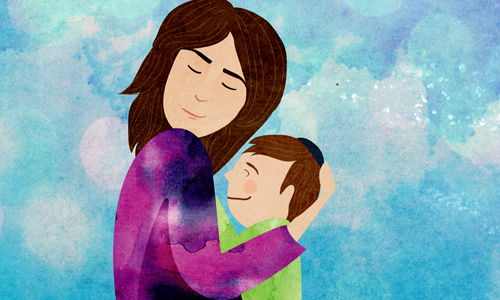 Good parents talk a lot to their kids. Great parents mostly listen. Especially to the ones that don’t say anything. They need the most listening to.
See what I wrote on this about Abraham and Isaac in How to Be a Father.
6. Modeling
 Everything you disliked about your parents, you ended up imitating. Guaranteed, the same will happen with your kids. It’s an instinct. Maybe they’re not imitating you now, but in ten years, twenty years—at some point they will, whether they like it or not.
So keep doing the good stuff, even when they don’t like it. And whatever you don’t want your child to do, don’t do it yourself.
Want your kids to speak politely? Speak politely to them. Don’t want them to yell? Don’t yell at them. Want them to be good Jews? Do Jewish things.
Whatever it is—imagine what you want them to be, and act that way yourself.
And if you fail, admit your failure and make amends. They’ll imitate that too.
Here’s a video of two parents who got that message full blast.
7. Nachas (not the chips)
 Nachas is the Jewish word for enjoyment, satisfaction and pride—all bundled together. If you like ice cream, the feeling of nachas is like your entire innards becoming one big vanilla fudge ice cream sundae.
If you want nachas from your kids, the best way to get it is by getting nachas from your kids.
That means letting slide the stupid little things that kids do, and getting a kick out of the cute, smart and beautiful little things they do. Let them see your smile.
For every “No!” there’s got to be at least five hugs, kisses, pats on the back, cheek-pinching, and just plain loving smiles. Kids thrive on your enjoyment of them.
As Ashley Montagu pointed out, no culture provides attention and affection to their kids as do Jews. In English, we don’t even have a word for nachas!
8. Eat Food Together
 Want a family? Eat food together.
Shut off the TV. Make a big deal of turning off your cell phone. Set a place where all devices will stay put for the half-hour of dinner time. Including yours. No exceptions—nothing is more important than this time now.
Enjoy each other’s company. Be happy to be with your kids.
Each day, find some story or interesting fact to say at the table. Each week, save stories and neat Torah facts to say at the Shabbat meal. Friday night meals (and Saturday, as well) are your main tools for creating a family.
Never come to the Friday night table exhausted. Be prepared. One of the best things you can do for your family is to take a nap Friday afternoon.
9. Bungee Ropes of Love
 When your kids morph into meshugana teenagers, hold tight to the bungee ropes. If they know you love them no matter what, they won’t want to do things that will hurt you. And if they do, eventually they’ll bounce back up.
In Tanya, the basic book of chassidic thought, those ropes are called “thick cords of love.” They’re the only way to pull someone back.
10. Be Together
 Make family trips. Squeeze into the car together. Take pictures.
Okay, so you won’t get out until 3 in the afternoon. Okay, you’ll spend more time packing, making sandwiches, loading the van, unpacking, etc., than you will spend having fun.
But you’ll be a family, the kids will have good memories, and when they have their own families, they’ll take you along on their own family trips.
But, nevertheless, make sure to have time to take out each child alone. Even if it’s just to run an errand, grab a kid—but just one kid—and throw him or her in the back seat. It’s just the two of you, and that’s what counts.
The Baal Shem Tov taught that G‑d treats each of us as an only child. Our kids deserve the same.
 Parenting is not a hobby, and children are not the collateral damage of marriage. These are people’s lives you are dealing with, a Divine mission.
Besides, these are also the people who might one day sign you into some horrible retirement home—or, do things right, and they’ll make you the king and queen of the palace.
Basically, they’re the biggest investment you’ll make in life—the only one that’s for perpetuity.
Invest all you got. You’ll reap the dividends now, and when you need it the most, you’ll cash in big-time, with grandchildren who think you’re the greatest grandparents in the world.
What greater wealth could there be?
Did I skip something? Something that’s not in the parenting books? You can add it right below, in the reader comments.
Rabbi Tzvi Freeman, a senior editor at Chabad.org, also heads our Ask The Rabbi team. He is the author of Bringing Heaven Down to Earth. To subscribe to regular updates of Rabbi Freeman's writing, visit Freeman Files subscription. FaceBook @RabbiTzviFreeman Periscope @Tzvi_Freeman .
Artwork by Sefira Ross, a freelance designer and illustrator whose original creations grace many Chabad.org pages. Residing in Seattle, Washington, her days are spent between multitasking illustrations and being a mom.
FOOTNOTES
1.Talmud, Taanit 7a.
2.Genesis 31:46. Rashi ad loc. © Copyright 2016, all rights reserved.
 When Things Don’t Work Out, No Matter How Hard You Try
We feel stuck and frustrated. Why isn’t G‑d answering us? by Elana Mizrahi
My friend called the other day. She’s looking for work. She’s had a few different jobs lately, and each one, for different reasons, just didn’t work out. She sobbed to me, “I don’t understand! I’m trying so hard. I’m praying so hard. Why can’t I just find something?”
Another woman, who desperately wants to have children, criedWhat does He want from us? to me, “We’re doing everything, and it’s not happening. I’m also working on myself. I’m praying. I’m trying to grow from this challenge, but what more can I do? What does G‑d want from me?”
What does He want from us? Why isn’t (fill in the blank) working? Why isn’t (fill in the blank) happening?
This is how I try to understand it.
My baby is almost a year old now. How fast this first year went! As a newborn, he couldn’t really do much. When I felt he was ready, I put him on his belly to build those neck and shoulder muscles. He cried in protest. I insisted. One minute here, one minute there. A few weeks passed; his muscles and limbs grew stronger. All of a sudden, he was pushing himself up with his arms, and he flashed me a smile, delighting in his accomplishments. Then one day, when I put him on his belly, he rolled onto his back. His arms swung, and he kicked his legs in protest. He was stuck! In the beginning, I quickly rolled him back to where he was more comfortable. Then I started waiting 30 seconds before going to him, then a full minute. In one of those moments of waiting, he figured out how to roll the other way.
The next step was sitting. I propped him up against pillows so that if he should fall, the impact would be cushioned. More months passed, and he started crawling. There was adventure and exploration as he zoomed this way and that. And now, at 11 months, what is my baby doing? He pulls himself up and he stands, holding onto something. And then what? He looks at me and shrieks! He’s stuck! He doesn’t know how to get down, and he’s not strong enough yet to take a step forward. “You are amazing!” I cheer him on. He’s shrieking because he’s frustrated and thinks he’s stuck. I’m excited because I see how far he’s come. He couldn’t even roll over in the beginning, and now he’s standing on his own two feet. I also know that being “stuck” standing up is part of the process to build those chubby legs of his and give him the strength to walk forward soon, G‑d willing.
Before Moses passed away, he gave a speech to the nation, who would be continuing into the Land of Israel without him. He told them: “Be strong and courageous(imtzu). Neither fear nor be dismayed of them, for the L‑rd your G‑d is the One who goes with you. He will neither fail you, nor forsake you.” He then turned to Joshua, who was chosen to lead the people. “Be strong and courageous (ematz)! For you shall come with this people to the land which the L‑rd swore to their forefathers to give them.”1 The Hebrew word for “courageous” also means “determined” or “making an intense effort,” as we see in the book of Ruth, when Naomi saw that “she (Ruth) was determined (mit’ametzet) to go.”2
What happened in the times of Joshua? The Nation of Israel entered into the Land of Israel after 40 years of wandering around, seemingly “stuck” in the desert. But were their trials over, now that they could enter the land? No, they needed time, they needed strength, they needed determination and effort to conquer the land. They needed the reminder that G‑d wouldWe feel stuck and frustrated neither fail them nor forsake them.
When the verse speaks of Ruth, King David’s great-grandmother, what does it say? She was determined, she exerted great effort to go to Israel and become a Jew. With this effort and determination, she merited to become the progenitor of Moshiach.
And so it is with us.
We feel stuck and frustrated. Why isn’t G‑d answering us? We, as a nation, feel stuck. “Come on,” we plead. “It’s been 2,000 years of exile already! How much longer? How many more trials and tests? What else do You want from us?” We feel like we don’t know how to move forward. We don’t even know how to get down.
“But look at you!” G‑d tells us. “You’ve come so far! You feel like you want to give up? But you’re so close! With a little more strength, a little more courage, a little more effort, you’ll get there. The Redemption will come.”
Originally from northern California and a Stanford University graduate, Elana Mizrahi now lives in Jerusalem with her husband and children. She is a doula, massage therapist, writer, and author of Dancing Through Life, a book for Jewish women. She also teaches Jewish marriage classes for brides.
Artwork by Sefira Ross, a freelance designer and illustrator whose original creations grace many Chabad.org pages. Residing in Seattle, Washington, her days are spent between multitasking illustrations and being a mom.
FOOTNOTES
1.Deuteronomy 31:6,7.
2.Ruth 1:18. © Copyright 2016, all rights reserved.
WOMEN
Another woman, who desperately wants to have children, criedWhat does He want from us? to me, “We’re doing everything, and it’s not happening. I’m also working on myself. I’m praying. I’m trying to grow from this challenge, but what more can I do? What does G‑d want from me?”
What does He want from us? Why isn’t (fill in the blank) working? Why isn’t (fill in the blank) happening?
This is how I try to understand it.
My baby is almost a year old now. How fast this first year went! As a newborn, he couldn’t really do much. When I felt he was ready, I put him on his belly to build those neck and shoulder muscles. He cried in protest. I insisted. One minute here, one minute there. A few weeks passed; his muscles and limbs grew stronger. All of a sudden, he was pushing himself up with his arms, and he flashed me a smile, delighting in his accomplishments. Then one day, when I put him on his belly, he rolled onto his back. His arms swung, and he kicked his legs in protest. He was stuck! In the beginning, I quickly rolled him back to where he was more comfortable. Then I started waiting 30 seconds before going to him, then a full minute. In one of those moments of waiting, he figured out how to roll the other way.
The next step was sitting. I propped him up against pillows so that if he should fall, the impact would be cushioned. More months passed, and he started crawling. There was adventure and exploration as he zoomed this way and that. And now, at 11 months, what is my baby doing? He pulls himself up and he stands, holding onto something. And then what? He looks at me and shrieks! He’s stuck! He doesn’t know how to get down, and he’s not strong enough yet to take a step forward. “You are amazing!” I cheer him on. He’s shrieking because he’s frustrated and thinks he’s stuck. I’m excited because I see how far he’s come. He couldn’t even roll over in the beginning, and now he’s standing on his own two feet. I also know that being “stuck” standing up is part of the process to build those chubby legs of his and give him the strength to walk forward soon, G‑d willing.
Before Moses passed away, he gave a speech to the nation, who would be continuing into the Land of Israel without him. He told them: “Be strong and courageous(imtzu). Neither fear nor be dismayed of them, for the L‑rd your G‑d is the One who goes with you. He will neither fail you, nor forsake you.” He then turned to Joshua, who was chosen to lead the people. “Be strong and courageous (ematz)! For you shall come with this people to the land which the L‑rd swore to their forefathers to give them.”1 The Hebrew word for “courageous” also means “determined” or “making an intense effort,” as we see in the book of Ruth, when Naomi saw that “she (Ruth) was determined (mit’ametzet) to go.”2
What happened in the times of Joshua? The Nation of Israel entered into the Land of Israel after 40 years of wandering around, seemingly “stuck” in the desert. But were their trials over, now that they could enter the land? No, they needed time, they needed strength, they needed determination and effort to conquer the land. They needed the reminder that G‑d wouldWe feel stuck and frustrated neither fail them nor forsake them.
When the verse speaks of Ruth, King David’s great-grandmother, what does it say? She was determined, she exerted great effort to go to Israel and become a Jew. With this effort and determination, she merited to become the progenitor of Moshiach.
And so it is with us.
We feel stuck and frustrated. Why isn’t G‑d answering us? We, as a nation, feel stuck. “Come on,” we plead. “It’s been 2,000 years of exile already! How much longer? How many more trials and tests? What else do You want from us?” We feel like we don’t know how to move forward. We don’t even know how to get down.
“But look at you!” G‑d tells us. “You’ve come so far! You feel like you want to give up? But you’re so close! With a little more strength, a little more courage, a little more effort, you’ll get there. The Redemption will come.”
Originally from northern California and a Stanford University graduate, Elana Mizrahi now lives in Jerusalem with her husband and children. She is a doula, massage therapist, writer, and author of Dancing Through Life, a book for Jewish women. She also teaches Jewish marriage classes for brides.
Artwork by Sefira Ross, a freelance designer and illustrator whose original creations grace many Chabad.org pages. Residing in Seattle, Washington, her days are spent between multitasking illustrations and being a mom.
FOOTNOTES
1.Deuteronomy 31:6,7.
2.Ruth 1:18. © Copyright 2016, all rights reserved.
WOMEN
 Angels by Her Side
Esther Malka was born with a rare bone disease. When she was mainstreamed in first grade, her wheelchair no longer seemed like a throne; it began to irritate her. by Rivki Gellis
Once upon a time, Esther Malka thought she was a queen. (In fact, her middle name, Malka, means “queen” in Hebrew.) Her “servants”—Mommy, Daddy and the staff in her kindergarten—would push her anywhere she wanted to go in her wheelchair. She never had to get up—just like a real queen.Esther Malka was born with a rare bone disease. Today, at age 17, she’s an 11th-grader who lives in Kfar Chabad, Israel, and she’s endured more than 150 broken bones.
“I went to a kindergarten for kids with special needs. Most of them were fine intellectually, but almost completely nonfunctionalShe has endured more than 150 broken bonesphysically. I didn’t feel like I belonged there. There were kids who couldn’t do anything, and I had no respect for them. I was a normal, wild girl, with one handicap, which didn’t even seem like a handicap to me: my wheelchair.”
When Esther Malka was mainstreamed in Kfar Chabad’s first grade, the wheelchair no longer seemed like a throne; it began to irritate her. “For the first time, I understood that I was different. All my friends were jumping rope; I was the only one who couldn’t. No one ever told me why I couldn’t, why I was the only queen with a throne. It bothered me, but I told myself that I must be too special to play with the other girls in the class—that they weren’t good enough for me.”
The first time Esther Malka met doctors who didn’t wear white coats was in third grade. They were psychologists. “They asked me all kinds of questions that I couldn’t understand. First, they asked: ‘What does being confined to a wheelchair tell you?’ I never knew my chair could talk! Then I realized that it was telling me something, and what it was saying was too sad. I suddenly understood that I was different from everyone else and always would be. I would never be free of the wheelchair.”
The wheelchair became her enemy. “I would wake up in the morning and see the chair parked by my bed, and it would make me crazy. At some point, it was like a nightmare, seeing myself in the mirror, stuck in my chair. I couldn’t bear the sight of myself sitting in it.”
By fifth grade, Esther Malka was undeniably suffering from depression. “I thought I was the only one in the world with this disease. It felt like there was no reason to get up in the morning. There was no joy in me at all. I was confused and moody, and got more so every day.”
There have been many angels in her life. The first one came at this point.
“It was one of my teachers who stopped me from giving up. She recognized my distress, and knew that we couldn’t rely on a miracle to change my outlook. She was so caring and loving, and she told me that I could never let my illness know I was afraid of it—that I had to triumph at all costs. She managed to give me back some of the willpower I’d lost.”
Esther Malka’s bat mitzvah party, when she was in sixth grade, was meant to be a big event. She had her own ideas about how to celebrate the big day: “I wanted to grow. I wanted to be better. I knew it was up to me, that I was no longer a little girl. I tried to be calmer and more giving.”
But the grand plans were foiled. A week beforehand, on her way home from school, she found herself stuck, quite literally, between a rock and a hard place. “It had never happened to me before; I lost control of the wheelchair, and it flipped over. I weighed 40 pounds; the chair weighed 165 pounds . . . the doctors said it was a miracle I survived. I only knew I was still breathing because it hurt. I had broken bones all over my body.”
Her bat mitzvah was celebrated in the orthopedics ward, where the star of the show lay semi-paralyzed.
The long confinement was enough to break Esther Malka’s spirit again, and then adolescence came along. “I had a series of meltdowns in seventh grade. I became depressed again, more deeply than before. From the outside I seemed calmer than I had two years earlier, but inside? I was“I lost control of the wheelchair, and it flipped over”finished.”
That was when Esther Malka met her second angel.
“One friend was truly an angel. She knew what I was going through, and I poured my heart out to her. She was a true friend. She had no mercy on me, and didn’t accept my depression as a natural part of my illness. Until she came, I’d been feeling pitiable. She was the first one who wasn’t afraid to tell me that there are people worse off than me. She told me that my confinement to a wheelchair made me a hero of sorts, and made me see myself from a completely different angle.”
When Esther Malka was in ninth grade, her friend’s words started to make an impression on her. One morning, as she prepared to go to school, she stopped by the mirror. “I saw myself, in my chair, for the first time in several years. All at once, I decided to accept myself for who I am. I cried there, in front of the mirror, like I’d never cried before.
“That was the start of a new chapter. I realized that everyone has challenges and the power to rise to meet their challenges. Even though externally I looked worse off than my friends, I knew they had different problems that just didn’t show as much. I decided to learn to love my wheelchair. I understood that it wasn’t only helping me with a technical problem; it was helping me build my personality, challenging me to make the most of myself.”
But she kept these thoughts to herself. If you were to ask her classmates, they would tell you that Esther Malka was bent on destroying any positive connection that a teacher tried to build with her. “My behavior was astonishing, I admit. I had an amazing teacher who understood that I wasn’t a bad person—that my bad behavior wasn’t an intrinsic part of who I was. The better she understood me, the more disrespectful I became.”
Then came a turnaround after a parent-teacher meeting. She knew exactly what the teacher was going to tell her parents; it was the same every year. “She’s wonderful and she’s smart, but . . .”
“However, at this meeting, there was no ‘but.’
“‘Your teacher said that you’re gifted; that you’re super,’” her mother reported.
“‘But . . .’ I prompted. She just smiled.
“The next day, at school, I ran to the teacher and yelled at her. ‘Why did you lie? You should have told her the truth! My mother knows who I am!’ But my teacher didn’t understand what I wanted.
“‘I told the truth,’ she said.
“I was a maelstrom of emotions. I didn’t know what to think about her or about myself. Then I heard myself say, ‘People see what I’m not, but you see what I am.’ She ran out of the room so I wouldn’t see her crying, but I saw, and it made a crack in the wall I’d built up around myself. She was my third angel. She made me see there was something to me besides the wheelchair.”
Until that time, Esther Malka’s thoughts had revolved around“I was a maelstrom of emotions. I didn’t know what to think.” what she should do with herself. Now she began to think about what she could do for others. She remembered the years she’d looked down on kids who were just like her, but lower-functioning. She’d made fun of them in kindergarten, and she’d made fun of other kids she’d met over the years. Now it was time to make up for all that.
“I consulted with my best friend, and we decided that when I grew up, after high school, I would do something for handicapped kids. In the meantime, while we were in 10th grade, the Ministry of Education started a program to encourage volunteer work. Every girl in our class except me was assigned a child to work with, but the social workers were afraid to assign one to me. I went to my teacher and told her I was planning to start an organization that would be the first of its kind in Israel, as far as I knew, an organization for children who had physical handicaps but who were mentally and emotionally okay.”
No one thought she was serious. Yet that made her happy. “As soon as I said it, I realized what a huge job I was committing to. I was happy to use their teasing as an excuse to forget about that crazy idea. But my angels—my teacher from the year before and my good friend—heard about it. They wouldn’t let me get away with backing out.”
Esther Malka organized her first activity, even though it wasn’t easy. Six children from Kfar Chabad came, and because it was the first time, maintaining discipline was hard, especially from a wheelchair.
“I smiled at the kids, but I wanted to run away. I’d always hated myself, and here I was asking myself to look to these kids like a positive person—to smile at them and to be in charge. It was a shock. At the end, one kid hugged me and asked me when the next activity would be. That finished me. I went home and cried for hours. I didn’t want to put together another activity, but to fulfill the hours that the Ministry of Education wanted, I had to volunteer to help two families. In the meantime, Kfar Chabad was abuzz with talk of the activity I’d run. The two families I was helping kept asking and asking, ‘When’s the next activity?’ So I decided I’d do one more.”
She was better prepared the next time, and more relaxed. “I realized I was enjoying myself. When I thought about it afterwards, trying to understand what I’d enjoyed about it, I realized that this was my goal in life: to give to kids in need.”
Today, a year and a half later, Esther Malka’s organization is still active. Everyone in Kfar Chabad knows about it; so do outsiders. About 40 children from all over the country participate, with only five from Kfar Chabad. There are still activities for the kids, of course, but herShe spends hours talking to the kids on a regular basis organization has expanded. She now spends hours talking to the kids on a regular basis, and she’s in touch with their teachers when she feels it’s necessary. The organization offers emotional support to the children’s families, as well as outings and bat mitzvah parties. It’s not easy work, but she knows and feels that there aren’t a lot of people who can give what these children require.
She can.
At the end of my interview with Esther Malka, I had tears in my eyes. In my opinion, she really is sitting on a throne.
Translated by Esther Rabi. © Copyright 2016, all rights reserved.
 How Converting to Judaism Taught Me the Important Things in Life
I live in Los Angeles, where wealth, celebrity, youth and beauty are valued above all else. by Kylie Ora Lobell
I live in Los Angeles, where wealth, celebrity, youth and beauty are valued above all else. Paparazzi document the rich and famous shopping on Rodeo Drive, star map tours are sold to eager tourists who gawk at $20 million homes, and the offices of plastic surgeons are filled with men and women hoping to retain their good looks.I know, rationally, that many celebrities are good people, and just happened to stumble into fame because they were good atBeing rich is not a bad thingtheir craft. Being rich is not a bad thing, especially if you use your money to support your family and give back to society. People want to feel good about themselves, so they try to maintain and improve their physical appearances.
However, if you don’t have something to ground you in reality, you can become obsessed with the material things in life. If you have no ultimate truth, then your values can fluctuate based on society’s and other people’s viewpoints.
In the L.A. culture—and, I’d argue, in American culture at large—having money, getting famous, and looking young and beautiful are top priorities. You think that if you just had all those things, your life would be flawless, and you would be happy. As you dream about this, though, you’re actually hurting yourself. For many people, they are simply unattainable and unrealistic.
Before I converted to Judaism, I was an atheist. I had no concrete set of values, and I would often give in to jealousy. I used to look at my peers with rich parents and be envious of them. How come they got a free ride to college and didn’t have to work like I did? Why did they get a nice car? How did they have such a big house? I wanted a big house.
I obsessed over these things. I thought that if I just focused on work and nothing else, then I could get to where they were. I could be rich. I could be famous. I could live in a fancy house and not have to worry.
After graduating from college, I tried working a day job in television. It paid well, had a cool job title that I could brag about, and the offices were located in midtown Manhattan. From the outside, it looked like I was living the life.
But behind all that glamor, I was miserable. I felt big when I told my friends and family I worked in New York City in television, but I wasn’t satisfied. Most days, I’d have to force myself out of bed and onto the crowded subway, and then sit at a computer for eight hours doing practically nothing. My only solace was the lounge in the bathroom, where I could escape from my coworkers or the vending machine, which was filled with sugary snacks that distracted me from my unhappiness.
If I could just stand this job, I could move up to being an associate producer, then an executive, and maybe even own a television network one day. But I wasn’t willing to put in the work to achieve my dreams of being on TV and making tons of money. That goal sounded nice, but the effort to get there was not. And who knows? Maybe even when I fulfilled my dreams, I wouldn’t be happy either. Who could say?
At the same time that I was working this job, I was converting to Judaism and studying and taking on the laws. I was gaining real meaning in my life, along with values and a path that I could follow.
Instead of attending happy hours with my coworkers on Friday evenings, I began to go to my boyfriend’s family’s house for Shabbat dinner. It felt like stepping out into the hot sun after being in the freezing cold ocean. My soul was getting warmed up under the light of G‑d.
As I learned Torah and took on additional mitzvahs, I shifted my focus even more. When I decided to stop checking my cell phone on Shabbat, I did it because I realized that it was more important to take a break from work than to look at my e‑mail. No e‑mail was ever going to be so crucial that I had to break the Sabbath—and my peace—in order to see it.
I realized that I couldn’t just work to make money. I learned that saving money and having money is important, but so is giving back. If I see a homeless person begging at a stoplight, I usually try to roll down my window and give him or her some spare change. Sure, every penny counts, and if I don’t save it all, I might never get out of debt. But I believe it’s better to share my wealth and spread it, even in the tiniest ways possible.
In terms of looks, I used to wish I could be model-thin and always have on the best clothes, makeup and jewelry. I’ve met many beautiful people out here in L.A., including models and famous actors. These are usually not the most memorable people. They may look good, but they don’t leave an impression on me. The people I now regard as beautiful are the men and women who are kind and welcoming, and devoted to their families and their values. These are the individuals I hope to emulate.
People always say that you can’t take your moneyAll you can take with you are your good deeds with you when you die. Well, you can’t take your beauty or your fame, either. All you can take with you are your good deeds. It’s sad if you realize only on your deathbed that you put the wrong things on a pedestal.
What matters most to me now is having and giving love, being kind to others, fulfilling my purpose through my writing, making the world a better place through observing mitzvahs and giving charity, spending time with loved ones and making sure that I have a close relationship with G‑d.
I’m not perfect, but I know what is right and what is wrong, and what I should be doing to work towards my goals. And I no longer trick myself into thinking that the material things are going to make me happy. They’re nice, but they’re not everything.
By prioritizing my values, I’ve found that I can be truly happy.
Kylie Ora Lobell is a freelance writer and personal essayist in Los Angeles. She writes for The Jewish Journal of L.A., Grok Nation, Aish and Tablet. She has a wonderful husband, comedian Danny Lobell, as well as two dogs, five chickens and a tortoise.
Artwork by Sefira Ross, a freelance designer and illustrator whose original creations grace many Chabad.org pages. Residing in Seattle, Washington, her days are spent between multitasking illustrations and being a mom. © Copyright 2016, all rights reserved.
VIDEO
 On Account of a ‘Rooster and Hen’
Talmud: Stories of Tragic Destruction by Mendel Kaplan
 Watch (1:05:54)
<script language="javascript" type="text/javascript" src="http://embed.chabad.org/multimedia/mediaplayer/embedded/embed.js.asp?aid=3368051&width=auto&height=auto"></script><span style="clear:both;" class="lb" id="lbdiv">Visit <a href="http://www.chabad.org/multimedia/default_cdo/aid/591213/jewish/Video.htm">Jewish.TV</a> for more <a href="http://www.chabad.org/multimedia/default_cdo/aid/591213/jewish/Video.htm">Jewish videos</a>.</span>
STORY
 How to Act in Exile
“If you are hungry, ask no man for money or for food. But if people offer you something out of compassion, you may accept it.” by Yerachmiel TillesIn a village near Sanz there lived a G‑d-fearing Jew who owned a tavern and an inn. One day a wayfarer came by, dressed in rags and tatters. The innkeeper gave him a square meal, and after the Grace After Meals he offered him money. When the visitor declined the offer, the host assumed that it was less than he expected to receive, so he prepared to increase the amount. But the pauper said: “Please do not insist that I accept a donation from you, for I am quite a rich man.”
The “Please do not insist that I accept a donation from you, for I am quite a rich man.”innkeeper was stupefied to hear this statement. He asked the stranger to explain why he wandered about in such a disheveled state. And this is the story he was told.
“I live in the city of Pest, near which I own several villages, fields and vineyards. Once a large sum of money was stolen from me, and I did not know who the thief was. We had a maid—an orphan—and since we suspected that this was her doing, we took her along to the local authorities. The police there beat her in order to induce her to confess, but she insisted she had stolen nothing, so they sent her home to us. But the harsh treatment that she had endured left its mark. For some days she languished in bed, and then died.
“Two weeks later the thief was found. I was stricken by terror. I had suspected an innocent person, and through my doing, this orphan had met her death!
“I set out to speak to Rabbi Meir of Premishlan, hoping that he would teach me some way of repenting and atoning for my sin.
“‘Choose one of these three,’ he said. ‘Either you die, though you will be granted a place in the world to come; or you will be ill and bedridden for three years, while the suffering you undergo will cleanse you of your sins; or for three years you will wander about as a vagabond, as the law prescribes for an unwitting manslaughterer.’
“I couldn’t bring myself to agree to any one of these three alternatives, and returned home. ‘The rebbe has evidently chosen death . . . without waiting for my consent.’For several days I suffered headaches, but mentioned this to no man. Pain gradually spread over my whole body. I was confined to my bed, and the doctor who was summoned by my family almost despaired of my life. ‘The rebbe,’ I told myself, ‘has evidently chosen death as my means of expiation without waiting for my consent.’ I immediately sent off a telegram to Premishlan, accompanied by apidyon contribution for charity, asking him to pray that I be restored to health, and promising that I would then call on him and accept upon myself whatever he would tell me to do.
“And that is exactly what happened. He prayed on my behalf; I recovered; and as soon as I was strong enough, I set out for Premishlan.
“When I went in to speak to him he said: ‘You still have ample time to die, and you have already been ill. So, choose the exile of a vagabond.’
“As soon as I expressed my willingness to proceed with my punishment, he said: ‘Let me teach you now how one goes about living the life of an exile. First of all, leave everything you have with you at the moment—nice clothes, money—with me, and leave my house wearing some tattered old garment. Do not spend any day in the place where you found lodging for the night. If you are hungry, ask no man for money or for food. But if people offer you something out of compassion, you may accept it. Throughout the three years, you are not to visit your home.’
“‘But what about my business interests?” I asked, terrified.
“‘This alone I will permit you to do: at the end of a year you may visit your hometown and stand outside the city limits, while you send a messenger to your wife to bring you the account books of your business. If you see that your business is running at a loss, I allow you to return to your home—but I promise you that your business will not flounder.
“Throughout these three years, you are not to ride in a wagon, but rather make your way from place to place only on foot. And when the three years have elapsed, you are to come to me. I will return all your possessions to you, and teach you how to conduct your life thereafter so that you will be able to set your soul aright.’
“I took my leave of the tzaddik, and took to the road, exactly as he instructed me to do—a trek of two years so far. Now I heard very recently that the rebbe of Premishlan had passed away, and since he told me to come to speak with him when three years had elapsed, I didn’t know what to do.
“But then I heard that in Sanz, not too far from here, there lives a tzaddik known as the Divrei Chaim. In fact, I’m heading in that direction now, in the hope that he will guide me. And that is why I will not accept your donation, thank you, because at the moment I am not setting out on another leg of my trek as an exile; I am on my way to visit Rabbi Chaim of Sanz.”“. . . the rebbe of Sanz says that two years of exile are enough for you . . .”
The innkeeper was so curious to know what the end of the story would be that he set out with his ragged guest and escorted him directly to the rebbe’s house in Sanz. The vagabond did not even manage to put his question to Reb Chaim, when thetzaddik said: “Return to your home, traveling by way of Premishlan. Find the grave of Reb Meir, and tell him that the rebbe of Sanz says that two years of exile are enough for you, for you observed them with true self-sacrifice.”
Adapted by Yerachmiel Tilles from the rendition in A Treasury of Chassidic Tales (Artscroll), as translated by our esteemed colleague Uri Kaploun from Sippurei Chasidim by Rabbi S. Y. Zevin.
Biographical notes:
Rabbi Meir of Premishlan [?–29 Iyar 1850] lived in abject but patient poverty, yet exerted himself tirelessly for the needy and the suffering. His ruach hakodesh(prophetic spirit) and his ready wit have become legendary. He wrote no works, but some of his teachings were collected and published by his chassidim after his death.
Rabbi Chaim Halberstam of Sanz [1793–10 Nissan 1876] was the first rebbe of the Sanz-Klausenberg dynasty. He is famous for his extraordinary dedication to the mitzvah of tzedakah, and also as a renowned Torah scholar; his voluminous and wide-ranging writings were all published under the title Divrei Chaim.
Copyright 2003 by KabbalaOnline.org, a project of Ascent of Safed (//ascentofsafed.com). All rights reserved, including the right to reproduce this work or portions thereof, in any form, unless with permission, in writing, from Kabbalah Online.
Yerachmiel Tilles is the co-founder of Ascent-of-Safed, and was its educational director for 18 years. He is the creator of www.ascentofsafed.com and www.kabbalaonline.org and currently the director of both sites. He is also a well-known storyteller, a columnist for numerous chassidic publications, and a staff rabbi on AskMoses.com, as well as and the author of "Saturday Night, Full Moon": Intriguing Stories of Kabbalah Sages, Chasidic Masters and other Jewish Heroes. © Copyright 2016, all rights reserved.

Rumors began to swirl that she and the tavern-keeper were up to no good. by Menachem Posner
Curious to get to know the mysterious man about whom so much had been said, Rabbi Meir asked the Baal Shem Tov to disembark so that they could speak. “They say you can perform miracles and can even read people’s minds,” he began. “Is that"I know about these remedies; I was looking for something more" true?”
“Well, I’ll just tell you this,” replied the Baal Shem Tov. “When you were praying this past Shabbat, you accidentally chanted the weekday blessings instead of the special insert for Shabbat.”
“Yes, it’s true!” replied Rabbi Meir in amazement. “Now, please tell me what I can possibly do to correct this lack.”
The Baal Shem Tov advised him to carefully scrutinize his deeds and think thoughts of remorse, the standard course of correction for such an error.
“Rebbe,” said Rabbi Meir. “I know about those remedies. I was looking for something more . . .”
“In that case,” replied the Baal Shem Tov, “you should be sure to be patient in judgment.”
With that, the two men returned to their respective carts, and they were off.
As the spiritual leader of a large region, Rabbi Meir made a point to travel through every Jewish town and hamlet in the area at least once a year.
Upon his arrival in a rural community, the villagers asked the rabbi to help them solve a weighty problem that had torn their tight-knit group apart.
“You see,” explained one of the elders. “There is a young man who lives a ways out of town. None of us know who he is or where he comes from. He dresses all fancy, like a non-Jewish prince, and operates a tavern. One day, one of our men asked his wife to go pick up some vodka at the tavern. She took her time in returning. Things seemed just a bit suspicious, and rumors began to swirl that she and the tavern-keeper were up to no good.”
After listening to the accounts of various villagers, the rabbi determined that the situation did seem suspicious and called the tavern-keeper to appear before him.
Sure enough, the young man soon swaggered in, decked out in colorful silks and furs. Yet despite the accusations of the villagers, the man steadfastly maintained his innocence.
Unable to conclusively rule on the matter, Rabbi Meir left the village, feeling uneasy about the entire affair.
As he traveled along, he came upon the Baal Shem Tov once again. He stopped his horses and asked the Baal Shem Tov to do the same. Sitting in the Baal ShemDespite the accusations, the man steadfastly maintained his innocenceTov’s cart, Rabbi Meir recounted the chain of events that he had just encountered.
“Did I not tell you to be patient in judgment?” the Baal Shem Tov chided him. “You should know that in every generation there are 36 righteous people in whose merit the entire world stands. That tavern-keeper is the greatest of them all.”
Rabbi Meir immediately climbed into his cart and asked his driver to return to the village so that he could personally beg the young man for forgiveness.
But it was too late. The mysterious man was already gone without a trace. All Rabbi Meir could do was share the Baal Shem Tov’s words with the villagers, thus restoring the tavern-keeper’s good name.
Rabbi Menachem Posner serves as staff editor for Chabad.org.
Artwork by Sefira Ross, a freelance designer and illustrator whose original creations grace many Chabad.org pages. Residing in Seattle, Washington, her days are spent between multitasking illustrations and being a mom. © Copyright 2016, all rights reserved.

Recipes for the Nine Days
Fish, dairy, vegetarian and vegan recipes for the Nine Days, when we abstain from eating meat and chicken.

Veggie-Laden Tuna and Pasta Salad by Miriam Szokovski

Garlic and Pesto Stuffed Mushrooms by Elizabeth Kurtz

Zucchini Ratatouille
With Rice by Miriam Szokovski
I love how versatile ratatouille is. It tastes good both cold and warm. You can serve it over rice or quinoa for a filling vegetarian meal, or alongside chicken, meat or fish for a flavorful, light side.

Crunchy Homemade Falafel with Hummus, Tahini and Israeli Salad by Miriam Szokovski

Strawberry-Banana Smoothie by Miriam Szokovski
Delicious & Healthy

Baked Roasted Veggie Pasta by Leah Schapira and Victoria Dwek

Greek Salad
Fresh & Healthy by Miriam Szokovski

Caramelized Onion & Cheese Braid
Easy and Impressive by Miriam Szokovski
This is one of those recipes that looks very impressive with minimal work—an excellent one to add to your repertoire.

Creamy ‘n’ Crunchy Pasta Salad by Miriam Szokovski
The ideal side dish for your next barbecue

Cauliflower Salad by Faigie Goodman
Cauliflower is a cruciferous vegetable that is good for preventing cancer. It is high in fiber and extremely nutritious. This makes a great main dish, especially in warm weather.

Bourekas Three Ways: Potato, Broccoli and Mushroom by Miriam Szokovski

Allergy-Free Recipes for the Nine Days by Sara Atkins
When the Nine Days come, the parent of a food-allergic child tends to get even more creative than usual . . .

Cheddar Cheese Crackers by Miriam Szokovski

Cheese Enchiladas by Shifra Devorah Witt

Creamy Ziti by Jamie Geller
Hubby and I are famous in our neighborhood for this yummy dish. It’s a quick prep, but it lasts long in people’s memories...

Ricotta Cheese Ravioli by Miriam Szokovski
We all associate latkes and doughnuts with Chanukah, but why stop there? Get into the holiday spirit with these unique dreidel-shaped ravioli.

Easy Olive Pizza Puffs by Miriam Szokovski
An easy dairy recipe for the Nine Days, during which we refrain from eating chicken and meat.

Ginger-Infused Roasted Carrot Soup
With Homemade Croutons by Miriam Szokovski
Carrots are traditional on Rosh Hashanah, but it doesn't have to be tzimmes.

Greek Pasta Salad by Miriam Szokovski
Quick & easy, and lasts in the fridge for almost a week. Take it for lunch? Serve it on Shavuot? You decide!

Gluten Free Pepper Pizza by Miriam Szokovski
An easy gluten free pizza crust, with which you can use the toppings of your choice.

Hasselback Baguette by Leah Schapira and Victoria Dwek

Healthy Mushroom Pizza Bites by Miriam Szokovski
The real beauty of these little pizza bites is their easy simplicity.

Herbed Tilapia in Lemon Butter Sauce
From The Bais Yaakov Cookbook

Thin Crust Vegetable Pizza by Miriam Szokovski
A dairy recipe for the upcoming holiday of Shavuot

Mediterranean Baked Trout with Fennel Salad
Heart Healthy Grilling by Jamie Geller
For a lighter approach to summer entertaining, try fish. This recipe for a whole fish would work great on an outdoor grill as well as in the oven.

Pasta & Veggie Bake by Miriam Szokovski
An easy dairy dinner for the Nine Days.

Refreshing Blueberry Greek Yogurt Popsicles by Miriam Szokovski
What’s summer without frozen desserts?

Purple Cabbage & Apple Salad
With Lemon Tahini Dressing by Miriam Szokovski
Get healthy after the holidays with this vibrant salad.

Quinoa with Roasted Vegetables
and Balsamic Reduction Syrup by Miriam Szokovski
Embrace the tail end of summer with this light but festive side dish.

Spinach Ricotta Lasagna by Miriam Szokovski
The ultimate winter comfort food...

Romaine Sweet Potato Salad with Mango Dressing by Miriam Szokovski

Salad of Romaine with Roasted Peppers and Creamy Balsamic Vinaigrette by Jack Silberstein

Tofu with Stir-Fried Bok Choyby Shifra Devorah Witt

Vegan Garlic Gnocchi with Creamy Mushroom Sauce by Miriam Szokovski
Step-by-step photos and instructions.

Very Healthy Zucchini Soup by Miriam Szokovski
A warm winter favorite.
 Day Camp Comes to Kids Stuck in Israeli Hospitals
More than 1,200 hospitalized children in Israel are involved in a day-camp program now in its 35th year. by Sarah Leah Lawent
Fish, dairy, vegetarian and vegan recipes for the Nine Days, when we abstain from eating meat and chicken.
Veggie-Laden Tuna and Pasta Salad by Miriam Szokovski
Garlic and Pesto Stuffed Mushrooms by Elizabeth Kurtz
Zucchini Ratatouille
With Rice by Miriam Szokovski
I love how versatile ratatouille is. It tastes good both cold and warm. You can serve it over rice or quinoa for a filling vegetarian meal, or alongside chicken, meat or fish for a flavorful, light side.
Crunchy Homemade Falafel with Hummus, Tahini and Israeli Salad by Miriam Szokovski
Strawberry-Banana Smoothie by Miriam Szokovski
Delicious & Healthy
Baked Roasted Veggie Pasta by Leah Schapira and Victoria Dwek
Greek Salad
Fresh & Healthy by Miriam Szokovski
Caramelized Onion & Cheese Braid
Easy and Impressive by Miriam Szokovski
This is one of those recipes that looks very impressive with minimal work—an excellent one to add to your repertoire.
Creamy ‘n’ Crunchy Pasta Salad by Miriam Szokovski
The ideal side dish for your next barbecue
Cauliflower Salad by Faigie Goodman
Cauliflower is a cruciferous vegetable that is good for preventing cancer. It is high in fiber and extremely nutritious. This makes a great main dish, especially in warm weather.
Bourekas Three Ways: Potato, Broccoli and Mushroom by Miriam Szokovski
Allergy-Free Recipes for the Nine Days by Sara Atkins
When the Nine Days come, the parent of a food-allergic child tends to get even more creative than usual . . .
Cheddar Cheese Crackers by Miriam Szokovski
Cheese Enchiladas by Shifra Devorah Witt
Creamy Ziti by Jamie Geller
Hubby and I are famous in our neighborhood for this yummy dish. It’s a quick prep, but it lasts long in people’s memories...
Ricotta Cheese Ravioli by Miriam Szokovski
We all associate latkes and doughnuts with Chanukah, but why stop there? Get into the holiday spirit with these unique dreidel-shaped ravioli.
Easy Olive Pizza Puffs by Miriam Szokovski
An easy dairy recipe for the Nine Days, during which we refrain from eating chicken and meat.
Ginger-Infused Roasted Carrot Soup
With Homemade Croutons by Miriam Szokovski
Carrots are traditional on Rosh Hashanah, but it doesn't have to be tzimmes.
Greek Pasta Salad by Miriam Szokovski
Quick & easy, and lasts in the fridge for almost a week. Take it for lunch? Serve it on Shavuot? You decide!
Gluten Free Pepper Pizza by Miriam Szokovski
An easy gluten free pizza crust, with which you can use the toppings of your choice.
Hasselback Baguette by Leah Schapira and Victoria Dwek
Healthy Mushroom Pizza Bites by Miriam Szokovski
The real beauty of these little pizza bites is their easy simplicity.
Herbed Tilapia in Lemon Butter Sauce
From The Bais Yaakov Cookbook
Thin Crust Vegetable Pizza by Miriam Szokovski
A dairy recipe for the upcoming holiday of Shavuot
Mediterranean Baked Trout with Fennel Salad
Heart Healthy Grilling by Jamie Geller
For a lighter approach to summer entertaining, try fish. This recipe for a whole fish would work great on an outdoor grill as well as in the oven.
Pasta & Veggie Bake by Miriam Szokovski
An easy dairy dinner for the Nine Days.
Refreshing Blueberry Greek Yogurt Popsicles by Miriam Szokovski
What’s summer without frozen desserts?
Purple Cabbage & Apple Salad
With Lemon Tahini Dressing by Miriam Szokovski
Get healthy after the holidays with this vibrant salad.
Quinoa with Roasted Vegetables
and Balsamic Reduction Syrup by Miriam Szokovski
Embrace the tail end of summer with this light but festive side dish.
Spinach Ricotta Lasagna by Miriam Szokovski
The ultimate winter comfort food...
Romaine Sweet Potato Salad with Mango Dressing by Miriam Szokovski
Salad of Romaine with Roasted Peppers and Creamy Balsamic Vinaigrette by Jack Silberstein
Tofu with Stir-Fried Bok Choyby Shifra Devorah Witt
Vegan Garlic Gnocchi with Creamy Mushroom Sauce by Miriam Szokovski
Step-by-step photos and instructions.
Very Healthy Zucchini Soup by Miriam Szokovski
A warm winter favorite.
JEWISH NEWS
More than 1,200 hospitalized children in Israel are involved in a day-camp program now in its 35th year. by Sarah Leah Lawent
 Rabbi Mendel Lieberman, right, founder of Chabad’s “Chai Ashkelon” program, with some of the 1,200 hospitalized children in Israel who will get to participate in summer camp this year, the program's 35th year running.
JERUSALEM—Summer is in high gear, with a million things for kids to do: people to see, day and overnight camps to attend, sleepovers with friends, family trips and just being able run out to the nearest neighborhood playground to do what kids do best.
But for more than 1,000 children throughout Israel, the only place they expect to see this summer is the inside of a hospital ward.
To bring some real joy and healing into these kids’ lives, Rabbi Mendel Lieberman, director of Chabad of Ashkelon and founder of Chabad’s “Chai Ashkelon” program, has worked hard to bring to fruition a special “hospital camp”—an effort that not only brings the children emotional support and quality activities to participate in, but through its very essence promotes psychological health which is an important component of physical healing.
Lieberman explained why the initiative—now in its 35th year of operation and partnered and underwritten predominantly by Colel Chabad and hosted at the Barzilai Medical Center in Ashkelon and Kaplan Medical Center in Rehovot—has meant so much to youngsters who spend their summer indoors.
In addition to the unexpected day-to-day admissions and kids undergoing delayed medical/surgical procedures, he says “we have kids suffering from serious, ongoing, life-threatening conditions for which all seasons—and not just summer—means chemotherapy or kidney dialysis, and the like. These procedures are the only summer ‘fun’ the children have to look forward to.”
 Dozens of Chabad-Lubavitch schoolgirls answer the call each year to work as volunteer counselors in hospital wards.Rivka Gruzman, administrator of the camp program handles the daily logistics and administrative aspects of what has become an exceptional experience for the children and adults involved. She started as a volunteer in high school, and today—nearly 20 years later—she says she has not lost one iota of enthusiasm or energy when it comes to providing for these kids.
“It’s a lot of work to prepare things, sometimes even months in advance, but when we see the eyes of the children and their parents—and when we hear the ‘thank you’s’ that come from the bottom of their hearts—you realize that there is nothing we wouldn’t do to bring them this joy in the midst of the various challenges they are facing.
“I started as a counselor, moved up to being the coordinator and now administer the program; I cannot imagine not being involved. And in all these years,” emphasizes Gruzman, “I have never become accustomed to or taken for granted as to how positively this affects the children and their families.”
Time for Their Young Charges
Dozens of girls from Chabad-Lubavitch educational and social institutions answer the call each year to come and work on a daily basis as counselors in the wards, from 9 a.m. to 1 p.m., and then from 4 to 7 p.m. They also see kids in non-pediatric wards. These counselors offer their time, patience and love during visits, which greatly helps the often-overwhelmed nursing and medical staff as well.
 Camp is in session five days a week for eight weeks in July and August.
One of the local girls, Chaya, started volunteering during high school, and for four years has returned session after session to work with the kids.
“It is immensely gratifying,” she says.
“We have to work hard finding activities to liven up the kids’ existence, and find a way to give personal time to each of the small patients,” she continues. “Every single day, the parents thank us for bringing a degree of normalcy and some excitement into their children’s lives. And the smiling eyes and the laughter of these kids are inspiring to us counselors.”
Chaya says the nurses are also glad to see them: “They know that we give to the children what they cannot, being understaffed and overworked to the point that their shifts don’t leave them the time they would like to be able to talk to and comfort each of their young charges.”
And Lieberman notes that “we also make sure that the children get souvenirs like they would at any camp—T-shirts, caps—and the children just love it.”
The program, which began with a half-skeptical eye fromhospital administrators and staff, now serves as a paradigm for several others used in hospital settings. An additional bonus: It is free of charge.
‘Lift in Spirits and Attitudes’
 A valuable part of the program are the gifts, games and toys distributed to the children.Lieberman describes how they see kids coming in: sad, anxious, stuck.
“In July and August, we see maybe 1,200 kids; we are there for them five days a week for eight weeks,” he says. “The attitude barometer for these children absolutely skyrockets once they see that they, too, will have day camp. In fact, the program has been so successful that we have been able to expand it to include a similar one during Chanukah vacation.”
“In a letter that the Lubavitcher Rebbe [Rabbi Menachem Mendel Schneerson, of righteous memory] sent to the head of Barzilai 35 years ago,” explains Lieberman, “he brought to their attention that since a hospital is place to hopefully get better, that the terminology was inaccurate. In Hebrew, a hospital is a beit cholim, a ‘house of sickness,’ and the Rebbe—who always emphasized the import and power of words—pointed out that it should be called a beit refuah, a ‘house of healing.’
“The lift in spirits and positive attitudes we see come out of this program is the best testimony there can be to its efficacy,” says Lieberman.
“What this is really about is ahavat yisrael, ‘love of a fellow Jew,’ ” says Lieberman. “If you can help another Jew, materially and/or spiritually, you are expressing this love. And that’s what this is about—helping these kids materially with activities, and spiritually by putting our time and love into them.
“This expression of love for a fellow Jew,” he adds, “helps these children feel self-empowered and encourages them to be partners in their own healing.” © Copyright 2016, all rights reserved.

Lefty Gomez and Joe DiMaggio had just helped their team sweep the Cincinnati Reds to win the 1939 World Series. Twelve-year-old Bill Shank was happily anticipating his forthcoming bar mitzvah. by Fay Kranz Greene
From left: Rabbi Mendel Brikman, Chaim Marcus and Rabbi Shmuel Greenberg help Bill Shank, 90, celebrate his bar mitzvah.
Yankees fans were ecstatic. Lefty Gomez and Joe DiMaggio had just helped their team sweep the Cincinnati Reds to win the 1939 World Series.
In Newark, N.J., 12 year-old Bill Shank was happily anticipating his forthcoming bar mitzvah. Studying with the cantor at B’nei Abraham Synagogue, he was almost ready for his big day.
But he didn’t get the chance to show off his newly acquired skills; he never made it to his own bar mitzvah. The celebration was canceled because he suddenly developed a severe case of pneumonia. The young boy languished in pain for months because the new “miracle” drug—penicillin—was not yet in widespread use. Thebar mitzvah was forgotten in the wake of his illness.
Fast-forward to Shabbat, July 23, 2016. The place is the Burke Rehabilitation Hospital in White Plains, N.Y., a highly reputed facility entirely dedicated to rehabilitation medicine.
Mendel Brikman, 43, a Chabad rabbi and businessman, had recently been accepted to Burke. Diagnosed with cancer in 2011, he underwent surgery that successfully removed the tumor, but made it difficult for him to breathe. The husband and father of six has been in and out of hospitals for the past few years, battling his illness and overcoming the enormous challenges placed on him and his family.
Remarkably, Brikman remains the same outgoing, upbeat, personable fellow he always was. Quick with a joke and easy to talk to, he has become known for his ability to listen and dispense practical advice.
 Brikman spoke inspiring words of Torah.Last week he was enjoying the company of his friend Chaim Marcus, who had come to spend Shabbat with him. They were sitting in his room at Burke discussing whether he had the strength to participate in his scheduled rehab session. Although exhausted, Brikman decided to go ahead with the therapy.
In the rehab room, they found a few other patients already there, including an elderly gentleman who turned to them and said, “Shabbat Shalom.” It turned out that their Sabbath greeter was none other than Bill Shank, professor emeritus and the former music librarian at the CUNY Graduate Center, and that his Hebrew name was (you guessed it!) Mendel.
‘Every Mitzvah Has Cosmic Importance’
During their conversation, Shank told them about his canceled bar mitzvah, that he had never put on tefillin and was scheduled to leave Burke on Monday.
So what’s a good Chabadnik to do?
 The 90-year-old bar mitzvah “boy” sports his new kipah.“We are all raised on the idea that every Jew is infinitely precious, and that every mitzvah has cosmic importance, especially tefillin,” said Marcus. “For a Chabadnik, the words ‘I’ve never put on tefillin’ trigger something akin to an adrenaline rush. Like my friend David Suissa says, ‘Chabadniks have one global model, and it’s called, ‘We want you to do a mitzvah because the world needs it.’ That is the essential lesson we learned from the Lubavitcher Rebbe [Rabbi Menachem M. Schneerson, of righteous memory]: Helping a Jew do a mitzvah is the best way to say ‘I love you.’ ”
“Mr. Shank, it’s never too late. How about we make you a bar mitzvah tomorrow?”
“Let me think about it,” he replied. “I’ll discuss it with my daughter, and I’ll let you know.”
Later that night, the nonagenarian enthusiastically agreed and even invited his daughter, who was visiting from Norway, and a number of friends to join in the celebration. As is typical in the Chabad world, it turned out that Shank’s daughter knows Chabad-Lubavitch emissaries Rabbi Shaul and Esther Wilhelm in Oslo.
By Sunday morning, the guest list had grown to include Brikman’s wife, Toby; their youngest son, Zalman; and Shank’s roommate at the hospital, Ralph Ziskind. They also extended an invitation to Rabbi Shmuel Greenberg of Young Israel of White Plains and the chaplain at Burke.
It turns out that you don’t need a DJ, caterer, centerpieces or flowers to have a meaningful bar mitzvah.
 The Burke Rehabilitation Hospital in White Plains, N.Y.“Everything is Divinely orchestrated, but it’s particularly gratifying when the Almighty gives us an opportunity like today,” said Brikman, “to be able to come together 77 years after your bar mitzvah and celebrate this occasion with you.”
Speaking about the mitzvah of tefillin, Brikman pointed out that tefillin is a testament to our love for the Almighty and His love for the Jewish people. “What is written in G‑d’s tefillin?” asked Brikman. “The Torah tells us that in G‑d’s tefillin, it speaks of the special love that G‑d has for the Jewish people.”
Brikman spoke movingly about what he has been through and shared a personal story about a former Israeli soldier that had moved away from Judaism because his friend was killed during the 1982 Lebanon war. After befriending Brikman and forming a close bond, the former soldier decided that although many years elapsed, he would begin putting on tefillin again.
The bar mitzvah “boy” shared his own story and emotionally wrapped tefillin for the first time. “I want to say this is a very proud moment of my life at age 90. I’m very honored and very happy that I have my good friends and my daughter here with me, and I’m very proud to be able to say that I’ve now finally been bar mitzvahed.”
Family and friends at the eventSeveral of the guests had never even seen a pair of tefillin before, so Rabbi Greenberg explained what they are, what is written in them and why Jews wear tefillin on the weaker arm (for which he used a baseball analogy).There was some spirited singing as Shank unwrapped his presents, which included the Chabad classic books, Daily Wisdom and Towards a Meaningful Life; a CD of Chassidic recording artist Avraham Fried; and a kipah with the words “Bill” and “Mendel” embroidered in both Hebrew and English.
Shirley Miller, a longtime friend of the Shanks, was visibly moved, and told Mendel that “this has been one of the most meaningful and beautiful events I have ever participated in.” © Copyright 2016, all rights reserved.

There’s a lot that needs to get done every day at Junior Gan Israel Day Camp in Skokie, Ill. by Eric Berger

Counselors and campers at Junior Gan Israel Day Camp in Skokie, Ill. Counselor Chana Polisky, far right, who has developmental delays, used to attend camp as a child and this summer now works there.
There’s a lot that needs to get done every day at Junior Gan Israel Day Camp in Skokie, Ill.
A staff member needs to stand at the entrance of a camp building, and open the door for campers and parents as they arrive each morning.
There are towels that need folding—a big job because the camp, rather than wasting paper towels, uses lots of hand towels in an effort to be green, according to director Zeesy Posner.
And there are paintbrushes that need washing.
These tasks are performed by people who might never have worked at a summer camp until three years ago. That’s when Posner, who has been running the camp for 35 years, decided to broaden her hiring approach.
“The conventional rule of thumb is to recruit staff members who are as competent as possible,” said Posner, whose campers are ages 2 to 6. “Here, we go in a different direction.”
Posner tries to avoid making distinctions, but says the camp now has several staff members with special needs. Her approach to hiring is based around the idea that each person, regardless of his or her cognitive, emotional or physical ability, can contribute.
“People with special needs have lofty souls,” she explains. “Their bodies might be imperfect by our estimation, but they are precious, and we respect them and treasure them.”
 Polisky enjoys spending time with her young charges. (The feeling is mutual.)
Posner has been involved with summer camps since she was 14 years old. “Little kids are my passion,” says the mother and grandmother, who runs a preschool at Lubavitch Chabad of Skokie during the school year.
A few years ago, parents started approaching her about hiring former campers with special needs. “These are young people I knew from when they were little. There was no way I was going to say no,” she says.
‘Make Them Happy’
Posner acknowledges not being sure how it would all work out. But she says the other staff members “never say to me, ‘She’s slowing me down.’ They accepted them wholeheartedly.”
Chana Polisky, 23, attended Junior Gan Israel as a toddler, and is back this summer as a staff member. Together with her other duties, she helps serve lunch and with activities.
“I make sure the kids are safe and playing nicely,” says Polisky, who has developmental delays and is one of 60 staff members.
 Polisky and assistant camp director Deena Schanowitz prepare to deliver lunch to campers.
Her favorite times, she says, are making challah for Shabbat with the campers and “just playing with them.”
“They are very fun and very, very cute,” says Polisky, who also works at the local Hillel Torah North Suburban Day School, also in Skokie.
“The kids really love her,” says Neshama Karsh, a division head for 2-year-olds at the camp. “One child always asks for her; he goes, ‘Where’s Morah Chana?’ And every time he sees her, he has a big smile on his face.”
She describes Polisky as a real asset to the camp.
In the words of the camp staff handbook: “Each staff member is an individual with unique qualities. We each contribute our utmost, without comparing what we are doing to what others are doing.”
Or as Posner puts it: “The fast track to unhappiness is comparing what you are doing with what someone else is doing.”
Conversely, her goal is emphasize a person’s skills and talents—using them to the utmost—and promoting the positive and reaffirming message that “whoever G‑d created in this world, he created for His glory.”
 Staff members, from left: Emunah Belson, division head Neshama Karsh, counselor Chana Polisky, counselor Esti Pole and counselor Rebecca Friedman © Copyright 2016, all rights reserved.
Chabad.org Magazine - Editor: Yanki Tauber
---------------------

No comments:
Post a Comment