
Alban Weekly from The Duke Divinity School in Durham, North Carolina, United States "PRACTICAL WISDOM FOR LEADING CONGREGATIONS" Encouraging Lay Theology: A PASTOR REFLECTS ON HIS CHURCH'S SUCCESSFUL PROGRAM OF CHRISTIAN FORMATION for Monday, 22 August 2016
 Encouraging Lay Theology: A PASTOR REFLECTS ON HIS CHURCH'S SUCCESSFUL PROGRAM OF CHRISTIAN FORMATION
My colleagues are often astounded when I note that, although our congregation's average Sunday morning attendance is approximately 75, we have, on any given week, between 35 and 50 persons involved in adult faith formation, with half of them coming from the larger community. At our congregation, adult faith formation programs have become the major source of new members and Sunday visitors and have brought vitality to our congregation. People have discovered that our congregation is committed to a lively, theologically-solid, spiritually-grounded, and open-spirited faith.
When I first arrived at my Cape Cod congregation three years ago, I stated that I hoped to initiate a few adult education programs. One well-respected member responded, "No one ever comes to educational events at our church. Prepare to be disappointed." Another confessed "we're really not that interested in theology." The results have been the exact opposite. With the support of the congregation's leadership, I have initiated a community of prayer and learning that has become essential to our congregation's identity and mission to the community.
Today, people receive a plethora of religious information on cable television and the internet, and it is imperative that the church add its voice to media presentations on the life of Jesus, scripture, God, the Gnostic scriptures, and world religions, not to mention the superficial and often harmful theologies often presented by popular televangelists. In a time in which many assert that post-modernism privileges experience over doctrine, open-ended theological reflection has become more essential in the pulpit and the congregational classroom. Congregants need to nurture the mind as well as the spirit and heart to creatively face the challenges of our pluralistic age. They need safe places in which to explore their faith questions and challenge childhood ideas about God and humankind.
Bruce Epperly: Encouraging Lay Theology
My colleagues are often astounded when I note that, although our congregation’s average Sunday morning attendance is approximately seventy-five, we have, on any given week, between thirty-five and fifty persons involved in adult faith formation, with half of them coming from the larger community. At our congregation, adult faith formation programs have become the major source of new members and Sunday visitors and have brought vitality to our congregation. People have discovered that our congregation is committed to a lively, theologically-solid, spiritually-grounded, and open-spirited faith.
When I first arrived at my Cape Cod congregation three years ago, I stated that I hoped to initiate a few adult education programs. One well-respected member responded, “No one ever comes to educational events at our church. Prepare to be disappointed.” Another confessed “we’re really not that interested in theology.” The results have been the exact opposite. With the support of the congregation’s leadership, I have initiated a community of prayer and learning that has become essential to our congregation’s identity and mission to the community.
Today, people receive a plethora of religious information on cable television and the internet, and it is imperative that the church add its voice to media presentations on the life of Jesus, scripture, God, the Gnostic scriptures, and world religions, not to mention the superficial and often harmful theologies often presented by popular televangelists. In a time in which many assert that post-modernism privileges experience over doctrine, open-ended theological reflection has become more essential in the pulpit and the congregational classroom. Congregants need to nurture the mind as well as the spirit and heart to creatively face the challenges of our pluralistic age. They need safe places in which to explore their faith questions and challenge childhood ideas about God and humankind.
Although there is no one way to encourage congregational faith formation, I have found the following approaches essential to a robust, intellectually lively, and inspirational adult theological education program:
First, pastors need to reclaim their identity as rabbis and congregational theologians. Pastors need to become students of the faith, devoting at least a tithe of their time to study beyond their sermon preparation. Seminary is the beginning and the end of a pastor’s theological journey.
Second, pastors need to look for the theologian in each congregant. We are not preaching to a theological vacuum, but to people who have deep theological questions, most of the time unaddressed even in church. Every person who asks questions of life, death, meaning, and vocation is a theologian. Congregants often feel anxious about asking questions about what’s most important to them, for fear they will be misunderstood or that their ignorance will be exposed. Yet no question is unimportant and foolish when it comes to our faith. In the first few weeks of my time at South Congregational Church, I announced that “every question is on the table,” “bring your thoughts, questions, and ideas,” and “this is a mistake free zone, a place where no question is too big or too small.” I also made clear that despite my education, I didn’t know all the answers and that there is “more than one right answer to many important questions of faith and practice.” People took me at my word and began to ask questions, express doubts, and suggest themes for study.
Third, pastors need to be in conversation with their congregants, listening for their questions. At my congregation, virtually every adult faith formation program has emerged from congregants’ questions or suggestions. In our midweek bible study, I choose a person each quarter to determine our theme. Thus far, we have studied “Job and the Problem of Suffering,” “The Journeys of Paul” and “Jesus’s First Followers.” We’ve just started a series, “Transformation! The Varieties of Biblical Spirituality,” exploring scripture accounts of the many ways people experienced God. Our weekly theological reflection group has studied, “Death and Dying,” “The Trinity,” “Christianity and the World Religions,” and is currently studying “Angels, Mysteries, and Miracles.” We have a first Monday group that focuses on a mystic, exploring both her or his theology and spiritual practices. A week ago, one participant asked if we could do a short study on the “Gnostic Gospels.” We will focus on that theme during July.
In response to our adult faith formation focus, one participate noted, “This the first time in my seventy years as a Christian, I’m really learning about the Bible.” Another asserted “this is place where I can come with all my questions and explore the relationship of Christianity with what’s most important to me.” A third affirmed, “I’m learning that faith is dynamic and not stuck in the past. I don’t have to believe what I learned in my childhood fundamentalist church to be a Christian.”
Fourth, as a pastor, aim high in your studies and teaching. Pastoral ministry is creative, and within every pastor is an artist, either in creating new materials or interpreting the work of others. One of my mentors advised his students to “prepare every sermon and class as if it could be published.” While most of my sermons and classes aren’t published, the very aspiration calls the teacher to excellence and creativity. Adult faith formation is holy ground and worthy of our best efforts. Pastors who commit themselves to a teaching ministry experience greater vitality and insight in their various ministerial tasks.
There is some truth in the saying, “if you build it, they will come.” When it comes to adult faith formation, if you listen and respond, and provide various time options, they will come. The journey of faith is exciting. When we offer opportunities for prayerful study, our church will be transformed and people will come to church anticipating new insights in every class or worship service.
Bruce Epperly is Pastor of South Congregational Church, United Church of Christ, Centerville, MA and author of nearly forty books, including A Center in the Cyclone: Twenty-first Century Clergy Self-care; Starting with Spirit: Nurturing Your Call to Pastoral Leadership; and Tending to the Holy: The Practice of the Presence of God in Ministry.Read more from Bruce Epperly »
IDEAS THAT IMPACT: FORMATION EXPERIENCES
Forming God's People
It is critical that leadership be understood as a secondary question. The prior work concerns ecclesiology, soteriology, and missiology -- or what we mean by church, salvation, and mission. Through our leadership, what do we wish to create or move or form or produce?
Forming God’s People
A few years ago, I asked a group of pastors to list the obligations and roles specified in our legislated denominational materials. As I listed these duties on a screen, the murmuring began. As leader of this retreat, I was supposed to provide a moderate dose of clarity and encouragement for colleagues who had asked for help with burnout, a dearth of collegial relationships, and little agreement on what we as clergy were trying to accomplish. It was obvious that this exercise did not encourage the group. More than three dozen separate items were included, and over 50 verbs. “Supervise…administer…care…report…preach…cooperate…evaluate search…counsel…lead…oversee…prepare…provide…deploy…obtain maintain….” Our documents specified topics for counseling, contexts for ministry, and, of course, denominational duties. The murmuring continued; then the pastors began laughing. They sat right there, in the presence of a judicatory leader who had a supervisory role, and they laughed at the job description.
When we look for resources to guide our modes of leadership, we are provided with a smorgasbord of types and metaphors. Consumer choice reigns, and pastors are tempted to deliver on the images. You might be a type-A CEO who creates and manages a “tall-steeple church” or a “megachurch.” You may prefer being an activist in the Saul Alinsky mold to help us act (or feel) really liberal (or conservative). Your style may be that of a motivational speaker who can intensify our spiritual affections.
Those who promote each image give us reasons that suit our desires for organizational successes, along with no small nod to our internal insecurities and drives. We might seek a pastor who serves as alter ego, as therapist, or as a parent who accepts or scolds or serves as a target for some leftover antiauthoritarian arrows. We may want a shepherd to be an all-sufficient guide, provider, and rescuer. Perhaps a teacher-sage would assure us that we are thoughtful and educated, then leave us to be enlightened adults who make up our own minds. If our priority is preserving a traditional institution and its financial holdings, we need a manager-controller. And even though we will use other terms, we may desire an entertainer whose sermons are at least marginally competitive with sports or concerts or, more likely, the lure of a latte with the Sunday paper.
Leading Where and Why
It is critical that leadership be understood as a secondary question. The prior work concerns ecclesiology, soteriology, and missiology—or what we mean by church, salvation, and mission. Through our leadership, what do we wish to create or move or form or produce? I hear church leaders who hope to lead massive growth, or institutional survival, or civic engagement. But we need to ask: Growth of what? Survival of what? What engagement, and why? Congregational leaders need constantly to ask: What is the church? And: What is the church in this place? In Models of the Church, Avery Dulles—priest, professor, and now cardinal—gave us a useful set of images. Each model could be used to develop appropriate dimensions to our leadership: institutions need managers, heralds articulate a message, servants express compassion and mercy. It is notable that Dulles’s revised edition features a new model, “community of disciples,” which he develops as a synthesizing and inclusive type.
Dulles’s attention to “community” counters rampant individualism as well as cultural definitions of community that include little more than affinity and affection. Dulles draws attention to specific qualities that seldom merit focus in many U.S. churches: relative intimacy, permanence, and proximity.1 These characteristics counter the congregational models that acquiesce to our society’s norms. We tend toward casual relationships (we’ve lost the long evenings of storytelling, and we seldom interfere in each others’ lives). We live commuter lives (work, friends, recreation, school, church). And we relocate frequently (for reasons of career and taste). If our congregations want to realize the traits Dulles notes, we will need to give adequate attention to geography, more significant time together, and committed covenant practices. Only with these emphases can a congregation promote consistency in discipleship and meaningful engagement with a neighborhood. In The Problem of Christianity Josiah Royce emphasized a community’s need for shared memories, cooperative activities (what sociologist Robert Bellah has called “committed practices”), and common hopes.2
Converging social forces have successfully embedded an imagined “good life” in our psyche and social formation—a salvation story that leads to habits of consumerism, careerism, and many levels of sanctioned and unsanctioned violence. Churches and pastors often serve as chaplains to this national project, perhaps offering moderating voices but generally keeping faith and church circumscribed to minimal practices. Akin to other civic players, church leaders find our niche (providing animated or staid worship, a food bank, a religious comment in civic settings). Clergy’s place is dictated by society, church is tagged onto the numerous commitments of all the members, and our relationships and imaginations are centered elsewhere.
What are we leaders to do if we take these descriptors of community seriously? How would one lead such a community if it is to display a thorough and distinctive association with Jesus? What memories need to be owned and repeated as common memories? How do we define “hope?” How might worship and love and ethics and jobs cohere? What cooperative activities are essential? How do we define and encourage proximity and permanence? What countering forces should we expect?
Giving Structure to a Vision
In an urban United Methodist church, a few families wanted to re-envision how our lives embodied our faith. We were several years into Bible study, social analysis, covenant groups, mission attempts, and continuing growth as a multicultural congregation. Some biblical passages had lured us—Jeremiah called for immigrant Hebrews (actually interned war prisoners) to envision several generations of life and service in Babylon (Jer. 29). Isaiah’s imaginative poetry celebrated a visible urban community that attracted the commendation and participation of others (Isa. 58). Luke’s accounts in Acts and Paul’s priorities in his letters gave us a sustained look at the Holy Spirit’s generative and corrective work of establishing identifiable covenanted communities.
These studies, and our analysis of urban forces, plus hours of prayer and stories, had led us to consider creating a co-housing3 community. Biblical images gave us the meanings we needed; continuing hours of conversation and labor built our relationships; planning and budgeting and delegating inched us forward to carry out this corporate project. Themes of community, ecology, and neighbors gave structure to our vision. We built and remodeled nine units, for various family sizes, with organic gardens, solar power, frequent meals with each other and with guests, and commitments to the neighborhood. Our church practices of plural leadership were evident in the shared work of envisioning, laboring, and caring about relationships.
This project illustrates how leadership needs to function in a congregation.Interpretive leadership creates and provides resources for a community of interpreters who pay attention to God, texts, context, and congregation. Relational leadership creates and nourishes all of the human connections in various groups, partnerships, friendships, and families. Implemental leadership develops strategies and structures so that a congregation embodies gospel reconciliation and justice in a local context and in the larger world. In effect, these three spheres are structures in the congregations—structures that give meanings (interpretive), human connections (relational), and organizational practices (implemental). It is crucial that a congregation’s primary leaders nurture capacities and skills in all three spheres, and that they are attentive to cohesive and coherent practices in the context of constant change.
Interpretive Leadership
Interpretive leadership creates a learning community. A community of interpreters uses the available literary, social, and spiritual skills to give attention to “texts” while listening to and observing God’s initiatives. The texts of Scripture and tradition require more attention than a Sunday sermon; those who are being formed into a covenant community will give considerable time and energy to study. The scriptural metanarrative4 and the individual writers and their narratives require significant attention. What do we mean by “covenant” or “gospel” or “faithful”? What does it mean to be a “church”? How did our faith ancestors worship? What kind of faith communities did they form? How were they to relate to neighbors? What mission is God’s mission?
Further, the congregation’s life, its history, and its makeup need attention. Various venues can be formed for the telling of spiritual autobiographies. I have also seen the benefits of telling cultural autobiographies and money autobiographies. The congregation as a whole also has a story. The official narratives give too much attention to clergy and buildings; we need to uncover stories of faith, of mission, of spiritual strength, and of woundedness. In the Japanese-American Presbyterian church where my family has become active, we have created numerous conversations with “appreciative inquiry” interviews. This approach surfaces the strongest and most life-giving stories and characteistics of an organization. The congregation is gaining the capacity to see a more hopeful future that is generated by the best of its past. Members are becoming aware of the abundant resources for congregational re-envisioning and reinvigoration.
Leaders also equip the church to interpret the surrounding neighborhoods. The economic, social, and political stories of the city and its neighborhoods will give perspectives on the congregation’s place and prospects. Interpretive leaders motivate storytelling and research, make connections between congregants and neighborhoods, and build capacities for discernment. The assumption here is that theological and spiritual connections link the worshiping community with the surrounding people and powers.
Even when churches begin with organizational activities that are well connected to gospel meanings, organizational activities and structures are often passed on without those connections. Our children inherit ceremonies, programs, structures, and policies that have lost their substance. The foundational graces in Scripture, the tradition’s power and movement, are not readily available. “Meaninglessness” is not just a subjective critique of restless youth.
Interpretive leadership provides the resources, the inspiration, the perceptions that form a people who own the biblical and historical narratives, renarrate their own personal and corporate stories, and become aware of the numerous forces that shape their context. All of these “texts” are brought to study, prayer, discernment, and envisioning as the congregation narrates and enacts its own local theology. Spirituality, then, is defined as attentiveness to and participation in the initiatives of the Holy Spirit. Church leaders create a whole congregation of interpreters as they guide and offer resources for these activities. This interpretive leadership is done with vital and deep connections to relational and implemental activities.
Relational Leadership
Numerous tip-offs announce that ours is a relational work. Covenant and salvation are essentially relational ways of being—with God, with a faith community, and with neighbor. We are to be reconciled agents of reconciliation. If meanings are to be continually discerned by the interpretive community, and if those meanings are to be made tangible and visible, the whole process will be made possible by the congregation’s numerous relational connections—its groups and networks.
Within the congregation, families and friendship need leadership so that gospel meanings can be embedded and healthy relationships can be nurtured. In groups that discern, plan, and work, relational dynamics make the difference between dysfunction and banality on one hand, and lives that exhibit sanctification and justice on the other. Leaders need to be attentive to their own emotional intelligence5 and foster that characteristic in the church. Temporary organizational movements may be based only on message and programs, but our faith calls for love.
Church leaders can renarrate and contextualize classical practices. Hospitality—a gracious offering of self and space and time—is essential for the congregation’s ongoing life and for its extension to neighbors. Generosity of resources and attitudes creates dynamics that counter our society. Covenanting, paralleling the Wesleyan practices of holding “faith friends” accountable, gives opportunity for God’s many gifts and graces. Belonging, often undermined by denominational norms and societal transience, is one of the most needed countercultural practices for congregational viability. Other activities like pastoral counseling and spiritual direction can be redeemed from their more individualistic forms and turned toward an attentiveness that encompasses consequences and resources for congregation and mission.
Leaders give attention and guidance and resources to this knitting together of lives. But this community formation is neither generic friendliness nor purposed on playing a prescribed role in strengthening American society. Leaders are moving from their biblically sanctified imaginations to form and equip a particular polis—a community whose character is thoroughly and visibly shaped by the gospel. This forming of corporate character, of vision and values and habits, takes place as the shaping powers of the society are displaced by truth as it was made visible in the Jewish carpenter’s actions and teachings, and as made tangible by the Holy Spirit among us. We, as congregational leaders and participants, are redeemed from societal lies and cultural bondage as we talk and cajole and pray and forgive and cry and laugh our way to being a “city set on a hill.” As we do this, we nurture a relational trust that undergirds faithful corporate life and witness.
This relational work creates the synapses, the tendons, the arteries of the body. And if leaders are forming a polis as they generate and orchestrate resources, then individualistic forms are converted. While our faith is profoundly personal, it is not private. Catechesis, or the initiation and instruction of those who are moving toward linking their lives with the church, is not individual discipleship but the work of making a community. Outreach is not just helping the businessperson be more ethical or the neighbor more evangelistic (although those behaviors are important). The corporate focus of New Testament metaphorical language—the word “church” orekklesia, which was used to refer to gatherings for civic governance, and primary New Testament metaphors like body, city, and kingdom—emphasizes the corporate nature of our faith lives. These images have lost their distinctiveness for those of us formed by the Enlightenment, consumer choice, and the pursuit of personal careers. Relational leaders provide imagination and space for participants to be shaped as an alternative community.
Consistency is required in our interpretive leadership. Relational work, whether in pastoral counseling or in casual conversations, must not work against what the Holy Spirit is teaching the congregation in Scripture. Congregational participants (including leaders), as practicing sinners, often seek the approval of others concerning jobs, houses, expenditures, time commitments, and numerous other practices. Too often these activities come from our anxieties and fears. Our resistance to the work of Scripture and Spirit is often displayed in the common ecclesial practice of what theologian and educator Paulo Freire calls “gregariousness.” We give priority to avoiding tension. We never, never, never want to be even remotely associated with something called a “judgment.” So Bible studies offer numerous options (like a deli counter), and sermons carry the weight of editorials (maybe). Once again, being people formed as consumers, we make choice our centering characteristic. Our relational leadership must, through words and affection and touch and time and mentoring and weeping, weave something characterized by the shalom of justice and truth and repentance and hope that allows us to take communion and not be struck dead. That ought to be a primary goal of leaders.
Implemental Leadership
The Eucharist and other institutional practices give structural form to our meanings and relationships. Paul believed that parishioners were risking their lives and health by participating in this instituted meal when practices of truth and love were lacking. How is worship to be practiced in coherence with our meanings? In what ways does worship center our relationships and mission? Our congregations have little understanding about worship as a dangerous practice. Interpretive work needs to be a constant as we give attention to implementation.
Implemental leadership includes much of what has traditionally been considered management or administration. It is important that we form structures, develop strategies, delegate tasks, obtain and disburse resources, provide oversight, evaluate processes and results, and coach numerous other leaders. Further, leaders shape and reshape these activities amid continuous internal and external changes. These structures serve all aspects of congregational life and witness. While some things can be accomplished with total spontaneity, much of our common life requires organizational attentiveness and skills. Leaders do not have the luxury of just uttering an idea or meeting for coffee—we need to connect meanings and relationships with concrete forms and practices.
In the story above about United Methodists, some members decided to embody meanings and relationships in a co-housing community. Previously the church had taken other steps based on the formation generated in study and worship. Studies in Scripture and tradition, and honest discussion about their own lives, led many members to join covenant discipleship groups that brought accountability and encouragement to specified practices (like daily Scripture reading and prayer, weekly worship and corporate Bible study, regular mission activities, and tithing). At another time the meanings of discipleship and membership were put into practice in a nine-month “exploring membership” process that allowed new members to join with greater clarity and commitment. Whenever community members are hearing the Holy Spirit’s call in their lives, leaders must give attention to specific practices.
Corporate governance, missional activities integrated seamlessly with nurture and worship, facility maintenance, small-group structures, networks with other organizations, and catechesis all require careful formation and sustenance, which means implementation. A sermon well preached or relationships well cultivated or even a vision well formed can prove fruitless, lost in habitual organizational behaviors, if these three areas of leadership are not vitally connected. As leaders move among these areas of work, it is this phase of developing systems and practices that is often the center of risk, the point of courage and wonder. Seminaries offer little training, and clergy guilds tend to downplay administration as a necessary but less valuable function than preaching or counseling. But I believe it is when leadership teams, in partnership with all participants, make imaginative and costly forays into obedience that we learn what our corporate vocation is.
Praxis and Cohesion
For many years I enjoyed a collegial working friendship with the pastor of a nearby African American Presbyterian church. When we were teaching a seminary course, he once noted that his congregation was prone to act too quickly: “Our style is ready, fire, aim!” He noted that, lacking adequate attention to interpretive work, the congregation had numerous short-lived projects, and tended to wear people out. His words helped me see our church’s style, which I characterized as “ready, aim, aim, aim, ready, aim, aim, fire.” We Methodists talked a lot, interpreted everything repeatedly, but moved too slowly toward committing ourselves. Some members of a congregation will specialize as teachers, activists, or nurturers; but people who are responsible for larger oversight must embody all three leadership capacities. When we lead by keeping meanings, relationships, and structures well integrated, we create a greater possibility for generative, self-correcting praxis. In Aristotle’s framework, if some set of activities is to be described as “praxis,” then its ends are embedded in the current activities. This concept is behind the thought of Paulo Freire, who emphasized that action and reflection are interactive. By leading in this holistic and cohesive manner, we form and generate sustenance for the congregation in its vocation as a sign and agent of God’s initiatives.
Once when I was leading congregational studies on Jesus’s Sermon on the Mount, we were often troubled. Repeated attempts to understand these teachings about blessings, grace, and behaviors left us adrift and confused, yet lured. We studied the sermon in relationship to the whole of the Gospel of Matthew. We approached it in parallel with the Sermon on the Plain in Luke. Still, we were largely alien to the text. We read Bonhoeffer. We read Stanley Hauerwas and Will Willimon. Over several years, as our relational lives deepened and our involvement in mission increased, we kept coming back. Then one evening we began seeing the text in a very different way. That evening, the question was transformed from “What does this mean?” to “What kind of people do we need to be for this to make sense?” This is a different approach to hermeneutics, one that recognizes that not only do we interpret Scripture: it interprets us. That shift led to an overwhelming experience of convictions and longings about our lives—our marriages and families, our jobs and money, our politics and civic lives. God was forming us in the longer praxis of congregational life and mission. Note again the synergism, or creative interplay of relational, interpretive, and implemental leadership.
Are there deep congregational wounds or simmering volatility? Healing and redemption will require overlapping work on interpretation, relationships, and administration. Is it time for transformational change? Rerooting a congregation in classic narratives and practices, and forming new groups for study, caregiving, and mission will require the same multifaceted leadership. Does the congregation need to be lured away from complacency and complicity with consumer capitalism, careerism, and the role of chaplain to U.S. globalism? We have the grand hope of an alternative narrative, to be embodied in the relational and organizational practices of worshiping, learning, missional congregations. Leadership teams need to be formed and supported so that they thrive as participants and agents in God’s redemptive reign.
—————
NOTES
1. Dulles cites sociologist Charles H. Cooley concerning these traits; see Charles Cooley, Social Organizations (New York: Schocken Books, 1909/1967).
2. Se
e Josiah Royce, The Problem of Christianity (Chicago: University of Chicago Press, 1918/1968).
3. Co-housing, developed mainly in northern Europe, seeks to promote a more cooperative approach to housing that provides both private dwellings and common spaces and functions. For further information, log onto www.cohousing.org.
4. Metanarratives are large, overarching stories that provide meaning that smaller narratives do not have access to. While postmodernism looks askance at metanarratives and emphasizes smaller, local narratives, Christians can value those local stories while holding that the larger Genesis-to-Revelation narrative, and the Jesus story itself, are metanarratives in that they give meanings to the world beyond the texts’ local specifics.
5. Emotional intelligence, or “EQ,” is used in parallel with the more familiar intelligence quotient, or IQ. See Daniel Goleman, Emotional Intelligence (New York: Bantam, 1995).
Read more from Mark Lau Branson »
-------
Practices in the Disciple-forming CommunityMore than anything else, disciple forming is an enculturation process. Discipleship cannot just be taught; it has to be lived. For that reason the practices of the congregation play a vitally important role in disciple forming.
Practices in the Disciple-Forming Community
It takes a community to form a disciple. The congregation exists to be that community. Children, youth, and adults together in the community of faith provide the resources that aid the forming of disciples. The Spirit present in that community provides the transforming power that makes disciples and encourages their continued growth. It is the community that carries the gospel story into the present so that it can be made real in the lives of disciples. It is the community that provides the variety of gifts that is essential to disciple formation. It is the community that offers the experiences of deepening, equipping, and ministering that form disciples.
More than anything else, disciple forming is an enculturation process. Discipleship cannot just be taught; it has to be lived. For that reason the practices of the congregation play a vitally important role in disciple forming.
In some respects, the intentional look at practices and what they teach is a new area of interest for many congregations. One of the consequences of modernity was an operating assumption that classroom learning could provide most, if not all, a person needed to know to be a Christian. Content was what mattered—especially content that could be communicated within the confines of an easy-to-use curriculum. So, new member classes shared information about the church and the denomination, and “discipling” new Christians meant telling them what Christians should believe about important matters of faith. We opted for the modern belief that if people could understand the right things they would then live the right way.
One of the great blessings of the postmodern world is that it has enabled us to move beyond this “head tripping” about faith and recover the importance of practice in forming disciples. It’s not that congregations didn’t engage in practices during modernity, for that’s always been the way people have really learned the lessons of faith and life. Rather, because we were less than clear about the importance of practice and less aware of the practices we were actually engaged in, we sometimes didn’t practice what we preached.
Recent secular scholarship has described the learning process that takes place in the lives of people, placing great emphasis on the social nature of learning and the importance of developing practices through which people learn. Etienne Wenger, in Communities of Practice: Learning, Meaning, and Identity, focused on an insurance claims department to demonstrate that the knowledge that was essential to performing the job was acquired in a social context around a set of practices that established a learning community. Wenger notes that, even in a business setting, not everything that is essential to effective functioning can be codified, described, and placed in a manual. Tacit knowledge is essential.
Think for a minute about how this is even truer for those seeking to live as faithful disciples. The knowledge it takes to do that certainly cannot be fully contained in a manual! It requires something more. Through the ages the church has recognized the reality of that “something more” by making storytelling, conversation, coaching, and apprenticeship an important part of the life of the community of faith. Indeed, the Bible itself relies on storytelling to convey its message about what it means to live as a faithful people. To form disciples today we need to be even more intentional about the practices that are needed.
One way to become a Christian community of practice is through the reinvigoration of traditional Christian practices, allowing these to shape the life and faith of the congregation. Diana Butler Bass sees these practices as falling into four broad areas: worship, prayer, moral formation, and life together.1 Recognizing the “collective amnesia” of contemporary society in which we forget our identity and purpose, she notes, “Christian communities can no longer assume that congregants know their story; it must be imaginatively told, retold, and enacted, so that tradition becomes a living thing. Practicing congregations are dynamic learning communities in which this process occurs.”2
Doug Pagitt and the members of Solomon’s Porch, a new church start in Minneapolis, were able to start all over again. Without specific practices from the history of their congregation, they were able to focus primarily on the development of ones that would have particular meaning for their time and place and people. Here’s what they came up with:
- worship
- physicality
- dialogue
- hospitality
- belief
- creativity
- service
This “lifelong process of discovery and change” is what discipleship is all about. It is the way disciples are formed. It is the task of the community of faith. It is accomplished as that community provides opportunities for deepening, equipping, and ministering in the practices it adopts.
Deepening, equipping, and ministering happen through the practices of faith. While some practices may focus on one of these more than the others, virtually all of them encompass all three elements of discipleship to some extent. There are not deepening practices, equipping practices, and ministering practices; there are only discipleship practices. When the community of faith is intentional about its practices, people grow in faith and discipleship. And the disciple-forming community becomes a reality.
_________________
1 Diana Butler Bass, The Practicing Congregation: Imagining a New Old Church (Herndon, VA: Alban Institute, 2004), 14.
2 Ibid., 53.
3 Doug Pagitt, Reimagining Church: A Week in the Life of an Experimental Church (Grand Rapids, MI: Zondervan, 2003), 26-27.
Adapted from Traveling Together: A Guide for Disciple-Forming Congregations,copyright © 2006 by the Alban Institute. All rights reserved.
Copyright © 2008, the Alban Institute. All rights reserved. We encourage you to share Alban Weekly articles with your congregation. We gladly allow permission to reprint articles from the Alban Weekly for one-time use by congregations and their leaders when the material is offered free of charge. All we ask is that you write to us at alban@div.duke.edu and let us know how Alban Weekly is making an impact in your congregation. If you would like to use any other Alban material, or if your intended use of Alban Weekly does not fall within this scope, please submit ourreprint permission request form.
_______________________________________
FEATURED RESOURCES
 Traveling Together: A Guide for Disciple-Forming Congregations by Jeffrey D. Jones
Traveling Together takes readers on a journey, providing a guidebook that maps out the factors facing congregations in this postmodern, post-Christian world and the Biblical foundations for understanding the purpose of the church—to become a disciple-forming community. Anyone concerned for the life and ministry of the church and who is seeking a new understanding of congregational life and mission will find hope and help in these pages.
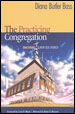 The Practicing Congregation: Imagining a New Old Church by Diana Butler Bass
The conventional wisdom about mainline Protestantism maintains that it is a dying tradition, irrelevant to a postmodern society, unresponsive to change, and increasingly disconnected from its core faith tenets. Diana Butler Bass argues that there are signs that mainline Protestant churches are indeed changing, finding a new vitality intentionally grounded in Christian practices and laying the groundwork for a new type of congregation.
-------
Read more from Jeffrey D. Jones »
Digital Disciples
Keith Anderson, a Lutheran pastor in Pennsylvania, uses social media to engage youth in the ancient teachings of the church, a reflection of his deep belief that God is everywhere, including online.
Faith & Leadership
YOUTH & CHILDREN, YOUTH MINISTRY, TECHNOLOGY, TEACHING
Digital disciples
iStock/londoneye A Lutheran pastor in Pennsylvania uses social media to engage youth in the ancient teachings of the church, a reflection of his deep belief that God is everywhere, including online.
Twenty-six teenagers dillydally on smartphones, sending instant messages, scrolling through news feeds, liking statuses and posting updates on social media sites Twitter, Facebook and Instagram while intermittently gazing at farmland images beaming from a digital projector. New Age tunes echo through the room courtesy of online music service Spotify.
Despite the tech-rich environment, these youths aren’t meeting at an urban cybercafe or taking a class at an Apple store. They are congregating at the Upper Dublin Lutheran Church fellowship hall in the Rev. Keith Anderson’s weekly catechism class. The day’s focus is on the third commandment: Remember the Sabbath day and keep it holy.
But Anderson sees no irony in allowing his students to noodle around online as part of a discussion on God’s rules of rest. Indeed, this is their Sabbath.
“When we were planning this class, we debated whether or not we would let them use their smartphones during the 20-minute in-class Sabbath time,” said Anderson, the 39-year-old pastor of Upper Dublin Lutheran, a 1,000-member church family in Ambler, Penn.
“And then we decided, yes we should. This is how they relax. This is what they would do to relax. This is how they experience Sabbath,” he said.
 Over the last five years, Anderson has built a national reputation in Christian circles as a social media expert -- especially as the technology relates to teens and tweens. He is best-known for the 192-page paperback “Click 2 Save: The Digital Ministry Bible,” which he co-wrote withElizabeth Drescher, a professor of religious studies at Santa Clara University.
More than a gimmick to spark the teens’ interest, Anderson says, social media can be used as a tool to convey the ancient teachings of the church in the formation of a new generation of Christians. It can help break down barriers, reach across fractures in teens’ lives and engage teens in the spaces -- digital or otherwise -- where they live.
“How do we equip them to take care of themselves in this space, and be people of faith, if we aren’t in this space?” he said.
In his own church, he is incorporating technology and social media into the everyday life of faith, including youth formation. It’s more than just letting the students text during breaks; as part of the class’s fall Ten Commandments project, Anderson asked his students to Instagram pictures of their ideal forms of Sabbath. They’ve discussed Christlike behavior on the Internet, and what it means to be a “digital disciple.”
“We are all inspired by what we see online in our faith community,” said 18-year-old Will Thornton. “It’s another way for us to learn and connect with other people in our faith, whether we are having good days or bad days.”
God in the Twitterverse
Anderson’s social media philosophy is simple: God is everywhere, even in the Twitterverse. And if the church fails to embrace that, it stands to lose its future members.
“We remember a time before email, before there was social media,” said Anderson, pointing out that even email is an outdated form of communication for today’s teens. “These kids will never know that time.”
“[Social media] isn’t just a tool you can use in formation, like the way we used a slide show in the 1960s and ’70s,” said Drescher, Anderson’s co-author. Drescher, an Episcopal scholar, also wrote “Tweet If You Heart Jesus: Practicing Church in the Digital Reformation.”(link is external)
“The church is slowly starting to acknowledge that social media is the landscape of communication,” Drescher said. “This is the medium where spiritual growth is happening, so we have to be working in that medium.”
Drescher points to the New York-based liturgical organization Digital Formation as an example of embracing social media for formation. The educational group seeks to help clergy and laypeople in the Episcopal Church use social media through webinars and Twitter.
These organizations “are drawing on the most positive potential of the new media landscape,” Drescher said.
Last fall, Drescher asked students in her Christian tradition course to post images of ideas, themes and people relevant to the history of Christianity on the social media site Pinterest. There are more than 1,000 pins on the resulting “Seeing the Christian Tradition” Pinterest board, ranging from depictions of John the Baptist baptizing Jesus to photographs of Nelson Mandela.
Like Anderson, Drescher sees a parallel with an older form of church teaching.
“Pinterest is a modern-day stained-glass window,” Drescher explained. But unlike the stained-glass windows in a given church, which are accessible only to the people in that region, Pinterest boards are accessible from any computer with Internet access.
Formation for digital natives
A Gen Xer, Anderson dresses in fitted jeans, a cardigan and black-rimmed Buddy Holly-style glasses.
His workspace reflects the merging of old and new. In the church’s front office, white-haired parishioners staple programs. Some are on Facebook to keep up with the grandkids, but for the most part, they say it’s not really for them. On the bookcase in Anderson’s office are round-faced statues of Martin Luther and Luther’s wife, Katharina. On his desk is a silver MacBook Pro -- Twitter screen up and running. The iPhone 5 next to it buzzes every seven minutes or so.
“In some ways, I’m a cultural translator,” Anderson said. “I’m very much aware that I minister to people who are not online as well as people who are online a lot. Part of my role is to tell them that even though the technologies are different, [the people] aren’t that different.”
He was first introduced to Facebook in 2006, when he was assigned to the Lutheran Church of the Redeemer in Woburn, Mass. Anderson was a little apprehensive of new media but slowly realized how it helped him connect with his congregation.
“I would post things about my life and my runs, and people would ask me how my running is going,” Anderson said. “People really started interacting around the content that was shared. I thought, ‘This is amazing. I’m getting a window into people’s lives, and I get to communicate with them throughout the week.’
“It was slowly becoming a valuable thing, and people were just delighted by it.”
In 2008, the Church of the Redeemer held a retreat during which they decided to bolster communication with the congregation through social media -- then still in its infancy. Anderson began blogging his sermons and podcasting them as well. He also started filming a two-minute Bible series and posting it on YouTube.
“He had an incredible impact,” said Carolyn Rahal, the parish administrator at the Church of the Redeemer, who refers to Anderson as a “rock star.” “He was so innovative. During a time when our community was on lockdown because of robbers in the area, he tweeted prayers.”
In the fall of 2012, Anderson moved to Ambler with his wife, Jennifer, and four children, and his social media presence has continued to expand.
Last June, Anderson completed the 10-mile Tough Mudder Race in Philadelphia. Where did he post his accomplishment? On Facebook, of course. In December, he celebrated his 10-year anniversary as an ordained minister by posting a series of Instagram photos.
And each Sunday morning, Anderson asks congregants to check in on Facebook, telling the world they are at Sunday morning worship. He has also started a Theology Pub series, with Facebook and Twitter accounts and a blog called God on Tap.
“You can try to keep [teens] off Facebook for as long as you want, but this is the world they are living in. They are native to it,” Anderson said. “So instead of saying, ‘It’s the devil; stay away from it,’ I’m here to show them faith has a role in it. God has a role in everything.
 First Commandment: I am the Lord your God. Have no other gods before me.
Casts are something that I let myself treat as a God #udlc #casts
 First Commandment: I am the Lord your God.
Have no other gods before me.#udlc
other gods #udlc

 Third Commandment: Remember the Sabbath
and keep it holy: This is where I find
peace in the midst of
busyness. #udlc
 This is where I find rest and renewal. #UDLC
 sabbath--my garden #udlc
 Word. #udlc
The Ten Commandments on Instagram
Last fall, Anderson co-taught an online class at the Lutheran Theological Seminary at Philadelphia called “Catechism as Platform: Teaching Catechism in the Digital Age,” which spurred him to think about using social media more in his formation classes with teens.
One day while researching Martin Luther’s 16th-century texts, he started examining the woodcuts used to teach the Lord’s Prayer, the Apostles’ Creed and the Ten Commandments. They reminded him of Instagram pictures of today. To help prepare his students for Confirmation, Anderson kicked off a Ten Commandments project. He started out teaching the mechanics of the medium: how to set up Instagram accounts and post pictures using smartphones. He asked parents to participate, too.
Each week, he discussed a different commandment and its practical application. For homework, he asked students to find and post images that helped them understand the commandment. For example, for the commandment to keep the Sabbath, participants posted pictures of piano keys, workplaces and a poppy field.
One of the most meaningful classes in the 10-week series, Anderson said, focused on the eighth commandment: Do not bear false witness against your neighbor.
“We talked about the girl in Florida who had been cyberbullied and committed suicide,” Anderson said, referring to 12-year-old Rebecca Sedwick, who committed suicide in September after more than a year of being harassed on Facebook.
“And they got it. I can see it in their eyes. They really got it in the modern-day context. … These are high stakes,” Anderson said.
Last fall, Anderson also offered his catechumens a two-day “digital disciples” class designed to get them to think about using the Internet as Jesus would. It’s important, Anderson says, that students are mindful of their status updates, likes and friend requests as they define their online identities.
“We engaged the whole class in thinking about these rules,” Anderson said. “How is this an example of Christlike behavior on the Internet?”
The class discussed “Gregory’s iPhone Contract,”(link is external) a poignant letter that Cape Cod mother Janell Burley Hofmann wrote to her 13-year-old son, Gregory, last Christmas when she gave him an iPhone. Hofmann’s heartfelt 18 points of social media rules went viral.
On a recent Sunday morning after the 9 a.m. check-in, a group of teenagers met to talk about how technology has amplified their relationships with God. Nearly all of these students have smartphones, and even if they aren’t checking them, they are fiddling around in their purses and pockets checking for them. Social media is ensconced in their daily lives, like eating breakfast and taking the bus to school, so much so that not sharing their feelings in images and updates would be foreign -- even in their faith lives.
“We try to promote ourselves in positive ways,” said Naomi Krizner, 15, “like when we are doing service projects. It’s a way for our friends [who may not go to church with us] to see our involvement in the faith.”
And probably most importantly, students have learned that when used with kindness and compassion, social media can be a place where they are encouraged in Christ.
“Sometimes things happen during the week that are upsetting,” said 20-year-old Amanda Couch, who sometimes listens to Anderson’s sermons on YouTube. For the busy college student, it’s the only time she may have during the week. “But when I’m on social media and I see people’s positive messages, I remember God always has a reason.”
---
Questions to consider:
Read more from Elizabeth Wellington »
-------
FROM THE ALBAN LIBRARY
 A Lifelong Call to Learn is aimed at directors of lifelong learning and continuing education that serve both clergy and laity in Catholic, Protestant, and Jewish seminaries and conference and retreat centers. While proposing new approaches in continuing theological education, it also addresses the need for programs that involve both clergy and laity at the congregational level and that support ongoing inter-religious dialogue in our increasingly pluralistic society.
The contributors to this book include seasoned practitioners as well as teachers and scholars in seminaries and universities from every part of the country in both denominational and ecumenical settings.
Learn more and order the book »-------
A Lutheran pastor in Pennsylvania uses social media to engage youth in the ancient teachings of the church, a reflection of his deep belief that God is everywhere, including online.Twenty-six teenagers dillydally on smartphones, sending instant messages, scrolling through news feeds, liking statuses and posting updates on social media sites Twitter, Facebook and Instagram while intermittently gazing at farmland images beaming from a digital projector. New Age tunes echo through the room courtesy of online music service Spotify.
Despite the tech-rich environment, these youths aren’t meeting at an urban cybercafe or taking a class at an Apple store. They are congregating at the Upper Dublin Lutheran Church fellowship hall in the Rev. Keith Anderson’s weekly catechism class. The day’s focus is on the third commandment: Remember the Sabbath day and keep it holy.
But Anderson sees no irony in allowing his students to noodle around online as part of a discussion on God’s rules of rest. Indeed, this is their Sabbath.
“When we were planning this class, we debated whether or not we would let them use their smartphones during the 20-minute in-class Sabbath time,” said Anderson, the 39-year-old pastor of Upper Dublin Lutheran, a 1,000-member church family in Ambler, Penn.
“And then we decided, yes we should. This is how they relax. This is what they would do to relax. This is how they experience Sabbath,” he said.
Over the last five years, Anderson has built a national reputation in Christian circles as a social media expert -- especially as the technology relates to teens and tweens. He is best-known for the 192-page paperback “Click 2 Save: The Digital Ministry Bible,” which he co-wrote withElizabeth Drescher, a professor of religious studies at Santa Clara University.More than a gimmick to spark the teens’ interest, Anderson says, social media can be used as a tool to convey the ancient teachings of the church in the formation of a new generation of Christians. It can help break down barriers, reach across fractures in teens’ lives and engage teens in the spaces -- digital or otherwise -- where they live.
“How do we equip them to take care of themselves in this space, and be people of faith, if we aren’t in this space?” he said.
In his own church, he is incorporating technology and social media into the everyday life of faith, including youth formation. It’s more than just letting the students text during breaks; as part of the class’s fall Ten Commandments project, Anderson asked his students to Instagram pictures of their ideal forms of Sabbath. They’ve discussed Christlike behavior on the Internet, and what it means to be a “digital disciple.”
“We are all inspired by what we see online in our faith community,” said 18-year-old Will Thornton. “It’s another way for us to learn and connect with other people in our faith, whether we are having good days or bad days.”
God in the Twitterverse
Anderson’s social media philosophy is simple: God is everywhere, even in the Twitterverse. And if the church fails to embrace that, it stands to lose its future members.
“We remember a time before email, before there was social media,” said Anderson, pointing out that even email is an outdated form of communication for today’s teens. “These kids will never know that time.”
“[Social media] isn’t just a tool you can use in formation, like the way we used a slide show in the 1960s and ’70s,” said Drescher, Anderson’s co-author. Drescher, an Episcopal scholar, also wrote “Tweet If You Heart Jesus: Practicing Church in the Digital Reformation.”(link is external)
“The church is slowly starting to acknowledge that social media is the landscape of communication,” Drescher said. “This is the medium where spiritual growth is happening, so we have to be working in that medium.”
Drescher points to the New York-based liturgical organization Digital Formation as an example of embracing social media for formation. The educational group seeks to help clergy and laypeople in the Episcopal Church use social media through webinars and Twitter.
These organizations “are drawing on the most positive potential of the new media landscape,” Drescher said.
Last fall, Drescher asked students in her Christian tradition course to post images of ideas, themes and people relevant to the history of Christianity on the social media site Pinterest. There are more than 1,000 pins on the resulting “Seeing the Christian Tradition” Pinterest board, ranging from depictions of John the Baptist baptizing Jesus to photographs of Nelson Mandela.
Like Anderson, Drescher sees a parallel with an older form of church teaching.
“Pinterest is a modern-day stained-glass window,” Drescher explained. But unlike the stained-glass windows in a given church, which are accessible only to the people in that region, Pinterest boards are accessible from any computer with Internet access.
Formation for digital natives
A Gen Xer, Anderson dresses in fitted jeans, a cardigan and black-rimmed Buddy Holly-style glasses.
His workspace reflects the merging of old and new. In the church’s front office, white-haired parishioners staple programs. Some are on Facebook to keep up with the grandkids, but for the most part, they say it’s not really for them. On the bookcase in Anderson’s office are round-faced statues of Martin Luther and Luther’s wife, Katharina. On his desk is a silver MacBook Pro -- Twitter screen up and running. The iPhone 5 next to it buzzes every seven minutes or so.
“In some ways, I’m a cultural translator,” Anderson said. “I’m very much aware that I minister to people who are not online as well as people who are online a lot. Part of my role is to tell them that even though the technologies are different, [the people] aren’t that different.”
He was first introduced to Facebook in 2006, when he was assigned to the Lutheran Church of the Redeemer in Woburn, Mass. Anderson was a little apprehensive of new media but slowly realized how it helped him connect with his congregation.
“I would post things about my life and my runs, and people would ask me how my running is going,” Anderson said. “People really started interacting around the content that was shared. I thought, ‘This is amazing. I’m getting a window into people’s lives, and I get to communicate with them throughout the week.’
“It was slowly becoming a valuable thing, and people were just delighted by it.”
In 2008, the Church of the Redeemer held a retreat during which they decided to bolster communication with the congregation through social media -- then still in its infancy. Anderson began blogging his sermons and podcasting them as well. He also started filming a two-minute Bible series and posting it on YouTube.
“He had an incredible impact,” said Carolyn Rahal, the parish administrator at the Church of the Redeemer, who refers to Anderson as a “rock star.” “He was so innovative. During a time when our community was on lockdown because of robbers in the area, he tweeted prayers.”
In the fall of 2012, Anderson moved to Ambler with his wife, Jennifer, and four children, and his social media presence has continued to expand.
Last June, Anderson completed the 10-mile Tough Mudder Race in Philadelphia. Where did he post his accomplishment? On Facebook, of course. In December, he celebrated his 10-year anniversary as an ordained minister by posting a series of Instagram photos.
And each Sunday morning, Anderson asks congregants to check in on Facebook, telling the world they are at Sunday morning worship. He has also started a Theology Pub series, with Facebook and Twitter accounts and a blog called God on Tap.
“You can try to keep [teens] off Facebook for as long as you want, but this is the world they are living in. They are native to it,” Anderson said. “So instead of saying, ‘It’s the devil; stay away from it,’ I’m here to show them faith has a role in it. God has a role in everything.
First Commandment: I am the Lord your God. Have no other gods before me.Casts are something that I let myself treat as a God #udlc #casts
First Commandment: I am the Lord your God.Have no other gods before me.#udlc
other gods #udlc
and keep it holy: This is where I find
peace in the midst of
busyness. #udlc
This is where I find rest and renewal. #UDLCsabbath--my garden #udlcThe Ten Commandments on Instagram
Last fall, Anderson co-taught an online class at the Lutheran Theological Seminary at Philadelphia called “Catechism as Platform: Teaching Catechism in the Digital Age,” which spurred him to think about using social media more in his formation classes with teens.
One day while researching Martin Luther’s 16th-century texts, he started examining the woodcuts used to teach the Lord’s Prayer, the Apostles’ Creed and the Ten Commandments. They reminded him of Instagram pictures of today. To help prepare his students for Confirmation, Anderson kicked off a Ten Commandments project. He started out teaching the mechanics of the medium: how to set up Instagram accounts and post pictures using smartphones. He asked parents to participate, too.
Each week, he discussed a different commandment and its practical application. For homework, he asked students to find and post images that helped them understand the commandment. For example, for the commandment to keep the Sabbath, participants posted pictures of piano keys, workplaces and a poppy field.
One of the most meaningful classes in the 10-week series, Anderson said, focused on the eighth commandment: Do not bear false witness against your neighbor.
“We talked about the girl in Florida who had been cyberbullied and committed suicide,” Anderson said, referring to 12-year-old Rebecca Sedwick, who committed suicide in September after more than a year of being harassed on Facebook.
“And they got it. I can see it in their eyes. They really got it in the modern-day context. … These are high stakes,” Anderson said.
Last fall, Anderson also offered his catechumens a two-day “digital disciples” class designed to get them to think about using the Internet as Jesus would. It’s important, Anderson says, that students are mindful of their status updates, likes and friend requests as they define their online identities.
“We engaged the whole class in thinking about these rules,” Anderson said. “How is this an example of Christlike behavior on the Internet?”
The class discussed “Gregory’s iPhone Contract,”(link is external) a poignant letter that Cape Cod mother Janell Burley Hofmann wrote to her 13-year-old son, Gregory, last Christmas when she gave him an iPhone. Hofmann’s heartfelt 18 points of social media rules went viral.
On a recent Sunday morning after the 9 a.m. check-in, a group of teenagers met to talk about how technology has amplified their relationships with God. Nearly all of these students have smartphones, and even if they aren’t checking them, they are fiddling around in their purses and pockets checking for them. Social media is ensconced in their daily lives, like eating breakfast and taking the bus to school, so much so that not sharing their feelings in images and updates would be foreign -- even in their faith lives.
“We try to promote ourselves in positive ways,” said Naomi Krizner, 15, “like when we are doing service projects. It’s a way for our friends [who may not go to church with us] to see our involvement in the faith.”
And probably most importantly, students have learned that when used with kindness and compassion, social media can be a place where they are encouraged in Christ.
“Sometimes things happen during the week that are upsetting,” said 20-year-old Amanda Couch, who sometimes listens to Anderson’s sermons on YouTube. For the busy college student, it’s the only time she may have during the week. “But when I’m on social media and I see people’s positive messages, I remember God always has a reason.”
---
Questions to consider:
- How have you witnessed a changing culture altering the way people practice traditional disciplines, like keeping Sabbath?
- How might technology, like Instagram, be a creative platform to invigorate or reinvigorate your ministry?
- What resources exist in your institution and beyond to help you utilize technology in new ways?
- In your own work and life, how is social media redefining community and connection? How are you responding to these changes?
Read more from Elizabeth Wellington »
-------
FROM THE ALBAN LIBRARY
A Lifelong Call to Learn is aimed at directors of lifelong learning and continuing education that serve both clergy and laity in Catholic, Protestant, and Jewish seminaries and conference and retreat centers. While proposing new approaches in continuing theological education, it also addresses the need for programs that involve both clergy and laity at the congregational level and that support ongoing inter-religious dialogue in our increasingly pluralistic society. The contributors to this book include seasoned practitioners as well as teachers and scholars in seminaries and universities from every part of the country in both denominational and ecumenical settings.
Learn more and order the book »-------
Follow us on social media:


VISIT OUR WEBSITE
Alban at Duke Divinity School
VISIT OUR WEBSITE
Alban at Duke Divinity School
1121 West Chapel Hill Street, Suite 101
Durham, North Carolina 27701, United States
-------
-------

No comments:
Post a Comment