democracynow.org
Stories:
 Why Did Clinton Just Tap a Pro-TPP, Pro-KXL, Pro-Fracking Politician to Head Her Transition Team?Hillary Clinton has announced former Interior Secretary Ken Salazar as the head of her transition team. Salazar is a former U.S. senator from Colorado who now works at WilmerHale, one of the most influential lobbying firms in Washington. Some groups have criticized Salazar’s selection due to his vocal support of fracking, the Trans-Pacific Partnership and the Keystone XL pipeline. In addition to Ken Salazar, other leaders of the transition team include former Obama National Security Adviser Tom Donilon, Center for American Progress head Neera Tanden, former Michigan Governor Jennifer Granholm and Maggie Williams, the director of Harvard’s Institute of Politics. For more, we speak with David Sirota, senior editor for investigations at the International Business Times.
TRANSCRIPT
This is a rush transcript. Copy may not be in its final form.
JUAN GONZÁLEZ: Hillary Clinton has announced former Interior Secretary Ken Salazar as the head of her transition team. Salazar is a former United States senator from Colorado who now works at WilmerHale, one of the most influential lobbying firms in Washington. Some groups have criticized Salazar’s election, due—or, his selection, due to his vocal support of fracking, the Trans-Pacific Partnership and the Keystone XL pipeline. Molly Dorozenski of Greenpeace USA said, "If Clinton plans to effectively tackle climate change, the last thing her team needs is an industry insider like Ken Salazar. Salazar’s track record illustrates time and again that he is on the side of big industry, and not of the people. His most recent opposition to the anti-fracking initiatives in his home state of Colorado directly undermines Clinton’s alleged support of local control over fracking."
AMY GOODMAN: In addition to Ken Salazar, other leaders of the transition team include former Obama National Security Adviser Tom Donilon, Center for American Progress head Neera Tanden, former Michigan Governor Jennifer Granholm and Maggie Williams, the director of Harvard’s Institute of Politics.
For more, we’re joined by David Sirota, senior editor for investigations at theInternational Business Times, joining us from Denver Open Media in Denver, Colorado, the home state of Ken Salazar.
Welcome to Democracy Now!, David. Well, start off by talking about this selection of the former interior secretary, former Colorado Senator Ken Salazar, to head the transition team of Hillary Clinton.
DAVID SIROTA: The Clinton campaign announced this in the last 36 hours. Ken Salazar will head the team that would, if Hillary Clinton is elected, would help build the administration. It’s an important appointment because many people believe that personnel is policy, and the people who are going to run the transition team are going to be looking at thousands, potentially, of appointments across the federal government in a prospective Hillary Clinton administration. So, who is at the top of this transition team, what their beliefs are, what their politics have been, is very important to understanding what may be coming in a Clinton administration policywise and whether those policies in a Clinton administration will reflect the policy promises from Hillary Clinton on the campaign trail.
JUAN GONZÁLEZ: Well, as we mentioned, for years, Ken Salazar has been a vocal proponent of fracking. In 2014, he said, quote, "We know that, from everything we’ve seen, there’s not a single case where hydraulic fracking has created an environmental problem for anyone. We need to make sure that story is told." And this is Ken Salazar speaking about fracking in 2011, when he was still interior secretary.
INTERIOR SECRETARY KEN SALAZAR: I think hydraulic fracking is very much a necessary part of the future of natural gas, because without this new technology, the amount of natural gas that we have available here in the country is a very diminished amount. And I think hydraulic fracking can be done in a safe way, in an environmentally responsible way and in a way that doesn’t create all of the concerns that it’s creating across the country right now.
JUAN GONZÁLEZ: Dave Sirota, what about this, his position on fracking?
DAVID SIROTA: Well, I mean, you’ve heard it there. I mean, Ken Salazar comes from Colorado and a part of the Colorado political establishment that supports fracking in a very aggressive way. The business community here supports the—supports fracking in a very aggressive way. We’ve had fights at the local level, where cities and towns have voted to ban or restrict fracking, and the state government has tried to use its power to effectively disenfranchise those communities from using that power to block or restrict fracking. There’s now a ballot measure on the ballot to further restrict fracking. Ken Salazar has come out against that, been one of the icons in the political establishment against that. So, he is somebody who is very close to the oil and gas industry, and somebody who has been a big defender of fracking, in the face of evidence that there are reasons to be concerned about the environmental and public health effects of that process.
AMY GOODMAN: Can you talk about who WilmerHale, the most influential—one of the most influential lobbying firms in Washington, who Ken Salazar works for, who else they represent?
DAVID SIROTA: Yeah, they represent corporate clients across the board—Cigna, for instance. Cigna is a healthcare giant that is fighting for a merger with Anthem. WilmerHale represents them, Delta Airlines, Verizon, investment firms, a mining company. So, WilmerHale is a major law and lobbying firm. Ken Salazar is not a registered lobbyist at WilmerHale; he is a partner there. Interestingly enough, Hillary Clinton had published a year ago an op-ed deriding the revolving door where lawmakers leave office and become lobbyists or help special interests. And she had specifically said that she was concerned about lawmakers who go into that line of work, public policy work, for corporate clients, but do not register as a lobbyist, which seems to fit the description of Ken Salazar.
JUAN GONZÁLEZ: And also, the other appointees seem to be largely either former Obama officials or close confidants of Hillary Clinton, on the top transition team. Your sense of this sort of lack of an open tent, in terms of creating a transition team that would win support of other Americans?
DAVID SIROTA: Well, look, Hillary Clinton campaigned as a progressive, increasingly so facing the primary challenge from Bernie Sanders, and so I think there was some hope by folks that her transition team and her administration will reflect something that’s a little bit different from what people have come to believe is Clintonism, and more progressive perhaps than the Obama administration. This transition team seems to suggest more of continuity with the establishment, that the people who primarily are leading this are people who come out of the Obama administration, come out of the wing of the Democratic Party that is close to the business community, that is generally understood to be the establishment. So, we haven’t seen the policy yet, but if personnel is policy, this looks like a signal to the establishment that this is a continuity kind of government that’s going to be put out there—
AMY GOODMAN: David Sirota—
DAVID SIROTA: —not necessarily one that [inaudible]—
AMY GOODMAN: Let me ask you—last November, Ken Salazar, along with another former interior secretary, Bruce Babbitt, co-wrote a piece in USA Today backing theTPP. They wrote, quote, "The TPP is a strong trade deal that will level the playing field for workers to help middle-class families get ahead. It is also the greenest trade deal ever." Those are the words of, well, Ken Salazar, the new transition team head for Hillary Clinton.
DAVID SIROTA: Yeah, I mean, that’s a very important op-ed for people to understand right now, especially when there are fears that Hillary Clinton will ultimately back a version of the Trans-Pacific Partnership if she becomes president. She has said she is against it, but prior to running for president, she had been helping the Obama administration push that trade deal. And so, her transition chief is somebody who has been very publicly out there, since leaving government, pushing that deal on environmental grounds. Of course, in that deal, there are provisions that may make it easier for America to export fracked gas across the globe, so that this, I think, complicates the questions of where Hillary Clinton and her administration may be on trade agreements like the Trans-Pacific Partnership.
AMY GOODMAN: In 2014, Ken Salazar also pushed for the construction of the Keystone XL pipeline, telling the Associated Press he believed construction could, quote, "be done in a way that creates a win-win for energy and the environment." David Sirota?
DAVID SIROTA: Yeah, I mean, again, what we see from Ken Salazar’s record is somebody who is very close to big energy interests in—that have business before the federal government. What does it mean for the future, when another pipeline proposal, for instance, comes down the pike? We don’t know. But what we do know is that he will have a very serious hand in helping staff the Clinton administration, that he will have a hand in helping put personnel into the administration across the federal government. Whether he has litmus tests, whether he brings in people who he’s close to from his own politics, that will be a question. It will be a big question for Hillary Clinton.
AMY GOODMAN: David, you have written a lot about the Clinton Foundation. Now, a lot of the news this week centers around the emails of Hillary Clinton. The State Department has agreed to provide the conservative watchdog group Judicial Watch with emails that had been uncovered following the FBI’s probe into Hillary Clinton’s use of the private email server from 2009 to 2013, her tenure as secretary of state. And we know some of these emails relate to the Clinton Foundation. Can you talk about the significance of this?
DAVID SIROTA: Well, look, I mean, I think that the connections between—the potential connections between the State Department and the Clinton Foundation, they have been relatively well documented in the lead-up to this question about specific emails. Look, we know that money from foreign governments was going into the Clinton Foundation at a time that Hillary Clinton was America’s top diplomat—for instance, at a time when Hillary Clinton’s State Department was approving weapons deals for many of those foreign governments. We know that companies were paying Bill Clinton speaking fees at the same time that they were lobbying the State Department. We know that other interests, other corporate interests, were giving to the foundation when they had business with and/or were lobbying the State Department. The emails will provide, potentially, a more granular detailing of potential connections between the State Department and the Clinton Foundation. And the fact of the matter is, the Clinton campaign has argued that there was noquid pro quo. Will there be a smoking-gun email? It’s hard to say. But what—do we know that money went into the Clinton Foundation from interests that had business before the State Department? Absolutely. And I think that is the fundamental—that is the fundamental issue at play here.
AMY GOODMAN: David Sirota, thanks so much for being with us, senior editor for investigations at the International Business Times. We will link to your articles at democracynow.org.
This is Democracy Now! When we come back, we’ll be joined by Danny Glover and the well-known anti-police brutality activist Larry Hamm, talking about Hillary Clinton, U.S. politics and police brutality. Stay with us. ... Read More →
 Ten Times Worse Than Hell: A Syrian Doctor on the Humanitarian Catastrophe in AleppoIn the latest escalation of the war in Syria, Russia has begun launching airstrikes from an Iranian air base. The New York Times reports this marks the first time since World War II that a foreign military has operated from a base on Iranian soil. The move comes as fighting has intensified around Aleppo, Syria’s largest city. Earlier this month, rebels fighting the Syrian government began a new offensive to break an ongoing government-backed siege of the city. The rebels have been led in part by an offshoot of the Nusra Front, which up until last month had been aligned with al-Qaeda. The International Committee of the Red Cross has described the fight for Aleppo as "beyond doubt one of the most devastating urban conflicts in modern times." The United Nations is warning of a dire humanitarian crisis as millions are left without water or electricity. For more on the humanitarian and medical crisis in Syria, we speak with Dr. Zaher Sahloul, founder of the American Relief Coalition for Syria and senior adviser and former president of the Syrian American Medical Society. He has visited Aleppo five times since the war began.
TRANSCRIPT
This is a rush transcript. Copy may not be in its final form.
JUAN GONZÁLEZ: In the latest escalation of the war in Syria, Russia has begun launching airstrikes from Iranian air bases—an air base. The New York Times reports this marks the first time since World War II that a foreign military has operated from a base on Iranian soil. The move comes as fighting has intensified around Aleppo, Syria’s largest city. Earlier this month, rebels fighting the Syrian government began a new offensive to break an ongoing government-backed siege of the city. The rebels have been led in part by an offshoot of the Nusra Front, which, up until last month, had been aligned with al-Qaeda. The International Committee of the Red Cross has described the fighting for Aleppo as, quote, "beyond doubt one of the most devastating urban conflicts in modern times." The United Nations is warning of a dire humanitarian crisis, as millions are left without water or electricity. This is U.N. spokeswoman Alessandra Vellucci.
ALESSANDRA VELLUCCI: The commission is gravely concerned for the safety of civilians, including a reported 100,000 children living in eastern Aleppo city, where violence has reached new heights in recent weeks as asymmetric warfare intensifies over control of armed group-held neighborhoods and their principal remaining supply lines.
AMY GOODMAN: On Tuesday, a British aid worker named Tauqir Sharif described the dire situation in Aleppo in this video he posted online.
TAUQIR SHARIF: I’ve just had to watch a woman lose three of her children, who were killed—OK?—and crying over their dead bodies. Thirty people just got killed not far from here in place called Shaar [inaudible]. We were just there yesterday. In a marketplace, 30 people just got killed. So, we’ve had so many dead bodies. You can hear what’s going on here. So, my dear brothers and sisters, please keep us in your duas. We need to get the message out right now. Hospitals are being targeted. People are being killed. OK? And war crimes are being committed. We need a no-fly zone in Syria. We need everybody to start voting for a no-fly zone. This is a massacre going on. This is a genocide.
JUAN GONZÁLEZ: Last week, 15 of the last 35 doctors in rebel-held eastern Aleppo wrote a letter to President Obama calling for help in getting humanitarian aid to 300,000 civilians trapped in the area and an end to Syrian and Russian bombardment of the besieged city. The letter said that there is an attack on medical facilities every 17 hours, and doctors were being forced to decide who will live and who will die.
AMY GOODMAN: According to the humanitarian group Physicians for Human Rights, there have been more than 370 attacks on 265 medical facilities during the five-year conflict, as well as the deaths of 750 medical personnel. Overall, the death toll in the five-year Syrian conflict has reached close to half a million people. The ongoing war has displaced about half the prewar population, with more than 6 million Syrians displaced inside Syria and nearly 5 million Syrian refugees outside Syria’s borders.
To find about about more the humanitarian and medical crisis in Syria, we’re joined by Dr. Zaher Sahloul, founder of the American Relief Coalition for Syria and senior adviser and former president of the Syrian American Medical Society. He’s visited Aleppo five times since the war began. Last week, he addressed the U.N. Security Council on the humanitarian crisis in Syria. He was a classmate of Bashar al-Assad in medical school. Dr. Sahloul is a critical care specialist in Chicago.
Welcome to Democracy Now!, Doctor.
DR. ZAHER SAHLOUL: Thank you for having me.
AMY GOODMAN: When you heard about the latest attack, even since you’ve just returned from Aleppo, Russia attacking from Iran, your thoughts? And then describe Aleppo to us.
DR. ZAHER SAHLOUL: I mean, my thoughts and my colleagues’ thoughts from Aleppo, which I keep contacts every minute with them, is the same, that everyone is bombing Syrians, and no one cares about ending the crisis. So it looks like the Russians are having fun bombing Syria from different parts, now added Iran to this, Iran bases. The coalition are bombing parts of Syria. They are bombing ISIS and also civilians. The Assad regime is bombing, you know, cities and historic sites and civilians, with barrel bombings and all kind of weapons. The Iranians are bombing Syrians. So everyone is bombing Syrians.
And this is really the story that is not being told in the media. I mean, when people know about Syria or hear about Syria, they think it’s something related to ISIS or that it’s something that is complicated. But what’s happening, that civilians are suffering every day. Children are being mutilated and killed with barrel bombs and air missile bombs. Hospitals are targeted. Schools are targeted. Fruit markets are targeted. And historic sites, like the Old City of Aleppo, are being destroyed. So this is the tragedy that we are living in. We had half a million people killed in Syria so far, half of the population displaced. And so far, we don’t have a light at the end of the tunnel.
JUAN GONZÁLEZ: And in terms—you mentioned barrel bombs. What exactly are those, and who is dropping them?
DR. ZAHER SAHLOUL: Barrel bombs are an invention of the Syrian regime. It’s a very cheap way to manufacture weapons of mass destruction. I’ve seen it, in my eyes, and the victims also of barrel bombs in my several missions to Syria, especially to the city of Aleppo. So these are barrels that—big barrels stuffed with TNT, half a ton of TNT, and shrapnels, metal shrapnels. And they come in all kind of sizes and shapes. And they’re thrown from helicopters on urban areas, on hospitals, on blocks, on civilian neighborhoods, on fruit markets, on schools. And it can cause a lot of destruction. I’ve seen them. I took pictures of the victims. I took pictures of the buildings that have been destroyed with barrel bombs. It’s a weapon of mass destruction. It’s a dumb bomb; it’s not a smart bomb. And it can kill a lot of people.
And the only thing I’ve seen—you know, when you go to Aleppo, and this is something that, you know, if you go there—and you will see children pointing to the sky, and then you see this dot, which is the helicopter, and you hear the sound, the chop-chop-chop of the helicopter. And then this dot will throw another dot, which is the barrel, and then you have 30 to 40 seconds to run and hide from the barrel, or you can pray, because you don’t know where this barrel will hit. And it’s happening day after day for the past three years. It caused a lot of displacement. Let’s not forget that 2 million of the people of Aleppo are displaced, either inside Syria or became refugees, because of the barrel bombing. And it’s done by the Assad regime, of course. No one else has helicopters.
JUAN GONZÁLEZ: And how are the medical facilities and hospitals able to function on a day-to-day basis, if you could talk about that? I mean, what’s the relationship between the various rebel groups and the hospitals? Do they interfere with your work? And is the government paying for the salaries of these doctors? Or—talk about the system, how it’s operating.
DR. ZAHER SAHLOUL: So, right now what we have in Syria is we have different areas in Syria that are out of the control of the government. These are areas that are controlled by the different rebel factions. And also, of course, you have areas in Syria that are controlled by the Kurdish troops and areas in Syria that are controlled byISIS. But we operate mostly in rebel-controlled areas, because there are million of people who are in need for medical and humanitarian aid in these areas, and the United Nations are unable to reach them from Damascus, from government-controlled areas. And we reach them from Turkey, from Jordan. And you have hospitals that already established in cities like Aleppo and Idlib and Marat al-Numaan and Saraqib and Hama and other places, Daraa. And these hospitals need support. The government do not pay salaries. I mean, this is false. They don’t pay salaries for areas that are outside of their control. So doctors and nurses depend on NGOs to support them, pay for their salaries.
And many of these hospitals have been targeted multiple times. It looks like there is systematic targeting by the Syrian government, by the Russians lately, to hospitals, because these hospitals treat everyone, of course, including the people who are injured by the fighting and snipers and the shelling. But what I’ve seen in Aleppo is mostly civilians who are the victims of barrel bombings and shelling. I’ve seen children. I mean, I’ve seen, in the last mission, a child, Ahmad, his name, is five years old. He was a victim of barrel bombing. He has a spinal cord injury. He had a lung contusion. He was on life support. And during my stay, he was between life and death. Unfortunately, one day after I left, he died. He had cardiac arrest. I’ve seen a woman, Fatima, 25 years old, who was pregnant in her third month. Two barrels fell on her house. Her older son, Abdo, nine years old, was killed; youngest daughter, Eilaf, was killed. And she was brought to the hospital. She had internal bleeding. She was on life support. Her fetus, unborn child, was also dead. And she was survived only by one son, Mahmoud, seven years old son. I took his picture as he was in the emergency room. I tried to talk with him. He could not smile. He was very traumatized.
And you see this over and over in Aleppo. The doctors over there are overwhelmed by the number of casualties and victims. They cannot do enough surgeries to save everyone, especially that they are also, themselves, targeted. One of the doctors told me that he was working for 72 hours and that he does not mind working for a long time, but the worst thing that—the worst nightmare that he figured, that if he goes to his home and discovered that his wife and children are also killed or the target of barrel bombing.
AMY GOODMAN: What about the children? You have said that they eat cat food and grass?
DR. ZAHER SAHLOUL: Well, I mean, that happened in Madaya. That happened in Darayya and other places in Syria under siege. Let’s not forget that, according to the United Nations, there are 850,000 people under siege, barbaric siege, by their own government in places like East al-Ghouta, Darayya, Madaya, Moadamiya, Alwa and Homs and other places in Syria. And in Aleppo now, which became under siege, eastern Aleppo, you have 300,000 people, among them 85,000 children, who are under siege.
When I was there, I visited an orphanage, that is also underground for protection. And the children over there had a play for the doctors who are coming from Chicago. We were three physicians who came from Chicago. And during that play, they were talking about that they are scared that they will have to eat grass and tree leaves and cat meat, the same way that the children of Madaya have done. And as you know, in Madaya, we had children who died because of starvation. Unfortunately, their fear became a reality right now. We have this whole area, 300,000 people in eastern Aleppo, that is under complete siege.
JUAN GONZÁLEZ: Well, you called for the international community to provide some kind of safe passage for medical personnel and for victims of the bombing. How would that work in practice, given, as you mentioned, all the various groups that have different control of different areas of a city like Aleppo?
DR. ZAHER SAHLOUL: I mean, before the siege happened, this—that’s been going on for more than five weeks, the road to Turkey and to other places in Syria was open—the Castello Road. That’s the same road that I went to Aleppo through and left Aleppo through. And it’s right now blocked by the Syrian regime, and also assisted by the Russians and the Iranian paramilitias. So, if the United Nations oversaw this road, to keep it open, so we can have patients evacuated to Turkey. You have now allICU beds in Aleppo are full with patients. And they are overwhelmed, so they need to evacuate patients. Children, who right now waiting for death, can be saved in Turkey and other places in Syria.
And also let the humanitarian aid into Aleppo. What the Russians have suggested a couple weeks ago is to have a humanitarian corridor where families are allowed to go to western Aleppo. Western Aleppo is controlled by the government. Of course, no one trusts the Russians in Aleppo. No one trusts the government that is bombing their children and bombing their hospitals. And no one took the Russians on their offer. What we are asking for is a humanitarian corridor that—with the oversight of the United Nations.
AMY GOODMAN: I want to turn to another video by British aid worker Tauqir Sharif in Aleppo. On Tuesday, he posted online this interview with Malika, the head nurse of the Children’s Hospital in Aleppo.
MILAKA: [translated] It was Sunday, and the hospital was targeted from a plane. We got hit three times in a row. At around 1:20, we began moving all children from the second floor down to the first floor to save their lives. So the second strike was at 11:20, and again the hospital was hit. At this time, I was in the ICU, and we had a child who was two days old. His name was Ali Shibli. The room was hit, and I was injured. And, unfortunately, the air was also cut to Ali’s incubator. We tried a lot to resuscitate him, but in the end he sadly passed away. When we gave the baby back to his father, he was very upset, and he cried a lot. And so did I. We will stay here. We are not afraid. We will continue to work. If we leave these children, who will be here to help them? We will never leave our country. We will never stop our work.
AMY GOODMAN: That is the head nurse of the Children’s Hospital in Aleppo. Dr. Zaher Sahloul, you also have just returned from there. You were a medical school classmate of Bashar al-Assad? Do you know him? Have you spoken to him?
DR. ZAHER SAHLOUL: Yes, I mean, we were in medical school for six years. We graduated together in 1988. We took together the oath, the Hippocratic oath, that every physician should do no harm and should save lives, even the lives of their enemies. I met with him after he became a president, three times. And my organization, Syrian American Medical Society, we used to do medical conferences in Syria and do medical missions before the crisis, so I met with him as the president.
And I remember one time I asked him—you know, I was naive. I came from the United States, and I told him, "Are you planning to do—to have democratic reform in Syria?" And he had this very long, triangulated answer; then he told me, "Syrians are not ready for democracy." And, you know, two months before the Arab Spring started in Syria, he was asked the same question by, I think, The Wall Street Journal, and he had the same answer. So—but, you know, when we talk with him, he’s very personable. I mean, he’s a humble person, especially when he was in medical school. No one expected him to be that brutal. No one expected him to oversee the destruction of half of his country and displacement of half of the population, killing half a million people. And, you know, this is a puzzle to us. But definitely, he has changed since he became—he took power in Syria.
JUAN GONZÁLEZ: And you’ve said that the crisis in Syria is contributing to the rise of the Islamic State. Could you explain how you see that happening?
DR. ZAHER SAHLOUL: I mean, definitely. The same pictures that you are showing and the same pictures that I’ve seen of children who are mutilated, who are killed, the women who are killed, the elderly who are killed—I mean, I’ve seen a disabled child who was deaf and mute, who was the victim of barrel bomb. I mentioned during my testimony to the Security Council the story of a child, Shahd, 10 years old, who was a victim of barrel bomb, and she was on life support, waiting for evacuation. The Security Council was not able to evacuate her, and she died, next day after my testimony. So these pictures and stories are circulated in the social media. They are used by ISIS and other extremist groups to recruit potential extremists, not only in Syria and the Middle East, but also in Europe and United States. There is a direct connection between what’s happening in Aleppo and what happened in Orlando, what happened in San Bernardino, what happened in Nice, what happened in Belgium. And unless we stop this crisis, unless we stop this gushing wound in Syria, we will continue to have terrorism and chaos.
We are suffering because of the implication of the refugee crisis in Europe and throughout the world. One out of four refugees in the world—we have 20 million refugees. One out of four of them is from Syria. In order to stop this crisis, in order to stop the Islamophobia and the xenophobia that is associating this crisis, we have to stop people from being displaced in Syria. And people are fearful from barrel bomb. I’ve went into medical mission to Jordan and Lebanon and Greece. And when I talk with people, "Why are you leaving Syria? Why did you leave Syria?" they mention the barrel bomb. They mention the Russian attacks. They mention the Assad regime brutality. So, in order to stop the refugee crisis, we have to stop the Assad regime brutality and the Russian attacks.
AMY GOODMAN: You met with President Obama a few years ago. You’re from his city; you’re from Chicago. You gave him a letter. What did you ask of him?
DR. ZAHER SAHLOUL: I met with him in July 2013. There was a reception in the White House, and I had 30 seconds to talk with him. I delivered a letter on behalf of the Syrian American Medical Society and Syrian physicians, asking him to protect hospitals and protect civilians, the same way that we provided protection to Bosnia during the conflict. I told him that his legacy will be determined by what he does and what he does not do in Syria. He laughed, and he said that, "But my legacy will be determined by other things." I told him, "Mr. President, your legacy will be determined—the most important factor will be Syria." I still believe that Syria will determine his legacy. And the fact that President Obama did not follow on his pledges when he had these red lines and did not enforce it, I think this is what is causing the chaos and the extremism and the refugee crisis that we are facing right now.
AMY GOODMAN: Dr. Zaher Sahloul, thank you very much for being with us, founder of the American Relief Coalition for Syria, senior adviser and former president of the Syrian American Medical Society, has visited Aleppo five times since the war began. Last week, he addressed the U.N. Security Council on the humanitarian crisis in Syria.This is Democracy Now! When we come back, we go to Denver, Colorado, to look at Hillary Clinton’s transition team. If she is elected president, who would be in charge? Stay with us.Read More →
 Danny Glover & Larry Hamm on Black Lives Matter, Police Killings & How to Stop Donald TrumpIn New Jersey, lawmakers have recently introduced legislation that would require the state’s attorney general to review every death at the hands of law enforcement. One of the key backers of the New Jersey legislation has been Larry Hamm, chair of the People’s Organization for Progress in New Jersey. We recently spoke to Hamm and actor Danny Glover in Philadelphia at the Democratic National Convention.
TRANSCRIPT
This is a rush transcript. Copy may not be in its final form.
JUAN GONZÁLEZ: We end today’s show looking at police brutality. In New Jersey, lawmakers have recently introduced legislation that would require the state’s attorney general to review every death at the hands of law enforcement. One of the key backers of the New Jersey legislation has been Larry Hamm, chair of the People’s Organization for Progress in New Jersey.
AMY GOODMAN: We recently spoke to Larry Hamm and actor Danny Glover in Philadelphia at the Democratic National Convention, interviewing them the morning after the mothers of children killed by police or vigilantes spoke at the DNC. I began by asking Larry Hamm to talk about the significance of that rare moment at the convention.
LARRY HAMM: Well, it was very painful. But let me say, first of all, that it was an extraordinary moment. I’ve been involved in electoral politics going back to the National Black Political Convention in 1972, and I couldn’t have imagined a moment when a major political party would have the mothers of victims like these premiered and presented at a national convention. So it was an extraordinary moment. And the mothers presented themselves well. And they spoke well. And there’s nothing that the mothers said that I could disagree with. I love those mothers.
But at the same time, I wish someone would have said police brutality must stop. Nobody said that, I mean, unless I missed it. Police brutality must stop. In the two years since the death of Michael Brown, 2,500 people have been killed by police in the United States—last year, 1,135 killed; this year, 506 killed. And it goes on and on and on. No one said—and you had the mothers—the mothers who actually spoke, two of the three, their sons were victims of racist violence, not police brutality, per se. But no one said racist violence must stop. Nobody talked about the numbers of incidents. And I wouldn’t expect them to do so, but you have to understand, there was a whole segment of the convention that kind of dealt with this issue. They brought the chief of police from Pittsburgh to speak. And the emphasis was on community-police cooperation, gun control. But nobody’s talking about police brutality.
I support the Black Lives Matter movement. But we’re saying black lives matter, black lives matter. No one is saying stop police brutality. Our people are being killed in the street. And the people who are killing them are not being held accountable, not being indicted, not going to trial, not being found guilty. And this is the problem. You know, we don’t want police—I’m not—one of these chiefs talked about, "Well, they expect so much of the police, to be this, that." Not expecting that. What we expect: Don’t kill unarmed black people. And if you do it, you have to face the same consequences as if I would have done it. And this is the problem. And it was a very painful moment for me when the mothers spoke, but they did well. I have no criticisms of those women in pain.
But in New Jersey, we have Abdul Kamal, who was killed by the Irvington police, shot 15 times. He had a cellphone in his hand. Jerame Reid got out the car with his hands up—it’s on video—shot at point-blank range by a black police officer, Braheme Days. Kashad Ashford, shot four times in the head while he was unconscious. Little 14-year-old Radazz Hearns, shot seven times in the back. You know, and it goes on and on. And somehow, the discussion is always deflected, and these—the murders of those police in Dallas and, I believe it was, in Baton Rouge, you know, every time the movement seems to get white-hot and there’s a real sharp focus on the police, something is used to deflect and to fuzzy that focus. And we got to get that focus back. We got to get it back, and we got to force every possible change that is needed to deal with this problem.
AMY GOODMAN: Well, Larry, you have been pushing for this for decades. I don’t know if a week goes by where Democracy Now!doesn’t get a press release from People’s Organization for Progress in Newark, New Jersey, where you are holding another protest somewhere in New Jersey—
LARRY HAMM: Yes.
AMY GOODMAN: —around a person who has been killed or someone you’re remembering or demanding some kind of change.
LARRY HAMM: Right.
AMY GOODMAN: What is that change that you feel is so critical to really make a difference in this country to deal with police violence?
LARRY HAMM: Well, right now, with the cases that we’re dealing with in Jersey, the four I just mentioned, we want the U.S. attorney for New Jersey, Paul Fishman, to launch civil rights investigations into the deaths of Kamal, Reid, Ashford, and the shooting of Hearns. In all of those cases, there were no indictments—nobody indicted, nobody going to trial. And we want civil rights investigations. Not that we’re saying that that in itself is a panacea, but one of the reforms we need in New Jersey, we need an office of the special prosecutor just to—independent office of special prosecutor just to investigate these police shootings.
And Bernie Sanders had something in his platform. He said that every time the police kill someone, there should be a special independent investigation. But there is a whole agenda of reforms that are needed. But what we need at this moment is to hold together this critical mass that seems to have come together at this moment to bring about fundamental change.
JUAN GONZÁLEZ: Well, you know, one of the things I’m wondering—maybe Danny might want to comment on this—is this is not a new story. In fact, if you go back to the Chicago race riot of 1919, the East St. Louis riot in 1917, the Detroit riot of 1942, Newark in ’67—
LARRY HAMM: Yes.
JUAN GONZÁLEZ: —Detroit, almost always mass insurrections in the black community have resulted from police violence. And I’ve come to the conclusion, I think—I don’t know if you agree—that every 20 years, police departments of America change personnel, because most of the cops are in for 20, 25 years, and they retire. And there’s no institutional memory or legacy, so you have a new generation of cops that are on the street right now that weren’t there in 1992 during Rodney King, who weren’t there in 1960, and the institutions themselves don’t train and make that a part of their training of the police to how they are supposed to respect the black and brown communities of the country. So you have to go through these—through these spates of tides of sudden killings, and then resistance by the communities, before the new generation of cops recognizes you can’t be doing that, people are going to resist you.
DANNY GLOVER: Thank you, Larry, for all of the work that you’ve done over the years. We go way back and know each other for some times. And certainly, I want to talk about, certainly, the video itself, which just so moved me. And as I sat here—because I wasn’t there last night in the convention center, as I sat here and watched it before we—and listened to the words and all that stuff, I just thought about what a great moment, what a moment, what a signature moment and a key important moment. We must remember this moment, that moment, not the election after, but for decades to come. Remember this moment, because maybe within that, there’s a context of the situation where we can—we can create some kind of different narrative about this, our relationship.
And it goes back, our relationship with law enforcement. It goes back since before the Civil War. It goes back to the slave militias. It goes back. It goes way back to after the Civil War, the relationship with law enforcement and everything. So let’s—we could go on and on and on. But it’s the culture of it. It’s the culture within the department, which seems to perpetuate itself and sustain itself, in some sense.
Now, certainly, when I thought about—when they talked about the movement, I was thinking about, well, when we talk about Black Lives Matter and those courageous women who began that and then built that—
LARRY HAMM: Absolutely.
DANNY GLOVER: —they’ve talked about police brutality. It’s right up on that.
LARRY HAMM: Yes, yes.
DANNY GLOVER: Right up on the agenda. But they’ve been inclusive of other dynamics. When you talk about Black Lives Matter, you have to talk about education. You have to talk about all the different things that affect black lives, the lives of young black children, all the time, every single thing.
I remember when I worked for city government in the Model Cities Program, the office of community development, in 1971, for six-and-a-half years. We knew, in the Hunters Point, in the Bayview-Hunters Point, a predominantly black community, we knew how many jobs were going to be coming there this summer, summer jobs and everything else. I’m not saying the model wasn’t perfect, but there was a different kind of engagement. All of us who came through and witnessed what happened with the Black Panther Party, when they talked about community, community and police protection and all those things. But they added other things to the program—free breakfast for children, free education, free healthcare. All those become a part of what Black Lives Matter. In a larger context, in a larger time, it’s a caring about our whole being, who we are spiritually, who we are physically, etc.
AMY GOODMAN: I want to intone these three mothers’ names. We’re talking about Geneva Reed-Veal, who was the mother of Sandra Bland, Sandra Bland who was taken by a police officer in Texas, who was taken to jail—she couldn’t afford the bond. She is—she’s taken to jail because she was pulled over, supposedly for not signaling a traffic lane change.
LARRY HAMM: Right.
AMY GOODMAN: Then you had Lucia McBath, mother of Jordan Davis, young teenager who was in a car with his friends, Thanksgiving, in a parking lot, playing music. And a white man drove up, annoyed by their loud music, instead of just pulling his car away, he ends of opening fire on them and killing Jordan. And then, finally, Lesley McSpadden, who was the mother of Michael Brown, who was killed by a police officer two years ago. At the Democratic National Convention, all standing, and also Eric Garner’s mother was standing there.
DANNY GLOVER: Yes, yes, exactly.
AMY GOODMAN: Does this—Danny Glover, what does this mean for you in terms of who you will vote for? Did this surprise you, as you heard that this took place? You have long been a surrogate for Bernie Sanders, as Larry Hamm was a supporter of Bernie Sanders. Larry, I think you’re going to go in maybe a different direction than Danny Glover is going to go in casting a final vote. Who are you going to vote for? Do you know at this point, Danny Glover?
DANNY GLOVER: I’m going to be very frank: When I go to the polls, I’m going to vote for Hillary Clinton. I’m going to be very frank about that. I think that the idea of Donald Trump as president, see, is also a frightening idea. But I know at the same time, in voting for Hillary Clinton, I want to put the kind of pressure on her. I want to make her live up to that platform and everything else. I want us to exceed what has been put in that platform. I want us to see a movement come out of this.
Now, in the event that she wins, we’re going to fight, still. In the event that she doesn’t win, we’re going to fight, still. There’s no worse coming, in the event she doesn’t. But, I mean, I’m going to go—I know where black people are going, and I’m going to go with them. I’m going to go with those mothers. You know what I’m saying? I’m going to go with those mothers, because my mother, if she was here, she would have hugged those mothers, and she would have been weeping in front of the television. And I’m going to go with those mothers, absolutely.
JUAN GONZÁLEZ: Larry?
LARRY HAMM: Yes. I’m going to follow the guidance of the standard-bearer Bernie Sanders, and I’m going to vote for Hillary Clinton. It’s a choice between neofascism, Donald Trump, and neoliberalism, Hillary Clinton. Donald Trump must be defeated, and not just defeated, he must be defeated decisively. There must be a repudiation of these ultra-right-wing and fascist tendencies that are supporting him and that are in his movement. The struggle against neoliberalism, which has been going on for the past 40 years, will continue after November the 8th.
And the Bernie Sanders movement is at a critical stage. Bernie Sanders did something that was tremendous in the political arena. He widened the space for progressive politics. But more than that, he proved that there is a critical mass of people in the United States that will support progressive, even radical, politics. And the challenge at this point is for all of those forces—because there’s one force. There’s the Bernie Sanders movement vis-à-vis the Democratic Party and the establishment and corporate leadership of that party, but within the Bernie Sanders movement itself, there are many tendencies. The question is: Are those tendencies going to be able to resolve their contradictions to the point—not eliminate them, but at least modify them to the point that they can hold together and keep this movement going? Or are they going to explode?
AMY GOODMAN: Larry Hamm, chair of the People’s Organization for Progress in New Jersey, and actor Denny Glover, speaking with Juan González and I last month at the Democratic National Convention in Philadelphia.
That does it for the show. I’ll be speaking in Seattle Friday night at the Washington State Convention Center. Check our website. ... Read More →
Headlines:
Syria: Russia Strikes from Airfield in Iran as Aleppo Fighting Intensifies
 Russia’s Defense Ministry says it has used a base in western Iran to carry out airstrikes in Syria. The ministry reported the strikes hit targets in Aleppo, Idlib and Deir ez-Zor provinces. The strikes are the first Russia has carried out from a third country since it began its military intervention in Syria’s civil war, and a base in Iran gives Russia greater capability to intensify its bombing campaign in Syria. This comes as fighting is intensifying in and around Aleppo. The United Nations is warning of a dire humanitarian crisis as millions are left without water or electricity.
Alessandra Vellucci: "The commission is gravely concerned for the safety of civilians, including a reported 100,000 children living in eastern Aleppo city, where violence has reached new heights in recent weeks as asymmetric warfare intensifies over control of armed group-held neighborhoods and their principal remaining supply lines."
We’ll have more on Syria after headlines with Dr. Zaher Sahloul, the founder of the American Relief Coalition for Syria.
TOPICS:
Russia
Syria
Clinton Transition Team to Be Led by Pro-Fracking Fmr. Obama Aide
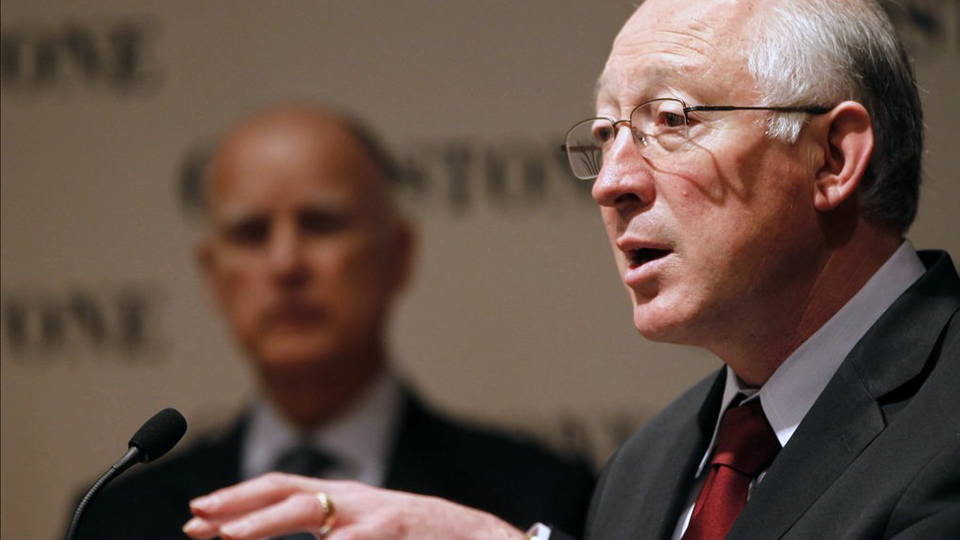 In news from the campaign trail, Democratic presidential nominee Hillary Clinton’s transition team, which would set up her administration if she wins the White House, will be run by former top aides to President Obama. Clinton’s campaign said Tuesday the team will be led by former Interior Secretary Ken Salazar. Salazar has previously supported fracking, the Trans-Pacific Partnership and the Keystone XL pipeline—initiatives Clinton’s presidential primary opponent Bernie Sanders opposed, forcing Clinton to change some of her positions on those issues. Other members of the team are former Obama National Security Adviser Tom Donilon, Center for American Progress head Neera Tanden, former Michigan Governor Jennifer Granholm and Maggie Williams, the director of Harvard’s Institute of Politics. The group will lay the groundwork for a possible Clinton administration and help the president-elect make key decisions during the period between the election and the inauguration. We’ll be joined later in the show by David Sirota, senior editor for investigations at the International Business Times, to discuss Clinton’s transition team.
TOPICS:
Hillary Clinton
2016 Election
Trump Shakes Up Campaign Staff for Second Time in as Many Months
 Meanwhile, Republican presidential nominee Donald Trump has reorganized his campaign staff for the second time in two months. He has named Stephen Bannon, the executive chair of the conservative outlet Breitbart News, to be his campaign’s chief executive. Kellyanne Conway, who is currently a senior adviser to Trump, will become the campaign manager. The shakeup appears to sideline Trump campaign chair Paul Manafort, who is facing questions about his years of political consulting work in Ukraine, where he advised former President Viktor Yanukovych. The New York Times has reported that handwritten ledgers unearthed by Ukraine’s newly formed National Anti-Corruption Bureau show $12.7 million of cash payments that were slated to go to Manafort. It is not known whether Manafort actually received the money. Click here to see our interview with award-winning Rolling Stone journalist Matt Taibbi about Manafort’s time in Ukraine.
TOPICS:
Donald Trump
2016 Election
Ousted Fox CEO Roger Ailes Advising Trump on Presidential Debates
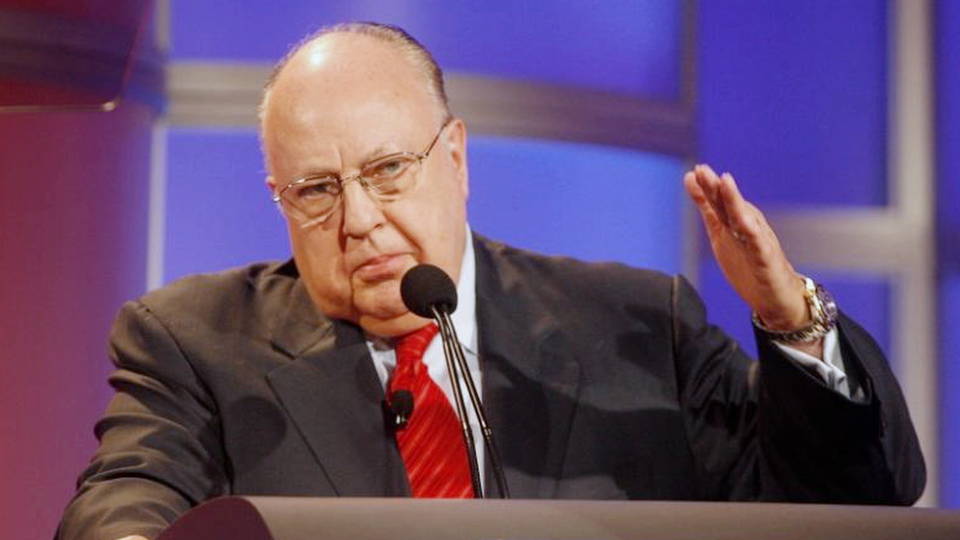 Meanwhile, former Fox News chair Roger Ailes is reportedly advising Donald Trump on next month’s debate between him and Hillary Clinton. Ailes resigned from Fox News in July. He has been accused of sexual harassment by more than 20 women, including Fox News anchors Megyn Kelly, Andrea Tantaros and Gretchen Carlson. Ailes has also been accused of running his own "Black Room" operation out of Fox News, in which he used Fox money to hire private detectives and political operatives who carried out Ailes’s personal campaigns, including targeting journalists. Trump has called Ailes a friend and has defended Ailes after the harassment allegations.
TOPICS:
Donald Trump
2016 Election
Trump to Receive First Top-Secret Intelligence Briefing Today
 Donald Trump is set to receive his first top-secret national security briefing today. He will be accompanied by former Defense Intelligence Agency head Michael Flynn. Flynn was paid last year by the Russian state-funded TV network RT to speak at its 10th anniversary gala. New Jersey Governor Chris Christie, who heads Trump’s transition team, is also expected to join Trump at the briefing.
TOPICS:
2016 Election
Donald Trump
NJ Forgave Millions in Trump Casino Taxes After Christie's Election
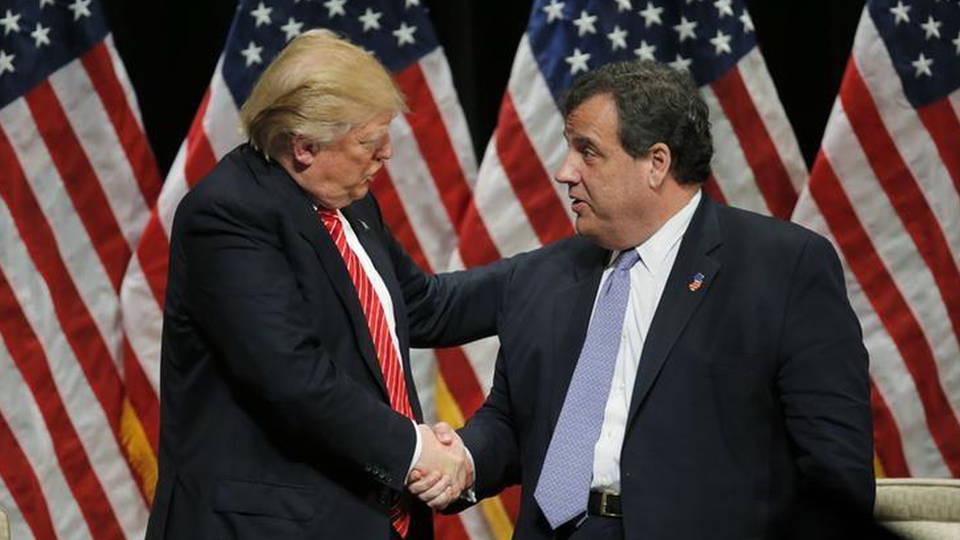 This comes as The New York Times is reporting that New Jersey Governor Chris Christie’s administration forgave millions of dollars of taxes owed by Donald Trump’s casinos to New Jersey, even after state auditors raised concerns some of the casinos’ tax filings were fraudulent. When Christie was elected governor in 2009, New Jersey was seeking nearly $30 million in taxes owed by Trump’s casinos. Two years later, under Christie’s leadership, the state settled with Trump for only $5 million.
TOPICS:
Donald Trump
2016 Election
Trump Calls for More Police in Wisconsin, Following Uprising
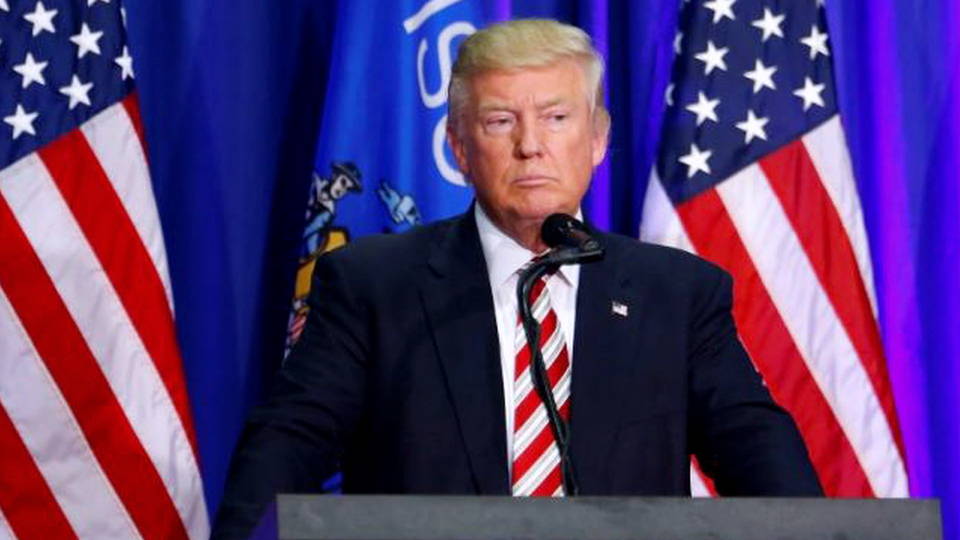 Donald Trump visited a Milwaukee suburb Tuesday, where he called for more police to patrol low-income communities. His visit comes only days after the uprising in Milwaukee sparked by the fatal police shooting of 23-year-old African American Sylville Smith. Trump’s approval rating among African Americans is between zero and 1 percent. This is Trump speaking in front of an overwhelmingly white audience in West Bend, Wisconsin.
Donald Trump: "The problem in our poorest communities is not that there are too many police. The problem is that there are not enough police. More law enforcement, more community engagement, more effective policing is what our country needs desperately. Just like Hillary Clinton is against the miners, she is against the police. Believe me."
Trump also visited Milwaukee Tuesday, where he met briefly with Milwaukee County Sheriff David Clarke. Sheriff Clarke sparked controversy with his speech at the Republican National Convention last month when he celebrated the acquittal of a police officer charged in the case of Freddie Gray, who died from injuries sustained in police custody in Baltimore.
TOPICS:
Donald Trump
2016 Election
NYC to Pay $4 Million over Police Killing of Akai Gurley
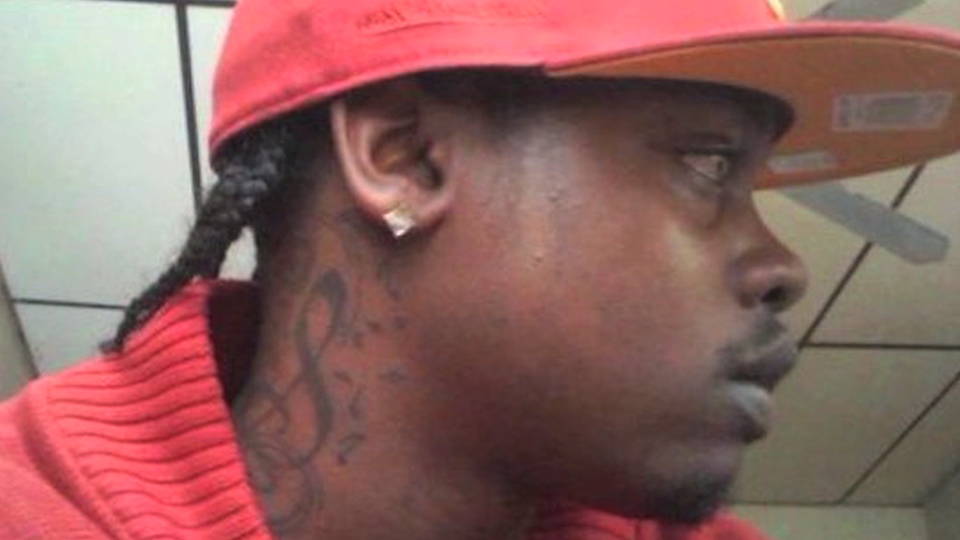 Meanwhile, the City of New York has agreed to pay more than $4 million to settle a wrongful death lawsuit filed by the family of Akai Gurley, an unarmed African-American father who was killed by a police officer in the stairwell of a Brooklyn housing project in 2014. New York City police officer Peter Liang fatally shot Gurley as he was walking down the stairwell with his girlfriend because the elevator was broken. Liang was doing a stairwell inspection. He says he accidentally fired his gun. Following the shooting, Officer Liang first texted his union representative before making a radio call for help as Gurley lay dying. A jury convicted Liang of manslaughter earlier this year, but a judge made the rare decision to reduce Officer Liang’s conviction to the lesser charge of criminally negligent homicide, and sentenced him to 800 hours of community service. As part of the settlement, Officer Liang will pay $25,000 to Kimberly Ballinger, the mother of Gurley’s young daughter.
TOPICS:
Police Brutality
11 Dead in Louisiana Amid Historic Flooding
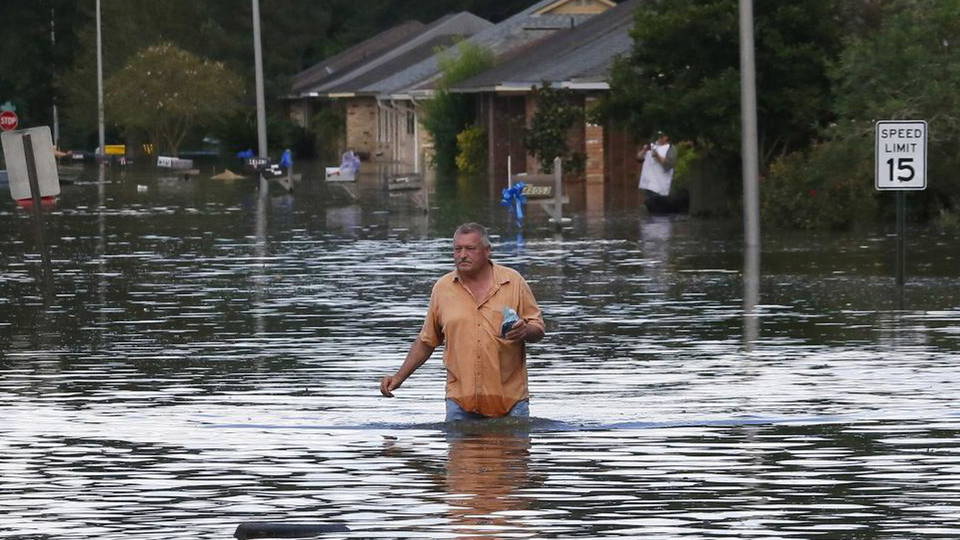 In Louisiana, at least 11 people have died as rescuers continue to search for missing people amid historic flooding. More than 10,000 people have been forced to relocate to shelters, and President Barack Obama has declared the area a federal disaster zone. More rain is in the forecast for the region this week.
More Than 80,000 Evacuated as Fires Destroy Homes Near Los Angeles
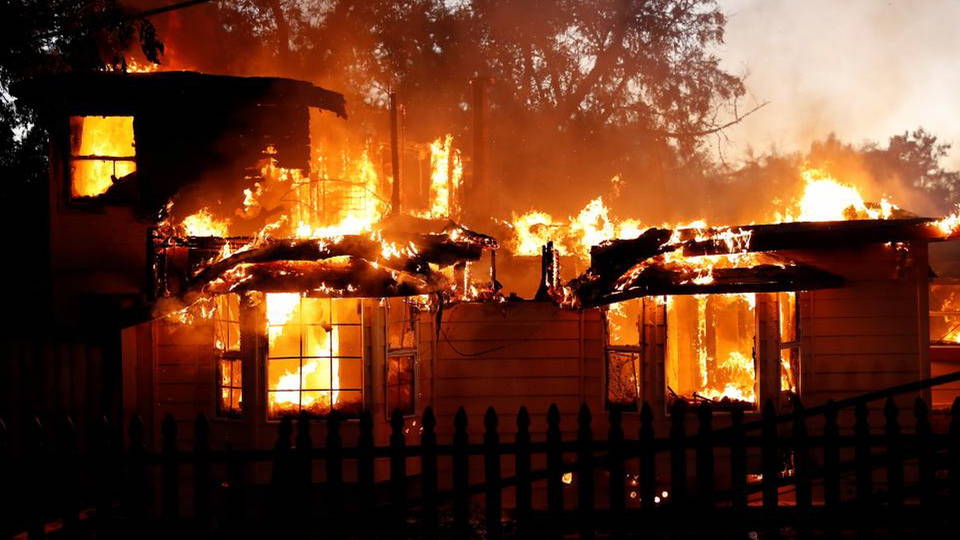 Meanwhile, in California, authorities have ordered more than 80,000 people near Los Angeles to evacuate, as a fast-moving fire continues to grow. Fed by strong winds, bone-dry brush and 100-degree temperatures, the Blue Cut fire is the latest in a series of destructive wildfires ravaging California amid the state’s climate change-fueled drought. So far this year, California fires have killed eight people and destroyed hundreds of homes. This comes as scientists have confirmed July was the hottest month ever recorded, making it the 15th straight month to smash global temperature records amid human-fueled climate change.
TOPICS:
Climate Change
Report: Most Cities Will Be Too Hot for Summer Olympics by 2084
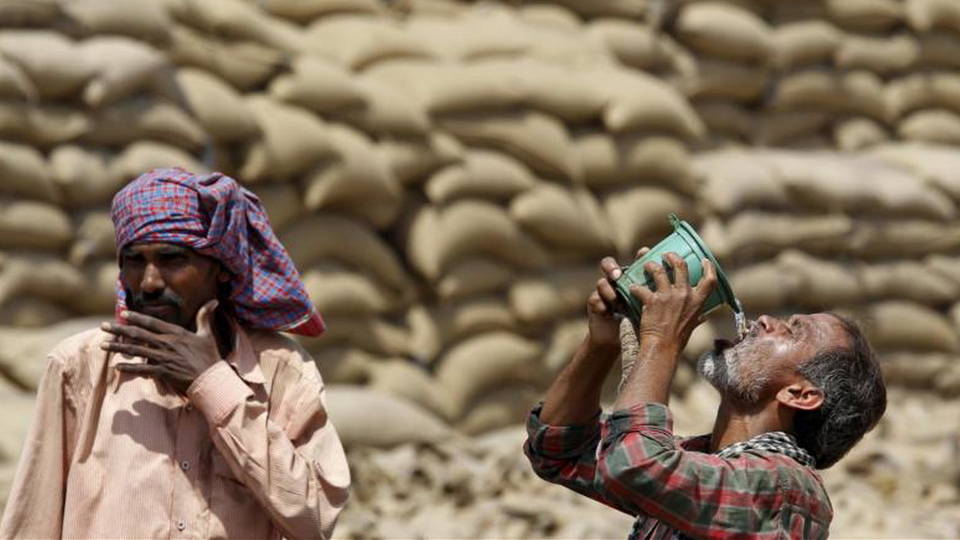 Meanwhile, in Rio, the Olympic Games are nearing the end of their second week. This comes as a new study in the British medical journal The Lancet shows that by the 2084 Olympics, rising temperatures will make it nearly impossible for most cities to host the Summer Games. The study points out that only 70 percent of the U.S. Olympic marathon team completed their trials in Los Angeles earlier this year, which were the hottest trials on record.
TOPICS:
Climate Change
Yemen: U.S.-Backed Strike Kills 9 Civilians
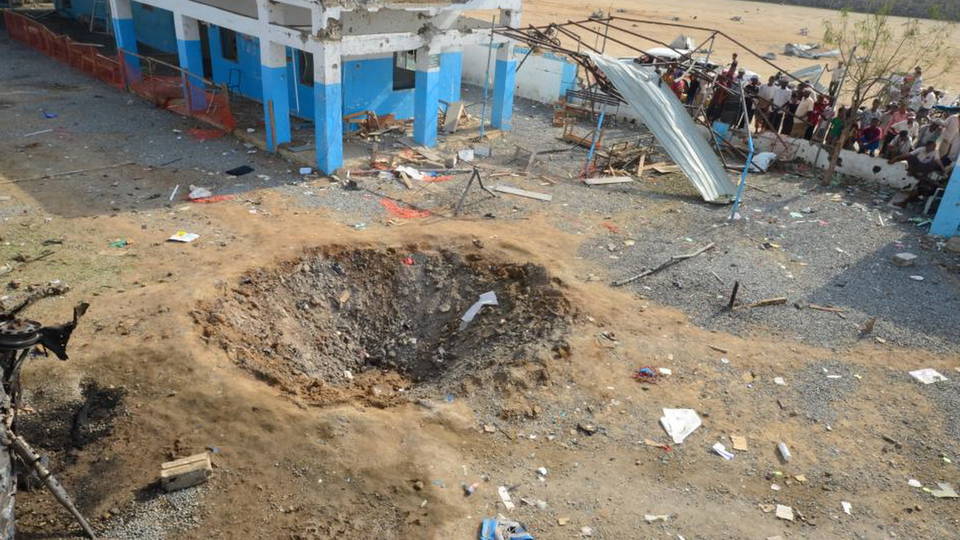 In Yemen, residents of the capital Sana’a say a U.S.-backed, Saudi-led airstrike killed nine civilians Tuesday. This comes as Doctors Without Borders calls for an independent investigation into Monday’s strike on a hospital, which killed as many as 15 people. Monday’s attack on the hospital marks at least the fourth time U.S.-backed, Saudi-led airstrikes have hit a Doctors Without Borders-supported hospital in Yemen during the 17-month conflict. The group says it had provided the Saudi-led coalition with coordinates for all four of these hospitals, so they would not be struck. This is Françoise Bouchet-Saulnier, Doctors Without Borders’ legal director.
Françoise Bouchet-Saulnier: "They’re sorry, but we are dead. They killed our patients, they killed our staff. So, in fact, it’s even more worrying when they say, 'No, we didn't want it.’ At least if we were discussing, 'You had combatants in your hospital, we wanted to strike them,' at least we would be discussing about intention. Now we are left with, you know, people using high-technological weapons—but without precision?"
TOPICS:
Yemen
Mothers Enter 2nd Week of Hunger Strike at PA Detention Center
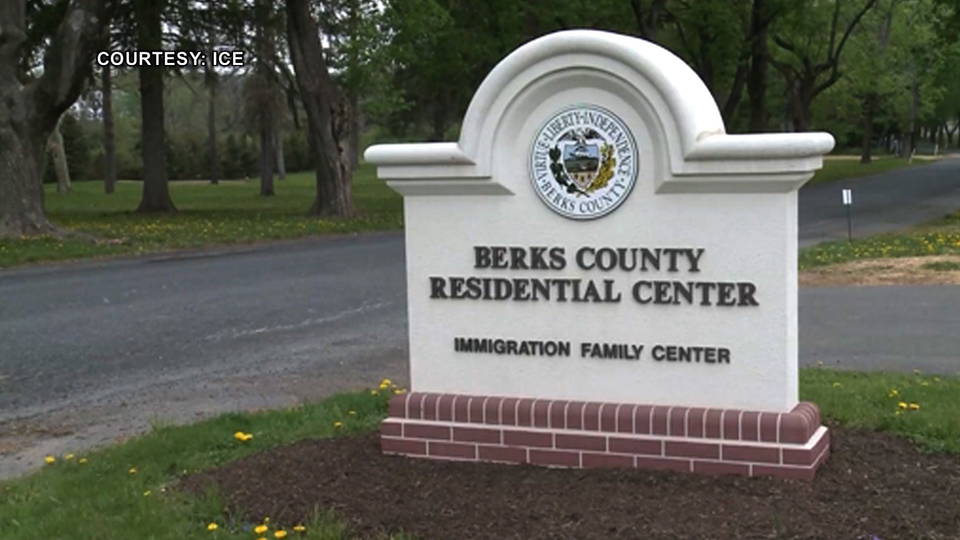 And in Pennsylvania, immigrant mothers detained with their children at the Berks County Residential Center have entered their second week of a hunger strike. They are protesting the government’s claims that the average time in detention is only 20 days. By the end of this month, at least three families will have spent a full year in custody at the Berks facility. Organizers say as many as 26 women are currently on hunger strike. In a letter to Secretary of Homeland Security Jeh Johnson, the mothers wrote, "On many occasions our children have thought about suicide because of the confinement and desperation that is caused by being here." To see all of our reporting on the Berks Detention Center, go to democracynow.org.
TOPICS:
Immigrant Rights
Immigration
Donate today:
Follow:


SPEAKING EVENT


Democracy Now!: Twenty Years Covering the Movements Changing America
WORK WITH DN!

Senior TV Producer
Development Manager
207 West 25th Street, 11th Floor
Immigrant Rights
Immigration
Donate today:
Follow:
SPEAKING EVENT
8/19 Seattle, WA
NEW BOOK
NEW BOOK
Democracy Now!: Twenty Years Covering the Movements Changing America
WORK WITH DN!
Senior TV Producer
Development Manager
207 West 25th Street, 11th Floor
New York, New York 10001, United States
-------
-------

No comments:
Post a Comment