democracynow.org
Stories:
 In Historic Shift, U.S. Government to End Use of Deadly, Costly, Negligent Private Prisons
In what some are calling a historic change in policy, the Justice Department says it will phase out the use of privately run federal prisons. In a memo describing the policy shift, Deputy Attorney General Sally Yates said research showed private prisons "simply do not provide the same level of correctional services, programs, and resources" and "do not save substantially on costs," either. Yates added that government education and training programs for prisoners "proved difficult to replicate and outsource” in the private sector. In the memo, she said as the contracts for 13 private federal facilities come to the end of their terms over the next five years. Some 22,000 federal prisoners out of a total of 193,000 will eventually be impacted by the move. Most are immigrants convicted of crossing the border without permission—charges that currently account for 50 percent of all federal prosecutions. This follows a series of reports by investigative journalists. In our first segment, we speak with reporter Seth Freed Wessler, whose yearlong probe for The Nation and Reveal News uncovered dozens of questionable deaths and years of dire warnings from internal monitors at the private prisons now set to lose their contracts.
TRANSCRIPT
This is a rush transcript. Copy may not be in its final form.
JUAN GONZÁLEZ: We begin with news that some are calling a major reversal of U.S. prison policy. On Thursday, the Justice Department announced it plans to phase out the use of privately run federal prisons. In a memo describing the policy shift, Deputy Attorney General [Sally] Yates said research showed private prisons, quote, "simply do not provide the same level of correctional services, programs, and resources" and "do not save substantially on costs," either. Yates added that government education and training programs for prisoners, quote, "proved difficult to replicate and outsource" in the private sector. In the memo, she said, as the contracts for 13 private federal facilities come to the end of their terms over the next five years, quote, "the Bureau [of Prisons] should either decline to renew that contract or substantially reduce its scope." Some 22,000 federal prisoners out of a total of 193,000 will eventually be impacted by the move. Most are immigrants convicted of crossing the border without permission—charges that currently account for 50 percent of all federal prosecutions.
AMY GOODMAN: The Department of Justice announcement will have no direct impact on private immigrant detention facilities, which contract with the Department of Homeland Security. It also has no direct bearing on contracts for privately run prisons at the state level which house less than 7 percent of the total state prison population. But the news still sent stocks plummeting—Corrections Corporation of America, The GEO Group and Management and Training Corporation, which operate the 13 federal prisons.
CCA issued a statement today saying, quote, "We are disappointed with the BOP’s decision to reduce its utilization of privately operated facilities to meet their capacity needs, and believe our value proposition remains strong. ... At this time the contracts at the three facilities CCA operates on behalf of the BOP remain unchanged, and the BOP will determine whether to extend these contracts at the end of their respective contract terms," unquote. The statement noted the contracts account for 7 percent of CCA’s total annual revenue.
All of this comes after a report released last week by the federal inspector general that found federal prisons run by private companies are substantially less safe and secure than ones run by the Bureau of Prisons, and feature higher rates of violence and contraband. It also follows a series of reports by investigative journalists. Some documented riots at these facilities in recent years, sparked by substandard food and medical care, and poor conditions. In other cases, prisoners have suffered in silence until their plight was exposed.
For more, we’re joined by three of these journalists. Seth Freed Wessler’s yearlong probe for The Nation and Reveal News uncovered dozens of questionable deaths and years of dire warnings from internal monitors at the private prisons now set to lose their contracts. He’s joining us via Democracy Now! video stream from Maine.
Joining us from Manchester, New Hampshire, Shane Bauer, whose 18-month investigation for Mother Jones recently took up its entire issue. Headlined "My Four Months as a Private Prison Guard," it chronicles his time as an undercover correctional officer at Louisiana’s Winn Correctional Center, run by the CCA, the Corrections Corporation of America. His most recent article is headlined "This Prisoner Hanged Himself at the Private Prison Where I Worked. His Family Says He Didn’t Have to Die."
Also joining us here in New York is Democracy Now!’s Renée Feltz, the criminal justice correspondent who has reported for about a decade on private immigrant detention centers.
We welcome all of you to Democracy Now! Seth Freed Wessler, let’s begin with you. Talk about the significance of this historic announcement out of the Justice Department that they’re closing for-profit prisons that are run by the DOJ.
SETH FREED WESSLER: Well, yesterday’s announcement by the Department of Justice came as a surprise to nearly everybody outside and inside the Bureau of Prisons. What the announcement says is that the Bureau of Prisons, the Federal Bureau of Prisons, over the next several years, will have to start shutting down its private prisons. You know, few people know that the federal government has established, over the last two decades, a sort of subsystem of federal private prisons used exclusively to hold noncitizens convicted of federal crimes. And these prisons have been the sites of repeated protests by prisoners, as I’ve documented in my reporting, and, as I found in an investigation for The Nation, deep and systemic failures to provide baseline levels of care to prisoners held inside, dozens of deaths of men who are held in these facilities, after substandard, negligent medical care.
And so, this decision by the Department of Justice will begin a process of shuttering these very facilities that I’ve been investigating, where protests have erupted over the years. And over the next five years, we’re going to see these prisons close. There are 13 of these federal prisons operating right now, scattered around the country, in Texas and California and the South and elsewhere. And I spoke yesterday to the relatives, actually, of several men who died inside of these facilities after pretty extreme kinds of medical neglect. Both of those families said that they felt that this decision to close these facilities brought some kind of justice, if too late for them. It’s a big decision.
JUAN GONZÁLEZ: Well, Seth, you mentioned that this policy has been in effect about two decades. Actually, it was in the mid-1990s, during the Bill Clinton administration, actually, that this began. We normally associate privatization of government services with Republicans. This actually started under a Democratic president. What was the original rationale for them?
SETH FREED WESSLER: That’s right. Well, as the federal government was beginning to incarcerate more and more people, and the size of the federal prison population was growing, the federal government, Congress and the White House, decided to begin a process of privatizing a subset of federal prisons to meet their capacity needs. In several years after the process began, the government actually decided, quite explicitly, that immigrants, noncitizens, would be an ideal group of people to be held in these stripped-down federal prisons. The government has said in statements, the BOP has said it in statements, that the immigrants, because they will later be transferred to immigration authorities and deported, that the government doesn’t have to provide them with the same kinds of rehabilitative or re-entry services that they might provide to U.S. citizens, that immigrants are an ideal group for these kinds of segregated subsystem of prisons.
These facilities have expanded rapidly over the last 15 years as the number of immigrants who are prosecuted criminally for crossing the border has grown massively. Last year, 70,000 people were prosecuted in federal courts for border-crossing crimes, for entry after deportation or illegal entry. And this has helped to expand the federal criminal justice system and expand these private prisons.
AMY GOODMAN: We’re going to go to break, then come back to this conversation. Seth Freed Wessler is an investigative reporter. His series on federal prisons, a latest piece, "Federal Officials Ignored Years of Warnings About Deaths in Private Prisons." This is Democracy Now! We’ll be back in a minute.
... Read More → Private Prisons May Be Phased Out, But Industry Leaves Trail of Bodies from Medical Neglect & Abuses
News that the Department of Justice will phase out 13 private prisons sent stocks plummeting on Thursday for for the companies that operate them: Corrections Corporation of America, The GEO Group and Management and Training Corporation. We look at the companies’ track record with Shane Bauer, whose 18-month investigation of a CCA prison for Mother Jones recently took up its entire issue. Titled "My Four Months as a Private Prison Guard," it chronicles his time as an undercover correctional officer at Louisiana’s Winn Correctional Center. His most recent article is titled "This Prisoner Hanged Himself at the Private Prison Where I Worked. His Family Says He Didn’t Have to Die." We are also joined by reporter Seth Freed Wessler, who investigated several CCA prisons for the federal government that are now set to close.
TRANSCRIPT
This is a rush transcript. Copy may not be in its final form.
AMY GOODMAN: We are talking about a historic decision, an announcement out of the Justice Department to close the federal government’s contracts with private prisons. Shane Bauer is with us, an award-winning senior reporter at Mother Jones, as well as Seth Freed Wessler, an investigative reporter, and Democracy Now!’s Renée Feltz.
But, Shane, we want to turn to you right now. We last had you on, just a little while ago, based on this remarkable issue of Mother Jones magazine that you wrote as an undercover prison guard you acted as in Louisiana. Your most recent article, "This Prisoner Hanged Himself at the Private Prison Where I Worked. His Family Says He Didn’t Have to Die," this based on your four-month investigation as a private prison guard. Talk about your reaction to this news and what actually happened to this prisoner you spoke of.
SHANE BAUER: Well, this news is certainly unprecedented and surprising. I mean, the findings of the Inspector General’s Office are not surprising. They’re consistent with findings from the Department of Justice over the years, from, you know, reports by journalists. They’re consistent with things that I saw at Winn in Louisiana. But, you know, this measure is certainly bigger than anything I expected.
As far as Damien Coestly, Damien was somebody who I had met while I was working at Winn. And after I left the prison, I learned that an inmate had committed suicide and that, you know, it was Damien Coestly. Damien was somebody who was very troubled. He, over the years, reported being suicidal. He also had been trying to change the way that CCA provided services, mental health services. At that prison of 1,500 inmates, there was only one part-time psychiatrist, one part-time psychologist and one full-time social worker. Damien had been trying to get into mental health programs; he had been waitlisted for two years. And he frequently went on suicide watch. And just to describe briefly what that is, it’s a solitary confinement cell, where a prisoner is naked, has only a tear-proof blanket. He’s given worse food, food that falls below USDA standards, and usually has no reading material or anything whatsoever in his cell. So this is the mental health services that Damien had. Damien went on hunger strike to try to get better mental health services. And eventually, Damien was put on suicide, and he was taken off, even though he was still claiming to be suicidal. He was not checked on the way that he was supposed to. And from what I saw at Winn, this was standard procedure. And he hung himself. And at the time of Damien’s death, he weighed 71 pounds.
JUAN GONZÁLEZ: Well, Shane, you mentioned this happened in a CCA prison.
SHANE BAUER: Yeah.
JUAN GONZÁLEZ: I wanted to ask you about the role of CCA in particular.
SHANE BAUER: Yeah.
JUAN GONZÁLEZ: After the DOJ announced Thursday that it would no longer use private prisons, stock prices for Corrections Corporation of America and GEO both plunged about 40 percent. But a financial analyst at Canaccord Genuity said, quote, "The massive falloffs in the stocks imply the risk will spread to other federal, state and local jurisdictions. ... We believe it is unlikely. As such, we think today’s stock action is more based on fear than actual cash flow risk," unquote. But in June, the CEO of Corrections Corporation of America, Damon Hininger, told a forum of investors that his firm will be, quote, "just fine," no matter who is elected to the White House this fall. This is him speaking.
DAMON HININGER: We’ve had some nice growth in our business under those three respective presidents. We had a lot of growth under Clinton, we had a lot of growth under Bush, and we’ve had a lot of growth under President Obama. And so, with that, if we continue to do a good job on the quality, and, with that, we can demonstrate savings, both on capital avoidance but also cost savings in our services, then I think we’ll be just fine.
JUAN GONZÁLEZ: That was Damon Hininger, CEO of Corrections Corporation of America, just in June. Talk about this company. How did it rise, and its role within this general federal prison contracting?
SHANE BAUER: Well, CCA and GEO both, you know, started operating prisons in the 1980s. This was a time when the prison population was skyrocketing. States were trying to build prisons to take up, you know, some of that increased population, and they couldn’t build them fast enough. And CCA stepped in and said, "Look, we’ll operate prisons. We’ll also build prisons. We’ll run them more cheaply. And, you know, we’ll be helping you deal with this overcrowding problem." So they kind of, you know, had—there was a need for them at one point.
And their argument now has consistently been that they’re saving money. And this is questionable, as the Department of Justice inspector general pointed out. But what’s important is that the—you know, to look at how they’re saving money. The main way that they save money is through staffing costs. The prison that I worked at, guards were paid $9 an hour. This was $3.50 less than the starting pay of guards at state-run facilities. Medical costs—you know, the company at the prison I worked, they had—if they sent a prisoner out for medical care, they had to bear that cost, so there’s, you know, a lot of resistance to sending prisoners out to the hospital. They had less mental health staff. There were days that I came into work where there were 24 guards for 1,500 prisoners. This is far below what their contract requires. And this problem has been found throughout CCA’s state and federal prisons. The inspector general has made reports on their audits showing that in one prison, where there were riots in the prison, that the riot was caused by understaffing and poor medical care. After they issued the report, they went back and found that that problem had not been corrected. This has happened in several states, as well.
And, you know, I think, to your question about how this is going to affect the states, I think it remains to be seen, but what I did see at Winn is that the company was under a lot of pressure by the state at that time to kind of get its act together, to improve security, improve healthcare, prevent escapes. There had been escapes while I was there. You know, the question is: How consistent is this throughout the country? But I certainly had a sense, from inside that one prison, that the company was struggling to try to hang onto it.
AMY GOODMAN: Shane, in your remarkable investigation, where you went undercover at the Winn Correctional Facility, again, run by CCA, the Corrections Corporation of America, you met a prisoner who had lost his fingers and legs because of inadequate medical care. We want to go to a clip from one of the videos that accompanied your report for Mother Jones.
ROBERT L. MARRERO: Gangrene. Mr. Scott complained about that for months to the medical staff at Winn. They gave him some—the equivalent of a couple of Motrin and told him to go away.
ROBERT SCOTT: Never saw a doctor. The whole time.
SHANE BAUER: He’s now suing the prison.
JENNIFER CALAHAN: The people that are working there as nurses and all that, they’re really not that qualified.
ROBERT L. MARRERO: There are doctors they can hire. There are doctors who are more or less affordable. I did some background checking on them, and one of them was a pediatrician who had lost his privileges to treat children.
AMY GOODMAN: Corrections Corporation of America said it’s, quote, "committed to ensuring that all individuals entrusted to our care have appropriate access to medical services as needed." Now I want to turn to a clip from our other guest Seth Freed Wessler’s report, that also deals with substandard medical care at private prisons. This is part of his interview with Dr. John Farquhar, the former clinical director at the Federal Correctional Institution in Big Spring, Texas, which is run by The GEO Group. It was featured on Reveal, a podcast from the Center for Investigative Reporting.
DR. JOHN FARQUHAR: There are times when I was critical. I’m a critical person, starting with myself.
SETH FREED WESSLER: You actually wrote at one point, "I feel bad for his shabby care."
DR. JOHN FARQUHAR: Well, I stand by that statement. I don’t know who it’s about, and I can’t comment on any single record of any person, but there are times when the care was not what I wanted for any patient, period.
AMY GOODMAN: That’s Dr. John Farquhar, the former clinical director at the Federal Correctional Institution. Seth Freed Wessler, weigh in here.
SETH FREED WESSLER: Well, I talked to medical workers, doctors, physician’s assistants and nurses who work in this subsystem of federal prisons that will now begin to be shut down. And across the board, they said that they were pressed to cut costs. That particular doctor said that his corporate bosses, soon after he got his job as the medical director, had come to town to tell him to cut down on the number of 911 calls made, because they were expensive. In that very prison, shortly after he left his job, a prisoner died after suffering a stroke, and the prison decided to just leave him in his cell until morning. The only medical worker on the shift that night was a licensed vocational nurse with about a year of training. And across the board, these prisons are operating with deep understaffing, using undertrained workers. And I found stories in 30,000 pages of federal records I obtained through an open records request, an open records lawsuit—I found stories of people who went months, even more than a year, in some cases, seeing only nursing staff, often only licensed vocational nurses, complaining of increasing pain, increasing illness, until they became so ill that they died inside of these prisons.
What’s remarkable about the documents that I obtained and the interviews I did with people who work in these prisons, as well as letters from prisoners who later died, is that the Bureau of Prisons knew for years about the very problems that I’m talking about. After the Bureau of Prisons set up this subsystem of federal private prisons, they actually established a monitoring system, an oversight system, hired monitors to go in and check on these facilities. And those monitors would flag repeat and systemic failures, especially in medical care, over and over again, send those flags to Washington in hopes that something would change. In fact, when those flags went up, federal officials in Washington refused to impose the fines, the full penalties available to them. And when monitors tried to shut down federal prisons that were failing, the top officials in the Bureau of Prisons in Washington actually refused to let those monitors shut these prisons down. So, the decision today about—rather, yesterday, to shut down these private prisons comes as a great surprise, because monitors have been saying for years these prisons are failing, documenting these problems, the very same problems, in some cases, that the inspector general found in its report and that I found in my reporting. Now, finally, these facilities are going to start being closed as their contracts come up for renewal.... Read More →
 As Feds Close Prisons Run by Private Companies, Will They Do Same for Immigrant Detention Centers?
The DOJ’s announcement that it will phase out federal prisons operated by private prison companies will have no direct impact on private immigrant detention facilities, which are operated by the same companies under contracts with the Department of Homeland Security. Detention Watch Network has now called for DHS "to follow suit and break their ties with private prison companies that operate more than half of ... U.S. immigrant detention facilities as a step towards ending detention completely." We get more details from Democracy Now! correspondent Renée Feltz, who notes the detention centers hold people who have committed civil offenses, and children as young as two years old.
TRANSCRIPT
This is a rush transcript. Copy may not be in its final form.
JUAN GONZÁLEZ: I want to bring in also Renée Feltz. You’ve been covering a lot of these issues with the private prisons, especially in terms of immigrants across the country. This only affects the federal prisons; it does not affect those detention—private detention facilities run by Homeland Security or even by the states themselves, who contract—many of the states contract with these private companies. Now, the Detention Watch Network has called on the DOJ to have this policy also for the the Homeland Security network. Can you talk about that?
RENÉE FELTZ: Well, that’s right, Juan. And it’s important to understand that this policy shift will not impact immigrant detention centers. Many people think about the prisons that will be impacted, that Seth described, because they are immigrant-only facilities—essentially, separate but equal prisons—that he helped to expose. But we want to be clear that this decision from the DOJ is not going to impact anything that has to do with DHS, Department of Homeland Security. However, that is sort of where the momentum is here. People are saying if there are flaws with how private prison operators, accused of shortcuts, run federal facilities under one agency, what about under another agency? Something else that I think is important to distinguish here is that—
JUAN GONZÁLEZ: Because it’s the same companies, more or less, running them.
RENÉE FELTZ: Right, it’s Corrections Corporation of America and GEO Group, primarily. They run the private prison contracts that are going to be ended by the DOJ. They also have the contracts for the immigrant detention centers, which are largely privatized, but not all.
Now, one thing I also wanted to mention is, you know, we talked about the federal prisons that are closing that hold so-called criminal aliens—that’s what the government calls them. They are largely accused of crossing the border, being charged with a misdemeanor, and then, after a few times of that, being convicted of a felony for that same offense. So they are in prison for crossing the border without permission. It seems like an immigration offense, but it’s not. Once they get done with that sentence, they then go on to immigrant detention. And one thing that is interesting about immigrant detention centers is that not everyone there has this prior criminal background. We’re talking about people who largely are committed of civil offenses, coming to the country without permission—no crime, but held essentially in a controlled environment with barbed wire, guards. And what’s interesting recently at these privately run immigrant detention centers is that the Obama administration has brought back family detention centers. So we’re talking about CCA and GEO, who have shortcomings in Federal Bureau of Prisons, running a facility where children as young as two years old are being held with their parents.
AMY GOODMAN: For example, talk about the Berks facility.
RENÉE FELTZ: That’s right. Right now, Berks facility in Pennsylvania, which is run, interestingly, through a contract with the county and ICE, not even with a private entity, is also having problems being accused of holding immigrants there for way too long. There’s a mandate to hold them for about 20 days maximum, if they hold children. The women there are on a hunger strike, because they want to get out. They’ve been held there for more than a year.
And that points to another quick thing I would say about how ICE characterizes these facilities. They’re saying that the ICE immigrant detention centers that are private are short-term processing centers, where people are held for a very brief amount of time, doesn’t have anything to do with rehabilitation. That’s different than the prisons. So, you know, we are talking about different types of facilities.
AMY GOODMAN: You know, there is a hunger strike going on at Berks, and Democracy Now! was able to speak to one of the women who are part of that hunger strike this week inside Berks.
HUNGER STRIKER: [translated] We know we haven’t committed any crime. We only came to ask for help in this country, help that still hasn’t been offered to us. There are many children who have thought about throwing themselves out of the window, of escaping. There are others who want to break the window, who say maybe sacrificing their own lives is going to be a sacrifice to free us all. So it’s very sad that children and adolescents are thinking of committing suicide, when really they should be focusing on their studies.
AMY GOODMAN: We will continue to follow these issues, the prisons that close and the prisons that don’t. And I want to thank Seth Freed Wessler for joining us from Maine, as well as Democracy Now!’s Renée Feltz.
... Read More → Former Iran Hostage Shane Bauer: Claim That $400M U.S. Paid to Iran was Ransom Deal is "Absurd"
We get reaction to the State Department’s statement that a plane filled with $400 million in cash for Iran was "leverage" to ensure that five American prisoners held by Iran were released. Republicans, including Donald Trump, have said the money sent in January was a ransom for the prisoners. The Obama administration says it was a pre-planned transfer that was part of the landmark nuclear deal and that the negotiations regarding the two issues were separate. We speak with Shane Bauer, a Mother Jones reporter who spent 26 months in Tehran’s Evin Prison, four of them in solitary, after he and two other Americans, Sarah Shourd and Joshua Fattal, were captured while hiking near the unmarked Iran-Iraq border and then freed after negotiations.
TRANSCRIPT
This is a rush transcript. Copy may not be in its final form.
AMY GOODMAN: But, Shane Bauer, we want to stay with you for one more moment, but on a different issue. I want to ask you about the recent developments in Iran. In addition to your recent reports for Mother Jones, in 2009, you spent more than two years in Tehran’s Evin Prison, four [months] of them in solitary, after you and two other Americans—now your wife, Sarah Shourd, and Josh Fattal—were captured while hiking near the unmarked Iran-Iraq border. You recount this in your book, A Sliver of Light: Three Americans Imprisoned in Iran. This is a clip of you speaking shortly after your release.
SHANE BAUER: The only explanation for our prolonged detention is the 32 years of mutual hostility between America and Iran. We were convicted of espionage because we are American. It’s that simple. No evidence was ever presented against us. That is because there is no evidence and because we are completely innocent.
JOSH FATTAL: Many times, too many times, we heard the screams of other prisoners being beaten, and there was nothing we could do to help them. Solitary confinement was the worst experience of all of our lives. It was a nightmare that Sarah had to endure for 14 months. In all the time we spent in detention, we had a total of 15 minutes of telephone calls with our families and one short visit from our mother—our mothers. We had to go on hunger strike repeatedly just to receive letters from our loved ones.
AMY GOODMAN: Well, this week, the State Department said a plane filled with $400 million in cash for Iran was "leverage" to ensure that five other American prisoners held by Iran were released. Republicans, including Donald Trump, have said the money was ransom for the prisoners. The money was sent to Iran in January. The Obama administration has said the money was a pre-planned transfer that was part of the landmark nuclear deal, and that the negotiations regarding the two issues were separate. But State Department spokesman John Kirby admitted the negotiations had been linked, to some extent.
JOHN KIRBY: We were able to conclude multiple strands of diplomacy within a 24-hour period, including implementation of the nuclear deal, the prisoner talks and the settlement of an outstanding Hague tribunal claim, which saved American taxpayers potentially billions of dollars. As we said at the time, we deliberately leveraged that moment to finalize these outstanding issues nearly simultaneously.
AMY GOODMAN: That $400 million had been owed to Iran since the 1970s, when the U.S. refused to send weapons Iran had already paid for following the Iranian revolution. Now, Shane, we’re wondering your response to this news and the latest controversy over whether this money was actually ransom, given your situation and how you ultimately got out of Iran.
SHANE BAUER: I think the claim that this money was a ransom is absurd. Like you said, this money had been owed to Iran since the time of the overthrow of the shah. You know, this was a pre-existing negotiation, and pegging—using this as leverage to get Iran to release the prisoners is exactly what should have been done. You know, I could easily see criticism from the opposite direction from Republicans, saying, you know, "What if the Obama administration had not done this, and left these prisoners sitting in there and not included them in negotiations?" I mean, that would be way more ridiculous.
AMY GOODMAN: Actually—actually, that was Donald Trump’s criticism of the Iran deal. Early on, when the Iran deal was struck, he said this is pathetic, if, included in this, the prisoners do not get released.
SHANE BAUER: Exactly. I mean, these criticisms are ridiculous, in my opinion. And I think, you know, when I had been in prison, there had not been, as far as I know, much in terms of negotiations between the U.S. and Iran. And the fact that the administration moved towards this and including these prisoners in those negotiations is exactly the right thing to do.
AMY GOODMAN: How, ultimately, did you get out, Shane?
SHANE BAUER: I had been released, as well as Sarah and Josh, through negotiations with Oman. Oman had actually initiated these negotiations themselves. They were interested in easing tensions between the U.S. and Iran, and in ultimately moving towards a nuclear deal. They made trips to Iran and to D.C., and kind of went back and forth bringing offers from each side. And after our release, that avenue, that had been created through our situation, was the way that the U.S. and Iran began nuclear talks, before they were publicly negotiating.
AMY GOODMAN: Well, Shane, thanks so much for being with us, Shane Bauer, award-winning senior reporter at Mother Jones. His recent piece is about his undercover investigation of private prisons, called "This Prisoner Hanged Himself at the Private Prison Where I Worked. His Family Says He Didn’t Have to Die." It’s part of this amazing series he did, "My Four Months as a Private Prison Guard," which chronicles his time undercover as a correction officer in Louisiana’s Winn Correctional Center. But Shane also wrote the book, together with Sarah and Josh, called A Sliver of Light: Three Americans Imprisoned in Iran.
When we come back, we’ll talk about the Olympics, the controversy there and some of the records that have been broken. Shane, thanks so much for being with us. Stay with us.
... Read More → Dave Zirin: Brazilians are Fed Up with U.S. Olympian Ryan Lochte and Privileged First-World Tourists
Ahead of the final weekend of the Olympics in Rio de Janeiro, Brazilian police have accused a group of U.S. Olympic swimmers of vandalism during an incident at a gas station last weekend and say they are now considering whether to recommend charges against them, including gold medalists Ryan Lochte and Jimmy Feigen. The swimmers said they were robbed by gunmen impersonating police officers in the early hours of Sunday as they returned in a taxi to the Athletes Village from a party in the city. However, after an investigation, Rio police said there had been no robbery. U.S. Olympic authorities later apologized to Brazil after two U.S. swimmers who were kept in the country for questioning were allowed to go home. We are joined by Dave Zirin, sports editor for The Nation magazine, whose recent article is headlined "Ryan Lochte is One of Many Privileged First-World Tourists—and Brazilians are Fed Up."
TRANSCRIPT
This is a rush transcript. Copy may not be in its final form.
JUAN GONZÁLEZ: We turn now to the Olympics, which are heading into the final weekend in Rio de Janeiro. Brazilian police have accused a group of U.S. Olympic swimmers of vandalism during an incident at a gas station last weekend and say they are now considering whether to recommend charges against them, including gold medalists Ryan Lochte and Jimmy Feigen. The swimmers said they were robbed by gunmen impersonating police officers in the early hours of Sunday as they returned in a taxi to the Athletes Village from a party in the city. However, after an investigation, Rio police said there had been no robbery. This is the head of Rio de Janeiro’s civil police, Fernando Veloso.
FERNANDO VELOSO: [translated] At this exact moment, what the police can say is there was no robbery the way the athletes reported. They were not victims of the criminal facts that they described. The police can say that now. In theory, they can be charged with giving false testimony and vandalism—in theory. They stopped at the gas station. They went to the toilets, as the images showed. And one or more than one—we are still investigating that—started vandalizing inside the toilets of the gas station.
JUAN GONZÁLEZ: U.S. Olympic authorities later apologized to Brazil after two U.S. swimmers who were kept in the country for questioning were allowed to go home. U.S. Olympic Committee CEO Scott Blackmun said in a statement, quote, "We apologize to our hosts in Rio and the people of Brazil for this distracting ordeal in the midst of what should rightly be a celebration of excellence."
The incident was just one in an Olympic Games plagued by everything from green pools to empty seats. Brazil is also battling an economic recession, a massive Zika outbreak and the recent ouster of its democratically elected president, Dilma Rouseff. Human rights organizations have also expressed concern about the impact of the Games on Rio’s most vulnerable communities.
AMY GOODMAN: But the Olympics were not without success stories. Thursday night, Jamaica’s Usain Bolt dominated the men’s 200 meters final, clinching his eighth Olympic gold medal. Brianna Rollins led the American women in sweeping the 100-meter hurdles Wednesday. And the so-called Final Five women’s gymnastics team, the most diverse team ever to represent the U.S., concluded their run in Rio with an historic nine medals.
To talk more about the Rio Olympics, we’re joined by Dave Zirin. He’s back in Washington; he was just in Rio. He writes for The Nation magazine. His recent article, "Ryan Lochte is One of Many Privileged First-World Tourists—and Brazilians are Fed Up." He also is the author of Brazil’s Dance with the Devil: The World Cup, the Olympics, and the Fight for Democracy.
Dave, talk about the Lochte scandal.
DAVE ZIRIN: No, absolutely. And we do have breaking news on this, in addition to what you’ve already reported. Jimmy Feigen, one of the two swimmers along with Lochte who was probably going to be charged for making false statements to the police and vandalism, has been released. He’s on his way home. In return, he had to give an $11,000 charitable donation to a foundation called Reaction, that attempts to use judo and sports as a way to bring favela kids into the mainstream of Rio. It’s the place that Rafaela Silva, the Brazilian judoka from the City of God favela, that’s where she trained, as well. And that might sound small to some folks, but in a city where the business leaders, the construction leaders and the real estate leaders want a Rio without favelas, and have built these exclusion games, where the favelas are under occupation, any monetary ability to give anything helps. So Jimmy Feigen is on his way back to the United States. As for Ryan Lochte, he could still be indicted in absentia for making false statements and vandalism. But at the same time, it would be for a misdemeanor, and it’s not the sort of thing that would require any sort of extradition. So, the criminal part of this is largely done.
But I got to tell you, having just returned from Rio, the anger about this is not going anywhere, because Ryan Lochte has done the impossible: He’s managed to unite people in Rio who are both against the Olympics and people who are for the Olympics, because it’s very paradoxical down there, because, on the one hand, you know, I spoke to teachers, I spoke to people who depend on Brazil’s ramshackle medical system, and people are, of course, furious about the fact that billions of dollars are being spent to put on these Games at a time when there is so much economic and social upheaval in the country, when the country is mired in its worst recession in decades. But paradoxically, there is a lot of pride in the fact that people are kind of holding this together, that volunteers, that low-wage workers are somehow keeping this together and holding the kinds of Games that can have the kinds of events, Amy, that you described, that can create these kinds of moments.
And to have Ryan Lochte and friends literally and figuratively urinate all over their efforts, and also be the kind of stereotype of the ugly American who believes there is no sin below the equator, who exploits people’s biggest stereotypes about Rio and crime, and attempts to leverage the fact that they’re wealthy and white and Olympians and could somehow just blame it on the brown people, get on a plane and go home, what it manages to do is touch every nerve in Brazilian society right now and create a kind of bizarre unity of Brazilians, who are saying, "Wait a minute, we deserve a lot better than this for the effort that we have put in to staging these Games under unendurable circumstances."
JUAN GONZÁLEZ: And, Dave, I wanted to follow up on that, because obviously this scandal had two periods. There was the early narrative, that was reinforcing, well, Rio is a place of criminality, the athletes aren’t safe, for the first couple of days, until the actual story came out, and now there’s been a reversal. It reminded me very much of—people may have forgotten—more than, I guess, 30 years ago now—
DAVE ZIRIN: Charles Stuart?
JUAN GONZÁLEZ: No, Bobby Knight—
DAVE ZIRIN: Oh, Bobby Knight, yeah.
JUAN GONZÁLEZ: —when Bobby Knight was down in Puerto Rico with the U.S. team in the Pan American Games, and he ends up getting arrested because he assaulted a police officer there, and then gets—and then flees the country and becomes, really, a pariah in Latin America as a result.
DAVE ZIRIN: Yeah, Bobby Knight, a Trump supporter. Bobby Knight, oh, so, yeah, he assaulted a Puerto Rican police officer. And then, as he said later, he proudly mooned the entire country as the plane was taking off. It’s that kind of ugly American stereotype that helps nobody. And fulfilling that stereotype certainly helps nobody.
And I’ll you who it’s also really upset, is that, you know, when I was down in Rio, I met a ton of people from the United States who were trying to do the right kind of work. They’re trying to do favela support. They’re trying to help train people with independent media, organizations like Catalytic Communities. When you have an American behave like this, behave with this kind of unfettered privilege, what it does is it affects everybody who’s actually trying to do the right work and build solidarity. And that’s why this is more than just like this kind of small story of Americans behaving badly. I’m sure that’s what Ryan Lochte thinks it is. His comments on this have all reflected a kind of brain-deadness about the international incident aspect of this.
But for people who are down there, for people who actually have to deal with police violence, for people who have to deal with a very real thing in Rio, which is police actually robbing you, for people in the favelas who have to deal with police violence, to have wealthy Americans, the people who are most likely to be protected by police, to tell a story about being robbed by police, that also—that manages to offend people who fight police corruption, and also people who are defending the way that Rio has been able to create a secure Games, even though rumors beforehand said that these would be some of the least secure Games in history.
JUAN GONZÁLEZ: And what about that, Dave? How has Rio managed to pull off these Games? Now we’re heading into the last weekend. We only have about 30 seconds.
DAVE ZIRIN: They’ve been able to pull off the Games through—basically, through Scotch tape, hard work and unpaid labor. A report was out today that the day laborers working in the Olympic Village make only $15 a day, yet IOC officials get per diems—that’s spending money—of $900 a day. So people are doing it only out of a sense of national pride at this point. And to have their efforts just absolutely slapped around by Ryan Lochte and friends as if they’re somehow less than human, believe me, that really touches the third rail of Brazilian identity.
AMY GOODMAN: Dave, stay with us, because we want to continue this conversation. We’ll post it online at democracynow.org.
That does it for our show. I’ll be speaking in Seattle at the American Sociological Association tonight at the Sheraton at 7:00.
... Read More →U.S. Justice Department Issues Directive to Stop Use of Private Prisons
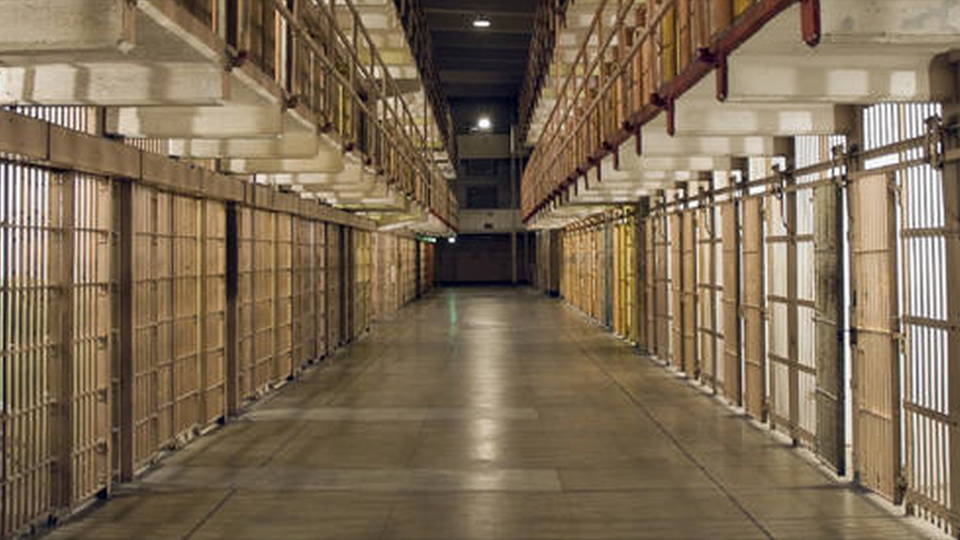
In a historic announcement, the Justice Department has told the Bureau of Prisons to end the use of private prisons. In a memo released yesterday, Deputy Attorney General Sally Yates wrote that private prisons "simply do not provide the same level of correctional services, programs, and resources ... do not save substantially on costs [and] do not maintain the same level of safety and security." This is former President Bill Clinton speaking earlier this year about the need for prison reform.
Bill Clinton: "We need prison reform. He will tell you. We overdid it in putting too many young, nonviolent offenders in jail for too long. Now, 90-plus percent of them are in state and local facilities, but the federal government can set an example. And this is something a lot of Republicans agree with. So, let these people out of jail, but give them education, training."
That was Bill Clinton. Laws enacted during Clinton’s presidency increased the national prison population by more than 60 percent. The Justice Department’s directive will affect 13 federal prisons, but does not mean all federal agencies will necessarily stop using private companies for detentions. The Department of Homeland Security’s Immigration and Customs Enforcement also uses the private corrections industry and is not included in the order. We’ll have more on this announcement after headlines with investigative reporter Seth Freed Wessler, Democracy Now!’s Renée Feltz and journalist Shane Bauer, who went undercover for Mother Jones to work as a private prison guard and who himself was a hostage imprisoned by Iran for more than two years.
Jeh Johnson Visits Louisiana, Promises Aid for Flood Victims

U.S. Homeland Security Secretary Jeh Johnson visited parts of Louisiana devastated by historic floods this week and said the federal government will help for as long as it takes communities to recover. At least 13 people were killed, and more than 86,000 people have filed for federal assistance. Forty thousand homes have been damaged or destroyed. This is Johnson speaking in Baton Rouge.
Homeland Security Secretary Jeh Johnson: "Our hearts are broken, but our faith is strong. The federal government is here. We have been here. We will be here as long as it takes to help this community recover."
Thousands of people have returned to flood-hit homes as waters have receded. On Thursday, about 4,000 people were in shelters. The local paper, The Advocate, has criticized President Obama for continuing his vacation on Martha’s Vineyard amid the historic flooding, comparing his failure to visit the region to President George W. Bush’s failure to travel to New Orleans in the wake of Hurricane Katrina in 2005. In the editorial, The Advocate wrote: "We’ve seen this story before in Louisiana, and we don’t deserve a sequel."
California: Blue Cut Fire Continues to Burn Uncontrollably
Meanwhile, in California, the Blue Cut fire is still raging near Los Angeles. Over the last two days, the fire has overtaken 36,000 acres and prompted the evacuation of 80,000 people. So far this year, California fires have killed eight people and destroyed hundreds of homes. The major thoroughfare Highway 138 remains closed.
TOPICS:
Climate Change
"Believe It or Not," Trump Says He "Regrets" Some Remarks

In news from the campaign trail, Republican presidential candidate Donald Trump has said he "regrets" some of the remarks he has made. In recent weeks, Trump has attacked the Khan family, whose son was killed in Iraq, suggested supporters of the Second Amendment shoot Hillary Clinton, and been abandoned by a number of prominent Republicans as a result. This is Trump speaking yesterday in North Carolina.
Donald Trump: "Sometimes, in the heat of debate and speaking on a multitude of issues, you don’t choose the right words, or you say the wrong thing. I have done that. And, believe it or not, I regret it. And I do regret it, particularly where it may have caused personal pain."
TOPICS:
Donald Trump
2016 Election
Clinton Foundation: No More International Donations If Hillary Wins

The Clinton Foundation will stop accepting international donations if Hillary Clinton is elected president. Critics of Clinton allege the Clinton Foundation benefited inappropriately from her time as secretary of state. Former President Bill Clinton said he will also refrain from delivering paid speeches before the November election and will no longer give paid speeches if Hillary Clinton is elected president. Both Clintons have been criticized for their high speaking fees, and a discussion has begun about whether the Clinton Foundation should be closed if Hillary Clinton is elected president.
TOPICS:
Hillary Clinton
2016 Election
State Dept. Admits Timing of Cash Transfer to Iran Linked to Prisoners
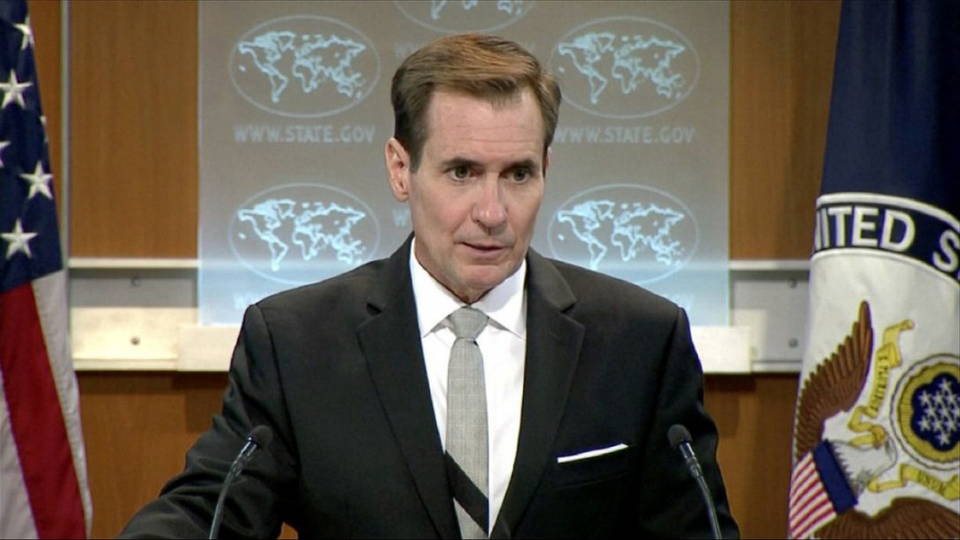
The State Department has said a plane filled with $400 million in cash for Iran was "leverage" to ensure that five American prisoners held by Iran were released. Republicans, including Donald Trump, have said the money was a ransom for the prisoners. The money was sent to Iran in January. The Obama administration has said the money was a pre-planned transfer that was part of the landmark nuclear deal and that the negotiations regarding the two issues were separate. But State Department spokesperson John Kirby has now said the money’s delivery was held up because of concern Iran would not fulfill its end of the agreement.
John Kirby: "We were able to conclude multiple strands of diplomacy within a 24-hour period, including implementation of the nuclear deal, the prisoner talks and the settlement of an outstanding Hague tribunal claim, which saved American taxpayers potentially billions of dollars. As we said at the time, we deliberately leveraged that moment to finalize these outstanding issues nearly simultaneously."
The money has been owed to Iran since the 1970s, when the U.S. refused to send weapons Iran had already paid for following the Iranian revolution.
Brazilian Police Accuse 4 U.S. Olympic Swimmers of Vandalism, False Robbery Claim
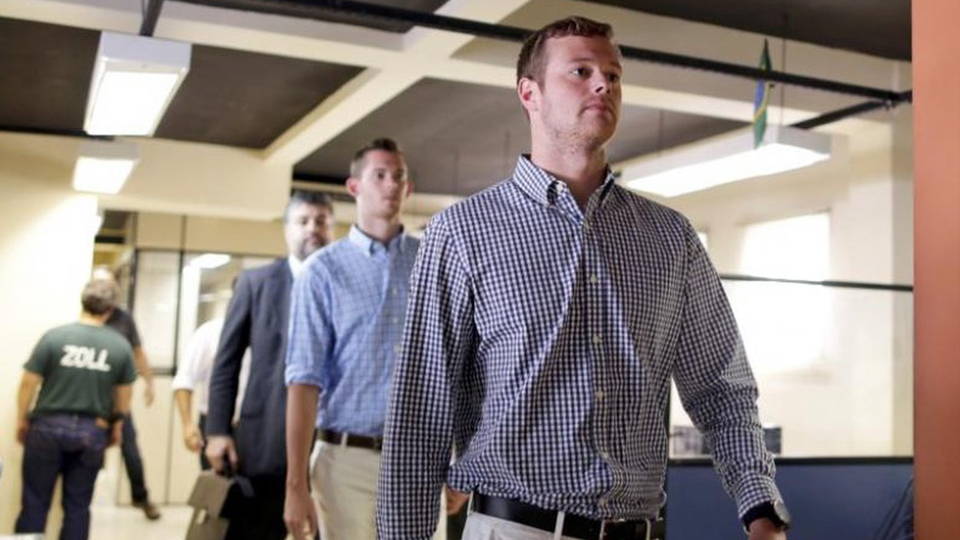
In news from the Olympics, Brazilian police have accused a group of U.S. Olympic swimmers of vandalism during an incident at gas station last weekend and say they are now considering whether to recommend charges against the four men, including gold medalist Ryan Lochte. The swimmers told authorities they were robbed by gunmen impersonating police officers in the early hours of Sunday as they returned in a taxi to the Athletes Village from a party in the city. However, after an investigation, Rio police said there had been no robbery. U.S. Olympic Committee CEO Scott Blackmun said in a statement, "We apologize to our hosts in Rio and the people of Brazil for this distracting ordeal in the midst of what should rightly be a celebration of excellence." This comes as the Olympic Games enters its final weekend in Rio. There have been a number of historic firsts for American athletes. For the first time ever, American women placed first, second and third in the 100-meter Olympic hurdles. The runners, Brianna Rollins, Nia Ali and Kristi Castlin, are all African-American. The American Olympic gymnastics team has also made history. The so-called Final Five women’s gymnastics team concluded their run in Rio with a historic nine medals. They are most diverse gymnastics team ever to represent the United States. Simone Biles and Gabby Douglas are African-American. New Jersey-born Lauren Hernandez is of Puerto Rican descent. Madison Kocian and Aly Raisman are white. We’ll have more on the Olympics later in the broadcast with Dave Zirin.
TOPICS:
Olympics
Turkish President Says Coup Plotters Working with Kurdish Rebels

In Turkey, President Recep Tayyip Erdogan has accused followers of U.S.-based Turkish cleric Fethullah Gülen of being involved in attacks by Kurdish militants that killed 10 people in the country’s southeast. Erdogan has already accused Gülen supporters of planning a failed military coup last month. But it is the first time he has linked the coup supporters to the Kurdistan Workers’ Party, more commonly called the PKK. Turkey has fought a war against the PKK since the 1980s. Erdogan offered no evidence to back the claim, but called again on Thursday for the U.S. to extradite Gülen so he can stand trial in Turkey.
President Recep Tayyip Erdogan: "There is no need for further delay. The developments in our country are going toward a different direction. A strategic partner should not make things difficult for its strategic partner. On the contrary, they should facilitate."
That was Turkish President Recep Tayyip Erdogan. The State Department has said it is considering the extradition request.
Yemen: Doctors Without Borders Pull Staff After Saudi Hits Hospitals
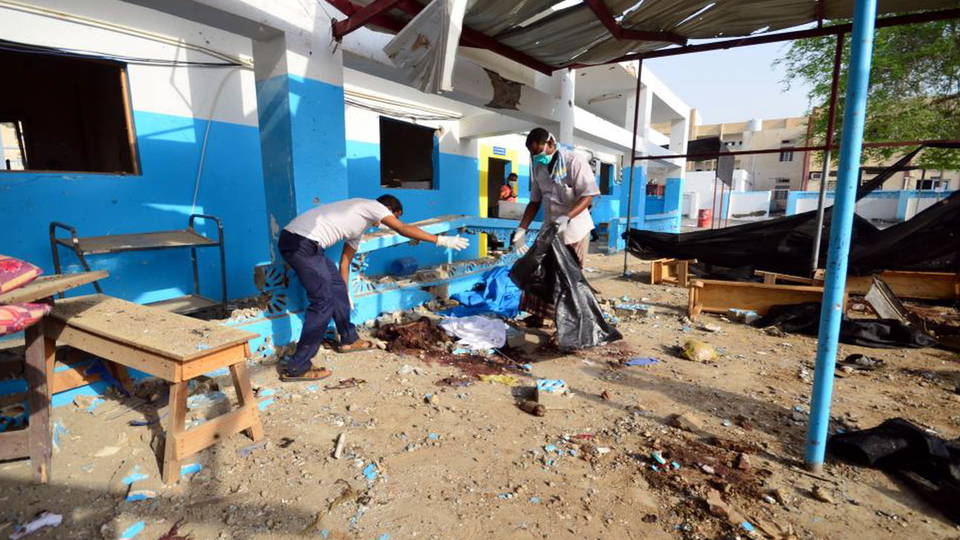
In Yemen, Doctors Without Borders says it will withdraw staff from six hospitals in the north of the country after an airstrike by the U.S.-backed Saudi coalition hit one of the hospitals, killing 19. The attack on Monday was the fourth and deadliest on the group’s facilities in Yemen. Doctors Without Borders has said it provided the Saudis coordinates of their hospitals in order to avoid accidental strikes and that they are not satisfied with Saudi claims that the strikes are accidental. The group said local staff will continue to operate the hospitals. This is Doctors Without Borders legal director Françoise Bouchet-Saulnier.
Françoise Bouchet-Saulnier: "But it is devastating for the civilians, for the medical personnel and for our ability to maintain a medical capacity in countries that are affected by the war. And if civilians cannot be treated, they have no other choice than to flee. And no one wants to receive refugees, but still hospitals are bombed when they are full of maternal and child care. It’s a real nightmare."
TOPICS:
Yemen
Syria: Viral Pic of Boy After Airstrike Draws Attention to Humanitarian Disaster

In news on Syria, a viral image of a five-year-old boy who survived a Syrian government airstrike is once more drawing international attention to the plight of civilians there. The photo shows the boy, Omran Daqneesh, caked in dust and blood. He sits alone in the back of an ambulance, staring directly ahead in shock. The boy lives in Aleppo, where the Syrian government and rebels are involved in a fierce battle for control of Syria’s largest city. Some have pointed out that last year a picture of a dead two-year-old Syrian boy on a Turkish beach garnered widespread attention and outrage but did not result in any changes. Alan Kurdi died while trying to cross the Mediterranean Sea with his family, but the number of deaths of refugees on the Mediterranean this year has increased significantly from last year.
TOPICS:
Syria
Mexican Federal Police Accused of Covering Up Human Rights Violations

In Mexico, the country’s National Human Rights Commission has said federal police killed at least 22 people on a ranch last year before moving the bodies and planting guns to support the official account that the deaths happened in a gun battle. One police officer was killed in the confrontation, which took place in the state of Michoacán. Federal police have been implicated in other mass killings in the past two years. The government has said the dead were suspected members of a drug cartel. The commission said officers also tortured at least two suspects.
TOPICS:
Mexico
Video of Man's Death in LAPD Custody Surfaces After 4 Years
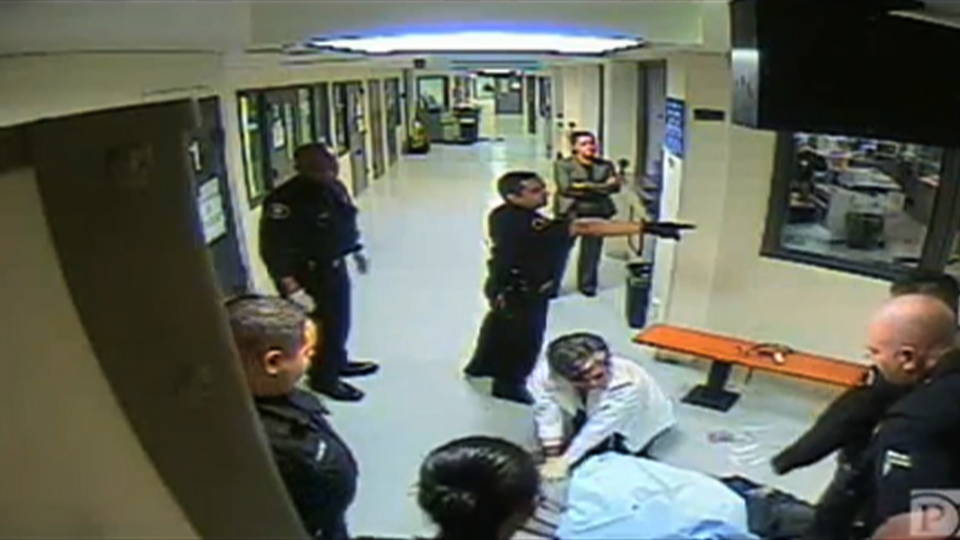
In Los Angeles, video has emerged of police choking 56-year-old African-American man Vachel Howard shortly before he died. The department has suppressed the release of the video. Howard died in an LAPD jail in 2012. The video shows the grandfather of seven handcuffed to a bench after having been strip-searched. Howard was arrested on suspicion of driving while intoxicated. The video does not show how the altercation between Howard and officers began, but does show six officers pinning Howard to the ground before he died. It also shows them laughing as he lay motionless on the ground before medical help arrives. A coroner listed three causes of death for Howard: cocaine intoxication, heart disease and the chokehold used by officer Juan Romero. Romero was suspended for 22 days, but prosecutors decided not to press charges against him. In 2015, the city of Los Angeles agreed to pay Howard’s family nearly $3 million to settle a wrongful death claim.
TOPICS:
Police Brutality
Gawker to Shut Down Next Week

In media news, the digital outlet Gawker will shut down next week. Gawker was ordered to pay $140 million in a lawsuit for publishing a sex tape of wrestler Hulk Hogan. Hogan’s lawsuit was financially backed by Silicon Valley billionaire Peter Thiel, who was outed as gay by a now-defunct Gawker blog.
Native Activists Fighting Dakota Access Pipeline: "What We're Doing is in Peace"

And in North Dakota, indigenous activists gathered in the capital Bismarck Thursday to protest the proposed $3.8 billion Dakota Access pipeline, which they say would threaten to contaminate the Missouri River. The activists also responded to recent claims by Morton County Sheriff Kyle Kirchmeier that there have been reports of weapons at Sacred Stone Spirit Camp.
Sheriff Kyle Kirchmeier: "It’s turning into an unlawful protest with some of the things that have been done and has been compromised up to this point. We have had incidents and reports of weapons, of pipe bombs, of some shots fired."
At Thursday’s protest, activists denounced the sheriff’s claims, saying their actions were nonviolent and there were no weapons at the camp. This is Tara Houska, national campaigns director for Honor the Earth.
Tara Houska: "People are here to stand in prayer with love in their hearts, because this is our children, this is our children’s children. Water is life. Without water, we cannot exist. And everything that we’re doing is in peace. It is really just to protect. We are not protesters, we are protectors. I’ve seen a lot of prayers, a lot of—you know, there’s dancing, there’s singing. People are doing actions, direct actions, but at the same time, everything is peaceful. Everything that we’re doing is with one goal, and that’s to stop this pipeline from contaminating the river and harming an entire people and every single person that’s along it."
More than a thousand indigenous activists from dozens of different tribes across the country have traveled to the spirit camp. The protests have so far shut down construction along parts of the pipeline. This comes as, on Thursday, activists from the Pine Ridge Reservation in South Dakota reported experiencing traffic checkpoints manned by state and local police who stopped cars to look for tribal members planning to travel to North Dakota. Activists said more than 100 cars were stopped, and those suspected of heading toward the protest were turned back. Click here to see our interview with indigenous activists Winona LaDuke and Joye Braun.
TOPICS:
Pipeline
Natural Gas & Oil Drilling
Donate today:
Follow:


SPEAKING EVENT
 8/19 Seattle, WA
COLUMN

NEW BOOK


Development Manager
207 West 25th Street, 11th Floor
207 West 25th Street, 11th Floor
New York, New York 10001, United States
-------

No comments:
Post a Comment