democracynow.org
Stories:
 Standing Rock Sioux Chairman: Dakota Access Pipeline "Is Threatening the Lives of My Tribe"
In North Dakota, indigenous activists are continuing to protest the proposed $3.8 billion Dakota Access pipeline, which they say would threaten to contaminate the Missouri River. More than a thousand indigenous activists from dozens of different tribes across the country have traveled to the Sacred Stone Spirit Camp, which was launched on April 1 by the Standing Rock Sioux Tribe. The protests have so far shut down construction along parts of the pipeline. The Standing Rock Sioux Tribe has also sued the U.S. Army Corps of Engineers over its approval of the pipeline. For more, we’re joined by Dave Archambault, chairperson of the Standing Rock Sioux Tribe. He’s in Washington, D.C., where there is a hearing in the tribe’s lawsuit on Wednesday.
TRANSCRIPT
This is a rush transcript. Copy may not be in its final form.
AMY GOODMAN: We turn now to look at North Dakota, where indigenous activists are continuing to protest the proposed $3.8 billion Dakota Access pipeline, which they say would threaten to contaminate the Missouri River.
INDIGENOUS ACTIVISTS: Respect our water! Respect our lands! Honor our treaties! Honor our rights!
AMY GOODMAN: More than a thousand indigenous activists from dozens of different tribes across the country have traveled to the Sacred Stone Spirit Camp. The protests have so far shut down construction along parts of the pipeline. Protesters have included Debra White Plume, an Oglala Lakota water rights activist.
DEBRA WHITE PLUME: The need to protect this water has grown way beyond Standing Rock. I’m Oglala and Northern Cheyenne. Many red nations are here. Many more red nations are coming. We put the call out for water protectors to come, land defenders to come. And the word "resistance" is being used. And sometimes we have a problem with the English language, deciding which word to use, but if we just listen to our spirits, we’re here to protect sacred water. People will come from all along the river to protect the river that they belong to.
AMY GOODMAN: Dennis Banks, co-founder of the American Indian Movement, has also taken part in the protests against the Dakota pipeline. Banks also was part of the 1973 Wounded Knee standoff.
DENNIS BANKS: What’s happening here is equally as important, because of the stand that you’re ready to make. When they threaten the environment, they’re threatening you. We are part mountain. We are part ocean. We are part river. We are part flower and grass and tree. All of this, we are part of all of it, so that when they threaten the environment anyplace, they’re threatening you. You have to be in that mindset like that. That’s who you are. That’s who we are. And our culture, our heritage is what has made us warriors.
AMY GOODMAN: That was Dennis Banks. We’re joined now by Dave Archambault, the chair of the Standing Rock Sioux Tribe, who’s joining us from Washington, D.C.
Chairman, thanks very much for being with us. Can you explain for us what this whole controversy is about?
DAVE ARCHAMBAULT: There’s a lot of different components that all lead up to one, and it is a pipeline that is threatening the lives of people, lives of my tribe, as well as millions down the river. It threatens the ancestral sites that are significant to our tribe. And we never had an opportunity to express our concerns. This is a corporation that is coming forward and just bulldozing through without any concern for tribes. And the things that have happened to tribal nations across this nation have been unjust and unfair, and this has come to a point where we can no longer pay the costs for this nation’s well-being. We pay for economic development, we pay for national security, and we pay for energy independence. It is at our expense that this nation reaps those benefits. And all too often we share similar concerns, similar wrongdoings to us, so we are uniting, and we’re standing up, and we’re saying, "No more."
AMY GOODMAN: Can you explain what exactly the Dakota Access pipeline is and how it ended up going through your land?
DAVE ARCHAMBAULT: Dakota Access pipeline is a pipeline that goes 1,200 miles, taking Bakken crude oil from the northwest side of North Dakota down to Illinois. And we were brought—made aware of this in 2014. And our biggest concern was it was—it crossed the Missouri River twice, once north of—once in Lake Sakakawea and once north of our reservation. And right away, when we first learned of it, we said, "We don’t want this. We don’t want it here." But it’s a private pipeline from a private company out of Dallas, Texas. And so, there’s a big corporation, Energy Transfer Partners, out of Dallas, who are making decisions for the state and for North Dakota, for my reservation, and they have no sensitivity or no acknowledgment of what is in place. All they see is dollar signs and greed. So we are not happy with this private-based company.
There are portions of this pipeline that cross federal lands, like water, and so they have to get permits, but they get easements on private property. And the private landowners who do not approve of the pipeline, there’s the eminent domain taking. So, the landowners where the pipeline crosses kind of have their hands tied. But in the federal permitting process—and it’s like, of the 1,200 miles, 200 waterways, maybe 300 miles are on federal lands. That’s what we’re saying: If we can’t do anything on the private lands, we’re going to ask the federal agencies to reconsider and take a look at this, because we never had the opportunity to express our concerns.
AMY GOODMAN: I want to go back to Debra White Plume, an Oglala Lakota water rights activist, speaking at the Sacred Stone camp.
DEBRA WHITE PLUME: We’re putting a call out for warriors to come here to do direct action, to stop them from boring under this water, because that’s going to contaminate it. We can’t stand for that. We can’t let that happen. I, for one, made a commitment. They’re going to have to kill me, or they’re going to have to lock me in jail, but I’m going to stand to protect the sacred water. And I’m guided by spirit.
AMY GOODMAN: So that’s Debra White Plume, who participated in the 1973 standoff in which members of the American Indian Movement occupied Wounded Knee to demand their treaty rights. She called for focus in the action at Sacred Stone.
DEBRA WHITE PLUME: I understand that rage. I fought with cops before. I’ve been shot at by police. I’ve been shot by police. We got it on with the police on Pine Ridge back in the day. So I understand that rage. But when we’re here together to protect sacred water, let’s do it with dignity, let’s do it with training, let’s do it with unity.
AMY GOODMAN: So, Chairman Dave Archambault, explain what this camp is, where it is, and how many people are coming out to it, and how the state is responding.
DAVE ARCHAMBAULT: This camp is along the Cannonball River, close to the mouth of Missouri River. And the camp is—started out in April of 2016 as a prayer camp. And the prayers have been answered. There has been power in prayer. And it opened the eyes to everybody that, through prayer and unity, great things can happen. Since the—about two—the demonstrations started, more and more people began coming and showing overwhelming support for this, and we had to anticipate large masses of people coming, so we occupied a space just north of the Cannonball River off the Standing Rock Reservation, which is core land, and it’s on a nice flat.
Right now what’s going on is it’s about peace, and it’s about prayer, and it’s about uniting. And there’s a really good feeling, if you were to walk through the camp. There are no guns, no violence, no drugs, no alcohol. And it kind of took a life of its own. It evolved into something very special.
The state, on the other side, has taken action, which there’s no cause for. They created a barricade just south of Mandan, right before you get into Fort Lincoln, Custer’s park. It’s about 25 miles north of the camp. And this barricade creates a hardship for the members who live on Standing Rock. The state also removed its emergency assistance vehicles, that we initially got to establish and accommodate large masses of people.
AMY GOODMAN: You were arrested there, Chairman?
DAVE ARCHAMBAULT: Yes, I was.
AMY GOODMAN: I want to play Morton County, North Dakota, Sheriff Kyle Kirchmeier’s comments, claims he made that there have been reports of weapons at Sacred Stone Spirit Camp, and get your response.
SHERIFF KYLE KIRCHMEIER: It’s turning into an unlawful protest with some of the things that have been done and has been compromised up to this point. We have had incidents and reports of weapons, of pipe bombs, of some shots fired.
AMY GOODMAN: So, that’s the sheriff. Dave Archambault, your response?
DAVE ARCHAMBAULT: There never was any shots fired. There never were any pipe bombs. There were never any incidents of unlawful activity taking place. When you have a large mass of people in an area, especially with social media, you have Facebook, that can create rumors. And I would ask that the sheriff and the governor validate any rumors that they come across, before they make haste decisions to create a blockade or to declare a state of emergency or to remove any of their emergency assistance vehicles. I understand they have safety concerns, but you just have to be present at the camp, and you’ll see that it’s a peaceful place, and there are happy people who share a common prayer. And that is—
AMY GOODMAN: Chairman, can you explain the lawsuit?
DAVE ARCHAMBAULT: So, what we’re filing a lawsuit on is the destruction of our ancestral burial sites and never being given the opportunity to protect them, as well as the nationwide permitting process. Rather than permitting the project as a whole and doing a full EIS, the Corps of Engineers asked that they permit chunks and pieces of it. And they require an EA. Now, the EA is less intensive as the EIS, so they’re able to kind of do unlawful things, that—such as destroy our sites that are sacred to us.
We don’t agree with the fact—they’re going to say they had consulted with us on this matter. To us, consulting doesn’t mean corresponding through letter or mail, or it doesn’t mean presenting us a final draft of what you’re going to do. Consulting, to us, would mean that we need to have deliberation and share our concerns and hope that they hear us and see a reflection of our concerns in the final plan. None of that has taken place. We asked for consultation prior to any final drafts and to survey the routes to make sure that none of the sites that we cherish would be destroyed. It’s not until after they finalized what they want to do, this Dallas-based company who is doing the EA for the Corps of Engineers tells us how or where they’re going to go. Now they come and invite us to do surveys, and we don’t think that’s right. We think it’s unlawful, and we think it’s unjust.
AMY GOODMAN: Dave Archambault, chair of the Standing Rock Sioux Tribe. When we come back, indigenous rights activist Winona LaDuke will also join us. Stay with us. ... Read More →
 Native Activist Winona LaDuke: Pipeline Company Enbridge Has No Right to Destroy Our Future
In North Dakota, more than a thousand indigenous activists from different tribes have converged at the Sacred Stone Spirit Camp, where protesters are blocking construction of the proposed $3.8 billion Dakota Access pipeline. Protesters say the pipeline would threaten to contaminate the Missouri River, which provides water not only for the Standing Rock Sioux Tribe, but for millions of people downstream. For more, we are joined by Winona LaDuke, Native American activist and executive director of the group Honor the Earth. She lives and works on the White Earth Reservation in northern Minnesota.
TRANSCRIPT
This is a rush transcript. Copy may not be in its final form.
AMY GOODMAN: This is Democracy Now!, democracynow.org, The War and Peace Report. I’m Amy Goodman, as we continue to look at the growing indigenous protest against the proposed $3.8 billion Dakota Access pipeline, which they say would threaten to contaminate the Missouri River. We’re joined now by Winona LaDuke, Native American activist, executiv director of the group Honor the Earth. She lives and works on the White Earth Reservation in northern Minnesota. She was also the Green Party vice-presidential nominee in 1996 and 2000.
Winona, welcome back to Democracy Now! Can you talk about why, from the White Earth Reservation, where you live, you’ve gotten involved with this battle against the Dakota Access pipeline?
WINONA LADUKE: Well, good morning, first, Amy and Dave. Yeah, our reservation in northern Minnesota is the proposed site, our territory, for the Sandpiper. For the past four years, I’ve been fighting the Enbridge company. Enbridge company is proposing three new lines through our territory. One of them is the Sandpiper, and that would cross, affecting—basically, by the time they’re done, five of our reservations would be affected by these pipelines, which would go by the Mississippi River and through the heart of our wild rice beds.
Enbridge has been pushing for a brand-new corridor, because they have this old corridor. They say it’s got, you know, six pipelines in them, all about 50 years old, kind of falling-apart pipelines, and so they want to, instead of cleaning up their old mess, they want to make a whole new mess. So, for four years, we’ve been fighting them and telling them they cannot do that. And the courts, you know, had ruled in our favor, and now a full EIS is required. And the tribes are demanding that the process include them and the tribes should have some say in it.
So, I was really surprised, because Enbridge told us all that the only thing that they could do, it was so important to them, the only way they could get their oil to market was to run it through northern Minnesota. And then, one day I wake up, and they forgot all about us, and they move out there to North Dakota. Seemed very disingenuine to me.
AMY GOODMAN: And so, you went—
WINONA LADUKE: I came out—came out to North Dakota, yeah.
AMY GOODMAN: And talk about what you found there.
WINONA LADUKE: Well, what I found out in North Dakota is that, you know, the state of North Dakota has been bending over backwards for the oil companies, although the fact is, is that there are now more lawsuits than active drilling rigs out there, you know, because there was such a big push to develop all this oil in the Bakken, basically bust up the bedrock of Mother Earth, put all those chemicals in it, look the other way and pretend like things are going swimmingly out in North Dakota. So, North Dakota has got this landlocked oil. They’re taking a beating on it right now. There is an 85 percent drop in active drilling rigs in the Bakken. Fact is, is that they don’t even have it going on out there, but they are bound and determined to get whatever oil out of there they can, and so they decided to throw this pipeline through them. You know, North Dakota’s regulators are, I would suggest, really in—you know, I would say, in bed with the oil industry, and they have looked the other way. And so, they have pushed these pipelines through, you know, really, really fast, without any tribal consultation and without a full environmental impact statement.
And that’s what needs to happen. You need a full environmental impact statement on this. And, you know, I say—what we say is that you should have a well-to-wheels impact. In other words, it’s not just hauling the oil. It’s not just endangering all those, you know, watersheds. It’s not just the fact that, you know, former editor of Scientific American Trudy Bell says 57 percent chance of a catastrophic leak. It’s not even just that. It’s what about all that carbon? We’re sitting here, you know, in this world, where there’s been no rain in Syria for five years. There’s catastrophic storms everywhere. And this pipeline is going to bring about 250,000-per-day tons of carbon into the atmosphere. That’s what this Dakota Access pipeline is. And that’s wrong. You know, a private corporation doesn’t get to destroy things—a Canadian corporation, at that. Enbridge isn’t even a U.S. corporation; you know, Enbridge is a Canadian corporation. And they have no right to destroy our water, no right to compromise our future.
AMY GOODMAN: Can you talk a little more about Enbridge? You recently wrote that Enbridge looks a lot like Enron. Explain.
WINONA LADUKE: Yeah, I mean, Enbridge is not doing so well. You know, I’ve been writing letters. I kind of feel like that Roger & Me thing. I write letters to Al Monaco, the president of Enbridge. I say, "Hey, it’s Winona down here on White Earth, wondering about a few things." They had, you know, a few catastrophic blow-ups last year. And then, this year, first of all, June 30th, they lost this big pipeline. You know, Enbridge is in the pipeline business. The Northern Gateway pipeline, $7.9 billion proposal, they thought they had it with the Harper administration. You know, that was looking pretty good up in Canada, Stephen Harper. Trudeau gets in. Every tribe along the way, every First Nation along the way and the province of British Columbia is opposing this pipeline, which would take it to Port Kitimat, you know, really pristine area with all these fjords. Anyway, what happens is the Canadian Federal Appeals Court rules that all of the permits are void, that, in fact, Enbridge and the government have to go all the way back and talk to the First Nations, tribal consultation. That had to really hurt Enbridge quite a bit, $7.9 billion pipeline. You know, we got them on the ropes there in Minnesota. They’re now in the EIS process, although they would have liked to kind of like skirt around that. But the citizens of Minnesota and the tribes have forced that process.
And then you add this little problem that’s called the faulty pipes scandal. What happened is, is that in July, it was announced in a National Observer National Energy Board leak that Enbridge and this other company called Kinder Morgan had purchased these pipes from a—called Cana Oil, Canada Oil, and it’s a Thailand-based company, discount pipes. They purchased all these pipes and valves that are faulty. And the National Energy Board of Canada, Canadian government says, "Emergency situation. Where are those pipes, Enbridge?" Enbridge’s lawyers have said they need time to disclose where exactly all those pipes are. Now, I’m sitting here, and in northern Minnesota we’ve got six lines crossing through our really good ecosystem. I’m wondering if some of those pipes are there. Or maybe they’re over in a pile by Lake George, next to my reservation. We would like a full disclosure as to where the faulty pipes are that Enbridge has. You know, look at that, and then they got a 40 percent—their shares are down now, a 40 percent drop in their shares, you know, from two years ago. So I feel like Enbridge is not looking so good, not looking so good to their shareholders. And they’ve got a lot of liability they are putting on us, on Americans, on Native people, and trying to force it down the throat of the Standing Rock people. And I feel like that that company is not a reliable corporation.
AMY GOODMAN: Last month, Winona, the Laborers’ International Union of North America endorsed the Dakota Access pipeline. Terry O’Sullivan, general president of LIUNA, said in a statement, quote, "The men and women of LIUNA applaud the U.S. Army Corps of Engineers for its fair and thorough review of the Dakota Access Pipeline. ... For the highly skilled and trained men and women of LIUNA, projects like the Dakota Access are more than just pipelines. They are crucial lifelines to family-supporting jobs," they said. Laborers Local 563 business agent Cory Bryson said, quote, "We’ve been inundated with calls from all over the country from people wanting to work on this pipeline project. Mainline pipeline projects like Dakota Access provide excellent working opportunities for our members and tremendous wages." Your response, Winona LaDuke?
WINONA LADUKE: My response is that the United States has a D in infrastructure. That’s why bridges collapse. That’s why Flint, Michigan, has a problem. That’s why everything is eroding in this country. And what we need is those skilled laborers to be put to work, pipelines for people. I’m saying take those pipes that are sitting there in northern Minnesota, and send them to Flint, Michigan. They need billions of dollars’ worth of pipe infrastructure out there. We don’t need any pipes in northern Minnesota. I say that most of our Indian reservations don’t have adequate infrastructure. We’d like a little help with our water and sewer systems there. I am all for organized labor, but what I want is I want pipelines, I want infrastructure, for people, not for fossil fuels, not for oil companies. So I am all for that. There are plenty of people that could be put to work. And it’s five times as many jobs doing infrastructure for communities, doing for people, than one shot throw a pipe down and hope it works out for you. So I’m asking American labor to stand with us and to say we want pipelines, we want infrastructure, that goes for people, that goes for communities, and not for oil companies that are going to destroy our environment and cause more climate change destruction to our planet.
AMY GOODMAN: Winona LaDuke, we want to thank you for being with us, Native American activist, executive director of the group Honor the Earth. She lives and works on the White Earth Reservation in northern Minnesota.
This is Democracy Now!, democracynow.org, The War and Peace Report. When we come back, we go to Tulsa and to North Carolina. stay with us. ... Read More →
 Hate Crime in Tulsa: Khalid Jabara's Family Speaks Out After His Murder by Racist White Neighbor
In Oklahoma, funeral services were held Friday for Khalid Jabara, a Lebanese-American man police say was shot dead by his next-door neighbor in a possible hate crime. Police say Stanley Majors will be charged with first-degree murder. Majors has harassed the Jabara family for years. The August 12 killing came less than a year after Majors was arrested and jailed for hitting Jabara’s mother with his car while she was jogging. At the time, the mother, Haifa Jabara, already had a restraining order against Majors, after he had threatened and harassed her. But eight months later, Majors was released on $60,000 bond even though Tulsa County prosecutors called him "a substantial risk to the public.” For more, we speak with Khalid’s brother and sister, Rami Jabara and Victoria Jabara Williams.
TRANSCRIPT
This is a rush transcript. Copy may not be in its final form.
AMY GOODMAN: In Oklahoma, funeral services were held Friday for Khalid Jabara, a Lebanese-American man police say was shot dead by his next-door neighbor in a possible hate crime. Police say Stanley Majors will be charged with first-degree murder. The August 12th killing came less than a year after Majors was arrested and jailed for hitting Jabara’s mother with his car while she was jogging. At the time, the mother, Haifa Jabara, already had a restraining order against Majors, after he threatened and harassed her. Majors served eight months in jail, but was then released on $60,000 bond even though Tulsa County prosecutors called him, quote, "a substantial risk to the public," unquote.
The Jabara family says Majors had harassed them for years, calling them racial slurs. The Jabaras are Orthodox Christian immigrants from Lebanon, which they fled in the '80s. Victoria Jabara Williams, Khalid's sister, wrote on Facebook, "My family lived in fear of this man and his hatred for years. Yet in May, not even one year after he ran over our mother and despite our repeated protests, he was released from jail with no conditions on his bond—no ankle monitor, no drug/alcohol testing, nothing," unquote. Shortly before he was shot, Khalid Jabara called 911 to report his neighbor had a gun.
KHALID JABARA: The old man was driving off, and I caught him, and I asked him, "What’s going on?" He said—he was bruising me up. He hit me with the—his end of the—his [inaudible]—
911 DISPATCHER: Here, let me—hold on, sir. I’m going to get you over to the non-emergency line, OK? So you can tell them.
KHALID JABARA: This is an emergency.
911 DISPATCHER: Is he already gone?
KHALID JABARA: This is an—this is an emergency. So, the old man left. The other person was—he told me that he hit him with the gun and fired it three times somewhere in the house. So—
911 DISPATCHER: Somebody fired a gun into your neighbor’s house?
KHALID JABARA: In his—yeah, in his own house. The old man told me, when he was leaving—he said he was going to—I told him he should go [inaudible]—
911 DISPATCHER: Did you hear any gunshots?
KHALID JABARA: The noise that I heard on my window was like tuck, tuck. It was not a knock. I don’t know what it was. But I don’t—it’s really not me—I’m not really saying that—if I heard it or not, because I didn’t—I didn’t hear—I can never—
911 DISPATCHER: Do you think it was at the 9332 South 85th East Avenue where this happened?
KHALID JABARA: Yes.
911 DISPATCHER: And was this guy white, black or Indian?
KHALID JABARA: All right, so the person next door is white.
AMY GOODMAN: Police responded to Khalid Jabara’s call, but left without speaking to Stanley Majors. Soon after Khalid was shot, his father, Mounah Jabara, called 911 to report what happened.
911 DISPATCHER: 911. Do you need police, fire or medical?
MOUNAH JABARA: Yes, no, this is—I need to talk to the police. Somebody shot my son.
911 DISPATCHER: OK. He has been shot?
MOUNAH JABARA: Yes, yes, and he’s on the floor. Our neighbor. 9328 South 85th East Avenue.
911 DISPATCHER: How many minutes ago did this happen?
MOUNAH JABARA: Just now. Just now. In front of me.
911 DISPATCHER: OK. The guy who shot the gun, was he white, black, Indian or Hispanic?
MOUNAH JABARA: Yes, yeah. No, no. White, white. He’s the next-door neighbor.
911 DISPATCHER: How old is he, if you had to guess?
MOUNAH JABARA: Just a next-door neighbor.
911 DISPATCHER: How old is he, if you had to guess?
MOUNAH JABARA: Maybe 60, 65.
911 DISPATCHER: What color shirt and pants is he wearing?
MOUNAH JABARA: I don’t know. I can’t say; I can’t see. He’s still—my son is on the floor. I can’t go, because he—I’m afraid shots will be [inaudible]—
911 DISPATCHER: OK.
MOUNAH JABARA: 9328 South 85th.
911 DISPATCHER: OK. You didn’t see what color shirt and pants he was wearing?
MOUNAH JABARA: No, no, ma’am. He is there. He is here, in the next-door neighbor. I did hear—I did not go out.
911 DISPATCHER: OK. Do you know what kind of gun he has?
MOUNAH JABARA: I don’t know. I haven’t seen him. I heard the shots, and I heard the shots. I’m afraid he will come now, actually. I—
911 DISPATCHER: OK. What—how many gunshots were fired?
MOUNAH JABARA: Three, three. He is on the floor, my son.
911 DISPATCHER: Where was he shot at? Where was he shot at?
MOUNAH JABARA: He shot him! He shot him! He shot him!
911 DISPATCHER: Did he shoot him outside or inside the house?
MOUNAH JABARA: I am [inaudible].
NEIGHBOR: Stay inside!
MOUNAH JABARA: Yes. Where he did shot you? Where did he shot you? OK. Let me call the ambulance.
911 DISPATCHER: I have an ambulance and everyone en route to you, OK?
MOUNAH JABARA: He shot him! He shot him!
911 DISPATCHER: Just stay on the phone.
AMY GOODMAN: That was Mounah Jabara, moments after his son Khalid was shot dead in front of his home in Tulsa, Oklahoma. We’re going now to Tulsa, where we’re joined by Khalid’s brother and sister, Rami Jabara and Victoria Jabara Williams.
I welcome you both to Democracy Now! My condolences on the death of your brother. Victoria, can you describe the history of what took place? This didn’t just happen in one moment.
VICTORIA JABARA WILLIAMS: No, it definitely was a progression of events. And it seemed like every time my family and I would contact either police or the authorities, as we were supposed to do, you know, over the last several years, Stanley Majors would just retaliate and stronger. And so, you know, over the last four—I think four years or so, you know, from violating two protective orders—obviously, one of them being hitting my mom, while she was walking, with his car—and to the most recent incident where he killed my brother, you know, it’s just been, you know, pretty—pretty traumatic over those years, especially since we were—we did everything we were supposed to do.
AMY GOODMAN: Again, Rami, my condolences, all of our condolences to you and your family. When did you first meet Stanley Majors, your next-door neighbor?
RAMI JABARA: I think he came around maybe in 2012. I actually don’t think I’ve officially met him face to face. You know, we tried to avoid him, especially, as my sister was saying, as the insults and remarks and racist comments began; you know, we just thought like we need to stay away from this particular neighbor.
AMY GOODMAN: What would he say?
VICTORIA JABARA WILLIAMS: You know, he’s yelled racial slurs at us, at my mom and dad and my brother, because they all reside in my parents’ house, and so they’re there all the time.
RAMI JABARA: Like—
VICTORIA JABARA WILLIAMS: So, "dirty Arabs," "dirty Lebanese," "Muslims," even though my family is Orthodox Christian. You know, he’s yelled racial slurs at neighbors, as well. We have our family friend and—you know, was mowing our lawn, and he’s African-American. He’s yelled racial slurs at him, as he was mowing our lawn.
RAMI JABARA: Just unprovoked.
VICTORIA JABARA WILLIAMS: Just, yeah, completely unprovoked.
AMY GOODMAN: Can you explain what happened when you filed your first complaint against Stanley Majors?
RAMI JABARA: Well, so, as my sister said, it was kind of a slow progression of comments and racist remarks. And in—you know, my mom was like, "What can we do to, you know, help protect ourselves?" And we told her that, you know, she can file a protective order against him. And in, I believe, November 2013, that was—that was completed.
VICTORIA JABARA WILLIAMS: Yeah.
RAMI JABARA: We got a protective order against him. My mom did.
VICTORIA JABARA WILLIAMS: I should say that, during that time, he was coming on our property and like taking pictures of our house and of my parents. And so, I think that was kind of that final like, OK, this guy is going to come onto our property, so we need to, you know—
RAMI JABARA: Making obscure phone calls, sending very strange letters to my sister and my uncle.
AMY GOODMAN: You had a productive order when he ran over your mother?
RAMI JABARA: Correct.
VICTORIA JABARA WILLIAMS: Correct. And that was the second violation.
AMY GOODMAN: I mean, violation? So, he is arrested, and he’s jailed, and he’s not tried? He is held for eight months and then released?
RAMI JABARA: Well, so, there was a first violation of protective order in March 2015.
VICTORIA JABARA WILLIAMS: On Easter.
RAMI JABARA: And that involved him making his usual racist remarks, I think, being belligerent and drunk, while we had a family gathering over Easter. So that was violation number one. And he—you know, as most criminal defendants, he would have several hearings, supposedly leading up to a trial. But he continually did not show up to his hearings. And eventually, the judge issued a bench warrant for his arrest, which is common when a defendant does not show up to their required hearings. So that was violation number one. In September 2015, that was violation number two, when he ran over our mother, leaving her for dead in the street.
VICTORIA JABARA WILLIAMS: And that’s when he went to jail. But he was never tried, because—
RAMI JABARA: So—
VICTORIA JABARA WILLIAMS: Yeah.
RAMI JABARA: He was—as with many defendants, they have the option to set bond. And over—after we had discussed with the district attorney, basically saying this guy cannot be out on the streets, he needs to be held without bond, and they did follow our instructions. And for eight months, he was held without bond.
AMY GOODMAN: And then?
RAMI JABARA: And then, in May of 2015—
VICTORIA JABARA WILLIAMS: ’16.
RAMI JABARA: 2016, I’m sorry, we get—we were checking the status of the case, as we normally do, as it is slowly leading up to a supposed trial. And we realize that, on a routine hearing, where a new criminal defense attorney entered his appearance on Majors’ behalf, there was an oral motion made to reconsider bond, and the judge granted it, without our knowledge, basically without objection from the District Attorney’s Office.
AMY GOODMAN: And so, he was released.
RAMI JABARA: He was released, without—
VICTORIA JABARA WILLIAMS: Without conditions.
RAMI JABARA: Without any actual, you know, conditions on his release, of course, but without any resolution of the prior incidents.
AMY GOODMAN: And how soon after he was released did he kill Khalid?
VICTORIA JABARA WILLIAMS: So, I think, beginning of June, they had the emergency hearing where they increased the bond. And then he made bail. So, June to August 12th.
AMY GOODMAN: And what happened? What did you understand? Were you, either of you, there on August 12?
VICTORIA JABARA WILLIAMS: My brother Rami lives in Dallas, and I live in Tulsa. And so, my mom called. I was at a friend’s house with my daughter. She said, you know, "Khalid’s been shot. You have to go to the hospital. Khalid’s been shot. They won’t let me leave, because it’s a crime scene." And at that time, I don’t know how—what information she got, but she made it seem that like he got hit in the leg, and he was going to be OK. So, I rushed to the hospital. And, you know, obviously, they told us he had—he died. And I met my parents—my husband and I met my parents at—they were staying in a secure area next to the—our house, while the detectives were there, on Friday night. And so I met them there. And it was, you know, I think, a four- or five-hour pursuit of Majors. And they never were able to get into his house, because they never got a warrant.
AMY GOODMAN: And Khalid—Khalid had called, right before Majors shot him dead, and said, "He has a gun. Please come." And the police came and left?
VICTORIA JABARA WILLIAMS: Yeah. So, we’re still waiting for the police report, but it looks like my brother Khalid called twice to call the police, once when he learned he had a gun. He said he heard some knocking on his door or on a window, and he went out, and Stanley Majors’s spouse, his husband, was driving away. And he said, "He has a gun. He hit me with the gun." And so, my brother called my mom, who was not home at the time. He said, "Don’t come home, because we learned he had a gun." And so they called 911. My brother called 911 the first time, saying he heard some knocking. I don’t know; I haven’t read the police report. I don’t know if he called when he heard the knocking the first time, and then he called again when he learned he had a gun, but he called twice, and the police came out once. And they said that they knocked on Stanley Majors’ door. They couldn’t go in. They couldn’t do anything, despite my brother’s plea and explaining the story. And then, the police left. And then, eight minutes later, my brother was shot. ... Read More →
 Father of Muslim Women Murdered in Chapel Hill to Jabara Family: "I Know How You Feel"
As the Jabara family mourns the death of Khalid Jabara in Tulsa, Oklahoma, we remember a similar fatal shooting last year in Chapel Hill, North Carolina. In 2015, Razan Mohammad Abu-Salha, Yusor Mohammad Abu-Salha and her husband, Deah Shaddy Barakat, were shot dead by a white neighbor. Razan was 19 years old, Yusor was 21, and Deah was 23. Police initially said the killings resulted from a dispute over a parking space, but relatives of the victims described the killings as a hate crime. The suspected gunman, Craig Stephen Hicks, has been charged with three counts of first-degree murder. For more, we speak with Dr. Mohammad Abu-Salha, father of Razan and Yusor, and father-in-law of Deah.
TRANSCRIPT
This is a rush transcript. Copy may not be in its final form.
AMY GOODMAN: I want to bring in another guest to this conversation, as we continue to talk about the killing of Khalid Jabara in Tulsa, Oklahoma. Dr. Mohammad Abu-Salha is with us. His two daughters, Razan and Yusor, were shot dead, along with his son-in-law, Deah Barakat, last year in Chapel Hill, North Carolina, by a neighbor. Razan was 19; Yusor, 21; Deah was 23. Police initially said the killings were—resulted from a dispute over a parking space, but relatives of the victims described the killings as a hate crime. The suspected gunman, Craig Stephen Hicks, has been charged with three counts of first-degree murder. Dr. Mohammad Abu-Salha joins us from Raleigh, North Carolina.
As you listen to this story, it must sound horrifyingly familiar.
DR. MOHAMMAD ABU-SALHA: It does. And first of all, I would like to express condolences to the Jabara family, Victoria, Rami and the family. Your story is almost identical to ours, and I know exactly how you feel. Khalid was one too many to lose, but we lost three children in seconds. The pain is forever, and our lives are torn up, and we will never be the same. It’s flashbacks. It’s nightmares. It’s diminished energy, sad mood most of the time. And even our relationships and community activities have changed. It’s horrible.
And the similarities between the two cases are so many. Craig Hicks also harassed my children many times. Though he picked on parking for five years, he never threatened anybody this way until he saw my daughter Yusor and my daughter Razan show up on the scene with the hijab and he could tell they’re Muslim, because, before that, he never did that with Deah, my son-in-law, because Deah looked like an average, tall, slim, athletic white American boy. Nobody could tell Deah was a Muslim, because he didn’t—they never had an accent, either. So, once he began to see my daughters, he began to raise the heat. And he told Yusor, my late Yusor, that he hated her and how she dressed and how she appeared. And though the three of them were drop-dead gorgeous children, very well-known philanthropists and charity workers in the region, he saw them as just Muslims, and he zoned in on them, planning to kill them. And he carried out his threats in a very premeditated and cold-blooded fashion.
AMY GOODMAN: We’re going to play Part 2 of this conversation tomorrow. We’re going to continue the conversation after the show. I want to thank Dr. Mohammad Abu-Salha, father of Razan and Yusor Mohammad Abu-Salha, who were shot dead last year. And I want to thank our guests, Rami and Victoria, for joining us from Tulsa. This is Part 1. Stay tuned for Part 2. ... Read More →
Headlines:
Health officials have issued an unprecedented warning to pregnant women, telling them not to travel to parts of Miami-Dade County, amid dozens of confirmed cases of locally transmitted Zika virus. The virus has now been conclusively linked to microcephaly, a condition where babies born to infected mothers have abnormally small heads and other health problems. The travel advisory issued by the Centers for Disease Control concerns two neighborhoods: Wynwood and Miami Beach. This is Miami Beach Mayor Philip Levine.
Mayor Philip Levine: "We need federal help. We need the federal government to step up and do what’s necessary, to reconvene and make sure the state, the county gets the proper funding immediately so that we can use these resources to combat this virus."
Public health officials are warning that the Zika virus may soon spread to parts of Louisiana and Texas. It has also spread to the U.S. territories of American Samoa, the U.S. Virgin Islands and Puerto Rico, as well as throughout dozens of Caribbean and Latin American countries. The World Health Organization has declared Zika a global public health emergency.
Florida: Plan to Use GMO Mosquitoes to Fight Zika Sparks Controversy
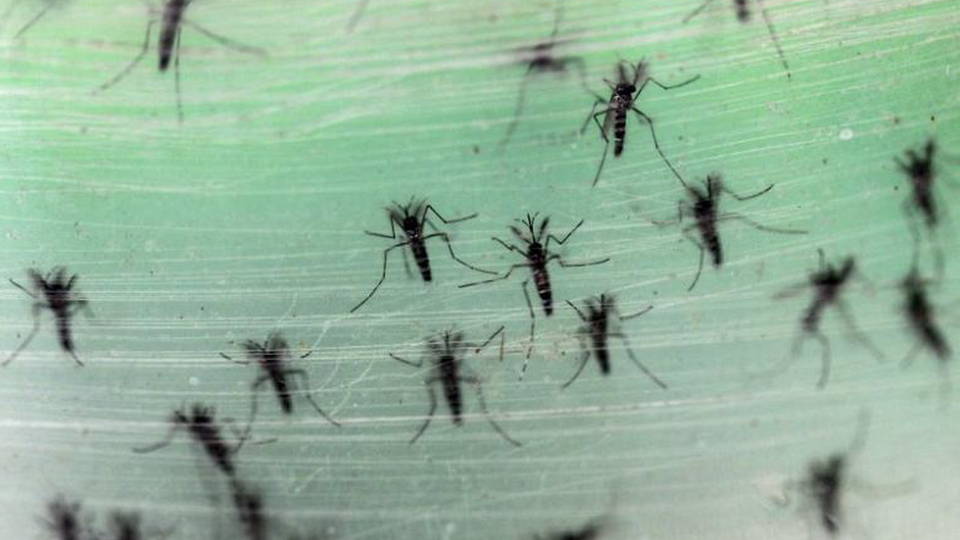 Meanwhile, in Key Haven, Florida, officials have sparked controversy with a proposal to release genetically modified mosquitoes in efforts to stop the potential spread of Zika. The genetically modified mosquitoes have been altered to carry a gene that causes the offspring to die as larva. The idea is to release the male genetically modified mosquitoes into the wild, so they will mate with female mosquitoes. The proposal has caused fierce opposition from local residents, who fear the long-term health and environmental impacts. The proposal will appear as a nonbinding referendum on the November ballot.
Obama Visiting Louisiana Today to Tour Historic Flood Damage
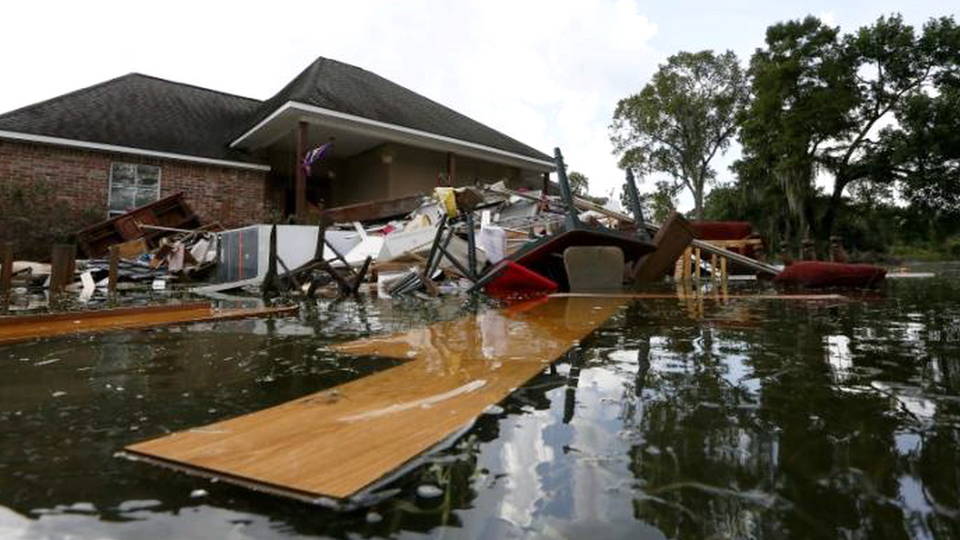 President Obama is visiting Louisiana today, where some neighborhoods still have up to two feet of standing water left from the historic flooding last week. At least 13 people died and 40,000 homes were destroyed in what the Red Cross has called the worst natural disaster in the U.S. since Hurricane Sandy. Obama has faced criticism from residents and the local newspaper The Advocate for not traveling to the flood zone earlier, comparing his failure to visit the region to President George W. Bush’s failure to travel to New Orleans in the wake of Hurricane Katrina in 2005, although Louisiana Governor John Bel Edwards has said until now he didn’t want Obama to come, as he’d rather not redirect resources to a presidential visit.
Wildfires Raging Across Western States Destroy Dozens of Homes
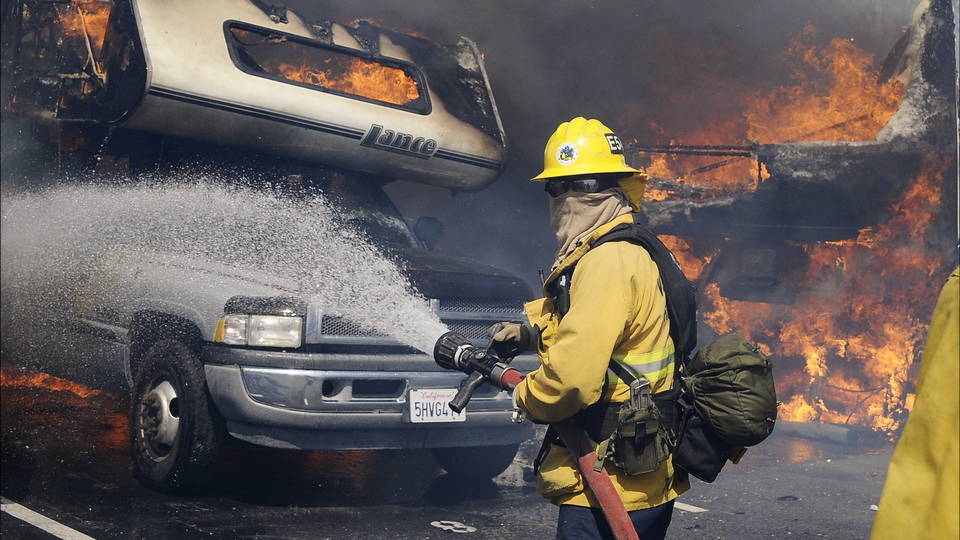 Meanwhile, wildfires continue to rage across the western states of California, Washington and Wyoming. Officials say more than two dozen homes were destroyed by wildfires near Spokane Monday, while nearly 50 homes were destroyed by a wildfire in San Luis Obispo County. Officials say the fires are worsened by the historic climate-fueled drought.
Donald Trump Doubles Down on His Mass Deportation Plans
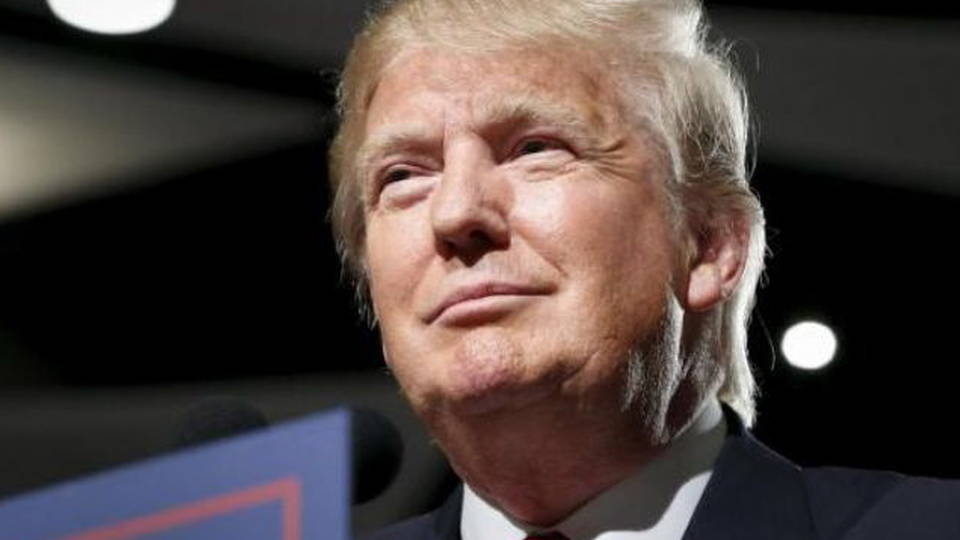 In news from the campaign trail, Donald Trump is standing by his harsh immigration proposals, which include deporting 11 million undocumented immigrants and building a wall on the U.S.-Mexico border. Over the weekend, Trump’s new campaign manager Kellyanne Conway attempted to soften his proposals, saying his deportation plans remained "to be determined." But Trump repeatedly stood by his mass deportation proposals on Monday, including during this interview with Fox News’s Bill O’Reilly.
Donald Trump: "The first thing we’re going to do, if and when I win, is we’re going to get rid of all of the bad ones. We’ve got gang members. We have killers. We have a lot of bad people that have to get out of this country. We’re going to get them out. And the police know who they are. They’re known by law enforcement, who they are. We don’t do anything. They go around killing people and hurting people. And they’re going to be out of this country so fast, your head will spin. We have existing laws that allow you to do that. As far as everybody else, we’re going to go through the process."
This comes as Trump has canceled a speech about his immigration policies, which was slated for Thursday.
In Appeal to Black Voters, Trump Falsely Claims Crime Rates are "At Levels You Have Never Seen"
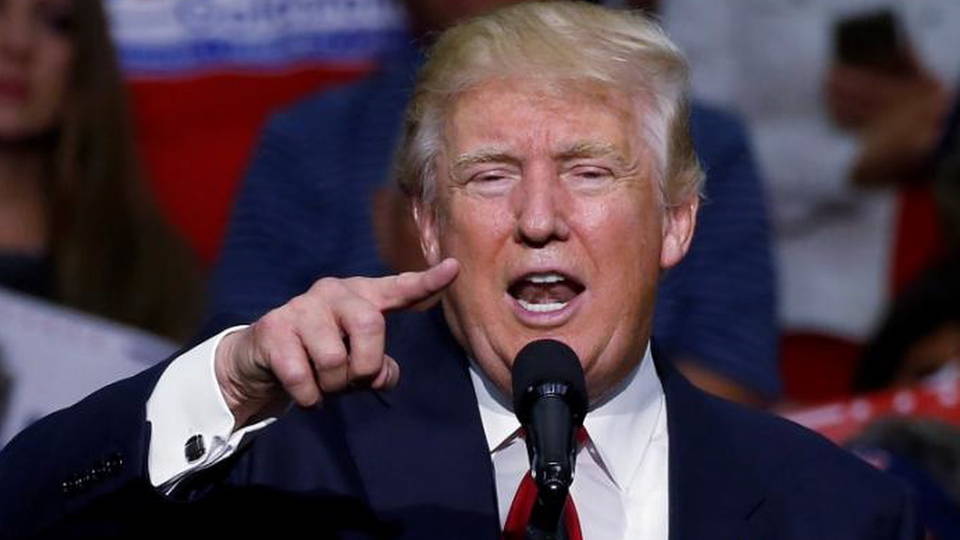 Meanwhile, Donald Trump continued his efforts to appeal to African-American voters Monday, while speaking to an overwhelmingly white crowd in Akron, Ohio.
Donald Trump: "Crime at levels that nobody’s seen. You can go to war zones in countries that we’re fighting, and it’s safer than living in some of our inner cities. They’re run by the Democrats. To the African Americans, who I employ so many, so many people, to the Hispanics, tremendous people, what the hell do you have to lose?"
In fact, FBI data shows violent crime in the United States has been declining steadily for the last two decades. Trump’s approval rating among African Americans is between zero and 1 percent. Yet Trump has said repeatedly in recent days that if he’s elected, by 2020 he’ll win 95 percent of the African-American vote—a claim that even his running mate, Indiana Governor Mike Pence, appears to doubt. This is Pence chuckling during an interview with Fox News’s Ainsley Earhardt.
Ainsley Earhardt: "Donald Trump is telling the African-American community, 'I am the guy for you,' and he says, by 2020, he’s going to have 95 percent of the African-American support."
Mike Pence: [laughter]
Ainsley Earhardt: "Why are you laughing?"
Mike Pence: "Well, that’s Donald Trump."
More Emails Show Clinton Foundation Ties to State Department
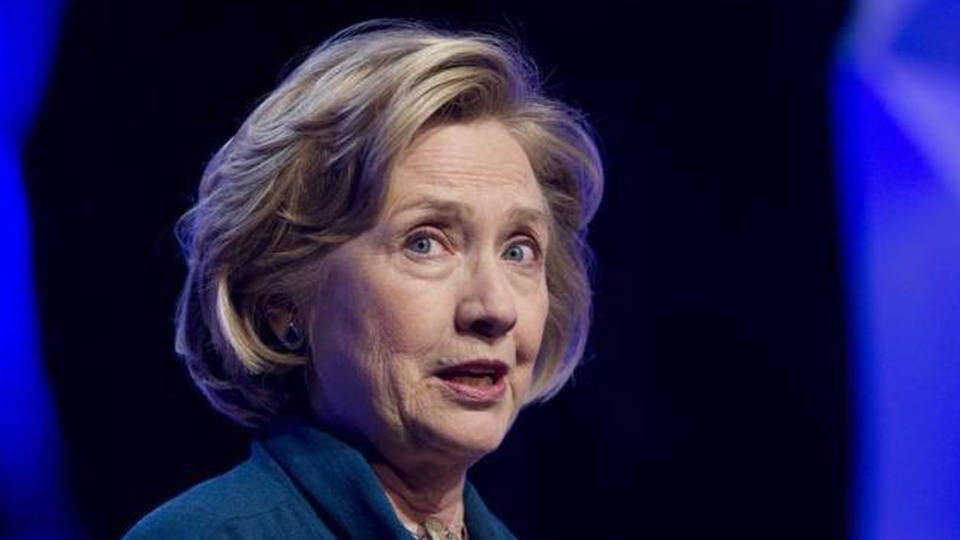 Hillary Clinton is facing questions after a new round of emails released Monday again reveal the close ties between the Clinton Foundation and the State Department while Hillary Clinton served as secretary of state. The 725 pages of emails were released by the conservative group Judicial Watch, which obtained them through a Freedom of Information Act request earlier this year. They show Clinton’s deputy chief of staff, Huma Abedin, corresponding with multiple Clinton Foundation donors, including Crown Prince Salman of Bahrain, whose scholarship program committed $32 million over five years to the Clinton Global Initiative. He was seeking a meeting with Hillary Clinton. Another email shows Abedin corresponding with a Los Angeles-based sports executive who had donated between $5 million and $10 million to the foundation. He wanted help getting a visa for a British soccer player. The visa was never granted. On Monday, Bill Clinton said he would remove himself from the board of the foundation if Hillary Clinton becomes president.
Judge: State Dept. Must Set Timeline to Release 15,000 Clinton Emails
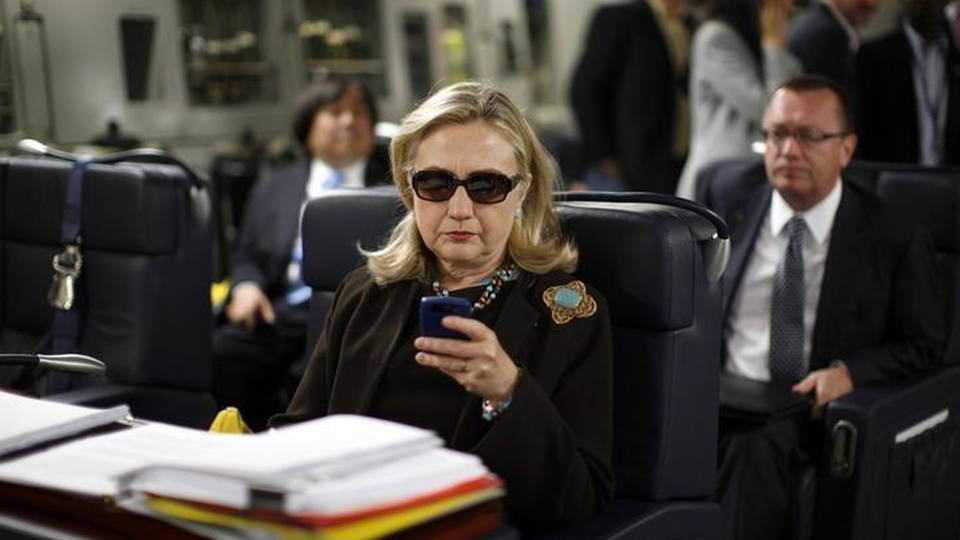 This all comes as a federal judge has ordered the State Department to set a timetable for the release of 15,000 additional emails the FBI has collected during the agency’s investigation into Clinton’s use of a private email server. Former Secretary of State Colin Powell is pushing back on rumors he advised Clinton to set up the private email server, saying, "Her people are trying to pin it on me."
Activists Protest Clinton Fundraiser at Home of Billionaire Haim Saban
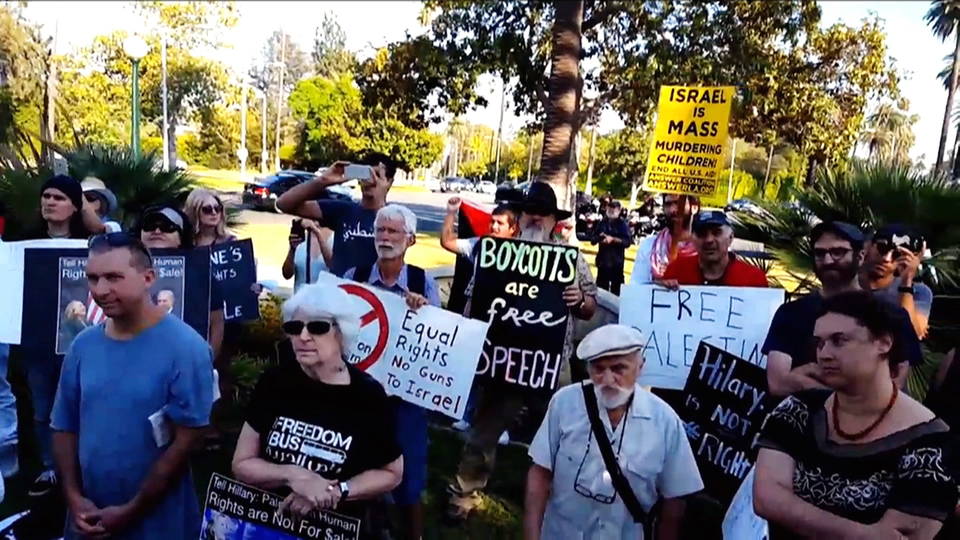 Meanwhile, on Monday night, Hillary Clinton faced protests by Palestinian rights activists outside a fundraising event at the Beverly Hills estate of billionaire Haim Saban. Saban has contributed millions to one of Clinton’s super PACs. Many of the donations came after Clinton herself wrote a letter to Saban expressing her "alarm" over the growing Boycott, Divestment and Sanctions movement. BDS is an international campaign to pressure Israel to comply with international law and respect Palestinian rights. In the July 2, 2015, letter, Clinton wrote, "I know you agree we need to make countering BDS a priority. I am seeking your advice on how we can work together."
Israel Launches Up to 50 Airstrikes in Gaza Strip
This comes as Israel has carried out up to 50 airstrikes in the Israeli-occupied Gaza Strip. Palestinian officials say at least four people have been wounded in the airstrikes, including a 17-year-old boy. Officials also say a water tower was damaged. Israel says the strikes were a retaliation for a rocket launched into Israel over the weekend.
Lawsuit Says Fox "Operates Like Sex-Fueled, Playboy Mansion-Like Cult"
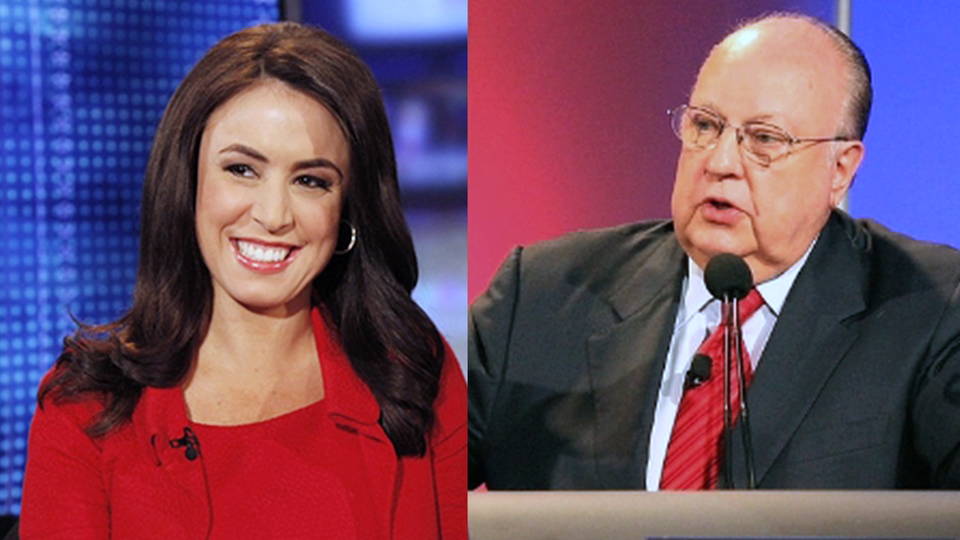
Former Fox News host Andrea Tantaros has filed a lawsuit alleging top Fox News executives punished her after she reported being sexually harassed by former Fox News Chair Roger Ailes. In the lawsuit, Tantaros said she was prohibited from wearing pants on air because, as executives told her, "Roger wants to see your legs." Tantaros also alleges she was removed from one of Fox’s top-rated shows after she refused to turn around during a meeting with Roger Ailes, who told her he wanted to "get a good look at [her]." Tantaros says that when she told executive Bill Shine about the harassment, he told her to "let this one go." Shine has taken over as co-president of Fox News following Ailes’s resignation. According to the lawsuit, "Fox News masquerades as a defender of traditional family values, but behind the scenes, it operates like a sex-fueled, Playboy Mansion-like cult, steeped in intimidation, indecency and misogyny." Ailes has been accused of sexual harassment by more than 20 women, including Fox News anchors Megyn Kelly and Gretchen Carlson. Ailes resigned in July, receiving a $40 million severance package.
Court Blocks Obama Directive Saying Trans Students Can Use Bathroom of Choice
Court Blocks Obama Directive Saying Trans Students Can Use Bathroom of Choice
 In Texas, a federal court has issued a nationwide injunction blocking the Obama administration’s directive saying students have the right under federal law to use the bathroom that corresponds to their gender identity. The directive, issued in May, suggests school districts could face lawsuits or loss of funding if they fail to protect transgender students from discrimination and unequal access to facilities. The injunction, issued Sunday night, comes as millions of students prepare to return to school this week. This is White House spokesperson Josh Earnest.
Press Secretary Josh Earnest: "Our goal has been, from the beginning, to provide for the safety and security and dignity of students all across the country. So, I guess the point is, we’ve got a lot of confidence in the guidance that was put forward. We certainly have confidence in the legal basis for issuing that guidance."
Afghanistan: 100 U.S. Soldiers Sent to Helmand Capital to Fight Taliban
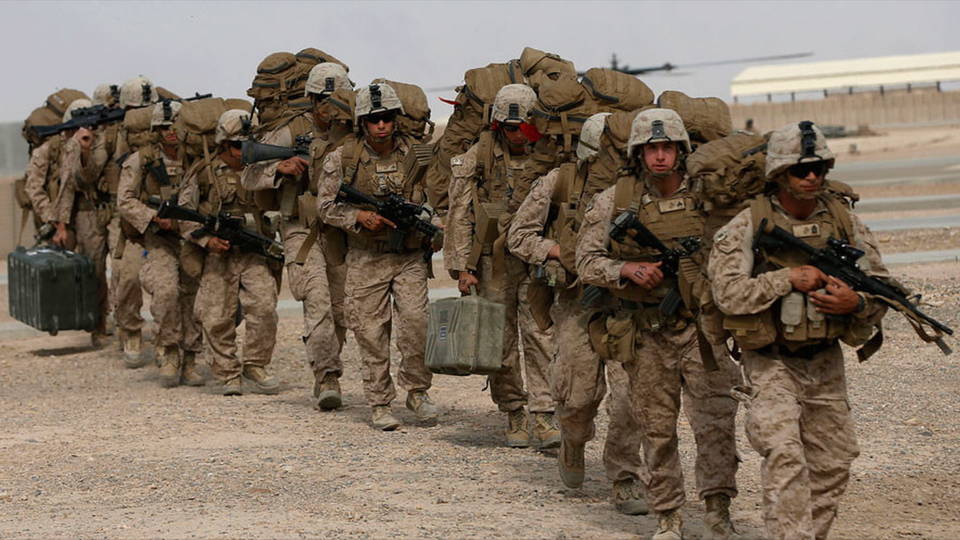 In Afghanistan, more than 100 U.S. soldiers have been sent to the capital of Helmand Province to fight the Taliban. It’s believed to be the first deployment of U.S. troops to Lashkar Gah since 2014. A July report issued by a U.S. government watchdog says the Taliban now controls more territory across Afghanistan than at any point since 2001. The U.S. war in Afghanistan is the longest war in U.S. history.
Libya: Western-Backed Government Suffers No-Confidence Vote
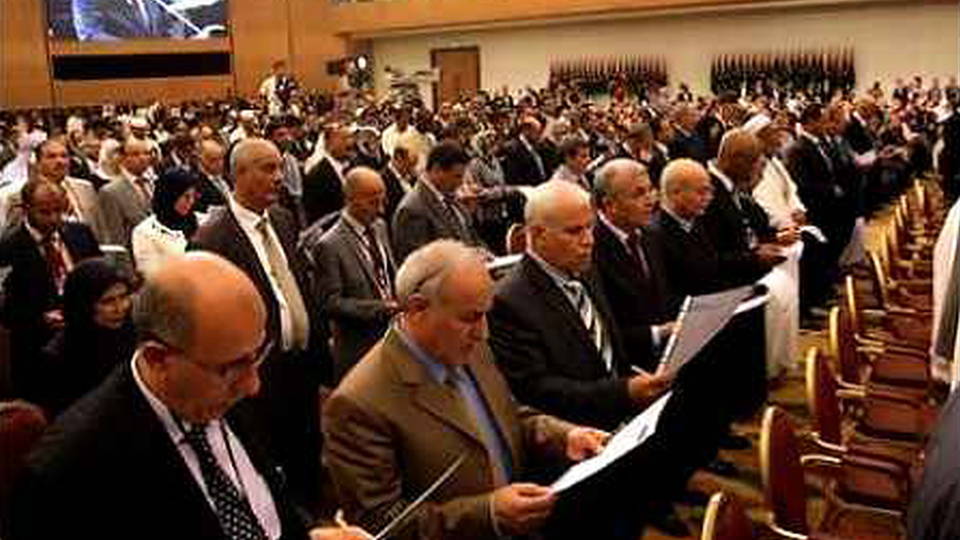 In Libya, the Western-backed government suffered a no-confidence vote Monday. Members of the Libyan House of Representatives voted 61 to 1 against the U.N.-backed Government of National Accord, known as the GNA. Thirty-nine Parliament members abstained from the vote. Libya currently has three competing governments that claim legitimacy. Earlier this month, the Pentagon began carrying out airstrikes in Libya against ISIS in what it says will be an ongoing campaign.
Mexico: Teachers Strike & Protest on First Day of School
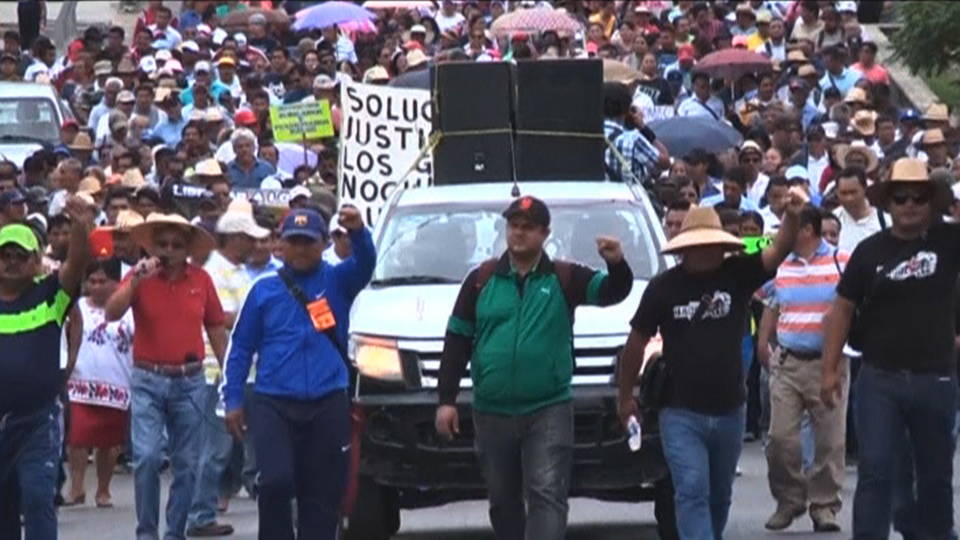 In Mexico, teachers in the southern states of Oaxaca, Michoacán, Guerrero and Chiapas are on strike to protest Mexican President Enrique Peña Nieto’s so-called education reforms, which seek to implement standardized testing across Mexico and weaken the power of teachers’ unions. On Monday, which was the first day of classes across Mexico, teachers in Oaxaca City instead marched through the streets. This is Juan García from Section 22, the local chapter of the teachers’ union.
Juan García: "The school calendar that we’re going to propose and which we’re designing concerns the standards of work being fulfilled with the parents of families and not from the boss. It is a commitment to our students and parents of families."
In June, a deadly police attack on protesting teachers in Oaxaca left at least nine people dead and more than 100 wounded.
Olympic Swimmer Ryan Lochte Loses 4 Sponsors, Including Speedo
 And U.S. Olympic gold medalist Ryan Lochte has lost four corporate sponsorships, including Speedo and Ralph Lauren, amid the scandal over his decision to lie to Brazilian authorities about having been robbed. Swimmer Lochte and his teammates claimed they were robbed at gunpoint by men posing as police officers during the Olympic Games. But Brazilian authorities say the Olympic swimmers actually vandalized a gas station and then invented a story about having been the victims of a robbery.Donate today:
Follow:


WEB EXCLUSIVE
 Back from Rio, Dave Zirin on Firsts at Olympics, Treatment of Russian Athletes, Future for Brazil
NEW BOOK

 Senior TV Producer
Development Manager207 West 25th Street 11th Floor
New York, New York 10001, United States
-------
-------

No comments:
Post a Comment