democracynow.org
Stories:

NYPD Chief Bill Bratton's Next Stop: Private Consulting Firm Tied to the Clintons
On Tuesday, New York City Police Commissioner William Bratton announced he is resigning next month. Bratton has served as the NYPD commissioner twice. He’s also served as head of the Boston and Los Angeles police departments. But Bratton’s resignation doesn’t mean he’s retiring. His next job will be at Teneo Holdings, a global private consulting firm with controversial ties to Hillary Clinton. Bratton will be the chairperson of a new branch of the company called Teneo Risk. For more, we speak with Christina Heatherton, assistant professor of American studies at Trinity College. She’s co-editor of "Policing the Planet: Why the Policing Crisis Led to Black Lives Matter."
TRANSCRIPT
This is a rush transcript. Copy may not be in its final form.
AMY GOODMAN: Let’s talk about where Bratton is going now. Do you know, Christina, the firm that he’s going to be working with, the private security firm?
CHRISTINA HEATHERTON: Yes. The private security firm that Bratton will be working—transitioning into is, I believe, called Teneos [sic]. But I think I’m just a little nervous on camera right now. But it’s worth considering this. You know, The New York Times—
AMY GOODMAN: Teneo?
CHRISTINA HEATHERTON: Teneo. The New York Times and other media outlets are presenting this shift into private service as a break, out of a long, storied history of over four decades of public service. And this is completely disingenuous. Throughout his career, Bratton has consulted with private security firms. He has consulted with foreign governments. He has been a part of efforts to export the broken windows policing model around the world.
And what we talk about in Policing the Planet is how broken windows policing is the political expression of neoliberalism at the urban scale. And what do I mean by this? Broken windows policing emerges in the period of deindustrialization. It emerges as you have an expansion of unemployment and homelessness. It emerges as you have the expansion of the real estate sector and financialization. So, suddenly, you have a lot of people who are out of work and out of homes in a landscape littered with actual broken windows. By turning those people into criminal problems, problems that the police are supposed to manage, versus other sectors of the state, you can facilitate the transformation of cities into sites of capital accumulation. This is what’s being exported. This is what’s being globalized. This is Bratton’s legacy. And this is how broken windows policing has traversed the world.
AMY GOODMAN: And Teneo’s links to the Clinton—the Clintons?
CHRISTINA HEATHERTON: Right. So, this is a firm that was founded by one of—by Bill Clinton’s former bagman. He’s somebody who’s been a key part of the Clinton Global Initiative. He headed the Clinton Institute in Ireland. This is Douglas [Band]. And I think what’s important to think about in this regard is that, you know, ostensibly, this is a Democratic firm or a ties with—an organization with deep Democratic ties that Bratton is about to move to. Bill Clinton, as well as Tony Blair, used to be on the board of this organization. And I think what’s important about that is that the most egregious violations of broken windows policing around the country have actually been enforced under Democratic mayors, liberal mayors, mayors like Bill de Blasio in New York, mayors like Antonio Villaraigosa in Los Angeles, mayors like Martin O’Malley. And so, when we think about the legacy of broken windows, it’s a mistake to think about this as just a Democrat-Republican, left-or-right issue. This has had bipartisan consensus, and this is evidenced by Bratton’s new job.
JUAN GONZÁLEZ: And, of course, I would not be surprised, for those who remember the former police commissioner, Ray Kelly, after his first stint as New York City [commissioner], ended up going into the Clinton administration working for the Treasury Department. So, I would not be at all surprised if Bill Bratton, if Hillary Clinton gets elected president, ends up with some kind of a law enforcement post in a second Clinton administration.
AMY GOODMAN: Well, I want to thank you all for being with us. Of course, we’ll continue to follow this. Christina Heatherton is a professor at Trinity College. Nabil Hassein is with Millions March NYC. And Darius Charney is with the Center for Constitutional Rights.
This is Democracy Now!, democracynow.org. When we come back, how does private equity affect your life? Stay with us. You may be surprised. ... Read More →

Chelsea Manning Faces Indefinite Solitary Confinement & Extra Prison Time After Suicide Attempt
Imprisoned Army whistleblower Chelsea Manning faces new charges after she tried to commit suicide last month. The Army reportedly told Manning she is being investigated on administrative charges that include having prohibited property in her cell and resisting being moved out of the cell. If convicted, Manning could face indefinite solitary confinement and additional time in prison. It could also hurt her chance of parole. Chelsea Manning is serving a 35-year sentence in the disciplinary barracks in Fort Leavenworth, Kansas. She has been subjected to long stretches of solitary confinement and denied medical treatment related to her gender identity. In a newly published interview with Amnesty International, Manning said, "I am always afraid. I am still afraid of the power of government. A government can arrest you. It can imprison you. It can put out information about you that won’t get questioned by the public—everyone will just assume that what they are saying is true. Sometimes, a government can even kill you—with or without the benefit of a trial." We speak with Chase Strangio, staff attorney at the ACLU, who represents Chelsea Manning in a lawsuit against the Department of Defense.
TRANSCRIPT
This is a rush transcript. Copy may not be in its final form.
JUAN GONZÁLEZ: Imprisoned Army whistleblower Chelsea Manning faces new charges after she tried to commit suicide last month. The Army reportedly told Manning she is being investigated on administrative charges that include having prohibited property in her cell and resisting being moved out of the cell. If convicted, Manning could face indefinite solitary confinement and additional time in prison. It could also hurt her chance of parole.
AMY GOODMAN: Chelsea Manning is serving a 35-year sentence in the Disciplinary Barracks at Fort Leavenworth, Kansas. She has been subjected to long stretches of solitary confinement, denied medical treatment related to her gender identity. In a newly published interview with Amnesty International, Chelsea Manning said, quote, "I am always afraid. I am still afraid of the power of government. A government can arrest you. It can imprison you. It can put out information about you that won’t get questioned by the public—everyone will just assume that what they are saying is true. Sometimes, a government can even kill you—with or without the benefit of a trial," she said.
Well, for more, we’re going to Washington, D.C., where we’re joined by Chase Strangio, staff attorney at the ACLU who represents Chelsea Manning in a lawsuit against the Department of Defense.
Chase Strangio, welcome to Democracy Now! So tell us what is happening, exactly where Chelsea Manning is. Talk about the news of her attempted suicide, her hospitalization, and what’s happening now.
CHASE STRANGIO: Good morning, and thank you for having me. So, Chelsea Manning has really spent the last six years trying to survive, working to contribute her voice to the public discourse, even while she’s incarcerated. And she’s faced so many hardships and made, you know, a very sad decision on July 5th that her only option was to end her life. And that was unsuccessful, but now she’s essentially being punished by the government for trying to die, after so many times being punished for trying to live. And she recently was given a charge sheet indicating that the very act of attempting suicide was going to result in administrative charges against her. And this charge sheet was given to her while she is still in a medical, mental health observation unit at Leavenworth, where she is trying to recover and get the treatment that she needs from the suicide attempt of July 5th, and she’s still struggling to regain her mental health and stability. And in the midst of that, the government essentially says to her, "You know, we are prepared to further punish you with these charges."
JUAN GONZÁLEZ: And as far as you know, what led to her decision to try to take her life on July 5th?
CHASE STRANGIO: So, Chelsea is living under, you know, the constant surveillance and denial of care that is characteristic of prison for so many. She’s under an extra amount of scrutiny because she is high-profile. She is a transgender woman in a man’s facility. She is being denied healthcare related to her very well-documented gender dysphoria. And I think she reached this moment of feeling like the only agency that she had left was the agency to end her life. And so, that, you know, is a very sad and unfortunate moment for her, and one that represents, I think, the dire circumstances that so many people who are in prison and incarcerated in various ways are living under. And thankfully, you know, she is relieved to be alive. But it is terrifying to think that as she survives, the government is continuing to give her the message that they will enforce punishments against her, essentially, for living.
AMY GOODMAN: Can you explain the conditions she’s living under? Where exactly is she? And what would be the effect of solitary confinement?
CHASE STRANGIO: So, right now she’s outside of general population, though, prior to the suicide attempt, she had been in general population. And she’s in an observation unit where she’s continuing to be monitored and ensured that she doesn’t take further action to take her life. She—
AMY GOODMAN: And the name of the prison is?
CHASE STRANGIO: She’s at the Disciplinary Barracks at Fort Leavenworth, Kansas. She’s been there since her sentencing in August of 2013. It is a military facility for men. She has, you know, been living there and contributing to public life through her writing there. And now she’s in a separate unit there being observed for her mental health status.
I think one of the big concerns right now is that these charges that she is facing could result in long-term solitary confinement for her. They could also result, as they did last summer in comparable charges, in the denial of important privileges like access to phones, access to writing materials, access to law library—the very things that Chelsea Manning uses to stay connected to the world. And those are the things, the human connection that people need to survive, that she needs to survive. And if she is forced into solitary confinement, which could be indefinite under the terms of her charges, that will be absolutely catastrophic to her mental health, and particularly at this moment, but it is for anybody, as the U.N. has repeatedly said, as doctors and other mental health providers have recognized. It is a completely inhumane form of punishment that is used far too often in our country.
JUAN GONZÁLEZ: Now, you said she was in a—for a while, in general population in a facility for men. So, to what degree is the government recognizing or not recognizing her gender identity?
CHASE STRANGIO: I think there’s a paradox across the country in this idea that our federal government and many state governments will honor and recognize the gender identity of transgender people, unless and until they are faced with incarceration. And so, Chelsea Manning has been recognized as female by the government, but they continue to impose upon her both the male housing facility, in the form of the Disciplinary Barracks at Leavenworth, but they’re also forcing her to maintain her male—the male hair length standards and grooming standards. And that is something that we’re fighting in court. And the perils and the damages of being forced to be punished through the denial of your core identity is something that has led to her depression. It’s imperiled her health. And it’s something that many transgender people across the country are facing on a daily basis.
AMY GOODMAN: Very quickly—we have 30 seconds—talk about HB 2 and the hearing this week.
CHASE STRANGIO: So, in North Carolina, the ACLU and Lambda Legal are headed to trial against North Carolina’s anti-trans law. We had our first hearing this week down in North Carolina. It is going to be an ongoing fight to take down that law and other anti-trans laws. And we’re going to be doing that in the context in which we know that so many trans women of color are being murdered on the streets. And we have a responsibility to fight back against all of the ways our communities continue to be targeted and killed—in prisons, by laws and by people on the streets.
AMY GOODMAN: Chase, we’re going to continue this interview right after the show, and we’re giong to post it online at democracynow.org. Chase Strangio is staff attorney at the ACLU, representing Chelsea Manning in a lawsuit against the Pentagon. ... Read More →

"When You Dial 911 and Wall Street Answers": How Private Equity Profits off Our Daily Lives
When you woke up this morning, chances are your morning routine was touched in some way by a private equity firm. From the water you drink to the roads you drive to work, to the morning newspaper you read, Wall Street firms are playing an increasingly influential role in daily life. So says a compelling new article in The New York Times, "This Is Your Life, Brought to You by Private Equity." For more, we speak with New York Times reporter Danielle Ivory, one of the contributors to the series as well as co-author of the recent article "When You Dial 911 and Wall Street Answers."
TRANSCRIPT
This is a rush transcript. Copy may not be in its final form.
JUAN GONZÁLEZ: When you woke up this morning, chances are your morning routine was touched in some way by a private equity firm. From the water you drink to the roads you drive to work, to the morning newspaper you read, Wall Street firms are playing an increasingly influential role in daily life. So says a compelling new article in The New York Times, "This Is Your Life, Brought to You by Private Equity." The multimedia infographic chronicles how, since the 2008 financial crisis, private equity firms have bought underperforming businesses and worked to maximize profits, only to sell them off.
AMY GOODMAN: Now Wall Street investors are controlling critical public services in municipalities across the country, including fire and ambulance. According to the report, under the control of private equity firms, response times for fire and ambulance services have often increased, companies have fallen into bankruptcy, residents have been made to pay higher costs for poorer service.
Well, for more, we’re joined by New York Times reporter Danielle Ivory, one of the contributors to the series, as well as co-author of the recent article, "When You Dial 911 and Wall Street Answers."
Welcome to Democracy Now!, Danielle.
DANIELLE IVORY: Thank you very—
AMY GOODMAN: Welcome back to Democracy Now!
DANIELLE IVORY: Thank you very much for having me on.
AMY GOODMAN: So why don’t we start there: When you call 911, Wall Street answers? What do you mean?
DANIELLE IVORY: Right. Well, my colleagues and I have been spending the last year looking at how private equity has increasingly crept into the lives of Americans, and especially into critical services, so emergency services, the fire department. So, what we looked at are companies that are taking over ambulance companies. They’ll—you know, if you dial 911 and the ambulance picks you up, you dial 911 because your house is on fire and the fire department shows up, but it’s actually controlled by a private equity company.
AMY GOODMAN: What do you mean?
DANIELLE IVORY: So, for example, we looked at two companies very, very deeply: Rural/Metro and TransCare. So, Rural/Metro is a company that was backed by Warburg Pincus, taken into bankruptcy and then taken out of bankruptcy by Oaktree Capital Management, among other investors. And this is a company that does ambulance services nationwide, and it also does fire services in three states—in Oregon, Arizona and Tennessee. And the two services are a little bit different, so it’s important to separate them. But Rural/Metro, when they pick you up in an ambulance, they may send you a large bill afterwards, they may go after you in court if you don’t pay that bill. And we also found that, on fire, you might think that you’re paying your fire department out of taxes, but, in fact, if you don’t subscribe to Rural/Metro service and you have a fire, Rural/Metro might show up, put out the fire, maybe your house burns down to the ground, and then you get a bill for multiple thousands of dollars. And we found numerous court cases where Rural/Metro had gone after people in court for bills that ranged up to—I think $59,000 was the highest bill that we found.
JUAN GONZÁLEZ: Now, why do you suspect this is occurring post the Great Recession? Is it basically private equity seeking out new markets and trying to carve out sections of government to privatize even further?
DANIELLE IVORY: Right. So, private equity saw this as a growth area. So, firms saw that towns were increasingly cash-strapped and looking to outsource some of these services. They’re expensive. You have to pay for pension plans. So, this was—this was really a bet. And also, we had the emergence of Obama’s healthcare reform. So, with—along with Obamacare, you have this possibility of adding more and more people to insurance rolls. In some ways, that might not have been the smartest bet. What private equity firms thought that they were going to see were more and more people added to insurance that would pay for these bills. But instead, more and more people were added to Medicaid, and Medicaid restricts the most aggressive billing collection practices.
AMY GOODMAN: What happens when these companies go bankrupt?
DANIELLE IVORY: Well, so, in the case of Rural/Metro, they went into bankruptcy, but they were taken out of bankruptcy. So, really, there wasn’t—although there were a lot of worries about the company failing and leaving towns, they stayed in those towns. Services may have gotten poorer. And as we saw in the major markets that we looked at, services did get poorer. For a company like TransCare, TransCare filed for bankruptcy right in our own backyard, in Brooklyn, in February. And that is a company that filed for Chapter 7 bankruptcy, so it closed its doors forever. And towns were left in the lurch. So you had towns that were literally like scrambling to find another company that could come in and perform their ambulance services, and sometimes paying more money for it because of that.
JUAN GONZÁLEZ: I want to turn to an interview that Lynn Tilton, the CEO of Patriarch Partners, did with The Wall Street Journal in 2014. Patriarch controlled TransCare EMS, an ambulance service, as you mentioned, which went bankrupt and closed its doors in February.
LYNN TILTON: One of the major facets of buying distressed companies is buying a brand name that people recognize. And MD Helicopters was the house that Howard Hughes built. I mean, the helicopters go back to the Vietnam era, the first real scout helicopter, the OH-6. And it has this great history and this great legacy, and it was going to disappear. ... I buy companies at their deepest, darkest moment. Every company I buy would not be here but for the purchase. OK? So, I go as far down the food chain of the living. And so, that means that not everything is going to make it.
JUAN GONZÁLEZ: That was Lynn Tilton. She’s quoted in your article as saying TransCare, quote, "faced the obstacles inherent to its business model" and that its collapse was due to problems beyond Patriarch’s control. Talk about Tilton’s role in TransCare’s demise.
DANIELLE IVORY: Well, it’s a very interesting thing, because as we talked to Lynn Tilton and Patriarch Partners, they really tried to distance themselves from the company. And I think that’s reflected in the article. They really tried to emphasize that the fund that owned TransCare was solely owned by Lynn Tilton, not directly owned by Patriarch. And what we found is that Lynn Tilton was the sole member of the board for TransCare, which is basically unheard of in the corporate world—really, as one governance expert put it to us, a recipe for disaster.
We also found, because we got hundreds of pages of internal emails and also executive meeting minutes from TransCare meetings, that Patriarch Partners executives, including Lynn Tilton, but not limited to Lynn Tilton, were very heavily involved in the company and, as far back as a year ago, were discussing in these meetings that the company might not make it through the weekend, because it didn’t have enough medical supplies.
JUAN GONZÁLEZ: Well, I can see the ambulance services, in terms of they have a regular cash flow in terms of insurance reimbursements or even government, if it’s Medicaid, but what about fire companies? How do these private equities get into fire companies? And how do they get their revenue there?
DANIELLE IVORY: So, fire is a really interesting thing. And I should say that it’s not something that was limited to the private equity ownership of Rural/Metro, but we just thought it was so unusual and interesting, that it would really be irresponsible not to report on it. What we found with this company is that—and they still do this now, and they are not owned by private equity anymore. They’re owned by a company called Envision. It’s a healthcare company that also used to be owned by private equity, is no longer owned by private equity.
Rural/Metro has a subscription service that is based on your property size. So, you might pay an annual bill of a couple hundred dollars. And under that agreement, then Rural/Metro will show up, put out your fire, and you don’t pay a dime. But a lot of people don’t really understand that. I mean, you and I, when we pay our taxes, that covers the fire department. So, someone might have a fire, call 911, the fire department shows up, puts out the fire, and then, you know, a few weeks later, they get a bill for $10,000, $15,000. And people just don’t understand that. They don’t understand why they’re getting a bill from the fire department. And then they end up in court. And it really just ends up being this like very stressful situation for some people. And these are people that generally live kind of outside of urban areas; these are people that are living kind of off the grid. So, it’s a really scary thing to suddenly be getting a court summons because you owe, you know, $20,000 to your fire department.
AMY GOODMAN: And for people who don’t understand what private equity is, explain. And explain who is profiting here.
DANIELLE IVORY: Right. So these are companies that are based on Wall Street. And this is a little bit of a generalization, but sort of the basic concept is you have investors that are looking for distressed companies, that are looking for undervalued, underperforming companies. And they want to buy them and make them into better and overperforming companies, companies that are going to make a lot of money, and, in some cases, sell those companies for a lot of money.
AMY GOODMAN: I just wanted to read—I mean, you have this amazing multimedia display on this, and I’d like to talk about that for a moment. But there’s one part where it says, from the—let’s see. It says, "from the clock on your wall to the toilet paper in your bathroom. ... Wall Street firms can also be found in your parking garage, where they collect your cash. ... Private equity ... helps oversee public golf courses in several states ... it builds courthouses. ... Now [that] you’ve made it to work, you might be sitting inside a building controlled by Blackstone, a huge private equity firm and one of the largest landlords in the country." Talk about Blackstone. And talk about this every—the idea of this being every aspect of our lives.
DANIELLE IVORY: Well, it really is every aspect of our lives. And some of those aspects are not really critical to your life. I mean, if the clock on your wall has been—the company that makes the clock has been backed by private equity, that probably isn’t going to affect you very much at all. But in this case, Blackstone is one of the largest private landlords in the country and has kind of come in where banks have stepped back from mortgage practices. And what we’ve seen is that they’re making some of the same mistakes that the banks made during the financial crisis or in the up—in the run-up to the financial crisis.
JUAN GONZÁLEZ: And the key aspect of private equity is it’s not required to have a lot of the same transparency that a publicly traded company would have in terms of its regular reports and its trading and who’s investing what in it?
DANIELLE IVORY: That’s absolutely true. So, a public company would have to make more regular reports to the SEC. They also don’t face a lot of the same regulations as banks, as well. It’s just a newer concept, in some ways. And then, in the case of fire and ambulance, private equity companies are regulated, but as ambulance companies. So, something that we found very early on as we were looking at this is that ambulance companies, there just really isn’t—there isn’t a national database of ambulance response times, so it’s very, very difficult to compare ambulances from town to town, from company to company, even within one company from contract to contract. The contracts are all different, and they all ask for different things. So the oversight can be very patchy.
AMY GOODMAN: So, who ultimately is responsible?
DANIELLE IVORY: That is a very interesting question. So, on the topic of ambulances, usually it’s a local health department or the local government, whoever has the contract with the company. But like I said, they can be very, very different. So, for example, we looked at Aurora, Colorado. Aurora recently ended its contract with Rural/Metro, but when they were under contract, they asked for basically everything. They asked for ambulance response times. They were very strict about penalizing if there were any late response times. But very close by, there was another town called Edgewater, which also no longer has a contract with Rural/Metro. It has a contract with a neighboring town that uses Rural/Metro. And Edgewater’s contract had this very interesting thing where it said, I believe, that the ambulance company was required to arrive within five minutes, but then there were no actual reporting requirements, so the ambulance company didn’t have to actually tell them any of its response times. So there was no way that the town could even know if the ambulance companies were arriving within five minutes.
With fire, it’s a very, very different thing. In the fire—with fire departments, there’s actually no contract. So, what you’re looking at is an area where the local fire department, the municipal fire department, simply just doesn’t serve that area, and Rural/Metro comes in to fill that gap. And what that means is that there just—there really isn’t an oversight entity at all.
AMY GOODMAN: And, of course, we’re not just talking about economics here, we’re talking about lives. You begin your piece, "A Tennessee woman slipped into a coma and died after an ambulance company took so long to assemble a crew that one worker had time for a cigarette break. Paramedics in New York had to covertly swipe medical supplies from a hospital to restock their depleted ambulances after emergency runs. [And a] man in the suburban South watched a chimney fire burn his house to the ground as he waited for the fire department, which billed him anyway [and] then sued him for $15,000 when he [did not] pay."
DANIELLE IVORY: Right. I mean, we’re talking about companies that are really interacting with people at the most vulnerable moments of their life. So, even though this is actually a relatively small portion of the ambulance market, we thought it was important to look at, because these really are life-and-death services. In the case of TransCare, which, again, is like right here in New York—or used to be right here in New York—I had paramedics and EMTs going on the record saying that they felt pressure to go into emergency rooms and basically steal supplies, because they were worried that their ambulances were not going to be stocked with critical medications. Really kind of incredible, mind-blowing stuff.
AMY GOODMAN: Well, we want to thank you, Danielle, for joining us. Danielle Ivory, reporter for The New York Times for this series, "Bottom Line Nation." She was co-author of the latest article in the series, "This Is Your Life, Brought to You by Private Equity," and lead reporter on the article, "When You Dial 911 and Wall Street Answers." We’ll link to all these articles at democracynow.org.
When we come back, what is happening to Chelsea Manning at Leavenworth? Attempted suicide. What are the authorities trying to do to her now? Stay with us. ... Read More →

Amid City Hall Protests, NYPD Chief Bill Bratton Resigns, But "Broken Windows" Continues Nationwide
New York City Police Commissioner William Bratton has announced he is resigning next month. Bratton was a lead advocate of the so-called broken windows theory that called for officers to crack down on minor infractions in an attempt to decrease more violent crime. Over the past four decades, Bratton has served as New York police commissioner twice as well as the head of the Boston and Los Angeles police departments. Supporters of Bratton credit him with lowering crimes rates, but critics say broken windows policing unfairly targets communities of color. In a statement, Black Lives Matter co-founder Opal Tometi told Democracy Now!, "William Bratton is the key architect of programs that have terrorized our communities for decades. His implementation of broken windows theory has wreaked havoc on communities from Los Angeles to New York City and beyond.” Bratton resigned just one day after hundreds of activists gathered outside New York City Hall demanding the defunding of the New York Police Department and his firing. Protests against William Bratton have been escalating ever since the police killing of Eric Garner two years ago. We speak to Trinity College professor Christina Heatherton, Darius Charney of the Center for Constitutional Rights and Nabil Hassein of Millions March NYC.
TRANSCRIPT
This is a rush transcript. Copy may not be in its final form.
JUAN GONZÁLEZ: New York Police Commissioner William Bratton has announced he is resigning next month, ending a four-decade career where he helped reshape modern policing. Bratton was a lead advocate of the so-called broken windows theory that called for officers to crack down on minor infractions in an attempt to decrease more violent crime. On Tuesday, New York Mayor Bill de Blasio announced Bratton’s resignation.
MAYOR BILL DE BLASIO: Commissioner Bill Bratton, whose contributions to our city and to law enforcement, not only here but across the nation, are literally inestimable and extraordinary. In September, Commissioner Bratton will retire from the NYPD.
AMY GOODMAN: Supporters of William Bratton credited him with lowering crimes rate, but critics said broken windows policing unfairly targets communities of color. In a statement, Black Lives Matter co-founder Opal Tometi told Democracy Now!, quote, "William Bratton is the key architect of programs that have terrorized our communities for decades. His implementation of broken windows theory has wreaked havoc on communities from Los Angeles to New York City and beyond," she said.
Over the past four decades, Bratton has served as New York police commissioner twice, as well as the head of the Boston and Los Angeles police departments. Bratton resigned just one day after hundreds of activists gathered outside New York City Hall demanding the defunding of the New York Police Department as well as Bratton’s firing.
VIENNA RYE: My name is Vienna Rye. I’m an organizer with Millions March NYC. And we are here today to demand that Bill Bratton be immediately fired, and broken windows policing ended, that reparations are paid to all victims and survivors of racist police brutality, and that the NYPD is defunded and that money is reinvested into black, brown and working-class communities.
AMY GOODMAN: This is Democracy Now!, democracynow.org, The War and Peace Report. Coming up on today’s broadcast, we will be looking at private equity and how it affects all of our lives, and we’ll also be talking about what’s happening to Chelsea Manning, who attempted suicide just a few weeks ago. As well as attempting suicide, she went—the authorities are saying she faces solitary confinement.
JUAN GONZÁLEZ: Well, protests against William Bratton have been escalating ever since the police killing of Eric Garner two years ago. Officers stopped Garner for allegedly selling loose cigarettes in Staten Island. Garner, who was an African-American father of six, died after an officer pulled him to the ground in a chokehold. Officers then piled on top of Garner as he said "I can’t breathe" 11 times. Bratton’s resignation also comes at a time when the city’s largest police union has been protesting Mayor de Blasio and seeking a 34 percent pay hike. Bratton will be replaced by James O’Neill, the NYPD’s highest-ranking uniformed officer and a 33-year veteran of the department.
AMY GOODMAN: To talk more about the significance of Bratton’s resignation, we’re joined by three guests. Darius Charney is with us, senior staff attorney at the Center for Constitutional Rights, lead counsel on CCR’s landmark federal civil rights lawsuit that found NYPD’s stop-and-frisk practices unconstitutional. Nabil Hassein is an organizer with Millions March NYC. And joining us from Chicopee, Massachusetts, is Christina Heatherton, assistant professor of American studies at Trinity College. She’s co-editor of Policing the Planet: Why the Policing Crisis Led to Black Lives Matter.
We welcome you all to Democracy Now! Nabil, let’s begin with you. There’s been this protest for two days outside of New York City Hall, so it was quite astounding, as they were calling for the firing of Bratton, that New York Police Commissioner Bill Bratton resigned. Do you think you had any effect?
NABIL HASSEIN: Definitely, I think our protest had an impact. This is the culmination of years of organizing at the NY—at the New York City grassroots within the Movement for Black Lives. There’s more groups than I could possibly name that have been doing all kinds of work against Police Commissioner Bill Bratton and his racist policy of broken windows policing, which I actually think was best summarized by Frederick Douglass all the way back in 1845, when he said, "The slaveowners’ plan was to whip for the smallest offenses, in order to prevent the commission of large ones." There’s no evidence that this policy does anything to keep any community safe.
JUAN GONZÁLEZ: Well, I’d like to ask Christina Heatherton, if you could assess the impact of Bratton on American policing? I mean, clearly, the broken windows theory was a key aspect of what he brought to the modern policing, but also his use of what’s called CompStat, or data-driven assessments that would, in essence, supposedly bring policing into the 21st century.
CHRISTINA HEATHERTON: Yes, Juan. Well, first, allow me to say, on behalf of all the communities that have been stopped, frisked, assaulted, terrorized and killed under broken windows policing, I’d like to say to the commissioner, "Good riddance." Bill Bratton is credited with being America’s top cop, with, as you said, modernizing American policing with policies such as broken windows theory and CompStat. Essentially what this did was expanded police capacity from response to preemption. So, instead of responding to major crimes, police gained the authorization to moderate and police individual behavior. This is an incredible expansion of police capacity. This has followed an enormous expansion of police—of funding for police departments at state and local levels. And this—while his supporters and detractors say that he revolutionized American policing, we have to think about his legacy as the death of Eric Garner, the death of Michael Brown, the death of Rekia Boyd, the death of Sean Bell. The implementation of broken windows policing has enabled a new intimacy of policing across the country and around the world.
AMY GOODMAN: At Tuesday’s news conference, Bill Bratton enumerated the successes of the NYPD under his leadership.
COMMISSIONER WILLIAM BRATTON: No police department in America, any time in any of their history, has ever been as well funded or supported as we have, to buy all of that equipment, to provide all of that training, to ensure that our officers, that we keep them as safe as we can, and they keep you safe as you need to be. We have begun that job from top to bottom. For our officers, it has involved new training about how to de-escalate situations. We’ve reduced stop and frisk by phenomenal amounts—said it couldn’t be done. But we continue to reduce crime at the same time. We have reduced our use of force, our civilian complaints, and launched the most innovative and far-reaching community policing program New York has ever attempted. And it will succeed this time.
AMY GOODMAN: So that’s New York Police Commissioner and, before that, Boston and Los Angeles Police Commissioner Bill Bratton enumerating his accomplishments. Darius Charney, you are a lawyer with the Center for Constitutional Rights, specifically involved in a major stop-and-frisk case. Can you talk about his evaluation of his tenure?
DARIUS CHARNEY: Well, I think his tenure has been very complicated. And again, when we talk about his tenure, we’re talking about not only the last three or four years, but his tenure here in the 1990s, which, I think if you go back and you look at the history of policing in New York City over the last two decades, Commissioner Bratton is the architect not only of the broken windows policy and all of the harmful impacts it has had on particularly communities of color in the city, but the explosion of stop and frisk that we saw in the early 2000s was a natural extension of the policies that he put in place in the 1990s, which were, you know, as the professor said earlier, a, quote-unquote, "proactive" intervention in particularly poor communities of color, very, I guess, draconian and aggressive policing tactics of which stop and frisk was one. And so, I think when we talk about his legacy, you know, while he said we’ve reduced stop and frisk over the past few years, we have to look—we have to look back further and try to understand why was there such an explosion to begin with, and I think it’s a direct consequence of the policies and the philosophy that he advocated for.
JUAN GONZÁLEZ: Now, I wanted to ask you, because I had much—a lot of interaction with Bratton during his first stint as commissioner here. And I once asked him in a forum, because he was touting the huge reductions in New York City’s crime rate, and I said to him, "Commissioner, how much of this is actually due to your data-driven analysis and your broken windows theories? And how much of it is due to the actual increasing of surveillance of citizens, in general?" I mean, ATM machines, anyone who tries to do a robbery, an ATM machine, it automatically gets a camera—a picture of them captured. They may do it the first time, but they’re not going to be able to do it the second time. And that the reality is, from E-ZPass and Metro cards, there’s so many ways now for the state to surveil what people are doing on a daily basis that being a career criminal these days is not going to be a lucrative venture, because you’re not going to be able to continue to commit crimes over and over again.
DARIUS CHARNEY: Well, I think when you—you know, you mentioned surveillance. I think we really have seen an explosion of surveillance, on the part not only of law enforcement, but obviously the federal government, over the past several decades. And I think, you know, that reminds me of another, I guess, technological advancement that Commissioner Bratton is touting, which is the police body cameras. That is kind of the new trend in American policing. It’s something that the NYPD is about to roll out in a widespread way. And I think there are very much concerns there about the privacy rights of individual civilians, what will the footage be used for. You know, there’s going to be a huge amount of data sitting somewhere, whether it’s in the cloud or somewhere in an NYPD server, of hundreds of thousands or millions of New Yorkers, and at this point we have no idea what the NYPD is going to do with it. So, I think, you know, you’re right, Juan, that, I think, surveillance has had an impact on our society. And I guess the question is: Has it been for positive or negative reasons? And I think I tend to come down on the negative side.
AMY GOODMAN: What about stop and frisk, the deal that has been made? Explain that lawsuit, what you won and what it means now with Bratton leaving.
DARIUS CHARNEY: Sure. Well, in terms of what the case was about, I think many—anyone who lives here remembers, not so long ago, that there was an explosion of the use of stop, question and frisk by the NYPD over the course of, really, a decade, where at the height, in 2011, we had almost 700,000 New Yorkers being stopped, oftentimes searched, oftentimes having force used against them. And, of course, the overwhelming majority of those folks were particularly young and black and Latino men. So, CCR, in 2008, challenged this practice in federal court, and in 2013, a federal judge ruled that the way that the NYPD uses stop, question and frisk is unconstitutional, it violates the Fourth Amendment, and it was also racially discriminatory, and therefore violated the Equal Protection Clause of the 14th Amendment of the Constitution. The prior administration attempted to appeal that decision, not surprisingly. But when Mayor de Blasio came in, mainly due to overwhelming, I think, organizing and pressure from the public and the grassroots, he realized that the better course was to actually accept the findings of the court and agree to, you know, change this practice, to try to end it.
And so, since 2014, we have been working with a federal monitor appointed by the court, we’ve been working with the NYPD, we’ve been working with many stakeholders in the community who have been most impacted by these practices, to develop a set of really fundamental reforms to how the NYPD polices these communities. It runs the gamut of training. It runs the gamut of monitoring officers, of how they will be held accountable if they violate people’s rights, how they will be evaluated to determine if they’re doing a good job or not. And we’re in the very early stages of that, of developing these remedies. In terms of what this means now, it is our expectation and our hope that nothing will change in terms of the NYPD’s agreement and, thus far, commitment to making these changes. But, you know, it has been a hard, very slow road so far, and so I think we have to remain vigilant and continue to hold the police department accountable.
JUAN GONZÁLEZ: I wanted to ask Nabil Hassein, the new commissioner now, James O’Neill, has promised that he’s going to move forward on a more community policing model; from your perspective, is there any kind of form of community policing that would—that would reduce the tensions and conflicts between the police and the African-American and Latino communities, or is it just a hopeless effort to try to reform the police department?
NABIL HASSEIN: So, Millions March NYC is a police and prison abolitionist organization. So, we do not—ultimately, we do not support community policing. It is possible that the NYPD could become less violent than it is now, while still existing, but we—in Millions March NYC, we envision a world without the police, without jails, without prisons. We think that’s what an actually free society would look like. And all of our three demands, which are, again—the first one, the first half of it was met, which is to fire Bill Bratton and end broken windows policing. So, Bill Bratton is on his way out. We’ll still have to see what kind of policies James O’Neill is going to put in. But to be honest, coming in, I’m not extremely optimistic, given the fact of his long tenure within the NYPD, his close work with Bill Bratton. I would say—I would just warn him, you know, based on the results of the grassroots organizing that’s been going on against Bill Bratton, those ties continue to exist and if he continues the same policies as his predecessor, he’s going to meet with the same fate as his predecessor.
AMY GOODMAN: So, I want to turn to Bill Bratton’s successor, Chief James O’Neill, the department’s top uniformed officer now. O’Neill addressed reporters on Tuesday.
CHIEF JAMES O’NEILL: I’m in full support of advocacy groups and everyone trying to peacefully protest. It’s what democracy and America are all about, and it’s our job to ensure that right. The protest in the fall of 2014 signaled that change was necessary. With the brutal assassination of Joe Liu and Rafael Ramos in Brooklyn that December, it was clear the NYPD had to evolve and find a new way forward to meet the needs of every New Yorker. That’s when our neighborhood-based policing initiative was really born. By this October, our neighborhood-based policing program, which is very much a crime-fighting tool, will be in more than half of our command citywide and in 100 percent of our public housing commands. ... I’m leaving the uniform behind, fortunately and unfortunately. I love it. I’ve loved it since the first day I put it on. But it’s time for bigger and better things, and I just can’t wait for the opportunity to lead the great cops in this city to make this New York City an even safer place.
AMY GOODMAN: Let’s go to professor Christina Heatherton, if you could respond to what he says and the policy or the direction you believe that, well, the incoming Commissioner O’Neill will be taking the department in?
CHRISTINA HEATHERTON: Of course. Well, I think—you know, in 2015, William Bratton himself said that there was no difference between broken windows policing and community policing. And so, we shouldn’t be distracted by any proposals to introduce community policing, neighborhood policing, tea-and-cookies-in-the-community-center policing. Whatever you call it, this is all the same kind of policing. I want to be clear that both broken windows and community policing emerged out of the crises of policing from the mid-1960s and late 1970s—in other words, the formal end of Jim Crow. So, where formal segregation was made illegal, a new form of policing emerged that was supposed to be responsive to the needs of communities, that was supposed to present itself as community-minded. As Naomi Murakawa describes in an interview in our book, Policing the Planet, the policies instituted in 1965 under the Johnson administration are no different than the proposals for community policing being proposed by the Obama administration, being supported by Commissioner Bratton, and, you know, the new commissioner, O’Neill, proposes to follow up on. This is simply rebranding. ... Read More →
Headlines:
New York Police Commissioner Bill Bratton to Resign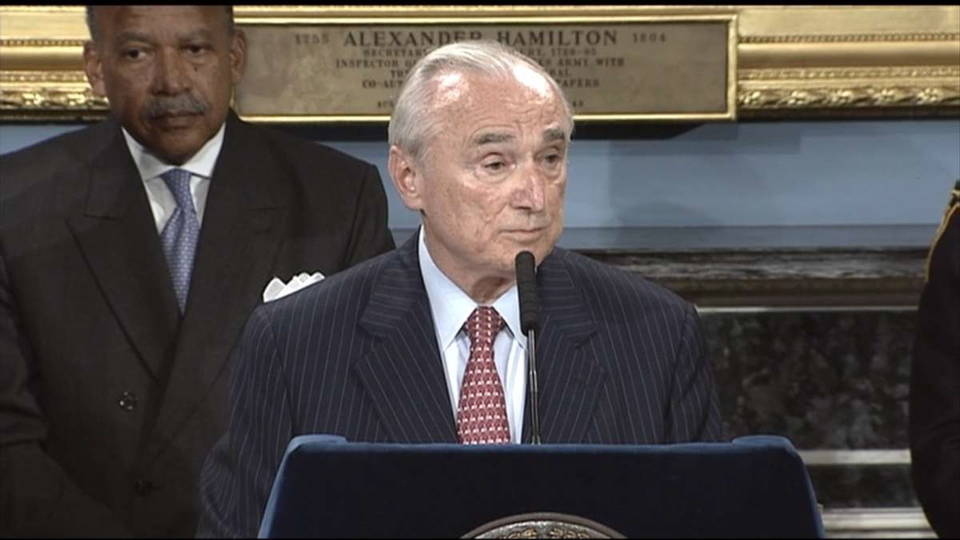
New York Police Commissioner William Bratton has announced he is resigning next month. Over the past four decades, Bratton has reshaped modern policing. He served as the New York police commissioner twice, and as commissioner of the Boston Police Department and chief of the Los Angeles Police Department. Bratton was a lead advocate of the so-called broken windows policy that calls for officers to crack down on minor infractions in an attempt to decrease violent crime. While New York City mayor Bill de Blasio called Bratton’s accomplishments "extraordinary," critics say Bratton’s policies have unfairly targeted communities of color. In a statement Black Lives Matter co-founder Opal Tometi told Democracy Now!, "William Bratton is the key architect of programs that have terrorized our communities for decades."
Bratton and his policies have faced years of protests and opposition from activists. We’ll have more on his resignation after headlines.
TOPICS:
Police
Obama Calls on Republican Leaders to Withdraw Endorsements of Trump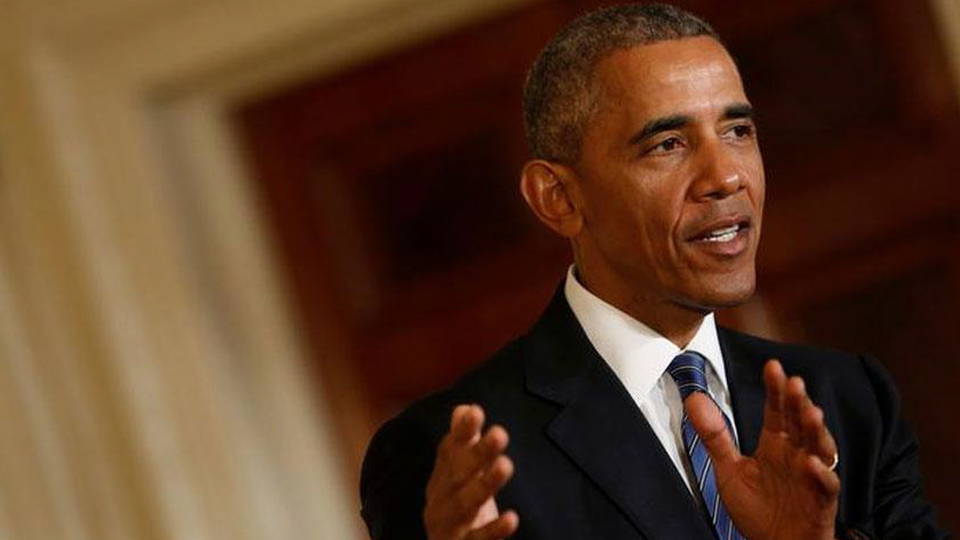
With less than 100 days left before the November election, President Obama offered his strongest criticism of Republican presidential nominee Donald Trump so far, urging Republican leaders to withdraw their endorsements of his candidacy. In his remarks Tuesday, Obama referred to Trump’s recent attacks on Khizr and Ghazala Khan, the parents of a U.S. soldier who died in Iraq.
President Barack Obama: "This isn’t a situation where you have an episodic gaffe. This is daily and weekly, where they are distancing themselves from statements he’s making. There has to be a point at which you say, 'This is not somebody I can support for president the United States, even if he purports to be a member of my party.' And, you know, the fact that that has not yet happened makes some of these denunciations ring hollow."
Donald Trump attacked the Khans after Khizr Khan spoke at the Democratic National Convention in Philadelphia Thursday. Trump suggested in an interview that Ghazala Khan hadn’t spoken because, as a Muslim woman, she wasn’t allowed to. Ghazala refuted Trump’s comments, saying she hadn’t spoken because of her grief. This is Ghazala speaking more about her son on MSNBC.
Ghazala Khan: "I was really worried, and I talked to him about all this, that this is a war, and I don’t want you to go out or do something stupid, and don’t be a hero. Please come back. And go safely. My prayers are with you. And be strong."
To see more from Ghazala Khan in a rare video of Ghazala and Khizr Khan visiting Arlington National Cemetery to visit the grave of their son, a U.S. Army captain, from the HBO documentary "Section 60," go to democracynow.org.
TOPICS:
2016 Election
Donald Trump
Trump Refuses to Endorse Paul Ryan & John McCain, Widening GOP Split
Meanwhile, friction is increasing between Trump and top Republican leaders. On Monday, in an interview with The Washington Post, Trump refused to endorse the re-election campaigns of Arizona Senator John McCain and Wisconsin Congressmember Paul Ryan. Trump praised Ryan’s opponent in the race, saying he was "running a very good campaign." Ryan’s opponent, Paul Nehlen, has defended Trump’s remarks about the Khans, while both Ryan and McCain publicly distanced themselves from Trump over his comments.
TOPICS:
Donald Trump
2016 Election
Republican Billionaire Meg Whitman Says She'll Back Hillary Clinton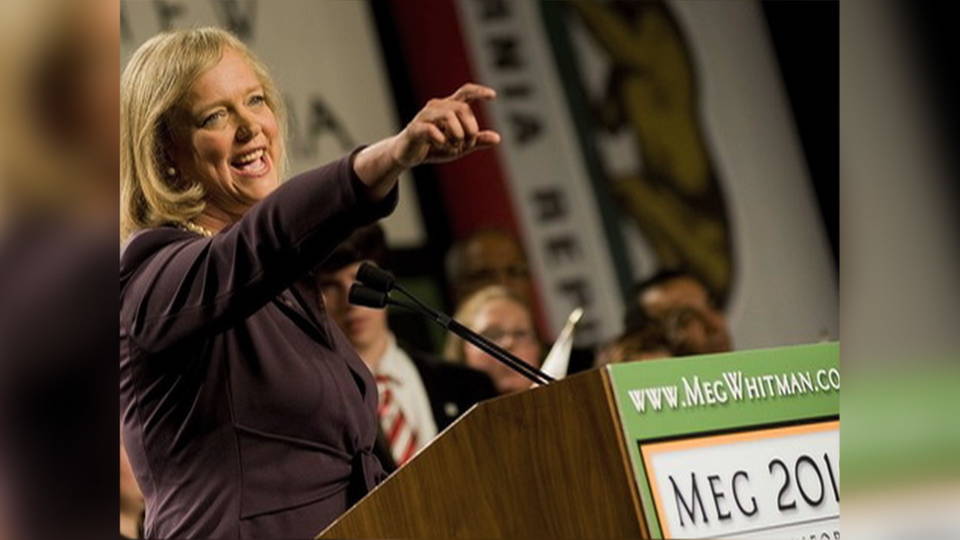
Meanwhile, billionaire businesswoman and Hewlett-Packard CEO Meg Whitman has said she will support and campaign for Hillary Clinton. Whitman, who is an influential Republican fundraiser, called Donald Trump a "dishonest demagogue" and said she would raise money for Clinton, even if she doesn’t agree with her on some issues.
TOPICS:
2016 Election
Donald Trump
Trump Says Election May Be "Rigged;" His Confidant Warns of "Bloodbath" If Clinton Wins
Donald Trump has continued to suggest he believes the November election may be "rigged." Pointing to recent court decisions against restrictive voter ID laws in North Carolina and Wisconsin, Trump said Tuesday that the decisions increased the possibility of voter fraud. Trump said, "The voter ID situation has turned out to be a very unfair development. We may have people vote 10 times." Studies of voter fraud in the U.S. have concluded the type of fraud Trump warned about is extremely rare. This comes after Republican political operative and Trump supporter Roger Stone warned of a "bloodbath" if Trump doesn’t win in November. Speaking with Breitbart’s Milo Yiannopoulos, Stone said, "We will have a constitutional crisis, widespread civil disobedience, and the government will no longer be the government. It will be a bloodbath."
TOPICS:
Donald Trump
2016 Election
Baltimore: Police Kill Black Mother Korryn Gaines After Standoff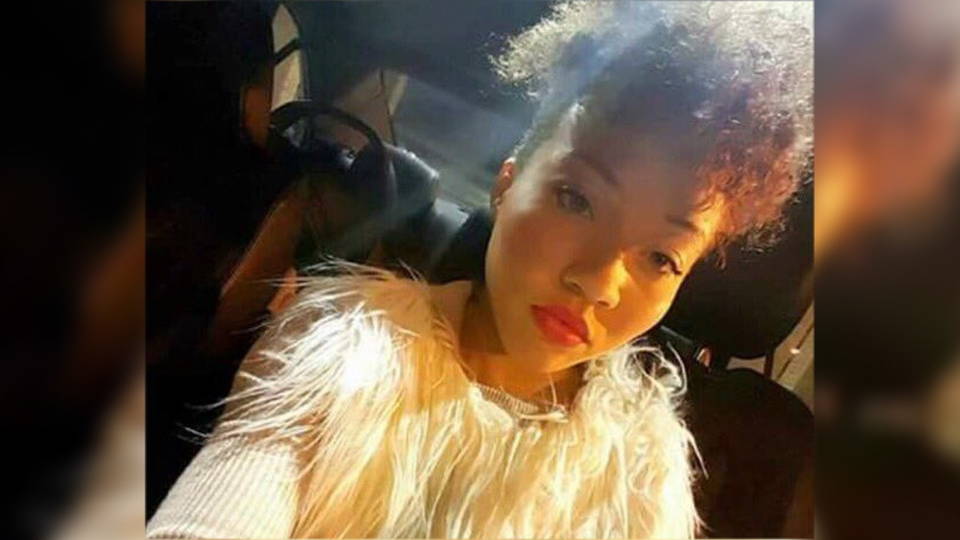
Baltimore County police killed a 23-year-old African-American woman on Monday after an armed standoff. Korryn Gaines was live-streaming the standoff via Facebook on Monday before her account was shut down. Police say they attempted to negotiate with Gaines before shooting her, and that she had pointed a shotgun at police. Her five-year-old son was in the apartment with her and was injured by gunfire. Police were at Gaines’s apartment to execute an arrest warrant related to a traffic violation earlier this year. Police also had a warrant for Gaines’s boyfriend, who was arrested before the standoff began and later released. Police have not said who fired the shot that injured Gaines’ son.
TOPICS:
Police
Delaware Supreme Court: Capital Punishment Law Unconstitutional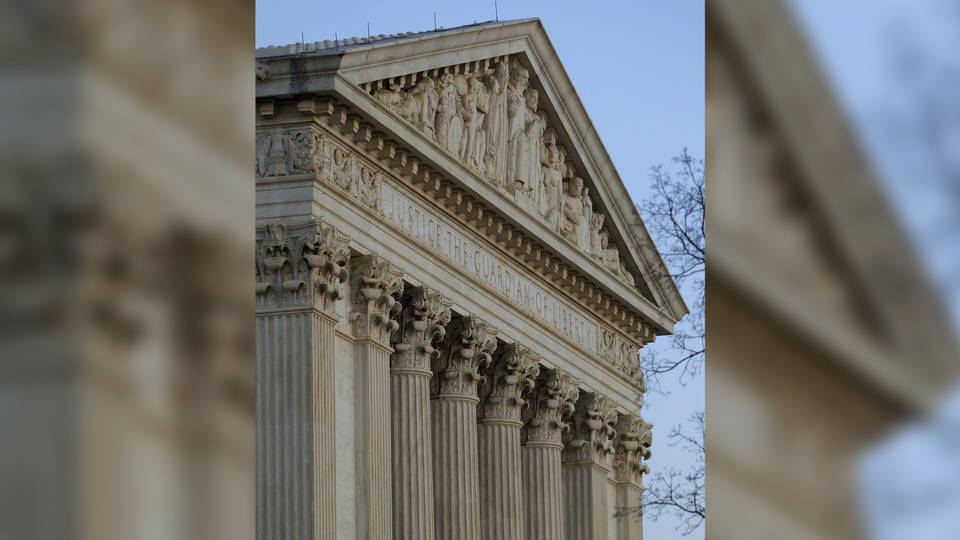
The Delaware state Supreme Court ruled Tuesday that the state’s capital punishment law violates the Constitution by allowing judges, but not juries, to recommend the death penalty. Death penalty supporters can ask the state’s legislators to amend the law’s language, but such a request would likely fail. The state’s Senate passed a bill to abolish the death penalty last year, before it was narrowly defeated in the state’s House of Representatives.
TOPICS:
Death Penalty
Libya: Car Bomb Kills 22 in Benghazi, U.S. Air Campaign Continues
In Libya, a car bomb in Benghazi killed at least 20 people today as Libyan factions backed by the U.S. continue their fight against ISIS. This comes as the U.S. has launched at least five airstrikes in Libya since the Pentagon announced the beginning of an open-ended air campaign there on Monday.
TOPICS:
Libya
Venezuela: Presidential Recall Referendum Likely to Move Forward
Turning now to Venezuela, the opposition to President Nicolás Maduro has gained enough signatures this week to begin the process of a presidential recall referendum. But speaking yesterday on his weekly television program, Maduro appeared to preempt the idea that any recall would occur this year.
President Nicolás Maduro: "I will say it: If the opposition legally obtains the signatures, we will go to elections next year, and I am sure that the Venezuelan people will hand us a victory for the country, a victory of peace. I am sure that next year, in February, March or April, we will win that referendum. I am sure because I believe in the love of the people, I believe in history, and I am not here because I came down in a parachute. I am here because I must complete a mission, a mission that was given to me, one I will fulfill for many years, for a long time."
If a referendum takes place before the end of the year, a new presidential election would be held. If the referendum occurs after the end of the year, Maduro could be forced to step down, but his vice president would finish his term, which ends in 2018. Maduro’s government is under increasing pressure from the opposition as Venezuela faces economic turmoil that has led to hyperinflation and shortages of basic goods.
TOPICS:
Venezuela
U.N. Reviewing Whether Saudi Arabia Is Killing Children in Yemen War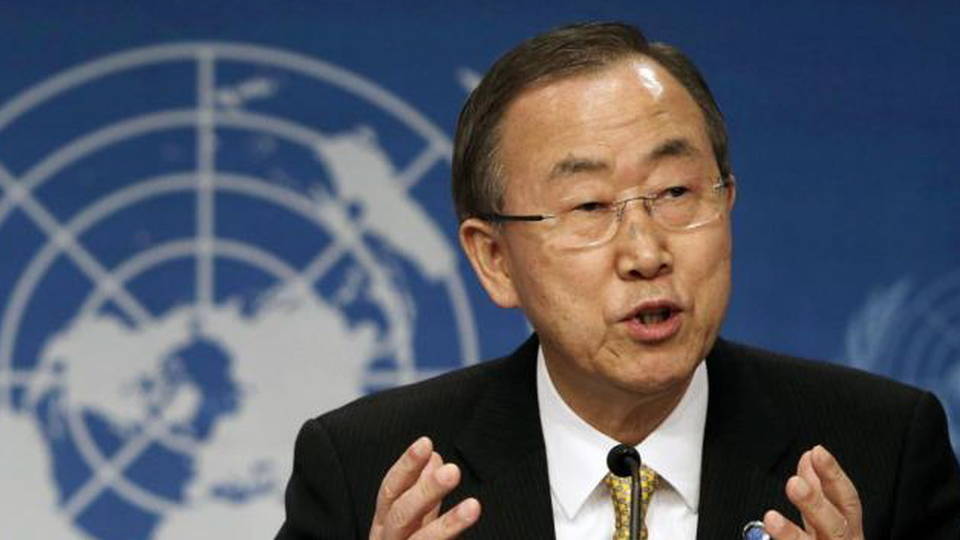
U.N. Secretary-General Ban Ki-moon has said he will continue to review whether to keep Saudi Arabia’s military on a U.N. list of militaries that kill children. The U.N. placed Saudi Arabia on the list last month over its conduct in Yemen. The Saudis complained, and Ban told them to provide evidence that they were taking steps to prevent child casualties. Ban defended the decision on Tuesday.
Secretary-General Ban Ki-moon: "The content of the report stands. Let me be clear: The report and its annexes may cause discomfort, but that is not the goal in itself. Our aim is to protect the children in danger by ensuring concrete change."
The U.N. says the U.S.-backed, Saudi-led bombing campaign in Yemen killed at least 500 children last year.
TOPICS:
United Nations
Did the CIA Kill Fmr. U.N. Secretary-General Dag Hammarskjöld?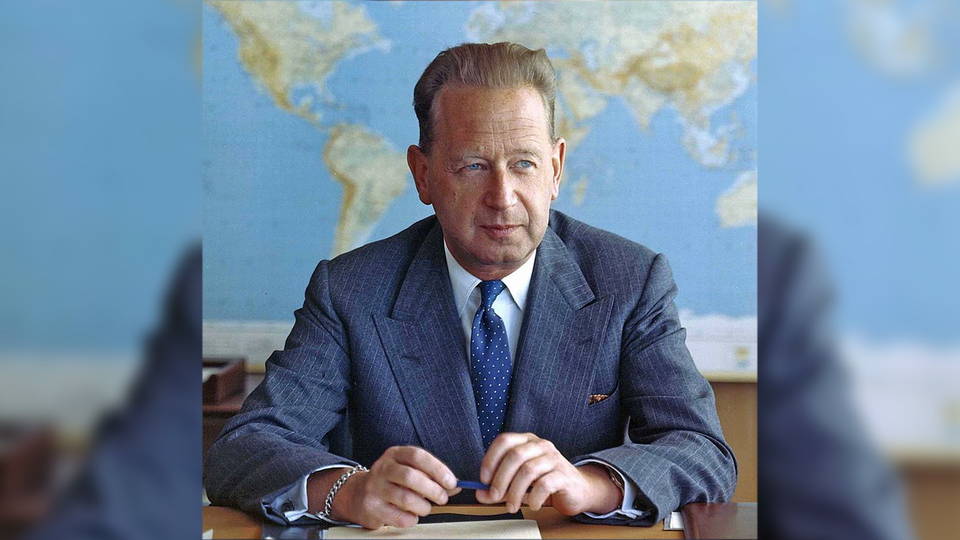
Meanwhile, U.N. Secretary-General Ban Ki-moon is expected to propose reopening an inquiry into allegations that former U.N. Secretary-General Dag Hammarskjöld was assassinated by a South African paramilitary organization supported by the CIA and British intelligence. Hammarskjöld was the U.N.’s second secretary-general and died in a plane crash in 1961. The South African government has announced the recent discovery of decades-old intelligence documents detailing the alleged plot. The CIAhas denied involvement.
TOPICS:
CIA
United Nations
U.S. War Resisters in Canada Ask PM Justin Trudeau to Let Them Stay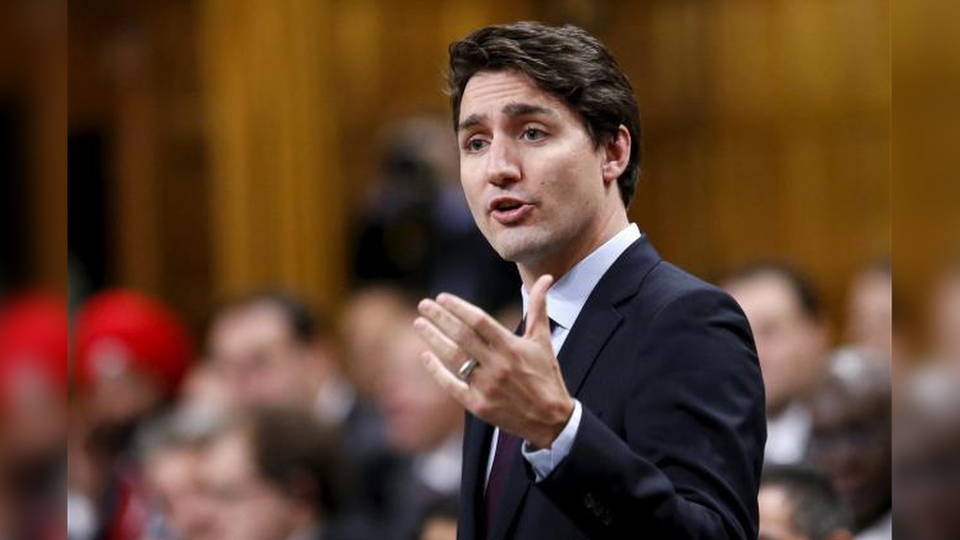
And U.S. war resisters who went to Canada to avoid serving in Iraq and Afghanistan are asking Canadian Prime Minister Justin Trudeau to allow them to remain in the country. Hundreds of U.S. war resisters moved to Canada in the early 2000s but faced deportation after the election of the conservative Harper government in 2006. Resisters still in Canada say they are hoping prime minister Justin Trudeau’s liberal government, elected last year, will make a final decision about their legal status in the country. Polls suggest a majority of Canadians support allowing the resisters to stay.
TOPICS:
Iraq
Afghanistan
Donate today:
Follow:


COLUMN
New York Police Commissioner Bill Bratton to Resign
New York Police Commissioner William Bratton has announced he is resigning next month. Over the past four decades, Bratton has reshaped modern policing. He served as the New York police commissioner twice, and as commissioner of the Boston Police Department and chief of the Los Angeles Police Department. Bratton was a lead advocate of the so-called broken windows policy that calls for officers to crack down on minor infractions in an attempt to decrease violent crime. While New York City mayor Bill de Blasio called Bratton’s accomplishments "extraordinary," critics say Bratton’s policies have unfairly targeted communities of color. In a statement Black Lives Matter co-founder Opal Tometi told Democracy Now!, "William Bratton is the key architect of programs that have terrorized our communities for decades."
Bratton and his policies have faced years of protests and opposition from activists. We’ll have more on his resignation after headlines.
TOPICS:
Police
Obama Calls on Republican Leaders to Withdraw Endorsements of Trump
With less than 100 days left before the November election, President Obama offered his strongest criticism of Republican presidential nominee Donald Trump so far, urging Republican leaders to withdraw their endorsements of his candidacy. In his remarks Tuesday, Obama referred to Trump’s recent attacks on Khizr and Ghazala Khan, the parents of a U.S. soldier who died in Iraq.
President Barack Obama: "This isn’t a situation where you have an episodic gaffe. This is daily and weekly, where they are distancing themselves from statements he’s making. There has to be a point at which you say, 'This is not somebody I can support for president the United States, even if he purports to be a member of my party.' And, you know, the fact that that has not yet happened makes some of these denunciations ring hollow."
Donald Trump attacked the Khans after Khizr Khan spoke at the Democratic National Convention in Philadelphia Thursday. Trump suggested in an interview that Ghazala Khan hadn’t spoken because, as a Muslim woman, she wasn’t allowed to. Ghazala refuted Trump’s comments, saying she hadn’t spoken because of her grief. This is Ghazala speaking more about her son on MSNBC.
Ghazala Khan: "I was really worried, and I talked to him about all this, that this is a war, and I don’t want you to go out or do something stupid, and don’t be a hero. Please come back. And go safely. My prayers are with you. And be strong."
To see more from Ghazala Khan in a rare video of Ghazala and Khizr Khan visiting Arlington National Cemetery to visit the grave of their son, a U.S. Army captain, from the HBO documentary "Section 60," go to democracynow.org.
TOPICS:
2016 Election
Donald Trump
Trump Refuses to Endorse Paul Ryan & John McCain, Widening GOP Split
Meanwhile, friction is increasing between Trump and top Republican leaders. On Monday, in an interview with The Washington Post, Trump refused to endorse the re-election campaigns of Arizona Senator John McCain and Wisconsin Congressmember Paul Ryan. Trump praised Ryan’s opponent in the race, saying he was "running a very good campaign." Ryan’s opponent, Paul Nehlen, has defended Trump’s remarks about the Khans, while both Ryan and McCain publicly distanced themselves from Trump over his comments.
TOPICS:
Donald Trump
2016 Election
Republican Billionaire Meg Whitman Says She'll Back Hillary Clinton
Meanwhile, billionaire businesswoman and Hewlett-Packard CEO Meg Whitman has said she will support and campaign for Hillary Clinton. Whitman, who is an influential Republican fundraiser, called Donald Trump a "dishonest demagogue" and said she would raise money for Clinton, even if she doesn’t agree with her on some issues.
TOPICS:
2016 Election
Donald Trump
Trump Says Election May Be "Rigged;" His Confidant Warns of "Bloodbath" If Clinton Wins
Donald Trump has continued to suggest he believes the November election may be "rigged." Pointing to recent court decisions against restrictive voter ID laws in North Carolina and Wisconsin, Trump said Tuesday that the decisions increased the possibility of voter fraud. Trump said, "The voter ID situation has turned out to be a very unfair development. We may have people vote 10 times." Studies of voter fraud in the U.S. have concluded the type of fraud Trump warned about is extremely rare. This comes after Republican political operative and Trump supporter Roger Stone warned of a "bloodbath" if Trump doesn’t win in November. Speaking with Breitbart’s Milo Yiannopoulos, Stone said, "We will have a constitutional crisis, widespread civil disobedience, and the government will no longer be the government. It will be a bloodbath."
TOPICS:
Donald Trump
2016 Election
Baltimore: Police Kill Black Mother Korryn Gaines After Standoff
Baltimore County police killed a 23-year-old African-American woman on Monday after an armed standoff. Korryn Gaines was live-streaming the standoff via Facebook on Monday before her account was shut down. Police say they attempted to negotiate with Gaines before shooting her, and that she had pointed a shotgun at police. Her five-year-old son was in the apartment with her and was injured by gunfire. Police were at Gaines’s apartment to execute an arrest warrant related to a traffic violation earlier this year. Police also had a warrant for Gaines’s boyfriend, who was arrested before the standoff began and later released. Police have not said who fired the shot that injured Gaines’ son.
TOPICS:
Police
Delaware Supreme Court: Capital Punishment Law Unconstitutional
The Delaware state Supreme Court ruled Tuesday that the state’s capital punishment law violates the Constitution by allowing judges, but not juries, to recommend the death penalty. Death penalty supporters can ask the state’s legislators to amend the law’s language, but such a request would likely fail. The state’s Senate passed a bill to abolish the death penalty last year, before it was narrowly defeated in the state’s House of Representatives.
TOPICS:
Death Penalty
Libya: Car Bomb Kills 22 in Benghazi, U.S. Air Campaign Continues
In Libya, a car bomb in Benghazi killed at least 20 people today as Libyan factions backed by the U.S. continue their fight against ISIS. This comes as the U.S. has launched at least five airstrikes in Libya since the Pentagon announced the beginning of an open-ended air campaign there on Monday.
TOPICS:
Libya
Venezuela: Presidential Recall Referendum Likely to Move Forward
Turning now to Venezuela, the opposition to President Nicolás Maduro has gained enough signatures this week to begin the process of a presidential recall referendum. But speaking yesterday on his weekly television program, Maduro appeared to preempt the idea that any recall would occur this year.
President Nicolás Maduro: "I will say it: If the opposition legally obtains the signatures, we will go to elections next year, and I am sure that the Venezuelan people will hand us a victory for the country, a victory of peace. I am sure that next year, in February, March or April, we will win that referendum. I am sure because I believe in the love of the people, I believe in history, and I am not here because I came down in a parachute. I am here because I must complete a mission, a mission that was given to me, one I will fulfill for many years, for a long time."
If a referendum takes place before the end of the year, a new presidential election would be held. If the referendum occurs after the end of the year, Maduro could be forced to step down, but his vice president would finish his term, which ends in 2018. Maduro’s government is under increasing pressure from the opposition as Venezuela faces economic turmoil that has led to hyperinflation and shortages of basic goods.
TOPICS:
Venezuela
U.N. Reviewing Whether Saudi Arabia Is Killing Children in Yemen War
U.N. Secretary-General Ban Ki-moon has said he will continue to review whether to keep Saudi Arabia’s military on a U.N. list of militaries that kill children. The U.N. placed Saudi Arabia on the list last month over its conduct in Yemen. The Saudis complained, and Ban told them to provide evidence that they were taking steps to prevent child casualties. Ban defended the decision on Tuesday.
Secretary-General Ban Ki-moon: "The content of the report stands. Let me be clear: The report and its annexes may cause discomfort, but that is not the goal in itself. Our aim is to protect the children in danger by ensuring concrete change."
The U.N. says the U.S.-backed, Saudi-led bombing campaign in Yemen killed at least 500 children last year.
TOPICS:
United Nations
Did the CIA Kill Fmr. U.N. Secretary-General Dag Hammarskjöld?
Meanwhile, U.N. Secretary-General Ban Ki-moon is expected to propose reopening an inquiry into allegations that former U.N. Secretary-General Dag Hammarskjöld was assassinated by a South African paramilitary organization supported by the CIA and British intelligence. Hammarskjöld was the U.N.’s second secretary-general and died in a plane crash in 1961. The South African government has announced the recent discovery of decades-old intelligence documents detailing the alleged plot. The CIAhas denied involvement.
TOPICS:
CIA
United Nations
U.S. War Resisters in Canada Ask PM Justin Trudeau to Let Them Stay
And U.S. war resisters who went to Canada to avoid serving in Iraq and Afghanistan are asking Canadian Prime Minister Justin Trudeau to allow them to remain in the country. Hundreds of U.S. war resisters moved to Canada in the early 2000s but faced deportation after the election of the conservative Harper government in 2006. Resisters still in Canada say they are hoping prime minister Justin Trudeau’s liberal government, elected last year, will make a final decision about their legal status in the country. Polls suggest a majority of Canadians support allowing the resisters to stay.
TOPICS:
Iraq
Afghanistan
Donate today:
Follow:
COLUMN


Senior TV Producer
Development Manager
207 West 25th Street, 11th Floor
New York, New York 10001, United States
---------------------
---------------------

No comments:
Post a Comment