The Upper Room Daily Reflections, daily words of wisdom and faith in Nashville, Tennessee, United States "Silence and Prayer" for Tuesday, 16 August 2016
Today’s Reflection:
MONASTIC CHANT of the Psalms appeal to many today who find the gentle, rhythmic singing a soothing introduction to meditation. Recordings of chant sell in great quantities, and monasteries are receiving a record number of guests looking for a different pace of life. The Psalms draw people in because they represent prayer uttered from the whole range of human experience.
Even those of us who do not participate in community singing of the Psalter can relate to the down-to-earth cries of God’s people in these ancient songs. Through the Psalms God’s people have wept together, celebrated victory, danced, made music, lamented, and found hope in Yahweh. Jewish and Christian people alike have cherished the Psalter as a means of praying with integrity.
The Psalms of the Hebrew scriptures quickly acquired a fixed place in the church, which chanted the entire Psalter weekly. Over the centuries our liturgies have reduced the number of psalms in worship, but the practice of reciting the whole Psalter on a regular basis has been preserved within monastic communities. …
We seldom take time for stillness in our culture. Monastic life is countercultural in that it punctuates each day with periods of silence. Monastics are no less busy than the rest of us; the telephone rings, guests arrive at the door, the grass needs to be mowed, food must be prepared — but when they (and we) attend to tasks from a place of stillness, it enhances the quality of Presence. … As I sat each day with the monks and learned to pause at the end of each line of a psalm – alien to my usual way of reading – I began to let the Psalms pray me. Today, with no community to assist my praying, I find that if I continue to practice the frequent pauses, I am more able to “hear” what God is saying through these ancient prayers.[Elizabeth J. Canham, Finding Your Voice in the Psalms]
From pages 10-11 of Finding Your Voice in the Psalms: An Invitation to Honest Prayer by Elizabeth J. Canham. Copyright © 2013 by Elizabeth J. Canham. All rights reserved. Used by permission of Upper Room Books. http://bookstore.upperroom.org/ Learn more about or purchase this book.
Today’s Question:
What role does silence play in your prayer life?
Today’s Scripture:
“See, today I appoint you over nations and over kingdoms, to pluck up and to pull down, to destroy and to overthrow, to build and to plant.”[Jeremiah 1:10 , NRSV]
This Week: pray for college students.


Even those of us who do not participate in community singing of the Psalter can relate to the down-to-earth cries of God’s people in these ancient songs. Through the Psalms God’s people have wept together, celebrated victory, danced, made music, lamented, and found hope in Yahweh. Jewish and Christian people alike have cherished the Psalter as a means of praying with integrity.
The Psalms of the Hebrew scriptures quickly acquired a fixed place in the church, which chanted the entire Psalter weekly. Over the centuries our liturgies have reduced the number of psalms in worship, but the practice of reciting the whole Psalter on a regular basis has been preserved within monastic communities. …
We seldom take time for stillness in our culture. Monastic life is countercultural in that it punctuates each day with periods of silence. Monastics are no less busy than the rest of us; the telephone rings, guests arrive at the door, the grass needs to be mowed, food must be prepared — but when they (and we) attend to tasks from a place of stillness, it enhances the quality of Presence. … As I sat each day with the monks and learned to pause at the end of each line of a psalm – alien to my usual way of reading – I began to let the Psalms pray me. Today, with no community to assist my praying, I find that if I continue to practice the frequent pauses, I am more able to “hear” what God is saying through these ancient prayers.[Elizabeth J. Canham, Finding Your Voice in the Psalms]
From pages 10-11 of Finding Your Voice in the Psalms: An Invitation to Honest Prayer by Elizabeth J. Canham. Copyright © 2013 by Elizabeth J. Canham. All rights reserved. Used by permission of Upper Room Books. http://bookstore.upperroom.org/ Learn more about or purchase this book.
Today’s Question:
What role does silence play in your prayer life?
Today’s Scripture:
“See, today I appoint you over nations and over kingdoms, to pluck up and to pull down, to destroy and to overthrow, to build and to plant.”[Jeremiah 1:10 , NRSV]
This Week: pray for college students.
-------
The Upper Room Daily Reflections, daily words of wisdom and faith in Nashville, Tennessee, United States "Preparing for Meditation" for Monday, 15 August 2016
Today’s Reflection:
SEVERAL YEARS AGO, during a period when I found prayer difficult, I asked my spiritual director for guidance. He asked how I prepared for prayer. I’d never given that any consideration. I thought you just prayed. He encouraged me to spend time preparing for prayer before engaging in prayer.
The same advice applies in approaching meditation. Entering into meditation does not come automatically or easily, especially if we arrive at our time of meditation in a stressed frame of mind.
Time spent preparing to meditate pays valuable dividends. Just finding the time to meditate can be a challenge without also trying to find additional time to prepare for it. Making that effort, though, will be worthwhile. …
Begin by carefully considering the place where you will spend your time in meditation. … You may have a spare room, a favorite chair, or a suitable outdoor location. Using the same place each time facilitates the process.
Creating an appropriate ambience in the area with decoration can also facilitate your practice. In my meditation area, a candle, an open Bible, and a figure of praying hands sit on a small table.
Focus on posture will aid meditation as you aim to sit or kneel for an extended period. … It doesn’t really matter whether you sit on the floor or a cushion, use a kneeling stool or a chair. Whichever position you adopt, be careful not to slouch; keep your back straight. Make yourself comfortable as you commence your meditation so that you will not have to think about your position again.
How long will you spend in meditation? . . . Try starting with a ten-minute period once a day and build on that. Remember, you are aiming to meet with God, not spend a certain amount of time in meditation.[Ann Siddall and Gary Stuckey, Tending the Seed]
From pages 35-36 of Tending the Seed: Nurture Your God-Given Potential by Ann Siddall and Gary Stuckey. Copyright © 2005 by Ann Siddall and Gary Stuckey. All rights reserved. Used by permission of Upper Room Books. http://bookstore.upperroom.org/ Learn more about or purchase this book.
Today’s Question:
Do you meditate? Consider following the suggestion above as you begin your meditation time.
Today’s Scripture:
“Before I formed you in the womb I knew you, and before you were born I consecrated you; I appointed you a prophet to the nations.”[Jeremiah 1:5 , NRSV]
This Week: pray for college students.

The same advice applies in approaching meditation. Entering into meditation does not come automatically or easily, especially if we arrive at our time of meditation in a stressed frame of mind.
Time spent preparing to meditate pays valuable dividends. Just finding the time to meditate can be a challenge without also trying to find additional time to prepare for it. Making that effort, though, will be worthwhile. …
Begin by carefully considering the place where you will spend your time in meditation. … You may have a spare room, a favorite chair, or a suitable outdoor location. Using the same place each time facilitates the process.
Creating an appropriate ambience in the area with decoration can also facilitate your practice. In my meditation area, a candle, an open Bible, and a figure of praying hands sit on a small table.
Focus on posture will aid meditation as you aim to sit or kneel for an extended period. … It doesn’t really matter whether you sit on the floor or a cushion, use a kneeling stool or a chair. Whichever position you adopt, be careful not to slouch; keep your back straight. Make yourself comfortable as you commence your meditation so that you will not have to think about your position again.
How long will you spend in meditation? . . . Try starting with a ten-minute period once a day and build on that. Remember, you are aiming to meet with God, not spend a certain amount of time in meditation.[Ann Siddall and Gary Stuckey, Tending the Seed]
From pages 35-36 of Tending the Seed: Nurture Your God-Given Potential by Ann Siddall and Gary Stuckey. Copyright © 2005 by Ann Siddall and Gary Stuckey. All rights reserved. Used by permission of Upper Room Books. http://bookstore.upperroom.org/ Learn more about or purchase this book.
Today’s Question:
Do you meditate? Consider following the suggestion above as you begin your meditation time.
Today’s Scripture:
“Before I formed you in the womb I knew you, and before you were born I consecrated you; I appointed you a prophet to the nations.”[Jeremiah 1:5 , NRSV]
This Week: pray for college students.
-------
Did You Know?
In need of prayer? The Upper Room Living Prayer Center is a 7-day-a-week intercessory prayer ministry staffed by trained volunteers. Call 1-800-251-2468 or visit The Living Prayer Center website.-------
This week we remember: This week we remember: Maximilian Kolbei (August 14).
Maximilian Kolbe
August 14
Maximilian Kolbe was born in 1894 in what was
Did You Know?
In need of prayer? The Upper Room Living Prayer Center is a 7-day-a-week intercessory prayer ministry staffed by trained volunteers. Call 1-800-251-2468 or visit The Living Prayer Center website.-------
This week we remember: This week we remember: Maximilian Kolbei (August 14).
Maximilian Kolbe
August 14
Maximilian Kolbe was born in 1894 in what was
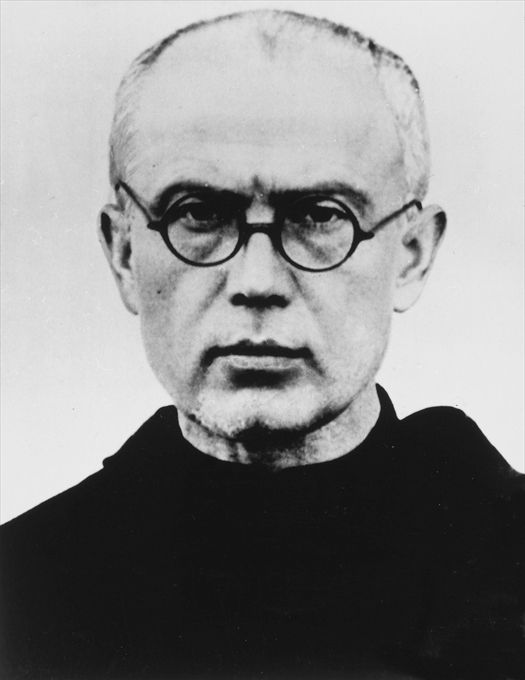 then Russia (present-day Poland). He joined the Franciscans in 1907 and studied in Rome, earning doctorates in philosophy and theology. Kolbe returned to his newly independent homeland where he founded the Knights of Mary Immaculate, devoted to reverence of Mary. He spent time in Japan, where he founded a seminary and monastery.
Back in Poland, Kolbe worked with the underground, hiding Jewish refugees and speaking against the Nazis on radio. He was arrested by the Gestapo in 1941 and taken to Auschwitz where he inspired other prisoners by his faith. On July 30, 1941, after a prisoner escaped, the commandant lined up prisoners to select ten men for reprisal punishment, Maximilian Kolbe volunteered himself in place of a man who had a family. "I am a Catholic priest," Kolbe said, and offered his life.
After two weeks with no food, Kolbe was one of four of the ten left alive. The Nazis executed these men by injecting carbolic acid into their hearts. Maximilian Kolbe died on August 14, 1941. When he was canonized in 1982, the man whose life he saved was present to pay tribute.
If Maximilian Kolbe had taken the Spiritual Types Test, he probably would have been a Prophet. Maximilian Kolbe is remembered on August 14.
"Fr.Maximilian Kolbe 1939" by http://www.v-like-vintage.net/uploads/images/Cropped700/00130919.jpg - http://www.v-like-vintage.net/uploads/images/Cropped700/00130919.jpg. Licensed under Public Domain via Wikimedia Commons - https://commons.wikimedia.org/wiki/File:Fr.Maximilian_Kolbe_1939.jpg#/media/File:Fr.Maximilian_Kolbe_1939.jpg-------
After two weeks with no food, Kolbe was one of four of the ten left alive. The Nazis executed these men by injecting carbolic acid into their hearts. Maximilian Kolbe died on August 14, 1941. When he was canonized in 1982, the man whose life he saved was present to pay tribute.
If Maximilian Kolbe had taken the Spiritual Types Test, he probably would have been a Prophet. Maximilian Kolbe is remembered on August 14.
"Fr.Maximilian Kolbe 1939" by http://www.v-like-vintage.net/uploads/images/Cropped700/00130919.jpg - http://www.v-like-vintage.net/uploads/images/Cropped700/00130919.jpg. Licensed under Public Domain via Wikimedia Commons - https://commons.wikimedia.org/wiki/File:Fr.Maximilian_Kolbe_1939.jpg#/media/File:Fr.Maximilian_Kolbe_1939.jpg-------
Lectionary Readings:
Sunday, 21 August 2016
(Courtesy of Vanderbilt Divinity Library)
(Courtesy of Vanderbilt Divinity Library)
Fourteenth Sunday after Pentecost:
Jeremiah 1:4-10
Psalm 71:1-6
Hebrews 12:18-29
Luke 13:10-17
Scripture Text for Jeremiah 1:4 Here is the word of Adonai that came to me:
5 “Before I formed you in the womb, I knew you;
before you were born, I separated you for myself.
I have appointed you to be a prophet to the nations.”
6 I said, “Oh, Adonai Elohim, I don’t even know how to speak! I’m just a child!” 7 But Adonai said to me, “Don’t say, ‘I’m just a child.’
“For you will go to whomever I send you,
and you will speak whatever I order you.
8 Do not be afraid of them,
for I am with you, says Adonai,
to rescue you.”
9 Then Adonai put out his hand and touched my mouth, and Adonai said to me,
“There! I have put my words in your mouth.
10 Today I have placed you over nations and kingdoms
to uproot and to tear down,
to destroy and to demolish,
to build and to plant.”
Psalm 71:1 In you, Adonai, I have taken refuge;
let me never be put to shame.
2 In your righteousness, rescue me;
and help me to escape.
Turn your ear toward me,
and deliver me.
3 Be for me a sheltering rock,
where I can always come.
You have determined to save me,
because you are my bedrock and stronghold.
4 My God, help me escape from the power of the wicked,
from the grasp of the unjust and ruthless.
5 For you are my hope, Adonai Elohim,
in whom I have trusted since I was young.
6 From birth I have relied on you;
it was you who took me from my mother’s womb.
Hebrews 12:18 For you have not come to a tangible mountain, to an ignited fire, to darkness, to murk, to a whirlwind, 19 to the sound of a shofar, and to a voice whose words made the hearers beg that no further message be given to them — 20 for they couldn’t bear what was being commanded them, “If even an animal touches the mountain, it is to be stoned to death”;[Hebrews 12:20 Exodus 19:12–13] 21 and so terrifying was the sight that Moshe said, “I am quaking with dread.”[Hebrews 12:21 Deuteronomy 9:19]
22 On the contrary, you have come to Mount Tziyon, that is, the city of the living God, heavenly Yerushalayim; to myriads of angels in festive assembly; 23 to a community of the firstborn whose names have been recorded in heaven; to a Judge who is God of everyone; to spirits of righteous people who have been brought to the goal; 24 to the mediator of a new covenant, Yeshua; and to the sprinkled blood that speaks better things than that of Hevel.
25 See that you don’t reject the One speaking! For if those did not escape who rejected him when he gave divine warning on earth, think how much less we will escape if we turn away from him when he warns from heaven. 26 Even then, his voice shook the earth; but now, he has made this promise:
“One more time I will shake
not only the earth, but heaven too!”[Hebrews 12:26 Haggai 2:6, 21]
27 And this phrase, “one more time,” makes clear that the things shaken are removed, since they are created things, so that the things not shaken may remain. 28 Therefore, since we have received an unshakeable Kingdom, let us have grace, through which we may offer service that will please God, with reverence and fear. 29 For indeed,
“Our God is a consuming fire!”[Hebrews 12:29 Deuteronomy 4:24; 9:3; Isaiah 33:14]
Luke 13:10 Yeshua was teaching in one of the synagogues on Shabbat. 11 A woman came up who had a spirit which had crippled her for eighteen years; she was bent double and unable to stand erect at all. 12 On seeing her, Yeshua called her and said to her, “Lady, you have been set free from your weakness!” 13 He put his hands on her, and at once she stood upright and began to glorify God.
14 But the president of the synagogue, indignant that Yeshua had healed on Shabbat, spoke up and said to the congregation, “There are six days in the week for working; so come during those days to be healed, not on Shabbat!” 15 However, the Lord answered him, “You hypocrites! Each one of you on Shabbat — don’t you unloose your ox or your donkey from the stall and lead him off to drink? 16 This woman is a daughter of Avraham, and the Adversary kept her tied up for eighteen years! Shouldn’t she be freed from this bondage on Shabbat?” 17 By these words, Yeshua put to shame the people who opposed him; but the rest of the crowd were happy about all the wonderful things that were taking place through him.
The John Wesley's Notes-Commentary for Jeremiah 1:4-10
Verse 4
[4] Then the word of the LORD came unto me, saying,
Then — When he was first called to his office.
Verse 5
[5] Before I formed thee in the belly I knew thee; and before thou camest forth out of the womb I sanctified thee, and I ordained thee a prophet unto the nations.
I sanctified — I ordained thee for this public service. He speaks thus to Jeremiah, not to the other prophets, because he stood in need of greater encouragement than they, both in respect of the tenderness of his years, and the difficulties which he was to encounter with.
The nations — To other nations besides the Jews.
Verse 7
[7] But the LORD said unto me, Say not, I am a child: for thou shalt go to all that I shall send thee, and whatsoever I command thee thou shalt speak.
Thou shalt speak — Fear not, I will make thee eloquent and courageous.
Verse 9
[9] Then the LORD put forth his hand, and touched my mouth. And the LORD said unto me, Behold, I have put my words in thy mouth.
Then — God having excited the prophet by command and promise, now in a vision confirms him, either by the hand of an angel, or by himself in some visible shape.
Verse 10
[10] See, I have this day set thee over the nations and over the kingdoms, to root out, and to pull down, and to destroy, and to throw down, to build, and to plant.
The kingdoms — Having now received his commission, he is directed to whom he is to go; to the greatest, not only single persons, but whole nations, as the Babylonians, Persians, and Egyptians.
To pull down — That is, to prophecy that I will pull down; which I will as certainly effect, as if thou hadst done it thyself: for, according to scripture-usage, the prophets are said to do that which they foretell shall come to pass.
To plant — Metaphors taken from architects and gardeners: either the former words relate to the enemies of God, and the latter to his friends; or rather to both conditionally: if they repent, he will build them up, he will increase their families, and settle them in the land; if they do not, he will root them up, and pull them down.
Psalm 71:1-6
Not Avaiable.
Hebrews 12:18-29
Verse 18
[18] For ye are not come unto the mount that might be touched, and that burned with fire, nor unto blackness, and darkness, and tempest,
For — A strong reason this why they ought the more to regard the whole exhortation drawn from the priesthood of Christ: because both salvation and vengeance are now nearer at hand.
Ye are not come to the mountain that could be touched — That was of an earthy, material nature.
Verse 19
[19] And the sound of a trumpet, and the voice of words; which voice they that heard intreated that the word should not be spoken to them any more:
The sound of a trumpet — Formed, without doubt, by the ministry of angels, and preparatory to the words, that is, the Ten Commandments, which were uttered with a loud voice, Deuteronomy 5:22.
Verse 20
[20] (For they could not endure that which was commanded, And if so much as a beast touch the mountain, it shall be stoned, or thrust through with a dart:
For they could not bear — The terror which seized them, when they heard those words proclaimed, If even a beast, etc. Exodus 19:12, etc.
Verse 21
[21] And so terrible was the sight, that Moses said, I exceedingly fear and quake:)
Even Moses - Though admitted to so near an intercourse with God, who "spake to him as a man speaketh to his friend." At other times he acted as a mediator between God and the people. But while the ten words were pronounced, he stood as one of the hearers, Exodus 19:25; Exodus 20:19.
Verse 22
[22] But ye are come unto mount Sion, and unto the city of the living God, the heavenly Jerusalem, and to an innumerable company of angels,
But ye — Who believe in Christ.
Are come — The apostle does not here speak of their coming to the church militant, but of that glorious privilege of New Testament believers, their communion with the church triumphant. But this is far more apparent to the eyes of celestial spirits than to ours which are yet veiled. St. Paul here shows an excellent knowledge of the heavenly economy, worthy of him who had been caught up into the third heaven.
To mount Sion — A spiritual mountain.
To the city of the living God, the heavenly Jerusalem — All these glorious titles belong to the New Testament church.
And to an innumerable company — Including all that are afterwards mentioned.
Verse 23
[23] To the general assembly and church of the firstborn, which are written in heaven, and to God the Judge of all, and to the spirits of just men made perfect,
To the general assembly — The word properly signifies a stated convention on some festival occasion.
And church — The whole body of true believers, whether on earth or in paradise. Of the first-born-The first-born of Israel were enrolled by Moses; but these are enrolled in heaven, as citizens there. It is observable, that in this beautiful gradation, these first-born are placed nearer to God than the angels. See James 1:18.
And to God the Judge of all — Propitious to you, adverse to your enemies.
And to the spirits — The separate souls.
Of just men — It seems to mean, of New Testament believers. The number of these, being not yet large, is mentioned distinct from the innumerable company of just men whom their Judge hath acquitted. These are now made perfect in an higher sense than any who are still alive. Accordingly, St. Paul, while yet on earth, denies that he was thus made perfect, Philippians 3:12.
Verse 24
[24] And to Jesus the mediator of the new covenant, and to the blood of sprinkling, that speaketh better things than that of Abel.
To Jesus, the mediator — Through whom they had been perfected.
And to the blood of sprinkling — To all the virtue of his precious blood shed for you, whereby ye are sprinkled from an evil conscience. This blood of sprinkling was the foundation of our Lord's mediatorial office. Here the gradation is at the highest point.
Which speaketh better things than that of Abel — Which cried for vengeance.
Verse 25
[25] See that ye refuse not him that speaketh. For if they escaped not who refused him that spake on earth, much more shall not we escape, if we turn away from him that speaketh from heaven:
Refuse not — By unbelief.
Him that speaketh — And whose speaking even now is a prelude to the final scene. The same voice which spake both by the law and in the gospel, when heard from heaven, will shake heaven and earth.
For if they escaped not — His vengeance.
Much more shall not we — Those of us who turn from him that speaketh from heaven - That is, who came from heaven to speak to us.
Verse 26
[26] Whose voice then shook the earth: but now he hath promised, saying, Yet once more I shake not the earth only, but also heaven.
Whose voice then shook the earth — When he spoke from mount Sinai.
But now — With regard to his next speaking.
He hath promised — It is a joyful promise to the saints, though dreadful to the wicked.
Yet once more I will shake, not only the earth, but also the heaven — These words may refer in a lower sense to the dissolution of the Jewish church and state; but in their full sense they undoubtedly look much farther, even to the end of all things. This universal shaking began at the first coming of Christ. It will be consummated at his second coming. Haggai 2:6.
Verse 27
[27] And this word, Yet once more, signifieth the removing of those things that are shaken, as of things that are made, that those things which cannot be shaken may remain.
The things which are shaken — Namely, heaven and earth.
As being made — And consequently liable to change.
That the things which are not shaken may remain — Even "the new heavens and the new earth," Revelation 21:1.
Verse 28
[28] Wherefore we receiving a kingdom which cannot be moved, let us have grace, whereby we may serve God acceptably with reverence and godly fear:
Therefore let us, receiving — By willing and joyful faith.
A kingdom — More glorious than the present heaven and earth.
Hold fast the grace, whereby we may serve God — In every thought, word, and work.
With reverence — Literally, with shame. Arising from a deep consciousness of our own unworthiness.
And godly fear — A tender, jealous fear of offending, arising from a sense of the gracious majesty of God.
Verse 29
[29] For our God is a consuming fire.
For our God is a consuming fire — in the strictness of his justice, and purity of his holiness.
Luke 13:10-17
Verse 11
[11] And, behold, there was a woman which had a spirit of infirmity eighteen years, and was bowed together, and could in no wise lift up herself.
She was bowed together, and utterly unable to lift up herself — The evil spirit which possessed her afflicted her in this manner. To many doubtless it appeared a natural distemper. Would not a modern physician have termed it a nervous case?
Verse 15
[15] The Lord then answered him, and said, Thou hypocrite, doth not each one of you on the sabbath loose his ox or his ass from the stall, and lead him away to watering?
Thou hypocrite — For the real motive of his speaking was envy, not (as he pretended) pure zeal for the glory of God.
Verse 16
[16] And ought not this woman, being a daughter of Abraham, whom Satan hath bound, lo, these eighteen years, be loosed from this bond on the sabbath day?
And ought not this woman? — Ought not any human creature, which is so far better than an ox or an ass? Much more, this daughter of Abraham - probably in a spiritual as well as natural sense, to be loosed?
Jeremiah 1:4-10
Psalm 71:1-6
Hebrews 12:18-29
Luke 13:10-17
Scripture Text for Jeremiah 1:4 Here is the word of Adonai that came to me:
5 “Before I formed you in the womb, I knew you;
before you were born, I separated you for myself.
I have appointed you to be a prophet to the nations.”
6 I said, “Oh, Adonai Elohim, I don’t even know how to speak! I’m just a child!” 7 But Adonai said to me, “Don’t say, ‘I’m just a child.’
“For you will go to whomever I send you,
and you will speak whatever I order you.
8 Do not be afraid of them,
for I am with you, says Adonai,
to rescue you.”
9 Then Adonai put out his hand and touched my mouth, and Adonai said to me,
“There! I have put my words in your mouth.
10 Today I have placed you over nations and kingdoms
to uproot and to tear down,
to destroy and to demolish,
to build and to plant.”
Psalm 71:1 In you, Adonai, I have taken refuge;
let me never be put to shame.
2 In your righteousness, rescue me;
and help me to escape.
Turn your ear toward me,
and deliver me.
3 Be for me a sheltering rock,
where I can always come.
You have determined to save me,
because you are my bedrock and stronghold.
4 My God, help me escape from the power of the wicked,
from the grasp of the unjust and ruthless.
5 For you are my hope, Adonai Elohim,
in whom I have trusted since I was young.
6 From birth I have relied on you;
it was you who took me from my mother’s womb.
Hebrews 12:18 For you have not come to a tangible mountain, to an ignited fire, to darkness, to murk, to a whirlwind, 19 to the sound of a shofar, and to a voice whose words made the hearers beg that no further message be given to them — 20 for they couldn’t bear what was being commanded them, “If even an animal touches the mountain, it is to be stoned to death”;[Hebrews 12:20 Exodus 19:12–13] 21 and so terrifying was the sight that Moshe said, “I am quaking with dread.”[Hebrews 12:21 Deuteronomy 9:19]
22 On the contrary, you have come to Mount Tziyon, that is, the city of the living God, heavenly Yerushalayim; to myriads of angels in festive assembly; 23 to a community of the firstborn whose names have been recorded in heaven; to a Judge who is God of everyone; to spirits of righteous people who have been brought to the goal; 24 to the mediator of a new covenant, Yeshua; and to the sprinkled blood that speaks better things than that of Hevel.
25 See that you don’t reject the One speaking! For if those did not escape who rejected him when he gave divine warning on earth, think how much less we will escape if we turn away from him when he warns from heaven. 26 Even then, his voice shook the earth; but now, he has made this promise:
“One more time I will shake
not only the earth, but heaven too!”[Hebrews 12:26 Haggai 2:6, 21]
27 And this phrase, “one more time,” makes clear that the things shaken are removed, since they are created things, so that the things not shaken may remain. 28 Therefore, since we have received an unshakeable Kingdom, let us have grace, through which we may offer service that will please God, with reverence and fear. 29 For indeed,
“Our God is a consuming fire!”[Hebrews 12:29 Deuteronomy 4:24; 9:3; Isaiah 33:14]
Luke 13:10 Yeshua was teaching in one of the synagogues on Shabbat. 11 A woman came up who had a spirit which had crippled her for eighteen years; she was bent double and unable to stand erect at all. 12 On seeing her, Yeshua called her and said to her, “Lady, you have been set free from your weakness!” 13 He put his hands on her, and at once she stood upright and began to glorify God.
14 But the president of the synagogue, indignant that Yeshua had healed on Shabbat, spoke up and said to the congregation, “There are six days in the week for working; so come during those days to be healed, not on Shabbat!” 15 However, the Lord answered him, “You hypocrites! Each one of you on Shabbat — don’t you unloose your ox or your donkey from the stall and lead him off to drink? 16 This woman is a daughter of Avraham, and the Adversary kept her tied up for eighteen years! Shouldn’t she be freed from this bondage on Shabbat?” 17 By these words, Yeshua put to shame the people who opposed him; but the rest of the crowd were happy about all the wonderful things that were taking place through him.
The John Wesley's Notes-Commentary for Jeremiah 1:4-10
Verse 4
[4] Then the word of the LORD came unto me, saying,
Then — When he was first called to his office.
Verse 5
[5] Before I formed thee in the belly I knew thee; and before thou camest forth out of the womb I sanctified thee, and I ordained thee a prophet unto the nations.
I sanctified — I ordained thee for this public service. He speaks thus to Jeremiah, not to the other prophets, because he stood in need of greater encouragement than they, both in respect of the tenderness of his years, and the difficulties which he was to encounter with.
The nations — To other nations besides the Jews.
Verse 7
[7] But the LORD said unto me, Say not, I am a child: for thou shalt go to all that I shall send thee, and whatsoever I command thee thou shalt speak.
Thou shalt speak — Fear not, I will make thee eloquent and courageous.
Verse 9
[9] Then the LORD put forth his hand, and touched my mouth. And the LORD said unto me, Behold, I have put my words in thy mouth.
Then — God having excited the prophet by command and promise, now in a vision confirms him, either by the hand of an angel, or by himself in some visible shape.
Verse 10
[10] See, I have this day set thee over the nations and over the kingdoms, to root out, and to pull down, and to destroy, and to throw down, to build, and to plant.
The kingdoms — Having now received his commission, he is directed to whom he is to go; to the greatest, not only single persons, but whole nations, as the Babylonians, Persians, and Egyptians.
To pull down — That is, to prophecy that I will pull down; which I will as certainly effect, as if thou hadst done it thyself: for, according to scripture-usage, the prophets are said to do that which they foretell shall come to pass.
To plant — Metaphors taken from architects and gardeners: either the former words relate to the enemies of God, and the latter to his friends; or rather to both conditionally: if they repent, he will build them up, he will increase their families, and settle them in the land; if they do not, he will root them up, and pull them down.
Psalm 71:1-6
Not Avaiable.
Hebrews 12:18-29
Verse 18
[18] For ye are not come unto the mount that might be touched, and that burned with fire, nor unto blackness, and darkness, and tempest,
For — A strong reason this why they ought the more to regard the whole exhortation drawn from the priesthood of Christ: because both salvation and vengeance are now nearer at hand.
Ye are not come to the mountain that could be touched — That was of an earthy, material nature.
Verse 19
[19] And the sound of a trumpet, and the voice of words; which voice they that heard intreated that the word should not be spoken to them any more:
The sound of a trumpet — Formed, without doubt, by the ministry of angels, and preparatory to the words, that is, the Ten Commandments, which were uttered with a loud voice, Deuteronomy 5:22.
Verse 20
[20] (For they could not endure that which was commanded, And if so much as a beast touch the mountain, it shall be stoned, or thrust through with a dart:
For they could not bear — The terror which seized them, when they heard those words proclaimed, If even a beast, etc. Exodus 19:12, etc.
Verse 21
[21] And so terrible was the sight, that Moses said, I exceedingly fear and quake:)
Even Moses - Though admitted to so near an intercourse with God, who "spake to him as a man speaketh to his friend." At other times he acted as a mediator between God and the people. But while the ten words were pronounced, he stood as one of the hearers, Exodus 19:25; Exodus 20:19.
Verse 22
[22] But ye are come unto mount Sion, and unto the city of the living God, the heavenly Jerusalem, and to an innumerable company of angels,
But ye — Who believe in Christ.
Are come — The apostle does not here speak of their coming to the church militant, but of that glorious privilege of New Testament believers, their communion with the church triumphant. But this is far more apparent to the eyes of celestial spirits than to ours which are yet veiled. St. Paul here shows an excellent knowledge of the heavenly economy, worthy of him who had been caught up into the third heaven.
To mount Sion — A spiritual mountain.
To the city of the living God, the heavenly Jerusalem — All these glorious titles belong to the New Testament church.
And to an innumerable company — Including all that are afterwards mentioned.
Verse 23
[23] To the general assembly and church of the firstborn, which are written in heaven, and to God the Judge of all, and to the spirits of just men made perfect,
To the general assembly — The word properly signifies a stated convention on some festival occasion.
And church — The whole body of true believers, whether on earth or in paradise. Of the first-born-The first-born of Israel were enrolled by Moses; but these are enrolled in heaven, as citizens there. It is observable, that in this beautiful gradation, these first-born are placed nearer to God than the angels. See James 1:18.
And to God the Judge of all — Propitious to you, adverse to your enemies.
And to the spirits — The separate souls.
Of just men — It seems to mean, of New Testament believers. The number of these, being not yet large, is mentioned distinct from the innumerable company of just men whom their Judge hath acquitted. These are now made perfect in an higher sense than any who are still alive. Accordingly, St. Paul, while yet on earth, denies that he was thus made perfect, Philippians 3:12.
Verse 24
[24] And to Jesus the mediator of the new covenant, and to the blood of sprinkling, that speaketh better things than that of Abel.
To Jesus, the mediator — Through whom they had been perfected.
And to the blood of sprinkling — To all the virtue of his precious blood shed for you, whereby ye are sprinkled from an evil conscience. This blood of sprinkling was the foundation of our Lord's mediatorial office. Here the gradation is at the highest point.
Which speaketh better things than that of Abel — Which cried for vengeance.
Verse 25
[25] See that ye refuse not him that speaketh. For if they escaped not who refused him that spake on earth, much more shall not we escape, if we turn away from him that speaketh from heaven:
Refuse not — By unbelief.
Him that speaketh — And whose speaking even now is a prelude to the final scene. The same voice which spake both by the law and in the gospel, when heard from heaven, will shake heaven and earth.
For if they escaped not — His vengeance.
Much more shall not we — Those of us who turn from him that speaketh from heaven - That is, who came from heaven to speak to us.
Verse 26
[26] Whose voice then shook the earth: but now he hath promised, saying, Yet once more I shake not the earth only, but also heaven.
Whose voice then shook the earth — When he spoke from mount Sinai.
But now — With regard to his next speaking.
He hath promised — It is a joyful promise to the saints, though dreadful to the wicked.
Yet once more I will shake, not only the earth, but also the heaven — These words may refer in a lower sense to the dissolution of the Jewish church and state; but in their full sense they undoubtedly look much farther, even to the end of all things. This universal shaking began at the first coming of Christ. It will be consummated at his second coming. Haggai 2:6.
Verse 27
[27] And this word, Yet once more, signifieth the removing of those things that are shaken, as of things that are made, that those things which cannot be shaken may remain.
The things which are shaken — Namely, heaven and earth.
As being made — And consequently liable to change.
That the things which are not shaken may remain — Even "the new heavens and the new earth," Revelation 21:1.
Verse 28
[28] Wherefore we receiving a kingdom which cannot be moved, let us have grace, whereby we may serve God acceptably with reverence and godly fear:
Therefore let us, receiving — By willing and joyful faith.
A kingdom — More glorious than the present heaven and earth.
Hold fast the grace, whereby we may serve God — In every thought, word, and work.
With reverence — Literally, with shame. Arising from a deep consciousness of our own unworthiness.
And godly fear — A tender, jealous fear of offending, arising from a sense of the gracious majesty of God.
Verse 29
[29] For our God is a consuming fire.
For our God is a consuming fire — in the strictness of his justice, and purity of his holiness.
Luke 13:10-17
Verse 11
[11] And, behold, there was a woman which had a spirit of infirmity eighteen years, and was bowed together, and could in no wise lift up herself.
She was bowed together, and utterly unable to lift up herself — The evil spirit which possessed her afflicted her in this manner. To many doubtless it appeared a natural distemper. Would not a modern physician have termed it a nervous case?
Verse 15
[15] The Lord then answered him, and said, Thou hypocrite, doth not each one of you on the sabbath loose his ox or his ass from the stall, and lead him away to watering?
Thou hypocrite — For the real motive of his speaking was envy, not (as he pretended) pure zeal for the glory of God.
Verse 16
[16] And ought not this woman, being a daughter of Abraham, whom Satan hath bound, lo, these eighteen years, be loosed from this bond on the sabbath day?
And ought not this woman? — Ought not any human creature, which is so far better than an ox or an ass? Much more, this daughter of Abraham - probably in a spiritual as well as natural sense, to be loosed?
-------
The Upper Room Ministries
PO Box 340004
Nashville, Tennessee 37203-0004, United States
-------
The Upper Room Ministries
PO Box 340004
Nashville, Tennessee 37203-0004, United States
-------

No comments:
Post a Comment