democracynow.org
Stories:

Police Department or Frat House? 3 Oakland Police Chiefs Resign in 9 Days Amid Sex Crime Scandal
In Oakland, California, a third police chief has resigned in just over a week amid a massive scandal in which multiple Oakland police officers are facing allegations of statutory rape and human trafficking after allegedly having sex with an underage girl who was working as a sex worker. On Friday, interim Police Chief Paul Figueroa resigned from his post for undisclosed reasons after just two days on the job. His predecessor, Ben Fairow, lasted just six days on the job. The string of resignations began when Police Chief Sean Whent resigned on June 9. On Friday, Oakland Mayor Libby Schaaf announced she would not appoint another acting chief, instead putting the Oakland Police Department under civilian control. We speak to two reporters who helped break the Oakland Police Department sex crimes story. Darwin BondGraham and Ali Winston are journalists with the East Bay Express.
TRANSCRIPT
This is a rush transcript. Copy may not be in its final form.
AMY GOODMAN: In Oakland, California, a third police chief has resigned in just over a week amidst a massive scandal in which multiple Oakland police officers are facing allegations of statutory rape and human trafficking after allegedly having sex with an underage girl. On Friday, interim Police Chief Paul Figueroa resigned from his post for undisclosed reasons after just two days on the job. His predecessor, Ben Fairow, lasted just six days on the job. The string of resignations began when Police Chief Sean Whent resigned on June 9th. On Friday, Oakland Mayor Libby Schaaf announced she would not appoint another acting chief, instead putting the Oakland Police Department under civilian control.
MAYOR LIBBY SCHAAF: As the mayor of Oakland, I am here to run a police department, not a frat house. ... This is an appropriate time to place civilian oversight over this police department and to send a very clear message about how serious we are of not tolerating misconduct, unethical behavior, and to root out what is clearly a toxic, macho culture. ... I want to assure the citizens of Oakland that we are hell-bent on rooting out this disgusting culture and holding those accountable responsible for their misdeeds.
AMY GOODMAN: That was Oakland Mayor Libby Schaaf. The Associated Press reports, of the 14 Oakland police officers involved in the sex crime scandal, two have resigned, three others are on paid leave. The discovery of the officers’ alleged rape of an underage trafficking victim happened after Oakland police officer Brendan O’Brien left a suicide note mentioning details of a sex trafficking scandal. On Friday afternoon, protesters demonstrated outside the Oakland Police Department headquarters, wrapping red "danger" tape outside the department and posting Megan’s Law warnings to alert the community that there are statutory rapists in their vicinity. Meanwhile, a separate investigation is underway into a string of racist text messages sent by officers within the Oakland Police Department. Oakland Mayor Schaaf addressed the controversy in her Friday news conference.
MAYOR LIBBY SCHAAF: We are close to the end of an investigation of racist text messages. We do think it’s relevant to share that the text messages were sent by African-American officers, but they are wholly inappropriate and not acceptable from anyone who wears the badge of the Oakland Police Department.
AMY GOODMAN: Local broadcaster NBC Bay Area reported the messages contained racial slurs and images of the Ku Klux Klan.
For more, we’re joined by three guests. In San Francisco, California, we’re joined by Cat Brooks. She is an Oakland-based Black Lives Matter activist, co-founder of the Anti Police-Terror Project. Brooks helped organize Friday’s protest against the Oakland Police Department. In Berkeley, we’re joined by two reporters who helped break the Oakland Police Department sex crime story. Darwin BondGraham and Ali Winston are journalists with the East Bay Express.
We welcome you all to Democracy Now! Darwin, let’s begin with you. Just explain, for people who are not in Oakland, in California, who haven’t been following this story. In nine days, you have three police chiefs who resigned amidst this sex scandal. Explain. Sean Whent, Ben Fairow, Paul Figueroa—who are they? What was their involvement?
DARWIN BONDGRAHAM: Yeah, the police chiefs resigned, partly because there appears to have been a wide-ranging cover-up of the sex crimes scandal and misconduct. It was discovered, as you said earlier, when police officer Brendan O’Brien committed suicide last year. He named other officers in his suicide note. An Internal Affairs investigation into the sex crimes was opened, but then it appears to have been quashed at some point in time. It’s unclear who in the department covered up this investigation, but the cover-up implicates Chief Whent, so Whent resigned. The appointment of Fairow lasted very briefly, because it appears that it’s very difficult in the Bay Area to find a police leader who doesn’t have some sort of background, troubling background, involving similar kinds of allegations. So Fairow left. Then we had acting Chief Paul Figueroa for a very brief period of time. But at this point, the actual details of what occurred are still not known. There’s a lot of reporting that still needs to be done.
AMY GOODMAN: Ali Winston, tell us who Brendan O’Brien was, the man who committed suicide, the suicide note revealing this. What happened to him? What was his involvement? And who the young woman is that we are talking about?
ALI WINSTON: Brendan O’Brien was a San Francisco native, grew up in a family that had ties to law enforcement in the area. He was about 30 years old when he killed himself in September 2015. He had served overseas. He was a military veteran, had a diagnosed history of PTSD and depression. He and his wife, Irma Huerta Lopez, had had some previous trouble. They had a very quick, brief marriage, which ended when she killed herself, allegedly, in June 2014. Her death—she died from two gunshots to the head—was initially investigated as a homicide by the Oakland Police Department. That is actually a main reason why we started looking into this story months ago. Her death—people told us that her death was extremely suspicious and was probably not being investigated appropriately. It still remains unclear whether she was or wasn’t murdered. The police—the sheriff’s department ruled it a suicide, but we have asked for the full case file. We’re still waiting for it from the city. But Brendan—
AMY GOODMAN: Her family members are alleging that Brendan O’Brien might have killed her, the police officer who then committed suicide?
DARWIN BONDGRAHAM: Right.
ALI WINSTON: That’s right. They are highly suspicious of it. They believe that the police department did not conduct a thorough investigation. They believe that Irma’s death was brushed under the rug.
Brendan, after he—allegedly, after his wife died, at some point in February, he met the young woman at the center of this whole scandal. She was underage at the time. She was 17. She was—she was on East 14th Street, a stretch of East Oakland known for prostitution. She was out there running away from her pimp, and Brendan contacted her. The girl told us that Brendan saved her. And they struck up a—they exchanged numbers. She saw him again after another arrest that he made down on that same stretch of East Oakland. And in her words, they began dating, which is problematic for Brendan, because as a police officer in Oakland, they have extensive training on how to deal with what’s called sexually exploited minors, underage sex workers who are oftentimes coerced into that line of work. Brendan never reported her to the—he never detained her, never turned her over to social services as he is required to do per his training. And instead, you know, they began a sexual relationship.
And Brendan introduced her to other members of his squad out of the Eastmont station. And she slept with them, as well, while she was underage. In some cases, she would receive information about undercover sting operations, prostitution stings, from some of these officers, who would tell her, "Look, it’s going to be hot on this stretch of East Oakland tonight. Stay off Fruitvale. Stay off East 14th from this time to this time. You’ll be cool otherwise," which is a very dangerous thing to do for both officer safety and for the safety of people out there in the public during these operations.
AMY GOODMAN: And her name that you refer to her by is Celeste Guap, but that is not her real name?
DARWIN BONDGRAHAM: Yeah, that’s not her real name. And we’re—we’ve made a purposeful effort not to disclose her real name or actually focus too much of the story on her at this point, because we believe the story mainly is about the police officers and the leadership in the police department, and perhaps other officers who had knowledge that this was occurring and who may have engaged in a cover-up.
AMY GOODMAN: In an interview on Friday, KPIX 5 talked to the young woman at the center of the sex scandal that has roiled the Oakland Police Department.
CELESTE GUAP: No, I have no negative feelings towards any of them. And now, thinking back at it, like, I thought, "Oh, wow, they care about me." Thinking back at it, yeah, you know, I do see myself as being a victim, because I just feel I was taken advantage of.
AMY GOODMAN: So, Darwin BondGraham, what happened next? How has this broken wide open? And now the police department will no longer be headed by a police—by police, but by civilians.
DARWIN BONDGRAHAM: Well, Oakland Mayor Libby Schaaf announced that the police chief, Sean Whent, was leaving. This was a very abrupt announcement. We actually heard about Sean Whent being fired before the announcement was made. We decided that it was important to get the full story out there, so we told that full story. The evening that Sean Whent was fired, we put out an article that basically explained to our readers what actually happened, because the Mayor Schaaf claim that Sean Whent was leaving the department, that it was his personal choice to leave the department, and very few details about the sex crime investigation were released, so we decided to explain to the public what really happened, which is the independent monitor, who is an official appointed by a federal court to oversee the Oakland Police Department—see, the Oakland Police Department has been under a federal reform effort for about 13 years now, a consent decree. So this monitor who is in charge of that 13-year-old effort essentially fired Chief Whent, because Chief Whent apparently knew that his wife had contacted Celeste Guap back in June of 2015 and had learned that this girl was, quote-unquote, "dating" an Oakland police officer. So there’s some question as to what knowledge Chief Whent had and when. So he was fired by the court monitor, who was very upset, who appears to have seen that there was some sort of cover-up going on in the department.
So, after Chief Whent was fired, of course, we cycled through two other police chiefs. The most recent thing here is that the city administrator, Sabrina Landreth, was appointed to run the police department. There was some question as to whether or not a city administrator can actually run a police department, whether you have to be a sworn officer to oversee the police. It does appear that it’s OK, that because Oakland is a charter city and its own laws say that the city administrator runs the departments, that she can do this. But right now Oakland essentially has no police chief. The police chief in Oakland is David Downing, who until recently was—what was he?
ALI WINSTON: He’s Concord police. He left Oakland PD a few years ago, went to Concord, got drummed out of that department because of a ticket-fixing scandal. Essentially, Amy, the situation in Oakland is that there’s dirt on almost everybody in the command structure.
DARWIN BONDGRAHAM: Yeah, you really can’t appoint anyone from the Oakland police leadership who doesn’t have some baggage. And a lot of people in the police department right now are coming forward with those secrets. And it’s—you know, we likened it to Game of Thrones, because there’s a lot of people backstabbing each other right now.
ALI WINSTON: Yeah.
... Read More →
"The Battle Has Just Started": Activists Denounce Police Killings & Crackdowns on Teachers in Oaxaca
In the southern Mexican state of Oaxaca, a deadly police crackdown against teachers has left nine people dead and more than 100 wounded. On Sunday, police descended on teachers in the community of Nochixtlán, where they had set up blockades to protest against neoliberal education reform and the arrests of two teachers’ union leaders last week on what protesters say are trumped-up charges. "As soon as they arrived, they began to attack. And we were few, very few," said a Oaxacan teacher. "Then we started running. But they began to attack right away, instantly. At no time did they give warning to clear the area." We go to Oaxaca to speak with Gustavo Esteva, founder of the Universidad de la Tierra in Oaxaca and author of many books, including "New Forms of Revolution."
TRANSCRIPT
This is a rush transcript. Copy may not be in its final form.
AMY GOODMAN: We end our show in the southern Mexican state of Oaxaca, where a deadly police crackdown against teachers has left at least eight people dead, more than a hundred wounded this week. On Sunday, police descended on teachers in the community of Nochixtlán, where they had set up blockades to protest against neoliberal education reforms and the arrests of two teachers’ union leaders last week on what protesters say are trumped-up charges. Democracy Now! correspondent Andalusia Knoll traveled to the area and interviewed survivors of Sunday’s deadly attack. This is a teacher, who did not give her name for her safety.
NOCHIXTLÁN TEACHER: [translated] As soon as they arrived, they began to attack. And we were few, very few. Then we started running. But they began to attack right away, instantly. At no time did they give warning to clear the area. They began to attack right away. And the impotence caused by the media, who said that they did not shoot their weapons. We just went to corroborate with the tire shop about where they fired at us from. We guarded our front side. We still don’t know how they fired at us. And so we guarded our front side. But we realize that if they were positioned like this, then they were already hunting us from afar. Now we understood why. The dead were killed from over there and not exactly from the front.
We are going to stay here until the government is willing to talk. If tomorrow the government is open to dialogue, then the conflict ends. The governor wants what he calls educational reform. And what we want is a dialogue for the kind of change that the people require, the kind that meets their needs. If you go to our communities, there are many needs. How are the kids doing? The children can’t go to school to learn. All they think about is eating, because they don’t eat. No one can learn if they don’t sleep well, if they walked many miles to go to school. So the government should go and see what happens firsthand. And until there is a dialogue, we will not end our protest demanding educational reform. And who will revive our dead? The dialogue won’t bring our dead back to life. And those who are imprisoned, there aren’t just five or 10, there are thousands.
AMY GOODMAN: Well, for more on the protests in Oaxaca, Mexico, we’re joined by Gustavo Esteva, founder of the Universidad de la Tierra in Oaxaca, University of the Land, author of many books, including New Forms of Revolution. Gustavo has also been a columnist for La Jornada. Gustavo, in this last two minutes we have, please explain what happened this week.
GUSTAVO ESTEVA: Well, first, we had a very bloody battle. It is—until now, we had a report of nine executed, assassinated, 23 disappeared, at least 21 arrested, 45 in the hospital, more than a hundred injured. It is—was a very bloody, long-announced battle. It was the—it is the beginning of the war. And we are surprised and amazed that the authorities are following the script, literally the script of 10 years ago—first the teachers’ mobilization, then the sit-in, then the repression. This is a very complex war. It doesn’t—it did not start in Oaxaca. The teachers’ struggle, it is a global struggle. It started in Colombia, in Brazil, in Chile, in the U.S.—everywhere. And today we are in a war trying to say a very firm no to this kind of education. It is useless instruction. We are discussing education. We have a plan of education. We can offer an alternative for—of education. And we are saying no very firmly to all the so-called structural reforms that mean basically a change of only ownership. They are selling our land, our territory. The people are resisting. And then we are resisting with them to oppose this kind of operation. This is a very complex war that just started. We are at the beginning of this very complex war against us, against our territory.
AMY GOODMAN: Gus—
GUSTAVO ESTEVA: In this, we are—yes?
AMY GOODMAN: Gustavo, the—I understand the governor ordered the police, said they could open fire. He was at a wedding party in another state?
GUSTAVO ESTEVA: Yes. He was in a party. He asked the intervention of the federal police, that those killing people were the federal police, not just the state police. It was an operation combined by the federal police and the state police.
AMY GOODMAN: And we just have 20 seconds. What is happening right now?
GUSTAVO ESTEVA: Right now we have a curfew in Nochixtlán, in the place. We are—this moment, we don’t have any specific activity, but we are waiting for the next scenes of the battle. The battle has just started.
AMY GOODMAN: We—
GUSTAVO ESTEVA: It is not—we are not [inaudible] the battle.
AMY GOODMAN: We’re going to continue this conversation and post it online at democracynow.org. Gustavo Esteva, founder of the University of the Land in Oaxaca, author of many books, speaking to us from Oaxaca.
... Read More →
#BlackLivesMatter Activist: Oakland Needs to Name the "Predatory" Cops Who Raped & Trafficked Girl
Oakland is facing a major police scandal in which multiple Oakland police officers are facing allegations of statutory rape and human trafficking after allegedly having sex with an underage girl who was working as a sex worker. Three police chiefs have resigned in recent days. The Associated Press reports that of the 14 Oakland police officers involved in the sex crime scandal, two have resigned and three others are on paid leave. On Friday afternoon, protesters demonstrated outside the Oakland Police Department headquarters, wrapping red "danger" tape outside the department and posting "Megan’s Law" warnings to alert the community that there are statutory rapists in their vicinity. We speak to Cat Brooks, an Oakland-based Black Lives Matter activist and co-founder of the Anti Police-Terror Project. Brooks helped organize Friday’s protest against the Oakland Police Department.
TRANSCRIPT
This is a rush transcript. Copy may not be in its final form.
AMY GOODMAN: I want to turn to another clip of Oakland Mayor Libby Schaaf speaking at a news conference Friday evening.
MAYOR LIBBY SCHAAF: I will not be appointing another acting chief. Instead, the command staff of the Oakland Police Department will be reporting to the city administrator, Sabrina Landreth. I feel that this is an appropriate time to place civilian oversight over this police department and to send a very clear message about how serious we are of not tolerating misconduct, unethical behavior, and to root out what is clearly a toxic, macho culture.
AMY GOODMAN: That was the mayor of Oakland. Cat Brooks, you’re an Oakland-based Black Lives Matter activist, co-founder of the Anti Police-Terror Project. You helped organize the protest outside the Oakland Police Department Friday, where you wrapped crime tape around the police department. Are you satisfied with the actions that have taken place? And can you respond to this astounding story of one police chief after another being forced to resign in the midst of this sex scandal?
CAT BROOKS: We’re not at all astounded. This is just a continuation of scandal and a really predatory and criminal culture of the Oakland Police Department that has plagued that department for years and years. And on the part of Libby Schaaf, it’s too little, too late. One of the big questions that we’re asking is: Why did it take this to finally oust Whent, when in 2015 seven black men were murdered by the Oakland Police Department? And she stood by their side every single time, including the murder of Demouria Hogg, who was actually asleep in his car. So, the Oakland community is not surprised that this is happening with the Oakland Police Department. We’ve been calling them criminals for years and years. And, you know, Libby, instead of responding to community, has consistently doubled down on her support of the police department until now. So, again, it’s too little, and it’s too late.
AMY GOODMAN: So, talk about what your demands are and what you did on Friday and what you understand this scandal to be that is bringing down the entire leadership. What happened to this young woman who’s being called Celeste Guap?
CAT BROOKS: So, from our perspective, Celeste Guap was raped, and she was trafficked by sworn Oakland police officers and other agencies, right? So, SFPD, Richmond, the sheriffs and the CHP, I believe, have all been indicated. And so, in response, we did a mini shutdown of the Oakland Police Department to really raise awareness for the community about what was happening in the Oakland Police Department. We dropped a banner that had a young woman with hands over her mouth, that said, "OPD guilty as charged of human trafficking and statutory rape." And I want to point out that while we were out there, two women came by and broke down and said, "Where were you when this happened to me?" Right? They’re not women that wanted to be identified. But that, to me, was astounding, that in the middle of the day, randomly, these women walked by, and they had similar stories to tell.
So, moving forward, we really see this as an opportunity for those of us who have been on the front lines or engaged in pushing back against the police terror that is in Oakland to get some solid demands that could make some changes for the people about how police engage. And so, one of those is around our civilian police commission. Right now there’s a measure moving through City Council that would create a police commission. But right now it says that City Council and the mayor would appoint people to sit on that commission. Well, we’re pretty clear that the mayor and City Council have shown their ineptitude at being able to appoint anybody to hold these rogue officers accountable, and so we really think this is the time to push for true civilian control over that police commission, that would allow community members to have the power to hire, fire, discipline, etc.
We also want a challenge to the policemen’s bill of rights, which is what’s protecting these officers. It’s why we don’t know the names of these predators on our streets. We believe that we have a right to know who the predators in our communities are and that Oakland needs to really push forward and release the names of those officers.
And then the third real demand is around our police budget. Sixty percent of the city budget goes to the Oakland Police Department, rather [than] to programs and policies that we know and research shows actually impact crime rates. And so, we’re asking for half of that budget to be redirected to youth programming, to mental health services, and we’ve got a major housing crisis in Oakland, and so moneys that will go to stemming the tide of black and brown residents that are being pushed out of our city by Libby’s development policies and practices.
AMY GOODMAN: The civilian review board, how do you want it to be constituted?
CAT BROOKS: We want it to be constituted that the people that sit on that board are community members that are selected by Oakland community members, as opposed to City Council and the mayor appointing the people who then appoint the people. We see, like in San Francisco, for instance, the police commission out there that has a model where elected officials get to appoint folks. You see a lot of cronyism happening. Someone that sits on there is married to a police officer, etc. We don’t feel like that’s enough accountability for the Oakland Police Department.
AMY GOODMAN: Do you want to see arrests? And what do you want to see happen to Mayor Schaaf?
CAT BROOKS: We do want to see arrests and convictions of the officers that were involved. You know, if I or you committed statutory rape, we would be arrested. And there are many of us that feel that it’s time for Libby Schaaf to go. We see her doing a lot of deflection and pushing all of this off on the Oakland Police Department, but she is—she is responsible. This is her police department. The buck stops with her. If I own a company and my employees are, you know, running amok, at the end of the day, it’s on me. And we believe it’s on Libby Schaaf. And this is just an extension of the impact, particularly on vulnerable members of the Oakland community, at the hands of the Libby Schaaf administration.
AMY GOODMAN: Cat Brooks, I want to thank you for being with us—
CAT BROOKS: Thank you, Amy.
AMY GOODMAN: —Oakland-based Black Lives Matter activist. Darwin BondGraham, and Ali Winston, we’ll be linking to your pieces in the East Bay Express, who have covered the Oakland Police Department scandal.
This is Democracy Now! When we come back, we go to Oaxaca, we go to Mexico. We believe eight people have been killed, a hundred wounded, by the police in Mexico. Stay with us.
... Read More →
Jeremy Corbyn: Why I Am Voting for Britain to "Remain" in European Union in Historic Brexit Vote
On Thursday, British voters will go to the polls in a historic referendum known as Brexit to decide whether to leave or remain in the European Union. British opposition leader Jeremy Corbyn is advocating for Britain to remain.
TRANSCRIPT
This is a rush transcript. Copy may not be in its final form.
AMY GOODMAN: We are speaking on the eve of the Brexit vote. For most people in this country, including the presumptive Republican nominee, Donald Trump, people do not know that term, "Brexit," and what it means. Can you talk about why you’re supporting Britain staying in the European Union and what this term "Brexit" means?
JEREMY CORBYN: Indeed. This Thursday, there’s going to be a special vote taking place across the whole of the country on whether we remain members of the European Union or leave the European Union. And that campaign has become very poisonous. The leaders of the right-wing parts of the leave campaign have been using some terrible imagery. For example, UKIP, their leader, Nigel Farage, produced an enormous banner poster, which was a picture of Syrian refugees, actually, I believe, taken in Turkey on the border with—Greece, rather, on the border with Macedonia, and it was just presenting this as though it’s some kind of threat to our way of life. These are desperate people who are fleeing from a war, trying to get to a place of safety. And it’s that kind of appalling imagery which has been part of the whole campaign.
I have been campaigning for a remain vote in the European Union, because I think we have to work with like-minded people across Europe who want to deal with tax havens and tax avoidance, who want a continent that does protect its environment and encourage others to protect its environment, but also one that’s in solidarity with people rather than seeing them all as enemies. The background issues are many, one of which is tax havens and tax avoidance, which I want to be part of the European Union to try and chase them down, close them down, but also the discussions of the Transatlantic Trade and Investment Partnership. I’ve just done a question-and-answer session with a group of young people, and I brought the issue of TTIP into it and drew the parallel with the North Atlantic Free Trade Association, which has been so damaging to working-class interests in the U.S.A. and Mexico, and so beneficial to a number of very big corporations. I suspect TTIP will be exactly the same, because it will impose on both sides of the Atlantic the worst aspects of deregulation from both economies. And the opposition to TTIP, I know it’s big in the United States, particularly from the labor movement in the United States. It’s also very big in Europe from trade unions, but also from environmental groups and many other social justice groups. We’re campaigning for a remain vote.
But it’s not an unconditional remain vote. It’s a remain vote in order to try and reform the European Union. At the moment we have some pancontintental working conditions, such as four weeks’ holiday, such as maternity leave and paternity leave, antidiscrimination legislation—all of which are very important. I think they should go further, eliminate what’s called zero-hours contracts, which if somebody signs up to work for a company but there’s no guarantee of them getting any pay at all from one week to the other until the employer needs them and then brings them in, maybe they get some good money for a week, and then they get none for a few weeks. It’s a terrible way of doing things. So, there’s a lot of reforms I want to see brought about. But I fear that those that are leading the leave campaign from the right are those that would tear up all those regulations.
AMY GOODMAN: You’ve been very critical of the European Union over the years. Your longtime friend Tariq Ali recently said you’re completely opposed to the EU and that you would be campaigning for a vote to leave if you were not the opposition leader, the Labour Party leader in Parliament. Can you respond to what he has to say and talk about the left demand for leaving the European Union?
JEREMY CORBYN: There is a left position on leaving, which is that you leave the European Union, and you will then be OK on your own, and you can fight for all these things on your own. I understand the position. My problem with it is that half of our economy is very much tied to the European Union. We have, because of the campaigning work of labor movements all over Europe, achieved some quite significant improvements in working conditions across Europe. If we leave, we’re then stuck in a position. Where do we sell goods to? What’s the trading relationship with the European Union likely to be like? And secondly, would we then sign up with the equivalent of TTIP solely between Britain and the U.S.A., with all the damage that that does? I just think there is a strong case on the left to work together with people in Europe. Does it mean I’m uncritical of the European Union? Absolutely not. I’m extremely critical of it, and I’ve made some of those criticisms in a debate I’ve just been doing and will continue to do. But the objectives we are putting forward are improving work conditions across Europe, making sure that we do have the powers to bring our railway system totally into public ownership, and that we oppose the Transatlantic Trade and Investment Partnership.
There are also environmental issues that are very important. The European Union has actually been quite good at improving environmental conditions across Europe—habitat directives which protect natural habitats, as well as giving anybody in the community much more power to force their own councils, local authorities, to recycle goods and behave in a much more environmentally responsible way. You can’t deal with environmental pollution and issues inside national borders, particularly when you’ve got 27 member states of the European Union, another number of states that are not in the European Union, all sharing the same water and sharing the same air. You’ve actually got to work together to improve environmental conditions. But I would also say that in trade, the European Union must be much stronger in enforcing its human rights clauses on its trade agreements and also environmental clauses in trade agreements, so we don’t end up exporting pollution to China, to India or to somewhere else, but we actually move into a much more global approach to reducing levels of pollution for the atmosphere, because, as you well know, if you pour polluted water into the sea, it ends up somewhere else. And so, the Fukushima disaster in Japan does affect the West Coast of the United States. Throwing plastic off the coast of Colombia ends up somewhere the other side of the Pacific. You know, pollution knows no bounds.
AMY GOODMAN: Jeremy Corbyn, we’re speaking on World Refugee Day. The U.N. has just announced that there’s something like 65 million refugees in the world. That’s more than any time in history. You recently told the BBC that there cannot be an upper limit to the number of EU migrants, European Union migrants, who can come into Britain. And you said the focus should be instead on defending the standard of living. Can you elaborate on this?
JEREMY CORBYN: At the moment, British immigration law is of quite tough restrictions on non-European nationals coming to Britain. Most that come in are either students or on—excuse me—or on family reunion or, in some cases, people with very special skills. In Europe, there is a free movement of labor across the continent, which is part and parcel of the single market. There are arguments that many European workers come in and work in Britain and undercut wages here. The reality is actually rather different. There are 48,000 European nationals working in our hospitals and health service. And there are many others working in transport industries and many others. There are also some, particularly Eastern European migrants, who are grotesquely exploited by ruthless employers, who bring them in, pay them the lowest wages they can, in order to undercut the local agreements on wages for particular factories or, indeed, particular industries.
And so I’m campaigning with many others to enforce something called the Posting of Workers Directive, which would stop that degree of undercutting and also stop the practice of some companies bringing in, by advertising only in lower-paid Eastern European economies, jobs that are in Britain, which then creates the most appalling tensions in communities; also suggesting that there should be a reintroduction of the migrant impact fund, which was set up by a previous Labour government to give extra support to local authorities where there’s been an arrival of a lot of people, with children and so on, who need school places and need doctors and all the things that we all need. In other words, stop blaming the people that are being exploited. Start pointing the finger of blame at those that are doing the exploiting. Solidarity of working people across national frontiers is surely something that I certainly believe in and I’m sure an awful lot of other people do believe in.
AMY GOODMAN: Britain First, the group that Jo Cox’s murderer was a part of, Britain First has voiced support for Donald Trump, the Republican presumptive presidential nominee. They voiced support for Trump’s proposed ban on Muslims entering the U.S. According to The Huffington Post, Britain First told supporters to vote for Trump on Facebook. Here in the United States, David Duke has expressed his support for Donald Trump—the white supremacist Klan leader. Your response?
JEREMY CORBYN: Britain First is a very right-wing, very racist organization that is obsessed with what it sees as the Islamicization of Britain. It is utter nonsense. There are one-and-a-half million people who practice Islam in Britain. There are others who practice Christianity. There are others who practice Judaism. We are a multifaith, multiethnic society. And they are trying to divide people when we should be uniting people. And so, I say to Britain First, your racist rhetoric, the way you behave and the way you conduct yourselves, is making society worse for all of us. Hatred won’t build a house. Hatred won’t recruit a nurse. Hatred won’t educate a child. It’s only people coming together that you defeat that kind of thing. And only people coming together, you gain better conditions, better living standards and better opportunities for all of us.
When I leave here tonight, I’m going to the mosque in my constituency to join in the iftar supper, at sunset later on this evening. And there will be people there with me who are Christians, Hindus, Jews, Buddhists and every other faith you’ve ever thought of. They’re all going to be there celebrating this very special Ramadan, as we celebrate everybody else’s festivals. And it’s a joyous occasion. It brings people together. Surely, that’s the right way forward. And that’s my message to Britain First.
AMY GOODMAN: You were propelled into leadership by the same type of people in the United States, the—who oppose the establishment and establishment politics, that propelled Bernie Sanders forward. Can you leave a message for those who support Bernie Sanders, making a decision right now, what to do if in fact Hillary Clinton is the presumptive nominee?
JEREMY CORBYN: It’s not up to me to tell people how to vote. What I would say is that I’m very full of admiration for Bernie Sanders and the campaign that he conducted and the millions of people that supported and voted for him. I want to see the anti-austerity movement in Europe, the radical political movement in Europe, which is about a different continent, which is about opposing austerity, such as happened in Italy and Spain and other places, linking up with people on the other side of the Atlantic who are doing exactly the same. There is a wonderful rebirth of radical politics on both sides of the Atlantic. It’s our demands, our pressure, our activity which will change things. And that’s why I am delighted at the progress that’s been made, and I look forward to working with those people and working with the labor movement in the U.S.A. Thanks ever so much for having me this evening.
AMY GOODMAN: British opposition leader Jeremy Corbyn heads the Labour Party. He was speaking to us from London. Coming up, we go to Oakland, where three police chiefs have resigned in just over a week amidst a massive sex crime scandal involving an underage girl. We’ll be back in a minute.
... Read More →
An Attack on Democracy Itself: UK Opposition Leader Jeremy Corbyn Pays Tribute to Murdered MP Jo Cox
Britain is continuing to mourn the murder of British Labour MP Jo Cox, who was stabbed and shot to death Thursday after she met constituents in her district. Cox’s death came just a week before the major Brexit referendum, when British voters will decide whether the country should exit the European Union. Her murderer, Thomas Mair, reportedly yelled out “Britain First” during the attack—a reference to the far-right, anti-immigrant political party of the same name which is pushing for Britain to leave the EU. In a special session of Parliament on Monday, lawmakers convened to pay tribute to their slain colleague. The session was led by Prime Minister David Cameron and opposition leader Jeremy Corbyn, head of the Labour Party. Shortly after the parliamentary session ended, Democracy Now! spoke with Jeremy Corbyn.
TRANSCRIPT
This is a rush transcript. Copy may not be in its final form.
AMY GOODMAN: Britain is continuing to mourn the murder of British Labour MP Jo Cox, who was stabbed and shot to death Thursday after she met constituents in her district. Cox’s death came just a week before the major Brexit referendum, when British voters will decide whether the country should exit from the European Union. In a special session of the British Parliament Monday, lawmakers convened to pay tribute to their slain colleague. The session was led by Prime Minister David Cameron and opposition leader Jeremy Corbyn, head of the Labour Party, who praised Cox for her work to help Syrian refugees.
JEREMY CORBYN: Jo Cox didn’t just believe in loving her neighbor, she believed in loving her neighbor’s neighbor. She saw a world of neighbors. She believed every life counted equally. ... And in her tragic death, we can come together to change our politics, to tolerate a little more and condemn a little less.
AMY GOODMAN: Jo Cox’s murderer, Thomas Mair, reportedly yelled out "Britain First" during the attack. It was a reference to the far-right, anti-immigrant political party of the same name, which is pushing for Britain to leave the European Union. The Southern Poverty Law Center in the United States revealed Mair is a longtime supporter of the neo-Nazi National Alliance and that he attended a 2000 meeting of British white supremacists organized by a man who was actually an FBI informant. In court on Friday, Mair gave his name as "Death to traitors, freedom for Britain."
Jo Cox was a 41-year-old mother of two who worked at Oxfam before being elected as a Labour MP last year. She was known for her passionate support for Syrian refugees and was a member of Labour Friends of Palestine. Cox was a vocal advocate for Britain to stay in the European Union. On Thursday, British voters will go to the polls in this historic Brexit referendum to decide whether to leave or remain in the EU.
Well, late yesterday, on Monday, I had a chance to speak with British opposition leader Jeremy Corbyn shortly after he led the tribute to Cox in the Parliament. I began by asking Jeremy Corbyn to talk about Jo Cox.
JEREMY CORBYN: Jo Cox was a Labour member of the British Parliament. She represented Batley and Spen, which is a working-class community in the north of England in Yorkshire near Leeds. She was elected a year ago. She comes from that area. But also in her life, she had worked for anti-slavery campaigns for Oxfam, and she had been active on human rights issues in many countries.
And she was shot and stabbed in the street. A retired miner rushed to try and aid her, and he, too, was stabbed. He, fortunately, appears to be making a recovery in hospital. Jo died a short time later. And everybody is shocked and in mourning. I went to the town the following day, and people were just in complete grief and shock, because they had lost their MP, but also because it’s an attack on democracy itself. If you murder an elected representative of the people doing their job, then, in effect, you’re saying, "We’re going to stop them doing that job, because we’re going to kill them."
And so, today there was a special session of Parliament called in commemoration of Jo Cox. And every member came—and I think pretty well every MP was there, it was very crowded—bore a white rose in memory of her, because that’s the flower of Yorkshire, her part of the country, the white rose of Yorkshire. And we paid our tributes to her. But we also, many of us, in our contributions, said that the language of hatred that’s being used by the far right, the attacks on migrants, the attacks on refugees, is a contributory factor to this atmosphere. So, we mourn her, we remember her, we’re very sad for her children and her husband and her parents and her sister, but we’re also very determined that we will not allow our society to become divided.
What was impressive on Friday was the people from all communities—from Haitian community, Afro-Caribbean community—all there joining in with people whose ancestry is completely British for a very long time. And on Friday evening, there were ceremonies at mosques, in welfare places, in churches and chapels, streets and so on. And they’ve been held all weekend in this country. So it’s been a very interesting response of people expressing their total shock at what’s happened, but also that determination to get a sense of unity.
I’ll give you an example. Emily Thornberry, my neighboring MP, and myself, in the London borough of Islington, we had a little discussion on Saturday morning and said, "We’ve got to do something locally." So we invited people to come along to our town hall last night, Sunday night. Hundreds and hundreds turned up just to show respect and also show determination. That’s good. That’s—if there’s any good coming out of this horror, it’s got to be that.
... Read More →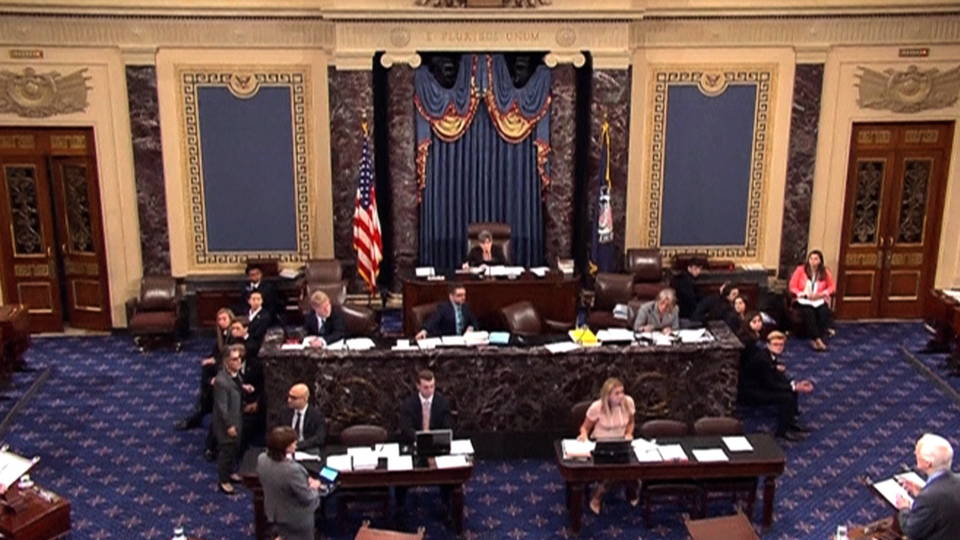
The Senate has failed to pass four separate measures aimed at curbing access to guns, just eight days after a gunman massacred 49 people at a gay nightclub in Orlando, Florida. As families of people killed by gun violence watched from the Senate chamber, lawmakers voted down measures to block people on the federal terrorism watchlist from buying guns and to close background check loopholes. Connecticut Democratic Senator Chris Murphy, who staged a 15-hour filibuster last week to demand gun reform in the wake of the Orlando massacre, denounced the inaction.
Sen. Chris Murphy: "And I believe that for all of the scarring psychological harm that comes with losing a loved one or a neighbor, more harm is piled on when you find out that the people that you elected to run your country just don’t care. It hurts something awful when you lose someone, but it gets worse when your leaders are silent, are totally silent, in the face of your personal horror."
Not one of the four failed gun measures would have reinstated an assault weapons ban. One of the two guns used by Orlando shooter Omar Mateen was an AR-15 semiautomatic assault rifle, the same style used in the massacres in San Bernardino, California; at a movie theater in Aurora, Colorado; and at Sandy Hook Elementary School in Newtown, Connecticut.
TOPICS:
Gun Control
Orlando Massacre
FBI Releases Partial Transcripts of Conversations with Orlando Shooter
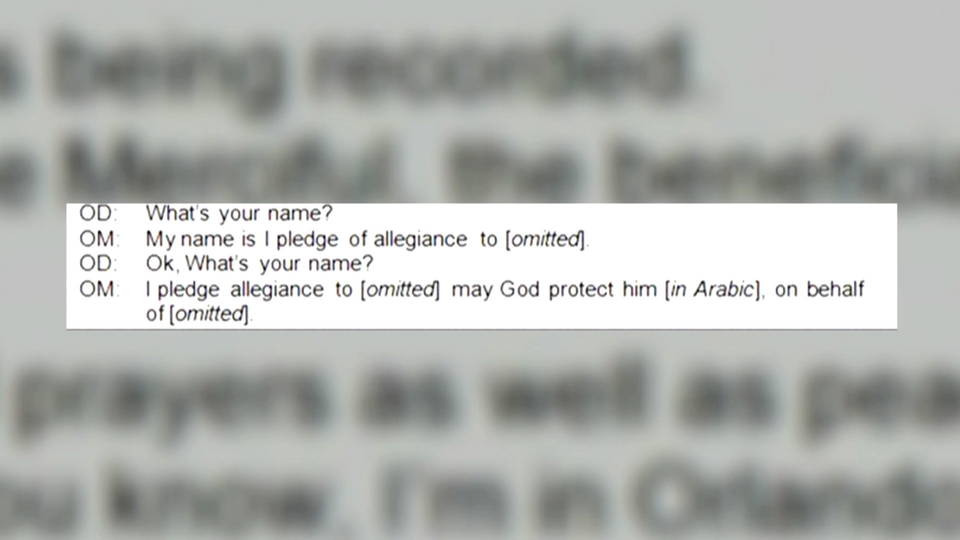
The FBI has released partial transcripts of conversations between the Orlando shooter and authorities during the attack. The transcripts show Omar Mateen pledging allegiance to ISIS and calling for the United States to stop bombing Iraq and Syria. The FBI initially redacted the name of ISIS and its leader, Abu Bakr al-Baghdadi, saying it "did not want to provide the killer or terrorist organizations with a publicity platform for hateful propaganda." But it added the names to the transcript after a public outcry.
TOPICS:
FBI
Orlando Massacre
Trump Faces Financial Deficit, Has Only 70 Staffers
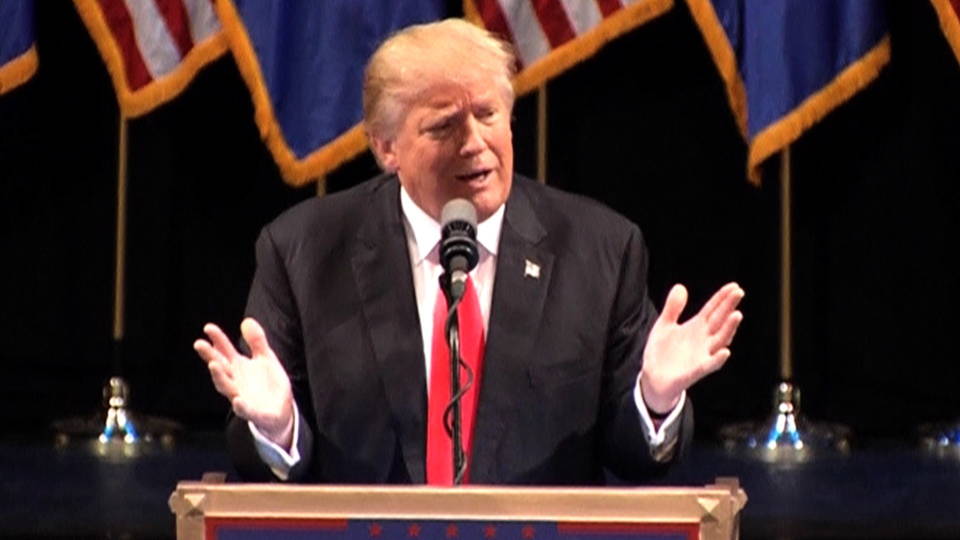
Presumptive Republican presidential nominee Donald Trump has fired his campaign manager and is entering the general election campaign with what The New York Times calls the "worst financial and organizational disadvantage of any major party nominee in recent history." At the beginning of the month, Trump had just $1.3 million cash on hand, more than $41 million less than Democratic candidate Hillary Clinton. Clinton has nearly 700 staff members; Trump has about 70. Since May, when he secured the delegates needed to clinch the nomination, Trump’s campaign has not aired a single TV ad, nor has it booked any advertising for the summer or fall. Clinton and her supporters have spent nearly $26 million on advertising this month alone.
TOPICS:
Donald Trump
2016 Election
Trump Fires Campaign Manager Corey Lewandowski
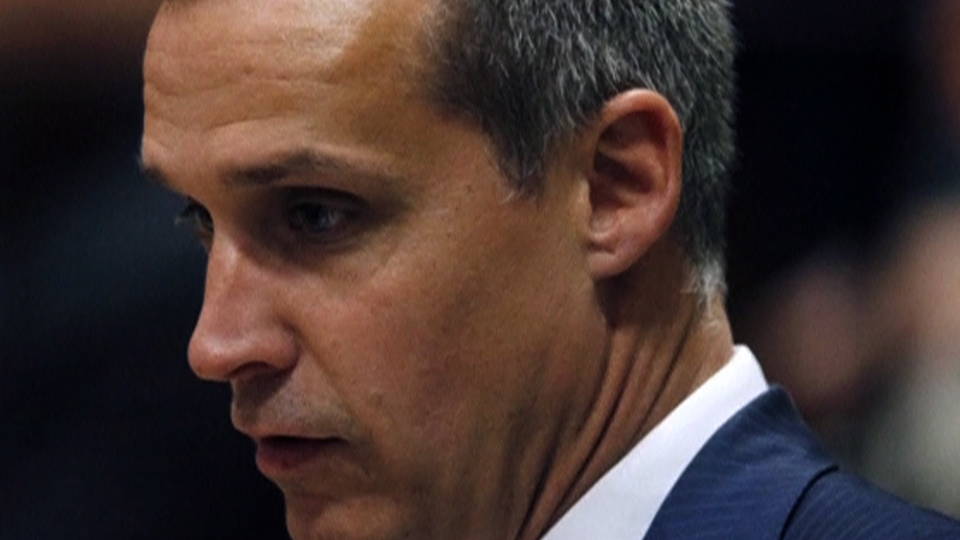
Trump fired campaign manager Corey Lewandowski Monday amid reports of tensions between Lewandowski and Trump’s family, and concerns over whether he could run a competitive race. Lewandowski was charged with battery in March after surveillance footage showed him grabbing reporter Michelle Fields. Fields said Lewandowski left bruises on her arm. The charges were later dropped. Lewandowski spoke after news of his departure Monday.
Corey Lewandowski: "I think, you know, what has been clear from the get-go, that my strategy has been, and at some level of successful, is 'Let Trump be Trump.' And you’ve got a person who has completely changed the way that politics is viewed in this country for the better. And you’ve got a thoroughbred, a person like Donald Trump who has had his his heart and his finger on the pulse of the American people for a long time. And so, you know, I like to say that I’m a person who’s been able to help implement some of his ideas."
Trump parted ways with another high-level staffer Monday. Michael Caputo, who was set to serve as the campaign’s communications director at the Republican convention, tweeted, "Ding dong the witch is dead!" following news of Lewandowski’s ouster. Caputo later resigned, acknowledging, "In hindsight, that was too exuberant a reaction to this personnel move."
TOPICS:
Donald Trump
2016 Election
Apple Says It Won't Support GOP Convention over Opposition to Trump

Apple has become the latest corporation to distance itself from Donald Trump, saying it will not provide any funding or resources to the Republican convention next month due to Trump’s comments on Muslims, immigrants and women. Among the other companies to curb or eliminate support are HP, Coca-Cola and Microsoft.
TOPICS:
Donald Trump
2016 Election
British Man Arrested for Trying to Grab Officer's Gun and Kill Trump
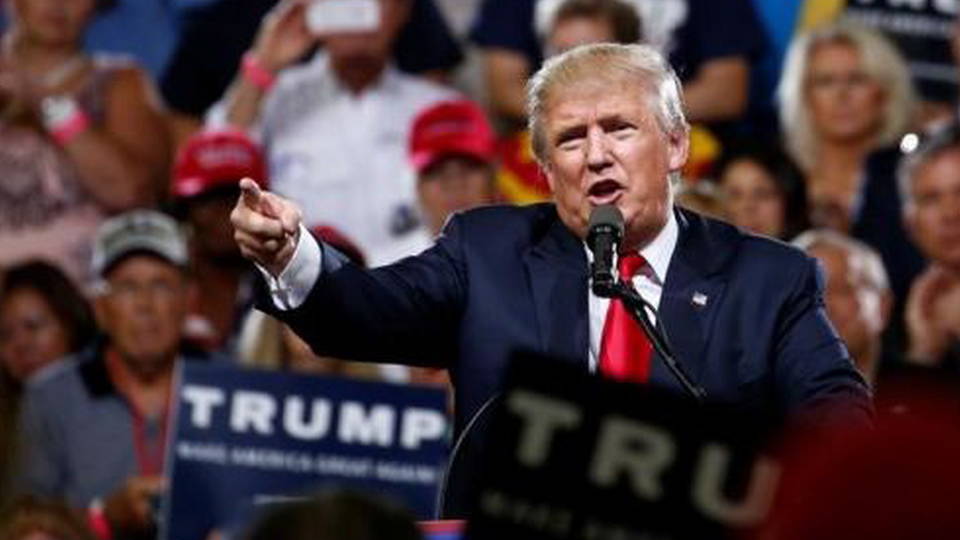
A British man has been arrested for attempting to grab a police officer’s gun at a Trump rally in order to shoot Trump. Michael Steven Sandford was arrested Saturday at the rally in Las Vegas and later told police he wanted "to kill Trump." He had practiced shooting at a gun range for the first time a day earlier.
TOPICS:
Donald Trump
2016 Election
Trump Backs Away from Statement Orlando Victims Should Have Had Guns
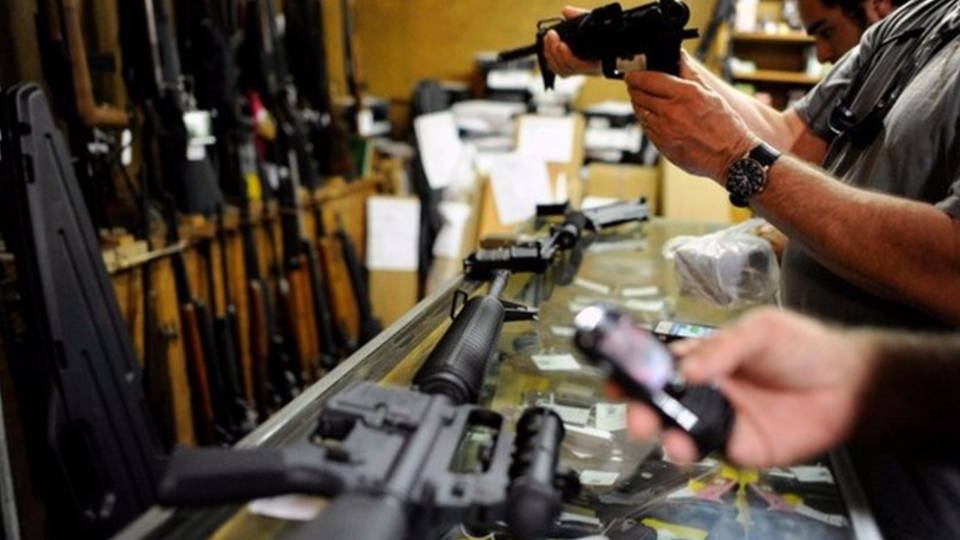
Trump meanwhile has backed away from his statement the victims of the Orlando massacre should have had guns. A day after the attack, Trump told radio host Howie Carr, "It’s too bad that some of the young people that were killed over the weekend didn’t have guns, you know, attached to their hips ... where bullets could have flown in the opposite direction ... It would have been a much different deal." Even officials with the National Rifle Association distanced themselves from Trump’s remarks; lobbyist Chris Cox told ABC, "No one thinks that people should go into a nightclub drinking and carrying firearms." On Monday, Trump tweeted he was "obviously talking about additional guards or employees."
TOPICS:
Donald Trump
Orlando Massacre
2016 Election
Report: Attacks on Mosques in U.S. Reach Record High with 78 Last Year
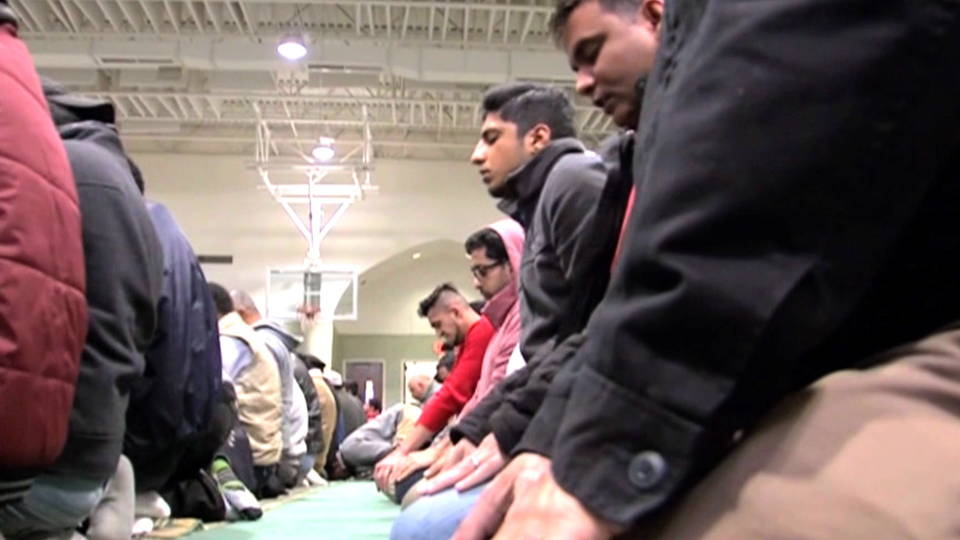
Attacks on mosques in the United States have reached a record high. The Council on American-Islamic Relations and UC Berkeley recorded 78 attacks on mosques last year, the highest since the monitoring began in 2009. CAIR’s Corey Saylor outlined the findings.
Corey Saylor: "The last time we had a really intense cycle of anti-mosque incidents was in 2010 during the national controversy over Park51, the ground zero mosque. That was characterized by attempts to stop mosque construction and expansion, what we call zoning incidents. This time around it has a much more violent tenor to it, and we see a lot more acts of intimidation targeting mosques. Of those 78 incidents, 34 of them occurred in November and December of last year, which many of us consider to be one of the worst periods of anti-Islam sentiment."
TOPICS:
Muslim
3 NYPD Commanders Arrested on Federal Corruption Charges
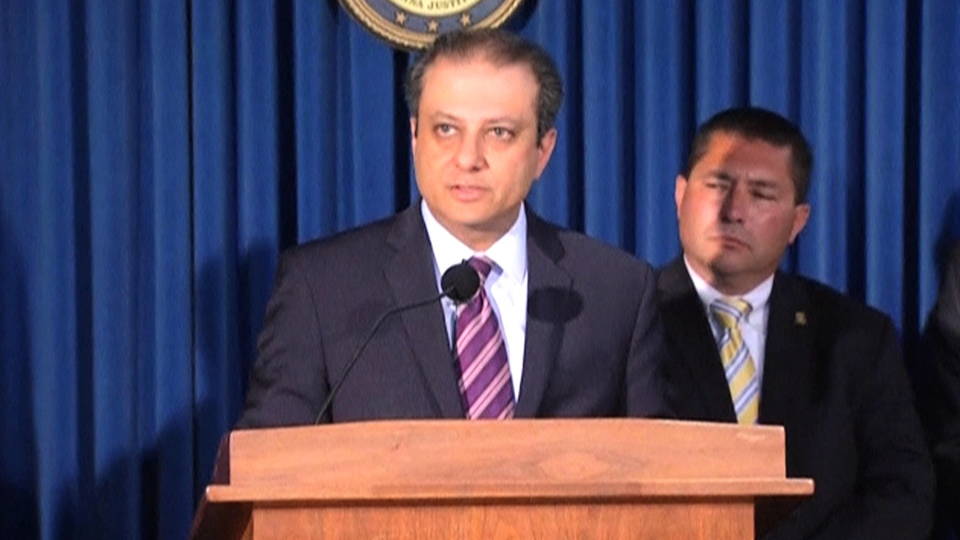
Three New York City police commanders and a businessman have been arrested on federal corruption charges linked to an investigation into campaign fundraising for Mayor Bill de Blasio. Deputy Chief Michael Harrington and Deputy Inspector James Grant were accused of taking lavish gifts in exchange for political favors. U.S. Attorney for Manhattan Preet Bharara said Sergeant David Villanueva was charged in a scheme involving gun licenses.
Preet Bharara: "David Villanueva, an NYPD sergeant and a supervisor in the licensing division, we allege, took bribes for years from Alex Lichtenstein, a so-called expeditor, in exchange for pushing through gun license applications. Lichtenstein charged clients who wanted gun licenses upwards of $18,000, and he, in turn, gave Villanueva thousands of dollars."
TOPICS:
New York
Police
Record Heat in Southwestern U.S. Fuels Fires, Kills At Least 4
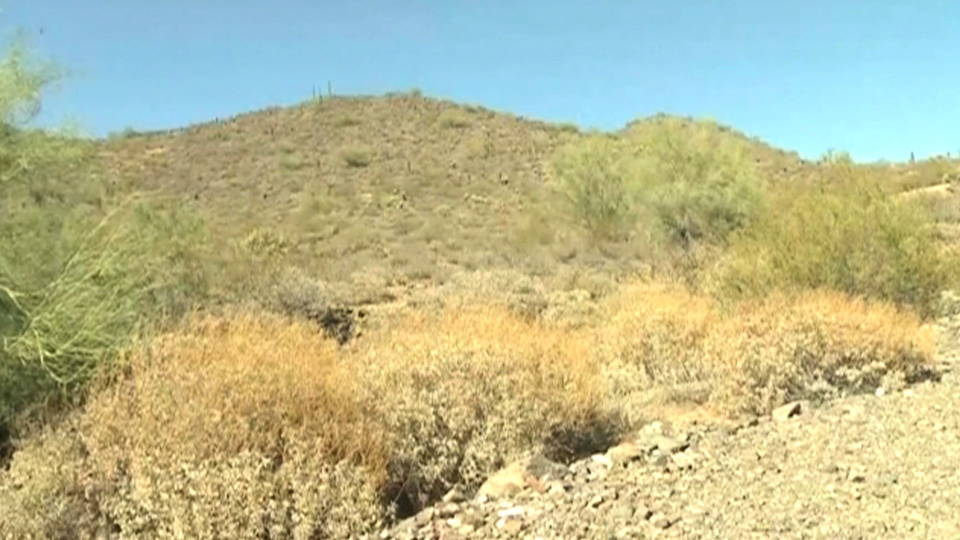
In the Southwestern United States, record-setting heat has killed at least four people and fueled more than a dozen wildfires. In Los Angeles, thousands lost power Monday as air conditioners overwhelmed the power grid. Outside the city, two massive wildfires blazed through at least 4,500 acres in the San Gabriel Mountains, forcing at least 750 people to evacuate. It was 118 degrees Fahrenheit in Phoenix, Arizona, on Sunday, a daily record. Last month was the hottest May ever recorded, the 13th straight month to set a new record amid human-caused climate change.
TOPICS:
Climate Change
Investigation into 1964 KKK Killings of 3 Civil Rights Volunteers Closed
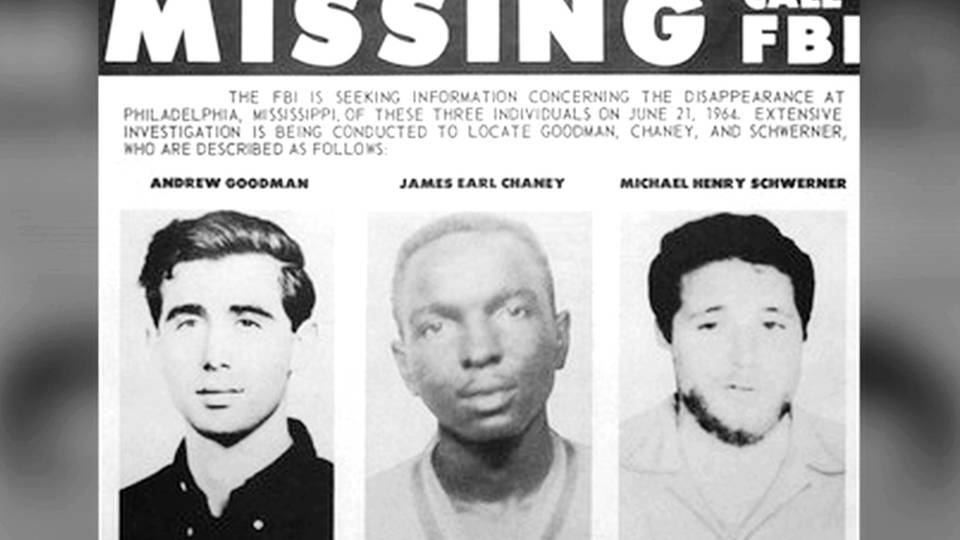
Federal and Mississippi state officials have closed the investigation into the 1964 killings of three civil rights volunteers by the Ku Klux Klan 52 years ago today. James Chaney, Andrew Goodman and Mickey Schwerner had traveled to Mississippi to register black voters. They disappeared while investigating the burning of a black church. Their bodies were found more than 40 days later in an earthen dam. While several people were convicted of civil rights violations in 1967, it took more than 40 years to bring the lead perpetrator in their murders to justice: Edgar Ray Killen, the only suspect ever tried for murder in the case, was convicted in 2005 and is serving a 60-year sentence. A Justice Department report released Monday names two men who may still be culpable in the murders, but the state said evidence has been "degraded by memory" and the case is closed.
TOPICS:
Mississippi
Justice Sotomayor Cites Ta-Nehisi Coates, Michelle Alexander in Powerful Dissent on Police Powers
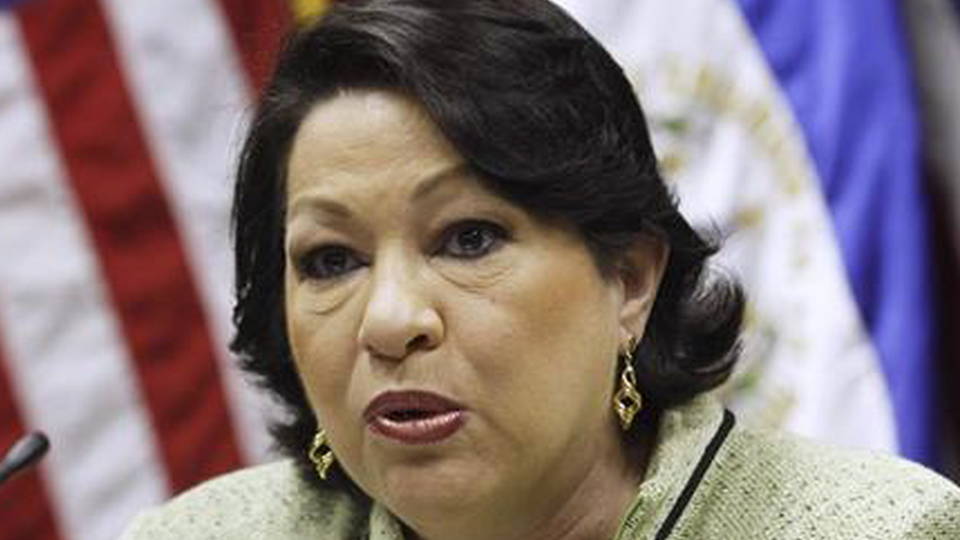
The Supreme Court has ruled evidence of a crime can still be used in some cases even if police obtained it illegally. While the 5-3 ruling deals a blow to civil rights in favor of police powers, it is likely to be remembered largely for the powerful dissent penned by Justice Sonia Sotomayor, the first Latina justice on the court. In a ruling that cited Michelle Alexander, James Baldwin and Ta-Nehisi Coates, Sotomayor wrote that "it is no secret that people of color are disproportionate victims" of police searches. She concluded her argument: "By legitimizing the conduct that produces this double consciousness, this case tells everyone, white and black, guilty and innocent, that an officer can verify your legal status at any time. It says that your body is subject to invasion while courts excuse the violation of your rights. It implies that you are not a citizen of a democracy but the subject of a carceral state, just waiting to be cataloged. We must not pretend that the countless people who are routinely targeted by police are 'isolated.' They are the canaries in the coal mine whose deaths, civil and literal, warn us that no one can breathe in this atmosphere. They are the ones who recognize that unlawful police stops corrode all our civil liberties and threaten all our lives. Until their voices matter too, our justice system will continue to be anything but. I dissent." The words of Justice Sonia Sotomayor.
TOPICS:
Supreme Court
Police
Donate today:
Follow:


SPEAKING EVENTS


News Producer
Office Coordinator
Senior TV Producer
207 West 25th Street, 11th Floor
New York, New York 10001, United States
---------------------
---------------------

No comments:
Post a Comment