democracynow.org
Stories:

"Let Us Vote": Rep. John Lewis Leads Historic Democratic Sit-in for Gun Control Legislation
Capitol Hill Democratic lawmakers are continuing a historic sit-in on the floor of the House to demand the Republican leadership take action on gun control after the Orlando massacre left 49 people dead. The sit-in was initiated by Congressmember John Lewis, a veteran of the civil rights movement. Once he launched the sit-in, the Republican leadership ended the session—forcing CSPAN to stop broadcasting from the floor, as the House controls the cameras. But lawmakers began live-streaming the sit-in on Periscope and Facebook. We go to the live scene from the House floor, hear Congressmember Lewis and speak to Congressmember Barbara Lee (D-California).
TRANSCRIPT
This is a rush transcript. Copy may not be in its final form.
AMY GOODMAN: We begin today’s show on Capitol Hill, where Democratic lawmakers are continuing an historic sit-in on the floor of the House, the first ever, to demand the Republican leadership take action on gun control after the Orlando massacre left 49 people dead. Democrats are pushing for votes to expand background checks for gun purchases and to curb the sale of weapons to people on government watchlists—a proposal strongly opposed by the American Civil Liberties Union, the Center for Constitutional Rights and other groups.
This is the scene right now, as we broadcast, on the floor of the House, which is being live-streamed from the phones of lawmakers. Since the Republican leadership have shut off the official camera feed that feeds C-SPAN, C-SPAN is broadcasting the video streams from the phones of congressmembers on the floor. This is Florida Congressmember Ted Deutch speaking live.
REP. TED DEUTCH: My friends, my colleagues, that I have shared this experience with, I join you in standing not to help fill those holes—we can’t do it—but just to provide just a little bit of comfort, a little bit of comfort to those families and those communities that ache. That’s why we’re doing this. That’s why we’re going to prevail. And that’s why I’m so proud to have been part of this with all of you. Thank you.
AMY GOODMAN: That was a live stream, as we broadcast, of this historic sit-in that began yesterday morning at just about 11:30, the sit-in initiated by Georgia Congressmember John Lewis, a veteran of the civil rights movement.
REP. JOHN LEWIS: For months, even for years, through several sessions of Congress, I wondered what would bring this body to take action. What would finally make Congress do what is right, what is just, what the people of this country have been demanding and what is long overdue? We have lost hundreds and thousands of innocent people to gun violence—tiny little children, babies, students and teachers, mothers and fathers, sisters and brothers, daughters and sons, friends and neighbors. And what has this body done? Mr. Speaker, nothing. Not one thing. We have turned a deaf ears—we have turned deaf ears to the blood of the innocent and the concern of our nation. We are blind to a crisis. Mr. Speaker, where is the heart of this body? Where is our soul? Where is our moral leadership? Where is our courage?
Those who work on bipartisan solution are pushed aside. Those who pursue commonsense improvement are beaten down. Reason is criticized. Obstruction is praised. Newtown, Aurora, Charleston, Orlando—what is the tipping point? Are we blind? Can we see? How many more mothers, how many more fathers need to shed tears of grief before we do something? We were elected to lead, Mr. Speaker. We must be headlights and not taillights. We cannot continue to stick our heads in the sand and ignore the reality of mass gun violence in our nation. Deadly mass shootings are becoming more and more frequent. Mr. Speaker, this is the fight. It is not an opinion. We must remove the blinders. The time for silence and patience is long gone. We’re calling on the leadership of the House to bring commonsense gun control legislation to the House floor. Give us a vote! Let us vote! We came here to do our job! We came here to work!
The American people are demanding action. Do we have the courage? Do we have raw courage to make at least a down payment on ending gun violence in America? We can no longer wait. We can no longer be patient. So today we come to the well of the House to dramatize the need for action—not next month, not next year, but now, today! Sometimes you have to do something out of the ordinary. Sometimes you have to make a way out of no way. We have been too quiet for too long. There comes a time when you have to say something, we have to make a little noise, when you have to move your feet. This is the time. Now is the time to get in the way. The time to act is now. We will be silent no more. The time for silence is over.
AMY GOODMAN: Just after Georgia Congressmember John Lewis spoke, he and other lawmakers began the historic sit-in. The Republican leadership then formally ended the session. With that, C-SPAN stopped broadcasting from the floor. There are signs reading at the bottom of the screen, "Cameras in chamber controlled by House" and "House cameras are not permitted to show sit-in." Soon, the only way to watch the Democratic sit-in was through video streamed by the lawmakers on Periscope and Facebook. Soon, C-SPAN began airing these web streams live on the air with those caveats on the bottom. After midnight, chaos ensued when House Speaker Paul Ryan moved to end the sit-in by having lawmakers vote on other bills. As Ryan spoke, Democratic lawmakers chanted, as they had all day, "No bill, no break."
HOUSE SPEAKER PAUL RYAN: The chair appreciates that members will differ on matters of policy and will seek to express those differences.
DEMOCRATIC CONGRESSMEMBERS: [chanting over speaker] No bill, no break! No bill, no break! No bill, no break! No bill, no break! No bill, no break!
HOUSE SPEAKER PAUL RYAN: But the chair would hope that the business of the House could be conducted in a fashion that represent—that respects positively on the dignity and the decorum of this institution to which we all along.
DEMOCRATIC CONGRESSMEMBERS: [chanting over speaker] No bill, no break! No bill, no break! No bill, no break! No bill, no break! No bill, no break! No bill, no break! No bill, no break!
AMY GOODMAN: House Speaker Paul Ryan then announced there would be no more votes until after the July 4th holiday. We go now to Capitol Hill, where we’re joined by Congressmember Barbara Lee of California, chair of the Congressional Progressive Caucus Peace and Security Task Force.
Congressmember Lee, welcome to Democracy Now! I saw you throughout yesterday standing there, also the congressmembers sitting on the floor, redefining the term "speaking from the floor of the House." Talk about why you have taken over the chamber, the Democratic lawmakers, and what your plans are, what your demands are.
REP. BARBARA LEE: Sure, Amy. Enough is enough. First of all, these measures are very modest gun safety measures: background checks, "no fly, no buy." Very simple. We can’t even get the Republicans to acknowledge that the will of the American people—90 percent of the public want these modest measures passed. And so, we decided that we had to make sure that the Republicans understood that we weren’t going to take it anymore—and the murders, the terrible terrorist attacks, all of the deaths that are occurring, not just recently, over and over and over again, Amy. In my district, I think almost 90 people last year were killed. Ninety-one people a day are killed here in America. And so it’s time that we passed these modest measures.
But we have to also look at the assault weapons. I mean, it’s a shame and disgrace that we allow weapons of war on the streets of America. Today, there’s a funeral in my district of a young lady, 16 years old, who was gunned down—three others were injured—at a repast, at a vigil after a funeral of two young men who drowned. I mean, this is crazy. It doesn’t make any sense.
And Speaker Ryan really, I say, ought to be ashamed of himself for shutting out the media. You know, we talk about suppression of the media in communist countries, and here look at what has happened in terms of just trying to silence the voices of the American people.
And so, we’re going to continue. You know, we’re going to move forward. And what’s important is to recognize also that the movement is really developing in this country to really begin to take on the NRA, because the Republicans have been bought and sold by the National Rifle Association. And, you know, some may want to vote with us, but, for whatever reason, they feel encumbered and beholden to the NRA. And I think last night was a defining moment for us as Democrats, and hopefully the Republicans will see the light. Their constituents get killed also by weapons of war. ... Read More →

Colombia & FARC Agree to Ceasefire in Historic Peace Deal, Begin Long Process of Implementation
One of the world’s longest conflicts appears to be nearing an end after more than 50 years of fighting. Today, Colombian government officials and FARC rebels are gathering in Havana, Cuba, to announce a historic ceasefire nearly four years in the making.The breakthrough deal reportedly includes terms on an armistice, the handing over of weapons, and the security of insurgents who give up their arms. The conflict in Colombia began in 1964 and has claimed some 220,000 lives. More than 5 million people are estimated to have been displaced. Later today, President Juan Manuel Santos and FARC commander Timoleón Jiménez—known as Timochenko—will formally announce the terms of the ceasefire at a ceremony in Havana. We speak to Colombia’s former High Commissioner for Peace Daniel García-Peña and author Mario Murillo.
TRANSCRIPT
This is a rush transcript. Copy may not be in its final form.
AMY GOODMAN: One of the world’s longest conflicts appears to be nearing an end after more than 50 years of fighting. Today, Colombian government officials and FARC rebels are gathering in Havana, Cuba, to announce a historic ceasefire nearly four years in the making. Colombian government spokeswoman Marcela Duran outlined the agreement.
MARCELA DURAN: [translated] The national government and FARC delegations inform the public that we have successfully agreed to a definitive and bilateral ceasefire and the laying down of arms, security guarantees, and to fight against organized crime units responsible for homicides and massacres, or those which attack human rights defenders, social or political movements, including organized crime units that have been denominated as successors of the paramilitary and its support networks, and the persecution of criminal conduct which threatens the implementation of agreements and peace building.
AMY GOODMAN: Later today, Colombian President Juan Manuel Santos and FARC commander Timoleón Jiménez—known as Timochenko—will formally announce the terms of the ceasefire at a ceremony in Havana. The conflict in Colombia began in '64, has claimed some 220,000 lives. More than 5 million people are estimated to have been displaced. The ceasefire must now be approved in a referendum in Colombia, where it's likely to face staunch opposition from right-wing sectors of Colombian society, led by the former Colombian president, Álvaro Uribe. If the ceasefire is approved and implemented, it would bring an end to Latin America’s longest armed conflict.
For more, we’re going directly to Bogotá to speak with Daniel García-Peña. He served as Colombia’s high commissioner for peace from '95 to ’98. He's also the founder of the organization Planeta Paz, or Planet Peace, dedicated to building grassroots participation in the Colombian peace process. Here in New York, we’re joined by Mario Murillo, the professor of media at the Department of Radio, Television, Film at Hofstra University, co-director of the Center for Civic Engagement.
Daniel García-Peña, let’s begin with you in Bogotá. The significance of what’s happening today in Havana, Cuba?
DANIEL GARCÍA-PEÑA: Well, this is a huge step, historic, really. As you mentioned, the FARC is the oldest and the largest guerrilla movement in Colombia. There’s been a lot of skepticism as to their willingness to actually lay down their arms. But the announcement that we are expecting today, the terms, the specific terms of how that will take place, will end one of the biggest controversies and will really begin a process of implementation of the agreement that is of major importance.
AMY GOODMAN: And, Mario Murillo, your response to what we’re seeing today?
MARIO MURILLO: Well, I mean, you’d have to be really cynical not to recognize the importance or significance, as our guest Daniel García-Peña just pointed out. It’s an incredible moment in Colombian history, given the long-standing nature of this conflict. And it is indeed the beginning of the end of the military conflict between the government and the FARC rebels. It is not necessarily the end of the war, and that’s one thing that we have to be very cautious about, because it’s going to be a long process of implementation and of also securing the many different points of the agenda, which is—it was almost a four-year process that took place. They were discussing a whole set of issues that are clearly not going to be resolved overnight, and that people have to remain really vigilant to make sure that they are indeed followed up on.
AMY GOODMAN: Well, as Colombia’s former high commissioner for peace, Daniel García-Peña, can you lay out what the components of this agreement are that you understand that’s going to be signed today?
DANIEL GARCÍA-PEÑA: Well, there’s several parts. There’s actually four parts. The first has to do with the definitive and bilateral ceasefire that establishes, basically, an end to all actions both on the side of the government and on the side of the FARC, not only direct confrontation, but all activities that have been linked to the war—attacks on the civilian population and so forth.
Secondly has to do with guarantees for the—those that will soon be ex-combatants, to guarantee that we do not repeat what happened in the 1980s and ’90s with the Unión Patriótica, a political movement that was established in previous peace talks, that were systematically eliminated, were assassinated, and that led the FARC to be very skeptical as to their future. But the government has agreed to very specific measures to guarantee the safety of the guerrilla leaders in the future.
Thirdly is the issue of laying down their arms, which will imply the concentration of the troops. It is still not certain exactly in how many places in Colombia. There have been debates. The FARC originally asked for 80 different sites throughout the country. The government began offering aid. There’s speculation that the final figure may be somewhere between 20 and 30. But the significant aspect is that, first of all, the guerrillas will concentrate in these specific areas, and, secondly, the United Nations will head a verification group that will be composed of the nations of the—of Latin America and the Caribbean to guarantee that the process goes smoothly. The process of laying down their arms, apparently, will be gradual. There will be—there will be a timetable set for this to happen.
And lastly, there are measures that have been announced, or that will be announced, regarding the paramilitary groups, the groups that have continued to exist throughout the country, and the government’s commitment to end whatever links may exist with these groups and to combat their successors.
So, there are very significant aspects to the agreement. This is not the final agreement, nevertheless. There are still a few points to be negotiated that have to do with the issue of how this will be referended in the—by the Colombian people, the issues of how this will be financed. But there’s no doubt that the laying down of arms and the ceasefire is a major, major step. And we all see that the issues to be resolved should be able to be resolved sooner than later.
AMY GOODMAN: And the significance of Havana, of Cuba negotiating this agreement between the two sides in Colombia?
DANIEL GARCÍA-PEÑA: It has been really very important, for many reasons. The Cubans have, from the very beginning, offered a very significant support for the process. The FARC, as many guerrillas in Colombia and throughout Latin America, see the Cuban revolution and the Cuban government as—with great respect. And the pressure that the Cuban government has put on the FARC and the guerrillas has been quite significant, but also the way that they have been very discreet in allowing the Colombians, both the government and the guerrillas, to really take the lead and to drive this process. The fact that Cuba is entering into a new moment of its relations with the United States, and with the world, in general, has also been quite significant. And I think that this is one of the aspects that weighed heavily upon the Colombian guerrillas to understand that to continue the armed struggle simply had no future whatsoever. So, the role of the Cubans has been quite significant. The presence of President Raúl Castro in today’s event will symbolize the role, the very crucial role, that the Cubans have played throughout this whole process.
AMY GOODMAN: And, Mario Murillo, the role of the United States in Colombia over these decades?
MARIO MURILLO: Well, it’s going to be key to see what role they’re going to play in this process now as it’s unfolding, as Daniel García-Peña just laid out. But if we look at the history of U.S.—the U.S. role, we can go back before the start of the FARC, but certainly since the FARC started. And, in fact, part of the argument that the FARC laid out in 1964, 52 years ago, when they were mobilizing and carrying out their initial attempts at land reform and justice and political participation—the same issues that were being negotiated in Havana—they pointed out that if there was a political solution that was looked for and searched for back in the 1960s, based on their demands that were representative of the countryside, of the demands of the people in the countryside, the peasantry, there wouldn’t be a FARC. Now, some people could say that’s historical revisionism, that, obviously, so many things have happened over those 52 years. But what happened was that the United States, under the Johnson administration, insisted on a military solution to the uprising that was taking place in the countryside in Colombia at that time—fear of another Cuba in South America. And obviously that was the approach. And then—that was in the 1960s.
In the 1980s, which was just referred to in terms of how the peace process at that time was trying to politically insert the FARC through the Patriotic Union into the landscape of electoral politics and political participation, the response was a military response, massacring 3,000 to 4,000 militants of the UP. And it was with the support of the Reagan administration and the, you know, CIA in military involvement then. And then—and this is something that Daniel García-Peña is very clear about—in the 1990s, late '90s and early ’80s, which he initiated in part of those last negotiations, the attempt was—when they were just about to negotiate and begin a process of peace back then, the response was Plan Colombia, militarization, strengthening the armed forces. And now people are, you know, historically looking at it and saying, "Well, the U.S.—if it wasn't for the U.S. support, we wouldn’t have gotten to this point." But if it—but the bottom line is, 15 years have passed since those previous negotiations. Tens of thousands of people have been killed, millions displaced. And so, we have to say, what has been the result of those last 15 years of war, that might have been resolved had they looked at other options?
AMY GOODMAN: We’re going to continue this conversation and post it online at democracynow.org. Daniel García-Peña, thanks so much for being with us from Bogotá, Colombia, Colombia’s former high commissioner for peace. And, as well, Mario Murillo, thanks so much for being with us.
That does it for our broadcast. We have two job openings. ... Read More →

Democratic Effort to Tie Gun Purchase to Terror Watchlist: A First Step or a Dangerous Precedent?
Democrats taking part in the House sit-in are pushing for votes to expand background checks for gun purchases and to curb the sale of weapons to people on government watchlists—a proposal strongly opposed by the American Civil Liberties Union, Center for Constitutional Rights, among other groups. We speak to Congressmember Barbara Lee (D-California) and Vincent Warren, executive director of the Center for Constitutional Rights.
TRANSCRIPT
This is a rush transcript. Copy may not be in its final form.
AMY GOODMAN: So, you have what happened yesterday, New York Congressmember Nita Lowey, who proposed an amendment to a Homeland Security appropriation bill that was voted down by every Republican member of the committee. According to Congressmember Lowey, the amendment would have given the attorney general the authority to block the sale of firearms to known or suspected terrorists, if the attorney general has a reasonable belief that the firearm would be used in connection with terrorism. "No fly, no buy," explain exactly what this is. We also have with us Vince Warren of the Center for Constitutional Rights, deeply concerned about the civil liberties aspects and the flawed nature of this kind of gun control measure.
REP. BARBARA LEE: Yes. I’m on the Appropriations Committee, and this was not the first time we tried to put an amendment up for reasonable gun safety, gun control measures. And it—of course it failed, because the Republicans, for the most part, all of them, voted against it. Look, if there are flaws with the no-fly list, believe you me, as one who cares about our civil liberties, we must fix that. I know the ACLU and others have proposed legislation to fix it. But guess what. The Republicans won’t even let that legislation come forward. So, come on. We’ve got to start somewhere. And believe you me, this is a first start, and we have to understand that we’ve got to fix any issues that would relate to civil liberties. And that is, in fact, what we have been trying to do. But we must get—we must make sure that those who do not—should not have guns are not able to buy guns. And for the most part, those who are on a watchlist should not be able to buy a gun and kill people.
AMY GOODMAN: Vince Warren of the Center for Constitutional Rights, your response?
VINCENT WARREN: Well, first of all, I really appreciate all of the action that’s happening at the—at Congress, and particularly the sit-in. That’s exactly what’s needed, and I absolutely applaud that. What we have to be careful about, though, is pitting two different sets of constitutional rights against each other. And essentially, we have a Republican version of constitutional rights that have to do with gun control, which we at the Center for Constitutional Rights and other groups think is not an absolute right the way the Republicans do. And then you have—on the other hand, you have the rights that all of us have with respect to not being on these type of watchlists inappropriately or in error, which happens all of the time. And the big challenge, frankly, that we’re seeing from the Democrats is that they’re looking at those two sets of constitutional rights, and they’re deciding, "Well, gosh, these Republicans are really being difficult, and this is hard. What’s the compromise?" And what they’re essentially doing is that they’re compromising a fake concept of constitutional rights in gun control, and they’re keeping that strong, and they’re watering down an already bad system which we have, which is the no-fly list. People don’t know how they get on the no-fly list. Once you’re on the no-fly list, you don’t know how to get off. So, if you’re using no-fly list as a proxy for dangerousness, as a way to tell that somebody’s going to be dangerous, you’re—it’s not going to work. And we’re essentially solidifying the Republican position against gun control by watering down our constitutional rights to stay free from these type of invasions.
AMY GOODMAN: Congressmember Lee, it’s very interesting that it’s the Republicans that are raising this issue that Vince Warren of CCR just raised.
REP. BARBARA LEE: Sure. Very few Republicans have ever been concerned about civil liberties, since I have been here. And let me tell you, Amy, I remember the days of COINTELPRO very well. I voted against the PATRIOT Act. I voted against all of the FISA authorizations. And if there are problems, which there are, I think, with the watchlists, we need to take up those proposals that have been put forward, that the Republicans will not let us take up, to fix it. Having said that, we’ve got to start somewhere. And we’ve got to make sure that those watchlists are accurate, and we’ve got to make sure that those people who belong on there belong on there, actually, and we have to make sure they don’t get their hands on guns.
AMY GOODMAN: Congressmember Lee, you know, when your colleague in the Senate, Senator Christopher Murphy of Connecticut—of course, representing Sandy Hook—also engaged in an historic filibuster—I think it was the ninth longest, 15 hours—in the Senate, the agreement was simply to get a vote. And then all the amendment—all the proposals that were taken up were voted down, Republican and Democrat. But in both cases, both in what you’re calling for in the House and what he was calling for in the Senate, there hasn’t been a straight-up demand for an assault weapons ban. Why not?
REP. BARBARA LEE: We have to do that. There’s the bill, the Safe Communities Act, that part of that bill by Congressman Thompson has a provision for banning assault weapons. Amy, let me tell you one thing: We have a strong assault weapon ban in California. We have to have a national policy, because guns are transported across states all of the time, and they end up in my community, even in California with the assault weapon ban. Also, we need to have—have to amend or repeal the Tiahrt Amendment, which I try to do every year, and that’s a restriction on gun tracing. There are many, many aspects of this that are very complicated, but we have to start somewhere. These assault weapons, I mean, 900 rounds? What does anyone need an assault weapon to protect themselves or to ensure that they are protected by their Second Amendment rights? You know, no one wants to take away anyone’s right to hunt or to protect themselves, but assault weapons, weapons of war, weapons of mass destruction do not belong in the hands of anyone, quite frankly, in this country.
AMY GOODMAN: So, your plans now?
REP. BARBARA LEE: Well, we’re going to keep going. We’re going to—this is the first chapter of our protest and our insistence that we bring these bills up. We have a strategy we’re going to work on moving forward. And I think what’s important now is this movement that’s developing. We’re going to continue to work with organizations and people around the country to make sure that we put the heat on those Republicans and on the speaker to bring these bills up. It’s going to require us to do many, many things. It’s going to be direct action. It’s going to be organizing with our constituents. It’s going to be legislative actions. And so, it’s going to be comprehensive. It’s going to be very aggressive. And you’re going to see Democrats once again moving forward.
And I hope, Amy—I hope people remember these elections are coming up in November. And quite frankly, as a Democrat, I’m going to work very hard to make sure we take back the House and defeat these Republicans, who really do not care about anything except the NRA and the NRA’s strategy to keep the people’s voice and to keep us from bringing forward commonsense gun measures. So we have elections, and elections have consequences. And I hope the public understands who’s on their side.
AMY GOODMAN: Congressmember Barbara Lee, I want to thank you for being with us, Democrat of California, chair of the Congressional Progressive Caucus Peace and Security Task Force, also former chair of the Congressional Black Caucus. This is Democracy Now! When we come back, Congressmember Alan Grayson, who represents Orlando, Florida, will be joining us. Vince Warren will stay with us, executive director of the Center for Constitutional Rights. And we’ll hear from a woman who lost her father in the Virginia Tech massacre. Stay with us. ... Read More →

In Wake of Orlando, Florida Rep. Alan Grayson Revives Efforts to Implement Assault Weapons Ban
On Capitol Hill, Democratic lawmakers are continuing a historic sit-in on the floor of the House to demand the Republican leadership take action on gun control after the Orlando massacre left 49 people dead. We are joined now by Democratic Congressmember Alan Grayson of Florida, whose district includes Orlando. He is drafting an assault weapons ban bill in the wake of the mass shooting at the Pulse nightclub.
TRANSCRIPT
This is a rush transcript. Copy may not be in its final form.
AMY GOODMAN: On Capitol Hill, Democratic lawmakers continuing their historic sit-in on the floor of the House to demand the Republican leadership take action on gun control after the Orlando massacre left 49 people dead—yet another massacre. We’re joined now by Democratic Congressman Alan Grayson of Florida, whose district includes Orlando. He’s drafting an assault weapons ban bill in the wake of the mass shooting at the Pulse nightclub.
Welcome to Democracy Now!, Congressmember Grayson. What exactly are you demanding?
REP. ALAN GRAYSON: I’m demanding, in a one-sentence bill called the Freedom from Fear Act, that we reinstate the successful assault weapons ban that we had throughout the entire country for 10 years, from 2000—up to 2004. During that time, mass murders committed by assault weapons dropped by two-thirds. The assault weapons ban was effective. Unfortunately, put a sunset clause in it that ended it after 10 years. If not, it would still be in effect, still protecting us, and the Pulse tragedy would have never happened.
AMY GOODMAN: I mean, we see overwhelmingly in this country where upwards of 90 percent of people—vast majority of members of the NRA, in fact—are for forms of gun control. Assault weapons ban is not quite as high as 90, but it’s still more than half the population. Why has not that been the demand of the Democrats either in the Senate, after the filibuster we saw with Senator Murphy, or even what’s being talked about now, which is much more focused on "no buy, no fly"—you know, "no fly, no buy," the idea of if you’re on a terror watchlist, you can’t get a gun?
REP. ALAN GRAYSON: I think if you asked Democrats which three bills they’d like to see passed, then almost every one of us would say we want to see universal background checks, we want to see "no fly, no buy," and we want to see an assault weapons ban reinstated. Those are the three bills that are on top of everybody’s minds. And the third one is necessary because it’s just too easy to kill too many people too quickly in this country. There’s a chilling video from the Pulse, from one of the victims, in which you can count 17 gunshots in five seconds. And the shooter actually stopped in the middle.
AMY GOODMAN: Now, let me ask you, on this "no fly, no buy"—we’re also joined by Vince Warren, who’s executive director of the Center for Constitutional Rights—the idea that this wouldn’t have stopped Aurora, the Aurora movie house massacre; this wouldn’t have stopped Sandy Hook, the killing of 20 children and staff and teachers; this—the idea that these people who engaged in these massacres would not have been on a terror watchlist, and that these watchlists are flawed and violate people’s civil liberties?
REP. ALAN GRAYSON: Well, first of all, there’s no, if you will—and I hate to use this term—magic bullet to provide everyone with safety from guns. The only way to do that would be to simply repeal the Second Amendment and take away everybody’s guns. That’s not going to happen anytime soon. The question is: Do we make the world a better place or not? Do we provide a material difference in the level of safety for ordinary human beings? "No fly, no buy" would do that, and it also appeals to people’s common sense. If we’re not going to get—allow people to fly because they’re too dangerous, why do we allow them to buy a weapon?
With regard to the civil liberties concerns, you know, you have to think of this in terms of false negatives and false positives. OK? A false positive would mean that somebody is prevented from buying a gun when he shouldn’t be prevented from buying a gun. All right, so that person can’t go off and kill a deer. A false negative would be somebody is allowed to buy a gun when they shouldn’t buy a gun, and that person goes off and kills 50 people. If you weigh the two consequences of those actions, it’s clear that we have to err on the side of safety.
AMY GOODMAN: Well, let me put that to Vince Warren. That certainly will resonate with most people in this country, Vince.
VINCENT WARREN: Oh, I think it definitely resonates. But I think, you know, the congressmember and we might agree that the best way to deal with this problem is to not to deal with false negatives and false positives, but deal with the instrumentalities that we know that are dangerous. And clearly, a ban on assault weapons would resolve most of those issues, make people a lot more safer. It wouldn’t stop what’s in people’s hearts and minds, but it would stop what’s in people’s hands. That’s the clearest way to do something.
The big problem with this, with this bringing these pieces together, is that the congressperson, you, Amy, or I have no idea how one gets on these watchlists. And all of the people that are in Congress that are proposing this have literally no idea how one gets on. And if we had said, "Hey, you know what? We’re going to create a bill that says if you are on the suspected list or on the no-fly list, you don’t have the right to vote," there would be outrage. No Democrat that is sitting on that floor right this minute would ever vote for that, because they realize both that the right to vote is so important and that the watchlists are so specious and unknowable. So we shouldn’t be using that as a proxy for this battle over guns, when the answer is much more simple than that, is that you have to move the Republicans through other means than giving away our civil liberties. The CLEAR project in New York City worked with the Center for Constitutional Rights on a case where we represented three or four men. Those men were threatened with being put on the watchlist not because they were dangerous, but because the FBI wanted them to spy on their own Muslim communities. This is the kind of things that happens under these watchlists. These people were not dangerous. First of all, they didn’t even want guns. But if they ended up being on the watchlist because they refused to spy on their own communities, does that make them more or less likely to be a threat?
AMY GOODMAN: Congressmember Grayson?
REP. ALAN GRAYSON: Well, look, there is a standard. It’s called reasonable suspicion. I think that your guest knows that as well as I do. And, in fact, it’s a standard that’s been articulated endlessly, in one court decision after another. Look, the system is not perfect. People get indicted, sometimes wrongly. People get convicted, sometimes wrongly. How many times have we seen people on death row who then are exonerated through DNA evidence or otherwise? It’s not a perfect system. But we can’t say we’re simply going to not enforce any kind of standard at all and let anybody do anything that they want, even if they’re crazy and want to kill other people, simply because we can’t always perfectly tell right from wrong. It is true that you can’t—
AMY GOODMAN: OK, Vince Warren, your response to that?
VINCENT WARREN: Yes, and I agree that it’s not a perfect system, but let’s get the terms clear. "Reasonable suspicion" is a due process term for figuring out what’s happening with somebody. "Beyond a reasonable doubt" is when you actually go to trial. Neither of those two standards apply to these watchlists. This is about secret evidence. This is about what someone may or may not have done, not what they did or they’re about to do. It doesn’t make sense to build something so deeply into our justice system.
AMY GOODMAN: Congressmember Grayson?
REP. ALAN GRAYSON: Well, that’s just not true. I mean, I’ve spoken to the FBI endlessly. I’ve had several different briefings this week. They apply the reasonable suspicion standard before they put anybody on the watchlist. That’s what they do. That’s how the world actually works. But beyond that, you know, you just don’t let the perfect be the enemy of the good, when people’s lives are at stake. This is a system where there are actually ways to get off the watchlist. But the fact is that if the worst thing that happens, if we have the watchlist, is that every once in a while people can’t shoot Bambi, that’s not a bad system. You know, bear in mind that for the first 200 years of this country, there was no personal right to bear arms. It was only the Heller case, fairly recently, that the Supreme Court said that some people have the right to have a handgun in their homes—not everybody, but some people. And that’s where we are right now. So, to say that those—that that extremely marginal decision, which represents a break with 200 years of jurisprudence, somehow turns our right to protect ourselves upside down through passing wise laws is completely wrong.
AMY GOODMAN: Congressmember Grayson, we had a Democracy Now! producer whose kid, who was under 10, was on the terrorist watchlist. Every time they traveled, he was pulled aside, they would miss their flights. He was a child whose name they said was similar to someone’s, but it would—every single time. He could not come off it. Even the people who took him to question the child would say, "We don’t know how to tell you to get off that list." You have Laura Poitras, who was harassed—how many times? The Oscar-winning filmmaker, she came into an airport, she was told she was on a no-fly list. If you hang gun control on this, won’t it reify this list? People will feel their lives depend on this list.
REP. ALAN GRAYSON: What about the hundreds and hundreds of people who are on the list who are able to buy guns and make mayhem? Why don’t we think about them? It’s always going to be a trade-off, no matter what you do. I got—went through secondary screening at the airports after 9/11 14 times in a row, and I’m a member of Congress. So, there’s always going to be mistakes that are made, but they’re mistakes that do not lead to death, the way that mistakes in the other direction lead constantly and to our internal grief.
AMY GOODMAN: Vince Warren, last comment?
VINCENT WARREN: Yeah, there very well may be hundreds of people that are on that list that should not have guns. I don’t disagree with that. What we have to be clear is about none of us sitting here know who those people are. The people that are on the list likely don’t know who they are. And if we want to keep those hundred people from killing folks, why don’t we just tighten our gun control laws without doubling down on hysterical 9/11 policies? We can get to those people that shouldn’t have guns, but we shouldn’t do it through these policies.
AMY GOODMAN: Congressmember Grayson, wouldn’t an assault weapons ban deal with all of these issues?
REP. ALAN GRAYSON: Yes. The fundamental, underlying truth, the thing that keeps people up late at night in fear is the fact that it’s just too easy to kill too many people too quickly. Obviously, I think it would be a very constructive thing to do. That’s why I’ve introduced my Freedom from Fear bill, my one-sentence bill to accomplish exactly that. I think that if we had had simply one handgun in operation at the Pulse, the outcome would have been entirely different. One person—
AMY GOODMAN: And how much support are you getting from the Democrats on an assault weapons ban? It was not raised in the Senate during the filibuster.
REP. ALAN GRAYSON: Well, we’ll see. I mean, we’re circulating the bill right now, and we’ll see how many original co-sponsors that we get. But the point is that the public should not have to live in fear the way that the public does at this point, and understandably so. When one person, one ordinary person, not a sharpshooter, not anybody with special training, not somebody with sharp reflexes, one person, using one weapon, can kill almost 50 people in a matter of minutes, the problem is not simply the person who’s doing the shooting, it’s the weapon. And the only way to deal with that problem, as I see it, is to ban assault weapons.
AMY GOODMAN: Congressmember Alan Grayson, thanks so much for being with us, represents Orlando, Florida, and other areas around that. Thanks for joining us from Capitol Hill, where the protest is ongoing, this historic sit-in that is taking place, Democrats on the floor of the House. C-SPAN has been showing this, but not because they’re allowed to turn on their cameras. They are not. Instead, they have signs up—they are running the video feeds, the Facebook and Periscope feeds, of the different congressmembers, and they have a sign, alert, at the bottom of the screen that says, "Cameras in chamber controlled by House," and "House cameras are not permitted to show sit-in." ... Read More →

Daughter of Slain Virginia Tech Professor: We Must Address Our Nation's Gun Violence Epidemic
Relatives of victims of gun violence gathered in Washington, D.C., on Wednesday to push for new gun legislation. Relatives included Uma Loganathan. Her father, Professor G.V. Loganathan, was shot and killed on April 16, 2007, in the Virginia Tech massacre. He was teaching advanced hydrology to 14 students at the time of the shooting. Nine of his students were also killed. Uma is now a volunteer fellow at Everytown for Gun Safety’s Survivor Network. She joins us from Washington.
TRANSCRIPT
This is a rush transcript. Copy may not be in its final form.
AMY GOODMAN: I want to turn now to Uma Loganathan. Her father, Professor G.V. Loganathan, was shot and killed on April 16, 2007, in the Virginia Tech massacre. He was teaching advanced hydrology to 14 students at the time of the shooting. Nine of his students were also killed. Uma is a volunteer fellow at Everytown for Gun Safety’s Survivor Network. She attended Wednesday’s protest outside Capitol Hill for gun legislation.
Uma, welcome to Democracy Now! Your thoughts on what’s taking place right now in the House?
UMA LOGANATHAN: Thank you for having me. I think it’s wonderful, to be honest, that they’re sitting on the floor, that they’ve taken over the floor and that they’re demanding votes, because that’s what we put them in Capitol Hill for. That’s why we elected them. We elected them to vote. We elected them to be our voices and to speak for us. And for the speaker to block the vote and to not allow it is, frankly—I think it’s preposterous. It’s ridiculous. You should be allowed to do your job. We hired you to do a job, so do it.
AMY GOODMAN: An assault weapons ban, when you speak to congressmembers, Republican and Democrat, what is the response?
UMA LOGANATHAN: I think—I think the Democrats are more receptive, because at this point they’ve come to accept the fact that we do indeed have a gun violence epidemic in this country. In 2007, when the Virginia Tech massacre happened, I heard—I heard so many things. I heard that it was a fluke, that, you know, it was an incident and mistake. I heard things that were "Oh, this is a one-off," almost. And it was just so out of the norm for people. And the thing is, gun violence happens everywhere. The Virginia Tech massacre, these mass shootings, once upon a time, they were not this common. I mean, we have—we have 90 people who are killed every day in this country, and the majority of them aren’t dying in mass shootings, they’re dying on our streets. They’re dying in cities. They’re dying in freak accidents. We have toddlers who are killing their parents just because they managed to get handguns. So, I mean, not everything revolves around assault weapons. And I think now, as we’re starting to see more mass shootings occur and as awareness is spreading and there’s more focus on this issue, people are realizing we do have a gun epidemic and a gun problem. And I think the Dems are listening.
I think a lot of their Republican colleagues are struggling to come to terms with this fact that they have the Second Amendment, and they want to protect it, and at the same time there’s all this violence happening. And I don’t think they have managed to reconcile the two in their minds. So, to talk to them about an assault weapons ban, when they haven’t even come to reconcile the fact that we have all of this gun violence and how that interacts with the Second Amendment and how we can respect the Second Amendment while stopping the violence that’s in our country, I mean, if they can’t reconcile those two ideas, how can they even think about an assault weapons ban?
AMY GOODMAN: Uma Loganathan, I want to thank you for being with us, volunteer fellow at Everytown for Gun Safety’s Survivor Network. Her father, Professor G.V. Loganathan, was shot and killed on April 16, 2007, in the Virginia Tech massacre. She attended Wednesday’s protest outside Capitol Hill for gun reform.
This is Democracy Now! When we come back, an historic agreement is being signed off on in Havana, Cuba, around peace talks in Colombia. Stay with us.
... Read More →
Headlines:Democrats Continue Sit-in on Floor Demanding Gun Control Vote
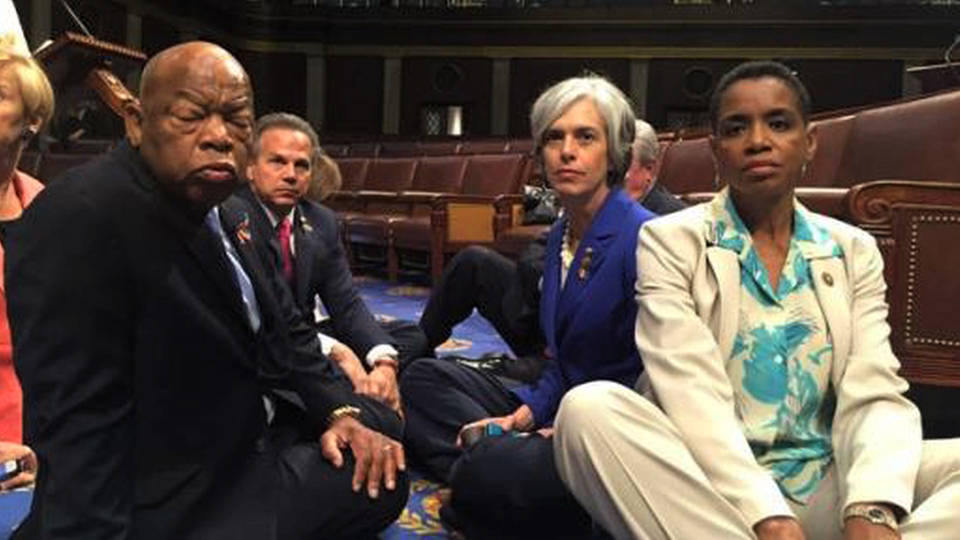
Today on Capitol Hill, Democratic lawmakers are continuing a historic sit-in on the floor of the House to demand a vote on gun control after the Orlando massacre left 49 people dead. Democrats are pushing for votes to expand background checks for gun purchases and to curb the sale of weapons to people on government watchlists—a proposal strongly opposed by the American Civil Liberties Union and the Center for Constitutional Rights, among other groups. The sit-in was initiated by Congressmember John Lewis, a veteran of the civil rights movement. We’ll go to Washington, D.C., after headlines.
TOPICS:
Gun Control
British Voters Head to Polls for Brexit Referendum

Voters across Britain are heading to the polls today in a historic referendum known as Brexit to decide whether to leave or remain in the European Union. Polls are too close to call. It’s the third nationwide referendum in British history. Today’s vote comes exactly a week after British MP Jo Cox was murdered. She was a vocal advocate for Britain to stay in the EU. During the attack, eyewitnesses said, her alleged assassin, Thomas Mair, shouted "Britain First"—a possible reference to the far-right, anti-immigrant political party of the same name which is pushing for Britain to leave the EU. Labor leader Jeremy Corbyn spoke to Democracy Now! earlier this week about why he supports staying in the European Union.
Jeremy Corbyn: "I have been campaigning for a remain vote in the European Union, because I think we have to work with like-minded people across Europe who want to deal with tax havens and tax avoidance, who want a continent that does protect its environment and encourage others to protect its environment, but also one that’s in solidarity with people rather than seeing them all as enemies."
TOPICS:
Britain
Jeremy Corbyn
G.H.W. Bush National Security Adviser Backs Hillary Clinton
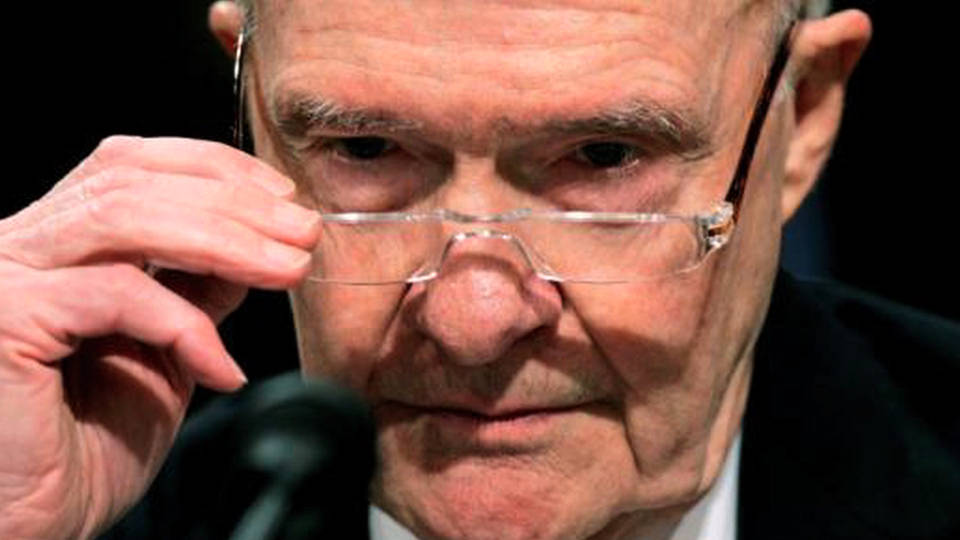
In news from the campaign trail, Democratic presidential candidate Hillary Clinton has been endorsed by one of the leading figures of the Republican national security establishment: Brent Scowcroft, the national security adviser to George H.W. Bush. His endorsement of Hillary Clinton is the latest indication of the chaos within the Republican Party over the presumptive nomination of Donald Trump. Not all Republican operatives, however, share the discomfort. On Wednesday, Donald Rumsfeld, George W. Bush’s first defense secretary, told Fox News Wednesday he can’t imagine not voting for Donald Trump.
TOPICS:
Hillary Clinton
Donald Rumsfeld
Donald Trump
Colombian Government and FARC to Sign Historic Ceasefire
Colombian government officials and FARC rebels are gathering in Havana, Cuba, to announce a historic ceasefire nearly four years in the making. The breakthrough deal reportedly includes terms on an armistice, the handing over of weapons, and the security of insurgents who give up their arms. Both sides also apparently found common ground on issues of agrarian reform, the rebels’ participation in politics, combating drug trafficking, reparations to victims and transitional justice. We’ll go to Bogotá, Colombia, for more on the historic peace deal later in the broadcast.
TOPICS:
Colombia
Report: Demand for Abortion in Latin America Soars Amid Zika Virus
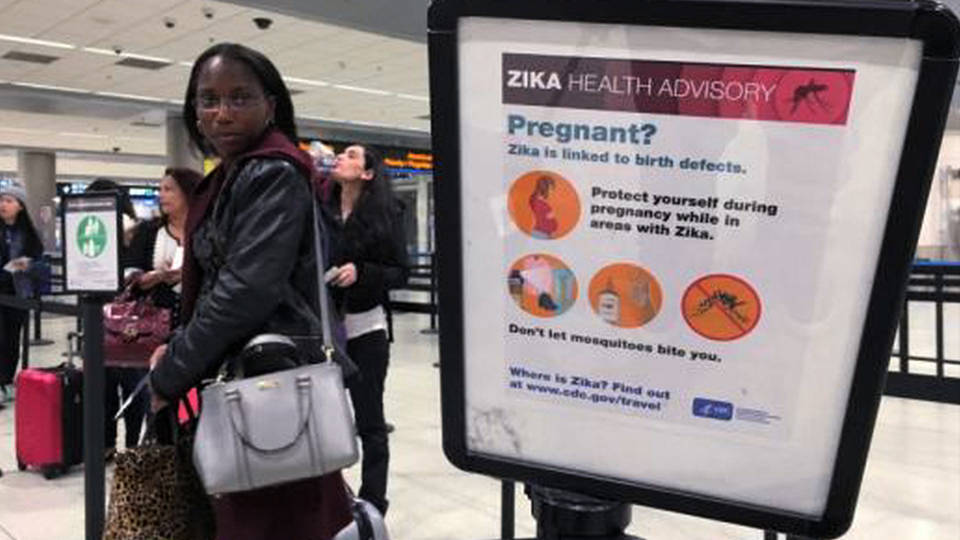
A new report shows demand for abortions has soared in Latin American countries hit by the Zika virus. The study in The New England Journal of Medicine shows demand for abortions has more than doubled in Ecuador and Brazil, and has nearly doubled in Venezuela. In all three countries, abortion is illegal except in rare instances, such as when the life of the mother is at risk. The study tracked the number of requests for abortions through the group Women on Web, a nonprofit that provides online access to abortion medications. In one request, a woman from Venezuela wrote: "We are going through a really serious situation for the economic and humanitarian crisis unleashed by Zika. There are no treatments, contraceptives nor pills to abort. I want to terminate my pregnancy but I cannot."
TOPICS:
Ecuador
Brazil
Venezuela
State Department Faces Questioning over U.S. Military Aid to Honduras
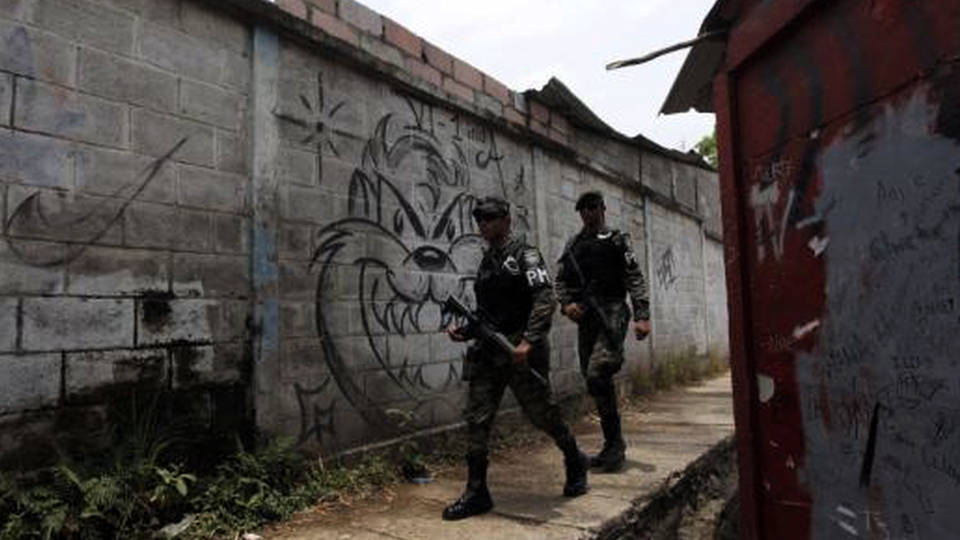
In news on Honduras, questions are mounting about the legality of U.S. military funding to Honduras, following allegations by a former Honduran soldier that murdered environmentalist Berta Cáceres appeared on a hit list distributed to U.S.-trained special forces before her assassination. First Sergeant Rodrigo Cruz told The Guardian he is "100% certain that Berta Cáceres was killed by the army." State Department Press Secretary John Kirby responded to questions Wednesday about the new reports.
John Kirby: "We’ve seen media reports alleging the existence of a Honduran activist hit list, as you’ve described it."
Reporter: "Sure."
John Kirby: "The U.S. government has not previously heard any credible allegation of hit lists, of deaths ordered by the military, and we do not have any information which would substantiate this report."
Reporter: "You have not? You have not heard of these kill lists?"
John Kirby: "I think that’s what I just said. We don’t have—"
Reporter: "OK."
John Kirby: "We haven’t heard of any credible allegation of hit lists, of deaths."
Reporter: "I mean, since—"
John Kirby: "And we do have any information that would substantiate this report."
Reporter: "One human rights professor called this 'smoking-gun evidence.' If this isn’t credible, what is credible evidence on the level you’re talking about?"
John Kirby: "We haven’t seen, in our view, credible evidence to back up these allegations. If we do, we’ll take it seriously."
Georgia Representative Hank Johnson has introduced a bill to stop all U.S. military funding to Honduras.
TOPICS:
Honduras
NYC: Hundreds Protest Mexican Police Killing of Oaxaca Teachers
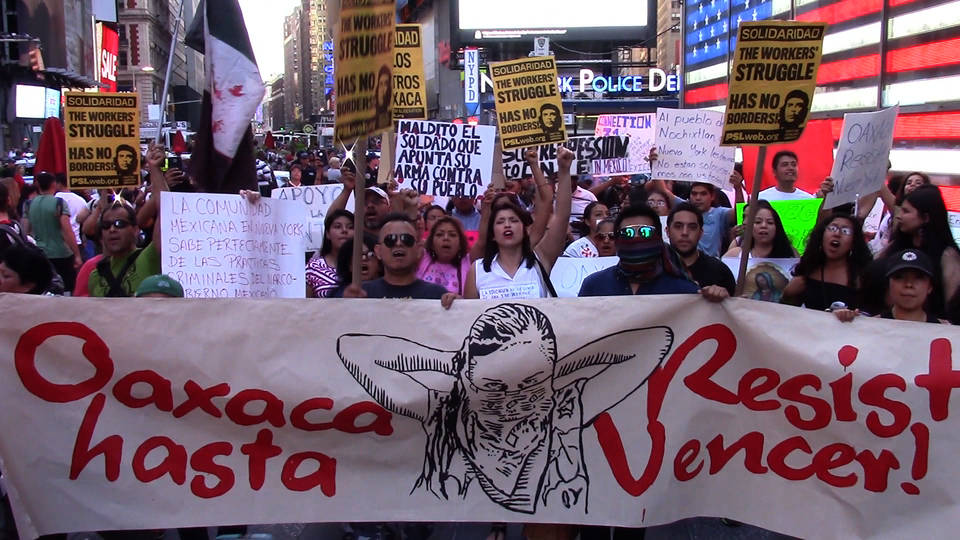
Meanwhile, in New York City, hundreds of protesters gathered outside the Mexican Consulate and marched to Times Square to denounce Sunday’s deadly police attack on protesting teachers in Oaxaca, which left more than nine people dead and more than 100 wounded. Protesters also demanded the United States stop funding the Mexican police and security forces. Miguel Ángel Mendoza, a former Mexican teacher from Oaxaca who now lives in Connecticut, compared the case of the missing 43 student teachers from Ayotzinapa to the deaths in Oaxaca.
Miguel Ángel Mendoza: "I think that the Mexican government is trying to kill the root, so that we won’t have more seeds. It wants to eliminate all the teachers so that there is no one left to protest, because the teacher is the social justice fighter, the one who does the work of fighting for the rights of the communities."
Two Mexican Journalists Killed This Week
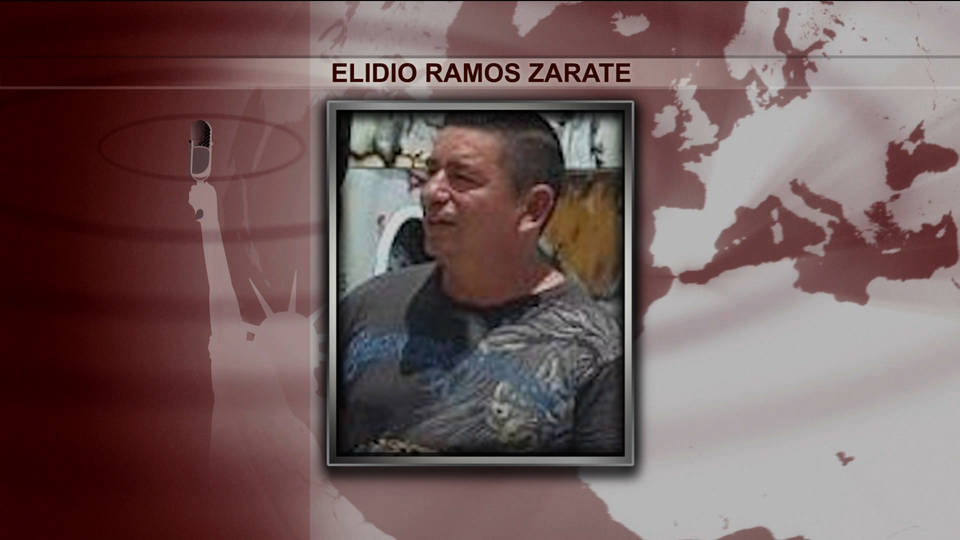
This comes as Reporters Without Borders is calling on the Mexican government to investigate the murder of two reporters this week. On Sunday, Elidio Ramos Zárate was shot by armed gunmen in Oaxaca, while on Monday, freelance journalist Zamira Esther Bautista was also shot dead by armed gunmen in the northeastern state of Tamaulipas. At least eight journalists have been murdered in Mexico this year.
Senate Rejects Legislation to Expand FBI Surveillance Powers

The Senate has rejected legislation that would have expanded the FBI’s secretive surveillance powers. The measures would have increased the FBI’s authority to use so-called national security letters, which do not require a warrant, to collect individuals’ digital data from companies such as Google or Verizon. The legislation was only two votes short of passing.
California Moves to Change Sentencing Law After Stanford Rape Case
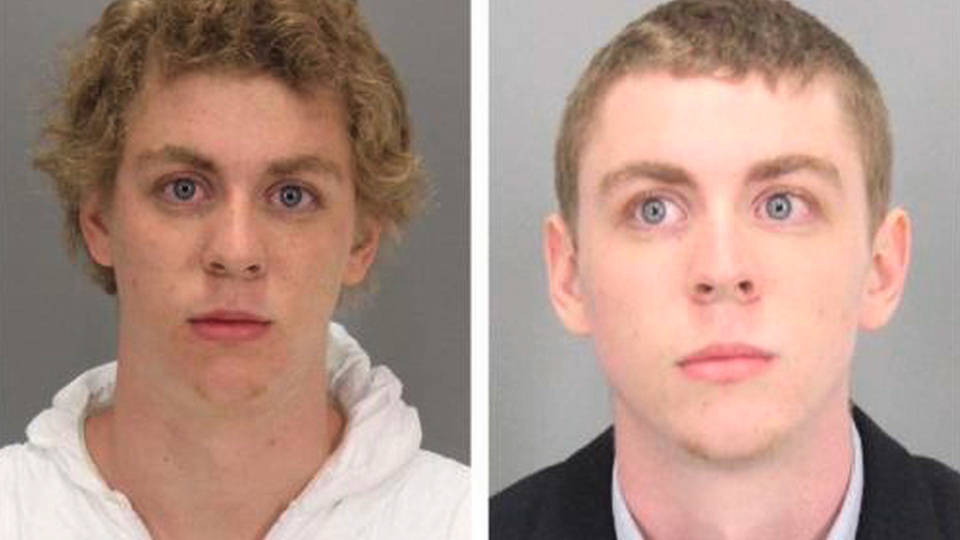
In California, Santa Clara County District Attorney Jeff Rosen has called for mandatory prison sentences for anyone convicted of sexually assaulting an unconscious and intoxicated person—following the international outcry over the light sentence in the Stanford rape case. Earlier this month, California Judge Aaron Persky gave Stanford swimmer Brock Allen Turner a six-month jail sentence for sexually assaulting an unconscious woman behind a dumpster. Judge Persky said he was concerned a longer prison sentence would have a "severe impact" on Brock Allen Turner. The proposed legislation would make penalties for Turner’s offense a mandatory minimum of three years in state prison.
New York: Montrose 9 Activists Plead Necessity Defense
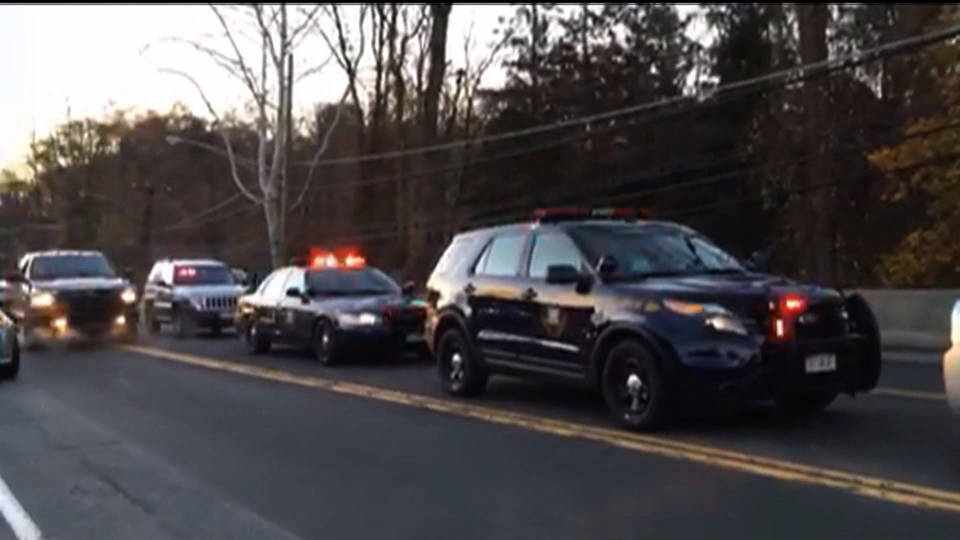
In Cortland, New York, activists known as the "Montrose 9" headed to court Wednesday for blocking the construction yard of the Spectra Energy gas pipeline in November. Spectra Energy’s AIM pipeline would run only hundreds of feet from the aging Indian Point nuclear power plant, sparking concerns that a pipeline break could cause a catastrophic nuclear disaster that would threaten New York City. In court on Wednesday, activists pleaded the necessity defense—arguing their actions were necessary because of the threat of climate change.
Michigan AG Sues Private Water Giant Veolia over Flint Water Crisis

And Michigan Attorney General Bill Schuette has sued the private water corporation Veolia for fraud and negligence during the ongoing Flint water contamination crisis. Veolia, one of the largest for-profit water companies in the world, was hired by Flint in 2015 to address the city’s water quality. At the time, Veolia produced a report falsely claiming the water was safe to drink. The Michigan Attorney General’s Office also sued Texas-based company LAN, which was hired to prepare the city’s water plant and treat the water. This is Attorney General Bill Schuette announcing the lawsuit.
Attorney General Bill Schuette: "In Flint, Veolia and LAN were hired to do a job, and failed miserably. They failed miserably in their job, basically botched it, didn’t stop the water in Flint from being poisoned. They made it worse. That’s what they did. Our criminal investigation is ongoing, and as I stated and as I guaranteed, more charges to come, so stay tuned."
Flint’s lead poisoning began when an unelected emergency manager appointed by Michigan Governor Rick Snyder switched the source of the city’s drinking water to the corrosive Flint River. Today, the water in Flint is still poisoned and unsafe to drink.
Headlines:Democrats Continue Sit-in on Floor Demanding Gun Control Vote
Today on Capitol Hill, Democratic lawmakers are continuing a historic sit-in on the floor of the House to demand a vote on gun control after the Orlando massacre left 49 people dead. Democrats are pushing for votes to expand background checks for gun purchases and to curb the sale of weapons to people on government watchlists—a proposal strongly opposed by the American Civil Liberties Union and the Center for Constitutional Rights, among other groups. The sit-in was initiated by Congressmember John Lewis, a veteran of the civil rights movement. We’ll go to Washington, D.C., after headlines.
TOPICS:
Gun Control
British Voters Head to Polls for Brexit Referendum
Voters across Britain are heading to the polls today in a historic referendum known as Brexit to decide whether to leave or remain in the European Union. Polls are too close to call. It’s the third nationwide referendum in British history. Today’s vote comes exactly a week after British MP Jo Cox was murdered. She was a vocal advocate for Britain to stay in the EU. During the attack, eyewitnesses said, her alleged assassin, Thomas Mair, shouted "Britain First"—a possible reference to the far-right, anti-immigrant political party of the same name which is pushing for Britain to leave the EU. Labor leader Jeremy Corbyn spoke to Democracy Now! earlier this week about why he supports staying in the European Union.
Jeremy Corbyn: "I have been campaigning for a remain vote in the European Union, because I think we have to work with like-minded people across Europe who want to deal with tax havens and tax avoidance, who want a continent that does protect its environment and encourage others to protect its environment, but also one that’s in solidarity with people rather than seeing them all as enemies."
TOPICS:
Britain
Jeremy Corbyn
G.H.W. Bush National Security Adviser Backs Hillary Clinton
In news from the campaign trail, Democratic presidential candidate Hillary Clinton has been endorsed by one of the leading figures of the Republican national security establishment: Brent Scowcroft, the national security adviser to George H.W. Bush. His endorsement of Hillary Clinton is the latest indication of the chaos within the Republican Party over the presumptive nomination of Donald Trump. Not all Republican operatives, however, share the discomfort. On Wednesday, Donald Rumsfeld, George W. Bush’s first defense secretary, told Fox News Wednesday he can’t imagine not voting for Donald Trump.
TOPICS:
Hillary Clinton
Donald Rumsfeld
Donald Trump
Colombian Government and FARC to Sign Historic Ceasefire
Colombian government officials and FARC rebels are gathering in Havana, Cuba, to announce a historic ceasefire nearly four years in the making. The breakthrough deal reportedly includes terms on an armistice, the handing over of weapons, and the security of insurgents who give up their arms. Both sides also apparently found common ground on issues of agrarian reform, the rebels’ participation in politics, combating drug trafficking, reparations to victims and transitional justice. We’ll go to Bogotá, Colombia, for more on the historic peace deal later in the broadcast.
TOPICS:
Colombia
Report: Demand for Abortion in Latin America Soars Amid Zika Virus
A new report shows demand for abortions has soared in Latin American countries hit by the Zika virus. The study in The New England Journal of Medicine shows demand for abortions has more than doubled in Ecuador and Brazil, and has nearly doubled in Venezuela. In all three countries, abortion is illegal except in rare instances, such as when the life of the mother is at risk. The study tracked the number of requests for abortions through the group Women on Web, a nonprofit that provides online access to abortion medications. In one request, a woman from Venezuela wrote: "We are going through a really serious situation for the economic and humanitarian crisis unleashed by Zika. There are no treatments, contraceptives nor pills to abort. I want to terminate my pregnancy but I cannot."
TOPICS:
Ecuador
Brazil
Venezuela
State Department Faces Questioning over U.S. Military Aid to Honduras
In news on Honduras, questions are mounting about the legality of U.S. military funding to Honduras, following allegations by a former Honduran soldier that murdered environmentalist Berta Cáceres appeared on a hit list distributed to U.S.-trained special forces before her assassination. First Sergeant Rodrigo Cruz told The Guardian he is "100% certain that Berta Cáceres was killed by the army." State Department Press Secretary John Kirby responded to questions Wednesday about the new reports.
John Kirby: "We’ve seen media reports alleging the existence of a Honduran activist hit list, as you’ve described it."
Reporter: "Sure."
John Kirby: "The U.S. government has not previously heard any credible allegation of hit lists, of deaths ordered by the military, and we do not have any information which would substantiate this report."
Reporter: "You have not? You have not heard of these kill lists?"
John Kirby: "I think that’s what I just said. We don’t have—"
Reporter: "OK."
John Kirby: "We haven’t heard of any credible allegation of hit lists, of deaths."
Reporter: "I mean, since—"
John Kirby: "And we do have any information that would substantiate this report."
Reporter: "One human rights professor called this 'smoking-gun evidence.' If this isn’t credible, what is credible evidence on the level you’re talking about?"
John Kirby: "We haven’t seen, in our view, credible evidence to back up these allegations. If we do, we’ll take it seriously."
Georgia Representative Hank Johnson has introduced a bill to stop all U.S. military funding to Honduras.
TOPICS:
Honduras
NYC: Hundreds Protest Mexican Police Killing of Oaxaca Teachers
Meanwhile, in New York City, hundreds of protesters gathered outside the Mexican Consulate and marched to Times Square to denounce Sunday’s deadly police attack on protesting teachers in Oaxaca, which left more than nine people dead and more than 100 wounded. Protesters also demanded the United States stop funding the Mexican police and security forces. Miguel Ángel Mendoza, a former Mexican teacher from Oaxaca who now lives in Connecticut, compared the case of the missing 43 student teachers from Ayotzinapa to the deaths in Oaxaca.
Miguel Ángel Mendoza: "I think that the Mexican government is trying to kill the root, so that we won’t have more seeds. It wants to eliminate all the teachers so that there is no one left to protest, because the teacher is the social justice fighter, the one who does the work of fighting for the rights of the communities."
Two Mexican Journalists Killed This Week
This comes as Reporters Without Borders is calling on the Mexican government to investigate the murder of two reporters this week. On Sunday, Elidio Ramos Zárate was shot by armed gunmen in Oaxaca, while on Monday, freelance journalist Zamira Esther Bautista was also shot dead by armed gunmen in the northeastern state of Tamaulipas. At least eight journalists have been murdered in Mexico this year.
Senate Rejects Legislation to Expand FBI Surveillance Powers
The Senate has rejected legislation that would have expanded the FBI’s secretive surveillance powers. The measures would have increased the FBI’s authority to use so-called national security letters, which do not require a warrant, to collect individuals’ digital data from companies such as Google or Verizon. The legislation was only two votes short of passing.
California Moves to Change Sentencing Law After Stanford Rape Case
In California, Santa Clara County District Attorney Jeff Rosen has called for mandatory prison sentences for anyone convicted of sexually assaulting an unconscious and intoxicated person—following the international outcry over the light sentence in the Stanford rape case. Earlier this month, California Judge Aaron Persky gave Stanford swimmer Brock Allen Turner a six-month jail sentence for sexually assaulting an unconscious woman behind a dumpster. Judge Persky said he was concerned a longer prison sentence would have a "severe impact" on Brock Allen Turner. The proposed legislation would make penalties for Turner’s offense a mandatory minimum of three years in state prison.
New York: Montrose 9 Activists Plead Necessity Defense
In Cortland, New York, activists known as the "Montrose 9" headed to court Wednesday for blocking the construction yard of the Spectra Energy gas pipeline in November. Spectra Energy’s AIM pipeline would run only hundreds of feet from the aging Indian Point nuclear power plant, sparking concerns that a pipeline break could cause a catastrophic nuclear disaster that would threaten New York City. In court on Wednesday, activists pleaded the necessity defense—arguing their actions were necessary because of the threat of climate change.
Michigan AG Sues Private Water Giant Veolia over Flint Water Crisis
And Michigan Attorney General Bill Schuette has sued the private water corporation Veolia for fraud and negligence during the ongoing Flint water contamination crisis. Veolia, one of the largest for-profit water companies in the world, was hired by Flint in 2015 to address the city’s water quality. At the time, Veolia produced a report falsely claiming the water was safe to drink. The Michigan Attorney General’s Office also sued Texas-based company LAN, which was hired to prepare the city’s water plant and treat the water. This is Attorney General Bill Schuette announcing the lawsuit.
Attorney General Bill Schuette: "In Flint, Veolia and LAN were hired to do a job, and failed miserably. They failed miserably in their job, basically botched it, didn’t stop the water in Flint from being poisoned. They made it worse. That’s what they did. Our criminal investigation is ongoing, and as I stated and as I guaranteed, more charges to come, so stay tuned."
Flint’s lead poisoning began when an unelected emergency manager appointed by Michigan Governor Rick Snyder switched the source of the city’s drinking water to the corrosive Flint River. Today, the water in Flint is still poisoned and unsafe to drink.
Donate today:
Follow:


SPEAKING EVENTS
Follow:
SPEAKING EVENTS


"A House Divided (On Gun Control) Cannot Vacation" by Amy Goodman & Denis Moynihan
The gun-control debate took a historic turn Wednesday, as Democratic members of the U.S. House of Representatives staged the first sit-in in Congress’ history, taking the floor of the House and demanding a vote on what is called the “no fly, no buy” restriction on gun purchases. This narrow provision would deny people on the federal “no-fly list” the ability to legally buy a gun. The protest was launched by Atlanta’s congressional representative John Lewis, the legendary civil-rights activist. “Sometimes you have to do something out of the ordinary. Sometimes you have to make a way out of no way,” Lewis said from the well of the House. “There comes a time when you have to say something, when you have to make a little noise. This is the time. Now is the time to get in the way.” He left the podium and, joined by many other members of Congress, gave new meaning to “speaking from the House floor” by sitting down in front of the podium and refusing to get up.
Both chambers of Congress have television cameras that feed the speeches from the floor directly to the national cable channel, C-SPAN. But the cameras are controlled by Republicans, and were turned off. At least two House members who participated in the sit-in provided live video streams of the protest speeches, using phones and social-media streaming video applications. C-SPAN, in its own form of protest, then picked up and broadcast these live streams, making the Republican-censored demand for gun control available to the TV-viewing public. “House cameras not permitted to show sit-in,” C-SPAN noted at the bottom of the screen.
“No bill, no break! No bill, no break,” the gathered Congress members chanted between speakers, raucously breaking with traditional congressional decorum. One after another, members of Congress — all Democrats — rose to speak in support of a simple vote on the “no fly, no buy” provision, which Rep. Nita Lowey, D-N.Y., proposed as an amendment to a Homeland Security appropriation bill earlier Wednesday. Like its counterpart in the Senate, proposed by Sen. Dianne Feinstein, Lowey’s amendment was voted down by every member of the committee’s Republican majority. According to Lowey, the amendment would have given “the attorney general the authority to block the sale of firearms to known or suspected terrorists, if the attorney general has a reasonable belief that the firearm would be used in connection with terrorism.”
The Republican majorities in both the U.S House and Senate consistently parrot the National Rifle Association’s talking points. Paramount among the criticisms from theNRA is that innocent people might well be put on the terrorist watch list. “Protections should be put in place that allow law-abiding Americans who are wrongly put on a watch list to be removed,” stated Chris Cox, executive director of the NRA Institute for Legislative Action. It is certainly admirable to raise the issue of these flawed “terror watch lists” and how people can get off them. But many Republicans are only raising the issue now for the first time, suggesting that all they care about is that the lists limit the number of people who can buy weapons.
Nita Lowey’s amendment, which includes a look back at people who were on the terrorist watch list at any time in the previous five years, would have flagged the Orlando shooter, Omar Mateen. A U.S. citizen, he had been investigated by the FBItwice in recent years for suspected terrorist sympathies, but had been cleared both times. He also was known to have beaten his first wife, who left him after just four months of marriage. Domestic violence is another important indicator in mass shootings. Despite these warning signs, Mateen legally bought the AR-style semi-automatic rifle he used to kill 49 people and injure more, just days before the killing.
“We cannot continue to stick our heads in the sand and ignore the reality of mass gun violence in our nation. Deadly mass shootings are becoming more and more frequent,” John Lewis said just before the sit-in began. “The time for silence and patience is long gone. We are calling on the leadership of the House to bring common-sense gun-control legislation to the House floor. Give us a vote. Let us vote. We came here to do our jobs. We came here to work. The American people are demanding action.”
This historic protest was demanding what can only be called a meager measure, delaying suspected terrorists from buying guns. What about restoring the assault-weapons ban? These weapons, designed solely for the purpose of killing people, have been shown time and again to enable mass killings, from Columbine to Newtown to Aurora to San Bernardino to Orlando. John Lewis marched, sat down and was beaten in pursuit of fundamental change, in pursuit of civil rights. Perhaps this historic sit-in on the floor of Congress will spark true, meaningful, lasting gun control.
WORK WITH DN!
Both chambers of Congress have television cameras that feed the speeches from the floor directly to the national cable channel, C-SPAN. But the cameras are controlled by Republicans, and were turned off. At least two House members who participated in the sit-in provided live video streams of the protest speeches, using phones and social-media streaming video applications. C-SPAN, in its own form of protest, then picked up and broadcast these live streams, making the Republican-censored demand for gun control available to the TV-viewing public. “House cameras not permitted to show sit-in,” C-SPAN noted at the bottom of the screen.
“No bill, no break! No bill, no break,” the gathered Congress members chanted between speakers, raucously breaking with traditional congressional decorum. One after another, members of Congress — all Democrats — rose to speak in support of a simple vote on the “no fly, no buy” provision, which Rep. Nita Lowey, D-N.Y., proposed as an amendment to a Homeland Security appropriation bill earlier Wednesday. Like its counterpart in the Senate, proposed by Sen. Dianne Feinstein, Lowey’s amendment was voted down by every member of the committee’s Republican majority. According to Lowey, the amendment would have given “the attorney general the authority to block the sale of firearms to known or suspected terrorists, if the attorney general has a reasonable belief that the firearm would be used in connection with terrorism.”
The Republican majorities in both the U.S House and Senate consistently parrot the National Rifle Association’s talking points. Paramount among the criticisms from theNRA is that innocent people might well be put on the terrorist watch list. “Protections should be put in place that allow law-abiding Americans who are wrongly put on a watch list to be removed,” stated Chris Cox, executive director of the NRA Institute for Legislative Action. It is certainly admirable to raise the issue of these flawed “terror watch lists” and how people can get off them. But many Republicans are only raising the issue now for the first time, suggesting that all they care about is that the lists limit the number of people who can buy weapons.
Nita Lowey’s amendment, which includes a look back at people who were on the terrorist watch list at any time in the previous five years, would have flagged the Orlando shooter, Omar Mateen. A U.S. citizen, he had been investigated by the FBItwice in recent years for suspected terrorist sympathies, but had been cleared both times. He also was known to have beaten his first wife, who left him after just four months of marriage. Domestic violence is another important indicator in mass shootings. Despite these warning signs, Mateen legally bought the AR-style semi-automatic rifle he used to kill 49 people and injure more, just days before the killing.
“We cannot continue to stick our heads in the sand and ignore the reality of mass gun violence in our nation. Deadly mass shootings are becoming more and more frequent,” John Lewis said just before the sit-in began. “The time for silence and patience is long gone. We are calling on the leadership of the House to bring common-sense gun-control legislation to the House floor. Give us a vote. Let us vote. We came here to do our jobs. We came here to work. The American people are demanding action.”
This historic protest was demanding what can only be called a meager measure, delaying suspected terrorists from buying guns. What about restoring the assault-weapons ban? These weapons, designed solely for the purpose of killing people, have been shown time and again to enable mass killings, from Columbine to Newtown to Aurora to San Bernardino to Orlando. John Lewis marched, sat down and was beaten in pursuit of fundamental change, in pursuit of civil rights. Perhaps this historic sit-in on the floor of Congress will spark true, meaningful, lasting gun control.
WORK WITH DN!

News Producer
Office Coordinator
Senior TV Producer
WEB EXCLUSIVE

"Struggling for Our Lives": Gustavo Esteva on Oaxaca Police Killings, 2006 Rebellion & Ayotzinapa
207 West 25th Street, 11th Floor
New York, New York 10001, United States
---------------------
---------------------

No comments:
Post a Comment