democracynow.org
Stories:

In Historic Ruling, Ex-Dictator of Chad Hissène Habré Convicted of Crimes Against Humanity
The former U.S.-backed dictator of Chad, Hissène Habré, has been convicted of crimes against humanity and sentenced to life in prison. Habré is accused of killing as many as 40,000 people during his eight years in power in the 1980s. At the landmark trial in Senegal, Habré was convicted of rape, sexual slavery and ordering killings during his reign of terror. Habré was tried in a special African Union-backed court established after a two-decade-long campaign led by his victims. This is the first time the leader of one African country has been prosecuted in another African country’s domestic court system for human rights abuses. We go to Dakar, Senegal, to speak with Reed Brody, counsel and spokesperson for Human Rights Watch. He has worked with victims of Hissène Habré’s regime since 1999 and played a critical role in bringing Habré to trial.
TRANSCRIPT
This is a rush transcript. Copy may not be in its final form.
AMY GOODMAN: In an historic ruling in Dakar, Senegal, the former dictator of Chad, Hissène Habré, has been convicted of crimes against humanity and sentenced to life in prison. The former U.S.-backed leader is accused of killing as many as 40,000 people during his eight years of reign in power in the '80s. At the landmark trial in Senegal, Habré was also convicted of rape, sexual slavery and ordering killings during his reign of terror. This is Judge Gustave Kam announcing the court's decision on Monday.
JUDGE GBERDAO GUSTAVE KAM: [translated] Hissène Habré, the court condemns you to life in prison. You have a period of 15 days from the pronouncement of this judgment to appeal the decision in accordance with the criminal procedure code.
AMY GOODMAN: Habré was tried in a special African Union-backed court established after a two-decade-long campaign led by his victims. This is the first time the leader of one African country has been prosecuted in another African country’s domestic court system for human rights abuses. After the verdict was read, survivors of Habré’s regime embraced each other in the courtroom. This is Souleymane Guengueng, founder of the Chadian Association of Victims.
SOULEYMANE GUENGUENG: [translated] Honestly, I’m very satisfied. I do not have the words, but let the name of God alone be glorified. It hurts me that many of my colleagues died along the way. They could not be here to see the result, which is why I was moved and brought to tears. But it is still a truly happy moment. I have to say it, but I cannot say it enough. Hissène Habré was sentenced to life imprisonment. He will finish off his life in prison, and that’s all we wanted. I hope this serves as a lesson to all the other dictators out there.
AMY GOODMAN: Hissène Habré is a former U.S. ally who’s been described as "Africa’s Pinochet." He came to power with the help of the Reagan administration in 1982. The U.S. provided Habré with millions of dollars in annual military aid and trained his secret police, known as the DDS. After Habré’s sentencing, Human Rights Watch’s attorney Reed Brody tweeted, quote, "Habré’s conviction for these horrific crimes after 25 years is a huge victory for his Chadian victims, without whose tenacity this trial never would have happened. This verdict sends a powerful message that the days when tyrants could brutalize their people, pillage their treasury and escape abroad to a life of luxury are coming to an end. Today will be carved into history as the day that a band of unrelenting survivors brought their dictator to justice," unquote.
Well, for more, we go directly to Dakar, Senegal, where we’re joined via Democracy Now! video stream by Reed Brody, counsel and spokesperson for Human Rights Watch. He’s worked with victims of Hissène Habré’s regime since 1999 and played a critical role in bringing Habré to trial.
Reed Brody, welcome to Democracy Now! Share your reaction to the verdict yesterday.
REED BRODY: Thank you, Amy. Well, it’s just an immense satisfaction. I mean, as the judge was reading the verdict and as we heard his—you know, the narrative that the victims have been weaving for 25 years, basically detailed by the judge, who found the allegations credible, and we could see—we could see the way the judge was heading. It was just this immense moment of satisfaction. And right after the verdict, you know, we were embracing, and there were a number of widows who had come from Chad specially for the occasion, who started ululating. And, you know, I have—you know, very few people thought that this day would ever come. One of them was Souleymane Guengueng, who you highlighted before. And just, I mean, last night with Souleymane until 1:00 in our hotel room, we were rewatching a TV reading of the verdict, and just hard to believe that, you know, this day has come, that these victims have finally achieved justice. It’s—
AMY GOODMAN: Well, Reed, actually, talk about Souleymane Guengueng, who we just saw responding to the verdict. Tell us his story. I want to go back to 2008, when we spoke to this Chadian activist, who spearheaded the case. He described why it was so important to him for Habré to be tried. We’re going to go to that clip in just a minute. But tell us about what happened to Souleymane.
REED BRODY: So, Souleymane was a deeply religious civil servant. You know, he was thrown in jail on false charges. As people were dying around him in his prison cell, you know, he took an oath before God that if he ever got out, he would fight for justice. And when the prison—when Idriss Déby overthrew Hissène Habré and the prison doors swung open, Souleymane got together others and founded the first victims’ association, and has been fighting since then. Many of Habré’s accomplices were still and are still in Chad—mayors, police chiefs, governors. And they started making death threats against Souleymane and forced him to go into exile in the United States. And Souleyman’s been fighting for the last 10 years. I mean, when you aired that in 2008, Amy, we had already been working together for nine years. That was seven years—no, eight years ago.
AMY GOODMAN: I’ve got that clip of Souleymane Guengueng right now from 2008.
SOULEYMANE GUENGUENG: [translated] For everyone who has lived this kind of situation, they need to know that as long as Hissène Habré is not brought to justice, psychologically, morally, we are not healed, and that remains in our heads. The example is, when we were in Dakar eight years ago with Reed to file the case, and when Hissène Habré was indicted for the first time, it’s as if—those of us who were there, as if something came into our heads, and we were liberated from these things that were in our head. We, the victims, only really us, the victims, who understand how we need justice in order to be restored to our full strength and height; somebody who hasn’t survived this kind of torture can’t really understand that.
AMY GOODMAN: That’s Chadian activist Souleymane Guengueng back in 2008. Reed Brody, take it from there.
REED BRODY: You know, this—Habré was arrested for the first time 16 years ago here in Senegal. And the previous government of Senegal just for 12 years gave us the runaround. I mean, Habré left—before Habré left Chad, he emptied out his country’s treasury, and he brought all that money here to Senegal and created a web of political influence and support. He also, I think, silently had the support of a lot of other African heads of state, who made it clear they didn’t want to see this precedent created. And so, the victims fought in Senegal. When the case was thrown out in Senegal, they went to Belgium. Belgium investigated the case for four years, requested Habré’s extradition. Senegal said no. We actually made an ally of the African Union, which said to Senegal, "Well, if you don’t want to extradite him to Belgium, you should prosecute him in Senegal." President Wade, then, of Senegal agreed, but he didn’t do it.
And actually, Belgium took this case to the International Court of Justice, the World Court in The Hague. And in 2012, the World Court ruled by a unanimous decision that Senegal had a legal obligation to prosecute or to extradite Hissène Habré. And that same—in those same months, Macky Sall became the president of Senegal, and Macky Sall was one of the many leaders of Senegal who the victims had been visiting over the years, creating the political support here in Senegal, creating the political conditions. And since 2012, the government of Senegal has been behind this court, and as you said, it was a court established by Senegal and the African Union. The trial started last year, and yesterday we got the verdict.
AMY GOODMAN: We’re going to talk about the U.S. role, going back to President Ronald Reagan in 1982, with the rise of the Chadian dictator, Hissène Habré, but we’re going to break first. We’re talking to Reed Brody, counsel and spokesperson for Human Rights Watch, who has been working with victims of Hissène Habré’s regime since 1999 and played a critical role in bringing Habré to trial. We’re speaking to him in Dakar, Senegal, where Habré was tried and convicted. Stay with us.... Read More →

Meet the Bernie Sanders Supporter Who Debated Bill Clinton for 30 Minutes at a New Mexico RestaurantWe end the show today in Santa Fe, New Mexico, where what was supposed to be a routine campaign stop for former President Bill Clinton turned into a 30-minute debate with a Bernie Sanders supporter. Clinton was campaigning for his wife, Democratic presidential candidate Hillary Clinton, when he stopped at a Santa Fe restaurant last week. There he met 24-year-old Josh Brody, who questioned Clinton about his presidential record on issues including welfare reform, Wall Street and government spending. For more, we go to Santa Fe, where we are joined by Josh Brody, a graduate of The New School.
TRANSCRIPT
This is a rush transcript. Copy may not be in its final form.
AMY GOODMAN: We’re turning now to our last segment. We go to Santa Fe, New Mexico, where former President Bill Clinton found himself in an unlikely 30-minute debate with a 24-year-old Bernie Sanders supporter last week. Bill Clinton was campaigning for Hillary Clinton, of course, when he stopped at a Mexican restaurant in Santa Fe. There he met Josh Brody, who questioned him about his presidential record, from welfare reform to the deregulation of Wall Street to government spending. To find out what happened, we’re joined by Josh Brody, graduate of The New School here in New York, who questioned Bill Clinton in Santa Fe.
What happened? What did you ask? And were you satisfied with President Clinton’s responses, Josh?
JOSH BRODY: Hi, Amy. Thank you so much for having me. Well, no, I wasn’t satisfied with the responses. What I had asked about was Aid to Families with Dependent Children, the Commodities Future Modernization Act and Gramm-Leach-Bliley, in addition to his overall government spending.
AMY GOODMAN: Can I ask you, how did you—
JOSH BRODY: And so, the reason I was—
AMY GOODMAN: Let me ask you—Josh, can I ask how you ended up being in the restaurant with President Clinton?
JOSH BRODY: Sure. Well, I’m just home visiting my parents for the week, and this is a restaurant five minutes from my house. He made an unannounced campaign stop. And I actually didn’t notice him in the restaurant until, oh, maybe 30 seconds before he approached my table.
AMY GOODMAN: So, continue with the issues that you raised and his responses.
JOSH BRODY: Well, so, one of the reasons I wasn’t satisfied with his answers is because he rooted a lot of them in economic data. He would talk about how the African-American unemployment rate reached its lowest point under his administration and how median household wages peaked in 1999. But there’s two problems with that. First is, both of the statistics are misleading. Wages peaked in part because people were working more hours. In fact, the average median hourly wage has been basically flat since the '70s. And then, in terms of another often-cited statistic that both he and Hillary Clinton have used on the campaign trail is that African-American unemployment was at record lows. But as authors such as Michelle Alexander show, that's because African Americans were being arrested in record high numbers. And if you look at the unemployment rate including the prison population, it actually wasn’t all that low.
The other thing I found shocking, though, if I may, about this was, what I had asked him about originally was Aid to Families with Dependent Children, which was our welfare legislation at the federal level, that he basically gutted. And when I asked him about it—and I shouldn’t have been so surprised, because the bill was called the Personal Responsibility and Work Opportunity Act, "personal responsibility" being the operative phrase. He kept invoking a "culture of dependency" argument, similar to what you will hear anyone from Ronald Reagan talk about, when he discusses the mythical welfare queen, to Paul Ryan, when he talks about dependency in our inner cities. It’s a racially coded argument, and he was blowing into that dog whistle very hard.
And his essential argument—and I was really surprised to hear this; I would have thought he’d change the rhetoric over the last 20 years—but his essential argument was that poor people are lazy, and if you give them welfare, they’ll be dependent on the government, and that he was told this by people on welfare, and therefore it needed to be cut and turned into block grants for the states. There used to be 68 out of every person below the poverty line—out of every hundred people below the poverty line on welfare. We’re now at 26. And I had responded that maybe the reason people don’t have jobs isn’t because they’re lazy, but because there simply aren’t jobs, and his administration had moved away from the notions of the government interfering in the economy to improve the lives of the people, such as the federal jobs programs that came under FDR. Bill Clinton essentially ripped the heart out of the Democratic Party and abandoned that notion that the government can make the lives of its people better and should invest in a robust social safety net. So that’s how the discussion started. It went many other places.
AMY GOODMAN: Josh Brody, as we wrap up right now, you were talking to President Clinton about his policies. How do you feel about Hillary Clinton?
JOSH BRODY: I mean, she’s in many ways responsible. I think it’s a little hypocritical for people to say that it was his administration and not hers, given that she was known for the transformative role of the first lady, where she was more involved than any other first lady. So, I do not deny her agency. I think she’s culpable for all of the policies we discussed, whether it’s shrinking the government, getting rid of welfare, allowing corporations to have more power to offshore jobs through NAFTA, the deregulation of Wall Street, which, by the way, deregulating derivatives occurred just a few months before her Senate campaign. She then received a lot of Wall Street donations. And then I also object to her record in the Senate, where she again would deregulate Wall Street and was actually more hawkish in her votes in terms of foreign policy than the Clinton administration, although I would disagree with his foreign policy, as well.
So, overall, I’m very disappointed. And if—and I plan to vote for Jill Stein, because I believe New Mexico will win by double digits; however, if the race does seem close, unfortunately, I will have to vote for her, which is not something I’m happy about.
AMY GOODMAN: Josh Brody, I want to thank you for being with us. Sounds like a very interesting half-hour you had when you went to have a meal at the Mexican restaurant in Santa Fe. I thank you for being with us. ... Read More →

It's Not Just the Speeches: Hillary Clinton Questioned over Son-in-Law's Ties to Goldman Sachs
The California primary is just over one week away, and Democratic presidential candidate Hillary Clinton and Bernie Sanders are in a dead heat. Hillary Clinton has changed this week’s campaign schedule to add more California stops in order to try to reverse Sanders’ growing momentum. Yet multiple issues have continued to dog Clinton’s campaign, including the question of her connection to Goldman Sachs. The Wall Street giant paid Clinton $675,000 in 2013 to give three speeches. And now new questions are being raised about the ties between Goldman Sachs and Hillary’s son-in-law, Marc Mezvinsky. Mezvinsky worked at Goldman for eight years and then formed a hedge fund in part with help from Goldman CEO Lloyd Blankfein. For more, we’re joined by Intercept investigative reporter Lee Fang. His recent piece is headlined "Hillary Clinton Won’t Say How Much Goldman Sachs CEO Invested with Her Son-in-Law."
TRANSCRIPT
This is a rush transcript. Copy may not be in its final form.
AMY GOODMAN: As the Democratic race between Hillary Clinton and Bernie Sanders heats up ahead of the California primary on June 7th, we turn to look at Hillary Clinton’s ties to Goldman Sachs. The Wall Street giant paid Clinton $675,000 in 2013 to give three speeches. But so far Hillary Clinton has rejected calls to release the speech transcripts. Well, now questions have come up about ties between Goldman Sachs and another member of the Clinton family: Hillary’s son-in-law Marc Mezvinsky. He worked at Goldman for eight years, then formed a hedge fund in part with help from Goldman CEO Lloyd Blankfein. During a San Francisco campaign rally last Thursday, Lee Fang of The Intercept tried to ask Hillary Clinton about this.
LEE FANG: Hi, Secretary Clinton. Do you know how much money Lloyd Blankfein invested in your son-in-law’s hedge fund? Secretary Clinton? Secretary Clinton, how much did Lloyd Blankfein invest in your son-in-law’s hedge fund? Why don’t you respond? Secretary Clinton? Secretary Clinton, quick question about Eaglevale Partners. Secretary Clinton, question about your son-in-law’s hedge fund. Secretary Clinton?
NICK MERRILL: Hey, buddy. How are you?
LEE FANG: Hey, how’s it going?
NICK MERRILL: What’s your name?
LEE FANG: Lee Fang.
NICK MERRILL: Hi, I’m Nick. I’m her spokesperson.
LEE FANG: Hey, how’s it going?
NICK MERRILL: What are you trying to find out more about?
LEE FANG: I want to know how much money Lloyd Blankfein invested in Marc Mezvinsky’s hedge fund. Do you know how much money, Nick? Nick, do you know how much money Lloyd Blankfein invested in—
NICK MERRILL: I don’t know. Has it been reported?
LEE FANG: No, it hasn’t. Do you know that—could you find out the amount for me?
NICK MERRILL: I don’t know what the amount is.
LEE FANG: What?
NICK MERRILL: You want to give me your contact information?
LEE FANG: Sure, yes. Stay here.
NICK MERRILL: You have a card?
LEE FANG: I’ll give you my card. So you’re going to find out the answer here, right?
NICK MERRILL: What?
LEE FANG: You’re going to get back to me?
NICK MERRILL: I’m going to email you right back.
LEE FANG: Thank you.
AMY GOODMAN: That was Intercept reporter Lee Fang questioning Hillary Clinton and her press secretary, Nick Merrill, at a campaign rally last Thursday. Lee Fang was also the first reporter to ask Clinton to release the transcripts of her speeches to Goldman Sachs earlier this year. So we’re going straight to Lee Fang, investigative journalist at The Intercept covering the intersection of money and politics. Again, your recent piece headlined, "Hillary Clinton Won’t Say How Much Goldman Sachs CEO Invested with Her Son-in-Law."
Welcome back to Democracy Now! Lay out what you’re trying to find out, Lee.
LEE FANG: Hi, Amy. Good morning. Thank you for having me.
In 2010, Marc Mezvinsky married Chelsea Clinton. The following year, in 2011, he began fundraising for his hedge fund. Reportedly, Lloyd Blankfein, the chief executive of Goldman Sachs, personally invested in this fund. He also allowed his association with this fund to be used in its marketing materials. So he’s a big reason why Eaglevale Partners, the hedge fund founded by Marc Mezvinsky, was able to raise close to $400 million. Unfortunately, that wasn’t particularly a savvy business decision. The fund, according to The Wall Street Journal and The New York Times, has underperformed, and one subordinate fund created by Marc Mezvinsky lost 90 percent of its investors’ money and had to shut down earlier this month. Basically, they made bad bets on the Greek economy recovery.
So, we’ve been pressing the campaign to understand the full relationship between Goldman Sachs and the Clinton family. We’ve asked not only about the Goldman Sachs transcripts, but, as you pointed out, Hillary Clinton personally has made over $600,000 in paid speaking fees to Goldman Sachs. Bill Clinton has made more than $1.5 million in paid speaking fees. Goldman Sachs has given up to half a million dollars to the Clinton Foundation. So, we’re trying to press the campaign to really release the full relationship between Goldman Sachs and the Clinton family. And that includes how much money has transferred between Goldman Sachs and its executives to the Clinton family bank accounts and their businesses.
AMY GOODMAN: You also talk about how Goldman Sachs directly lobbied Hillary Clinton’s State Department, the company routinely partnering with the Clinton Foundation at this time.
LEE FANG: Yeah, that’s right. You know, Goldman Sachs is no ordinary company, right? This is a very powerful investment bank that has historically won influence in many different administrations. Of course, in the George Bush administration, Bush appointed former Gold Sachs CEO Hank Paulson as his treasury secretary. Paulson was one of the primary architects of the bank bailouts. Over the last eight years, we’ve seen Goldman Sachs aggressively lobby the Obama administration, seeking influence over financial reform, the Volcker Rule, Dodd-Frank. And, of course, we’ll expect Goldman Sachs to try to win influence with whoever is the next occupant of the White House. So this isn’t just a random company. This is a bank with a lot of political interests involved. ... Read More →

DNC Chair Wasserman Schultz Faces Criticism for Bias & Opening Up DNC to Lobbyists
As the Democratic National Convention approaches, some Democrats are considering pressuring DNC Chairwoman Debbie Wasserman Schultz to step down. Democratic presidential candidate Bernie Sanders has long accused Wasserman Schultz of being biased toward Hillary Clinton. Wasserman Schultz has also quietly repealed ethics rules implemented in 2008 by President Obama preventing federal lobbyists from donating to the DNC. The opposition from Capitol Hill Democrats comes as Wasserman Schultz is also in a tight race against progressive challenger Tim Canova for her own congressional seat in Florida. In an unusual move, Sanders has backed Canova. For more, we’re joined by Lee Fang, investigative reporter for The Intercept.
TRANSCRIPT
This is a rush transcript. Copy may not be in its final form.
AMY GOODMAN: Lee Fang, you’re also looking at this whole controversy around Deborah Wasserman Schultz. There’s been, in the last week, calls, especially Bernie Sanders, calling for her to be removed as head of the DNC, because he feels she favors Hillary Clinton. He—Sanders then supported her opponent in the congressional race—in her own congressional race. But talk about Debbie Wasserman Schultz and her influence.
LEE FANG: Right. There’s been a lot of controversy about the leadership of Debbie Wasserman Schultz over the Democratic National Committee. One kind of contrast here is that as—just as Obama pushed to reform the DNC and, when he became the nominee in 2008, he implemented ethics rules that prevented federal lobbyists from donating to the DNC or to the party convention, Debbie Wasserman Schultz has quietly repealed those ethics rules. Now lobbyists can again donate to the party. And last fall, Debbie Wasserman Schultz actually convened a meeting with a number of lobbyists and reportedly handed out a menu of options saying that, you know, if you give varying amounts of money, lobbyists can win certain types of influence at the convention. So, the role of money in politics, which has been a big campaign theme in the presidential primaries, we’re seeing that now come into focus with this tension between Debbie Wasserman Schultz and the Bernie Sanders campaign.
AMY GOODMAN: And then you have Bernie Sanders choosing five people for the platform committee, among them Cornel West; Jim Zogby, as well; Bill McKibben, of course, well known for his stands on the environment and climate change; and Keith Ellison, the congressman from Minneapolis, head of the Congressional Progressive Caucus.
LEE FANG: Yeah, that’s right. And the way that this fight is now manifesting is over this platform committee that you’re referencing. This is the committee that writes the official positions of the Democratic Party, symbolic in nature, but it’s now shaping up to be kind of a big fight because each—both the Bernie Sanders campaign and the Hillary Clinton campaign selected representatives for this committee, also DNC Chair Debbie Wasserman Schultz picked some of the representatives. And again, we’re seeing this coming down to kind of the role of activists. Bernie Sanders picked representatives largely from the activist community, while the DNC and the Clinton campaign selected several individuals from the lobbying community to serve on this official platform committee creating the official positions of the Democratic Party. And Bernie Sanders’ campaign has said that they want to push the Bernie message into the policy platform, including reducing the role of money in politics. So, at least a very kind of symbolic gesture there.
AMY GOODMAN: Lee, very quickly, you also recently co-wrote a piece about Hillary Clinton and fracking, based on State Department emails obtained by The Intercept, the emails showing how the State Department worked closely with oil and gas companies and worked with other nations to secure investments for fracking projects. Was this while Hillary Clinton was secretary of state?
LEE FANG: Yeah, we conducted a FOIA. I worked with another reporter named Steve Horn, and we received dozens of new emails showing a new layer of how aggressive this initiative was, that Hillary Clinton not just traveled the world to promote fracking, she—according to these emails, her aides discussed using Poland as a laboratory to show that fracking could be successful in Europe and then to take that model and spread fracking all across both Eastern and Western Europe, where we’ve seen a lot of opposition to fracking. The emails also show a very close bond with industry, that Hillary Clinton’s aides worked closely with large fossil fuel companies to pressure foreign governments around the world to adopt American-style fracking.
AMY GOODMAN: I want to thank you, Lee Fang. We’ll link your pieces at The Intercept, as you cover the intersection of money and politics.
LEE FANG: Thank you, Amy. ... Read More →

From U.S. Ally to Convicted War Criminal: Inside Chad's Hissène Habré's Close Ties to Reagan Admin
As the former U.S.-backed dictator of Chad, Hissène Habré, is convicted of crimes against humanity and sentenced to life in prison, we examine Habré’s close role with the United States. Hissène Habré is a former U.S. ally who has been described as "Africa’s Pinochet." He came to power with the help of the Reagan administration in 1982. The U.S. provided Habré with millions of dollars in annual military aid and trained his secret police, known as the DDS. For more, we speak with Reed Brody, counsel and spokesperson for Human Rights Watch. He has worked with victims of Hissène Habré’s regime since 1999 and played a critical role in bringing Habré to trial.
TRANSCRIPT
This is a rush transcript. Copy may not be in its final form.
AMY GOODMAN: In an historic ruling, the former dictator of Chad, Hissène Habré, has been convicted of crimes against humanity and sentenced to life in prison. He was a close ally of the United States in the '80s. On Monday, Secretary of State John Kerry released a statement welcoming the court's ruling. The statement read in part, quote, "This ruling is a landmark in the global fight against impunity for atrocities, including war crimes and crimes against humanity. ... As a country committed to the respect for human rights and the pursuit of justice, this is also an opportunity for the United States to reflect on, and learn from, our own connection with past events in Chad," Kerry said. On Monday, the State Department’s Todd Buchwald addressed reporters.
TODD BUCHWALD: I think it’s an encouraging moment, and I think that this day wouldn’t have been possible without the cooperation of Chad, of Senegal, which has hosted this—you know, it’s not an easy thing to do—and of the African Union. And that is that it’s an encouraging thing, for sure.
AMY GOODMAN: Meanwhile, U.S. Ambassador to the United Nations Samantha Power issued a statement saying, quote, "I congratulate the people of Chad whose dogged, decades-long pursuit of justice made this day possible."
We turn to Reed Brody, who’s still with us. He is counsel and spokesperson for Human Rights Watch, in Dakar, Senegal, was there in the courtroom yesterday when the judge declared the former dictator of Chad, Hissène Habré, guilty. Reed, talk about the U.S. role in Hissène Habré’s rule in Chad.
REED BRODY: Yeah, thank you, Amy. I do want to say that, you know, the Obama administration has been squarely behind this effort to bring Habré to justice. Samantha Power, who you mentioned, was recently in Chad with Jacqueline Moudeina, with the victims. President Obama himself met with Macky Sall, the president of Senegal, praised the Senegalese effort. So, you know, the statements by Kerry and Samantha Power are in line with a strong support from this administration.
But that wasn’t always the case. In 1982, when Ronald Reagan came into power earlier, you know, Hissène Habré was seen as a bulwark against Muammar Gaddafi of Libya, who had expansionist designs on Chad and was seen by President Reagan as the mad dog, the enemy. And as a way of—in the words of secretary of state at the time Alexander Haig, they supported Habré in order to bloody Gaddafi’s nose. And the U.S.—the first covert operation of the Reagan administration, before Jonas Savimbi in Angola, before the Contras in Nicaragua, was an effort to bring this warlord, Hissène Habré, to power, even though at the time he already had a record of brutality in Chad’s civil war, a mass grave discovered behind his residence. He had kidnapped a French anthropologist, and his forces executed the negotiator who had come to seek her rescue. The United States supported Hissène Habré. And then, once he was in power in 1982, France and the United States gave huge military, political support to the Habré government.
You know, we don’t have—there’s no—we have no knowledge of a direct implication in particular crimes by the United States, but from the DDS, from the documents of Habré’s political police that we uncovered 15 years ago, we see a man who was considered by the political police to be the U.S. Embassy’s liaison to that political police, the former head of the political police. And once again, the political police was the main instrument of repression under the Habré administration. It had an archipelago of secret prisons in Chad. The documents of these political police, which I—which I happened to stumble on 15 years ago in Chad, provide the names of 1,208 people who died in detention, of almost 12,000 prisoners of the DDS. The U.S., we know, trained some of those DDS officials—not in torture, as far as we know, but many of them came to the United States for counterinsurgency, for—in particular, for bomb diffusion and for antiterrorism. We know that the head of the DDS, at his own trial in N’Djamena last year, testified that the United States—that he was constantly accompanied by a CIA agent who was advising him. Names of the U.S. agents who are mentioned by the Chadians—in fact, they don’t have—they talk about Maurice and John and Swiker [phon.], and those are names of people who are listed in the State Department registry as people who worked at the U.S. Embassy. So there was a connection between the United States and Hissène Habré’s political police.
We also know that Chad fought a war, and Chad—with French and American assistance, Chad turned back the Libyan forces. It captured over a thousand Libyan POWs. Many of—the United States established a secret training camp in Chad to turn the Libyans, to create a contra force against Muammar Gaddafi. And this secret base, which even the French did not know about at the time, was led by a man named Khalifa Haftar, who later emigrated or was brought by the U.S. to Virginia and is now the strong man in Benghazi, who’s leading one of the factions in Libya. And so, the United States used Hissène Habré as an ally in its—in what was then the war on Gaddafi’s terror in the 1980s.
And all this time, of course, you know, although many of Habré’s crimes were not really revealed until after the prison—after he fell and the prison doors swung open, Amnesty International, as their representative testified at the trial, wrote 25 mini reports about crimes under Hissène Habré. Habré was aware, of course, of these crimes, but the world was aware that these crimes were going on. The United States, even as it supported Hissène Habré at the time, was aware that these crimes were taking place.
AMY GOODMAN: You talked about the Reagan years and raids supporting Hissène Habré and his rise to power. Can you take it from there, from Reagan to Bush to President Bill Clinton, before—before George W. Bush? And then you talked about Obama.
REED BRODY: Well, of course, Habré was overthrown in December 1990, so it was still under the Republican administrations. Hissène Habré was fêted in 1987 at the White House. He got a state visit, or he got a visit to the White House with President Reagan. Our Freedom of Information Act requests show that even as Habré was falling, the U.S. Embassy was cabling back home that it was not too late, that Hissène Habré could be saved. Ultimately, the U.S. helped Hissène Habré reinstall himself in Senegal. That was in 1990. And he basically, from 1990, lived a life of luxury in Senegal.
And it was really when the Chilean dictator Augusto Pinochet was arrested in London on a warrant from a Spanish judge, Baltasar Garzón, who was here in court yesterday, for crimes committed in Chile, and the House of Lords said that Pinochet could be arrested anywhere in the world, despite his status as a former head of state, that we realized that we had in international justice a tool to bring to book tyrants and torturers who seemed out of the reach of justice. And that’s when we were contacted by the Chadian Association for Human Rights, who said, "What those people are doing, what the Chileans are doing, we want to do that with Hissène Habré." And that’s why Habré got the moniker—actually, we gave him the name at the time, "the African Pinochet."
And frankly, Amy, if I could—one takeaway from all of this, it’s the hope that other people around the world, other victims, other survivors, other activists, will look at what the Chadians have done, fighting for 25 years and achieving justice, and say, "We want to do what Hissène Habré’s victims have done."
AMY GOODMAN: I want to turn to a clip from the film Talking About Rose by Isabel Coixet, the Spanish filmmaker.
NARRATOR: [translated] Rose Lokissim was one of the first women in Chad to become an elite soldier. After she joined the opposition to Habré’s dictatorship, Rose was arrested and taken to the terrible prison known as Les Locaux. In 1984, she was put in cell C, known as "the cell of death" because prisoners there, crowded into a putrid, windowless room, died each day. Rose was the only woman among 60 men.
FATIME SAKINE HAMADI: [translated] Rose was a good woman. If they tortured here, bound her, whipped her, she wouldn’t even move. She was very courageous. Even when she’d come back from torture, she’d still chat like normal with us, as if she hadn’t seen a thing. A good woman.
ASHTA MAHAMAD ALI MONIQUE: [translated] She was with the men for eight months, at the start. They took her out, and she stayed with us women. Then the prison director said, "No, no. That’s no regular woman. If she flees, you will see." They took her back to the men. She was the only woman with the men.
FATIME SAKINE HAMADI: [translated] He was afraid. He said, "That woman is going to escape some day." He told the DDS that she was going to escape some day. So they put her with the men in cell C. Just one woman, with the men. After eight months, they brought Rose back. She was filthy, smelling, with lice all over, matted hair. So we boiled water and leaves, and washed her hair. The lice were like that. We took them out. We had to get off the crud with a knife.
ASHTA MAHAMAD ALI MONIQUE: [translated] Rose was a good woman. In the morning, they made her go throw out the poop. She’d go out cheerily just like a man. It didn’t bother her at all. Rose was really courageous.
ALEÏNA N’GOUSSI JACKSON: [translated] She was already a fighter. She knew what she was fighting for. Her philosophy was already in her head. She didn’t like the regime. She did what she could to be rid of it.
DOHKOT CLÉMENT ABAIFOUTA: [translated] A woman who didn’t wish anyone harm. She didn’t want to see people suffer. Rose told us, "Stay strong until we can get out of this prison. Then we’ll change the direction of things in this country." A revolutionary, because she had ideas that fired us up to revolt, to dream of a change.
AMY GOODMAN: An excerpt of the documentary Talking About Rose by the award-winning filmmaker Isabel Coixet. We’ll link to the whole film at democracynow.org. Reed, explain what happened to Rose, and share your final comments on this historic—in this historic week, when the Chadian dictator has been found guilty and sentenced to life in prison for crimes against humanity for the killing of—well, overall during his regime, it’s believed 40,000 people died. Reed?
REED BRODY: Thank you. Rose Lokissim was thrown in jail, and actually Rose would take notes when people would die or be tortured in prison. Rose would take notes and try to smuggle them out so that the outside world knew what was going on. And she was denounced, and she was taken out of her cell, and she was interrogated. And 20—15 years later, we found—in the files of the political police that I talked about before, we found her last interrogation report. And as she was, you know, being interrogated, as she was on her—you know, clearly going to be executed, she told her torturers, who wrote it down, she said, "I don’t care what happens to me. I’m doing this for my country. My cause is right. Chad will remember me, and history will talk about me." And the only record we have of this is what her torturers wrote on a piece of paper that we found in the files of the political police 15 years ago. And today, history is talking about Rose, and people are talking about what happened in the Chadian prisons under Hissène Habré.
And, you know, one last thing: Habré was convicted for sexual crimes. He was actually convicted for personally having raped Khadija Hassan Zidane, a woman who I’ve known for 17 years. And so Habré is a convicted rapist today. And this is a message, you know, that even rape—I mean, Habré—that Habré is not above the law, and that Khadija Hassan and none of these women, including two of the ones who you saw on camera there who were raped, are below the law.
And one last thing, Amy: This one is for Michael Ratner.
AMY GOODMAN: The pioneering human rights attorney who just died several weeks ago. We had you on, Reed, here in New York, as his close friend, ally, colleague, who stood up to dictators and tried to bring them to justice around the world. Reed Brody, thanks so much for being with us, counsel—
REED BRODY: Thank you very much, Amy.
AMY GOODMAN: —and spokesperson for Human Rights Watch. Does Hissène Habré go right to jail?
REED BRODY: Well, he’s been in jail for the last three years, from the time his—he was indicted. And so he’s going to go back—he’s back in the jail that he’s been in, which is probably the jail that he’s going to be spending his sentence in. It’s apparently a very comfortable—you know, comfortable and proper and modern jail.
AMY GOODMAN: Reed Brody, counsel and spokesperson for Human Rights Watch, worked with victims of Habré’s regime since 1999. Those victims brought this president, this dictator, to justice, and they had their day in court, albeit many years later. As for Rose, she was executed 30 years ago this month, May 15th, 1986.
This is Democracy Now!, democracynow.org, The War and Peace Report. When we come back, we go on the campaign trail. Stay with us. ...Read More →
Headlines:More Than 700 Refugees Drown in Mediterranean in Three Days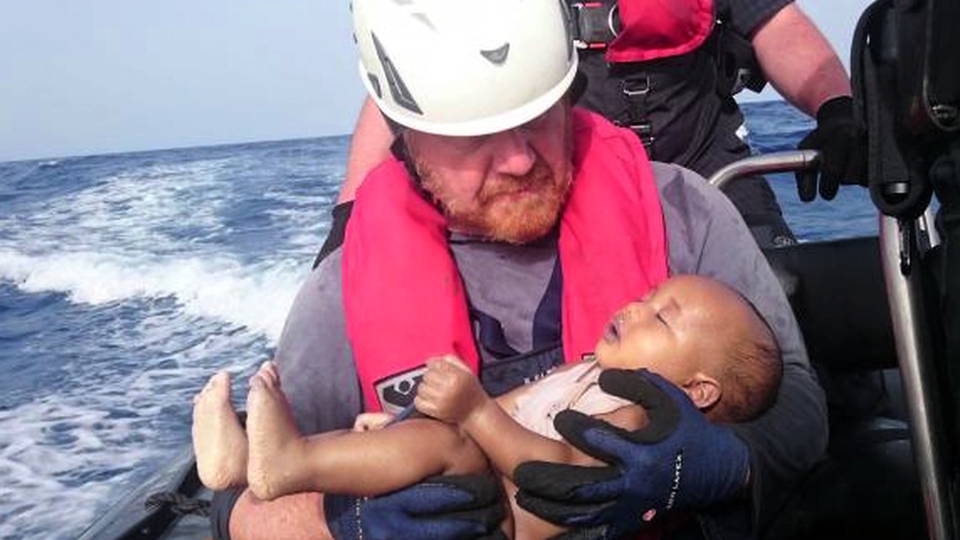
More than 700 refugees have drowned in only three days, as border crackdowns across Europe have forced refugees to make more dangerous journeys across the Mediterranean. The United Nations Children’s Fund says many of the victims were youth fleeing war and violence in their home countries. The majority of the refugees were from Eritrea, Nigeria, Somalia and South Sudan. Under a European Union plan enacted in April, all refugees arriving in Greece are deported back to Turkey, forcing people to attempt the more dangerous route between Libya and Italy. On Monday, the photo of a German volunteer from the group Sea-Watch holding the body of a drowned child became the latest symbol of the migration crisis. Sea-Watch spokesperson Ruben Neugebauer spoke out.
Ruben Neugebauer: "It’s always a difficult decision to publish such a picture, but in this specific case we decided to send the picture out because of the graveness of the situation. We thought that this material needs to be published because what we see here is the effect of European foreign policy."
TOPICS:
Refugees
Chad: Ex-Dictator Hissène Habré Convicted of Crimes Against Humanity
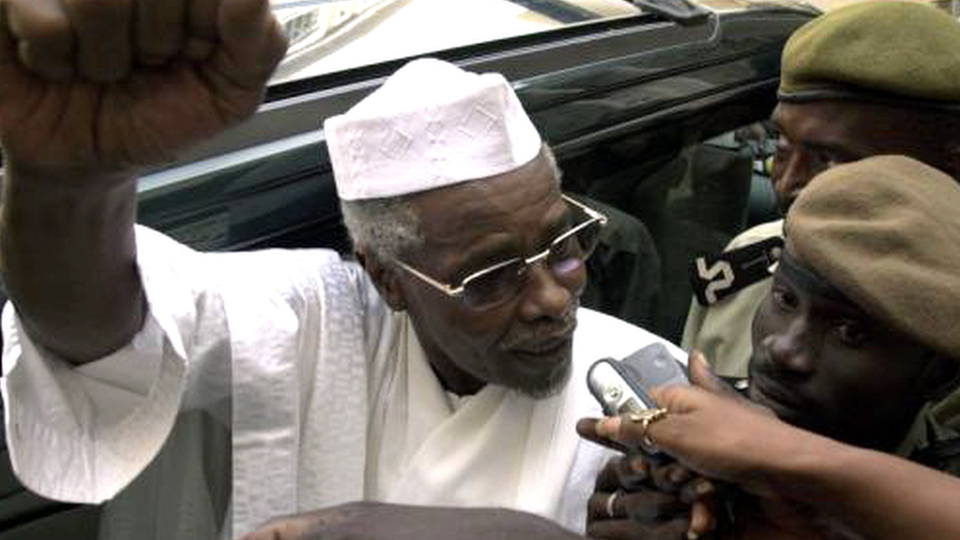
In a historic ruling, the former dictator of Chad, Hissène Habré, has been convicted of crimes against humanity and sentenced to life in prison. Habré is accused of killing as many as 40,000 people during his eight years in power in the 1980s. He was tried in a special African Union-backed court established after a two-decade-long campaign led by his victims. This is the first time the leader of one African country has been prosecuted in another African country’s domestic court system for human rights abuses. We’ll have more on the trial with Human Rights Watch’s Reed Brody later in the broadcast.
Bernie Sanders and Hillary Clinton in Dead Heat in California
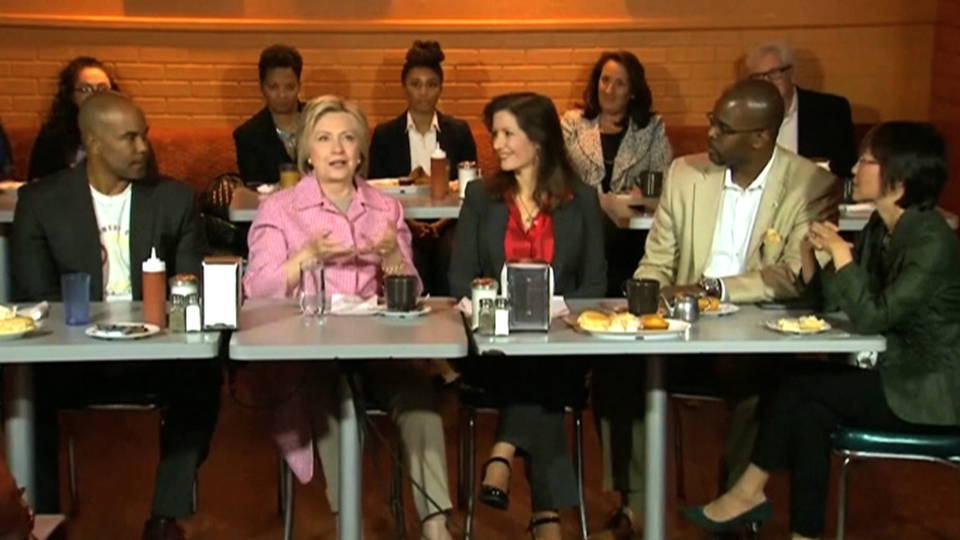
In news from the campaign trail, Democratic presidential candidates Bernie Sanders and Hillary Clinton are both campaigning in California ahead of the June 7 primary, where polls are showing the two in a dead heat. Clinton was in her home town of Chappaqua, New York, this weekend, but has canceled some campaign stops in New Jersey to add more stops in California. She spoke at a small community meeting in Oakland on Friday.
Hillary Clinton: "I really think one of the best ways that I can be a good partner is to lift up what is working and lift up people who are trying to work together, and using the White House. And I like to say, you know, yes, we can use the White House as a bully pulpit. We don’t want a bully in the White House, but we can use the bully pulpit to talk about issues."
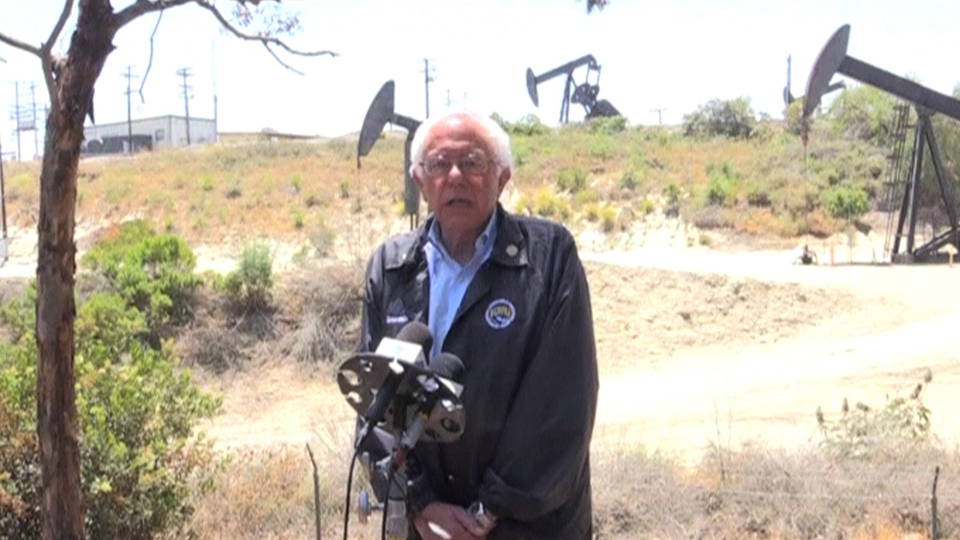
Bernie Sanders has focused his campaign energy into the California primary in recent weeks. He spoke at a rally in San Pedro on Friday.
Sen. Bernie Sanders: "Our ideas and belief in economic justice, in social justice, in racial justice, in environmental justice, in immigration reform and a path toward citizenship, in rebuilding inner cities throughout this country, in protecting the needs of the Native American people, our ideas are the future of this country."
On Sunday, Sanders visited the original Delano headquarters of the United Farm Workers union, where he reiterated his call for a national ban on fracking when asked what he would do about poor water quality in the San Joaquin Valley. This comes as environmental groups are criticizing the Obama administration after two federal agencies finalized reports claiming fracking off the coast of California would pose no "significant" risk to the environment. The announcement of the reports by the U.S. Bureau of Ocean Energy Management and the Bureau of Safety and Environmental Enforcement ends a court-ordered moratorium on offshore fracking, which was put into place earlier this year after the Center for Biological Diversity challenged the administration’s practice of "rubber stamping" offshore drilling without an environmental review.
Donald Trump Backs Out of Proposed Debate with Bernie Sanders
Meanwhile, in more news from the campaign trail, Bernie Sanders is criticizing Donald Trump for backing out of a proposed debate between the two candidates ahead of the California primary. Donald Trump first agreed to the idea when it was proposed by Jimmy Kimmel during an interview last week. Sanders quickly signed on to the idea. But Trump then backed out of the idea on Friday, saying in a statement, "Based on the fact that the Democratic nominating process is totally rigged and Crooked Hillary Clinton and Deborah Wasserman Schultz will not allow Bernie Sanders to win, and now that I am the presumptive Republican nominee, it seems inappropriate that I would debate the second place finisher," Trump said. In response, Sanders asked what Trump was afraid of.
Sen. Bernie Sanders: "Well, it’s the first that I heard about it. I heard that he was going to debate me, then I heard that he was not going to debate me, then I heard that he was going to debate me, and now you’re telling me that he is not going to debate me. Well, you know, I hope that he changes his mind again. I mean, Mr. Trump is known to change his mind many times in a day. And I would—you know, Trump goes around, he’s a bully. He’s a big, tough guy. Well, Mr. Trump, what are you afraid of?"
Trump Ordered to Release Internal Trump University Documents
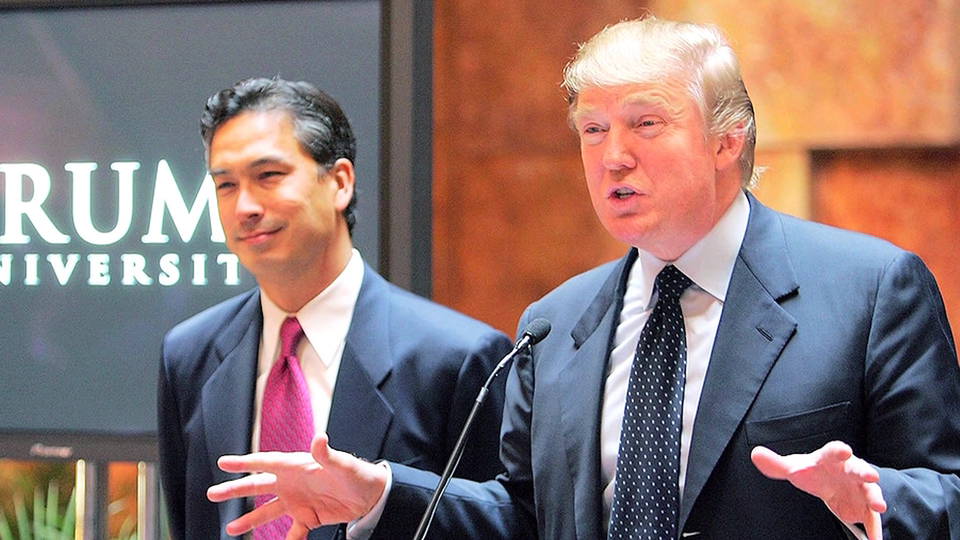
Meanwhile, Donald Trump is being forced by a federal judge to release internal Trump University documents amid an ongoing lawsuit arguing the defunct for-profit school defrauded students. On Friday, Trump went after the judge, Gonzalo Curiel, during a campaign rally in San Diego.
Donald Trump: "I have a judge who is a hater of Donald Trump. A hater. He’s a hater. His name is Gonzalo Curiel. The judge, who happens to be, we believe, Mexican, which is great, I think that’s fine. You know what? I think the Mexicans are going to end up loving Donald Trump when I give all these jobs, OK?"
That was Trump speaking in San Diego. Outside the rally, thousands of people protested Trump’s positions on immigration, which include building a wall across the entire length of the border and deporting 11 million undocumented immigrants. At least 35 people were arrested.
Trump says he’s planning to release the documents on Trump University today. He is also expected to announce the names of the charities selected to receive the $6 million Trump says he’s raised for veterans.
Meanwhile, Donald Trump is facing criticism for referring to Massachusetts Senator Elizabeth Warren as "Indian" and "Pocahontas" multiple times last week. Elizabeth Warren says her family is part Cherokee. Trump’s comments have sparked protest from indigenous people, including from Cree Nation reporter Nicole Robertson, who yelled that Trump’s comments were "offensive" in the middle of his speech in North Dakota last week. Robertson later spoke on MSNBC.
Nicole Robertson: "You look at the number of women that have been victimized through either missing and murdered indigenous women that’s happening continent-wide, human trafficking. And so, to use the word 'Pocahontas,' it just brings to mind derogatory comments that are not—in this day and age, a word that’s just not usable."
Argentina: Ex-Dictator & Ex-Officers Convicted for Role in Operation Condor
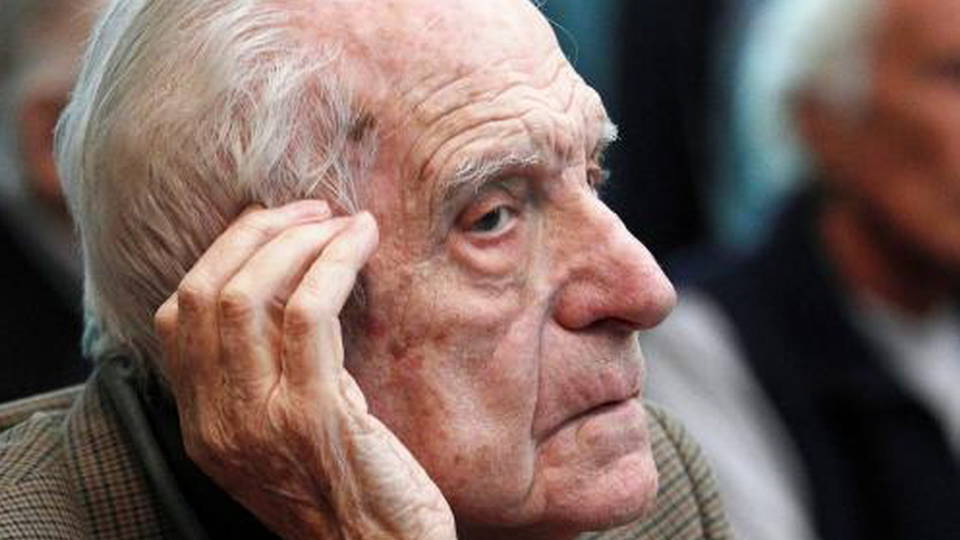
In Argentina, ex-dictator Reynaldo Bignone and 14 other former military officials have been sentenced to prison for their role in the secret 1970s international kidnapping plot known as Operation Condor. The operation was a campaign of coordinated terror and assassinations carried out by regimes in Chile, Argentina, Bolivia, Brazil, Paraguay and Uruguay. Lawyer Luz Palmas Zaldúa spoke after the verdict Monday.
Luz Palmas Zaldúa: "This ruling determines not only that state terrorism in Argentina was a criminal conspiracy, but also the repressive coordination with other dictatorships. These states worked together illegally to maximize efforts to persecute the political opposition from each of the dictatorships, and to 'disappear' or eliminate those who were considered to be with subversive groups, groups who confronted the dictatorships in Southern Cone countries."
Brazil: 2nd Minister in Interim Gov't Steps Down over Leaked Recordings
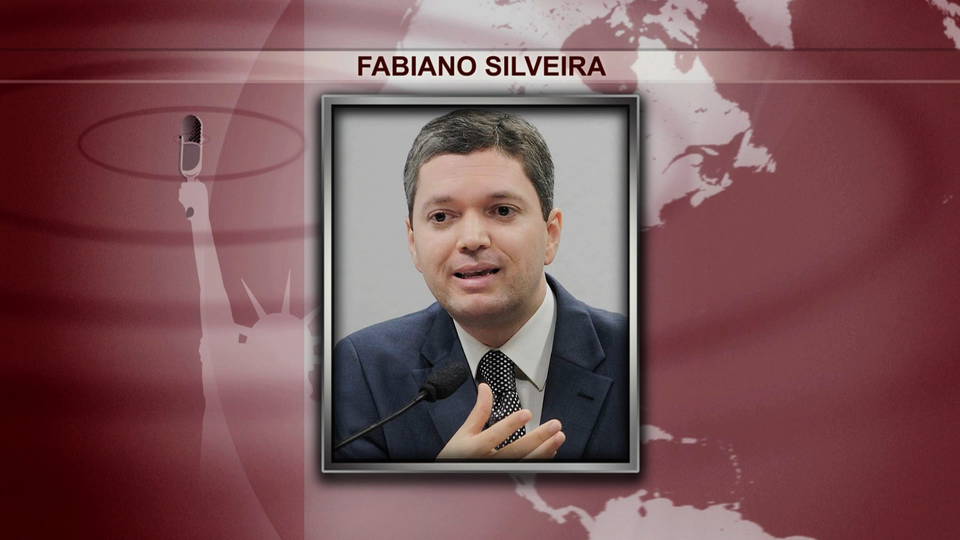
In Brazil, a second minister in the interim government has resigned. Fabiano Silveira headed the ministry tasked with fighting corruption. Yet he resigned Monday after a recording surfaced of him attempting to block an investigation into corruption at the state-run oil company Petrobras. Last week, the planning minister for the interim government also resigned after explosive transcripts revealed how he plotted to oust President Dilma Rousseff in order to end a corruption investigation that was targeting him.
Philippines: Journalist Alex Balcoba Murdered in Manila
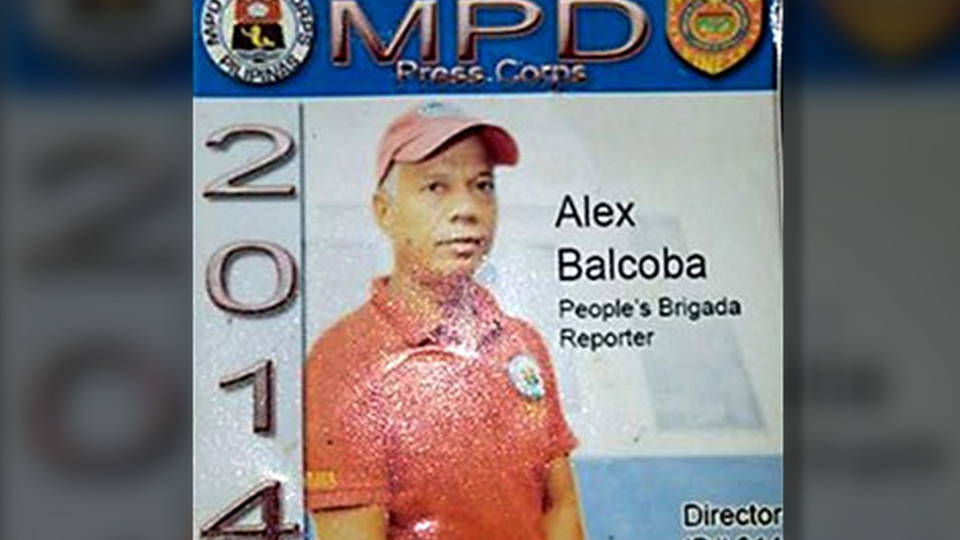
In the Philippines, journalist Alex Balcoba was murdered in Manila Monday by two gunmen. Balcoba was a reporter for the People’s Brigada tabloid. The Philippines is one of the world’s deadliest countries for reporters; more than 30 journalists have been killed under President Aquino’s administration. His murder comes one day after the Philippines Congress officially declared Rodrigo Duterte the next president. Duterte has admitted to his role in death squads, joked about the gang rape of an Australian missionary, and pledged to kill tens of thousands of people.
Egypt: Head of Journalists Union Facing Trial Amid Media Crackdown
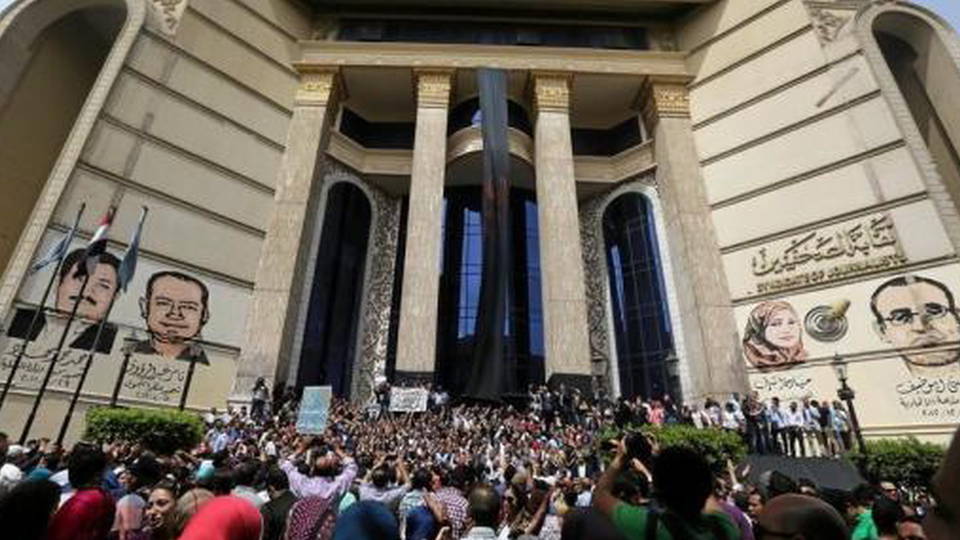
Meanwhile, in Egypt, the head of the journalists union and two of the union’s board members are facing trial on charges of harboring opposition journalists—in the latest crackdown against press freedom in Egypt. The charges stem from a raid on the journalists union’s headquarters in May, where authorities arrested two reporters working for the opposition website Bawabet Yanayer.
Iraq: 20 Killed in Baghdad; Fighting Between ISIL and Iraqi Forces in Fallujah
In Iraq, more than 20 people were killed in a series of bombings in Baghdad Monday. The attacks come amid fierce fighting between U.S.-backed Iraqi forces and militants with the self-proclaimed Islamic State over control of Fallujah, which was seized byISIS in 2014.
French Railway Workers Set to Join Growing Strikes over Labor Reforms

French railway workers are set to join the growing strikes, which are threatening to immobilize the country amid protests over labor reforms. Last week, workers at refineries and nuclear power plants went on strike, creating fuel shortages across the country. Unions are protesting reforms that would make it easier to fire workers, among other provisions. France is slated to host the Euro 2016 football championships next week.
Eric Holder Says Edward Snowden Performed "Public Service"
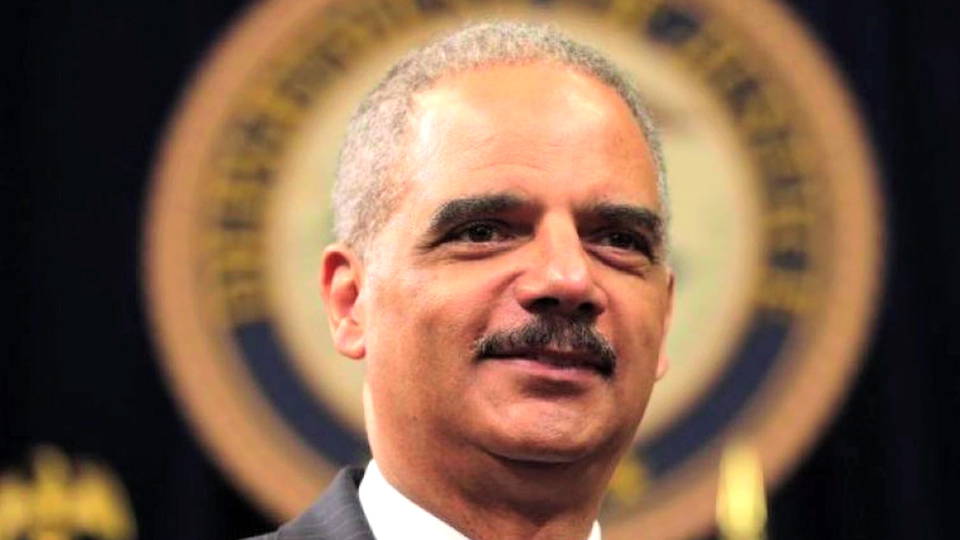
Former U.S. Attorney General Eric Holder has said NSA whistleblower Edward Snowden performed a "public service" by leaking documents revealing NSA mass surveillance. Holder made the comments while speaking on a podcast hosted by David Axelrod.
Eric Holder: "We can certainly argue about the way in which Snowden did what he did, but I think that he actually performed a public service by raising the debate that we engaged in and by the changes that we made."
This comes as Edward Snowden is calling for an overhaul in whistleblower protections, after former senior Pentagon official John Crane has spoken out publicly about how his superiors broke the law to punish a key National Security Agency whistleblower for leaking information about waste, mismanagement and surveillance.Click here to see our exclusive broadcast interview with John Crane.
Verizon Workers Declare Victory After 7-Week Strike
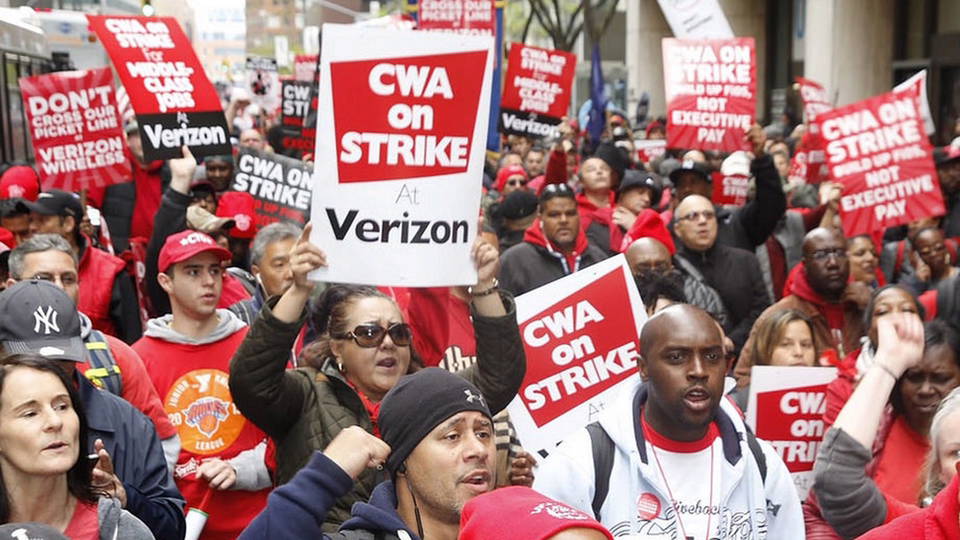
And after nearly seven weeks on strike, tens of thousands of Verizon workers have declared victory. It was one of the biggest U.S. strikes in years, as workers fought Verizon’s efforts to cap pensions, cut benefits and outsource work to Mexico, the Philippines and the Dominican Republic. Under a deal announced Monday, workers will receive a nearly 11 percent raise over four years. The deal also decreases Verizon’s ability to outsource work. Last week, Verizon worker Pamela Galpern spoke with Democracy Now! about the strike.
Pamela Galpern: "For a company that’s as profitable as Verizon, I think it was clear that we—that wasn’t right, that it’s not right that they want to take so much from the workers who have helped make this company so profitable. This strike is really about keeping good jobs here, and it’s about our families. It’s 39,000 workers on strike, and it’s the families of all of those workers."
Donate today:
Follow:


SPEAKING EVENTS


"I Want the World to Wake Up": Hiroshima Survivor Criticizes Obama for Pushing New Nuclear Weapons
207 West 25th Street, 11th Floor
New York, New York 10001, United States
---------------------
---------------------

No comments:
Post a Comment