
From the Lewis Center for Church Leadership of Wesley Theological Seminary

Using Your Building Assets by Rosario Picardo
Rosario Picardo says unused building space can be a goldmine of opportunity if a church has eyes to see how their space could be used creatively to reach the community and make ministry happen. A church's property is one of its greatest assets.
How many times have you driven by a church building during the week and seen an empty parking lot? The pastor and some staff may be there, but the actual building remains largely unused throughout the week. A goldmine of opportunity is within the church’s reach, but one must have eyes to see in order to notice it. A church’s property is one of the greatest assets it has for its community. One way churches can use the resources in front of them is to creatively use their space.
Buildings can be turned into assets simply by getting rid of what is useless and making room for the new thing God wants to do in the space.
What spaces do you need to reclaim in your local church to make room for ministry to happen? What can be repurposed for the church or the community? Stewardship includes the care of buildings that have been entrusted to local congregations. Just because a building is large, old, and less energy-efficient than modern buildings doesn’t automatically make it a liability. On the other hand, if church buildings are treated like museums where people feel as if they can’t touch anything, they will not feel welcome. These buildings can be turned into assets simply by getting rid of what is useless and making room for the new thing God wants to do in the space.
Ask the Right Questions
When brainstorming possible uses for your real estate, it is important to ask yourself open-ended questions:
- How is God’s kingdom calling you to consider new and creative ways to use your physical space?
- Is there a ministry in your community that needs a new home?
- Is there a way to meet some need in your community by giving some space away?
Assess Your Physical Space
After contemplating those questions, take an assessment of your physical space throughout the church building. Possible spaces include classrooms, meeting rooms, kitchens, sanctuaries, parking lots, courtyard/garden, choir room, stage, and storage areas.
- Classrooms. Most churches have classrooms used for Bible studies and Sunday school on weekends, but they sit empty during the week. What if those empty classrooms could be used during the week to host GED classes? ESL classes? Parenting classes? Those classrooms may be the perfect space for a book club to meet or just what a local music teacher needs for giving lessons.
- Meeting Rooms. Many churches have a large meeting space used for occasional events and receptions. Why not let a local study group book it for a lecture? Why not allow families to use it for birthday parties? Would a small coffeehouse be perfect for the space at least once per week?
- Kitchens. Licensed commercial kitchens can be hard to find for young caterers or others just starting out in the food business, but most churches have one. This is the perfect space to offer for rental during the week.
- Sanctuary. Sanctuaries provide a place where a large group of people can come together at once. What if your sanctuary could be used for neighborhood meetings with elected officials, or as a place where community members could come to discuss and find solutions to problems that plague the neighborhood?
- Parking Lots. Especially in an urban area where parking spaces are scarce, opening a parking lot during unused hours can be a draw for potential renters. There are a number of ways the arrangement could be made, whether it’s charging a monthly fee to individual tenants for weeknight parking or renting it to groups for parking during specific events.
- Courtyard/Garden. An outdoor courtyard or garden can serve as a venue for parties, weddings, or other outdoor events.
- Choir Room. The organ and choir setup in many churches can be a great space for musicians who need to practice. The acoustics in a church are often excellent, hard to replicate, and exactly what a musician in your community needs. Consider offering this space as a music rehearsal space for organists, pianists, and other choirs.
- Stage. Many churches have a stage, perhaps used only a few times a year for school plays or a Christmas pageant. Many towns have theater groups looking for an affordable place to stage performances. A stage could also serve as a venue for dance rehearsals or photo shoots for an aspiring photographer.
- Storage Areas. Churches with a lot of buildings may have unused storage spaces — closets in basements, outdoor sheds or garages, and so forth. These, too, can be made available to renters. They might be just what a Little League team needs to store their equipment in the off-season, or what a young entrepreneur needs for inventory storage.
Declutter
Spring-cleaning can prevent clutter and allow a church to more readily assess when a space is due for repurposing. There are a few people in every church with a passion not only for tidying up but also for sorting, purging, and creating lasting systems of organization. A workday every year or two can achieve these goals and, in the process, build community as people work together, remembering what items were used for in the past, dreaming about their usefulness in the future, and brainstorming ways to clean up.
This material is adapted from Funding Ministry with Five Loaves and Two
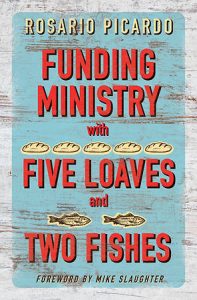 Fishes (Abingdon, 2016) by Rosario Picardo and used by permission. The book is available at Cokesbury and Amazon.
Related Resouces:
- Some Old Handbells Became Our Fish and Loaves by Rosario Picardo
- REdesigning Churches: Creating Spaces for Connection and Community reviewed by Ann A. Michel
- Unclutter Your Church by Dottie Escobedo-Frank
Digital Transitions When Pastors Change by Will Rice
 In our modern digital world, pastors and congregations have more things than ever to consider when facing a pastoral transition. Will Rice explains how with a little planning, websites, emails, data storage, and other digital platforms can be maintained with integrity through the change of clergy leadership.
Comings and goings in a digital age can be a complex affair. Some upfront work and planning can save hours of frustration later.
Websites
Websites are the new digital front door for a congregation. Unfortunately, they are often ignored during a transition. Sometimes this leads to extended periods of neglect and lack of updated information. Worse, sometimes access to the site gets lost, and we find ourselves searching for usernames and passwords.
Compile all information regarding access to the website. Even if this is handled by staff or a volunteer, this is an appropriate time to secure this information. Information should include:
- Website address
- Website host name and contact information
- Website host administrator login credentials
- Domain host name and contact information (if different from website host)
- Domain host administrator login credentials
- Name(s) and contact information for anyone authorized to edit, manage, or update the website.
During this time of transition, it is important to secure access to all social media accounts and create a plan and timeline to announce the new pastor via social media.Email
It is impossible to cover every possible email scenario. Many churches leave the pastor’s email up to the pastor. Some pastors use Gmail or Yahoo accounts. Others use their denominational email account. Some churches have their own domain. Here are some best practices to consider:
- The departing pastor should consider discontinuing the use of the email account used for church business. An autoresponder should be placed on the account notifying senders of the change and offering contact information for the church and forwarding information for the pastor.
- The incoming pastor should not be expected to use the email address of the departing pastor. This leads to confusion and too much extra work for the incoming pastor.
- Churches with Exchange Servers, Office 365 accounts, or Google for Non-Profits accounts should 1) assist the outgoing pastor with closing their account and enabling an auto-responder, 2) set up a new account for the incoming pastor before she or he arrives, and 3) ensure that the administrator user name and password are on file with the appropriate church officer.
Databases and Church Management Systems
Many churches now use electronic databases to track membership, attendance, and other aspects of congregational life. Some of these systems are simple Excel spreadsheets while other churches use more complex programs. Maintaining the security and integrity of these databases is essential. A pastoral transition is a time to ensure this information is accessible to the appropriate people.
Compile all information regarding the church management system. Even if this is handled by staff or a volunteer, secure this information.
- Name of software or platform
- Company contact and support contact for software or platform
- Administrator login credentials
- Name(s) and contact information for anyone authorized to access database.
Most congregations now have some level of social media presence. During this time of transition, it is important to secure access to all social media accounts. Social media platforms regularly used by churches may include: Facebook, Twitter, Instagram, Google+, Flickr, YouTube, and others.
Compile all information regarding all church social media accounts. Even if this is handled by staff or a volunteer, secure this information.
- A list of all active and inactive social media accounts.
- User names and passwords for all church social media accounts.
- Name(s) and contact information for anyone authorized to edit, manage, or update social media account.
Also create a plan and timeline to announce the new pastor via social media. The new pastor’s arrival provides an excellent opportunity to do a social media audit to make sure these platforms are being used appropriately and effectively.
Other Things to Consider
The same basic auditing procedures can be applied to nearly any digital tool. Some other tools used in churches include:
- Bulk email services like Constant Contact or MailChimp
- Subscription stock photography sites like Shutterstock
- Subscription based software like Adobe or Microsoft
- Text-messaging services EZ Texting or Flocknote
- Audio or video hosting websites such as Sermon Cloud or Vimeo
- Live Steaming services like churchstreaming.tv or Ustream
- Online giving platforms like Vanco, PayPal, Kindred, or Tithe.ly
This material is adapted from “A Guide to Comings and Goings in a Digital Age” issued by the Rio Texas Annual Conference of the United Methodist Church and used by permission.
Related Resources:
- The Right Start: Beginning Ministry in a New Setting Video Tool Kit
- Social Media and Pastoral Moves by Lovett H. Weems, Jr. and Thomas G. James
- 50 Ways to Improve Pastoral Transitions, a free Lewis Center Resource
The Right QuestionLeaders do not need answers. Leaders must have the right questions.
When we have been in a leadership role for a while, it becomes harder to see things with fresh eyes. We keep working within the bounds of what we have done to address challenges. Try this question to get a different perspective.
When we have been in a leadership role for a while, it becomes harder to see things with fresh eyes. We keep working within the bounds of what we have done to address challenges. Try this question to get a different perspective.
- If someone new took over this position today, what would they probably do that we're not doing now?
 The Gifts of Lovett Weems: "A Theological Mind and a Pastor's Heart" through the Years
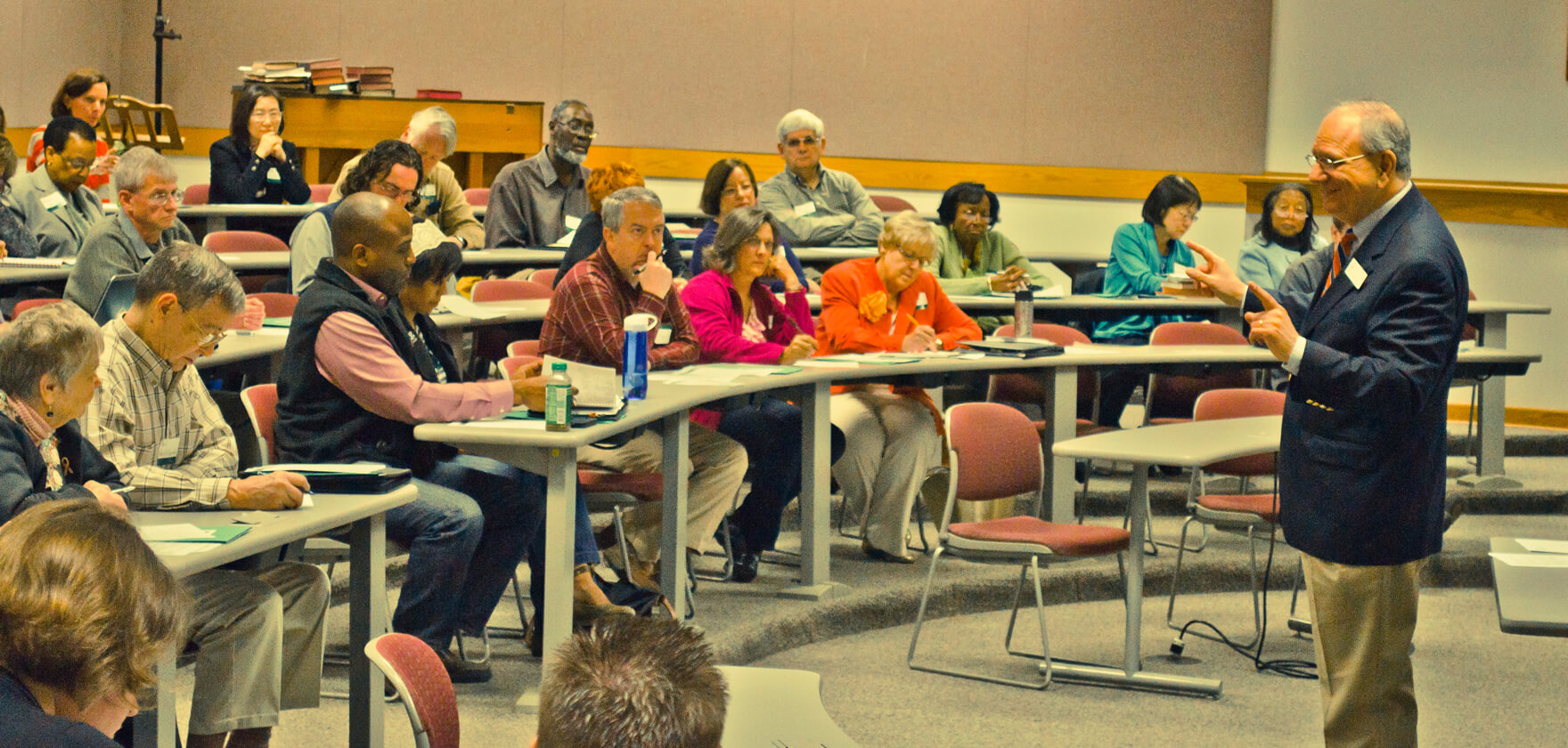
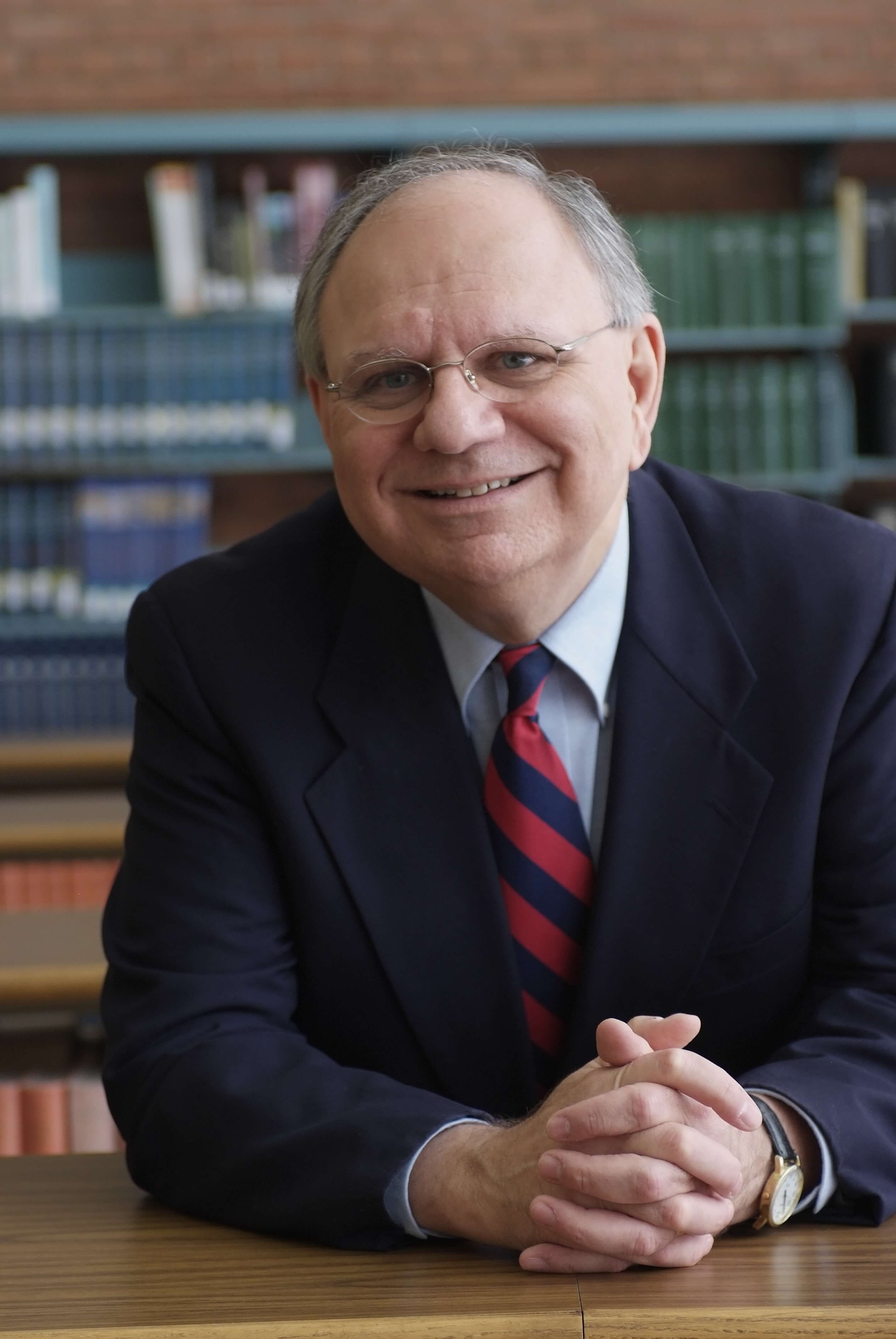
When Dr. Lovett H. Weems, Jr., transitions into a new role as Senior Consultant for the Lewis Center for Church Leadership, it marks the next step in a continuing relationship with Wesley Theological Seminary that goes back to the 1960s. He looks forward to continuing his work in classrooms as Distinguished Professor of Church Leadership, where he was once a student himself, working toward his Doctor of Ministry. In his new role, he will continue to write resource material while consulting with denominational leaders.
Wesley proved the ideal environment for a teacher who loves to learn. “I am always looking for a new way of looking at things, which has helped me move through different phases of my ministry,” Weems said.
“Lovett has accomplished something new for a seminary,” President David McAllister-Wilson said. “In the 1980s, we read the new leadership books from the corporate world. Weems became a founding author in the genre of church leadership texts with his book Church Leadership: Vision, Team, Culture, Integrity [Cokesbury | Amazon] — taking church leadership beyond the anecdotal and biographical books pastors had been using. He established a business school for the church. In this period of great anxiety, church leaders look to Lovett Weems and the Lewis Center for solid and hopeful research.”
Bishop Robert Schnase, now of the United Methodist Church’s Rio Texas Annual Conference was serving the Missouri Annual Conference when he first met Weems. “I was familiar with his work through writings and workshops,” Schnase said. “So, when we began to make significant structural and missional changes in the conference, I consulted with him numerous times.”
Weems was often the first to read the bishop’s works in progress, including Five Practices of Fruitful Congregations [Cokesbury |
Amazon]. “I trusted his feedback and valued his insight,” Schnase said. “During my time in Missouri, we used a number of the resources from the Lewis Center, [and] contracted for several studies of clergy or church trends.”
He added that Weems offers something better than a mere solution. “He walks me through alternatives,” Schnase said. “He helps me ask the right questions. He shares from his own experience and points me toward books and resources that address the issue. He connects me to the people with the expertise to help.”
Bishop Janice Riggle Huie, of the Texas Methodist Foundation, has known Weems since they were in seminary at Perkins School of Theology. “Lovett has a theological mind and a pastor’s heart,” she said. “He could engage theologically in deep and profound ways. He could also lay aside the talk about ‘love in action’ and go do the ‘love in action.’”
His leadership was especially apparent during the struggle for integration. “We’re talking about the early ‘70s so we were still figuring out how to be one church and particularly in the South it was hard going,” Huie said. “Lovett was involved in seminary, in the sit-ins in Dallas, and in some of the protests at SMU. He was willing to put his actions where his faith was.”
Calling him a “pioneer of the church,” Huie noted that one of Weems’s greatest accomplishments was recognizing the trend of an aging clergy.
Dr. Ann Michel, associate director of the Lewis Center, said, “When he became the Center’s founding director, he already had a clear sense of the challenges the church was facing with new or young clergy. He made that a signature issue early in his tenure. That has made a tremendous impact.”
Through the work of the Center, Weems determined that fewer than five percent of working clergy were under the age of 35 in 2005. “It really sounded an alarm” Michel said. “It got people to start paying attention. It was the impetus for the whole church to be more deliberate about encouraging young people.”
It was the emphasis on hard data that started a denomination-wide shift in thinking. “One of the lessons I’ve learned from Dr. Weems is the importance of making decisions that are grounded in research and fact,” Michel said. “So many decisions in the church get made on a whim or through personal opinion or personal preference. He taught us the importance of objectivity.”
Carefully gathered data now provide information on the growth and decline of individual congregations, on the pool of clergy leaders, and on general strengths and weaknesses across a conference. Most important, that data lead to action.
Michel points to Strategic Actionable Insights as one of Weems’s great contributions. “There’s so much information out there,” she said. “The goal is to distill and discern what Strategic Actionable Insights leaders can actually apply. We can research and read forever but we want to translate that work and give it practical, pragmatic application.”
For Huie, one of Weems’s greatest gifts is his ability to see what others cannot. “Lovett helps us see the steps along the way,” she said. “He has a remarkable ability to connect the dots. He can see the pattern. And once we all see the pattern, then we can ask, ‘How do we address this?’”The long range impact is clear. “You can see it already in the growth, slow though it is, in the next generation of clergy,” Huie said. “And now that’s on almost every bishop’s radar screen. That, in and of itself, is a major long term contribution.”
She pointed again to the clarity of Weems’s vision. “He’s helped the church deal with the reality of where we are, and demonstrated to us the realities of how we’re doing,” she said. “Looking in the mirror is hard. Lovett has a nice gift for helping us not turn away.”
In recognition of Dr. Weems’s extraordinary contribution to scholarship in church leadership, Wesley Theological Seminary is establishing the Dr. Lovett Weems Jr. Scholarship to support clergy in leadership development programs through the leadership center. With a generous $250,000 matching gift challenge, we believe we can raise $500,000 that will be invested in emerging leaders. Work is underway to secure support. If you are interested in honoring Dr. Weems with a gift, please contact Laura Norvell at (202) 885-8630 or lnorvell@wesleyseminary.edu. Watch for further information about our progress. Weems will be honored at an upcoming event Sept. 28-29. We will post more information on our website in the coming months.
This article originally appeared in the May 2017 issue of e-Calling from Wesley Theological Seminary.
Read more.
 Learn Best Practices to Build and Fund Your Capital Budget
Your capital budget isn't just about facilities -- it's about using your facilities to further your church's mission. The Building and Funding Your Capital Budget Video Tool Kit helps you understand what a capital budget is, how to engage the big questions about your church, and how to assess your current situation. No matter your church size, this resource provides clues and wisdom to help your capital budget advance your mission and accomplish God's vision for your congregation.
Quotable Leadership:Without change, we live in a stagnant pool of water. Without continuity, we are in permanent white water, without a paddle or a raft.[Kenneth H. Carter, Jr.]
He added that Weems offers something better than a mere solution. “He walks me through alternatives,” Schnase said. “He helps me ask the right questions. He shares from his own experience and points me toward books and resources that address the issue. He connects me to the people with the expertise to help.”
Bishop Janice Riggle Huie, of the Texas Methodist Foundation, has known Weems since they were in seminary at Perkins School of Theology. “Lovett has a theological mind and a pastor’s heart,” she said. “He could engage theologically in deep and profound ways. He could also lay aside the talk about ‘love in action’ and go do the ‘love in action.’”
His leadership was especially apparent during the struggle for integration. “We’re talking about the early ‘70s so we were still figuring out how to be one church and particularly in the South it was hard going,” Huie said. “Lovett was involved in seminary, in the sit-ins in Dallas, and in some of the protests at SMU. He was willing to put his actions where his faith was.”
Calling him a “pioneer of the church,” Huie noted that one of Weems’s greatest accomplishments was recognizing the trend of an aging clergy.
Dr. Ann Michel, associate director of the Lewis Center, said, “When he became the Center’s founding director, he already had a clear sense of the challenges the church was facing with new or young clergy. He made that a signature issue early in his tenure. That has made a tremendous impact.”
Through the work of the Center, Weems determined that fewer than five percent of working clergy were under the age of 35 in 2005. “It really sounded an alarm” Michel said. “It got people to start paying attention. It was the impetus for the whole church to be more deliberate about encouraging young people.”
It was the emphasis on hard data that started a denomination-wide shift in thinking. “One of the lessons I’ve learned from Dr. Weems is the importance of making decisions that are grounded in research and fact,” Michel said. “So many decisions in the church get made on a whim or through personal opinion or personal preference. He taught us the importance of objectivity.”
Carefully gathered data now provide information on the growth and decline of individual congregations, on the pool of clergy leaders, and on general strengths and weaknesses across a conference. Most important, that data lead to action.
Michel points to Strategic Actionable Insights as one of Weems’s great contributions. “There’s so much information out there,” she said. “The goal is to distill and discern what Strategic Actionable Insights leaders can actually apply. We can research and read forever but we want to translate that work and give it practical, pragmatic application.”
For Huie, one of Weems’s greatest gifts is his ability to see what others cannot. “Lovett helps us see the steps along the way,” she said. “He has a remarkable ability to connect the dots. He can see the pattern. And once we all see the pattern, then we can ask, ‘How do we address this?’”The long range impact is clear. “You can see it already in the growth, slow though it is, in the next generation of clergy,” Huie said. “And now that’s on almost every bishop’s radar screen. That, in and of itself, is a major long term contribution.”
She pointed again to the clarity of Weems’s vision. “He’s helped the church deal with the reality of where we are, and demonstrated to us the realities of how we’re doing,” she said. “Looking in the mirror is hard. Lovett has a nice gift for helping us not turn away.”
In recognition of Dr. Weems’s extraordinary contribution to scholarship in church leadership, Wesley Theological Seminary is establishing the Dr. Lovett Weems Jr. Scholarship to support clergy in leadership development programs through the leadership center. With a generous $250,000 matching gift challenge, we believe we can raise $500,000 that will be invested in emerging leaders. Work is underway to secure support. If you are interested in honoring Dr. Weems with a gift, please contact Laura Norvell at (202) 885-8630 or lnorvell@wesleyseminary.edu. Watch for further information about our progress. Weems will be honored at an upcoming event Sept. 28-29. We will post more information on our website in the coming months.
This article originally appeared in the May 2017 issue of e-Calling from Wesley Theological Seminary.
Read more.
Learn Best Practices to Build and Fund Your Capital BudgetYour capital budget isn't just about facilities -- it's about using your facilities to further your church's mission. The Building and Funding Your Capital Budget Video Tool Kit helps you understand what a capital budget is, how to engage the big questions about your church, and how to assess your current situation. No matter your church size, this resource provides clues and wisdom to help your capital budget advance your mission and accomplish God's vision for your congregation.
Quotable Leadership:Without change, we live in a stagnant pool of water. Without continuity, we are in permanent white water, without a paddle or a raft.[Kenneth H. Carter, Jr.]
 Pastors Moving to New Churches Need the Right Start
Are you a pastor preparing to begin ministry in a new setting? With The Right Start Video Tool Kit, you'll learn how to end your current ministry well, develop a personal transition plan, and make the most of your first days, weeks, and months in your new congregation. The Right Start is available in both Pastor's and Group Training Versions.
Learn more and watch a video preview.
-------
Editor: Dr. Ann A. Michel
Copyright © 2004-2017 Lewis Center for Church Leadership of Wesley Theological Seminary
churchleadership.com/leadingideas
Connect with the Lewis Center:

Lewis Center for Church Leadership
Editor: Dr. Ann A. Michel
Copyright © 2004-2017 Lewis Center for Church Leadership of Wesley Theological Seminary
churchleadership.com/leadingideas
Connect with the Lewis Center:
Lewis Center for Church Leadership
Wesley Theological Seminary
4500 Massachusetts Avenue NorthWest
Washington, D.C. 20016, United States
-------
-------

No comments:
Post a Comment