NOTE: This is a digest of news features provided by United Methodist Communications for Nov. 3-7. It includes summaries of United Methodist News Service stories and additional briefs from around the United Methodist connection. Full versions of the stories with photographs and related features can be found at umc.org/news.
Top Stories
How does The United Methodist Church live with integrity amid sexuality debate?
OKLAHOMA CITY (UMNS) — A video submitted by a mother whose gay son committed suicide after facing condemnation in the church was one of four personal stories viewed and discussed by a panel on sexuality in The United Methodist Church. The mother's video sparked the most vehement reaction from the panel of six bishops and the head of the denomination's publishing house during the Nov. 1 live webcast. Heather Hahn has the story.
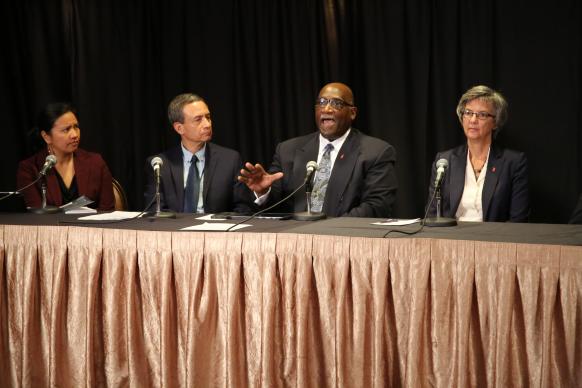 Photo by Harry Leake, United Methodist Communications
Bishop Gregory V. Palmer, second from right, speaks during a webcast on human sexuality. At his left are the Rev. Amy Valdez Barker and Neil Alexander. At his right is Bishop Hope Morgan Ward.
Church sexuality panel views mother’s video by Heather Hahn OKLAHOMA CITY (UMNS)
A video submitted by a mother whose gay son died by suicide after facing condemnation in the church was one of four personal stories viewed and discussed by a panel on sexuality in The United Methodist Church.
The mother’s video sparked the most vehement reaction from the panel of six bishops and the head of the denomination’s publishing house during the Nov. 1 live webcast, which was viewed by about 450 people around the world. The webcast was the second of three interactive, online discussions around human sexuality planned by the denomination’s Connectional Table, which coordinates the denomination’s ministry and resources.
The discussions have centered mainly on United Methodists’ differing views of how best to minister with LGBTQ individuals. The initials stand for lesbian, gay, bisexual, transgender, queer or questioning.
In the video, Julie Wood recounted how her son, William Benjamin “Ben” Wood, was deeply involved in his church until a new youth minister arrived. One night before a mission trip, the youth minister pressured each of the youth in Ben’s presence to say they were uncomfortable being around him. The youth minister told the youth “Ben is going to hell" and that he was unworthy and not a representative of Christ. He did not go on the mission trip. He took his life years later as college student.
“We’ll never know how much of an impact this traumatizing time at youth had on his decision to end his pain. But I know he never set foot back into a church,” Wood said in the video.
Florida Area Bishop Kenneth Carter said Wood’s experience was a “failure not only at the denominational level but also at the local level where people become disciples and experience grace.”
“The incompatibility language is not helping us in our mission. People hear that as if it were spoken with a megaphone and they don’t hear our words of grace,” Carter added, referring to language in The Book of Discipline that says the practice of homosexuality “is incompatible with Christian teaching.”
Retired Bishop Melvin G. Talbert said he decided to stand against church law on homosexuality in part because of learning of suicides such as Ben's.
Ohio West Area Bishop Gregory V. Palmer apologized to Wood on behalf of the denomination.
Fort Worth (Texas) Area Bishop J. Michael Lowry said, “Shame is not a tool or weapon to use against anyone.”
Wood told United Methodist News Service she did not want to identify the congregation because the incident was “not characteristic” of the congregation. The youth pastor involved is no longer at the congregation or part of the denomination.
“I don’t want to hurt anyone,” she told UMNS. “I just want to help.”
Wood, a lifelong United Methodist and the daughter of a United Methodist pastor, now attends another United Methodist congregation with her family. At her new church, she said she sees people of all sexual orientations and all races getting along.
She said she remains in the denomination because “I have to believe change must happen.” She said the church can make a start by providing solid education on sexuality for parents, youth, congregations and pastors.
Before the event, the Connectional Table had invited church members to submit videos sharing their perspectives on human sexuality. Four were submitted. The other three came from gay church members.
MORE ABOUT SEXUALITY PANELS
To learn more about Nov. 1 webcast
To watch April 29 webcast
To learn more about “Finding Our Way”
To see more of the denomination’s discussion on human sexuality
At its peak viewership, about 450 computers were screening the Nov. 1 webcast, which began at 8 a.m. Central Time in hopes of accommodating a global audience. The discussion began at 2 p.m. in Frankfurt, Germany, 3 p.m. in Harare, Zimbabwe, and 9 p.m. in Manila, Philippines (to name three localities with a United Methodist presence).
The discussion will be translated into French, Portuguese and German.
The Connectional Table’s third and last discussion on human sexuality is scheduled to take place in February 2015 in Maputo, Mozambique. The plan is to include mainly United Methodist leaders from church regions in Africa, Asia and Europe.
Divisions evident
The panel of six bishops as well as the top executive of the United Methodist Publishing House were all contributors to “Finding Our Way: Love and Law in The United Methodist Church,” released in late April by the publishing house’s Abingdon Press.
Divisions in the church were evident before the event began. Three representatives of the unofficial advocacy group Love Prevails tried to enter the Oklahoma City hotel meeting room where the panel was being videotaped for online streaming. Event organizers and two off-duty Oklahoma City police officers hired to provide security for the event turned them away.
Love Prevails aims to change the church’s stance on homosexuality and what it sees as discrimination by disruption if necessary. In this case, the group promised not to disrupt the livestream.
Ultimately, the three watched from a public lobby area and held cardboard signs to protest when the bishops departed. They criticized the panel for not including any LGBTQ individuals.
One of the women, the Rev. Julie Todd, said she thought the best part of the morning's presentation was the inclusion of the videos. But she added that most of the bishops' responses were typical.
“They are unwilling to have these conversations in public forums in which they can be held accountable by actual LGBTQ people,” she said. “The fact that they would not let us in the room when we promised not to interrupt the livestream is an indication of their fear and control.”
All outside observers, including a UMNS reporter, were not allowed in the room because of concerns about limited space. No other advocacy group came to the morning session.
Changing times
For more than 40 years, United Methodists have debated the stance in the church’s Book of Discipline that the practice of homosexuality “is incompatible with Christian teaching.” The debate has intensified in recent years as more states in the United States and more nations around the globe have legalized same-gender civil marriage.
The global United Methodist Church is not alone in dealing changing social attitudes and civil laws. In recent weeks, both Catholic bishops and Southern Baptist leaders have met to discuss and reaffirm their respective denominations’ views of family and marriage.
Same-gender marriages are now legally recognized in 32 states and the District of Columbia. At the same time, homosexual acts are criminalized in 38 of 54 African countries, including most of the 18 African countries that could send delegates to The United Methodist Church’s top lawmaking body, General Conference.
Church law sanctions marriage only between a man and a woman and bans the ordination of “self-avowed practicing” gay clergy.
But some United Methodist clergy have publicly defied the prohibition against performing same-gender unions. Among them is the panelist Talbert, who is now under a church complaint after officiating at the same-sex union of two men last year.
The panelists
In addition to Carter, Palmer, Lowery and Talbert, the other panelists included Bishops Hope Morgan Ward and Rosemarie Wenner. Each spoke about their essays in the book “Finding Our Way.” Also participating was Neil Alexander, president and publisher of the United Methodist Publishing House, who helped edit the book. The Rev. Amy Valdez Barker, the Connectional Table’s executive secretary, was the moderator.
Bishop John K. Yambasu of Sierra Leone initially had planned to participate but had to cancel. He faced a potential 21-day quarantine in the United States because of the Ebola outbreak in his country.
Palmer said the Book of Discipline makes no claim to be perfect, and can be changed by General Conference. He stressed that the Discipline provides a framework for ministry and the covenants that clergy and lay member agree to follow. Still, he said, church law does not require that complaints against clergy necessarily result in church trials.
Carter said he thinks the lack of unity around sexuality is a symptom of a deeper condition — “that is, our theological incoherence.”
“On one side of the issue, there is our theology of prevenient grace and social holiness and on the other side, there is a theology of justifying grace and personal piety,” he said. He said he thinks the current impasse results in part “because we are talking past each other.”
Is there room for debate?
Viewers could submit questions to the panelists via Twitter using the hashtag #cttalks. One of the questions was if the denomination had room for more than one biblical interpretation.
“We are people who love Scripture,” said Ward, who leads the Raleigh (North Carolina) Area. “It is a simple, observable truth that we differ on how we interpret Scripture around human sexuality. So, I would say an emphatic yes that absolutely, there is room for more than one view or opinion on what Scripture is saying.”
Wenner, after the event, said she was grateful for the questions from viewers as well as four videos submitted for inclusion. As Germany’s bishop, she was the only panelist who does not live in the United States.
“For sure, we did not a have the full spectrum of opinions at the table,” she said. “I hope and pray that through this panel and through many other efforts, people are encouraged to create space for dialogue and for prayer so we can move toward a better future.”
Hahn is a multimedia news reporter for United Methodist News Service. Contact her at (615) 742-5470 or newsdesk@umcom.org .
Bishops called to be more accountable to each other
OKLAHOMA CITY (UMNS) - United Methodist bishops must be accountable to both United Methodists in their areas and the full Council of Bishops, asserted the council's new president. Bishop Warner Brown Jr. takes the helm as the denomination is struggling with declining U.S. membership, deep divisions regarding homosexuality and questions of what it means for church leaders to be accountable. Heather Hahn reports.
Read story and post a comment
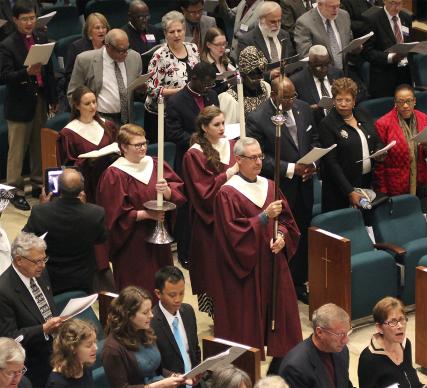 Photo by Holly McCray
Bishop Warner Brown, president of the Council of Bishops, presides over Communion at St. Luke United Methodist Church in Oklahoma City.
Bishops called to be more accountable to each other by Heather Hahn
OKLAHOMA CITY (UMNS)
United Methodist bishops must be accountable not only to United Methodists in their areas but also to the full Council of Bishops, asserted the council’s new president.
Bishop Warner Brown Jr. concluded his first address as the body’s president by asking his fellow episcopal leaders to affirm the vows they took when they were consecrated as bishops. The bishops stood in unison to show their assent.
Brown, who also leads the San Francisco Area, spoke to a group that included 64 active and 43 retired bishops from around the globe. The council is meeting this week as the denomination is struggling with declining U.S. membership, deep divisions regarding homosexuality, and questions of what it means for church leaders to be accountable.
A group of United Methodists has argued that the church should split unless clergy who violate the denomination’s ban on same-gender weddings are held accountable. That includes bishops.
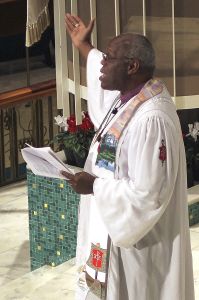 Bishop Warner Brown Jr., president of the Council of Bishops, presides over Communion at St. Luke United Methodist Church in Oklahoma City. Photo by Holly McCray.
Holding each other accountable
Brown offered a broad understanding of how bishops should work together, including “not a looking over one another’s shoulder to second guess” each other.
“It is an accountability focused on the mission of the church to make disciples of Jesus Christ for the transformation of the world,” he said. “Being mutually accountable requires intentional collaboration. We will need to stay engaged with one another long enough to trust each other.”
For years, bishops have discussed how they can hold each other accountable for effectiveness in ministry. Many of those discussions have focused on how they can help each other increase the number of vital United Methodist congregations and nurture both love of God and love of neighbor.
Before the 2012 General Conference, the council approved a motion to have its executive committee develop measures for accountability.
Charlotte (North Carolina) Area Bishop Larry M. Goodpaster, who leads the council's accountability task force, gave the bishops an update Monday afternoon on that work. He invited bishops to send their input on what should be part of a code of conduct. To start the conversation, Goodpaster shared with small groups some common courtesies that bishops can agree to follow, such as responding to email and calls promptly.
"We realize this is low-hanging fruit," Goodpaster said. "How do we go deeper? And then, what happens when someone does not do what we wrote down? What are the consequences?"
The effort remains a work in progress.
In his address, Brown said his role as president is “to help us be an effective leadership organization.”
“The challenge is for us to come together on that which we agree is most important and lead together in a cooperative way,” he said. “In other words, we must speak as pastors to the church and keep the Wesleyan spirit.”
Accountability and sexuality debate
Brown’s address also came almost a year after the council’s last meeting when a majority of active bishops requested a formal complaint be filed against retired Bishop Melvin G. Talbert after he officiated at a same-gender blessing in violation of church law.
Talbert stood with all other bishops to reaffirm his vows. He and Brown are both part of the Western Jurisdiction, which is now handling the complaint. Before his retirement, Talbert led the California-Nevada Conference as Brown does now.
Talbert said Brown gave a good address, and added that he believes he has personally lived "an accountable life."
The dispute remains a difficult one for bishops. After lunch, the bishops convened in a closed-door session to discuss human sexuality.
Like the church members they lead, the bishops have differing perspectives on homosexuality and what the Bible says about it. No matter their stance, bishops are tasked with providing “leadership toward the goal of understanding, reconciliation and unity within the Church.”
Brown cited a survey by United Methodist Communications that found church members overwhelmingly do not want a split.
He told his fellow bishops that as leaders of a church as “diverse as ours, we need to let people know we hear them.” That includes people in the majority and the minority, he said.
Other bishops praise speech
Retired Bishop Violet Fisher said Brown delivered a powerful message the bishops need “right now.”
Zimbabwe Area Bishop Eben K. Nhiwatiwa agreed.
“What the church is facing right now is that we need leaders of encouragement, leaders who know leadership means addressing very hard issues, not evading them,” Nhiwatiwa said. He was hopeful Brown could provide that kind of leadership.
San Antonio Area Bishop James E. Dorff said he was particularly moved by Brown’s request that bishops reaffirm their commitment “because that is where our accountability lies.”
As his fellow bishops stood, Brown prayed over them.
“Gracious God, look in mercy on these your servants,” he said. “Replenish them with holiness and life, and fill them with the power of the Holy Spirit. Yes, fill us, so that both by word and by deed we may serve you faithfully and joyously.”
Hahn is a multimedia news reporter for United Methodist News Service. Contact her at (615) 742-5470 or newsdesk@umcom.org .
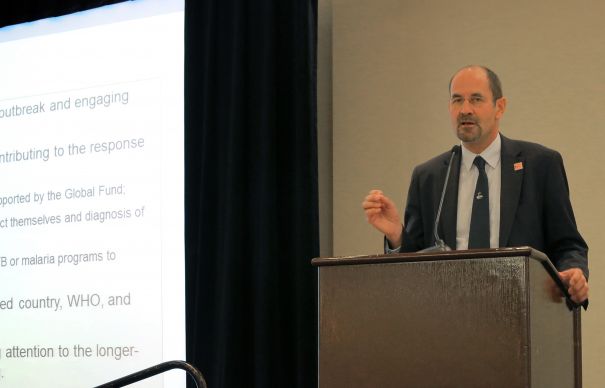 Photo by Tim Tanton, United Methodist Communications
The United Methodist Church has helped save millions of lives in the fight against malaria, says Dr. Christoph Benn, director of external relations for The Global Fund to Fight AIDS, Tuberculosis and Malaria
Health expert: United Methodists saving millions by Heather Hahn OKLAHOMA CITY (UMNS)
United Methodist generosity and creativity in the fight against malaria are saving millions of people’s lives, a world-known expert on tropical diseases told the denomination’s bishops.
“I have heard about the work that your congregations, particularly your young people, have been doing — the level of creativity, energy and commitment — to save the lives of millions of children and women in Africa,” said Dr. Christoph Benn.
He is the director of external relations and a founding board member of the Geneva-based Global Fund to Fight AIDS, Tuberculosis and Malaria. He addressed the Council of Bishops during an update on the denomination’s Imagine No Malaria initiative.
“You have the sincere thanks of not only of the Global Fund, your partner, but also all the people whose lives have been changed by these activities,” he said.
So far, the global United Methodist Church has raised an estimated $64.5 million in gifts and pledges in its campaign to eliminate needless death and suffering from malaria in Africa, announced Pittsburgh Area Bishop Thomas J. Bickerton. He leads the Western Pennsylvania Conference and chairs the denomination’s Global Health Initiative.
“I’ve seen the connection come alive,” Bickerton told fellow bishops. He noted that 42 conferences have made a commitment to participate in the initiative. The average individual gift is $96 and the average pledge is $800.
Church committed $28 million to Global Fund
The United Methodist Church aims to raise $75 million by the end of 2015 for Imagine No Malaria. Of those funds, the denomination has committed that $28 million will go to the Global Fund.
The United Methodist Church is the first faith-based group to work closely with the Global Fund.
The Global Fund, a public-private partnership, is the world’s largest funding source for health programs that fight HIV/AIDS, tuberculosis and malaria. People who have bought products with the (RED) label have helped support its work.
The United Methodist Church is both a donor and recipient of grants from the Global Fund, which uses its funds in part for prevention measures such as insecticide-treated bed nets as well as treatment of the disease.
The Global Fund receives support from governments and foundations worldwide. Its immense purchasing power means it can get bed nets and other supplies cheaper than most health agencies can on their own, Benn said.
Imagine No Malaria also is funding a number of other strategies. The campaign supports United Methodist hospitals, clinics and health boards across Africa that work to prevent and treat the disease.
Efforts are working
The various efforts are working. Since 2000, malaria deaths have decreased by 42 percent worldwide, Benn said. Deaths are down by 49 percent in Africa, where the disease has been most virulent.
Benn talked of recently visiting a hospital in eastern Africa. He asked to see its younger malaria patients and learned the hospital had not admitted a child with malaria in two weeks.
A physician, Benn has more than 25 years of experience in global health and advocacy. He has worked as a clinician and public health official in Germany and the United Kingdom, as well as on the staff of a rural hospital in Tanzania.
He told the bishops that since the current devastating outbreak of Ebola in the West Africa countries Sierra Leone, Liberia and Guinea, the Global Fund has freed up funds to fight this virus as well.
“We need to do everything we can to contain Ebola. I would not for a second underestimate the challenges in these countries,” Benn said. “But we also have to keep Ebola in perspective compared to the many other health challenges the world faces.”
He said about 1,800 children still die every day from malaria, while the total mortality of Ebola at this point is estimated to be around 5,000.
Nevertheless, Benn expressed hope that malaria deaths can be eliminated. He even suggested a vaccine may be available in a few years.
In all of this, he said, The United Methodist Church plays a key role.
“I believe that churches have a unique capacity to be a source of imagination, as they have been for centuries,” he said. “They have an unparalleled network of life-giving communities all over the world. What the churches provide affects the progress achieved.”
Hahn is a multimedia news reporter for United Methodist News Service. Contact her at (615) 742-5470 or newsdesk@umcom.org.
 Delegates to the 2012 United Methodist General Conference in Tampa, Florida. A UMNS photo by Paul Jeffrey.
Church ratifies four constitutional amendments by Heather Hahn OKLAHOMA CITY (UMNS)
General Conference need not be just a springtime occurrence in coming years.
That is one of the biggest changes United Methodists approved in ratifying four amendments to the denomination’s constitution.
One amendment removes the requirement that General Conference — the denomination’s top lawmaking assembly and the only body that can speak for the church — meet in April or May. The body still will meet every four years.
The Council of Bishops on Nov. 4 officially certified that the amendments had won approval.
To be ratified, a constitutional amendment first requires a two-thirds majority vote at General Conference, which happened in 2012. Then, it must win a two-thirds majority of the total voters at annual conferences, which happened in 2013 and early 2014.
San Francisco Area Bishop Warner Brown Jr., the president of the council, announced that the amendments had surpassed the needed votes.
The changes to the constitution will be included when the next Book of Discipline, the denomination’s law book, is printed in 2016. But most of the amendments take effect immediately.
Flexibility step toward global church
The increased flexibility for General Conference dates will take effect after the 2016 General Conference in Portland, Oregon.
As a practical matter, the assembly will remain in the spring at least until 2024, since the 2020 General Conference is scheduled for May 5-15 in Minneapolis.
Great Plains Area Bishop Scott Jones said he thinks the change will make it easier for countries outside the United States to host General Conference. Jones’ area includes United Methodists in Kansas and Nebraska.
“I believe The United Methodist Church is on a journey to living more fully into its worldwide nature,” he said, “and the amendment that frees up the time of General Conference is a great step forward in becoming a global church.”
Bishop David Kekumba Yemba, who leads the Central Congo Area in the Democratic Republic of Congo, agreed. “I think it is a step ahead.”
The Rev. L. Fitzgerald “Gere” Reist II, secretary of General Conference, added that the change also has the potential to save the denomination money in holding the lawmaking assemblies, which cost millions to convene.
For example, a United Methodist-related university might be able to hold a future General Conference if the gathering occurs when the university is out of session and space is available. The change also will make it easier for United Methodist college and seminary students to serve as General Conference delegates, instead of risking missing exam time.
The other three amendments do the following:
Adds the word “pray” to Division One, Paragraph 6, Article VI, which now says: “The United Methodist Church believes that the Lord of the church is calling Christians everywhere to strive toward unity; and therefore it will pray, seek, and work for unity at all levels of church life… .”
Changes the term “director of Lay Speaking Ministries” to “director of Lay Servant Ministries” in Division Two, Section VI, Paragraph 32, Article I. This change establishes that a director of Lay Servant Ministries is part of conference membership. It supports other changes the 2012 General Conference made to recognize that a layperson’s certified ministry can involve more than filling the pulpit when the pastor is on vacation.
Changes Division Two, Section VII, Paragraph 40, Article I to read: “The number, names, and boundaries of the annual conferences and episcopal areas shall be determined by the jurisdictional conferences in the United States of America and by the central conferences outside the United States of America according to the provisions under the respective powers and pursuant to the respective structures of the jurisdictional and the central conferences. The authority of jurisdictional and central conferences provided herein is not circumscribed or limited by the authority provided to the College of Bishops to arrange a plan of episcopal supervision.”
For questions about the amendments, contact InfoServ, the denomination’s official information service, at infoserv@umcom.org.
Hahn is a multimedia news reporter for United Methodist News Service. Contact her at (615) 742-5470 or newsdesk@umcom.org.
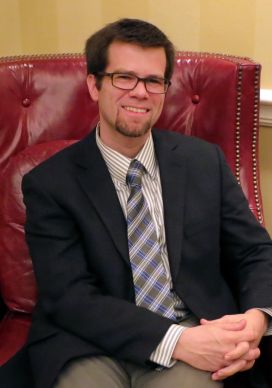 Photo by Heather Hahn, UMNS
The Rev. Kevin M. Watson addressed the Council of Bishops about the importance of Christian conferencing in the Methodist movement. He is assistant professor of Wesleyan and Methodist studies at Emory University's Candler School of Theology in Atlanta.
Bishops told holy conferencing key to revival by Heather Hahn OKLAHOMA CITY (UMNS)
Reclaiming an accurate understanding of holy conferencing is the most important thing United Methodists can do to revitalize the denomination, a Methodism scholar told the denomination’s bishops.
“I believe that if we were to reclaim this practice, that God would bless our efforts and we would see profound renewal in communities where this took place,” said the Rev. Kevin Watson, assistant professor of Wesleyan and Methodist Studies at Emory University’s Candler School of Theology in Atlanta.
However, he quickly added, everything depends on “getting right what holy conferencing is.”
Watson, who is also an ordained elder, returned to his home Oklahoma Conference to address the Council of Bishops at the invitation of the council’s Committee on Faith and Order. He is the author of The Class Meeting: Recovering a Forgotten (and Essential) Small Group Experience.
He addressed a group eager to cultivate the Wesleyan practice of Christian conferencing, especially as United Methodists head toward what many expect to be a particularly contentious General Conference in 2016. General Conference is the denomination’s top lawmaking assembly.
“One of the means of grace according to John Wesley was Christian conference or Christian conferencing,” said Nordic and Baltic Area Bishop Christian Alsted in introducing Watson.
Methodism’s founder saw such conferencing “not as a technique or a set of rules and values that enables us talk nice to each other, but as a way we as United Methodists live together in Christian community,” Alsted said.
Conferencing the Wesleyan way
Watson described how to conference together in the Wesleyan way and tried to clear up some misconceptions.
He pointed out that John Wesley never used the phrase “holy conferencing” that United Methodists so often use today.
“That’s kind of a bummer,” Watson admitted. “But he did use the phrase Christian conferencing. Yes, he only used that phrase once. But his use of it was very significant — so much so that I think it completely justifies our use of it today.”
Watson also emphasized that Christian conferencing should not simply be seen as a way to have polite disagreement. Instead, he said, it should be seen as “the distinctive way that Methodists gather together to talk about their relationship with God in order to grow in love for God and neighbor.”
Wesley referred to Christian conferencing in his 1763 “Large Minutes” as one of five channels through which God makes grace available to humanity — practices grounded in commandments from Christ. Wesley listed it alongside such disciplines as prayer, the study of Scripture, fasting and Holy Communion.
Under Wesley’s leadership, Christian conferencing was practiced mostly in class and band meetings. These weren’t small groups devoted to Bible studies such as many churches have today, Watson said. Instead, the meetings primarily focused on Christian fellowship and accountability.
In class meetings — co-ed groups of seven to a dozen people — the primary focus was the questions: “How is it with your soul?” or “How does your soul prosper?” Membership in the Methodist movement required faithful attendance at class meetings, Watson said.
Wesley, in “A Plain Account of the People Called Methodists,” described the impact of these class meetings. “Many now happily experienced that Christian fellowship of which they had not so much as an idea before,” he wrote. “They began to ‘bear one another’s burdens,’ and ‘naturally’ to ‘care for each other.’ As they had daily a more intimate acquaintance with, so they had a more endeared affection for each other.”
The class meeting, Watson said, “was at the heartbeat of the vitality of the early Methodist movement.” Between 1776 and 1850, American Methodism grew from one of the smallest Christian groups to the largest, by far, at nearly a third of the population.
Band meetings — groups of five to seven people divided by gender and marital status — were focused on the confession of sin. Watson likened them to today’s 12-step groups that help people recover from addictions.
“The confession of sin was for the sake of growth of holiness not for the growth of shame,” Watson said.
“Methodists don’t believe that God just offers forgiveness. We believe God offers healing and freedom from that which we have been through.”
Reviving this old-time conferencing
He pointed to two United Methodist congregations that he sees as reviving the practice of Christian conferencing in their small groups — Munger Place Church, a United Methodist congregation in Dallas, and The Table United Methodist Church in Sacramento, California. Munger Place, he said, now has dozens of what the congregation calls “Kitchen Groups” that meet in apartments in East Dallas. The Table has groups it calls “Kitchen Tables.” Clearly, there is a homey, informal theme.
Watson also pointed to the explosion of transformational small-group ministry at nondenominational megachurches, such as Oklahoma-based Life Church.
“Putting it strongly, we can’t let them be more Wesleyan, more Methodist, than we are,” he said.
Watson urged the bishops to make Christian conferencing a theme of the coming 2016 General Conference. By that, he said, he means teaching about the practice’s history and theology, lifting up United Methodist examples and casting a vision for its role in Christian discipleship.
Los Angeles Area Bishop Minerva G. Carcaño later told the bishops that the Commission on General Conference, of which she is a member, plans to have three sessions to focus on the history and role of Christian conferencing and a prayerful consideration of the denomination’s future.
Arkansas Area Bishop Gary E. Mueller was among the many bishops impressed with Watson’s presentation. He said he saw in the address insights into how the Holy Spirit is stirring the church.
"I have a special interest in experiencing spiritual revival,” Mueller said. “I think Christian conferencing is a way to both bring about that kind of revival and, once people start experiencing it, to really shape them for the whole point of revival, which is to make disciples of Jesus Christ.”
In difficult times for The United Methodist Church, Watson sees the return of holy conferencing as a reason for optimism.
“There is much that threatens to divide United Methodism,” Watson said, “but this is a practice that has been unifying in a number of contexts.”
Hahn is a multimedia news reporter for United Methodist News Service. Contact her at (615) 742-5470 or newsdesk@umcom.org.
What United Methodists need to know about voting
NASHVILLE, Tenn. (UMNS) — Sporting an "I voted" sticker yet? On Tuesday, Nov. 4, many citizens across the United States went to the polls. Others stayed at home, arguing, "My vote won't make a difference." Two young United Methodist pastors say voting can make a difference and that people of faith have a moral responsibility to cast their ballot. Barbara Dunlap-Berg reports.
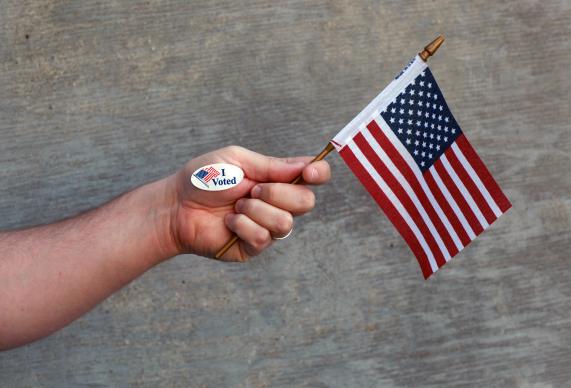 Photo illustration by Kathleen Barry, United Methodist Communications
Many wear stickers to indicate they have voted. Voting is a way Christians can give a voice to their beliefs in government.
What United Methodists need to know about voting, A UMC.org Feature by Barb Dunlap-Berg*
October 31, 2014
Sporting an “I voted” sticker yet? On Tuesday, Nov. 4, many citizens across the United States will head to the polls. Others will stay at home, arguing, “My vote won’t make a difference.”
However, two young United Methodist pastors beg to differ.
The Rev. Elizabeth Murray, a provisional deacon in the South Carolina Conference, is director of Hispanic ministries at Mount Hebron United Methodist Church, West Columbia, South Carolina, and a Hispanic/Latino ministry consultant to the conference Office of Congregational Development.
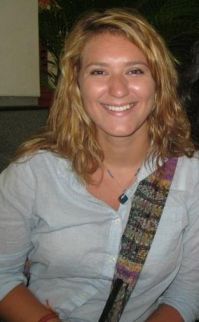 The Rev. Elizabeth Murray directs Hispanic ministries at Mount Hebron United Methodist Church, West Columbia, South Carolina. Photo courtesy of Elizabeth Murray.
“I vote,” she says, “because I know voting can make a difference in my community, nation and the lives of others. I vote, not only because it is my civic duty as a United States citizen, but also because I have vowed, as a Christian, to do no harm and to do good. I vote to protect the rights of — and promote equality for — women. I vote to make sure everyone has equal access to the right to vote. I vote for my voice to be heard on comprehensive immigration reform.”
The Rev. Michael Anthony Parker II agrees.
“To cast a vote,” Parker says, “is to say to those we endow and enable to serve us as civil servants that we affirm their leadership and ability to act on the behalf of the citizens they serve.
“As a young adult and man of color,” he continues, “I deeply value and honor the legacy my ancestors laid as they fought for the right to make their voices heard at the polls. Not an election day goes by that I do not make way to the polls and cast my ballot.” Parker is lead pastor at Ames United Methodist Church in Bel Air, Maryland.
Both Murray and Parker believe voting is the right thing for people of faith to do.
“Throughout the Bible,” Murray says, “God commands people of faith to love the widow, the orphan and the immigrant. How does our faith influence how we vote at the polls or how we think politically?”
“We have a moral responsibility to exercise our right to vote,” adds Parker. “One of the distinct calls of Christians is to be a prophetic witness to the communities in which we live. By prophetic witness, I simply mean we are obligated to speak truth to power, even when it is difficult.”
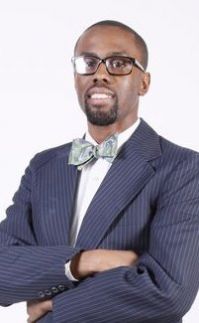 The Rev. Michael Anthony Parker is lead pastor for Ames United Methodist Church in Bel Air, Maryland. Photo courtesy of Michael Parker.
Social Principles provide foundation
Murray cites the United Methodist Social Principles, first adopted by the 1972 General Conference. Paragraph 164.B states, “The strength of a political system depends upon the full and willing participation of its citizens. The church should continually exert a strong ethical influence upon the state, supporting policies and programs deemed to be just and opposing policies and programs that are unjust.”
“The people of The United Methodist Church,” she says, “are committed to justice for all. It is important to recognize that not everyone who is in this country or who attends our churches has the ability and right to vote, so we much use our privilege to stand up for those who do not have a voice. Voting is important for United Methodists because we have the power to influence policies that could severely influence our communities for better or for worse.”
Don’t just talk about voting, Parker cautions. Set a positive example.
“Candidates who care about what we care about cannot elect themselves. However, it goes beyond simply encouraging others to vote.”
He offers three concrete ideas:
Offer neighbors and friends transportation to the polling site.
Form a voting group and go to the polls together. Walk if the polling site is close; that would be great exercise as well.
Volunteer your church van to carpool community members to the polls, especially older adults and people with physical limitations.
“A vote-less people is a voiceless people,” he says.
Murray adds, “If we do not vote, how can we be a voice of justice and hope? We cannot be that voice when we remain quiet.”
*Dunlap-Berg is general church content editor, United Methodist Communications, Nashville, Tenn.
Media contact is Barbara Dunlap-Berg at 615-742-5470.
Election Day 2014 and Being a Christian BY BGOSDEN ON NOV 3, 2014 IN GOD, LENT
 Well, it’s that time again. Election Day is upon us. It’s time to be bombarded by numerous campaign commercials, too many automated phone calls, and enough negative news commentary to make you begin to question the very meaning of our election process. Candidates want to appeal to our sense of duty and compassion. They spend loads of money to play on our fears and hope to somehow inspire us along the way.
It’s probably a good thing every two years for Christians to ask ourselves: What does it mean to be a disciple of Jesus Christ in an election cycle?
The reason I say it’s a good thing is because if we’re not careful we can begin to believe some very wrong things about our discipleship in an election cycle. For example, if we’re not careful we might begin to believe that our votes in a ballot box count as the important act of discipleship we can offer. We might begin to believe that our being against this issue or that issue, and thus also being against every person who disagrees with us, is what it means to live as a follower of Jesus Christ. We might even begin to believe that the political party we support is the best embodiment of the gospel in our lives. And we would be totally wrong.
There is no partisan political platform or candidate for office who can truly embody the gospel of Jesus Christ – if that were so Jesus might have come as a politician and not as a servant. And the church needs to do a better job of holding one another accountable in love to live as disciples of Jesus the servant, and not as disciples of a political affiliation. Below are some things to remember and some suggestions for how to live as a disciple in the coming days, as Election Day arrives, as the run-offs follow, and as the aftermath of it all is sorted out.
Remember there are Christiannpeople who support both political parties. Don’t assume your party has a monopoly on God’s agenda. The truth is that neither party can faithfully speak for God’s mission in the world.
Take a sabbatical from talk radio and the news if you find it only serves to get you all worked up about politics. Don’t do things that make you mad or get you upset just for the sport of it. That only drives the entertainment industry that is news commentary. God calls us to live graciously and generously, not bitterly.
Pray for our leaders and candidates on both sides of the aisle and ballot. We are called to pray for our leaders (2 Timothy 2:1-4). Maybe you should name your local, state, and national leaders as well as the candidates you’re choosing between in your morning prayer before you head out to vote on Election Day?
Speak up and politely call for an end to negative or heated political discussion in your Sunday school class or small group. Church small groups can notoriously get lost in the weeds of politics while discussing a lesson or sharing prayer concerns. Remember there’s a fine line between sharing prayer concerns and just gossiping. Be the voice in the room that politely reminds everyone you are gathered to learn and experience God, not vent your latest political gripes.
Go vote. Then go serve. Voting is a civic duty and we should appreciate the freedom given to us to participate openly in the election process. But your vote is certainly not the final word on your life as a disciple. Find a way to also serve during the week of Election Day. Participate in a church activity. Give an hour to a local shelter helping those who are poor and hungry. Get out of your comfort zone and be reminded that no matter how this Election Day ends, your life as a disciple of Jesus Christ is still the most central thing to who you are.
Bonus: Stop spreading untruths about candidates and political parties and platforms. Don’t believe everything you read on the Internet. Your version or someone else’s slant on the truth does NOT make it truth. Let the chain of untruth spreading end with you.
I am convinced that if our churches decide to truly live as the disciples we claim to be the news in our communities might just have a story to share besides the results of the election. We could only hope…
A `Faith'-based look at urban ministry
DALLAS (UMNS) — A new book by the Rev. Faith Fowler, "This Far By Faith," recounts her 20 years in leading Cass Community United Methodist Church in Detroit and a related nonprofit, Cass Community Social Services. The story-laden memoir shares her ups-and-downs in urban ministry, as well as creative approaches to helping people on the margins with food, shelter and jobs. Sam Hodges has the story.
hoto courtesy of Faith Fowler
 The Rev. Faith Fowler shows off her sandals, made from old tires by workers at Cass Community Social Service's Green Industries.
A ‘Faith’-based look at urban ministry by Sam Hodges DALLAS (UMNS)
If the Rev. Faith Fowler solved crimes instead of saving souls, she’d make a good model for a fictional female detective, the kind who quirkily gets the job done.
Fowler guzzles Diet Coke, buys her groceries at 7/11 and can wisecrack as lyrically as any Raymond Chandler character.
Here she is on her Detroit ministry’s first try at turning discarded car tires into wearable sandals:
“ … the finished product was crude: unusable rectangles with wires sticking out like Albert Einstein’s hair.”
Fowler’s candor and humor — including that line — are much in evidence in her new book “This Far By Faith: Twenty Years at Cass Community.” It’s a story-laden tour through her tenure as pastor of Detroit’s Cass United Methodist Church and executive director of its spinoff ministry, Cass Community Social Services.
The book has a champion in Mitch Albom, Detroit-based author of the best-sellers “Thursdays with Morrie” and “The Five People You Meet in Heaven.”
In a recent column, Albom describes Fowler’s book in staccato superlatives: “Funny. Insightful. Heart-wrenching.”
He gives an even better review to the 55-year-old Fowler:
“She is the most important currency of our city, a loving, egoless, inspiring leader who doesn't see color, doesn't see class, who looks at our poorest, most neglected citizens and sees only hope and opportunity.”
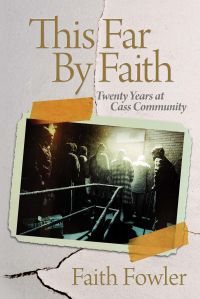 “This Far by Faith,” by the Rev. Faith Fowler, is the first book published by Cass Community Publishing House.
Cass United Methodist Church had a long tradition of social outreach before Fowler came as pastor in 1994. Under her, particularly since the creation of nonprofit Cass Community Social Services in 2002, the work has expanded greatly.
Charity — including a million meals served annually — has been paired with job training and creation.
For example, the ministry’s Green Industries program employs 85 people in such recycling innovations as making mud mats and sandals from old tires. (They figured it out.) Exercise bikes are rigged to generate electricity for those industries.
The ministry has put people to work making coaster sets and trained others through a culinary arts program.
“Although we continue to feed and clothe and shelter, we now house and employ, and are impacting the entire community and not just individuals, which is pretty fun most days,” Fowler said in a phone interview.
In the beginning, no toilet paper
As she notes in the book, Fowler can hardly get from the parking lot to her office without being asked for everything from baptisms to bus fare. So she wrote her book in the wee hours, seeking to draft or revise a chapter per night.
The book is organized by themes — mental health, food, homelessness, housing — but told almost exclusively in stories. The chapters are short, the language concrete.
It’s how she preaches.
“I’m at a church where many people don’t read, so I try to talk about things in graphic terms,” Fowler said.
The book starts with a story about Fowler’s first sermon at Cass United Methodist. All seemed to be going well until a developmentally disabled woman interrupted from the back of the sanctuary.
“Hey lady!” the woman yelled to her new pastor. “We’re out of toilet paper!”
The inauspicious beginning yields to upbeat, inspiring episodes, often with a twist. For example, in trying to find jobs for developmentally disabled people, Fowler and her staff settled on document shredding for doctor’s offices and law firms.
The workers proved dedicated, and they couldn’t read, which gave the clients confidence that confidential information wouldn’t be lifted.
`A fuller picture’
Not all the stories are happy. Fowler describes a woman who seemed to have beaten addiction, but lapsed back into using and selling narcotics. She had to be evicted from Cass housing.
“There are stories in here that I’ve never told, because you don’t tell such stories on the fundraising trail,” Fowler said. “This book gives a fuller picture of the work we do. Sometimes we fail. Sometimes the people who come to us fail.”
In reflecting on her 20 years in Detroit, Fowler took inspiration from Jane Addams, a social reformer in Chicago who wrote a memoir called “Twenty Years at Hull House.”
"She did fabulous work for the long haul," Fowler said. "I think that's the key, especially in tough cities. Can you run the marathon? Just about anybody can run the sprint and do good work, but it takes a long-term commitment to understand where you are and how you can make an impact with other people."
John Wesley, Methodism’s founder, was a touchstone, too.
“Rarely is he funny, but the fact that he understood writing to be a part of his ministry in a way gave me permission,” Fowler said.
“This Far by Faith” is not only her literary debut, but that of Cass Community Publishing House, yet another new venture of the ministry.
Forthcoming titles include an essay collection by United Methodist bishops called “Fear Not: the Future Church Through the Eyes of Our Bishops,” and “Recess: Grading Work and Play at Mid-Career,” by the Rev. Laurie Haller, co-senior pastor at First United Methodist Church in Birmingham, Mich.
Out just a few weeks, Fowler’s book has sold about 1,800 copies (proceeds go to Cass Community Social Services), and she has promotional events lined up through the fall.
Already, she’s heard from women who liked the book and passed it on to their husbands, who aren’t big readers but got hooked by “This Far By Faith.”
“I don’t know what that says, but I’ve heard it over and over,” Fowler said. “They say, `He read it and he likes it.’”
Hodges, a United Methodist News Service writer, lives in Dallas. Contact him at (615) 742-5470 or newsdesk@umcom.org
Louisiana church baptizes 17 in one service
JENNINGS, La. (UMNS) — It was a banner day for baptisms at Mallalieu United Methodist Church when 17 children and adults received the sacrament by immersion. The Louisiana Conference shares a photo feature.
Mallalieu UMC baptizes 17 during one service

It was a banner day for baptisms at Mallalieu United Methodist Church in Jennings when 17 children and adults received the sacrament by immersion, all during the same worship service!
Rev. Steven Spurlock led the group baptism, assisted by Rev. Kimberly Richard, pastor of Mallalieu UMC. “The group asked to be immersed, but the church doesn’t have a baptismal pool. To improvise, I rented that tub for the day and my father helped to set it up for me,” said Rev. Richard, who was determined to fulfill the request!
“It was a wonderful and special time for our congregation,” added Richard.

Is church planting only for those under 35?
PORTLAND, Ore. (UMNS) — The Rev. Jeremy Smith, in his blog "Hacking Christianity," ponders the question of whether you have to be under 35 years old to start a church that reaches young people.
 Is Church Planting only for those under 35? BY UMJEREMY 29 COMMENTS
Does it take young people to reach young people?
A friend on Facebook was looking at job opportunities to share her church skills and experience. She happened upon an exciting posting for a church planting job for Urban Village Church in Chicago, a thriving United Methodist multi-site church. However, her heart sank when she read the list of qualifications near the end:
• Creative mind and flexible work habits
• Commitment to learn about and engage a personal stewardship/fundraising plan
• Willingness to be held accountable to goals
• Engaged in regular spiritual practices
• Under 35 years of age
My friend is 55 years old and she felt shut out from even beginning to discern for this opportunity because of her age.
So the question is “Do you need to be under 35 years old to do church planting or is that an arbitrary number?”
Age matters when planting churches
To be clear, Urban Village is offering the role in concert with Path1, which has the explicit focus of “increase the number of young and diverse clergy under 35 years of age” in the United Methodist Church. However, I can’t find anything on the Path1 website that explicitly states that the program is just for folks under 35–indeed, the language implies that they are seeking church plants to reach people under 35 and guide them towards ordained ministry.
(Update 11-1-14): One of the pastors replied below and gave backstory on the requirement as coming from Path1 not Urban Village, and they have removed that line from the job posting. Here’s the quote:
I helped start UVC when I was 41 so I certainly believe “older” pastors can be planters! Someone brought our attention to this post, though, and we approached a Path1 representative for clarification. He, too, affirmed that the desire is to reach out to younger clergy and not to limit 35+-year-old pastors to apply so we were grateful for the clarification. We’ve changed the language in our post and notice. It now says that we encourage younger pastors to apply, but there is no age limit or ceiling.
Thanks for commenting, Christian!
However, the sentiment is still worth discussing: Do you need 35 year olds to reach young people?
I asked some of my church planting professional friends about the age question, and one of them had an interesting comment:
The rule of thumb has been that planters can reach people 10 years older or younger than their age, who are in a similar life-stage. Therefore, church plants targeted to younger people are typically led by younger planters. My experience has been that this is generally true. Churches become more multigenerational as they age, but usually for the first couple of years, new plants draw from a very similar demographic cohort.
35 is an important age these days. 35 year olds are currently at the hinge point between Generation X and Millennials, and if the above quote is correct, that means that–yielding to generational theory–such people can reach both generations authentically. So it makes sense to employ younger adults to do church planting.
Evangelicals seem to buy into this and almost solely rely on younger adults to do their church planting. So much so that it seems to be a formula that Christy Thomas caricatures in her recent blog post on church planting:
There is definitely a formula that underlies a successful church plant…[first, you need a] young, male, good-looking, charismatic pastor, preferably with a beautiful “smokin’ hot” wife and a couple of photogenic children. Best if he is a former athlete, and has muscles bulging under his tight t-shirt.
There is such a thing as too young, though. The Acts 29 network that plants churches encourages people to wait until they are 25 to engage in church planting. So for effective church planting, there’s apparently a magic age range between 25-35 years of age.
In summary, due to their interpretation of missional effectiveness and to reach a particular demographic, many churches rely on younger adults who can reach that younger demographic with perhaps more ease and authenticity.
I would love to know examples of church plants that don’t follow this formula and employ adults over 35 years of age in the pastoral role. Please comment below with examples!
Throwing Elder Adults Under the Missional Bus
And yet I’m fearful of what the church might have been without Jerry Herships, who pastors an innovative church plant in a Denver bar called After Hours. His church does terrific work with feeding the homeless (over 20,000 meals served! Take that, McDonalds!) and offering a safe non-churchy place for people traditionally excluded from church. (Update: Jerry says it’s now 100,000 meals served and 50,000 communions shared in the park. Ridiculous!).
Why is this important? Jerry started seminary in his 40s and began this church plant at 47. People now reach out to Jerry for church planting advice and churches in non-traditional settings, and he is transforming the church from the inside-out.
So if folks over 35 years of age can do church planting, the question changes a bit: is outright exclusion of adults over 35 an expression of ageism?
On this blog, we talk a lot about young clergy issues, but the other end of the age spectrum is equally important. One of our bigger thrusts in recent years was pushing back on the Texas area of the United Methodist Church and their ordination requirement that was discouraging to senior adults. Here’s those posts:
Over Age 45? Texas UMC doesn’t want you in ordained ministry.
Is the Texas UMC Accidentally Ageist?
Over Age 45? Texas wants YOU in ordained ministry…maybe.
As part of this conversation, the United Methodist Reporter interviewed a friend of mine in Oklahoma who was ordained at 53 years of age and is a senior pastor in Oklahoma–his spouse is UM clergy too. Here’s why he endured and changed careers late in life:
Mark Whitley said he and his wife are “all in,” having spent virtually all their savings in preparing for their pastoral call. But he said the two have no regrets. Before becoming a pastor despite his career advances, he said he always felt a “gnawing sense of emptiness.”
“Every pastor understands the pain of ministry,” he said, “but the pain of leaving my call right now would far exceed whatever pain I feel as a pastor. It’s who I am.” He added that to turn someone away because “they’ve reached an arbitrary age seems deeply, deeply disingenuous.”
I understand that demographics play a part in considerations for qualifications for both ordained ministry and for ministry opportunities. It takes a match of church mission and individual sense of ministry for a particular job.
However, excluding a group does not inclusion make. For a church that seeks full inclusion, it’s odd to have this as a requirement. We can be open to LGBTQ persons, ethnic minorities, persons from other denominations, and the full spectrum of gender diversity…but to exclude people because they’ve reached an arbitrary age seems–as Rev. Whitley said–deeply disingenuous.
God calls people to serve the church, and sometimes those people are called later in life, perhaps after they’ve learned some interdisciplinary skills from their first career that would be a perfect match for a church plant. To deny people an opportunity based solely on age is to deny the whole Church an opportunity to grow and be transformed by their novel perspective.
Your turn
Thoughts?
In your view, are successful church plants done best by younger adults? Are there examples of church plants done by folks over 35 years old?
Does excluding adults over 35 years of age seem more like ageism to you or more like a simple job requirement that can be arbitrarily set by a faith community?
Discuss! Thanks for your comments and for your shares.
Rare for racial-ethnic pastors to lead large, mostly white churches
NASHVILLE, Tenn. (UMNS) — Racial-ethnic pastors who lead large, predominantly white United Methodist churches in the United States are open-minded and spiritual, but rare, according to a new survey by The United Methodist Board of Higher Education and Ministry. The survey found that of the 1,070 churches with more than 1,000 members in the U.S. in 2011, just 20 had lead racial-ethnic, or non-white, pastors serving majority white congregations.
 UM churches break stereotypes about racial-ethnic leaders
Tom Gillem
Racial-ethnic pastors who lead large predominantly Caucasian United Methodist churches in the United States are open-minded and spiritual, with adaptive leadership styles that break stereotypes about racial-ethnic leaders, according to a new survey by the General Board of Higher Education and Ministry.
“They are vulnerable trailblazers,” the Rev. Dr. HiRho Park, director of Clergy Lifelong Learning at GBHEM, said of the handful of racial-ethnic lead pastors because they practice their faith of bringing together the majority and minority perspectives of society in their ministry.
“Their presence there—many times among very few other racial-ethnic persons in majority (white) congregations of hundreds and thousands of people—is very vulnerable,” Park said. “And they are trailblazers because not many pastors have gone down this road yet.”
The UMC’s inclusiveness is unique among other Christian churches in the United States, said Park, who completed studies on the subject for both her doctor of ministry and doctor of philosophy degrees. “I didn't see that any denomination in the Christian protestant churches or Catholic Church have this kind of intentional policy to try to be an inclusive church. So I really celebrate that,” she said.
Park, who conducted the study with Mark McCormack, GBHEM’s director of Research, said of the 1,070 large churches with 1,000 or more members in the United States in 2011, only 20 had lead racial-ethnic, or non-white, pastors serving majority Caucasian congregations, and most of them were African American males.
GBHEM began hosting gatherings of racial-ethnic, cross-racial and cross-cultural lead pastors, and in 2012, the group formed a support network to share the unique challenges they face.
At the group’s suggestion, GBHEM surveyed racial-ethnic pastors this year to measure leadership patterns. The survey was a follow-up to a Lead Pastors Survey disseminated by GBHEM in 2008 and completed in 2011, in which almost all of the respondents were Caucasian.
The latest survey used the same questions in the earlier survey with the addition of several items related to racial-ethnic and cultural issues, as well as challenges racial-ethnic pastors face at their current appointments. To make the new survey relevant for comparison to the earlier Lead Pastors Survey, racial-ethnic pastors serving churches with a membership of 500 or more were included, which increased the number from 20 to 75.
“The United Methodist Church is striving to witness God's love to all people through cross-racial and cross-cultural appointments. It is our intentional way of practicing being an inclusive church,” Park said.
Major changes in the racial makeup of the U.S. population are expected in the coming decades. In 2012, the U.S. Census Bureau predicted that no single racial-ethnic group would constitute a majority of children under 18 by the end of this decade. In 30 years, census data suggests that no single group will constitute a majority and non-Hispanic whites will fall below 50 percent.
While clergy leadership of the UMC is becoming more diverse, UMC membership trends in the United States do not reflect the nation’s increasingly diverse demographics. The church has a majority white U.S. membership—91.2 percent white in 2009, and 90 percent in 2013. African Americans make up 6 percent of the denomination’s U.S. members, while Asians, Hispanic/Latino and multi-racial groups each constitute 1 percent.
“This is a pertinent indicator that the UMC needs to strategically plan to nurture clergy who are called to serve the church cross-racially and culturally with needed leadership skills,” the survey’s executive summary says.
Racial-ethnic, cross-racial and cross-cultural lead pastors are breaking stereotypes “not only by their presence, but also by their skills, based on transnational and intercultural experiences that contribute to the church and that change the traditional understanding of white, male-oriented ‘senior pastors,’” the study says.
The survey also indicated that most racial-ethnic lead pastors have leadership styles that allow them to be fluent and versatile and willing to take risks.
“Their leadership style is very adaptive and skillful because half of these pastors are second career people from professional backgrounds, so they are already bringing a lot of executive level skills to lead these large churches,” Park said. “Of course, they have a lot of experience within the church, too.”
The survey’s executive summary and results are available online here, as well as a theological analysis by HiRho Park.
*Gillem is a freelance writer and photographer in Brentwood, Tenn.
Tucson church provides sanctuary
TUCSON, Ariz. (UMNS) — Francisco Perez Cordova, an undocumented husband and father, spends time with his wife and five U.S.-born children. He works hard and pays taxes. He does all this while living in sanctuary at St. Francis of the Foothills United Methodist Church in Tucson, Arizona. Kate Strohmeyer, writer for the United Methodist Desert Southwest Conference, has the story.
 Tucson church casts out fear by DSC Communications
Courtesy of Rev. Jim WiltbankBy Kate Strohmeyer, DSC Writer/Editor
Francisco Perez Cordova, an undocumented husband and father, lives like any American. He spends time with his wife Sarai and five U.S. born children, he works hard, and he pays taxes. Although Francisco is considered a low-priority case per Immigration and Customs Enforcement, he has orders to leave the country, so the family lives in constant fear of being separated from one another. To help keep the family together, local Methodists are intervening. Francisco lives in sanctuary at St. Francis of the Foothills United Methodist Church in Tucson, AZ.
According to Rev. Jim Wiltbank, the church provides a bedroom for Francisco, a trailer for the family to spend time together, and a nightly prayer vigil. The church members take shifts around the clock so Francisco is never left alone. They also pay the family’s monthly rent and utility bills.
“While the work of being a sanctuary church is difficult,” Pastor Jim states, “It is absolutely worth it to get to know this family.”
An online petition is another way the church is supporting the family. They hope the petition gains the attention of government officials who can close Francisco’s deportation case.
“Ultimately something has to be done [about immigration],” Pastor Jim explains, “and instead of being able to fix the system, we can help one person. There are more church communities ready to take people in if the situation arises.”
He is referring to the 24 other churches and synagogues in 12 different cities who are a part of Sanctuary2014.org, a growing movement protecting immigrants living in fear of deportation.
Pastor Jim considers the family an amazing blessing, and invites other individuals and churches to get involved in immigration advocacy. He is hosting a forum to discuss the issues concerning the legalities, security, and logistics of hosting a sanctuary seeker at St. Francis on Nov. 9, 2014.
Editor’s Note:
A recording of the Sanctuary Forum will be available soon through the Desert Southwest Conference Communications office. Contact communications@dscumc.org for more information.
Theology school struggles with pollution, housing
HARARE, Zimbabwe (UMNS) — A thin film of gray powder covers the scattered vegetable patches, hiding the green leaves. A gust of wind brings more of the toxic dust from the nearby factory that manufactures fertilizer. Pollution is just one of the daily struggles at United Theological College, where students face difficulty getting enough clean water or adequate housing. Eveline Chikwanah, communicator for the Zimbabwe East Annual Conference, reports.
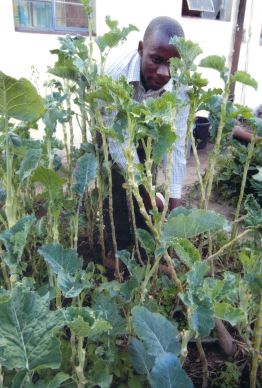 Photo by Eveline Chikwanah
Student pastor Adam Mutemachani tends to the garden at United Theological College in Harare, Zimbabwe.
Theology school struggles with pollution, housing by Eveline Chikwanah HARARE, Zimbabwe (UMNS)
A thin film of gray powder covers the scattered vegetable patches, hiding the green leaves. A gust of wind brings more of the toxic dust from the nearby factory that manufactures fertilizer.
Pollution is just one of the daily struggles at United Theological College, where students face difficulty getting enough clean water or adequate housing.
Adam Mutemachani, a second-year student studying to be a United Methodist pastor, said the pollution from Zimphos, the fertilizer plant, is a big challenge for students.
“Residual ash from the manufacturing process is heaped at a dump site near our college, and it triggers allergic reactions in students, especially those who are asthmatic,” he said.
Respiratory infections characterized by persistent coughing are endemic at the college, the 32-year-old student said. Newspapers and television stations in Zimbabwe have reported on efforts to control the pollution.
“There is a lot of dust in the air here, and we are supposed to drink a lot of milk to protect ourselves, something most of us can ill afford,” he said.
The Rev. Jairos Mafondokoto, The United Methodist Church in Zimbabwe’s cabinet representative for the theological college, said boreholes that provide safe drinking water had to be drilled far from the college campus.
“The water situation has greatly improved over the past two months. Last year, we spent more time trying to get clean water for household use than studying. We would queue for a long time just to collect water to store in 200-liter (52-gallon) drums in our residences,” he explained.
System to share housing
Mafondokoto said a shortage of living space is a major headache, too.
“We do not have adequate houses for the students, and we have devised a system whereby two students and their families share the four-room houses available,” he said.
Mutemachani and his wife, Netsai, 28, share a house with a third-year student.
“Third-year students are given the opportunity to choose which of the four rooms they wish to occupy. As a result, my wife and I got the small kitchen and the smaller bedroom,” he said.
“Last year, I had only one room to use so I could not live with my wife on campus,” Mutemachani added.
Mafondokoto said the college library does not meet the research demands of the students.
“It needs to be beefed up. The library has old editions of theological books from the 1970s,” he said.
Mutemachani said the installation of an Internet Wi-Fi facility at the college was a welcome move but one from which few students benefit since not many own laptops.
“I am quoting very old textbooks because I do not own a laptop and cannot get updated information from the Internet,” he explained. “The college has only 18 computers for use by more than 200 students.”
Stretching the monthly stipend
The general welfare of students at United is also cause for concern, said Mafondokoto, as students who are not married get a monthly stipend of $120.
Mutemachani said he receives $152 monthly and must budget carefully.
“I am currently attached to Seke South Circuit, about 40 kilometers (25 miles) from here, and I have to travel there every Sunday to attend church service. I also participate in activities such as conferences held on Saturdays,” said Mutemachani. A circuit in Zimbabwe is a church made up of more than 90 members. Seke Circuit, also known as St. Peter’s United Methodist Church, is located in the city of Chitungwiza and has more than 1,300 members.
Mutemachani’s duties at the circuit include preaching or serving as liturgist in order to gain practical experience in a church.
Roundtrip to Seke South Circuit and back to college by public transport costs $3.
“My wife and I are barely managing to survive,” said Mutemachani, who said the couple was grateful for the grocery hampers they received from the Zimbabwe East Conference women’s union, Rukwadzano Rwe Wadzimai. The total value of the hampers was $2,000.
The 43 United Methodist student pastors at the college received hampers. Eunice Muponda, evangelism chairperson for the women’s union, said the donation of hampers was part of the organization’s mission work.
“We were concerned about the welfare of trainee pastors. … Some of them are married and need extra support to care for their families,” Muponda said.
Mutemachani said the visit by the women’s delegation and the hamper he received, which included laundry soap, bath soap, cornmeal, a chicken, cooking oil, body lotion, toothpaste, sugar and rice, was a big help for him and his wife.
Mafondokoto noted that the gesture by the women’s union had uplifted the spirits of the student pastors. “We are grateful for the gift from the women’s union. This shows the church is concerned about the welfare of trainee pastors at the college.”
The 60-year-old United Theological College is an ecumenical institute that has about 100 ministerial candidates from mainline churches in Zimbabwe enrolled each year for training. The colleges offers a diploma in religious studies for 150 students who plan to become schoolteachers.
Student pastors come from The United Methodist Church, Methodist Church, United Church of Christ, Evangelical Lutheran Church, United Congregational Church in Southern Africa, and the Uniting Presbyterian Church and African Methodist Episcopal.
Chikwanah is a communicator of the Zimbabwe East Annual Conference.
News media contact: Vicki Brown, news editor, newsdesk@umcom.org or 615-742-5469.
Alaska native goes from pews to pulpit
NOME, Alaska (UMNS) — Charley Brower is a rarity as a native Alaskan serving as pastor of a congregation in the state. He talks about his connection to the community, about how he came to lead Nome's Community United Methodist Church, and about God's presence as seen in the natural beauty of Alaska.
View umc.org video
<iframe width="690" height="388" src="//www.youtube.com/embed/73Zm4LGzB1s" frameborder="0" allowfullscreen></iframe>
Alaska Native Pastor
November is American Indian/Alaska Native Heritage Month. Nome's Charley Brower has a special connection to the community he serves. Brower is an Alaska Native pastoring a Native congregation. Brower explains how he went from sitting in the pews on Sunday to pastoring a church.
Script:
Charley Brower: “God is everywhere. This is his creation. It is our role to protect it, to keep it sacred. I’m from the Iñupiaq, which is the people from the northern part of Alaska. The people in my community are whalers. You catch a whale, it’ll feed you for many, many months. Whaling is almost a spiritual thing. It’s also very satisfying even if we don’t catch a whale, to be in fellowship with the family that’s there. We spend several days, weeks together. It’s the time of renewal of family ties. Spiritually for me it’s also being out in God’s creation, to wonder and see how the greatness of the world is there.”
Charley Brower is in a unique position as an Alaska native pastor serving in Alaska.
(Locator: Nome, Alaska)
Brower serves Community United Methodist in Nome, a town accessible only by air and best known as the finish line for the annual 1,000-mile Iditarod Trail dog sled race. Of Nome’s 3600 residents, about half are Native Alaskans.
(Photo of Iditarod courtesy: Frank Kovalchek from Anchorage, Alaska, USA)
(Charley speaks to children at church) “Did you hear the story this morning about Jacob and the fabulous coat he had?”
Charley Brower: “Nome for a United Methodist is really a small community as far as the church is concerned. On an average Sunday we might have 35-40 people at church. But the work that I do is more for the Native community beyond The United Methodist Church.
I have people from other churches call, want a home visit because I’m a Native pastor. They would rather not have a non-Native pastor come visit their house because it might not be clean enough, or they might have trouble communicating. Today we have 100 communities throughout Alaska that don’t have a regular church service on Sundays because their missionary’s not there. The church building might be there. And in order to address that issue I thought maybe working on young folks, asking them if they would consider doing it. And the way to do that is to go to lay pastor school. But none of the young folks stepped up. So I was left kinda holding the bag. What am I gonna do with all this training I’ve gone through? So that’s how I got to be where I’m at. One of the things that United Methodists do here in Alaska we have something called ‘giving voice.’ It’s a gathering of Native pastors, ordained, lay leaders where we gather once a year under the guidance of The United Methodist Church. We talk about what’s going in the communities and our lives. And we discuss how best to approach the shortcomings of our communities spiritually. We’ll get into the things that bother us the most. Why are there no more church leaders coming out of the ranks of the young folks? How can we be the leaders and making sure that the Sunday morning televangelists are not the only church service people in communities in rural Alaska are attending? There is no community in sitting in front of a TV. So it’s United Methodist money and United Methodist people who are making sure these things are addressed by our Native leaders and our Native pastors from several different denominations.
God is everywhere. God is in our daily lives. God is in the least of us. God is there.”
Tag:
Most of the beautiful images in this video were taken by Charley Brower.
He is a past board member of the Native American Comprehensive Plan (NACP) for the United Methodist General Board of Discipleship.
Learn more about Native American ministries and resources in the United Methodist Church. And about the Special Sunday offering for Native American ministries.
This video was first published on September 11, 2014.
Native American
 We enrich the experiences of Native American ministries by providing resources, newsletters, information on ministry locations, poetry, and other compositions by the Native American community.
NATIVE AMERICAN:
Topics
Sort
Search
SELECT TOPICS
Show All (73)
Native American Comprehensive Plan (17)
News & Features (11)
Writers/Articles (28)
Newsletters (7)
Logos (2)
Ministry Locations (1)
CONAM Picture Kit (15)
CONAM Jurisdictions (5)
General Resources (1)
Music Resources (2)
November 16, 2011
Sam Bradford Testimony
"The minute you start to think that you're first and your plans matter more than God's is the […]
Article
NEWS & FEATURES
November 8, 2011
A Native American Celebration of Holy Communion
This is the first trial version of this resource, intended for use and testing by worshiping communities whose feedback will […]
Liturgy
NEWS & FEATURES
September 1, 2011
Phoenix Arising
By The Rev. Delana Taylor McNac
It was their death cry that brought me here The collective gasp of thousands as towers fell Souls burst free […]
Article
WRITERS/ARTICLES
August 10, 2011
Litany from the Grief of the Nations
This reading was created by the Reverend Anita Phillips in response to the disaster on September 11, 2001. She was part […]
Liturgy
WRITERS/ARTICLES
May 3, 2010
Request or Purchase NACP Items
Use this form to request NACP brochures and newsletters, or to purchase NACP logo pens, note pads, posters, or […]
CONAM PICTURE KIT
April 28, 2010
Charles Brower
Charles Brower of Anchorage, Alaska, NACP Task Force Member
NATIVE AMERICAN COMPREHENSIVE PLAN
April 28, 2010
The Book of Discipline, Para. 654
There shall be an annual conference committee on Native American ministry (CONAM) or other structure to provide for these ministries […]
Article
CONAM PICTURE KIT
April 28, 2010
Rev. Michael and Roy Pina
Rev. Michael and Roy Pina - Western Conference
Article
CONAM PICTURE KIT
April 28, 2010
Rev. Elizabeth Reis
Rev. Elizabeth Reis - North Central Jurisdiction
Article
CONAM PICTURE KIT
April 28, 2010
Rev. Carol Lakota Eastin
Rev. Carol Lakota Eastin leads a workshop at National CONAM Conference 2009
Article
CONAM PICTURE KIT
Pastor's debut album penned during husband's cancer struggle
SPARTANBURG, S.C. (UMNS) — When her husband was diagnosed with cancer, the Rev. Elise Erikson Barrett put aside everything to care for him through a failed course of chemotherapy and a successful bone marrow transplant. Now, her debut album explores profound questions of faith, love and loss that surfaced during her husband's ordeal.

Awake: UM pastor releases debut album penned during husband’s struggle with cancer by Jessica Connor
SPARTANBURG—The Rev. Elise Erikson Barrett knows what it’s like to drift through life on autopilot, pushing your own needs aside so you can put commitments and even life’s tragedies at the fore. A self-described lifelong perfectionist, Barrett heeded the call of others’ expectations to the point where she was masking her own desires, her own feelings. If she didn’t feel them, they couldn’t get in the way, she rationalized. And so it went.
But when her husband, fellow United Methodist pastor Chris Barrett, was diagnosed with stage IV non-Hodgkin lymphoma in 2012, she encountered the kind of wake-up call few others experience. The busy mother of three young children put everything aside to be her husband’s caregiver through a failed course of chemotherapy and a successful bone marrow transplant.
“My approach to facing hardship is try harder,” Barrett said. “You assume if you dig deeper there’s just more there, but this time with Chris’ illness, I got to a point where it’s like I was digging deeper but there’s nothing there. I was having panic attacks in bathrooms and was at the end of my capacity, and it was awful.”
Barrett turned to God, to songwriting, to music—and finally began to acknowledge her own feelings. To breathe again. To become, for the first time in perhaps her whole life, fully awake and alive.
Now, she has released her debut album, Awake, to explore these profound questions of faith, love and loss that surfaced during her husband’s multi-year battle with cancer, ultimately focusing on what matters the most.
“I’m a person who likes to do the right thing, who wants to be highly moral and wants to be a perfectionist … and those are good personality traits for people who want to be leaders or pastors or parents or whatever. But what happened with Chris’ illness pushed me outside my autopilot,” Barrett said. “I had to start asking questions like, ‘Why am I doing this?’ ‘I feel sad; what does that mean?’ ‘Trying harder isn’t working anymore; what is the significance of that?’”
Barrett ultimately concluded she “can’t be half a person anymore.” It was getting in the way of life, of being the full and true person God created her to be.
“I wanted to be awake and alive to God’s presence first before I’m awake and alive to other people’s expectations and anything else,” Barrett said. “So ‘Awake’ is the title of the album because it is the acknowledgement that autopilot is really functional for a lot of the time, but for me, the challenge of our circumstances push me out of it. And I’d rather be awake and find life a little more difficult than be asleep and find it easy.”
Working with award-winning producer Gabriel Harley, Barrett’s album reflects a unique spin on the piano-driven singer/songwriter genre. Available through her website, www.elisebarrett.com, as well as on iTunes and Spotify, the album features Chanticleer alumnus Jace Wittig, violinist Jory Fankuchen (Death Cab for Cutie) and San Francisco string quartet Squid Inc. The result has been a spiritual triumph for Barrett and those alongside her.
From prayer language to album project
Music was a natural place for Barrett to turn after her husband grew sick. From her early years in the Indianapolis Children’s Choir, through college and divinity school, and to her experiences as a pastor and worship leader, music has been a cornerstone for her throughout her life. But she hadn’t written music in years when her husband was diagnosed with cancer.
But turning to music again made perfect sense, she said: “Music is one of my prayer languages.”
Writing a few songs turned into writing many, and slowly she began to share her pieces with family and friends. During her husband’s transplant process, she and some friends did a “Marrow Mix” for him, featuring songs he could listen to during the process, and they recorded the mix at Charleston Sound. At the studio, she got much encouragement, but she pushed it aside—“interesting, whatever”—and turned all her focus toward getting her husband and children through the illness and out the other side.
But once her husband was in remission, Barrett found herself wondering what was next. After all, with his health journey unpredictable and with three young kids, she couldn’t go back to work as a pastor, only to have to shelf that if the cancer returned.
“I started praying and thought, ‘What if this season could have some gifts in it, and money wasn’t a factor?’” she said.
The answer was clear: she’d do music and write.
So Barrett set out to use the season as a gift to do the things she wanted to do musically. She decided to record a CD for people who had walked with their family during their difficult time. She contacted an old high school friend, Harley, whom she knew was a producer, and inquired about costs. She planned to fund the project herself, spend a week in Harley’s studio outside Indianapolis and make the album.
But friends pushed her to do a Kickstarter campaign, which is a fundraising project where people pledge money to help launch a creative venture, such as a book, album or film. Barrett was hesitant, because she felt like her family had received so much from people already, but friends were persistent, so she reluctantly agreed.
The campaign was wildly successful, quickly raising 150 percent of Barrett’s fundraising goal.
“I was blown away,” she said.
Meanwhile, her producer friend was experiencing some major success of his own: he became affiliated with the historic Fantasy Studios in Berkeley, Calif.
They were off and running.
‘Amazing’ experience
But then, a huge blow: just as Barrett’s album project was taking off, her husband got seriously sick again and was hospitalized. They feared a return of his cancer. Barrett was devastated.
“I got really angry at God because I’d felt this urgency to start and now I wouldn’t have time for it,” Barrett said. “Looking back, I would not have done the Kickstarter thing if Chris had gotten sick first, But now I had this money, and had this obligation to produce this CD I’d promised people, and a sick husband.”
The Barretts prayed about what to do and decided they needed to proceed with the album—only now instead of just recording for a week this summer in Indiana, Barrett would spend a week recording at Perfect Mix Studios in the Indianapolis area and then fly to Berkeley to record the rest at Fantasy Studios.
The experience at Fantasy was “just amazing,” Barrett said. The engineer, who Barrett said was not a name-dropper, would tell random stories in passing about working with Dave Matthews or Bonnie Raitt.
“He was so mellow and so kind and so encouraging,” Barrett said. “Everyone out there was so great to work with.”
And best of all: her husband’s health is now on an upswing. The cancer had not returned after all, and after a brief but frightening setback, they are settling into a new, and healthier, reality.
God’s work—one day at a time
With the album now released and a fall peppered with concerts and other album promotion, Barrett is now focusing on keeping her heart and mind open to new possibilities—and whatever else God has in store for her.
“I have this album now, and I don’t really know what’s going to happen with it,” Barrett said, laughing. “This whole thing snowballed in front of my feet without me doing much about it—I had envisioned this was a bucket list project for a stay-at-home mom in her mid-thirties with a sick husband, but Gabe my producer was like, ‘Oh, now it’s promotions.’”
So without any expectations, fully awake and alive, Barrett is choosing to follow whatever crumbs fall in front of her, take each day as it comes and rest in the assurance that she is doing God’s work no matter where the album, or life, takes her.
“I did this concert at Spartanburg Methodist College, and it was the first time I’d performed any of these songs, and I did a testimony and it was just powerful,” Barrett said. “And it felt like it fit, like it was resonant with God’s work for me right now. … I don’t know what to expect, but I’m willing to offer it.
“I’m just trying to listen for God’s voice.”
Awake is available on www.elisebarrett.com, as well as on iTunes and Spotify.
Four Advent outreach ideas
MOBILE, Ala. (UMNS) — During Advent many Christians seek to get beyond the usual routine of shopping and parties, in order to share God's love. The Rev. Jeremy Steele, for United Methodist Communications, provides ideas he has gathered from across the denomination that can help congregations and individuals reach out in new ways.
4 great Advent outreach ideas by Jeremy Steele
Most people want to make the Christmas season about more than decorating, shopping and parties. Many want to reach beyond their families, friends and themselves to share God's love. Gathered from throughout the church, these ideas can help your congregation and individual members reach out to the community in new ways this Advent.
Scavenger hunt ministry
Most youth scavenger hunts focus on collecting clues or pictures and using a lot of gas while having a great time with friends. The youth at First United Methodist Church in Port Saint Joe, Florida, transformed this good time into an opportunity for outreach. They made it a "Random Acts of Kindness" game. Youth meet at the church and are divided into teams (cars) and receive instructions for eight to 10 activities to complete. The acts of kindness range from taping quarters to machines at a coin-operated laundry to helping someone carry groceries to their car to picking up trash at the local park. The teens run all over town serving in small ways.
Pitching a tent for worship
Almost every church offers a Christmas Eve service. The reality is many people cannot attend because of work schedules. Others are hesitant to walk into the church down the street but still feel called to celebrate the birth of God's son—in church. In Longview, Texas, the people at Grace Crossroads United Methodist Church take a page from the Old Testament and pitch a tent for worship on the Sunday before Christmas. They set up a tent in the parking lot of the local high school, plug in microphones and worship without pews. The Rev. John Whitehurst says 25 percent of people who show up each year are not a part of the congregation!
If tents aren't feasible, you might consider using the gymnasium at your high school or the meeting room in a local business. You know best how to take your service into the community.
Christmas Eve goodies for people who must work
The people at Trinity United Methodist Church in Waverly, Iowa, decided Christmas Eve would be more than a time to have a special Communion service. They knew many in their community were working on a night many reserve for worship and gathering with loved ones. Early on Christmas Eve day, the Rev. Deborah Wise gathers with youth and college students to make and bag Christmas treats (usually chocolate-covered pretzels). After Christmas Eve worship, families attending take the goodies and hit the streets. They stop at hospitals, fire stations, gas stations—anywhere they know people may be working—and share the expressions of God's love with everyone they meet as they travel home.
Advent is enough
In the small town of Salem, Arkansas, Viola United Methodist Church is the only mainline church and the only that follows the liturgical calendar. During Advent, they add extra community-building opportunities before and after worship. Rather than playing down their traditions, they celebrate them and focus their advertising on the unique voice they offer in their community. The Rev. Cherie Baker says many people in their community who have come from more traditional church backgrounds attend the services simply to connect with long-standing expressions of faith. Follow the lectionary, she advises. Meditate on peace, joy and love, and maybe even have a 12th Night celebration. Celebrate your traditions, and you will find people who love them as much as you do!
Try these ideas—or come up with others of your own—to reach into your community and embody the very thing we celebrate: God's love coming in human form as Jesus Christ is born!
40-day climate walk ends on typhoon anniversary
BASEY, Philippines (UMNS) — A 40-day march from Manila to Tacloban City - now proceeding through areas devastated by Typhoon Haiyan - is aimed at encouraging both grassroots and world leaders to confront the crisis of global climate change by highlighting its effect on vulnerable countries like the Philippines. Gladys P. Mangiduyos has the story.
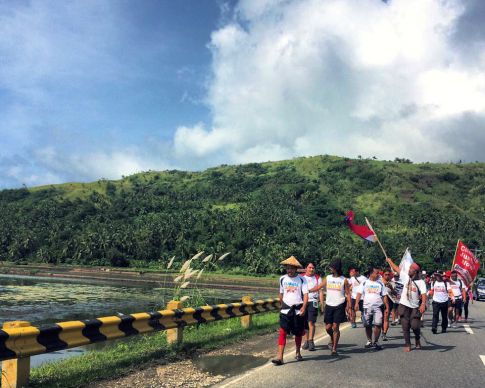
Photo courtesy of the marchers
Marchers who spent 40 days on the road to call attention to climate change are shown near Basey.
40-day climate walk ends on typhoon anniversary by Gladys P. Mangiduyos BASEY, Philippines (UMNS)
A 40-day march from Manila to Tacloban – now proceeding through areas devastated by Typhoon Haiyan – is aimed at encouraging both grassroots and world leaders to confront the crisis of global climate change by highlighting its effect on vulnerable countries like the Philippines.
The marchers will cross the San Juanico Bridge towards Tacloban City on Nov. 8, the anniversary of the Category 5 storm that cut a swath of devastation across the tip of Cebu and tore through the three large island provinces of Samar, Leyte and Bohol.
Naderev "Yeb" Sano, commissioner of the Philippines Climate Change Commission and lead negotiator for the country during the 2013 U.N. climate summit in Warsaw, Poland, said that after a year of the severe devastation from the storm, marchers were not expecting the hopeful atmosphere they found along the 1,000-kilometer (621 mile) trek.
"Today, we have entered the severely hit zone of Typhoon Haiyan, and we got a rousing welcome,” Sano said in a telephone interview four days before the end of the march. “Each of the 36 days are extraordinary days. Each day is unique, something new is happening, we get to interact to different people. There are no low moments because of the uplifting experience to rediscover the Filipino spirit, in every town, to care for one another."
The marchers left Manila on Oct. 2, then headed through the provinces of Laguna, Batangas, Quezon, Camarines Norte, Camarines Sur, Albay, Sorsogon, Northern Samar, Samar and Leyte.
They hope the walk will inspire people around the world and encourage ambitious efforts by world leaders to confront the climate change.
Sano said the walk was demanding and was taking a physical toll on the marchers. He was sidelined at one point by an injury that required him to rest before rejoining the march.
Hospitality from everyone
The United Methodist Church, the Roman Catholic Church, the National Council of Churches in the Philippines and other organizations, along with local governments, have supported the march.
"The First United Methodist Church in Naga City has sheltered us and fed us," said Rommuel Flores, the son of a United Methodist pastor. Flores, along with Sano and two other walkers, gave their testimonies during worship.
Sano said marchers were offered a place to stay every night.
"The challenge was which offers we would take because so many organizations are offering the schools, church, barangay (village) halls, municipal halls," he said. While in Basey, the group slept in tents on a basketball court.
Governor Joey Salceda of the Albay province joined the marchers from Camarines Sur to Palangue.
Formal programs were held on more than half of the evenings. The programs consisted of a welcome affair hosted by the local community, then a series of films, and a speech by Sano encouraging people to heed the global call to climate action.
Then, one of the walkers would give a testimony. Finally, a climate disaster resilience tool kit was given to the mayor or vice mayor.
Climate toolkits
Resources in the toolkits can help with community planning in the face of climate change, assist in the protection of communities from climate disaster risks, and empower local communities to take control of their development destiny, according to organizers.
The information also offers assistance on how local policymakers can draft their own local climate change action plan, along with a sample plan from Camotes Island.
The island is considered an example of a best-practice triumph in the midst of climate disaster, since there were no deaths and only one injury there during Typhoon Haiyan. Officials attributed that good fortune to the commitment of their political leaders and the people to efforts to make the island resilient to climate disasters.
The power to rise up
"We have a song which we sing every day in our walk, 'Tayo tayo' which means 'Let us rise' in a march rhythm, " Sano said.
And he is optimistic that people will rise for change.
"If we believe we can do something, if we stay positive in making a difference, that is the power, and the power of the crowd to make things happen," Sano said.
His hope is that people will realize that they have power at the grassroots level to change things for the better, live sustainably, and build a culture of caring and accountability.
"We can't afford to lose this battle for humanity, it is a leap of faith to do something like this," Sano said.
Beyond the march
Many people have asked what happens after the walk, he noted.
Beyond serving as an instrument for non-violent protest, the walk has demonstrated that “solutions are in the hands of individuals," Sano said, adding that he hopes everyone will be encouraged to get involved.
"The destination of our climate walk is not Tacloban City, but the hearts and minds of people, people in the Philippines and in the whole world."
*Mangiduyos is a deaconess in the United Methodist Philippines Central Conference and a professor at Wesleyan University-Philippines in Cabanatuan City.
News media contact: Vicki Brown, news editor, newsdesk@umcom.org or 615-742-5469.
Firm Foundations, One Year After Philippines Typhoon

Roger Modesto and his family have a more storm-resistant home, thanks to generous support from United Methodists through UMCOR. Modesto’s previous home was destroyed by Typhoon Haiyan.
by David Tereshchuk*
Online donations through UMC #GivingTuesday last year to International Disaster Response supported UMCOR’s work in a number of ways. One of them was to help UMCOR rebuild homes that were destroyed during Typhoon Haiyan, which decimated parts of the Philippines. On the first anniversary of the super storm, an update on recovery efforts follows.
November 4, 2014—This Saturday, November 8, marks exactly one year since Typhoon Haiyan, known locally as Yolanda, devastated large stretches of the Philippines, and much successful recovery has been achieved throughout that year.
UMCOR, the United Methodist Committee on Relief, has been committed to help the rebuilding of houses and village resources in the municipality of Tanauan in Leyte Province. And just as importantly, UMCOR has helped badly hit populations to look to the future with hope.
The local barangay (or neighborhood community) of Calogcog, has been the focus of UMCOR’s work. It has concentrated on providing new houses for those who lost their old homes—and in the same locality rather than requiring families to move elsewhere.
New and sturdier homes for more than 200 families will be the ultimate result, since the “Build Back Better” principle has been a guiding light for the UMCOR team.
“We have been determined that the new homes be built to withstand any future typhoon with the force of Yolanda or even stronger,” says UMCOR’s Assistant General Secretary for International Disaster Response, Rev Jack Amick.
Solid foundations, with an abundant use of concrete, are a vital part of UMCOR’s approach, bringing a significant change to villages where buildings tend to have cement walls that extend only to about knee-high and then are topped with wood and reeds.
The intensive rebuilding program became the heart of UMCOR’s work several months after the typhoon struck. In the immediate aftermath of the storm, needs such as food and other emergency supplies had naturally been the greatest priority of the hardest hit families.
Speedy Construction
Since April of this year, speed in construction has been a hallmark of the program, especially once the initial foundations were laid. While the first six houses were completed in two months, momentum then grew rapidly, with 14 homes then being provided within a single month.
Crucially, says Amick, “homes are being rebuilt in the very neighborhoods where people used to live instead of having families relocate—with all the extra tensions that can accompany such a huge upheaval.”
Consultation with Calogcog’s residents has been an essential part of the exercise. Every new home is customized to meet the specific needs of a particular family, starting, of course, with size. Constraints and opportunities offered by the lay of the land in any particular lot also help to bring to each house individuality and specifically helpful design features.
Stronger Community
While the new homes evidence physical recovery, UMCOR’s work also is having less visible, but nevertheless substantial effects among the area’s residents. “A stronger community as well as the stronger structures is something very valuable that we see emerging out of this ongoing collaboration,” Amick points out.
In line with UMCOR’s Disaster Risk Reduction priority, plans are being drawn for improved evacuation arrangements, should that need arise again someday. The new homes with their much more solid structures will be supplemented with equally sturdy communal shelters for evacuees.
After a year of collaborative work between UMCOR and the people of Calogcog, the community is well on its way to having developed a deeper faith in a safer future.
UMC #GivingTuesday, Dec. 2
This year, Global Ministries will again provide matching grants, up to $1 million**, for online donations made to any project through The Advance as part of UMC #GivingTuesday, Dec. 2, “When Methodists Are United.” One hundred percent of gifts given go to projects designated by the donor through The Advance, The United Methodist Church’s giving channel.
For resources to promote and share UMC #GivingTuesday, click here.
*David Tereshchuk is a journalist and media critic who contributes regularly to UMCOR.org.
**Global Ministries will allocate the matching funds dollar for dollar up to the first $1 million in gifts to Advance projects received online on Dec. 2, 2014, between 12 a.m. and 11:59 p.m. EST. A maximum of $2,500 per individual gift to a project will be dispersed as matching funds. A project may receive a maximum of $25,000 in matching funds.
Philippines Typhoon: The Church Responds
<iframe width="690" height="388" src="//www.youtube.com/embed/fOjoJ027PtI" frameborder="0" allowfullscreen></iframe>
Typhoon Haiyan, possibly the strongest storm ever to make landfall, battered parts of the Philippines on Friday, November 8, 2013.
With sustained winds of 195 mph, the category 5 storm cut a swath of devastation across the tip of Cebu and tore through the three large island provinces of Samar, Leyte and Bohol. UMCOR, the relief agency of The United Methodist Church, is working with partners in the Philippines to provide assistance following the typhoon.
United Methodists across the globe are in solidarity with the people in the Philippines and all those affected, offering prayers, support and aid.
Read the latest news about the Church's commitment to long-term recovery efforts. Donate to the cause at UMCOR's website: Disaster Response, International (#982450): Typhoon Haiyan (sub-designation). You can also text the word UMCOR to 80888 to give an immediate $10 donation.*
News stories
New homes for survivors of Typhoon Haiyan
Commentary: Sharing pain, hope, in typhoon’s wake
2013: Cleaning up after dangerous winds, floods
Stop Hunger Now aids Typhoon Haiyan survivors
Typhoon Haiyan and the need for climate justice
Church helps rebuild communications in Philippines
Bringing comfort to typhoon survivors in Philippines
Ecumenical ties in Philippines assist aid efforts
Young adults reach out to Philippines survivors
UMCOR relief truck ready to roll
UM pastor in Tacloban recalls typhoon ordeal
Rev. Lilian Gallo Seagren talks with Filipino colleague
In U.S., Filipinos ready to aid typhoon survivors
UPDATE: Missing Filipino pastor OK
UMCOR relief money on way to Philippines
How to contribute to the relief effort for the Philippines
Related Headlines
Chuck asks for support for Philippines
UMCOR delivers food to typhoon survivors
Blog: Role of technology in Philippines typhoon relief
Blog: Fortitude in the face of disaster
Video: Filipino Bishops' Message After Typhoon
Philippines: UMCOR Grant Meets Emergency Needs
Call to Prayer (Bishop Carcano, Cal-Pac Annual Conference)
Reuters Typhoon Haiyan coverage
Resources
UMCOR, the relief agency of The United Methodist Church
How to make cleaning buckets
Bulletin insert: Support Typhoon Haiyan Relief
Worship Resources
Churches Dealing with Disaster
*UMCOR Text to Give Terms & Conditions
A one-time donation of $10 will be added to your mobile phone bill or deducted from your prepaid balance. Message and Data Rates may apply. All charges are billed by and payable to your mobile service provider. Service is available on Verizon Wireless, AT&T, Sprint, and T-Mobile. All purchases must be authorized by the account holder. By participating you certify that you are 18 years or older and/or have parental permission. Donations are collected for UMCOR and subject to the terms found at igfn.org/t. Privacy policy: igfn.org/p. Text STOP to 80888 to stop; Text HELP to 80888 for help.
April Mercado: Technology aids disaster recovery by Joey Butler*
<iframe width="690" height="388" src="//www.youtube.com/embed/gpuh1In6a1Y" frameborder="0" allowfullscreen></iframe>
United Methodist Communications will host the Game Changers Summit Sept. 3-5, 2014, in Nashville, Tenn. The conference will demonstrate how information and communications technology (ICT) can be used to improve all facets of life. The focus? Helping parts of the world left behind by the technological revolution, to solve problems in education, wellness and community development with cutting-edge communications tools. This article series will spotlight some of the speakers and panelists participating in the Game Changers Summit.
April Grace G. Mercado has seen firsthand how technology can save lives after a disaster. As part of a team sent by United Methodist Communications days after Typhoon Haiyan struck the Philippines, Mercado helped assess needs and spread information.
“We connected to the emergency telecom cluster to get our stories out of the area,” Mercado says. “When Haiyan happened, all communication towers were knocked down. Satellite phones were rendered useless because of thick clouds overhead. The only useful form of communication was ham radios.”
The team also distributed solar chargers to survivors to combat widespread power outages, and solar lamps to cut down on using oil lamps, which pose fire and health hazards.
Food, water and shelter are an immediate need in the aftermath of disaster, but Mercado also sees technology as a vital tool in keeping survivors informed of where to find aid, or where to go for safety.
“We could have prevented much loss of life if information had been disseminated properly to the public. That might have saved all the senior citizens and children who perished while taking refuge in the basement of the Leyte Coliseum,” Mercado wrote in a commentary for United Methodist News Service.
Mercado feels that providing technology for disaster relief or for long-term development is an ideal ministry for The United Methodist Church.
“Our world is changing. The church needs to follow the times. It’s important our church follows technology changes to minister to more people, not just typical Sunday churchgoers. You can reach out to more people by social media, you can witness through Twitter, Ustream, Facebook. That’s how I see ICT as being important in ministry of church today.”
*Butler is a multimedia editor/producer for United Methodist Communications.
Be a game changer! Register for the Game Changers Summit, Sept. 3-5, 2014.
Pastor used cell phone for graveyard connections
MOBILE, Ala. (UMNS) — The Rev. Chip Hale recalls the laughter and tears that went with caring for his elderly parents, especially a certain odd request from his mother that had him lingering in the graveyard after funerals he performed.
Photo courtesy of Chip Hale
The Rev. Chip Hale, senior pastor of Ashland Place United Methodist Church in Mobile, Alabama, writes about honoring his mother and father in a most unusual way.
Pastor used cell phone for graveyard connections by Chip Hale Mobile, Ala. (UMNS)
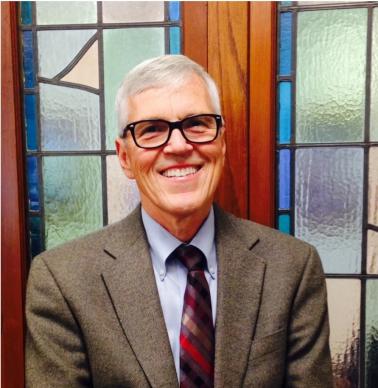 In life, the moment arrives when the children must become the parents.
My sister and I accepted the responsibility for our aging father and mother. As his only son, I took charge of caring for Dad in his last few years. We laughed together much more than we cried.
After my father's death, my sister and I sat down with our mother to have “the talk.” My mother had recently fallen trying to get up the steps to her home, hitting her head and breaking her pelvis. The incident had been frightening for all of us.
With her health and safety in mind, we broached the subject, saying something like, “Mother, after your fall, and as you get older, we think it is time for you to move into a retirement community in Birmingham, near your daughter.” My sister and I spent virtually the whole conversation trying to formulate just the right words to convince Mother that the move was in her best interests. The negotiations got difficult since Mother felt uncertain about how to begin a new life in Birmingham after living in Mobile for many years. I told Mother I would do whatever she asked, if she would make the move. She finally acquiesced.
Just before her move, Mother asked me to take her to Dad’s grave. Of course, I readily agreed, and at the graveyard she asked me to kneel beside her as she said her goodbyes and prayed. Just after her “amen,” Mother asked if I would promise to call her from Dad’s graveside on my cell phone, every week or so, in her exile city of Birmingham, so that she could talk to him. Riddled with guilt and wanting to make her happy, I agreed. That moment began a strange comedy of attempting to live out my faith in a very unusual way.
As clergy, I continued to officiate at many funerals at this same graveyard. Families tend to linger after these services, and clergy usually leave before they do. After my final condolences on many of these occasions, I began to make a hasty detour by my father's grave to make the phone call to Mother so that she could talk to him. Each time, I was carefully instructed to hold the phone over the grave, and not to eavesdrop as she talked to Dad about her life. Unfortunately for me, my father’s grave is very close to the graveyard’s main entrance. Families would leave after their final goodbyes and pass where I was standing, observing me leaning over the grave, cell phone in hand, trying to look nonchalant. Their horror and disbelief is burned into my memory.
In spite of my promise to Mother, it became impossible not to eavesdrop. I was privy to her rather one-sided conversations with Dad. Many of their phone calls were reminiscent of their past. She often included hilarious stories from her life at the retirement village. Sometimes I had to stifle a laugh; sometimes I had to choke back tears. The conversations were poignant and beautiful. Invariably, she told him about my sister and her family, and she included stories about my life with my wife and children. In essence, she kept my father informed about everything that occurred to her. Bless her heart, she was especially long-winded when the weather was below 30 degrees or above 90. For six years, this favor to my mother was what I deemed “Conversations with the Dead.”
As Mother experienced several health crises and became increasingly frail, her worries about her impending death caused her understandable anxiety. One Saturday, a week before she died, I was doing a funeral at the graveyard in Mobile. Before I left, I called and said, “Mother, would you like to talk to Dad?” I had tears in my eyes, suspecting that this would be their last conversation in this way. I knelt over my father's grave and held the cell phone down to where I supposed his head would be. Then I turned on the speaker phone so that I could hear her words. She said, “Charles, I think I am at the end of my life.” There was a long pause, as her emotions overwhelmed her, as did mine. She continued: “Charles, if you are in heaven, tell Jesus to come get me.” She paused again, and then, with trepidation, added: “If you are not in heaven, don't mention my name to anyone.” In my preacher’s suit, I fell to the ground laughing.
God gave us the great privilege of expressing our faith by loving best our families. How precious those memories are to me now.
The Rev. Chip Hale is senior pastor of Ashland Place United Methodist Church in Mobile, Ala.
Looking ahead
Here are some of the activities ahead for United Methodists across the connection. If you have an item to share, email newsdesk@umcom.org and put Digest in the subject line.
Sunday, Nov. 9
International Day of Prayer for the Persecuted Church — News of Islamic State's persecution of Christians in Iraq and Syria has drawn extra attention this year to the places where Christians risk their lives for their faith. United Methodist Discipleship Ministries offers prayers for churches to use on this or any day. How UMCOR is helping people displaced in Iraq.
Sunday-Monday, Nov. 9-10
Bishop Thomas J. Bickerton speaks at Fiser-Christie Endowed Lectureship — Bickerton, who leads the Western Pennsylvania Conference and is the spokesperson for the denomination's Imagine No Malaria initiative, will speak at the 8:30, 9:30 and 10:55 a.m. CT Nov. 9 worship services at St. James United Methodist Church, 321 Pleasant Valley Drive in Little Rock, Ark. That night, he also will speak from 5:30 to 7:30 p.m. at the Imagine No Malaria Youth Rally. On Monday, Nov.10, he will speak at a $10 lunch from 11:30 a.m. to 1 p.m. and an evening lecture at 6 p.m. All events are at the church. A special offering for Imagine No Malaria will be taken at each event. Registration is required for the rally and the luncheon. Details.
You can see more educational opportunities and other upcoming events in the life of the church here.
 United Methodist News Service is a ministry of:
United Methodist Communications
810 12th Avenue South
Nashville, Tennessee 37203-4704 United States
NewsDesk@umcom.org
Phone: (615)742-5400
____________________________

No comments:
Post a Comment