Today's Laws & Customs:
Today in Jewish History:
"Moshiach's Torah Scroll" completed (1970)
The writing of the "Sefer Torah for the Greeting of Moshiach," initiated at the behest of the 6th Lubavitcher Rebbe, Rabbi Yosef Yitzchak Schneersohn, in 1942, was concluded 28 years later at a special gathering convened by the Lubavitcher Rebbe on Friday afternoon, the 9th of Shevat, on the eve of the 20th anniversary of Rabbi Yosef Yitzchak's passing.
Links: Moshiach: an Anthology
DAILY QUOTE:
You will be gathered up, one by one, O children of Israel[Isaiah 27:12]
DAILY STUDY:
CHITAS AND RAMBAM FOR TODAY:"Moshiach's Torah Scroll" completed (1970)
The writing of the "Sefer Torah for the Greeting of Moshiach," initiated at the behest of the 6th Lubavitcher Rebbe, Rabbi Yosef Yitzchak Schneersohn, in 1942, was concluded 28 years later at a special gathering convened by the Lubavitcher Rebbe on Friday afternoon, the 9th of Shevat, on the eve of the 20th anniversary of Rabbi Yosef Yitzchak's passing.
Links: Moshiach: an Anthology
DAILY QUOTE:
You will be gathered up, one by one, O children of Israel[Isaiah 27:12]
DAILY STUDY:
Chumash Parshat Beshalach, 5th Portion (Exodus 15:27-16:10) with Rashi
• Chapter 15
27. They came to Elim, and there were twelve water fountains and seventy palms, and they encamped there by the water. כז. וַיָּבֹאוּ אֵילִמָה וְשָׁם שְׁתֵּים עֶשְׂרֵה עֵינֹת מַיִם וְשִׁבְעִים תְּמָרִים וַיַּחֲנוּ שָׁם עַל הַמָּיִם:
twelve water fountains: Corresponding to the twelve tribes, were prepared for them. — [from Mechilta]
שתים עשרה עינות מים: כנגד י"ב שבטים נזדמנו להם:
and seventy palms: Corresponding to the seventy elders. — [from Mechilta, Jonathan]
ושבעים תמרים: כנגד שבעים זקנים:
Chapter 16
1. They journeyed from Elim, and the entire community of the children of Israel came to the desert of Sin, which is between Elim and Sinai, on the fifteenth day of the second month after their departure from the land of Egypt. א. וַיִּסְעוּ מֵאֵילִם וַיָּבֹאוּ כָּל עֲדַת בְּנֵי יִשְׂרָאֵל אֶל מִדְבַּר סִין אֲשֶׁר בֵּין אֵילִם וּבֵין סִינָי בַּחֲמִשָּׁה עָשָׂר יוֹם לַחֹדֶשׁ הַשֵּׁנִי לְצֵאתָם מֵאֶרֶץ מִצְרָיִם:
on the fifteenth day: The day of this encampment is stated because on that day the cakes that they had taken out of Egypt were depleted, and they needed manna. We learn [from this] that they ate of the remaining dough (or from the remaining matzoth) sixty- one meals. And the manna fell for them on the sixteenth of Iyar, which was a Sunday, as appears in tractate Shabbath (87b). — [from Mechilta]
בחמשה עשר יום: נתפרש היום של חנייה זו, לפי שבו ביום כלתה החררה שהוציאו ממצרים והוצרכו למן, למדנו שאכלו משירי הבצק [משירי המצה] ששים ואחת סעודות, וירד להם מן בששה עשר באייר ויום ראשון בשבת היה, כדאיתא במסכת שבת (דף פז ב):
2. The entire community of the children of Israel complained against Moses and against Aaron in the desert. ב. וַיִּלּוֹנוּ כָּל עֲדַת בְּנֵי יִשְׂרָאֵל עַל משֶׁה וְעַל אַהֲרֹן בַּמִּדְבָּר:
complained: Because the bread [they had taken out of Egypt] was depleted.
וילונו: לפי שכלה הלחם:
3. The children of Israel said to them, If only we had died by the hand of the Lord in the land of Egypt, when we sat by pots of meat, when we ate bread to our fill! For you have brought us out into this desert, to starve this entire congregation to death ג. וַיֹּאמְרוּ אֲלֵהֶם בְּנֵי יִשְׂרָאֵל מִי יִתֵּן מוּתֵנוּ בְיַד יְהֹוָה בְּאֶרֶץ מִצְרַיִם בְּשִׁבְתֵּנוּ עַל סִיר הַבָּשָׂר בְּאָכְלֵנוּ לֶחֶם לָשׂבַע כִּי הוֹצֵאתֶם אֹתָנוּ אֶל הַמִּדְבָּר הַזֶּה לְהָמִית אֶת כָּל הַקָּהָל הַזֶּה בָּרָעָב:
If only we had died: Heb. מוּתֵנוּ, that we would have died, but it is not a noun like מוֹתֵנוּ, our death, but like עִשׂוֹתֵנוּ, חִנוֹתֵנוּ, שׁוּבֵנוּ, that we do, that we encamp, [that we return,] that we die. [Literally, this would be translated: Who would grant that we die.] Its targum [Onkelos, however,] is: לְוַי דְמִיתְנָא, like “If only we had died לוּ מָתְנוּ” (Num. 14:2), if only we would have died.
מי יתן מותנו: שנמות, ואינו שם דבר כמו מותנו אלא כמו עשותנו, חנותנו, שובנו, לעשות אנחנו, לחנות אנחנו, למות אנחנו. ותרגומו לוי דמיתנא, כמו (במדבר יד ב) לו מתנו, הלואי והיינו מתים:
4. So the Lord said to Moses, Behold! I am going to rain down for you bread from heaven, and the people shall go out and gather what is needed for the day, so that I can test them, whether or not they will follow My teaching. ד. וַיֹּאמֶר יְהֹוָה אֶל משֶׁה הִנְנִי מַמְטִיר לָכֶם לֶחֶם מִן הַשָּׁמָיִם וְיָצָא הָעָם וְלָקְטוּ דְּבַר יוֹם בְּיוֹמוֹ לְמַעַן אֲנַסֶּנּוּ הֲיֵלֵךְ בְּתוֹרָתִי אִם לֹא:
what is needed for the day: Heb. דְבַר יוֹם בְּיוֹמוֹ, lit., the thing of a day in its day. What is needed for a day’s eating they will gather on its day, but they will not gather today for the needs of tomorrow. — [from Mechilta]
דבר יום ביומו: צורך אכילת יום ילקטו ביומו, ולא ילקטו היום לצורך מחר:
so that I can test them, whether…they will follow My teaching: [Through giving the manna I will test] whether they will keep the commandments contingent upon it, [i.e.,] that they will not leave any of it over, and that they will not go out on the Sabbath to gather [the manna].
למען אנסנו הילך בתורתי: אם ישמרו מצות התלויות בו, שלא יותירו ממנו ולא יצאו בשבת ללקוט:
5. And it shall be on the sixth day that when they prepare what they will bring, it will be double of what they gather every day ה. וְהָיָה בַּיּוֹם הַשִּׁשִּׁי וְהֵכִינוּ אֵת אֲשֶׁר יָבִיאוּ וְהָיָה מִשְׁנֶה עַל אֲשֶׁר יִלְקְטוּ יוֹם | יוֹם:
and it will be double: For that day and for the morrow.
והיה משנה: ליום ולמחרת:
double: of what they were accustomed to gather each day of the rest of the days of the week. I believe that [the meaning of] “what they will bring, and it will be double” is that after they bring it [the manna], by measuring [it], they will find it [to be] double of what they gather and measure every day. That is [the meaning of] “they gathered a double portion of bread” (verse 22). Their gathering was found to be a double portion of bread. That is [the meaning of] “Therefore, on the sixth day, He gives you bread for two days” (verse 29). He gives you a blessing (foison [in French, meaning plenty, abundance]) in the house to fill the omer twice for two days of bread.
משנה: על שהיו רגילים ללקוט יום יום של שאר ימות השבוע. ואומר אני אשר יביאו והיה משנה, לאחר שיביאו ימצאו משנה במדידה על אשר ילקטו וימודו יום יום וזהו (להלן פסוק כב) לקטו לחם משנה, בלקיטתו היה נמצא לחם משנה. וזהו (להלן פסוק כט) על כן הוא נותן לכם ביום הששי לחם יומים, נותן לכם ברכה פוישו"ן [שפע] בבית למלאות העומר פעמים ללחם יומים:
6. [Thereupon,] Moses and Aaron said to all the children of Israel, [In the] evening, you shall know that the Lord brought you out of the land of Egypt. ו. וַיֹּאמֶר משֶׁה וְאַהֲרֹן אֶל כָּל בְּנֵי יִשְׂרָאֵל עֶרֶב וִידַעְתֶּם כִּי יְהֹוָה הוֹצִיא אֶתְכֶם מֵאֶרֶץ מִצְרָיִם:
evening: Heb. עֶרֶב. Like בָּעֶרֶב, toward evening. [According to Sifthei Chachamim, the correct reading is בָּעֶרֶב, in the evening.] [from Onkelos and Jonathan]
ערב: כמו לערב:
you shall know that the Lord brought you out of the land of Egypt: Since you [the people of Israel] said to us [Moses and Aaron], “For you have brought us out” (verse 3), you shall know that we are not the ones who brought [you] out, but [it was] the Lord [Who] brought you out, for He will cause the quail to fly to you.[See commentary on verse 13]
וידעתם כי ה' הוציא אתכם מארץ מצרים: לפי שאמרתם לנו כי הוצאתם אותנו, תדעו כי לא אנחנו המוציאים אלא ה' הוציא אתכם, שיגיז לכם את השליו:
7. And [in the] morning, you shall see the glory of the Lord when He hears your complaints against the Lord but [of] what [significance] are we, that you make [the people] complain against us? ז. וּבֹקֶר וּרְאִיתֶם אֶת כְּבוֹד יְהֹוָה בְּשָׁמְעוֹ אֶת תְּלֻנֹּתֵיכֶם עַל יְהֹוָה וְנַחְנוּ מָה כִּי תַלִּינוּ עָלֵינוּ:
And [in the] morning, you shall see: This was not stated in reference to “and behold, the glory of the Lord appeared in the cloud” (verse 10), but this is what he [Moses] said to them: In the evening you shall know that He has the ability to grant your desire, and He will give [you] meat; but He will not give it to you with a smiling countenance, because you requested it inappropriately and with a full stomach. As for the bread, which you requested out of necessity, however, when it comes down in the morning, you shall see the glory of the radiance of His countenance. For He will bring it down to you lovingly, in the morning, when there is time to prepare it, and with dew over it and dew under it as if it were lying in a box. — [from Mechilta Yoma 75a,b]
ובקר וראיתם: לא על הכבוד שנאמר (להלן פסוק י) והנה כבוד ה' נראה בענן, נאמר, אלא כך אמר להם ערב וידעתם כי היכולת בידו ליתן תאותכם ובשר יתן, אך לא בפנים מאירות יתננה לכם, כי שלא כהוגן שאלתם אותו ומכרס מלאה, והלחם ששאלתם לצורך, בירידתו לבקר תראו את כבוד אור פניו שיורידהו לכם דרך חיבה בבקר, שיש שהות להכינו וטל מלמעלה וטל מלמטה כמונח בקופסא:
your complaints against the Lord: As [if it would say]: "your complaints, which are against the Lord."
את תלנתיכם על ה': כמו אשר על ה':
but [of] what [significance] are we: Of what importance are we? -[from Jonathan Mechilta]
ונחנו מה: מה אנחנו חשובין:
that you make [the people] complain: Heb. תַלִּינוּ, that you make everyone complain against us: your sons, your wives, your daughters, and the mixed multitude. Perforce, I must interpret תַלִּינוּ, in the sense of “you make do something,” [i.e., the hiph’il conjugation] because of its [the “lammed’s”] “dagesh” and the way it is read [i.e., the keri as opposed to the kethiv]; because if it were weak [i.e., not punctuated with a “dagesh”], I would interpret it as “you do something,” [i.e., in the kal conjugation,] like “and the people complained (וַיָלֶן) against Moses” (Exod. 17:3), or if it [the “lammed”] were punctuated with a “dagesh” and it did not have a “yud” [after it], and read תִלּוֹנוּ, [as it is written], I would explain it as meaning “you complain.” Now, however, it means: “you cause others to complain,” like [the verse written in reference to] the spies: “and they caused the entire congregation to complain (וַיַלִינוּ) against him” (Num. 14:36).
כי תלינו עלינו: שתרעימו עלינו את הכל, את בניכם ונשיכם ובנותיכם וערב רב, ועל כרחי אני זקוק לפרש תלינו בלשון תפעילו מפני דגשותו וקרייתו, שאלו היה רפה הייתי מפרשו בלשון תפעלו, כמו (שמות יז ג) וילן העם על משה, או אם היה דגוש ואין בו יו"ד ונקרא תלונו, הייתי מפרשו לשון תתלוננו, עכשיו הוא משמע תלינו את אחרים, כמו במרגלים (במדבר יד לו) וילינו עליו את כל העדה:
8. And Moses said, When the Lord gives you in the evening meat to eat and bread in the morning [with which] to become sated, when the Lord hears your complaints, which you are making [the people] complain against Him, but [of] what [significance] are we? Not against us are your complaints, but against the Lord ח. וַיֹּאמֶר משֶׁה בְּתֵת יְהֹוָה לָכֶם בָּעֶרֶב בָּשָׂר לֶאֱכֹל וְלֶחֶם בַּבֹּקֶר לִשְׂבֹּעַ בִּשְׁמֹעַ יְהֹוָה אֶת תְּלֻנֹּתֵיכֶם אֲשֶׁר אַתֶּם מַלִּינִם עָלָיו וְנַחְנוּ מָה לֹא עָלֵינוּ תְלֻנֹּתֵיכֶם כִּי עַל יְהֹוָה:
meat to eat: But not to be satiated. The Torah [here] teaches us a rule of behavior we should not eat meat to satiety. What did He see [what reason did He have] to bring down bread in the morning and meat in the evening? Because they requested bread appropriately, since it is impossible for a person to get along without bread, but they requested meat inappropriately, because they had many animals, and furthermore, it was possible for them to get along without meat. Therefore, He gave it to them at a time when it would be a burden for them to prepare it, [at an] inappropriate [time]. — [from Mechilta Yoma 75b]
בשר לאכל: ולא לשובע, למדה תורה דרך ארץ שאין אוכלין בשר לשובע. ומה ראה להוריד לחם בבקר ובשר בערב, לפי שהלחם שאלו כהוגן, שאי אפשר לו לאדם בלא לחם, אבל בשר שאלו שלא כהוגן, שהרבה בהמות היו להם. ועוד, שהיה אפשר להם בלא בשר, לפיכך נתן להם בשעת טורח, שלא כהוגן:
which you are making [the people] complain against Him: [You are making] others who hear you complaining [complain].
אשר אתם מלינם עליו: את האחרים השומעים אתכם מתלוננים:
9. And Moses said to Aaron, Say to the entire community of the children of Israel, Draw near before the Lord, for He has heard your complaints. ט. וַיֹּאמֶר משֶׁה אֶל אַהֲרֹן אֱמֹר אֶל כָּל עֲדַת בְּנֵי יִשְׂרָאֵל קִרְבוּ לִפְנֵי יְהֹוָה כִּי שָׁמַע אֵת תְּלֻנֹּתֵיכֶם:
Draw near: to the place where the cloud has descended.
קרבו: למקום שהענן ירד:
10. And it came to pass when Aaron spoke to the entire community of the children of Israel, that they turned toward the desert, and behold! the glory of the Lord appeared in the cloud. י. וַיְהִי כְּדַבֵּר אַהֲרֹן אֶל כָּל עֲדַת בְּנֵי יִשְׂרָאֵל וַיִּפְנוּ אֶל הַמִּדְבָּר וְהִנֵּה כְּבוֹד יְהֹוָה נִרְאָה בֶּעָנָן:
___________________________
Daily Tehillim: Psalms Chapters 49-54
• Chapter 49
This psalm is a strong message and inspiration for all, rich and poor alike, rebuking man for transgressions which, owing to habit, he no longer considers sinful; yet, these sins incriminate man on the Day of Judgement. The psalm speaks specifically to the wealthy, who rely not on God but on their wealth.
1. For the Conductor, by the sons of Korach, a psalm.
2. Hear this, all you peoples; listen, all you inhabitants of the world;
3. sons of common folk and sons of nobility, rich and poor alike.
4. My mouth speaks wisdom, and the thoughts of my heart are understanding.
5. I incline my ear to the parable; I will unravel my riddle upon the harp.
6. Why am I afraid in times of trouble? [Because] the sins I trod upon surround me.
7. There are those who rely on their wealth, who boast of their great riches.
8. Yet a man cannot redeem his brother, nor pay his ransom to God.
9. The redemption of their soul is too costly, and forever unattainable.
10. Can one live forever, never to see the grave?
11. Though he sees that wise men die, that the fool and the senseless both perish, leaving their wealth to others-
12. [nevertheless,] in their inner thoughts their houses will last forever, their dwellings for generation after generation; they have proclaimed their names throughout the lands.
13. But man will not repose in glory; he is likened to the silenced animals.
14. This is their way-their folly remains with them, and their descendants approve of their talk, Selah.
15. Like sheep, they are destined for the grave; death shall be their shepherd, and the upright will dominate them at morning; their form will rot in the grave, away from its abode.
16. But God will redeem my soul from the hands of the grave, for He will take me, Selah.
17. Do not fear when a man grows rich, when the glory of his house is increased;
18. for when he dies he will take nothing, his glory will not descend after him.
19. For he [alone] praises himself in his lifetime; but [all] will praise you if you better yourself.
20. He will come to the generation of his forefathers; they shall not see light for all eternity.
21. Man [can live] in glory but does not understand; he is likened to the silenced animals.
Chapter 50
This psalm speaks of many ethics and morals. The psalmist rebukes those who fail to repent humbly and modestly. He also admonishes those who do not practice that which they study, and merely appear to be righteous; they sin and cause others to sin.
1. A psalm by Asaph. Almighty God, the Lord, spoke and called to the earth, from the rising of the sun to its setting.
2. Out of Zion, the place of perfect beauty, God appeared.
3. Our God will come and not be silent; a fire will consume before Him, His surroundings are furiously turbulent.
4. He will call to the heavens above, and to the earth, to avenge His people:
5. "Gather to Me My pious ones, those who made a covenant with me over a sacrifice.”
6. Then the heavens declared His righteousness, for God is Judge forever.
7. Listen, my people, and I will speak; O Israel, and I will testify against you-I am God your God.
8. Not for [the lack of] your sacrifices will I rebuke you, nor for [the lack of] your burnt offerings which ought to be continually before Me.
9. I do not take oxen from your house, nor goats from your pens;
10. for every beast of the forest is Mine, the cattle of a thousand mountains.
11. I know every bird of the mountains, and the crawling creatures of the field are in My possession.
12. Were I hungry, I would not tell you, for the world and everything in it is mine.
13. Do I eat the flesh of bulls, or drink the blood of goats?
14. Offer confession as a sacrifice to God, and fulfill your vows to the Most High,
15. and call to Me on the day of distress; I will free you, and you will honor Me.
16. But to the wicked, God said, "What does it help you to discuss My laws, and bear My covenant upon your lips?
17. For you hate discipline, and throw My words behind you.
18. When you see a thief you run with him, and your lot is with adulterers.
19. You sent forth your mouth for evil, and attach your tongue to deceit.
20. You sit down to talk against your brother; your mother's son you defame.
21. You have done these things and I kept silent, so you imagine that I am like you-[but] I will rebuke you and lay it clearly before your eyes.
22. Understand this now, you who forget God, lest I tear you apart and there be none to save you.
23. He who offers a sacrifice of confession honors Me; and to him who sets right his way, I will show the deliverance of God."
Chapter 51
This psalm speaks of when Nathan the prophet went to David's palace, and rebuked him for his sin with Bathsheba. David then secluded himself with God, offering awe-inspiring prayers and begging forgiveness. Every person should recite this psalm for his sins and transgressions.
1. For the Conductor, a psalm by David,
2. when Nathan the prophet came to him after he had gone to Bathsheba.
3. Be gracious to me, O God, in keeping with Your kindness; in accordance with Your abounding compassion, erase my transgressions.
4. Cleanse me thoroughly of my wrongdoing, and purify me of my sin.
5. For I acknowledge my transgressions, and my sin is always before me.
6. Against You alone have I sinned, and done that which is evil in Your eyes; [forgive me] so that You will be justified in Your verdict, vindicated in Your judgment.
7. Indeed, I was begotten in iniquity, and in sin did my mother conceive me.
8. Indeed, You desire truth in the innermost parts; teach me the wisdom of concealed things.
9. Purge me with hyssop and I shall be pure; cleanse me and I shall be whiter than snow.
10. Let me hear [tidings of] joy and gladness; then the bones which You have shattered will rejoice.
11. Hide Your face from my sins, and erase all my trespasses.
12. Create in me a pure heart, O God, and renew within me an upright spirit.
13. Do not cast me out of Your presence, and do not take Your Spirit of Holiness away from me.
14. Restore to me the joy of Your deliverance, and uphold me with a spirit of magnanimity.
15. I will teach transgressors Your ways, and sinners will return to You.
16. Save me from bloodguilt, O God, God of my deliverance; my tongue will sing Your righteousness.
17. My Lord, open my lips, and my mouth shall declare Your praise.
18. For You do not desire that I bring sacrifices, nor do You wish burnt offerings.
19. The offering [desirable] to God is a contrite spirit; a contrite and broken heart, God, You do not disdain.
20. In Your goodwill, bestow goodness upon Zion; rebuild the walls of Jerusalem.
21. Then will You desire sacrifices [offered in] righteousness, olah and other burnt offerings; then they will offer bullocks upon Your altar.
Chapter 52
David laments his suffering at the hands of Doeg, and speaks of Doeg's boasts about the evil he committed. David asks, "What does he think? Does he consider the doing of evil a mark of strength?" David also curses Doeg and those like him.
1. For the Conductor, a maskil by David,
2. when Doeg the Edomite came and informed Saul, saying to him, "David has come to the house of Achimelech.”
3. Why do you boast with evil, O mighty one? God's kindness is all day long.
4. Your tongue devises treachery; like a sharpened razor it works deceit.
5. You love evil more than good, falsehood more than speaking righteousness, Selah.
6. You love all devouring words, a deceitful tongue.
7. God will likewise shatter you forever; He will excise and pluck you from the tent, and uproot you from the land of the living forever.
8. The righteous will see it and be awed, and they will laugh at him:
9. "Here is the man who did not make God his stronghold, but trusted in his great wealth, and drew strength from his treachery.”
10. But I am like a fresh olive tree in the house of God; I trust in God's kindness forever and ever.
11. I will thank you forever for what You have done; I will hope in Your Name, for You are good to Your pious ones.
Chapter 53
This psalm speaks of when Titus pierced the curtain of the Holy of Holies with his sword, and thought he had killed "himself" (a euphemism for God).
1. For the Conductor, on the machalat,1 a mas-kil2 by David.
2. The fool says in his heart, "There is no God!" They have acted corruptly and committed abominable deeds; not one does good.
3. God looked down from heaven upon mankind, to see if there was any man of intelligence who searches for God.
4. But they all regressed together; they have become corrupt; there is none who does good, not even one.
5. Indeed, the evildoers who devour My people as they devour bread, who do not call upon God, will come to realize.
6. There they will be seized with fright, a fright such as never was; for God scatters the bones of those encamped against you. You shamed them, for God rejected them.
7. O that out of Zion would come Israel's deliverance! When God returns the captivity of His people, Jacob will exult, Israel will rejoice.
Chapter 54
A prayer to God asking that in His might He save all who hope for His kindness. Read, and you will discover an awe-inspiring and wondrous prayer that should be said by all in the appropriate time.
1. For the Conductor, with instrumental music, a maskil by David,
2. when the Ziphites came and said to Saul, "Behold, David is hiding among us!”
3. O God, deliver me by Your Name, and vindicate me by Your might.
4. God, hear my prayer, listen to the words of my mouth.
5. For strangers have risen against me, and ruthless men have sought my soul; they are not mindful of God, Selah.
6. Behold, God is my helper; my Lord is with those who support my soul.
7. He will repay the evil of my watchful enemies; destroy them by Your truth.
8. With a free-will offering I will sacrifice to You; I will offer thanks to Your Name, O Lord, for it is good.
9. For He has saved me from every trouble, and my eye has seen [the downfall of] my enemy.
____________________________
Tanya: Likutei Amarim, beginning of Chapter 22
• Lessons in Tanya
• Today's Tanya Lesson
Thursday, 9 Shevat, 5775 • 29 January 2015
Likutei Amarim, beginning of Chapter 22
In the previous chapter the Alter Rebbe contrasted human speech and Divine speech. He pointed out that human speech is marked by two characteristics: (1) it reveals to the hearer that which was previously hidden in the speaker’s thoughts; (2) the spoken word becomes a distinct entity, separate from the speaker. Divine speech, however, cannot become separate from G‑d, since nothing exists “outside” G‑d. G‑d’s Word, even after being “spoken” and revealed (whether in Creation or in prophecy), is thus still united with Him, and nullified before Him, to the same degree that a word spoken by a human being is united with the speaker before he speaks, while the word was still within its source, viz., the desire or understanding that prompted the thought that ultimately produced the spoken word.
In this chapter the Alter Rebbe goes on to say that since, after all, the Torah does use the term “speech” with regard to Divine revelation, we must say that Divine speech contains, to some extent at least, the second characteristic of human speech as well (i.e., that it becomes separated from the speaker). He explains that this is in fact so, but only with respect to the beings created by Divine “speech” — they perceive G‑d’s Word that created them, and consequently also themselves, as being separate from G‑d. This is specifically the case with the kelipot and the sitra achra, which represent a denial of G‑d’s unity.
רק שהתורה דברה כלשון בני אדם, ונקרא בתורה דבורו של מקום ברוך הוא בשם דבור ממש כדבורו של אדם
Yet1 “the Torah employs human language,” and in the Torah the “Word” of G‑d is actually called “speech”, like the speech of a human being which is characterized by separation from the speaker; indicating that, in some way at least, G‑d’s “Word” is also separated from Him.
לפי שבאמת כך הוא דרך ירידת והמשכת החיות לתחתונים
For in truth it is so — that G‑d’s Word is separated from Him; not indeed with respect to Himself, but only with respect to the various creations, as will soon be explained; and this separation comes about by way of the descent and flow of the life-force to the lower planes.
בצמצומים רבים ועצומים, מינים ממינים שונים, להבראות מהם ברואים רבים, מינים ממינים שונים
This descent is accomplished through many powerful contractions with each successive contraction increasingly veiling the Divine life-force; and these contractions are of various kinds, in order that many diverse creatures may be created through them.
Thus the diversity found in creation stems from the diverse contractions of the creative power.
וכל כך גברו ועצמו הצמצומים והסתר פנים העליונים
Indeed, so great and powerful are the contractions and the concealment of the “Supernal Countenance,” i.e., the inner, deeper aspect of the Divine life-force is so heavily veiled,
עד שיוכלו להתהוות ולהבראות גם דברים טמאים וקליפות וסטרא אחרא
that even unclean things, and kelipot and the sitra achra, can come into being and be created.
No amount of contractions could give rise to kelipot. Even at its lowest level, the Divine life-force would not ordinarily produce creations that deny G‑d. It is the quality and intensity of the tzimtzumim, rather than their numerousness, that permits the kelipot to come into being,
ולקבל חיותם וקיומם מדבר ה׳ ורוח פיו יתברך, בהסתר פנים וירידת המדרגות
and to receive their life and existence from the Divine Word and the breath of His mouth, through the concealment of His Countenance and through the downward gradations.
ולכן נקראים אלהים אחרים מפני שיניקתם וחיותם אינה מבחינת פנים אלא מבחינת אחוריים דקדושה
For this reason the kelipot are called אלהים אחרים — “other gods,” for their nurture and vitality which they draw from the realm of holiness — since every existing being draws its life-force from holiness — does not derive from the “Countenance”, i.e., the inner aspect of the Divine Will, but from the אחוריים — the2 “hinder-part” of holiness, i.e., the external, superficial aspect of the Divine Will.
The Alter Rebbe now goes on to explain the terms “Countenance” and “hinder-part” as relating to the Divine Will. The explanation in brief: An “inner” will is a direct, pleasurable yearning for the object of one’s desire. An “external” will is one that is, as it were, “forced”; i.e., the object is desired only as a means to an end — the fulfillment of the “inner” will — and not as an end in itself.
ופירוש אחוריים: כאדם הנותן דבר לשונאו שלא ברצונו, שמשליכו לו כלאחר כתפו, כי מחזיר פניו ממנו משנאתו אותו
The meaning of “hinder-part” is exemplified in the act of a person who gives something unwillingly to his enemy with an ulterior motive; he throws the object to him over his shoulder, while he turns his face away from him, out of his hatred for him.
For one’s bodily actions express the feelings of his soul. Thus, when the act of giving is motivated by an external will, the giver turns away his face, which is where the inner facets of one’s soul express themselves.
כך למעלה: בחינת פנים הוא פנימית הרצון העליון וחפצו האמיתי, אשר חפץ ה׳ להשפיע חיות לכל הקרוב אליו מסטרא דקדושה
So too on high, the term “Countenance” represents the3 inner quality of the Supernal Will and its true desire; namely, the desire of G‑d to dispense life to all who belong to the realm of holiness, who are close to Him.
אבל הסטרא אחרא והטומאה היא תועבת ה׳ אשר שנא
But the sitra achra, and so too unholiness, is4 “an abomination before G‑d, which He hates.”
ואינו משפיע לה חיות מפנימית הרצון וחפצו האמיתי אשר חפץ בה, חס ושלום
He does not give it life from His inner Will and true desire as if He delighted in it, Heaven forbid,
כי אם כמאן דשדי בתר כתפוי לשונאו שלא ברצונו
but in the manner of one who unwillingly throws something over his shoulder to his enemy. This He does not out of His inner Will,
רק כדי להעניש את הרשעים וליתן שכר טוב לצדיקים דאכפיין לסטרא אחרא
but merely to punish the wicked who subjugate themselves to the kelipot, and derive their power from them, and to grant a rich reward to the righteous who subdue the sitra achra.
In order that there may be freedom of choice for one to be either righteous or wicked, the existence of the sitra achra is necessary, and for this reason G‑d gives it life.
וזה נקרא בחינת אחוריים דרצון העליון, ברוך הוא
This is called the “hinder-part” of the Supernal Will.
Thus we see that the kelipot are designated אלהים אחרים — “other gods,” because they derive from אחוריים, the “hinder-part” of the Divine Will.
FOOTNOTES
1. Berachot 31b.
2. This teaching is based on the similarity betweend אחרים and אחוריים
3. This teaching is based on the similarity betweend פנים and פנימיות.
4. Devarim 12:31.
____________________________
Rambam:
Daily Mitzvah P155 Sefer Hamitzvot
Today's Mitzvah
Thursday 9 Shevat, 5775 • 29 January 2015
Daily Mitzvah P155 Sefer Hamitzvot
Today's Mitzvah
Thursday 9 Shevat, 5775 • 29 January 2015
Important Message Regarding This Lesson
The Daily Mitzvah schedule runs parallel to the daily study of 3 chapters of Maimonides' 14-volume code. There are instances when the Mitzvah is repeated a few days consecutively while the exploration of the same Mitzvah continues in the in-depth track.
Positive Commandment 155 (Digest)
Sanctifying the Shabbat
"Remember the Shabbat to keep it holy"—Exodus 20:8.
We are commanded to honor the Shabbat when it enters and when it leaves by pronouncing words that proclaim the greatness and holiness of the day, and its distinctness from the weekdays that precede and follow it. This mitzvah – commonly known as kiddush and havdalah – is performed over a cup of wine.
The 155th mitzvah is that we are commanded to make a verbal declaration when Shabbos enters and when it leaves. We must mention the greatness and exalted character of this day, and how it is distinct from the other days of the week which precede it and follow it.
The source of this commandment is G‑d's statementex1 (exalted be He), "Remember the Shabbos day to sanctify it." This means that one should commemorate it through mentioning its holiness and greatness. This is the mitzvah of Kiddush.
The Mechilta says the following: " 'Remember the Shabbos day to sanctify it,' — this means one should sanctify it through reciting a blessing." The Sages said explicitly,2 "Remember [Kiddush] over wine."
The Sages also said,3 "Sanctify it when it enters and when it leaves," [the phrase, "when it leaves"] referring to Havdalah, which is also part of our commandment to remember Shabbos.
The details of this commandment are explained in the end of tractate Pesachim4, and in many places in Berachos5 and Shabbos6.
Rabbi Berel Bell is a well-known educator, author and lecturer. He and his family reside in Montreal, Canada.
From "Sefer Hamitzvot in English," published by Sichos in English.
FOOTNOTES
1.Shmos 20:8.
2.Pesachim 106a.
3.See Kapach, 5731, note 71, that the apparent source is Sh'iltos D'Rav Achai, parshas Zos HaBerachah.
4.. 106a.
5.. 51b.
6.. 150b.
Translation of (the unabridged text of) Sefer Hamitzvot by Rabbi Berel Bell, member of the Rabbinical Court of Montreal and director of Teacher Training for the Jewish Learning Institute.
________________________________________
The Daily Mitzvah schedule runs parallel to the daily study of 3 chapters of Maimonides' 14-volume code. There are instances when the Mitzvah is repeated a few days consecutively while the exploration of the same Mitzvah continues in the in-depth track.
Positive Commandment 155 (Digest)
Sanctifying the Shabbat
"Remember the Shabbat to keep it holy"—Exodus 20:8.
We are commanded to honor the Shabbat when it enters and when it leaves by pronouncing words that proclaim the greatness and holiness of the day, and its distinctness from the weekdays that precede and follow it. This mitzvah – commonly known as kiddush and havdalah – is performed over a cup of wine.
The 155th mitzvah is that we are commanded to make a verbal declaration when Shabbos enters and when it leaves. We must mention the greatness and exalted character of this day, and how it is distinct from the other days of the week which precede it and follow it.
The source of this commandment is G‑d's statementex1 (exalted be He), "Remember the Shabbos day to sanctify it." This means that one should commemorate it through mentioning its holiness and greatness. This is the mitzvah of Kiddush.
The Mechilta says the following: " 'Remember the Shabbos day to sanctify it,' — this means one should sanctify it through reciting a blessing." The Sages said explicitly,2 "Remember [Kiddush] over wine."
The Sages also said,3 "Sanctify it when it enters and when it leaves," [the phrase, "when it leaves"] referring to Havdalah, which is also part of our commandment to remember Shabbos.
The details of this commandment are explained in the end of tractate Pesachim4, and in many places in Berachos5 and Shabbos6.
Rabbi Berel Bell is a well-known educator, author and lecturer. He and his family reside in Montreal, Canada.
From "Sefer Hamitzvot in English," published by Sichos in English.
FOOTNOTES
1.Shmos 20:8.
2.Pesachim 106a.
3.See Kapach, 5731, note 71, that the apparent source is Sh'iltos D'Rav Achai, parshas Zos HaBerachah.
4.. 106a.
5.. 51b.
6.. 150b.
Translation of (the unabridged text of) Sefer Hamitzvot by Rabbi Berel Bell, member of the Rabbinical Court of Montreal and director of Teacher Training for the Jewish Learning Institute.
________________________________________
Rambam:
• 1 Chapter a Day: Avodah Kochavim - Chapter TenAvodah Kochavim - Chapter Ten
Halacha 1
We may not draw up a covenant with idolaters which will establish peace between them [and us] and yet allow them to worship idols, as [Deuteronomy 7:2] states: "Do not establish a covenant with them." Rather, they must renounce their [idol] worship or be slain. It is forbidden to have mercy upon them, as [Deuteronomy, ibid.] states: "Do not be gracious to them."
Accordingly, if we see an idolater being swept away or drowning in the river, we should not help him. If we see that his life is in danger, we should not save him. It is, however, forbidden to cause one of them to sink or push him into a pit or the like, since he is not waging war against us.
To whom do the above apply? To gentiles. It is a mitzvah, however, to eradicate Jewish traitors, minnim, and apikorsim, and to cause them to descend to the pit of destruction, since they cause difficulty to the Jews and sway the people away from God.
Halacha 2
From the above, we can infer that it is forbidden to offer medical treatment to an idolater even when offered a wage. If, however, one is afraid of the consequences or fears that ill feeling will be aroused, one may treat them for a wage, but to treat them free is forbidden.
[With regard to] a ger toshav, since we are commanded to secure his well-being, he may be given medical treatment at no cost.
Halacha 3
It is forbidden to sell them homes and fields in Eretz Yisrael. In Syria, one may sell them homes, but not fields.
One may rent them homes in Eretz Yisrael, provided that a neighborhood [of idolaters] is not established. Fewer than three [homes] does not constitute a neighborhood. It is, however, forbidden to rent them fields. In Syria, one may rent them fields.
Why did [the Rabbis issue] more stringent laws regarding fields? Because two difficulties are involved: One removes the obligation of tithes [from these fields], and one gives them a resting place in our land.
It is permitted to sell them houses and fields in the Diaspora, because it is not our land.
Halacha 4
Even when it is permitted to rent [homes to idolaters], it is not permitted to rent to them for use as a dwelling, because they will bring idols into them, as [Deuteronomy 7:26] states: "Do not bring an abomination into your home." It is, however, permitted to rent them homes to use as storehouses.
It is forbidden to sell them fruit, grain, or other produce while it is attached to the earth. One may sell [these products] after they have been harvested or [before they have been harvested], on the condition that they will be harvested, and he must harvest them.
Why is it forbidden to sell them [land or anything attached to the land]? Because [Deuteronomy 7:2] states: "Do not be gracious with them." [This phrase can also be interpreted:] "Do not give them a resting place in the land." As long as they do not have a resting place in the land, their stay will be a temporary one.
[This prohibition also] forbids speaking about [idolaters] in a praiseworthy manner. It is even forbidden to say, "Look how beautiful that idolater's body is." How much more so is it forbidden to praise their deeds or to hold their words dear, as [the phrase states]: "Do not be gracious with them." [This phrase can also be interpreted:] "Do not look at them graciously," for doing so will cause you to draw close to them and learn from their wicked behavior.
[Also implicit in the above phrase is that] it is forbidden to give them a present. A present may, however, be given to a ger toshav, [as implied by Deuteronomy 14:21:] "You may give it to the stranger in your gates so that he may eat it; or sell it to a gentile," [i.e., to an idolater]; it should be sold, not given.
Halacha 5
We should provide for poor idolaters together with poor Jews for the sake of peace. One should not rebuke idolaters [from taking] leket, shich'chah, andpe'ah, for the sake of peace. One may inquire about their well-being - even on their festivals - for the sake of peace.
One may never repeat good wishes to them. Also, one should not enter the house of a gentile on one of his festivals to wish him well. If one encounters him in the marketplace, one may greet him meekly with a serious countenance.
Halacha 6
All the above matters apply only in an era when Israel is in exile among the idolaters or in an era when the idolaters are in power. When, however, Israel is in power over them, it is forbidden for us to allow an idolater among us.
Even a temporary resident or a merchant who travels from place to place should not be allowed to pass through our land until he accepts the seven universal laws commanded to Noah and his descendants, as [Exodus 23:33] states: "They shall not dwell in your land" - i.e., even temporarily.
A person who accepts these seven mitzvot is a ger toshav. A ger toshav may be accepted only in the era when the [laws of the] Jubilee Year are observed. In an era when the [laws of the] Jubilee Year are not observed, however, we may accept only full converts [to Judaism].
Rambam:
• 3 Chapters a Day: Shabbos - Chapter Twenty Seven, Shabbos - Chapter Twenty Eight, Shabbos - Chapter Twenty Nine
Shabbos - Chapter Twenty Seven
Halacha 1
A person who goes beyond [his] city's Sabbath limit should be punished by lashes, as [Exodus 16:29] states: "No man should leave his place on the seventh day."1 [The term] "place" refers to the city's Sabbath limits.
The Torah did not [explicitly] state the measure of this limit. The Sages, however, transmitted the tradition that this measure was twelve mil,2 the length of the Jews' encampment [in the desert]. Thus, Moses our teacher was instructing them, "Do not go out beyond the camp."
Halacha 2
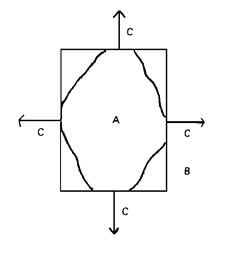
[From the above,] it follows that a person may walk throughout the expanse of [any] city, even if it is as large as Nineveh, whether or not it is surrounded by a wall.5
Similarly, it is permitted for a person to walk two thousand cubits in all directions outside the city. [When calculating these two thousand cubits, the entire area] is considered to be square, like a tablet,6 so that [the area in between] its furthest corners will also be included.7
If a person goes beyond two thousand cubits up to a distance of twelve mil, he should be given "stripes for rebelliousness"8. If he goes even one cubit beyond twelve mil, he should be punished by lashing [as prescribed] by the Torah.
Halacha 3
[There is a question whether] a person [is liable] if he goes beyond the Sabbath limit, [travelling] at a height of more than ten handbreadths above the ground9 - e.g., he jumps from one pillar to another - when none of the pillars has a surface area of four handbreadths by four handbreadths.10 For there remains an unresolved question [among the Sages] whether or not the Sabbath limits apply ten handbreadths above the ground.11.
[The matter is one of question only in an instance similar to the example given.] If, by contrast, a person walks on a surface that is four [handbreadths] by four [handbreadths], it is as if he is walking on the ground [even though the surface is ten handbreadths above the ground].12 The Sabbath limits apply in such an instance.
Halacha 4
A person who spends the Sabbath in a barn in the desert,13 in a corral, in a cave, or in a similar type of private domain may walk through its entire space and [may continue] to the limits of a square extending two thousand cubits in every direction [from that domain].
Similarly, a person who spends the Sabbath in an [open] valley14may walk to the limits of a square extending two thousand cubits in every direction from the place [at which he is located at the commencement of the Sabbath]. [This applies] even when he was sleeping at the time of the commencement of the Sabbath and thus did not consciously acquire the place as his Sabbath base.15
A person who is walking in an open valley and does not know how far his Sabbath limit extends may take two thousand ordinary steps. This is [his] Sabbath limit.
Halacha 5
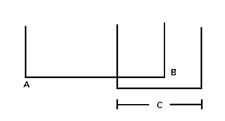
When a person walks the two thousand cubits that he is entitled to walk and his limit ends in a barn, in a corral, in a cave, or in a city, he is allowed to proceed only to the end of his limit. We do not say that since his limit ends within a private domain, he is entitled to walk throughout that domain.16
When does the above apply? When his limit ends in the midst of the city or in the midst of the cave. If, however, that private domain is included within his two thousand cubits,17 that entire domain is considered to be only four cubits, and the remainder [of the two thousand cubits] is calculated accordingly.
Halacha 6
What is implied? If there were one thousand cubits from the place a person established as his base for the Sabbath, or from the town [in which he spent the Sabbath],18 to a city or a cave that is a thousand cubits long or less, he may walk through the entire city or cave that he encounters and [continue] beyond it for 996 cubits.
Halacha 7
If, however, [in the instance mentioned above,] the city or the cave that begins within his Sabbath limits extends one thousand and one cubits, the person may walk only one thousand cubits - i.e., he may proceed to the end of the two thousand cubits [granted] him, [but no further].
Halacha 8

A person whose Sabbath limits end in the midst of a town may, nevertheless, move an article to any place within the town by throwing it.19
When a person spends the Sabbath in an open valley, and gentiles surround him with an enclosure on the Sabbath, he may still walk only two thousand cubits - even when this measure is included within the enclosure - in any direction.20 He may, nevertheless, move an article to any place within the enclosure by throwing it, provided it was enclosed for the sake of habitation.21
Halacha 9
[The following rule applies when] a person is in the midst of a journey - whether on sea or on dry land - and [intends] to enter a city: If he comes within two thousand cubits of the city before the commencement of the Sabbath, even though he did not arrive at the city until [after] the Sabbath [had commenced], he is permitted to enter,22 to walk throughout the entire city,23 and [continue] for two thousand cubits outside of it in all directions.
Halacha 10
[The following rule applies when] a person [is in the midst of a journey and intends to enter] a city, but falls asleep on the way, and does not awake until [after] the Sabbath [has commenced]: If when he awakes, he finds himself within the city's [Sabbath] limits, he is permitted to enter, to walk throughout the entire city, and [continue] for two thousand cubits outside of it in all directions.24
[This is permitted] because his intent was to journey to this city. Therefore, he is considered to have established his "place" for the Sabbath together with the inhabitants of this city, since he entered into their limits.
Halacha 11
A person who goes25 even a single cubit beyond [a city's] Sabbath limits should not reenter them. [The rationale is that] the four cubits that a person is granted in which to walk begin from the place where the person is standing. Therefore, since the person went a cubit or more beyond his Sabbath limit, he must remain in his place. He may not walk except in the four cubits that begin from the place in which he is standing, and continue in a forward direction.26
Similarly, a person who is even one cubit outside a city's Sabbath limits when darkness falls should not enter the city.27 Instead, he may proceed only two thousand cubits from the place where he was standing when the Sabbath commenced. If a person's Sabbath limit ends in the midst of the city, he may proceed [no further] than the end of his Sabbath limit, as has been explained.28
If one of a person's feet is inside [a city's] Sabbath limits and his other foot is outside the Sabbath limits [when the Sabbath commences], he may enter.29
Halacha 12
[The following rules apply to] a person who left the Sabbath limits unintentionally - e.g., gentiles took him outside [the limits], he was possessed by an undesirable temperament,30 or he inadvertently went beyond [the limit]: He may walk no more than four cubits.
If he returned [within his previous Sabbath limits] voluntarily, he may walk no more than four cubits. If [the forces that caused him to depart] returned him, it is as if he had never departed.31
If [these forces] left him in a private domain - e.g., the gentiles placed him in a barn, a corral, a cave, or another city - he may walk throughout that domain.32Similarly, if he inadvertently left his Sabbath limits [and entered] a domain of this nature, and became conscious of his actions while in this domain, he may walk throughout that domain.33
Halacha 13
When a person voluntarily left the Sabbath limits, he may walk only within four cubits, even when he was returned to his [original] Sabbath limits involuntarily34- e.g., he was taken back by gentiles or because of an undesirable temperament.
Similarly, if he voluntarily left the Sabbath limits, he may walk only within four cubits even when he is within a private domain - e.g., a barn or a corral.35
A person who sets out on the Mediterranean Sea may walk throughout the ship and carry throughout the ship, even though he is outside the Sabbath limits that he originally established as his Sabbath base.36
Halacha 14
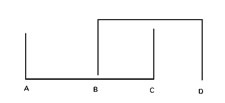
Whenever a person leaves his Sabbath limits unintentionally, and is surrounded by an enclosure on the Sabbath,37 he may walk throughout [the area of] that enclosure, provided it does not exceed two thousand cubits.38
When this enclosure that is created without his knowledge overlaps part of the Sabbath limit that he left [an additional leniency is granted]. Since he is allowed to walk throughout that enclosure, he may reenter his Sabbath limits. Once he enters, [he may proceed freely,] as if he had never left.39
Halacha 15
[The following rules apply when] any of the individuals whose movement is restricted to four cubits must relieve himself: He may leave [these four cubits], move away [an appropriate distance], relieve himself,40 and then return to his place.41
If when moving away to relieve himself, the person enters a portion of the Sabbath limits that he originally left: since he has entered, [his] entry [is accepted as fact], and it is as though he had never departed.42 [This leniency applies] provided he originally left unintentionally. If he left intentionally, he may walk only [within] four cubits, even if he reentered [his original limits].43
Halacha 16
[The following rules apply to] all individuals who are sanctioned by the court [to leave their Sabbath limits] - e.g., witnesses who are going to testify regarding their sighting of the moon,44 - and all others who are allowed to depart because of a mitzvah:45 When they reach their destination, they may proceed two thousand cubits in all directions.46 Should they become located in a city, they [are governed by] the same [rules as] the inhabitants of that city, and may proceed two thousand cubits beyond the city in all directions.
Halacha 17
[The following rules apply when] a person was sanctioned to depart [from his Sabbath limits], but in the midst of his journey, he was informed that the mitzvah that he had intended to perform had already been completed: He may proceed two thousand cubits in all directions. If a portion of the Sabbath limit from which he departed overlaps these two thousand cubits, he may return to his [original] place, and it is as though he had never departed.
All those who depart [from the Sabbath limits] to rescue Jewish lives from gentiles, from a [flooding] river, or from an avalanche, are granted two thousand cubits [in which to walk] from the place where they rescue them. [When Jews are rescued from gentiles, but] the gentiles' position is strong, and the rescuers fear spending [the remainder of] the Sabbath in the place where they rescue them, they may return to their [original] place, [carrying] their weapons.47
| FOOTNOTES | |
| 1. |
Sefer HaMitzvot (Negative Commandment 321) and Sefer HaChinuch (Mitzvah 24) include this prohibition as one of the 613 mitzvot of the Torah.
Having covered all the prohibitions associated with the performance of labor on the Sabbath, in this and the next chapter the Rambam focuses on another Biblical prohibition associated with the Sabbath - the prohibition against departing from one's location. With regard to this prohibition, it is also significant to consult Hilchot Eruvin, Chapters 6-8, which mention extending the Sabbath limits mentioned here through a convention of Rabbinic origin known as eruv t'chumim.
|
| 2. |
A mil is approximately one kilometer.
There are those who interpret the Rambam's ruling here as a change in his position from Sefer HaMitzvot, which can be interpreted as stating that the limit of two thousand cubits has its source in the Torah itself. In a responsa, however, the Rambam explicitly states that his statements inSefer HaMitzvot were intended to be general in nature, to be clarified in the Mishneh Torah.
It must also be noted that there are many authorities (among them the Ramban and the Rashba) who maintain that the Sabbath limits are a Rabbinic prohibition. (According to this view, the allusion to Exodus 16:29 is merely an asmachta.) Significantly, there is an early reference in the Rambam's works (Commentary to the Mishneh, Sotah 5:3) which supports this view.
The fundamental basis for these positions can be explained as follows: The measure of twelve milis mentioned in the Jerusalem Talmud (Eruvin 1:10), but not in the Babylonian Talmud. The Babylonian Talmud (Eruvin 17a) cites a dispute between Rabbi Akiva and other Sages. Rabbi Akiva maintains that the Torah established a Sabbath limit of two thousand cubits, but the other Sages differ. According to the Rambam, the ruling of the Jerusalem Talmud is accepted. According to the other view, this represents a difference of opinion between the majority opinion in the Babylonian Talmud (which appears to state that the Torah did not establish Sabbath limits) and the Jerusalem Talmud. Generally, when there is a difference between the majority opinion in the Babylonian Talmud, and the Jerusalem Talmud, the majority opinion of the Babylonian Talmud is accepted.
The Rabbinic origin of the prohibition of two thousand cubits is universally accepted. It would appear that the Shulchan Aruch (Orach Chayim 404:1) accepts the position that the entire concept of Sabbath limits is a Rabbinic institution. The Ramah, however, requires that consideration be taken of the Rambam's view.
Note also the Tzafenat Paneach, which emphasizes that all authorities agree that the observance of limits on travel on the holidays is Rabbinic in origin.
|
| 3. |
According to the Rambam, as a safeguard to the prohibition of the Torah. According to the other view, as an independent prohibition.
|
| 4. |
See Numbers 35:5.
|
| 5. |
Nineveh is used as a classic example of a metropolis because of the description of the city's size in the Book of Jonah (3:3, 4:11). Significantly, the Talmud (Eruvin 61b) gives Antioch as the example, and not Nineveh.
The entire city is considered to be the person's "place," in the wording used in Exodus (loc. cit.). Hence, as long as he stays within the city's confines, or goes less than two thousand cubits beyond them, he is not considered to have "left his place."
With the expression, "whether or not, it is surrounded by a wall," the Rambam touches on a Halachic point of particular relevance in the diaspora where it is not common for a city to have aneruv. There is a question if the term "city" used throughout this chapter refers to all cities, or only to those surrounded by a wall.
The rationale behind the latter thesis is that only when a city is surrounded by a wall is it a private domain, and fit to be described as a person's "place." When the city lacks a wall, the person's place is his individual domain. See Rashi, Eruvin 61b, Shulchan Aruch HaRav 396:1.
The Maggid Mishneh (in his gloss to these halachot, and more specifically, in his gloss to Hilchot Eruvin 7:4), explains that the Rambam does not subscribe to this restriction, and considers even a city without a wall as "one's place" even if it is forbidden to carry within it.
|
| 6. |
There is a difference of opinion among the Sages of the Mishnah (Eruvin 4:8) whether the city is considered to be the center of a circle with a radius of two thousand cubits, or the center of a square whose sides are twice that length. The Rambam follows the latter opinion, thus expanding the permitted area to include the corners of the square.
The determination of the limits of the city's boundaries from which these two thousand cubits are measured is discussed at the beginning of the following chapter.
|
| 7. |
The Maggid Mishneh states that although the corners of the square are included, one is allowed to walk 2800 cubits (the approximate distance to the corner of the square) only when one is, in fact, pointed in the direction of that diagonal. One may not arbitrarily rotate the area encompassed by the square so that one will always be walking along its diagonal.
|
| 8. |
This is the punishment given for the violation of a Rabbinic prohibition.
|
| 9. |
Since a public domain and a carmelit extend only to a height of ten handbreadths, the Sages questioned whether or not this same concept applied with regard to the Sabbath limits.
|
| 10. |
A surface less than four handbreadths by four handbreadths is not comfortable to use. Therefore, it is a matter of question (Rashi, Eruvin 43a).
|
| 11. |
The Maggid Mishneh and the Kessef Mishneh cite one of the Rambam's responsa, which states that this entire question applies on dry land only. On the sea or on a river, all authorities agree that if the sea or river is more than ten handbreadths deep, the Sabbath limits do not apply.
The rationale for this leniency is that the laws concerning the Sabbath limits are also derived from the encampment of the Jews in the desert, and there the Sabbath limits were measured only on the land, and more particularly, in a public domain. When a domain is classified within the category of carmelit, e.g., seas and rivers, the establishment of the Sabbath limits is merely Rabbinic in origin. Therefore, since the case at hand - whether the Sabbath limits apply above ten handbreadths - is a point in question, we follow the principle: When in doubt regarding a point of Rabbinic law, the more lenient view should be followed. (See Chapter 30, Halachah 13 and notes, for a further discussion of this issue.)
|
| 12. |
Eruvin 43a uses the expression, "It is like thick ground."
|
| 13. |
The intent is a private domain that is located outside a city and that was enclosed for the purpose of dwelling, or that is less than 5000 square cubits (Rashba, as quoted by the Maggid Mishneh). (See Chapter 16, Halachah 12, and Hilchot Eruvin 7:4.)
Halachah 2 emphasizes that a person's "place" can refer to the entire city in which he lives. Similarly, in this instance, since this private domain is a distinct entity, it is considered to be the person's "place," and the calculation of a person's Sabbath limits begins from the end of its borders.
|
| 14. |
I.e., a carmelit that is not enclosed (Chapter 14, Halachah 4). Needless to say, the same laws would apply in a public domain (Maggid Mishneh).
In this instance, the four square cubits surrounding the place where he is standing at the commencement of the Sabbath is considered his "place," and the two thousand cubits are calculated accordingly (Rashba, as quoted by the Maggid Mishneh).
|
| 15. |
This point is the subject of a difference of opinion among our Sages (Eruvin 4:5). There are opinions that maintain that a person must consciously acquire his place on the Sabbath. Otherwise, he is allowed to move within a square of four cubits alone. Eruvin 46a substantiates the opinion that the Rambam quotes as halachah.
|
| 16. |
The Hagahot Maimoniot quotes sources that allow a person to proceed throughout a domain - but no further - even though his Sabbath limits end within that domain. This view is also cited by the Ramah (Orach Chayim 408:1).
|
| 17. |
These concepts also apply in regard to a city. If it is included within the two thousand cubits of a person's Sabbath limits, it is only considered as four cubits. In this context, the commentaries clarify that when the urban area of a city is included within a person's two thousand cubits, but the city possesses some pasture land that extends beyond the two thousand cubits, the pasture land is not significant, and the city is still counted as four cubits (Ra'avad, as quoted by the Maggid Mishneh).
|
| 18. |
In this instance, we have based our translation on Rav Kapach's Yemenite manuscripts of theMishneh Torah, because the precise meaning of the wording employed in the standard printed text is extremely difficult to comprehend.
|
| 19. |
Needless to say, this ruling applies when the town is surrounded by an eruv. Eruvin 42b states that it is necessary to state this law, lest one think that this would be forbidden lest a person be drawn after the article he threw.
|
| 20. |
As stated in Chapter 16, Halachah 22, an enclosure that is erected on the Sabbath is significant - and therefore, the person is allowed to carry within it. Nevertheless, the erection of such an enclosure does not have any effect on the extent of a person's Sabbath limits, because these are established at the commencement of the Sabbath.
|
| 21. |
See Chapter 16, Halachah 1.
|
| 22. |
This refers to a classic instance recorded in the Mishnah, Eruvin 4:2. Once, when several Rabbis were traveling together with Rabban Gamliel on a ship, they had not reached port before the commencement of the Sabbath. After the ship docked, the Sages asked Rabban Gamliel if they might disembark or not. He assured them that they might, because at the commencement of the Sabbath, he had looked to see that they were within two thousand cubits of the city.
|
| 23. |
Regardless of its size, even if it is more than 2000 cubits. It is considered as if the person had already entered the city before the commencement of the Sabbath.
|
| 24. |
This also refers to a classic instance that occurred concerning Rabbi Tarfon. Eruvin 45a states that he was on his way to a city when night fell on Friday. Unsure of whether or not he was within the city limits, he did not proceed any further and spent the night in the fields. In the morning, the shepherds found him and told him, "Rabbi, the city is right in front of you. Why don't you enter?" He indeed did so, and lectured in the house of study throughout the entire day.
The Ra'avad questions why the Rambam quotes the story of Rabbi Tarfon, which is a baraita, rather than the Mishnah, Eruvin 4:4. The Mishnah states that a person who was journeying toward a city, but sat down to rest at nightfall, may enter the city on the Sabbath, if he has already passed within its Sabbath limits. Although the person was unsure whether or not he entered the Sabbath limits, since he was actually within those limits and desired to be in the city on the Sabbath, he is given the privileges of the city's inhabitants.
If, however, the person did not have a desire to be within the nearby city, or specifically stated "This is my place for the Sabbath," he may walk no more than 2000 cubits from that specific place, despite the fact that he is within the city limits. Since he consciously segregated himself from the inhabitants of the city, he is not granted their privileges (Maggid Mishneh; Shulchan Aruchand Ramah, Orach Chayim 400:1).
|
| 25. |
This refers to a person who left the city's Sabbath limits either intentionally, for purposes not directly associated with a mitzvah, unintentionally, or because of forces beyond his control, as mentioned in the following halachah.
|
| 26. |
A key to the understanding of this halachah and the questions it has raised among the commentaries is the principle of הבלעת תחומים, the overlapping of boundaries. What this means is that when a person has a Sabbath limit already established, but leaves - either intentionally or because of forces beyond his control - he is given a new Sabbath limit in which he may walk. If the boundaries of that new limit overlap into his previous Sabbath limit, he may return there and walk freely within that limit.
To apply these principles to the case at hand: When a person leaves his Sabbath limits voluntarily, the place at which he stops is considered to be his base for the remainder of the Sabbath. He is granted only four cubits in which to walk. Moreover, as indicated in the notes on Chapter 12, Halachah 15, the Rambam maintains that this does not mean that the person may walk four cubits in all directions, but that he may walk four cubits in one of the four directions. Once he walks four cubits to one side, however, he may not walk four cubits in the other direction.
In the case of a person who willfully departs from the Sabbath limits, he is considered to have chosen the four cubits in front of him. Therefore, it is only within these four cubits that he may walk; he may not turn back in the direction of his original place at all.
This is the explanation given by the Maggid Mishneh for the Rambam's ruling. The Maggid Mishneh questions, however, the restriction imposed by the Rambam: Why must we say that the person is restricted to the four cubits in front of him? The person has the choice of four cubits in any direction. If he chooses the four cubits behind him, he will be able to reenter his previous Sabbath limits, and, based on the principle of הבלעת תחומים mentioned above, he would then be able to conduct himself as any other member of the city. Why prevent him from utilizing this option?
This objection - first mentioned by the Ra'avad - is echoed by Rav Yosef Karo in the Kessef Mishneh. In the Shulchan Aruch (Orach Chayim 405:1), however, Rav Karo quotes the Rambam's decision. Based on the above principles, the Magen Avraham 405:1 allows a person to return to his previous Sabbath limits if he leaves the city's Sabbath limits unintentionally or because of forces beyond his control, provided the four cubits in which he is allowed to walk overlap his previous Sabbath limits. If, however, he intentionally leaves the city's Sabbath limits, no leniency is allowed, as the Rambam states.
|
| 27. |
Since the person is outside the city's Sabbath limits, he is more than two thousand cubits away. Thus, he cannot enter the city unless he transgresses and goes beyond his own Sabbath limits.
|
| 28. |
In Halachot 5 and 7. The Maggid Mishneh raises an obvious question: Since the person is located more than two thousand cubits outside the city, how is it possible for his Sabbath limits to end within the city? [Significantly, when quoting this law, the Shulchan Aruch (loc. cit.:3) omits this clause.]
The Maggid Mishneh answers that this refers to a situation in which a person was traveling to a city when night fell on Friday, and consciously decided to be considered as an individual, rather than as a member of the city. (See the notes on Halachah 10.)
The Kessef Mishneh explains that the Rambam is speaking of a second location, a town other than the one that the person originally desired to enter. The Or Sameach offers a unique explanation, stating that this refers to a situation where the person was more than two thousand cubits outside the city, and thus beyond its Sabbath limits. Nevertheless, there was a large cave included within his two thousand cubits. Since that cave is considered to be only four cubits, it is possible that his own Sabbath limits will extend into the city.
|
| 29. |
He may conduct himself as a member of the city with regard to its Sabbath limits. Although the Ra'avad objects to the Rambam's ruling, the Maggid Mishneh and the Shulchan Aruch (loc. cit.:2) follow the Rambam.
|
| 30. |
More literally, this phrase would be rendered as "an evil spirit." Our translation is based on the Rambam's Commentary on the Mishnah (Eruvin 4:1, the source for this halachah), which interprets this phrase as referring to "any malfunction in a person's intellectual functioning, whatever the cause may be."
|
| 31. |
And he may walk within its limits at will. Note the Shulchan Aruch (Orach Chayim 405:8), which follows the ruling of Rabbenu Asher and allows a person to walk through his city at will, even if he returned voluntarily. The rationale is that since this was his original Sabbath limit, it is as though he had never departed.
|
| 32. |
In this instance, we apply the principle that an entire domain can be considered to be four cubits. This ruling is the subject of a difference of opinion in the Mishnah cited above, and there areGeonim who follow the more stringent ruling and restrict the person to four cubits in this situation as well. Nevertheless, the Shulchan Aruch (Orach Chayim 405:6) and the other later authorities follow the Rambam's decision.
|
| 33. |
For Eruvin 43b equates acting without awareness of the prohibition involved to being taken away forcefully by gentiles.
|
| 34. |
Needless to say, according to the ruling of the Shulchan Aruch mentioned previously in Note 31, one would be allowed to walk freely in such circumstances.
|
| 35. |
The Maggid Mishneh relates that the Rashba differs with this decision, maintaining that, in this instance, we should also apply the principle that an entire domain can be considered to be four cubits. It is, however, the Rambam's view that is accepted by the Shulchan Aruch (Orach Chayim405:6).
|
| 36. |
This ruling also reflects a classic incident related by the Mishnah (Eruvin 4:1): Rabban Gamliel, Rabbi Elazar ben Azaryah, Rabbi Akiva, and Rabbi Yehoshua were on a ship that left the port of Plandarsin on the Sabbath. Rabban Gamliel and Rabbi Elazar walked throughout the ship despite the fact that it had traveled beyond their original Sabbath limits. (This follows the ruling in Halachah 12, that if gentiles take a person outside his Sabbath limits, but place him in an enclosed area, he may walk throughout the entire area. The gentiles took the Sages outside their Sabbath limits, but since the ship was enclosed, they were allowed to walk throughout its confines.)
The Mishnah continues, stating that Rabbi Akiva and Rabbi Yehoshua remained within the four cubits in which they were standing. Nevertheless, the Mishnah explains that this was merely a stringency they accepted upon themselves and not a binding obligation.
The Shulchan Aruch (loc. cit.:7) accepts the more lenient view and allows one to proceed throughout a ship's confines. It must be emphasized, however, that this leniency applies only when there are barriers around a ship's deck. When the barriers surrounding a ship's deck are removed, one may proceed throughout the ship only when it is moving. If it is anchored, the passengers may move only four cubits.
|
| 37. |
As stated in Halachah 8, and in Chapter 16, Halachah 22, an enclosure that is erected on the Sabbath is significant. Therefore, this situation is considered analogous to that of a person who leaves his Sabbath limits unintentionally and enters an enclosed domain.
|
| 38. |
The Rambam does not grant the person any greater leniency than if he had been located in that place when the Sabbath began, and afterwards gentiles surrounded it with an enclosure. (See Halachah 8.)
The Ra'avad and the Rashba differ and explain that greater leniency should be granted in this instance. Halachah 8 is speaking about establishing a person's place at the beginning of the Sabbath. Hence, if the enclosure is not erected at that time, it is not significant. This halachah is speaking about a person who is removed from his Sabbath limits against his will. Since we follow the principle that any enclosure is considered to be merely four cubits - whatever the size of that enclosure - he should be granted permission to walk throughout its limits, and 1996 cubits beyond it.
|
| 39. |
In this instance as well, the Rambam is referring to a well known Talmudic incident. Eruvin 43b relates that Rav Nechemiah, one of Rav Nachman's students, had taken a Sabbath stroll, and while lost in thought had strayed beyond the Sabbath limits.
"Your student, Nechemiah, is beset by disturbance," Rav Chisda told Rav Nachman.
"Make a human partition around him [see Chapter 16, Halachah 23] and let him enter," Rav Nachman replied.
|
| 40. |
Note the Shulchan Aruch (Orach Chayim 406:1), which questions if this leniency applies when the person must urinate, or if it applies only when he must defecate.
|
| 41. |
Here we see how important the consideration of human dignity is. Even the prohibitions of our Sages - which the Torah obligates us to fulfill - are waived because of it (Rashi, Eruvin 41b).
This would appear to indicate that, according to the Rambam - who rules that the Sabbath limit of twelve mil has its source in the Torah - a person who travels more than twelve mil beyond his Sabbath limits may not move beyond four cubits, even to relieve himself (Minchat Chinuch, Mitzvah 24).
|
| 42. |
The Shulchan Aruch (loc. cit.) states that one may intentionally move toward one's Sabbath limits in search of a private place to relieve oneself. Nevertheless, if such a place presents itself before one is able to return to his Sabbath limits, he must avail himself of it. He may then move far enough away so as not to be bothered by the odor, but then he must confine himself to a square of four cubits.
|
| 43. |
As mentioned in Halachah 13, even if he was returned to his Sabbath limits by gentiles, the restrictions against his walking freely are not lifted.
|
| 44. |
See Hilchot Kiddush HaChodesh 3:2-4, which describes how witnesses who saw the new moon should proceed to Jerusalem to give testimony, even if it is necessary to violate the Sabbath laws.
|
| 45. |
Rosh HaShanah 2:6 explains that this refers to individuals who leave their Sabbath limits in an attempt to save lives - e.g., a midwife or a person who goes to rescue people from drowning, from an attack, or from an avalanche, as mentioned in the following halachah.
|
| 46. |
Rosh HaShanah (ibid.) explains that originally such people were considered to be individuals who leave their Sabbath limits voluntarily, and therefore could proceed no more than four cubits. Rabban Gamliel was the one who granted this leniency.
|
| 47. |
See Chapter 2, Halachah 23, where these concepts have been explained.
|
Shabbos - Chapter Twenty Eight
Halacha 1
Whenever there is a home that is outside a city, but seventy and two thirds cubits - i.e., the length of one of the sides of [a square] 5000 square cubits in area1 - or less from the city, it is considered to be part of the city and joined to it. When two thousand cubits are measured in all directions from the city, this house [is considered to be on the extremity of the border2 and] the measurement [begins] from there.3
Halacha 2
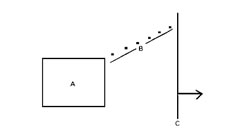
If one house is within seventy cubits of a city, another house is within seventy cubits of the first, and a third within seventy cubits of the second [and so on], they are all considered to be one city, although the chain extends for a distance of several days walk. When [the Sabbath limits] are measured, they are measured from the last house, provided this house is a dwelling4 four cubits by four cubits5 or more [in area].
Halacha 3
[The following are considered to be dwellings in the context mentioned above:] a synagogue that has a dwelling for its attendants, a temple of a false deity that has a dwelling for its priests, a storeroom that has a dwelling, a bridge or a grave that has a dwelling,6 a structure four cubits by four cubits that has three walls but no roof, watchtowers,7, a house built [on an island]8 at sea,9 a structure with two walls and a roof,10 a cave with a building at its entrance that is used as a dwelling. All of these are included as part of the city, provided they are located within seventy and a fraction cubits of it.
From this house on the extremity [of the city], we consider it as if a line is extended along the length of the entire city, and we measure two thousand cubits outward from that line.
Halacha 4
The following [structures] are not added [as the furthest extremities of a city's boundaries]: a structure with two walls and no roof - despite the fact that people dwell within it - a bridge, a grave, a synagogue, a temple to false deities, and a storehouse that do not have dwellings; a cistern, a trench, a cave,11 a dovecote, and a house on a ship.12 All of these are not added [to a city's boundaries].
Halacha 5
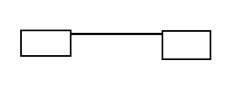
[The following rule applies when] two towns are located next to each other: If the distance between them is 141 1/3 cubits [or less], so that [the distance between them] is seventy and a fraction [as measured] from one town and seventy and a fraction [as measured] from the other town, they are considered to be a single city. Accordingly, [the inhabitants of] each town can walk throughout the other town and two thousand cubits outside of it.
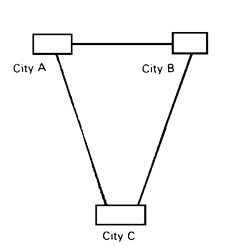
[The following rules apply when] three villages are located in a triangle: If there are two thousand cubits or less between the village in the middle and both of the villages on the extremities, and there are 282 2/3 cubits [or less] between the villages on the extremities, so that if the middle village were placed on the line between them, there would be 141 1/3 cubits [or less] between it and both13 of them,14 they are all considered to be a single city. When [a Sabbath limit] is measured, it is measured two thousand cubits in all directions from [the single unit created from] these three [villages].
Halacha 6
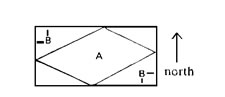
When a city is rectangular or square, since it has four angles that are equal, we leave it as it is, and measure two thousand cubits in each direction on all four sides.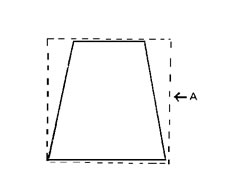 17
17
17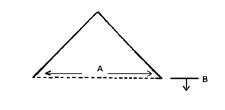
If it is circular, we construct an [imaginary] square around it, considering it as the center of that square. We measure two thousand cubits from the sides of that square in all directions. Thus, [the inhabitants] gain [the area] at the corners.
Halacha 7
Similarly, if a city is triangular in shape, or if it has many different sides, we construct a square around it, and afterwards measure two thousand cubits from each side of that square.
When we construct a square around a city, we construct this square according to the compass directions,18 making each of its sides face one of the four directions and extend in a straight line vertically or horizontally.
Halacha 8
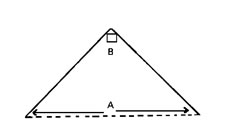
When a city is [shaped like a trapezoid,] one side being shorter than the other, we consider both sides to be of the length of the longer side.
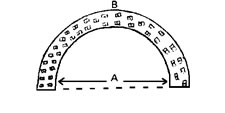
[The following rules apply when a city] is L-shaped or crescent-shaped: If there are less than four thousand cubits between the two points on the extremities,19we measure [the Sabbath limit] from [the imaginary line that connects these points].20 When there are more than four thousand cubits between the two points on the extremities, we measure [the Sabbath limit] from [the vertex of] the crescent.21
Halacha 9
[The following rules apply to] a city located at the edge of a river:22 If there is a dock four cubits wide at the river bank, so that one can stand on it and use the river, the river is considered to be part of the city. Thus, [the Sabbath limit of] two thousand cubits is measured from the other bank of the river, because the dock causes the river to be considered part of the city.
If there is no dock, the measurement begins from the edge of the houses,23and [the width of] the river is included in the two thousand cubits.
Halacha 10
[The following laws apply to] the dwellers of huts:24 [The Sabbath limits] should be measured from the entrance to their homes.25 If [in that area] there are three courtyards with two houses26 in each, [the entire area] is established [as a unit].27 A square is constructed around it, and two thousand cubits are measured [from its borders], as all other cities.
Halacha 11
Halacha 12
When does the above apply? When a plumb line descends directly [into the crevice], for then [the slopes of the crevice] cannot be used.33 If, however, the plumb line does not descend directly,34 one should not span [the crevice with the measuring rope], unless the crevice is two thousand cubits or less in depth.
Halacha 13
With regard to a valley with a gradual descent, one should ascend and descend, measuring by approximation.35 If the valley is more than fifty cubits wide and thus cannot be spanned [by the measuring rope], [the measurers] should go to a place where they can span the gap,36 measure the span [there], see the parallels to [the place they are] measuring, and return to their task.
Halacha 14
Halacha 15
[The following rules apply when the measurers] reach a mountain: If the slope of the mountain ascends ten handbreadths within a length of five cubits, [the measurers should] measure the span [above the mountain],42 and return to their [ordinary] measurement.
If its height rises acutely, its slope ascending ten handbreadths within a length of four cubits, [all that is necessary is] to approximate [its length], and then one may proceed further.
If a mountain is so wide that [the measuring rope] cannot span it - i.e. it is more than fifty cubits wide - it should be measured by approximation, small portions at a time. This is the meaning of the expression,43 "In the mountains, they measured by approximation."
Halacha 16
What is implied [by the directive to] measure mountains or valleys that cannot be spanned by approximation? Two people hold a rope four cubits long. The person above should hold the upper end at the level of his feet, while the person below should hold the lower end at the level of his heart.44 The person standing above then descends to the level of the person standing below, who, in turn, descends further to the extent of the rope. [The entire process should be repeated and] continued until the entire area has been measured.
When [the measurers] go to span a mountain or a valley,45 they should not depart from the Sabbath limits, lest passersby see them and say, "The Sabbath limits passed by here."
Halacha 17
We rely only on the measurement by an expert46 who is proficient in the measuring of land. If the Sabbath limits [of a city] had been established and an expert came and measured [them again], increasing them in some places and decreasing them in others, we accept his ruling regarding the limits that he increased.47
Similarly, if two experts came and measured the Sabbath limits, one giving a larger measure and the other giving a smaller measure, we accept the ruling of the one who gives the larger measure,48 provided that the inconsistency is not greater than the difference between the diagonal [and the border of] a city.49
Halacha 18
What is implied? We can say that the reason the latter increased the measure was the following: The first erred and measured the two thousand [cubits] from the corner of the city diagonally.50 Therefore, he reduced its measurement, and the distance between the border of the Sabbath limits and the city will be less than two thousand [cubits]. [By contrast,] the second person [who measured] measured the two thousand [cubits] from the edge of the city [and therefore produced a larger figure]. We do not, however, consider the possibility of the first person's making any greater mistake.
Accordingly, if the latter measure is less than 580 cubits51 more than the original measure, it is accepted. A larger increase, however, is not accepted.
Halacha 19
Even when a servant or a maidservant52 says, "The Sabbath limits reach here,"53 their statements are accepted. An adult's statement is accepted if he says, "We would proceed until this place when I was a child." His testimony is relied on in this instance, 54since our Sages stated that the lenient approach should be accepted in these rulings, and not the more stringent one, because the measure of two thousand cubits is a Rabbinic institution.
| FOOTNOTES | |
| 1. |
See the Rambam's Commentary to the Mishnah (Eruvin 5:2) which notes the difference between the figures mentioned here and the precise mathematical terms. See also Tosafot Yom Tov, Eruvin 5:2.
|
| 2. |
See Halachot 6 and 7, which state that a square should be made to include the furthermost extremities of the city, and the Sabbath limits should be measured from there.
|
| 3. |
The Maggid Mishneh notes that the Rambam appears to be saying that the Sabbath limits are measured from the edge of the city. He notes that there are opinions (see Eruvin 5:2) that grant a city a karpef (a seventy and two-thirds cubit extension) even if it is not close to another city. According to those views, the Sabbath limits are calculated seventy and two thirds cubits from the city's boundaries. The Rambam (Commentary on the Mishnah) rejects that view.
The Rambam's opinion is accepted by the Shulchan Aruch (Orach Chayim 398:5). The other view is accepted by the Tur and quoted by the Ramah.
|
| 4. |
The intent is a permanent dwelling. A temporary structure, or a building that does not have facilities for lodging is not sufficient, as explained in the following halachot.
|
| 5. |
The Magen Avraham 398:6 emphasizes that this does not include all structures with a total area of sixteen square cubits. Each side of the building must be at least four cubits. (See a parallel inHilchot Mezuzah 6:2.)
|
| 6. |
Rav David Arameah explains that it was common for a bridge to have a dwelling for a toll collector, and a grave to have a dwelling for a watchman.
|
| 7. |
Our translation is based on the Rambam's Commentary on the Mishnah (Ma'aser 3:7).
|
| 8. |
The bracketed additions are based on Rashi's commentary (Eruvin 55b).
|
| 9. |
Such a house is useful in unloading cargo from ships (Magen Avraham 398:7).
|
| 10. |
The Ra'avad notes that the question of whether such a structure is acceptable is left unresolved by Eruvin, loc. cit. Accordingly, he rules stringently. The Rambam's position is, however, followed by the Shulchan Aruch (Orach Chayim 398:6).
|
| 11. |
The commentaries on Eruvin 55b state that the latter three are excluded even if there are people who inhabit them.
|
| 12. |
Because it is not anchored permanently and may depart, it is considered to be a temporary dwelling (Magen Avraham 398:10).
|
| 13. |
See the Chatam Sofer (Orach Chayim, Responsa 94), which emphasizes that each of the exterior villages can be no more than 141 1/3 cubits from the imaginary line leading to the middle village. It is not sufficient that there be a total sum of less than 282 2/3 cubits between the two villages.
|
| 14. |
This phrase and the phrase that precedes it create a difficulty. From the phrase, "there are 282 2/3 cubits [or less] between the villages on the extremities," one would assume that this rule does not apply when the two villages on the extremities are separated by a greater distance. Nevertheless, the phrase "if the middle village were placed on the line between them, there would be 141 1/3 cubits [or less] between it and both of them," appears to imply that even were the distance between the two villages on the extremities to exceed 282 2/3 cubits, as long as the villages on the extremities are not more than 141 1/3 cubits from the place the middle city would take up, it is acceptable.
From the diagram that the Rambam drew to accompany his Commentary on the Mishnah (Eruvin5:3), the former interpretation would appear appropriate. (Similarly, the Ra'avad interprets the Rambam's intent in this manner and, therefore, objects.) Nevertheless, both the Maggid Mishnehand the Radbaz state that the width of the city should be added to the sum of 282 2/3 cubits. TheShulchan Aruch (Orach Chayim 398:8) quotes the Rambam's wording verbatim. The Ramah, however, clarifies the ruling according to the interpretation of the Maggid Mishneh.
|
| 15. |
This refers to a wall on which there are no dwellings (Maggid Mishneh).
|
| 16. |
Rashi (Eruvin 26a) explains that when a wall is erected after an area has been settled, the wall causes the entire village to be considered as if it were four cubits in length. Therefore, we measure from the wall. When, by contrast, the wall was erected before the houses were built, the wall is not halachically significant. Accordingly, the Sabbath limits are measured from the houses. Based on the Rambam's statement's in Halachah 2, it is questionable if he would accept this interpretation.
|
| 17. |
Eruvin 55a and the Shulchan Aruch (Orach Chayim 398:1) state that even if the sides of such a city are not positioned directly north and south, nothing is added to its size, because it is rectangular or square in shape.
|
| 18. |
This applies even when the total area of the square is increased by constructing it in this fashion.
|
| 19. |
I.e., if the Sabbath limits of the houses on the extremities overlap, the houses are considered to be part of a single entity.
|
| 20. |
This applies regardless of the distance from the vertex of the crescent to the imaginary line connecting its extremities. Even if it is more than two thousand cubits, the entire area is considered to be a single unit (Kessef Mishneh).
|
| 21. |
This applies to the house at the vertex. The Rashba considers each of the sides of the crescent to be a separate city. Sefer Ha'Itim considers every house to be an entirely separate entity. TheMagen Avraham 398:2 states that the entire crescent is considered to be a single entity. According to this conception, the only difference between this instance and the previous clause is that one may not walk more than two thousand cubits away from the houses in the open area between them.
Based on the rulings of Rabbenu Asher and the Tur, the Ramah mentions two leniencies: a) Even when the two extremities of the crescent are more than four thousand cubits away from each other, the entire area of the crescent until the points on the either side which are four thousand cubits removed, is, nevertheless, considered to be a single entity.
b) If the space from the vertex of the crescent to the imaginary line connecting the two extremities is less than two thousand cubits, the entire area is considered to be a single entity even though there are more than four thousand cubits between each side.
|
| 22. |
Rabbenu Yitzchak Alfasi - and subsequently the Shulchan Aruch (Orach Chayim 398:9) - interpret this as referring to a river that usually dries up and is filled with water only during the rainy season.
|
| 23. |
The city itself, however, is considered to be a collective entity (Maggid Mishneh). Note Rashi (Eruvin 61a), who follows a different perspective entirely, stating that, because there is no dock, the city is not considered as a permanent location, and every home is judged to be an individual entity.
|
| 24. |
More specifically, in his Commentary on the Mishnah (Ma'asrot 3:7), the Rambam defines the Hebrew צריפין as referring to "V-shaped lean-tos made from reeds and wood."
|
| 25. |
These huts are not considered to be permanent dwellings. Hence, their aggregate is not considered to be a unit. Note, however, the Ramah (Orach Chayim 398:10), who states that if a group of such dwellings is surrounded by a wall ten handbreadths high or a trench ten handbreadths deep, they are considered to be a single unit.
|
| 26. |
This refers to permanent structures built of wood and/or stone.
|
| 27. |
The three courtyards, each containing two houses, are sufficient to be classified as a city (Eruvin59a). Since we are classifying the permanent houses as a city, that status is conferred upon the area as a whole, including also the huts.
|
| 28. |
Eruvin 58a interprets Exodus 27:18, "its width fifty by fifty," as an indication that the width of fifty cubits should be measured with a rope of that size.
|
| 29. |
For when the rope is shorter, the measurers may pull it tightly and extend its length (Rashi, Eruvin58a).
|
| 30. |
For when the rope is longer, it may sag and cause the measure to be shortened (Rashi, Eruvin58a).
|
| 31. |
I.e., rather than measure the length of the incline, the entire valley should be measured as a unit of fifty cubits or less.
|
| 32. |
The Maggid Mishneh states that this represents the Rambam's interpretation of the statements of Abbimi (Eruvin 58b). Rabbenu Asher offers a different interpretation of that passage, which is accepted by the Shulchan Aruch (Orach Chayim 399:4).
|
| 33. |
For the incline is too steep.
|
| 34. |
And thus the slopes of the incline can be used for various purposes.
|
| 35. |
Our translation is based on the Rambam's Commentary on the Mishnah (Eruvin 5:4). See Halachah 16 for an explanation of the process followed.
|
| 36. |
Provided it is within the Sabbath limits. He should not, however, go beyond the Sabbath limits, lest an observer notice his measurements and mistakenly think that the place is within the Sabbath limits (Eruvin 58b and Halachah 16 above).
|
| 37. |
Tosafot, Eruvin 58a, states that the intent is not actually to pierce the wall, but that one would be required to erect poles extending above the wall and measure from them.
|
| 38. |
The Rambam is referring to a wall whose sides are not straight, and hence the determination of its exact thickness is difficult.
|
| 39. |
I.e., its incline is gentle enough to allow the public to ascend it without difficulty.
|
| 40. |
The Rambam's ruling follows the version of Eruvin 58a that appears in the texts of several earlygeonim. The standard printed text of the Talmud differs. In his gloss, the Ra'avad refers to the version of the standard text.
|
| 41. |
And thus its thickness can be measured easily at either side. It must be measured exactly. The leniency granted in the first clause applies to a wall that ascends gradually, but not gradually enough to make it easily accessible for public use.
|
| 42. |
By erecting a pole equivalent to the height of the mountain on either side (Shulchan Aruch, Orach Chayim 399:4).
|
| 43. |
Eruvin 5:4.
|
| 44. |
In this way, the rope will be held horizontally, on more or less an even plane.
|
| 45. |
Which cannot be measured in the normal manner, as mentioned in Halachot 13 and 15. See also Halachah 19.
|
| 46. |
In his Commentary on the Mishnah (Eruvin 5:5), the Rambam defines this as a person who knows engineering and is proficient in the measurement of land.
|
| 47. |
The Rambam's wording appears to imply that one accepts the opinion of the expert only with regard to the Sabbath limits that he increased, but not with regard to those that he decreased. TheMaggid Mishneh and the Kessef Mishneh note that although the Rambam is quoting the wording of the Mishnah (Eruvin, loc. cit.), the Talmud (Eruvin 59a) explains that the ruling of the expert must be accepted even with regard to those places where he decreased the Sabbath limit. The Kessef Mishneh notes that even in his Commentary on the Mishnah (loc. cit.), the Rambam follows this interpretation.
Note, however, Merkevet HaMishneh, which explains the Rambam's ruling here according to its simple interpretation. When the original measurement of a city's Sabbath limits was made by ordinary people, the expert's advice must be adhered to entirely, whether it is more stringent or more lenient. When, however, the original limits were also established by experts, the situation resembles the latter clause of the halachah, and the second expert's opinion is followed only when it is more lenient.
|
| 48. |
Because, as stated in Halachah 19, the more lenient opinion is accepted, since the Sabbath limit of two thousand cubits is a Rabbinic institution.
|
| 49. |
We do not say that the difference between the two figures could only be a minute measure because of imprecision. Instead, we allow the possibility of a major error, as explained in the following halachah.
|
| 50. |
Instead of measuring 2000 cubits on the diagonal, the person should have measured approximately 2800, as explained in Chapter 27, Halachah 2, and notes. Measuring only 2000 cubits on the diagonal causes the entire measure to become reduced.
|
| 51. |
I.e., if the diagonal of a square is 2000, the side will be approximately 1420. The figure stated by the Rambam is not exact, as the commentaries mention in detail.
|
| 52. |
There are two difficulties regarding the statements of a servant or maidservant. First, they are not acceptable witnesses. Also, as a whole, such individuals are known to be less than careful with regard to ritual observance.
|
| 53. |
I.e., the servant's statements were intended to increase the Sabbath limit of a city by saying that the limit originally established was greater than the one observed at present.
|
| 54. |
Generally, a person's testimony is accepted only when he qualifies as a witness at the time he saw an event take place and at the time he gives his testimony. Since a child is not an acceptable witness, testimony of this nature would ordinarily be rejected. In this instance, however, it is accepted. (See Hilchot Edut 14:3 for other examples of instances in which similar testimony is accepted.)
|
Shabbos - Chapter Twenty Nine
Halacha 1
It is a positive commandment from the Torah1 to sanctify the Sabbath day with a verbal statement,2 as [implied by Exodus 20:8]: "Remember the Sabbath day to sanctify it" - i.e., remember it with [words of] praise [that reflect its] holiness.3
This remembrance must be made at the Sabbath's entrance and at its departure: at the [day's] entrance with the kiddush that sanctifies the day, and at its departure with havdalah.4
Halacha 2
Halacha 3
This is the text of the havdalah prayer:
Blessed are You God, our Lord, King of the universe, who distinguishes between the holy and the mundane, between light and darkness, between Israel and the nations, and between the seventh day and the six days of activity.10 Blessed are You, God, who distinguishes between the holy and the mundane.
Halacha 4
The essence [of the mitzvah] of sanctifying the Sabbath [is to do so] at night.11If a person does not recite kiddush at night - whether consciously or inadvertently - he may recite kiddush12 throughout the entire [Sabbath] day.13
A person who does not recite havdalah at night may recite [this blessing] on the following day,14 and [indeed] may recite [this blessing] until [nightfall] on Tuesday15 [if he does not fulfill his obligation beforehand].
[Although the havdalah blessing may be recited at a later time,] one should recite the blessing on a flame only on Saturday night.16
Halacha 5
A person is forbidden17 to eat or to drink wine from the commencement of the Sabbath onward18 until he recites kiddush. Similarly, after the conclusion of the day, a person is forbidden to begin to eat, drink, perform labor,19 or taste anything until he recites havdalah. Drinking water is, however, permitted.20
Should a person forget or transgress and eat or drink before reciting kiddush orhavdalah, he may nevertheless recite kiddush or havdalah afterwards.21
Halacha 6
It is a mitzvah [instituted by] our Sages to recite kiddush over [a cup of] wine22and to recite havdalah over [a cup of] wine.
Although one recites havdalah in one's [evening] prayers, one is required to recite [this blessing] over a cup [of wine].23 [Nevertheless,] once a person has said "[Blessed is He24] who distinguishes between the holy and the mundane," he is permitted to perform labor25 even though he has not recited havdalahover a cup [of wine].
Halacha 7
What is the procedure he should follow: He should take a cup that contains arevi'it28 or more, wash it thoroughly inside, and rinse its outside.29 He should fill it with wine, hold it in his right hand, lifting it above the ground more than a handbreadth,30 without supporting it with his left hand.
One recites the blessing [borey pri] hagefen and then the kiddush. It is, however, common custom among the Jewish people first to recite the passageVayechulu,31 then the blessing [borey pri] hagefen and then the kiddush
Halacha 8
[The mitzvah of] kiddush [may be fulfilled] only in the place of one's meal.34What is implied? A person should not recite the kiddush in one house35 and eat his meal in another.36 One may, however, recite kiddush in one corner and eat one's meal in another.
[One might ask:] Why is kiddush recited in the synagogue? Because of the guests who eat and drink there.37
Halacha 9
A person who desires to partake of bread more than of wine, and similarly, a person who has no wine, should wash his hands, recite the blessing hamotzi, and then recite kiddush. Afterwards, he should break bread and eat.
Havdalah, by contrast, may not be recited over bread, but only over wine.38
Halacha 10
A person who had intended to recite kiddush over wine on Friday night, but forgot, and before he recited kiddush washed his hands [with the intention of partaking of bread], should recite kiddush over bread. He should not recitekiddush over wine after washing his hands [to partake of] a meal.39
It is a mitzvah to recite a blessing over wine on the Sabbath day before partaking of the second [Sabbath] meal.40 This is called "the great kiddush."41One recites only the blessing borey pri hagefen, partakes of the wine,42 washes one's hands, and begins the meal.
[On the Sabbath day as well,] a person is forbidden to taste any food before he recites kiddush.43 This kiddush may also be recited only in the place where one eats one's meal.
Halacha 11
A person may recite kiddush over a cup [of wine] on Friday before sunset, even though the Sabbath has not commenced.44 Similarly, he may recite havdalahover a cup [of wine] before sunset, even though it is still Sabbath.45 For the mitzvah of remembering the Sabbath involves making [a statement to this effect] at the entrance and the departure of the Sabbath, or slightly before these times.
Halacha 12
A person who is in the midst of eating [a meal] on Friday when the Sabbath commences should spread a cloth46 over the table,47 recite kiddush,48complete his meal,49 and recite grace.50
A person who is in the midst of eating [a meal]51 on the Sabbath when the Sabbath departs should complete his meal,52 wash his hands,53 recite grace over a cup of wine,54 and afterwards recite havdalah over [this cup].55 If he is sitting and drinking,56 he should interrupt his drinking,57recite havdalah, and begin drinking again.
Halacha 13
A person who is eating and completes his meal at the commencement of the Sabbath should recite grace first and then recite kiddush on a second cup of wine.58 He should not recite grace and kiddush on the same cup [of wine], because two mitzvot should not be performed with the same cup [of wine].59For both the mitzvah of kiddush and the mitzvah of grace are mitzvot that emanate from the Torah itself.
Halacha 14
Kiddush may be recited only on wine that is fit to be offered as a libation on the altar.60 Therefore, if one mixed even a drop of honey61 or yeast62 the size of a mustard seed in a large barrel [of wine], kiddush may not be recited upon it.
This is the ruling that we follow universally in the west. There is, however, an opinion that allows kiddush to be recited on such wine.63 [This view] explains that the term "wine that is fit to be offered as a libation on the altar" excludes only wine with an unpleasant fragrance,64 wine that was left uncovered,65or wine that was cooked.66 Kiddush may not be recited on any of these wines.
Halacha 15
Wine that tastes like vinegar may not be used for kiddush although its fragrance is that of wine.67 Similarly, we may not recite kiddush over [the beverage produced from] pouring water over the dregs of wine, although it tastes like wine.
When does the above apply? When the ratio between the water poured over the dregs and the beverage produced is less than three parts to four parts. If, however, the ratio is more than three parts to four parts, [the beverage produced is considered to be] diluted wine, and kiddush may be recited over it.68
Halacha 16
When a person drinks from a vessel containing wine, even if he drinks only a small amount from a vessel that contains many revi'iot [of wine],69 he has blemished the wine and invalidated it. We may not recite kiddush over the remainder,70 because it is regarded like the remnants left over in a cup.71
Halacha 17
Although the fragrance of wine resembles vinegar, if its flavor resembles wine,kiddush may be recited over it.72 Similarly, [kiddush may be recited over] diluted wine.73
We may recite kiddush over raisin wine, provided it is made from raisins that [are not entirely dried out] - i.e., if one presses them, they will release a concentrated syrup.
Halacha 18
Just as we recite kiddush on Friday night and havdalah on Saturday night, so too, we recite kiddush on the night of a holiday's commencement and havdalahon the night following a holiday and on the night following Yom Kippur, for they are all "Sabbaths of God."79
Halacha 19
[The following is] the text of the kiddush recited on festivals:
Blessed are You, God our Lord, King of the universe, who has chosen us83 from all the nations, and raised us above people of all tongues. He chose us and made us great; he showed us favor and glorified us.And God our Lord gave us with love festivals for rejoicing, holidays and [unique] seasons for gladness, [including] this festive day of holy convocation, this festival of- Matzot, Shavuot, [or] Sukkot -the season of - our freedom, the giving of our Torah, [or] our happiness -in love, as a commemoration of the exodus from Egypt.For You have chosen us and sanctified us from all the nations and given us as an inheritance Your holy seasons for rejoicing and gladness. Bless are You, God, who sanctifies Israel and the seasons.84
When [a holiday] occurs on the Sabbath, one should mention the Sabbath [in the midst of the passage], and conclude in the same manner as one concludes in prayer, "[Blessed...] who sanctifies the Sabbath,85 Israel and the seasons."
Halacha 20
On Rosh HaShanah, one should say:
...And God our Lord gave us with love this day of holy convocation for remembrance,86 recalling the sounding [of the shofar],87 a holy convocation in love, as a commemoration of the exodus from Egypt.For You have chosen us and sanctified us from all the nations, and Your words are true and everlasting. Blessed are You God, the King of the entire earth,88 who sanctifies Israel and the Day of Remembrance.
When [Rosh HaShanah] occurs on the Sabbath, one should conclude "[Blessed...] who sanctifies the Sabbath, Israel and the Day of Remembrance," as one concludes in prayer.
Halacha 21
Halacha 22
What blessings should be recited on the night of a holiday that falls on a Sunday? At the outset, one recites the blessing [borey pri] hagefen. Afterwards, one should recite the kiddush for the holiday. Then one should recite the blessing over fire,92 and after that havdalah. One should conclude havdalah, "...who distinguishes between the holy and the holy."93 [In conclusion,] one recites the blessing Shehecheyanu.94
Halacha 23
On the night of every holiday95 and on the night of Yom Kippur, we recite the blessing Shehecheyanu.96 We do not recite the blessing Shehecheyanu on the seventh day of Pesach, because it is not a holiday in its own right,97 and we have already recited the blessing Shehecheyanu at the beginning of the Pesach festival.98
Halacha 24
This is the order of havdalah on Saturday night: [First,] one recites the blessing over the wine;99 afterwards, one recites the blessing over the spices,100 and then over the flame.
Which blessing is recited over the flame? "[Blessed... King of the universe,] who creates the lights of fire."101 Afterwards, one recites havdalah.
Halacha 25
We do not recite the blessing over the flame until we derive benefit from its light to the extent that one could differentiate between the coin of one country and that of another.102
We may not recite the blessing over a flame belonging to gentiles,103 for it may be assumed that their gatherings are associated with the worship of false divinities.104 We may not recite the blessing on a flame [kindled for] the worship of false divinities105 or on a flame [kindled for the sake of] the deceased.106
Halacha 26
When a Jew lights a flame from a gentile's [flame], or a gentile from a Jew's [flame], we may recite a blessing upon it.107 [If, however,] a gentile [lights a flame] from another gentile's [flame], we may not recite a blessing upon it.108
[The following rules apply when a person] is walking outside a large city and sees light: If most of the city's inhabitants are gentiles, he may not recite this blessing. If most are Jewish, he may.
At the outset, one should not recite this blessing over the fire of a furnace, an oven, or a range.109 If coals [are glowing to the extent that] were one to put a sliver of wood between them, they would catch fire of their own accord, we may recite a blessing over them.110
We may recite this blessing over the light of the House of Study if there is an important person there for whom the light is kindled. We may recite a blessing over the light of a synagogue if there is a chazan who lives there.111
Halacha 27
We may recite the blessing over a fire that is kindled on the Sabbath for the sake of a sick person or for a woman after childbirth.114
On Saturday night, we may recite the blessing over light produced from wood or stone, for this was the manner in which fire was first created by man.115 We may not, by contrast, recite a blessing over such a flame on the night following Yom Kippur. For on the night following Yom Kippur, we recite the blessing only on a light that has rested.116 When, however, a fire is kindled on Yom Kippur for the sake of a sick person or for a woman after childbirth, we may recite the blessing upon it, for it "rested from sin."
Halacha 28
When a holiday falls in the middle of the week,117 one recites [the following passage] as havdalah:
[Blessed are You...] who distinguishes between the holy and the mundane, between darkness and light, between Israel and the gentiles, between the Sabbath and the six days of activity....
One uses the same text as one uses on Saturday night. [The fact that it is not the Sabbath does not present a difficulty, for] one is merely listing the types of distinctions [that God has created within our world].
[On the night following a holiday,] one need not recite the blessing over spices, nor the blessing over light.118 Similarly, we are not required to recite the blessing over spices on the night following Yom Kippur.
| FOOTNOTES | |
| 1. |
Sefer HaMitzvot (Positive Commandment 155) and Sefer HaChinuch (Mitzvah 31) count this as one of the Torah's 613 mitzvot.
|
| 2. |
Sefer HaMitzvot states: "With this mitzvah, we are commanded to make statements... that acknowledge the greatness and glory of this day, and how it is distinguished from the days that precede it and those that follow it."
Although the Sabbath is by nature a holy day, this mitzvah requires that we consciously - and verbally - acknowledge this holiness. As the Rambam mentions in Halachah 6, our Sages required that this acknowledgement be recited over a cup of wine. Nevertheless, according to the Torah itself, it is sufficient to make these statements in the prayer service.
|
| 3. |
As the Rambam states in Hilchot Avodat Kochavim 12:3, this mitzvah is incumbent on women as well as on men. This concept is derived as follows: In the first mention of the Ten Commandments (Exodus, Chapter 20), we are commanded to "remember" (zachor) the Sabbath. In Moses' review of that event (Deuteronomy, Chapter 5), however, he uses the expression, shamor, "observe."
Sh'vuot 20b teaches that these two terms were related by God "in a single breath" - i.e., they are two complementary expressions of respect for the Sabbath. Accordingly, all the individuals obligated to keep the mitzvah of "Observe" must also keep the mitzvah of "Remember." Since women are obligated to keep the mitzvah of "Observe" - i.e., to adhere to the prohibitions against forbidden labor - they are also obligated to "Remember" the Sabbath (Berachot 20b).
|
| 4. |
As the Rambam clearly states in Sefer HaMitzvot (loc. cit.), his intent is that the mitzvah of remembering the Sabbath encompasses both kiddush and havdalah. The Maggid Mishneh cites opinions that maintain that the mitzvah to "remember the Sabbath" applies only at the commencement of the Sabbath, but not at its conclusion. According to this view, the obligation to recite havdalah is Rabbinic in origin, without any connection to the Biblical commands, "Remember" and "Observe."
Among the practical distinction between these two approaches is the conception of a woman's obligation to recite havdalah. According to the Rambam, there is no difference between a woman's obligation and that of a man. The other view, by contrast, allows for the conception that women are not obligated to recite the havdalah prayer.
The Shulchan Aruch (Orach Chayim 296:8) cites both opinions (but appears to favor the Rambam's view). The Ramah suggests that a woman should fulfill her obligation by listening to a man's recitation of this prayer. When this is not possible, a woman should recite the havdalahherself. A man who has fulfilled his obligation should not, however, recite the prayer for the sake of a woman (Shulchan Aruch HaRav 296:19; Mishnah Berurah 296:35-36).
|
| 5. |
Although the Sabbath is part of the internal rhythm of creation, it was given to the Jewish people alone as a heritage to observe and make part of their lives.
|
| 6. |
For in the narrative of creation, God rested on the Sabbath day.
|
| 7. |
In the Bible, the term "convocation of holiness" refers to the festivals. The Sabbath is the first and foremost of these holy days. Therefore, in Leviticus, Chapter 23, when the festivals are mentioned, the Sabbath is mentioned first.
|
| 8. |
In the Guide for the Perplexed, Vol. II, Chapter 31, the Rambam explains the connection between the exodus from Egypt and the Sabbath. In Egypt, the Jews were slaves and unable to control when they could cease work and rest. By ceasing work every week, they recall God's kindness in delivering them.
The Ramban (in his Commentary on the Torah, Deuteronomy 5:15) offers a different explanation. The exodus from Egypt expresses God's infinite power. If a person doubts the narrative of creation, he can resolve those questions by considering the historical evidence of the miracles of the exodus.
|
| 9. |
Herein, there is a unique homiletic point. God's choice of the Jewish people is expressed, not in granting them dominion over other nations or bestowing inordinate resources of wealth and prosperity upon them, but rather in granting them the Sabbath and its atmosphere of holiness and peace.
Rav Zerachiah HaLevi notes that the three times God's desire and favor are mentioned this passage refer to the three dimensions of the Jews' connection with the Sabbath: the Sabbath of creation, the Sabbath of the exodus, and "the age that is all Sabbath and rest for life everlasting" - i.e., the era of the Redemption.
|
| 10. |
All four of the distinctions mentioned are reflected in the transition from the Sabbath to the weekdays. For, as we progress from day to night on the eve between the Sabbath and the days of activity that follow, the Jews - and not the people of the world at large - pass from an atmosphere of restful holiness to involvement with the mundane details of their existence.
|
| 11. |
For this marks the transition from the weekdays to the Sabbath. More particularly, the most select way of performing the mitzvah is to recite the kiddush shortly after nightfall (Shulchan Aruch HaRav 271:16).
|
| 12. |
Note that the Shulchan Aruch (Orach Chayim 271:8) describes the recitation of the blessing at this time as compensation for the mitzvah of sanctifying the Sabbath at night.
When reciting kiddush during the day, one should recite the entire blessing usually recited on Friday night. The passage Vayechulu should not, however, be recited (Ramah, Orach Chayim, loc. cit.).
|
| 13. |
Until sunset. Between sunset and the appearance of three stars on Saturday night, the blessing should be recited without mentioning God's name (Mishnah Berurah 271:39).
|
| 14. |
In Talmudic times, this situation was wont to occur because wine was scarce. People would often be unable to obtain wine on Saturday night, but would be able to secure it the following day.
At present, the most common example of the delay of the recitation of the havdalah occurs when the fast of Tish'ah B'Av is observed on a Sunday. In that instance, havdalah is not recited until Sunday night.
|
| 15. |
The first three days of the week are still associated with the previous Sabbath. Therefore, the recitation of havdalah is still appropriate (Pesachim 106a).
There are authorities who differ, maintaining that one may not recite havdalah after sunset on Sunday. Also, the Halachot Gedolot states that a person who has eaten before reciting havdalahmay no longer recite this prayer from Sunday onward. Although the later authorities do not accept these views, they do urge that the recitation of havdalah not be delayed any later than necessary.
|
| 16. |
The blessing over a flame was incorporated into the havdalah ceremony to commemorate the discovery of fire by Adam directly after the conclusion of the first Sabbath. Thus, reciting this is appropriate only on Saturday night. Similarly, when havdalah is recited from Sunday onward, the blessing over the spices is also omitted (See Halachah 29, and Shulchan Aruch, Orach Chayim299:5).
|
| 17. |
Whenever the performance of a mitzvah is associated with a specific time, our Sages forbade partaking of a meal from the time when the obligation to perform the mitzvah begins until one actually performs it. With regard to kiddush and havdalah, however, they were more stringent and forbade even tasting food until one performs the mitzvah. They enforced this stringency because the most favorable manner of performing both these mitzvot is to do so at the beginning of the evening (Shulchan Aruch HaRav 271:9).
|
| 18. |
I.e., from sunset onwards. The procedure to be followed by a person who begins a meal before sunset and continues eating is described in Halachah 12. The restrictions mentioned in this halachah also apply to a person who accepts the Sabbath before its actual commencement (Mishnah Berurah 271:11).
|
| 19. |
Needless to say, the performance of labor is not mentioned with regard to kiddush, for performing labor on the Sabbath is forbidden regardless.
|
| 20. |
The Maggid Mishneh maintains that this leniency applies both before kiddush and beforehavdalah. However, based on the rulings of the Rashba, the Shulchan Aruch (Orach Chayim271:4, 299:1) states that drinking water before reciting kiddush is forbidden. One may, however, drink water before havdalah.
|
| 21. |
The performance of one undesirable act is not reason to perform another. As soon as one becomes conscious of the obligation to recite kiddush or havdalah, he should cease eating and fulfill the mitzvah (Shulchan Aruch, Orach Chayim 271:4).
|
| 22. |
The Magen Avraham 271:1 explains that the Rabbinic obligation to recite kiddush over wine does not replace the Biblical commandment entirely. Accordingly, the recitation of the Sabbath prayers in the Shemoneh Esreh of the evening service represents the fulfillment of one's obligation to sanctify the Sabbath.
Although one is also required to recite kiddush before one's meal to fulfill the obligation instituted by our Sages, there is room for certain leniency, because one has already fulfilled one's obligation according to the Torah. For example, a person who is certain that he has recited the evening service, but is in doubt whether or not he has recited kiddush, should not recite the latter prayer. Note, however, Sefer HaKovetz, which interprets these concepts in a different manner.
|
| 23. |
In Hilchot Tefillah 2:12, the Rambam mentions the inclusion of havdalah in our evening prayers by the addition of the passage Attah Chonantanu to the fourth blessing of the Shemoneh Esreh.
When the Men of the Great Assembly ordained the prayers and blessings for the Jewish people, the Jewish people were needy and could not afford wine. Therefore, these Sages ordained the recitation of havdalah in prayer. Afterwards, when the fortunes of the people improved, the Sages ordained that they should recite this blessing over a cup of wine, like kiddush.
Subsequently, our people's prosperity suffered and the Sages reinstituted the blessing into the prayer service. Nevertheless, in order to prevent the matter from being totally dependent on socio-economic factors, they established the following guidelines: A person should recite thehavdalah prayers in the Shemoneh Esreh of the evening service. Afterwards, he should try to obtain wine in order to fulfill the mitzvah as the Sages prescribed. If, however, this is not possible, his recitation of the prayer in the evening service is sufficient to fulfill his obligation.
|
| 24. |
Here, the Rambam is not necessarily referring to a person who recited the passage Attah Chonantanu in the evening prayers. To be permitted to perform labor, it is sufficient to recite the phrase, "Blessed be He who distinguishes between the holy and the mundane," without reciting God's name or mentioning His sovereignty. Indeed, this is a frequent practice for women, who do not always recite the evening service.
|
| 25. |
But not to eat or to drink.
|
| 26. |
For we follow the principle תדיר ושאינו תדיר, תדיר קודם Whenever a person has a choice of reciting two blessings, one frequently recited and one less frequently recited, he first recites the one that is more frequently recited.
|
| 27. |
This refers to the ritual washing before partaking of bread. The order suggested by the Rambam is quoted by the Shulchan Aruch (Orach Chayim 271:12). Significantly, the Ramah states that it is preferable to wash one's hands and recite the blessing before reciting kiddush. (See Halachah 10 and notes.) He writes that this is the common practice in the Ashkenazic community. (Significantly, the Shulchan Aruch HaRav 271:23 and the Mishnah Berurah 271:62 differ and suggest adhering to the ruling of the Shulchan Aruch.)
|
| 28. |
A revi'it is 86.6 cubic centimeters according to Shiurei Torah and 150 cubic centimeters according to the Chazon Ish.
|
| 29. |
These are the requirements Berachot 51a mentions with regard to a cup of blessing. In contrast to Rashi, the Rambam considers the term "cup of blessing" as referring primarily to the cup over which kiddush is recited. He does, however, also apply these principles to the cup over which grace is recited. (See Hilchot Berachot 7:15.)
Based on this distinction, the cup must also be whole, without a crack or chip; it should be filled to the brim; and no one should have drunk from the wine in the cup beforehand (Shulchan Aruch HaRav 271:18).
|
| 30. |
The Rambam is speaking about Arab countries, where people would eat while sitting on mats on the ground. When eating at a table, one is obligated to lift the cup a handbreadth above the table.
|
| 31. |
This recitation of this passage acknowledges God's creation of the world. Accordingly, Shabbat119b states, "Whoever recites the passage Vayechulu on Friday night is considered to be God's partner in creation."
The Rokeach mentions that we should recite Vayechulu three times on Friday night - and this, indeed, is our practice: once in the Shemoneh Esreh of the evening service, once communally after the Shemoneh Esreh, and once in Kiddush.
|
| 32. |
A cheekful is slightly more than half of a revi'it (Shulchan Aruch, Orach Chayim 271:13). This, however, refers to a cheekful of an ordinary person. More particularly, the measure of a "cheekful" depends on the size of an individual person's mouth - i.e., were a person to swish the wine in his mouth to one side, that cheek would look full (Shulchan Aruch HaRav 271:24;Mishnah Berurah 271:68).
|
| 33. |
These people are not required to partake of a revi'it. Indeed, they may fulfill their obligation forkiddush by reciting Amen, without partaking of the wine at all (Magen Avraham 271:30). Nevertheless, it is preferable that everyone be given from the cup of kiddush or have cups of wine before them (Shulchan Aruch, Orach Chayim 271:14).
|
| 34. |
Tosafot (Pesachim 101a) derive this law from the exegesis of Isaiah 58:13: "And you shall call the Sabbath, 'a delight.' It explains that "calling the Sabbath" - reciting kiddush - must be in the place of "a delight," one's Sabbath meal.
|
| 35. |
We have translated the word בית as "house" according to its literal meaning. The Maggid Mishneh, however, suggests that in this context, the term should be rendered as "room" - i.e., one may move from one corner to another in the same room, but not from one room to another in the same house. (See also Hilchot Berachot 4:5 and commentaries, where this term is used in a similar context.)
The Maggid Mishneh mentions, however, that there are authorities who interpret בית as "house." According to their view, if two rooms are in the same house, one may recite kiddush in one and eat the Sabbath meal in the other, provided one has this intention when reciting kiddush. The Ramah (Orach Chayim 273:1) rules according to this interpretation.
|
| 36. |
Even if the person had the intent of eating his meal in the second place when he recited kiddushand does so without any unnecessary interruption, he does not fulfill his obligation and must recite kiddush again.
|
| 37. |
I.e., the kiddush is not part of the prayer service, but was instituted merely for the sake of these individuals. Nevertheless, in one of his responsa, the Rambam writes that after the custom of reciting kiddush in the synagogue was established, it should be continued even if there are no guests present in the synagogue. [At present, this custom is not usually followed in the Sephardic community, and there are many communities in the Ashkenazic community that have also discontinued it.]
|
| 38. |
Rabbenu Yitzchak Alfasi explains the difference between the two blessings: Kiddush was instituted as the beginning of the Sabbath meal. Hence, it is also appropriate that it be recited over bread. Havdalah, by contrast, has no connection with a meal. Therefore, bread may not be used.
|
| 39. |
In this ruling, the Rambam follows the interpretation of Pesachim 106b suggested by Rabbenu Yitzchak Alfasi and other Rishonim. There are, however, other interpretations of this passage, which lead to the ruling of the Ramah (cited in Note 27) that one should always wash one's hands before reciting kiddush.
(Although the Ramah's view is not accepted by the later authorities, the Mishnah Berurah 271:62 states that it is of sufficient weight to be relied on in the case described by the Rambam here: a person who desired to recite kiddush over wine, but washed his hands previously. Rather than recite the kiddush over bread, the person may recite kiddush over wine.)
|
| 40. |
Pesachim 106a relates that this practice is derived from Exodus 20:8: "Remember the Sabbath day"; a remembrance must be made on the day itself. (See also Chapter 30, Halachah 9.)
|
| 41. |
The Maggid Mishneh explains that this term is used as a euphemism, as one calls the blind sagi nahor, "of great light."
|
| 42. |
The Ra'avad objects to the Rambam's ruling and rejects the concept of reciting kiddush on the Sabbath day. In his rebuttal of the Ra'avad's words, the Maggid Mishneh states that it is impossible to recite kiddush on the Sabbath day on bread. The Shulchan Aruch HaRav 289:2, however, uses the Ra'avad's ruling to reach a third position, that although kiddush is required during the day as well as at night, one may recite the kiddush on bread.
|
| 43. |
The Shulchan Aruch (Orach Chayim 289:1) permits one to drink water before prayer, because "the obligation to recite kiddush is not incumbent on one at that time." This leniency has been extended by the later authorities to drinking coffee, and by some to partaking of pastry.
|
| 44. |
From this time onward, the person must observe all the Sabbath laws. Note the Magen Avraham267:1, which states that a person may only recite kiddush from plag haminchah onward - i.e., no more than one and a quarter "seasonal" hours (שעות זמנוית) before sunset.
|
| 45. |
The Shulchan Aruch (Orach Chayim 293:3) prescribes this leniency only for a person who is אנוס, "pressured by forces beyond his control." Needless to say, even after reciting havdalah, the person must observe all the Sabbath laws. The blessing over fire should not be recited until sunset.
|
| 46. |
I.e., as soon as the sun sets, one must cease eating and cover the table for kiddush. (See also Chapter 30, Halachah 4, which states that one should not plan to eat a meal on Friday afternoon, so that one will enter the Sabbath with an appetite.)
|
| 47. |
The bread should always be covered during kiddush. In this instance, covering it serves a further purpose, making it appear as if it had been placed on the table in honor of the Sabbath (Shulchan Aruch HaRav 271:10).
|
| 48. |
The Maggid Mishneh and the Shulchan Aruch (Orach Chayim 271:4) state that if one had been drinking wine previously, one should recite kiddush over a cup of wine without reciting the blessing borey pri hagefen.
|
| 49. |
From the Rambam's wording, it would appear that he does not require the recitation of the blessing hamotzi when one resumes eating. Rabbenu Yitzchak Alfasi and Rabbenu Asher differ and require the recitation of this blessing, because at the time the person recited kiddush it was forbidden for him to partake of bread.
The Shulchan Aruch (loc. cit.) mentions both opinions. Shulchan Aruch HaRav 271:11 and theMishnah Berurah 271:18 suggest following the Rambam's view. For whenever there is an unresolved question of whether or not a blessing should be recited, the practice is not to recite it.
|
| 50. |
When one partakes of a portion of food the size of an olive after nightfall, one is obligated to mention the Sabbath in the grace, for this is considered to be one of the Sabbath meals (Shulchan Aruch HaRav 271:13; Mishnah Berurah 271:30).
|
| 51. |
This refers to a meal including bread that he began before sunset. If one did not begin eating before sunset, eating or drinking is forbidden. (See Halachah 5.) Moreover, if one is eating or drinking, but is not in the midst of a meal including bread, one is obligated to cease eating at sunset. There are, however, certain opinions that allow one to begin eating after sunset or to continue partaking of foods outside a meal until a half hour before the appearance of the stars (Mishnah Berurah 299:1).
|
| 52. |
I.e., one is allowed to continue eating after nightfall. Although the Sefer Mitzvot Gadol requires one to interrupt one's meal and recite havdalah directly after the appearance of three stars, this opinion is not accepted by the later authorities (Ramah, Orach Chayim 299:1).
|
| 53. |
For mayim acharonim, the washing that precedes grace.
|
| 54. |
For it is preferable - although not obligatory - to recite grace over a cup of wine. (See Hilchot Berachot 7:15.)
|
| 55. |
The Ra'avad and others raise questions concerning the Rambam's decision. For Pesachim 102b states, as the Rambam himself quotes in the following halachah, "we do not observe mitzvot in bundles" - i.e., one cup of wine should not be used to fulfill two separate mitzvot.
The Maggid Mishneh offers a possible resolution for the Rambam's ruling: The above principle applies only when the two mitzvot are connected with two different times - e.g., kiddush and grace, as mentioned in the subsequent halachah. For grace is associated with the preceding meal, and kiddush with the Sabbath day that will follow. In contrast, in the present halachah, bothhavdalah and grace are associated with the previous time - the Sabbath - and the previous meal. Nevertheless, the Maggid Mishneh himself agrees with the Ra'avad that the Rambam's ruling should be followed only in a situation where one does not have another cup of wine available. This opinion is also quoted by the Shulchan Aruch (Orach Chayim 299:4) and accepted by the later authorities.
[Rav Kapach offers another justification for the Rambam's ruling, based on the final phrase of the following halachah, which states that both kiddush and grace are "mitzvot of the Torah."Havdalah, Rav Kapach explains, is Rabbinic in origin and therefore can be combined with grace and recited over a single cup. Although this resolution appears closest to the Rambam's wording in these two halachot, it is difficult to reconcile with the Rambam's statements at the beginning of the chapter and in Sefer HaMitzvot (Positive Commandment 155) that the mitzvah of recitinghavdalah has its source in the Torah itself.]
|
| 56. |
For drinking - even drinking wine - is not considered significant enough to override the obligation to recite havdalah.
|
| 57. |
He must stop drinking at sunset (or half an hour before the appearance of the stars), but preferably should not recite havdalah until after the appearance of three stars.
|
| 58. |
The Shulchan Aruch (Orach Chayim 271:6) also quotes the opinion of Rabbenu Asher, and states that reciting grace in such a situation generates several doubts: whether or not to mention the Sabbath in grace, whether or not to partake of the cup over which grace was recited, and whether or not a second meal is required so that kiddush will be "in the place of a meal."
Therefore, it is preferable to recite kiddush in the midst of the meal, as mentioned in the previous halachah, to eat a small amount on the Sabbath, and then to recite grace. The Ramah suggests following this view.
|
| 59. |
See the notes on the previous halachah.
|
| 60. |
See Hilchot Issurei Mizbe'ach 5:1, 6:9. (See also Hilchot Ma'achalot Asurot 11:9-10, which mentions these concepts with regard to the prohibition against using wine employed by gentiles for their libations.)
|
| 61. |
Needless to say, this also applies to sugar.
|
| 62. |
These are forbidden to be offered on the altar in any form, as derived from Leviticus 2:11, which states, "You shall present no leavening agent and no sweetener...."
|
| 63. |
The western lands the Rambam refers to are Morocco and Muslim Spain.
The Jerusalem Talmud (Pesachim 10:1) states that one may use sweetened wines for kiddush. The Shulchan Aruch (Orach Chayim 272:8) mentions both opinions. The Ramah states that it is customary to follow the more lenient view. This issue is very significant, for almost all commercially produced wines have sugar added to them.
|
| 64. |
This applies even if the wine's taste is unaffected (Shulchan Aruch, loc. cit.:1).
|
| 65. |
In Talmudic times, wine that was left uncovered was forbidden, out of fear that poisonous snakes might have deposited venom in it. (See Hilchot Rotzeach UShemirat HaNefesh 11:6-8,10.) At present, this circumstance is extremely rare, and it is customary to partake of wine even after it has been left uncovered. Nevertheless, such wine is unacceptable for kiddush, because using it for a mitzvah is not considered respectful (Shulchan Aruch HaRav 272:1; Mishnah Berurah272:3).
|
| 66. |
In this instance as well, there are many authorities who differ with the Rambam and permit the use of such wine, based on the Jerusalem Talmud (loc. cit.). Here, also, the Shulchan Aruch(loc. cit. 272:8) mentions both opinions, and the Ramah states that it is customary to follow the more lenient view. This issue is also very relevant today, for many wines and grape juices undergo pasteurization before being sold.
|
| 67. |
Indeed, as the Shulchan Aruch (Orach Chayim 204:4) states, it is not proper to recite the blessing borey pri hagefen over this beverage.
|
| 68. |
The Shulchan Aruch (Orach Chayim 204:5) emphasizes that this law depends on the strength of the wine. Our wines are not as strong as those of the Talmudic period, and hence the ratio of one to four is not sufficient to require the blessing borey pri hagefen. This law is also relevant with regard to commercially produced wines, which are often heavily diluted before being sold.
|
| 69. |
The Ra'avad states that this restriction applies only when one drinks from a cup of wine and not from a larger container. The Rambam's view is, however, accepted by the later authorities. (SeePesachim 106a, which mentions opinions that follow both views.)
|
| 70. |
The Mishnah Berurah 271:43 questions whether a person who only has wine from which others have drunk should recite kiddush over it, or whether he should recite kiddush over bread instead.
|
| 71. |
I.e., wine into which bread has been dipped. Beitzah 21b states that such wine is unfit for human consumption and should be given only to chickens. Even if wine has not been spoiled to this extent, after a person has drunk from a cup, reciting kiddush over it is forbidden.
|
| 72. |
After stating this law, however, the Shulchan Aruch (Orach Chayim 272:3) states that it is preferable to use wine that is choice in all respects for the mitzvah.
|
| 73. |
Indeed, as stated in Hilchot Berachot 7:15, wine should be diluted before using it for a "cup of blessing." (See, however, the notes on Halachah 15 regarding the extent of the dilution.)
|
| 74. |
Although grape juice was acceptable as a wine libation only after the fact (בדיעבד, Hilchot Issurei Mizbe'ach 6:9), it is acceptable for kiddush. Nevertheless, using wine that has fermented is a more favorable way of performing the mitzvah (Shulchan Aruch HaRav 272:2; Mishnah Berurah272:5).
|
| 75. |
Needless to say, the grapes must be squeezed before the commencement of the Sabbath.
|
| 76. |
For if there is no wine available, kiddush may - and should - be recited over bread.
|
| 77. |
Since havdalah may not be recited over bread, these beverages should be used as an alternative.
This is the Maggid Mishneh's interpretation of the Rambam's ruling, based on Pesachim 107a. The Shulchan Aruch (Orach Chayim 272:9), however, mentions other views: that one may recitekiddush over beer in places where wine is not easily available, and that of Rabbenu Asher, which states that, at night, one should recite kiddush on bread if wine is not available. During the day, however, it is preferable to recite kiddush over other beverages. The Ramah states that Rabbenu Asher's view should be followed.
If wine is easily available, however, kiddush should not be recited on these other beverages. With regard to havdalah, the Ramah (Orach Chayim 296:2) states that it is preferable to recitehavdalah over a cup of wine from which a person has drunk, rather than to use another beverage. Although this ruling is not accepted by the later authorities, Shulchan Aruch HaRav296:8 states that a person who possesses wine at home should not recite havdalah over other beverages.
|
| 78. |
It must be emphasized that the term חמר מדינה, "a beverage used as a substitute for wine in one's country," must be widely used in that country. If it is not, it is not acceptable. (See Mishnah Berurah 296:9.)
Water (Shulchan Aruch, loc. cit.), milk and oil (Mishnah Berurah 272:25), and apple cider and borscht (Mishnah Berurah 296:10) are also not considered acceptable. From these exclusions, we can appreciate the types of beverages that are acceptable.
|
| 79. |
From the Rambam's description of the holidays as "Sabbaths of God," he appears to be implying that the mitzvah of reciting kiddush on these days is included in the mitzvah to "remember the Sabbath," which is the source for the mitzvah of reciting kiddush on the Sabbath. A similar intent appears in the comments of the Mechilta on that verse.
The Magen Avraham 271:1 cites the Maggid Mishneh as differing with this interpretation and stating that the obligation to recite kiddush on holidays is Rabbinic in origin.
|
| 80. |
For chol hamo'ed has a lesser level of holiness, since the prohibitions against performing the forbidden labors do not apply. There are, however, restrictions against work, as stated in Hilchot Sh'vitat Yom Tov, Chapter 7.
|
| 81. |
For the Sabbath represents a higher level of holiness, since even the labors associated with the preparation of food are prohibited.
|
| 82. |
Since the holiday represents a lower level of holiness, it is not appropriate to say havdalah, but only kiddush. (See the conclusion of Chapter 5, where the two final points are mentioned.)
|
| 83. |
God's choice of the Jewish people is mentioned at the outset in the kiddush for festivals, but not at the beginning of the kiddush for the Sabbath. Our Rabbis explain that God's choice of the Jewish people is associated with the exodus and the giving of the Torah. Since the uniqueness of the Sabbath was established before these events, it takes primacy. The festivals, by contrast, were established to commemorate those events that are directly associated with God's choice of the Jewish people.
Significantly, the authoritative manuscripts of the Mishneh Torah mention a slightly different text for this blessing. Instead of beginning "who has chosen us," it begins "who has sanctified us."
|
| 84. |
See Hilchot Tefillah 2:5. The sanctity of the Jewish people is mentioned before the sanctity of the festivals, because God sanctifies the Jews and it is they - through their keeping the calendar through the sanctification of the months - who sanctify the festivals (Beitzah 17a).
|
| 85. |
The sanctification of the Sabbath is mentioned first, because the Sabbath is sanctified by God directly, independent of the spiritual service of the Jewish people (ibid.).
|
| 86. |
Leviticus 23:24 refers to Rosh HaShanah as "a day of recalling the sounding of the shofar."Numbers 29:1 refers to it as "a day of sounding the shofar." On this basis, our Rabbis understand "recalling" as a separate concept, and describe Rosh HaShanah as "the Day of Remembrance," the day when we ask God to remember us for good.
|
| 87. |
In many communities, the text of this phrase is generally יום תרועה, "a day of sounding [the shofar]." Only on the Sabbath, when the shofar is not sounded, is the text employed by the Rambam used.
|
| 88. |
As indicated by Rosh HaShanah 16a, our divine service on Rosh HaShanah centers on the acceptance of God as our King. Therefore, this concept is mentioned in the conclusion of this blessing.
|
| 89. |
This law appears to corroborate the thesis that the Rambam sees kiddush on the holidays as an obligation with a source in the Torah itself. Therefore, he clarifies that just as Halachah 6 states that the Sages instituted the obligation that kiddush be recited over wine on the Sabbath, they imposed a similar obligation on holidays.
|
| 90. |
See Halachah 9.
|
| 91. |
See Halachah 10.
|
| 92. |
It is customary merely to look at the festive candles on the table. One need not hold them together and gaze at one's nails, as is the usual custom on Saturday night.
|
| 93. |
Merkevet HaMishneh notes that in Hilchot Tefillah 2:14, the Rambam states that in one's prayers during the evening service, one should add the phrase "You distinguished between the holiness of the holidays and the holiness of the Sabbath." He does not, however, recommend making this addition in havdalah. It is, however, customary in most communities to make this addition.
|
| 94. |
See the following halachah.
|
| 95. |
This also includes the second day of the holiday celebrated in the diaspora and the second day of Rosh HaShanah.
|
| 96. |
As the Rambam states in Hilchot Berachot 11:9, the blessing Shehecheyanu is recited when performing any mitzvah that we are obligated to fulfill only at a specific time. This also applies to the mitzvah of observing the festivals. Needless to say, on Yom Kippur the blessing is recited in the synagogue, and not during kiddush. On Yom Kippur, women should recite this blessing while lighting candles and should not repeat it in the synagogue.
|
| 97. |
Shemini Atzeret is, by contrast, considered to be a festival in its own right (Sukkah 47a), and we recite the blessing Shehecheyanu on that day and on Simchat Torah.
|
| 98. |
See Sukkah 47b, which states that this wording implies that a person who failed to reciteShehecheyanu on the first day of the festival may compensate by reciting it later.
|
| 99. |
Significantly, the Rambam does not mention the custom of reciting the passage containing select Biblical verses beginning Hiney E-l Yeshuati.
|
| 100. |
See Halachah 29.
|
| 101. |
Berachot 52b explains that this wording is chosen because there are many colors of light in a flame.
|
| 102. |
Note the Rambam's Commentary on the Mishnah (Berachot 8:6), from which it appears that one is actually required to derive benefit from the havdalah light. (In this context, see the Midrash Sachar Tov, commenting on Psalms 35:10, which mentions the custom of gazing at one's nails in the light of the havdalah candles.) The Shulchan Aruch (Orach Chayim 298:4), by contrast, states that one must stand close enough to the light to benefit from it, implying that there is no obligation actually to derive benefit from the light.
|
| 103. |
The Mishnah (loc. cit.) also mentions spices belonging to gentiles. The Rambam omits mention of this subject here, relying on his discussion of the prohibition against using such spices in Hilchot Berachot 9:7-9.
|
| 104. |
Significantly, according to Rabbenu Yitzchak Alfasi, Berachot 52b appears to offer this rationale only with regard to spices belonging to gentiles. With regard to a gentile's flame, it offers another reasoning: because the gentile's flame has not rested on the Sabbath. In his Commentary on the Mishnah (loc. cit.), the Rambam also quotes Rabbenu Yitzchak Alfasi's view. In these halachot, however, he mentions this principle only in Halachah 27, appearing to indicate that the need for a candle to "rest" on the Sabbath applies only to candles lit by Jews. Since the gentiles are not bound by the Sabbath laws, this principle does not apply to them at all.
The Shulchan Aruch (loc. cit.:5) quotes Rabbenu Yitzchak Alfasi's view and forbids using a candle that a gentile lit during the day. With regard to a candle lit by a gentile at night, see the following halachah.
|
| 105. |
In his explanation of these laws in his Commentary on the Mishnah (loc. cit.), the Rambam states:
The prohibition against benefiting from entities associated with false divinities is detailed in Chapters 7 and 8 of Hilchot Avodat Kochavim.
|
| 106. |
For this was kindled to give honor to the deceased and not to provide light for others to benefit from (Shulchan Aruch, loc. cit.:12).
|
| 107. |
The Maggid Mishneh specifies that this does not refer to a flame lit at a gathering of gentiles.Shulchan Aruch Rav 298:9 and the Mishnah Berurah 298:20 explain that this decision was rendered even though one might think it proper to forbid using a light taken from a gentile at night, lest one use a light kindled by the gentile during the day. According to the Rambam, however, the meaning is that since a Jew is involved, there is no intention for the worship of false divinities.
|
| 108. |
According to the Rambam, it would appear that we suspect that the gentiles lit the flame for the sake of worshiping their divinities.
In contrast, the Magen Avraham 298:11 states that this is a decree, lest the gentile light from a flame kindled on the Sabbath directly after the Sabbath's conclusion. He continues postulating that, after the fact, a person who recites a blessing over such a flame is considered to have fulfilled his obligation.
|
| 109. |
This ruling reflects the Rambam's conception of Berachot 53a. Since these fires are not generally kindled for the purpose of producing light, one should not use them for the blessing. Nevertheless, since it is customary to benefit also from their light, one fulfills his obligation.
Significantly, the Shulchan Aruch (Orach Chayim 298:10) and most other authorities follow Rav Hai Gaon's interpretation of the passage, which explains that directly after these flames are kindled, one may not recite a blessing over them, since they are then intended for purposes other than producing light. When, however, those purposes have been accomplished and the flames continue burning, one may recite the blessing over them.
|
| 110. |
Note the Shulchan Aruch (loc. cit.:9), which states that this law applies only when the fire was kindled for the purpose of producing light. Otherwise, a blessing should not be recited.
|
| 111. |
Candles are often lit in synagogues and houses of study as a token of respect for the place, and not to produce light. Therefore, it is not proper to recite a blessing over this light unless it was lit for the benefit of an individual, so that he will use it for his needs.
|
| 112. |
Because it produces a large quantity of light with different colors of flame (Shulchan Aruch HaRav 298:4; Mishnah Berurah 298:5). Note Rav Tanchum of Jerusalem, who interprets the Hebrew אבוקה as referring to a beeswax candle. Although his interpretation is not accepted, it is customary to use beeswax for this mitzvah (ibid.).
|
| 113. |
On the night following Yom Kippur, by contrast, we are obligated to search for a candle that burned throughout the day, over which to recite the blessing (Maggid Mishneh; Shulchan Aruch, loc. cit.:1).
|
| 114. |
Although this fire was kindled on the Sabbath, since it was permitted to do so, it may be used for the mitzvah. If, however, it was kindled on the Sabbath in transgression of the law, it may not be used, for the light used for this blessing must have "rested from sin" on the Sabbath (Maggid Mishneh).
|
| 115. |
Bereshit Rabbah 12:6) relates that after the sun set following the first Sabbath, Adam became frightened. G-d prepared two boards for him. He struck them together and brought forth fire.
|
| 116. |
I.e., we do not recite the blessing over light that was kindled on that night, but on a candle that had burned throughout the holiday. It is, however, acceptable to use a candle that was lit from a candle that burned throughout the holiday (Shulchan Aruch and Ramah, Orach Chayim 624:5).
|
| 117. |
I.e., from Sunday to Thursday. As mentioned in Halachah 18, when a holiday falls on Friday,havdalah is not said.
|
| 118. |
There is a slight imprecision with the Rambam's wording, for it is not customary to recite the blessing for spices at this time, and we are forbidden to recite the blessing over light.
|
| 119. |
See Beitzah 16a, which mentions that God grants us an extra soul on the Sabbath, but takes away this gift after the Sabbath's conclusion. This gift is granted on the Sabbath alone, and not on festivals. Hence the distinction mentioned in the previous halachah.
|
| 120. |
See Berachot 43b, which describes fragrance as an element that brings joy to the soul.
|
Hayom Yom:
Thursday, 9 Shevat, 5775 • 29 January 2015
"Today's Day"
Torah lessons: Chumash: Bo, Shishi with Rashi.
Tehillim: 49-54.
Tanya: Now, chochma (wisdom) is (p. 77)...you or intelligence. (p. 77).
When my father concluded the entire Talmud for the third time he said a maamar on the subject of the meaning of a hadran.1
During the year of mourning for his mother,2 my father3 concluded the entire Mishna at the end of eleven months, and the entire Talmud at her Yahrzeit.
Compiled and arranged by the Lubavitcher Rebbe, Rabbi Menachem Mendel Schneerson, of righteous memory, in 5703 (1943) from the talks and letters of the sixth Chabad Rebbe, Rabbi Yosef Yitzchak Schneersohn, of righteous memory.
FOOTNOTES
1. The lecture traditionally delivered at the conclusion of a volume or the entire Talmud.
2. Rebbetzin Rivka. (See 10 Sh'vat).
3. The Rebbe Rashab (R. Shalom Dovber) 1860-1920.
____________________________
Daily Thought:
Raw Truth
Truth is simple, it has no clothes, no neat little box to contain it.
But we cannot grasp the something that has no box. We cannot perceive truth without clothing.
So Truth dresses up for us, in a story, in sage advice, in a blueprint of the cosmos—in clothes woven from the fabric of truth itself.
And then, before we can imagine that we have grasped Truth, it switches clothes. It tells us another story—entirely at odds with the first. It tells us new advice—to go in a different direction. It provides another model of how things are—in which each thing has changed its place.
The fool is confused. He exclaims, "Truth has lied!"
The wise person sees within and finds harmony between all the stories, all the advice, every model we are told.
For the Torah is a simple, pure light, a truth no box can contain.
____________________________
Torah lessons: Chumash: Bo, Shishi with Rashi.
Tehillim: 49-54.
Tanya: Now, chochma (wisdom) is (p. 77)...you or intelligence. (p. 77).
When my father concluded the entire Talmud for the third time he said a maamar on the subject of the meaning of a hadran.1
During the year of mourning for his mother,2 my father3 concluded the entire Mishna at the end of eleven months, and the entire Talmud at her Yahrzeit.
Compiled and arranged by the Lubavitcher Rebbe, Rabbi Menachem Mendel Schneerson, of righteous memory, in 5703 (1943) from the talks and letters of the sixth Chabad Rebbe, Rabbi Yosef Yitzchak Schneersohn, of righteous memory.
FOOTNOTES
1. The lecture traditionally delivered at the conclusion of a volume or the entire Talmud.
2. Rebbetzin Rivka. (See 10 Sh'vat).
3. The Rebbe Rashab (R. Shalom Dovber) 1860-1920.
____________________________
Daily Thought:
Raw Truth
Truth is simple, it has no clothes, no neat little box to contain it.
But we cannot grasp the something that has no box. We cannot perceive truth without clothing.
So Truth dresses up for us, in a story, in sage advice, in a blueprint of the cosmos—in clothes woven from the fabric of truth itself.
And then, before we can imagine that we have grasped Truth, it switches clothes. It tells us another story—entirely at odds with the first. It tells us new advice—to go in a different direction. It provides another model of how things are—in which each thing has changed its place.
The fool is confused. He exclaims, "Truth has lied!"
The wise person sees within and finds harmony between all the stories, all the advice, every model we are told.
For the Torah is a simple, pure light, a truth no box can contain.
____________________________

No comments:
Post a Comment