 Upper Room Daily Reflections of Nashville, Tennessee, United States - daily words of wisdom and faith “To Be Fully Present" for Thursday, 8 January 2015
Today’s Reflection:
 LET ME DESCRIBE what it means to be truly present. Being present involves letting go of our constant preoccupations, immersing ourselves in the here and now, and giving ourselves wholeheartedly to whatever is at hand. . . . It’s about becoming more aware, alert, awake to the fullness of the immediate moment. If we are with another person, it means engaging with him or her with all of our heart, our mind, our soul, and our strength. Such wholehearted attention requires patience, time, and disciplined effort. And it is one of the greatest gifts that we can give to those around us.[Trevor Hudson, A Mile in My Shoes]
From pages 30-31 of A Mile in My Shoes: Cultivating Compassion. Copyright © 2005 by Trevor Hudson. All rights reserved. Used by permission. http://bookstore.upperroom.org/ Learn more about or purchase this book.
Today’s Question:
Who needs you to be fully present for them?
Today’s Scripture:
The LORD sits enthroned over the flood; the LORD sits enthroned as king forever.
May the LORD give strength to his people! May the LORD bless his people with peace![Psalm 29:10-11, NRSV]
This Week: pray for those starting new endeavors.
____________________________
Did You Know?
In need of prayer? The Upper Room Living Prayer Center is a 7-day-a-week intercessory prayer ministry staffed by trained volunteers, call 1-800-251-2468 or visit The Living Prayer Center web site.
___________________________
Saints, Inc.
This week we remember:
Emily Balch (January 9).
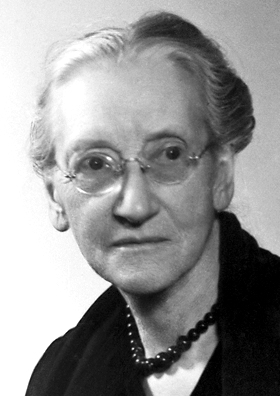 Emily Greene Balch (1867-1961) grew up in a prosperous family, graduated from Bryn Mawr in 1889 and eventually worked as a professor of economics and sociology at Wellesley College. She worked with Jane Addams at Hull House in Chicago and cared deeply about people in poverty.
As a Quaker and committed pacifist, Emily was passionate about peace issues. She worked with Jane Addams organize the Women's International League for Peace and Freedom and served several terms as its secretary. In 1915 Balch attended the international Congress of Women at Den Hague and was part of a mediation delegation to Russia and Scandinavia. She proposed an "International Colonial Administration" similar to what later became the League of Nations.
Because of her active campaign against U.S. participation in World War I she lost her Wellesley professorship. She took on the editorship of The Nation. She also wrote several important books: Refugees as Assets in 1939, One Europe in 1947, and Toward Human Unity, or Beyond Nationalism (1952).
For her lifetime of peace work Balch received the Nobel Peace Prize in 1946; she gave the prize money to the Women's International League for Peace and Freedom. Emily Greene Balch died in 1961.
If Emily Balch had taken the Spiritual Types Test, she probably would have been a Sage. Emily Balch is remembered on January 9.
Image is © The Nobel Foundation.
____________________________
Lectionary Readings
(Courtesy of Vanderbilt Divinity Library)
Lectionary Scriptures:
Genesis 1:1-5
Psalm 29
Acts 19:1-7
Mark 1:4-11
Genesis 1: Heaven and Earth
1-2 First this: God created the Heavens and Earth—all you see, all you don’t see. Earth was a soup of nothingness, a bottomless emptiness, an inky blackness. God’s Spirit brooded like a bird above the watery abyss.
3-5 God spoke: “Light!”
And light appeared.
God saw that light was good
and separated light from dark.
God named the light Day,
he named the dark Night.
It was evening, it was morning—
Day One.
Psalm 29: A David Psalm
1-2 Bravo, God, bravo!
Gods and all angels shout, “Encore!”
In awe before the glory,
in awe before God’s visible power.
Stand at attention!
Dress your best to honor him!
3 God thunders across the waters,
Brilliant, his voice and his face, streaming brightness—
God, across the flood waters.
4 God’s thunder tympanic,
God’s thunder symphonic.
5 God’s thunder smashes cedars,
God topples the northern cedars.
6 The mountain ranges skip like spring colts,
The high ridges jump like wild kid goats.
7-8 God’s thunder spits fire.
God thunders, the wilderness quakes;
He makes the desert of Kadesh shake.
9 God’s thunder sets the oak trees dancing
A wild dance, whirling; the pelting rain strips their branches.
We fall to our knees—we call out, “Glory!”
10 Above the floodwaters is God’s throne
from which his power flows,
from which he rules the world.
11 God makes his people strong.
God gives his people peace.
Acts 19:1-2 Now, it happened that while Apollos was away in Corinth, Paul made his way down through the mountains, came to Ephesus, and happened on some disciples there. The first thing he said was, “Did you receive the Holy Spirit when you believed? Did you take God into your mind only, or did you also embrace him with your heart? Did he get inside you?”
“We’ve never even heard of that—a Holy Spirit? God within us?”
3 “How were you baptized, then?” asked Paul.
“In John’s baptism.”
4 “That explains it,” said Paul. “John preached a baptism of radical life-change so that people would be ready to receive the One coming after him, who turned out to be Jesus. If you’ve been baptized in John’s baptism, you’re ready now for the real thing, for Jesus.”
5-7 And they were. As soon as they heard of it, they were baptized in the name of the Master Jesus. Paul put his hands on their heads and the Holy Spirit entered them. From that moment on, they were praising God in tongues and talking about God’s actions. Altogether there were about twelve people there that day.
Mark 1:4-6 John the Baptizer appeared in the wild, preaching a baptism of life-change that leads to forgiveness of sins. People thronged to him from Judea and Jerusalem and, as they confessed their sins, were baptized by him in the Jordan River into a changed life. John wore a camel-hair habit, tied at the waist with a leather belt. He ate locusts and wild field honey.
7-8 As he preached he said, “The real action comes next: The star in this drama, to whom I’m a mere stagehand, will change your life. I’m baptizing you here in the river, turning your old life in for a kingdom life. His baptism—a holy baptism by the Holy Spirit—will change you from the inside out.”
9-11 At this time, Jesus came from Nazareth in Galilee and was baptized by John in the Jordan. The moment he came out of the water, he saw the sky split open and God’s Spirit, looking like a dove, come down on him. Along with the Spirit, a voice: “You are my Son, chosen and marked by my love, pride of my life.”
John Wesley's Notes-Commentary for
Genesis 1:1-5
Verse 1
[1] In the beginning God created the heaven and the earth.
Observe here. 1. The effect produced, The heaven and the earth - That is, the world, including the whole frame and furniture of the universe. But 'tis only the visible part of the creation that Moses designs to give an account of. Yet even in this there are secrets which cannot be fathomed, nor accounted for. But from what we see of heaven and earth, we may infer the eternal power and godhead of the great Creator. And let our make and place, as men, mind us of our duty, as Christians, which is always to keep heaven in our eye, and the earth under our feet. Observe 2. The author and cause of this great work, God. The Hebrew word is Elohim; which (1.) seems to mean The Covenant God, being derived from a word that signifies to swear. (2.) The plurality of persons in the Godhead, Father, Son, and Holy Ghost. The plural name of God in Hebrew, which speaks of him as many, tho' he be but one, was to the Gentiles perhaps a favour of death unto death, hardening them in their idolatry; but it is to us a favour of life unto life, confirming our faith in the doctrine of the Trinity, which, tho' but darkly intimated in the Old Testament, is clearly revealed in the New. Observe 3. The manner how this work was effected; God created, that is, made it out of nothing. There was not any pre-existent matter out of which the world was produced. The fish and fowl were indeed produced out of the waters, and the beasts and man out of the earth; but that earth and those waters were made out of nothing. Observe 4. When this work was produced; In the beginning - That is, in the beginning of time. Time began with the production of those beings that are measured by time. Before the beginning of time there was none but that Infinite Being that inhabits eternity. Should we ask why God made the world no sooner, we should but darken counsel by words without knowledge; for how could there be sooner or later in eternity?
Verse 2
[2] And the earth was without form, and void; and darkness was upon the face of the deep. And the Spirit of God moved upon the face of the waters.
Where we have an account of the first matter, and the first Mover. 1. A chaos was the first matter. 'Tis here called the earth, (tho' the earth, properly taken, was not made 'till the third day, Genesis 1:10) because it did most resemble that which was afterwards called earth, a heavy unwieldy mass. 'Tis also called the deep, both for its vastness, and because the waters which were afterwards separated from the earth were now mixed with it. This mighty bulk of matter was it, out of which all bodies were afterwards produced. The Creator could have made his work perfect at first, but by this gradual proceeding he would shew what is ordinarily the method of his providence, and grace. This chaos, was without form and void. Tohu and Bohu, confusion and emptiness, so those words are rendered, Isaiah 34:11. 'Twas shapeless, 'twas useless, 'twas without inhabitants, without ornaments; the shadow or rough draught of things to come. To those who have their hearts in heaven, this lower world, in comparison of the upper, still appears to be confusion and emptiness. And darkness was upon the face of the deep-God did not create this darkness, (as he is said to create the darkness of affliction, Isaiah 45:7.) for it was only the want of light. 2. The Spirit of God was the first Mover; He moved upon the face of the waters - He moved upon the face of the deep, as the hen gathereth her chicken under her wings, and hovers over them, to warm and cherish them, Matthew 23:37 as the eagle stirs up her nest, and fluttereth over her young, ('tis the same word that is here used) Deuteronomy 32:11.
Verses 3-5
[3] And God said, Let there be light: and there was light. [4] And God saw the light, that it was good: and God divided the light from the darkness. [5] And God called the light Day, and the darkness he called Night. And the evening and the morning were the first day.
We have here a farther account of the first day's work. In which observe, 1. That the first of all visible beings which God created was light, the great beauty and blessing of the universe: like the first-born, it doth, of all visible beings, most resemble its great parent in purity and power, brightness and beneficence. 2. That the light was made by the word of God's power; He said, Let there be light - He willed it, and it was done; there was light - Such a copy as exactly answered the original idea in the eternal mind. 3. That the light which God willed, he approved of.
God saw the light, that it was good — 'Twas exactly as he designed it; and it was fit to answer the end for which he designed it. 4. That God divided the light from the darkness - So put them asunder as they could never be joined together: and yet he divided time between them, the day for light, and the night for darkness, in a constant succession. Tho' the darkness was now scattered by the light, yet it has its place, because it has its use; for as the light of the morning befriends the business of the day, so the shadows of the evening befriend the repose of the night. God has thus divided between light and darkness, because he would daily mind us that this is a world of mixtures and changes. In heaven there is perpetual light, and no darkness; in hell utter darkness, and no light: but in this world they are counter-changed, and we pass daily from one to another; that we may learn to expect the like vicissitudes in the providence of God. 5. That God divided them from each other by distinguishing names. He called the light Day, and the darkness he called night - He gave them names as Lord of both. He is the Lord of time, and will be so 'till day and night shall come to an end, and the stream of time be swallowed up in the ocean of eternity. 6. That this was the first day's work, The evening and the morning were the first day - The darkness of the evening was before the light of the morning, that it might set it off, and make it shine the brighter.
Psalm 29
Verse 1
[1] Give unto the LORD, O ye mighty, give unto the LORD glory and strength.
Ye — Ye potentates and rulers of the earth.
Glory — By an humble and thankful acknowledgment of it.
Verse 2
[2] Give unto the LORD the glory due unto his name; worship the LORD in the beauty of holiness.
Give, … — The honour which he deserves: own him as the Almighty, and the only true God.
Holiness — Or, in his holy and beautiful house.
Verse 3
[3] The voice of the LORD is upon the waters: the God of glory thundereth: the LORD is upon many waters.
The waters — Above in the clouds, which are called waters, Genesis 1:7; Psalms 18:11. The Divine power displays itself in those high places, which are far above the reach of all earthly potentates.
Many — Upon the clouds, in which there are vast treasures of water, and upon which God is said to sit or ride, Psalms 18:10,11; 104:3.
Verse 5
[5] The voice of the LORD breaketh the cedars; yea, the LORD breaketh the cedars of Lebanon.
Lebanon — A place famous for strong and lofty cedars.
Verse 6
[6] He maketh them also to skip like a calf; Lebanon and Sirion like a young unicorn.
Them — The cedars; which being broken by the thunder, the parts of them are suddenly and violently hurled hither and thither.
Sirion — An high mountain beyond Jordan joining to Lebanon. Lebanon and Sirion are said to skip or leap, both here, and Psalms 114:4, by a poetical hyperbole.
Verse 7
[7] The voice of the LORD divideth the flames of fire.
The flames — The lightnings.
Verse 8
[8] The voice of the LORD shaketh the wilderness; the LORD shaketh the wilderness of Kadesh.
Kadesh — An eminent wilderness, vast and terrible, and well known to the Israelites, and wherein possibly they had seen, and observed some such effects of thunder.
Verse 9
[9] The voice of the LORD maketh the hinds to calve, and discovereth the forests: and in his temple doth every one speak of his glory.
To calve — Through the terror it causes, which hastens the birth. He names the hinds, because they bring forth their young with difficulty, Job 39:1,2.
Discovereth — Heb. maketh bare, of its trees, which it breaks or strips of their leaves.
Glory — Having shewed the terrible effects of God's power in other places, he now shews the blessed privilege of God's people, that are praising God in his temple, when the rest of the world are trembling under the tokens of his displeasure.
Verse 10
[10] The LORD sitteth upon the flood; yea, the LORD sitteth King for ever.
The flood — The most violent waters, which sometimes fall from the clouds upon the earth. These are fitly mentioned, as being many times the companions of great thunders. And this may be alleged as another reason, why God's people praised him in his temple, because as he sends terrible tempests and thunders, so he also restrains and over-rules them.
Sitteth — He doth sit, and will sit as king for ever, sending such tempests when it pleaseth him.
Acts 19:1-7
Verse 2
[2] He said unto them, Have ye received the Holy Ghost since ye believed? And they said unto him, We have not so much as heard whether there be any Holy Ghost.
Have ye received the Holy Ghost? — The extraordinary gifts of the Spirit, as well as his sanctifying graces? We have not so much as heard - Whether there be any such gifts.
Verse 3
[3] And he said unto them, Unto what then were ye baptized? And they said, Unto John's baptism.
Into what were ye baptized — Into what dispensation? To the sealing of what doctrine? Into John's baptism - We were baptized by John and believe what he taught.
Verse 4
[4] Then said Paul, John verily baptized with the baptism of repentance, saying unto the people, that they should believe on him which should come after him, that is, on Christ Jesus.
John baptized — That is, the whole baptism and preaching of John pointed at Christ. After this John is mentioned no more in the New Testament. Here he gives way to Christ altogether.
Verse 5
[5] When they heard this, they were baptized in the name of the Lord Jesus.
And hearing this, they were baptized — By some other. Paul only laid his hands upon them.
They were baptized — They were baptized twice; but not with the same baptism. John did not administer that baptism which Christ afterward commanded, that is, in the name of the Father, Son, and Holy Ghost.
Mark 1:4-11
Verse 4
[4] John did baptize in the wilderness, and preach the baptism of repentance for the remission of sins.
Preaching the baptism of repentance — That is, preaching repentance, and baptizing as a sign and means of it.
Verse 7
[7] And preached, saying, There cometh one mightier than I after me, the latchet of whose shoes I am not worthy to stoop down and unloose.
The latchet of whose shoes I am not worthy to unloose — That is, to do him the very meanest service.
Verse 9
[9] And it came to pass in those days, that Jesus came from Nazareth of Galilee, and was baptized of John in Jordan.
Matthew 3:13; Luke 3:21.
____________________________
Upper Room Daily Reflections, a ministry of Global Board of Discipleship
PO Box 340004
Nashville, TN 37203-0004 United States
____________________________

No comments:
Post a Comment