democracynow.org
Stories:

Black Lives Matter Activist: Bill Clinton's Defense of "Superpredator" Policies Dehumanizes Us
The Black Lives Matter movement continues to shake up the race to the White House. On Thursday, activists in Philadelphia disrupted a speech by former President Bill Clinton, who was campaigning on behalf of Hillary Clinton. The activists called out the Clintons for their support for the 1994 crime bill, which led to a massive expansion of incarceration in the United States, and Hillary Clinton’s 1996 comments that some youth were "superpredators." In response, Bill Clinton defended Hillary Clinton’s use of the term "superpredators" and accused the activists of defending criminals. We speak to Melina Abdullah, an organizer with Black Lives Matter in Los Angeles. "[Bill Clinton] is very good at ... distracting us from how systems create these conditions," says Abdullah. "They act as if the young folks who wind up committing crimes … as if they weren’t human beings. This term 'superpredator' dehumanizes our children."
TRANSCRIPT
This is a rush transcript. Copy may not be in its final form.
AMY GOODMAN: We are on the road as part of our 100-city tour, now in Los Angeles, California. The Black Lives Matter movement continues to shake up the race to the White House after former President Bill Clinton said Friday he regretted his comments to black protesters at a rally in Philadelphia the day before. Black Lives Matter activists had interrupted Clinton during a speech in support of his wife, Democratic presidential candidate, former Secretary of State Hillary Clinton. They challenged the Clintons on their support for the 1994 crime bill, which led to a massive expansion of incarceration in the United States. Activists shouted, "Black youth are not superpredators!" a reference to Hillary Clinton’s 1996 comments about some youth. They also held signs reading, quote, "Clinton Crime Bill Destroyed Our Communities." In response, Bill Clinton defended Hillary Clinton’s use of the term "superpredators" and accused the activists of defending criminals.
BILL CLINTON: I don’t know how you would characterize the gang leaders who got 13-year-old kids hopped up on crack and sent them out onto the street to murder other African-American children. Maybe you thought they were good citizens. She didn’t. She didn’t. You are defending the people who killed the lives you say matter. Tell the truth. You are defending the people who caused young people to go out and take guns. There was a 13-year-old girl in Washington, D.C., who was planning her own funeral. ...
I talked to a lot of African-American groups. They thought black lives mattered. They said, "Take this bill, because our kids are being shot in the street by gangs." We had 13-year-old kids planning their own funerals. She doesn’t want to hear any of that. You know what else she doesn’t want to hear? Because of that bill, we had a 25-year low in crime, a 33 low in the murder rate, year low rate, murder rate. And listen to this: Because of that and the background check law, we had a 46-year low in the deaths of people by gun violence. And who do you think those lives were, that mattered? Whose lives were saved, that mattered?
AMY GOODMAN: After his comments ignited a storm of controversy Thursday, Bill Clinton spoke Friday and elaborated on what he said. But he stopped short of apologizing.
BILL CLINTON: So, I did something yesterday in Philadelphia I almost want to apologize for, but I want to use it as an example of the danger threatening our country, because the founders set this country up so that we could keep growing and being bigger and including more people, but we would always have to come together to make a decision that would move us forward. ... We got a 25-year low in the crime rate. We got a 33-year low in the murder rate. We got a 46-year low in the illegal death by homicide rate. I think we showed that lives matter to us. I think it was good. But that is not how people see it 30 years later, when they just see all these young people who need to be out of jail. I get that. But we’ve got to get the show on the road. We can’t be fighting our friends. We’ve got enough trouble with the people that aren’t for us.
AMY GOODMAN: President Clinton’s comments come as prosecutors here in Los Angeles are determining whether to retry six Black Lives Matter activists whose trial recently ended in a hung jury. The six face misdemeanor charges for barricading the 101 freeway in Los Angeles in November 2014, the action in response to the non-indictment of former Ferguson, Missouri, police officer Darren Wilson in the killing of Michael Brown three months earlier. Activist Rosa Clemente was also tried, but she was acquitted. Supporters say the prosecution is part of a larger effort by the LAPD and City Attorney’s Office targeting Black Lives Matter activists in Los Angeles.
For more, we’re joined here in Los Angeles by two guests. Nana Gyamfi is a criminal defense and human rights attorney who represents Black Lives Matter-Los Angeles, professor of Pan-African studies at California State University, Los Angeles. Also with us is Melina Abdullah, an organizer with Black Lives Matter-Los Angeles, also professor and chair of Pan-African Studies at California State University, Los Angeles.
We welcome you both to Democracy Now! Let’s begin with you, Melina Abdullah. Respond, before we talk about the trial, to this—what happened with President Clinton last week, when Black Lives Matter activists interrupted his speech, what he said.
MELINA ABDULLAH: Right. Well, I think that what we’re seeing with President Clinton—former President Clinton and what we’re seeing in Los Angeles are actually linked, so this idea of neoliberal politics kind of blaming the folks who it assails for their own oppression. And so, when we think about the initial comments by President Clinton around black youth and those who got them, quote-unquote, "hopped up on crack," I think what he’s really neglecting is the policies that bring crack cocaine into inner cities in the first place, the policies that create unemployment and underemployment in the first place, and then the policies that he initiates, that then go ahead and further oppress and repress communities. And so, that is one of the things that we’re so upset about, that he is dehumanizing the communities that are actually the victims and bear the brunt of neoliberal policies that keep us oppressed.
AMY GOODMAN: After calling for unity on Friday, former President Bill Clinton continued to defend the 1994 crime bill he passed, which led to a massive expansion of incarceration in the United States.
BILL CLINTON: You’re living in a country where young African Americans think their number one threat now is from police officers. When I signed that crime bill, they knew what their number one threat was. It was from gangs making money out of cocaine, taking teenage kids, hopping them up, giving them guns and telling them to go kill other teenagers.
AMY GOODMAN: Your response, Melina Abdullah, as he talks about gangs and why exactly he did what he did in the 1990s?
MELINA ABDULLAH: Right. So, as one who was coming of age myself in the '90s, as one who lived in East Oakland, a space where these kinds of conditions that he describes were really part of my everyday experience, one of the things that he is very good at, and neoliberal politicians are very good at, is kind of distracting us from the real issues, distracting us from how systems create these conditions. So they act as if the young folks who wind up, you know, committing crimes committed crimes because they simply were out of control, committed crimes as if they weren't human beings. So this term "superpredator," again, dehumanizes our children, dehumanizes our people. And so, it acts as if we’re behaving in ways that are not simply as a result of the conditions that we experience.
And so, we need to turn the tables and look back at policymakers; look back at systems that create oppressions in the first place, that create hollowed-out communities where there are no resources, where there are no livable-wage jobs, where there are no after-school programs; look at the policies of the Clinton administration rolling back the kinds of resources that I would have benefited from, and many of my peers would have benefited from, in kind of moving forward. And so, rather than looking at so-called 13-year-old superpredators, which, you know, we know is a term that’s used for black youth—this is dog-whistle politics, right?—we need to look at policies that don’t provide the resources that we need, that began in the '90s but continue to today. So the crime bill is another example of it, right? So, we're blaming people for being in prison, we’re blaming people for being poor, we’re blaming people for not having access to resources, when we’re not looking at the policymakers themselves who create the conditions that hold back resources from communities.
AMY GOODMAN: I wanted to turn to a clip of Democratic presidential candidate Bernie Sanders speaking at the Apollo Theater in Harlem on Saturday. He was asked about Bill Clinton’s defense of Hillary Clinton’s use of the word "superpredator."
SEN. BERNIE SANDERS: I think we all know what that term meant—
AUDIENCE MEMBER 1: Yes.
SEN. BERNIE SANDERS: —when—in the context that it was said years ago. We know who they were talking about.
AUDIENCE MEMBER 2: Right, black people.
SEN. BERNIE SANDERS: That’s exactly right. That’s who it was. And I think that the president owes the American people an apology for trying to defend what is indefensible.
AMY GOODMAN: That was Bernie Sanders at the Apollo Theater in Harlem with Harry Belafonte, who’s come out in support of Bernie Sanders, the Vermont senator. Melina Abdullah, what Bernie Sanders said?
MELINA ABDULLAH: It is absolutely indefensible. That said, we’re not looking for an apology from Bill Clinton or Hillary Clinton, who is now seeking our vote. Right? We’re not looking for apologies from them. What we want is substance. So we want substantive responses. We want responses that are actually empowering to communities. We want it recognized that our children are not superpredators. We want it recognized that there is something that can be done to then kind of shift what it is we’re doing with our resources and with our policies, to be empowering to communities and be in conversation with communities. I think what’s most disturbing is that when we talk about superpredators, when we talk about 13-year-old children as not being children, it also signals a kind of policymaking agenda that seeks to advance the interests of big business, of white supremacist, patriarchal, heteronormative capitalism—the existing hegemony—as the primary agenda that needs to be addressed, without engaging the communities that are most in need of progressive and really kind of forward-thinking transformational policy work.
AMY GOODMAN: And yet, in this election, as a number of newspapers point out, no group has been more loyal to Hillary Clinton than the African-American community.
MELINA ABDULLAH: Well, I think the black political class has lined up behind Hillary Clinton, because they see neoliberalism as an alternative to Trump. Right? But the truth is, we really need to kind of think and be more imaginative. We really need to think about what do we really want, not just what do we not want. So we know we absolutely don’t want a Trump, but it doesn’t mean that Hillary or neoliberalism, as a kinder, gentler face on oppression, is good for communities, either. And so it’s really important that we understand that we can move things forward by engaging in work on the ground.
And so, the last time that I was with you, we talked about how Black Lives Matter is not endorsing any political candidate. And I think that what’s happening around Clinton, the Clintons, and what’s happening just in terms of what’s kind of bubbling up from the two-party system is an indicator of why we’re not endorsing any of the candidates, including Clinton. And I think that what we’re also seeing is a divide between the political class, who tends to behave pragmatically within a two-party system, and what’s happening with the working class and the people who are really kind of bearing the brunt of neoliberal policies, saying that we’re not enthused about any of the candidates, including Clinton. So I don’t hear a whole lot of enthusiasm on the ground in my neighborhood.
AMY GOODMAN: Melina Abdullah, I want to thank you for being with us, organizer with Black Lives Matter, professor and chair of Pan-African Studies at California State in Los Angeles. When we come back, we’ll talk about a Black Lives Matter case that was just wrapped up and where it goes from here. Are the LAPD, the Los Angeles police, spying on Black Lives Matter activists? Then we’ll talk about Japanese internment, as Republican candidates call for a barring of Muslims in this country and surveillance of the Muslim community. We go back in time and look at the Japanese interment, how it happened. Could it happen again? Stay with us. ... Read More →

Black Lives Matter vs. the LAPD: Are the Police Unfairly Targeting & Surveilling the Movement?
Prosecutors in Los Angeles are determining whether to retry six Black Lives Matter activists whose trial recently ended in a hung jury. The six face misdemeanor charges for barricading the 101 freeway in Los Angeles in November 2014. That action was in response to the non-indictment of former Ferguson, Missouri, police officer Darren Wilson in the killing of Michael Brown three months earlier. Activist Rosa Clemente was also tried but was acquitted. Supporters say the prosecution is part of a larger effort by the LAPD and City Attorney’s Office targeting Black Lives Matter activists in Los Angeles. Melina Abdullah, an organizer with Black Lives Matter-Los Angeles, describes how many protesters facing charges were under surveillance and how some had letters sent to their homes from the LAPD and the U.S. Justice Department. Abdullah is professor and chair of Pan-African Studies at California State University, Los Angeles. We also speak with Nana Gyamfi, a criminal defense and human rights attorney who represents Black Lives Matter-Los Angeles.
TRANSCRIPT
This is a rush transcript. Copy may not be in its final form.
AMY GOODMAN: This is Democracy Now!, democracynow.org, The War and Peace Report. I’m Amy Goodman. We are on the road as part of our 100-city tour, just begun, in our sixth city, Los Angeles, where prosecutors here are determining whether to retry six Black Lives Matter activists whose trial recently ended in a hung jury. The six face misdemeanor charges for barricading the 101 freeway in Los Angeles in November of 2014 in response to the non-indictment of the former Ferguson, Missouri, police officer Darren Wilson in the killing of Michael Brown that had happened three months earlier. Activist Rosa Clemente was also tried, but was acquitted. Supporters say the prosecution is part of a larger effort by the LAPD and City Attorney’s Office targeting Black Lives Matter activists here in L.A.
For more, we’re joined by Nana Gyamfi, criminal defense and human rights attorney who represents Black Lives Matter-Los Angeles. She’s a professor of Pan-African studies at California State University, Los Angeles. And we’re still with Melina Abdullah, who is a professor at California State and is a Black Lives Matter activist herself, who was arrested in different cases.
Nana Gyamfi, talk about what happened in this case.
NANA GYAMFI: This is a case—and thank you so much for having me on this morning. This is a case in which we really see the Los Angeles Police Department and the city attorney join forces to suppress and repress the speech for black lives on behalf of the Black Lives Matter movement in Los Angeles. We had a national day of protest, which occurred not just in Los Angeles but all over the country, three days of protests right before Thanksgiving in 2014, in which Los Angeles arrested over 330 people, the largest number of arrests in any city. If you think back, Amy, to all of those people in New York City, all of those people in Washington, D.C., and yet none of those cities—Chicago—had that many arrests, Los Angeles was way far beyond what you saw in any of those cities.
And then—that happened in November—they decided only to prosecute about 20 people, which was less than 9 percent of the people whom they arrested. And when we look at who they prosecuted, you find that they were all the Black Lives Matter members who were arrested. You find that they were people that were associated with known groups and organizations that were speaking up on behalf of black lives. It was clearly targeted. It wasn’t just—you know, people who threw bottles at police officers were not tried, were not put on—had no charges against them. And yet, folks who engaged in nonviolent, peaceful protest found themselves in positions in which they were actually being tried as criminals.
AMY GOODMAN: So what did you find out in discovery in these cases for how these people were chosen?
NANA GYAMFI: It was really fascinating. We thought—you know, you have the conspiracy, and then you feel the real thing. And we found that Black Lives Matter folks had been chosen based upon surveillance that had been done, that the Los Angeles Police Department and the City Attorney’s Office have this political prosecution unit, that’s sort of informal, that started with the Occupy movement and then got bumped up with the Black Lives Matter movement, in which they gave officers overtime, carte blanche, to go through all of social media, Facebook, Twitter, all the different—Instagram, everything they had at that time, and spend hours taking snapshots of people and then matching them with names and then following that up by following people’s social media. People’s phones were tapped. All of these different types of surveillance that we expect to be used in an antiterrorist way were being used against Black Lives Matter movement folks.
AMY GOODMAN: This was a cyber-unit?
NANA GYAMFI: What the unit is actually called is a cyber-unit. It’s one that isn’t talked about a lot. We were able to get information through our workings and our investigation about this cyber-unit and began to press the City Attorney’s Office through the discovery process and also using sort of the Freedom of Information Act, Public Information Act rules to get information that was being held in the cyber-unit. There’s a lot we were not able to get, because the city attorney just denied that they existed, even though we know that it did. But we were able to get enough to know and to see that this was the format in which they had engaged. Some of the photos they gave us had people’s names right above their heads. And the way that the people’s names were, were the same type of way, in terms of the printing, that we see in surveillance photos with the feds, but this was being done by LAPD. So it’s very interesting to see that beyond the headlines.
AMY GOODMAN: Some of the activists who are on trial had letters sent to their employers?
NANA GYAMFI: That was a different set of activists, different folks, who were arrested. They weren’t put on trial. But they actually had letters. I started getting calls, and this is from the December 2015 action that occurred on the 405 freeway near the airport. I started getting calls from people that they were getting letters to their employer that were being sent by the DOJ and the LAPD. And those letters were going directly to their supervisors, saying, "Hey, this person has been arrested for the crime of felony conspiracy to commit any charge."
AMY GOODMAN: They’re not—
NANA GYAMFI: And so—
AMY GOODMAN: They’re not convicted. They are arrested. And these are the letters—and who sent these letters?
NANA GYAMFI: These letters, according to the letters themselves, they were either sent by the DOJ or LAPD. We are certain they were sent by LAPD. The Department of Justice of the state of California, this is not what they’re doing. This is an LAPD thing. And they sent—now, these folks weren’t even charged. We’re talking about they’re not even having cases against them in court. Just based on their arrest, we had a person who was headed to Canada, who was sent back and told—deported—at the border, "You can’t come in here because you have these charges pending against you," when that clearly was not the case, but it’s being written up purposefully and intentionally to mar any people who are associated with the Black Lives Matter movement.
AMY GOODMAN: The prosecutor in the case is Jennifer Wexler?
NANA GYAMFI: Yes. And she describes herself as a political prosecutor. She is one who prosecuted Occupy Los Angeles members who were arrested. If you look her up, there are vociferous blogs talking about the tactics that she engaged in, the city attorney engaged in. And that—those tactics were used again here with Black Lives Matter. Just as an example, her offers, in terms of plea offers, all included jail time and a "no unlawful protesting" clause. Now, I pointed out to her, in open court and to the judge, that I find that to be completely unconstitutional. I don’t know what that means, "no unlawful protesting." Protesting is a First Amendment right in this country. And she, you know, looked over and said, "Oh, well. That’s what they’d have to plead to." And so, obviously, we were not going to plead to that.
AMY GOODMAN: What about the jury in the case?
NANA GYAMFI: The jury in the case—we were in East L.A. The jury was mainly Chicanx and Southeast Asians; you had a couple of whites, no black folks at all. In a jury pool of a hundred people, there were maybe four black people. Most of those people, when they came up for jury selection, were not selected, were eliminated. And there was even a motion that was done with respect to the elimination of the black jurors. The jurors were mainly working-class. And I think that a lot of our success in this case came about because the jurors understood what we were saying when we got up—when I got up and said, "Hey, we need to be on the right side of history, the right side of justice, as well as the right side of the law."
AMY GOODMAN: Professor Abdullah, you’ve been arrested in Black Lives Matter protests, but not in this particular one?
MELINA ABDULLAH: Right.
AMY GOODMAN: But there are charges of conspiracy here, is that right?
NANA GYAMFI: That’s in the charges that came out of December of 2015. So, in November of 2014, there are just two charges: obstruction, willfully and maliciously obstructing a freeway, and refusing the lawful order of an officer. They were misdemeanor charges. With the second freeway action that occurred in December of 2015, obviously, the CHP decided to kick it up a notch, and so they charged folks with felonies when they arrested them.
MELINA ABDULLAH: Right.
NANA GYAMFI: Felony vandalism and felony conspiracy to commit vandalism for spray chalk that was allegedly written on the 405 freeway, which I call art beautification.
MELINA ABDULLAH: And just to be clear, we weren’t officially charged in that case. So I was arrested in December 2015. But—
AMY GOODMAN: In what protest?
MELINA ABDULLAH: In the action that Nana is describing on the 405 freeway. But we weren’t charged. We have not been charged yet. Those were the preliminary charges. But the ramifications from those arrests are still resonating. So, the letters to our employers, the—
AMY GOODMAN: You had a letter to your employer?
MELINA ABDULLAH: I did not—as far as I know. But then there’s also, the employers don’t have to share with you whether or not you received a letter, so I’m not sure, but I’m hoping that I did not.
AMY GOODMAN: Before we go, I wanted to turn to one other case that Black Lives Matter-L.A. is looking into. Wakiesha Wilson was in LAPD custody on March 27th, when authorities say they found her hanging in her cell. Wilson died at a hospital an hour later. Wakiesha Wilson’s mother, Lisa Hines, did not learn about her daughter’s death until days later, when Wilson did not show up in court. This is Lisa Hines speaking at a news conference last week.
LISA HINES: That was my only child. All I want to know is what happened, because I know she didn’t take her life. She had too much to live for. She was coming home, she told me, to be in court. She was calling me back later that evening. I waited and I waited for that call, and it never happened.
AMY GOODMAN: That was Lisa Hines. Her daughter, Wakiesha Wilson, died after, police say, she committed suicide. Is that right, Melina?
MELINA ABDULLAH: Well, the family is very adamant, and even the facts deny that she could have committed suicide. The allegation is that she hung herself from a phone booth that sits two to three feet off of the floor. So, the idea that she could possibly hang herself from a phone booth is absolutely ridiculous.
AMY GOODMAN: And this was where exactly?
MELINA ABDULLAH: This was at an LAPD detention center. So it’s really important that we understand what this case is and what happened to Wakiesha, what probably happened to Wakiesha Wilson. There was a documented conflict between her and a guard shortly before she was found dead. The family says that she was not suicidal at all. They had just spoken with her. It was Easter Sunday. And then they took four days. And in fact, it was only after the mother begins to look for her, when she doesn’t show up in court, that they find that she was in fact dead. She was a mother of a 13-year-old boy. She’s somebody’s daughter. And, you know, she is our Sandra Bland that’s emerging here in Los Angeles.
AMY GOODMAN: Last comment on this, Nana Gyamfi?
NANA GYAMFI: I think that—I think it’s very important that there is an investigation, that there’s an independent investigation, that it’s not just an LAPD investigation, and that the city of Los Angeles put the money behind doing that. You can think about how much money was spent on the cases that we—the case we just talked about with the six, and you think about them thinking about trying these cases again? That monies that are going to that, those tens of thousands of dollars, should be going to find out who killed Wakiesha Wilson and to prosecute those people.
AMY GOODMAN: We’re going to leave it there, but we will continue to look at this case and so many others. Nana Gyamfi, I want to thank you very much for being with us, attorney representing Black Lives Matter-Los Angeles, professor of Pan-African studies at California State. And Melina Abdullah, I thank you for being with us, activist and Black Lives Matter activist, professor and chair of Pan-African Studies at California State U., L.A.
This is Democracy Now!, democracynow.org, The War and Peace Report. When we come back, we look at Japanese interment, World War II. Could that happen again today? Stay with us. ... Read More →

Seven Decades Ago the U.S. Detained 120,000 Japanese Americans, Could It Happen Again?
As Secretary of State John Kerry visits Hiroshima, Japan, site of the 1945 U.S. nuclear attack which killed 140,000 people, most of them civilians, we turn to another choice the United States made during its fight against Japan in World War II—the decision to imprison 120,000 Japanese Americans in internment camps across the U.S.—and ask: Could something like this happen again? The 2016 presidential campaign has been marked by calls from Republican candidates to create a database of all American Muslims and to have the police patrol Muslim neighborhoods. Cruz’s proposals came after Republican presidential front-runner Donald Trump told Time magazine last year he did not know if he would have supported or opposed Japanese-American internment camps had he been a leader during World War II. We speak with Richard Reeves, an award-winning journalist and the best-selling author of several books, most recently, "Infamy: The Shocking Story of the Japanese-American Internment in World War II," and with Karen Ishizuka, a third-generation American of Japanese descent. She was the curator of the nationwide exhibit called “America’s Concentration Camps: Remembering the Japanese-American Experience.” Her latest book is titled "Serve the People: Making Asian America in the Long Sixties."
TRANSCRIPT
This is a rush transcript. Copy may not be in its final form.
AMY GOODMAN: This is Democracy Now!, democracynow.org, The War and Peace Report. We’re on the road as part of our 100-city tour, now in Los Angeles, California. I’m Amy Goodman.
Secretary of State John Kerry is in Japan today, where he’s become the first sitting U.S. secretary of state to visit Hiroshima, where he went to the atomic bomb memorial commemorating the 1945 U.S. nuclear attack, which killed 140 [thousand] people in Hiroshima. The United States is the only country in the world to drop an atomic bomb, first in Hiroshima August 6, 1945, then in Nagasaki three days later. Kerry described the memorial, saying, quote, "It reminds everybody of the extraordinary complexity of choices in war and of what war does to people, to communities, to countries, to the world."
Well, we’re going to turn now to another choice the United States made during its fight against Japan in World War II: the decision to imprison 120,000 Japanese Americans in internment camps across the U.S. Could something like this happen again? The 2016 presidential campaign has been marked by calls from Republican candidates to create a database of all American Muslims and to have the police patrol Muslim neighborhoods. Following the Brussels attacks last month, Republican presidential contender Ted Cruz sparked widespread controversy by saying, quote, "We need to immediately halt the flow of refugees from countries with a significant al Qaida or ISIS presence. We need to empower law enforcement to patrol and secure Muslim neighborhoods before they become radicalized," end-quote. Senator Cruz later doubled down on these calls in an interview on CNN.
SEN. TED CRUZ: If you have a neighborhood where there is a high level of gang activity, the way to prevent it is you increase the law enforcement presence there, and you target the gang members to get them off the streets. ... I am talking about an area where there is a higher incidence of radical Islamic terrorism. If you look at Europe, Europe’s failed immigration laws have allowed a massive influx of radical Islamic terrorists into Europe, and they are now in isolated neighborhoods where radicalism festers.
AMY GOODMAN: Among the many to criticize Cruz for these statements was California Democratic Congressman Mark Takano, whose parents were placed in Japanese internment camps during World War II.
REP. MARK TAKANO: As I watch leading politicians propose discriminatory policies targeting the Muslim community, I cannot be silent. Seventy years ago, my parents and grandparents were held prisoner in—during World War II without trial and without a reason other than their Japanese heritage. In that moment, no one was willing to speak up for them. We cannot ignore the lessons of history. The Muslim community is the most frequent victim of terrorism and our greatest ally in ridding the world of extremism. Responding to Brussels by advocating for patrols of Muslim neighborhoods or suggesting that we torture our enemies is not only counterproductive, it violates the moral code that separates us from our enemies.
AMY GOODMAN: Senator Ted Cruz’s proposals came after Republican presidential front-runner Donald Trump told Time magazine last year he didn’t know if he would have supported or opposed Japanese-American internment camps had he been a leader during World War II, saying, quote, "I would have had to be there at the time to tell you." But he’s called for a comprehensive database of all American Muslims, a ban on Muslims entering the country and a wall to be built along the entire length of the Mexico border.
Meanwhile, Democratic Mayor David Bowers of Roanoke, Virginia, also sparked outrage last year after he used the internment of Japanese Americans during World War II as a positive precedent to justify suspending the resettlement of Syrian refugees in his city. He said, quote, "I’m reminded that President Franklin [Delano] Roosevelt felt compelled to sequester Japanese foreign nationals after the bombing of Pearl Harbor, and it appears that the threat of harm to America from Isis now is just as real and serious as that from our enemies then," he said.
Well, to talk more about one of the most shameful chapters in U.S. history, we’re joined by two guests: Richard Reeves, award-winning journalist, best-selling author of several books, most recently, Infamy: The Shocking Story of the Japanese-American Internment in World War II; also with us, Karen Ishizuka, a third-generation American of Japanese descent, the curator of the nationwide exhibit called "America’s Concentration Camps: Remembering the Japanese-American Experience." Her latest book is titled Serve the People: Making Asian America in the Long Sixties. She also wrote Lost and Found: Reclaiming the Japanese American Incarceration.
We welcome you both to Democracy Now! Karen Ishizuka, you say it’s wrong to refer to what happened to the Japanese as "internment." Why?
KAREN ISHIZUKA: Well, I think that, you know, as both George and others have called it interment, because that’s the common phrase, I don’t—
AMY GOODMAN: George?
KAREN ISHIZUKA: George Takei and others.
AMY GOODMAN: George Takei, who is the star in Star Trek.
KAREN ISHIZUKA: Right, right.
AMY GOODMAN: Japanese American.
KAREN ISHIZUKA: Yeah, yeah. But I think, you know, when I was asked to curate the show, Asian—that we ended up calling "America’s Concentration Camps," you know, I had 19 advisers, including Roger Daniels, the historian, who was probably one of the first major historians to write about the camps, as well as Aiko Herzig-Yoshinaga, who was the lead researcher on the Commission for the Relocation and Interment of Civilians for the government. And all of those 19 advisers advised us to not continue to use euphemisms that have been used throughout the history of the United States to mitigate, basically, what had happened during World War II to Japanese Americans. So—
AMY GOODMAN: What happened exactly?
KAREN ISHIZUKA: Well, you know, people say that 120,000 people were interned, but the internment refers to a parallel but different set of incarceration under the international laws, so only so-called enemy aliens, including Germans, Italians and Japanese, were so-called interned in internment camps. And that was about 7,000 or 8,000. In the meantime, there was a Commission on War Relocation Authority, set up 10 camps that they euphemistically called relocation centers, but that are now called concentration camps, because FDR himself first called them concentration camps. So, it’s not that the Japanese-American community started that phrase; it was—really came from the government itself. So, we were advised, and we continue to not use euphemisms such as "internment" for "incarceration," "relocation center" for "concentration camp."
AMY GOODMAN: I wanted to correct something I said earlier about the atomic bombing of Hiroshima. The U.S. dropped that bomb on Hiroshima and killed not 140 people, but 140,000 people. Now, Richard Reeves, I wanted to ask you about your book, Infamy.
RICHARD REEVES: Right.
AMY GOODMAN: Why—you’ve written many books on many subjects, including on the Clintons, but why you chose to focus on what happened to Japanese Americans?
RICHARD REEVES: Because I think it could—could happen again to Muslims, to border crossers, and I wanted to do my bit to try to make that not happen. But I do think a few incidents—the Supreme Court never ruled that the laws the White House and the military used to incarcerate these people—that’s still on the books. As Justice Jackson, Robert Jackson, said, it’s a loaded gun on the Constitution, so that I had—I’m amazed at how few people, once you get east of the Sierras and the Cascades, really know or believe this happened.
AMY GOODMAN: Who was questioning whether the military had the right to do this at the time?
RICHARD REEVES: No one was questioning. It was all internal dialogue between the Justice Department, the War Department and the president.
AMY GOODMAN: And what do you make of—
RICHARD REEVES: And then there was—there was great speaking of words. There were great disputes, internal, on—until they came up with a statement that avoided using the words that partly drove the incarceration. That is, race and greed. Japanese Americans or Japanese are never mentioned in Executive Order 90—1066—
KAREN ISHIZUKA: 9066.
RICHARD REEVES: —which Roosevelt signed, partly under the tutelage of Roger Baldwin of the American Civil Liberties Union, who was saying—these were the people you would think would rise up.
AMY GOODMAN: The ACLU.
RICHARD REEVES: Yes. But Baldwin was a great friend and supporter of Roosevelt, and he forbade his people to talk about race in this sentence. The order doesn’t say race, but it was only the Japanese Americans who were rounded up. And they—but they were never used, the real words.
AMY GOODMAN: And where were they held?
RICHARD REEVES: First—yeah.
AMY GOODMAN: I mean, for people who are not Japanese-American—
RICHARD REEVES: Right.
AMY GOODMAN: —this is a very little-known chapter of American history.
RICHARD REEVES: Yes, unfortunately, because it’s also a continuum, beginning with the treatment of the Tories, or the Indians, before that, after the Revolution, and "Irish need not apply" and anti-Semitism. And the other has always been discriminated against, if they came as we needed the labor. They built the country. But the—and then they were discriminated against, because they weren’t us, until they were us. And now they are us. As to what happened, there were—they established a war zone along the Pacific Coast, claiming—there was great fear, proclaiming that the Japanese, imperial Japanese, could invade the West Coast. Actually, Roosevelt and his people knew they didn’t have the capacity to do that, but he wanted that issue off the boards, and also so that—they were first rounded up and kept usually at racetracks. Santa Anita had 18,000 Japanese Americans held in there, as did other racetracks, livestock fairgrounds. That’s where they put them for four or five months, while they built, from prisoner of war camp plans, the relocation centers or the camps in 10 different places around the country.
AMY GOODMAN: California; Arkansas; Santa Fe, New Mexico—
RICHARD REEVES: Santa Fe was not—was not a camp. Santa Fe was a federal prison.
KAREN ISHIZUKA: Well, that’s why, you know, sort of the difference between incarceration and interment comes up, because Santa Fe was an internment camp, and there were—my grandfather was interned in Santa Fe before he was released and sent to Arkansas to join the rest of my family. But I think that’s where it gets difficult to accurately talk about the era, because of the continued use—and I noticed that you, you know, used the term "internment." And I have to also make a correction, that, you know, I know that George Takei was one of the few who’s been—you know, stood up to Donald Trump and asked him to really stand up for his words, but, you know, I am not sure whether he uses the term "internment" or "incarceration." But he was part of the Japanese American National Museum board when I did the "America’s Concentration Camps" and was really one who stood up for our right to tell the story, our history, the way it was experienced.
AMY GOODMAN: Karen Ishizuka, what was the role of the U.S. Justice Department in all of this? I mean, it was the military that was rounding people up. What about Justice?
KAREN ISHIZUKA: You know, even when I was doing the exhibit and I called the Justice Department, even they did not have a complete list of so-called interment camps. I think everything happened so fast, and so one hand didn’t know what the other was doing. So the Justice Department was, from my understanding, in charge of the internment and of the so-called enemy aliens. So, you know, as I mentioned, both Japanese Americans as well as Italians and Germans were—
RICHARD REEVES: The military handled the camps. Many people in the Justice Department were against the roundup, as it were, but their voices were stilled. Some people quit over it. But Roosevelt wanted it, and he got it.
AMY GOODMAN: And ultimately, what happened? When were Japanese Americans freed? Their property gone? And what has happened since?
RICHARD REEVES: Well, I would begin by saying that 75 percent of the net worth of the Japanese community, in California, at least, disappeared. On December 8th of 1941, the day after Pearl Harbor, Japanese-American bank accounts were frozen, so that they couldn’t pay mortgages. They couldn’t pay insurance. And then the attorney general of California, Earl Warren, and his department ruled that their property was abandoned property, and either sold or distributed it to their Caucasian neighbors. It was—it was an outrage.
AMY GOODMAN: And finally, your final words, Karen, on this, as we wrap up our discussion?
KAREN ISHIZUKA: Well, I think that, you know, there is still discussion. Like you said, most people, many people still don’t know what happened. I think that it’s—
AMY GOODMAN: The compensation awarded to Japanese Americans how many decades later and what it was?
KAREN ISHIZUKA: So, your question is about camp or about the reparations?
AMY GOODMAN: Just compensate—the reparations.
KAREN ISHIZUKA: Reparations. That, you know, there was an attempt for reparations way back, right after the war, in the ’50s, if I remember correctly. But they were also asked at that time to produce receipts of what was lost, etc. So, it was a big fight, and it came from the community itself. And it was something that even Japanese Americans—my parents, for example—did not want to talk about. It was a shameful—and, you know, in terms of blaming the victim, they really felt that, you know, let bygones be bygones.
AMY GOODMAN: The government thought.
KAREN ISHIZUKA: And Japanese Americans, as well. But I think, you know—and that’s what part of—
AMY GOODMAN: We have five seconds.
KAREN ISHIZUKA: And we needed to bring out the truth and ask our parents to really talk about what had been covered up.
AMY GOODMAN: Well, we’re going to leave it there, but it certainly won’t be the last time we discuss this. Richard Reeves, author of Infamy: The Shocking Story of the Japanese-American Internment in World War II, and Karen Ishizuka, third-generation American of Japanese descent, who was part of the Asian American movement in Los Angeles. ... Read More →
Headlines:Macedonian Police Fire Tear Gas & Rubber Bullets at Refugees
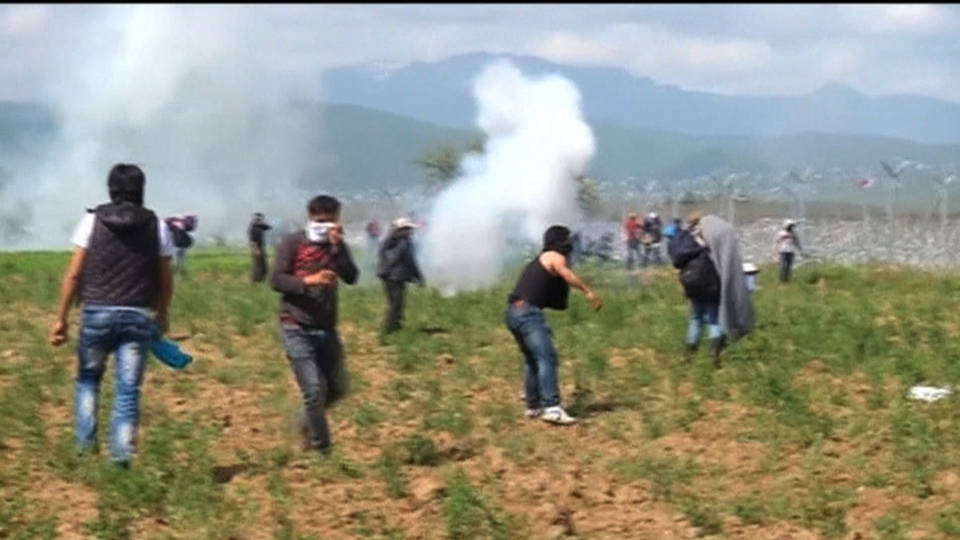
Hundreds of refugees were injured Sunday when Macedonian police fired tear gas, rubber bullets and stun grenades at crowds of people on the Greek side of the border. More than 10,000 migrants and refugees have been stranded at the Greek border outpost of Idomeni since February, after a series of border shutdowns across the Balkans closed off their route to Central and Western Europe. One Syrian migrant named Mahmoud, who was treated for a broken arm, described what happened.
Mahmoud: "We were surprised that even before we reached the fence and before we did anything on our part, that they fired tear gas immediately. So we were dispersed, but there was a reaction. The tear gas was used and very closely followed by firing stun grenades and rubber bullets. It was not gradual; they used it all immediately, one after the other. And this caused a negative reaction from the protesters and angered them and enraged them."
Greece condemned the use of force by Macedonian authorities, describing it as "dangerous and deplorable." According to Doctors Without Borders, at least three children had been treated with head injuries caused by rubber bullets. Many Syrian refugees say they are stuck in the Greek camp with nowhere to go.
Mohamed: "We feel like we are in prison. I feel like I am in prison. I am banned from moving anywhere or applying anywhere. Two months in Europe, and we experienced more injustice than five years of war under Bashar al-Assad. There is no humanity here."
Sanders Wins Wyoming Caucus; Invited to Speak at Vatican
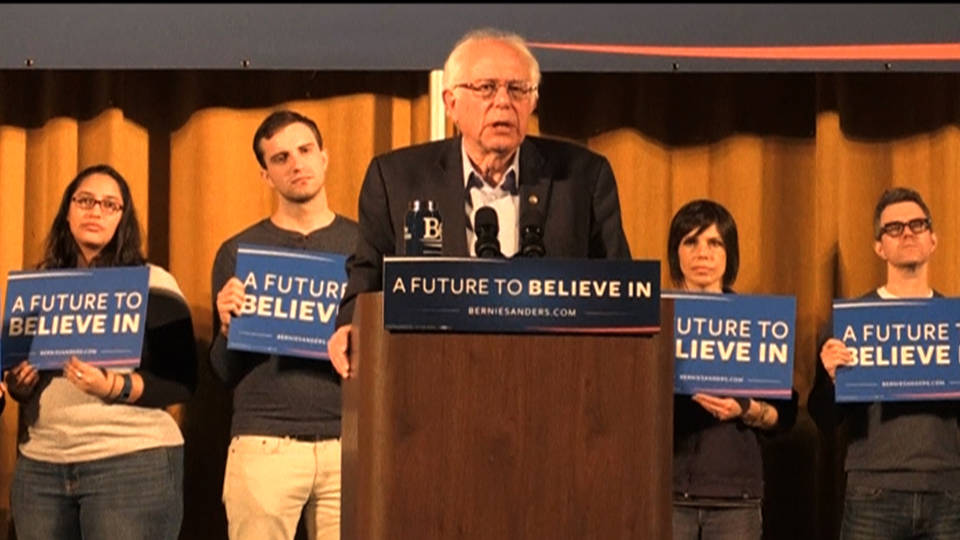
Vermont Senator Bernie Sanders won the Wyoming caucus on Saturday, securing nearly 56 percent of the vote. He has now won seven of the last eight caucuses and primaries. Despite his recent victory streak, Hillary Clinton remains ahead by about 220 pledged delegates. On April 19, the candidates will square off in New York, the state where Sanders was born and where Clinton served as a U.S. senator. Just before the New York vote, Sanders will head to the Vatican, where he has been invited to give a speech about the economy.
Sen. Bernie Sanders: "And I must tell you that I am a very great fan of the role that Pope Francis has been playing in talking about inequality in this world. You know, it goes without saying that I have my strong disagreements with certain aspects of what the church stands for, but he has been out there talking about the need for a moral economy—a moral economy—an economy in which we have the moral responsibility to pay attention to what he calls 'the dispossessed.'"
Clinton: "New York Values are Really Good for America"
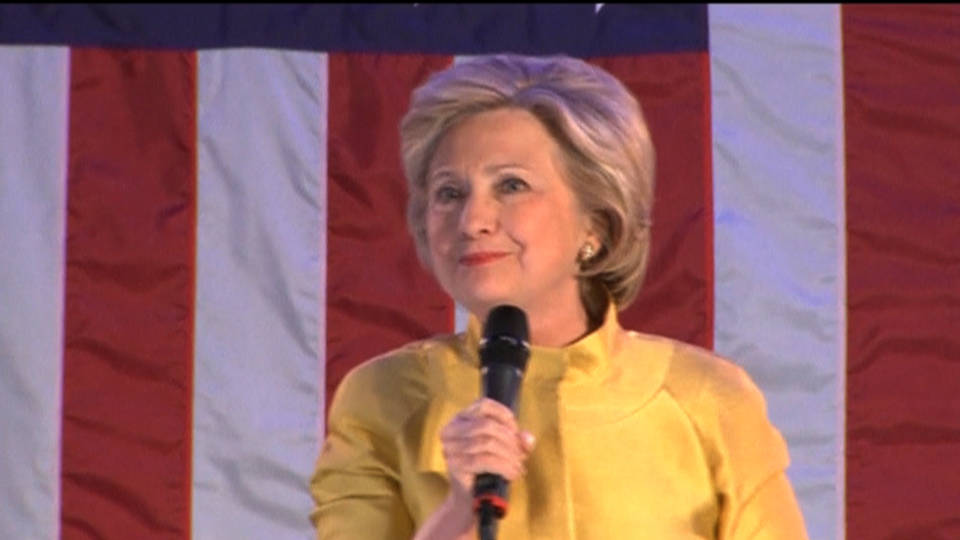
Like Senator Sanders, Hillary Clinton spent much of the weekend campaigning in New York.
Hillary Clinton: "I not only love New York and am incredibly grateful every day that I had the honor of being your senator, but I actually think New York values are really good for America."
Jimmy Carter: Clinton Took "Very Little Action to Bring About Peace" as Sec. of State
APRIL 11, 2016
HEADLINES
In other campaign news, former President Jimmy Carter has publicly criticized Hillary Clinton’s tenure as secretary of state. He told Time magazine, "When Secretary Clinton was Secretary of State, she took very little action to bring about peace. It was only John Kerry’s coming into office that reinitiated all these very important and crucial issues."
John Kerry Visits Hiroshima But Offers No Apology for U.S. Atomic Bombing
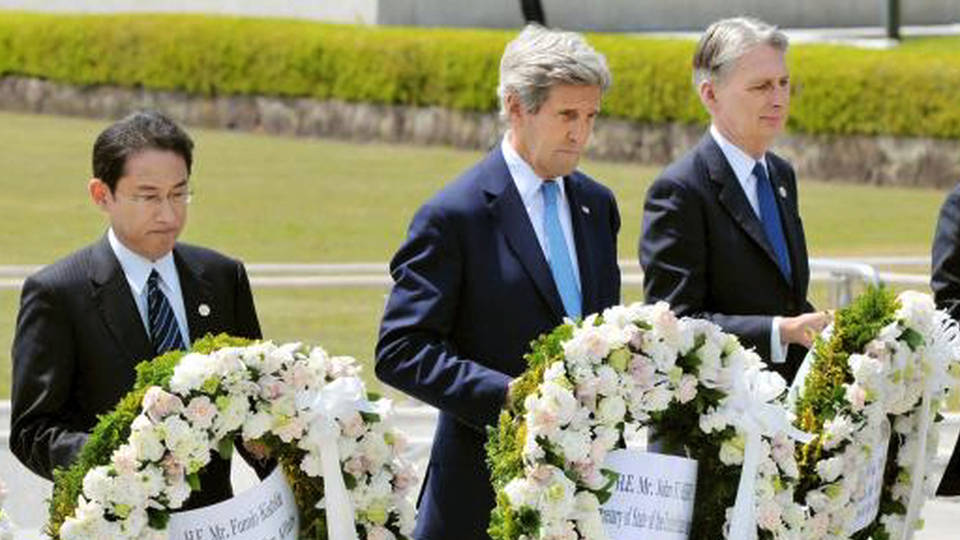
John Kerry has become the first secretary of state to visit Hiroshima, Japan, the city destroyed by a U.S. nuclear bomb on August 6, 1945. Three days later, the U.S. dropped another nuclear bomb on the city of Nagasaki. Hundreds of thousands were killed. Kerry toured the Hiroshima Peace Memorial and Museum but offered no apology for the U.S. nuclear attack. He said Hiroshima was a "gut-wrenching" reminder the world should abandon nuclear weapons. Despite Kerry’s remarks, the United States has been quietly upgrading its nuclear arsenal to create smaller, more precise nuclear bombs as part of a massive effort that will cost up to $1 trillion over three decades.
Obama Admits Handling of Libya was Worst Mistake of Presidency
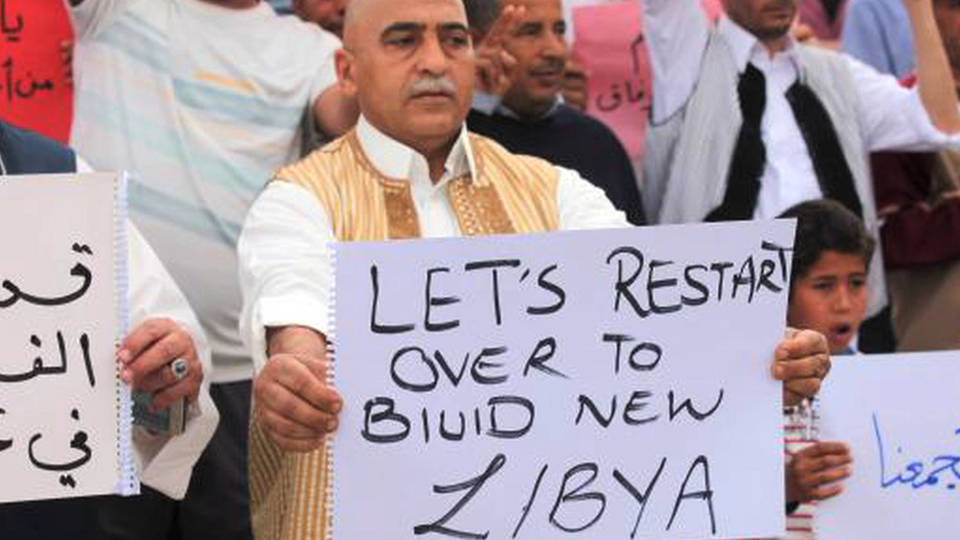
President Obama appeared on Fox News Sunday. He was asked what was the worst mistake of his presidency.
President Barack Obama: "Probably failing to plan for the day after what I think was the right thing to do in intervening in Libya."
Fallout from Panama Papers Leak Spreads from U.K. to Malta to El Salvador
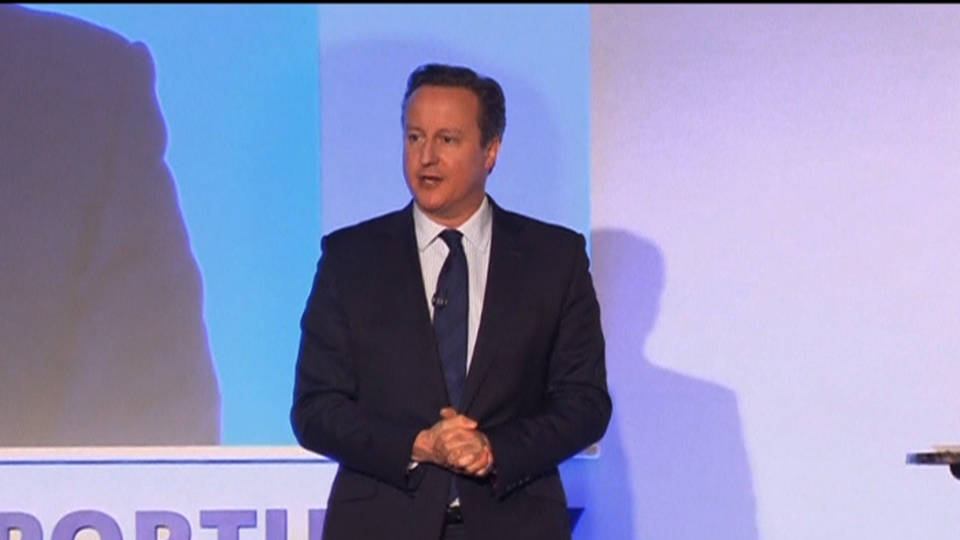
The political fallout from the release of the Panama Papers continues to grow. The papers revealed how a Panamanian firm had set up a global network of shell companies for heads of state, politicians and others to store their money offshore to avoid taxes and oversight. British Prime Minister David Cameron has taken the unusual step of publishing his tax records after he admitted he owned shares in a Bahamas-based trust up until 2010. Details about his late father’s offshore investments were leaked as part of the Panama Papers. Labour Party leader Jeremy Corbyn said Cameron must do more to address the scandal.
Jeremy Corbyn: "What Panama (Papers) has shown, more than anything, is that there’s one rule for the rich and one rule for the rest. If you’ve got a lot of money, you put it in a tax haven. You get a big income as a result of it. You pay no tax on it. If you’re a care worker, a street cleaner or a nurse, you don’t have those options. You don’t have those opportunities. You pay your tax."
In Malta, several thousand people protested Sunday to demand the resignation of Prime Minister Joseph Muscat after the leaked Panama Papers said two of his political allies had offshore accounts. And in El Salvador, authorities have raided the local offices of Mossack Fonseca, the Panamanian law firm at the center of the worldwide scandal.
TOPICS:
Panama Papers
Nuit Debout: Nightly Labor Protests Continue in France
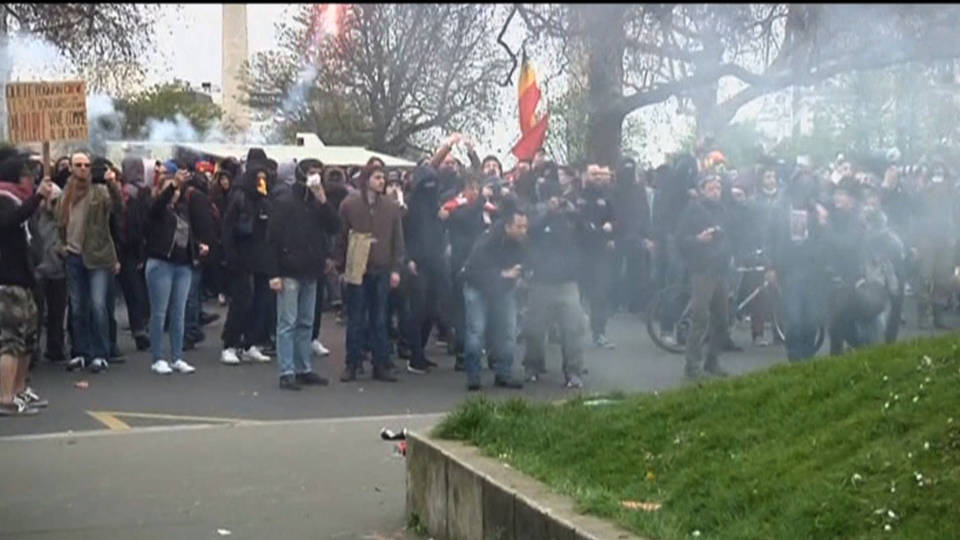
Nightly labor protests are continuing in France against a new law that would weaken worker protections. The movement is dubbed Nuit Debout, "Rise Up at Night."
Benoit, French school teacher: "I came here to protest against the ever-increasing downgrade of working conditions, against this liberal economy, which wants to give full powers to companies and heads of companies. And that’s the reason why I’m here."
Since March 31, protesters have been gathering each night in Paris and other cities in a movement some have compared to Occupy Wall Street or Spain’s Indignados. Critics of the new French labor law say it will lead to worse working conditions and more layoffs.
Prosecutors: Former GOP House Speaker Hastert Molested At Least Five Boys
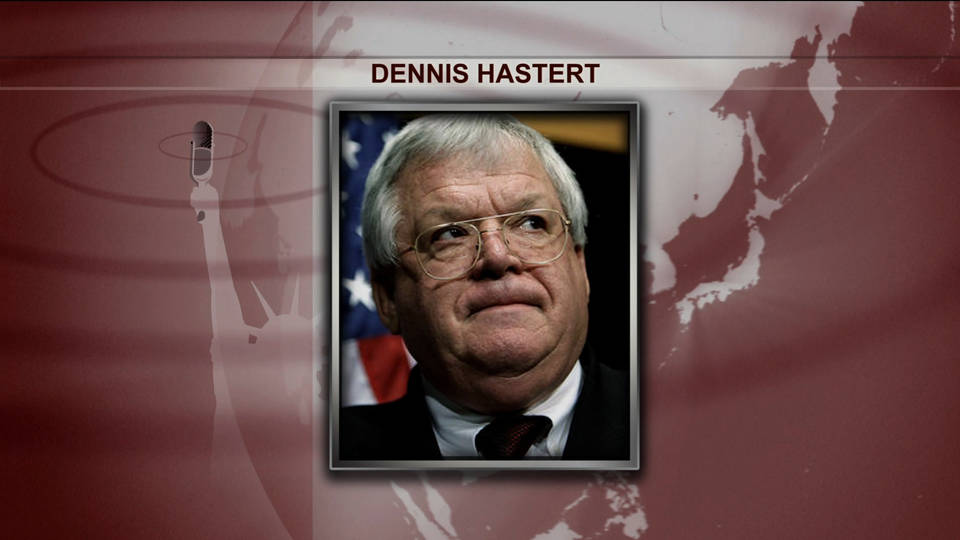
Federal prosecutors are saying former Republican House Speaker Dennis Hastert molested at least five boys, as young as 14 years old, while he was a wrestling coach in Illinois decades ago. In October, Hastert pleaded guilty to violating bank reporting rules for giving $1.7 million in cash to one of his victims to buy that person’s silence. Hastert faces up to five years in prison on that charge, but he will not face any sexual abuse charges because the statute of limitations has run out. Hastert served as House speaker from 1999 to 2007, making him the longest-serving Republican speaker in history. He played a lead role in the impeachment of President Clinton. On Saturday, Hastert’s attorney said, "Mr. Hastert acknowledges that as a young man, he committed transgressions for which he is profoundly sorry."
Colombia Marks National Day of Memory and Solidarity with the Victims
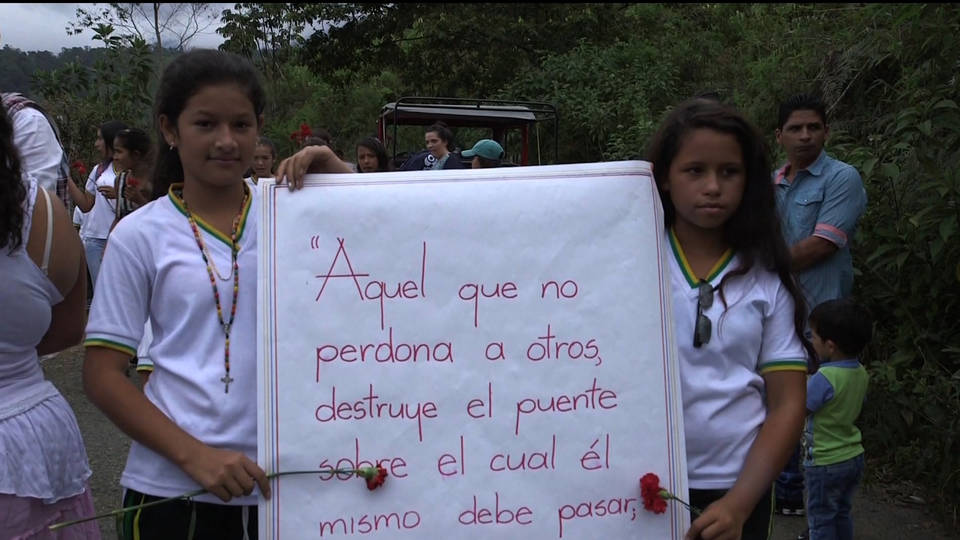
In Colombia, marches were held over the weekend to mark the National Day of Memory and Solidarity with the Victims to remember victims of human rights abuses in Colombia. Yamileth Vasco helped organize a march commemorating the over 300 people that were murdered and disappeared by paramilitary forces in the town of Trujillo in the 1990s.
Yamileth Vasco: "This is a way to remind the state and Colombia about the families who were evicted from their land and who were forced to leave their farms, also those who had family members who were murdered and those who are direct victims."
Judge: Youth Activists Can Sue U.S. Government in Landmark Climate Lawsuit
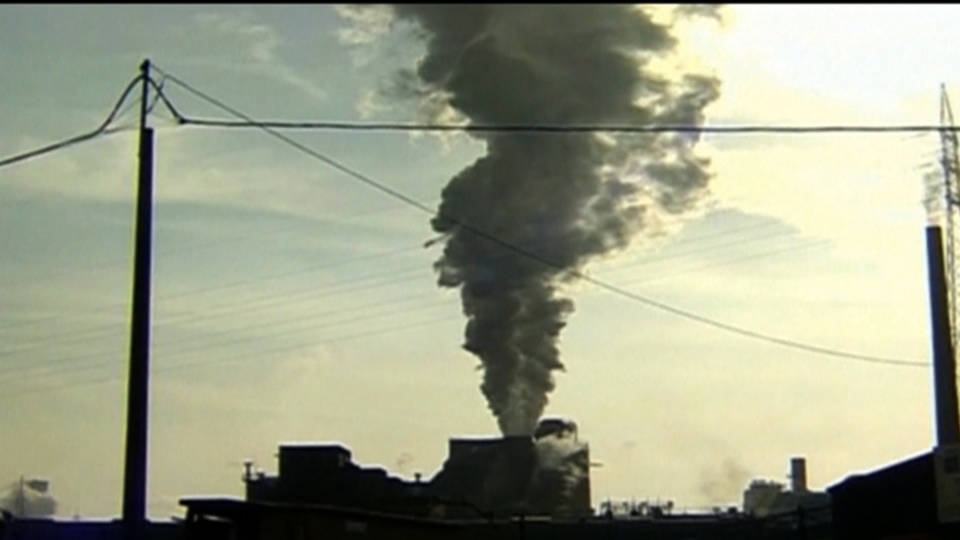
A federal judge in Oregon has rejected an attempt by the U.S. government to dismiss a landmark lawsuit over the government’s failure to take necessary action to curtail fossil fuel emissions. The lawsuit was filed by Our Children’s Trust on behalf of 21 young people all under the age of 19. They argue that the federal government is violating their constitutional rights to life, liberty and property by enabling continued exploitation, production and combustion of fossil fuels. Judge Thomas Coffin wrote, "If the allegations in the complaint are to be believed, the failure to regulate the emissions has resulted in a danger of constitutional proportions to the public health."
Bruce Springsteen Cancels NC Concert to Protest Anti-LGBT HB 2 Law
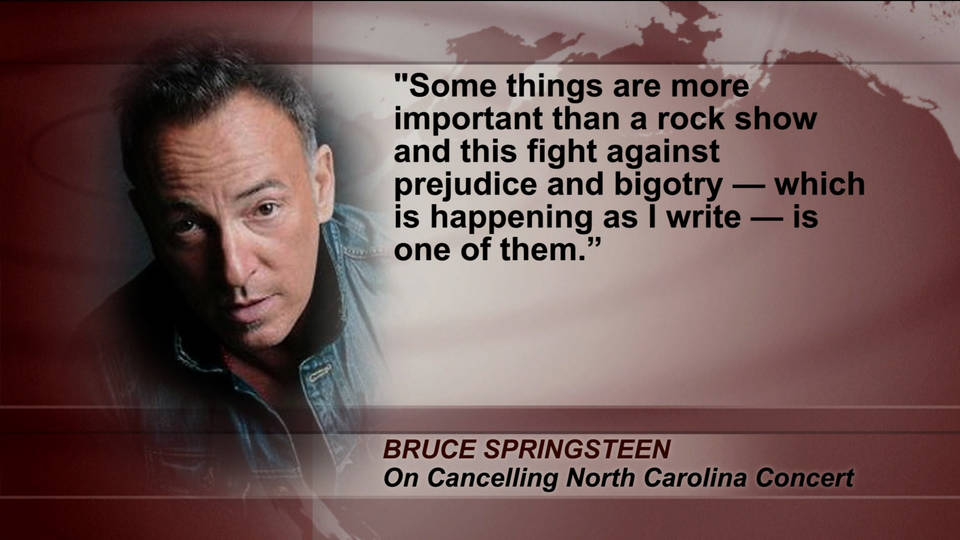
In entertainment news, rock legend Bruce Springsteen canceled a concert in Greensboro, North Carolina, to protest the state’s sweeping anti-LGBT law. In a statement, he said, "Some things are more important than a rock show and this fight against prejudice and bigotry—which is happening as I write—is one of them."
Democracy Spring: Thousands Pledge to Risk Arrest to Protest Corruption
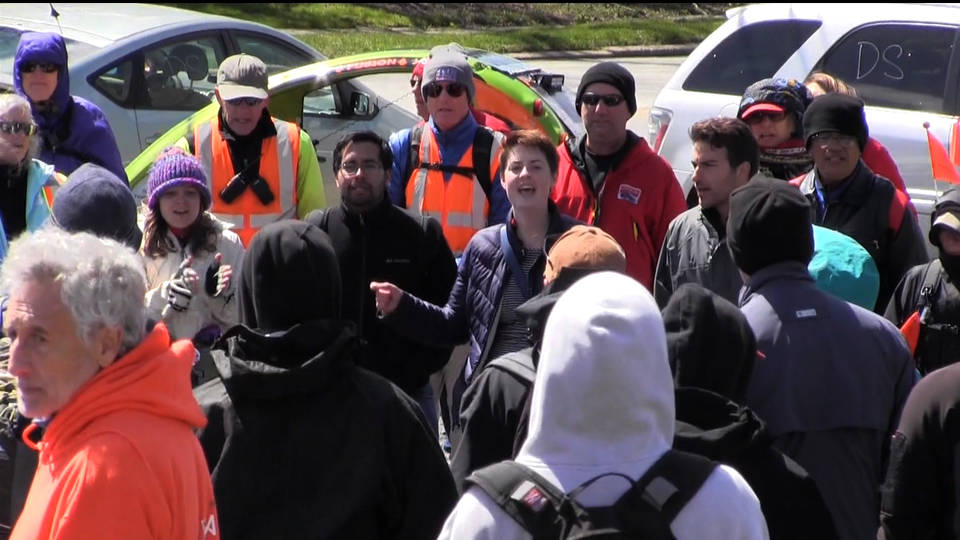
More than 3,000 people have pledged to risk arrest in Washington, D.C., as part of a massive sit-in calling for an end to the corruption of big money in politics. The action is known as Democracy Spring. Over the past week, activists have marched from Philadelphia to Washington, D.C.
Boston Globe Runs Satirical Anti-Trump Cover
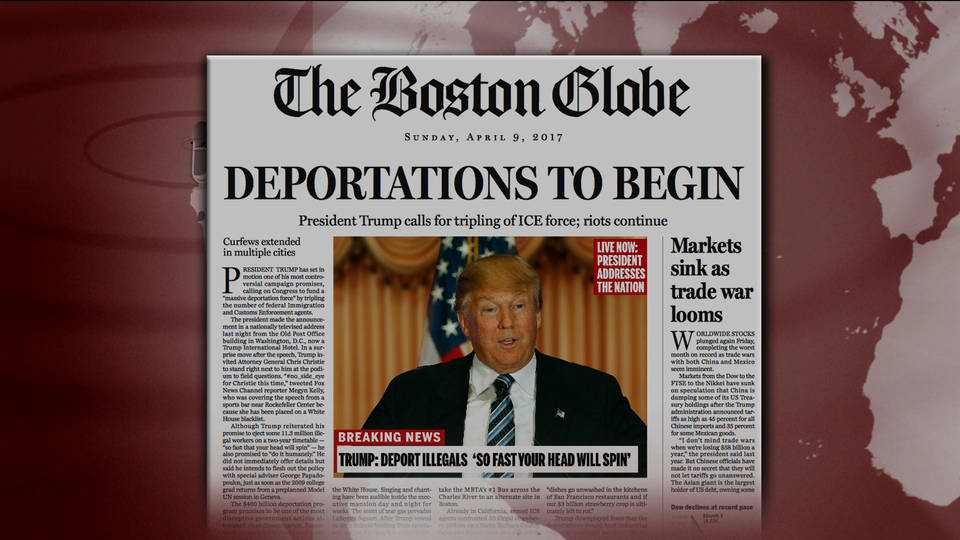
The Boston Globe included a satirical front page in their Sunday edition to highlight how the country could change if Donald Trump is elected president. The banner headline reads: "Deportations to Begin: President Trump Calls for Tripling of ICEforce; riots continue." Another headline reads, "Markets sink as trade war looms."
Donate today:
Follow:


SPEAKING EVENTS

4/11 San Francisco, CA
4/12 Palo Alto, CA
4/12 Santa Clara, CA
4/13 Santa Cruz, CA
4/14 Claremont, CA
4/14 Los Angeles, CA
4/15 Los Angeles, CA
4/15 Studio City, CA
4/16 Santa Rosa, CA
4/16 Willits, CA
4/16 Redway, CA
4/17 Davis, CA
4/17 Chico, CA
4/17 Berkeley, CA
4/18 Salt Lake City, UT
more
NEW BOOK

Panama Papers: Could Pirate Party Co-Founder Birgitta Jónsdóttir Become Iceland's Next PM?
WORK WITH DN!

Broadcast Engineer
Director of Finance and Operations
WEB EXCLUSIVE

Watch: Ex-Death Row Prisoner Moreese Bickham on WBAI in 1996 Days After Being Freed
207 West 25th Street, 11th Floor
New York, New York 10001, United States
---------------------
---------------------

No comments:
Post a Comment