democracynow.org
Stories:

"Love Trumps Hate": Actress Rosario Dawson on Why She Supports Bernie Sanders for President
Both former Secretary of State Hillary Clinton and Vermont Senator Bernie Sanders campaigned in New York state Thursday ahead of the New York primary later this month. More than 16,000 people gathered in St. Mary’s Park in the South Bronx for a Bernie Sanders rally, the first time in decades that a presidential candidate campaigned in the community. Sanders stressed his Brooklyn roots and spoke alongside director Spike Lee and actress Rosario Dawson, who spoke with Democracy Now! after the rally. "I’m supporting Bernie Sanders because he says no to fracking. I’m supporting Bernie Sanders because we do need a single-payer healthcare system that takes care of everyone. And that is not a pipe dream; that’s something that’s happening all over the world and in really positive ways. We are a social democracy," said Dawson.
TRANSCRIPT
This is a rush transcript. Copy may not be in its final form.
AMY GOODMAN: On Thursday night, between 16,000 and 20,000 people gathered in St. Mary’s Park in the South Bronx for a Bernie Sanders rally, where Sanders stressed his Brooklyn roots. It was the first time in decades a presidential candidate spoke in the South Bronx. He spoke alongside director Spike Lee and actress Rosario Dawson, who is known for her role in Kids and many other films, including Sin City: A Dame to Kill For as well as Rent. I caught up with Dawson after the rally. She was walking on the sidewalk with friends. It was, well, nearing midnight. I began by asking her why she supports Bernie Sanders.
ROSARIO DAWSON: I’m supporting Bernie Sanders because he says no to fracking. I’m supporting Bernie Sanders because we do need a single-payer healthcare system that takes care of everyone. And that is not a pipe dream; that’s something that’s happening all over the world and in really positive ways. We are a social democracy. That’s our firefighters, that’s our policemen. And it shouldn’t be drawing a line, that’s—you know, a fireman will go into your house to take your hard drive out and save your cat, but if you break your leg, screw you. That doesn’t make any sense, you know? And when you actually go and you travel around the world and you start recognizing that people can actually be sick, they can take—you know, have a broken leg and not lose their job and lose their livelihoods and lose their homes over it, that’s really important.
You know, free college, universities, that’s a really, really big deal. People shouldn’t be thinking about that for the rest of their life they’re going to be having these deals, because I’m looking at people who are in their forties, fifties and sixties that are still paying off their student loans. That’s crazy. You know, like how are we supposed to compete in the economy as it’s moving forward? The world—we’re being replaced by robots. Like, we’re not going to be globally competitive if we’re not making sure people are getting the education that they need.
AMY GOODMAN: And why do you think Bernie Sanders can solve these issues in a way that Hillary Clinton can’t?
ROSARIO DAWSON: The reason why Bernie can do that is because it’s a revolution. And the revolution is all of us being a part of that conversation. It’s not going—someone’s going to go into office and just go, "Great, I take it from here," but actually inspiring people to come and take off—you know, when you see what Black Lives Matter is doing with #ByeAnita, when you see people like Nina Turner coming up and Tulsi Gabbard and all of these other people.
This idea that, you know, this has to be the only person, this only woman—no, I don’t want to vote for someone who said yes to the Iraq War and yes to the PATRIOT Act twice. I don’t want to support someone who said yes to NAFTA up until 2008 and when Obama even called her out on it, because she was running for presidency. She was saying, "Yeah, the gold standard of the TPP deal," but you know exactly what she’s going to do when she goes into office, and sign it. This is not OK. Profits for prisons, and now actually profits for the rehabilitation centers, because the same people who own those private prisons are also the same people who own the detention centers and for—for the undocumented who are going in there. And it’s not just undocumented people. People are going and getting thrown in there who have green cards, all types. I mean, there’s a real serious problem that’s going on right now, and has been going on for a long time. And so, for someone like her to be talking about that she cares, but hasn’t done anything really about it, is really shocking to me, you know, and really even admitting and talking about how her policies were so devastating for people. You know? Like—
AMY GOODMAN: And what about—what about the TV networks that say that Bernie Sanders can’t get the support of communities of color?
ROSARIO DAWSON: Well, that’s obviously ridiculous. You know? And that’s—but again, like, I mean, you’ve got to really look at the fact that these companies and their parent companies are the ones who have—you know, they’re dependent on fossil fuel and pharmaceutical companies putting the commercials around them. You know, they’re dependent on all of—you know, this is about people making money and lobbyists. This is not about us.
AMY GOODMAN: Can you—
ROSARIO DAWSON: Yeah.
AMY GOODMAN: Can you talk about what you’re doing tomorrow night, the forum you’re having in Harlem?
ROSARIO DAWSON: Yes.
AMY GOODMAN: Are you doing it with Michelle Alexander?
ROSARIO DAWSON: Yeah, so, I wanted to put together—actually, I was talking to Eve Ensler about it, and we just came up with this idea of talking about just women and what we have to talk about in policies and politics. And so, I wanted to round up particularly a couple of women who are definitely Bernie supporters, but not necessarily everybody. But we’re going to have Michelle Alexander, who wrote The New Jim Crow; Tessa Thompson, who was in Dear White People; Donna Hylton, who was incarcerated for 23 years and can really talk to these issues and, like, give people information, because the one thing I keep finding is people who are supportive of the other candidates tend to do so with these really broad sort of ideas as to why. And as soon as you go, "Well, why?" and you challenge them, they don’t really have the facts to back it up. And I really feel like there’s a possibility of especially undecided voters, giving them the information that they actually need, that a lot of the group mass media is not giving them, because he’s—you know, and he doesn’t have the benefit of super PACs or being a household name or a brand name, you know, so he just has us. And he has his message, that has been consistent for decades.
And so, now, because of social media, the difference between him and Obama—like, you know, the Twitter only just had its 10th anniversary of existence, you know? Like, there, he had a mass movement behind him, but, you know, people can tell you, two months in, they were disenchanted because he closed the door and started trying to reach across the aisle with people who had been calling him a terrorist for years. You know? Like—and so, then he lost the House and the Senate and all these different things. And that’s when the obstructionism came. It wasn’t that he walked into it like that. And so, you know, and I think it’s really—this is someone who’s got—understands that, whose momentum is solely built off of the online space. And so, we know, because he’s been consistent his entire career, that he’s not going to make an about-face when he gets into the Oval Office, that he’s going to stay true to his promises, because he’s doing so right now. The desire and need to want to be president and do the things that he can do has got to be really so intense, and he must really want to be able to say, "Yes, please," from companies that are good companies, say, "Give me some money," but he still says no, because he wants the people to get him there. He wants all of us to win the presidency. And that’s why I’m behind him.
AMY GOODMAN: And, Rosario Dawson, your thoughts on Donald Trump, both saying originally—just a few days ago saying that women should be jailed for having abortions; he’s walked it back a little in saying, no, the doctors who give them abortions should be punished.
ROSARIO DAWSON: Yeah, that’s already happening, unfortunately. You know, I think that’s one of the sort of red herrings, the fallacies about—you know, about Trump, is that he somehow is making up the divisiveness, that he’s somehow creating it, when that’s just not true. This has been going on for a long time. Black Lives Matter, the DREAMer movement exists for a reason. And this has been going on on our streets for a really, really long time. And he’s been calling Obama out as being a dreamer for years. And that didn’t start with him. That started when a picture of Obama with a turban came out of the Hillary Clinton camp, you know? And so, like, there’s a real reality about—there’s been dirty politics and things that have been going on for a very long time, and they got out of hand. And now you have people like Lindsey Graham going, "I support Ted Cruz," which you know he would never want to do, because the Republican Party and the Democratic Party have really lost touch with the people on the ground.
AMY GOODMAN: And what about Donald Trump having trouble disavowing David Duke and the Ku Klux Klan and then retweeting Benito Mussolini, the fascist dictator of Italy?
ROSARIO DAWSON: Well, I mean, again, you’re talking about someone who is dividing the country, who’s been doing that for a really long time. The fact that he was never brought his feet to fire by going, "Hey, if you really think that the president is not legally capable of being the president"—I wonder if he would have had as much to say about McCain having been born in Panama. But, you know, I really think it’s really striking that no one called him out on that. So now you want to be the president of the country that you believe could have hired someone for the job who wasn’t legally capable of doing it? Like, so I think there’s a lot of insanity.
But again, like I—it’s not—he doesn’t—he isn’t the problem. He hasn’t been the problem. There is a lot of stuff that’s been going on for many, many years that have gotten out of control, and now he represents that problem. And I think now we’re finally dealing with it. You know, there are a lot of people who follow him who are so grateful to be able to have the chance to maybe say "spic" again. They’re like, "Yes! You know, this guy is talking to us, and he’s giving us permission." Because you know what? We’ve had this insane level of political correctness that has been glossing over the fact that things aren’t politically correct, that things are really devastating for a lot of people—black, white, brown, male, female, different religions, all of it. And we’ve been pretending like somehow we’ve broken through the ceiling, the glass ceiling for women, that because we have a president named Barack Hussein Obama, that we’re no longer racist. And that’s just not true. So, I think what we really have to talk about is not exactly what he’s saying individually, but what he represents and the fact that a lot of people behind him feel that way. And what are we going to do about that?
Let’s try to get Bernie on, so the more opportunity he has to talk to the people and not get the facts obfuscated or misconstrued by the mass media, that has been happening. I mean, the times that I watch him on these other shows, and then watch them right after and start rolling their eyes, like, "Well, did you hear?" I’m like, "No, that’s not what he said. Ugh!" And because people are busy, they’re taking advantage of the fact. Like, this is something I understand because I’m an actor. So, we have—we’re constantly trying to put out "This new movie’s coming out. This new thing, whatever, is coming out. Will you come and watch it?" And we’re trying to razzle-dazzle you to pay attention in the midst of your busy lives. What’s happening with the corporate media is they’re abusing the fact that they know that you’re busy with your lives, and so they’re hoping that you missed the debate and that you missed all this stuff, so that their summary is what you walk away with. And it’s wrong. And it’s yellow journalism, and you’re misleading people. And you’re going to have that on your hands. The Iraq War that they sold you, that’s blood on your hands. Like, this is the reality. You cannot be selling us someone who voted yes on it and take no responsibility. That is not OK.
And so, that’s why I’m here and try to do what I can, because it’s not about making anyone feel better. It’s like Luis Guzmán was saying. If you just took away their brand names, and you took away, you know, their faces, and just listened to what they had to say, who would you vote for? It’s very clear that that is Bernie Sanders. It’s very clear. So that’s what we have to do, is keep giving people that information, because when I say people are voting against themselves, it’s because, I’m telling you, you are. Because I’m actually looking at this information, and I’m watching people do it. So, if you have real, substantive reasons why you want to support your candidate, then, great, bring that to the table. But that’s not what I’ve been hearing. And that’s what I’m trying to give people now.
AMY GOODMAN: And what do you think Bernie Sanders’ path to the presidency is right now?
ROSARIO DAWSON: This is it. You know, I’m seeing a lot of people already going and starting to, you know, talk to their superdelegates and talk to these different people and going, "Hey, like, this is not OK." You know, this is what happened. What happened was, Hillary lost in 2008 because of her Iraq War vote, and she lost because a lot of election politics that went on that left a really sour taste in people’s mouths. And she lost because of the delegates. And so, rather than go, "Let’s take that out of the system," she just started to work for it and started to get them on her side. And she started, before the primaries, having over like 400 delegates pledged to her. That is not OK, you know?
And so, I think that this is our moment right now. People are starting to wake up to what our election process looks like. We are not a democracy, even though we keep trying to push that colonially all around the world. What we are is a republic. And so, if we want it to be a democracy, we need to hire someone for the job who’s going to actually want to make that happen, so that we can have the voter—you know, voter day—you know, the Election Day be a holiday, so that we can have mandatory and like automatic voter registration, so that we can maybe start being about an Electoral College. That’s great, but right now the powers that be, the establishment politicians in politics, they don’t want that to happen. I can tell you. I’ve done voter registration for over 11 years. I have to say, like, the one thing I’ve noticed is, you know, the millionaires and the billionaires that we sat down with, they didn’t want to give us money for voter registration or any of the other places. They want to give you money for the candidates. And they just want to give you money for the, you know, get out the vote. They want to know that the few amount of people that are voting, that they can persuade one way or the other. They don’t want all you new young voters, because they don’t know—that’s too risky. They don’t know what you’re going to do. And you disrupt the system.
AMY GOODMAN: I mean, in these primaries, more than 80 percent of the people are not voting.
ROSARIO DAWSON: Yeah, and it’s crazy. You know? And what we’ve seen, like record numbers of voter registration also happening. And part of it’s responsible people wanting to vote against Trump. And a lot of it’s responsible because people want to get their chance to vote for the first time for Bernie Sanders. And that’s really beautiful.
AMY GOODMAN: Who do you think could beat Donald Trump?
ROSARIO DAWSON: It’s not a question—this, again, like even that kind of question—like already across the polls, Bernie beats him by a landslide. So, again, it’s a false—it’s a red herring. It’s a false narrative to think that the only way to beat Trump is to somehow vote for the other Democratic candidate. That’s not true. And now we’re not in the general election. He doesn’t have the nomination yet. So stop making us—jumping us into the path, into the future. Right now we’re in our present, and we get to vote for someone, who has values that we believe in and who supports us in the way that he needs us to support him. And, like, that’s actually a really beautiful thing.
Like, millions of people marched against the Iraq War before it happened. That’s historical. Millions of people marched against the bailout. Millions of people, students, walked out in 2006 against immigration reform. They texted each other and walked out of their high school classrooms. Like, we keep seeing these mass movements of people going, "This is not the way things should be done," and it gets ignored. The thousands of people who have been marching across America for Bernie, that doesn’t get any press coverage, because, Gil Scott-Heron said, "The revolution will not be televised." But it’s time for it to be televised. And thank you so much for televising it, because we need people to know how beautiful this moment is. No matter what, look at this. This is incredible. And we have a Jewish man who’s talking about Palestine. Like, do you know what I’m saying? Like, this is a really, really remarkable, huge moment, and we cannot gloss it over. You’re doing a disservice to people by doing so. This is something really beautiful. I’m doing this because love trumps hate, not because I need to vote against somebody, but because love trumps hate. This is a love movement. I’m so excited!
AMY GOODMAN: Actress Rosario Dawson speaking late Thursday night after addressing 18,000 people at the Bernie Sanders rally in the South Bronx. The New York primary as April 19. Two hundred forty-seven pledged delegates are up for grabs. Currently, Clinton and Sanders are sparring over when to hold a debate in New York. Clinton is pushing to do it on the night of April 14th, when Sanders has a major rally scheduled in Washington Square Park. He’s pushing for any other date.
This is Democracy Now! When we come back, who gets to vote in these primaries, and who doesn’t? We’re going to speak with Ari Berman. Stay with us.. ... Read More →

Meet the Greenpeace Activist Who Confronted Hillary Clinton over Ties to Fossil Fuel Industry
With the Wisconsin primary just a day away, Democratic presidential challengers Hillary Clinton and Bernie Sanders sparred over the weekend over whether fossil fuel lobbyists are funding Clinton’s campaign. The dispute took center stage after video emerged of Greenpeace activist Eva Resnick-Day questioning Clinton at a campaign rally at the State University of New York in Purchase on Thursday. Resnick-Day has been working on a Greenpeace campaign to get candidates to take a pledge rejecting future donations from oil, gas and coal lobbyists and executives. "These lobbyists are people whose job it is to make connections with Senator Clinton to influence her policy going forward. And giving her money in the campaign, they’re clearly trying to find influence," says Resnick-Day. "I don’t think that that is how democracy should work." We speak with Resnick-Day, the democracy organizer for Greenpeace who confronted Clinton.
TRANSCRIPT
This is a rush transcript. Copy may not be in its final form.
AMY GOODMAN: With the Wisconsin primary just a day away, Democratic presidential challengers Hillary Clinton and Bernie Sanders sparred over the weekend over whether fossil fuel lobbyists are funding Clinton’s campaign. The dispute took center stage after video emerged of a Greenpeace activist questioning Clinton at a campaign rally at the State University of New York in Purchase Thursday. You have to listen very closely to the interaction between the activist and Hillary Clinton.
EVA RESNICK-DAY: Will you act on your word to reject fossil fuel money in the future in your campaign?
HILLARY CLINTON: I do not have—I have money from people who work for fossil fuel companies. I am so sick—
EVA RESNICK-DAY: Yeah, and registered lobbyists.
HILLARY CLINTON: I am so sick of the Sanders campaign lying about me! I’m sick of it!
AMY GOODMAN: During a rally on Friday in Wisconsin, Bernie Sanders called on Hillary Clinton to apologize for characterizing remarks he made about the oil and gas industry’s donations to her campaign as lies.
SEN. BERNIE SANDERS: Yesterday, some of you may know, Secretary Clinton was met with by a environmental activist at a forum that she held, and the activist asked her if she would reject money from the fossil fuel industry, which I have. And the reason I have—the reason I have is that I happen to believe that climate change is one of the great crises facing our planet. But Secretary Clinton said in response to this young woman, she said she was sick—quote, "sick of the Sanders campaign lying about," end of quote, contributions she received from the fossil fuel industry. Well, Secretary Clinton owes us an apology. We went online. We were telling the truth. The truth is—the truth is that Secretary Clinton has relied heavily on funds from lobbyists working for the oil, gas and coal industry. According to an analysis done by Greenpeace, Hillary Clinton’s campaign and her super PAC have received more than $4.5 million from the fossil fuel industry. In fact, 57 oil, gas and coal industry lobbyists have directly contributed to her campaign, with 43 of them contributing the maximum allowed for the primary. And these are not just workers in the fossil fuel industry, these are paid registered lobbyists. Secretary Clinton, you owe our campaign an apology. We were telling the truth.
AMY GOODMAN: On Sunday, Meet the Press host Chuck Todd asked Hillary Clinton about her ties to the fossil fuel industry.
HILLARY CLINTON: I have been working to try to move us away from fossil fuels for many years. When I was in the Senate, I introduced legislation to take away the subsidies. I voted against the Dick Cheney’s energy bill in 2005. And I could go on and on. When I got to be secretary of state, I was at the original meeting in 2009 with President Obama, where we were trying to convince China and India and others to come on board with accepting some restrictions—
CHUCK TODD: Right.
HILLARY CLINTON: —that would lead to what finally occurred with the Paris agreement. So, when people make these kinds of claims, which now I think have been debunked. Actually, The Washington Post said "three Pinocchios." The New York Times also analyzed it, and other independent analysts have said that they are misrepresenting my record. I’m just not going to—I feel sorry sometimes for the young people who, you know, believe this. They don’t do their own research. And I’m glad that we can now point to a reliable independent analysis to say, no, it’s just not true.
AMY GOODMAN: Joining us now is Eva Resnick-Day. She’s the Greenpeace activist who confronted Hillary Clinton Thursday. Also with us, Charlie Cray, research specialist for Greenpeace and lead researcher on the fossil fuel lobbyists’ contributions to the Clinton campaign. According to Greenpeace’s research, the Clinton campaign has received more than four-and-a-half million dollars from lobbyists, bundlers and large donors connected to the fossil fuel industry. Clinton maintains she’s received about $330,000 from individuals who work for fossil fuel companies.
We welcome you both to Democracy Now! Eva Resnick-Day, let’s start with you. Describe the scene at the university, State University of New York—Purchase, when you were able to question Hillary Clinton. How hard was it to get to her?
EVA RESNICK-DAY: Absolutely. So, it’s pretty difficult to make sure that you’ll get to the front of a rally and even have the opportunity to stick your hand out and, hopefully, get to ask a question to Secretary Clinton. We, myself and an activist from 350 Action named Miles, had to wait about six hours in order to make sure that we were at the front of the line to even get the opportunity to propose this question.
AMY GOODMAN: Had you been trying before this day?
EVA RESNICK-DAY: Absolutely. This is a larger climate movement of thousands of activists across the country who have showed up to rallies, to protest at fundraisers, demanding that whoever our future leader is is accountable to the people and not contributions and corporations in their campaign.
AMY GOODMAN: She says you’re a Bernie Sanders representative who was trying to bird-dog her. Is that true?
EVA RESNICK-DAY: It’s absolutely not true. I am a democracy organizer for Greenpeace USA. I have no affiliation to the Sanders campaign. And Greenpeace is an independent organization that does not support or oppose candidates.
AMY GOODMAN: So, explain—
EVA RESNICK-DAY: We only work on issues.
AMY GOODMAN: Explain what it was you exactly asked her and what she replied.
EVA RESNICK-DAY: Yeah, thank you so much. So the first part of my question seems to never make it into the news, and that was: "Thank you so much for tackling climate change. Will you act on those words and reject future fossil fuel money in your campaign?"
AMY GOODMAN: And what was her answer?
EVA RESNICK-DAY: Her answer was: "I have only taken money from employees of the oil and gas industry, and I’m so sick of the Sanders campaign lying." And I don’t know if you could hear it, but in the video I also tried to interject, but wasn’t able to, "Also, fossil fuel lobbyist money."
AMY GOODMAN: And explain what you mean.
EVA RESNICK-DAY: So, 57 registered coal, oil and gas lobbyists have directly donated or bundled more than $1.3 million to the Hillary Clinton campaign. And these lobbyists are people whose job it is to make connections with Senator Clinton to influence her policy going forward. And giving her money in the campaign, they’re clearly trying to find influence. And I don’t think that that is how democracy should work. It should be democracy for the people, not registered lobbyists.
AMY GOODMAN: And what is the pledge that you were asking her to sign?
EVA RESNICK-DAY: Yeah, so Greenpeace and 20 other organizations launched a pledge to fix democracy, asking all presidential candidates to reject future fossil fuel money from lobbyists in their campaigns and also to champion campaign finance reform and restore voting rights for everyone. ... Read More →

Voter ID Nightmare: Up to 300,000 Wisconsin Voters Could Be Barred from Polls Thanks to Scott Walker
On Tuesday, voters head to the polls in Wisconsin for both the Democratic and Republican primaries as one of the country’s toughest voting restrictions takes effect. Wisconsin’s controversial and restrictive voter ID law could prevent some 300,000 registered voters from casting ballots. According to Wisconsin’s strict new requirements, voters must now have a government-issued photo ID to cast a ballot. While supporters say the law prevents fraud, critics note 9 percent of the Wisconsin electorate could be disenfranchised, a disproportionate number of them poor and people of color. The voter ID law is just one of several new voting restrictions passed by Republicans in Wisconsin since 2011. The state Legislature also eliminated early voting hours on nights and weekends and made it nearly impossible for grassroots groups to conduct voter registration drives. We speak with Ari Berman, author of "Give Us the Ballot: The Modern Struggle for Voting Rights in America." His new piece for The Nation is called "Wisconsin’s Voter-ID Law Could Block 300,000 Registered Voters from the Polls."
TRANSCRIPT
This is a rush transcript. Copy may not be in its final form.
AMY GOODMAN: On Tuesday, voters head to the polls in Wisconsin for both the Democratic and Republican primary as one of the country’s toughest voting restrictions takes effect. Wisconsin’s controversial and restrictive voter ID law, signed by Republican Governor Scott Walker, could prevent some 300,000 registered voters from casting ballots. Last week in Madison, Wisconsin, Democratic presidential hopeful Bernie Sanders criticized attempts to suppress the vote in the Badger State.
SEN. BERNIE SANDERS: Democracy means one person, one vote. And whether Governor Scott Walker likes it or not, that is—that is exactly what we are going to bring to every state in this country, including Wisconsin.
AMY GOODMAN: According to Wisconsin’s strict new requirements, voters going to the polls tomorrow must now have a government-issued photo ID to cast a ballot. While supporters say the law prevents fraud, critics note 9 percent of the Wisconsin electorate could be disenfranchised, a disproportionate number of them poor and people of color. The voter ID law is just one of several new voting restrictions passed by Republicans in Wisconsin since 2011. The state Legislature also eliminated early voting hours on nights and weekends and made it nearly impossible for grassroots groups to conduct voter registration drives.
To explain all this, we’re going to Chicago to speak with Ari Berman, who covers voting rights for The Nation. His book, Give Us the Ballot: The Modern Struggle for Voting Rights in America. His new piece in The Nation is headlined "Wisconsin’s Voter-ID Law Could Block 300,000 Registered Voters from the Polls."
Ari Berman, welcome back to Democracy Now! Explain how 300,000 people in Wisconsin alone could be blocked from voting.
ARI BERMAN: Thank you for having me again, Amy. So, as you mentioned, nearly 10 percent of the electorate in Wisconsin lack a government-issued photo ID. There’s a clear racial disparity. Blacks and Hispanics are two to three times as likely as whites not to have this photo ID. Many of these people do not have birth certificates or cannot afford to pay hundreds of dollars to get their birth certificate. I talk about a story of an 89-year-old woman who’s been voting since 1948, and she would have to pay $200 to change the misspelled maiden name on her birth certificate. That’s what we used to call a poll tax. Then, students are being targeted by this. In Wisconsin, most student IDs are not accepted, including in nearly the entire University of Wisconsin system, so they have to issue separate IDs. It’s very burdensome for students and administrators. So, these are some of the barriers in Wisconsin. Not only that, but only 31 of 92 DMVs in Wisconsin are open five days a week. So there’s lots of issues heading up to this crucial primary, and then talking about Wisconsin being one of the most important battleground states in November.
AMY GOODMAN: So let’s say you’re a student at University of Wisconsin, like Milwaukee, Madison. What ID can you use?
ARI BERMAN: You have to get a separate ID. They actually have to print separate IDs for voting, because the Wisconsin Legislature wrote this law in a way so that student IDs, to count, have to have signatures and a two-year expiration date, which no student IDs have. Driver’s licenses, for example, have a 10-year expiration date. So they added all of these new requirements that only apply to students. Not only that, you have to bring proof of enrollment for your school. So, normally in Wisconsin, you’d be able to show up and vote without any of this hassle. Now you have to get a separate ID. You have to go to a special place to get it that’s a mile away from downtown and the University of Wisconsin campus, and you have to bring proof of enrollment. And this is being done because if there’s large turnout of students, if there’s large turnout of voters of color, this tends to benefit Democratic candidates. If there’s lower turnout, that benefits people like Scott Walker.
AMY GOODMAN: So how did this get passed?
ARI BERMAN: Well, what happened, Amy—and we’ve talked about this before on your show—is, after the 2010 election, there was a surge of new voting restrictions, 180 new voting restrictions introduced in 41 states, and half the states in the country made it harder to vote. Wisconsin was in many ways ground zero for these efforts. When Scott Walker and the Republicans took power, they were determined to keep power. And this is how they’ve tried to keep power, by making it harder for people to vote.
As you mentioned, it’s not just this strict voter ID law. They eliminated early voting on nights and weekends. They made it nearly impossible to register voters. Scott Walker even tried to eliminate same-day voter registration in Wisconsin, which is extremely popular. And it turned out his own son had used same-day registration in the last election. And he was forced to back down. So I think what’s happening in Wisconsin is Scott Walker and Wisconsin Republicans are waging a war against democracy. The minute they took power, they were determined to do everything they could to keep it.
AMY GOODMAN: Ari, what happened in Arizona and North Carolina?
ARI BERMAN: So, in Arizona and North Carolina was slightly different situations. In Arizona, there was five-hour lines to vote, because Maricopa County, in Phoenix, closed 70 percent of its polling places, from 200 in 2012 to just 60 in 2016. In North Carolina, they had a new voter ID law in effect and a bunch of problems with long lines and people being turned away from the polls. Both states were severely impacted by the gutting of the Voting Rights Act, because, previously, North Carolina and Arizona would have had to approve their voting changes with the federal government. So, if Maricopa County, in Phoenix, wanted to close 60 percent or 70 percent of its polling places, if North Carolina wanted to have a strict voter ID law, they would have had to approve that with the federal government. But after the Supreme Court gutted the Voting Rights Act, they no longer have to do this. And we’re seeing these new restrictions all across the country.
AMY GOODMAN: These voter lines in Phoenix, an area that is heavily Latino, where there had originally been 200 polling places cut to 60, how is it possible that that happened? And what does this mean also for November and for the recorder, or whatever the name of the person responsible for this? Is it just because of her, her level, she who apologized?
ARI BERMAN: Well, they said that they were trying to save money. And I guess we can take them at face value. The Republican Legislature did cut the amount of money that local counties have to run elections. They miscalculated voter turnout. They thought that people would vote early or vote by mail; a lot of people ended up voting on Election Day.
But this is exactly why the Voting Rights Act is so important, because if Maricopa County wanted to close 70 percent of its polling places, they would have had to get federal approval for this, and we would have known months in advance that this was coming. And not only that, they would have had to show that it did not leave minority voters worse off. Well, in Maricopa County, minorities are 40 percent of the vote there. And clearly, there were very, very few polling places in predominantly Latino areas, for example, and so this would have been blocked. And if it had not have been blocked, we would have known months in advance, and voters could have adjusted. Instead, it caught everyone by surprise. People had no idea there were going to be five-hour lines.
And the worrisome thing is, if this happens on Election Day in 2016, people have no recourse, that there is going to be not just one Arizona potentially on Election Day, there could be multiple places with long lines, with new voting restrictions in effect. And this is the consequence of having the first presidential election in 50 years without the full protections of the Voting Rights Act.
AMY GOODMAN: Ari, I was on the subway on Friday night in New York, and there was a guy sitting next to me with a Bernie button, and I asked him if he’s going to be voting in the primary. He said, "Yeah, I’m one of the lucky ones." And I said, "Why lucky?" And he said, "Oh, because all of his friends are not going to be able to vote, although," he said, "they were for Bernie Sanders." So I said, "Well, why can’t they vote?" And he said, "Because the independents can’t vote in the April 19th primary unless they switch their registration to Democrat." And that happened last October, before any of the debates and any of the—any of the debates and any of the primaries or caucuses, so they didn’t understand that Bernie Sanders would have a chance—because it’s a closed primary.
ARI BERMAN: Yeah.
AMY GOODMAN: Explain what he means.
ARI BERMAN: What he means is that only Democrats can vote in the Democratic primary, and only registered Republicans can vote in the Republican primary. And I don’t think this makes a whole lot of sense, that a time when independents are the fastest-growing political group in the country, they are not represented in so many of these primaries and so many of these caucuses that are being held. What happened in Maricopa County in Arizona, in addition to the five-hour lines, which is that 20,000 of 24,000 provisional ballots were thrown out—an incredibly high number—because so many registered independents showed up not realizing that they could not vote for Bernie Sanders or another candidate. So there were people that waited in five-hour lines only to have their ballots rejected, which I think is a huge problem. We have millions of people that are being shut out of the political process because of restrictive voting laws, because of the way that parties are structuring their primaries and caucuses. And I think this needs to change going forward.
AMY GOODMAN: So, what are the states coming up, and are they closed or open primaries? For example, Wisconsin, and then you’ve got New York. You’ve got California.
ARI BERMAN: Sorry, Amy, I lost you.
AMY GOODMAN: I was asking, for people to understand, Wisconsin, what are the primaries closed? What are the open ones? California, New York, Wisconsin?
ARI BERMAN: Yeah. Well, the laws are different in each state, so I would urge everyone to google it, to check to see what you can do. Hopefully you can vote in the primaries. If not, definitely make sure you’re registered to vote in the general. I think that we should have things like same-day voter registration all across the country, so that not only can you show up and register to vote at the same time, but you could also update, for example, your party affiliation to be able to cast a ballot for one party or another. That makes a lot of sense.
AMY GOODMAN: Ari Berman, I want to thank you for being with us, covering voting rights for The Nation. His book is titled Give Us the Ballot: The Modern Struggle for Voting Rights in America. He’s in Chicago today, headed to Wisconsin tomorrow for the Wisconsin primary.
And that does it for our show. We’re on our 100-city tour starting this week. On April 6—that’s Wednesday—I’ll be in Ithaca; on Friday, Columbus, Ohio, April 8; then St. Louis, Columbia, Missouri and Kansas City on the 9th; at the Los Angeles and Santa Barbara Times Book Festival on the 10th and Santa Barbara in the evening of that day; on Monday the 11th, we’ll be in San Francisco; on the 12th, at Stanford University and in Santa Clara. Go to our website for the full 100-city tour at democracynow.org.
We have two job openings, hiring a broadcast engineer and director of finance and operations. Check democracynow.org.
Happy birthday to Mike Burke and Nermeen Shaikh.. ... Read More →

How Much Money Has Hillary Clinton's Campaign Taken from Fossil Fuel Companies?
According to a new report by Greenpeace, Hillary Clinton’s presidential campaign and the super PAC supporting her have received $138,400 from fossil fuel lobbyists and $1,327,210 from bundlers, totaling more than $4.5 million from lobbyists, bundlers and large donors connected the fossil fuel industry. Clinton maintains that she’s received only about $330,000 from individuals who work for fossil fuel companies—about 0.2 percent of the total raised by her campaign. We speak with Charlie Cray, research specialist for Greenpeace and lead researcher on the fossil fuel lobbyists’ contributions to the Clinton campaign, as well as Eva Resnick-Day, a democracy organizer for Greenpeace who confronted Clinton at a rally.
TRANSCRIPT
This is a rush transcript. Copy may not be in its final form.
AMY GOODMAN: I wanted to turn to Charlie Cray, to some of the numbers from the Greenpeace report on fossil fuel lobbyist contributions to the Clinton campaign. The report shows all Clinton—that Clinton’s campaign and the super PAC supporting her have received close to—or more than $138,000 from fossil fuel lobbyists and more than $1.3 million from bundlers. You say, all told, the campaign has received more than $4.5 million from lobbyists, bundlers and large donors connected the fossil fuel industry. Where is the rest of that money coming from? Who are the lobbyists and bundlers, and who do they represent, Charlie?
CHARLIE CRAY: So, there are 58 lobbyists. Eleven of them work directly for the industry, for ExxonMobil, American Petroleum Institute and other trade associations, and the rest are hired lobbyists who work on behalf of a whole range of gas and oil and coal companies. And 11 of these overall 58 lobbyists have bundled money for the campaign. The total combined between direct contributions and bundled money comes close to $1.5 million, actually.
AMY GOODMAN: And talk about Bernie Sanders and where he’s getting his money from, what your understanding is, if you’ve researched all the candidates.
CHARLIE CRAY: Sure. So, the Clinton campaign has kind of deflected the issue of lobbyists by comparing the direct contributions from industry employees, which she’s taken over $330,000, I think, directly, to Sanders, who has taken something like $50,000. And most of this money, for both, is coming from employees. The pledge we’ve put to all the candidates is to stop taking money from top executives, lobbyists and company PACs. Neither of—none of the Democrats have taken money from company PACs. The top executives is an issue that may distinguish Sanders and Clinton, and, of course, the lobbyists do, as well. Now, we defined the pledge by these three categories because, in fact, Clinton has already pledged not to take any money from top executives, lobbyists or company PACs from the private prison industry. So we feel it’s pretty safe and pretty easy for her to do the same for the fossil fuel industry.
AMY GOODMAN: And how does she compare to the Republicans?
CHARLIE CRAY: Oh, the Republicans have taken far more money. I mean, this is—this is a no-brainer. Almost all of them, with the exception of John Kasich, are outright climate deniers. They have outside super PACs that are taking millions of dollars, in some cases well over $10 million, from very large industry representatives and investors.
AMY GOODMAN: The Washington Post, Charlie Cray, has also challenged your research. They gave you "three Pinocchios." Can you explain? And how do you respond to them?
CHARLIE CRAY: Well, you know, they—they’re looking at the big picture and saying that the $300,000 comes from low-level employees in the case of Clinton, and they also say that it’s really a small percentage of the contributions, overall, that she’s taken in in her campaign. And what we say is, great, if it’s a small contribution, if you don’t really need it, then stop taking any more of it. As far as lobbyists, you know, and employees, back in 2008 she criticized candidate—then-candidate Obama for taking money from the industry, challenging his assertion that it didn’t affect his vote on the Cheney Halliburton loophole bill, the energy bill of 2005. In 2008 and 2012, Obama himself took no money from any registered lobbyists. And now we see Clinton basically backsliding and taking money from lobbyists of all kinds.
AMY GOODMAN: The Washington Post also says Greenpeace counts all the money raised or contributed by lobbyists as "oil/gas industry" funds, but these lobbyists have many other clients besides the oil industry.
CHARLIE CRAY: Sure. Let’s take a step back here. Clinton has actually taken some very good positions on climate, and she has, you know, pledged to regulate the fracking industry. A lot of those regulations would have to come through Congress. And if you’re taking money from, say, Pharma and the oil and gas industry, Pharma isn’t going to lobby on fracking legislation. The gas industry lobbyists are. And she’s basically taking money from the lobbyists for those very companies who would oppose the policies that she has pledged to.
AMY GOODMAN: How do you respond to the Clinton campaign and other campaigns saying they can’t control what kind of contributions come to super PACs, even that support them, that they’re working independently?
CHARLIE CRAY: Well, legally, they can’t control it, but she can send a signal, and she can say that she doesn’t want super PAC taking any money from the fossil fuel industry. And they would abide by that. So, you know—and Sanders, of course, has said he doesn’t want any super PACs, and nobody has formed one in his favor, so far that I know. So it’s really a question of leadership here and whether or not she wants to pledge not to take any money from the industry to demonstrate her sincerity about the many good policies that she has pledged if she were elected.
AMY GOODMAN: In The Washington Post, Glenn Kessler writes, quote, "In the context of her overall campaign, the contributions are hardly significant. It’s especially misleading to count all of the funds raised by lobbyists with multiple clients as money 'given' by the fossil-fuel industry."
CHARLIE CRAY: Well, again, these are—there are 58 of these lobbyists. Many of them work for ExxonMobil or the gas industry. So, it’s kind of, you know, insincere for Kessler to say that this is small. These are people who have a lot of influence in Washington and are pretty wired in when it comes to policies.
AMY GOODMAN: I want to go back to what Hillary Clinton said on Meet the Press.
HILLARY CLINTON: I feel sorry sometimes for the young people who, you know, believe this. They don’t do their own research. And I’m glad that we can now point to a reliable independent analysis to say, no, it’s just not true.
AMY GOODMAN: Eva Resnick-Day, can you respond?
EVA RESNICK-DAY: Absolutely. It was—felt insulting that Hillary Clinton called all youth climate activists unprepared and not looking towards our own research. As a youth movement, we have done our own research, and that is why we are so terrified for the future. DARA International had a report that says that 400,000 people are dying every year today because of climate change, and going hungry due to droughts, and being pushed out of their homes because of rising sea levels. Scientists are saying that we have half the amount of time that we thought we did to tackle climate change before we go over the tipping point. And because of that, youth, the people that are going to have to inherit and deal with this problem, are incredibly worried. What happens in the next four or eight years could determine the future of our planet and the human species. And that’s why we’re out there on these—asking the tough questions to all candidates, to make sure that whoever is in office isn’t going to continue things as they’ve been, but take a real stand to tackle climate change in a meaningful and deep way for the future of our planet.
AMY GOODMAN: And finally, Charlie Cray, you’ve pointed out that Hillary Clinton did take a pledge against taking money from the private prison industry. Can you compare what you’re asking for her to take with this pledge?
CHARLIE CRAY: Well, it’s almost a carbon copy of the same pledge that she made, to not take money from top executives, lobbyists or company PACs. So, you know, how difficult would it be for her to take the same pledge for fossil fuel money?
AMY GOODMAN: Well, we’re going to leave it there. Thanks so much for joining us, Charlie Cray, research specialist at Greenpeace, and Eva Resnick-Day, democracy organizer for Greenpeace.
This is Democracy Now!, democracynow.org, The War and Peace Report. When we come back, Rosario Dawson speaking out on why she supports Bernie Sanders. Stay with us. ... Read More →
Headlines:#PanamaPapers: Historic Leak Exposes Global Network of Tax Havens
It’s being called the biggest leak in journalism history. On Sunday, journalists revealed 11.5 million secret files from the database of the world’s fourth-largest offshore law firm, the Panama-based company Mossack Fonseca. The files show how the law firm set up a global network of shell companies for heads of state, politicians, CEOs and celebrities to store their money offshore to avoid taxes and oversight. More than 100 journalists from 80 countries worked on the investigation—which contains far more files than the Edward Snowden NSA leaks and the 2011 WikiLeaks cables leaks combined. At least 12 national leaders are among the more than 150 politicians implicated by the leak, including Russian President Vladimir Putin, the prime minister of Iceland and the former vice president of Iraq. We’ll have more on the leaks later in the week.
TOPICS:
Journalism
Whistleblowers
Tax Havens
Sanders Could End Up Winning More NV Delegates than Clinton after Tumultuous Caucus Vote
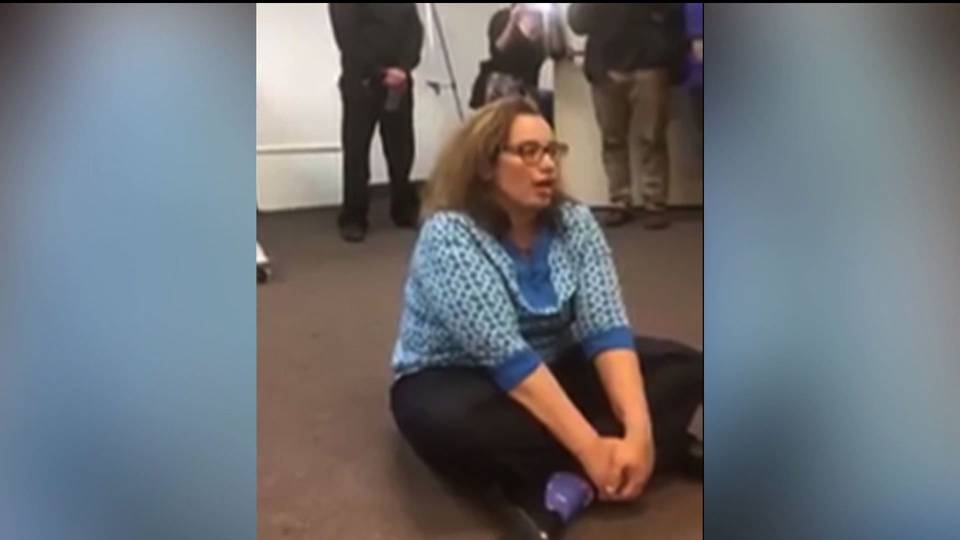
In a surprising reversal in Nevada, Sanders could actually end up winning the majority of Nevada delegates, even though Hillary Clinton won the first round of the Nevada caucus in February. On Saturday, Sanders won the support of 55 percent of the delegates at county-level voting. These delegates will now head to the state convention on May 14, which will determine Nevada’s final delegate count. Saturday’s county-level caucuses in Nevada were marked by turmoil, especially at the largest convention in Clark County, where Hillary Clinton’s campaign tried at the last minute to oust a top official who supports Sanders. The credentials chair staged a sit-in in the middle of the convention after the Clinton campaign accused her of sharing sensitive information with the Sanders campaign and demanded she be removed. In response, the credentials chair said the Clinton campaign was trying to change the caucus rules at the last minute and that she had only included the Sanders staffers on an email so that both campaigns would have the same information.
TOPICS:
Nevada
Bernie Sanders
2016 Election
Tensions Rise Between Sanders and Clinton over Fossil Fuel Financing
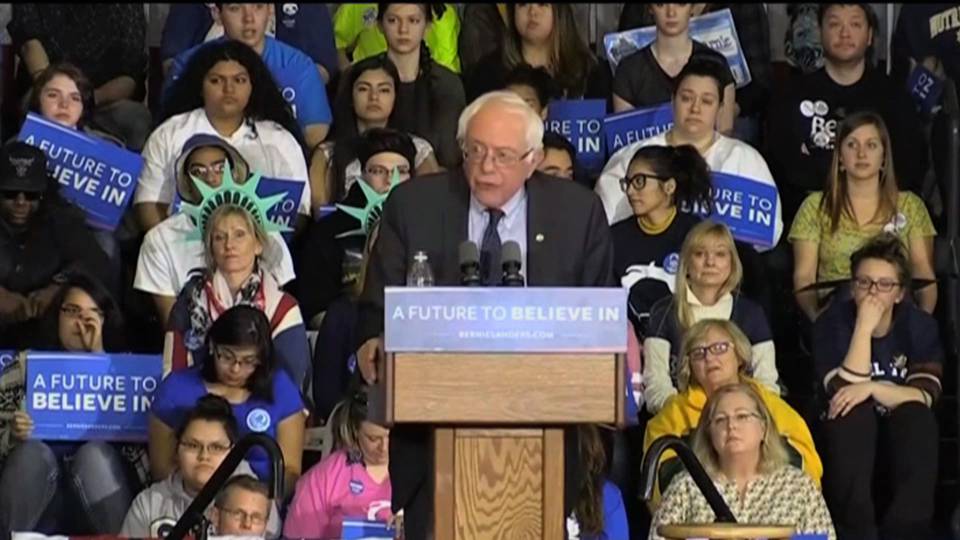
Meanwhile, tensions between Bernie Sanders and his rival Hillary Clinton are rising over the issue of fossil fuel money being used to finance presidential campaigns. During an event at State University of New York at Purchase last week, Hillary Clinton accused the Sanders campaign of lying about her when she was confronted by a Greenpeace activist, who asked whether Clinton would continue to accept money from fossil fuel companies. In response, Sanders called on the Clinton campaign to apologize during a rally in Sheboygan, Wisconsin.
Sen. Bernie Sanders: "The truth is that Secretary Clinton has relied heavily on funds from lobbyists working for the oil, gas and coal industry. According to an analysis done by Greenpeace, Hillary Clinton’s campaign and her super PAC have received more than $4.5 million from the fossil fuel industry. In fact, 57 oil, gas and coal industry lobbyists have directly contributed to her campaign, with 43 of them contributing the maximum allowed for the primary. And these are not just workers in the fossil fuel industry, these are paid registered lobbyists. Secretary Clinton, you owe our campaign an apology. We were telling the truth."
We’ll have more on this story with the activist who confronted Clinton, and a researcher from Greenpeace, after headlines.
TOPICS:
Natural Gas & Oil Drilling
Bernie Sanders
Hillary Clinton
Donald Trump One of the Most Unpopular Political Figures in 30 Years
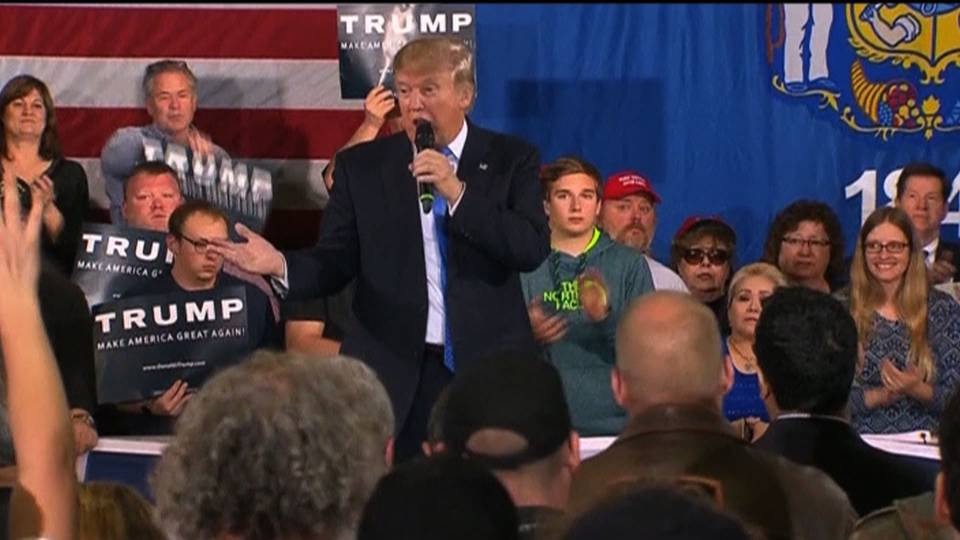
Meanwhile, on the Republican side, new polls show Donald Trump is now one of the most unpopular political figures in at least three decades. A recent Bloomberg poll shows 68 percent of Americans do not approve of Donald Trump. The only political figures to show similar levels of unpopularity in recent history were former President George W. Bush in the final year of his presidency and former President Richard Nixon following his resignation over the Watergate scandal.
TOPICS:
Donald Trump
2016 Election
EU Begins Forcibly Deporting Refugees Back to Turkey

In Greece, border agents have begun forcibly deporting refugees on Greek islands back to Turkey, amid outcry from human rights groups and protests by refugees. On Monday, authorities deported 202 refugees in the first wave of a controversial new plan reached last month to deport all newly arriving refugees back to Turkey. In exchange, the European Union said it would formally resettle one refugee from a Turkish camp for every refugee deported. At least 4,000 refugees have been detained on Greek islands since the accord took effect three weeks ago. Former U.N. high commissioner for refugees spokesperson Metin Çorabatir criticized the plan.
Metin Çorabatir: "This deal, in its current shape, if it is implemented like this, it will harm the people, these poor people. It will be a second trauma. They are already experiencing second, third, fifth traumas. And this will be the next trauma."
This comes as Syrian refugees blockaded a highway in northern Greece over the weekend, protesting the border crackdowns across Europe which have left refugees stranded in Greece. Syrian protester Fatme spoke out.
Fatme: "We have reached this point, and we are asking, 'What is going to happen to us?' I’m asking all the countries, 'What is our fate?' No one understands what we are going through except us, we who ran away from our country, not because we were hungry. We didn’t leave because we were hungry; we left because there is a war. Is it our fate to die here also? No one is paying attention to us. Absolutely no one."
TOPICS:
Refugees
Greece
Turkey
Gustavo Castro Soto, Witness to Berta Cáceres' Murder, Finally Freed
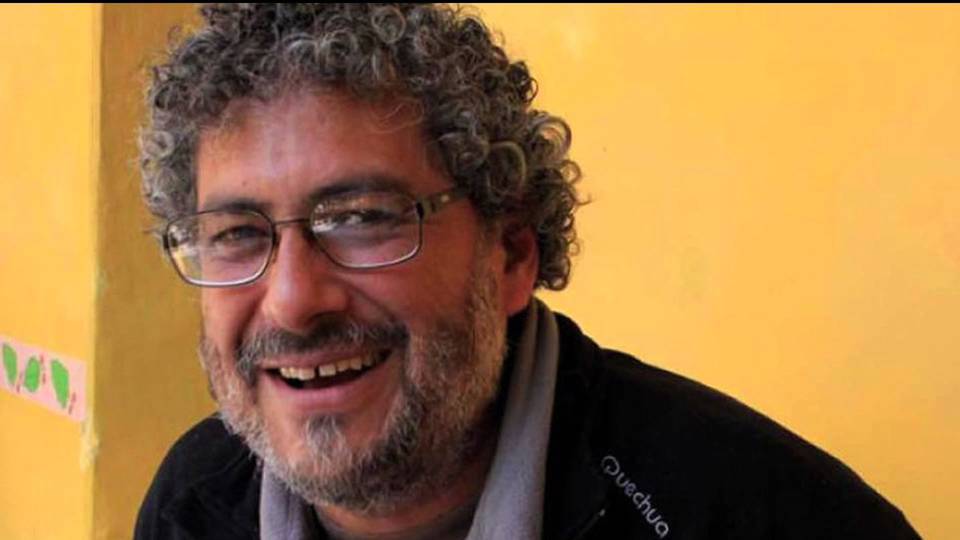
Environmental activist Gustavo Castro Soto has been freed by Honduran authorities and has returned to Mexico—a month after he survived an assassination attempt that left fellow Honduran activist Berta Cáceres dead. Early in the morning of March 3, armed gunmen entered Cáceres’ home, killing her and shooting Castro Soto twice. He was then detained by Honduran authorities for nearly a month without cause. Many feared his life was in danger. On Friday, he was allowed to return to Mexico. This is Castro Soto speaking with Radio Progreso about the indigenous land struggles in Honduras, after he returned home to San Cristóbal de las Casas.
Gustavo Castro Soto: "What we are confronting are forces very powerful, obscure forces, filled with ambition, and these forces are what the movements are fighting. And I think for this, as well,COPINH has been an example of the power of this struggle and the unbreakable spirit of the comrades of the indigenous communities, who have marched, who have walked, until exhaustion, all to demand respect to their territories and to demand their land be free of these mega projects that are being imposed and that are evicting people from their lands."
TOPICS:
Honduras
Philippines: Police Kill 3 Farmers at Protest for Rice, Amid Drought
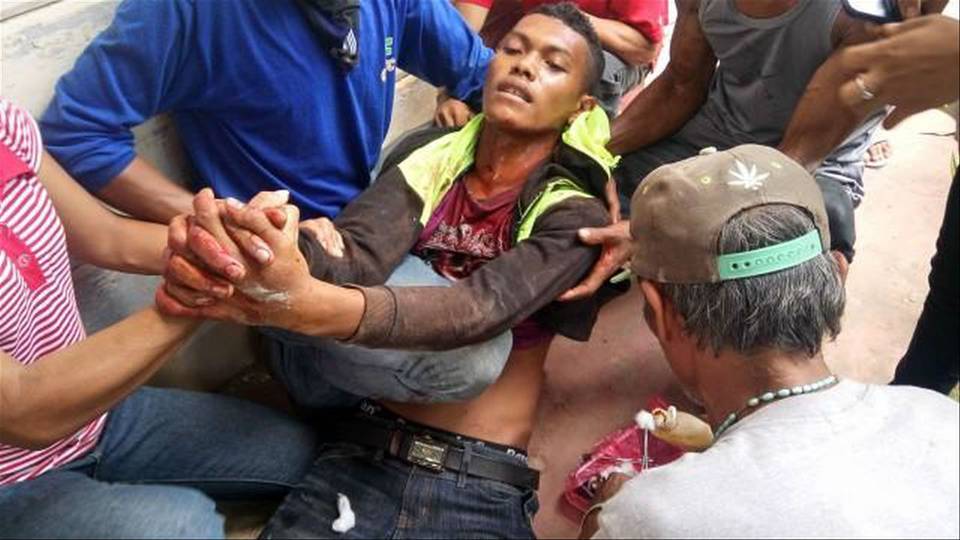
In the Philippines, farmers in the south are demanding justice after police opened fire on unarmed protesters, killing at least three farmers and leaving dozens more wounded. At least 6,000 farmers were blocking a highway in the southern city of Kidapawan to demand the government provide rice, because extreme El Niño conditions had destroyed the harvest. On Friday, the police tried to break up the blockade by firing on farmers who had linked arms to form a human barricade. Farmer Noralyn Laus spoke out after the shooting.
Noralyn Laus: "Why we came down here is not to make trouble. We just want to demand for rice, because of the situation of El Niño is leaving our tribes hungry. What happened yesterday, we didn’t start it. They started it by beating us. We wouldn’t be angry if we weren’t beaten up or attacked. We’re having a crisis. We don’t have anything to eat or harvest. Our plants wilted. Even our water has dried up."
TOPICS:
Philippines
Police Brutality
Syria: Airstrikes Kill 20 Amid Violations of Ceasefire
The Syrian Observatory for Human Rights says at least 20 people have died in airstrikes in the northwest province of Idlib, including the spokesperson for the militant group al-Nusra. It is not clear who launched the airstrikes—the Syrian Observatory said the strikes were launched by Assad’s regime or the Russian military, while other groups said it was a U.S. drone strike. This comes as the partial ceasefire in Syria appears to be under threat amid heavy fighting in the north and accusations from France that Assad’s regime has violated the ceasefire by continuing to launch airstrikes against civilians on the outskirts of Damascus.
TOPICS:
Syria
Fighting Breaks Out in Contested Region of Azerbaijan
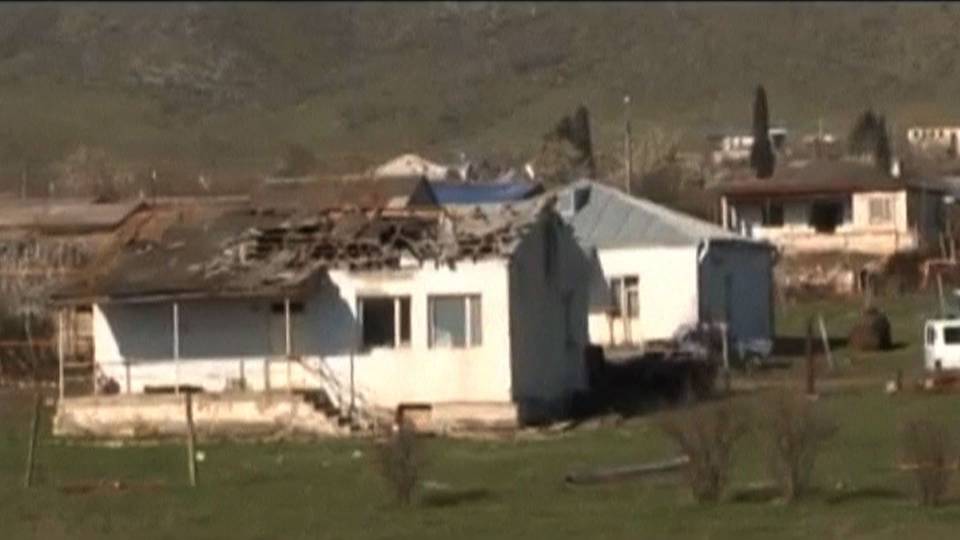
In Azerbaijan, dozens of people have been killed after fighting broke out in the disputed Nagorno-Karabakh region on Saturday. Nagorno-Karabakh lies inside Azerbaijan but is controlled by ethnic Armenians. It was the site of a bloody conflict in the wake of the collapse of the Soviet Union. The fighting, which reportedly included civilian casualties on both sides, threatens the region’s ceasefire, which has been in place since 1994.
Pentagon Drafting Up Strike Targets Inside Libya
The Washington Post reports the Pentagon is drafting up a list of targets for potential airstrikes inside Libya against ISIL militants. This comes after a new U.N.-backed unity government was installed in Tripoli last week. Libya already has two other rival governments, who do not accept the new U.N.-backed administration. The U.S. and European allies have said that installing a Western-backed unity government is a precondition for launching an increased military campaign inside Libya targeting ISIL.
TOPICS:
Libya
Poland: Thousands Protest Against Abortion Ban
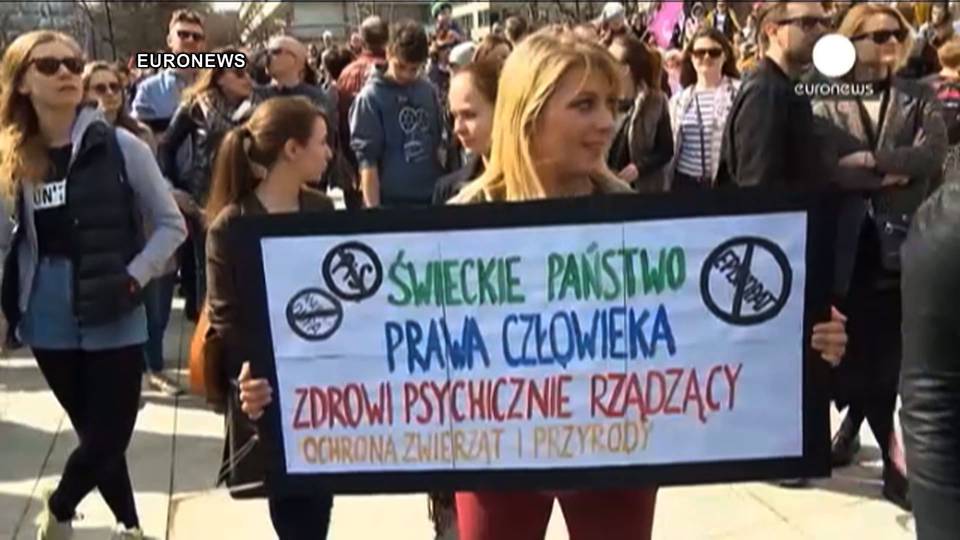
In Poland, thousands of people protested to defend women’s reproductive rights after the conservative ruling party backed calls by the Catholic Church to ban abortions entirely. Poland already has some of the most restrictive abortion laws in Europe. On Sunday, thousands took to the streets of Warsaw waving signs and coat hangers.
TOPICS:
Abortion
Nevada: More Than a Dozen Activists Arrested at Creech AF Base
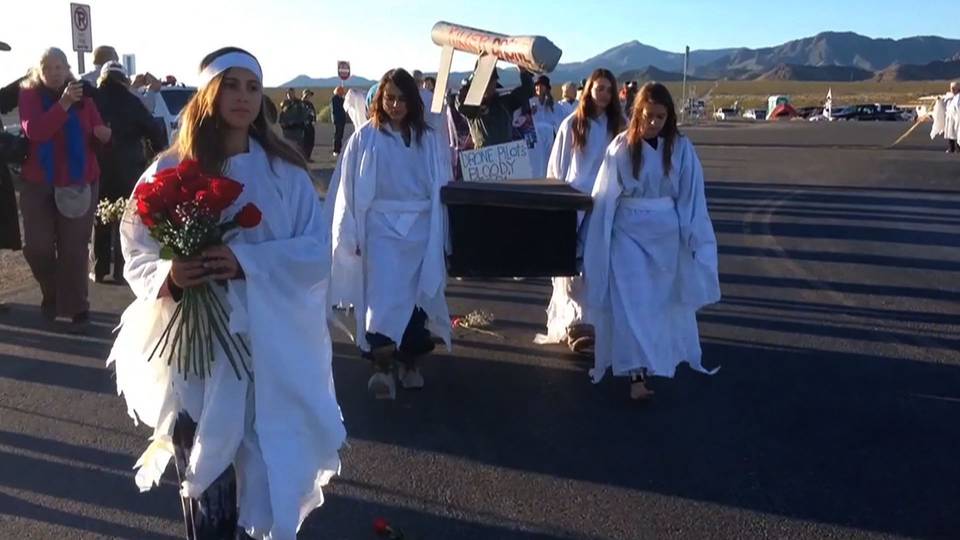
In Nevada, more than a dozen activists were arrested during a series of protests blockading access to the Creech Air Force Base on Friday to demand the base be closed down. Creech Air Force Base is one of several homes for the U.S. military’s lethal drone program in Pakistan, Afghanistan, Somalia, Yemen and other countries. During one of the protests on Friday, a group of children and adults dressed as angels and performed a mock drone attack on a funeral to protest U.S. drone strikes on funeral processions. A total of 25 activists have been arrested in a series of protests against the base over the last week.
TOPICS:
Drone Attacks
Drones
Protests
Crow Nation War Chief Joseph Medicine Crow Dies at 102
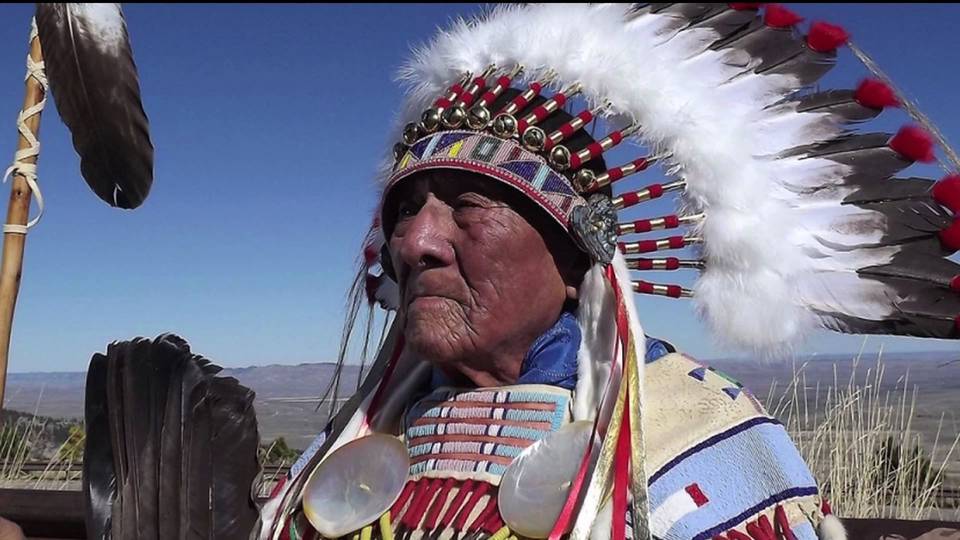
Crow Nation war chief, activist and historian Joseph Medicine Crow has died at the age of 102. He was the last surviving war chief for the Crow Nation—a distinction he earned after completing the requirements to become war chief during his U.S. military service in World War II. Medicine Crow was also an acclaimed historian, best known for his work on the 1876 Battle of Little Bighorn, in which a combination of Lakota, Northern Cheyenne and Arapaho nations defeated the U.S. Army and killed Army officer George Armstrong Custer.
TOPICS:
Native American
Moreese Bickham, Freed Death Row Prisoner, Dies at 98
And former death row prisoner Moreese Bickham has died at the age of 98. In 1958, Bickham, an African American, was sentenced to death for shooting and killing two police officers in Mandeville, Louisiana, even though Bickham said the officers were Klansmen who had come to kill him and shot him on the front porch of his own home. Multiple other people in the community also said the officers worked with the Ku Klux Klan, which was a common practice in small Southern towns. Bickman served 37 years at Angola State Penitentiary, in solitary confinement for 23 hours a day. He won seven stays of execution, but Louisiana’s governors repeatedly denied him clemency until, under enormous pressure, he was finally released in 1996. This is Moreese Bickham speaking on WBAI’s "Wake Up Call," when co-host Bernard White and I interviewed him in 1996.
Moreese Bickham: "I know how it feels now to be free. When I was flying over the West Coast going to Oakland, I looked down, and I seen all them little lights, looked like stars up in heaven. I said I’ve always been looking up and see the stars. I know heaven is up that way. But, Lord, these look like stars down there. Is that heaven down there? Some say it can be."
That was Moreese Bickham speaking only days after he was freed. It was Martin Luther King Day when we spoke to him on WBAI. He died Sunday night in California.
TOPICS:
Death Penalty
Prison
Donate today:
Follow:


SPEAKING EVENTS

4/6 Ithaca, NY
4/8 Columbus, OH
4/9 St. Louis, MO
4/9 Columbia, MO
4/9 Kansas City, MO
4/10 Los Angeles, CA
4/10 Santa Barbara, CA
4/11 San Francisco, CA
NEW BOOK

Broadcast Engineer
Director of Finance and Operations
207 West 25th Street, 11th Floor
New York, New York 10001, United States
---------------------
---------------------

No comments:
Post a Comment