democracynow.org
Stories:

Panama Papers: World Leaders from Iceland to Argentina Exposed in Massive Tax Evasion Scheme
"The biggest leak in the history of data journalism just went live, and it’s about corruption." That is what NSA whistleblower Edward Snowden tweeted about the Panama Papers, which were released Sunday and reveal how the rich and powerful in numerous countries use tax havens to hide their wealth. Some 11.5 million files were leaked from one of the world’s most secretive offshore companies, Mossack Fonseca, a law firm based in Panama, and passed to the German newspaper Süddeutsche Zeitung and then pored over by the International Consortium of Investigative Journalists. The revelations implicate 12 heads of state and a number of other politicians, their family members and close associates, including friends of Russian President Vladimir Putin, relatives of the prime ministers of Britain, Iceland and Pakistan, and the president of Ukraine. On Monday, one of the largest protests in Iceland’s history demanded Prime Minister Sigmundur Gunnlaugsson step down after the leaked files revealed he and his wife were hiding investments worth millions of dollars behind a secretive offshore company. We are joined from Munich by Frederik Obermaier, co-author of the Panama Papers story. He is an investigative reporter at Germany’s leading newspaper, the Munich-based Süddeutsche Zeitung, and co-author of the book "Panama Papers: The Story of a Worldwide Revelation," just released today in Germany. We also speak with Michael Hudson, senior editor at the International Consortium of Investigative Journalists, which published the Panama Papers.
TRANSCRIPT
This is a rush transcript. Copy may not be in its final form.
AMY GOODMAN: "The biggest leak in the history of data journalism just went live, and it’s about corruption." That’s what NSA whistleblower Edward Snowden tweeted about the Panama Papers. Released Sunday, they reveal how the rich and powerful in numerous countries use tax havens to hide their wealth. Some 11-and-a-half million files were leaked from one of the world’s most secretive offshore companies, Mossack Fonseca, a law firm based in Panama. The documents were obtained from an anonymous source by the German newspaper Süddeutsche Zeitung and shared with the International Consortium of Investigative Journalists.
The information in the files dates back to 1977 and goes up to December of last year. The revelations implicate 12 heads of state and a number of other politicians, their family members and close associates, including friends of Russian President Vladimir Putin, relatives of the prime ministers of Britain, Iceland and Pakistan, and the president of Ukraine. Relatives of at least eight current or former members of China’s top ruling body are also named, and today Chinese news groups were ordered to purge all mention of the Panama Papers. This is one of the lead authors of the Panama Papers, Bastian Obermayer of Süddeutsche Zeitung, talking about the leaks.
BASTIAN OBERMAYER: [translated] A small Panamanian law firm that almost no one has heard of is at the center of the research: Mossack Fonseca. Mossack Fonseca guarded the data of the world’s most powerful and dangerous people—until our source passed it on to us. That was about a year ago. I’ve never seen the source in person. We’ve been talking to each other via an encrypted chat. I’ve very openly asked him why he’s doing this. He says he thinks they have to stop what they’re doing, and he thinks they’re doing rotten business. He wants to stop it.
AMY GOODMAN: In a written statement immediately following the revelations, Mossack Fonseca said allegations it provided a structure designed to hide the source of money were, quote, "completely unsupported and false" and that, quote, "We do not provide beneficiary services to deceive banks. It is difficult, not to say impossible, not to provide banks with the identity of final beneficiaries and the origin of funds," they said.
So far, fallout from the leaks has prompted investigations and calls for resignation. On Monday, one of the largest protests in Iceland’s history demanded that the prime minister, Sigmundur Gunnlaugsson, step down, after the leaked files revealed he and his wife were hiding investments worth millions of dollars behind a secretive offshore company. More than 10,000 demonstrators gathered outside the Parliament building in Reykjavík.
PROTESTER: I’m just protesting like the rest of the nation, it appears.
REPORTER: What are you protesting?
PROTESTER: I would like the prime minister to resign.
AMY GOODMAN: To talk more about the leaks, we’re joined now by two guests. In Münich, Germany, Frederik Obermaier is co-author of Panama Papers. He is an investigative reporter at Germany’s leading newspaper, the Münich-based Süddeutsche Zeitung. He is co-author of the book Panama Papers: The Story of a Worldwide Revelation, that was just released today in Germany. Here in New York, Michael Hudson joins us, senior editor at the International Consortium of Investigative Journalists, which published the Panama Papers.
We welcome you both to Democracy Now! Let us begin with Frederik Obermaier in Münich, Germany. Talk about how your paper got the biggest leak in journalism history.
FREDERIK OBERMAIER: Good morning. About one year ago, an anonymous source turned to Süddeutsche Zeitung asking us, "Hey, hello, I am John Doe. Interested in data?" And we said, of course, said, "Yes, we are interested in data." And it turned out that it’s data, internal data, from the Panamanian law firm Mossack Fonseca. And we started investigating this data, and it grew and it grew, and we realized that this data is by far too much for us. We started to investigate it as a team of two. And as we are members of ICIJ, we realized we have to share this material with our partners, because this story is a worldwide story.
AMY GOODMAN: And talk about what started to be revealed—I mean, 11-and-a-half million documents is astounding—and why this is called, this leak, the Panama Papers.
FREDERIK OBERMAIER: This leak is called the Panama Papers because the documents are from the Panamanian law firm Mossack Fonseca. It’s a law firm that is headquartered in Panama but has branches all around the world. And they are offering offshore companies to their customers, to banks, to lawyers and end customers. And what we see now—I mean, the offshore company was like a wall. We couldn’t see inside before. Now we have insight through this data. We see which people are the ultimate beneficial owners of offshore companies, which people are using them to hide crime, which using them to obviously evade taxes.
AMY GOODMAN: So, let’s go to some specific examples. We just said in our lede that there are increasing calls for the prime minister of Iceland to resign. Ten thousand people gathered in downtown Reykjavík yesterday. Why is he being targeted? What did you learn through this document release?
FREDERIK OBERMAIER: We learned that the Icelandic prime minister was the co-owner of an offshore company called Wintris, and he owned this with his later wife—yeah, his later wife. But he didn’t declare it to public. And this offshore company, Wintris, was in the possession of bonds of the major three Icelandic banks. That was the bank that corrupted during the financial crisis. And, I mean, this would have been something which he should have declared to the public, that, "Hey, I’m—as a politician, I have to deal with what has happened during the financial crisis, but I do have bonds and had bonds in these banks via my offshore company." But he didn’t declare it to public. So, we saw yesterday what the Icelandic population thinks about it, or a majority or parts of it, because there have been thousands gathering in Reykjavík asking him to resign.
AMY GOODMAN: Michael Hudson, you’re with the International Consortium of Investigative Journalists. Before we go into how you got involved with this German newspaper and the extent of this massive document leak, talk further about Iceland and about this prime minister and what—how that is an example of what you’ve discovered.
MICHAEL HUDSON: Right. You know, when he—when the prime minister, when he entered Parliament in 2009 as a member of Parliament, he owned this company. He didn’t declare it. By the end of the year in 2009, he had sold it to his wife for a dollar. You know, this is at a time when he was really taking up the cause of, in his words, you know, to protect Icelanders from foreign vultures who were trying to pick through the remains of the crashed banks and profit. And what people didn’t know was that he—was as Frederik said: He and his wife, or certainly his wife, owned millions of dollars’ worth of bonds in these banks. So, it’s unclear whether or not the political positions he took benefited or hurt, you know, his family’s holdings, but the key was that he never reported, there was no disclosure.
AMY GOODMAN: And talk about how your organization, the International Consortium of Investigative Journalists, worked with this German newspaper.
MICHAEL HUDSON: Right. You know, the great thing about ICIJ is we’ve been able to gather—
AMY GOODMAN: What is it?
MICHAEL HUDSON: ICIJ is a U.S.-based nonprofit news organization. We have a small number of full-time staffers, about 11 or 12 folks, here in the U.S., Costa Rica, Spain, Venezuela. But we also have 190 members around the world who work at places like The Guardian, the BBC and other newspapers and broadcast organizations around the world. And, you know, we have an extraordinary group of people who work with us who really embrace something that a lot of journalists don’t embrace—a couple things: teamwork and patience, this idea that you’re going to share information with people that normally you would consider your competitors, but the key is, is we all agree to do so, and we all agree to publish at the same time, which is really a win-win. We’re able to sort of, in a sense, do sort of journalistic crowdsourcing on these giant data sets, like the Panama Papers, and when there’s a—and when everyone publishes, you’re not posting by yourself. You have some protection if you’re in a country where media can be silenced, but also it just—it creates a sort of international firestorm, as we’ve seen.
AMY GOODMAN: I mean, this is massive. Was The New York Times involved? They’ve given this very little coverage.
MICHAEL HUDSON: They’ve written about it, but—
AMY GOODMAN: Some. There’s a piece on the Iceland minister today.
MICHAEL HUDSON: Right, right. But we see lots of other media, including The Washington Post and other folks, are sort of jumping on this and have been sort of forced to deal with this.
AMY GOODMAN: What, to you, is the biggest story that you’ve—that have been revealed in these 11-and-a-half million files?
MICHAEL HUDSON: Well, I think the biggest story is the world leaders. And it’s—you know, we have a dozen world leaders who, the documents show, actually controlled, personally controlled, offshore assets or were involved in offshore transactions. But the other part of it is, is we have dozens of people who were either family members or associates of world leaders—
GOODMAN: Name names.
HUDSON: Well, one name would be people very close to Russian President Vladimir Putin, longtime friends, friends going back to his boyhood, business associates, even the godfather of Putin’s eldest daughter. And they essentially have formed a network where they’re trading among themselves. They have various degrees of control over offshore companies and over large—secretly have influence over large Russian corporations. And we’ve seen as—the records themselves show as much as $2 billion being shuffled back and forth.
AMY GOODMAN: The cellist Sergei Roldugin.
MICHAEL HUDSON: Exactly. This is a man who says he has, you know, no finance background, he’s not—he has no fortune, but yet the records tell a different story. They show that he has connections to, and in some cases control of, assets worth millions, tens of millions, hundreds of millions of dollars.
AMY GOODMAN: The center of a scheme in which money from the Russian state banks is hidden offshore, some of it ending up in a ski resort where in 2013 Putin’s daughter, Katerina, got married.
MICHAEL HUDSON: Right.
AMY GOODMAN: Talk about Bashar al-Assad in Syria. Bashar al-Assad, the leader in Syria?
MICHAEL HUDSON: Right.
AMY GOODMAN: His two cousins, Rami and Hafez—
MICHAEL HUDSON: Yeah.
AMY GOODMAN: —Makhlouf, who have been the target of international sanctions, suspected of controlling key gateways to Syria’s oil and telecom business?
MICHAEL HUDSON: Yes, they’re people connected to him. Also what we’ve seen is that companies that have been busting the international embargo against Syria and supplying fuel that was used to keep Syria’s Air Force helicopters and airplanes in the air. These are craft that were used to bomb his own citizens. And Mossack Fonseca was representing, working with the companies that were busting these sanctions.
AMY GOODMAN: And explain exactly what this company is in Panama, Mossack Fonseca.
MICHAEL HUDSON: It’s a law firm, but it really is—you know, its main business is really as an incorporator of offshore companies. It’s headquartered in Panama City, but it has offices in Miami, Zürich, Hong Kong, more than 35 places around the world. I think they have eight offices total in China. This is an international organization that specializes in selling secrecy. And secrecy is something that’s bought and sold. And the more secrecy, the deeper secrecy, the more levels of protection, of insulation, you want, the more you’ll pay.
AMY GOODMAN: Argentine President—Frederick Obermaier, Argentine President Mauricio Macri, the man that President Obama just went to visit in Argentina, while mayor of Buenos Aires—is revealed in these files—Macri did not disclose his position as director of a company which was incorporated in the Bahamas in 1998.
MICHAEL HUDSON: Right.
FREDERIK OBERMAIER: Yes, that was a very interesting case for us, because he was another world leader, a current world—leader of a big country worldwide. And, for us—I mean, we found him really at a late stage of this investigation. But, for us, it was very interesting, because that was the time when he became the new president of Argentina. So, for us, it was very important to have a deeper look into this case.
AMY GOODMAN: Also listed in this grouping of individuals involved is the British prime minister, David Cameron. Frederik Obermaier, talk more about what you found.
FREDERIK OBERMAIER: I mean, David Cameron is not in the data himself, but there is actually his father in this data. And he’s involved in a structure that involved bearer shares. And that’s—for me, that was very interesting, because it’s actually David Cameron now who is asking for and who pushes for getting rid of structures that involve bearer shares. And it was actually his father using such structures. So, as of today, there was a huge debate in London, and we heard from our correspondent in London that that’s actually the topic number one in Great Britain.
AMY GOODMAN: Well, this issue of the British government facing criticism of Cameron after his late father’s name appeared in the Panama Papers leak, Labour leader Jeremy Corbyn said today he’ll publish his tax returns and urged other ministers to do the same. This is what he said.
JEREMY CORBYN: It’s high time that we got tough on tax havens. Britain has a huge responsibility, because many of those tax havens are in British overseas territories or crown dependencies. The leaked documents show tax havens have become honeypots of international corruption, tax avoidance and tax evasion. They are sucking revenues out of our own country and many others, fueling inequality, shortchanging our services and our people. The government needs to go beyond warm words on tax dodging. There cannot be one set of tax rules for the wealthy elite and another for the rest of us. The unfairness and abuse must stop. So I say this to the government and to the chancellor: No more lip service. The richest must pay their way.
AMY GOODMAN: So, that is Jeremy Corbyn, the Labour leader in Britain, as David Cameron is coming under criticism, the prime minister. Frederik Obermaier, what about in Germany itself?
FREDERIK OBERMAIER: In Germany, we have had our finance minister calling for more transparency in the world, in the world of offshore. But that’s actually quite funny because it was our finance minister doing the same and asking for the same in the year 2013, after we and ICIJ and all the partners uncovered the offshore leaks. So, this is another example, for me, of politicians, high-profile politicians, asking for transparency but then not pushing enough to get these measures into practice.
AMY GOODMAN: And, Michael Hudson, more on world leaders?
MICHAEL HUDSON: Right. You know, we’ve seen quite a few world leaders who have spoke out against corruption, including Ukrainian President Petro Poroshenko, China’s top leader. Those folks have been connected to offshore entities. Poroshenko was shown during the armed conflict with Russia—his representatives were setting up an offshore company for him at that time. You know—
AMY GOODMAN: Information now being blocked in China around what’s been discovered.
MICHAEL HUDSON: Absolutely. And that’s sort of a pattern. In previous investigations, when we’ve written about the offshore holdings of China’s elite, China has shut us down. But it’s interesting. There are sort of freedom of information activists. What they’ll do is they will take our—what they’ve done in the past is they’ve taken our stories and turned them into impossible-to-search PDFs, so they can be emailed around the country and beat the blockade.
AMY GOODMAN: Frederik Obermaier, among the people identified is Alaa Mubarak, the son of Hosni Mubarak, the longtime dictator forced out a few years ago in the Arab Spring in Egypt.
FREDERIK OBERMAIER: Yes. And that—for me, that’s a very interesting case, because this case shows how the Panamanian law firm, Mossack Fonseca, deals with sanctioned individuals, because we see in the data that they actually realized that it was Alaa Mubarak, so the son of Hosni Mubarak, who’s in the data and that he was sanctioned, but they still kept him—his company active for a time.
And that’s something we see in different cases in the data. I mean, Mossack Fonseca always claims, and they told us—for example, one year ago, when we asked them for another story if they are dealing with sanctioned individuals or companies, and they told us, "No, we would not accept them as customers." But what we do see now in the data is that they do actually accept them. For example, we found a conversation between several partners of this law firm, and they spoke about Rami Makhlouf, the cousin of Bashar al-Assad. And, I mean, they realized that he was the cousin, and they realized that he was sanctioned, and they realized that he’s allegedly one of the financiers of the Syrian regime. And they said, "Oh, there is this bank who still does business with him, so we should still keep with him, as well." And I think that really shows how scrupulous they are, because, I mean, they are—they dealt with a person that was sanctioned and that was involved with a regime that is killing thousands in Syria.
AMY GOODMAN: We’re going to break and then come back to this discussion with Frederik Obermaier, co-author of the Panama Papers story, investigative reporter at Germany’s leading newspaper, the Münich-based Süddeutsche Zeitung. He is co-author of the book Panama Papers: The Story of a Worldwide Revelation, just released today in Germany. And with us in New York, Michael Hudson, senior editor at the International Consortium of Investigative Journalists, or ICIJ, which published the Panama Papers. This is Democracy Now! We’ll be back with them in a minute. ... Read More →

Did Bernie Sanders Predict the Panama Papers When He Opposed Clinton-Backed U.S.-Panama Trade Deal?
The Panama Papers leak, that reveals how the rich and powerful rely on a secretive law firm to hide their wealth in tax havens, has drawn attention to a 2011 speech by Senator Bernie Sanders against the Panama-United States Trade Promotion Agreement, which became law in 2012. He noted that Panama’s entire economic output at the time was so low that the pact seemed unlikely to benefit American workers. The real reason for the agreement, Sanders argued, is that "Panama is a world leader when it comes to allowing wealthy Americans and large corporations to evade taxes." Sanders said the trade agreement "will make this bad situation much worse." We get reaction from Michael Hudson, senior editor at the International Consortium of Investigative Journalists, which published the Panama Papers, and Frederik Obermaier, investigative reporter at Germany’s leading newspaper, the Munich-based Süddeutsche Zeitung. He is co-author of the book "Panama Papers: The Story of a Worldwide Revelation."
TRANSCRIPT
This is a rush transcript. Copy may not be in its final form.
AMY GOODMAN: We’re talking about "The biggest leak in the history of data journalism just went live, and it’s about corruption." That’s what NSA whistleblower Edward Snowden tweeted about the Panama Papers. Released Sunday, the papers reveal how the rich and powerful in numerous countries use tax havens to hide their wealth. Some 11-and-a-half million files were leaked from one of the world’s most secretive offshore companies, Mossack Fonseca, a law firm based in Panama. The documents were obtained from an anonymous source by the German newspaper Süddeutsche Zeitung and shared with the International Consortium of Investigative Journalists. Snowden also tweeted about the Panama Papers, saying, "The story behind the #PanamaPapers? Courage is contagious."
We’re joined by Frederik Obermaier, Süddeutsche Zeitung's leader—reporter and one of the lead reporters on this story, and Michael Hudson of the International Consortium of Investigative Journalists. I wanted to turn to Bernie Sanders. This isn't during this year, but this is Bernie Sanders speaking in October of 2011 during a debate on the Senate floor over the Panama-United States Trade Promotion Agreement. The pact became law the next year, but in 2011 Senator Sanders laid out his opposition in a speech some say [predicted] the new Panama Papers project.
SEN. BERNIE SANDERS: Panama’s entire annual economic output is only $26.7 billion a year, or about two-tenths of 1 percent of the U.S. economy. No one can legitimately make the claim that approving this free trade agreement will significantly increase American jobs. Then, why would we be considering a stand-alone free trade agreement with Panama, tiny little country?
Well, it turns out that Panama is a world leader when it comes to allowing wealthy Americans and large corporations to evade U.S. taxes by stashing their cash in offshore tax havens. And the Panama free trade agreement will make this bad situation much worse. Each and every year, the wealthiest people in our country and the largest corporations evade about $100 billion in U.S. taxes through abusive and illegal offshore tax havens in Panama and in other countries. So, according to Citizens for Tax Justice—and I quote—"A tax haven ... has one of three characteristics: It has no income tax or a very low-rate income tax; it has bank secrecy laws; and it has a history of non-cooperation with other countries on exchanging information about tax matters. Panama has all three of those. ... They’re probably the worst."
AMY GOODMAN: That was Bernie Sanders—not now, but in 2011. Michael Hudson, was he predicting what we’re seeing today? And what is the role of the U.S. in all of this?
MICHAEL HUDSON: Well, I don’t know if he was predicting what we see today. He was sort of describing the situation. Panama is one of the world’s biggest secrecy havens. It has laws that make it difficult—if you’re an investigator, an attorney or even an ex-spouse trying to find out about someone’s assets, it’s very difficult to go to Panama, just as it’s very difficult to go to places like the British Virgin Islands or the Caymans, and get that information. And that’s what makes it so valuable as a haven for people, and that includes Americans, like Ponzi scammers and fraudsters and just folks who are trying to reduce their taxes. That’s why they go to companies like Mossack Fonseca. That’s why they go to places like Panama.
AMY GOODMAN: So, talk about the role of the United States. Talk about, well, where we are right now.
MICHAEL HUDSON: Well, you know, it’s very interesting. You know, there are lots of Americans who are going overseas trying to—trying to hide their money or move their money to avoid taxes or avoid criminal investigations. But on the other hand, you know, you can argue that the world’s biggest tax havens are islands, but they’re Great Britain and Manhattan. Both London and New York are places where lots of money, you know, is hidden, both in real estate and in banks. You know, if you’re trying to—you know, if you’re the brother-in-law of a dictator in a developing nation, you will have an entity—you will have a company based in the British Virgin Islands or Panama or somewhere like that, but your money’s not going to be there. The company that you own is going to be the front for you that will allow you to have your money in a bank, so that you and your family can do shopping trips, you know, in Manhattan. ... Read More →

Panama Papers' Reporters Explain How the Biggest Leak in Data Journalism's History Materialized
Hundreds of journalists around the world pored over the 11.5 million files leaked last year by an anonymous source that reveal how the rich and powerful in numerous countries use tax havens to hide their wealth. The files were leaked from one of the world’s most secretive offshore companies, Mossack Fonseca, a law firm based in Panama. They were obtained from an anonymous source by the German newspaper Süddeutsche Zeitung, who shared them with the International Consortium of Investigative Journalists. We hear the story of the collaboration, which did not include The New York Times, from Frederik Obermaier, an investigative reporter at Süddeutsche Zeitung, which helped publish the Panama Papers, and Michael Hudson, senior editor at the International Consortium of Investigative Journalists.
TRANSCRIPT
This is a rush transcript. Copy may not be in its final form.
AMY GOODMAN: I’m afraid we might lose Frederik Obermaier, who’s in a studio in Münich, Germany. So, before we do, as a leader of this whole effort analyzing over the last year this massive number of files, information from this Panamanian law firm, talk about where you’re going with this from now—I mean, there are so many stories—what you’re following. And, of course, the book Panama Papers was just released in Germany today, Frederik.
FREDERIK OBERMAIER: For us, the last two days were just the beginning. I mean, there will be—for example, at Süddeutsche Zeitung, we are going to publish or are planning publications nearly every day now for the next two and three weeks, and then we will go on in a regular basis. And there are still great stories and revelations to come out in the next days. So I would—I would recommend: Stay tuned with ICIJ.
AMY GOODMAN: And what have you been most surprised by, Frederik, in all of your work with this? What do you think are the stories that could topple governments?
FREDERIK OBERMAIER: I think, for me, it was very important to realize that it’s not only governments of autocratic regime kleptocrats being in the data, but that at the same time it’s Western—or leaders of Western governments being in the data, like the Icelandic prime minister. And furthermore, for me, it’s like we are always—at least in Germany, we speak about tax havens in the context of taxes and tax minimization and tax evasion. But, for me, the Panama Papers data show that it’s not only about taxes. It’s about criminals hiding their wrongdoings. It’s about sanctioned people trying to go on with their business although they are sanctioned. And it’s—I think this is the reason why this topic should matter all of us, because there are so many aspects where we are concerned with this topic of offshore companies and tax havens, because they—this is a completely parallel world. It’s a secret offshore world, and we should, I think, shed some light into this world.
AMY GOODMAN: And, Michael Hudson, on the issue of Ponzi schemes in the United States?
MICHAEL HUDSON: Yes. We haven’t reported on those yet, but we do have—you know, the thing you have to remember is, any time there is a major fraud case—Madoff, any of those kind of cases—there will be an offshore element. When the money is so large, when the schemes are so big, you need offshore to help cover your tracks and help hide the loot. And we do have—we don’t have Madoff-level Ponzi schemers or—you know, his Ponzi scheme was the biggest of all time—but we do have fraudsters based in America who have been doing business with this law firm, and we will be reporting on down the road.
AMY GOODMAN: I’ve been looking at David Sirota’s article. He had tweeted, "Email shows Clinton State Dept pushing Panama pact [amid] warnings it would help the rich hide money." "The Panama FTA pushed for by Obama and Clinton, watchdog groups said, effectively barred the United States from cracking down on questionable activities. Instead of requiring concessions of the Panamanian government on banking rules and regulations, combating tax haven abuse in Panama could violate the agreement. Should the U.S. embark on such an endeavor, it could be exposed to fines from international authorities."
MICHAEL HUDSON: Right. Yeah, it’s very interesting. You know, the United States has taken a role and seems, in many ways, to be working at cross purposes. The U.S. Justice Department has gone after Swiss banks in a big way, gotten huge settlements with some of the biggest banks, and even some of the smaller Swiss banks, and put pressure, but there are many other examples of the United States either having policies which encourage money being moved around secretly or where we’re turning a blind eye. You know, there are states like Delaware and Nevada where there’s just as much secrecy, just as much privacy; if you want to get a company, if you want to have a shell company and not have your name publicly attached to it, you can do that.
AMY GOODMAN: If we haven’t lost him yet, Frederik Obermaier in Münich, a new headline in The Wall Street Journal, "India Launches Probe After 'Panama Papers' Reports." The Indian finance minister said New Delhi will set up a multi-agency panel to examine each of the people named in the report. How prominent is India in this wave of documents?
FREDERIK OBERMAIER: India turns up in the context of dozens of very, very interesting cases, for example, where our colleague, Ritu Sarin, specialized on. And what she found that was amazing, it was tracks leading to prominent politicians. But I don’t want to tell too much, because I don’t know or haven’t followed her reporting that closely that I would know which she already had reported and which not, so I’m sorry for that.
AMY GOODMAN: Well, finally, Michael Hudson, what does this mean for international collaborative journalism? I mean, how many journalists, how many newspapers worked on these documents that have been revealed over the last year? The New York Times said they didn’t even know that this was being worked on. Interesting, public editor wrote a piece, like why aren’t they doing more on this, why aren’t they featuring this. Well, they weren’t included in this. And they said they’re looking into it now.
MICHAEL HUDSON: Right. More than a hundred news organizations from more than 70 countries have worked on this.
AMY GOODMAN: For how long?
MICHAEL HUDSON: For—most of them for more than a year. You know, we’ve been doing these collaborative projects for a long time. We were talking in terms of dozens of people involved in earlier projects. This current project, more than 370 journalists around the world. And as I said, it’s all about people realizing that the more you give, the more you share with your fellow journalists, with your colleagues, the more you’re going to get back in the end, and that you don’t have to—you know, the sort of cutthroat competition that often characterizes journalism, that doesn’t have to be the way forward.
AMY GOODMAN: And any indications on whether there are multiple sources here, Frederik Obermaier? Is it just one? And the story behind getting the actual—physically getting these documents, these files?
FREDERIK OBERMAIER: I would rather not comment on that, because we want to protect our source, so I hope you understand that we will not—that I cannot answer this question into detail.
AMY GOODMAN: OK, we’ll leave it there, but of course continue to cover these stories as they roll in. Frederik Obermaier, speaking to us from Münich, Germany, his newspaper—he’s an investigative reporter in—with Germany’s leading newspaper, the Münich-based Süddeutsche Zeitung, a co-author of Panama Papers: The Story of a Worldwide Revelation, just released today in Germany. And thanks so much to Michael Hudson, the senior editor at International Consortium of Investigative Journalists, or ICIJ, which published the Panama Papers. And we’ll link to everything we see as it unfolds and as it comes out at democracynow.org. We’ll be back in a minute. ... Read More →

Could Citizens United Help Foreign Billionaires Buy This Election? An FEC Commissioner Speaks Out
The release of the Panama Papers comes amid growing concern about undisclosed campaign contributions here in the United States, so-called dark money. Now, some members of the Federal Election Commission are calling for greater enforcement of campaign finance regulations and a narrower interpretation of the Citizens United ruling, which opened the floodgates for unlimited corporate spending on election campaigns. We speak with FEC Commissioner Ellen Weintraub, whose op-ed in The New York Times, "Taking On Citizens United," argues Americans deserve assurances from American corporations that they are not using the money of foreign shareholders to influence the country’s elections. She also calls for federal and state policymakers to ensure corporations are not being used as a front to allow foreign money to seep into U.S. elections. The FEC is the government watchdog tasked with keeping federal elections fair, but it has come to a virtual standstill since its three Democratic and three Republican members are in partisan gridlock.
TRANSCRIPT
This is a rush transcript. Copy may not be in its final form.
AMY GOODMAN: The release of the Panama Papers comes amidst growing concern about undisclosed campaign contributions here in the United States, so-called dark money. The Washington Post reports, through the end of January, 680 corporations had given nearly $68 million to super PACs in this election cycle—12 percent of the $549 million raised by such groups. This figure does not include the untold amounts of dark money contributions to other groups that are not disclosed by the donor or the recipient.
Now some members of the Federal Election Commission, or FEC, are calling for greater enforcement of campaign finance regulations. FEC Commissioner Ellen Weintraub recently wrote a piece in The New York Times headlined "Taking On Citizens United." She says, quote, "The American people deserve assurances from American corporations that they are not using the money of foreign shareholders to influence our elections." Weintraub calls on—goes on to call for federal and state policymakers to ensure corporations are not being used as a front to allow foreign money to seep into U.S. elections. The FEC is the government watchdog tasked with keeping federal elections fair, but it’s come to a virtual standstill since its three Democratic and three Republican members are in partisan gridlock.
So, let’s go right now to Washington, D.C., where we are joined by the Federal Election Commissioner Ellen Weintraub.
Welcome to Democracy Now!, Commissioner Weintraub. Talk about your concerns in this election year.
ELLEN WEINTRAUB: Hi, Amy. Thanks for having me.
Well, I have a variety of concerns this election year, as I’m sure a lot of Americans do, about the role of money in politics. There is, as you’ve noted, an increasing amount of dark money. We’re seeing more contributions coming from fewer donors and with less transparency than we ever have before. And there are a lot of ways that the Federal Election Commission could help to shed more light on this money to make sure that we’re not getting foreign money into our elections and to make sure that everyone is playing by the same set of fair, commonsense rules.
AMY GOODMAN: So what is this foreign money? How is it getting in?
ELLEN WEINTRAUB: Well, here’s the problem, Amy. I think that when Citizens United was handed down, a lot of people were somewhat taken aback by the notion of corporations having political opinions that they would need to express. But the court didn’t actually find that corporations are people like human beings, sentient beings with opinions of their own. And obviously corporations don’t get to vote. There are a lot of ways that corporations are different from human beings. What the court said, though, was that when human beings form together in corporations, when they gather together and use that legal framework, they don’t lose any of their constitutional rights. This is a view that the court elaborated on in the Hobby Lobby case, which involved religious freedom. And I think if there’s anything more counterintuitive than the notion of a corporation having political views, it’s got to be the notion of a corporation having religion. But again, the court acknowledged that corporations are a legal fiction. They’re there to protect the rights—to the extent that corporations have rights, they are there to protect the rights of the human beings that are behind them.
The question then needs to be raised: What happens when those human beings don’t actually have those rights? Associations of citizens forming together as corporations don’t lose their rights to express themselves, to use money in order to get their point of view across, to fund communications, to make contributions. But a lot of corporations have foreign shareholders. And those corporations are using the money that is owned by those foreign shareholders to intervene in elections. And that’s where we run the risk of foreign money coming into our elections.
And I think it can happen in one of two ways. You could have—if all one needs to do is to form a U.S. corporation in order to intervene in U.S. elections, then you could have foreign billionaires calling up a lawyer in Wilmington, Delaware, and saying, "Form me a corporation. I’ll transfer some—a few million dollars from my Cayman Island account, and you can spread it around through super PACs and other entities that are funding communications to advocate people’s election or defeat." I think a lot of people—most people, I would hope—would have a problem with that. Our elections are for U.S. citizens to participate in, and there’s a reason why we have a flat-out statutory ban on foreign nationals contributing in any way, shape or form, directly or indirectly, to our elections.
But there’s another problem that could arise, where foreign—a lot of big publicly held corporations have foreign shareholders. At what point and is there any threshold at which it’s appropriate for those corporations to be using their resources, which is in part owned by foreign nationals—in some cases perhaps, entirely owned by foreign nationals—in order to run communications and make contributions in our elections?
AMY GOODMAN: Can you give us, Commissioner Weintraub, specific examples?
ELLEN WEINTRAUB: Well, I don’t have any cases in front of me right now that raise this issue, but I do think that it is a problem that is out there. There’s no question that there are foreign shareholders in U.S. corporations. And if the FEC were to actually come to a deadlock on this issue, and some commissioners were to say, "As long as you form a U.S. corporation, you’re free to funnel foreign money into our elections," I think we would see a huge influx of money coming from overseas.
AMY GOODMAN: So how can this be dealt with? How can you deal with it at the Federal Election Commission?
ELLEN WEINTRAUB: Well, I think what we should do, and what I’m hoping to do, is to start a rulemaking process where we would gather expert testimony, where we would hear from the American people. Part of the reason that I wrote that op-ed was to try and jumpstart a national conversation on the role of corporate money in our elections and the role of foreign national money, potentially, in our elections. I think these are important issues that the American people would care about and would want to weigh in on and would want to have a voice in.
AMY GOODMAN: Can you talk about what’s actually happening at the FEC, at the Federal Election Commission—what it does, what’s it supposed to do and what it’s not doing now with this complete gridlock between the three Democrats and the three Republicans?
ELLEN WEINTRAUB: It’s a big problem, Amy. We were designed to forge bipartisan compromise, and there is not a lot of compromise going on at the FEC these days. We have a responsibility to issue commonsense regulations, to help inform people how to comply with the laws, and to enforce those laws. And we’re just not seeing a lot of enforcement or a lot of rulemaking going on at the FEC. And you don’t have to take my word for it. Just last week, the lawyer for the Chamber of Commerce, hardly a rabble-rousing reform organization, was complaining that the FEC is not doing its job, is not issuing rules that people need in order to comply with the law. Most people out there really do want to comply with the law, but they understand there have to be rules, and they just want to know what they are. And we have not issued any substantive rules since Citizens United, interpreting that opinion. And that is a big problem for a lot of people who are just trying to comply with the law.
We recently had a slew of cases released arising out of the 2012 election cycle. It is far too late for us to be resolving cases out of 2012, but we could not get our colleagues to vote on these cases. These cases involved a number of people who were funneling money through LLCs to political causes with the intent, in three out of four of these cases, the specific intent, of hiding their identities. The American people have a right to know whose money is funding our elections. People have a lot of concerns about money in politics, and this is just one of them. But at a most basic level—eight out of nine justices on the Supreme Court agreed on this point—the American people deserve to know. We have a right to know who’s funding our elections. We have a right to know where that money is coming from. And if it’s being routed through corporations or LLCs or other vaguely named groups, then the people are denied the information they need to make informed choices in the election.
AMY GOODMAN: Can you talk more—
ELLEN WEINTRAUB: And they—
AMY GOODMAN: Can you talk more about the petition, unusual petition, that you filed last year?
ELLEN WEINTRAUB: Well, one of my colleagues, Ann Ravel, and I were so frustrated at the complete inability to launch any rulemakings in the wake of Citizens United and other important decisions, that we actually tried to petition our own agency to launch a rulemaking process. We were told by our colleagues that we actually are not persons, under the law, for the purposes of launching a petition. Corporations are persons; commissioners maybe not so much. So that was a little bit disheartening.
But there were others outside who thought these issues were worth raising and filed a analogous petition with the commission. We received thousands of comments. The issues that we want to address, can constitutionally address, even under Citizens United, pertain to coordination between candidates and super PACs, coercion. I worry a lot when corporations are involved in politics. Who’s doing the political acting? And are corporations unfairly coercing their employees to be involved in political activities that may not reflect the employees’ own point of view? As I said, we need to do a much better job of disclosure of the political money. And there’s this issue of foreign nationals that I think has not been addressed since Citizens United opened the door to corporate money, which can be an opportunity for foreign money to come into our elections. So—
AMY GOODMAN: Your Republican counterparts on the commission questioned your own personhood?
ELLEN WEINTRAUB: Yeah, that wasn’t one of our best moments at the commission.
AMY GOODMAN: Explain.
ELLEN WEINTRAUB: Well, they said, under the law, we are not legally entitled. When the law says any person can file a petition, they didn’t mean us. They didn’t mean members of the FEC or other members, other people who are part of the government. I don’t know. My children think I’m a person. My husband thinks I’m a person.
AMY GOODMAN: So—
ELLEN WEINTRAUB: I tend to think I’m a person.
AMY GOODMAN: So, if you all are deadlocked, Commissioner Weintraub, at the Federal Election Commission, what can regular people do in this country to deal with the concerns you’ve just expressed?
ELLEN WEINTRAUB: Well, I think people really are getting a lot more engaged in these issues. There is this fallacy in Washington that people do not care about money-in-politics issues. I think it could not be more untrue. I think we’re seeing it play out in this election cycle, where candidates on both sides of the aisle are making this a signature issue—money in politics and the undue influence of the very wealthy on not only who gets elected, but what policies get adopted after the election is over. And people are responding. People are turning out and showing their concern on this issue. I think people have to continue to raise this issue with their elected officials and to tell them that they really do care. We had—when we opened the door to comments, we had overwhelming responses from the public, thousands and thousands of comments that overwhelmingly supported our taking stronger action, providing more rules, providing clear guidance.
AMY GOODMAN: I want to thank you very much for joining us, Federal Election Commissioner Ellen Weintraub.
And that does it for our show. We’re beginning our 100-city 20th anniversary tour. You can go to our website at democracynow.org. I’ll be in Ithaca College April 6—that’s Wednesday; Columbus, Ohio, at Ohio State University on the 8th; St. Louis, Columbia, Missouri and Kansas City on the 9th; Los Angeles Times Book Festival and Santa Barbara on the 10th; after that, in San Francisco at City Arts & Lectures on the 11th; Stanford University and then Santa Clara on the 12th; Santa Cruz on the 13th. Check out democracynow.org. ... Read More →
Headlines:Sanders & Cruz Hope to Pull Off Upsets in WisconsinIt’s primary day in Wisconsin. Polls suggest it could be a big day for the underdogs, as Democratic contender Bernie Sanders and Republican Ted Cruz have seen a surge in support in recent weeks in the Badger State. After Wisconsin, the next big state on the primary calendar is New York. On Monday, Hillary Clinton and Bernie Sanders agreed to hold a debate in Brooklyn ahead of the April 19 primary.
Sanders Raises Record $44 Million in March, $15M More Than Clinton
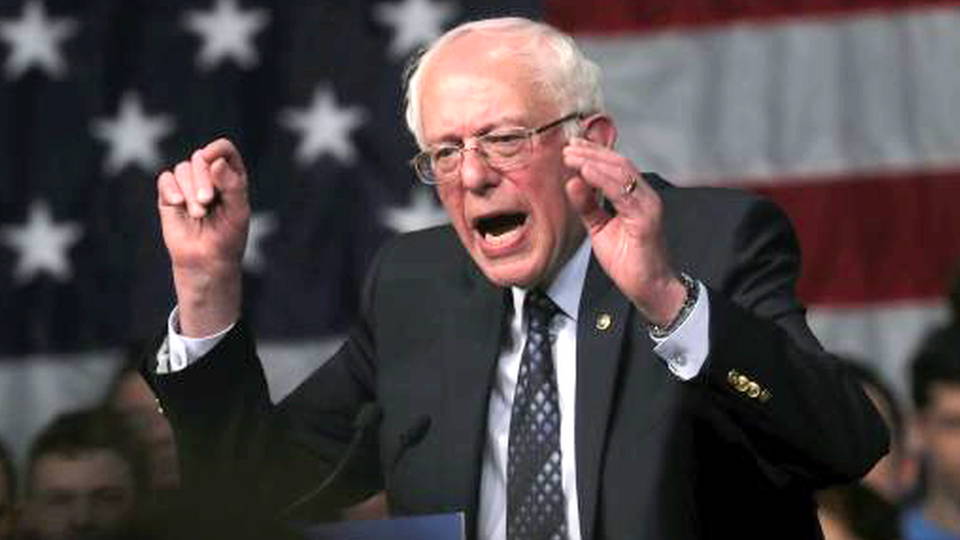
The latest fundraising numbers show Sanders, who has won five of the last six contests, raised a record-setting $44 million in March. Clinton took in $29.5 million.
Report: Charles Koch Predicting Paul Ryan to Emerge as GOP Nominee
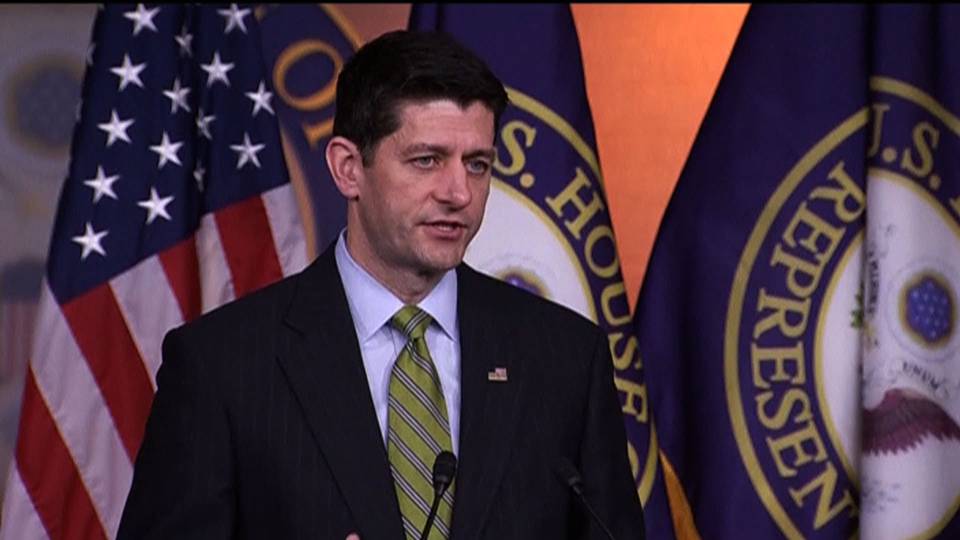
In Republican news, The Huffington Post is reporting billionaire GOP donor Charles Koch is privately predicting House Speaker Paul Ryan could emerge from the Republican National Convention as the party’s nominee if Donald Trump fails to win enough delegates. Chances of a brokered convention will increase if Ted Cruz wins today in Wisconsin, where the winner will receive most of the delegates.
Supreme Court Upholds "One Person, One Vote" Principle
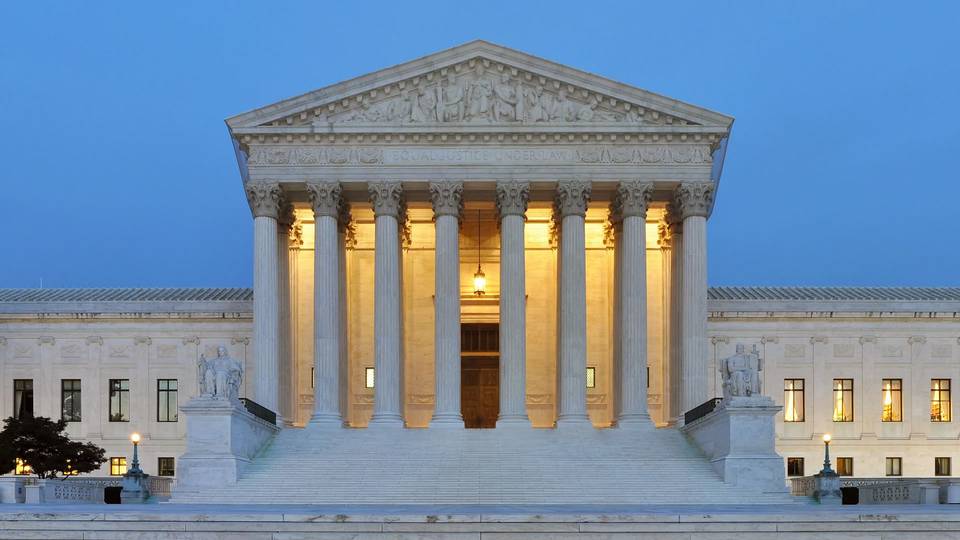
In a victory for voting rights, the Supreme Court has unanimously upheld the legal principle of "one person, one vote." The justices rejected a challenge by conservative activists who wanted states to be able to redraw districts based on eligible or registered voters, as opposed to total population. Such a move would have made many districts older, whiter and more conservative.
Fight for 15: California & New York Sign Laws Increasing Minimum Wage
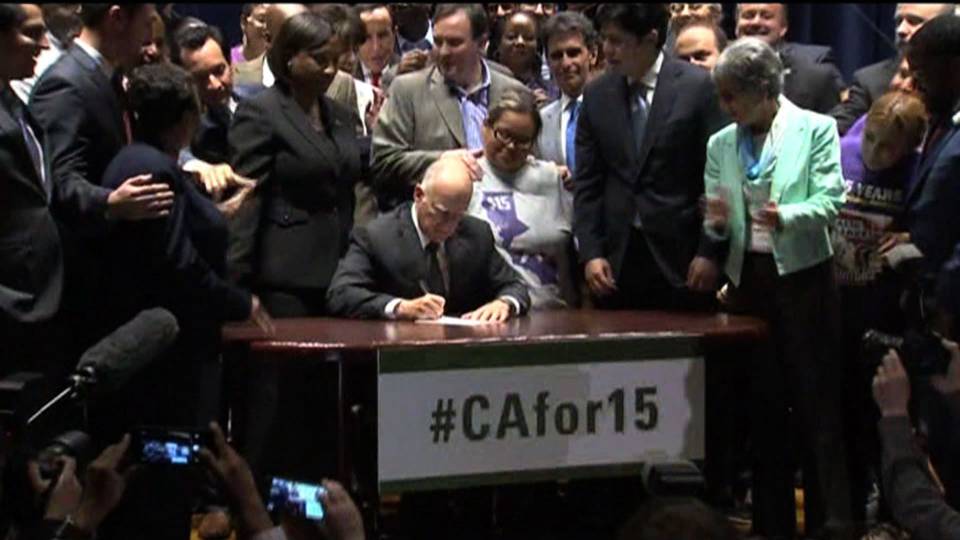
California Governor Jerry Brown and New York Governor Andrew Cuomo both signed legislation on Monday to raise the minimum wage to $15 an hour in the coming years. Governor Brown spoke in Los Angeles.
Gov. Jerry Brown: "So this is about economic justice. It’s about people. It’s about creating a little tiny balance in a system that every day becomes more unbalanced. And there’s a lot of anger going on in the presidential campaign, and it may have many sources, but one of the sources certainly is the way the average American is being treated by this particular economy."
In New York, presidential contender Hillary Clinton joined Governor Andrew Cuomo at a victory rally marking the minimum wage increase.
Hillary Clinton: "We need to build on what has been accomplished here in New York and go all the way to Washington and raise the minimum wage for everybody in America."
While Hillary Clinton called for the minimum wage to be increased across the country, she has not endorsed a nationwide minimum wage of $15 an hour, a position held by Bernie Sanders.
Over 10,000 Protest in Iceland After Prime Minister Exposed in Panama Papers
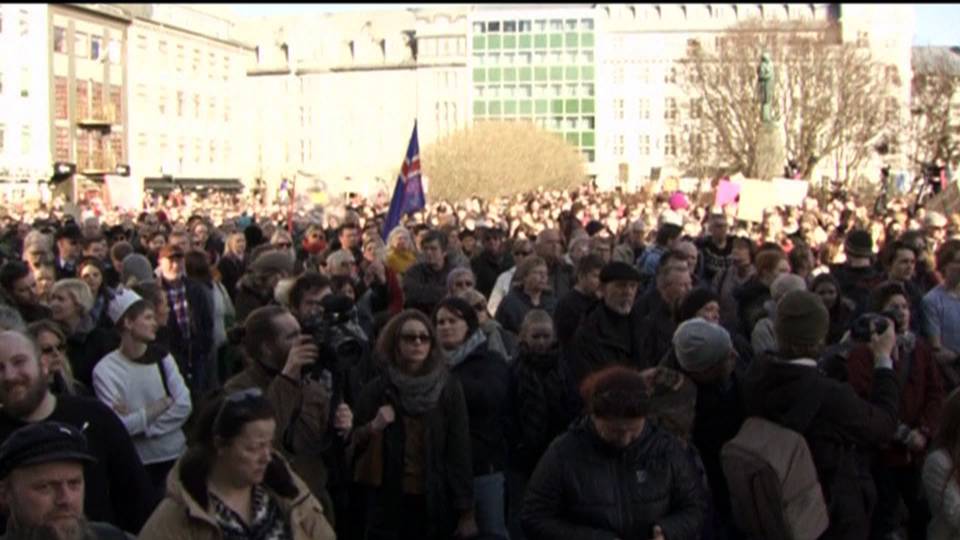
In Iceland, over 10,000 protesters took to the streets Monday calling for Iceland’s prime minister to resign after it was revealed he had benefited from offshore investment accounts in tax havens.
Einar Bergmundur: "I’m just protesting the corruption of the government. The prime minister has been hiding his money in Tortola and lying about it. The financial minister has also been lying about his participation in secret companies. And everybody is just fed up with this."
Details of Icelandic Prime Minister Sigmundur David Gunnlaugsson’s offshore account were exposed on Sunday as part of the Panama Papers—a massive journalistic exposé revealing how a Panamanian firm had set up a global network of shell companies for heads of state, politicians, CEOs and celebrities to store their money offshore to avoid taxes and oversight.
Bangladeshi Police Kill Four Anti-Coal Plant Protesters
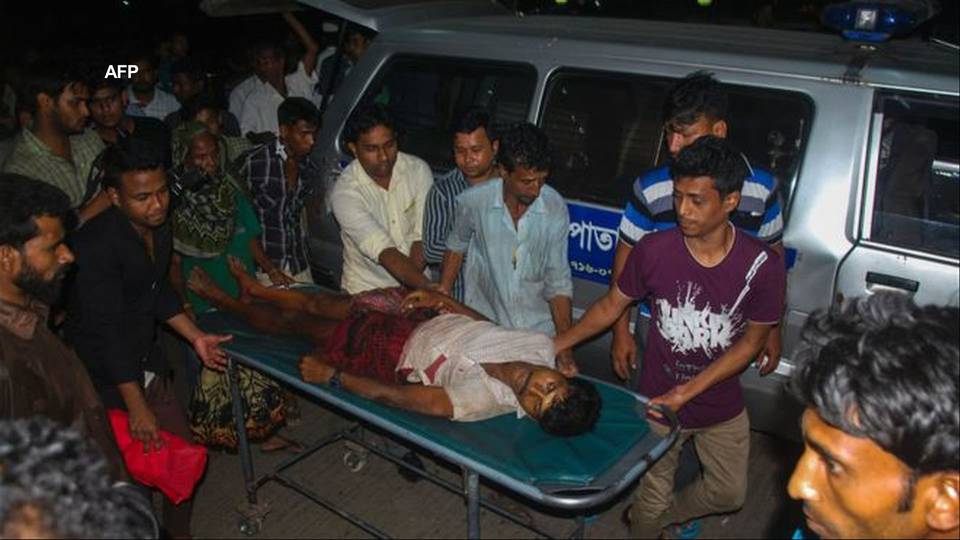
In southeastern Bangladesh, police opened fire Monday on a large protest against the construction of two Chinese-backed coal plants on the edge of the world’s largest mangrove forest. At least four people died, but activists in the area say the death toll may be higher.
U.S. Criticizes Israel for Demolishing Palestinian Homes
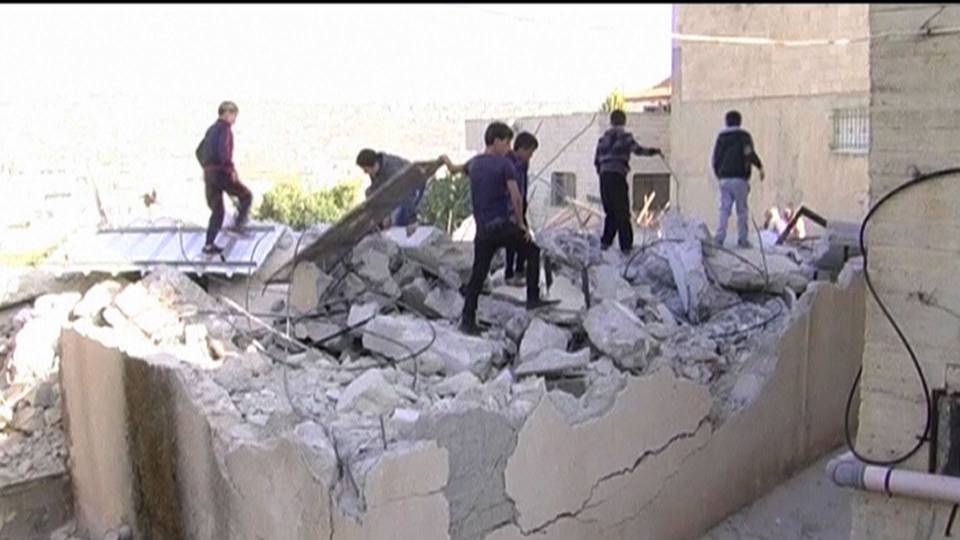
The United States is publicly criticizing Israel for continuing to demolish Palestinian homes in the West Bank. According to the United Nations, at least 41 structures were destroyed in March, including a school. State Department spokesperson Elizabeth Trudeau addressed the issue on Friday.
Elizabeth Trudeau: "We are concerned about the demolitions undertaken by Israeli authorities that continue throughout the West Bank and East Jerusalem. These actions are indicative of a damaging trend of demolition, displacement and land confiscation, and, alongside settlement-related activity and continued construction, undermine the possibility of a two-state solution. They also call into question the Israeli government’s commitment to that two-state solution."
On Monday, Israel demolished three more homes owned by families of three Palestinians who were killed after fatally attacking an Israeli officer in February. Ahmad Kmail said the Israeli authorities only gave his family 30 minutes before the home was demolished.
Ahmad Kmail: "The occupation forces raided our house at 1:00 a.m. and asked us to empty it in 30 minutes because they want to demolish it. I was not ready, and the house was not empty. I moved the furniture outside, and they started to demolish it after 30 minutes. This is a discriminatory crime."
WikiLeaks Sparks Anti-IMF Protests in Greece
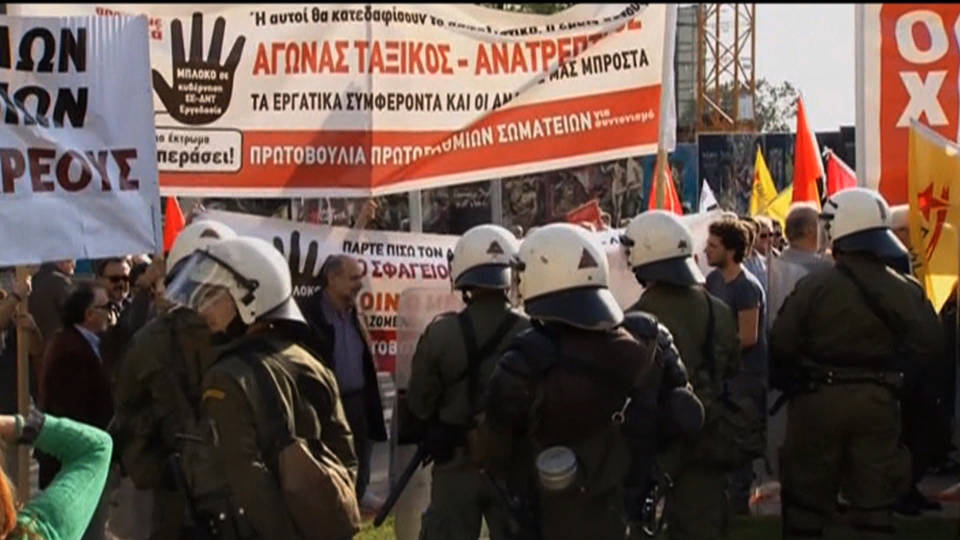
Anti-IMF protests were held in Greece yesterday days after WikiLeaks published the transcript of a recent conference call of three senior IMF officials discussing tactics to apply pressure on Greece, Germany and the EU to reach a debt deal in April. During the call, one IMF official said some kind of "event" was needed to force Greece into concluding talks over its debt reforms. While Greek’s finance minister met with lenders in Athens on Monday, protesters gathered outside.
Panagiotis Lafazanis, leader of the Popular Unity Party: "This country doesn’t need bailouts. It needs freedom, democracy, independence, sovereignty, justice. That’s what we are fighting for and protesting over. And we will win."
Report Predicts Climate Change Could Kill Tens of Thousands of Americans Every Year
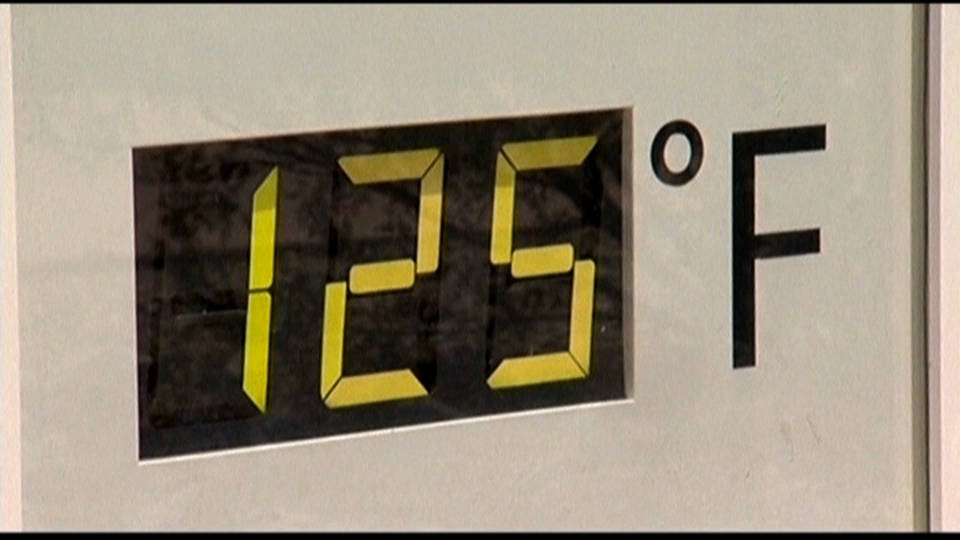
A new U.S. government study is predicting tens of thousands of people in the United States will die prematurely each year from heat waves and other extreme weather events like hurricanes and floods unless the world takes urgent steps to address the climate crisis. John Holdren, Obama’s senior science adviser, spoke Monday at the White House.
John Holdren: "The report projects that under middle-of-the-road emissions scenarios, we can see from thousands to tens of thousands additional heat-related deaths in the United States each summer. And the numbers are really very striking."
Federal Agencies Review Aid to North Carolina After Passage of Anti-LGBT Bill
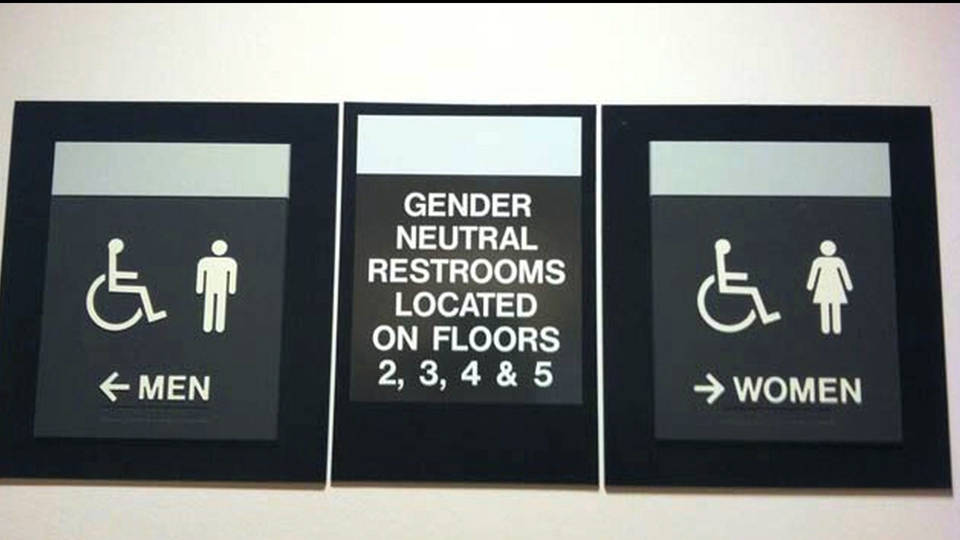
The state of North Carolina could lose billions of dollars in federal funding for schools, highways and housing following the signing of an anti-LGBT law. Known as the "bathroom bill," HB 2 bars North Carolina cities and towns from passing laws prohibiting discrimination against LGBT people in public accommodations. The Departments of Education, Transportation, Labor, Housing and Urban Development, and Health and Human Services are all conducting reviews to determine if North Carolina is still eligible for federal funding.
Princeton to Keep Woodrow Wilson's Name on Building Despite Protests
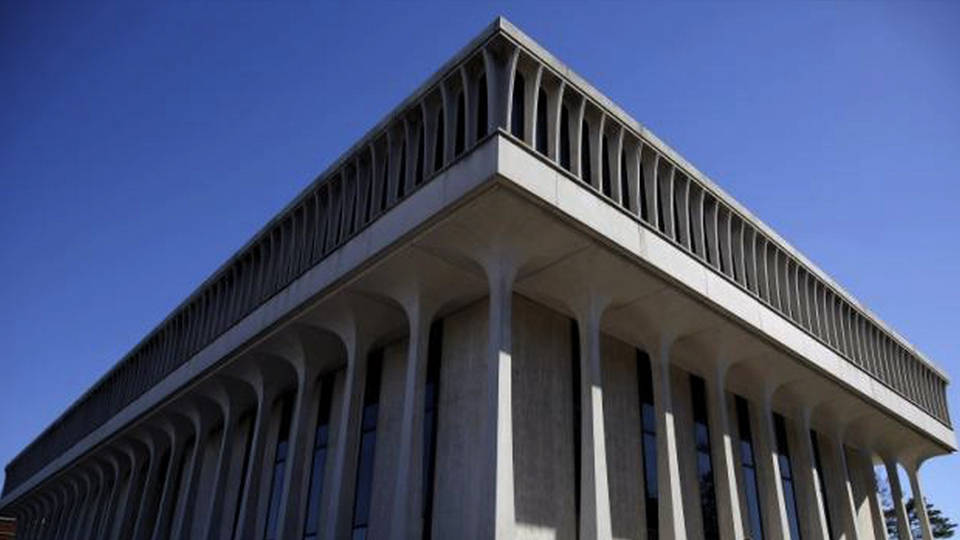
The Board of Trustees at Princeton University has announced it will keep former U.S. President Woodrow Wilson’s name on campus buildings despite student complaints about his segregationist beliefs. In November, students staged a 32-hour sit-in to protest racial injustice on campus. One of their key demands was the removal of Wilson’s name from buildings including the Woodrow Wilson School of Public and International Affairs.
CIA Admits It Accidentally Left Explosive Material in Virginia School Bus
The CIA has admitted it accidentally left explosive material under the hood of a school bus in Loudoun County, Virginia, after a K-9 training exercise at a local high school. The bus was used to ferry students to class two days last week before the explosive material was discovered.
Gustavo Castro Speaks Out Against Criminalization & Targeting of Indigenous Peoples in Honduras
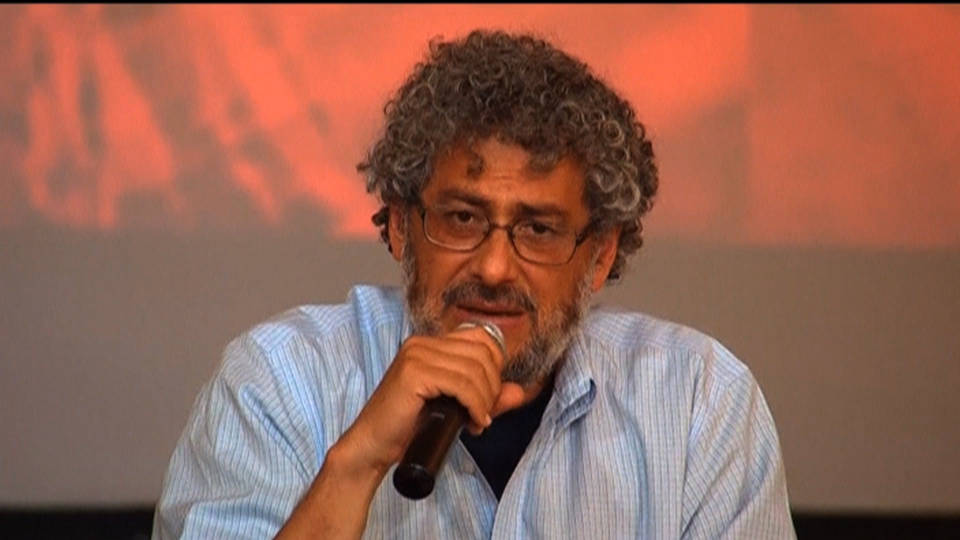
And in Mexico, environmental activist Gustavo Castro Soto held his first press conference Monday since returning to Mexico—a month after he survived an assassination attempt that left fellow Honduran activist Berta Cáceres dead. At the time of her death, Cáceres was campaigning against a hydroelectric project in Honduras. Castro said Cáceres and her indigenous activist group COPINH were targeted for their political activity.
Gustavo Castro Soto: "In the case of COPINH and in Berta’s case, it’s another example of how multinationals and major parties who have an interest in mining are involved in the criminalization, death and human rights of indigenous peoples. … We support the request of the family for a group of independent experts to have an exhaustive investigation, not just for Berta’s murder, but for the process of criminalization and deaths and massacres againstCOPINH."
Donate today:
Follow:


SPEAKING EVENTS

4/6 Ithaca, NY
4/8 Columbus, OH
4/9 St. Louis, MO
4/9 Columbia, MO
4/9 Kansas City, MO
4/10 Los Angeles, CA
4/10 Santa Barbara, CA
4/11 San Francisco, CA
4/12 Palo Alto, CA
4/12 Santa Clara, CA
NEW BOOK

"It's a Revolution": Actress Rosario Dawson on Why She Supports Sanders for President Over Clinton
WORK WITH DN!

Broadcast Engineer
Director of Finance and Operations
WEB EXCLUSIVE

Watch: Ex-Death Row Prisoner Moreese Bickham on WBAI in 1996 Days After Being Freed
207 West 25th Street, 11th Floor
New York, New York 10001, United States
---------------------
---------------------

No comments:
Post a Comment