democracynow.org
Stories:

A Torturer's Confession: Former Abu Ghraib Interrogator Speaks Out
Eric Fair served as an interrogator in Iraq working as a military contractor for the private security firm CACI. He was stationed at the Abu Ghraib prison and in Fallujah in 2004. In a new memoir, Fair writes about feeling haunted by what he did, what he saw and what he heard in Iraq, from the beating of prisoners to witnessing the use of sleep deprivation, stress positions and isolation to break prisoners. The military described such actions as "enhanced interrogations," but Eric Fair uses another word—torture. He writes, "If God is on anyone’s side in Iraq, it’s not mine."
TRANSCRIPT
This is a rush transcript. Copy may not be in its final form.
NERMEEN SHAIKH: As the Republican race intensifies between Donald Trump and Ted Cruz, we begin today’s show looking at torture, an issue that has repeatedly come up on the campaign trail. In February, both candidates were asked about torture at a debate hosted by ABC.
DAVID MUIR: Senator Cruz, is waterboarding torture?
SEN. TED CRUZ: Well, under the definition of torture, no, it’s not. Under the law, torture is excruciating pain that is equivalent to losing—losing organs and systems. So, under the definition of torture, it is not. It is enhanced interrogation, it is vigorous interrogation, but it does not meet the generally recognized definition of torture.
DONALD TRUMP: I would bring back waterboarding, and I’d bring back a hell of a lot worse than waterboarding.
AMY GOODMAN: Following the Brussels attacks, Donald Trump said torture might have prevented the bombings that killed 35 people.
Well, today we begin the show with Eric Fair, who served as an interrogator in Iraq working as a military contractor for the private security firm CACI. He was stationed at the Abu Ghraib prison and in Fallujah in 2004. In a new memoir, Fair writes about feeling haunted by what he did, what he saw and what he heard in Iraq, from the beating of prisoners to witnessing the use of sleep deprivation, stress positions and isolation to break prisoners. In one section of the book, he describes a torture device known as the Palestinian chair. The military described such actions as "enhanced interrogations," but Eric Fair uses another word—torture. He writes, quote, "If God is on anyone’s side in Iraq, it’s not mine." Eric Fair’s book is titled Consequence: A Memoir.
Eric, welcome to Democracy Now!
ERIC FAIR: Thank you for having me.
AMY GOODMAN: Why did you write this?
ERIC FAIR: Well, after about—well, what are we at?—12 years now of thinking about Abu Ghraib and close to nine years of writing about it, the memories don’t—don’t go away. I grew up as a Presbyterian in Bethlehem, Pennsylvania. And part of being a Presbyterian was what we called communal confession. So you arrived on Sunday mornings, and you read your confession from a pamphlet, but you read along with the congregation. And that confession was a critical part of your weekly routine. So, as I continued to think about what had gone on in Abu Ghraib and what my own involvement had been and what I had done, it became necessary to confess. And I started with some smaller articles in a number of different newspapers, but ultimately produced this book.
NERMEEN SHAIKH: And could you explain how you ended up going to Iraq?
ERIC FAIR: Well, I had been in the Army. I enlisted in 1995, presumably to become a police officer. I had sensed—again, as a Presbyterian, we sense a calling, which often has to do with vocation. And I had sensed a calling to law enforcement. The Army was a means to an end for me. This was 1995 to 2000. I ended up at a language school and became an Arabic linguist. But in those years, there wasn’t much going on overseas that the Army was involved in. So, in 2000, I took my honorable discharge, and I became a police officer in Bethlehem. About a year, a year or two into that, I was diagnosed with a heart condition, which ended my career. And at this point, the Iraq War was beginning to ramp up. And as a former soldier and as a police officer and as someone who had been in that community and around those types of people, I felt an obligation, and I had also supported the initial invasion, so I felt an obligation to be a part of that. Contracting was an opportunity for me to get over there without a health examination.
AMY GOODMAN: So tell us about this company that you contracted with.
ERIC FAIR: Well, there were a number of different contracting companies that were looking for just about anybody at that time.
AMY GOODMAN: The military wouldn’t have you because of the heart?
ERIC FAIR: The military would not take me, as the heart, but there were also a number of positions—again, the thought—the thought back then was that the war was going to be over very quickly, a matter of weeks, if not months—or, excuse me, matter of months, if not weeks. And so, the Army didn’t think that it had time to train certain positions, to include things like interrogation. And it also thought that it could save money on things like security and transportation. So the idea was that contracting companies like C-A-C-I, or CACI, would come and essentially hire former soldiers who had this kind of expertise and this kind of training, bring them over to Iraq to fill in the gaps, and then send us all back home.
NERMEEN SHAIKH: Well, I’d like to find out more about CACI, the U.S. private contractor whom you’ve just spoken about. But first, let’s go to a clip from the company’s promotional video.
CACI PROMOTIONAL VIDEO: Character—it’s that unique set of moral and ethical qualities that defines who we are. CACI is built on a foundation of character. For 50 years, our defense, homeland security, intelligence and federal civilian customers have depended on CACI for world-leading information solutions. They count on us for our character, honesty, integrity, commitment, respect. Character—it defines who we are.
NERMEEN SHAIKH: Eric Fair, your response to that promotional ad for CACI, the private contractor whom you worked for? And also, could you explain why CACI, as against the military, didn’t require you to take a health exam?
ERIC FAIR: Sure. Well, CACI is an enormous organization. And this contract, this specific contract for interrogation, was a small part of it. I think the vast majority of my colleagues, even if they disagree with what I’m saying now, would agree that the management of CACI employees over in Iraq was a disaster—and lucky it wasn’t a physical disaster. We had vehicles that had been rented from Kuwait that had no armor. We had no medical kits. We had no communication equipment. We had no maps. And so, it was really on the fly.
Now, far be it for me to defend—be the one here defending CACI, which—and I write about—in some detail, about, I think, some of the failures, but CACI was an organization, like so many of the other contractors, that was, in many ways, forced to step up in this war because so few other Americans were joining up. Now, in 2003, something near—nearly 60 to 65 percent of Americans supported the invasion. I was one of them. And as someone who supported it, I felt an obligation to be a part of it. Many of us who ended up in Iraq, either as contractors or soldiers, were curious about where the rest of that 65 percent of the Americans were. Recruiting offices did not have lines out the doors. And the administration was not calling for people for national service. And so, organizations like CACI either accepted that responsibility or they sort of filled in the holes, depending on your perspective.
AMY GOODMAN: Talk about walking into Abu Ghraib and what you did there.
ERIC FAIR: Some of us had heard of Abu Ghraib. There had been a downed American pilot in the first Gulf War who had spent some time there, and so we knew that it was a notorious prison in Iraq. But we didn’t have a sense—we didn’t have a sense that it had that kind of overwhelming sense of fear for Iraqis. We just thought of it as a typical prison. Many of us were former police officers, law enforcement officers—we had been in prisons. But Abu Ghraib, they—we arrived, they dropped us off, and they left. And they housed us in cells at the time. And there was something in the neighborhood of probably less than 500 American personnel, whether they be troops or contractors. There were thousands of Iraqi prisoners. And so, the idea that we were going to interrogate these people and gain any kind of useful intelligence was almost immediately impossible.
NERMEEN SHAIKH: And what did you see at the hard sites in Abu Ghraib?
ERIC FAIR: I spent one day in the hard site. As an Arabic linguist with—I had worked for the National Security Agency, so I had some high-level security clearances. And so, the idea was that I would be an effective sort of interrogator in the hard site with what they were calling high-value detainees.
The hard site was a—most Americans have seen the photographs at this point. It was a two-tiered, open-bay prison. And many, many of the prisoners, the Iraqi prisoners, were naked. Whether they were being forced to stand by being handcuffed to their cell doors or whether they were just sort of being paraded around on the floor, whether they were moving from place to place, most—most of the prisoners either were naked or down to their underwear.
NERMEEN SHAIKH: And what was required of interrogators? Like, what did they want to get from these high-value—so-called high-value targets?
ERIC FAIR: So the Army puts out what are called PIRs, priority intelligence requirements, and PIRs can cover a variety of different things. They can cover an intersection, a certain intersection that you want to gain intelligence from, or they can cover much larger strategic ideas. Now, the number one PIR in 2004 was the location of chemical weapons. So every interrogation, on some level, we had to at least address the issue of whether or not this prisoner knew anything about chemical weapons. And again, in 2004, many of us, myself included, were still under the impression that they were there. Now, it was clear very quickly that many of the prisoners did not have that kind of information, and so then the PIRs would go down based on whether or not they were part of an anti-coalition cell or IED emplacement or mortar teams. And the idea was that you would fill in the blanks.
NERMEEN SHAIKH: And how did they decide who should be interrogating these high-value targets? You, yourself, did not.
ERIC FAIR: I did not interrogate high-value targets. And I can’t say exactly how those teams were formed. By the time I got there in January of 2004, the setup had already been arranged. I was not placed on that team. I was placed on a different team; it was called FRE team, the former regime elements. And the idea was to interrogate and debrief people that had worked closely with Saddam Hussein.
AMY GOODMAN: We’re going to go to break. When we come back, I’d like you to read from Consequence, your book, using the Palestinian chair on the mayor of Fallujah—
ERIC FAIR: That’s right.
AMY GOODMAN: —and what that meant. We’re talking to Eric Fair, Army veteran, who worked as a contract interrogator at Abu Ghraib prison in Iraq, author of the new book, Consequence: A Memoir. Stay with us.
[break]
AMY GOODMAN: The legendary jazz pianist Randy Weston performing "Hi-Fly" on Democracy Now! Randy turned 90 years old this week. Happy birthday, Randy. To see our hour with Randy Weston, go to democracynow.org. ... Read More →

Melissa Harris-Perry on Race, Media, and the Story Behind This Year's Presidential Race
Last month, professor, author and political commentator Melissa Harris-Perry had a very public breakup with MSNBC after four years of hosting her eponymous weekend show. Reaction extended from the blogosphere to the floor of the House, where Illinois Congressmember Luis Gutiérrez stood next to a sign of the NBC peacock with the hashtag #NBCSoWhite and suggested the network has a racial diversity problem. But even though her show is now off the air, Melissa is still sparking critical conversations. She joins us to talk about this year’s presidential contest, voter ID laws, anti-LGBT legislation and much more.
TRANSCRIPT
This is a rush transcript. Copy may not be in its final form.
NERMEEN SHAIKH: We end today’s show with professor, author and political commentator Melissa Harris-Perry. For the past four years, she hosted a popular weekend show on MSNBC. But the show ended last month after a dispute between her and the network. After her show ended, Democratic Congressman Luis Gutiérrez of Illinois spoke out about her departure. He gave a speech from the floor of the House while standing next to a sign of the NBC peacock with the hashtag #NBCSoWhite,
REP. LUIS GUTIÉRREZ: What’s going on at NBC? Last week, Wake Forest University professor and MSNBC television host Melissa Harris-Perry was abruptly pulled from the airwaves without even a chance to say goodbye. NBC said they wanted a show that was more about politics. But I have to say that when I watched the show, Melissa Harris-Perry was talking about politics in a unique way, like few others on the airwaves. She brought diverse voices to the table to talk directly and unapologetically about the politics of race in America, a major theme among candidates and a critical conversation to include on the airwaves. I’m sad to see her go, just like Alex Wagner before her, but I am even sadder because I don’t think these are isolated cases.
AMY GOODMAN: That was Democratic Congressman Luis Gutiérrez speaking on the House floor about the important role of Melissa Harris-Perry’s show on MSNBC. Well, her show may be off the air, but she’s still sparking critical conversations.
To talk more about this year’s presidential contest, controversial new voter ID laws, the U.S. media, anti-LGBT legislation and much more, we are joined by Melissa Harris-Perry herself. She is the Maya Angelou presidential chair at Wake Forest University, where she directs the Anna Julia Cooper Center on Gender, Race, and Politics in the South. She’s also executive director of the Pro Humanitate Institute at Wake Forest and runs the Wake the Vote initiative.
Welcome to Democracy Now!
MELISSA HARRIS-PERRY: It’s so nice to be back.
AMY GOODMAN: It is great to have you. So there is Luis Gutiérrez—
MELISSA HARRIS-PERRY: That was amazing.
AMY GOODMAN: —the congressman, with that hashtag, #NBCSoWhite. Why did you leave MSNBC?
MELISSA HARRIS-PERRY: I didn’t mean to leave. I certainly wanted to stay. I refused to go back on air, initially, simply because what had happened was the show was gone, and I felt that they were asking me to come back to anchor my hours, but not to actually host my show.
AMY GOODMAN: What do you mean?
MELISSA HARRIS-PERRY: So, the show had a certain kind of branding. We did certain kinds of work. We brought particular voices. We had a perspective and a point of view, and we had a lot of editorial control. That had been true for four years. But over the course of really the months that began in 2016, we had moved to kind of—and I want to be clear: I think the word "politics" is the wrong word. It was horse-race election coverage. Right? Which is not the same thing, from my perspective, as "politics." I wasn’t prepared to simply do horse-race election coverage. And so, I had not been invited to host my show nor to even anchor during my hours for weeks. After some other media outlets asked questions about that, I was then invited back, not, again, to host my show, but to anchor 10:00 a.m. to noon, Saturday and Sunday. I felt that doing so would have been to signal to the audience that everything was fine. And everything was not fine. Therefore, it was important to actually not be there, so that it would be a clear and visible signal that everything was not fine.
AMY GOODMAN: You mean your show at that time was now called Place for Politics, like the rest of MSNBC is branded? It wasn’t Nerdland or MHP anymore?
MELISSA HARRIS-PERRY: That’s correct.
NERMEEN SHAIKH: So who were the—just give us a sense of the kinds of voices that you had on your program.
MELISSA HARRIS-PERRY: I mean, you know, for us, we were—we were a roundtable, basically, of, at any moment—sometimes it might be a one-on-one, but it was often three to four people at the table. We worked really hard to make sure that we had diverse voices, so that both meant racially diverse, it also meant diverse in perspective, it also meant diverse across genders, it also meant diverse across perspectives. And, you know, so, for us, that meant, at any given moment, you might have, you know, a cis heterosexual white man like Dave Zirin, who nonetheless is one of our favorite black feminists, but is a cis heterosexual white man, doing—kind of performing a black feminist analysis of sports, at the same time we might have, you know, Kenji Yoshino, who is a queer Asian constitutional scholar, who would be there to talk to us about the Supreme Court. So he’s doing kind of very clear, straightforward, straight-ahead analysis of the Supreme Court, but also doing it in a body that might be unusual.
AMY GOODMAN: Well, you brought up sports, so tell us what happened Super Bowl time—not that sports were your big thing, but this Super Bowl, 50th anniversary, was certainly huge with what Beyoncé did.
MELISSA HARRIS-PERRY: Yeah. Well, so, Beyoncé dropped "Formation" the night before the Super Bowl. For us, that was kind of right in the wheelhouse of all the things we cared about. "Formation" took up the issue of Hurricane Katrina. And, of course, as you know, I lived in post-Katrina New Orleans. My husband is an advocate and civil rights attorney who did a lot of post-Katrina work in New Orleans. And, of course, our show had been thinking about New Orleans for a long time—and, frankly, thinking about Beyoncé for a long time. So we immediately knew that we wanted to address this video, address the popular culture questions, address the racial questions, address the Black Lives Matter imagery that emerged as a result. And we were told not to do so.
AMY GOODMAN: What do you mean? Who told you not to do so?
MELISSA HARRIS-PERRY: The sort of senior—what’s the word? He wasn’t—he’s not a producer on our show, but he was—he’s the person, Chris Peña, who was sort of over what happened on the weekends. And he simply came in and said, "No, you can’t do it." And so there was a back-and-forth struggle for a few hours.
AMY GOODMAN: I mean, in terms of ratings, dealing with Super Bowl and dealing with Beyoncé, I can’t imagine you couldn’t—that there would have been a bigger audience for anything else. But also, I mean, the Black Panther imagery, the—
MELISSA HARRIS-PERRY: I don’t think it’s about ratings, though. This was never said to me in any way as being primarily a ratings question. It’s really a direction question. It was a—and I want to be really clear about something: I think, in an organization built on hierarchy, that those at the top have every right to change direction. And so, one of the things that I think has gotten lost is, as though I have an argument with the directional change. Now, I do, in the sense that that isn’t the direction I wanted to go in, but that isn’t really where the—sort of where the fight broke out. I’m the leader of an organization; I’ve changed direction in my organization.
The issue was that there was a directional change that was not being communicated either to me as an employee or, even more importantly, to my audience. And so, what happened was, we were simply disappeared, with no communication to the audience, and then I was going to sort of reappear as though everything was fine. That, for me, was what was unacceptable. So, the email communication that was leaked was about me explaining to my team why I was making their life harder by not coming back to host. And clearly, the portions of it that ended up in The New York Times were the most inflammatory or potentially inflammatory portions relative to race, which is the point at which I made a decision to leak the entire letter, so that people could read the entire email and make a decision on their own about what they thought I was saying, one way or another. But the issue wasn’t that MSNBC made a decision to go a new direction. That’s their right. It’s their channel. It was that they weren’t communicating it.
AMY GOODMAN: But you are a politics professor. You deal with—this is, I mean—
MELISSA HARRIS-PERRY: I have a Ph.D. in it, that’s right.
AMY GOODMAN: And here we are in one of the most contested elections we have ever known.
MELISSA HARRIS-PERRY: Mm-hmm.
AMY GOODMAN: Your thoughts, what you can’t say now on MSNBC?
MELISSA HARRIS-PERRY: Well, I guess what I’d say is, for me, what’s—I have—you know, it was interesting to listen to Congressman Gutiérrez stand there and say that he saw politics in our show. I certainly felt that we were completely capable of covering an election. We had covered elections previously. We’ve been on air for four years. Obviously, we covered the 2012 election.
AMY GOODMAN: You were in Iowa when your show was in Iowa, but you weren’t on your show?
MELISSA HARRIS-PERRY: I did not—I did not—well, I was on my show as a guest, but I was not allowed to host my own show. Ari Melber hosted my show; I was a guest on it. That was part of how we knew things were going wrong. I was not allowed to host my own show, nor was I invited to be any part of coverage in New Hampshire. I was not invited to host my show from South Carolina, despite the fact that I live in North Carolina and was in South Carolina. I have no idea why. No one communicated any of those things to me.
AMY GOODMAN: You wrote in your letter, "I will not be used as a tool for their purposes." This is a letter that you wrote to your staff. You went on, "I am not a token, mammy, or little brown bobble head. I am not owned by Lack, Griffin, or MSNBC. I love our show. I want it back."
MELISSA HARRIS-PERRY: That’s true. I did. I loved our show. It’s been gone for a little over a month, and I am surprised even about how much I miss it. The people I worked with, turns out, were—I said I didn’t know how few friends I had, until suddenly the folks who I talked to every day for four years were gone. They were the people I talked to about politics all the time, and I miss them profoundly.
That said, in the end, when I was invited to come—again, to come back to host those hours or to anchor those hours, but not to host the show, I definitely felt that I was being used in order to signal that everything was fine. And again, everything was not fine. When I talk about mammy, the symbol of mammy is one kind of historically where the African-American woman cares more about the family of the employer than about her own family. And what I want to be really clear about was that I care more about the MHP show family, about our audience, about our team, than I do about Andy Lack or Phil Griffin’s family, their profits, their ratings—which seem to be just fine. Again, this wasn’t an argument about whether or not they were making the right decisions for their bottom line.
But again, my primary job is as a college professor. My primary intellectual, personal and political commitments are actually not about how many TV minutes or hours I get. I felt like I needed to have been communicated with clearly, so that I could make a decision about what direction I was going in. The decision to not have a conversation with me about any of that, the decision to leak not only this information but other information later when the conversation started, the attempt to silence me once we had the struggle—and particularly in the context of MSNBC having rehired Brian Williams and having made public comments where they said things like, you know, "We’re in an NBC family where second chances are always possible, where redemption is an important part of who we are"—it is, frankly, painful that after four years of working extremely hard for these people, after giving up a lot of family time and personal time and professional time, to be discarded in that way. And so, for me, although I don’t know what the reasons are, I am pleased that, ultimately, I cared more about my family than about theirs.
NERMEEN SHAIKH: Well, very quickly, before we conclude, can you talk about your experience in the context of the concept "crooked room" that you talk about in your book, Sister Citizen?
MELISSA HARRIS-PERRY: You know, I probably can’t, only because I don’t know that we can analyze ourselves in that way. Sister Citizen is about the stereotypes that African-American women are bound by, so the ways that we think—that we know who black women are, based on some very old stereotypes of mammy, of Jezebel, of the angry black woman. And so, I sometimes feel like I see them happening, particularly in the context of media and social media. But the truth is, we’re not very honest about who we are as ourselves. None of us can see ourselves very well. It’s kind of like we can’t hear the sound of our own voice because of how it reverberates. So, I will leave it to others to write the thought pieces about that.
AMY GOODMAN: Well, we want to ask you to stay with us, and we’ll do a post-show with you—
MELISSA HARRIS-PERRY: Sure.
AMY GOODMAN: —post it online at democracynow.org.
We’re on our 100-city tour, tomorrow Columbus, Ohio at the Ohio State University; then on Saturday in Missouri, in St. Louis and Columbia and Kansas City; on Sunday in Santa Barbara and in Los Angeles; on Monday in San Francisco. Check our website at democracynow.org. Hundred city, folks, we’re going on the road. ... Read More →

Ex-Abu Ghraib Interrogator: Israelis Trained U.S. to Use "Palestinian Chair" Torture Device
As a former interrogator in Iraq working as a military contractor for the private security firm CACI, Eric Fair was stationed at the Abu Ghraib prison and in Fallujah in 2004. While in Fallujah, he witnessed a torture device known as the Palestinian chair. He writes in his new book, "Consequence: A Memoir," that the chair was a way to immobilize prisoners in order to break them down both physically and mentally. He also wrote that the Israeli military taught them how to use the Palestinian chair during a joint training exercise. For more, we’re joined by Eric Fair, whose new book, "Consequence: A Memoir," has just been published.
TRANSCRIPT
This is a rush transcript. Copy may not be in its final form.
AMY GOODMAN: This is Democracy Now!, democracynow.org, The War and Peace Report. I’m Amy Goodman, with Nermeen Shaikh. Our guest is Eric Fair, Army veteran who worked as a contract interrogator at Abu Ghraib prison in Iraq as well as other places. He’s the author of the new book, Consequence: A Memoir. You’ve said that what happened outside Abu Ghraib, what contractors did, in terms of torture, was often worse than inside Abu Ghraib.
ERIC FAIR: That was certainly my experience. And again, I’m focusing on my own sort of behavior, my own sort of actions. So, for me, yes, personally, Fallujah was worse than Abu Ghraib.
AMY GOODMAN: So, why don’t you read for us from your book, Consequence?
ERIC FAIR: "We pass by the interrogation room where Tyner has been working on Raad Hussein. We haven’t heard Tyner scream or throw anything today. The door to the room, a flimsy sheet of plywood, has blown open in the hot desert wind. Inside, Raad Hussein is bound to the Palestinian chair. His hands are tied to his ankles. The chair forces him to lean forward in a crouch, forcing all of his weight onto his thighs. It’s as if he’s been trapped in the act of kneeling down to pray, his knees frozen just above the floor, his arms pinned below his legs. He is blindfolded. His head has collapsed into his chest. He wheezes and gasps for air. There is a pool of urine at his feet. He moans: too tired to cry, but in too much pain to remain silent.
“Henson comes out into the hallway and walks past the room. He covers the side of his face as he walks by and says, 'I don't even want to know.’
"I am silent. This is a sin. I know it as soon as I see it. There will be no atonement for it. In the coming years, I won’t have the audacity to seek it. Witnessing a man being tortured in the Palestinian chair requires the witness to either seek justice or cover his face. Like Henson in Fallujah, I’ll spend the rest of my life covering my face."
AMY GOODMAN: And that’s Eric Fair, author of Consequence: A Memoir. Why did they call it the Palestinian chair?
ERIC FAIR: I was never clear on the actual origin. The rumors within the interrogation cell were that Army interrogators had learned to use this chair by Israeli interrogators, and the Israeli interrogators presumably called it the Palestinian chair because they were torturing Palestinians in it. I certainly don’t know if that’s true. And quite frankly, for my own story, I’m not sure that it necessarily matters.
NERMEEN SHAIKH: Well, in the book, you write that interrogators in Iraq said the Israeli military taught them how to use the Palestinian chair during a joint training exercise. In response to this revelation in your book, Sarah Leah Whitson of Human Rights Watch said, quote, "The description by an American interrogator of a 'Palestinian chair' torture device that he says the Israeli military taught US soldiers how to use is disturbing and shameful on more than one level, suggesting as it does a means of torture used against Palestinian detainees eagerly copied by Americans seeking to interrogate and torture Iraqis." So could you talk about that and also whether you know if the Palestinian chair was used outside Fallujah in other sites in Iraq?
ERIC FAIR: There were a variety of different ways to interrogate someone under what were being called enhanced interrogation. One of those enhanced interrogation techniques was confined spaces. And we know now that that was used by putting people in boxes and eventually putting insects in the box, and as well as closets. The Palestinian chair was simply a confined space. It was a way, rather than putting someone in a box and confining them inside, was to essentially confine them with the chair. And it was designed, like all enhanced interrogation techniques, to simply break the will, to simply break them down physically in this case and then essentially break their will.
NERMEEN SHAIKH: And you also sat in the Palestinian chair. Could you talk about what that experience was like?
ERIC FAIR: I did. I mean, recognizing that there was an actual device that we were using in interrogation was—I was surprised by that. And so, a close friend of mine and I made sure that we—I think we at one point had been tempted to use it. I did not use the chair. And that’s not to suggest that I wouldn’t, if I hadn’t stayed longer. But we thought that if we were going to use it, we should sit in it, and we should get a sense for what it was.
And so, we strapped each other in. And it locks you into what is essentially a squat, a permanent squat, from which you can’t recover. We only lasted about a minute. And physically, we may—we certainly could have lasted longer, but it was the—it’s the overwhelming sense of fear that a horrific sort of pain is on its way. And because your hands are bound, you recognize that there’s no way to recover from it. So, certainly, the physical pain is excruciating, but the mental and sort of emotional strain of knowing that you can’t—there’s simply no way to recover from that is what amounted to torture.
AMY GOODMAN: Eric, can you describe what torture session you engaged in haunts you most?
ERIC FAIR: You know, I wish that I could say one thing haunts me most, and I wish it were limited to one. But the entire experience—and I know other interrogators disagree with me vehemently on this, but the very act of simply forcing a detainee to violate his own will through interrogation is, in my mind—is, in my mind, torture. The one that certainly has, and appears in the book and has appeared in other articles that I’ve written, is the sleep deprivation I participated in in Fallujah. It was actually my last night in Fallujah; I’d been tasked to go back to Baghdad the next day to form another team. And another interrogator was working a sleep deprivation on a detainee. He was on the day shift, I was on the night shift. And so, when I came in, he asked me to, throughout the course of the night, every hour, to wake this detainee up, or this—I try to use the word "prisoner"—to wake this prisoner up.
AMY GOODMAN: Talk about the difference between detainee and prisoner, why you—
ERIC FAIR: Sure. Well, shifting gears, as a police officer, I could detain people almost as I saw fit, and, in some ways, to protect them. I could detain someone on the street if I thought that they were going to cross on the wrong spot, or I could detain someone who had just blown through a stop sign. That was not necessarily an arrest. Iraqis were not detainees. We were not detaining them. They were prisoners of war. Now, I recognize that people say we didn’t declare war, but anyone who was in Iraq in any of those years, to include right now, it’s a war. They were prisoners. They were prisoners of war.
AMY GOODMAN: I’m sorry I interrupted you.
ERIC FAIR: That’s fine. So my—I went in that evening to utilize sleep deprivation. And he was in an isolated cell with no windows. He had already been asleep for an hour or two. I had been doing paperwork. And I walked in, and I flipped on the light and woke him up, stood him up, and I was going to take off his robe. It was cold. This would have been early spring, cold in Iraq. So I was going to take off his robe. And what I didn’t realize was that under his robe he was naked. And it was a shock to me. And it was an instant sense that I had violated his—his well-being. To say really nothing of torture, it was, in some ways, an assault.
Now, there are all sorts of discussions about sleep deprivation, about how I was sleep-deprived in—excuse me, sleep-deprived in basic training or people are sleep-deprived in college. That is not the same thing. Sleep deprivation, as I’ve said before, can be accomplished in a matter of hours. You can let someone go to sleep in a dark room with no windows, and you can wake them up in 15 or 20 minutes. They have no idea how long they’ve been asleep. And with no windows, they have no idea what time of day it is. You can let them go back to sleep, and you can wake them up in 20 minutes. They still have no idea. And they’ve since—within 45 minutes, they’ve lost all sense of time. Two or three hours later, you can convince this person that he’s been living for four or five days, when it’s really only been an hour.
AMY GOODMAN: And what’s the point?
ERIC FAIR: The complete lack of hope. It is to strip away someone’s hope and to insert a different way of thinking into their mind, which would be my mind into theirs, so that they’re going to cooperate with me.
NERMEEN SHAIKH: Well, you wrote in a recent New York Times opinion piece that you’ve often been asked when you realized that you had gone too far in what you did, in what you participated, in Iraq. You said in the piece that you’ve given different answers to that question, quote, "not"—this is you saying, "not out of a desire to deceive, but out of an inability to make sense of just how easy it [was] to become an American torturer." Could you elaborate on that?
ERIC FAIR: Sure. I left—I quit my job with CACI about a month later after the sleep deprivation. And I left Iraq knowing that things had happened that I was not going to forget and that were going to leave an impact on me. But I was not—I had not processed it enough at that point to recognize or to admit or confess that I had tortured anyone. We were still calling these enhanced techniques. I had not done these things behind closed doors. We had filed paperwork. Most other interrogators, on some level, had used some of these techniques. And so I recognized that there was something dehumanizing about it, but I hadn’t made that leap. It has taken me 12 years to come to terms with this. When I first started writing in 2007, even then, even then as I was essentially confessing what I had done and saying I had done wrong, I was not ready to call it torture. I’m well aware of, by calling it torture, what I’m accusing people of. And I’m well aware of what I’m accusing myself of. But in the last couple of years, I’ve recognized that it’s the only other way to call—it’s the only word for it.
NERMEEN SHAIKH: Well, of course, the justification for it, and especially with respect to high-value detainees, was that valuable information was extracted from them using precisely these techniques, or torture.
ERIC FAIR: Sure. Information can be gathered in a number of different ways. My most effective interrogation in Iraq was a prisoner that simply wanted to cooperate. He walked in, and I was tired. It was near the end of my time in Fallujah. And I simply wanted to write a report and send him home. But within the first five minutes, he said that he wanted a piece of cake and some juice, and I spent hours with him gathering what was essentially critical intelligence information.
Now, certainly, the argument can be made—or, well, I shouldn’t say "certainly." People have made the argument that torture can gain information. But this brings me back to what you started with, with the statements from Ted Cruz and Donald Trump and those. But what you didn’t show was the next statement, was from Marco Rubio. And Marco Rubio said that he would not tell his enemies what we were doing, and he would not advertise what our techniques are. And that is exactly wrong. That is not the way the United States should operate. We should absolutely be telling people what we do. And we should absolutely be telling our prisoners what they will expect in detention, that they will be well taken care of, that they will be watched over until the end of the conflict. If they want to cooperate, they will be—we’re more than happy to speak with them, but we will not in any way torture.. ... Read More →

Former Abu Ghraib Interrogator: Because of Trump & Cruz, Door Still "Wide Open" for U.S. to Torture
As Republican presidential candidates promise to bring back the torture techniques used under the George W. Bush administration, we speak with one of the men who actually carried out these policies. Eric Fair served as an interrogator in Iraq working as a military contractor for the private security firm CACI. He was stationed at the Abu Ghraib prison and in Fallujah in 2004. His new book, "Consequence: A Memoir," has just been published.
TRANSCRIPT
This is a rush transcript. Copy may not be in its final form.
AMY GOODMAN: Let’s go to Donald Trump. This was after the Brussels attacks, Donald Trump repeating his endorsement of the use of waterboarding of suspects.
DONALD TRUMP: I’m not looking for breaking news on your show, but frankly, the waterboarding, if it was up to me, and if we changed the laws and—or have the laws, waterboarding would be fine. And if they want to do—as long as it’s with—because, you know, we work within laws. They don’t work within laws. They have no laws. We work within laws. The waterboarding would be fine. And if they could expand the laws, I would do a lot more than waterboarding. You have to get the information from these people. And we have to be smart, and we have to be tough, and we can’t be soft and weak, which is what we are right now.
AMY GOODMAN: "We can’t be soft and weak," as he endorses torture.
ERIC FAIR: Well, there are—I don’t even know where to begin. "We can’t be soft and weak," from a non-veteran. I think veterans, in general, get so frustrated with this tough talk and this idea that these men—and, quite frankly, some women—have any idea what the difference between soft and weak and tough and hard is. This is not about being soft and weak; this is about being smart. And far more importantly, this is about—this is about being Americans, and it’s about adhering to the values that make us Americans—the Constitution and the Bill of Rights. And those—I’m not suggesting that we read the Miranda rights to prisoners of war or that we give them constitutional rights, but we absolutely are obligated to treat them humanely.
AMY GOODMAN: Abu Ghraib, what it meant to the Iraqis, and the fact that you were doing this there?
ERIC FAIR: I’ve suggested that the word "Alcatraz" has kind of a similar meaning to Americans. So Americans hear the term "Alcatraz," and they think of a difficult prison. But over the course of the last few years, I’ve recognized that that’s not true, that we don’t really have a word in the English language that sounds the same way as Abu Ghraib for Iraqis. Many Iraqis that I spoke to, interrogated at Abu Ghraib, had been there under Saddam Hussein, and it had been a return. It may very well—
AMY GOODMAN: Had been imprisoned there?
ERIC FAIR: Had been imprisoned under Saddam Hussein, either for being Shia or they had fled during the Iran-Iraq War, for any number of different reasons—or for no reason at all. So, Abu Ghraib had a—the idea that we would empty out that prison and turn it back into a prisoner of war camp was the very definition of foolish.
NERMEEN SHAIKH: Do you recall when you first saw the images, the first images that were released from Abu Ghraib in Sy Hersh’s The New Yorker piece, and why you think, in the U.S., people were so shocked by those images?
ERIC FAIR: I was in Fallujah at the time. We had access to Armed Forces Network. So I’m not sure that I saw it as breaking news, but we eventually kind of felt the story coming out and people talking about it. And as I’ve said before, we weren’t shocked, and so we weren’t afraid to see this stuff coming out, because we had figured all along that people knew about this. I think in some ways we were shocked that the American people were so shocked and that they had this kind of idea—or that they were so ignorant about what was going on. Now, some of the images that we saw were unfamiliar to me. Mock execution that showed up and the use of dogs were not things that I had seen or done. But I’m also not here to suggest that I would not have done those things. Right? The story remains about my confession of my own failures. If someone had come into my interrogation booth with a dog and said, "This is a useful tool," I may very well—may very well have used it.
NERMEEN SHAIKH: Well, in writing this book, could you say a little about what you want Americans to learn from it, your audiences who read the book?
ERIC FAIR: Well, I think any—drone strikes have become the new topic. And I think if Americans had a better sense of what a drone strike really was, if we saw digital photographs of the after-effects of a drone strike up close, I think we’d be having an enormous discussion about the efficacy of drone strikes, or certainly a different discussion. And I think we need to have a different discussion about issues like interrogation. A year or two ago, people—as I got ready to publish this book, people—the question being asked was "Why are we still talking about this? Why is this still an issue?" Well, we’ve seen, with the clips from Donald Trump and Ted Cruz, and many others, that aggressive interrogation and torture and enhanced techniques remain something that—it’s a door that is still wide open. Those of us who were there need to tell our stories. We need to be honest about it, and we need to let the American people have a really good look at what this stuff was.
AMY GOODMAN: You talk about this being a confession, and you talk about your religious background. A confession is for sins. Are these crimes? Do you feel you committed crimes?
ERIC FAIR: So, this will sound like a dodge, but as the police officer, when I pulled someone over or pulled them on the side of the street, I did not ask them whether or not a felt they had committed a crime. Their sort of view in that process meant nothing. It was to be—it was up to me, and it was up to what would then essentially be a judge. I feel the same way about this sort of process. I have an absolute obligation to be as honest and as clear as I possibly can with these things. That being said, if a friend of mine came to me as a former police officer and said, "Eric, I have these memories. I did these things. What’s the best way not to be prosecuted?" the last thing I would do is say, "Write a book." Right? I would not. So I’m aware. I recognize your question, and I know the possibilities here, but that’s not something that has anything to do—my opinion in there means really nothing.
AMY GOODMAN: If you saw the people do what you saw them do in places like Fallujah and Abu Ghraib, your—the other interrogators, people who work for CACI or the U.S. military, would you arrest them if you were a policeman?
ERIC FAIR: No, I would not have. And it sort of—I don’t know if that brings us back or starts a whole new discussion. But again, when we were there in Iraq, we were never under the impression that we were doing anything illegal. Whether or not we thought we were doing something wrong, I think, is a much broader question. I think some, like me, were confused and not certain. Others quit immediately. There were people that showed up, saw it, quit, and then others who certainly stayed long-term.
AMY GOODMAN: You talk about Hanns Scharff. Explain who he is.
ERIC FAIR: So, Hanns Scharff was a Nazi interrogator in World War II, and he was known specifically for interrogating downed American pilots and airmen. And Hanns Scharff became famous for never using any aggressive techniques. And he was, quite frankly, the most effective Nazi interrogator. And he would take the American pilots for walks in the woods, and he would get to know—he would talk to them about their families. He had lived in the United States, so he could relate to them in terms of the universities they had gone to. And they formed relationships. And he ended up acquiring an enormous amount of valuable intelligence information. Now, those relationships were so good that he had developed that after the war, that a number of the Americans that he had actually interrogated invited him back over to the United States for Christmas dinner. And he eventually became a U.S. citizen, naturalized U.S. citizen, and went on to teach interrogation, I believe, to the U.S. Air Force.
NERMEEN SHAIKH: And what do you think, Eric Fair? Do you believe that people who sanctioned these methods should in any sense be charged?
ERIC FAIR: Again, that is not why I’ve written this book. And that’s not—I recognize the value of that discussion, and I’m not suggesting that it’s one that shouldn’t be had out in the open. But that’s—my experience doesn’t speak to that issue.
AMY GOODMAN: Were you ever stunned by someone who came and left and said, "I can’t do this"?
ERIC FAIR: If I’m being honest, for the people that quit immediately, we thought negatively of them, and we thought that they were simply not up to the task, which was one of the reasons why, even as I began to have my own sort of moral questions, that I hung on as long as I did. There was a view we—most of us had been soldiers and marines, and the idea that you quit something didn’t sit well with all of us.
AMY GOODMAN: So how do you live with this now? How does this affect you physically and emotionally?
ERIC FAIR: Well, it’s something that I continue to live with every day. And I suspect that I will, and I suspect that I should. I mean, this clearly has had some negative effects on me, but nothing like the negative effects of the prisoners that we encountered in Iraq, which, again, is then—it then circles back to why I continue to struggle. I know that a part of me is still with those prisoners, those that are alive, with those prisoners in Iraq.
AMY GOODMAN: Explain what you mean, "those that are alive."
ERIC FAIR: Well, the violence that ensued in Iraq over the—this was 2004, when I was there. The number of people that were killed—and again, maybe most Americans don’t like to think about this, but the bloodletting was on a biblical scale, in terms of 2005, 2006, 2007. I can’t say for sure—I don’t know—but I suspect that certainly some of the people that I talked to became victims of that violence.
NERMEEN SHAIKH: And large parts—before we conclude, large parts of the later chapters of your memoir are redacted. Could you explain who’s responsible for that—
ERIC FAIR: Sure.
NERMEEN SHAIKH: —and why those bits were redacted?
ERIC FAIR: So I talked about not wanting to quit, because it was part of sort of who we had been taught to be. And so, even though when I did leave Iraq the first time, my intention was to return a second. And so, the second time that I returned, in 2005, was with the National Security Agency. I had actually worked for them very briefly prior to my first deployment, so this was my second stint. Now, anytime you have publish anything about the National Security Agency, you’re required to go through publication review. And I had signed that agreement, and I—so I fulfilled my obligation. And this—the redacted sections are what the NSA essentially decided was not something for the public.
AMY GOODMAN: How many of those at Abu Ghraib did you feel were innocent? The Red Cross would estimate between 70 and 90 percent of the prisoners in—had been arrested by mistake.
ERIC FAIR: Yeah, there are—there are so many different ways to answer that question. Right? Who exactly was guilty at Abu Ghraib? Why were they there in the first place? Why were they in prison? Certainly, there were men in that prison, some of whom I talked to, deserved, quite frankly, to spend the rest of their lives in a cell. But as far as who was innocent and who was guilty, what exactly—they were Iraqis. It was their country. Right? And they absolutely should have been trying to oust us. So, I’ve heard those percentages, and I recognize, again, what you’re getting at, but I don’t like the idea that it was OK to sort of torture some of these guys who were guilty. But it was not. It was simply wrong to do it to anyone who was there.
NERMEEN SHAIKH: Well, in—you also say that in the context of the violence that was inflicted on Iraqis, you say, quote, "It’s a just punishment for us that we suffer some of the consequences." So could you say what you think the consequences for the United States and people here have been?
ERIC FAIR: I don’t think—I don’t think that story is written yet. And I think that should be frightening, on some level. I had ended my very first opinion piece in 2007 by suggesting that the consequences of imprisoning large numbers of people are typically huge. And the names that you can start ticking off in terms of people that spent time in oppressive prison environments and then came on to be just monsters in history is a long list. We are 12—12 years removed from Abu Ghraib. We are zero years removed from Guantánamo Bay. There remain detention facilities in places like Afghanistan and probably Iraq. I don’t know what those consequences are. Some of them at this point are unavoidable. But I do feel that if we address this issue, and that we do have a significant change and we do go back to essentially those core values that we absolutely will treat prisoners of war humanely, and that we broadcast that, that we can shift the narrative.
AMY GOODMAN: Eric Fair, thank you for being with us, Army veteran who worked as a contract negotiator at Abu Ghraib prison in Iraq as well as other places. He worked for CACI. He is the author of the new book, Consequence: A Memoir.
This is Democracy Now! We’ll be back with Melissa Harris-Perry in a moment.
[break]
AMY GOODMAN: "The Healers" by Randy Weston. Happy 90th birthday, Randy. This is Democracy Now!, democracynow.org, The War and Peace Report. I’m Amy Goodman, with Nermeen Shaikh. ... Read More →
Headlines:Race Between Sanders and Clinton Heats Up Ahead of New York Primary
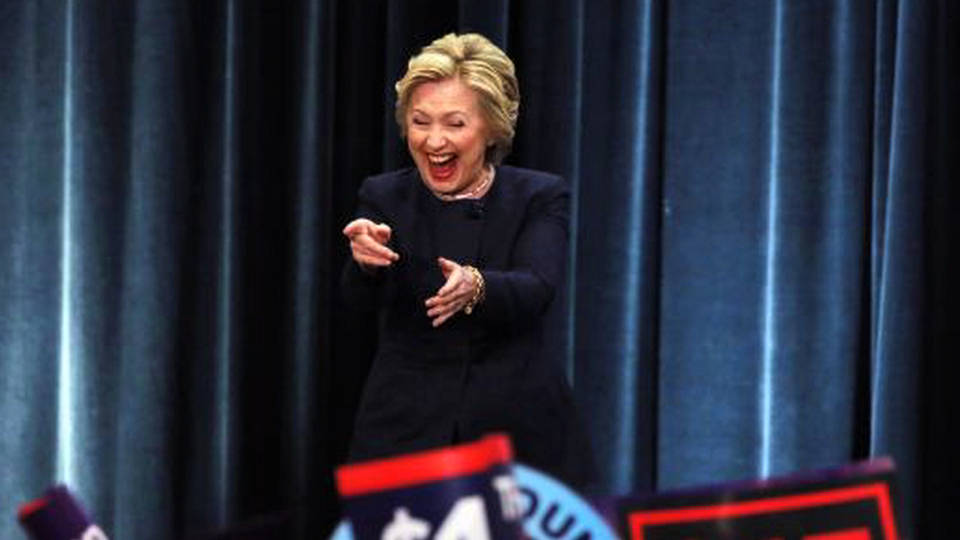
The race between Democratic candidates Bernie Sanders and Hillary Clinton is growing increasingly contentious ahead of the New York primary on April 19. During a rally in Pennsylvania Wednesday, Bernie Sanders responded to Hillary Clinton’s claims that he is not qualified to be president by saying that she is the one who is "not qualified."
Sen. Bernie Sanders: "Well, let me—let me just say in response to Secretary Clinton, I don’t believe that she is qualified if she is—if she is, through her super PAC, taking tens of millions of dollars in special interest funds. I don’t think that you are qualified if you get $15 million from Wall Street through your super PAC."
Also speaking in Pennsylvania on Wednesday, Hillary Clinton fired back at Sanders, saying his ideas are flawed because his numbers "don’t add up."
Hillary Clinton: "But Senator Sanders and I have some real differences about how we would go about achieving our goals as president. And like a lot of people, I am concerned that some of his ideas just won’t work, because the numbers don’t add up."
TOPICS:
Hillary Clinton
Bernie Sanders
2016 Election
Students Force Cruz to Cancel School Visit by Threatening Walkout
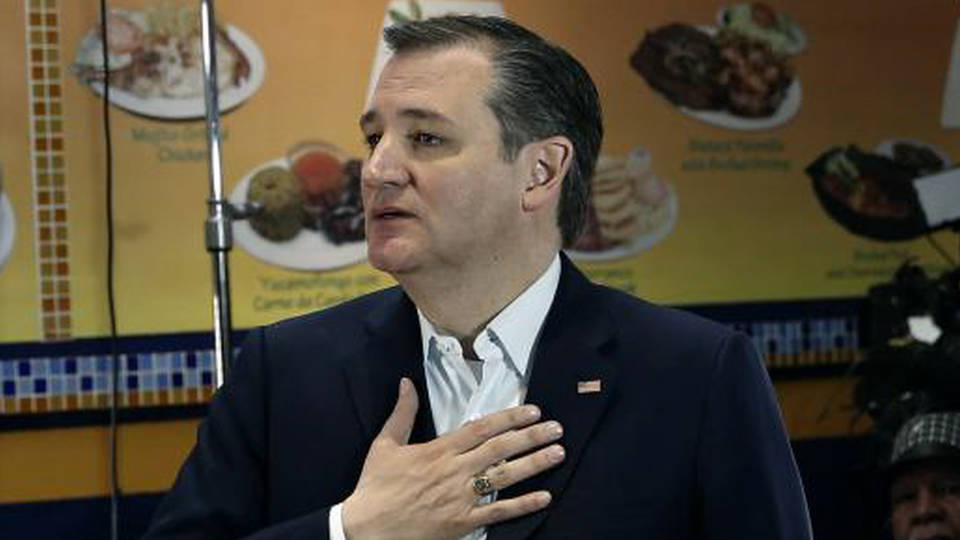
Meanwhile, Republican presidential candidates Ted Cruz and Donald Trump both faced opposition from New Yorkers Wednesday. Ted Cruz had planned to visit Bronx Lighthouse College Preparatory Academy, but his trip was canceled after the students threatened a walkout. In a letter written to the school principal, students wrote, "[Ted Cruz’s] views are against ours and are actively working to harm us, our community, and the people we love. ... He is misogynistic, homophobic, and racist." Instead of visiting the school, Ted Cruz met with voters in the Bronx, where he faced heckling by residents who yelled at Cruz, "This is an immigrant community!" Meanwhile, more than 200 protesters gathered at Donald Trump’s rally in Bethpage, Long Island, carrying signs reading "Dump Trump" and "Stand Against Racism." Sixteen-year-old protester Yusra Ahmed spoke out.
Yusra Ahmed: "Basically, I came here out as a Muslim, because I know he like plans to ban all Muslims, which doesn’t really make sense to me, because he, you know, associates all of us as like that one small group of extremists that actually go against our religion. Our religion is meant to spread peace and even means like 'peacemaker.' So it doesn’t really make sense when he says all of us are trying to cause trouble."
TOPICS:
Donald Trump
Ted Cruz
2016 Election
WI Congressman Says Voter ID Laws Will Help Republicans
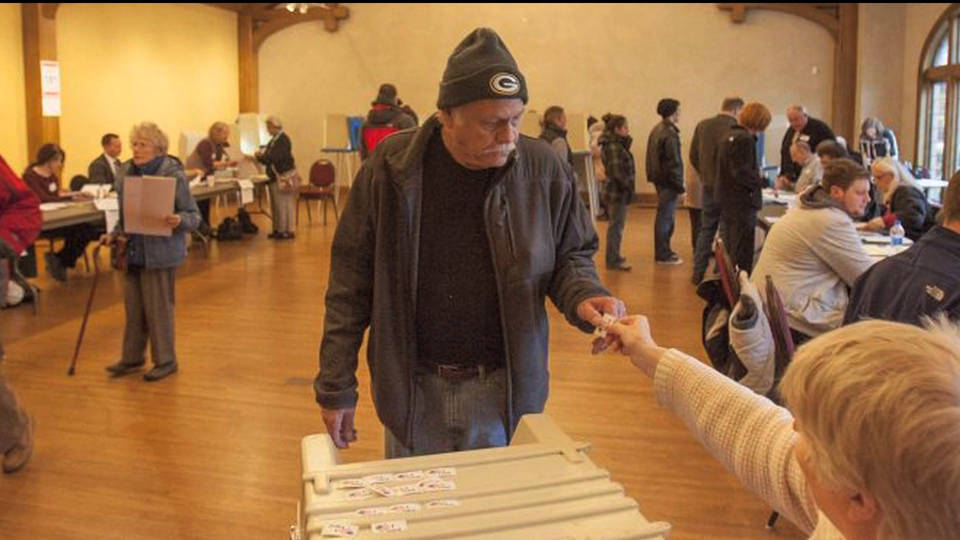
Wisconsin Congressmember Glenn Grothman has sparked controversy with his comments about Wisconsin’s controversial new voter ID laws, which prevented thousands of registered voters from casting ballots in this week’s primary. Speaking to NBC on Tuesday, Grothman admitted that he believed the state’s voter ID laws would give the Republican presidential candidate an advantage during the general election this fall.
Charles Benson: "Take this forward to November. You know that a lot of Republicans since 1984 in the presidential races have not been able to win in Wisconsin. Why would it be any different for a Ted Cruz or a Donald Trump?"
Rep. Glenn Grothman: "Well, I think Hillary Clinton is about the weakest candidate the Democrats have ever put up. And now we have photo ID, and I think photo ID is going to make a little bit of a difference, as well."
TOPICS:
Wisconsin
Voting
Iceland Names New Prime Minister in Wake of Panama Papers
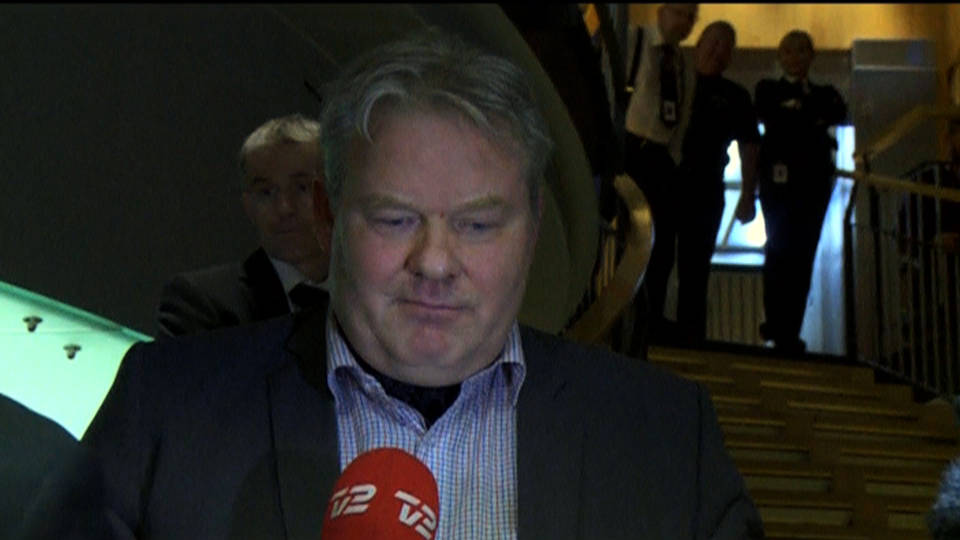
Iceland has named a new prime minister amid continued fallout from the revelations of the Panama Papers. Iceland’s former Prime Minister Sigmundur David Gunnlaugsson resigned Tuesday after the leaked documents from the Panama-based law firm Mossack Fonseca revealed he owned an offshore company with his wife, which he failed to declare when he entered Parliament. On Wednesday, Iceland’s coalition government announced Agriculture Minister Sigurdur Ingi Jóhannsson would take over as prime minister and that a general election would be held in the fall. Jóhannsson spoke out after the announcement.
Sigurdur Ingi Jóhannsson: "It’s a big burden in this situation. It’s not the most happy situation when I am taking the prime minister’s seat. But I will try to do my best, and I’m hoping that the people of Iceland will see that the new government will increase the stability both in politics and in the governance."
Reporter: "How would you describe the last three days?"
Sigurdur Ingi Jóhannsson: "They have been dramatic."
TOPICS:
Tax Havens
Chinese Leaders, David Cameron's Father Implicated in Panama Papers
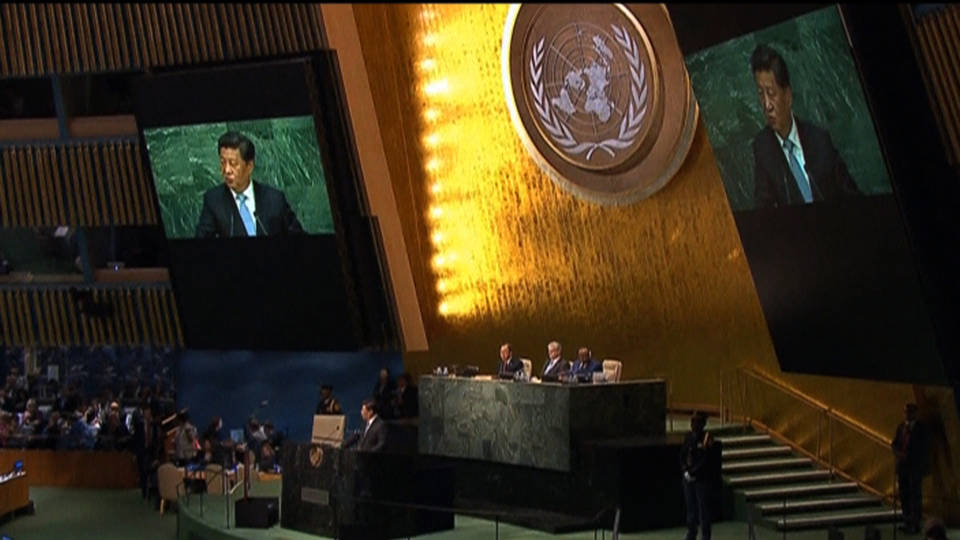
In more developments on the Panama Papers, new articles by the International Consortium of Investigative Journalists have revealed three of the most powerful people within the Chinese government, including President Xi Jinping, have relatives with offshore companies set up through the law firm Mossack Fonseca. This comes as British Prime Minister David Cameron and his family are facing increasing questioning over the revelations that David’s father, Ian Cameron, sought detailed advice on the best tax havens to use—even after his son became the leader of the Conservative Party.
TOPICS:
China
Britain
Tennessee House Passes Anti-LGBT Legislation
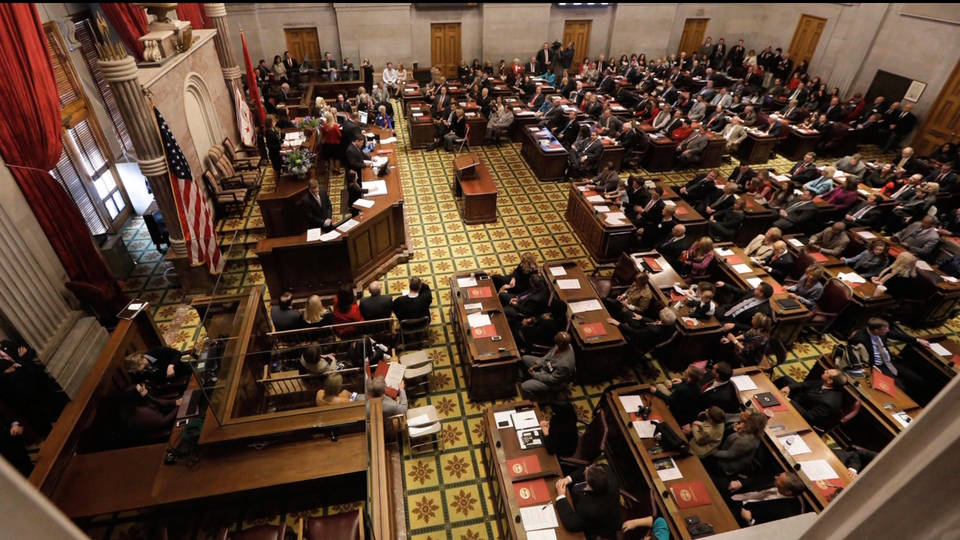
The Tennessee House has passed legislation allowing mental health counselors to refuse service to LGBT patients on religious grounds, making Tennessee the latest state to pass anti-LGBT measures this year. This comes as the governors of New York, Washington, Vermont and Minnesota have all banned state officials from making non-essential trips to Mississippi, as part of the growing backlash against Mississippi’s sweeping new anti-LGBT law. New York has also banned all non-essential travel to North Carolina, in response to its passage of its anti-LGBT law, known as the bathroom bill.
TOPICS:
LGBT
West Virginian Coal Baron Don Blankenship Sentenced to Prison
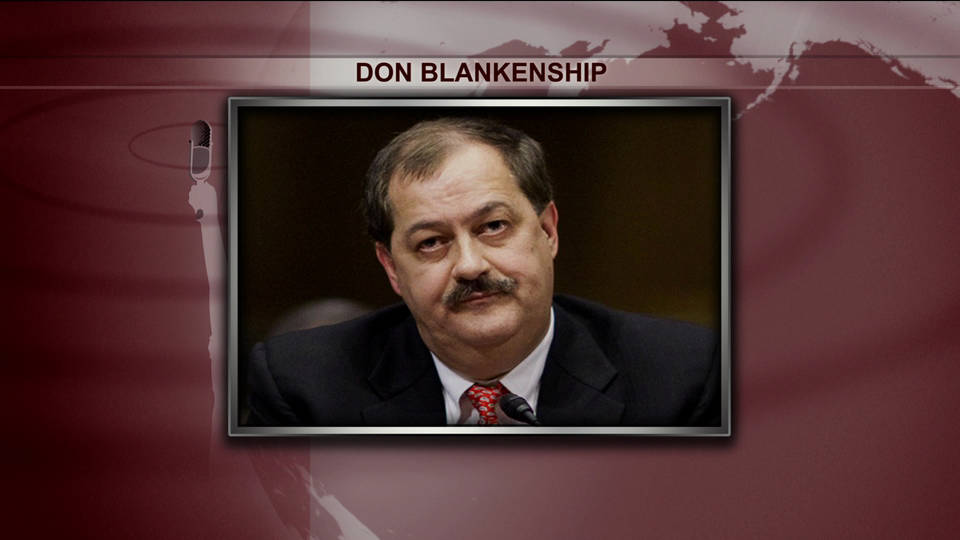
In West Virginia, former coal company CEO Don Blankenship has been sentenced to a year in prison for conspiring to violate federal mine safety laws in the years leading up to the 2010 explosion at a Massey Energy coal mine that killed 29 workers. It was the worst coal disaster in the United States in 40 years. The year-long sentence is the maximum allowed for the conspiracy charge. Last year, Blankenship was acquitted of the more serious charges of lying to regulators and investors.
TOPICS:
Coal
3 Volkswagen Dealerships Sue Auto Giant for Defrauding Retailers

Meanwhile, in Illinois, three Volkswagen dealerships have sued the auto giant, accusing Volkswagen of defrauding retailers by installing devices in its vehicles to skirt U.S. emissions regulations. U.S. regulators say Volkswagen vehicles were emitting up to 40 times more pollution than U.S. standards allow. Volkswagen has admitted to rigging some 11 million vehicles worldwide.
TOPICS:
Environment
Corporate Power
Bangladeshi Atheist Blogger and Activist Killed
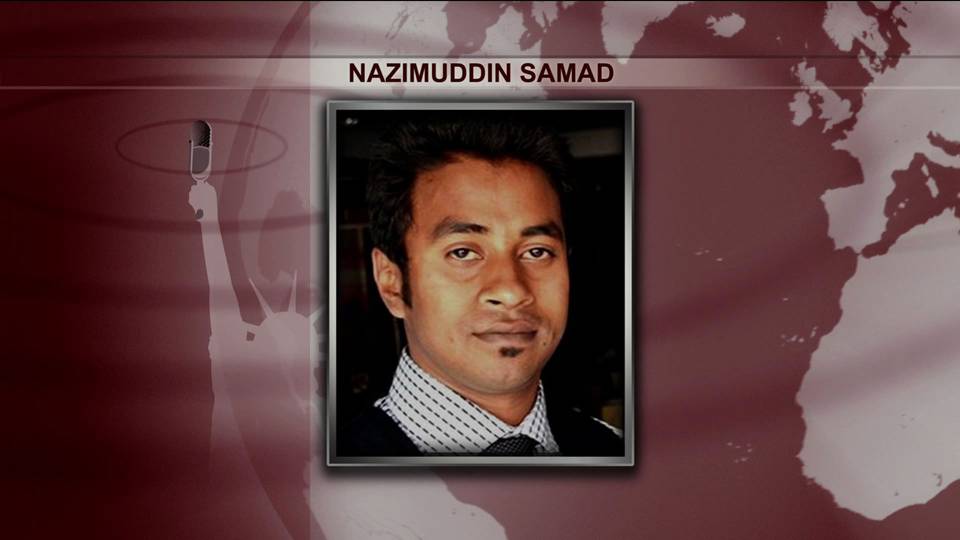
A Bangladeshi blogger and law student has been killed in the latest in a string of murders of secular activists and bloggers in Bangladesh. Police say 28-year-old Nazimuddin Samad was attacked by four men wielding machetes on Wednesday night. Fellow university students protested his killing. Student Billal Hossain spoke out.
Billal Hossain: "We are protesting here because one of our law students at the university was brutally killed. We want a proper investigation, and we want justice for the killing."
TOPICS:
Bangladesh
Journalism
Puerto Rico Gov. Signs Bill Authorizing Halt of Debt Payments

In Puerto Rico, Governor Alejandro García Padilla has signed an emergency bill authorizing the suspension of payments on $72 billion in public debt. The move sets up a dramatic showdown between Puerto Rico and hedge funds amid the island’s historic debt crisis. To see our recent coverage of Puerto Rico’s debt crisis with Democracy Now! co-host Juan González, go to democracynow.org.
TOPICS:
Puerto Rico
Debt
DOJ Agents Raid Home of Anti-Choice Activist David Daleiden
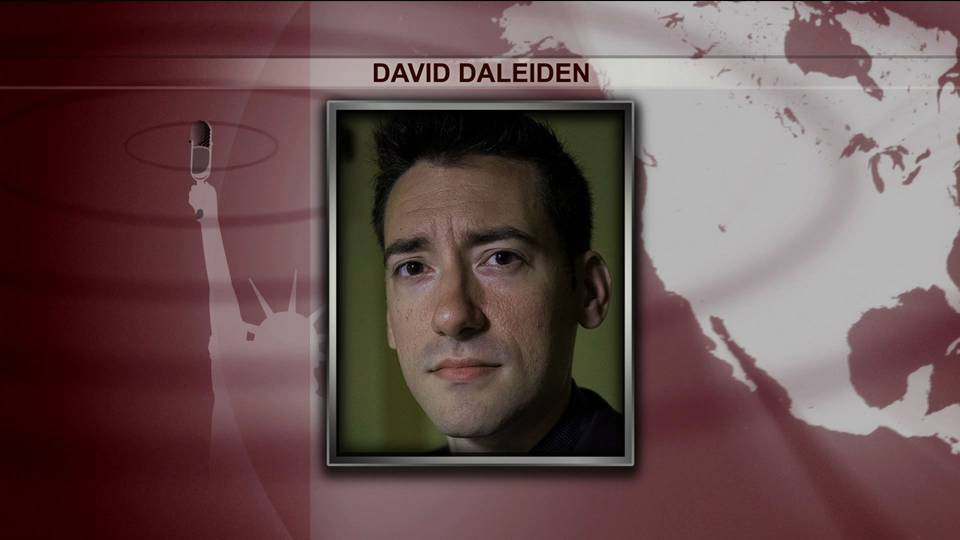
In California, agents from the Justice Department raided the home of anti-choice activist David Daleiden, seizing computers and hundreds of hours of video footage. Daleiden is under criminal investigation in Texas for secretly filming and releasing heavily edited videos that falsely accuse Planned Parenthood of profiting off donations of fetal tissue.
TOPICS:
Abortion
Ohio State University Occupy Campus Building
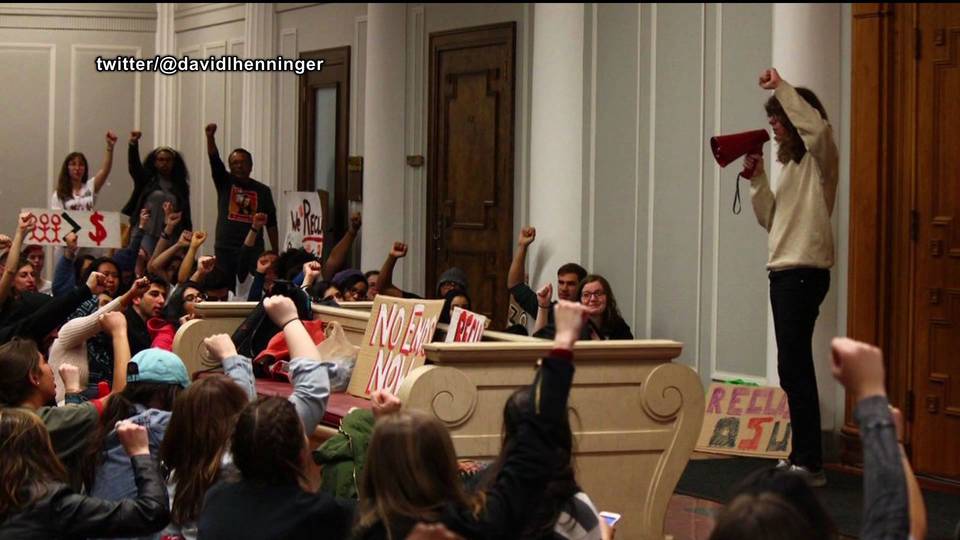
Students at Ohio State University occupied the campus building Bricker Hall Wednesday to demand the university divest from the corporations Caterpillar, Hewlett-Packard and G4S over the companies’ business in the Israeli-occupied Palestinian territories. The students also demanded more transparency in the university’s finances.
TOPICS:
Student Protests
HRW: Deadly Saudi-Led Airstrikes on Market Used U.S.-Supplied Bombs
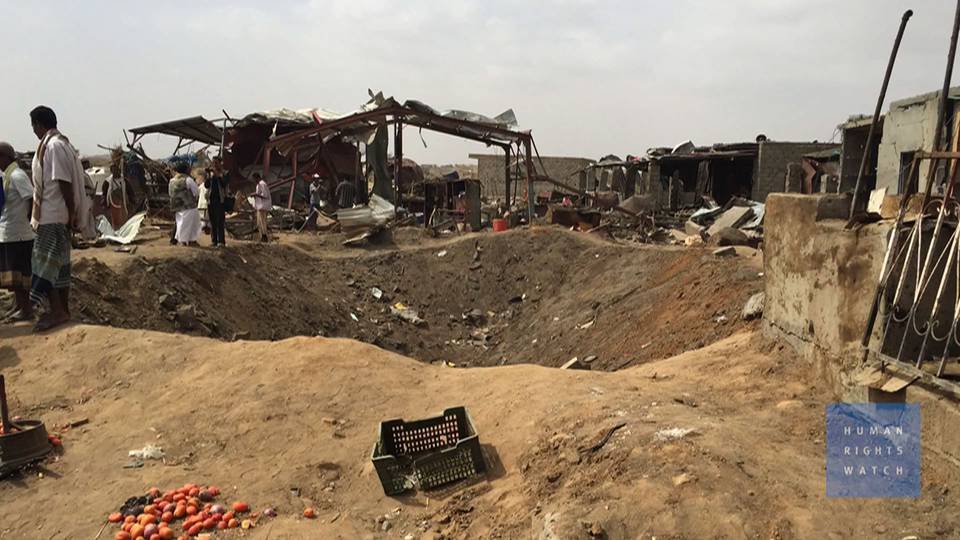
And Human Rights Watch is reiterating its call for the United States to stop selling weapons to Saudi Arabia, after Human Rights Watch says it found evidence the Saudi-led coalition used U.S.-supplied bombs in the deadly airstrikes on a crowded market in Yemen last month. The strikes killed at least 97 civilians, including 25 children. Medical clinic worker Othman Saleh spoke out about the aftermath of the attack.
Othman Saleh: "We received 44 wounded in total, including women, children and elders. Of those 44, two people died. Three others were in critical condition. They had to be taken to the ICU."
TOPICS:
Yemen
Donate today:
Follow:


SPEAKING EVENTS

4/8 Columbus, OH
4/9 St. Louis, MO
4/9 Columbia, MO
4/9 Kansas City, MO
4/10 Los Angeles, CA
4/10 Santa Barbara, CA
4/11 San Francisco, CA
4/12 Palo Alto, CA
4/12 Santa Clara, CA
4/13 Santa Cruz, CA
4/14 Claremont, CA
4/14 Los Angeles, CA
more
NEW BOOK


Panama Papers: Could Pirate Party Co-Founder Birgitta Jónsdóttir Become Iceland's Next PM?
WORK WITH DN!


"Stand Your Ground, Unless You're a Battered Woman" by Amy Goodman & Denis Moynihan
When victims defend themselves, they put themselves at risk of becoming doubly victimized—first by their abusers, then by the criminal justice system.
Cherelle Baldwin is lucky to be alive. She was repeatedly abused by her ex-partner. She was attacked by him in her own home and defended herself, for which she went to prison. Domestic violence, also referred to as intimate partner violence, afflicts millions of people annually, mostly, but not exclusively, women. When victims defend themselves, they put themselves at risk of becoming doubly victimized: first by their abuser, then at the hands of the criminal-justice system. Women of color are particularly vulnerable, as Cherelle Baldwin’s case so starkly demonstrates.
Cherelle Baldwin met Jeffrey Brown in Connecticut in 2010, when she was 19 years old. Before long they had a baby boy together. Brown became abusive, and by 2013 the couple had split up. After that, according to court documents, Brown repeatedly threatened her, took her credit cards and money, and assaulted her during visits to see their son. She eventually got a court order barring threats, harassment and assaults during visits, but Brown continued sending threatening texts. On May 18, 2013, he sent over a dozen threats via text, two of which read “DOA on sight” (sic), indicating she would be Dead On Arrival. His car was parked down the street.
Cherelle was awakened to find Brown in her room. He beat her, and strangled and whipped her with a belt. She fled the house in her nightgown, without her shoes or her glasses. She raced into her car. “She crashed her car into a cement wall,” her defense attorney, Miles Gerety, told us on the “Democracy Now!” news hour. “She wakes up next to the car, not really knowing what had happened, because she had retrograde amnesia.” What happened next is unclear. Baldwin suffered a broken leg in the crash. Police found Jeffrey Brown pinned between the car and the wall, dead. According to Gerety, he still had the belt that he had used to beat Baldwin wrapped around his hand.
Despite her injuries, despite the order of protection, despite the slew of threatening text messages from Brown against her, Cherelle Baldwin was charged with first-degree murder and remanded to Connecticut’s maximum-security prison, with bail set at $1 million. After a six-week trial, 11 of the 12 jurors voted to acquit. One juror held out, so the judge declared a mistrial. The prosecutor sought a second trial, insisting on maintaining the impossibly high bail. Baldwin remained behind bars.
Last week, at her second trial, Baldwin was acquitted of all charges. Yet she had spent close to three years in prison—her only crime being the inability to meet bail. The U.S. Department of Justice sent a letter to courts in March about the problem of jailing poor people who can’t pay fines or meet bail. It read, in part, “Bail that is set without regard to defendants’ financial capacity can result in the incarceration of individuals not because they pose a threat to public safety or a flight risk, but rather because they cannot afford the assigned bail amount.”
Baldwin’s case parallels another that got far more media attention. In August 2010 in Florida, Marissa Alexander, also an African-American and a mother of three, defended herself against her abusive estranged husband. When he threatened her in her own home, she fired her licensed pistol into the ceiling as a warning. He fled, called the police, and she was arrested. She was charged with aggravated assault, convicted and sentenced to 20 years in prison.
Marissa Alexander tried to use Florida’s “stand your ground” law in her defense. The prosecutor, Angela Corey, also prosecuted white vigilante George Zimmerman for the killing of 17-year-old Trayvon Martin in Sanford, Florida. Zimmerman succeeded in using the stand your ground defense. Alexander did not. Ohio State University law professor Michelle Alexander compared the cases of Marissa Alexander and George Zimmerman on “Democracy Now!,” calling Marissa’s case a “stark example of the discriminatory application of the stand your ground law itself. Here is a woman firing shots in the air to protect herself from what she believed is an abusive spouse, and she winds up getting 20 years, while George Zimmerman is released scot-free after pursuing someone based on racial stereotypes and assumptions of criminality.”
Marissa Alexander eventually won an appeal, but, facing the potential of 60 years behind bars in a retrial, accepted a plea bargain for time served plus two years of house arrest. She is in her second year of that now.
Back in Connecticut, Cherelle Baldwin is slowly but surely trying to put her life back together with her 4-year-old son. Cherelle and Marissa are just two of the 12.7 million people in the U.S. who are physically abused, raped or stalked by their partners annually. This national crisis, and related issues of mass incarceration and racial discrimination in the criminal-justice system, deserves a full public hearing, especially during this presidential election year.
207 West 25th Street, 11th Floor
New York, New York 10001, United States
----------------------
----------------------

No comments:
Post a Comment