democracynow.org
Stories:

#StopTrump Protesters Lock Themselves to Ladders to Block Traffic Outside Trump Rally in Washington
On Saturday, presumptive Republican presidential nominee Donald Trump made his first campaign visit to Washington state, where he addressed thousands of supporters in Spokane and later in Lynden. He decried the loss of manufacturing jobs, and vowed to win Washington state in November. He also warned of the threat posed by Syrian refugees. Meanwhile, outside the rally, dozens of #StopTrump activists blockaded a highway in Lynden as Trump held a rally in the rural community near the Canadian border. Three activists were arrested after they used chains and PVC pipe "lockboxes" to form a human chain across two lanes of traffic. They said their action was a protest against what they described as a campaign rooted in fear and hatred. The protest held up traffic for more than a half-hour, delaying many Trump supporters. Democracy Now! was at the protest.
TRANSCRIPT
This is a rush transcript. Copy may not be in its final form.
AMY GOODMAN: We’re on the road in Portland, Oregon. On Saturday, presumptive Republican presidential nominee Donald Trump made his first campaign visit to Washington state, where he addressed thousands of supporters in Spokane and later in Lynden, on the Canadian border. He decried the loss of manufacturing jobs and vowed to win Washington state in November. He also warned of the threat posed by Syrian refugees.
DONALD TRUMP: We should build safe zones for Syrians. But we can’t bring them to Washington state. And you don’t even know where they’re going. You know, you saw what happened in Paris. You saw what happened at the World Trade Center. You saw what happened in California with the 14 people that they worked with—shot, killed, many people in the hospital, right now, many, many people in the hospital. These are people that nobody knows who they are, and they’re going to be in your community. You can’t do it.
AMY GOODMAN: Meanwhile, outside the rally, dozens of #StopTrump activists blockaded a highway in Lynden as Trump held a rally in the rural community near the Canadian border. Three activists were arrested after they used chains, PVC pipes and ladders to form a human chain across two lanes of traffic. They said their action was a protest against what they described as a campaign rooted in fear and hatred. The protest held up traffic for more than a half-hour, delaying many Trump supporters. Democracy Now!’s Laura Gottesdiener was there.
JOSEFINA MORA: When indigenous rights are under attack, what do we do?
PROTESTERS: Stand up, fight back!
JOSEFINA MORA: When indigenous rights are under attack, what do we do?
PROTESTERS: Stand up, fight back!
LAURA GOTTESDIENER: This is Democracy Now! We’re here in Lynden, Washington. We’re in the middle of a two-lane highway. And just about less than a mile that way, there’s a big Trump rally just about to start. But right here in the street, pretty much the main thoroughfare headed to the Trump rally, as we can see, there’s protesters locking themselves to each other and blocking the entire road. So right now we have three people who have locked themselves to each other; two of them are also locked to ladders. Traffic is entirely backed up, and some of the cars are parked sideways. So, why don’t we go see—see what they have to say?
THOMAS KAPLAN: Hi, my name is Thomas. I’m here to support folks that have been organizing here locally against fascism and Donald Trump. We’re in Lynden. This is a rural community near Bellingham, Washington. It’s the northwest corner of the United States.
DRIVER: Go back to Seattle!
THOMAS KAPLAN: It’s a community where white supremacy has been rampant since—since it’s been colonized. And we’re particularly drawing attention to Lynden, because here has been the center of Ku Klux Klan rallies and organizing for at least a hundred years, and right now it’s a hotbed for racism against farmworkers. We’re not going allow Donald Trump to come to our community and spread hate and try to encourage the detention or the terrorism towards people of color and undocumented persons.
JOSEFINA MORA: My name is Josefina Mora, and so right now I have my arms in two tubes, each side. And on my right, there is Nia. She is chained to a ladder. And on my left, there is Thomas, and he’s also chained to a ladder. So we’re blocking about 80 percent of the street, and so we also have a couple vans that are blocking the road for the cars that are stopped. So we’re getting pretty mixed reviews, I guess. Mostly negative. Not surprising for Lynden, Washington.
LYNNE COOK: My name is Lynne Cook. This is my husband Mike. My family, we’re from Bonney Lake, Washington, my husband and my daughter and her friend. We’ve come to the Trump rally. And this is what we find, and now we can’t get across. And it’s going on as we speak, and we’e over here stuck.
LAURA GOTTESDIENER: Some people have criticized—for example, over there, where people are blocking the route that you’re trying to take, they have been criticizing, you know, his solutions to the immigration issue, that he would deport 11 million undocumented immigrants. Do you—what are your thoughts on that?
LYNNE COOK: Well, you know, I haven’t—I don’t know what all his plan is. You know, I think he’s kind of going as he’s going along. He’s got these really super advisers and intelligent people, like himself. They’re going to help him solve some of these problems. But the way it’s going now is disastrous, and it’s just a matter of time before we have a Paris situation here, because our borders and the drugs and everything else are a mess. And they’re coming over faster now than ever, since they’ve heard Donald Trump is so—you know, there’s quite, I think, a lot of people getting behind him, Democrats included, because of his plan to stop that, because of what’s happened all around the world and then, recently, the Paris thing. So, I think that—you know, I think he’s going to—I don’t know why these people—I think they’re paid by probably the powers that be just to cause this, so we can’t support Donald Trump. I don’t think they—what is their substance?
PROTESTER: We are with the blockers! We are with the blockers! We are with the blockers! We are with the blockers!
LAURA GOTTESDIENER: So, you can see now there’s about a dozen, if not more, law enforcement officers. We’ve got state patrol, we’ve got county patrol. We’ve got people in slightly more heavily riot gear-type equipment. And they have removed—they are in the process of removing the chains from some of the protesters. It looks like they’re having trouble removing them from her neck, because she keeps saying "Ow."
PROTESTER: We love you guys! We love you so much!
LAURA GOTTESDIENER: One of the women’s arms being bent back right now.
TRUMP SUPPORTER: Some people have jobs. Some people have things to go do, right?
LAURA GOTTESDIENER: Yeah.
TRUMP SUPPORTER: Regardless of whether you vote for Trump or not, doesn’t matter.
LAURA GOTTESDIENER: Where are you headed right now?
TRUMP SUPPORTER: To the Trump rally. But that’s not the point.
LAURA GOTTESDIENER: Do you mind just introducing yourself?
TRUMP SUPPORTER: No.
LAURA GOTTESDIENER: OK.
TRUMP SUPPORTER: I’m a veteran. In my opinion, Bernie and Hillary do not care about veterans. That’s, you know, my personal opinion from what I’ve seen, what they’ve said. Trump cares about veterans. And Trump’s tax plan is a lot better than everyone else’s. Me personally, I don’t want to pay more taxes. Right? Especially for people who don’t have jobs. If you don’t have a job, you shouldn’t get free handouts. You shouldn’t get anything. You know, we don’t need you.
LAURA GOTTESDIENER: Obviously, they’re protesting right now saying that they’re against, you know, Donald Trump’s plan for deporting 11 million undocumented immigrants. They’ve also said that the total ban on Muslims entering this country wouldn’t be helpful. You know, what are—what are your responses to some of that criticism?
TRUMP SUPPORTER: You know, Theodore Roosevelt said that if you want to come into the country, that’s fine, but you have to come in to be an American. You know, it’s a melting pot. You can’t come in and be Mexican or be, you know, Pakistani or anything like that. I don’t care where you’re from. If you come into America, you’re coming to be an American. Like everyone else, you need to contribute to society. So, if you come in and you want to, say, you know, fly the Mexican flag, then go back to Mexico.
MARU MORA VILLALPANDO: My name is Maru Mora Villalpando, and I’m with Mi Gente and Not1More, Community to Community, Latino Advocacy and many organizations based here in Whatcom County.
LAURA GOTTESDIENER: It’s pretty much secured now that he’s going to be the Republican nominee. What do you think that says also about the country at large?
MARU MORA VILLALPANDO: I think the country is at a standpoint. We now see that the Republican Party has been this way for a really long time. It’s now that they’re actually saying it, they are bold about it, they don’t care anymore. And it tells us that there’s also a big fraction of people in the United States that want to stand for that. And that’s why this is not the first action against Donald Trump. It won’t be the last.
LAURA GOTTESDIENER: So, and passing us now is one of the cars leaving the Trump rally. It has a very big Confederate flag displayed on top of it.
PROTESTERS: This will be hate-free land! This will be hate-free land!
AMY GOODMAN: Democracy Now!'s Laura Gottesdiener and John Hamilton at a blockade in Lynden, Washington, by the Canadian border, just down the street from where Donald Trump was speaking. This weekend was Trump's first campaign trip to Washington state. When we come back, another protest here in the Northwest. This is Democracy Now! We’ll be back in a minute.
... Read More →

Driscoll's Workers Call for Global Boycott over Alleged Abuses at World's Biggest Berry Distributor
Saturday marked an international day of action to boycott Driscoll’s—the largest berry distributor in the world. About an hour north of Seattle in Burlington, Washington, berry pickers have been organizing for three years at Sakuma Brothers Farms, one of the farms where Driscoll’s buys berries. Since 2013, some workers launched a series of walkouts, picket lines and lawsuits over alleged labor violations. In 2015, one of their lawsuits went all the way up to the Washington Supreme Court, where they won a unanimous decision that set a precedent ensuring paid rest breaks statewide. That same year, massive protests broke out at Driscoll’s farms down in San Quintín Valley in Mexico. Since then, Driscoll’s farmworkers have been organizing together on both sides of the border. Democracy Now!’s Laura Gottesdiener spoke to protesting farmworkers in Washington state and went inside the former camps where some of the workers lived. She also spoke to Sakuma Brothers Farms CEO Danny Weeden.
TRANSCRIPT
This is a rush transcript. Copy may not be in its final form.
AMY GOODMAN: We’re broadcasting from Portland, Oregon. I’m Amy Goodman, as we turn to another protest that happened here in the Northwest on Saturday. This was farmworkers leading an international day of action calling for a boycott at Driscoll’s, the largest berry distributor in the world. About an hour north of Seattle, in Burlington, Washington, berry pickers have been organizing for three years at Sakuma Brothers Farms, one of the farms where Driscoll’s buys its berries. Since 2013, some workers have launched a series of walkouts, picket lines and lawsuits over alleged labor violations. In [ 2014 ], one of their lawsuits went all the way to the Washington Supreme Court, where they won a unanimous decision [in 2015] that set a precedent ensuring paid rest breaks statewide. That same year, massive protests broke out at Driscoll’s farms down in San Quintín Valley in Mexico. Since then, Driscoll’s farmworkers have been organizing together on both sides of the border. Democracy Now!’s Laura Gottesdiener caught up with some of the farmworkers at a Costco not far from the Sakuma fields.
RAMÓN TORRES: ¡Se puede!
PROTESTERS: ¡Sí se puede!
RAMÓN TORRES: ¡Se puede!
PROTESTERS: ¡Sí se puede!
RAMÓN TORRES: Boycott!
PROTESTERS: Driscoll’s!
RAMÓN TORRES: Boycott!
PROTESTERS: Driscoll’s!
LAURA GOTTESDIENER: This is Democracy Now! We’re here in Burlington, Washington, where, behind us, almost a hundred people have gathered, and people are marching on Costco to demand that they drop Driscoll’s products from their shelves. It looks like people are just about to march. And just behind us, you can see almost a dozen workers who work at Sakuma farms, which is one of the farms that Driscoll’s sources its berries from here in Washington state.
PROTESTERS: Boycott Driscoll’s! Boycott Driscoll’s! Boycott Driscoll’s!
LAURA GOTTESDIENER: The march is led by Ramón Torres, a former berry picker at Sakuma Brothers Farms. He’s the president of Familias Unidas por la Justicia, Families United for Justice.
RAMÓN TORRES: [translated] We have 41 committees, so in addition to this action, we’re going to have about 40 other picket lines today. It’s an international day of actions, so we’re going to have actions in Mexico also. The demand is that they sign a union contract with us and that they give us good conditions for housing and work, better salaries, medical plans, pensions, and that they remove our children from the fields. We don’t want our children working in agriculture, picking fruit and vegetables for this country, until they are at least 16 years old. That’s what we want.
GALEN HERZ: My name’s Galen. And I’m here to support the boycott of Driscoll’s berries and support the farmworker union, Familias Unidas.
MAGGIE SULLIVAN: My name’s Maggie Sullivan. I live here. I’m a Costco member. I’m a Costco stockholder. Those guys treat their employees really well. They have a lot of integrity. I think that they can do the same with the people who pick their food.
PROTESTERS: Wage theft is not OK!
FELIMON PINEDA: [translated] I am Felimon Pineda, and the people elected me as the vice president of Families United for Justice. In 2013, we decided to go on strike, because they stole from us. They stole our wages. They cheated us on the pounds of berries. They mistreated us. They required us to work in the rain. They threatened us. They intimidated us. And we were opposed to all of this. So, for these reasons, the people decided to stand up rather than stay on their knees.
LAURA GOTTESDIENER: In recent years, farmworkers have been organizing against Driscoll’s not only in Washington state, but also in San Quintín, in Mexico, where Driscoll’s and other major companies source berries and vegetables. In 2015, some 30,000 farmworkers in San Quintín Valley went on strike to demand better pay and conditions.
PROTESTERS: Boycott Driscoll’s! Boycott Driscoll’s! Boycott Driscoll’s!
LAURA GOTTESDIENER: On Saturday, during the international day of action, Gloria Gracida, a representative of the San Quintín farmworkers, spoke out at a protest at a Whole Foods Market in San Diego, California.
GLORIA GRACIDA: [translated] I am here at Whole Foods in San Diego with people who are supporting the international boycott against Driscoll’s, because Driscoll’s is exploiting its workers in San Quintín, Mexico, and also in Washington state. We’re asking for your support, because workers there in Mexico are earning between $6 and $7 for 12 to 15 hours of work.
PROTESTERS: Costco, remove the berries! Stop the exploitation!
LAURA GOTTESDIENER: Back outside the Costco in Washington state, Felimon explained he and his Sakuma co-workers have been coordinating with the farmworkers in Mexico.
FELIMON PINEDA: [translated] We are the same workers. We’re the same people from Oaxaca. And so, finally, we reached an agreement to work together on the boycott. We’re in charge of the boycott throughout the United States. And San Quintín will run the boycott in Mexico and in other countries, as well.
LAURA GOTTESDIENER: On Saturday, Felimon, Ramón and other farmworkers took me to one of the labor camps where, in 2013, workers walked out over the pay and the housing conditions.
RAMÓN TORRES: [translated] Here we are in the fields in the red camp, which Sakuma leased on a yearly basis for the workers.
LAURA GOTTESDIENER: So here’s one of the cabins, the housing units. It hasn’t been in use for about three years, but you can still get a pretty good sense of some of the conditions here. We see bunk beds with rusted bed frames, a wooden roof. You can see some of the nails exposed and some gaps in the roof. The walls are wood. There’s no insulation. Now—you know, now there are some holes in the exterior of the walls. We don’t know if they were there in 2013 or not, but certainly there’s no insulation on either any of the internal, you know, or external walls. In fact, this wall is really just a piece of plywood. Other workers say they’ve been denied housing altogether. This is Margarita Sánchez. She’s speaking in Mixteco, one of the indigenous languages of Mexico.
MARGARITA SÁNCHEZ: [translated] I went to ask for a cabin, but they didn’t want to give me one because I’m a woman and I have children. They said they want workers, not children. I’d been working for Sakuma since 2002 picking blueberries. There wasn’t a scale in the fields, and so I just tried to weigh the berries in my bag. But when I went to deliver the fruit, sometimes my bag had extra blueberries, two or three pounds more. But they wouldn’t pay us for the extra pounds. They just took them.
LAURA GOTTESDIENER: In 2014, Sakuma settled a lawsuit alleging it had stolen wages and denied worker breaks. Sakuma did not admit any guilt, but paid out $850,000. Margarita’s fellow worker José Ramírez said the wages are what inspired him to start organizing.
JOSÉ RAMÍREZ: [translated] The first day we arrived to pick the blueberries, they paid us 25 cents a pound. And that day, we arrived and worked and picked for about eight hours, more or less, maybe eight-and-a-half. And many people earned $40, or even $30, all day, because the blueberries weren’t ripe and there wasn’t a lot of fruit. We arrived the next day and began to ask them to pay us five cents more, so it would be 30 a pound. And they didn’t want to pay.
RICHARD BRIM: Do you want to sit up front with Danny, and John and I will sit in the back?
LAURA GOTTESDIENER: I also spoke with Sakuma CEO Danny Weeden and with vice president of Washington operations, Richard Brim. They said Sakuma no longer leases Campo Rojo, where we were earlier this day, and that Sakuma workers are all well paid. They took us on a tour of the fields.
DANNY WEEDEN: I’m Danny Weeden, and I am the president and CEO of Sakuma Brother Farms. And right now we’re standing in front of one of our organic blueberry fields. Nothing happens around here without people. I mean, you know, life is about people. Families are about people. And I kind of see this as like a family. That family housing is right next to our offices. And, you know, I want to create that family environment, not only with our harvest workers, with all of our workers.
RICHARD BRIM: I’m Rich Brim, vice president of Washington operations for Sakuma Brothers Farms in Burlington, Washington.
LAURA GOTTESDIENER: And where are we right now?
RICHARD BRIM: Right now we’re in the temporary working—temporary worker housing complex at the main office. These units are all insulated. And, of course, they have cooking facilities and running water. There are, in fact, four bunks, but only three mattresses. Because of the requirement for space, there are only three mattresses. This room can only have three occupants.
LAURA GOTTESDIENER: CEO Danny Weeden, do you have a sense—I know that some of the workers have called for a $15 minimum wage. Is that on the table for the upcoming growing season?
DANNY WEEDEN: No. And—but I can tell you, is that the average harvest workers in blueberries and blackberries last season made more than $15 an hour, the average. And many made over $20 an hour. And so—but it’s a productivity-based system. And then it creates the opportunity, though, for the younger, the new workers to learn that scale and get up to those high-wage earning levels.
LAURA GOTTESDIENER: Do you guys have an age limit on either side for your workers?
DANNY WEEDEN: We do. So we have a—15 years is the minimum. And the reason we offer 15 years and older is that it’s because the workers, when they come in with their families, if they have a 15- or 16- or 17-year-old, they would like them to be out in the field working with them.
LAURA GOTTESDIENER: But some workers said Sakuma hasn’t had a minimum age requirement and that the housing, even outside Campo Rojo, hasn’t been quite so good. I caught up with 16-year-old Alfredo Juárez and his 10-year-old brother Álvaro at a nearby park. I asked Alfredo how old he was when he first started picking for Sakuma.
ALFREDO JUÁREZ: I was 13.
LAURA GOTTESDIENER: How old are you now?
ALFREDO JUÁREZ: I’m 16 right now.
LAURA GOTTESDIENER: And are you in high school?
ALFREDO JUÁREZ: Yeah, I’m a junior at Burlington.
LAURA GOTTESDIENER: And how many years have you been working for Sakuma?
ALFREDO JUÁREZ: Four. It’s going to be four, yeah. And one of the challenges that comes during the summer was that sometimes I have to like leave school early. I don’t get to finish school. I remember that one day—I think it was a Sunday—where we were picking strawberries, it was raining, and it was like super cold, like the wind and stuff like that. And I was kind of feeling a little sick. It was like around 12:00. And I wanted to go home, so I asked my mom. And then she said, if I’m like not feeling well, we should go home. And then my mom told the supervisor. But the supervisor said like, "If you guys don’t get back to work, your whole—you guys all will get fired, and then you guys will find someplace to live." Like just like right away, like at the same day, you get fired and then you have to find a place to stay.
LAURA GOTTESDIENER: Because you were living in the camp.
ALFREDO JUÁREZ: Yeah.
LAURA GOTTESDIENER: And what was the camp like?
ALFREDO JUÁREZ: You know, it was terrible, because like you only have two beds. Like, they were connected, like back to back on each other. And it was like, their stuff, they don’t have any new stuff or anything. Like they have the same bed for like five, six years, or maybe older. Some of them have some hole in this, and some like little bed bugs and stuff like that. And then like the roof, when it rains, sometimes like water gets in. So it was pretty cold.
LAURA GOTTESDIENER: What was it like—were you there also? What was it like for you?
ÁLVARO JUÁREZ: It was pretty cold. And when it was really hot inside, there used to be like water driplets dripping on our heads when we were trying to sleep in the night.
LAURA GOTTESDIENER: Alfredo said he and his family have been with Familias Unidas since the 2013 walkout, and that he’s been at protests ever since. But when he’s not protesting, he’s at home singing.
ALFREDO JUÁREZ: I like to sing, and then act. And, well, right now I’m learning how to play guitar. I’ve been practicing for like a month now. My career is—I want to still be part of Familias Unidas. And for my career, I want it to be like acting and singing. So hopefully that goes well and that works out.
LAURA GOTTESDIENER: Do you think you’re going to pick this summer?
ALFREDO JUÁREZ: I know I’m going to pick this summer. It’s like the only way I can get a job, so—and it’s the only way I can like help my family. So, yeah, I’ll be picking this summer, too, with them.
LAURA GOTTESDIENER: For Democracy Now!, I’m Laura Gottesdiener in Burlington, Washington.
AMY GOODMAN: Democracy Now! also called Driscoll’s and asked its executive vice president of the Americas, Soren Bjorn, about the farmworkers’ call for a Driscoll’s boycott. He said, quote, "We feel it’s really unfortunate, because some of the allegations are simply not true." Bjorn said Driscoll’s was not considering dropping Sakuma Brothers as one of its growers, saying, quote, "Since 2013, when these issues got resolved, Sakuma has done nothing but to improve their operations every single year." The Driscoll’s executive vice president, Soren Bjorn, also called on the state of Washington to strengthen its worker protections, saying, quote, "From international standards, this is really weak child labor law," unquote. While Washington state allows children as young as 12 years old to work on farms, Driscoll’s says it’s recently revised its own standards, saying workers on the farms it buys from must now be 15 years old. Special thanks to Democracy Now!’s Laura Gottesdiener and John Hamilton for this report.
This is Democracy Now! When we come back, a report on Father Dan Berrigan’s funeral. Stay with us.
[break]
AMY GOODMAN: La Santa Cecilia, performing in the Democracy Now! studios their rendition of The Beatles’ "Strawberry Fields Forever," a tribute to migrant workers. To see their full performance, go to democracynow.org. Yes, this is Democracy Now!, democracynow.org, The War and Peace Report. ... Read More →

"One of the Great Revolutionaries": Daniel Berrigan Remembered as Hundreds Gather for Funeral
More than 800 people packed into the Church of St. Francis Xavier in New York Friday for the funeral of Daniel Berrigan, the legendary antiwar priest, poet and activist. He died on April 30 at the age of 94. Today would have been his 95th birthday. Dan and his brother, the late Phil Berrigan, made international headlines in 1968 when they and seven other Catholic antiwar activists burned draft cards in Catonsville, Maryland, to protest the Vietnam War. Prior to the funeral, hundreds took part in a two-hour procession beginning at Mary House, a Catholic Worker house in the East Village. Democracy Now!’s Mike Burke was there and spoke to participants including singer Dar Williams, the Rev. John Dear, Dan’s niece Frida Berrigan, Kathy Kelly and John Schuchardt, who was arrested with Dan in 1980 when they broke into the GE nuclear missile plant in King of Prussia, Pennsylvania, launching the Plowshares Movement.
TRANSCRIPT
This is a rush transcript. Copy may not be in its final form.
AMY GOODMAN: We’re broadcasting from Portland, Oregon. More than 800 people, though, packed into the Church of St. Francis Xavier in New York Friday for the funeral of Dan Berrigan, the legendary antiwar priest, poet and activist. He died April 30th at the age of 94. Dan and his brother, the late Phil Berrigan, made international headlines in 1968 when they and six other Catholic antiwar activists burned draft cards in Catonsville, Maryland, to protest the Vietnam War. Prior to the funeral, hundreds took part in a two-hour procession beginning at Mary House, a Catholic Worker house in the East Village in New York. Democracy Now!’s Mike Burke was there and spoke to participants.
ANNA BROWN: I believe we’re going to start our march now, and so I would think that we would want to create some space here, maybe walk together arm in arm, linked, again, with great energy, with chanting, with song, because this is a celebration of Dan’s life and of life itself.
PROCESSIONISTS: [singing] Ain’t gonna study war no more,
Ain’t gonna study war no more,
Ain’t gonna study war no more.
MIKE BURKE: Can you begin by telling us your name and why you’re here today?
DAR WILLIAMS: I’m Dar Williams. And I’m here because I wrote a song that had to do with the Catonsville Nine, and then everything changed. As soon as I wrote that song, I met all of the people who were part of that song. And here I am, you know, 15 years later.
MIKE BURKE: Do you think you could sing a verse of that song right now?
DAR WILLIAMS: Sure. It goes:
[singing] God of the poor man this is how the day began
Eight co-defendants, I, Daniel Berrigan
And only a layman’s batch of napalm
We pulled the draft files out
We burned them in the parking lot
Better the files than the bodies of children
I had no right but for the love of you
I had no right but for the love of you
So it’s like a prayer, saying to God, you know, "They tell me I had no right to do this, and I had no right to do this but for the love of God."
REV. JOHN DEAR: I’m John Dear, and walking here along the streets of Manhattan to remember Daniel Berrigan. We’re just passing the Catholic Worker house where Dorothy Day lived and worked, Dan’s great friend, who’s going to soon be canonized. And I’m here with all our friends on the way to the funeral to commemorate Dan, one of the greatest peacemakers of our times, my great friend, who called us to take to the streets and to say no to war and injustice and nuclear weapons, and to put nonviolence into action.
MIKE BURKE: And how did Father Berrigan influence both the peace movement as well as the Catholic Church?
REV. JOHN DEAR: Daniel Berrigan inspired millions upon millions of people after the Catonsville Nine action to—the symbolic act of the Catonsville Nine, especially him, but he and his brother as priests. This has never happened before, and it was so shocking. But it led to millions of people taking to the streets and inspired the peace movement. And you could argue—there were 300 draft board raids—it helped end the draft and helped end the war.
But then he changed, in the process, the church, Catholic Church in the United States—actually all the Christian churches—and the church around the world. We never had a priest so publicly actively against war. Now it’s normal. And a priest going to jail and prison for peace, now that happens all the time. But he broke the new ground and, in effect, helped get rid of the "just war" theory and return us all back to the peacemaking life of Jesus, which was the point of the church. So, he’s not only a great saint and a great prophet, he’s actually one of the great revolutionaries who’s inspired the movement and changed the church. It’s quite an accomplishment.
PROCESSIONISTS: [singing] We ain’t gonna study war no more,
We ain’t gonna pay for war no more.
MIKE BURKE: Can you begin by telling us your name and how you knew Father Berrigan.
FRIDA BERRIGAN: My name is Frida Berrigan. I’m Dan Berrigan’s niece. And yeah, it’s raining, and we’re on Houston Street, and we’re remembering him and all the times he stood in the rain, and there weren’t 300 people, and there wasn’t a band, and there wasn’t all of this joy. And we’re reminded that like this is—this is where it happens, right? Doesn’t happen in the classroom. It doesn’t happen from the altar. It happens in the street. And it happens those places, too, but not without this.
TED GLICK: Hi, my name’s Ted Glick. I met Daniel Berrigan in 1970, when I was active in the antiwar movement of the Vietnam War, the draft resistance movement. I mainly got to know him in prison. We were both in prison in Danbury, Connecticut, for draft board raids, him for the Catonsville raid in 1968 and me for a draft board raid in 1970.
MIKE BURKE: Can you describe what happened at Catonsville and then describe the significance?
TED GLICK: Catonsville was where nine people went into a draft board, Catonsville outside of Baltimore. They took the 1-A files, the files of young men who were liable to be drafted and sent to Vietnam. They took them outside, and they put homemade napalm on them and burned them. That was the—there was one other small action before that in Baltimore in the fall of ’67. This one in May of ’68 was the one that got lots of attention, lots of publicity. And it started a movement, that I ended up getting involved with, of people who went into draft boards all over the country, as well as corporate offices, FBI offices a couple of times, and took direct action, nonviolent direct action, serious direct action, against war and injustice, particularly against the Vietnam War, of course, at that time. So the significance was that for the antiwar movement, it gave a real shot in the arm to that movement at that point in time. And it continued to do so with the growing number of these types of actions that just continued to multiply over the next three, four years.
ANNA BROWN: My name is Anna Brown. I’m a member of the Kairos Community. I’m here primarily today, first of all, because I loved Dan very much—I’ve been a member in community with him for 25 years—and because he was such a great force of love in this world. In the Catonsville Nine, he talks about the creation of a new order of gentleness, of kindness, of loving community. And we just don’t do that. We just don’t do that. And I think that’s why there’s been this incredible response to his death, because, really, he’s all about life. And in a time where we’re watching children drown in the Aegean Sea and climate change is barreling down upon us, though we remain in denial, and we’re fighting war after war, someone who speaks about love is someone who we need to listen to. But not only spoke about it, acted on it, did it, so consistently. I can tell you Dan was doing civil disobedience almost to the end of his life.
MIKE BURKE: Can you begin by telling us your name and how you knew Father Berrigan?
JOE COSGROVE: I’m Joe Cosgrove, and I’ve known Dan Berrigan for more than 35 years. Dan was my pastor, but I was in theology and law. Well, gee, what two better subjects than—to put to use for Dan Berrigan? So I was his lawyer then for over those 30 years and in all sorts of matters and issues that he—when he was arrested many times in New York and other matters and civil rights issues.
MIKE BURKE: Can you describe some of the more memorable cases that you represented Father Berrigan?
JOE COSGROVE: Well, you know, that, as I said last night at his wake service, Dan turned everything into liturgy. So, for me, I’m litigating, but for him, it was a sacrament. And to see that contrast. So, his statements and his testimony in court, every one of them were scriptural. I think, in particular, at the resentencing of the Plowshares Eight, which after this decades-long appeal process, when there were—the case was overturned, the conviction was overturned, then it was reinstated, but then the judge was removed. And then, finally, after 10 years, it seemed that there was an exhaustion in the legal system, and the resentencing was ordered, with a new judge. And because of my work in that system, I was doing most of the work at the resentencing. And Dan’s statement to the court is—it’s one of the most profound things I’ve ever heard from a historical, from a legal and from a theological point of view. He combined all three. And it’s poetry. Dan’s a pot. It’s scriptural. He’s a scripture scholar. It’s liturgical. It’s beautiful. And that really, I think, is one of the crowning moments in—maybe in American legal history, to have that statement read in court, stated in court.
MIKE BURKE: Do you remember any of the lines from that statement?
JOE COSGROVE: He said, "If you think that putting me in jail will help end the war, then take me away."
PROCESSIONISTS: [singing] I ain’t gonna study war no more,
Ain’t gonna study war no more.
MIKE BURKE: If you could begin by telling us your name?
ART LAFFIN: My name is Art Laffin, and I’m with the Dorothy Day Catholic Worker in Washington, D.C. And the sign that I’m holding, I hold every Monday morning at our Pentagon peace vigil, 7:00 to 8:00 a.m. The vigil has been going on since 1987. And—
MIKE BURKE: For our radio audience, what does the sign say?
ART LAFFIN: Well, the sign says, "No cause, however noble, justifies the taking of a single [human] life, much less millions." It’s a quote from a talk that Dan gave on the ethic of resurrection. But it sums up—it sums up his unequivocal commitment to nonviolence, which is rooted in the scripture. His life was staked on the command "Thou shall not kill" and to love your enemies.
COLLEEN KELLY: My name is Colleen Kelly. And I don’t remember the first time I met Dan. I know it was somehow connected to Covenant House, when I worked at Covenant House years ago. But he made an enormous impression on my life in many, many ways. And I think one of the things that sticks out for me is my brother was killed on September 11th here in New York City, and in the shock of all that, within the first week, I went to go see Dan and just talk to him about—about this tragic, awful thing that like was so incomprehensible and impossible to understand. And I don’t—Dan was a poet, and I don’t really get poetry all that much, but—and I don’t know—you know, he was a wise man, and I can’t tell you a wise phrase that he told me that night. But I can tell you, like, his heart just came and enveloped my heart. And I knew at that moment—not at that moment. It was like—it was just Dan—having Dan’s backup and love and compassion, it made it very clear that the only way to respond to the violence that had happened was nonviolently and with justice. And it feels like Dan helped me understand that in ways I never thought I would concretely have to understand. And I was so glad that he was a part of my life prior to that, so that he—he was there in that really awful, awful, tragic moment.
MIKE BURKE: If you mind telling us your name, how you met Father Berrigan and why you’re here today?
JOHN BACH: My name is John Bach. I was a draft resister during the war in Vietnam. And I first met Dan in the dining hall of the federal prison in Danbury, Connecticut. And it was love at first sight.
MIKE BURKE: And what do you think is most important for people to know about Father Berrigan?
JOHN BACH: That freedom and liberation are things that you can declare for yourself. And when you do that, you never lose a step, and you help your community move forward into the light.
MIKE BURKE: And how long did you spend in jail?
JOHN BACH: I spent 35 months, just under three years. And I can say, because of Dan, because of what he taught me—most of the time I was not with the Berrigans—that it was three of the most formative, spiritual, educational and, in some ways, fun years of my life. I have no regrets whatsoever.
MIKE BURKE: Do you know of any other draft resisters who spent longer periods in jail than you?
JOHN BACH: There was only one.
MIKE BURKE: And what are your thoughts today as we march, you know, in the rainy streets of New York, as we head towards the church?
JOHN BACH: That there is a spirit working among us that strikes us free, as we work together on behalf of other people. And the best we could do at the end of our lives is to ask ourselves two questions: Were we well loved? And did we serve other people? And for Dan, there’s a rousing affirmative, unquestionably, about that.
KATHY BOYLAN: So, I’m Kathy Boylan. I’m a Catholic Worker from Washington, D.C. And I was 24 years old on May 17, 1968, turned on the radio, and—I don’t think it was WBAI, but I was in New York—and I heard the story of Catonsville. And I was already the mother of two little children; I had another baby on the way. And I describe myself as, standing up, a different person, one with a view of taking responsibility for trying to end the war in Vietnam. The day before, I didn’t think it was my responsibility. So that’s how—I first met him in the story on the radio of Catonsville, of the Catonsville Nine action.
But then I got to meet him. I was in the prison yard at Danbury in '72 with Dan when Phil was released from the—he got a six-year sentence, I believe, for Catonsville. So I was then—by then, from ’68 to ’72, I was already part of the community. Then I heard Dan say, in quoting the Isaiah scripture, "They shall beat their swords into plowshares, their spears into pruning hooks." And he said, "Well, who are these ’they' who are going to do this beating swords, if not us?" And so that’s led me to swim to a Trident submarine and hammer on various implements of war. I’ve been arrested. I am so happy. I am so blessed. It was miraculous that I listened to that radio program on May 17, 1968. My whole life is different because of it.
PROCESSIONISTS: [singing] Ain’t gonna study war no more,
Ain’t gonna study war no more.
Down by the riverside
Ain’t gonna study war no more,
Ain’t gonna study war no more,
Ain’t gonna study war no more.
KATHY KELLY: My name is Kathy Kelly. I’m a co-coordinator of Voices for a Creative Nonviolence. And I’m here out of deepest respect and appreciation for Dan Berrigan and for the very wonderful community that has come together to remember his life and to be grateful.
MIKE BURKE: And what impact has Dan had on your life?
KATHY KELLY: You know, as a teenager, if I got on the express bus early, I could get downtown before starting work and go to St. Benet’s bookstore and read about Dan Berrigan. And since that time, he’s had a strong shaping effect. I was very impressed that in 1991, when a group of people from the United States assembled to go and kind of interpose ourselves between warring parties in Iraq, and people said what motivated them, over half the group had been motivated by Dan Berrigan’s words. And likewise in Afghanistan, young kids now know about his work and read his poems. And it’s pretty wonderful to hear that a whole group of mainly Pashto students stood up and cheered after a Hazara student read a poem by Dan Berrigan that moved him.
MIKE BURKE: Can you begin by telling us your name and how you knew Father Berrigan?
JOHN SCHUCHARDT: John Schuchardt from the House of Peace in Ipswich, and my wife Carrie. I met Dan about 40 years ago, exactly this time of year 40 years ago, at Mary House, where we began the walk this morning. And it has guided and influenced the following 40 years of my life in a major way. And my wife Carrie met Dan when she was 16 years old. And that, too, was a formative influence in her entire life. So that led to Jonah House and, ultimately, to nuclear resistance, and then forming a community of eight to go into the nuclear weapons factory at General Electric in King of Prussia, Pennsylvania, September 9th, 1980.
MIKE BURKE: Can you go back to that day in 1980, and describe what you did and why you did it?
JOHN SCHUCHARDT: Well, we had been—Brandywine Peace Community had been vigiling at plant number nine, where there were 600 workers making the nuclear warhead, the Mark 12A first-strike nuclear warhead. And as we vigiled there—and I joined the vigil a number of times, came up from Jonah House and vigiled with Bob Smith and the Brandywine community—we realized that we could get into that plant. And if what we understood was true, that this was a crime, that this was the manufacture of genocidal nuclear weapons, each warhead 35 Hiroshimas—and there’s no such thing as a non-genocidal nuclear weapon, but these are, each one, 35 Hiroshimas—is it enough to stand outside and vigil?
And we decided it really wasn’t, that we could go in and stop production. We decided that we would enter with the workers at the peak of the morning workday. I think it was about 7:00 a.m. in the morning. And Carl, Father Carl Kabat, and Sister Anne Montgomery would talk to the guard there, distract that guard, while the rest of us went into the plant. And as it turned out, we found two warheads in the early stage of production, took hammers to them, rendered some of the manufacturing equipment unusable, stopped the manufacturing process and poured our human blood, which we had drawn from ourselves, on the work orders and the blueprints and the office details of this genocidal work.
MIKE BURKE: Could you describe the influence of Father Berrigan on your life and what you feel is most important for people to know about him?
CARRIE SCHUCHARDT: Well, first of all, going back to Vietnam, he had a powerful influence on me. And at the time of Plowshares Eight, I had just taken two Vietnamese boat refugees, and then many, many more, and that led eventually to the founding of the House of Peace for refugees and children of war. Dan was always asking, "How are the children?" And the last visit we made a couple of months, "How are the children?" And the influence of somebody who had such unbreakable, unrelenting moral awareness and direction and courage, and the ability to affirm everybody that was in it with him. And he loved people. He loved the people of this city. He loved—he loved.
AMY GOODMAN: Voices from a procession heading to Father Dan Berrigan’s funeral on Friday. He would have turned 95 years old today.
And that does it for today’s show. I’ll be speaking tonight in Minneapolis at the Parkway Theater and on—tomorrow in Cambridge, Massachusetts. Check our website, democracynow.org. ... Read More →
Headlines:North Carolina Governor Faces Deadline on Anti-Transgender Law

North Carolina Governor Pat McCrory faces a deadline today to renounce the state’s anti-transgender law after the Justice Department warned it violates civil rights and gender discrimination statutes. But Governor McCrory has signaled he plans to defend the law, despite risking billions in federal education funding. A new CNN/ORCpoll finds Americans broadly oppose laws like North Carolina’s that bar transgender people from using the bathroom that corresponds to their gender identity.
TOPICS:
North Carolina
LGBT
Trump Says Unifying GOP Not Necessary for Him to Win

Presumptive Republican presidential nominee Donald Trump refused to rule out a bid to remove House Speaker Paul Ryan from his post as chair of the upcoming Republican convention. Ryan, the nation’s most powerful elected Republican, has so far declined to endorse Trump. Speaking to George Stephanopoulos on ABC’s "This Week," Trump said the Republican Party does not necessarily have to unify for him to win.
Donald Trump: "Does the party have to be together? Does it have to be unified? I’m very different than everybody else, perhaps, that’s ever run for office. I actually don’t think so. I think that..."
George Stephanopoulos: "It doesn’t have to be unified?"
Donald Trump: "No, I don’t think so. I think it would be better if it were unified. I think it would be—there would be something good about it. But I don’t think it actually has to be unified in the traditional sense. "
George Stephanopoulos: "But if the party’s split, how do you win?"
Donald Trump: "Because I think I’m going to go out and I’m going to get millions of people from the Democrats, I’m going to get Bernie people to vote, because they like me on trade. I have to stay true to my principles also. And I’m a conservative. But don’t forget, this is called the Republican Party, it’s not called the Conservative Party. You know, there are conservative parties. This is called the Republican Party."
TOPICS:
Donald Trump
Republican Party
2016 Election
Trump Backs Higher Taxes for the Rich, Higher Minimum Wage
Trump also shifted his stance on economic issues over the weekend, saying the rich should pay more taxes. He also suggested the minimum wage is too low—but said states should decide whether to increase wages.
Donald Trump: "I think people should get more. I think they’re out there, they’re working. It is a very low number, you know, with what’s happened to the economy, with what’s happened to the cost. I mean, it’s just—I don’t know how you live on $7.25 an hour. But I would say, let the states decide."
TOPICS:
Donald Trump
2016 Election
Pentagon Acknowledges U.S. Troops on the Ground in Yemen
The Pentagon has acknowledged it quietly deployed U.S. troops to Yemen, where a U.S.-backed, Saudi-led coalition is fighting Houthi rebels. A Pentagon spokesperson provided few details, saying a "very small number" of U.S. troops were on the ground to help fight al-Qaeda militants. Critics have blamed the U.S.-backed, Saudi-led campaign in Yemen for helping fuel the militants’ spread.
TOPICS:
Yemen
Greek Parliament OKs Harsh New Austerity Measures Amid Mass Protest
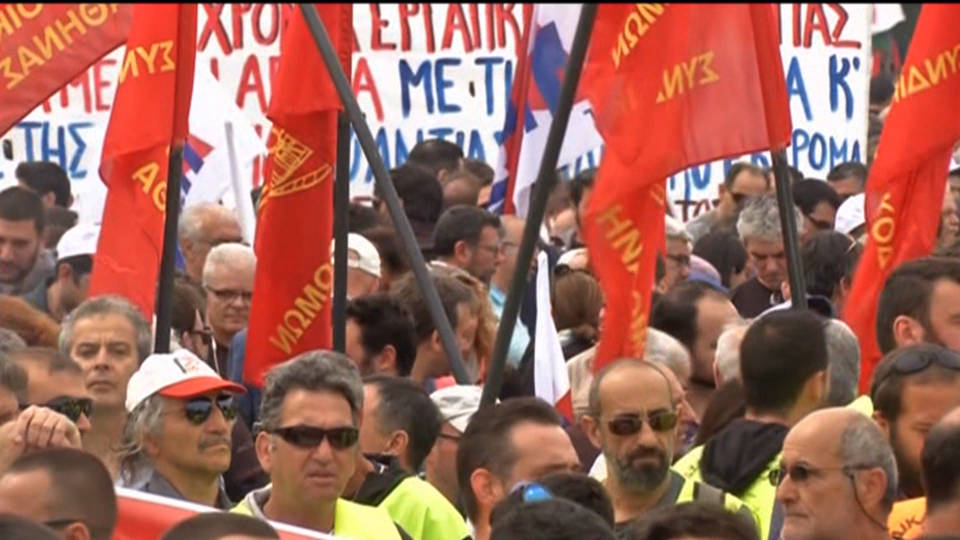
The Greek Parliament has approved a new round of austerity measures seen as among the harshest to date demanded by international creditors. The passage came amid mass protests and a three-day general strike. On Sunday, thousands gathered in Athens, where protesters threw stones and Molotov cocktails while police fired tear gas. Teacher Nikos Dardalis took part in the protests.
Nikos Dardalis: "Today, the working class must send a message, that with this unemployment and part-time work, the low-income earners, the self-employed, the unemployed cannot live on salaries and pensions of 300 to 400 euros."
TOPICS:
Greece
Brazilian Senate Committee Backs Impeachment Trial for Rousseff

In Brazil, a Senate committee has recommended an impeachment trial for President Dilma Rousseff over allegations she tampered with public accounts to hide a budget deficit. Brazil is engulfed in a corruption scandal, but Rousseff herself has not been accused of corruption. The full Senate is expected to vote Wednesday on whether Rousseff should face trial; if a majority sides against her, she would be suspended. Her potential replacement, Vice President Michel Temer, was ordered last week to pay a fine for violating campaign finance limits. After Friday’s committee vote, Rousseff vowed to continue fighting.
President Dilma Rousseff: "I will stay here fighting, fighting because I am the proof of this injustice. They are condemning an innocent person, and there is nothing more serious than condemning an innocent person."
TOPICS:
Brazil
Filipino "Trump" Set to Win Presidency Despite Accused Role in Death Squads

In the Philippines, the polls have closed in the nation’s presidential election. The leading candidate is Rodrigo Duterte, whose controversial rhetoric has drawn comparisons to Donald Trump. Duterte is mayor of Davao City, where he has been accused of running death squads; he has periodically admitted his role in the death squads, even bragging about how they killed 1,700 people. He recently joked that, as mayor, he should have been first in line to rape an Australian missionary who was gang-raped and then murdered in his city in 1989.
TOPICS:
Philippines
Sadiq Khan Becomes London's 1st Muslim Mayor
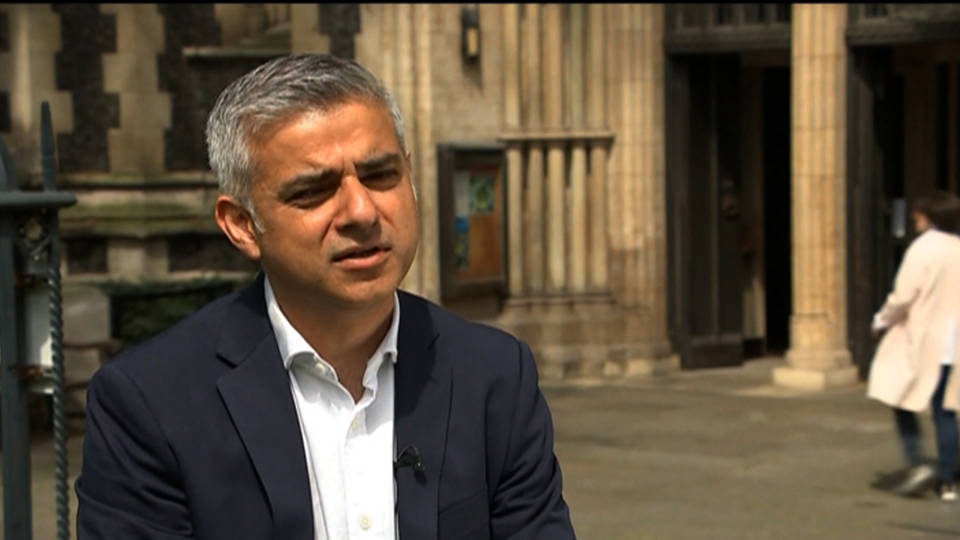
In London, Sadiq Khan has become the city’s first Muslim mayor. He celebrated the election results after being sworn in on Saturday.
Mayor Sadiq Khan: "I think we should be really proud. We should be really proud that, you know, record numbers came out and voted on Thursday. Record numbers, in my view, voted for hope over fear, and unity over division. And what I’m hoping today’s ceremony has shown is, you know, I believe in bringing people together, uniting our city and making sure we grapple with the problems facing our city in a positive way."
TOPICS:
London
Muslim
Anti-Fossil Fuel Actions Held in Newcastle & Philadelphia Amid Global Campaign
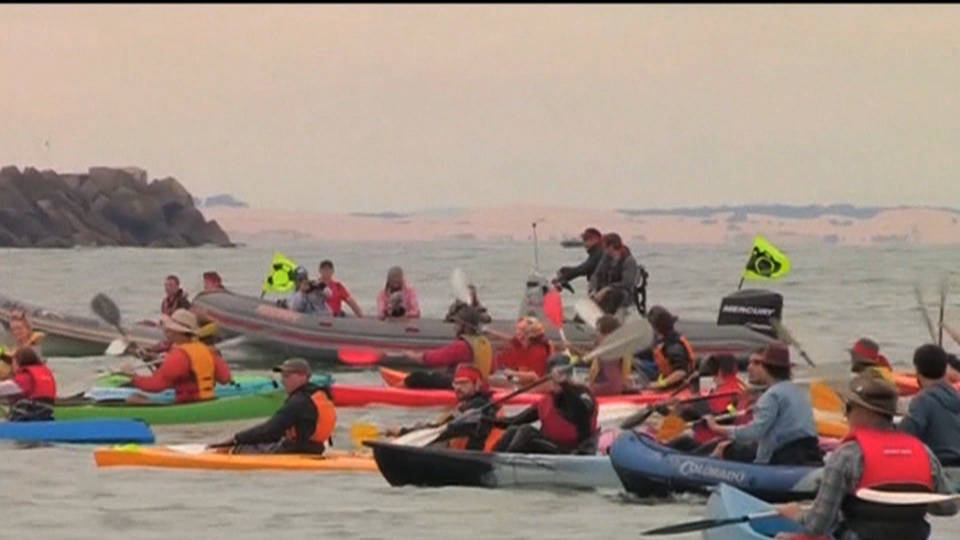
Climate activists have launched mass acts of civil disobedience in two cities across the world from each other: Newcastle, Australia, and Philadelphia, Pennsylvania. In Newcastle, more than 1,000 protesters shut down operations at the nation’s largest coal port. A group of "kayaktivists" blocked the entrance to the harbor in what activists called the largest flotilla to date, while dozens blocked the coal transport train line into the port. More than 60 people were arrested. Australian Green Party leader Richard Di Natale spoke out.
Richard Di Natale: "Here we are, on the first day of an election campaign, talking about an issue you won’t hear either of the old parties talk about on any day during this election campaign, and that is how new coal mines, more coal exports are destroying the Great Barrier Reef, how new coal mines are destroying precious wilderness, and how they are holding us back from making the transition to a new 21st century clean economy."
The protests come as part of an international campaign to "Break Free from Fossil Fuels." In Philadelphia, meanwhile, hundreds of people rallied outside an oil refinery to protest air pollution and plans by Philadelphia Energy Solutions to expand operations.
TOPICS:
Climate Change
Australia
Twitter Bars U.S. Spy Agencies from Data Mining Platform

The social media platform Twitter has reportedly barred U.S. intelligence agencies from using a service that analyzes all of its user posts. The Wall Street Journal reports Twitter cut off access to Dataminr, a company that mines Twitter feeds for information, because it was concerned about the "optics" of appearing too close to U.S. spy agencies.
TOPICS:
Domestic Spying
Domestic Surveillance
West Point Investigates Photo of Black Women Cadets Raising Fists
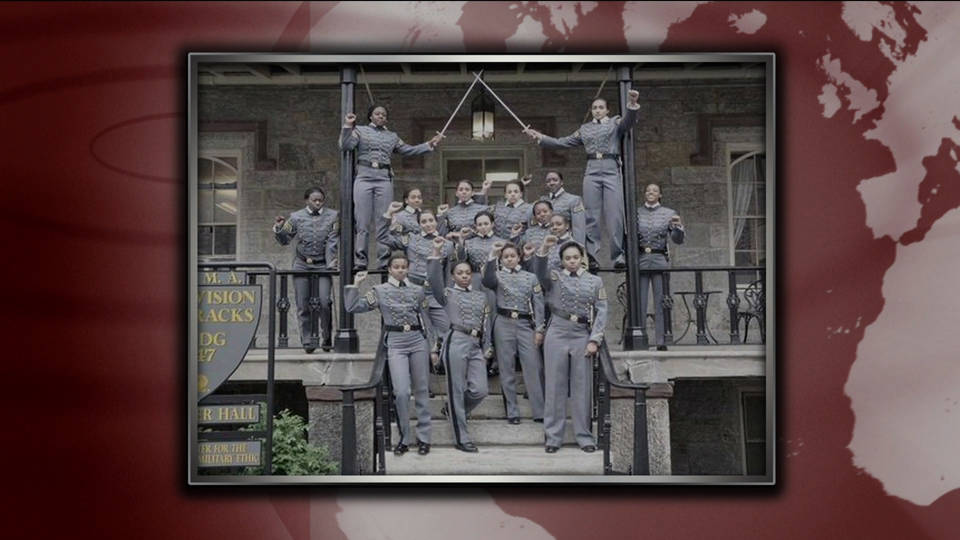
The West Point military academy has launched an investigation into a group of African-American women cadets after a photo surfaced showing them posing with their fists in the air as they were set to graduate. The gesture was seen by some as a sign of solidarity with the Black Lives Matter movement; Tommie Smith and John Carlos raised their hands in a similar gesture, the Black Power salute, at the 1968 Olympics in Mexico City. But a West Point graduate who spoke with the cadets told The New York Times: "These ladies weren’t raising their fist to say Black Panthers. They were raising it to say Beyoncé. For them it’s not a sign of allegiance to a movement, it’s a sign that means unity and pride and sisterhood. That fist to them meant you and your sisters did what only a few people, male or female, have ever done in this country." The photo showed 16 cadets—all but one of the black women in the graduating class of 1,000.
TOPICS:
Military
Activists Protest "Displacement from Brooklyn to Palestine" Inside Brooklyn Museum
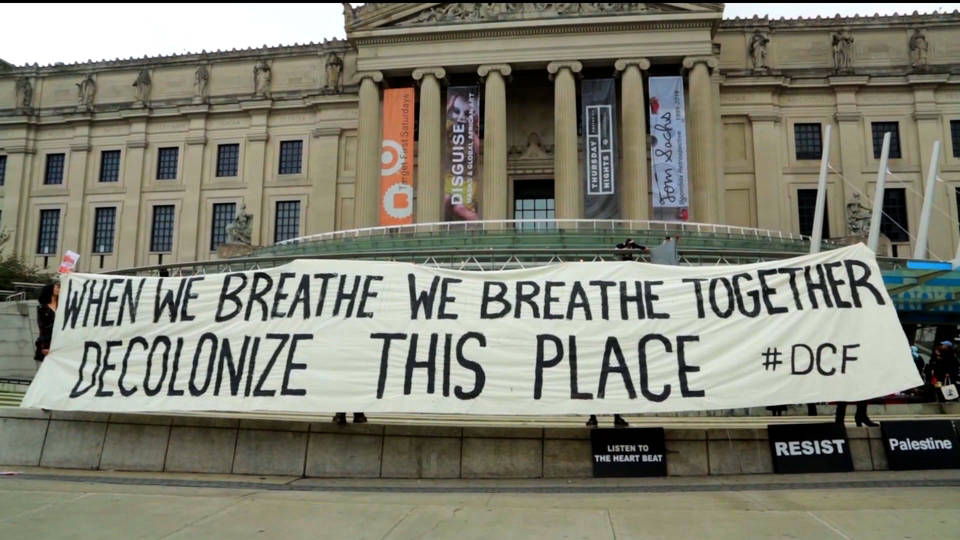
In New York, more than 150 activists gathered at the Brooklyn Museum to protest a photography exhibition they say normalizes the Israeli occupation of Palestinian territories. The protesters say the exhibition, entitled "This Place," is backed by funders who also support the Israeli military. The action also targeted the museum’s role in gentrification and displacement of people of color in Brooklyn. Protesters draped banners that read "decolonize this place" and "displacement destroys culture," and affixed new labels to photographs with the indigenous Arabic names of locations. Amin Husain spoke out inside the museum before being escorted away.
Amin Husain: [using human microphone] "The days in which art and artists are instrumentalized to normalize oppression, displacement and dispossession of any people are over. We are watching you."
TOPICS:
New York
Italian Economist Pulled from Plane for Doing Math in Latest Profiling Incident
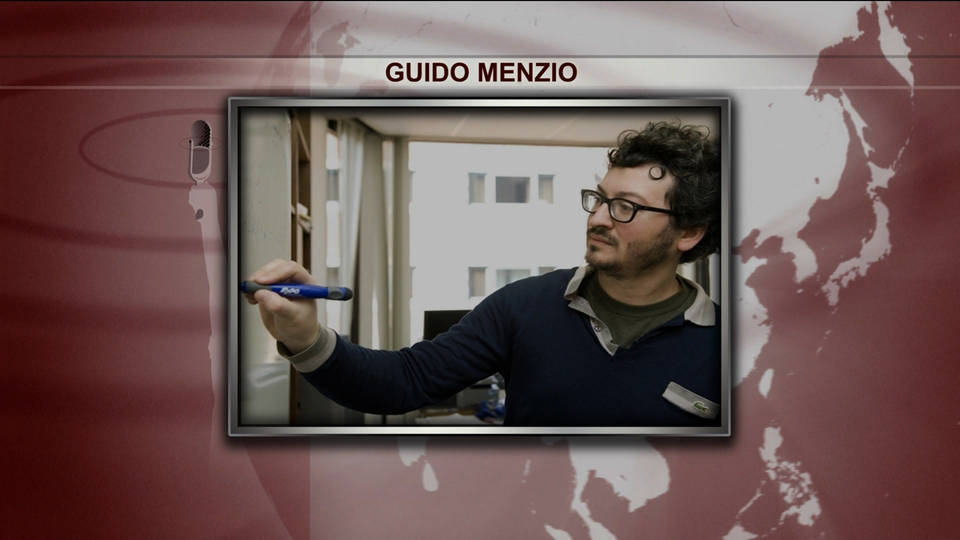
And in the latest act of ethnic or racial profiling on U.S. airlines, an Italian man was removed from an airplane and questioned after the woman next to him raised alarms about cryptic messages he was scrawling on a notepad. The scribbles turned out to be mathematical equations, and the man turned out to be Guido Menzio, a prominent economist. He was ultimately allowed to reboard his American Airlines flight, which departed more than two hours late.
Donate today:
Follow:


SPEAKING EVENTS

5/9 Minneapolis, MN
5/10 Cambridge, MA
5/11 Montclair, NJ
5/12 New York, NY
5/13 Washington, DC
5/14 Portland, ME
5/14 Bangor, ME
5/15 Bar Harbor, ME
5/17 Chicago, IL
5/18 Madison, WI
5/19 Toronto, ON
5/20 Toronto, ON
more
NEW BOOK


"A Moral Giant": ADemocracy Now! Special on the Life & Legacy of Father Daniel Berrigan
207 West 25th Street, 11th Floor
New York, New York 10001, United States
---------------------
---------------------

No comments:
Post a Comment